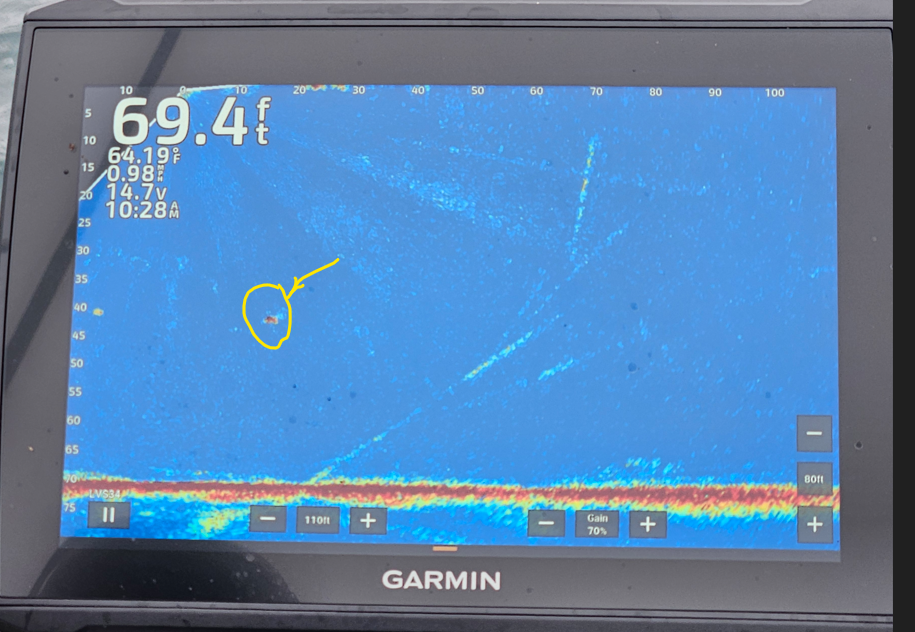
- Garmin, Lowrance and Humminbird manufacture Traditional Sonar as well as Foward Facing Sonar (FFS) units.
- Are Anglers Developing FFS Fear Factor Issues?
- When FFS is allowed in tournaments, do some anglers consider these “pay to win” events?
By Forrest Fisher
There are many examples over what appears to be a technology debate and grassroots angler backlash in bass and/or walleye tournament events that allow Forward Facing Sonar.
Here’s one.
For the past decade, the Innovative Outdoors Walleye Challenge has earned a reputation as one of Western New York’s most respected eastern Lake Erie walleye tournaments. Tournament Directors Jim and Diane Steel have built their reputation the old-fashioned way: treating teams fairly, paying close attention to the details, making sure the scales are accurate, and creating an event that benefits not only competitive anglers but also the Eastern Lake Erie charter-boat industry and surrounding communities. Fishing tournaments are an economic booster shot for local businesses.
So, something about this year’s tournament was surprising.
The field was cut roughly in half.
Last year, more than 40 teams participated, with some teams registering four members. This year, fewer than 20 teams registered.
Around the country, in bass and walleye tournaments, similar results are occurring. Why?
This walleye tournament itself had much of the same formula as earlier protocol. Big Fish Friday offered anglers a chance to have fun, scout and chase one big heavy walleye. The next day (Saturday), was the main competition event with a six-fish box requiring a 20-inch minimum fish with fishing hours from 7:00 a.m. to 3:30 p.m. The shotgun start came from the Chadwick Bay lighthouse in Dunkirk, with teams monitoring VHF Channel 68 for the official countdown and any changes.
Teams could fish the waters of Lake Erie and the Upper Niagara River, including Canadian waters. Boats could carry up to nine rods and reels, although Canadian regulations limited anglers to six. Teams could have two to five anglers, and as is common in major tournaments, winners and selected random teams could be subject to polygraph testing.
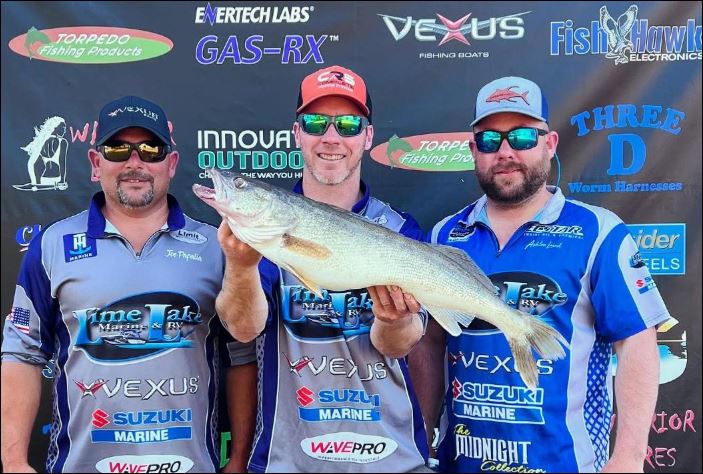
The rules also allowed something that has become increasingly controversial in walleye fishing: anglers could use virtually any fishing technology they wanted, including forward-facing sonar (FFS).
That may be where the story gets interesting.
Is FFS Creating a Fear Factor?
Many Eastern Lake Erie walleye tournaments have moved toward trolling-only formats, eliminating FFS-assisted jigging and other techniques that allow anglers to identify and target individual fish.
The Innovative Outdoors Walleye Challenge does not. Perhaps that has created a psychological divide.
If an angler has spent thousands of dollars outfitting a boat with the newest FFS technology, is that an advantage? Absolutely. But if an angler doesn’t have it, does he or she begin to wonder whether competing without it is even worth the entry fee?
A tournament entry fee can cost a team $300 to $600/team before Calcutta’s and other expenses. That’s real money. Add fuel, lodging, food, boat expenses and time away from work, and nobody wants to show up believing they are already behind.
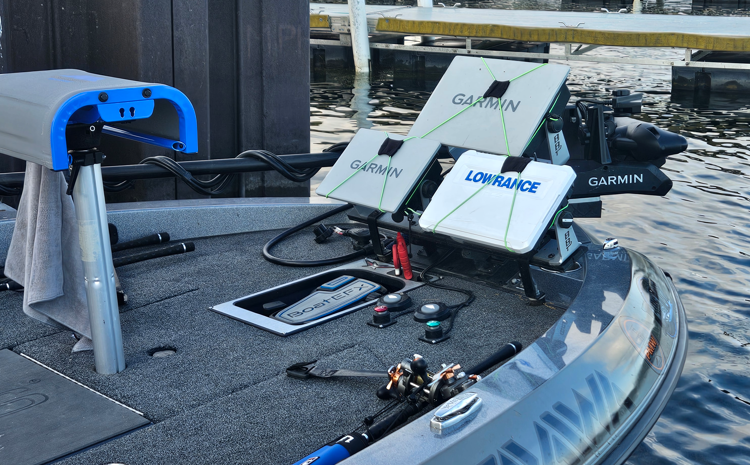
Could some anglers simply be afraid to lose because they don’t have the latest technology?
That’s a question worth asking—not an accusation.
After all, sonar has been changing fishing for generations. Some of us remember the old Lowrance “green box,” which cost about $150 in the 1960s (a lot of money back then) and it seemed like technological magic because it showed a neon-light blip indicating depth on a circular rotational disc. We couldn’t get enough of it.
For the record, $150 in 1957 is worth $1,782.66 today. Surprised? Don’t be. Inflation is real, cost is comparative.
Today, traditional sonar can identify structure and fish with astonishing detail. FFS and 360-degree real-time systems seem to simply represent another step in that sonar technology progression.
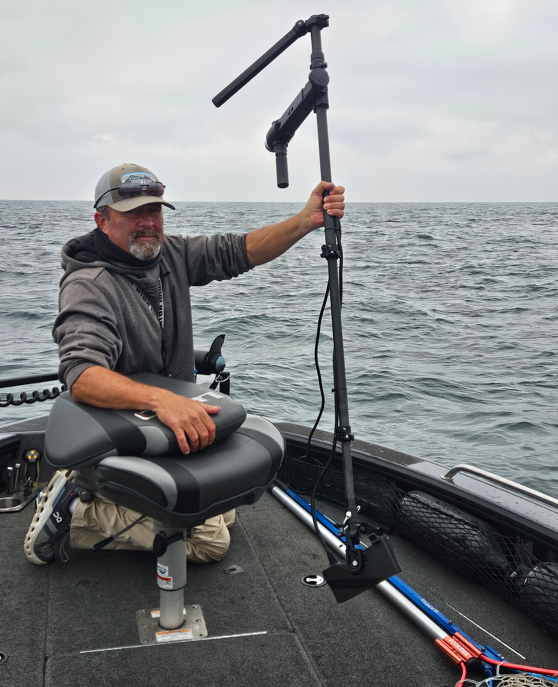
A video screen provides information with any sonar system.
The technology is comparatively expensive, with FFS entry costs reaching $2,000 to $3,000, but history suggests prices will eventually fall as adoption increases, just as they did with traditional sonar.
And anglers seem to want it.
I tried it and can honestly say, it’s absolute fun to see a fish 60 feet down in 100 feet of water, 50 feet out in front of the boat. Then you use your casting skill to cast to it, watch your lure falling toward the fish, then see that fish either move to your lure to inhale it or get spooked away because he was not expecting it. You can measure the demeanor and mood of the fish…hungry or spooky. Then resize your lure or color and find the next fish in a silent drift.
The results tell an interesting story. Captain Craig Sleeman and Team Midnight Express won the main event with 37.25 pounds, earning the big-box trophy and cash.
Captain Ron Morcio and Team Who’s U’r Uncle finished second with 36.52 pounds, including the tournament’s biggest fish at 7.69 pounds. Captain Nicholas Oleksy and Team Thunder Jet were third at 35.90 pounds, followed by Captain Jesse Nussbaum and Team 5-Alive at 34.62 pounds. Team MacAttack, led by Captain Daryll MacNeill, rounded out the top five with 31.98 pounds. Some of these folks used old fashioned sonar, some used FFS.
Big Fish Friday was won by Craig Sleeman, followed by Jesse Nussbaum and Captain Ryan Smith of Team Back-In-Action. Sleeman’s 7.60-pound walleye was Friday’s big fish.
Here’s another interesting comparison. At the popular WNY Walleye Classic held at the Dunkirk Central Avenue Pier in June, Ron Morcio and his team won with 33.05 pounds, while Bud Marsh finished second at 32.71 pounds. Five of the top 10 teams won using trolling tactics, while the other five were using FFS. It was about an even split.
That doesn’t exactly scream that one technology has conquered the other. It’s a big lake. Maybe the real competition is changing. There have been quiet rumors that some tournament managers encouraged teams that had participated in previous Innovative Outdoors events not to register in this tournament this year (because FFS was allowed). Those are local rumors, and they should remain exactly that unless someone is willing to put their name behind them.
But the broader issue is real. As fishing technology advances, tournament organizers are being forced to decide what they want their competitions to measure: the angler, the technology, or some combination of both. Anglers who only troll (no casting, no FFS) typically use down-scan sonar, some use side-scan sonar too, and many use other additive high technology devices to measure water temperature and current speed at the downrigger ball, and more, even video cams. These are all allowed and none of these devices are low cost. Does everyone fish9ng these tournaments have all these devices? No. Yet, they fish the tournaments anyway…that’s fishing. there still is some luck involved, skill too, in trolling only tournaments.
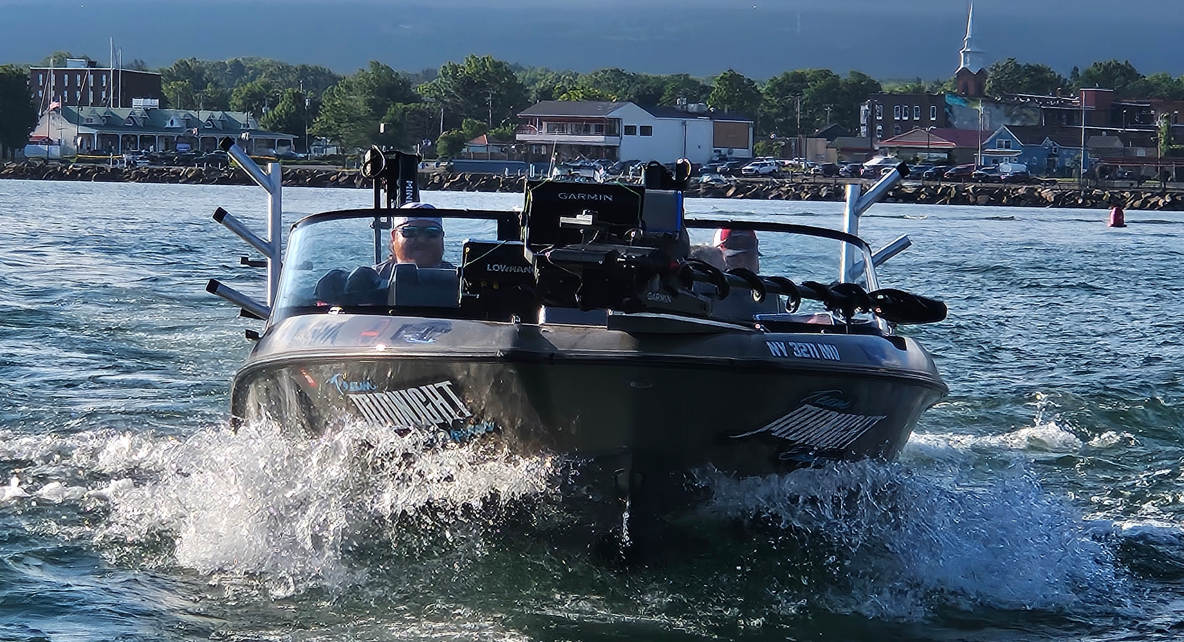
There is no easy answer. Trolling-only tournaments create one kind of challenge. Open-technology tournaments (FFS allowed) create another. Both can be exciting. Both require skill. Both can put anglers on the same Lake Erie chasing the same incredible fish.
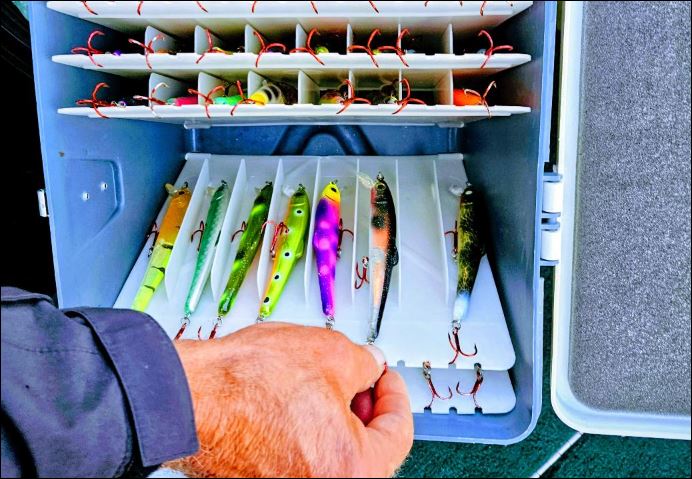
Perhaps the biggest lesson from this year’s Innovative Outdoors Walleye Challenge and tournaments facing a similar question isn’t that FFS is good or bad. Maybe it’s that fear of falling behind technologically can be just as powerful as the technology itself. Older folks that fish old-fashioned style fishing tournaments that rely on gut and instinct factors say that seasoned watercraft skills should not be replaced by staring at a video screen. The debate will continue, for now.
From the world of competitive bass fishing – Kevin Van Dam, one of the world’s most dominant and successful tournament bass anglers has been quoted as saying that FFS has no place in tournament bass fishing. “It’s like spotlighting deer.” Van Dam also said, “It is really efficient. It’s deadly, a lot of fun. I don’t know it’s that sporting.” Every bass angler in the world has learned so much about bass fishing from Van Dam, he has the respect of millions of anglers. We usually listen to those sorts of honest, expert anglers that share their skills.
Competitive fishing has always evolved. From the green box to modern sonar, from paper charts to GPS mapping, from simple rods to today’s sophisticated equipment, progress isn’t going backward.
The challenge for tournament fishing is making sure that progress continues to grow the sport rather than scare people away from it.
Because when nearly 50 percent of the field disappears, everybody should be asking why.
Hopefully, next year, more teams will be back packing every walleye tournament on Lake Erie—technology and all, or not—and ready to compete. Rule and event changes coming for next year will be interesting, for sure.
Gotta love the outdoors.




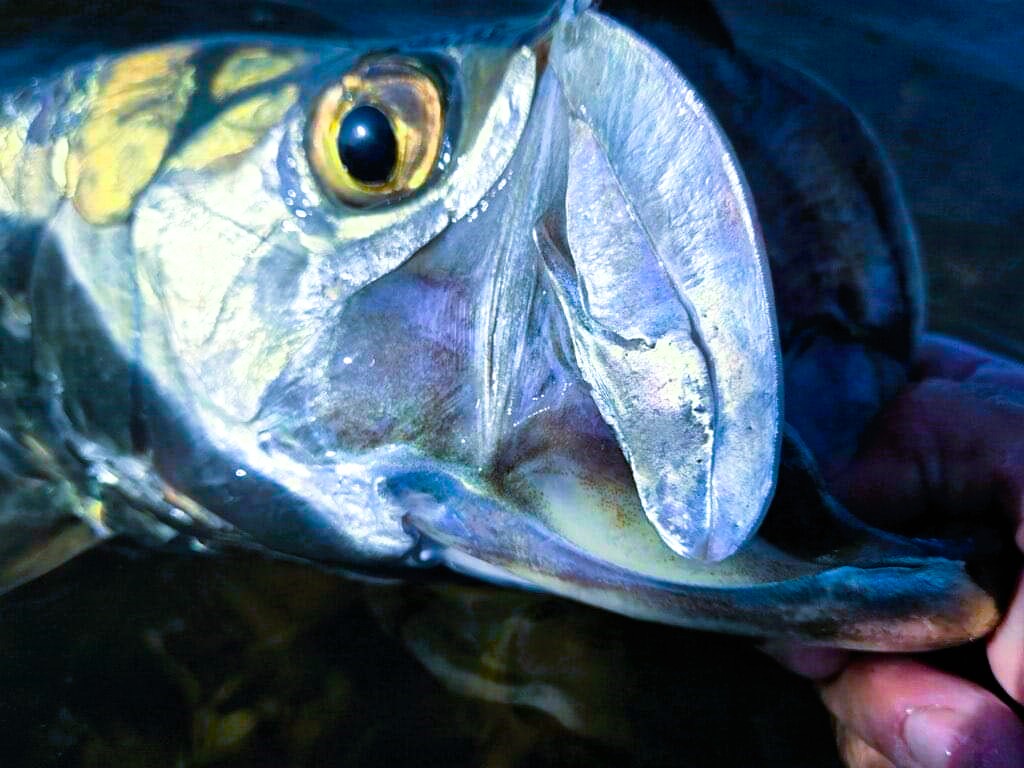

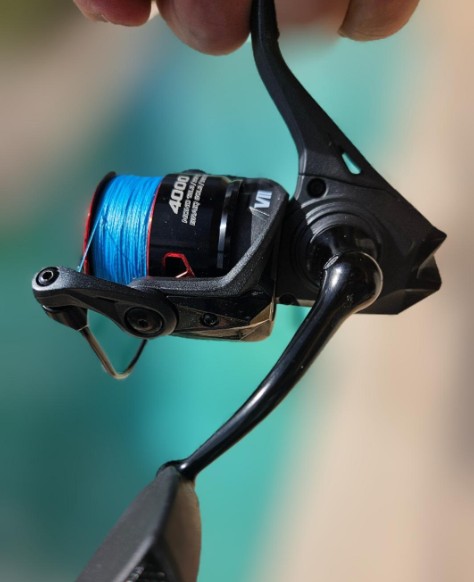
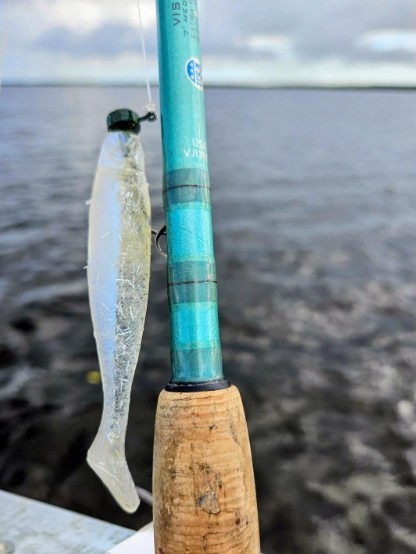


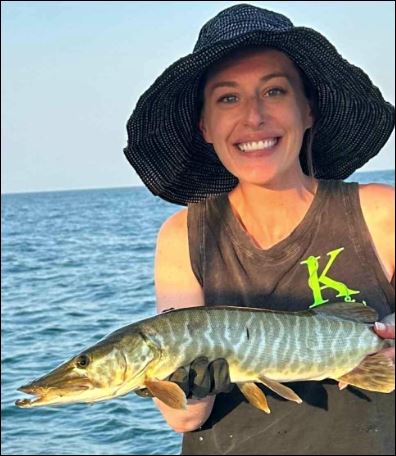

 The unmistakable zzzztttttt-zzzztttttt, that buzzing reel song of a massive musky stripping line. The drag was screaming! I knew right away that it was finally happening. We ALL yelled fish as I ran full speed to the firing rod. She had already ripped drag out to 243 ft, and the real battle began. She wasn’t coming in without giving me the fight of my dreams. She stayed low. I knew she was big. Head shakes and run after run, and a little musky shuffle from me, all while Matt and Kurt hosed my legs and fanned my feet from the brigade of biting black flies. And, with Corrine shouting “REEL, REEL, REEL!” It was quite the scene! Never to be reenacted. Always to be remembered.
 herapysportfishinglsc #forevermemories #greatlakesfishing #muskyfishing #spotted #gIt was a fully immersive experience from the moment Captain Kurt reeled out his handmade wooden planer boards, to tricking my first LSC fish on his custom handmade #7 willow blade, 3/8oz, purple/white skirt tail, 7/0 hook bucktail. Perfection in a spinner bait for giant Musky. Was it the color? The action? The sound? The location? It didn’t matter to me at that moment; I was so excited.


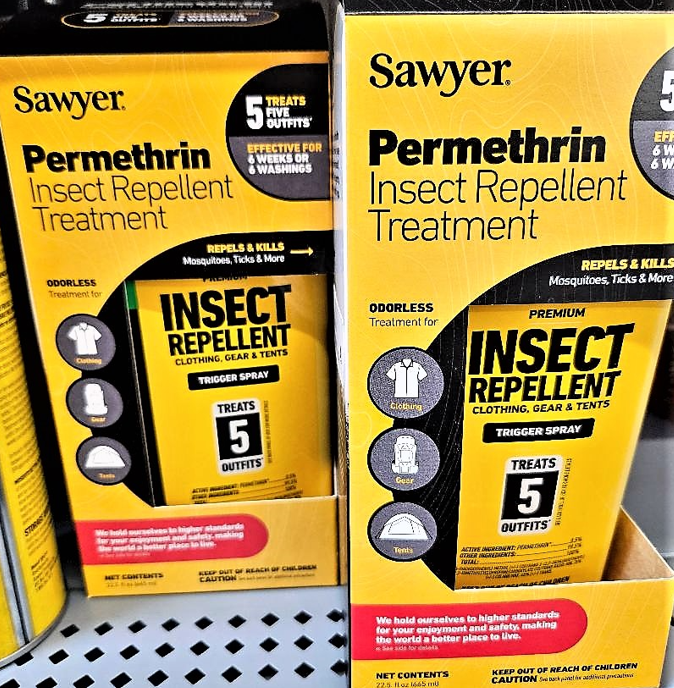
 If you travel to hunt here, pack deer tick protection to be extra safe. Deer ticks live everywhere these days. Three of my grandkids have had to fight Lyme disease delivered by deer ticks. We use Sawyers Permethrin spray for exterior clothing and boots (not for skin exposure) and Sawyers Picaridin lotion for exposed skin. Deer ticks are repelled upon contact. The Picaridin formula is people-friendly. Visit








 Another bait Browning utilizes for windy main lake and main creek scenarios


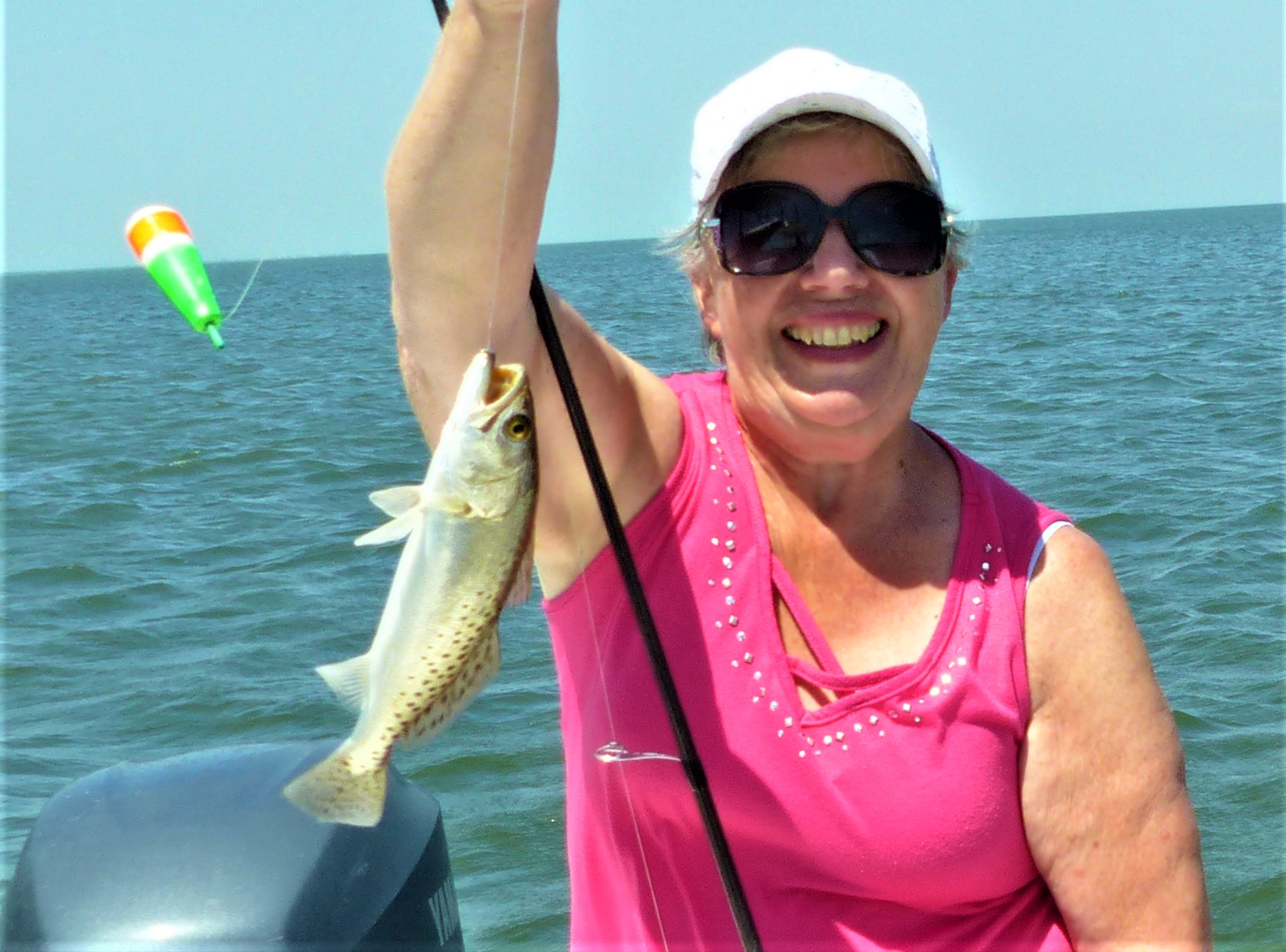






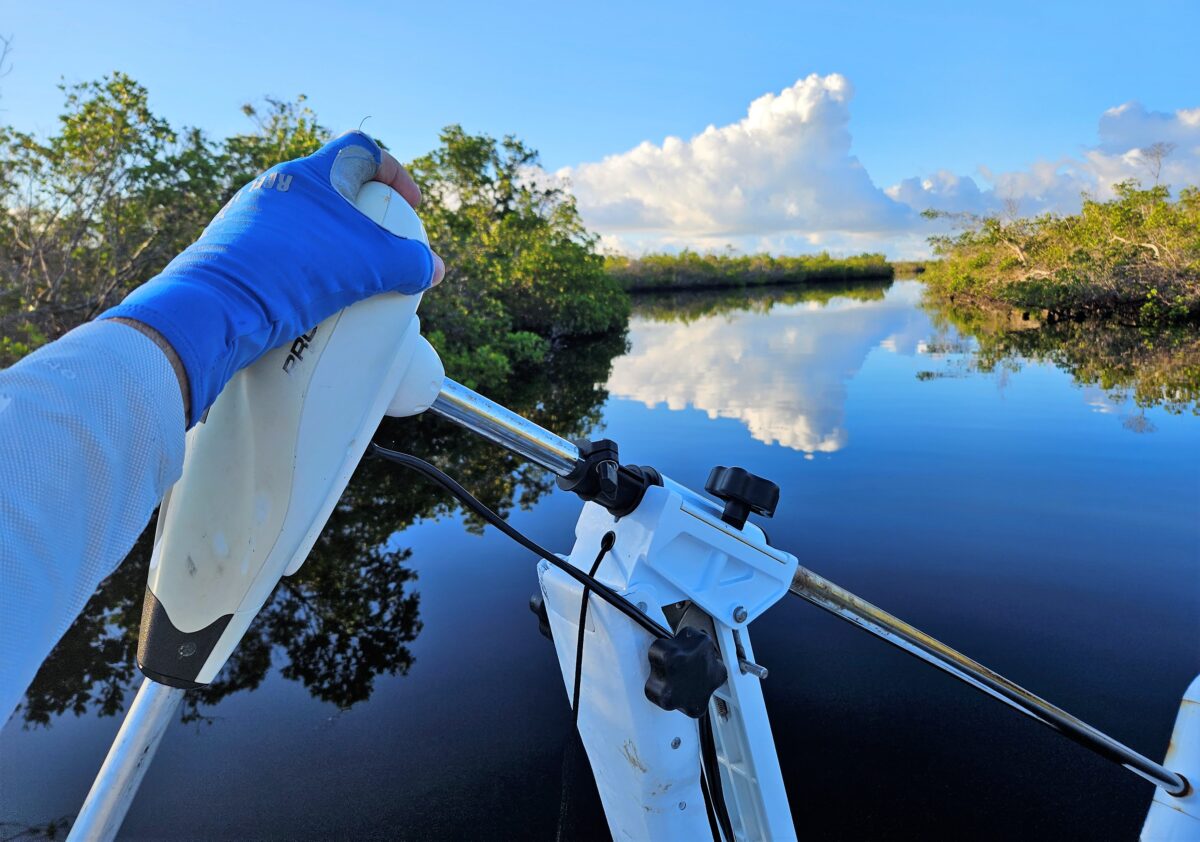
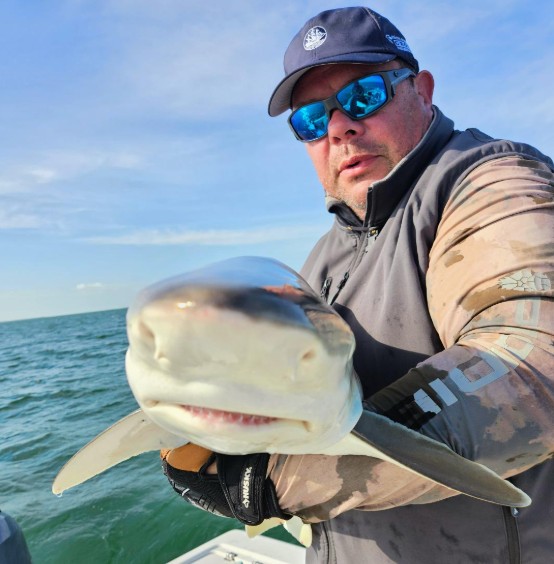
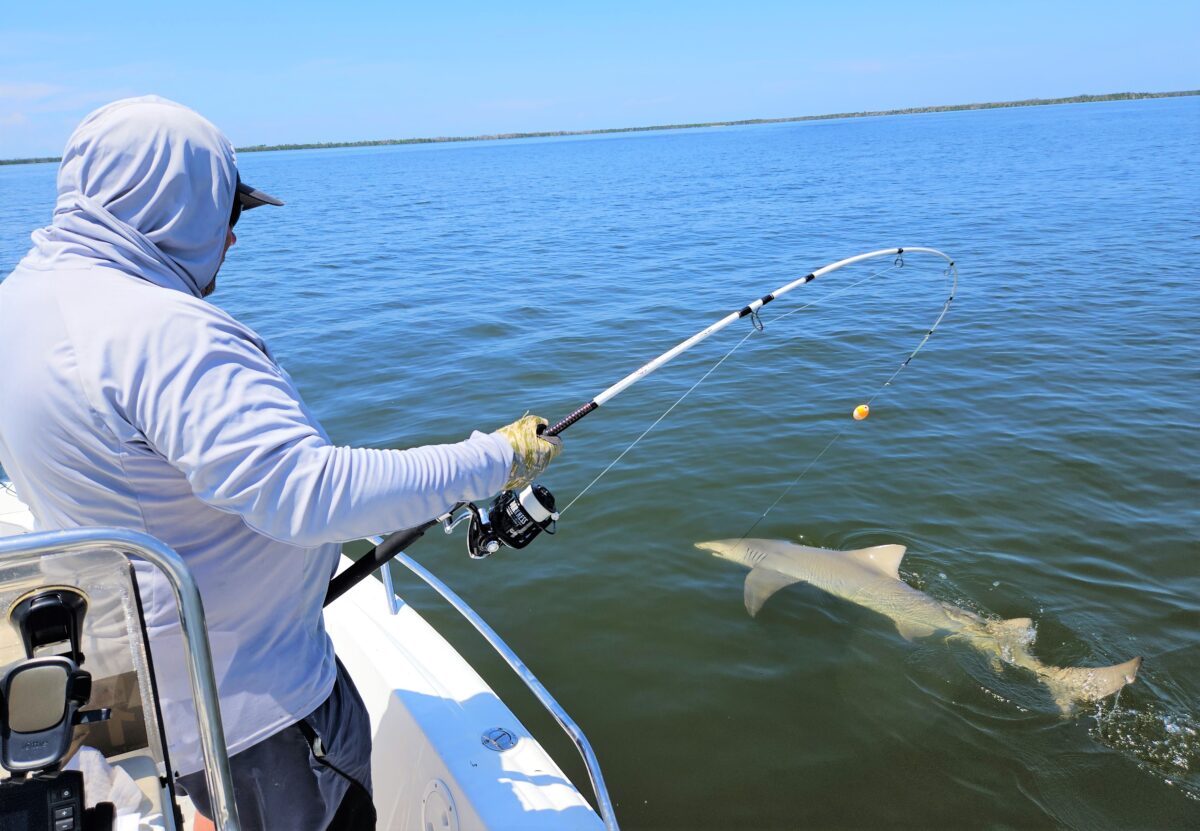
 Simon prefers the back of the boat to the front, so his fishing partner is offered control of the boat, running the bow motor for the day. Simon says in his British accent, “All of my fishing buddies seem to enjoy that part of our 6 to 8-hour fish trips. We each cast lines with plastic-tailed jerk baits on weighted weedless hooks or throw hard baits. Both lure types are designed to mimic the local forage groups. Doing that, I like to trail one or two lines for Shark. I have learned that it is better to trail one line simply. You can get into a real mess with two trailing lines when a handsome Gafftopsail Catfish hits and runs laterally. In the back of the boat, I can still cast out the side of the boat for multiple species, but now I trail just one line with a huge bobber, a wire leader and a huge hook with a half ladyfish or other cut bait. Some days, we catch five sharks and more than 50 other gamefish. It’s exciting! I’ve even caught sharks while casting lures. They can be that aggressive. “


 “We’re all still using the same worm we started with,” Bill said, smiling. Over the next 4 hours, the three of us caught 26 bass – all of us using the same worm we started with.








 The second group of 7 used a blended spice mix quite different from the first group:


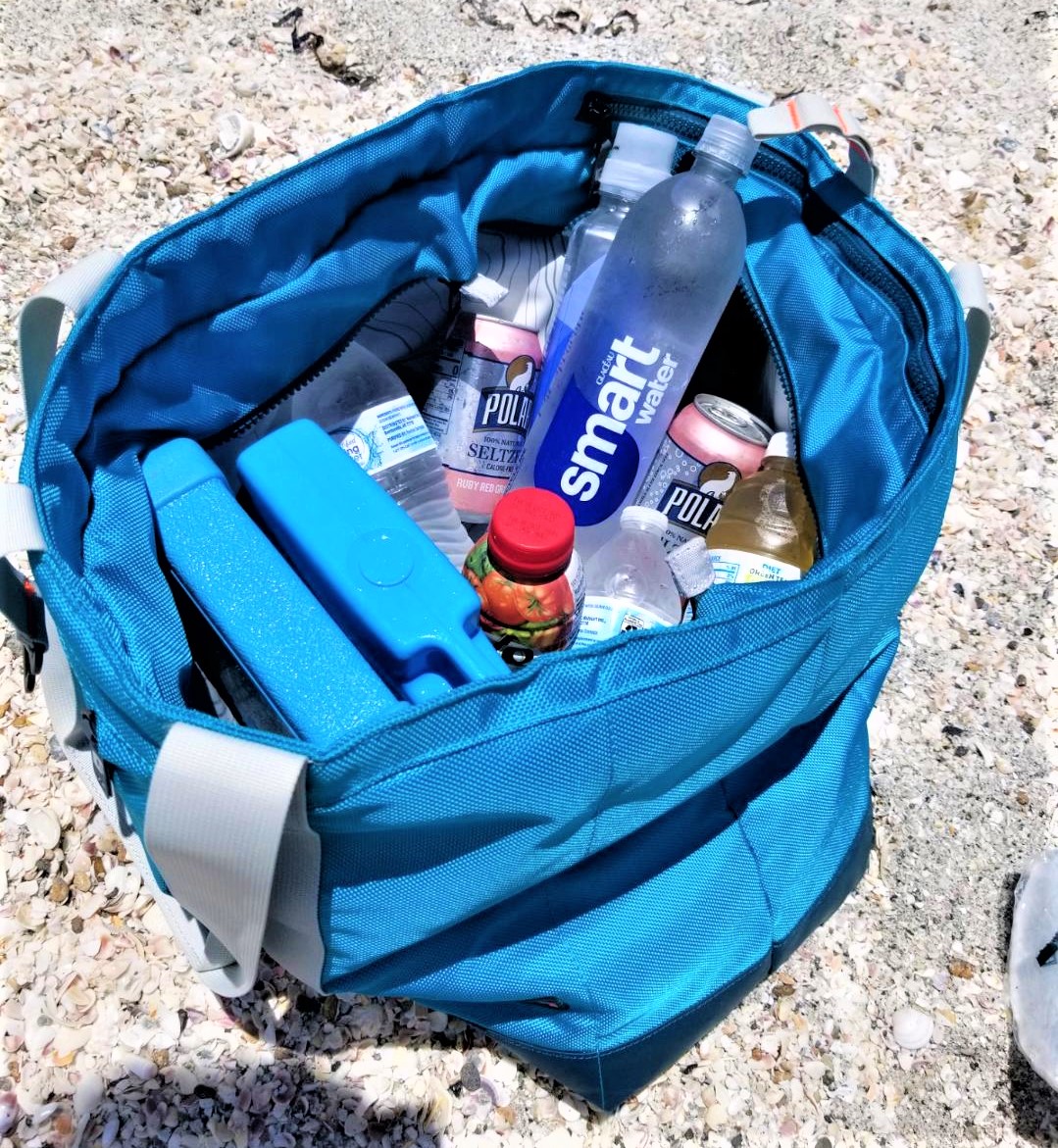


 This soft-sided product is 32 liters big in volume and is very light when empty: 1 pound-14 ounces! Some of our other hard-sided coolers in that size weigh as much as 20 pounds when empty. They work well, but they weigh so much when adding ice and beverages, even with wheels that do not work well on sand. We loaded up the Grizzly Carryall with 8 cans of pre-chilled 12-ounce Coca-Cola’s, 6 pre-chilled 16-ounce plastic bottles of water, 4 pre-chilled 12-ounce bottles of V8 vegetable juice, and one 24-ounce jar of Margarita’s. We also tossed in two 6” x 6” x 2” frozen blue ice packs and a 4-pack of unbreakable cups. The Carryall has side pockets for phones, wallets, and car keys, and a spare inside pocket for an extra set of socks, sunscreen, sunglasses, underwear – or whatever. All the compartments are sealable with durable zippers to open/close.
 The Grizzly Carryall is leakproof, insulated, water-resistant, and handsome. The reflective, attractive, glacier blue outer cover helps maintain the chill inside, and the Carryall is guaranteed for life. Imagine that. It has a small retail price tag of $125 (we found it for $100) and a significant 32-liter volume with 4 YKK zipper pockets. One more time, it all weighs in at only 1 lb. – 14 oz. UNREAL. For physical size, it measures 14H x 18L x 8W in inches.


 The best news is that there is no closed season at a sporting clays range. When wildlife hunting seasons do open, the shooting skills of folks that practice on courses like this are better and far more accurate. During hunting season, it’s more fun in the open-season fields and woods. The shooter is trained and confident, and success feels good on the field and, later, on the dinner plate.