Is Forward Facing Sonar Creating a Technology Divide?

  • Garmin, Lowrance and Humminbird manufacture Traditional Sonar as well as Foward Facing Sonar (FFS) units.
  • Are Anglers Developing FFS Fear Factor Issues?
  • When FFS is allowed in tournaments, do some anglers consider these “pay to win” events?
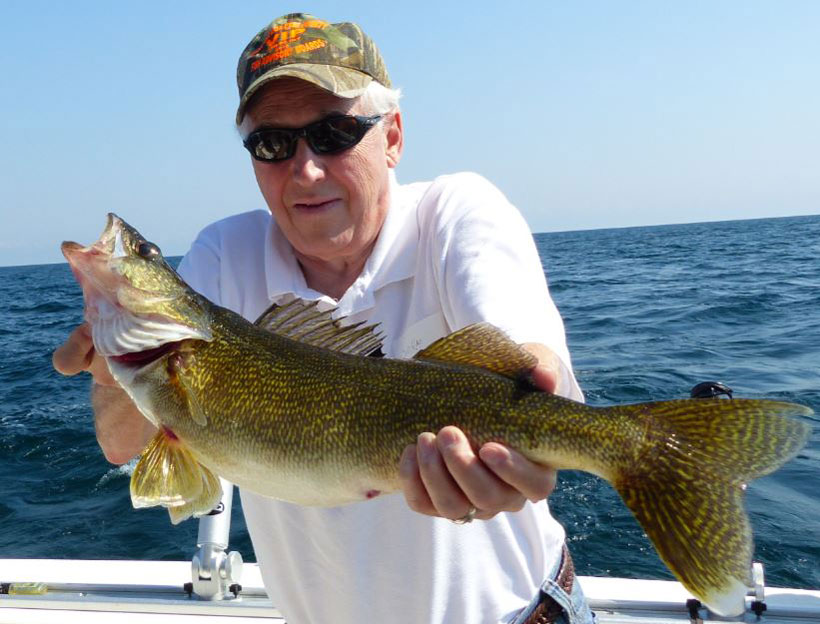
Steve Weiner took the time to introduce me to the details of using Forward Facing Sonar. Let me only say this: It was incredible fun. Sort of like the anticipation of casting a line with a bobber, then watching for a bite as your lure sinks to the depth of a suspended walleye. Would the fish take the bait? It was downright exciting! My heart was pumping. Forrest Fisher photo

By Forrest Fisher

There are many examples over what appears to be a technology debate and grassroots angler backlash in bass and/or walleye tournament events that allow Forward Facing Sonar.

Here’s one.

For the past decade, the Innovative Outdoors Walleye Challenge has earned a reputation as one of Western New York’s most respected eastern Lake Erie walleye tournaments. Tournament Directors Jim and Diane Steel have built their reputation the old-fashioned way: treating teams fairly, paying close attention to the details, making sure the scales are accurate, and creating an event that benefits not only competitive anglers but also the Eastern Lake Erie charter-boat industry and surrounding communities. Fishing tournaments are an economic booster shot for local businesses.

So, something about this year’s tournament was surprising.

The field was cut roughly in half.

Last year, more than 40 teams participated, with some teams registering four members. This year, fewer than 20 teams registered.

Around the country, in bass and walleye tournaments, similar results are occurring. Why?

This walleye tournament itself had much of the same formula as earlier protocol. Big Fish Friday offered anglers a chance to have fun, scout and chase one big heavy walleye. The next day (Saturday), was the main competition event with a six-fish box requiring a 20-inch minimum fish with fishing hours from 7:00 a.m. to 3:30 p.m. The shotgun start came from the Chadwick Bay lighthouse in Dunkirk, with teams monitoring VHF Channel 68 for the official countdown and any changes.

Teams could fish the waters of Lake Erie and the Upper Niagara River, including Canadian waters. Boats could carry up to nine rods and reels, although Canadian regulations limited anglers to six. Teams could have two to five anglers, and as is common in major tournaments, winners and selected random teams could be subject to polygraph testing.
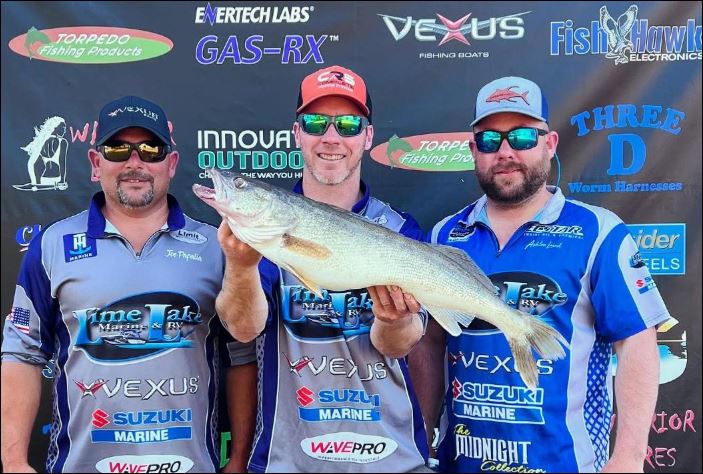
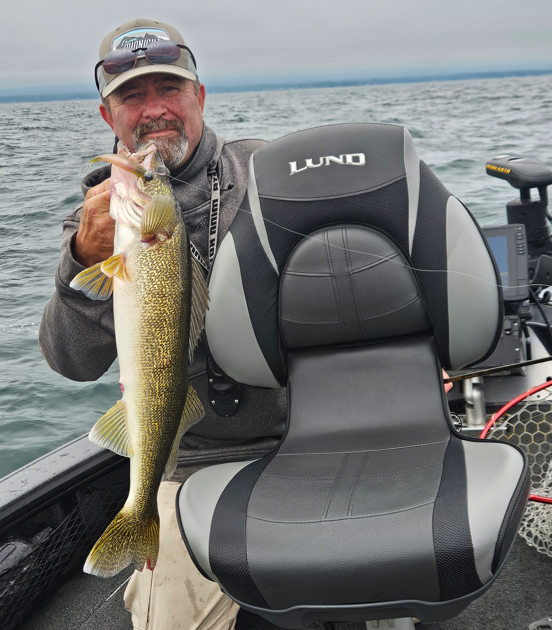
With FFS or traditional sonar, angler teams catch fish and have fun. Maybe that’s where the distinction lies? Which system is more fun? Forrest Fisher photo

The rules also allowed something that has become increasingly controversial in walleye fishing: anglers could use virtually any fishing technology they wanted, including forward-facing sonar (FFS).

That may be where the story gets interesting.

Is FFS Creating a Fear Factor?

Many Eastern Lake Erie walleye tournaments have moved toward trolling-only formats, eliminating FFS-assisted jigging and other techniques that allow anglers to identify and target individual fish.

The Innovative Outdoors Walleye Challenge does not. Perhaps that has created a psychological divide.

If an angler has spent thousands of dollars outfitting a boat with the newest FFS technology, is that an advantage? Absolutely. But if an angler doesn’t have it, does he or she begin to wonder whether competing without it is even worth the entry fee?

A tournament entry fee can cost a team $300 to $600/team before Calcutta’s and other expenses. That’s real money. Add fuel, lodging, food, boat expenses and time away from work, and nobody wants to show up believing they are already behind.
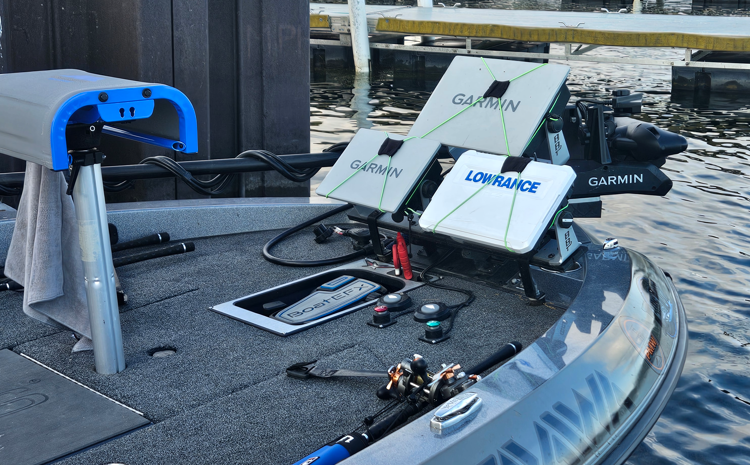
Forward Facing Sonar units use video screen technology to identify fish location, depth and distance from the boat. New rules are emerging for different types of fishing events. Forrest Fisher photo

Could some anglers simply be afraid to lose because they don’t have the latest technology?

That’s a question worth asking—not an accusation.

After all, sonar has been changing fishing for generations. Some of us remember the old Lowrance “green box,” which cost about $150 in the 1960s (a lot of money back then) and it seemed like technological magic because it showed a neon-light blip indicating depth on a circular rotational disc. We couldn’t get enough of it.

For the record, $150 in 1957 is worth $1,782.66 today. Surprised? Don’t be. Inflation is real, cost is comparative.

Today, traditional sonar can identify structure and fish with astonishing detail. FFS and 360-degree real-time systems seem to simply represent another step in that sonar technology progression.
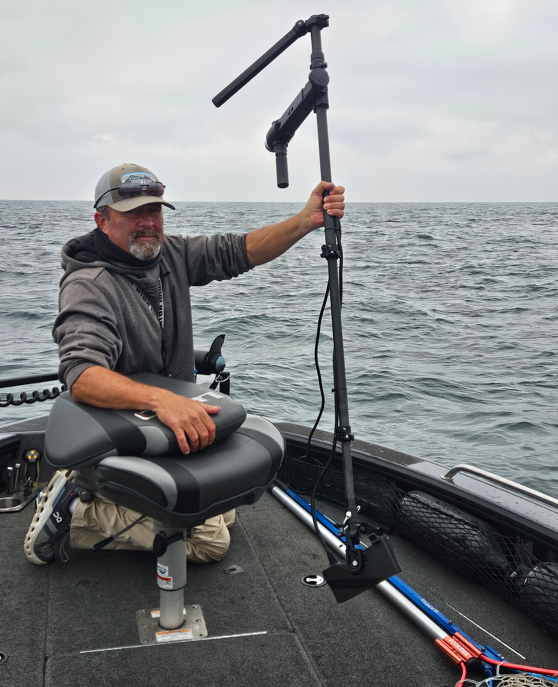
Forward Facing Sonar uses an over-the-side transducer in conjunction with a video screen to interpret the 3-dimensional signal. Forrest Fisher photo

A video screen provides information with any sonar system.

The technology is comparatively expensive, with FFS entry costs reaching $2,000 to $3,000, but history suggests prices will eventually fall as adoption increases, just as they did with traditional sonar.

And anglers seem to want it.

I tried it and can honestly say, it’s absolute fun to see a fish 60 feet down in 100 feet of water, 50 feet out in front of the boat. Then you use your casting skill to cast to it, watch your lure falling toward the fish, then see that fish either move to your lure to inhale it or get spooked away because he was not expecting it. You can measure the demeanor and mood of the fish…hungry or spooky. Then resize your lure or color and find the next fish in a silent drift.

The results tell an interesting story. Captain Craig Sleeman and Team Midnight Express won the main event with 37.25 pounds, earning the big-box trophy and cash.

Captain Ron Morcio and Team Who’s U’r Uncle finished second with 36.52 pounds, including the tournament’s biggest fish at 7.69 pounds. Captain Nicholas Oleksy and Team Thunder Jet were third at 35.90 pounds, followed by Captain Jesse Nussbaum and Team 5-Alive at 34.62 pounds. Team MacAttack, led by Captain Daryll MacNeill, rounded out the top five with 31.98 pounds. Some of these folks used old fashioned sonar, some used FFS.

Big Fish Friday was won by Craig Sleeman, followed by Jesse Nussbaum and Captain Ryan Smith of Team Back-In-Action. Sleeman’s 7.60-pound walleye was Friday’s big fish.
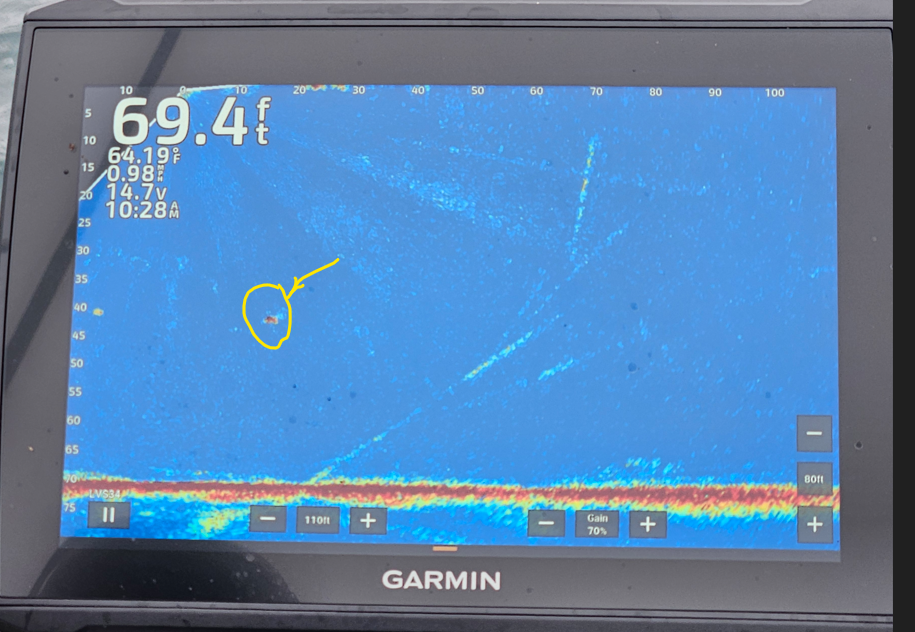
In this example, the fish (walleye) is suspended 15 feet from the boat (top horizontal scale) and is 60 feet down (left vertical scale). Forrest Fisher photo

Here’s another interesting comparison. At the popular WNY Walleye Classic held at the Dunkirk Central Avenue Pier in June, Ron Morcio and his team won with 33.05 pounds, while Bud Marsh finished second at 32.71 pounds. Five of the top 10 teams won using trolling tactics, while the other five were using FFS. It was about an even split.

That doesn’t exactly scream that one technology has conquered the other. It’s a big lake. Maybe the real competition is changing. There have been quiet rumors that some tournament managers encouraged teams that had participated in previous Innovative Outdoors events not to register in this tournament this year (because FFS was allowed). Those are local rumors, and they should remain exactly that unless someone is willing to put their name behind them.

But the broader issue is real. As fishing technology advances, tournament organizers are being forced to decide what they want their competitions to measure: the angler, the technology, or some combination of both. Anglers who only troll (no casting, no FFS) typically use down-scan sonar, some use side-scan sonar too, and many use other additive high technology devices to measure water temperature and current speed at the downrigger ball, and more, even video cams. These are all allowed and none of these devices are low cost. Does everyone fish9ng these tournaments have all these devices? No. Yet, they fish the tournaments anyway…that’s fishing. there still is some luck involved, skill too, in trolling only tournaments.
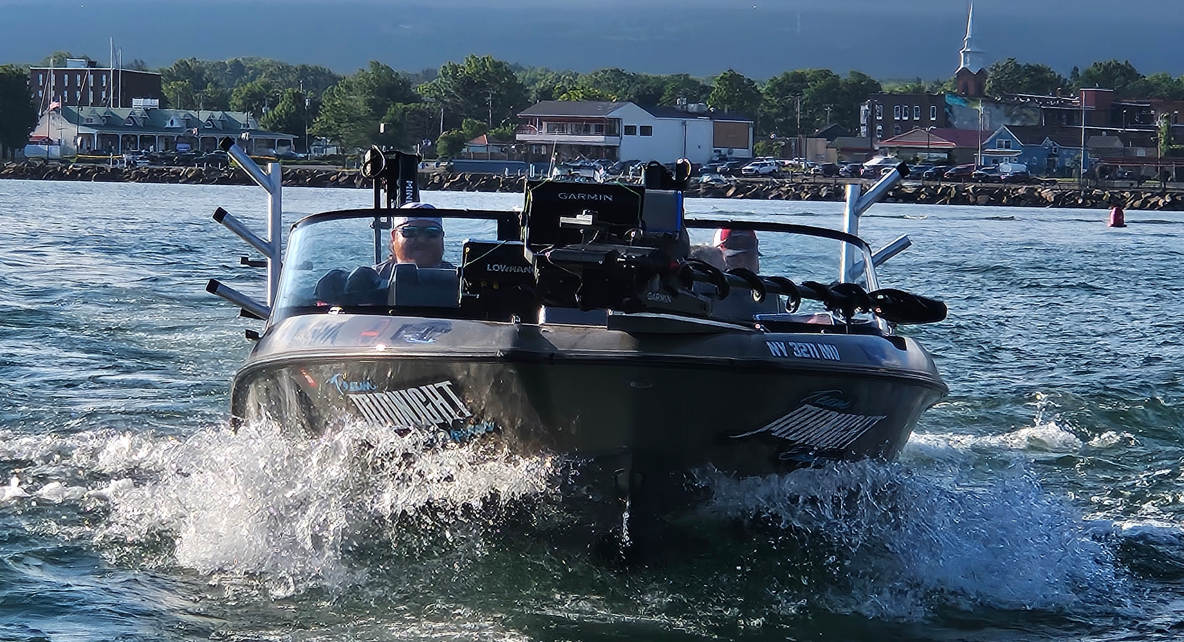
Many modern tournament boats are equipped with traditional sonar and FFS sonar to allow trolling or casting. Forrest Fisher photo

There is no easy answer. Trolling-only tournaments create one kind of challenge. Open-technology tournaments (FFS allowed) create another. Both can be exciting. Both require skill. Both can put anglers on the same Lake Erie chasing the same incredible fish.
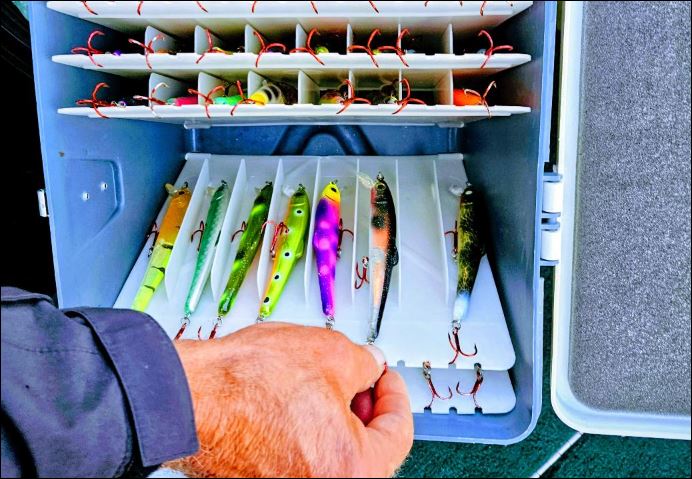
Perhaps the biggest fear for tackle manufacturers is that traditional casting and trolling lures will be disregarded, as FFS technology relies on weighted jig-style lures to reach the fish quickly and quietly. Forrest Fisher photo

Perhaps the biggest lesson from this year’s Innovative Outdoors Walleye Challenge and tournaments facing a similar question isn’t that FFS is good or bad. Maybe it’s that fear of falling behind technologically can be just as powerful as the technology itself. Older folks that fish old-fashioned style fishing tournaments that rely on gut and instinct factors say that seasoned watercraft skills should not be replaced by staring at a video screen. The debate will continue, for now.

From the world of competitive bass fishing – Kevin Van Dam, one of the world’s most dominant and successful tournament bass anglers has been quoted as saying that FFS has no place in tournament bass fishing. “It’s like spotlighting deer.” Van Dam also said, “It is really efficient. It’s deadly, a lot of fun. I don’t know it’s that sporting.” Every bass angler in the world has learned so much about bass fishing from Van Dam, he has the respect of millions of anglers. We usually listen to those sorts of honest, expert anglers that share their skills.

Competitive fishing has always evolved. From the green box to modern sonar, from paper charts to GPS mapping, from simple rods to today’s sophisticated equipment, progress isn’t going backward.

The challenge for tournament fishing is making sure that progress continues to grow the sport rather than scare people away from it.

Because when nearly 50 percent of the field disappears, everybody should be asking why.

Hopefully, next year, more teams will be back packing every walleye tournament on Lake Erie—technology and all, or not—and ready to compete. Rule and event changes coming for next year will be interesting, for sure.

Gotta love the outdoors.

How to Fish for Lake Erie Walleye from Dunkirk…Troll to find ’em, then Turn Around!

Watch Captain Jim Steel work his lines...learn from Jim, with Ken Perrotte taking pictures and videos, and who are fishing with Wade Robertson from Bradford, PA. Ken Perrotte Photo

  • Lures to use, boat speed, depth control

By Forrest Fisher

According to Ken Perrotte of Virginia, making the trek 8 hours north to visit Lake Erie to fish for walleye from Dunkirk Harbor, or from any of the three Cattaraugus Creek boat launch access sites, is more than worth it. Ken says, “There are so many walleye here, they say something like 42 to 45 million in Lake Erie right now, I want to share this worthwhile fishing news with everyone.” So Ken wrote a story for his hometown newspaper and also added the story to his personal outdoor website. The bottom line, this is really great info for somebody that wants to just learn about how to do, what to do, rigging, reeling, setting the hook, netting the fish, and where to go. The details in the 2 video’s in this story share so much info.

Go get ’em. Click the picture to visit Ken’s story and video’s. Enjoy!

Click the picture, visit the story and enjoy the two videos that Ken Perrotte is sharing with all. Ken Perrotte Photo


Lightning Bolt Walleye on Lake Erie

Solutions for Thunder and Skittish Fish

John Mills from Orchard Park, New York, was straining to lift his walleye prize from the clear water depths of Lake Erie while fishing with Captain Jim Skoczylas aboard Ultimate Adventure Sportfishing.

When Mother Nature decides to drop in on your fishing plans, the wind and the rain may not keep you from fishing, but those big bright lightning bolts with clapping thunder will sure turn most of us around.

What’s almost worse, when the cloudburst and natural fireworks happen the night before a fishing day plan for 60 people and the lake turns calm, the fish do too.

That’s what happened for the VIP Fishing Day in Dunkirk Harbor, New York, on Wednesday, August 11, 2016. Our dedicated hosts included Zen Olow (Northern Chautauqua County Conservation Club), Lance Erhardt (Lake Erie Charter Captain’s Association) and Andrew Nixon (Executive Director Chautauqua County CVB) and their supporting crew. The plan was to provide the time and resources for a networking opportunity where 12 charter boats (walleye and bass guides), local expert fishermen, legislators, business owners and Mother Nature, could share conversation. lightningwalleye2There is nothing like a face-to-face meeting of the minds. Issues can often find solutions or at least become identified. This annual event is one an effective way to bring real issues and the potential for discussion and action together on the battlefront of conservation, the outdoors, Great Lakes resources and other factors.

Overnight the lake was a sea of flashing thunder and driving rain, but by morning, the lake was calm and the charter anglers all knew where the schools of walleye had been located over the last few days. So off they went, some of the boats carrying three, four and five of the would-be angler folks to fish catching destinations looking for the sweet song of a screeching drag.

There is nothing like walleye gills and fins to bring a smile to anglers that expect fishing action.

I was aboard the new 31-foot Tiara piloted by Captain Jim Skoczylas (Ultimate Adventure Sportfishing, (716-796-5372) with his first mate, Tom Yetzer, and it was fully equipped with 16 rods/reels, downriggers, diving planes, planer boards, temperature and current speed sensing equipment for surface and down deep detection, and all the lures necessary to fool those fish we call walleye in untold different ways.

We could see the fish suspended 55 to 65 feet down in 91 feet of water, but they decided to play hard to get. Question was why? Answer: Overnight lightning seems to spook both baitfish and predators. I have often wondered if when we see what appears to be a lightning bolt striking the surface of the lake, that the effects are not more serious than we think. Maybe the fish are getting a shock treatment?! Whatever it is, it seems they head for their brick house in the lake bottom and stay there for a bit before thinking about breakfast.

The interconnectivity of water molecules and electrons may have secondary effects that have not been yet explored, since it appeared on this day, that the fish were just going to take a breather.

Running 12 lines at depths of 40 to 65 feet down in 90 feet of water, some with 10 colors of leadcore line with fluorocarbon leaders, some off diving planes, some off downriggers and all displaying either homemade spinner/worm rigs or Bay Rat hard stickbait teaser lures with extra sharp hooks, Captain Jim and First mate Tom had hooked us up with eight fish on a day in waters where 19 or 20 fish in the boat were the norm for four hours of fishing on the days before. Other boats hooked up far less, some had no hookups.

Even secret fishing lures are not overly effective on days following an electrical rainstorm.

The fish we lost were light-biters, even the fish we landed were lightly hooked. Did it matter? It sure made for good conversation time! Maybe it was the best scenario! We caught a few fish and enjoyed more time to discuss issues and answers.

The chef-supreme walleye fish fry and fish chowder lunch with multiple desserts that was shared by all made the mediocre fishing of the storm effects just dissolve. It didn’t matter. Everyone enjoyed a great time networking about life in the outdoors and the incredible natural resource, Lake Erie, which we all work hard to keep as a treasure into the future.

God Bless America!

Program coordinator, Zen Olow, from the Northern Chautauqua County Conservation Club in Dunkirk, New York, is the friendly mastermind that has brought national, state and county legislators to the common discussion table everyone can find when they go fishing for a few hours.

A Day with the New DEC Region 9 Director at Walleye MECCA Destination – Dunkirk, NY

Julie Barrett O’Neill, the new Director for NYSDEC Region 9, is a hands-on manager that loves to share conversation about the outdoors.
  • Need a limit catch of Walleyes? Visit Dunkirk, NY, in Chautauqua County. 
  • NYSDEC Region 9 has a new hands-on Director that knows the ropes: Julie Barrett O’Neill

By Mike Joyner

One can easily state that any and all ports of access to Lake Erie lead to the walleye capital of the world. You would be correct, just as your fishing partners’ may counter declarations. Rather than debate the issue, I’ll lead us into the “declaration of Dunkirk” as a “must experience” port of launch and a favored choice to pursue a great fishing experience on Lake Erie. As reported in recent years by myself and legions of the outdoor media, the 2022 walleye season on Lake Erie is consistent with all the observations and claims as a “Walleye Mecca” of prior years. Yes, folks, it’s that good!

This year’s VIP Fish Day, held annually every August, would greet us with mixed clouds, moderate temperatures, and the calmest waters I have ever experienced on this Great Lake. This year’s event was coordinated by Jim and Diane Steel of the Innovative Outdoors team. A well-organized and super friendly event. Lots of familiar faces and many new ones. The event pairs Charter Captains with outdoor writers, local legislators, business leaders, and members of the NYSDEC Fisheries group. The group of outdoor writers present would hail from Indiana, Pennsylvania, Virginia, Maryland, Ohio, Rhode Island and New York.

As a fishing partner, I would be paired up with Julie Barrett O’Neill, the new Director for NYSDEC Region 9. We would join Captain Hans Mann of Buffalo Harbor Outfitters on his 21′ Warrior boat for a morning of outstanding fishing.

Captain Hans Mann of Buffalo Harbor Outfitters treats his guests with comfort and fish-catching aboard his 21′ Warrior boat. The city of Dunkirk is in the background.

Our trip out into the harbor was inspirational for all its beauty and the lake’s calmness. We would be heading out to 60′ – 90′ depths to troll for walleyes that had been, in recent days, hanging near the bottom. Just 30 minutes into setting up the lines, we were already into fish as we started our first trolling run. Although we ran a pattern of depths, those we had out deep with dipsy divers and worm spinner jigs made it happen. The fish-catching started off with Julie landing the first walleye. We both would catch our limit for the day and release others back to the lake. To this day, in my humble opinion, walleye is one of the best fish to eat and is a welcomed treat in our home.

The fishing was fantastic, and the conversation during our trip was even better! Julie comes into her new role as Region 9 Director with an impressive resume. She is as passionate about the resource as any of us. Julie is incredibly excited about the outlook for Lake Sturgeon, which is making significant progress in the North American conservation story. Having a Director that is hands-on and very comfortable with fishing tackle is a good thing for us sportsmen. As I have, you’ll find her very approachable, friendly and knowledgeable. I would also learn that Hans is just as passionate about fishing for muskies and very involved as a board member of the Eastern Lake Erie Charter Boat Association. I can tell you Hans runs an efficient setup and is directly dialed in on walleyes. I can easily envision how he takes his ‘A’ game to muskies. I found Hans to be a great boat captain and super friendly. They are genuinely great people to enjoy time out on the water with. We would discuss many topics concerning the fisheries, future development, and the current issues with proposed windmills. In a few hours on a beautiful morning, all the essential goals of the VIP event were being met on a 21′ boat. The future for Eastern Lake Erie has a bright future, in my view.

The event concluded with a great lunch at the Northern Chautauqua Conservation Club. As in the past, we got updates on issues concerning the lake, the latest research, and the fishery outlook.

The Dunkirk pier fish-cleaning station is crowded with everyday anglers taking fillets home for dinner. Ice and free fishing advice are available here, plus you can observe an assortment of fish cleaning tools and methods.

It is a beautiful format to promote not only the great fishery and recreational opportunities of the area but also puts the significant stakeholders together in the same room, the same boat, to further the communication needed for developing the resource. The event is fully supported by the following organizations: Chautauqua County Visitors Bureau, Erie County Fisheries Advisory Board and the Eastern Lake Erie Charter Boat Association.

www.tourchautauqua.com

https://www3.erie.gov/environment/fisheries-advisory-board

www.easternlakeeriecharters.com

www.buffaloharboroutfitters.com

www.innovative-outdoors.com

-MJ
© 2022 Mike Joyner- Joyner Outdoor Media