Connecting Conservation, Families, and the Outdoors

Ringneck Pheasants in the wild are scarce in many states, but conservation programs to raise them and return them to country farm fields are active in many regions of the United States. Joe Forma Photo

By Forrest Fisher, with excerpts from NYSDEC

No matter what state you live in, children typically learn about conservation and the outdoors from adults who accompany them as they explore. Plenty of times the kids teach the adults as well as the adults teaching the kids! If you are looking for ideas on how to enjoy the outdoors with the young people in your life visit the web sites listed below.

New York State has provided a wonderful guideline for all other states to follow. Outdoor Discovery (http://www.dec.ny.gov/public/84455.html) is an online newsletter from the New York State Department of Environment Conservation (NYSDEC) for families. It encourages New Yorkers to explore outdoors and learn about the environment. Each issue introduces subscribers to a seasonal environmental topic or nature topic, suggests a related activity and lists family friendly events at DEC’s environmental education centers. DEC Outdoor Discovery is free and emailed to subscribers every other Wednesday, it also appears on DEC’s website.

DEC operates environmental education programs (http://www.dec.ny.gov/education/74.html) statewide. These include two environmental education centers from Albany to Buffalo, plus regional environmental educators who serve New York City, Long Island and Central NY.

The DEC’s residential environmental education summer camps (http://www.dec.ny.gov/education/29.html) have be operating for over 60 years. The camps serve boys and girls ages 11-17, who attend a week long program exploring the outdoors and learning about the environment. Campers can even participate in a hunter safety class and receive their hunter safety certificate. The four summer camps are located across the state, two in the Adirondacks, one in the Catskills and one in Western New York.

National Wildlife Federation advocates spending at least one hour each day outdoors in nature. Their web site Be Out There (http://www.nwf.org/What-We-Do/Kids-and-Nature.aspx) provides ideas for reconnecting kids with the many benefits of the great outdoors. Good for both mental and physical health, spending time outdoors is also fun and helps kids build a connection to nature. Using the “NatureFind” feature visitors can find outdoor activities in their area, and across the country.

Nature Rocks (https://www.natureworkseverywhere.org/home/) from the Children and Nature Network, The Nature Conservancy and R.E.I. provides ideas for exploring outdoors with children. They also offer a search feature to locate programs, sites and outdoor play groups, known as Nature Rocks Flocks in your area.

Harmful Algae Blooms (HABs)

Dangerous to Pets and People
Summertime is Primetime for Algae Blooms

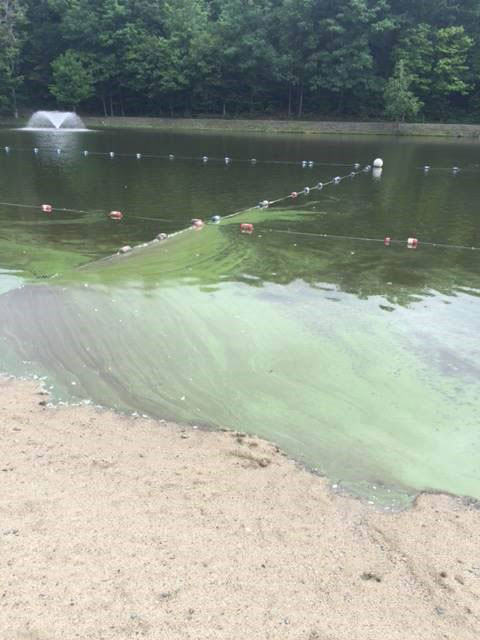
Harmful Algae Blooms (HABs) may make the water look bright green or like pea soup. NYSDEC photo

While all of us up north long for the warm weather and sunshine of summer, this year the average temperatures have been higher than usual for many geographic areas if the USA. The net results in area with high nutrient runoff to waterways has been of high concern.

In New York and many other northern states were heavy snow followed by summer rainstorms contribute to hi phosphate and nitrate runoff, algae blooms appear to be more common. Despite the drought many of us have experienced, certain areas of the country are experiencing HAB’s.

According the NYS Department of Environmental Conservation, dogs, pets or livestock should be kept out of any surface scums or heavily discolored water, or should be rinsed with clean water if they are exposed to harmful algal blooms (HAB).

HABs can stick to and become concentrated on animal fur, creating a health risk when the animal grooms itself.

Harmful Algae Blooms (HABs). NYSDEC photo

This is particularly important because HABs may release a fast-acting nerve toxin that can be dangerous for pets, especially dogs that swim in blooms.

Seek veterinary assistance should your pet show any signs of distress after exposure to a bloom.

These signs include:
• Stumbling, seizures, convulsions, paralysis
• Excessive salivation or drooling
• Disorientation, inactivity or depression
• Elevated heart rate, and difficulty breathing

If you see or suspect any of these symptoms, particularly within 30 minutes to a few hours after exposure to an algal bloom, seek immediate veterinary care.

For people and pets, because it is hard to tell a HAB from other non-harmful algae blooms, it is best to avoid swimming, boating, otherwise recreating in, or drinking water with a bloom. DEC strongly recommend avoiding all contact with any floating mats, scums, or discolored water. It is not easy to tell by looking at it if a bloom will produce toxins or other compounds that can be harmful to human health or animals. Laboratory analysis of a water sample is needed to confirm the presence of toxins.

Before you go in the water, find out what waterbodies have blooms or have had them in the past. DEC maintains a HABs Notifications page of waterbodies that currently have blooms. Please note that if a waterbody is not listed, it does not mean that it does not have a bloom. It may have one that was not reported. Find out what waterbodies have had blooms in the past on the HABs Archive page.

For more info, including the latest affected NYS waterbody list, visit: http://www.dec.ny.gov/chemical/77118.html.