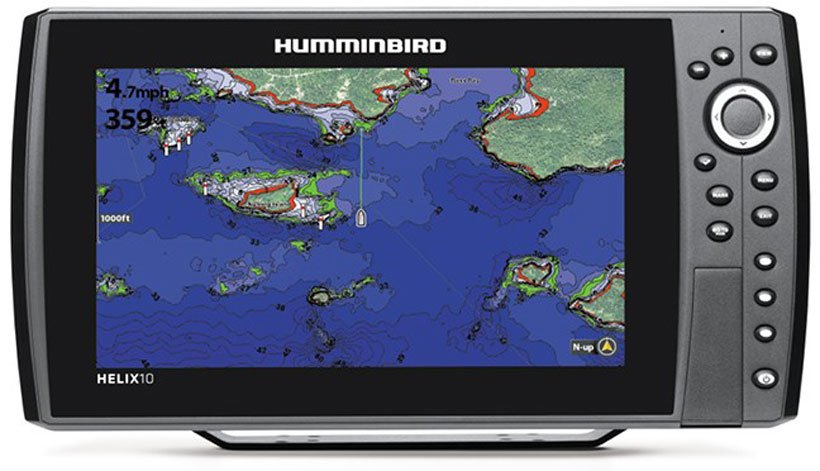
Is Forward Facing Sonar Creating a Technology Divide?

  • Garmin, Lowrance and Humminbird manufacture Traditional Sonar as well as Foward Facing Sonar (FFS) units.
  • Are Anglers Developing FFS Fear Factor Issues?
  • When FFS is allowed in tournaments, do some anglers consider these “pay to win” events?
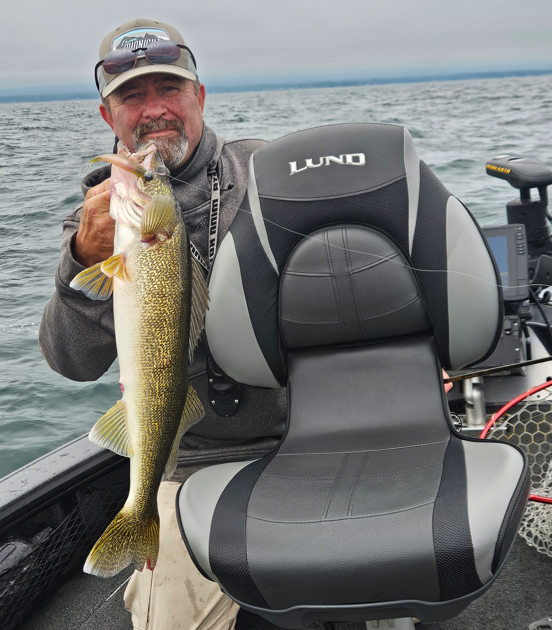
Steve Weiner took the time to introduce me to the details of using Forward Facing Sonar. Let me only say this: It was incredible fun. Sort of like the anticipation of casting a line with a bobber, then watching for a bite as your lure sinks to the depth of a suspended walleye. Would the fish take the bait? It was downright exciting! My heart was pumping. Forrest Fisher photo

By Forrest Fisher

There are many examples over what appears to be a technology debate and grassroots angler backlash in bass and/or walleye tournament events that allow Forward Facing Sonar.

Here’s one.

For the past decade, the Innovative Outdoors Walleye Challenge has earned a reputation as one of Western New York’s most respected eastern Lake Erie walleye tournaments. Tournament Directors Jim and Diane Steel have built their reputation the old-fashioned way: treating teams fairly, paying close attention to the details, making sure the scales are accurate, and creating an event that benefits not only competitive anglers but also the Eastern Lake Erie charter-boat industry and surrounding communities. Fishing tournaments are an economic booster shot for local businesses.

So, something about this year’s tournament was surprising.

The field was cut roughly in half.

Last year, more than 40 teams participated, with some teams registering four members. This year, fewer than 20 teams registered.

Around the country, in bass and walleye tournaments, similar results are occurring. Why?

This walleye tournament itself had much of the same formula as earlier protocol. Big Fish Friday offered anglers a chance to have fun, scout and chase one big heavy walleye. The next day (Saturday), was the main competition event with a six-fish box requiring a 20-inch minimum fish with fishing hours from 7:00 a.m. to 3:30 p.m. The shotgun start came from the Chadwick Bay lighthouse in Dunkirk, with teams monitoring VHF Channel 68 for the official countdown and any changes.

Teams could fish the waters of Lake Erie and the Upper Niagara River, including Canadian waters. Boats could carry up to nine rods and reels, although Canadian regulations limited anglers to six. Teams could have two to five anglers, and as is common in major tournaments, winners and selected random teams could be subject to polygraph testing.
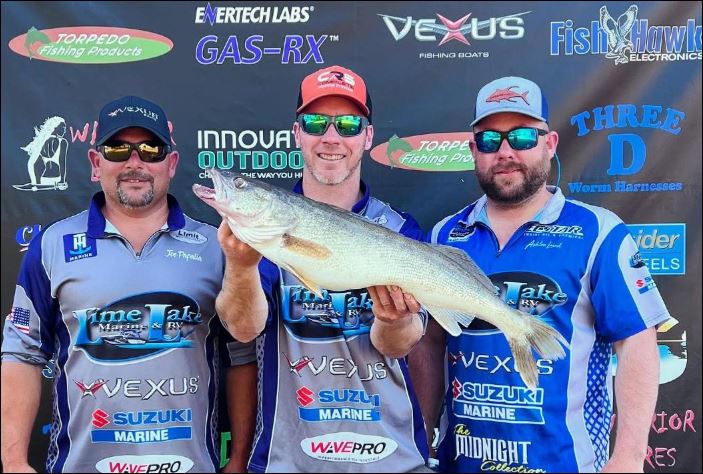
With FFS or traditional sonar, angler teams catch fish and have fun. Maybe that’s where the distinction lies? Which system is more fun? Forrest Fisher photo

The rules also allowed something that has become increasingly controversial in walleye fishing: anglers could use virtually any fishing technology they wanted, including forward-facing sonar (FFS).

That may be where the story gets interesting.

Is FFS Creating a Fear Factor?

Many Eastern Lake Erie walleye tournaments have moved toward trolling-only formats, eliminating FFS-assisted jigging and other techniques that allow anglers to identify and target individual fish.

The Innovative Outdoors Walleye Challenge does not. Perhaps that has created a psychological divide.

If an angler has spent thousands of dollars outfitting a boat with the newest FFS technology, is that an advantage? Absolutely. But if an angler doesn’t have it, does he or she begin to wonder whether competing without it is even worth the entry fee?

A tournament entry fee can cost a team $300 to $600/team before Calcutta’s and other expenses. That’s real money. Add fuel, lodging, food, boat expenses and time away from work, and nobody wants to show up believing they are already behind.
Forward Facing Sonar units use video screen technology to identify fish location, depth and distance from the boat. New rules are emerging for different types of fishing events. Forrest Fisher photo

Could some anglers simply be afraid to lose because they don’t have the latest technology?

That’s a question worth asking—not an accusation.

After all, sonar has been changing fishing for generations. Some of us remember the old Lowrance “green box,” which cost about $150 in the 1960s (a lot of money back then) and it seemed like technological magic because it showed a neon-light blip indicating depth on a circular rotational disc. We couldn’t get enough of it.

For the record, $150 in 1957 is worth $1,782.66 today. Surprised? Don’t be. Inflation is real, cost is comparative.

Today, traditional sonar can identify structure and fish with astonishing detail. FFS and 360-degree real-time systems seem to simply represent another step in that sonar technology progression.
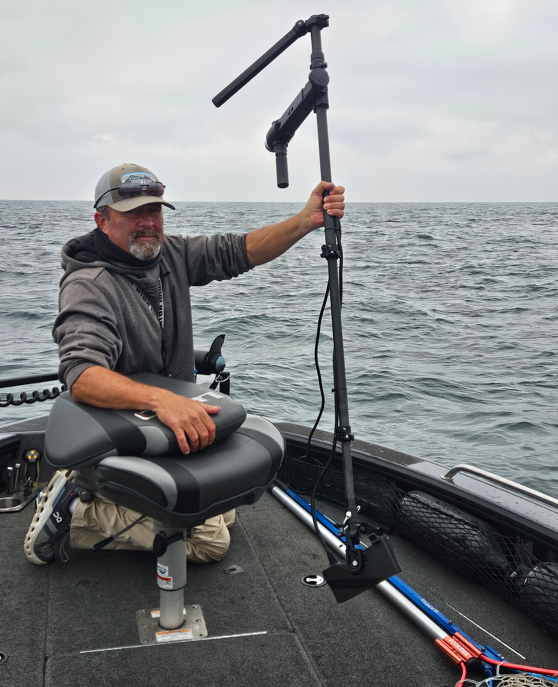
Forward Facing Sonar uses an over-the-side transducer in conjunction with a video screen to interpret the 3-dimensional signal. Forrest Fisher photo

A video screen provides information with any sonar system.

The technology is comparatively expensive, with FFS entry costs reaching $2,000 to $3,000, but history suggests prices will eventually fall as adoption increases, just as they did with traditional sonar.

And anglers seem to want it.

I tried it and can honestly say, it’s absolute fun to see a fish 60 feet down in 100 feet of water, 50 feet out in front of the boat. Then you use your casting skill to cast to it, watch your lure falling toward the fish, then see that fish either move to your lure to inhale it or get spooked away because he was not expecting it. You can measure the demeanor and mood of the fish…hungry or spooky. Then resize your lure or color and find the next fish in a silent drift.

The results tell an interesting story. Captain Craig Sleeman and Team Midnight Express won the main event with 37.25 pounds, earning the big-box trophy and cash.

Captain Ron Morcio and Team Who’s U’r Uncle finished second with 36.52 pounds, including the tournament’s biggest fish at 7.69 pounds. Captain Nicholas Oleksy and Team Thunder Jet were third at 35.90 pounds, followed by Captain Jesse Nussbaum and Team 5-Alive at 34.62 pounds. Team MacAttack, led by Captain Daryll MacNeill, rounded out the top five with 31.98 pounds. Some of these folks used old fashioned sonar, some used FFS.

Big Fish Friday was won by Craig Sleeman, followed by Jesse Nussbaum and Captain Ryan Smith of Team Back-In-Action. Sleeman’s 7.60-pound walleye was Friday’s big fish.
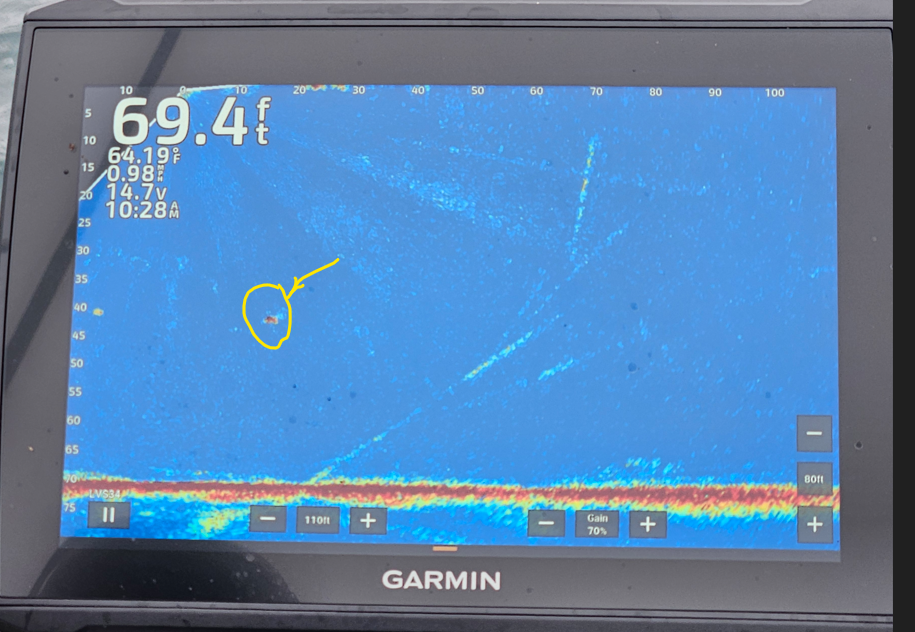
In this example, the fish (walleye) is suspended 15 feet from the boat (top horizontal scale) and is 60 feet down (left vertical scale). Forrest Fisher photo

Here’s another interesting comparison. At the popular WNY Walleye Classic held at the Dunkirk Central Avenue Pier in June, Ron Morcio and his team won with 33.05 pounds, while Bud Marsh finished second at 32.71 pounds. Five of the top 10 teams won using trolling tactics, while the other five were using FFS. It was about an even split.

That doesn’t exactly scream that one technology has conquered the other. It’s a big lake. Maybe the real competition is changing. There have been quiet rumors that some tournament managers encouraged teams that had participated in previous Innovative Outdoors events not to register in this tournament this year (because FFS was allowed). Those are local rumors, and they should remain exactly that unless someone is willing to put their name behind them.

But the broader issue is real. As fishing technology advances, tournament organizers are being forced to decide what they want their competitions to measure: the angler, the technology, or some combination of both. Anglers who only troll (no casting, no FFS) typically use down-scan sonar, some use side-scan sonar too, and many use other additive high technology devices to measure water temperature and current speed at the downrigger ball, and more, even video cams. These are all allowed and none of these devices are low cost. Does everyone fish9ng these tournaments have all these devices? No. Yet, they fish the tournaments anyway…that’s fishing. there still is some luck involved, skill too, in trolling only tournaments.
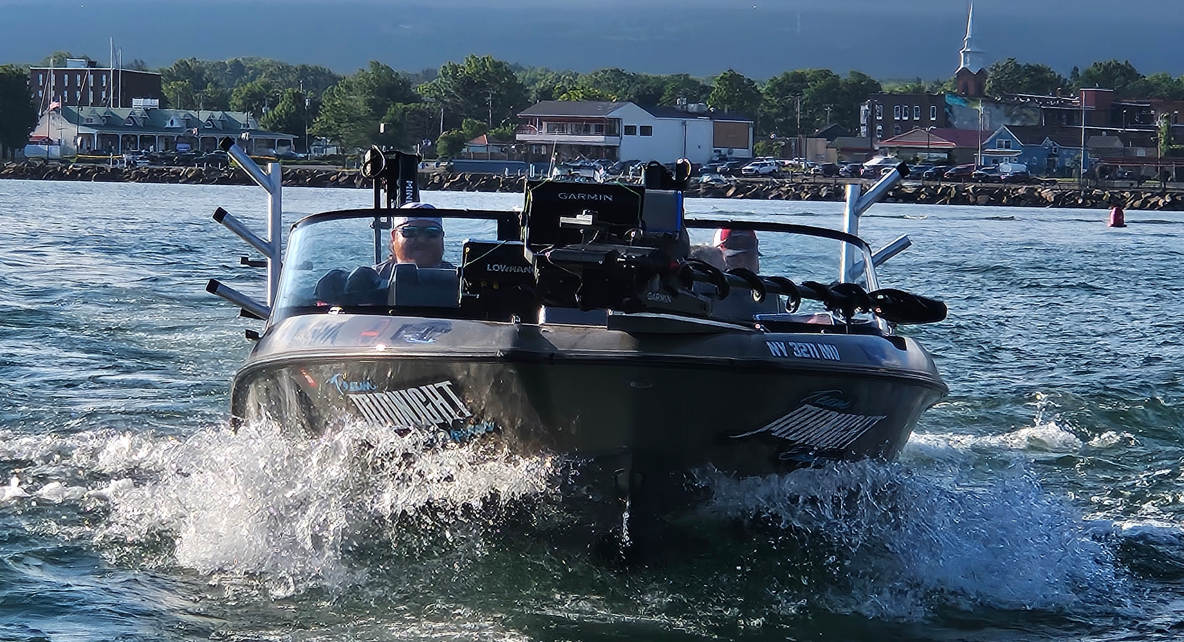
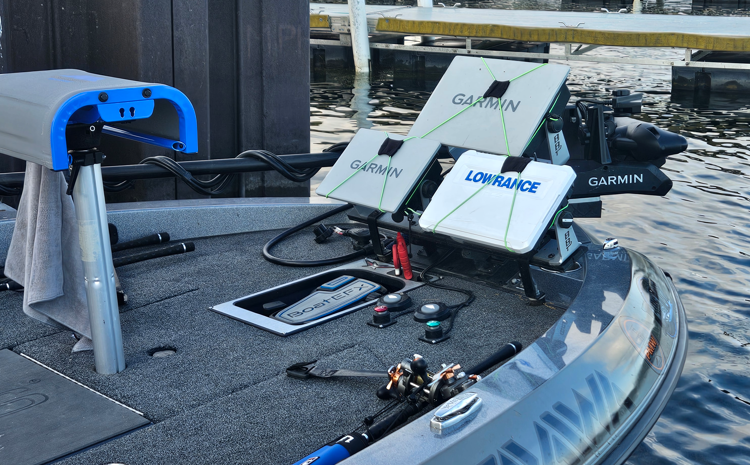
Many modern tournament boats are equipped with traditional sonar and FFS sonar to allow trolling or casting. Forrest Fisher photo

There is no easy answer. Trolling-only tournaments create one kind of challenge. Open-technology tournaments (FFS allowed) create another. Both can be exciting. Both require skill. Both can put anglers on the same Lake Erie chasing the same incredible fish.
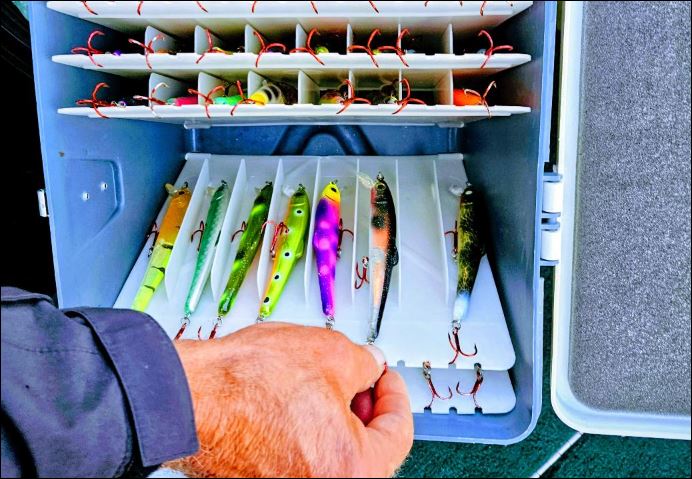
Perhaps the biggest fear for tackle manufacturers is that traditional casting and trolling lures will be disregarded, as FFS technology relies on weighted jig-style lures to reach the fish quickly and quietly. Forrest Fisher photo

Perhaps the biggest lesson from this year’s Innovative Outdoors Walleye Challenge and tournaments facing a similar question isn’t that FFS is good or bad. Maybe it’s that fear of falling behind technologically can be just as powerful as the technology itself. Older folks that fish old-fashioned style fishing tournaments that rely on gut and instinct factors say that seasoned watercraft skills should not be replaced by staring at a video screen. The debate will continue, for now.

From the world of competitive bass fishing – Kevin Van Dam, one of the world’s most dominant and successful tournament bass anglers has been quoted as saying that FFS has no place in tournament bass fishing. “It’s like spotlighting deer.” Van Dam also said, “It is really efficient. It’s deadly, a lot of fun. I don’t know it’s that sporting.” Every bass angler in the world has learned so much about bass fishing from Van Dam, he has the respect of millions of anglers. We usually listen to those sorts of honest, expert anglers that share their skills.

Competitive fishing has always evolved. From the green box to modern sonar, from paper charts to GPS mapping, from simple rods to today’s sophisticated equipment, progress isn’t going backward.

The challenge for tournament fishing is making sure that progress continues to grow the sport rather than scare people away from it.

Because when nearly 50 percent of the field disappears, everybody should be asking why.

Hopefully, next year, more teams will be back packing every walleye tournament on Lake Erie—technology and all, or not—and ready to compete. Rule and event changes coming for next year will be interesting, for sure.

Gotta love the outdoors.

Fishing with Johnnie Candle, Fishing Rods that Catch Fish

  • Fishing rod guides bend and don’t break
  • Hi-modulus sensitivity rod blanks from Scheel’s allowed for detecting the lightest of strikes
  • “Smart Boat” technics from Humminbird for total position control to target hotspots 

By Forrest Fisher

Walleye fishing legend, Johnnie Candle, suggested that we look at mid-river shoals on the Mississippi River near La Crosse, Wisconsin, and search the area with his new Humminbird sonar. We utilized the map to find such locations and he’s a walleye guy at heart, so we set up our rods accordingly.

In his Lund 21-foot, 10-inch fishing boat with a 350Hp Mercury Verado main-kicker, we arrived at our fishing destination in a few minutes. The ride was smooth as silk.

The Humminbird Helix 12 sonar (https://humminbird.johnsonoutdoors.com/fish-finders/helix/helix-12-chirp-mega-si-gps-g3n) showed “hooks” indicating lots of fish all around the edges of this 21-27 foot soft-bottom/gravel shoal area.

The Humminbird Helix allows the angler to mark the fish, then hit return to go back over the fish with the electric MinnKota motor.

Using a very sensitive Scheel’s “One Limited” medium-action fishing rod, the 6-foot,9-inch version, rigged with a Scheel’s 2500 series reel and 10-pound test Ultra -8 Fireline, we tied on vertical vibrating baits (Sonar, ¼ oz), Strike King Swim Tail Shiner jigs (1/4 oz) and Berkley power minnows(1/16 oz jig head/2-inch tail) to catch five species of fish in the next two hours of peaceful fishing fun (https://www.scheels.com/p/scheels-outfitters-one-limited-edition-spinning-rod/3340-ONEB.html). True relaxing fun.

Lots of Young-of-the-Year saugers that will eat a 4-inch Strike King jig show the fishing future looks bright here in La Crosse.

We released them all, including sauger, crappie, yellow perch, sheepshead, and largemouth bass. La Crosse, what a great place to fish! Mid-day, bright sun, clear sky, catching fish because we could find them with the right sonar and could sense their light bites with the right rod and line.

Yet, just a very short time ago, we had no clue what to fish for and where to go. We launched at the Black River Beach boat launch (https://www.explorelacrosse.com/), there was a $5 launch fee for non-residents. Look for the semi-hidden boat launch envelope station and be sure to use it, to avoid a $20 parking ticket. Don’t ask how I know.

Using the right gear makes for fun fishing in Wisconsin…and everywhere else.

For more about La Crosse, Wisconsin, visit https://www.explorelacrosse.com/.


Spring Sonar Magic, Zero-In on Hot Fishing Spots

“How-To” Insights from BASS Elite Pro Matt Herren

Herren runs LakeMaster PLUS mapping on HELIX10 units to dial in early-season bass. He’s also been making some of his own maps with AutoChart Live, which is built into HELIX 9, 10, 12 and ONIX

Spring is in the air and with it comes the most enjoyable season for fishing.  As everything comes alive, hungry fish of all species begin to prowl the shallows in preparation for their annual spawn.  Step one on their list is to eat everything in sight and where regulations allow, anglers have a distinct advantage for catching many fish and big fish too.  Bass, crappie, walleye and so many other species are all on the move, depending on water temperature.  Modern sonar units provide temperature, a very useful feature for spring fishing.

Understanding the habits and preferred water temperatures for each species is all that is needed to know when to start, but after that, finding those key locations on any lake sector is not as easy as you might think in spring.  This is especially true on lakes with harsh winter conditions and heavy spring winds that often change the lake bottom composition.

Many top anglers like Matt Herren, a bass tournament champion with a history of big time scoring all across the country, narrows his search of any waterway with a method that helps him zero in on the action.  To start, Herren studies the map and selects areas somewhat protected from current: ledges downstream from major points or other structural elements or on inside turns of the main channel. However, a quick look at any LakeMaster chip often reveals dozens of areas that match this criteria. How then, is Herren able to isolate the protective spots?

The key is the efficient use of electronics. In today’s age of depth finders that look down, out and all around the boat, Herren has found it necessary to get intimately familiar with such technology in order to stay one step ahead of his competition.

The first and most important step, he says, is to locate areas with hard bottoms. Herren does so by selecting several intermediate ledges that fit his criteria based on lake level, water color, temperature and graphing with the Side-Imaging feature on his Humminbird ONIX. But, rather than do so utilizing the factory default setting, Herren first makes one small, but important, display change. “I always set my unit on Amber 1 color mode” he says. Doing so allows hard-bottomed areas to brightly glow on the screen, easily revealing key spots.

Humminbird Side Imaging allows quick identification of lighter-colored hard bottom areas from darker, soft-bottomed areas.

Herren’s user-customization doesn’t end with a quick display change. “I also play with frequency changes (on his depth finder) a bunch” he points out. Herren has found that the best 2D SONAR frequency setting on his ONIX often changes as he moves from lake to lake. Whether such an oddity is the result of a chemical change in the water, or the amount of small particles floating within, is not totally understood by Herren; he just knows that changing frequency (say, from 83 to 200 kHz) often reveals the best set-up on a day-by-day basis.

Once hard-bottomed areas are located, Herren keeps a careful eye on his water temperature read-out, knowing such plays a major factor in the stage of the bass spawn. With water temps in the mid-fifties, bass often group up and stage; spawning beginning when the thermometer passes sixty. Herren notes that bass utilizing main lake areas for spawning often do so several weeks after those in protected bays, lengthening the springtime bonanza associated with this season.

Whereas summertime fish will often school on a bare-spot, like a small shell bed, Herren finds springtime fish prefer objects, likely due to these spawning tendencies. “They want to protect their blindside.” Herren mentions of the tendency of spawning bass to nest up against and object like a stump or seawall. This behavior applies to open-water areas as much or more to those near the shoreline, as a bit of cover helps bass guard against nest predators.

When a potentially productive area is located through Side Imaging, Herren scrolls across the ONIX screen and marks each with a waypoint. Then, he deploys his trolling motor and utilizes a different electronic approach to investigate the spot, using both 360 Imaging® and Down Imaging.

Herren says 360 Imaging® has helped him find “new, key areas in spots he’s fished for decades.”

First, it’s important to understand Herren’s view on each of Humminbird’s technologies. “360 Imaging is a fishing application, not a search tool,” he says. By this, Herren means that he utilizes 360 only when on the bow and casting, not for idling purposes, as the 360 sweep time is most conducive as a fishing application. In addition, Herren often isolates the sweep of 360 to reveal objects directly in front of him, within casting distance, making the update time on his screen display much quicker. As credit to the effectiveness of this technology, Herren noted that he’s often found new, key areas in spots he’s fished for decades by utilizing 360, opening his eyes to a vast new world.

Side Imaging is Herren’s bread and butter for fine tuning a spot. While he uses the new Humminbird HELIX units primarily for mapping, Herren sticks with ONIX for depthfinding, especially Side Imaging. “There’s nothing like it” he states, adding “I’ve seen things with that unit that I’d never see with any other.”

As Herren fine-tunes a chosen spot on the trolling motor, he’s constantly continuing his search for small, hard-bottomed areas, or isolated objects that could yield a big bass or two. Herren mentions that he often finds fish on the exact same spot, year after year, during the spring season.

Once “on the juice” Herren’s approach to fishing is fairly basic, using an arrangement of tried-and-true springtime lures. “I like a rattlebait a lot, as well as a chatterbait or spinnerbait.” After getting dialed-in to specific pieces of cover, Herren often wields his trademark Santone Jig to mop up on the competition.

Matt Herren, photo courtesy of B.A.S.S.

But just what makes a good spot great? “It’s a combination of things. Bottom type and cover matter, but maybe so do things like unknown current patterns,” says Herren. It’s a mystery that Herren admits to constantly trying to understand better. Perhaps we’ll never solve the case, but with advancements each year in technology, we’re drastically closer all the time.

About Johnson Outdoors Marine Electronics, Inc.

Johnson Outdoors Marine Electronics, Inc. is a wholly owned subsidiary of Johnson Outdoors  and consists of the Humminbird®, Minn Kota® and Cannon® brands. Humminbird® is a leading global innovator and manufacturer of marine electronics products including fishfinders, multifunction displays, autopilots, ice flashers, and premium cartography products. Minn Kota® is the world’s leading manufacturer of electric trolling motors, as well as offers a complete line of shallow water anchors, battery chargers and marine accessories. Cannon® is the leader in controlled-depth fishing and includes a full line of downrigger products and accessories.