Deer Tick Explosion – Understanding the Whole Lyme Disease Problem

  • Deer only help sustain tick populations, they are not the source of Lyme disease – they are only a host to adult deer ticks
  • There is a bigger mouse–tick connection that everyone should know more about.
  • Lyme disease bacterium, Borrelia burgdorferi – and protecting yourself. 

By Forrest Fisher
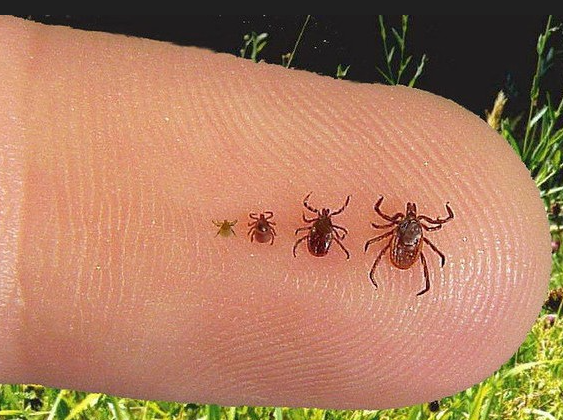
Deer ticks are tiny, as noted here on the index finger of a person. They are difficult to see and detect, and their bite is painless. Photo courtesy of the California Dept. of Health

Across the country, many homeowners – especially in rural villages, have noticed what seems like an explosion in deer ticks—and with it, growing concern about Lyme disease. It is understandable that attention turns to our abundant white-tailed deer. After all, deer are among major hosts for adult black-legged ticks, commonly called deer ticks.

But there is an important distinction that is often missed: Deer only help sustain tick populations, they are not the source of the Lyme disease bacteria. Like many other warm-blooded animals, they are only a host to adult deer ticks – deer ticks feed off them but are not the source of Lyme disease.

The real story is considerably more complicated—and more interesting.

There is a bigger mouse–tick connection that everyone should know more about.

The Lyme disease bacterium, Borrelia burgdorferi, is maintained in nature primarily through small mammals, especially the white-footed mouse. These mice are highly competent reservoirs and distributors for the bacteria. Larval ticks feed on infected mice and acquire the bacteria. Those ticks can later transmit Lyme disease to people, pets (cats and dogs) and other animals.

That is why calling them “deer ticks” can be misleading. The name describes an important host—not the animal that gave the tick its Lyme infection, or they would be called “mice ticks.”

Deer are extremely important to the deer tick’s life cycle because adult ticks can feed and reproduce on them. But white-tailed deer are considered poor reservoirs for Borrelia burgdorferi and typically do not pass the Lyme bacterium back to feeding ticks. So, let’s respect the deer for what they are: an important part of the ecosystem, a magnificent wildlife resource and a host for ticks—but not the villain in the Lyme story. Should we eliminate all the deer? That would make little sense, but that’s some villagers are suggesting, bait and shoot, in certain parts of the country.
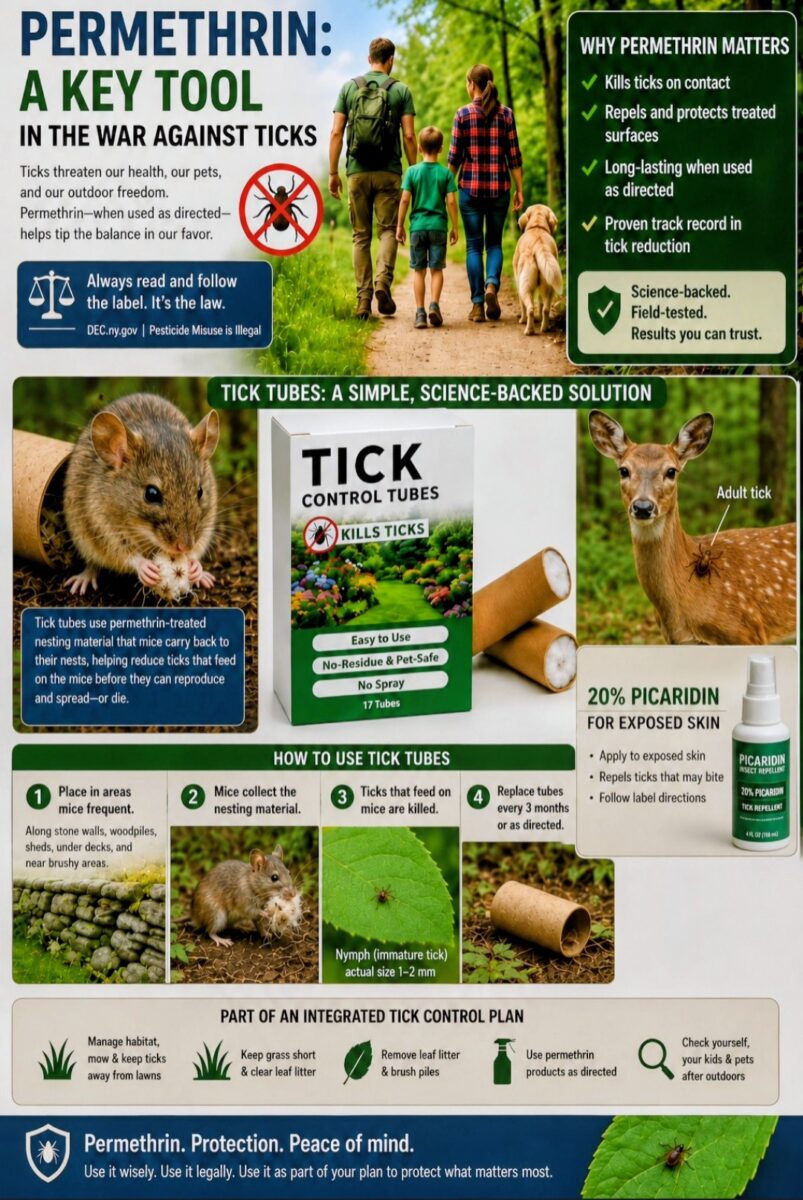
Learning more about protection from deer ticks, and where the Lyme bacterium comes from are key to education about staying healthy. Illustration by Sheri Voss

What about eating venison? This is another point that deserves far more public attention: You do not get Lyme disease from eating properly handled and cooked venison.

The fact that a deer can carry ticks does not mean the meat is a source of Lyme disease. Lyme disease is transmitted through the bite of an infected black-legged tick—not through eating deer meat (venison).

As a general rule, hunters should still follow normal precautions when field-dressing deer: wear appropriate gloves, wash hands and equipment, and handle and cook venison properly.

There is no reason for Lyme disease fears to turn into fear of eating venison. The ticks did not give the meat Lyme disease and eating properly prepared venison is not a recognized route of Lyme transmission.

So why not attack the mice?

This is where things get even more interesting.

It may seem logical to simply eliminate mice, but nature rarely makes things that easy. Removing mice indiscriminately could potentially leave infected ticks looking for other hosts (any warm-blooded creature). The goal should be to interrupt the transmission cycle—not simply remove one piece of it.

What about tick tubes? Commercial tick tubes use nesting material treated with 20-percent permethrin. The concept is simple: mice collect the material and bring it into their nests. The EPA suggests placing these around wood piles, bushes, flower beds, stone walls, etc.  The permethrin can kill ticks feeding on those mice, potentially reducing the number of infected ticks entering the next stage of their life cycle. These sorts of products make good sense. More properly regulated mouse-targeted, tick-targeted commercial products should be developed, tested and approved.

In the end, we need to protect ourselves but understand the source of Lyme disease (mice).

Personal protection remains extremely important. Appropriate tick-repellent clothing, EPA-registered repellents such as permethrin (for clothing) and picaridin (for exposed skin), and thorough tick checks after being outdoors can reduce the chance of a tick bite. Note that when purchasing skin protection products, look for those with 20 percent picaridin in their spray or solution-based formula, as noted on the side of the label. Personal protection addresses our exposure. It doesn’t address the ecological cycle that produces infected ticks.

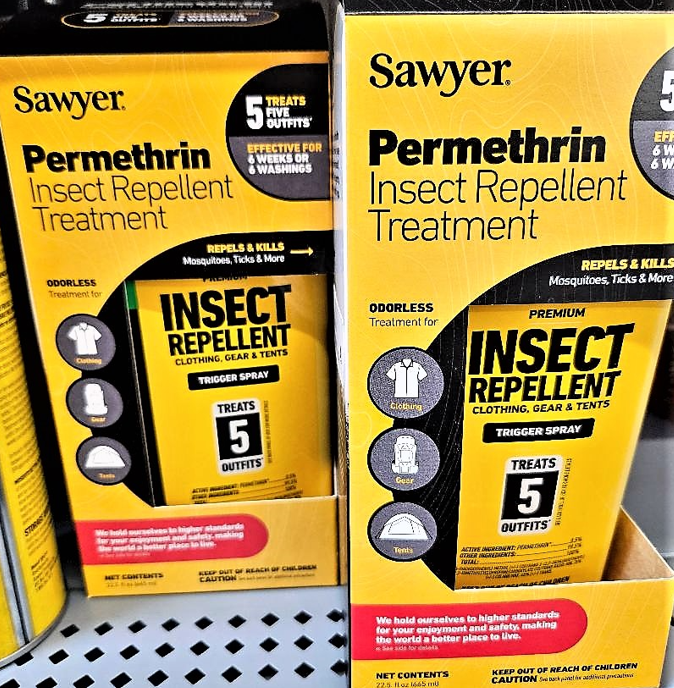
Personal protection remains extremely important. Appropriate tick-repellent clothing, EPA-registered repellents such as permethrin (for clothing). Forrest Fisher photo

The deer are part of the story. The white-footed mouse is a much bigger part of the Lyme story.

The country doesn’t need a war on wildlife. It needs better public education, better research and better tools for interrupting the mouse–tick–Lyme cycle.

Respect the deer.

Enjoy the outdoors.

Hunt responsibly.

Eat your venison.

Lastly, do understand what is really happening in the woods beneath our feet.

If we want to get serious about Lyme disease, we need to stop looking only at the deer—and start paying much more attention to the mouse.

Gotta love the outdoors.

Jumbo Perch and Thunder-Chickens: it’s Spring in the Northeast

  • With spring rain and wind, staying warm and dry requires planning.
  • When hunting: Stay free of deer ticks, learn about using Permethrin, Picaridin, and Rynoskin.
  • Hunting or Fishing: Keep your feet dry and warm. Check out Vaprtrek insulated boots and light Merino wool socks. 

By Forrest Fisher

When the wind and rain occasionally find a vacation stay in Western New York, experienced hunters like Gary Huber change tactics to find the birds. This is Huber’s second spring-season bird this year, filling his 2-bird season limit.

It has been an excellent year for rain gear and umbrella salesmen. So, getting out there with rod/reel or hunting gear requires a combination of preparation, proper gear, and strategy to stay dry, safe, and productive. You know the old saying: Failing to plan is a plan for failure.

It’s spring in the North and East and elsewhere. It’s chilly. It’s rainy. It’s “uncomfy.” If you’re fishing or hunting, invest in high-quality, insulated, waterproof boots. Add a thin polyester sock as the first layer on your foot, then a thin pair of Merino wool socks before inserting your foot into the boots. What boots?  I’ve been wearing the Irish Setter VAPRTREK models because they are light and comfy. I wear out at least one pair a year. They are my everyday boots for when I play outdoors.

If you’re in the turkey hunting woods looking to find a thunder-chicken, get some gaiters too, and spray them up with Permethrin to keep the deer ticks from finding a doorway to crawl up your leg with your back against a tree. While you’re in protection mode, add some Picaridin to your neck and any other exposed skin. Sawyer Company sells both products; they are inexpensive at under $15 each. To stay chemical-free, consider a Rynoskin armor suit as your underwear cover. Even no-see-ums can’t get through. I wear them hunting, fishing and gardening because going through a cure for Lyme Disease in the human body is no fun at all. Ask me how I know? The Rynoskin full-body suit costs about $150, worth every red cent.

The bottom line is that there is nothing like wet feet to END outdoor fishing, hunting, camping trips, or whatever you’re doing outdoors. Stay dry, stay warm, and enjoy the experience.

Next, be smart about where you’re at and what you’re doing. Remember, it’s wet. Get a small dry bag to stow in your rainproof backpack to protect your wallet, keys, and phone.

When the jumbo perch in Lake Erie are biting, chilly weather with wind and rain can take a backseat, but keeping dry with the footware and outerware is important. Captain Hans Mann photo

You’re ahead of the curve if you wear moisture-wicking clothing layers with breathable, waterproof outer layers, such as pants and jackets (like Gore-Tex). Get these garments in the color you need to be where you are. Add a wide-brim hat or hood and waterproof gloves if you need them, and life will be cozy and dry. Happiness is.

It has been windy and stormy from the Midwest to the Northeast for weeks. Right through the start of many opening day fishing and spring turkey hunting seasons all across the north country regions. If you don’t postpone your fishing trip because of wind and waves, and then decide to go hunting instead (no big waves in the woods), use a buddy system. Don’t go alone if possible – but at least tell someone where you’re headed. Trees can crash down in heavy wind at times. So, look around for solid trees to be protected from that type of event before sitting down. Be safe.

Jumbo perch are schooling in Eastern Lake Erie and modern sonar can find them. Captain Daryl Glassner photo

Fishing for Lake Erie jumbo perch in heavy winds can be challenging and downright brutal. Just ask big perch prize winner, Mark Mohr, from the annual Southtowns Walleye Lake Erie Perch Contest, always held on the first weekend of May. Mohr caught the biggest perch of the tourney with a 2.74-pound jumbo, but his fishing buddies Mark Woelfle and Charter Captain Rob Ebersole admit that their fingers felt frozen and their feet were wet. With heavy wind and high waves, it’s difficult to keep the fishing lines down and even more challenging to keep the boat still enough to drop down 2-hook and 3-hook fishing rigs with minnows in 55 feet of water depth.

If in the turkey woods, remember that turkeys move less in the wind. Set up in wind-protected hollows, field edges, or lowland woods, and be watchful. Don’t call too often, sounds move in funny ways in the wind. Plus, the rain quiets the forest floor, so you must listen and watch more carefully than usual.

On any day, it’s pretty exciting when a bird in the far distance answers and you realize he is answering you! You wait a few minutes and reply back with your call, and they return their volley of turkey jabber. It’s honest, exciting fun. In this light of turkey sound creation by us humans to fool a tom turkey into thinking we are sexy turkey hens waiting around the next brushpile for them, I want to share a new discovery. About a year ago, I met Brian Benolken, owner of Cutting Edge Game Calls. He shared with me, his new turkey-calling toy and explained how inventor Eric Steinmetz created one of the most unique turkey box calls ever made. I have one now and discovered the call is totally innovative and is deadly-useful if you hunt turkey. Constructed in a 4-way configuration of old-fashioned sounding boards made from four different wood species, it is called the “4-Play Turkey Call.” The paddle is a sort of a game-like joystick that allows variable pressure and angle change to provide never-before-possible turkey friendship, mating and boss-bird leadership sounds. All in one call. The 4-Play provides clucking, yelping, cackling and cutting sounds. Any of the four sounding boards can be accessed by rotating the paddle around one end of the call. The resulting notes can form a composition of turkey singing harmony unmatched by one call ever before. My wife actually gets upset when I practice with this call in the backyard. It attracts turkeys, a variety of wild birds, and some of those critters that feed on birds and turkeys (fox, coyotes, etc.). Deer know that turkey are keenly aware of predators, so deer come strolling through the yard too. Remind me to take this call when deer hunting during archery season this fall! 

Numerous Wildlife Management Areas in New York and other northern states are open to the public and provide access to diverse habitats for turkey hunting. These are good places to hunt those tasty wild thunderchickens right now.

By equipping yourself with the right gear and adapting your strategy to the weather conditions, you’re setting yourself up for success. Whether you’re fishing or hunting, the thrill of a successful and safe outdoor experience is hard to match.

Gotta love the outdoors.

Scott Jordan with youngster, Ethan Cole, with a successful youth turkey hunt. The 2025 New York State Youth Turkey Hunt weekend ended this past Sunday. Photo by CRCS Outdoors

Turkey Hunters, Deer Ticks, Lyme Disease – What to do?

Pic 1 of 1: Comparison of Deer Tick life stages over a dime: (L to R) larvae, nymph, adult male, adult female. Photo courtesy of Chautauqua County Health Department

  • Deer tick bites are painless. You must look to see if you have a tick embedded in you.
  • Deer ticks carry Lyme Disease. Lyme can mimic more than 300 other diseases, frequently causing misdiagnosis.
  • Use Permethrin on your clothes and Picaridin on your exposed skin for protection. 
Comparison of Deer Tick life stages over a dime: (L to R) larvae, nymph, adult male, adult female. Photo courtesy of Chautauqua County Health Department


By Forrest Fisher

Lyme disease has more than doubled in several parts of the country since 2014. Three of my seven grandkids became unfocused a few years ago, fatigued, and complained about aches, pains, and headaches. They were 7, 14 and 16 years old. Too young for the usual rites of arthritis passage and similar ailments.

In short, we eventually discovered that all three had Lyme disease. Identifying and finding a remedial cure took three years and $2,000 per month. The mysterious cause of the sickness was Lyme disease. Lyme can mimic more than 300 diseases, allowing patients and untrained medical staff to misdiagnose this killer disease before it is diagnosed correctly.

The disease is caused by a bacterium (Borrelia burgdorferi) and can be spread to humans when an infected black-legged tick (also known as a “deer tick”) attaches to a human. Deer ticks are so tiny through all four stages of their 2-year life cycle that people may never see them or recognize them as a threat to their health. But these little critters are seriously dangerous.

Deer ticks typically live in shady, moist areas at ground level. They cling to tall grass, bushes and shrubs, usually no more than two feet off the ground. They also live in lawns and gardens, especially at the edges of forested areas and around old stone walls. Ticks cannot jump or fly onto a person. They usually wait in vegetation and cling to animals or humans that pass by.

Deer ticks can also be found on your moored boat at the marina! I have seen this occurrence twice now. They cling to seagulls and birds, then drop off when the birds stop to rest on the gunnel of a moored boat at the marina. Stay aware.

Once a tiny tick gets on the skin, it climbs upward until it reaches a warm, protected body area. Under arm areas, the groin, behind the ear or on the nape of your neck, then burrows in. Their bite is painless. You have to look to see that a deer tick has made entry. Look for a little bump in your skin that wasn’t there yesterday. If you go outside, check yourself every day. Moms and dads, a word to the wise to check your kids. Shower off after coming inside.

Warmer weather is upon us, and it is an excellent time of year to get outside and explore the natural beauty of your community. Be prepared if you are a fresh mushroom picker, wild onion seeker, woods hiker, camper, turkey hunter, or gardening enthusiast.

Permethrin is a synthetic molecule similar to those found in natural pyrethrum, which is taken from the chrysanthemum flower. It is available at Cabelas.
Picaridin delivers a similar effect as DEET, repelling troublesome insects for up to 8 hours. Reapply then. It is available at Cabelas.

My family and I have learned to depend on Permethrin spray to coat our exterior clothing and boots. One application of permethrin on clothes lasts six weeks, even through the wash. Not only does it repel insects from clothing and other fabric products, but it will actually kill ticks, mosquitoes, chiggers, mites and more than 55 other kinds of insects. Permethrin is a contact insecticide that is non-toxic to humans.

We also use Picaridin on our exposed skin areas, which is applied each outing. Picaridin needs to be reapplied every eight to 10 hours. Picaridin effectively repels mosquitoes, ticks, biting flies, stable flies, black flies, gnats, chiggers, and sand flies.

Bass Pro, Cabelas, Walmart and drug stores everywhere carry these inexpensive Permethrin and Picaridin products made by Sawyer Labs.

For non-chemical protection, purchase and wear a Rynoskin suit (www.rynoskin.com). The whole suit weighs about two ounces. It is thin, light, and breathable, but deer ticks and similar 8-legged arachnid critters cannot get through. A suit consists of socks, lowers, uppers, gloves, and a head cover. The suit eliminates worrying about spending too much time outside, especially for turkey hunters. Rynoskin protects against mosquitoes, ticks, chiggers, no-see-ums, black flies, sand fleas, gnats and many other biting insects. Rynoskin is safe and chemical-free; It is designed to be worn underneath clothing, providing comfort and stealthy movement. It is machine washable and dryable

May is Lyme Disease Awareness Month. To prevent disease, promote wellness, and protect the health and safety of the community, health departments across the country recommend checking for and properly removing ticks, understanding Lyme disease symptoms and knowing when to call your doctor. If you spend time outdoors, here is one website video to learn more about being outside at this time of the year: https://chqgov.com/environmental-health/news/video-protect-yourself-against-ticks-and-lyme-disease.