-
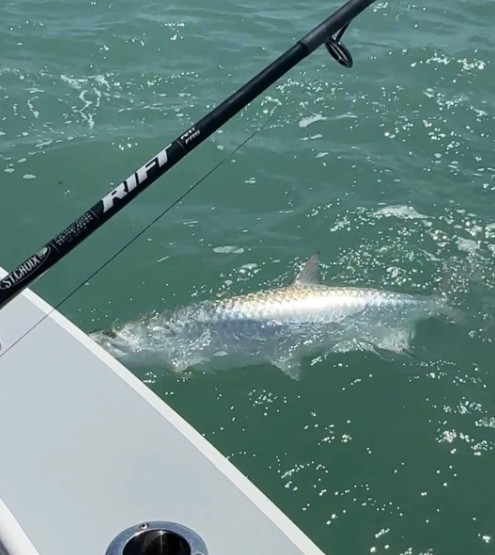
Tarpon are so big and so powerful that working them to the side of the boat is a fun experience that can take 30 to 45 minutes. We were using St. Croix 7-foot-10-inch St. Croix RIFT rods—medium heavy power, medium fast action, built to handle the brute strength of tarpon. Boca Grande Pass is widely known as the tarpon fishing capital of the world.
- We ran the beaches, circled Cayo Costa, thru Captiva Pass, back to the beach – and there they were!
- The action was steady, intense, and unforgettable.
By Forrest Fisher
Daybreak comes softly along Florida’s Gulf Coast, but on this particular May morning not far from Englewood Beach, anticipation cut through the darkness long before the sun had a chance. Day two of our trip had us gearing up for something special—tarpon fishing in the waters surrounding Boca Grande Pass, widely known as the tarpon fishing capital of the world.
We met Charter Captain Justin Cauffman of Native Salt Charters at his dock on Gasparilla Island, just steps from the iconic Pink Elephant restaurant. The dock lights glowed against the night water surface as we made our way down just before 6 a.m. Waiting for us was his 25-foot C-Hawk bay boat, already alive with energy. Soft rock played quietly in the background while a wash of colorful interior lights gave the vessel a polished, almost futuristic feel. It was an impressive start to what would become an unforgettable day.
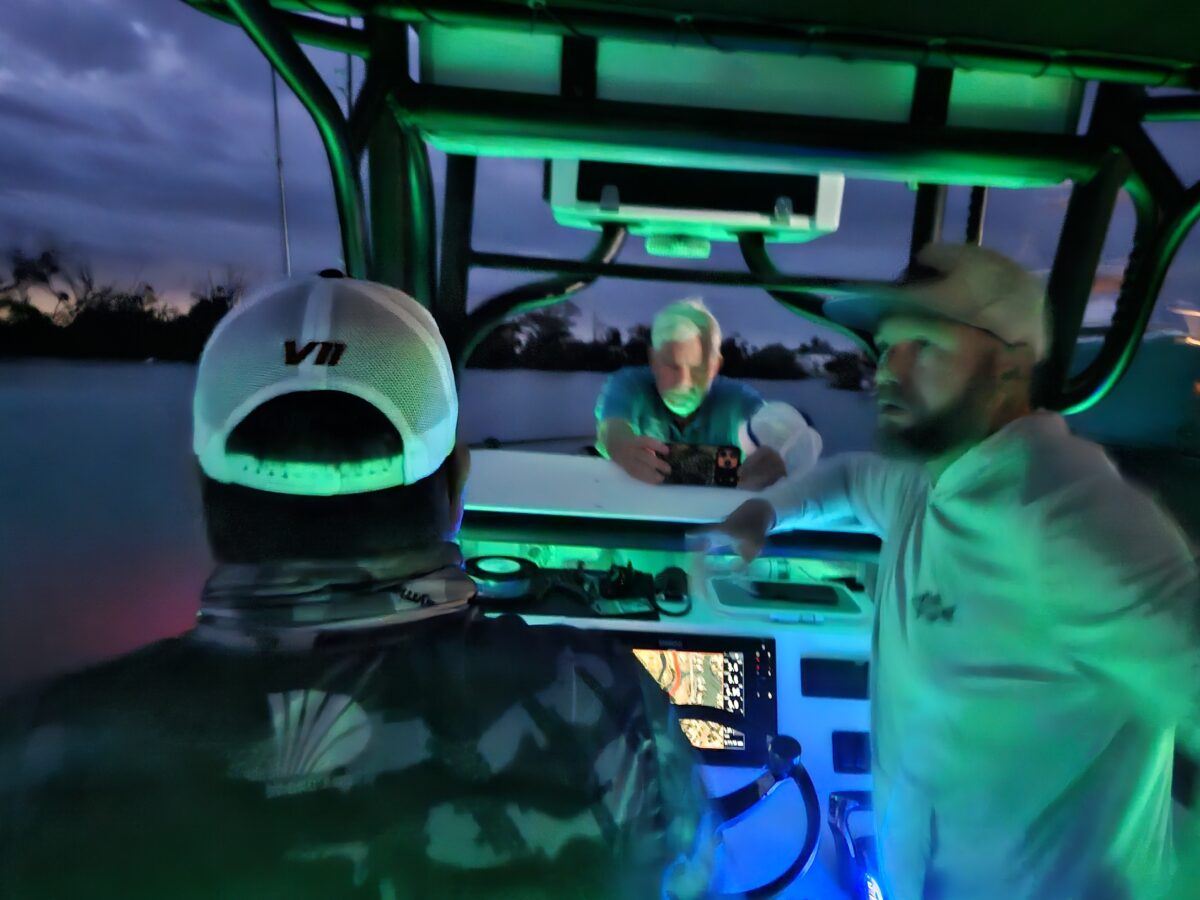
The gear told its own story of preparation and precision. Rod holders lined the boat, each loaded with 7-foot-10-inch St. Croix RIFT rods—medium heavy power, medium fast action, built to handle the brute strength of tarpon. Paired with them were brand new Seviin 6000 reels, spooled with 60-pound braid line and finished with an 8-foot, 60-pound fluorocarbon leader tied to an 8/0 circle hook, that included a secret hook variation called a target bead. The FG knots connecting braid to leader were flawlessly smooth, nearly invisible to the eye—a small but critical detail when targeting wary giants.
We pushed off into the darkness, the wind already making its presence known—steady at 16 mph from the east-northeast. You know the old saying, wind from the east, fish bite the least. We were hoping that was not the case this day. As we ran toward Boca Grande Pass, the boat cut cleanly through the chop. Despite the conditions, not a single spray made it aboard. The air temperature hovered around 59 to 60 degrees, and Captain Justin laughed, calling it “sweater weather.” At 40 mph across open water, it felt much colder—but none of us seemed to mind. We were more familiar with the feeling of shoveling snow from a few weeks earlier, up north. Who said cold?! No way.
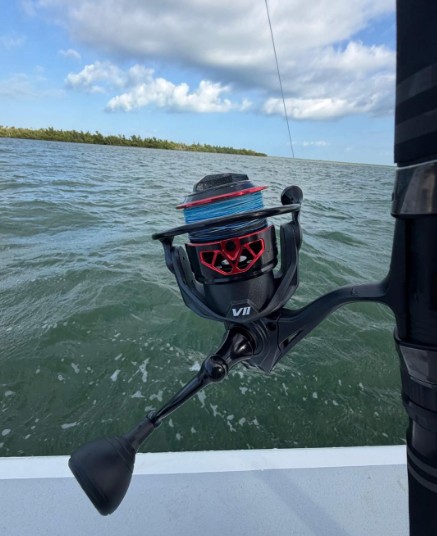
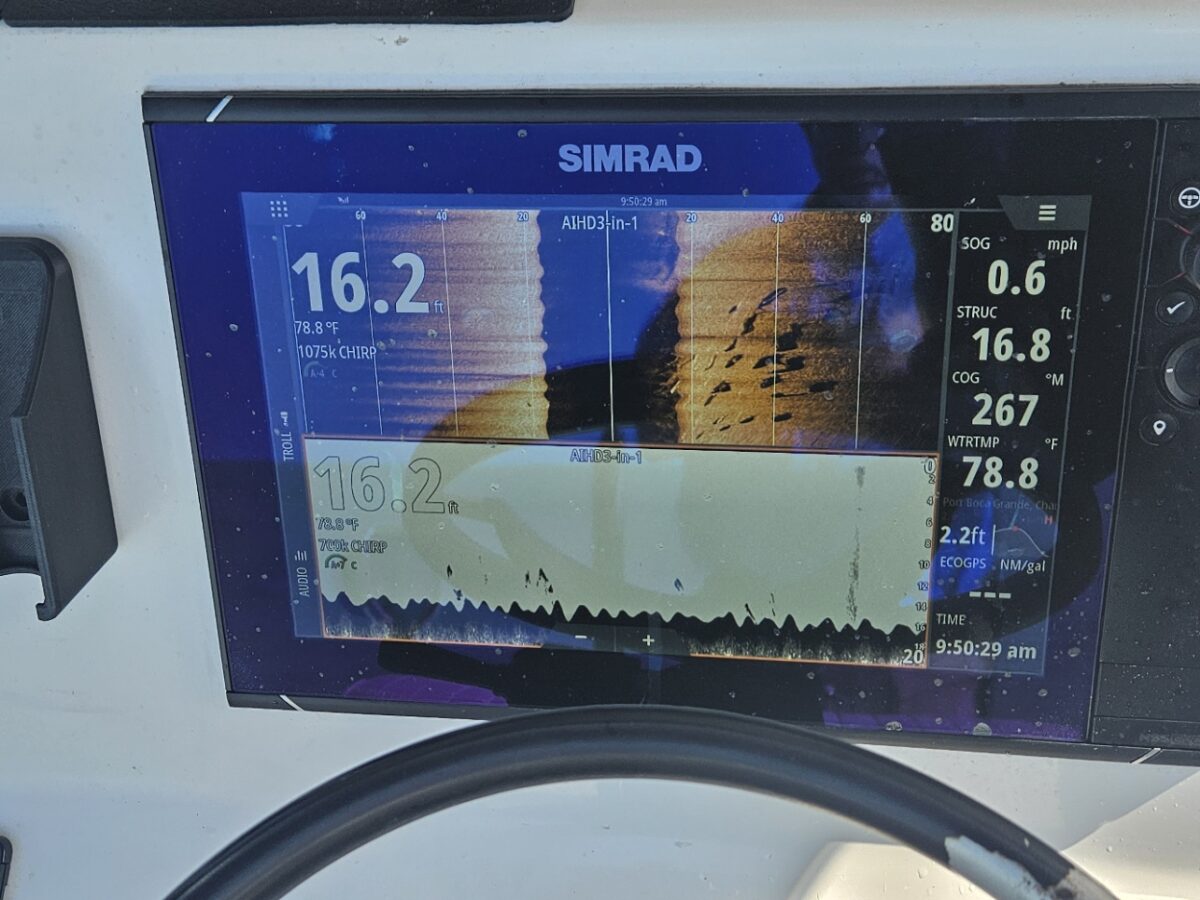
Fishing alongside two great friends, Josh Lantz from Michigan and Captain Richard Simms from Tennessee, the mood was equal parts focused and excited. We joked about the weather as we reached Boca pass. The captain started scanning. The depth dropped to around 80 feet, and the electronics lit up with side scan and down scan imagery. But something was off. The water was dirty—murky with reduced visibility—and the screens showed no signs of fish. It had been very windy the last several days.
“Tarpon don’t like dirty water,” Captain Justin explained.
“It’s time to move.”
Josh joked, “Where do you hide 10,000 tarpon?”
Justin smiled. “They move fast when conditions change. We’ll find them.” He said that in full confidence and we all felt reassured.
That kicked off a search that would cover roughly 25 miles over the next 45 minutes. We ran along the beaches, checked the departure buoys, and then circled around Cayo Costa toward Captiva Pass. No fish there either. The geography of this region—stretching from Englewood Beach to Gasparilla Beach through Boca Grande Pass and into Charlotte Harbor—is dynamic and alive. Barrier islands like Gasparilla and Cayo Costa shape the currents and tides, creating a constantly shifting mosaic of clean and dirty water, bait movement, and predator behavior.
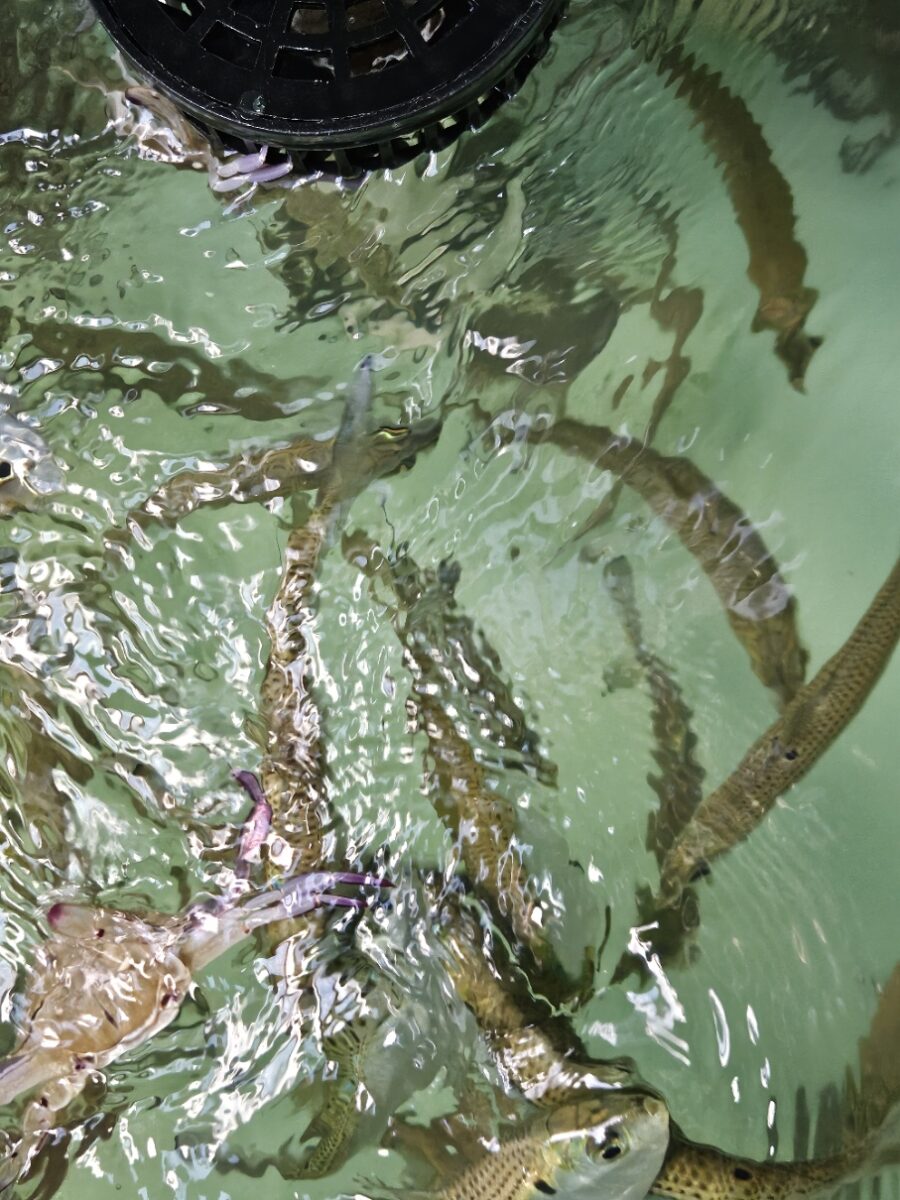
Along the way, we made a quick stop to refresh the live well. With practiced skill, Justin tossed a 20-foot cast net, perfectly spread, with ease, over a school of bait. In less than ten minutes, we had dozens of lively 7-9 inch threadfin minnows to complement the crabs already onboard. Watching him throw that net was like watching a craftsman at work—effortless in appearance, but clearly the result of years of repetition.
Then came the moment.
We swung back toward Gasparilla Island and West Side Beach, and suddenly the electronics lit up. Dozens of tarpon appeared on the side scan, stretching out to 100 feet.
They were here.
Lines went out. Baits hit the water. And almost immediately—chaos.
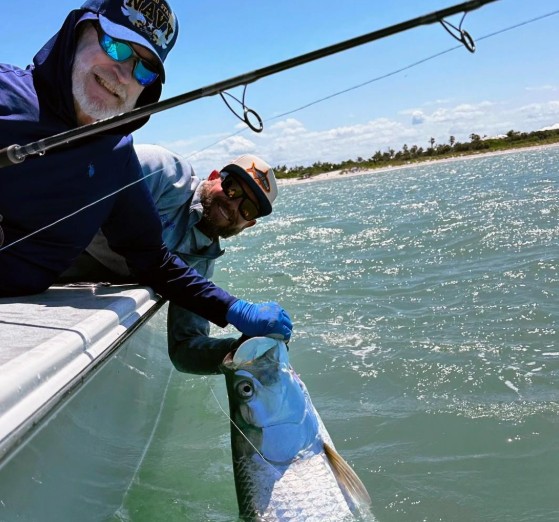
Richard hooked the first fish, a powerful adult stretching close to six feet. The fish surged, rolled, and fought with the kind of strength that defines tarpon fishing. After a determined battle, it came alongside the boat for a quick line touch—counted as a catch in tarpon fishing tradition.
The bite stayed hot.
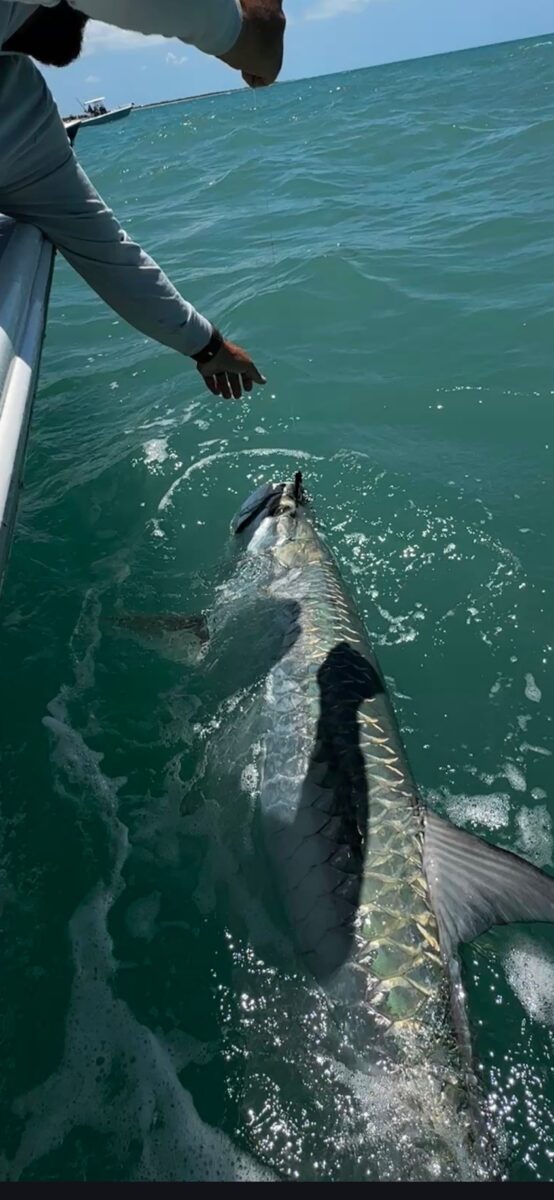
Over the next five hours, each of us hooked multiple fish. The action was steady, intense, and unforgettable. I managed to land two tarpon—each fight lasting between 20 and 30 minutes. Even with top-tier gear, these fish demand everything you have. My arms, my back and my leg muscles were screaming from my aging body, but somehow, there was no sense of noticeable pain to complain about. This was sheer fun. Pain? What pain? Let’s do it again. And we did.
The Seviin 6500 reels performed flawlessly. Their smooth, consistent 40-pound drag helped wear down the fish without risking breakoffs. Combined with the strength and responsiveness (sensitivity) of the St. Croix RIFT rods, the setup proved ideal for battling these giants.
But one moment stood out above the rest.
Josh hooked into a massive tarpon—easily pushing five feet in length. The fight brought it close to the boat, the silver body flashing just beneath the surface. Then, in an instant, everything changed. Two bull sharks appeared out of nowhere. In a split second, they tore into the tarpon, literally slicing it in half midway between the head and tail before anyone could react.
It was shocking. Raw. Unfiltered.
“Nature at home,” someone said quietly…with some adrenalin tone in their voice.
The phrase “shark sustainability” came up—a reminder of the complex balance within this ecosystem. The same waters that produce incredible tarpon fishing also support thriving predator populations. It’s all connected. I heard one charter captain holler over to another, “There must be 40,000 tarpon in the harbor and pass right now, I’ve never seen anything like this in 20 years.” The only question for all the anglers is how to get one to bite your hook. The fish are busy showing off between themselves. The males impressing the females. Nature at its best.
Throughout the day, Captain Justin constantly adjusted tactics. He changed weights, added floats, switched leader sizes, and rotated baits between crabs, threadfin, and mullet. Every decision was deliberate, based on conditions, fish behavior, and nearly two decades of his experience on these waters.
And he shared it all.
From the nuances of tide movement in Boca Grande Pass to the migration patterns of tarpon along the beaches and into Charlotte Harbor, Justin turned the trip into a master class. He spoke about conservation, the importance of sustainable fisheries, and how responsible practices ensure that future generations can experience the same thrill.
That thrill—the moment a tarpon explodes on a bait, the rod doubles over, and the reel drag screams—is hard to describe. It’s part adrenaline, part awe. These fish, often called “silver kings,” are among the most iconic gamefish in the world for a reason.
Landing one isn’t just a catch. It’s an accomplishment. My aching arms can share.
By the time we headed back, eight hours after we started, the sun was high and the chill of the morning long gone. But the energy remained. We were tired, windblown, and grinning from ear to ear.
From Englewood Beach to Boca Grande Pass and across the rich waters of Charlotte Harbor to Pine Island, the day had delivered everything—challenge, excitement, education, and a deep appreciation for one of the most remarkable fisheries in the country.
And somewhere out there, thousands of tarpon are still moving—waiting for the next perfect moment. From April through the start of July, this is “Tarpon Town.”
Author Note: For more information about Native Salt Charters, visit https://nativesaltcharters.com/. For information about lodging, eateries, and vacation services, visit the Punta Gorda and Englewood Beach Visitor and Convention Bureau at https://www.pureflorida.com/.