Tarpon at Sunrise: Boca Grande Pass

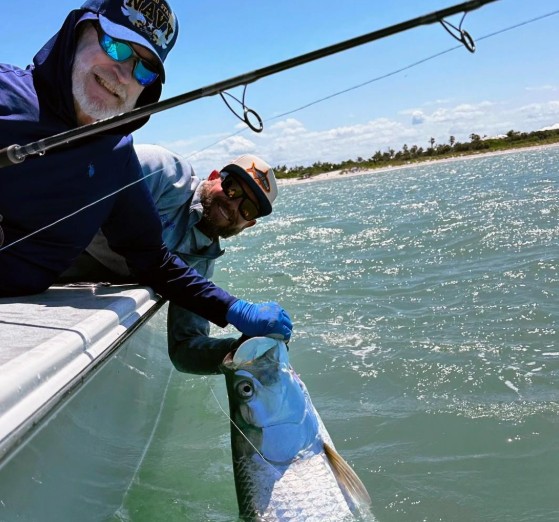
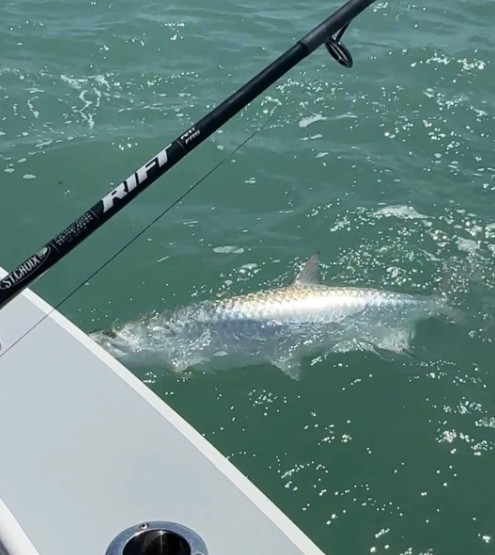
  • Tarpon are so big and so powerful that working them to the side of the boat is a fun experience that can take 30 to 45 minutes. We were using St. Croix 7-foot-10-inch St. Croix RIFT rods—medium heavy power, medium fast action, built to handle the brute strength of tarpon.

    Boca Grande Pass is widely known as the tarpon fishing capital of the world.

  • We ran the beaches, circled Cayo Costa, thru Captiva Pass, back to the beach – and there they were!
  • The action was steady, intense, and unforgettable.

By Forrest Fisher

Daybreak comes softly along Florida’s Gulf Coast, but on this particular May morning not far from Englewood Beach, anticipation cut through the darkness long before the sun had a chance. Day two of our trip had us gearing up for something special—tarpon fishing in the waters surrounding Boca Grande Pass, widely known as the tarpon fishing capital of the world.

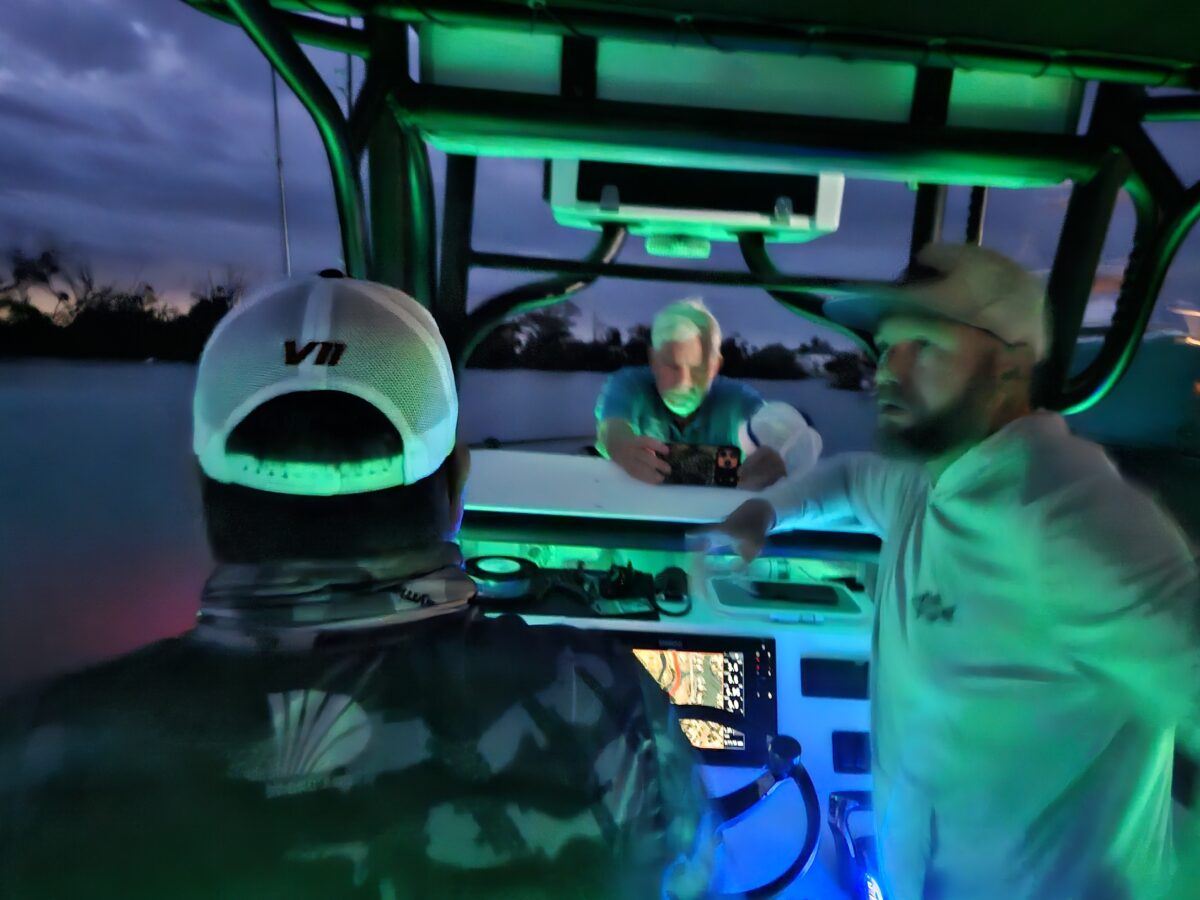
We met Charter Captain Justin Cauffman of Native Salt Charters at his dock on Gasparilla Island, just steps from the iconic Pink Elephant restaurant. The dock lights glowed against the night water surface as we made our way down just before 6 a.m.  Waiting for us was his 25-foot C-Hawk bay boat, already alive with energy. Soft rock played quietly in the background while a wash of colorful interior lights gave the vessel a polished, almost futuristic feel. It was an impressive start to what would become an unforgettable day.

Captain Justin Cauffmann was waiting for us in his 25-foot C-Hawk bay boat, already alive with energy. Soft rock played quietly in the background while a wash of colorful interior lights gave the vessel a polished, almost futuristic feel.

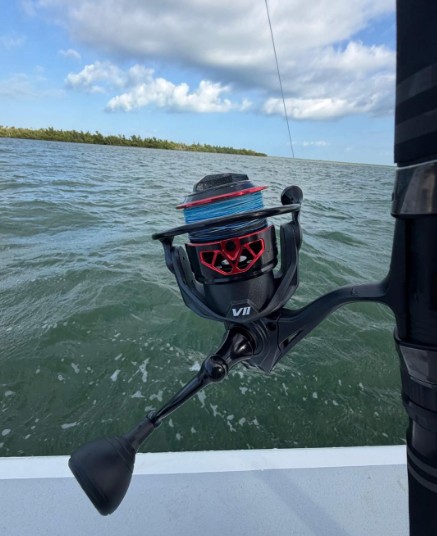
The gear told its own story of preparation and precision. Rod holders lined the boat, each loaded with 7-foot-10-inch St. Croix RIFT rods—medium heavy power, medium fast action, built to handle the brute strength of tarpon. Paired with them were brand new Seviin 6000 reels, spooled with 60-pound braid line and finished with an 8-foot, 60-pound fluorocarbon leader tied to an 8/0 circle hook, that included a secret hook variation called a target bead.  The FG knots connecting braid to leader were flawlessly smooth, nearly invisible to the eye—a small but critical detail when targeting wary giants.

We pushed off into the darkness, the wind already making its presence known—steady at 16 mph from the east-northeast. You know the old saying, wind from the east, fish bite the least. We were hoping that was not the case this day.  As we ran toward Boca Grande Pass, the boat cut cleanly through the chop. Despite the conditions, not a single spray made it aboard. The air temperature hovered around 59 to 60 degrees, and Captain Justin laughed, calling it “sweater weather.” At 40 mph across open water, it felt much colder—but none of us seemed to mind. We were more familiar with the feeling of shoveling snow from a few weeks earlier, up north. Who said cold?! No way.

The Seviin GW 6000 open-faced spinning reels were loaded with 60-pound braid and an 8-foot 60-pound leader to a size 8/0 circle hook modified with a “hugger bead.” The 40-pound drag on these iconic looking reels was key to tiring out these mega-monster fish. FUN!

Fishing alongside two great friends, Josh Lantz from Michigan and Captain Richard Simms from Tennessee, the mood was equal parts focused and excited. We joked about the weather as we reached Boca pass. The captain started scanning. The depth dropped to around 80 feet, and the electronics lit up with side scan and down scan imagery. But something was off. The water was dirty—murky with reduced visibility—and the screens showed no signs of fish. It had been very windy the last several days.

“Tarpon don’t like dirty water,” Captain Justin explained.

“It’s time to move.”

Josh joked, “Where do you hide 10,000 tarpon?”

Justin smiled. “They move fast when conditions change. We’ll find them.” He said that in full confidence and we all felt reassured.

That kicked off a search that would cover roughly 25 miles over the next 45 minutes. We ran along the beaches, checked the departure buoys, and then circled around Cayo Costa toward Captiva Pass. No fish there either. The geography of this region—stretching from Englewood Beach to Gasparilla Beach through Boca Grande Pass and into Charlotte Harbor—is dynamic and alive. Barrier islands like Gasparilla and Cayo Costa shape the currents and tides, creating a constantly shifting mosaic of clean and dirty water, bait movement, and predator behavior. PIC2 Cast Net

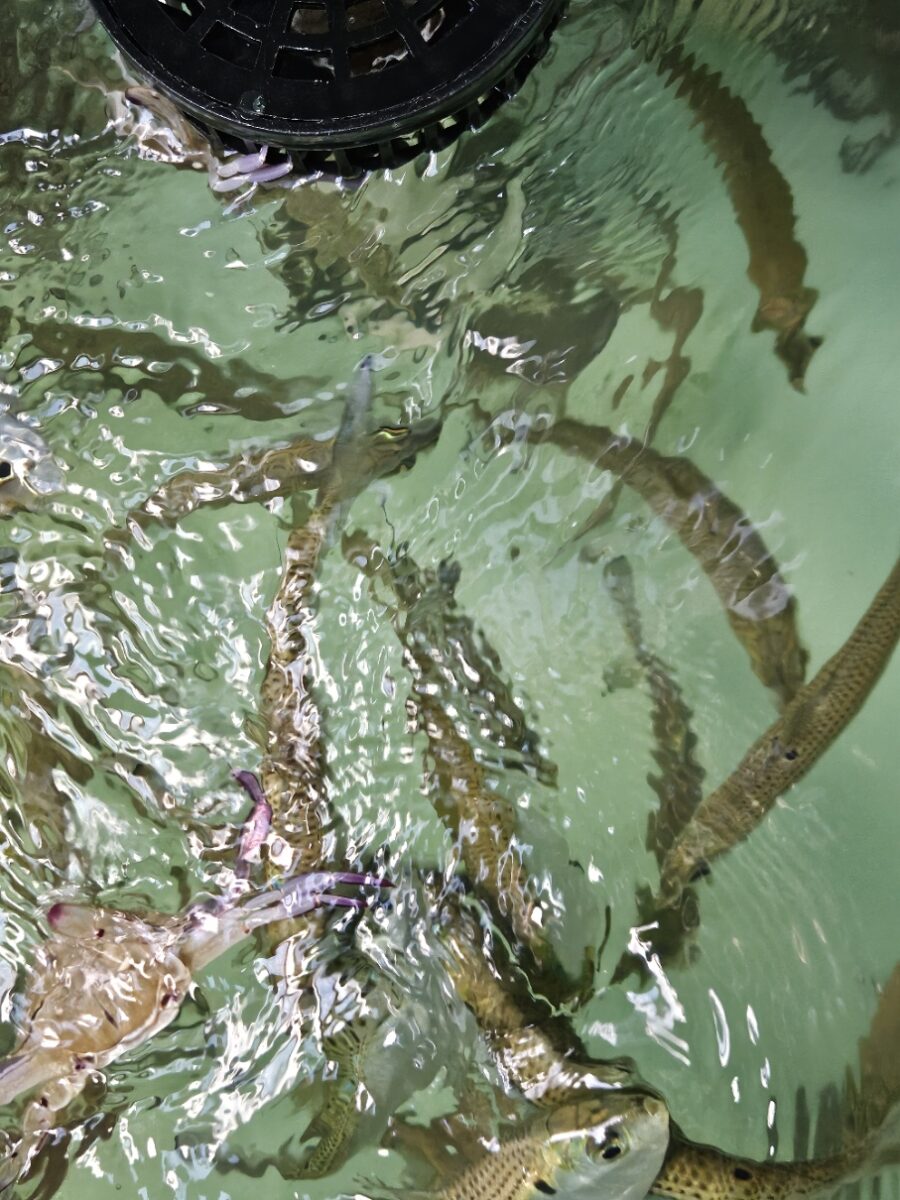
Along the way, we made a quick stop to refresh the live well. With practiced skill, Justin tossed a 20-foot cast net, perfectly spread, with ease, over a school of bait. In less than ten minutes, we had dozens of lively 7-9 inch threadfin minnows to complement the crabs already onboard. Watching him throw that net was like watching a craftsman at work—effortless in appearance, but clearly the result of years of repetition.

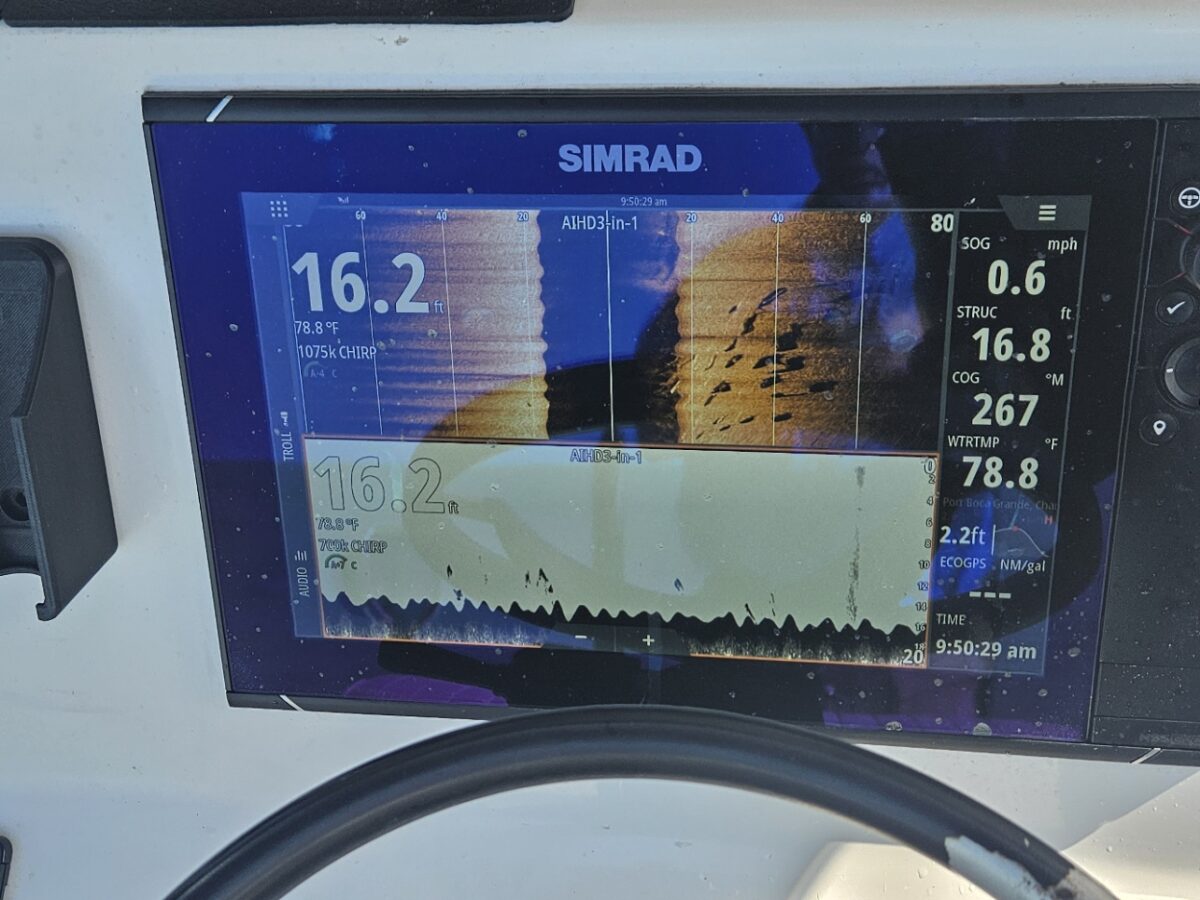
Side-scan spotted the fish (upper right) while 3D down-scan showed their physical level top to bottom. The fish were all close to bottom in this relatively shallow beach water area, allowing the captain to vary methods to put us “into the bite” and catch them.

Then came the moment.

We swung back toward Gasparilla Island and West Side Beach, and suddenly the electronics lit up. Dozens of tarpon appeared on the side scan, stretching out to 100 feet.

They were here.

Lines went out. Baits hit the water. And almost immediately—chaos.

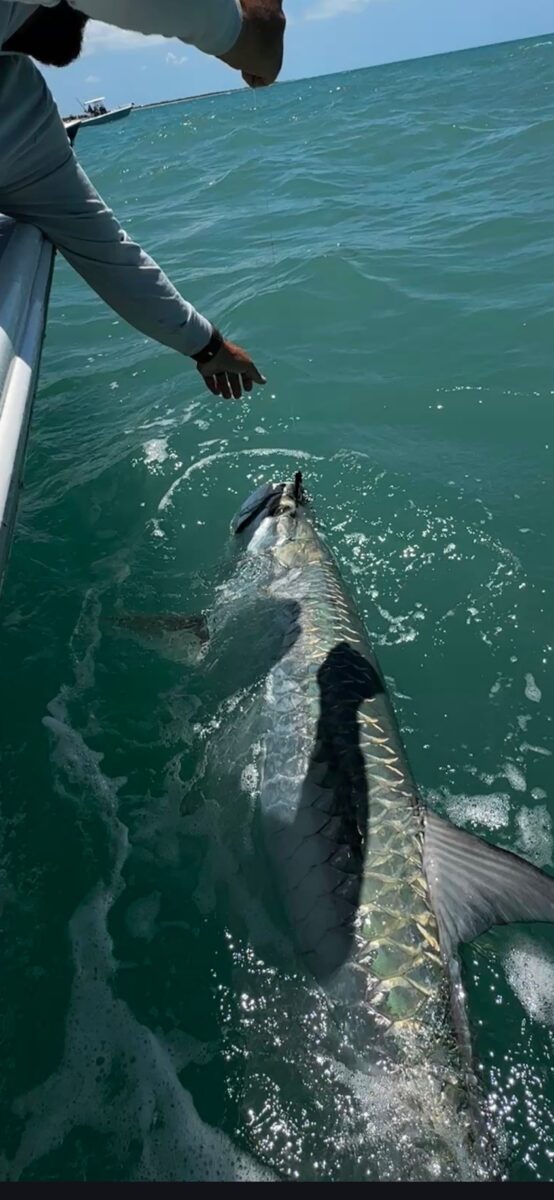
Richard hooked the first fish, a powerful adult stretching close to six feet. The fish surged, rolled, and fought with the kind of strength that defines tarpon fishing. After a determined battle, it came alongside the boat for a quick line touch—counted as a catch in tarpon fishing tradition.

The bite stayed hot.

Adult tarpon can be 7-feet long and weigh up to 200 pounds, all the while leaping 5-feet out of the water with aerial acrobatics over a half-hour long rod/reel battle.

Over the next five hours, each of us hooked multiple fish. The action was steady, intense, and unforgettable. I managed to land two tarpon—each fight lasting between 20 and 30 minutes. Even with top-tier gear, these fish demand everything you have. My arms, my back and my leg muscles were screaming from my aging body, but somehow, there was no sense of noticeable pain to complain about. This was sheer fun. Pain? What pain? Let’s do it again. And we did.

The Seviin 6500 reels performed flawlessly. Their smooth, consistent 40-pound drag helped wear down the fish without risking breakoffs. Combined with the strength and responsiveness (sensitivity) of the St. Croix RIFT rods, the setup proved ideal for battling these giants.

But one moment stood out above the rest.

Josh hooked into a massive tarpon—easily pushing five feet in length. The fight brought it close to the boat, the silver body flashing just beneath the surface. Then, in an instant, everything changed. Two bull sharks appeared out of nowhere. In a split second, they tore into the tarpon, literally slicing it in half midway between the head and tail before anyone could react.

It was shocking. Raw. Unfiltered.

“Nature at home,” someone said quietly…with some adrenalin tone in their voice.

The phrase “shark sustainability” came up—a reminder of the complex balance within this ecosystem. The same waters that produce incredible tarpon fishing also support thriving predator populations. It’s all connected. I heard one charter captain holler over to another, “There must be 40,000 tarpon in the harbor and pass right now, I’ve never seen anything like this in 20 years.” The only question for all the anglers is how to get one to bite your hook. The fish are busy showing off between themselves. The males impressing the females. Nature at its best.

Throughout the day, Captain Justin constantly adjusted tactics. He changed weights, added floats, switched leader sizes, and rotated baits between crabs, threadfin, and mullet. Every decision was deliberate, based on conditions, fish behavior, and nearly two decades of his experience on these waters.

And he shared it all.

From the nuances of tide movement in Boca Grande Pass to the migration patterns of tarpon along the beaches and into Charlotte Harbor, Justin turned the trip into a master class. He spoke about conservation, the importance of sustainable fisheries, and how responsible practices ensure that future generations can experience the same thrill.

Threadfin in the 7-9 inch size worked for us, while crabs are the usual tarpon favorite dinner morsel. Both worked by end of the day.

That thrill—the moment a tarpon explodes on a bait, the rod doubles over, and the reel drag screams—is hard to describe. It’s part adrenaline, part awe. These fish, often called “silver kings,” are among the most iconic gamefish in the world for a reason.

Landing one isn’t just a catch. It’s an accomplishment. My aching arms can share.

By the time we headed back, eight hours after we started, the sun was high and the chill of the morning long gone. But the energy remained. We were tired, windblown, and grinning from ear to ear.

From Englewood Beach to Boca Grande Pass and across the rich waters of Charlotte Harbor to Pine Island, the day had delivered everything—challenge, excitement, education, and a deep appreciation for one of the most remarkable fisheries in the country.

And somewhere out there, thousands of tarpon are still moving—waiting for the next perfect moment. From April through the start of July, this is “Tarpon Town.”


Author Note: For more information about Native Salt Charters, visit https://nativesaltcharters.com/. For information about lodging, eateries, and vacation services, visit the Punta Gorda and Englewood Beach Visitor and Convention Bureau at https://www.pureflorida.com/.


Shark Teeth, Fun in the Sun…Beach Treasure from Ancient times. Southwest Florida.

  • HOW and WHERE to find shark teeth on the beach – 5 Methods / 6 Hotspots
  • Shark Teeth found on the beach are fossilized – 10,000 to 15 million years old!
  • Back to the Future – It’s fun on the beaches at Manatee Key in Southwest Florida
Southwest Florida beach shark teeth are found in all colors and sizes, drawing the attention of beachgoers from near and far. Forrest Fisher Photo

By Forrest Fisher
There are shark teeth to be found all over the world.  If you are looking for a great place to spend the day frolicking in the Gulf of America, lying in the sun, taking a long walk at the water’s edge and looking for the treasure of fossilized shark teeth, here are a few tips on what, where, and how.

Shark Teeth are a precious authentic treasure for locals and vacationing visitors to Southwest Florida.  You can find them on your own, it’s fun, and it’s the best excuse to RE-VISIT the beaches. It’s something about the word “TREASURE!” If you are new to shark tooth treasure hunting, never stop looking for advice on gear, methods to use, and places to go. There are always new things coming out, but what follows here is the simple, old-fashioned way that most folks find shark teeth at the beach.

Gear: For first timers who want to stay very affordable, visit a local store to buy a (noodle strainer) colander ($1-$3).  If you want to spend a bit more, visit a local beach store to purchase a “sand flea scooper” with ¼ inch mesh ($20). Folks use the colander or sand flea scoopers to scoop the surf for shark teeth. Of course, you can also just pick up shark teeth when you see them at the top of the surf on the beach with your bare hands. Lastly, carry an empty resealable plastic bag or old prescription jar to store your shark teeth as you continue the hunt.  Sunglasses, beach shoes, swim trunks, sunscreen, and now you’re set.

Finding Shark Teeth – 5 Methods:

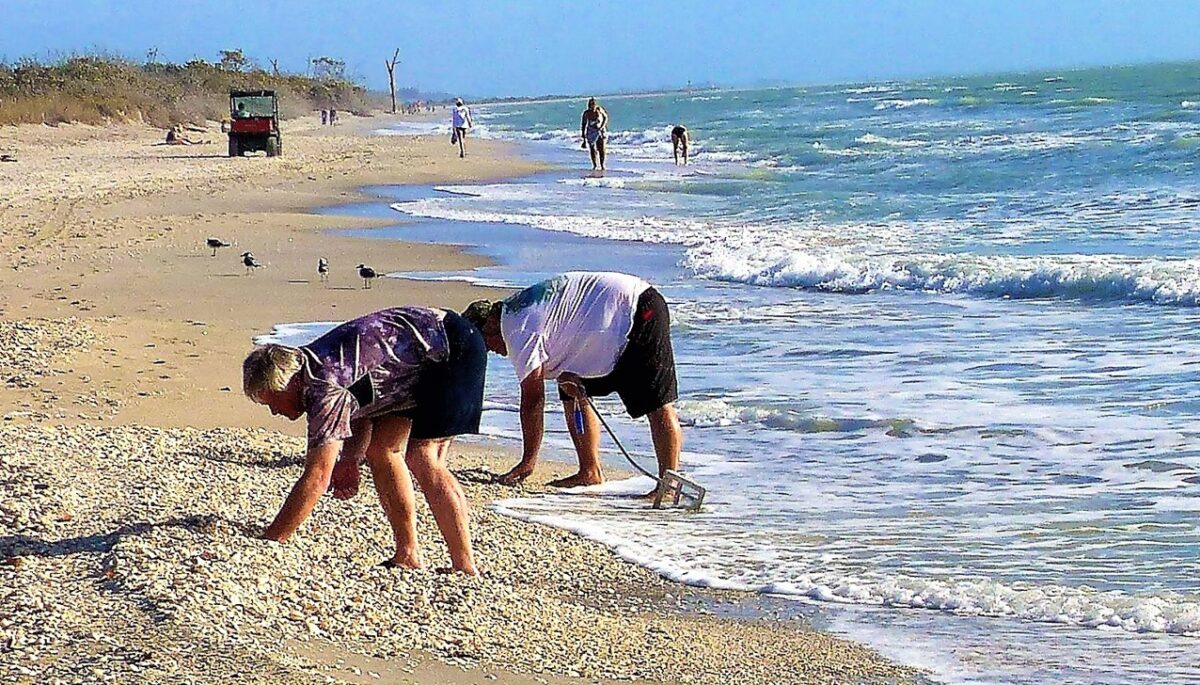
  • Method 1: The Surf Line. Keep it simple, put your sunscreen on, keep your head down, and just saunter along the surf line, where the waves hit the beach, being careful not to bump into any beachgoers doing the same thing going in the other direction. Remember, keep your head down! The best days for this include an east wind at low tide.
    Shark teeth, seashells, sunshine, and gentle surf offer appeal and fun for all age groups.

    The usually black-color shark teeth are easily and clearly visible as they sort of pop up in the firm sand. Each wave can bring more than one at a time. Just pick them up and continue.

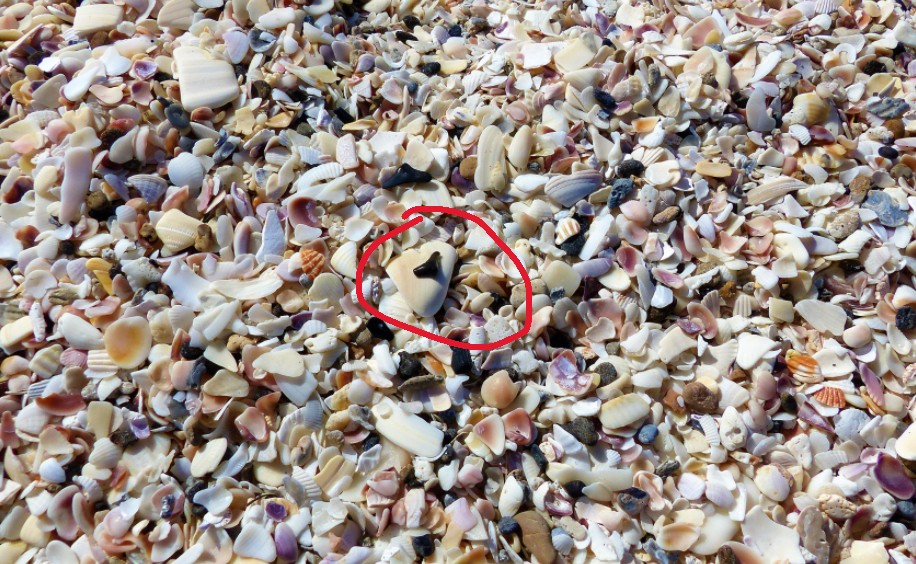
  • Method 2: The Storm Line. If you look along the beach between the tall marsh grass to the water’s edge, you will note that there is a distinct line of demarcation where the sand sort of changes texture and composition. You will usually see a collection of millions of small shells here too, yes, right in the middle of the beach, parallel to the waterline. There are tons of shark teeth here. You might not be the first to search, so look around for a 10 by 10-foot area that appears to be untouched. Drop your picnic blanket down, open up your lawn chairs, put up your portable beach umbrella, and set your cooler down. Get started. Treasure awaits!
    Amidst the thousands of feet of shell lines on nearly every Manasota Key beach, look closely at this photo—there are treasured shark teeth waiting for you!

    The sound of the surf will put you to sleep as you sift the sand “down the line” of your intended search area. My family and I usually do this and find about 100 teeth per beach visit. It’s fairly common for that number if you are a serious “looker.” As we talk about life, listen to the sea birds in constant chatter, enjoy a cool beverage and thank the good Lord for this blessing of a sunny day at the beach…with prehistoric shark teeth treasure.

  • Method 3: The Chair Line. My shark tooth collection expert friends, Tim and Jeanie Snyder, internationally infamous and brazenly simple in their shark tooth-finding process, are extremely efficient and prefer this method to find beach teeth by the hundreds. Bring your own or rent a shallow-height beach chair. Walk to the water’s edge, now look left and look right. Find a little feature point of sand that sort of juts out a bit along the usually long and straight beach line. Go there. Set your chair in the surf line on either side of this point and about 1-2 feet or so into the water. You’re about to get wet (feels so good). Use your hands, a small screen scooper, a colander, or a little minnow net with an extension handle. Put your sunglasses on, keep your eyes open and watch for the shark teeth with each wave. You might find many dozens per hour this way, fresh from the sea!
  • Method 4: The Snorkel/Mask Line. Don your snorkel and mask, walk out 20 to 40 feet from the beach sand, and you’ll note a sort of “deep spot” before it starts to get shallower as you continue to walk out. Go back to the trench, this is the “shark tooth trench!” If the water is clear and not too wavy, walk or swim-float and search the bottom. You’ll often see multiple sets of teeth lying right there for the picking. Shells too. This method can be very productive when the waves are soft and small.
  • Method 5: the EASY WAY – Shark Art Online. Even if you are happy with what you collected, or maybe your trip was canceled by weather or travel plans, if you want a perfect collection of shark teeth for vacation talking moments at your next family gathering, consider this: You can buy assorted shark teeth collections or buy shark tooth art, fully supplied in a small kit for very little money. Prices for simple shark teeth package assortments vary from $10-$15 (for 30 teeth and a free shark tooth necklace) to about $40, based on the size and number of shark teeth. The shark art kits vary from $20 to $35 plus shipping – these are 5 x 7 and 8 x 10-inch art, respectively, and are awesome. Each of the art kits is all-inclusive with the shark teeth (about 200 per pack), an artboard (complete with the profile where you glue the teeth), and directions. These kits are inexpensive and make an awesome gift.
    Tim Snyder, the Shark Art Guy, in his favorite shark-tooth treasure hunting place, the Peace River, 25 to 50 miles from where it enters the Gulf of Mexico.

    Visit this link to order directly: https://www.ebay.com/str/sharkteethandsharkartbyclark or email sharkartbyclark@gmail.com. If you become a repeat customer with three orders of $50 or more, Snyder will offer an invitation for a day of collecting teeth and fossils (get your Florida fossil permit, the cost is $5) on the Peace River (Tim reminds each guest that there are no guarantees on weather, water conditions, water level, how many teeth or fossils are collected and, of course, he is not responsible for any accidents or injuries. You are invited as a friend taking a friend to the river.) I did this trip! Under Tim’s direction of the process, Tim’s shovel and Tim’s sifter in hand, I collected 386 teeth in 5 hours! These are perfect teeth with no rounded edges from the surf. Unreal! It was such fun!

Where to find Shark Teeth – 1 Florida Key, 4 Beaches:

Shark tooth hunters of all sizes, young and old, head for the beach to find prehistoric treasure. Not everyone is successful but study the methods outlined here to learn shark tooth-hunting options for your success. This photo is from Casperson Beach.

Manasota Key is a long island-like land mass between Venice Beach and Stump Pass State Park in Southwest Florida. The Key offers several (seven) popular shark tooth-hunting beach spots. All of them are favorites for locals and visitors alike and include (north to south) Venice Beach, Brohard Beach, Casperson Beach (closed after the 2024 hurricane season), Manasota Key Beach, Blind Pass Beach, Englewood Beach, and Stump Pass Beach State Park.

Large and small shark teeth are a common find on the beach. The lightly worn edges of the shark teeth found on the beach is common; this wear is from the rolling wave action. All shark teeth are a treasure.

There is no fee or toll to enter Manasota Key on the north bridge or the south bridge that crosses Lemon Bay. My personal favorites are these:

  • Manasota Key Beach, located on Manasota Key, offers easy access to the Gulf of Mexico and Lemon Bay (bay side), free parking (6 a.m. – midnight), is not usually overcrowded, and, like so many Florida Gulf beaches, offers that perfect orange-sky sunset. The facility building offers changing rooms and restrooms, multiple beach access points to the ocean, squeaky-clean sand, lots of shark teeth and even more tranquility here.
  • Blind Pass Beach, also known as Middle Beach, offers access to the Gulf and to Lemon Bay, more than ½ mile of beach frontage, a hiking trail through the mangrove forest on the bayside, and a boat launch and fishing dock on the bay side.
    A good day on the shark tooth treasure hunt! 

    We have never found less than 50 shark teeth here during a 3-hour day at this beach. It’s a great spot, relaxing, quiet, and wonderful. Changing and restroom facility here, too, and free parking (6 a.m. – midnight).

  • Englewood Beach, with Chadwick Park, is a favorite for residents and visitors. Clear water and frequent blue skies bring kids of all ages here to go shelling and shark tooth hunting for hours on end. Life is all about “beach therapy” when visiting Florida. If you are thirsty, there is a little Volkswagen Bus business stand near the changing facility that offers tasty smoothies – they’re delicious! If you need food, walk across the street and choose from several walk-in restaurants. Eat, drink, and go back to the beach. Parking at Englewood is by parking pay stations (very reasonable/hr), open 6 a.m. – 9 p.m., they accept credit cards. There is a large changing and restroom facility here.
  • Stump Pass Beach State Park is our personal favorite shark tooth place. Open 8 a.m. – sundown, it’s located at the southernmost end of Manasota Key. Visitors will find one mile of Gulf beach where seashells and shark teeth are washed ashore.
    If you have trouble finding shark teeth, there is one easy cure.  Try one of these Shark art kits. They include the shark teeth, artboard, and directions, are inexpensive, and make an awesome gift. Visit https://www.ebay.com/str/sharkteethandsharkartbyclark.

    Anglers can fish the surf too and there are lots of shark teeth here for everyone. It’s not a bad idea to arrive early and get one of the 60 or so parking spots. The cost is $3 for the day; bring the exact change. Any Park Rangers on site are not allowed to make change, or you can leave the money in the park envelope and keep a receipt (self-service) for your dashboard. At least there is a fair system in place to wait for a spot to open. They have two lines, one to exit and one to wait for a spot to open up. We have never waited more than 20 minutes. The really good part about this beach is that the water is very close to the parking lot. Visitors come to this semi-secluded beach to enjoy the year-round swimming and sun soaking. Shelling and finding shark teeth in the wave wash is excellent during the winter months. A hiking trail with Lemon Bay on one side and the Gulf on the other passes through five distinct natural eco-communities that provide a home for many species of wildlife; covered picnic tables are located along the trail. Visitors can launch a kayak and paddle around the two islands just east of the park land base. While at the park, watch dolphins, manatees, gopher tortoises, snowy egrets, terns, and many species of sea birds. Ranger-led nature hikes are on the calendar during winter months. There are stand-up paddleboard and kayak rentals, lessons, and guided boat tours here too.

At all of these beaches, the intracoastal waterway side of the parks offers a diverse network of mangroves, marsh grass, many species of birds (more than 150), and many species of fish (more than 200). It’s perfect for fishing, kayaking, birding, and wading. The Gulf side of the parks offers sand, surf, sunshine, seashells, and lots of shark teeth.