Fishing is picking up at a pretty good pace on Lake Ontario off Orleans County.
Brown trout fishing is at its best, Coho fishing is good and an occasional steelhead is showing up in the mix on the inside waters.
Farther on out, Lake trout are showing up in an abundance.
This is just a great time for fishing on Lake Ontario.
On Lake Alice, it’s some of everything including bass, walleye (not in season yet), crappie, bluegill, perch, bullhead and even a sucker or two.
I’ve not had a good report on the fishing in the lower portion of the “Oak,” but I have seen several people fishing at the Point.
The muddy water has pretty well cleared to a slightly-stained condition and temperatures are near normal.
Finally, the Lake Ontario water level is 8″ above what it was at this time last year and will continue to rise for at least another month.
When approaching shore please be mindful of the damage your wake could cause during these high-water conditions and approach at idle speeds.
From Point Breeze on Lake Ontario, the World Fishing Network’s Ultimate Fishing Town USA and the rest of Orleans County. We try to make everyday a great fishing day in Orleans County.
One thing is for sure, we have more than enough water to go around and then plenty to share with others. The extended dry spell of today will be followed by rain for the rest of the week, sometimes being very heavy.
All of the tributaries within Orleans County are running high, fast and they are muddy as all get out.
One person told me that Lake Alice was so muddy that he felt it could be plowed. He also said that the only fish in Lake Alice that could see to bite a bait were Bullhead.
On the lower stretches of the “Oak” a good share of the docks are underwater and the river is running very swiftly towards the lake.
The forecast for today calls for swift Northwest winds which will not help the shore residents or the fishery one bit.
One boat went fishing yesterday and seemed to have a pretty good mixed bag of fish including browns, Coho, steelhead and possibly a Chinook in the mix.
The calmest water seems to be that of the Erie Canal right now.
For all of you Spring LOC Derby fishermen, please be mindful of your surrounding conditions and above all else, be safe.
From Point Breeze on Lake Ontario, the World Fishing Network’s Ultimate Fishing Town USA and the rest of Orleans County. We try to make everyday a great fishing day in Orleans County.
A Black Skimmer enjoys the Florida shoreline. “Florida is renowned for its diverse and spectacular bird life,” said FWC Chairman Brian Yablonski. “We want to ensure these birds are here for future generations to enjoy.”
The Florida Fish and Wildlife Conservation Commission (FWC) and Audubon Florida are reminding beachgoers and boaters to give nesting waterbirds and their young space to help keep them safe this nesting season.
Shorebirds build shallow nests out of sand and shells on beaches in spring and summer, and eggs and hatching chicks are difficult to see. Wading birds, such as herons and egrets, as well as pelicans are also nesting now on islands around the state. Both types of birds can be easily disturbed if people approach too closely. Such disturbance can cause birds to abandon their nesting sites, exposing eggs and chicks to predators, sun exposure and other harm.
Shorebird nests, eggs and chicks are well-camouflaged and can easily be missed and even stepped on unless people know to look out for them. The snowy plover, least tern, black skimmer, American oystercatcher and Wilson’s plover are several of Florida’s beach-nesting shorebird species facing conservation challenges. Vulnerable tree-nesting waterbirds, such as brown pelicans, reddish egrets, tricolored herons and roseate spoonbills, have also experienced declines. These coastal waterbirds can benefit from increased awareness by the public.
People can help keep nesting waterbirds safe by keeping their distance from them and Critical Wildlife Areas.
CWAs are established by the FWC to protect congregations of one or more species of wildlife from human disturbance during critical life stages such as breeding, feeding or migration. Last November, FWC commissioners approved an unprecedented effort to create 13 new CWAs and improve five existing CWAs.
A Snowy Plover on her nest in guard of predators along the Florida seashore.
“Some of the CWAs are so new that they have not yet been marked-off as CWAs. In these areas, we are asking people to be extra vigilant in their efforts to avoid disturbing the birds,” said FWC CWA coordinator Michelle van Deventer.
In northwest Florida, there are three CWAs posted for nesting birds: Alligator Point and St. George Causeway in Franklin County, and Tyndall in Bay County. The FWC is working to create two new CWAs in Franklin County: Flagg Island and Lanark Reef.
The central east coast of Florida area has one CWA posted for waterbird nesting: Stick Marsh in Brevard County. The FWC is working to create a new CWA in this area: BC49 in Brevard County. This CWA has not yet been posted.
In the Tampa Bay area, there are two sites currently posted with CWA signs: Myakka River in Sarasota County and Alafia Banks in Hillsborough County. The FWC is working to create two new CWAs in this area: Dot-Dash-Dit Islands in Manatee County and Roberts Bay Islands in Sarasota County. These CWAs have not yet been posted.
There are several CWAs posted for waterbird nesting in Lee and Collier counties. These include ABC Islands, Big Marco Pass, Little Estero Island and Second Chance. Also in Lee and Collier counties, the FWC is working to create or update several new CWAs, including Rookery Island, Matanzas Pass Island, Big Carlos Pass-M52, Coconut Point East, Broken Islands, Useppa Oyster Bar and Hemp Key. These CWAs have not yet been posted.
In southeast Florida, there are two CWAs marked off for waterbird nesting or foraging: Bill Sadowski in Miami-Dade County and Bird Island in Martin County, In addition to observing the marked-off areas around CWAs, people can also help by following a few simple steps while enjoying the beach this season:
Keep your distance from birds, on the beach or on the water. If birds become agitated or leave their nests, you are too close. A general rule is to stay at least 300 feet from a nest. Birds calling out loudly and dive-bombing are signals for you to back off.
Respect posted areas. Avoid posted nesting sites and use designated walkways when possible.
Never intentionally force birds to fly or run. This causes them to use energy needed for nesting, and eggs and chicks may be left vulnerable to the sun’s heat or predators. Teach children not to chase shorebirds and kindly ask fellow beachgoers to do the same. Shorebirds outside of posted areas may be feeding or resting and need to do so without disturbance.
It is best to not take pets to the beach, but if you do, keep them leashed and avoid shorebird nesting areas. (State parks, national parks and CWAs do not allow pets.)
Keep the beach clean and do not feed wildlife. Food scraps attract predators, such as raccoons and crows, which can prey on shorebird eggs and chicks. Litter on beaches can entangle birds and other wildlife.
Spread the word. If you see people disturbing nesting birds, gently let them know how their actions may hurt the birds’ survival. If they continue to disturb nesting birds, report it to the FWC’s Wildlife Alert Hotline at 888-404-FWCC (3922), #FWC or *FWC on a cellphone or by texting Tip@MyFWC.com. You may also report nests that are not posted to our Wildlife Alert Program.
“These charismatic birds make Florida the special place that it is,” said Julie Wraithmell, Deputy Executive Director for Audubon Florida. “Giving these parents and their babies a little space will ensure they’re here for generations to come.”
For more information about Florida’s CWAs, visit MyFWC.com/CWA.
To learn how you can volunteer your time to protect nesting coastal birds, visit FL.Audubon.org and scroll over the “Conservation” tab at the top, then click on “Coastal Conservation” and “Coastal Bird Stewardship,” or you can email FLConservation@Audubon.org.
WASHINGTON, D.C. – The Theodore Roosevelt Conservation Partnership is proud to announce the official launch of its newly redesigned website at trcp.org. The site overhaul puts original content, educational resources, and opportunities for action front and center, so American sportsmen and women have the tools to advocate for conservation policy that benefits fish, wildlife, and habitat.
The TRCP redesign highlights the organization’s core issues, superior content, and opportunities for advocates to take action.
“Conservation is the bedrock of all our American traditions in the outdoors, but it is often forged online by the sportsmen and women willing to engage and speak out for better policies and funding,” says Whit Fosburgh, TRCP’s president and CEO. “We hope our new site will continue to serve as an invaluable resource, point of discovery, and outlet for action.”
TRCP worked with Sage Lion Media, a marketing agency out of Denver, Colo., to focus on ease of navigation with a new mobile-responsive design. The homepage showcases some of Theodore Roosevelt’s best quotes, as well as the core issues that the organization fights for: habitat and clean water, sportsmen’s access, and a robust outdoor recreation economy.
The TRCP blog features a customized reading list to introduce users to other conservation topics of interest. And with all its content under one roof, nearly every page showcases beautiful photos and the engaging opinion-driven conservation stories that TRCP is known for.
April showers may bring May flowers if it doesn’t flood them out.
The wind and rain of the past several weeks have taken their toll on the fishery in Western New York, but waterways are starting to change very slowly.
Yesterday it was a combination of both wind and rain that helped keep fishermen off of Lake Ontario in the afternoon. The wind actually helped those who were fishing the tributaries and smaller lakes.
On Lake Alice, Perch, Bluegill, Crappie, Bullhead and Suckers were all in the mix depending on what part of the lake you fished. Later in the afternoon when the wind really picked up, things, fishing dropped off a bit.
All of this stained to muddy water should give the Bullhead fishermen a leg up if only for a short while.
The “Oak” was pretty much muddy and blown out, but the smaller tributaries offered some better conditions with moderate flows and stained water.
When fishermen could get on Lake Ontario, some very good Brown Trout fishing was enjoyed, with sizes up from what was experienced in past years. Browns were pushed closer to shore by the winds offering shore fishermen a great opportunity to get in on the action.
More rain is in the forecast for late this week, but then the weekend and next week will be a vast improvement.
Only a month to go before the 1st day of the Spring LOC Derby, so now is the time to prep all of your equipment and get that derby ticket so you don’t get left out.
This weekend I’ll be in Doswell, Virginia, for a fly fishing and wine tasting show, so if you’re in the area, stop by and say hello.
From Point Breeze on Lake Ontario, the World Fishing Network’s Ultimate Fishing Town USA and the rest of Orleans County. We try to make everyday a great fishing day in Orleans County. Email: sportfishing@orleansny.com
Winter, summer and spring all in one week. This must be a new record!
Depending on which weather forecast you listen to, this weekend will either be summer-like and dry, or spring-like and wet.
After all of the rain/snow that we have had over the last several days, all of the tributaries within Orleans County are high and muddy.
Lake Alice is still very stained, as is the mouth of the “Oak” and out into Lake Ontario for several hundred feet.
As you get away from the mouths of the tributaries, you will find some of that nice “Lake Erie” green water to enjoy.
In the “Oak,” both fresh and spawned steelhead are up for the taking and with the higher water flows are on the move.
Lake Alice is offering a great mixed bag of fish including Bluegill, Crappie, Perch, Bass, suckers and Bullhead.
On Lake Ontario, some very good brown trout fishing is being enjoyed when the wind cooperates for that near shore fishery.
Action around our marinas are entering their all-out phase, getting boats ready to launch for another great season.
The pens for the pen-rearing project are ready to go and just waiting for the delivery of fish.
With under a month until the opening of the spring LOC Derby it’s time for that shakedown cruise to make sure all of the work that was done this winter is working properly.
From Point Breeze on Lake Ontario, the World Fishing Network’s Ultimate Fishing Town USA and the rest of Orleans County. We try to make everyday a great fishing day in Orleans County.
Lake Ontario Trib’s: High, Smaller Tribs are Better
Spring Conditions are Near
Today is Wednesday, March 29, 2017
Daytime temperatures in the mid to high 40’s and night time lows in the high 30’s will melt whatever snowpack that is left.
The snowmelt has caused the “Oak” water flow to be high and dirty for the time being. The turbine is channel going full bore.
The smaller tributaries within Orleans County are at much more fishable levels with stained water and are producing some good to very good fishing conditions.
Steelhead are providing most of the fishing action on the tributaries and should continue to do so for another week or so.
The “Oak” flows should start receding by the end of the week and clarity will return to stained conditions.
This is the time of year that the change from tributary to lake fishing occurs as evidenced by Brown Trout fishing beginning on the big lake. This will soon be followed by the other cold water species.
It won’t be long before the marinas are alive with activity as boat owners ready their craft for another great season.
Lake Alice is still riled up, but should also calm down and should start producing most of the warm water species in the very near future.
Please don’t forget that this Saturday is the day to help out assembling the pens for the pen rearing project that takes place at Ernest’s Lake Breeze Marina.
From Point Breeze on Lake Ontario, the World Fishing Network’s Ultimate Fishing Town USA and the rest of Orleans County. We try to make everyday a great fishing day in Orleans County.
Jordan Lee started BASS Championship Sunday in 15th place and finished the day with the 2017 Bassmaster Classic Championship Trophy held high above his head. Seigo Saito Photo (BASS)
HOUSTON — BASS Championship Sunday. In 2013, Jordan Lee was a member of the Auburn University fishing team. Today, he’s on top of the professional bass fishing world.
The 25-year-old pro from Guntersville, Ala., stayed within striking distance all week at the GEICO Bassmaster Classic presented by DICK’S Sporting Goods. Then during Sunday’s final round at Minute Maid Park, he caught five bass from Lake Conroe that weighed 27 pounds, 4 ounces, pushing his three-day total to a tournament-best 56-10.
Lee earned $300,000 and the most coveted trophy in the sport, while Steve Kennedy — a resident of Auburn, Ala. — finished second with 55-1.
“To all of the guys fishing the college tournaments right now, this just says you can do it,” Lee said. “It’s hard work — and you’re going to have a lot of days out here that aren’t good.
“On this lake, I wasn’t sure there was any way I could do it. But you’re never out of it here.”
Lee had every reason to fold after Friday’s first round when he caught only three fish that weighed 8-6. But Saturday provided a revelation that would ultimately lead to his first B.A.S.S. victory.
Top 15 Finishers, payouts went to all 51 anglers in the classic, with 51st place paying $10,000
He was fishing a point with a hard bottom that he found during practice and he believed would pay off during the tournament. After failing to catch a fish there in windy, cloudy conditions on Friday, he returned to the spot in calmer weather on the following day.
“With zero fish in the box at noon on the second day, I went back to that spot and caught a 7 1/2-pounder on the first cast,” Lee said. “When I was landing that fish, there was a whole school of 5- and 6-pounders that came with it.
“Right then, I knew something was about to happen — and I caught two more that were both big.”
Lee still didn’t manage a five-bass limit on Saturday, but the four fish he brought to the scales weighed 21-0.
That moved Lee into 15th place with 29-6 and guaranteed him a spot in Sunday’s Top 25. But he still didn’t feel good about his chances of catching California angler Brent Ehrler, who had led the first two rounds of the event and entered Championship Sunday with 43-4.
Sunday began with Lee planning to fish his magic point all day — even if the fishing had fizzled. As it turns out, he didn’t have much of a choice.
Engine troubles left him without the ability to run from spot to spot and forced him to milk every possible bite out of the point. He eventually had to hitch a ride back to the weigh-in with a spectator that he knew from Cullman, Ala. — a legal ploy in the Classic, as long as no fishing takes place in the spectator’s boat.
Lee’s main baits were a Strike King 5XD crankbait in the citrus shad color pattern, a football jig with a Rage Craw and a Space Monkey for a trailer and a Bullworm on a magnum shaky head.
“I stuck with it all day and caught fish on a football jig with a Rage Craw and a Space Monkey,” Lee said. “I threw the 5XD and the Bullworm and didn’t really get any bites on them. I caught all 27 pounds on that football jig.”
Of the hundreds of points on Conroe, Lee said it was one section of hard bottom that seemed to make his point special. Casting across the point — rather than parallel to it — was the better play all week.
“I never caught any shells or anything, so I think it was a gravel or a rock bottom,” he said. “It was really subtle. There was no brush. It was just kind of a flat point, and I was fishing probably 100 yards offshore.”
Lee had to sweat through the final few anglers, including Kennedy who weighed in 21-15 and fell just 1-9 short of the title. The final angler with a chance to unseat Lee from the top of the leaderboard was Ehrler, who weighed in just 11-10 and finished third with 54-14.
Ehrler was trying to become just the sixth angler in Classic history to lead the event from wire-to-wire and the first since Cliff Pace in 2013. Instead, he became the second angler in a row to lead the first two days, only to fall short in the end.
“I’m disappointed,” Ehrler said. “But what I really wanted to do coming in was be in position to win on the final day. I did that, but things just didn’t work out today.”
Ehrler earned the Berkley Big Bass Award of $2,500 for the largest fish of the event with a 9-12 largemouth he caught on Friday.
Ehrler also earned the GEICO Everyday Leader Award of $1,000 and the $1,500 GEICO Everyday Leader Bonus for leading both Friday and Saturday.
Jordan Lee is walking proud as he displays one of the bass lunkers that he caught in Lake Conroe. Seigo Saito Photo (BASS)
The event itself drew thousands of people to morning takeoffs at Lake Conroe Park, the Outdoors Expo presented by DICK’S Sporting Goods and the daily weigh-ins at Minute Maid Park, home of Major League Baseball’s Houston Astros.
Official attendance estimates won’t be available for several days.
6-hour Guided Fishing Trip with Captain Dave Wilson
Catch Salmon, Trout and Steelhead
28′ Baha Cruiser, Boat Has Enclosed Private Bathroom
All Fishing Gear Provided No Fishing Experience Necessary
Ladies can catch King Salmon, Coho Salmon, Brown Trout, Rainbow Trout and/or Steelhead during the 6 hour guided fishing trip.
NYSDEC – The Becoming an Outdoors-Woman (BOW) program is once again teaming up with Captain Dave Wilson to offer some Beyond BOW Women’s Guided Fishing Trips on Lake Ontario. The women who went fishing year caught fish (see one of the fish on the attached flier, http://www.captaindavewilson.com/409952) and had fun!
Enjoy a 6 hour guided fishing trip for King Salmon, Coho Salmon, Brown Trout, Rainbow Trout and/or Steelhead with Captain Dave Wilson aboard his 28′ Baha Cruiser. All fishing equipment is provided. No fishing experience necessary. The boat has an enclosed bathroom with plumbing! Open to women age 18 or over.
July 9, 2017 at 5:30 am or 1:30 pm July 23, 2017 at 5:30 am or 1:30 pm July 30, 2017 at 5:30 am or 1:30 pm August 5, 2017 5:30 am or 1:30 pm August 6, 2017 5:30 am or 1:30 pm All depart from Oswego Marina, Oswego, NY
Well spring is here at least on the calendar, but not by Mother Nature’s standards. Yesterday was spring like but today feels more like January than mid-March. Then by the weekend more spring like conditions will return and continue into next week. This cold snap again today will keep the ice around for just a while longer, but most of it should be gone by the first part of next week.
On Lake Alice, things are still pretty much closed down with the icing conditions.
On the upper portion of the “Oak,” Steelhead and Brown Trout are still be caught near the dam and in the portions of faster moving water.
The open sections of the mid-waters of the “Oak” are producing Perch, Northern Pike and even an occasional Walleye, but Walleye season is closed until May 6.
All of the smaller tributaries are still iced-over in the slower moving water sections.
Don’t forget that on Saturday, April 1st, they will be assembling the pens for the pen-rearing project so please come out and lend a hand.
Only 45 more days until the 1st day of the Spring LOC Derby.
From Point Breeze on Lake Ontario, the World Fishing Network’s Ultimate Fishing Town USA and the rest of Orleans County. We try to make everyday a great fishing day in Orleans County.
It may only be 6 days until spring on the calendar, but Mother Nature has some different ideas.
The wind and snow of the past few days continues today with high winds, lake effect snow and cold temperatures which are keeping traveling almost impossible, and fishing just a fleeting thought.
Most tributaries within Orleans County have at least some bank ice and with the colder temperatures will continue to ice over. The temperature will not rise above the freezing mark until possibly Friday, but then will dip again next week.
Northwest winds are keeping Lady O riled up and will do so for at least the rest of today.
Fish seem to be smarter than we are because I’m sure that right now they have found a quiet place to hang out until conditions greatly improve.
Assembling the pens for the pen rearing project is still scheduled for April 1st at Ernst’s Lake Breeze Marina, so come out and help our continued success with this project.
Remember there are only 52 more days until the Spring LOC Derby begins.
From Point Breeze on Lake Ontario, the World Fishing Network’s Ultimate Fishing Town USA and the rest of Orleans County. We try to make everyday a great fishing day in Orleans County. Email: sportfishing@orleansny.com
New York State Conservation Officers catch illegal poachers in Onondaga County.
Onondaga County, New York
On Feb. 28, 2017, Environmental Conservation Officer (ECO) Mark Colesante received an anonymous tip that fishermen were catching and keeping over the legal limit of black crappies on the Oneida River. Knowing that the location is private, secluded, and a fishing hot spot, ECO Colesante called ECO Don Damrath for assistance. The two officers watched the fishermen reel in a few fish and head for their truck.
The ECOs met the fishermen at the truck just as they were dumping hundreds of fish from their buckets into a cooler. The men claimed half of the crappies were caught the day before, but couldn’t produce any evidence. ECOs Colesante and Damrath issued summonses for possessing crappies over-the-limit and undersized fish, returnable to Town of Clay Court.
New York State Department of Environmental Conservation (DEC) Environmental Conservation Officers (ECOs) enforce the 71 Chapters of NY Environmental Conservation Law, protecting fish and wildlife and preserving environmental quality across New York.
In 2016, the 286 ECOs across the state responded to 26,400 calls and issued 22,150 tickets for crimes ranging from deer poaching to corporate toxic dumping and illegal mining, black market pet trade, and excessive emissions violations.
“From Montauk Point to Mount Marcy, from Brooklyn to Buffalo, the ECOs patrolling our state are the first line of defense in protecting New York’s environment and our natural resources, ensuring that they exist for future generations of New Yorkers,” said Commissioner Basil Seggos. “They work long and arduous hours, both deep in our remote wildernesses and in the tight confines of our urban landscapes. Although they don’t receive much public fanfare, the work of our ECOs is critical to achieving DEC’s mission to protect and enhance our environment.”
Firearm Safety Remains Remington Number One Priority
Remington Distressed Much Information Not Presented
Visit: http://xmprecall.remington.com/
With Firearm Safety their number one priority, Remington Arms Company, LLC (“Remington”) is voluntarily recalling Remington Model 700™ and Model Seven™ rifles which were manufactured from May 1, 2006 through April 9, 2014 and which have a X-Mark Pro® (“XMP®”) trigger. Rifles manufactured after April 9, 2014 are not subject to recall. Visit this link for more info: http://xmprecall.remington.com/.
On February 19, 2017, the 60 Minutes television program broadcast a segment about Remington Arms Company, LLC and two tragic incidents which occurred in 2011. In narrating the details related to each incident, 60 Minutes omitted and misrepresented key facts which would have allowed the viewer to have an accurate and complete understanding about each. For example, 60 Minutes knew but did not disclose that both of the rifles in question were examined and tested by forensic scientists employed by each state’s crime lab and were found to be in proper working order. Remington provides this response to offer a more complete record of the relevant facts and a comprehensive overview of the incidents described in the story, and the recall which was at the center of the story.
The 60 Minutes segment showcased two separate incidents which it alleged stemmed from issues related to the rifles’ trigger mechanisms. Although Remington shared voluminous information and spent hours providing background information to 60 Minutes related to the recall and the two incidents, 60 Minutes failed to offer its viewers critical facts and content core to each incident. It is imperative that 60 Minutes viewers, our customers and the public, have accurate and complete information related to these two incidents as well as to the recall of Model 700 rifles with X-Mark Pro (“XMP”) triggers and the settlement of the Pollard v. Remington class action lawsuit.
Remington stands behind the safety and reliability of its products and vehemently denies allegations by 60 Minutes and others that there is any design defect in another trigger mechanism, the Walker trigger mechanism. Remington made a commercial decision to put an end to the expense and uncertainty of protracted litigation, and agreed to settle the Pollard class action on terms which are in the best interests of Remington and its valued customers.
Separately, after Remington’s own investigation determined that there was a possible assembly error affecting some XMP triggers, in April 2014 the company immediately and voluntarily issued an international recall on all Remington products with XMP trigger mechanisms manufactured from May 1, 2006 to April 9, 2014 and broadly promoted and advertised the recall. Under the recall program, over 350,000 XMP trigger mechanisms have been replaced. Firearm safety remains our number one priority.
Remington was first contacted by a 60 Minutes producer in October 2016 advising that CBS was “working on a [60 Minutes segment] in regards to the XMP recall and the pending Pollard Class Action Settlement.” The 60 Minutes producers, representing that CBS was interested in airing “a complete, well-rounded, and accurate report,” asked Remington to provide background information about Model 700 rifles and about two independent incidents involving Model 700 rifles. Given this representation and with the hope that 60 Minutes was truly interested in producing a balanced and accurate report, Remington sent 60 Minutes numerous records and information on those topics, and it also directed CBS to specific, readily available public records related to the topics chosen as the focus by 60 Minutes.
It is distressing that most of the information Remington provided to 60 Minutes was not included or ever referenced in its February 19, 2017 Remington segment. To set the record straight and to provide Remington’s valued customers and viewers of the 60 Minutes segment with a complete and accurate understanding of several of the matters presented in the segment, Remington provides below a listing of information either in 60 Minutes’ possession or readily available to it in public records before it aired its segment. This material puts the 60 Minutes’ segment in context and exposes 60 Minutes’ pre-determined viewpoint and intentional omission of key facts that would have reflected balanced reporting of the circumstances of those tragic incidents.
Topic 1: The Stringer Incident
60 Minutes presented the tragic story from Mississippi of then 15-year-old Zachary Stringer shooting and killing his 11-year-old brother with a Model 700 rifle in June of 2011. 60 Minutes represented that Zachary was convicted in the shooting death of his brother with a Remington rifle even though Zachary “insisted it went off by itself.” Leslie Stahl then suggested that the rifle fired because of a potential manufacturing defect (excess bonding agent) which prompted Remington in April of 2014 to voluntarily recall all Model 700 rifles with XMP trigger mechanisms. Remington had previously explained to the 60 Minutes producers that to be subject to the recall condition of a potential unintentional discharge caused by excess bonding agent on the blocker screw, the excess bonding agent had to be of a certain consistency and the rifle had to be being used in certain cold weather conditions. The rifle was indisputably not being used in cold weather conditions when it was being handled by Zachary Stringer inside his home in Mississippi in June of 2011.
When 60 Minutes told Remington before the segment aired that it intended to address the Stringer tragedy, Remington sent 60 Minutes the following materials: (1) the Mississippi Supreme Court decision affirming the manslaughter conviction of Zachary Stringer; and (2) the transcript of the trial testimony of the forensic scientist from the Mississippi Crime Lab who had examined and tested the rifle. The Supreme Court decision set out in great detail the facts of the incident and the trial transcript of the forensic scientist’s testimony detailed her examination and testing of the rifle conducted after the shooting. CBS withheld the following facts from these materials in its possession:
·According to the Supreme Court decision, Zachary gave law enforcement officers three conflicting and inconsistent accounts of how the shooting occurred. In his initial handwritten statement given to officers in the presence of his parents two days after the shooting, Zachary claimed his brother had shot himself while the two of them were home alone. Zachary later admitted that immediately after he shot his brother, he put his Remington rifle back in his closet. He then retrieved his brother’s shotgun, “fired a round into the woods, and placed the shotgun between [his brother’s] legs” in an effort “to make it look like an accident.”
·In Zachary’s second statement, given almost two months after the first statement and in the presence of his attorney, he claimed that after his brother shot the family dog with a dart gun, Zachary retrieved his Remington rifle from his bedroom. Without checking the rifle’s action, Zachary claimed the rifle fired as he got up from the couch in the living room.
·In Zachary’s third statement (given a week after his second statement), he claimed his brother was pestering him and pretending to shoot him with the dart gun. At that point, Zachary said he threatened to shoot his brother if he continued to pester him, and he loaded a round in the chamber of his Remington rifle. Zachary claimed the shooting that followed was accidental.
·As shown by Mississippi Supreme Court decision and the trial transcript provided to 60 Minutes, the rifle was examined and tested after the incident by a forensic scientist from the Mississippi Crime Laboratory. As the transcript of testimony from the trial shows, the forensic scientist performed functional-reliability tests on the rifle, including drop and impact tests, and the rifle did not accidentally discharge and was determined to be “in good working order.”
60 Minutes also reported on a shooting incident occurring on December 23, 2011, in Columbus County, North Carolina. One woman was killed and two others injured by a single bullet discharged from the bedroom inside a neighbor’s house across the street. The 23-year-old neighbor and owner of the Remington rifle claimed he was retrieving the rifle (which was in a gun case) from his bedroom closet. Thinking the rifle was unloaded, the neighbor pulled the rifle from the case with his right hand while holding a cell phone in his left hand. As he pulled the rifle out of the case, it discharged. The bullet traveled through his bedroom window and across the street where it struck the three women as they were walking to their car.
60 Minutes suggested that the rifle fired without the trigger being pulled because of the potential manufacturing defect which prompted the April 2014 XMP trigger recall. When 60 Minutes told Remington that the segment might include the North Carolina incident, Remington sent the 60 Minutes producers the following materials (none of which were referenced or acknowledged by 60 Minutes in the segment): (1) the North Carolina State Bureau of Investigation’s report on its examination and testing of the rifle in question; (2) the Federal Bureau of Investigation’s report on its separate examination of the rifle; (3) the initial report and the subsequent deposition transcript of the firearms expert hired by the attorneys for the women’s families in their subsequent lawsuit against Remington; (4) the transcript of the recorded statement given to local law enforcement on the day of the incident by the neighbor who was handling the rifle; and (5) an e-mail string between the attorneys representing the families of the women regarding their expert’s findings on examining the rifle. In addition, 60 Minutes had knowledge of, and access to, the Mecklenburg County court file which included the complete transcript of the deposition of the neighbor. In airing the portion of its segment concerning the North Carolina incident, 60 Minutes withheld and omitted the following facts:
·On the day of the incident, the neighbor told law enforcement that the rifle fired because “I must have bumped the trigger.”
·The neighbor testified at his deposition that he thought the rifle was unloaded at the time of the incident.
·The NCSBI examined the rifle and found it to be functioning properly.
·The FBI examined the rifle at its Quantico, VA laboratory and found it to be functioning normally.
·In his initial report of March 31, 2014, the firearms expert hired by the family’s attorneys stated that, based on his examination and testing of the rifle, it “displayed no conditional nor configurational defects that would cause it to fire in the absence of a depressed trigger.”
·In an e-mail string between the family’s attorneys, they reported that their firearms expert found the rifle to be “within factory specs with no visible defects.”
·In his deposition of May 14, 2015, the expert hired by the family’s attorneys testified to the following: (A) his opinion that at the time of the shooting the man handling the rifle did not know it was loaded; (B) the rifle’s safety was in the “OFF” or “FIRE” position at the time of the incident; (C) if the safety had been engaged in the “ON” or “SAFE” position, the rifle would not have fired under any circumstances; (D) during his inspection of the rifle, he never found any excess bonding agent (Loctite) to be in any way interfering with the safe operation of the rifle; and (E) that in the usage of the rifle before the incident and in the multitude of tests performed on the rifle after the incident, the only way the rifle could be made to discharge was by pulling the trigger.
60 Minutes also made reference to a 1994 verdict against Remington in a case involving a Model 700 rifle with a Walker trigger mechanism (the Collins case). 60 Minutes did not disclose that in the only two injury cases tried to verdict since the Collins case involving Remington trigger mechanisms containing the connector component, both juries returned verdicts in Remington’s favor finding that the Remington trigger mechanisms were not defective. Both of these verdicts were provided to 60 Minutes before the segment aired, and 60 Minutes intentionally failed to disclose these verdicts to its viewers. The verdicts provided to 60 Minutes are linked herein: (1) the 2008 jury verdict in Williams v. Remington; and (2) the 2011 jury verdict in Hull v. Remington.
Conclusion
For decades, Remington bolt-action rifles have been a favorite of millions of American hunters, target shooters, law enforcement and military personnel. Remington continues to stand behind the safety and reliability of its firearms. That is certainly true for its bolt-action centerfire rifles, including the Model 700, which has earned its reputation among millions of satisfied users as America’s most popular, reliable and trusted bolt-action rifle.
Picture reprinted with permission from Delta Waterfowl Foundation, The Duck Hunters Organization, a leading conservation group working to produce ducks and ensure the tradition of duck hunting in North America. Visit deltawaterfowl.org.
Read the full report online at deltawaterfowl.org or in the Spring Issue of Delta Waterfowl magazine
By STOadmin
BISMARCK, N.D. — We need more waterfowl hunters, and so do the ducks. A Special Report in the Spring Issue of Delta Waterfowl magazine explores why we’ve lost hundreds of thousands of waterfowl hunters since 1970, the threat this poses for the future of hunting and conservation, and what we can do about it.
Among the findings: There were 2.03 million active U.S. waterfowl hunters in 1970, and only 998,600 in 2015. The steepest declines have occurred since 1997, despite high duck populations, lengthy hunting seasons and liberal bag limits.
Canada’s waterfowler numbers have fallen even more drastically, peaking in 1978 at 505,681 and declining to fewer than 170,000 today.
This trend should alarm anyone who cares about waterfowl hunting and wetland conservation.
“We tell folks to support conservation — to replace the ducks they shoot every year,” said John Devney, vice president of U.S. policy for Delta Waterfowl. “We should also be telling them that you must replace yourself as a duck hunter. It’s as important as buying a federal duck stamp.”
SUPERIOR, Wis. — Rage has designed a new broadhead specifically for turkey hunters that will eliminate the problem of a flopping-then-fleeing gobbler following an otherwise fast and deadly pass-through. The new Rage Turkey broadhead features a new cut-on-contact tip with a pair of massive Meat Hooks to inflict maximum lethal damage, all while slowing the arrow enough to anchor the bird. This Turkey Broadhead combines a gigantic 2 1/8-inch-cutting-diameter, two-blade Slip-Cam broadhead with the Meat-Hook Tip to stop a turkey dead in its tracks.
This new Rage Turkey broadhead features a pair of surgically ground, .035-inch-thick stainless steel blades that produce an initial slap-cut entry hole of nearly 3 inches, and while the Meat-Hook Tip has a 9/16-cutting diameter in its own right, a pair of blunt notches on each side of the tip were designed to slow the arrow as quickly as possible upon impact to potentially impair one or both wings for a faster, safer kill.
The 100-grain Rage Turkey Broadhead also features an extremely aerodynamic, precision-machined and anodized aluminum ferrule paired with the proprietary Rage Shock Collar™ for optimum blade retention and consistently reliable blade deployment. The 100-gr. weight on this new broadhead offers archers the ability to change broadheads with little, if any, adjustment to their bow setup between seasons.
The new Rage Turkey Broadhead is available at retailers nationwide and conveniently online at www.ragebroadheads.com for a suggested retail price of $29.99 for a two-pack.
Rage Outdoors is the world’s number-one manufacturer of expandable broadheads. It also manufactures quivers and accessories. A Feradyne Outdoors brand, Rage is headquartered at 101 Main Street, Superior, WI 54880; call 866-387-9307; or visit www.ragebroadheads.com.
Bass anglers are becoming more discriminating every year. They demand more out of their gear and they are expecting performance at an affordable price. The NEW BASS X series from St. Croix delivers, meeting those objectives, with an array of rods that answer definitive angler demands.
Each of the 14 BASS X rods are constructed of SCII graphite providing the foundation of lightness and sensitivity. Fuji® reel seats on both the casting & spinning models are paired with hard aluminum-oxide guides – a winning platform for casting, retrieving and fighting worthy denizens of the deep. While the technology drives design, the aesthetics of the blank, guides, and split grip handles ensure these rods look and feel as good as they fish.
BASS X rods were designed in Park Falls, Wisconsin, and are handcrafted in our Fresnillo, Mexico, facility. They retail for $100 – $110 to allow BASS X to deliver incomparable value. When paired with a 5-year warranty backed by its Superstar Service, St. Croix delivers on its goal of affordable performance.
About St. Croix Rod Company: St. Croix Rod is a family-owned and managed manufacturer of high-performance fishing rods headquartered in Park Falls, Wisconsin with a 68-year heritage of USA manufacturing. Utilizing proprietary technologies, St. Croix controls every step of the rod-making process, from conception and design to manufacturing and inspection, in two company-owned facilities. The company offers a complete line of premium, American-made fly, spinning and casting rods under their Legend Elite,® Legend® Xtreme, Legend Tournament,® Avid Series,® Premier,® Wild River,® Tidemaster,® Imperial® and other trademarks through a global distribution network of full-service fishing tackle dealers. The company’s mid-priced Triumph,® Mojo Bass/Musky/Inshore/Surf, Eyecon® and Rio Santo series rods are designed and engineered in Park Falls, Wisconsin and built in a new, state-of-the-art manufacturing facility in Fresnillo, Mexico. Founded in 1948 to manufacture jointed bamboo fishing poles for a Minneapolis hardware store chain, St. Croix has grown to become the largest manufacturer of fishing rods in North America.
Classic Outdoors Expo presented by DICK’S Sporting Goods
George R. Brown Convention Center – Houston, TX
Cameras will be streaming live coverage of the Classic leaders on Lake Conroe back to the expo production facility, where hosts will break down the action for fans tuning in through Bassmaster.com and WatchESPN with hosts, Tommy Sanders, Mark Zona, and Davy Hite along with Dave Mercer and on-the-water reporter Robbie Floyd, will provide analysis and live updates. Forrest Fisher Photo
HOUSTON — Fifty-two of the world’s best bass anglers will head to Houston next week to compete for more than $1 million in the 2017 GEICO Bassmaster Classic presented by DICK’S Sporting Goods, and fans will be able to follow the action as it happens.
Classic LIVE will be broadcasting in real time from the B.A.S.S. booth at the Classic Outdoors Expo presented by DICK’S Sporting Goods in the George R. Brown Convention Center.
“What an incredible venue we have this year being set up in the heart of Houston, Texas, and watching the action unfold live on a lake that some anglers are saying might produce multiple 10-pound-plus bass,” said Mike McKinnis, vice president of media content for JM Associates and producer of The Bassmasters TV show on ESPN2.
Cameras will be streaming live coverage of the Classic leaders on Lake Conroe back to the expo production facility, where hosts will break down the action for fans tuning in through Bassmaster.com and WatchESPN. Hosts Tommy Sanders, Mark Zona, and Davy Hite along with Dave Mercer and on-the-water reporter Robbie Floyd, will provide analysis and live updates.
This year, special guest Brian Robison of the Minnesota Vikings will also be onsite for the Classic LIVE show to provide some local insight. Robison played for the University of Texas and calls Lake Conroe his home lake.
Also, special guest RJ Mitte, who plays Walter White Jr. on the series “Breaking Bad,” will be joining the set at the expo.
The 2016 version of “Classic LIVE” reached nearly 12 million minutes viewed during the three-day event.
Each day of competition will have six hours of coverage, 8 a.m. to 11 a.m. and 12:30 p.m. to 3:30 p.m. Eastern Time. Watch the tournament leaders catch bass in real time on the exclusive Classic LIVE program on Bassmaster.com and simulcast on ESPN3 and the WatchESPN app.
Facebook Live broadcasts will be added to the coverage this year, on the B.A.S.S. Facebook page, including coverage of takeoff on Day 1, the Toyota Mid-Day Report all three days around noon, and the press conference with the Top 6 anglers after each competition day.
Also on Bassmaster.com, fans can keep up with every fish caught through BASSTrakk, a real-time leaderboard that shows each angler’s catch according to estimates of marshals assigned to each competitor’s boat. In addition, on-the-water reporters provide a running commentary on the action in the Live Blog.
“Through those features, along with videos and photo galleries, we’ll have the lake covered from top to bottom,” said Jim Sexton, B.A.S.S. VP/Digital. “And we’ll cover every inch of the Minute Maid Park weigh-ins and the Bassmaster Classic Outdoors Expo, as well.”
Qualifying anglers for the classic this year:
Casey Ashley, Donalds, S.C. (8)
Drew Benton, Panama City, Fla. (1)
Hank Cherry, Maiden, N.C. (3)
Jason Christie, Park Hill, Okla. (5)
Keith Combs, Huntington, Texas (6)
Scott Clift, Dadeville, Mo. (1)
Cliff Crochet, Pierre Part, La. (4)
Ott DeFoe, Knoxville, Tenn. (6)
Boyd Duckett, Guntersville, Ala. (8)
Brent Ehrler, Newport Beach, Calif. (2)
James Elam, Tulsa, Okla. (2)
Edwin Evers, Talala, Okla. (16)
Todd Faircloth, Jasper, Texas (15)
John Garrett, Union City, Tenn. (1)
Shaw Grigsby, Gainesville, Fla. (16)
Greg Hackney, Gonzales, La. (14)
Skylar Hamilton, Dandridge, Tenn. (1)
Wil Hardy, Harlem, Ga. (1)
Charlie Hartley, Grove City, Ohio (2)
Matt Herren, Ashville, Ala. (7)
Brett Hite, Phoenix, Ariz. (5)
Randy Howell, Guntersville, Ala. (15)
Michael Iaconelli, Pittsgrove, N.J. (18)
Alton Jones Sr., Lorena, Texas (18)
Alton Jones Jr., Lorena, Texas (1)
Steve Kennedy, Auburn, Ala. (8)
Timothy Klinger, Boulder City, Nev. (1)
Bobby Lane, Lakeland, Fla. (10)
Ryan Lavigne, Gonzales, La. (1)
Jordan Lee, Vinemont, Ala. (3)
Dave Lefebre, Erie, Pa. (2)
Jared Lintner, Arroyo Grande, Calif. (6)
Bill Lowen, Brookville, Ind. (9)
Justin Lucas, Guntersville, Ala. (3)
Aaron Martens, Leeds, Ala. (18)
Ish Monroe, Hughson, Calif. (10)
Andy Montgomery, Blacksburg, S.C. (3)
Darrell Ocamica, Fruitland, Idaho (1)
Takahiro Omori, Emory, Texas (12)
Brandon Palaniuk, Hayden, Idaho (7)
Clifford Pirch, Payson, Ariz. (4)
Jacob Powroznik, Port Haywood, Va. (3)
Skeet Reese, Auburn, Calif. (17)
Dean Rojas, Lake Havasu City, Ariz. (15)
Bradley Roy, Lancaster, Ky. (1)
Wesley Strader, Spring City, Tenn. (2)
Gerald Swindle, Guntersville, Ala. (16)
Randall Tharp, Port St. Joe, Fla. (4)
Kevin VanDam, Kalamazoo, Mich. (26)
Jesse Wiggins, Cullman, Ala. (1)
Jason Williamson, Wagener, S.C. (2)
Chris Zaldain, San Jose, Calif. (3)
*Number in parentheses represents the number of times each angler has qualified.
In New York, a Special Permit is Required to Keep Them
From L to R: New York State Environmental Conservation Officers Brown, Chomicki, Noyes and Lomozik, with two juvenile Albino Reticulated Pythons. NYSDEC Photo
MANHATTAN – Early in February – 2017, New York State Environmental Conservation Officer (ECO) Spencer Noyes came across a Craigslist ad offering an Albino Reticulated Python for sale in Manhattan.
Reticulated Pythons are classified as wild animals under New York State Environmental Conservation Law and individuals are required to have a special license to possess or sell the snakes. Reticulated Pythons are the longest snakes in the world, growing to more than 20 feet in length and can be dangerous.
Working with Lt. Michael Buckley, ECO Noyes determined the seller did not have a license. Acting as an interested buyer, Noyes contacted the seller and after several phone conversations, the seller agreed on a price for the original snake plus a second animal. On Feb. 13, ECOs Noyes and Bill Chomicki went in plain clothes to the seller’s residence in the Washington Heights section of Manhattan, New York.
Lt. Nate VerHague and ECO’s Zach Brown and Jarrod Lomozik served as uniformed backup. When the seller came outside with both snakes, Noyes and Chomicki identified themselves as Conservation Officers and, after a brief conversation, the seller admitted to not having any DEC permits to possess the snakes.
The snakes were seized as evidence and transported to the Animal Care Center of New York City, where they are being cared for and will eventually be sent to the Sean Casey Animal Rescue in Brooklyn, New York. The Sean Casey Animal Rescue Group specializes in the rescue and rehabilitation of reptiles. The seller was charged with possessing a wild animal without a permit and is due in New York County Court in May.
New York State Department of Environmental Conservation (DEC) Environmental Conservation Officers (ECOs) enforce the 71 Chapters of NY Environmental Conservation Law, protecting fish and wildlife and preserving environmental quality across New York.
In 2016, the 286 ECOs across the state responded to 26,400 calls and issued 22,150 tickets for crimes ranging from deer poaching to corporate toxic dumping and illegal mining, the black market pet trade, and excessive emissions violations.
“From Montauk Point to Mount Marcy, from Brooklyn to Buffalo, the ECOs patrolling New York State are the first line of defense in protecting New York’s environment and its natural resources, ensuring that they exist for future generations of New Yorkers,” said Commissioner Basil Seggos. “They work long and arduous hours, both deep in our remote wildernesses and in the tight confines of our urban landscapes. Although they don’t receive much public fanfare, the work of our ECOs is critical to achieving DEC’s mission to protect and enhance our environment.”
• Lake Ontario Tributaries: Browns, Steelies
• Crappie at Kenyonville Bridge
Today is Wednesday, March 8, 2017.
The rain of yesterday and today, along with the warmer temperatures, will give way to more seasonal conditions and by the weekend, expect temperatures in the 20’s with the possibility of some snow showers.
The only good thing that I can say about the weather is that we are that much closer to spring.
All the tributaries within Orleans County are still ice free for now, but bank ice could be in a possibility in the very near future.
Both Johnson Creek and the “Oak” are still producing a good mixture of steelhead and brown trout, even with both having slightly to moderately stained water. This rain could change that soon.
Bullhead are starting to be taken in our tributaries, but that could disappear with colder weather quickly approaching.
Perch, Bass, Crappie and Bluegill are being caught from the Kenyonville Bridge, but the numbers are up and down.
The winds have not been very favorable for small boats to work the shoreline on Lake Ontario and I have not heard of anyone producing much from casting from shore.
For most of us, spring cannot get here any too soon.
Lastly the pens for the pen rearing project will be assembled on Saturday, April 1st, so if you’re in the area, why not stop down and lend a hand. This a great project that is a chance to help out in keeping our fishery great.
From Point Breeze on Lake Ontario, the World Fishing Network’s Ultimate Fishing Town USA and the rest of Orleans County. We try to make everyday a great fishing day in Orleans County.
Email: sportfishing@orleansny.com
• Lake Ontario Tributaries Flowing
• Ice is gone, Some Boats in Water
Today is Wednesday, March 1, 2017.
Its spring, which will be followed later this week by winter and then either next week or the week after by spring again.
Word has it that the Welland Canal is due to open very soon which will put this opening as one of the earliest ever.
The ice is now just a memory, so the ice fishermen have lost yet another year to warmer weather.
Over this past weekend, fishing was good to very good on both Johnson Creek and the “Oak,” with good numbers of both brown trout and steelhead being caught.
From what I’m told, egg sacs seemed to be the secret weapon of choice.
On the lower stretches of the “Oak” Perch are being taken, but you still have to sort through them to get a good catch.
All of the ice is off Lake Alice and fishermen are catching Bluegill, Perch and some Crappie off the Kenyonville Bridge. Again you have to sort through the smaller ones for a decent catch.
On Lake Ontario, when the winds are kind, smaller boats are working the discharges of our tributaries and producing brown trout, steelhead and an occasional Coho.
Just think, only 64 more days until the first day of the Spring LOC Derby!
From Point Breeze on Lake Ontario, the World Fishing Network’s Ultimate Fishing Town USA and the rest of Orleans County. We try to make everyday a great fishing day in Orleans County.
The clear and warmer than usual waters off the southwest Florida coast at Laishley Park in Punta Gorda, will be the site this weekend where Redfish Anglers will gather to compete on March 3 (boats) and 4 (kayaks). Photo Credit: Hobie Fishing
• IFA 2017 Florida West Division events set for March 4-5
• Fastest-Growing Inshore Fishing Tournament Series
• Powerboats March 4, Kayaks March 5
By STOadmin
The Inshore Fishing Association (IFA) and inshore anglers from across Florida and surrounding regions will converge at Punta Gorda, Florida, March 4-5, for the season-opening events for the 2017 IFA Redfish Tour Presented by Cabela’s and IFA Kayak Fishing Tour Presented by Hobie Fishing.
The IFA Redfish Tour Presented by Cabela’s will begin its activities on Friday, March 3, with tournament registration from 5-7 p.m. at Laishley Park (120 Laishley Ct., Punta Gorda, FL 33950), followed by the captain’s meeting. Anglers will launch from the marina at safe light on Saturday, March 4. Check-in times will be assigned at Friday’s captain’s meeting with anglers returning to the marina for the weigh-in, which is set to begin at 3 p.m.
Competitors in the IFA Kayak Fishing Tour Presented by Hobie Fishing will have registration from 6-7 p.m. with captains meeting to follow on Saturday, March 4, at Laishley Park. Anglers will launch Sunday, March 5, from the location of their choice and return to the marina for the weigh-in. Check in times will be announced at Saturday’s captain’s meeting.
Above normal temperatures continue thru the rest of this week and well into next week.
Yesterday there were small boats on Lake Ontario working the shoreline around the tributary discharges and from what I’m told, some brown trout were being taken.
On the “Oak” the best fishing seems to be close to the power generating facility with the flow being almost entirely from the generator discharge, where both steelhead and browns were being taken. Flows were up to high and visibility reduced to about 2 feet.
Both Johnson and Sandy Creeks have good flows and both were producing a decent number of fish.
Marsh Creek flows were at a normal level but no reports from anyone who has fished it.
On the lower stretches of the “Oak” fishing for Perch should be good to very good, but I have had no reports.
On Tuesday March 7th, Thursday March 9th and Monday March 13th, the DEC will be holding their State-of-the-Lake meetings at Lockport, Rochester and Pulaski respectively. This is your chance to hear their presentations and ask questions so if you have any concerns please plan on attending one of these meetings.
From Point Breeze on Lake Ontario, the World Fishing Network’s Ultimate Fishing Town USA and the rest of Orleans County. We try to make everyday a great fishing day in Orleans County.
As quickly as the ice starts forming, the temperature rises above freezing and then it’s gone again. The only good news about that is that we are just that much closer to spring and the start of lake fishing season.
On the tributaries within Orleans County, all are open with the smaller ones having just a bit of shore ice and slush.
On the “Oak” steelhead are still being taken with some larger ones caught right at the dam. The smaller tributaries are still offering some good fishing opportunities with moderate water flow and around 2 feet of visibility.
The only ice fishing reports that I have heard of in our area are on the ponds close to Lake Ontario in Greece, but I wouldn’t count on that for too long. Reports I have received are that the Perch fishing hasn’t been bad on those ponds.
This weekend I will be in Pennsylvania in the city of Monroeville for the Allegheny Sport, Travel and Outdoor Show. So stop by and chat for a while.
From Point Breeze on Lake Ontario, the World Fishing Network’s Ultimate Fishing Town USA and the rest of Orleans County. We try to make everyday a great fishing day in Orleans County.
MISSOULA, Mont.—The Rocky Mountain Elk Foundation is raising a word of warning about a “quiet” movement in Colorado seeking to place wolves on the landscape. It also has grave concerns about the tactics used by environmentalists and animal rights groups behind such efforts.
A representative of a wolf advocacy group, the Turner Endangered Species Fund, recently addressed a gathering of Colorado citizens claiming the placement of wolves on the Colorado landscape is “most germane” to the state’s future, and added “there’s no downside and there’s a real big upside.”
RMEF strongly disputes those claims.
“Wolves have a measureable and oftentimes detrimental impact on big game management wherever they go. Their reintroduction into the Northern Rocky Mountains led to a reduction of the Northern Yellowstone herd by more than 80 percent,” said David Allen, RMEF president and CEO. “Among other things, wolves also greatly reduced elk numbers to dangerously low levels in central Idaho and have a profound impact on declining moose and deer populations in the Western Great Lakes region.”
The Northern Yellowstone Elk herd numbered more than 19,000 before wolf reintroduction in the mid-1990s but dropped below 4,000 in 2012. Increasing grizzly, black bear and mountain lion populations also played a role in the decline. Minnesota’s moose population numbered approximately 8,840 in 2006 but since dropped 55 percent to an estimated 4,020 in 2016.
“We have also witnessed time and time again that pro-wolf groups seek to ignore agreed upon population recovery goals, thus moving the goals posts, so to speak, by filing obstructionist lawsuits designed to drag out or deny the delisting process altogether and allowing wolf populations to soar well above agreed upon levels,” said Allen. “These groups totally ignore what they themselves agree to once they get wolves on the landscape and they use lawsuits to manipulate the system, ignoring state-based management. And, in many cases the American taxpayers are paying for their legal fees,” Allen added.
Animal rights groups filed at least nine lawsuits regarding wolf populations in the Northern Rockies and at least six others affecting wolves in the Western Great Lakes, as well as several others that have impacted the listing status of wolves across the contiguous 48 states. Currently, two cases are pending in the D.C. Circuit Court of Appeals, affecting listing status in Wyoming and in the Western Great Lake states.
As part of the wolf reintroduction efforts in the mid-1990s, federal and state agencies agreed to delist wolves and place them under state management when the original minimum recovery levels reached 100 wolves each in Idaho, Montana and Wyoming. Wolves met those delisting standards in 2002 but 2015 minimum populations were nearly 500 percent above that—786 in Idaho, 536 in Montana and 382 in Wyoming. The original population objective for wolves in the Western Great Lakes was 1,350 but at last count the overall minimum population numbered greater than 3,600.
Though well above minimum population levels, federal protections remain in place for wolves in the Western Great Lakes region and Wyoming due to environmental lawsuits.
“An unhealthy and litigious precedent has been set that once pro-wolf groups get a foot in the reintroduction door, they kick it open and file lawsuit after lawsuit to stymy the delisting process while using the wolf as a fundraising tool. Colorado’s elk population will be next in the crosshairs,” cautioned Allen. ”And by the way wolves are nowhere near endangered.”
When Chet Snyder had a seizure in the winter of 2015, he had one pressing question for his doctor.
“Can I go fishing two days from now?”
Understand, this was no ordinary fishing trip. Snyder was chosen to be the honorary starter of the 2015 trout season at his beloved Bennett Spring State Park in south-central Missouri. And Snyder considered that a priority.
The doctor gave his approval, so Snyder’s family and friends made sure he got there.
“The doctor said I could go, as long as I didn’t drive,” said Snyder, now 82 and living in Grandview, Mo.. “That wasn’t a problem. So, I made it to another opener.”
By that point, fishing the trout opener had become tradition for Snyder. He and his good friend, Tom Harber, had attended every opener together since 1956.
The plan that day called for Snyder to sound the opening siren and for Harber to sound the closing signal. But Harber’s failing health didn’t allow him to attend, so Snyder was a one-man show.
Harber passed away in 2016, leaving a huge void in Snyder’s life. But he still has plenty of great memories and he plans to carry on with tradition.
A large photo of Snyder sounding the siren to open the 2015 trout season is a centerpiece in his home, a reminder of the day he was a celebrity at the park he loves.
“That really was a special day,” Snyder recalled. “It was cold and snowy and it wasn’t easy getting down there.
“But fishing the opener is about tradition. No matter what Mother Nature throws at you, you have to be down there.”
Few fishermen have followed that tradition as long as Snyder has. He has been going to Bennett Spring since his childhood days, when he would tag along with his mom and dad to the beautiful park.
Bennett was far different then. In the 1930s, the Civilian Conservation Corps worked to build some of the stone buildings, cabins, bridges and roads that still cut through the park.
Crowds were nowhere near as large as they are today, and the fishing was far different, though the waters were still stocked by the state.
“I remember falling off a stool and cracking my head open,” Snyder recalled. “There was a doctor there and he stitched me up, and we went on fishing.”
Snyder also remembers one of the first days he helped with the driving.
“I was 16 and I had just started driving,” he said with a laugh. “I was driving home while my dad slept.
“Well, it started snowing and the roads got icy. My dad woke up and he said, ‘Why didn’t you wake me up?’ “
Snyder’s wife, Jo Ann, also remembers another opening day, when she felt obligated to go with the guys to see what the excitement was all about.
“It was in 1958, a year after we got married, and it was cold,” she said. “We tried to sleep in a pup tent, but it was so cold that we couldn’t get to sleep.
“So we were up all night, staying by the fire.”
Jo Ann tried fly fishing for the first time the following morning, but it wasn’t a great experience.
“I hooked more men than trout,” she said. “That was it for me.”
Jo Ann still looks forward to March 1, when her husband can join thousands of others at Missouri’s four trout parks – Bennett Spring, Roaring River, Montauk and Maramec Spring — for the opener.
“March first is always a big day around here,” she said. “Chet’s always back at Bennett, fishing.
“That’s just a family tradition with us.”
Brent Frazee retired from The Kansas City Star in 2016 after 36 years as the outdoors editor. You can read more of his work on his website, brentfrazee.com. He can be reached by emailing brentgonefishing@gmail.com.
The new co-chairs of the House of Representatives Recreational Boating Caucus are Representative Lois Frankel (D-Florida) and Representative Tom MacArthur (R-New Jersey). BoatUS Photo
Recreational Boaters Benefit from Efforts
Issues Include Everglades, Fisheries Management Reform
Boating Safety, Industry Standards
The new co-chairs of the House of Representatives Recreational Boating Caucus are Representative Lois Frankel (D-Florida) and Representative Tom MacArthur (R-New Jersey). BoatUS Photo
By STOadmin
WASHINGTON, DC- February 13, 2017: The Congressional Boating Caucus was formed in 1989 as an informal, bipartisan group of US Senators and Representatives to advocate for the interests of the recreational boating industry. Recreational boaters have also benefitted from the Caucus’ leadership on shared issues such as restoration of the Everglades, fisheries management reform, flood protection efforts, and projects that support waterway access.
Today, Boat Owners Association of The United States (BoatUS) joined with the National Marine Manufacturers Association (NMMA) to welcome the new co-chairs of the House of Representatives Recreational Boating Caucus, Representative Lois Frankel (D-Florida) and Representative Tom MacArthur (R-New Jersey).
Representative MacArthur is an active New Jersey shore boater and tourism advocate, while Representative Frankel, a House Infrastructure and Transportation Committee member, hails from the number #1 boating state in the nation and is a boating and angling enthusiast.
“This is exciting news for boaters,” said BoatUS Government Affairs Senior Program Manager David Kennedy. “Representatives MacArthur and Frankel will provide great leadership on issues that matter for those of us who love to spend time on the water.”
Added Kennedy: “Boat owners need the products, competition and innovation that only a strong domestic boating industry can bring. To enable boating to continue to be a $121 billion industry in this country, we need smart long-term sustainable policy on everything from the ethanol mandate to dredging. BoatUS also recognizes NMMA’s great efforts in growing the Caucus.”
BoatUS is the nation’s largest organization of recreational boaters with over a half-million members. We are the boat owners’ voice on Capitol Hill and fight for their rights. We help ensure a roadside trailer breakdown doesn’t end a boating or fishing trip before it begins. On the water, TowBoatUS brings boaters safely back to the launch ramp or dock when their boat won’t, 24/7. The BoatUS Marine Insurance Program gives boat owners the specialized coverage and superior service they need. We help keep boaters safe and our waters clean with assistance from the nonprofit BoatUS Foundation for Boating Safety and Clean Water. Visit BoatUS.com.
Just when it seems like the weather is turning in favor of the ice fishermen; Mother Nature takes it back yet again.
Colder weather stays with us thru part of the weekend, but then again goes above freezing for the first part of next week.
Shore ice is forming along the banks of all of the tributaries within Orleans County, so caution should be taken when entering any of our streams for the rest of this week.
There are some fresh steelhead being taken along with the resident fish and those conditions should remain thru next week.
The smaller tributaries should begin to ice over, but then should reopen as next week’s warm up takes place,
For the ice fishermen, it’s just one disappointment after another this year.
On the lower portions of the “Oak” – Conditions are not good for small boats, but that can change by early next week.
On Lake Alice – Open water is starting to ice over again, but the warm up will take care of that.
For 9 days, starting this Saturday, I will be attending the Great American Outdoor Show in Harrisburg, Pennsylvania. So if you are in the area, please stop by booth 4614 and say hi.
From Point Breeze on Lake Ontario, the World Fishing Network’s Ultimate Fishing Town USA and the rest of Orleans County. We try to make everyday a great fishing day in Orleans County.
As anglers we all have a list of lakes, rivers and streams that have the potential to satisfy our ultimate desire; to completely outdo ourselves. This past season (early June) I encountered one such body of water; beautiful Rainy Lake which borders Ontario and Minnesota.
A group of writers, tackle company owners and reps were invited to the Share The OutdoorsMedia Event to field test new products from companies such as Clam, St.Croix, Live Target Lures, Gamma Fishing Line and Frabill. The accommodation for this event was Campfire Island which is a hop, skip and a jump from Fort Francis, Ontario, Canada.
The first thing that jumped out at me, besides the beauty and splendor of the lake, was the emphasis for success on the water by owner and operator of Campfire Island, Wayne Howard. Wayne left no stone unturned pertaining to potential hot spots around the lake along with various presentations, depths and key structure/cover to focus on. He made sure that when we left his dock, we had – at the very least, a crystal clear picture of where to start and how to tempt the Rainy Lake fish contingency.
Campfire Island is geared towards a fishing experience not to be forgotten, as is described on their website “pack the appropriate clothing for the time of year, pack a toothbrush, find your favorite rods and reels, and leave the rest to us”.
The Accommodations
Now, obviously, world class fishing is a high priority, but to most people, so is being well fed and comfortable. When they say “leave the rest to us” they weren’t kidding. Aside from the amazing fishing related insights from Wayne (which we will get to in a minute), we really didn’t have to think about anything, but, well, fishing.
Picture this, you have a fantastic night sleep in a big comfy bed, then you wake up to hot coffee in your cabin. Next, you are treated to a big delicious breakfast just in time for your guide to grab your gear and whisk you away to the promised land of smallmouth bass, pike and walleye. Oh, and I should mention, they send you on your way with a packed lunch and maybe even a wise crack from Wayne (if you are lucky).
Fast forward to your return from a day of fast, furious fishing, the kind that one can only daydream about, and you are greeted by Wayne, who wants to get the lowdown on your day. The main lodge is the perfect meeting place after a day on the water to tell as many lies as you want about your exploits. Here you will find a counter full of snacks, a fridge full of whatever you fancy (beer for our group) and a beautiful view as a backdrop to all the fish stories you can stand. To me, this is paradise and exactly what the doctor ordered. What’s next? Well, a delicious three-course dinner in a beautiful wood cabin that’s what. I tell you, I must have gained five pounds during our event and I was not complaining. The cabins are spacious and comfortable, the food is plentiful and so are the fish. Win, win, win and that’s that.
Fishing Rainy Lake
Campfire Island is located on the Ontario side of Rainy Lake in close proximity to the Ontario/Minnesota border. A quick boat ride from Sorting Gap Marina in Fort Frances and you’ve arrived at fishing heaven. Being situated just south of the Noden Causeway, Campfire Island is the only Ontario fishing camp with easy access to both the southern and northern arms of Rainy Lake.
Campfire Island spells it out like this, “Our mantra: world class smallmouth bass, trophy northern pike, extraordinary walleye. Our goal: to have our guests experience the world class fishery on Rainy Lake to its fullest extent”. I will attest to that. Day one of my trip was nothing short of amazing.
After breakfast we got prepped and headed out only to be greeted with some of the most horrendous weather I have ever fished in by choice. Severe cold front, high winds and rain had me in doubt and I tell you this, I couldn’t have been more wrong. My partner in crime on this trip, Gary Abernethy (Live Target and those great “Bait Cloud” lures) and I lost count of our catches. It was simply unbelievable. We boated an estimated 90+ fish that day which included smallmouth, pike and walleye. I can’t describe how much fun it was to cast out a crankbait or tandem willow spinnerbait into shallow banks, points and reefs having no idea what would attack it next. Our big fish producer for smallmouth that day was the Live Target Crawfish Square Bill in brown/chartreuse while various spinnerbaits with silver flashy blades accounted for large numbers of pike, smallmouth and the odd walleye.
My set-up for spinnerbaits/jerkbaits was a 7’ St.Croix (med/heavy) “Mojo Bass” rod which performed flawlessly the duration of the trip. I matched it with an Abu Garcia Ambassadeur reel spooled with 20-pound braid and paired with a 12-pound fluorocarbon leader (Gamma Edge). For the crankbaits, I matched a 5.4:1 cranking reel (baitcaster) spooled with 10-pound fluorocarbon and paired up with a 6’6” medium-action (Jason Mitchell) rod which was buttery perfection for those square bills. Day two was all about shallow diving jerkbaits, which by the way produced one of the biggest smallmouth of the entire trip. Actually, it was a Live Target silver/blue Rainbow Smelt that triggered a post spawn smallmouth to attack. Thanks again Gary.
This short but successful outing was done on the southern arm with ace guide, Jamie Bruce. Again, we had only a couple of hours on the water and Rainy Lake produced once again. Really, this lake is nothing short of amazing.
Comfortable lodging, great food, beautiful surroundings and off the charts fishing. What more can you ask for? Do yourself a favor, put Rainy Lake on your bucket list, give Campfire Island a call, and tell them the good folks at Share the Outdoors (www.sharetheoutdoors.com) sent you.
We are in the midst of another reprieve from old man winter, at least for another day or two.
The smaller tributaries within Orleans County are at higher and muddier conditions. This due to the warmer temperatures and rain/snow that we have had in the last day or two.
Conditions on the upper portion of the “Oak” from the dam to just before Marsh Creek offer some good opportunities for steelhead action and even a few brown trout have been taken.
All of the live baits and even some of the more popular flies are being used.
The lower portion of the “Oak,” from Marsh Creek north, is displaying muddy conditions, but that should only last for a day or two.
Lake Alice is open in some areas and has a very thin ice covering in others, so it is totally unusable for anglers right now.
With temperatures dropping below freezing again in the very near future, be mindful of ice buildup along the banks of our tributaries.
This weekend I will be attending the New York Sportsman’s Outdoor Expo in Syracuse so if you’re in the area, stop by and chat for a while.
From Point Breeze on Lake Ontario, the World Fishing Network’s Ultimate Fishing Town USA and the rest of Orleans County. We try to make everyday a great fishing day in Orleans County.
After a very mild start to 2017, winter begins again this week with temperatures in the 20’s for daytime highs.
The rain of the past day or so should keep water levels on the tributaries within Orleans County at very fishable levels for at least the rest of this week.
Ice should start forming rather quickly with the forecasted temperatures, so those tributary fishermen should be ever mindful of their surrounding conditions as they could quickly change.
On the “Oak,” fishing has been good to very good especially for steelhead and brown trout. There have been a good number of hook ups being reported each day.
A few Atlantic salmon are still in the, mix but their numbers are quickly dwindling as the season progresses.
Some hot flies being mentioned are stone flies and wooly buggers in various colors.
The other smaller tributaries are running higher and with more stained water than the “Oak,” but are still offering fair to good fishing conditions.
On the Lower portion of the “Oak,” perch fishing has picked up again especially around the bridges area, but you still have to sort thru a lot of smaller ones to have a decent catch.
With the number of smaller perch being reported, the coming years should offer a great perch fishery for a few years.
On Lake Alice, the warmer weather has weakened what ice there is to a very unsafe state, but again, with daytime highs only in the 20’s, it shouldn’t take long for those conditions to change for the better.
From Point Breeze on Lake Ontario, the World Fishing Network’s Ultimate Fishing Town USA and the rest of Orleans County. We try to make everyday a great fishing day in Orleans County.
The up and down temperatures continue, with us being in the warmer temperature part of the swing for now.
Rain of last night, and more rain and snow in the forecast should keep the water levels in all of the tributaries within Orleans County at moderate to slightly high levels. with water clarity at stained to slightly stained, through the rest of this week and into next week.
Most of our tributaries are at least partly open and should remain so with the warmer weather.
The bad news is that there is a lack of safe ice for ice fishermen to be on lakes and ponds, and that shouldn’t change for the better anytime in the near future.
The partial icing conditions also means that small boats cannot access the lower portion of the “Oak” at present.
The good news is that with the thawing conditions right now, both brown trout and steelhead are on the move throughout the system, with fresh fish entering the system.
Both natural and artificial baits are working well including wooly buggers and nymphs in a variety of colors, wax worms, salted minnows and spikes.
With the ever changing weather conditions please be mindful of your surrounding conditions as they may quickly change.
From Point Breeze on Lake Ontario, the World Fishing Network’s Ultimate Fishing Town USA and the rest of Orleans County. We try to make everyday a great fishing day in Orleans County.
Nice winter brown trout from 18-Mile Creek at Burt Dam caught by Greg Schloerb of Amherst, NY.
Lake Ontario, Niagara River, Outdoor Show
Lake Ontario and Trib’s
Nice winter brown trout from 18-Mile Creek at Burt Dam caught by Greg Schloerb of Amherst, NY.
The recent weather rollercoaster has been tough on fishermen. Many areas received a pile of rain this past week, creating higher flows in the streams, like 18-Mile Creek below Burt Dam and into the Harbor at Olcott. The water was pushing 170 cubic feet per second down the creek, which should attract some fresh fish into the system. The water is stained, though, so use brightly-colored jigs fished under a float, salted minnows, live emerald shiners or nightcrawlers to try and trick a trout to hit. Steelhead, brown trout and the occasional Coho salmon are still showing up.
The harbor is wide open, thanks to the rain and temperatures in the upper 50’s this past week. Both pike and perch should be available if you want to try and chase them. Off the piers, casting spoons or spinners are options, but only if the wind is not blowing out of the north. Today that wind is out of the northwest and the piers are under water. The ice in Wilson Harbor is shot. You also have an opportunity to do some pier fishing there if the winds cooperate. Some of the smaller streams like Keg Creek or 4-Mile Creek could be open if the flow has increased enough, but we’ve not had any reports yet on those trib’s.
This could be your lucky day!
Niagara River
Ice is still coming down the river and the water is stained – two strikes against anglers from both boat and shore. The ice was causing some problems for drifters and casters, ice coming down from Lake Erie after the high winds and rain really created quite a turmoil. We’ll have to play it by ear when anglers can get back on the water again. Steelhead and lake trout top the list of targets right now, but you have an outside chance at catching a brown trout or a walleye, as well.
Shore casters are using spoons and spinners in bright colors; boaters are drifting plugs like MagLips and Kwikfish lures; egg sacks or egg imitations; as well as minnows. Use those baits from three-way rigs from boats, once the ice has disappeared. If the winds cooperate, take a drift or two out on the Niagara Bar to see if there are any active trout around.
If you’ve never tried the Niagara River from a boat, give one of the lower river educational lessons a try through the Greater Niagara Fishing and Outdoor Expo set for Jan. 20-22 at the Conference and Event Center Niagara Falls. Morning trips are being offered by several charter captains for $100 each to give you an on-water lesson. Sign up at the Expo website at www.niagarafishingexpo.com. While you are on the site, check out the long list of speakers – a total of 70 giving some 130 seminars over the course of the three days. One keynote speaker that just came on board last week was Bassmaster Elite Series Pro Mark Menendez, giving talks Saturday at noon and Sunday at 10 a.m. There is a little bit of everything for the angler – from beginner to seasoned veteran.
There’s a big section on ice fishing, too. Check out www.niagarafishingexpo.com to see what’s happening Jan. 20-22 at the Conference Center in Niagara Falls. Huge!
The rain of the past day or so, and the milder temperatures, should again give good flows to all of the tributaries within Orleans County.
Water clarity may diminish over the next day or two with the increased run-off, but all in all, conditions should be good to very good for some great fishing opportunities, unless you’re an ice fisherman. Conditions should be good for some great brown trout and steelhead fishing, so don’t let this opportunity pass you by.
Ice fishermen just can’t seem to catch a weather break so far this year, but February is coming and who knows what that will bring.
The end of this week starts the Sports Show Season and I will be in Charleston, West Virginia for the West Virginia Trophy Hunter’s show.
Also this weekend will be the Greater Niagara Fishing & Outdoor Expo in Niagara Falls, New York. Great exhibitors and a full slate of more than 100 seminars that you really don’t want to miss. All are available to you under just one roof at this show.
From Point Breeze on Lake Ontario, the World Fishing Network’s Ultimate Fishing Town USA and the rest of Orleans County. We try to make everyday a great fishing day in Orleans County.
This is a Mayan chiclid, an invasive species that is caught by anglers in many south Florida waters. FWC Photo
Anglers Can Help Monitor Fish Species Health
250,000 Anglers are Invited
15 Different Non-Native Fish To Be Logged
This is a Mayan chiclid, an invasive species that is caught by anglers in many south Florida waters. FWC Photo
By STOadmin
The Florida Fish and Wildlife Conservation Commission (FWC) plans to crowdsource data on nonnative freshwater fish species in Florida by partnering with the U.S. Fish and Wildlife Service (Service) and Fishbrain – the world’s largest app and social network for anglers.
The FWC has provided a list of nonnative species of interest in the Sunshine State, which will equip Fishbrain’s users with the necessary information to log sightings of these species when they come across them.
Florida is the pilot state to use Fishbrain technology in order to help managers better understand the extent and impact of nonnative aquatic species. Following the Florida campaign, Fishbrain and the Service hope to build on the pilot project in other areas of the country through partnerships with state conservation organizations. With a better understanding of the extent of these species in the environment, resource managers will be able to develop effective tools designed to monitor nonnative species and prevent them from further damaging the biodiversity of ecosystems across the nation.
The Fishbrain app allows users to log catches by recording the location, time, species and a picture of their catch. Starting Dec. 20, the FWC will invite the 250,000 Florida-based users of the Fishbrain app to log catches of 15 different types of nonnative fish in the Florida ecosystem. The FWC promotes the consumptive use of these exotic fish instead of releasing them back into the wild.
This is a bullseye snakehead, is another of many invasive species that Florida Fish and Wildlife are asking for angler help to track. FWC Photo
The list consists of Rio Grande cichlid, Jack Dempsey, blackchin tilapia, bullseye snakehead, clown knifefish, jaguar guapote, Mayan cichlid, spotted tilapia, Nile tilapia, banded cichlid, common carp, pacu, flathead catfish, blue catfish and green sunfish. This list was compiled by FWC biologists. More information on each species can be found at Fishbrain.com and MyFWC.com/nonnatives.
“Anglers come face-to-face with the natural world on a daily basis, and so their hobby relies on maintaining a respectful, sustainable balance with nature. Many of our users are highly aware of the threat to biodiversity posed by invasive species, and so are eager to involve themselves in projects such as this,” said Johan Attby, CEO of Fishbrain. “As the success of our previous conservation initiatives has shown, our users are vigilant, industrious and passionate when it comes to helping protect the ecological balance. We look forward to the success of the project in Florida, before hopefully rolling it out in other states across the country.”
Florida, often dubbed “Fishing Capital of the World,’ is Fishbrain’s biggest market with over 250,000 users. Fishbrain has nearly 3 million users worldwide, with over half of them from the United States.
“We are excited to be working with Fishbrain to provide information to anglers about Florida’s nonnative fish species,” said Sarah Funck, FWC’s nonnative fish and wildlife program coordinator. “Information we receive from this large user group will help our efforts to document and manage these species throughout the state.”
The Rocky Mountain Elk Foundation and its conservation partners permanently protected and opened access to 1,453 acres of wildlife and riparian habitat in southwest Washington.
Hunting is Conservation
1,453 Acres of Habitat Protected
Coordinated by Rocky Mountain Elk Foundation
By STOadmin
The Rocky Mountain Elk Foundation and its conservation partners permanently protected and opened access to 1,453 acres of wildlife and riparian habitat in southwest Washington.
The Rocky Mountain Elk Foundation worked with Merrill Lake Properties LLC and the Washington Department of Fish and Wildlife (WDFW) to connect protected lands and enhance recreational activities like hunting and fishing.
“There was a possibility that the previous owner could offer this Merrill Lake waterfront property to the highest bidder, but now this landscape is forever protected and open for everyone to access and use,” said Blake Henning, RMEF chief conservation officer.
“Our working partnership with the Rocky Mountain Elk Foundation enables us to meet the public’s demand for increased wildlife conservation, more open space and recreational opportunities,” said Clay Sprague, WDFW Lands Division manager. “We very much appreciate and value the key role that RMEF has played in opening up this incredible landscape near Merrill Lake for the public. Their funding of the remaining acreage is a very timely contribution and enhances this public acquisition.”
The Washington State Recreation and Conservation Office provided vital funding through its Washington Wildlife and Recreation Program for the project and RMEF stepped in to bridge a shortfall due to a purchase deadline. WDFW takes immediate ownership of 1,016 acres while RMEF holds 140 acres until funding is acquired for conveyance to WDFW. RMEF is currently spearheading that effort.
The transaction benefits Washington’s largest elk herd and is the latest in a series of projects near Mount St. Helens. RMEF collaborated with its partners to complete the first phase of the Merrill Lake project, encompassing 297 acres, in 2015.
“This property with its early seral and old growth forests has an extremely diverse set of conservation values that, in addition to elk, benefit black-tailed deer, mountain lions, black bears, osprey, eagles and other animal life as well as salmon and steelhead,” added Henning.
The land provides low elevation security for elk and is a vital fishery featuring some of the coldest fresh water inputs from the Kalama River that lead into the lower Columbia River system.
About the Rocky Mountain Elk Foundation: Founded over 30 years ago, fueled by hunters and a membership of nearly 220,000 strong, RMEF has conserved more than 6.9 million acres for elk and other wildlife. RMEF also works to open and improve public access, fund and advocate for science-based resource management, and ensure the future of America’s hunting heritage. Discover why “Hunting Is Conservation™” at www.rmef.org or 800-CALL ELK. Take action: join and/or donate.
Dick Schul, fishing Captain Ernie Calendrelli in the Lower Niagara River, lands a nice steelhead during some great winter fishing.
Lake Ontario, Niagara River
Lake Ontario and Trib’s
Dick Schul, fishing Captain Ernie Calendrelli in the Lower Niagara River, lands a nice steelhead during some great winter fishing.
The only option in Niagara USA right now is 18-Mile Creek and Burt Dam in the Town of Newfane. Both salmon and trout are available in the creek, with Coho salmon replacing King salmon in the fresh run department.
Egg sacs or egg imitations are the preference for catching Coho’s. Numbers have been fair. Flow in the creek is less than last week, but the water clarity is a bit more stained.
Today is a lake effect advisory storm that should hit Western New York for the next couple of days. Expect up to a half-foot of snow. Combined with this are frigid temperatures into the single digits and wind chills below zero. By Saturday, there is some possible rain in the forecast and temperatures in the upper 30s, so that might be your best bet for wetting a line next.
If you want to target trout, your best option is with a small jig tipped with a wax worm or spike and fished under a float. Don’t be surprised if you catch some decent yellow perch using that set-up – from the harbor to the dam.
Lower Niagara River
Action from last week continued into this week for trout fishing. The big news is the influx of steelhead into the river system – some fish reaching the 10 pound mark. There have also been a few brown trout caught.
Best drifting bait has been the MagLip in a 3.0 size, fished off three-way rigs. Many of the captains are now running these and really like the action that it provides. So do the fish apparently. Silver-green and silver-pink are good colors to start with, but it will probably be based on water clarity. Don’t be afraid to change things up.
Shore anglers are working the banks off Artpark for a mix of trout including steelhead, brown trout and lake trout.
Remember that lake trout season opens officially on January 1, 2017. Best baits have been BC Wobbler spoons in chartreuse or orange; in-line spinners in chartreuse or yellow. Upper Niagara River
Not too many people have been out fishing. In the Capt. Bob’s contest that ends on Dec. 17, the largest Rudd has come from the upper river, taken on a crappie tube and fished under a float. With the strong winds in the forecast the next couple of days, there’s a good chance it could muddy the river water up and slow things up for a bit.
If you are looking for a few ideas for some last minute Christmas gifts, consider a fishing charter from area captains (www.niagara-usa.com); a weekend pass to the Greater Niagara Fishing and Outdoor Expo Jan. 20-22, 2017 at the Conference and Event Center Niagara Falls (www.niagarafishingexpo.com); a derby pass for the Lake Ontario Counties events in 2017 (www.loc.org); or a membership in a local fishing club like the Niagara River Anglers Assn., the Lake Ontario Trout and Salmon Assn., or the Niagara Musky Assn.
Smith & Wesson Corp. is now offering versions of its popular M&P Shield pistol in both 9mm and .40 S&W with front and rear tritium night sights. Whether deployed as a backup sidearm for police personnel, a deep concealment pistol for plain-clothes officers or an every-day firearm for concealed carry permit holders, the new night sights on the M&P Shield enhance sight acquisition in all low-light situations.
At the core of the M&P Shield resides its slim, lightweight, high-strength polymer frame, measuring .95inches in width, coupled with an unloaded weight of less than 19 ounces. The M&P Shield is standard with a 3.1 inch barrel that contributes to its compact overall length of 6.1 inches. On the left side of the frame, the M&P Shield is fitted with familiar operational controls including a simple takedown lever, flat profile slide stop and magazine release. For optimal firearm control, the M&P Shield is standard with an 18-degree grip angle and a fixed textured backstrap with additional texturing at the forward portion of the grip. An extended trigger guard allows for operation of the pistol with or without gloves.
The stainless-steel slide and barrel on this new M&P Shield is standard with a 5.3-inch sight radius and front and rear tritium night sights. For consistent and accurate shot placement, the pistol features a short, consistent trigger pull that has been further enhanced with a quick and audible reset made possible by the striker-fired action. Internal features of the M&P Shield mirror the standard M&P pistol series. Its stainless-steel internal chassis reduces flex while providing a stable shooting platform and its low-bore axis helps maintain ease of-use and a comfortable feel. A passive trigger safety prevents the pistol from firing if dropped and a sear release lever eliminates the need to press the trigger in order to disassemble the firearm. A loaded chamber indicator is located on top of the barrel. The M&P Shield is shipped with both an extended and flat magazine offering consumers the ability to customize the length of the grip.
Depending on the magazine used, the capacity of the 9mm M&P Shield is either 8+1 or 7+1, while the capacity of the .40 S&W M&P Shield is either 7+1 or 6+1.
For more information on Smith & Wesson’s M&P family of products, including the complete line of M&P Shield pistols, please visit www.smith-wesson.com.
The first day of winter isn’t until December 21st, but by the end of this week, we will have wind chill factors well below zero. Lake Erie snow on Thursday and then Lake Ontario snow on Friday are in the forecast.
All of the tributaries within Orleans County are fully open right now, but this could be short lived with the forecast.
Fishing for Brown trout and Steelhead has been good to very good as the last of the Erie Canal water is introduced into our waterways, especially the Steelhead. A number of large Steelhead, over 10 pounds, have been taken.
Fishing pressure is light to very light and with the upcoming cold snap should get even lighter.
Rumor has it that there have been some good catches of yellow perch taken on the lower portions of the “Oak” recently between the point and the Parkway Bridges.
On Lake Alice things are quiet right now, but by the end of this week, ice should get a good start and it may not be long before some solid water fishing is available.
From Point Breeze on Lake Ontario, the World Fishing Network’s Ultimate Fishing Town USA and the rest of Orleans County. We try to make everyday a great fishing day in Orleans County.
These two-day-old chicks stay warm on a hot water bottle within a cooler. The antennas on the tagged chicks are visible in the back. Mark Szczypinski Photo
Sage Grouse Initiative (SGI) Program
Hen Nesting Can Recur
Telemetry Device is Harmless to Chicks
Time of Day is Critical for Tagging Success
These two-day-old chicks stay warm on a hot water bottle within a cooler. The antennas on the tagged chicks are visible in the back. Mark Szczypinski Photo
By Brianna Randall, Sage Grouse Initiative
Saving sage grouse saves more than 350 other species, including plants, insects and a host of wildlife. The Sage Grouse Initiative (SGI) is a partnership of ranchers, agencies, universities, non-profit groups, and businesses that embrace a common vision: wildlife conservation through sustainable ranching. One key in the success of the program starts with successful chicks and understanding where they are and how they are doing.
So how do you know when a hen has hatched her brood?
We go out on the ground every other day during the April-May-June nesting season using handheld three-element Yagi antennas to listen for each hen’s VHF radio transmitter in order to get a her location — a process called telemetry. Once a hen’s location doesn’t change for two consecutive checks, we go in to confirm whether or not she is actually on a nest. If she is on a nest, we mark a point at least 100m away, which becomes the remote monitoring site for that nest.
Each nest is assigned an estimated hatch date which is 27 days from the first day we found the nest. Every two days after that first marking, we check to see if the hen is still on the nest by listening with telemetry equipment and evaluating if the compass bearing of the hen from the monitoring point has changed. This bearing won’t change more than a few degrees if the hen stays on the nest.
If the hen is absent from the nest around the estimated hatch date, we go in to see if one or more eggs hatched successfully. Hatched eggs will have an even break around the middle with a detached membrane inside and are usually still in the nest bowl. Often, one end of the shell will end up stacked inside the other end.
Sage grouse eggs usually crack around the center when the chicks hatch. John-Severson Photo
What if a nest fails?
Nest predation is common, especially since sage grouse are ground nesters. The nest bowl is simply a shallow depression usually underneath a sage bush — easy access for hungry foxes, coyotes, snakes or ravens. If a hen is not on her nest, we go in to determine why she isn’t there. If the nest was found by a predator we often find evidence of predation: eggshells strewn about or eggs with holes in them.
If a nest fails, that hen goes back into our “tracking and monitoring” phase. It’s common for hens to make a second nest if her first nest fails, and occasionally even a third nest if the first two nests fail. We also continue to track the barren hens throughout the season to monitor their use of the surrounding sagebrush in relation to the different grazing treatments being used.
When do you tag the new chicks?
We try to tag chicks two days after they hatch. But it always depends on the weather. Chicks can’t thermos-regulate for the first 7-10 days of their life, which is why they often roost under their mom, particularly at night. We do everything possible to keep the chicks plenty warm during the capture process. Though it’s usually late May or June when they hatch, it can still get cold here in Montana, especially since we do the tagging at night. We always tag as close to sunset as possible, and only if it’s over 50 degrees F and there’s no rain, wet soil, or wind. Sometimes, that means we don’t get to tag the chicks until they’re close to a week old.
Mark Szczypinski finds radio-collared sage grouse hens using telemetry. Kenton Rowe Photo
The Sage Grouse Initiative (SGI) is a partnership of ranchers, agencies, universities, non-profit groups, and businesses that embrace a common vision: wildlife conservation through sustainable ranching.
Launched by the USDA Natural Resources Conservation Service (NRCS) in 2010, SGI applies the power of the Farm Bill to fund and certify voluntary conservation projects in sage grouse strongholds across 11 western states. To date, the 1,129 ranches enrolled have conserved 4.4 million acres.
Next week, Part 3 of the series.
For more information on the Sage Grouse Initiative program or to become involved directly with the SGI program, visit: http://www.sagegrouseinitiative.com.
We found hungry walleye, beefy bronzebacks and northern pike that would chase down your lure and test your rod and your line at Campfire Island.
Pack to Fish
Be Ready to Eat!
Bring a Passport, Camera, Fishing License
We found hungry walleye, beefy bronzebacks and northern pike that would chase down your lure and test your rod and your line at Campfire Island.
By Dale Black
I love fishing any chance I get, and to fish locations that I have never been to, I always look forward to that. I received an invitation to fish Rainy Lake and stay at Campfire Island this past year. Rainy Lake, cabins, fishing and food – how could I say no?
The date was getting close and the anticipation was building, what to pack (clothes and such)? What gear to take? The gear was much easier, fishing for smallmouth, walleye and pike are something that I do right here on the Allegheny River.
The trip started off in a bad way, got 4 hours from the house when I realized I left my passport, thank goodness Heidi , my wonderful wife, met me halfway back with my passport so I could get across the border. I believe she was as excited for me leaving as I was to going. I arrived at International Falls, Minnesota, and crossed into Canada.
I was a little early, and I was chomping at the bit. How was the fishing? What are the cabins going to be like? How was the food? And again, how was the fishing? I was right there at the Lake and all I wanted to do was fish, but I would have to wait, not long though. We met as a group at Sorting Gap Marina and loaded onto boats for our journey to Campfire Island. The trip out was not very long, but was pretty cool, got to see some Pelicans – I didn’t even realize that they lived this far north.
I was amazed at how large the lake was, the water clarity and how islands were scattered all over the place. Thank goodness for GPS. When we got to Campfire Island we unloaded the boats and made our way to the cabins. They were awesome! Great place to catch some Z’s or relax inside or out of the cabin. We had a great view from the porch to sit, relax and watch the lake. We all got settled in and prepared for our first meal.
We gathered at the main lodge for dinner, the aroma teased us as we waited, talking about fishing and different products that we like to use. The conversation always turned to, “I wonder what’s cooking that it smells so good?!” The call to dinner was made and stampede to the table began. The food was out of this world.
Around every bend, it seemed like it was time to take a picture so we wouldn’t forget how beautiful the landscapes that surround these plentiful fish.
With our bellies full and still some light outside, we grabbed our gear to make a few casts. Most of us tired out pretty quick as the adrenaline wore off and from the long day of travel. It was time to turn in and start fresh in the morning. I slept like a baby, not normal, and the alarm went off long before it should have. It was time to get ready to fish, but first, breakfast.
I normally don’t do breakfast, but we met at the main lodge, you could smell the bacon and everything cooking. No normal here, I was eating breakfast. And again, it was awesome!
We broke into groups for fishing. The weather was not ideal to start the day and as with many of the large lakes when the wind picks up, so do the size of the waves. It was a little windy so we stayed pretty close to Campfire Island. We had a great day of fishing even with the adverse conditions, but they were supposed to improve.
Time for dinner, I think I have mentioned how much I loved the food and again they didn’t disappoint. After dinner we waddled up, yea we were waddling by now, and got our gear for a short bit of fishing from shore.
It was a blast, we got into a small school of walleye and an occasional pike chaser. The day went by extremely fast. The saying, “Time flies when you’re having fun,” definitely fit. The next couple of days went by just as fast. The fishing was unbelievable, got numerous smallmouth and walleye with a scattered pike.
We stuffed our faces with great food and had a good time telling fish stories. If you are ever looking to do a trip, make sure to check out Campfire Island. Wayne and Pat will take real good care of you and it will be a trip you won’t forget.
The dock simply beckons to every fisherman that visits here, to grab your rod, cast a lure, and enjoy the wild nature of this place that offers visitors so much wonderful food and woodsy comfort.
With daytime temperatures above freezing for most of next week, conditions should remain good for stream fishing throughout all of the tributaries within Orleans County.
Unfortunately this means that the ice fishermen will have to wait a little longer before they can ply their trade.
The precipitation that we have received over the past few days should help to maintain decent tributary flows and thereby keep fish moving throughout the system.
The muddy water from the snow melt and rain have just reached the upper section of Lake Alice, so flows on the lower portion of the “Oak” are still clear to just slightly stained.
Fishing pressure on all of our waterways is very light due to the holidays, but that could change with more favorable conditions.
There are still steelhead and brown trout moving thru the system and even a rogue salmon every now and then.
With open water at the “Point,” it wouldn’t surprise me to find someone with a small boat doing a little last minute open water perch fishing in the next day or two.
From Point Breeze on Lake Ontario, the World Fishing Network’s Ultimate Fishing Town USA and the rest of Orleans County. We try to make everyday a great fishing day in Orleans County.
Bill Kiel of Ohio with a Lower Niagara River steelhead near Lewiston, New York
Lake Ontario, Niagara River
Bill Kiel of Ohio with a Lower Niagara River steelhead near Lewiston, New York
Lake Ontario and Trib’s
The first day of winter is here and things are actually warming up a bit – into the 30’s all week; the 40’s after Christmas. The big news this week was the formation of up to five inches of ice in the back bay of Wilson Harbor. However, caution is still advised. Make sure you take every precaution and never fish alone. There is no such thing as “safe ice.” Pike, perch and trout were being reported. Nothing hot and heavy, but hard water fanatics just want to be out there enjoying the season.
As far as tributary action, brown trout and steelhead dominate the catches at Burt Dam and 18 Mile Creek in the Town of Newfane. There is open water from the base of the stairs at Fisherman’s Park to the dam. Jigs tipped with a wax worm or spike, eggs or egg imitations should produce some fish – fished under a float. Water was low and slightly stained. Melting snow and ice should help improve water color.
Lower Niagara River
High winds out of the southwest on Tuesday made for some turbid conditions on Wednesday, so it will be a few days before any boaters will score on trout again. Fishing was good earlier in the week for steelhead and there were plenty of lake trout still around, no matter what you were using for bait. Small egg sacks in pink and chartreuse were working off three-way rigs, as was Kwikfish and MagLips.
Lake trout season re-opens on Jan. 1 in New York’s lower river; Canada’s season is already open. If you do fish in Canada and you catch one for the frying pan, don’t stop in NY waters when you head back, and make sure you follow all of the necessary procedures. A new license year starts Jan. 1 in Canada, too.
There’s a new educational option tied in with the Greater Niagara Fishing and Outdoor Expo set for Jan. 20-22, 2017 at the Conference and Event Center, Niagara Falls. A little mini on-water steelhead fishing session with area guides is now available. Check out www.niagarafishingexpo.com.
Shore fishermen can do well when the water is a little murkier. Cast brightly colored jigs, spoons or spinners to take trout. Artpark is the best spot to cast.
Upper Niagara River
The water is stained and there’s not much going on right now. When the waters start to clear, don’t be afraid to cast some hardware off Broderick Park for a trout – spoons, spinners and jigs. Water temps are down to around 34-35 degrees.
The colder than normal temperatures over the last week or so have started forming ice on portions of Lake Alice, but don’t break out the ice fishing gear quiet yet. Warming temperatures for the rest of this week and into next week will weaken what ice there is to the point of being totally unsafe to be on.
The warming trend should be a benefit to flows in our tributaries with the melting of our present snow pack, but I’m not sure just how long that will last.
On the Oak there is still open water from the dam thru the Archer’s Club area and beyond with fair to good fishing conditions. Catches of both Brown trout and Steelhead are still being reported.
The other tributaries within Orleans County are reporting low water and icing conditions, but that may change with the warmer weather.
With Christmas being this Sunday fishing pressure should be extremely low.
Speaking of the holidays may you and yours enjoy a safe and peaceful holiday season.
From Point Breeze on Lake Ontario, the World Fishing Network’s Ultimate Fishing Town USA and the rest of Orleans County. We try to make everyday a great fishing day in Orleans County.
Each chick’s radio tag is smaller than a pinky nail, and secured quickly with two sutures. Photo by Kenton Rowe.
Sage Grouse Initiative (SGI) Program
50-80 Chicks Tagged Each Year
Chicks and Mother Hen Monitored for Health
1,450 Ranches Enrolled, Conserved 5.5 million Acres
Each chick’s radio tag is smaller than a pinky nail, and secured quickly with two sutures. Photo by Kenton Rowe.
By Brianna Randall, Sage Grouse Initiative
Saving sage grouse saves more than 350 other species, including plants, insects and a host of wildlife. The Sage Grouse Initiative (SGI) is a partnership of ranchers, agencies, universities, non-profit groups, and businesses that embrace a common vision: wildlife conservation through sustainable ranching. One key in the success of the program starts with successful chicks and understanding where they are and how they are doing.
Tell us how a typical chick-tagging might go.
We usually have three people in a team. Because the hen does not want to leave her brood (which is roosting underneath her), we are usually able to get close enough to the hen to touch her. After using telemetry to find the hen, we surround her and gently flush her off the chicks. Then we immediately scoop up all of the chicks and put them in an insulated cooler with a hot water bladder in the bottom, creating a warm environment. Most first nest attempts average 8-10 chicks, and second nest attempts usually yield about 6. From there, we pick two chicks randomly and weigh them. Each of these chicks then gets a tiny transmitter attached with two quick sutures.
When we’re done, we set all of the chicks back onto the ground as close to the capture area as we can. Once we leave, the mom comes back and gathers the brood under her. We always check on the hen and chicks the following day to make sure all of the chicks are okay. In total, we usually tag between 50-80 chicks each year from about 25-40 nests.
A hen covers her brood of older chicks. Sage grouse nests are typically a simple, shallow depression near sagebrush shrubs. Photo by Mark Szczypinski.
How do you check on the chicks once they’re tagged?
After tagging, we spend the rest of the summer monitoring and tracking the brood. Basically, if all three transmitters are heard in the same area and on a similar compass bearing and the signal strength seems the same, we assume the two chicks and the hen are all okay. If one signal is weaker or not in the same area as the other two signals, we go check on the bird. Otherwise, we stay about 30m away from the broods.
We monitor broods every other day for the first 14 days — since this is the time of highest mortality — then twice per week thereafter until the chicks reach 75 days of age, which is just before the batteries start to die on the chick transmitters. By mid-August and into September, we start recapturing the surviving chicks to fit them with an adult necklace transmitter since they’re big enough to carry it by then. We only tag the hens, and they’re old enough by then for us to identify the sex.
How do you know if a chick or hen is dead?
If a hen is motionless for more than 4 hours, the transmitter’s pulse doubles to indicate potential mortality. We do monthly survival checks from October through March by jumping in a small airplane to get locations on all of our tagged birds. After any mortalities during the spring and summer, we’re typically left with 75-90 hens to locate on each of these flights.
If any are dead, I go find the transmitter to recover it, and see if I can figure out what happened to the bird. Some years for whatever reason, we’ve had four mortalities per month during the fall and winter survival checks, but other years it’s only about one mortality per month.
During the first half of the study, the annual apparent survival estimates for sage grouse hens ranged from 57-82% from 2011 through 2015. For chicks, the survival estimates range from 12-22%. We look forward to continuing the tagging effort to have more data in the coming years.
Meet the Expert
Mark Szczypinski holds a kangaroo rat, another critter that depends on healthy sagebrush habitat.
What’s the best part of your job?
I love the diversity of the things that I do, from hiring and training technicians to repairing field gear to tagging birds and interacting with all of the landowners in the area. My job changes with the seasons, which means I never get bored!
What are your favorite off-the-clock activities?
All things outdoors are right up my alley. Hunting, fishing, backpacking — you name it. I’ve lived in the Intermountain West for quite a while and appreciate this landscape immensely.
Mark Szczypinski’s sage grouse tagging crew for the 2016 field season.
The Sage Grouse Initiative (SGI) is a partnership of ranchers, agencies, universities, non-profit groups, and businesses that embrace a common vision: wildlife conservation through sustainable ranching.
Launched by the USDA Natural Resources Conservation Service (NRCS) in 2010, SGI applies the power of the Farm Bill to fund and certify voluntary conservation projects in sage grouse strongholds across 11 western states. To date, the 1,450 ranches enrolled have conserved 5.5 million acres.
For more information on the Sage Grouse Initiative program or to become involved directly with the SGI program, visit: http://www.sagegrouseinitiative.com.
It’s waterfowl season in Florida and there are plenty of birds, know the rules for licenses, permits and daily limits. Joe Forma Photo
Things to Know – Florida FWC Rules
Licenses, Seasons, Bag Limits
What You Can and Cannot Do
It’s waterfowl season in Florida and there are plenty of birds, know the rules for licenses, permits and daily limits. Joe Forma Photo
By Tony Young
There’s a chill in the Florida air, and soon children will be out of school on winter break. During the holidays, I encourage you to take time off from work and spend some quality time with family and friends in the great outdoors. This much-needed vacation allows us to unplug from our usual daily grind and join millions of Americans in our connection with nature and pursuit of our favorite game animals. Hunting during the holidays is such a longstanding tradition in our country, which allows hunters to participate in the management and conservation of wildlife while putting healthy, free-range protein on our family’s dinner table.
In this column, I go over a couple of hunting seasons that begin in December – the second phase of waterfowl and coot; and the third phase of mourning and white-winged dove.
License and permit requirements
The first thing you’ll need to participate in these hunting opportunities is a Florida hunting license. Residents pay just $17 for the year. Nonresidents have the choice of paying $46.50 for a 10-day license or $151.50 for 12 months. You also need a no-cost migratory bird permit and if you plan to hunt one of Florida’s many wildlife management areas, you also must purchase a management area permit for $26.50.
Or, you may opt to get a Lifetime Sportsman’s License. That license allows you to hunt and fish in Florida for the rest of your life, even if you move away and aren’t a resident any more. Think about that as a possible holiday gift for your outdoors family member!
All licenses and permits are available at County Tax Collector Offices, at GoOutdoorsFlorida.com or by calling 1-888-HUNT-FLORIDA.
Waterfowl and Coot Season
The second phase of the waterfowl and coot season comes in statewide on Dec. 10 and runs through Jan. 29. In addition to previously mentioned license and permit requirements, duck hunters also must get a Florida waterfowl permit ($5) and a federal duck stamp.
The daily bag limit on ducks is six, but you need to know your ducks before you pull the trigger because there are different daily limits for each species. For instance, within the six-bird limit there can be only one black duck, one mottled duck and one fulvous whistling-duck.
Only two of your six-bird limit can be canvasbacks, pintails, scaup or redheads; and three may be wood ducks. And you may have no more than four scoters, four eiders, four long-tailed ducks and four mallards (of which only two can be female) in your bag. All other species of ducks can be taken up to the six-bird limit, except harlequin ducks.
The daily limit on coots is 15 and there’s a five-bird limit on mergansers, only two of which may be hooded.
You also may take light geese statewide during the waterfowl and coot season (Dec. 10 – Jan. 29), which includes the taking of Snow, Blue and Ross’s geese. There’s a 15-bird daily bag limit on any combination of these geese.
When hunting ducks, geese or coots, hunters may use only nontoxic shotgun shells. No lead shot can be used or even be in your possession – only iron (steel), bismuth-tin and various tungsten alloys are permissible.
And in the Tallahassee area, I need to point out some outboard motor restrictions and a prohibition against hunting in permanent duck blinds:
On Lake Iamonia and Carr Lake (both in Leon County), the use of airboats and gasoline-run outboard motors is prohibited during the regular waterfowl and coot seasons.
The maximum allowed horsepower rating on outboard motors during the regular waterfowl and coot seasons on Lake Miccosukee in Leon and Jefferson counties is 10 hp.
You may not hunt from or within 30 yards of a permanent duck blind structure on the four Tallahassee-area lakes of Jackson, Iamonia, Miccosukee and Carr. You’re allowed to pack in a portable blind and hunt from it, but make sure to break it down and take it with you when you’re done. However, there’s no problem hunting within the concealment of any natural, rooted vegetation.
Dove Season
The third phase of the mourning and white-winged dove season always runs Dec. 12 through Jan. 15. The daily bag limit is 15.
The Florida Fish and Wildlife Conservation Commission (FWC) even provides an online “Dove Hunters’ Hotline” that gives up-to-date information on Florida’s public dove fields. The web address is MyFWC.com/Dove, and it’s updated every Thursday throughout the dove season. Information includes dove densities, previous weeks’ harvests and field conditions.
Migratory Bird Hunting Regulations
Shooting hours for all migratory birds, including ducks, coots, geese, woodcock and doves, are one-half hour before sunrise to sunset.
The only firearm you are allowed to hunt migratory game birds with is a shotgun, although you’re not permitted to use one larger than 10-gauge. Shotguns also must be plugged to a three-shell capacity (magazine and chamber combined).
Retrievers and bird dogs can be used to take migratory game birds and, if you’re up for the challenge, you may even use a bow or crossbow. Artificial decoys, as well as manual or mouth-operated bird calls, are legal and essential gear for duck hunters. Birds of prey can even be used to take migratory birds by properly-permitted falconers.
You may hunt doves over an agricultural field, as long as the crop has been planted by regular agricultural methods, however, you’re not allowed to scatter agricultural products over an area for the purpose of baiting.
This also holds true when you’re hunting waterfowl and woodcock. Feed, such as corn, wheat or salt, cannot be present where you’re hunting, nor can such baiting be used to attract birds, even if the bait is quite a distance from where you’re hunting. And it doesn’t matter if you aren’t the one who scattered the bait – if you knew or should have known bait was present, you’re breaking the law.
Some other things you can’t do while hunting migratory game birds include using rifles, pistols, traps, snares, nets, sink boxes, swivel guns, punt guns, battery guns, machine guns, fish hooks, poisons, drugs, explosive substances, live decoys, recorded bird calls or sounds, and electrically amplified bird-call imitations. Shooting from a moving automobile or boat, and herding or driving birds with vehicles or vessels also is against the law.
Happy Holidays!
Whether dove hunting with friends and family or shooting ducks on the pond with your favorite lab – December has you covered.
Here’s wishing you happy holidays and a successful hunting season. If you can, remember to introduce someone new to our great sport. As always, have fun, hunt safely and ethically, and we’ll talk at you next year.
Dick Kostko of Ohio with a Lower Niagara River lake trout is enjoying some great winter fishing.
Lake Ontario, Niagara River
Dick Kostko of Ohio with a Lower Niagara River lake trout is enjoying some great winter fishing.
Lake Ontario and Trib’s
Some more fresh king salmon arrived on the scene this week in 18 Mile Creek and Burt Dam, thanks to a little more water flow from the dewatering of the Erie Canal. With the salmon, brown trout and steelhead are both in the mix, giving anglers several options to choose from.
For the salmon, eggs or egg imitations top the list, but with the low, clear water conditions, be sure to downsize your baits. Single eggs, smaller hooks and you may need to go with lighter line, but that will mean you will probably lose some fish, too. Some jigs fished under floats and tipped with waxies is starting to work. Egg pattern flies, nymphs, wooly buggers and the like will work for the trout.
With the water clear, more natural colors seem to work better. Getting out on the piers hasn’t been easy with northerly winds posing a problem. When you can cast a lure, use spoons or spinners to entice fish to hit.
Perch have been in the harbors, especially in Olcott all the way up to the dam.
Lower Niagara River
Steelhead are finally hitting with more regularity after the waters cleared up after last week of wind and rain up on Lake Erie. Devil’s Hole and Artpark are both producing some nice chromer’s up to about 10 pounds. Small chartreuse or pink yarn flies or minnows – both fished off three-way rigs – is the way to go for steelhead.
When the winds are right out of the south or southwest, throw on a Kwikfish or MagLip lure – again off a three-way set-up. No matter what you are using – from boat or shore – you will probably catch a lake trout or three.
While the season is open on the Canadian side of the river, it is closed in New York until January 1. Handle those fish with care and release them back into the water. Where else in the world can you catch lake trout of this quality from shore in a river system? It’s time to request an exemption for lake trout fishing in the lower river – allowing for catch and release with artificial baits only.
Some big bass are also in the river right now and best enticements have been swim baits and jigging spoons. Bass is catch and release only right now and you must use artificial lures.
For musky fishermen, remember that the season will close on Dec. 15. In the Niagara Musky Association’s John Henning Memorial Lower River Tournament held Dec. 4, Andrew Lacko of Kenmore won the contest with a 38-inch muskie casting a rubber creature bait in some turbid conditions. The NYPA fishing platform will close down on Dec. 8. This also includes the Upper Mountain Road access for the reservoir.
Ricardo Davila with nice steelhead caught while fishing from shore in the Lower River.Chuck Smock with a nice Lower River smallmouth bass.
Upper Niagara River
Bass, walleye and trout should all be available for anglers. Knowing where to go is the trick.
Bass are on their fall feed; trout are staging off creek and river mouths and can be found in creeks off the upper river; and walleye have been reported around Broderick Park, Thompson’s Hole and at the Huntley Power Station.
The only waterfowl hunting going on right now is the goose season and that will remain open until Dec. 17. The late season opens on Dec. 31.
Then at 11:05, I saw another coming up the hill in my direction, I quickly saw it was a buck, got ready, and when I had a clear opening around 70 yards out, the .280 Remington barked. Joe Forma Photo
Shoot When Your Target is in Range
Respect for Opening Day
Can Deer See Colors?
Then at 11:05, I saw another coming up the hill in my direction, I quickly saw it was a buck, got ready, and when I had a clear opening around 70 yards out, the .280 Remington barked. Joe Forma Photo
By Joe Forma
Editor Note: This is a touching story of a Dad’s exciting e-message to his son, sharing the fun he found hunting with a friend and his family on one special opening day of big game firearms season this fall of 2016 in New York State. There are honest lessons here for all hunters. Joe Forma is retired as a well-respected New York State Supreme Court Judge, he loves the outdoors, he is a family man and an award winning outdoor photographer. He is 74 years young.
Hi Andy,
Congrats on your big doe in Penfield! I was sad you could not do our annual opening day hunt in the swamp with Angelo, but then I got invited to hunt with my old friend, Roger, down at Bliss, New York. I usually don’t hunt where the landowners family will hunt on Opening Day, but Roger said it was ok and he had lots of room on his property Open Day was just perfect weather-wise and with a strong south wind, I could go way up to the northwest corner, well away from Roger and his family.
Jason got a spike at the start hour and Roger got a doe for meat. I didn’t see a deer until 9:00 a.m. and that was just the butt end of a big one. Likely a buck, but I couldn’t see the head, so I didn’t shoot.
Per my old own rule I always stay in a spot if I see deer for one more hour. At 9:30, three does came thru and almost ran me over. Don’t know what spooked them, but not a rut crazed buck as I hoped.
Maybe some of the most fun is just seeing deer come toward you on opening day, but choosing to take a doe early or not, especially during the rut, is a tough call. Joe Forma Photo
About 10:30, three more toward me, but does came up the old lead doe must have spotted me at 75 yards and they spooked. I was in complete tree leaf camo save my blaze orange hat and hidden in a blow down – they say deer don’t see red/orange? I reversed the hat to camo immediately.
I was happy seeing some deer and then at 11:05, I saw another coming up the hill in my direction. I quickly saw it was a buck, got ready and when I had a clear opening around 70 yards out, the .280 Remington barked and the buck ran about 80 yards and folded.
Though he was coming nonchalantly straight at me, I always shoot as soon as I get the open shot. I don’t wait, been there.
The 7-Point went down near Roger’s west boundary, so after I gutted it. He came up in this ATV with Jason and they got the buck down to the house. It couldn’t be more perfect. No sooner we got the buck in the Tahoe for the ride home, the wind, rain and sleet hit.
I so appreciate Roger’s hospitality in sharing his fine property with me for deer and turkey hunting. It was a most memorable opener, especially for an older hunter.
It looks like today will be the end of the above normal temperatures for a long time. Rain mixed with snow is in the forecast for the rest of the week and into next week.
They are finally dewatering the Erie Canal. Last week it seemed like they had started to dewater, but then it stopped as quickly as it started.
Water flows on the “Oak” remain at a moderate level with Browns and Steelhead moving thru the system. The lower portion of the “Oak’ is still providing some Perch fishing opportunities but as it has been for a while now, you have to sort thru the smaller ones to get a decent catch.
The other tributaries within Orleans County have lower flows, but still are offering some good fishing conditions.
Lake Alice is still providing Bluegills, Perch and some Bass, but levels continue to drop off. Just a reminder that Bass season in New York closes today, so from now until the 3rd Saturday in June – it’s catch and release only.
Remember to watch for shore ice as night time temperatures dip below the freezing mark on a more regular basis.
Just think, only 20 more weeks until boating season starts!!!
From Point Breeze on Lake Ontario, the World Fishing Network’s Ultimate Fishing Town USA and the rest of Orleans County. We try to make everyday a great fishing day in Orleans County.
Summit Climbing Stand – Model: Explorer SD (Closed Front)
Possible Fall HAZARD
Details: Summit Treestands LLC, Recalls Explorer SD Closed Front Climbing Stands Due to Fall Hazard
Recall Summary
Name of Product: Summit Treestands, LLC 2016 Model Year Explorer SD Closed Front Climbing Stands.
Hazard: Weld may break during use leading to potential fall hazard.
Remedy: Customers, Retailers and Distributors are directed to return the affected product to the manufacturer for replacement.
Consumer Contact: For additional information, contact Summit Treestands, LLC at 800-353-0634 between 8:00 a.m. and 5:00 p.m. CST Monday through Friday, or visit the website at www.summitstands.com. Consumers can also write to the company at Summit Treestands, LLC, 715 Summit Drive, Decatur, AL 35601.
Recall Details
Units: 269.
Description: Summit Treestands, LLC 2016 Model Year Explorer SD Closed Front Climbing Stands sold between August 12, 2016 and August 27, 2016. The product is shown below.
Incidents/Injuries: There are no reported claims of injuries or incidents during use.
Sold at: Nationwide at sporting goods stores. The product was sold between August 12, 2016 and August 27, 2016. The retail price is $359.99.
Importer/Distributor: Summit Treestands, LLC
Manufactured in: USA
About U.S. CPSC: The U.S. Consumer Product Safety Commission is charged with protecting the public from unreasonable risks of injury or death associated with the use of thousands of types of consumer products under the agency’s jurisdiction. Deaths, injuries, and property damage from consumer product incidents cost the nation more than $1 trillion annually. CPSC is committed to protecting consumers and families from products that pose a fire, electrical, chemical or mechanical hazard. CPSC’s work to ensure the safety of consumer products – such as toys, cribs, power tools, cigarette lighters and household chemicals – contributed to a decline in the rate of deaths and injuries associated with consumer products over the past 40 years.
About U. S. CPSC: Federal law bars any person from selling products subject to a publicly-announced voluntary recall by a manufacturer or a mandatory recall ordered by the Commission.
To report a dangerous product or a product-related injury go online to www.SaferProducts.gov or call CPSC’s Hotline at (800) 638-2772 or teletypewriter at (301) 595-7054 for the hearing impaired. Consumers can obtain news release and recall information at www.cpsc.gov, on Twitter@USCPSC or by subscribing to CPSC’s free e-mail newsletters.
CPSC Consumer Information Hotline:
Contact us at this toll-free number if you have questions about a recall:
800-638-2772 (TTY 301-595-7054)
Times: 8 a.m. – 5:30 p.m. ET; Messages can be left anytime
Kyle Kraft of Akron, Ohio, caught a 44-inch musky earlier in the week on a MagLip while trout fishing in the Lower Niagara River.
Lake Ontario, Niagara River
Kyle Kraft of Akron, Ohio, caught a 44-inch musky earlier in the week on a MagLip while trout fishing in the Lower Niagara River.
Lower Niagara River
More steelhead are starting to show up every day! Devil’s Hole is the best spot for your best chance at a steelie, but Artpark is producing a few, too. Eggs or egg imitations in yellow, pink or chartreuse are all good colors to try. Kwikfish and MagLip wobbling baits will also catch you trout. Remember that lake trout season is closed in New York until the end of the year, but if you venture over into Canadian waters, laker season opened on Dec. 1.
The lower river is the only body of water (along with Lake Ontario) that still has musky season open. That season is open until Dec. 15. This Sunday, Dec. 4, is the John Henning Memorial Musky Tournament from 7 a.m. to 4 p.m. For more information contact Adam at (623) 205-9939.
Kyle Kraft of Akron, Ohio caught a 44 inch musky earlier in the week on a MagLip while trout fishing. He also caught some nice bass over 5 pounds in the river using tubes and minnows. The minnows were fished off three-way rigs.
Shore fishermen continue to do well on trout and if the winds stain the water up at all, it should help the shore guys out. Spoons, spinners, egg sacs or egg imitations such as beads – both hard and soft – are working well. In fact, both shore and boat guys are using beads to catch trout. You can keep posted on things that are happening in the Niagara USA area by signing up on Facebook for Niagara USA Fishing and Outdoors.
Kyle Kraft of Akron, Ohio, also caught some nice bass over 5 pounds in the river using tubes and minnows. The minnows were fished off three-way rigs.
Upper Niagara River
With the closing of the musky season, anglers still have the option to catch other species like the catch-and-release bass season, walleye or trout that might be starting to find their way into the upper river. Make sure you mark your calendar for the 4th Annual Greater Niagara Fishing and Outdoor Report set for Jan. 20-22, 2017 at the Conference and Event Center Niagara Falls. A huge ice fishing section is included in a packed house of vendors and education. Check out www.niagarafishingexpo.com. More information is going on the site every day. We will keep you posted!
Lake Ontario and Trib’s
Lake Ontario and tributaries – Nearly an inch of rain fell on Nov. 30 and into Dec. 1, helping along some of the tributaries. The best spot to be is still 18 Mile Creek and Burt Dam for trout and, believe it or not, there was a fresh run of salmon that arrived this week. Browns, steelhead and salmon are still available, but water was low and clear for the most part before the rain. Downsize your baits to single eggs, small sacs or smaller streamers and wooly buggers in more natural colors if the water is still clear. However, with the recent rains, it could stain the water up a bit and it will give you some more options.
Black Bears are the only bear species that live in Florida, but their numbers are increasing and avoiding conflicts is a process being shared with all Floridians. FWC Photo
New Videos Help Folks Understand Bears
Black Bear Management
Black Bears are the only bear species that live in Florida, but their numbers are increasing and avoiding conflicts is a process being shared with all Floridians. FWC Photo
By STOadmin
As part of a continuing effort to reduce conflicts with bears, the Florida Fish and Wildlife Conservation Commission (FWC) is releasing two new videos in the “Living with Florida Black Bears” series, designed to educate the public about how to safely coexist with bears in Florida.
The “Cause for a Call” video outlines when and how people can reduce conflicts with bears by taking simple steps such as securing trash and other attractants.
The “BearWise Communities” video describes how to make a neighborhood “BearWise.” BearWise communities work to coexist with bears. This video educates residents on when and how to report bear conflicts or sightings, and how to secure food items that attract bears to a neighborhood.
Unsecured trash and attractants, such as bird feeders, are the number one cause for bears coming into contact with people. This summer FWC researchers, in partnership with Dr. Joseph Clark, a leading black bear scientist, employed cutting-edge modeling to confirm that Florida’s robust black bear population is estimated to be over 4,000 bears. More bears in Florida means more chances for human-bear interaction, which can be dangerous.
The new videos are being added to the existing “Living with Florida Black Bears” series, which already includes the following videos:
How to Make Your Wildlife Feeders Bear-Resistant
How FWC Conducts Bear Population Estimates
A Day in the Life of a Florida Black Bear
How to Protect Pets and Livestock from Bears
The FWC plans to release more bear-related videos in the coming months. The short videos help meet the information needs of a busy public.
To view the “Living with Florida Black Bears” video series, visit MyFWC.com/Bear and click on “Brochures & Other Materials.”
In addition to educational efforts, the FWC is providing financial assistance to local communities so residents and businesses can take actions to reduce human-bear conflicts. To ensure Floridians have the resources necessary to properly secure their garbage, the FWC is currently working to distribute $825,000 to communities to become more BearWise by funding bear-resistant equipment and other methods to reduce conflicts. These efforts are in addition to our already robust Bear Management Program, which includes over 100 staff working year-round to educate people about bears and respond to human-bear conflicts. Read more at MyFWC.com/news and click on “News Releases,” “Oct. 2016” and scroll to “FWC receives 19 proposals…”
To learn how to become BearWise, visit MyFWC.com/Bear and click on “BearWise Communities” on the left side of the page.
Researchers in Montana carefully attach a lightweight radio transmitter to this days-old sage grouse chick to monitor its survival. Kenton Rowe Photo
Program Saves Hundreds of other Wildlife and Plants
Provides Tracking for Researchers
Identifies Preferred Sage Grouse Locations from Growth
Sage Grouse Initiative (SGI) Program
Researchers in Montana carefully attach a lightweight radio transmitter to this days-old sage grouse chick to monitor its survival. Kenton Rowe Photo
By Brianna Randall, Sage Grouse Initiative
The Sage Grouse Initiative (SGI) is a partnership of ranchers, agencies, universities, non-profit groups, and businesses that embrace a common vision: wildlife conservation through sustainable ranching.
Launched by the USDA Natural Resources Conservation Service (NRCS) in 2010, SGI applies the power of the Farm Bill to fund and certify voluntary conservation projects in sage grouse strongholds across 11 western states. To date, the 1,129 ranches enrolled have conserved 4.4 million acres.
Saving sage grouse saves 350+ other species, including plants, insects and a host of wildlife, and the wide open spaces that define a West where “the deer and the antelope play.
Why do scientists want to tag sage grouse chicks?
SGI expert, Mark Szczypinski, Conservation Technician with Montana Fish, Wildlife and Parks, has the answer: “It helps us keep track of chick survival rates, seasonal movements, and habitat use. Plus, it also helps us understand sage grouse behavior. Here in eastern Montana, we’re learning a lot from tracking hens and their broods as part of a 10-year sage grouse research project that started in 2011.
What’s your role in the Montana sage grouse research study?
“I coordinate all of the field logistics from my base in Roundup, Montana. That means hiring and training 9 seasonal technicians, communicating with landowners, making sure all of the equipment is working, and capturing, tagging and monitoring birds myself, too.
The study area covers approximately a half-million acres, which makes it a huge undertaking. We have 7 pickup trucks and 6 ATVs to help us find and monitor the birds. Each tech is assigned a specific area, and is responsible for tagging and monitoring all of the birds within that area.
Mark Szczypinski (right) tags a chick with Joe Smith, a PhD student working on this study. Sage grouse tagging takes place in the dark, either after sunset or in the pre-dawn hours. Kenton Rowe Photo
Landowner cooperation has been phenomenal during the project, which is important since 85% of the study area falls on privately-owned ranches. The funding provided by a host of public and private partners is also central to keeping the project going.”
A volunteer tagger displays a young sage grouse chick. Mark Szczypinski Photo
How many birds to you tag each year?
“That depends. Before we can tag chicks, we have to first tag females so that we can find their nests. Our goal is to start each spring with 100 radio-marked hens. Usually, we have to capture about 25-40 hens in March and April to get us back up to 100 hens before nesting begins in late April.
It’s important to note that we use very different tags for fully-grown females versus small chicks. We fit adults with a VHF radio transmitter that are 25 g — about the size of the first joint as your thumb — and hangs like a necklace on the hen. For chicks, the transmitters are only 1.3g in weight (smaller than your pinky nail) with a 6-inch-long antenna attached. We suture these tiny tags with two small stitches to the skin on the chick’s back — similar to getting your ears pierced.”
Next week, Part 2 of the series.
For more information on the Sage Grouse Initiative program or to become involved directly with the SGI program, visit: http://www.sagegrouseinitiative.com.
Colder weather is finally upon us, but not cold enough to start producing solid water. Wet snow and rain is in the forecast for the rest of this week and into the weekend. Could it be that winter has found its way back home again?
Fishing pressure is somewhat lower than normal but there are still good fishing conditions.
Higher water flows are being seen on all of the tributaries within Orleans County, which means that the concentrations of both Brown Trout and Steelhead have spread out over a much larger area. These conditions should continue until water flow drops back to more seasonal conditions when the Erie Canal completes its de-watering schedule.
On the lower stretches of the “Oak” Perch fishing has also dropped off for the time being but should pick up again shortly. The time has come for all tributary fishermen to review their winter safety practices and keep them at the forefront of their minds.
Right now Lake Ontario is the only one of the Great Lakes that is below the long term December average, all of the rest are above average.
Lake Alice has become quiet for the time being until that Ice forms and then action should return.
From Point Breeze on Lake Ontario, the World Fishing Network’s Ultimate Fishing Town USA and the rest of Orleans County. We try to make everyday a great fishing day in Orleans County.
Bobcats are an invisible growing predator concern in many parts of the United States. Jill Easton Photo
Understanding Trapping, a Series – PART 1
Predators and Prey
Community Safety
Trapper Heritage Dwindling
Bobcats are an invisible growing predator concern in many parts of the United States. Jill Easton Photo
By Jill J Easton
The sad truth is that just like hungry hunters the world over, wild predators like eggs. Ground nesting birds – quail, pheasants, grouse, turkeys – and their eggs, are extremely vulnerable until a few weeks after the eggs have hatched and the babies can fly to escape.
Raccoons, skunks, possums, armadillos, foxes, hogs, coyotes and more, all relish a good meal of eggs or poults. The bigger predators don’t mind eating the hens either. Martin, fisher and bobcats are opportunistic feeders that will eat eggs if they happen across them, but they aren’t actively searching for eggs in spring. Unfortunately, most of the apex wild predators like wolves and cougars that once served as a control on these smaller egg-and-bird-eating mammals have been wiped out. Humans with traps are the only remaining defense to keep us from being overrun by egg-eating varmints.
Although a few egg-eaters get shot by hunters, the huge majority of these animals removed from the ecosystem are taken by trappers. However, before you give trappers a hearty cheer and go back to your own problems, we are going to have a short lesson in economics in the modern world. Things have recently changed, and the fur market, in a word, stinks.
I’ve captured a healthy coyote with trapping methods that help control coyote groups, a growing concern for residential housing communities where the expanding coyote populations of America have demonstrated they prey on newborn fawns, house cats, small dogs, and other community pets. Jill Easton Photo
Until three years ago, most of the fur that was trapped in the United States was sold to China, Russia and Greece. China and Russia had a growing middle class that could afford luxuries like fur coats. These countries have become economically unstable and the people who were joining the middle class and buying luxury items can no longer afford them.
A few months ago, I sold some quality XXL coon skins at the North American Fur Auction in Canada. Three years ago, similar skins averaged $22, this year most went for less than $2, and two went for a quarter each. Being a fur trapper just doesn’t pay anymore. Fur prices were far better in 1951 than they are today. Even worse for the past three years raccoon hides have been just about unsellable.
There are some of us who will continue to trap and wait for prices to rise again when the world economic situation improves, but thousands of trappers have hung up their traps and probably won’t take them down again. In the modern world, trapping is an aging man’s sport with a lot of enemies. When it’s impossible to even make gas money, the long hours, stolen traps, bitter discussions with anti’s and hard work get discouraging fast.
This leaves most landowners, hunting lease members and public land hunters in a dire pickle. If you haven’t seen it already, soon you will notice declines in huntable wildlife, especially turkeys, ducks and quail, as raccoon and skunk numbers explode and hogs continue to proliferate. This problem will also affect deer, but it will be caused by a bigger predator, the coyote.
As a good steward of the land you have two choices: either pay someone to take out surplus egg-eating predators, or learn to do your own trapping. For generations, landowners have paid for beaver control, but coons, foxes, bobcats and coyotes have generally been valuable enough to cover the trapper’s expenses. All the landowner had to do was grant the trapper(s) permission to trap, without having to pay anything for the service they were getting.
That’s no longer the case. Fur trapping, for the short-term future, is DEAD for all intents and purposes. Things will improve down the road somewhere as the world economy gets back on its feet, but for the next few years at least, landowners and hunting clubs will have to do their own predator control. They will need to hire somebody to do it or live with the undesirable consequences.
For the next few weeks we are going to work through each of the animals that are most dangerous to huntable wildlife, talk a bit about their life cycles and give the basics of how to trap them.
Watch for our trapping story series to continue next week – we will start with wild pigs.
Female Panther sighting recorded on trail cam located north of the Caloosahatchee River in southwest Florida. Photo Courtesy of Florida Fish and Wildlife Conservation
-Panther Conservation Program
-Southwest Florida Sightings
-Species Recovery Enhanced Now
Female Panther sighting recorded on trail cam located north of the Caloosahatchee River in southwest Florida. Photo Courtesy of Florida Fish and Wildlife Conservation
By STOadmin/Florida FWC
The Florida Fish and Wildlife Conservation Commission (FWC) Panther Team has collected strong evidence a female Florida panther has finally crossed the Caloosahatchee River in southwest Florida.
Currently, the only known breeding population of panthers is south of the Caloosahatchee River. This is the first evidence of a wild female panther north of the river since 1973.
“We have had regular documentation of males north of the Caloosahatchee, but this is the first time we have solid evidence of a female being this far north in more than 40 years,” said Kipp Frohlich, deputy division director for Habitat and Species Conservation. “This is a big deal for panther conservation. An expansion of the panther’s breeding range should improve the prospects for recovery.”
Using trail cameras, biologists have monitored male panthers on various public and private lands north of the Caloosahatchee River for several years. In 2015, biologists collected a photo of what appeared to be a female panther in Charlotte County. They deployed additional cameras in the summer of 2016 and captured more images of what they believe is a female panther. However, the photographs did not positively confirm the gender.
Cast of Panther tracks was made. Photo Courtesy of Florida Fish and Wildlife Conservation
In early November, a biologist discovered female panther tracks near a camera that had captured some of the photos in question. Because male panther tracks are larger than female tracks, the track provided strong evidence of a female at this location. Staff made a plaster cast of this track to preserve it.
“When we saw the tracks, we felt confident they were made by a female panther,” said Darrell Land, FWC panther team leader. “We could rule out a male panther because by the time males are old enough to leave their mother, their paws are already bigger than females’ paws.”
Biologists immediately ruled out bobcats as their tracks are much smaller. No other large felines are native to Florida.
“This appears to be the milestone we’ve hoped for. We have been working with landowners to secure wildlife corridors to help panthers travel from south Florida, cross the river and reach this important panther habitat,” said Larry Williams, state ecological services supervisor for the U.S. Fish and Wildlife Service. “While we do not know if this female used these tracts of land, we do know that securing lands that facilitate the natural expansion of the panther population are critical to achieving full recovery.”
With documentation of male panthers in the same area, biologists are hopeful the panther breeding population will begin to expand here.
“Florida panthers are part of our state heritage. They’re our state animal,” said Frohlich. “We want to ensure these majestic animals are here for future generations of Floridians. Female panthers moving north of the river on their own is a big step toward this goal.”
Florida residents can support panther conservation efforts by purchasing a “Protect the Panther” license plate at BuyaPlate.com. Fees from license plate sales are the primary funding source for the FWC’s research and management of Florida panthers.
For information about Florida panthers, including tips on how to safely coexist with them, visit FloridaPantherNet.org. Click on “E-Z Guide to Identify Panther Tracks” to learn more about panther tracks.
Ladies will learn knot tying, net casting, rod and reel rigging, responsible marine resource stewardship, marine fish and habitat identification, catch-and-release techniques, and more. Photo courtesy of www.myfwc.com
Anastasia State Park, St. Augustine, Florida
Bring a License
December 3, 2016
Ladies will learn knot tying, net casting, rod and reel rigging, responsible marine resource stewardship, marine fish and habitat identification, catch-and-release techniques, and more. Photo courtesy of www.myfwc.com
By STOadmin
The Florida Fish and Wildlife Conservation Commission (FWC) is hosting a Women’s Saltwater Fishing Clinic in St. Augustine on Dec. 3. The free, day-long clinic will run from 9 a.m. – 5 p.m. at the Anastasia State Park, 1340-A A1A South, St. Augustine, Florida. Advance registration is required. To register or get more information, email Heather Sneed at Heather.Sneed@MyFWC.com, or call 850-487-0554.
Participants will take home a lifelong hobby and leave with a new appreciation for the marine environment. They will learn the basics of conservation stewardship, fishing ethics, angling skills, safety and the vulnerability of Florida’s marine ecosystems in a fun, laid-back atmosphere.
Lessons include knot tying, net casting, rod and reel rigging, how to be a responsible marine resource steward, marine fish and habitat identification, catch-and-release techniques and more.
If conditions allow, women will have the opportunity to practice their newly learned skills by fishing from shore. This event is a catch-and-release activity. All participants must have a valid recreational saltwater fishing license unless exempt. Saltwater fishing licenses can be purchased at your local tackle shop or online. Learn more by visiting MyFWC.com/License (Annual recreational fishing licenses and permits are valid for 12 months from the date of purchase or the alternate starting date if selected at the time of purchase, unless otherwise specified on the face of the license)
Fishing equipment and bait are provided during the clinic, but participants are encouraged to bring their own gear.
Rain or snow is in the forecast for each day the rest of this week, but it may not be much. The forecast for next week seems to be clearer with moderate temperatures.
Fresh Brown trout and Steelhead seem to be entering the tributaries of Orleans County everyday with the greatest movement taking place first thing in the morning and then again right at dusk.
Fishermen are reporting a fair to good number of hookups each day throughout the system.
Water flows remain low to moderate with better flows on the “Oak” than the other tributaries.
With the colder temperatures at night, some ice may be forming along the banks of the tributaries so care should be taken, especially first thing in the morning.
It seems like the dewatering of the Erie Canal may have started which means that water flows in our tributaries should maintain themselves for the next week or so.
Perch and Bass still remain catches on the lower portion of the “Oak” and on Lake Alice, but sizes remain smaller than normal.
From Point Breeze on Lake Ontario, the World Fishing Network’s Ultimate Fishing Town USA and the rest of Orleans County. We try to make everyday a great fishing day in Orleans County.
James Moraveck of Connecticut caught and released this lake trout from the Artpark drift while fishing with Capt. Matt Yablonsky and Wet Net Charters.
Lake Ontario, Niagara River
James Moraveck of Connecticut caught and released this lake trout from the Artpark drift while fishing with Capt. Matt Yablonsky and Wet Net Charters.
Big game firearm season in New York State is just around the corner, opening on Nov. 19. If you don’t hunt, this is the perfect time to wet a line and chase some fish since fishing pressure will ultimately be down across the board.
Lake Ontario and Trib’s
The hottest tributary in Niagara County continues to be 18-Mike Creek and Burt Dam. Brown trout are taking up residence in greater numbers, there are still a few salmon hanging around, and anglers are reported a few steelhead and Atlantic salmon to keep them busy. They are calling for some rain and possibly some snow by Sunday night. In the meantime, conditions have been low and clear so downsize your baits and line. Egg sacs, egg imitations, woolly buggers in black and small streamer flies will catch fish. When you can get on the piers, try tossing a spoon or spinner at Olcott or Wilson. The harbors are still holding perch and pike, as well as an occasional bass.
Lower Niagara River
Lake trout have been dominating catches from both boat and shore. A few steelhead, muskellunge and salmon have been reported. Steelheads are in the early stages of the run; musky season runs through Dec. 15 in the lower river and Lake Ontario; and salmon are at the very end of its life cycle for mature fish. Casting spoons, spinners, jigs or egg sacs/beads will work from shore; boaters have been drifting Kwikfish and MapLips off three-way rigs. Bass and walleye can still be caught, too, if you want to try and target them. Lake trout season is closed until the end of the year. However, the
Capt. Chris Cinelli of Grand Island shows off a big musky he caught Wednesday morning (Nov. 16).
Province of Ontario Lake trout season opens on Dec. 1. If you do venture across the border, make sure you abide by all of the rules. The most recent rule is requiring charter boat skippers to obtain working papers to fish in Canadian waters. Once they call in, they are hit with GST and PST taxes for their trip.
Upper Niagara River
Musky action has picked up for trollers, casters, jiggers and drifters. Water temp has hit that 50 degree mark. Biggest fish we heard about this week was a heavy 48-inch slob reeled in by Capt. Chris Cinelli of Grand Island. It probably weighed in the upper 30 pound range. Musky season in the upper river closes on November 30th.
The weather rollercoaster will be very wild this week with temperatures possibly setting a new high on Friday and then the possibility of snow by Sunday. I wonder what else Mother Nature can throw into the mix?
Fishing on the tributaries within Orleans County remains at a higher level than normal partially due to the warmer than normal fall so far.
There are still some fresh salmon entering the system along with an ever increasing number of Brown Trout, Steelhead and a fair number of Atlantic Salmon.
Flows on the “Oak” are at a moderate level with clear water and the other tributaries are at low flows with clear water. On the lower stretches of the “Oak” Perch and Smallmouth bass are still being caught by sizes remain on the small side. Parking and meals at the Archer’s Club has ended for the season, but you can still access the area by walking down the hill.
Lake Alice is still giving up Bass and Bluegills, but the numbers are decreasing as time goes by.
With gun hunting season opening in our area on Saturday and the Thanksgiving holiday next week, fishing pressure should slack off for a period of time.
The Erie Canal will close this Sunday (November 20) at 5 PM and then dewatering should start later in the week unless there is some work that needs to be done that requires the canal to remain watered for a short period of time.
From Point Breeze on Lake Ontario, the World Fishing Network’s Ultimate Fishing Town USA and the rest of Orleans County. We try to make everyday a great fishing day in Orleans County.
Jason M. Meyers with his first ever salmon, a 39-inch monster on a fly rod, taken last weekend near the Archer’s Club on Oak Orchard River below the Waterport Reservoir dam.
Today is Wednesday November 2, 2016.
Temperatures over the next week should be in the higher than normal range for this time of year. Rain in the forecast for today and tomorrow may not be significant enough to make any great change in water flows in the tributaries within Orleans County. Right now flows are at a moderate level on the “Oak” and moderate to slightly low levels on the other tributaries.
Most tributaries are producing a good mixed bag of salmon, brown trout and steelhead with fresh salmon still in the mix. Atlantic salmon are still being taken in what is considered fairly good numbers and size.
On the lower stretches of the “Oak” Perch numbers are holding their own, but a lot of smaller ones are in the mix. Hopefully this is an indication of some great perch fishing in the future. Bass and Northern pike are also being caught.
On Lake Alice fishing from the Waterport Bridge has slowed and bass fishing seems to be mainly along the weed beds for now.
Remember that Bass season closes on November 30th and then reopens the 3rd Saturday in June.
Also the Erie Canal will close on the 20th of November this year and de-watering should start several days after that.
For the ice fishing fans out there, don’t get your tip-ups out quite yet if the weather patterns stay behind schedule as they have been.
From Point Breeze on Lake Ontario, the World Fishing Network’s Ultimate Fishing Town USA and the rest of Orleans County. We try to make everyday a great fishing day in Orleans County.
More seasonable temperatures with off and on again rain throughout the next few days should keep fishing conditions in great shape.
There are a good number of salmon throughout all the tributaries within Orleans County, including a fair number of Atlantic salmon.
Numbers in the upstream areas including the dam on the “Oak” are probably at a peak or close to it. Brown trout and steelhead numbers are increasing every day. On the lower stretches of the “Oak,” perch and bass are still being taken, but again a lot of smaller ones in the mix. Fishing in Johnson Creek has really picked up in the last few days at least for salmon.
The hot baits right now include everything, worms too, but black and green in the artificial baits, especially Stone Flies, are doing extremely well.
Lake Alice is still providing some Perch and Bass, but in smaller sizes.
Remember that the Erie Canal closes on November 20th this year and then the de-watering process will begin shortly after that.
Please take a few moments this Friday, Veterans Day, to thank a veteran for their service to our country, for they are the reason that we have the freedoms that we enjoy today.
From Point Breeze on Lake Ontario, the World Fishing Network’s Ultimate Fishing Town USA and the rest of Orleans County. We try to make everyday a great fishing day in Orleans County.
Joe Manhart of New Jersey with a Niagara Bar walleye caught while fishing with Wet Net Charters.
Lake Ontario and Trib’s
With high winds in the forecast today, you might be better off waiting to cast a lure. DEC reminds us that tomorrow, Nov. 11 – Veterans Day – is a free fishing day for any veteran out there that wants to dunk a worm or wet a line. Go to the DEC website at dec.ny.gov for more details.
Wes Walker at The Slippery Sinker in Olcott reported a fresh push of kings, but it was a smaller school of fish. The numbers of browns in 18 Mile Creek have increased, too. With water temps below 60 degrees, the steelhead won’t be far behind. Pike and perch are regulars in Wilson and Olcott harbors. Some browns and steelies are being reported in Wilson, too, but in much smaller numbers. When you can get on the piers at Olcott, browns and a few Coho salmon have been reported. Spoons and spinners work off the piers, but you can drift egg sacs or skein under a float, too. The latter works at the dam along with egg imitations.
In the King of the Creek contest run by “All in the Same Boat Tackle” in Newfane, it was Josh Wittcop as the Grand Prize winner in the Stream Division with a 27.93 pound king. Bob Rustowicz was the Grand Prize winner of the Boat Division with a 29.85 pound salmon.
Lower Niagara River
Not too many salmon are left in the Devil’s Hole area. Those salmon have been replaced by trout. Water temps are around the 55 degree mark and shore anglers are doing well along Artpark on lake trout and the occasional steelhead. Casting spoons or spinners should produce fish. Best colors have been green and orange, but don’t be afraid to mix it up. Egg sacs or egg imitations under a float should trick a trout to hit, as well. Boaters are also focused on either Artpark or the Niagara Bar at the mouth of the river near Fort Niagara. Kwikfish or Mag Lips fished off three-way rigs is the way to go. Remember that Lake Trout season is closed so release those fish as quickly as you can (unharmed). If you want to try and target bass, try drifting a minnow or toss out a tube jig.
Upper Niagara River
Musky action has picked up a little the past week. In the Niagara Musky Association Tim Wittek Memorial Tourney last weekend, the top three fish were caught trolling, jigging and casting – in that order. Ken Szymanski of Buffalo was the top fish catcher with a 48-inch musky. Quite a few smaller fish were also reported. All were released unharmed. The musky season in the Upper Niagara River and Lake Erie will end on Nov. 30. Bass action should also be picking up in that section of river. The regular bass season also ends Nov. 30.
Jan Hrdicka of Germany with a Devil's Hole King Salmon caught while fishing over the weekend.
Lake Ontario, Niagara River
Jan Hrdicka of Germany with a Devil’s Hole King Salmon caught while fishing over the weekend.
Lake Ontario and Trib’s
The big news locally was the announcement yesterday that three poachers – we can’t call them fishermen – took two enforcement agencies on a wild fish chase around the Burt Dam area of 18 Mile Creek. They were finally caught and brought to justice. In their possession were 69 salmon ranging from 5 to 35 pounds, using weighted treble hooks at night to illegally take the fish. They were charged with 32 violations. Yes, 69 fish in one night. If you were wondering why the salmon run has been down a bit when you arrive in the morning, this could very well be one of the reasons. It’s highly unlikely that this is the first time that this has ever happened. It’s important to police our own ranks. There are nearly 70 fish that law-abiding citizens CAN’T catch. Call 844-DEC ECOs for any fish and game law infraction. You can remain anonymous. In the meantime, despite the illegal activity, there has still been some decent numbers of fish around at Burt Dam and in 18 Mile Creek. At the dam, eggs or egg imitations top the list of best baits to use for salmon. Brown trout like small flies, egg sacs and live bait like worms. Down the creek further, some salmon are still being caught in some of the deeper holes from boat by using treated egg skein under a float. Casters off the piers – at least when you can get out there – are doing pretty well on brown trout right now. Cast spoons or spinners. Both harbors – Wilson and Olcott – are good spots for pike and perch. If you want to target bass, both largemouth and smallmouth can be caught. The Wilson pier is a good spot for browns, too.
Lower Niagara River
The salmon run is slowly being replaced by the trout run – steelhead, lake trout and even an occasional brown. In fact, a stocking of brown trout is going to take place next week along with a Coho stocking. In the meantime, one of the best drifts on the river has been along Artpark with Kwikfish lures from boat. Shoreline casters are tossing eggs or egg imitations and fishing under a float to take trout. Spoons and spinners will also work for you. Part of the gorge trail under the Whirlpool Bridge is closed down for some repairs right now. Devil’s Hole is still producing a few salmon and some trout are moving in. Bass and walleye can also be caught on occasion. Remember that lake trout season is closed through Dec. 31. If you catch one, please release it as soon as possible.
Upper Niagara River
With water temperatures in the lower 50’s now, the muskellunge are responding nicely. A nice musky was caught at the foot of Ferry Street earlier in the week while he was casting for bass and walleye. Walleye have also hitting off the wall at Broderick Park. Bass and walleye are on their fall feed right now. Our biggest recommendation we can give you is to know exactly where you are in the river and make sure you stay in New York waters if you don’t have a Canadian fishing license or failed to call into the Canada Border Services Agency. They are really starting to play hardball over there, enforcing laws on the books for bait, working papers (if you are a charter captain), licenses and customs issues.
-New Refuge: Conserving Key Habitat in the Northeast
-Provide Food and Shelter for Rabbits, Woodcock, Ruffed Grouse, Monarch Butterflies, Box Turtles, much more
BY STOadmin
Following an extensive public process, and with overwhelming public support, the U.S. Fish and Wildlife Service has finalized the creation of Great Thicket National Wildlife Refuge, dedicated to conserving and managing shrubland and young forests for wildlife in New England and eastern New York. The approval of the refuge marks a key step, enabling the Service to now work with willing and interested landowners to acquire land.
The nation’s newest wildlife refuge joins the largest network of lands in the nation dedicated to wildlife conservation, with 565 other national wildlife refuges – at least one refuge in every state – and other protected areas covering more than 150 million acres. A hundred years in the making, the refuge system is a network of habitats that benefits wildlife, provides unparalleled outdoor experiences for all Americans, and protects a healthy environment.
“National wildlife refuges provide Americans with incredible opportunities to experience nature at its finest,” said Secretary of the Interior Sally Jewell. “Great Thicket National Wildlife Refuge will give New Englanders and New Yorkers the chance to conserve important habitat in the region, ensuring current and future generations can experience the rich variety of animals and plants that call these special places home.”
“The approval of Great Thicket National Wildlife Refuge marks a milestone in an exemplary partnership with six state wildlife agencies and a foundation for working with local governments and others to explore conservation opportunities,” said U.S. Fish and Wildlife Service Northeast Regional Director Wendi Weber. “Interested landowners now have a unique opportunity to leave a legacy of conservation and to contribute to a large-scale effort that will make a difference for American woodcock, New England cottontails, monarch butterflies and other wildlife.”
Over the past century, many shrublands and young forests across the Northeast have been cleared for development or have grown into mature forests. As this habitat has disappeared, populations of more than 65 songbirds, mammals, reptiles, pollinators and other wildlife that depend on it have fallen alarmingly.
Despite significant efforts by many agencies, organizations and landowners to manage existing lands, conservationists have determined that more permanently protected and managed land is needed to restore wildlife populations and return balance to northeast woodlands. Great Thicket NWR responds to that need to preserve and manage land to benefit shrubland-dependent wildlife, such as the ruffed grouse, golden-winged warbler, box and spotted turtles, whippoorwill, blue-winged warbler and Hessel’s hairstreak.
A key step in the formation of the refuge was the completion of the land protection plan and environmental assessment. The Service made the draft plan available for public review in early 2016, resulting in more than 6,000 comments – over 90 percent of which were supportive.
Now that the plan has been approved, the agency can begin working with willing and interested landowners in 10 target areas of Connecticut, Maine, Massachusetts, New Hampshire, New York, and Rhode Island to acquire up to 15,000 acres through various methods, including conservation easements, donations or fee-title acquisition. Current refuge staff would manage all acquired lands within existing resources.
This process is expected to take decades, as the Service will work strictly with willing sellers only and depends on funding availability to make purchases. Lands within an acquisition boundary would not become part of the refuge unless their owners sell or donate them to the Service; the boundary has no impact on how landowners can use their land or to whom they can sell.
Wildlife refuges provide habitat for more than 2,100 types of birds, mammals, reptiles, amphibians, and fish, including more than 380 threatened or endangered plants or animals. Each year, millions of migrating birds use refuges as stops to rest and refuel on their journeys of thousands of miles between their summer and winter homes.
National wildlife refuges do not just provide a boost to wildlife. They are strong economic engines for local communities across the country and provide intrinsic value to all Americans. A 2013 national report, Banking on Nature, found that refuges pump $2.4 billion into the economy and support more than 35,000 jobs. They are also excellent venues to hunt, hike, bike, boat, observe wildlife and more.
Ricardo Davila with a Lower Niagara River King Salmon caught from shore near Devil’s Hole.
Lake Ontario, Niagara River
Ricardo Davila with a Lower Niagara River King Salmon caught from shore near Devil’s Hole.
Lake Ontario and Trib’s
Action in the tributaries picked up considerably with the recent rains last week. More rain is expected this week so that run of fish should remain consistent. At Burt Dam, there are good numbers of fish and fishermen. Go during the week (if you have the option) to lessen the fishing pressure. Salmon and brown trout top the list of available species at the dam with an occasional steelhead thrown in for good measure. Bill Joseph of Pennsylvania waited until those recent rains and came up with his sons. The result was a limit of salmon for their coolers. Egg sacs or egg imitations are the top baits at the dam.
In the deeper holes down the creek, boaters are using treated egg skein fished under a float. In the harbor, casters and trollers are using stickbaits or spoons. Ditto off the piers, if the north winds die down long enough for you to get out there.
Leading fish in the King of the Creek contest is still 30 pounds from boat and 28 from shore. Perch and pike are available in both Wilson and Olcott harbors. There should be some browns in both 12 Mile creeks, but we’ve not had a report yet. No reports from the lake.
Lower Niagara River
Salmon are still hitting in the gorge from both boat and shore. Treated egg skein from boats fished off three-way rigs; shore casters using eggs, spoons, spinners or rattle baits. Jigs will work, too. Look for fish-holding areas further up in the gorge. Trout are starting to move into the river system now that water temps have hit below the 60 degree mark. Bass are still available, as are walleye. The Niagara Bar has been off limits with all of the north wind that’s been blowing.
Upper Niagara River
Musky action should be getting better with the water temps dropping below 60 degrees. A few fish have been caught but weeds have been a problem for some of the trollers and casters. If you want to find out more about musky fishing, stop in to the next Niagara Musky Assn. meeting November 1 at the Eldredge Club, 17 Broad Street, Tonawanda starting at 7 pm. Guest speaker will be DEC fisheries biologist Chris Legard. Bass are still hitting at the head of the river and walleye can be caught along Bird Island Pier and Broderick Park.
Spotted Sea Trout (Speckled Trout) are among favorite fish to catch off the Florida Coast. FWC Photo
-For Saltwater Anglers
-New Fun Awards/Recognition Program
-From Florida Fish & Wildlife
Spotted Sea Trout (Speckled Trout) are among favorite fish to catch off the Florida Coast. FWC Photo
By STOadmin
The Florida Fish and Wildlife Conservation Commission (FWC) challenges you to “Catch a Florida Memory” and participate in any of three fun and exciting Saltwater Angler Recognition programs.
“Any angler knows saltwater fishing is a fun, challenging and rewarding sport, but these programs, which include the Saltwater Grand Slams program and two new Saltwater Angler Recognition programs—the Saltwater Fish Life List and the Saltwater Reel Big Fish—are a great way to increase the challenge and get rewarded for your efforts,” said Jessica McCawley, director of the Division of Marine Fisheries Management. “Participants not only get the chance to win some amazing prizes, they also earn some serious bragging rights.”
Saltwater Angler Recognition programs encourage anglers to target a diversity of species, thereby decreasing fishing pressure on any given species as well as expanding fishing experiences for seasoned anglers. This cultivates an interest in saltwater fishing and strengthening marine fisheries conservation ethics.
Prizes vary by program, but may include T-shirts, fishing gear, recognition in FWC publications and website, kayaks, and more.
Saltwater Fish Life List
Can you catch them all? “Pokémon Go” has nothing on the Saltwater Fish Life List. Similar to a birding life list, this program allows anglers to track their progress at catching 71 different species of saltwater fish. Anglers who catch at least 10 different Life List species can join the Saltwater Fish Life List Club and receive a certificate of accomplishment, a colorful shirt and be eligible for additional prizes. There are four prize tiers total (10, 30, 50 and 71 fish clubs). Print your Saltwater Fish Life List or request to receive one by mail today at CatchaFloridaMemory.com. See the video in simple explanation on this new video: https://youtu.be/d5J_tTHNar4.
Saltwater Reel Big Fish
Be safe and protected at all times when fishing offshore, wear a personal floatation device (PFD) while fishing. FWC Photo
Don’t let that whopper of a fish turn into just a whopper of a story. Celebrate your memorable-sized catches by participating in the Saltwater Reel Big Fish program. This program includes 30 different species in both adult and youth (under 16 years old) categories. Successful participants will receive a certificate of accomplishment and a colorful shirt in recognition of their achievement. Anglers who catch five, 10, 15 or all 30 Saltwater Reel Big Fish species can also gain recognition and the chance to win prizes by joining the Saltwater Reel Big Fish Club.
Saltwater Grand Slams
While many consider themselves experts at this fishing challenge, this definitely isn’t your mom’s grand slam program. The FWC has nine different Saltwater Grand Slams that award anglers for catching three different specified fish species within a 24-hour period, and the categories may surprise and challenge you. From the Inshore Grand Slam consisting of red drum, spotted seatrout and flounder, to the Florida Grand Slam of permit, tarpon and bonefish, these challenges will make you work to increase your fishing skills. The program even includes a Small Fry Grand Slam for anglers 15-and-under who catch a pinfish, catfish and grunt. Successful anglers will receive a certificate of accomplishment and a colorful shirt showing the fish from their Grand Slam. There are also three prize tiers that award anglers who catch three, six or all eligible Grand Slams.
For More Information
Participate today by visiting CatchaFloridaMemory.com. Anglers do not have to harvest their fish to be eligible for prizes and are encouraged to use proper fish handling techniques when practicing catch-and-release.
Have questions? Are you a business who would like to partner with the FWC’s Saltwater Angler Recognition Programs? Email AnglerRecognition@MyFWC.com.
Dion Hibdon (left) and David Ludwikoski were all smiles after catching big bass during last year's Missouri Invitational Fish and Golf Pro-Am at Lake of the Ozarks.
-Lake of the Ozarks and Old Kinderhook Golf Course COMBO
-Meet Dion Hibdon and many other Pro Bass Anglers
-Affordable Tickets for Meet & Greet/Banquet, Open to Public
Dion Hibdon (left) and David Ludwikoski were all smiles after catching big bass during last year’s Missouri Invitational Fish and Golf Pro-Am at Lake of the Ozarks.
By Brent Frazee
So, what do bass fishing and golf have in common?
Not a lot if you’re Dion Hibdon, a nationally known pro bass fisherman. Except for a few days each fall at Lake of the Ozarks.
That’s when pro bass fishermen team with golfers to compete in the Missouri Invitational Fish and Golf Pro-Am at Lake of the Ozarks in central Missouri.
Now in its second year, the event will be held November 16-18 at the Old Kinderhook Golf Course and Resort in Camdenton, Missouri.
For Hibdon, it will also mark the second time he has ever golfed.
“When I teed off, that’s the first time I ever had a golf club in my hands,” said Hibdon, who will compete in this year’s event with his sons, Payden and Lawson, and possibly his famous dad, Guido. “We’re fishermen, not golfers. “But we agreed to do this as a fun thing. I’m glad we did. I surprised myself. I made some good shots. Our team (in a scramble-type format) even played my ball a few times.”
The Hibdon boys will be back this fall for the unique tournament that attracted national attention in its inaugural year in 2015. Other nationally known fishermen such as Casey Scanlon, Stacey King, Kevin Short, Mike McClelland, Jeremy Lawyer and James Watson will be paired with amateurs to chase bass and birdies.
Pro fisherman Casey Scanlon teed off during last year’s Missouri Invitational Fish and Golf Pro-Am at Lake of the Ozarks.
Here’s how the tournament, which will be based at Old Kinderhook, will work:
The event will get under way with a banquet and auction Nov. 15 at Old Kinderhook. The amateurs, who paid a $1,000 entry fee, will bid for the pro fishermen they want to team with.
The fishing will begin Nov. 16 with a full day on Lake of the Ozarks.
On Nov. 17, fishermen and their partners will be joined by local golf pros and they will play 18 holes of scramble-type golf. The team will receive the equivalent of 2 pounds of bass for an eagle, 1 pound for a birdie and one-half pound for a par.
The tournament will conclude Nov. 18 with a full day of fishing. Weigh-ins will start at 3 p.m., with the awards ceremony to follow.
Tournament organizers Bob Renken, executive director of Old Kinderhook, and Bob Bueltmann, who runs the BassingBob.com website, hope to turn this event into a spectator sport.
Though the amateur field is full, the public can attend the banquet to meet and greet with the pro fishermen. Cost per ticket is $40. To purchase, go to the BassingBob.com website and go to the “Store” category.
The public also can follow their favorite pros on water and land. The fishermen will launch at 8:00 a.m. Nov. 16 and 18 at the Old Kinderhook ramp and will weigh in at 3:00 p.m. each day at the Old Kinderhook outdoors stage. Golf will start at 11 a.m. on Nov. 17 and Renken encourages galleries to follow their favorite teams on the course. There will be no charge to spectators.
For more information on the Missouri Invitational, go to www.OldKinderhook.com or BassingBob.com. For information on Lake of the Ozarks, visit the Convention and Visitors Bureau’s website www.FunLake.com.
The rain and wind of the past week didn’t stop the 57 entrants in the Archer’s Club Catch and Release Derby from enjoying a great time, great food, great friendships and some fantastic fishing.
The surprise was the number of Atlantic salmon that were caught during the event including a 37″ beauty. It seems like each year of this event just keeps getting better and better.
The weather forecast for the next week is for cooler temperatures and the chance of precipitation several of the days including rain and a chance of some snow tonight.
Flows on all of the tributaries within Orleans County are dropping back from the rains we had. That increased flow did manage to create movement in the fish to more sections to offer many more fishable waters. Right now there is a good mixture of fish in the system of all the cold water species, except Lake trout of course, and a good number of salmon are at the Waterport Dam.
On Lake Alice the numbers of Bluegill being caught continues to drop off, but Bass are still active and now Walleye are being caught.
On the lower stretches of the “Oak” (Oak Orchard Creek) some perch are being taken, but reports have a lot of smaller ones in the mix, good news for upcoming years.
As the colder weather approaches be mindful of the possible icing conditions along our shorelines making for slippery conditions.
Just a reminder that the Erie Canal System will close on November 20th this year and then the dewatering process should start shortly after that.
From Point Breeze on Lake Ontario, the World Fishing Network’s Ultimate Fishing Town USA and the rest of Orleans County. We try to make everyday a great fishing day in Orleans County.
The cold temperatures and frost of Monday night and Tuesday morning should go a long way in convincing salmon that it’s spawning time. Even though daytime temperatures will be back up in the 70’s this week, tributary temperatures are definitely heading in the right direction.
Some solid reports have Brown trout and even some Atlantic salmon entering the mix. The best action is still occurring around the mouths of the tributaries and from small boats working the shoreline.
There are fish all the way up to the dam on Oak Orchard, but not as heavy as you would expect at this time of year.
Basically it seems that everything is about two weeks behind where you would expect it to be. A good rain would go a long way towards bringing things back to something close to being normal.
On Lake Alice the cooler temperatures have moved many of the species back to the weed beds around the lake. Bluegill and Crappie are still being taken from the Waterport Bridge but not in the numbers they were a week ago.
Don’t lose out on some great fishing, food, friends and prizes at the St. Mary’s Archer’s Club Catch and Release Derby which will be held on October 19th to the 21st this year. It is truly one of the great events of the fall fishing season.
From Point Breeze on Lake Ontario, the World Fishing Network’s Ultimate Fishing Town USA and the rest of Orleans County. We try to make everyday a great fishing day in Orleans County.
Nice fall bass from the Niagara River caught by visiting Virginia angler, John Reid.
It’s raining out as this report is being written. Could this be the rain that triggers a more substantial run in 18-Mile Creek and some of the other tributaries? We certainly hope so! Salmon and trout are being reported in 18 Mile Creek despite the lack of flow and warmer water temps. Best action has been in the harbor and in some of the deeper holes in the lower sections of the creek drifting treated egg skein under a float or casting Rat-L-Traps, Rapala’s or other body baits. The same program will work off the piers where some salmon and browns are being reported. At Burt Dam, some fish are available include kings and browns with an occasional steelie or Atlantic salmon. Egg sacks or egg imitations have been working best at the dam. Perch action has picked up in Wilson and Olcott harbors and pike fishing continues to be decent if you want to target those toothy critters. In the King of the Creek contest being run by “All in the Same Boat,” a new Boat Division leader was carried to the scales by Bob Rustowicz – a 29.85 pound king using a “secret” bait.
Lower Niagara River
While the run of salmon is definitely slower than what it was, there are still some fresh fish available to those wanting to fish the Devil’s Hole area from boat or shore. Treated egg skein from boats fished off three-way rigs, bouncing bottom. From shore, you can fish eggs under a float or cast hardware like jigs, spoons or spinners. Best colors have been blue, green, pink, fire-tiger and orange. The fishing platform has been producing some nice catches, but they are talking about doing some maintenance in the near future on the corner generator so that will slow things down a bit when that happens.
Upper Niagara River / Erie Canal – Bass Action
A few muskellunge are starting to show up but it will only get better as the water cools. Capt. Chris Cinelli of Grand Island ran a recon trip with his wife and two sons and they boated a nice ‘sky yesterday and lost another. Some night fishing is also going on for walleye and musky. For walleye, try the head of the river and into Buffalo Harbor. Cinelli also reported some good fall bass action around Donnelly’s Wall. The Niagara Musky Association will be holding its next meeting on Nov. 1 at the Eldredge Club in Tonawanda. Guest speaker will be Chris Legard, DEC fisheries biologist talking about recent Niagara River studies on muskies and other species.
Upper River musky reeled in by Parker Cinelli of Grand Island.
Five of 31 recent graduates of the NYSDEC Division of Law Enforcement 20th Basic School for Uniformed Officers recently transferred to the Marine Enforcement Unit (MEU) where they will become specialists in marine fisheries law. They will be required to operate some of the DEC’s largest patrol vessels in and around New York Harbor.
The five new ECOs began extensive field training in September in the 132-hour A-Platform School, officially known as the “SAFE Boat Captains Course.”
The training involved operation of DEC’s larger patrol vessels, navigation and seamanship, vessel electronics and charting, mooring techniques, rough water operations, night operations, towing, and waterborne arrest techniques. Two weeks of the course were spent almost entirely operating the large vessels on Lake Ontario.
To successfully complete the course, each ECO had to demonstrate precision and efficient competency in all of the tasks required to be a vessel operator in New York’s Marine District. The training concluded on September 23 with nine ECOs completing the course, including the five recent graduates.
One of the graduates, ECO Mary Grose, is the DEC’s first female to serve as a SAFE Boat Captain.
The King Salmon are moving from Lake Ontario into the Lower Niagara River and fishing action at Devil’s Hole is HOT in Niagara County, New York. Wet Net Charters Photo
Lake Ontario, Niagara River
Lake Ontario and Trib’s
The King Salmon are moving from Lake Ontario into the Lower Niagara River and fishing action at Devil’s Hole is HOT in Niagara County, New York. Wet Net Charters Photo
The Burt Dam area of 18 Mile Creek has seen a bit of a push as far as salmon are concerned. Several small schools of fish have pushed up through the harbor and made it to the dam according to Wes Walker and the Slippery Sinker in Olcott. While it’s not on fire, they are catching some salmon and browns off the piers casting spoons, spinners, J-13 Rapala’s and Rat-L-Traps. The same thing in the harbor, too. A few guys like to drift egg skein to take fish. At night, some boats like to anchor and toss stickbaits. Up at the dam, it’s mostly eggs – skein, sacks, egg-imitations. There was decent flow there today (Thursday) at 80 cfs. It’s pulling a few fish in, but if we get a heavy rain, that will be the trigger we need.
Some perch are in the harbor at Olcott, as well as in Wilson. Pike are in both harbors, too. Perch and browns are being caught off the Route 425 pier. There was a 14-inch bluegill caught in Wilson harbor this past week, too.
Casting the beaches near the creek mouths can produce some trout, too. That was happening in Olcott and it should be happening in Wilson, as well. If you want to target staging kings off Olcott, there should be some fish there for the trollers, but no one is really doing that right now. Josh Wittcop of Lyndonville is leading the King of the Creek contest with a 27.93 pound king caught off the piers in Olcott. The largest fish caught off a boat so far is a 24.03 pound king reeled in by John Drotter of Burt. The contest runs through Nov. 6 at ASB Tackle in Newfane.
Lower Niagara River
Action has been good since the weekend. Boats were limiting out in Devil’s Hole earlier in the week on treated egg skein fished off three way rigs. The fewer the boats, the better your chance at catching a fish. Writer Dave Figura of Syracuse reeled in a Devil’s Hole salmon while fishing with Capt. Frank Campbell over the long weekend. He also shore fished with Glenn Strzelczyk of Niagara Falls despite some unpleasant rainy conditions. While they didn’t catch anything, they saw plenty of fish rolling and it was still a good experience none the less. Shore fishermen have been taking some nice fish casting spoons, spinners or jigs. Eggs fished under a float will also work under certain conditions. Water temps were into the lower 60s so that should help with fishing.
Upper Niagara River / Erie Canal – Bass Action
Smallmouth bass have been hitting at the head of the river on large golden shiners. That bite will also work in the river proper, too. The walleye bite is starting to turn on off Broderick Park. With waters starting to cool, musky action should start to improve, as well.
Oct. 15 is important in the fishing arena because it’s the last day for several seasons before they close. The NYS inland trout season closes on Oct. 15 – which also includes lake trout – as well as landlocked salmon season inland. This does not include the Great Lakes and its tributaries as far as trout is concerned – except lake trout. Lake trout closed in Lake Ontario and the Niagara River on Oct. 1. It gets complicated.
Be sure to check out the state regulations guide for specific details.
Speaking of regulations, the state has announced that the comment period for the new proposed regulations changes has been extended through Nov. 11. Check out all of those regs at www.dec.ny.gov.
The deadline to comment on the Lake Ontario stocking proposal is Oct. 14 – also extended but we saw no press release on that one.
Happy hunters with heavy venison harvests help keep roadways safe and can help fill empty Food Bank Kitchen shelves. Hunters help everyone. Forrest Fisher Photo
-Food banks and individuals are thankful for hunter generosity
-Hunters Help Communities across America in Many Ways
Happy hunters with heavy venison harvests help keep roadways safe and can help fill empty Food Bank Kitchen shelves. Hunters help everyone. Forrest Fisher Photo
By STOadmin
When you’re passing the turkey and stuffing around the Thanksgiving dinner table, here’s a story to tell–one that would not be possible without the thoughtfulness and generosity of hunters.
A new study commissioned by the National Shooting Sports Foundation and conducted by Mile Creek Communications reveals that last year 11 million meals were provided to the less fortunate through donations of venison by hunters. Nearly 2.8 million pounds of game meat made its way to shelters, food banks and church kitchens and onto the plates of those in need.
“Given our challenging economic times, hunters’ donations of venison have never been more important to so many people,” said Stephen L. Sanetti, president and CEO of NSSF, the trade association for the firearms, ammunition, hunting and shooting sports industry. “These contributions are just one way hunting and hunters are important to our way of life in America. Learning about these impressive figures makes me proud to be a hunter. I have donated game meat during the past year, and I urge my fellow hunters to strongly consider sharing their harvest.”
Source of Source: National Shooting Sports Foundation
The study revealed that donations were largest in the Midwest and the South. The Midwest provided 1.3 million pounds of game meat, amounting to 46.1 percent of total donations, with the South close behind at 1.25 million pounds and 45.7 percent. The Northeast contributed 7.2 percent of total donations and the West 1 percent. Though lower than other regions, the West’s contribution still accounted for 108,520 meals.
“Certainly the Midwest, South and Northeast benefit from having large populations of white-tailed deer,” said Jim Curcuruto, NSSF’s director of statistics and research. “These figures are from confirmed sources, but annual donations could easily be double this amount if ‘direct’ donations from hunters to friends and family are included.”
Curcuruto added that NSSF commissioned the study to better understand the size and scope of these venison donations.
Groups often cooperate to ensure a successful donation program. In Georgia, according to the Athens Banner Herald, the Georgia Wildlife Federation pays for the meat to be butchered and packaged at state-licensed processors, the state Department of Natural Resources oversees the program and the Georgia Food Bank Association coordinates distributions. Additionally, the game meat satisfies shelters’ need for nutritious food items. Dave Williams, who manages food resources for a northeast Georgia food bank, said in the Banner Herald that he is focused on acquiring more nutritious items and noted, “Deer venison is such a low-fat, high-protein item, agencies greatly appreciate getting it.”
Another recent news report out of the Indiana-Kentucky-Illinois area pointed out that one deer can feed up to 200 people. Ground venison is a versatile food, with cooks using it in pasta sauces, chili, tacos, meatloaf, burgers and other dishes.
Illustration provided by National Shooting Sports Foundation
Individual hunters donate game meat and even pay for processing, though many hunters choose to work with organizations dedicated to the cause of helping the hungry. Many of these groups were sources for the NSSF study and include Hunters for the Hungry, Farmers & Hunters Feeding the Hungry, Hunt to Feed and Buckmasters, among others. Visit this website for more information about groups active in various states.
And don’t forget to tell this heartwarming story ’round your Thanksgiving table. There are many ways to create memories that will be cherished for a lifetime.
Captain Sean-Goddard of Inshore 2-Offshore Charters shares a nice Tampa Bay sheepshead caught in a secret, uncrowded hotspot not more than one mile from the boat launch. Visit https://www.inshore2offshore.com for detailed info. Forrest Fisher Photo
By Amanda Nalley
For those many of us that fish the many forms of Florida coastal waterways, we are always searching to know more about life in the sea and all of those things that affect that life. In a recent column by Amanda Nalley, you may be happy to know that there is now another source to check or updated information. Nalley shares her news and story below:
It’s been a while, and we’ve missed you. After a long hiatus, Gone Coastal, the Florida Fish and Wildlife Conservation Commission’s (FWC) Division of Marine Fisheries Management column is back in action with some changes.
You may not be seeing us around quite as much as you used to though. Gone Coastal is going quarterly. Why? Because we have new friends for you to enjoy in the form of videos.
The Marine Fisheries Management Division now has a YouTube channel called FWC Saltwater Fishing. You can get there easily by going to MyFWC.com/SaltwaterFishing. Check out new updates weekly on various subjects from how-to videos to artificial reef deployments.
Have a burning question about marine fisheries regulations? Want to know more about catch-and-release? We are here for you. Send your questions, photos, and fishing tales to Saltwater@MyFWC.com. Make sure your photo meets our photo requirements by visiting MyFWC.com/Fishing, clicking on “Saltwater Fishing,” scrolling down to “Get Involved” and clicking on “Submit a photograph!.” Learn more about our Saltwater Angler Recognition Programs and how you can “Catch a Florida Memory” by visiting MyFWC.com/AnglerRecognition or contacting AnglerRecognition@MyFWC.com. And don’t forget to record all of your catches on the iAngler phone app or at www.snookfoundation.org.
Gone Coastal is one of many ways the FWC Division of Marine Fisheries Management is helping recreational anglers understand complex saltwater regulations and learn more about saltwater fishing opportunities and issues in Florida. We are available to answer questions by phone or email, and we would love the opportunity to share information through in-person presentations with recreational or commercial fishing organizations.
To contact the FWC’s Regulatory Outreach subsection, call 850-487-0554 or email Saltwater@MyFWC.com.
Hornady® Recalls 7 Lots of 500 S&W 300 grain FTX® Custom™ Pistol Ammo
Hornady® Manufacturing announced the recall of seven lots of 500 S&W 300 gr. FTX® Custom™ pistol ammunition. Hornady ballisticians have determined that some cartridges from Lot numbers 3101327, 3110256, 3110683, 3110695, 3110945, 3111388, 3111885, may exhibit excessive chamber pressures. Use of this product may result in firearm damage and/or personal injury.
Product Recall Details:
500 S&W 300 grain FTX® Custom™ Pistol Ammunition. These lots were shipped between September 9, 2010, and October 17, 2011.
Included Lot Numbers:
Item Number 9249-
3101327
3110256
3110683
3110695
3110945
3111388
3111885
The lot number can be found printed on the lower portion of the box label.
If you own any of these Lot numbers or have any questions regarding this recall, please call 800-338-1242. Hornady Manufacturing Company will make all arrangements associated with the return and replacement of this product.
Any other lot numbers or item numbers are not subject to this recall and require no action.
PRODUCT SAFETY WARNING AND RECALL NOTICE
REMINGTON MODEL 700™ AND MODEL SEVEN™ RIFLES
PRODUCTS: Remington Arms Company, LLC (“Remington”) is voluntarily recalling Remington Model 700™ and Model Seven™ rifles with X-Mark Pro® (“XMP®”) triggers, manufactured from May 1, 2006 to April 9, 2014.
DESCRIPTION OF THE HAZARD: Remington has determined that some Model 700 and Model Seven rifles with XMP triggers could, under certain circumstances, unintentionally discharge. A Remington investigation has determined that some XMP triggers might have excess bonding agent used in the assembly process. While Remington has the utmost confidence in the design of the XMP trigger, it is undertaking this recall in the interest of consumer safety to remove any potential excess bonding agent applied in the assembly process.
HOW TO DETERMINE IF YOUR RIFLE IS SUBJECT TO THE RECALL: Only Model 700 and Model Seven rifles with XMP triggers are being recalled. To determine if your rifle is subject to this recall, you should take the following steps:
Find the rifle’s serial number where the barrel meets the receiver. SEE GRAPHIC A
For a right-handed rifle, the serial number is located on a user’s left.
For a left-handed rifle, the serial number is located on a user’s right.
GRAPHIC A: HOW TO FIND YOUR SERIAL NUMBER.
Identify the serial number and provide it to Remington’s recall support team, either by entering it at xmprecall.remington.com or call 1-800-243-9700 (Prompt #3 then Prompt #1) Monday through Friday, 9 a.m. to 5 p.m. EDT. You will be informed if your rifle is affected by this recall and supported with free resources to return the rifle for inspection and specialized cleaning.
You may also determine if your rifle is subject to the recall by a visual inspection.
If the face of the trigger is ribbed (see Photo (1) below), your rifle does not have an XMP trigger and is NOT subject to this recall.
If the face of the trigger is smooth (see Photo (2) below), your rifle has an XMP trigger and IS subject to this recall – in which case you should immediately seek further assistance at xmprecall.remington.com or by calling 1-800-243-9700 (Prompt #3 then Prompt #1) Monday through Friday, 9a.m. to 5 p.m. EDT.
REMEDY/ACTION TO BE TAKEN:
STOP USING YOUR RIFLE. Any unintended discharge has the potential to cause injury or death. Immediately cease use of recalled rifles and return them to Remington free of charge. Rifles will be inspected, specialty cleaned, tested, and returned as soon as possible, at no cost to you. DO NOT attempt to diagnose or repair recalled rifles.
TO PARTICIPATE IN THIS RECALL PROGRAM:
For your safety, STOP USING YOUR RIFLE and immediately contact Remington.
To participate in the recall, please follow the instructions below:
STEP 1: Visit xmprecall.remington.com or call 1-800-243-9700 (Prompt #3 then Prompt #1) Monday through Friday, 9 a.m. to 5 p.m. EDT. You will be asked to provide your name, address, telephone number, and rifle(s) serial number.
STEP 2: Upon receipt of the information requested in Step 1, Remington will send you pre-paid shipping tags, boxes and written instructions. Remington will cover all related shipping, inspection, and cleaning charges. Please ONLY return your rifle with the designated shipping tags and boxes, as they are marked to expedite the rifle to a dedicated Remington facility.
VERIFICATION OF CORRECTIVE ACTION: Upon return of your rifle, you will note a punch mark on the bolt release (see Photo 3 below). This mark confirms your rifle has been inspected and specialty cleaned under this recall program.
Remington has also corrected the XMP trigger assembly process to eliminate this problem in rifles made after April 9, 2014. Rifles made after April 9, 2014 will also have a punch mark on the bolt release.
Even after your rifle has been inspected and repaired under this recall program, always follow the Ten Commandments of Firearm safety, printed below, whenever you handle any firearm.
The Ten Commandments of Firearms Safety:
Always keep the muzzle pointed in a safe direction.
Firearms should be unloaded when not actually in use.
Don’t rely on your gun’s safety.
Be sure of your target and what’s beyond it.
Use proper ammunition.
If your gun fails to fire when the trigger is pulled, handle with care.
Always wear eye and ear protection when shooting.
Be sure the barrel is clear of obstructions before shooting.
Don’t alter or modify your gun and have it serviced regularly.
Learn the mechanical and handling characteristics of the firearm you are using.
The end of summer this week will be singled by much cooler temperatures by the end of the week. Some rain on Friday may entice some salmon to make their way at least part way up the tributaries within Orleans County.
Those with smaller boats are having some luck close to the tributaries mouths, as are the casters from the piers.
Part way up Oak Orchard River, some Perch are being taken, but reports have a good number of smaller ones in the mix.
On Lake Alice, the Bluegills have become very active around the Waterport Bridge area and, of course, Bass are still being taken throughout Lake Alice and other small ponds and lakes, including the Erie Canal.
With hunting season just around the corner, fishing pressure is down slightly.
As the tributary season starts to ramp up, it’s good to review those good safety practices and check all your gear again, including your waders to insure another great season.
From Point Breeze on Lake Ontario, the World Fishing Network’s Ultimate Fishing Town USA and the rest of Orleans County. We try to make everyday a great fishing day in Orleans County.
An 18-inch-long python found in north Key Largo, Aug. 23, 2016. Photo by Jeremy Dixon, U.S. Fish and Wildlife Service
From the Florida Fish and Wildlife Commission News, Burmese python hatchlings have been spotted for the first time on Key Largo. This is a discovery that’s prompting officials to send postcards to homeowners there asking for help spotting the elusive snakes. The postcards show a picture of a python and list a phone number to call if someone spots one.
One 18-inch-long Burmese python was found on Aug. 2, 2016, in Key Largo, and a second similar-sized python was found on Aug. 3 in the same location. A third hatchling was found on Aug. 23 in north Key Largo. These confirmed observations are the first known hatchling-sized Burmese pythons found in Key Largo. These observations suggest that pythons have reproduced near this location, but there have been no sightings of python nests or eggs in the area.
The Florida Fish and Wildlife Conservation Commission’s (FWC) Exotic Species Hotline has received 31 credible reports of Burmese pythons in the Keys over the past five years, with recent confirmed sightings limited to Key Largo.
“While we have documented Burmese pythons in the Keys for a while now, this is the first time we have documentation of hatchlings in the area. This is not surprising considering the proximity to the known breeding population in the Everglades,” said Kristen Sommers, section leader of the FWC’s Wildlife Impact Management Section.
The United States Geological Survey, FWC and other partners are working together with local residents to increase detection and monitoring efforts for Burmese pythons in the Keys.
“We’re sending the postcards in an effort to collect more information on where and how often pythons are being sighted,” said Bryan Falk, a USGS biologist. “This information will ultimately help all of the agencies involved focus our research and control efforts in areas where python densities are highest, and hopefully mitigate their further spread. We worry about pythons becoming established in the Keys because there are several at-risk populations of small mammals, like the Key Largo woodrat and the Key Largo cotton mouse that would be easy prey for Burmese pythons.”
Residents and visitors can help by reporting sightings of Burmese pythons and other nonnative species to the FWC’s Exotic Species Reporting Hotline at 888-Ive-Got1 (888-483-4681), online at IveGot1.org or by downloading the free “IveGot1” smartphone app.
In addition to sustained efforts to manage Burmese python populations, USGS and the FWC continue to work to improve detection and removal capabilities for Burmese pythons and other invasive species, such as Argentine black and white tegus, in coordination with partner agencies and organizations. For more information about Burmese pythons in Florida, go to MyFWC.com/Python.
Hats off to Joe Yeager with this monster King Salmon recently caught in western Lake Ontario.
The cool down continues for the rest of this week and well into next week.
Rain is in the forecast throughout the end of the week and into Monday of next week, which should spur movement of salmon towards their spawning locations. Fishermen are reporting more hookups around the tributary mouths of Johnson and Sandy Creeks, as well as at the mouth of Oak Orchard Creek.
Right now the flows on the tributaries within Orleans County are at moderate levels to slightly below moderate levels, but the rain over the next few days should improve those conditions.
Right now fishing pressure is light but with conditions improving that should be on the increase.
The weather conditions are moving these fish up to at least the mid-pools and some all the way up to the Waterport dam on the Oak. Please remember that if you are utilizing fishing opportunities on Brookfield Power property to take the time to familiarize their guidelines concerning safety procedures.
On Lake Alice, the Bluegill fishing is starting to drop off slightly, but the bass fishing is on the rise.
From Point Breeze on Lake Ontario, the World Fishing Network’s Ultimate Fishing Town USA and the rest of Orleans County. We try to make everyday a great fishing day in Orleans County.
Sand beaches and playgrounds are popular detecting sites for entire families and groups.
Step by slow step, you cross the old yard. Your eyes scan the ground. Your ears are tuned to the slightest sound. The machine you’re holding follows the motion of your arm—right, left, right, left. Anticipation builds. You know it’s only a matter of time.
BEEP!
The noise startles you even though you’ve been waiting for it. Anticipation turns to suspense. What caused the beep? A piece of trash? A coin? A ring? A smile crosses your face as you slip the digger into the ground to expose the hidden treasure. Possibly no hobby other than metal detecting offers enjoyment, exercise, and excitement, with the added attraction of actually putting money in your pocket.
Civil War relics are much sought-after “detector finds” in the South.
Not surprisingly, modern metal detectors will find metal. This includes, but is not limited to, coins, jewelry, relics, tools, toys, keys, pocketknives, foil, pull tabs, nails, and anything else that is metal or has metal parts. These items can be found on land or in the water. Some types of machines are designed to work on some items, or in certain areas, better than others. Many can eliminate, or at least reduce, the amount of trash you find. The depth at which a machine will register a metal item and notify you with an audible sound can vary. This depends on how large the item is, how long it has been in the ground, how damp the air and the ground are, what material the item is made of, what “setting” your machine is adjusted to, plus other variables.
To get started in this unusual hobby, you first need some kind of metal detector. There are many different brand names to choose from. Fisher, White’s, Garrett, and Tesoro are just a few. Each company has several different models to choose from, and the price can range from $150 to well over $2000. A good beginning machine can usually be purchased for less than $400. You will also need three more items. One is a set of earphones so you can hear the machine signals while blocking out wind, traffic and other outside noise. Cost starts around $10. A tool of some type to get the target item out of the ground is next. This can be as simple as a small garden trowel or a heavy bladed hunting knife. Some hunters use a screwdriver or thin probe. The last item you need is a bag of some kind to put your finds in. This can be a nail apron or a special bag made for detector recoveries.
You can get all of these items from a full service metal detector dealer. You will also get expert instruction, answers to all your questions, immediate assistance in the event of a problem, and any other information you need. Talk to several dealers if possible and pick one you feel comfortable dealing with for your purchase. Look in the yellow pages under “Metal Detectors” or “Metal Locating Equipment” or go online.
While it is possible to buy a machine from a catalog or a magazine, it is difficult to have a catalog assist you or answer your questions. Also, while you can sometimes find detectors in electronic or discount stores, the sales clerk probably knows nothing about the machine except the price. If the person selling the item can’t take you outside and show you how to use it, maybe you should try somewhere else.
In Part 2, we’ll cover additional details about searching and finding your next possible treasure.
While every find is exciting, the author has found some considerable “keepers” over the years.
After you decide on your dealer and the machine you want, ask for a lesson on how to use it. This includes instructions on the proper way to get your finds out of the ground. For most targets, a shovel is not appropriate. First, you must pinpoint your signal. With practice, you will be able to narrow your search to within a 2” circle. Use your knife to cut a circular plug around this area. Carefully, lift the plug out of the ground and pass it in front of the detector coil. Often, your machine will beep, and you know the object is in the plug. If not, with proper pinpointing, you will just dig the hole deeper. Put a drop cloth of some kind next to the hole and place the loose dirt on it. Keep checking it with your machine until your target shows up on the cloth. Pick up your find and place it in your pouch. Recheck your hole!
Often, more than one item will be in the hole. Put all the loose dirt back in the hole and pack it down. Replace the grass plug and step it down. When you are finished, the area should show hardly any disturbance. Do not use this method if the ground is extremely dry or if the yard is will manicured. In these two cases, use a long narrow probe (ask your dealer). Poke the probe into the ground carefully until you feel it touch your target. Hold the probe in place and cut an “X” with your knife with the probe at the center. Pry the find to the surface and press the slits back together. This method takes practice, but is necessary in certain cases.
The time has arrived! You have everything you need. You know how to dig. Now, you need a place to go. There are several separate facets of treasure hunting. The most common and the easiest for beginners is coin hunting. Coins are lost every day in every kind of place imaginable.
The first place to look is your own yard. If your house is over 10 or 15 years old, there are lost items in the ground. Next, ask some of your family, friends, or neighbors if you can hunt their yards. Usually, the older the yard, the better. Remember, always get permission to hunt. This applies to public or private property!
Not all the treasure is found in the ground, Susie Creason won a nice Metal Detector prize during recent Treasure Hunt competition.
By this time, you have some experience and are increasing your skills. You have collected some coins, a key or two, maybe a piece of jewelry, quite a few pieces of trash. Now, you need to decide if you want to keep hunting old yards (my favorite choice), or expand into other areas. There are literally hundreds of good places to hunt in almost any area of the country. First are dozens of schoolyards in most counties, many of which can be hunted. Children play every day on swings, monkey bars, and slides. Coins are lost. So are toys and inexpensive jewelry. Do not dig up the infield of the ball diamond, but check the dugouts if they are dirt and also under the bleachers. Watch where the children congregate or eat lunch. These could be hot spots.
Fill your holes properly and carry all the trash you dig out with you. If a groundskeeper or school official sees you cleaning up trash while you hunt, you will probably be welcome back. Parks are hunted similar to schools. Valuables are lost almost daily. Hunt these during times when few people are around so you don’t interfere with their activities (and they don’t interfere with yours).
City parks are usually public property and allow detecting, but always check first. I consider State Parks off limits. No one seems to have a positive answer when I ask permission. I am usually informed that there is no State law against detecting, but each property manager is allowed to decide for himself. Federal properties are almost always off limits and I would not even attempt to hunt there without written permission. So many different agencies are involved in Federal areas that one of them will always be opposed to your presence.
Churches, especially older ones, can be excellent sites, but churches are private property. You must receive permission before hunting these spots. If a church has had outdoor suppers or a picnic area, find out. Check with locals to see if tent revivals were held and where the tents were set up. Many a coin missed the collection plate and fell to the ground.
Beaches, fresh or saltwater, are excellent places to find lost items, especially jewelry. The swimmer’s hands get cold and wet, the fingers shrink, and a ring falls off. Horseplay in the water or on the beach, and a delicate chain gets broken and a fine necklace ends buried in the sand.
Many smaller towns have a yearly carnival or circus site. Every kid at the carnival had money to spend and often lost some of it. Check the library for old newspapers or your computer for locations of these events.
Some more ideas include campgrounds, rest parks, and the corner lot where neighborhood kids played football. Roadside vegetable stands, grassy areas around outside phone booths, and the ground around rural mailboxes often yield coins. Any place people have congregated, either children or adults, items have been lost. The more people involved and the older the site, the more apt you are to recover some special finds. If it’s too cold or wet to hunt outdoors, hunt in books and magazines and school annuals. Keep notes. Talk to friends, especially older ones, and ask them to recall the things they did and the places they went as youngsters. You will never run out of places to coin hunt.
The cooler temperatures of the past few days have the salmon population slowly moving towards their spawning grounds. The biggest concentration of salmon on the “Oak” seems to be by the deep hole at the bridges area.
Later this week we will be experiencing even more cool down which should speed up the pre-spawn movement.
Water levels on all of the tributaries within Orleans County are at slightly below levels to low levels for this time of year. With no great amount of precipitation in the near future these levels should remain.
On Lake Alice, Bluegills are still being taken by the Waterport Bridge and now some Crappie are starting to show up. Bass are becoming more active and should increase in activity as temperatures cool down.
Don’t miss out on some great fishing, food, friends and prizes at the St. Mary’s Archer’s Club Catch and Release Derby which will be held on October 19th to the 21st this year. It is truly one of the great events of the fall fishing season. Visit the weigh station, Narby’s Superette – to sign up, see Sharon Narburgh, 1292 Oak Orchard Rd. (RTE 98), Kent, NY 14477, or call 585-682-4624.
From Point Breeze on Lake Ontario, the World Fishing Network’s Ultimate Fishing Town USA and the rest of Orleans County. We try to make everyday a great fishing day in Orleans County.
Practical hunters seek freezer-filling performance at an affordable price no matter where they are and quite a few have learned to trust Federal Power-Shok rifle ammunition. Officials say that the new Power-Shok Copper delivers the same devastating dependability in a non-lead bullet. As of August 2016, shipments of this new product are now being delivered to dealers.
The hollow-point copper projectile provides deadly downrange accuracy and creates large wound channels. Its design also ensures consistent expansion and efficient energy transfer, while the all-new Catalyst lead-free primer fuels the most efficient and reliable ignition possible.
New Power-Shok Copper loads also feature Federal brass and are available in a variety of the most popular hunting calibers.
Features & Benefits
• Copper bullet construction
• Hollow-point design expands consistently
• Accurate, reliable performance
• Large wound channels and efficient energy transfer to the target
• Lead-free bullet
• Federal brass
• Catalyst lead-free primer provides the most efficient ignition
Federal Premium is a brand of Vista Outdoor Inc., an outdoor sports and recreation company. For more information on Federal Premium, go to www.federalpremium.com.
The increasing black bear population of Florida is under scientific study and management by the Florida Fish and Wildlife Conservation Commission. Forrest Fisher Photo
Florida Bear Population Estimated at 4,030
Radio Telemetry Part of Study
To continue the cutting-edge science being conducted on Florida’s black bears, FWC researchers recently placed radio-collars on 16 adult female bears to track their movements in and around Tate’s Hell State Forest in northwest Florida. Data collected from this study will allow FWC researchers to better understand bear population dynamics in this area, which will further guide the agency’s comprehensive bear management program. This month, FWC bear researchers and one of the nation’s leading bear scientists, Dr. Joseph D. Clark of the U.S. Geological Survey and the University of Tennessee, released the final modeling results estimating Florida’s black bear population at 4,030, up from a few hundred bears in the 1970s.
FWC Executive Director Nick Wiley said, “The latest science has confirmed that Florida’s black bear population is robust and widespread. Now FWC bear researchers are collecting data on this important bear population in northwest Florida. These data will guide our science-based decision making process as we work to best balance the safety and well-being of Florida’s communities with growing black bear populations across our state.”
The GPS collars on the female bears periodically record their locations using satellite telemetry and transmit those locations to researchers. These specially-tailored collars are designed to drop off in a certain amount of time and do not affect normal bear behavior. The collars can also send an alert if the bear stops moving for an extended period of time, indicating the bear may have denned for the winter or died.
Researchers will visit winter dens to see how many cubs are present, and then will put small, specially-made collars on the cubs to see how many of them survive their first year. Over the next three years this study will provide the FWC with more population information, including adult female survival rate, the age they first reproduce, the time between litters of cubs, the average number of cubs per litter, and cub survival rate. All of this information can be used to model population dynamics, including annual population growth rate.
Researchers have already noticed the collared bears are starting to become more active. FWC’s bear experts have observed this throughout the state. During the fall, bear appetites increase as they begin a natural process of putting on fat for the winter. To be prepared for winter, bears require around 20,000 calories a day and will actively seek out and consume any convenient food source. This draws more bears into areas where people live and work, which can be potentially dangerous. FWC urges Floridians to be more aware of what they can do to help prevent human-bear conflicts.
The agency is currently accepting proposals from local governments to receive a portion of $825,000 in bear-conflict-reduction funding. Proposals are due by October 14, 2016.
For more information on bear management in Florida, go to the BearWise page at MyFWC.com/BearWise or the general bear page MyFWC.com/bear.
The FWC has posted a brief online survey to learn public feedback about mooring and anchoring, please go to MyFWC.com/Boating to participate. Forrest Fisher Photo
The Florida Fish and Wildlife Conservation Commission (FWC) is seeking feedback from cruising boaters, local boaters and other residents in evaluating the state’s Anchoring and Mooring Pilot Program, and related ordinances.
The FWC has posted a brief online survey to accept this feedback. It should take approximately five to 10 minutes to complete and will be available to the public Oct. 1-9. Any input is greatly appreciated in evaluating and improving boating in Florida.
The Florida Legislature established the Anchoring and Mooring Pilot Program in 2009. The intent was to explore potential options for regulating the anchoring or mooring of non-live-aboard vessels outside the marked boundaries of public mooring fields throughout the state.
After public input, the FWC selected the cities of St. Augustine, St. Petersburg, Sarasota, Stuart (in conjunction with Martin County) and the cities of Key West and Marathon (in conjunction with Monroe County) as five sites for the pilot program. They were granted temporary authority to regulate mooring in their jurisdictional waters through local ordinances.
All ordinances enacted under authority of the pilot program will expire on July 1, 2017, and will be inoperative and unenforceable thereafter, unless re-enacted by the Legislature.
Participation in the survey will help determine the effectiveness of the program, developed ordinances, and a variety of concepts related to specific restrictions on anchoring of vessels which may be considered in the future.
To access the survey and for more information, go to MyFWC.com/Boating.
The weather for the next week or so seems to have higher than normal daytime temperatures and cooler than normal night time temperatures, or at least that is what the weathermen say.
There doesn’t seem to be much action on our portion of Lake Ontario, but the pier fishermen are starting to get some hook-ups. With the shorter days and longer nights water temperatures should start dropping towards that magic number to signal the start of the spawning migration for trout and salmon. With September also half gone, tributary fishermen are preparing for what should be a great tributary season.
This is also the time of year when many fishermen’s minds and hearts start turning towards hunting season.
On Lake Alice there has been an upswing in the Bluegill catch rate and also the sizes of the catch especially around the Waterport Bridge area. Also the bass fishing productivity has increased due to some cooler water temperatures.
Please remember that the St. Mary’s Archers Club Catch and Release Tournament will be held from October 19th to the 21st this year. It’s a great time for some great competition, fantastic food and some of the finest tributary fishing to be found anywhere.
From Point Breeze on Lake Ontario, the World Fishing Network’s Ultimate Fishing Town USA and the rest of Orleans County. We try to make everyday a great fishing day in Orleans County.
Abundant deer populations are present in New York State near metropolitan areas and near farm areas too. Identifying the process to provide public highway safety, successful farming and hunter achievement opportunities is a complex process. Joe Forma Photo
Pilot Project Concludes on Public Input for Deer Populations
Evaluation and Assessment Continues
The New York State Department of Environmental Conservation (DEC) has a pilot effort in progress to improve collection of public input about deer impacts and desired deer population levels (www.dec.ny.gov/press/103053.html). This is a collaborative venture with Cornell University and county-level Cornell Cooperative Extension (CCE) offices that has concluded and is now being evaluated. The effort was intended to revise and modify the former Citizen Task Force process to improve methods for public input on desirable changes in local deer abundance, consistent with DEC’s Deer Management Plan.
The pilot, which took place in a 1,325-square-mile area of central New York (Wildlife Management Units 7H, 8J and 8S), began with a 2015 survey of residents to gather information on the values they attribute to deer and their experiences with and concerns about deer impacts. Out of the 3,000 surveys that were mailed, 1,456 were completed and returned. Following considerable public outreach to advertise the program, two webinars were held in January 2016 to provide information to residents on DEC’s deer management program, the results of the public survey, deer biology, deer impacts on people and the environment, and deer management issues and challenges. Webinar participants were then asked if they would like to volunteer to be part of an input group, and 12 of the 24 volunteers were selected.
A team of NYSDEC Wildlife Biologists conduct deer assessment checks to provide feedback on age, health and density of the NYS Deer Population during each big game firearms season. Forrest Fisher Photo
This group held two meetings in March 2016 to discuss local deer-related impacts and prioritize issues that they felt DEC should address. These meetings were facilitated by Oneida County officials and two DEC wildlife biologists attended to answer questions and offer advice. Although the group members had been selected to maximize the diversity of deer-related interests and perspectives as much as possible given the low number of volunteers, the prioritization of impacts identified by group participants differed markedly from that indicated by the survey of residents. The number one priority for the input group, deer hunting opportunities, was viewed as least important by the surveyed residents; Lyme disease was identified as the number one management priority by the surveyed residents, but was identified by the input group as least important for DEC to address, along with deer-vehicle collisions.
As group participants observed, making decisions about deer and deer management is a complex task involving diverse stakeholder interests and values, which may be conflicting. Designing a process that can address this complexity satisfactorily is difficult. The pilot process is currently being evaluated by DEC and our Cornell research partners, and we expect to generate recommendations for refinement later in 2016. If, after refinement, the new process proves workable and valuable, DEC intends to implement it on a routine cycle in each aggregate of Wildlife Management Units across the state to respond to changing conditions and attitudes about deer impacts over time. DEC deer managers will consider the public’s prioritization of deer impacts and desires for deer population change, in conjunction with data on the ecological impacts of deer, as they make decisions about changes to deer abundance in each area.
Additional details on the pilot effort and its outcomes are available in the progress report, and DEC will provide more information about future developments as the project continues.
Some rain today and the more moderate temperatures predicted for the rest of the week should help create better fishing conditions well into next week.
Lake Ontario is slowly setting up for the migration of Chinook salmon preparing for their spawning runs. Reports have the action slowly picking up in the inside waters especially around the 80 feet of water area. It’s not hot and heavy yet but it is increasing.
Labor Day signals the end of the Fall LOC Derby which means that there’s still time to enter and catch your share of the great cash prizes that are up for grabs.
Also this Sunday is the final King of the Oak Derby for this year.
This is also the time of year that the tributary fishermen have been waiting for. Hope that you all have tied all your flies, repaired that leak in your waders and checked rods, reels and line for those last minute repairs.
On Lake Alice, around the Waterport Bridge, the bite seems to be mainly Bluegill right now. On the rest of Lake Alice it seems to be Rock bass and Smallmouth bass, especially around the brush piles.
From Point Breeze on Lake Ontario, the World Fishing Network’s Ultimate Fishing Town USA and the rest of Orleans County. We try to make everyday a great fishing day in Orleans County.
Snook congregate in large schools during summer in deep passes and inlets to spawn, fry begin life as males, but between 18 and 22 inches long some become females. The Florida state record is 44 lbs 3 oz caught near Fort Myers. Photo Credit: www.iTrekkers.com
The recreational harvest season for Snook in Florida starts September 1, 2016, statewide. Unique to the region, Snook are one of the many reasons Florida is the Fishing Capital of the World.
The Florida Fish and Wildlife Conservation Commission (FWC) encourages anglers to continue to use moderation when determining whether or not to take a Snook home. Gulf Snook populations were negatively impacted by a 2010 cold kill. Gulf Snook numbers currently exceed FWC management goals, but are still rebuilding to pre-cold kill levels, which is one of the reasons why it is important to handle fish with care and use moderation when determining whether or not to harvest one.
During the open season, the daily bag limit is one fish per person. In the Atlantic, Snook must be not less than 28 inches and not more than 32 inches total length, which is measured from the most forward point of the head with the mouth closed to the farthest tip of the tail with the tail compressed or squeezed while the fish is lying on its side. In the Gulf, they must be not less than 28 inches and not more than 33 inches total length.
When releasing a Snook, proper handling methods can help ensure your fish’s survival and the species’ abundance for anglers today and generations to come. To learn more about catch-and-release and the best way to handle a fish, visit MyFWC.com/Fishing and click on “Saltwater Fishing,” then “Recreational Regulations” and “Fish Handling.”
A Snook permit, as well as a recreational saltwater license, is required unless the angler is exempt from the recreational license requirements. Snook may be targeted or harvested with hook and line gear only. Snagging is prohibited.
Snook are closed to harvest Dec. 1 through the end of February and May 1 through Aug. 31 in Gulf state and federal waters, including Monroe County and Everglades National Park. In Atlantic state and federal waters, including Lake Okeechobee and the Kissimmee River, Snook is closed Dec. 15 through Jan. 31 and June 1 through Aug. 31.
Researchers ask anglers who harvest the fish to save their filleted carcasses and provide them to the FWC by dropping them off at a participating bait and tackle store. For the county-by-county list, go to MyFWC.com/Research and click on “Saltwater,” then “Snook” (under “Saltwater Fish”) and “Snook Anglers Asked to Help with Research.”
These carcasses provide biological data, including the size, age, maturity and sex of the catch. This information is important to the FWC in completing stock assessments. If you see a Snook fishery violation, call the Wildlife Alert Program at 888-404-FWCC (3922).
Visit http://myfwc.com/fishing/ and click on “Saltwater Fishing” and “Recreational Regulations” for more information on Snook.
Sea turtles are cute and look like they may need help from people at times, but Florida Officials say it is best to leave them alone to help them as a species. Photo Credit: Florida Fish & Wildlife Commission
Sea turtle hatchlings are digging out of their nests and clambering toward the ocean in September and October, the last months of Florida’s sea turtle nesting season. Just remember, “Hands off!” is the best policy for beachgoers encountering sea turtle hatchings.
Well-meaning efforts to rescue a sea turtle hatchling by helping it leave a nest or picking it up and placing it in the ocean are not good ideas, according to Florida Fish and Wildlife Conservation Commission (FWC) biologists.
Worse yet, are instances where hatchlings are being handled by people who think it’s OK to get that close, often because they want to take a photo.
“Some Florida beachgoers are unaware that sea turtle hatchings should be watched from a distance and left undisturbed,” said Dr. Robbin Trindell, who leads the FWC’s sea turtle management program. “Even well-meaning attempts to rescue sea turtle hatchlings can do more harm than good. And digging into a sea turtle nest, entering a posted area, or picking up a sea turtle hatchling to take a photo also are against the law.”
Hatchlings must overcome many obstacles to survive. Digging out of their nests may take a few days. Once out, they are vulnerable to predators. And any misdirection on their path to the sea – from artificial lighting to items left on the beach, holes in the sand or people approaching or handling them – may leave them exhausted, lost or dehydrated on the beach in the morning sun.
“So please remember to keep your hands off sea turtle hatchlings and tell others to do the same,” Trindell said. “The best way to help hatchings is to turn off any artificial lighting on the beach at night or at least keep it shielded. If you see hatchlings, watch from a distance and never shoot flash photos.”
Beautiful adult Sea Turtles lay their eggs along the sandy dunes of the Florida coastline in many areas, please leave them alone to help them best. Photo Credit: Florida Fish & Wildlife Commission
Bright lights on houses, motels, condominiums and businesses along the beach can disorient nesting adult females, but are particularly harmful to turtle hatchlings. The hatchlings will head for the bright lights, thinking they are the sparkling sea. They can end up walking landward and are more likely to become prey for animals like coyotes.
People are asked to call the FWC’s Wildlife Alert Hotline, 1-888-404-FWCC (3922) or *FWC or #FWC on a cellphone, to report hatchlings that are stranded, wandering in a road or parking lot, heading away from the water or are dead.
As the hot weather continues the fish occupying those inside waters remain very elusive. Most reports are of those fish diving to the bottom as boats pass by them. The offshore fishing seems to be holding up very well beyond the 28 line with a good mixed bag of fish in all year classes.
With the last of the Lake Ontario Derbies and Tournaments over for this year, the activity on the big lake will start dwindling as that portion of our fishery takes a rest over the fall and winter.
With the waters of Lake Alice still registering in the 80’s, tributary fishing is still a ways off yet. Lake Alice fishing seems to be best for Bluegill around the Waterport Bridge area and then Bass in all of their deep water locations.
Rain today and into tomorrow should help to drop water temperatures slightly, but not enough to make significant change in the present conditions.
There is a slight cool down coming next week, but I’m not sure that it will change conditions that much.
From Point Breeze on Lake Ontario, the World Fishing Network’s Ultimate Fishing Town USA and the rest of Orleans County. We try to make everyday a great fishing day in Orleans County.
Well at some point the lake has to set up again, but not quite yet. There are big fish on the inside waters but also very warm water. The water temperature is slowly dropping to more seasonal temperatures, but it’s not happening fast.
If you’re looking for numbers, the 30 plus line seems to be where the best action is, but they are smaller fish. That area seems to have a good mix of Coho, Chinook and Steelhead.
On the inland waters fishing is also on the slow side. Lake Alice is giving up some Bass and Carp along with a few Bluegill.
I haven’t had any reports from the Erie Canal lately, but usually the wide water area is a good spot for a mixed bag of fish.
The 40th Annual Fish Odyssey runs through this Sunday, August 28th and the Fall LOC Derby runs through September 5th this year.
Speaking of the Fall LOC Derby, right now the top 12 salmon in it are all over 30 pounds which speaks well of Lake Ontario fishing!
From Point Breeze on Lake Ontario, the World Fishing Network’s Ultimate Fishing Town USA and the rest of Orleans County. We try to make everyday a great fishing day in Orleans County.
Last night we had a wild wind come through and really rile up the lake. Reports this morning are that things are starting off slow and temperature is down below 100 feet out at the 30 plus line. As short as the wind event was, I would have to believe that the lake should settle out rather quickly today.
Some great fish have been entered in the Orleans County Rotary Derby which ends this Sunday August 21st.
Also the Greater Niagara 40th Annual Fish Odyssey runs from August 20th to the 28th this year.
And of course let’s not forget the Fall LOC Derby running from August 19th through September 8th.
On the inland waters of Orleans County, the warmer weather has slowed things down a bit but the cooler temperatures, well kinda cooler, and the rains should help to pick that fishery up again.
Whether it’s on the Erie Canal, some of the smaller lakes and ponds or on the mighty Lake Ontario, help further our youth interest in the great outdoors by taking the time to take a kid fishing.
From Point Breeze on Lake Ontario, the World Fishing Network’s Ultimate Fishing Town USA and the rest of Orleans County. We try to make everyday a great fishing day in Orleans County.
For Junior Competition Shooting Mentors and Coaches
ON THE MARK is published quarterly by the Civilian Marksmanship Program (http://thecmp.org). It is dedicated to disseminating news and information about junior shooting activities to leaders and coaches of junior shooting clubs, teams and camps.
The primary purpose of the publication is to help youth shooting leaders teach firearms safety and marksmanship more effectively and assist junior shooting leaders and coaches in the continued success and improvement of their young shooters, regardless of skill level.
A typical issue of ON THE MARK includes 24-32 pages of new junior shooting program information as well as news about junior events, instructional tips and coaching information. Bonus inserts and brochures are regularly included which detail programs for junior competition and training programs or provide equipment and training material purchase opportunities.
Subscriptions
One free ON THE MARK subscription is provided to each junior club that is affiliated with the CMP, JROTC unit with marksmanship program and 4-H Shooting Sports Club. Individual subscriptions to ON THE MARK are available at $8.00 per year. To subscribe to ON THE MARK, download the OTM Order Form.
To submit articles, editorial material or photographs for possible inclusion in ON THE MARK, contact: Ashley Brugnone, OTM Editor, P.O. Box 576, Port Clinton, Ohio 43420; phone (419) 635-2141, ext. 718; fax (419) 635-2573 or email abrugnone@thecmp.org.
ON THE MARK Instructional Articles
Gary Anderson, Director of Civilian Marksmanship-Emeritus, is a regular contributor to ON THE MARK. He served as DCM for 10 years and remains an effective advocate for firearms safety training and rifle practice. Gary’s primary role at CMP has been to develop and sustain successful youth shooting programs at both regional and national levels. Click here to view the articles Mr. Anderson has written throughout the ON THE MARK series.
Simple, Fast, Accurate
Hi-Performance Distance Measurement
By Doug Howlett
SIG Electro-Optics is relatively new to the outdoor scene, but SIG quality certainly is not. Starting as the Swiss Wagon Factory in 1853 to build wagons and railway cars, it was just 11 years later that the company landed a contract with the Swiss government to produce 30,000 muzzleloading rifles. It was in 1864 that they changed their name to the Swiss Industrial Company—Schweizerische Industrie-Gesellschaft or SIG, as they would come to be known, regardless if they were called SIG Sauer or later SIGARMS, the name adopted when they officially set up operations in America in 1985.
SIG is for “BEST”
In recent years, SIG has undergone a massive expansion in production of firearms as well as broadening their product lines. Chief among that horizontal expansion has been the creation of SIG Sauer’s Electro-Optics division (sigoptics.com), which hit the market amid much fanfare in 2015. The intent among company leaders was to create optics as innovative as their firearms and to further fulfill their goal of creating products that made up a complete system.
Indeed, for shooting sportsmen, SIG Electro-Optics transcends the mere “firearm as system fulfillment,” as in gun, optic, sights, mounts, lights and lasers, to really deliver on being an “activity system” offering full sport optical needs with high-quality binoculars and rangefinders. It was on a recent turkey hunt in the open country of south-central South Dakota that a group of us had the opportunity to give these optics a full-on field test—even including some post-water submersion operations after one hunter took an unexpected dunk in a swollen creek.
From my experiences, I walked away impressed by both, the binocular and the rangefinder, that I used for their performance, glass clarity and feel in the hand. Because of their necessity in open country and the ease with which a hunter can easily misjudge even relatively close distances, I spent considerable time playing with my SIG Electro-Optics KILO2000 Rangefinder. SIG claims, “Extreme accuracy is what we were after when we engineered the KILO2000,” and it appears from my testing that is exactly what they have created.
The 7x25mm model is designed for serious long-range shooters or those sportsmen who simply demand the very best of everything. It boasts the capability to accurately range reflective targets up to 3,400 yards away, trees out to 1,500 yards and deer-sized objects at a whopping 1,200 yards. I ranged it on turkeys that were more than 500 yards away.
Easy Ranging
Ease of use, for me, is key with any item I use. With three kids, a full-time and part-time job, baseball coaching responsibilities, and my time spent hunting, shooting and managing my property for wildlife, I have little time to waste and definitely don’t need anything to make my life or activities more difficult. For someone who is an avid reader of books and magazines, I admittedly hate to read instructions. My general rule of thumb is if I have to read instructions to understand the basic functions of a gadget, then it was made too complicated.
Upon arriving at the hunt I gathered up my gear for testing, including the KILO2000. Outside, I pulled it from the box, inserted the battery, looked through the eyepiece and hit the button square button on the top of the body. Inside a red lite aiming point was easy to see and beneath it, the distance in yards was clearly and cleanly displayed. I aimed it at a rock on the ground nearby—4 yards. I aimed it at a line of trees on a hillside far across the street from where I stood—473 yards. “Simple enough,” I thought. I was probably more impressed by the close ranging than the far ranging since that is an area where many rangefinders struggle.
The performance is courtesy of the unit’s Lightwave DSP (Digital Signal Processing) engine, which operates with an advanced power management system SIG calls HyperScan. The scan mode refreshes four times per second (reportedly the fastest refresh rate of any rangefinder), which provides for quick ranging and better ranging accuracy. The DSP engine utilizes sophisticated signal processing algorithms known as Field Programmable Gate Array (FPGA), which reduces false readings and is able to register on even small or distant targets, something with which some rangefinder models struggle.
On-Board Inclinometer
An on-board inclinometer (AMR for Angled Modified Range) rapidly determines incline or decline angle and modifies the ballistic shooting range to the target based on those readings. When used in conjunction with a SIG riflescope with Ballistic Turret Dials, the horizontal equivalents calculated by the AMR match perfectly. The OLED (Organic Light Emitting Diode) display is easily readable in bright conditions and will dim for better sighting at dusk and dawn.
Combine all of this internal technology with ultra-wide broadband anti-reflective coatings on the optics for excellent light transmission, even in low-light situations, and SIG’s Stealth ID outer unit profile, and you have a handful of remarkably performing—and good looking—high technology range finder.
The Stealth ID configuration boasts deflection armor trapezoidal surfacing for breaking up the shape and visibility of the unit along with pistol slide serrations and checkering on the exterior for a better grip, particularly when wearing thick gloves.
Additional Models
In addition to the KILO2000, SIG Electro-Optics offers a smaller magnification 4x20mm KILO850 unit and the 6x20mm KILO1250.
In less than 2 years, SIG Electro-Optics has made quite an impression among the hunters and shooters who have used them, and like their namesake firearms, there is little doubt they will become a hallmark for quality and performance by which many other models are measured for many years to come.
Upgraded Pier Improves Fishing Access to Lake Erie By NYSDEC Press Release
Repair work and accessibility improvements to the Dunkirk Fishing Pier in the City of Dunkirk, Chautauqua County, are now complete. Enhancements to the pier now offer improved access to one of Lake Erie’s most popular fishing sites.
The Dunkirk Fishing Pier is located in Dunkirk Harbor and provides exceptional, year-round fishing opportunities in an urban setting. It is a favorite Lake Erie fishing destination among Western New York anglers for trout, bass, panfish and walleye.
Improvements to the pier include:
An upgraded design to create greater accessibility for all users
Repair work to ensure the pier’s structural stability
Reconstruction of the existing wooden fishing pier above the existing steel substructure
Replacement of a portion of a concrete sidewalk to improve accessibility
Installation of accessible railings and benches
Aesthetic improvements
Construction activities were funded through the NY Works program. DEC publishes a weekly updated fishing hotline for Lake Erie on DEC’s website, or by calling (716) 855-FISH.
Well our old nemesis, the northeast wind, is back and really riling up Lake Ontario big time.
Some are saying that where fish are found this minute, they won’t be there 5 minutes from now.
The good news is that it looks like we have lost the northwest wind, at least for a few days, so hopefully the lake will calm down and return to more favorable conditions.
With all of that being said, those fishing the lake can plan on being in the search mode for a while yet.
On Lake Alice Carp seems to be the most consistent fish being caught right now. Crappie and Bluegill have headed to their super-secret hiding spots and bass fishing seems to be slower than normal.
Hopefully, Mother Nature will give us a break so that fishing conditions can return to more usual conditions for the rest of the summer.
From Point Breeze on Lake Ontario, the World Fishing Network’s Ultimate Fishing Town USA and the rest of Orleans County. We try to make everyday a great fishing day in Orleans County.
There are only a few more days until the end of the Summer LOC Derby this Sunday, but still enough time to enter and win one of the great cash prizes that are up for grabs.
Next up, will be the Orleans County Rotary Derby running from August 6th to the 26th this year.
On Lake Ontario the storms of earlier this week have shaken things up just a bit. Cold water moved to the inside waters causing fish to move out as far as the 30 line. Not sure just how long it will take for conditions to return to more normal, but I suspect it won’t be too long. Even with all of that some great catches are being reported from those outside waters.
On Lake Alice the Crappie bite seems to have slowed a bit fishing from the bridges, but the bass bit is as heavy as ever.
There is still an occasional Walleye being caught, but not with any consistency.
As always, the Erie Canal provides a broad spectrum of fish species for all to enjoy, offering a great place to enjoy all that the canal has to offer.
From Point Breeze on Lake Ontario, the World Fishing Network’s Ultimate Fishing Town USA and the rest of Orleans County. We try to make everyday a great fishing day in Orleans County.
First congratulations to all of the winners of the 26th Annual Erie Canal Derby. Some great fish were caught which proves what a great fishery the canal provides right at our doorstep. It provides a great place to take a kid fishing on a lazy summer afternoon and enjoy nature.
Another great spot is Lake Alice which is producing Crappie, Bass and some Walleye right now.
Fishing can’t get much better than it is right now in Lake Ontario off the shores of Orleans County. In 80 to 150 feet of water seems to be packed with fish, especially Chinook salmon of all age classes. Although lure types change from day to day, all seem to be working at a steady rate. Colors and patterns vary greatly depending on who you talk to, so as always start with your favorites and go from there. With fishing this close to shore even smaller boats can participate when weather conditions allow.
Don’t forget that the LOC Summer Derby runs through July 31st this year.
Word has it that the lower portion of Oak Orchard River is teeming with Gar pike this year.
From Point Breeze on Lake Ontario, the World Fishing Network’s Ultimate Fishing Town USA and the rest of Orleans County. We try to make everyday a great fishing day in Orleans County.
Fisheries Ecology and Population Modeling is defended. Photo: http://www.noaa.gov/fisheries
By Mike Nussman, President and CEO, American Sportfishing Association
Character assassination and innuendo seem to have replaced debate and open discussion of issues these days. If you cannot refute someone’s policy arguments, then invent an allegation, throw mud and make the attack personal.
Surprisingly, I am not describing the 2016 Presidential election.
Rather, I am referring to Greenpeace’s recent misguided attempt to slander Ray Hilborn, Ph.D., an internationally recognized expert on fisheries ecology and population modeling whose research is highly regarded by policy makers around the globe. Dr. Hilborn is professor of aquatic and fishery science at the University of Washington.
Greenpeace, the D.C.-based environmental organization, asserts that overfishing is universal and the oceans are being emptied. However, Dr. Hilborn’s, and his collaborators, scientific research and conclusions continually punch holes in Greenpeace’s desire to turn the world’s oceans into one great no fishing zone. So, with no science of their own to “stand on,” Greenpeace set out to attack the man’s integrity.
This past May, Greenpeace attempted to cast doubt on Dr. Hilborn’s science by challenging the transparency of his funding sources. They challenged Dr. Hilborn’s professional integrity, with accusations that he was furtively pushing a message favorable to the fishing industry – that fishing pressure can remain high without negative impacts on stocks – in exchange for financial gain and research support.
This “lack of transparency” conspiracy theory runs rampant in Washington, D.C., a place I’ve worked for the past 30 years. While Dr. Hilborn has retained his credibility: Greenpeace’s tactics have none.
For the record, Dr. Hilborn was cleared of bias by two of the most respected science research publications, Proceedings of the National Academy of Sciences and Science magazine. Moreover, his employer, the University of Washington, released a statement saying that Dr. Hilborn followed all necessary protocols for publicizing funding and was in full compliance with disclosure rules. Even had these institutions not been probed to vouch for him, he states quite clearly on his website the funding sources for his research.
Environmental groups (e.g., Pew and the Environmental Defense Fund), the commercial sector (e.g. Bristol Bay Salmon Processors) and federal agencies (e.g. National Science Foundation and the National Oceanic and Atmospheric Administration) have all entrusted Hilborn and his lab to conduct studies on various aspects of saltwater fisheries, covering topics such as hatcheries, fishing cooperatives and the influence of changing environmental conditions on fish populations. In fact, Dr. Hilborn and Greenpeace both receive funding from the Packard Foundation.
Something that struck me about Ray Hilborn going back to one of the first times we spoke was how frank he is about what the science says. What, then, can we make of the assertion that his “agenda” is to promote the fishing industry and, as Greenpeace would portray it, to squander our marine resources? This is far from accurate.
In fact, in his own response to Greenpeace’s allegations, Dr. Hilborn thanked Greenpeace for offering him the opportunity to advertise his research and its results. Dr. Hilborn noted that Greenpeace is unable to attack the science; science that threatens their repeated assertions that overfishing is universal and that the oceans are being emptied.
To quote Dr. Hilborn, “On the contrary, it is clear that where effective fisheries management is applied, stocks are increasing not declining, and this is true in North America as well as a number of other places. Overfishing certainly continues to be a problem in the Mediterranean, much of Asia and Africa.”
Dr. Hilborn’s rigorous and peer reviewed research makes clear that fisheries management works. Greenpeace may not like his conclusions, but, their effort to attack the messenger with false accusations should be repudiated by academia, by commercial and recreational fishermen and other environmental organizations.
Dr. Ray Hilborn is one class act.
For similar stories on a daily basis, visit The Fishing Wire at: Permalink
The Fishing Wire welcomes your comments and actively solicits letters and guest editorials from readers as well as fishery managers, scientists and industry experts in boating, fishing and related equipment. Please send your comments and suggestions to frank@thefishingwire.com.






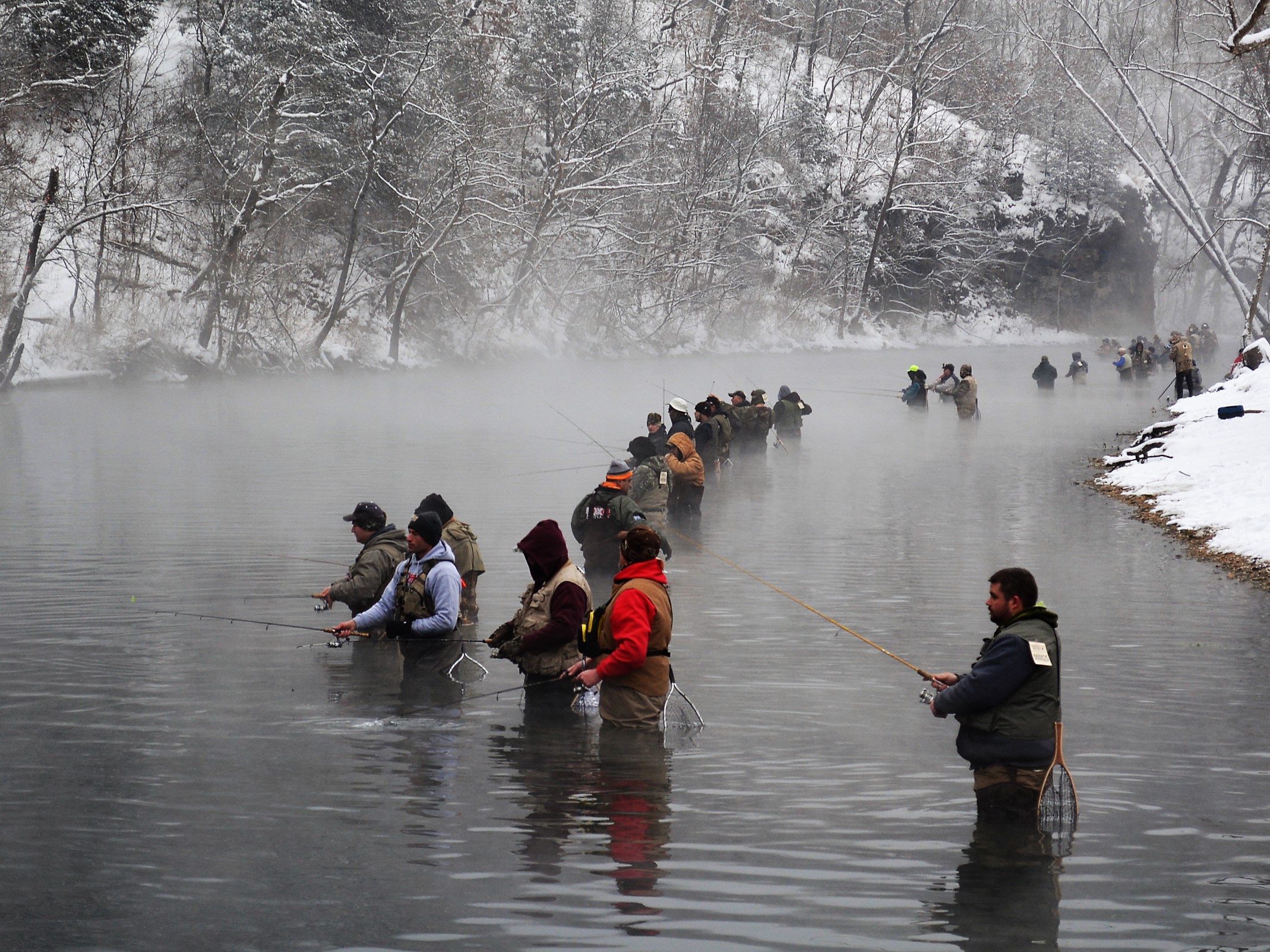
 By Brent Frazee

 BoatUS is the nation’s largest organization of recreational boaters with over a half-million members. We are the boat owners’ voice on Capitol Hill and fight for their rights. We help ensure a roadside trailer breakdown doesn’t end a boating or fishing trip before it begins. On the water, TowBoatUS brings boaters safely back to the launch ramp or dock when their boat won’t, 24/7. The BoatUS Marine Insurance Program gives boat owners the specialized coverage and superior service they need. We help keep boaters safe and our waters clean with assistance from the nonprofit BoatUS Foundation for Boating Safety and Clean Water. Visit BoatUS.com.
 As anglers we all have a list of lakes, rivers and streams that have the potential to satisfy our ultimate desire; to completely outdo ourselves. This past season (early June) I encountered one such body of water; beautiful Rainy Lake which borders Ontario and Minnesota.
 Picture this, you have a fantastic night sleep in a big comfy bed, then you wake up to hot coffee in your cabin. Next, you are treated to a big delicious breakfast just in time for your guide to grab your gear and whisk you away to the promised land of smallmouth bass, pike and walleye. Oh, and I should mention, they send you on your way with a packed lunch and maybe even a wise crack from Wayne (if you are lucky).
 Fast forward to your return from a day of fast, furious fishing, the kind that one can only daydream about, and you are greeted by Wayne, who wants to get the lowdown on your day. The main lodge is the perfect meeting place after a day on the water to tell as many lies as you want about your exploits. Here you will find a counter full of snacks, a fridge full of whatever you fancy (beer for our group) and a beautiful view as a backdrop to all the fish stories you can stand. To me, this is paradise and exactly what the doctor ordered. What’s next? Well, a delicious three-course dinner in a beautiful wood cabin that’s what. I tell you, I must have gained five pounds during our event and I was not complaining. The cabins are spacious and comfortable, the food is plentiful and so are the fish. Win, win, win and that’s that.
 After breakfast we got prepped and headed out only to be greeted with some of the most horrendous weather I have ever fished in by choice. Severe cold front, high winds and rain had me in doubt and I tell you this, I couldn’t have been more wrong. My partner in crime on this trip, Gary Abernethy (Live Target and those great “Bait Cloud” lures) and I lost count of our catches. It was simply unbelievable. We boated an estimated 90+ fish that day which included smallmouth, pike and walleye. I can’t describe how much fun it was to cast out a crankbait or tandem willow spinnerbait into shallow banks, points and reefs having no idea what would attack it next. Our big fish producer for smallmouth that day was the Live Target Crawfish Square Bill in brown/chartreuse while various spinnerbaits with silver flashy blades accounted for large numbers of pike, smallmouth and the odd walleye.
 My set-up for spinnerbaits/jerkbaits was a 7’ St.Croix (med/heavy) “Mojo Bass” rod which performed flawlessly the duration of the trip. I matched it with an Abu Garcia Ambassadeur reel spooled with 20-pound braid and paired with a 12-pound fluorocarbon leader (Gamma Edge). For the crankbaits, I matched a 5.4:1 cranking reel (baitcaster) spooled with 10-pound fluorocarbon and paired up with a 6’6” medium-action (Jason Mitchell) rod which was buttery perfection for those square bills. Day two was all about shallow diving jerkbaits, which by the way produced one of the biggest smallmouth of the entire trip. Actually, it was a Live Target silver/blue Rainbow Smelt that triggered a post spawn smallmouth to attack. Thanks again Gary.
 This short but successful outing was done on the southern arm with ace guide, Jamie Bruce. Again, we had only a couple of hours on the water and Rainy Lake produced once again. Really, this lake is nothing short of amazing.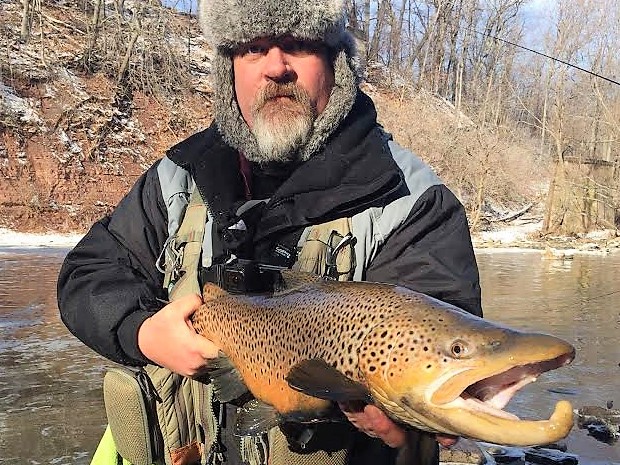


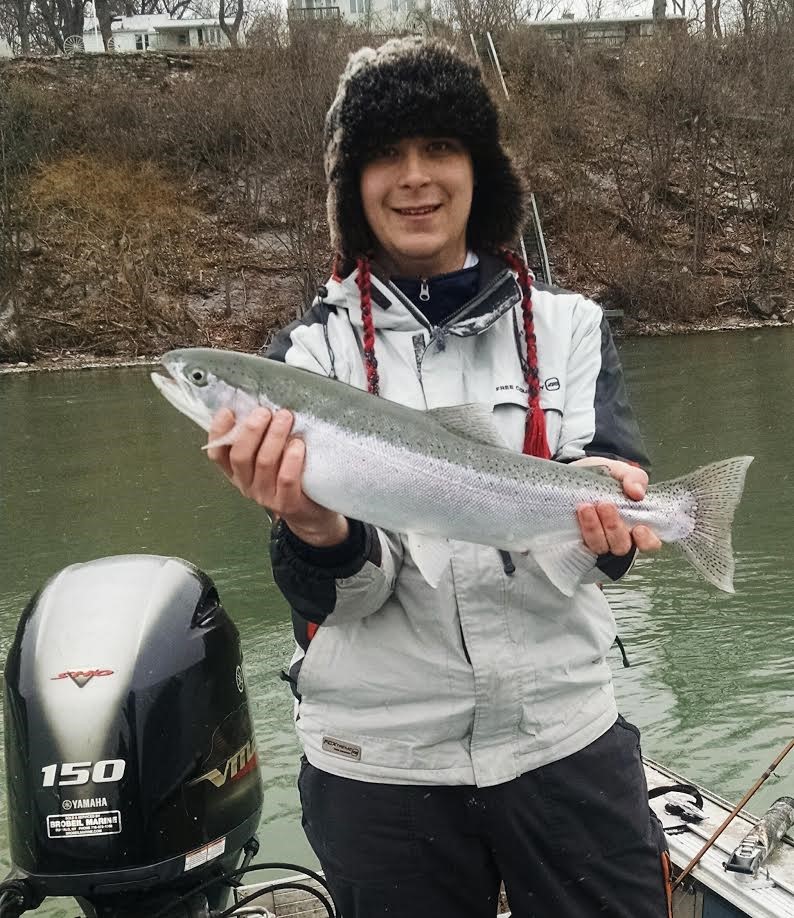 Remember that lake trout season opens officially on January 1, 2017. Best baits have been BC Wobbler spoons in chartreuse or orange; in-line spinners in chartreuse or yellow. Upper Niagara River
 Smith & Wesson Corp. is now offering versions of its popular M&P Shield pistol in both 9mm and .40 S&W with front and rear tritium night sights. Whether deployed as a backup sidearm for police personnel, a deep concealment pistol for plain-clothes officers or an every-day firearm for concealed carry permit holders, the new night sights on the M&P Shield enhance sight acquisition in all low-light situations.
 The stainless-steel slide and barrel on this new M&P Shield is standard with a 5.3-inch sight radius and front and rear tritium night sights. For consistent and accurate shot placement, the pistol features a short, consistent trigger pull that has been further enhanced with a quick and audible reset made possible by the striker-fired action. Internal features of the M&P Shield mirror the standard M&P pistol series. Its stainless-steel internal chassis reduces flex while providing a stable shooting platform and its low-bore axis helps maintain ease of-use and a comfortable feel. A passive trigger safety prevents the pistol from firing if dropped and a sear release lever eliminates the need to press the trigger in order to disassemble the firearm. A loaded chamber indicator is located on top of the barrel. The M&P Shield is shipped with both an extended and flat magazine offering consumers the ability to customize the length of the grip.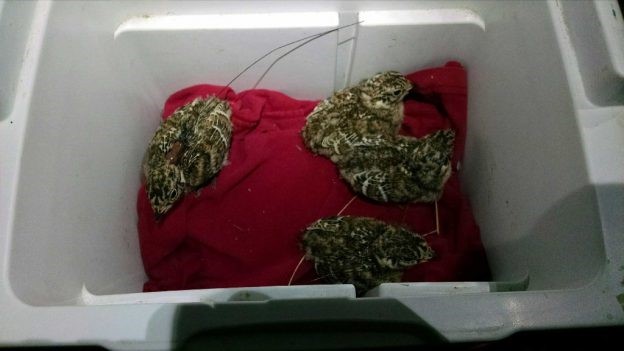


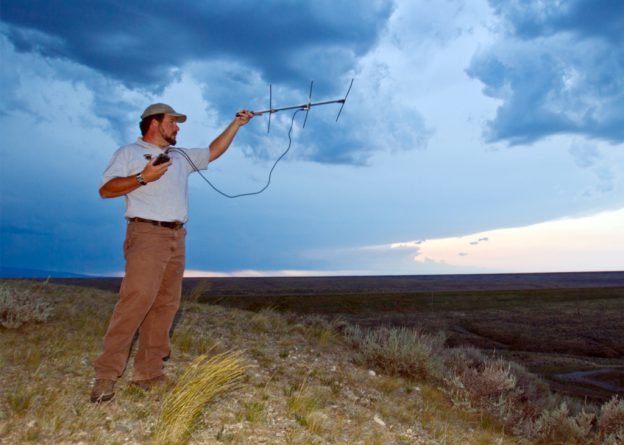
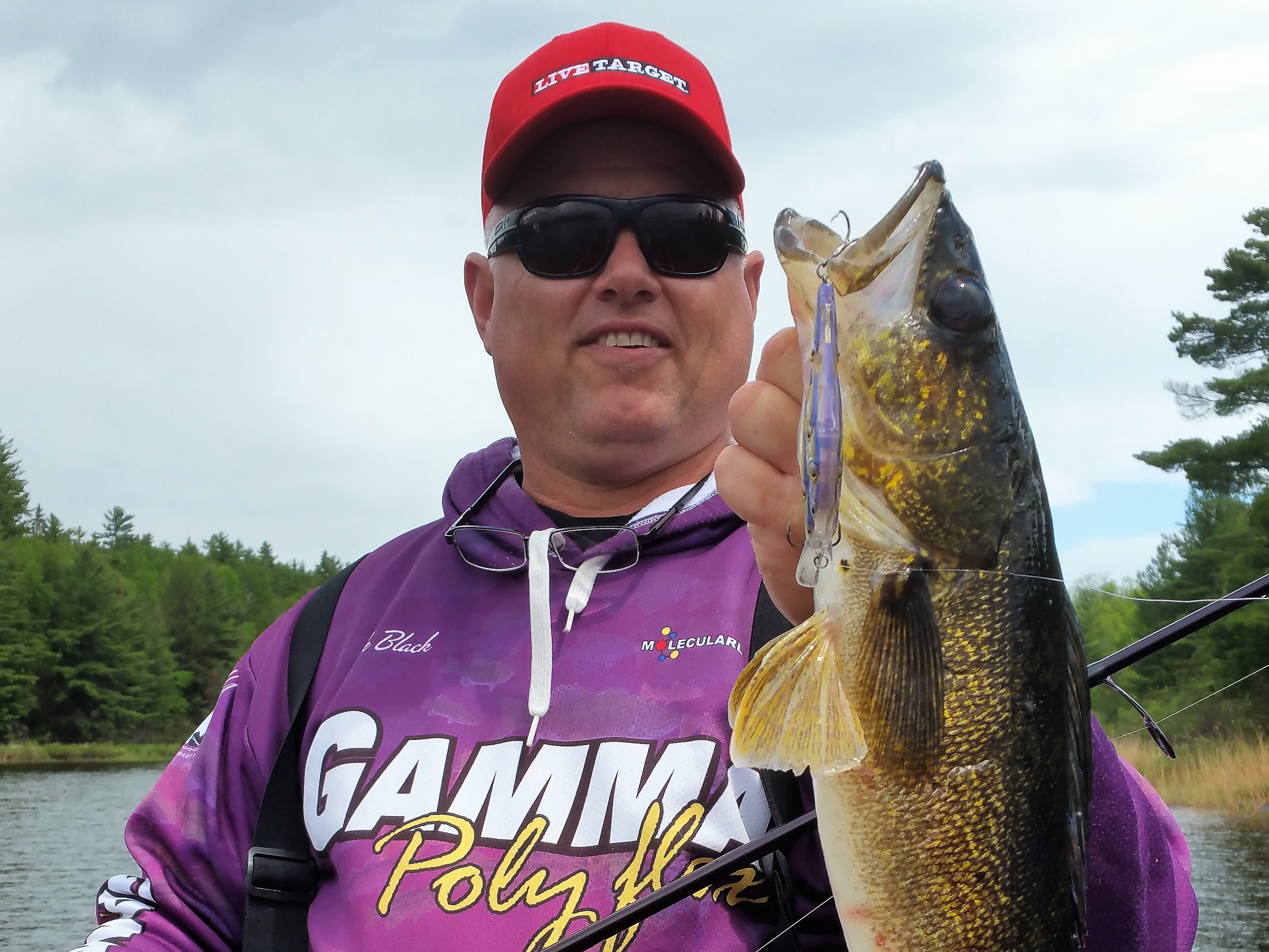


 Details: Summit Treestands LLC, Recalls Explorer SD Closed Front Climbing Stands Due to Fall Hazard


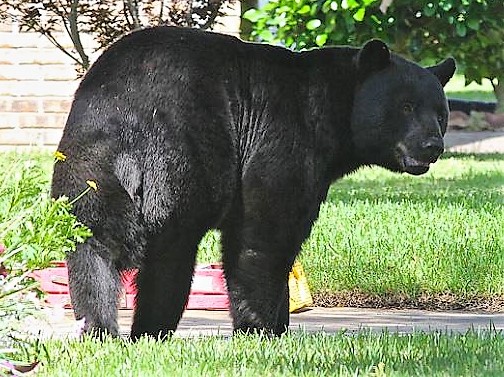

 The FWC plans to release more bear-related videos in the coming months. The short videos help meet the information needs of a busy public.


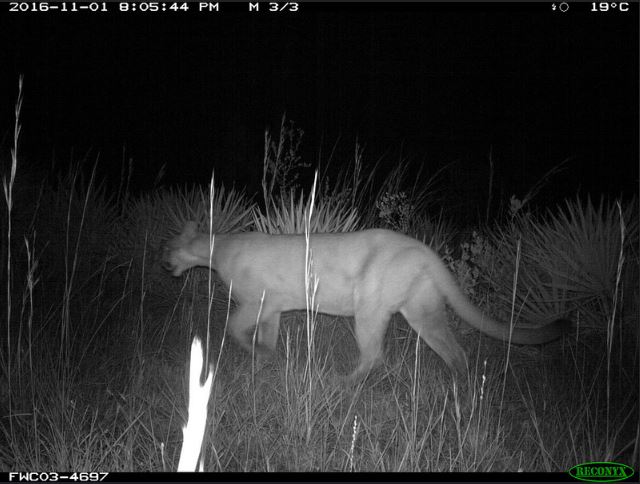


 at BuyaPlate.com. Fees from license plate sales are the primary funding source for the FWC’s research and management of Florida panthers.


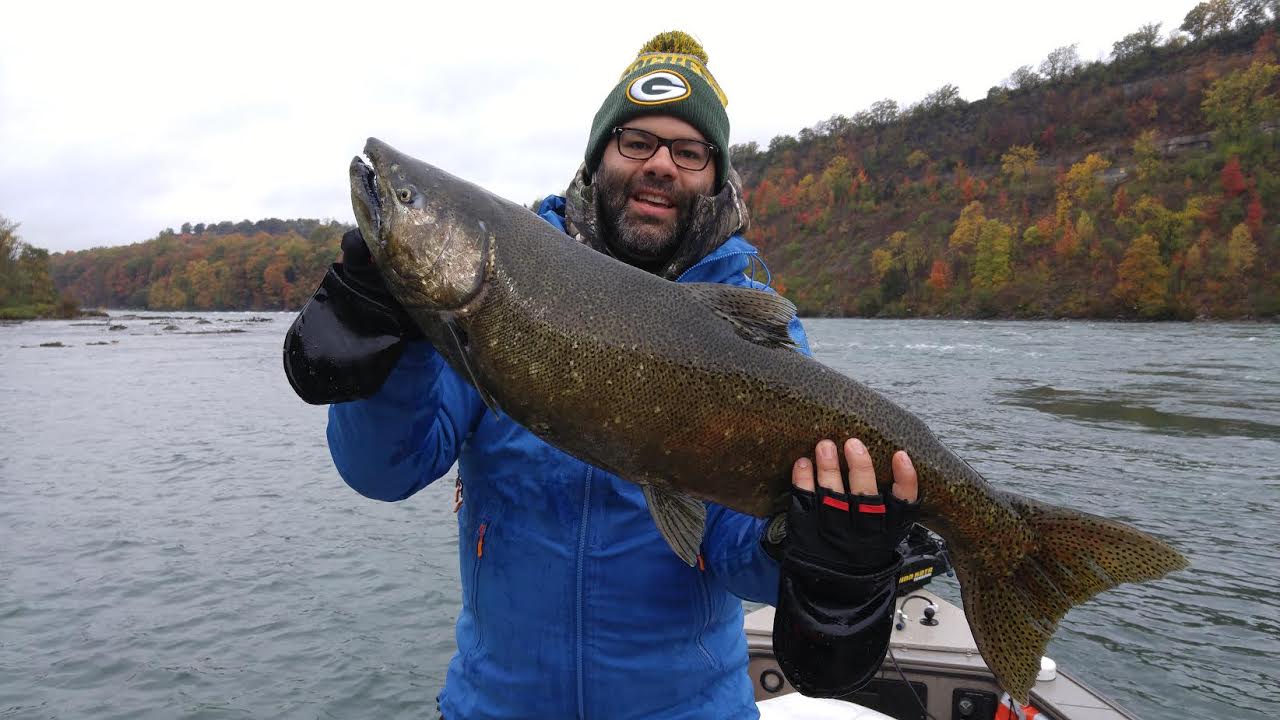



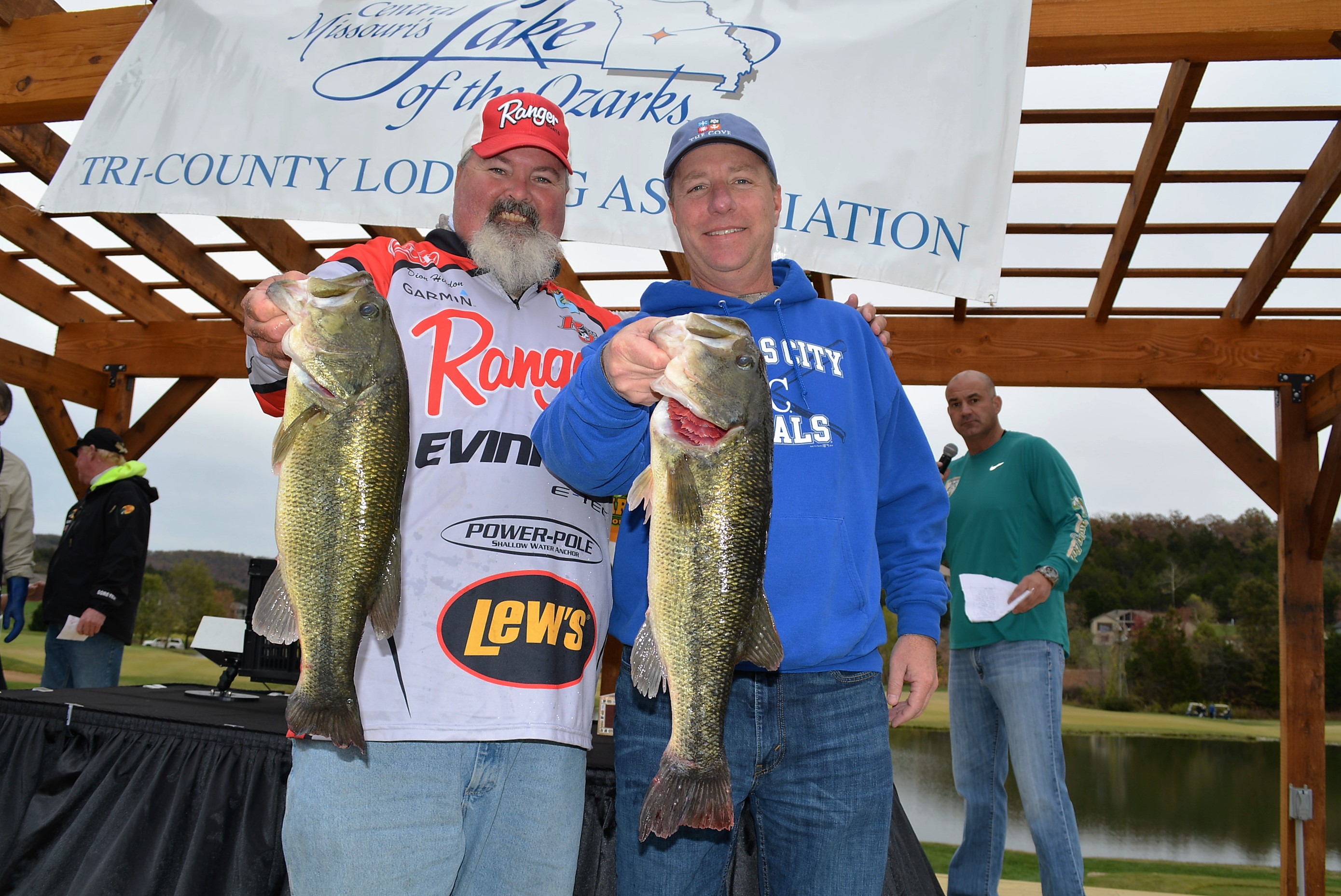


 Five of 31 recent graduates of the NYSDEC Division of Law Enforcement 20th Basic School for Uniformed Officers recently transferred to the Marine Enforcement Unit (MEU) where they will become specialists in marine fisheries law. They will be required to operate some of the DEC’s largest patrol vessels in and around New York Harbor.
 To successfully complete the course, each ECO had to demonstrate precision and efficient competency in all of the tasks required to be a vessel operator in New York’s Marine District. The training concluded on September 23 with nine ECOs completing the course, including the five recent graduates.


 Hornady® Recalls 7 Lots of 500 S&W 300 grain FTX® Custom™ Pistol Ammo

 GRAPHIC A: HOW TO FIND YOUR SERIAL NUMBER.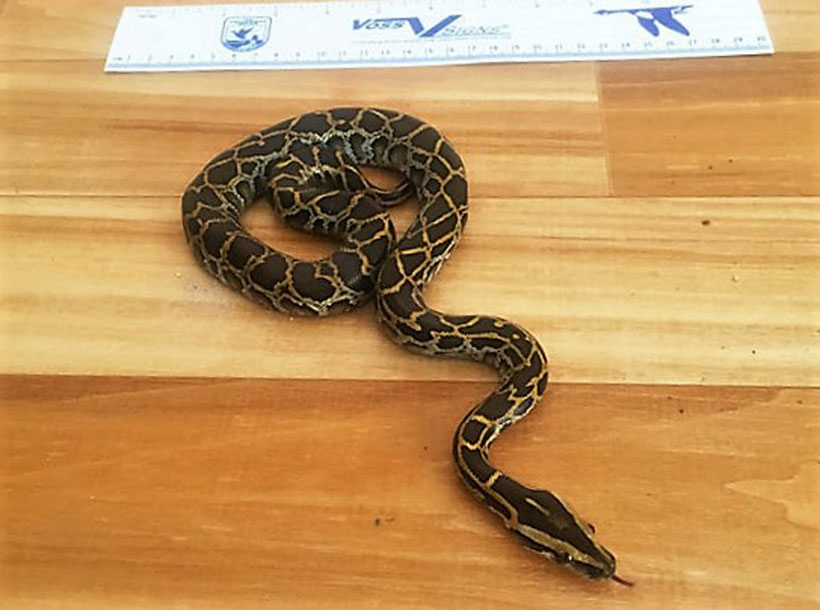


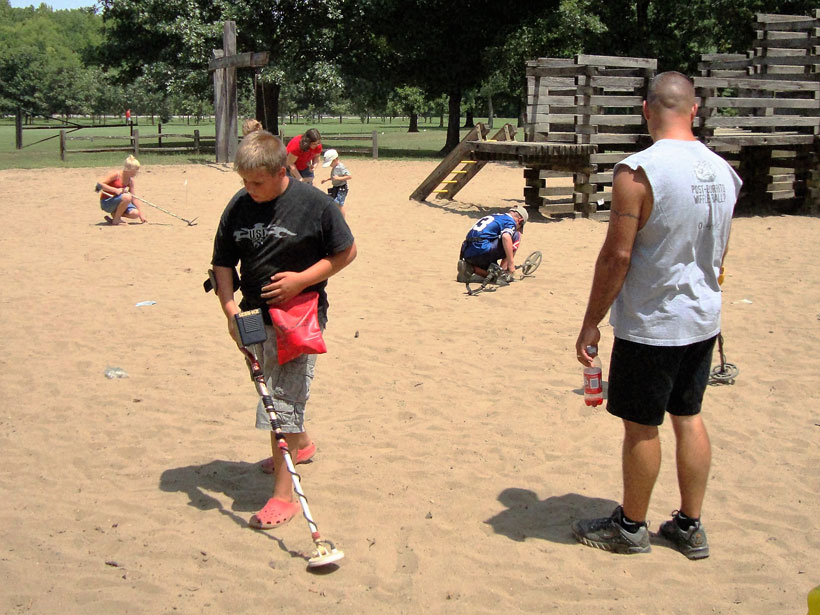


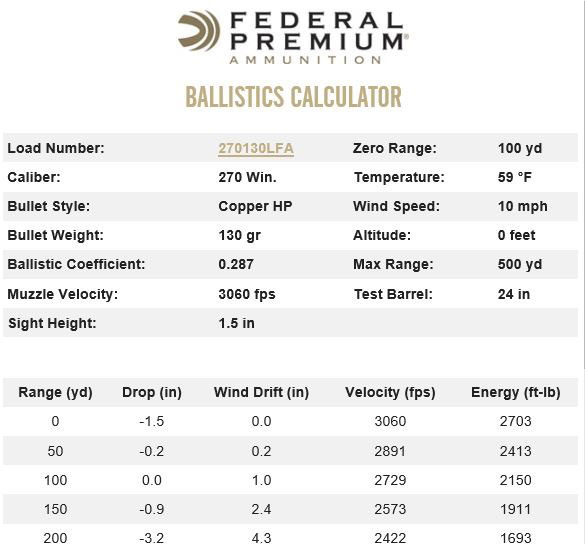
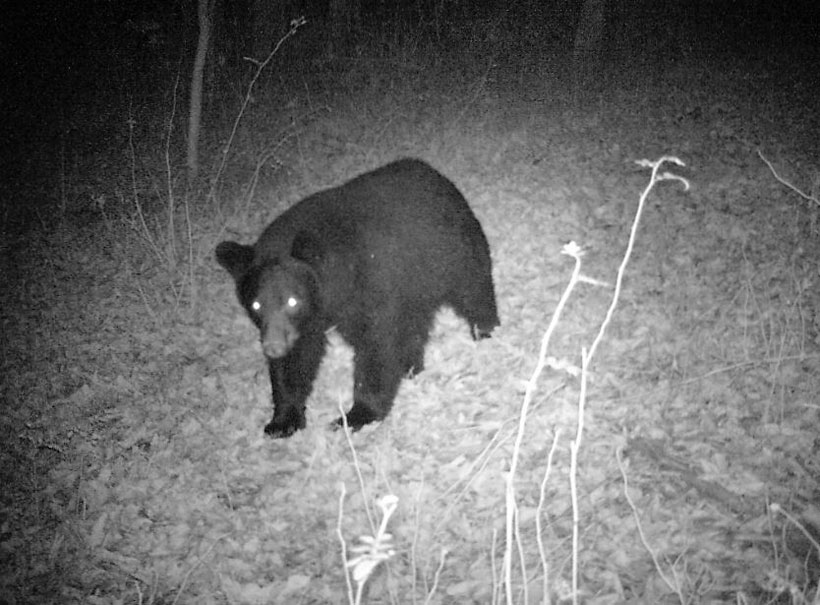


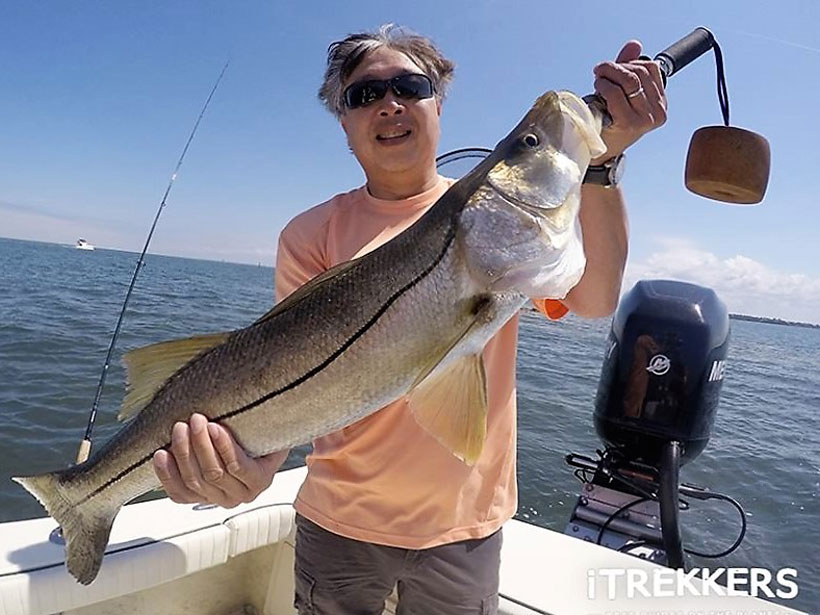


 ON THE MARK is published quarterly by the Civilian Marksmanship Program (http://thecmp.org). It is dedicated to disseminating news and information about junior shooting activities to leaders and coaches of junior shooting clubs, teams and camps.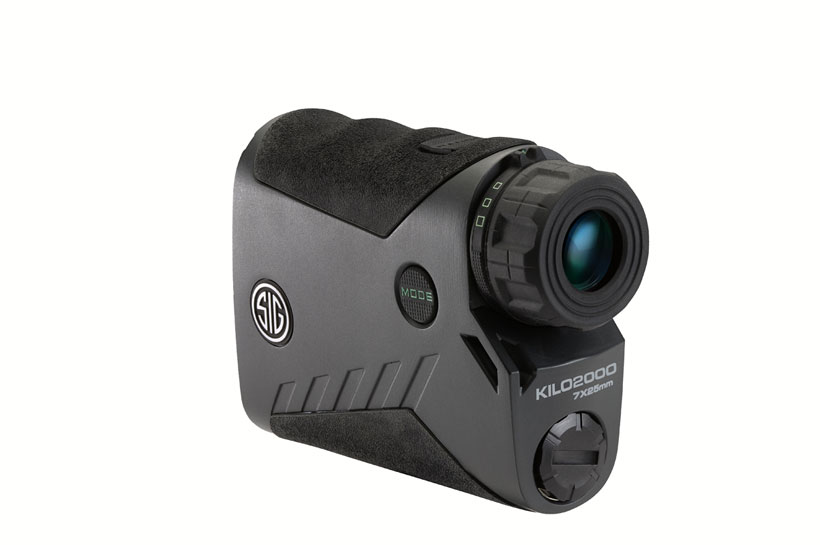


 Dr. Hilborn’s rigorous and peer reviewed research makes clear that fisheries management works. Greenpeace may not like his conclusions, but, their effort to attack the messenger with false accusations should be repudiated by academia, by commercial and recreational fishermen and other environmental organizations.