Not until now, have I ever considered why fish are able to get off when I’m fishing with a giant hook and plastic worm. They have the mechanical advantage to leverage the hook point out with a bit of a wriggle and a shake. Some folks at Trapper Hooks have also made an adjustment to the physics principle involved by creating a new hook design. Imagine that now, a hook for fishing and catching fish that is brand new. I think this is an amazing invention.
My first cast with these new hooks proved my point. I had threaded a 4-1/2 inch “Squirrel Tail” worm (Big Bite Baits) with a Tilapia-color tail onto a size 1/0 Offset Wide-Gap hook (style 20610) from Trapper Tackle and flipped to the edge of weedbed that had grown high near a drop-off. With just one jiggle of my medium-action St. Croix rod tip, a fish inhaled the bait. The 3-pounder came right to the top, tail-walked, jumped twice and soon after, I reached under his belly to safely boat the bass for a quick release. He could fight again tomorrow.
The hookset felt so solid. When I saw the hook-up point of interface, I understood why. It was buried to the sharp-corner bend of the new shank design. The new hook has good retention. The sticky-sharp Piercing PointTM provides a nice path for the surgically sharp hook point to bury itself, removing the old advantage that physics and old-style hook shapes have provided to the fish. Advantage to the angler.
In three trips so far with these new hooks, I have not lost any fish. Reviewing the catalog, there are several design styles and several sizes, including a drop-shot hook that can be used with live bait.
This hook design changes the world of fishing and after just this simple trial on the water, it is easy to understand why. Check ‘em out the next time you visit your tackle store or visit their web link to find out where to get ‘em: https://www.trappertackle.com/store-locations.
Not until now, have I ever considered why fish are able to get off when I’m fishing with a giant hook and plastic worm. They have the mechanical advantage to leverage the hook point out with a bit of a wriggle and a shake. Some folks at Trapper Hooks have also made an adjustment to the physics principle involved by creating a new hook design. Imagine that now, a hook for fishing and catching fish that is brand new. I think this is an amazing invention.
My first cast with these new hooks proved my point. I had threaded a 4-1/2 inch “Squirrel Tail” worm (Big Bite Baits) with a Tilapia-color tail onto a size 1/0 Offset Wide-Gap hook (style 20610) from Trapper Tackle and flipped to the edge of weedbed that had grown high near a drop-off. With just one jiggle of my medium-action St. Croix rod tip, a fish inhaled the bait. The 3-pounder came right to the top, tail-walked, jumped twice and soon after, I reached under his belly to safely boat the bass for a quick release. He could fight again tomorrow.
The hookset felt so solid. When I saw the hook-up point of interface, I understood why. It was buried to the sharp-corner bend of the new shank design. The new hook has good retention. The sticky-sharp Piercing PointTM provides a nice path for the surgically sharp hook point to bury itself, removing the old advantage that physics and old-style hook shapes have provided to the fish. Advantage to the angler.
In three trips so far with these new hooks, I have not lost any fish. Reviewing the catalog, there are several design styles and several sizes, including a drop-shot hook that can be used with live bait.
This hook design changes the world of fishing and after just this simple trial on the water, it is easy to understand why. Check ‘em out the next time you visit your tackle store or visit their web link to find out where to get ‘em: https://www.trappertackle.com/store-locations.
Dick Preston of Hamlin, NY shows off a nice steelhead caught during the greater Niagara Fishing Expo’s on-water educational lessons taught by area captains. The boat educator was Capt. Vince Pierleoni of Thrillseeker Charters on the Lower Niagara River.
Lake Ontario and Trib’s
It’s still a bit of a hit or miss in the creeks, but fish are being caught despite brown water in 18 Mile. Burt Dam flow is 170 cfs at the end of this week and anglers are seeing active trout and steelhead. Perch have been driving the trout guys nuts. Some pier casting, too.
Wilson was seeing some action, as well.
Keg Creek was clear but there is a large beaver dam between the mouth and the road.
The big news was over the weekend, when some milder temperatures and decent lake conditions saw some small boats hit the lake and do some near-shore trolling for brown trout. Fish were caught between Wilson and Olcott, as well as east of Olcott in front of the microwave tower in 10 to 20 feet of water. Best baits have been Bay Rats, Challenger and Rapala lures for the boats we talked to.
Colors depend on water clarity. Firetiger and chartreuse work well if there is a distinct mud line. If the water is just off-color a bit, go with more natural presentations like goby color, black and silver, and the like.
If we start getting some colder temperatures, the state will be holding a free ice fishing weekend Feb. 18-19 if we get some hard water again. No one will need a license that weekend. Go to the DEC website at www.dec.ny.gov
Niagara River
With a winter storm blowing in off Lake Erie for the next few days, conditions are already effecting the Niagara River fishing both above and below NIagara Falls. Water looked like chocolate milk this morning driving in and things will have to clear up before any fishing can take place – and this storm is expected to hang on through Sunday.
Shore fishermen will probably be the first to see some cleaner water and your best bet will be to cast spoons and spinners in bright colors. Cast something that makes some noise and draws attention to it.
It was good to see the seminar room jam packed for Ricardo Davila’s shore fishing seminar at the Expo last weekend. Then again, most all of the seminar rooms were packed, too – walleye, perch, bass, salmon, trout, electronics. Great to see so many people clamoring for information.
Hopefully the river will be clear next Saturday. The Niagara River Angler Association’s Roger Tobey Memorial Steelhead Contest will be going on starting at sunrise and you can sign up at Creek Road Bait and Tackle in Lewiston, The Slippery Sinker in Olcott; and off the NRAA website at www.niagarariveranglers.com. Call 731-4780 for more information. It’s not just for the lower Niagara River either. Boundaries also include Lake Ontario tributaries.
One of the issues the past week before the water muddied up, was the fact that there was a lot of bait present in the system. Small and medium-sized smelt were reported from area captains who had an issue on the catching end a bit.
Ingredients for 16 (8oz) servings: 1-1/2 lbs ground Elk (or Venison) 3 Tbs canola oil 1 cup onions (diced coarse) ½ cup green pepper (diced coarse) ¼ cup Jalapeno pepper (diced fine) 2 Tbsp. garlic (minced) 3 Tbsp. olive oil 2 Tbsp. chili powder 1 Tbsp. black pepper 1 Tsp. salt 1 Tsp. cumin 1 can (28oz) diced tomatoes 2 cans (15 oz) kidney beans 2 cans (15 oz) pinto beans 1 can (22 oz) tomato sauce 2-3 sprigs cilantro (chopped) Optional –fresh parsley or cilantro garnish, shredded cheddar cheese, sour cream – when serving.
By Fern Fisher
Heat oil in frying pan on medium heat, add onions, green pepper, add pinch salt, garlic, chili powder and cumin. Cook until onions turn translucent and meat is brown (about 7-9 minutes). Occasionally stir with wooden spoon.
Add cooked mix to crock pot, add diced tomatoes, tomato sauce, beans, and remaining ingredients, stir to mix.
Cover and cook for about 8 hours on low or 6 hours on high.
Serve with crackers or bread and butter, add a pinch or two of shredded cheddar cheese. Delicious.
Flavor and taste is even better if this is made a day or two ahead of when needed.
Jack Coad and Anne O’Leary teamed up with Numzaan Safari to harvest this beautiful Zebra about 200 kilometers northwest of Johannesburg, South Africa.
Adventure, Conservation-Oriented, Sacred Moments
Full Accommodations, Meals Included, Max Comfort
Professional Hunter Guide is Part of Package
Exciting, Relatively Low Cost
Anne O’Leary arrives in Thabazimbi Province in South Africa to unpack her Elite Archery bow to assure shot accuracy.
By Forrest Fisher
When Jack Coad and Anne O’Leary made a plan to hunt Africa, they planned the hunt of their lifetime. They discovered that South Africa offered more than 30 species of animals and that some study of which animals to hunt would be needed. Among the most common animals to hunt are Plains Game animals such as Impala, Wildebeest, Kudu, Gemsbok, Zebra, Eland and many others.
Hunting in South Africa is exciting, an adventure, it is about understanding nature and conservation. There are wonders in the natural world of Africa that are breathtaking and extraordinary, these elements help hunters to develop a new perception of all things wild when you hunt in Africa. This is especially true for archery hunters.
It is often about observing wild animals that have the power to feast on you and your guide, face to face, while with archery gear in hand. Animals such as the Cape Buffalo.
The safety of the hunter and the effectiveness of the hunt can depend on the structure and location of the blind such as this one, where Anne harvested her 900 pound Zebra.
Choosing the right place to hunt and the right guide may appear to be complicated, but after conversation with other hunters that have travelled there, decision making is lessened to a manageable numbers of safari facilities.
Jack and Anne chose to hunt with Numzaan Safaris in Thabazimbi, a village in the Limpopo Province South Africa, located about a 3-1/2 hour drive northwest from Johannesburg. There are multiple airlines that service this area and your travel from the airport is part of the Safari fee. Upon arrival they met their “PH” or professional hunter (guide), Brent Van As, who advised their every move for safety and effective hunting of several species.
Hunting with a trained guide and effective gear in South Africa hunting may present an opportunity for the reverence of a perfect shot.
The hunter may accept the challenge to make that shot. It is a sacred moment. It is awe-inspiring. It requires mental focus and an understanding with perceptive sense of the role that the hunter takes when hunting in Africa. It is a role quite different from the role of hunter nearly anywhere else. It is a role where indigenous natives applaud your success because you will share with them in your bounty, but also a role unpopular to some in the western world. The locals keenly understand that you part of natural resource management. They welcome you.
A prerequisite is that hunter skill in the gear of choice is necessary. Bow, arrows, broadheads, release, sights, counterbalance, and the aim of the hunter in brief duress for the moment of brief encounter. Your skill must be dominant.
Jack Coad and Anne O’Leary teamed up with Numzaan Safari to harvest this beautiful Zebra about 200 kilometers northwest of Johannesburg, South Africa.
Your understanding can be reduced to a simple few things: arrow flight and distance to target. You must recognize and understand the limits and boundaries of your shooting skills, like hunters everywhere, but many fail to recognize this transitional crossroad for taking a shot.
Bow hunts in Africa with many outfitters are usually a minimum of 10 days in stay and run during the African winter that occurs from July through September.
In Africa, accepting that you have the right gear, have developed adequate skill and you are healthy enough to embrace the excitement of the hunt and potential sharing of the harvest, know that you will have a trained and skilled guide. A guide that has meandered the African wilderness and networks of animal trails that identify preferred hunting areas.
One look at the night sky to see tens of thousands of stars in the unspoiled air of Africa is enough, all by itself, to wish for a quick return to Africa.
The night sky tells a tale of purified and simple living. Hunters in Africa form an important arm of required balance to keep poachers in check. Hunter funding pays for poacher policing, without hunters that pay for this privilege to share in the harvest, the capacity for nature to support wild animal populations would have already been compromised.
Winter temperatures in Africa vary between the low 40’s to about a high of 70 in mid-afternoon, but it is sunny most of the time, so use of sunscreen is common.
Africa needs hunters. African villagers and wild game species needs hunters.
As you explore this need, you realize there is a renewed sense of community. You better understand the vulnerable community of African wild animals and the necessary role of hunters. Hunters in Africa are a precious commodity subject to maltreatment from others without understanding of the rescue mission that they perform.
When you accept the challenge to hunt in Africa, and then after you have gone on the hunt and you return, it is only then that you realize how important it has been for you to form this new kinship with nature and our Creator. A kinship that is vulnerable to confrontation.
Therefore it is important to realize that hunting in Africa requires moral courage and a new understanding that, in fact, as a hunter in Africa, you are a gift. You are bound to respect, bound to scientific management of the species you harvest and share, bound to support the costly licensing procedure, bound to the reciprocity of the timeless bond with nature and the wilds that is shared by all hunters who respect their hunting moments as sacred.
To learn more about hunting and what it costs, what you should pack and how far in advance to plan, visit this website: http://www.numzaan.com/. One thing that is surprising is that you will learn it is far less costly to hunt Africa than it is the Rocky Mountains in western United States or up north in Alaska. I was surprised at this, but it accentuates the need for hunters to visit Africa.
If you have additional questions, you might email their guide, Brent Van As, directly, at brent@numzaan.com.
For it is you and I that must understand there is reciprocal balance and you and I are part of that delicate scale.
“TrophyCatch” is introducing BONUS monthly prizes!
The rules and prizes will vary each month and will be announced here on Facebook and on Instagram (@FishReelFlorida).
February’s prize is $50 in Bass Pro Shops gift cards for the participant with the MOST approved LUNKER CLUB catches between February 1 – 28, 2017.
So, get out there and send us those great Lunker Club brag shots!
By participating in any Facebook promotions, the participant agrees that their participation constitutes a complete release of Facebook and that this promotion is in no way sponsored, endorsed or administered by, or associated with, Facebook.
Starting Feb. 1. 2017, in the Atlantic, Florida anglers may keep one snook per day that is not less than 28 or more than 32 inches total length. Photo Courtesy of Hobie Kayak Fishing
Recreational Snook Season will Re-Open Feb. 1
Keeper Slot Limit: 28 – 32 Inches
Anglers Asked to Save Filleted Carcasses for FWC
Starting Feb. 1. 2017, in the Atlantic, Florida anglers may keep one snook per day that is not less than 28 or more than 32 inches total length. Photo Courtesy of Hobie Kayak Fishing
Posted by Forrest Fisher
The recreational harvest season for snook reopens on Feb. 1 in Florida’s Atlantic coastal and inland waters (from the Miami-Dade/Monroe county line north), including Lake Okeechobee and the Kissimmee River. The season will remain open through May 31.
In the Atlantic, anglers may keep one snook per day that is not less than 28 or more than 32 inches total length, which is measured from the most forward point of the head with the mouth closed to the farthest tip of the tail with the tail compressed or squeezed while the fish is lying on its side. A snook permit is required to keep snook, along with a saltwater fishing license, unless the angler is exempt from the license requirements. Only hook-and-line gear is allowed when targeting or harvesting snook.
It is illegal to buy or sell snook.
Snook are one of the many reasons Florida is the Fishing Capital of the World. As a result, the Florida Fish and Wildlife Conservation Commission (FWC) encourages anglers to use moderation when determining whether or not to take a snook home, even during the open season.
Researchers ask anglers who harvest the fish to save their filleted carcasses and provide them to the FWC by dropping them off at a participating bait and tackle store. This program allows anglers to participate in the collection of data, such as the size, age, maturity and sex, of Florida’s premier inshore game fish – snook. For a county-by-county list, go to MyFWC.com/Research and click on “Saltwater,” “Snook” under the heading “Saltwater Fish,” and “Snook Anglers Asked to Help with Research.”
The harvest of snook in all of Florida’s Gulf of Mexico state waters, including Everglades National Park and all of Monroe County, remains closed until March 1. Snook harvested from the open waters of the Atlantic may not be transported through closed waters or landed in the closed area. Anglers may catch and release snook during the closed season, but the FWC encourages anglers to handle and release these fish carefully to help ensure their survival upon release. Proper handling methods can help ensure the species’ abundance for anglers today and generations to come. To learn more about fish handling, visit MyFWC.com/Fishing and click on “Saltwater Fishing,” “Recreational Regulations” and “Fish Handling.”
For more information, visit MyFWC.com/Fishing and click on “Saltwater Fishing,” “Recreational Regulations” and “Snook.”
We are in the midst of another reprieve from old man winter, at least for another day or two.
The smaller tributaries within Orleans County are at higher and muddier conditions. This due to the warmer temperatures and rain/snow that we have had in the last day or two.
Conditions on the upper portion of the “Oak” from the dam to just before Marsh Creek offer some good opportunities for steelhead action and even a few brown trout have been taken.
All of the live baits and even some of the more popular flies are being used.
The lower portion of the “Oak,” from Marsh Creek north, is displaying muddy conditions, but that should only last for a day or two.
Lake Alice is open in some areas and has a very thin ice covering in others, so it is totally unusable for anglers right now.
With temperatures dropping below freezing again in the very near future, be mindful of ice buildup along the banks of our tributaries.
This weekend I will be attending the New York Sportsman’s Outdoor Expo in Syracuse so if you’re in the area, stop by and chat for a while.
From Point Breeze on Lake Ontario, the World Fishing Network’s Ultimate Fishing Town USA and the rest of Orleans County. We try to make everyday a great fishing day in Orleans County.
The day of fishing is done, your body tells you it’s time to rest and relax. The sun is setting and there is a perfect orange glow reflecting within those tiny bubbles hatching on the surface of your crystal clear champagne glass. A special moment! There you are in the middle of a mountain camping trip. Champagne glasses in the wilds. Possible? Yes. Likely? Not until now.
My wife and I discovered these new unbreakable champagne flutes that stow away as a 2-piece threaded combination. They go anywhere and survive. They fit in my shirt pocket and I found myself packing my dry flies in them on a recent trip – they were totally protected and perfectly unruffled. I carry two of them at all times now. Multiple uses!
The base detaches and then snaps into the rim for travel, reverse for use. Imagine, unbreakable champagne flutes on the top of a mountain, at your Florida poolside vacation site (where glass is typically not allowed), on the river, at the campsite, on the beach or anywhere you might want to create a special moment. We have been amazed at the durability of this drinkware and the compact packing size.
If you are an outdoors-minded person, you know that mastering the necessary aspects of having fun in the natural world include survival and once in a while you want to accommodate for a special moment after the day is done. Special moments for celebration and recollection, such is part of the outdoors lifestyle for special folks. Check these out for yourself, they are low cost, last a lifetime and are perfect for when you want them. Visit https://www.gsioutdoors.com/.
The SOLIX unit offers new features, including a keypad with a separate joy stick and encoder for precise adjustments and easy access to key features. Photo courtesy of Humminbird.
Exclusive Fish-Finder Technology Combinations
Largest Viewing Screens in Industry
Mapping, Imaging, Clarity
The SOLIX unit offers new features, including a keypad with a separate joy stick and encoder for precise adjustments and easy access to key features. Photo courtesy of Humminbird.
Posted by Forrest Fisher
The biggest news in fish-finding sonar for 2017 is, quite literally, “big viewing.” For decades, Humminbird has led the fishing world by putting new tools and innovations in the hands of anglers to help them find, and catch, fish. Now, Humminbird has combined its best features and placed them into one fish-finder, the SOLIX™. The unit offers the biggest display in the brand’s history – up to 15 inches, and the SOLIX combines multiple technologies designed to make locating fish easier.
A truly revolutionary product, SOLIX delivers game-changing sonar, imaging and mapping capabilities in the largest fish finder anglers have ever seen. In true Humminbird fashion, these technologies are packaged in an easy-to-use interface and system that can make any angler better.
Unprecedented Screen Innovation
SOLIX is setting the bar for the angling sonar category in display size with two variations with 12-inch and 15-inch visual monitor options. Either size unit comes standard with Humminbird’s Cross Touch® Interface, letting anglers operate the unit via touchscreen or keypad, all while customizing the screen with up to four independent viewing panes.
Cross Touch allows anglers to use the SOLIX either as a touchscreen or with the keypad for easier control in rough water conditions. Individual panes can be zoomed or moved to different screen locations based on angler preference or fishing situation.
According to professional bass angler Gerald Swindle, SOLIX gives him a serious advantage over his competition and the fish he’s after. “The size is amazing and allows me to see crucial screen information from anywhere in the boat. Plus, I can set up my panes to simultaneously show me MEGA-Side Imaging, MEGA-Down Imaging and how I’m oriented to key structure. I get all of that in a glance, so I know that every cast is a productive one,” said Swindle.
Never-before-seen image clarity
SOLIX units come in two versions. One is equipped with GPS and CHIRP Digital Sonar, the other adds Humminbird’s game-changing MEGA Imaging. This is the first Down and Side Imaging technology to enter the megahertz range with performance that’s nearly three times greater than traditional 455 kHz frequencies. It results in the clearest, sharpest imaging returns ever.
Anglers can choose MEGA-Side Imaging for an incredible view to the left and right of their boat, while MEGA-Down Imaging gives crystal clear pictures of what is beneath the boat. Both carry a range that covers the most popular fishing depths.
Mega-Down Imaging® allows anglers a fish-eye view of below the boat. Photo Courtesy of Humminbird
When asked to explain MEGA Imaging, Humminbird’s brand manager Ray Schaffart said, “The screen detail is so defined that in some cases you can literally see each individual fish and make out their head or tail in the sonar shadow. Natural bottom structures like rocks and stumps almost look like photographs, while man-made structures like shipwrecks, road grades or sunken bridges, offer up imagery down to the individual beam. After people see it, they just can’t believe it.”
All SOLIX models include CHIRP Digital Sonar, firing more pulses than traditional transducers over a given period of time. More pulses mean more information, improved image separation and superior image clarity at greater depths.
Includes Next Generation in Mapping
AutoChart Live draws a map of lake depth contours – complete with actual depth labels as you drive your boat. Photo Courtesy of Humminbird
Also standard on all SOLIX models is Humminbird’s expanded AUTOCHART® Live Technology that creates and saves structure maps on any body of water. AUTOCHART Live identifies and maps depth, bottom hardness and vegetation. Anglers know that fish relate to depth, weed lines and transition points in bottom type – for example where a soft, muddy bottom transitions to firm sand or rock. By collecting all that data on an AUTOCHART Live map, Humminbird helps anglers keep their boat in the strike zone on productive structure.
Fishing takes another huge step forward when AUTOCHART Live is used in conjunction with i-Pilot® Link™ from Minn Kota®. With both technologies cooperating, an angler can tell his Minn Kota trolling motor to “follow” a specific AUTCHART Live contour at a set speed, and with the press of a button the boat will precisely follow the exact path. Now, anglers no longer need to guess where fish-holding structure is located. They can precisely follow the weedline, bottom hardness or depth contour, and stay within easy casting distance of their target.
Unsurpassed connectivity
Bluetooth is built into every unit, allowing anglers to sync smartphones to the on-board SOLIX. Text messages, missed calls, signal strength and other notifications appear right on the Humminbird display, so phones can stay safely in pockets where they belong for hands-free fishing. It creates a flawless on-board network of electronics and connectivity.
For plug-and-fish networking, high-speed Ethernet provides easy connectivity to Humminbird 360 Imaging, Minn Kota i-Pilot Link, Humminbird CHIRP Radar, and additional SOLIX or select HELIX units. The new units are fully compatible with Humminbird LakeMaster® charts, SmartStrike™ and Navionics® Gold/HotMaps™.
Versatile mounting options
SOLIX owners can mount their large Cross Touch screens inside the boat dash, on the included gimbal or directly to an optional RAM Mount for multi-directional viewing.
Mark Gibson, Humminbird director of R&D, summarized the new Humminbird SOLIX technology by saying “SOLIX is the combination of decades of dedicated development in everything from the transducer to the touchscreen. It’s the best of the best and the most advanced fish locator ever created.”
For more information call Humminbird at 1-800-633-1468 or visit Humminbird.com.
The Tula Cartridge Works, was founded way back in 1880 by Emperor Alexander II, that makes it one of the oldest and perhaps, most significant, producers of small-arms ammunition in the world today.
Leveraging the production experience of nearly 140 years and applying ever-evolving technologies with research knowledge, Tula Ammo continues to push the envelope on behalf of the American shooter.
The history of the Tula Cartridge Works includes a defining role during World War II, when the facility turned out millions of rounds of small arms ammunition to be used against Nazi Germany. Since that time, Tula has continued to introduce new products, increase production capacities and open new markets for military and civilian shooters alike.
TulAmmo USA represents the Tula Cartridge Works here in the United States. We recognize that the American shooting and hunting enthusiast demands a cleaner and more accurate option in economy cartridges against other foreign-produced brands. We are proud to offer that option in a variety of popular handgun and rifle calibers, as well as a selection of primers for the hand reloader.
For a better, first-hand look from the 2017 SHOT SHOW, visit with Dominic Grasso at the SHOT SHOW: https://www.youtube.com/watch?v=JAqxoKi09Ts&feature=youtu.be
Jon Robins and Eric Dixon of Niagara Falls, New York, hit this double-header while fishing with Capt. Frank Campbell.
It’s a bit of a mess in the creeks, but some fish are being caught – like the 21 pound, 2 ounce brown trout caught this week by Charles Young of North Tonawanda while fishing a jig in 18 Mile Creek near Burt Dam. The rain on Tuesday brought a few more fish into the system and the warm-up is turning a few perch on when the water is clear enough.
It looks like it will hit the 50 degree mark this weekend. Water conditions are stained, so you might want to check out the Niagara Outdoor Expo this weekend and learn how to catch more fish.
Don’t try the ice in Wilson even though 4 inches was reported last weekend. Stop into the Expo instead and visit with Clam Outdoors! Timing is everything.
Lower Niagara River
Timing was perfect for fishing to turn on because one new attraction to the Fishing Expo is morning educational lessons on the river, taught by area fishing charter captains. Four hours of fishing with in-depth instruction for a show special rate. Information can be found on the Expo website or you can contact 716-523-0013 for details.
The river has a nice green color to it and boat captains and customers have been catching fish from Devil’s Hole to the Niagara Bar. Steelhead, lake trout, walleye and even a teenage king salmon hit a shiner at the mouth of the river this week.
Shore anglers have been catching their share of trout in the gorge, using spoons, spinners, jigs and beads.
Some good news on the stocking front – the lower river will now receive a dedicated stocking of 15,000 brown trout each year instead of receiving only surplus stockings. They will also receive some surplus browns if they are available. Great News!
Greater Niagara Fishing & Outdoor Expo
The local fishing community is gearing up for a huge celebration of our natural resources with the opening of the Greater Niagara Fishing and Outdoor Expo at the Conference and Event Center Niagara Falls, it runs Jan. 20-22. This year’s event will be the best ever. Speakers like Bassmaster Pro Mark Menendez, Fishing 411 TV hosts – Mark and Jake Romanack, Electronics Expert – Lance Valentine and Walleye 101, Ice Fishing Legend Dave Genz and the Ice Team will be supporting a huge display by Clam Outdoors and much, much more!
Some 70 different speakers will be dishing out 130 seminars over the course of the three days. Over 125 vendors will be displaying their products and selling the heck out of them. This is an event focused on fishing and please help us pass the word – education is the key for so many things to expand, enhance and improve our sport.
Flicker – In the eastern U.S., Male flickers have black moustaches in addition to the red nape patch and yellow feathers.
We Watch Wildlife and Learn About Nature
Sunflower Seeds Bring Birds to You in Winter
It’s a Great Year for the Birds!
Flicker – In the eastern U.S., Male flickers have black moustaches in addition to the red nape patch and yellow feathers.
By Jim Low
What do you suppose is the most popular wildlife-based activity in Missouri and nationwide? If you guessed deer hunting or bass fishing, you missed the mark. The U.S. Fish and Wildlife Service’s 2011 survey of outdoor recreation showed that a little more than 1 million Missourians engaged in fishing and spent $505 million doing so. Missouri’s 576,000 hunters spent $773 million on their sport. That’s big. But 1.7 million Missourians reported watching wildlife, and they spent $1.2 billion on their hobby, including buying bird food.
I thought of this yesterday, when I bought my 10th 40-pound bag of sunflower seeds since October. Squirrels get their share of our sunflower largess, but most of that 400 pounds has disappeared down the throats of finches, juncos, doves, cardinals, chickadees, titmice, wrens, nuthatches and blue jays. It’s amazing that such tiny animals can consume so much food.
Red-Bellied – Red-bellied woodpeckers are slightly smaller than flickers. The reddish-brown tinge on their bellies doesn’t live up to promise of their name.
Sunflowers are only part of what we provide. Cracked corn, millet, sorghum and thistle seed also are on the menu, and I have lost count of how many suet cakes we have gone through. I would guess it’s more than 50 store-bought cakes, plus several pounds of dense, high-energy fat from deer that I shot. I don’t want to know how much we will spend feeding birds by the time the nectar feeders come out of storage in the spring. All I know is that the show is well worth the price of admission.
We used to believe we fed birds to help them get through the winter. But our friend, the late Jim D. Wilson, who was Missouri state ornithologist for many years, informed me that was an illusion. He said birds have plenty of natural food and don’t need handouts from people. People feed birds, he said, because they love seeing them and want to bring them close enough for a good view.
Lately I’ve been getting a great view of some of my favorite birds, woodpeckers. I have had a soft spot in my heart for Northern flickers since I was 9 years old and rescued one that had probably had flown into a window or a tree limb and then got so cold sitting in the snow that it couldn’t fly. We brought it indoors, and an hour later it flew away, apparently as good as new. That hour of close contact with the pigeon-sized bird made a lasting impression on me.
Our house in the woods has always had an abundance of downy, hairy and red-bellied woodpeckers. Even the big pileated woodpeckers that frequent our woods pay regular visits to our suet feeders. But in the past, we hardly ever saw flickers and never a red-headed woodpecker. This year, for some reason, several flickers have put us on their daily feeding rounds. This prompted me to set up my camera and tripod. My office window looks out on several feeders, so I can continue to work, reaching out to touch the shutter release when birds show up.
Hairy – Hairy woodpeckers are smaller than flickers or red-bellies. However, they are larger than downy woodpeckers and have longer, stouter beaks.
Woodpeckers are a particularly attractive group of birds, but for my money, none is more handsome than the flicker. It’s also the most widely distributed in North America, with a range extending from north-central Alaska to Nicaragua and from Nova Scotia to Cuba. Although there is only one species, the flicker shows a surprising variety of color phases across its range.
Eastern flickers are commonly called yellow-shafted or golden-winged flickers or yellowhammers, on account of the yellow shafts and undersides of their flight feathers and the bright yellow shafts of their tail feathers. Their heads are gray, except for a red band on the nape of the neck. Their most endearing feature is a black moustache, which only males have.
Out West flickers’ wing and tail feathers are red instead of yellow, so they are sometimes called red-shafted flickers. Their heads, necks and throats are uniformly gray, except for males’ moustaches, which are red. Both sexes lack the red nape patches of their eastern relatives. In the Southwest, male flickers also have red moustaches. Both sexes have rusty brown caps, and gray cheeks and throats. Otherwise, they look just like their neighbors farther north.
The bodies of all three varieties are dappled with jet-black spots. Their backs are barred, and they have white rump patches that are seen only in flight. The flicker’s final dramatic touch is a striking black chest patch, which is present in both sexes and all regions. These are called “gorgets,” a reference to a piece of 18th century armor designed to protect the wearer’s throat.
Downy – Smaller size and delicate beaks distinguish downy from hairy woodpeckers. Otherwise, the two are very similar.
Flickers differ from most other woodpeckers in that they spend much of their time foraging for ants and other insects on open ground, often in company of robins or bluebirds. In areas where trees are not available, they will nest on the ground like nighthawks or killdeers, scooping out shallow depressions in which to lay their eggs. Our house is surrounded by forest, which is why we haven’t seen much of them before. I have no explanation for their appearance in numbers this year.
Pileated – The pileated is Missouri’s largest woodpecker – up to 20 inches tall. It’s raucous, “kuk-kuk-kuk-kuk-kuk!” sounds like Woody Woodpecker’s wacky call.
Now if I can just figure out how to attract red-headed woodpeckers, we will have all the species commonly seen in central Missouri. That might be a tall order, since they favor farm land with dead trees standing in the open. But we can hope!
After a very mild start to 2017, winter begins again this week with temperatures in the 20’s for daytime highs.
The rain of the past day or so should keep water levels on the tributaries within Orleans County at very fishable levels for at least the rest of this week.
Ice should start forming rather quickly with the forecasted temperatures, so those tributary fishermen should be ever mindful of their surrounding conditions as they could quickly change.
On the “Oak,” fishing has been good to very good especially for steelhead and brown trout. There have been a good number of hook ups being reported each day.
A few Atlantic salmon are still in the, mix but their numbers are quickly dwindling as the season progresses.
Some hot flies being mentioned are stone flies and wooly buggers in various colors.
The other smaller tributaries are running higher and with more stained water than the “Oak,” but are still offering fair to good fishing conditions.
On the Lower portion of the “Oak,” perch fishing has picked up again especially around the bridges area, but you still have to sort thru a lot of smaller ones to have a decent catch.
With the number of smaller perch being reported, the coming years should offer a great perch fishery for a few years.
On Lake Alice, the warmer weather has weakened what ice there is to a very unsafe state, but again, with daytime highs only in the 20’s, it shouldn’t take long for those conditions to change for the better.
From Point Breeze on Lake Ontario, the World Fishing Network’s Ultimate Fishing Town USA and the rest of Orleans County. We try to make everyday a great fishing day in Orleans County.
2016 Niagara River Anglers Association steelhead winner, Bob Rustowicz
Greater Niagara Fishing & Outdoor Expo
Get ready for the Greater Niagara Fishing and Outdoor Expo Jan. 20-22, 2017, at the Conference and Event Center in Niagara Falls. Just today, the show announced that Bassmaster Pro Mark Menendez will be stopping by the Rapid Fishing Solutions booth Saturday and Sunday, as well as give a couple of seminars in the Rapid Fishing Solutions Bass Seminar Room! How cool is that?!
2016 Niagara River Anglers Association steelhead winner, Bob Rustowicz
Squeezing in a couple seminars isn’t an easy proposition for a show that already has 130 talks lined up with 70 different speakers. Clam Outdoors will be there with Thorne Brothers taking up a big chunk of floor space for all you ice fishermen out there, bringing with them some of the ice team … like Dave Genz!
Mark Romanack with the Fishing 411 TV show will be there with his son, Jake to talk walleye and salmon fishing and Lance Valentine with Walleye 101 will be talking boat electronics. The list goes on and on.
Go to the website at www.niagarafishingexpo.com for all of the details. And make sure you grab your $5 parking pass voucher!!
Lake Ontario and Trib’s
Fishing was tough at 18 Mile Creek and Burt Dam due to the rain, which had created muddy conditions on Tuesday. Today’s temperatures are in the teens and there’s no one fishing. When things settle down, look for the extra flow to bring in a few more fish. Last weekend, we saw a few more salmon showing up – a mix of kings and coho’s. Steelies and browns are still available, too. Use jigs tipped with wax worms and fished under a float. Wooly buggers, egg flies and other baits will work, but with the water off color, use bright colors like chartreuse and orange. Using scent can also help.
Lower Niagara River
Water was like chocolate milk this morning. We’ll have to wait and see what the weather brings us. Winds with gusts up to 50 mph yesterday did some damage to the water and with lake effect storms happening up on Lake Erie as this is being written, it’s anyone’s guess what will happen. The shoreline usually clears up first.
Casting spoons and spinners is the best approach, but eggs or egg imitations will also work; jigs, too. Lake trout, steelhead and the occasional brown can be caught along Artpark and Devil’s Hole. Be careful of icy conditions. Walleye is still open but the daily limit is now one fish through March 15.
The Niagara River Anglers have announced that the Roger Tobey Memorial Steelhead Contest is set for Feb. 4 this year. Check out information on their website at www.niagarariveranglers.com.
Upper Niagara River
Not too much happening above the falls except for late season duck hunting. Action has been good for divers.
Butler Island camping, fishing and kayaking fun. Photo courtesy of Florida Fish & Wildlife (FWC)
Wildlife Conservation Areas Established
Fish, Wildlife and Public Access Expanded and Managed
Recreational Opportunities for All, Hunters and Anglers too
Butler Island camping, fishing and kayaking fun. Photo courtesy of Florida Fish & Wildlife (FWC)
By Forrest Fisher
If you have ever travelled to Florida, it seems everywhere you go there are birds, fish, flowers and wildlife of all sorts. It’s no accident. In 2017, the Florida Fish and Wildlife Conservation Commission (FWC) is commemorating the 75th anniversary of the wildlife management area system, one of the state’s greatest natural treasures.
The FWC oversees the statewide network of remote and scenic lands, managing them for conservation and recreation. To celebrate the milestone and help people discover the opportunities these public lands offer, the FWC is hosting free events throughout the year.
FWC Chairman Brian Yablonski said, “Florida has one of the largest systems of public lands in the country at nearly 6 million acres, and these lands are the best of the best of what wild Florida has to offer. These natural communities span a variety of habitats from longleaf pine uplands and pine flatwoods, to the hardwood hammocks and sawgrass savannas of the Everglades. Not only are these areas beautiful, they are managed to provide habitat for many species of wildlife and access for people to enjoy hunting, fishing, wildlife viewing and more.”
Florida’s first WMA, Fred C. Babcock/Cecil M. Webb Wildlife Management Area, was established in late 1941 in Charlotte and Lee counties. By the 1960s, there were 28 WMAs. Today, the FWC is the lead manager or landowner of over 1.4 million acres and works in partnership with other governmental or private landowners on another 4.5 million acres. These healthy habitats are essential to Florida wildlife – both common and imperiled species. The FWC uses its scientific expertise and a comprehensive ecological approach to manage a variety of wildlife while balancing public access to these wild lands.
Whitetail Deer abound in several areas of Florida with managed hunting seasons established for WMA areas. Photo Courtesy of Florida Fish & Wildlife (FWC)
WMAs provide many recreational opportunities including paddling, fishing, hiking, biking, horseback riding, photography, wildlife viewing, and target shooting at areas with a public shooting range. They also offer a wide range of hunting opportunities including special hunts for families and people with disabilities.
Throughout 2017, the FWC will host a variety of events to celebrate Florida’s WMAs. Events include a statewide geocaching challenge, volunteer work days, a photo contest, guided hikes, fun opportunities to explore WMAs, and citizen science bio-blitzes, where members of the public help document wildlife species at WMAs.
If you are heading to Florida at any time this year, learn more about upcoming events (or to find a WMA near your destination), visit MyFWC.com/WMA75. You’ll find access link to parks, beaches, fishing hotspots, advice for safety, fun and places to visit.
FWC says you can help them share the fun of what’s in Florida by sharing your visits to Florida WMAs on social media (#WMAzing).
Fishing from shore at Escribano Point WMA can offer fun and a palatable dinner feast for anglers. Photo courtesy of Florida Fish & Wildlife (FWC)
Jim Campbell and 15-year old daughter, Aidan, rafting in Alaska on the Hulahula River, August 2014.
By Forrest Fisher
Adventure above the view of our modern Western culture is not traditional. When James Campbell and his teenage daughter, Aiden, set off to visit Alaska’s Arctic National Wildlife Refuge, they discover untouched wilderness, bone-chilling cold, grizzly bears, polar bears, wolves, ubiquitous clouds of mosquitoes, compelling them to define new elements for survival and forming a sacred connection with each other and native peoples there.
In the beauty of the natural world found in the Refuge, they form new levels of heartfelt trust and inner strength.
This true story provides extraordinary insight into the wild outdoors to be found hiking, crossing the Hulahula River, paddling the Arctic Ocean and finally, helping local natives build a cabin for winter survival. They discover new wisdom and ingenuity in a land dominated by blue skies, howling and growling night animals, flowing rivers of ice-cold water, and harsh climate. The also discover precious clean air, fertile forests, and a special kind of instinct for survival that all the plants and trees and animals have developed.
Jim Campbell and daughter, Aidan, on the Hulahula River, in front of the cook fire, 3 days south of the Arctic Ocean, August 2014.
The book describes the manner of how they each embrace the wild land and each other to complete their journey, as they are tested with the rigors of unfettered Alaskan nature. They hunt game animals for meat, largely caribou and moose, despite the chill factors that often exceed 50 degrees below zero. They learn the tools of the survival trade from native Eskimo peoples that become close friends.
This book is a tribute to a land that offers breeding habitat to caribou, geese, ducks, loons, and many other migratory species from five continents. The Arctic National Wildlife Refuge lies about 125 miles east of the National Petroleum Reserve, an area rich in coal and oil that is largely controlled by the oil and gas industry. We are still an oil-dependent nation and, for me, this book provides new insight for a better understanding of what we might lose if we do not insure to protect this fundamental and relatively unexplored Alaskan American resource.
Aidan and Jim proudly standing in front of the cabin they helped build.
If you can imagine to hear the ancient call of the yellow-billed loons that occupy this land, you may begin to understand the epoch of diversity of life and seasonal survival requirements that are met by the birds, the animals and the peoples that interact in this sacred and undisturbed land.
The book will provide a trail for you to see how a father shares this colossal wilderness with his daughter while she is growing toward the Western community of modern adulthood. To buy the book, click here: http://jamesmcampbell.com/books.
Understanding that, this is a timeless story for all of us who love the wilds of the outdoors. It is about parenting. It is about nature. It is about preserving life, enhancing life, and celebration of life, and something that may be lost for all time without close oversight from educated peoples in the Western world.
Enjoy this story of life and survival. I sure did. Check out this video to listen first hand, from Jim Campbell himself:
Possums are commonly thought by scientists and wildlife biologists to be 70-million-year old survivors from the time of dinosaurs and have none of the normal qualifications for survival, making them a bit different in the world of wildlife.
By Jill J. Easton
Possums are weird. These 70-million-year-old survivors from the time of dinosaurs have none of the normal qualifications for survival. They are slow and empty-headed, their main trick is to play dead. Almost nothing will eat possum, especially one that looks and acts long-dead. But more about that later.
Possums are not one of the major predators of ground-nesting birds, but they will eat eggs, chicks and anything else that comes within their limited hunting range. Next to hogs they are probably the largest producer of hungry offspring.
First the Facts
The Virginia Opossum, Didelphis Virginiana is the only marsupial found in the United States. Marsupials are mammals that raise their young in pouches that provide protection and milk to the babies. Other marsupials are animals like the kangaroo and koala, both found in Australia.
Possums have to have been designed from spare parts. An adult’s head looks too big for its body, the back feet should belong to a monkey and the tail to a giant rat. The opossum has 50 teeth, more than any North American land mammal, and a lower body temperature as well. Its hairless tail is prehensile to grasp branches and is also used for balance. Contrary to folklore, only young possums hang upside down by their tails. The opossum has opposable thumbs on its hind feet which they use for holding on to branches. Possums also have one of the smallest brains for their body size of any mammal, this makes them hard to kill.
In the past 100 years, possums have hugely extended their range. They originally were animals of the south, but now possums have been found so far north that they are commonly found with their tails and ear tips frozen off.
Possum Sex Isn’t Simple
For many years, country folks thought female possums had sex through their noses. When mama grinner was ready to give birth, she supposedly sneezed the babies into her pouch. This isn’t exactly what happens.
The true story is a male possum has a bifurcated, or split, penis. It is Y shaped with two separate sperm delivery heads. Country naturalists assumed that since the male had a double it had to go into a double opening. The only visible place on a female possum that was double was her nose.
The reality is just as odd. The female possum actually has two separate sets of baby-producing equipment that branch out internally to match up with the two-pronged penis. So mom produces two different sets of babies at birth.
And Then They Are Born
Marsupials birth their babies after a gestation period shorter than some first dates. The babies are pushed out of the womb 11 to 14 days after the eggs are fertilized. The preemie-possums are smaller than dried peas and twenty or more can fit on a teaspoon.
To survive, the tiny, blind, naked infants have to make a perilous journey under the mother’s tail, fight through the hair on her belly and squirm into her pouch. Many fall off and die along the way. Imagine climbing Mount Everest by wiggling along on your stomach with no clothes and not able to see or hear. The possums who survive the epic journey still have to fight for milk since the teats in the mom’s pouch can only support 13 of the 20 plus babies that are usually born.
A week after their journey into the pouch the babies have tripled in size, at about 70 days their eyes open and a few weeks later the pouch reaches overflow stage. Now the young opossums each weigh about an ounce and are the size of a deer mouse. After being crowed out the babies climb up mom’s back and ride with their tiny prehensile tails wrapped around her fur. For the next month mom teaches them to find food by digging grubs and worms and consuming almost anything vaguely edible, animal or vegetable. After about a hundred days the young possums wander off to lead their own, mostly solitary, lives.
Now Let’s See, To Survive, They Die?
Opossums have one of the least practical modern survival mechanisms in the animal world; they play dead. This might have worked well when being threatened by a velociraptor 70 million years ago, but it fails miserably when used against a pickup truck.
Possums do something similar to fainting. The possum assumes the ‘grinner position’ flat on its side with lips pulled back to expose clenched teeth, often a foam of saliva drips out of the mouth. On the other end a foul-smelling fluid leaks out the anal glands. This discourages canines and other meat eating animals, but it makes possum’s easy targets for buzzards, eagles and bird predators who relish a temporarily immobile animal.
Some grinners can be prodded, turned over and even carried away without reacting. Sometimes it takes as long as four hours for the animal to return to normal. The awakening process begins with slight twitching of its ears.
Part 2 – Next Week – Trapping, How Not to Catch a Possum
New Line Also Offers Smaller Diameter with No Memory
By Forrest Fisher
One thing is for sure, technology and the fishing industry work hand in hand to help us anglers be more efficient when we can find the time to get out and fish. Over the years, new fishing lines that offer upgraded performance have helped transform that sensitive feedback loop from lure to angler – it transfers that fish bite contact to allow for better fish-catching opportunity.
“When conditions change and fish get finicky, we downsize everything – our baits, our rods and our line – to coax more bites,” says Seaguar Pro-Staffer and Elite Series Angler Shaw Grigsby Jr. Grigsby adds, “While we are slowing presentations and downsizing gear, we’re still targeting big fish – that’s where the new Seaguar Finesse Fluorocarbon line can make a big difference. It’s exceptionally soft yet incredibly strong.”
The old adage, “You can’t fight Mother Nature” is so true. Inevitably she’s going to throw a cold front or high-pressure system your way that’s going to change the bite. So before despair sets in and fishing plans are scrapped, you adjust. That’s when you put down that flipping stick and grab your finesse rig to coax more bites. Finesse presentations change the game.
Seaguar Finesse Fluorocarbon is made using an exclusive double-structure process that combines two custom Seaguar fluorocarbon resins to create a line with smaller diameters and exceptional knot and tensile strength. It’s soft and supple with low memory, making it a great choice for finesse applications. It’s available on 150 yd. spools and formulated in four sizes for finesse presentations including 5.2 lb., 6.2 lb. 7.3 lb and 8.4 lb and ships to retail stores in the fall of 2016.
Finesse Fluorocarbon also features Level Wind Technology™, a Seaguar® exclusive. This process spools the line by laying it down side by side, never crossing itself. The final spool is as smooth as a spool of thread, with no cross contact marks, for maximum line strength without any line overstress or twist. Elite Series Pro Mark Menendez spooled up Finesse for testing and let the rod sit for several weeks. “When I picked up my rod outfitted with the Finesse Fluoro I was amazed. Zero memory and the best manageability of any line I have ever used. It flows off the spool just like braid!”
Finesse fishing is one of the most popular ways angler’s fish for bass. Seaguar research shows that over 96% of anglers use this technique when bass fishing, and over 8 out of 10 have purchased rods and reels specifically for finesse presentations. The launch of the line will be supported with educational videos and TV, print and electronic media to build awareness and trial for the new Finesse lines.
The Finesse lines follow the successful introduction of Seaguar Flippin’ Braid and Flippin’ Fluoro, the first technique-specific lines introduced by Seaguar last year. For more information, call 212-867-7040, write Kureha America LLC, 420 Lexington Avenue Suite 2510, New York, NY 10170.
Stacy Ferrell Hedberg has become a master at catching big crappie for the last several years. Her secret is simple: stay comfortable, fish with your friends and family, keep it simple. Jeff Hedberg Photo
Go Small for Big Fish, Start with 1/100 oz Ratso Jigs
Dress Warm, Get Into a Hut to Beat the Weather
Talk to Others, Get Scoop Before Fishing When You Can
Stacy Ferrell Hedberg has become a master at catching big crappie for the last several years. Her secret is simple: stay comfortable, fish with your friends and family, keep it simple. Jeff Hedberg Photo
By Forrest Fisher
The super soft and ultra-slim finesse plastic body of a tiny Rasto jig, threaded on a precision lightweight jig head is an ice angler’s secret trick extraordinaire. The tail appears to be alive with jiggles to resemble a tiny minnow, and it can be a killer with or without tipped live bait. It all depends on the day, the mood of the fish, the barometer and many of us know how that goes.
With or without an underwater camera, the Ratso with a white tail is bright and easy to see with the fish house windows shaded out. The head is there, then it’s not!
No head? Set the hook, fish on!
That’s how it was for Stacy Ferrell Hedberg with her Size 10 Ratso and her master-angler husband, Jeff, who were ice fishing on a Minnesota-NW lake (near Minneapolis) with many friends and fishing neighbors. The last cold snap helped bolster the ice thickness and it became strong enough to pull the family fishing hut out to do some warm and comfort work.
The family caught several nice crappie to 16 inches, but friends have taken fish (crappie) in multiple Minnesota-NW lakes and ponds to 18 inches. The Hedberg’s often fish as a family unit every year. Stacy adds, “We’ve been hooked on fishing for big winter crappie for quite a while and we’ve been lucky too, pulling quite a few 16 inchers and a handful of 17 inchers each year.”
Stacy continued, “So every year, we are chomping at the bit for the ice to freeze so we can get out there. We had been out a few times in our portable and caught a handful of nice crappies, sunfish and pike, but not the elusive giants we are after.”
Ratso Jigs are tiny and supple, even in cold water.
Jeff added, “The ice was finally thick enough at 13 inches to put out our more comfortable ice-house Friday, as we are in for the winter now. The temperature was -10 F with a wind chill around -20 F.”
Stacy added, “About 5 minutes into wetting my line, I hooked a nice thick 14″ slab jigging a white Ratso tipped with a small crappie minnow. It was not a torrid pace that night and we did not catch any real giants. We tried, stayed out until midnight, but the hunt for the elusive giant crappie continues!”
Sometimes, all it takes is a little desperation to discover an effective new fishing tactic. An outing last winter with my Saskatchewan buddies Jeff and Jason Matity offers a case in point. Expert ice anglers, the brothers paid me a visit in northwestern Ontario with their sights set squarely on catching trophy-sized crappies—a sportfish not found in their windswept home province.
Just a few days before the visit, I’d located a large school of 13- to 15-inch plate-shaped beauties, but left them undisturbed in the hope they’d still be there when Jeff and Jason arrived. Fortunately, they were. When we hopped off our snow machines, drilled through three feet of ice and snow and dropped our transducers down the holes, the sonar screens lit up like Christmas trees. I remember excitedly saying, “This shouldn’t take long.”
Boy, was I wrong—the fish just wouldn’t bite, steadfastly snubbing our baits. Now, what would you have done to fool those finicky fish? I’m betting that, like us, you would have used ever smaller lures, presenting them ever more slowly. But the crappies remained obstinate, frustrating us for more than an hour as we watched fish rise up, put their noses on our offerings as if to sniff them, then sink back down to the bottom. That’s when the guys started experimenting with sound to trigger a bite.
Sound advice
Jason dug deep into his tackle bag and pulled out a Fergie spoon that we intended to use the next day for walleye (above). He removed the wire holding the brass and glass clacker, and tied the noisemaker to the end of his line. Then he attached the same minuscule jig he’d been using without success to the rig’s split ring. After dropping it down the hole, Jason shook the contraption briskly enough that he could feel the brass weight sliding up and down the wire, banging against the glass beads. In short order, he was icing crappie after crappie after crappie (see the opening picture).
That’s right. The same fish that wouldn’t open their mouths for the smallest, most realistic bite-sized jig suddenly went berserk for the same bait dancing below six inches of thick visible wire, with a half-ounce chunk of brass banging against two red glass beads. Don’t ever let anyone tell you that sound can’t be an attractant. Need more proof?
After we had cleaned up on the crappies, we set out one snowy morning to locate big burbot. Jeff and Jason may be the best ling anglers in the country, so I took them to a spot where I’d accidentally caught some of these fish in the past. To catch winter burbot, the Matity brothers’ favorite technique is to use heavy 3/4- and one-ounce Reel Bait Flasher Jigs with the willow leaf blade dangling below the head. They tip the jigs with thick butterfly fillets fashioned from fresh ciscoes, then hammer the lure so hard onto the bedrock bottom that you can hear it from 20 feet above on top of the ice.
Truth be told, we didn’t catch any burbot—too many big walleye annihilated the baits before they could trigger the beady-eyed burbot.
The up and down temperatures continue, with us being in the warmer temperature part of the swing for now.
Rain of last night, and more rain and snow in the forecast should keep the water levels in all of the tributaries within Orleans County at moderate to slightly high levels. with water clarity at stained to slightly stained, through the rest of this week and into next week.
Most of our tributaries are at least partly open and should remain so with the warmer weather.
The bad news is that there is a lack of safe ice for ice fishermen to be on lakes and ponds, and that shouldn’t change for the better anytime in the near future.
The partial icing conditions also means that small boats cannot access the lower portion of the “Oak” at present.
The good news is that with the thawing conditions right now, both brown trout and steelhead are on the move throughout the system, with fresh fish entering the system.
Both natural and artificial baits are working well including wooly buggers and nymphs in a variety of colors, wax worms, salted minnows and spikes.
With the ever changing weather conditions please be mindful of your surrounding conditions as they may quickly change.
From Point Breeze on Lake Ontario, the World Fishing Network’s Ultimate Fishing Town USA and the rest of Orleans County. We try to make everyday a great fishing day in Orleans County.
Nice winter brown trout from 18-Mile Creek at Burt Dam caught by Greg Schloerb of Amherst, NY.
Lake Ontario, Niagara River, Outdoor Show
Lake Ontario and Trib’s
Nice winter brown trout from 18-Mile Creek at Burt Dam caught by Greg Schloerb of Amherst, NY.
The recent weather rollercoaster has been tough on fishermen. Many areas received a pile of rain this past week, creating higher flows in the streams, like 18-Mile Creek below Burt Dam and into the Harbor at Olcott. The water was pushing 170 cubic feet per second down the creek, which should attract some fresh fish into the system. The water is stained, though, so use brightly-colored jigs fished under a float, salted minnows, live emerald shiners or nightcrawlers to try and trick a trout to hit. Steelhead, brown trout and the occasional Coho salmon are still showing up.
The harbor is wide open, thanks to the rain and temperatures in the upper 50’s this past week. Both pike and perch should be available if you want to try and chase them. Off the piers, casting spoons or spinners are options, but only if the wind is not blowing out of the north. Today that wind is out of the northwest and the piers are under water. The ice in Wilson Harbor is shot. You also have an opportunity to do some pier fishing there if the winds cooperate. Some of the smaller streams like Keg Creek or 4-Mile Creek could be open if the flow has increased enough, but we’ve not had any reports yet on those trib’s.
This could be your lucky day!
Niagara River
Ice is still coming down the river and the water is stained – two strikes against anglers from both boat and shore. The ice was causing some problems for drifters and casters, ice coming down from Lake Erie after the high winds and rain really created quite a turmoil. We’ll have to play it by ear when anglers can get back on the water again. Steelhead and lake trout top the list of targets right now, but you have an outside chance at catching a brown trout or a walleye, as well.
Shore casters are using spoons and spinners in bright colors; boaters are drifting plugs like MagLips and Kwikfish lures; egg sacks or egg imitations; as well as minnows. Use those baits from three-way rigs from boats, once the ice has disappeared. If the winds cooperate, take a drift or two out on the Niagara Bar to see if there are any active trout around.
If you’ve never tried the Niagara River from a boat, give one of the lower river educational lessons a try through the Greater Niagara Fishing and Outdoor Expo set for Jan. 20-22 at the Conference and Event Center Niagara Falls. Morning trips are being offered by several charter captains for $100 each to give you an on-water lesson. Sign up at the Expo website at www.niagarafishingexpo.com. While you are on the site, check out the long list of speakers – a total of 70 giving some 130 seminars over the course of the three days. One keynote speaker that just came on board last week was Bassmaster Elite Series Pro Mark Menendez, giving talks Saturday at noon and Sunday at 10 a.m. There is a little bit of everything for the angler – from beginner to seasoned veteran.
There’s a big section on ice fishing, too. Check out www.niagarafishingexpo.com to see what’s happening Jan. 20-22 at the Conference Center in Niagara Falls. Huge!
The Imperiled Species Management Plan rule changes are now in effect, including changes in listing status for many species. The Florida Fish and Wildlife Conservation Commission (FWC) approved the groundbreaking plan in an effort to achieve conservation success with dozens of imperiled species throughout the state. The plan outlines the steps to conserve 57 species along with the broader vision of restoring habitats essential to the long-term survival of multiple fish and wildlife species.
“Florida is charting an ambitious new path for wildlife conservation success on a statewide scale,” said FWC Chairman Brian Yablonski. “Seeing a roseate spoonbill wading in shallow waters, a black skimmer resting on the beach or a Big Cypress fox squirrel sitting in a pine tree is an essential part of the Florida experience. This innovative plan is designed to keep imperiled species like these around for many generations to come.”
White Ibis in the Florida Ocean Surf
Nine rules were revised in support of the ISMP, focusing on changes to listing status, adding authorizations in a management plan or Commission-approved guidelines, preventing possession of species coming off the list, and accomplishing overall rule cleanup and clarification. Among the nine rules, one rule affecting inactive nests of non-listed birds is still pending.
Under the rule change that updates species’ listing status:
Fifteen species will no longer be listed as imperiled species because conservation successes improved their status: eastern chipmunk, Florida mouse, brown pelican, limpkin, snowy egret, white ibis, peninsula ribbon snake (lower Keys population), red rat snake (lower Keys population), striped mud turtle (lower Keys population), Suwannee cooter, gopher frog, Pine Barrens tree frog, Lake Eustis pupfish, mangrove rivulus and Florida tree snail. These species still are included in the plan for guidance in monitoring and conserving them.
Twenty-three species are newly listed as state Threatened species, a change from their former status as Species of Special Concern: Sherman’s short-tailed shrew, Sanibel rice rat, little blue heron, tricolored heron, reddish egret, roseate spoonbill, American oystercatcher, black skimmer, Florida burrowing owl, Marian’s marsh wren, Worthington’s marsh wren, Scott’s seaside sparrow, Wakulla seaside sparrow, Barbour’s map turtle, Florida Keys mole skink, Florida pine snake, Georgia blind salamander, Florida bog frog, bluenose shiner, saltmarsh top minnow, southern tessellated darter, Santa Fe crayfish and Black Creek crayfish. Threatened species have populations that are declining, have a very limited range or are very small.
Fourteen species keep their state Threatened status: Everglades mink, Big Cypress fox squirrel, Florida sandhill crane, snowy plover, least tern, white-crowned pigeon, southeastern American kestrel, Florida brown snake (lower Keys population), Key ringneck snake, short-tailed snake, rim rock crowned snake, Key silverside, blackmouth shiner and crystal darter.
Five species remain Species of Special Concern: Homosassa shrew, Sherman’s fox squirrel, osprey (Monroe County population), alligator snapping turtle and harlequin darter. These species have significant data gaps, and the FWC plans to make a determination on their appropriate listing status in the near future.
Important things to know about the Imperiled Species Management Plan:
It includes one-page summaries for each species, including a map of its range in Florida and online links to Species Action Plans. The 49 Species Action Plans contain specific conservation goals, objectives and actions for all 57 species.
It also has Integrated Conservation Strategies that benefit multiple species and their habitats, and focus implementation of the plan on areas and issues that yield the greatest conservation benefit for the greatest number of species.
Butler Island camping, fishing and kayaking fun. Photo courtesy of Florida Fish & Wildlife (FWC)
Wildlife Conservation Areas Established
Fish, Wildlife and Public Access Expanded and Managed
Recreational Opportunities for All, Hunters and Anglers too
Butler Island camping, fishing and kayaking fun. Photo courtesy of Florida Fish & Wildlife (FWC)
By Forrest Fisher
If you have ever travelled to Florida, it seems everywhere you go there are birds, fish, flowers and wildlife of all sorts. It’s no accident. In 2017, the Florida Fish and Wildlife Conservation Commission (FWC) is commemorating the 75th anniversary of the wildlife management area system, one of the state’s greatest natural treasures.
The FWC oversees the statewide network of remote and scenic lands, managing them for conservation and recreation. To celebrate the milestone and help people discover the opportunities these public lands offer, the FWC is hosting free events throughout the year.
FWC Chairman Brian Yablonski said, “Florida has one of the largest systems of public lands in the country at nearly 6 million acres, and these lands are the best of the best of what wild Florida has to offer. These natural communities span a variety of habitats from longleaf pine uplands and pine flatwoods, to the hardwood hammocks and sawgrass savannas of the Everglades. Not only are these areas beautiful, they are managed to provide habitat for many species of wildlife and access for people to enjoy hunting, fishing, wildlife viewing and more.”
Florida’s first WMA, Fred C. Babcock/Cecil M. Webb Wildlife Management Area, was established in late 1941 in Charlotte and Lee counties. By the 1960s, there were 28 WMAs. Today, the FWC is the lead manager or landowner of over 1.4 million acres and works in partnership with other governmental or private landowners on another 4.5 million acres. These healthy habitats are essential to Florida wildlife – both common and imperiled species. The FWC uses its scientific expertise and a comprehensive ecological approach to manage a variety of wildlife while balancing public access to these wild lands.
Whitetail Deer abound in several areas of Florida with managed hunting seasons established for WMA areas. Photo Courtesy of Florida Fish & Wildlife (FWC)
WMAs provide many recreational opportunities including paddling, fishing, hiking, biking, horseback riding, photography, wildlife viewing, and target shooting at areas with a public shooting range. They also offer a wide range of hunting opportunities including special hunts for families and people with disabilities.
Throughout 2017, the FWC will host a variety of events to celebrate Florida’s WMAs. Events include a statewide geocaching challenge, volunteer work days, a photo contest, guided hikes, fun opportunities to explore WMAs, and citizen science bio-blitzes, where members of the public help document wildlife species at WMAs.
If you are heading to Florida at any time this year, learn more about upcoming events (or to find a WMA near your destination), visit MyFWC.com/WMA75. You’ll find access link to parks, beaches, fishing hotspots, advice for safety, fun and places to visit.
FWC says you can help them share the fun of what’s in Florida by sharing your visits to Florida WMAs on social media (#WMAzing).
Fishing from shore at Escribano Point WMA can offer fun and a palatable dinner feast for anglers. Photo courtesy of Florida Fish & Wildlife (FWC)
The rain of the past day or so, and the milder temperatures, should again give good flows to all of the tributaries within Orleans County.
Water clarity may diminish over the next day or two with the increased run-off, but all in all, conditions should be good to very good for some great fishing opportunities, unless you’re an ice fisherman. Conditions should be good for some great brown trout and steelhead fishing, so don’t let this opportunity pass you by.
Ice fishermen just can’t seem to catch a weather break so far this year, but February is coming and who knows what that will bring.
The end of this week starts the Sports Show Season and I will be in Charleston, West Virginia for the West Virginia Trophy Hunter’s show.
Also this weekend will be the Greater Niagara Fishing & Outdoor Expo in Niagara Falls, New York. Great exhibitors and a full slate of more than 100 seminars that you really don’t want to miss. All are available to you under just one roof at this show.
From Point Breeze on Lake Ontario, the World Fishing Network’s Ultimate Fishing Town USA and the rest of Orleans County. We try to make everyday a great fishing day in Orleans County.
Add the Mister Twister® BUZZ Bug to your bass fishing arsenal. The new Mister Twister® 4″ BUZZ Bug is a versatile swim craw that provides maximum action and vibration making it an excellent choice for tempting wary bass.
The BUZZ Bug’s tough, thick body makes it ideal for punching and flipping with extra-wide gap hooks. The lure features extra-long craws that extend beyond skirted lure length to provide a consistent swimming action on a steady retrieve or when fished fast.
It can also be Carolina-rigged and works well Texas-rigged on a weightless Mister Twister® Keeper™ Hook for a free-falling action that imitates a wounded crawfish.
“The BUZZ Bug has quickly become one of my go-to baits,” says Bassmaster Elite Series Pro, Clent Davis. “Whether it’s swimming it through grass or pulling it behind a jig in 20 feet of water, I know it’s going to get the job done!”
The new 4″ BUZZ Bug from Mister Twister® is available in 19 fish-catching colors, including four laminate colors, selected by Pro Team members.
Sometimes, all it takes is a little desperation to discover an effective new fishing tactic. An outing last winter with my Saskatchewan buddies Jeff and Jason Matity offers a case in point. Expert ice anglers, the brothers paid me a visit in northwestern Ontario with their sights set squarely on catching trophy-sized crappies—a sportfish not found in their windswept home province.
Just a few days before the visit, I’d located a large school of 13- to 15-inch plate-shaped beauties, but left them undisturbed in the hope they’d still be there when Jeff and Jason arrived. Fortunately, they were. When we hopped off our snow machines, drilled through three feet of ice and snow and dropped our transducers down the holes, the sonar screens lit up like Christmas trees. I remember excitedly saying, “This shouldn’t take long.”
Boy, was I wrong—the fish just wouldn’t bite, steadfastly snubbing our baits. Now, what would you have done to fool those finicky fish? I’m betting that, like us, you would have used ever smaller lures, presenting them ever more slowly. But the crappies remained obstinate, frustrating us for more than an hour as we watched fish rise up, put their noses on our offerings as if to sniff them, then sink back down to the bottom. That’s when the guys started experimenting with sound to trigger a bite.
Sound advice
Jason dug deep into his tackle bag and pulled out a Fergie spoon that we intended to use the next day for walleye (above). He removed the wire holding the brass and glass clacker, and tied the noisemaker to the end of his line. Then he attached the same minuscule jig he’d been using without success to the rig’s split ring. After dropping it down the hole, Jason shook the contraption briskly enough that he could feel the brass weight sliding up and down the wire, banging against the glass beads. In short order, he was icing crappie after crappie after crappie (see the opening picture).
That’s right. The same fish that wouldn’t open their mouths for the smallest, most realistic bite-sized jig suddenly went berserk for the same bait dancing below six inches of thick visible wire, with a half-ounce chunk of brass banging against two red glass beads. Don’t ever let anyone tell you that sound can’t be an attractant. Need more proof?
After we had cleaned up on the crappies, we set out one snowy morning to locate big burbot. Jeff and Jason may be the best ling anglers in the country, so I took them to a spot where I’d accidentally caught some of these fish in the past. To catch winter burbot, the Matity brothers’ favorite technique is to use heavy 3/4- and one-ounce Reel Bait Flasher Jigs with the willow leaf blade dangling below the head. They tip the jigs with thick butterfly fillets fashioned from fresh ciscoes, then hammer the lure so hard onto the bedrock bottom that you can hear it from 20 feet above on top of the ice.
Truth be told, we didn’t catch any burbot—too many big walleye annihilated the baits before they could trigger the beady-eyed burbot.
A grown coyote can be 40 pounds of muscle and mayhem, and they are one of the smartest animals in the woods. Fasten your traps well and don’t ever assume that a cowering coyote won’t bite. Trapping coyotes should always mean catch and kill, not catch and release.
Learn Regulations
Before starting any trapping program learn the trapping regulations in your state. Most wildlife agencies have regulation books and some states require licenses or trapper education courses before trapping. Your state’s trapper’s association is another excellent place to get trapping training and pointers. Make an internet search for local contacts.
Becoming successful at catching coyotes means setting your traps where the canines travel. The best locations for coyote sets are in travel ways, the edges of roads between fields, places where animals have obviously been crawling under fences and around barns and stock feeding areas. Put your sets in places where domestic animals won’t get caught.
Leg-Hold Traps Work Best
Leg hold traps in a dirt hole set (the trap is covered with a light layer of dirt and duff) work best for coyotes. In snow country, #3 traps work best and in warmer climates #1.75 traps are big enough for coyotes.
“Generic predator sets work well for coyotes and will also catch coons and possums that may be part of the problem,” explained Jim Spencer, author of GUIDE TO TRAPPING (available from www.treblehookunlimited.com). “Make the set upwind of the suspected travelway, choose a low backing like a log, bunch of grass or rock that will attract attention, punch a slanted hole four to six inches deep at an angle under the backing. This is where the attractant, a bait or lure, will be placed. About five inches in front of the lure hole and backing dig a shallow hole just big enough to accommodate the trap.
Either pound a stake into the trap bed fastened to the trap chain, or cable the trap to a nearby tree or log using 3/32nds or larger galvanized aircraft cable. Set the trap then bed it firmly in the shallow hole and pack dirt around it until there is no wobble in the trap. Then pack dirt around the outside of the open jaws and sift a light covering of dirt over the trap and blend it with the surroundings. Finally, put either a meat bait or predator scent in the hole and stuff a few leaves in the opening to keep the bait dry. Apply a squirt of fox or bobcat urine to the backing. That’s all there is to it.”
To dispatch a coyote, simply draw an imaginary line from each ear to the opposite eye. Place your .22 sight where the two lines cross. Short solid point ammo is adequate for the job.
Traps, Lures, Gear Sources
Traps, lure and other equipment can be purchased from many trapping supply companies which can be found on line. Schmidt Enterprises and Kaatz Brothers Supply are two full line companies.
This is a Mayan chiclid, an invasive species that is caught by anglers in many south Florida waters. FWC Photo
Anglers Can Help Monitor Fish Species Health
250,000 Anglers are Invited
15 Different Non-Native Fish To Be Logged
This is a Mayan chiclid, an invasive species that is caught by anglers in many south Florida waters. FWC Photo
By STOadmin
The Florida Fish and Wildlife Conservation Commission (FWC) plans to crowdsource data on nonnative freshwater fish species in Florida by partnering with the U.S. Fish and Wildlife Service (Service) and Fishbrain – the world’s largest app and social network for anglers.
The FWC has provided a list of nonnative species of interest in the Sunshine State, which will equip Fishbrain’s users with the necessary information to log sightings of these species when they come across them.
Florida is the pilot state to use Fishbrain technology in order to help managers better understand the extent and impact of nonnative aquatic species. Following the Florida campaign, Fishbrain and the Service hope to build on the pilot project in other areas of the country through partnerships with state conservation organizations. With a better understanding of the extent of these species in the environment, resource managers will be able to develop effective tools designed to monitor nonnative species and prevent them from further damaging the biodiversity of ecosystems across the nation.
The Fishbrain app allows users to log catches by recording the location, time, species and a picture of their catch. Starting Dec. 20, the FWC will invite the 250,000 Florida-based users of the Fishbrain app to log catches of 15 different types of nonnative fish in the Florida ecosystem. The FWC promotes the consumptive use of these exotic fish instead of releasing them back into the wild.
This is a bullseye snakehead, is another of many invasive species that Florida Fish and Wildlife are asking for angler help to track. FWC Photo
The list consists of Rio Grande cichlid, Jack Dempsey, blackchin tilapia, bullseye snakehead, clown knifefish, jaguar guapote, Mayan cichlid, spotted tilapia, Nile tilapia, banded cichlid, common carp, pacu, flathead catfish, blue catfish and green sunfish. This list was compiled by FWC biologists. More information on each species can be found at Fishbrain.com and MyFWC.com/nonnatives.
“Anglers come face-to-face with the natural world on a daily basis, and so their hobby relies on maintaining a respectful, sustainable balance with nature. Many of our users are highly aware of the threat to biodiversity posed by invasive species, and so are eager to involve themselves in projects such as this,” said Johan Attby, CEO of Fishbrain. “As the success of our previous conservation initiatives has shown, our users are vigilant, industrious and passionate when it comes to helping protect the ecological balance. We look forward to the success of the project in Florida, before hopefully rolling it out in other states across the country.”
Florida, often dubbed “Fishing Capital of the World,’ is Fishbrain’s biggest market with over 250,000 users. Fishbrain has nearly 3 million users worldwide, with over half of them from the United States.
“We are excited to be working with Fishbrain to provide information to anglers about Florida’s nonnative fish species,” said Sarah Funck, FWC’s nonnative fish and wildlife program coordinator. “Information we receive from this large user group will help our efforts to document and manage these species throughout the state.”
New Shotshells DO Shoot Farther and Kill – BE CAREFUL
Hunt for the Camaraderie, the Excitement, the Deep Spiritual Meaning
By Jim Low
I don’t ordinarily watch hunting shows on television, but the Hunt Channel caught me in a weak moment. I’m still coming to terms with the fact that my 2016 duck hunting season ended without me firing a single shot at a mallard. Sad. So sad that when I saw a duck-hunting program listed on my satellite TV menu, I clicked in, hoping at least to share the experience of luckier hunters. What a disappointment.
All the physical elements of a duck hunt were there – guys, guns, decoys, dogs and the factor that has eluded me this year, ducks. Yet somehow it didn’t add up to hunting. There was plenty of killing, though. Five minutes into the program I had already seen more birds fall out of the air than would have been necessary for me to call a day in the marsh a success. But something was missing.
For one thing, there was none of the banter that enlivens a morning spent with hunting buddies. No reminiscing about past hunts, no good-natured jibes about shooting ability or choice of ammunition. Mostly it was grim determination and gear talk. Long shots were the order of the day. Despite the presence of large numbers of ducks that readily worked the decoys, only a few managed to get closer than 40 yards before the three hunters unleashed a barrage of expensive non-toxic shot in their general direction. The implicit message was that hunting skill is superfluous when you can simply buy bigger, better shot shells capable of knocking down ducks at 60 yards. Never mind the large proportion of crippled birds.
Neophyte waterfowlers would not have learned much from the endless series of money shots. The hosts offered no observations about wind or other weather variables and how they might affect hunting strategy. There was no explanation of how the decoy spread was structured to invite passing ducks to land. No wonder, since the spread showed no sign of forethought. It was an amorphous wad of bobbing plastic, with no opening to lure birds into shotgun range.
Time spent with friends – two- and four-legged – is one important aspect of hunting that doesn’t depend on killing game.
Violating the most basic rule of duck calling, the trio continued to blow loudly on their calls even when the birds were swooping toward the decoys. When ducks fell, the party’s lone retriever piled into the water unbidden, a serious breach of retriever etiquette. The only dog work and handling that viewers got to see was when the Labrador Retriever delivered a duck to hand. All you saw was a wild barrage of shooting, one or several ducks falling and – if you were lucky – a dog climbing back into the boat with a duck.
There was plenty of product placement, however. To be honest, that description implies a level of subtlety the show’s producers did not possess. “Product placement” implies that hunters are shown using particular brands and models of equipment. To compensate for a lack of careful filming, ham-handed editing superimposed huge product photos over the hunting video when a sponsor’s gewgaw was purportedly in use. The whole thing would have made the brazen pitchmen of AMC’s Mad Men blush.
Devising a decoy spread that takes wind, sun, cover and other factors into account is critical to bringing ducks close enough for quick, clean kills.
Three-quarters of a century ago, Aldo Leopold lamented the fact that outdoor media were becoming mere billboards for outdoor gadgets. He said he was glad he wouldn’t live to see the end result. I know how he felt. I don’t mind gadgeteers making a buck by peddling bigger, better, faster and generally over-rated products. I even end up buying some of them and then laughing at myself. I once bought a box of steel shot shells touted as “hypersonic.” When my hunting buddy ran out of ammo, he teasingly asked me to lend him a couple of my “hyperbolic” loads. Made me laugh and blush simultaneously.
Up to a point, commercializing hunting doesn’t bother me. It’s good for the economy and real hunters quickly figure out which gimmicks work and are compatible with their standards for fair chase. What really troubles me is reductive treatment of blood sports. New hunters, potential hunters and non-hunters who watch shows like the one I saw would never guess that hunting is about more than killing things. The Spanish philosopher and hunter Jose Ortega y Gasset said that he did not hunt to kill, he killed in order to have hunted.
I wanted to kill ducks this fall, I really did, but I still considered my time in the marsh with friends worthwhile, in spite of the scarcity of killing. It would have been even more satisfactory if ducks had deigned to visit my marsh, even if I had failed to kill one. I will continue to hunt as long as there is a possibility of ducks cupping their wings and sliding into a cleverly-conceived decoy spread, whether it happens or not.
I don’t consider the guys in the hunting video bad people or unethical hunters. I strongly suspect they understand, deep down, the truth of y Gasset’s view of the relationship between hunting and killing. However, I do consider them and the producers of their show to be thoughtless and embarrassingly inept storytellers. If you are going to portray hunting in a public forum, please don’t cheapen it by reducing the experience to hunting porn. Do your best to capture the art, the camaraderie, the excitement and the deep spiritual meaning that comprise hunting at its best. I know it’s not as easy as stringing together a bunch of kill shots, but it’s more truthful.
Jalise (13) and Justine (12) Williams make grand entrance to Team Springfield™ and Action Pistol Shooting
Young Girls May Dominate in Competition
Learning About Quickness and Fun
Jalise (13) and Justine (12) Williams make grand entrance to Team Springfield™ and Action Pistol Shooting
Posted by Forrest Fisher, managing editor
What has bright-green, red or blue fingernails and can, on occasion, outdraw Team Springfield™ Captain Rob Leatham? That would be one of the Williams sisters – either Jalise (pronounced jay-lease) or Justine, depending on who’s faster that particular day.
After taking the NRA 2016 Annual Meeting by storm, the newest members of Team Springfield™ sat down for a video interview so the shooting community could learn a bit more about these preteen wonders.
https://youtu.be/tRuW2GaLlwA
Just 16 months apart in age, Jalise (13) and Justine (12) Williams have been shooting since age three or four, depending on which sister one asks. Under Coach Glenn Wong, they’ve been hitting the competitive circuit, primarily in United States Practical Shooting Association (USPSA), since December 2013. Who’s the better competitive shooter? When asked, both immediately replied, “I am! No! I am!”
That about sums up the friendly, family rivalry.
Demonstrating that respect and discipline go hand in hand with safe and responsible shooting, both girls have already earned black belts in karate, play piano and achieve (mostly) straight A’s in school.
When asked about joining Team Springfield™, Jalise replied, “Our first guns were Springfield Armory® XD(M)®s. I didn’t even think or dream that we would be on Team Springfield™ one day. I am just stoked! I can’t wait to put the shirts on for the next match!”
While Jalise prefers a little more quiet and spends her time reading, writing and shooting paper targets, sister Justine is all about commotion, taking part in motocross sports and dance. She also prefers the ring of steel targets to the calm precision of paper target shooting.
While both girls compete in Three Gun, USPSA and Steel Challenge, they have slightly different preferences for favorite division within the sport. Jalise prefers to shoot single-stack with her Springfield Armory® 1911 Range Officer® 9mm, while Justine chooses Production using her Springfield Armory® XD(M)® 5.25” Competition Model.
Regardless of division, the sisters share the same philosophy when asked about speed versus slow and easy shooting: “Fast!”
While Coach Wong assumes the lead for training and practices, the duo has a comfortable working relationship with Team Springfield™ Captain Rob Leatham, who observed, “The Williams sisters are the next generation of Springfield Armory® shooters. Actually, now that I think about it, I wonder if they’re my replacements. Maybe I should have considered that earlier.”
After meeting anyone and everyone in the shooting industry at the recent 2016 NRA Annual Meeting, the sisters were off to film an episode of GunVenture with Tom Gresham, scheduled to appear on Sportsman Channel in the third quarter of 2016.
Already, the girls have racked up an impressive list of corporate sponsors. In addition to Springfield Armory®, the sisters represent Berry’s Manufacturing, Robinson Armament®, ISCOPE, Tac-Tech-Cal Holsters, TPC, Weapon Shield, Dillon Precision, PK Realty and Mountain River LLC.
What’s in their futures? Both strive to become the youngest female Grand Masters first, then gain acceptance to the U.S. Army Marksmanship Unit after completing school.
Rob Leatham sums up the corporate relationship noting, “It’s been an enlightening experience to be around them. I wish I could get everyone I trained with to have the same drive, passion and joy that these girls have. They’re the future of our sport.”
About Springfield Armory® “The First Name in American Firearms,” Springfield Armory® was founded in 1777, when George Washington ordered the creation of an armory to store ammunition and gun carriages during the American Revolution. In 1794, the armory began to manufacture muskets and spent the next 150 years supplying firearms for every major American conflict. The original armory closed in 1968. In 1974, the Reese family took ownership of the Springfield Armory® name and began making the M1A™ rifle. Today, Springfield Armory® develops many products loyal to the company’s heritage, like the 1911 pistol, while ensuring its future with innovative products, including the XD®, XD® Mod.2™ XD(M)® and XD-S® polymer pistols.
The Rocky Mountain Elk Foundation and its conservation partners permanently protected and opened access to 1,453 acres of wildlife and riparian habitat in southwest Washington.
Hunting is Conservation
1,453 Acres of Habitat Protected
Coordinated by Rocky Mountain Elk Foundation
By STOadmin
The Rocky Mountain Elk Foundation and its conservation partners permanently protected and opened access to 1,453 acres of wildlife and riparian habitat in southwest Washington.
The Rocky Mountain Elk Foundation worked with Merrill Lake Properties LLC and the Washington Department of Fish and Wildlife (WDFW) to connect protected lands and enhance recreational activities like hunting and fishing.
“There was a possibility that the previous owner could offer this Merrill Lake waterfront property to the highest bidder, but now this landscape is forever protected and open for everyone to access and use,” said Blake Henning, RMEF chief conservation officer.
“Our working partnership with the Rocky Mountain Elk Foundation enables us to meet the public’s demand for increased wildlife conservation, more open space and recreational opportunities,” said Clay Sprague, WDFW Lands Division manager. “We very much appreciate and value the key role that RMEF has played in opening up this incredible landscape near Merrill Lake for the public. Their funding of the remaining acreage is a very timely contribution and enhances this public acquisition.”
The Washington State Recreation and Conservation Office provided vital funding through its Washington Wildlife and Recreation Program for the project and RMEF stepped in to bridge a shortfall due to a purchase deadline. WDFW takes immediate ownership of 1,016 acres while RMEF holds 140 acres until funding is acquired for conveyance to WDFW. RMEF is currently spearheading that effort.
The transaction benefits Washington’s largest elk herd and is the latest in a series of projects near Mount St. Helens. RMEF collaborated with its partners to complete the first phase of the Merrill Lake project, encompassing 297 acres, in 2015.
“This property with its early seral and old growth forests has an extremely diverse set of conservation values that, in addition to elk, benefit black-tailed deer, mountain lions, black bears, osprey, eagles and other animal life as well as salmon and steelhead,” added Henning.
The land provides low elevation security for elk and is a vital fishery featuring some of the coldest fresh water inputs from the Kalama River that lead into the lower Columbia River system.
About the Rocky Mountain Elk Foundation: Founded over 30 years ago, fueled by hunters and a membership of nearly 220,000 strong, RMEF has conserved more than 6.9 million acres for elk and other wildlife. RMEF also works to open and improve public access, fund and advocate for science-based resource management, and ensure the future of America’s hunting heritage. Discover why “Hunting Is Conservation™” at www.rmef.org or 800-CALL ELK. Take action: join and/or donate.
Sound Connection for Tournament Anglers, Hunters, Outdoorsmen
By Forrest Fisher
You’re in your ground blind, you’re up 25 feet in your climbing tree stand, you’re kayaking in south Florida – you’re an active outdoors person.
Wherever you are, you know you might be watching the football game with your buddies, but you realize that your new earbuds will bring the game in just fine and you can still be out where you would rather be.
Certain things are of high importance when open and closed seasons are part of the weekend choice.
What’s more essential is that those earbuds are wireless and have a direct link via Bluetooth® to your smartphone and the sound source of your choosing. You can put your phone ringer on mute and your phone calls on hold!
These high-performance wireless earbuds from Re-fuel by DigiPower are designed to keep up with you, no matter where you are or what you are doing. Hunt, fish, hike, camp, take a run, hit the gym, kayak – but stay connected to the audio source of your choice.
Wireless connectivity eliminates those catchy long wires that can trip up with your bowstring or tangle up during other outdoor activity. The unit is designed with military-grade sweat-resistant materials, securing shark fin ear tips and a long-lasting rechargeable battery – you never need to stop before the end of your activity to recharge, the unit has 120 hours of standby time. Priced under $50.
Julie Golob offers an excellent video on how to talk with your children, young and old, about safety and firearms. Photo and Video Courtesy of National Shooting Sports Foundation (NSSF)
By Forrest Fisher
Kids are curious. They are smart too. They see guns on TV, in stores, at a friend’s house, and maybe at many other places. How can they know about gun safety if parents never have a conversation about their fundamental well-being if they should see or find a gun? Even if you as parent do not own a gun, you need to have this conversation with your kids.
They really need to know what to do, but understand that they need a conversation, not a lecture. The question is, how can parents do this the right way? There is one way to start, click on this link to join Julie Golob, a U.S. Army Veteran and Shooting Sports Champion, a hunter and a mom: https://youtu.be/M86QxNZF3AE.
Gun safety starts with an understanding of safety. Repeat the conversation every month or two.
As a parent with young children, you can start with this:
When you see a gun, STOP, don’t touch it.
Leave it alone.
Call an adult.
As a parent with older children, pick a time and place when you can focus on details and have an open conversation about staying safe with firearms.
Don’t touch, pick up, or use a gun without permission from an adult.
Never ever point a gun at anyone.
Always assume a gun is loaded and can fire.
Get on the same page with your adult partner. Eliminate their confusion. Set an example with safe gun handling and storage of your own guns.
Reinforce firearm safety with your growing children often. It’s really up to parents to do all they can to maintain firearm safety and to help educate their children about guns and staying.
Coyotes have an amazing ability to adapt to a changing world, but staying alive often puts them in conflict with humans and human needs.
Coyotes are Adaptable
Coyotes are Omnivores – they eat Animals and Plants
Coyote Screams are Scary
How to Protect your Property from Coyotes
By Jill J. Easton
Coyotes have an amazing ability to adapt to a changing world, but staying alive often puts them in conflict with humans and human needs.
The banshee keening crescendo turned into high pitched screams. The cacophony made our visitors from New Orleans run to lock the doors and draw the blinds. The sounds were as dangerous as shrieking hurricane winds, but worse, had an otherworld edge.
We smiled at the city folk knowing that it was just the sound of a pair from our local coyote pack telling the rest of their extended family they found our carcass dump. Evidently the family took them up on it, because the next morning only a few bones and heads were left.
Coyotes
Are they vicious killers of domestic cattle, chickens and goats?
Are they the eaters of pets and valued game species like turkeys and quail?
Are they partners in controlling pests like rats and rabbits?
Or are they the ultimate survivor, a useful omnivore that fills an important niche in the natural landscape across the continent?
Correct answer: All the above.
The next important question: How many are too much? Cause the only way to totally wipe coyotes out of your land is to fence the perimeter one foot down and eight feet high.
The next important question: How many are too much? Cause the only way to totally wipe coyotes out of your land is to fence the perimeter one foot down and eight feet high. Coyotes have an amazing ability to adapt to a changing world, but staying alive often puts them in conflict with humans and human needs.
The Good
For many of us, if it weren’t for coyotes, we would probably be up to our ears in rabbits, mice and rats. This is one of the reasons coyotes are often found on working farms and ranches. Coyotes can also be spotted along roads at night, cleaning up road-killed carcasses. They even eat carrion when nothing else is available.
Coyotes help keep nature’s fruit basket stocked. They do a wonderful job spreading the seeds of plums, persimmons, blackberries in their scat. They also help spread soft mast crops and nuts.
Another important part of the coyote’s summer diet is insects. They relish grasshoppers, for example. Coyotes doing strange jumping dances in brushy fields are chasing the big bugs around and 80% to 90% of their scat in high ‘hopper areas can consist of grasshopper bits.
The Bad
The problem with coyotes is, they don’t just eat bugs and seeds. Although these canines are classified as predators, they eat almost anything plant or animal. Stone County Arkansas resident, Elmer Staggs, had five newborn calves killed by coyotes in one season on his mountainside pasture. Chickens, goats and young hogs that aren’t put up at night also suffer from coyote predation.
Coyotes feed on other highly valued wild animals. Eggs of ground nesting birds like turkey and quail are an important part of their spring diet. Young fawns are another favorite meal.
Anything a coyote can put in their mouth that is vaguely edible, will become part of his poop. Corn from food plots or row crops, peanuts and other crops like cantaloupe make meals for a hungry coyote pack.
Interesting Coyote Tidbits
Coyotes are copraphagic, which means they eat poop, especially cat poop, which provides trace minerals and nutrients that they don’t get from their own food and makes them resistant to diseases. Wildlife biologists at Texas Tech did a blind taste test on scat for coyotes and other animals. They put 10 different kinds of droppings in squares and counted the number of footprints in each square. Cat droppings won paws down.
Coyotes have selective digestion. In tough times, such as during a snowy winter, they digest much more of the animals they eat than when food is more plentiful.
In bad times, coyotes limit the number of pups that are born in the spring. Instead of 6-8, they have only one or two offspring.
Next Week: Coyote migrations can help define coyote control methods.
Dick Schul, fishing Captain Ernie Calendrelli in the Lower Niagara River, lands a nice steelhead during some great winter fishing.
Lake Ontario, Niagara River
Lake Ontario and Trib’s
Dick Schul, fishing Captain Ernie Calendrelli in the Lower Niagara River, lands a nice steelhead during some great winter fishing.
The only option in Niagara USA right now is 18-Mile Creek and Burt Dam in the Town of Newfane. Both salmon and trout are available in the creek, with Coho salmon replacing King salmon in the fresh run department.
Egg sacs or egg imitations are the preference for catching Coho’s. Numbers have been fair. Flow in the creek is less than last week, but the water clarity is a bit more stained.
Today is a lake effect advisory storm that should hit Western New York for the next couple of days. Expect up to a half-foot of snow. Combined with this are frigid temperatures into the single digits and wind chills below zero. By Saturday, there is some possible rain in the forecast and temperatures in the upper 30s, so that might be your best bet for wetting a line next.
If you want to target trout, your best option is with a small jig tipped with a wax worm or spike and fished under a float. Don’t be surprised if you catch some decent yellow perch using that set-up – from the harbor to the dam.
Lower Niagara River
Action from last week continued into this week for trout fishing. The big news is the influx of steelhead into the river system – some fish reaching the 10 pound mark. There have also been a few brown trout caught.
Best drifting bait has been the MagLip in a 3.0 size, fished off three-way rigs. Many of the captains are now running these and really like the action that it provides. So do the fish apparently. Silver-green and silver-pink are good colors to start with, but it will probably be based on water clarity. Don’t be afraid to change things up.
Shore anglers are working the banks off Artpark for a mix of trout including steelhead, brown trout and lake trout.
Remember that lake trout season opens officially on January 1, 2017. Best baits have been BC Wobbler spoons in chartreuse or orange; in-line spinners in chartreuse or yellow. Upper Niagara River
Not too many people have been out fishing. In the Capt. Bob’s contest that ends on Dec. 17, the largest Rudd has come from the upper river, taken on a crappie tube and fished under a float. With the strong winds in the forecast the next couple of days, there’s a good chance it could muddy the river water up and slow things up for a bit.
If you are looking for a few ideas for some last minute Christmas gifts, consider a fishing charter from area captains (www.niagara-usa.com); a weekend pass to the Greater Niagara Fishing and Outdoor Expo Jan. 20-22, 2017 at the Conference and Event Center Niagara Falls (www.niagarafishingexpo.com); a derby pass for the Lake Ontario Counties events in 2017 (www.loc.org); or a membership in a local fishing club like the Niagara River Anglers Assn., the Lake Ontario Trout and Salmon Assn., or the Niagara Musky Assn.
After the bare necessities of rod, reel, line and tackle, a sonar unit is your single-most important piece of ice-fishing equipment. I’ve been almost two hours down the road, on an early morning crappie adventure, when I’ve turned around and driven all the way back home to get the Humminbird Ice 55 unit that I left orphaned on the back porch steps. That’s the value I place on a good unit. But “good” can mean different things to different people, leading to a preference for one type of sonar unit over another—namely, flashers versus LCD graphs.
Sonar Styles
An ice-fishing flasher, which provides real-time feedback, is the traditional choice for hard-water fishing. However, some ice anglers have difficulty interpreting what they see on a flasher’s multicolored circular screen, preferring the more intuitive view of an LCD graphing unit. But when teasing a fish into biting, these anglers are at a disadvantage.
“Conventional LCD graphs only display your sonar history, so there’s a slight delay in the transfer of information,” says Darrin Bohonis, a sonar specialist with Johnson Outdoors Canada. “Add in the inherent performance issues of older models, especially in extremely cold weather, and the delay becomes even more noticeable. Older liquid-crystal displays can even freeze up.”
That’s not the case, however, with many of today’s newer LCD units, which also have a real-time sonar, or RTS, window. Displaying an instantaneous readout, the RTS view is essentially a vertical—rather than circular—flasher mode, showing what’s happening directly below the transducer beam in real time (see image below). Bohonis says you can even set the RTS view next to the traditional scrolling graph view, which will continue to show how a fish may have reacted to your bait if you had happened to look away for a moment.
Some manufacturers offer kits and accessories to convert an open-water sonar/GPS chart plotter for ice-fishing purposes. While many anglers question the wisdom of removing these expensive units from their boats and subjecting them to harsh winter conditions, Bohonis says there’s no need to worry. These brilliantly colored LCD units, with their TFT (thin-film-transistor) screens, can be used in temperatures well below what most ice anglers can bear, he says. “This lets you get four seasons of fishing out of a unit that you’re already familiar with.”
Using a sonar/GPS chart plotter on the ice also lets you navigate as you would in open water, and mark waypoints on all your hot spots. It’s also a great safety feature if you’re caught in a whiteout. “Sometimes, getting back isn’t a simple matter of heading in a straight line, since you often have to navigate over ice ridges and varied ice conditions,” Bohonis says. “Many times on Lake Winnipeg, when the visibility has been next to zero, we’ve navigated safely off the ice using a sonar/GPS chart plotter.”
Smith & Wesson Corp. is now offering versions of its popular M&P Shield pistol in both 9mm and .40 S&W with front and rear tritium night sights. Whether deployed as a backup sidearm for police personnel, a deep concealment pistol for plain-clothes officers or an every-day firearm for concealed carry permit holders, the new night sights on the M&P Shield enhance sight acquisition in all low-light situations.
At the core of the M&P Shield resides its slim, lightweight, high-strength polymer frame, measuring .95inches in width, coupled with an unloaded weight of less than 19 ounces. The M&P Shield is standard with a 3.1 inch barrel that contributes to its compact overall length of 6.1 inches. On the left side of the frame, the M&P Shield is fitted with familiar operational controls including a simple takedown lever, flat profile slide stop and magazine release. For optimal firearm control, the M&P Shield is standard with an 18-degree grip angle and a fixed textured backstrap with additional texturing at the forward portion of the grip. An extended trigger guard allows for operation of the pistol with or without gloves.
The stainless-steel slide and barrel on this new M&P Shield is standard with a 5.3-inch sight radius and front and rear tritium night sights. For consistent and accurate shot placement, the pistol features a short, consistent trigger pull that has been further enhanced with a quick and audible reset made possible by the striker-fired action. Internal features of the M&P Shield mirror the standard M&P pistol series. Its stainless-steel internal chassis reduces flex while providing a stable shooting platform and its low-bore axis helps maintain ease of-use and a comfortable feel. A passive trigger safety prevents the pistol from firing if dropped and a sear release lever eliminates the need to press the trigger in order to disassemble the firearm. A loaded chamber indicator is located on top of the barrel. The M&P Shield is shipped with both an extended and flat magazine offering consumers the ability to customize the length of the grip.
Depending on the magazine used, the capacity of the 9mm M&P Shield is either 8+1 or 7+1, while the capacity of the .40 S&W M&P Shield is either 7+1 or 6+1.
For more information on Smith & Wesson’s M&P family of products, including the complete line of M&P Shield pistols, please visit www.smith-wesson.com.
The first day of winter isn’t until December 21st, but by the end of this week, we will have wind chill factors well below zero. Lake Erie snow on Thursday and then Lake Ontario snow on Friday are in the forecast.
All of the tributaries within Orleans County are fully open right now, but this could be short lived with the forecast.
Fishing for Brown trout and Steelhead has been good to very good as the last of the Erie Canal water is introduced into our waterways, especially the Steelhead. A number of large Steelhead, over 10 pounds, have been taken.
Fishing pressure is light to very light and with the upcoming cold snap should get even lighter.
Rumor has it that there have been some good catches of yellow perch taken on the lower portions of the “Oak” recently between the point and the Parkway Bridges.
On Lake Alice things are quiet right now, but by the end of this week, ice should get a good start and it may not be long before some solid water fishing is available.
From Point Breeze on Lake Ontario, the World Fishing Network’s Ultimate Fishing Town USA and the rest of Orleans County. We try to make everyday a great fishing day in Orleans County.
Shooting the new Ravin crossbow, this big buck passed by Joe Byers who used a Rage Hypodermic Crossbow Head to take the deer - the buck scored 163.25, the biggest of Joe’s life. Photo from Joe Byers post in Timeline Photos.
What You Need to Know – Which Bow for You?
Bolt Selection Factors, Hunting Tactics
Shooting for Fun
Shooting the new Ravin crossbow, this big buck passed by Joe Byers who used a Rage Hypodermic Crossbow Head to take the deer – the buck scored 163.25, the biggest of Joe’s life. Photo from Joe Byers post in Timeline Photos.
By Forrest Fisher
If you like to hit the bullseye on your target, you like to shoot arrows, except you’re getting older and you’re having problems drawing your compound bow, you might be like quite a few baby boomers who are missing the hunting season because they’re developing physical issues. Maybe the trend sweeping the country is for you too. Indeed, maybe you should get a crossbow, except you don’t know where to start and what to do.
With this new book from Joe Byers, The ULITIMATE GUIDE to CROSSBOW HUNTING, all the questions you might have are satisfied with juicy details for understanding. This includes how to select a crossbow, the bolts (the term used for the short arrows used with a crossbow), target tips and hunting tips, optical scopes for zeroing-in on your target and much more, including hunting advice for different types of big game and small game on several continents.
Byers shares which bolts he has tested and how they performed. You’ll be surprised at the details of proper bolt selection to achieve optimum performance. You’ll learn about crossbow triggers, string stabilizers, trigger options and more.
Details on cocking ropes, rail lubricants, foot stirrups and bolt quivers are explained so that you learn about varying distinction factors that will work best for you and still meet your budget.
I enjoyed reading how Byers felt about the many myths and misconceptions that have resulted with the increased use crossbows for hunting. Byers addresses crossbows and game animal populations, hunting season length and the use of crossbows during archery season. Much more on other myths with explanations will help everyone know more about the issues. Byers provided answers that made me consider and to understand things about crossbows that I did not realize – like the good news and bad news about using a crossbow for hunting or for simple recreational fun.
Byers shares the experience of his success and failure, the results provide an exciting book that will help generate a complete understanding about the thrill of accurate shooting when combined with the adventure of hunting or shooting for fun.
His new book can help you or a loved one get in on the excitement of using a crossbow and will help answer the questions you have not yet learned to ask about the crossbow.
Lastly, it will make a great gift for the upcoming holidays.
These two-day-old chicks stay warm on a hot water bottle within a cooler. The antennas on the tagged chicks are visible in the back. Mark Szczypinski Photo
Sage Grouse Initiative (SGI) Program
Hen Nesting Can Recur
Telemetry Device is Harmless to Chicks
Time of Day is Critical for Tagging Success
These two-day-old chicks stay warm on a hot water bottle within a cooler. The antennas on the tagged chicks are visible in the back. Mark Szczypinski Photo
By Brianna Randall, Sage Grouse Initiative
Saving sage grouse saves more than 350 other species, including plants, insects and a host of wildlife. The Sage Grouse Initiative (SGI) is a partnership of ranchers, agencies, universities, non-profit groups, and businesses that embrace a common vision: wildlife conservation through sustainable ranching. One key in the success of the program starts with successful chicks and understanding where they are and how they are doing.
So how do you know when a hen has hatched her brood?
We go out on the ground every other day during the April-May-June nesting season using handheld three-element Yagi antennas to listen for each hen’s VHF radio transmitter in order to get a her location — a process called telemetry. Once a hen’s location doesn’t change for two consecutive checks, we go in to confirm whether or not she is actually on a nest. If she is on a nest, we mark a point at least 100m away, which becomes the remote monitoring site for that nest.
Each nest is assigned an estimated hatch date which is 27 days from the first day we found the nest. Every two days after that first marking, we check to see if the hen is still on the nest by listening with telemetry equipment and evaluating if the compass bearing of the hen from the monitoring point has changed. This bearing won’t change more than a few degrees if the hen stays on the nest.
If the hen is absent from the nest around the estimated hatch date, we go in to see if one or more eggs hatched successfully. Hatched eggs will have an even break around the middle with a detached membrane inside and are usually still in the nest bowl. Often, one end of the shell will end up stacked inside the other end.
Sage grouse eggs usually crack around the center when the chicks hatch. John-Severson Photo
What if a nest fails?
Nest predation is common, especially since sage grouse are ground nesters. The nest bowl is simply a shallow depression usually underneath a sage bush — easy access for hungry foxes, coyotes, snakes or ravens. If a hen is not on her nest, we go in to determine why she isn’t there. If the nest was found by a predator we often find evidence of predation: eggshells strewn about or eggs with holes in them.
If a nest fails, that hen goes back into our “tracking and monitoring” phase. It’s common for hens to make a second nest if her first nest fails, and occasionally even a third nest if the first two nests fail. We also continue to track the barren hens throughout the season to monitor their use of the surrounding sagebrush in relation to the different grazing treatments being used.
When do you tag the new chicks?
We try to tag chicks two days after they hatch. But it always depends on the weather. Chicks can’t thermos-regulate for the first 7-10 days of their life, which is why they often roost under their mom, particularly at night. We do everything possible to keep the chicks plenty warm during the capture process. Though it’s usually late May or June when they hatch, it can still get cold here in Montana, especially since we do the tagging at night. We always tag as close to sunset as possible, and only if it’s over 50 degrees F and there’s no rain, wet soil, or wind. Sometimes, that means we don’t get to tag the chicks until they’re close to a week old.
Mark Szczypinski finds radio-collared sage grouse hens using telemetry. Kenton Rowe Photo
The Sage Grouse Initiative (SGI) is a partnership of ranchers, agencies, universities, non-profit groups, and businesses that embrace a common vision: wildlife conservation through sustainable ranching.
Launched by the USDA Natural Resources Conservation Service (NRCS) in 2010, SGI applies the power of the Farm Bill to fund and certify voluntary conservation projects in sage grouse strongholds across 11 western states. To date, the 1,129 ranches enrolled have conserved 4.4 million acres.
Next week, Part 3 of the series.
For more information on the Sage Grouse Initiative program or to become involved directly with the SGI program, visit: http://www.sagegrouseinitiative.com.
My friend Dave Urich has hunted rabbits behind beagles since childhood. He has always loved the music of baying hounds, but he doesn’t enjoy racing to rescue freshly shot bunnies from a pack of crazed canines. He has never succeeded in teaching his beagles not to tear up rabbits, so he found another solution.
Enter Smith & Wesson*, a pair of Labrador retrievers. Smith is a black lab, while Wesson is more or less the same shade of yellow as the well-known brand of cooking oil. Dave keeps Smith & Wesson at heel while his pack of six to eight beagles rousts rabbits. When he bags a bunny with his .410 over-under, the labs go into action. They usually beat the beagles to the game and gleefully deliver it to Dave’s waiting hand.
This system works fine, but Dave isn’t one to settle for “good” when a little tinkering might get him to “better” or all the way to “perfect.” In that spirit, Dave added a basset hound named Porterhouse to the mix. Beagles are an excitable and hasty lot, prone to missing small olfactory clues and being fooled by of cottontail chicanery. They would mill around in circles for hours if not forcibly redirected.
Dave Urich shows what a pack of beagles can do to a rabbit if you don’t get to it first.
Bassets, on the other hand, have keener noses than their longer-legged cousins and are nothing if not deliberate. Porterhouse normally trails minutes behind the beagle pack, patiently following meandering traces of rabbit spoor as if every molecule were the finest French cologne. Rabbits that cross a creek or double back and then hide in out-of-the-way nooks watch the howling beagle pack pass by and think they have it made. Next thing you know, Porterhouse has his nose beneath their backsides and the chase is on again.
This is much more orderly in theory than it is in practice. Individual beagles go off on tangents that take them to the next county. Others decide it would be fun to chase deer. Labs get bored and wander off to roll in raccoon poop when Dave isn’t looking. “Chaos” is too mild a word for a hunt with Dave’s dogs, but entertainment is never in short supply. To keep things manageable, Dave fits every member of his pack – except those carrying guns – with shock collars, which he controls individually to correct the behavior of whichever dog might go rogue at a given moment. How he keeps track of the dogs, let alone the collars, is beyond me, but we haven’t lost a dog yet.
That is more than I can say for rabbits. We do well enough shooting them, but with so many eager dogs in play, we seldom get through a day without losing at least one rabbit to canine exuberance. It’s a small price to pay for so much fun. Eating them can be extremely pleasant, too. Rabbit meat is a lot like chicken minus the generous helping of fat that goes with chicken skin. Frying in back grease and then slow-braising in a covered skillet supplies the moisture that rabbit flesh lacks, and that is a perfectly acceptable way to cook it. My favorite, however, involves heavy cream, white wine and bowtie pasta. Here’s how I do it.
Meat and Cooking
Remove the meat of two or three quartered rabbits from the bone. Sear them in olive oil with chopped garlic in a cast-iron Dutch oven. Cut into half-inch chunks and set aside in a covered container.
Sauce
Sautee 4 green onions in butter in the Dutch oven until they start to soften. Add 12 ounces of dry white wine and 12 ounces of chicken stock and stir to dissolve browning residue from bottom of oven. Add four bay leaves, two teaspoons of peppercorns, 12 chopped sprigs of fresh thyme and simmer until reduced by two-thirds.
Add 8 ounces of half-and half to the sauce and simmer until reduced by half. Remove from heat and strain the sauce into another container. Discard the seasonings and return strained sauce to the Dutch oven.
Dice a stick of butter and whisk it into sauce. Add salt and fresh lemon juice to taste. Stir in the diced meat and keep it warm while preparing the pasta.
Pasta
Slice two bell peppers – one red and one green – into thin strips. Cut 16 ounces of fresh mushrooms into quarters. Sautee pepper strips and mushrooms in butter until they begin to soften, but are still firm. Set aside.
Cook a large package of bowtie pasta or wide egg noodles, drain and pour into a large serving bowl. Arrange the peppers and mushrooms on top. Pour on the sauce and serve.
* I asked Dave how his basset hound acquired such an unusual, but undeniably descriptive name. “None of my dogs answer to their names,” he said, “So I give them names that I like. For a while I was in the habit of naming them after cuts of meat.” He says that led to “Pork Chop,” “Ribeye,” “Tenderloin” and “T-bone.” If I ever acquire a beagle of my own, I’m calling him “Ground Chuck.” “Chateaubriand” might be a good choice for a classy bird dog.
My friend Dave Urich has hunted rabbits behind beagles since childhood. He has always loved the music of baying hounds, but he doesn’t enjoy racing to rescue freshly shot bunnies from a pack of crazed canines. He has never succeeded in teaching his beagles not to tear up rabbits, so he found another solution.
Enter Smith & Wesson*, a pair of Labrador retrievers. Smith is a black lab, while Wesson is more or less the same shade of yellow as the well-known brand of cooking oil. Dave keeps Smith & Wesson at heel while his pack of six to eight beagles rousts rabbits. When he bags a bunny with his .410 over-under, the labs go into action. They usually beat the beagles to the game and gleefully deliver it to Dave’s waiting hand.
This system works fine, but Dave isn’t one to settle for “good” when a little tinkering might get him to “better” or all the way to “perfect.” In that spirit, Dave added a basset hound named Porterhouse to the mix. Beagles are an excitable and hasty lot, prone to missing small olfactory clues and being fooled by of cottontail chicanery. They would mill around in circles for hours if not forcibly redirected.
Dave Urich shows what a pack of beagles can do to a rabbit if you don’t get to it first.
Bassets, on the other hand, have keener noses than their longer-legged cousins and are nothing if not deliberate. Porterhouse normally trails minutes behind the beagle pack, patiently following meandering traces of rabbit spoor as if every molecule were the finest French cologne. Rabbits that cross a creek or double back and then hide in out-of-the-way nooks watch the howling beagle pack pass by and think they have it made. Next thing you know, Porterhouse has his nose beneath their backsides and the chase is on again.
This is much more orderly in theory than it is in practice. Individual beagles go off on tangents that take them to the next county. Others decide it would be fun to chase deer. Labs get bored and wander off to roll in raccoon poop when Dave isn’t looking. “Chaos” is too mild a word for a hunt with Dave’s dogs, but entertainment is never in short supply. To keep things manageable, Dave fits every member of his pack – except those carrying guns – with shock collars, which he controls individually to correct the behavior of whichever dog might go rogue at a given moment. How he keeps track of the dogs, let alone the collars, is beyond me, but we haven’t lost a dog yet.
That is more than I can say for rabbits. We do well enough shooting them, but with so many eager dogs in play, we seldom get through a day without losing at least one rabbit to canine exuberance. It’s a small price to pay for so much fun. Eating them can be extremely pleasant, too. Rabbit meat is a lot like chicken minus the generous helping of fat that goes with chicken skin. Frying in back grease and then slow-braising in a covered skillet supplies the moisture that rabbit flesh lacks, and that is a perfectly acceptable way to cook it. My favorite, however, involves heavy cream, white wine and bowtie pasta. Here’s how I do it.
Meat and Cooking
Remove the meat of two or three quartered rabbits from the bone. Sear them in olive oil with chopped garlic in a cast-iron Dutch oven. Cut into half-inch chunks and set aside in a covered container.
Sauce
Sautee 4 green onions in butter in the Dutch oven until they start to soften. Add 12 ounces of dry white wine and 12 ounces of chicken stock and stir to dissolve browning residue from bottom of oven. Add four bay leaves, two teaspoons of peppercorns, 12 chopped sprigs of fresh thyme and simmer until reduced by two-thirds.
Add 8 ounces of half-and half to the sauce and simmer until reduced by half. Remove from heat and strain the sauce into another container. Discard the seasonings and return strained sauce to the Dutch oven.
Dice a stick of butter and whisk it into sauce. Add salt and fresh lemon juice to taste. Stir in the diced meat and keep it warm while preparing the pasta.
Pasta
Slice two bell peppers – one red and one green – into thin strips. Cut 16 ounces of fresh mushrooms into quarters. Sautee pepper strips and mushrooms in butter until they begin to soften, but are still firm. Set aside.
Cook a large package of bowtie pasta or wide egg noodles, drain and pour into a large serving bowl. Arrange the peppers and mushrooms on top. Pour on the sauce and serve.
* I asked Dave how his basset hound acquired such an unusual, but undeniably descriptive name. “None of my dogs answer to their names,” he said, “So I give them names that I like. For a while I was in the habit of naming them after cuts of meat.” He says that led to “Pork Chop,” “Ribeye,” “Tenderloin” and “T-bone.” If I ever acquire a beagle of my own, I’m calling him “Ground Chuck.” “Chateaubriand” might be a good choice for a classy bird dog.
We found hungry walleye, beefy bronzebacks and northern pike that would chase down your lure and test your rod and your line at Campfire Island.
Pack to Fish
Be Ready to Eat!
Bring a Passport, Camera, Fishing License
We found hungry walleye, beefy bronzebacks and northern pike that would chase down your lure and test your rod and your line at Campfire Island.
By Dale Black
I love fishing any chance I get, and to fish locations that I have never been to, I always look forward to that. I received an invitation to fish Rainy Lake and stay at Campfire Island this past year. Rainy Lake, cabins, fishing and food – how could I say no?
The date was getting close and the anticipation was building, what to pack (clothes and such)? What gear to take? The gear was much easier, fishing for smallmouth, walleye and pike are something that I do right here on the Allegheny River.
The trip started off in a bad way, got 4 hours from the house when I realized I left my passport, thank goodness Heidi , my wonderful wife, met me halfway back with my passport so I could get across the border. I believe she was as excited for me leaving as I was to going. I arrived at International Falls, Minnesota, and crossed into Canada.
I was a little early, and I was chomping at the bit. How was the fishing? What are the cabins going to be like? How was the food? And again, how was the fishing? I was right there at the Lake and all I wanted to do was fish, but I would have to wait, not long though. We met as a group at Sorting Gap Marina and loaded onto boats for our journey to Campfire Island. The trip out was not very long, but was pretty cool, got to see some Pelicans – I didn’t even realize that they lived this far north.
I was amazed at how large the lake was, the water clarity and how islands were scattered all over the place. Thank goodness for GPS. When we got to Campfire Island we unloaded the boats and made our way to the cabins. They were awesome! Great place to catch some Z’s or relax inside or out of the cabin. We had a great view from the porch to sit, relax and watch the lake. We all got settled in and prepared for our first meal.
We gathered at the main lodge for dinner, the aroma teased us as we waited, talking about fishing and different products that we like to use. The conversation always turned to, “I wonder what’s cooking that it smells so good?!” The call to dinner was made and stampede to the table began. The food was out of this world.
Around every bend, it seemed like it was time to take a picture so we wouldn’t forget how beautiful the landscapes that surround these plentiful fish.
With our bellies full and still some light outside, we grabbed our gear to make a few casts. Most of us tired out pretty quick as the adrenaline wore off and from the long day of travel. It was time to turn in and start fresh in the morning. I slept like a baby, not normal, and the alarm went off long before it should have. It was time to get ready to fish, but first, breakfast.
I normally don’t do breakfast, but we met at the main lodge, you could smell the bacon and everything cooking. No normal here, I was eating breakfast. And again, it was awesome!
We broke into groups for fishing. The weather was not ideal to start the day and as with many of the large lakes when the wind picks up, so do the size of the waves. It was a little windy so we stayed pretty close to Campfire Island. We had a great day of fishing even with the adverse conditions, but they were supposed to improve.
Time for dinner, I think I have mentioned how much I loved the food and again they didn’t disappoint. After dinner we waddled up, yea we were waddling by now, and got our gear for a short bit of fishing from shore.
It was a blast, we got into a small school of walleye and an occasional pike chaser. The day went by extremely fast. The saying, “Time flies when you’re having fun,” definitely fit. The next couple of days went by just as fast. The fishing was unbelievable, got numerous smallmouth and walleye with a scattered pike.
We stuffed our faces with great food and had a good time telling fish stories. If you are ever looking to do a trip, make sure to check out Campfire Island. Wayne and Pat will take real good care of you and it will be a trip you won’t forget.
The dock simply beckons to every fisherman that visits here, to grab your rod, cast a lure, and enjoy the wild nature of this place that offers visitors so much wonderful food and woodsy comfort.
Originally these canines lived only in the northern and western United States. s the plains were settled and farmed, they gradually moved across the country following civilization, but it was not until the 1940’s that coyotes were regularly spotted in the south.
Today the coyote, Canis latrans, is found across America. They prefer brushy or wooded areas close to farming or livestock operations, but many live in and around our largest cities (More than 100 animals are radio collared in downtown Chicago.)
Colors vary, but generally they are reddish gray with a buff belly; at a distance, some people mistake a coyote for a big fox. They have cold, gray-green eyes that don’t seem to reflect light in the daytime, and glow yellow at night. Coyotes can cross-breed with domestic dogs, and the resulting offspring are frequently fertile.
Coyotes hunt in male-female pairs that bond for life. They can run faster than 30 miles per hour, have excellent vision, smell and hearing, and are one of the most adaptable animals on the planet. It takes four to eight square miles to support each coyote pair.
Packs are made up of the alpha pair, their young of the year, and sometimes a few offspring from the previous year’s litter. A successful foraging song dog contacts pack members when lots of food is located. On a windless night, coyote howls can be heard for several miles.
Controlling Coyotes
Whether you love them or hate them, short of a nuclear holocaust, coyotes are not going away. Only a disease epidemic or mass poisonings could decimate their numbers. However, when they become a problem they can be controlled.
“Prey controls the predator, and man can manipulate the system,” said Thurman Boothe, Arkansas Director of Wildlife Services for the USDA Animal and Plant Health Inspection Service (APHIS). “The natural environment will fill a niche, but management can reduce the numbers.”
Some of the ways to control coyotes when populations get out of balance include hunting (either with dogs or by calling) and trapping.
When coyotes overpopulate an area, they sometimes lose their fear of people and can eventually become dangerous to pets and even people. If a coyote comes at you, wave your arms, yell and take stamping steps toward the animal. Do not turn your back or run. A coyote understands this as fear and will be much more likely to attack.
Back to the problems with coyotes killing calves in the Ozarks: the coyotes became so fearless they stopped running from people.
“Several summers ago I heard the most awful squalling from down the road,” said great-grandmother Alma Staggs. “A cow and calf had gotten on opposite sides of the fence, and when I came up several coyotes were near and locked in on the calf. I yelled, but the coyotes didn’t run. I got help real quick and we got the calf back on the right side of the fence. Those coyotes had bad intentions.”
The Staggs decided it was time to take care of the coyote problem. “First, we stopped burying dead cows in the pasture,” said Alma’s son Ron, who raises the cattle. “Then we started killing coyotes as we saw them.”
The Staggs removal effort was aided by local trappers who caught additional animals. In total, we trapped 35 coyotes on their land and on the adjoining national forest. The next year the coyotes that were trapped were healthier and didn’t have the mange that plagued many of the animals during the first trapping year.
Since then, the Staggs’ have had no problem with coyote predation on cattle, but each year trappers continue to take out a dozen-or-more coyotes and each year the coyotes look better and weigh more.
Lower fur prices mean coyote trapping is no longer an important control. Fox and coyote hunting with dogs and with calling devices removes a certain number of animals, but it is far from controlling their numbers.
“There is no question that the numbers have increased since the last predator control program in the late 1960’s,” said Booth. “They are too good at what they do. Bounties are not effective. Perhaps it’s time to put predator control (poisoning) on the table again. It would certainly do a lot to help wild turkey numbers bounce back.”
So there it is, an animal that is superbly equipped for what he does, smarter than we are in his environment and hard to control. With the tools that are currently available, we aren’t going to beat him. But on a cold, clear night, when you hear what sounds like a thousand coyotes lighting up the sunset with their song, maybe a part of you will be a little glad they are still out there.
With daytime temperatures above freezing for most of next week, conditions should remain good for stream fishing throughout all of the tributaries within Orleans County.
Unfortunately this means that the ice fishermen will have to wait a little longer before they can ply their trade.
The precipitation that we have received over the past few days should help to maintain decent tributary flows and thereby keep fish moving throughout the system.
The muddy water from the snow melt and rain have just reached the upper section of Lake Alice, so flows on the lower portion of the “Oak” are still clear to just slightly stained.
Fishing pressure on all of our waterways is very light due to the holidays, but that could change with more favorable conditions.
There are still steelhead and brown trout moving thru the system and even a rogue salmon every now and then.
With open water at the “Point,” it wouldn’t surprise me to find someone with a small boat doing a little last minute open water perch fishing in the next day or two.
From Point Breeze on Lake Ontario, the World Fishing Network’s Ultimate Fishing Town USA and the rest of Orleans County. We try to make everyday a great fishing day in Orleans County.
Greg Schloerb of Amherst, New York, caught this nice 10.7 pound brown trout in 18-Mile Creek at Burt Dam, a Lake Ontario tributary.
Greg Schloerb of Amherst, New York, caught this nice 10.7 pound brown trout in 18-Mile Creek at Burt Dam, a Lake Ontario tributary.
Lake Ontario and Trib’s
There is some fishing going on in area tributaries with water flow. Greg Schloerb of Amherst shared some information he garnered first hand from Burt Dam and 18 Mile Creek in the Town of Newfane. Water was low and clear, making fishing difficult, but he did manage to catch some nice browns, steelhead and a small Coho salmon fishing the creek the day before and the day after Christmas. Rain and snow melt didn’t help much in the water clarity department and flow was down. The hot bait for Schloerb was a hand-tied white jig tipped with a wax worm and fished under a float using his center pin outfit.
The highlight Monday morning was a -header fishing with his buddy, Saith J. Shine, of Niagara Falls. Greg topped the duo with a 10.7 pound brown. Cold temperatures are supposed to be blowing back into Western New York quite literally and we’ll see what the lake effect storm brings us on the weekend.
Ice action at Wilson is marginal. Some safe ice still exists. Scott Brauer of Gasport recently tried it and he had five inches of ice, but he was next to some open water. Be careful out there!
Remember the start of the NYS Winter Classic Tournament (www.nyswinterclassic.com) and the Captain Bob’s Contest is Jan. 1 and 2 respectively.
Niagara River
Fishing is on hold right now. Water is stained. Near perfect conditions in the Lower Niagara River earlier in the week will undoubtedly be affected by the high winds and cold front that moved through the region on Monday and Tuesday. In fact, Capt. Frank Campbell of Niagara Region Charters was battling the winds on Tuesday morning and it was a tough drift from a boat. He could also watch the water slowly change color and make it more difficult for the fish to see the bait. With the wind, Kwikfish and MagLips seemed to work best.
Young 8 year-old Paul Orsi of Youngstown had the hot hand earlier this week, catching both walleye and lake trout. As of Jan. 1, the walleye limit drops from three to one in the lower river. Also remember, lake trout season opens up on Jan. 1 in the lower river; it’s open all year on the upper river and Lake Erie.
Once things settle back down – maybe by the weekend – we should see egg patterns showing back up as another option. Shore fishing continues to be a mix of spoons, spinners, eggs and egg imitations. Look for slightly clearer water and brightly colored lures or baits to tip the fishing in your favor.
Glenn Strzelczyk of the Town of Niagara reports that upper river action was good for lake trout recently, especially at the foot of Ferry Street and along Broderick Park. Spoons and spinners work there, too.
Ever wonder where Santa goes and does after the Christmas holiday is over? We think we found the answer!
Is There Really a Big-Foot?
What Does Santa Do After Christmas?
Campfire Island
Ever wonder where Santa goes and does after the Christmas holiday is over? We think we found the answer!
By David Gray
Our good fortune last year allowed us to dig deeply into the Santa mystery. Arriving at Campfire Island Lodge on Rainy Lake, Ontario, we did get to meet the man.
We are pleased to report that Santa not only likes to fish, he is pretty good at it too.
Bumping into Mr. Claus at Campfire Island should not have surprised us. As the world class traveler he is, we asked Santa about best places to wet a line and he shared there is no better place than Campfire Island. Excuse the pun, but we hope Santa did not let that out of his secret bag, as we have not made our next year reservations at Campfire Island yet. Maybe we should put that on our Christmas list? For info: www.fish@campfireisland.com.
We asked Santa for an extensive interview, but the twinkle in his eye always turned toward the dock to see if his guide was ready. We understood.
As he jumped into his boat we asked what tackle he liked and, ever the gift giver, he pointed to his bag left invitingly (or was it suspiciously?) right in front of his cabin. Was this for us? We’d been good.
We raced to check his bag while Santa walked to his boat and drove out of sight. We discovered that Santa really does a have a big foot!
Then out on the lake we heard a whoop and holler with a HO, HO, HO. Had Santa caught the biggest Smallmouth in the lake or was he inviting us to come join him?
We ran to the dock as we heard his jolly laugh and proclaim, “Merry Christmas and a great fishing year to all.” For info: www.fish@campfireisland.com.
Bill Kiel of Ohio with a Lower Niagara River steelhead near Lewiston, New York
Lake Ontario, Niagara River
Bill Kiel of Ohio with a Lower Niagara River steelhead near Lewiston, New York
Lake Ontario and Trib’s
The first day of winter is here and things are actually warming up a bit – into the 30’s all week; the 40’s after Christmas. The big news this week was the formation of up to five inches of ice in the back bay of Wilson Harbor. However, caution is still advised. Make sure you take every precaution and never fish alone. There is no such thing as “safe ice.” Pike, perch and trout were being reported. Nothing hot and heavy, but hard water fanatics just want to be out there enjoying the season.
As far as tributary action, brown trout and steelhead dominate the catches at Burt Dam and 18 Mile Creek in the Town of Newfane. There is open water from the base of the stairs at Fisherman’s Park to the dam. Jigs tipped with a wax worm or spike, eggs or egg imitations should produce some fish – fished under a float. Water was low and slightly stained. Melting snow and ice should help improve water color.
Lower Niagara River
High winds out of the southwest on Tuesday made for some turbid conditions on Wednesday, so it will be a few days before any boaters will score on trout again. Fishing was good earlier in the week for steelhead and there were plenty of lake trout still around, no matter what you were using for bait. Small egg sacks in pink and chartreuse were working off three-way rigs, as was Kwikfish and MagLips.
Lake trout season re-opens on Jan. 1 in New York’s lower river; Canada’s season is already open. If you do fish in Canada and you catch one for the frying pan, don’t stop in NY waters when you head back, and make sure you follow all of the necessary procedures. A new license year starts Jan. 1 in Canada, too.
There’s a new educational option tied in with the Greater Niagara Fishing and Outdoor Expo set for Jan. 20-22, 2017 at the Conference and Event Center, Niagara Falls. A little mini on-water steelhead fishing session with area guides is now available. Check out www.niagarafishingexpo.com.
Shore fishermen can do well when the water is a little murkier. Cast brightly colored jigs, spoons or spinners to take trout. Artpark is the best spot to cast.
Upper Niagara River
The water is stained and there’s not much going on right now. When the waters start to clear, don’t be afraid to cast some hardware off Broderick Park for a trout – spoons, spinners and jigs. Water temps are down to around 34-35 degrees.
The colder than normal temperatures over the last week or so have started forming ice on portions of Lake Alice, but don’t break out the ice fishing gear quiet yet. Warming temperatures for the rest of this week and into next week will weaken what ice there is to the point of being totally unsafe to be on.
The warming trend should be a benefit to flows in our tributaries with the melting of our present snow pack, but I’m not sure just how long that will last.
On the Oak there is still open water from the dam thru the Archer’s Club area and beyond with fair to good fishing conditions. Catches of both Brown trout and Steelhead are still being reported.
The other tributaries within Orleans County are reporting low water and icing conditions, but that may change with the warmer weather.
With Christmas being this Sunday fishing pressure should be extremely low.
Speaking of the holidays may you and yours enjoy a safe and peaceful holiday season.
From Point Breeze on Lake Ontario, the World Fishing Network’s Ultimate Fishing Town USA and the rest of Orleans County. We try to make everyday a great fishing day in Orleans County.
The simple Dog-Proof Trap (DP) is among most effective raccoon catch traps and will detain and hold the raccoon until the trapper arrives.
Catching Raccoons
Cute, Dangerous, Carries Many Diseases
#1 Eater of Ground Nesting Birds (Turkey, etc.)
Consider Calling a Licensed Professional
The simple Dog-Proof Trap (DP) is among most effective raccoon catch traps and will detain and hold the raccoon until the trapper arrives.
By Jill J Easton
Don’t let that cute mask, button eyes and cute stripped tail fool you. Far too often, having raccoons for neighbors can become a terrible nuisance. These animals are smart and they use their paws, teeth and innate ingenuity to break into any food source that isn’t locked up or chained down. They destroy attics, scream intensely while mating (often under a house) and carry enough diseases to fill a hospital.
Raccoons Consume Ground Bird Eggs
In the wild they are the #1 eater of ground nesting bird eggs. As a turkey hunter, I find this particular behavior a terrible character flaw. The worst part of the whole coon problem is that right now they have almost no value as fur, so trappers and coon hunters aren’t willing to do the work it takes to put coon hides in their fur sheds.
Here is a quick biology lesson: the raccoon population in many locations is in the early stages of what some environmentalists call a “trophic cascade.” This is the third consecutive year of rock-bottom coon prices, so very few trappers will spend any time catching coons. As a result, these animals are multiplying faster than their food sources. Over the next few years, coon populations will reach epidemic proportions and therefore there will be many more coons raiding garbage cans, eating bird eggs and pilfering around your property. Finally, there will be a massive raccoon die-off.
Raccoons Carry Many Diseases
Hungry, over-populated coons will come down with a variety of diseases. Rabies and distemper are two diseases that are most dangerous for domestic animals and people.
The good news is, it isn’t that hard to solve your coon problem, at least on a local basis. There is a recently-designed trap that makes catching these masked bandits quite simple. These traps go under the general name of dog proof traps, or DPs, and there are dozens of brands. The best part is they are 99% safe around domestic animals.
The Duke DP is the one my husband Jim and I use, so we’ll use it as the example here. As mentioned, though, there are many other brands and they all do the same job. Each design has differences, but they all are designed to catch raccoons by a front foot.
The Duke DP is made of a piece of pipe about the size of the smallest Red Bull can with one end closed off. The coon sticks a front paw into the pipe, which is baited with fish, hot dog, dog food, marshmallows, or anything else that smells like food to a coon, which is almost everything. When the raccoon pulls on a bar inside the trap, it releases a spring which pins the animal’s foot inside the trap. Because the coon can’t reach its paw, there is no chance for it to chew off its foot and escape.
These traps are small, simple to use, easy to set and they catch coons very efficiently. One important caveat, though: what we are talking about here is a lethal solution. These traps will catch your problem coons, but they’re alive and they must, repeat MUST, be killed. So you might want to leave this job to a professional. It is biologically unsound to relocate coons because of the strong possibility of spreading disease. It is, in fact, illegal in many states to transport and release captured animals.
Also, if coons are carried off and released, two other undesirable things may happen. Since coon populations are high elsewhere and not just in your back yard, you’ll be dumping them into already occupied and overcrowded territory. In addition, catching coons in a DP trap educates them to avoid such traps in the future, and if you release them away from your property, they’ll likely become a nuisance to someone else – and they’ll be harder to capture a second time. And if you release them too close to your own property, they’ll be back on your bird feeder in very short order. So remember, it’s not a catch-and-release operation.
Setting a Dog Proof Trap (DP)
The first step in setting a dog proof trap is to put bait in the bottom of the pipe, or use a piece of hot dog and stick it on the trigger. Many types of bait will attract raccoons, but something with a fishy smell works best. The cheapest cans of Jack Mackerel or sardines will draw coons from great distances. If you are setting a lot of traps it is more economical to soak cheap dog food with fish oil and use that. Since there is a good possibility that a cat may be attracted by the fishy smell, marshmallows are preferable when felines are nearby. The long pliers in the picture are handy for locating the bait below the trap bar and for setting the trap as well.
Next, put the barrel of the trap across your leg and use the pliers to push down the bar as shown, then push the latch over the bar, set it into the trigger notch, and your trap is set. The trap base is shoved into the ground to stabilize the trap, and you’re all set. The final step is to either drive a stake into the ground to anchor the trap chain, or wire it to a tree or log. Be careful where you set your traps, though, because a coon with a foot in a DP becomes a furry engine of destruction and will scar, mangle or completely destroy anything within reach. In other words, catch them in the yard, not on the patio.
The best way to kill a trapped raccoon is with a small-caliber rifle or pistol, such as a .22 caliber round. Draw an imaginary X between the ears and eyes. Shoot a .22 bullet into that spot and you should have a dead raccoon with little fur damage. To get the animal out of the trap, push down on the bar like you did to set it and upend the trap. The coon’s paw should slide out and you are ready to make a reset. `
This is a simple, elegant solution for those ring-tailed raiders. All it takes is equipment, bait and patience. Not only will you be taking over an important job in the wild food chain, you will be helping to prevent raccoons from dying a slow miserable death from starvation or disease.
Remember to check your state trapping laws for proper licensing and firearm discharge.
Each chick’s radio tag is smaller than a pinky nail, and secured quickly with two sutures. Photo by Kenton Rowe.
Sage Grouse Initiative (SGI) Program
50-80 Chicks Tagged Each Year
Chicks and Mother Hen Monitored for Health
1,450 Ranches Enrolled, Conserved 5.5 million Acres
Each chick’s radio tag is smaller than a pinky nail, and secured quickly with two sutures. Photo by Kenton Rowe.
By Brianna Randall, Sage Grouse Initiative
Saving sage grouse saves more than 350 other species, including plants, insects and a host of wildlife. The Sage Grouse Initiative (SGI) is a partnership of ranchers, agencies, universities, non-profit groups, and businesses that embrace a common vision: wildlife conservation through sustainable ranching. One key in the success of the program starts with successful chicks and understanding where they are and how they are doing.
Tell us how a typical chick-tagging might go.
We usually have three people in a team. Because the hen does not want to leave her brood (which is roosting underneath her), we are usually able to get close enough to the hen to touch her. After using telemetry to find the hen, we surround her and gently flush her off the chicks. Then we immediately scoop up all of the chicks and put them in an insulated cooler with a hot water bladder in the bottom, creating a warm environment. Most first nest attempts average 8-10 chicks, and second nest attempts usually yield about 6. From there, we pick two chicks randomly and weigh them. Each of these chicks then gets a tiny transmitter attached with two quick sutures.
When we’re done, we set all of the chicks back onto the ground as close to the capture area as we can. Once we leave, the mom comes back and gathers the brood under her. We always check on the hen and chicks the following day to make sure all of the chicks are okay. In total, we usually tag between 50-80 chicks each year from about 25-40 nests.
A hen covers her brood of older chicks. Sage grouse nests are typically a simple, shallow depression near sagebrush shrubs. Photo by Mark Szczypinski.
How do you check on the chicks once they’re tagged?
After tagging, we spend the rest of the summer monitoring and tracking the brood. Basically, if all three transmitters are heard in the same area and on a similar compass bearing and the signal strength seems the same, we assume the two chicks and the hen are all okay. If one signal is weaker or not in the same area as the other two signals, we go check on the bird. Otherwise, we stay about 30m away from the broods.
We monitor broods every other day for the first 14 days — since this is the time of highest mortality — then twice per week thereafter until the chicks reach 75 days of age, which is just before the batteries start to die on the chick transmitters. By mid-August and into September, we start recapturing the surviving chicks to fit them with an adult necklace transmitter since they’re big enough to carry it by then. We only tag the hens, and they’re old enough by then for us to identify the sex.
How do you know if a chick or hen is dead?
If a hen is motionless for more than 4 hours, the transmitter’s pulse doubles to indicate potential mortality. We do monthly survival checks from October through March by jumping in a small airplane to get locations on all of our tagged birds. After any mortalities during the spring and summer, we’re typically left with 75-90 hens to locate on each of these flights.
If any are dead, I go find the transmitter to recover it, and see if I can figure out what happened to the bird. Some years for whatever reason, we’ve had four mortalities per month during the fall and winter survival checks, but other years it’s only about one mortality per month.
During the first half of the study, the annual apparent survival estimates for sage grouse hens ranged from 57-82% from 2011 through 2015. For chicks, the survival estimates range from 12-22%. We look forward to continuing the tagging effort to have more data in the coming years.
Meet the Expert
Mark Szczypinski holds a kangaroo rat, another critter that depends on healthy sagebrush habitat.
What’s the best part of your job?
I love the diversity of the things that I do, from hiring and training technicians to repairing field gear to tagging birds and interacting with all of the landowners in the area. My job changes with the seasons, which means I never get bored!
What are your favorite off-the-clock activities?
All things outdoors are right up my alley. Hunting, fishing, backpacking — you name it. I’ve lived in the Intermountain West for quite a while and appreciate this landscape immensely.
Mark Szczypinski’s sage grouse tagging crew for the 2016 field season.
The Sage Grouse Initiative (SGI) is a partnership of ranchers, agencies, universities, non-profit groups, and businesses that embrace a common vision: wildlife conservation through sustainable ranching.
Launched by the USDA Natural Resources Conservation Service (NRCS) in 2010, SGI applies the power of the Farm Bill to fund and certify voluntary conservation projects in sage grouse strongholds across 11 western states. To date, the 1,450 ranches enrolled have conserved 5.5 million acres.
For more information on the Sage Grouse Initiative program or to become involved directly with the SGI program, visit: http://www.sagegrouseinitiative.com.
Duck hunters along the Mississippi Flyway have been looking for ducks this year. Joe Forma Photo
By Jim Low
Last week I attended a meeting of the Conservation Federation’s board of directors, a group that includes quite a few duck hunters. While we were waiting for the meeting to start, we convened a neoprene caucus to compare notes on the season so far.
The mood was not festive. The story was the same everywhere. Guys who hunker down in the weedy borders of farm ponds and millionaires who spend thousands of dollars annually planting corn and pumping water around deluxe pit blinds were killing the same number of ducks – almost none.
The final word came from a St. Louis area hunter who said he had a conversation with a U.S. Fish and Wildlife Service agent about this year’s lousy season. “He told me that if anyone claimed to be killing ducks, he was lying,” said the discouraged Mississippi Valley hunter.
For me, I take this personally. The last time I fired a gun at a duck was before resident wood ducks left for Arkansas. How in the name of Nash Buckingham can we have historic high numbers of ducks, ample water and great habitat and me still not be able to have one decent hunt in the entire first month of duck season?
Anytime duck hunters talk about rotten hunting, Bob Brown Conservation Area (CA) is sure to come up. This 3,300-acre managed wetland area in Holt County is, depending on your mood, either a shining beacon of hope or a relentless reminder of your dismal luck. From opening day to season’s end, the per-hunter average daily bag seldom drops below three. Once a substantial number of ducks arrive in northwest Missouri – usually around the second week of November – the kill rate often hovers between five and six ducks per hunter for days at a time. It’s enough to make a hardened veteran of the Mallard Wars weep.
Missouri duck hunters have spent lots of time scanning empty skies this fall.
The worst day at Bob Brown is better than the best day most other places. Consequently, it’s next to impossible to get a reservation there. I had the good fortune to draw one two years ago. It was for opening day, which is less than ideal because Missouri seldom has many ducks that early in the year. There was no wind, the sky was clear, and the high temperature that day was 85 degrees. In short, it was a particularly unpromising day. But it was at Bob Brown. I shot two wood ducks, two pintails and a green-winged teal. I would have limited out if I hadn’t been taking a leak when the last flock of the day bombed into our decoys. Incredible.
Last week, I stood in a stand of flooded corn at Grand Pass CA with three friends, watching an empty sky. Naturally, we mused about what Bob Brown has that nowhere else in the Show-Me State does. Pat, who is our group’s custodian of wild rumors, said he heard that the managers at Bob Brown plant a special strain of corn that bears ears just inches above ground. This makes the high-energy food available to ducks the minute water creeps into a strip of corn.
“I don’t know if that’s true, but I don’t have any other explanation for why they kill so many ducks over there,” he said.
That’s the sort of simple answer that people – myself included – find irresistible. I wanted to believe that short corn was the silver bullet of duck hunting. If true, it would allow my duck club to make its 150-acre wetland a webfoot paradise. It was too good a rumor not to pursue, so I dialed up Bob Brown CA and asked whether they had a secret weapon growing in their marsh. The answer was “yes and no.”
At Bob Brown and other wetland areas managed by the Missouri Department of Conservation (MDC), corn and other crops are planted under two different plans. The majority of crops are planted by permittee farmers, who bid for the privilege of growing corn on MDC land with the stipulation that they leave a certain number of rows in certain locations for ducks and other wildlife. The remainder – which is all left in the field – is planted by MDC staff.
Permittee farmers and MDC both have their choice of different types of corn, classified according to how long they take to mature. Ninety-day corn is the fastest growing, and because it has to produce ears in shorter time, it doesn’t get as tall as 100- or 120-day varieties. All the corn planted by Bob Brown’s staff is the 90-day variety. Permittee farmers are encouraged to plant 90-day corn, but they can choose their varieties according to their own preferences and needs.*
MDC Resource Scientist Doreen Mengel, who specializes in waterfowl management and biology, says the option of planting 90-day corn is available to all MDC wetland managers. So there’s no reason think that Bob Brown’s enviable harvest history is the result of short corn. Instead, she and the staff at Bob Brown say the area’s success results from a variety of factors, one of which is location. The Missouri River makes up 3 miles of the area’s western boundary, which offers several advantages. For one thing, the river is a major migration corridor, an unmistakable sign to southbound waterfowl. The sign says, “This way to Arkansas,” “Plenty of water here,” and “Good Eats!”
Bob Brown’s location at the northwest corner of the state means ducks arrive there without having been shot at as much as they will have been by the time they reach more southerly wetlands. Anyone who has watched flock after flock of ducks fly straight toward a decoy spread with half a dozen motion-wing decoys, only to veer off at 60 to 100 yards, knows that educated ducks are harder to fool than naïve ones.
Finally, and probably most importantly, Bob Brown also happens to be located just 2 miles south of Squaw Creek National Wildlife Refuge (NWR). It’s a place where hundreds of thousands of ducks and geese can stop to rest from the rigors of migration without getting shot at by hunters. Fountain Grove CA is similarly close to Swan Lake NWR, but there’s a difference. The managers of Swan Lake plant corn for waterfowl to eat. Squaw Creek doesn’t. If ducks at Squaw Creek want to tank up on high-energy food for the next leg of their trip south, they must leave the refuge. How significant is this difference? To quote Pat, I don’t know, but I don’t have any other explanation for why they kill so many ducks over there.
Mengel says the main reason for this year’s poor duck hunting is warmer-than-normal weather, whatever “normal” is these days. It certainly isn’t normal for a pair of Canada geese to start nesting in Winnipeg, Manitoba, in November, but Mengel says that actually happened this year. Here in Missouri, warm weather has meant that the substantial number of ducks already here (more than 1 million by late November) have tended to settle into refuges and stay there. With daytime highs ranging from the 50s to 70s, ducks burn up almost none of their fat reserves and don’t feel the need to leave refuges to eat. That explains the empty skies over spots that otherwise might provide excellent hunting.
Interesting as all this is, the main thing on my and other Show-Me State duck hunters’ minds today is whether we will enjoy even one decent hunt this year. Duck season runs through Dec. 27 in the North Zone, and action in the South Zone lasts through Jan. 22. But with snow and low temperatures in the teens forecast for the next few days, experienced waterfowlers know the season could be nearly over, practically speaking.
Mengel, who enjoys duck hunting herself, says she is as worried as anyone that Missouri wetlands could become skating rinks this week, sending hundreds of thousands of birds south before she gets a crack at them.
“My hope is that this cold spell is a short one and the birds stick around,” she said. “Also, we could see a warm-up in December that would prompt birds to move back in.”
If the cold spell does turn out to be short, it could result in superb hunting. Falling temperatures and north winds would get ducks up and moving into the cornfield in Grand Pass’s Buckwheat Hole where John, Pat, Paul and I didn’t fire a shot last week. It also might cause a sudden flurry of duck activity at my duck club, where we installed an Ice Eater last year.
If the hunting in my area doesn’t improve, I will continue to hope for another reservation at Bob Brown CA, because the corn is always shorter on the other side of the state.
* Incidentally, I was also pleased to learn that the folks at Bob Brown also use and encourage permittee farmers to plant non-Bt corn. Bt corn has been genetically modified to produce a protein that kills the larvae of butterflies and moths. I understand the importance of GM crops in feeding a hungry world. However, I also worry about the effect these crops have on things I love, such as monarch butterflies. And it seems to me that using Bt crops is inconsistent with MDC’s mission of conserving nature.
When your fishing has spanned three or more decades plus, you have likely:
Learned a lot
Tried a bunch of different brands
Seen a lot of lofty marketing claims about fishing product.
So when I heard the name Gamma fishing line, my thought was that it was a catchy name, but would the brand be worth trying? I saw information that said Gamma line is molecularly altered for more performance and I assumed it was just marketing hype – what does that mean?
I did not try Gamma for a number of years and that was a considerable fishing strategy error on my part.
Anglers move from brand to brand of fishing line. Like me, you probably saw line on sale and gave that brand a try, or a friend told you his brand and you tried it yourself.
I did too. Over the course of years I tried lots of lines. Some of my “go-to” line brands were Trilene XL, Stren, Trilene XT, Big Game, Maxima, and Bass Pro Shops Excel which I continue to use.
Then I met Dale Black, owner of Gamma Line at an outdoor show. Dale is an angler. He is a business manager too, but most important, Dale knows fishing and he knows line. He gave- not just a sales pitch, but an angler’s explanation of why Gamma line delivers increased fishing performance. Why it’s a better line. When I see and hear that sort of fact-presented passion, I am all ears.
As fluorocarbon is the fussiest of line materials, I decided to start with Gamma Edge Fluorocarbon. If it fished as Dale said, I would try other Gamma line. Let me share all my issues about fluorocarbon with the qualifier that not any one line brand is best for all anglers.
Gamma Edge Fluorocarbon provided considerable improvement for my fishing in these areas:
Did not jump off my spinning reels – it had less memory issues
Excellent knot strength for someone that is not a good knot tyer
Strength did not decline in colder water
Life of the line on my reels lasted my complete season
I next tried Gamma Fluorocarbon Transparent Leader and Gamma Touch Super Fluorocarbon with continued excellent results. Thumbs up for Gamma Fluorocarbon Line, it does deliver superior fishing performance.
Review Gamma and let us know how you like it. Find out more or click Buy Now at www.gammafishing.com.
It’s waterfowl season in Florida and there are plenty of birds, know the rules for licenses, permits and daily limits. Joe Forma Photo
Things to Know – Florida FWC Rules
Licenses, Seasons, Bag Limits
What You Can and Cannot Do
It’s waterfowl season in Florida and there are plenty of birds, know the rules for licenses, permits and daily limits. Joe Forma Photo
By Tony Young
There’s a chill in the Florida air, and soon children will be out of school on winter break. During the holidays, I encourage you to take time off from work and spend some quality time with family and friends in the great outdoors. This much-needed vacation allows us to unplug from our usual daily grind and join millions of Americans in our connection with nature and pursuit of our favorite game animals. Hunting during the holidays is such a longstanding tradition in our country, which allows hunters to participate in the management and conservation of wildlife while putting healthy, free-range protein on our family’s dinner table.
In this column, I go over a couple of hunting seasons that begin in December – the second phase of waterfowl and coot; and the third phase of mourning and white-winged dove.
License and permit requirements
The first thing you’ll need to participate in these hunting opportunities is a Florida hunting license. Residents pay just $17 for the year. Nonresidents have the choice of paying $46.50 for a 10-day license or $151.50 for 12 months. You also need a no-cost migratory bird permit and if you plan to hunt one of Florida’s many wildlife management areas, you also must purchase a management area permit for $26.50.
Or, you may opt to get a Lifetime Sportsman’s License. That license allows you to hunt and fish in Florida for the rest of your life, even if you move away and aren’t a resident any more. Think about that as a possible holiday gift for your outdoors family member!
All licenses and permits are available at County Tax Collector Offices, at GoOutdoorsFlorida.com or by calling 1-888-HUNT-FLORIDA.
Waterfowl and Coot Season
The second phase of the waterfowl and coot season comes in statewide on Dec. 10 and runs through Jan. 29. In addition to previously mentioned license and permit requirements, duck hunters also must get a Florida waterfowl permit ($5) and a federal duck stamp.
The daily bag limit on ducks is six, but you need to know your ducks before you pull the trigger because there are different daily limits for each species. For instance, within the six-bird limit there can be only one black duck, one mottled duck and one fulvous whistling-duck.
Only two of your six-bird limit can be canvasbacks, pintails, scaup or redheads; and three may be wood ducks. And you may have no more than four scoters, four eiders, four long-tailed ducks and four mallards (of which only two can be female) in your bag. All other species of ducks can be taken up to the six-bird limit, except harlequin ducks.
The daily limit on coots is 15 and there’s a five-bird limit on mergansers, only two of which may be hooded.
You also may take light geese statewide during the waterfowl and coot season (Dec. 10 – Jan. 29), which includes the taking of Snow, Blue and Ross’s geese. There’s a 15-bird daily bag limit on any combination of these geese.
When hunting ducks, geese or coots, hunters may use only nontoxic shotgun shells. No lead shot can be used or even be in your possession – only iron (steel), bismuth-tin and various tungsten alloys are permissible.
And in the Tallahassee area, I need to point out some outboard motor restrictions and a prohibition against hunting in permanent duck blinds:
On Lake Iamonia and Carr Lake (both in Leon County), the use of airboats and gasoline-run outboard motors is prohibited during the regular waterfowl and coot seasons.
The maximum allowed horsepower rating on outboard motors during the regular waterfowl and coot seasons on Lake Miccosukee in Leon and Jefferson counties is 10 hp.
You may not hunt from or within 30 yards of a permanent duck blind structure on the four Tallahassee-area lakes of Jackson, Iamonia, Miccosukee and Carr. You’re allowed to pack in a portable blind and hunt from it, but make sure to break it down and take it with you when you’re done. However, there’s no problem hunting within the concealment of any natural, rooted vegetation.
Dove Season
The third phase of the mourning and white-winged dove season always runs Dec. 12 through Jan. 15. The daily bag limit is 15.
The Florida Fish and Wildlife Conservation Commission (FWC) even provides an online “Dove Hunters’ Hotline” that gives up-to-date information on Florida’s public dove fields. The web address is MyFWC.com/Dove, and it’s updated every Thursday throughout the dove season. Information includes dove densities, previous weeks’ harvests and field conditions.
Migratory Bird Hunting Regulations
Shooting hours for all migratory birds, including ducks, coots, geese, woodcock and doves, are one-half hour before sunrise to sunset.
The only firearm you are allowed to hunt migratory game birds with is a shotgun, although you’re not permitted to use one larger than 10-gauge. Shotguns also must be plugged to a three-shell capacity (magazine and chamber combined).
Retrievers and bird dogs can be used to take migratory game birds and, if you’re up for the challenge, you may even use a bow or crossbow. Artificial decoys, as well as manual or mouth-operated bird calls, are legal and essential gear for duck hunters. Birds of prey can even be used to take migratory birds by properly-permitted falconers.
You may hunt doves over an agricultural field, as long as the crop has been planted by regular agricultural methods, however, you’re not allowed to scatter agricultural products over an area for the purpose of baiting.
This also holds true when you’re hunting waterfowl and woodcock. Feed, such as corn, wheat or salt, cannot be present where you’re hunting, nor can such baiting be used to attract birds, even if the bait is quite a distance from where you’re hunting. And it doesn’t matter if you aren’t the one who scattered the bait – if you knew or should have known bait was present, you’re breaking the law.
Some other things you can’t do while hunting migratory game birds include using rifles, pistols, traps, snares, nets, sink boxes, swivel guns, punt guns, battery guns, machine guns, fish hooks, poisons, drugs, explosive substances, live decoys, recorded bird calls or sounds, and electrically amplified bird-call imitations. Shooting from a moving automobile or boat, and herding or driving birds with vehicles or vessels also is against the law.
Happy Holidays!
Whether dove hunting with friends and family or shooting ducks on the pond with your favorite lab – December has you covered.
Here’s wishing you happy holidays and a successful hunting season. If you can, remember to introduce someone new to our great sport. As always, have fun, hunt safely and ethically, and we’ll talk at you next year.
Even young kids can really enjoy walking on water to catch fish when the fish are biting in winter - fresh line every season can help insure the fun! Forrest Fisher Photo
Sufix Elite and Ice Magic
Limber, Ice Free, Small Diameter
Multi-color Choices
Even young kids can really enjoy walking on water to catch fish when the fish are biting in winter – fresh line every season can help insure the fun! Forrest Fisher Photo
By Forrest Fisher
For many of us, we’ve been waiting for a very long time to get on the hard water. With a chilly polar blast in the forecast for next week, that time is near. Get the gear ready.
Start with the right line. Lots of folks use regular mono and admit to having some issues to conquer each year, but technology today has developed a better way for ice fishing line. Enter Suffix Ice Magic and Suffix Elite.
New Line Prevents Ice-Up
The Ice Magic is a high performance ice fishing monofilament line designed to stay limber and manageable even in ice water and above that, there are ingredients in the line that help prevent ice-up! Is that cool or what? It comes in clear or neon orange colors.
No Line Coiling
The diameter of our mini-reels for ice fishing is small and so the extra-limber line is needed to prevent coiling and to maintain functional use. The new line eliminates the coil memory we hearty ice anglers once fought with to jig ultralight lures.
Change your line every fishing season to keep it fresh and ready to work perfectly with the lightest of lures and baits. It gets nicked on your bait buckets, the sled and hundred other places while you fish with it or store it through the warmer days. Change it once a year and be sure to check it when you fish every so often too.
Ice Force pro, Tom Neustrom says, “You don’t have to start from scratch and re-spool mid-season, but you do want to remove sections of line that get a lot of wear and tear,” Neustrom explains. Simply peel off 25 to 30 yards every three or four outings, and then re-tie your baits.”
What Line to Use and When
Neustrom adds, “For winter walleye, your best bet is 6- to 8-pound Sufix Elite monofilament line. For pike through the ice, use 8- to 10-pound Sufix Elite mono. Featuring unbeatable strength, easy handling, and superior tensile and knot strength, Sufix Elite line comes in 10 test-strengths and four colors (camo, clear, hi-vis yellow and low-vis green). Spooling up for panfish? Use 2- to 4-pound test Sufix Ice Magic line. Because panfish baits are so much smaller than walleye and pike baits, lighter line is need to make them react correctly to subtle jigging strokes. Sufix Ice Magic sinks fast for a more natural presentation and it comes in six test-strengths (1, 2, 3, 4, 6 and 8). “
Hogs are such a big problem in many states that there is a public outcry for control of feral hogs.
The Hog Epidemic is Here Now!
Invasive Species, Out of Control
Existing Wildlife Threatened – Forage Issue
One SOW Yields 200 newborns in One year!
Hogs are such a big problem in many states that there is a public outcry for control of feral hogs.
By Jill J. Easton
For landowners in an ever-increasing area of the country, hogs are a horribly expensive pest. Their rooting makes land untillable, requiring thousands of dollars in leveling and reworking, and the pigs also eat and destroy billions of dollars of crops each year. The hogs also compete directly with native wildlife for available food such as acorns, berries, and other forms of hard and soft mast.
Texas estimates the state has more than 2.6 million wild hogs and the number is increasing rapidly. One rancher in Oklahoma, using an airplane, killed 1,500 hogs on his land two years ago. He still sees hundreds of hogs each time he flies.
The Animal and Plant Health Inspection Service of the US Department of Agriculture (APHIS) spent 51.77 percent of its 2015-16 Arkansas animal damage control budget on feral swine, working with the Arkansas Game and Fish Commission which is trapping the animals. So far the pigs are still winning.
Hogs reproduce at an alarming and astonishing rate. A female pig born on New Year’s Day can be a grandmother by Christmas and can be responsible for 200 or more offspring in that time frame.
Last spring in Arkansas, I saw a big group of hogs that easily numbered 200 and included everything from bread-box sized squealers to giant sows that weighed upwards of 250 pounds. People in the neighborhood were shooting two or three pigs per day and Arkansas isn’t considered one of the states with a bad hog problem.
Another pig problem is that most of the wild swine are not the domesticated hogs you see at the state fair. These are either the descendants of Russian boar stock turned loose by guides and outfitters, or they are domesticated animals that have reverted to wild characteristics. In a few generations they develop the longer legs, hairy body and the tusks of wild pigs. If hunted, they also quickly turn nocturnal, making them more difficult to shoot. Wild pigs grow large – 400-pounders, while not common, are far from rare – and their size makes them even more destructive to the environment. When cornered, they can also be dangerous to dogs or people.
Led by Tennessee, many states have put strict controls, or made it illegal, to shoot wild hogs, especially on public land. The reasoning is two-fold: if it’s not legal to hunt them, it becomes less attractive for hunters to illegally release them; and hunting also disrupts hog feeding and movement patterns, making them much harder to trap.
Regardless of the reasoning, the no-hunting regulation leaves landowners with basically only one option – trapping. Fortunately, this method of control can produce results if done diligently and correctly. Pen traps can catch 20 or more pigs at one time and can be bought or built using heavy duty wire or welded pen sections that can be moved from place to place following the pig’s movements. The traps are baited with various substances, one of the favorites being corn mixed with Kool Aid or beer and allowed to ferment for a few days. When the hogs enter the trap and begin to eat, their movements trigger a guillotine door that falls and contains them. Most state regulations require that there is an opening on the top of the trap so turkeys, deer and bears can escape.
State wildlife agencies have started their own trapping programs and are growing more sophisticated with their trapping methods as the hogs continue to increase and/or get wise to the old trapping methods. Some states are now using remotely operated pen traps: A camera is set up pointing at the trap. The camera sends motion operated pictures to a cell phone when animals show up. When most or all, of the hogs are in the trap, the gate is closed by a signal through the cell phone.
Snaring hogs is also a possibility, but even multiple snares in a location don’t collect enough animals to keep pig numbers in check. It will, however, work in specific instances where only one or two hogs (usually older bores who live alone except for breeding) are causing the problem.
The next problem is deciding what to do with the hogs once they are in the trap. If they are not taken care of within a few hours they will find a way to get out either by climbing the panels, rooting under or breaking down the enclosure. The problem is once they are dead, then what? Wild hogs, especially those under 200 pounds are surprisingly good to eat. Big tusked boars smell horrible and I have been told they taste like they smell. Stick to the sows and smaller males for food. Wild pig meat is lean, makes great sausage and pork roast. Make sure to cook it thoroughly since there is a danger of trichinosis in wild swine.
Thad Davis provides a visual example of the snare hoop diameter used most effectively with hogs. Jill Easton Photo
If there is a permanent pig problem, a carcass dump is the best answer. Make sure it is in an area far away from houses and livestock. The dead animals will make you very popular with buzzards and coyotes.
The key to hog control, as any wildlife biologist dealing with the problem will tell you, is diligence. It’s not something you can do for a while and then slack off. It’s an ongoing thing, because the hogs don’t quit breeding. Remember that year-old grandmother sow with the 200 offspring? They’re ALL like that.
Next week we will talk about how to solve raccoon problems.
Steve Lessard of Team USA is lifted in celebration of his win in the 6th Annual Hobie Fishing World Championship held in Lafourche Parish, Louisiana, where competitors from 17 countries vied for the top honor.
Mike Iaconelli says, “Kayak fishing takes more Strategy”
17 Countries in Competition
Steve Lessard of USA is Winner
Fishing Site: Lafourche Parish, Louisiana
Steve Lessard of Team USA is lifted in celebration of his win in the 6th Annual Hobie Fishing World Championship held in Lafourche Parish, Louisiana, where competitors from 17 countries vied for the top honor.
By Forrest Fisher
Recreational kayak use and fishing from kayaks has skyrocketed and grown to new heights in the past few years. Anglers from all over the world now compete in numerous fishing championships, but the biggest of these is the Hobie Fishing World Championship, held this past weekend in Lafourche Parish, Louisiana.
To fish in the sixth annual Hobie Fishing World Championship (HFW6) presented by Rhino-Rack™ and hosted by Hobie Cat® Company, anglers either qualified through regional tournaments or were invited to attend the premier kayak fishing event of the world. A total of 49 competitors from 17 different countries fished for the chance to be crowned this year’s Hobie Fishing World Champion. There were 11 North American World Championship Team members from USA and Canada.
The competition was tough enough with the best kayak anglers in the world here facing each other, but the biggest opponent may have been the nasty weather. Murky water and heavy wind provided an increasing degree of difficulty for anglers paddling their customized Hobie Kayaks in the competition.
The distinguished first-place trophy for the 2016 Hobie Fishing World Competition.
After three days of hard-fought fishing rivalry, Steve Lessard of the USA earned the top prize. Richard Somerton representing Australia took home second place and Matthew Vann of the USA rounded out the top three with his third place finish.
The competitors fished for trout, flounder and redfish from identically rigged Hobie Mirage® Pro Angler 14’s, provided by Hobie Cat Company and outfitted with Lowrance® Electronics, Power-Pole® MICRO™ Anchors, Yak-Attack accessories, Ram Mounts and equipment including Daiwa, Lurefacs, Hobie Polarized and AFTCO gear.
Bassmaster Elite pro Michael “Ike” Iaconelli surprised the 49 international competitors when he showed up at the welcome dinner to cheer them on. “Unlike the competitions that I’m involved in, kayak fishing takes more strategy because it is much different and more difficult pedaling to the fish than racing over in a motorized boat,” commented Ike. Competitors got a double surprise when he returned to congratulate Steve on his win and participate in the camaraderie that is an integral part of the Hobie Worlds.
Located in the bayous of Southern Louisiana, 90 minutes from New Orleans, Lafourche Parish is the gateway to Cajun Country and the Gulf of Mexico, offering a distinctly Louisiana “bayou” way of life and memorable experience for both U.S. and international competitors. And then there is the fishing. According to Hobie’s Keeton Eoff, this could easily be the kayak fishing capital of the world.
“We are very proud that Hobie Fishing Worlds chose to host their international tournament in Leeville this year. One of the best assets of Lafourche Parish is the world-class fishing, and Hobie anglers have been able to experience what makes our area so exceptional. The visibility of this tournament on a national and international level allows potential visitors to see the recreational value of our destination and why they should experience it firsthand,” said Timothy P. Bush, Executive Director of the Bayou Lafourche Area Convention & Visitors Bureau.
NOTE: Since 1950, Hobie has been in the business of shaping a unique lifestyle based around fun, water, and innovative quality products. From their worldwide headquarters in Oceanside, California, Hobie Cat Company manufactures, distributes, and markets an impressive collection of eco-sensitive watercraft, with subsidiaries; Hobie Cat Australasia, in Huskisson, NSW, Australia and Hobie Cat Europe, in Toulon, France and independent distributors; Hobie Kayak Europe and Hobie Cat Brasil. These products include an ever-expanding line of recreation and racing sailboats, pedal-driven and paddle sit-on-top recreation and fishing kayaks, inflatable kayaks, fishing boats, surfboards, stand-up paddleboards and the new Hobie Mirage Eclipse™ Standup pedalboards, plus a complementary array of parts and accessories.
Need 3 Gallons of Soup Quick? This simple recipe is so easy and fun. Just slice, dice, toss into the Can-Cooker, turn on low heat and come back in 90 minutes. Let it cool a bit and this will feed your family or your entire deer camp crew for several days.
The soup is so tasty that one 8-ounce serving with a slice of your favorite bread/butter will often beckon your taste buds for another serving.
Tasty, nutritious, zero fat. Hard to beat! Store it cold after initial servings, but on day 2 and 3 – it tastes even better. Ladle soup into a bowl with the tasty Kluski noodles, place in the microwave for another quick and tasty meal.
The list of ingredients shown here will make about 36 servings of about 8 ounces each.
Directions:
To a large frying pan, add 2 Tbsp. olive oil, 1 Tbsp. minced garlic and ½ cup of onions, turn on medium heat. Add the cubed venison and gently turn to brown all the meat over 10-15 minutes.
While the meat is cooking, to the large Can-Cooker, add all the remaining ingredients. Turn heat to high with can cooker cover in place. After 15 minutes or so, add the browned meat, snap the cover in place. Turn to simmer for 90 minutes.
On the side in a 1-gallon pot, bring 6-7 cups of water to a boil, add 1 Tbsp. Olive Oil and the Kluski noodles. Bring back to a slow boil for about 8-9 minutes or until noodles are soft. Drain the noodles and prepare the soup bowls.
Serve the soup with a generous portion noodles, add a slice or two of bread and butter on the side. Mmmm, so good. Enjoy!
Dick Kostko of Ohio with a Lower Niagara River lake trout is enjoying some great winter fishing.
Lake Ontario, Niagara River
Dick Kostko of Ohio with a Lower Niagara River lake trout is enjoying some great winter fishing.
Lake Ontario and Trib’s
Some more fresh king salmon arrived on the scene this week in 18 Mile Creek and Burt Dam, thanks to a little more water flow from the dewatering of the Erie Canal. With the salmon, brown trout and steelhead are both in the mix, giving anglers several options to choose from.
For the salmon, eggs or egg imitations top the list, but with the low, clear water conditions, be sure to downsize your baits. Single eggs, smaller hooks and you may need to go with lighter line, but that will mean you will probably lose some fish, too. Some jigs fished under floats and tipped with waxies is starting to work. Egg pattern flies, nymphs, wooly buggers and the like will work for the trout.
With the water clear, more natural colors seem to work better. Getting out on the piers hasn’t been easy with northerly winds posing a problem. When you can cast a lure, use spoons or spinners to entice fish to hit.
Perch have been in the harbors, especially in Olcott all the way up to the dam.
Lower Niagara River
Steelhead are finally hitting with more regularity after the waters cleared up after last week of wind and rain up on Lake Erie. Devil’s Hole and Artpark are both producing some nice chromer’s up to about 10 pounds. Small chartreuse or pink yarn flies or minnows – both fished off three-way rigs – is the way to go for steelhead.
When the winds are right out of the south or southwest, throw on a Kwikfish or MagLip lure – again off a three-way set-up. No matter what you are using – from boat or shore – you will probably catch a lake trout or three.
While the season is open on the Canadian side of the river, it is closed in New York until January 1. Handle those fish with care and release them back into the water. Where else in the world can you catch lake trout of this quality from shore in a river system? It’s time to request an exemption for lake trout fishing in the lower river – allowing for catch and release with artificial baits only.
Some big bass are also in the river right now and best enticements have been swim baits and jigging spoons. Bass is catch and release only right now and you must use artificial lures.
For musky fishermen, remember that the season will close on Dec. 15. In the Niagara Musky Association’s John Henning Memorial Lower River Tournament held Dec. 4, Andrew Lacko of Kenmore won the contest with a 38-inch muskie casting a rubber creature bait in some turbid conditions. The NYPA fishing platform will close down on Dec. 8. This also includes the Upper Mountain Road access for the reservoir.
Ricardo Davila with nice steelhead caught while fishing from shore in the Lower River.Chuck Smock with a nice Lower River smallmouth bass.
Upper Niagara River
Bass, walleye and trout should all be available for anglers. Knowing where to go is the trick.
Bass are on their fall feed; trout are staging off creek and river mouths and can be found in creeks off the upper river; and walleye have been reported around Broderick Park, Thompson’s Hole and at the Huntley Power Station.
The only waterfowl hunting going on right now is the goose season and that will remain open until Dec. 17. The late season opens on Dec. 31.
Scott Gerlt, of Columbia, Missouri, with his Cole County trophy.
Missouri Deer Magic
Mentoring – Builds Character, Humility
Camaraderie, Friendship, Fun
Organic Meat for the Freezer
Scott Gerlt, of Columbia, Missouri, with his Cole County trophy.
By Jim Low
One of the things I love about deer hunting in Missouri is its democratic nature. With 2.5 million acres of public hunting land managed by the Missouri Department of Conservation (MDC) and the USDA Forest Service, anyone can pursue white-tailed deer in the Show-Me State. Most deer hunters chase whitetails on private land at least part of the time, but the abundance of public land helps ensure the continuation of a vigorous hunting tradition.
While I am fortunate enough to have deer hunting property of my own, I always open the November portion of firearms deer season with friends in southern Cole County. While not exactly a “deer camp,” the camaraderie of hunting with long-time friends, Tom and Susie Schulz, adds a dimension to the experience that I would miss even if I managed to shoot a big buck elsewhere on my own.
So, opening morning found me at Tom and Susie’s place, scanning a weedy food plot for activity. I didn’t have to wait long. Less than an hour into the season, a beautiful spike buck emerged from the woods to check a scrape 20 yards from my stand. I know lots of hunters who would have passed on this yearling deer, hoping for a big-antlered buck. But to me, taking a medium-sized buck or a fat doe is as exciting as dropping a buck with coat-rack antlers.
I freely admit to being a meat hunter. My wife and I both prefer venison to beef, and the chance to stack loins, back straps, roasts, steaks, stew meat and ground venison in the freezer is mostly what deer hunting is about. Don’t get me wrong. I go weak-kneed at the sight of a massive set of antlers just as most hunters do, but I have exactly the same reaction to the appearance of a pair of 150-pound does. If I have two antlerless tags in my pocket and enough ambition to tackle processing two deer, I’ll shoot both of them. Then, I’ll wonder at their beauty as I prepare to turn them into a year’s meat supply.
The only thing sweeter is getting the chance to “make meat” or bag a trophy buck with friends is doing both in one day. That’s what happened the second Saturday of this year’s deer season.
Years ago, I began mentoring a boy of 16 who had a passion for hunting but no one in his family to take him. Scott Gerlt has matured into a fine and accomplished young man and what began as mentorship has ripened into a rewarding outdoor partnership. After striking out in the duck marsh last Saturday morning, Scott suggested the possibility of hunting deer in the afternoon. That seemed like a good idea, so I called Susie, got her blessing and headed out to their place. Scott, Tom and I were in our stands by 3:30. Susie elected to monitor events from the house via text messages.
Scott had never hunted deer there before, but he was intrigued by accounts of abundant deer, including some big ones. At 4:30 I heard shots from Scott’s direction. A text from Susie informed me that Scott had shot a forkhorn. Thirty minutes later, a beautiful, mature doe came cantering toward me. When she pulled up short and turned broadside to test the air, I put a solid copper, 160-grain Barnes bullet through both her lungs. She was down seconds later, having conveniently run 120 yards toward the road. “Doe down!” I texted Susie.
Tom and Scott soon arrived to help me load my doe. That done, Scott asked if I would like to see his forkhorn. Why not, I thought. It ought to be as fine on the table as my doe.
OMG. Scott and Tom had been pulling my leg. Tom’s truck bed held not a forkhorn but a big – and I mean BIG – buck. I don’t have much experience scoring antlers, but I would be surprised if this one didn’t gross 160. The net score will suffer from asymmetry in the G2 and G3 tines and a ring-hanger point on the left side. But the length, spread and mass all are impressive. It’s a deer we all will remember, regardless of whether it makes the Show-Me Missouri Big Bucks or Boone & Crockett club books.
Before the hunt, Scott told me he wasn’t interested in antlers. He wanted a doe for the freezer. He didn’t do anything special to “earn” this trophy. Heck, he hadn’t even thought he wanted it. Yet there he was, posing for photos and considering how to broach the subject of taxidermy with his wife. On the way home, he was thinking about asking the Schulz’s if he can bring his 5-year-old daughter, Maddie, hunting at Tom and Susie’s to show her what all the fuss is about.
That’s what I mean when I say deer hunting is democratic. In Missouri, anyone can hope to shoot a trophy deer – whatever that means to them.
With the threat of CWD looming on the horizon in this part of the country, for Scott and Maddie’s sake, I hope it doesn’t come to that.
Then at 11:05, I saw another coming up the hill in my direction, I quickly saw it was a buck, got ready, and when I had a clear opening around 70 yards out, the .280 Remington barked. Joe Forma Photo
Shoot When Your Target is in Range
Respect for Opening Day
Can Deer See Colors?
Then at 11:05, I saw another coming up the hill in my direction, I quickly saw it was a buck, got ready, and when I had a clear opening around 70 yards out, the .280 Remington barked. Joe Forma Photo
By Joe Forma
Editor Note: This is a touching story of a Dad’s exciting e-message to his son, sharing the fun he found hunting with a friend and his family on one special opening day of big game firearms season this fall of 2016 in New York State. There are honest lessons here for all hunters. Joe Forma is retired as a well-respected New York State Supreme Court Judge, he loves the outdoors, he is a family man and an award winning outdoor photographer. He is 74 years young.
Hi Andy,
Congrats on your big doe in Penfield! I was sad you could not do our annual opening day hunt in the swamp with Angelo, but then I got invited to hunt with my old friend, Roger, down at Bliss, New York. I usually don’t hunt where the landowners family will hunt on Opening Day, but Roger said it was ok and he had lots of room on his property Open Day was just perfect weather-wise and with a strong south wind, I could go way up to the northwest corner, well away from Roger and his family.
Jason got a spike at the start hour and Roger got a doe for meat. I didn’t see a deer until 9:00 a.m. and that was just the butt end of a big one. Likely a buck, but I couldn’t see the head, so I didn’t shoot.
Per my old own rule I always stay in a spot if I see deer for one more hour. At 9:30, three does came thru and almost ran me over. Don’t know what spooked them, but not a rut crazed buck as I hoped.
Maybe some of the most fun is just seeing deer come toward you on opening day, but choosing to take a doe early or not, especially during the rut, is a tough call. Joe Forma Photo
About 10:30, three more toward me, but does came up the old lead doe must have spotted me at 75 yards and they spooked. I was in complete tree leaf camo save my blaze orange hat and hidden in a blow down – they say deer don’t see red/orange? I reversed the hat to camo immediately.
I was happy seeing some deer and then at 11:05, I saw another coming up the hill in my direction. I quickly saw it was a buck, got ready and when I had a clear opening around 70 yards out, the .280 Remington barked and the buck ran about 80 yards and folded.
Though he was coming nonchalantly straight at me, I always shoot as soon as I get the open shot. I don’t wait, been there.
The 7-Point went down near Roger’s west boundary, so after I gutted it. He came up in this ATV with Jason and they got the buck down to the house. It couldn’t be more perfect. No sooner we got the buck in the Tahoe for the ride home, the wind, rain and sleet hit.
I so appreciate Roger’s hospitality in sharing his fine property with me for deer and turkey hunting. It was a most memorable opener, especially for an older hunter.
It looks like today will be the end of the above normal temperatures for a long time. Rain mixed with snow is in the forecast for the rest of the week and into next week.
They are finally dewatering the Erie Canal. Last week it seemed like they had started to dewater, but then it stopped as quickly as it started.
Water flows on the “Oak” remain at a moderate level with Browns and Steelhead moving thru the system. The lower portion of the “Oak’ is still providing some Perch fishing opportunities but as it has been for a while now, you have to sort thru the smaller ones to get a decent catch.
The other tributaries within Orleans County have lower flows, but still are offering some good fishing conditions.
Lake Alice is still providing Bluegills, Perch and some Bass, but levels continue to drop off. Just a reminder that Bass season in New York closes today, so from now until the 3rd Saturday in June – it’s catch and release only.
Remember to watch for shore ice as night time temperatures dip below the freezing mark on a more regular basis.
Just think, only 20 more weeks until boating season starts!!!
From Point Breeze on Lake Ontario, the World Fishing Network’s Ultimate Fishing Town USA and the rest of Orleans County. We try to make everyday a great fishing day in Orleans County.
This young lady hunter, Vanessa Toews, downed her first deer using a new firearm and ammo that she reloaded herself because she pursued ALL the details of learning to hunt. Learn the magic!
More Than a Sunrise Greeting!
Sacred Skills for Focus
Natural “Learn How”
This young lady hunter, Vanessa Toews, downed her first deer using a new firearm and ammo that she reloaded herself because she pursued ALL the details of learning to hunt. Learn the magic!
By Forrest Fisher
For learning new things about something that men are typically very good at, like hunting – when the outdoor ladies commit, they are ALL IN. Especially when they want to be involved in ALL of the sport: aiming, shooting, reloading, hunting, cooking – it’s a long list!
It turns out – social media shows us proof with pictures and videos that women are so very good in the outdoors. Going out on a limb here, dedicated women may be more logical and a bit more evolutionary to the task at hand than some of the men I know. I did say “some.” Not trying to throw stones, but there’s lots of proof.
Women adjust, if only where they sit in the woods or how they hold their hunting implement of choice, and they seem to know how to make changes that can form their cornerstone for future activities. They know about adaptability. They know what it means to dedicate their efforts and they understand how to be comfortable and happy while exercising obligations to themselves with a vision for success. They seem happy trying to get there and to stay responsible to achieve their purpose.
Maybe that’s it, they define the challenge and their purpose better than guys. Maybe they read instructions better than guys – or at least maybe they read them completely.
I for one, admire these traits that I have witnessed when shooting, fishing, cooking or simply looking at new outdoor gear with women. They ask questions outside of my perspective, especially good questions too, as they seek to validate spending their cash. They are fundamental to seeking good answers for a solution to their question and their curiosity. Is this a maternal instinct that men don’t have? End of story? Maybe not.
Especially on this item, they understand safety. Above all, it seems once women learn, they do not forget.
Enter Vanessa Toews, an energetic young lady from postal delivery service life near Winnipeg, Canada. Last year she set out on a mission to learn all about hunting and then wanted to go try it.
In her own words, “If I wanted to continue eating meat, I needed to see it through – beginning to end. I needed to appreciate exactly what went into a life being taken in order to sustain mine. I spent hours in the bush and online reading. I did turn to experienced friends for advice and help, but I learned about details. So many times I wanted to give up when hunting. Sitting in the cold, alone with my thoughts. Which if you know me, can be a scary place (lol)!”
Vanessa continues, “Then last Friday I was finally given the opportunity, and with ammo that I reloaded myself, I took the shot. Words can’t describe the experience! I can’t thank friends and family enough for the support and also the ‘holy cow, I just shot a buck and have no idea what to do now’ phone call.”
She adds, “So there I was with my first buck, my first deer, on my first shot at a deer with ammo that I had loaded myself – a bit spooky all by itself, and I was speechless. Just filling my freezer with organic, healthy meat from nature’s wilds for the first time. I just felt so vital and sort of reborn in nature. I now know why people hunt. Wow.” Waiting a moment and adding, she says, “You learn appreciation for the animal life cycle and ecology and survival and the heritage of our ancestors.”
For many in our modern society today, this might always be uncharted terrain. Many may never wish to accept the challenge to learn of the extraordinary details that hunters incur for their own subsistence by choice.
Successful hunters, men and women, learn to understand their own limitations. They accumulate unmatched insight to overcome weather and comfort, and manage other obstacles that can limit their success. Their control of the many variables allows those that hunt to understand the age-old heritage of harvest from the woods.
So I asked Vanessa what about tomorrow, next time, next year, try it again? She answers honestly, “I love what I do and I work hard for it. I’m the kind of person that enjoys learning the in’s and out’s. It’s hard to grasp concepts without knowing the fine details of how it all works. The best part about that is, there is always something more to learn! I’ve always been that way.”
Vanessa admits to knowing herself, “I’m very hands on and appreciate finishing a task, big or small, on my own doing. Now some may call me stubborn (she laughed), but there’s something to be said about fully immersing yourself and feeling the rewards of accomplishing the said task.”
Providing more details, “That deer was a perfect example. There were many times where I thought it would never happen and that maybe I just wasn’t cut out for hunting. I can’t even count the number of times I shouldered my gun when a doe would walk in, just so that when the time did come it would be second nature. Hunting is buck only in my hunting area, as deer populations are low. I actually have my own property that I decided to scout and pattern the deer movements on. I passed up on an opportunity to take a spiker last year simply for that reason. That it’s my property and I would rather see the populations flourish. “
For more info on H4350, visit: https://www.hodgdon.com/extreme.html
She humbly adds, “On reloading, I had worked up a load for a Nosler 180 gr ballistic tip. CCI primers, with 54.5 grains of Hodgdon 4350. I found this to shoot the best grouping out of my Savage 30-06. I currently have a variety of loads for the 150 gr Nosler partition with IMR 4895, but didn’t feel comfortable shooting at a deer with ammo that I haven’t tested yet. The 180 gr was slight overkill, but reliable. Even after mentally preparing myself for a buck, when that guy did walk in at around 60 yards and I shouldered that gun, without him even flinching, it hit me. And I promised myself, if given the opportunity I would take it. Words can’t begin to explain the emotions you experience in that situation.”
The big question: “Would I do it again? The answer is yes! As sad as it is to take a life from the woods by myself, I would much rather do that than buy meat from a store. It’s the ultimate in cruelty free, in my opinion, and when you work that hard for your food – well, you appreciate eating it that much more!”
On Facebook, when I last checked the posting of the deer that Vanessa Toews took home, over 400 people had liked or provided comments of congratulations or thoughts. To me, that’s amazing. That’s progress.
When women who are successful in the outdoors share their secrets, they contribute to the growing new culture of women, and men, who consider joining the ranks of the outdoor hunter next year. The trails for lessons to success in the woods remain hard work that many have struggled to find.
There is a wealth of wisdom to be found in learning to be a hunter. The number of lady hunters and shooters is on the rise. Respect them, learn from them.
Kyle Kraft of Akron, Ohio, caught a 44-inch musky earlier in the week on a MagLip while trout fishing in the Lower Niagara River.
Lake Ontario, Niagara River
Kyle Kraft of Akron, Ohio, caught a 44-inch musky earlier in the week on a MagLip while trout fishing in the Lower Niagara River.
Lower Niagara River
More steelhead are starting to show up every day! Devil’s Hole is the best spot for your best chance at a steelie, but Artpark is producing a few, too. Eggs or egg imitations in yellow, pink or chartreuse are all good colors to try. Kwikfish and MagLip wobbling baits will also catch you trout. Remember that lake trout season is closed in New York until the end of the year, but if you venture over into Canadian waters, laker season opened on Dec. 1.
The lower river is the only body of water (along with Lake Ontario) that still has musky season open. That season is open until Dec. 15. This Sunday, Dec. 4, is the John Henning Memorial Musky Tournament from 7 a.m. to 4 p.m. For more information contact Adam at (623) 205-9939.
Kyle Kraft of Akron, Ohio caught a 44 inch musky earlier in the week on a MagLip while trout fishing. He also caught some nice bass over 5 pounds in the river using tubes and minnows. The minnows were fished off three-way rigs.
Shore fishermen continue to do well on trout and if the winds stain the water up at all, it should help the shore guys out. Spoons, spinners, egg sacs or egg imitations such as beads – both hard and soft – are working well. In fact, both shore and boat guys are using beads to catch trout. You can keep posted on things that are happening in the Niagara USA area by signing up on Facebook for Niagara USA Fishing and Outdoors.
Kyle Kraft of Akron, Ohio, also caught some nice bass over 5 pounds in the river using tubes and minnows. The minnows were fished off three-way rigs.
Upper Niagara River
With the closing of the musky season, anglers still have the option to catch other species like the catch-and-release bass season, walleye or trout that might be starting to find their way into the upper river. Make sure you mark your calendar for the 4th Annual Greater Niagara Fishing and Outdoor Report set for Jan. 20-22, 2017 at the Conference and Event Center Niagara Falls. A huge ice fishing section is included in a packed house of vendors and education. Check out www.niagarafishingexpo.com. More information is going on the site every day. We will keep you posted!
Lake Ontario and Trib’s
Lake Ontario and tributaries – Nearly an inch of rain fell on Nov. 30 and into Dec. 1, helping along some of the tributaries. The best spot to be is still 18 Mile Creek and Burt Dam for trout and, believe it or not, there was a fresh run of salmon that arrived this week. Browns, steelhead and salmon are still available, but water was low and clear for the most part before the rain. Downsize your baits to single eggs, small sacs or smaller streamers and wooly buggers in more natural colors if the water is still clear. However, with the recent rains, it could stain the water up a bit and it will give you some more options.
Summit Climbing Stand – Model: Explorer SD (Closed Front)
Possible Fall HAZARD
Details: Summit Treestands LLC, Recalls Explorer SD Closed Front Climbing Stands Due to Fall Hazard
Recall Summary
Name of Product: Summit Treestands, LLC 2016 Model Year Explorer SD Closed Front Climbing Stands.
Hazard: Weld may break during use leading to potential fall hazard.
Remedy: Customers, Retailers and Distributors are directed to return the affected product to the manufacturer for replacement.
Consumer Contact: For additional information, contact Summit Treestands, LLC at 800-353-0634 between 8:00 a.m. and 5:00 p.m. CST Monday through Friday, or visit the website at www.summitstands.com. Consumers can also write to the company at Summit Treestands, LLC, 715 Summit Drive, Decatur, AL 35601.
Recall Details
Units: 269.
Description: Summit Treestands, LLC 2016 Model Year Explorer SD Closed Front Climbing Stands sold between August 12, 2016 and August 27, 2016. The product is shown below.
Incidents/Injuries: There are no reported claims of injuries or incidents during use.
Sold at: Nationwide at sporting goods stores. The product was sold between August 12, 2016 and August 27, 2016. The retail price is $359.99.
Importer/Distributor: Summit Treestands, LLC
Manufactured in: USA
About U.S. CPSC: The U.S. Consumer Product Safety Commission is charged with protecting the public from unreasonable risks of injury or death associated with the use of thousands of types of consumer products under the agency’s jurisdiction. Deaths, injuries, and property damage from consumer product incidents cost the nation more than $1 trillion annually. CPSC is committed to protecting consumers and families from products that pose a fire, electrical, chemical or mechanical hazard. CPSC’s work to ensure the safety of consumer products – such as toys, cribs, power tools, cigarette lighters and household chemicals – contributed to a decline in the rate of deaths and injuries associated with consumer products over the past 40 years.
About U. S. CPSC: Federal law bars any person from selling products subject to a publicly-announced voluntary recall by a manufacturer or a mandatory recall ordered by the Commission.
To report a dangerous product or a product-related injury go online to www.SaferProducts.gov or call CPSC’s Hotline at (800) 638-2772 or teletypewriter at (301) 595-7054 for the hearing impaired. Consumers can obtain news release and recall information at www.cpsc.gov, on Twitter@USCPSC or by subscribing to CPSC’s free e-mail newsletters.
CPSC Consumer Information Hotline:
Contact us at this toll-free number if you have questions about a recall:
800-638-2772 (TTY 301-595-7054)
Times: 8 a.m. – 5:30 p.m. ET; Messages can be left anytime
Black Bears are the only bear species that live in Florida, but their numbers are increasing and avoiding conflicts is a process being shared with all Floridians. FWC Photo
New Videos Help Folks Understand Bears
Black Bear Management
Black Bears are the only bear species that live in Florida, but their numbers are increasing and avoiding conflicts is a process being shared with all Floridians. FWC Photo
By STOadmin
As part of a continuing effort to reduce conflicts with bears, the Florida Fish and Wildlife Conservation Commission (FWC) is releasing two new videos in the “Living with Florida Black Bears” series, designed to educate the public about how to safely coexist with bears in Florida.
The “Cause for a Call” video outlines when and how people can reduce conflicts with bears by taking simple steps such as securing trash and other attractants.
The “BearWise Communities” video describes how to make a neighborhood “BearWise.” BearWise communities work to coexist with bears. This video educates residents on when and how to report bear conflicts or sightings, and how to secure food items that attract bears to a neighborhood.
Unsecured trash and attractants, such as bird feeders, are the number one cause for bears coming into contact with people. This summer FWC researchers, in partnership with Dr. Joseph Clark, a leading black bear scientist, employed cutting-edge modeling to confirm that Florida’s robust black bear population is estimated to be over 4,000 bears. More bears in Florida means more chances for human-bear interaction, which can be dangerous.
The new videos are being added to the existing “Living with Florida Black Bears” series, which already includes the following videos:
How to Make Your Wildlife Feeders Bear-Resistant
How FWC Conducts Bear Population Estimates
A Day in the Life of a Florida Black Bear
How to Protect Pets and Livestock from Bears
The FWC plans to release more bear-related videos in the coming months. The short videos help meet the information needs of a busy public.
To view the “Living with Florida Black Bears” video series, visit MyFWC.com/Bear and click on “Brochures & Other Materials.”
In addition to educational efforts, the FWC is providing financial assistance to local communities so residents and businesses can take actions to reduce human-bear conflicts. To ensure Floridians have the resources necessary to properly secure their garbage, the FWC is currently working to distribute $825,000 to communities to become more BearWise by funding bear-resistant equipment and other methods to reduce conflicts. These efforts are in addition to our already robust Bear Management Program, which includes over 100 staff working year-round to educate people about bears and respond to human-bear conflicts. Read more at MyFWC.com/news and click on “News Releases,” “Oct. 2016” and scroll to “FWC receives 19 proposals…”
To learn how to become BearWise, visit MyFWC.com/Bear and click on “BearWise Communities” on the left side of the page.
Researchers in Montana carefully attach a lightweight radio transmitter to this days-old sage grouse chick to monitor its survival. Kenton Rowe Photo
Program Saves Hundreds of other Wildlife and Plants
Provides Tracking for Researchers
Identifies Preferred Sage Grouse Locations from Growth
Sage Grouse Initiative (SGI) Program
Researchers in Montana carefully attach a lightweight radio transmitter to this days-old sage grouse chick to monitor its survival. Kenton Rowe Photo
By Brianna Randall, Sage Grouse Initiative
The Sage Grouse Initiative (SGI) is a partnership of ranchers, agencies, universities, non-profit groups, and businesses that embrace a common vision: wildlife conservation through sustainable ranching.
Launched by the USDA Natural Resources Conservation Service (NRCS) in 2010, SGI applies the power of the Farm Bill to fund and certify voluntary conservation projects in sage grouse strongholds across 11 western states. To date, the 1,129 ranches enrolled have conserved 4.4 million acres.
Saving sage grouse saves 350+ other species, including plants, insects and a host of wildlife, and the wide open spaces that define a West where “the deer and the antelope play.
Why do scientists want to tag sage grouse chicks?
SGI expert, Mark Szczypinski, Conservation Technician with Montana Fish, Wildlife and Parks, has the answer: “It helps us keep track of chick survival rates, seasonal movements, and habitat use. Plus, it also helps us understand sage grouse behavior. Here in eastern Montana, we’re learning a lot from tracking hens and their broods as part of a 10-year sage grouse research project that started in 2011.
What’s your role in the Montana sage grouse research study?
“I coordinate all of the field logistics from my base in Roundup, Montana. That means hiring and training 9 seasonal technicians, communicating with landowners, making sure all of the equipment is working, and capturing, tagging and monitoring birds myself, too.
The study area covers approximately a half-million acres, which makes it a huge undertaking. We have 7 pickup trucks and 6 ATVs to help us find and monitor the birds. Each tech is assigned a specific area, and is responsible for tagging and monitoring all of the birds within that area.
Mark Szczypinski (right) tags a chick with Joe Smith, a PhD student working on this study. Sage grouse tagging takes place in the dark, either after sunset or in the pre-dawn hours. Kenton Rowe Photo
Landowner cooperation has been phenomenal during the project, which is important since 85% of the study area falls on privately-owned ranches. The funding provided by a host of public and private partners is also central to keeping the project going.”
A volunteer tagger displays a young sage grouse chick. Mark Szczypinski Photo
How many birds to you tag each year?
“That depends. Before we can tag chicks, we have to first tag females so that we can find their nests. Our goal is to start each spring with 100 radio-marked hens. Usually, we have to capture about 25-40 hens in March and April to get us back up to 100 hens before nesting begins in late April.
It’s important to note that we use very different tags for fully-grown females versus small chicks. We fit adults with a VHF radio transmitter that are 25 g — about the size of the first joint as your thumb — and hangs like a necklace on the hen. For chicks, the transmitters are only 1.3g in weight (smaller than your pinky nail) with a 6-inch-long antenna attached. We suture these tiny tags with two small stitches to the skin on the chick’s back — similar to getting your ears pierced.”
Next week, Part 2 of the series.
For more information on the Sage Grouse Initiative program or to become involved directly with the SGI program, visit: http://www.sagegrouseinitiative.com.
Dale Black, Gamma Fishing Line inventor, used the giant Campfire Island smallmouth bass and walleye to come up smiling big and often.
Giant Smallmouth Bass, Walleye, Northern Pike
North Country Grandeur, Great Food
Peace, Nature, Sacred Moments
The Perfect Christmas Gift – Affordable
Dale Black, Gamma Fishing Line inventor, used the giant Campfire Island smallmouth bass and walleye to come up smiling big and often.
By David Gray
If you were writing a Hemingway-like novel and wanted to pick a really eloquent name for a fishing destination, you couldn’t choose a better one than “Campfire Island, Rainy Lake.” Even the name just sounds perfect and if you are in love with fishing, not just fishing, but fish, fish, fish – then you will find Campfire Island to be a sanctuary for unforgettable fish-catching moments.
Campfire Island Lodge is about just that. Guests arrive by boat, tour the lodge and guest cabins, than get ready for a world class fishing experience. At Campfire Island all you do is eat, sleep, fish and enjoy.
Although the island is close enough as the crow flies to Fort Francis, Ontario, and International Falls, Minnesota. Folks that want to stay connected by cell phone realize that they might just turn it off, as Campfire Island is a true north country fishing lodge resort experience of distinctive quality. Myself, I choose not to sacrifice my time here with distractions and like most folks today – I’m a busy guy, but I need some time to talk with my creator through the elements of where big fish live. I figure I owe myself and my work crew this unforgettable destiny at least once a year. This is that kind of sacred place for me.
Rainy Lake, which is divided by the US – Canada border, is a world class fishery, but at times I have set my rod down and just absorbed the natural beauty of the lake. There is sanctifying silence occasionally interrupted by the shrill cry of an Osprey or Bald Eagle. You will never find an angler who has fished Rainy Lake that will not rank it as one of the most stunningly beautiful lakes in North America. The Campfire Island guides will target the species you want, but their specialty is trophy smallmouth and walleye, and you can see form the pictures that they deliver.
The lodge at Campfire Island is subtle and stunning with masterful amenities that earn respect and admiration from comfortable anglers and visitors.
The main lodge was built in the mid-60’s and has been maintained just as it was many years ago, emanating that special charm of a premium Canadian fishing retreat. I suspect that over the years the porch has seen far fewer fish tales than truthful “big fish” fishing stories every day. The camp may be the perfect corporate or business fishing retreat experience.
The old saying goes that you get what you pay for. Campfire Island is not a drive-to-do-your-own-thing resort. At Campfire Island you eat, sleep, fish and fish and fish, while the cooks, guides and staff do everything else. And the cooks, the guides and owners are some of the best folks I have ever been lucky enough to meet. You cannot ask for a more justifiable fishing experience, even from a comparable wilderness fly-in fish trip.
The cost is affordable, the value of the services are worth twice the price. The staff and guides, as well as Pat and Wayne – the owners of Campfire Island, Rainy Lake, all are connected to providing a boundless experience on the water as we meet the forces of big fish and nature in the grandeur of this place.
Campfire Island is a 5-star “Fishing Jewel.”For more info, call 1-800/363-2018, e-mail, fish@campfireisland.comor check out the web at:www.campfireisland.com.
Gary Abernethy found great success and heavy-duty tooth mark souvenirs using action-style stickbaits in rainbow smelt or golden shiner colors with these effective LiveTarget Lures.
Jim Zumbo shared, “I had a life-changing experience this morning, and I’d like to share it. I’ll never forget it. I hope you’ll take the time to read it. It might make you think twice about life as well.
By Forrest Fisher
Sometimes we meet people and we meet new truth, the kind that can change the direction of our lives. It’s not often, but when we do, there is a stirring among the roots that anchor our mind. Those immovable links to common things we trust and about how we feel. There are new questions. There is a mixture of knowledge and reflection that evolve. We might question ourselves about fate and courage and destiny. We might pull back from the potential precipice of public communication or we might find a new expression for the bounds of constraint we accept about certain things as right or wrong. When we meet someone that helps us reconsider all of what we thought was honed in place for a lifetime, we have met someone with true leadership.
Jim Zumbo is that kind guy.
On social media the other day, Mr. Zumbo stepped inside the new bounds of his humble view and shared something very close to his soul. It goes like this:
Most of you know about my blog. I call it my “crucifixion.” In 2006 I created what was called the biggest firestorm in the gun industry.
“I had a life-changing experience this morning, and I’d like to share it. I’ll never forget it. I hope you’ll take the time to read it. It might make you think twice about life as well.
Most of you know about my blog. I call it my “crucifixion.” In 2006 I created what was called the biggest firestorm in the gun industry. I parted company with Outdoor Life after almost 30 years, almost all my TV sponsors left me and my show was temporarily suspended. I was written up in editorials around the country, even making the front page of the New York Times. Stephen Colbert did a nasty satire about me on the Comedy Channel, and on and on. Thousands of people hated me. I received death threats, and countless, violent, vulgar comments.
As the years passed, I perceived a black cloud over my head, everywhere I went. Even when gun company CEO’s, industry leaders, and friends and strangers told me it was water under the bridge and I was accepted back in the industry, I didn’t believe it.
Kristine KJ Houtman, a novelist I have a great deal of respect for, suggested she write my biography. I resisted, because I didn’t want to relive the emotions I’d suffered years ago. The black cloud was still there.
Then, three years ago, totally unexpected, I was told I’d be receiving the Grits Gresham Award at the SHOT Show, which is produced by the National Shooting Sports Foundation. Not to blow my horn, but this is an important factor in the story here. The award, the highest honor given by the NSSF, is presented at the annual State of the Industry Banquet at SHOT, attended by some 3,000 people. I was thrilled beyond words, but then I began to worry. How would the crowd react? Would they boo, throw things on the stage? I asked Tom Gresham who would present the award, and he honestly didn’t know how the audience would react.
I was admittedly nervous and a little terrified when Tom introduced me. He wound up his intro by saying the only person who sold more guns than me was Obama. The crowd roared, and as I approached the podium I received a standing ovation. I was so overwhelmed I could hardly speak. When I stumbled through with my speech, I again received a standing ovation. Again, this is not ego talking–those ovations to me, as well as the award, were a total vindication. The black cloud was gone.
The next morning I talked to Kristine, who was also attending SHOT, and she asked if I was ready to work on the biography. I grinned ear to ear, and told her to go for it.
The book is now done, and Kristine handled the marketing. Last week she put an ad on my fan page, Jim Zumbo’s Everything Outdoors. There were about a dozen comments, half of them supportive, and the others nasty and vile. I’m fully aware that plenty of people still don’t like me, and I’ve learned to shrug off the comments. But one person commented twice, attacking me with outright lies. That upset me. Well, actually, it really pissed off. It bothered me big time.
I don’t know why, but I was compelled to write him privately. But how do I find him? I went through the slow process of looking at all the names in the Facebook world. He and I weren’t FB friends, and he had a very common name. I felt like a detective looking at hundreds of names and photos. My only hope of finding him was to match up his picture next to his comment on my fan page, with the one on the seemingly endless list. Incredibly, I found the match.
I wrote him a private FB message, politely explaining my position and telling him he had information that wasn’t true. I ended by saying Merry Christmas. Afterward I cussed myself for being so nice and for writing at all. Days went by, and I imagined him laughing his fool head off and telling his shooting buddies what a big jerk I was. I never expected to hear from him again
Photo Credit: Fish On Marketing
This morning I received a response. To me, it was a bombshell. This man, who obviously was full of hate and despised me, said, “Thank you, and Merry Christmas to you and your family.” I was overwhelmed to the point of being emotional.
And that’s my life lesson. If you reach out with an olive branch to your enemies, you may be in for a shock at their positive reaction. I will never, ever forget this.”
From my view, is there any better way to say thank you and Merry Christmas? We know when honest men meet adversity, their character is in question and one of two things will happen. We will lose all respect or we will gain all respect for this person and his position. If you want to read the whole story, Zumbo’s life story, just hop on-line and order a copy of the book you’ll find here on Amazon: https://www.amazon.com/Zumbo- K-J-Houtman/dp/0991111656/).
Colder weather is finally upon us, but not cold enough to start producing solid water. Wet snow and rain is in the forecast for the rest of this week and into the weekend. Could it be that winter has found its way back home again?
Fishing pressure is somewhat lower than normal but there are still good fishing conditions.
Higher water flows are being seen on all of the tributaries within Orleans County, which means that the concentrations of both Brown Trout and Steelhead have spread out over a much larger area. These conditions should continue until water flow drops back to more seasonal conditions when the Erie Canal completes its de-watering schedule.
On the lower stretches of the “Oak” Perch fishing has also dropped off for the time being but should pick up again shortly. The time has come for all tributary fishermen to review their winter safety practices and keep them at the forefront of their minds.
Right now Lake Ontario is the only one of the Great Lakes that is below the long term December average, all of the rest are above average.
Lake Alice has become quiet for the time being until that Ice forms and then action should return.
From Point Breeze on Lake Ontario, the World Fishing Network’s Ultimate Fishing Town USA and the rest of Orleans County. We try to make everyday a great fishing day in Orleans County.
Talented and inspirational author, K.J. Houtman, continues to provide the outdoor world thought-provoking appreciation with a common connection. This heartwarming, outdoors lady identifies ways we see our Creator in nature. On this Thanksgiving Day 2016, enjoy her wonderful poem above.
For more from K. J. Houtman, including an entire chapter book series of adventurous outdoor tales for kids, see Fish On Kids Books at www.fishonkidsbooks.com or at Amazon starting with Book #1 A Whirlwind Opener. There are six books in the series.
Bobcats are an invisible growing predator concern in many parts of the United States. Jill Easton Photo
Understanding Trapping, a Series – PART 1
Predators and Prey
Community Safety
Trapper Heritage Dwindling
Bobcats are an invisible growing predator concern in many parts of the United States. Jill Easton Photo
By Jill J Easton
The sad truth is that just like hungry hunters the world over, wild predators like eggs. Ground nesting birds – quail, pheasants, grouse, turkeys – and their eggs, are extremely vulnerable until a few weeks after the eggs have hatched and the babies can fly to escape.
Raccoons, skunks, possums, armadillos, foxes, hogs, coyotes and more, all relish a good meal of eggs or poults. The bigger predators don’t mind eating the hens either. Martin, fisher and bobcats are opportunistic feeders that will eat eggs if they happen across them, but they aren’t actively searching for eggs in spring. Unfortunately, most of the apex wild predators like wolves and cougars that once served as a control on these smaller egg-and-bird-eating mammals have been wiped out. Humans with traps are the only remaining defense to keep us from being overrun by egg-eating varmints.
Although a few egg-eaters get shot by hunters, the huge majority of these animals removed from the ecosystem are taken by trappers. However, before you give trappers a hearty cheer and go back to your own problems, we are going to have a short lesson in economics in the modern world. Things have recently changed, and the fur market, in a word, stinks.
I’ve captured a healthy coyote with trapping methods that help control coyote groups, a growing concern for residential housing communities where the expanding coyote populations of America have demonstrated they prey on newborn fawns, house cats, small dogs, and other community pets. Jill Easton Photo
Until three years ago, most of the fur that was trapped in the United States was sold to China, Russia and Greece. China and Russia had a growing middle class that could afford luxuries like fur coats. These countries have become economically unstable and the people who were joining the middle class and buying luxury items can no longer afford them.
A few months ago, I sold some quality XXL coon skins at the North American Fur Auction in Canada. Three years ago, similar skins averaged $22, this year most went for less than $2, and two went for a quarter each. Being a fur trapper just doesn’t pay anymore. Fur prices were far better in 1951 than they are today. Even worse for the past three years raccoon hides have been just about unsellable.
There are some of us who will continue to trap and wait for prices to rise again when the world economic situation improves, but thousands of trappers have hung up their traps and probably won’t take them down again. In the modern world, trapping is an aging man’s sport with a lot of enemies. When it’s impossible to even make gas money, the long hours, stolen traps, bitter discussions with anti’s and hard work get discouraging fast.
This leaves most landowners, hunting lease members and public land hunters in a dire pickle. If you haven’t seen it already, soon you will notice declines in huntable wildlife, especially turkeys, ducks and quail, as raccoon and skunk numbers explode and hogs continue to proliferate. This problem will also affect deer, but it will be caused by a bigger predator, the coyote.
As a good steward of the land you have two choices: either pay someone to take out surplus egg-eating predators, or learn to do your own trapping. For generations, landowners have paid for beaver control, but coons, foxes, bobcats and coyotes have generally been valuable enough to cover the trapper’s expenses. All the landowner had to do was grant the trapper(s) permission to trap, without having to pay anything for the service they were getting.
That’s no longer the case. Fur trapping, for the short-term future, is DEAD for all intents and purposes. Things will improve down the road somewhere as the world economy gets back on its feet, but for the next few years at least, landowners and hunting clubs will have to do their own predator control. They will need to hire somebody to do it or live with the undesirable consequences.
For the next few weeks we are going to work through each of the animals that are most dangerous to huntable wildlife, talk a bit about their life cycles and give the basics of how to trap them.
Watch for our trapping story series to continue next week – we will start with wild pigs.
MDC employee Mark Raithel prepares to collect lymph nodes from the neck of a hunter-harvested deer to have them tested for chronic wasting disease. MDC collected about 19,200 tissues samples at 75 locations in central, northeast, and east-central Missouri on opening weekend of the November Firearms Deer Season.
Learn What It Is, What It Means
MDC employee Mark Raithel prepares to collect lymph nodes from the neck of a hunter-harvested deer to have them tested for chronic wasting disease. MDC collected about 19,200 tissues samples at 75 locations in central, northeast, and east-central Missouri on opening weekend of the November Firearms Deer Season.
By Jim Low
Last weekend, Missouri hunters brought 19,200 deer to 75 stations set up by the Missouri Department of Conservation (MDC) to gather tissue samples to be tested for chronic wasting disease (CWD). It was a huge effort that involved approximately 1,200 MDC employees – the majority of MDC’s full-time employees – working at sampling stations on opening weekend of the November firearms deer season.
This intensive effort is the latest piece of MDC’s ongoing program to detect and slow the spread of a disease that – if left unchecked – will spell the end of deer hunting as we know it in the Show-Me State. That would be a catastrophe for several reasons. For one thing, the state’s deer herd is the foundation of a deep and rich outdoor tradition. I don’t know how many people the Kansas City Royals, the St. Louis Blues or the MU Tigers pull in for a game, but I’m sure those figures would be dwarfed by the more than 500,000 hunters who pour into Missouri’s forests and fields every November in pursuit of deer.
Deer hunting is more than a cherished tradition in Missouri. It also yields approximately 2.5 million pounds of lean red meat annually. If you assume a very conservative value of $5 per pound for organic, free-range venison, that’s $12.5 million worth of meat. And thanks to hunters’ generosity through the Share the Harvest program, approximately 10 percent of Missouri’s annual deer harvest goes to food banks and local charities that provide nutritional assistance to our neediest families. Besides all that, economists figure that deer hunting supports around 12,000 Show-Me State jobs and pumps more than $1 billion into the state and local economies.
However, if you ask deer hunters why they go out with rifle in hand each November, you aren’t likely to hear about dollars and cents. I posed this question to several hunters while I was at the Cole County R-5 School in Eugene on opening day, having my deer sampled for CWD. Every single one mentioned the mental and emotional boost they get from time spent in the woods, engaged in the age-old quest to provide food for themselves and their families. Their sentiments were summed up most eloquently by one of the younger hunters I spoke with, David Newton, of Jefferson City.
“There is something spiritual and right in my soul when I get to hunt,” Newton told me. “My life is really busy, and even if I don’t get to shoot anything, if I get to sit in the woods and think about the world, see how things slowly move, it puts my mind in the right place. There’s also the challenge of providing food for my family, having the blessing of being able to take dominion over the earth like God gave us. It all fits in.”
I also asked hunters if the spread of CWD in Missouri concerns them. They all said yes, and again, Newton had a good answer.
“As someone who is passionate about hunting, it’s certainly something I’m concerned about and want to see dealt with sooner rather than later,” said Newton. “I hear guys talk about the time in the past when there weren’t deer around. I’m a young guy, so if I hunt long enough, I know I’m going to see deer. But if deer get sick and start dying out, there won’t be deer any more. I’ve got three boys. When they’re old enough to hunt, I don’t want them to have five or six years when they don’t see a deer.”
All this is enough to make you wonder how we got to the point where such a valuable and treasured resource is in danger of disappearing. As in other eastern states where CWD has cropped up in the past 20 years, Missouri’s outbreaks in free-ranging deer all have occurred adjacent to high-fence facilities where deer are kept for breeding and shooting. Since the owners of these facilities have a financial stake in deer health, you might think they would be in the forefront of efforts to contain CWD. You would be wrong. Missouri’s deer breeders and purveyors of canned hunts have fought tooth and nail against common-sense measures proposed by the Missouri Conservation Commission as a compromise to allow captive-deer facilities to continue operating.
There was a time when the average hunter’s attitude toward captive-deer operations was live-and-let-live. Paying to shoot a “frankendeer” with freakishly large antlers as it bellied up to a timed corn feeder might not have appealed to them, but they weren’t willing to criticize others for doing so, even if it seemed like the opposite of hunting. But now, with CWD threatening to destroy the sport they love, and with the danger of creating a new outbreak every time a deer is imported or moved from one shooting pen to another in Missouri, attitudes are changing.
Earlier this year, the Arkansas Game & Fish Commission announced the discovery of an extensive CWD outbreak in counties bordering southwestern Missouri. This expands the already huge area that MDC must monitor for the presence and spread of CWD. At this rate, CWD could be so widespread in Missouri that containment is impossible within a very few years.
Thank You – These MDC staff were among about 1,200 who collected tissue samples from hunter-harvested deer to test for chronic wasting disease.
Missouri deer breeders and pay-to-shoot operations currently are unregulated, as a lawsuit they brought against the Conservation Commission works its way through the legal system. So far, their money has spoken louder than hunters’ voices in the courts and in the Missouri legislature. If you care about deer hunting, read up on CWD at mdc.mo.gov/CWD, and express your desire for action forcefully to the Conservation Commission and to your state and national legislators.
After having my deer sampled for CWD, I also asked other hunters there if they thought shooting deer inside fenced enclosures is “hunting.” Not one said yes.
I’m inclined to say no,” said Newton. “Every intuition in me says no. Maybe that’s rooted in the pride of hunting and the feeling that it’s not as challenging. I think this idea of shooting for sport and shooting enclosed animals, I don’t think it’s hunting. I don’t think its showing proper reverence or honoring the opportunity we have to hunt.”
Details about MDC’s CWD sampling are printed in the 2016 Fall Deer and Turkey Hunting booklet, available wherever hunting permits are sold. Hunters who shoot deer throughout the rest of the hunting season in the 29 counties of the CWD management zone can still have their deer tested for the disease. Contact the MDC Central Regional Office in Columbia at 573-815-7900, the MDC Northeast Regional Office in Kirksville at 660-785-2420, or the MDC St. Louis Regional Office in St. Charles at 636-441-4554. Hunters can also find voluntary CWD sampling stations at mdc.mo.gov/CWD.
On a much more positive note, thanks to all of you who turned out to vote for renewing Missouri’s 1/10th of 1 percent sales tax for parks and soil and water conservation. Eight out of 10 voters approved the renewal, sending a resounding message to state officials about how much Missourians value their parks. Well done!
Female Panther sighting recorded on trail cam located north of the Caloosahatchee River in southwest Florida. Photo Courtesy of Florida Fish and Wildlife Conservation
-Panther Conservation Program
-Southwest Florida Sightings
-Species Recovery Enhanced Now
Female Panther sighting recorded on trail cam located north of the Caloosahatchee River in southwest Florida. Photo Courtesy of Florida Fish and Wildlife Conservation
By STOadmin/Florida FWC
The Florida Fish and Wildlife Conservation Commission (FWC) Panther Team has collected strong evidence a female Florida panther has finally crossed the Caloosahatchee River in southwest Florida.
Currently, the only known breeding population of panthers is south of the Caloosahatchee River. This is the first evidence of a wild female panther north of the river since 1973.
“We have had regular documentation of males north of the Caloosahatchee, but this is the first time we have solid evidence of a female being this far north in more than 40 years,” said Kipp Frohlich, deputy division director for Habitat and Species Conservation. “This is a big deal for panther conservation. An expansion of the panther’s breeding range should improve the prospects for recovery.”
Using trail cameras, biologists have monitored male panthers on various public and private lands north of the Caloosahatchee River for several years. In 2015, biologists collected a photo of what appeared to be a female panther in Charlotte County. They deployed additional cameras in the summer of 2016 and captured more images of what they believe is a female panther. However, the photographs did not positively confirm the gender.
Cast of Panther tracks was made. Photo Courtesy of Florida Fish and Wildlife Conservation
In early November, a biologist discovered female panther tracks near a camera that had captured some of the photos in question. Because male panther tracks are larger than female tracks, the track provided strong evidence of a female at this location. Staff made a plaster cast of this track to preserve it.
“When we saw the tracks, we felt confident they were made by a female panther,” said Darrell Land, FWC panther team leader. “We could rule out a male panther because by the time males are old enough to leave their mother, their paws are already bigger than females’ paws.”
Biologists immediately ruled out bobcats as their tracks are much smaller. No other large felines are native to Florida.
“This appears to be the milestone we’ve hoped for. We have been working with landowners to secure wildlife corridors to help panthers travel from south Florida, cross the river and reach this important panther habitat,” said Larry Williams, state ecological services supervisor for the U.S. Fish and Wildlife Service. “While we do not know if this female used these tracts of land, we do know that securing lands that facilitate the natural expansion of the panther population are critical to achieving full recovery.”
With documentation of male panthers in the same area, biologists are hopeful the panther breeding population will begin to expand here.
“Florida panthers are part of our state heritage. They’re our state animal,” said Frohlich. “We want to ensure these majestic animals are here for future generations of Floridians. Female panthers moving north of the river on their own is a big step toward this goal.”
Florida residents can support panther conservation efforts by purchasing a “Protect the Panther” license plate at BuyaPlate.com. Fees from license plate sales are the primary funding source for the FWC’s research and management of Florida panthers.
For information about Florida panthers, including tips on how to safely coexist with them, visit FloridaPantherNet.org. Click on “E-Z Guide to Identify Panther Tracks” to learn more about panther tracks.
This is a no-brainer. Mix some of your favorite beer with dry Italian seasoning mix. Pour that into a crock pot with your venison. Slow cook until you can shred the meat, throw in a handful of pepperoncini’s, cook a little longer then serve on a bun with some Pepperjack. Done. Delicious.
This is a perfect recipe for big buck loins or the hams/butt roasts of younger deer.
Ingredients:
3-4 venison chunks
1 bottle of beer
1 packet of dry Italian seasoning mix
1 onion
4 pepperoncini
Cooking instructions:
Cut venison into large chunks and place in crockpot
Mix beer and seasoning, then pour over venison
Cook on low for 6-7 hours, or high for 5-6 hours
Shred the meat, Add 5 or 6 pepperoncini’s and stir
Cook another hour or two, then serve on rolls with shredded Pepperjack or Mozzarella cheese
For even more recipes and outdoor cooking details, see: http://www.danstefoutdoors.com/italian-venison-with-lakemaid-beer/.
-Sizes: 1/16 oz and 1/8 oz, Pre-Rigged TriggerX® Curl Tail Body
–Long, Micro-Thin Tail Swims with a Light and Subtle Vibration
-NOT ORDINARY
By Forrest Fisher
Guys that know me know I don’t mess around with praise for no good reason, so be aware- this lure deserves special praise.
Anglers everywhere are always looking for a new, better bait that works when others just do not seem to produce. Enter the VMC® Company who continues to produce new, game-changing tackle to help anglers catch fish after fish after fish, especially with this new lure. With the introduction of the new VMC Curl Tail Spin Jig, the lure to start out your friends who are new to fishing has just arrived. The lure is simply irresistible to fish. It works for crappies, bass, bluegills, walleye and many other species. It is a dinner ticket for anything with gills and anglers that try this new lure will agree in short order.
VMC® Curl Tail Spinnerbait
VMC’s new Curl Tail Spinnerbait is NOT just another flashy finesse offering for anglers, it is one of the most effective baits for bass and panfish, and offers the added benefit of being weedless.
The Curl Tail Spinnerbait features a Colorado blade on a paperclip-style arm swinging from the eyelet of a special ball-head-type jig pre-rigged with a Trigger-X Curl Tail grub body. Featuring a long and curled micro-thin tail, the grub undulates back and forth with very little forward movement, offering a light and subtle vibration as it swims to the speed of the angler retrieve.
The Curl Tail Spinnerbait’s jig is armed with a Power Gap hook, providing a 5 percent wider gap than traditional jig hooks. The feature allows for a better hookup ratio. A ball bearing swivel connects the blade to the arm attachment, allowing for maximum rotation and flash.
For shallow and deep fishing, the lure is available in 1/16-ounce and 1/8-ounce sizes. Curl Tail Spinnerbaits are offered in five color patterns: Black Chartreuse Glow, Crappie Minnow, Green Orange Glow, Pink Chartreuse Glow, Pearl White and Red Pearl Glow.
To watch a video of live, fish-catching action, click on this exciting link with VMC pro-staff angler, Chris Gillman: https://youtu.be/otzCahN3o3Y.
Jim Low shares, “With CWD, infection rates will soar and deer populations will decline until – like 80 years ago – white-tailed deer sightings are so rare, they make newspaper headlines.” Joe Forma Photo
Arkansas and Missouri News
Fenced Enclosure Deer add to Cause
Spread by Infected Proteins called Prions
Eradication Not Possible
Healthy Deer Could Become RARE
Jim Low shares, “With CWD, infection rates will soar and deer populations will decline until – like 80 years ago – white-tailed deer sightings are so rare, they make newspaper headlines.” Joe Forma Photo
By Jim Low
I hate to think about how the spread of chronic wasting disease (CWD) will change the rich deer hunting tradition of Missouri. This month’s issue of Arkansas Wildlife, published by the Arkansas Game & Fish Commission (AGFC), has an excellent article documenting the dawn of a new era in deer management for our neighbor to the south. The article, titled “Charting New Territory,” describes the discovery of a new outbreak of chronic wasting disease (CWD) just across the border from southwest Missouri.
The basic facts are extremely worrisome. After confirming CWD in one elk and one deer in Newton County, Ark., earlier this year, AGFC tested 256 more deer and elk. They found CWD in 23 percent of the animals. That is an extremely high infection rate for a newly discovered outbreak, indicating the disease has been in the area for several years. The infection rate among Arkansas bucks 2.5 years and older was 43 percent, further evidence that the outbreak began years ago. AGFC expanded its sampling area to a 10-county area around Newton County during this year’s firearms deer season. So far, that effort has detected 136 more infected deer and elk. All 10 counties had CWD-infected deer. Three of those counties border Missouri.
The situation isn’t quite as dire in Missouri – yet. Since 2003, MDC has tested tens of thousands of deer and turned up only 11 cases of CWD in high-fence breeding and shooting operations and 33 cases in free-ranging deer. This is a good-news/bad-news situation. The good news is that Missouri seems to be ahead of the game compared to Arkansas. The bad news is that we already have three separate CWD infection zones and an extremely hot CWD outbreak on our southern border.
The Arkansas Wildlife article goes on to explain measures that the AGFC plans to take to manage the disease. Notice that I said “manage.” Eradication is not possible. Neither is containment. The infectious agents that cause CWD – abnormal proteins called “prions” – are easily spread. Infected deer can pass the disease to other deer by direct contact. They also shed prions in their urine, feces and saliva. Once in the soil, prions remain infectious virtually forever. And unlike blue tongue and other hemorrhagic diseases, no deer has or can develop immunity to CWD. It is 100 percent fatal.
Even worse, CWD prions are practically impossible to destroy. You can’t kill them, because they aren’t alive. They’re just naked strands of protein, but despite their simplicity, prions are remarkably durable. So far, the only known way of destroying them is to incinerate contaminated soil at 900 degrees Fahrenheit or hotter for at least four hours. Even if an outbreak were confined to a small area – say one county – you could never treat all the soil in this way. And even if you could, you would still have infected deer roaming the landscape re-contaminating the soil, not to mention leaving the area and spreading the disease.
The only “good” thing about CWD is that it develops slowly, typically taking 18 months to cause symptoms – lethargy, loss of appetite, weight loss, excessive thirst, salivation and urination and drooping head and ears. Slow development is a two-edged sword, however. CWD doesn’t cause rapid, massive die-offs like those you see with blue tongue and other hemorrhagic diseases, so outbreaks can go unnoticed for years. Meanwhile, infected deer continue to shed prions, spreading the disease. By the time the slow-moving outbreak puts a serious dent in deer numbers, CWD is so prevalent that effective management is impossible.
To prevent this, monitoring and early detection are critical. MDC’s CWD monitoring program took a more aggressive turn this year, gathering 19,200 tissue samples from deer killed on opening weekend in the state’s three CWD Management Zones. This enormous effort – which required nearly every full-time MDC employee to pull off – will yield much more detailed and reliable data about the extent of Missouri’s CWD problem and the disease’s prevalence in the management zones. Unfortunately, planning for the stepped-up sampling was well under way before Arkansas learned the extent of its CWD outbreak. Hunters in southwest Missouri were asked to bring deer for testing, but a full-blown effort must wait until next year.
Hunters and conservation agencies in Missouri and Arkansas will be dealing with CWD from now on. Whether either state will be able to muster the resources and the political will be to deal with the root of the problem – interstate transportation of deer and elk – remains to be seen. As long as keeping deer in fenced enclosures and shipping them elsewhere continues to generate huge profits for deer-breeding and canned-hunting operations, CWD-infected deer will continue to crisscross North America, igniting dozens, then hundreds, then thousands of new outbreaks. Endemic areas will merge.
Infection rates will soar, and deer populations will decline until – like 80 years ago – white-tailed deer sightings are so rare, they make newspaper headlines. Missouri hunters and others who simply love seeing deer, need to think long and hard about what all this means for them. Then they need to think about what they can do to help.
One thing you can do is talk to your state legislators about bolstering MDC’s authority to regulate captive deer. For a more permanent solution, we might consider amending the state’s constitution, as they have done twice before in conservation matters, and putting an end to high-fence hunting operations.
What’s at stake is no less than the future of deer and deer hunting in Missouri.
Fishing with Captain Larry Jones, Chris Kempf hooked and landed a beautiful 45″ Muskie from the Upper Niagara River. Larry Jones Photo
Hope everyone had a great Thanksgiving Day celebration! With the long weekend, many people are out there hunting and fishing. Hope you can find the time to enjoy it with family and friends. As the days tick away, remember that November 30th is the final day for musky season in New York State – with the exception of the lower Niagara River and Lake Ontario. That season will end on Dec. 15. Also, Nov. 30 is the final day for the regular bass season, but Dec. 1 kicks off a catch and release season for bass in New York until the season reopens next June.
Lake Ontario and Trib’s
Best spot to be is still 18 Mile Creek and Burt Dam for trout and the last remaining semblance of a salmon run. Browns, steelhead and salmon are still available, but water is low and clear for the most part. Downsize your baits to single eggs, small sacs or smaller streamers and wooly buggers in more natural colors. Perch and pike are still an option in Olcott and Wilson Harbors. Casting the piers are an option if the winds will let you. Another good spot to cast is off creek mouths that have jammed up mouths that won’t let fish in. Cast with spoons and spinners and you should pick up some fish.
Lower Niagara River
In the Lower Niagara River trout fishermen are still doing well, especially along Artpark. Spoons, spinners and beads lead the way as top enticements from shore. Be careful out there as water temperatures start to drop. Paul Luzzi of Lewiston was using a Lazy Larry’s bead off a three-way rig along Artpark recently and managed to catch two steelhead, two lake trout … and a whitefish! Like we say time and time again, that’s one of the best things about fishing in the Niagara – you never know what you are going to catch! Remember that lake trout season is closed in New York until the end of the year, but if you venture over into Canadian waters, the season opens on Dec. 1. That’s not very far away! Best baits from boats have been Kwikfish and MagLips; spoons, spinners, eggs or egg imitations from shore. Artpark has been the best spot to target.
Upper Niagara River
With the water clearing, this is the last hurrah for musky and bass as far as regular seasons are concerned. Some nice muskies have been reported and this is the time of year you can take a true trophy. With a minimum size of 54 inches though, catch and release as best you can, as quickly as you can.
There are those incredible moments in your lifetime when you meet someone and his work, and quickly realize that even after spending a lifetime in the outdoors, there is yet another resource that you need to know so much more about. Outdoor photography with Tony Bynum is like that.
His photography has amazed many of us in magazines, newspapers, national ad’s, art galleries and many other places. A scientist and conservationist, Tony provides the unique resource of experience in the wilds interconnecting with educators, legislators, government representatives and many of us hunters and fishermen.
This humble professional outdoor photographer simply wants to share more about the outdoors with everyone so they can enjoy it as much as he has.
Tony Bynum is a professional outdoor photographer, a father, explorer and an unassuming person that shares his findings at conservation and outdoor media events round the country and world. Tony is vice-president of the Professional Outdoor Media Association of America (POMA – the largest outdoor media association in the United States) and his input with others there and through the web will allow many to learn more about how to find those great moments for pictures in the outdoors.
His travel experience around the world is shared in his photographs. To learn more about better outdoor photography for FREE, Tony is providing this link for others to enjoy his new E-book “Wildlife Photography Essentials,” your experience will be unforgettable.
Ladies will learn knot tying, net casting, rod and reel rigging, responsible marine resource stewardship, marine fish and habitat identification, catch-and-release techniques, and more. Photo courtesy of www.myfwc.com
Anastasia State Park, St. Augustine, Florida
Bring a License
December 3, 2016
Ladies will learn knot tying, net casting, rod and reel rigging, responsible marine resource stewardship, marine fish and habitat identification, catch-and-release techniques, and more. Photo courtesy of www.myfwc.com
By STOadmin
The Florida Fish and Wildlife Conservation Commission (FWC) is hosting a Women’s Saltwater Fishing Clinic in St. Augustine on Dec. 3. The free, day-long clinic will run from 9 a.m. – 5 p.m. at the Anastasia State Park, 1340-A A1A South, St. Augustine, Florida. Advance registration is required. To register or get more information, email Heather Sneed at Heather.Sneed@MyFWC.com, or call 850-487-0554.
Participants will take home a lifelong hobby and leave with a new appreciation for the marine environment. They will learn the basics of conservation stewardship, fishing ethics, angling skills, safety and the vulnerability of Florida’s marine ecosystems in a fun, laid-back atmosphere.
Lessons include knot tying, net casting, rod and reel rigging, how to be a responsible marine resource steward, marine fish and habitat identification, catch-and-release techniques and more.
If conditions allow, women will have the opportunity to practice their newly learned skills by fishing from shore. This event is a catch-and-release activity. All participants must have a valid recreational saltwater fishing license unless exempt. Saltwater fishing licenses can be purchased at your local tackle shop or online. Learn more by visiting MyFWC.com/License (Annual recreational fishing licenses and permits are valid for 12 months from the date of purchase or the alternate starting date if selected at the time of purchase, unless otherwise specified on the face of the license)
Fishing equipment and bait are provided during the clinic, but participants are encouraged to bring their own gear.
There are those unforgettable treasures in hunting, such as when friends, Ryan Van Lew and Paul Murray, shared in the fun of a “Daily-Double” buck harvest hunting over food plots they planted.
By Forrest Fisher
Is there anything better that sharing a day in the archery woods with great friends and coming away with two very healthy 8-point bucks? Tough to beat.
That’s how it was for Ryan Van Lew and Paul Murray on Saturday, Nov. 12, 2016, two team members with Hunters Creek Outdoors. Never heard of that group? They’re making Western New York famous by sharing what they learn and helping to mentor age groups that start with kids at Rushford Conservation Club. These guys are opening the eyes of local sportsmen about how to attract and grow big bucks wherever you hunt.
This group works together, then they hunt simple and smart. They usually opt to pass on young healthy deer. The key to their hunting area? Healthy food plots.
They kill their weeds each year, disc or rototill, then plant and nurture their food plots by balancing soil Ph, fertilizing and copiously planting inexpensive Ag Seed varieties. All that together with some help from Mother Nature for moisture, and they attract and grow local deer herds into healthy giant venison on the hoof like never before.
Add the use of trail cams and strategic placement of safe, elevated, metal hunting stands and in some areas, use of ground blinds, and you have the ingredients necessary for good friends that love to hunt and harvest big deer.
Check out this Hunters Creek Outdoors video that offers a detailed prelude to this passionate group of friends that love the outdoors: https://youtu.be/keGBY0qjKzE.
They have a Facebook page too. THEY WILL HELP YOU UNDERSTAND food plots, trail cams, bow gear, arrows, broadheads, scent control, camo and variations, target practice, friendship, fun and advanced learning through their shared knowledge.
When common folks share what they know, they become uncommonly successful. In a group, they are an unbeatable team. Feel free to tag along on their daily Facebook adventures as they report progress or adversity right through each hunting season: (https://www.facebook.com/HuntersCreekOutdoorsTeam/?pnref=story). Follow them all year to learn
Van Lew watched this Ohio deer walk by, grunted him back and took him down with a perfect arrow shot.
more about everything you might like to know in the outdoors.
On the day of the double deer take, the always thoughtful and jovial Van Lew shared, “Saturday’s are for the boys! What a day it was to be a bow hunter. When the light switch kicks on during the rut.” How exciting it is when the exposure cycle of the moon, the temperature, time of year and friends all come together in sync with sunrise and sunset where you hunt, and then the deer show up. You can imagine.
As you follow these folks, you can feel the game-changing moments when they happen, this group has that going on. Yet every one of these folks is humble and passionate about their success. What better way to share and help others?
Just one week before, Van Lew made his annual trek to Ohio with some of these same friends. Success begets successful hunters and Van Lew used his tight-flying arrows with Spitfire broadheads to drop another whitetail giant there too.
About his Ohio buck, Van Lew recollects and shares while his buddy was snapping a photo, “To sit behind this buck is an honor, watching him come up the hillside, to grunting him back to offer me the shot and then watching him fall. For some of you who don’t hunt, the feeling is surreal. You can’t talk, you can’t breathe, and your heart is pounding. It’s a feeling that never gets old. Truly blessed to have had such a great hunt this morning and be able to share the excitement with the best hunting buddies a guy could ask for. Then to see my dad’s big grin on his face when I walked out of the woods today made it that much better.” Fun? Unforgettable? Do it again? Almighty YES.
Van Lew prefers to use Remington Scent Shield for his only exterior scent control. Stuff works. The whole team uses the same.
Rain or snow is in the forecast for each day the rest of this week, but it may not be much. The forecast for next week seems to be clearer with moderate temperatures.
Fresh Brown trout and Steelhead seem to be entering the tributaries of Orleans County everyday with the greatest movement taking place first thing in the morning and then again right at dusk.
Fishermen are reporting a fair to good number of hookups each day throughout the system.
Water flows remain low to moderate with better flows on the “Oak” than the other tributaries.
With the colder temperatures at night, some ice may be forming along the banks of the tributaries so care should be taken, especially first thing in the morning.
It seems like the dewatering of the Erie Canal may have started which means that water flows in our tributaries should maintain themselves for the next week or so.
Perch and Bass still remain catches on the lower portion of the “Oak” and on Lake Alice, but sizes remain smaller than normal.
From Point Breeze on Lake Ontario, the World Fishing Network’s Ultimate Fishing Town USA and the rest of Orleans County. We try to make everyday a great fishing day in Orleans County.
James Moraveck of Connecticut caught and released this lake trout from the Artpark drift while fishing with Capt. Matt Yablonsky and Wet Net Charters.
Lake Ontario, Niagara River
James Moraveck of Connecticut caught and released this lake trout from the Artpark drift while fishing with Capt. Matt Yablonsky and Wet Net Charters.
Big game firearm season in New York State is just around the corner, opening on Nov. 19. If you don’t hunt, this is the perfect time to wet a line and chase some fish since fishing pressure will ultimately be down across the board.
Lake Ontario and Trib’s
The hottest tributary in Niagara County continues to be 18-Mike Creek and Burt Dam. Brown trout are taking up residence in greater numbers, there are still a few salmon hanging around, and anglers are reported a few steelhead and Atlantic salmon to keep them busy. They are calling for some rain and possibly some snow by Sunday night. In the meantime, conditions have been low and clear so downsize your baits and line. Egg sacs, egg imitations, woolly buggers in black and small streamer flies will catch fish. When you can get on the piers, try tossing a spoon or spinner at Olcott or Wilson. The harbors are still holding perch and pike, as well as an occasional bass.
Lower Niagara River
Lake trout have been dominating catches from both boat and shore. A few steelhead, muskellunge and salmon have been reported. Steelheads are in the early stages of the run; musky season runs through Dec. 15 in the lower river and Lake Ontario; and salmon are at the very end of its life cycle for mature fish. Casting spoons, spinners, jigs or egg sacs/beads will work from shore; boaters have been drifting Kwikfish and MapLips off three-way rigs. Bass and walleye can still be caught, too, if you want to try and target them. Lake trout season is closed until the end of the year. However, the
Capt. Chris Cinelli of Grand Island shows off a big musky he caught Wednesday morning (Nov. 16).
Province of Ontario Lake trout season opens on Dec. 1. If you do venture across the border, make sure you abide by all of the rules. The most recent rule is requiring charter boat skippers to obtain working papers to fish in Canadian waters. Once they call in, they are hit with GST and PST taxes for their trip.
Upper Niagara River
Musky action has picked up for trollers, casters, jiggers and drifters. Water temp has hit that 50 degree mark. Biggest fish we heard about this week was a heavy 48-inch slob reeled in by Capt. Chris Cinelli of Grand Island. It probably weighed in the upper 30 pound range. Musky season in the upper river closes on November 30th.
Rifle shooters preparing for opening day of big game firearm seasons all around the country always take the time to verify their firearms are shooting accurately at a gun range.
Shooters using stable firearm platforms test their loads and if the resulting target spread is formidable, they wonder if the dispersal is caused by their own shooting ability (trigger pull, aim, scope problem, etc.), the cartridge, the bullet size, bullet maker, and other factors like the wind and the weather.
Shooters that load their own cartridges accept that most of the variables are precisely controlled since they are loading their own. They also accept that the bullets (projectiles) are “the same”. Bullets are usually purchased by custom hand loaders and they are usually close to being exact duplicates of each other, though most bullets are not precisely exact.
There is a relatively new Berger Bullet that intends to eliminate bullet weight, size and shape variation. According to Walt Berger, “Every bullet Berger makes is match grade.”
Since the key to accuracy is being consistent, each bullet is formed using one set of match grade dies. They hold their jacket thickness to a concentricity of .0003” or less on every lot of bullets produced.
The Berger hunting bullet designs incorporate a sharp nose and slightly thinner jacket that allows the bullet to penetrate 2” to 3” before it starts to expand. The Berger bullets don’t poke through like an arrow (high weight retention, deep penetration), but instead dump energy where it is most effective, inside the animal. Using the Berger VLD bullet will result in an animal that goes down fast without having to track the wounded animal after the shot.
To order a free 30 minute video that provides more detail on the bullets, cartridge and velocity used to take several animals at a variety of ranges call 714-441-7200.
In several areas of New York, hunters are requested to help control the doe populations, as non-resident hunter, Jeff Liebler did here with his first ever deer from New York. Forrest Fisher Photo
-Hunters encouraged to pass on young bucks
By Forrest Fisher
In the highly sportsmen populated southern zone sector of the Empire State, hunters have been waiting all year for the 3-week long big game firearms hunting season. Wait no longer, it will open this Saturday, November 19, at sunrise.
Despite an unusually balmy forecast of 60-degree weather for the 3rd Saturday in November, New York hunters will endure staying warm – especially since the peak of the rut is set to start on about the same day. It should be a good harvest year for hunters, as the opening day of gun season and the rut rarely coincide.
New York State Department of Environmental Conservation (DEC) Commissioner Basil Seggos said, “New York’s deer and bear populations are great resources that provide more than nine million pounds of quality, locally grown, organic meat to families across the state and I wish all hunters a safe and successful season.”
DEC is encouraging all hunters across the state to pass up shots at young, small-antlered bucks. In a multi-year study conducted with Cornell University, more than 7,000 hunters surveyed across the state reported wanting more opportunities for taking mature bucks without mandatory restrictions on antler size. DEC has been working with several leading sportsmen’s groups across the state to educate hunters on their role in deer management, the impacts of harvest choices, and changes in the deer population, as more and more hunters voluntarily refrain from taking young bucks.
“Many hunters have told DEC that they would like to see older bucks and hunters can make a difference in the future of the sport by passing up young bucks,” added Commissioner Seggos.
Many hunters are already voluntarily passing up young bucks and the proportion of older bucks available in the herd has increased substantially in the past decade. As more hunters choose to pass young bucks, all hunters will enjoy the opportunity to see and take larger, older bucks.
Regular Firearms Season for Deer and Bear Begins November 19
The 2016 regular deer and bear hunting seasons in New York’s Southern Zone begin at sunrise on Saturday, Nov. 19, and continue through Sunday, Dec. 11. The Southern Zone regular season is New York’s most popular hunting season, with about 85 percent of New York’s 550,000 licensed hunters participating. Harvests during this season account for nearly 60 percent of the total annual statewide deer take and 30 to 60 percent of the statewide bear harvest.
In several areas of New York, hunters are requested to help control the doe populations, as non-resident hunter, Jeff Liebler did here with his first ever deer from New York. Forrest Fisher Photo
Following the regular firearm deer and bear seasons in the Southern Zone, late bowhunting and muzzleloading seasons will run from Dec. 12 through Dec. 20. Hunters taking part in these special seasons must possess a hunting license and either bowhunting or muzzleloading privileges.
In the Northern Zone, the regular deer and bear hunting season opened Oct. 22 and will close at sunset on Dec. 4. The Northern Zone includes the Adirondacks, Tug Hill Plateau, Eastern Lake Ontario Plain, and the Champlain and St. Lawrence valleys. A late bowhunting and muzzleloading season for deer will be open in portions of the Northern Zone from Dec. 5 to Dec. 11.
Help Protect NY Deer from Chronic Wasting Disease
Though NO new cases of Chronic Wasting Disease (CWD) have been found in New York deer since 2005, DEC continues to take the threat of CWD seriously. Hunters should, too. CWD is fatal to deer. If introduced, CWD could spread rapidly and be practically impossible to eliminate from the wild deer herd once established. Preventing CWD from entering New York is the most effective disease management strategy. Hunters can help protect New York’s deer herd from CWD by following these tips:
• If hunting outside of New York, debone or quarter deer before bringing it back and follow the law about importing carcasses or carcass parts from out of state. CWD Regulations for Hunters.
• -Do not use deer urine-based lures or attractant scents.
• -Dispose of carcass waste in a landfill.
• -Report deer that appear sick or acting abnormally.
• -Hunt only wild deer and support fair chase hunting principles.
Report Your Harvest – Be Part of Game Management
Hunter contributions to deer and bear management don’t end when an animal is harvested. Successful hunters are required to report their harvest of deer and bear within seven days. However, DEC data suggest that less than half of successful deer hunters actually report. Failure to report is a violation of the Environmental Conservation Law, and it reduces the data DEC uses to manage deer and bear populations. Hunters may report via DEC’s online game harvest reporting system or by calling the toll-free automated reporting system at 1-866-GAME-RPT (1-866-426-3778).
Other Reminders for the 2016 Southern Zone Regular Hunting Season
Recent legislation allows the use of rifles for big game hunting to continue in Albany County for two years and to continue indefinitely in Livingston County. See the “Rifle, Shotgun, and Bow Areas” web page on DEC’s website for other areas where rifles can be used.
• Crossbows may be used during the regular deer seasons in all parts of New York except Westchester and Suffolk counties, and the bow-only portions of Albany and Monroe counties. Crossbows may also be used during the late muzzleloading season for hunters possessing a muzzleloading privilege. See the Crossbow Hunting web page on DEC’s website for license and training requirements, general rules, and season opportunities.
The Deer Management Focus Area (available on DEC’s website) will continue to assist communities in the Ithaca area with the burden of overabundant deer populations.
• Mandatory antler restrictions (available on DEC’s website) (three points on one side minimum) remain in effect in WMUs 3A, 3C, 3H, 3J, 3K, 4G, 4O, 4P, 4R, 4S, and 4W during all seasons for all hunters 17 years and older.
• Successful bear hunters are asked to submit a tooth from their bear to DEC so the agency can age the bear and monitor bear population dynamics. See the Bear Tooth Collection web page on DEC’s website for instructions.
• Remember, Hunger Has A Cure… The Venison Donation Program is a great way to help those less fortunate while assisting with deer management in New York.
• Remember Firearms Safety:
1. -Point guns in a safe direction.
2. -Treat every gun as if it were loaded.
3. -Be sure of the target and beyond.
4. -Keep the finger off the trigger until ready to shoot.
5. -Remember to wear Hunter Orange.
For specific descriptions of regulations and open areas, hunters should refer to the 2016-2017 Hunting and Trapping Regulations Guide available on DEC’s website. Hunters are urged to review all regulations and safety tips contained in the guide. Hunters may also be interested to read DEC’s booklet, Hunting the Black Bear in New York (PDF, 763 KB), or to review DEC’s unit-by-unit Deer Hunting Forecasts, which are both available online.
Very little gear is needed to hunt wood ducks. Jim Low Photo
-Fun, Tasty Harvest, Little Gear Needed
Very little gear is needed to hunt wood ducks. Jim Low Photo
By Jim Low
One of the things I miss from time that I have spent in Arkansas is green-timber duck hunting. Missouri once had a considerable cypress-tupelo swamp in the southeastern corner of the state, but precious little of that is left. What remains is a long way from my home in Jefferson City, but I still manage to get a taste of green-timber hunting during the first couple of weeks of duck season each year.
Wood ducks nest in wooded sloughs and along the margins of lakes, ponds, streams and Missouri’s big public wetland areas. You can even find them around wildlife watering holes on land owned by the USDA Forest Service and the Missouri Department of Conservation. I first discovered this when I was in college at MU and augmented my meager food budget with game from public land south and east of Columbia. As I stalked squirrels one day, I spied a pair of woodies in a pond small enough to throw a rock across. Both birds went home with me that day. They provided the basis for one of the first meals I ever cooked for the lissome young woman who has brightened my days and nights for the past 43 years.
Thousands of wood ducks remain in Missouri into early November. Until they depart for milder climes, they make it possible to enjoy the spectacle of web-footed prey weaving through tree trunks to splash down amid decoys. My preferred spot to wait for them is along the banks of Mussel Fork Creek in Chariton County. To be perfectly accurate, I hunt just over the banks of Mussel Fork, at the edge of a small, privately owned wetland. Mussel Fork itself often is rather short of water this time of year, whereas the borrow ditch at my duck club – Mussel Fork Legacy Marsh – always offers hungry wood ducks a congenial place to loaf and chow down on their favorite food – pin oak acorns.
Last Friday, Mussel Fork’s pre-dawn silence was enlivened by the chortles of leopard frogs who were understandably confused about the season. The calendar said November, but the thermometer tilted toward April. My golden retriever and I were comfortable without parka or neoprene vest as we watched the lightening eastern sky impart a pink glow to water beneath half a dozen wood duck decoys. Faced into the sun isn’t my first choice of duck-hunting positons, but I didn’t choose this spot – the ducks did. The previous day I flushed 20 or so woodies from the corner where two levees meet, and I knew where I would be the following morning.
As daylight stole among the pin oaks, I learned why this spot attracted so many “wood widgeons.” The trees along the nearly dry creek behind me came alive with the squeals of wood ducks. Dozens flew over my hiding spot as they headed out to forage, but I didn’t have to wait that long. Several groups saw no reason to fly to distant spots when food was nearby. They swooped in on Willa and me at five- to 10-minute intervals.
Admittedly, this was not the full green-timber experience. I was at the edge of the trees, not surrounded by them. But the ambiance had much in common with a northern Arkansas bayou, and the gunning was still challenging. I spent five shells dropping two wood ducks. When a hen hit the water, I declared my sporting limit filled. Woodies continued to check us out as I took a few photos to memorialize the morning.
You don’t need much gear to hunt wood ducks. The half-dozen I use is about twice as many as necessary. I own a wood duck call, but almost never use it, having never seen an instance where it appeared to influence wood duck behavior. What you absolutely must have is an idea of where wood ducks are hanging out. The presence of pin oak trees whose branches overhang water is a huge advantage, but this doesn’t narrow the field much. It’s also helpful to find a fallen tree that has sunk most of the way into the mud, providing ample perching space on its trunk and limbs. But the gold standard of wood duck holes is a pocket of some sort. An oxbow or a slough where a tributary enters the main stream is good. So is a small pond, the back of an isolated lake cove or a dead end or bend in a borrow ditch.
Missouri has literally hundreds of public areas with excellent wood duck hunting spots. One example is Mussel Fork Conservation Area in Linn and Macon counties. Its 2,491 acres include four ponds, two wetlands and four miles of Mussel Fork Creek. The Conservation Department’s website makes it easy to find areas like this in nearly every county. Once you pick an area, the best way to find a productive spot is to simply walk creek banks, levees or wetland edges until you flush a bunch of wood ducks. Leave immediately and return at about the same time the next day, and you likely will be in the money. If forced to hunt without scouting beforehand, choose a likely spot and set out a small spinning-wing decoy with a handful of decoys to attract the attention of passing birds. Don’t fret if you don’t own any wood duck decoys. Hen mallard, gadwall or pintail hen dekes work fine.
As their name implies, wood ducks are creatures of the woods. They tend to hug the edge of timber rather than flying out over large, open expanses. As a result, I seldom get shots at wood ducks much beyond 30 yards. No. 4 or 3 steel shot
Wood ducks are among the tastiest of all waterfowl. Jim Low Photo.
works well at that range. I hunt with an over/under shotgun for versatility in choke selection. Screw an improved cylinder tube into one barrel and either modified of skeet choke in the other, depending on the likelihood of longer versus shorter shots.
Wood ducks are right up there with blue-winged teal, canvasbacks and prime rib for eating quality. To let the flavor shine, filet the breast meat from the bone and cut it across the grain into cutlets about ¾ inch thick. Salt and pepper these lightly and sear them in a hot skillet with butter or olive oil. When they are still pink in the middle, set the cutlets aside on a warm plate. Add a little red wine to the skillet and sauté some sliced mushrooms until tender. Serve the meat and mushrooms with your choice of potatoes, bread or buttered egg noodles. There’s no finer eating.
-Small Game, Wild Turkey, Boars, Bears, Deer and more
-November is Key Month
By Forrest Fisher
If you’re packing your snowbird bags already and are planning ahead to hunt in Florida this year, November in Florida is an awesome month to head for the woods. You have the option to hunt small game, wild turkey, boars, bears, deer and more. Regulations are not complicated, but it’s a good idea to download the syllabus for the sector area you plan to visit.
Hunting opportunities require a hunting license to participate in Florida. The Florida resident license fee is $17, nonresidents have a choice based on length of term with the 10-day license cost of $46.50 or the year-long license for $151.50.
If you want to hunt on a WMA, you also must purchase a management area permit for $26.50. And don’t forget to obtain the brochure on
To hunt on wildlife management areas (WMAs), you must possess a management area permit ($26.50) and a hunting license, (and often other permits depending on species and season), unless exempt. Limited entry/quota permits are required on WMAs during certain time periods. They can only be applied for during the scheduled application periods. The worksheets with the hunt choices and hunt dates are usually posted about two weeks before the permit application period opens. For each WMA, the dates, bag limits and rules differ greatly for each area.
I noticed that there’s an alligator season too, for those looking for a bit more excitement that the quiet woods.
All necessary licenses and permits are available at any tax collector’s office, retail outlets that sell hunting and fishing gear, by calling toll-free 888-HUNT-FLORIDA or by going online at GoOutdoorsFlorida.com.
It’s hard to impress me about new fishing products, I’m an old guy who has seen quite a bit and likes to hang on to his wallet. BUT, I was dutifully impressed by LiveTarget Lures about one year ago when on vacation and fishing in Florida. I visited a tackle shop in Port Charlotte called “Fishin Frank’s” and was amazed by the array of lures, colors and selection criteria that the storeowner had on display in his store. This was a no-nonsense fishing shop and there was, literally, a wall full of LiveTarget Lures to view. He went through his dissertation on why and wherefore he had this display, I liked his effort, so I bought one. I was sold from then on, but for more than one reason. The lures work and there is help from this lure-maker for the angler.
Of course, every angler just starting out is a bit more perplexed about lures than I was in that small tackle store. How can lures possibly work better than live bait? Can they work at all? Lots of questions. Maybe, actually, anglers are even more than completely confused after they enter a large fishing warehouse store. What to buy? What color? What size? How to use it? Where to use it? So much to choose from and many more questions too.
The full-wall lure selection of LiveTarget Lures at Fish’n Frank’s in Port Charlotte, Florida, was impressive and I soon began to understand the whole philosophy idea behind the “Target” concept of this lure company that helped me to catch more fish. Forrest Fisher Photo
Then the helpful salesman joins you because he can see that honest face and those wide eyes, and since you are agreeable, you listen up and feel better. Ah, yes, you’re going to get out there and be good at this. Very cool, you’re up for the task and you’re excited too.
A day or two later, there you are with a sack full of new lures with your new rods and reels on your favorite fishing waterway. All good except for one thing, you are less than encouraged to catch a fish because you’re still not sure about a lot of things. You lack that one ingredient that all successful fishermen have, you lack confidence. After all, this fishing is a new thing for you. Enter LiveTarget Lures.
LiveTarget includes written instructions! Yep, that salesman was great, but he told you so much in so little time, that not everything sank in. The written instructions included with every LiveTarget lure are like a short story. You can S-L-O-W D-O-W-N and read it at your own pace, you can remember it easier now. If you forget it, you can read it again and again. Pretty soon, it becomes a habit. The LiveTarget folks tell us newbies what to do, why it will work, where to use it and what to do after the lure hits the water. So don’t be scared away.
For advanced anglers who may not admit they need to be reading the instructions from lure companies, they may never find out that with LiveTarget instructions, there are valid tips for newbies and veterans of the fishing ranks that will enhance your success on the fishing front.
If the written instructions are not enough, or maybe some words are confusing to you, head back to the LiveTarget website and link up the live video that visually illustrates how the lure you are using works in the water. You can pull this in with your smartphone wherever you are.
Simple, straightforward, honest. It’s hard to beat honest help! The next question to answer is easy, what fish do you to catch – what do you want to target? Head for this link and let the website help you figure it out: http://livetargetlures.com/.
Doe-In-Estrus scent is the “hot scent” during the annual Whitetail Deer rut cycle.
-Super Moon Last Night: Rut Happens in 6-10 days
-Use an Effective Scent
-Keep a Grunt Call and Bleat Call Handy
Doe-In-Estrus scent is the “hot scent” during the annual Whitetail Deer rut cycle.
By Forrest Fisher
All year long, hunters talk with each other about their great experiences in the woods, especially with observing whitetail deer. During the peak of the rut, observing deer is the most fun, as deer ignore almost everything else except the opposite sex.
Bucks will fight each other for does that have come into estrus, bucks will follow does step-for-step all day long, bucks will usually ignore anything else going on in the woods – or on the roadways – at this time.
For hunters, some of the best outdoor experiences occur during the rutting period, the hot deer hunting time that is set to begin this week in the northeast, or about a week after the super-moon that occurred last night (11/13/2016).
The bucks have been ready to mate for several weeks, but biologists tell us that the majority of female deer (does) are usually not ready to mate until 6 to 10 days after the full moon in November. That puts prime time rutting activity to begin this coming weekend and it should last for about a two weeks. Get ready for action!!
Hunters can help themselves at this time by using attraction scents, since deer have a very keen sense of smell. If you’re new to the scent for deer world, note that deer can detect human presence very easily too. That is one reason why it is not a good idea to use scented fragrance soap for your morning shower on the days you go hunting. Use scent-free soap, there are plenty of brands in the outdoor stores.
To enhance the potential for attracting deer to your stand location, add a scent bottle placed at eye level to a tree near your stand. There are various scent wick dispersant containers on the market, whatever type you choose, fill it with a scent that is likely to attract a lovesick buck. For this next week or so, that “hot” scent will be “Doe-In-Heat” or “Doe-In-Estrus” fragrance. There are dozens of manufacturers, I have used Kishel’s, Tink’s 69, Code Blue and many others. Kishel’s works well for me (http://store.kishelscents.com/products/deer-urine-plus/doe-in-estrus-plus-deer-urine/).
Ideally, your pre-season scouting trips should have helped you locate a ground scrape where mister big buck is announcing his daily presence to a following harem of does. If your stand is nearby, the scent wick container should be in a position that will allow wind drift to spread the desired smell over the area. That will convince any passing bucks also checking the scrape that a hot doe is nearby and your hunting adventure could be about to begin.
Many hunters also drag a scent rag for their trips into and out of the woods, and right across an active deer trail. This is a very simple piece of braided string about six-feet long with a small rag tied to one end and flavored with – you guessed it – “Doe-in-Heat” scent. The other end is looped around your boot.
The Quaker Boy Brawler Call offers big buck or small buck call tones and is durable. Quaker Boy Photo
If you are in a tree stand, you will be able to see much more than from a ground location. Use care if you are well above the forest floor. I have watched deer with their nose to the ground walk right to my tree stand and never look up, thanks to the drag rag. It’s not always that easy, but it has happened exactly that way more than once. A drag rag adds to good hunting strategy, but don’t apply too much scent. Just lightly wet the rag. When you reach your stand, remove the rag 20 feet from your stand and hang it in a small tree or bush.
The doe-in-heat scent will help attract bucks that are in a search for a hot doe. It is a great experience to see. When you see the big guy and it appears he will not come your way by his own nature, use a grunt call and bleat call to lure him closer to your position. I like the Quaker Boy Brawler call (https://www.quakerboy.com/product/brawler-buck-call/) first, it has a deep tone and is adjustable, wait 3-4 seconds and then flip over the Quaker Boy Bleat.
Remain as motionless as possible. Big bucks seem to notice everything, even hunters in trees. Use a face cover, as many hunters agree it is the hunters face with blinking eyes and breathe vapor trail on cold mornings that can spook a buck.
When all the sounds and scents worked for you in the manner intended, that’s where a well placed stand and good shooter accuracy now comes in handy. As that big buck enters your range, your heart may seem to beat like a drum and if you didn’t know better, you might think the deer can hear it. If possible, talk yourself into a state of calm, it is easier to shoot more accurately that way. Experience helps with this, but even veteran hunters have to wrestle with their emotions, the shakes and cold sweats too, when a big buck approaches. Especially during archery season.
The rest of the adventure and the storytelling that will remain in your mind for all time begins at that moment.
Get out there this season and enjoy our free America and the great outdoors we support with our hunting license fees. Effective wildlife conservation in the outdoors begins with hunting. Thanks for understanding that and for continuing to be an effective member of the hunter participation audience.
Kevin VanDam has been around the fishing world and he shares secrets with viewers here.
By Gord Pyzer
Selecting a spinnerbait with the right size, shape and color of blades is also key. Wide-cupped Colorado blades grab too much water, as do intermediate-width Indiana- and French-style blades, slowing down the speed at which you can wind in the lure. Instead, the spinnerbait must be equipped with thin willow leaf blades (below). They allow for a fast retrieve, and rotate in a much tighter arc to produce more flash.
When water conditions are clear and the sky is cloudless, VanDam favors a combination of silver- and gold-colored blades. When conditions are overcast, cloudy or raining, on the other hand, he opts for painted blades in hues matching the color of the baitfish. According to VanDam, painted blades provide the perfect silhouette. The skirts on his big-profile spinnerbaits, meanwhile, are generally blends of white, clear, chartreuse and blue that complement the color of his blades.
Finally, VanDam always tips his spinnerbait with a short, sharp, free-swinging 1/0 to 3/0 stinger hook, depending on the
The author with a hefty autumn bronzeback taken on a speed spinnerbait.
size of the lure. This helps catch smallmouth that rocket up from the bottom and slap at the bait. On many days, he catches a quarter or more of his fish on the stinger.
For fall bass action, specific types of spinnerbaits are recommended by VanDam, read the entire story.
With light-line finesse tactics and ultra-realistic lures all the rage these days, it’s remarkable that this four-time Bassmaster Classic winner still reaches for a spinnerbait. In fact, there’s rarely a time in the fall—especially when the water’s at least moderately clear—that VanDam won’t fling a spinnerbait for toad smallies. And this raises the question: Why would savvy smallmouth go crackers over a lure that, at first glance, looks like nothing in nature? Understand that, and you’ll soon be catching plenty of big smallmouth bass, too.
The weather rollercoaster will be very wild this week with temperatures possibly setting a new high on Friday and then the possibility of snow by Sunday. I wonder what else Mother Nature can throw into the mix?
Fishing on the tributaries within Orleans County remains at a higher level than normal partially due to the warmer than normal fall so far.
There are still some fresh salmon entering the system along with an ever increasing number of Brown Trout, Steelhead and a fair number of Atlantic Salmon.
Flows on the “Oak” are at a moderate level with clear water and the other tributaries are at low flows with clear water. On the lower stretches of the “Oak” Perch and Smallmouth bass are still being caught by sizes remain on the small side. Parking and meals at the Archer’s Club has ended for the season, but you can still access the area by walking down the hill.
Lake Alice is still giving up Bass and Bluegills, but the numbers are decreasing as time goes by.
With gun hunting season opening in our area on Saturday and the Thanksgiving holiday next week, fishing pressure should slack off for a period of time.
The Erie Canal will close this Sunday (November 20) at 5 PM and then dewatering should start later in the week unless there is some work that needs to be done that requires the canal to remain watered for a short period of time.
From Point Breeze on Lake Ontario, the World Fishing Network’s Ultimate Fishing Town USA and the rest of Orleans County. We try to make everyday a great fishing day in Orleans County.
Jason M. Meyers with his first ever salmon, a 39-inch monster on a fly rod, taken last weekend near the Archer’s Club on Oak Orchard River below the Waterport Reservoir dam.
Today is Wednesday November 2, 2016.
Temperatures over the next week should be in the higher than normal range for this time of year. Rain in the forecast for today and tomorrow may not be significant enough to make any great change in water flows in the tributaries within Orleans County. Right now flows are at a moderate level on the “Oak” and moderate to slightly low levels on the other tributaries.
Most tributaries are producing a good mixed bag of salmon, brown trout and steelhead with fresh salmon still in the mix. Atlantic salmon are still being taken in what is considered fairly good numbers and size.
On the lower stretches of the “Oak” Perch numbers are holding their own, but a lot of smaller ones are in the mix. Hopefully this is an indication of some great perch fishing in the future. Bass and Northern pike are also being caught.
On Lake Alice fishing from the Waterport Bridge has slowed and bass fishing seems to be mainly along the weed beds for now.
Remember that Bass season closes on November 30th and then reopens the 3rd Saturday in June.
Also the Erie Canal will close on the 20th of November this year and de-watering should start several days after that.
For the ice fishing fans out there, don’t get your tip-ups out quite yet if the weather patterns stay behind schedule as they have been.
From Point Breeze on Lake Ontario, the World Fishing Network’s Ultimate Fishing Town USA and the rest of Orleans County. We try to make everyday a great fishing day in Orleans County.
Ground blinds offer advantages of comfort and safety compared to tree stands, especially for aging hunters.
–Ground Blinds offer Advantages of Comfort and Safety
-Low cost, Protection from Weather
Ground blinds offer advantages of comfort and safety compared to tree stands, especially for aging hunters.
By Jim Low
A while back, a friend invited me to hunt deer on his property. When I asked if he had a tree stand I could hunt from, or if I needed to bring my own, he said he didn’t use tree stands anymore. He had gone to all ground blinds. Having never hunted out of a ground blind, I decided to give one of his a try. It was an eye-opening experience. So much so, that I got one of my own. Here are a few things I have learned about ground blinds and hunting from them.
PLUS/MINUS
Hunting from a ground blind has disadvantages. The most significant to me is visibility. Being 10 to 15 feet off the ground puts you above forest undergrowth, providing a clear view of approaching deer. Elevation also gets you above minor undulations in the terrain, extending your field of view even farther.
Easy set-up, durability, wide field of view and shoot-through camouflage window netting are features of Bass Pro Shops’ BlackOut Hybrid ground blind that impressed the author.
The visibility factor is particularly important when bowhunting. Even a twig can deflect an arrow, so after setting up a ground blind you must ensure clear fields of fire. In my case, this involved a couple of hours of cutting bushes, brambles, saplings and sprouts with lopping shears. The spot where I put my ground blind was in second-growth forest, so I also used a chainsaw to take out some of the smaller trees.
This wasn’t a bad thing in terms of forest management. The area around my blind was overcrowded with small trees, so my work amounted to a timber-stand improvement cut, which needed to be done anyway. The area is more open now, and the remaining red oaks will be more vigorous and produce more acorns, which means more food for deer and turkeys.
Another plus to ground blinds is safety. I love hunting from a tree stand, but climbing up and down to and from them can be dicey after a snow or ice storm. Older hunters, whose strength and reflexes are reduced, are at particular risk from falls, making ground blinds an attractive option for them.
Ground blinds also offer comfort. Having four walls and a roof around you makes hunting more attractive when the mercury plummets. You can’t shoot a deer if you aren’t in the woods, and ground blinds allow you to stay in the woods much longer than you would if you were 15 feet in the air, exposed to wind, rain, sleet or snow.
Being in a ground blind also gives you the freedom to stand up and stretch and otherwise move around without the risk of being spotted by deer. Outdoor retailers also sell chairs made specifically for use with ground blinds, further increasing the comfort factor.
WHAT TO LOOK FOR
One of the first things to consider when buying a ground blind is weight. This isn’t a big deal if you can drive to your hunting spot, but if your chosen site is a mile from the nearest road, a 5- or 10-pound difference is significant.
Durability is the most important factor in my book. Look closely at the design and materials used in struts, hinges, zippers and other stress points. Consider the thickness of fabric and look for double stitching on seams. If you buy your blind online, go to a brick-and-mortar store first, and examine the one you are considering. Ask the clerk to let you take down the display model and then set it up again, so you find out how easy or difficult it is. Better to learn now if you can’t set a particular blind up without damaging it. This is also an opportunity to check for durability.
Consider the field of view from inside. You don’t need 360 degrees of visibility, but 270 degrees is handy for spotting deer coming from behind. The ability to open and close window panels is handy, since it permits you to exclude wind and precipitation from different directions. This also permits you to darken the area behind you, so as not to be silhouetted against a light background, making movement inside the blind visible to deer.
Be sure your chosen blind has camouflage netting to cover the windows. This enables you to see out, while hiding what’s inside from deer. Bowhunters should be sure to get a blind with shoot-through window netting. To work, these must be fastened at both top and bottom. Otherwise, even a sharp broadhead can catch loose mesh enough to deflect the arrow’s flight.
When choosing a chair for your blind, be sure to buy one with adjustable legs, so it can be leveled on slanted or uneven ground. Again, if you plan to buy online, try to find a store where you can test-drive your chosen model to check for comfort. If this isn’t possible, don’t hesitate to send an uncomfortable chair back for a refund or exchange. You are going to be sitting in this thing a lot of hours. It needs to be well-suited to your body.
PRODUCT REVIEW
My blind is a Blackout Hybrid from Bass Pro Shops (http://www.basspro.com/BlackOut-Hybrid-180-Hunting-Ground-Blind/product/2215666/). I got it with Bass Pro’s companion Black Out hard-arm chair (http://www.basspro.com/BlackOut-Swivel-Hard-Arm-Chair/product/1302280931/?cmCat=CROSSSELL_PRODUCT_HU_VTT1). On balance, I like them a lot. The blind only weighs 14 pounds and is ridiculously simple to set up. All you do is pull on the strap at the center of each side panel to pop them into place. It is tall enough to allow all but the tallest hunters to stand upright inside and has plenty of room for two chairs, day packs and other gear. Multiple-panel windows provide excellent field of view and versatility, and the shoot-through camo netting is easy to install and remove. The zippers are sturdy and function smoothly. The ground anchors are sturdy and have step-on braces that make driving them into the ground a cinch. Built-in side pockets are handy for stowing small items. The blind is rather heavy, but I don’t have to go with it, and the sturdy nylon canvas has a shoulder strap to facilitate carrying.
I am especially pleased with the chair. I have back problems, so I’m really picky about chairs. Not one in 100 pieces of inside furniture are comfortable for me to sit in. The Black Out chair is so ergonomically perfect that I can sit in it for
Bass Pro Shops’ BlackOut Hard-Armed Blind Chair is a pretty close to perfect fit for the author.
hours without the usual need of pillows or other stuff to make them comfortable. The locks on the adjustable legs are easy to operate and lock positively. Wide, circular plates prevent the feet from sinking into any but the softest ground. The chair swivels smoothly and silently. Like the blind, it comes with a carrying strap.
The Blackout Hybrid blind and chair’s faults are few and very minor. The pull cords on the zippers are flimsy. However, when they break – as they inevitably do – they zippers still operate easily without them. I honestly don’t know why they even bothered including the string pulls. The upper portion of the chair slips down onto the base, which is very convenient, but there is no locking device to keep it in place. This has not caused me any problems yet. A thumb screw on the mounting sleeve would ensure that the chair stays on the base. However, that would interfere with the chair’s swiveling. Clearly, I’m grasping at straws when it comes to finding anything wrong with the chair.
I haven’t used my ground blind for turkey hunting yet. It isn’t compatible with my run-and-gun style of hunting, but it will be great when I introduce fidgety youngsters to the sport, or years from now, when I’m too old and decrepit to chase gobblers all over god’s half-acre.
SAFETY
One thing to remember when you move from tree stands to ground blinds is that you lose the automatic back-stop effect. If you miss when shooting down from a tree stand, your bullet or arrow goes straight into the ground, not across the field or over the next ridge. It’s important to remember this when choosing a location for and using a ground blind.
In Missouri and many other states, there is a requirement to wear blaze orange when deer hunting. This rule has saved dozens of lives and prevented hundreds of injuries since it went into effect more than 30 years ago, but wearing hunter orange does no good when you are inside a ground blind. To alert other hunters to your presence, hang an orange hat or vest on the outside of your blind, or sew a piece of orange cloth to the top for permanent protection.
– Monster Salmon, Steelhead and Trout all year long
– Hang on to your Hat!
Photo by Jack Savoy
By Forrest Fisher
If you have ever had the “itch to fish” a world class fishery in a hotspot fishing adventure wonderland, you gotta try dropping a line in the Lower Niagara River at Devil’s Hole from a boat.
The sheer sound of the gurgling water flowing past will bring a pleasant surprise to your hearing senses. It is so relaxing at first, but only until you hook into a monster salmon or steelhead or brown trout or lake trout, or maybe even a sturgeon, and your drag begins to sing a song that you’ve never heard before. You know, that pleasing, whining, sound of a continuous rip-off of your fishing line with a fish that you have not seen yet, but you know that fish is heading off somewhere into the horizon. You want him! Anglers scream when this happens, some holler, some cheer, some find a new combination of letters that describe a brand new word. Yes, it’s mystifying and these are among the ultimate moments that sportsmen can call “Incredible Fun!”
The best part? You can fish the Lower Niagara River all year long – summer and winter, as the flowing water changes level and never freezes due to reservoir fill and release cycles from the electric power generation plants located on both shores of the river. There is one in New York, USA, and one in Ontario, Canada.
Photo by Jack Lavoy
Different fish species become available at different times of the year, but there are always fish to be caught in the lower river. One of my favorite fishing charter captain friends is Captain Jeff Draper. He says, “Starting in September, giant King Salmon that get in the 30 lb range move up river to spawn. This great fishery lasts until the end of October. Then in November, some of the finest steelhead angling in North America begins with fish that average 8-10 lbs and get up to 20 lbs. The Steelhead are followed by Lake Trout and Brown Trout that can get even bigger, 20 lb Lake Trout are not uncommon. Many of these fish stack up at the mouth of the river and Lake Ontario in an area called the Niagara Bar. This season peaks in spring, in April, with Coho Salmon, Lakers and Browns everywhere feeding on bait. We drift for all these fish with light tackle using eggs, minnows and lures for bait.”
To say this kind of big fish fishing is simply fun would be a simple understatement. It is an unforgettable adventure! The rushing water, the power plants, the boat ride itself is exciting and fun, but the fish straining the rod and line is the best part that will forever etch a location in your memory for all time.
Watch this video and see for yourself, how a 4-hour fishing trip on the Lower Niagara River with Captain Jeff Draper unfolds from start to finish, in this excellent and informative video provided to created by Jack Lavoy: https://vimeo.com/188567458.
Most of all, it is hard to believe how all this fishing is so affordable. Check it out: http://niagaraguides.com/index.html. A whole day on the water for less than the cost of an overnight stay in a nice hotel. Not sure how Captain Jeff can do it, but you’ll need to call ahead for reservations as his schedule is usually very well booked.
More seasonable temperatures with off and on again rain throughout the next few days should keep fishing conditions in great shape.
There are a good number of salmon throughout all the tributaries within Orleans County, including a fair number of Atlantic salmon.
Numbers in the upstream areas including the dam on the “Oak” are probably at a peak or close to it. Brown trout and steelhead numbers are increasing every day. On the lower stretches of the “Oak,” perch and bass are still being taken, but again a lot of smaller ones in the mix. Fishing in Johnson Creek has really picked up in the last few days at least for salmon.
The hot baits right now include everything, worms too, but black and green in the artificial baits, especially Stone Flies, are doing extremely well.
Lake Alice is still providing some Perch and Bass, but in smaller sizes.
Remember that the Erie Canal closes on November 20th this year and then the de-watering process will begin shortly after that.
Please take a few moments this Friday, Veterans Day, to thank a veteran for their service to our country, for they are the reason that we have the freedoms that we enjoy today.
From Point Breeze on Lake Ontario, the World Fishing Network’s Ultimate Fishing Town USA and the rest of Orleans County. We try to make everyday a great fishing day in Orleans County.
The ArcticShield Heat Echo Light gear utilizes the Retain™ Active Technology which is breathable and delivers more than 20% improved warmth. Photo by Matt McMorris
-Avoid Sending the “Squirm Message”
-Simplify On-Stand Longevity
-New Technology is Key
By Matt McMorris
The ArcticShield Classic Elite gear utilizes the Retain™ Technology which captures greater than 90% of body heat, and maintains the 90% heat for a longer period of time than other products on the market while retaining your mobility by eliminating bulk. Photo by Matt McMorris
As the sun begins to set on another November hunt, I feel myself squirming with discomfort. The cold has begun to nip at my fingers, creep into my toes and then move throughout my body, making what was supposed to be an otherwise amazing hunting experience miserable. Deer movement is at prime during the last few moments of daylight, but unfortunately, so is mine.
The crisp air wears me down and tests my resolve to wait out the trophy animal I’m hopeful will make its way into the food plot at any moment. No matter what game we are after, when the cold sets in we get uncomfortable. Once that happens, our chances for success diminish as our need for movement to increase blood flow and a desire to head back to the warmth of a fire overtake us. Perhaps I’m a wimp when it comes to the cold, but despite the fact that most animal movement increases as temperatures drop, I enjoy hunting that much less. I often leave too early or avoid going altogether.
The boot insulators slip over your regular hunting boot and retain heat. Photo by Matt McMorris
Several months ago, as I made my way through the aisles of an outdoor trade show, I noticed a gentleman with his boot-clad foot in a bucket of dry ice. Though I didn’t know at the time that dry ice can reach temperatures colder than minus 109 degrees Fahrenheit (yes, minus), I knew that it was still extremely cold. With a normal boot or even a typical hunting boot designed for cold weather, anyone’s foot would get cold in such conditions before too long. What made this unique?
This was no ordinary boot in the bucket of dry ice. This guy’s boot was covered with an ArcticShield boot insulator. As I observed, the gentleman testing the insulators stated that his foot was actually quite comfortable. I was intrigued. Was there really a technology that could help me stay warm in my Midwest environment without having to layer so many clothes that I feel and look like a camouflaged Michelin man who can’t draw a bow or aim a rifle?
I began to do my research. It says on the ArcticShield website that their Retain Technology – as confirmed by an independent laboratory, captures roughly 90 percent of one’s body heat. It made me feel better to know a third-party had examined the product and confirmed the company’s claims. Then, I began to wonder, if I wear their boot covers in a tree stand, would they would be noisy when shifting my feet around.
With an outer shell and lining of polyester, the ArcticShield boot insulators are designed to not only keep feet warm, but also to be quiet in the stand. My own testing has borne this out. And every hunter understands how important quiet clothing is when hunting deer. Here is a product that is well thought out, slips over your boots and keeps your feet warm. Even better, for the hunter seeking total body warmth and comfort, ArcticShield makes an entire lineup of clothing from jackets and pants to hats and gloves. They can literally keep you covered in warmth from head to toe.
The ArcticShield Heat Echo Light gear utilizes the Retain™ Active Technology which is breathable and delivers more than 20% improved warmth. Photo by Matt McMorris
When the weather changes this season, I’ll be prepared. I’m going to use the ArcticShield Heat Echo Light system early in the cool weather and switch to the Classic Elite system when it really gets cold. All of the ArcticShield quality lines of clothing are designed to be comfortable, lightweight and without bulk. What’s better is that when the weather drops and the big boys start to move, I know (this year) I’ll be able to sit in my stand longer, remain more alert and keep as still as possible because I will finally be warm.
Their website, www.arcticshieldoutdoor.com is informative and easy to use. If you struggle to stay warm for your cold weather hunts, this is one brand you need to check out.
Joe Manhart of New Jersey with a Niagara Bar walleye caught while fishing with Wet Net Charters.
Lake Ontario and Trib’s
With high winds in the forecast today, you might be better off waiting to cast a lure. DEC reminds us that tomorrow, Nov. 11 – Veterans Day – is a free fishing day for any veteran out there that wants to dunk a worm or wet a line. Go to the DEC website at dec.ny.gov for more details.
Wes Walker at The Slippery Sinker in Olcott reported a fresh push of kings, but it was a smaller school of fish. The numbers of browns in 18 Mile Creek have increased, too. With water temps below 60 degrees, the steelhead won’t be far behind. Pike and perch are regulars in Wilson and Olcott harbors. Some browns and steelies are being reported in Wilson, too, but in much smaller numbers. When you can get on the piers at Olcott, browns and a few Coho salmon have been reported. Spoons and spinners work off the piers, but you can drift egg sacs or skein under a float, too. The latter works at the dam along with egg imitations.
In the King of the Creek contest run by “All in the Same Boat Tackle” in Newfane, it was Josh Wittcop as the Grand Prize winner in the Stream Division with a 27.93 pound king. Bob Rustowicz was the Grand Prize winner of the Boat Division with a 29.85 pound salmon.
Lower Niagara River
Not too many salmon are left in the Devil’s Hole area. Those salmon have been replaced by trout. Water temps are around the 55 degree mark and shore anglers are doing well along Artpark on lake trout and the occasional steelhead. Casting spoons or spinners should produce fish. Best colors have been green and orange, but don’t be afraid to mix it up. Egg sacs or egg imitations under a float should trick a trout to hit, as well. Boaters are also focused on either Artpark or the Niagara Bar at the mouth of the river near Fort Niagara. Kwikfish or Mag Lips fished off three-way rigs is the way to go. Remember that Lake Trout season is closed so release those fish as quickly as you can (unharmed). If you want to try and target bass, try drifting a minnow or toss out a tube jig.
Upper Niagara River
Musky action has picked up a little the past week. In the Niagara Musky Association Tim Wittek Memorial Tourney last weekend, the top three fish were caught trolling, jigging and casting – in that order. Ken Szymanski of Buffalo was the top fish catcher with a 48-inch musky. Quite a few smaller fish were also reported. All were released unharmed. The musky season in the Upper Niagara River and Lake Erie will end on Nov. 30. Bass action should also be picking up in that section of river. The regular bass season also ends Nov. 30.
Beverly Ruhland of Wales, New York, enjoys hunting with her brand new crossbow, and she has enjoyed several big deer experiences during the last two weeks of early archery season – that’s when crossbow season opens in New York. Forrest Fisher Photo
By Forrest Fisher
It took 30 years of haggling with legislators and blocked laws in a confused legal system that New York is famous for, not to mention high taxes, but the good usually does win over time, and so it is in New York today. Crossbow hunting is legal.
The New York State crossbow season (last two weeks of early archery season: Nov. 5 – 18, 2016) has brought many happy elderly hunters back to the woods and started new interest in hunting for many young others. I recently received a note from a hunter in Wales, Beverly Ruhland, who shared the excitement of her first day with her new Barnett crossbow in the woods last weekend.
Watch Your Fingers
Ruhland says, “I went hunting today and it was so exciting! I was literally face to face with a big buck that had to be least an 8- or 10-pointer. I was too scared to count his points, but he was so big! I was walking the woods and saw him a short distance away.”
Continuing, Ruhland said, “I did take a shot with my new crossbow, but being so excited I didn’t pay much attention to the proper placement of my left hand. I pulled the trigger and the exiting string caught my thumb, sending the bolt awry. That stung my thumb! The big buck looked at me as I stood still and actually walked right toward me. I couldn’t believe it. He stopped about 5 yards away, stayed about 60 seconds staring right at me. I closed my eyes and thought maybe he was going to spear me with his antlers. Then, thank God, I opened my eyes and he turned to slowly walk away. I was scared and shaking so bad!”
Being a brave hunter, Ruhland admits, “My thumb was throbbing and still is. I really thought the deer was going to attack me. My husband, Bob, a retired Lake Ontario charter captain and avid deer hunter, is still laughing at my story. Even though I missed, I saw 11 different deer that day while sitting in my ground blind. There was another smaller buck, but not close enough to get a shot at him or at any of the others.”
Ruhland is a daily church goer and says, “I’m hoping I can go out again tomorrow after morning mass. Maybe I’ll do better then.” By the way, Bob Ruhland used his crossbow to harvest a big-body buck a few days before Beverly’s sore-thumb, big-deer encounter.
Strong Hunter Groups in New York
The New York deer and bear populations are a great recreational wildlife resource, economic resource too, for Empire State hunters. The nearly 700,000 strong hunter group suggests that big game hunting is an important part of the American outdoor heritage for many folks. The general population is thankful to hunters who provide a valuable public service by maintaining wildlife populations at levels that are compatible with public interest and natural resources, providing for safer travel on our roadways.
While hunting camps in New York State southern tier areas were only alive during the opening day of firearm season, coming in two weeks, now archery hunting with long bows, compound bows and crossbows has enticed hunters to camp weeks ahead of the historical gun season schedule. Hunters now check their stands and assure safe shooting lanes in late summer, how times have changed, all for the good too.
Hunting Camp – Excitement is Ordinary
With every week-ending Friday night, there is extra excitement in the air. Young archers and newcomers to the sport usually do not sleep well on the nights before the hunt, there are dreams of a deer opportunity after daylight. Wind-up alarm clocks begin to sound off around 5 a.m. as lights turn on across hilltops.
Hunters hop out of toasty sleeping bags, scurry across chilly cabin floors to a welcome pot of old-fashioned, percolated coffee – real coffee. Light switches are flicked on and gas lanterns brighten. Flashlights and candles too, offer pre-dawn light, depending on your hunting camp situation.
The grumbling low-frequency voice tones of elderly hunters sort of sound like those of a buck grunting his way through the morning woods in search of a doe. This is the week predicted week of pre-rut in New York. The recurring “thump” heard across the cabin usually means a new log has just been tossed into the wood stove. The sounds of “camp flavor” are welcome and special, because somehow you feel assured that all is well here among your hunting family.
The wood stove and the extra dry air, the sound of humble morning chatter between coffee sipping, cabin laughter and jokes, side bets for biggest deer and the same bull-tales that smelly old men retell every year about this time, are all somehow a special deal for the many who have been there and will never miss an opportunity for a day at deer camp. Deer camp offers those kinds of special times. Hunting and deer camp is an unforgettable experience!
Toilet Tissue Advice
One thing to remember is that most folks usually eat too well when in deer camp, so when you head into the hunting forest, wood-side restrooms are easy to find, but comfortable dry leaves are not. Take a small roll of tissue or toilet paper with you in a re-sealable plastic bag. It’s good to be prepared! I keep my gutting knife in the same bag, that way all is dry too and I can’t forget the really important stuff!
Deer camp fun is still alive even 80-year-old hunters that seem to turn into youngsters. Getting dressed often looks like a group wrestling match, with all hands on deck at once. Everyone is working to reach their hunting stand by a half-hour before sunrise – in the dark, not everyone will make it there in time, but 30 minutes after sunrise works too.
Even during the firearm season, if you are hunting in close quarters to heavy brush and timber, the crossbow is a great way to consider hunting. Crossbows during gun season, something to think about.


 By Forrest Fisher
 The hookset felt so solid. When I saw the hook-up point of interface, I understood why. It was buried to the sharp-corner bend of the new shank design. The new hook has good retention. The sticky-sharp Piercing PointTM provides a nice path for the surgically sharp hook point to bury itself, removing the old advantage that physics and old-style hook shapes have provided to the fish. Advantage to the angler.



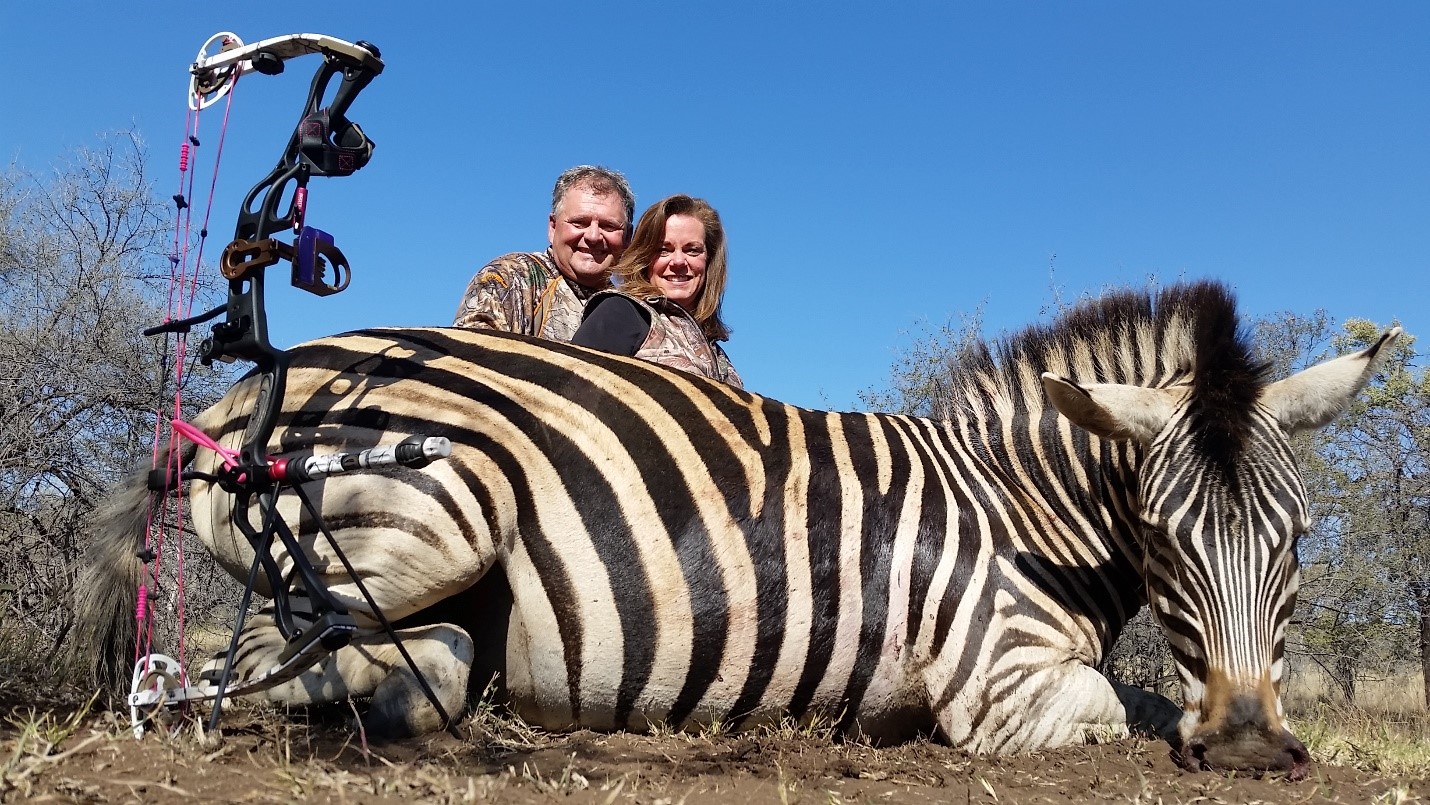


 Posted by Forrest Fisher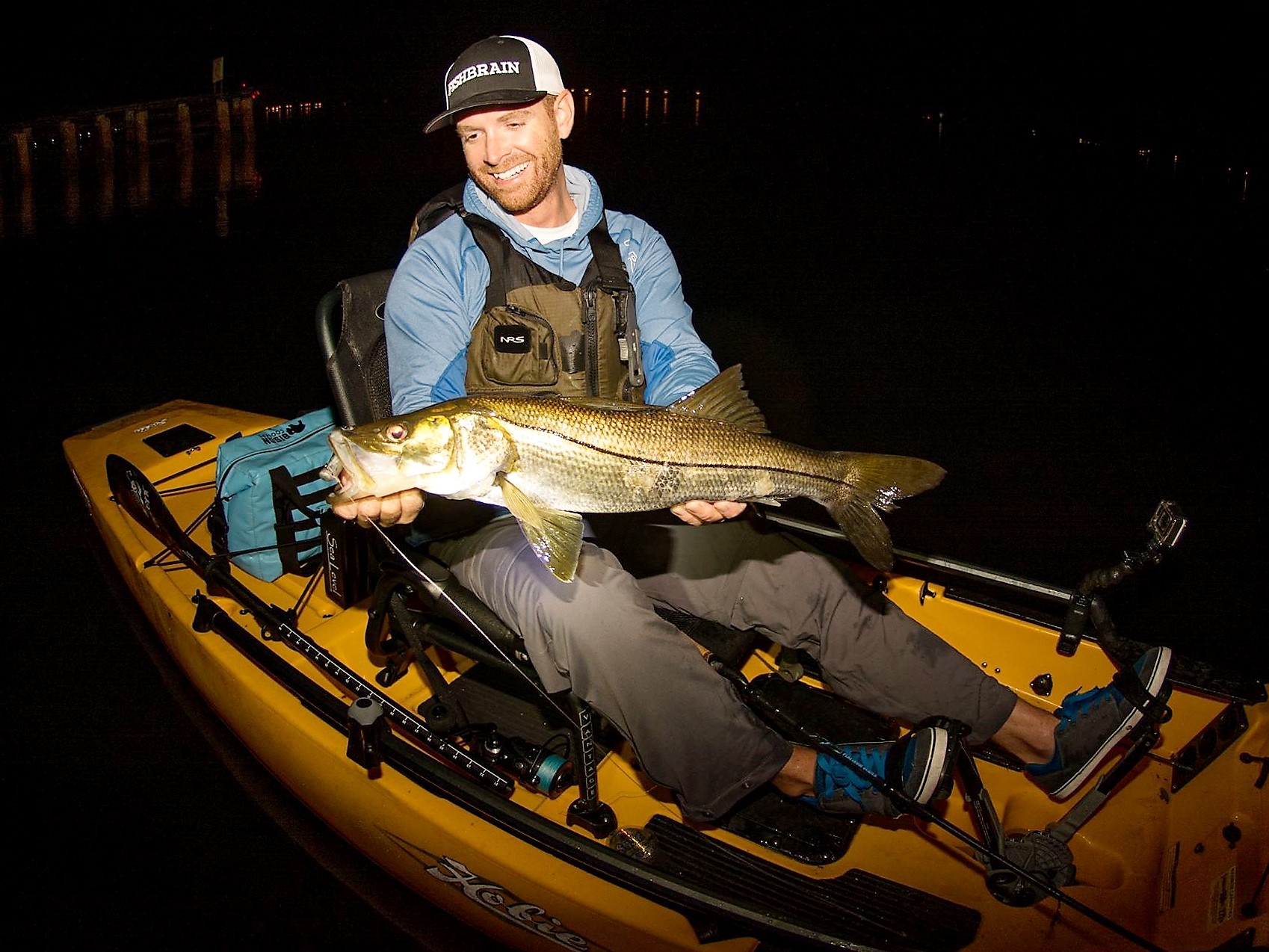
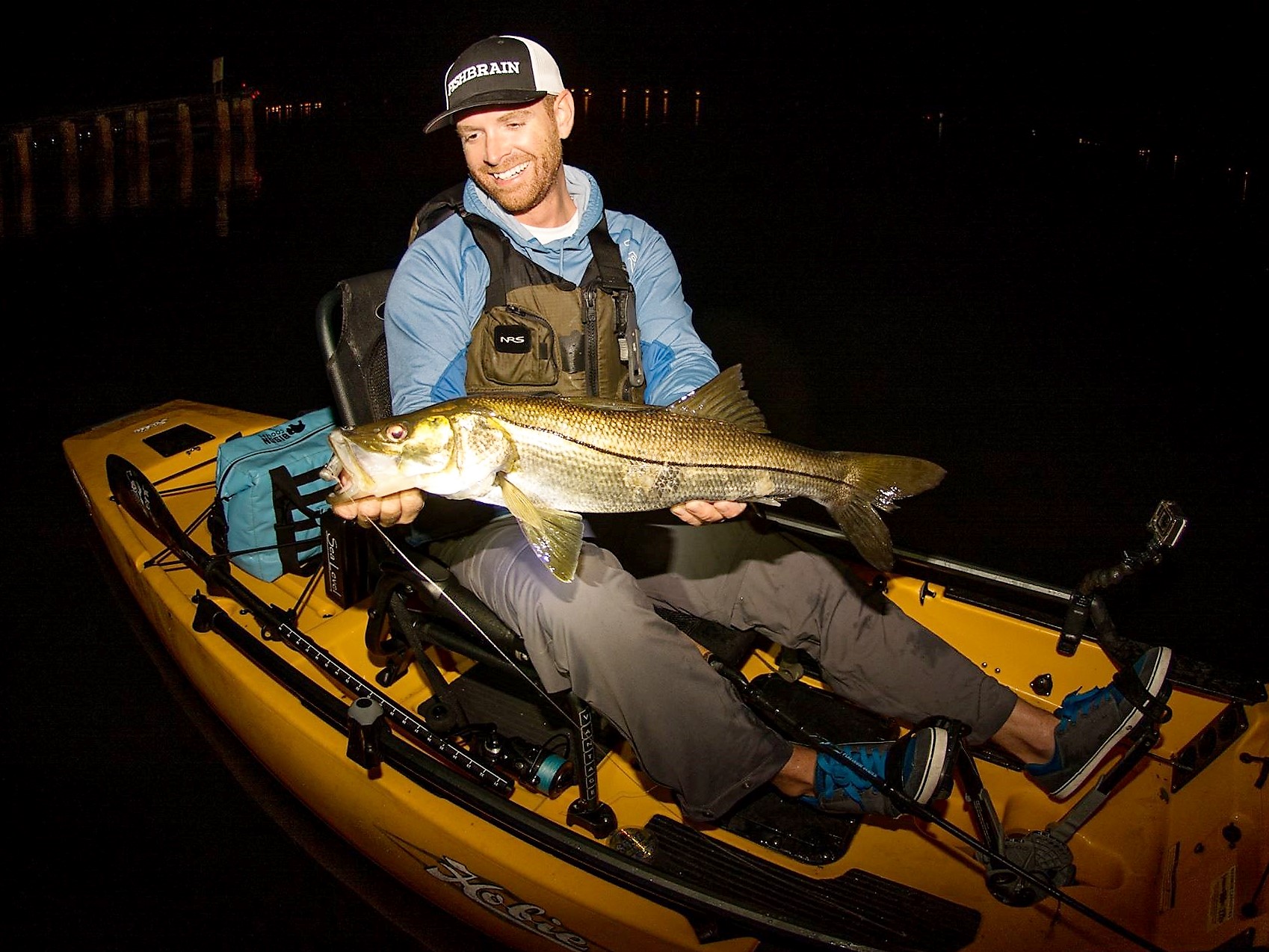

 By Forrest Fisher



 The Tula Cartridge Works, was founded way back in 1880 by Emperor Alexander II, that makes it one of the oldest and perhaps, most significant, producers of small-arms ammunition in the world today.


 met by the birds, the animals and the peoples that interact in this sacred and undisturbed land.


 By Forrest Fisher


 By Gord Pyzer
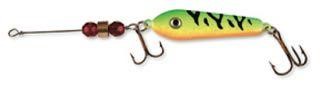 Jason dug deep into his tackle bag and pulled out a Fergie spoon that we intended to use the next day for walleye (above). He removed the wire holding the brass and glass clacker, and tied the noisemaker to the end of his line. Then he attached the same minuscule jig he’d been using without success to the rig’s split ring. After dropping it down the hole, Jason shook the contraption briskly enough that he could feel the brass weight sliding up and down the wire, banging against the glass beads. In short order, he was icing crappie after crappie after crappie (see the opening picture).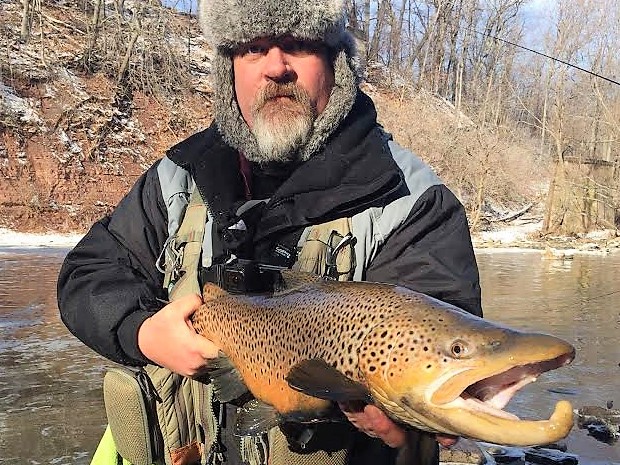


 Scott’s seaside sparrow, Wakulla seaside sparrow, Barbour’s map turtle, Florida Keys mole skink, Florida pine snake, Georgia blind salamander, Florida bog frog, bluenose shiner, saltmarsh top minnow, southern tessellated darter, Santa Fe crayfish and Black Creek crayfish. Threatened species have populations that are declining, have a very limited range or are very small.
 There is a new Swim Craw BUZZing with action.


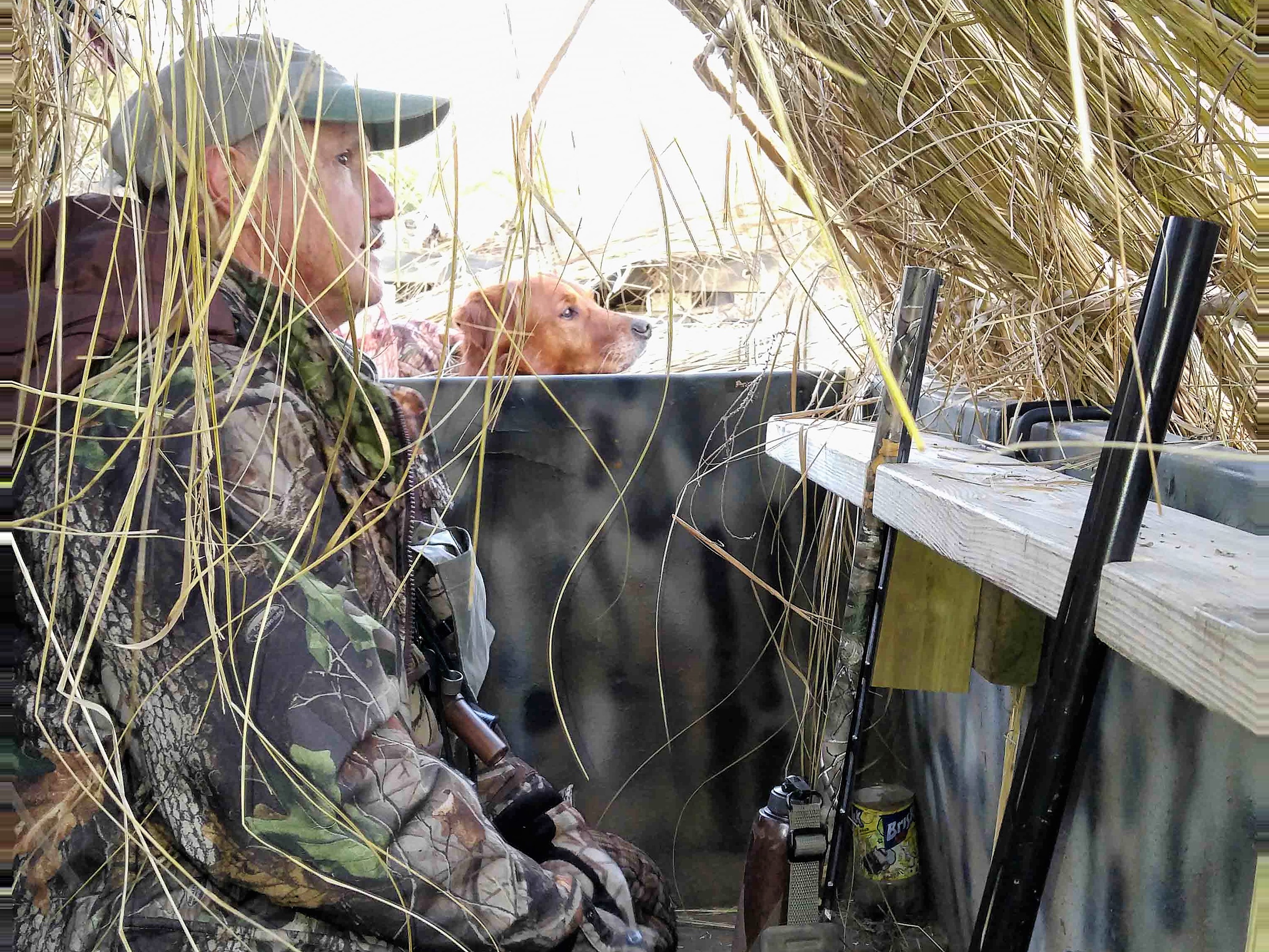
 By Jim Low


 By Forrest Fisher



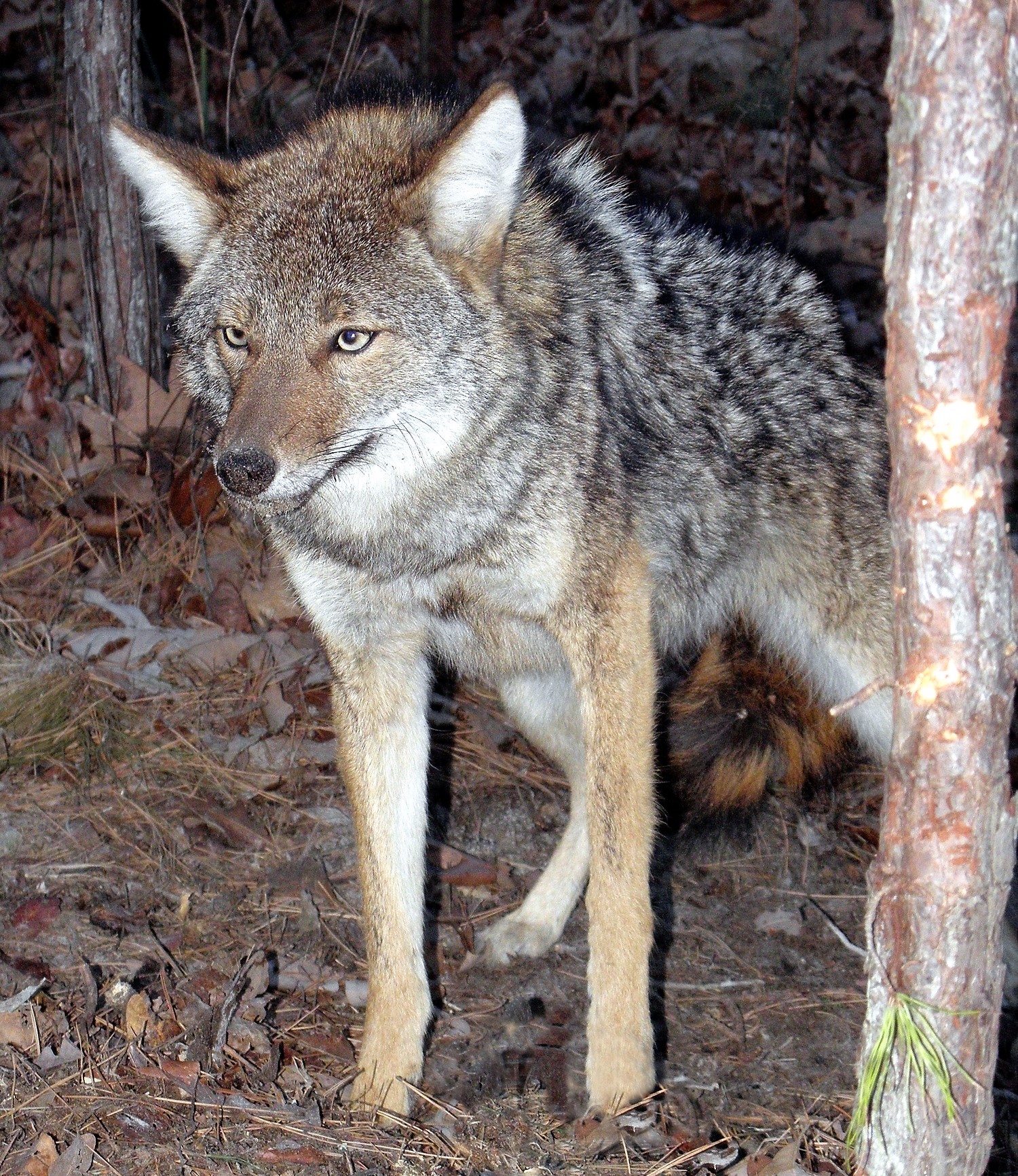


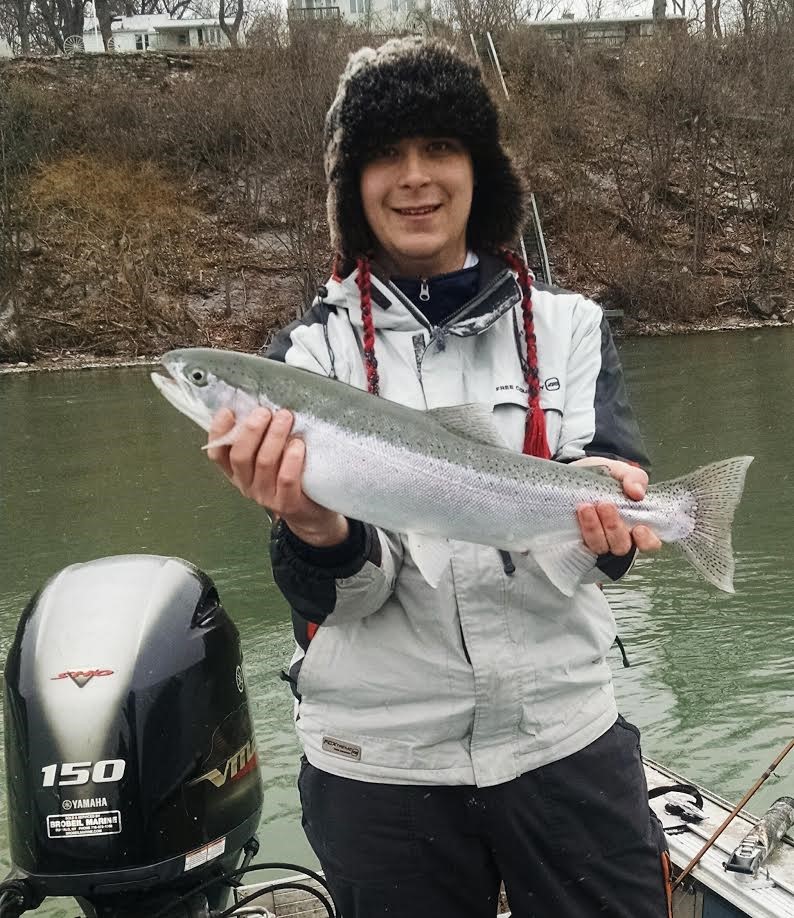 Remember that lake trout season opens officially on January 1, 2017. Best baits have been BC Wobbler spoons in chartreuse or orange; in-line spinners in chartreuse or yellow. Upper Niagara River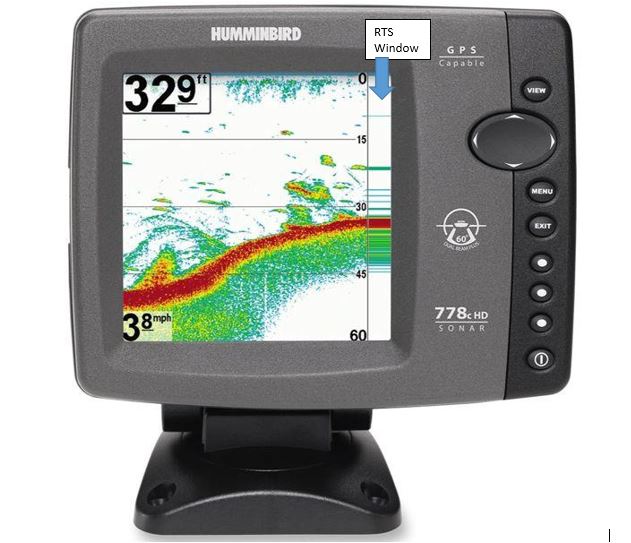
 By Gord Pyzer
 Smith & Wesson Corp. is now offering versions of its popular M&P Shield pistol in both 9mm and .40 S&W with front and rear tritium night sights. Whether deployed as a backup sidearm for police personnel, a deep concealment pistol for plain-clothes officers or an every-day firearm for concealed carry permit holders, the new night sights on the M&P Shield enhance sight acquisition in all low-light situations.
 The stainless-steel slide and barrel on this new M&P Shield is standard with a 5.3-inch sight radius and front and rear tritium night sights. For consistent and accurate shot placement, the pistol features a short, consistent trigger pull that has been further enhanced with a quick and audible reset made possible by the striker-fired action. Internal features of the M&P Shield mirror the standard M&P pistol series. Its stainless-steel internal chassis reduces flex while providing a stable shooting platform and its low-bore axis helps maintain ease of-use and a comfortable feel. A passive trigger safety prevents the pistol from firing if dropped and a sear release lever eliminates the need to press the trigger in order to disassemble the firearm. A loaded chamber indicator is located on top of the barrel. The M&P Shield is shipped with both an extended and flat magazine offering consumers the ability to customize the length of the grip.
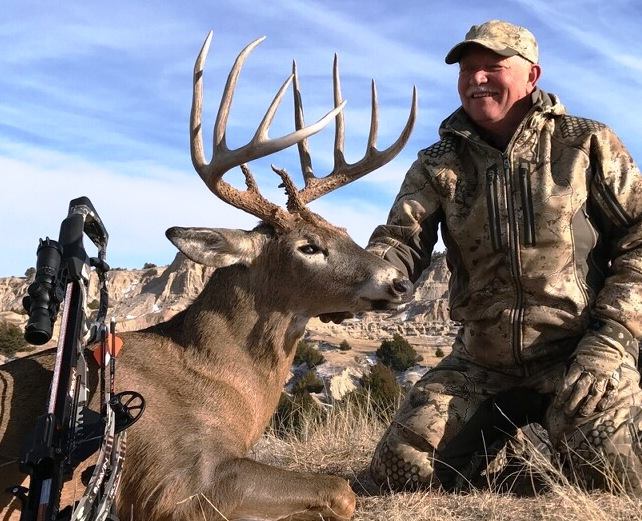
 I enjoyed reading how Byers felt about the many myths and misconceptions that have resulted with the increased use crossbows for hunting. Byers addresses crossbows and game animal populations, hunting season length and the use of crossbows during archery season. Much more on other myths with explanations will help everyone know more about the issues. Byers provided answers that made me consider and to understand things about crossbows that I did not realize – like the good news and bad news about using a crossbow for hunting or for simple recreational fun.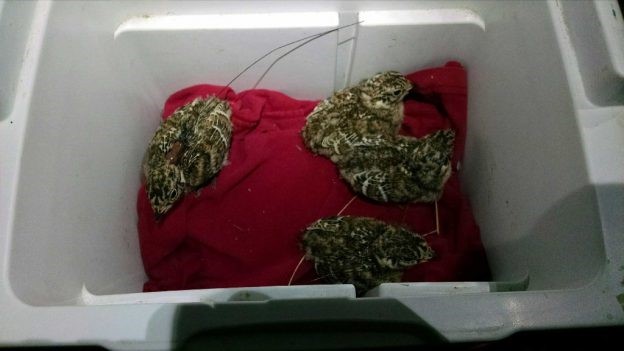


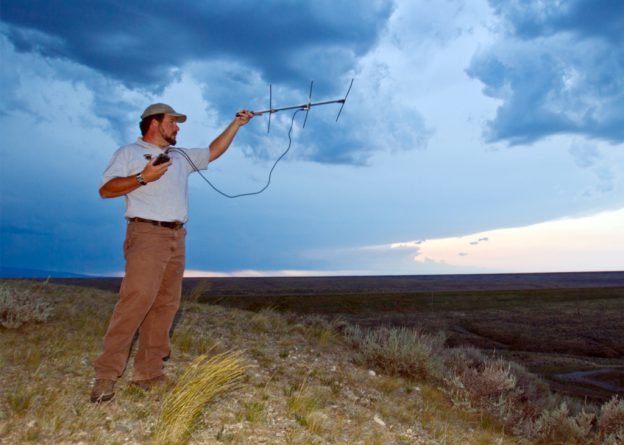

 By Jim Low
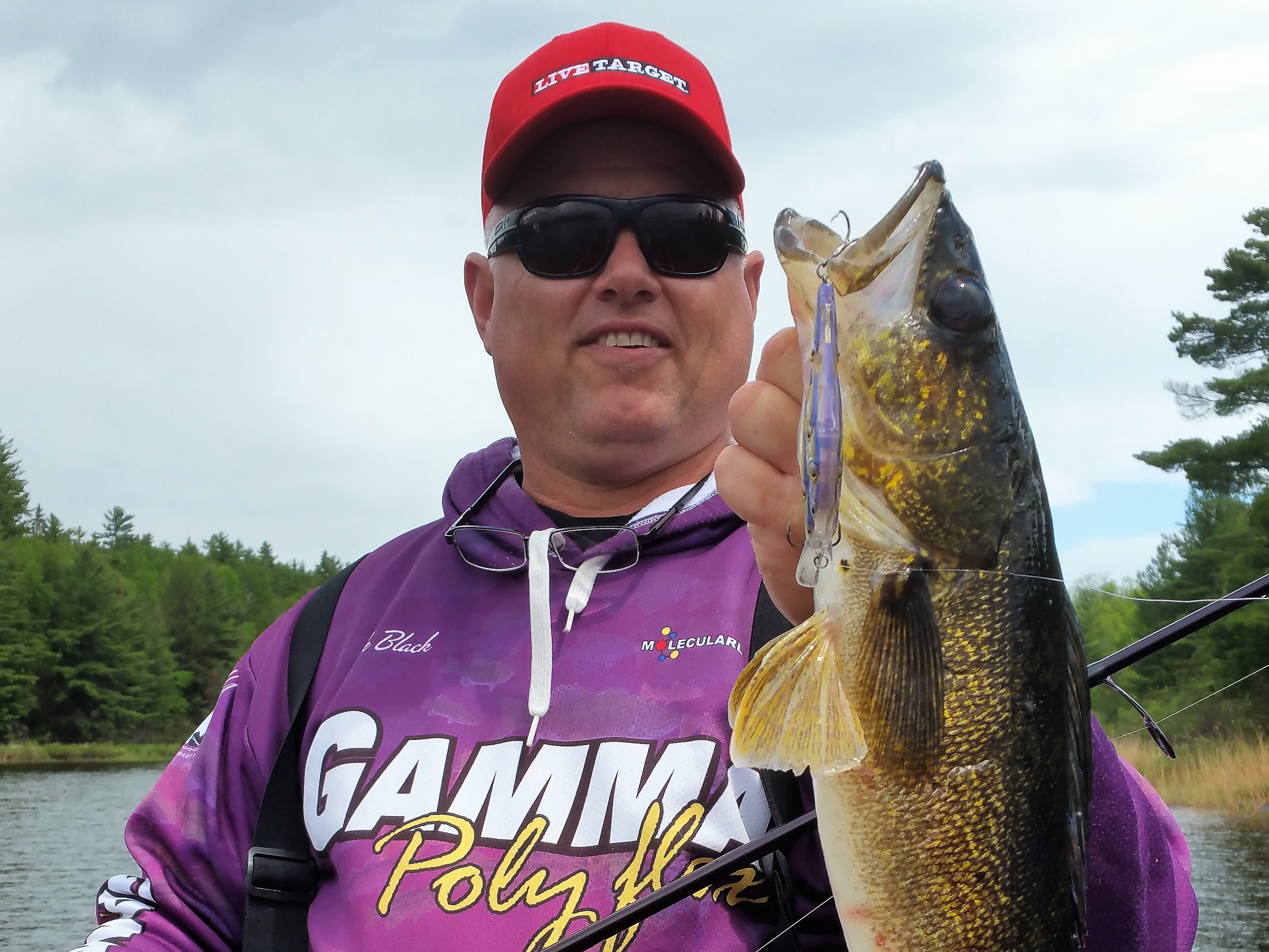


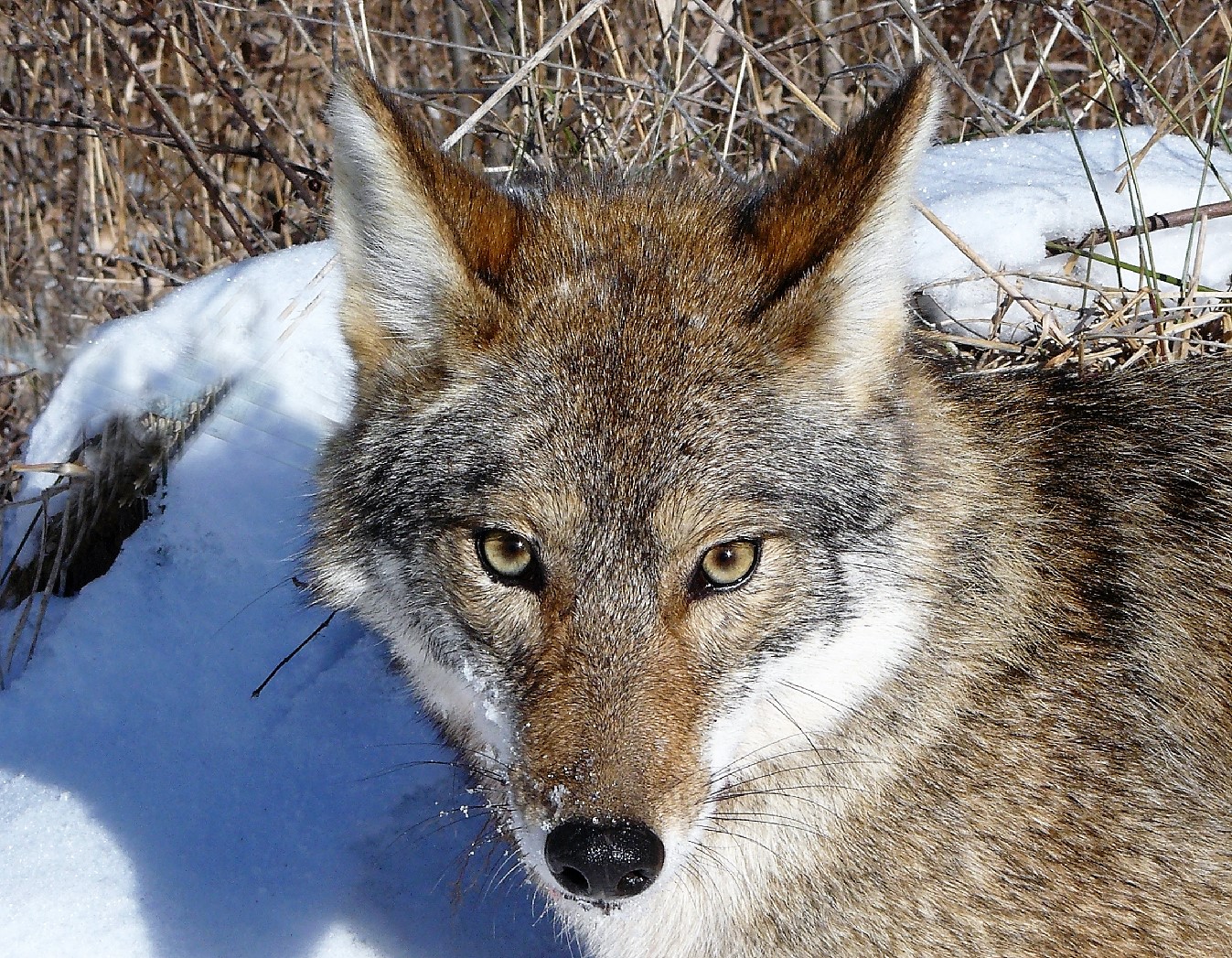


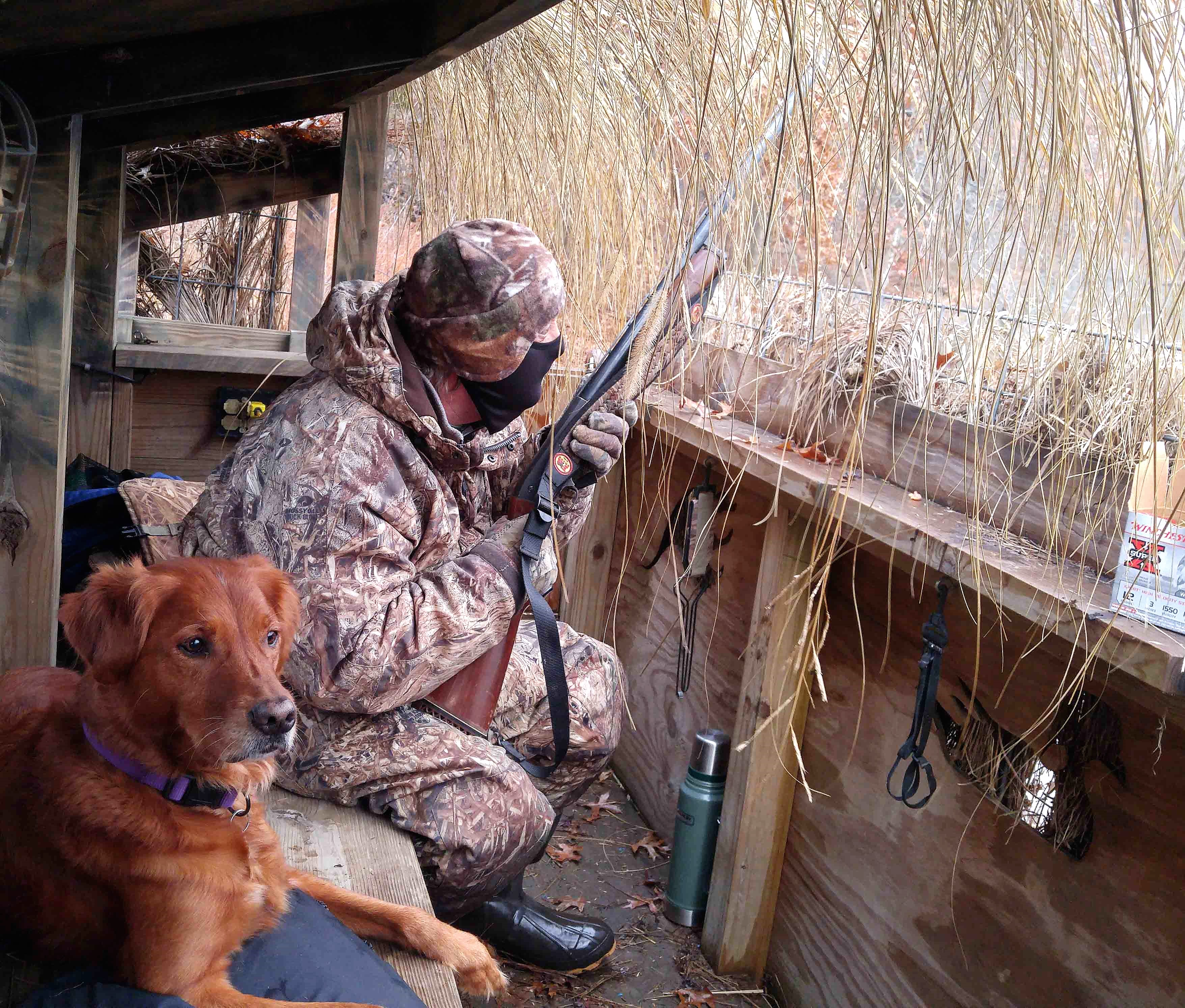



 No Line Coiling


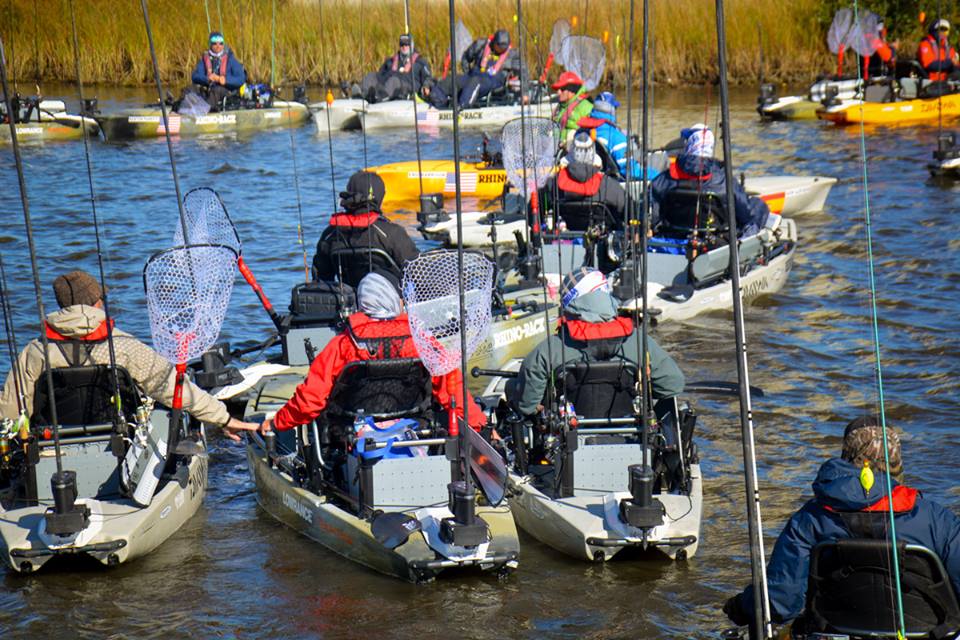 Located in the bayous of Southern Louisiana, 90 minutes from New Orleans, Lafourche Parish is the gateway to Cajun Country and the Gulf of Mexico, offering a distinctly Louisiana “bayou” way of life and memorable experience for both U.S. and international competitors. And then there is the fishing. According to Hobie’s Keeton Eoff, this could easily be the kayak fishing capital of the world.
 By Fern Fisher
 Directions:


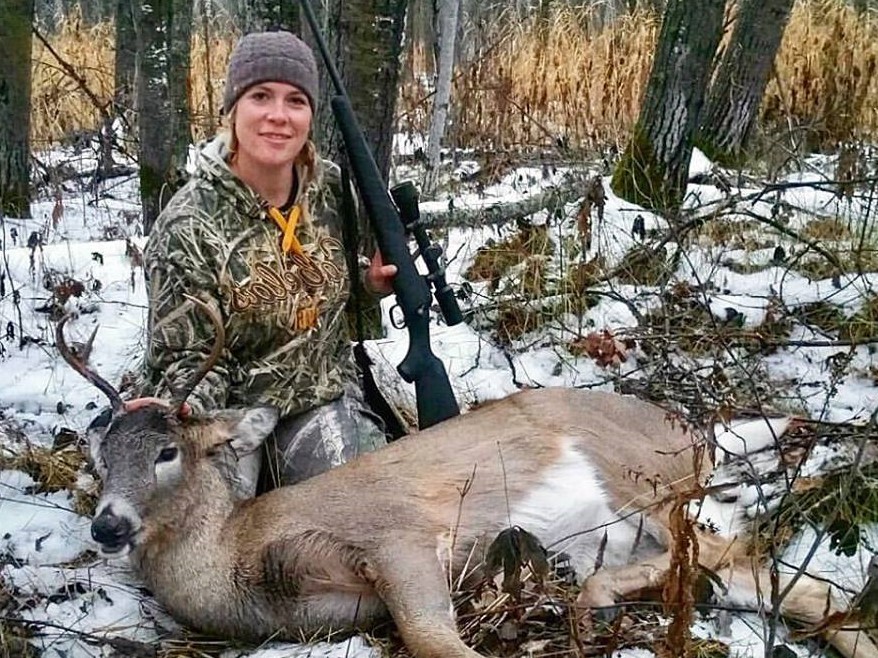
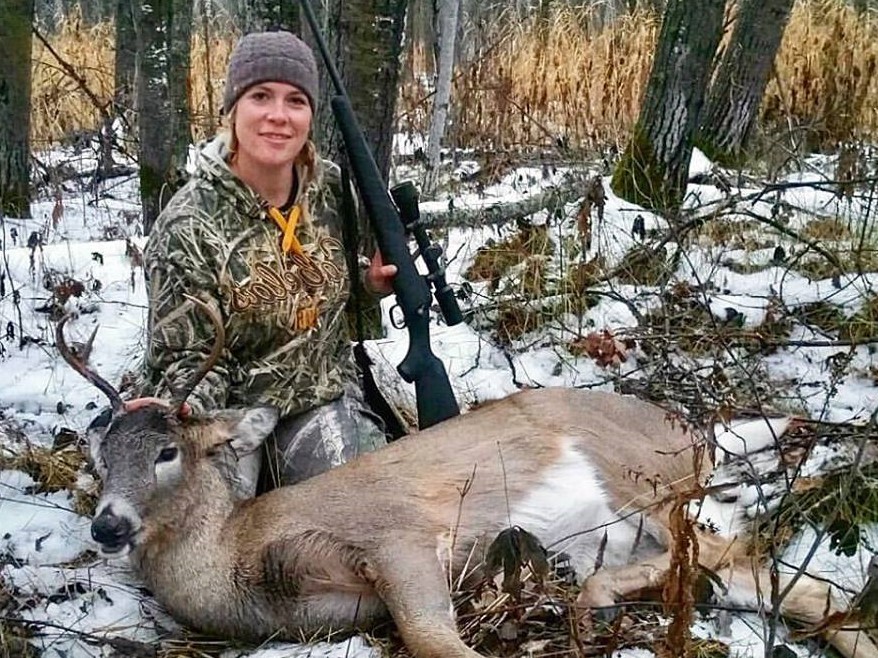


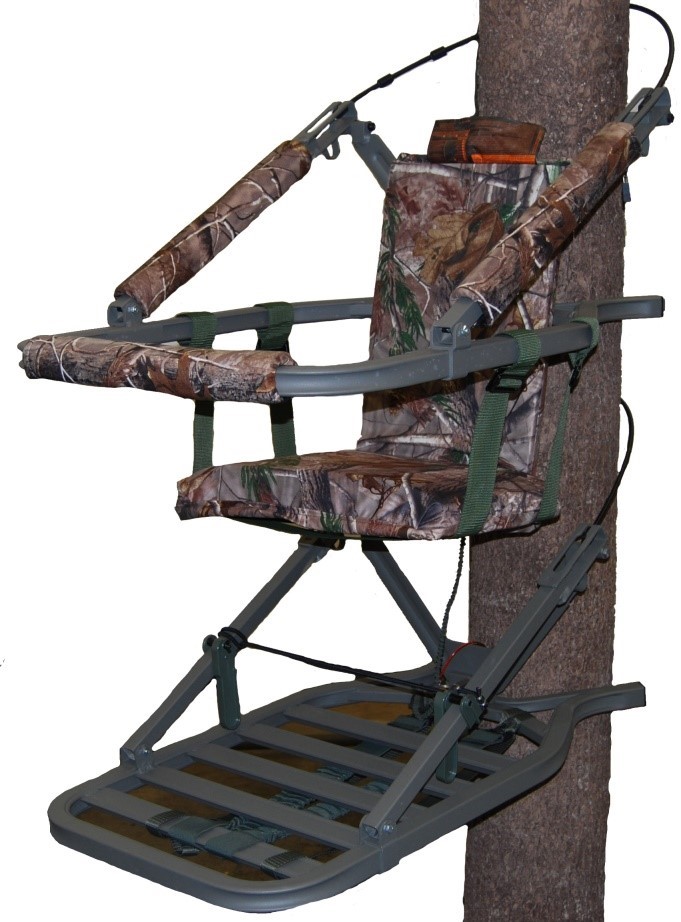 Details: Summit Treestands LLC, Recalls Explorer SD Closed Front Climbing Stands Due to Fall Hazard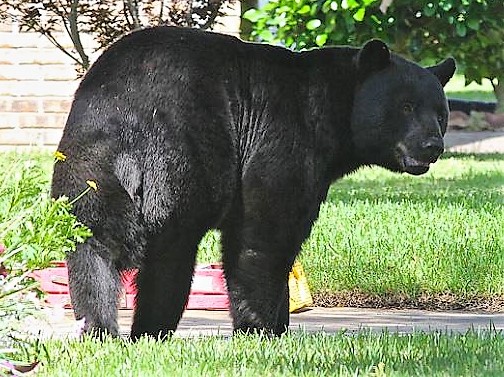

 The FWC plans to release more bear-related videos in the coming months. The short videos help meet the information needs of a busy public.


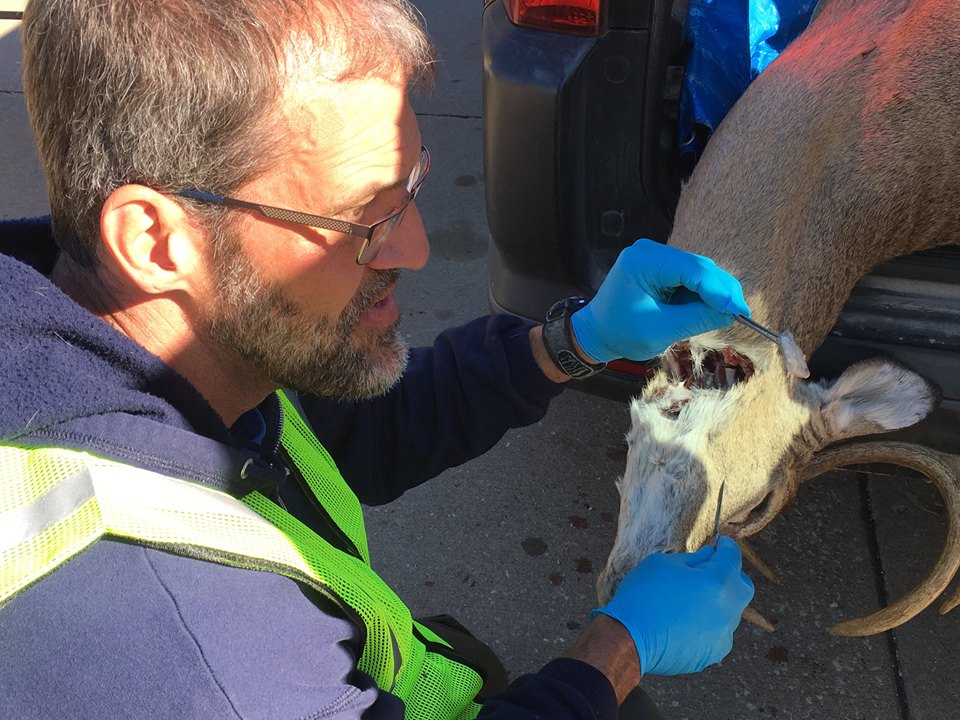


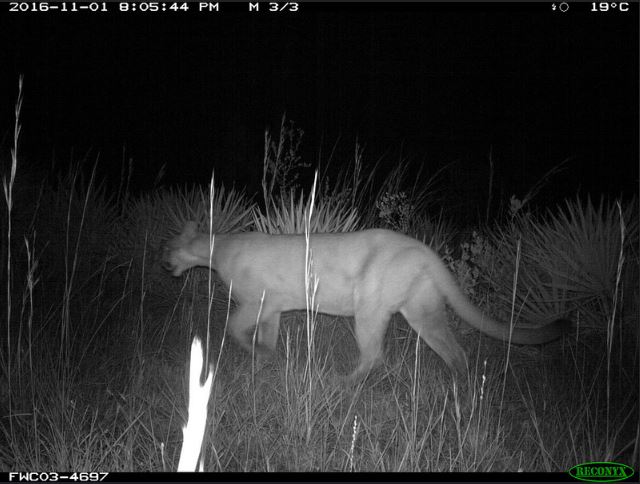


 at BuyaPlate.com. Fees from license plate sales are the primary funding source for the FWC’s research and management of Florida panthers.


 five color patterns: Black Chartreuse Glow, Crappie Minnow, Green Orange Glow, Pink Chartreuse Glow, Pearl White and Red Pearl Glow.


 and his input with others there and through the web will allow many to learn more about how to find those great moments for pictures in the outdoors.


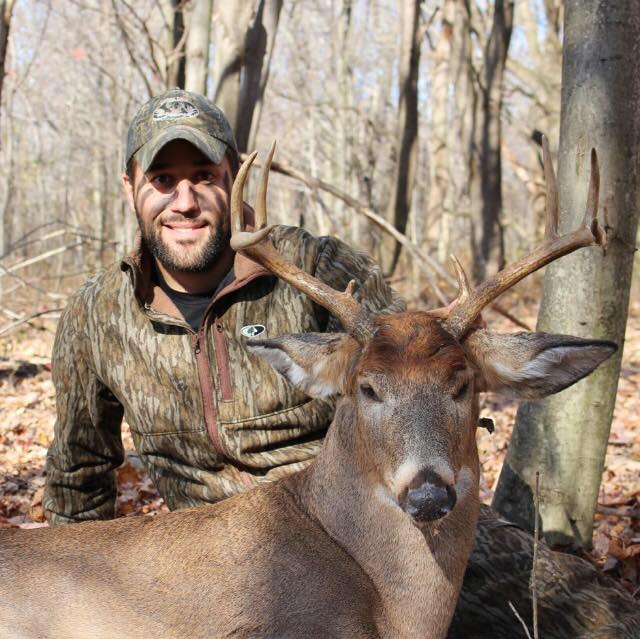


 By Forrest Fisher


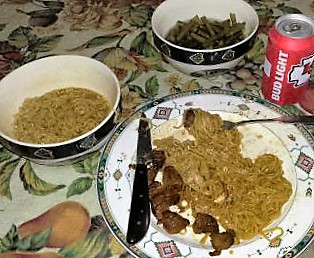
 If you’re packing your snowbird bags already and are planning ahead to hunt in Florida this year, November in Florida is an awesome month to head for the woods. You have the option to hunt small game, wild turkey, boars, bears, deer and more. Regulations are not complicated, but it’s a good idea to download the syllabus for the sector area you plan to visit.