New York State Spring Turkey Opens May 1

  • Spring 2017 will be Above 20,000 Bird Hunter Average
  • Successive Mild Winters Help Reproduction
  • 2-Bird Season Bag Limit, May 1 -31, 2017
Experts predict that a rising turkey population and healthy tom gobblers will be the norm in New York State for 2017, mild winters have helped the birds survive and thrive. Joe Forma Photo

The New York State Department of Environmental Conservation (DEC) is opening spring turkey season on May 1 in upstate New York north of the Bronx-Westchester County line, the agency announced today.

“Hunting is an excellent way to connect people to the natural world,” DEC Commissioner Basil Seggos said. “Spending time afield with a new hunter is a chance to teach them about conservation, the environment, and wildlife. It’s the perfect opportunity to put novice hunters on the path to becoming safe and responsible hunters.”

DEC reports that the turkey population experienced reproductive success in the summer of 2015, and combined with relatively mild winters in 2015-16 and 2016-17, it is anticipated that the spring harvest will be up from last year and above the five-year average (about 20,000 birds). The estimated turkey harvest for spring 2016 was 18,400 birds, and nearly 6,000 junior hunters harvested an estimated 1,300 birds during the two-day youth hunt in 2016.

Details: NYS Spring Turkey Season: May 1-31, 2017

  • Hunting is permitted in most areas of the state, except for New York City and Long Island.
  • Hunters must have a turkey hunting permit in addition to their hunting license.
  • Shooting hours are from one-half hour before sunrise to noon each day.
  • Hunters may take two bearded turkeys during the spring season, but only one bird per day.
  • Hunters may not use rifles or handguns firing a bullet. Hunters may hunt with a shotgun or handgun loaded with shot sizes no larger than No. 2 or smaller than No. 8, or with a bow or crossbow.
  • Successful hunters must fill out the tag that comes with the turkey permit and immediately attach it to any turkey harvested.
  • Successful hunters must report their harvest within seven days of taking a bird. Call 1-866-426-3778 (1-866 GAMERPT) or report a harvest online at DEC’s website.

For more information about turkey hunting in New York, see the 2016-17 Hunting and Trapping Regulations Guide or visit the “Turkey Hunting” pages at DEC’s website.

New York has an extremely safety-conscious generation of hunters, largely due to the annual efforts of more than 3,000 dedicated volunteer sportsman education instructors. DEC suggests hunters follow the cardinal rules of hunting safety: assume every gun is loaded; control the muzzle; keep your finger off the trigger until you are ready to shoot; be absolutely sure of your target and what may be beyond it; and don’t stalk. Set up with your back against a large tree and call birds to you. To find a sportsman education class in your area, go to the Sportsman Education web page on DEC’s website or call 1-888-HUNT-ED2 (1-888-486-8332).

To view a video on hunter safety tips, watch DEC’s Hunter Safety video on YouTube. 


Big Spring Bass: Add HOVER-ABILITY to Your Secret Fish-Catching Arsenal

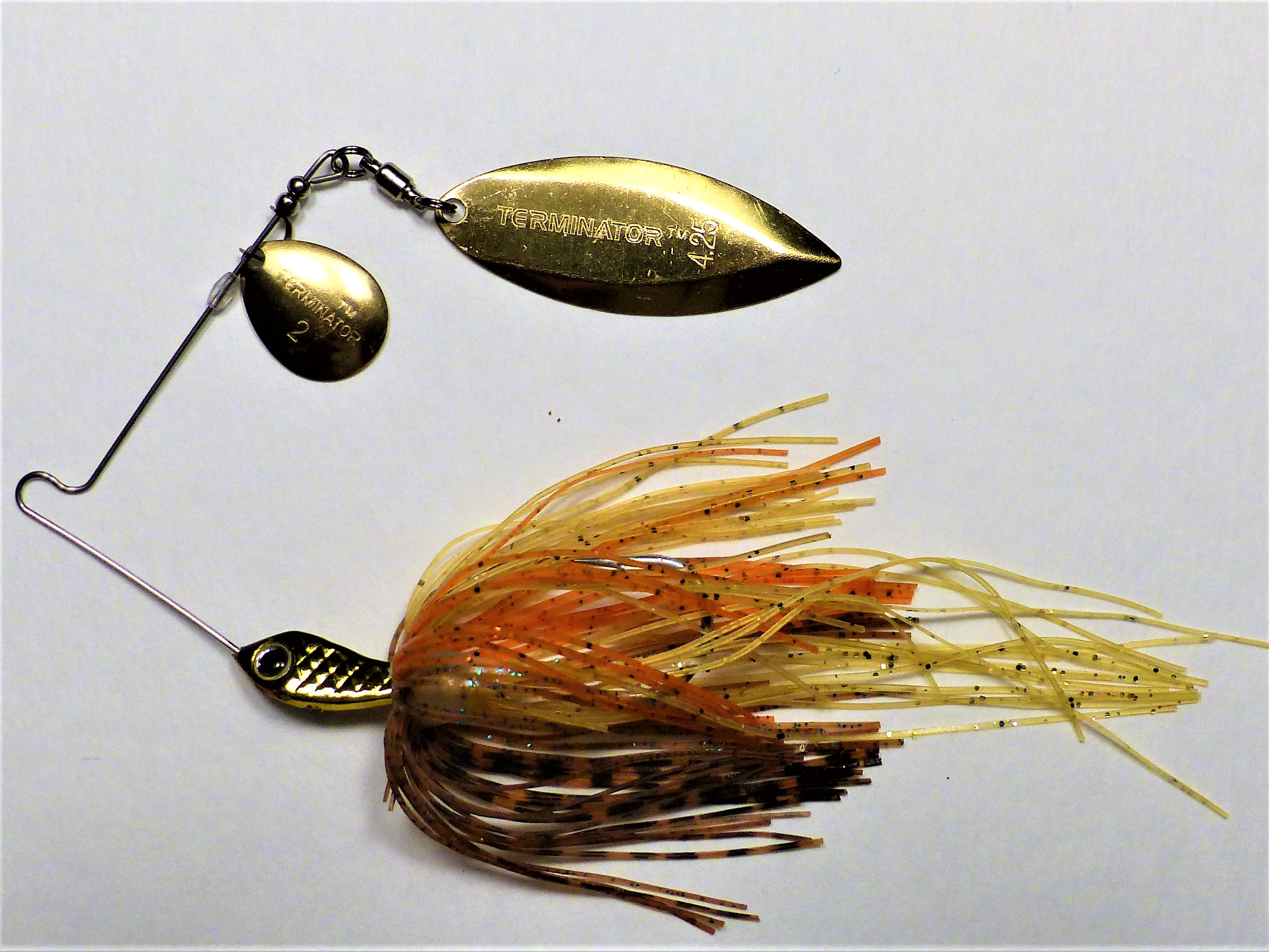
  • Add Spinner Bait: 3/8 oz TERMINATOR Double Gold Bade (#2 & #4.25)
  • Add Tail: Big Bite SUICIDE SHAD, BB-Kicker or Curly Tail
  • Add Stubborn Fish Solution: HOVER-CONTROL
The Terminator Colorado Willow spinnerbaits provide high vibration, their stainless steel wire frames are strong, bending for greater flash and thump, and allowing the lure rip and roll through logs, snags and vegetation. Add a paddle tail and you have HOVER-ABILITY and fish catch power.

By Forrest Fisher

Spinner baits are an incredibly effective fishing bait for black bass.  Largemouth, smallmouth and spotted bass seem to be bothered by them enough to hammer them when the time to toss these is right and when the action is just perfect at the depth the fish are feeding.   Sounds like a tall prescription right?

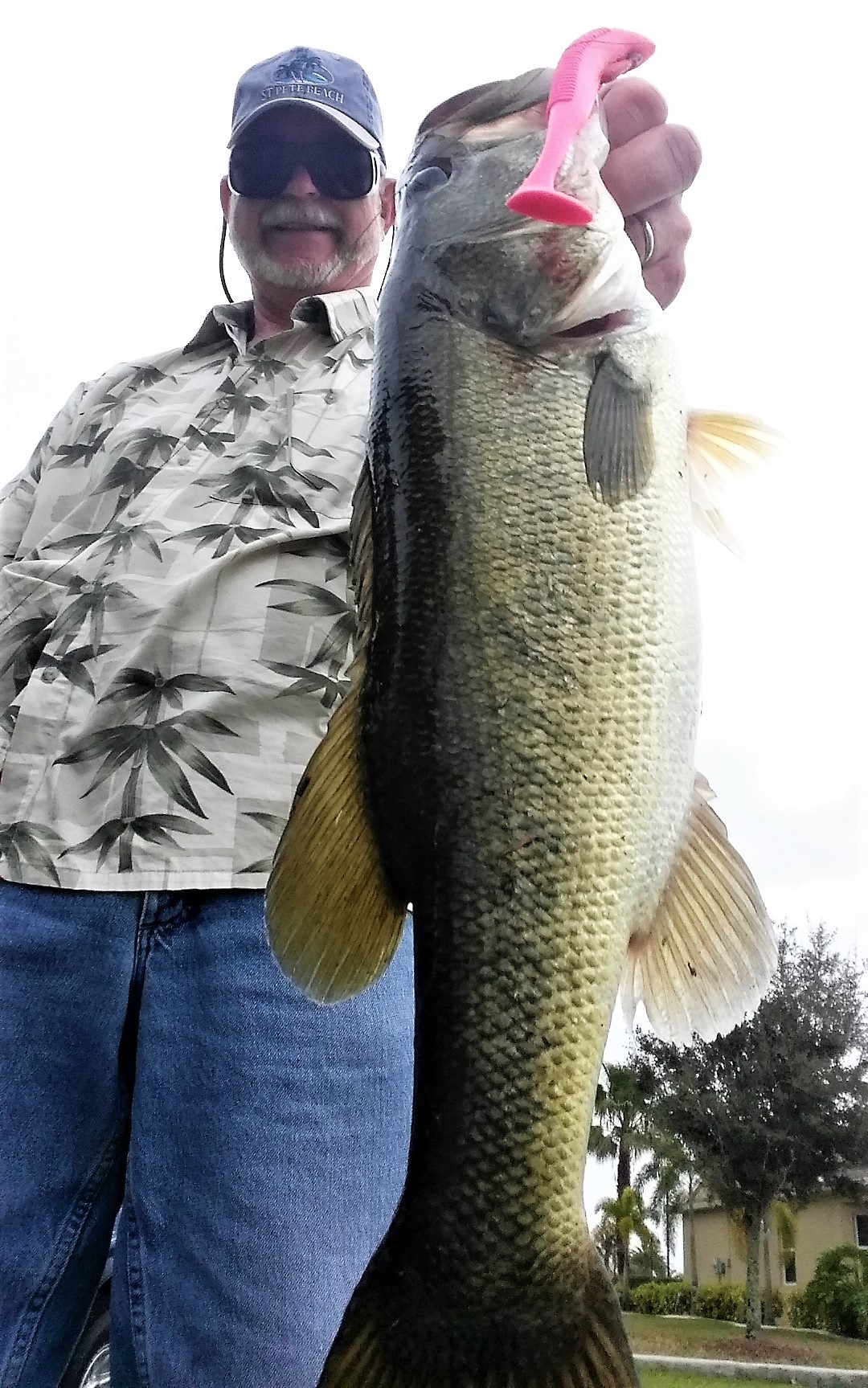
The author added a weird color tail to the spinner bait, like this bubblegum color, for a surprise visit attack from Mister Bass.

Some things in fishing are difficult, but this one is easier than it sounds. One of my favorite spinner baits is the 3/8 ounce Terminator with two gold blades: one a Colorado number 2 and the other a willow leaf number 4.25.  Sounds particular because it is.  Spinner baits are largely about the action and flash, but in many cases, you might wonder why one spinner bait is more effective when they both appear to have the same color, size and all that. 

One of the larger secondary factors is the sound from the noise of the blades hitting each other, the wire connector, or the tail.  These baits with the “right sound” can work everywhere you fish.  Fact is, the sound works to attract fish and the fish wack them because, while they may not be hungry, they are irritated.  That’s the reason to cast them 3-4 times in the same relative place.   

Another secondary factor is the speed of your retrieve.  You will note that many recent press release news flash items about reels highlight high speed gear ratio retrieve rates.  Sometimes fast is a winner, usually, it’s not.  Not to say it might not be in some cases, but often, it’s the other way. 

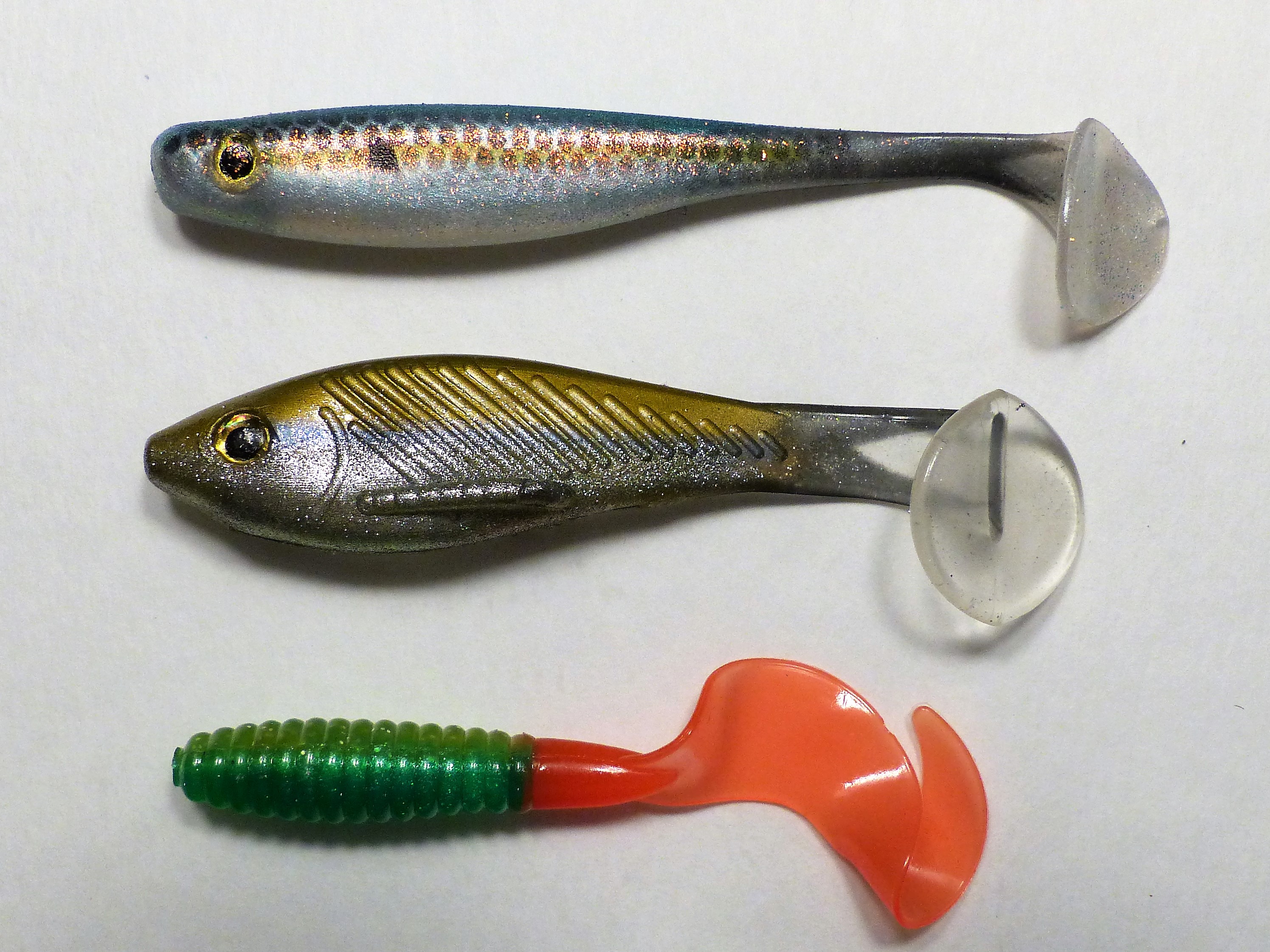
Plastic tail types can be varied, but here are three that offer large difference between them to allow speed control and HOVER-ABILITY.

When the fish are not biting, if the spinner bait slows down, it is provocative and even more irritating. Fish will come out of hiding to slam your lure.  So what about “control the speed” short of slowing down your retrieve?  How can we do that?

Focus on “hover-ability” to get this right.  You add a tail.  Simple.  Many to choose from, here are three of them that I favor.  The size and length of the body are a factor, but even more an element for control is the size of the flapper.   The standard style plastic tail only slows the bait down a little bit, but the hollow paddle tails are like speed brakes.

The Big Bite Baits Suicide Shad swim bait provides a lifelike swimming action that excels on the back of a swim jig, underspin, vibrating jig, umbrella rig or a spinner bait.

Even if you try to retrieve these fast, you’ll think you have a fish on.  They resist and waggle back and forth a ton of vibration, providing substantial drag and added action to the spinner bait.  Add that they also allow the blades to rattle even more!  Amazing addition when the time to try this demands a S-L-O-W action that hovers.  Two of my favorites that I can afford to buy several colors for come from Big Bite Baits at Tackle Warehouse, this place is becoming one of my most visited tackle site sources. (http://www.tacklewarehouse.com/Big_Bite_Baits_Suicide_Shad_Swimbait/descpage-BBBSS.html)

The Suicide Shad and the BB-Kicker are paddle tail HOVER CONTROL GIANTS in my book.  They each offer a different action because of their width and length, and maybe a larger factor, the floatation influence of the tail. 

Designed with a thinned-out central body, but with an extra-thick boot tail, the backside of the Big Bite Baits BB Kicker swim bait creates big momentum when it swings, adding a heavy, hard-pounding action with vibration.

Add it to the spinner blade hook by carefully threading it on so it is perfectly centered, toss it out, let it sink to your desired depth, start your retrieve.  Slam!  Wack!  Happens often.   Switch between all three of the tails shown and see how the lure action is altered and how the delivery of these actions can change the rate at which fish inhale these baits or just swash their tail at them.

You will discover an amazing learning experience. 

New Channel Catfish Record in New York State!

  • Lake Ontario, Jefferson County, 35-pounds, 3 ounces
  • Lucky Angler is Watertown Resident, Eric Scordo
  • Bait was a Simple Nightcrawler
Using just a nightcrawler, Eric Scordo of Watertown caught a 35-pound, 3-ounce channel catfish measuring 38 ¼ inches in Lake Ontario in Jefferson County on April 29, 2017.

The New York State Department of Environmental Conservation (DEC) has confirmed that a new state record has been established for channel catfish.

Using just a nightcrawler, Eric Scordo of Watertown caught a 35-pound, 3-ounce channel catfish measuring 38 ¼ inches in Lake Ontario in Jefferson County on April 29.  The fish broke the previous state record caught from Brant Lake (Warren County) in 2002 by nearly 2½ pounds.

“Mr. Scordo’s record-breaking channel catfish is a prime example of the outstanding fishing opportunities in New York for a variety of species, not just popular gamefish,” said DEC Commissioner Basil Seggos. “This new record kicks off the 2017 freshwater fishing season, and I encourage all New Yorkers to buy their license, pick up a rod and reel, and try their hand at hooking a trophy catch in any of the state’s 7,500 lakes and ponds and 70,000 miles of rivers and streams.”

Channel catfish are the largest members of the catfish species that live in New York and can be found statewide.  They feed primarily on the bottom and are most easily caught using live bait such as worms or baitfish.  When hooked, catfish can provide a challenge for even the most experienced anglers.  They are also one of the tastiest freshwater fish.

Mr. Scordo submitted details of his winning catch as part of DEC’s Angler Achievement Awards Program, which tracks state record fish.  Through this program, anglers can enter freshwater fish that meet specific qualifying criteria and receive official recognition of their catch and a distinctive lapel pin commemorating their achievement.  Three categories make up the program: Catch & Release, Annual Award, and State Record.

For more information about the Angler Achievement Awards Program, including a downloadable application form, go to DEC’s website.  Program details and an official entry form can also be found in DEC’s current Freshwater Fishing Regulations Guide.

For additional information on the Angler Achievement Awards Program call (518) 402-8891 or email fwfish@dec.ny.gov or go to the website: http://www.dec.ny.gov/press/press.html.


Bobbing Tails & Black Scales

  • How two very different species found homes in our homes
  • This tale of two species has a happy ending
  • We are all part of Aldo Leupold’s “Land Mechanism” at work

By Jim Low

The small cup of a phoebe nest gets crowded by the time five or six chicks near fledging size.

You step out your front door to walk the dog before bedtime, and are startled by a flutter of departing wings.  The next morning, you find white splashes of bird droppings outside the door, and a little gray bird is perched on the shepherd’s hook above your bird feeder.  Instead of dropping down to grab sunflower seeds, it periodically flies out into the air above your lawn, pumping its tail impatiently in between forays. 

Outdoor light fixtures are a favorite nesting spot for Eastern phoebes, but any horizontal surface out of the weather will do.

On your way back indoors, you spy a clump of moss and mud atop your porch light.  Inside, you open the closet in your foyer and find a 4-foot snake skin inside.

What do these two things have in common? They are evidence that your home and its environs are part of a healthy ecosystem.

If you live in Missouri, the pert little gray bird that startled you was an Eastern phoebe, a member of the flycatcher family.  It isn’t particularly showy, but you can always recognize it by its nervous habit of pumping its tail up and down.  Nervous or not, phoebes aren’t sensitive to human disturbance.  Quite the opposite, they seem to seek out human habitations for their nesting sites.  Their favorite nesting spots in our neighborhood are the horizontal surfaces provided by outdoor light fixtures.

Eastern phoebe are often viewed on a neighborhood fence, farm fence or garden fence.

You might wonder where phoebes nested before humans began erecting houses, barns, sheds and other structures with nice dry spaces beneath roof eaves.  They did – and still do – what swallows do, and built their nests on rock ledges beside streams.  That works out nicely for them, since the insects that comprise most of their diet thrive around running water.  Apparently houses with water features, sprinklers and bird baths work for them, too.

Snakes, like this common rat snake, can reach places you might not believe if you didn’t see it with your own eyes.

Getting back to that scaly surprise in the closet, if you make your yard a haven for birds, rabbits, chipmunks, squirrels and other small creatures, you also make it attractive to the rest of the food chain.  This means foxes, coyotes, bobcats, hawks, owls and snakes. 

This 21-inch black rat snake was just inches away from his goal – a nest full of phoebe chicks.

The impressive skin my wife found in our closet a few years ago came from a particularly prosperous black rat snake.  Its contribution to our residential ecosystem was keeping rodent numbers in check. 

Unfortunately for the phoebes and those of us who love them, rat snakes aren’t exclusively rat eaters (ratatarians?).  We initially blamed blue jays, such easy targets for slander, for the disappearance of five phoebe chicks from the nest beside our front door.  But the truth came out the following year, when I found a reptilian ratter neatly wedged in the grooves of our brickwork.  It was at the top of the wall, and within inches of raiding the new phoebe nest.

I spared the snake, pulling him down and escorting him to the far edge of the yard, but he ultimately paid for his crime when he had the bad fortune to inhabit a patch of tall grass when I mowed it (What’s green and black and red and flies through the air with a sickening THRRRRUPPPPP?).

Anyway, assuming that the late Mr./Ms. No Shoulders had a family, I decided that the phoebes needed a more secure spot for their nest.  Toward that end, I assembled a modest wooden box with an overhanging roof and placed it 8 feet up the slick exterior wall of my tool shed.  There, the phoebes have nested unmolested ever since, and the rat snake family has returned to its rodent-control duties.

This modest box 8 feet up a smooth wall, provides safety from snakes.

Photos on trail cameras prove that foxes, coyotes and bobcats patrol the surrounding woods, but they steer clear of our house. 

Sharp-shinned hawks exact their tribute at our bird feeders, and barred owls stake out our lawn, sparing my vegetable garden from all but a few very cautious cotton-tailed marauders.  Shrews do their part to keep the local field mice honest, and moles thin out the grubs and other underground pests, which I consider a good trade for humps of loosened soil.

These are all reminders that mankind doesn’t exist in a vacuum. 

Our species is one cog – admittedly a very influential one – in what Aldo Leopold called “the land mechanism.”  It’s nice to see the other parts working, and a reminder that we should do our part to sustain balance that all of creation needs to survive.

New York DEC Eastern Lake Erie Fishing Report

  • May 5, 2017

All the Lake Erie boat launches are now open for the season. Launching at Buffalo Boat Harbor may still be limited to the launch closest to the restaurant.

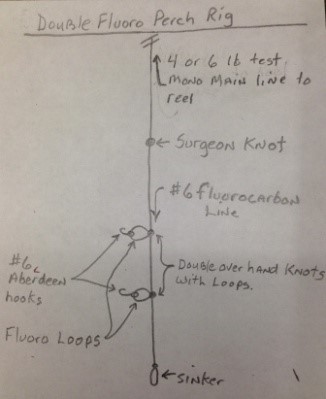
There have been some excellent yellow perch catches lately between Cattaraugus Creek and Sturgeon Point in 45-55 feet of water.  Most perch are now post spawn and spread out.  Searching around for schools on the graph may be futile, as fish are scattered and roving.  Some reports also indicate light-biting fish, with most perch mouthing bait rather than hitting it.  Watch or feel for line tightening rather than rod tip bouncing.  Many successful Lake Erie perch anglers employ a fluorocarbon rig with emerald shiners (See description below and diagram to the right).

Double Fluorocarbon Perch Rig:

Lake Erie Yellow Perch fishing rig common among successful anglers. Courtesy NYSDEC.

Tie a 6 foot section of 6-pound test fluorocarbon leader onto main line using a surgeon’s knot.  Slide a #6 Aberdeen hook up leader to 3 feet from end, and tie a double overhand knot, leaving a 1.5 inch loop with hook attached.  Slide a second hook onto line to 12-15 inches below first hook and secure similarly.  Attach a 1 or 2 ounce sinker a foot below the bottom hook.

Walleye season kicks off on Saturday (May 6) at 12:01 AM, but may be off to a slow start with heavily stained nearshore waters of Lake Erie.  The nearshore shoals/shallows are typically productive when the season opens.  Shorehaven Reef, Bournes Beach, Green Hills, Van Buren Bay, Evans Bar, off Hamburg and near the mouth of Smokes Creek are good spots to try.

There has been good smallmouth bass action in Dunkirk and Buffalo Harbors. Good numbers of 7-8 inch bluegill have been biting in Buffalo Harbor and Bell Slip Harbor.

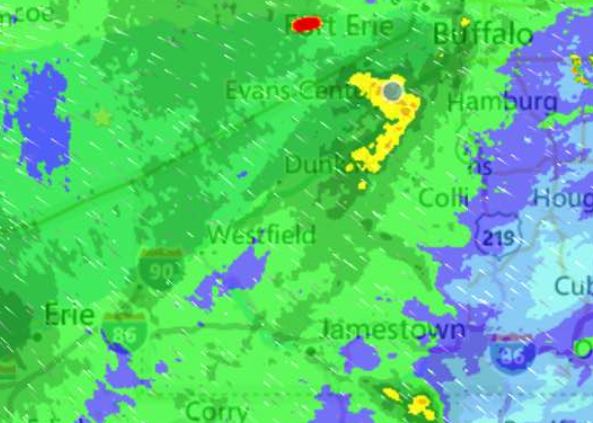
The rain radar map has been heavy with rain for nearly a week, causing muddy water conditions for walleye trollers on Lake Erie.

Lake Erie Tributaries

Heavy rains again have all Lake Erie tributaries running at very high and muddy levels. Trib anglers saw good smallmouth bass action in the small to medium streams before the latest round of rain. Look for more bass to have moved in on this high water event.

Upper Niagara River

Due to muddy creek outflows, waters are turbid along the upper Niagara River’s east shoreline.  Harbors and marinas are the best bet until river waters settle out. These areas warm quicker than the river, attracting both bait and panfish.

Chautauqua Lake

Walleye season opens tomorrow and new regulations are in effect on Chautauqua Lake. The rules now mirror the statewide regulations with a minimum length of 15 inches and a daily limit of 5. Previously it was a minimum length of 18 inches and a daily limit of 3.

Targeting walleye along shallower shoreline areas at night is a good early season tactic. Boaters can troll with stickbaits and worm harnesses or drift and work jigs with nightcrawlers or leeches.

Shore anglers can connect by casting stickbaits, especially near stream inlets.

See the Fishing for Walleye page for more information. Yellow perch fishing has been very good seemingly lake-wide. The area around the bridge has been a hot spot for larger perch.

 The crappie bite in the canals has tapered off, as canal anglers now catch mostly bluegill. Anglers are still catching decent numbers of crappie in open lake at depths of 4 to 8 feet. Target areas near structure and weed beds.

Inland Trout Streams

Inland trout fishing is on hold due to high water conditions, with muddy conditions on all creeks. Western New York anglers have a variety of Wild Trout Streams and Stocked Trout Streams to choose from.

In addition, Public Fishing Rights Maps are available for many of the region’s best trout streams.

Check out the Fishing For Stream Trout page for introductory information on trout baits, lures, equipment and fishing techniques.

Spring Trout Stocking

All of Region 9’s trout stocking waters have been stocked with at least one stocking increment. For County lists of stocked waters check the Spring Trout Stocking 2017 page. Hatchery staff are now delivering additional stocking increments for the larger or more popular waters. The following waters are scheduled an additional stocking between 5/8 and 5/12.

Allegany County: Dodge Creek (Clarksville), Dyke Creek (Andover), Cryder Creek (Independence), California Hollow Brook (Bolivar), Little Genesee Creek (Bolivar).

Cattaraugus County: Elton Creek (Freedom).

Wyoming County: Tonawanda Creek (Orangeville), Buffalo Creek (Java).

Genesee River Angler Diary Program

DEC Region 9 Fisheries Unit will be running an angler diary program for the Genesee River during 2017, and is currently looking for anglers to keep diaries. The diarist program aims to record data for trout and bass fishing trips on the Genesee River from the Pennsylvania line downstream through Letchworth State Park from March 1st through October 31st, 2017. If you fish the Genesee River (even once) and would like to contribute your observations by keeping a diary, please call DEC Fisheries at (716) 379-6372 or email fwfish9@dec.ny.gov.

If you need more fishing information or would like to contribute to the fishing report, please call or e-mail Mike Todd (716-851-7010; michael.todd@dec.ny.gov). Good Luck Fishing!

The fishing hotline can also be heard at (716) 679-ERIE or (716) 855-FISH.

Conservation Goes to the Capitol

  • Annual Event Reminds Lawmakers that Constituents Care About Nature.
  • Hunters, Anglers, Bird-Watchers, Hikers, Campers
  • Missouri Hunters for Fair Chase
Steve Jones, left, represented Missouri Hunters for Fair Chase at this year’s Conservation Day at the Capitol.

By Jim Low

We often hear that politicians in Washington, D.C., live in a “bubble,” where only lobbyists and other power brokers matter.  The same is true in Jefferson City, Missouri, where state lawmakers sometimes forget who sent them there. 

Two years ago, the Conservation Federation of Missouri (CFM) organized the first Conservation Day at the Capitol to remind Show-Me State politicians that their constituents care passionately about conserving their natural legacy and hold them accountable for taking care of them.  The event’s popularity as grown, as evidenced by the hundreds of hunters, anglers, trappers, paddlers, hikers, birdwatchers and conservationists of every stripe that crowded the third floor of the capitol building’s rotunda for the third celebration of the event this year.

Visitors to Conservation Day at the Capitol got to have their pictures taken with a bald eagle and a barn owl from the World Bird Sanctuary.

Besides renewing old friendships, those in attendance lobby their senators and representatives, and forge new partnerships.  The intermingling of lawmakers, lobbyists, conservation officials and citizen advocates makes Conservation Day at the Capitol an amazing networking opportunity.  Attendees also join in honoring legislators who support conservation causes.  This year’s recipient of CFM’s Legislator of the Year Award was House Speaker Todd Richardson (R-Poplar Bluff).  His conservation score card is far from perfect, but key actions last year earned him a day in the spotlight.  A bald eagle from the World Bird Sanctuary in Valley Park, Mo., looked over Richardson’s shoulder as he accepted the award.  It was a fitting metaphor for the many outdoors-loving Missourians who keep an eagle eye on the Legislature’s activities.

Representatives of several groups, along with CFM Executive Director, Brandon Butler, excused themselves from the rotunda for part of the morning to go down to the House gallery and watch debate on a bill affecting water quality regulations.  This is the kind of oversight that CFM engages in every year, as they beat back perennial attempts to inject politics into our model conservation program. 

Groups represented at this year’s event included the Missouri Trappers Association, the Sierra Club, Grow Native!, the Ozark Fly Fishers, Quail Unlimited, Pheasants Forever, Missouri State Parks, the Native Plant Society, the Missouri Outdoor Communicators and the Missouri Natural Areas Program.  If you belong to an outdoors or conservation-related organization, but don’t participate in Conservation Day at the Capitol, you are missing a prime chance to boost your group’s influence and public profile.  If your group isn’t a CFM affiliate, you are missing out on the opportunity to multiply your clout several thousand times.

CFM is the oldest, largest, broadest-based outdoor recreation and conservation advocacy group in Missouri.  This is the group that amended the Missouri State Constitution in 1936 to set up the Missouri Department of Conservation and has served as the agency’s watchdog and defender ever since.  It was instrumental in getting Missouri voters’ approval for dedicated sales taxes for state parks and for fish, wildlife, forest, soil and water conservation programs.  CFM’s policy statements – crafted by affiliates and individual members – carry real weight in Jefferson City, whether you are dealing with lawmakers, statewide elected officials or agencies like the departments of Conservation, Natural Resources or Agriculture. 

Even federal agencies, like the U.S.  Army Corps of Engineers, the National Park Service and USDA Forest Service, sit up and take notice when CFM speaks.

Take a minute to visit CFM’s website and see what they are all about.  If you care about Missouri’s outdoor resources and want to have a say in how they are administered, this is a must-join group.

Groups attending the third annual Conservation Day at the Capitol cover the spectrum from hunters and anglers to birdwatchers. All are there to remind elected officials of the high value Missourians place on outdoor resources and recreation.


Fishing Report: Orleans County, NY

  • Lake Ontario Fishing Getting Good
  • Lake Alice Offers Many Inland Species

Today is Wednesday, April 19, 2017.

Fishing is picking up at a pretty good pace on Lake Ontario off Orleans County.

Brown trout fishing is at its best, Coho fishing is good and an occasional steelhead is showing up in the mix on the inside waters.

Farther on out, Lake trout are showing up in an abundance.

This is just a great time for fishing on Lake Ontario.

On Lake Alice, it’s some of everything including bass, walleye (not in season yet), crappie, bluegill, perch, bullhead and even a sucker or two.

I’ve not had a good report on the fishing in the lower portion of the “Oak,” but I have seen several people fishing at the Point.

The muddy water has pretty well cleared to a slightly-stained condition and temperatures are near normal.

Finally, the Lake Ontario water level is 8″ above what it was at this time last year and will continue to rise for at least another month.

When approaching shore please be mindful of the damage your wake could cause during these high-water conditions and approach at idle speeds.

From Point Breeze on Lake Ontario, the World Fishing Network’s Ultimate Fishing Town USA and the rest of Orleans County.  We try to make everyday a great fishing day in Orleans County.

Email: sportfishing@orleansny.com

Turkey Flocks Weather the Missouri Rainstorm

  • Last weekend’s deluge won’t cut too deeply into this year’s production.
  • Expect normal breeding behavior for the rest of the season.
Difficult hunting conditions during the 2017 spring turkey season should allow more birds to hunt this fall and in 2018. Jim Low Photo

By Jim Low

Like everyone else, I was astonished at how much rain fell on southern Missouri over the past weekend, and I was riveted by news of the flooding it caused.  At one point, more than 350 roads were closed in Missouri alone. Flood crest records fell like dominoes, taking dozens of bridges with them.  People lost their homes, their livelihoods and their lives.  But, being a turkey hunter, my thoughts naturally turned to how the unprecedented deluge would affect the state’s wild turkey flock, not to mention my prospects for tagging a gobbler.  The news from Resource Scientist, Jason Isabelle, the Missouri Department of Conservation’s (MDC) turkey biologist, was surprisingly positive.

Isabelle had a good idea of how wild turkey mating and nesting were progressing, thanks to a multi-year study MDC is conducting in northern Missouri.  The work involves radio-tracking wild turkeys to learn about their habitat preferences and population dynamics.  It also allows researchers to determine when hens begin laying eggs.  Isabelle said that by the middle of last week – a couple of days before the big rain – only five of the 45 or 50 radio-tagged hens had begun laying.  The progress of nesting might have been slightly more advanced in southern Missouri, but even there, nesting wasn’t in full swing yet.

Last weekend’s toad-floating deluge isn’t good news for turkeys by any stretch of the imagination.  It surely flooded out some nests in low-lying areas, and 48 hours of continuous soaking undoubtedly caused some hens to abandon eggs that they could not protect from cold and wet.  The good news is that the impact would have been much more serious if the flood had come a week or two later.  Most hens won’t be affected at all, and those that lost nests will try again.

The last four days of the 2017 spring turkey season should have good conditions for tagging a gobbler.  Jim Low Photo

You might wonder, as I did, if the big rain, followed by relatively chilly weather, might disrupt Missouri turkeys’ breeding behavior.  This morning I staked out a pasture that usually attracts a mixed flock of hens, jakes and gobblers.  I got there around 5:15 and was disappointed not to hear a single gobble from any direction in the first hour and a half.  The sky was clear, and only a slight breeze rustled the treetops, conditions I associate with active gobbling, especially after several days of bad weather.  But there wasn’t a peep out of any gobbler within earshot.  By 6:30, about 50 minutes into legal shooting hours, I was ready to pull my decoy and go home for breakfast.

Taking one last look around before standing up, I spied a hen at the far side of the field.  I propped my shotgun on my knee and settled in, hoping for more.  Sure enough, another three hens soon appeared and worked their way methodically across the field in front of me, scratching up cow patties and gossiping back and forth.  The idea that four hens could wander around without at least one gobbler attending them never occurred to me. While watching the hens, I constantly cast glances at their back trail, expecting to see a fan or hear an explosive gobble at any moment.  It never happened.  The hens exited the pasture, leaving only scattered cow pies in their wake.

I assumed this aberration was the result of recent weather and sought Isabelle’s confirmation of my theory that every flock of hens should have a gobbler escort. I asked if this morning’s scenario seemed unusual to him.  It didn’t, or at least it didn’t seem any more unusual to him than wild turkeys’ normal, contrarian behavior.  He said turkey flocks shuffle and reshuffle daily.  The flock of four hens I watched today could be bigger tomorrow, or not.  It could have jakes and gobblers with them the day after tomorrow.  Or not.  That’s just turkeys.  With normal weather predicted for the first week of May, Isabelle said he expects turkeys to be doing the same things they do every year around this time.

Isabelle said more of the radio-tagged hens in his study have started going to nests in the past few days.  That means that gobblers will be getting lonely and increasingly receptive to hunters’ calls.  Even with a good final week, however, Missouri’s 2017 spring turkey harvest isn’t likely to regain lost ground.  The harvest during the first 10 days of the season ran 7 percent behind the same period in 2016, possibly due to rainy weather in southern Missouri.  The harvest during the second weekend of this year’s season was 62 percent below the 2016 figure.  This brought the deficit for the first two weeks to 15 percent.

Every cloud has a silver lining.  If this year’s spring harvest is down, there will be more birds to hunt in the fall, and more jakes will mature into lusty-gobbling 2-year-olds by the 2018 spring turkey season.  Don’t let that hold you back, though.  You still have four days to tag a longbeard.

Just because they don’t gobble doesn’t mean all the mature toms have left town. Jim Low Photo

-end-

Scrumptious Wild Turkey Cookery

  • Wild Turkey is as Versatile as Domestic Poultry
  • Don’t Hesitate to Try Something New
  • This Turkey Parmesan Recipe is Easy for Hunters
Bon appetite! Served with hearty bread and left-over wine, wild turkey is simple to make and is delicious beyond measure, especially with a young bird.

By Jim Low

Rain and wind made hunting conditions less than ideal for the first week of this year’s spring turkey season in Missouri.  As a result, I wasn’t feeling choosy when a sassy jake made amorous advances to my hen decoy at 6:30 Sunday morning. 

Slice breast meat across the grain before flattening each cutlet.

Bragging rights don’t come with shooting jakes, but the upside is that they are fine eating. 

 I put the legs in the pressure cooker for half an hour and boned out the meat, then ran it through the meat grinder for use in turkey salad sandwiches.  I don’t use seasonings, because wild turkey leg meat has its own rich flavor, as if it had been cooked with a mix of herbs.

I planned to brine the breast halves and smoke them over charcoal and sassafras wood, but before I got started, I sat down to spend a little time with my long-suffering wife.  She was watching a cooking show, where the celebrity chef was making chicken parmesan.  It looked so good, I decided to try it with some of my jake’s breast meat.  It was amazing.  I didn’t measure anything, but here’s how to do it.

Slice about a pound of breast meat across the grain half an inch thick and flatten the resulting cutlets with a tenderizing mallet.  Coat both sides with equal parts of grated parmesan cheese and Italian-flavored bread crumbs.  Fry the cutlets in a big, deep skillet or Dutch oven with olive oil until they are golden brown. Transfer them to a plate and set aside.

Coat cutlets with bread crumbs and fry in olive oil.

Add olive oil to the skillet and sauté three medium-sized, diced yellow onions and three large cloves of minced garlic until the onions begin to brown. 

Add an 8-ounce bottle of sun-dried tomatoes – including the oil they were packed in – and cook another five minutes.  Remove the onion mixture to a bowl and set aside.

Add 1½ cups of dry white wine to the skillet and scrape the bottom to dislodge the delicious remains of frying.  Simmer this liquid until it is reduced by half.  Add 8 ounces of tomato sauce and season with fennel, oregano, rosemary and/or basil. 

Sauté onions, garlic, sun-dried tomatoes until the onions caramelize.

Return the onion mixture to the skillet and stir in an undrained, 8-ounce can of mushroom pieces.   

Place the turkey cutlets on top, cover and cook for 30 minutes.

Serve with toasted and buttered slices of hearty, herbed bread.  I happened to have a loaf of “herb de Provence” bread that I bought for half-price from the mark-down rack at a local supermarket. It was perfect for the occasion.  Crusty French bread would be good, too.

Add a dollop of sour cream on the side if you aren’t afraid of the calories.  

Garnish with fresh chopped scallions and shaved parmesan cheese, and congratulate yourself for doing justice to a magnificent game bird.

Add white wine, tomato sauce, mushrooms, seasonings and meat.


One of Too Few

  • One Man Trout Angler, Fly-Tyer, Wisdom-Provider
  • Roaring River State Park Trout Secrets
  • Tim’s Fly Shop – Fishing Advice for the Day
Beautiful trout are the usual order of the day with the right fly in the right place.

By David Gray

Opening the door to Tim’s Fly Shop, I walked onto “I Tie Flies” Boulevard.

Grinning without knowing it, I somehow felt a new twang of destiny on my side, positive energy and the odor of dry fly silicon or something.

There are times when you know your first time into a place, you made the right turn.

The quiet, the warm glow of the shop, this was going to be a powerful day.  You know the feeling when you are in the right place at the right time.

There was feathers, hackle, dubbing, chenille, thread, hooks and all that, but a guy named Tim Homesley sitting at his fly-tying bench with a fish-catchy grin and asking me if I needed some help.  That sealed the deal.

Some say that fly-fishing mentor Tim Homesley is one of a kind.

Others say Tim is one of too few.  I know that to be true.

Tim’s Fly Shop sits just outside the entrance to Roaring River State Park nestled deep in the Ozark hills of Missouri.

A baby boomer will call his shop “old school” where product selection is excellent, prices are fair and service is genuine.

A millennial will call his shop “trendy” where selection is great and service is awesome.

Tim Homesley is about real, live advice. No CD, no DVD, no memory stick. It’s just Tim’s way with words of wisdom, face to face.

Tim is one of the few.  Many tackle stores and fly shops like Tim’s that were prevalent not so long ago are now mostly gone.  Many have given way to on-line shopping and large retailers.

But what you will find at Tim’s you will never find online or at any big box store.   At Tim’s you will not only find tackle, you will find incredible knowledge that is shared with enthusiasm.

Mr. Tim Homesley is the owner, proprietor, tackle salesman, fly-maker and advice-giver at Tim’s fly shop.

Tim knows a lot about fishing.

His fishing advice is Priceless, Accurate, his fishing advice is a Sacred Vision into your Fish-Catching Future, his fishing advice is worth listening to. High-value wisdom is not found just anywhere.

“Dad probably thought I wanted a fly rod and brought one home for me when I was five,” Tim shared.

That fly rod sparked a 49-year long passion for fishing and learned knowledge about fishing.   Tim reminisced how before he could drive, Mom or Dad would drop him and a friend to the trout stream in the morning and pick them up that evening after they fished all day.  The passion started then.  Tim learned a lot about how to catch trout.

Prior to opening his shop, Tim spent 9 years managing the Roaring River State Park store.  And Tim added even more to his knowledge about trout fishing.

Perfectly perfect flies are the usual fish-catchers from Tim’s Fly Shop.

Then 23 years ago, he opened Tim’s Fly Shop.  That adds up to 49 years of fishing knowledge.

Buy $10 worth of tackle at Tim’s and you will get a couple hundred dollars of fishing knowledge thrown in.  Live advice.  No CD, no DVD, no memory stick. It’s just Tim’s way with words of wisdom, face to face.  Even if you don’t buy anything, you still get a couple of hundred dollars worth of knowledge and tips just by walking around at Tim’s Fly Shop.

Tim and Tim’s Fly Shop is one of too few.   Tim is so informative.

Question:  Other than Roaring River in Missouri where else do you like to fish?

Tim:  I like Montauk Trout area in Missouri.  It is the headwaters of the Current River and not many people know me there so I can just fish and enjoy.  I also like to float Missouri streams to catch and always release smallmouth.

Question:  Where do you like to fish outside Missouri?

Tim:  New Zealand, it is a favorite, beautiful country, friendly people and great trout fishing.

I also like the Western US.  There are some great places in the west.

Question:  What do you enjoy the most about running Tim’s Fly Shop?

Tim:  Helping people learn how to fish and catch trout. The best is teaching younger people how to fly fish and get good at it. I have taught kids to fly fish who are now Dad’s and they now bring their kids in for me to work with and teach.

Tim’s Fly Shop is like going to visit with a friend at your home. I have to stop there every time I drive by.

Question: What is your fondest memory of running Tim’s Fly Shop?

Tim:  I worked with a young man name Trent from Springfield for several years teaching him how to be a very good angler.  He wrote me a full length sincere letter thanking me for that.  It was special to receive that letter.

If you love camping, hiking, trout fishing and nature, Roaring River State Park in Missouri is one very special place to visit.  When you visit, be sure to stop by that special place called Tim’s Fly Shop, it’s located on the lower northwest side of the park on Highway 112.  On Wednesday, the shop is closed and you won’t find Tim.  He may be somewhere with rod in hand accumulating more knowledge about fishing that he will be more than ready to share with you on Thursday.

You can email Tim at timsfly@hotmail.com, but the best bet is stop in at his store address: Tim’s Fly Shop, 233387 State Hwy 112, Cassville, Missouri, 65625, or call to be sure if you are traveling, call at 417-847-4956.

For lodging, campground and park information for Roaring River State Park, call 417-847-2330

Eastern Lake Erie Fishing Hotline

Erie, Chautauqua & Cattaraugus County Fish Report thru May 5, 2017 – from NYSDEC

  • Perch: Hot Bite between Cattaraugus Creek and Sturgeon Point
  • Crappie: Chautauqua Lake open water bite slow, canal action is fair
  • Inland Trout: Look for blue-winged olives, stoneflies, Hendrickson hatches
  • Bass: Dunkirk Harbor, Buffalo Harbor, Chautauqua Lake
Lake Erie giant smallmouth bass fishing gear is the order of the day for many anglers heading to enjoy the bonanza of big bass action starting up in eastern Basin Lake Erie. Forrest Fisher Photo

Eastern Lake Erie & New York State Harbors

Anxious Lake Erie boaters have been launching out of some sites, while others launches remain closed. There is limited boat launching at Buffalo Boat Harbor. Launch docks are in at the ramp near the restaurant, but the newly constructed launch ramps remain fenced off. Sturgeon Point is closed until a dredging project removes the sand bar at harbor mouth. At Cattaraugus Creek, Town of Hanover launch is open and launch docks are in. The State launch is also open, but launch docks are not in place. Dunkirk and Barcelona boat launches are open with launch docks in.

Anglers report a good yellow perch bite between Cattaraugus Creek and Sturgeon Point in 52-62 feet of water, with some limit catches. The hot spot has been off Evangola State Park. In other areas, there are reportedly smaller roving perch schools, so being mobile helps. Live emerald shiners are the top perch bait and have been available for dipping around the upper Niagara River.

Cooler water temperatures in Dunkirk Harbor have made for modest catches of smallmouth bass so far. Look for the bass bite to pick up with rising water temps. Some bullhead catches have been reported in Dunkirk Harbor. Yellow perch are still biting well in Buffalo Boat Harbor, but most have been small lately.

Eastern Lake Erie Tributaries

Heavy rains have all Lake Erie tributaries running at very high and muddy levels. Chautauqua County received less rain than the Buffalo area, so look for those creeks to drop back first. Steelhead catches were tapering off prior to the storm event. Look for smallmouth bass numbers in the creeks to be on the rise.

Upper Niagara River

Due to muddy creek outflows, waters are turbid along the upper Niagara River’s east shoreline. This may slow the yellow perch bite which was previously good along City of Buffalo shore sites. Perch have also been biting well in many upper river harbors and marinas. Live emerald shiners are the top perch bait and have been available for dipping in many spots.

Chautauqua Lake

The open water crappie bite has been relatively slow lately. Good sized yellow perch and bluegill have been biting well in the shallow zone, especially near weed beds. Anglers are catching good numbers of bullhead along shorelines. Low light periods are typically best, but anglers are catching them during the day as well. Worms, leeches, raw shrimp or chicken livers fished on the bottom work well for bullhead.

Inland Trout Streams

Inland trout fishing is on hold due to high water conditions, with many creeks over their banks. When creeks drop back to fishable levels, look for hatches of blue-winged olives, stoneflies and Hendrickson’s on the streams that have them. Productive offerings for spinning angers include worms, salted minnows and small inline spinners. Western New York anglers have a variety of Wild Trout Streams and Stocked Trout Streams to choose from. In addition, Public Fishing Rights Maps are available for many of the region’s best trout streams. Check out the Fishing For Stream Trout page for introductory information on trout baits, lures, equipment and fishing techniques.

Spring Trout Stocking

All of Region 9’s trout stocking waters have been stocked with at least one stocking increment. For County lists of stocked waters check the Spring Trout Stocking 2017 page. Hatchery staff are now delivering additional stocking increments for the larger or more popular waters. The following waters are scheduled an additional stocking between 4/24 and 4/28.

Cattaraugus County: Bone Run (South Valley), Harwood Lake (Farmersville).

Genesee River Angler Diary Program

DEC Region 9 Fisheries Unit will be running an angler diary program for the Genesee River during 2017, and is currently looking for anglers to keep diaries. The diarist program aims to record data for trout and bass fishing trips on the Genesee River from the Pennsylvania line downstream through Letchworth State Park from March 1st through October 31st, 2017. If you fish the Genesee River (even once) and would like to contribute your observations by keeping a diary, please call DEC Fisheries at (716) 379-6372 or email fwfish9@dec.ny.gov.

If you need more fishing information or would like to contribute to the fishing report, please call or e-mail Mike Todd (716-851-7010; michael.todd@dec.ny.gov). Good Luck Fishing!

The fishing hotline can also be heard at (716) 679-ERIE or (716) 855-FISH.

Fishing Report: Orleans County, NY

  • Today is Wednesday – May 3, 2017
  • Lake Ontario Water Level Threatens Shoreline
  • Fish Hitting in Lake Ontario
  • Trib’s and Lake Alice are Fast & Muddy

One thing is for sure, we have more than enough water to go around and then plenty to share with others.  The extended dry spell of today will be followed by rain for the rest of the week, sometimes being very heavy.

All of the tributaries within Orleans County are running high, fast and they are muddy as all get out. 

One person told me that Lake Alice was so muddy that he felt it could be plowed.  He also said that the only fish in Lake Alice that could see to bite a bait were Bullhead.

On the lower stretches of the “Oak” a good share of the docks are underwater and the river is running very swiftly towards the lake.

The forecast for today calls for swift Northwest winds which will not help the shore residents or the fishery one bit.

One boat went fishing yesterday and seemed to have a pretty good mixed bag of fish including browns, Coho, steelhead and possibly a Chinook in the mix.

The calmest water seems to be that of the Erie Canal right now.

For all of you Spring LOC Derby fishermen, please be mindful of your surrounding conditions and above all else, be safe.

From Point Breeze on Lake Ontario, the World Fishing Network’s Ultimate Fishing Town USA and the rest of Orleans County.  We try to make everyday a great fishing day in Orleans County.

Email: sportfishing@orleansny.com

Destination Niagara USA Fishing Forecast – May 3, 2017

  • High Water in Lake Ontario
  • Lewiston Smelt Festival on May 5
  • LOC Tournament is On
  • Lower Niagara Fishing Platform News
Mike Rzucidlo of Niagara Falls caught numerous smallmouth bass last week tossing white and yellow jigs from shore at the NYPA Reservoir. Fun Fishing!

There is still a state of emergency along the Lake Ontario shoreline for high water levels. This isn’t really going to affect the fishing that much, but the Niagara County Sheriff is asking that boats creating a wake stay at least 500 feet from shore. This doesn’t include trolling. Caution is advised for floating debris when you are out in the lake moving around.

The Spring LOC Derby (www.loc.org) is full steam ahead so good luck to all your derby fishermen and women.

For fishing, it’s been a mixed bag for trollers. Stickbaits or spoons in tight to shore off boards or riggers in 10 to 25 feet of water for browns, a bit deeper for Coho salmon and the occasional king salmon.  After the hard east blow last Sunday, things need to settle down a little for the kings to show back up again in any numbers.  If there is a mud line, work it for any shoreline trolling.  Head out to 50 to 125 feet of water for lake trout on the bottom and Cohos up top, too.

The Lake Ontario Pro-Am Salmon Team Tournament is set for May 19-21 out of Wilson and Olcott. The registration link is now live for registering.  Go to www.lakeontarioproam.net.  Of particular note is the revamped Amateur Open Division with each day being a separate event.  Just bring in your best three fish and win some great prizes.

The Wilson Harbor Invitational Tournament is May 13. Check out www.wilsonharborinvitational.com for details.  Speaking of Wilson, if you launch at the state park, bring along some boots.  At least until the new floating docks are put into place. Those should be in by this Saturday.

The Don Johannes and Pete DeAngelo 3-fish/1-fish contest is May 18 as a precursor to the Pro-Am. Sign up at any of the LOC weigh stations in Wilson and Olcott.

The piers are questionable because of the high water levels. Don’t take any chances out there.  The pier at the foot of Route 425 is currently underwater.  Yes, it’s over 20-inches high out in the lake.  The creeks are all high and muddy. More rain is on the way!

Lower Niagara River fishing action slowed down considerably yesterday with the muddy rain water coming down the river.  The place with the cleanest water was Devil’s Hole or on either side of the river current in the lake.  The high water levels in the river have not had a huge impact on the area fishing … so far.

However, a recent note from the New York Power Authority stated that the fishing platform built at the Niagara Power Project was closed on Monday due to high water levels.  It remained closed until water levels receded.  Before you head down fishing there, you might want to call 796-0135 Ext. 45 to see if it’s open.  As of May 3 it was back open again.

Some steelhead, lake trout, smallmouth bass and silver bass have been caught off the platform last week. Those fish can still be caught off the shoreline in Devil’s Hole and along Artpark, too.  Some nice bass were also caught downriver on swim baits and jerk baits. Another fishing option is the NYPA Reservoir.

Mike Rzucidlo of Niagara Falls caught numerous smallmouth bass last week tossing white and yellow jigs.  There is access at Reservoir Park and off Upper Mountain Road at the Fire Company.

The Fort Niagara launches in the Lower River should both be open on Friday of this week.

If you want to learn more about the fishing in Lake Ontario, you’ll want to attend the next LOTSA meeting May 11 in Lockport starting at 7 p.m. They will be holding a round table session with their members.

The Lewiston smelt festival is set for May 5. Cooking starts at 5 p.m. For more details on that, go to the www.niagarariverregion.com.

Bill Hilts, Jr., Outdoor Promotions Director

Destination Niagara USA, 10 Rainbow Blvd., Niagara Falls, NY USA, 14303 p: 1.877 FALLS US | 716.282.8992 x.303 | f:716.285.0809

www.niagarafallsusa.com

website | facebook | twitter | blog

Sportfishing has a $30 million annual economic impact in Niagara USA!


USA First-Ever Ladies Team – Ready for World Match Fishing Competition

  • Six American Lady Anglers Head to Hungary
  • 2017 Ladies World Championships
  • Lady Anglers from Wisconsin, Minnesota, Florida
Qualified USA Lady Anglers, like Kristen Monroe, will represent the United States during the 2017 International Match Fishing contests in Europe.

While “match fishing” is hugely popular throughout Europe, the uniquely foreign sport and its seemingly bizarre tactics can leave even the most experienced American anglers scratching their heads.

Please don’t confuse something merely unfamiliar with a sport that’s in any way simple or unsophisticated, to the contrary, a quick search of the Internet or trip to the library will reveal an entirely new world of highly evolved angling complexity called “match fishing!”

Match fishing competitions find participants confined to small areas, or pegs, along a bank, with the goal of catching the heaviest combined weight of fish during a prescribed time period.  Equipment and tactics are highly advanced and vary depending on the venue and available species.

USA Ladies Team Coach, Attila Agh, explains time-honored match fishing rigs to Kristen Monroe.

Top competitors catch six fish or even more per minute, over a three-hour period – all the while managing delicate tackle, adjusting presentations and continually metering precise quantities of ground bait into the water to attract fish and keep them feeding.  Adding to the apparent madness, competitors often employ tiny size 16-20 hooks to target fish less than four-inches long, but must be ready to battle larger fish like carp on the same gear.

Six accomplished female anglers will represent the United States at the 24th Annual Ladies’ Match Fishing World Championships in Szolnok, Hungary, on August 26 and 27 of this year.  The first-ever USA Ladies Team has been assembled by the United States Angling Confederation (USAC), a non-profit organization granted authority to host and participate in World Championship Sport Fishing events through a varied network of international partnerships.

The team consists of Barb Carey, Hannah Stonehouse Hudson and Kristen Monroe of Wisconsin, Elise De Villiers and Penelope Smit of Florida, and Shelly Holland of Minnesota.  De Villiers and Smit are veteran match anglers, while Carey, Holland, Hudson, and Monroe will be competing in Hungary for the first time.

“Each of these outstanding women were selected for the team on their unique, individual merits,” says USAC’s U.S. Freshwater Fishing Sports Director, Mike McNett.  “These are all skilled anglers and Barb, Hannah, Kristen and Shelly are also established fishing industry professionals, which is a great help when it comes to generating the industry interest and support necessary for a new team. Elise and Penny have a good deal of competition experience and will be a tremendous help to the other ladies in shortening their learning curve and getting them ready to compete.”

“We don’t expect miracles,” says Team Coach, Attila Agh, a lifelong match angler from Hungary who moved to the United States 17 years ago and has since become a U.S. citizen. “Our competition has been fishing in this way for their entire lives, but I am very encouraged by the spirit our ladies are showing, their angling ability and their competitive nature.  They are learning the necessary skills that are new to them, and progressing quickly.” Coach Agh warns the international competition not to count the American ladies out.

The team agrees.

“It’s a real treat and privilege to be learning this new style of fishing with the goal of competing on an international stage,” says Barb Carey, founder of WI Women Fish.  Carry has, herself, been teaching people to fish for many years. “I guess the shoe’s on the other foot now!  We really want to be competitive, so we’re learning and practicing our new skills almost every day.”

De Villiers, who started her match-fishing career in the United States nearly 20 years ago, coached and fished on the South Africa ladies team in the FIPSed World Championships in 2012 and 2013.  “I’m very excited that the U.S.A. will have a team competing in Hungary this summer,” she says. “I’m enjoying getting to know these other wonderful ladies and helping to prepare them however I can. I’m extremely proud to be representing Team USA.”

In addition to maintaining a rigorous training schedule, the USA Ladies’ Match Fishing Team is raising money to offset equipment, training, travel and competition costs leading up to the competition in August.  Individuals and businesses interested in helping the team financially, are invited to make tax-deductible donations of any amount at http://www.gofundme.com/team-usa-ladies-match-fishing.

Bronze ($500), Silver ($1,000) and Gold ($2,000) level sponsorships providing sponsor logo placement and other various forms of recognition are also being offered.  Visit http://www.teamusafishing.org for more information, or join the conversation on Facebook at https://www.facebook.com/TeamUSALadiesMatchFishing/.

Media Contact: Hannah Hudson, Hannah@stonehousephoto.com


TRCP’s Revamped Website Makes Conservation Accessible to All Sportsmen

WASHINGTON, D.C. – The Theodore Roosevelt Conservation Partnership is proud to announce the official launch of its newly redesigned website at trcp.org. The site overhaul puts original content, educational resources, and opportunities for action front and center, so American sportsmen and women have the tools to advocate for conservation policy that benefits fish, wildlife, and habitat.

The TRCP redesign highlights the organization’s core issues, superior content, and opportunities for advocates to take action.

“Conservation is the bedrock of all our American traditions in the outdoors, but it is often forged online by the sportsmen and women willing to engage and speak out for better policies and funding,” says Whit Fosburgh, TRCP’s president and CEO. “We hope our new site will continue to serve as an invaluable resource, point of discovery, and outlet for action.”

TRCP worked with Sage Lion Media, a marketing agency out of Denver, Colo., to focus on ease of navigation with a new mobile-responsive design. The homepage showcases some of Theodore Roosevelt’s best quotes, as well as the core issues that the organization fights for: habitat and clean water, sportsmen’s access, and a robust outdoor recreation economy.

The TRCP blog features a customized reading list to introduce users to other conservation topics of interest. And with all its content under one roof, nearly every page showcases beautiful photos and the engaging opinion-driven conservation stories that TRCP is known for.

Visit TRCP now to see what’s new: http://www.trcp.org/.


Help Keep Nesting Waterbirds Safe: Give Them Space

A Black Skimmer enjoys the Florida shoreline. “Florida is renowned for its diverse and spectacular bird life,” said FWC Chairman Brian Yablonski. “We want to ensure these birds are here for future generations to enjoy.”

The Florida Fish and Wildlife Conservation Commission (FWC) and Audubon Florida are reminding beachgoers and boaters to give nesting waterbirds and their young space to help keep them safe this nesting season.    

Shorebirds build shallow nests out of sand and shells on beaches in spring and summer, and eggs and hatching chicks are difficult to see. Wading birds, such as herons and egrets, as well as pelicans are also nesting now on islands around the state. Both types of birds can be easily disturbed if people approach too closely. Such disturbance can cause birds to abandon their nesting sites, exposing eggs and chicks to predators, sun exposure and other harm.

Shorebird nests, eggs and chicks are well-camouflaged and can easily be missed and even stepped on unless people know to look out for them. The snowy plover, least tern, black skimmer, American oystercatcher and Wilson’s plover are several of Florida’s beach-nesting shorebird species facing conservation challenges. Vulnerable tree-nesting waterbirds, such as brown pelicans, reddish egrets, tricolored herons and roseate spoonbills, have also experienced declines. These coastal waterbirds can benefit from increased awareness by the public.

People can help keep nesting waterbirds safe by keeping their distance from them and Critical Wildlife Areas.

CWAs are established by the FWC to protect congregations of one or more species of wildlife from human disturbance during critical life stages such as breeding, feeding or migration. Last November, FWC commissioners approved an unprecedented effort to create 13 new CWAs and improve five existing CWAs.

A Snowy Plover on her nest in guard of predators along the Florida seashore.

“Some of the CWAs are so new that they have not yet been marked-off as CWAs. In these areas, we are asking people to be extra vigilant in their efforts to avoid disturbing the birds,” said FWC CWA coordinator Michelle van Deventer.

In northwest Florida, there are three CWAs posted for nesting birds: Alligator Point and St. George Causeway in Franklin County, and Tyndall in Bay County. The FWC is working to create two new CWAs in Franklin County: Flagg Island and Lanark Reef.

In northeast Florida, there are four CWAs posted for waterbird nesting: Fort George in Duval County, Matanzas Inlet in St. Johns County, Nassau Sound Islands in Nassau and Duval counties, and Amelia Island in Nassau County.

The central east coast of Florida area has one CWA posted for waterbird nesting: Stick Marsh in Brevard County. The FWC is working to create a new CWA in this area: BC49 in Brevard County. This CWA has not yet been posted.

In the Tampa Bay area, there are two sites currently posted with CWA signs: Myakka River in Sarasota County and Alafia Banks in Hillsborough County. The FWC is working to create two new CWAs in this area: Dot-Dash-Dit Islands in Manatee County and Roberts Bay Islands in Sarasota County. These CWAs have not yet been posted.

There are several CWAs posted for waterbird nesting in Lee and Collier counties. These include ABC Islands, Big Marco Pass, Little Estero Island and Second Chance. Also in Lee and Collier counties, the FWC is working to create or update several new CWAs, including Rookery Island, Matanzas Pass Island, Big Carlos Pass-M52, Coconut Point East, Broken Islands, Useppa Oyster Bar and Hemp Key. These CWAs have not yet been posted.

In southeast Florida, there are two CWAs marked off for waterbird nesting or foraging: Bill Sadowski in Miami-Dade County and Bird Island in Martin County,  In addition to observing the marked-off areas around CWAs, people can also help by following a few simple steps while enjoying the beach this season:

  • Keep your distance from birds, on the beach or on the water. If birds become agitated or leave their nests, you are too close. A general rule is to stay at least 300 feet from a nest. Birds calling out loudly and dive-bombing are signals for you to back off.
  • Respect posted areas. Avoid posted nesting sites and use designated walkways when possible.
  • Never intentionally force birds to fly or run. This causes them to use energy needed for nesting, and eggs and chicks may be left vulnerable to the sun’s heat or predators. Teach children not to chase shorebirds and kindly ask fellow beachgoers to do the same. Shorebirds outside of posted areas may be feeding or resting and need to do so without disturbance.
  • It is best to not take pets to the beach, but if you do, keep them leashed and avoid shorebird nesting areas. (State parks, national parks and CWAs do not allow pets.)
  • Keep the beach clean and do not feed wildlife. Food scraps attract predators, such as raccoons and crows, which can prey on shorebird eggs and chicks. Litter on beaches can entangle birds and other wildlife.
  • Spread the word. If you see people disturbing nesting birds, gently let them know how their actions may hurt the birds’ survival. If they continue to disturb nesting birds, report it to the FWC’s Wildlife Alert Hotline at 888-404-FWCC (3922), #FWC or *FWC on a cellphone or by texting Tip@MyFWC.com. You may also report nests that are not posted to our Wildlife Alert Program.

“These charismatic birds make Florida the special place that it is,” said Julie Wraithmell, Deputy Executive Director for Audubon Florida. “Giving these parents and their babies a little space will ensure they’re here for generations to come.”

For more information, go to MyFWC.com/Shorebirds and download the “Share the Beach with Beach-Nesting Birds” brochure. Or go to the Florida Shorebird Alliance website at FLShorebirdAlliance.org to learn more about how to participate in shorebird conservation efforts.

For more information about Florida’s CWAs, visit MyFWC.com/CWA.

To learn how you can volunteer your time to protect nesting coastal birds, visit FL.Audubon.org and scroll over the “Conservation” tab at the top, then click on “Coastal Conservation” and “Coastal Bird Stewardship,” or you can email FLConservation@Audubon.orgExternal Website

Giant Paddlefish Make “Show-Me” Memories

By Brent Frazee

Welcome to fishing’s version of blue-collar labor.

Giant Paddlefish from Missouri waters are fun to catch, but any good fisherman won’t complain about the sore muscles. Brent Frazee Photo

You won’t find wrapped bass boats, glitzy weigh-in ceremonies or fishing jerseys filled with patches here.

Neither will you find bait buckets, ultralight rods or tackle boxes filled with the latest lures.

When you go paddlefish snagging, life is really quite simple. You rig up with the biggest rods and reels, weights and treble hooks you own, and you go trolling.

The object? To hit a giant snag, one of the biggest fish roaming Missouri waters.

“It isn’t easy work,” said Tracy Frenzel of Kirbyville, Mo., who guides for paddlefish on Table Rock Lake. “After you spend a couple hours jerking those big hooks through the water, you feel it in your back, your shoulders, your arms.

“But once you hook up with one of those monsters, you forget about all of that.”

That’s the lure that draws thousands of fishermen to Table Rock, Lake of the Ozarks and Truman lakes each spring.  They dream of catching one of the biggest, baddest fish residing in Missouri.

 How big? Well, the Missouri state record, caught in 2015 at Table Rock, weighed 140 pounds, 9 ounces. Before that, the mark stood at 139 pounds, 4 ounces. That fish also was snagged at Table Rock, in 2002.

Are there bigger ones out there? Frenzel would like to think so.

At this time of the year, he is busy guiding clients in the paddlefish-rich waters of the James River arm of Table Rock, hoping to get them into one of those dream fish.

Because paddlefish are filter feeders and eat primarily plankton, Frenzel leaves the lures and bait buckets home.  This is “mano to fish” type of fishing.  You snag them and winch them in, or you go home.

Frenzel and others slow-troll big treble hooks and weights through the water and hope to be in the right place at the right time.

”It can be a game of millimeters,” Frenzel said. “You can be dragging those big hooks through the water and be just inches away from the fish, and you’d never know it. “

The new fish locators increase the odds, Frenzel said.  They etch a clear picture of a paddlefish, with its big snout, on the screen.  Then it’s a matter of getting lucky enough to hook up with one of those fish.

Frenzel knows the excitement of catching a 100-pound fish.  He took his family snagging several years ago, when he felt his hooks come to an abrupt halt.

“I was steering the boat with one arm, snagging with the other,” Frenzel said. “It hit so hard that it hyperextended my elbow.

“I fought that fish for 25 minutes, but I was finally able to get it in.  I was out of commission because of my elbow for the next few days, but it was worth it.”

Frenzel has guided customers to big fish, too.  A couple earlier this spring had a day to remember.

“The woman had never been snagging before,” Frenzel said.  “She ended up snagging an 80-pound paddlefish.  Her husband had been before, but he said he had never caught anything that big.”

Frenzel said the best paddlefish snagging is just starting.  With the recent rains that have created flow in Table Rock’s tributaries and the rising water temperatures, the big females are just starting to make their spawning run.

The snagging season on Table Rock and its tributaries runs through April 30, so there is plenty of time.

Snaggers can thank the Missouri Department of Conservation for the big fish they are chasing.  At one time, Missouri had a self-sustaining population of paddlefish, but once the dams went in, they blocked the fish’s spawning migrations and populations dipped.

The Department of Conservation compensates for those losses by raising thousands of fish in their hatcheries and stocking them in Table Rock, Lake of the Ozarks and Truman.

Missouri is now known nationally for its snagging opportunities and the sport continues to grow in popularity.

“I remember when I was a kid and my uncle would show me pictures of fish he snagged,” Frenzel said. “They were only 30 pounds or so, but I thought they were giants.

“Now, we regularly catch fish 50, 60 pounds and some bigger.”

For information on Frenzel’s Guide Service, go to the website www.fishingbranson.com or call Frenzel at 417-699-2277

Firearms Industry Economic Impact is UP 168% since 2008

  • Pittman-Robertson excise taxes for wildlife conservation UP 138%
  • State Business Tax Support UP 107%

The National Shooting Sports Foundation reports that the total economic impact of the firearms and ammunition industry in the United States increased from $19.1 billion in 2008 to $51.3 billion in 2016, a 168 percent increase, while the total number of full-time equivalent jobs rose from approximately 166,000 to more than 300,000, an 81 percent increase in that period, according to a report released April 10, 2017, by the National Shooting Sports Foundation® (NSSF®), the industry’s trade association.

On a year over year basis, the industry’s economic impact rose from $49.3 billion in 2015 to $51.3 billion in 2016, a nearly 15 percent increase.

“Our industry is proud of its strong contribution to our economy as a growing number of Americans have chosen to exercise their fundamental right to keep and bear arms and to safely enjoy the shooting sports,” said Stephen L. Sanetti, NSSF President and Chief Executive Officer. “In response to that growing market, we have increased our direct workforce dramatically over the last decade, adding jobs that pay an average of more than $50,000 in wages and benefits.  

In addition, since 2008 we increased federal tax payments by 156 percent, Pittman-Robertson excise taxes that support wildlife conservation by 138 percent and state business taxes by 107 percent.”

The Firearms and Ammunition Industry Economic Impact Report: 2017” provides a state-by-state breakdown of job numbers, wages and output covering direct, supplier and induced employment, as well as federal excise taxes paid.

Check out the data in this report: http://www.nssf.org/share/pdf/2017_Economicimpact.pdf.


Fishing Report: Orleans County, New York

  • Lake Ontario Trib’s: Welcome to Spring!
  • Lake Alice Fish are Biting

Today is Wednesday, April 5, 2017.

April showers may bring May flowers if it doesn’t flood them out.

The wind and rain of the past several weeks have taken their toll on the fishery in Western New York, but waterways are starting to change very slowly.

Yesterday it was a combination of both wind and rain that helped keep fishermen off of Lake Ontario in the afternoon.  The wind actually helped those who were fishing the tributaries and smaller lakes.

On Lake Alice, Perch, Bluegill, Crappie, Bullhead and Suckers were all in the mix depending on what part of the lake you fished.  Later in the afternoon when the wind really picked up, things, fishing dropped off a bit.

All of this stained to muddy water should give the Bullhead fishermen a leg up if only for a short while.

The “Oak” was pretty much muddy and blown out, but the smaller tributaries offered some better conditions with moderate flows and stained water.

When fishermen could get on Lake Ontario, some very good Brown Trout fishing was enjoyed, with sizes up from what was experienced in past years.  Browns were pushed closer to shore by the winds offering shore fishermen a great opportunity to get in on the action.

More rain is in the forecast for late this week, but then the weekend and next week will be a vast improvement.

Only a month to go before the 1st day of the Spring LOC Derby, so now is the time to prep all of your equipment and get that derby ticket so you don’t get left out.

This weekend I’ll be in Doswell, Virginia, for a fly fishing and wine tasting show, so if you’re in the area, stop by and say hello.

From Point Breeze on Lake Ontario, the World Fishing Network’s Ultimate Fishing Town USA and the rest of Orleans County.  We try to make everyday a great fishing day in Orleans County. Email: sportfishing@orleansny.com

One TINY Secret to Stabilize GIANT Outdoor Fun

My 3 outboards (from 9.9HP to 200HP),  my Sea Doo, lawnmower, 4-wheeler, pressure washer and chain saw all get a little more “LOVE” from me since I started using StarTron fuel stabilizer.  Everything runs great with this incredible engine life-saver for spring start-up fun in the outdoors.

By Dave Gray

It’s not glitzy, but it will show you some love!      

Jump on most e-commerce tackle store sites or walk into a Bass Pro Shop store and as anglers, we can browse an almost endless variety of equipment, gear, and tackle.

Today’s tackle is not only better performing, but better looking than ever. 

Rods, reels, lures, and about everything on the shelf is all jazzed up and makes you want to push two shopping carts so you can load them up. 

Even the new Plano tackle boxes are not just functional, but darn good looking containers.  So good looking it makes me want to retire my old shabby lure boxes and treat them to a new Plano.  

If you are like me, it is looking, shopping and putting new tackle in your shopping cart that is half the fun. 

It is hard to beat the fun of opening up the packages and stowing new gear in the boat.  Every angler can relate to the feeling of great anticipation.  And we know some fishing items work well for us and some disappoint.  That is OK, it comes with the sport and it is great to experiment with our tackle.

There is one item a fisherman needs where if it does not work it brings more than disappointment.  A lost day of fishing is only the beginning of what it costs if it does not work.

It is fuel additive stabilizer.  

I guess most anglers are like me.  End of season and time to store the boat.   Grab some fuel stabilizer, whatever brand they have, where you shop and dump it in.   And hope it works, so that next spring the motor runs when you want it to. 

I have not used every brand of fuel stabilizer on the market.  I used to grab any brand on the shelf.  And I have been disappointed more than once come next spring with hard starts, or non-starting engines.   I also had problems with fuel stabilizers that caused spark plugs to foul during the first spring start up. Leaving the boat on the trailer to go buy spark plugs is not a fun way to spend a first spring fishing or boating day.  

One product I came across and now ALWAYS use, is StarTron Enzyme fuel additive.  It works, and works so well, I use it in all my gas-powered equipment.    I use StarTron in 3 outboards from a 9.9hp to a 200hp.  I use it in my Sea Doo, lawnmower, 4-wheeler, pressure washer and chain saw.   And they all start and run the next season.  

Check out the engine formula type you need, order from this link: http://www.starbrite.com/startron.

Try StarTron Enzyme fuel treatment and it will show your equipment some love!  

Thermal Riflescopes from Pulsar (Part 1of 2)

  • Can Detect Heat Signatures more than 1,000 Yards Away
  • Works Both Day and Night
  • Picture-in-Picture Digital Zoom

By Forrest Fisher

All Apex riflescopes feature proprietary Picture-in-Picture digital zoom, letting shooters maintain a wild FOV while placing precise shots with confidence, 10 electronic reticles and 3 rifle profiles with 3 zeros per profile.

If you attended the SHOT Show earlier this year and you are a long-distance varmit shooter, the popular Apex line of thermal riflescopes from Pulsar was impressive.  Here is the lowdown on this new line of heat-detection zoom scopes.

From Mansfield, Texas, Apex now offers four, all new, upgraded models for 2017: Apex XQ38 (PL76417), Apex LRF XQ38 (PL76419), Apex XQ50 (PL76427) and Apex LRF XQ50 (PL76429).  Featuring improved high-resolution displays and new LRF models, the Apex series continues to deliver quality thermal imaging at down-to-earth pricing for the masses.

Detecting heat signatures up to 1,420 yards away at both day and night, the Apex XQ38 displays thermal images from its 384×288 resolution, 17µm pixel pitch core on a high-quality 640×480 AMOLED display.  Continuous and stepped zoom allow shooters to zoom in on targets at .1x increments or use quick 2x, 3x or 4x stepped zoom.

After listening to feedback from users in the field, a new LRF XQ38 model was added to the Apex lineup, enabling shooters to acquire precise target distances with a built-in laser rangefinder up to over 1,000 yards away.  Both XQ38 models feature variable 2.2-8.8x magnification and 32mm objective lenses.

Perfect for long-distance shooters, new Apex XQ50 2.8-11.2×42 models boast an impressive heat detection range of up to 1,750 yards.  The LRF XQ50 includes the same, accurate built-in laser rangefinder for gauging precise distances.

All Apex riflescopes feature proprietary Picture-in-Picture digital zoom, letting shooters maintain a wild FOV while placing precise shots with confidence, 10 electronic reticles and 3 rifle profiles with 3 zeros per profile.  Two CR123A batteries help the Apex achieve a 4.5 hour battery life (with video out off).  Included with all Apex thermals are: 2x CR123A, video/power cable, wireless remote control, weaver/picatinny mount, cleaning cloth, carrying case and hex wrench.

Visit Facebook, Twitter, Instagram and YouTube to learn more about Pulsar® products.

About Pulsar : Every Pulsar device is designed, manufactured and tested to ensure demanding professionals receive the most reliable, most advanced thermal and digital night vision performance the industry has to offer. The result of Pulsar’s commitment to industry-leading excellence is consistent world-class quality, precision engineering, seamless device operation and cutting-edge proprietary software. Pulsar produces an array of advanced optical devices designed for law enforcement, security, home defense and hunting applications, including thermal imaging and digital night vision monoculars and riflescopes, night vision binoculars and goggles, rangefinders, IR flashlights and related accessories. To learn more about Pulsar, visit www.pulsarnv.com or call 817-225-0310.


###

Fishing Report: Orleans County, New York

  • Lake Ontario Trib’s: High and Muddy
  • Marina Activity in Full Swing

Today is Wednesday, April 12, 2017.

Winter, summer and spring all in one week.  This must be a new record!

Depending on which weather forecast you listen to, this weekend will either be summer-like and dry, or spring-like and wet.

After all of the rain/snow that we have had over the last several days, all of the tributaries within Orleans County are high and muddy.

Lake Alice is still very stained, as is the mouth of the “Oak” and out into Lake Ontario for several hundred feet.

As you get away from the mouths of the tributaries, you will find some of that nice “Lake Erie” green water to enjoy.

In the “Oak,” both fresh and spawned steelhead are up for the taking and with the higher water flows are on the move.

Lake Alice is offering a great mixed bag of fish including Bluegill, Crappie, Perch, Bass, suckers and Bullhead.

On Lake Ontario, some very good brown trout fishing is being enjoyed when the wind cooperates for that near shore fishery.

Action around our marinas are entering their all-out phase, getting boats ready to launch for another great season.

The pens for the pen-rearing project are ready to go and just waiting for the delivery of fish.

With under a month until the opening of the spring LOC Derby it’s time for that shakedown cruise to make sure all of the work that was done this winter is working properly.

From Point Breeze on Lake Ontario, the World Fishing Network’s Ultimate Fishing Town USA and the rest of Orleans County.  We try to make everyday a great fishing day in Orleans County.

Email: sportfishing@orleansny.com

Fishing Report: Orleans County, New York

  • Lake Ontario Trib’s: High, Smaller Tribs are Better
  • Spring Conditions are Near

Today is Wednesday, March 29, 2017

Daytime temperatures in the mid to high 40’s and night time lows in the high 30’s will melt whatever snowpack that is left.

The snowmelt has caused the “Oak” water flow to be high and dirty for the time being.  The turbine is channel going full bore.

The smaller tributaries within Orleans County are at much more fishable levels with stained water and are producing some good to very good fishing conditions.

Steelhead are providing most of the fishing action on the tributaries and should continue to do so for another week or so.

The “Oak” flows should start receding by the end of the week and clarity will return to stained conditions.

This is the time of year that the change from tributary to lake fishing occurs as evidenced by Brown Trout fishing beginning on the big lake.  This will soon be followed by the other cold water species.

It won’t be long before the marinas are alive with activity as boat owners ready their craft for another great season.

Lake Alice is still riled up, but should also calm down and should start producing most of the warm water species in the very near future.

Please don’t forget that this Saturday is the day to help out assembling the pens for the pen rearing project that takes place at Ernest’s Lake Breeze Marina.

From Point Breeze on Lake Ontario, the World Fishing Network’s Ultimate Fishing Town USA and the rest of Orleans County.  We try to make everyday a great fishing day in Orleans County.

Email: sportfishing@orleansny.com

Forget the Last Arrow, Focus on the Next One

  • Leo’s Archer’s Dominate Accuracy Competition in NY
  • Michelle Zeller, Victoria Ruda win State Championships
  • Paul Calleri Inducted to NYFAB Hall of Fame

By Forrest Fisher

Humble trainer from Western New York, Bryan Zeller, also enjoys the rigors and self-discipline requirements of statewide competition.

The green light, the red light, the archer draws the bow string, heart pounding a bit, muscles straining a bit, remembering all the fine points to shooting an arrow that has an intended landing point.

Breath in.  Focus. Breath out. Hold.  Release.  THWACK!  

About 60 feet away, the soaring arrow ends flight, fletching’s wiggle in the distance.  It stops on a target spot that has significance for measuring accuracy skill of the shooter. 

The target center dot, the aiming point, is a mere one-inch or so in diameter, centered with a tiny “X”.

A tiny place for an arrow to find when it starts flight from a hand-held bow and arrow, especially in the setting of competition with other archers that share the same passion for shooting an arrow to find that same “X”.  It is a time for courage, a time for sharing and a time for humble thanks, win or lose.

In New York State, the competitive archery season just ended with the New York Field Archers and Bowhunters (NYFAB) State Championships in Oneonta, NY.  For individual archers that hail from Leo’s Archery Club in Western New York, observers might have to wonder what the secret is to training so well, as this group of individuals earned several titles and medals amidst heavy and stiff competition.  The group holds practice sessions at the indoor archery range located at West Falls Conservation Society in West Falls, NY, where members help each other fine tune their skills, and share learning sessions with others in the community that range in age from 5-years to 75 years old.  

A happy group of archers in training and competition, some young and not so young, enjoy the skill development sessions at the West Falls Conservation Society in West Falls, New York. Vicki Ruda Photo

NYFAB State Championships in their particular style were earned by Anthony Berti, Denton Lowe, Kiersten Mucha and Victoria Ruda.  Six other members won medals for placing in their divisions.

Happy Michelle Zeller earns a championship football during New York State NYFAB Competition. 

In the NYFAB Classic, first-place finishes were won by Denton Lowe, Kiersten Mucha, Victoria Ruda, Jon Zurek and Jim Ralston, in their respective categories.  Five other members also won medals with high rankings.

In NYFAB’s Superbowl Shoot (state-wide mail in shoot), some 20 Leo’s members competed.  Michelle Zeller and Victoria Ruda won championship footballs in their divisions.  Four other members brought home medals for placing.

In Western New York Championships held at Doc’s Archery Range, Leo’s Archer members brought home six first-place finishes in various divisions.

Also, there was a most notable lifetime achievement at Oneonta, as white-beard trainer and archery mentor for so many, Paul Calleri was inducted into the NYFAB Hall of Fame.  His friendly style and humble contributions were recognized by fellow archers for his many contributions to the organization of youth and adult archery, rules and regulations, meetings, competitive and fun shoots.  He is pictured with fellow Hall-of-Famer, Mark “doc” Irlbacher.

Bryan Zeller and his team of trainers have mentored kids and adults alike to discover and share in the fun of archery.  Zeller says, “Some of our students just enjoy a once-a-week shoot with us, some continue to want more and step up from simply shooting the bow for fun to try their hand at some of these competitions, a truly significant test of their developing skills.  Win or lose, they are all winners in my eyes.”     

White-beard archery mentor, Paul Calleri, was inducted into the NYFAB Hall of Fame, he is pictured here with fellow Hall-of-Famer, Mark “doc” Irlbacher.  Vicki Ruda Photo

With a warm-hearted training approach like that, maybe the reason for the success of this group under the pressure of competition is not difficult to understand. 

Hats off to all of Leo’s Archery Team from Western New York.  

New York State – Summary of New Freshwater Fishing Regulation Changes for 2017/18

From the NYSDEC, the following is a summary of the freshwater fishing regulation changes for the April 1, 2017 through March 31, 2018 period:

  • The 18 inch minimum size limit and daily creel limit of 3 walleye has been eliminated in Chautauqua Lake (Chautauqua County) and Franklin Falls Flow (Essex County).  The statewide limit is now the rule: 5 walleye limit per day, 15-inch minimum, from the 1st Saturday in May through March 15 (2018).
  • Ice fishing is now permitted on Rushford Lake in Allegany County.
  • The Lake Erie and tributaries 20 inch minimum size limit, 1 fish daily limit black bass regulation has been expanded to run December 1 through the Friday before the third Saturday in June.
  • Fishing is now prohibited at any time on Buttermilk Creek in Cattaraugus County from the mouth to Fox Valley Road Bridge.
  • An 18 inch minimum size limit and daily creel limit of 3 has been established for walleye in Titicus Reservoir (Westchester County); Sacandaga Lake and tributaries and outlet and Lake Pleasant and tributaries (Hamilton County); Kiwassa Lake, St. Regis Falls Impoundment, and Little Wolf Pond (Franklin County); Putnam Pond (Essex County); Cazenovia and DeRuyter lakes (Madison County); Waterport Reservoir (Orleans County); Rio Reservoir (Orange and Sullivan counties); East Sidney Reservoir (Delaware County); Taghkanic Lake (Columbia County); Canadarago Lake (Otsego County); and additional portions of the Seneca River (Cayuga, Onondaga, Seneca and Wayne counties).
  • Three short sections of Fish Creek, Indian River and Grasse River in St. Lawrence County have been closed to all fishing from March 16th until the opening of walleye season.
  • The number of brown trout and rainbow trout that can be kept as part of a 5 fish daily limit in Skaneateles Lake has been reduced to no more than 3 of either species.
  • The allowable daily harvest of brown trout and rainbow trout has been reduced from 5 of each to 3 of each and the allowable daily harvest of lake trout has been increased from 3 to 5 as part of the 5 in any combination daily limit regulation for trout, lake trout, and landlocked salmon on Cayuga and Owasco lakes.
  • The minimum size limit for rainbow trout has been increased from 9 to 15 inches on Owasco, Skaneateles and Otisco Lake tributaries.
  • Crane Pond (Essex County) has been reopened to ice fishing.
  • The restriction on the number of devices allowed for ice fishing on Bigsby and Copperas ponds (Essex County), Upper Saranac Lake (Franklin County), and Fawn Lake (Hamilton County) has been continued.
  • The daily limit for northern pike in the St. Lawrence River has been reduced from 5 to 3.
  • The special trout regulation on Whey Pond (Franklin County) has been eliminated. Use of baitfish is still prohibited.
  • The special regulation for landlocked salmon on Piseco Lake (Hamilton County) has been eliminated.
  • The minimum size length for lake trout in Woodhull Lake (Herkimer County) has been decreased from 21 to 18 inches.
  • The prohibition on the use or possession of smelt in Lake George has been removed and smelt may now be caught by angling.
  • The special regulation for black bass in the Hamilton County portion of the Hudson River has been eliminated.
  • The minimum size limit for trout at Colgate Lake (Greene County) has been decreased from 12 to 9 inches.
  • The taking of suckers by snatching (but not blind snatching) from January 1 through March 15 in specific portions of the Otselic and Tioughnioga rivers in Cortland County is now permitted.
  • Snatching and blind snatching of lake whitefish is no longer permitted on Piseco Lake in Hamilton County.
  • Spearing bullheads and suckers in all Cayuga and Oswego county tributaries to Lake Ontario is no longer permitted.

Several changes were also made to clarify or better define existing regulations.


Spring Fever, a Highly Contagious Disease in Missouri

  • Turkey Hunting
  • Crappie Fishing, Bass Fishing
  • Exploring, Camping, Hiking, Canoeing
  • Morel Hunting
This is the time of the year when wild turkeys cause a Missouri hunter’s heart to race.

By Brent Frazee

Once the weather warms, the fish and wild turkeys start stirring, morels starting popping up, the redbud and dogwoods trees bud out.

It’s time to head outdoors!

Where? Here are some places in Missouri where spring is in full display.

  1. TURKEY HUNTING AT TRUMAN LAKE: This massive reservoir in west-central Missouri also has a massive chunk of public land surrounding it. It attracts a lot of hunters, but then, there are a lot of turkeys hiding in the heavy timber.  Hunters who do best get away from the crowds.  A tip: Scout by boat and get back into areas often accessible only by water.  Once you locate birds, slip into the area the next morning, beach your boat and set up in a likely looking strut zone.  It’s work, but it can pay off.
  2. CRAPPIE FISHING AT SMITHVILLE LAKE: The crappies at this reservoir near Kansas City generally spawn a little later than they do at places such as Truman or Lake of the Ozarks.  But fishermen with patience can find outstanding fishing.  The peak of the spawn at Smithville generally takes place in early May.  And it can be outstanding.  Fishermen in coves fish from the bank and boat to catch stringers of big fish.

    As guide and lure manufacturer Jim Dill can attest, Lake of the Ozarks is a hot spot for spring bass fishing.
  3. BASS FISHING AT LAKE OF THE OZARKS: This big reservoir in central Missouri is an old-timer, but it continues to produce amazing bass fishing. A 10-pound bass was caught last spring and many fish exceeding the 5-pound mark have already been caught this year.  Head to the back of coves and pockets with gravel banks and look for spawning beds.  Use Senkos or Flukes and target the nests the bass have built.  Then hold on.
  4. WHITE-BASS RUN AT OZARK RESERVOIRS: Ozark reservoirs such as Table Rock, Bull Shoals, Stockton and Pomme de Terre are nationally known for their spring white-bass fishing. When the water warms and there is enough flow in rivers, the whites head up the tributaries to spawn.  Hit it right, and you can experience some fantastic fishing.  But you better hurry.  The run is in full force, and it generally only lasts several weeks.
  5. EXPLORING AT ECHO BLUFF STATE PARK: This state park captures the rugged beauty of the Missouri Ozarks at its finest. One of the newest additions to the Missouri State Park system, it is carved out of a wilderness-type setting with thick timber, rock formations and a scenic creek.  The state park features a luxury lodge at the edge of Sinking Creek and Echo Bluff, for which the parks was named.  But for the more adventurous, there are plenty of campsites, hiking trails and a chance to view unusual wildlife such as wild horses.  The landscape is alive in the spring with blooming redbud and dogwood trees.

    Echo Bluff State Park in the Missouri Ozarks offers breathtaking scenery and plenty of options for outdoor recreation in the spring.
  6. CAMPING AT BENNETT SPRING STATE PARK: One of Missouri’s oldest state parks, Bennett is also one of the most popular parks in the state.  The main attraction, of course, is the trout fishing.  The Department of Conservation stocks the stream with trout each day of the season, and the fishing is outstanding.  Many visitors like to stay in campgrounds, either pitching a tent or staying in an RV just a long cast away from the beautiful trout stream.  The park also has cabins for rent,
  7. PADDLEFISH SNAGGING AT TABLE ROCK LAKE: Want to catch the fish of a lifetime? Try Table Rock Lake during the paddlefish snagging season, which lasts through the end of April.  The James River arm is loaded with big fish.  In fact, the last two state records, both fish exceeding 100 pounds, came from Table Rock.
  8. HIKING AT JOHNSON’S SHUT-INS STATE PARK: This state park, set in the St. Francois Mountains of eastern Missouri south of St. Louis, is filled with geological wonders. The shut-ins got their name from a portion of the Black River where the rushing current flows through a maze of boulders and rocks, creating a series of mini waterfalls and pools.  That makes it one of the most popular swimming spots in Missouri.  All access points to the shut-ins are temporarily closed due to high water, but that should ease as spring progresses.  A trail system provides beautiful views for everyone from those seeking a short outing to backpackers who desire a long-distance trek.
  9. CANOEING ON THE CURRENT RIVER: This beautiful, clear-water Ozark’s river is often jammed with canoes and kayaks in the middle of summer. But it shows its peaceful side in spring, especially on weekdays.  The steep hillsides are splashed with the pink of redbuds, the white of dogwoods, and the green of other trees.  Bluffs glisten in the spring sun and the gurgle of riffles add to the solitude.  Canoe-rental businesses are available in Eminence, Van Buren and Akers Ferry as well as other locations along the river.
  10. MOREL HUNTING: Once the weather warms and a few timely rains add moisture to the woods, these tasty mushrooms start popping up and set off a giant treasure hunt.  Morel hunting has become a popular pastime unto itself, with thousands of Missourians taking to the woods each spring.  Most public and federal lands with timber have morels.  You just have to beat others to them once they pop up.


Rocky Mountain Warhead Broadheads for Compound Bows and Crossbows

  • Deployment System is Durable, Deadly,
  • Stainless Steel Blades
  • Inexpensive: Under $20 for 3-Pack
The Rocky Mountain Warhead features an aluminum ferrule with a 1.75-inch cutting diameter and a cut-on-contact tip blade design that starts working the instant it makes contact.

From Superior, Wisconsin, a well-known name in the archery broadhead market, Rocky Mountain, debuted its new product line at the ATA in Indianapolis this year.  As part of the new line up, Rocky Mountain introduced the new Warhead, a 100-grain 2-blade cut-on-contact mechanical broadhead with wing blades for superior hide penetration and bone breakage. Once inside the animal, the wing blades of the Warhead force open two larger blades providing deep penetration and massive wounds.

The Rocky Mountain Warhead features an aluminum ferrule with a 1.75-inch cutting diameter and a cut-on-contact tip blade design that starts working the instant it makes contact.  The Warhead’s jackknife blade-deployment system will not open until the blades have made full contact with the animal, making broadside and even angled shots more deadly.  With its aluminum ferrule and durable 0.035-inch-thick stainless steel blades, the new Rocky Mountain Warhead slices through hide and soft tissue on contact, yet it has the strength and sharpness to bust through bone.

Available in standard 100-grain, the Warhead is easily identified by its black ferrule.  An anodized orange ferrule identifies the 100-grain WarheadX version for crossbows.  The new Rocky Mountain Warhead and WarheadX are available at retailers nationwide and conveniently online at www.huntrockymountain.com.  Suggested retail price is $19.99 for a three-pack.

The Warhead’s jackknife blade-deployment system will not open until the blades have made full contact with the animal, making broadside and even angled shots more deadly.

Headquartered in Superior, Wis., Rocky Mountain is a wholly owned subsidiary of FeraDyne Outdoors. For more information on Rocky Mountain, visit www.huntrockymountain.com; or write to 101 Main Street, Superior, WI 54880; or call 866-387-9307.

Walleye in Lake Erie – Fishery Movement and Study

  • Fish are Tagged, Electronically Monitored for Movement
  • Angler Reward System ($100)
  • Cooperative Study: Great Lakes Acoustic Telemetry Observation System (GLATOS)

By Forrest Fisher

Biologists throughout the Great Lakes are using science and technology to help understand the mysteries of Great Lakes fish, their health and their seasonal movements. NYSDEC Photo

Trained biologists and technicians implant acoustic transmitters to understand fish movements and how they relate to fishing effort and harvest. 

Walleye, lake trout and musky in eastern Lake Erie are netted, identified, tagged with a transmitter and released, then monitored to determine preferred spawning areas and habitat. 

The tagged fish are monitored by a network of acoustic receivers throughout Lake Erie.  Orange external loop tags identify fish that contain acoustic transmitters and offer a $100 reward when returned by an angler. 

This is one of 12 programs that the NYSDEC Lake Erie Fisheries Unit is has provided staff and study toward research and management of objectives for Lake Erie, Chautauqua County and Region 9 in New York State.

For many decades, knowledgeable eastern basin anglers (Russell Johnson, Elma, NY) pondered the idea with angler groups that walleye from the western basin might travel long distances and move to the eastern basin during summer weather to feed on plentiful rainbow smelt, emerald shiners and alewife schools of baitfish.   The color and shape of the migrating fish was slightly different in appearance according to some anglers in the late 1970’s.  Today, the 2010s plus, the forage base adds in the vast population of the round goby family.  Every predator fish seems to find this plentiful resource, perhaps an invasive species godsend that was not accepted as a stable forage base upon it’s early discovery a decade or two ago.

Trained biologists and technicians implant acoustic transmitters to understand fish movements and how they relate to fishing effort and harvest.  NYSDEC Photo

Today, we know from early metal fin-tagging studies and angler report data that walleye in the Great Lakes are known to move long distances through multiple fish and wildlife management jurisdictions.  Understanding fish movements and how they relate to fishing effort and harvest is essential when managing a complex, valuable, multijurisdictional fishery such as the Lake Erie walleye fishery.  Today, this can be accomplished in a more dynamic manner and in real time with in-the-water migratory data collection.

Beginning in spring 2015, New York State DEC biologists started to deploy acoustic receivers in the eastern basin of Lake Erie to monitor the timing, magnitude, demographics, and spatial extent of the western basin walleye migrants tagged on western basin spawning areas by Ohio DNR. Additionally, acoustic transmitters were surgically implanted into walleyes from eastern basin spawning aggregations to estimate spawning site fidelity and movement patterns of individual eastern basin spawning stocks.  

Orange external loop tags identify fish that contain acoustic transmitters and offer a $100 reward when returned by an angler.  NYSDEC Photo

The relative contribution of eastern basin walleyes to the mixed-origin fisheries in the eastern basin will be assessed by implanting acoustic tags in walleye captured in the eastern basin summer fishery.  Acoustic receivers are placed on known spawning areas in the spring and deployed in four lines spanning the eastern basin from north to south to monitor summer and fall movement.  Existing acoustic lines in the western and central basins will allow detection of the westward movement of walleye tagged as part of this study.

Participating organizations include New York State Department of Environmental Conservation, Pennsylvania Fish and Boat Commission, Ontario Ministry of Natural Resources and Forestry, Ohio Department of Natural Resources, Great Lakes Fishery Commission and Michigan State University.

Acoustic transmitters were surgically implanted into walleyes from eastern basin spawning aggregations to estimate spawning site fidelity and movement patterns of individual eastern basin spawning stocks. NYSDEC Photo

Project personnel are many, but key investigators include Jason Robinson (New York State Department of Environmental Conservation) – jason.robinson@dec.ny.gov; Don Einhouse (New York State Department Of Environmental Conservation); Chuck Murray (Pennsylvania Fish And Boat Commission); Tom Macdougall (Ontario Ministry Of Natural Resources And Forestry); Chris Vandergoot (United States Geological Survey); John Dettmers (Great Lakes Fishery Commission) and Charles Krueger (Michigan State University).

The project is set to run from January 2015 through January 2019, receiving funding from the New York State Environmental Protection Fund, the New York State Department of Environmental Conservation, Canada-Ontario Agreement on Great Lakes Water Quality and Ecosystem Health, United States Fish and Wildlife Service and Great Lakes Acoustic Telemetry Observation System. Federal and International tax dollars are at work here for a worthy environmental cause.

The information contained in this article and more information on these and other Great Lakes acoustic projects is available in greater detail at the Great Lakes Acoustic Telemetry Observation System (GLATOS) website.


Destination Niagara USA Fishing Forecast – April 12, 2017

  • Smelt Run is On!
  • Dippers out Every Evening!  
  • Lewiston Smelt Festival set for May 5
Hans Mann of Eden, New York, shows a 29-inch Brown Trout he caught Tuesday off Fort Niagara in Lake Ontario.

Lower Niagara River

Trout action continues to be spotty from both boat and shore following the storms that came through last week.  The big news is that the smelt have started running in the Lewiston area and dippers have been going out every night.  It hasn’t been a strong run so far, but they are getting some.  The Lewiston smelt festival is set for May 5.  For more details on that, watch the Outdoor Beat this week on Time Warner Cable/Spectrum or On Demand on the website at www.lctv.net.

Getting back to the fishing, shoreline casters are tossing spoons and spinners and picking up a few trout.  Boaters are doing a little better because they can move around to look for active fish.  With so much bait in the river right now, it’s tough to get the trout to hit.  Some boaters have opted to turn the corner at the fort and troll the shoreline for browns, Cohos, lakers and steelies.  One boat Tuesday caught all four, including a nice 29 inch brown using Thundersticks.  No reports on kings on the Niagara Bar yet.  

The LOC Derby opener is May 5 to 14.  Go to www.loc.org to find out details including registration points and weigh stations.

Niagara County Trib’s

The water level and flow at Burt Dam and 18 Mile Creek is finally coming down and slowly starting to clear.  Last report was that the water was at 380 cfs and the some fresh steelhead have shown up ready to drop eggs.  Of course, eggs or egg imitations will be the preferred bait, but you can still catch them on jigs or crawlers.

Keg and Hopkins creeks should also be holding fish.  

The Wilson Conservation Club bullhead contest was a success last weekend despite poor conditions for the most part. Most of the winning fish were caught Sunday morning. Leading the way was Joel Feagin of Wilson with two fish weighing in at 4 pounds, 5 ounces.  He was using shrimp in the east branch of 12 mile creek.

Pier action is picking up for casters in Wilson and Olcott using spoons and spinners. Browns are the primary target.

Lake Ontario

Out in Lake Ontario, it’s been a mixed bag for trollers. Stickbaits or spoons in tight to shore using boards or downriggers in 12 to 25 feet of water for browns, Coho salmon and the occasional Atlantic salmon.  Head out to 40 to 60 foot depths for lake trout.

Nick Glosser holds up an 11-pound Atlantic Salmon he caught with this West Virginia angler aboard Thrillseeker II.

The Lake Ontario Pro-Am Salmon Team Tournament is set for May 19-21 out of Wilson and Olcott. The registration link is now live, go to www.lakeontarioproam.net

The Wilson Harbor Invitational Tournament is May 13.

If you want to learn more about spring salmon fishing, attend the next LOTSA meeting on April 13 at Cornell Cooperative Extension Niagara on Route 78 in Lockport.  At 7 p.m., local angler Matt Dunn will pass along some of his secrets on how he won several Lake Ontario contests including the Greater Niagara Fish Odyssey last year.  Some Daiwa representatives will also be in attendance to talk about their new Great Lakes rods and reels.  

For more information on LOTSA, check their new website out at www.lotsa1.org.  

Bill Hilts, Jr., Outdoor Promotions Director

Destination Niagara USA, 10 Rainbow Blvd., Niagara Falls, NY USA, 14303
p:
716.282.8992 x.303| 1.877 FALLS US, f:716.285.0809
website | facebook | twitter | blog

Sportfishing has a $30 million annual economic impact in Niagara USA!

Destination Niagara USA Fishing Forecast for March 30, 2017


Rich (left) and Bob Klemm holding up the 31-pound Brown Trout caught Monday while fishing with Capt. Frank Campbell of Niagara Falls.  It was caught on a Spottail Shiner.

The big news this week was the 31 pound Brown Trout caught by Bob Klemm of Pennsylvania fishing with Capt. Frank Campbell of Niagara Region Charters.  That’s all we are going to tell you this week because it will be a feature in the Buffalo News next week on Thursday, April 6. You have to hear the whole story on this one.

Lake Ontario and Tributaries

The weather forecasters are calling for some rain this Friday so that could put a damper on the stream action off Lake Ontario.  

Burt Dam and 18 Mile Creek is stained, but there is good flow.  Silver steelies are being caught, but you do have to work for them.  Jigs tipped with wax worms or grubs will work as will small floating stickbaits two to three inches long in rainbow color patterns.  

There is no ice on the piers any more so catching hardware like spoons and spinners is the way to go.  Minnows and worms will also work.  

Smaller creeks like Keg Creek, Hopkins Creek and both branches of 12-Mile Creek were flowing nicely.  

Some bullheads are being caught in Wilson, perfect timing. The Wilson Conservation Club bullhead contest is set for April 7-9.  Weigh in is held out of the Wilson Conservation Club, 2934 Wilson Cambria Road (Route 425), Wilson.  The tournament is based on your best two fish with the tie-breaker being the overall length of the two fish.  Any Niagara County waters are eligible. Entry fee is $10 for 13 years of age and older; free for junior anglers 12 and under.  The fun contest actually starts at 5 p.m. on Friday and runs until 1 p.m. on Sunday.  All weigh-ins will take place from 9 a.m. to 1 p.m. at the Wilson club.  You can register at CMC Auto Repair, 418 Lake Street, Wilson or The Slippery Sinker, 5780 W. Main Street (at Jackson), Olcott.  If you have any questions, contact Eric at 628-6078.

Lower Niagara River

Lower Niagara River trout action has been decent from both boat and shore.  Some days you have to work a little more than others.  Best drifts have been Devil’s Hole and Artpark for rainbows and lake trout, but you should be able to find trout throughout the river system.  Egg sacs have been working best on the steelhead; minnows for the lake trout.  Boat drifters are using 3-way rigs to bounce the bottom.  

For browns, target down river closer to the lake with minnows or shiners.

From shore, casters are still using spoons, spinners and egg sacs in the gorge from Artpark to the Whirlpool.

The New York Power Authority Fishing Platform in the Niagara Gorge, as well as the stairs leading down to the shoreline along the NYPA access road near Niagara University, will be open for business on April 1.  Also on April 1, the NYPA reservoir is also open for fishing. 

The NRAA John Long, Sr. Memorial Raffle and Feast is April 1 from 2 to 6 p.m. at the Niagara Active Hose on Lockport Rd. in Niagara Falls. Great eats!

The Niagara River Anglers Association will be holding its 12th Annual John Long, Sr. Raffle and Feast is set for April 2 from 2 p.m. to 6 p.m. at the Niagara Active Hose on Lockport Road in Niagara Falls. Call 628-1460 for information.

Bill Hilts, Jr., Outdoor Promotions Director

Destination Niagara USA, 10 Rainbow Blvd., Niagara Falls, NY USA, 14303
p:
716.282.8992 x.303| 1.877 FALLS US, f:716.285.0809
website | facebook | twitter | blog

Sportfishing has a $30 million annual economic impact in Niagara USA!


Early Smallmouths – Tricks, Lessons, Lore and Fun

  • Learning where and how to catch early-season smallmouth bass on the middle Gasconade River
  • We shoulda’ been there tomorrow!
All we caught the day we fished were smallish bronzebacks and bucketmouths like this one held by Will Rollins.

By Jim Low

April is, indeed, the cruelest month for those of us who live to wade-fish for smallmouth bass in skinny water.  Small streams that teem with bronzebacks in July are strangely empty this time of year.  That’s because smallmouths migrate downstream in the winter.  If they didn’t, they would be trapped in dwindling pools that freeze from top to bottom in the depths of winter.  They start returning when spring freshets pump warm water into the veins of Missouri’s headwater streams.  But wade-fishing is largely futile until late April and doesn’t fully measure up until the middle of May.

Most hard-core wade fishers grew up without access to boats.  The upside to this is that we learned to catch smallies in places where boat-bound anglers can’t go.  The downside is that we never learned how to catch smallmouths in larger streams.  So, I was genuinely excited when fellow smallmouth addict and Share the Outdoors reader, Dan Reiter, invited me on a guided smallmouth trip on the middle Gasconade last week.  I have paddled this water a few times but haven’t spent enough time there to figure out seasonal fishing patterns.  Will Rollins, who guides fishing trips out of Vienna, Mo., had called Dan and said conditions should be perfect for smallmouths to begin running.

That was enough to induce Dan to make the trip from his home in Afton, and he said I was welcome to tag along.  Our rendezvous was at mid-morning, March 24, at Moreland’s Catfish Patch and Steak House, where there is a private access just upstream from the Highway 63 bridge.  From there, we headed downstream to a series of creek mouths where Will said fat bronzebacks would be gathering for the next stage of their spring migration up into spawning areas.

Dan Reiter scanned the river from his “catbird seat” as we motored between widely separated smallmouth hot spots.

The sky was overcast and the temperature was in the low 50s, which was pleasant enough if you had a fleece jacket and a wind-proof shell.  There were a few sprinkles of rain early, but not enough to dampen our spirits.  The river was up five or six feet as a result of recent rain.  The water level was falling, which Will said was perfect, allowing the relatively clear water of feeder streams to mingle with muddy river water at creek mouths.  That interface, said Will, was where we would find the fish.

Action was slow at the first creek.  We threw scarlet-colored pot-bellied crankbaits and white, twin-tailed grubs all around the mouth of the creek, catching only a few small largemouth bass.  Thinking the fish might have moved on upstream, we pushed up into the creek as far as fallen timber would permit.  We found only more small largemouths hanging in pockets of cover, waiting to ambush passing prey.  Time passed quickly, though, with good-natured banter and the getting-acquainted conversation that naturally accompanies a fishing trip with new friends.

Will was perplexed.  Everything looked right to him, other than the apparent absence of fish.  We eventually caught one small bronzeback, but nothing like what Will had predicted.  He began to second-guess himself, wondering if we might be a day early.  We moved downstream a few miles to another creek that he knew was a proven producer, but the situation there was the same.  It was time to pull out all the stops.  We motored even farther downstream, practically to the Conservation Department’s Paydown Access.  Here another creek created a broad, shallow slough with a network of willow-lined channels.  The upstream edge between the slough and the Gasconade’s main channel featured a long, sloping gravel bank where fish could lie in clear creek water, just out of the river’s muddy current.  If we didn’t catch fish here, said Will, we wouldn’t catch them anywhere.

We didn’t.

We hit one more creek mouth on the 17-mile run back to where we put in, but the news there was the same.  By then Will was fully convinced that we had arrived 24 hours too soon.  The river needed to fall another foot or two before fish really moved into creeks.  He had another client the next day, and he planned for them to fish the same places we had fished.  He was sure the story would be very different.  “I’ll send you pictures,” he promised.

Did he ever.  Throughout the next day, I got texts from Will, each accompanied by a photo of progressively larger smallmouths, proudly displayed in the same spots Dan and I had fished.  It was a clear case of “You shoulda been here tomorrow.”

Will was correct in his prediction that fishing would improve the day after we fished. This is one of three fat bronzebacks he boated and sent me pictures of the next day (March 25).

What I got from the day actually was better than catching fish.  I got to see where and how Will catches late-winter smallies and learned his insights about where, when and how to fish for them.  “Give a man a fish, and he will eat for a day.  Show him how to fish, and he will go back and catch them on his own.”

I also got to visit Will’s base of operations, Vienna Marine.  It’s on the east side of Highway 63 right in the middle of town.  The place is absolutely jammed, not only with fishing gear, but archery and other hunting equipment, too.  Next time I want to catch smallmouth or goggle-eye on the middle Gasconade River, this is where I will to stop for the latest fishing information and stock up on whatever the fish are biting on.  I might even book a guided trip for another lesson in seasonal smallmouth tips.

-end-

Morel Tales to Tell a Spring Story

  • Mushroom season is almost here.
  • It’s likely to be earlier than usual.
  • But if you are still seeing these flowers, it’s probably not here yet.
Prospects for finding morels aren’t great, while Dutchman’s Breeches remain dewy fresh.  Jim Low Photo

By Jim Low

Mushroom season is almost here, and as usual, I got the itch to hunt for them weeks ahead of their appearance.  My rational side told me that the last week of March is ridiculously early to hope to find the big yellow morels that haunt my vernal dreams.  But, as usual, Excitable Me overruled Rational Me.

In defense of Excitable Me, this year has provided extra reasons for jumping the gun.  For one thing, we had weeks of April weather in February and early March.  On top of that, I heard some credible reports of people finding morels a few weeks ago.  I got seriously itchy feet when the mercury topped 85 degrees on several days.  All it took to push me over the edge was the 2 inches of rain that fell Friday and Saturday.  I was out the door early Sunday morning to beat others to my favorite “shrooming” grounds in the Missouri River bottoms.

The temperature hovered around 50 degrees, and low, dense clouds held the promise of more rain.  Those conditions were nearly identical to the day last spring when I found a small bonanza of plump, succulent yellow morels and a scattering of little grays.  Heading out the door, I could practically smell them sizzling in the skillet.  I was sure this was my lucky day.

This unopened Trillium flower was trying to tell me something, it’s too early.  Jim Low Photo

The only footprints I found in “my” morel hot spot on public land belonged to white-tailed deer.  Great!  My early start had put me ahead of the competition.  Many of my would-be rivals no doubt still sat in uncomfortable church pews, while I strolled through a cathedral of towering oaks and maples.  But as I scanned leaf-littered bottoms, I recognized some not-so-encouraging signs.

Adam-and-Eve Orchid is the only plant that I have absolutely come to associate with morel patches.  Jim Low Photo

First was the fact that Dutchman’s Breeches and Toothwort were everywhere.  These delicate plants generally follow close on the heels of Hepatica, the earliest of Missouri’s spring blossoms.  They generally are on their way out by the time I find morels.  My optimism mushroomed temporarily when I began noticing Trillium and May Apple.  These two wildflowers have been associated with past morel finds, but as I continued walking I realized that these were the first of their kind to sprout.  None of the Trillium blossoms were open and the May Apples weren’t even showing flower buds.  By the time I find morels, these plants are in full bloom and stand 12 to 18 inches tall.  These had only poked their heads three or four inches above the leaf litter.

These May Apples hadn’t even unfolded their umbrellas on Sunday.  Jim Low Photo

Sweet William is another wildflower I associate with morel season.  This wild version of garden phlox grows in luxuriant stands when I’m finding morels, but on Sunday morning, I saw only one.  It was still shorter than a big morel and all but a couple of its blossoms were wrapped tight as cigars against the morning chill. 

With flagging confidence, I headed for the spot that produced last year’s bounty and that has been a reliable morel producer year in and year out.  The distinctive, striated leaves of Adam-and-Eve orchids greeted me, proving that the creek bottom’s loamy soil was healthy as ever.  My most productive morel patches all support this plant, also known as putty root.  But today, Adam and Eve had no delectable company.  I finally had to admit that I’d jumped the gun again, but I continued to hold out hope for finding a handful of small but delicious early gray morels.

Most of the blossoms on this Sweet William plant were shut tight against the early-morning chill.  Jim Low Photo

I’m sure that someone somewhere in Missouri found mushrooms that morning.  Sadly, that person was not me and as I trudged homeward, I began to dread the hopeful query that would greet my return: “Did you find any!?” To redeem myself, I stopped at Central Dairy, a Jefferson City institution, and bought ice cream.  That and a brisk hike with a sound track provided by cardinals and titmice, is reward enough for the time being.  I will watch the wildflowers around the house in the coming weeks.  When the Sweet William brushes my knees, I’ll pull on my hiking boots and stuff my pockets with plastic grocery bags, sure as ever that this is my day.

I’d advise you to do the same.  It’s spring!

Destination Niagara USA Fishing Forecast for April, 6, 2017

There’s a good story on the 31 pound brown trout caught by Bob Klemm of Pennsylvania fishing with Capt. Frank Campbell of Niagara Region Charters in the Buffalo News this week.  Check out www.buffalonews.com in the sports section and look for the big fish!  

Lower Niagara River

Glenn Strzelczyk with a nice early season bullhead from Wilson Harbor, New York.


Lower Niagara River trout action was spotty from both boat and shore before the storms blew in. Mike Rzucidlo of Niagara Falls scored on some nice trout off the fishing platform just before the water started to change color on spinners. Water levels also increased significantly and they had to shut the platform down for the day.  For the time being, forget about any river fishing for at least a few days. There is two inches of rain coming down today; and tomorrow, April 7, it looks like up to five inches of snow.  It will disappear quick because the weekend looks good.  Sixty’s on Sunday; 70’s on Monday. Finding a place to fish, though, may be difficult with high muddy water everywhere until things settle down. There have been a few smelt reported at Artpark – mostly some bigger adults – but hopefully the best is yet to come.

Lake Ontario and Tributaries

Burt Dam and 18 Mile Creek is high and muddy.  So is every other creek.  Your best bet for fishing is for bullhead.  Some good catching was being reported (before the rain though) from Wilson, Olcott and in the Upper Niagara River.  Nightcrawlers, cider worms, chicken livers and shrimp are baits that are being used.  The Wilson Conservation Club bullhead contest is set for April 7-9.  Weigh in is held out of the Wilson Conservation Club, 2934 Wilson Cambria Road (Route 425), Wilson.  The tournament is based on your best two fish with the tie-breaker being the overall length of the two fish.  Any Niagara County waters are eligible.  Entry fee is $10 for 13 years of age and older; free for junior anglers 12 and under. The fun contest actually starts at 5 p.m. on Friday and runs until 1 p.m. on Sunday. All weigh-ins will take place from 9 a.m. to 1 p.m. at the Wilson club. You can register at CMC Auto Repair, 418 Lake Street, Wilson or The Slippery Sinker, 5780 W. Main Street (at Jackson), Olcott.  If you have any questions, contact Eric at 628-6078.

Tom Miles Jr. with a stocker from Hyde Park Lake in Niagara Falls, New York.

On Saturday, April 8, the LOTSA pen rearing project will start at the Town of Newfane Marina starting at 9 a.m.  They will ready the pens and get them in the water to prepare to receive the fish.  And if you want to learn more about spring salmon fishing, attend the next LOTSA meeting on April 13 at Cornell Cooperative Extension Niagara on Route 78 in Lockport. At 7 p.m., local angler Matt Dunn will pass along some of his secrets on how he won some Lake Ontario contests.  Some Daiwa representatives will also be in attendance to talk about their new Great Lakes rods and reels.  A few boats have been out in the big lake catching some browns and lake trout.  Stickbaits, spoons and flasher-fly combos were all catching fish last Sunday.

The Hyde Park Lake, Gill Creek and Oppenheim Park Pond trout stockings took place yesterday, April 5. Oppenheim Park Pond, along Niagara Falls Blvd. in Wheatfield, received 100 browns and 200 rainbows Hyde Park Lake in Niagara Falls received 200 two-year-old browns and 1,650 yearlings. In addition, Gill Creek was the recipient of 540 browns from Buffalo Avenue upstream to the dam at the lake.

Bill Hilts, Jr., Outdoor Promotions Director

Destination Niagara USA, 10 Rainbow Blvd., Niagara Falls, NY USA, 14303
p:
716.282.8992 x.303| 1.877 FALLS US, f:716.285.0809
website | facebook | twitter | blog

Jordan Lee Wins 2017 Bassmaster Classic

Jordan Lee started BASS Championship Sunday in 15th place and finished the day with the 2017 Bassmaster Classic Championship Trophy held high above his head. Seigo Saito Photo (BASS)

HOUSTON — BASS Championship Sunday.  In 2013, Jordan Lee was a member of the Auburn University fishing team.  Today, he’s on top of the professional bass fishing world.

The 25-year-old pro from Guntersville, Ala., stayed within striking distance all week at the GEICO Bassmaster Classic presented by DICK’S Sporting Goods. Then during Sunday’s final round at Minute Maid Park, he caught five bass from Lake Conroe that weighed 27 pounds, 4 ounces, pushing his three-day total to a tournament-best 56-10.

Lee earned $300,000 and the most coveted trophy in the sport, while Steve Kennedy — a resident of Auburn, Ala. — finished second with 55-1.

“To all of the guys fishing the college tournaments right now, this just says you can do it,” Lee said. “It’s hard work — and you’re going to have a lot of days out here that aren’t good.

“On this lake, I wasn’t sure there was any way I could do it. But you’re never out of it here.”

Lee had every reason to fold after Friday’s first round when he caught only three fish that weighed 8-6. But Saturday provided a revelation that would ultimately lead to his first B.A.S.S. victory.

Top 15 Finishers, payouts went to all 51 anglers in the classic, with 51st place paying $10,000

He was fishing a point with a hard bottom that he found during practice and he believed would pay off during the tournament. After failing to catch a fish there in windy, cloudy conditions on Friday, he returned to the spot in calmer weather on the following day.

“With zero fish in the box at noon on the second day, I went back to that spot and caught a 7 1/2-pounder on the first cast,” Lee said. “When I was landing that fish, there was a whole school of 5- and 6-pounders that came with it.

“Right then, I knew something was about to happen — and I caught two more that were both big.”

Lee still didn’t manage a five-bass limit on Saturday, but the four fish he brought to the scales weighed 21-0.

That moved Lee into 15th place with 29-6 and guaranteed him a spot in Sunday’s Top 25. But he still didn’t feel good about his chances of catching California angler Brent Ehrler, who had led the first two rounds of the event and entered Championship Sunday with 43-4.

Sunday began with Lee planning to fish his magic point all day — even if the fishing had fizzled. As it turns out, he didn’t have much of a choice.

Engine troubles left him without the ability to run from spot to spot and forced him to milk every possible bite out of the point. He eventually had to hitch a ride back to the weigh-in with a spectator that he knew from Cullman, Ala. — a legal ploy in the Classic, as long as no fishing takes place in the spectator’s boat.

Lee’s main baits were a Strike King 5XD crankbait in the citrus shad color pattern, a football jig with a Rage Craw and a Space Monkey for a trailer and a Bullworm on a magnum shaky head.

“I stuck with it all day and caught fish on a football jig with a Rage Craw and a Space Monkey,” Lee said. “I threw the 5XD and the Bullworm and didn’t really get any bites on them. I caught all 27 pounds on that football jig.”

Of the hundreds of points on Conroe, Lee said it was one section of hard bottom that seemed to make his point special. Casting across the point — rather than parallel to it — was the better play all week.

“I never caught any shells or anything, so I think it was a gravel or a rock bottom,” he said. “It was really subtle. There was no brush. It was just kind of a flat point, and I was fishing probably 100 yards offshore.”

Lee had to sweat through the final few anglers, including Kennedy who weighed in 21-15 and fell just 1-9 short of the title. The final angler with a chance to unseat Lee from the top of the leaderboard was Ehrler, who weighed in just 11-10 and finished third with 54-14.

Ehrler was trying to become just the sixth angler in Classic history to lead the event from wire-to-wire and the first since Cliff Pace in 2013. Instead, he became the second angler in a row to lead the first two days, only to fall short in the end.

“I’m disappointed,” Ehrler said. “But what I really wanted to do coming in was be in position to win on the final day. I did that, but things just didn’t work out today.”

Ehrler earned the Berkley Big Bass Award of $2,500 for the largest fish of the event with a 9-12 largemouth he caught on Friday.

Ehrler also earned the GEICO Everyday Leader Award of $1,000 and the $1,500 GEICO Everyday Leader Bonus for leading both Friday and Saturday.

Jordan Lee is walking proud as he displays one of the bass lunkers that he caught in Lake Conroe. Seigo Saito Photo (BASS)

The event itself drew thousands of people to morning takeoffs at Lake Conroe Park, the Outdoors Expo presented by DICK’S Sporting Goods and the daily weigh-ins at Minute Maid Park, home of Major League Baseball’s Houston Astros.

Official attendance estimates won’t be available for several days.

Outdoors Woman Program – Big Fish in New York

  • 6-hour Guided Fishing Trip with Captain Dave Wilson
  • Catch Salmon, Trout and Steelhead
  • 28′ Baha Cruiser, Boat Has Enclosed Private Bathroom  
  • All Fishing Gear Provided No Fishing Experience Necessary
Ladies can catch King Salmon, Coho Salmon, Brown Trout, Rainbow Trout and/or Steelhead during the 6 hour guided fishing trip.

NYSDECThe Becoming an Outdoors-Woman (BOW) program is once again teaming up with Captain Dave Wilson to offer some Beyond BOW Women’s Guided Fishing Trips on Lake Ontario.  The women who went fishing year caught fish (see one of the fish on the attached flier, http://www.captaindavewilson.com/409952) and had fun!

Enjoy a 6 hour guided fishing trip for King Salmon, Coho Salmon, Brown Trout, Rainbow Trout and/or Steelhead with Captain Dave Wilson aboard his 28′ Baha Cruiser. All fishing equipment is provided.  No fishing experience necessary. The boat has an enclosed bathroom with plumbing!  Open to women age 18 or over.

July 9, 2017 at 5:30 am or 1:30 pm
July 23, 2017 at 5:30 am or 1:30 pm
July 30, 2017 at 5:30 am or 1:30 pm
August 5, 2017 5:30 am or 1:30 pm
August 6, 2017 5:30 am or 1:30 pm
All depart from Oswego Marina, Oswego, NY

Fee: $125 – $150 per person depending on the number of women on the boat.  What to bring: http://www.captaindavewilson.com/409952.

Pre-registration is required. Contact Captain Dave Wilson at 315-481-5716 or captaindavewilson@yahoo.comDetails about boat and trip, etc.: http://www.captaindavewilson.com/.

These fishing trips sold out last year, so reserve your spot early.

For more on Women Activities in New York: Visit Becoming an Outdoors-Woman on the web at http://www.dec.ny.gov/education/68.html

Fishing Report: Orleans County, New York

  • Lake Ontario Tributaries: Fish Are Moving In
  • Cold Snap Conditions

Today is Wednesday, March 22, 2017

Well spring is here at least on the calendar, but not by Mother Nature’s standards.  Yesterday was spring like but today feels more like January than mid-March.  Then by the weekend more spring like conditions will return and continue into next week. This cold snap again today will keep the ice around for just a while longer, but most of it should be gone by the first part of next week.

On Lake Alice, things are still pretty much closed down with the icing conditions.

On the upper portion of the “Oak,” Steelhead and Brown Trout are still be caught near the dam and in the portions of faster moving water.

The open sections of the mid-waters of the “Oak” are producing Perch, Northern Pike and even an occasional Walleye, but Walleye season is closed until May 6.

All of the smaller tributaries are still iced-over in the slower moving water sections.

Don’t forget that on Saturday, April 1st, they will be assembling the pens for the pen-rearing project so please come out and lend a hand.

Only 45 more days until the 1st day of the Spring LOC Derby.

From Point Breeze on Lake Ontario, the World Fishing Network’s Ultimate Fishing Town USA and the rest of Orleans County.  We try to make everyday a great fishing day in Orleans County.

Email: sportfishing@orleansny.com

Fire!

It’s not a four-letter word if you are trying to maintain high-quality habitat.

It’s a prescription for healthy wildlife

A drip torch is an indispensable tool for setting fires quickly and efficiently, allowing land owners to conduct controlled burns with fire. The Burn allows Nutrient Cycling, Invasive Plant Displacement and Healthy New Growth, and is a Prescription for the Health of Fish, Flora, Fauna and Wildlife. Jim Low Photo

By Jim Low

They probably didn’t understand the role of fire in nutrient cycling, but they knew that fire renewed landscapes.  They might not have known that periodic removal of dead vegetation from ground level makes it easier for quail to move and find food beneath the protective canopy of new growth, but you can bet they knew that bobwhite cocks called more often on land that had been blackened by fire the previous spring.

Modern-day land managers have new reasons for using fire.  Introduced plants like fescue grass, bush honeysuckle and sericea lespedeza can displace native flora, turning once-productive fields and forests into wildlife deserts.  When applied at the right time of year, fire is a powerful tool for controlling these pests and improving hunting.  In marshes, fire releases nutrients and sets back cattails and other native plants that can blanket wetlands, making them useless to mallards, Canada geese and shorebirds.  Invasion by woody plants is a problem faced by prairie and wetland managers alike, and here again, fire is a highly effective process treatment.  Fire also is less expensive than mowing, disking or other mechanical methods of creating the patchwork of exposed water and vegetation of different heights that spells “H-O-M-E” to migrating wildfowl.

Despite the brisk morning air, my back was starting to sweat as I stepped lively along the edge of 20 acres of tinder-dry foxtail, cordgrass, ragweed and fescue grass.  Moments later, the breeze picked up and heat blazed on the exposed back of my neck.  A growing roar told me I needed to pick up the pace, and soon I was almost trotting as I trailed a drip torch behind me.  Another 200 yards and I closed a circle of flame around the field.  I traded the torch for a gas-powered leaf blower to snuff out errant fires kindled by embers carried aloft on the wind.

One key to controlling a prescribed fire is starting with a backfire on the downwind side and then encircling the area with flame, so it burns itself out somewhere in the middle.  Jim Low Photo

Such spot-over fires were few, thanks to careful planning.  With time to enjoy the results of our work, my partners and I pulled out cell phones for photos and video of the spectacle.  Flames leapt 50 feet in the air, creating a true fire storm.  The plume of smoke from our little field soared thousands of feet into the cloudless sky.  Eleven-year-old Emmett Wright was too awed by the power of the blaze to do much besides repeatedly exclaiming, “Whoa!”

Within minutes, the field that had been clogged with dead vegetation was a study in black and gray.  A casual observer might think torching a field was easy or irresponsible.  This fire was neither.  The wide swaths of bare ground surrounding the field were the result of year-round work, mowing and re-mowing to create fuel-free zones capable of stopping a fire after its work was done.  Our burn boss, Emmett’s grandpa, Brad Wright, pored over weather forecasts for weeks, watching for a combination of wind speed and direction and relative humidity that would allow us to burn several sections of our 200-acre duck and upland game hunting club without endangering neighboring property.

There were false starts.  We set a burn date two weeks earlier, only to have our plans ruined by a sleet storm that blew up at the last minute.  We were ready to burn again the following week, and again, the forecast seemed perfect.  But two days beforehand, the U.S.  Weather Service revised the forecast to include strong, gusty wind and dangerously low humidity.  Officials in neighboring counties issued burn bans.  Starting a fire under those conditions would have been reckless and could ruined the reputation we have been re-building with the Chariton County Fire Department since an unfortunate incident a few years ago, which we no longer mention – except to razz Brad.

But last Saturday was finally right.  We would have preferred a southerly wind, which would have allowed us to burn all our upland acres and most of the marsh.  As it was, we got about half the upland and a third of the marsh burned.

You might wonder why we would give up a Saturday to burn a bunch of grass and cattails.  In a word, “habitat.” We want our 200 acres to be as attractive and productive as possible for ducks, geese, quail, rabbits, deer, turkey, beavers, muskrats, otters, herons, snipe, bass, catfish, and the whole array of wild things that inhabit healthy land and water.  One of the surest ways to achieve this is with carefully planned burning.

The human inhabitants of North America have used fire in this way from time immemorial.  The first Americans knew that burning let the sun warm the ground earlier, and that deer, turkey, elk and bison would quickly arrive to take advantage of the resulting flush of succulent new growth.  They probably didn’t understand the role of fire in nutrient cycling, but they knew that fire renewed landscapes.  They might not have known that periodic removal of dead vegetation from ground level makes it easier for quail to move and find food beneath the protective canopy of new growth, but you can bet they knew that bobwhite cocks called more often on land that had been blackened by fire the previous spring.

Even a relatively small fire seems impressive close-up, or when you see the plume of smoke from a distance. Always notify fire officials ahead of time, or you might be billed for an unnecessary visit when neighbors call 911.  Jim Low Photo

Modern-day land managers have new reasons for using fire.  Introduced plants like fescue grass, bush honeysuckle and sericea lespedeza can displace native flora, turning once-productive fields and forests into wildlife deserts.  When applied at the right time of year, fire is a powerful tool for controlling these pests and improving hunting.  In marshes, fire releases nutrients and sets back cattails and other native plants that can blanket wetlands, making them useless to mallards, Canada geese and shorebirds.  Invasion by woody plants is a problem faced by prairie and wetland managers alike, and here again, fire is a highly effective process treatment.  Fire also is less expensive than mowing, disking or other mechanical methods of creating the patchwork of exposed water and vegetation of different heights that spells “H-O-M-E” to migrating wildfowl.

Fire is an important part of management plans that the Missouri Department of Conservation (MDC) and the Natural Resources Conservation Service helped us develop for our marsh, prairie and woodland acres.  Because it’s part of a formal plan, such use of burning is usually called “prescribed” fire.  Learning to burn safely and effectively isn’t simple.  That is why MDC offers prescribed fire workshops throughout the state each year.  With the knowledge gained in these workshops, and with management plans prepared in cooperation with wildlife professionals, you can make your little bit of hunting heaven the best it can be.  To learn more about the possibilities, visit MDC’s web page for private landowners.

What looks like utter devastation rapidly turns into a verdant field that draws wildlife like a magnet. Jim Low Photo


Destination Niagara USA Fishing Forecast

  • Report for March 23, 2017
  • Fish Bite is On at Burt Dam
  • Early Spring Weather Brings Rain and Snow Melt
Matty Wagner of Tonawanda caught this two-tone steelhead at Burt Dam on an egg sac. According to a fish pathologist, this was probably the result of some type of spinal injury.

After digging out from the March snow storm last week, things are finally settling in to more spring-like conditions. Not everything is perfect though. The weather forecasters are calling for some rain this weekend, especially Saturday and Sunday. That should get all of the streams flowing nicely once they settle down from higher water levels. A gradual increase in temperature has been good for melting off the snow at a slow and steady pace.

Lake Ontario and Tributaries

Burt Dam and 18 Mile Creek have been the place to go as steelhead and browns continue to be the primary target.  We’ve had reports of some fresh steel coming into the creek in the last couple of days so this will be a good time to take advantage of some migrating trout. There is a mix of both pre-spawn and post-spawn steelhead.

For post-spawn trout, look for meat like worms and minnows. Pre-spawn is more of an egg sac or grub bite. Jigs will work, too. You just have to figure out what the fish want. Twelve mile and Keg Creek should both be good options, too.

In the harbors of Wilson and Olcott, some perch and northern pike have been biting. Remember that pike are out of season.  The piers still have some ice on them, but that should be gone after the weekend.  With some ice chunks in the harbor, look for some shoreline trolling to take place starting next week.  

The Wilson Conservation Club bullhead contest is set for April 7-9. Mark your calendar.

On April 8, the LOTSA pen rearing project will start at the Town of Newfane Marina starting at 9 a.m.  They will ready the pens and get them in the water to prepare to receive the fish.

Speaking of fish, if you are wondering when they will be trout stocking Hyde Park Lake, Gill Creek and Oppenheim Park Pond in Niagara Falls, mark April 5 on your calendar.  Oppenheim Park Pond, along Niagara Falls Blvd. in Wheatfield, will receive 100 browns and 200 rainbows around 10 a.m. Hyde Park Lake in Niagara Falls will receive 200 two-year-old browns and 1,650 yearlings at 11 a.m.  In addition, Gill Creek will be the recipient of 540 browns from Buffalo Avenue upstream to the dam at the lake.

Lower Niagara River

Lower Niagara River action has been decent from both boat and shore. No major winds or rains caused the water to muddy up so it’s been pretty consistent for both boat and shore fishermen.

Best drifts have been Devil’s Hole and Artpark, but you should be able to find trout throughout the river system – steelhead and lake trout with the occasional brown thrown in. Egg sacs have been working best on the steelhead; minnows for the lake trout.

Pautzke fire brine has been working on the minnows to color them up a bit, but the clear has been working on the eggs before you tie the sacs up.  Boat drifters are using 3-way rigs to bounce the bottom.  From shore, casters are still using spoons, spinners and egg sacs, but the hot bait the past week has been jigs.  Tip a jig with a Gulp minnow or offer up a jig with a lot of flash, color and hair. Both steelhead and lake trout have been hitting.

April 1 will probably see the NYPA Fish Platform open up again, as well as the reservoir.  The NRAA John Long, Sr. Memorial Raffle and Feast is April 1 from 2 to 6 p.m. at the Niagara Active Hose on Lockport Rd. in Niagara Falls.

The Antique Tackle Show is Saturday, March 25 from 10:30 a.m. to 2 p.m. at the Elks Lodge on North Canal Rd., Lockport. 

The Niagara River Anglers Association will be holding its 12th Annual John Long, Sr. Raffle and Feast is set for April 2 from 2 p.m. to 6 p.m. at the Niagara Active Hose on Lockport Road in Niagara Falls. Call 628-1460 for information.

Bill Hilts, Jr., Outdoor Promotions Director

Destination Niagara USA, 10 Rainbow Blvd., Niagara Falls, NY USA, 14303
p:
716.282.8992 x.303| 1.877 FALLS US, f:716.285.0809
website | facebook | twitter | blog

Sportfishing has a $30 million annual economic impact in Niagara USA!

Spring Cure for Your Freezer Meat

  • March and April is Prime Jerky Making Time
  • Turn Freezer Meat into Healthy Snacks
Each Hi Mountain Seasonings Sausage kit, Jerky Cure & Seasoning Kit and Snackin’ Stick Kit comes with everything you need: seasonings, cure and casings. The entire line of products, cooking tips, instructional videos, and recipes is available at www.himtnjerky.com.

Spring is a great time to go through the freezer to clear out older harvests and turn them into some great, healthy snacks like jerky or sausage. Whether you have an abundance of ducks or geese, fish or game meat, Hi Mountain Seasonings has a jerky & seasoning kit to turn that aging meat into healthy, mouthwatering treats. Don’t let any of your harvests go to waste; simply turn them into jerky or sausage for easy to grab-and-go summer snacks.

Each Hi Mountain Seasonings Sausage kit, Jerky Cure & Seasoning Kit and Snackin’ Stick Kit comes with everything you need: seasonings, cure and casings. All can readily be made in the convenience of an oven, smoker or dehydrator, and it is a fun project for the whole family.

With 21 different Jerky Cure & Seasoning Kits, 14 Snackin’ Stick kits and 12 Sausage Making kits, finding a Hi Mountain Seasoning kit won’t be a problem, but narrowing down the selection might be.

This spring clean out the freezer and make some delicious, healthy, palate- pleasing treats for the entire family. Jerky Cure& Seasoning Kits season up to 10 pounds of ground meat or 15 lbs. of whole muscle meat and retails for $7.99.  Snackin’ Sticks season 20 lbs. of meat and retail for $21.99. The Sausage kits each season 30 lbs. of meat, with the exception of the Bratwurst kit that seasons 24 lbs., the Salami kit that seasons 18 lbs. and the Hot Dog kit that seasons 23 lbs. All sausage kits retail for $20.99 with the exception of the Hot Dog kit, which retails for $19.99.

Hi Mountain’s entire line of products, cooking tips, instructional videos, and recipes are also available at www.himtnjerky.com. Hi Mountain products also can be found at high-end sporting-goods stores, farm-and-ranch stores and many local grocery stores.

Located in the heart of Wyoming, Hi Mountain Seasonings was founded in 1991. It is the premier manufacturer of kits for homemade jerky and sausage. Hi Mountain Seasonings has successfully captured distinct, traditional Western flavors in its jerky cure& seasonings, Western-style seasonings, bacon cures and other products that make up the unique line of gourmet Western seasonings. For additional information, write: Hi Mountain Seasonings, 1000 College View Drive, Riverton, WY 82501; call toll-free 1-800-829-2285; or visit the company website at www.himtnjerky.com.
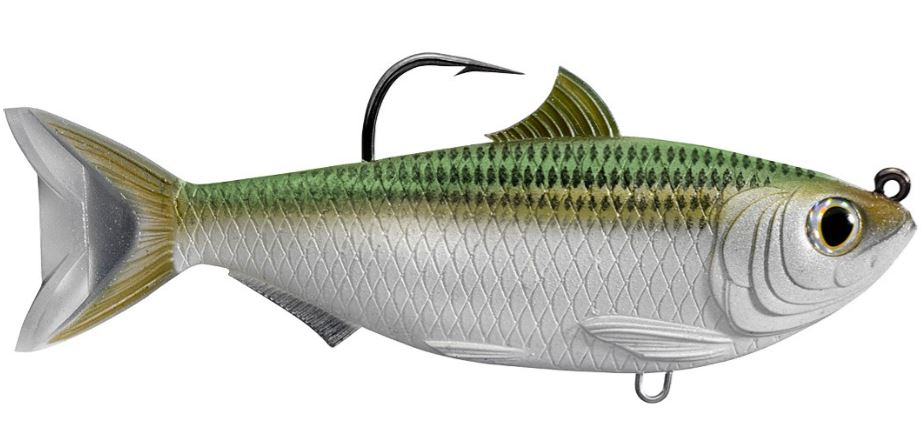
“Big-Bite Bait” Soft Plastics: Effective, Affordable

Part 1 of 3

  • Not Your Ordinary Soft Plastic Bait (Made in the USA)
  • How to Choose, What to Choose, How to Rig, How to Fish
  • Simple Hooks & Simple Jigs CATCH FISH
  • Tackle Warehouse has Sale Prices
Big Bite Baits are Made in the USA, they are affordable and they catch fish.

By Forrest Fisher

No matter where you live, north or south, everybody wants a “Hot Lure”.  If you fish, you never stop searching.

Walk into any bait shop or major tackle store today and you’ll see what no one else ever thought about a few decades ago.  Soft plastics.  There are hundreds of options for soft plastic lure baits and there is an endless assortment of colors, too. 

There is also an endless assortment of soft plastic baits that cost quite a lot – this keeps kids from fishing (my view).  Kids lose a few lures and they’re off to play football or soccer.  They can’t afford it.  Enter modern technology and Big Bait Lures. 

There are 16 color offerings for the Big Bite Baits arsenal for Squirrel-Tail Worms, the tail floats, this is a sort of gismo-worm that is truly a tantalizing fish-catcher in my experience. Forrest Fisher Photo

The state of the art in manufacturing process control has allowed Big Bite Baits to produce their soft plastic lures to sell at a very reasonable and affordable price to fit the pocketbook that even kids can afford.

Big Bite Baits produces soft plastics that are soft, firm, short, long, heavy, light, stiff – or not.  Some are smell fishy and they come in an assortment of affordable forms:

  • Creature bait
  • Worm bait  
  • Craw bait
  • Jerk bait
  • Shimmering tail baits
  • Grubs, Jig Baits and more

With all the choices, there is a lot to think about.  Why?  Well, we all need a standard bait and go-to bait, and it needs to be in the right size and right color for the place we are fishing.  Fishing right is a lot about lure selection.

For best selection, we need to pick the one way we most like to fish plastic baits, because there are a lot of ways.  Depending on the soft plastic bait type selected, there are lots of options.  You can thread the bait onto a jighead, rig it on a weighted or unweighted hook, depending on if we want it to sink fast, sink slow, or if we want to cast it short or far.  Is it windy?  Is it deep?  Are there snags or is it a sandy or gravel bottom? Tree limbs?  All these things count in what we pick to use.

Whatever type soft plastic you choose, it should be selected because it will fit the fishing style you like to fish with. It will be effective where you like to fish for when you fish and it will provide some capability to remain snag free.  And, it fits your budget (why I like Big Bite Baits).

These Big Bite Bait Stand-Up FinTwist Heads are the perfect solution for presenting the Squirrel-Tail Worm.

Let’s take one example.  I went looking on-line for a new sort of plastic worm just to show the fish where I frequently cast a line that there is something different.  I skipped over to Tackle Warehouse (http://www.tacklewarehouse.com/) and there they were, something I had never seen before: Squirrel–Tail Worms for under $3 for a package of 10.  That took care of my pocketbook budget.

These worms caught me with just one look.

Designed by Elite Series Pro, Jeff Kriet, the Big Bite Bait Squirrel Tail Worm first debuted on the television show “Day-On-The-Lake”.  Kriet says, “The Squirrel Tail Worm features a fat head for easy rigging and a buoyant rattlesnake tail, offering tantalizing tail action.  I wanted a worm that had a tail that stands up.  The tail is made to float, just the tail-end of the worm.  When I shake it and pull it, whenever I hit a rock, twig or trash, that is when I’ll throw slack in my line and try to shake it without moving it.  The floating tail has a subtle, tantalizing quiver that fish can’t resist.  They will bite this bait when they won’t bite anything else.  I think this will be the best shaky head bait ever made.”

Then I clicked over to Terminal Tackle (http://www.tacklewarehouse.com/termtack.html) and there they were, hook options: worm hooks, drop-shot hooks, swim bait hooks, slip weights and jigheads of many shapes and functions.  I was looking for a stand-up head jig hook (sort of like a Shakey Head) that would work with these new worms.  There they were, a 4-pack for under $3. Their official name is Big Bite Bait Stand-Up FinTwist Heads.

How to rig the Squirrel Tail: Bend the screw retainer near the head of the worm to be relatively in-line with the hook point, then simply thread the head of the worm onto the screw retainer, adjust the angle of the worm and place the hook into the body so it is straight and in-line, and covers the hook point. Weedless and a Killer-Lure.

A short review right on their web page showed these affordable jigheads come equipped with super-sharp Gamakatsu hooks, the specially shaped head helps them stand up on the bottom and dance with the slightest twitch of the rod.  The convenient screw-lock bait keeper also allows you to rig a finesse worm (like the new squirrel tail worm) perfectly every time, and a horizontal line eye helps resists snags.  They are available in multiple sizes, but the 1/8 ounce size allows you to deliver killer finesse presentations.  The Gamakatsu hooks will deliver solid hooksets, most anglers know that.   

Cast it out, doesn’t have to be far.  Let it go to bottom, wait 5-10 seconds. Lift up slightly on your rod tip and lightly jiggle it for 1-2 seconds or so.  Wait, watch the line.  Is it moving off?  If so, set the hook, if nothing, not a problem, we’re fishing. Move the rod to achieve a tip-jiggle action and reel in about 2-3 feet as you jiggle. Right before you stop, hop the bait with a 1-2 foot rod tip swing.  Let it settle to bottom and give it complete slack line. Watch the line.  The tail is now floating vertically upward as result of your last movement. It’s quivering.  Usually, by now, the line moves off if a fish is interested. WHAM!  Set the hook.  If not, continue until you reach your feet, sometimes they are right at your feet as you fish from shore or boat.

There you have it.  Where to get started, where to get the affordable baits and hooks, how to rig it and now you need to do the rest. Get out there!

Squirrel tail worms catch all sizes, but getting kids started first with small fish and affordable, effective baits is a good idea.


Meeting the Next Challenge: Chronic Wasting Disease

• Once again, it’s time for Missourians to stand up for wild resources
• White-tail Deer Herd in Trouble
• Missouri Constitution Change Required, Needs Voter Help

By Jim Low

The more things change, the more they stay the same.

The growing menace posed by chronic wasting disease (CWD), if left unchecked, will ultimately destroy Missouri’s wild deer resource.  If you have any doubt about this, read up on either of these two links:

Unlike blue tongue and other familiar deer diseases, CWD’s spread is inexorable.  CWD is 100 percent fatal.  There is no cure or vaccine.  It is slow, but after it is well-established, it is only a matter of time until deer numbers decline drastically.

The only hope of preventing this awful scenario is quick action to limit the spread of CWD.  So far, all of Missouri’s CWD outbreaks have occurred near captive-deer operations where deer are shipped in and out – a practice made to order for spreading CWD.  The Missouri Department of Conservation (MDC) has done its best to regulate such facilities to prevent the spread of the disease, but its efforts have been stopped cold.  Political pressure has eroded MDC’s regulatory authority over deer, which it now shares with the Mo. Dept. of Agriculture.  Agriculture officials are not governed by an independent citizen commission, and they are not obligated to protect wildlife.  And the Missouri Legislature holds the Agriculture Department’s purse strings, so state agriculture officials are inclined to do what legislators want.

A bit about history.  In 1935, Missourians realized that politicians couldn’t or wouldn’t protect the state’s wildlife.  To fix the problem, they amended the state’s constitution, giving authority for managing the state’s wild resources to a non-partisan, citizen commission that we know today as the Missouri Conservation Commission.  It was the first time in history that a state or nation had replaced politics with science as the basis for resource management.  Over the following 80 years, however, we have grown complacent, forgetting another famous adage: The price of liberty is eternal vigilance.

Political influence is like water.  Eventually, it finds its way into everything.

Eight decades after the creation of the MDC, politics once again has seeped into the water-tight system Missouri’s conservation pioneers tried to create.  If it isn’t stopped, the results will be catastrophic.  That is why, at its annual meeting last weekend, the Conservation Federation of Missouri (CFM) passed a resolution that could mark another watershed in conservation history.

The resolution came out of the Conservation Federation of Missouri (CFM) Deer, Turkey and Furbearer Committee.  It puts CFM – representing more than 80 affiliated groups and more than 100,000 individual members – on record in support of a new effort to amend the Missouri State Constitution.  The goal this time is to stop political incursions that threaten the future of Missouri’s white-tail deer herd.

The resolution and the initiative petition drive it supports have deep historical resonance.  CFM was the organization that spearheaded the 1936 initiative petition drive that established the Conservation Commission.  Forty years later, CFM lead another initiative petition drive to provide stable, permanent funding for conservation.  And now, another 40 years down the road, Missourians again are rising up to tell politicians to keep their hands off our precious wild resources.  There seems to be a 40-year cycle for conservation action in the Show-Me State.

What authority MDC has left was cancelled out last year by a court order in a lawsuit brought by captive-deer breeders who don’t like MDC regulations. 

Meanwhile the Missouri Legislature currently is busy with legislation that would take regulation of captive deer and elk operations out of MDC’s hands entirely.  The result would be shipping deer willy-nilly around the state with the predictable consequence of accelerating the spread of CWD.

MDC might prevail in the lawsuit, but even if it does, effective action to stem the tide of CWD could come too late.  And even if the lawsuit was resolved in MDC’s favor tomorrow, the Missouri Legislature undoubtedly will continue chipping away at MDC’s ability to respond.  And there’s no guarantee that the captive-deer industry won’t continue to stymie regulatory efforts with lawsuit after lawsuit.

As in 1936, the only sure-cure solution to save the Missouri white-tail deer herd for future generations is to express the will of the people in the Missouri Constitution.

That’s what the initiative petition drive that just won the support of the CFM aims to do.  If the petition garners enough signatures, Missourians will get to vote on the issue in 2018.

Two different approaches are being weighed:

  • One would be to stop the spread of CWD by prohibiting the transportation of captive deer between breeding facilities and shooting pens.
  • The other would achieve the same end by making it illegal to charge clients to shoot deer inside high-fence enclosures. Such “canned hunts” are repulsive to ethical hunters, who believe that real hunting involves fair chase.

If the effort to revise the Missouri Constitution is to succeed, it must have citizen support.  Later this year, volunteers will be needed to gather signatures on petitions, but what is needed most now is financial support to get the word out.  If you are willing to help, visit fairchasemissouri.com and click on the “donate” link.  You also can follow the effort on Facebook.

Those who cannot remember the past are condemned to repeat it.  Today, bringing what we have learned (knowledge) to create a chance for white-tail deer herd survival will require our courage and effort.  Let’s not repeat the history of the early 20th century, when white-tailed deer nearly went extinct.

-end-

Fishing Report: Orleans County, New York

  • Lake Ontario Tributaries: Bank Ice, Nasty Wind
  • Wind and Snow Storm Conditions

Today is Wednesday, March 15, 2017.

It may only be 6 days until spring on the calendar, but Mother Nature has some different ideas.

The wind and snow of the past few days continues today with high winds, lake effect snow and cold temperatures which are keeping traveling almost impossible, and fishing just a fleeting thought.

Most tributaries within Orleans County have at least some bank ice and with the colder temperatures will continue to ice over. The temperature will not rise above the freezing mark until possibly Friday, but then will dip again next week.

Northwest winds are keeping Lady O riled up and will do so for at least the rest of today.

Fish seem to be smarter than we are because I’m sure that right now they have found a quiet place to hang out until conditions greatly improve.

Assembling the pens for the pen rearing project is still scheduled for April 1st at Ernst’s Lake Breeze Marina, so come out and help our continued success with this project.

Remember there are only 52 more days until the Spring LOC Derby begins.

From Point Breeze on Lake Ontario, the World Fishing Network’s Ultimate Fishing Town USA and the rest of Orleans County.  We try to make everyday a great fishing day in Orleans County.  Email: sportfishing@orleansny.com

Too Many Lies, Too Many Crappies – Oneida River

New York State Conservation Officers catch illegal poachers in Onondaga County.
  • Onondaga County, New York

On Feb. 28, 2017, Environmental Conservation Officer (ECO) Mark Colesante received an anonymous tip that fishermen were catching and keeping over the legal limit of black crappies on the Oneida River.  Knowing that the location is private, secluded, and a fishing hot spot, ECO Colesante called ECO Don Damrath for assistance.  The two officers watched the fishermen reel in a few fish and head for their truck.

The ECOs met the fishermen at the truck just as they were dumping hundreds of fish from their buckets into a cooler.  The men claimed half of the crappies were caught the day before, but couldn’t produce any evidence.  ECOs Colesante and Damrath issued summonses for possessing crappies over-the-limit and undersized fish, returnable to Town of Clay Court.

New York State Department of Environmental Conservation (DEC) Environmental Conservation Officers (ECOs) enforce the 71 Chapters of NY Environmental Conservation Law, protecting fish and wildlife and preserving environmental quality across New York.

In 2016, the 286 ECOs across the state responded to 26,400 calls and issued 22,150 tickets for crimes ranging from deer poaching to corporate toxic dumping and illegal mining, black market pet trade, and excessive emissions violations.

“From Montauk Point to Mount Marcy, from Brooklyn to Buffalo, the ECOs patrolling our state are the first line of defense in protecting New York’s environment and our natural resources, ensuring that they exist for future generations of New Yorkers,” said Commissioner Basil Seggos. “They work long and arduous hours, both deep in our remote wildernesses and in the tight confines of our urban landscapes. Although they don’t receive much public fanfare, the work of our ECOs is critical to achieving DEC’s mission to protect and enhance our environment.”

Remington Responds to 60 Minutes

  • Firearm Safety Remains Remington Number One Priority
  • Remington Distressed Much Information Not Presented
Visit: http://xmprecall.remington.com/

With Firearm Safety their number one priority, Remington Arms Company, LLC (“Remington”) is voluntarily recalling Remington Model 700™ and Model Seven™ rifles which were manufactured from May 1, 2006 through April 9, 2014 and which have a X-Mark Pro® (“XMP®”) trigger. Rifles manufactured after April 9, 2014 are not subject to recall. Visit this link for more info: http://xmprecall.remington.com/.

On February 19, 2017, the 60 Minutes television program broadcast a segment about Remington Arms Company, LLC and two tragic incidents which occurred in 2011.  In narrating the details related to each incident, 60 Minutes omitted and misrepresented key facts which would have allowed the viewer to have an accurate and complete understanding about each.  For example, 60 Minutes knew but did not disclose that both of the rifles in question were examined and tested by forensic scientists employed by each state’s crime lab and were found to be in proper working order.  Remington provides this response to offer a more complete record of the relevant facts and a comprehensive overview of the incidents described in the story, and the recall which was at the center of the story.

The 60 Minutes segment showcased two separate incidents which it alleged stemmed from issues related to the rifles’ trigger mechanisms.  Although Remington shared voluminous information and spent hours providing background information to 60 Minutes related to the recall and the two incidents, 60 Minutes failed to offer its viewers critical facts and content core to each incident.  It is imperative that 60 Minutes viewers, our customers and the public, have accurate and complete information related to these two incidents as well as to the recall of Model 700 rifles with X-Mark Pro (“XMP”) triggers and the settlement of the Pollard v. Remington class action lawsuit. 

Remington stands behind the safety and reliability of its products and vehemently denies allegations by 60 Minutes and others that there is any design defect in another trigger mechanism, the Walker trigger mechanism.  Remington made a commercial decision to put an end to the expense and uncertainty of protracted litigation, and agreed to settle the Pollard class action on terms which are in the best interests of Remington and its valued customers.

Separately, after Remington’s own investigation determined that there was a possible assembly error affecting some XMP triggers, in April 2014 the company immediately and voluntarily issued an international recall on all Remington products with XMP trigger mechanisms manufactured from May 1, 2006 to April 9, 2014 and broadly promoted and advertised the recall.  Under the recall program, over 350,000 XMP trigger mechanisms have been replaced.  Firearm safety remains our number one priority.

Remington was first contacted by a 60 Minutes producer in October 2016 advising that CBS was “working on a [60 Minutes segment] in regards to the XMP recall and the pending Pollard Class Action Settlement.”  The 60 Minutes producers, representing that CBS was interested in airing “a complete, well-rounded, and accurate report,” asked Remington to provide background information about Model 700 rifles and about two independent incidents involving Model 700 rifles.  Given this representation and with the hope that 60 Minutes was truly interested in producing a balanced and accurate report, Remington sent 60 Minutes numerous records and information on those topics, and it also directed CBS to specific, readily available public records related to the topics chosen as the focus by 60 Minutes.

It is distressing that most of the information Remington provided to 60 Minutes was not included or ever referenced in its February 19, 2017 Remington segment.  To set the record straight and to provide Remington’s valued customers and viewers of the 60 Minutes segment with a complete and accurate understanding of several of the matters presented in the segment, Remington provides below a listing of information either in 60 Minutes’ possession or readily available to it in public records before it aired its segment.  This material puts the 60 Minutes’ segment in context and exposes 60 Minutes’ pre-determined viewpoint and intentional omission of key facts that would have reflected balanced reporting of the circumstances of those tragic incidents.

Topic 1:  The Stringer Incident

60 Minutes presented the tragic story from Mississippi of then 15-year-old Zachary Stringer shooting and killing his 11-year-old brother with a Model 700 rifle in June of 2011.  60 Minutes represented that Zachary was convicted in the shooting death of his brother with a Remington rifle even though Zachary “insisted it went off by itself.”  Leslie Stahl then suggested that the rifle fired because of a potential manufacturing defect (excess bonding agent) which prompted Remington in April of 2014 to voluntarily recall all Model 700 rifles with XMP trigger mechanisms.  Remington had previously explained to the 60 Minutes producers that to be subject to the recall condition of a potential unintentional discharge caused by excess bonding agent on the blocker screw, the excess bonding agent had to be of a certain consistency and the rifle had to be being used in certain cold weather conditions.  The rifle was indisputably not being used in cold weather conditions when it was being handled by Zachary Stringer inside his home in Mississippi in June of 2011.

When 60 Minutes told Remington before the segment aired that it intended to address the Stringer tragedy, Remington sent 60 Minutes the following materials:  (1) the Mississippi Supreme Court decision affirming the manslaughter conviction of Zachary Stringer; and (2) the transcript of the trial testimony of the forensic scientist from the Mississippi Crime Lab who had examined and tested the rifle.  The Supreme Court decision set out in great detail the facts of the incident and the trial transcript of the forensic scientist’s testimony detailed her examination and testing of the rifle conducted after the shooting.  CBS withheld the following facts from these materials in its possession:

·         According to the Supreme Court decision, Zachary gave law enforcement officers three conflicting and inconsistent accounts of how the shooting occurred.  In his initial handwritten statement given to officers in the presence of his parents two days after the shooting, Zachary claimed his brother had shot himself while the two of them were home alone.  Zachary later admitted that immediately after he shot his brother, he put his Remington rifle back in his closet.  He then retrieved his brother’s shotgun, “fired a round into the woods, and placed the shotgun between [his brother’s] legs” in an effort “to make it look like an accident.”

·         In Zachary’s second statement, given almost two months after the first statement and in the presence of his attorney, he claimed that after his brother shot the family dog with a dart gun, Zachary retrieved his Remington rifle from his bedroom.  Without checking the rifle’s action, Zachary claimed the rifle fired as he got up from the couch in the living room.

·         In Zachary’s third statement (given a week after his second statement), he claimed his brother was pestering him and pretending to shoot him with the dart gun.  At that point, Zachary said he threatened to shoot his brother if he continued to pester him, and he loaded a round in the chamber of his Remington rifle.  Zachary claimed the shooting that followed was accidental.

·         As shown by Mississippi Supreme Court decision and the trial transcript provided to 60 Minutes, the rifle was examined and tested after the incident by a forensic scientist from the Mississippi Crime Laboratory.  As the transcript of testimony from the trial shows, the forensic scientist performed functional-reliability tests on the rifle, including drop and impact tests, and the rifle did not accidentally discharge and was determined to be “in good working order.” 

In sum, the following materials were not referenced or acknowledged by 60 Minutes although they were provided to 60 Minutes and are linked herein:  (1) the opinion by the Mississippi Supreme Court; and (2) the transcript of trial testimony of firearms examiner for the Mississippi Crime Lab.

Topic 2:  The North Carolina Incident

60 Minutes also reported on a shooting incident occurring on December 23, 2011, in Columbus County, North Carolina.  One woman was killed and two others injured by a single bullet discharged from the bedroom inside a neighbor’s house across the street.  The 23-year-old neighbor and owner of the Remington rifle claimed he was retrieving the rifle (which was in a gun case) from his bedroom closet.  Thinking the rifle was unloaded, the neighbor pulled the rifle from the case with his right hand while holding a cell phone in his left hand.  As he pulled the rifle out of the case, it discharged.  The bullet traveled through his bedroom window and across the street where it struck the three women as they were walking to their car.

60 Minutes suggested that the rifle fired without the trigger being pulled because of the potential manufacturing defect which prompted the April 2014 XMP trigger recall.  When 60 Minutes told Remington that the segment might include the North Carolina incident, Remington sent the 60 Minutes producers the following materials (none of which were referenced or acknowledged by 60 Minutes in the segment):  (1) the North Carolina State Bureau of Investigation’s report on its examination and testing of the rifle in question; (2) the Federal Bureau of Investigation’s report on its separate examination of the rifle; (3) the initial report and the subsequent deposition transcript of the firearms expert hired by the attorneys for the women’s families in their subsequent lawsuit against Remington; (4) the transcript of the recorded statement given to local law enforcement on the day of the incident by the neighbor who was handling the rifle; and (5) an e-mail string between the attorneys representing the families of the women regarding their expert’s findings on examining the rifle.  In addition, 60 Minutes had knowledge of, and access to, the Mecklenburg County court file which included the complete transcript of the deposition of the neighbor.  In airing the portion of its segment concerning the North Carolina incident, 60 Minutes withheld and omitted the following facts:

·         On the day of the incident, the neighbor told law enforcement that the rifle fired because “I must have bumped the trigger.”

·         The neighbor testified at his deposition that he thought the rifle was unloaded at the time of the incident.

·         The NCSBI examined the rifle and found it to be functioning properly.

·         The FBI examined the rifle at its Quantico, VA laboratory and found it to be functioning normally.

·         In his initial report of March 31, 2014, the firearms expert hired by the family’s attorneys stated that, based on his examination and testing of the rifle, it “displayed no conditional nor configurational defects that would cause it to fire in the absence of a depressed trigger.”

·         In an e-mail string between the family’s attorneys, they reported that their firearms expert found the rifle to be “within factory specs with no visible defects.”

·         In his deposition of May 14, 2015, the expert hired by the family’s attorneys testified to the following:  (A) his opinion that at the time of the shooting the man handling the rifle did not know it was loaded; (B) the rifle’s safety was in the “OFF” or “FIRE” position at the time of the incident; (C) if the safety had been engaged in the “ON” or “SAFE” position, the rifle would not have fired under any circumstances; (D) during his inspection of the rifle, he never found any excess bonding agent (Loctite) to be in any way interfering with the safe operation of the rifle; and (E) that in the usage of the rifle before the incident and in the multitude of tests performed on the rifle after the incident, the only way the rifle could be made to discharge was by pulling the trigger.

The materials provided to 60 Minutes by Remington and linked herein included the following:  (1) the NCSBI report; (2) the FBI report; (3) the statement of the gunhandler given to law enforcement on the day of the shooting; (4) the transcript of deposition of the expert witness hired by the plaintiffs’ attorneys; (5) the initial March 31, 2014 report of the plaintiffs’ expert; and (6) an e-mail string between plaintiffs’ attorneys.

Topic 3:  Verdicts in 2008 and 2011

60 Minutes also made reference to a 1994 verdict against Remington in a case involving a Model 700 rifle with a Walker trigger mechanism (the Collins case).  60 Minutes did not disclose that in the only two injury cases tried to verdict since the Collins case involving Remington trigger mechanisms containing the connector component, both juries returned verdicts in Remington’s favor finding that the Remington trigger mechanisms were not defective.  Both of these verdicts were provided to 60 Minutes before the segment aired, and 60 Minutes intentionally failed to disclose these verdicts to its viewers.  The verdicts provided to 60 Minutes are linked herein:  (1) the 2008 jury verdict in Williams v. Remington; and (2) the 2011 jury verdict in Hull v. Remington.

Conclusion

For decades, Remington bolt-action rifles have been a favorite of millions of American hunters, target shooters, law enforcement and military personnel.  Remington continues to stand behind the safety and reliability of its firearms.  That is certainly true for its bolt-action centerfire rifles, including the Model 700, which has earned its reputation among millions of satisfied users as America’s most popular, reliable and trusted bolt-action rifle.


Niagara USA Fishing Forecast

  • Report for March 17, 2017

Early Spring Weather Brings SNOW & WIND

Jim Steel with a nice laker in the Lower Niagara River gorge.

Niagara County was hit with a pretty severe snow storm this week, with some areas of the county digging out of over two feet of the white stuff. With that said, there was still plenty of fishing going on for anyone willing to brave the elements.

Lake Ontario and Tributaries

In Lake Ontario and the tributaries, the lake and piers have pretty much been off-limits with the snow, wind and cold.  The only open water has been at Burt Dam on 18 Mile Creek and a few browns and steelhead have been caught.  Egg sacs, small jigs tipped with a wax worm or spikes, a few different fly patterns, the fish change their mind on what they want on any given day. Hopefully it will get better next week!

If you enjoy antique fishing tackle, there will be an antique fishing tackle show in Lockport on March 25. It will be held at the Elks Lodge, 6791 N. Canal Road, Lockport from 10:30 a.m. to 2 p.m. For more information call Dan Bedford at 713-9410.

Lower Niagara River

In the Lower Niagara River, both boat and shore fishermen were pulling some nice trout out of the water. Even with the snow and wind, the water was still fishable due to the northerly wind directions.

Boaters were drifting pink egg sacs or minnows off three-way rigs in Devil’s Hole and along Artpark.  Steelhead and lake trout were the most cooperative, but the occasional brown trout is also showing up.

Shoreline casters are still using spoons and spinners, but the secret bait on Tuesday was soft plastics that were being cast by Ricardo Davila of Wheatfield.  He caught 5 nice lake trout in the blizzard.

Remember that walleye season is now closed, along with northern pike, pickerel and tiger musky.

The Niagara River Anglers Association will be holding its 12th Annual John Long, Sr. Raffle and Feast is set for April 2 from 2 p.m. to 6 p.m. at the Niagara Active Hose on Lockport Road in Niagara Falls. Call 628-1460 for information.

Bill Hilts, Jr., Outdoor Promotions Director

Destination Niagara USA, 10 Rainbow Blvd., Niagara Falls, NY USA 14303 p: 716.282.8992 x.303| 1.877 FALLS US, f:716.285.0809 website | facebook | twitter | blog

Inshore Canals & Flats for Saltwater Fishing Fun

  • Snook, Redfish & Tarpon Highlight Spring Action
  • New LiveTarget Swimbait Lures are Killer Baits
  • Use Light Line, Strong Leader
  • Incoming Tide = Angler Advantage
The new Swim Bait that has caught fire with guides and everyday anglers that fish saltwater for snook, redfish and other species, is the LiveTarget Scaled Sardine, shown here. Just throw it in and reel it back, it sinks about one foot per second until you start the retrieve.

By Forrest Fisher

Winter has not been the same this year anywhere in the country.  Minnesota lost much of their ice by early March, Tennessee and Kentucky bass and crappie fishing turned on early, and in Florida, the steady rise in water temperatures on both the Gulf and the Ocean has led to non-stop action for many anglers.  Fun fishing!

Fishing with a fishing mentor and local veteran of the Florida saltwater fishing, Jim Hudson, I have learned so much about the nature of fish habits, baitfish preferences, lures that feeding fish prefer, line color, lure color, hook size and little things that make the difference between fish on the line or no fish at all.

The short spring snook season started on March 1 and runs through April, with the size limit in Florida waters regulated by location.  In southwest Florida, the slot limits for snook is not less than 28 inches and not more than 33 inches, with a one-fish daily bag. 

Jim Hudson says, “Slot limits for speckled trout have allowed a resurgence in Florida trout numbers and even the smaller fish will slam a swim bait, making for fast and fun fishing action.”

Hudson took the time to teach me about lines, leaders and lures, using little, lightweight jigs for speckled trout, surface baits for redfish and swim-tail lures for snook.   On my first mid-morning cast toward a dock on the canal system near Ponce de Leon State Park, my LiveTarget lure hit the water and I didn’t even move the lure one-inch when a gutsy snook slammed the bait.  He thrashed all around the dock and I had trouble keeping him out of the pilings there, but the 7-foot St. Croix rod and Daiwa reel held up their end and I was able to bring the fish to the boat where Jim carefully slipped his rubber-coated (no harm) under the spirited fish.  We released the slick fighter to grow a bit bigger for next year.

The hot lure was a LiveTarget scaled-sardine swimbait, new last year, it swims just like a real live fish bait.  It’s soft and lively, is the right color, and offers a snag-free design with an above-body hook point location.  The heavy, strong, Gamakatsu EWG (Extra-Wide Gap) hook makes it perfect for big saltwater fish, but as most saltwater flat anglers know, even smaller saltwater fish will slam a big bait.  I use this rule though, big fish like big baits – they hate to waste energy.   See this video on how a bass fishing pro describes the many features of this exciting new lure:  https://youtu.be/gaNEmPQUF3c.

I picked up the two sizes that come in this color pattern, a 3-1/2 inch model (½ ounce) and the bigger 4-1/2 inch model (1-ounce) that casts into the wind with no problem.  With a unique “oscillator-design” tail, they both swim like the real thing.  I tie the lure direct with a Uni-Knot from a 4-5 foot long length of 20-pound fluorocarbon leader that is fastened to very thin 10-pound test braid with a Double Uni-Knot.

For more about this hot bait, there are two videos and more technical info about product description from our friends at Tackle Warehouse: http://www.tacklewarehouse.com/.  My basic descriptions end with, “They work.”

For more about how to tie the Uni-Knot, visit our knowledgeable fishing friends at Salt Strong in this well-done video: https://youtu.be/MtCKGnZwOb0.  Salt Strong offers many excellent fishing tip videos and a “How-To-Fish” training course that is among the best I have ever viewed.

Some of the “smart-angler” folks use the FG-Knot to tie their braid to the fluorocarbon leader, but I have always used the Uni-Knot because it is easier to tie, though the FG Knot is smaller in physical size.  This might be important if you fish with a Reaper fishing rod, which offers a high-performance rod guide that enables truly long casts and you want to keep the knot friction to an absolute minimum.

Jim Hudson has used the same LiveTarget swimbait lure for fast action along the saltwater front and hooked into other species.   Hudson adds, “Don’t be afraid to add a little red color from a magic marker near the throat section of any lure when action is slow and the water is super-clear, this can make a difference.  Then just rub a little fish-scent over it to hide any offensive odor.”

Local anglers and many guides use a cast net to capture live pilchards and pinfish, then tail-hook the live bait with a circle hook and toss into the incoming tide current with the same line-rod-reel rig.  This set-up will usually fool even the most finicky fish and the circle hook prevents gut hooking so the fish can be released unharmed.

Using the LiveTarget swimbait lures also allows the fish to be released unharmed, since the EWG hook is set around the jawbone of the fish.  Kayak anglers, boat anglers or wading anglers can effectively and successfully throw this bait.  In the salt, you could get a new arm-stretch and rod-bend very soon.

The mullet color in the LiveTarget swimbait lure is especially made as an easy-to-catch forage species for several larger predator species such as Redfish, Snook and Tarpon.

Right now, the redfish are schooling, the snook are moving into shore-fishing canal zones and under the piers at night, and the sheepshead have been schooled and active for about 6-7 weeks now.

Releasing the little ones….fishery conservation measures have allowed the Snook fishery across Florida saltwater zones to regain their predator prominence with slot limit and bag limit regulations. Jim Hudson Photo

The sheepshead prefer live bait shrimp pieces fished off a 2-hook chicken rig or a simple red-head jig hook.

For redfish, switch your swimbait to the new LiveTarget mullet color and hang on.  This is a species-focused bait color that can tear up a tight fish school.  Fish on the feed will race to get the bait first.  On the right day, action like that is in the memory book for all time.

Local tackle shops carry the bait if you need it right now, but sometimes they might not have the favorite colors you want.  When fishing the Gulf of Mexico southwest Florida, I always stop in to Fishing Frank’s Bait & Tackle on Tamiami Trail in Port Charlotte, Florida.  The staff submits copy to four different periodicals each week! They also sponsor a radio show and are in the swing on where to go and what to fish each day. 

If you can’t find your “right color”, then hop on-line and head for our friends at Tackle Warehouse: http://www.tacklewarehouse.com/. 

“Big swim baits catch big fish, big fish will not waste energy feeding 20 times when they can feed once and be done,“ says Jim Hudson.  He ought to know, this Georgia native, now Florida resident, catches more fish from the salt than anyone I know.  Anglers in the know, share with others that want to learn.  Hats off to Hudson, since I always want to learn.

Tight lines.  


Delta Waterfowl Report Explores Looming Crisis: Declining Numbers of Duck Hunters

  • USA Waterfowl Hunter Population Down 50%
  • Canada Waterfowl Hunter Numbers Drop 70%
Picture reprinted with permission from Delta Waterfowl Foundation, The Duck Hunters Organization, a leading conservation group working to produce ducks and ensure the tradition of duck hunting in North America. Visit deltawaterfowl.org.

Read the full report online at deltawaterfowl.org or in the Spring Issue of Delta Waterfowl magazine

By STOadmin

BISMARCK, N.D. — We need more waterfowl hunters, and so do the ducks. A Special Report in the Spring Issue of Delta Waterfowl magazine explores why we’ve lost hundreds of thousands of waterfowl hunters since 1970, the threat this poses for the future of hunting and conservation, and what we can do about it.

The 10-page report is posted in its entirety at deltawaterfowl.org/looming-crisis.

Among the findings: There were 2.03 million active U.S. waterfowl hunters in 1970, and only 998,600 in 2015. The steepest declines have occurred since 1997, despite high duck populations, lengthy hunting seasons and liberal bag limits.

Canada’s waterfowler numbers have fallen even more drastically, peaking in 1978 at 505,681 and declining to fewer than 170,000 today.

This trend should alarm anyone who cares about waterfowl hunting and wetland conservation.

“We tell folks to support conservation — to replace the ducks they shoot every year,” said John Devney, vice president of U.S. policy for Delta Waterfowl. “We should also be telling them that you must replace yourself as a duck hunter. It’s as important as buying a federal duck stamp.”


Rage Offers Brand New Turkey Broadhead

  • Tested and Proven, Slip-Cam Mechanical is Deadly
  • New Meat-Hook Design for Turkey  

SUPERIOR, Wis. — Rage has designed a new broadhead specifically for turkey hunters that will eliminate the problem of a flopping-then-fleeing gobbler following an otherwise fast and deadly pass-through. The new Rage Turkey broadhead features a new cut-on-contact tip with a pair of massive Meat Hooks to inflict maximum lethal damage, all while slowing the arrow enough to anchor the bird. This Turkey Broadhead combines a gigantic 2 1/8-inch-cutting-diameter, two-blade Slip-Cam broadhead with the Meat-Hook Tip to stop a turkey dead in its tracks.

This new Rage Turkey broadhead features a pair of surgically ground, .035-inch-thick stainless steel blades that produce an initial slap-cut entry hole of nearly 3 inches, and while the Meat-Hook Tip has a 9/16-cutting diameter in its own right, a pair of blunt notches on each side of the tip were designed to slow the arrow as quickly as possible upon impact to potentially impair one or both wings for a faster, safer kill.

The 100-grain Rage Turkey Broadhead also features an extremely aerodynamic, precision-machined and anodized aluminum ferrule paired with the proprietary Rage Shock Collar™ for optimum blade retention and consistently reliable blade deployment. The 100-gr. weight on this new broadhead offers archers the ability to change broadheads with little, if any, adjustment to their bow setup between seasons.

The new Rage Turkey Broadhead is available at retailers nationwide and conveniently online at www.ragebroadheads.com for a suggested retail price of $29.99 for a two-pack.

Rage Outdoors is the world’s number-one manufacturer of expandable broadheads. It also manufactures quivers and accessories. A Feradyne Outdoors brand, Rage is headquartered at 101 Main Street, Superior, WI 54880; call 866-387-9307; or visit www.ragebroadheads.com.


New Fishing Rods: St. Croix’s BASS X

  • Delivers Affordable Performance
  • Sets New Standards

By STOadmin

Bass anglers are becoming more discriminating every year. They demand more out of their gear and they are expecting performance at an affordable price. The NEW BASS X series from St. Croix delivers, meeting those objectives, with an array of rods that answer definitive angler demands.

Each of the 14 BASS X rods are constructed of SCII graphite providing the foundation of lightness and sensitivity.  Fuji® reel seats on both the casting & spinning models are paired with hard aluminum-oxide guides – a winning platform for casting, retrieving and fighting worthy denizens of the deep.  While the technology drives design, the aesthetics of the blank, guides, and split grip handles ensure these rods look and feel as good as they fish.

BASS X rods were designed in Park Falls, Wisconsin, and are handcrafted in our Fresnillo, Mexico, facility.  They retail for $100 – $110 to allow BASS X to deliver incomparable value.  When paired with a 5-year warranty backed by its Superstar Service, St. Croix delivers on its goal of affordable performance.

About St. Croix Rod Company: St. Croix Rod is a family-owned and managed manufacturer of high-performance fishing rods headquartered in Park Falls, Wisconsin with a 68-year heritage of USA manufacturing. Utilizing proprietary technologies, St. Croix controls every step of the rod-making process, from conception and design to manufacturing and inspection, in two company-owned facilities. The company offers a complete line of premium, American-made fly, spinning and casting rods under their Legend Elite,® Legend® Xtreme, Legend Tournament,® Avid Series,® Premier,® Wild River,® Tidemaster,® Imperial® and other trademarks through a global distribution network of full-service fishing tackle dealers. The company’s mid-priced Triumph,® Mojo Bass/Musky/Inshore/Surf, Eyecon® and Rio Santo series rods are designed and engineered in Park Falls, Wisconsin and built in a new, state-of-the-art manufacturing facility in Fresnillo, Mexico. Founded in 1948 to manufacture jointed bamboo fishing poles for a Minneapolis hardware store chain, St. Croix has grown to become the largest manufacturer of fishing rods in North America.

FISHING FANS Will Experience LIVE COVERAGE of 47th Annual Bassmaster Classic

  • Classic LIVE Will Be Broadcasting in Real Time
  • Classic Outdoors Expo presented by DICK’S Sporting Goods
  • George R. Brown Convention Center – Houston, TX
Cameras will be streaming live coverage of the Classic leaders on Lake Conroe back to the expo production facility, where hosts will break down the action for fans tuning in through Bassmaster.com and WatchESPN with hosts, Tommy Sanders, Mark Zona, and Davy Hite along with Dave Mercer and on-the-water reporter Robbie Floyd, will provide analysis and live updates. Forrest Fisher Photo

HOUSTON — Fifty-two of the world’s best bass anglers will head to Houston next week to compete for more than $1 million in the 2017 GEICO Bassmaster Classic presented by DICK’S Sporting Goods, and fans will be able to follow the action as it happens.

Classic LIVE will be broadcasting in real time from the B.A.S.S. booth at the Classic Outdoors Expo presented by DICK’S Sporting Goods in the George R. Brown Convention Center.

“What an incredible venue we have this year being set up in the heart of Houston, Texas, and watching the action unfold live on a lake that some anglers are saying might produce multiple 10-pound-plus bass,” said Mike McKinnis, vice president of media content for JM Associates and producer of The Bassmasters TV show on ESPN2.

Cameras will be streaming live coverage of the Classic leaders on Lake Conroe back to the expo production facility, where hosts will break down the action for fans tuning in through Bassmaster.com and WatchESPN.  Hosts Tommy Sanders, Mark Zona, and Davy Hite along with Dave Mercer and on-the-water reporter Robbie Floyd, will provide analysis and live updates.

This year, special guest Brian Robison of the Minnesota Vikings will also be onsite for the Classic LIVE show to provide some local insight. Robison played for the University of Texas and calls Lake Conroe his home lake.

Also, special guest RJ Mitte, who plays Walter White Jr. on the series “Breaking Bad,” will be joining the set at the expo.

The 2016 version of “Classic LIVE” reached nearly 12 million minutes viewed during the three-day event.

Each day of competition will have six hours of coverage, 8 a.m. to 11 a.m. and 12:30 p.m. to 3:30 p.m. Eastern Time. Watch the tournament leaders catch bass in real time on the exclusive Classic LIVE program on Bassmaster.com and simulcast on ESPN3 and the WatchESPN app.

Facebook Live broadcasts will be added to the coverage this year, on the B.A.S.S. Facebook page, including coverage of takeoff on Day 1, the Toyota Mid-Day Report all three days around noon, and the press conference with the Top 6 anglers after each competition day.

Also on Bassmaster.com, fans can keep up with every fish caught through BASSTrakk, a real-time leaderboard that shows each angler’s catch according to estimates of marshals assigned to each competitor’s boat. In addition, on-the-water reporters provide a running commentary on the action in the Live Blog.

“Through those features, along with videos and photo galleries, we’ll have the lake covered from top to bottom,” said Jim Sexton, B.A.S.S. VP/Digital. “And we’ll cover every inch of the Minute Maid Park weigh-ins and the Bassmaster Classic Outdoors Expo, as well.”

Qualifying anglers for the classic this year:

Casey Ashley, Donalds, S.C. (8)

Drew Benton, Panama City, Fla. (1)

Hank Cherry, Maiden, N.C. (3)

Jason Christie, Park Hill, Okla. (5)

Keith Combs, Huntington, Texas (6)

Scott Clift, Dadeville, Mo. (1)

Cliff Crochet, Pierre Part, La. (4)

Ott DeFoe, Knoxville, Tenn. (6)

Boyd Duckett, Guntersville, Ala. (8)

Brent Ehrler, Newport Beach, Calif. (2)

James Elam, Tulsa, Okla. (2)

Edwin Evers, Talala, Okla. (16)

Todd Faircloth, Jasper, Texas (15)

John Garrett, Union City, Tenn. (1)

Shaw Grigsby, Gainesville, Fla. (16)

Greg Hackney, Gonzales, La. (14)

Skylar Hamilton, Dandridge, Tenn. (1)

Wil Hardy, Harlem, Ga. (1)

Charlie Hartley, Grove City, Ohio (2)

Matt Herren, Ashville, Ala. (7)

Brett Hite, Phoenix, Ariz. (5)

Randy Howell, Guntersville, Ala. (15)

Michael Iaconelli, Pittsgrove, N.J. (18)

Alton Jones Sr., Lorena, Texas (18)

Alton Jones Jr., Lorena, Texas (1)

Steve Kennedy, Auburn, Ala. (8)

Timothy Klinger, Boulder City, Nev. (1)

Bobby Lane, Lakeland, Fla. (10)

Ryan Lavigne, Gonzales, La. (1)

Jordan Lee, Vinemont, Ala. (3)

Dave Lefebre, Erie, Pa. (2)

Jared Lintner, Arroyo Grande, Calif. (6)

Bill Lowen, Brookville, Ind. (9)

Justin Lucas, Guntersville, Ala. (3)

Aaron Martens, Leeds, Ala. (18)

Ish Monroe, Hughson, Calif. (10)

Andy Montgomery, Blacksburg, S.C. (3)

Darrell Ocamica, Fruitland, Idaho (1)

Takahiro Omori, Emory, Texas (12)

Brandon Palaniuk, Hayden, Idaho (7)

Clifford Pirch, Payson, Ariz. (4)

Jacob Powroznik, Port Haywood, Va. (3)

Skeet Reese, Auburn, Calif. (17)

Dean Rojas, Lake Havasu City, Ariz. (15)

Bradley Roy, Lancaster, Ky. (1)

Wesley Strader, Spring City, Tenn. (2)

Gerald Swindle, Guntersville, Ala. (16)

Randall Tharp, Port St. Joe, Fla. (4)

Kevin VanDam, Kalamazoo, Mich. (26)

Jesse Wiggins, Cullman, Ala. (1)

Jason Williamson, Wagener, S.C. (2)

Chris Zaldain, San Jose, Calif. (3)

 *Number in parentheses represents the number of times each angler has qualified.


For more, please visit:  http://www.bassmastermedia.com/article/FishingFansWillExperienceLiveCoverageOf47thAnnualBassmasterClassic


Reticulated Albino Python Snakes in Manhattan, New York

  • Longest Snakes in the World, Growing to 20 Feet.
  • Reticulated Pythons Can be Dangerous.
  • In New York, a Special Permit is Required to Keep Them
From L to R: New York State Environmental Conservation Officers Brown, Chomicki, Noyes and Lomozik, with two juvenile Albino Reticulated Pythons.  NYSDEC Photo

MANHATTAN – Early in February – 2017, New York State Environmental Conservation Officer (ECO) Spencer Noyes came across a Craigslist ad offering an Albino Reticulated Python for sale in Manhattan.

Reticulated Pythons are classified as wild animals under New York State Environmental Conservation Law and individuals are required to have a special license to possess or sell the snakes.  Reticulated Pythons are the longest snakes in the world, growing to more than 20 feet in length and can be dangerous.

Working with Lt. Michael Buckley, ECO Noyes determined the seller did not have a license.  Acting as an interested buyer, Noyes contacted the seller and after several phone conversations, the seller agreed on a price for the original snake plus a second animal.  On Feb. 13, ECOs Noyes and Bill Chomicki went in plain clothes to the seller’s residence in the Washington Heights section of Manhattan, New York.

Lt. Nate VerHague and ECO’s Zach Brown and Jarrod Lomozik served as uniformed backup.  When the seller came outside with both snakes, Noyes and Chomicki identified themselves as Conservation Officers and, after a brief conversation, the seller admitted to not having any DEC permits to possess the snakes.  

The snakes were seized as evidence and transported to the Animal Care Center of New York City, where they are being cared for and will eventually be sent to the Sean Casey Animal Rescue in Brooklyn, New York.  The Sean Casey Animal Rescue Group specializes in the rescue and rehabilitation of reptiles.  The seller was charged with possessing a wild animal without a permit and is due in New York County Court in May.

New York State Department of Environmental Conservation (DEC) Environmental Conservation Officers (ECOs) enforce the 71 Chapters of NY Environmental Conservation Law, protecting fish and wildlife and preserving environmental quality across New York.

In 2016, the 286 ECOs across the state responded to 26,400 calls and issued 22,150 tickets for crimes ranging from deer poaching to corporate toxic dumping and illegal mining, the black market pet trade, and excessive emissions violations.

“From Montauk Point to Mount Marcy, from Brooklyn to Buffalo, the ECOs patrolling New York State are the first line of defense in protecting New York’s environment and its natural resources, ensuring that they exist for future generations of New Yorkers,” said Commissioner Basil Seggos.  “They work long and arduous hours, both deep in our remote wildernesses and in the tight confines of our urban landscapes.  Although they don’t receive much public fanfare, the work of our ECOs is critical to achieving DEC’s mission to protect and enhance our environment.”

Rapala DT® (Dives-To) Series Crankbaits

• Wear Out the Fish!
• Balsa Lures with “Swagger”
• Best Lure in my “Go-To” Arsenal

By David Gray
“Gimme my GO-TO bait!”
Most all of us have heard that, especially in a fishing tournament, or right after a tournament when the winner says, “I just went to my “GO-TO” bait and it hammered them!” You know, it’s a bait or lure we throw when our confidence is down, the bite is tough and it seems we just can’t get a fish-catching pattern put together.

The most important feature for a lure to reach “GO-TO” status is that it must perform, wiggle, wobble, dig down, float high or slurp along to attract a curious fish so that we catch fish consistently when we throw it. Our confidence is sure and high when we throw this bait.

In a slow or tough bite condition, we reach for that one GO-TO bait to eliminate the possible that it is the lure that is not working. After we throw that one, we’re sure that fish must not be there and it’s time to move and try a new location.

Rapala says DT® (Dive-To) series baits:

• Get to the strike zone and stay there longer, we find: they do.
• Their streamlined shape and strategic weight placement allows them to be cast to 150 feet, we find: they do cast farther than many crankbaits.
• Pull easier and we find: DT series have a uniform retrieve force less than some baits.
• Are hand tuned and tested, and we find Rapala DT baits do have a superior performance right out of the box.

My favorite sizes are the DT-6 and DT-16. Both sizes fish well for me. They come equipped with premium VMC Sure-Set Hooks that don’t miss on hook-ups from short strikes. As for GO-TO baits I always keep the DT6 (runs 6 feet deep) and DT16 (runs 16 feet deep) in two colors: Parrot (which I think outperforms Firetiger on most days) and Pearl Grey Shiner which seems to work everywhere.

Rapala DT series lures come in 5 sizes and depth ranges from 4 feet to 16 feet.
Look ‘em over in this video for a better look:

If you like ‘em like I do, check out the best assortment and inventory here:

http://www.tacklewarehouse.com/Rapala_DT_Series_Crankbait/descpage-RDT.html

IFA Redfish Tour – $30,000 Top Prize, in Charlotte County, Florida

The Inshore Fishing Association (IFA) opened the 2017 Redfish powerboat competition year in Punta Gorda, Charlotte County, Florida, with 89 angler teams looking for the top prize. Steven Phillips cashes in on the $500 big fish prize with his 7.78 pound Redfish. Forrest Fisher Photo

• Brandon Buckner & Mark Sepe Win $30,000 Top Prize
• Micro-Power Pole was Key for Heavy Wind
• Schooled Fish: In Sandbar/Grassbed Potholes
• Scented Soft-Plastics and Topwater Baits Most Effective

By Forrest Fisher
The weather provided an extra challenge for competitive Redfish anglers as the 2017 Inshore Fish Association kicked off the Redfish powerboat tournament season on Saturday, March 4, 2017, in the surprisingly clear Gulf of Mexico waters near Punta Gorda, Florida.

The surprise factor for the day was the screaming northeast wind at 25 to 40 mph, unusual for this part of Florida, as it caused thunderous waves to crash the famed “West Wall” of Charlotte Harbor and farther south to Pine Island Sound. The breezy airstream forced the hardy redfish anglers to head for shelter and cover, but they had to run the surf to get there. Many took the time to battle the wave crests and power their rigs from Laishley Park in Punta Gorda to quieter Charlotte County waters near the small island paradise and discreet shoreline structure of Turtle Bay and Gasparilla Sound, near Placida.

Brandon Buckner and Mark Sepe took home the big prize with their two top fish tipping the scales at a whopping 14.57 pounds on the troublesome weather day when, unlike practice day, many anglers had trouble finding fish.

The top prize for the winners was impressive, cashing in their fish bag for a brand new RB190 Ranger boat, Mercury 4-Stroke motor, Minn Kota Trolling motor, Hummingbird Helix Sonar, cash and more, for a total purse of $29,530. The top five places also took home a $50 gift certificate from Boca Bearing. Because Buckner and Sepe had a boat equipped with a Power Pole and they won the tournament, they also won an additional $400 check from Power Pole. Both said they would not have been able to catch a fish on this day without it.

Brandon Buckner and Mark Sepe with their two top fish tipping the scales at a whopping 14.57 pounds, took home the top prize that included a brand new Ranger boat package and cash worth nearly $30,000. Forrest Fisher Photo

Buckner and Sepe methodically fished potholes they found on sandy bars and grass flats, using a Micro Power Pole to assure their boat-holding position, attributing a large part of their win to the efficiency of their Power Pole. Buckner said, “My partner was definitely the vacuum cleaner on the front of the boat, I was just the key net man. We used soft plastics and jig heads, casting and retrieving through the potholes and wind.” Mark Sepe added, “We especially want to thank Power Pole, Yamaha, Costa Del Mar and Bossman Boats.”

The Budweiser team of Chris Slattery and Dave Hutchinson took home 2nd Place with 14.23 pounds for a $4755 cash prize, catching nine Redfish through the day on gold color lures. They explained that several boats fished near them through the day, but that they had dry shore on one side and were able to control their fish zone very well that way.

The competitive field was comprised of 89 power boat teams vying for top honors. The weigh-in was exciting with a well-supported local crowd cheering on the hearty anglers, some with sore backs, as they came to the scales. Some fishermen travelled to compete from as far away as Houston, Texas.

Third place went to Matt Tramontana and T.R. Finney with 14.17 pounds good for $2141 cash prize, fourth place to Karl Butigan and Steven Phillips with 13.99 pounds, good for $2141 – and Phillips landed an extra $500 for the biggest redfish of the day; fifth place went to Ryan Rickard and Dustin Tillet with 13.66 pounds good for $2188 that included a payout from the Angler Advantage prize pool.

In all, some $49,134.24 was paid out to the top 17 teams in merchandise and prizes for this Punta Gorda event.

Redfish Tournament Weigh-in
All the redfish entered were checked for legal size prior to weigh-in, with all of the fish maintained alive and returned to the harbor waters to fight another day. Forrest Fisher Photo

Colorful tournament director, Eric Shelby, had the crowd ooh-ing, ah-ing and cheering, holding their attention with details as he introduced each angler team that entered the weigh station. Anglers placed their fish in a special live-fish bag, then into a life-sustaining aerator tank before they went to the length verification station and the official on-stage weighmaster scale. Many of the anglers shared an occasional humble fishing secret with local fishermen and onlookers.

All the fish entered were released back to the Peace River waters of Charlotte Harbor above the Route 41 bridges to live another day. Conservation is alive and well with IFA competitors and it is only proper in this case here, as Punta Gorda leads the state in developing juvenile fisheries habitat with their highly successful Reef Ball Project for public piers, private docks and open water. Proof that the county, the state and the fishermen are conservation-minded and work together to accomplish their goals in Punta Gorda and it’s working.
Fishing techniques and tactics were simple for many of the anglers. Gear was simple too, but the gear was top of the line that typically included 7-foot long fast-tip rods, open-face ball-bearing spinning reels, 12-20 pound test braided main line, fluorocarbon leaders of 10-20 pound test and strong knots.

Kyle Potts and Shane Erhardt Team Tito's
Team Tito powered by expert anglers, Kyle Potts and Shane Erhardt, who received family weigh-in support here, made a 20-mile one-way run to catch 12.90 pounds in waters protected from the nasty wind for a 9th place finish.. Forrest Fisher Photo

Kyle Potts and Shane Earhart, among top fish-catchers for the day, shared fishing day details that were common for many other anglers, as well. Potts says, “We made about a 20-mile run from port in the morning, first fishing the East Wall side before crossing the harbor, the harbor was pretty rough. We fished sandy and grass-bottom potholes in one to three feet of water.” When asked about their fishing gear, Potts added, “We like our Dan James custom rods with Shimano Stradic CI-4/4000FA reels and 10-pound test braid to throw Berkley Gulp 6-inch jerk baits.”

Brandon Spears Eddie Parrot
Brandon Spears and Eddie Parrot caught a large mixed bag of fish that included redfish, speckled trout and snook using Berkley Gulp jerkbaits with lightweight jigheads. Forrest Fisher Photo.

Eddie Parrot and Brandon Spears fished about 20 miles to the north and west, near Placida, weighing in 12.14 pounds for 13th place.  Parrot shared, “We used our Ranger 16-foot Phantom, Berkley Gulp plastics and top-water lures, 12-pound braided line with short one-foot fluorocarbon leaders of 20-pound test to catch fish.  We use a Bimini Twist for attaching the braid to the fluorocarbon, then a Palomar knot to attach the lure.  We caught a nice mixed bag of 6 redfish, 8 speckled trout and a nice snook.  One really important thing here, without our Power Pole, the day would have been lost in this wind.”  Spears added, “The 3-4 inch Berkley soft plastics with 1/8 ounce jig heads were effective, though we also used weighted hooks for some of the soft baits and had a nice day out there.”
Eric Shelby said, “The winning teams did well to score like they did.  This was a tough day for fishing.  During practice day, these guys caught hundreds and hundreds of fish, today the strong northeast winds have moved the water far offshore and has made getting into the backwaters a lot tougher.  Most of the guys ran north toward Gasparilla with the wind.  The boats are launched sequentially in the morning to avoid accidents and the anglers have a 15 minute grace period when they return before penalties are incurred.  It was nice to see the local crowd here to support the event.”

For more in the Inshore Fishing Association (IFA), visit: http://www.ifatours.com/.

White Deer Foresee Good News for Future

White Fawn

• White Male Deer, White Female Deer, Come Together
• Indians Say this is Sacred and Special Sign

By Forrest Fisher
People everywhere are interested to see distinguished nature in the wilderness, white deer are one of those precious resources that create a sacred and reciprocal bond with nature for many of us. White deer are awe-inspiring with their simple, raw beauty.

In East Aurora, New York, photographer Theresa Meegan has introduced the nature world to the 10-year old Albino deer that has lived in this village and is frequently seen by passers-by that slow their vehicles to take a double look at the beautiful animal. The deer provides a true measure of special life in nature that survive in the wild outdoors and live long lives.

Now imagine hundreds of white deer, wild in nature, that live in deer herds all in the same place. That would be nearly incomprehensible, right? But there is such a place, though the white deer there are not Albino. The white deer found at Seneca Army Depot in central New York are a natural variation of white-tailed deer which normally exhibit brown coloring.

The Seneca White Deer are leucistic, which means they lack all pigmentation of the hair, but have the normal brown-colored eyes. Albino deer, which lack only the pigment melanin, have pink eyes (or blue eyes) and are extremely rare – like the one in East Aurora.

The Seneca White Deer interbreed freely with the brown deer in the former U.S. Army Seneca Depot there and appear to share the habitat equally. The ambassador to save the white herd at the Depot has been an old outdoor friend, Dennis Money. The Depot was a fenced-in area that kept these deer together as a giant family where hunting was usually not permitted, except for management purposes several decades ago way back to the years after World War II.

The Seneca white deer now number about 200 of the approximately 800 whitetail deer within the old Depot fence. The future of the deer, as well as the rest of the wildlife in the former Depot Conservation area had been dependent on how the Seneca County Industrial Development Agency (IDA) decided to use the 10,000 acre site, previously released for public sale by the Army. Concern by outdoor lovers of the special deer breed was high.

For about a decade or so, the home range of this special white deer herd was at risk of commercial development. The species would have been eliminated over future years, but today, the world’s largest herd of all-white deer has a new champion with Earl Martin, the new owner of the Depot land.

Martin, owner of Seneca Iron Works and Deer Haven Park LLC in Seneca Falls, bought the 7,000-acre site earlier this year, located within the Seneca County towns of Romulus and Varrick. His $900,000 offer included saving the celebrated deer herd and was unanimously approved by the Seneca IDA. That was good news that made all of the laborious and extended extraordinary efforts of Dennis Money worth all the effort. Money and Martin have saved the special deer herd.

Martin has arranged to plant more vegetation to make sure the deer have enough to eat, engaged repairs to the miles and miles of chain-link fence that surround the property, hired an ecologist to survey the land and to come up with an overall plan to ensure the white deer herd’s survival, and he has increased security patrols to keep poachers off the land.

Learn much more about the nature of this special deer herd, including how to visit the area and be charmed and inspired by these deer, visit this link: http://senecawhitedeer.org/.

According to the site, Native Americans have a long history of respect for white deer which are sometimes referred to as the ‘ghost deer.’ The Lenape Indians have a white deer prophesy. Here is an oral translation of that prophesy: “It has long been predicted that there would come a time when a white male and white female deer would be seen together, and that this would be a sign to the people to come together.’

They were way ahead of us. Despite issues that we see as a nation trying to rebuild in many ways, it seems high time for people to come together.

Start Early in Year to Learn Blackpowder for 2017 Deer Season

Part 1 of 2
• In-Line Firearms are Safe, Affordable, Accurate
• In Line Firearms are Handsome, Easy to Clean

Cabela’s carries CVA Blackpowder kits like this one for under $400, but the time to decide if you want to go blackpowder hunting is now, not two weeks before the season starts. CVA Photo

By Forrest Fisher

All across America, hunters and game management groups have brought the considerations for ancient firearms and science closer together for the fun of new and exciting blackpowder hunting options.

Most states have held public meetings to discuss big game season restructuring options and for several years a new kind of curiosity and buzz hovered amidst circles of hunters talking all about new hunting season possibilities.  Today, many states allow the new blackpowder firearms for hunting and there is a definite advantage with the modern blackpowder firearms, among them is safety.

There were debates everywhere, some were friendly, some hunters felt infringement on “their” sacred short season ritual with powder and ball, but one thing seems sure, many more sportsman are going to try black powder shooting with one of the new in-line muzzleloader firearms very soon.

The new in-line muzzleloaders use a 209 primer ignition system that offers a sure-fire shot (even in the rain), they are easy to clean and they offer extremely accurate shooting of a sabot-lined copper bullet.  As I learned in my first year, “The shotgun is out and the new in-lines have become the preferred choice for many hunters on opening day of the regular firearm season.”

It’s all about one-shot safety and accuracy at longer distances.  Many hunters add a scope to their muzzleloader for optical distance advantage and simple eyesight assist.  Lately this is most useful when there is a lack of opening day snow across many northern hunting zones.

From this group, there are stories of 150 yard shots and more, and surprising complaints from hunters waiting for a deer to get within 45 or 50 yards when someone from across the field drops the deer from 200 yards away. Yes, that can be an eye-opening surprise.

One very good part about this new hunting trend is that blackpowder hunters are one-shot shooters.  They can’t fire off 4 or 5 rounds at a running deer, so they aim slowly and deliberately, and can only take one good shot.  One-shot shooting is very safe.  I like safe. There is time to look beyond the target.  Required planning is much like an archer, except longer than a 15 yard shot is possible. That is not only safe, it is very efficient.

I must admit that all the jawboning in the first year of arguments among the old time blackpowder shooter helped push me to the edge of the “one-shot trend” in considering blackpowder.  So the next year, I splurged for purchase of an Optima™ Pro 209 magnum break-action in-line blackpowder rifle made by Connecticut Valley Arms.  I added an affordable Bushnell Banner 1.5 – 4X variable power scope to expand my aging vision.  The gun was inexpensive and even today, more than a decade later, is one of the most beautiful items in my locked firearms safe.

The full mossy oak camo rifle features a handsome high neck stock for a total cost of about $400, then add another $100 for the Bushnell (same color) camo scope.  Today you can buy this same model in a version 2, (V2) for about $400 with the scope, see the Cabela’s kit for a total cost of under $400.

Unlike conventional in-line muzzleloaders, there is no receiver on the Optima™ Pro, just a break-open action orifice at the end of the breech plug where the 209 primer fits.  Close the break action and the primer stays dry forever.  To learn about this visually, check out this one minute video at this link: https://youtu.be/Q3AYL-0bY94.

One thing to note: NEVER put regular high power smokeless powder from your usual high power firearms into your blackpowder firearm.  You must ALWAYS use simple muzzleloading propellant powders such as Pyrodex or Triple-7 at the recommended volume.

In Part 2, you’ll learn more about powder loads, options with optics and advice from experts.

Deepwater Amberjack Attack!

• Sanibel Island & Fort Myers – Hot Winter/Spring Fishing
• Yellowtail Fishing – Like Munching Popcorn, Want More!
• Offshore Structure, Forage – Where Fish Giants Grow

By Forrest Fisher
“Good morning! Welcome aboard!” Captain Ryan Kane said in a confident and cheerful voice. “Welcome to Sanibel Marina. It’s going to be a great day, the weather is perfect. Meet my first mate, this is Kasey, he is also a charter captain.”

The morning sunrise provided a splash of orange and yellow color, there were beautiful long shadows, birds were tweeting the way God intended, baitfish were slurping about on the surface everywhere, and an occasional dolphin could be seen just under the surface too. Another great winter day in southwest Florida was awakening. The sweet smell of morning saltwater fog was lifting above the quiet waterfront at Sanibel Marina in Lee County, Florida, near Fort Myers.

As Captain Kane (Southern Instinct Charters, www.southerninstinct.com) turned the ignition key to start his three (yes, three) 250 HP Yamaha 4-stroke engines on the transom, we knew this day would somehow be special. Captain Kane maneuvered the sleek 36-foot center-console Contender from the boat slip to the nearby bait shop dock to pick up his regular order of 10-dozen large live shrimp. The 50-gallon aerated saltwater bait-well was ready.

Just then, a humble voice with a giant sea-experience smile beckoned us to join him for a short talk about fishing details for the day. First mate, Kasey Szereski, had fishing gear in hand as he explained how the rods, reels and lines would be rigged for the fishing day ahead. He kept it simple, “We’re going to use lightweight jigs, simple chicken rigs and our secret chum to attract and catch Yellowtail Snapper,” he said. He voice bolstered confidence.

We were on board with good friends from Western New York, Bill Hilts and his beautiful wife, Sandy, and all of us were really happy that we could finally find some time to get together in the outdoors with a fishing line in the Florida sunshine. The first thing the girls asked was, “Is there a bathroom aboard?” Captain Ryan showed the ladies that there was a secret hold with entry from a door in front of the console that went below decks, and there was actually a walk-in “Johnny”. The girls were relieved.

Kasey continued, “We might also find some Grouper and a few other reef species of fish, including Amberjack, Cobia, Barracuda and others, sometimes sharks are nearby too. We’ll adjust to what we find and there is one thing we can guarantee, you’re going to have a great time!”

It didn’t take long to reach our destination 65 miles offshore, a communications tower rig in 70 feet of water. The water was clear and deep blue in color, and it was so smooth with little wind. Shore was not visible and it also seemed mysterious and sacred all at the same time. It was exciting.

The supporting structure at the base of the tower rested on the bottom of the Gulf, creating a matrix of fish-holding runways, complete with schools of various snapper species, blue runners, forage and all of the villains of the deep sea nearby. That included barracuda, amberjack, sharks and more.

“The fish we’re looking for are in and around the base and legs of the tower structure,” said Captain Ryan, “All we have to do is get them up here to us, so we’re going to anchor and use our secret chum to lure them out. The rest will be lots of fun for all of you.” It sounded like a great plan.

The boat was anchored with 300 feet of line and the chumming process commenced. Baitfish arrived in minutes and the fish that feed on baitfish were following. We flipped out tiny 1/16 ounce jigs with painted yellow-head jigs and live shrimp into the gentle tide current and down into the chum stream using open-face spinning reels. They were light rigs with 20-pound braided line and short fluorocarbon leaders.

It took just a few minutes for the first fish to slam the bait. From then on, it was fish frenzy. We caught fish, including Blue Runners and giant Yellowtail Snapper, most of the day. It was such fun. With either species, it took about 4 to 10 minutes to land them from the deep, they were powerful fighters. About half the time, we would get the fish half way to the boat and then a giant amberjack, cobia, shark or barracuda – some as long as 5-feet, would grab them and take off. The reels were screaming, our sore arms spoke of the rigor.

The Yellowtail were beautiful and big, some were 5 and 6 pounds each, much larger than the usual near-shore catch of the same species. These are fish that are considered among the most tasty for the dinner plate and we confirmed that the next day.

Since we were loosing so many blue runners and Yellowtail to the other predator fish, the crew decided to use one of the blue runners for a test bait trial. Using wire leader and a specially rigged hook set, the bait rig was attached to a level-wind Penn reel loaded with 200-lb test sinking line.

That worked great! We hooked up with 5 or 6 of the amberjack brutes, some of those getting chomped off by sharks. At the end of the day, Rose landed the big fish of the day, a 64 pound Amberjack, one of five or six that we played, but we lost the others, they’re a tough fish to land. She talked to the fish during the 30-minute battle in a lingo I have never heard in our 47 years of wedded bliss, “Get your silly tail in this boat, I’m a grandma, listen to me you big fish!” There might have been one or two other slurred words in there too. Then the drag would scream again, and after an arm-wrenching 30-minute battle, Kasey slipped the gap below the surface to capture the catch.

Above all this fun, we watched at least three other boats that had made the run to this offshore area, none of them had even on single hookup. Our captain knew what he doing and his expertise was plain to realize by all of us on the boat. We kept only the tasty fish, the ice cooler held several good meals.

Yellowtail Snapper fishing at its finest with my old friend, Bill Hilts (right), and two of the many fish we landed on one sunny winter day near Fort Myers, Florida.

It was an incredible fishing day and a day that all of us will never forget. That was about three weeks ago, Rose shared, “You know, I’m still flying so high from that big fish, it was so much fun.” Everlasting adrenalin moments in our memories is what having such fun in the outdoors is all about.

Winter in southwest Florida offers many opportunities and there are direct flights from many major cities to the Fort Myers airport. Just think, you could be here in a few hours just doing what you like to do.

Also nearby, there is much natural park wildlife to see, bring your camera. There is one place of special interest for history buffs, the summer homes of Thomas Edison and Henry Ford. You can learn more about that here: http://www.edisonfordwinterestates.org/. Until we came here, I never knew these two American icons were good friends.

Life in winter can be fun if you take the time to get away from the snow. For more about the beaches and other sites to see, visit https://www.fortmyers-sanibel.com/.

Fishing Report: Orleans County, New York

• Lake Ontario Tributaries: Browns, Steelies
• Crappie at Kenyonville Bridge

Today is Wednesday, March 8, 2017.

The rain of yesterday and today, along with the warmer temperatures, will give way to more seasonal conditions and by the weekend, expect temperatures in the 20’s with the possibility of some snow showers.
The only good thing that I can say about the weather is that we are that much closer to spring.
All the tributaries within Orleans County are still ice free for now, but bank ice could be in a possibility in the very near future.
Both Johnson Creek and the “Oak” are still producing a good mixture of steelhead and brown trout, even with both having slightly to moderately stained water. This rain could change that soon.
Bullhead are starting to be taken in our tributaries, but that could disappear with colder weather quickly approaching.
Perch, Bass, Crappie and Bluegill are being caught from the Kenyonville Bridge, but the numbers are up and down.
The winds have not been very favorable for small boats to work the shoreline on Lake Ontario and I have not heard of anyone producing much from casting from shore.
For most of us, spring cannot get here any too soon.
Lastly the pens for the pen rearing project will be assembled on Saturday, April 1st, so if you’re in the area, why not stop down and lend a hand. This a great project that is a chance to help out in keeping our fishery great.
From Point Breeze on Lake Ontario, the World Fishing Network’s Ultimate Fishing Town USA and the rest of Orleans County. We try to make everyday a great fishing day in Orleans County.
Email: sportfishing@orleansny.com

Managing Black Bear: the Mid-Atlantic’s Apex Predator

• Black Bear Sows Have 1-3 cubs Every Other Year
• Black Bear Males are Bigger than Sows
• Bear Super-Abundance: West Virginia has a 2-Bear Limit

By Joe Byers
Black bears thrive in Pennsylvania, Maryland, Virginia and West Virginia as hunting seasons expand to meet the challenge. New York is not far behind.
An eastern Pennsylvania man watched the big game intently when suddenly his TV set sharply turned. Shaking his head in disbelief, the homeowner walked toward the set when it moved again. Freaked out by the experience, he examined the set cautiously and noticed that the cable cord was stretched taught and surmised that something was under the house. “There’s a bear hibernating down there,” an animal control specialist told him the next day and it’s wrapped around your TV cable. We can call the DNR or wait for it to wake up and move on.”
Black bear encounters have become common for homeowners in Allegheny and Garrett Counties in Maryland, where homeowners must be cautious about garbage containers and any type of food that may attract foraging bears. Bear populations have spread eastward into Washington and Frederick counties and for the first time the Maryland Department of Natural Resources has authorized a bear season to reduce the population.

Managing the Abundance

The Tri-State area abounds with game and by selecting the proper dates, hunters can pursue deer, bear, and wild turkeys at the same time, even hunt multiple states

West Virginia has so many black bears that several counties have a two-bear limit and a long archery and crossbow season that runs from September 26th through November 21st.
Bears have no fear of water and swim the Potomac River as they travel and migrate through the Tri-State area. The Mountain State has huge tracts of public land such as the Monongahela National Forest that are easily accessible and provide a nearly wilderness hunting experience. Beginning October 10th, an archer can pursue wild turkeys, whitetail deer, wild boar, and black bear at the same time and may find them in the same habitat.

Pennsylvania’s DNR relies on hunters to harvest about 25 percent of the state’s black bears annually to keep numbers in check. The recent addition of an archery season allows hunters to hunt deer and bear at the same time, including an early season in designated units that opens September 19th. The Keystone state abounds with public land including 2.2 million acres of big woods and 1.4 million acres of State Game Lands. Even 120 state parks are open for hunting. Pennsylvania’s state-wide archery bear season runs November 16-20.
Maryland doesn’t offer a separate archery bear season, yet bows, crossbows and firearms may be used to hunt bears during the limited season, October 24-27. Since the Free State’s bear population is smaller than bordering states, perspective hunters must apply to a lottery licensing system which limits the number of bears that can annually be taken. One-in-five hunters bagged a bear in 2015, less than a 10 percent harvest of the estimated 1,000 adult bears in Maryland.

Black bear management has been very successful and each year DNR scientists crawl into bear dens, tag cubs, weight and take samples from the sow and then allow everyone to go back to sleep. This information plus data from hunter-harvested bears helps the DNR make informed decisions.

Why Bowhunt Black Bears?

If you saw the bear attack scene in The Revenant, you’d probably question the sanity of anyone choosing to hunt the apex predator with a stick and string. Ironically, an arrow through the lungs of a black bear is almost instantly lethal. I stalked a bear in Quebec with a camera operator one step behind me. After shooting the bruin with an arrow, we reviewed the tape and saw that it made four bounds, crashed, and expired in five seconds.
Black bears have a keen sense of smell and hearing, but relatively poor eyesight, such that wearing camouflage, reducing human scent with ScentBlocker gear, and waiting or stalking near places of feeding activity may allow a bear to wander close to you. Bear scat is easy to see and the bigger the pile, the bigger the bear.
Archery bear hunting in Maryland, Pennsylvania, or West Virginia is much like hunts done by Native Americans centuries ago, a time when human survival depended on bagging game and you may also be able to harvest wild turkeys, whitetail deer, or a black bear. Check the season dates. Falling leaves, cold crisp weather, and the chance to sneak solo through the woods is powerful medicine for a world with technology overload.


Many hunters prefer to hunt deer and bears from tree stands, the difference being that bears can climb trees.

Bear Facts
Black bears are doing well as a species, partially due to scientific management. One Pennsylvania researcher routinely crawled into a bear den with a rectal thermometer to gather data…that’s dedication.

Here’ are a few facts about the bears in the Tri-State region:

• Black bear females have litters of 1-3 cubs, but one sow in Pennsylvania recently had six offspring in a single litter.

• Black bears breed every other year and the mother stays with the cubs 24/7 the first year of life.

• A female black bear has a home range of about 10 miles while a male will roam over 25 square miles. Young bears can travel 150-200 miles searching for a new territory. (Why they show up in cities.)

• Black bears average 125-400 pounds in weight with some males reaching 600 pounds. Typically, males grow larger than females.

• Many bears in our area do not hibernate in dens, but curl up in a brush pile or large pile of leaves. Females hibernate before males.

• Black bears are omnivores and eat plants, berries, hard and soft mast, insects, prey animals such as white tail deer fawns, carrion, and human garbage or food leftovers. Maryland law forbids baiting bears as it lures them into contact with humans.


Tri-State 2016 Bear Seasons at a Glance:


Check current regulations for your hunting state carefully.

Author’s Note: Lifetime resident of Washington County, Joe Byers just published “A Comprehensive Guide to Crossbow Hunting.”  Autographed copies are available, plus a 10% discount by contacting the author directly at joebyers@erols.com

Educational Fly Fishing Conference – It’s About Kids

• Learn Fly-Fishing, 3-Day Session, Low Cost
• For Teachers, Everyday Workers, Friends of the Outdoors
• Schooling for Adult Mentors, Community Outreach Mentors
• Science Educator, Orvis Endorsed Guide Instructor

By Forrest Fisher
The summer of 2012 – it was a good year. A very special, dedicated group of outdoor educators held the first and only national interdisciplinary fly fishing conference, and this bi-annual nationwide community outreach effort continues in June, 2017.

Designed especially for professional educators that teach school-age children, the Children in the Stream extends an invitation to community education and company training instructors alike, through an intensive 3-day conference that will train adults about the outdoors through the fun of fly fishing. The conference will introduce methods for instructors to manage effective sharing and teaching skills necessary to integrate this idea to meet curriculum requirements for community schools, organizations and company training platforms.

The course is comprised of comprehensive workshops that use fly fishing as the foundation for investigating science, math, English language arts, visual arts and community outreach. This truly unique interdisciplinary approach is possible because of the eclectic expertise of participants and the commitment from instructors.

The conference is presented by Dr. Mike Jabot and Alberto Rey. Dr. Jabot is a renowned professor in science education who is a member of NASA’s international educator’s team and who has received many teaching awards. Alberto Rey provides his extensive experience as a humble Orvis endorsed fly fishing guide, as a distinguished university professor in visual arts, and as the founder and director of a successful 18-year old youth fly fishing program.

Children in the Stream provides the instruction, materials and means of acquiring discounted equipment needed to implement the participant’s own customized interdisciplinary fly fishing curriculum or to start a youth fly fishing program in a community protocol. The truly unique programming also meets the needs of school’s that utilize common core learning standards. The instructors address how to realize the participant’s goals while working within limited budgets. The interdisciplinary workshops of the conference promote a holistic integration of conservation and community involvement that will help to nurture future stewards of our natural resources. The ultimate goal is to develop the interest of our youth for the outdoors and provide them with an appreciation and more complete understanding of their environment.

The conference is held at the beautiful Roger Tory Peterson Institute of Natural History in Jamestown, New York. Roger Tory Peterson was an ornithologist who developed the “Field Guide to the Birds” and other field guides, and he inspired and “instructed” millions of bird-watchers and helped foster concerns for our environment around the world. In 1984, the Roger Tory Peterson Institute of Natural History was founded in Peterson’s hometown of Jamestown, New York, as an educational institution charged with preserving Peterson’s lifetime body of work and providing environmental programming.

The conference this year will take place on June 27, 28 and 29. The cost for the three-day conference is $350 which includes instruction in the classroom, instruction in the field, fly rod outfits, fly-tying kits and reference publications. The low conference fee is available because of private grants and donations from the Dreamcatcher Foundation and the Orvis retail company.
For information about the schedule and comments about Children in the Stream by previous participants, please go to http://www.childreninthestream.com/. Please share this with a friend.

Start Early to Learn Blackpowder for 2017 Hunting Season

• Part 2 of 2
• CVA Video – About Blackpowder Bullets
• New Sabots vs. Old Ball Bullets, Details

By Forrest Fisher
While there are many other blackpowder firearm models that cost much more, the Optima™ Pro 209 Magnum Break-Action represented the state-of-the-art blackpowder gun building technology when I got started about a decade ago. They make the same model today with even more improvements.

To simplify blackpowder firearm use, watch this video on how to load and shoot a blackpowder rifle, it’s about 4-minutes in length, from CVA:

The Optima Pro 209 barrel is an impressive 29″ inches in length and is fully fluted at 1:28. This provides plenty of barrel to burn “magnum” charges. At the same time, the overall rifle length and weight remain comfortable and easy to handle. The firearm is furnished in the box with Dura-Bright™ fiber optic sights that are all metal, with fully protected fibers, just in case you choose not to add a scope. The fiber optics are guaranteed for life. The neat thing about the Optima family of rifles is that they offer the option of barrel length (26 – 29 inches) for special game and shooting considerations. The barrel options also include nickel or matte blue color.

Based on the volume of “blackpowder jargon” everywhere we travel, it seems the new blackpowder hunting boom took off for good and it is now accepted as another great way to hunt big game. Local stores can’t keep some popular models in stock during hunting season, which is why I’m sharing this now. Experts at local stores say, “The new break-action designs bring the bore cleaning activity into a more reasonable scheme that a larger population of hunters are now willing to accept. Before models like this, cleaning a blackpowder barrel could take an hour, now it’s only a few minutes. Big difference.”

I checked with local stores where I live in Western New York to learn more about the blackpowder grain and blackpowder pellet options. One counter gentleman was a chemist in a previous life and said, “Blackpowder is really a formula combination of many elements including salt peter, charcoal and Sulphur. It is very dirty when burned and must be cleaned from the barrel the same day it is shot or serious oxidation (rusting) will occur.” That’s why, today, the two new blackpowder substitutes, Pyrodex and Triple Seven, have become the most popular blackpowder fuels. Both made by the Hodgdon Powder Company, the Pyrodex is also available in an easy to use “Pyrodex Pellet”, with 30, 50 and 60 grain pre-formed pellets available.

With two 50 grain pre-formed Triple Seven pellets stacked in series, a 225 grain Powerbelt sabot bullet will deliver about 2000 feet per second from the Optima™ Pro 209. That’s what I use. The end of the pre-formed pellets is coated with an ignition compound for easy start once the primer is ignited by a trigger pull.

Bottom line? Muzzleloading is fun and affordable. The new in-lines will allow older black powder traditionally styled rifles to be recognized in modern focus too, thereby allowing growth of the sport. In my travels to learn as much as possible in the shortest time on this subject, I discovered a very helpful book “SUCCESSFUL MUZZLELOADER HUNTING” written by Pete Schoonmaker. The author covers all the various styles of muzzleloader guns, the different muzzleloader hunting projectiles, various powders, plus safety and proper loading techniques, including older style ignition system and the hot 209 primer ignition in-line system. The book is a 144-page paperback book with 150 color photographs through 20 chapters to include hunting strategy, planning, and identification of the most common muzzleloading problems and issues. Amazon carries the book in used versions for under a dollar. Yep, true.

Even though blackpowder shooting is over 300 years old, it is still growing! Not only is it a thrilling sport, it is fascinating too. According to field representatives at Connecticut Valley Arms, “For some hunters and shooters, blackpowder hunting opens a whole new way of life. “ I can believe that, after watching how these new firearms perform at the target range.
The use of a modern muzzleloader combines a respect for traditional American hunting standards with the technology of today. A good blend for developing and nurturing newcomers to the blackpowder world, and for an appreciation of our pioneering past.

Share the outdoors with someone that would like to know more about the outdoors, but is afraid to ask.
Be safe.

Women-On-Ice Have Fun, Catch Fish, Conquer Fear at Mille Lacs

All Photo Credits ©Stonehouse Photo – Hannah Stonehouse Hudson

• Women Fish Group Leads Way in Minnesota
• Ice Fishing is Giant Thrill for Lady 1st Timers
• Clam, McQuoid’s Inn, Vexilar – Key Sponsors

By Forrest Fisher

Let’s face it, walking on water is fun for everybody, especially first-time ice anglers and especially when very special travel gear is required to get there.  Folks with a physical mobility challenge rarely have a chance to consider ice fishing, but with The Women Ice Angler Project (http://theiceangler.com/) on Lake Mille Lacs in Minnesota and chief ice-fishing mentor, Barb Carey, at the helm, impossible is not in the dictionary.  Anything is possible with Carey, a humble expert angler and founder of the Wi-Women-Fish Group (Wisconsin Women Fish, http://wiwomenfish.com/) and Barb Carey Media Productions (http://www.barbcarey.com/).

For special guest team member, Ashlee Lundvall, an author, public speaker and people motivator, someone who is challenged every day to move about, there was special thrill and excitement with the thought of ice fishing.  Lundvall used her Action Track All Terrain Wheelchair (http://www.actiontrackchair.com) to get around on the ice surface and through the snow.  While the wheelchair unit can travel up to 10 miles at 3-4 mph and is electrical battery powered, after watching Lundvall, some said that the unit is powered by the Lundvall positive attitude engine.  This incredible lady angler is not deterred by adversity.

Lundvall had never been ice fishing before, so receiving an invitation from Carey was very special.  She admits that there was apprehension in consideration of her first ever ice fishing adventure and shared, “My goal was to learn everything I could.  I wheeled away with so much more than knowledge.  I gained the feeling of teamwork and empowerment, and a desire to help women everywhere (of any ability) experience the thrill of ice fishing.”

Bonnie Timm, Clam pro staff angler and participant in all three Women Ice Angler Project events said, “There were so many things I felt were ‘too big’ for me: Mille Lacs was too big, towing my snowmobile seven hours by
myself, hauling all my own gear, even leading our group across a huge ice heave.  Not long ago it all would have been ‘too big,’ but the confidence I’ve gained with this group has helped me so much.  My motivation grew even more when I met Ashlee and watched her accomplish so many things.  She lives with no fear.”

The lady icer’s with short rods and sharp hooks enjoyed accommodations in comfort at McQuoid’s Inn (www.mcquoidsinn.com), with winter service on the ice from Mac’s Twin Bay (www.macstwinbay.com).

The lady icers put the new Clam Big Foot XL6000T (http://clamoutdoors.com/) shelter to good use.  The Clam Big Foot is a hub-style, pop-up weather shelter they used for Ashlee and her Action-Track Wheelchair that provides 112 square feet of fishable area.  Access is via one side that hinges open, allowing easy entry and exit for anglers and a powered wheelchair. “Ashlee could drive right in without a barrier,” said Carey.

Carey adding, “Mille Lacs is a fish structure wonderland with so many places to fish, it was hard to choose from so many options, but with all of our shacks we had the mobility to get where we wanted to drill more holes. That’s what makes ice fishing a success.”

Mac’s Twin Bay road system built a special bridge for the group to allow the lady ice anglers access across a large crack.  While on the move to another side of the lake, the group discovered their own ice heave with open water; that put a lump in everyone’s throat—but the fear didn’t stop them.  Each was schooled in ice safety and carried picks and a throw rope.  They also carried a life-saving Nebulus, a compact bag that inflates from a CO2 canister.

The Nebulus Emergency Flotation Device (https://nebulusflotation.com) is a compact, portable life-saving tool engineered for ice and water rescue.  The Nebulus is small and light enough on a snowmobile or ATV, it inflates in seconds, helping a rescuer reach the victim quickly and pull them to safety. Fully inflated, it can support up to three adults and a submerged snowmobile or ATV.

With no mishaps, these lady anglers forged ahead using common sense and safe ice skills to carry on—and they caught big, healthy walleyes and northern pike.  Even a Tullibee, to win the dinosaur booby prize.

The goal of the Women Ice Angler Project is to encourage women to try ice fishing as well as to mentor those who already enjoy it and want to improve their skills. “The other side of what we’re doing is to move the industry forward showing more women ice anglers,” said award-winning outdoor photographer, Hannah Stonehouse Hudson.  “We’re living this incredible dream, pursuing a sport we love.  It’s good to have the stories and the photos to go with women ice fishing.”

Sponsors have access to high-quality photos for use in their social media and marketing efforts. “We’ve seen photos from previous years’ #womenonice events on product packaging, in tourism brochures, product catalogs, store banners and definitely in lots of social media,” said Rikki Pardun, Clam pro staff angler and the gal to claim the biggest fish of the weekend, a nice Mille Lacs walleye. “We didn’t measure or weigh it, just snapped a picture and released it back.”

Two Clam and Vexilar pro staffers, Shelly Holland of Oak Grove, Minn. and Shantel Wittstruck of Sioux Falls, S.D. participated.  It was year three for Holland and first year for Wittstruck.  Also new this year was Cabela’s pro staffer Karen McQuoid.  Karen and her husband Kevin own Mac’s Twin Bay out of Isle.  “We have something truly special here in this world-class fishery and I had a great time sharing my hometown lake with the team,” said McQuiod.

Special additional thanks for support from Mille Lacs Tourism (millelacs.com), Mugg’s of Mille Lacs (www.muggsofmillelacs.com), the kind folks at Vexilar Marine Electronics (http://vexilar.com/) and Hannah Stonehouse Hudson at Stonehouse Photo (http://hannahstonehousehudson.com/).

During this unusual year of warm winter, the special “a-ha” moments occur on the ice and frankly, in part because of the ice.

Lundvall may have said it best for all the women, “I can’t wait for my next time on the ice.”


Niagara USA Fishing Forecast

• Report for March 2, 2017

Roller Coaster Weather in Niagara County, New York
That rollercoaster weather ride continues, creating problems for area anglers. Warm temperatures into the 60s this week plunged into the 20s within 24 hours.  Mild temperatures into the 40s are in the forecast for the weekend. There has been no consistency … like the fishing.

Lake Ontario and tributaries
For Lake Ontario and the tributaries, fishing in 18 Mile Creek has been hit or miss. You have to work for your trout … or an occasional salmon.  Along with that, there have been perch and northern pike swimming around from the dam to the harbor.  Even out in the lake. In fact, some brown trout trollers off the mouth of the creek trolling stickbaits off planer boards are reporting a fair number of pike being caught, too.

Back to Burt Dam, the water has been stained, primarily due to recent rains.  Flow last Sunday was over 300 cfs, but that is settling down a bit now.  The increased flow definitely pulled some more fish into the creek.  Egg sacs and egg imitations are both good baits to start with. Jigs fished under a float and tipped with a spike or a wax worm will catch some fish, too.

Over in Wilson Harbor, pike and a few trout are hanging around. Some perch as well. Try casting for brown trout off the short pier at the end of Route 425. Check out some of the other small streams, too, like Keg and both branches of 12 Mile. Speaking of Wilson, make sure you mark April 7-9 on the calendar for the annual contest sponsored by the Wilson Conservation Club.  Call Eric at 628-6078 for details.  Remember that the State of Lake Ontario public meeting is set to be held at Cornell Cooperative Extension Niagara, 4487 Lake Avenue (Route 78), Lockport on March 7 starting at 6:30 p.m.

Lower Niagara River
Lower Niagara River action was on hold after the most recent set of wind and rain elements that saw temperatures soar into the 60s and drop 40 degrees.  Water was stained at mid-week.  Just prior to the blow, there were mixed reports on success.

Buffalo Sabres coach Dan Bylsma had a good day on the water with Captains Frank Campbell and Jim Hanley last Thursday.  If you want to see how good, check out the Buffalo News for Thursday, March 2, 2017.  Egg sacs, Kwikfish and minnows all caught fish that day, but the most effective was treated eggs put into sacs by Campbell and fished up in Devil’s Hole.

Around that same time, some shore guys were casting spoons and spinners in the gorge and taking some nice steelhead and lake trout.  The Niagara Bar has been a little slow, in part because of the excessive amount of baits around and the stained water.  Look for fishing to slowly improve by the weekend.  It was tough today in the river and the bar.

For those of you we have been asking about the Fort Niagara launch ramps, the total project should be completed by the end of May.  As least one ramp will be functional by early May for the start of the LOC Derby May 5.  They are connecting the two launches with docks on the water.

April 2 is the John Long, Sr. Memorial feast with the Niagara River Anglers.  More information will be on their Facebook page soon.

Bill Hilts, Jr., Director, Outdoor Promotions

Niagara Tourism & Convention Corporation, 10 Rainbow Blvd., Niagara Falls, NY USA 14303
p: 716.282.8992 x.303| 1.877 FALLS US, f:716.285.0809
website | facebook | twitter | blog

Sportfishing has a $30 million annual economic impact in Niagara USA!

Fishing Report: Orleans County, New York

• Lake Ontario Tributaries Flowing
• Ice is gone, Some Boats in Water

Today is Wednesday, March 1, 2017.
Its spring, which will be followed later this week by winter and then either next week or the week after by spring again.

Word has it that the Welland Canal is due to open very soon which will put this opening as one of the earliest ever.

The ice is now just a memory, so the ice fishermen have lost yet another year to warmer weather.

Over this past weekend, fishing was good to very good on both Johnson Creek and the “Oak,” with good numbers of both brown trout and steelhead being caught.

From what I’m told, egg sacs seemed to be the secret weapon of choice.

On the lower stretches of the “Oak” Perch are being taken, but you still have to sort through them to get a good catch.

All of the ice is off Lake Alice and fishermen are catching Bluegill, Perch and some Crappie off the Kenyonville Bridge. Again you have to sort through the smaller ones for a decent catch.

On Lake Ontario, when the winds are kind, smaller boats are working the discharges of our tributaries and producing brown trout, steelhead and an occasional Coho.

Just think, only 64 more days until the first day of the Spring LOC Derby!

From Point Breeze on Lake Ontario, the World Fishing Network’s Ultimate Fishing Town USA and the rest of Orleans County. We try to make everyday a great fishing day in Orleans County.

Email: sportfishing@orleansny.com

Border Collies vs. Tiger Poop

Deer are well-nourished in many American yards, but a herding dog, such as a border collie,
could be the solution if deer are damaging your landscape. Photo courtesy of MDC

• Deer Problem: Deer Love Shrubs and Seedlings
• Dogs Love to Chase Deer
• Secret Fence and Dog Collar = Solution

By Jim Low
The remarkable success of Missouri’s deer restoration program has been a godsend for hunters and a huge boost to the state’s economy. Deer hunting alone is a billion-dollar industry in the Show-Me State, and that doesn’t take into account the value of more than 10 million pounds of venison that goes into residential freezers and community food banks each fall. Assigning a conservative price of $5 a pound to this lean, organic, free-range, locally-sourced fat-free meat, puts the total value up around $50 million.
Every story has more than one side, however. If you operate a tree nursery or a fruit orchard, your view of Missouri’s burgeoning deer population is apt to be less rosy. Losses to deer browsing can top 80 percent of tender young saplings, making deer Public Enemy No. 1 for these businesses. Suburban homeowners have a dog in the fight too, as deer find hostas, daffodils and shrubs too tempting to pass up. After replacing your third quince or dogwood seedling, you begin to have more sympathy for nurserymen and less for deer. All this goes a long way toward tarnishing the whitetail’s image as an economic boon.

The last thing the Missouri Department of Conservation (MDC) wants is for people to regard wildlife as a nuisance. So, several years ago, the agency devoted some of its research budget to developing practical means of protecting commercial and residential plantings from deer. They quickly dismissed various repellents as ineffective or prohibitively expensive. Nurserymen told MDC that herbal extracts, capsaicin – even tiger feces – weren’t just expensive, the deer quickly learned to ignore them. They were ineffective.

MDC Research Biologist Jeff Beringer instead, focused on a more vivid and lasting reminder of one of deer’s natural predators, canines. He put domestic dogs in a plantation of white pine, which for deer, is the equivalent of candy. To keep the dogs inside the plantation, he used an invisible fence. This consists of two parts. One is a circle of wire laid in or on the ground. This “fence” emits a radio signal. The other half of the system is an electronic collar that picks up the radio signal from the ground wire. When the collar senses a weak signal from the wire, it emits a warning tone. As the dog gets closer to the wire, it switches from the warning tone to a mild electric shock.

With patient training, Beringer conditioned the dogs to associate the warning tone with the perimeter wire and an unpleasant shock, keeping the dogs inside the pine plantation. Then it was simply a matter of the dogs doing what dogs do – chasing things. For this purpose, Beringer found that herding breeds, such as border collies, were the best suited to the job. Deer that ventured into the plantation quickly found themselves the objects of barking, nipping attention.
Over the three-year course of the study, pine seedlings sustained an average loss of 13 percent browsing. This compared favorably with a 37-percent loss in plots with no dogs, in which seedlings were sprayed with a commercial deer repellent. The loss in unprotected plots was 56 percent. Beringer also included a pine plantation treated with commercial deer repellent. In that plot, deer ate 37 percent of the seedlings. He found that seedlings in the dog-protected plot sustained less damage and recovered sooner than those in the other two plots. So, apparently deer that were bold and lucky enough to get a few nibbles in the plot protected by Beringer’s trained dogs often had their meals interrupted.

If you own a tree nursery or an orchard, you probably already have found a solution to any challenges posed by deer. On the other hand, if you are like me, and merely own a home surrounded by deer habitat, you might take Beringer’s findings to heart. If you don’t already own a dog, getting one might have benefits not ordinarily associated with canine pets. I have lived in my present home for 22 years. I have hunted deer in my back yard for the entire time, but for the first five years, I didn’t own a dog. Then I bought a retriever and I have had one ever since. When we first moved into our little house in the woods, we occasionally had deer wander through the yard. In contrast, during 17 years of dog ownership, I have seen deer only once. They were three – two fawns and a doe. The fawns were nibbling around the edge of the back yard, while the doe stood, twitching with nerves, a few yards back in the woods. When she refused to follow their lead, the fawns followed her back away from the house – and the scent of a predator.

It’s also worth noting that we have dozens of hostas and shrubs in our yard, along with a vegetable garden, and none have been touched by deer in 17 years. I’m not sure if it’s cheaper to pay for dog food and veterinary bills, or import bales of tiger poop every year, but I do know dogs also are more fun to have around.
Nurserymen looking for a way to protect tree seedlings from voracious deer now turn to man’s best friend.

IFA Redfish Tours Open Season at Punta Gorda, Florida

The clear and warmer than usual waters off the southwest Florida coast at Laishley Park in Punta Gorda, will be the site this weekend where Redfish Anglers will gather to compete on March 3 (boats) and 4 (kayaks). Photo Credit: Hobie Fishing

•  IFA 2017 Florida West Division events set for March 4-5
•  Fastest-Growing Inshore Fishing Tournament Series
•  Powerboats March 4, Kayaks March 5

By STOadmin

The Inshore Fishing Association (IFA) and inshore anglers from across Florida and surrounding regions will converge at Punta Gorda, Florida, March 4-5, for the season-opening events for the 2017 IFA Redfish Tour Presented by Cabela’s and IFA Kayak Fishing Tour Presented by Hobie Fishing.

The IFA Redfish Tour Presented by Cabela’s will begin its activities on Friday, March 3, with tournament registration from 5-7 p.m. at Laishley Park (120 Laishley Ct., Punta Gorda, FL 33950), followed by the captain’s meeting.  Anglers will launch from the marina at safe light on Saturday, March 4.  Check-in times will be assigned at Friday’s captain’s meeting with anglers returning to the marina for the weigh-in, which is set to begin at 3 p.m.

Competitors in the IFA Kayak Fishing Tour Presented by Hobie Fishing will have registration from 6-7 p.m. with captains meeting to follow on Saturday, March 4, at Laishley Park. Anglers will launch Sunday, March 5, from the location of their choice and return to the marina for the weigh-in. Check in times will be announced at Saturday’s captain’s meeting.

Missouri Hunters Share the Bounty

• Feeding the hungry is a public-private partnership everyone can get behind.

By Jim Low

It started out small.  In 1991, the Columbia Area Archers (CAA) organized an effort to share Missouri’s growing white-tailed deer bounty with indigent families.  Archers who took part in the Charitable Deer Meat Donation Program that year donated venison from their kills to the Ann Carlson Emergency Food Pantry.

Donations that first year totaled a mere 37 pounds, but the amount grew each year.  The program soon attracted the attention of powerful partners.  The Conservation Federation of Missouri saw it as an opportunity for hunters to polish their public image.  The Missouri Department of Conservation (MDC) – looking ahead to the time when deer might become so numerous that hunting alone couldn’t keep their numbers in check – saw the program as a way to encourage hunters to shoot more deer.  Bass Pro Shops saw a way of boosting sales of hunting gear, and Shelter Insurance decided it made more sense to harvest deer with guns than with minivans.

The social and economic clout of these partners unleashed a juggernaut that none could have imagined.  CFM took on the job of coordinating STH efforts statewide.  Conservation agents recruited civic clubs, churches, Scout troops and other grassroots organizations to organize local venison donation programs across the state.  These citizen groups worked with food pantries, Salvation Army posts and other charitable organizations to identify needy recipients.  Meat processors were able to employ more workers grinding donated deer into burger in facilities inspected by state health officials.

To encourage hunters to donate whole deer, CFM, MDC, Bass Pro Shops, Shelter Insurance, the National Wild Turkey Federation and other partners ponied up cash to cover the cost of processing.  Archers and firearms hunters, who loved being in the woods but could only eat so much venison, embraced this new, high-minded motive to extend their hunting season.  With all this help and a new, catchier name, Share the Harvest (STH) soon was channeling more than a quarter of a million pounds of meat annually to people who needed it most.  By the time STH turned 20, it had given needy Missourians more than 2 million pounds of lean, organic, free-range meat.  Going into its 25th year, STH has passed the 3 million-pound mark.  That’s 8 million servings.

“It’s a real pleasure for us to see how our little program has grown,” says Denny Ballard, former president of the Columbia Area Archers and one of STH’s founders.  “From that little seed came something that has helped thousands of people in need and will continue doing so for many years.”

STH was a godsend to food banks through the relatively prosperous 1990s and 2000s.  When the Great Recession bottomed out early in the current decade, STH became an indispensable part of keeping food on Missourians’ tables, especially in hard-hit rural areas.  Unfortunately, the increased need for venison coincided with a dip in deer numbers statewide.  Severe heat and drought in 2012 and 2013 triggered locally devastating outbreaks of blue tongue and the closely related epizootic hemorrhagic disease.  As a result, STH donations have declined, falling below 200,000 pounds for the 2016-17 hunting season.  STH sponsors expect that figure to rebound as deer numbers recover in the areas hardest hit by hemorrhagic diseases.  But this isn’t automatic.  Hunters get into the habit of passing up chances to shoot second or third deer, hoping to aid recovering deer numbers.  So STH donations could lag behind the actual recovery.

As an act of faith, I donated the first deer I shot last year – a fine, fat yearling doe – to STH.  My karmic investment paid off later in the season, when I shot a big-bodied spike buck for my freezer and, later, an even bigger doe, which I gave to friends who let me hunt on their land.  As the alfalfa pasture behind my house greens up, I’m seeing lots of deer, which promises another productive deer season ahead.

If you hunt deer, keep STH next fall.  Details about how to donate a deer are contained in the annual Fall Deer and Turkey Hunting Regulations and Information booklet, or on this link at MDC’s STH page.

Doing the Right Thing

  • It’s seldom the easiest, but always the best course 
  • Hunting Teal in the Morning Fog 
  • When No One is Watching, There is Friendship, Kinship, Honesty

By Jim Low

Foggy conditions are common during Missouri’s early teal season, complicating waterfowl identification.

My blood ran cold.  Moments earlier, Scott and I had been elated at doubling on a pair of dive-bombing teal.  Now, as my retriever returned with the first bird, my worst fear came true.  In her mouth was a juvenile wood duck.

The combination of shirtsleeve weather and lightning-fast gunning makes Missouri’s early teal season one of my favorites.  Inherent in this season, however, is the risk of shooting a wood duck.  It’s easy to mistake a woodie for a blue-wing in the heat of action.  The potential for mistakes is multiplied by dim, often foggy conditions.  That’s why shooting hours for the early teal season begin at sunrise, not 30 minutes before, as they do for regular duck season.

Scott and I had been talking in hushed tones as we squatted among willows in Pool 11 at the south end of Eagle Bluffs Conservation Area that September morning.  Our attention snapped back to hunting when two birds hurtled into view from the right.  I shouldered my gun instinctively and Scott followed my lead.  Imagine our astonished delight when both birds fell.  But our jubilation was short-lived.  With predatory autopilot disengaged, the thinking part of my brain recalled hearing the faint “weep-weep-weep!” cry of a wood duck just before the birds appeared.  I realized that I hadn’t had (or hadn’t taken) time to actually look at the birds before firing.  The sinking feeling in the pit of my stomach became a bottomless gulf when Guinness delivered the second bird, another juvenile wood duck.

Sick-hearted and ashamed, we gathered our gear and left the marsh, leaving the two illegally killed ducks behind.  We had a tough decision to make.  We had committed a serious violation of Missouri’s Wildlife Code.  The road to recovery for North America’s wood duck population has been long and arduous.  The Missouri Department of Conservation (MDC) underscores the importance of protecting woodies by imposing stiffer penalties on those who shoot the beautiful perching ducks out of season.  Much more important to me than paying a fine was the fact that I was employed by MDC.  Wildlife Code violations are potential firing offenses for conservation workers.

Worrysome as these things were, a larger concern gnawed at me as we trudged back to the parking lot.  I had known Scott, who was then in his late 20s, for more than 10 years.  No one in his family hunted or fished, and I had become an outdoor mentor to him.  He was as fine a young man as I had ever known, and the idea of setting an example of breaking the law and then covering it up troubled me more than all the rest.  After a few days of reflection and continued conversations with Scott, I called Boone County Conservation Agent Robyn Raisch and laid our cards on the table.

Raisch thanked me for coming forward, but said that, because I was an MDC employee, he had to send the case up the supervisory chain to the Director’s Office for disposition.  Suddenly, the pit was back in my stomach.  Who would hire a middle-aged writer who got fired from his last job? At that point, I could only trust Director John Hoskins’ to put my good intentions and my 17-year record as an employee in the balance when weighing my fate.

I never heard anything from Hoskins, but at a meeting of the Conservation Commission a few months later, Assistant Director John Smith pulled me aside.  The pit returned to my stomach, but my faith had not been misplaced.  Alone in a courtyard, Smith told me that he admired my handling of a bad situation, and wished that everyone who committed Wildlife Code violations acted with equal integrity.  That meant more to me than he probably knew.

My experience is not unique.  A guy I know once mistakenly shot a buck with fewer than four points on one side.  Since Brad was hunting in a county where the antler-point restriction was in effect, he called the local conservation agent and reported himself.  The agent came and inspected the deer and, recognizing that Brad had made an honest mistake and done the right thing, cautioned him to be more careful in the future and left it at that.  Brad got to keep the deer, and he didn’t have to keep looking over his shoulder, wondering if someone had noticed his transgression.

Another guy I know accidentally killed a second turkey when he shot a gobbler.  He turned himself in and also got a warning.  I don’t know how often scenarios like this occur.  But those I do know about carry two lessons.  One is that doing the right thing, while seldom easy, is always the best course.  The other is that mentorship benefits mentors as much or more than it does mentees.  If I had been hunting alone at Eagle Bluffs that day, I probably would have taken the easy way out and never told anyone what happened.  I would have saved myself a $229 fine and a good deal of worry, but what I had done and what it told Scott about us would have haunted me for the rest of my life.  Being Scott’s mentor forced me to be a better man.

Individual ethics determine behavior in traditional outdoor sports, where the hunter is the only witness.

I’m not suggesting that we call a conservation agent every time we kill two doves on the last shot when filling a limit or when we forget to take all the lead shot shells out of a parka pocket before hunting ducks.  The measure of hunting ethics is how you conduct yourself when no one is watching, not whether you commit an occasional blunder.  If you know in your heart of hearts that you could and should have done better, when your conscience whispers that you have crossed a line that is important to you, don’t shy away from a voluntary mea cupla.  You might or might not earn a ticket, but you certainly will earn respect from the conservation agent, not to mention yourself.

Fishing Report: Orleans County, New York

  • Lake Ontario Tributaries 
  • Streams are Flowing, Some Boats in Water

Today is Wednesday February 22, 2017.

Above normal temperatures continue thru the rest of this week and well into next week.

Yesterday there were small boats on Lake Ontario working the shoreline around the tributary discharges and from what I’m told, some brown trout were being taken.

On the “Oak” the best fishing seems to be close to the power generating facility with the flow being almost entirely from the generator discharge, where both steelhead and browns were being taken.  Flows were up to high and visibility reduced to about 2 feet.

Both Johnson and Sandy Creeks have good flows and both were producing a decent number of fish.

Marsh Creek flows were at a normal level but no reports from anyone who has fished it.

On the lower stretches of the “Oak” fishing for Perch should be good to very good, but I have had no reports.

On Tuesday March 7th, Thursday March 9th and Monday March 13th, the DEC will be holding their State-of-the-Lake meetings at Lockport, Rochester and Pulaski respectively.  This is your chance to hear their presentations and ask questions so if you have any concerns please plan on attending one of these meetings.

From Point Breeze on Lake Ontario, the World Fishing Network’s Ultimate Fishing Town USA and the rest of Orleans County.  We try to make everyday a great fishing day in Orleans County.

Email: sportfishing@orleansny.com

Firearm Cleaning with Otis Ripcord

  • Breech to Muzzle One-Pass Firearm Cleaning
  • Removes Entrapped Fouling Quickly 
  • For Handguns, Rifles and Shotguns


By Forrest Fisher

The Otis Ripcord is so effective I had to buy one for every caliber size in my firearm collection – for those many times when I shoot and don’t have enough time. © Copyright Otis Technology. All rights reserved.

When I first used this creative new invention from Otis to clean one of my favorite firearms at a shooting club, I squinted down the fouled barrel to verify my 30-06 needed to be de-fouled.  It was ugly in there.

While my buddies were fiddling with much more complicated cleaning systems, I needed to get this done quickly and assure I could deliver my grandson to his soccer game on time in the next 15 minutes.   Dropping the barrel of the cleaning cord down the rifle, I grabbed the end and pulled the cord through from breech to barrel exit.  Peering down the barrel one more time, I was amazed to find a glistening, shiny, internal bore surface. Wow.

I coiled up my 10-second cleaning kit (literally, 10 seconds), that is, I coiled up my Otis Ripcord and was on my way.  See ‘ya guys!

Easy, fast, effective and inexpensive.  When something like this fits my budget and my timetable for budgeted time, it needs to be in my collection of outdoor tools.  Some of the options offered for caliber sizes are shown below and listed on the Otis website at http://www.otistec.com/.

Horton Wins the Big Cash Elite on Okeechobee

Tim Horton, Elite Series professional bass angler, scored big to take home a $100,000 paycheck on Sunday. Forrest Fisher photo

  • Lure: 4-inch Klone Crawsome Creature Bait
  • Color: Black/Blue Swirl or Black/Red Copper
  • Rod: 8-foot Duckett Flip Stick, Gary Klein Edition
  • Reel: Lew’s Super Duty with 8.0:1 Retrieve Ratio
  • Line: 50-pound Bass Pro Shops XPS braid
Tim Horton, Elite Series professional bass angler, scored big to take home a $100,000 paycheck on Sunday. Forrest Fisher photo

By Forrest Fisher

At fishing tournament competition events like the Bassmaster Elite Series, ordinary weekend fishing friends can choose to become virtual super-fishermen for a few hours.  They can meet and talk with the best-of-the-best bass fisherman in the world.

They can learn details about fishing rods, reels, lines, lures, boats, sonar and motors, and the why behind the choices that pro anglers make every day.

The field of professional bass anglers for the tournament started with 110 anglers, including Kevin Van Dam, Rick Clunn, Aaron Martens, Alton Jones and lots of other big names in the bass fishing world.  The competition is stiff, many of these top names were not in the final 12, but all of the competitors are so very effective and all of them want to win and perform well.

Their goal is to earn a place to play the game of tournament fishing on Sunday, Day 4, the last day of competition, when the field is reduced from 110 anglers on Day 1 to just 12 anglers on Day 4, these top 12 all set to fish for the big money.

Who fished the final day is based purely on performance, measured by their total tally for their 5-fish bag weight for each competition day.

Lake Okeechobee is big at 730 square miles.  It offers an average depth of 9 feet and is the largest freshwater lake completely inside the borders of the USA.  Grassy, marshy areas are everywhere and at this time of year, they are crowded with bass beginning to spawn in the heavy cover.

King’s Bar was a hotspot fishing area for many anglers in the lake’s north end where a shad spawn was in progress.  Tim Horton, the tournament leader after Day 3 with over 71 pounds of bass, had been running to fish near Clewiston, some 35 miles south.

The Elite Series fishing event at Okeechobee saw thousands of people bring their families and enjoy an outdoor show of large fun and proportion with outdoor example displays that included trucks, boats, motors, lures and many local craft vendors. Forrest Fisher Photo

Heavy fog on the morning of the final day delayed high speed runs for the anglers, as tournament director, Trip Weldon, defined the rules for the 12 top anglers, keeping safety first.  He limited the anglers to a top boating speed of 30 mph as they left the Kissimmee River launch area.

Ott Defoe caught early fish on the final day using a rear-weighted Terminator Walking Frog, a swim jig sort of bait with extra heavy-duty VMC hooks.  The bait allows for long casts near thick cover.  Defoe keeps his rod tip down, jigging the tip quickly and reeling quite fast with his baitcasting outfit.  Ott landed two fish at 8 lbs-6 oz each on day 1.  He said, “These fish were sort of twins, but you know, they’re bigger than when my twin children were born a few years ago.”  The crowd cheered.

Stephen Browning, an affable angler with everyone and a LiveTarget Lure Company fishing pro, often fishing frog lures too, but fishes them slower.  He also likes to fish a bladed jig with a soft-plastic trailer in green-pumpkin or black-blue.

Greg Hackney, alias “Darthvader” as nicknamed during the weigh-in interview session on Day 3, was described by the host announcer to possibly be the most feared of all competitors when it comes to the final day.  He has a habit of winning by coming from behind.

The Day 4 leader at start, Tim Horton, uses a couple of favorite baits.  He likes the ¾ ounce “Hack-Attack” jig, it has a unique head design with a built-in weed guard that works well to flip in and out of heavy cover easily.  This jig uses a Gamakatsu heavy wire hook in black-nickel color with a 30-degree line tie.   He also uses Trokar hooks to present a favorite “Klone Crawsome” creature bait in black/blue swirl or black/red copper (color), taking it to bottom with ¾ to 1-ounce BPS tungsten weights. When fished with 50-pound braid, these were ideal baits for this water because the angler could flip it, pitch it, cast it or swim it through any cover at any depth.

All these top anglers can cast a lure with amazing accuracy, able to place a line toss within an inch of a target spot 25 to 100 feet away, exactly where a suspicious mythical bass beast might be hiding in cover.

At the end of the final day, Tim Horton retained his starting lead to edge out a victory from hard-charging Ott Defoe, 83 lbs-5 oz to 82 lbs-1 oz.  The difference?  $100,000 for 1st place and $25,000 for 2nd place.  Might make you want to take up golf!  Either way, it’s inches or ounces, close call.

Rounding out the Top 12 were: Ott DeFoe (82-1), Cliff Prince (78-3), Fletcher Shryock (77-10), Greg Hackney (73-12), Dave Lefebre (73-0), Bobby Lane (72-10), Jason Williamson (69-10), Dean Rojas (68-14), Andy Montgomery (67-12), Stephen Browning (67-5) and Adrian Avena (63-14).  These top 12 earned from $20,500 to $10,500.  Other anglers that made the day two cut – 51 of them in all, from 13th to 51st place each earned $10,000.  No paycheck for anglers that placed 52nd to 110th.

Horton won a Bass Pro Shops Bassmaster Southern Open on Lake Okeechobee in 2004. He relied on his previous experience, but kept an open mind as Florida’s Okeechobee big-bass factory has been subjected to change over recent years.

The big lake has encountered hurricanes, droughts, water-level fluctuations and struggling habitat and local population argument about water control management. The vegetation provides big fish potential thanks to healthy vegetation for underwater oxygen generation, good for the forage and the predators.

Tim Horton’s favorite lure of the Okeechobee fishing week was a 4-inch Klone Crawsome made by Profound Outdoors. One of his favorite colors: black/blue swirl.

“Everything I weighed in this week was on a 4-inch Klone Crawsome in two colors: black/blue swirl and a black/red copper,” Horton said. “I rigged the creature-style baits on a heavy-duty flipping hook beneath a 3/4- to 1-ounce weight — depending on how thick the reeds were I was flipping to — on 50-pound Bass Pro Shops XPS braid.”

Horton’s fishing rod was an 8-foot Duckett Flip Stick, Gary Klein Edition, paired with a Lew’s Super Duty Speed Spool baitcaster in an 8.0:1 gear ratio.

Tyler Carriere of Youngsville, La., earned the Phoenix Boats Big Bass Award of $1,500 with a 9-5 largemouth.  DeFoe was awarded $1,000 for the leading the Toyota Bassmaster Angler of the Year points race at the end of the event.  Bobby Lane of Lakeland, Fla., earned the Power-Pole Captain’s Cash Award of $1,000 for being the highest-placing angler who is registered and eligible and uses a client-approved product on his boat.  Horton earned $500 as the recipient of the Livingston Lures Day 2 Leader Award.

Several thousand people were on hand in the audience to cheer on all the anglers at the final weigh-in.  It was an amazing time to be a spectator, but even better if your name was Tim Horton.

For more about the anglers and their fishing gear, visit: http://www.bassmaster.com/.

Whoever said it doesn’t pay to fish? Congrats to these guys for the example they provide to all for their conservation ethic and sportsmanship.  Kids around the country look up to them and so do some of us older kids.

The temperature at weigh-in? 86 degrees!  God bless America.

Ice Fishing With Spoons – Part 3 of 4

  • How to Use Winter Spoons
  • Deadly Trick When Winter Fish get Finicky

By Forrest Fisher

Minnesota fishing guide Brad Hawthorne, an ICE FORCE pro offers his advice on several of the new spoon baits for fun fishing on the ice.

Tumbler Spoon
While the Tingler is a flutter-type spoon, the Tumbler is more of a “drop spoon,” Hawthorne says. “It does the much the same thing on the way down, but it stays a little bit more vertical,” he explains. “It will sit there right in the strike zone doing flips and rolls.”

A small, metallic attractor blade imparts additional flash and sound when it collides with the Tumbler Spoon’s body and hooks. “That kicker blade adds a little bit more for the fish when they’re right in the zone, pretty much coming to you,” Hawthorne says.

Fish Tumbler Spoons in water 25 feet and deeper. In holes where your sonar shows a walleye tight to bottom, drop it on a slack line. As soon as you drop it to the fish, use your rod tip to pop it four to six inches off the bottom and let it fall back on a slack line. “With just a very subtle jigging action, that spoon will do circles and roll around down there,” Hawthorne says.

Tumbler Spoons are available in two sizes, 1/12, 1/8 oz. Hawthorne will start with the smaller model, but will upsize if the fish are biting aggressively. He rigs the treble hook on a Tumbler with a half or full minnow.

The half-minnow presentation will cause the Tumbler to fall and spiral a little bit more erratically, Hawthorne says.  It also provides “a little bit more smell and profile.”

Despite conventional wisdom that dictates downsizing baits when fish are finicky, that’s when Hawthorne will dress a Tumbler Spoon with a full minnow.  “This has caught my clients more fish over the years than anything in a neutral-bite situation,” he says. “When you lay a Tumbler Spoon right on the bottom, the minnow will freak out and the fish explode on it.”

For more on the Tumbler Spoon: http://www.rapala.com/vmc/spoons/spoons/tumbler-spoon/Tumbler+Spoon.html?cgid=vmc-spoons-spoons#start=1&cgid=vmc-spoons-spoons.

Look for Part 4 of 4 on Ice Fishing with Spoons next week.

Ice Fishing With Spoons – Part 4 of 4

  • How to Fish Winter Spoons

By Forrest Fisher

Minnesota fishing guide Brad Hawthorne, an ICE FORCE pro, offers time-tested, fish-catching advice using several of the new spoon baits for fun fishing on the ice.

Flash Champ Spoon

Constructed of heavy-duty brass, the Flash Champ Spoon is designed to get down to the action quickly. Beveled edges and a tapered design give it an erratic, fluttering fall.

“The reason to switch to that is that it gets down faster,” Hawthorne says. “And when a fish are coming through, they can see it and hear it. It makes a teeny bit of noise from the split-ring hitting against the body, but it’s really noisy when you ting it off the rocks.”

Available in four sizes – 1/32, 1/16, 1/8 and 1/4 oz. – Flash Champs work best in clearer water. “If I was on a stained body of water, I’d stick with the Tingler or the Tumbler usually,” Hawthorne says.

For more on the Flash Champ, visit: http://www.rapala.com/vmc/spoons/spoons/flash-champ-spoon/Flash+Champ+Spoon.html?cgid=vmc-spoons-spoons#start=1&cgid=vmc-spoons-spoons.

Rattle Spoon
Hawthorne often ties on a Rattle Spoon after he’s caught a few fish by bouncing another bait on the bottom, making a racket.

“It might not be the first bait you tie on at the beginning of the day, but you’ll know pretty quickly if you should switch to it,”
he says. “If you’re banging bottom with something else and the fish are coming in and drilling it, they’re keying in on that sound.

“If they’re picking it up on rocks, gravel or sand, go Rattle Spoon all the way,” he continues. “You’re going to beat up your spoon a little bit, but you’re going to catch a ton of fish.”

The Rattle Spoon’s specially designed resonance chamber – made of heavy-duty brass and multiple beads – allows anglers to make a racket with just a subtle jig stroke, while still delivering action to the lure.

“I’m pretty sure that’s the loudest spoon on the market – the rattles on it are huge,” Hawthorne says. “When you slam that thing on the rocks, there’s not a louder spoon you’ll find.”  Rattle Spoons are available in three sizes – 1/16, 1/8, and 1/4 oz.

For more on the Rattle Spoons, visit: http://www.rapala.com/vmc/spoons/spoons/rattle-spoon/Rattle+Spoon.html?cgid=vmc-spoons-spoons#start=1&cgid=vmc-spoons-spoons.

Fishing Report: Orleans County, New York

  • Lake Ontario Tributaries 
  • Not Much Ice Fishing!

Today is Wednesday February 15, 2017.

As quickly as the ice starts forming, the temperature rises above freezing and then it’s gone again.  The only good news about that is that we are just that much closer to spring and the start of lake fishing season.

On the tributaries within Orleans County, all are open with the smaller ones having just a bit of shore ice and slush.

On the “Oak” steelhead are still being taken with some larger ones caught right at the dam.  The smaller tributaries are still offering some good fishing opportunities with moderate water flow and around 2 feet of visibility.

The only ice fishing reports that I have heard of in our area are on the ponds close to Lake Ontario in Greece, but I wouldn’t count on that for too long.  Reports I have received are that the Perch fishing hasn’t been bad on those ponds.

This weekend I will be in Pennsylvania in the city of Monroeville for the Allegheny Sport, Travel and Outdoor Show. So stop by and chat for a while.

From Point Breeze on Lake Ontario, the World Fishing Network’s Ultimate Fishing Town USA and the rest of Orleans County.  We try to make everyday a great fishing day in Orleans County.

Email: sportfishing@orleansny.com

Winter Trout – Another Kind of Madness!

Rainbow trout tend to be fat and feisty at Lake Taneycomo.

  • Trophy Trout, Trophy Memories
  • Trophy Science and Management 
  • Lilley’s Landing is Popular Spot for Annual Trout Trek
Rainbow trout tend to be fat and feisty at Lake Taneycomo.

By Jim Low

In most of the United States, “March Madness” refers to basketball.  In Missouri, the term has a whole different meaning for trout anglers.  March 1 marks the opening of the regular fishing season at Missouri’s four trout parks.  On that day, depending on weather and what day of the week March 1 falls on, between 8,000 and 10,000 cabin-fevered trout devotees jam the banks of spring branches around the state.  At Bennett Spring State Park (SP) near Lebanon, Montauk SP near Licking, Roaring River SP near Cassville and Maramec Spring Park near St. James, most will be giddy about escaping the confines of home and office.  Anglers for the most part, cheerfully untangle crossed lines and enjoy a bonhomie that transcends petty differences of religion and politics.

While I am not immune to the party atmosphere of opening day at trout parks, I generally prefer a slightly less frenetic experience.  I also enjoy catching and releasing lots of trout during an outing and if there’s a chance of boating a world-record brown trout, well, that’s not a bad thing either.

A boat ramp just below Table Rock Dam allows boater access to Taneycomo’s trout.

Taneycomo is a hybrid lake of sorts.  While it’s called a lake and there is a dam at its lower end, Taneycomo always has at least a little current.  And when the U.S. Army Corps of Engineers is releasing water through Table Rock Dam, which marks Taneycomo’s upper limit, it’s a regular river of water cold enough to have come from an Ozark spring.

Besides a continuous supply of cold water, Taneycomo has an abundance of fresh-water shrimp, more accurately called “scuds.” These, along with hatches of midges, mayflies, gnats, and other insects, are the foundation of a food pyramid that produces an astonishing growth of trout stocked by the Missouri Department of Conservation (MDC).  The food is so abundant, it supports monthly stockings of 35,000 to 80,000 rainbow trout, according to seasonal variations in angler numbers.  In addition, Taneycomo gets approximately 10,000 brown trout each winter.

While Taneycomo is largely a put-and-take fishery for rainbow trout, MDC takes advantage of its plentiful natural food base with regulations designed to produce trophy trout.  All brown trout measuring less than 20 inches must be released immediately and you can only keep one brown trout daily.  Rainbow trout between 12 and 20 inches must be released in the portion of the lake from the no-boating or fishing zone below Table Rock Dam downstream to the mouth of Fall Creek.  Also in this stretch, only flies and artificial lures are permitted.  Scented, soft-plastic and natural baits are prohibited.

Missouri’s pole-and-line record brown trout, a 28-pound, 12-ounce behemoth, came from Taneycomo in November of 2009.  In 2013, Mark Clemishire of Skiatook, Oklahoma, landed a monster rainbow trout just below Table Rock Dam.  After measuring and photographing the fish, he did what any serious trout enthusiast would do.  He released it to fight another day.  A formula yielded a probable weight of 20.5 pounds, based on its 31-inch length and 23-inch girth.  That would have bested the state record by 2 pounds, 7 ounces.  Taneycomo also produced a 15-pound, 6-ounce rainbow trout that currently occupies the top slot for alternative fishing methods, in this case, a throwline.  That record has stood since 1971.

The water outlet just below Table Rock Dam is a favorite hot spot for trout anglers. The parking lot is close enough to the water for launching kayaks and canoes.

Knowing all this, it’s no surprise that I look forward to what has become an annual pilgrimage to Lilley’s Landing Resort and Marina on the north bank of Lake Taneycomo and the southern fringe of Brawling Branson, Mo.  I began going to the resort, operated by Phil Lilley and his family, thanks to the Conservation Federation of Missouri, which sponsors an annual gathering of outdoor media there each winter.  In between visiting with old friends and presentations from conservation officials and outdoor manufacturers, we sample Taneycomo’s world-class fishing.

I am not an accomplished fly-fisher, but under the tutelage of Lilley’s guide Duane Doty, I managed to boat more rainbows than I could count.  The hatch was dominated by midges, so we mostly floated #16 primrose-and-pearl colored midge imitations beneath strike indicators.  My last fish of the trip was a battle-scared 16 ¾-inch rainbow.  Since I’ve already admitted to not being the world’s greatest fly-fisher, I’ll go ahead and confess to the unforgiveable sin of killing that big rainbow.  I had promised my wife I would bring home meat and I knew that particular fish, having lived for years on a wild diet, would have meat as pink and delicious as a wild-caught salmon.

I take some comfort in the knowledge that hundreds or thousands of larger trout haunt the depths of Taneycomo.  It’s entirely possible that one is a world record.  And even if you don’t boat a big one, you are pretty sure to land lots of others.  There is a Corps of Engineers boat ramp just below Table Rock Dam.  The immediate area below the dam also has superb wade-fishing.  The water outlet on the north side of the river near the upper parking lot is a favorite hot spot for wader-clad anglers.

Lilley’s Landing Guide Duane Doty, left, and fishing writer John Neporadny show off a nice brown trout that Neporadny landed during CFM’s 2017 Media Event.

Many of the nicely furnished, immaculate rooms at Lilley’s Landing have decks overlooking the lake.  The expert guides and friendly, family atmosphere haven’t given me any reason to look elsewhere when I fish Taneycomo.  I’m sure that other resorts in the area do fine jobs for their clients, too.  You can find them and a bunch of other resorts online.  If you see Phil Lilley, tell him I said hello.  If you have time, visit MDC’s Shepherd of the Hills Hatchery below Table Rock dam and see where the trout you caught were born.

Ice Advice for Fishing with Spoons – Part 1 of 4

  • Visit with Brad Hawthorne – ICE FORCE Pro
  • When, How, Why Spoons?
  • What Line for Ice Spoons?

By Forrest Fisher

Some of the new lures on the ice-fishing market don’t exactly shake, rattle and roll, but they do have new names that remind me of that old Elvis song.

“You’ll know in the first hour if they want an eye-catcher spoon like a Tingler or a Tumbler,” says in-demand Minnesota fishing guide Brad Hawthorne, an ICE FORCE pro. “Then if they’re really actively feeding, just crushing your baits, upsize your spoon for a chance at bigger fish or switch up to a Flash Champ Spoon to get down to them faster and catch more coming through.”

Fish the right VMC spoon at the right time and place this winter and chances are good you’ll put more and bigger fish on the ice and if you notice you’re getting bites only after banging one of the above spoons on a hard bottom, tie on a Rattle Spoon.

“That’s the rule of thumb that I’ve used,” says Hawthorne, who guides on the famed walleye fishery of Lake Mille Lacs near Minneapolis, a huge glacial lake with gin-clear water, rock reefs, gravel flats and mud flats.

As popular as spoons are, many anglers still struggle with when and how to use them, and which type to use where.  Following is an in-depth look at Hawthorne’s rules-of-thumb for when, where and how to fish VMC ice spoons. For all the following, he favors gold and silver in clear water and/or daylight hours and pink and orange UV colors in stained water and/or at dawn, dusk or night.

Hawthorne fishes all his VMC ice spoons on a main line of 5-pound-test Sufix Invisiline Ice 100% Fluorocarbon line connected via VMC barrel swivel to an 18- to 20-inch leader, or “tip line” also of 5-pound-test Sufix Ice Fluoro. Adding the swivel, he says, gives the spoons better action.

For more on terminal tackle details, visit: http://www.rapala.com/vmc/terminal-tackle/?id=6.

Nosler Bullets for Plinking

  • Slight Cosmetic Imperfections
  • Bullets Meet Standards & Tolerances
  • Midsouth Shooters Supply 

By Forrest Fisher

There is target ammo, self-defense ammo, hunting ammo, plinking ammo, commercial ammo and a few other categories of ammo, but when you understand ammo, the literal meaning of the ammo type is well defined.

If you are a shooter that likes to practice safety and reload your own, you know there are times you just want to go plink and plink and plink with something more than your .22, but the cost is too high.  I love to shoot my 6mm-Remington, but bullets are hard to find, when you find them, they are expensive, but not during this sale we found. They have them, I’m excited.

Thanks to a special we found on-line, there is a sale in progress at Midsouth Shooters Supply where you can buy nearly perfect Nosler bullets with simple cosmetic imperfections for more than half-off the original cost.

Nosler Factory Seconds are now available at Midsouth Shooters Supply.  The bullets are completely functional, with only minor cosmetic blemishes.  You’ll find slight tip discolorations, water spots, and little else.  Nosler’s criteria for their bullets is of the highest standards and tolerances.  When one of their bullets doesn’t meet their nearly impossible standards, it becomes a factory second.  Nearly perfect bullets look pretty great to the supplier folks at Midsouth Shooters Supply and they’re excited to pass the savings on to their valued customers.

Pricing reflects what the 1st quality bullets sell at Midsouth’s everyday low prices, and then the discounted 2nd’s price. Quantities are limited and our blemished or 2nd’s sales always go fast! Check out the selection at this link:

https://www.midsouthshooterssupply.com/articles/noslerseconds.aspx

See what your bench needs and load your own. Saving a little money is some of what reloading is about.

Niagara USA Fishing Forecast

  • Report for Feb. 17, 2017
  • Free Fishing Weekend in NY
Diane Lorka of Pittsburgh earlier in the week and managed to catch her a 17-pound steelhead.

Lower Niagara, Lake Ontario, Niagara County Trib’s 

It’s a free fishing weekend Feb. 18-19 for anyone who wants to sample some fishing around the state.  It was designed to promote ice fishing, but you will be hard pressed to find some safe ice around Western New York.  Temperatures will be up to 50 degrees into next week.

In the Niagara River, water is still stained, but you can catch fish if you work for them.  Capt. Joe Marra of Lewiston took out Diane Lorka of Pittsburgh earlier in the week and managed to catch her a 17-pound steelhead while drifting a Kwikfish lure off a three-way rig.  MagLips will also work to catch fish.  Egg sacs and minnows will work on any given day and you may have to experiment a bit to see what the fish want.

Capt. Arnie Jonathan of Lockport took out a couple of Alaska fishing guides mid-week – Joe Romano and Kyle Kruchten – and they were three for seven in Devil’s Hole using minnows off three-ways.

Water will continue to be stained heading into the weekend, but if the winds subside, it should start to clear up slowly.  Shore anglers have been picking up a few trout too, casting hardware or fishing eggs/beads, or a combo

Capt. Arnie Jonathan of Lockport took out a couple of Alaska fishing guides mid-week – Joe Romano and Kyle Kruchten – and they were three for seven in Devil’s Hole.

of both.  With temperatures warming up to 50 this weekend and into next week, we should see some increasing fish activity in the river.  If we don’t have any wind, check out the Niagara Bar too.

In 18 Mile Creek, Wes Walker at The Slippery Sinker in Olcott reports stained water with a flow of over 100 cfs.  The creek is open and you have the option of being able to catch a trout but you do have to work for them. The smaller creeks are still low and clear.

Saith Shine of Sanborn was three for three on steelies at mid-week at Burt Dam using different combos like a jig tipped with a wax worm and a bead above it, egg sacs and a combo of baits.  Incidentally, Shine won a local contest through the “Fishing Nerds” Facebook page for cleaning up some of the local streams in a little challenge contest by the site and Greg Schloerb of Amherst.  Let’s keep those streams as natural-looking as possible

On Saturday, Feb. 25, there will be the annual rack scoring day with official scorers Dave Muir and Don Haseley at Niagara Outdoors in North Tonawanda.  They will be scoring from 10 a.m. to 2 p.m.  Whether it’s a rack you shot last fall, one you found or just an old rack that’s been laying around the garage and you always wanted to know what it scored, stop down and share your story.

If you are looking for a fishing boat, check out the WNY Boat Show February 22 to 26 at the Adpro Sports Fieldhouse located at 1 Bills Drive in Orchard Park.  Talk with a wide variety of marinas and boating-related vendors. To find out more information go to www.buffaloboating.com.

Bill Hilts, Jr., Director, Outdoor Promotions

Niagara Tourism & Convention Corporation, 10 Rainbow Blvd., Niagara Falls, NY USA 14303
p: 716.282.8992 x.303| 1.877 FALLS US, f:716.285.0809
website | facebook | twitter | blog

Sportfishing has a $30 million annual economic impact in Niagara USA!

Looking for a Fishy Kayak?

New kayaks can be peddled like a bicycle or paddled like a canoe, but one factor to look for is weight capacity and seat comfort. Forrest Fisher Photo

  • How to Choose, Many Makers
  • Things to Consider, Tackle Storage
  • Peddle or Paddle?  Sit or Stand?
New kayaks can be peddled like a bicycle or paddled like a canoe, but one factor to look for is weight capacity and seat comfort. Forrest Fisher Photo

By Forrest Fisher

There is a new wave of fishing access, waterway fun and outdoor adventure that is sweeping our young-minded nation.  The portability and capability of new kayak products are more popular and in greater demand every day.  I searched out many of the kayak lines out there and concluded that when safety and durability are a function of your interest – big water (ocean) or small water (ponds), the Hobie Company has a product that everyone should know more about before purchasing any other kayak product.

There’s never been a better time to take up kayak fishing.  Whatever your game – freshwater bass or trout, saltwater redfish on the flats, or hard-pulling, aggressive fish, like kingfish and yellowtail in the big water offshore – there’s a Hobie kayak built for the job.

Every Hobie kayak comes ready to fish from the factory, but some are more ‘fishy’ than others. The current fleet offers deck plans with space to mount rod holders and electronics, hatches big enough to stash extra tackle, and spacious above-deck cargo areas in the stern, the ideal place for an H-Crate storage system or Hobie Livewell.

The 13- to 16-foot kayak models are at home on the ocean or a large lake, where the length will help glide you safely over swells and tough choppy conditions. Hobie Photo

There are compact boats, deliberately built short. Others are long and slender, or somewhere in between. Hobie’s flagships feature the MirageDrive, an elegantly engineered and time-tested pedal drive that offers numerous advantages.  Hobie also has kayaks to paddle the old-fashioned way.  They also have portable inflatable kayaks and the family-oriented Mirage Islands and trimarans with sails that work together with the MirageDrive.

Variety is good.  There is no one boat that fits everyone or is perfect for each fishery.  Every kayak is a compromise.  The right one for you depends chiefly on two things: your body size and shape and the adventure you plan to put that kayak craft through on the water.

One thing is obvious.  Bigger people need bigger kayaks.  Whether you’re tall or a bit husky, make sure to sit in the cockpit of any kayak you’re considering.  With Hobie, try out the different Vantage seats.  All are comfortable with wide-ranging adjustability.  The ST and XT seats that outfit the Pro Angler series are larger and taller, serious fishermen like these.

Don’t forget to check the capacity of the kayak.  Take your weight, estimate your gear load and add in a few pounds for the fish you’ll catch.  It’ll help you decide whether you need a 400-pound capacity kayak like the Hobie Mirage Outback or a larger 600-pound capacity Mirage Pro Angler 14.  The latter are great for big men who think like boys (like me).

A smaller person will fit in just about any kayak.  A big boat can still be a mismatch and can be too much of a good thing.

Check out the H-Crate storage system from Hobie with the above-board seating on top of this model kayak. The angler is higher for improved visibility when searching out sand bars, shoals and bedding fish. Hobie Photo

The sturdier kayak models are longer, in the 13-16 foot range, and with these, you can feel safe and comfortable on the ocean or a large lake, where the length will help glide you safely over swells and tough choppy conditions.  The Mirage Revolution 16 is one such unit that will fill the bill for safety in tough seas.  The same boat will have a harder time of handling the sharp turns of a narrow, twisting river backwater.  So it’s a good idea to match your kayak to the intended use.

In general, shorter kayaks such as the Hobie Mirage Sport are easier to turn and pivot, but aren’t as efficient for covering long distances.  Longer boats such as the Mirage Revolution 13 hold a straighter course.  Wider boats in the Pro Angler Line feel stable and support more weight, whereas narrower boats glide with less effort.   Here, you need to decide which is best for your intended use.

Every one of the Hobie roto-molded polyethylene models comes with molded-in rod holders.  They are ready to fish straight from the factory, but if you’re a serious angler you’ll love the additional features offered in the Mirage Outback and the Pro Angler series.  There are more places to mount accessories such as rod holders and camera mounts.  The Pro Anglers add horizontal rod holders and long lengths of H-Rail for mounting even more gear.

Kayak fishing has allowed growth of anglers that are bonding to the outdoors with friends and neighbors, fishing in local and regional contests, and enjoying better quality time with their own families. Hobie Photo

If storage space or transportation is an issue, take a look at the Hobie inflatable series.  They feature rugged, PVC-vinyl construction and offer performance that rivals more rigid models.  Set up takes about10-minutes.  Each one comes with an Easy-Load Rolling Travel Bag.  Some are even light enough to bring along as checked airline baggage.

There’s a lot to consider, so put in some research before buying your next kayak,but if you want safety and reliability, my choice would be with a Hobie.  Save your pennies and put them good use for your safe and fun future on the water in your kayak.

To see a Hobie, look for a dealer near you through their on-line Dealer Finder, then drop by any other local kayak hop to take a closer look at their kayaks.  Many offer demos.  Stop by an annual fishing or outdoor show where you’re likely to see kayaks rigged for fishing and can chat with kayak fishing guides for expert advice.  If you want to feel a lot younger, do what I do and get up early to visit a kayak fishing competition – there are numerous events all around the country now.

If you choose your new kayak with some foresight, it will open a thrilling new world of fishing adventure.  Enjoy!

Colorado Elk Herd in Crosshairs

  • Wolves May Be Added to Colorado Landscape
  • Elk Population Recovery in Question
  • Wolf Population Management Control in Question

By STOadmin

MISSOULA, Mont.—The Rocky Mountain Elk Foundation is raising a word of warning about a “quiet” movement in Colorado seeking to place wolves on the landscape. It also has grave concerns about the tactics used by environmentalists and animal rights groups behind such efforts.
A representative of a wolf advocacy group, the Turner Endangered Species Fund, recently addressed a gathering of Colorado citizens claiming the placement of wolves on the Colorado landscape is “most germane” to the state’s future, and added “there’s no downside and there’s a real big upside.”

RMEF strongly disputes those claims.

“Wolves have a measureable and oftentimes detrimental impact on big game management wherever they go. Their reintroduction into the Northern Rocky Mountains led to a reduction of the Northern Yellowstone herd by more than 80 percent,” said David Allen, RMEF president and CEO. “Among other things, wolves also greatly reduced elk numbers to dangerously low levels in central Idaho and have a profound impact on declining moose and deer populations in the Western Great Lakes region.”

The Northern Yellowstone Elk herd numbered more than 19,000 before wolf reintroduction in the mid-1990s but dropped below 4,000 in 2012. Increasing grizzly, black bear and mountain lion populations also played a role in the decline. Minnesota’s moose population numbered approximately 8,840 in 2006 but since dropped 55 percent to an estimated 4,020 in 2016.

“We have also witnessed time and time again that  pro-wolf groups seek to ignore agreed upon population recovery goals, thus moving the goals posts, so to speak, by filing obstructionist lawsuits designed to drag out or deny the delisting process altogether and  allowing wolf populations to soar well above  agreed upon levels,” said Allen. “These groups totally ignore what they themselves agree to once they get wolves on the landscape and they use lawsuits to manipulate the system, ignoring state-based management. And, in many cases the American taxpayers are paying for their legal fees,” Allen added.

Animal rights groups filed at least nine lawsuits regarding wolf populations in the Northern Rockies and at least six others affecting wolves in the Western Great Lakes, as well as several others that have impacted the listing status of wolves across the contiguous 48 states. Currently, two cases are pending in the D.C. Circuit Court of Appeals, affecting listing status in Wyoming and in the Western Great Lake states.

As part of the wolf reintroduction efforts in the mid-1990s, federal and state agencies agreed to delist wolves and place them under state management when the original minimum recovery levels reached 100 wolves each in Idaho, Montana and Wyoming. Wolves met those delisting standards in 2002 but 2015 minimum populations were nearly 500 percent above that—786 in Idaho, 536 in Montana and 382 in Wyoming. The original population objective for wolves in the Western Great Lakes was 1,350 but at last count the overall minimum population numbered greater than 3,600.

Though well above minimum population levels, federal protections remain in place for wolves in the Western Great Lakes region and Wyoming due to environmental lawsuits.

“An unhealthy and litigious precedent has been set that once pro-wolf groups get a foot in the reintroduction door, they kick it open and file lawsuit after lawsuit to stymy the delisting process while using the wolf as a fundraising tool. Colorado’s elk population will be next in the crosshairs,” cautioned Allen. ”And by the way wolves are nowhere near endangered.”

pastedGraphic.png

Opening Day Trout Fishing is Just Ahead

  • Fishing the Opener is Tradition
  • Opening Day Fishing, About Making Memories 
  • Memories With Friends Last for All Time 

By Brent Frazee

When Chet Snyder had a seizure in the winter of 2015, he had one pressing question for his doctor.

“Can I go fishing two days from now?”

Understand, this was no ordinary fishing trip.  Snyder was chosen to be the honorary starter of the 2015 trout season at his beloved Bennett Spring State Park in south-central Missouri.  And Snyder considered that a priority.

The doctor gave his approval, so Snyder’s family and friends made sure he got there.

“The doctor said I could go, as long as I didn’t drive,” said Snyder, now 82 and living in Grandview, Mo.. “That wasn’t a problem.  So, I made it to another opener.”

By that point, fishing the trout opener had become tradition for Snyder.  He and his good friend, Tom Harber, had attended every opener together since 1956.

The plan that day called for Snyder to sound the opening siren and for Harber to sound the closing signal.  But Harber’s failing health didn’t allow him to attend, so Snyder was a one-man show.

Harber passed away in 2016, leaving a huge void in Snyder’s life.  But he still has plenty of great memories and he plans to carry on with tradition.

A large photo of Snyder sounding the siren to open the 2015 trout season is a centerpiece in his home, a reminder of the day he was a celebrity at the park he loves.

“That really was a special day,” Snyder recalled.  “It was cold and snowy and it wasn’t easy getting down there.

“But fishing the opener is about tradition.  No matter what Mother Nature throws at you, you have to be down there.”

Few fishermen have followed that tradition as long as Snyder has. He has been going to Bennett Spring since his childhood days, when he would tag along with his mom and dad to the beautiful park.

Bennett was far different then. In the 1930s, the Civilian Conservation Corps worked to build some of the stone buildings, cabins, bridges and roads that still cut through the park.

Crowds were nowhere near as large as they are today, and the fishing was far different, though the waters were still stocked by the state.

“I remember falling off a stool and cracking my head open,” Snyder recalled. “There was a doctor there and he stitched me up, and we went on fishing.”

Snyder also remembers one of the first days he helped with the driving.

“I was 16 and I had just started driving,” he said with a laugh. “I was driving home while my dad slept.

“Well, it started snowing and the roads got icy. My dad woke up and he said, ‘Why didn’t you wake me up?’ “

Snyder’s wife, Jo Ann, also remembers another opening day, when she felt obligated to go with the guys to see what the excitement was all about.

“It was in 1958, a year after we got married, and it was cold,” she said.  “We tried to sleep in a pup tent, but it was so cold that we couldn’t get to sleep.

“So we were up all night, staying by the fire.”

Jo Ann tried fly fishing for the first time the following morning, but it wasn’t a great experience.

“I hooked more men than trout,” she said. “That was it for me.”

Jo Ann still looks forward to March 1, when her husband can join thousands of others at Missouri’s four trout parks – Bennett Spring, Roaring River, Montauk and Maramec Spring —  for the opener.

“March first is always a big day around here,” she said. “Chet’s always back at Bennett, fishing.

“That’s just a family tradition with us.”


Brent Frazee retired from The Kansas City Star in 2016 after 36 years as the outdoors editor. You can read more of his work on his website, brentfrazee.com.  He can be reached by emailing brentgonefishing@gmail.com.

Ice Fishing With Spoons – Part 2 of 4

  • When to Use Winter Spoons 
  • Which Type Spoons to Use 

By Forrest Fisher

While this year on hard water has been hit or miss in many parts of the North Country, we still have ice in many areas, Minnesota fishing guide Brad Hawthorne, an ICE FORCE pro, shares advice on several of the new spoon baits for fun fishing on the ice.

Tingler Spoon
This is a search bait designed to draw distant fish into the sonar cone below your hole, the Tingler Spoon features a large, thin body that flutters slowly and seductively on the fall. Its mesmerizing, wounded baitfish both attracts attention and triggers strikes.

“That one’s darting all over, grabbing a lot of attention,” Hawthorne says. “It’s the flashiest spoon we have, when it comes to twisting, turning and tumbling.”

While most spoons cover only the small-diameter water column directly under the hole, the Tingler Spoon flutters out far to the sides. Work it back towards your hole with short lifts and hops.

“The Tingler has a wide surface area at the top – as wide as any spoon I’ve used,” Hawthorne explains. “So when that thing’s going down, especially in deep water, a lot of times it’s ending up six to eight feet away from the center of your hole when it hits bottom. So you want to use the Tingler when your fish are a little more spread out.”

To work their best, Tingler Spoons must be dropped on slack line. “That means feeding line off the reel as it falls,” Hawthorne explains. “You want zero resistance on that spoon as it goes down. Because that’s going to give it the best fluttering action.”

Because he’s often in search mode when he’s got a Tingler Spoon tied on, Hawthorne will rip it off the bottom pretty aggressively, hopping it up to two to three feet, and then letting it fall on slack line. “That will make sure it flutters around and flashes,” he says.

Tingler Spoons are available in three sizes: 1/16, 1/8 and 3/16 oz. For walleyes, Hawthorne favors the 1/8th-ounce size, but says he’s “not afraid to go up a size” if the fish are aggressive.

“If the fish are just crushing it, you always upsize,” he says. “If they’re keying in on that flash, you might as well get more flash down there. You’ll know after the first or second fish if they’re going to hit a bigger bait.”

Hawthorne dresses the treble hook on a Tingler Spoon with a minnow head or red larvae.

For more on the Tingler Spoon, visit: http://www.rapala.com/vmc/spoons/spoons/tingler-spoon/Tingler+Spoon.html?cgid=vmc-spoons-spoons#start=1&cgid=vmc-spoons-spoons.

Boating Enthusiasts Lead Congressional Boating Caucus

The new co-chairs of the House of Representatives Recreational Boating Caucus are Representative Lois Frankel (D-Florida) and Representative Tom MacArthur (R-New Jersey). BoatUS Photo

  • Recreational Boaters Benefit from Efforts
  • Issues Include Everglades, Fisheries Management Reform
  •   Boating Safety, Industry Standards
The new co-chairs of the House of Representatives Recreational Boating Caucus are Representative Lois Frankel (D-Florida) and Representative Tom MacArthur (R-New Jersey). BoatUS Photo

By STOadmin

WASHINGTON, DC- February 13, 2017: The Congressional Boating Caucus was formed in 1989 as an informal, bipartisan group of US Senators and Representatives to advocate for the interests of the recreational boating industry. Recreational boaters have also benefitted from the Caucus’ leadership on shared issues such as restoration of the Everglades, fisheries management reform, flood protection efforts, and projects that support waterway access.

Today, Boat Owners Association of The United States (BoatUS) joined with the National Marine Manufacturers Association (NMMA) to welcome the new co-chairs of the House of Representatives Recreational Boating Caucus, Representative Lois Frankel (D-Florida) and Representative Tom MacArthur (R-New Jersey).

Representative MacArthur is an active New Jersey shore boater and tourism advocate, while Representative Frankel, a House Infrastructure and Transportation Committee member, hails from the number #1 boating state in the nation and is a boating and angling enthusiast.

“This is exciting news for boaters,” said BoatUS Government Affairs Senior Program Manager David Kennedy. “Representatives MacArthur and Frankel will provide great leadership on issues that matter for those of us who love to spend time on the water.”

Added Kennedy: “Boat owners need the products, competition and innovation that only a strong domestic boating industry can bring. To enable boating to continue to be a $121 billion industry in this country, we need smart long-term sustainable policy on everything from the ethanol mandate to dredging. BoatUS also recognizes NMMA’s great efforts in growing the Caucus.”

BoatUS is the nation’s largest organization of recreational boaters with over a half-million members. We are the boat owners’ voice on Capitol Hill and fight for their rights. We help ensure a roadside trailer breakdown doesn’t end a boating or fishing trip before it begins. On the water, TowBoatUS brings boaters safely back to the launch ramp or dock when their boat won’t, 24/7. The BoatUS Marine Insurance Program gives boat owners the specialized coverage and superior service they need. We help keep boaters safe and our waters clean with assistance from the nonprofit BoatUS Foundation for Boating Safety and Clean Water. Visit BoatUS.com.

Niagara USA Fishing Forecast

A nice walleye from the Lower Niagara River this week. Photo Submitted by Bill Hilts

  • Report for Feb. 10, 2017
  • Contests Point To Methods and Places

Lake Ontario, Lower Niagara, Trib’s 

A nice walleye from the Lower Niagara River this week. Photo Submitted by Bill Hilts

A great way to get a gauge on the local fishery is to follow the results of area fishing contests.  For example, the Niagara River Anglers Association held its annual Roger Tobey Memorial Steelhead Contest on the Lower Niagara River and in Lake Ontario tributaries last Saturday (Feb. 4) during some pretty adverse weather conditions.  Despite cold temperatures, stained water and gusty winds, some fish were caught during the friendly competition.

At the top of the list at the end of the day was Ed Waller of Lewiston, who hauled in a 9.62 pound steelhead from Devil’s Hole while fishing with Capt. Chris Cinelli of Grand Island.  He was drifting an emerald shiner on a three-way rig, with a chartreuse bead above it.  Second place was an 8.08 pound steelhead reeled in by Norm Deitrich of Haverford, Pennsylvania, caught on a minnow.  He was using Waller’s boat along Artpark at 1:50 p.m. when the fish hit.  Third place was Fran Szovati of Cold Springs, Kentucky, with a 7.88 pound steelhead.  He caught it on an emerald shiner-trout bead combination, fishing with Capt. Ted Kessler of Grand Island – also in Devil’s Hole.

Down on 18 Mile Creek near Burt Dam, a few brown trout were caught.  Bob Rustowicz of Cheektowaga hauled in a couple nice trout, including a fish that was around 9 pounds.  However, he thought that it would never place in the money so he released it.  The only fish he brought to the scales was a 5.82 pound brown trout for a special brown division.  He missed by .02 pound to place in the money.  Winning brown was a 5.84 pound trout reeled in by Capt. Tyler Morrison of Barker.  He was using a jig tipped with a wax worm and fished under a float.

In the Niagara River, water is still stained but it was starting to clear up yesterday. Capt. Joe Marra of Lewiston, NY, caught 8 steelhead yesterday, all on egg sacs upriver.  However, as the day progressed, it was getting muddier and Capt. Matt Yablonsky of Youngstown could only muster walleye for customers as visibility dropped to less than a foot.  It doesn’t look good for the weekend or early next week.

In 18 Mile Creek, Wes Walker at The Slippery Sinker in Olcott, reports stained water with a flow of about 150 cfs.  The creek is open and you have the option of being able to catch a trout, but you do have to work for them.  The smaller creeks are low and clear.

Niagara River Anglers Association, February 2017 Contest Winners. Photo Submitted by Bill Hilts

Free Ice Fishing Weekend – New York

If you’ve ever thought about giving ice fishing a try, next weekend might be the perfect time, if you can find some ice.  It’s a free ice fishing weekend Feb. 18-19 for anyone who wants to sample some hard water fishing around the state.  You can find other spots by doing a little online exploring.  Make sure you have at least 4-inches of ice.

Wilson harbor could be back up to snuff in the back bay, but make sure you check things out first. Meyers Lake near Bond Lake, might be an option, too. Give it a go!

On Saturday, Feb. 25, there will be the annual rack scoring day with official scorers Dave Muir and Don Haseley at Niagara Outdoors in North Tonawanda.  They will be scoring from 10 a.m. to 2 p.m.  Whether it’s a rack you shot last fall, one you found or just an old rack that’s been laying around the garage and you always wanted to know what it scored, stop down and share your story.

If you are looking for a fishing boat, check out the WNY Boat Show that will run Feb. 22 to 26 at the Adpro Sports Fieldhouse located at 1 Bills Drive in Orchard Park.  Talk with a wide variety of marinas and boating-related vendors.  To find out more information go to www.buffaloboating.com.

Bill Hilts, Jr., Director, Outdoor Promotions

Niagara Tourism & Convention Corporation, 10 Rainbow Blvd., Niagara Falls, NY USA 14303
p: 716.282.8992 x.303| 1.877 FALLS US, f:716.285.0809
website | facebook | twitter | blog

Sportfishing has a $30 million annual economic impact in Niagara USA!

Saltwater Fishing Secrets for Small Boat Fishing Fun

  • Light Rod, Reel and Line 
  • Lightweight Homemade Jigs with Swim Tails
  • Bass Tracker Aluminum Boat Modified for Saltwater Fishing
This 16-foot Bass Tracker (Panfish Model) is the perfect backwater and inland seas fishing platform for speckled trout, redfish, snook, sheepshead and other species. Forrest Fisher Photo

By Forrest Fisher

There’s one!  Fish On!  We all love those unmistakable words of time-tested happiness when we fish. There is appreciation, excitement and the reality of fun too – all at the same time, not knowing for sure just exactly what fish is on the end of the line.   In saltwater, it could be any of 50 species.

Last month when I met savvy veteran angler, Jim Hudson, it was easy to spot his natural look of confidence when he talks about fishing saltwater.  Hudson was returning from a short day trip and dropped off a neighbor friend with a sack full of legal specks (four fish total, 15-20 inches with one over 20 inches, per man).

He had his personally customized 16-foot Bass Tracker (Panfish Model) with a 40HP Mercury 4-Stroke all wet from the events of the day, smelly with saltwater slime, the kind that comes off on the bottom of your boat when you’re too busy trying helping your partner with the net and you need to put the fish on the floor.  We call that “good” slime smell.  It washes off with a hose and Dove dishwashing soap.

The interior of the boat is completely revamped with live wells, storage compartments, non-skid flooring paint, the exterior is protected with anti-fouling paint in black color.  All the modification products came from Bass Pro Shops.  The boat offers an ominous presence to anyone that understands fishing.  One look says, “This guy knows what he’s doing.”  He talks to folks all along the way, on shorelines, on docks, on the beach – he makes a happy day for many folks.

Jim Hudson is all about catching fish and having fun on the water, sharing his home-made jig fishing secrets with many anglers along the way.  Forrest Fisher Photo

His MinnKota bow motor is set up for control by foot pedal from a high-rise bow seat where he stations himself with super-polarized fishing glasses in search of sea grass beds, oyster beds, sunken docks, underwater trees and structure, all the while slowly powering the boat along and casting to the next likely looking spot.

The big question most angler’s all have is, “What’s he using?”  Hudson uses a variety of lures, most of them are home made.  He enjoys learning from his personal experience and takes pride in sharing new discovery with others, especially folks that might be fishing for the first time.  He is a mentor type of man and a humble teacher that understand tidal currents, baitfish, shrimp schools and moon phase in the nearshore fishing areas of harbors near the Gulf of Mexico.  There is a lot in that last sentence.

Having fished the Charlotte Harbor waters from Placida to Gasparilla Island to Captiva Island and around Pine Island Sound, he has narrowed down structure-oriented locations that hold bait at various times of day when tidal currents are on the move.  He moves around through his day on the water, searching those currents, he enjoys every single moment out there.

I asked him if there was a bad time or good time to be out fishing with all the tide action that takes place in and out through two cycles a day, he smiled widely and answered, “When you have time is the best time!”  Hudson is a happy person.  He is also so very focused when he is fishing.  It’s like watching a bobcat search out his final approach for a rabbit dinner in a south Florida wildlife management area.  The bobcat wins every time.  Jim Hudson rarely fails to catch 20 fish or more each trip out.  He is a seeker of fish and wins at the catching game with lightweight tackle and boating gear.

He controls his boat with a unique left-hand motor position lever that rises 2-1/2 feet from the floor and a throttle control from a right-hand lever, one hand on each, as he sits in a deluxe, lounge seat style chair.  The chair supports his back and torso for those 20-mile runs that Jim makes when the wind is right for his 16-foot fishing machine.   He gets there quick at 45-50 mph.  He always wears his kill switch lanyard and affixes that to his belt in the event of an unpredicted consequence.  At that speed on open water there might be a dolphin or shark, giant grouper, gator, Manatee, you never know.  He is watchful and a true conservationist at all times, but he is also careful and is safety-minded.

His tackle is simple.  A high-quality, open-face, spinning reel with 8-pound test monofilament.  He likes the stretch that simple mono line offers as protection from breaking off big fish.  He rigs up with a 7-foot light action rod from St.Croix and carries five or six of these in strap-down position just like in the big $80K bass boats.  He uses all of the rods and they are all rigged separate before he hits the water.  His vital knowledge of fish-catching experience shows during his pre-fishing rigging session.

His favorite lures are his homemade jig heads in 1/16, 1/8 and 3/16 ounce sizes, in a variety of colors, but usually red, white or a specially mixed yellow/chartreuse color.  Each of these finished products has a bumpy, grit-like, finish that is mixed into the paint before he coats the hand-poured jig heads.  I asked about this.  Jim says, “The finish is important because it causes the water to deflect differently when you retrieve the line, causing the jig tails to flutter and weave, dart left or right, as the forage imitations dip and skip along and slightly above the bottom.”

The jigs are dressed with a 3-inch or 4-inch action-tail shad in a variety of colors, but the hottest one in February seems to have some olive color on the top, white on both sides with black dots, and sometimes a hint of magic-marker orange on the bottom.   The secret here is threading the tail on so that it is perfectly centered, allowing the jig head and your retrieve action to control the swimming and direction motions. Some of his baits are more often used for freshwater crappie and bass fishing. Forrest Fisher Photo

The size jig head (weight) is simply a function of water depth and current while fishing a constantly swimming bait, twitching it once or twice every 2-3-4-5 seconds.  A simple method that represents a host of forage swimming the winter waters of the inner harbor areas near Port Charlotte, Florida.  These include shrimp, pintail minnows and similar bait.

You know you’re fishing where the fish are when the Dolphins join you at your favorite spot (see photo). It’s also when you know it’s time to move to another spot! Forrest Fisher Photo

The St. Croix rod allows him to cast the lightweight bait quite far, zinging it from the reflex-action of the powerful tip.  The rod also helps to feel when the fish hits the bait and allow him to set the hook and tire the fish to bring it in.  The rod works with the reel drag to protect the stretchable line, though Hudson uses about three feet of 12-16 pound fluorocarbon leader to allow extra protection at the strike zone.

Hudson casts out, let the jig sink slightly and immediately starts the retrieve, slow, fast, quickly lifting the rod every so often in a pattern I have yet to determine.  He revises the sequence and frequency of the retrieve until he finds the action of the day that is on fire.  It is a pleasure to watch this master of the inland sea work his magic.  His results are all good memories.

His advice for the rest of us?  “Fish often, fish hard, develop a passion for fishing that will lead you to have a good understanding of where the fish move, why they move and when the best time to fish is.  The lures I use are simple, they work for me because I talk to them too! ” He was grinning that Georgia smile from ear to ear.

Hudson’s last word for all winter anglers heading to Florida: “Go fish where you have access by shore or boat, but there are a ton of winter fish, big and small, in the canals that lead to the harbor in some way.  Watch for current eddies, work them on incoming or outgoing tide movement, test them with warm fronts and cold fronts, test them under cloudy conditions and sunny conditions, and keep logbook that also records moon phase.”

Hudson adds, “You may not believe what you learn and you’ll also have some tasty fish for dinner or picture-taking fun if you catch and release.”

Possums – Odd and Ancient (Part 2 of 2)

Possums are 70-million-year-old survivors from the time of dinosaurs and have none of the normal qualifications for survival, making them a bit different in the world of wildlife.

  • Trappers Hate to Trap Possums 
  • Possums Live Slow, Die Young
  •   Possums Are Used for Alzheimer Studies
Possums are 70-million-year-old survivors from the time of dinosaurs and have none of the normal qualifications for survival, making them a bit different in the world of wildlife.

By Jill J. Easton

At two years old a possum is timeworn.  By their second birthday, a possum is starting to look and act like a codger.  Their fur loses whatever gloss and shine it once had, and bones develop arthritis and other aging diseases.  They also start exhibiting signs of senility.  They forget and eventually have problems doing even simple tasks like getting food and water.  In the wild, a possum that makes it to their third birthday is almost unheard of.

Possum’s May Help Provide Answers for Alzheimer’s

Several scientific studies are currently underway on possums since they age out so young.  Biologists hope to discover ways of combating human diseases like Alzheimer’s and senile dementia based on what happens to the animals during their rapid aging process.

Little Use for Possum Fur

Unfortunately, American possum fur is not in high demand for clothing.  Opossum skins are thinner than most furbearers, which makes them a poor choice for coats or other heavy garment uses.  In recent years, the pelts were used as a cheap substitute fur for trim, but the fur glut has made other skins more popular.

For fly-tying dubbing, possum is considered the best natural substitute for harp seal and is also used for Atlantic salmon and steelhead flies.  In the 18th century squares of the fur were commonly used as bathtub sponges. 

Trappers Hate Possum’s

Trappers hate possums because they clog up traps that could be catching more valuable animals.  Right now in the year 2017, a prime XXL possum pelt may bring seventy-five cents.  The skinned and fleshed grinner I recently sold – a good, big, prime pelt – brought fifty cents.  This is less than they were worth 70 years ago.

That seems to be about it.  No wonder possums have so few friends.

Love or hate them, it doesn’t much matter.  Possums will continue colonizing the world in their slow-moving, simple-brained way, eating chickens, stealing dog food and being the unique animals that they are.

How Not to Catch Possum’s

If there is a possum anywhere in range it will get caught. Given the chance it will get caught several times.  If you want to trap in an area where grinners are present: plan on several days of gray bonanza, or put out lots of traps and hope that a few will be left to trap animals that are actually causing problems, or have value as fur.

Possums respond to almost every lure and bait, they usually blunder into traps that are set for other animals.  The only places I haven’t caught possums is in coon and mink sets right on the edge of water and in cage traps.  Evidently, going through a door is too complex for their simple minds.

Killing a possum is much more difficult than catching one.  The best place to shoot a possum is in the ear with the gun angled toward the nose.  There are stories about trappers who have put half-a-dozen bullets into a possum, left it for dead and found the same possum in the same trap the next day.  You aren’t going to win with possums, the best you can do is grin and bear it.

Possum’s Eat Deer Ticks

One good thing is, they eat deer ticks.  In that way, they help control the spread of Lyme disease.  Maybe one good reason why we should always let them live unless they are a schoolyard nuisance or are diseased.

Niagara USA Fishing Forecast

  • For Feb. 3, 2017
  •   Walleye to 11.5 pounds Caught This Week!
Big steelhead like this one can be caught in the lower Niagara River if the conditions are right.

Lake Ontario and Trib’s 

Burt Dam and 18 Mile Creek is still the place to go in Niagara USA for tributary action. Conditions have been good and small jigs fished under a float and tipped with a wax worm is always a good options. Egg sacs or egg imitations can catch a fish or two. Brown trout and steelhead are both being caught. The occasional Coho salmon is still showing up, too.

Lots of perch in 18-Mile along with a few pike.

Over in Wilson, skim ice is starting to form in the harbor and it will be cold at night through the weekend.  Not sure if we will see safe ice before it warms up again. We started seeing some colder temperatures again.  Remember New York State will be holding a free ice fishing weekend Feb. 18-19 if we get some hard water. No one will need a license that weekend. Go to the DEC website at www.dec.ny.gov.

Some of the smaller streams like Keg and Four Mile might not be open at the mouth to allow entry. If they are closed, cast the mouth with spoons and spinners. If they are open, look for some trout to be available.

Niagara River

Last year's winner of the NRAA steelhead contest - Bob Rustowicz of Cheektowaga, NY. 
Last year’s winner of the NRAA steelhead contest – Bob Rustowicz of Cheektowaga, NY.

The Niagara River Angler Association’s Roger Tobey Memorial Steelhead Contest will be going on starting at sunrise on Saturday Feb. 4 and you can sign up at Creek Road Bait and Tackle, The Slippery Sinker and off the NRAA website at www.niagarariveranglers.com. Call 731-4780 for more information. It’s not just for the lower Niagara River either. Boundaries also include Lake Ontario tributaries.

For fishing conditions, it sure is difficult to predict.  Because Lake Erie is not frozen over, it seems like any kind of a wind event out of the west or south will cause the lake to muddy up.  That muddy water will then go through the river system and shut fishing down for a while.  It’s very difficult for the charter guys, too.  With many customers coming in from out of town, it’s been a roll of the dice whether or not they can get it right.  If the water is stained, go with baits that are brightly colored like a chartreuse.  Egg sacs have also been working and use brightly-colored mesh. Some of the guides have been using the Pautzke fire dye on minnows to get the fish to hit.

Three-way rigs are the way to go.  Plugs like 3.0 MagLips and K-8 or K-9 Kwikfish will also work for you. Make sure you are getting some action on those lures.  If not, move your boat along with your trolling motor.  Boat control is key.

Shore fishermen are still using spoons, spinners, jigs, egg sacs or egg imitations like beads. Steelhead and lake trout are both readily available throughout the river. The occasional brown trout is also caught.

Some nice walleye up to 11.5 pounds have been caught the past week. Remember that you can only keep one fish per person through March 15. If you are looking for one for the frying pan, keep one of the smaller ones. Let the bigger females go so that they can spawn this spring.

More information on local fishing: http://buffalonews.com/2017/02 /01/fishing-beat-feb-1/

Bill Hilts, Jr., Director, Outdoor Promotions

Niagara Tourism & Convention Corporation, 10 Rainbow Blvd., Niagara Falls, NY USA 14303
p: 716.282.8992 x.303| 1.877 FALLS US, f:716.285.0809
website | facebook | twitter | blog

Sportfishing has a $30 million annual economic impact in Niagara USA!

Fishing Report: Orleans County, New York 

Lake Ontario Trib’s – Browns/Steelies

Today is Wednesday February 1, 2017.

WELCOME TO WINTER

Just when it seems like the weather is turning in favor of the ice fishermen; Mother Nature takes it back yet again.

Colder weather stays with us thru part of the weekend, but then again goes above freezing for the first part of next week.

Shore ice is forming along the banks of all of the tributaries within Orleans County, so caution should be taken when entering any of our streams for the rest of this week.

There are some fresh steelhead being taken along with the resident fish and those conditions should remain thru next week.

The smaller tributaries should begin to ice over, but then should reopen as next week’s warm up takes place,

For the ice fishermen, it’s just one disappointment after another this year.

On the lower portions of the “Oak” – Conditions are not good for small boats, but that can change by early next week.

On Lake Alice – Open water is starting to ice over again, but the warm up will take care of that.

For 9 days, starting this Saturday, I will be attending the Great American Outdoor Show in Harrisburg, Pennsylvania.  So if you are in the area, please stop by booth 4614 and say hi.

From Point Breeze on Lake Ontario, the World Fishing Network’s Ultimate Fishing Town USA and the rest of Orleans County.  We try to make everyday a great fishing day in Orleans County.

Email: sportfishing@orleansny.com

Shed the Winter Blahs

Finding a shed antler is a thrill on par with being dealt a royal flush. Jim Low Photo

  …by hunting antlers (Jim Low)

Finding a shed antler is a thrill on par with being dealt a royal flush.  Jim Low Photo
Finding a shed antler is a thrill on par with being dealt a royal flush. Jim Low Photo

I needed to get out of the house yesterday, so I took a brisk, 3-mile walk on trails at the Missouri Department of Conservation’s (MDC) Runge Nature Center in Jefferson City.  At one point, I spied half a dozen deer.  The three bucks were easy to pick out, because they were still rocking their autumn headgear.  I was a little surprised that all three males still sported antlers.  Missouri whitetails typically begin shedding their antlers around Jan.  1.  That’s one reason why MDC moved the antlerless deer season from early January to early December several years ago.  With the original timing, hunters were legally shooting quite a few bucks that had already dropped their antlers.

Anyway, it got me thinking about hunting for shed antlers.  It’s easy to slip into a cabin-fever rut this time of year, when most hunting seasons are closed.  Shed hunting can be done any time of day.  You can do it on your favorite deer-hunting land or anywhere deer live, which is pretty much anywhere in the state, including suburban parks, wildlife refuges and other areas that aren’t open to hunting.  You don’t need a gun or a permit.  You don’t even have to be a hunter.

The benefits of shed hunting go far beyond gathering dust-catchers for your mantle.  For one thing, it’s a much more pleasant way of getting exercise than grinding out miles on a treadmill in a gym that smells of moldy sneakers.  The off season – when you aren’t spending every spare hour in a tree stand – is a great time to scout new hunting areas.  And shed hunting can turn up useful clues about the size and habits of bucks that survived the past hunting season.

The most basic principle of successful shed hunting is to focus your efforts in areas where deer spend the most time.  Having just undergone the rigors of the rut, bucks are hungry at this time of year, so they are actively feeding.  If you can find standing corn, that is an excellent place to check.  So are grain bins and other places where grain gets spilled on the ground.  Clover and alfalfa pastures are favorite feeding areas, too.  If you planted turnips or other food plots to attract deer, be sure to include those on your rounds.  Orchards and tree plantations are deer magnets as well.  Be sure to thoroughly comb through sumac thickets and other brushy cover adjacent to food sources.  That’s where loosening antlers are most likely to get snagged and pop off.

Next, check travel lanes between food sources, watering spots and bedding areas.  Logging roads, fencerows, utility rights-of-way and streams – even dry washes – tend to funnel deer movement into predictable routes.  Game trails along these landscape features often are as obvious as superhighways, and are worth checking thoroughly.

Cedar thickets are favorite spots for deer to hunker down during severe weather.  Bushwhacking through them can be a challenge if you are standing up, but they are surprisingly open at ground level.  Pick your way through these, pausing every 50 feet or so to get down on your hands and knees and scan the surrounding ground for sheds.

Deer also spend lots of time resting on south- and west-facing slopes at this time of year. It doesn’t seem to matter much whether these slopes are wooded, brushy or covered in prairie grass.  Hillsides with this orientation receive direct sunlight, which helps deer stay warm.  Their elevation allows deer to see approaching danger while they chew their cud and digest food consumed the previous night.  When checking these areas for sheds, start on one side and methodically walk parallel lines until you have scanned the whole area, watching for matted leaves or grass that indicate day beds.

February and March are the best months for shed hunting.  Once antlers hit the ground, they quickly attract mice, squirrels and other rodents that gnaw on them to take advantage of the calcium and other nutrients they contain.  Even deer go after shed antlers, which is an interesting example of recycling.  Nothing goes to waste in nature, and if you want intact sheds, you have to get there first.

Searching for shed antlers is similar to other types of hunting in that the more you do it, the better you become.  Long-time shed hunters sometimes bring home dozens of trophies in a year.  Neophytes aren’t likely to do that well, but be patient and don’t get discouraged if your initial efforts fail to pay big dividends.  Half the fun of shed hunting is having an excuse to get outdoors and seeing things you would never see if you were sitting in front of the television.  On my recent walk, I got to watch a flock of turkeys feeding.  A pair of Cooper’s hawks entertained me with their aerial courtship, and a juvenile barred owl eyed me curiously, but without apparent fear, as I walked beneath its perch.  Those things seem different with a breeze in your face than equivalent views on The Nature Channel.

I didn’t find any sheds on that walk.  But I’ll be back next week, hoping to glimpse a one-antlered buck and turn his loss into my conversation-piece

Fishing Report: Orleans County, New York

Lake Ontario Tributaries – Melting Snows

Today is Wednesday February 8, 2017.

WINTER?

The temperature roller coaster continues with temperatures in the 50’s today and then below freezing for the next two days.

The good news is that all of the tributaries within Orleans County are at least partially open if not fully open.

The bad news is that it has been a very bad year for ice fishermen.

With the days of winter slowly dwindling, a fisherman’s thought now turns toward the first days of spring, but Mother Nature could still throw us some curves.

Fishing on the “Oak” is still producing some decent steelhead fishing and there are still some brown trout thrown into the mix.

On the lower stretches of the “Oak” there is open water, but I haven’t heard of anyone going for yellow perch as of now.

I’ll still be at the Great American Sportsmen’s Show in Harrisburg until this Sunday so it you’re in the area stop in.

From Point Breeze on Lake Ontario, the World Fishing Network’s Ultimate Fishing Town USA and the rest of Orleans County.  We try to make everyday a great fishing day in Orleans County.

Email: sportfishing@orleansny.com

Bucket List Trip: Rainy Lake

  • CAMPFIRE ISLAND: Big Fish, Lots of Fish
  • Delicious Food, Lots of Food
  • Great Fishing Spots, Great Guides, Hot Lures 

By Jamie Wilson

For STO 02032017, FISHING and TRAVEL, Picture 1of6As anglers we all have a list of lakes, rivers and streams that have the potential to satisfy our ultimate desire; to completely outdo ourselves. This past season (early June) I encountered one such body of water; beautiful Rainy Lake which borders Ontario and Minnesota.

A group of writers, tackle company owners and reps were invited to the Share The Outdoors Media Event to field test new products from companies such as Clam, St.Croix, Live Target Lures, Gamma Fishing Line and Frabill. The accommodation for this event was Campfire Island which is a hop, skip and a jump from Fort Francis, Ontario, Canada.

The first thing that jumped out at me, besides the beauty and splendor of the lake, was the emphasis for success on the water by owner and operator of Campfire Island, Wayne Howard.  Wayne left no stone unturned pertaining to potential hot spots around the lake along with various presentations, depths and key structure/cover to focus on. He made sure that when we left his dock, we had – at the very least, a crystal clear picture of where to start and how to tempt the Rainy Lake fish contingency.

Campfire Island is geared towards a fishing experience not to be forgotten, as is described on their website “pack the appropriate clothing for the time of year, pack a toothbrush, find your favorite rods and reels, and leave the rest to us”.

The Accommodations

Now, obviously, world class fishing is a high priority, but to most people, so is being well fed and comfortable.  When they say “leave the rest to us” they weren’t kidding. Aside from the amazing fishing related insights from Wayne (which we will get to in a minute), we really didn’t have to think about anything, but, well, fishing.

For STO 02032017, FISHING and TRAVEL, Picture 2of6Picture this, you have a fantastic night sleep in a big comfy bed, then you wake up to hot coffee in your cabin.  Next, you are treated to a big delicious breakfast just in time for your guide to grab your gear and whisk you away to the promised land of smallmouth bass, pike and walleye.  Oh, and I should mention, they send you on your way with a packed lunch and maybe even a wise crack from Wayne (if you are lucky).

For STO 02032017, FISHING and TRAVEL, Picture 3of6Fast forward to your return from a day of fast, furious fishing, the kind that one can only daydream about, and you are greeted by Wayne, who wants to get the lowdown on your day.  The main lodge is the perfect meeting place after a day on the water to tell as many lies as you want about your exploits.  Here you will find a counter full of snacks, a fridge full of whatever you fancy (beer for our group) and a beautiful view as a backdrop to all the fish stories you can stand.  To me, this is paradise and exactly what the doctor ordered.  What’s next?  Well, a delicious three-course dinner in a beautiful wood cabin that’s what.  I tell you, I must have gained five pounds during our event and I was not complaining.  The cabins are spacious and comfortable, the food is plentiful and so are the fish.  Win, win, win and that’s that.

Fishing Rainy Lake

Campfire Island is located on the Ontario side of Rainy Lake in close proximity to the Ontario/Minnesota border.  A quick boat ride from Sorting Gap Marina in Fort Frances and you’ve arrived at fishing heaven.  Being situated just south of the Noden Causeway, Campfire Island is the only Ontario fishing camp with easy access to both the southern and northern arms of Rainy Lake.

Campfire Island spells it out like this, “Our mantra: world class smallmouth bass, trophy northern pike, extraordinary walleye.  Our goal: to have our guests experience the world class fishery on Rainy Lake to its fullest extent”.  I will attest to that.  Day one of my trip was nothing short of amazing.

For STO 02032017, FISHING and TRAVEL, Picture 4of6After breakfast we got prepped and headed out only to be greeted with some of the most horrendous weather I have ever fished in by choice.  Severe cold front, high winds and rain had me in doubt and I tell you this, I couldn’t have been more wrong. My partner in crime on this trip, Gary Abernethy (Live Target and those great “Bait Cloud” lures) and I lost count of our catches.  It was simply unbelievable.  We boated an estimated 90+ fish that day which included smallmouth, pike and walleye.  I can’t describe how much fun it was to cast out a crankbait or tandem willow spinnerbait into shallow banks, points and reefs having no idea what would attack it next.  Our big fish producer for smallmouth that day was the Live Target Crawfish Square Bill in brown/chartreuse while various spinnerbaits with silver flashy blades accounted for large numbers of pike, smallmouth and the odd walleye.

For STO 02032017, FISHING and TRAVEL, Picture 5of6My set-up for spinnerbaits/jerkbaits was a 7’ St.Croix (med/heavy) “Mojo Bass” rod which performed flawlessly the duration of the trip.  I matched it with an Abu Garcia Ambassadeur reel spooled with 20-pound braid and paired with a 12-pound fluorocarbon leader (Gamma Edge).  For the crankbaits, I matched a 5.4:1 cranking reel (baitcaster) spooled with 10-pound fluorocarbon and paired up with a 6’6” medium-action (Jason Mitchell) rod which was buttery perfection for those square bills.  Day two was all about shallow diving jerkbaits, which by the way produced one of the biggest smallmouth of the entire trip.  Actually, it was a Live Target silver/blue Rainbow Smelt that triggered a post spawn smallmouth to attack.  Thanks again Gary.

For STO 02032017, FISHING and TRAVEL, Picture 6of6This short but successful outing was done on the southern arm with ace guide, Jamie Bruce. Again, we had only a couple of hours on the water and Rainy Lake produced once again. Really, this lake is nothing short of amazing.
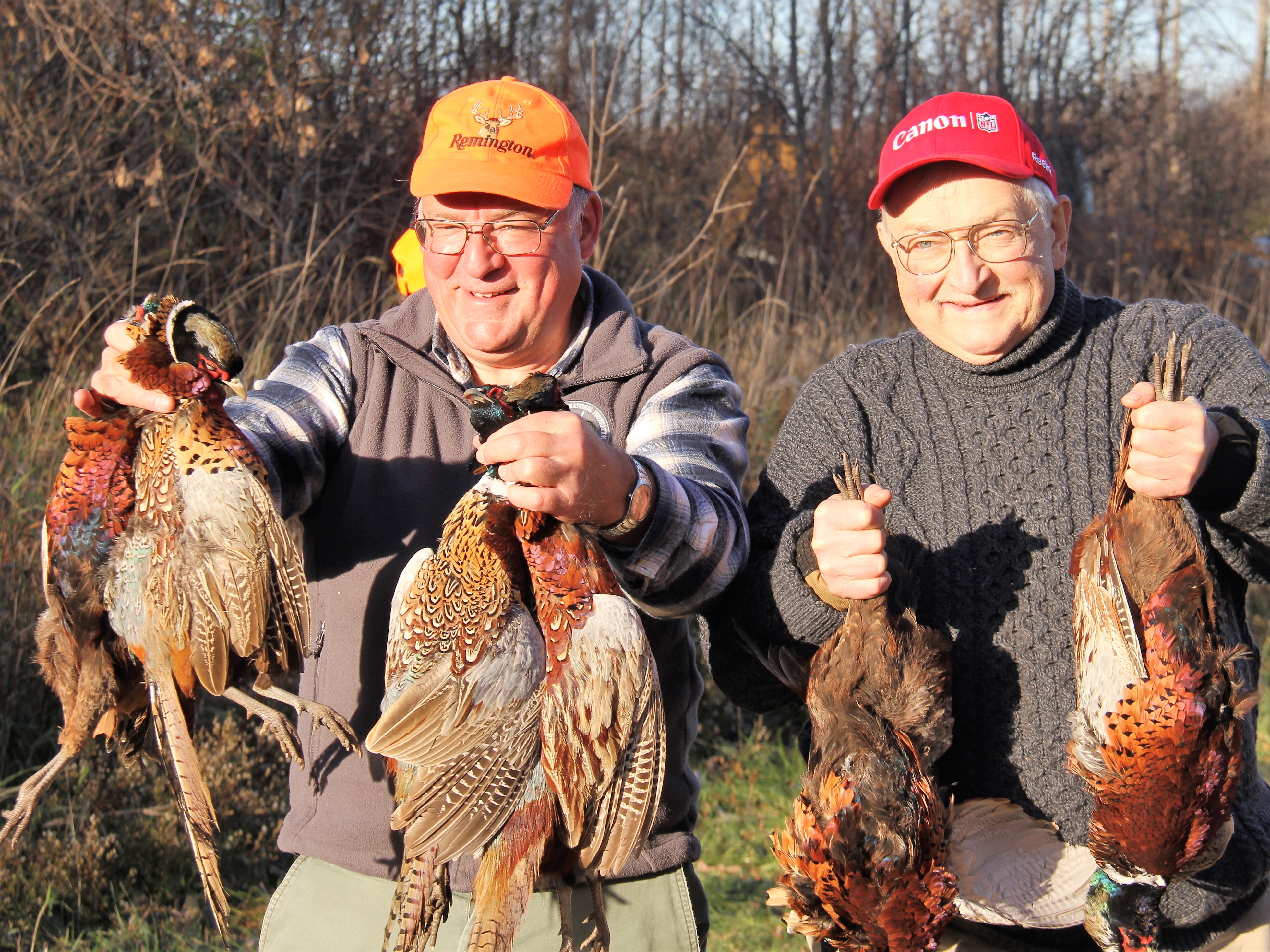
Comfortable lodging, great food, beautiful surroundings and off the charts fishing.  What more can you ask for?  Do yourself a favor, put Rainy Lake on your bucket list, give Campfire Island a call, and tell them the good folks at Share the Outdoors (www.sharetheoutdoors.com) sent you.

Here is the Campfire Island website link: http://www.campfireisland.com/.

Born to Hunt Pheasants

  • Well-Trained Bird Dogs
  • Timeless Moments with Old Friends  
  • Tasty, Beautiful, Ringed-neck Pheasants
  • One Surprising Modern-Day Youngster

For STO 02072017, picture 1of5By Joe Forma

The well-trained pointing Lab whirled into the red brush and a gorgeous Ringed-neck Pheasant clawed his way airborne.  The first of some 50 such flushes for my son, Andy Forma, of Penfield, New York, and his four companions on their 4th annual hunt with F&B Upland Birds in Hamlin, New York.

The companion hunters were Safari Club stalwarts Judge Bill Boller, George Cipressi and his grandson Dom, and also Dr. Pat Baranello, owner of the Calibre Shop ammo source, and Ron Bullard of Collins, New York.  Yours truly was the group photographer.

For STO 02072017, picture 2of5The hosts at F&B Upland are Fred Paye and Bill Surridge.  These great guys run a superb hunt in what they maintain as traditional Western New York bird cover.  As we step afield, we are transported back to the 1970’s when Ringed-necks were so prevalent locally.  The 200 plus acres of hunting land features standing corn, soybean fields, hedgerows and acres of natural red brush.

Fred and Bill provide wonderful, well-trained bird dogs, featuring Pointing Labs and Shorthair Pointers.  They are without a doubt the very best bird dogs I have ever hunted over.  They even respond to Fred’s command “get a drink” by immediately jumping into one of the large water tubs sprinkled around the area. Neat to see.

The morning hunt was for 25 randomly released roosters.  This is no walk ’em up and shoot in a 4-inch clover field.  Every bird was a challenge to locate and bag especially in the thick red brush and well grown hedgerows.  The dogs did a great job.  Many of the birds ran like the wily birds of old.  The group all had great shots and needed about 3-4 flushes and misses to settle down and then they rarely missed.

For STO 02072017, picture 3of5A real highlight of this hunt was George’s grandson, Dom, a 12 year-old super hunter.  Andy was really glad to have a youngster along to promote the future of his sport.  Dom couldn’t have been a better sportsman even at his young age.  He always held his cut-down Remington 20 gauge pump at a proper port arms position, as instructed.  He showed no impaired nerves or excitement, but hunted like he had done it a dozen times, not his first time.  He was an excellent shot.  He downed at least six hard-flying pheasants with single shots.  I didn’t see him miss.

After a great morning with about 22 birds brought to bag, we broke for a luxury lunch of roast venison, deep fried Canandaigua Lake yellow perch and Lake Erie walleye.  Fred and Bill fed us well in their spacious and heated tent.

For STO 02072017, picture 5of5The afternoon hunt was for an additional 25 Ringnecks.  The dogs continued their excellent work and showed no signs of fatigue.  They are well trained and well exercised, so they never quit, though some of us older sports slowed down just a bit.  The shooting was right on the mark though and the birds flushed hard with disconcerting cackling.

For STO 02072017, picture 4of5A tribute to all was that not a single bird was lost as a cripple.  Great shooting and great retrieving by the dogs.  By around 3:00 p.m., there five happy hunters and one old photographer, me, who decided one last push thru the soybean field would do it.  It produced our last kill, a long-tailed, beautifully feathered cock bird.

The boys finished with 45 to be delicious pheasants and the feeling of a day well spent.  Andy booked again for a hunt next November.

RAGE Arrow Packages Now in KIT FORM

  • Pre-Cut to 29.5 inches
  • SC-2 Blade, 100 Grains
  • Advanced Shock Collar, Non-Fouling Design

For STO 01272017, HUNTING and PRODUCTS, Picture 1of2Posted by Forrest Fisher

Folks don’t need to tell me personally about how effective the Rage broadheads are.  They have proven their value with me the last 7 years.  They are deadly effective.

For STO 01272017, HUNTING and PRODUCTS, Picture 2of2Rage, the number-one-selling mechanical broadhead on the market, now offers two complete arrow packages so archers can spend less time building arrows and more time shooting them.
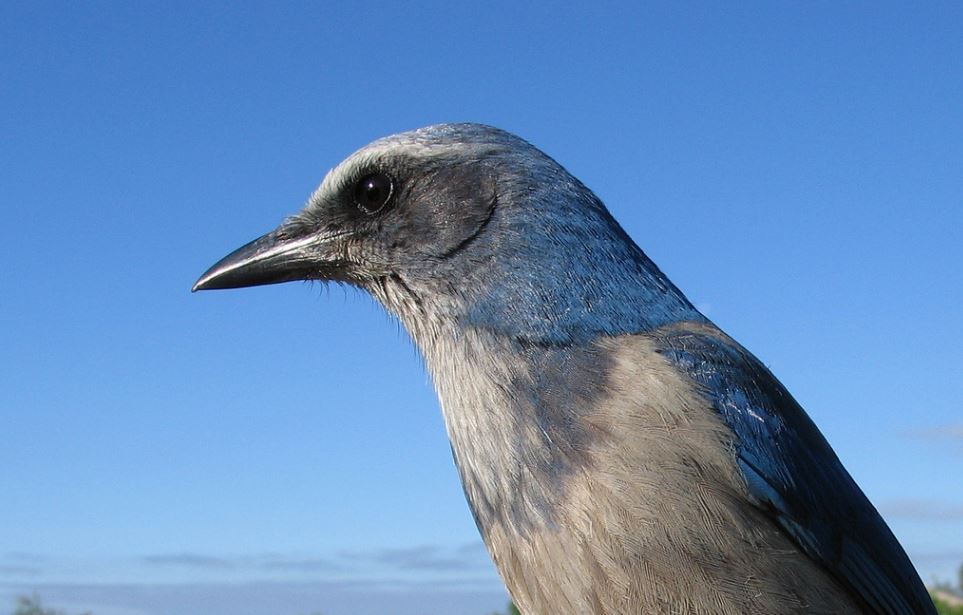
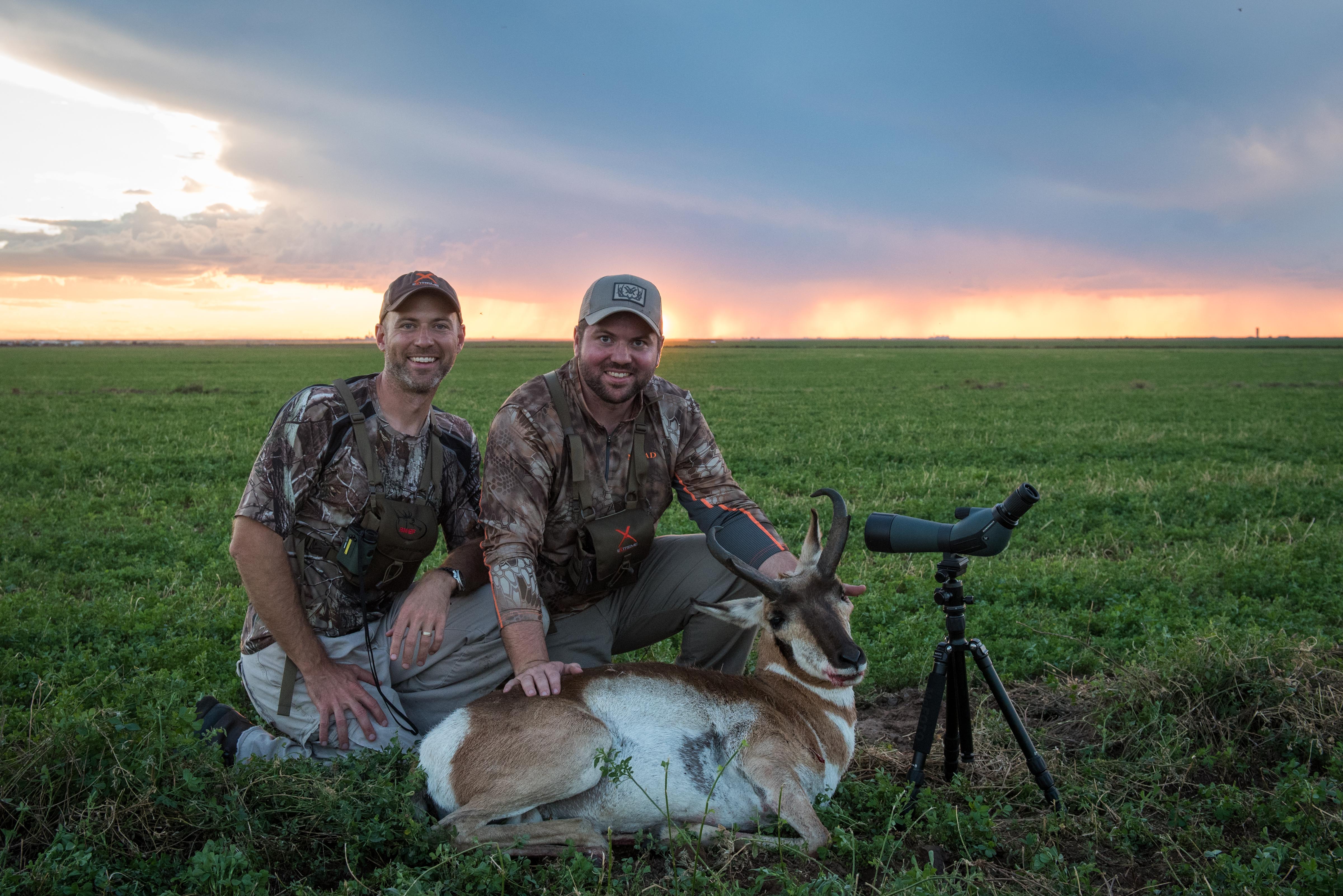
The new Rage Simply Lethal Arrow package combines a popular Gold Tip pre-fletched carbon arrows with the archer’s choice of either the Rage SC 2-Blade 100-gr. or the Rage SC 2-Blade Chisel Tip 100-gr. broadheads and a set of field points for practice.  Extremely tough and very dependable, these arrows come out of the box pre-cut and fully equipped with nocks, inserts, and 2-inch GT vanes installed.

Designed for draw weights up to 70 lbs., the arrows in the Rage Simply Lethal package are pre-cut to 29.5 inches to fit most archer’s setups.  They have a straightness ±.006-inch and weight tolerance of ±2.0 grain.  The deadly cut-on-contact Rage SC 2-Blade is a proven 2-blade Slip Cam™ design with advanced Shock Collar technology that keeps the blades in place until the moment of contact.  This delivers full kinetic energy to provide extremely large wounds and better blood trails.  The Rage SC 2-Blade Chisel Tip incorporates a bone-crushing chisel-tip design and features the Shock Collar retention system for dependably devastating entry and exit wounds.

Both Rage Simply Lethal packages come with three fletched arrows, three broadheads and three field points. The Rage Simply Lethal arrow packages are now available at retailers nationwide with a suggested retail price of less than $60.  They are easily distinguished apart by the red packaging of the Rage SC 2-Blade and the yellow packaging of the standard 100-grain Rage SC 2-Blade.  Spend your time shooting instead of getting your equipment prepared to shoot.

Rage Broadheads is the world’s number-one manufacturer of expandable broadheads. Rage also manufactures quivers and accessories.  A FeraDyne Outdoors brand, Rage is headquartered at 101 Main Street, Superior, WI 54880; call 866-387-9307; or visit www.ragebroadheads.com.

Florida Scrub-Jays in Festival Spotlight

The Florida Scrub-Jay is a beautiful coastal bird that lives nowhere else except in Florida, it is a light gray-brown bird with a bright blue head, blue wings and tail. FWC Photo

  • Jonathan Dickinson State Park, Stuart, FL
  • Feb. 18, 10 a.m. – 4 p.m.
  • Guided Walks, Exhibits, Swamp Band Hay Rides, Kids Activities, Entertainment and Food
The Florida Scrub-Jay is a beautiful coastal bird that lives nowhere else except in Florida, it is a light gray-brown bird with a bright blue head, blue wings and tail.  FWC Photo
The Florida Scrub-Jay is a beautiful coastal bird that lives nowhere else except in Florida, it is a light gray-brown bird with a bright blue head, blue wings and tail. FWC Photo

Posted by Forrest Fisher

Come celebrate this songbird at the 8th annual Florida Scrub-Jay Festival on Saturday, Feb. 18, at Jonathan Dickinson State Park, about 12 miles south of Stuart on U.S. Highway 1.

From 10 a.m. to 4 p.m. the festival will offer guided walks, exhibits, swamp buggy and hay rides, kids’ activities, entertainment and food.  There will be an opportunity to meet Florida Fish and Wildlife Conservation Commission (FWC) staff and partners that are helping conserve this threatened species.  The FWC is one of the festival’s organizers.

The Florida scrub-jay is distinctive because of its unusually cooperative family lifestyle.

Craig Faulhaber, the FWC’s avian conservation coordinator said, “The Florida Scrub-Jay lives in family groups composed of a breeding pair that mates for life and its offspring. Young Scrub-Jays often stay with their parents for one or more years and act as helpers to defend the family’s territory and raise young.  Breeding pairs with helpers successfully raise more young than lone pairs.”

“Because Florida Scrub-Jays are very territorial and don’t migrate, people may get the chance to watch events in the life of a Scrub-Jay family throughout the year.  Family members work together to defend territories averaging 25 acres from other Scrub-Jay families, with at least one member always on the lookout for predators,” said Faulhaber.

The Florida Scrub-Jay is one of the many wildlife species you may spot at Jonathan Dickinson State Park.  It needs sandy scrub habitat to survive, but its populations have been impacted by habitat loss, agriculture and the lack of natural or prescribed fire to maintain vegetation height and sandy openings on scrub lands.  Scrub-Jay populations are thought to have declined by as much as 90 percent since the late 1800s.

What does the call of this bird sound like? More like a screech than a song, since it is related to species like the crow.  Hear the sound of a Florida scrub-jay by going to AllAboutBirds.org and searching for Florida Scrub-Jay.

People can help Florida Scrub-Jays by:

Find out more about Florida scrub-jays by going to MyFWC.com/Imperiled, clicking on “Listed Species,” “Birds” and then “Florida Scrub-Jay.”

Brothers That Hunt Together – A Video Story

  • Lessons for Stalking Pronghorn
  • Learn About Tracking, Harvest
  • Enjoy Field Dressing Tactics, Savory Cooking Details

Pronghorn-3By Forrest Fisher

In this wonderful video from Ramp Media Outdoors, learn about the passion of how and why hunting brings two brothers together.  Despite their extremely busy lives, Matt McMorris and brother, Jeremy, share details about hunting and how it provides them with an opportunity to enjoy the great outdoors together.

They both have families with young children and live several hundred miles distant from each other, but in this video, they find a way to get together during hunting seasons in the Texas panhandle to hunt for a pronghorn buck.

Watch as they track a herd of pronghorn, share hunting techniques, scouting tactics and more importantly, perhaps, why hunting is about so much more than about taking a trophy.

Matt says, “Hunting brings people together and has such deep meaning and purpose for true sportsmen.  As brothers, we use our harvest for food to feed our families.  We hunt because it is a part of who we are as humans designed to survive.  Hunting does a lot to bring people together, bonding people to nature and to a more ultimate meaning.”

https://vimeo.com/198795623.

Florida Saltwater Fishing for Fun

One of my lifetime fishing buddies, Jeff Liebler, has shared his Florida fishing bounty with many others, especially parents of younger children. Liebler says, “Life is about fun in the outdoors and finding some time to learn about that with your family.” Forrest Fisher photo

  • Keep It Simple
  • Live Bait Effective, Shrimp Works Everywhere
  •   Be Prepared for Big Fish and Small Fish
One of my lifetime fishing buddies, Jeff Liebler, has shared his Florida fishing bounty with many others, especially parents of younger children.  Liebler says, “Life is about fun in the outdoors and finding some time to learn about that with your family.” Forrest Fisher photo
One of my lifetime fishing buddies, Jeff Liebler, has shared his Florida fishing bounty with many others, especially parents of younger children. Liebler says, “Life is about fun in the outdoors and finding some time to learn about that with your family.” Forrest Fisher photo

By Forrest Fisher

For wintertime saltwater fishing, the fun begins in Florida with cooling waters as multiple species head inshore to spawn and to search for easy forage feeding opportunities.  With hundreds and thousands of northerly bound anglers also heading to the lush green vegetation and sandy beach shores of southern Florida, many travelers do pack a fishing rod.  If you happen to be one of those lucky folks, just be sure the gear is strong enough to handle fish from one to 10 pounds or so, all common catches from shore or pier-fishing hotspots.

If you’re bait fishing, shrimp is always number one. Live shrimp are best, dead shrimp are next, then enter artificials.    Live shrimp are often fished under a bobber, casted from a boat or while wading along the shoreline, then drifted along in search for a redfish, spotted sea trout, snook, flounder and many other species.  There’s lots of ‘em!  And big or small, they all fight harder than you will expect.

The best bait for starting in the fin of fishing Florida in the wintertime is a live shrimp and a bobber.  Cast out and hang on!  Forrest Fisher photo
The best bait for starting in the fin of fishing Florida in the wintertime is a live shrimp and a bobber. Cast out and hang on! Forrest Fisher photo

If dead shrimp bait, that might be best for pier fishing for sheepshead and other species, simple use a small piece of the shrimp tail, shed the shell and thread it on.  These pieces can be fished off a bare hook and sinker rig or directly of a ¼-3/8 ounce jig with extra sharp hooks.   Hang on, you never know what might swim by and choose to chomp on your presentation.

If you are more a caster and not prone to pier-sitting and line watching, the Berkley Gulp shrimp in the 3-inch size is the hottest thing for saltwater fishing since bread and milk for breakfast.  Thread it onto a weighted hook or light jig head with a wide gap hook, you might have to look for that type of jig style – but they exist, and get into some easy fishing on the incoming tide.  You can wade out in shorts of waders, but be aware, these waters also are home to sharks, sting rays and a host of other non-people friendly critters that don’t necessarily mean to hurt you, they’re just part of the package.  Awareness is essential to stay in the fun zone.

Cast out your properly rigged artificial Gulp shrimp and let it sink to bottom in 3 to 6 feet of water, then start a short-hop, swimming retrieve, slow or fast, you’ll figure it out by how the fish react.  Start with slow.  Spend about 1 to 2 hours before taking this bait off for another if you find the fishing slow.  The fish are not always there and need to move through too, so this is a bit about timing when you are fishing.

Bottom line?  Hang in there with any form of shrimp bait and sooner or later, you will catch a few fish.  Visit a bait/tackle shop to insure you have the rules and understanding for legal fishing, and a license, if you need it.  Don’t forget the sunscreen.

Tight lines!

Yellowstone Grizzly Bear Delisting Delayed

More than 100 Grizzly bears have been killed as a result of increased attacks on humans and livestock, allowing landowners and management groups to consider scientific management is now necessary. Photo courtesy of Sportsmen’s Alliance

  • Public Comments Cause Hold
  • 100+ Grizzlies Killed for Human or Livestock Attack 
  • Social Tolerance Levels Reached
  • Goal is to remove 700 Bears
More than 100 Grizzly bears have been killed as a result of increased attacks on humans and livestock, allowing landowners and management groups to consider scientific management is now necessary. Photo courtesy of Sportsmen’s Alliance

Posted by Forrest Fisher

The removal of 700 grizzly bears in the Greater Yellowstone Ecosystem from the protections of the Endangered Species Act has stalled after the U.S. Fish and Wildlife received more than 650,000 comments.  Many comments from American Indian Tribes and animal-rights supporters expressed unwarranted fears that the recovered animals would again face extinction despite successful scientific management of every other game animal on the continent.

Last year, the Sportsmen’s Alliance twice submitted comments in support of delisting the distinct population of grizzly bears and returning them to state management in Idaho, Montana and Wyoming.  The action would open the possibility of closely monitored hunting for grizzlies, but within guidelines that assure no detrimental impact to the overall population in each state.

The delisting from federal protections and return of grizzlies to state management would apply to a distinct population of recovered grizzly bears found in an area around, but not in, Yellowstone National Park.  The population of grizzly bears has surpassed recovery goals in both population benchmarks and duration of time meeting those goals, proving that the population is not just recovered, but stable and growing.

Moreover, more than 100 grizzly bears have been killed for depredation of livestock or attacks on humans in the last two years – a significant number indicative of the population having reached social tolerance levels within the available habitat.

About the Sportsmen’s Alliance 

The Sportsmen’s Alliance protects and defends America’s wildlife conservation programs and the pursuits – hunting, fishing and trapping – that generate the money to pay for them.  Sportsmen’s Alliance Foundation is responsible for public education, legal defense and research.  Its mission is accomplished through several distinct programs coordinated to provide the most complete defense capability possible.  To learn more about membership in this group, please visit: http://www.sportsmensalliance.org/membership/individual-membership/.

Finding a Florida Fishing Charter

  • You Have 4 hours, You Want to Fish
  • New “Find a Fishing Charter Service”
  • What to Do, Where to Search, I Discovered www.Itrekkers.com
Small boats, big boats and even kayaks, complete with tackle, are a part of the fishing fleet and staff that is available to you with one call to this new service (1-844-GOT-TREK). Forrest Fisher Photo
Small boats, big boats and even kayaks, complete with tackle, are a part of the fishing fleet and staff that is available to you with one call to this new service (1-844-GOT-TREK).  Forrest Fisher Photo

By Forrest Fisher

When you travel to Florida for vacation or business, you realize at some point – especially if you are a fisherman, that the deep blue sea is calling and that there may be some time for you to enjoy a charter fishing trip.  Your eternal obligations for responsibility melt away and the thought of a short fishing trip melts away all of your burdens.  Fishing…..Yes!

Even if you unprepared, the nice thing about Florida charter fishing is that the fishing license is considered part of the charter cost and this policy helps to promote the economic impact for the local economy, guides and visitors.  It makes it easy for you and I to take a fishing trip too.

You open the phone book or click on google for the city you’re in and there you are, yep, somewhat confused.  You find so many charter listings and no time to sort through them to find out about reviews and cost and time of arrival and location.  All those things and even more.

While on a Florida fishing charter, you will always find that nature is all around you wherever you fish. Forrest Fisher Photo
While on a Florida fishing charter, you will always find that nature is all around you wherever you fish.  Forrest Fisher Photo

If you are fishing in Florida, especially if you are within an hour or two of Tampa, you won’t need to worry about all those details.  There is a new fishing charter company that has already vetted the available charters and made a list of the good guys (and gals) who are honest charter fishermen willing to give you their time and best effort to catch fish in short order.  That new company is called “itrekkers” and you can quickly find them at www.itrekkers.com.  Think of them as sort of the Uber Taxi Service of the fishing world in Florida.

Itrekkers allows you to make a simple search for the convenience of booking a fishing charter with nearly no prep time.  You’re decision-making is reduced to deciding upon the length of your trip.  End of story, you can let the fun begin.

Itrekkers offers several types of trips depending on how much time you have, these include 4-Hour Inshore, 6-Hour Nearshore and 8-Hour Offshore trips.  These types of trips are designed for you and your family or small group of 4-6 people.  If you’re fishing alone, they also offer Share-A-Treks that are designed for 1-2 people who are looking for all the benefits of a charter, but not the full cost.  You can book a single seat and share with friends or let others join you for a fun adventure on the water.

The Share-A-Trek fishing trips permit you to enjoy the charter without being responsible for the full charter cost.  I like this option, especially for business travelers, since the cost can be as little as $150 per person to get out on a boat for half a day with all gas, bait, equipment, licenses, and more, included.

Depending on the trip selected, you’ll fish in different types of water from protected bays and inlets to deep sea offshore waters.  The 8-Hour Offshore deep-sea trips will take the angler 20 to 60 miles offshore to catch the fish you’re after.

This service has long been overdue and if you have ever rented a charter and have come back disappointed, this business takes care of that problem. Your trip is money-back guaranteed.  Not sure any adventure trip can ever be more assured before you leave.  Check these guys out, they’re worth a call if you happen to be in need of fishing fun and services and you’re in Florida.  I found them by accident.

Call 1-844-GOT-TREK or link to www.itrekkers.com.  Tight lines everyone!

FIRST TIME ICE FISHING with Kids

There is nothing quite like taking a youngster out to ice fish when the fish cooperate. Be prepared for big smiles!

  • Keep It Simple
  • Don’t Stay Too Long
  • Bring Plenty to Eat and Drink

By Forrest Fisher

There is nothing quite like taking a youngster out to ice fish when the fish cooperate.  Be prepared for big smiles!
There is nothing quite like taking a youngster out to ice fish when the fish cooperate. Be prepared for big smiles!

A few years back, when my 3-1/2 year-old grandson asked me to join him at his pre-school “show and tell”, I didn’t know how much fun that could be.  My little buddy talked about one of his favorite things – fishing.  He brought his 4-foot long Zebco “Tigger” fishing rod with pushbutton casting reel, his little blue/beige colored Plano tackle box, all his bobbers, sinkers and hooks, and one more thing that just touched my soul – a picture of him and me taken by his father when he caught his first sunfish on vacation last year.  A moment to live for!

The size of his ear to ear smile in the picture made everyone else in the classroom smile too.  “Wow, look at that BIG fish,” said another young guy in the class. “This is me and my Dziadzia (Polish word for grandad)”, he said, “And ‘dis is a fish I caught last year on vacation.”  Then, using a rubber casting plug, he went on to give a live demonstration of how he could cast.  He then looked over to me and said, “Me and my Dziadzia are Fish’N Buddies.”  A piece of my soul had just been gold-plated.  It’s been a few days since then, actually it’s been a few years, but I’m still beaming with pride from the memory of that moment.  The outdoors does bond people together for a lifetime.

Even back then, my grandson could probably best be described as a “talker”.  He asks lots of questions and usually offers lots of answers too.  He is a joy.  Anyway, as I drove him home after the show and tell, he asked me about where the fish go in the winter time.  Young minds at work.

I told him the whole story about how water gets cold when winter comes and it eventually freezes on the top.  The ice forms a hard thick layer and there is water below it where the fish live through winter.  I explained that most of the fish live on the bottom in the deepest part of the lake.

Collin asked, “Don’t they get cold?”  I explained that fish are not like people, fish are the same temperature of the water they swim in (they’re cold-blooded).  So when the water gets cold, the fish get cold too, but they don’t freeze, they just slow down.  They eat less, but they do eat in winter.

I should have known what was coming next, but I never even thought about it.  “Well, why don’t we go fish for them in the winter too?” He asked.  I told him that lots of people fish in the winter by drilling a hole through the ice and fishing a little jig and bobber for fish on the bottom.  “Can we go, can we go?” He asked.  How could I say no?

The next day after clearing it with his mom and dad, off we went to a small frozen pond that I knew had crappie, sunfish, yellow perch and black bass in it.  We walked over to an area of the pond that I thought was the deepest and I showed Collin how a clip-on weight could be used to show how deep the water was.  It was about 14 feet.  He wasn’t too thrilled about any of the technical stuff, he just asked, “Can we fish here?”  So we did.

We had about 7 or 8 inches of ice and I showed Collin how to use the ice scoop (hand skimmer) to clear the hole of ice chips and slush from digging the hole.  He took on to that job and OWNED IT.  He liked to “clear the ice” with the little shovel we brought too.

For STO 01312017, FISHING and LOVE OF SPORT, Picture 2of2We had a clear blue sunshine day, no clouds and no snow, air temperature about 25 degrees and a 5 mile per hour from the north.  Not a bad winter day in WNY.  With the sun, it felt more like 35 degrees.

Then we added a bobber stop and slip bobber to the very thin and supple 4-pound test Berkley “ice line”, a tiny ice-jig  and about 1/16 ounce of pinch-on BB-shot a foot above.   We again used the clip-on weight to set the bobber stop so the jig would be about one inch off the bottom.  I didn’t bother to explain this part of the set-up to the youngster.  He wanted to fish!  We added a mousee grub to the hook of the tiny ice-jig and let the line fall into the depths below.

As the line settled out, Collin watched the bobber with total focus.

Of course, most of the time, ice fishermen will concede that it takes two or three stops and digging new holes each time to find fish and get a strike. We lucked out.  The bobber started to quiver and wobble, then it disappeared, Collin yelled, “There it goes!”  I picked up the rod and handed it to him.  He had been practicing how the open-face reel works all day and knew very well how to turn the reel handle to wind in the line.

It was bit of a struggle as his face was straining a little.  He was excited and I bet a little scared at the same time.  I imagine not ever having done this before, he might have been wondering what he might have down there.  The lite-weight, micro-sized ice rod was bent double and a wiggling fish was definitely on the end.  I coached him to keep reeling and he was doing a great job, slowly turning the handle over.  Collin was on the edge of a new moment.

An instant later, a 12-inch perch plopped out of the hole right onto the ice surface.

WOW!! Look at that Dziadza!  “We better take it off the hook Dziadzia, we have to put it back into the water.”  I explained that we could keep this fish and have it for dinner later.  He stopped talking, waited, looked sat me, looked at the fish and then said, “Can we let this one go?”  I smiled at him and said, “Sure we can!”

We both worked to carefully remove the ice jig from the lip of the fish and then we slid the fish across the ice to the hole.  Collin used his boot to help the fish find the hole.  Once there, one flip and the perch swam out of sight, back into the deep.

“Good job,” I told him. “Was that fun?” I asked.  “Yup,” he smiled wide and wider as he answered.  “Can we try that again Dziadzia?”  I began thinking, oh Lordy, I HAVE been born a lucky man.

We caught about 6 more fish in the next hour.  A black bass, another yellow perch, and several bluegills.  It was a great day for first time ice fishing.

Without reaching the point of “Can we go home now,” I told Collin that we had to go back to see Grammy now.  He wanted to stay.  I was happy to discover that after an hour he wasn’t tired of all the excitement, but I wanted to make sure he didn’t get cold and that he still had the desire to return.

Even before we reached the truck, we were already talking about another day on the ice for the next weekend.  I realize now that as I get older, I have less time to get older.  This stuff is fun!!  I suddenly want to eat the right foods, get some exercise, live healthier and make sure that I can stay on this planet for a very good long time.

You see, I know that when his two sisters find out about this, I’m going to need a calendar book for noting the next ice fishing dates.  Ice fishing with children is more than fun.  It is an experience that can open the door to a lifetime of outdoor adventure and also allow for some gold-plated moments in time, if you’re lucky.

Did I mention that fishing with kids will make you younger too?  We are always reminded that life is about attitude, aren’t we?  This was an attitude-changing day for sure.  My life changed that day.

On the last fish we caught, Collin turned to me to ask one small favor.  “Dziadzia, can we keep this one?”  I said, “Well, we don’t have enough to make a meal because we let them all go, why do you want to keep this one?”  He said, “For show and tell next week.”  I grinned.  OK Collin, I have an aerator at home and it will keep the fish alive until then.”  Mr. Bluegill went home with us in a 5-gallon bucket and off we went, bright-eyed and cheery-tailed, looking ahead to the next time we could go ice fishing.

Give yourself the opportunity.

Hey folks, the ice has had a hard time getting here this year in many parts of the country, but it will get here.  Step out there and grab some winter ice-fishing fun.  Take a kid with you!   In many areas of the country, there is no closed season for many species of panfish and they’re easy to catch.

Duck Ship of Fools

  • Fog, Friends, Food, Fun – All About Duck Hunting
  • Farms Ponds Frozen, Search Reservoirs for Quacker’s
  •   Using Google Maps and Digital Reckoning
The fog might not have contributed to hunting success, but it did create some memorable moments.

By Jim Low

Like a faithless lover, duck hunting is hard to give up on.  I, along with many other Missouri waterfowlers, wrote off the 2016-2017 duck season as a bad job weeks ago.  But when hunting buddy and long-time friend Bill Powell asked me to join him on one last hunt at Pomme de Terre Lake, the siren’s song was irresistible.  Here was a chance to redeem an otherwise disappointing season with a mixed bag of divers and puddle ducks.  Who knew?  Maybe a brace of canvasbacks awaited us.

For STO 01252017, TRENDING NOW-MO, Picture 1of3
Despite difficulties with equipment and fog, we arrived in plenty of time to set up a convincing decoy spread.

A large part of Bill’s motivation lay in testing the blind he was building for his new duck boat.  I might have seen the handwriting on the wall when, the night before our departure, he admitted that work on the blind had not progressed as hoped.  Instead of hunting from the comfort of his boat, we would motor to our chosen spot and hunker down in brush at the water’s edge.

My misgivings vanished when I woke to dress at 2 a.m. and peered out the bedroom window.  The fog was thick enough to stir with a spoon.  Duck weather!  By the time we got to Wheatland Park on Pomme de Terre’s northwestern shore, the air was so thick I had to ground-guide Bill as he backed the trailer down the boat ramp.  Launching the boat turned out to be the least of our problems.  The new 25HP Mercury motor stubbornly refused to catch, despite repeated mental review of the starting checklist.  Tank full?  Check.  Fuel Line connected?  Check.  Vent open?  Check.  Primer bulb pumped and firm?  Check.  But still no ignition.  Ten minutes and several expletives later, Bill discovered the missing item on his list.  Kill switch?  On!  Switch to off position…Varoom!

With motor purring like a contented tiger, Bill turned the bow into…an impenetrable fog bank.  The boat ramp was still visible, so Bill knew which direction was north.  All we had to do was motor three-quarters of a mile due south.  But even in our sleep-deprived condition we were sharp enough to know we would lose our bearings the moment the shoreline disappeared, and Bill’s boat had no compass or GPS unit to guide us.  With the boundless and equally unjustified confidence inspired by technology, I whipped out my smart phone and launched Google Maps.  In seconds, I was looking at a dot (us) moving slowly across the screen headed – due north?

“Turn around!” I shouted over the motor’s roar, fearing we might crash into the shore we had just left.  Bill dutifully turned what he judged to be 180 degrees and soon had us headed – due east.  “Turn right!” I shouted over the motor’s roar.

This went on for five or 10 minutes, until the boat ramp appeared again.  That’s when it dawned on me that the cursor on my phone’s screen had changed from the usual arrow, with its pointy end indicating direction of travel, to a largish dot with a funnel shaped thing protruding from one side.  This led to several questions.  Why had the cursor changed?  Had I accidentally switched a setting?  Did Google Maps automatically make the change when we went from land to water?  From day to night?  Was that funnel supposed to be the wake behind our boat or a beam of light preceding it?

This, in turn, led to several minutes of fumbling with settings, widening and narrowing the view to find landmarks and ordering Bill to go faster, slower, stop, turn left, turn right and stop altogether while I tried to figure out how facts on the water related to the image on my screen.  About this time, Bill looked up and exclaimed, “Oh, there it is!” Apparently I had navigated us – entirely by accident – to the desired spot.  Never ones to look a gift horse in the mouth, we proceeded to transfer our hunting gear to shore so Bill could motor farther down the cove (keeping the shoreline in sight!) and hide the boat.  Meanwhile, I began setting out decoys.

Everything went smoothly until I dumped the bag containing scaup decoys on a 100-foot jerk line.  There was evidence of an elegant scheme to keep decoy cords and the main line orderly.  However, that effort had been defeated by the hurly-burly of tossing decoy bags into and out of truck and boat.  Utter chaos now prevailed, and a pocket knife seemed the only remedy.  Bill set about deploying the other decoys while I applied years of experience with tangled baitcasting reels to the diver rig.  Amazingly, I had it mostly untangled by the time shooting light arrived.

That’s when Bill discovered that he had left our stools and food in the truck.  No matter.  We had managed to remember our guns and ammo, and we had camo netting to drape over buttonbush and willows to create individual blinds.  We were set.  All we needed was ducks.

Late-season hunts on southern Missouri’s big Corps of Engineers reservoirs are most productive when neighboring ponds and streams are frozen.  That had been true the previous week.  However, the past few days had been warm, and puddle ducks now were contentedly preening on a thousand farm ponds.  So, we pinned our hopes on diving ducks, whose preference for big water keeps hunters in business at Pomme de Terre regardless of weather.

We did see a few goldeneyes and ringnecks, but none that showed significant interest in our decoys.  The only shots we fired were at a pair of Canada geese that strayed dangerously close around 8 a.m.  Feathers drifted down as the pair disappeared into the fog.  Moments later, we heard honking out on the water a few hundred yards away.  The distressed calling continued and it seemed clear that one of the birds was down.  Bill hotfooted it back to the boat with his retriever, Hector, and went in search of the crippled bird. They returned empty-handed half an hour later.

Bill’s dog Hector had a great time retrieving sticks while we worked with decoys, and he slept like the dead during the drive home.

Two hours and several decoy adjustments later, we admitted defeat and collected our gear.  As we motored back to the boat ramp, Bill noticed that his shotgun was missing.  Back to the point we went and retrieved the gun in its cunningly camouflaged case.  At least the fog had lifted, and we could find our way without digital assistance.

At the ramp, we experienced what we thought was our final humiliation of the day. Earlier in the morning, when Bill pulled up to park his truck after launching the boat, the fog apparently had confused him so thoroughly that he parked 50 yards too far downhill. As a result, his trailer was blocking half of the boat ramp’s width.  “Did I really do that?” Bill asked in dismay. Yep.  He sure did.  The one boater who arrived after us had kindly refrained from leaving a nasty note or scratches on Bill’s new truck.  But he surely must have had some choice words for the rubes who preceded him.

On our way home, as Hector snoozed contentedly between us, we decided to visit a pond owned by one of my neighbors.  Geese regularly visit there, spreading gooey green poop liberally across lawn and sidewalk.  She is delighted to have me visit periodically and put the fear of God in these feathered manure spreaders.  To simplify our approach, we traded vehicles, putting guns and retriever in my truck for the trip to the pond.

Alas, we found it deserted, dashing our last hope.  I dropped Bill and Hector back at his truck before heading home, ready for a nap.  Then I realized that Bill hadn’t retrieved his shotgun from the back of my truck.  After a quick phone call, we both reversed directions and returned to our rendezvous point to do a final sorting of gear.  He still ended up with my phone charger, but that was small potatoes in the Chinese fire drill that our day had become.

Every hunt creates memories, regardless of whether game is taken.  If nothing else, our last duck hunt of the 2016-17 season resulted in a full limit of stories to tell.

Mountain Lions in Missouri

Mountain Lion roams inside an enclosure in Illinois Prairie Zoo.

  • Female Cat Noted in Shannon County
  • Increasing Number of Reported Sightings 
  •   Ozarks May be Perfect Wilderness Nesting Area
The discovery of a female mountain lion in Shannon County last month is a recent development in a 20-year saga. Mountain lions undoubtedly will continue to filter into Missouri from western states. The question is whether Missouri will find ways to live with this native species. (Missouri Department of Conservation photo)

By Jim Low

A famous author once said, “If you build it…”, you know the rest.

Some of the brightest and darkest moments in conservation history have been the result of “unintended consequences.” The attempt to eradicate predators from the Kaibab National Forest in the 1920s was intended to boost deer numbers, but without predators to keep their population in check, deer numbers soared and then crashed, due to disease and starvation.  That’s a classic example of negative unintended consequences of human actions.  However, recent events prove that things can work the other way as well.

In the depths of the Great Depression, Missourians realized that letting the state legislature set hunting and fishing regulations had turned wildlife into a political football.  The results were disastrous.  Deer once had been so common that their hides were a standard unit of monetary value – the “buck.”  But by the 1930s, only a few hundred remained in the state.  Wild turkeys, fish, forests and other wild resources were all in similarly dismal condition.

Outrage over lawmakers’ squandering of the state’s natural legacy prompted citizens to take wildlife management out of politicians’ hands and vest it in an independent conservation agency, what we now call the Missouri Department of Conservation (MDC).  Within a few decades, deer once again were numerous enough to support carefully regulated hunting, not to mention today’s $1 billion deer-related recreation and tourism industry.  The story has been much the same for fish, forests and non-game wildlife.  Given a chance to heal, Missouri’s wild places have returned the favor by bouncing back.  In at least one instance, they have done so in a way that no one foresaw.

More than 60 years after the last known mountain lion was killed in Missouri in 1927, MDC reported a series of verified mountain lion sightings.  It started as a trickle.  In 1994, there was a tantalizing case where raccoon hunters killed a mountain lion.  They had a video showing the cat, but they got rid of the carcass before conservation agents apprehended them. In 1996 and 1997, two Missourians captured mountain lions on video.  In 1999 MDC’s Mountain Lion Response Team found tracks where rabbit hunters had reported seeing a cougar.

In the early 2000s, the trickle of verified reports grew to a steady stream, with video, photos and two road-killed mountain lions in four consecutive years.  In 2011, the stream swelled to a flood.  That year, MDC verified 14 mountain lion sightings.  This startling upswing probably was partly due to hunters increasing their use of game cameras, which accounted for half of the sightings.  2012 saw 11 more verified sightings, followed by eight in 2013.  The pace slackened a bit in subsequent years, possibly because the novelty of sightings wore off and people stopped reporting every new one.  Others might have kept sightings to themselves to protect the animals.

What accounts for the return of this top-level predator?  Mountain lions are simply taking advantage of Missouri’s success in restoring their No. 1 food item, white-tailed deer.  Young male mountain lions typically leave their birth areas to escape being killed by dominant adult males and establish their own territories elsewhere.  They can travel hundreds of miles while looking for unoccupied land with sufficient food and female mountain lions to mate with. Female mountain lions are more likely to stay where they were born.  Almost without exception, the mountain lions seen in Missouri have been young males.  This leads MDC to believe that the mountain lions seen here are transients, rather than part of an established, reproducing population.

Young male mountain lions find plenty of deer to eat in Missouri.  Finding mates has been a different matter.  Male cougars that don’t find females tend to keep moving, which accounts for the sporadic nature of documented sightings in Missouri.  Fourteen one year, fewer than half that number two years later.  Sightings scattered around the state. These facts, together with the absence of sightings of mountain lion cubs, was strong evidence that Missouri didn’t have a breeding population…yet.

Things took a new and exciting turn last month, when DNA testing revealed that an elk had been killed by a female mountain lion in Shannon County.  This was only the second confirmed female in Missouri.  The first was an animal whose pelt and head were recovered from a trash dump in Texas County in 1998.  Circumstantial evidence indicated that it might have escaped or been released from captivity.  It might not even have come from Missouri. So, the female cougar documented in Shannon County this year might reasonably be considered Missouri’s first truly free-ranging female mountain lion in 90 years.

This means Missouri could soon have a breeding mountain lion population.  If that happens, it would raise questions about MDC’s policy regarding mountain lions.  In 2006, the Missouri Conservation Commission responded to interest – and concerns – about continuing mountain lion sightings by doing two things.  One was to remove the mountain lion from the state’s endangered species list.  The Commission justified this action by saying that, since there was no evidence of a breeding population in Missouri, the species should more properly be considered extirpated.  This lumped mountain lions in with other species, such as moose and elk, which occasionally wandered into Missouri from other states, but were no longer endemic here.

The Commission’s other action was to issue a policy statement that “it is not desirable to allow the re-establishment of a mountain lion population in Missouri.”  The underlying assumption was that a breeding population of mountain lions was incompatible with Missouri’s level of human settlement.  In other words, Missouri simply didn’t have room enough for humans and their domestic animals to coexist with mountain lions.

I wonder about this.  Nebraska has had female mountain lions since at least 1991.  Breeding has been documented there and a female mountain lion was found in southeastern Nebraska last year.  Granted, Nebraska’s population density is roughly one-third that of Missouri, but the Cornhusker State isn’t exactly wilderness.  And in addition to its human population, Nebraska has 50 percent more cattle than Missouri, according to CattleNetwork.com.  And while wilderness is a scarce commodity in Missouri, it isn’t entirely absent.  The Mark Twain National Forest has seven designated wilderness areas in the Ozarks, encompassing more than 71,000 acres.  It probably is no coincidence that most Missouri’s mountain lion sightings have come from the Ozarks.

If Nebraskans can get along with mountain lions, maybe Missourians can too.  Nebraska held an experimental hunting season in 2015 and hunters harvested five mountain lions.  The hunt drew predictable opposition and the Nebraska Parks and Wildlife Commission is gathering more information about the state’s cougar population before offering another hunting season.  Carefully regulated hunting based on good science is the preferred method of managing wildlife populations in North America, which has a rich tradition of fair-chase hunting.  Missouri already has learned to live with black bears, some of which migrated into the state from Arkansas.  MDC deals with problem bears when necessary and the agency is currently laying the foundation for a science-based hunting season.  It will be prepared when bear numbers reach the point where hunting is sustainable and necessary to prevent unacceptable levels of bear-human conflict, just as it does with white-tailed deer

I understand the concern some Missourians have about allowing the development of a breeding population of mountain lions.  North America’s biggest cat is a formidable predator and you can’t blame parents and ranchers for being concerned.  But it is worth noting that Missouri has never had a documented mountain lion attack on humans.  Even in states with well-established mountain lion populations, attacks are extremely rare. And the Missouri Wildlife Code allows people to kill mountain lions that attack or kill humans, livestock or other domestic animals.

Personally, I’m thrilled to think that I might get to see a mountain lion in the wild here in Missouri.  And it goes against my grain to discourage a native species that is making a natural, unaided comeback as a result of our own work restoring the conditions in which it once thrived. Traffic fatalities resulting from deer-automobile collisions are a much bigger threat to human safety than mountain lion attacks, yet no one seriously suggests getting rid of deer.

I hope Shannon County’s female mountain lion finds a mate and raises a litter of cubs that live long, happy lives.  Imagine watching one of them slip through the woods as you sit in your deer stand.  For me, adding that dimension of wildness to Missouri’s outdoors is worth the minimal risks involved.