Affordable Offshore Charter Fishing near Englewood Beach, Florida

  • 5 hour Offshore Fishing Trip, we caught more than 50 fish!
  • Cost was so affordable, all gear and bait was provided
  • Enjoyable day, the captain cleaned all the fish!

By Bob Holzhei

Dave Barus with one of the many fish we hooked up with and released. we caught so many hard-fighting fish in such a short time. Was such fun! Bob Holzhei Photo

The fishing action in the Gulf of Mexico was like playing pinball. It was non-stop action baiting the hook and dropping the baited hook down to bottom, then reeling the line in three full turns. Bang! Boom! Hang on to the rod!
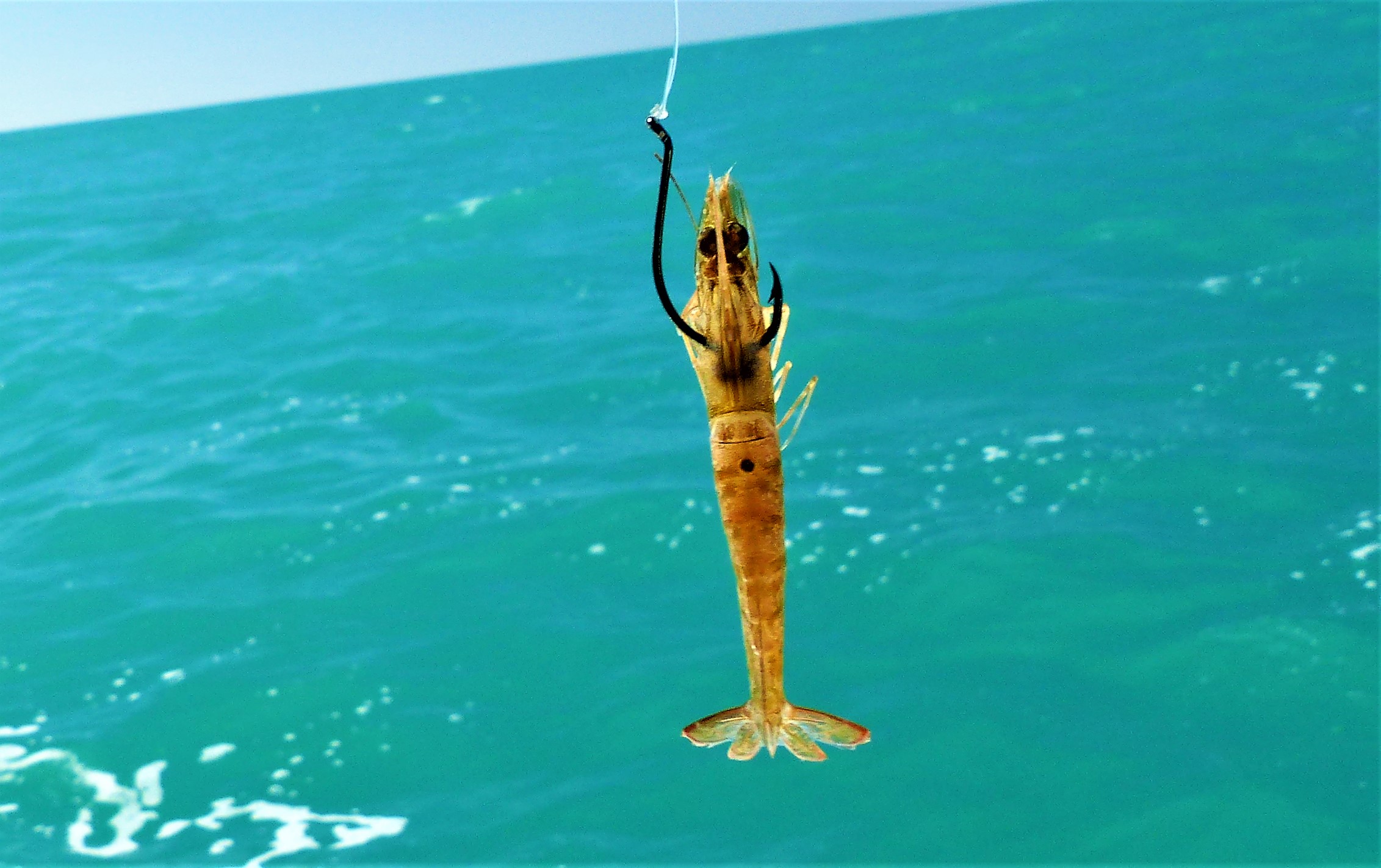
Live shrimp were among the baits we used to fool so many fish in such a short time. These were hooked up with a size 3 hook below a 2-ounce slide sinker using 40-pound mono tied to 40-pound braid. Forrest Fisher Photo

Dave Barus, an outdoor writer from western New York and I booked a charter with Captain Terry Heller.  The boat was launched out of Placida, FL and we fished about 8-1/2 miles off shore, far beyond the sight of land.  There were no other boats in sight as three-foot waves grew in intensity to about five feet.  We were alone in the Gulf of Mexico and became part of the natural world that day, bobbing and bouncing around like a little cork for a few hours. The chop didn’t hurt the fishing.

A Lowrance GPS guided us to Heller’s many hotspots where he has been successful before.  In each, a small buoy was dropped to mark the area and the anchor was released to hold the boat where fish showed up on the fish finder.

Captain Terry Heller drops a special buoy that allows him to mobilize his boat position in relation to this known marker spot and navigate his fishing clients over tiny rock beds that hold giant and plentiful fish on the bottom. Forrest Fisher Photo

The bait was dropped in 50-57 feet of water, then pulled up from the bottom three full turns on the reel.

“Fish-on!” I yelled as the hook was set.

“Fish-On!” Yelled Barus.

After my first Key West Grunt was boated, Heller hurried to the other side of the boat to assist Barus with battling the fish.  Ocean fish fight much harder than expected and a couple of times Captain Heller had to hold onto the rod as I lifted the rod up and reeled line in on the down stroke.  “I gotta start a harder workout each day (note to myself).” The rod tip jumped again and again, and setting the hook hard was advised by Heller because the various saltwater fish out there have such tough mouths.

Captain Terry Heller baited the Eagle Claw size 3 hook with a variety of baits including shrimp, cut squid and sardines.  A 7-1/2 foot Sussex rod with a 300-400 series Penn Reel had 20-pound braid line on it.

The fishing reels were 300-400 series saltwater models with tough, durable braided line. Forrest Fisher Photo

Heller started fishing with his father at 65 years ago when he was 5 years old and has been a full-time professional fishing guide for 5 years in Florida.

The center console walk-around 24-foot Polar boat was equipped with a 225 horsepower Yamaha four-stroke outboard and also had an 80-pound torque Minn Kota trolling motor on the bow.

Red and Gag Grouper were caught, Snapper, Sea Bass, Trigger fish, Tom Toms and Key West Grunts. Wow! Many fish were released back in the water because the season had not opened yet, but we caught more than 50 fish in 3 short hours of bottom dipping with bait in the right places. Caption Heller cleaned, filleted and bagged the fish for us, all part of the trip cost.

“When you like to do something you love, it’s not hard.  I like taking 10-year old’s fishing, especially my grandkids.  No only do they learn fast, but they also have patience.  They really like catching big Groupers,” concluded Heller.

We fished for $165 apiece. A great value and a fun trip. For additional information, Captain Heller says you can call him at 941-587-4460.

The 24′ boat was so tough out there, very durable, I felt safe the entire trip. Forrest Fisher Photo


Chestnut Tree Food Plot Philosophy – Bucks Fight For It

  • Hard Mast Crop Logic, Peter Fiduccia Explains in the Video
  • Wildlife Nutrition
  • Cost Effective, Easy to do

Join host Peter Fiduccia and his special guest Bob Wallace from Chestnut Hill Outdoors as they share step-by-step details on planting chestnut trees. They are an ideal mast tree to supplement any wildlife food plot program.

Carrying Capacity is defined as the number of a given species that a particular area can support without detriment to the wildlife or their habitat. If you as a landowner are content with the wildlife currently on your land, you need only sit back and enjoy.

However, if you’re like most landowners who want to attract and hold more and healthier wildlife, including deer, turkeys and a host of other species, you need to increase the carrying capacity of your land by providing the proper amount and type of natural food to meet their year-round nutritional needs.

Building food plots with annual or perennial herbaceous crops is one popular way to increase available nutrition, but often results in nutritional gaps during certain parts of the year. Your property will be far more attractive to, and beneficial for wildlife, if you can strive to keep fresh food sources on your property for as long as possible throughout the year.

In early summer, newly born or hatched young of many wildlife species are at their most abundant. Young fawns are putting tremendous nutritional stress on nursing mothers. Meanwhile, antler growth rates have kicked into overdrive and rapidly growing wild turkey poults, not to mention the young of dozens of other bird species, are scouring the landscape searching for food. Yet, important sources of soft mast may be lacking if you haven’t planted early producers like plums and mulberries.

Though all is lush and green, mid to late summer is actually an often unrecognized period of nutritional stress. Herbaceous vegetation is maturing and dying while rapidly growing young wildlife now need more nutritious food than ever. Summer fruits like blackberries, raspberries, blueberries and grapes can help wildlife bridge this nutritional gap before the next one arrives.

As the leaves start to turn and the temperatures drop, wildlife must start the process of fattening up for winter. That job becomes easier, and can begin sooner with late summer and early fall mast species like persimmons, apples and pears. They’ll hold and nourish more wildlife until crucial hard mast species like chestnuts and acorns start dropping, and if you’ve planted a good variety of species, will continue providing high-energy, high-calorie hard mast well into winter.

Planting soft and hard mast orchards is a great way to significantly increase available wildlife nutrition over longer period. It should be done in addition to, other wildlife habitat improvement practices. By incorporating mast orchards into a larger coordinated plan that could include timber harvesting, herbaceous food plots, controlled burning and other practices, the end result of the whole becomes greater than the sum of its parts.

Chestnut Hill Outdoors is more than just a nursery. In order to ensure you receive the maximum benefit from their products, they also provide sound advice and instruction on proper planting and care. For more on Chestnut Hill Outdoors products and how to care for them, visit ChestnutHillOutdoors.com, or call (855) 386-7826.

Chestnut Hill is the best place for you to purchase your food plot and deer attractant plants because they offer a large selection, their plants are specifically bred to attract deer, and they offer customers different sized plants at different levels of growth.

For more information, please visit WWW.CHESTNUTHILLOUTDOORS.COM

Let’s Talk Turkey: Pot and Box Calls

Georgia turkey hunting, the real thing.

  • Condition your Calls, Learn How
  • Friction Calls: Pot Call, Box Call
Click the picture to WATCH the VIDEO

No matter where you live, turkey season is not far away. In Florida, the gobbler season is already open! In Georgia, it starts two weeks away. Other states too, not far away.

Yelping, clucking, purring…pot calls, box calls, locator calls – it can be confusing, especially if you’re new to turkey hunting. Even if you are a veteran turkey hunter, there is always more to learn. Here is a 13 year old hunter with expertise for all of us to learn from.

In any case, it’s time to start practicing those turkey calls!

Learn more about the “HOW” from Georgia DNR biologist Kevin Lowrey and competitive turkey caller Chase Crowe, as they share some tips on how to call a gobbler into your neck of the woods.


The Mountains Shall Depart …saved by an Alaskan Shaman

By Dave Barus

Click on the book to buy from Amazon, PRIME members receive free shipping.

A new book about Adventure, Tragedy, Death, Life, Peace, Mystical Intervention, Joy, Leadership.   

I couldn’t put it down.  This book offers all that in just 122 pages!   It’s in the running for the Pulitzer Prize this year.

“The Mountains Shall Depart” by Robert E. Holzhei shares a secret tale about a young man named Luke, as he learns about the life and the outdoors on a farm in the 1940s. 

Luke’s journey from childhood provides an intriguing trail where he discovers hard work ethic and uncompromising risk that lead to burden, panic and tragedy.

A spellbinding journey emerges for Luke that becomes mystical, when an Alaskan shaman helps Luke shed a tragedy he cannot erase from childhood.  The new trail becomes a spiritual journey where Luke soon discovers new energy and a life-changing path that becomes a life-long journey to coach others in a new role.

Once you start reading the book, you realize that overcoming adversity, realizing new inspiration and linking to new goals is not about fiction.  A story where the end is a new beginning.

The well-written book, 122 pages, is hard to put down.  You can obtain a copy two ways:

Chasing Chain Pickerel off the Chesapeake

  • Chain pickerel are freshwater fish but manage well in brackish water, especially in winter with cool waters, but also depending on the salinity.
  • We used 9-foot, 8-weight fly rods rigged up with intermediate lines and a 30-lb. test leader to handle these toothy critters, with a variety of smaller, musky-like streamers.
  • The pickerel is an underappreciated fish for the fly fisher and a great way to do some inshore fishing in the late fall and winter months

By Dr. Peter Brookes

While chasing Spanish mackerel on the Chesapeake Bay off Kent Island, Maryland, last fall, my guide, Captain Zack Hoisington, in a quiet moment from his perch in the half tower, asked me if I had ever fished for chain pickerel on the fly.

While scanning the horizon for nervous water from the foredeck below, I said, “Huh?!”

Zack knew I’d fished for muskellunge (musky) and northern pike on the fly in Wisconsin, and said, “Yeah, we have them around here, and the bite is good in the winter…you could score an Esox-family ‘hat trick’ (i.e., pike, musky and pickerel) if you caught one.”

Hmmmm…always looking for a new species to target with the fly rod, a novel challenge and something to scribble about, I was intrigued.

We made a date to get together again in the winter when the temperatures of the brackish waters off Annapolis, Maryland, cool into the 50s and the 40s. (Chain pickerel are freshwater fish but manage well in brackish water, depending on the salinity.)

On a cool, clear, early December morning, we launched from a ramp near Annapolis and motored in Zack’s 19-foot center console under the Eastport Bridge and past the U.S. Naval Academy (my alma mater—Go Navy! Beat Army!) into the Severn River, a tidal tributary of the Chesapeake Bay.

(Zack also uses his 15-foot skiff to fish for “picks” to allow him to get into shallower waters, including tidal salt ponds.)

Picks, like other Esox, are ambush predators and prefer structure such as downfalls, weed lines, bulkheads, rip rap, docks, and the shoreline. Zack likes to target them in low-light hours at the beginning or the end of the day or on cloudy days.

Watch out for the teeth!

Pickerel are active cold-water fish–however, sunny conditions with lower-than-average tides, which typically follow a cold front, can slow the bite.

Zack has a couple of 9-foot, 8-weights rigged up with intermediate lines and a 30-lb. test leader to handle these toothy critters. He uses a variety of smaller, musky-like streamers, including flies that imitate yellow and white perch, minnows and shrimp in a range of colors.

We slide into a cove off the Severn River with plenty of structure, and Zack deploys the trolling motor. I start pounding the bank, retrieving the fly line from the chilly water with a strip-strip-strip-long pause rhythm.

Picks tend to hit the fly on the pause, especially if a fly kicks a bit sideways to the direction of the tippet/line, providing a larger profile to this piscatorial predator. Like their bigger cousin, the musky, pickerel will follow a fly right up to the boat, so pay attention, especially when getting ready to recast!

In seemingly no time, I hook into a fish. It’s an aggressive take and puts a rainbow-like arc in the 8-wt. Zack thinks it’s a pick. While playing the fish, I feel some violent head shakes reverberate up the line. Zack warns me to be ready for some aerial acrobatics.

There are no jumps, but I’m soon rewarded boatside with a nearly 20-inch chain pickerel.

I land another fish and lose a couple more. I found them pretty challenging to play once hooked, confirming my notion that they’re a great sport fish for the fly fisher.

Zack told me that on our half-day trip, the bite was slower than usual. On an average day, according to Zack, a skilled fly angler can expect to boat a half-dozen pickerel. On a good day, a good angler can easily boat over a dozen.

The picks in this area are abundant and range in length from 8 inches to 20 inches, with 24-inch citation-sized chain pickerel in the FishMaryland certificate program, according to Maryland’s Department of Natural Resources (DNR).

(For more info on the FishMaryland program, including how to submit your catch: https://dnr.maryland.gov/fisheries/pages/fishmaryland.aspx And if you’re bringing your big boy/big girl waders to fish, Maryland state records are listed at: https://dnr.maryland.gov/fisheries/pages/state-records.aspx)

Annapolis at rush hour.

In my opinion, the pick is an underappreciated fish for the fly fisher and a great way to do some inshore fishing in the late fall and winter months, assuming average water temperatures in the central Atlantic.

Chain pickerel can become lethargic in very cold weather, and the bite will be slow. Zack says he will fish for picks until the creeks are completely frozen over, which seldom happens in a given year. He has caught them with a fly rod on the edges of skim ice.

Annapolis is also a great staging area for some fly fishing. The town, known for its sailing and boating, has great eateries and bars—and (thankfully) is less crowded in the cooler weather months. It’s also very festive during the holiday season.

In the area, stripers (striped bass) are without doubt the favorite local fish on the fly—and understandably so—but in the winter months, with less wind and calmer waters off, rather than on, the Chesapeake Bay, my pick for fly fishing is chain pickerel.

Dr. Peter Brookes is an award-winning outdoor writer from Virginia and a recovering DC foreign policy wonk. Please visit his website blog at https://riversandfeathers.com/.


Incredible Backyard Nature Shows

  • TV Nature Shows are great, but Backyard Nature Shows are Incredible
  • Birds, Rabbits, Squirrels, Butterflies, Deer, and so much more…PEACE.
  • Sunrise and Sunset are the best times to Sip a Coffee on a Quiet Chair in your Backyard.
Sunrise and sunset are favorite backyard times to sit, watch and listen.

By Larry Whiteley

For some of you, your only experience with nature is watching shows on PBS, National Geographic, Discovery, and others in the comfort of your home.  I also love watching nature shows.  However, they are much better when I watch them out the windows of my home rather than on television, my tablet, or my smartphone.

I am entertained more through those windows than my recliner watching TV nature shows.  At home, I see colorful birds coming to our feeders.  Bright red male Cardinals.  Iridescent blue Indigo Buntings, yellow and black Finches, gray Mourning Doves, and blue Bluejays.  Woodpeckers and other birds of all colors and sizes join them, along with the tiny Hummingbirds.  Colorful Baltimore Orioles and Rose-breasted Grosbeaks add even more color to the bird show during springtime.

Our squirrel population is also part of the nature show out our windows.  I watch young squirrels play tag and wrestle.  I have even seen squirrels do the same thing with rabbits.  In the fall, adults gather acorns for the winter and build nests high in the trees.  In spring, birds dive-bomb squirrels that get too close to their nest.  During summer’s hot days, I watch squirrels spread their bodies and lay flat in the shade.  They are trying to cool off and are doing what is called splooting.  Squirrel tracks are everywhere in winter snow.

I am also blessed, at times, to see Deer, Turkey, Red-Tailed Hawks, lots of Crows, Great Horned Owls, and sometimes even an Eagle.  All the butterflies are another special treat.  There is always a nature show going on every season of the year.  But it is like watching nature TV shows on my devices with muted sounds if I stay inside.  To enjoy nature shows even better, I open the door and go outside with my binoculars.  That way, I can take in all the sights and sounds of the nature shows.  I take pictures and record all the sounds with my smartphone.  They will bring me many hours of enjoyment later.

I try not to make noise while I am there.  If I am successful, the wildlife tolerate me being in their world.  They continue to do what they do.  Geese honk, Crows caw.  Birds will sing and feed.  Squirrels will chatter and run around everywhere.  Both will scatter and hide if they hear the sound of a red-tailed Hawk flying around looking for a meal.

I go outdoors any time during the day to watch and listen to nature shows.  I love to be there as the sun rises, a cup of coffee in hand.  The wildlife wake up and start their day.  They don’t even know I am there with them as I watch and listen.  Bird songs start, turkeys gobble, a breeze blows through the trees, and crows begin talking to each other.  I might also see a chipmunk scurrying around or a turtle slowly walking while exploring my yard.  A lizard or two is usually somewhere.  Movement under a bush is probably a snake looking for his next meal.  Sunrises are always beautiful.  I can never take enough pictures of them or the rainbows after a rain.  It is much better than watching the morning news on TV and getting all depressed before the day even starts.

Sunsets are also a favorite time for me.  They are beautiful.  Deer move around looking for a place to bed down for the night.  As it gets darker, owls hoot and coyotes howl.  Bats begin to dive for bugs.  Summer nights also mean a light show performance by thousands of tiny fireflies.  I can also record or enjoy the sounds of frogs, crickets, cicadas, and katydids.  A little thunder and lightning only add to the night.  Pull up a chair and enjoy the show.

You probably think I live in the country to enjoy nature like that.  When we built our house fifty years ago, it was in the country.  There were few neighbors.  Today, I not only see nature shows out every window, but I also see other homes out every window.  Most people probably don’t even realize a live nature show is happening outside near their homes.  I hear their barking dogs, their mowers, and weed eaters.  Their cars and trucks drive down the road.  Most of you can probably hear and see all that, too.  But even with all that, I bet there are nature shows right outside your window if you take the time to look and listen.

Now, why would you bother to do that?  First of all, we should all be mindful of the different types of media we consume on a regular basis and how it impacts our mind.  That includes TV, movies, books, magazines, news, and social media.  Everything we choose to consume daily has an effect on our thoughts, feelings, and perspectives in some way.  There are lots of studies that show how spending more time in nature is good for you.

One study showed nature can reduce symptoms of depression.  Another study showed that bird-watching around your home can reduce stress and anxiety.  Another study found that just listening to the sounds of nature can put us into a more relaxed and comfortable state.  Other studies have shown experiencing nature can lower blood pressure, reduce nervous system arousal, enhance immune system function, increase self-esteem, reduce anxiety, and improve our mood.  Do you need any other reasons to start getting involved in watching and listening to nature shows out your windows and outdoors?

After learning to enjoy the nature shows around your home, I encourage you to take the next step.  Go camping, even if starting off, it is in your own backyard.  Hopefully, you will take the next step and go camping outdoors at places away from man-made noises and artificial lights.

Get on your computer or smartphone and find places to go hike.  Enjoy nature along the way, and when you reach the top, look out over the valley below and be amazed.  Find a river or lake and catch a fish or relax in or on the water.  Learn to enjoy wildflowers in the spring, snow in the woods during winter, colorful leaves in the fall, and a star-filled sky on a summer night.  Discover how incredible nature is.

Get away from the TV, computer, and smartphone.  Escape all that is going on in your life and our broken world.  Find the peace you seek.  Restore your body and soul.  I personally know Who created the outdoors, and He did a great job.  Let Him and all the nature shows change your life for the better.

As Anne Frank said, “The best remedy for those who are afraid, lonely, or unhappy is to go outside, somewhere where they can be quiet, alone with the heavens, nature, and God.  Because only then does one feel that all is as it should be and that God wishes to see people happy amidst the simple beauty of nature.”

Tasty Chicken Wings…It’s Football Playoff Finger-Food Time!

  • Crispy chicken wings or meaty chicken drumsticks – perfect for football games!
  • You can fry, grill, smoke, or bake the wings at the tailgate or the house.
  • Dust your wings with Trail Dust, Cajun Cowboy, or Pineapple Siracha seasoning for more kick.
  • The Hi Mountain Seasonings Chicken Wing Bundle (www.himtnjerky.com) has everything needed for the perfect taste.

By Forrest Fisher

The 2023 football playoffs are finally here! As you gather with family and friends, folks are chomping at the bit to celebrate a team they love. Whether you’re planning a tailgate party or a house party, be prepared to serve drop-in guests the best in delicious quick-finger foods. 

My better half and I usually prepare a supply of wild game meats to be cooked in a potpourri-style venue with our favorite dips and sauces for post-pot dunking on the side. Then we back that up with pre-cooked chicken wings or meaty chicken drumsticks from our air fryer at home. If we tailgate, we put them in a pot and warm them up at the tailgate on a portable cooker, but they are good cold too! Everyone loves mouth-watering chicken wings. Of course, you can fry, grill, smoke, or bake the wings at the tailgate or the house. Delicious, however you cook them.

Whatever cooking method you choose, they’re ready to eat when they hit 165F internal temperature. We use the Hi Mountain Seasonings Chicken Wing Bundle (www.himtnjerky.com) to make scrumptious wings. You brush on some olive oil and dust your wings with Trail Dust, Cajun Cowboy, or Pineapple Siracha seasoning for a little more kick. It’s all included in the bundle package, including classic Blue Cheese Dressing and Dip. It’s everything you need for a pre-game football party or a halftime household gala event. 

Need chicken wing recipe options? Download the award-winning collection of their mouth-watering wing recipes. It’s free: https://store-4fsmn3bxeo.mybigcommerce.com/content/pdfs/HMJ_Wings%20Recipies_Final_O.pdf. Or, you can call 1-800-829-2285 to get your chicken wing, dipping sauce and jerky supplies quickly. My better have and I love this stuff!

“Age-Old” Goldfish Lures outsmart “Modern Day” fish!  Win Some FREE! See the story.

  • Al’s “Age-Old” Goldfish Lures are proven irresistible to hungry fish.
  • Al’s Goldfish Spoons are Made-in-America! We need more of this.
  • Al’s Goldfish Spoon is a tested and true fish-killer lure since 1952.
  • Al’s Goldfish Spoon is available in multiple colors and 3/16 to 1-1/4 ounce sizes.
  • Al’s Goldfish Lures are affordable (great holiday gift).
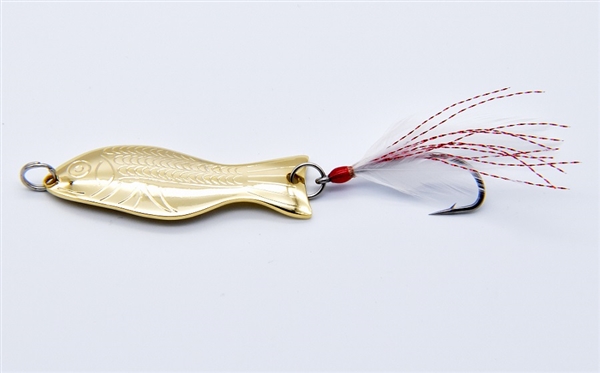
The Saltwater Goldfish has a 1/2 to 1-1/4 ounce weight choice and comes with a tough saltwater hook to match. Cast it, Troll it, Jig it. Deadly on a moving tide over emerging grass beds and harbor entrance sand bars for Pompano and Speckled Trout. 

By Dave Barus

Some of the best lures made for fishing were invented long ago and were made in America, too.  In 1952, in a small town near Eliot, Maine, a prototype spoon lure known as Stuart’s Goldfish hit the angler market big time, selling nearly one-million lures a year way back then.  Inventor Al Stuart renamed his flagship lure, Al’s Goldfish, and the company became Al’s Goldfish Lure Company in 1954.  Along the way, other Al Stuart lures became angler-famous, including the “Forty-Niner” and the “Helgy.”

The Forty Niner is a good casting lure and doubles as a trolling lure. The flatfish-style head creates vibration and flutter as the flat face helps it dive. Check out the videos posted Al’s Goldfish website product page of how this lure swims, and you’ll see why fish strike.

Using Al’s Goldfish lures in a recent fishing contest on Lake Tanneycomo in Branson, MO., I was lucky enough to win the event. I was fishing between two seasoned pro’s, Bass pro-Jimmy Zaleski from Parsons, KS., and Charter  Captain Mike Schoonveld from Lake Michigan. Proof positive once more time that these traditional lures are fish killers.

All of them are still Made-in-America!  Present-day owners Jeff and Mandy DeBuigne are admittedly “fish-heads” and want to share some of the famous good fortunes of catching fish with their fishing followers and customers.  They are celebrating the 70th anniversary of Al’s Goldfish Lure with a freebie contest open to everyone.

Al’s Goldfish Winter Promo Giveaway – To enter, simply go to Al’s Goldfish Lure Company Facebook page and click on the promotion or visit Al’s Goldfish Lure Company Giveaway.  When prompted, fill in your name and email address, and you are entered.  One entry per person.  Do it today!  All entries must be completed by midnight on December 15, 2022.  When prompted to join the Outdoor News America mailing list, additional entries can be made.  The lucky winner will be randomly drawn and notified via email.  Many of Al’s Goldfish products and lures are included in the prize package.

The “Classic” Goldfish lures represent a core selection of colors and patterns that are most popular with anglers.

Today the company still makes and markets the original Al’s Goldfish and much more.  These include tried and tested fish-catching lures, ice-fishing jigs, Sebago trolling rigs, bottom jigging rigs, and accessories.  Treble hook bonnets and other lure accessories were added to the company’s list of American-made products.  In 2015 the line was expanded to include the Saltwater Goldfish series.  For a complete look at Al’s Goldfish Lure Company’s entire line, visit https://www.alsgoldfish.com/ or call them at 413-543-1524.

Al’s Goldfish Lure Company PRIZE PACKAGE

The company’s American-Made core values will keep it strong and vital for this and the next generation of anglers.  Mandy DeBuigne says, “We value Jesus for our blessings and the example of unconditional love.  We value our veterans and active duty service members for our freedom and their sacrifice.  We value our friends and customers of all backgrounds, races, orientations, and abilities – we don’t care what you look like, where you came from, what your gender is, who you love, or what you can/can’t do – what matters is: Do you like to fish?  We are committed to making our products right here in the USA, which keeps Americans in our supply chain employed.  And we value an honest sale.  If your purchase fails beyond the normal wear and tear that happens to a product you are literally throwing as far away from yourself as it will go – to fish, let us know.  We will make it right.”

For more information on Al’s Goldfish Lure Company, visit www.alsgoldfish.com.

Al’s Goldfish Lure Company PRIZE PACKAGE – Al’s Goldfish Lure Company has teamed up with Outdoor News America and Wolf Premium Oils to put an excellent fishing package together for anyone that likes to wet a line.  This giveaway package includes Al’s ice jigs, a trolling rig, a bag of hook bonnets, Kenny Kieser’s Christmas Kit filled with Al’s top freshwater spoons, Al’s Goldfish top Saltwater Series Goldfish lures, Al’s Goldfish Limited Edition 70th Anniversary Buck fillet knife, and a bottle of Wolf Premium Oil.  All combined, this “Al’s Goldfish Lure Company Winter Promo Giveaway” has a suggested retail value exceeding $250.

NYS Hunters are Safe, Responsible, and Respectful in the Big Game Woods – Season Opens Saturday – Nov. 19, 2022

  • Hunter Orange or Pink is required when hunting with a firearm in NYS NYS Hunting Accidents in 2021 are the LOWEST ON RECORD.
  • NYS Hunter Education information: Basic Rules of Hunter Safety.
  • Chautauqua County is among the highest deer harvest areas in NYS.
  • NYS Whitetail Deer are 100 percent CWD-FREE. More than 200,000 deer were harvested by hunters last year.
NYS whitetail deer are healthy and large. This bowhunter needed the help of a WNY Deer Search tracking dog, trained to find fallen deer in dense undergrowth. Gary Huber Photo

By Dave Barus

Other forms of wildlife are common on NYS State Forest lands, open to the public for hunting. James Monteleone photo

The NYS Southern Zone regular big game season (black bear and whitetail deer) will open on Saturday, Nov. 19.  Hunting is among the state’s most popular forms of wildlife recreation, drawing an estimated 600,000 hunters (resident and non-resident) afield each year.  NYSDEC Commissioner Basil Seggos is encouraging outdoor enthusiasts to respectfully share the woods and follow common-sense safety precautions this fall and winter. “With most public land across NYS open to multiple forms of recreation, from hiking and nature photography to hunting and trapping, visitors should be cautious, courteous, and responsible when sharing the woods to ensure a safe and enjoyable experience,” said Commissioner Seggos.” DEC encourages all visitors to review the safety guidelines for hunting and recreating in the woods before going afield and respectfully sharing the outdoors with others.”

Big game hunters using a firearm are required to wear hunter orange or pink. NYSDEC encourages non-hunters to wear blaze orange, blaze pink, or another bright color during fall and winter to be seen more easily and from greater distances. In addition, wearing bright colors makes it easier for Forest Rangers, Environmental Conservation Police Officers, and other rescue personnel to find lost, sick, or injured people afield.

Hunting is safe and economically significant, helping to manage wildlife populations and promote family traditions while fostering an understanding and respect for the environment. Hikers should know they may encounter hunters bearing firearms or archery equipment on trails. Hunters should recognize that they may meet hikers and others enjoying the outdoors. Hunting-related shooting incidents involving non-hunters are extremely rare. The 2021 hunting seasons in New York were the safest ever, with the lowest number of incidents since record-keeping began.

Extremely large deer in western NYS counties are often found in the most dense areas of a locale. Hunters are encouraged to use caution when using a firearm in these locations. James Monteleone photo.

Hunters can minimize the potential for disturbance by and to other forms of recreation by following a few tips. Before a season opens, when hunters are scouting for the perfect spot or stand location, take the time to check if the planned location is popular. Avoiding places that crowd other hunters or near a sought-out hiking spot can improve the hunting and recreational experience. If a preferred hunting spot is too crowded, identify an alternative location ahead of time.

State Forests in Chautauqua County, in southwest NYS, provide forage for game and space for hunters. These include North Harmony State ForestBoutwell Hill State ForestMt. Pleasant State Forest, and Panama State Forest.  

DEC maintains hiking, biking, skiing, and snowmobile trails in Forest Preserve lands in the Adirondack and Catskill parks and in State Forests, Wildlife Management Areas, and Unique Areas open to hunting. DEC launched the ‘Love Our New York Lands’ campaign to encourage visitors to State-owned and managed lands to practice responsible recreation. Love Our New York Lands bolsters ongoing NYS and partner-led efforts to educate the public about how to responsibly enjoy outdoor recreation on public lands without negatively impacting natural resources.

Find recreation options by visiting DEC’s Trails Less Traveled or checking out DECinfo Locator. Many trails are accessible to people with disabilities. Check out DEC’s YouTube playlist, with tips for planning and preparing for a hike: Hiking Essentials, and DEC’s Hunter Education playlist for hunter information Basic Rules of Hunter Safety.

The hunting day begins 30 minutes before sunrise and ends each day 30 minutes after sunset. While legal to hunt in the dim light of these periods, hunters are encouraged to be vigilant of their aim, their shot, and beyond their shot. 

NOTE: IF YOU LOST YOUR DEER Click here. Deer Search of WNY Inc. offers trained blood-tracking dogs for the humane recovery of wounded, dead or injured big game.

How to Choose the Perfect Fly Rod

  • Find the Perfect Fly Rod FOR YOU.
  • FISH SPECIES – a big factor in determining Fly Rod Selection.
  • Rod Length, Line Weight, and Rod Action are among the CRITICAL CHOICE FACTORS.
By Lacy Jo Jumper

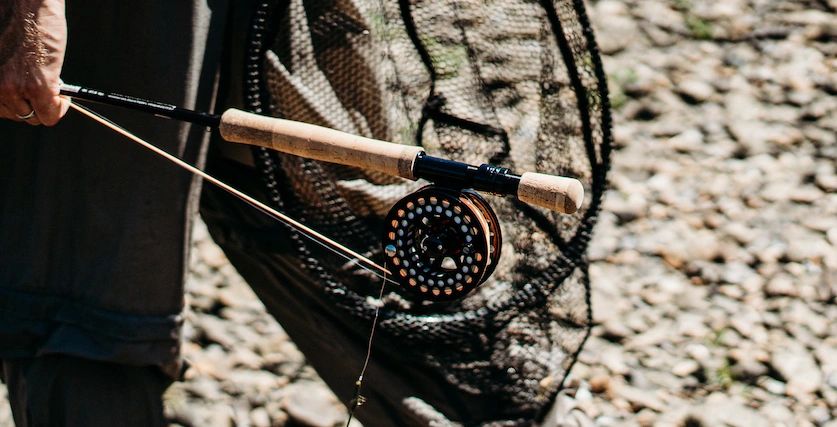
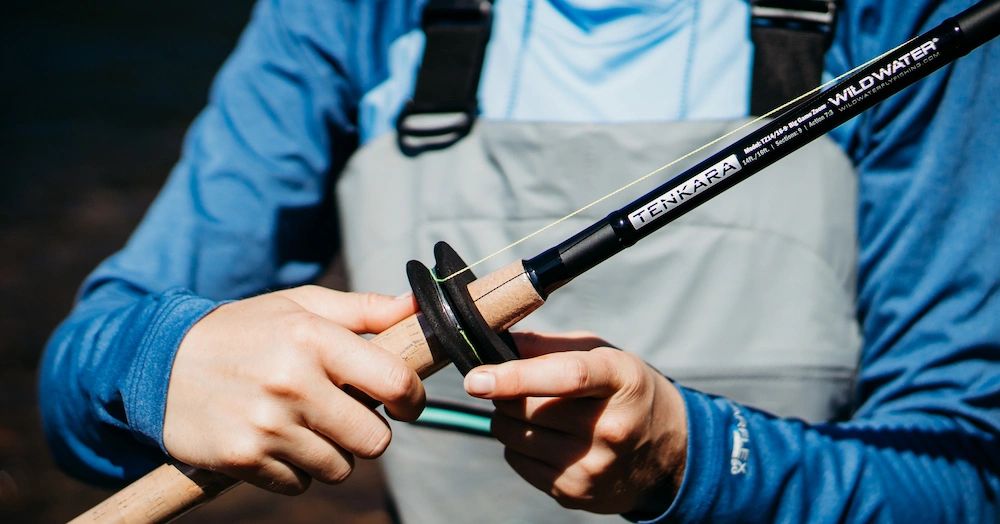
A thoughtfully-selected fly rod can make or break the on-the-water experience, and knowing which type you need isn’t always as straightforward as it seems. Fly rods vary in weight, length, and action, and when it comes to choosing the right fly fishing rod, it all boils down to where you are fishing and the type of fish you’re targeting. So, which fly rod is perfect for you? Whether you’re a beginner or a seasoned fly fisherman, Wild Water Fly Fishing will help you explore the different types of fly fishing rods that are available and can provide everything you need to know for a successful day on the water.

Fly fishing is a sport of personal preference and style. Choose a versatile fly rod that suits the environment – both the water and its surroundings – that you’ll fish the most. Don’t be surprised if a rod serves you well one day and not the next, as locations and fishing conditions change. When selecting a fly rod, it is important to take line weight, rod length, and rod action into consideration. These variables are the distinguishing factors among fly rods, and next, we’ll explore each of these variables in-depth.

Line Weight

First things first: What are you hoping to catch? The size of the fish, as well as the type of water body it inhabits, will determine the weight of your fly rod. As a general rule of thumb: The larger the fish and the rougher the water, the heavier the line should be.

If you’re fishing for large trout or smallmouth bass, you’ll most likely find yourself wading and fishing in small to medium-sized rivers, streams, and potentially lakes. Targeting these types of fish will require a 7 or 8-weight fly rod. When up against largemouth bass, carp, or salmon in lakes, large rivers, open freshwater, or inshore saltwater, you’ll need to up the ante as far as fly rod length and line weight are concerned, in which case you’ll want a 10-weight line.

Lighter rods lend better to creeks, small rivers, and gentler lakes. The higher the river or lake intensity, the heavier your rod should be. Saltwater species also tend to be stronger and faster than freshwater fish. They fight longer, requiring a heavier line weight and a heavier fly rod that can duke it out with these fish.

Rod Length

Fly fishing rods can range from very short (around 6 feet) to very long (12 to 14 feet.) There are advantages and disadvantages to each. A long rod provides extra reach for roll casting and covering more water. They’re also better for mending, drifting, steering, and lifting fish through long drifts. They’re ideal for medium-sized rivers and lakes. Long rods require extra space for casting. If there are a lot of trees, brush, or other obstacles, a shorter rod may work better. Short rods are best when you’re targeting smaller fish or fishing in smaller streams. They’re also great for children to use as they learn. As a child develops their skills and grows taller in height, they can eventually work their way up to a longer rod. If you’re looking for a middle-of-the-road rod or a rod that is highly recommended, start with a 9-foot rod.

Rod Action

Now that we’ve discussed rod length and line weight, next we’ll explore the different kinds of rod action. Rod action refers to a rod’s ability to bend under pressure and revert back to its natural shape. The tip section of any rod will always have the most flex. Anglers with more advanced casting skills can cast further and in windier conditions with a fast-action rod. These rods typically bend ½ or ⅔ towards the tip. Fast-action rods also have the stiffness required to forcefully land heavier fish.

Wild Water recommends starting with a medium-fast action fly rod to help learn casting. This rod isn’t too soft or fast and will still be useful and give great casting performance once you learn fly fishing. We also recommend a 9-foot rod unless you have a specific type of fly fishing you want to do. A medium-fast action rod will bend deeply to half its length with minimal line in use. This type of rod is universally suitable for most fly fishing methods.

Are You Ready to Fly Fish?

When choosing the right fly fishing rod, keep in mind that you won’t use that same fly rod for the entirety of your career.

Fly anglers will build their fly rod collections over time. It’s common to go between rods, depending on where you’re fishing, what you’re targeting, and how you’re casting, on any given day or time of year. As you become more confident and experienced, your preferences will most likely change as you try different rod lengths, actions, and line weights.

For more fly fishing tips, stay tuned to Wild Water Fly Fishing’s blog or check out our learning pages!

About Wild Water Fly FishingWild Water Fly Fishing represents a dedication to bringing friends and family together by providing everything you’ll need to gear up for a trip to the lake. If you’re a parent or grandparent wanting to nurture a kid’s interest in fly fishing, Wild Water provides the best tools to make your fly fishing trip an unforgettable experience. Wild Water Fly Fishing is the only company to focus exclusively on affordable, easy-to-use fly fishing starter packages for all species of fish. Learn more about Wild Water Fishing by visiting us at https://www.wildwaterflyfishing.com/.

Life Lessons from the Natural World

  • Early lessons in life help shape the future of our young people. Teachers can help. 
  • My students taught me that nature and conservation are important in today’s world.
  • The students brought in venison, rabbit, squirrel, and pheasant – suddenly, the world was a better place.
I learned that when we allow students to have a voice in the classroom about nature, the whole world learns to be a better place. My students learned to help each other. Forrest Fisher photo

By Bob Holzhei

I was fortunate to grow up on a family farm in the 1950s, in the outdoors.  I learned many lessons early in life that shaped my future.

Daily chores included sweeping the grain elevator and shoveling oats, wheat, or navy beans into the “pit” where the grain was transferred upstairs into grain bins for storage.

The first lesson I learned was to work up to my dad’s expectations.  If I fell short, there was no supper provided that evening.  True fact.

Books by the author provide a trail to discovering new, life-changing energy and a path to coaching others in a new role. Forrest Fisher photo

It only took one lesson to teach me.

My father was neither mean nor cruel, simply clear of his expectations.  That lesson would shape my future and lead to my graduation from Michigan State University with a bachelor’s and master’s degree.  I became a teacher.

I student taught at St. Johns High School and was eventually offered a teaching position, retiring following 37 years of service there.

Over those years, I learned there are two kinds of smart: book smart and hands-on smart.

The book smart folks went to college while the hands-on smart folks excelled in various skilled trades.  Both types of “smart” are essential, more now than ever!

I taught two classes of hands-on smart students.  I discovered early as a teacher that one needed to meet each student where they were in life to move them ahead.

Each year after meeting a new class, the students would learn to call me “Uncle Bob.” A student asked me, “Hey, Uncle Bob, can we have a wild game after-school dinner feast if we all get our school work in?”

“You bet,” was my reply.

One message I learned was that overcoming adversity leads to realizing new inspiration and linking to new goals. It’s not about fiction – but it is as fragile as a glass in the wind. We must work to keep our goals in front. Forrest Fisher photo

Over those years, the entourage of students taught me a vital teacher lesson.  Instead of prodding the class to get work in, I had the students that finished their work early help those who lagged behind.

The classroom became a dynamic hands-on experience.

The day of the wild game meal arrived, and I had reserved the home economics room to hold the celebration.  The students brought in venison, rabbit, squirrel, and pheasant.  Suddenly, my principal arrived and asked, “How in the hell can you justify this?  I want to see you in my office after school!”

I humbly whispered to him, “Real easy, look over there at that table.  See the boy eating off the other students’ plate?  He didn’t have breakfast this morning and can’t afford to buy a school lunch.”

Still, the principal left the home economics room very angry.

The principal learned that the sweet-smelling aroma from perfectly cooked rabbits, squirrels, and deer can bring folks together to appreciate each other and nature. Forrest Fisher photo

After school, I went to the principal’s office.

“You wanted to see me,” I stated.

“Not anymore.  I don’t know what you do to motivate those losers; just keep doing it.”

I followed with a response.  “Shame on you!  Every student deserves to have an equal opportunity for a good education.  To only focus on the book smart kids whose parents own businesses in town is wrong!”

Another lesson learned from my students!

Wild game food provided a pathway to celebrate accomplishment among my students, leading the way to a much-improved classroom life for everyone.  The principal learned that the sweet-smelling aroma from perfectly cooked rabbits, squirrels, and deer can bring folks together to appreciate each other and nature.

Life lessons have extended to a well-deserved destination when the classroom and conservation come together.

Editor Note – About the Author: Robert E. Holzhei is an inspirational factual and fictional author, he has published more than 425 outdoor travel stories and several motivsational books, including The Mountains Shall Depart (2017), The Hills Shall Be Removed (2018), Canadian Fly-In Fishing Adventure (1993), and Alaskan Spirit Journey (1999). He is the recipient of five national writing awards from the Association of Great Lakes Outdoor Writers (AGLOW), including 1st Place in the Best of Best Newspaper Story, and multiple additional awards for writing (including three presidential awards). He has also been recognized by the Michigan Education Association, the Michigan Outdoor Writers Association and the Michigan Interscholastic Press Association. His books can be found for purchase on Amazon.


When Technology and Purpose meet Steelhead Angler Passion…at G. Loomis

  • Loomis unveils new Steelhead Rod offerings with IMX-PRO STEELHEAD Series.
  • Blending different modulus materials was one key to dynamic rod development.
  • Light in weight, sensitive, durable, affordable, warranty protection.
Lake Erie tributary streams in Chautauqua County, NY, offer easy angler access to big stream fish. Matt Nardolillo photo

By Forrest Fisher

If you’re among the lucky ones chasing chrome in a Great Lakes or ocean-bound tributary stream, you already know that we anglers are only as good as our tools. Rod, reel and line are among these. Having the right rod in hand provides distinct advantages. At the ICAST 2022 new product show, G. Loomis introduced the IMX-PRO STEELHEAD rod. Loaded with technology and purpose, this new tool will enable anglers to maximize their effectiveness on the water with exacting standards.

Steelhead fishing isn’t a pastime for most steelhead anglers. It’s an obsession. Forged from experience, passion, and often a healthy pinch of optimism, hardened steelhead anglers in the Great Lakes Region often slog through extreme weather swings from autumn through winter and into spring, when the fish are in those tribs. As you might expect, no two steelhead streams fish the same, as each tributary can require a unique application of tactics, techniques, and specialized tackle to slide the odds of fish-catching into the angler’s favor. The rod is perhaps the most important tool in collecting steelhead-catching tools.

Steelhead anglers find the new IMX-PRO STEELHEAD rods offer ease of handling and improved sensitivity on the water. The rod series is offered in multiple stream gear options, including center-pin rods. 

The new IMX-PRO STEELHEAD is a collection of cast, spin, float, and center-pin action options built to meet the exacting requirements of modern steelhead fishing. The Loomis technology exclusive multi-taper design yields a lightweight library of steelhead-specific rods with precisely-defined lengths, powers, and actions that strike the perfect balance between durability and performance. With MSRPs of $365 to $635, this rod series provides anglers with the specific tools needed to secure success on the water.

IMX-PRO STEELHEAD fishing rod features:

  • Multi-Taper Design
  • Fuji Alconite Guides
  • Premium Cork Handles
  • Fuji Reel Seats
  • Handcrafted in Woodland, Washington, USA
  • Limited Lifetime Warranty

About G. Loomis: We exist to heighten angler experience through creating tools that expand tactical opportunity, boost effectiveness, and enhance natural ability. We develop solutions for experienced hands designed to complement capability. We strive to expand what’s possible to achieve the unattainable. Our DNA is comprised of three equal parts: Technology, Innovation, and Design. Since 1982, we’ve contributed innovative materials and manufacturing technology to the angling community. Examples include early graphite construction, advanced guide trains, Multi-Taper Design and advanced resin systems. Visit https://www.gloomis.com/.

Thank you to our Military Heroes…with Lee Greenwood

Please click on the picture above to hear Lee Greenwood sing a tribute to America.

By David Gray

I grew up in a place that had many heroes.

That place was the United States of America.

During the time that I grew up, we did not need the news channels to tell us who our heroes should be.

Though true heroes were pointed out to us so we would see them.

We learned about the actions that made them heroes.

Mom, dad, teachers, ministers and friends, all drew our attention to people who were heroes.

I learned that heroes are people who give of themselves when required.

I learned many live a very simple life, but often, their lives are a life of example and caring.

Heroes always give of themselves.

They serve others in whatever they do.

We have heroes today, but it seems we do not thank our heroes as much as we once did.

This writer citizen, and hundreds of Vietnam Veterans, want to thank Congresswomen Vicky Hartzler for organizing the 2022 Vietnam Veterans Recognition Event in Jefferson City, Missouri. A special thank you to those who served and are serving.

During the editing of this video, several veterans viewed it and many had tears in their eyes before it was over. One said the video was so patriotic and honest.  I know, and you probably know, more Vets that would enjoy watching this video and would share and pass it along to other veterans. Please do.

From all of us, a hearty thank you to our many military veteran heroes, you’ll see many of them in this video.

GOD BLESS ALL WHO SERVED and GOD BLESS AMERICA.

Handicapped Life in the Outdoors…WITHOUT Barriers

  • A place designed for individuals with physical disabilities and their families. Big fish are waiting to greet you!
  • Located on beautiful Lake Shebandowan about 50 miles west of Thunder Bay, Ontario, the newly modernized Wilderness Discovery Centre provides outdoor adventure for disabled persons. It’s all about sharing access to the wilderness with them.
  • Visitors can enjoy a 3-season lakefront resort with modern accessibility.  Donations are welcome.
  • Bed lifts, ramp systems, aquatic lift render, grab bars, and additional assistance technology devices are used here.
  • The facility also caters to seniors, military veterans, first responders, non-profit groups, corporate retreats, non-profit groups, families for reunions, and social gatherings.

By Forrest Fisher

With songful loons sounding off at sunrise, the call of a warm breakfast in the Canadian wilds beckons to all. Especially to folks that may require assistance to enjoy a lakeside resort. Visitors to one special place called the Wilderness Discovery Center can now enjoy pontoon boat rides, accessible swimming facilities, dock fishing, lake fishing, and a warm bonfire at the sunset hour right before bedtime.

There are laughs for the fun of it, all from the heart and soul of dedicated camp administrators. The Wilderness Discovery Centre provides active participation to include everyone, regardless of disability and assures an ultimate, safe, outdoor, vacation-style experience. The discovery of “no barriers” is special all by itself.   

At the Wilderness Discovery Centre, visitors are encouraged to enjoy the unique outdoor adventure found here, by staff who maintain the principles of personal independence, dignity, integration, and equal opportunity for everyone. The staff strives to create a no-pressure camping and outdoor experience that affords all guests a “Life without Barriers.” That’s the goal of Mr. Bob Hookham, the President of the Board of Directors of Wilderness Discovery Centre (WDC), and the rest of the Board, since the facility began re-opening in 2019. 

Bob says, “The staff is fun and works to provide a fully accessible family resort that promotes a secure and barrier-free camping experience. Everyone will have fun and enjoy their time together. They work hard to engage the community in a way that fosters these values.”

Bob Hookham

Bob adds, “As able-bodied people, we take many things for granted: Fishing, swimming, having a bonfire, or even just a BBQ. This facility will allow anyone with any kind of disability to do all those things every day of their stay. We have a special pontoon boat designed with wheelchair access so that anyone can go for a lake cruise or go fishing. There will be a lift to lower individuals into the lake for a swim or a boat ride in a fishing boat. Every camper can navigate the camp using the ramp system from their cottage or the main lodge to the beach and bonfire area. They can enjoy these simple pleasures. Life here will afford our guests a ‘Life without Limits.” For the Board of Directors, dedicated volunteers, and committed carpenters, it has been a long and winding road to revamp the facility. Discover an information capsule on the history of this facility at the end of this article.  

By July of 2019, Wilderness Discovery added the final touches to cabins. In a report from TBN News Watch (www.tbnewswatch.com), Bob Hookham estimated the cost for repairs was around $1 million. Today, reservations are open for 2022. Additional revamping and expansion will likely continue with help from local support groups such as the Rotary House in Thunder Bay and many others across Canada and the USA. If you would like to help, please visit https://www.wildernessdiscovery.net/donate/.

The modernized cabins feature an open concept living room, brand new sliding door entryways, sliding glass doors leading to the sun deck with access to a meadow of colorful dandelions. The cabins feature a fully accessible L-design kitchen and 3-piece bathroom with shower stall, dining room, and entertainment area. The cabins are completely furnished, including a fully-equipped kitchen (dishes and cutlery, countertop stove, microwave, pots, pans, toaster oven, coffee maker, dish towels and cleaning supplies), essential bedding and towels (pillow, sheets, blanket, bath/wash towel), fireplace and window air conditioning, a large wrap-around deck with tables/chairs, TV’s and DVD player, with Wi-Fi access in the Main Lodge. Hard to beat all that! To book a reservation, please visit https://www.wildernessdiscovery.net/rooms-cabins/ or call 807-346-9722, or email info@wdcentre.net.

Is there good fishing in Lake Shebandowan? YES! It’s home to big walleye, smallmouth bass and northern pike. Anglers Edge fishermen stars James Lindner and Dave Csanda did a colorful and informative fishing show from the lake. This heartwarming angler duo shares a video presentation where viewers can learn finite details to locate fish in Lake Shebandowan. Lindner uses a Humminbird sonar with a MinnKota Ulterra electric motor, using spot-lock and speed control to demonstrate finding the strike zone while incorporating speed dynamics and position location control to refine angler presentations. The show illustrates how they bring Lake Shebandowan whopper fish to the boat. Lures that imitate whitefish and tullibee are the main forage base.

I plan a donation to the Wilderness Discovery Centre, and I want to visit and fish there soon! Please join me with a donation.


HISTORY: The history of this Centre has always been about helping others. In 1951, the land was deeded by the Carson and Cross families to the YM-YWCA as a summer camp for youth. By the early 1980s, Handicapped Action Group, Inc. (HAGI), had a dream of expanding this camp into a facility that would allow persons with disabilities and their families to enjoy life at the lake. In August 1983, HAGI entered into a 20-year lease to develop the HAGI camp. In 1993-1994, the lease was amended and expired in 2013, followed by yearly extensions until the fall of 2015. In July of 2015, Bob Hookham of the Fort William Rotary and Jeff Jones of the Hill City Kinsmen met with Minister Bill Mauro to discuss the possibility of assisting HAGI to maintain the operation of this facility at Lake Shebandowan. In April 2015, HAGI announced that they would be forced to stop operating the facility unless there was a significant change in the financial picture concerning the facility. In February 2017, negotiations culminated in an official announcement from Minister Bill Mauro regarding a new management group. On April 7, 2017, Wilderness Discovery received its Letters Patent as a Non-Profit Corporation with representatives on its Board of Directors from the Thunder Bay Rotary Clubs, Hill City Kinsmen, HAGI, and the Shebandowan Lake Campers’ Association. In July of 2017, the Corporation and the Ministries signed an Agreement of Purchase and Sale for the Lake Shebandowan Property. Since August 11, 2017, the Wilderness Discovery Centre officially took possession of the Lake Shebandowan facility that HAGI previously operated. Immediate upgrades have been in progress since that time.  

Editor note: All photographs are courtesy of the Wilderness Adventure Centre.

An Outdoor Paradise for All Seasons

Summer or Winter, there is one place to add to your Bucket List!

  • In Winter, the Switzerland Alpines can be found in Gaylord, Michigan – snowshoeing, snowmobiling, cross-country skiing, and river rafting peace and quiet
  • In Summer, relax and unwind with camping, hiking, biking, swimming, fishing, boating, kayaking, surf-boarding, wake-boarding…the list is long!
  • All year round, enjoy the forests, fields, the peace of sinkhole lakes, rivers and creeks –  all offer adventure and opportunity
During the winter season, scenic rivers offer the adventure experience of a winter wonderland from a river drift boat.

By Larry Whiteley  

Are you thinking you would like to go somewhere this year where you can get away from all the politics, COVID and the division that’s going on in America? Do you want to go to a place where you can really enjoy all the great outdoors has to offer and not have to worry about any of that other stuff? No matter what season of the year you want to go, I have just the place for you.

When you get there you will feel like you are in an alpine village in Switzerland, but instead, you will be in the small town of Gaylord located in beautiful Northern Lower Michigan. Gaylord and the surrounding Otsego county area is an outdoor lover’s paradise. You can just relax and unwind from all that’s going on in the world or you can choose to enjoy a plethora of outdoor adventures.

If it’s water you seek for your adventure, Otsego County has over 90 inland lakes and the headwaters to five major rivers start here. The sinkhole lakes in the Pigeon River Country State Forest is also something you have to experience to believe. If you’re a fisherman, this is truly paradise. You can catch tiger Muskie, northern pike, walleye, yellow perch, largemouth bass, smallmouth bass, bluegill, rainbow trout, brown trout and brook trout just about any season of the year. Choose from open water, hard water or flowing water. Otsego Lake, the county’s largest lake, offers the opportunity to try and catch huge sturgeon which can grow to over 7-feet long and weigh up to 200-pounds. During winter Otsego Lake is known for its great ice fishing.

Depending on the season you can also enjoy canoeing, kayaking, boating, wakeboarding, wake surfing, water skiing, tubing, swimming or just relaxing on a sandy beach. There are plenty of rental places for whatever fun you want to try and several sporting goods stores where you can purchase your fishing license or anything else you might want for any season.

If hiking or biking is your passion there are 282 miles of trails in and around Gaylord for any age or skill level. The trails wind through meadows, along lakes and streams, and they climb the hills. When you get to the end of the trail, your reward is the view of the valley below. If you come to Gaylord in the spring, wild birds will be singing their songs, trees will be leafing out, and the mating song of peeper frogs fill the air. You’ll see butterflies fluttering around the wildflowers that include Trillium, Jack-in-the-Pulpit, Bloodroot, Marsh Marigolds, and many others are everywhere. Bring an empty sack with you just in case you find some delicious Morel mushrooms during your journey. You and your family might also be thrilled to see a baby rabbit, a young black bear or a newborn fawn.

The Gaylord area is also known for its enjoyably mild summers, so now you know it’s not too hot to be on one of those many trails in the area. Sunsets and sunrises are magical during this time of year. If you visit during the fall season, you will never forget it. This area is known as one of the best places in America to enjoy the beautiful fall foliage. A kaleidoscope of colors awaits you. Brilliant displays of red, orange and yellow are everywhere and if you are on the trails or on the water, these are among great places to enjoy the view. It’s also a fun time to visit the local farmer’s markets and pumpkin farms.

Come during the winter season and truly experience a winter wonderland. The trails now become fantastic for snowshoeing and cross country skiing. Snowmobiling is also a popular wintertime activity. If you come during the winter season you have to try rafting on the scenic Sturgeon River. It’s another adventure you do not want to miss. Your whole family would also love taking a sleigh ride. You can also enjoy downhill skiing, snowboarding and tubing at either Otsego Resort or Treetops Resort. Both also offer golf in the other seasons on renowned championship golf courses. There are 17 other golf courses in the county making it a mecca for golfers. If you enjoy camping there are lots of places to pitch a tent or park your RV. There’s also plenty of cabins, resorts, hotels, motels and even a dude ranch to choose from.

There are plenty of things to do between all your outdoor adventures. Gaylord has that small-town charm but still offers plenty of dining and shopping opportunities. While you’re shopping, be sure and purchase some of their famous and delicious chocolate-covered potato chips to take home with you. There’s also another trail you might like and it is right in Gaylord. It’s the Craft Tap and Beer trail leading to craft and micro-breweries throughout the town for your tasting pleasure. Don’t miss taking a trip to the city park to see the elk herd that the city takes care of for locals and visitors’ enjoyment. The Call of the Wild Museum is also a great place to visit. To really appreciate any place you travel to across America it makes it even more special if you know the history of the area so I also suggest you visit the Otsego County Historical Society.

If I have painted a good enough picture with my words to get you thinking you might just like to travel to Gaylord and Otsego County, then I encourage you to get on your computer and visit https://www.gaylordmichigan.net/. Watch the videos, enjoy the pictures, and read about all there is to see and do. My hope is you will pick a season and go experience this beautiful part of America. I am willing to bet you will love it so much you will return again to sample another season and then another season and then another season. Gaylord, Michigan, and Otsego County will stay with you forever in your memories. It is an outdoor paradise for all seasons.


Missouri Sports Hall of Fame will Honor a New Inductee

Larry Whiteley to be inducted into Missouri Sports Hall of Fame

  • Conservationist & Outdoor Journalist, U.S. Navy Veteran.
  • Host of the Great Ozark Outdoors from 1976 to the present.
  • Public Relations Manager for Bass Pro Shops for 23 years.

By Dave Barus

You might say that Larry Whiteley is a common and uncommon, outdoors Christian man. You would be correct, but there is so much more. He shares his life with others in a special way. With listening, honest caring and effective suggestions.

Larry Whiteley is a 1964 graduate of Nixa High School. A military veteran during our country’s time of need, he served in the U.S. Navy. Whiteley has hosted an outdoor broadcast show through The Great Ozarks Outdoors, Inc., his family corporation, since 1976. That includes 30 years for the award-winning Bass Pro Shops Outdoor World Radio, carried by more than 1,200 radio stations – including those as part of the American Armed Forces Radio Network.

He also was the Corporate Public Relations Manager for Bass Pro Shops for 23 years. Additionally, his voice was the one carried over every Bass Pro Shops store in America, as it welcomed customers, noted the latest sale and gave outdoor tips. He also was a crucial part of conservation and kid’s outdoor education programs.

To date, Whiteley has voiced more than 18,000 radio shows and written more than 5,000 articles communicating the great outdoors to people worldwide. He still writes for newspapers and magazines, including Hook & Barrel, Outdoor Guide, Show Me, CrappieNOW, ShareTheOutdoors.com, and Missouri Conservation Federation.

Whiteley, a winner of numerous awards through several outdoors associations, also is an inductee of the National Freshwater Fishing Hall of Fame. Through all this activity, Larry Whiteley, the gifted communicator that is everyone’s friend, has remained a humble man at every turn. Never looking for credit at any time, Larry is always encouraging others to step in and get going. With an ear-to-ear grin, he is a human spark plug for inspiring others.

Missouri Sports Hall of Fame CEO & Executive Director Jerald Andrews unveiled the Class of 2022 in early December. The inductees will be honored on Sunday, February 6 at the Ozark Empire Fairgrounds. A reception presented by Reliable Toyota will begin at 4 p.m. that day, with the evening program to follow at 5 p.m. Associate sponsors are Advertising Plus, Bryan Properties, Great Southern Bank, Hiland Dairy Foods and Hillyard, Inc.

Hats off, and hearty congratulations to Larry Whiteley!


A Lucky Little Boy

The dreams of a little boy begin with memories from fishing with his dad.

By Larry Whiteley

He sure is lucky, this 4-year old little boy asleep in his bed. He’s going fishing for the first time today. Mom promised him she and dad would take him if he kept his toys picked up. Even though some toys are just pushed under the bed or back in the closet, his room looks pretty good. His little basketball goal sits against a wall waiting for him to make another 6-pointer.  The bookcase is filled with books he likes dad or grandpa to read to him.  Mom can walk across the floor now without stepping on a Lego.

In the corner, near the door, sits his new fishing rod and reel. Dad got it for him. This is no Mickey Mouse outfit. He thinks it looks like the ones dad uses. Next to it sits his new tackle box. Dad took him to the outdoor store to buy it. He got to pick out the one he wanted. There are some red and white plastic bobbers, sinkers, hooks, and a fish stringer to put in it. Dad gave him some of his old lures. Plastic worms, frogs and lizards. He likes playing with them. There’s also a small toy or two tucked away in one of the compartments.

He is snuggled up to his favorite stuffed animal. A turtle named “Tucker”. Great-grandma got it for him. A few others are scattered around the bed. As he sleeps, there’s a smile on his face. He must be dreaming about going fishing. In his dream, he hears someone calling his name. He feels someone kissing him on the cheek. Through sleepy eyes, he sees mom. In his grogginess, he hears her say, “You better get up. It’s time to go fishing.” His eyes widen, and he reaches up and hugs her. Then the family dogs burst into the room; they jump on the bed and start licking him. Now he is really awake and ready to go fishing.

Mom sends him to the bathroom to do his morning big boy duties and brush his teeth. He rushes back to his room. She helps him get his “Daddy’s Fishing Buddy” t-shirt grandma got him. He puts on his “Born to Fish” cap great-grandpa sent him. He’s a lucky little boy to have so many people and dogs that love him.

Mom had breakfast ready, so the little boy and dad came in and sat down at the kitchen table. They all held hands, bowed their heads and dad thanked God for this special day and all their many blessings. It was sure hard to eat when you are a little boy and ready to go fishing.

They loaded the coolers, the snacks and the dogs in the truck and they were off on this great adventure. At least it was to a 4-year old. As dad drove, questions came from the little boy sitting in his car seat. How much farther, dad? Why do fish have fins? Did you get my fishing stuff? What color are fish? Dad patiently answered all the questions and smiled. Mom smiled too.

“I can see the water”, the little boy yelled as they drove across the bridge. Soon he was helping dad back the boat down the ramp. The boat motored away from the ramp with life jackets on all the occupants. Dogs too. They made a quick stop at the marina so dad could get some worms. Guess who had to go with him?  Back in the boat, they came out of the idle zone, and dad pushed the throttle forward. The look on the little boy’s face was priceless as the boat motor roared to life.

Dad had been on his college bass fishing team. He still fishes bass tournaments when he can. The boat has every kind of electronics imaginable. Dad works for the company that makes them. The little boy wanted to know about every one of them. This day was not a fishing tournament, though. It was all about a first fishing trip for a little boy. He idled down and drifted into a shaded cove. The lucky little boy got to see an eagle flying in the sky, a deer drinking at the water’s edge and a big heron fishing along the bank.

It was a great place to have a picnic lunch, play in the water and catch the first fish.

That was the only thing on the little boy’s mind after they anchored and tied up the boat. He was ready to go fishing. Dad tied a small sinker and a bobber to the line but no hook, and then showed him how to cast and then helped him cast. Then he let him try casting by himself. That was hard for a 4-year old. Dad told him he would help.

Dad and the little boy walked along the shoreline hand-in-hand. He carried his fishing pole and dad carried the tackle box and worms. Mom took pictures. The dogs came along too. Dad found a good spot and put a hook on his line and a worm on the hook. The little boy wanted to put the worm on. Dad told him to watch how he does it first and then when he’s bigger, he can do the same. He knows dad is smart, so he’s okay with that.

First fish!

Dad gets on his knees, puts his hands around his little boy’s hands and helps him cast the worm into the water. Mom said it was a great cast. They all smiled. She got a great picture. Dad told him to watch the bobber and when it went under, he would help him set the hook. Just as he said it, the bobber moved sideways and then started bobbing up and down.

Dad helped him set the hook but let him fight the little fish and reel it in. Mom was frantically taking pictures as the little boy reeled it up on the bank. Dad and he posed for pictures with the fish. Dad took out the hook to release it, but the little boy wanted to touch it first. With one finger, he did. The dogs came over and wanted to smell the fish.

Then he said goodbye as dad put it back in the water. He gave a high five to dad and mom and hugged the dogs. First fishing trip, first cast, first fish.

He wanted to fish some more, so dad put another worm on and cast it out again. Almost immediately, the bobber started moving toward deeper water, and the two fishermen set the hook. The little rod bent nearly double. Dad had to help him with this one. It took line off the reel. They would gain some of it back, and it would strip more line. Mom’s yelling and taking pictures at the same time. Dad was just hoping the line or the rod wouldn’t break. A determined look was on the little boy’s face as he and dad fought the fish. Dad told mom to get the dip net from the boat. She held it in the water as the little boy and his dad brought the fish to it. A good size largemouth. For a little fishing outfit and a little boy, it was a monster.

Two best friends for a little boy and his family.

They posed for pictures again, and dad beamed with pride. He would be sending that picture to all his bass fishing buddies and showing it off at work next week. Mom was already sending it to Grandparents and Great-grandparents. Two casts, two fish. Dad tried to explain to him it’s not always that easy. The little boy was so happy he didn’t care right now. He had caught a fish like dad catches. They watched it swim away.

Knowing that they would probably not catch another fish like that, dad talked him into playing in the water so he wouldn’t be disappointed if they didn’t. They all paddled around and played for a while. The dogs, too, and they got hungry. The little boy sat on dad’s lap eating, talking about the fish and yawning. They decided to pack up and go home. The little boy was asleep before the boat reached the loading ramp.

On the drive home, mom turned around and took pictures of a tired little fisherman with his “Born to Fish” cap tilted to one side. Two tired dogs were asleep on each side of him. He was probably dreaming fish dreams. He’s a lucky little boy.


Mulligans…In the Woods, On the Crik’s – Do it Again!

  • Mulligans can offer new and better opportunity for the next time.
  • Mulligans are do overs, but why not do the good things over too!
  • Keep the grins and giggles nearby, God wants us to share those too.
Family hunting trips can offer prime opportunity for Mulligan sharing.

By Larry Whiteley

Simply put, a mulligan is a “do-over” in the game of golf. Hit a bad shot? Take a mulligan and replay that stroke. Drop a ball on the spot from which you just played, and replay the shot. The bad shot is not counted. Our son Kelly loved to play miniature golf when he was younger. We still laugh when we talk about all the mulligans he wanted to take during a round of miniature golf with the family.

Don’t we wish we could take a mulligan for all the bad things that have happened in our lives? Don’t we wish we could replay things? Don’t we wish we could have a “do-over”? I would like to go back and take a mulligan on several things that have happened in my life. You can probably say the same.

I remember a fishing trip when my line broke on the biggest bass I had ever seen. It had to be at least a state record. I knew my line was getting old. I knew I needed to put fresh line on but didn’t – Mulligan!

Then there was the time I got into my deer stand, reached into my pack to get my bow release, and it wasn’t there. I knew I should have double-checked. I then had to sit there and watch three bucks bigger than anything I had ever taken with gun or bow walk right under my stand – Mulligan!

In a time long ago before digital cameras and smartphones, I was on a camping trip and the beautiful northern lights were dancing across the sky. I reached for my camera and started taking pictures of this beautiful sight. You guessed it. There was no film in the camera – Mulligan!

I needed a “do-over” on this Canadian fishing trip.

I would also like to take a mulligan for times I was too “busy” and my kids wanted to go fishing, or my wife wanted to go hiking or on a trip. Oh, believe me, there are many other things I have done that I would like to take a mulligan on. I am just thankful I have a God that forgives me for the mistakes I have made. The hardest part is forgiving myself. All we can do is try to live the rest of our life, so we don’t want or need to take a mulligan.

Believe it or not, there is a national holiday every year on October 17th called Mulligan Day. But, don’t wait until then. Mulligan Day can be any day. Whether it is a former relationship with a friend or loved one, an old hobby that you abandoned, or a past mistake that needs rectifying – you can take a mulligan.

Everyone deserves to have a second chance in life, right? And that is what mulligans are all about. If you don’t succeed at first, try and try again! After all, we aren’t perfect. There has only been one perfect man. We are going to make mistakes. We should not feel bad about doing something wrong. We should see it as an opportunity to learn and do it better the next time.

Aren’t second chances and sometimes even third chances good for everyone? Although we always want to do things correctly right away, immediate success is not always possible. In fact, it is very rare. We should embrace our human faults. Don’t simply admit failure and give up. Instead, take a deep breath, think about where you went wrong, learn from it, and try it again.

Go fishing with your grandkids over and over! Mulligans for the sake of sharing fun in the outdoors.

Mulligans help us to be more confident and accepting of ourselves. We can also use them to encourage other people too. When you see someone failing at something or struggling to get it right, give them encouragement, and offer them advice if they would like some. Imagine how much better a place the world would be if we all had this sort of attitude and helped others achieve their goals!

Take a mulligan and give yourself another chance to do something the right way that previously went wrong. After all, mulligans are about second chances and doing something again. Hey, God gives us mulligans all the time if we just ask Him.

You can also use mulligans as an opportunity to learn some new skills. Whether playing an instrument or learning to fish, use it as the catalyst to help you try out something new. You shouldn’t have any fear of failing or needing to do something, again and again, to get it right. After all, the struggle makes the achievement even more enjoyable at the end, and it is definitely better to try than not give it any sort of effort at all, right?

Here’s a great idea! If mulligans are “do-overs” for bad things that happened, why can’t we have “do-overs” for good things that happened in our lives? Deer camp with friends or family – Mulligan! A trip my wife and I made to Glacier National Park – Mulligan! Going fishing with my grandkids – Mulligan! Deer and turkey hunting with my son’s and grandkids – Mulligan! Time alone around a campfire – Mulligan! The list goes on.

Sometimes life gives you a second chance, or even two. Not always, but sometimes. It’s what you do with those second chances, those “do-overs,” that count – Mulligan!

Shark Tooth Hunting in the Peace River – Florida

Shark Teeth Anyone?! Ancient fossils that share a story of evolution.

  • Take a good cooler for food and beverages – protect yourself and friends from dehydration.
  • Gear includes a 15” x 24” gravel sifter, shovel and shark tooth collection jar.
  • Wear sneakers or beach shoes, pack a cell phone, emergency toilet paper, venom-extraction kit – and tell someone where you will be for the day. 


When carrying a sifting screen, shovel, sunscreen and food supplies, it was a VERY nice surprise to learn that our Grizzly cooler would float and was waterproof to internal storage!

By Forrest Fisher

Ever take a river-bound shark tooth hunting trip? It’s a treasure hunt adventure, but unlike any other hike you might ever take. Why? Because it’s a challenging hike – over logs, through cattails and swamp grass, through slimy mud, it’s a swim, and it’s a dig. It’s a sweaty workout, but it’s authentic deep south fun!  

A shovel used to spank the water surface to notify alligators and critters along the river that an apex predator is now on the scene, please go home. It works. We are rarely bothered.

There is something to be said for trusting one day of your life in sweltering Florida sunshine with a heat index of 109F, crossing a river with too much gear in hand, only to discover one special, sweet surprise. The beverages and food are ice cream cold in the cooler, and you learn that your GRIZZLY cooler is so durable and dry that you can drag it in the water – or use it as a float to take you safely downstream! It has an elastomeric seal to seal the exterior from the interior in a groove around the cover. Nothing outside gets in (including river water), and the cool ice stays inside, mostly un-melted, as we discovered. 

When I ordered the Grizzly 15, I looked for something not too big, but large enough to hold supplies stable and chilled for a one or two-day trip for two people, and light enough when fully loaded to be an easy carry. The Grizzly 15 is the perfect answer. At 12-pounds unloaded, it is lightweight and yet has a rugged, padded, adjustable shoulder strap that is actually comfortable. The rubber-like latches assure compartment integrity, and I found that the cover will not unsnap if you drop the cooler along the way on rocks or anything else. I liked that since I dropped the cooler about three times on our slippery hike through swamps and down the Peace River in Southwest Florida. We went in search of ancient fossilized shark teeth treasure. 

The worst part of the trip was discovering my wide-rimmed shovel weighed more than the cooler. The best part of the trip was finding out that the cooler would float high and dry when fully loaded for a day-long adventure. It made walking down the river easy! In bright orange color, it was also a potential life-saving color beacon. So on our short trip to this never-never land of Florida jungle with critters among us (a few snakes and gators), we found lunchtime security with our Grizzly. 

As we made our way in and out, we carried two gravel sifters, two shovels, a dry bag with our wallets, cell phones, a sidearm, a backpack, our cooler, shark teeth collection jars, a venom extraction kit, sunscreen, emergency toilet paper, a knife/plier tool, and we each had a Florida fossil collection permit from the Florida Program of Vertebrate Paleontology. Visit www.floridamuseum.ufl.edu/vertpaleo/home or call 353-273-1821 to obtain such a permit ($5 fee). 

Shoveling bottom material of sand/gravel into the sifting screen (1/4 inch mesh) allows identification of shark teeth…and lots of rocks too!

We collected over 1,500 shark teeth during our one-day trip. The teeth gods looked were favorable upon us! Finding where to dig for teeth involves walking the river and searching out the bottom with your feet for an area that offers a sand-gravel mix. A few shovel scoops and a quick sift will reveal if we should spend more or less time at that spot. It’s fun, it’s a workout, and it’s always an adventure. Tim Snyder is an expert at shark tooth hunting; he runs a business entitled Shark Art by Clark. You can find him on eBay or Etsy with prices so low that it amazes me (about $5 for 30 teeth, which can include a shark tooth necklace!). Snyder says, “All of my teeth for sale are real fossilized shark teeth. They mostly come from the Miocene Epoch (5 million to about 25 million years ago), and orders can include teeth from Hammerhead, Lemon, Tiger, Whaler sharks. Whaler sharks include Bull, Reef, Dusky, Black Tip and Whitetip sharks. Whaler shark teeth are difficult to identify as their teeth are very similar, but most people just call them Bull shark teeth. They’re all pretty cool looking.”

Placing your hand beneath the sifter will allow for easier finding of the shark teeth. Can you find the 2 in this picture?

Besides the pride we took in finding so many shark teeth, the other best part of the trip was using the Grizzly 15 cooler product.

Better yet, the cooler is made in the USA, and if it ever does break, it carries a lifetime warranty.

We thought that was pretty cool, too. Find them online at www.grizzlycoolers.com. We had filled it with six water bottles, four beers, two sandwiches, and two bags of chips—no dehydration or starvation in the day plan. 

We also carry a Sawyer Extractor Kit in the event we need it for a bee sting, wasp encounter, snake bite, spider bite, or the rest.

The kits are small in size, affordable (around $15), and can be used with one hand; no razor blade is needed.

Get out and enjoy the outdoors! 


These were about half of the shark teeth we discovered on this one trip to the Peace river near Zolfo Springs, Florida. Fun times!

A Talk with Dad

  • Was it the owls and crickets, or the stream flowing nearby…that brought dad back into mind?
  • The old days and the days of today, there was love in both places, but so different.
  • It’s something about campfire smoke in the morning at sunrise, it makes your eyes wanna cry.

By Larry Whiteley   

He woke up from a good night’s sleep and lay there in his tent, listening to owls hooting and crickets chirping. For some reason, he got to thinking about his Dad. “Haven’t done that in a long time,” he thought to himself. He slipped out of his sleeping bag, put on some clothes, and went out into the early morning.

There were still a few hot coals in the campfire, so he added some kindling, blew on the coals, and the fire came to life again. He gradually added bigger sticks until the fire was ready for his coffee pot on the grate. As he waited, he looked up to see stars still twinkling and listened to the sounds of flowing water in the nearby creek. He enjoyed his time alone in the outdoors, but he was beginning to miss his wife and family.

Maybe that’s why his Dad kept sneaking into his thoughts that morning. His Dad had been gone for many years, but there were things he needed to say to him and never had. It was a good time to do that. To tell him something that had been in his heart and mind for a long, long time. And, no one was around to think he was crazy talking to someone that wasn’t there.  

You know, Dad, I don’t remember you ever telling me you loved me. I don’t remember you ever putting your arms around me and hugging me. I’m sorry, but it’s hard for me to tell you I love you when I never heard or felt it from you. I realize now that your father never did that with you, so you didn’t know-how. That’s probably the way he grew up, so he didn’t know how either.

All I remember about Grandpa is he never smiled. He never seemed happy. I guess his Dad was probably that way, too, so not showing someone you loved them got passed down to you. I wish it had been different, but it wasn’t. Excuse me for a minute, smoke from this campfire must have got in my eyes.

I do remember the only time you took me fishing. You and my other Grandpa took me along to the river with you. But you never let me fish and never tried to show me how. I do remember getting in trouble for throwing rocks in the water. I also remember the turtle I hid from you because I was afraid if you found out I snuck it back home with me, I would get in trouble again.

That was when we lived with Grandma and Grandpa down on the farm. I don’t remember you doing much with me as I grew up there. You worked for the railroad and were gone a lot. Mom worked in town, and grandma was always busy helping with chores and cooking our meals. At least she would take the time to put her arms around me and kiss me on the head once in a while. I loved her smile. Grandpa had to milk the cows, feed the pigs, butcher the hogs, cut and put up the hay, fix what was broken, and a lot of other stuff, so he didn’t have much time for me either.

When I was young, I spent a lot of time by myself wandering the fields and forests around the farm. I remember pretending to be a soldier like you were. My imagination had me fighting the Germans. When I wasn’t fighting them, I was dodging arrows from the Indians and riding off on my horse. You weren’t around to see me doing that, Dad.

When I got old enough to help around the farm, I gathered the eggs for grandma and helped her pluck the chickens. Grandpa taught me how to milk the cows by hand and take a bucket to the spring to haul water back for grandma. He never said thanks, but at least I got a pat once in a while. That’s something I never got from you, Dad, but I know you were busy working. Wow, smoke’s getting in my eyes again.

Two things happened during that time that would eventually end up being a big part of my life. When I got my work done, Grandpa would let me use his old fishing rod, and I went off and taught myself how to fish. Later he let me use his old .22 rifle, and I became a hunter. The love I was seeking from you, I found in the great outdoors. 

Were you proud of me when I joined the military, Dad? I wrote you, but I don’t think I got any letters back. Guess you were too busy. I’ll be right back. This campfire smoke is nasty. Got to blow my nose and wipe my eyes.

O.K., where was I? Oh yeah, were you there when I got married? I don’t remember that either. Like you, I made mistakes too, and for that, I am deeply sorry. God forgave me, and I forgive you, Dad. 

My wife and I tell our kids and grandkids we love them, and we hug them. That’s important in today’s world. They have grown up fishing, hunting, camping, and in church. It has helped shape them into the good adults and young people they are. They have a lot of happy memories. Our kids have passed it on to their kids, and they too will pass it on to their kids and grandkids. You will be glad to know that the chain is broken. What a better world it would be if all kids grew up knowing that they are loved. It would be even better if kids grew up learning to enjoy God’s great outdoors and all it has to offer. It changes lives.

Well, I have to go now. My son and grandson will be here in a little while, and we’re going fishing. I’m glad we had this talk, Dad. I’ve been needing to do this for a long time. 

He finished his coffee, wiped his eyes one last time, smiled, and started getting his fishing stuff together.


Tracks in the Snow

  • Kids love the winter cold and sparkly snow!
  • Birds, squirrels, deer, mice and more…all tell a story of their journey.
  • The coffee tastes especially good on snowy mornings…a good time to share quiet time.


By Larry Whiteley

In the quietness of the early morning, he sat staring out the window at icicles hanging from the roof. The same white scene greeted his eyes as it had for several weeks now. He got up and went to the kitchen to pour another cup of coffee. The outside thermometer showed the temperature was in the single digits again as it had been for many mornings lately. At least it wasn’t windy and causing below zero wind chills.

He loves watching shows like “Alaska…The Last Frontier”, “Mountain Men,” “Life Below Zero,” and others. But this was southern Missouri, for goodness sakes. What happened to global warming?

As he stood there looking out the kitchen window, sipping his coffee and staring at the cold, he watched birds coming into the feeders. The woodpeckers pecked at the frozen suet cakes. That’s no problem for a woodpecker.  Other birds pecked around anywhere they could find a seed. They needed the food to warm their little bodies. Among the birds were more bluebirds than the man had ever seen at one time. Usually, he didn’t see them until spring, when they were ready to start nesting.

Suddenly all the birds scattered as a red-tailed hawk dove into the snow, trying to catch breakfast. He missed and flew away, probably thinking that catching a mouse would be easier. A friend had recently sent him a picture of a woodpecker frozen to a tree and another of a bluebird a friend of his had found frozen, but managed to nurse back to life. Winter is hard on those that have to live out in it every day.

The birds soon returned, and he made a mental note to put more bird feed out. He went back to his office. Most days in the past few weeks had been cloudy, dreary, and depressing. But, this day the sun was shining and the snow sparkled like millions of tiny diamonds scattered on top of it. His smartphone made a turkey sound, and he picked it up to see several pictures of some special kids from church playing in the snow. They all had big smiles on their faces. He and his wife had gifted them with their grandkids sleds several years ago, but there had never been enough snow to get out and have fun on them. Along with the pictures was a text from their Dad that said, “They love it!!!!” and the man smiled.

He and his wife had been watching out the windows lately at their little neighbor, buddy Hudson, out playing in the snow with Mom, Dad, and friends. Hudson also had one of their grandkid’s old sleds. He too was enjoying it, and so will his sister Lilly when she gets big enough. Adults were having as much fun as the kids. The man smiled again, thinking about it.

He looked out the window once more. In past days it had looked cold, cloudy and uninviting. With the sun shining and after watching the birds and thinking about the kids having so much fun, the snow suddenly seemed beautiful and inviting to him. He took his final sip of coffee, got up from his chair and started putting lots of clothes on. He figured if the Kilcher family from his favorite TV show could do it, and if those kids could get out in this kind of weather and have so much fun, he could get out and enjoy it too. After going through a pandemic during this past year, nothing seemed that hard anymore, anyway. He knew that this wouldn’t stop him from being out there in a treestand if it was deer season. He had even gone crappie fishing in this kind of weather. Besides, he had read somewhere that getting outside is good for your body and soul no matter what kind of weather.

A turkey sound went off again and he picked up his phone to read a text from a friend. Knowing that he loved watching Alaska TV shows so much, the friend had sent him a story about a lady in Alaska who went to the outhouse. When she sat down on the hole, a bear bit her on the butt. When her husband heard the screams and came running, a very stinky black bear came out from under the outhouse and ran off into the woods. Her husband successfully treated her wounds, and they will now have quite a story to tell their kids and grandkids. She probably won’t be showing her scars though.

Since the man didn’t have an outhouse and black bears should still be hibernating, he chuckled and finished putting his clothes on. After putting another log on the fire, he ventured out into this winter wonderland. The first thing he did was feed the birds and put out a little water for them since everything was frozen. He then started a fire in his fire pit, so he could warm up if he got too cold. Then, he reached in his pocket for his smartphone, clicked on the camera and started walking through the snow.

He was amazed at all the tracks he saw. There were many bird tracks around the feeders as well as tracks and a body print of a hawk who missed. Rabbit tracks led into the tall bushy grass and also under a storage building. Squirrel tracks could be seen in the snow clinging to the sides of trees, then across the snow to another tree and another. Near their tracks were holes where they were looking for acorns. The tiny tracks were probably field mice. Deer tracks were on the hill behind the house near where the garden is in the spring. Dog or coyote tracks were there also. Raccoon tracks were on the dirt road behind. Tracks of little kids and sled tracks were nearby.

As he walked down the plowed driveway to the front of his house, he noticed something strange in the front yard. There were places with tracks and some disturbed snow, but no tracks leading to or from them. Was it a mouse or a mole? Did a red-tailed hawk finally get a meal or two? Maybe it was aliens! The mystery may never be known.

He kept walking around, taking lots of beautiful pictures of the snow and the sun glittering off the icicles. He saw even more squirrel, rabbit, and deer tracks. The snow tracks were proof to him just how many wildlife critters also call this place home. You just never know what you will discover when you get outdoors away from the television and other electronics that steal so much of our time every day.

May some of the tracks you find in the snow be your own.

Niagara River/Lake Ontario Fish are NOT SOCIAL Distancing, THEY”RE ON THE BITE!

NIAGARA USA King Salmon bite BEGINS!

  • Shore fishing is VERY GOOD…spoons and spinners…bring a camera!
  • Niagara Falls USA Fishing Forecast for April 8, 2020, from Destination Niagara USA
  • Boat fishing is good for Kings, Lakers, Steelhead, the Big Bass are just starting up
Stephanie Pierleoni of Newfane went fishing with her husband, Capt. Vince Pierleoni, out of Olcott this week and reeled in this king salmon.

Social distancing is critical when it comes to fishing, both onshore and in a boat.

COVID-19 continues to expand across the state and slowing that curve is important and we are moving forward. We are fortunate in that our boat launch ramps are still open, and we have plenty of shore fishing options available to us. Please stay safe out there and use your head to limit the spread.

With hatchery fish stocking taking place both in the Great Lakes waters and inland waters, please take note that there are special distinctions between both areas. The Great Lakes waters include lakes Erie and Ontario and the tributaries up to the first impassible barrier (such as a dam). Trout and salmon that are stocked as fingerlings and yearlings follow a certain protocol – put, grow and take. They are not meant to be taken immediately after they are stocked in places like the Wilson or Olcott harbors.

Nancy Colavecchia of Niagara Falls caught her biggest bass ever in the upper Niagara River this week.

For the Lake Ontario basin, the minimum size for browns, rainbows, and Pacific salmon is 15 inches in length. Some people have been catching and keeping trout well under that size close to shore. There are certainly more regulations than just these (such as new rules in the tributaries for brown trout (1 per person) and rainbow/steelhead (1 per person with a minimum size of 25 inches) and it’s important to know them before you head out.

The big news is that there have finally been reports of smelt being taken in the lower Niagara River. While Lewiston Landing (the sand docks) didn’t produce anything, they did get some at Artpark, to the south, and from docks to the north. The best time was after 11 p.m.

Mike Rzucidlo of Niagara Falls with a dandy lower river brown trout he caught from shore using a No. 4 spinner.

Fishing in the lower river for trout continues to be good to very good depending on who you talk to. Steelhead, brown trout and lake trout are all being caught by anglers fishing from boat and shore. Water visibility is about 5-6 feet.  Spinners from shore are still producing trout in the gorge. Boaters are drifting minnows, egg sacs or running plugs like Kwikies or MagLips off three-way rigs. Bass are starting to turn on as the waters warm up both in the lower and upper rivers. It was around 45 degrees this week.  

Matt Tall of Wilson caught this 23-pound king salmon fishing with Capt. Tyler Morrison out of Wilson this week.

Some more exciting news is that the king salmon fishing has started to turn on in Lake Ontario.

Matt Tall of Wilson and Capt. Taz Morrison out of Wilson worked their lures in 30 to 80 feet of water to take some nice kings and lake trout. They caught kings to 25 pounds. Conditions change almost daily, says Tall, with things warming up so fast. They were running stickbaits and spoons mostly, working in 46 degrees surface temperature. The temperature doesn’t change much until you get out to 90 feet of water.

Mike Ziehm of Niagara Falls caught this big steelhead in the lower Niagara River this week from shore in the gorge area.

Lake trout are eating everything in sight. James DeGirolamo of Derby reports that they were fishing anywhere from 180 to 220 feet of water straight out from Olcott. They had meat rigs and spoons working, with trout and salmon hitting most everything, but spoons are the way to go.

Capt. Tyler Morrison of West End Charters shows off a 25-pound king salmon he caught this week out of Wilson.

Terry Swann of Wilson reports that bullheads are biting at the Wilson-Tuscarora Park boat launch and in the West Branch of 12-mile Creek. Worms and shrimp seem to be the bait of choice.

A few nice perch are showing up too. Pier action has been good for trout in both Wilson and Olcott. Spoons and spinners or live bait under a float work best.

Tributary action has slowed a bit and with the rains from last night and more is forecasted through Friday. It will probably muddy things up and create higher flows.

Stay safe out there.

Bill Hilts, Jr. – Outdoor Promotions Director

Inline image 2
Destination Niagara USA
10 Rainbow Blvd.
Niagara Falls, NY 14303
p: 1-877 FALLS US | 716-282-8992 x. 303
 

Conservation Pioneers, a Never-Ending Love Story

Bob and Barb Kipfer – medical professionals, parents, conservationists, heart-warming people – two lives well-lived through sharing.

By Larry Whiteley

From time to time in life, you meet people with hearts as big as the outdoors they love. It is hard for those who know these two unforgettable people, Bob and Barb Kipfer, to think of one without thinking of the other. They are husband and wife, but they are more than that. They are friends, they are a team, they are life partners in a life well-lived.

The first chapter in their book of life begins at Kansas University Medical Center. Bob was a medical student in his first year of patient care in the hospital wards. Barb had just arrived as a newly graduated nurse on her first job. During his daily classwork around the hospital, Bob took particular notice of Barb. One-day, Bob saw her going into a room where nurses went to dump bedpans. He followed her in, closed the door, and asked her out on a date. He thought he might get dumped-on too, but she said yes. They were married on September 4, 1965, and another chapter in their life had begun.

Two years later, Bob received his draft notice, then served with the infantry in Viet Nam as a battalion field surgeon. That meant he traveled into battle with the troops and worked in field hospitals in the battle zone. Barb continued nursing back in Kansas and caring for their newborn son, Mark, hoping Bob would make it back home. I am sure there were times when Bob wondered the same thing. Like most Viet Nam veterans, he doesn’t talk much about that time in his life. Needless to say, he did make it home to his family after his tour of duty ended. They settled down to somewhat normal life during four years of his residency at the Mayo clinic. Their family also grew with the birth of their daughter, Amy. Life was busy, life was good.

Bob, on right, during his tour in Vietnam on the field surgical team.

In 1973 Bob and Barb and the kids moved to Springfield, MO to start a new chapter in their lives. Bob practiced Gastroenterology and Internal Medicine at a local hospital. Barb began to teach at a school of nursing. They bought a home and moved into an urban neighborhood where they still live today. Their lives were busy, but they managed to find time to go fishing, canoeing, kayaking, and sailing on weekends. They played tennis. They traveled. They made lots of friends at work, in their neighborhood, and through social activities. One of those friends owned land with a cabin in the Ozark hills of southern Missouri, where Bob and Barb visited often, and they soon started looking for land of their own. That search led them to land with a clear-flowing creek running through a beautiful valley with forested hills and lots of wildlife. They fell in love with this special place, and another chapter was to be written.

Bob and Barb continued to work at their medical jobs during the week and stayed at their home in town. Unless they were traveling to places all over the world, visiting their kids and grandkids in other states, or going to social events, they were at their valley cabin on weekends.

Ten years after buying the property, Bob decided it was time for another chapter to be written. He had been working in medical administration, in addition to his medical practice, but having more fun on their property, he retired. He gave up tennis for a chainsaw and a tractor down in the valley. Barb waited two more years before retiring just to make sure Bob was house broke.

Retirement started another chapter to their story. During their time spent in the valley, they started working with the Missouri Department of Conservation to clear trees to bring back glades that were once there. They also worked with the department to plant trees for bank stabilization to protect the stream and their land. They even planted over 2,000 tree seedlings themselves for the same purpose. This all sparked their interest in conservation and fed their desire to conserve and protect this special place.

Barb provides an educational ecology tour for kids.

Their transformation from medical professionals to dedicated conservationists and conservation educators is an amazing chapter in their book of life. It’s about how their love for conservation grew and changed not just their lives but changed and touched the lives of so many others—more than they will ever know.

They became involved with the Springfield Plateau of Missouri Master Naturalists. Bob writes an informative blog for the group, Barb represents them on the Grow Native board. She leads educational tours of their urban yard in Springfield, where she has planted over 100 native plant species. She even made a video tour of what has been accomplished so far to be used for virtual education. Barb spends a lot of her time in the valley trying to rid their land of any kinds of invasive species or plants not native to the area. They have restored warm-season native grass fields and work at endangered species protection. They collect native butterflies, raise moths, volunteer at special events at the Butterfly House, and host mothing events at their property. A somewhat unique event.

They implemented a forest stewardship plan for their property, and it is now a certified Tree Farm. They were named State Tree Farmers of the Year in 2015 for all their work with timber stand improvements and even hosted a Missouri Tree Farm Conference.

Their land in the valley has grown to 400 acres and includes another cabin with their land additions. The valley and the house are used by college students for stream ecology studies. The Audubon Society has access to bird counts and education.  They have hosted Missouri Department of Conservation tours, a black bear study, Boy Scout activities, wildlife studies of plant and animal species, wild mushrooms studies, and field trips for groups studying plant and wildlife identification. Their land is open to other conservation-minded groups for retreats and ecology field trips, woodland management, and stream education.

Bob conducts a hands-on session sharing secrets of life in the outdoors for kids to learn more about conservation.

They were named the 2017 Conservationists of the Year by the Conservation Federation of Missouri. I would bet if you asked them what they have enjoyed doing most of all the things they have done, it would be their work with the public schools’ WOLF program. They teach fifth-graders in weekly classroom sessions and host kids in their valley for educational classes several times a year. Bob and Barb have profoundly impacted conservation in the lives of all the kids and people they have taught. The kids love them and will never forget Bob and Barb. This world could use more people like the Kipfer’s. Their impact on conservation has been immense.

One of these days, I hope in the far distant future, Bob and Barb will no longer be able to manage their land. When that time comes, they have donated it to Missouri State University under a protected agreement to sustain the valley’s natural ecology and use it to educate students who will be our future conservationists and conservation educators.

When Bob and Barb are gone, their ashes will be added to the old cemetery in the valley they loved. Their passion for conservation will continue through these students, the Wolf School kids, and all the other lives impacted by these two people. It will not be the final chapter of their book of life, though. Their story will go on through all the lives they have touched. Those people will pass on their passion for conservation. The Bob and Barb story will continue.

That makes this a never-ending story.

Remarkable Hunting – Lightning, Rain, one Old Barn and one Old Deer

  • As I sat there, I thought, “Deer hunting is about sunrises and sunsets, the wildlife that go about their daily routines not knowing you are there. It’s about all the memories you make with family and friends or alone in a barn.”

By Larry Whiteley

The rain stops. Through my binoculars, I see a buck by himself – he has a weird set of antlers. Then I think about next year.

The forecast for opening day of the firearms deer season was for rain with a chance of thunderstorms. My son was out of town, and my grandson was at college in Kansas. It wouldn’t be the same without them, so why not just stay home? Wait a minute, this is opening morning I’m talking about. A tradition for goodness sake. How many years in a row have I enjoyed this special day? I had to be out there even if I was going to be by myself. Even if it was raining.

The alarm jarred me from my sleep. I got the coffee pot going, brushed my teeth, did my duty, grabbed my hunting clothes and rifle, filled my thermos, and was out the door. I could see stars in the night sky, so maybe, just maybe, the weatherman was wrong. My truck came to a stop at the metal gate on the gravel road, and I got out to open it. No rain! I drove on down the road, crossed the creek, and pulled up to the old barn sitting majestically in the field.

My plan was to leave the truck there and hike across the field to a tree where my stand waited for me. I got out of the truck, thunder rumbled, and lightning cracked and lit up the dark sky. I was sure thankful I had gone to the bathroom before leaving home. My hair would have stood on end if I had any.

I quickly decided I did not want to walk across a field with the lightning while carrying a rifle to go sit in a metal treestand. Then the sprinkles started, the thunder and lightning continued, and I got back in my truck. As I sat there thinking about what to do, the sky lit up again, and it seemed like heaven opened. I swear I heard the angel chorus singing hallelujah and trumpets bugling. There before me was the answer that would save this day. I would deer hunt from the old barn hayloft. My son, grandson, and granddaughter had all taken deer from the old barn before, and so had I.

I jumped out of the truck, grabbed all my hunting stuff, and ran inside. Then I remembered I had a folding chair I used when hunting in blinds, it was still in the truck, so I ran back out to get it. The rain was getting heavier, but the old barn would keep me dry. It was still dark, so I was in no hurry to climb up in the barn loft. I looked around with wide eyes, and my headlight assured me there were no wild animals in the barn ready to attack me. I also made a mental note not to step in all the groundhog holes in the dirt floor.


The old barn was built over 100 years ago by a gentleman named Christopher Columbus Meadows. I remembered the old black and white picture the owner of this land had shown me of Christopher Columbus holding a horse by the reigns and standing next to the barn.

My headlight shines on, the big stacked rocks and hand hewn beams light up. These are the foundation on which the old barn has stood for over 100 years. I look at the ax marks on the wood, and I see, in my mind’s eye, Christopher chopping and shaping the log to become this foundation. I imagine him in the wooden wagon, pulled by the horse in the picture, going down to the creek to find the flat rocks for the beam to set on.

I look around at all the weathered wood that covers the old barn. There was no electricity in this valley when the barn was built and wouldn’t be for another 30 years or more. So how did they get this wood to build it? How has the wood lasted this long? There is no paint or sealant of any kind on it. Where did they get the old rusted hinges and nails? I will never know the answers.

My mind travels back in time, and I see the horse in the picture standing in a stall. I see corn stalks stacked in another area. Maybe this was where they milked the old cow. Is that daylight coming through the cracks? It sounds like the storm has let up. I better get up in the loft.

I climb the stairs that are just as sturdy as they were when they were built but step carefully around rotted boards on the loft floor. I set up in the big opening where they once brought hay up from below to be stored in the barn loft. My chair is comfortable. I pour a cup of coffee and stretch out my legs. This is a great way to hunt deer, even if it’s not raining.

I look around the old loft, still amazed at how they built the old barn this big and how it has stood this long. The owner tells me it’s home to barn swallows, field rats, mice, a pair of black vultures that come here to raise babies every year, and the groundhogs who made all the holes, these will probably be the biggest reason the barn comes down someday.

The rain stops. Through my binoculars, I see a buck by himself – he has a weird set of antlers. On the left, it is normal but only three points. On the right, it is short with two points and ugly. He slowly saunters across the field with his head down. I figure all the bucks have teased him about his weird rack, and the females don’t want anything to do with this ugly buck.

I think for a moment about putting him out of his misery and click off the safety. But then I think maybe next year when he grows back a new set of antlers, they will be prominent and handsome. Then the ladies will be attracted to him, and the bucks that made fun of him will regret it when he kicks their butt. I click on my safety.

Rain starts again. He will be the only deer I see this day, but that’s okay. I don’t know why we have to get older to realize that deer hunting is not just about getting a big buck you can put out on social media to brag about. Deer hunting is about sunrises and sunsets, the wildlife that go about their daily routines, not knowing you are there. It’s about all the memories you make with family and friends or alone in a barn.

This day will be added to my storehouse of memories. Before I get too old, and as long as it remains standing, I would like to have a few more days of deer hunting from the hayloft of the old barn.

4-PLAY for Christmas! …A Love Story

  • Woodsy turkey call sounds combine screech and scratch controls
  • Henry C. Gibson and Eric Steinmetz each provided sound innovations about 120 years apart
  • Tone and tune change in one box that allows clucking, purring, yelping and cackling is about pure genius 

By Larry Whiteley

Now some of you probably read that headline, and your mind drifted off to another kind of foreplay. However, this is not that kind of foreplay. This 4-Play is something that can get a turkey gobbler all excited to come looking for love.

Let me begin with how this kind of 4-Play started. You see, the first box-style turkey call was patented in 1897 by an Arkansas farmer and fence supply manager, Henry C. Gibson, of Dardanelle. Though there may have been box calls before his patent, Gibson sparked a new industry with many imitators creating box-type turkey calls.

For over 120 years, the turkey box call has never really changed much from the original wooden box and paddle design. Then along came avid turkey hunter Eric Steinmetz. Eric built his box calls for years and had terrific success with them. He even sold a few to local hunters. Eric couldn’t get the thought out of his mind about coming up with a call that was more versatile and more effective than the standard box call design. He would think about it as he drove down the road with his traveling sales job. When he was home and wasn’t turkey hunting, he was in his shop tinkering with different designs and wood types.

He finally came up with the idea of building one with a forward-mounted wheel that would allow the paddle to be moved to both sides of the box. That way, it could be used on any of four sound rails, each made with different wood types to have four different tones. Thus came the name for his call, the 4-Play. He also found that since the wheel allowed the lid to be moved forward and backward, he could strike the sound rails in multiple locations, adding to his box call versatility. The 4-Play is a turkey box call like no other you have ever seen or used.  

The U.S. Patent Office agreed that Eric’s box call was so innovative they awarded him a Utility Patent. 4-Play turkey calls are available with Cherry, Walnut, or mahogany bodies, and all have sound rails made of walnut, eastern red cedar, sassafras, and poplar. If you’re a turkey hunter, you have to have one of these. For more information, watch videos, read reviews, and order, visit https://4playturkeycall.com/shop. Or, give them a call at 610-984-4099. They would love to visit with you.

“It is a versatile call,” says Eric. “With a little practice, you can make an almost unlimited number of tones and pitches. I just want hunters to use it and then hopefully send us pictures of them and their Gobbler. That’s what would make me feel successful.”

Eric has since sold the 4-Play patent to Brian Benolken, but he is still involved with the business, working shows, building calls, and of course, turkey hunting. He’s even won several calling competitions with his 4-Play. Brian is busy growing the business under the name of Cutting Edge Game Calls, and his goal for the company is to offer you products for making you a better and more successful turkey hunter. Brian and Eric both are continuously thinking of new innovative ideas.

This old turkey hunter has never seen anything like it in all my years of turkey hunting, so I just had to have a 4-Play. I love it! I can’t believe all the sounds I can make with it. I’m clucking, purring, yelping, and even fly down cackling with it. I can’t wait until spring turkey season. My wife can’t either! Can you believe she banned me from the house and makes me take my 4-Play and practice out in the barn?
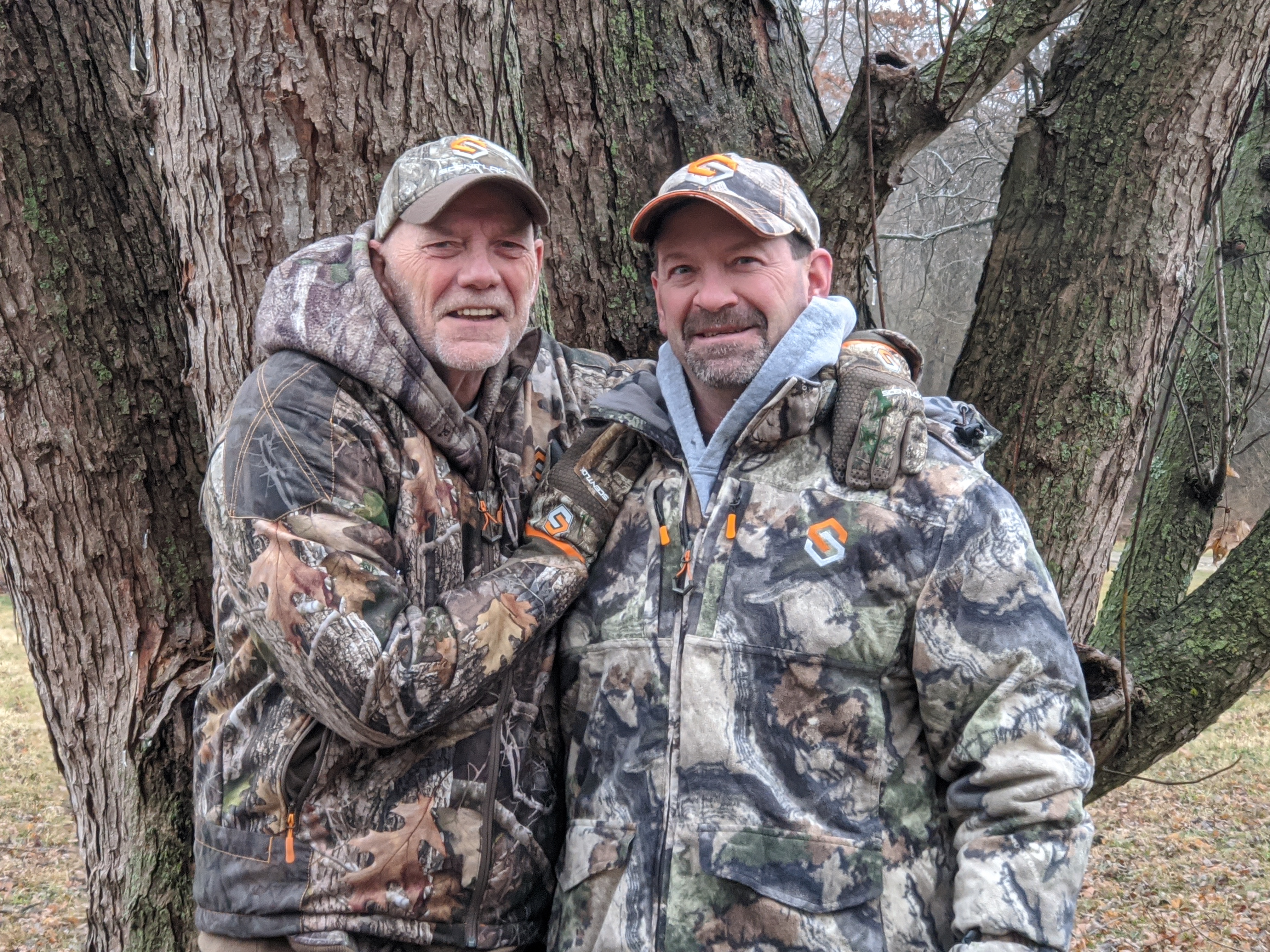
If you are a turkey hunter, you might try hinting to your wife or girlfriend that you would surely like to have 4-Play under the tree for Christmas. If they look at you like you’re weird or something, you might have to just order online or call Cutting Edge Game Calls to order one for yourself. But if they smile, this could be a very Merry Christmas in more ways than one.


The Old Man in the Mirror

Father and son hunting buddies that can say, "I love you Bub!" Molly Meyers photo

  • Hunting, fishing, frog-giggin’ and sucker -grabbin’
  • Freckles, frowns, wrinkles and specks of gray…is winter here?
  • Kids, grandkids, heartwarming memories…thank you Lord.  Pass it on.
Deer camp camaraderie and hunting family fun.


By Larry Whiteley

     He was up early getting ready to pick up his son to go deer hunting. He had brushed his teeth and was washing his face. He paused to look at himself in the mirror and saw an old man staring back at him.

The old man in the mirror…yes, that was me! Where has the time gone? 

     Maybe it was because his 74th birthday was on Christmas, and it would be here in a few more weeks. He stared at the old man in the mirror and saw wrinkles carved by frowns and smiles through the years of his life. He looked at the bags under his eyes. He saw his skin sagging down on both sides of his chin and looked like a turkey wattle hanging below. What little hair he saw was gray. The old man in the mirror was in the winter of his life.

     He pulled into his son’s driveway and smiled as he loaded his deer hunting stuff in the truck. He was proud of the husband and father, his son, had become. He moved over to let him drive. His old eyes didn’t see as well in the dark anymore. The interior light of the truck revealed specks of gray in his son’s hair. It was hard for him to believe that it wouldn’t be long until his son would be a grandpa for the first time. He was in the fall of his life.

     Not much was said as the truck traveled down the road to their hunting place. The son glanced over at his Dad. He realized that his Dad was getting older. He wondered how many more deer and turkey hunting trips they would have together. Dad was still very active and his health seemed good, but at his age, you never know.

     As he drove, his mind wandered to times when he was younger, and Dad took him rabbit hunting, squirrel hunting, and dove hunting. He thought of frog-gigging trips, fishing trips, and especially sucker-grabbin’. Camping and trout fishing was fun too. 

     He thought to himself how he needed to thank him for the time they had spent together in the outdoors and all the outdoor things he had done with his son and daughter when they were in the spring of their lives. This would be a good time to tell him how important all that was to him and them. They drove on in silence.

     The truck came to a stop, the older man got out to open the gate. The night sky was dark, but getting lighter. They had to hurry to get to their stands before the deer started moving. They wished each other good luck and started in opposite directions. The son stopped, turned around, and watched his Dad walking away until he disappeared into the dark.

     The older man got to his stand and started the climb up. It wasn’t as easy as it used to be. He settled into his stand, got everything ready, and sat in silence waiting. He thought about the old man in the mirror that morning and wondered how many more times he would be able to do this thing he loved so much. Right now, he still had the strength, the will and the desire, but he knew at his age, that could change at any time. He didn’t want to think about that anymore.

Were those deer looking back at me? On some days, it’s ok to let them walk by.  Joe Forma Photo

     The dark turned to light, and the wildlife started their day. Birds sang their songs, and crows talked to each other, and squirrels sounded like deer as they rustled about in the woods. He watched deer traveling through the frosted field below but out of range. 

     As the morning wore on, his thoughts turned to memories he had from being outdoors with his kids, grandkids, and friends in the summer and fall of his life. He even thought of a time when he was fishing and would look over to watch his wife reading a book. He wished there had been more time spent in the outdoors with his son and grandsons that lived in another state. Where had the time gone? It went so fast. He looked up to the sky and said thank you for blessing him and forgiving him.

     In another stand, in another place, his son sat waiting. He too, had seen and heard the wildlife. He too, had seen deer out of range and even a few that he let have a heartbeat for another day. He too, also thought about outdoor memories with Dad, his wife, and his kids, and the memories he would make with his grandkids someday. The outdoor traditions he loves would be passed on. He too looked up and said thank you. He even thought about how he was in the fall of his life, and winter was coming.

     There were no deer to field dress and load that day. They talked some on the way home, but it was mostly a silent trip again. The old man was thinking to himself how he wished his Dad would have spent time with him in the outdoors, but he didn’t. He thought about how he never heard his Dad tell him that he loved him. He had no good memories from the spring of his life. 

     It might have been a perfect time to talk to each other about all the things they thought and talked about. Why is it so hard for men to look at each other in the eye and tell them how they feel? A day will come when they will wish they had.

Morning sunrise from the tree stand offers an amazing moment.

     They pull into the driveway. Hunting gear is unloaded. The old man says, “I love you Bub!” The son says, “I love you too,” then watches until his Dad has driven out of sight. He goes into the house, kisses his wife, and goes into the bathroom to wash his hands. He looks in the mirror and sees the gray in his hair. His thoughts from the day sweep over him. He thinks of his Dad being in the winter of his life. “I will be right back,” he tells his wife. “I need to go tell Dad something.”

The Last Cast

Time for One Last Cast

  • Sunrise, Sunset, Starshine…life-long breathtaking moments
  • Family, Fishing, Memories, Doctors…and Reality 
  • Radiation, Chemo…Time to Re-Rig 
A Morning Alone on the Lake

By Larry Whiteley

He was alone on the lake. The sunrise was breathtaking. He had seen lots of mornings but none this beautiful. His first cast landed near some bushes. He felt the thump and set the hook. The largemouth came out of the water, trying to shake the bait. It fought hard but soon tired. He gently lifted it from the water, smiled, and released it.

There would be many more fish to visit with that morning. One was the biggest smallmouth he had ever caught in all his years of fishing. The sunlight glistened off its bronze body. He managed to take a selfie of him and the fish. As he hit send on his smartphone, he smiled. A son texted back, “Nice one, Dad.” Another son replied, “Good fish, old man!” A grandson asked, “What did you catch it on?” His wife texted, “Are you doing okay, and how are you feeling?” He smiled and texted back each of them with only the words “I love you” and then went back to fishing.

The Thrill of Fishing

It suddenly occurred to him that he had not heard or seen another boat all morning. Kind of felt like he was fishing on his own private lake. He heard crows, ducks, and geese. He saw deer and turkey at the water’s edge. Birds were flittering around everywhere and singing their songs. A hummingbird even came buzzing by thinking he was a big flower. He said to himself, “Is this what heaven will be like for a fisherman like me?” He smiled again.

Sometimes even the blind squirrel finds the nut.

The afternoon sun was high and hot. He motored into a shaded cove and shut off the engine. The slight breeze felt good there in the shade. He tied the boat to a tree, sat back, and relaxed. Thoughts of the first fish he ever caught went through his mind. He saw the bobber, the worm, his cane pole. He felt the little perch squirming in his hand. The particular feeling, he had that day alone on that creek, was unlike any other. He was hooked. It was the first of many fish he would catch in his lifetime.

As he stretched out in the boat, he looked up at the sky and saw a cross formed by clouds and a jet stream. He grinned and said, thank you. More memories flooded his mind. He wished his Dad would have taken him fishing, but he didn’t. He thought of times he took his son’s fishing, recalling the look on their faces when they caught their first fish. He wished he hadn’t been so busy trying to make a living and would have taken his boys fishing more. But, they both grew up to be fishermen. They both became good husbands, fathers, and Godly men. Their kids became fishermen too. They had a dad that took them and a papaw too. There was no doubt in his mind that his grandkids would also take their kids fishing. He smiled once more and was proud. He hoped that more people would discover the magic of fishing and pass it on.

With the gentle rocking of the boat, his eyes got heavy. A nap came easy. It was a much-needed rest. The hospital visits and all the medicine had taken its toll. Late afternoon, he awoke to the screeching sounds of an eagle flying in the sky above him. It was out fishing too.

As he lay there watching the eagle, he wished he had more time left. He thought that he would go back to Canada fishing for walleye and pike with his son and grandson. Travel with his other son and grandson’s to the Northwood’s for those good-eating yellow perch. Going back to catch a snook or grouper in Tampa Bay or speckled trout at Gulf Shores would also be on his list. A limit of crappie, some trout fishing, or maybe catfishing would be good too. Grabbing a mess of suckers and frying them up on the river bank would really be fun, one more time. He even thought about going wade fishing in a creek or sitting on a farm pond, on the bank. Alaska salmon and halibut fishing were on his bucket list. So was fishing for redfish. It had never happened, and now there was not enough time.

It Was Like Heaven Was Opening

The sunset was beautiful in the western sky. The bats began their dance with the approaching darkness, it was feeding time. He listened to the owls and the whip-poor-wills as they started their nightly chorus. The smell of new-mown hay and someone’s campfire drifted through the air. He knew he should be heading home. His wife would be worried. In the gathering dusk, he wanted to fish just a little longer.

The doctor had told him the radiation and chemo was not working. This was his last time to fish. He was at peace with that because he knew where he was going. He had messed up his life at times. He had made mistakes. He had gotten his life straightened out and was walking the path he should have been all along. He wished he had more time to tell his wife and family he loved them and make more memories. He wished he had more time to say to others that no matter what they did wrong, they could still go where he was going.

A Reminder From Above

The boat roared to life, and he headed for his favorite fishing spot near the ramp to make another cast or maybe two. In the half-light, he cast toward the bank. The topwater bait gurgled across the surface. A massive bass slammed it, and the fight was on. When the battle was finally over, and he lifted it out of the water, it was bigger than the one earlier in the day. He removed the bait from its cavernous mouth, lowered it back into the water, and in the dim light, watched it swim away. He looked up into the night sky filled with millions of stars and, with a tear in his eye and a smile on his face, said, “thank you!”

“Just one more cast,” he told himself. The lure hits the water. A fish engulfs it. The battle begins and then suddenly stops. He’s snagged. The line snaps. “That’s okay,” he says to himself and smiles again. Too dark now to re-rig. It’s time to go home. He looked up at the night sky, and it looked as if heaven was opening. It was his last cast.

The Eagle Sees the Round Rainbow

  • Eagles are an American Icon
  • Eagles signified majestic strength from the ancient times of Babylon, Egypt and Rome
  • Eagles are part of Native American tribe mythology
  • Eagles…respect, honor, tradition, nature, awe.
What it must be like to be an Eagle…!

By Larry Whiteley

A symbol of our nation.

The bald eagle’s role as our nation’s symbol goes back to 1782 when it was added to the Great Seal of the United States. The eagle was selected because of its great strength, stately looks, long life, and because it is native to North America. The design went on to appear on official documents, currency, flags, public buildings and other government-related items. The bald eagle became an American icon. To us as Americans, along with our flag, the bald eagle represents freedom and all that freedom stands for and is worth fighting for.

Since ancient times the bald eagle has been considered a sign of strength. Babylon, Egypt and the Roman legions all used the eagle as their standard, or symbol. Eagles figure prominently in the mythology of nearly every Native American tribe. In most Native cultures, eagles are considered medicine birds with impressive magical powers and play a major role in their religious ceremonies.

In some of their legends, an eagle serves as a messenger between humans and the Creator. Eagle feathers were earned by Plains Indians as war honors and worn in their feathered head dresses. In some tribes today, eagle feathers are still given to soldiers returning from war or to people who have achieved a great accomplishment.

Sitting on a limb on a mountain high.

Eagles are also mentioned 17 times in the Bible. My favorite is Isaiah 40:31, “Those who hope in the LORD will renew their strength. They will soar on wings like eagles; they will run and not grow weary, they will walk and not be faint.”

In the wild, a Bald Eagle will live 30-35 years. A full-grown Bald Eagle has a wingspan of up to 7-feet. They can fly up to 30 miles an hour and dive at 100 miles an hour. Eagles feed primarily on fish, supplemented by small mammals, waterfowl and carrion.

Bald Eagles mate for life and an established pair will use the same nest for many years. Over time, some nests become enormous and can reach a diameter of 9 feet and weigh as much as 2 tons. The female lays 2 or 3 eggs and both parents share incubation and guard them diligently against predators. While the chicks are small, the parents move about the nest with their talons balled up into fists to avoid harming them.

For such a powerful bird, the Bald Eagle emits surprisingly weak-sounding calls that are usually a series of high-pitched whistling or piping notes. The female may repeat a single, soft, high-pitched note that is said to be unlike any other calls in nature.

Fishermen who recognize the sound of an eagle usually stop fishing just to watch this majestic bird soaring in a bright blue sky. The bonus is when they dive from the sky to the water to do a little fishing themselves. Campers, hikers, canoers and kayakers are sometimes also treated to the sights and sounds of an eagle. It’s a memory that stays with you forever.

Fishing for a meal.

Many years ago I was flying back home to Springfield, MO from Chicago in an old prop airplane. The plane flew very low all the way back. As I watched out the window I thought to myself, “This must be what an eagle sees as he fly’s around.” I pulled out a piece of paper and started writing a poem and finished it before we landed.

A round rainbow is called a “glory.”

The line about the round rainbow was added later and the title was changed after my wife and I were flying back from Florida. When we looked out the window of the plane, we were amazed to see a round rainbow with the shadow of the airplane right in the middle of it.

Rainbows are created when the sun reflects off rain drops to mirror a multitude of colors. Most people don’t realize that a rainbow gets its traditional semicircle shape from the horizon because we are only seeing half of it. When the same atmospheric conditions that create a rainbow are observed from an airplane or by an eagle, a rainbow is a full circle. A round rainbow is called a “glory” that NASA defines as an optical phenomenon. To us, this “glory” was a sign that God was watching over us that day. He still is!

What must it be like to be an eagle…!

THE EAGLE SEES THE ROUND RAINBOW
By Larry Whiteley

What must it be like to perch on a limb
in a tree on a mountain high?
Then look above and spread your wings
and fly into the sky.

The eagle sees the round rainbow
that has no beginning or end.
He sees the flatlands, hills and valleys
and places I’ve never been.

What must it be like to look below
at cloud shadows on the trees?
It must be wonderful
to be so wild and free. 

The traffic on the roads must appear
like ants continually on the go.
Following straight and winding roads
to places only they know. 

What must it be like to fly along the rivers
carving out the land?
Over ponds, lakes and oceans
all created by God’s mighty hand. 

The patchwork quilt of the fields below,
the prairies, the deserts, the plains.
How could you ever get tired of looking
when what you see is never the same? 

What must it be like to fly over rows of houses,
giant factories, malls and other stuff?
For a majestic bird so used to nature’s beauty
neon lights, billboards and concrete must be tough. 

I wonder if tears come to an eagle’s eyes
and they fall to the ground.
When he sees streams filled with trash instead of fish
and pollution all around. 

What must it be like to fly above
when the seasons come and go?
To see the landscape turn from green to gold and red
to the white of a winter snow. 

What must it be like to be an eagle
and soar way up high?
Oh the sights we would behold
if we could see through an eagle’s eyes.


It’s Amazing what can Happen…When you Teach a Boy to Shoot a Bow

  • Mentors play an important role in our outdoor heritage and future
David Merrill with a huge elk that didn’t get away.

By Larry Whiteley

David Merrill grew up hiking, fishing, and camping in Oregon’s Cascade Mountains. It was an amazing place where a young David would discover many life experiences in the great outdoors as he roamed through the mountains and valleys of this beautiful place.

In 1996, when he was 14-years old, his Uncle Kendall introduced him to archery. It was the beginning of a life-long passion for shooting a bow and bow-hunting. That passion continues to burn deep in his heart today. This world needs more people like Uncle Kendall who take the time to introduce kids to archery. It could change their lives, like it did David’s.

Later on in life, David moved to Alaska and lived among the wildlife and wild places of what is called the last frontier. While there, he spent every free moment he had out in the wilds, hunting Dall sheep with his bow and fishing for salmon.  The adventure and wide open spaces of Alaska is something a lot of us only dream about. I dream about it every time I watch the Kilcher family and life on their homestead on my favorite TV show – Alaska: The Last Frontier.

It was hard to leave Alaska, but with a growing family of his own now, he felt the need to be closer to extended relatives. So, in 2013 David and his wife, Crystal, moved and started their family among the mountains of Wyoming. Their two boys are the joy of his life. Here, he continued his passion of bow hunting for wild game. David says, “I cannot think of a purer way to feed my loved ones than with wild, free-range, organic game.”

In 2015, David was on a backcountry elk hunt with a friend. His bow was strapped to his pack as they walked along a mountain trail. They came around a corner in the trail and walked up on a huge bull elk. His friend hurried to unstrap David’s bow from the pack. He finally got it out, handed it to David and he drew it back, but it was too late. The elk of a lifetime was gone.

The vision of that monster elk still haunted him on the drive back home. He told his friend that he was never going to let that happen again to him or anyone else. That same passion he has for bow hunting started him creating prototypes of a product that would allow him to carry his bow safely and securely, but within easy simple reach to get out.

My grandson Hunter carries his bow with a Bow Spider.

After much trial and error, he got his product exactly how he wanted it. He called his lightweight, round bow holder – the Bow Spider. You attach an aluminum arm to your bow’s riser and that slides into a slot on the round receiver. The bow is held securely in place on the back of your pack with a gravity-locking system, but slides out easily when you need it. “If you can scratch the back of your head you can grab your bow and pull,” he said. “You’re going to be able to manage your bow very quickly and efficiently, to get it when you need it. It works with any backpack and any bow, whether you’re on horseback or on foot.”

Using the belt that comes with the Bow Spider, you can easily attach it to your backpack, hip, binocular harness, truck headrest, blind or tree. Using the bolts that come with it you can also mount it to any sturdy flat surface for storage. It is the most innovative bow packing system I have ever seen. My grandson has one, loves it and can’t wait to use it this fall out west.

The Bow Spider comes in green, tan or black. The $84.95 price is well worth it to keep you from having bad dreams about the huge elk or monster buck you might have tagged if you could reach your bow quicker and easier.

If you’re a bowhunter after western big game and strap your bow to your pack, you need a Bow Spider. If you are a whitetail hunter and need your hands free to get to your stand or if you’re trying to work your way through the woods stalking a big buck, you need a Bow Spider. Go to www.bowspider.com and check them out. Watch the online videos to see how easy the Bow Spider works.

The Bow Spider System.

If you are a crossbow hunter like me, you are probably thinking it sure would be nice to have one of these to use with my crossbow. Well, your wish is granted. A Bow Spider for crossbow hunters is coming soon.

Being a veteran myself, I think it’s great they give our veterans a 15% discount. All you have to do is call them at 307-438-9290 to place your order and get your discount. “We owe everything we have in America to the veterans that have served and are serving to keep our freedoms alive,” Merrill said. “Our discount program is simply a small way for us to say thank you to those who have done so much for us.”

David’s products are 100% made in America and I love that. David, Crystal and their company also give a percentage of their sales to several recognized American conservation organizations. To me that says a lot. These organizations make it possible for hunters to go to these wild places across this great land to enjoy our hunting traditions.

The aspens are displaying their brilliant colors. There’s a coolness to the air. David is sitting on a rock looking at the majesty of the mountains that surround him. Ravens are talking to each other. An elk bugle echoes in the distance. He is thinking of his Uncle Kendall and the day he taught him to shoot a bow. He is thinking of the game he has taken since then and the places he has hunted. He is thinking it’s time to teach his boys to shoot a bow. He is thinking there would not be a Bow Spider if it were not for Uncle Kendall. It’s amazing what can happen when you teach a boy to shoot a bow.

Click the picture to visit with Crystal Merrill – see how to use the Bow Spider! 

Coming Home to Fletcher Lake Lodge…OPEN after June 21st

  • Loons, Lynx, Trophy Fish…Unforgettable Fun at Fletcher Lake Lodge, Canada
  • Arrive by air (bush plane) from Kenora, Ontario…exciting and fun!
  • Visitors find hugs, smiles, peace, quiet…and great food

By Larry Whiteley

Between fishing for and catching trophy walleye, smallmouth bass, northern pike and musky, there are sightings of moose, bear, lynx, bald eagles, fantastic scenery, sunsets and sunrises, and the love sounds of the many loons. Not to mention sitting around a campfire. It’s unforgettable fun.

Jeanne MacLean has owned and operated Fletcher Lake Lodge in Northwestern Ontario for 39 years. During all those years she has always looked forward to welcoming guests that return year after year. It is like going back home for them. They have become like family to Jeanne and her staff.

Her “family” and first-time visitors all arrive by Canadian bush planes out of Kenora, Ontario. When “family” arrive there are lots of hugs, smiles and laughter. When “first timers” step off the plane onto the dock and look around, big smiles appear and you hear them saying things like “WOW, this is awesome!” or “Oh my gosh, this is perfect!” And, that is before they have even been on the water catching trophy smallmouth, walleye, northern pike and muskie.

The “first-timers” soon realize what Jeanne’s “family” already know: This special lodge on this special lake and the memories they will make will remain in their hearts and minds forever. They are now “family” too.

Don’t take my word for it though. Here are what some of Jeanne’s guests have to say –

“Jeanne, thanks again to you and your staff for my 15th consecutive, knockout fishing trip with you at Fletcher Lake. Of course, the fishing was fantastic. I must tell you that the facilities, staff, food and lodge are frosting on the cake. I can hardly wait to come back 15 more times.” – Paul

“For the past 35 years, three generations of our family have come to Fletcher Lake Lodge. During these trips, the ladies of the family have enjoyed their experience as much as the men and can’t wait to come back again. The walleye, northern pike and smallmouth fishing has continued to improve with each trip and our family always catch trophy fish in each species every year. Jeanne and her staff provide a warm family welcome. We can’t wait to keep coming back. – Nancy

“Fletcher Lake Lodge is an outdoor paradise, made even better by Jeanne and her staff. They are hands down the best hosts anyone could ask for. You really feel like you are part of the family when you stay here. – Abby

“I just wanted to thank you again for the top notch fishing trip. Will definitely be spreading the good word about Fletcher Lake Lodge and the fantastic people who make it a family like atmosphere. See you next trip.” – Jason

Fletcher Lake Lodge was established in the mid 1960’s and is the only lodge on the lake. Jeanne purchased it in 1982. In 1995 they implemented a conservation fishing practice in order to ensure a healthy fishery for many years to come. Five years later Jeanne teamed up with the Ontario Government to create a unique Trophy Waters program that has dramatically increased both the quality and the quantity of fish in Fletcher Lake. It has set this area of Canada apart from many other regions in regards to trophy fish being caught, documented, pictures taken just in case they want a replica mount made and the fish are then released back into the water to be caught again another day.

Guests have a choice of a full service, fly-in American plan or a housekeeping package. The lodge is nestled into a bay with a sand beach and great fishing right from the dock.

During the 2019 fishing season guests caught over 261 trophy walleye, northern and smallmouth along with many eaters and that doesn’t include all the other fish that were released. There are also two portage lakes north of Fletcher Lake that provide fantastic muskie and perch fishing. You can eat fish everyday, if you want, or enjoy all the other delicious home-cooked meals too.

Even though a high percentage of guests are “family” and return every year, there is room for “first-timer’s”. Go to https://www.fletcherlake.com/ and check it all out. Then call Jeanne at her office in Minnesota at (218) 386-1538 or at the lodge (807) 224-3400 and tell her you want to come home.

                                           SPECIAL NOTE

As I write this, the Canadian border and Canadian provinces remain closed because of COVID-19, but Fletcher Lake Lodge “family” and “first timers” will be able to return on June 21st, 2020.

The lodge will be open into September and there are a few openings for “first timers” throughout the summer if you would like to be one of them. Right now, Jeanne is busy taking care of her “family” and letting them know that there is a new beginning in sight with regard to COVID-19 rules.

EDITOR NOTE: All photographs are courtesy of Fletcher Lake Lodge


Branson Fishing Lakes rank among BEST-IN-AMERICA

The Tri-Lakes area of southwest Missouri and northern Arkansas includes fishing hotspot waters, including Lake Taneycomo, Table Rock Lake and Bull Shoals Lake.

  • World class fishing is found everyday in the famous Tri-Lakes region of southwest Missouri.
  • Lake Taneycomo, Table Rock Lake & Bull Shoals Lake offer trout, bass, crappie, walleye, catfish, perch and more.
  • Visitors discover affordable family fun, family fishing, family entertainment and restful accommodations. 
Big trout live here, including this 40-pound 6-ounce Missouri State Record Brown Trout from Lake Taneycomo.

By Larry Whiteley

Where can you go and fish three different lakes for 23 different species of fish in one trip? The answer is Branson, Missouri. Located in the famous Tri-Lakes area of southwest Missouri and northern Arkansas, this family fishing hotspot includes Lake Taneycomo, Table Rock Lake and Bull Shoals Lake. All have been ranked among the best fishing lakes in America. In 2018, Branson was named #1 in ”Top 10 Lake Towns,” then in 2020 was ranked #2 in ”Top Affordable U.S. Lake Towns” by www.realtor.com.

Wrapping around the eastern border of Branson is Lake Taneycomo, renown as the “Trout Capital of America.” It is internationally known for world-class rainbow and brown trout fishing. The Missouri state record brown trout was broken twice in 2019 with a 34-pound 10-ounce fish, followed seven months later with a 40-pound 6-ounce brown. The world record is 42 pounds 1 ounce and was caught in New Zealand. In 1997, a dead brown trout was found floating in Taneycomo that was 41.75 inches long, and based on those measurements, it would have weighed over 44 pounds. Will the next world record come from Lake Taneycomo? The fabulous trout fishing is not the only great fishing that Taneycomo offers. The diverse fishery also features catfish, crappie, bass, sunfish and walleye that all thrive in the cold, nutrient-rich waters.

Massive fish thrive in the Tri-Lakes region, like this 65-pound 10-ounce Missouri State Record Striped Bass from Bull Shoals Lake.
Tasty yellow perch are among colorful fish to be caught here. This 2-pound 7-ounce Yellow Perch was taken from Bull Shoals Lake, it’s a Missouri State Record.

Table Rock Lake is also a big part of the fishing and fun in the Branson area, with shorelines covering both Missouri and Arkansas. When I say big, I do mean BIG! The 43,100-acre reservoir has excellent bass fishing year-round and is annually ranked in Bassmaster Magazine’s 100 Best Bass Lakes listing. If you have dreamed of catching the “Triple Crown of Bass” (largemouth, smallmouth, spotted), this is the place you could make it happen. White bass are also in these waters, so I guess if you caught one of them along with the other three, you would have a “Grand Slam of Bass.” There are also a limited number of striped bass, but I have no idea what you would call it if you caught one along with the other four. A miracle, I guess, and something you can tell your grandkids about. In addition to all the bass species available in Table Rock waters, there are also white and black crappie, walleye, goggle-eye, channel catfish, flathead catfish, carp, bluegill and longear sunfish. If you are into catching something really different, Table Rock is also home to ancient paddlefish.

Bull Shoals Lake is a short drive from Branson, and like Table Rock, is in both Missouri and Arkansas. It, too, is nationally known for its excellent bass fishing. Largemouth weighing up to 12-pounds have been caught here. There is also hybrid bass, smallmouth bass spotted bass, stripe bass, and white bass too. Bull Shoals is not known for hybrid bass, but a local angler recently caught a state record 29-pound 1-ounce hybrid that might very well also be a line-class world record if it passes all the judging criteria. A 65-pound, 10-ounce state record striped bass was also taken from these waters. Bull Shoals is also nationally recognized as a fabulous walleye lake. The Missouri state record at 21-pounds, 1-ounce came from Bull Shoals. Crappie fishing is also popular and, if you’re into catfishing, there’s plenty of those too. There are a limited number of rainbow trout and a few of the historic paddlefish here. Another fish in Bull Shoals, and conservation folks are not sure how they got there, is the yellow perch. This species is very popular in America’s northern lakes and in Canadian waters. The Missouri state record is 2-pounds, 7-ounces, which is a good size for this good-tasting cousin of the walleye.

Besides fishing, there are many family fun things to do in this beautiful area of America. Go to www.explorebranson.com and check it all out for yourself, then come explore all that Branson, Missouri has to offer for fishermen and families. For additional information regarding travel or accommodations, you may also  contact the Branson Visitors Bureau by phone: 1-800-296-0463 . 

Family Entertainment, Visit the Great Branson Indoors and Outdoors

  • Endless adventure with hiking, biking, camping, canoeing, kayaking, horseback riding, bass and trout fishing, hunting, trap and skeet shooting, spelunking, rock climbing and more.
  • Visit public parks, resorts, campgrounds, forests or one of Branson’s three crystal clear lakes.
  • Water ski, boat or go bass fishing at Table Rock Lake, or kayak and trout fish on Lake Taneycomo

By Larry Whiteley

It’s time to start getting back to normal and plan a weekend getaway, or a week-long vacation that offers something for everyone in the family. The place to do all that is located right in the heart of America in Branson, Missouri.

There may be no better place in America to experience family entertainment and all the great outdoors has to offer in one place, than in the beautiful Missouri/Arkansas Ozarks with its forested hills, pristine lakes and clear-flowing streams. Plus, it’s only a short flight or within a day or two drive from two-thirds of the United States.

Lake activities are a great way to enjoy Branson. Water sports are available on each of Branson’s great lakes. Guests can swim, water ski, wakeboard, tube, boat, sail, scuba dive, Jet-ski, parasail, ride a hydro-bike, paddle-board, kayak, canoe and fish.

There are more species of fish to catch in Branson than almost anywhere else in America. Choose from rainbow trout, brown trout, cutthroat trout, largemouth bass, smallmouth bass, Kentucky bass, striped bass, white bass, rock bass, catfish, crappie, walleye, yellow perch, four species of sunfish and even the historic paddlefish. Unfamiliar with fishing in Branson? Book a guided fishing trip through one of the many guide services on any lake. Want to get some physical activity in? Branson has more than 200 miles of miles of hiking trails, with varying lengths, offering natural views of water, woods and wildlife.

Table Rock Lake has nearly 800 miles of shoreline and is one of Missouri’s top fishing destinations. Marina’s offer boat and equipment rentals, or bring your own, as there are multiple public and privately-owned locations to access the lake. Want to relax on the lake? Enjoy a lunch or dinner cruise and show aboard the Showboat Branson Belle or take a cruise on the Spirit of America catamaran.

Lake Taneycomo’s water comes from the bottom of Table Rock Lake, making it a cold-water lake perfect for trout fishing. The pristine, clear, water is stocked annually with approximately 750,000 rainbow trout, making it a world-class trout fishery. The state record brown trout came from these waters and many believe the next world record is swimming around right now in Taneycomo’s waters. This lake is also perfect for kayaking and there are plenty of resorts and other lodging along its banks.

Branson also offers plenty of family-oriented RV Parks and Campgrounds near and around the lakes. Spend quality time together with the comforts of a full-service RV site or unplug and reconnect with the family at a campground near one of the beautiful lakes. Prefer something more upscale? Stay in a log cabin, resort, lodge or hotel – the options are unlimited.

Looking for more outdoor adventure? Try trap or skeet shooting, visit a cave or enjoy the high-tech sport of geocaching. Ride a zipline through the hills and valleys at Shepherd of the Hills Adventure Park or at Branson Ziplines at Wolfe Creek Reserve.

In addition to all the outdoor opportunities in the Branson area, visitors can enjoy Silver Dollar City theme park, nature parks, waterparks, museums and aquariums in the area. Have a great meal at one of the many restaurants or take in a dinner show. Play a round of golf at one of our 10 world-class golf courses, or have fun at one of the many miniature golf courses.

Branson is one of the leading entertainment cities in America. With over 100 shows playing throughout the year there are more seats than Broadway in Branson. It is a truly remarkable city with so much to offer. There is always something to fill your days with lots of fun-packed activities. Or, just come to relax and recharge your body and soul away from home. Go to www.explorebranson.com and check it all out.

Come for all the experiences in the great outdoors. Come for the all the entertainment. Go back home with lots of memories from Branson, Mo.


BOOTS that bring your FAMILY out for a WALK…LOWA Boots

  • After comfort and wearability, there is only long-lasting comfort and long-lasting wearability

By Larry Whiteley

Yes, my closet is full of LOWA’s – gotta love these boots. Larry Whiteley Photo

My family has several traditions: The opening day of firearms deer season, going fishing the last day of trout season, hunting for morel mushrooms and looking for shed deer antlers, and more. A different kind of a tradition for the Whiteley family seems to be that a lot of us are wearing LOWA boots.

LOWA’s great ambassador Ingrid Niehaus. Photo courtesy www.womensoutdoornews.com.

I got my first pair of LOWA’s several years ago thanks to a good friend, Ingrid Niehaus, who worked for LOWA. A Bavarian cobbler named Lorenz Wagner founded LOWA in 1923. She told me of the company’s belief in corporate responsibility, taking care of their employees and social commitment. They also support non-profits that are working in environmental conservation and nature protection.

She also explained to me the quality and workmanship that goes into their boots and then talked me into a pair of LOWA’s, the Renegade GTX® Mid, which is one of the best-selling boots in the world. It is also the #1 selling boot in Europe, plus it was named to Backpacker Magazine’s Hall of Fame.

When they arrived and I opened the box I could tell these boots were much better than any boot I had ever owned and worthy of their status. The minute I slipped my feet into them and laced them up I was so glad she convinced me into getting them.

I kept raving about my new LOWA’s to family members and anyone else that would listen. That’s not something I usually do, but I had never worn a quality boot like my LOWA’s. They were so comfortable that’s all they were ever seeing me wear everywhere I went, including to church.

My wife heard me going on about how I love my LOWA’s so much she decided she wanted a pair too and we got her the Ladies Renegade GTX® Mid. She enjoys hiking and had several pairs of good hiking shoes, but now I never see her wear anything else.

My wife modeling her LOWA’s. Larry Whiteley Photo

I liked mine so well, I later got another pair of LOWA’s, but this time in a high top boot for hunting, hiking and just to wear. The Zephyr GTX Hi TF® were exactly what I was looking for, with the same great features and just as comfortable as my Renegade GTX® Mid.

My grandson was getting ready to do college summer intern work with a wildlife biologist where he would be working in some really rough terrain. He started hinting to me that he could sure use a pair like mine and, of course, his papaw got him a pair too because he’s a good kid and I wanted him in good boots as well.

Later my son says to me, “You, Mom, and my son keep going on about those LOWA boots and I think I might like a pair too.” Since he works on his feet all day in a cabinet shop, as well as enjoys walking and hiking with his wife and Max, the dog, I agreed. As a gift to him, I got the Zephyr GTX Mid® and now he is also a big LOWA fan.

While I was getting his, I decided I wanted another pair of LOWA’s for myself and got the new Zephyr GTX Mid TF® as a gift to myself. A man can’t have enough boots! It’s just like we can’t have enough guns or fishing rods! They are everything I have come to expect from boots. I am betting that my daughter-in-law, my granddaughter and my future granddaughter-in-law will soon also be a part of our LOWA family.

My son and his LOWAs. Anna Whiteley Photo

Ingrid recently decided to give up her work in order to travel and enjoy life. I will miss seeing her, but wish her the best on the rest of her journey through life. Thank you Ingrid for helping the Whiteley family start a different kind of tradition. Our feet really thank you too.

One of my favorite John Muir quotes says, “In every walk in nature one receives far more than he seeks”. When you walk in nature wearing LOWA boots, you also receive far more than you could ever imagine.

If the Whiteley family story has piqued your interest in LOWA boots, then I encourage you to go to www.lowaboots.com and check out their huge selection of boots. You will never regret owning a pair or two or three of LOWA boots. Only then, you’ll understand, the LOWA family is where you and the outdoors make friends for all time, wherever you go.

Tim “The Tool Man” Would Love This

This easy-to-use tool makes anyone look like they know what they are doing when it comes to sharpening.

  • I’ve had lots of knife sharpeners in my life, but thanks to my new Work Sharp…I don’t need them anymore
  • It has 4 different sharpening angles depending on the type of knife and 5 flexible belts from extra-coarse to extra-fine
You can sharpen almost anything with the Work Sharp.

By Larry Whiteley

My favorite TV show of all-time is “Home Improvement” from the 1990s. Thankfully, through re-runs, I still get to enjoy it almost every night. My wife just loves it when I do the Tim “The Tool Man” grunt (not really). My oldest son Daron also loves the show. He likes to say he is like Tim’s sidekick, Al, because he knows tools and how to use them. Then he says, “Dad is Tim because he is an accident waiting to happen.”

I recently got a new tool that Tim would love and so will my son if I let him use it. It’s a Work Sharp Ken Onion Edition Knife and Tool Sharpener. Like most men, I have a lot of knives and of course, just like Tim, lots of tools. I have also had lots of knife sharpeners in my life, and still do, but thanks to my new Work Sharp, I don’t need them anymore. This probably isn’t a surprise, but I wasn’t very good at sharpening knives with them anyway.

Just follow the easy instructions.

It took me a little while to figure out how to use it, but unlike Tim would do, I read the instruction book and watched videos before I even attempted to sharpen a knife. It has 4 different sharpening angles depending on the type of knife and comes with 5 flexible belts from extra-coarse to extra-fine depending on the dullness of the knife.

The cool thing about this amazing machine is that you just plug it in and you can sharpen a lot more than knives.

So far, with easy adjustments for speed and blade angle, I have sharpened all my hunting knives, fish filet knives, pocket knives, clip knives and kitchen knives, even serrated knives, sharper than they ever were. Then I sharpened my wife’s scissors, my pruning shears, and even my lawnmower blades. If I can do that, anyone can do that. Al, I mean…my son, will be proud of me. I can’t wait to tell my neighbor Wilson about it.

Go to www.worksharptools.com and check it out. You can order more belts and accessories like a blade grinding attachment which gives you, like Tim would say, “More Power” to do even more.


Escaping the Pandemic, Alone in the Wild

When thunder rumbled, turkeys gobbled at the sound. I smiled.

  • At nighttime, there is nothing more relaxing than the sound of rain making music on my canvass tent
  • When thunder rumbled, turkeys gobbled at the sound. I smiled.
  • I looked to the west and saw what I was looking for. A rainbow.
Early morning in the forested Missouri hills, a special dose of peace and quiet…and no news forecast. 

By Larry Whiteley

It’s 5 am on an April morning. I sit at my desk writing a blog article about going camping. My wife is still sleeping. The television is on so I can check the weather for the day. The weather forecast was a lot better than the news. It was about nothing but coronavirus. Sunny days, cool nights with a slight chance of rain. I turn the television off and go back to writing.

My days are spent following stay-at-home rules. There are always things to get done outside in the yard, garden or workshop. I had practiced social distancing and gone fishing a few times.

In a moment of absolute brilliance, I thought why not go do what I have been writing about. I rushed in and told my wife we should escape the pandemic for a couple of days and go camping.

She said she would rather stay around home, but I should go enjoy myself. I stood there for a few seconds with thoughts rushing through my head of being alone for a few days in the outdoors. Alone in the wild.

I feigned disappointment and told her I would miss her. I packed all my clothes, camping gear, and food in the truck. I also grabbed a couple of locater turkey calls.

As I drove down the driveway, I knew exactly where I was going. I would escape to a place that I was very familiar with. I had spent many years hunting deer and turkey there. I would go to an open area on top of a hill I had often thought would make a great place to camp. From there I could see for miles looking over forested hills and valleys, but also with big open skies to enjoy. The creek in the valley below would be a bonus.

The stress and pressure from what was going on in the world with the coronavirus was gone as I drove up the hill. I pulled in by three trees that offered a great view. I just sat there for a moment. It was a totally different feeling than what I had been used to lately.

I pitched my tent and unloaded the truck. I got into my cooler for something to eat and drink then sat down in my camp chair to look around and take it all in. This is what I had come for.

Morel mushrooms, a special tasty treat from the forest.

The sun was warm. Sitting in the shade and with a little breeze, it was comfortable. I listened to bird songs. Crows were talking to each other. Buzzards circled in the bright blue sky. I looked up and said thank you to God for blessing me with this special moment in time. I also thanked him for my family and not giving up on me.

My afternoon was spent fishing the creek in the valley. The water was cold as I waded and fished but felt good. I lost count of how many fish I caught. Nothing big, but all fun. I tried skipping rocks and then just sat on the gravel bar looking for arrowheads and holey rocks. The sound of the flowing water was soothing. I took a nap.

The soothing waters of the creek. I caught fish and just as I was about to leave, I skipped a few rocks just for the fun of it. I was a kid again, just for a few moments.  

When I woke up the day was starting to fade so I drove back up the hill. The night skies were spectacular with thousands of twinkling stars. Coyotes howled and owls hooted. I did some hooting myself listening for turkey sounds from their roost. There were none. I stirred the campfire. The night cooled and my sleeping bag felt good.

I got up before the light came, stoked the fire and put on a pot of coffee. As the day started arriving, I was already out with my locater calls and binoculars scouting for turkeys. It wasn’t long before I found where they were. I knew where I would be hunting when the season started. I went back to camp.

The smell of bacon sizzling in the skillet drifted through the morning air. A deer let me know they smelled it too. My second cup of coffee was as good as the first. Birds were singing again and turkey gobbles echoed through the hills. Squirrels fussed at me because I was in their home.

The day found me secretly watching deer and turkey go about their day. I saw an eagle, a fox, and a bobcat. Black bear roams these woods too. I didn’t see one. I hiked around. I found wildflowers and morel mushrooms pushing their way through decaying leaves. I checked deer stands and pruned limbs and cleaned brush from around them. I even found a couple of shed antlers. I was enjoying my time alone in the wild.

Mister Tom Turkey, I hope he is there waiting when I return to hunt.

Before I knew it, the night was upon me again and the moon was big and bright. I sat around the campfire listening to night sounds and using my headlight to read “Friendship Fires” by Sam Cook. He doesn’t know it, but his style of writing greatly influenced me. Friends Dave Barus, David Gray, and Bobby Whitehead gave me the confidence I needed. They all shaped me into the writer I now am. I am using the gift that God gave me.

My eyes are heavy from all my activities of the day, the dancing flames, a crackling fire, and reading. I could hear thunder and see lightning in the distant hills. Tree frogs croaked and crickets chirped. Peaceful sleep came quickly.

Sometime during the night I awoke to rain making music on my canvass tent. There is nothing more relaxing than that sound. I easily drifted back off to sleep.

When my eyes opened again the sun was starting to shine through the trees. A light rain was still falling. When thunder rumbled, turkeys gobbled at the sound. I smiled. The sun glistened off the raindrops still clinging to the leaves and grass. I looked to the west and saw what I was looking for. A rainbow.

A beautiful ending from my time alone in the wild.

I sat there for a long time enjoying the beauty of the rainbow. Hundreds of purplish redbuds and white dogwood trees were all bloomed out painting the landscape. As much as I hated to leave, I missed my wife. It was time to go home to a different world. My time here will be re-lived in my daydreams and night dreams. It had been a wonderful escape from the pandemic. Alone in the wild.

Author note:  All photos are courtesy of the Missouri Department of Conservation

A Special Gift for a Special Young Lady

A proud dad with his daughter.

  • A special gift – protection and peace for grandpa’s mind – for a very special young lady
  • The Kimber Micro 9 measures a little over 6 inches in length and 4 inches in height 
  • Aluminum frame, steel slide – it weighs a little less that a pound with an empty magazine
A special gift for a special young lady.

By Larry Whiteley

My granddaughter Anna is a petite, beautiful young lady that was a cheerleader and a gymnast when she was younger. She has a smile that touches your heart and a heart as big as all outdoors.

We used to tell her that when she started bringing boys over, that her dad, brother and I would be there to meet them with conceal carry pistols in full view. We also told her we were going to make sure we showed these young men all the pictures of her with the deer and turkey she had shot, as well as her shooting her bow, her turkey mount on the wall. If fear didn’t come to their eyes and they didn’t run out the door, then we might approve of them.

Now that she is a sophomore in college, her dad and I felt like it was time to get her a conceal carry pistol. Dad felt she was ready and we had no doubts she could handle it. A few years ago we got her brother a “Made in the USA” Kimber® Super Carry Ultra+™ .45 ACP. He loves his Kimber and what young man wouldn’t. When his sister saw it, she told us right then she wanted a Kimber too, someday. Her dad told her we would when the time was right. Until then, she had to carry the “Kimber Pepper Blaster II” we had bought for her in her purse.

Two years later, we told her to pick out the handgun she wanted. She looked at a couple of Kimber models, but when she saw the Micro 9™ Amethyst, in a 9mm, it was love at first sight. Especially since it was in the colors of the college she attends, so important to a fashion conscious young lady, you know!

A proud dad with his daughter.

She is “Daddy’s Girl” and he immediately started doing his own research on the Micro 9. He then reported back to me that he agreed with her choice. Since the good Lord has blessed my wife and I, we really enjoy getting things for our kids and grandkids that they wouldn’t be able to have otherwise. We don’t consider it spoiling them, but do consider it an investment in their lives. It is something we would not do if they weren’t the good people they are. We both agree it’s a lot better than having to bail them out of jail or pay for drug rehabilitation. Besides, it’s something they will be able to pass down to their kids.

That all being said, we bought the Kimber Micro 9 for her. MSRP was $1,061 but she is worth it and we wanted her protected. I took it to her dad, who is a shooter and re-loader, for him to check it out. Unlike the Super Ultra+ that Hunter has, my grandson, he couldn’t really take it to the range and test it because there was less grip area for his big hands to handle it properly. He said, “It is really a nice-looking gun and I like the size and balance for her, but I am more concerned with how it shoots. We’ll find out when we take her to the range and also check out how easy it is for her to carry.”

The Micro 9 measures a little over 6 inches in length and 4 inches in height. It is constructed with an aluminum frame and a steel slide, so it weighs in at a little less that a pound with an empty magazine. That should make it easy to carry for her but my worry, like her dad’s, was how was it going to do at the range. Generally, a gun that’s easy to carry is harder to shoot well because of excessive recoil and less grip to hold on to.

I think she knew she was going to get it but she just didn’t know when. Grandma and I went over to their house on Christmas day and brought a present we said we had forgot to give her when they were over for Christmas Eve. When she unwrapped it, her smile and the twinkling in her eyes made it all worthwhile. The hugs helped a lot too! I think we all agreed that the Micro 9 was a special gift for a very special young lady.

Shooting her Kimber at the range.

A few days later her and Dad went to the shooting range and made a memory. Here are my some of her comments after handling, concealing, and carrying her new pistol, plus taking it to the range:

“Overall I enjoyed shooting it and the accuracy was really good.”

“The front and rear sight made it easy to get on the target.”
“I felt very little recoil, so my hand wasn’t sore at all after a lot of rounds.”

“The side of the slide has a textured treatment that is very easy to grip.”
“I am anxious to try the night sights.”

“If I give papaw a hug he might get me the Crimson Trace grips for it.”

Her Kimber is not all she shoots.

We still haven’t talked her mom and grandma into getting a Kimber, but they still carry their Kimber Pepper Blaster II spray. Thank goodness they haven’t had to ever use it, but it’s always there if they need to. It will shoot up to 13 feet and disable an attacker for up to 45 minutes. You can learn more about it by clicking on https://youtube/1b2ZRbZfWUQ.

More information on the Micro 9, go to https://www.kimberamerica.com/micro-9-amethyst-1. You can also find a dealer near you to go check out the Micro 9 for your very special young lady.

While his kids are away in school, Dad finds time to go to his reloading area to reload 9mm and .45 ACP ammunition. As he does, he smiles and a tear comes to the corner of his eye as he thinks about Anna and Hunter, and how blessed he and his wife LaVay are. He looks forward to when his kids come home again from school and they go back to the shooting range.

GET READY for Next DEER SEASON right now – HERE’s HOW

  • New hunting land…I saw 33 deer on one day, 57 deer on another day, here’s how.
  • Controlling your body odor is critical, there is only one good way, most critical.
  • Trail cam’s that talk with remote pictures can help us map out deer kill zones.
My deer hunting family…we enjoy every minute, especially now – we see so many more deer (that’s me on the far left). 

By Larry Whiteley

You are probably thinking why in the world would I be writing about deer hunting in March? Yes, deer season is over. It won’t be here again for another 7 long months, but I will tell you like I have told others, “I like my fishing. I enjoy camping. I delight in my time on hiking trails. I savor my time on the water in boat, canoe or kayak, but I absolutely love hunting and especially deer hunting.” Also, I want to share some things with you that could greatly improve your deer hunting this year, but you need to be doing them right now!

Late winter/early spring is a great time of year to get out and scout for deer while you look for shed antlers and maybe some early morel mushrooms too.

You can safely roam every inch of your hunting grounds and not worry if you spook a deer or two since you won’t be hunting them again until at least September. Check every nook and cranny searching for tracks, rubs, trails, and scrapes you missed this past season. Enter all that you find on your onX app, then study them to put together the innermost pieces of the puzzle. You don’t have an onX app? My grandson (from the age that knows handheld help) feels it is the most useful hunting app available. Go to https://www.onxmaps.com and see what all this app can do. You’ll be ahead of the game come fall because whitetails are notoriously habitual creatures that follow the same general movement patterns year after year.

My grandson on the opening morning of the archery season. Scouting and scent control pays off.

Since the trees are still bare, it’s a good time to identify new places for stands, then go ahead and hang them. If you find that big buck’s shed, you will know he is probably going to be around again come hunting season. You can also put out food or minerals if it is allowed in your area. Put game cameras out too and start watching for deer pictures on your smartphone or computer. It’s a lot cooler now than waiting for summer to do it and the scent you left will be long gone before hunting season.

Speaking of scent. Few animals have a better sense of smell than the whitetail deer. Their senses of sight and hearing are important, but their nose is their best protection. They can detect odors much better and from considerably longer distances than us humans. A big part of their brain is devoted to odor reception and interpretation. Their nasal chamber can even concentrate odors so they are more identifiable. They not only identify the source of the smell, but also the approximate distance and location/direction of the smell.

My son, muzzleloader hunting in his ScentLok.

The number one thing that can keep you from getting a deer is their sense of smell. So, when you’re out there hunting deer, it makes the most sense to do everything possible to keep from alerting them to your presence in their home. Way before this past deer season, my grandson and I started doing research on that very question. He is a senior in college majoring in wildlife management and did summer intern work with one of the best deer biologists in America. He learned a lot about a deer’s sense of smell, how it works and what you can do to keep them from smelling you. I attended seminars at outdoor writer conferences and did a lot of research on the internet trying to determine the best products to use to keep them from smelling us.

All of that is exactly why the Whiteley family decided to be a ScentLok family. My grandson could explain to you why and what they do to their clothing that really works. You can also go to https://www.scentlok.com/ to learn all about it. I just know it does! To seal the deal, in 2012, a Minnesota lawsuit filed by some hunters saying it didn’t work was dismissed after expert testing found that, using highly elevated test odor concentrations that were ‘likely ten thousandfold greater than a human body could produce in the course of 24 hours,’ ScentLok clothing fabrics blocked 96-99% of the odor compounds, and essentially 100 percent of body odor compounds tested. The expert testing also found that after drying, or washing and drying, ScentLok fabrics continued to be highly effective at blocking odors.” In other words, ScentLok gets as close to scent invisibility as a hunter can get.

Molly’s first deer, the smile says it all.

All my deer hunting family wore ScentLok clothing and used their other products this past deer season. Our opinion is that if you take care to eliminate your scent by showering with no scent soap, use no scent detergent, wear a headcover, use no scent spray on all your equipment including stands and blinds, plus use ScentLok storage systems in combination with their OZ ozone systems, the results are measurable in pounds of venison and antler size. To wear your ScentLok clothes, reactivate them in your dryer, watch the wind direction and steady your aim. Very effective. You’ll need to choose the deer you take down, you’ll see that many more.

Now, even if you do all that and then get out of bed, just throw your clothes on and hop in the truck or get on an ATV, chances are a deer will know you are there. If you smoke, chew or eat on the way over plus leave scent on your way in and then climb into your stand or blind, then nothing is going to work. You are not going to magically disappear just because you have ScentLok clothing on if you don’t do everything right, as explained earlier.

ScentLok clothes will do their job, but it is up to you to do all the above plus not make noises they will hear or movement they will see. My son and I can both testify we heard the dreadful sound of deer blowing at us and saw their white flags as they ran away. It was their sight and hearing that got us back then, not their nose.

This past early archery season, I was hunting in a new stand on a new property and saw 33 deer. Not one of them had any idea I was there. The next weekend in another new stand, I saw 57 deer coming from every direction possible. None of them caught my scent. My son and I hunted two different Missouri properties all through the different deer seasons. My grandson and future granddaughter-in-law hunted property in Kansas. All of us can honestly say we never had a deer smell us no matter where we were at.

Young couples are the future of hunting in America. GMO-free protein meat (venison), sure makes good sense for raising a healthy family.

No, we did not get any of the big bucks we saw while we were out there or had pictures on our game cameras. Their time is coming though. We passed on several nice bucks but decided to give them a heartbeat for another year. We did take several does to help get the doe to buck ratio in better balance and fill our freezers until next season. The steaks, burger, summer sausage, jerky and snack sticks will be enjoyed all year.

We will also be wearing our ScentLok come early turkey season in a few more weeks. Not that we’re worried about turkeys busting us with their nose, but their clothing is so comfortable, quiet and well-made it is not just for deer season. None of us are on ScentLok’s payroll, but we can honestly tell you we have tried many things to control our scent and there is nothing better. That’s why we are and always will be a ScentLok family. Start getting ready and start shopping right now!

Can We Make a Difference in the Lives of Kids Today? We Can.

  • As responsible sportsmen, we need to share our outdoor skills with more kids
  • As Christians, we need to consider our choices in order to bring kids closer to life through the outdoors
  • As neighbors to each other, let’s take the extra time to help kids find fun away from electronics and TV
Catching a Fish Can Change a Life.

By Larry Whiteley

Our kids today are growing up in a broken world.

All you have to do is turn on the TV and watch the news to know that. When all they talk about is shootings, rapes, drug busts and crooked politicians, it’s depressing.

It’s the same for newspapers.

Most TV shows and movies aren’t worth watching for kids or adults. The majority are filled with sex, drugs, and killing. Take time to watch some of the electronic games kids are playing today. They get points and win by how many people they shoot. Some of the things on the internet and all the other social media aren’t much better. Guns get the blame for all the shootings in America, but where do they think people develop those ideas from?

A Big Smile and a Big Turkey.

One of the reasons kids are caught up in our electronics world is they are not actively involved in the great outdoors. Their parents are too busy trying to make a living or the kids are growing up in single-parent families.

There is no one to help them discover the thrill of a fish tugging at their line, to know what it’s like seeing a deer sneak through the woods, to paddle a canoe across a lake or just sit around a campfire watching the flames dance and flicker. More importantly, they are growing up not knowing who created it for all for us to enjoy.

There is hope though. Cross Trail Outfitters (CTO) is working to change all that. They are providing opportunities to get kids outdoors and away from all the electronics and online diversions. CTO teaches them about our American hunting and fishing heritage, while at the same time sharing their faith. That is a combination that can change kids’ lives for the better.

“We want kids to know that life is different than what they see on TV, in the movies or on video games,” stated CTO Missouri State Director Kirk Bouse. “There’s a wonderful life out there in God’s creation and we strive to guide the next generation to Christ through the outdoors.”

Sharing the Outdoors and Sharing their Faith.

CTO is an independent, inter-denominational ministry primarily for boys ages 7-20, offering a wide range of year-round outdoor activities. There are also opportunities for families and girls to participate in such outdoor endeavors, depending on the outfitter and volunteers available within a chapter. “CTO is about building relationships,” Bouse continued. “We teach, mentor and disciple kids through life circumstances while also working at preserving our hunting and fishing heritage.”

They continually offer hunting and fishing opportunities of all kinds, skills training sessions, fun shoots, community service projects, summer camps and a whole lot more. CTO Summer Camps are the ultimate adventure. Can you imagine a week of pure fun activities for these kids like learning to accurately shoot a rifle or bow, hunting or catching big fish? All CTO summer camps feature hands-on, in-the-field instruction from a wide range of outdoor experts. They learn all kinds of outdoor skills through meaningful lessons, they learn Bible truths and they have campfire discussions about life and our Creator.

First Deer Brings a Big Smile.

So, have I got your interest in CTO? The first thing you need to do is go to www.teamcto.org and contact a chapter near you to get your child or grandchild involved.

There are currently CTO chapters and events in Missouri, Illinois, Arkansas, Kentucky, Virginia, Wisconsin, Texas, North Carolina, and South Carolina.

Start by contacting your local outfitter. If there’s not a local outfitter, contact the state director. They will get you specific information on getting involved. Sign-up for a chapter or e-newsletter to receive updates about upcoming events and activities where you live (pick a state). Many of the chapters have a Facebook page and you can find links to their events by going to the local chapter’s page on the Facebook site.

If there is not a chapter near you, CTO will be glad to talk with you about starting one and train you on hos to do it. It’s a great project for churches and civic groups, as well. Bouse said, “My calling in life is to change lives by sharing the love of Jesus Christ through Cross Trail Outfitters and the great outdoors.” It could be your calling too.

There are many opportunities for you to get involved in chapters. You can participate in regular CTO events like Sportsmen’s Night, Family Night, summer camps and a variety of outdoor outings as well as community projects. Once involved, you might work directly with the kids as a Host Guide. You could serve on the prayer, fundraising or communications teams. If you love hunting and fishing or even if you don’t, but you love the Lord, there is no better place to serve.

Without the support of good people who are willing to donate time or help with financial assistance – it all adds up, CTO may not continue its mission. They never turn a child away due to financial limitations. That’s only possible through donations from all of us. I can’t think of a better tax deduction.

Men and Boy’s in the Great Outdoors.

If you are a landowner there is another way you can help. To conduct weekend outings or camps, CTO works with landowners who are willing to provide their land for activities that may include hunting, fishing, and other outdoor events.

May the words of this mom touch your heart and get you or your kids, or both, involved with CTO. The mom, Heather, said to me, “If you are considering CTO, absolutely do it! Kids can never have too many Godly men mentoring and guiding them. If you are a man who loves the Lord, who is equipped to help, then ABSOLUTELY do it! Those gifts of yours are meant to be shared.  You WILL make a difference… a real difference…in lives. There are so many boys who are lacking solid men in their lives and you could be the one who changed the course. Even if it’s just one.”

Can you possibly imagine what could happen in this broken world with our nation’s kids if CTO was available to them all across America?

It could change the lives of our kids.

It could change the lives of a lot of us adults.

It could change the world.


The Sounds of Nature, THEY CALL US BACK…to the Wild

  • Is that the haunting howl of the wolf or the call of a loon?
  • Can you ever forget that buck grunt in a November woods or a turkey gobble on a spring morning?
  • The sounds of nature are everywhere in the wild if we just take the time to listen.
The sound of lightning can bring fright, but the sight of lightning can be beautiful in a night sky.

By Larry Whiteley

There are some sounds in the great outdoors that you hear and they touch your soul. You don’t have to see what made the sound because when you hear it, you instantly see it in your mind. You may even hear them and see them as you read these words.

To some, the bugle of an elk is like that and so is the haunting howl of the wolf or the call of a loon. It might even be a cougar’s throaty growl or the gruff huff of a grizzly or black bear. Those of us who don’t live where these animals live, rarely if ever, get to hear these sounds in the wild unless we travel to where they are but if we do, they linger in our memories. Can you hear them?

An elk bugle can linger forall time in our minds. Howard Communications Photo

Most of us have sounds in nature that stir us. A buck grunt in a November woods, the sound of a majestic eagle flying over a quiet lake or a turkey gobble on a spring morning. It could be the kingfisher’s rattling call as he flies up and down the creek or a coyote yelp.

Maybe it’s the quacking of ducks or honking of geese as they settle onto the water. The drumming sound of a woodpecker trying to attract a mate, the booming sounds of prairie chickens during their mating ritual and maybe the strange music of a woodcock doing his sky dance trying to impress the ladies too. Some of us hope that one day we will once again hear the sound of the bobwhite quail. Can you hear them?

Songbirds also add to nature’s chorus. Chickadee’s sing “chick-a-dee-dee-dee,” the cardinal’s join them with their “purdy-purdy-purdy” and the robin’s whistling “cheerup-cheery-cheerio-cheerup” are joined by the tweets and whistles of all their friends. The squeal of a hawk can silence the bird music and get the squirrels barking an alarm to their buddies.

Owls ask us “who, who, who cooks for you.” Crows, “caw-caw-caw,” and then caw some more. The sound of peeper frogs or a whip-poor-will means spring is finally here. The flapping sound of hummingbird wings and their distinctive chirp will soon follow. The rhythmic choruses of katydids can be so loud that they drown out nearly all other sounds. Tree Crickets are known as the thermometer cricket because you can count the number of its high-pitched musical chirps in 15 seconds and add 40 to calculate the outdoor temperature in Fahrenheit. Believe me, it works!

A beautiful painted bunting sings a patented song that is wonderful to hear. 

The sounds of nature are everywhere in the wild if we just take the time to listen and it’s not only from the animals and birds. A rush of wind through the treetops, the rattling of dried fall leaves in a breeze and the sound of crunching leaves as something nears your secret hiding place. Booming thunder, the crack of lightning and rain dripping on a tent or the popping and crackling of a campfire. A stream tumbling over rocks and the soothing sounds of a waterfall small or big are music to the ears. To some, it is the ocean waves crashing onto a sandy beach. To others it may be the “plip-plop, plip-plop” sound of a jitterbug gurgling across the water followed by the loud splash of a big bass rising out of the water to engulf it.

Nature sounds not only soothe our souls but they are also suitable for our mind and body. Researchers say there is a scientific explanation for why sounds from nature have such a restorative effect on us. According to a study, they physically alter the connections in our brains to keep other thoughts out and the sounds even lower our heart rate. The exercise we get going to and from our listening places is an added benefit.

A swiftly, silently, soaring eagle, singing a majestic tune in a bright blue sky.

You’re not likely to hear or for that matter see wildlife unless you force yourself to just sit still. We hike, we hunt, we fish, we camp, we canoe, we are continually on the move when in the great outdoors and not very quietly. We also carry with us the baggage of everyday worries, what’s on the news, bills to be paid and work to be done.

You have to block all that out. Remaining still and quiet and actually paying attention to the sounds of nature is what is essential. But that doesn’t come easy. You can’t just stop, listen for a few minutes and then move on. You have to settle down and tune into the sounds around you.

Those of us who sit in a treestand and a turkey or duck blind usually have no problem doing that because we have to if we want to be successful. If you wish to go out and listen to nature sounds though I suggest you find a fallen tree, a stump or a big rock. Make a comfortable cushion of leaves, pine needles or take along some kind of pad and sit down. Now, don’t do anything but relax. Don’t let restlessness or thoughts of other matters creep back into your mind. Stay relaxed and breathe slow and easy. If you remain still the wildlife around you will forget you are even there. Soon enough the sounds of the wild will return.

Soothing sounds of flowing water can bring us to new place in time in the hallows of our mind.

The real art in listening to nature is not so much hearing the sounds of life in the woods as it is in identifying them. Listening carefully to nature sounds and learning what makes that sound can help you begin to distinguish one sound from another and that gives you a greater appreciation for what you’re hearing. The digital age has made it easier than ever to school yourself in Nature Sounds. Although this and other aids may be able to help, there’s no substitute for firsthand experience. It’s not just an ability to identify sounds, but also an understanding of their meanings, that will come to you when you spend time listening carefully.

Yes, you can download and listen to nature sounds on your computer, tablet or smartphone. I listen to nature sounds accompanied by the melodic sounds of the Native American flute as I drive down the road in my truck. If it is a cold, nasty day not fit for man nor beast I will put my headphones on and drift off to sleep listening to the sounds of nature. That is all good too but it does not replace actually being out there in the great outdoors and being stirred by the sounds of nature that call us back to the wild.

Listen closely, can you hear them?

My How Things Have Changed

  • As kids, we would check down the outhouse hole for snakes and spiders before sitting down
  • We drank cow milk from our cow, then churned the cream into butter
  • I rode my imaginary horse through the fields and climbed the hills in search of adventure

By Larry Whiteley

Start investing time when they’re young. I hope our grandkids will have fond memories of us like I have fond memories of my grandma and grandpa

My early years were spent on grandma and grandpa’s farm.

If you needed to go to the bathroom you walked 20 yards down a path to a little building that was outside the house and had no deodorizer. Toilet paper was usually the pages of old Sears and Roebuck catalogs and you always checked down the hole for snakes and spiders before sitting down to do your duty.

Kerosene lanterns or candles lit the night because there was no electricity.

There was no TV or phones back then either.

Water came from a bucket we carried from the spring which also served as a refrigerator.

Hauling hay for the animals was done with a pitchfork and a horse-drawn wagon. We slopped hogs and butchered them ourselves, and hung them in the smokehouse.

Milking cows was done by hand with a bucket and a stool. We drank the milk and churned the cow cream into butter.

Chickens were raised for their meat and eggs. I can still remember grandma wringing a chicken’s neck and watching it flop around. I can still smell the aroma of wet feathers as they were dipped in a bucket of boiling water to help make the plucking of feathers a whole lot easier.

Grandma cooked on a wood-burning stove. Everything we ate was grown or made on the farm.

We hunted and fished, not for fun, but to survive.

Even at a young age my little single-shot .22 sometimes meant the difference between having a supper of squirrel or rabbit, or going hungry. A mess of bluegill caught with my cane pole and a worm was a special treat.

We picked wild fruits like blackberries and gooseberries and gathered nuts. There were no supermarkets or fancy restaurants in those days.

There was no depending on the government to take care of us. There were no food lines and handouts for those in need. We took care of ourselves and worked hard. We struggled, but we were proud of who we were, what we had and what we accomplished. It helped mold me into the person I became.

Grandpa’s old shotgun is in the gun safe next to my single-shot .22 rifle, the memories are forever in my heart and mind.

As a kid, besides hunting and fishing and working around the farm, my time was spent exploring the fields and forests. I climbed trees and rested in the comforting arms of their limbs, carved my initials in them and daydreamed.

I imagined Indians hiding behind them waiting to attack me, rode my imaginary horse through the fields and climbed the hills in search of adventure. I camped out under the stars on summer nights. I captured lightning bugs and put them in a Mason jar with holes in the lid. I can still see all that in my mind’s eye and feel them in my heart. I am a writer today because of it.

As I got older, grandpa let me hunt turkeys and quail with his old shotgun. He even taught me how to use his old muzzleloader rifle so I could hunt what few deer were around back then.

Grandpa surprised me one year with an old baitcasting rod and reel he traded for with a neighbor. Along with it came a rusted metal tackle box with some funny looking lures and I became a “real” fisherman.

A love for God’s great outdoors was planted deep in my soul.

Most of our investments though are re-lived in the pictures on the walls.

A lot of years have passed since my days of childhood and, yes, things have changed. I know my kids and grandkids have a hard time believing the stories I tell them of growing up on the farm. They don’t think anything about it when they flip a switch and a light comes on, or turn a handle and water comes out. They sure don’t think about it when they flush a toilet but I do!

I sit at my desk writing this on a computer that corrects my spelling and grammar. It stores all the articles I write, helps me do research, sends and receives messages and I could keep going on because the list is endless.

Time with your spouse outdoors is a good investment too.

My thoughts are interrupted by the morning news on the TV in my office. I have it on, not to watch all the bad news, but to check the weather forecast for an upcoming hunting trip with my son. I grab the remote and click the off button. If I want to know the weather, I can find that out on my computer or my “smart” phone without listening to negative news and commercials.

Out in my garage and barn is all the latest and greatest hunting, fishing and camping “stuff”. We have a bass boat with the newest electronics that do everything but hook the fish. There’s a duck boat, ATVs and a 4-wheel drive truck to haul it all. My grandpa wouldn’t believe how things have changed.

I sit back in my chair for a moment and see memories on every wall. Fish, ducks, deer and turkey fans from some of my outdoor adventures. Antique outdoor equipment is also scattered about the room. Grandpa’s old rusted muzzleloader sits in a corner and so does his old fishing rod and tackle box. His old shotgun is in the gun safe next to my single-shot .22 rifle.

On all the walls are pictures of kids and grandkids. Most of them are of their first fish or deer, and times spent together with them in the outdoors.

Among all the pictures and directly in front of me, as I look up from writing, is an old picture of grandpa and grandma’s farmhouse where I grew up and where I was born on a Christmas Day. There weren’t many hospitals back then either.

Some folks might say grandma and I have spoiled our kids and grandkids. We have helped make sure they had the latest in electronics, clothing and anything else they needed for today’s world. We have helped with vehicles and assisted with college. They have all the latest in outdoor gear. We don’t call it spoiling though, we call it making investments in the lives of good kids. They work, they get good grades and the kids are not into some of the bad things a lot of kids are doing today. We tell them we wouldn’t be doing what we do for them if they weren’t good kids.

Our happy family enjoying the great outdoors.

Most of our investments though are re-lived in the pictures on the walls. In case you don’t know it, kids spell love with these letters: T.I.M.E. We gave them plenty of that too and still do. Our time investment has been taking them on lots of outdoor adventures throughout their lives. I have no doubt they will be doing the same with their kids and grandkids.

My grandpa invested in me too. He gave me as much time as he could while trying to survive on that old farm. Maybe our grandkids will have fond memories of us like I have fond memories of my grandma and grandpa from a time long ago, back when things were a whole lot different than they are today.

Things certainly have changed, but time investment in kids’ is still the most important thing you can do to make a difference in their lives.

Looking to Find Deer on New Hunting Land? It starts now…for Next Year!

Preparation is key, my 4-step “How-To” process:

  • Identify Deer Trails, make false scrapes, choose key areas
  • Hang tree stands, add safety lifelines
  • Control human scent (what works for me and my family)
  • Monitor weather, look for a rising barometer and cold front: Prime Time
As I search for my big buck, these two doe will help with keeping us healthy for the coming year.

By Hunter Whiteley

Going into this year’s hunting season, I was facing unfamiliar circumstances on new land I had never hunted before. I had to find a way to figure out boundary lines, the deer population, feeding areas, travel routes, where they were bedding and everything else I would need to know to be able to harvest mature deer.

My preparations for this season started back in the spring when I received permission to hunt a piece of property in Central Kansas that had been barely hunted. I knew virtually nothing about that property. My wildlife studies in college helped a great deal and a summer spent interning under deer biologist, Dr. Grant Woods, was really important.

I started by breaking down the property by using the “onX” mapping system app. It was invaluable in helping me figure out everything I needed to know about the property, as well as other new property my Dad and Papaw were hunting in Missouri. It connects to all my mobile devices and works even if I am in an area where I am not getting service. You really need to go to www.onxmaps.com and check it out for yourself. You can sign-up for a free trial or subscribe. I can’t begin to tell you all it will do to help you, even on land you have been hunting for years.

Trail cameras are among the primary keys to identifying deer trails and deer numbers.

After using onX to determine high percentage areas, it was time to put out trail cameras so I could see what deer were using this new property. I did a lot of research to determine the best trail cameras and chose Cuddeback® (www.cuddeback.com) because of their originality and what I read about their performance. I placed several of their cameras that utilize the wireless CuddeLink system across the property. Pictures are sent to a home networking camera and then sent directly to my phone. The battery life is exceptional, a huge advantage, providing the capability to stay out of potential prime hunting areas in the off-season. This allowed me to establish an estimate of deer numbers on the property, as well as age classes of the bucks in the area.

After several months of pictures, I was able to gather the information needed to place several treestands across the property. Because we mainly bow hunt, I chose to hang Primal treestands with their climbing sticks and hung two of them together in some places. This was for the times my girlfriend, Molly, would join me on the hunt. Dad and Papaw also use Primal on their new Missouri hunting property. Papaw likes their innovative ladder stands with the Stabilizer Truss System and Grip Jaw System that holds it snuggly to the tree. Go online to www.primaltreestands.com to check out their stands.

Use of the Hunter Safety System Lifeline will provide safety assurance during hunting for everyone that uses an elevated tree stand.

While hanging my Kansas stands, I transitioned my Cuddeback® cameras from salt licks to mock scrapes that I made using ScrapeFix® products www.scrapefix.com. I would clear a 2 to 3-foot area down to bare earth in places where there were branches deer would use as licking branches. I then put 2 to 3 puffs of their Velvet, ScrapeFix® or Rut powder, depending on the season, both on the limb and the bare ground. In several places where there was not a suitable licking branch, I used their Vine to make my own licking branch. I can attest with photographs that the ScrapeFix® products really worked. As the season approached, there were several quality bucks using these scrapes and a number of mature doe’s scent checking them, all captured on my cameras.

We use HSS Tandem Lifelines™ when two of us are hunting together. Lifelines insure our safety while ascending and descending a tree and getting into and out of our stands.

A few weeks before the season started, I freshened all the scrapes and then put up a piece of gear that every hunter should have attached to every tree they have a stand in. None of our family will climb into stands without first attaching a Hunter Safety System Lifeline™ (reflective) to our Hunter Safety System harnesses for all of our stands, no matter where they are at. Molly and I use their Tandem Lifelines™ when we are hunting together. Lifelines insure our safety while ascending and descending a tree and getting into and out of our stands. For your sake and your family, I urge you to go to www.huntersafetysystem.com and read more about the inexpensive HSS Lifelines. They are simple to use and can save your life!

Knowing that a deer’s sense of smell is its primary defense, all that prepping would have done no good if we did not do everything possible to control our scent. I did lots of research on what scent control clothing was best for us to use and decided ScentLok was the way to go. To really understand all they do to make their clothing scent-free, you need to go to www.scentlok.com/technologies and read about it.

Their scientific research was so convincing everyone in our family that hunts are now wearing ScentLok in early, mid and late season. We also use their Ozone generator bags and closet to keep our clothing scent-free, as well as their scent-free sprays for our hunting equipment.

On a morning in Missouri with a rising barometer and an approaching cold front, Papaw counted 57 deer come from all directions and Dad also saw numerous deer that day. Neither of them chose to shoot, but both these long-time deer hunters are convinced that ScentLok really works.

Molly couldn’t join me on the first morning of archery season so I geared up in my ScentLok clothing and headed to one of my Primal stands, hooked up my Lifeline™ and climbed up to hunt by myself. I saw around 25 deer that morning and, thanks to my ScentLok, none of them had any idea I was there. By 10 am I had harvested two mature does to fill the freezer for my family. By the way, this was the same morning my Dad and Papaw were seeing all those deer in Missouri, so that should also tell you the importance of being out there during a rising barometer and cold front if you want to see deer. There were a lot of text and pictures being sent back and forth that day.

Since that morning, Molly and I have been out hunting numerous times and have passed on a lot of deer. I am still on the hunt for a big buck, but I feel confident with the recent pictures sent from our Cuddeback system, the time will come, whether it’s this year or next.

Follow us on Instagram @greatozarksoutdoors to see what happens. When it does, I will smile and remember all the prepping I did on unfamiliar land to get to that special moment.

Hunter Whiteley is a senior at Kansas State University where he is majoring in Wildlife and Outdoor Enterprise Management.

Text Message from a Grandson

Grandsons grow up so fast.

By Larry Whiteley

I was working on a turkey fan mount in my workshop this past spring when I suddenly heard the sound of a turkey hen talking to me. I jumped and for a slight moment, I thought it was a hen coming to get me because I had taken her boyfriend away – but it was just my smartphone. It makes that sound when I receive a text and a turkey gobble when someone is calling. The text was from our youngest grandson Sam, in Wisconsin. It read, “Do you have a scope for the pellet gun? Oh yeah, HI!”

Since Grandma and I don’t get to see them as often as we would like, we tend to forget that he and his brother Ty are no longer the little boys that couldn’t wait until we came to visit and were excited to see us when we did.

They have grown up and are now teenagers who, if we are lucky, might respond back to our text or talk to us when we call. If we are really lucky, too, we might get a hug or at least a hand squeeze 3 times when we are there to visit. That means, “I Love You.”

Happy faces, nothing like a nice surprise for a grandson.

They had out-grown the small air rifles we got them several years ago for shooting at targets on the farm. Our teenage grandsons still enjoy shooting at targets, except now they were trying to shoot pests like pine squirrels and chipmunks with their Dad. I knew the old air rifles didn’t have a scope or the power to do what they wanted.

I texted back to Sam that I would do better than that. He and Ty would both be getting new air rifles that fit them better, have a quality scope and a lot more power than what they had. A text came back, “That would be nice. Thank you.”

I had purchased a really good Stoeger air rifle with scope for myself several years ago. Stoeger is well-known for its quality, accuracy, and power. I wanted one to help control the squirrels and blackbirds getting in our backyard bird feeders as well as rabbits in my garden. I still use it and I still love it. It has a quality scope and a break-over barrel that shoots .177 caliber pellets. The Stoeger is powerful enough to take down big groundhogs that cause problems too. That’s what I wanted to get for them.

For Sam, I decided on the Stoeger S-6000-A. It is what they call an “underlever” and offers some advantages over break-over barrels. The design really helps accuracy. Also, the extra weight of the cocking lever is placed under the barrel and I felt that would make the rifle steadier in his hands when he shoots.

For Ty, I went with Stoeger’s S-4000-E which is the next generation of air gun technology. It is fast shooting, hard-hitting, quiet and comes with multiple features so he could customize the fit and feel. It does have a slight kick to it, but I knew he wouldn’t notice it that much with the recoil-absorbing butt pad. It also has an ambidextrous safety, adjustable two-stage trigger, and interchangeable fiber-optic bars for the front sight. I figured the rifled barrel along with the quality scope would deliver great accuracy for him. The ergonomically designed suppressor also serves as the cocking grip, this easily allows him to use the powerful Gas Ram System break-barrel action.

Because the rifles use air compression rather than the explosion of a powder cartridge like a .22 rifle, this means they will not only be saving money not having to buy ammunition, they will also not be breaking the law or disturbing neighbors.

Developed by Italian engineers and designers with the feel of a high caliber rifle both rifles will last them a lifetime and someday they will be able to pass them on to their kids or grandkids long after I am gone.

Another great thing about their pellet rifle Stoeger’s is that when they are ready to move up to hunting bigger game, they already have basic gun handling safety as an internal process. I will be looking forward to getting another text someday that says, “Papaw we want to start deer hunting, so can we get a deer rifle now?” That will be another great opportunity for Grandma and I to make an investment in the lives of our grandkids.

A few weeks after getting their new Stoeger air rifles I heard that turkey hen talking again and another text from Sam popped up on my phone. “Thanks for the pellet guns,” it said. That was followed by a text all grandparents want to hear, “Love you!” A few days later, I got another turkey talking text that said, “Last night we got a squirrel.” I smiled and a tear ran down my cheek.

If you want to make an investment in something your kids or grandkids would love and give them many hours of enjoyment for many years and be able to pass down to their kids and grandkids, go to https://usa.stoegerairguns.com/ and find a dealer near you or order online.


Wow! Why didn’t I think of that?

  • New Gear for Outdoor Sportsmen

By Larry Whiteley

Have you ever seen a new outdoor product come out on the market and think to yourself, I wish I had thought of that? I sure have! Here are several innovative products that companies have developed to help make your outdoor adventures even better.

No Spilled Baits with TakLogic’s LureLok Tackle System

Lure Lock Tackle System

Lure Lock by TakLogic came up with a really innovative approach to protecting your favorite lures. It is 100% made in the USA and that gets a lot of bonus points with me. What makes it innovative is the proprietary gel that locks lures, hooks and terminal fishing tackle into place and keeps them from banging together or falling out which dulls hooks and chips paint. They come in small, medium, and large and with the option of how many compartments you want. My grandson Hunter fishes for the Kansas State University Bass Fishing Team and loves them. I use their retro kit that fits into my old tackle boxes and they work great!

Their Lure Locker is pretty innovative too and helps transport and store your boxes. They also offer a Lure Pad that you attach to your boat dash or any other place on your boat to hold your cell phone, lures and tackle to keep them from bouncing around all over the boat or bouncing out. I use one in my truck as well as my ATV, UTV and even riding lawnmower to hold my phone, keys and anything else I don’t want bouncing around and falling off.

Check them out at your favorite outdoor retailer or go to www.lurelock.com.

Great Day Power Loader makes it possible to hunt by yourself.

PowerLoader

After many years of deer hunting with family, I will be mostly hunting by myself this year. Grandkids are away at college and my son is busy working trying to pay for their education.

I love my deer hunting but a big question had to be answered if I was to continue. At 72 years old, if I get a deer, how am I going to load it in the back of my truck by myself? The answer came from an online search, a click on www.greatdayinc.com and reading about their innovative PowerLoader.

I attached the PowerLoader to the front of my ATV and hooked the cable to my winch. All I have to do now is pull up to the deer, lower the PowerLoader with my winch, roll the deer onto it, strap it down and then push the up button on my winch to raise the deer off the ground for transportation.

When I get to my truck I will drop the tailgate, pull up to the back of my truck, push the down button on my winch to lower the deer, undo the straps and roll it into the bed. My problem is solved as simple as that.

Hunting alone won’t be so bad now and I will have some great memories to keep me company. In the meantime, I am using it to move retaining wall blocks and lumber from my barn to the house. I love this thing and I do wish I had thought of it myself!

No Sprays, No Insects, No Worries

ElemiTick Insect Shield Camoflage Clothing

Mosquitoes, ticks, chiggers and flies are usually still active during early archery deer season. There are sprays you can use on your clothes and on your skin but you need to be really careful because the smell of most of these can be detected by the amazing sensitive nose of the white-tailed deer.

If you’re like me you don’t like having to spray down. This year I am going to be wearing Gamehide’s ElemiTick Insect Shield camouflage clothing that has odorless insect repellant embedded right in the clothing so I don’t have to worry about the smell.

It will keep ticks or chiggers from crawling all over me. I also won’t have to worry about my movement spooking deer either because I won’t be swatting at those stupid mosquitoes and flies. All have to do is put my hunting clothes on. Now, you’re probably thinking that after a while it has to wash out but you would be wrong. It is guaranteed to work for the lifetime of the clothing.

So if you don’t like being bugged during early fall hunting season, spring turkey season, or even camping and hiking for that matter, you have a decision to make – spray down or just put on your Gamehide ELemiTick Insect Shield hunting clothes. Now that’s a great innovation. Read all about it and their other great products at www.gamehide.com.

The Innovative Primal Ladder Stand

Primal Treestands

There hasn’t been a lot of innovation in the ladder stands in recent years, but there is now! I got a new ladder stand from a company called Primal and what it has other stands don’t is a patented grip jaw system that engages from the ground and secures the stand solidly to the tree before you leave the ground.

Their innovative truss stabilizer system allows the stand to be used in trees where other ladder stands can’t which will give me more options of trees to hang it in.

The innovative Standz Up Ladder Aid and Standz Up Ladder Hoist will make it easy for my son and me to set up, or we can raise it with our ATV.

They also came up with more innovation with their Descender Device with friction braking technology that hooks to your full-body harness so if you fall out of any treestand it provides an automatic, hands-free, controlled rate of descent that lets you down easy if you fall. And, it works with the safety harness you already have. It is estimated that 1 out of every 3 hunters who use treestands will be involved in a fall sometime in their life so this is a device all hunters should use.

I am really impressed with their innovation. You’re going to like their prices compared to other stands on the market too. Check out all their stands and accessories at www.primaltreestands.com.

You just never know who will come up with a new outdoor product that’s different than anything else being offered. It could be some fishermen sitting in a boat and has an idea that he thinks would work. It could be a hunter in a treestand waiting for a deer to come by and as he waits he wonders if something different wouldn’t be better. The person that comes up with the next great innovative product could even be you!


Sitting on a Big Flat Rock in Winter

A big flat rock in the middle of a warm winter is more than a big flat rock. Larry Whiteley photo

By Larry Wisher

It’s a warm day. For winter, that is. I’m sitting on a big flat rock in the middle of the woods. The sun soaks deep into my bones. Days like this don’t come that often in winter, here where I live.

I take my jacket off and use it for a cushion and insulation from the cold of the rock. Except for the sound of a deer mouse rustling through the dry leaves enjoying the warmth too, or the occasional chatter of squirrels or crows talking to each other – it’s quiet here.

My eyes get heavy. Just as I start drifting off to sleep, an old dead tree comes crashing to the ground and startles me back to reality. What is that old saying? If a tree falls in the woods and nobody is there to hear it, does it make a sound? My heartbeat slows back down to normal. I stretch my legs back out and enjoy my rock again.

You know, I hadn’t noticed so many dead trees out here before. The wood-eating insects must have got to them. Then the woodpeckers got to the insects. Then the holes the woodpeckers made became home to other birds and flying squirrels.

Someday, when no one’s around to hear it, they too will fall. Then mice will build nests in them, snakes will hibernate, and they will be an excellent place for storing nuts. Eventually, though, they will return to the ground from which they came. It’s amazing what you think about when you’re sitting on a big flat rock in the middle of the woods…on a warm winter’s day.

Looking skyward, the trees are like me, recharging for spring. Larry Whiteley photo

The musty smell of decaying leaves reminds me of how unique nature really is. In a few months, tiny buds will start appearing. Soon after, green leaves will burst out and unfurl. These woods, which now seem dead, will come to life again because of the nurturing power of the decaying leaves mixed with sunshine and rain.

As I scout for turkeys or begin looking for mushrooms, I will notice the buckeye trees first because they are the first tree to leaf out around here. The oaks, maples, hickories, walnuts, sycamores, and all the others will soon follow. Serviceberries, with their dainty white flowers, will be the first to bloom. They will be followed by the redbuds with their tiny purplish flowers. The white blossoms of the dogwood will not be far behind. Their colors add beauty to the spring woods.

It will be so much different than it is right now. Except for the brown leaves, blue sky, and green of the pines and cedars, I kind of feel like I’m watching an old black and white television. Don’t you remember those? Well, you probably wouldn’t unless you’re getting as old as I am.

The fully leafed trees add cooling shade to these woods as I come here for morning hikes in summer. Summer also brings ticks, chiggers, and snakes to these woods. Because of that and the hot and humid days, I’m not here as often as I am in other seasons.

As summer ends and fall begins, the chlorophyll that gives the leaves their green color begins to break down, and the true colors of the leaves are revealed. These woods become a kaleidoscope of red, gold, orange, and yellow. Trees drop their nuts to the ground while deer, turkey, squirrels, and the mice that call this place home, enjoy the bounty. Once again, I will be hiking, scouting, hunting, and sometimes even camping. It’s my favorite season of the year and a beautiful time to be here.

A little bit of wind, a little snow, and the acorns of autumn will bury and join the life of spring a few months from now. Larry Whiteley photo

But then, those same leaves that burst forth in spring will wither and fall to decompose and give nourishment to the same tree that gave them life. How does that song go? “Just remember in the winter far beneath the bitter snow, lies a seed that with the sun’s love in spring, becomes a rose.” Here in these winter woods, it will be beneath the dead leaves and sometimes a covering of snow. It will be a seed or a nut, that in the springtime with the sun’s love, sprouts and becomes a maple, dogwood, redbud, oak, papaw, buckeye, or hickory. Maybe even just a scraggly bush. Life goes on.

Wow! Again I will say it’s amazing what you think about when you’re sitting on a big flat rock in the middle of the woods on a warm winter’s day. If a man talks or sings to himself in the woods and no one’s around, does anybody hear him?

I feel a little like an acorn.  My eyes are getting heavy again.