Cleaning your Rifle, it’s Essential…Why and How

When all things go right, it starts with a clean barrel.

  • Preventive maintenance allows repeatability in performance
  • How to remove copper bullet build-up from the rifled barrel
  • How to maintain the bolt…it’s important!

By Wade Robertson

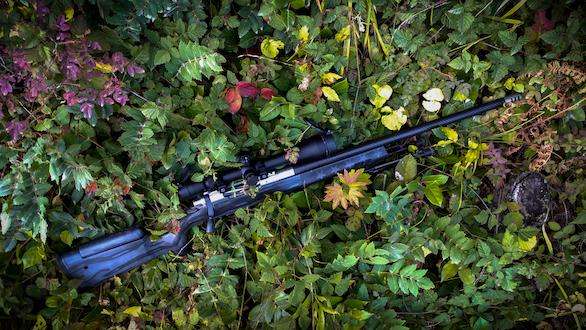
Hunting season is over and now is the time to make sure your firearms are properly taken care of. Here, I’m getting ready to give my .223 a thorough cleaning. Wire brush the bore, oil it, wipe down all metal parts and check your screws are still tight. A little time spent now can save serious problems down the road. 

Well, another deer season has come and gone. You will in all likelihood be putting the rifle in the cabinet for another year where it will sit primarily forgotten. During this time, it’s essential to make sure rust or corrosion isn’t eating away at your rifle, it’s time to clean your rifle properly.

The bore determines the accuracy of your rifle and should have particular attention paid to it to prevent any issues. Even though today’s gunpowders and primers are non-corrosive, it’s wise to treat the barrel with loving care. Let’s call this our preventative maintenance schedule.

You may be wondering why you should pay special attention to the bore of your rifle. Let’s take a second to think about what takes place every time you pull the trigger.

You squeeze and the firing pin falls, striking the primer. The primer is powerful for its size and explodes into the relatively small space of the powder-filled case. The powder is instantly heated to a high temperature and begins to burn very, very rapidly, creating high-temperature gas.  The gas pressure builds to around 50,000 pounds per square inch. The only thing movable is the bullet, so the high-pressure gas propels the projectile down the rifled barrel at approximately 3,000 feet per second. The velocity varies depending on the caliber and bullet weight.

The amount of heat and friction generated during those brief milliseconds between pulling the trigger, the powder burning and the bullet exiting the barrel is absolutely tremendous. Everything is perfectly safe of course since the metal composition and chamber/barrel thickness has been explicitly designed to withstand precisely that amount of thermal stress and more. However, as you may have surmised, some things definitely get dirty during this brief spurt of extreme forces.

The high-temperature powder gas leaves a dark residue inside the chamber where small amounts of gas have made their way around the neck of the bullet case. In the bore itself, the bullet has been driven to slide along into the rifling and accelerated down the barrel under the tremendous pressure as mentioned. Some of the copper jacket of the bullet is stripped off onto the lands and grooves of the barrel along with the red hot powder gas residue. Each and every shot adds to these deposits.

Additionally, any tiny irregularities or rough spots in the barrel will strip off more of the copper jacket, the build-up faster can affect the uniformity of your barrel. After several shots, depending on the caliber and the particular firearm, accuracy will begin to drop off. Luckily a wire brush and a suitable powder/copper solvent will help remove this fouling.

However, shooting is only one of the ways we can dirty our rifles.  Since we are continually handling or carrying them, sometimes in miserable weather, we can’t ignore what exposing them to heavy rain or wet snow can do.  Simply bringing your firearm inside from the cold into your home or camp will cause water vapor to condense on both the inside and outside of the metal. This isn’t any different than being outside in the rain, the end result is that your firearm’s wet. It’s essential to be aware of this and take care of the rifle once it has warmed up, don’t sit the firearm in a corner and forget about it.

Merely handling the metal parts of the forearm leaves fingerprints and the tiny deposits of salt, or whatever else is on our fingers, and unless the metal is well-oiled rust can form. Always wipe your metal parts down with an oily cloth after handling.

In short, always pay attention to your firearms and take the steps necessary to prevent moisture or corrosion from harming them. I have even seen rifles rust in a gun safe that happened to be against a cool outside wall allowing the safe to collect moisture inside it. That is a serious situation that should always be addressed immediately.

Having your rifle bore clean and your bolt free from gummy residue, allowed me to bag this heavy-tine 8-point buck in single-digit temperatures. Proper maintenance is essential when Mother Nature throws nasty weather your way. Never heavily oil the interior of your bolt, keep it clean and free of residue. 

At the very least you should always thoroughly clean your firearms before putting them away for the winter.   First, remove the bolt from your rifle and inspect it. Clean the bolt face with a toothbrush and wipe the entire bolt body clean with an oily cloth. Do not squirt oil down the firing pin hole or apply it heavily where the oil can make its way inside the bolt. Oil build-up inside the bolt and around the firing pin spring could cause your rifle to misfire during cold temperatures. The excess oil thickens to become like sludge. This is a more common occurrence than you might think and has cost more than 1 person a nice buck!

If your bolt becomes wet or damp inside you need to disassemble, dry, and very lightly oil it. Use a Teflon type, very light lubricant on the firing pin spring to ensure that extreme cold will not cause a misfire. If you have an older firearm from your youth, or dad’s old rifle, and suddenly decide to use it for old times’ sake, you’d be wise to pull the bolt apart and clean it. I can almost guarantee there will be substantial thickened oil and sludge inside the bolt just waiting to cool, harden and prevent the firing pin from falling hard enough to fire the bullet.

Now that you have cleaned up the bolt, it’s time to clear your rifle barrel. I begin by dipping the proper caliber brush in copper and powder solvent and wire brushing the barrel thoroughly. Next, run cloth patches saturated with solvent through the bore to remove the loosened fouling. When the patches come out clean, you’re finished. You may have to wire brush a second time.

Finish by running a patch covered with gun oil down the bore two times, this will protect your bore from rust and oxidation until next year.

A badly fouled barrel may need to be wire-brushed multiple times and require multiple patches to return it to a clean state. Occasionally you may have to purchase a stronger solvent especially designed for stubborn fouling and copper build-up. Keep at it until your patch comes out without turning gray or black.

I seldom remove the barreled action from the stock. However, if your rifle has been soaked in the rain or immersed in water, it may be necessary to do so. Water may collect around the recoil lug, under or around the action, in the trigger assembly and other areas. Water dries very slowly in such tight spaces and severe rusting, even pitting, can occur in these situations.

Composite stocks can simply be dried off and set aside in a warm area to dry before oiling your barreled action and reassembling. Wooden stocks may need to sit for several days if soaked.  Examine your wood stocks very carefully once the barreled action has been removed. Many times you’ll find the wood hasn’t been sealed with stock finish around the barrel, action and magazine well. This is very common with older guns.  I highly recommend sealing any untreated wood with two coats of varnish or stock finish. It’s also important to remove the recoil pad and seal the end grain with two coats of finish if needed. The end grain of the stock is very absorbent and might even require a third coat if the wood is light and porous. When fully dry, replace the pad. Once the stock is sealed, the wood will become much more stable and is far more likely to hold its zero from one year to another.

Don’t forget to oil your rifle sling swivels as well, they can get squeaky if you don’t keep them lubricated.

Once you have finished cleaning and oiling your firearm you can safely place it in the gun cabinet until next year. When fall rolls around in 2020, you’ll be able to remove it without any nasty surprises. It’ll be in great working condition and that, I may add, is a good thing.


Does Your Venison Taste Awful? How NOT to Let It Happen Again

  • DO carry a small, sharp, pocketknife, DO NOT use a bone saw of any type
  • DO make a good shot, DO field dress quickly, DO watch the temperature
  • DO thaw frozen venison slowly for best taste

By Jason Houser

When grinding burger, we add beef fat at a ratio of 3:1 (three pounds venison per pound of fat).

I hear people all the time say they do not like the taste of deer. Some people say that just because they know what they are eating and have a preconceived notion that it will not be good. Others have legit gripes. Mainly due to poor handling by the hunter from the time of the kill up until it was cooked.

This often results in gamey, tough meat.

Here are some tips to help combat bad-tasting venison:

  • Hunting in the real world is not like the Outdoor Channel portrays it to be. Hunters make bad shots from time to time and the deer has to be tracked for a while. Shot placement and the stress the animal received while being trailed plays a significant role in gamey meat. The faster a deer dies, the sooner it can be field dressed. This will reduce the amount of acid that builds up in the deer’s muscles. Concentrate on making a good shot with bow or firearm.
  • Hunters often fail to get the deer cooled as quickly as possible. The first step it to field dress the animal immediately. When possible, wash out the cavity with cool water, but be sure to dry the cavity out as the water to avoid creating a breeding ground for bacteria. If the temperatures outside are in the mid-40s or less, it’s OK to let the deer hang. Anything warmer and the deer needs to hang in a walk-in cooler, or it needs to get skinned, quartered and put on ice if you do not have a walk-in.
  • A whitetail deer is not hard to quarter.
    If at all possible, process your own deer to ensure it is handled properly and then you know you get all your venison back in return.

    Because of how joint and tissue are held together with a deer, a simple pocketknife will have a deer quartered quicker than you might think. However, if you use a saw of any type to cut through bone, it allows bone marrow and small pieces of bone shavings to get from the saw to the meat. Stick with a sharp knife and your meat will be free of small bone pieces that can contaminate the meat.

  • Growing up as a kid, I can remember how much my dad loved the taste of fat from a good cut of beef. The same DOES NOT hold true with deer fat. Simply stated, deer fat tastes awful. It is not red meat, cut it off before it is made into steaks or burgers. This includes all fat AND silver skin.
  • Recently, I began using cutting boards from John Boos & Company for this, particularly their Northern Hard Rock Maple cutting boards. The antimicrobial properties of these cutting boards actually kill bacteria, making them one of the cleanest and safest cutting boards on the market for hunters like you and me. A lot of home processors are concerned with contamination, by using this type of cutting board a lot of worries can be washed away.

    The antimicrobial properties of John Boos & Co. Northern Hard Rock Maple boards actually kill bacteria.
  • Every year before deer season begins, we call the local butcher shop for an order of beef suet. Even though we removed all of the deer fat, we need to add some sort of fat, whether beef or pork, when grinding it. If this is not done the lean venison will quickly fall apart when making burgers, meatloaf, etc. We add beef fat at a ratio of 3:1 (three pounds venison per pound of fat).
  • If you have the means, the time and the knowledge I recommend processing all your deer yourself.
    Good venison starts immediately upon the harvest.

    When you take a deer to a meat locker, you cannot be sure how the meat is handled, or if you even get your own deer back. For all you know you could be getting someone else’s deer back that was gut-shot and not properly handled after the shot. If you have to take a deer to a processor, research the facility by talking to other hunters who have used it, and also speak with the workers. Hopefully, they will be honest with you.

  • Do not overcook venison. Cooking deer for too long causes it to become chewy and dry. Venison is best prepared to medium-rare, but the outside needs to be cooked. To accomplish this, the grill must be hot enough to quickly sear the outside and lock in the flavors and juices. Turn your venison only once, and if there are no grill marks on the steak or burgers after three minutes or so, the grate is not hot enough.
  • Freezer-burned food, whether it is venison or other food, does not taste good. Some people use a vacuum sealer, but if you go this route, buy a good one. A cheap one will not seal properly and then will not keep the food fresh. When we butcher our deer, we make wrapping the meat a family affair with all involved. We put one-pound portions of burger in sandwich bags and the steaks and roasts are wrapped with plastic wrap (air isolator). After the plastic wrap, it is then wrapped again with good freezer paper and taped closed. We write on each package what cut of meat, who killed it and the date of the kill.

I hope this advice helps you have a meal that tastes great. A couple of other quick tips is the younger the deer, the better, more tender it will be. But this might not settle well with trophy hunters.

KEY POINTS:

  • What many cooks do not know is to thaw venison slowly to prevent toughness
  • Serve venison hot and keep the remainder hot to prevent it from getting a waxy taste.

Lower Niagara River Winter Fishing, Rod-Bending FUN!

  • Niagara Falls USA Fishing Forecast for Wednesday, Jan. 29, 2020 – Provided from Destination Niagara USA
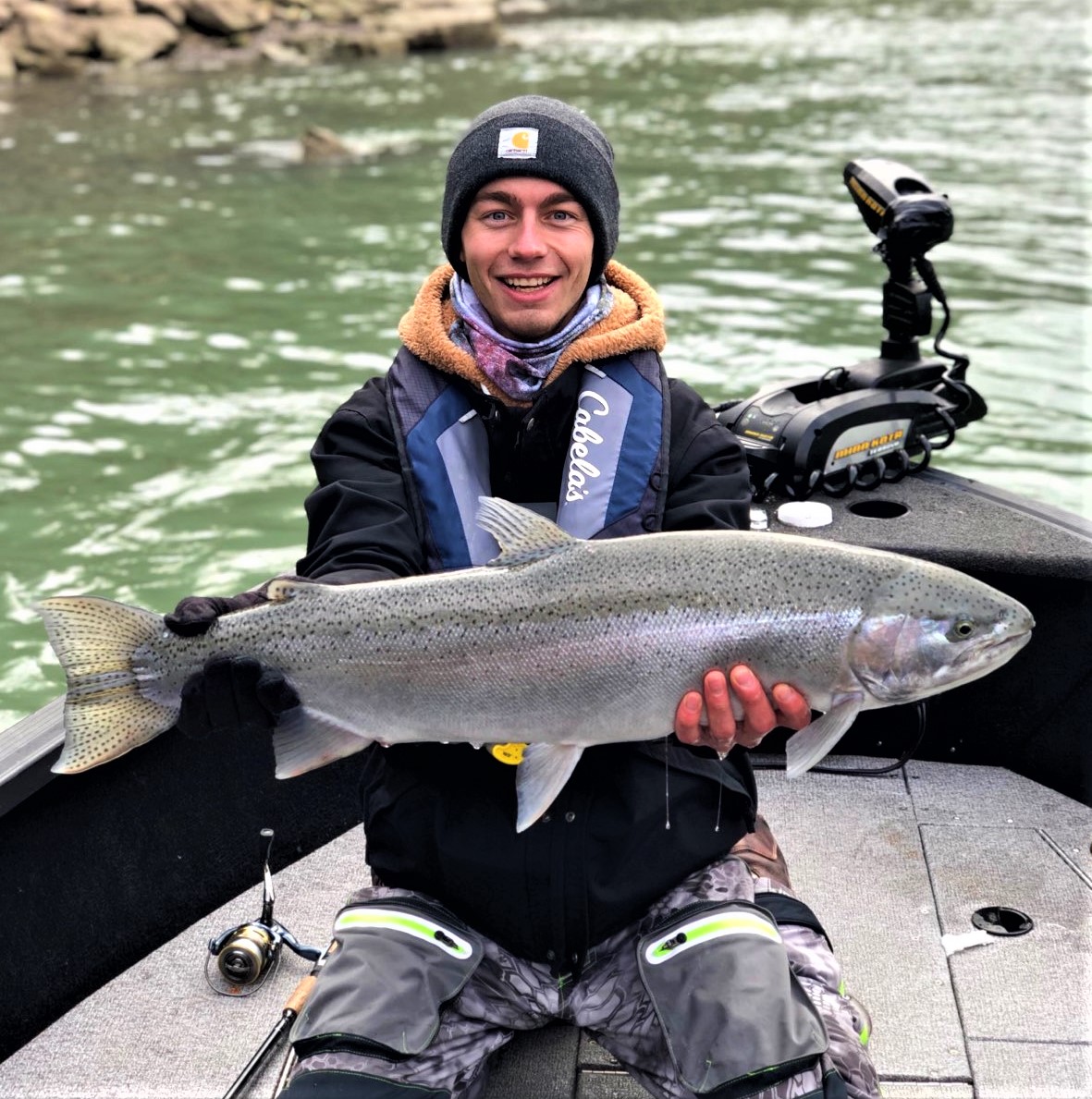
Aaron Scholl of Cleveland, NY with a Niagara River steelhead he caught fishing with Capt. Vince Pierleoni of Newfane.

The fishing action in the Niagara River is finally turning back around again with the favorable weather conditions this week. Capt. Frank Campbell of Lewiston caught 4 trout in 2 hours of fishing on Tuesday, despite marginal conditions due to the stained water.  When it switches over, action should be good from both boat and shore.

Capt. Frank Campbell of Lewiston with a lower Niagara River steelhead.
Capt. John Oravec of Troutman with a nice lower river brown trout.

Capt. John Oravec with Troutman reported that he had action all day last Thursday and Friday.  His Thursday the action was on 29-inch to 34-inch lake trout.  Oravec did well on the Niagara Bar in 27-feet with live bait fished off three-way rigs.  Friday it was brown trout and steelhead in the river.  He also caught a big 12-1/2-pound brown on Friday with an emerald shiner.

The weekend winds messed things up again.

Jon Forder of Albion with a lower river steelhead he caught while fishing with Capt. Vince Pierleoni with Thrillseeker.

From the shore in the gorge area, Mike Rzucidlo of Niagara Falls was hitting some nice steelhead using No. 4 spinners.  Joel Juhasz of Lancaster is the leader in the Capt. Bob’s Outdoors Winter Contest for the Steelhead Division with a 31.5-inch lower river fish caught on a pink egg sac.  In the upper Niagara River, lake trout and walleye were cooperating for anglers using jigs or live bait.

Greg Schloerb of Amherst caught this brown trout from a favorite Lake Ontario tributary over the weekend. He was using a jig tipped with a wax worm.

California Joe Pavalonis of Buffalo is once again atop the leaderboard in the Capt. Bob’s Outdoors Winter Contest with a 17-3/4 inch upper river rudd taken on a crappie jig.  He also caught a northern pike that is the leader in that fish species category while fishing for rudd, a 31-.5-inch fish from the upper river on a crappie jig.

Denis Kreze of Fort Erie, Ontario has been catching some walleye in the upper Niagara River.

In the Lake Ontario tributaries, conditions have been a bit rough according to Greg Schloerb of Amherst. Water was high and stained this past weekend. Fishing has been slow but there are fish available. He did manage to catch both browns and steelhead using jigs tipped with wax worms, catching all his fish this past weekend.

Meanwhile, Scott Feltrinelli of Ontario Fly Outfitters found a few steelhead in small tributaries on Monday. Conditions were good in the smaller streams. High water has been dropping and clearing after this most recent melt off. Feltrinelli’s fish took a large brown and orange streamer fly. Many medium creeks were also fishing well. Bigger creeks should be clearing and fishing decent should be available over the next few days.  For your calendar, mark the Birds on the Niagara Festival for Feb. 14-15. Check out the schedule at www.birdsontheniagara.org.

Also, the Niagara River Anglers will hold their steelhead contest on Feb. 22.  Sign up at the Lewiston launch ramp the morning of the event (sunrise to 2 p.m.) or at Creek Road Bait & Tackle in Lewiston.

Bill Hilts, Jr.- Outdoor Promotions Director
Inline image 2
Destination Niagara USA; 10 Rainbow Blvd.; Niagara Falls, NY 14303

The “Fish Coach” shares HOW-to-CATCH Saltwater Sheepshead – a Winter Fishing Delicacy

  • Fish close to structure: bridges, piers, docks
  • Sight feeders: use live or frozen bait – shrimp, clam strips, fiddler crabs
  • Gear: Open-face reel, sturdy rod, braided line, fluorocarbon leader
Everyone would like to know how to fish better, it’s just that not every vacation place offers a Fish Coach service.

By Forrest Fisher

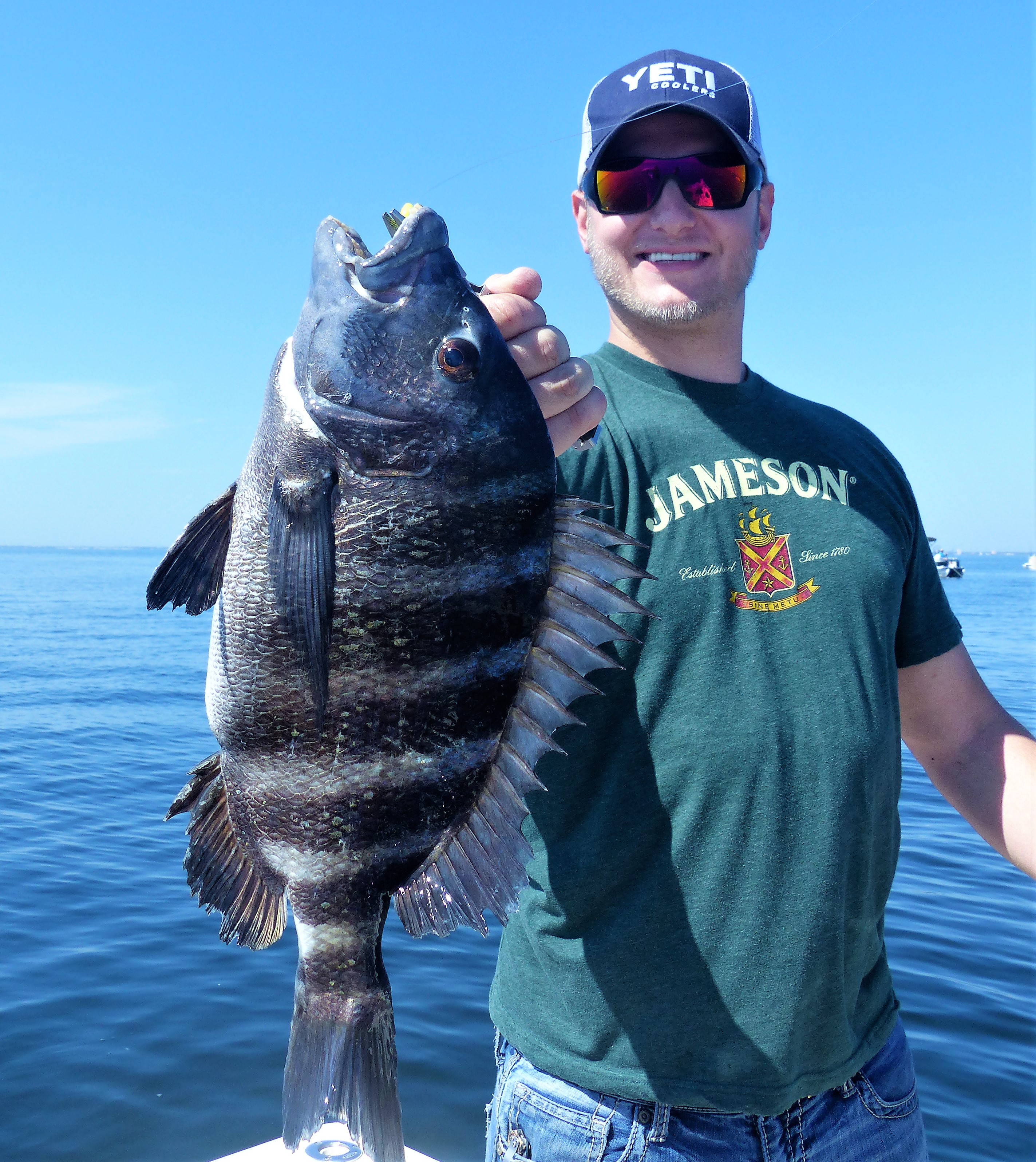
When winter anglers from all across the United States travel to southwest Florida, they find sun, sand, warmth, and one fish species that is in abundance: saltwater sheepshead. These “pretty fish” keep close to bridge abutments, boat docks, fishing piers and similar in-water structure along saltwater harbors and canals of the Gulf Coast, and other places.

The sheepshead arrive close to shore in good numbers as the waters chill with the season (mid-60 water temps), they feist on shrimp, clams, blue crabs and other crustacean forage forms. This fish species is usually hungry, though they can be finicky. Sheepshead are a delicacy for table fare and that makes them a favored target for winter retirees, visitors, and local anglers alike.

One local celebrity angler, Josh Olive, also known as the “Fish Coach,” often makes time in his busy schedule to teach others how to catch fish, where to go, what to do and how to do it, all the while courteously sharing necessary details for folks to understand pertinent conservation issues, size limits and local ecology concerns. This gentleman has a lifetime of stories and expertise to share and is the editor of a widely popular weekly fishing magazine of The Charlotte Sun-News called the “WaterLine.” This issue is published weekly on Thursdays and can be ordered from anywhere in the country, it is complete with fishing tips and chef recipes from the sea.

Josh Olive, the “Fish Coach,” provides finny details about the tasty Sheepshead at a recent fishing club seminar in Port Charlotte, FL.

During a recent visit to the retirement community of Kingsgate in Port Charlotte, FL, I had the pleasure to listen to a seminar and learn from Josh during a monthly meeting of the Kingsgate Fishing Club. Following a colorful introduction by Charter Captain Tom Marks, the humble and direct manner of Josh Olive held the attention of every visitor in attendance. If you are a winter visitor to the Port Charlotte (Florida) area you can meet and talk with Josh yourself on any Saturday night at Fish’n Frank’s Tackle Shop, where he joins the work crew. Here is a summary of what Josh shared with us.  Go get ’em!

Topic: Fishing for Saltwater Sheepshead – Where, When, What, How…with the Fish Coach – Josh Olive

Short description: The Sheepshead is a visual food hunter. They are bottom feeders to be found close to near-shore structure such as docks, piers, and bridge abutments, as well as land-related reefs up to about 40’ deep. Sheepshead have human-like teeth with incisors and molars and actually look like human teeth. That means they can cut your line without too much difficulty.

Not many folks can share it all like this, but seminar goers learned details of lure to line hookup, lure to bait tactics, when to fish, where to go and how to be successful.

Methods: Spinning rods, 7ft, medium w/30 series or 40 series ope-face Penn reels, or equivalent. Use bait, live or frozen, can use jigheads (1/4-3/8 oz depending on current flow strength), Poor Man’s Jig (Size 4 hook w/large bb-shot) or Porgy Rig (double dropper loop for one hook and one sinker, 1-3 oz).

Line: 10-20 lb braid (Power Pro) mainline and 25-30 lb fluorocarbon leader, though when water is very clear and fish are spooky with a high mid-day sun, downsize fluoro to 15 lb or so. Use TG knot or double Uni-knot from the leader to the mainline attachment. Braid color: no preference in reality, but to help angler sight, use a bright color green or yellow. Leader length: about 6 feet or so.

Above, the standard jig head to live shrimp rig commonly used for sheepshead fishing.

Baits: Shrimp (frozen pieces or live), clam bits, red wigglers (worms), fiddler crabs (a good option when fishing in a heavily fished area), and Berkeley Bish Bites (pink/white color, E-Z clam flavor or E-Z shrimp flavor, both work -cut to ½” pieces, put 3 on a bare hook or jig head).

The correct way to hook up a live fiddler crab, a tricky process, but they work to fool and catch saltwater sheepshead where there is heavy angler traffic. 

Specific Places to fish: In southwest Florida, the Venice Jetty may be the best place for shore fishing. Casperson State Park rock jetties are only just ok, at times, Peace River docks are good, not so good when going upriver to Navigator Bar area. To fish rock jetty areas, use a poor man’s jig head with a float set 2-4 feet above the bait. Offshore-nearshore reefs such as Cape Hayes and Trembley are also excellent.

Times of Day: Middle of the day seems best for Sheepshead fishing

Advice: Get away from lines and rigs with beads, swivels, hardware, is spooky to fish these days, too many anglers in short, spook the fish.

Edibility: Very good, delicacy. Crustacean and blue crab eaters are usually tasty fish to eat. Can fillet, though fillet method will leave lots of delicious meat on the carcass. Better to use whole fish and simply gut the fish, remove the gills, boil, remove the meat on a platter as in a restaurant platter style. Or use the meat and boiled water residue from this method to make chowder, fish soup or fish bouillon.

Two common methods to hook frozen shrimp tails with a plain hook, commonly used with the Poor Man’s Porgy Rig (double loop knot rig).

Rules/Reg’s: See syllabus, but in Port Charlotte County general area, the minimum size is 12 inches and 8/person/day, or if in a boat, 50 fish boat limit max for any number of persons.

LIVE & LEARN about LAMPREY’S, there are Many Species

  • Lampreys, lampreys everywhere…some are part of nature
  • Native species vs invasive species are always a concern for understanding
  • Lampreys live in the Great Lakes, isolated northern lakes, the Mississippi River, other places

By Mike Schoonveld

A couple of years ago I fished for sturgeon on the Rainy River in Minnesota, just upstream from where it flowed into Lake of the Woods. As luck would have it, I caught one and it came with a surprise.

My Lake of the Woods sturgeon came with an attached Silver Lamprey, see the wound right above the dorsal fin.

Last fall I fished for largemouth bass on the Mississippi River near LaCrosse, WI and one of the bass we caught that morning also came with a surprise. Each of these fish flopped on the deck with a lamprey clinging to their side.

I have not lived a fish-sheltered life. I’ve fished every Great Lake and dozens more not quite so great lakes. I’ve studied, fished for, and caught nearly every game fish available in these waters. When I landed that Minnesota sturgeon, the tag-along lamprey was an unexpected surprise.

As a Great Lakes fisherman, I am very familiar with sea lampreys, an invasive species from the Atlantic Ocean, now present in all five Great Lakes, as well as New York’s finger lakes.

It’s not a surprise when I catch a trout or salmon with lamprey scars, or even with a live lamprey still attached.

Sea lampreys in the Great Lakes are invasive species, and they kill thousands of trout and salmon each year.

My Rainy River surprise was a mystery. How had sea lampreys moved from the Great Lakes to Lake of the Woods and why hadn’t I ever heard about them damaging the fish populations there as they do in the Great Lakes?

Mystery solved; it wasn’t a sea lamprey. The lamprey suctioned to the sturgeon I caught was most likely a silver lamprey, one of four native species of lampreys found in Minnesota, Michigan, Wisconsin and the other Great Lakes states. Two of them, like sea lampreys, are parasites. Chestnut lampreys – the other native parasitic lamprey – have been found in Minnesota, but have not been seen in Lake of the Woods.

I identified this silver lamprey after the fact. I was trying to get a grip on it so I could treat it the same way I treat the sea lampreys which come on my boat attached to a salmon or trout. They come aboard in one piece; they go back to the lake in two parts. Lampreys are slick and squiggly, and the sturgeon-sucker squiggled back into the river before I could decapitate it.
Neither silver or chestnut lampreys are protected species in Minnesota so that I wouldn’t have been in trouble had I put it on the chopping block. Since then, I have now learned they don’t deserve to be hacked into pieces as do sea lampreys in the Great Lakes.

By the time the lamprey came on board the boat with me on the mighty Mississippi, I knew better. It could have been either a silver or chestnut lamprey. Both are endemic to the big river. I released it, all in one piece, soon after snapping a photo (shown here).

This native Chestnut Lamprey was released back into the Mississippi after I plucked it off a largemouth bass.

NATIVE VS. INVASIVE

Why was I so soft-hearted about the bass-sucking lamprey encountered on the Mississippi River and why am I so ruthless about the sea lampreys “vampiring” on lake trout in the Great Lakes? Aren’t the silver, chestnut and sea lampreys all doing similar things? Aren’t all of them blood-sucking parasites potentially and probably injuring or killing the fish they attack?

Absolutely! The difference is the silver lampreys in Lake of the Woods and the chestnut lampreys in the Mississippi River have never wiped out entire populations of fish where they have been found. Invasive sea lampreys did that in the Great Lakes and would still be doing it if not for lamprey control programs in the US and Canada. Even with silver and chestnut lampreys there is still plenty of sturgeon in Lake of the Woods – along with walleye, lake trout, pike, crappies and other fish. There is still plenty of fish in the Mississippi River as well.

Native lampreys and native fish all evolved together and co-developed a host/parasite relationship and achieved a natural equilibrium. The long and short of it is through a complex web, which involves many more species than just bass or sturgeon and lampreys, there aren’t ever enough native lampreys in a system to overwhelm the fish on which they feed. Nature is a savage place. Big fish eat little fish, herons and ospreys eat bigger fish. For the most part, nature is always interacting to maintain the balance. Native lampreys parasitizing native fish are as much a part of that balance as an osprey snatching a pike.

THE END


Are you ready for a Once-in-a-Lifetime Safari?

  • The true safari experience requires experienced professional hunters and skilled camp/field staff
  • Find hunting areas that provide a variety of game: Buffalo, Zebra, Wildebeest, Kudu, Antelope
  • Safari hunts are life-altering experiences, they captivate all your senses. Special moments in life.

By Forrest Fisher

Whenever folks think about a safari, they have shared with me that they think of the old Tarzan movies and the baggage carriers from those old movie films. I was that way too until I learned more from folks that experienced modern-day safari trips that found fun, hunting efficiency and that they are less costly than going to fish or hunt in Alaska. True fact. So what to do? Find a Safari business that caters to out-of-country visitors and ask for info. My good outdoor friend, Kevin Howard, speaks very highly of a service he has encountered that is run by a man whose name is Graham Sales.  Sales has been a professional hunter since 2000 and received the prestigious “Uncle Stevie” award in 2004 and again in 2007 from the Professional Hunters’ Association of South Africa. This award is an acknowledgment of excellent trophy quality. In addition, Sales received the “Professional Hunter of the Year” award in 2018.  That’s quite an honor, there is lots of competition for this award, his services are provided for hunting in South Africa and Mozambique.

South Africa:  Graham Sales Safaris has the exclusive hunting rights on South Africa’s largest provincial nature reserve – Songimvelo Nature Reserve (the film “The Ghost and the Darkness” was filmed on the Reserve). Songimvelo Nature Reserve received “World Heritage” status during 2018. Graham Sales also has the hunting rights to the Timbavati Private Nature Reserve which shares a common open boundary with the world-renowned Kruger National Park. The Timbavati Private Nature Reserve forms part of the Greater Park area, which allows free movement of the game across 432,000 acres of land. The area is made up of Mopani bushveld, acacia shrub, watering holes and riverbeds that attract a huge variety of game including elephant, buffalo, zebra, Blue Wildebeest, kudu, and several other antelope. These, in turn, attract several predators, such as lion, leopard, cheetah, and hyena, which makes this a popular choice for a ‘real’ African wildlife experience.

Clients experience a free-range safari with Graham Sales Safaris in their tented Safari camp that is located on the banks of a dry riverbed which adds to the whole African Safari experience.

Mozambique: Graham Sales hunt 988,000 acres in pristine wilderness in the Niassa province – northwestern Mozambique. The area is situated north of the small town, Marrupa and south of Block C – Niassa Reserve. The concession is flanked on the left by the Ruambeze and on the west by Lureco rivers. The main habitat is Miombo woodland with some open savannah areas, seasonal wetlands, and riverine forests along with the many watercourses, rivers, and streams. The landscape is scattered with spectacular rock formations and mountains, many of them have thickets of montane forest growing in the narrow gullies that extend up the smooth-sided rock faces. The magnificent scenery combined with the vastness of the area, an abundance of game and pristine nature makes this without a doubt one of Africa’s last great wilderness areas. The Marangira area is home to prolific wildlife, including elephants and more than 60 of the critically endangered African Wild Dog. Leopards are in abundance, lions and hyenas are common with big numbers of buffalo, Roosevelt Sable, Lichtenstein Hartebeest and Livingstone Eland including three endemic species, Crawshey’s Zebra, Johnston’s Impala and Niassa Wildebeest.

In all their areas, Graham Sales clients will have exclusivity and will enjoy a true safari experience with experienced professional hunters complete with skilled camp and field staff that always have a smile on their faces.

To learn more directly, visit https://www.grahamsalessafaris.com/.

Those attending the 2020 SCI Hunters’ Convention can meet and talk with Graham Sales and Armand Theron at their SCI booth #1438 in Reno, Nevada, February 5-8, 2020.

About the SCI Hunters’ Convention: Safari Club expects upwards of 24,000 worldwide hunters to visit Reno, Nevada, February 5-8, 2020.  The SCI Hunters’ Convention represents the largest and most successful event to raise money for advocacy to protect hunters’ rights. The 2020 Hunters’ Convention will be held at the Reno-Sparks Convention Center with over 452,000 square feet of exhibits and almost 1,100 exhibiting companies. Register and book rooms at www.showsci.org

Becoming an SCI Member: Joining Safari Club International is the best way to be an advocate for continuing our hunting heritage and supporting worldwide sustainable use conservation, wildlife education and humanitarian services.  JOIN NOW: www.joinsci.org

Safari Club International – First for Hunters is the leader in protecting the freedom to hunt and in promoting wildlife conservation worldwide. SCI has approximately 200 Chapters worldwide and its members represent all 50 of the United States as well as 106 other countries. SCI’s proactive leadership in a host of cooperative wildlife conservation, outdoor education and humanitarian programs empower sportsmen to be contributing community members and participants in sound wildlife management and conservation. Visit the home page www.safariclub.org or call 520-620-1220 for more information.

DELICIOUS Pennsylvania Dutch Ham & Bean Soup

PA Dutch Ham & Pea Soup

  • Perfect for camp or those cold days afield

By Tyler Frantz

Ingredients:

  • 1 smoked ham end w/bone-in
  • 1 pound (bag) of dried northern beans
  • 2 large potatoes diced
  • 1 onion chopped
  • 1 cup diced carrots
  • 1 TBS minced garlic
  • 3-4 hard-boiled eggs, yolks removed
  • Black Pepper & Parsley seasoning to taste
  • 2 cups ham broth or stock if available
  • 1-2 TBS olive oil
  • Water

Recipe:

  1. Overnight soak beans in cold water.
  2. Drain and set aside.
  3. Coat bottom of a stockpot with light olive oil.
  4. Add all ingredients except potatoes and eggs.
  5. Cover with water so that beans, ham, and veggies are completely submerged. Bring to a rolling boil. Reduce heat to a simmer. Simmer for an hour and a half on low heat.
  6. Remove bone and shred ham.
  7. Add potatoes and hard-boiled egg (whites only) and simmer for another half-hour to one hour, until potatoes are tender.
  8. Serve up. Makes Plenty.

Add a splash of cider vinegar if desired.

Enjoy!

About Tyler Frantz: Tyler is President of the Pennsylvania Outdoor Writers Association, and authors several outdoor columns. He wears many hats as a teacher, writer, coach, family man, outdoorsman, and Christian. Tyler says, “Life’s a true blessing,” and offers a refreshing, working man’s perspective towards freelance outdoor writing and videography. He regularly provides a variety of how-to outdoor pieces and special interest features on outdoor issues. No matter what the topic, his award-winning work never ceases to entertain and enlighten. Feel free to his visit website and blog for great videos, articles, and interactive opportunities: Natural Pursuit Outdoors.

This recipe makes plenty! Get the freezer containers.

Spent Oriole Nests prompt Quick Shooting Lesson

  • We created a happy oriole colony around our home by providing grape jelly feeders
  • Abandoned (used) oriole nests are never used again by the orioles
  • The nests proved to be surprisingly easy to “harvest”

By Mike Schoonveld

We created an oriole bird colony around our country home by providing grape jelly feeders.

How often have you watched a scene in an old western movie where a good guy is about to be strung up by an evil sheriff? The hero comes along, often on horseback, pulls out his six-shooter or Winchester and fires a shot which blasts through the sturdy rope, saving the good guy’s life.

Similar scenes occurred often enough, so the crew from the Mythbusters TV show decided to see if it was even possible. Could Clint Eastwood have really pulled off this stunt with a single bullet?

Of course not. I’m not dissing “the man with no name’s” shooting ability, but the Mythbusters, not surprisingly, couldn’t sever a thick hemp rope without hitting it with several bullets.

When I spotted the basket-like nests made by Baltimore orioles in the leafless treetops of two of the maple trees in my yard, I wanted them. Each nest was about 30 feet off the ground, nowhere near the trunks where I could climb the tree or even erect an extension ladder. Short of hiring a bucket truck to elevate a worker high enough to snip them free, the only thing I could think of to remove the nests was to shoot them down.

Then I thought of the Mythbuster’s episode I’d watched. How many shots with .22 bullets would it take to gun down the nest? I was pretty sure, as the Mythbuster stars proved with the rope, it would take several hits to completely cut through the narrow branch. The shooter or shooters wouldn’t have the advantage of being able to shoot from a rest and even a slight breeze would up the difficulty, as the wind would make the twig a moving target. I bought 1000 cartridges.

In the past several years an oriole colony has been “created” around our country home by putting out oriole feeders at our bird-feeding station. It started when we spotted a Baltimore oriole trying to suck a bit of the sugar-water “nectar” we’d poured into our hummingbird feeder. I’d heard orioles were attracted to oranges, so I fastened orange halves on the bird feeder stand where the oriole could find it.

It did, but two things happened quickly. First, the oriole quickly ate the fruit part of the orange and in a day or two, what was left looked pretty much like a weathered orange peel. The oriole moved back to fighting the hummers for the sugar-water.

A quick check and click or two on my Amazon Prime account had an oriole feeder heading my way. “Instead of sugar water,” said the instructions, “fill the food receptacle on the feeder with grape jelly.”

I don’t know what the attraction to grape jelly is for orioles. Most bird feeders just make a ready and steady supply of naturally available foods the birds would otherwise have to hunt to find. I don’t know of a natural supply of grape jelly.

The oriole quickly figured out the new feeder and was a happy bird. It soon became even happier when a female oriole showed up and both of the birds enjoyed regular visits to the jelly bonanza. By late June, their fledglings joined the parents for another few weeks, before they disappeared to wherever they migrate to in fall.

Used oriole nests are abandoned by the orioles after use, they proved to be surprisingly easy to “harvest.”

The next spring (late April) they were back. Were they from the same family? I can’t say, but there were more of them and even more the following year. (We now have three oriole feeders and buy bulk, generic grape jelly to keep them all happy.)

Orioles don’t reuse their unique nests so removing them from our tree wouldn’t disappoint our birds, but my wife thought she could use them decoratively in our house. When my son, son-in-law, and daughter were home for Christmas, I pulled out three .22 rifles and we all headed to our country farm.

Disclaimer: My house is in the country, I have one neighbor a quarter-mile away and no others within .22 rifle range. We assessed where our spent bullets would go before firing any of the guns.  First, we sighted in the rifles to make sure they were zeroed perfectly at 30 feet – about the height of the nests. That took about a dozen rounds. Each rifle was fully-loaded, but before any of the magazines were emptied, my son hit the supporting twig and down came the nest. Just luck?

We moved to the second nest, reloaded and began firing. In less than a minute that nest dropped to the ground, as well. Total ammo used? Forty-eight bullets! Move over, Clint Eastwood.

THE END


Springfield Armory® Hellcat Crushes 10K Round Test

Contributed by Mike Humphries

The Hellcat from Springfield Armory® has proven its mettle in a grueling 10,000-round test, showing that the EDC innovator not only has the features to make it the best on the market but also the durability to outlast all the competition.

With support from Federal Ammunition and Action Targets, Off the Reservation’s Clay Martin put the Hellcat through this challenging test over the span of two days. Martin brought a wealth of firearms expertise to bear during the test, from his background as a competitive shooter as well as his time in both the U.S. Marine Corps and the U.S. Army, retiring as a Special Forces Intelligence Sergeant from 3rd SFG (A).

From its release on 9/25/19, the Hellcat has quickly built a reputation for excellent quality and performance, and represents a new direction for Springfield Armory polymer pistols. Being the smallest high-capacity 9mm in the world, the +P-capable pistol packs in 11+1 rounds (13+1 with extended magazine) in a 3″-barreled micro pistol that weighs around 18 ounces empty. And with the OSP version, you gain the ability to direct mount micro-sized red dot optics.

“When we learned of Martin’s test, we were excited about seeing the Hellcat prove what it could do,” says Steve Kramer, Vice President of Marketing with Springfield Armory. “When a micro-sized pistol designed for concealed carry bests a test more appropriate for full-sized duty pistols, it allows the quality of the product to speak for itself,” he continued.

As with all of Springfield Armory’s products, quality is a priority one with the Hellcat. From its cold hammer-forged barrel down to every last pin and spring, the pistol is built under strict quality control to the highest standards. (To learn more about this, see the “Legacy of Discipline” video here).

“While a test like this is extremely demanding for a micro-sized pistol intended for CCW, we never doubted the Hellcat would come out on top,” says Dennis Reese, CEO of Springfield Armory. “Quality is our number one priority, and it always will be,” he continued.

To see the test for yourself (10,000 rounds of 9mm Federal ammo), visit https://www.thearmorylife.com/hellcat-kills-10k-rounds/.

For more information about the Hellcat, please visit www.springfield-armory.com.

About Springfield Armory®

In 1794, the original Springfield Armory began manufacturing muskets for the defense of our young, free Republic.  The Armory functioned as a firearms supplier for every major American conflict until 1968 when the government sadly closed its doors. In 1974, nearly two centuries after its inception, Springfield Armory Inc. in Geneseo, Ill. revived the iconic heritage of the Armory to carry on its legacy.

We strive to honor this responsibility as guardians of the original Springfield Armory legacy by manufacturing the highest quality firearms to enable responsible citizens to preserve their right to keep and bear arms in the defense of life, liberty and the pursuit of happiness.

With an unmatched emphasis on craftsmanship, performance and exceptional customer service, our mission is to forge superior firearms and provide the tools necessary to defend individual freedoms and equality for those who embrace the rights and principles secured by our Founding Fathers.  For more information, please visit us at springfield-armory.com.

Linda Powell: Becoming a Hunter

  • Linda Powell went to college hoping to study genetics and research
  • After working in the medical field for 14 years, Powell realized in her mid-30s that she needed adventure
  • She found it, then came the life-changing question: Do you want to try hunting?
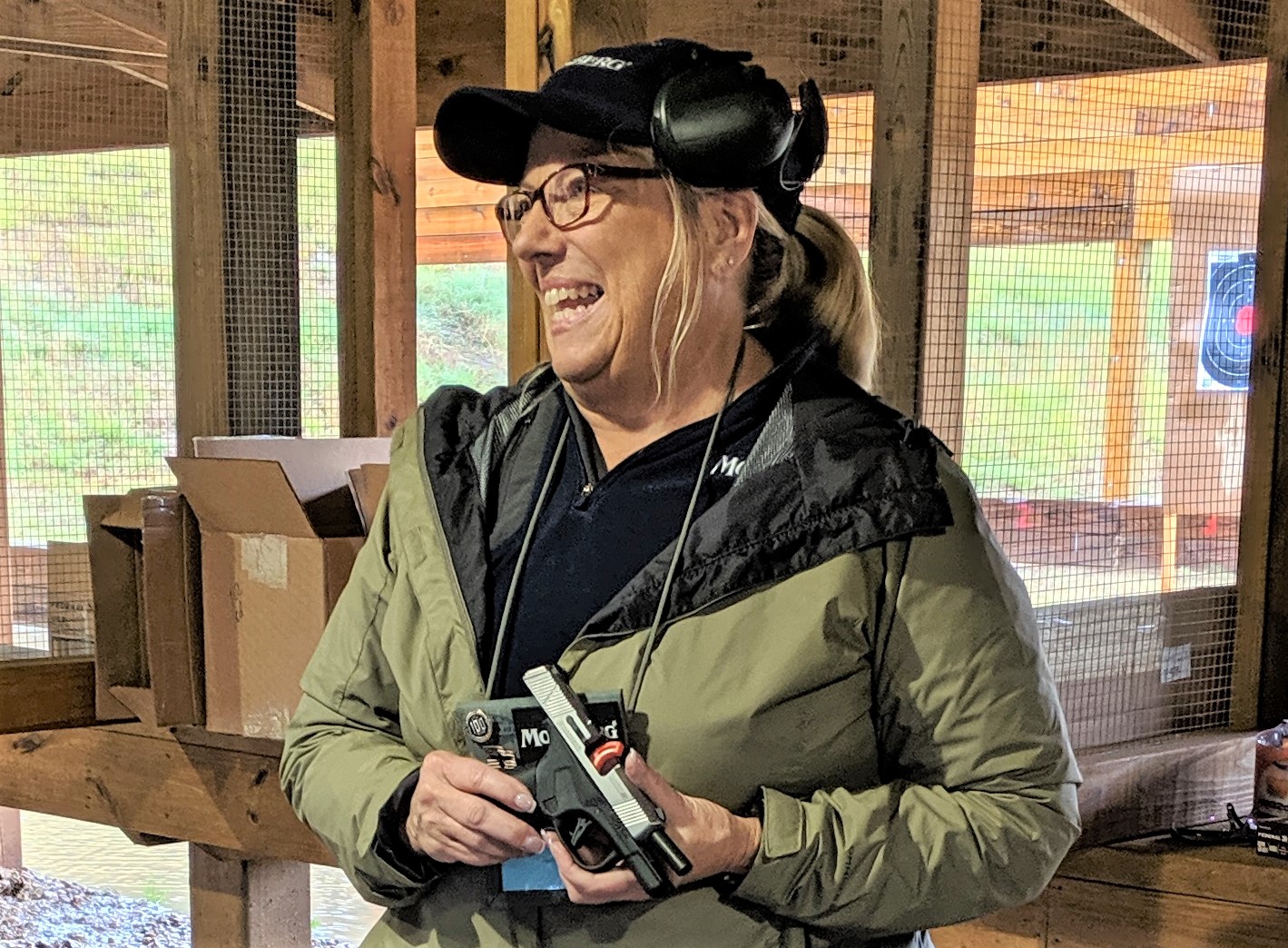
After 14 years in the medical field, Linda Powell wondered about a change, found a job at Remington, but admits, “I didn’t know the difference between a rifle and a shotgun.” Today Linda works for Mossberg Firearms.  Serena Juchnowski photo

By Serena Juchnowski

When you ask a child what he or she wants to be when they grow up, the answers are usually stereotypical. Doctor, lawyer, veterinarian, police officer, firefighter, nurse…the vocation one takes on is very rarely the job he/she first expected, or the one he/she is meant for.

Linda Powell was destined to be a hunter though her upbringing told no signs of it.

Powell grew up in North Carolina in a middle-class family. She went to college hoping to study genetics and research. It wasn’t a widely accepted path at the time for girls and she succumbed to pressure to become a nurse, Powell did so, married, had a son, and lived what she calls a “very traditional, typical life.”

After working in the medical field for 14 years, Powell realized in her mid-thirties that she “really was bored, stagnant, I felt that there was nothing that was challenging me personally.” Not knowing exactly what she needed, Powell quit her job and explored various roles assigned to her by temporary agencies. She eventually took a marketing position at a kitchen hardware manufacturing company – her first adventure outside of the medical field. This position didn’t quite fit Powell so she kept searching.

“I was looking for opportunities and I heard that the Remington Arms company was moving their worldwide corporate headquarters to a town about 20 miles north of where I lived, and I simply went and applied thinking ‘large corporation.’ I still didn’t really know much about what they made or what they did, I was just thinking opportunity for growth. And I was hired, and I’m not sure still why sometimes, I question this, to be the administrative assistant in the PR department.” Filling what one may term another traditional role led to discoveries and experiences far from conventional, though not without difficulties.

Today, Linda Powell has become an expert with firearms and shooting techniques, and a mentor to youngsters and those not so young. Serena Juchnowski photo

Linda Powell found herself replacing a woman who had been with Remington for 20 years. Powell lacked experience in and knowledge of the industry, of the position, and of Remington’s products but tried her best to learn. It was most painful when people asked by name for the woman Linda had replaced.

“The first 6 to 9 months I pretty much cried every day on the way home, thinking I will never figure this out. I didn’t know the difference between a rifle and a shotgun. I didn’t know what gauge meant, caliber…it was like the Greek language to me. But slowly some of it began to click.” Several Remington employees offered to teach Powell how to shoot. Her only previous experience with firearms and hunting was the fact that her grandfather used to disappear some weekends and reappear with some sort of game meat. She had no knowledge of what went on in-between. After some range time, Powell wanted to learn more. About a year after joining Remington, she attended the Remington shooting school; a three-day course focused on clay shooting. “What I loved about it was [that it was] very adaptable because I was in a class with people who had experience but who wanted just to hone their skills, and then there were people like me who had zero. When I left there, I knew the basics of handling a shotgun safely, I could break some clays, and they kind of had piqued my interest in wanting to learn more.”

Then came the life-changing question: Do you want to try hunting?

After some deliberation and mental preparation, Powell decided she was up for the challenge. “Fortunately, with my medical and biology background…I understood enough about wildlife management but I did a lot of reading to understand the role that hunting plays in [it] and I also had to come to terms with it for my own feelings.” She did not want to just jump into something she did not understand – it had to have meaning and purpose.
Looking back now, she laughs, smiling delicately as she talks of her first hunting experience. “I jokingly wonder if they were setting me up for failure because most people start with maybe bird hunting, turkey, deer, squirrels – my very first hunt was a black bear hunt. And they had me do it with a muzzleloader.” While preparing for the hunt, Linda learned to load and shoot a muzzleloader accurately, something she had never done before. Though it was slightly overwhelming at first, Powell was up for the challenge, and her beaming smile revealed that she would not have had it any other way.

Woman to woman, Linda Powell is effective at getting the safe shooting message across. Serena Juchnowski photo

Sitting in a plush chair in Mississippi at the Southeastern Outdoor Press Association Conference, Powell told of an experience that is almost unbelievable given her iconic status in the industry today. Honest and open with no details spared, Powell admitted that at the time she was brand new and overwhelmed in moments, but has always been open to new experiences.

“I’d never sat in a treestand, there were just so many things that I was exposed to, even knowing how to dress for the hunt. There are so many [foreign] things…people that grow up [hunting] don’t necessarily understand that. Here I am at the ripe old age of 38, and again, I didn’t know anything about it. But I am really fortunate I had great mentors along on that hunt, my guide was exceptional. We, on the last day of the hunt, hadn’t really seen a bear but I had learned a lot. And I remember sitting in the tree, we’re getting to the last little light of day and just reflecting on what an incredible experience it had been, that I was trying something I’d never done before.”

Some things are meant to be. Powell smiled, her eyes shining with passion as she revealed the end of the story – something so neatly strung together it seems out of a movie. “I was sitting out in the woods, I was seeing squirrels and birds and soaking it all in and kind of just daydreaming for a minute and all of a sudden I woke up and there was a bear standing out in front of me and of course I went through the moment of ‘Oh my gosh, what do I do now?’ And I remember bringing my muzzleloader up and I was shaking. I put it back down on my lap, I took a few breaths: it took me three times. I got the muzzleloader up, the bear just was feeding nonchalant, and I shot, and I got it.”

Years later, and Powell remembers nearly every detail of her first hunt because that day, her life changed. She knew it immediately within her, though she could never have guessed how.

* Linda Powell has traveled to Russia, Africa, South America, and has hunted all across the United States and Canada. She worked for Remington for 15 years and currently works for Mossberg, as the director of media relations.

Read the next second segment story (look for it) to learn about Powell’s path and how she came to become an accomplished hunter dedicated to passing along the hunting tradition.

Editor Note – About the Author: Serena Juchnowski is a young college student, passionate about the outdoors. Serena grew up in an outdoors family but did not start shooting until the eighth grade, and did not start hunting until she was 16. Since then, she has devoted herself to the shooting sports, volunteering as the secretary at a local club, coaching new shooters, and using writing and photography to educate others about the shooting and hunting sports. She has earned the Distinguished Rifleman’s Badge (#2479) and NRA Master Classification.  She enjoys hunting, mostly in Ohio, her home state, and is especially interested in introducing “juniors” (in the shooting world, kids up to age 20 or 21), as well as women, to high power service rifle and to hunting. She would like to work in the outdoor industry to help fulfill her dream to promote safe shooting and hunting. Visit Serena’s Web page Facebook page and Instagram to visit with numerous pictures and other information on her shooting journey, as well as her written article.

HEAD NORTH YOUNG MAN! Niagara River Fishing Action is GOOD, Smaller Tribs are Frozen-Up

  • Niagara Falls USA Fishing Forecast for Jan. 22, 2020 from Destination Niagara USA
John Jarosz of Lakeview with a steelhead he caught in Devil’s Hole while fishing with Capt. Ryan Shea with Brookdog Fishing Company.

After another round of windstorms, it looks like things are going to take off again in the river in a good way.

There was plenty of fish around the last time the water was decent, especially in the lower Niagara River – steelhead and walleye, with an occasional lake trout and brown trout. Egg sacs in pink or chartreuse, Kwikfish or MagLips for plugs, minnows for live bait – all fished off 3-way rigs.

Shore casters should be starting to pick up steelies with spinners, jigs, flies, and sacs. The water along the shoreline should offer anglers clearer opportunities a bit quicker.

Mike Rzucidlo of Niagara Falls with a nice steelhead he caught in the lower Niagara River while fishing from shore with a spinner.

With favorable weather Thursday and Friday, that will be your best bet until the weekend. Next week looks pretty good, too.

Upper river options should also include some trout including lake trout, and walleyes.

Richard Pisa of Tonawanda with a lower Niagara River steelhead caught last week.

The Niagara River Anglers Association will be holding its Roger Tobey Memorial Steelhead Contest on Saturday, Feb. 22. This date has been moved from its traditional time slot, set for the lower Niagara River and Lake Ontario tributaries starting at sunrise. Cost is $20 for the contest plus an option $5 for the best brown trout. In addition, you must be a member of the NRAA. Membership cost is $20, a $5 savings from the normal membership cost.

In the tributaries of Lake Ontario, the conditions right now offer medium flows and about 2 feet of visibility.  There are reports of steelhead hookups, a few each outing by good drifters or swingers.  Some hens are already showing loose eggs.

Smaller tributaries are challenging with the cold weather. Things are slushing and icing up.  The next forecasted warmup will only give us more of the same with conditions and fish.

Roy Letcher of Newfane reports that 18 Mile Creek is running well right now with a fair number of trout. Everything else is mainly frozen.

Scott Feltrinelli with Ontario Fly Outfitters reports that many of the smaller streams are frozen-up right now.

We have some warmer weather coming to us bt the end of the week and that could open some areas. Later in the day, it might be better.

Jajean Rose with the WNY Land Conservancy caught his first steelhead in the lower Niagara River last week fishing with Capt. Ryan Shea of Brookdog Fishing Company.
Bill Hilts, Jr.- Outdoor Promotions Director
Inline image 2
Destination Niagara USA, 10 Rainbow Blvd., Niagara Falls, NY 14303

Greater Niagara Fishing and Outdoor Expo, Jan. 17-19, at Niagara Falls Event Center

  • Niagara Falls USA Fishing Forecast for Jan. 8, 2020
  • Destination Niagara USA welcomes all fishing guests to this website!

Before we even get into the fishing there needs to be a big shout out for the 7th Annual Greater Niagara Fishing and Outdoor Expo set for Jan. 17-19 at the Conference and Event Center Niagara Falls – next weekend! Yes, it’s already here! Check the website out at www.niagarafishingexpo.com.

You will find that there are over 200 seminars for all levels of angling expertise being given by over 100 speakers.

There are over 60 walleye seminars, 35 salmon and trout seminars, 35 bass seminars and a long list of fly fishing seminars to name but a few series being offered. Education is what it’s all about. Following in that same theme, DEC will be offering 1-hour versions of the State of Lake Ontario and the State of Lake Erie on Friday night. A DEC Open House will be featured on Saturday from 11 a.m. to 2 p.m. that will bring in top fisheries managers and biologists from lakes Erie and Ontario, the Niagara and St. Lawrence rivers, the Finger Lakes, the Salmon River and the Salmon River Fish Hatchery, Women in Fishing, Environmental Law Enforcement and so much more. There are also some 170 vendor booths in the main exhibit hall, mostly related to fish and fishing. Come on out and see what the buzz is all about!

As far as the fishing, if we get the weather that’s being forecast this weekend, there will be plenty of time to visit the Expo website. Last weekend saw some good to very good lower Niagara River action despite some marginal conditions.

Jim Karker of Rochester with his 31-1/2 inch walleye sporting a 19-inch girth he caught on the Niagara Bar off the mouth of the Niagara River last weekend. He was fishing with Capt. John Oravec of Troutman.

Capt. Chris and Capt. Connor Cinelli both report good action in the lower Niagara River on trout this past weekend even though the conditions appeared marginal. However, no one was fishing Monday or Tuesday due to the turbid conditions. The best bait for Capt. Chris was a pink egg sac fished off a 3-way rig. For Capt. Connor, both pink and chartreuse sacs were working.

Trout and walleye were both cooperating around the Lewiston area. Meanwhile, further downriver, Capt. John Oravec of Troutman was taking Jim Karker and his son, Ryan, both of Rochester, on the lower river near Lake Ontario over the weekend. The prize catch for the day was a 31.5-inch walleye with a 19-inch girth reeled in by Jim (the dad) as Ryan (the son) netted it. It hit on a large golden shiner on the Niagara Bar in 21 feet of water. They also did well on browns, steelhead and other walleye using small emerald shiners in the river. The trip was a birthday present for Ryan. The walleye was a personal best for the elder Karker. Lasting memories for sure.

Nick Giancola of Grand Island with a lower river steelhead he caught over the weekend fishing with Capt. Connor Cinelli of Grand Island.

We’ve seen quite a bit of wind of late and that doesn’t translate well with a wide-open Lake Erie and a base temperature of 38 degrees. Today the water looks like chocolate milk, tough for both shore and boat guys. From Friday into Saturday, we could see 1-2 inches of rain. Saturday’s temperatures are forecast to be in the 50’s. We’ll have to play it by ear in the river.

In the tributaries, Roy Letcher of Newfane reports that fishing is good at Burt Dam right now along sections of 18 Mile Creek. Best baits are jigs, sacs, and Rapalas.  Roy will be part of a small crew of instructors that will be focusing on getting the kids more involved with fishing at the Expo this year. We need more youth involvement with angling.

Over in Wilson, 12 mile Creek is holding some trout. If we do receive excessive rain over the weekend, all bets are off on the fishing though. Those creeks will all be blown out.

Bill Hilts, Jr. – Outdoor Promotions Director

 
Inline image 2
Destination Niagara USA, 10 Rainbow Blvd., Niagara Falls, NY 14303

Simple E-Z to DO Alternatives for Game Meat

  • Burger, steaks, roasts, stew meat, and ribs are all fine and dandy, maybe you want more
  • It’s easy to put breakfast sausage, summer sausage, jerky, and other novelties in the freezer
  • What to do, where to buy supplies, how to process your game meat
Forget about the “gamey” taste of a big buck with these simple alternatives to regular cuts of meat. Photo: Eastman Outdoors

By Jason Houser

As hunters, we don’t have to hunt for the need to put food on the table like our ancestors once did. Today, we hunt for the joy of being outdoors, the thrill of the hunt, making memories, and much more. The food on the table is a bonus, a great gift, that many hunters look forward to for 12 months out of the year.

Many hunters like to process their own wild game. I fall into that category, enjoying the accomplishment of completing the process of taking the meat from the field to the table. It can get messy and take some time, but the payoff is worth it.

Too many hunters are not taking advantage of all the possibilities when it comes to processing their game. Sure, the old standbys like the burger, steaks, roasts, stew meat, and ribs are all fine and dandy, but you don’t have to stop there.

What if you could put breakfast sausage, summer sausage, jerky, and other novelties in the freezer? These foods are just as good, if not better than what a meat processor could do for you, or what you could purchase at the store. And, if you’re concerned with the “gamey” taste associated with a big buck, these simple foods take any strong-taste worry away.

These sausage novelty projects are straightforward and simple, and chances are the recipe will call for ground burger meat. Or, maybe you have an abundance of old ground meat in your freezer and are looking for some alternative uses. With added seasonings and possibly having to adjust the amount of fat to the burger mix, you will be well on your way to enjoy some excellent alternatives to the old standbys most of us are accustomed to with game meat.

Summer sausage is a favorite for many hunters.

Often, much of the food like brats, hot dogs, summer sausage, and other items, will require a sausage stuffer. Sausage stuffers can be purchased separately from your grinder, but most of today’s meat grinders come with the equipment needed to double as a sausage stuffer. If you don’t have a sausage stuffer, a manual hand crank stuffer will suffice for home use. The #10 meat grinder from Eastman Outdoors is equipped with everything you need to grind the meat as well as all your stuffing needs.

I have tried a couple of different sausage and jerky brands, but my brand of choice is Eastman Outdoors. Not to say the others are not good, but Eastman Outdoors has an enormous assortment to choose from, tastes excellent, and their supplies are user-friendly.

If you choose to make meat sticks, brats, summer sausage and other foods that require casings, make sure you purchase the correct type and size of casings for the recipe you are following. Casings come in several sizes and materials. For example, collagen casings are edible and are often used for hot dogs and brats. Fibrous casings, on the other hand, are not edible. These types of casings are used for foods like bologna, summer sausage and pepperoni. Double-check what you are purchasing to make sure it will work for the project you are doing.

A manual stuffer is much cheaper than an electric stuffer. Photo: Eastman Outdoors

When you use a grinder/sausage stuffer, there are some things you should know before you begin to make the process go smoothly.

Place the metal parts into the freezer ahead of time: plates, knife, head, auger, and tray. When the parts are cold, they will do a better job grinding the meat. The same with the meat. Keep it as cold as possible without freezing. Try to not touch the meat except when needed. Your hands put off heat.

Many recipes are going to call for an 80/20, 85/15, or 90/10 blend of meat/fat. To do this, you’ll need some help from another source, as your particular cut of meat may be too lean. Purchase beef or pork fat from your local butcher and keep it frozen until you’re ready to grind.

As soon as the meat begins to slow, or come out mushy, stop grinding and remove the sinew build-up from the knife and auger. Then, replace your newly cleaned auger, knife, and plate. The buildup will cause the meat to warm— and warm meat is never a good thing.

Making delicious foods from home with just a grinder, sausage stuffer and the ready-to-use kits for specialty food-making is a breeze.

Stop eating the same old deer meat and get creative this season. You’ll be glad you did.

Ranger Cup University – Opportunity for Collegiate Anglers

By Greg Duncan

Collegiate bass anglers will have more opportunity to cash in on tournament success in 2020 thanks to the continued support of Ranger Cup University. The contingency program, designed by Ranger Boats exclusively for college anglers, is free of charge and open to any college angler, regardless of the brand of boat they own.

To remain qualified in the program, anglers need only adhere to simple clothing and logo requirements while fishing select ACA-affiliated events. Additionally, Ranger has once again partnered with Gemini Custom Apparel, the industry’s leading tournament apparel provider, who will offer custom jersey pricing for as low as $48 for Ranger Cup University anglers.

For the 2020 season, each qualified event will feature a cash prize paid to the Ranger Cup University-qualified team/angler with the highest place of finish. A $1,000 cash prize will be paid at each of the select events below:

Texas Lunker Challenge presented by Mossy Oak Elements (Feb. 23, Sam Rayburn Reservoir)

Bass Pro Shops Big Bass Bash presented by Berkley (Mar. 14-15, Kentucky Lake)

ACA Summer Slam (Jun. 11-12, Lake Murray)

AFTCO Collegiate Bass Open (Oct. 10-11, Lake Dardanelle)

In addition to payouts at the above events, a $2,000 cash prize will be awarded to the highest finishing Ranger Cup-qualified team/angler at the BoatUS Collegiate Bass Fishing Championship, taking place May 21-22 on Pickwick Lake.

Along with the cash prizes, the highest-finishing Ranger Cup University-qualified team/angler in each qualifying event above will also receive automatic entry into the Ranger Cup University Team of the Year Challenge. The made-for-TV fish off, which will air on Pursuit Channel, NBC Sports Network and WGN America during episodes of Americana Outdoors and Bass Pro Shops Collegiate Bass Fishing Series, will feature the five Ranger Cup University teams competing for the title of 2020 Ranger Cup University Team of the Year and a $3,000 cash prize, which can increase to $5,000 if the winning team or angler is a warranty-registered owner of a Ranger Boat.

For complete program guidelines and details on Ranger Cup University, including payout, clothing requirements and informational videos, go online to https://rangercup.com/includes/staticPages/RangerCupUniversity.cfm

About Ranger Boats: Headquartered in Flippin, Ark., Ranger Boats is the nation’s premier manufacturer of legendary fiberglass and aluminum fishing boats, with acclaimed models and series in the bass, multi-species, fish ‘n play, saltwater, waterfowl utility and pontoon boat segments. Founded in 1968 by Forrest L. Wood, Ranger Boats continues its commitment to building the highest-quality, strongest-performing boats on the water. For more information, go to RangerBoats.com.

Attack of the Space Invaders

  • Adaptation and Instinct takes over to Survive
  • Extraordinary occurrences begin, we learn from these
  • Life or death may remain in the balance 
The woods may offer the most interesting place for the ‘Vaders. Forrest Fisher Photo

By Rich Creason

The space invaders have arrived. A tiny particle of dust rides the wind up into the heavy clouds. Ominous clouds form and are made up of millions of water droplets so small that thousands could fit on the head of a pin. The temperature in this huge mass slowly drops.
Colder and colder.

The space dust attracts the water molecules to itself and starts to grow and freeze. Countless other dust and salt particles are doing the same combining. They begin to change, to mutate.

Depending on the temperature and humidity of the air, the invaders alter into one or more of seven basic different crystal shapes. Then, they start their assault, dropping toward unsuspecting earth. Bumping into other forms often breaks off pieces of crystal, forming a new center for another crystal form to begin growing.

On and on. More and more. Bigger and bigger.

Now, the entire invading force is racing downward, growing, spreading, and combining, in its mindless desire to cover everything in its path.

Depending on the temperature and humidity of the air, the invaders alter into one or more of seven basic different crystal shapes. Pixabay Photo

Too late to run. Too late to hide. It’s here! The snow has arrived!

Depending on the crystal type, the snow might stick, pack, build-up, drift, and be fluffy, dry, wet, or crusted. Usually, to most humans, it is just more snow to be shoveled and to drive on, except for a few weird ones like me. Snow means I get to go out and shovel my driveway before daylight. For some strange reason, I enjoy being outdoors in the dark and quiet, the only sound – the noise of my shovel sliding across the pavement. I like the cold and exercise.

When my drive is clean, and the sky begins to lighten, I walk the fencerows and wooded areas near my house looking for animal tracks. The whole outdoor scene is painted in the snow.

Deer tracks are numerous.

Deer tracking becomes easier for hunters in the snow. Forrest Fisher photo

Fox tracks used to be common but now have been replaced by coyote tracks.

Rabbit tracks also were frequently noted 15 years ago, but the coyotes have almost eliminated all of the nearby bunnies.

Mice and bird tracks follow the sheltered areas looking for food but staying close to safety.

The snow tells the whole story. Three or four times in my wanderings, I have seen an unusual story painted in the white fluff. I followed mice tracks along with the snow when they suddenly disappear. At the end of the trail was a circular depression in the snow. About 18 or 20 inches out from the depression on either side were skinny, parallel, line-like impressions in the white stuff. A mouse had been hopping along and suddenly was grabbed from above by an owl. The circular dent was where the owl body and feet hit the mouse. The lines on the side were the wingtips of the bird as he flapped to regain altitude with his meal. Without the snow, I would never get to see this picture.
I have never yet seen the story of a rabbit being chased by a fox or coyote, but I know that scene must be painted in the snow out there somewhere and I’m still looking.

When the snow accumulates to around six inches or more, I get to break out my snowshoes. Central Indiana seldom receives this much at one time, so I have to drive north to Michigan, Wisconsin, Minnesota, or even Canada to have fun with these. I have a pair of old wood and leather shoes, plus a pair of new aluminum ones which are easier to care for and with fasteners, which are simple to strap to my boots. With my homemade walking stick, I can easily keep my balance while walking the snow trails or even through rugged areas looking for stories of wildlife in the woods. Someone who might come along behind me, who had never seen snowshoe tracks, would think Bigfoot had arrived. The biggest problem with wearing snowshoes is that my legs become exhausted and sore until I get used to walking in them again.

Birds may require greater adaptation without help from people. Forrest Fisher photo

To plants and animals, the conditions that the snow creates literally can mean life or death for them. Many animals have evolved in extraordinary ways because of snow.

The snowshoe hare, Canadian lynx, and the ruffed grouse are among these and have developed specially adapted feet to support them as they move through the deep, white powder.

The long-tailed weasel changes its fur from brown to white in winter, to not only camouflage itself from enemies but to better hide from its prey.

Ptarmigan of the far North also change their drab summer brown to white feathers to camouflage themselves from predators.

For these and other animals that have adapted to snowy conditions, sometimes, it is neither particular help nor hindrance. Snow is sometimes an advantage to smaller creatures. Mice and other tiny mammals burrow into the white covering to avoid the extreme cold outside. They create tunnels to travel through, preventing exposure to predators.

If the snow is crusted, rabbits and other medium-size critters can walk on top of deep snow to reach food that was previously too high for them to harvest. But, the snow also hides seeds and berries from the birds that need that food type to survive. Larger animals such as fox, deer, and even the colossal moose can become weak, trying to travel through deep snow, breaking through the crust and plowing through drifts in search of their next meal. Members of the deer family will “yard up” underneath heavy tree cover where they remain until all food is gone and they are forced to move on.

Many plants benefit from a covering of snow. Snow buries smaller plants forming an insulating blanket over dormant plants and seeds, protecting them from cold or drying winds while hiding them from foraging animals. It doesn’t harm plants that have adapted, such as the birches and evergreens. These trees have smaller limbs with beautiful branches that bend with the weight of heavy snow, unlike many more giant trees that break under the load. Spruce needles catch the flakes creating a warm shelter with less snow underneath for small animals to move through with little effort.

Adaptations and instincts of different plants and animals determine how snow will affect them, whether it will help or hurt them, and sometimes even whether that particular animal or entire species will live or die.

Nature is not kind to those unable to cope.

The author may be reached at eyewrite4u@aol.com.

Wisconsin Bear Hunt – Worth the Wait

  • Plan your Wisconsin hunt for a select zone- do the homework to identify the zone for success
  • Be patient, collect priority points for several consecutive years to score on zone selection
  • Research the guide, the gear, the location, and weather forecast…then count your blessings, control your aim

By Jason Houser

Showing up on trail camera photos frequently, this bear quickly became the author’s hit list bear.

If you are looking to bear hunt in Wisconsin, you need to start planning early. Years early, if you want to hunt in a zone with a lot of bears and a good chance for success.

After stacking up points for six years, I knew that I had enough points to put in for application on my seventh year for Zone D. This zone has a lot of bears and the success rate runs high. It is the only zone in Wisconsin that raised their harvest quota for the 2019 bear season while the rest lowered harvest quotas.

I settled on Big Bear Guide Service out of Iron River, WI. After talking with the owner Keith Holly and checking his references, I knew he was as good as they come, not only in Wisconsin but likely of any black bear guide in the United States or Canada.

Watching the weather on the days leading up to our hunt, it became clear that the weather would not be in our favor. High winds with strong thunderstorms, it would not be as suitable for us to be sitting or for the bears to be moving.

Opening day finally arrived and my wife and I went our separate ways. As predicted, the weather was not in our favor. The rain continued throughout the morning as strong thunderstorms were quickly approaching.

The forecast radar showed the rain ending early afternoon, but the winds would continue at about 13 mph. Because the storm and the rain were ending, I decided to return to my blind around noon to be there when the feeding frenzy might begin.

A few hours passed and at four-thirty the hoped-for feeding binge still wasn’t happening. Uncomfortable due to the cold temperatures and strong winds, I decided to keep pushing forward. Trail camera photos told me three bears routinely showed up around five every evening and I hoped that would hold true for this post-storm evening too. I had my eyes set on one particular bear that carried a beautiful “white blaze” on his chest.

At two minutes past five, I look up to see a black blob moving through the trees. Finally, a bear was visiting me.

Cautiously, the bear maneuvered around the bait, testing the wind with his discriminating nose. Satisfied he was not in any danger, the bear made easy work of knocking over the stump containing the cookie wafers he came to love in the weeks leading up to this day.

When the bear turned towards me to scent-check the area I knew it was the bear I was after. It wasn’t the biggest bear that ever visited the site, but the “white blaze” pattern below his chin and the long black coat was a dead give away. It was the bear I had hoped to have an opportunity for.

With the stump on its side and the sweet contents spread on the ground, the bear quickly began his evening meal. A few seconds passed with the bear having his back to me. My Carbon Express crossbow was shouldered, waiting for the perfect broadside shot.

Watching the bear through my Sightmark Core SX scope, he slowly began to circle. Knowing my shot opportunity was about to happen, I flipped the safety off and waited for the shot.

The Carbon Express crossbow and bolts partnered with Warhead broadheads from Rocky Mountain put the bear down quickly. Jason Bisby Photo

Stopping perfectly broadside to me, the bear put his head down for another snack. I quickly lined up the illuminated red crosshair for the perfect lung shot, settled my nerves the best I could and squeezed the trigger. The Carbon Express bolt flew true and with a loud thud, the bear fell for a split second before regaining his composure and bounding into the dense forest.

Within minutes, our guide and my wife Lotte and friend Jason Bisby were all on location. Telling the story of how everything went down, we decided to go to where the bear was standing when I took the shot.

Bright red blood was immediately noticeable as was half of my broken arrow. Looking through the thick vegetation it looked like someone took a red paint bucket and threw it all over the leaves and ground.

The bear ran less than 30-yards before toppling over. Years of waiting went into my first bear hunt ever and it lasted less than a day.

The author was all smiles after his first bear.  Jason Bisby Photo

The bear was not one of the giants from the area, but weighing in at 187-pounds I was quite proud of my first-time accomplishment. It might be a while before I can make it to Wisconsin to hunt bears again, but I will start the process all over again for collecting preference points until I have enough to be drawn in a predictably good zone.

In the meantime, there are other states where I can hunt bears.

Yep, I have bear-fever.


Love of my Outdoor World was Drowned in Alcohol

  • When do you know when you need help?
  • When people distance themselves from you, you know something is not right.
  • It feels good to know yourself when you find help, define a solution and make a resolution. 
Looking for shark teeth on a Florida beach, most people always saw me as a happy-go-lucky sort of guy, but I had a secret.

By Bob Holzhei

My love affair with the outdoor world began as I grew up on a family farm in the early 1950s. The world was filled with unlimited possibilities.

It was almost 55 years later that everything changed and my life soared out of control due to alcohol. I realized that I needed help and voluntarily signed myself into an alcohol rehabilitation center.

Although I stopped drinking, I discovered that refraining from alcohol was the easy part. I soon found that there was a more complicated and challenging part of staying away from drinking, but I had no control over that part.

I only knew that a couple of “my best friends” would understand my struggle. I confided in them and they were understanding, one friend phoned a few times to see how I was doing. That was very considerate of him.

I felt our children would be understanding and supportive; I was wrong. Prior to my downfall a few weeks earlier, I was working on arrangements to spend winter in a warmer Florida climate. My wife made a phone call one Saturday morning to a close friend in Florida. After the call, it was evident that she was distraught, and she openly shared with me a brief summary of the conversation. “We don’t feel it would be good for you to come to Florida, this year,” she stated.

Alcoholism is a disease and is the most widely understood illness in America. Shirley Hozlhei photo

Apparently, from the friend’s previous history with her father as a policeman, she had witnessed other alcoholic friends returning to their old habits without proper remedial longevity in training. I was shocked, although I understood the rationale that followed the dialogue.

I had no problem with the fact that close friends wanted to distance themselves from me, but my main problem at that moment was that the dialogue had upset my wife. If there was a problem with my drinking, the individual(s) involved should have contacted me directly, not my wife; though I realize now that they were just as concerned about me as my wife. My wife had suffered enough from my years of alcoholism.

One in eight individuals in the U.S. is an alcoholic and eight percent or less seek help. Forrest Fisher photo

The first people that distanced themselves from my wife and myself were our children and their families. One written letter from one of the four family members stated: “Unfortunately, we need to set boundaries and you are not welcome at our house. For years you have faced demons, you have created chaos and drama around the holidays. You have demons you are facing from your past childhood experiences. This chaos you have created has now impacted each of us, and you continue to steal our joy. We can not allow you to do this any longer.”

A portion of my two-page response began with: “Thank you for your honesty expressed in the letter. My words are also candid and straight-forward.”

The people that we hurt the most include our closest family and friends that we love the most. Forrest Fisher photo

Highlights include: “Feeling broken. I suppose its all my fault, however, it is not.  No longer welcome at your home, I have no problem with that.  Mental state, I feel better than ever since I’ve stopped drinking.  I feel mentally healthy and am improving each day.”

I fully realize that I can’t change how others react to my alcoholism.  I accept that, however, talking with my wife over the phone and indicating, “It would be best if you didn’t come down to Florida this year,” was unacceptable.  On second thought, maybe they cared so much about me that they feared that leaving my 6-week old rehab mentors at the AA (Alcoholics Anonymous) back home would be an even more significant problem for my wife…and even more for me.

According to the www.addictioncenter.com, Alcohol addiction, also known as alcoholism, is marked by a craving for alcohol and the inability to stop drinking—even when it causes extreme personal or social harm. Signs of alcohol addiction include frequently drinking more than intended, wanting to stop drinking but being unable to, developing a tolerance to alcohol, feeling symptoms of withdrawal when stopping, letting personal and professional responsibilities flounder in favor of drinking and spending an extreme amount of time trying to get and drink alcohol. FOR MORE INFORMATION on Alcoholism, please CONTACT YOUR LOCAL AA CHAPTER (https://www.aa.org/).

We never stop learning new lessons in life when we have a dependency on things that go out of control, and new habits are hard to form.

One thing I know for sure, I’m sticking to the recovery program and friends that care more than I know.


LOWA Hunter GTX® EVO – Extreme Review

  • The 1st Boot Question is always: Are they comfortable?
  • Then, depending on where you plan to hunt: Will the boots keep me warm if it’s cold outdoors?
  • Last, and very important: Are the boots durable, waterproof, and breathable?
The Hunter GTX® EVO Extreme from LOWA is a great boot for fall and winter.

By Jason Houser

There are a lot of things that can make or break a hunt.

Some hunters think of shot placement, the guide service proficiency, weather factors and more.

Many do not take into consideration the boots they are wearing on their hunting feet. The boots can mean everything.

For the past few months, I have been wearing the Hunter GTX® EVO Extreme from LOWA. These boots have been on my feet while Aoudad (Barbary sheep) hunting in Texas, chasing Coyotes in Missouri, Whitetail Deer in Illinois, and a lot of points in between. That’s a lot of footsteps to challenge my comfort.

Usually, I like to break my boots in before leaving the house on a hunt or outdoor excursion. Not doing so is only asking for sore feet and blisters. After trying these boots on for the first time, I felt comfortable enough to wear them hunting the next day going after my first bear ever.

These boots received a lot of use and abuse on a recent black bear hunt, deep in the wilderness of northern Wisconsin. These leather boots proved their weight in gold, as I have covered a lot of miles in them.

So, how do the folks at LOWA explain the Hunter GTX® EVO Extreme boot? “The Hunter GTX Evo Extreme is designed for hunters who are chasing big game in extremely rugged, above-tree-line terrain. With an extra-high shaft for superb ankle support and a high wall rubber rand for protection against abrasion, the EVO Extreme provides outstanding performance, warmth, and comfort in tough fall and winter conditions. It is compatible with strap-on crampons and snow spikes. They are durable, waterproof, and breathable.”

As a hunter, trapper, hiker, and ice fisherman that spends more time outdoors than indoors, I understand the need to be comfortable.

To me, being comfortable begins with your feet. Once my feet get cold, develop blisters or other sores, like most everyone else, I am done. I never experienced any of these problems from the first time I put them on.

Too many boots are built to last a season and be done. I can tell you that I feel comfortable that these EVO Extremes will be around for a few hunting seasons. They are constructed of the best leathers I have seen and the strong soles on the boots are made for tough terrain. And, just in case the soles wear out, LOWA can put new ones on. With minimal seams, there are fewer places for the leather to come apart than what you find on many brands of boots. Lacing up is a breeze with sturdy eyelets and the patented LOWA X-lacing holds the tongue firmly in place.

The hunt finally came to success with a beautiful black bear appeared out of the dense forest. It was a bear that I had watched many times on trail camera photos. The bear leaving the protection and cover of the forest proved to be a fatal mistake.

Lining up the crosshairs of the Sightmark crossbow scope, I settled for a 30-yard shot and squeezed the trigger of the Carbon Express.  With a thud, the bear took a direct hit and died almost instantly.

The author managed to take this nice bear while hunting in Wisconsin this past fall.

A lot of things went into making this hunt a success.  Scouting, quality bear habitat, and a lot of luck, usually are what hunters consider when it comes to being a successful hunter.  But, first and foremost, you need to protect your feet or you will not be on them long enough to get a shot off.

Winter Fish on the Line for New Years Party: Walleye, Brown Trout, Steelhead…and Lake Trout

  • Niagara Falls USA Fishing Report
  • Thursday, Dec. 27, 2019 – From Destination Niagara USA
Tim Finney of Wheatfield with a steelhead he caught last week in the lower Niagara River fishing with Capt. John DeLorenzo.

I hope everyone had a very Merry Christmas!

No white Christmas here in Western New York as temperatures hit the 50-degree mark with no white stuff in sight. If you scored on some new fishing gear under the Christmas tree, get out and take advantage of some decent fishing action.

On Monday, the lower Niagara River fishing slowed up a bit, but sometimes you must adapt to whatever conditions Mother Nature gives you. Southwest winds pushed boats along as water clarity conditions became a bit more stained. Switching over to MagLip and Kwikfish plugs helped turn the fish on, while fishing them off 3-way rigs according to Lisa Drabczyk of Creek Road Bait and Tackle.

Victor Radcliffe of Rochester was fishing the lower Niagara with Capt. John Oravec of Troutman and managed to catch this big brown trout.

Capt. John Oravec of the Troutman sends word that he enjoyed a banner day last weekend when everything came together with weather, water clarity, and fish cooperation in the lower Niagara River and Niagara Bar. Water conditions were good, finally recovering from the wind earlier in the week. Fishing went from good to excellent for Oravec, using live shiners in 10 to 20 feet of water down-river, as well as on the Niagara Bar. He had a trio of anglers onboard – Dan Robinson of LeRoy, Wade Rowcliffe and Victor Rowcliffe of Rochester. It was non-stop action for brown trout, steelhead, walleye, and lake trout. He also witnessed a few boats fighting king salmon, enjoying the mild weather.

Wade Radcliffe of Rochester with a lower Niagara River walleye he reeled in while fishing with Capt. John Oravec of Troutman.

Speaking of lake trout and walleye, 2 regulations will be going into effect on Jan. 1, 2020. First, lake trout season will open in New York waters for the lower Niagara River and Lake Ontario.  Jan. 1 is also the trigger date that reduces the daily limit for walleye from 3 fish to 1 fish to help protect the spawning females.

Lake Ontario tributaries offered up mixed reports. Mild and clear weather is forecast through mid-week with temps in the 40’s.  The next chance for precipitation is the end of the week.  Any area snowpack has melted for the most part.

Mike Rzucidlo of Niagara Falls caught 4 nice steelhead this week, the day before Christmas, in the lower Niagara River.

Temperatures will continue to be warm early next week so look for fresh steelhead moving in and some holdover browns still hanging around. Don’t be afraid to seek out smaller creeks if there is good flow. One creek that won’t is Keg Creek. The mouth of the creek is closed off.

Egg sacs or egg imitations are working well, but don’t rule out streamers or white zonkers to entice trout to hit.

Happy New Year!

Bill Hilts, Jr. – Outdoor Promotions Director

Inline image 2
Destination Niagara USA
10 Rainbow Blvd.
Niagara Falls, NY 14303
p: 1-877 FALLS US | 716-282-8992 x. 303
 

Trolling for Winter Crappie, Grenada Lake Style

  • Pontoon Boat crappie fishing offers spacious fun
  • Grenada Lake crappie are the biggest I have ever seen
  • Secret 20-foot long crappie rods are not imaginative, you should see the net!
Can you imagine fishing from a pontoon boat 24-feet long? The Model 824 Crappie Qwest Pontoon Boat has everything you need for fishing and more.

By Jason Houser

Are you looking for a big crappie? Well, look no further than the lake dubbed, “the home of three-pound crappie.”

Jordan Blair couldn’t be happier.

It might not have three-pound crappie hiding behind every submerged stump, but it holds its fair share of some big slabs. Not accustomed to catching crappie much over 12-inches in my home state of Illinois, the thought of catching trophy crappie was exciting. My wife, nephew, and mother were looking forward to this trip.

Our journey would be to Grenada, Mississippi to meet up with Jason Golding, owner of Grenada Lake Charters, who has decades of experience guiding clients to trophy crappie. Add-in state of the art, roomy, fishing pontoons from Angler Qwest, mouth-watering food and luxurious, yet cozy cabins, we knew we were about to embark on a fishing adventure that we would not soon forget.

Pulling up to the headquarters of Grenada Lake Charters, we found a spacious outdoor kitchen named the “Slab Shack,” it is equipped with all the amenities of a home kitchen, plus a fire pit. What more could you ask for? In no time, ribeye steaks and baked potatoes found the grill top that were soon on our plates along with fresh vegetables and bread. When you thought you had enough to eat, they brought out the homemade ice cream and pie. With full bellies, we planned out the next day’s schedule as we relaxed next to a warm fire. Soon after that, we retired for the night to a spacious “cabin” that I could have easily called home.

A grill full of perfectly-cooked ribeye steaks, does it get any better?

Having the opportunity to catch big crappie is one thing, but being able to do it in comfort is something different. Something else that was different was the act of trolling for crappies. Using 20-foot poles, we slowly maneuvered the pontoon through the stumps until a pole doubled over, raised the rod tip upward until the fish broke the water’s surface and was scooped up by an extra-long net. Admittedly, it took a little while to get used to not reeling when a fish took advantage of our minnows.

My wife, Lotte, holds up a pair of nice crappie caught while fishing with Grenada Lake Charters

Several times we had doubles and even triples. Not only that, but enough times that I lost count, the same angler was pulling in two crappies at once. Thankfully, the Model 824 Crappie Pontoon Boat by Angler Qwest provided enough room that we were able to stay out of each other’s way when things got a little hectic. Even I was able to make easy work of netting the fish. With a whopping 24-feet of pontoon boat length, it was pretty nice not having to trip over each other as we fought fish after fish.

If you have ever wanted to catch your limit of big crappie, Grenada Lake Charters are the people you need to contact They will work hard to get you on the fish. With fully exclusive packages, these trips are great for the entire family, a group of friends, or corporate events.

A warm fire on a cool autumn night was a great way to kick off the start to a great fishing trip with my family.

While this is the first time I had fished out of an Angler Qwest pontoon, I can’t say enough about these boats. I had never given any thought to fishing out of a pontoon, but have quickly become a believer in their many capabilities, even in rough water. With ample seating, plenty of storage, room to easily move about and a smooth ride, these boats are everything you need to fish or swim or picnic.  A great advantage to this boat is that they are built with the fisherman in mind, but they can be used for water skiing, entertaining, or doing absolutely nothing. These options might make it easier to convince your significant other to let you buy a “new pontoon boat for the family” without using the word “for fishing.”

Not only are crappie one of my favorite fish to eat, but the excitement of non-stop action has me already planning my next trip to Grenada Lake. And, after fishing from that Model 824 Crappie Pontoon Boat from Angler Qwest, I am doing a little more thinking about my next boat purchase.

For more info on those secretive 20-foot crappie poles, or to catch some whopper crappie just for the fun of it, give Grenada Lake Charter a holler at www.grenadalakecharters.com.  For more info about the Model 824 Crappie Pontoon Boat and other Angler Qwest Pontoons, visit www.anglerqwestpontoons.com.

The Slab Shack, the perfect outdoor kitchen.

Winter Chill is Here, but Fish are Too

  • Niagara Falls USA Fishing Report from Destination Niagara USA
  • Big fish in Trib’s during December runoff periods
  • Ice Boom going in on Lake Erie very soon
Corey S. of Massachusetts caught this big brown fishing with Scott Feltrinelli of Ontario Fly Outfitters.

Temperatures are in the single digits with the wind chill and there’s not much wind.

Efforts are underway to install the ice boom at the head of the river off Buffalo, but water temperatures are still fluctuating around 40 degrees. Ice is still a ways off. As a result, the Niagara River water is still susceptible to stained conditions when the winds are right.

Joel Juhasz of Lancaster caught this 30-inch steelhead in the lower river to take over the lead in the Capt. Bob’s Outdoors fall contest.

With temperatures being forecast in the 40’s this weekend, it should be a good time to get a line wet for some trout action in the Niagara River just before the Christmas holiday.

Earlier this week, a hand full of boaters were catching steelhead using minnows off three-way rigs. Shore guys were using spinners, jigs, and streamers to take steelhead, with the occasional brown trout also being caught. Lake trout season opens in New York on Jan. 1, 2020, but it’s open already on the Canadian side of the river.

Captain John DeLorenzo with a Lower Niagara River steelhead.
Captain John DeLorenzo with a Lower Niagara River brown trout.

The brown trout action that was hot earlier at Fort Niagara has slowed down.

In the upper Niagara River, Denis Kreze of Fort Erie has been hitting some lake trout using a Venom Donkey Snatcher in 18 feet of water. Lake trout season is open in the upper river all year long.

Roy Letcher of Newfane sends word that the water flows have been high with muddy conditions for most tributary streams running into Lake Ontario. Those streams could be in good shape by the weekend.

With cold weather in the forecast, we could be looking at some of the Niagara County harbors, like Wilson and Olcott, starting to turn to hard water soon.

Ric Davila of Wheatfield took a couple of steelhead before work on Tuesday using his two-handed Spey rod and a white bunny leech.

Good water was being reported in some of the smaller streams like 4-Mile and 12-Mile, but Keg Creek is closed at the mouth, preventing any fish from entering the stream. After the high water/rain event last week, the water levels have lowered, and fish have come in from the lake.

Scott Feltrinelli of Ontario Fly Outfitters with a Lake Ontario tributary brown trout.

December runoff is a no brainer to catch big lake-run fish on the move. Use a large size 6 white Zonker with copper flash. Slush ice can be a challenge when temps hover around freezing. Waiting it out can pay off big. “The sun recedes and with it the conveyor belt of slush ice,” says Scott Feltrinelli with Ontario Fly Outfitters.

Some last-minute stocking stuffers include a season pass for the LOC Derby at www.loc.org. Save $20 ($10 off the regular price).  A 3-day pass for the Greater Niagara Fishing and Outdoor Expo is available from the website at www.niagarafishingexpo.com. The Expo is set for Jan. 17-19, 2020.

Merry Christmas everyone!

Bill Hilts, Jr. – Outdoor Promotions Director

Inline image 2
Destination Niagara USA; 10 Rainbow Blvd.; Niagara Falls, NY 14303

NO Truck BRAKES…on the Boat Launch!

  • Saved by a Smartphone App
  • Add $14 for Trailer Tow Care
  • Sleep better at night

By Mike Schoonveld

Launching a boat from a trailer isn’t supposed to be an exciting task. Getting in the boat, heading out to the lake, catching some fish, now that’s fun and exciting. But just backing down the ramp and floating ol’ Wave-Whacker off the bunks is a rather mundane chore.

Unless the brakes on the tow vehicle decide it’s time to malfunction! All of a sudden the slow descent down the ramp, the boat floating free, and the rest of the procedure turns into a power launch. That’s what happened to me recently.

I suppose I was lucky. A few minutes earlier, I was speeding down a busy highway filled with other cars and trucks. Had the brakes failed then, I would have been in a bigger pickle than just shooting my boat off the trailer. When the boat floated free, the last ounce of brake fluid left in the system actuated just enough pressure to slow and stop the truck. I didn’t want to power-launch the tow vehicle!

So now what? The boat was floating nicely. The truck and trailer were safe in the parking lot. There was a little puddle of brake fluid dripping from the ruptured brake line, and I was 50 miles from home. What would you do in this situation?

Here’s what I did.

I pulled out my cell phone, scrolled through the apps showing on the screen until I found the icon with the BoatUS logo. I clicked on it. In a few seconds, I was connected with a person who was ready and able to help. I told her the problem, provided the marina name and location, and I told her there was no hurry. I’d traveled to the lake to go fishing, the boat was floating, my fishing partners were due any minute and the truck wouldn’t be any more broken in early afternoon than it was right now at dawn.

As the information was relayed back and forth, she went to work. Fifteen minutes later, my phone rang and Terry, from a local towing company, was on the line.

“I’m sure this is a bit strange,” I told him. “I imagine most of the time when you get a call it’s because someone needs your help and needs it as soon as possible.” I explained what happened and then asked, “Can you meet me at the marina at 1 PM?”

The meeting scheduled, all I had to do was concentrate on picking the best place to fish and the best lures to use. We had a great fishing trip, and I was back at the dock in plenty of time to meet up with Terry and the tow truck.

I’d already moved the truck and trailer to a deserted spot in the parking lot and disconnected the trailer. When Terry arrived, we quickly hooked up the trailer to his flat-bed and he backed my boat trailer down the ramp. Soon the boat was loaded, the gear stowed, and the boat and trailer were road-ready.

We then disconnected the boat and trailer, winched the truck up onto the flatbed and chained it secure. Then we reattached the boat and trailer, and I was on my way home.

I’d called the garage where I take most of my vehicles with mechanical issues and made an appointment. So we dropped the boat off at my house, and then hauled the broken-brake truck to the mechanic.

Once done, I asked Terry what the procedure was to pay him. “All taken care of,” he said. “The boat place paid me with a credit card.”

“Just curious,” I asked. “What’s the bill?”

“Hook-up fee, mileage, truck and trailer at five bucks per mile, comes to $600,” Terry said.

I buy a BoatUS membership each year for the same reason I belong to the National Rifle Association, Ducks Unlimited, Pheasants Forever, and other groups. I believe in their mission.

I add $14 to my annual dues check to get the “Trailer Assist” option from BoatUS (the smartphone app is free). I trailer my boat thousands of miles each year and there is a myriad of things that could go wrong. Tires, wheel bearings or blown brake lines on the tow vehicle. Is it worth it? You do the math.

It’ll make a great gift at any time of year for someone you might know that trailers their boat. Go to BoatUS.com for details.


How to Save Thousands in Outdoor Gear at the Online Holiday Sportsman Show

By Nicole Stone

With the holiday season in full swing, there is no better way to save money (and time) on your shopping this season than browsing the online Holiday Sportsman Show. This show is completely digital and can be accessed on your time in the comfort of your home.  For those already familiar with outdoor trade shows, it’s easy to understand the value that attending these types of exchanges can provide.  Now you have the opportunity to save thousands at a sportsman show while shopping directly from the comfort of your home.

In fact, shopping the Holiday Sportsman Show can help you:

  1. Save thousands of dollars in your favorite outdoor brands
  2. Shop from the comfort of your home
  3. Save on time and gas expenses
  4. Allow you to find hundreds of brands with the click of a mouse
  5. Shop during your own time; whether midday or midnight
  6. Support non-profit veteran, conservation, and youth groups

Best of all, the online Holiday Sportsman Show is open 24 hours a day, 57 days out of the year, at holiday time.  This virtual experience even gives you that fun, sportsman show atmosphere.  Finally, when shopping from home, you don’t have the lines, crowds, travel time, parking or gas expenses that you would by attending a traditional show. Instead, you can easily purchase gifts for your friends and family, and spend that time making memories with them instead.

Save Thousands on Your Favorite Outdoor Brands

Of course, the biggest benefit of the online Holiday Sportsman Show is saving money and time when shopping for outdoor gifts.  Each vendor offers individual savings shown at their storefront. Not only do you save by shopping the show, but you have access to even more savings when you purchase the Discount Coupon book (more details below).

A few examples of exceptional savings you receive include: 

  • Outdoor Edge (Knives and cutlery for outdoor use): 30% OFF and FREE SHIPPING
  • Dardevle (Famous for catching big fish): $10 off $50 or more purchase
  • JAKT Jewelry (Outdoor themed jewelry): 10% Off Any Order + FREE Shipping + FREE GIFT BOX.
  • Crock-O-Gator (Bass lures): $10 on any $50 or larger purchase.
  • Fletcher Lake Lodge (Outstanding fly-in Canadian fishing adventure): Party with 4 or more booking 3 days or longer receive one day free – $365 value per person
  • Ozark Ridge Calls (Turkey calls): $10 off $50 or more purchase
  • Midwest Marine: $1,000 off special boat packages by Dec. 31, 2019
  • Lure Lock (Innovative tackle storage): 30% off any Lure Lock purchase

These are just a few of the many outdoor deals available at the online Holiday Sportsman show.  By investing in the $15 coupon book, you not only have the opportunity to save thousands in outdoor purchases but are helping support some of your favorite non-profit groups as well.

The Holiday Sportsman Show Makes Finding Your Gift a Breeze

Long gone are the days you have to individually search each brand for their holiday specials.  Instead, the Holiday Sportsman Show makes it simple by having each brand, and their holiday specials, in one place.  All storefronts are neatly organized by category, making finding your product easy. As a consumer, you can even digitally browse the isles, much like you would in person.  With each vendor’s booth informatively displayed, you can quickly navigate to their storefront and browse their featured products.  Having all of these brands in one place makes online shopping simple, helping you save valuable time and money.

Shop the Sportsman Show At Your Own Pace

With the Holiday Sportsman show, you also get to shop the show at your time and your way.  Whether you need to shop at noon or at midnight, the show is open for your convenience. Not only do you save time by not having to invest in travel distance, but you also save money on gas.  Having all of these brands under one roof is the quickest and most efficient way to find that perfect outdoor gift.

Support Deserving Veteran, Conservation, and Youth Groups

Not only can you save thousands in outdoor discounts, but you can also support veteran, conservation, and youth groups by purchasing one of the Discount Coupon Books. Supporting deserving groups such as these is just one of the many reasons that the online holiday sportsman show is the perfect place for outdoor holiday shopping.

How the Online Holiday Sportsman Show Works

Attending the online Holiday Sportsman Show is a breeze.  Start by visiting https://holidaysportsmanshow.com. This will redirect you to our website homepage, also known as the Lobby. Then you will notice that the Lobby is broken down into three clickable sections. These are:

  • Locations: Where you can browse the different vendor’s display
  • Discount Coupons: As previously mentioned, this is where you can find coupons that will save you extra money at each vendor

My Shopping List: Where you can save your favorite products while you browse the show.

Start at The Lobby

Immediately upon entering holidaysportsmanshow.com, you will be redirected to the show’s virtual lobby. This will give you access to multiple features including the vendors, discounts, and even a My Favorites list where you can save your favorite items as you browse.  With these three simple tabs, navigating the show is easy and its virtual storefront makes online shopping a breeze. Below we breakdown each tab, and how you can easily navigate and utilize the show to discover the best outdoor deals this holiday season.

Use the Locations Tab

To access the show’s vendors, click on Locations located on the right-hand side of the lobby.  This will bring you to a category list, allowing you to choose between hunting, fishing, gifts and outdoor travel. From here, it’s up to you to select a category relative to your interest.  By browsing each of these locations, you can find products from the brands you love, and discover new brands that might have the perfect gift (or experience) you are looking for.  Each of these locations also acts as a virtual hall – making the browsing experience enjoyable. Ultimately, the Locations tab is easy to navigate, giving you convenient access to hundreds of outdoor brands.

Visit the Vendor Storefront

Once you’ve browsed the virtual halls, you can click on a brand to explore what they have to offer.  The brand’s packages and features are in an easy to view display – where you will find exactly the information you need to make an informed purchase.

Add Discount Coupons To Save More

At the bottom of the lobby, you will find the Discount Coupons tab. This is where you can unlock thousands of dollars in savings on your favorite outdoor gear while helping support non-profit youth, veterans, and outdoors groups.

Finally, purchasing this book is quick and secure. All you need to do is click on “PayPal Checkout” where PayPal will securely handle the transaction, encrypting your personal information and allowing you to purchase the book quickly and easily at the convenience of your home.  These coupons can be redeemed instantaneously at any of the individual vendor’s online stores.

My Shopping List

Finally, on the left-hand side of the lobby, there is a My Shopping List that can help you save your favorite products as you browse the show.  To access the My Shopping List you will need to enter your email. A link will then be sent, redirecting you back to the show – where you can quickly and easily save your favorite products as you browse.

Don’t wait, check it out, the Holiday Sportsman Show, click here.


TRCP Urges Congressional Action with Chronic Wasting Disease

Chronic wasting disease has now been found in more than half the states in our country and wildlife managers are tasked with responding to the epidemic with limited resources. TRCP Photo

by Kristyn Brady

In his third appearance before Congress this year, the TRCP’s president and CEO again pressed lawmakers to invest in surveillance and testing for the deer disease that has sent state wildlife agencies scrambling to respond

In a hearing of the Senate Environment and Public Works Committee, Theodore Roosevelt Conservation Partnership (TRCP) President and CEO Whit Fosburgh continued to push lawmakers on the need for more meaningful federal action in the fight against chronic wasting disease (CWD). The always-fatal disease has spread rapidly among wild deer, elk, and moose populations in recent years and creates increasing uncertainty for hunters who represent a critical source of conservation funding in America.

The committee convened to discuss creating a U.S. Fish and Wildlife Service chronic wasting disease task force, but Fosburgh argued that this does not go far enough.

“Coordinating and expediting the federal response to CWD is important—and the task force proposed by this committee could help do this—but the single most important thing Congress can do to stop the spread of CWD is to give the states the resources they need to track and fight the disease in the wild,” Fosburgh testified. “Congress provided strong and consistent federal funding to assist the state wildlife agencies in responding to CWD through 2011, but when this funding ran out, states were forced to cut back on other programs to respond to the disease. Some simply stopped looking for it.”

Fosburgh pointed to the 2020 House Agriculture Appropriations bill, which would reestablish federal funding for CWD by providing $15 million to state wildlife agencies for surveillance and testing. That bill is currently in conference with the Senate, which provides just $2.5 million for wild deer in its bill.

“If members of this committee care about stopping CWD, I urge you to reach out to your colleagues on the Appropriations Committee and ask them to support the House level of $15 million in the Agriculture Appropriations bill,” he said. “Chronic wasting disease is a symptom of a systematic failure to invest in conservation. That is why America’s hunters and anglers so fervently hope that this Committee will help address the CWD crisis.”

Watch a video of the full hearing here.

The TRCP has asked sportsmen and women to call on lawmakers for these investments in the nationwide CWD response. Learn more here.

This hearing marks the fifth time this year that the TRCP has represented the interests of American sportsmen and women by delivering official testimony before Congress. View details on our previous testimony related to improving access to public landsthe five priority pieces of legislation that would `invest in fish and wildlife habitathow to create drought solutions while enhancing conditions for fish in the Colorado River Basin, and how House lawmakers can step up in the fight against CWD.

Here’s one more thing you can do this hunting season: Tell Congress to support more federal funding for CWD research and testing.

TEKOTA-A, a Reel Winner on my boat

By Mike Schoonveld

When the new braided lines were introduced and became popular with saltwater anglers, reel-makers adapted. They quickly developed new models specifically for the new skinny line. These braid-crankers were scaled down in overall size, fitted with relatively massive drag systems, and engineered with super-high gear ratios. Physical size, strictly to increase line capacity, wasn’t needed. Six-hundred yards of braid will fit on a reel with only a 200 yard capacity for monofilament.

The Tekota-A has a gear ratio of 6.3:1 and picks up roughly 37 inches of line with each reel handle turn.

Just half-filling a reel with braid is a lousy option. A reel with a full spool of line may wind on 24 inches of line with each turn of the handle. The same reel with only a half-filled spool will wind on only 12 inches per handle revolution.

By the same token, a tough fighting fish pulling line off a reel at 10 feet per second, spins the spool against the drag mechanism twice as fast with a half-filled reel. A drag system that may handle 100 rpm’s may fail completely at 200.

Reels for the Great Lakes market didn’t adapt. Though the use of braid (or equally skinny wireline) has increased, almost all the braid and wireline guys continued to use the same reels they formerly spooled with mono. To make it work, they wound on enough mono to nearly fill the reel’s spool, then topped off the spool with braid or wire. The line under the braid or wire on top was filler used solely to insure a reasonable amount of line was retrieved with each turn of the handle and to make the drag work efficiently.

Anglers can work big fish or retrieve lengthy line sets back to the boat with greater comfort, less effort, which makes fishing more fun for everybody.

I don’t know if Shimano’s newly designed Tekota-A models are designed to specifically to bridge the gap between braid and mono, but they do, and quite nicely. Shimano Tekotas (the original model) are, in the opinion of many, the best Great Lakes trolling reel ever made. I have Shimano Tekotas on my boat, I’ve fished with them on other boats and have nary a complaint about them. So why change to the Takota-A?

The change isn’t just cosmetic between the old and new versions. Available (at this writing) in 500 and 600 sizes with the same line capacity as the “non-A” Tekota 500 and 600, that’s where the comparison ends. The originals had a gear ratio of 4.2:1. The “A-Team” has a gear ratio of 6.3:1. (Rough math comparison, with full spools, the A model winds on 37 inches of line, the original will retrieve 25 inches with each handle revolution.)

The drag on the original Tekota’s maxed out at 18 pounds; the Tekota-A torques down to 24 pounds. The increased power means the drag will perform better, more smooth, more reliable, no matter how tight it is set, no matter how full the spool.

My test reels (Tekota 500A’s in the line-counter version) have performed flawlessly for two seasons now. I spooled one with a 30-pound braided line, the other with 40-pound 19-Strand Torpedo Wire. I needed a bit of monofilament backing to bring 500 feet of wire and 200 yards of the braid to reach “full spool.” The reels were mounted on diver rods and used for diver trolling.

I formerly used Tekota 600’s for trolling divers with the same amount of braid or wire but needed more mono backing under the top to fill the reel to the right level. I needed the full spool diameter to give me an adequate line retrieval per crank. The high gear ratio on the Tekota A more than made up for the smaller diameter spool on the smaller 500-size reel. In use, the smaller 500A is noticeably lighter, the drag holds nicely against the pressure on the troll and slips smoothly when a big fish hits the lure. I ran each diver, at times, with as much as 200 feet of line out. I really appreciated the high speed retrieve when reeling in just the diver and lure – no fish – on the longer line sets.

Tekota lovers, if you are buying another reel, the Tekota-A are as good or better than the original Tekota’s, the “better” means you can easily get by with the smaller 500A if the line capacity suits your needs. There’s a reason the Shimano Tekota-A reels won Best of Show at the 2018 ICAST event and has been a winner on my boat for the past two seasons.

New 6mm Creedmoor Elite Match Ammunition from SIG SAUER

  • 6mm Creedmoor Elite Match OTM, 107gr Sierra MatchKing® bullet 
  • Muzzle velocity: 2,950 fps; muzzle energy: 2,068 ft-lbs   
  • Sig Sauer temperature-stable propellant provides consistent muzzle velocity in all weather conditions

Early in November (2019), SIG SAUER, Inc. extended its line of Elite Match premium competition ammunition with the addition of 6mm Creedmoor.

“6mm Creedmoor is a popular long-range round that performs well in wind, thanks to its high ballistic coefficient and flat trajectory,” said Brad Criner, Senior Director, Brand Management and Business Development, SIG SAUER Ammunition. “We are pleased to offer this highly accurate round for competition shooters along with 6.5 Creedmoor and numerous other match-grade loads.”

SIG Elite Match ammunition is currently available in the following calibers: 223 Rem, 300BLK, 308 Win, 30-06 Springfield, 300 Win Mag, 6mm Creedmoor, and 6.5 Creedmoor.

SIG SAUER Elite Match ammunition features a temperature-stable propellant that delivers consistent muzzle velocity in all weather conditions. Premium-quality primers ensure minimum velocity variations, and the shell case metallurgy is optimized in the SIG Elite Match OTM cartridge to yield consistent bullet retention round to round. All SIG SAUER rifle ammunition is precision loaded on state-of-the-art equipment that is 100% electromechanically monitored to ensure geometric conformity and charge weight consistency

The SIG SAUER 6mm Creedmoor Elite Match ammunition is now available for purchase at https://www.sigsauer.com/store
All SIG SAUER Elite Ammunition is manufactured by SIG SAUER at its state-of-the-art ammunition manufacturing facility in Jacksonville, Arkansas to the same exacting standards as the company’s premium pistols and rifles.

For more information, visit www.sigsauer.com/ammunition


Sika Deer among 29% Opening Day Harvest Increase in Maryland

Opening day hunters were hampered with wind and rain in Maryland, but the Maryland Department of Natural Resources announced that 8,061 deer harvests were reported on the opening day of the 2019 Maryland firearm season, Nov. 30. This represents a 29% increase over last year’s Saturday opener. The overall weekend harvest of 9,201 was down 9% from 2018 due to nearly non-stop rain and wind across the state on Sunday.

The harvest total includes 4,248 antlered and 4,953 antlerless deer, including 147 antlered and 126 antlerless sika deer. The two-week deer firearm season runs through Dec. 14.

“Rain once again plagued hunters this year for part of the opening weekend, but many hunters took advantage of a dry Saturday and were still able to put venison in the freezer,” Wildlife and Heritage Service Director Paul Peditto said. “The strong antlerless harvest for the weekend is reassuring, and is vital for managing deer numbers in the state.”

Hunters in Region A — Allegany, Garrett, and western Washington counties — harvested 878 antlered deer. Hunters in Region B — the rest of the state — harvested 3,370 antlered and 4,953 antlerless deer.

Junior hunters enjoyed excellent deer hunting weather and harvested 2,423 deer during the Junior Deer Hunt Days on November 16 – 17. The harvest was 12% higher than the official harvest of 2,164 last year. Juniors registered 1,471 antlered and 952 antlerless deer.

Visit this link for county-by-county harvest tally: https://news.maryland.gov/dnr/2019/12/06/maryland-deer-firearms-opening-day-harvest-up-29/.


Bourbon-Glazed Holiday Turkey…the Tastiest Recipe

By Karen Lutto
Your delicious roasted turkey will be the centerpiece on the family table at Christmas dinner.  To ensure a beautifully tender, moist and flavorful turkey this holiday, here is one easy recipe using flavor from Hi Mountain Seasonings for a “Bourbon-Glazed Holiday Turkey”. This is a true treat for the big holiday family dinner AND later, as leftovers.

Bourbon Glazed Holiday Turkey Ingredients:

  • 1 turkey
  • 1 Hi Mountain Seasonings Game Bird and Poultry Brine
  • 1 Turkey Brine Bag
  • 1 Cup Bourbon
  • 1 Stick of Butter
  • 1 Cup of Brown Sugar
  • 2 Cups of Water

The first step is to brine the turkey for 24 hours. Take one pouch of the brine seasoning and mix with one gallon of water in a non-metallic bowl. Add six cups of ice to the mixed brine. Place the brine bag in a large pot. Place the turkey in the brining bag breast side down. Pour the brine mixture in the bag with the turkey. Place turkey in the refrigerator to brine. When the brining is complete, remove the turkey and rinse it well with fresh cold water. Pat dry. Place the turkey on a rack in a roasting pan. Add 2 cups of water to the bottom of the roasting pan. Preheat oven to 450º. Place turkey in the oven and roast for 30 minutes. While the turkey is roasting, in a small saucepan combine the brown sugar, bourbon, and butter. Heat until melted. After 30 minutes at 450º, reduce the temperature to 325º. Brush turkey with glaze. This should be repeated every 15 minutes until the turkey reaches an internal temperature of 165º at which time the turkey should be removed from the oven and set to rest for 30 minutes before carving and serving.

Grace your table this Christmas with a Hi Mountain Seasonings Bourbon Glazed Holiday turkey and your family, friends, and taste buds…will thank you. The Hi Mountain Seasonings Game Bird & Poultry Brine is available at retailers nationwide and conveniently online at www.himtnjerky.com for a suggested retail price of $8.49. The company also offers three fish brine kits and a Brown Sugar brine for poultry. Each kit contains two packets of mix and easy to follow instructions. The entire line of Hi Mountain products, cooking tips, instructional videos, and recipes are also available at www.himtnjerky.com. Hi Mountain products also can be found at high-end sporting-goods stores, farm-and-ranch stores, and many local grocery stores.

For a Christmas/Holiday discount package on all Hi Mountain products, visit the Holiday Sportsman Show.

For additional information, write Hi Mountain Seasonings, 1000 College View Drive, Riverton, WY 82501; call toll-free 1-800-829-2285; or visit the company website at www.himtnjerky.com.


Mark Romanack, FISHING 411 TV – the Niagara River in Winter…after a Lake Erie WINDSTORM

  • Niagara Falls USA, Pictures, Stories and our latest Fishing Report

The white stuff is starting to come down again. Depending on where you are in the county will determine how much snow we will be receiving before it’s over.

Mark Romanack of Fishing 411 TV arrived in Lewiston on Sunday afternoon with enough time to catch some lower Niagara River brown trout using MagLips.

Mark Romanack and his Fishing 411 TV crew came into town on Sunday (12/8/19) and managed to get a couple of fishing days in, but the winds caused water conditions to progressively get worse until he left Tuesday afternoon. This is what he had to say upon returning home:

Making Lemonade out of Lemons

Capt. Matt Yablonsky of Wet Net Charters spent Monday on the lower Niagara River with Mark Romanack of Fishing 411 TV. The best bite came on 3-way rigs with egg sacs.

“When conditions are right, the lower Niagara River can be the hottest steelhead, brown trout and lake trout fishery in North America. When conditions are less than ideal, the fishing is routinely very good despite the conditions. However, when the Niagara River decides to shut down, she protects her fish like no other. In our recent visit to the Niagara River, we arrived Sunday afternoon in near ideal conditions and were treated to a couple of hours of stellar fishing drifting 3.0 Mag Lip plugs on three-way rigs. The next morning we also enjoyed great fishing with the help of Capt. Matt Yablonsky of Wet Net Charters drifting spawn sacs on three-way rigs at the famed Devil’s Hole. By mid-morning, on the second day, the rains rolled in and fishing went from excellent to a slow tough grind. The third morning we hit the river hopeful with the rain passing, fishing would improve. Instead, the river levels had risen several feet due to heavy winds pounding the shores of Lake Erie. The watercolor in the Niagara River turned the color of chocolate milk. Despite our best efforts on day three, it wasn’t meant to be. Fishing is like that sometimes.”

Joel Juhasz of Lancaster with a new 3rd place 31-inch steelhead from the lower Niagara River, caught on a pink egg sac with Captain Matt Gantress of UnreelfishingNY.

“I can honestly say I’ve seen the Niagara River at her best and worst. I wouldn’t have missed either experience, but I’m hoping next go around the river will treat us with a little more kindness or at least a little longer stretch of kindness. Merry Christmas everyone and I hope to see all our NY friends at the Greater Niagara Fishing Expo January 17-19 at the Conference and Event Center Niagara Falls.” Mark Romanack, Fishing 411 TV

Ric Davila of Wheatfield shows off his one of his two steelhead he caught using a Spey rod in the lower Niagara River. He was using a streamer to catch them.

Despite the turbid conditions, shore anglers had been picking up some steelhead, brown trout and lake trout. Best baits are spinners, beads, and sacs. Pink is a hot color right now.

Sacs and live bait are working for brown trout around Fort Niagara according to Lisa Drabczyk with Creek Road Bait and Tackle.

Steve Brzuszkiewicz of Marilla launched his boat at Ontario Street and fished the upper Niagara River to take lake trout up to 30 inches long and some walleye using minnows.

Mike Rzucidlo of Niagara Falls has been hitting an occasional king along Artpark by tossing a No. 4 spinner. The fish he caught on Tuesday was 21-1/2 pounds and he caught that one on 8-pound test line.

We all may have to wait a few days for waters to clear this time around.

Remember that if you do catch a lake trout in New York waters, it should be released immediately.

Lake trout season opens on Jan. 1 in New York waters. However, if you fish the Canadian side of the river, that season opened on Dec. 1.

Muskellunge season remains open in the Lower Niagara River, Lake Ontario and the St. Lawrence River through Dec. 15.

In the upper Niagara River, Steve Brzuszkiewicz of Marilla launched his boat over the weekend and used emerald shiners to catch some nice walleye, as well as lake trout up to 30 inches long. It was the only bait he could get to work.

The deadline to comment on proposed regulations for the Niagara River and Lake Ontario is Dec. 14. Check them out at www.dec.ny.gov.


Bill Hilts, Jr. – Outdoor Promotions Director
Inline image 2
Destination Niagara USA; 10 Rainbow Blvd.; Niagara Falls, NY 14303

Adventures in the LAND of CHAUTAUQUA MUSKY…and Bass

Here is one nice musky I caught while fishing for smallmouth bass in Chautauqua Lake, what a nice surprise! Not that uncommon. Susan Creason Photo

By Rich Creason

My better half, Susie, and I have enjoyed numerous trips to the land of Chautauqua, an area located in the far western end of New York State, and about eight hours from our home in central Indiana. To get there, we leave home around five in the morning and arrive at our destination with time for an afternoon of fun to start our visit.

Chautauqua County in New York has a lot to offer anyone interested in the outdoors. Our favorite spot is Chautauqua Lake. It is 13,000 acres, being 17 miles long and about two miles wide with a depth of 78 feet. We have fished it on numerous occasions catching many panfish, walleye, smallmouth bass, and one musky. On one trip, we were fishing for musky. The weather wasn’t cooperating, being cold and windy, so we cut our fishing short. As always, I had a backup plan. We got our metal detectors out of the truck and spent several hours on the beach digging bottle caps, pull-tabs, and coins. No jewelry, but we will look again on our next trip.

One of many great smallmouths we caught while fishing Chautauqua Lake.

On another trip with a group of outdoor writers, I was fishing for smallmouth and we were using light tackle rigged with a four-pound test line. I was dragging some kind of rubber worm and had caught a dozen or so bass, all in the four to five-pound range. I had another hit and started reeling. I told the guide I had a good one on, maybe six or seven pounds.

With the light tackle, I had to be careful. When I finally got the fish to the boat, we looked down and it was a large musky. He saw the boat and immediately took off, taking most of my line with him. I slowly worked him (or her) back again, and the fish once again took off after seeing the boat.

On the 5th time, the fish was tiring and the guide grabbed the net. Unfortunately, the net was a small, one-handed thing, suitable for bass. He tried to net the musky, but only half would go in and the fish slipped out and ran again. The 6th time was a repeat. The fished slipped the net and slowly swam away. Finally, on the 7th return to the boat-side, the guide placed the net under the fish and flipped him in the boat.

Immediately, the lure flew out of his mouth. The guide said he saw the hook just barely in his mouth on the 4th or 5th visit to the boat, and he knew I would lose him if I tried to horse him to the boat. Fortunately, I have been catching muskies for over 40 years and have had some practice. Our guide picked up a measuring stick that was only 16 inches long and normally used for bass. I reached in my pocket, where I always carry a 39-inch tiny tape measure and got it out. That wasn’t long enough. The fish was 41 and a half inches — no way to weigh him.

My better half, Susie, as we enjoyed hiking through Panama Rocks

That same morning on Chautauqua Lake, two other writers caught muskies, both over 40 inches. One was fishing from a Hobie kayak, and a nearby pontoon came over and netted the fish for him. We all took pictures and released them. The musky season was not open yet.

On another trip to Chautauqua County, we were fishing the eastern end of Lake Erie, near Buffalo. The weather was expected to go downhill in a few hours, so the guide didn’t take us very far into the lake, but we immediately started catching some fine smallmouth bass. All were over four pounds. We could look west and see a storm heading our way, so the guide moved the boat back closer to shore. We continued fishing, catching, and moving closer toward shore. We finally decided to head in before the storm arrived. That was the best smallmouth fishing day I had ever had, even though it was a short one.

Many tributaries are available for fishing in Chautauqua County. Autumn and winter steelhead are numerous and are great fun to catch.

While I haven’t done any hunting in the county yet, turkey, deer, and bear are plentiful. Archery season for deer and bear is open there in October and runs through December, and while I am a bowhunter (for black bear), I won’t be able to go this year.

If you have extra time while after fishing or hunting, Chautauqua County has many attractions to help fill your visit. We have hiked Panama Rocks, a scenic park with million-year-old rocks that are 60 feet high, with trails running through them. This park is only 15 minutes from Chautauqua Lake. For more details, go to www.panamarocks.com.

We also spent a few days at Peek and Peak Mountain Adventures. This resort offers a treetop course with 69 obstacles, including cargo nets, ladders, ziplines (one 1400 feet long!), and eight different difficulty levels. Segway trails snake through the woods with instruction provided before heading out. Great amenities including pool, spa, and outstanding lodging can be found here and at www.pknpk.com.

Peek and Peak Resort Hotel Resort offers comfort and access to the adventure of the Chautauqua Outdoors, including zip-lines, enjoyable for all ages in many ways.

Double D.A.B. Riding Stables (www.doubledab.com) has been in business since 1982, local wineries and breweries attract many visitors, and roadside stands offer grapes from nearby vineyards in season. If you visit the Chautauqua County Visitors Bureau website at www.tourchautauqua.com, you can find much more information about where to go and what to see.

The author may be reached at eyewrite4u@aol.com.

Niagara River and Lake Ontario Creek TROUT ACTION is GOOD from Shore and in Boats

Bomber steelhead in a favorite tributary off Lake Ontario ... in Niagara County.

  • Steelhead, Brown Trout, Bass…all hitting with the new snowfall
  • Niagara Falls USA Fishing Forecast for Dec. 4, 2019 from Destination Niagara USA
Scott Feltrinelli of Ontario Fly Outfitters has been catching some nice brown trout like this one in the Lake Ontario tribs.

Lower Niagara River trout action was getting back to good again and then for some reason the bottom fell out. Water clarity in the river was trashed on Wednesday for no apparent reason according to Capt. Chris Cinelli of Grand Island. Yesterday the action was almost back to normal with shore anglers tossing spinners, jigs or drifting eggs or egg imitations like beads to take steelhead and the occasional brown trout.

Tommy and Mac Capen caught some nice steelhead in the lower Niagara River with Capt. Chris Cinelli of Grand Island using egg sacs.

Some lake trout are also being caught. Lake trout season is closed in the lower Niagara River and Lake Ontario until Jan. 1 in New York. However, lake trout season on the Canadian side of the lower river opened on Dec. 1. If you would like to see this season changed, there is an opportunity to extend the New York season by a month. There is currently a proposal in place to open New York’s season on Dec. 1, the same as the Province of Ontario for the lower river and Lake Ontario. Consult the DEC website at www.dec.ny.gov for how you can comment. Deadline is Dec. 14, 2019. Lake trout season in the upper Niagara River and Lake Erie is open all year.

Boat fishermen in the lower Niagara are drifting MagLips or egg sacs to take steelhead with regularity.

Kyle Kraft of Ohio was targeting bass earlier this week, using Rage swimbaits while fishing with Capt. Frank Campbell of Lewiston. They caught some nice ones. Musky season is open in the lower river through Dec. 15.

The John Henning Memorial Musky Tournament set for last Sunday was re-scheduled for Dec. 8 and it looks like a nice day at this point.

All the NYPA fishing facilities such as the fishing platform and the access to the reservoir off Upper Mountain Road are now closed for the season.

Buffy Frank of Lockport with a bomber steelhead in a favorite tributary off Lake Ontario … in Niagara County.

Let’s hope the water clears by Monday because Mark Romanack and Fishing 411 TV will be rolling into town to do a show next week.

Many of the tributaries off Lake Ontario have been fighting a little slush in the morning with the colder weather this week. If there is an issue, the streams have been opening a bit more by the afternoon when things warm up.

Jim Evarts at The Boat Doctors in Olcott reports that there haven’t been too many people out the past week due to the cold and the fact that big game hunting season is still going on. Flies, wax worms and eggs have been catching fish when the conditions are right.

Scott Feltrinelli with Ontario Fly Outfitters has been picking up some browns and steelhead in the tributaries, bouncing around from stream to stream in order to locate active fish and open water. With the warm up this weekend, look for a mini-ice out event to take place. Fish should be active.

If you are looking for a stocking stuffer, register someone for the Lake Ontario Counties Trout and Salmon Derbies for 2020. Sign up now at www.loc.org and receive $20 a season pass ($10 less than the normal price.

Bill Hilts, Jr. – Outdoor Promotions Director

Inline image 2
Destination Niagara USA; 10 Rainbow Blvd.; Niagara Falls, NY 14303

Easy Venison Crockpot Chili from a Woodsman – It Will Have You Coming Back for Seconds

This chili recipe does not call for many ingredients and is delicious.

By Jason and Lotti Houser

This easy Venison Chili recipe is hearty and delicious, perfect for the cold months of hunting season, or any time you have ground venison in your freezer.

I grew up on venison. If you lived in a family of hunters, you probably did too.

When properly butchered, you end up with a lot of meat and eat it in everything from goulash to tacos to spaghetti to burgers and chili.

If you are reading this, you are probably a hunter or know someone who hunts. If that is the case, you probably have a freezer full of venison and are always on the lookout for new recipes.

A lot of hunters have their meat “processed” by a local butcher and you get back neat little packages of ground venison, venison steak, venison tenderloin, venison sausage, stuff like that. Hopefully, it is the same deer you dropped off and you hope it was properly handled. But in my house, we do it ourselves, ensuring we get as much meat to the freezer as possible, insuring that it is handled properly.

Allow the venison, onion, and pepper to cook until the meat is brown, and the vegetables are tender.

Below, this recipe is a favorite in our home. In just a few easy steps, you will have a hearty chili cooking up with great taste. You can go do other things or relax until it is time to eat. If you like, this can be cooked on the stovetop at low heat until ready to serve.

Chili is best cooked over low heat for a longer period of time to allow all the flavors to mix. Otherwise, it can be cooked over high heat if you are in a hurry. Once the meat is browned and everything is mixed, all that has to be done is to warm it up and enjoy it.

Chili is a hearty dish on these cold winter nights.

Ingredients:

  • 1-pound ground venison
  • 2 Tablespoons olive oil
  • Chili powder, to taste (0 – 1 Tbs or more)
  • 1 medium onion, chopped
  • 1 green bell pepper, chopped
  • 2 cloves garlic, minced
  • 3 cans, 15-ounce, chili beans, drained
  • 1 can, 28-ounce, diced tomatoes, undrained
  • 1 can tomato juice, 46-ounce
  • Diced onions, shredded cheddar cheese, scallions and sour cream for garnish (optional)

Directions:

Add ground venison, olive oil, chili powder, onion, green pepper to skillet. Cook until meat is brown, and vegetables are tender, adding the garlic during the last minute of browning. Transfer the meat mixture to a crockpot. Add the remaining ingredients and stir to combine all ingredients. Cook on high heat for 4 hours or low heat for 8 hours. Garnish as desired.

Cook on high for 4 hours or low for 8 hours.

Chilly Winter on the Doorstep, Niagara Fishing Action is Picking up!

  • Niagara Falls USA Fishing Report for Nov. 27, 2019
  • From Destination Niagara USA

Happy Thanksgiving!

Steve Hawkins of Capt. Bob’s Outdoors in Clarence managed to fish the Lower Niagara River this week and catch some steelhead.

This is the calm before the storm.

A cold front is expected to blow in today with gusts up to 60 miles per hour. It could be a repeat performance from Halloween. No treats here.
Things were slowly starting to improve as the last round of winds last Friday in the Niagara River. The water was off-color over the weekend and into the beginning of the week. Tuesday it was near perfect and fishing was good. We will probably be back into the same muddy mess after this storm.

Joel Meister of Lockport took over the lead in the Capt. Bob’s Outdoors steelhead division with this 32.5-inch lower Niagara River steelhead.

Mark Plennert of Niagara Falls had some success off the NYPA Fishing Platform in the gorge when waters finally cleared this week but take note the last day for the season that it could be open is Nov. 30. Call 286-6662 to check first. The stairs leading down to the shoreline is already closed due to erosion.

Tuesday of this week Capt. Frank Campbell of Lewiston and Gary Hall of Niagara Falls timed things just right to catch some nice steelhead to 12 pounds, using MagLips off three-way rigs. Egg sacs will also work. Mike Marisa of Johnstown, Pa. caught quite a few steelhead using a mix of beads and egg sacs in pink – along Artpark and up in the gorge around the whirlpool just prior to the last wind event. Things were a bit more difficult earlier this week due to turbid conditions. When the water starts to clear, the shore guys will start catching fish first.

Mike Marisa of Johnstown, Pa. caught and released this 17-pound lake trout in the lower Niagara River. Lake trout season is closed in the lower river, but opens on the Canadian side December 1.

For the Lake Ontario tributaries, Scott Feltrinelli of Ontario Fly Outfitters reported catching some brown trout and steelhead this past week. Water temperatures and conditions were very favorable and should stay nice through Christmas if Mother Nature cooperates. The water has been high and lightly stained due to snowmelt. This is perfect for big fish to move throughout the creek systems and feed in a post-spawn manner according to Feltrinelli. Bug streamers have been working well for fly fishermen targeting browns. Other baits that are working are beads, egg sacs, and jigs. Steelhead are moving into the creeks in better numbers as well. You still must move around to seek out active fish. Fishing pressure continues to be down due to hunting seasons.

Remember that November 30 is the final day for muskellunge in the upper Niagara River. However, the Lower Niagara River, Lake Ontario and the St. Lawrence River season is open through Dec. 15. This is one reason why the Niagara Musky Association holds its John Henning Memorial Musky Tournament in December, set for December 1 in the lower river only. You must be a member of NMA. Call Scott Kitchen at 939-0006 if you are interested.

Conor Shelby of Williamsville caught this 27-inch brown trout in a Lake Ontario tributary to take over 3rd place in the Capt. Bob’s Outdoors fall derby.

Nov. 30 is the final day of the regular bass season in the state. For the most part, it turns into a catch and release season on Dec. 1 throughout most of the state. One exception is Lake Erie where a special season begins Dec. 1 allowing for 1 bass with a minimum size of 20 inches long. You can also fish with live bait. If you have any questions, consult the regulations at www.dec.ny.gov.

One final note is that lake trout season opens on Dec. 1 in the lower Niagara River on the Canadian side only. This was one of the reasons that an extended lake trout season was proposed in the lower river in NY. The comment period for that ends Dec. 14. Lake trout season opens Jan. 1 in New York waters of the lower Niagara and Lake Ontario. If you do catch a lake trout incidentally, please release it quickly and unharmed.

Rick Kustich of Getzville shows off a nice musky he caught this week casting a black over white River Runner fly in the upper Niagara River.

Bill Hilts, Jr. – Outdoor Promotions Director

Destination Niagara USA; 10 Rainbow Blvd.; Niagara Falls, NY 14303
p: 1-877 FALLS US | 716-282-8992 x. 303; f: 716-285-0809
www.niagarafallsusa.com

facebook | twitter | instagram

Those Goofy Golf Balls!

  • The WORLDWIDE BAN-THE-DRINKING-STRAW movement started with a single turtle’s straw-clogged nostril video…WHAT ABOUT GOLF BALLS?

By Mike Schoonveld

I confess to being a recovering golfer. I think I’m fully recovered since my urges to hit the links are now exceedingly infrequent. I haven’t owned a set of clubs since I got out of high school and hand-me-downed my hodge-podge collection of Wilsons, MacGregors and Spaldings to my younger brother.

I did play a few rounds of golf in college and after graduation with borrowed clubs, but as I matured, my recreational pursuits moved to more fishing and hunting, and less to “chasing the little round ball.”  Little did I know I was saving the Earth by jonesing on golf.

I was never a threat to Tiger Woods (back then, it was Arnold Palmer), so when I was golfing and encountered a water hazard, I frequently took full use of it. I’ve plunked my share of balls into the ponds, rivers, or lakes guarding the fairways where I played. So do most other golfers.

A recent Internet post puts the number of golf balls littering America’s water-bottoms at 300 million. I don’t know if that’s a total number or that many accumulate each year, but like many Internet statistics, it’s likely a just-plain-guess either way. Either way, that’s a lot of golf balls. Put them all together, and they would fill Yankee Stadium (actually, I just made that up, but feel free to repeat it as fact).

No wonder golf balls have gained the attention of environmental worriers. A stadium full of golf balls can’t be environmentally safe.

But why I wondered? My first thought was perhaps riparian creatures like otters, muskrats, or water snakes were mistaking golf balls for eggs and eating them. Wrong! 

Researchers seeking facts about the aftermath of lost golf balls aren’t much worried about snapping turtles in golf course ponds mistaking them for food, at least so far. However, if the lost-ball scientists could document just one turtle with a golf ball clogged system, it would be revolutionary. After all, the worldwide ban-the-drinking-straw movement started with a single turtle’s straw-clogged nostril video.

If only some cute (or turtle-ugly creature) would turn up with golf-ball-it is, both the golf ball industry as well as the “collect money to save the Earth” industry would benefit greatly.  Golf ball makers could produce and market a variety of water-hazard friendly balls. Politicians and government regulators could make up rules and policies dictating all sorts of golf ball decrees. Tiger Woods and other pros could endorse environmentally sensitive balls. Environmental activists would have more reasons to picket golf courses, especially those frequented by unfriendly politicians.

Alas, it’s not whole golf balls causing the environmental degradation, it’s the conversion of golf balls into microplastic particles now consuming researchers’ dreams. Nothing lasts forever, even a golf ball in a lake. Eventually, the same forces of nature which formed the Grand Canyon and over time, turned the mighty Scottish Mountains into the not so mighty Scottish Highlands (birthplace of golfing) will grind a golf ball into little more than golf-ball dust, and then what?

According to researchers for the DGA (Danish Golf Association), golf ball dust has been found to contain “dangerous levels of zinc” and then opined that zinc could poison plants. Maybe so in Denmark. I’ve heard the phrase, “Something is rotten in Denmark” – maybe it’s rotting golf balls. Here in the USA, zinc is recognized as an essential plant micronutrient and regularly applied to the soil by gardeners and farmers. If you are Danish or plan to golf on your next trip to Scandinavia, look for zinc-free golf balls.

I’m happy problem seekers have little more about which to worry than golf ball pollution around America’s lakes, rivers and golf course ponds into which errant hooks or slices could result in excess zinc, clogged raccoons or other golf ball pollution. If that’s the worst thing being plopped into our water resources, America is in pretty good shape. At least until a turtle shows up on YouTube with a Titleist wedged in its throat. 

Someone is Looking for a Little Tail, Lots of Them!

  • Wanted: Squirrel Tails
Trade your squirrel tails into fishing lures or money.

By Jason Houser

The Mepps brand of fishing lures is best known for natural hair-dressed spinners. Over the years, they have tried many types of hair, including synthetic and other natural materials, as well as the hair from Angus cowhides, bear, and fox, coyote, and badger fur. But they have never found anything better than squirrel tails, and they buy more than 250,000 tails each year, mostly from squirrel hunters.

Mepps is the leading buyer of squirrel tails.

If you shoot enough squirrels to collect a sizable pile of tails, you can make a little cash selling those tails to Mepps. But the first thing the company (and I) want to emphasize is not to shoot squirrels just for the tails. The pay isn’t that good, and it would be a wanton waste of game meat. Instead, look at the tails as a harvestable by-product from the squirrels you clean for the table. Also, you need to make sure you are not violating state laws that govern the sale and shipment of sport-harvested wildlife. California and Idaho prohibit this, and Oregon specifically forbids the sale of the western grey squirrel.

Do not split and debone the tail. Just cut the tail and freeze it or salt the butt end for air drying. Table salt or a strong saltwater solution both work well. While a salted tail is drying, make certain it hangs straight. Mepps doesn’t want tails that dry in a curved shape. Make sure flies, and other insects cannot get to drying tails, and tails that go in the freezer must be laid straight and packed loosely.

To prevent spoilage, keep tails in the freezer until the end of the season when you can either deliver them yourself or ship to the company. Dried tails can be shipped any time of year, but drop the package on a Monday, so it is less likely to sit in a handling facility over the weekend, and only ship frozen tails (that haven’t been dried) while the weather is still cold. Never put tails in a plastic bag for storage or shipment, as this can promote spoilage.

If the package is less than 10 pounds, you can ship it First Class or Priority U.S. Mail. Over 10 pounds should be shipped UPS. Mepps refunds shipping charges for 50 tails or more. Make sure your name, address, phone number, and email address are included in a letter placed inside the package. Let them know if you are willing to trade the tails for lures. If you trade, Mepps doubles the value of the tails.

Once received at Mepps, the tails are graded and sorted.

After Mepps grades the tails, they mail you a check. If you chose to trade the tails for lures, you will be contacted so you can place an order for the lures you want.

The type of squirrel, the quality of the tails, and how many are in each shipment determines what Mepps pays. Currently, a bundle of 100 or more premium tails may fetch as much as 26 cents each. Prices drop from there.

More information including pricing for specific tails may be found online at www.mepps.com if you click on the “Resource” tab at the top of the page and then click “Squirrel Tails” on the pull-down menu. A video that shows how to package and ship may be viewed on the Squirrel Tail page. Or you can address the package and ship to Sheldon’s, Inc., 626 Center St., Antigo, WI 54409-2496.


Holiday Gift-Giving “From-the-Heart” Made Easy for Outdoor Folks

  • Outdoor Holiday Gifts for Friends and Family
  • One-stop shopping even when you are not sure what to buy
  • Buy a $15 coupon to support Youth and Military Veterans, earn up to $5,000 in discounts

By Forrest Fisher

Most outdoor folks have little time for shopping, even for their loved ones and best friends of the outdoors. Well now, the 2019 Online Holiday Sportsman Show can help you make a good choice in very little time with their interactive online shopping offers. Visit the outdoor show halls to find exceptional outdoor products and gifts at discount prices for everyone on your list. The Online Show allows shoppers to avoid crowds, traffic, and parking.  Stay at home and visit with hundreds of exhibitors to help make selecting the perfect outdoor gifts for outdoor enthusiasts easier than ever.

If you are looking for even deeper discounts on great products at the Holiday Sportsman Show, consider a $15 Fundraiser coupon package will open the door to more than $5,000 of exclusive savings for a wide range of gifts and products.  Gain instant cash discounts and 10 to 50 percent discounts on larger offerings, like a fishing trip or hunting trip vacation. The best part is that this coupon purchase will directly benefit our youth, conservation and U.S. veteran groups across the United States. For more information on the Fundraiser Coupon, visit www.holidaysportsmanshow.com and click on “Discount Coupons” at the bottom of the opening page. The fundraiser program helps consumers extend their holiday purchasing power while supporting Kids, Conservation and Veterans.

With the Holiday Sportsman Show, sit back, relax and have a stress-free holiday shopping experience. The show is open through Dec. 31.

The Online Holiday Sportsman Show is a property of Vexpo Marketing that also produces the award-winning www.SharetheOutdoors.com website. 

Winter weather brings Brown Trout and Steelhead action – Orleans County, NY

This report is by Ron Bierstine from Oak Orchard Tackle & Lodge on Tuesday, Nov. 12, 2019:

There’s been an abrupt change in the weather with snow on Veterans Day and through the night with a drop in temperature.

Nice brown trout! Courtesy of Kevin Oxford

Something like 6 – 8+ inches of area-wide snow and forecast temps in the 20’s °F for the mid-week.

Some uncommon Lake Effect Snow from NW winds may add some additional accumulations today here on the WNY Niagara Frontier.  Temps are expected to moderate through the upcoming weekend and through next week slowly.  That resultant snowmelt should be good for maintenance flows.

For now, the fishing pressure has fallen off dramatically, more like what you would expect for the end of the month.  With few guys out, reports are few.  This past weekend’s action sounded pretty good and, not surprising with the change in the weather yesterday, guys had a tougher time.  A mixed bag action was still the common report with a few browns, steelhead, Atlantics and a King here and there.

Final Erie Canal wintertime drainage is slated to commence today.  That will place a slug of water reaching the Waterport dam and flowage in about a day.  Look for higher and slightly off-color flows from what’s been medium-ish and dropping and clearing.  That spate of water from the Canal is historically a good trigger for fresh fish migrations and with this year’s record of slow and drawn out “runs” that started with the Kings, it should be all the better for brown trout and steelhead and Atlantic salmon migrations.

For now, the other area smaller tributaries is at moderate and clearing flows where scattered fish, no doubt, felt the abrupt change in the weather more so than say the Oak.  Look for future rising flows there with any snowmelt or the chance for Erie Canal winter time drainage releases.

What do we know?  Any rise in water flow can mean the chance for fresh fish migrations from Lake waters OR upstream movements of fish from downstream spots!


Captain Ryan Lee Kane, one-of-a-kind “Fishing Master of the Sea”

  • Gulf of Mexico fishing for giant powerful saltwater fish, and Red Snapper too
  • Cruise at 70 mph, listen to your favorite tunes, enjoy a cold beverage…unforgettable fun
  • Fish, Swim, Winter Fun – 100 miles offshore, if you like

CLICK picture for a video of an incredible fish trip to the Gulf of Mexico near Sanibel, Florida. Courtesy of  Dan James Rod Company

By Forrest Fisher

If you’re looking for fishing fun, there is just one place to look when you visit South Florida. At Sanibel Marina, you will meet one of the best charter captains that ever took up the art of sharing time on the water with clients. His name is Captain Ryan Kane of Southern Instinct Charters, an ordinary genius on the water, who fishes with the most sensitive and most durable Dan James fishing rods.

The 42-foot Prowler can travel quickly and provide a smooth ride, even in rough seas.

His clients enjoy a smooth ride with stereo tunes of their choice as Captain Kane tools along in his 42-foot long Prowler, a comfortable signature boat, aptly equipped with four 350 Hp Mercury Verado engines. The result is 70+ mph boat speed that provides for a very short ride to the fishing grounds after leaving the harbor. In many cases, it is near zero-time to arrive at the best fishing spot. If you plan to fish deep, 100 miles out or so, then enjoy the ride and get there in a little over an hour. Exhilarating and quite amazing!

Along the way to a secret fishing spot, we stopped to observe migrating birds near a sanctuary island. Amazing sights!

Captain Kane likes to fish offshore. Kane often shares his fishing secrets with those aboard, but also says ”There are so many moments that just don’t translate into pictures or words. Sometimes you have to go to a place where you don’t belong, far beyond comfort and practicality to find fish. In that place, you see the magic of the world. I don’t feel like a charter captain on those days, just a pilot on a journey to find adventure.”

My better half and I fished with Captain Kane earlier this year, we totally get it.

Big fish, small fish, Captain Kane carries the rigs to catch whatever his clients want to catch.

Kane creates magic when he is on the water. He is a master-crafted fisherman that will share his time and talent to get you on fish, wherever they are. With his boat, it doesn’t matter where that is, he can get there – in a hurry. That makes him more than a wishful thinker, he is fully capable to catch fish every day, just tell him what you want at the end of your line. He can chum his way into a school of fish, troll, jig or achieve success with a hundred other tactics to put fish on the hook.

We drove 110 miles last time out, each way, to catch sharks. Dangerous fun. Unforgettable fun. We can’t wait to do it again.

Catch redfish, snook, tarpon, amberjack, wahoo, tuna, cobia, whatever your fish wish. Kane is our guy with the boat to make it happen. Winter is coming; the time to plan is right now. We’ve already made my reservation. Plan your trip.

We caught some sun, caught lots of fish, and we captured an unforgettable dream. We started the celebration of our 50th wedding anniversary with this special fish trip adventure.

We made a memory for all time.

Thank you Lord.

New Mepps Fish Killer: the Mepps Comet COMBO

  • Two Iconic Mepps Lures combine to become new deadly fish-catchin’ lure
  • 15 fish-catchin’ colors in Comet Sizes #1-#4
  • Mepps Comet Combos come packaged with 3 unrigged Mister Twister Curly Tails

By Nik Kolbeck

The Mepps Comet Combo combines the legendary Mepps spinner with the original Mister Twister Curly Tail Grub.

Mepps Comet Combos come packaged with 3 unrigged Mister Twister Curly Tails.

It’s perfect for hooking up with everything from trophy largemouth bass and northern pike to panfish and crappie.

The Comet Combo blade spins close to the body, which allows the spinner to easily fish the shallow to mid-depth areas on top of those tight areas above weeds and cover.

Rigged on a Mister Twister Keeper™ Hook, the Curly Tail Grub is weedless when you pitch it into the pads and walk it over logs, rocks, or any other submerged cover.

Comet Combos are available in 15 fish-catchin’ colors and come in sizes #1-#4.

To receive a current Mepps Master Catalog featuring the entire line-up of Mepps products, either visit our web site or call 800-637-7700. Mepps, 626 Center St., Antigo, WI 54409-2496

Sheldons’, Inc. • 626 Center St., Antigo, WI 54409 • Phone: 800-637-7700

Lower Niagara River trout fishing with Flies and Heavy Sinking Fly Line, a Winner!

  • Niagara Falls USA Fishing Report & Forecast for from Destination Niagara USA
  • Check out these pictures from a few days before Wednesday, Nov. 20, 2019
Jeff Pierce of Scientific Anglers with his arsenal of flies caught this nice steelhead and many other fish off Niagara Bar this week using a new sinking fly line.

Fishing pressure lightened up the past week with the opening for the Southern Zone regular big game hunting season last Saturday. However, the fishing action didn’t let up, as some great action was being reported in the Niagara River – both above and below Niagara Falls – and on the Niagara Bar.

We’ll start with the Niagara Bar as Jeff Pierce with Scientific Anglers out of Michigan made a solo trip to do some filming and photos Sunday through Tuesday. He was fishing faster sinking lines (Scientific Anglers Sonar Stillwater SD SINK5/7 and the Sonar Titan Triple Density SINK3/5/7).  These lines allowed him to get the fly down a bit (yes, he was fly fishing from his boat) in the river current as it flows out into Lake Ontario.

He would use the trolling motor to control his drift so that with a long cast, he could get his flies where he wanted them.  If he started stripping the fly right away, he could cover the top 10 feet.  If he let it sink 10 seconds, he could cover the bottom half of the water column.

He focused his efforts in the 17 to 26-foot range.  Every time he got a strike, he’d hit the waypoint marker on his Lowrance unit.  After a few drifts, a pattern would develop, and he’d concentrate his drifts on those spots. He was using a few different streamer fly patterns he ties.  Double Bunnies, Bunny Strips and Clouser Minnows were all effective.

Jeff Pierce offers proof that deep water and fly fishing can go together on the Lower Niagara River. A nice lake trout.

All flies have a little weight on the head (cone or dumbbell eyes) to help them stay down in the current.  At times there were some salmon up chasing bait on the surface.  The first day he lost a real beauty of a brown, right at the boat as his net wasn’t quite big enough.  He estimated the fish at around 16-17 pounds.  Immediately after that, he got his bigger net out. Over the course of the 3 days, he caught brown trout, steelhead, smallmouth bass, and lake trout. Finally, winds were not an issue.

Mike Rzucidlo of Niagara Falls caught some steelhead and lake trout from shore in the Niagara Gorge this week.

Lower river trout fishing has been on fire the past week according to Lisa Drabczyk with Creek Road Bait and Tackle in Lewiston. Trout have been hitting egg sacs and beads in size 10 mm in chartreuse and orange from shore in the gorge. For the sacs, use chartreuse or natural colors.

Boaters have been drifting MagLips, Kwikfish and egg sacs off three-way rigs.

Shore guys are also using glow spoons and sacs for browns near Fort Niagara. Devil’s Hole has been picking up according to reports. Water level fluctuation has been severe at times. Mike Rzucidlo of Niagara Falls was doing well on steelhead using a mix of jigs and spinners in the gorge.

Gary Laidman of South Wales with a 48-inch upper river musky caught while fishing with Capt. Chris Cinelli of Grand Island.
Capt. Chris Cinelli of Grand Island with a big smallmouth from the upper river.

The John Henning Memorial Musky Tournament hosted by the Niagara Musky Association will be held on Dec. 1 this year. Musky fishing was good the tail end of last week in the upper river reports Capt. Chris Cinelli of Grand Island. Gary Laidman of South Wales was 2 for 3 on muskies last Thursday including a 48-inch fish that was sporting a 30-inch girth – a personal best for Laidman. The fish was estimated at over 50 pounds. The musky season closes in the upper river, Buffalo Harbor and Lake Erie on Nov. 30.

Some big Lake Erie bass were also available on emerald shiners.

Not as much fishing going on the past week with the opening of the regular big game season in the Southern Zone according to Karen Evarts at The Boat Doctors in Olcott.

Young Ethan Bronschidle of Newfane had the dam area to himself this past weekend on 18 Mile Creek. He reports that it’s been hit or miss for the most part for trout. Some days are better than others.

Ethan Bronschidle of Newfane with a 27-1/2 inch brown trout from a favorite Lake Ontario tributary.

Conditions were murky but fishable earlier this week for browns and steelhead. Egg sacs and beads work best.

Bill Hilts, Jr. – Outdoor Promotions Director

Inline image 2
Destination Niagara USA; 10 Rainbow Blvd.; Niagara Falls, NY 14303

Savage Firearms Makes Upgrading to Precision Pre-Fit Rifle Barrels Easy – for Savage 10/110 Rifle Series

  • Self-Install pre-fit barrels come in four popular calibers: 6.5 Creedmoor, 7 mm Remington Magnum, 308 Winchester and 300 Winchester Magnum.
  • The Helix 6 barrels for Savage are 100% manufactured in the USA
  • Also fitted for easy installation of an aftermarket muzzle brake or suppressor

Changing the barrel on a Savage 10/110-series rifle is quick, easy and only requires a few tools. Helix 6 Precision’s pre-fit Savage barrels allow self-installation-without using a lathe-of four popular long-range and hunting cartridges. Each of our Savage barrels, features a hand lapped button-rifled 416R stainless steel core wrapped in carbon fiber using our proprietary process. The final product is a precision rifle barrel that delivers outstanding accuracy and performance. At Helix 6 Precision, we build the world’s ultimate pre-fit barrels for Savage rifles.

All Helix 6 Precision barrels are proudly 100% made in the USA. Every Savage barrel is built using a match-grade 416R stainless steel core. We then wrap each Savage barrel with our proprietary carbon fiber layup-our design dampens barrel harmonics for outstanding accuracy. Button rifling and hand lapping improve accuracy while minimizing fouling.

Savage pre-fit barrels come in four popular calibers: 6.5 Creedmoor, 7 mm Remington Magnum, 308 Winchester and 300 Winchester Magnum. The 7 mm Rem Mag with and 300 Win Mag with feature a 26-inch barrel and the 6.5 CM and 308 Win use a 24-inch barrel. The 30 caliber barrels use a 1:10 twist and while the 6.5 mm and 7 mm have faster 1:8 twist barrels. Its straight bull contour weighs about 2¾-pounds! We cut industry-standard 5/8-24 muzzle threads on all our Savage pre-fit barrels for easy installation of an aftermarket muzzle brake or suppressor.

Installing a Helix 6 Precision carbon fiber barrel on your Savage rifle is simple. All that’s needed is a Savage barrel nut wrench, a barrel vice with inserts and a cartridge-specific headspace gauge (no-go and go). If this is beyond your comfort level, ask your gunsmith for help.

We use only premium materials and cutting-edge manufacturing technology to create the world’s ultimate carbon fiber barrel. Available now as pre-fit barrels for Savage rifles, it is easy to upgrade to a Helix 6 Precision barrel.

Visit us online at helix6precision.com for complete details on our Savage pre-fit barrels.

About Helix 6: Helix 6 Precision began with the singular goal of producing the world’s finest carbon fiber barrel. For 20 years it has been their passion to build the finest precision rifles available using only premium components. Bad experiences and dissatisfaction with the industry’s carbon fiber barrels led them to seek out the world’s most innovative engineers in carbon fiber design and fabrications.

We continue to push the limits of innovation to improve our process and products. We use only premium materials and cutting edge manufacturing technology, to produce the highest quality, handcrafted, carbon fiber barrel on the market. 100% Made in USA. For more information, please visit helix6precision.com.


Niagara Musky’s CHOMPING-UP Angler Lures

Gary Laidman of South Wales caught this 48-inch musky this week in the upper Niagara River fishing with Capt. Chris Cinelli of Grand Island.

  • Niagara Falls USA Fishing – Walleye, Brown Trout, Musky, Carp, Lake Trout, WOW
  • Destination Niagara USA is a vacation destination for fall fishing
  • One angler caught 4 Musky on the same trip!
  • Story includes Fishing Forecast for week of Oct. 30, 2019
Dan Ettipio of Clarence with a 40-inch Upper Niagara River fish he caught this week fishing with Capt. Chris Cinelli of Grand Island.

Will it be a trick or treat for area fishing this week?

High winds over the weekend created turbid conditions for drifters and casters.

Mike Rzucidlo of Niagara Falls with a NYPA platform carp caught on eggs.

Mike Rzucidlo of Niagara Falls found some decent success off the NYPA fishing platform despite 2 feet of visibility, using eggs to take steelhead and carp; colorful jigs to take salmon and walleye over the weekend. There have been a few high water issues on the NYPA platform so be aware of that.

Mike Rzucidlo of Niagara Falls with a lower river walleye caught on a jig off the NYPA platform.

Some fish are available along Artpark from shore, both steelhead and browns. Lake trout are also being caught, but lake trout season is closed. Spinners and eggs or egg imitations like beads are catching primarily trout. Lisa Drabczyk of Creek Road Bait and Tackle reports bass are cooperating by Fort Niagara and big walleyes have been hitting along Artpark and Stella, as well as up in Devil’s Hole.

Ricardo Davila of Wheatfield with a lower Niagara River brown trout last week.

The water was clearing, but the next big wind event is set for the end of the week and will impact water conditions in the river. This could rile the water up again and affect the Niagara Musky Association’s Tim Wittek Memorial Tournament set for Sunday, Nov. 3. Musky action has been good in the upper river.

Jeff Pritchard of Lockport shows off a big musky, one of 4 he caught in the upper Niagara River, fishing with Capt. Chris Cinelli of Grand Island on Saturday. He was drifting large shiners.

Jeff Pritchard from the Lockport area was fishing with Capt. Chris Cinelli of Grand Island last Saturday and caught four muskies in one trip bottom bouncing with large shiners. That is an incredible day.

Ricardo Davila of Wheatfield with a lower Niagara River steelhead from last week.

Many of the tributaries flowing into Lake Ontario are murky, making for some tougher fishing. However, Karen Evarts at The Boat Doctor in Olcott reports that fish are being caught in places like 18 Mile Creek with egg sacs and beads at the top of the list for fish-catching. Reports of a fresh run of salmon moving into the creek were substantiated on Tuesday by Evarts and things were hopping at Fisherman’s Park where Burt Dam is located. Some days are better than others, though.

Lisa Cicciarelli of Lockport holds up her first-ever lake trout before it was released in the lower Niagara River. She was fishing with Capt. Arnie Jonathan of Lockport.

A few fish are being caught off the piers casting spoons, spinners or fishing eggs under a float. 12 Mile Creek (Olcott) was muddy, but as water levels drop and conditions clear, there should be some fish available.

There will be a special meeting with DEC to discuss the status of the Lake Ontario forage base on Nov. 13 at Cornell Cooperative Extension Niagara, 4487 Lake Avenue, Lockport starting at 6:30 p.m.

If you can’t make it, there will be an online presentative (or you can call in) on Nov. 14.

Check the DEC website out for more information at www.dec.ny.gov.

Bill Hilts, Jr. – Outdoor Promotions Director
Inline image 2
Destination Niagara USA, 10 Rainbow Blvd., Niagara Falls, NY 14303

South Dakota auction offers Live Bison, YOU CAN BUY ONE!

Bison For Sale!

  • Live Bison are typically transported to expand herds in other parts of the country – the auction is a 54-year-old tradition at Custer State Park
  • Wild live Bison range in size from 400 to 1500 pounds, depending on sex and age
  • The Bison auction program is exemplary in the world of Conservation
Mature Bison bulls in South Dakota can grow to 1,500 pounds and more at Custer State Park. Forrest Fisher Photo

By Forrest Fisher

Wildlife management is a scientific process and biologists from across the world usually admit that their job is never easy, there are so many variables. Wild game needs to eat to stay healthy and for Bison, their ability to stay healthy is based on the vegetation production on the range, the prairies. For every day of my life, it seems I learn new things that are a common tradition in other parts of our great country.  I learn that conservation can take on many forms.

At Custer State Park in South Dakota, Resource Program Manager, Mark Hendrix says, “Our range prairies – where the Bison roam, are comprised of mixed grasses. In our 71,000 acres of the park, about 30,000 acres are used by the Bison. To assure there is enough food for healthy Bison and to help promote the continued expansion of native animals like the Bison, we cull our herd to maintain a wintering herd of about 950 animals.”

Hendrix adds, “In September each year, we assure all our Bison are tagged. The calves receive a Bangs ear tag, the bulls receive a small steel ear tag. All have been vaccinated as calves to assure they are disease-free and we follow up by conducting a blood test on each Bison.  Then, based on the number of calves born each year, we offer animals for auction. This helps keep the animals of the park and the range grasses healthy for survival, and the species has the benefit of expanding, as well.”

Winter herds of up to 950 Bison are among management goals for healthy herds at Custer State Park, South Dakota; Numbers vary each year based on range vegetation production. Forrest Fisher photo

Perhaps the management of animals is absolutely best when designated species can be removed in this way. In some states, wildlife management permits for hunting wild game are offered for sale to help regulate the population numbers of a particular species and concurrently, there is hunter adventure. Typically, there is also a highly beneficial economic impact. With hunter permits, however, it is not always possible to achieve the designated management goals and for many species with permit quotas, there is NO NEED to expand those species elsewhere.  In Custer State Park, the practice of healthy Bison herd management is an assured process with a proven track record.

Custer State Park provides the opportunity to expand the Bison herd to regions of the country where Bison were once plentiful and need help for herd restoration.

After talking with Mark Hendrix, I believe the Custer State Park Bison management program is exemplary. The program is above-board, procedurally consistent and fully operational.

Each November, Custer State Park provides between 200 and 500 head of live Buffalo for public auction. Buyers and spectators from around the United States come to watch and participate in the annual auction. The live Buffalo are typically purchased to supplement an existing herd, to start a herd, or for consumption.

These are healthy two-year-old breeding bulls, tagged for identification, age and for auction at Custer State Park in South Dakota. Custer State Park Photo

The auction at the park’s Visitor Center will provide live and online bidding as the 2019 Fall Classic Bison Auction opens on Saturday, Nov. 2, where approximately 432 head will be available for sale. The on-site and online auction will begin at 10 a.m. (Mountain Daylight Time). The Custer State Park visitor center is located 15 miles east of Custer on Highway 16A, near the junction of the Wildlife Loop Road and Highway 16A. 

This year’s offerings include 25 mature bred cows, 32 mature open cows, 20 two-year-old bred heifers, 20 open two-year-old heifers, 83 yearling heifers, 70 heifer calves, 104 bull calves, 52 yearling bulls, 11 two-year-old breeding bulls, and 15 two-year-old grade bulls.

“Due to excellent range conditions and high calving rates, the park has a larger quantity of animals to offer this year,” said Chad Kremer, Bison herd manager. “The change to a video auction rather than a live auction has also been positive. It reduces the stress on the buffalo and expedites the entire process.”

A review of recent Bison auction records shows that the Bison calves weigh 300-400 pounds and cost an average of $1600-$2000; the mature cows weigh 800-1100 pounds with a cost of $3200-$4000 each while mature bulls weigh as much as 1500 pounds and cost an average of $3500-$4700.

For the past 54 years, the park has made surplus Bison available for sale to the private sector. A significant amount of park revenue results from the Bison sale and goes toward continued operations of the state park system. The live internet auction is now going on its eighth year and has helped reach buyers who wouldn’t have been aware of the auction in the past.

Bison For Sale!  The annual Custer State Park auction provides an opportunity for Bison herd expansion to many areas of the country. Forrest Fisher Photo

“The average cost of the Bison is about $2000 or so,” said Mark Hendrix. Simple math shows financial benefit for the park. When it is possible to help keep wildlife healthy, expand a dwindling wildlife resource for use elsewhere, and help support the programs and budget of the park staff, everyone wins.  

In the past, the Bison have been used to start or expand herds in Texas, Minnesota, Colorado, North Dakota, Utah, Wyoming and elsewhere. The purchased Bison must be removed by Wednesday, Nov. 6, 2019.  Hendrix added, “Folks that are aware of the auction arrive prepared to transport the animals at their own expense. Some states require special permits, certifications, and tests before transport, we can help with that.”

For additional information about the upcoming Bison auction, contact Custer State Park at 605-255-4515 or email questions to CusterStatePark@state.sd.us.  For the auction brochure and live videos of available live Bison stock in the auction, please click here.


Fall Fishing for Bass, TIPs from the PROs

  • Fishing in the fall for bass provides primal competition to meet with nature and the biggest fish
  • Baits that trigger a strike are hard to find, but there is one key thing to know, read on
  • Lure balance, hook point quality, color, rate of wobble and wiggle, all are key

LIVETARGET David Walker Signature Tennessee Craw

By Forrest Fisher

Like it or not, winter weather is coming and for bass anglers in the know, that’s a good thing. The fish, all species really, stock up on protein and feed heavily right before the coldest weather arrives. One of my best friends, Russ Johnson, now a 90-year old student of precision speed trolling, offers key advice to catch the biggest fall bass. When the water temp hit the low 50s, he would dust off the frost on his boat and head for the lake with crankbaits that were perfectly tuned. His method? Speed troll them over sharp dropoffs to intimidate bass into striking, and it wasn’t just a strike, it was a SLAM-BAM-GOTCHA. A mega-strike. Big fish hit like that. It seems they wanna stop the boat and head the other way.

Running four lines, two on each side of the boat, one trailing 120 feet back, the other 145 feet back, and using lures that were designed to be crankbait hardware, he would achieve diving depths of 2.5X their rated profile. Lures that were advertised as “dives to 12 feet” would hit bottom in 30 feet or so. The new braided lines with their thin diameter make his method even more effective. The precision manufacture of LIVETARGET lures seem to gain even more than 2.5X when perfectly balanced and trolled. This makes the LIVETARGET lure even more effective for fall bass like no other method I know, but also makes them a “best lure choice” for daytime fall walleye that are also on the binge feed.

Johnson knew that fall weather can spread the bass out in many waterways, but in the Great Lakes, specifically Lake Erie, he would focus on structure dominant points to find schools of bass segregated by size. Some schools were comprised of 2-pounders, then 4-pounders, and so on. One day we caught limits of bass whoppers that all exceeded 5 pounds. These were smallmouth bass. While doing a video with In-Fisherman TV, Ron Lindner had shared with us that bass are domiciled to their home range on shoals and underwater structure, so we always released these big fish to live and spawn another day. Some of our whoppers some went over 6-pounds.  His favorite fall-time lure color? Tennessee Craw red or orange.

Johnson can get lures like the LIVETARGET Magnum Shad Baitball Crankbait, the 3-1/2 inch model, to hit bottom in 42 feet! He is a master lure tuner. I did not mention his trolling speed, but he is trolling quite fast, in fact beyond your imagination if you are a troller. That detail will remain his secret, but it one other reason why the lure tuning has to be perfect.  Most folks fishing the Seneca Shoal area near Hamburg, NY in eastern basin Lake Erie think he is leaving the area. It’s that fast. 

Other expert anglers know other methods that work well in fall too. Noted professional angler Stephen Browning, a seasoned veteran of the FLW Tour, MLF, and the Bassmaster Elite Series, has amassed similar knowledge of late-season bass behavior that can up any angler’s game right now. Aside from decades of experience on tournament trails, Browning’s degree in Fish and Wildlife Management hasn’t hurt his ability to pick apart various waters and he has advice to share.

LIVETARGET bass pro, Stephen Browning

The first tip? Cover lots of water. And for Browning, that means crankbaits.

“For me, fall is all about chunk and winding and covering water, whether that’s main lake stuff or hitting the back of pockets, coves, and creeks. Crankbaits are definitely key in fall and into early winter,” says Browning.

For Browning, the biggest factor for finding fall bass to crank is water temperature. “I’m trying to search out water temperatures that are 70 degrees or less, because experience proves that’s the point at which fish get fired up for a super fall bite.”

Winning in the Wind

Secondly, he’s monitoring the wind. “Besides cooler water, I’m looking for spots where the wind is blowing a little bit. There’s still a lot of fish out on the main lake and not necessarily deep into the pockets. So, I’m going to look at the wind—see where it’s hitting the banks the best. Bass will utilize the wind to kind of break things up. You can burn down a pea gravel bank or a chunk rock bank and still have the ability to catch fish. And they aren’t always target oriented. In my opinion, they don’t like to hold tight to cover when the wind’s blowing, because it’s going to beat them around. So, I think they do more roaming in the wind—if it’s windy I’m going to chunk and wind,” says Browning.

LIVETARGET Rainbow Smelt

For such windy scenarios and main lake fishing, Browning turns to the LIVETARGET Rainbow Smelt suspending jerkbait—specifically the RS91S, which is 3-5/8 inches long and dives three to four feet, typically in the (201) Silver/Blue pattern, although Browning has been experimenting with the host of new colors LIVETARGET now offers in this highly effective bait.

“It’s kind of a shallower-diving jerkbait, which I utilize for cranking points, rock outcrops, rip-rap, etc. when the wind is blowing. When fishing it, I’m looking for a little bit of visibility… not a lot of stain. I fish it a lot in main lake and main creek areas using the wind and water clarity as kind of a one-two punch. It’s definitely a go-to bait for these situations,” offers Browning.

Browning throws the LIVETARGET Rainbow Smelt on a 6’8” medium-heavy St. Croix Legend X casting rod, Lew’s 7.5:1 Pro TI baitcasting reel, and 10-pound Gamma fluorocarbon.

Another bait Browning utilizes for windy main lake and main creek scenarios is the LIVETARGET HFC (Hunt-For-Center) Craw. “It has a very aggressive action and deflects off of cover, so I can utilize it on steeper rocky banks and really cover a lot of water. In terms of color, it depends on the water clarity and temperature. If the water is stained, a lot of times I’ll use LIVETARGET’s Red (362) or Copper Root Beer (361). The latter has a really nice copper hue to it and kind of a whitish-style belly.

When the water temperature plummets into the 50s, Browning also reaches for the LIVETARGET HFC (Hunt-For-Center) Craw, especially in the Red (362) and Copper Root Beer (361) colors. “The HFC has an aggressive action but is not overpowering. It was designed to randomly dart left and right, mimicking a fleeing craw. In late fall when the water gets really cold it can be a fantastic bait for target fishing for the resident fish that live in the very back ends of creeks and pockets.”

LIVETARGET HFC (Hunt-for-Center) Craw

Water Clarity and Target Cranking

Browning’s advice for those days when there isn’t much wind is to monitor water clarity. “On calmer days water clarity is a big factor. I’m going to go and try to find some stained water someplace within the fishery. The biggest thing about stained water is fish don’t tend to roam as much on you, and they’re going to be more target related—an outcrop of rocks, a laydown, a series of stumps, etc. that will give those fish a place to ambush their prey.”

On those calmer days, Browning will vacate the main lake and main creek areas he fishes when windy and concentrate on the back third of pockets where they have a tendency to flatten out. There, he looks for isolated cover.


“I’m looking for that isolated stump, maybe a log, lay-downs, isolated grass patches, or a lot of times people will put out crappie stakes. Especially when the water’s low, bass will utilize crappie stakes. One of the baits I like for target fishing in the back of pockets is the LIVETARGET David Walker Signature Tennessee Craw. I’ll crank it on 12- or 14-pound fluorocarbon and only get it down to six feet so I can bang it around, which is key to getting good target bites. I’ll make multiple casts to the isolated cover from various angles giving the fish the most opportunities to ambush my presentation. That’s really key—working cover from multiple angles and making sure you spend ample time on each spot,” offers Browning.

LIVETARGET Sunfish Crankbait

When target fishing, Browning is also a fan of the shallow-diving LIVETARGET Sunfish Crankbait—specifically the BG57M (bluegill pattern) and PS57M (pumpkinseed pattern). “The Sunfish Crankbait has a rounded bill, so it has a nice, tight wiggle to it. For me, especially when the water temperature gets cooler, it becomes another go-to bait for target fishing. I think it kind of gets overlooked by anglers who tend to concentrate on shad patterns, but bluegills are a major forage source in fall and year ‘round that bass will really home in on.”

Water clarity dictates whether Browning will choose the Pumpkinseed or Bluegill pattern, as well as the choice between LIVETARGET’s available matte and gloss finishes. “I use the Bluegill if the water is a bit clearer and the brighter Pumpkinseed in stained water. I like using the gloss finish if the sky is cloudy and the matte finish if it’s sunny. So, you’ve got two different colors and two different finishes for a variety of fishing situations.”

In terms of equipment for cranking the LIVETARGET HFC (Hunt-For-Center) Craw, David Walker Tennessee Craw, or Sunfish Crankbait, he sticks to the same set-up of a St. Croix 7’4” medium-heavy, moderate action Legend Glass rod, a Lew’s Custom Pro baitcasting reel with 8:1 gear ratio and either 12- or 14-pound Gamma Fluorocarbon line. “If I’m concentrating on shallow areas, I’m going to use the heavier line – but if I need the bait to get down six feet or more, I’m going to use the 12-pound line,” Browning adds.

Topwaters Too

When targeting the backs of pockets and creeks with grass, Browning urges anglers not to overlook the efficacy of employing a chunk-and-wind topwater routine.

“The LIVETARGET Commotion Shad is a hollow-body shad style topwater bait that has a Colorado blade on the back end. It’s a real player in the kind of broken-up grass you find way back in pocket flats. During the fall, adding this bait to the chunk-and-wind crankbait program can really pay off. It comes in a couple of sizes, but I like the 3-½ inch in Pearl Ghost (154) and Pearl Blue Shad (158). The spinner makes a gurgling sound when you retrieve it like you would a hollow body frog, and it’s great for working over grassy areas,” offers Browning.

LIVETARGET Commotion Shad

For gear, Browning throws the Commotion Shad on a 7’6” medium-heavy, moderate action St. Croix Legend X with a Lew’s Tournament reel geared 8.3:1, and 50-pound Gamma Torque braided line.

Parting Advice

While monitoring water temperature, wind conditions, water clarity, and the amount of visible sunlight are all huge factors for finding fall bass in main lakes and creeks as well as pockets and coves, Browning suggests anglers stay tuned to another of nature’s cues: bird behavior.

“Watch for the migration of shad, which have the tendency to move to the very back ends of the pockets in fall, but also know, as mentioned, that bass are feeding on bluegills and craws in lots of other locations. You can really eliminate a lot of water and fish more productively by keying in on bird behavior. They’re going to tell you where the baitfish are. Could be a Blue Heron sitting on the bank eating bluegills or picking around on crawfish, gulls, or all sorts of other birds either on the main lake or back farther in coves. Really pay attention to where the birds are. It’s definitely one of the small details that gets overlooked by a lot of anglers.”

Got the Blues? Smoke your Bluefish for a Tasty Treat

Bluefish is a popular saltwater game fish found in tropical and subtropical waters around the world. In the United States, they are found from the Florida Coast to Massachusetts, and also in the Gulf of Mexico. Bluefish are caught in great quantities, and when cooked up fresh, they are delicious. But what do you do with all the extra bluefish or the bluefish that is in the freezer? That is easy to answer—make mouthwatering, flavorful smoked fish with a proven recipe using proven brine recipe with proven seasonings.

Bluefish are known to be very oily with a fishy taste, which some people don’t enjoy. The nasty taste is compounded when they are frozen. To overcome that fishy flavor, simply brine the fish in one of the delicious Hi Mountain Seasonings and easy-to-use fish brines – flavors include: Alaska Salmon, Wild River Trout or Gourmet Fish (you can use any of the brines, don’t let the names fool you, they are all-purpose.) The brining process helps to remove the oily flavor and infuses moisture which is needed for the next step in this recipe, which is smoking.

So before you toss those frozen fish, make some palate-pleasing treats with your smoker for everyone to enjoy. Serve them plain or with your favorite dipping sauce.

Hi Mountain’s entire line of products, cooking tips, instructional videos and recipes are also available at www.himtnjerky.com. Hi Mountain products also can be found at high-end sporting-goods stores, farm-and-ranch stores, and many local grocery stores.

Located in the heart of Wyoming, Hi Mountain Seasonings Company was founded in 1991. Hi Mountain is the premier manufacturer of kits for homemade jerky and sausage and has successfully captured distinct, traditional Western flavors in its jerky cure & seasonings, Western-style seasonings, bacon cures and other products that make up the unique line of gourmet Western seasonings.

For additional information, write Hi Mountain Seasonings, 1000 College View Drive, Riverton, WY 82501; call toll-free 1-800-829-2285; or visit the company website at www.himtnjerky.com.

Smoked Bluefish Recipe:

  • 4-5 lbs. of bluefish fillets
  • 1 pouch of Hi Mountain Seasonings Gourmet Fish Brine
  • 1 gallon of Ice Water
  • 1 non-metallic container
  • HMS Gourmet Fish Seasoning*
  • HMS Trail Dust*
  • Pork Rub*

(*These can be substituted with any of the HMS seasonings you prefer. All of the rubs and seasonings are all-purpose seasonings.)

Directions:

  1. Chill the fish in your frig before curing. Dissolve 1 pouch of brine in one gallon of ice water in a non-metallic container. Immerse the fish into the brine, making sure all the fillets are completely covered. Refrigerate for 24 hours.
  2. After the curing process is complete, preheat your smoker to 180°. Remove fish from brine and rinse fillets with tap water. Pat dry with a paper towel. Spray a cooky rack with non-stick cooking spray and place the dried fillets on a rack and season with your selected choice of HMS seasonings.
  3. Place the rack of seasoned fish into your smoker and turn the heat up to 200°. Smoke the fillets until they have an internal temperature between 155° and 165°. Remove the rack of fish from the smoker and let cool before serving.

Oak Orchard River FISHING REPORT from Orleans County, NY

This report is by Ron Bierstine from Oak Orchard Tackle & Lodge on Monday, November 5, 2019:

Big Joe from PA is especially proud of the Atlantic he caught on the Oak downstream from Waterport Dam.

There are some showers and gloom today with temps in the 40’s °F. Clear weather in the forecast this afternoon and tomorrow and then unsettled weather or Lake Effect Snow (LES) with colder temps forecast through the end of the week and weekend. No serious accumulations are expected and any LES is so far forecast mostly south and west of the area.

All the waterways are still on a retreat from precipitation and higher flows toward the end of the week and weekend. Flows in the Oak are near slightly high and about 1 – 2 feet of visibility. There are real nice drifting conditions up and down the waterway, although the higher flows may be a little more than the average fall angler expected. Look for continued dropping flows more toward medium. Flows consist of turbine water although with heavy leaf fall occurring now, expect daily water level fluctuations with resultant overflow water. No doubt some fish have made it up that overflow channel.

Fishing pressure remains high and action is reported tougher over the past couple days. Anglers are into a few good browns though, still, the bright spot Atlantics (pictured above) and the tardy Kings remain in pretty good shape. No reason to believe that brown trout and steelhead migrations won’t proceed on the same slightly late and drawn out runs like the Kings, and I do believe that the overall numbers should be good.

The other area smaller tributaries have medium flows and stained water. Most guys are reporting good action west on Johnson Creek and more on/off action on tributaries to the east. Hopefully, with all the waterways coming back now in good fishable shape this week, some of the angling pressure can spread back out.

Notes from the OC Tourism Team:

  • The St. Mary’s Archer’s Club is now open to the public until Nov. 11th. Breakfast is served 6 AM to 10 AM, the cost is $7; Lunch is 11:30 AM to 2 PM, $10. Parking is $10.
  • The DEC is proposing Great Lakes sportfishing regulation changes. The public comment period ends on December 14, 2019. Read more at http://www.dec.ny.gov/outdoor/115977.html.
  • From Point Breeze on Lake Ontario, the World Fishing Network’s Ultimate Fishing Town USA and the rest of Orleans County, let’s make every day a great fishing day right here in Orleans County!

Sincerely,

The Team at Orleans County Tourism, 14016 Route 31 W • Albion, NY 14411; 585-589-3103 (Office)

NRA LIFE MEMBERSHIP – Right now…Half Price

  • Learn HOW TO PROTECT YOUR FAMILY, the program is free with membership
  • Membership is as little as $35/yr, right now; half-price Life Memberships right now too

By Forrest Fisher

Perhaps the NRA should be called the Empower Yourself Association. I’m one of those folks that are careful when I travel, cautious when I drive, lock my doors when I leave the house, I’m careful when cutting the turkey at holiday time, I have to cut corners to save money, and I love my family. I also like to hunt in the woods with a bow or a firearm, and I’m upset when I hear the everyday news and learn of so many folks harmed by violence because they could not protect themselves or did not know how to stay safe. We live in surprising times. So what can we do as ordinary people in America? What can we do to learn how to protect ourselves and teach our family how to protect each other?

Save on an annual membership basis or save 50% off ($750) for a lifetime membership!

Whether you’re a parent in search of firearm safety for your home, a first-time gun owner, or an old pro in the outdoors, we all need to know about firearm handling to stay safe. We need to understand and develop firearm handling skills. The NRA is here to keep you and your family safe and it is all part of the NRA membership. Explore how to safely store a gun with kids in the home. We all need this.

The Eddie Eagle GunSafe® program teaches young kids in pre-K through third grade the important steps to take IF THEY FIND A GUN. The friendly program cartoon mascot, Eddie Eagle, provides an easy-to-remember format that shares these simple rules: STOP! DON’T TOUCH. LEAVE THE AREA. TELL AN ADULT.  Teach your kids to recite it.  Save a life.

As kids get older, the NRA has resources, programs, and training to assist youth organizations such as the Boy Scouts, Royal Rangers, JROTC units, 4-H clubs, commercial summer camps, U.S. Jaycee chapters, and more. American Legion Posts too. The NRA can help with costs to support firearm safety and shooting sports programs where you live. Everyone needs to know more about firearm safety and share what they learn. We are all in this together.

The NRA Family of programs provides ideas for family adventures and tips for hunters and shooters of all skill levels. The offering of safety programs is VAST and the programs build upon skills learned in basic hunter education courses to encourage safer, lifelong hunting habits, wildlife identification, map reading, compass orienteering, and much more.

Every day, the NRA is working to help increase your safety and provide enjoyment of the shooting sports by offering educational shooting programs, providing member benefits, and defending our Second Amendment rights. By becoming an NRA member, you will take a solid step toward helping your family stay safe and send a strong message to those who threaten our American firearm ownership rights.

Today you can gain access to all these NRA Safety and Education Programs for a LIFETIME at half the normal cost. The normal cost is $1500, right now through this special offer, it is $750. Click here. Save $750! If you are a woman, you know it is time to step up to learn about the safe use of firearms. This offer is time-limited.

Milwaukee’s Hidden Ice-Fishing Gem

  • Fun to catch fish through the ice in a new way: “FISH ON!”
  • Ever use the ice as a live well? Learn why. Catch, Care, Release.
  • Walking (running) on the ice to a raised Flag…an Adventure!
Bait down, lines, set, it wasn’t a long wait for a flag to rise, indicating a fish.

By Jason Houser

When you think of ice fishing for big trout, the last place you probably expect to drop a line in Milwaukee.  If you haven’t experienced fishing with the Milwaukee skyline as a backdrop, you are missing out.

Getting the call from Pat Kalmerton, owner of Wolf Pack Adventures, stating he had a cancellation for a couple of days was all I needed to hear. I dropped what I was doing and pointed the truck north from my home in southern Illinois. My wife Lotte was quick to start packing, and my nephew Jordan Blair quickly jumped on board too.

Arriving in Wisconsin, the cold temperatures and snow on the ground screamed ice fishing.  It was a restless night as we anticipated with hope what the following day would bring.

Jordan Blair holds a nice trout before releasing it.

Winding our way through the streets of Milwaukee, we could only hope our GPS was taking us to where we were supposed to be.  After a few stoplights, we spotted waves bashing against a rock wall.  Then there it was, the marina had ice, and ice shanties were visible in the distance.

Roe from previously caught and released fish tied in colored mesh cloth was the bait of choice.

Parking the truck, we made the short walk to the Wolf Pack crew that already had their Frabill shacks in place, and the heaters were putting out enough heat to stay comfortable from the brutal elements outside.  Tip-ups belonging to numerous anglers dotted the ice, all with the hopes of a flag-waving proudly to signal a bite in the near future.

With an explanation from Tyler Chisholm, Jordan Bradley, and Jerrad Kalmerton what to expect throughout the morning, we went to face Mother Nature to get our rigs baited.  Our bait was going to be one of two things: shrimp or eggs that were milked from previously caught and released trout.

Having our bait lowered to the proper depth, it was just a matter of waiting.  If you like to toss a football, there is no better time to do it than when you are waiting for a tip-up to spring to life. Or, maybe grilling a burger on a portable grill better suits your taste.  Within 30 minutes, shouts of “FISH ON” came from our guides.

As they ran to the flag, we southerners gingerly made our way to the hole.  Not wanting to lose the fish, they set the hook on a fish as they patiently waited for our safe arrival.  I’m sure a few jokes were made on our behalf, but at least we didn’t fall.

My nephew Jordan was first up to bat.  Having never ice fished before, he was anxious to pull a fish through the ice.  Jerrad and Tyler did a great job coaching him as he worked the big trout to the surface.  When they realized Jordan was a little too forceful with the fish, they got him to calm down.  After a few minutes of reeling and lifting, a glimmer of silver showed right below the hole in the ice.

A makeshift Livewell was chiseled into the ice.

It was easy to realize that this was a nice trout.  Within seconds, a nice Brown Trout emerged from the hole.  The fish was quickly taken to a live well that had been chiseled into the ice.  This would be done to allow us to get the fish in water and prevent the fins from freezing, a critical practice for catch and release intentions.  Then, it was a simple task to take some fun photos of the fish, as time allowed, before releasing it back into the chilly depths of the big lake.

The action continued for the next couple hours as we caught brown trout and steelhead.  By noon, we were ready to pull our lines to get someplace that was a little warmer.  The shack was heated, but with all the action we were having throughout the morning, a seemingly permanent chill invaded our bodies.  Our hands received the brute of the punishment from wanting to get first-hand instruction on baiting the hooks and holding big chilly fish.

Throughout the course of the day, we were able to witness eggs being harvested from big trout and then releasing the fish to be caught again sometime in the future. This practice is something I have never seen or even heard of before, but it is special. It is a sustainability practice. The care that was taken with the fish to ensure survival was something I will never forget. It was a great reminder that fishing isn’t about filling the freezer, but about enjoying the catch, keeping enough for a meal, and releasing the rest.

Wolf Pack Adventures is based out of Sheboygan, Wisconsin, and offers ice fishing for other species, including whitefish, walleye, panfish, and more.  Fishing out of one of their many boats from spring through fall is another option for anglers looking to land walleye, trout, salmon, musky, and more.  And, if turkey hunting suits your fancy, they do that too.

With the City of Milwaukee in the background, the fishing was exceptional.

Alaska Trip? Start Planning Now – 4 Tips to Know

Visit Alaska – Make a Plan

Travelers from all over the world come to Alaska to see this stunning display and take advantage of other winter experiences like snowmobiling, dog mushing, skiing, festivals and sporting events. Alaska Tourism Photo

A love of landscape is not new in Alaska. In a place so beautiful, with the strong cultural values of Alaska Native peoples, reducing our impact on the environment is only natural. We know that sustainable travel – considering environmental, social, cultural, and business practices as part of the travel process – is important to Alaska, our communities, and our future.

And it’s easier than you might think to tread more lightly when you visit.

These four steps are a fantastic way to get started:

1. Pack A Little Lighter

No one likes to carry around heavy suitcases, and Alaskans are pretty laid back when it comes to fashion, so bring just what you need when you’re filling your suitcase. It’s easy if you plan to dress in layers, re-wear items, and remove packaging from anything new you bought for the trip. Less weight in your suitcase means less energy – human or mechanical – is needed to move stuff around, reducing your transportation carbon footprint.
Wondering what you need to bring? There’s a packing list in The Alaska Vacation Planner.

2. Buy Local Eat Local

Buying goods and services locally – including hiring local guides – not only cuts down on shipping and transportation costs, it helps support local families and communities. You’ll also get to know more about local people and cultures by connecting one-on-one with Alaska residents. Is there something you’ve always wanted to know about living in Alaska? Here’s your chance to ask!  And, by eating local foods, you’ll get to try wild Alaska salmon and halibut, locally grown (giant!) veggies, and regional favorites while supporting Alaska fishermen, farmers, and craft food and beverage-makers. While shopping, look for the Alaska Grown, Made in Alaska, and Silver Hand labels to signify Alaska-produced items. 

Many adventures await visitors to Alaska. Alaska Tourism Instagram Photo Collection

3. Reduce, Reuse, Recycle

Get a free Alaska Travel Guide. Click picture

The “3Rs” is a common theme for promoting sustainability and they make sense (Did you know nearly half of all plastic produced is only designed to be used once?).  Reduce your footprint by bringing an extra reusable shopping bag to carry your locally produced purchases and using your own refillable water bottle or coffee mug for daily use.  Plus, those water bottles and coffee mugs are great places to put travel decals and stickers from all the great places you’re going to visit! 

4. Choose Sustainably Certified Tourism Businesses

Look for TravelAlaska.com’s advertising partners with the Adventure Green Alaska (AGA) logo. The AGA program certifies tourism businesses operating in Alaska based on economic, environmental, and social sustainability standards. AGA monitors compliance, and certified businesses must renew every two years to maintain certification. They’re the green team!

Are you Fishing?

The biggest problem with fishing in Alaska is making decisions-saltwater or fresh, salmon, trout or halibut, guided or unguided, remote lodge or road system, spring or fall, summer or winter, Southeast or Interior, Alaska Peninsula or Aleutians-the list of options is nearly endless. However, whether you’re a die-hard fly fishing purist or a visitor who’d just like to catch a couple salmon to take home for friends and family, you can fulfill your fishing fantasies in Alaska.

Northern Lights Trip?

This Far North phenomenon turns an average winter, fall or spring night into a widescreen extravaganza like nothing else. When you see the lights for the first time, there are no words, no description, to match their magnificence. You can only watch in wonder. Such beauty is a rare and oft-admired thing.

Much More.


Conservation Practices are Vital

  • “It is not what we have that will make us a great nation: it is the way in which we use it.” – Theodore Roosevelt

By Jason Houser

In my view, conservation can be broken down into three subcategories: Habitat, Wildlife, and Fish. Each plays a vital role in successful conservation practices.

Within the outdoor world, there is an organization for just about every outdoor activity, whether it is the National Trappers Association, Whitetails Unlimited, Quail Forever, Muskies Inc., Pope & Young Club, or any of the many other non-profit organizations on a national and state level.

Most of these organizations play a vital role in successful conservation practices by donating millions of dollars to improve habitat, wetlands, land management policies, wildlife restoration, youth education, and more.

Conservation efforts include many things, and each has its role. Whether it prescribes burning to help shape forests to be productive for wildlife, such phrases as “habitat days” remind everyone of the importance for habitat management, federal CRP and tree programs, fish stocking programs, elk reintroduction, creating wetlands, butterfly gardens, pollinator fields, improved fish habitat and much more.

Many, if not all, of the non-profit wildlife organizations, host multiple banquets throughout the year – nationally, regionally and locally. Money raised through such banquets goes towards conservation efforts earmarked as playing a vital role in continued successful conservation and wildlife efforts.

It is up to outdoorsmen and women to help sustain these efforts. Even though it is a group effort, it is up to each individual to get involved. Become members of these organizations and find out what you can do. It is not always about the money, but the time you can donate to help their efforts succeed, educating others, volunteering at banquets and events, and more.

Many of their websites provide great information on how you can help. Whether it is gathering Christmas trees after the holiday to introduce to ponds and lakes to create restorative habitat for fish, providing cover for ground-nesting birds, performing a prescribed burn, or one of the many other tasks they recommend, it’s just a click or phone call away.

These conservation programs reach every corner of the country. Each species of wildlife and fish and their respective home areas are affected by conservation practices. As outdoorsmen and women, we can do our part to see that conservation efforts continue, and they will make a positive difference for generations to come.

To help promote conservation efforts and sustain wildlife numbers, we MUST get more people involved. One exciting way to get this done is through the “R3” program. The R3 program is the hunting industry’s emphasis on recruiting, retaining and reactivating new hunters. It’s simply pointing out to existing hunters that it is up to us to preserve our sport, and if we each put a little effort into finding, encouraging, helping, and supporting both novice and non-active hunters, anglers, trappers and others, we can grow the sport we love.

Do you know someone you can help? Visit www.nationalr3plan.com for more resources.

“It is not what we have that will make us a great nation: it is the way in which we use it.” – Theodore Roosevelt

See a Fish, Catch a Fish

  • New gear today talks to us in new ways that make finding fish and trying to catch them more fun
  • You can connect your phone, your radio, your drone…to your sonar
  • Installation is easy, it’s all pictorial…even I could do it
“Are those all fish down there?” Yes, they are! Plus, we have the depth, water temp, boat speed, course heading, GPS location and so much more. Now, how to catch those fish…

By Mike Schoonveld

As the people point to the sonar unit on my boat, I’m often asked, “Can you see fish on that?” My pat answer is, “Yes, but if I had to see a fish on the screen to catch it, I’d be in trouble. And, if I could catch every fish showing on the screen, we’d fill the boat.” You might have to read that twice.

I stand by that statement, but when I get better at using my Raymarine AXIOM Multi-Function Display (MFD), I may have to change my answer. It will certainly mark more fish in the average trip than will fit in my boat, but it comes much closer to giving me (or any fisherman) the ability to “see a fish and catch a fish.”

The AXIOM is called an MFD because it is more than just a sonar, chart or GPS. Think of it as a computer monitor capable of showing screens associated with whatever program the computer is running. You can call up displays from other Raymarine devices, such as radar or autopilot. It will interface with some phone apps, Sirius Radio, weather channels, and with a wifi connection (such as your cell phone’s mobile hotspot), you can even watch Netflix or connect to other entertainment.

You can use it to control your drone! Gearheads may want to connect the MFD to their motor’s computer to monitor engine performance on the display.

I’ll run through a few of the features as well. If you like technical jargon like “quad-four processor” and other exacting specs, go to http://www.raymarine.com. The website lists enough details, techno-words, and numbers with Greek letters attached to keep any tech-geek happy and most fisherman confused.

For instance, the AXIOM has CHIRP technology in the main sonar. I don’t understand all I know about CHIRP, and I understand more than I need. I do understand when in use, the sonar picture on the screen is better. I see more fish, things on the bottom and other details.

It has two other “real-time” sonar modes which, depending on where and how you fish, may be all-important or of little importance to you. The way I picture SIDEVISION is turning a sonar transducer 90 degrees, so instead of viewing straight down, it sends and receives pings and echos to the side (or both sides) of the boat. It will show nearby reefs, bridge pilings, rocks on the bottom, and the fish lurking near these things.

We can see the bait, predator fish, bottom details, and maybe some history of yesteryear.

It’s harder to explain DOWNVISION. It’s similar to the regular sonar, except it’s a sort of HD version. Even with CHIRP, as you motor across a sunken tree, a sunken boat, or a pile of rubble, each will look like “something” lying on the bottom. With DOWNVISION, the something looks like a tree, boat or rock pile.

Mr. Cool of the four sonar modes is the 3-D vision. The computer brain in the AXIOM uses the information gathered from the sidevision and downvision sonar returns to create a computer-generated three-dimensional picture on the screen showing the underwater world you just passed. You’ll see the bottom of the channel, the sunken boat on the bottom, fish suspended above the wreck along with the bridge piling the boat hit to cause it to sink.

The unit comes with a Navionics charting chip, so when you switch the unit to charting mode, you can set waypoints and use the GPS to navigate to them and back. I’m sure it will do other things I’ve yet to discover. There are multiple choices of overlays to customize the screens to personal needs.

One of the first things I noticed, different from all the other sonar/chart/GPS units I’ve previously used: I don’t have to take off my polarized glasses or tilt my head to a specific angle to look at the screen and be able to see it! Not only will it see the fish better, but I can also see the screen better! In my mind, that’s the most underrated selling point of the Axiom.

It’s expensive, but expect many years of use from the unit just as it comes out of the box. Add that Raymarine offers free software and operating system upgrades, so the Axiom you buy today will be nearly similar in power and features to the models they sell three, four, or more years from now.

I’m not a trained professional marine electronics installer, but I easily installed my MFD, the transducer, and connected it to the boat’s wiring system. Believing a picture is worth a thousand words as the installation guide is mostly pictorial, the wires and connections are color-coded, and anyone capable of changing the batteries in a flashlight will have few problems installing their Axiom.

The above picture shows the Mr. Cool 3D picture on my 9-inch version. Notice the boat motoring to the upper left and the fish (in blue); I’d passed trailing behind the boat. It comes in both seven, nine and 12-inch screens depending on your available space, desire or pricepoint.

The latest versions are all touch-screen, no knobs.

Very cool.

Destination: The Keweenaw Peninsula, Michigan

  • Copper mines, beaches, rock finding, fishing, history tours and relaxation by nighttime starlight
  • My perfect place to UNWIND from my busy life
  • Cedar Point Cabins is nestled between the shore of Lake Bailey & Lake Superior
The Aspen Cabin would be our home in the wilderness for 5 days. Shirley Holzhei photo

By Bob Holzhei

The Keweenaw Peninsula is a 60-mile finger of land that has remained unchanged since the copper boom of the 1800s. This mineral-rich location offers some of the oldest exposed rock in the world and features 165 miles of outdoor recreation trails, 36 campgrounds, 51 miles of canoeing, 10 major shipwrecks, and 336 miles of scenic Lake Superior shoreline. This remote location demands discovery. It is historically preserved by the Keweenaw National Historical Park.

The Cedar Point Cabins are nestled between the shores of Lake Bailey and Lake Superior near Look Out Mountain on the Keweenaw Peninsula of Upper Michigan. The cabins are located two miles East of Eagle Harbor on M-26 and about 13 miles south of Copper Harbor.

Upon arrival, my wife and I were greeted by Paul Carlson who directed us to our cabin, it was named “Aspen.” Carlson took over the family business from his parents in 2011; some cabins were built in the 1940s and took us back to an earlier era. There are six cabins, four of which are open year-round. Two newer cabins were added in 2014. Reservations are recommended.

Aspen by name is a popular tree with heart-shaped leaves that “tremble even in a slight breeze.” As we drove to the Aspen cabin, my first impression was beautiful, peaceful, and remote. I realized that I needed places like that to rediscover myself and get away from the hectic pace of daily life.

Reading comments from former guests written in a notebook added to our wilderness experience. “Wonderful! Beautiful! We enjoyed a canoe trip to an island. What a beautiful place! We had the most perfect end to our winter get-away. A perfect stay!” stated guests. Lake Bailey is a wilderness lake, perfect for canoeing, kayaking, fishing for perch and pike, and wildlife viewing.

The Cedar Point Cabins are nestled between Lake Bailey and Lake Superior, on Keweenaw Peninsula, Michigan. Shirley Holzhei photo

Visitors can choose from a variety of activities including tours at the Quincy Mine or Delaware Mine. Six years before the California Gold Rush in 1843, prospectors arrived at the Keweenaw and discovered copper. The Delaware copper mine dates back to 1847. A list of monthly annual events may create a “when should I visit” dilemma? With over 34 attractions including the famous Brockway Mountain drive, which climbs 735 feet above Lake Superior via a paved road. The mountain is named after Daniel Brockway, an early settler who built and opened a store in Copper Harbor. The drive was built in 1933 during the depression era when federal work programs brought relief to laid-off miners. At the top of the mountain, as close to heaven as one can get, the panoramic view allows visitors to see for miles while watching freighters pass by. At night, when the darkness is complete, star gazing and viewing the milky way is not only popular but on a clear night, the Aurora Borealis can provide an unforgettable experience.

Birding in the Boreal forests, woodlands, wetlands, and inland lakes is a year-round activity with 334 species of birds noted here. Blend in nine waterfalls, including Eagle River Falls, Haven, Jacob’s lower and upper falls, Manganese, Gorge and Montreal Falls. A complete listing of activities is found in the Keweenaw Adventure Guide.

Fort Wilkins State Park is an 1844 Army post complete with period buildings and interpreters, it creates an authentic feel for Army life on the frontier.

The Lake Superior shoreline is the largest body of freshwater in the world that surrounds the Keweenaw. A leisurely walk along the shoreline for mineral deposits including agate, Lake Superior quartz, or copper, was a relaxing way to spend an afternoon.

The Keweenaw Peninsula is a land of captivating scenery, rugged hills, waterfalls, lighthouses, beaches, and wildflowers, surrounded by Lake Superior.

FOR MORE INFORMATION: www.Cedarpointcabins.net Cedarpointcabin@gmail.com 906 289-4415 Keweenaw Convention & Visitor’s Bureau www.keweenaw.info 1 800 338-7982

JIM ZUMBO’s Moose Backstrap RECIPE

Jim and Madonna Zumbo with the results of a very simple cooking solution that Jim is sharing with us.

ONLY Ingredients:

  • Olive Oil
  • Cavender’s Greek Seasoning
  • HOT GRILL

Presented by Forrest Fisher (photo credits: Jim Zumbo)

When Jim is not shoveling snow off the deck or fighting off the Wyoming wolves and grizzlies that want to partake in his cooking, he is sharing recipes with outdoor friends on-line.  Here is one of those special, easy-to-do recipes in Jim’s own words.

“While hunting deer in Arkansas with a group of hunting writers, we were served backstrap by the ladies who cooked at the lodge.  It was sensational.  That’s where I learned this recipe.  It’s so simple, you won’t believe it works.

The simple “Prep & Cook” process:

  • Trim the backstrap of all fat, then put it in a glass bowl or non-metallic bowl.
  • Drizzle the meat with Olive Oil.  Flip it around so it’s well-coated.
  • Then sprinkle Cavender’s Greek Seasoning on all sides of the meat. Let it marinate for 4 to 6 hours before cooking.
  • Leave it on the counter for the first few hours, then put it in the fridge for the remainder of the time.
  • You’ll note that the olive oil will tend to jell a bit in the fridge.
  • Next step, put the backstraps on a hot grill.  

When you put it on the grill, the olive oil will drip and cause the flame to flare up. Not to worry, it soon burns down, and will initially give a nice sear to the meat.

Important: Keep a meat thermometer handy.  If you like it rare, remove it when the meat hits 140.  At 150 to 155 it is well done.  Cover it with foil for a few minutes.  And that’s it.  Be sure you eat it HOT — right off the grill.

There are many ways to cook backstrap. Before I learned this recipe, I sliced it into steaks or butterflied it and then cooked it.  Never again.

I don’t know why this recipe works so well.

The meat has a terrific flavor and seems more tender.

Give it a shot and try it. I don’t think you’ll be disappointed.

Leftovers are sliced thin and used in delicious sandwiches.

It’s called Livin’ Large — with Madonna Zumbo.”

Thanks Jim!

Some background.  I met one of the founders of the Cavender’s Greek Seasoning Company, Steve Cavender, at an Iowa Governor’s Deer Hunt hosted by the late, great, Tony Knight. Steve was from Harrison, Arkansas, and shared his seasoning with us.  Tragically, he passed away far too soon, but the family continued the company.  I didn’t know much about the seasoning and used it, among others, to flavor meals.

This is my go-to recipe for every backstrap I cook, 100% of the time.  All it takes is olive oil and Cavender’s Greek Seasoning (which you can buy at Walmart). That’s important to know.  It makes me crazy when I see a recipe with a rare ingredient that’s almost impossible to find.

Learn more about Jim Zumbo secrets of the wilds in Peterson Hunting Magazine, look for the closing back page article entitled, “Rear View.”  Good stuff.  Subscribe here: https://securesubs.osgimedia.com/orderpage_ex8.php?m=petersenshunting&pkey=IBQ1

BOWHUNTERS: Dress for Success, Stay Warm, CONTROL your SMELL

  • The Parka and Bib are soft, quiet, flexible fleece shell fabric.
  • The Parka has 10 pockets for storing gear and warming hands.

By Forrest Fisher

A month ago I met Nick Andrews from ScentLok at an outdoor meeting event and he explained the technology controlling human odor during the hunt. I’m from a scientific background and it all made sense to me. Finding success in the wilds from a tree stand or ground blind is more likely with human odor containment. The Late-Season staple garments in ScentLok’s pinnacle Bowhunter Elite:1 Series, the new BE:1 Fortress Parka and Bib provide hunters, especially determined archers, the ultimate protection from the nastiest elements of smell during prime hunting season.

Nick and his associates shared many stories.

During the rut and even after the rut in areas where hunting season is still open and the days become noticeably shorter, the deep chill of winter may cause deer to move when they are trying to warm up. Watching the weather and being on stand during the minutes and hours before a major winter storm system arrives can provide a moment to capitalize on an “opportunity window” of increased whitetail activity. Hunters need to bear the elements too, during long sits on stand. Now more than ever, bowhunting success often comes down to bowhunting dress.

As the name suggests, the ScentLok BE:1 Fortress Parka and Bib are the late-season cold-weather bowhunting garments that check every box. Fully waterproof, windproof and critically insulated, they’re ultra-quiet and super-comfortable in the nastiest conditions. Purposely tailored for optimum bowhunting performance, this premium apparel features compression and sculpting for minimal bulk, full articulation to support maximum bowhunting motion and mobility, and pockets aplenty for storing gear and warming hands.

Designed and built for elite bowhunters willing to put in the time it takes to outsmart big-beamed bucks, the ScentLok BE:1 Fortress Parka and Bib are ideal for demanding late-season hunts. With a soft, quiet and flexible brushed fleece shell fabric, thermal-mapped ThinsulateTM insulation for perfect warmth, and ScentLok’s proprietary Carbon AlloyTM technology for maximum odor adsorption, this 100% waterproof, windproof and breathable system provides unparalleled late-season performance.

The new BE:1 Fortress Parka’s thermal-mapped insulation features 150g of ThinsulateTM insulation in the body, 100g in the arms and 200g along the back. It has a soft, quiet and flexible fleece shell fabric with ten pockets for storing gear and warming hands, plus a concealed safety harness access opening to keep harnesses close to the body for safety with maximum scent control. Extremely archery-friendly, the BE:1 Fortress parka’s articulated elbows ensure exceptional comfort and range of motion throughout the draw, while the articulated hood’s three-piece construction reduces bulk and allows for a positive anchor point.

ScentLok BE:1 Fortress Parka

  • Carbon AlloyTM for maximum odor adsorption
  • 100% waterproof/breathable protection
  • Thermal mapped ThinsulateTM insulation for perfect warmth (150g in the body / 100g in the arms / 200g along the back)
  • Soft, quiet, flexible fleece shell fabric
  • Ten pockets for storing gear and warming hands
  • Articulated elbows for a greater range of motion & comfort
  • Concealed safety harness opening
  • Available in Mossy Oak Elements Terra Gila at Bass Pro Shops and Cabela’s
  • Men’s sizes MD-3X

The new BE:1 Fortress Bib features 100g of ThinsulateTM insulation in the chest and lower legs and 150g from the waist through mid-thigh. Unmatched in storage, the BE:1 Fortress Bib is equipped with six easily accessible pockets and two additional chest handwarmer pockets.

A full-length center zipper makes for easy dressing and fly usage, while extended leg zippers with storm flaps ensure easy on and off. Upper stretch panels and adjustable suspenders keep the bib in place and minimize restrictions.

ScentLok BE:1 Fortress Bib

  • Carbon AlloyTM for maximum odor adsorption
  • 100% waterproof/breathable protection
  • Thermal mapped ThinsulateTM insulation for perfect warmth (100g in the chest & lower legs / 150g waist through mid-thigh)
  • Soft, quiet, flexible fleece shell fabric
  • Full-length center zipper for easy dressing and fly usage
  • Six storage pockets and two chest handwarmer pockets
  • Leg zippers with storm flaps for easy on and off
  • Available in Mossy Oak Elements Terra Gila at Bass Pro Shops and Cabela’s
  • Men’s sizes MD-3X

In addition to the new late-season BE:1 Fortress Parka and Bib, the ScentLok, Bowhunter Elite:1 apparel series includes the mid-weight BE:1 Voyage Jacket and Pant, BE:1 Reactor Jacket and Pant for on-demand insulation, plus a complete lineup of gloves, headcovers, and caps.

It’s an elevated suite of premium gear, purpose-engineered for the serious bowhunter who’s committed to solving problems, creating their own opportunities, and increasing their chances for success.

All BE:1 garments are fully compatible with ScentLok Liquids and OZ by ScentLok pre-hunt and post-hunt ozone and storage products for Complete Odor Management.

ABOUT NEXUS OUTDOORS: Nexus Outdoors, headquartered in Muskegon, MI, USA, is a leading worldwide designer, marketer and distributor of performance, hunting and casual odor-controlling apparel, footwear and equipment under the ScentLok Technologies®, OZ®, Blocker Outdoors®, Whitewater, Hard Core® Waterfowl Hunting Apparel and Tree Spider® brands. It also owns American Range Systems, manufacturer and distributor of the world’s strongest and safest bullet traps. Nexus Outdoors is the only company with access to all scent-controlling technologies, including their patented Carbon Alloy™ and Cold Fusion Catalyst™ technologies, which provide superior success in the field.


Wildlife Trafficking Ring BUSTED in Florida, was smuggling 1000’s of turtles – all returned to wild

Thousands of turtles have been illegally taken from the Florida wilds.

  • Over 600 turtles were returned to the wild
  • Illegal commercialization of wildlife ranks 4th behind guns, drugs and human smuggling
  • Illegal trade of turtles is having a global impact on many turtle species and our ecosystems.

The Florida Fish and Wildlife Conservation Commission (FWC) has charged two suspects for poaching thousands of Florida’s native turtles from the wild and selling them illegally in Florida, with final destinations in international markets. These charges represent the state’s largest seizure of turtles in recent history.

“The illegal trade of turtles is having a global impact on many turtle species and our ecosystems. We commend our law enforcement’s work to address the crisis of illegal wildlife trafficking,” said FWC Executive Director Eric Sutton.

“Putting a stop to this criminal enterprise is a significant win for conservation,” said Col. Curtis Brown, head of FWC’s Division of Law Enforcement. “Arresting people engaged in illegal wildlife trafficking supports our environment and legal businesses. It is especially positive and rewarding to be able to release many of the turtles back into the wild.”

“We know that the global black market in live animals includes traffickers smuggling protected species of turtles out of the United States, usually for export to the Asian pet market,” said Dr. Craig Stanford, Chairman of the International Union for the Conservation of Nature’s Tortoise and Freshwater Turtle Specialist Group. “This sinister and illegal trade threatens the future of many species of North American animals, and as one of the most threatened animal groups on the planet, turtles are at the forefront of our concern.”

The illegal commercialization of wildlife ranks fourth behind guns, drugs and human smuggling and, in many instances, is connected due to the monetary gain. The International Fund for Animal Welfare estimates illegal wildlife trade in the US at $19 billion annual income.

The FWC launched an undercover investigation after receiving a tip in February 2018. Through surveillance and other investigative tactics, FWC investigators determined that a ring of well-organized wildlife traffickers was illegally catching and selling wild turtles to large-scale reptile dealers and illegal distributors, who shipped most of them overseas on the black market. Michael Boesenberg (DOB 02/05/1980) of Fort Myers, directed individuals to illegally collect turtles in large numbers; once he had enough turtles on hand he would then sell to a buyer with links to Asian markets.

To fulfill a buyer’s request, these poachers targeted habitats known for the specific species. Over time, they depleted the populations so much that they had to expand into other parts of the state to meet the growing demand. The FWC predicts that turtle populations are most heavily impacted in Lee County, the primary source for the seized turtles, but that the suspects worked with other wildlife traffickers around the state and country. The total negative impacts to wild turtle populations stretch beyond Lee County and Florida.

“Wild turtle populations cannot sustain the level of harvest that took place here,” said Dr. Brooke Talley, the Reptile and Amphibian Conservation Coordinator for the FWC. “This will likely have consequences for the entire ecosystem and is a detriment for our citizens and future generations.”

Depending upon the species, the poached turtles sold wholesale for up to $300 each and retailed for as much as $10,000 each in Asia. Evidence indicated turtles sold within one month totaled an estimated $60,000. The sellers received mostly cash, occasionally trading turtles for marijuana products.

The FWC documented more than 4,000 turtles illegally taken and sold over a 6-month period, including Florida box turtles, Eastern box turtles, striped mud turtles, Florida mud turtles, chicken turtles, Florida softshell turtles, Gulf Coast spiny softshell turtles, spotted turtles and diamondback terrapins. As a result of a search warrant served on Aug. 12, investigators found the poachers in possession of hundreds of turtles, along with the skull and shell of a protected Kemp’s Ridley sea turtle. The turtles seized had an estimated black market value of $200,000.

All seized animals were evaluated for health and species identification by FWC biologists. Over 600 turtles were returned to the wild, two dozen were quarantined and released at a later date, and a handful were retained by a captive wildlife licensee since they were not native to the area. Nearly 300 of the freed turtles are now part of a long-term monitoring project by the Sanibel-Captiva Conservation Foundation.

“SCCF has been conducting research on these turtles for nearly two decades.Thanks to FWC for uncovering this illicit activity that has adversely affected wild turtle populations,” said Chris Lechowicz, Wildlife & Habitat Management Program Director at SCCF.  

Selling wild-caught freshwater turtles is illegal and harvesting them from the wild is specifically regulated by Florida Administrative Code 68A-25.002 (6). Some turtle species may be kept as captive wildlife with the proper permits.

The public can help by reporting suspected wildlife violations to the FWC. To make a report, call the Wildlife Alert hotline at 888-404-FWCC (3922) or text Tip@MyFWC.com.

The suspects and their charges are as follows:

Michael Boesenberg (DOB 02/05/1980 of Fort Myers, FL):

  • F.S.S. 812.019(2) – Dealing in stolen property as an organizer
  • F.A.C. 68A-25.002 (6)(a)1 – 3 counts – Taking over the bag limit of turtles
  • F.A.C. 68A-25.002 (6)(a) – Over the possession limit of box turtles
  • F.A.C. 68A-25.002 (6)(c) – Sale and offer for sale turtle taken from the wild
  • The enabling statute for these violations of F.A.C 68A-6 is F.S. 379.4015(2)(a)1.
  • FAC 68A-6.004(4)(q)1(c) – 9 counts – Standard Caging Requirements for Captive Wildlife
  • F.S.S 379.2431 – Possession of marine turtle parts
  • F.A.C 68A-4.004(5) – Possession of black bear parts
  • F.S.S. 893.13(6)(a) –Possess cannabis over 20 grams
  • F.S.S. 893.13(1)(a)(2) –Possess with intent to sell/deliver
  • F.S.S. 893.13(6)(a) –Possess controlled substance (THC oil)

Michael Clemons (DOB 09/05/1996 Fort Myers, FL):

  • F.S.S. 812.019(1) –Dealing in stolen property
  • F.A.C. 68A-25.002 (6)(a)1 –2 counts –Taking over the bag limit of turtles
  • F.A.C. 68A-25.002 (6)(a) – Over the possession limit of box turtles
  • F.A.C. 68A-25.002 (6)(c) – Sale and offer for sale turtle taken from the wild
  • F.A.C. 68A-25.002(6)(b) – Transporting wild caught turtles without a permit


‘Tis the Season! It’s Time for NEW Outerware for the Deer Hunter

  • New Midweight Whitetail System    
  • Theissen V1 Whitetail Midweight System, perfect for all-season deer hunting 
From cool autumn evenings to the season’s first frosty mornings, every deer hunter knows there’s a broad spectrum of weather conditions to conquer in order to find success. The Thiessens’ V1 Whitetail Midweight System is the perfect solution, giving hunters multiple layering options to match whatever Mother Nature throws their way.
Built with innovative technologies and pursuit-driven materials, the Midweight System includes a jacket, vest, hoodie, and pant. Each item comes in Realtree EDGE™ camo for the ultimate in concealability, while the fabric construction allows for ultra-quiet movement in the stand.
The jacket, vest, and pant utilize Thiessens’ Wind Defense technology giving you a windproof barrier when the chill threatens to drive you from the tree stand and the quiet laminated, quiet, super-stretch fabric offers highly water-resistant protection (seams are not taped so these are not 100% waterproof). Each garment features a water-resistant treatment on the outer shell to bead away light rain and moisture-wicking design to help regulate body temperature and drive sweat away when your activity level starts to increase.
The jacket is ideal for use as an outer layer on cooler days and the Wind Defense technology provides an impenetrable barrier against stiff breezes. If there is a downpour in the forecast, the jacket can be paired with the Thiessens’ Rain Jacket to keep you warm and dry. The jacket also features an adjustable hood. The hood is designed so that it won’t obstruct your peripheral vision and can be removed when it’s warmer or you want a more minimalist approach. It’s also the perfect jacket for gear junkies, with ample pocketing for your calls, rangefinder and cell phone. Articulated quiet construction allows for an unrestricted full range of motion.
The vest delivers incredible warmth to weight ratio and can be worn both as a mid or outer layer depending on the time of year. For brisk early season mornings on the stand, the vest can be worn over a lightweight shirt for extra warmth, or it can be worn as an extra mid-layer under the heavyweight jacket when the temperatures plummet. It also features Wind Defense technology, several pockets for storage and a mock collar to keep you from getting chilled.
If you’re a fan of mid-layers with sleeves, the hoodie delivers ultimate warmth and moisture-wicking design, perfect for active days in the field when you need maximum comfort and range of movement.
When it’s time to hunker into the blind and play the waiting game, the midweight pant offers incredible warmth and Wind Defense technology to keep you toasty. Ample pocketing and an articulated design provide plenteous room for gear storage and comfort. Ultra-quiet composition for extreme stealth from a softshell garment.
V1 Whitetail Midweight Jacket:
  • Adjustable hem shock cord cinch
  • Water-resistant treatment on outer shell with Wind Defense technology
  • The main garment fabric is laminated with a waterproof film but seams are not taped
  • Adjustable, removable hood
  • Moisture-wicking, anti-odor treated warm lining
  • Articulated construction
  • Ultra-soft, quiet design
  • Multiple accessory pockets handle all your gear
  • Realtree EDGE™ Camo
V1 Whitetail Midweight Vest:
  • Water-resistant treatment on the outer shell and Wind Defense technology
  • The main garment fabric is laminated with a waterproof film but seams are not taped
  • Moisture-wicking, anti-odor treated lining
  • Ultra-soft, quiet design
  • Mock neck
  • Adjustable hem cinch-cord
  • Multiple accessory pockets handle all your gear
  • Breathable construction
  • Realtree EDGE™ Camo
V1 Whitetail Hoodie:
  • Water-resistant treatment
  • Moisture-wicking, anti-odor treated material
  • Articulated construction
  • Traditional kangaroo pocket
  • Realtree EDGE™ Camo
V1 Whitetail Midweight Pant:
  • Water-resistant treatment on the outer shell and Wind Defense technology
  • The main garment fabric is laminated with a waterproof film but seams are not taped
  • Moisture-wicking, warm anti-odor treated lining
  • Articulated construction
  • Two-way zip fly
  • Comfort fit for maximum range of motion
  • Internal gripper waistband
  • Ample pocketing for gear
  • Realtree EDGE™ Camo

Thiessens is an outdoor brand that makes and sells authentic, pursuit-driven equipment directly to the end-user. Sharing the passion of outdoor pursuits, Thiessens will consistently bring the best combination of features, performance, and value to consumers. Thiessens’ products are thoughtfully crafted to over-perform in any condition. Pursue life, pursue your passion, and pursue with Thiessens. For more information, please visit WWW.THIESSENS.COM.

Musky, Steelhead, Bear & CWD-FREE Deer – the SEASON IS RIGHT in Chautauqua County, NY

  • Big Game Early Archery Season Started Oct. 1, ends Nov. 15, 2019
  • Crossbow Season Opens Nov. 2, runs through Nov. 15
  • Firearm Season (Shotgun, Handgun, Rifle, Crossbow, Bow) Opens Nov. 16, ends Dec. 8
  • Muzzleloader & Late Archery Season Opens Dec. 9, ends Dec. 17
Sweet white oak acorns and beech nuts help to grow big healthy deer in Chautauqua County, NY. Joe Forma Photo

By Forrest Fisher

Chautauqua County is the land of big game hunting opportunities for CWD-free whitetail deer and abundant black bear. There were 9,944 whitetail deer harvested in Chautauqua County last year, including 4,334 adult bucks greater than 1.5 years old – about 4.1 to 5.0 bucks per square mile. Approximately 20 percent of the deer were harvested with a bow. A review of bowhunter logbooks shows that hunters viewed 10 deer for every 10 hours of hunting. There was 28 black bear harvested, 11 during bow season and 17 with firearms. Out of State license cost for big game hunting is a mere $100! 

Nature’s organic health food mix for big strong deer in Chautauqua County includes apple orchards, cornfields, and vineyards. The rolling hills support forests of sweet white oak, beech, and hickory to provide sweet acorns and high protein nut stock for deer. Plentiful wild berry bushes and grape fields provide sweet mealtime for increasing numbers of black bears. High, straight, hardwood trees offer safe support for your ground level tree-mount chair, a fixed ladder stand or a climbing tree stand. Please wear a full-body harness if you are going vertical. The Hunter Safety Lifeline System works great and is inexpensive (under $40). Stay safe.

Chautauqua County is prime with public and private hunting land across more than 1,000 square miles of mostly undisturbed country land. Public access is free to hunt in our 14 State Forests that are specifically managed by the New York State Fish and Wildlife to provide free access to hunting, trapping, wildlife viewing and photography. Handicapped hunters have privileged access to 13,000 acres in eight of those 14 state forests here.

Add the aroma of fresh organic pancakes and hot maple syrup from local trees for breakfast before the hunt, you can understand the welcome feeling that hunters have who travel here from near and far. Big game hunting is very good in Chautauqua County. The deer and bear population is increasing, we need help from hunters in Chautauqua.

Hunters that repeatedly bag a deer with a bow, crossbow, firearm or muzzleloader are usually in the woods and in their stand about one hour before sunrise. The hunting day ends at sunset, by law. The deer and bear are abundant here. With archery or firearms, be sure of your target and beyond. Be safe.

There are SO MANY deer here. Wildlife Mangement Unit 9J.  Motorists here say they need hunter help.  Join in the adventure and excitement of big game hunting in Chautauqua County, NY.

Link to New York State hunting regulations: http://www.dec.ny.gov/outdoor/28182.html. Link to Chautauqua County Forest Maps: http://www.dec.ny.gov/lands/22556.html.

Visitors Bureau Travel/Accommodations Contact: R. Andrew Nixon, Chautauqua County Visitors Bureau, P.O. Box 1441, Chautauqua, NY, 14722; Office: 716-357-4569; email: nixon@tourchautauqua.com; web: http://www.tourchautauqua.com; Facebook.com/Tour.Chautauqua


Yosemite Travel – Surf, Snow, Sea Birds, Eagles, Mountain Sheep and a Sacred Spirit

  • The meandering Merced River offers peaceful trout fishing
  • Giant trees, some 10 feet in diameter, can mesmerize visitors
  • High rock mountains offer an unmatched view, even more spectacular during sunrise and sunset
My better half and I smile at the spectacular mountains, many offer a sheer cliff-like face with a wind-blown waterfall mist that glisten at sunrise and sunset, providing hues of glimmering blue, orange and purple.  Forrest Fisher Photo

By Forrest Fisher
The spirit of reflection can provide a trail to the sacred territory. No matter where we travel in 2019, it seems many people say hello with a smile. In all goodness, I think this means it has been a great year in the outdoors and for all folks that enjoy our many special American freedoms each day, like cherishing nature and the simple wonders of the outdoors.

No politics. No special licenses. No extra cost.

All of that sort of thought took my better half and I toward a fresh look at our bucket list, it was getting dusty. Yosemite National Park had been on our list for a few decades, so we decided to “get there” this year to celebrate our 50th wedding year, it seems we needed a good excuse. The trip was two-fold, as it was also to visit our eldest grandchild, Kiley Voss from East Aurora, NY, who is now a Park Ranger there.

We flew into San Francisco, headed for a stop to a remote Pacific Ocean beach and we enjoyed the exhilarating sound of the surf – there were pelicans and sea birds screeching out conversations too. About four hours later we arrived at the park and checked into a nearby hotel to prepare for this highly anticipated Yosemite visit.

There was no wifi signal, no phone signal, and no email. Wow! What a vacation!

The next day we drove 12 miles from the hotel to the Yosemite National Park entrance gate and it felt like the year might have been 1850. No development here.

There were sharply rising mountains made of granite that rose toward the heavens along both sides of the single-lane, very narrow, but paved road.

The Merced River slowly ambles westward along the road, comprised mostly of snowmelt runoff (in September!) from the high mountains in the distance. The river thrives with abundant native rainbow trout and a healthy population of stocked brown trout. We watched an angler or two casting a fly line, it was hard to keep our eyes on the curvy road.

As we proceeded past the gate, the narrow roadway led into a much wider valley with meadows and giant trees, some of them more than 10-feet in diameter. We were astonished to see all of the giant Cedar trees and Ponderosa Pine, Sequoia, Sugar Pine, magnificent Black Oak, aromatic Cedar, and other tree species.

Then suddenly as the roadway opened up, there on the left was El Capitan, the name of a magnificent rock mountain. It is a sheer vertical cliff-like rock structure of solid, polished granite that rises to more than 7,500 feet. Straight ahead was another mountain, “Half-Dome,” more than 8,800 feet high, and then many other similar mountains all around us, many with Indian-based names converted to English. Frankly, we were astonished and speechless. It was that beautiful.

Yosemite Valley is indescribable, beautiful, unimaginable, magnificent, a place where God and the spirit of man and life may exist for all time. I felt that.

That was my first impression upon taking a drive to the place they call Yosemite Village, located in the central east side of the 1,176 square mile park of the Sierra-Nevada Mountains of California.

The Yosemite Visitor Center is one of few places with Wifi service in Yosemite Park, it is located near El-Capitan mountain in the park.  Forrest Fisher Photo

Our granddaughter introduced us to a Native Indian guide that conducted tours for the Indian Museum there. He was humble, and a very knowledgeable gentleman of the local wilderness and ways of the land. His name was Ben Cunningham Summerfield and he shared tales of the earliest inhabitants of the park, the Miwoc Indians (pronounced Me-Wuk).

Our Native Indian guide, Ben Cunningham Summerfield, was a humble and knowledgeable gentleman of the local wilderness and ways of the land. Forrest Fisher Photo

Locally, he said, “The Miwoc were called Awahnichi and they were the Indian people that lived in Awahni.”

From other sources and from my novice understanding, the people of the Awanichi there were referred to as Yohimite or Yohometuk, the converted language meaning “some of them are killers.” Hence the name Yosemite was born from those terms when the Euro-Americans came to the area during the gold rush era of 1849.

Ben said to us, “They found no gold but did disturb the nature and the people of the valley.”

Standing next to a rustic example, Ben explained, “The Awahnichi lived in sturdy roundhouse structures made of pine or cedarwood, lashed together with grapevines and uniquely covered with a thick roof made from dead incense cedar bark, some of the roofs were additionally covered with earth.”

This history was also documented by a late Miwok lady, Isabelle Howard Jimenez, who passed away in 1996, though her sharing of Native information was recorded with her permission and is now available in a free booklet provided by the Yosemite Conservancy. Some of it is shared in this story as provided by Ben. Ben’s stories and tales were notable and mesmerizing., and unforgettable. And there were many.

We so relaxed at watching soaring eagles, circling hawks, many other tree birds, and a gray fox stalking his way through the Yosemite woods, and more. Other visitors that we met at the visitor center were coming in off the hiking trails, everyone seemed to have a smile embedded in their chin. any shared sightings of black bears, mountain lions, bobcats, mule deer and other critters of the Yosemite wild.

Kiley Voss, a Park Ranger at Yosemite National Park in northern California, explains the nature of Yosemite during daily, 2-hour, tram tour events. Forrest Fisher Photo

Among touring highlights, the Park Service offers a 2-hour long tram tour that provides visitors with a 20-mile journey around the Park. Visitors will discover the nature of birds, fish, and wildlife, and trees that are at home in the park, the mountains – their names and geology, the great places to stop for a photo and restroom stop, the history of the park and much more.  Our granddaughter was the host for one of the tours that we took, of course, we were impressed with her complete knowledge and descriptions of all things Yosemite. She even spotted mountain climbers scaling the face of El Capitan. The tram stopped, everyone took pictures of these adventurists suspended about 3,000 feet up the sheer cliff face of the mountain…sleeping on a rope sling. I just thought -WOW! I once considered that treestand hunting might be dangerous.

My better half, Fern, was disappointed at NOT seeing even one bear, but our granddaughter explained, “They’re just not out in the open and along the highways at this time of year, they’re getting ready to hibernate.”

The multiple peaks, snow-covered mountains, snow-melt streams and Yosemite Falls – crystal clear water, rising trout slurping flies from the surface of the Merced River at dusk, the options for hiking and biking amidst all this beauty…simply amazing, to state it modestly.

The Merced River offers clean, pure, snowmelt flow through quiet waters and quick rapids, some areas filled with trout, from the Yosemite mountain tops to the Pacific Ocean. Forrest Fisher Photo

In Yosemite, there is no hunting allowed for specific management reasons (hunting is controlled and conducted by official Park personal for invasive species), fishing is allowed, but like many places, some special rules apply.

For us, this was a trip of a lifetime.

Not judging, but as we entered San Francisco for our air-lift home, we realized the life we love is certainly not in the big cities, but it definitely is in those mountains about four hours away.

Yosemite was unforgettable.

I think God lives in the church of His mountains there. It is a sacred place.

Fishing with Johnnie Candle, Fishing Rods that Catch Fish

  • Fishing rod guides bend and don’t break
  • Hi-modulus sensitivity rod blanks from Scheel’s allowed for detecting the lightest of strikes
  • “Smart Boat” technics from Humminbird for total position control to target hotspots 

By Forrest Fisher

Walleye fishing legend, Johnnie Candle, suggested that we look at mid-river shoals on the Mississippi River near La Crosse, Wisconsin, and search the area with his new Humminbird sonar. We utilized the map to find such locations and he’s a walleye guy at heart, so we set up our rods accordingly.

In his Lund 21-foot, 10-inch fishing boat with a 350Hp Mercury Verado main-kicker, we arrived at our fishing destination in a few minutes. The ride was smooth as silk.

The Humminbird Helix 12 sonar (https://humminbird.johnsonoutdoors.com/fish-finders/helix/helix-12-chirp-mega-si-gps-g3n) showed “hooks” indicating lots of fish all around the edges of this 21-27 foot soft-bottom/gravel shoal area.

The Humminbird Helix allows the angler to mark the fish, then hit return to go back over the fish with the electric MinnKota motor.

Using a very sensitive Scheel’s “One Limited” medium-action fishing rod, the 6-foot,9-inch version, rigged with a Scheel’s 2500 series reel and 10-pound test Ultra -8 Fireline, we tied on vertical vibrating baits (Sonar, ¼ oz), Strike King Swim Tail Shiner jigs (1/4 oz) and Berkley power minnows(1/16 oz jig head/2-inch tail) to catch five species of fish in the next two hours of peaceful fishing fun (https://www.scheels.com/p/scheels-outfitters-one-limited-edition-spinning-rod/3340-ONEB.html). True relaxing fun.

Lots of Young-of-the-Year saugers that will eat a 4-inch Strike King jig show the fishing future looks bright here in La Crosse.

We released them all, including sauger, crappie, yellow perch, sheepshead, and largemouth bass. La Crosse, what a great place to fish! Mid-day, bright sun, clear sky, catching fish because we could find them with the right sonar and could sense their light bites with the right rod and line.

Yet, just a very short time ago, we had no clue what to fish for and where to go. We launched at the Black River Beach boat launch (https://www.explorelacrosse.com/), there was a $5 launch fee for non-residents. Look for the semi-hidden boat launch envelope station and be sure to use it, to avoid a $20 parking ticket. Don’t ask how I know.

Using the right gear makes for fun fishing in Wisconsin…and everywhere else.

For more about La Crosse, Wisconsin, visit https://www.explorelacrosse.com/.


3 Billion Birds – GONE Since 1970

Red-winged Blackbirds, Blue Jays, White-throated Sparrows among highest losses – why have they disappeared?

  • We have lost enormous numbers of familiar birds 
  • Suspected contributors: climate change, habitat loss, pressure from invasive species and pesticide use
  • To make a difference: Make windows safer – prevent window strikes, landscape with native plants, keep cats indoors, avoid pesticide use, reduce plastic use, learn more about citizen science initiatives
Data furnished by KITE TALES, the monthly newsletter of the Great Florida Birding & Wildlife Trail.

A recently published study in the journal Science has revealed shocking declines in bird populations across North America. Since 1970, we have lost 2.9 billion birds. That number translates to nearly 1 in 3 birds that have been lost. This number was staggering to even the scientists behind the paper, who have dedicated their careers to the study of ornithology and are very familiar with the challenges facing our birds.

Surprisingly, some of the species that have experienced the greatest declines are some of the most common. Over the last 50 years, we have lost enormous numbers of familiar birds like Red-winged Blackbirds, Blue Jays, and White-throated Sparrows. “Keeping common birds common” has been a rallying cry for conservationists, and it seems that this is even more important than we previously thought.

The loss of these wonderful animals is devastating in and of itself, but it is also a sign of much larger problems. Birds are excellent indicator species – they are sensitive to changes in their environments and we have abundant data on birds from both professional researchers and citizen scientists.

When we know birds are in trouble, we can infer that the ecosystems to which they are intricately linked are also in trouble. Many of the factors that we know are causing bird population declines – climate change, habitat loss, pressure from invasive species and pesticide use – also affect countless other species of plants and animals.

The findings of the study aren’t all bad news – in fact, some groups of birds have increased population sizes due to directed conservation efforts. Woodpeckers, birds of prey and waterfowl have all seen their populations grow as we have protected their habitats and food sources from degradation and loss. The other good news – there are concrete actions you can take to help bird populations.

There are 7 simple steps you can easily take to make a difference, many of which already will be familiar to our readers. Preventing window strikes, landscaping with native plants, keeping cats indoors, avoiding pesticide use, drinking bird-friendly coffee, reducing plastic use and participating in citizen science initiatives are all actions you can take to protect bird species today.

Another important step? Make sure that you are a voice for birds. Share this news with friends and family on social media or by word of mouth!

This information and story has been republished from KITE TALES, Issue 36, OCT 2016 – The monthly newsletter of the Great Florida Birding & Wildlife Trail.

The Real Asian Carp Threat

Flying carp are the YouTube stars threatening to invade the Great Lakes.

  • Mussels and other invasive species have had effects
  • Asian Carp could alter much more than is discussed
  • Flying Asian Carp have become “YouTube Stars”
Are Asian Carp more a threat to the Great Lakes or the Milwaukee River, shown here, and all the other Great Lakes tributaries? (USGS photo)

By Mike Schoonveld

None of the 180-plus invasive species found in, or threatening the Great Lakes, have more name recognition among average citizens than the Asian carp. Though people have heard of zebra mussels, only a relative few have heard of Quagga mussels. Many experts point to Quaggas as the most environmentally damaging invasive species to ever infest the Great Lakes.

Still, of all the invasives in the Great Lakes – the mussels, the lampreys, miniature freshwater shrimp and all the rest – none are as well known as the YouTube stars – the “flying carp.” No doubt you’ve seen those big silver carp jumping onto boats in middle America’s big rivers. Too bad zebra and quagga mussels and other invasives weren’t as photogenic and engendered an equal amount of dollars and concern when they first invaded the lakes.

The flying carp are named silver carp – they are the jumpers. They, along with their cousins, the bighead, black and grass carp are often grouped together as Asian carp. All of them are serious problems in middle-America’s rivers.

When I get questioned by someone about invasives in Lake Michigan (or the other Great Lakes) almost always the question is about Asian carp. You’d think the lakes are swarming with them. They aren’t, though the Mississippi, Missouri, Ohio, Illinois and other rivers are, and the potential does exist for the swarms to spread on northward and eventually get into the Great Lakes.

No one wants that to happen and the easiest way to quantify the magnitude of the damage – should they get into Lake Michigan and then spread to the other lakes – is to express it in dollars and cents. Hurricane Sandy caused $62 billion in damage. Western wildfires cost $18 billion last year. Disasters seem to be best understood, comprehended or compared that way. How would you compare a flood with an earthquake with a hurricane? What is the economic damage? The only logical way.

Flying carp are the YouTube stars threatening to invade the Great Lakes.

The dollar figure most often used to warn of the economic damage to the Great Lakes should Asian carp become established is six billion dollars ($6,000,000,000.00). That’s an annual figure to the “fishing industry” which, I assume, is a cumulative figure combining the economic impact of both recreational fishing and commercial fishing.

When a person sees this number, the A follows B reasoning is: A) should the carp proliferate in the Great Lakes, then B) they will somehow displace the salmon, trout, walleye, whitefish, perch and other species people harvest from the lakes.

Not so much. Asian carp feed by filtering algae, plankton and other nearly microscopic “edibles” from the water. This is the same thing baby fish feed on their earliest stages of life and the same things the slightly larger things like freshwater shrimp eat. Once baby fish grow, they switch to feeding on shrimp and other zooplankton before ultimately switching to eating other fish.

If the carp get established in the lakes, the next logical step is they’ll vacuum out enough algae, plankton and the rest of the stuff at the bottom of the food chain to starve the sport and commercially important fish. Eventually, they will eliminate six billion dollars of economic impact each year.

Except for one thing, the invasive mussels have already done that. Lake Michigan’s water is now more clear than Lake Superior’s water. (Lake Michigan has far more zebra and quagga mussels.) Lake Michigan is also ground zero as the location Asian Carp could most readily access the Great Lakes because of its connection via man-made waterways to the mid-American river system.

If the mussel invasion already sucked the life from the bottom of the food chain, would the Asian carp exacerbate it? Hardly. Most Asian carp were they to freely swim upstream from the Illinois River into Lake Michigan, would quickly starve to death. There’s not enough algae and plankton in the lake to keep them healthy for long.

But maybe one in a one hundred (1%) would live in the lake long enough to find, say the Root River in southern Wisconsin, Trail Creek in Indiana or the St. Joseph River in southern Michigan. Maybe only one in one thousand (0.1%) would find a new home in these or other tributary streams. If they did, they could proliferate in them and a new invasion would occur. From the St. Joe River to the Black River. From the Black to the Kalamazoo or the Grand and on up the coast.

Eventually, should this happen, much of the northeastern United States and southeastern Canada could be infiltrated by flying carp and the cousins. That’s the real threat of letting Asian carp gain access to the Great Lakes. If that were to happen, the economic damage would make the six billion dollar figure now bandied about seem insignificant.

THE END

Musky, Browns, Steelhead and Salmon – Big Fish: Niagara USA

  • Niagara Falls USA Fishing Forecast for Oct. 9, 2019 – Destination Niagara USA
Buffy Frank of Lockport reeled in this bomber brown trout over the weekend.

Out in the lake, some boaters have pounded the piers with limited success. Better luck for salmon and trout has been out deep, but no specific details are available.

If you are looking for salmon, the best area in Niagara Falls USA is Olcott. Karen Evarts at The Boat Doctors in Olcott Harbor reports some fish being caught off the piers by spoon chuckers. A few have been caught on J13 Rapalas, rattle baits (like Rat-L-Traps) and spinners. Drifting egg skein is also a good approach.

Gianni Etopio of Youngstown caught both a nice brown trout and a big steelhead this weekend.

You can do the same thing from small boats and other watercraft in the harbor and up 18 Mile Creek. Trolling, casting or still fishing in some of the deeper holes. At the dam, there was good brown trout action over the weekend, with some salmon and steelhead being caught. However, things have slowed back down again with the warmer weather this week. That could all change with the cold front coming through this weekend. Egg sacs were working best at the dam, with pink being a hot color.

Brad from NYC caught this salmon in Devil’s Hole while fishing with Capt. Paul Schirmer of Cambria.
Mark from South Carolina hit the Niagara River to take this salmon with Capt. Paul Schirmer.

If we get some rain, you can look for salmon at Wilson, too.

A total of 10,000 kings were put into pens in 2017 and some of those fish could be returning early as 2-year-olds. There should also be browns and steelhead around.

In the lower Niagara River, salmon action has been poor in the Devil’s Hole area. Very few fish are being caught from shore or from boats. There are fish available but in limited numbers. Water temperatures are still warm, in the mid-60s, and that could be impacting the run a bit. There are a few browns and steelhead around.

Mike Rzucidlo of Niagara Falls caught this musky off the NYPA Fishing Platform, instead of a salmon.

Mike Rzucidlo of Niagara Falls caught a musky (on a No. 3 spinner) and a walleye off the NYPA Fishing Platform this week. No salmon.

Bass fishing has been good according to Lisa Drabczyk with Creek Road Bait and Tackle in Lewiston, especially by Fort Niagara using crabs, shiners, and tubes.

Keegan Walczak of Amherst with a beauty brownie over the weekend
Chris Walczak of Amherst caught this salmon off the Olcott pier on a Rat-L-Trap.

In the upper river, Capt. Chris Cinelli of Grand Island is reporting some of the best smallmouth bass fishing of the year on big minnows.

This coming weekend, Oct. 12-13, is the youth pheasant hunt for Western NY.

Also, Oct. 12-14, Columbus Day Weekend, is the Youth Big Game Hunt in the Southern Zone. To check out more information on these youth hunts. Check out www.dec.ny.gov.

Bill Hilts, Jr.- Outdoor Promotions Director

Inline image 2
Destination Niagara USA, 10 Rainbow Blvd., Niagara Falls, NY 14303

Florida Youth – October Hunt coming up…”Outta the Woods”

  • New Florida youth deer hunt weekend and muzzleloader season

By Tony Young 

Florida bucks are on the move right now. Jeff Liebler Trail Cam Photo

The Florida Fish and Wildlife Conservation Commission established a new youth deer hunting weekend, which occurs during the muzzleloading gun season in each of the four hunting zones. FWC staff initiated the proposal to promote youth hunting and stakeholders were overwhelmingly supportive of this new opportunity.

 “Wildlife management areas have had youth and family deer hunts for years, so this newly established season is a way to encourage youth deer hunting on private lands,” said Cory Morea, FWC biologist and deer management program coordinator. “This new opportunity, which occurs early in the season when hunting pressure is lower, supports the FWC’s commitment to igniting interest in hunting and creating the next generation of conservation stewards.”

Youth 15 years old and younger who are supervised by an adult may participate in this new Saturday-Sunday youth hunt, which ran Sept. 14-15 in Zone A, and runs Oct. 26-27 in Zone C, Nov. 30 – Dec. 1 in Zone B, and Dec. 7-8 in Zone D.

Youth are allowed to harvest one antlered or antlerless deer during the weekend and it counts toward youth hunters’ statewide annual bag limit. Youth are allowed to use any legal method of take for deer. This includes the use of dogs to pursue deer on deer-dog registered properties.

Doe’s in search of forage are visible to others during sunrise-sunset periods. Jeff Liebler Trail Cam Photo

Since this youth deer hunt coincides with muzzleloading gun seasons, supervising adults and other non-youth may hunt but must use either a muzzleloader, bow or crossbow, and may only take antlered deer that meet the antler point regulations for the DMU hunted. If deer dogs are used, however, only youth may shoot at deer.

No license or permit is required of accompanying adults who only supervise. If adult supervisors or any non-youth participate in the hunt (even if only rattling antlers or blowing a grunt call), they are required to have a hunting license, deer permit and muzzleloading gun permit, unless exempt. 

“Hunting with my kids has provided many fond memories – some of the best times of my life. From our early morning breakfast conversations, spending time at camp, our whispered conversations when hunting, to teaching them about safe and responsible hunting, reading the woods and wildlife conservation,” Morea said.

Muzzleloading gun season

Annually, the beginning of muzzleloading gun season immediately follows the close of the crossbow season in each zone. Season dates run Oct. 19 – Nov. 1 in Zone C, Nov. 23 – Dec. 6 in Zone B, and Dec. 7-13 in Zone D.

During muzzleloader season, bows and crossbows are legal methods of taking game on private lands. On WMAs though, only muzzleloaders may be used, and not every muzzleloader is legal to use during muzzleloading gun season.

I’m ready, “Can I hunt too dad?!” Jeff Liebler Photo

Only muzzleloaders fired by wheel lock, flintlock, percussion cap or centerfire primer (including 209 primers) are legal during muzzleloading gun season. Firearms that can be loaded from the breech are not legal during muzzleloading gun season.  

Deer and wild hogs are the most common species to take during muzzleloading gun season. New this year, the minimum caliber for muzzleloaders firing single bullets when hunting deer has been reduced to .30-caliber. Guns firing two or more balls still need to be 20-gauge or larger. Only legal bucks, according to the deer management unit in which you’re hunting, may be taken, and the daily bag limit for deer is two.

On private land with landowner permission, you may hunt wild hogs year-round with no bag or size limits. On WMAs, bag limits for hogs and deer may differ, so check the area’s regulations brochure before you hunt there.

In addition to big game, it’s also legal to shoot gobblers and bearded turkeys on private property and on a handful of WMAs during muzzleloading gun season. You may take up to two per day on private lands (one per day on WMAs), but there’s still the two-bird combined fall-season limit. You may not shoot turkeys while they’re on the roost when you’re within 100 yards of a game-feeding station when feed is present, or with the aid of recorded electronic turkey calls. It’s also against the law to hunt turkeys in Holmes County during the fall.

WMAs that don’t require a quota permit

Florida’s WMAs offer a wide range of hunting opportunities including quota/limited entry hunts, special-opportunity hunts and public hunting areas where hunters can walk on to hunt. There are nearly 40 WMAs where hunters don’t need a quota permit to hunt some or all of the muzzleloading gun season. You can find those WMAs not requiring a quota permit at MyFWC.com/WMAbrochures by clicking on “No Quota Permit Hunting.”

Gray squirrel season

Small game hunting provides opportunities for youth and adults to experience hunting. It has broad appeal, usually requires little planning and allows hunters to take spur-of-the-moment hunting excursions.

In Florida, gray squirrel season runs statewide Oct. 12 – March 1. Good squirrel hunting areas can be found throughout most of Florida, and many are convenient to major urban areas. Squirrel hunters can find success on small tracts of private and public lands. There are numerous opportunities to hunt gray squirrels on WMAs during small game season when a quota permit is never required. But season dates on WMAs vary greatly, so check the individual WMA brochure to know when the season is in.

The use of dogs is allowed for treeing and retrieving squirrels. The daily bag limit for gray squirrels is 12, but be mindful of proper species identification because shooting the larger fox squirrel is against the law.

Dove season

The first phase of the mourning and white-winged dove season started on Sept. 28 and runs through Oct. 20, statewide. Shooting hours during all three phases on private lands is a half-hour before sunrise to sunset, and the daily bag limit is 15 birds.

Good dove hunting opportunities can be found near agricultural lands where birds feed on crops and seed. You may hunt doves over an agricultural field, so long as the crop has been planted as part of regular agricultural practices. However, it’s against the law to scatter agricultural products over an area for the purpose of baiting. For more information, go to MyFWC.com/Dove and click “Dove Hunting and Baiting in Florida.”

The only firearm with which you’re allowed to hunt doves is a shotgun, though hunters may not use one larger than a 10 gauge. When hunting migratory birds, shotguns must be plugged to a three-shell capacity (magazine and chamber combined). Retrievers or bird dogs are allowed, and they can be an asset when trying to locate hard-to-find birds.

If you happen to shoot a dove with a metal band around its leg, report it at ReportBand.gov. This band-recovery data is important for understanding migration patterns and managing doves. By reporting this information, you’ll be able to find out when and where your bird was banded.

License and permit requirements

Whether you participate in one or more of these hunting opportunities, you’ll need a Florida hunting license. If you’re a resident, this will cost $17. Nonresidents have the choice of paying $46.50 for a 10-day license or $151.50 for an annual license.

If you plan to hunt during muzzleloading gun season, you’ll need a $5 muzzleloading gun season permit, even if you use a bow or crossbow on private lands. If you hunt on one of Florida’s many WMAs, you must purchase a management area permit for $26.50. To hunt deer, you need a $5 deer permit, and if you’d like to take a fall turkey, you’ll need a $10 ($125 for nonresidents) turkey permit. Also, a no-cost migratory bird permit is required if you plan on hunting doves or any other migratory game birds.

Season dates, bag limits and restrictions differ greatly on each WMA, so before heading afield this season, we suggest you print the WMA regulations brochures and maps for the specific WMAs you plan to hunt. Or you can download them to a mobile device so that they can be accessed without an internet connection. WMA regulations brochures are available only at MyFWC.com/WMAbrochures and through the Fish|Hunt FL app.

All of the hunting licenses and permits you’ll need are available at GoOutdoorsFlorida.com, by calling 888-HUNT-FLORIDA or by going to your local county tax collector’s office or retail outlet that sells hunting and fishing supplies.      

Be safe and have fun!

Remember, there’s a new annual bag limit of five deer, of which two may be antlerless – and the new deer harvest reporting requirement. Learn more about these new rules at MyFWC.com/Deer. As always, have fun, hunt safely and responsibly, and we’ll see you in the woods!

Light Salmon Bite, Big Bass Bite – in Niagara USA Country

Keegan Walczak of Amherst shows off a big king salmon he caught off Lake Ontario.

Charter captains have been struggling in the Devil’s Hole area for salmon. In fact, some captains have canceled their salmon season due to sparse numbers. The shore guys are catching a few, like off the NYPA fishing platform. Glow spoons have been the ticket.

Mike Rzucidlo of Niagara Falls caught this steelhead off the NYPA fishing platform tossing a spinner.

A few brown trout have been caught by casters using spoons and spinners according to Lisa Drabczyk of Creek Road Bait and Tackle.

Mike Rzucidlo of Niagara Falls caught 2 steelhead and 2 smallmouth bass casting spinners off the platform on Tuesday morning, so some fish are available. Many have opted to switch gears and chase bass in boats.

Capt. Joe Marra of Niagara Rainbow Charters took out Kurt Gregory Smutko of North Carolina and Dr. George Smutko of Lewiston on the Niagara Bar area this week around Fort Niagara and they had a banner day, catching some 50 fish in the process – and no sheepshead. Minnows were the top bait and they caught several smallmouth bass over 5 pounds. The fishing days aren’t all like that but this day was a special one.

In Lake Ontario, fishing for salmon and trout picked up off the piers at Olcott Monday morning, followed by more good fishing on Tuesday morning. When fishing the piers at night, use blues and glows for spoon colors. They are still fish jumping in the lake, too.

Kurt Smutko of North Carolina was fishing with his father, George, and had a great day on the Niagara River, catching a pile of smallmouth and a few silver bass with Capt. Joe Marra of Niagara Rainbow Charters.

The piers at Wilson have been producing some brown trout, northern pike and the occasional salmon. Getting them to bite has not been easy.

In 18 Mile Creek, there appears to be fishable numbers of salmon.

At Burt Dam, they’ve been picking up a few kings, browns and steelhead, but the main run has not started yet according to Karen Evarts at The Boat Doctors in Olcott.

This week’s weather could be the ticket to trigger more fish movement. Heavy rain is in the forecast.

Oct. 1 kicked off the early archery season for big game in the Southern Zone. This weekend is the Youth Waterfowl Hunt. More hunting opportunities will generally mean less fish pressure.

Good luck and good fishing.

Bill Hilts, Jr.
Outdoor Promotions Director

Destination Niagara USA
10 Rainbow Blvd.
Niagara Falls, NY 14303
p: 1-877 FALLS US | 716-282-8992 x. 303
f: 716-285-0809
www.niagarafallsusa.com

Scott Rohe of Cheektowaga with a king salmon he caught off the Olcott pier this week.

facebook | twitter | instagram

Tighten your Hat, the 200 X-Shaft Yamaha 4-Stroke is Flying from the Hole

  • 200HP V6 Yamaha Outboard for 555 pounds
  • Instant Acceleration to 57 mph
Plenty of torque is what makes the Yamaha V-MAX/SHO 200 X-Shaft fun to operate at cruising speeds, and from start to finish.

By David Gray

Karen Lutto and I had barely shaken hands with the Yamaha outboard motor team when they gave us the Yamaha Marine “Hot Sheet” for their V- MAX/SHO 200Hp X-Shaft. As I looked over the motor specs, Product Education Manager, Ry Landry, provided even more “goodness details” for this newest member of the Yamaha outboard motor family. Dealer Communications Manager, Melissa Boudoux, suggested that we take a test drive – there was a test boat and motor at the AmericInn Hotel boat dock in La Crosse, WI. Having owned and managed an outdoor marine store for 19 years, I have driven thousands of boat and motor combinations, so I never lose interest in one more test drive if you know what I mean.

After the ride, Karen and I both agreed, “The V-MAX/SHO 200 X-Shaft needs some bragging!” This Yamaha 200Hp-V6 is a well-rounded motor package. Boat types from pontoons to Deep V’s to bass boats perform well with a 6-cylinder/200Hp engine, while 4-cylinder/200Hp motors are just not the same. The 4-cylinder engines might deliver 200 horsepower at wide-open throttle, but it takes a while, they do not have the mid-range torque of a V-6 either.   Plenty of torque is what makes a motor fun to operate at cruising speeds, and from start to finish.

Here is what is notable about this new member of the Yamaha V MAX SHO family:

  • It is a 4-stroke and the 25-inch shaft length makes the motor a good fit for a wide range of boat types and hull sizes.
  • The 200 X-Shaft is naturally aspirated which means it makes 200 HP without needing a supercharger. No supercharger means fewer parts in the motor and that means higher reliability.
  • Operating cost matters, supercharged engines love to stop at the gas pump.
  • Yamaha’s decision to go with plasma-fused sleeveless makes for a compact and lightweight package, weighing in at only 555 lbs.
After the ride, Karen Lutto and I both agreed, “The V-MAX/SHO 200 X-Shaft needs some bragging!”

Most 4-stroke outboards have a smooth and quiet idle and this 200 was very quiet at idle, and also had a low noise level at wide-open throttle. This 200 also has Yamaha’s variable camshaft timing system which develops more power at midrange. Lots of good things here.

What stood out most? Instant acceleration. It’ll push you back in your seat throttle response.

We both thought it was a 2-Stroke! Pure out-of-the-hole power. With three passengers and running a 3-blade, 18 pitch prop, the 200 effortlessly pushed the Deep V hull to 57 mph and the rep added that the motor was strong enough to run a 19 pitch prop which would edge past 60mph. This is a lots-to-like motor.

For more information go to  www.yamahaoutboards.com or stop by your local dealer for a test drive.   Before you push the throttle down on the 200 X-Shaft, make sure your hat is on tight!

Bass & Walleye Hitting Well, King Salmon run Coming Up Quick

  • Niagara Falls USA Fishing Forecast for Wednesday, August 28 from Destination Niagara USA
William Martek of Depew with a 28-pound, 12-ounce king salmon caught Sunday while fishing with a flasher-fly out of Olcott.

The Fish Odyssey is over, the LOC Derby continues through Labor Day, and river and stream anglers are itching to see some salmon and trout in the rivers and streams.

The first king salmon was caught in the lower Niagara River last week. No, the run hasn’t started, but we aren’t far off. Every year, there are a few caught in the gorge the last week of August. September is when the run will start to take off, usually around the 2nd or 3rd week.

Richard Barber of Niagara Falls caught the first place walleye in the Fish Odyssey, a 12-pound lower Niagara River fish.

Walleye and bass are still the most sought-after species right now. The winning walleye in the Fish Odyssey Derby was a 12-pound lower river fish reeled in by Richard Barber of Niagara Falls on a worm harness. Maribou jigs have also been working for walleyes, tipped with a worm. Both the river and the Niagara Bar have been good for walleye action.

Bass fishing has been consistent, especially down by Fort Niagara. According to Capt. Chris Cinelli, most of the drifts in the lower river are holding bass. Crabs are still the best bait. Dropshotting has been working also with most Strike King plastic baits.

In the upper river, Cinelli reports that there has been good bass fishing with crabs on the flat between Donnelly’s wall and the roundhouse.

Kim Hubert-Bickel of Newfane with her second-place brown trout in the Fall LOC Derby, weighing in at 15 pounds, 7 ounces.

Out in Lake Ontario, northerly and easterly winds have things messed up in the lake. Your best bet is to head out deep according to Karen Evarts at The Boat Doctor’s. Target 400 to 500-foot depths for a mix of kings and steelhead on spoons, flasher-fly and even cut bait rigs. When you find them, you can do well. Capt. Jim Gordon of Appleton went out Tuesday and found a pocket of kings between 400 and 450 feet of water straight out of Wilson.

Braylee Lukehart of Reynoldsville, Pa. won the Junior Division of the Fish Odyssey with this 24-pound, 4-ounce salmon she caught while fishing out of Olcott.

He found good temperature 80 feet down and staggered his riggers in 60, 70 and 80 feet with green and black Moonshine spoons to limit out in short order. Brown trout can be found near-shore in shallower depths. Target 100 feet or less. That’s where Eric Bickel’s 12-pound, 4-ounce brown came from on a Stinger spoon to win the Brown Division in the Odyssey and his wife’s (Kim Hubert-Bickel) 15-pound, 7-ounce brown came from to place second in the LOC Derby so far.

The LOC Derby continues through Labor Day. Check out www.loc.org for details. Lake trout are starting to stack up on the Niagara Bar.

Paul Natiella of S. Lima with his Grand Prize winning 36-pound, 12-ounce carp in the Fish Odyssey Derby that ended last Sunday.

The 43rd Annual Greater Niagara Fish Odyssey Derby for Erie, Niagara, and Orleans counties ended last Sunday, August 25, and it was a battle all the way to the final minutes for some species categories. In the drawing for the Grand Prize, it was the biggest fish of the tournament that was the lucky winner of the $3,000 check – a 36-pound, 12-ounce carp that Paul Natiella of South Lima reeled in while fishing the Oak Orchard River. This year’s contest remembered the late Jamie Brolinski of Lewiston who passed away earlier this year.

The carp category was drawn from a hat with other first-place winners that included Lindsay Yaeger of Amherst with a 26-pound, 7-ounce Point Breeze salmon. She also won the special $700 prize for the largest salmon caught by a LOTSA member. Larry Wills of Lewiston caught the first place Rainbow, an 11-pound, 10-ounce fish he reeled in on the first day of the derby while fishing out of Wilson. Eric Bickel of Newfane hauled in the top brown trout, a 12-pound, 4-ounce fish he caught off Olcott. Marty Polovick of Lockport had some last-minute heroics with a 20 pound, 10-ounce lake trout he caught from Lake Erie and weighed in with 13 minutes to spare to beat out Pat Barber of Niagara Falls with a 20-pound, 1-ounce fish he also caught on the last day off the Niagara Bar.

Tanner Niezgoda of Newfane shows off an Olcott salmon while he was out testing a new boat with his father, Matt.

Big smallmouth was Brendan Walsh of Niagara Falls, weighing in a 6-pound, 7-ounce Lake Erie smallmouth. Grand prize in the Junior Division went to Dominic Jeffords of Ransomville with an 8-pound, 3-ounce lower river walleye. Other first-place winners who were included in the Grand Prize drawing were Braylee Lukehart of Reynoldsville, Pa. with a 24-pound, 4-ounce king salmon; Taven Lukehart of Reynoldsville, Pa. with an 11-pound, 15-ounce trout; Gabriella Geiger of Lackawanna with a 5-pound, 5-ounce smallmouth bass from Lake Erie; Megan Walsh of Niagara Falls with a 2-pound, 3-ounce carp; Abby McGrath of Niagara Falls with a 1.01-pound panfish (perch); and Alyssa McGrath of Niagara Falls with a 7-pound, 14-ounce sheepshead she caught from Lake Erie.

Bill Hilts, Jr. – Outdoor Promotions Director

Inline image 2
Destination Niagara USA; 10 Rainbow Blvd.; Niagara Falls, NY 14303

Worlds Colliding

John Wilson and I went hunting blue-winged teal in west-central Missouri. Missouri Conservation Photo

By Brent Frazee

I’ll never forget the day when my worlds collided in an instant.

Sept. 11, 2001.

One moment, I was reveling in the peace and solitude of the outdoors, with not a care in the world. The next moment, I was jolted into the reality that no American ever thought possible – our country was under attack.

That was the day terrorists hijacked American airliners and carried out suicide missions, flying them into the World Trade Center twin towers in New York and the Pentagon in Washington, D.C. Thousands were killed that day, buildings laid in ruins, panic ensued…and a giant was awakened.

For me, that scene was unimaginable as I joined my neighbor, John Wilson, for a day of teal hunting at his lease in west-central Missouri. It was a brilliant morning, one of those days that made a hunter just happy to be alive.

Before the sun even made its arrival, lines of teal swept over the marsh in front of us, promising an exciting day of hunting.

I remember John’s black lab whimpering in anticipation and glancing at us as if to say, “Why aren’t you shooting?” He obviously didn’t know anything about shooting hours.

When the time finally arrived, many of those teal we had seen evaporated as they often do on these September mornings. It was almost as if the early birds had teased us, knowing that they were safe from our gunfire.

But as the darkness slowly gave way to daylight, there were still enough of the rapid blue-wings around to provide plenty of opportunities. It was one of those textbook days when everything went as planned.

John hit some difficult shots, his dog made some memorable retrieves, I got some good photos, and everything was right in the world.

After the teal stopped flying, we just sat in the duck boat for a few minutes, taking in the beauty of another duck season getting off to a great start.

But in an instant, that serenity was shattered. As we motored back to John’s boathouse, we saw John ‘s father-in-law nervously pacing on the levee, and we immediately know something was wrong.

Our minds raced. Had something happened to one of our family members? A car crash maybe? A fire?

When we drew close, John yelled out, “What’s wrong?”

And his father-in-law answered, “We’re under attack.”

Surely, we had heard wrong, we thought. Under attack? From what or who?

When we pulled the boat in, he proceeded to explain the terror everyone watched unfold on television that morning. He told of the jetliners flying into the New York buildings, of the devastation and the mass fatalities. And suddenly, the solitude of the outdoors and that waterfowl marsh disappeared.

At that moment, uncertainty filled the air. Were those attacks only the start? Were terrorists going to invade other major cities? Were our loved ones safe?

John and I scrambled to call home, and once we determined everyone was OK, we headed home, listening to radio reports as we went.

We passed convenience stores where long lines of vehicles waited at the gas pumps. And the closer we got to our Kansas City airport, we noticed that the sky was eerily silent – no planes coming or going.

Like everyone else, we were fearful of what this meant. And more than once, we talked about the contrast in our day’s activities.

We also talked about our patriotism and our grave concerns for our country. In the next few days, we would realize just how unifying that day would be for our country.

Luckily, our worst fears never materialized. But to this day, 9/11 will be remembered as a landmark moment for the USA.

When people ask the question, “Do you remember where you were on 9/11?” I think to myself, “I was a world away – in a waterfowl marsh.”

Fall Salmon Bite is STARTING, Bass and Walleye Slowing down

  • Niagara Falls USA Fishing Forecast for Sept. 11, 2019 – from Destination Niagara USA
Dave Faccini of Niagara Falls shows off a 10-pound, 10-ounce lower river walleye he caught on a worm harness this week.

Get ready to rumble with the fall salmon run in the Lower Niagara River and nearby Lake Ontario ports.

Rich Pisa of Kenmore with a couple nice king salmon he caught this week in the Niagara Gorge on spinners.

While it hasn’t arrived in full force yet, the New York Power Authority is doing its best to make sure the fishing platform is ready to go. We just received word that they are cleaning and inspecting the popular fall fishing location and if everything goes as planned, they should reopen things this Saturday, Sept. 14. Call 796-0135 Ext. 45 to find out if it’s open.

There are a few kings swimming around according to Rich Pisa of Kenmore. He hiked down into the Niagara Gorge and tossed some spinners from shore to connect with a couple of nice salmon. Look for king action to slowly start to ramp up moving forward, especially if we get a cool rain.

Bass fishing in the lower Niagara River has been spotty this week, but fish are available as outdoor writer Dave Barus of East Aurora can attest.

Bass fishing at the Clay Banks and along Fort Niagara has been good for bass this week according to Lisa Drabczyk of Creek Road Bait and Tackle. Crayfish is your best bet.

Walleye action has slowed during the day, but the night bite has been decent along the Stella drift. Don’t rule out the Niagara Bar around the green buoy marker for bass and walleye, too. Worm harnesses or a simple spinner-worm rig are good baits for walleyes. Orange, copper, and purple too, are good colors to start with.

A few salmon have been reported off the pier in Olcott, but the main run has not started yet according to Karen Evarts at The Boat Doctors. If you are trying to catch a king, start at dusk by tossing Cleos, Spinners or J-13 Rapalas. End in the morning by 8:30 a.m.

Capt. Ernie Calandrelli of Lewiston with a smallmouth bass from the lower river, caught on a crayfish.

For the lake trollers, there hasn’t been a big staging event going on yet. Try for kings in 60 to 80 feet of water at first light with meat, J-plugs, flasher-fly or magnum spoons. Better action has been out deep about 8 miles out from Wilson and Olcott. It was primarily a spoon bite earlier this week for captains Tim Sylvester and Jim Gordon as they caught salmon limits on spoons. Black, red and caramel colors were working for the spoon selection.

Some pike and largemouth bass are also being caught off the piers in Wilson and Olcott, usually during the day. Sidney Syracuse caught a huge largemouth drop-shotting a nightcrawler off the east pier in Olcott last week while checking out the fall fishing action with her dad.

Nothing reported in Olcott Harbor or up at Burt Dam yet in the way of salmon and trout action.

Remember that National Hunting and Fishing Day celebrations will be going on at the NYPA Visitors Center in Lewiston on Sept. 28-29 from 10 a.m. to 5 p.m. both days. This free event will offer fishing (with the Niagara River Anglers fishing pond), archery, pellet gun shooting, crossbows and a long list of other activities for the entire family. Put it on your calendar!

Capt. Ernie Calandrelli of Lewiston with a chunky walleye he caught on the Niagara Bar on a worm harness.

Sept. 28 is another free fishing day around the state. Make sure you abide by the rules for the body of water you plan to fish. Check out www.dec.ny.gov.

The Reelin’ for a Cure tournament announced this week that the ladies fishing event raised $13,300 for this year’s benefactor, Hope for Two. Patty Murray accepts for Hope for Two (center) as Stephanie Pierleoni (right) and Renee Boyd present the check this week.

Bill Hilts, Jr. – Outdoor Promotions Director

Inline image 2
Destination Niagara USA, 10 Rainbow Blvd., Niagara Falls, NY 14303

Enjoy Easy, Pain-Free Fish Retrieval with the Angler’s Best Livewell Buddy®

Every fisherman knows, or quickly learns, that retrieving your catch or baitfish from the Livewell can be a sticky and painful experience—that is until now. With the Angler’s Best Livewell Buddy, retrieving your catch or baitfish, even the elusive pinfish, is quick, easy and painless.
The Livewell Buddy is a flexible, floating net that allows the fish to move freely thru circulated water and easily fits in any standard Livewell, or it can easily be attached alongside a boat, canoe or kayak that is not equipped with a Livewell to store your catch or your bait fish. It also can be tethered to you when wade fishing. As you fish, simply drop your catch into the Livewell Buddy’s durable silicone net.
Retrieving your entire catch out of the Livewell Buddy is as simple as grabbing the floatation ring and lifting the Livewell Buddy out, along with your full bounty. There is no need to net or handle the fish, which eliminates the dreaded “fish splash” and  “finning” injuries. For culling the smaller fish, the Livewell Buddy is a non-invasive alternative to conventional cull systems. After culling the smaller fish, simply drop the Livewell Buddy back into the water or your Livewell.
The new Livewell Buddy is ideal for freshwater fishing, saltwater fishing, kayak or canoe fishing or anywhere else that fish need to be kept alive in the water. It can also double as a bait basket for larger baitfish or hard-to-catch bait fish. It only takes seconds to drop in a Livewell, and is ideal for everyone from the tournament fisherman to the weekend warrior. The Livewell Buddy’s floatation ring also allows it to be used in open water while bank fishing, surf fishing or wade fishing.
Bring home some fresh catch with the new Livewell Buddy. The multi-purpose Livewell Buddy is currently available at https://anglersbest.com/products/live-well-buddy for a suggested retail of $39.99. Bon Appetite.
Headquartered in Danville, Ala., Angler’s Best is a designer and manufacturer of state-of-the-art fishing accessories. For additional information on Angler’s Best, write to: Angler’s Best , 8237 Danville Road, Danville, AL 35619; call 833-BASS-NET (833-227-7638); or visit www.anglersbest.com.

Fall Fishing in La Crosse, Wisconsin: Binge-feeding time for Walleye, Bass, Catfish

  • Mississippi River pools offer multiple species
  • Fall weather excites fish toward binge feeding
  • Autumn colors provide an extra measure of goodness for visitors
 The Bassmaster Elite anglers visit area waters for exiting fishing fun. Photo – LaCrosse CVB

By Forrest Fisher

Near La Crosse, Wisconsin, the Upper Mississippi River spreads well beyond its main channel, a bonus for anglers.  Hundreds of tiny islands, channels, and deep pools offer a new home for many species of fish, perhaps more than any other temperate-climate river in the world. It’s a fishing paradise.

Walleye is king in these waters, but you can catch just about anything here, including sauger, northern pike, shovelhead sturgeon, largemouth and smallmouth bass, perch, sunfish, bluegill, crappie, gar, channel catfish and blue catfish, just to name a few.

Interested in giant catfish? Click here: Here’s a great article about catfish in the area

The La Crosse River and Black River join the Mississippi near La Crosse and create a home to many of the same species. A few miles north of La Crosse, the Mississippi opens into the 8,000+ acre waterway named Lake Onalaska that features 7 boat landings and is chock-full of panfish, northern, and bass, and the area also offers myriad cold-water streams rife with brown, rainbow, and brook trout.

Kayaks and small boats provide access to hundreds of fishy waterways near La Crosse. Photo – LaCrosse CVB

Another popular lake fishery is Lake Neshonoc located in West Salem. It has a maximum depth of 11 feet. Visitors have access to the lake from public boat landings and a public beach. Fish include panfish, largemouth bass, northern pike and catfish. Check out the DNR’s Trout Stream Map for La Crosse County.

The La Crose area features several boat landings, marinas, and beaches, as well as fishing floats and piers, guides, and numerous outfitters. The Upper Mississippi USFW Refuge (United States Fish & Wildlife) has put together some fantastic maps of Pools 7 and 8 of the Mississippi River, with boat landings, walk-in access points and more.

Fall and Winter Action is Just Ahead

The cooling temperatures of fall bring wonderful color to the woodlands and bluffs. Fall also provides hungry fish and some of the best fishing of the year. Walleye begin to move again in the fall and while the fall walleye run tends to be less lively than in the spring, the fall run tends to provide steady action right up until freeze-over.

For a summary report on Mississippi River Pool 8 walleye sampling efforts that identify fish density and methods of assessment, visit this link provided by the Wisconsin Department of Natural Resources – LaCrosse: https://dnr.wi.gov/topic/fishing/documents/reports/LaCrosseMississippiRPool8_2018_2019WeSaAdultsSpring.pdf.

The first areas to catch the attention of ice anglers are the area’s many backwaters. As ice creeps out from the shores of Lake Onalaska, so do intrepid ice anglers looking for some of the best panfish catching of the year. As ice covers a wider area, ice anglers begin moving further out to deeper water in search of walleye, yellow perch, and northern pike.

You can find information regarding licensing, rules, and regulations at Wisconsin fishing regulations at the Department of Natural Resources website.

For a free visitors guide with additional accommodation and outdoor adventure information, click the picture.

Catching Your First Bass…Unforgettable!

  • Unforgettable moments at the Black River near La Crosse, Wisconsin
  • Light line, swim jig with Strike King Shad
  • Bass Cat with Yamaha Vmax Engine

By Forrest Fisher

Melissa Boudoux with her first fish catch. Happiness is. 

There is something special about fishing for bass, especially when you’ve tried before, but you let your kids fish so they have that first cast and last cast while you manage all else, always hoping for them. Even at that, from shore, it’s often tough to catch a fish. Then one day, you’re hard at work and an invite comes along that is just perfect with the timing of your workday.

That’s how it was for Yamaha Communications and Dealer Education Manager, Melissa Boudoux, when Yamaha bass pro staff angler, Brett King, was in town to meet with the Association of Great Lakes Outdoor Writers (AGLOW) for their annual conference at the AmericInn Hotel. Brett has his Bass Cat Caracal and 225Hp Yamaha VMAX moored at the hotel dock on the Black River in La Crosse, Wisconsin, and he asked if anyone had time to help him test a few new bass lures. “I’ve never ever caught a bass,” said Melissa. “Let’s go, we’ll see what works today,” answered Brett.

A few minutes later, his Bass Cat was floating near a rock pile along the shoreline and Melissa was casting a 3-1/4 inch Strike King Rage Swim Tail on a 1/8 ounce lead head jig. A new experience, the 6-foot, 9-inch lightweight rod from J. T. Outdoors was a perfect match for the lure and in no time, Melissa says ”I was casting a very long way with very little effort. It was really fun!” As Brett placed his boat in a fishy-looking spot along the shoreline rocks, a hungry largemouth bass caught a glimpse of the swimbait passing by. That was it. WACK! FISH ON!

“It was so exciting! That bass fought so hard,” Melissa said. Brett adds, “Mellissa caught another bass a little while later too. It’s great to be in the boat when someone catches their first bass ever. This was a special day, she’s a veteran now!”

Thank you for the memories Mister Bass! 

Brett adds, “You know, I run my boat about 4,500 miles a year, none of it on land either. Sometimes in the roughest water and many times, in a debris field of blow-downs and backwaters. I have to feel comfortable with my engine and boat, I need to have confidence in them, and I have to know that they will provide the capability for me to run far and run back safely, and on time, when I fish big money tournaments. My Bass Cat and Yamaha 4-stroke engine do that. I love my rig and I trust it.”

Melissa adds, “I learned what to do after you catch a bass now too, so I can show my kids. It’s all so exciting! We released all the fish we caught. They’ll be there next time for somebody else to enjoy.”

Back at the outdoor media conference, word got out, and the next day and everyone cheered to Melissa’s first bass.

Catching that first bass, it’s magical.

Unforgettable moments.


Yamaha Pro, Brett King, earned the title 2018 Angler of the Year during Cabela’s® National Walleye Tour.
The 3-1/4 inch Strike King Rage Swim Tail on a 1/8 ounce lead head jig with the 6-foot, 9-inch lightweight rod from J. T. Outdoors was a perfect match to catch the first bass.


Tree Stand Hunters, GRAB A LIFELINE to your Biggest Deer

  • Experts say the best deer hunting with a bow is from 15 to 30 feet up in a tree. Dangerous? Yes!
  • Early to rise can mean “early to sleep” while in your tree stand. It’s common, it’s fun, it keeps you in the woods, but can be deadly if you are not protected.
  • Minimize danger, Lifeline Safety – here is how to stay protected while you wait for Mister BIG or snooze.

By Forrest Fisher

To hunt with a full body-harness and Lifeline, just clip the full body-harness carabiner (the uppermost clip on your harness) to the moveable HSS Lifeline Prussic loop knot (part of the Lifeline unit), it slides up with you as you go up – one foot at a time. Safe from bottom to top, while on top and coming down.

With the seasonal shift in progress, it’s becoming a colorful time of year, a likable time of year for most everyone that loves the outdoors. For deer hunters, the archery season is open, or close to it, wherever you live.  Most everywhere, it has been too warm and the moon phase isn’t quite right yet for the usual natural deer behavior of bucks seeking to find hot doe’s this early. The rut, the typical time for bucks to mark their territory and leave a scent trail to be followed by members of the opposite sex, is predicted to be the first or second week in November in northern zones. If you are an archery hunter and are out there anyway, I understand. It’s fun to be in the woods in a tree stand 12 to 20 feet above the ground, or higher, safely tethered to your tree and out of any danger that might befall you should you render yourself asleep up there.

Heading to your hunting stand and going up during early morning light can be tricky. Reduce the risk. Read the story.

I must confess, I fall asleep just about every hunt, but I’m safely tethered to my tree because I’m in a Summit Viper climbing tree stand. It fastens around the tree with a braided wire hoop and also acts as an “easy chair” once “up there.” This is the safest, quietest and most comfortable way to hunt from above ground, tethered to the tree every foot of the way that you climb upward. I am in full confidence that no danger or injury would occur with this setup and I feel totally safe, yet I am always aware of issues, worn parts and all that. Best part? You or I can be in a new tree for every hunt. No over-scent left by our presence in the same tree each time out. Deer have a super-sensitive sense of smell, sight and hearing.  Not repeating in the same tree works to help you be successful.

Many big game hunters that hunt from above ground use a fixed ladder-stand. Granted, it’s easier once in place. Most are using modern, metal stands that will not rot with exposure to rain or snow, that’s a big plus. The old-style, build-it-yourself tree stands from wood are mostly history today, but if you hunt from one of those be VERY CAREFUL. If you hunt from either one of these fixed-stand types, old or new, wood or metal, there is one common protection method that will work for both stand types. To be just as safe as if you were in a climbing tree stand and tethered to the tree from start to finish, going up and coming down, check out the Hunter Safety System (HSS) Lifeline and don’t wait to get one.  Do it now (https://huntersafetysystem.com).

Anyone that hunts above ground should always be wearing a full body-harness, of course, that is rule number one. Your family and friends are way too important to be taking care of you with a broken back or a broken neck, since these are among the most common injuries from a tree stand fall, IF YOU LIVE. Lots of guys think they are the big, strong, macho brutes of the woods and don’t need a harness for their 10-foot treestand (hunter girls not so much, they follow the safety rules). Everyone that hunts above ground needs a full body-harness, period. Injury can happen from much lower heights too. Protect yourself.

The Hunter Safety System (HSS) Lifeline is an honest life-saver. Don’t hunt from the skyward loft without one. Be safe.

To hunt with the harness and Lifeline, just clip the full body-harness carabiner (the uppermost clip on your harness) to the moveable HSS Lifeline Prussic loop knot (part of the Lifeline unit), it slides up with you as you go up – one foot at a time. If you slip off the ladder as you are climbing up, or from the top, as you sit in your stand for hours on end – way up there, while you might be resting your eyes, you are protected by the Lifeline. Follow the instructions that come with the Lifeline Unit to install the Lifeline. Use care, always.

For $40, it’s worth it. Your life insurance is only $40. Can’t beat that.

Total protection from the ground to the top of the stand and back down – cheap, easy, adds to your confidence level (no worries), worth your time to get one.  The full body-harness can cost $60 to $200, there are lots of choices. I’m a simple guy, my $60 model works great.  You can search the same HSS website as above for harness details. Yes, the full body-harness takes some time to become familiar with, but once mastered, you can put it on and take it off in about 20-30 seconds, even in the dark. I’ve used mine for about 20 years and it gets to be that simple to draw your bow and aim your arrow, or point your firearm – from 20 or 30 feet up, with complete confidence in your own safety. That’s a big deal to me. The deer and choice of shot is now totally yours, no safety worries. Dead deer. It’s predictable.

With the warm weather early in the season, or when it turns brutally cold during firearm and black powder season, you can hunt with the confidence that you will return. Your children, your family, and your friends might like that if you explain it to them. You are safe. Share this good news. Get a full-body harness, get a Lifeline and get some safe sleep, even when you hunt.

After all, we get up so doggone early.

To straight shots.

Navionics Boating app: mark your location with one tap, and more

From Navionics: We believe details are important, especially while on the water. Let’s dive in and see how the latest app release can make your boating experience easy and fun.

Drop a marker with one tap.

Have you ever needed to quickly add a marker on your location while boating or fishing? Well, now you can. With one simple tap on the map, you’ll drop a marker on your current GPS location. It can’t be easier than that. Use it as a reminder for great fishing or boating areas you want to investigate more or visit again.

Get the most out of the feature with these expert tips:
– New markers will be named sequentially (Marker 1, Marker 2, etc.)
– The icon will be the same as your last added marker (the “pin” is the default icon)
– To change the maker name or icon simply tap the map > target the marker with cross-hair > tap “?” > make your edits.

Add your AIS device manually.

Have you already tried  AIS in the Boating app? Increase your situational awareness on the water by connecting a compatible WI-FI AIS receiver to the app and see AIS targets overlaid on the map in real-time.

If you’re having trouble automatically connecting your device, try adding it manually to the app. In the app, go to Menu > Connect a Device > Add Device and fill in the fields. Be aware that the app currently only supports devices streaming in NMEA 1803.

Get more space for your maps (only for Android).

Download all the maps you need without filling up your device. Plug in an SD card for additional memory. Go to Menu > Settings > Storage Location.

Get the new features:
If you already have our Boating app, simply update it to the latest version.
– For Apple® devices — on your mobile device, go to the  App Store® > «Updates»
– For Android™ devices — on your device, go to Google Play > Menu > «My apps & games»

If you don’t have our Boating app\ yet, download it for free, and enjoy a trial of all our charts and features.

Let’s Bond with Nature this Saturday, Sep. 28 – Rick Clunn asks…”Join Me, Please.”

  • National Geographic’s current issue is about that fragile connection between all things
  • We all need nature to help us
  • Celebrate by locating an NHF Day event near where you live, there are many.

By Rick Clunn

The photos, this one and the one below, are of my Dad and Mom sharing the outdoors with me.

Saturday is National Hunting and Fishing Day, and I know that there is some special day to celebrate almost every day, but Hunting and Fishing are the last remaining vehicles to keep the masses connected to nature and like my Dad use to say, “Daphine (my Mom), if I don’t get in the woods or on the water this weekend, I am going to go crazy.”

What was a prophetic statement for him, it is equally true for society.

National Geographic’s current issue is about that fragile connection between all things. It stated that, “If you dig deep enough behind virtually every human conflict, you will find an erosion of the bond between humans and the natural world around them.” What I am most proud of with my relationship with Johnny Morris and Bass Pro Shops is their endless work trying to maintain a healthy connection between humans and the outdoors through their Conservation efforts.

So join me and Bass Pro shops in celebrating National Hunting and Fishing Day this Saturday, the 28th of September. But take it one more step! Take a friend, family member, someone on an adventure, go fishing or hunting. I have stated before, that I am hard-pressed to remember a single gift I received, but can easily recall many fishing, hunting, and camping adventures. The photos are of my Dad and Mom sharing the outdoors with me.

Quote from Edward Abbey: “It is not enough to fight for the land; it is even more important to enjoy it. While you can. While it is still here. So get out there and hunt and fish and mess around with your friends. Ramble out yonder and explore the forest, climb the peaks, run the rivers, breathe deep of that yet sweet and lucid air, sit quietly for a while and contemplate the precious stillness, the lovely mysterious and awesome space.”

Visit me to share your thoughts: https://www.facebook.com/rick.clunn.

Thanks.


Editor Note: This article and the pictures were provided by Rick Clunn via Facebook to share with all outdoor persons, their neighbors, and friends.


Bass, Walleye, Salmon, Northern Pike on the Bite Up North in NIagara USA Fish

  • Niagara Falls USA Fishing Forecast for Wednesday, Sept. 25, 2019, from Destination Niagara USA
  • Lack of Rain, Warm Weather, Slows Lower River King Salmon Run
  • Big Bass in the Lower Niagara are ON-THE-BITE
  • Walleye, Northern Pike and many other species beginning to feed for winter now
Andy Full of Tonawanda and Jeff Hippert of Hamburg placed second in the Safe Harbor Open in the lower river with 5 bass weighing 21.76 pounds.

In the Niagara River, Mike Rzucidlo of Niagara Falls reports that it’s been a slow run on kings so far with the lack of rain and warm water temperatures. To make up for it he’s taken a few good-sized browns on artificial eggs. The water was clear and warm. Tuesday, he tried for walleyes in the gorge and stuck 4 nice ones on plugs. Bass fishing has been good to help make up for the lack of salmon.

Mike Rzucidlo of Niagara Falls switched from salmon to walleye and hit four nice ‘eyes this week using plugs.

Mike McGrath and Brendan Walsh, both of Niagara Falls, won the Safe Harbor Open Bass Tournament recently with a 5-fish bag that totaled 25.31 pounds. It also included at 5.75 lunker for the contest. The amazing thing was that Lake Ontario was off-limits and all the contestants were required to fish in the river due to high winds. When the winds cooperate, the Niagara Bar can be decent around the green buoy marker according to Capt. Ned Librock of Pendleton. He was fishing with Roy Larson of Wheatfield and Anthony Karam of West Seneca to take smallmouth bass to 5 pounds for a morning last Friday.

Winners of the Safe Harbor Open Bass Tournament on the lower river were Niagara Falls anglers Mike McGrath and Brendan Walsh with a 5-fish total of 25.31 pounds and a lunker of 5.75 pounds – all caught in the river due to high winds on the lake.

Salmon fishing has been tough from boats in the river, too. Capt. Nick Calandrelli of Lewiston said it’s been a tough go in Devil’s Hole. A few fish have been caught. Local captains are starting to theorize that the high water of 2017 in the lake and terrible pen project production that year could be playing a negative role this year.

In the upper Niagara River, Capt. Mike Capizzi of Niagara Falls used crayfish to take some big smallmouth (and some sheepshead) around Strawberry Island in 15 to 20 feet of water with Robbie Burgio of Pendleton.

Allyson Balcom of Williamsville caught this Devil’s Hole salmon while fishing with Capt. Nick Calandrelli of Lewiston.

For Lake Ontario, action on the lake for salmon and trout has been spotty. Capt. Alan Sauerland of Newfane ran straight out of Wilson to deep water (he turned around at the Canadian border) and caught a mix of fish on spoons. There are some fish staging off Olcott, but numbers seem to be down. Salmon are jumping near the piers but not coming into the creek. If you can find a pocket of fish in the lake and stay on them, you can do well. Capt. Vince Pierleoni of Newfane found them in 100 feet of water one day and then they were gone the next.

Capt. Nick Calandrelli of Lewiston with a big Devil’s Hole salmon.

Pike fishing off the piers and in the harbors at Wilson and Olcott has been decent. A few browns and salmon are being caught. Try casting large J13 Rapalas or spinnerbaits, spoons or spinners.

A couple salmon and steelhead have been reported at Burt Dam, but nothing of any significance. Perch and bass in the creeks according to Karen Evarts at The Boat Doctors in Olcott.

Patrick Schlosser of Buffalo with a third-place catch in the lower Niagara – 5 fish weighing 19.68 pounds – for the Safe Harbor Open Bass Tournament.

If you are making plans for the winter, the Greater Niagara Fishing and Outdoor Expo is set for Jan. 17-19, 2020 at the Conference and Event Center Niagara Falls. In conjunction with that show, the Lake Ontario Trout and Salmon Association’s Salmon School set for Jan. 18 is now open for registrations at www.lotsa1.org. Last year it sold out just after Thanksgiving. Keynote speakers include Capt. Pete Alex, Capt. Matt Yablonsky and Capt. Andy Bliss with special talks from Capt. Lance Valentine and Canadian rec angler Karl Chmilnitzky. Another great one! Register early.

Remember that there are a few big events coming up this weekend on Sept. 28 and 29. On Sept. 28, NY will be offering another free fishing day around the state. It’s also National Hunting and Fishing Day and the NYPA Wildlife Festival will be held both Saturday and Sunday, Sept. 28 and 29 at the visitors center located at 5777 Lewiston Road, Lewiston next to Niagara University from 10 a.m. to 5 p.m. both days. Lots to see and do for the whole family, and it’s free!

Bill Hilts, Jr. – Outdoor Promotions Director
Inline image 2
Destination Niagara USA
10 Rainbow Blvd.
Niagara Falls, NY 14303
p: 1-877 FALLS US | 716-282-8992 x. 303
 

Sky-High on Loon’s and Walleye in Wisconsin

  • Turtle Flambeau Flowage in Wisconsin offers comfort and Sounds of the Outdoors
  • Autumn Musky, Walleye, Bronzebacks on the bite with upcoming Fall Colors
Voyageurs canoe to one of the many 60 remote campsites on the islands of the Turtle Flambeau Flowage.
By Bob Holzhei
Catching a limit of walleye was expected, however, I wondered if it was the call of a loon that echoed in my mind and brought me back to the Turtle Flambeau Flowage, located near Mercer, Wisconsin.
Our stay at the Gateway Lodge provided a secluded retreat. It located right on the Turtle Flambeau Flowage, with a reputation as the Muskie Capital of the World.  Gateway Lodge is the gateway to an unbelievable outdoor paradise. Owned by Wayne Riebe and his wife Melissa since 2005, the Riebe’s “love to cook.”

Clair’D Loon made its debut in 1981, it weighs 2,000 pounds and welcomes all visitors to “Loon Country” near the Chamber of Commerce building.

The lodge features two-person cabins/a bath, along with 3 and 4-bedroom modern private homes with two baths.  Prices are very reasonable and begin at $100 per night for a one-bedroom, one-bath cabin, and more for luxurious homes with up to four bedrooms for an entire family. Specials are offered throughout the year, for more information, visit their website at the end of this article.  It’s one of the finest and most elegant places I have ever stayed at.
Boat rentals include 23 and 24-foot pontoons, plus, there are 16, 20, and 23-foot boats equipped with Mercury outboards.  Bait is available too, on-site. You can bring your own canoe, kayak or fishing boat, of course.
The on-site restaurant features a menu that includes lunch and supper favorite, including fish fries, burgers and melt-in-your mouth steaks, as well as additional items that will have a person wonder what shall I have for supper?
The Turtle Flambeau Flowage offers access to a 14,300-acre lake and some additional 26 surrounding lakes with 227 miles of undeveloped shoreline.  Blend in more than 21,000 acres of nearby forests offering four seasons of outdoor adventure that include fishing, area campsites with full amenities to 60 remote campsites accessible only by water.  There’s more: biking, backpacking, hiking, canoeing, paddling, snowmobiling, and wildlife-viewing in abundance.   The woods explode in autumn in a panoramic display of fall colors.
The call of loons across the water from years past called me back for a return trip adding to the outdoor wilderness adventure. Mercer is well known throughout the Midwest as a consistent producer of trophy fish.  The Turtle Flambeau Flowage is so similar to the Canadian Wilderness that it is hard to tell the difference.
I anticipate fishing the Turtle Flambeau Flowage for walleye in Wisconsin every time I think about walleye fishing. Tight lines!

For More Information: Gateway Lodge, info@thegatewaylodge.com, phone: 715 476-7878; Mercer Area Chamber of Commerce, www.info@mercercc.com, phone:  715 476-2389


Viper Archery – Sidewinder Bow Sight Series

  • Simple, Accurate, Effective, Durable, Affordable
  • Unique Precision Elevation System 
  • Simplify 3D Archery, Simplify Competitive Shooting
  Designed to bridge the gap between archery hunting and competition bow sights, the Viper Archery Products Sidewinder Series provides the fastest, easiest and most precise elevation adjustments of any single-pin sights on the market. The Sidewinder and the Sidewinder XL, with its longer sight radius and windage micro-adjustment capability, are truly a dual-threat on the 3D course and in the field.
  The Sidewinder Series features a true competition-style up-pin that is both thin and low profile, so target blocking is extremely minimal. The stainless steel up-pin completely encapsulates and protects the 24-inch-long fiber-optic strand. The strand wraps around the housing above a reflective strip for maximum light-gathering, which also makes replacement easy. The Sidewinder is available with a choice of three fiber-optic diameters: 0.010-, 0.015- or 0.019-inch.
  The sight’s elevation system is the most unique feature of the Sidewinder design; it is exceptionally functional, intuitive and quick to adjust, either on the course or in the field. It requires no locking screw, handles or knob to be loosened before adjusting for distance. The archer simply turns the four-winged aluminum Sidewinder knob at the back of the sight to set it to the desired yardage. Operation is quite smooth, thanks to the Delrin® thermoplastic gear-driven transfer system, and the sight housing remains horizontal throughout the range of travel. The sight can travel from its top-most position two inches down to the bottom position in less than one full turn of the Sidewinder knob. A 0.030-inch stainless steel pin on the Sidewinder transfer bar corresponds to a strip of white marking tape on the rearmost surface of the sight. This allows the user to precisely mark distances of the specific equipment being used, and it can be replaced or taped over if the equipment setup is changed.
  The Sidewinder’s aluminum sight housing has a 2-inch aperture that is threaded to accept optional Zeiss coated lenses for competition or an optional shade housing and sight light for competition or hunting, so archers can switch between target and hunting setups with ease. A highly visible 0.35-inch diameter, the 1-inch-long bubble level is located at the bottom of the housing.
  The Sidewinder housing unit has elevation and windage adjustments that require the use of an Allen wrench to fine-tune the head position. In addition to its longer sight radius, the Sidewinder XL also incorporates a micro-adjustable windage system that is secured by a lever lock. The XL’s micro-adjustment system allows for precise sighting-in as well as for easy adjustments in the field or on the run. The Sidewinder measures 6.75 inches in length and weighs 7.5 oz., and the Sidewinder XL is 8.5 inches long and tips the scale at 10.2 oz.
  The Sidewinder Series bow sights are manufactured in the USA and are constructed of the highest quality materials—hard-coat-anodized 6016 T6 aluminum, Delrin, brass and stainless steel up-pin, and stainless steel hardware—for maximum durability and a lifetime of worry-free use. The Sidewinder and Sidewinder XL are available now with suggested retail prices of $169.99 and $219.99, respectively, and both sights carry Viper Archery Products’ limited lifetime warranty.
  About Viper Archery Products: Viper Archery Products is a wholly-owned subsidiary of Koola Buck. Headquartered at 494 Service Center Rd. in Brookville, Pa., Viper Archery has been proudly manufacturing top-quality U.S.-made archery sights and accessories at its South Point, Ohio facility for more than 15 years. For more information on Viper Archery, visit viperarcheryproducts.com.

Catching Toothy Walleye! Limits on the Niagara River

My biggest walleye said, “Here’s looking at ya!”

By Bob Holzhei

Although I fished for walleye in the lower Niagara River before, this incredible fishing adventure provided pin-ball action, landing one walleye after another and yes, a limit of walleye was cleaned to take home for meals.

Fishing with Charter Captain Joe Marra who operates Niagara Rainbow Charters out of Lewiston, New York, I not only boated several 6-pound walleyes, but I lost count. When the 16th walleye was netted (yes, number 16), over two dozen walleye had been hooked.

My arms had actually become tired after fighting one walleye after another. Well, I’m 74 but I try to be a tough guy when it comes to fishing, like all my older friends too, because I just want to be fishing. Life is too short. Following each cast, the rod tip began to bounce as hungry walleye awaited the arrival of the nightcrawler tailing the homemade spinner baits which Marra creates. He rigs with a 1-ounce sinker to take the presentation to the bottom and off we go using the current and his motor for position control.

The Marra grew up in the Niagara Falls area fishing the river and has been chartering for over 20 years. He knows the area so well and likes to drop lines upstream of the two power plants in an area known as Devil’s Hole. The water depth ranges from 20-30 feet. We’d drift downstream, hook and land walleyes with a net, then boat back upstream to begin again. Exciting!

A limit of walleye and a brand new Gill Tackle backpack made for a perfect day. The Gill backpack allowed selecting only the best spoons for the day.

“I like seeing the smile on kid’s faces and adults when a walleye takes the bait,” stated Marra.

On this trip, I looked forward to using a new, custom, seven-foot-long fishing rod built for me by Tom Marks of Hamburg, NY. My Abu Garcia STX reel was loaded with 20-pound test braid and had a 15-pound fluorocarbon leader at the end. Marra’s 20-foot Lund boat was powered by a brand new 200 horsepower Yamaha outboard.

We stayed at Niagara Crossing in Lewiston, NY, where…in history, a house near this property served as a midway crossing for people escaping slavery and heading to enter Canada on the other side of the river. “I had a client once who chartered the boat to see the home where slaves were housed,” added Marra.

The fishing trip did not end at the Niagara River, it will remain with me for all time.

The sound of the rushing water in the Niagara River, just awesome. Just then, I heard some music, “The Sound of Silence,” it was playing in the background, “…and the vision was planted in my brain,” and it played on. A new forever role for me from Paul Simon, the song means so much more to me now.

Oops, “Fish on!”

Don’t let the old man in!

FOR MORE INFORMATION: www.niagarafallsusa.com; Phone 1-877-FALLSUSA

New Study Reveals 6.35 Million Acres of Western State Lands Are Landlocked

  • onX and TRCP release a groundbreaking analysis of state land access across 11 Western states
More than 6.35 million acres of state lands across 11 states in the American West were identified as landlocked by private lands. Learn the details below.

By Randall Williams/TRCP Author

This week, onX and the Theodore Roosevelt Conservation Partnership revealed the stunning results of collaboration to quantify how many acres of state lands across the West are entirely landlocked by private land and, therefore, inaccessible to hunters, anglers, and other outdoor recreationists.
This is the anticipated follow-up to last year’s study of federally managed public lands, which showed that more than 9.52 million federal acres have no permanent legal access because they are isolated by private lands.

The Findings on State Land
Using today’s leading mapping technologies, more than 6.35 million acres of state lands across 11 states in the American West were identified as landlocked by private lands. The detailed findings are now available in a new report, “Inaccessible State Lands in the West: The Extent of the Landlocked Problem and the Tools to Fix It,” which also unpacks how this problem is rooted in the history of the region.

“Based on the success of last year’s landlocked report, we decided to turn our attention to the West’s 49 million acres of state lands, which are important to sportsmen and women just like national forests, refuges, and BLM lands,” says Joel Webster, Western lands director with the Theodore Roosevelt Conservation Partnership. “State trust lands, parks, and wildlife management areas often provide excellent hunting and fishing, yet 6.35 million acres of them are currently landlocked and inaccessible to the public. Together with our previous findings, the TRCP and onX have produced the most comprehensive picture of this access challenge across the West.”

The new report and companion website break down landlocked acre totals for each of 11 states. Montana, Arizona, New Mexico, and Wyoming each have more than one million acres of landlocked state lands, creating existing barriers and future opportunities for public access.

“Handheld GPS technologies have revolutionized how the recreating public finds and uses state and federal lands, making millions of acres of small tracts of public lands easy to discover and explore, both safely and legally,” says onX founder Eric Siegfried. “GPS technologies have also helped the recreating public become personally aware that inaccessible public lands are scattered across the Western landscape, and onX is eager to help identify the extent of the landlocked challenge and showcase the collaborative tools to fix it.”

Landlocked Acres by State
• Arizona: 1,310,000 acres
• California: 38,000 acres
• Colorado: 435,000 acres
• Idaho: 71,000 acres
• Montana: 1,560,000 acres
• Nevada: < 1,000 acres
• New Mexico: 1,350,000 acres
• Oregon: 47,000 acres
• Utah: 116,000 acres
• Washington: 316,000 acres
• Wyoming: 1,110,000 acres

While the analysis looked at various types of state-administered land, such as state parks and wildlife management areas, the vast majority—about 95 percent—of the landlocked areas identified are state trust lands. Trust lands were long ago granted by the federal government to individual states and are generally open to public recreation in all Western states except Colorado.

“Each year, hunters and anglers across the West enjoy some of their best days outdoors utilizing state land access,” adds Siegfried. “If we can work together to unlock state lands for the public, many more sportsmen and women will have those experiences in the years ahead.”

The Solutions
The report also highlights the various ways in which states are and can be addressing this issue so that effective solutions can be more widely adopted across the West. Several states have made significant progress with dedicated staff and programs for improving access, and by utilizing walk-in private land hunting access programs to open up state land. Additionally, state-side grants made possible by the Land and Water Conservation Fund, which was permanently reauthorized earlier this year, offer another promising tool to address the landlocked problem.

“Many states have embraced the opportunity to open these lands to recreational access, and it is our hope that this report will help decision-makers find ways to tackle the challenge more completely,” says TRCP’s Webster. “This includes Congress doing its part by passing legislation that would establish full and dedicated annual funding for the Land and Water Conservation Fund, which must direct 40 percent of all dollars towards state and local projects.”

The TRCP is encouraging hunters and anglers to support full, permanent funding of the LWCF through its online action tools here.

Learn more and download the full report at unlockingpubliclands.org.

How to Fish for Lake Erie Walleye from Dunkirk…Troll to find ’em, then Turn Around!

Watch Captain Jim Steel work his lines...learn from Jim, with Ken Perrotte taking pictures and videos, and who are fishing with Wade Robertson from Bradford, PA. Ken Perrotte Photo

  • Lures to use, boat speed, depth control

By Forrest Fisher

According to Ken Perrotte of Virginia, making the trek 8 hours north to visit Lake Erie to fish for walleye from Dunkirk Harbor, or from any of the three Cattaraugus Creek boat launch access sites, is more than worth it. Ken says, “There are so many walleye here, they say something like 42 to 45 million in Lake Erie right now, I want to share this worthwhile fishing news with everyone.” So Ken wrote a story for his hometown newspaper and also added the story to his personal outdoor website. The bottom line, this is really great info for somebody that wants to just learn about how to do, what to do, rigging, reeling, setting the hook, netting the fish, and where to go. The details in the 2 video’s in this story share so much info.

Go get ’em. Click the picture to visit Ken’s story and video’s. Enjoy!

Click the picture, visit the story and enjoy the two videos that Ken Perrotte is sharing with all. Ken Perrotte Photo


Nocqua Portable Adventure Power…In Your Pocket!

Outdoor Adventure Power in the dark is no mystery with this new, super-high capacity pocket power pack.

Why do we need a SMALL portable charger with BIG energy?

By Tyler Mahoney

As much as many of us would hate to admit, we all probably need a solution for a portable charger when we are out hunting and fishing. In between cell phones or GoPro’s, it seems there is always something that needs a charge.

Our outdoor excursions often times last for hours. Even if you’re not spending much time on your phone or other electronic devices out in the wild, sometimes the weather can cause the battery to die as well. Having a full charge becomes a safety factor these days, too. A dead phone isn’t going to help save you if you fall from a tree stand and can’t move to get help.

The Nocqua Adventure Gear power bank fits right into my front pocket.

I happened across Nocqua pretty much by accident. My good friend, David Gray, attended the 2019 iCast and came across their booth. The company representative offered him the power bank for free just to try. David returned and knew that I have the opportunity to be out in the woods or on the water quite often. So, he gave it to me to put to the test.

I’m glad he did.

(Click picture below for short video)

My initial thoughts and feedback:

The Nocqua Adventure Gear Powerbank is extremely small and lightweight. This is extremely beneficial when it comes to how effective outdoorsmen can be while packing gear for their trips. Weight can add up in a hurry, so something thin and compact is very important.

There are 4 bars to identify the remaining charge in the portable energy pack.

While it is very small, it keeps charging for a long time. I’ve only had it 10 days, but have used it 5 times during that span to power my GoPro and my cell phone. Each usage was between 2-4 hours. I’ve only recharged it twice.

To me, that’s extremely impressive. I probably could have gotten away with only charging it once, but I’m one of those people that would rather be safe than sorry so I don’t miss out on any recording opportunities with a dead GoPro.

While my experience with it has been short, I am extremely impressed with its performance so far.

To ask the author a question or leave a comment, visit Mahoney Outdoors, please click here: https://mahoneyoutdoors.com/nocqua-adventure-gear-portable-charger/.


Lake Ontario Derby Time!

  • Niagara Falls USA Fishing Report from Destination Niagara USA

The calendar has aligned once again to bring Lake Ontario anglers 3 different fishing derbies for one special weekend.

Parker Cinelli of Grand Island withan 11-1/2 pound lower Niagara River walleye he caught on Monday.

The Orleans Rotary Derby is winding up and will end on Sunday, August 18. It’s still not too late to enter. The current Grand Prize leader is Larry Duckworth’s 27-pound, 8-ounce Point Breeze salmon.

The Fall LOC Derby starts August 16th and runs thru Labor Day with a $25,000 Grand Prize. Check out www.loc.org for details.

The Greater Niagara Fish Odyssey Derby is August 17th to the 25th for Niagara, Orleans, and Erie counties. Kids 15 and under can fish for free in any of the three counties. Grand Prize for the adults is $3,000. There are seven different categories for the adults and the kids, and they are somewhat different in each. Check out www.fishodyssey.net for details.

The NYS Summer Classic Derby is into its final two weeks of action, too. Check out www.nyssummerclassic.com.

Capt. Jim Gordon of Appleton had this great catch out of Olcott this week fishing deep with a gang from Heritage, Pa.

Remember that it’s free fishing on Lake Ontario and the lower Niagara River through Labor Day thanks to a special state promotion. It’s also half-off any Lake Ontario state campgrounds or admission into state parks.

Denis Kreze of Fort Erie, Ontario caught this upper Niagara River walleye recently using a Venom Lures tube.

Lower Niagara River action has been great for walleye. Parker Cinelli of Grand Island caught and released an 11-1/2 pound fish early this week on a spinner and worm. There has been some big bass around, too. George Shively, a 19 year old from Annapolis, Maryland, was fishing with Capt. Joe Marra of Lewiston on Tuesday when a 6-1/2 pound smallmouth hit his minnow in the lower river. Action overall has been consistent from Artpark to Lake Ontario.  This will be a popular stretch of water for the Fish Odyssey Derby that will be starting up on Saturday, August 17.

Capt. Jim Gordon of Appleton headed out of Olcott about 9-10 miles and did well on a mix of salmon and trout using spoons, flasher-flies, and meat. Rigger depths were 50, 60 and 80 feet, producing a limit on kings. The spoon bite was hot with silvers, greens. The in-shore bite in 100 to 200 feet of water was good last weekend and started to pick back up Tuesday, but it’s anyone’s guess what will happen with the east wind in the forecast for the start of the LOC and Odyssey contests. Fish were also reported on the Niagara Bar drop-off, but many of those fish were smaller according to reports from Karen Evarts at The Boat Doctor’s. Rock bass and bowfin were being caught in Olcott Harbor, too, from shore.

George Shively of Annapolis, MD reeled in this 6-1/2 pound smallmouth from the lower river that he caught on a minnow fishing with Capt. Joe Marra of Lewiston who is holding up the fish.
Bill Hilts, Jr. – Outdoor Promotions Director
 
Inline image 2
Destination Niagara USA
10 Rainbow Blvd.
Niagara Falls, NY 14303
p: 1-877 FALLS US | 716-282-8992 x. 303
 

Wind and Waves, High Water and Reverse Current – Lake Ontario salmon still slam baits when you find them!

  • Matching Lure Sets can make a fish-catching difference!
  • NYSDEC Fisheries Chief Steve Hurst wants more public input on fishery issues
  • Wilson Harbor, Olcott Harbor…provide safe access to Lake Ontario monster fish
Captain Mike Johannes, On-the-Rocks Charters, says matching lure colors to create color sets can make a fish-catching difference at times. 

By Forrest Fisher

In the world search for outdoor fun, salmon fishing with new friends aboard a 39-foot well-equipped boat can light a fire for unstoppable conversation. That’s true, even when the wind is kicking up 5-foot waves. My dad always told me, “It’s not about the catching, it’s about the fun and being there.”

Assemblyman Angelo Morinello said, “I’m learning so much!” The word-sharing for learning more about fishery issues and becoming a good fisherman couldn’t have been any better during a recent fish trip with legislators and press representatives on western Lake Ontario from Niagara County. High water is an issue for Lake Ontario right now, but the group of about 30 folks, in total, discovered that the fish really do not care about water levels.

King salmon (Chinook), brown trout and steelhead live far offshore in summer and their only concern is finding forage and feeding when they’re hungry, which is quite often. Our group went to Wilson Harbor, but looking there, you might never know high water was an issue (near Sunnyside Grill area), as save-the-harbor efforts in Wilson by a private concern brought in new docks and new fill, those efforts made the high water seem non-existent.

With a nasty wind from the east, we headed out of the marina and about 10-miles north. It was rough but doable. Captain Mike Johannes (716-791-3646 ) and 1st mate, Randy Jasulevich, made running the boat named “On-the-Rocks” and trolling 10 fish lines seem like easy work. It’s not, of course, especially under high wind and wave conditions, but they were trying hard to put us on fish. Captain Mike’s big boat handled the surf with no issues at all and we enjoyed a “County Fair” sort of shallow roller coaster ride for a few hours. It was relaxing too.

Captain Mike Johannes shares thoughts for the Lake Ontario forage base and fish-stocking levels with NYSDEC Fisheries Chief, Steve Hurst (R).

For the first time in quite a while, the best part of the trip was a simple conversation. We talked about fishing, changes in the NYSDEC, free fishing licenses from now through Labor Day for Lake Ontario anglers, fish management policies on Lake Erie, Lake Ontario water levels, the new NYSDEC inland trout initiative, the new focus on bringing more women to fish with families, the Conservation Fund Advisory Board (CFAB), the NYS Conservation Council, the NYS Fish and Wildlife Management Board, our 12 NYS fish hatcheries, the success of the Niagara River musky population, radio telemetry studies of tagged fish species, the future for youth fishing programs and so much more. Thanks to Steve Hurst, Chief of NYS Fisheries with the NYSDEC, who was aboard with us, everyone had a chance to share thoughts and a bit of banter, too. It was a great 6-man/2-way session for educational outreach in its finest form. That’s one major goal for Hurst, “I want to bring the public into the picture more often, then provide details of changes to be made based on public input and science.”

Big fish, big net – needed for the most common catches of the huge fish that anglers catch in Lake Ontario.

Dave Godfrey, the legislator for Wilson/Cambria/Wheatfield, provided a simplified rationale for management of the Lake Ontario water levels, all based on his 60-years of white-beard experience with the lake. Assemblyman Angelo Morinello shared a summary of positive changes and improvements underway in Niagara Falls, North Tonawanda, and Lewiston, all quite impressive.

Big rig reels with efficient gearing systems are the norm for big fish catching.

“Fish on!” Captain Mike hollered out. Dave Godfrey jumped up. 1st mate Randy hollered out, “Reel, Reel, Reel!” The rod was bent over from 12 o’clock to the gunnel at the back of the big boat, the rod was throbbing with a king salmon in a sort of bob and weave pulsation, and with a hard pull. Just then, “Uh-oh, what happened?” said Godfrey, “He stopped pulling, darn, I think the fish is gone.” A quick check by Captain Mike showed that during the battle, the line had apparently hit one of the other down lines and with such a big fish on, the line snapped. “Not your fault!” Said the captain, “There are plenty more out there!”

We all learned lessons in setting dipsy divers, mag-divers, use of wire-line, downriggers and slider leaders, leader length, flasher-fly combo’s and spin-doctor/tinsel fly rigging tricks. Wow! What a day!

Coming back to port, the biggest fish from Wilson Harbor was caught by Jonathan Schultz fishing with Captain Hank Condes aboard Blade Runner Charters. The biggest fish from Olcott Harbor, a 22-pound king salmon, was brought in by Andrea Czopp while fishing aboard Tough Duty with Captain Tim Sylvester. Both Schultz and Czopp received a handsome trophy for their mastery with rod and reel. The most unusual catch – awarded for landing a fish hooked by the tail, was made by Becky Wydysh, also fishing aboard Tough Duty. To a crowd of cheering and fun-filled jeering, Becky was presented with the “Golden Boot Award.” She accepted with a big smile.

Sharing lunch at the Live Edge Brewing Company, Steve Hurst (L) and Captain Frank Campbell (R) listen attentively as big-fish champion (22-pound king), Andrea Czopp, shares her fish-catching secrets. She whispered, “Dramamine…it works for me!”

The friendly competition among the six charter captains and the Niagara County legislators and public officials concluded with a tasty lunch at the nearby Live Edge Brewing Company, a microbrewery located just five minutes away from the Town of Newfane Marina in Olcott. The fun event was hosted by Bill Hilts Jr. and Dr. John Syracuse in conjunction with Niagara County Fish Advisory Board.

For more info on vacation guides, fishing charters or accommodations, call 1-877-FALLS-US or visit www.olcott-newfane.com or www.niagarafallsusa.com. To contact Capt. Mike Johannes at On-the-Rocks Charters, call 716-791-3646 or email: ontherockssII@aol.com. To contact Capt. Tim Sylvester of Tough Duty Sportfishing Charters, call 716-417-2455 or email: toughduty@gmail.com.


Derby’s Abound with King-Kong Salmon and Big Walleye

When that first kiss means so much!

  • Niagara Falls USA Fishing Forecast for August 21, 2019 from Destination Niagara USA

What a week!

It’s been a flurry of activity, starting with three derbies at the same time last weekend.

The Reel Alewives of WNY won the Reelin’ for a Cure ladies tournament last Friday with this fine catch of salmon. They were fishing with Capt. Bob Cinelli of Cinelli Sportfishing, aboard the “White Mule” out of Olcott.

The Orleans Rotary Fishing Derby ended last Sunday, leaving two derbies left going into this weekend – the Fall LOC Derby that ends on Labor Day and the Greater Niagara Fish Odyssey that ends on Sunday, August 25 at 1 p.m. It’s still not too late to enter either.

First to the fishing.

Hats off to the Reel Alewives of WNY, these ladies won the Reelin’ for a Cure Tournament out of Olcott and Wilson last Friday. The team, fishing aboard the White Mule with Capt. Bob Cinelli of Newfane weighed in a 6-fish limit of 114 pounds with a big fish of over 25 pounds. A total of 36 boats competed in this year’s event, all lady teams from 4 states.

Stephanie Pierleoni (second from the right) was the organizer of the Reelin’ for a Cure ladies event and they placed 4th overall among the 36 teams who competed.

Out of Olcott, Capt. Vince Pierleoni of Thrillseeker reports that mature salmon are highly scattered with all of the wind changes. Salmon can be caught from 50 to 500 feet of water. Good steelhead can also be found in deeper water where conditions are more stable. Fishing should only get better. With winds out of the south or southwest, look for mature kings to begin staging.

Ann Swanson with her 25.33-pound king salmon to earn the top catch for the Reel Alewives of WNY team.  You could say it was love at first bite!

Out of Wilson, Capt. Alan Sauerland of Instigator Charters had the pressuring task of producing some fish for governor’s Andrew Cuomo of New York and Ned LaMont of Connecticut on Tuesday morning. They managed to catch a few steelhead and the crew lost a 20-pound salmon at the back of the boat when the fish jumped out of the net. At least, that was the way Sauerland told it. They were fishing 8-10 miles out.

NY Governor Andrew Cuomo (L) and CT Governor Ned LaMont show off their Wilson steelhead from Tuesday. They were fishing with Capt. Alan Sauerland of Instigator Charters.

In the Niagara River, Blake Kowalski of Tonawanda was bottom bouncing with a worm harness near Strawberry Island, managing to catch 3 walleyes and a few smallmouth bass. Then he hooked into something big. He wasn’t quite sure what it was until it was near the end of his 2-hour battle – a big sturgeon. It broke his line just a short distance from his boat. What a battle.

In the lower Niagara River, walleye action continues to be good, both in the river and on the Niagara Bar. The leading catch for the Walleye Division of the Fish Odyssey is a 10-pound, 10-ounce fish reeled in by Vincent Gebczyk of Niagara Falls using a harness. Leader for the special Southtowns Walleye prize for largest walleye caught by a member is Bob Patterson of Niagara Falls with a 9-pound, 10 ounce lower river fish. Lots of room for improvement for the adults and the kids in the Fish Odyssey. Check out www.fishodyssey.net for details or to register. It ends Sunday at 1 p.m. You just have to register prior to fishing.

Everyone had fun in the tournament!

The Fall LOC Derby runs thru Labor Day with a $25,000 Grand Prize. The early Grand Prize leader is Codey Allen of West Seneca with a 33-pound, 8-ounce king salmon caught out of Olcott. Top steelhead is a 15-pound, 6-ounce Olcott fish reeled in by Nick Dougherty of Lockport. Leading brown trout right now is 15 pounds, 13 ounces caught by Bruce Raggi of Farmington while out of Wayne County. Remember, no fishing license is needed if you fish in Lake Ontario or the lower Niagara River thru Labor Day.

The winner of the $4,000 Grand Prize in the Orleans County contest was Julie Schaeffer of Sligo, Pennsylvania with a 29-pound, 6-ounce king salmon caught out of Point Breeze in Orleans County. Top brown trout was a 13-pound, 3-ounce Point Breeze fish caught by Georgia Barkdoll of McConnellsburg, Pa. Keith Tessier of Hilton took first place in the lake trout category with an 18-pound, 4-ounce fish. Top steelhead was a 17-pound, 15-ounce fish caught out of Olcott by Laurie Jankowski of Sloan.

Bill Hilts, Jr. – Outdoor Promotions Director
Inline image 2
Destination Niagara USA, 10 Rainbow Blvd., Niagara Falls, NY 14303

Fishing Buddies for All Time

By Brent Frazee

I was just a little guy when I learned the importance of having a fishing buddy.

Every time I would visit my grandparents’ home, I would head to their garage. I knew that’s where grandpa Eric would be, and his good friend Mel would be with him.

They had a Man Cave before the term even became popular. That’s where gramps kept his boat, along with his rods and reels, tackle boxes, nets and minnow buckets. There were faded pictures hanging on the wall, and the modest building just dripped with fishing nostalgia.

Gramps and Mel spent hours there, spinning yarns about their fishing trips, cleaning their catch for the day, or working on the boat to make sure it was ready for the next day.

They would hook up the boat and head out several days a week to Lake Delavan in Wisconsin, about an hour drive from their home in Rockford, Ill.

They would always return with a gunny sack full of fish, usually bullheads that others found somewhat undesirable. They routinely told me that the fish tasted much better than people gave them credit for, and they proved it.

They would hold huge fish fries for the neighborhood, complete with my grandma’s pies made from apples that grew in the back yard, and they took pride that their events got rave reviews.

I got to go with them a couple of times, and I marveled at how special their relationship was. They could have been the inspiration for the movie “Grumpy Old Men,” despite the fact that they predated the comedy classic by many years.

They were constantly griping at each other, but they didn’t do a very good job at disguising the bond they shared. They agreed on what part of the lake to fish, the type of bait or lures they would use, even which bar and grill to frequent.

I remember thinking, “I would like to have that kind of relationship someday.”

The years went by quickly, I became preoccupied with getting simply getting stories for The Kansas City Star, where I worked for 36 years, and I fished with a variety of characters. But I seldom fished with the same person many times, because I was always traveling to fish with different subjects.

Still, I developed friendships and established traditions that I largely overlooked until I slowed down in retirement and reflected on the good times.

Like the times I have spent with David Perkins, who I met when he owned the Kansas City Sportshow.

We started fishing together in the North Country in the early 1980s and we still carry on that tradition.

I remember when we fished in the Eelpout Festival, a huge ice-fishing event that centers on one of the Northland’s ugliest and most undesirable fish.

I can still picture the director of that festival coming up to Dave and insisting he try some of the eelpout nuggets that were featured in the concession stand. Dave resisted until the guy practically forced a couple of nuggets into his mouth. Dave chewed on it for a while, said how it tasted like chicken, and smiled at the guy who was feeding him. When the guy turned away, Dave spit out the nugget he had squirreled away in his cheek and almost gagged.

I’m still laughing.

We enjoyed great trips with famous fishermen such as Al and Ron Lindner, Ted Takasaki, Larry Dahlberg and the Griz (legendary Minnesota guide Ted Gryzinski). We caught huge smallmouth bass at lakes such as Mille Lacs and Rainy and big walleyes on the Mississippi River and the boundary waters.

We continued that tradition this year when I met up with Dave in his hometown of Eden Prairie, Minn., and we traveled to Hayward, Wis. There, we fished with one of our favorite guides, Fuzzy Shumway, and had several days of epic smallmouth-bass fishing.

But it’s more than just the catching. Dave and I act like a couple of kids in the boat, constantly joking with each other and carrying on. Sometimes, our guides don’t quite know what to make of our behavior, but we haven’t been kicked out of boat yet, so I guess that says something.

Dave isn’t alone in that regard, though.

  • I have also been fishing with Jim Divincen, the executive director of the Lake of the Ozarks Tri-County Lodging Association, since the 1980s. He invited me to a media event, and we immediately hit it off. We laugh about the characters we have fished with over the years, the big fish we have caught, and the times when cold-blooded Jim would show up in layers of clothing even on nice, warm spring days.

I always test Jim’s one-time utterance, “Anything for the media,” and ride him like a state-fair pony from the moment we step into the boat until we leave. All in good fun, of course.

One guide even said, “And you two are friends?”

Jim understands, though. At least I think he does. He is a great guy and someone I am proud to call a fishing buddy.

  • Jim Schroer was one of the first guys I fished with when I was hired at the Star. He owned J and J’s Bass Pro Shop in Kansas City, Kan., at the time and he wanted to welcome me to town. We caught a lot of fish that first trip, but I jokingly remind him it’s all been downhill ever since. Not really, but we’ve had our share of misadventures. I remember one time when he invited me to go fishing with him at Smithville Lake. I couldn’t go, but he called the next day and said, “Good thing you didn’t go. I sunk the boat.” A huge wind storm swept across the lake and waves swamped his craft. Jim got out OK and his boat was towed to shore. The bad thing for him: To this day, I won’t let him hear the end of it.

Of course, there have been other incidents Jim would like to forget. One day he was stepping into my boat, and the back end started to drift. He did the splits and almost fell into the water. His tub of lures flew into the lake and he landed in my boat on his back. As he struggled to get up, I reacted as any true fishing buddy went. I reached for my cell phone to snap a few pictures as he flailed like a turtle on its back, then I helped him up.

I could go on and on about other fishing buddies I have shared a boat with over the years. Sadly, some of them are gone now. But some still are very much a part of my life.

Occasionally, I fish alone and I enjoy the solitude.

Somehow, it’s just not the same.

Walleye, Bass, King Salmon! Niagara River and Lake Ontario are Action-Filled!

  • Niagara Falls USA Fishing Forecast for Thursday, August 8, 2019
Mike Rzucidlo of Niagara Falls with a big smallmouth bass caught along Artpark from shore on a small tube jig.

In the lower Niagara River, Mike Rzucidlo of Niagara Falls managed to climb around the gorge a bit this week and caught some nice smallmouth bass, walleye and silver bass from shore. Water is still high, but fish are available. A No. 3 spinner did the trick on the 7-pound walleye and small tube jigs were working on the bass.

Outdoor Writer Bob Holzhei of St. Johns, Michigan had a great day on the water in the lower Niagara River fishing with Capt. Joe Marra of Lewiston last Sunday. They caught over a dozen walleyes including this dandy fish, taking advantage of the free fishing days that are now available in the lower Niagara and Lake O. through Labor Day.
Mike Rzucidlo of Niagara Falls with a 7 pound walleye he caught in the Niagara Gorge on a No. 3 spinner.

Also, outdoor writer Bob Holzhei of St. Mary’s, Michigan, was fishing with Capt. Joe Marra of Niagara Rainbow Charters on Sunday. They boated over a dozen walleyes using a worm harness off three-way rigs. Holzhei caught some bass using crabs, too. The action was decent throughout the morning.

In the upper river, Jeff Pippard with Niagara Outdoors in North Tonawanda sends word that the bass fishing in the east river has been good along the shoreline. The time of day is key. Focus on early morning or later afternoon/early evening. Crabs and golden shiners are the best live baits for bass. Drag a worm harness and you can catch a walleye or a sheepshead.

Karen Evarts at The Boat Doctor’s in Olcott reports that the king and steelhead action out deep has been good of late in Lake Ontario. Look for 350 to 400-foot depths and put your baits down 40 to 60 feet. Spoons and flasher-fly are working. Mirage and purple flies were the best colors. The inside waters of 120 to 220 feet were hot and cold. Try meat or flasher-fly for those waters.

Terry Walker of Kennedy, NY had an early leader in the Orleans Co. Derby last weekend with a 25-pound king weighed in at Olcott, but it didn’t last long. The current salmon leader is a 27-1/2 pound king reeled in by Larry Duckworth of Corfu. Mary Duckworth is leading the steelhead division with a 13-pound, 3-ounce Point Breeze fish, the same spot and size for the top brown trout by Georgia Barkdoll of Pa. No lake trout have been weighed in yet. The derby runs through August 18.

Niagara Bar action was picking back up for Scott Rohe of Cheektowaga over the weekend.  One day he went 5 for 8 on kings, the biggest was about 19 pounds. Cut bait on copper was hot. Also, flasher-fly was a good enticement for the salmon. The next day he reported going 9 for 13 on salmon. The biggest king was 26.41 pounds. They caught fish on everything – spoons, cut bait, and flasher-fly. The best area was just off the ledge in 90-220 feet of water. His 300-foot copper rod was hot, along with his rigger set at 60 feet. Dipsy divers set back at 120 and 160 feet were both working.  Another good one was cut bait on a twinkie rig with a spin doctor. Rohe caught some fish on Pro Troll paddles and A-Tom-Mik flies.

Scott Rohe of Cheektowaga with a 26.41 pound king salmon caught on the Niagara Bar over the weekend.

Meanwhile off Wilson, Capt. Mike Johannes of Ransomville reports that action was good in 300 to 350 feet of water, putting his baits 45 to 60 feet down on the riggers. Dark magnum spoons were his best. Carbon 14, Sea Sick Waddler, Road Toad, and Frostbite patterns all worked. Divers were 110 to 150 feet back. All the fish were above the thermocline, which was down 80 feet. Johannes says that there has been a real strong current lately so you have to watch down speed and direction closely.

Terry Walker of Kennedy, NY reeled in this 25-pound king salmon while fishing out of Olcott.
Parker Cinelli with a nice bass from a Grand Island pond. 

August is a celebration of fishing contests as we head into the final full month of Summer. The Greater Niagara Fish Odyssey Derby (www.fishodyssey.net) set for August 17-25 has registrations available online starting August 1 and in the shops by August 2. Kids 15 and under can fish for free. The Reelin’ for a Cure ladies tournament to help benefit cancer-related causes will be held out of Wilson and Olcott on August 16. Call Stephanie at 481-6388 for more info. That same day, the Fall Lake Ontario Counties Trout and Salmon Derby begins and runs through Labor Day, Sept. 2. The grand prize for the biggest salmon is $25,000. More info at www.loc.org.

Just a reminder: Free Fishing for Lake Ontario, the lower Niagara River and St. Lawrence River all the way through Labor Day! It’s the state’s way of trying to help out the businesses along the Lake Ontario shoreline that have suffered from the high water levels. Yes, Lake Ontario is open for business and fishing is great! In addition, it’s half-price for admission into some 30 state parks along the lake and rivers and half-price camping in those parks. Enjoy!

Good luck and good fishing!

Bill Hilts, Jr. – Outdoor Promotions Director

Inline image 2
Destination Niagara USA, 10 Rainbow Blvd., Niagara Falls, NY 14303

Wind Turbines: Threat to National Treasure of the Great Lakes

By Capt. Tom Marks

I much prefer to write about fishing. Unfortunately, lately, all my time is being consumed by “fighting” to keep industrial wind developers from building wind projects in Lake Erie. In all my life, I could never have imagined being in such a dire place. “My lake,” Lake Erie, is about to be turned into an industrial power complex. Lake Erie is a National Treasure which is supposed to be held in Public Trust by the government for the benefit of everyone, not for the benefit of an industrial power project.

Wind turbines are pitifully inefficient when it comes to their productivity. As an example, New York State has 1,987 megawatts of installed wind generating capacity. All of New York State’s wind turbines were producing only 136 megawatts to the grid as I wrote this article. That is a productivity level of 6.8% of their full potential, this is typical. It’s NYS’s goal to replace all fossil fuel generation with wind and solar. If we were to rely on just wind at this hour, we would need a total of 51,455 wind turbines with a capacity of 3MW each to replace all our fossil fuel sources for the state.

New York State is 54,556 square miles in area. We do not need more wind turbines, we need a better plan.

Please support a moratorium on wind turbine construction in the Great Lakes.

Want to know more? Here is the rationale:

Ten years ago the New York Power Authority (NYPA) headed by Ritchie Kessel, put out bids to Wind Power development companies to build industrial-scale wind turbines in Lakes Erie and Ontario. The proposal at the time was called “Great Lakes Offshore Wind” (GLOW). The GLOW proposal was for about 130 wind turbines with the primary site to be in Lake, but it could be built in Lake Ontario.

I formed a group, Great Lakes Wind Truth (GLWT), to oppose the project.

Casualties – DEAD BIRDS hit by wind turbine blades. The blades are deceptively fast, the tips traveling on average 150 mph.

Great Lakes Wind Truth membership was composed of like-minded individuals across New York State, Pennsylvania and Ontario, Canada. Our mission was to raise public awareness and get political support to help others understand the inefficiency and then stop the proposal. We were able to get every county on the shores of Lake Erie and Ontario except one to pass resolutions to oppose construction of wind turbines off their shores. I can’t tell you how many meetings and public events I attended, but it was a lot. I even went door to door from the Pennsylvania – New York border to Buffalo and put a flyer I made in every door of every lakefront home or cottage raising awareness of the proposal and its negatives

The bottom line, GLWT was able, with the help of a lot of supporters, to stop the proposal before it could get off the ground. The reason that the New York Power Authority (NYPA) gave for canceling any proposed project is that it would not be cost-effective. Almost concurrent to our fight opposing GLOW, there was another project being proposed in Lake Erie off Cleveland, Ohio. Lake Erie Energy Development Company (LEEDCO) called their proposed project Ice Breaker. Ice Breaker is a six to nine industrial-scale wind turbine project to “test the feasibility” of constructing wind turbines offshore in Lake Erie, however, the broader goal by LEEDCO is to build another 1,400 to 1,500 wind turbines in Lake Erie.

The Walney Extension – world’s largest wind project off the coast of England.

GLWT mustered opposition and was successful in delaying the Ice Breaker Project. The Ohio Power Siting Board (OPSB), in its denial for permits, listed all LEEDCO’s deficiencies for the project. LEEDCO has addressed some and reapplied. GLWT has again put up opposition to the project citing numerous issues with building such projects in the Great Lakes. We are now at a critical point waiting for the OPSB to make its decision to issue permits for the project to proceed. It has taken 10 years to reach this point in wind project development. Wind developers count on the opposition to wear down or lose interest opposing these proposals.

Most recently, Diamond WTG Engineering & Services, Inc., a wind energy development company owned by Mitsubishi, has proposed a wind project in eastern Lake Erie. The proposal is for 50 industrial-scale wind turbines with 4 megawatt generators. The project would be located in Lake Erie between Buffalo and Dunkirk, New York, about 5 miles from shore. There have been other proposals for wind turbine projects in Lake Michigan and Lake Ontario.

Wind companies are relentless.

Developers and supporters of alternative energy sources make a lot of claims about the benefits of their projects, such as:

“We need green energy to reduce CO2 emissions.”

“We must reduce our dependence on fossil fuels.”

The Steel Winds Project on the Shore of Eastern Lake Erie

The developers will also claim that putting wind turbines in the lakes will add fish-attracting structures that will improve fishing. Developers and politicians who support such projects claim that wind turbine projects create jobs. Developers will tell us that they are “tapping” a free energy source to make inexpensive electricity. There is a lot that developers don’t say about these projects in the lake that are real important. So, let me tell you why I think wind power project development is “bad” for the Great Lakes.

Reducing CO2 emissions is a myth.

How the power grid “works” can be a bit complicated, but here is a simplified explanation. There is base load power usually supplied by nuclear plants, hydro or coal. Base load power is the power that is “always” there so you can flip a light switch and your lights come on. When businesses and factories start-up in the morning there is a surge in demand. Natural gas plants kick in to meet this peak in power demand. These plants ramp up through the day as the demand increases. This is a simplistic explanation, but it is how the grid “works”.

Now you will be able to understand the myth that there is a net CO2 reduction when wind generation is incorporated into the power grid.

Wind energy is intermittent, variable in intensity, out of sync with demand and unpredictable.

Wind energy is weather dependent.

Wind energy has no capacity value as other forms of energy have.

We can rely of Nuclear Power, Hydro, and Natural Gas to produce power on demand, thus these sources have capacity value. Wind cannot promise delivery of power it requires backup 24/7/365 and the back-up source for wind in most cases is natural gas or another fossil fuel. These backup plants can’t be shut off when the wind is blowing because you cannot predict when the wind will not be able to produce electricity. Thus wind turbine generating power plants do not replace any existing fossil fuel electric generating plants.

Do wind turbines create a fish-attracting structure? I do not know! The wind developers are being very dishonest if they claim that they know. There are no wind power plants the sizes being proposed in Lake Erie in any other freshwater body in the world.

There is no data to support their claims.

We do know that wind turbines on land create vibrations that are harmful to humans and animals.

There is plenty of research to support that infrasound generated by turbines cause deformities in animals living near these structures. There is certainly lots of data confirming human health, as well as the quality of life, impacts from wind turbines. The power transmission cables connecting a wind project to the grid will lay on the lake bottom. Power cables have magnetic fields around them when power is traveling through them. Fish can be impacted by magnetic fields which may disrupt important migration patterns and forage activity, but we don’t have the data for large projects in freshwater lakes to be certain.

The Great Lakes were once a repository for our industrial pollution. The solution to pollution was thought to be dilution. Sadly we found out there was only so much pollution the Great Lakes could handle before damages occurred. After the 1972 Clean Water Act, we became “enlightened” and stopped polluting the Great Lakes. Since then, billions of dollars have been spent by the federal government and the surrounding states to restore the Great Lakes. We are still spending huge amounts of money for Great Lakes restoration.

The construction of large wind turbine projects will disrupt the buried industrial pollution legacy. It is best to leave those deep contaminated sediments undisturbed, if not, once again we risk the health of the fishery and make fish unsafe to eat.

Wind turbines certainly will negatively impact the source of drinking water that 35 million people depend upon.

Wind turbine projects create jobs, but they are temporary jobs.

The good jobs are very specialized and those workers will likely be workers from overseas. A wind power project once built, is very automated and controlled from a distant location. It takes only a few technicians at a computer. The turbines do require maintenance, again these are specialty jobs and crews travel around the country as contracted maintenance crews.

Actual jobs created will be minimal.

Our economy is booming right now, we are almost at full employment, so we really don’t “need” these jobs. That is why when foreign workers come in to build turbines you never hear any uproar. There is some boost to local businesses, but it is, again, only temporary.

Free energy. It reminds me of the promises made by another energy source back in the 1950s that never materialized. The states that support “green energy development” mandate that the power grid operators buy electricity produced by Wind Power Projects. The wind power company negotiates power purchase agreements with grid operators. It is hardly fair to the electric customer because the grid operator is forced to buy the electricity produced regardless of the cost. The power purchase agreements often extend for the life expectancy of the wind power project, about 20 years, to make the project profitable. The power purchase agreement that LEEDCO negotiated recently in Ohio, for the Ice Breaker project, will charge customers 30 cents per kW/hr. The current customer rate from conventional sources is 5.5 cents per kW/hr.

That free source of power is not free at all, it is mighty expensive.

Wind power plants are not financially sustainable without power purchase agreements, property tax breaks, and project subsidies from the government.

Here is what the wind developer doesn’t tell you.

The reason they want to build offshore in the lakes.

They pay no property taxes to a town, county or school district.

For the developer, it is a real cost saving that is not passed on to the consumer.

The wind developer doesn’t tell you what happens when the wind turbine outlives its usefulness. Who is responsible for decommissioning? Companies are putting up “bonds” to pay for the decommissioning, but who can predict the cost 20 or 25 years into the future? Often the company that builds the project sells it to another company and when it becomes obsolete the last owner goes out of business leaving useless wind turbines rusting and falling apart. When I asked NYPA what were the plans for GLOW at the end of its “life” they were just going to knock the turbines over and leave them on the lake bottom.

The typical wind turbine contains 400 to 500 gallons of oil. It is not uncommon that within a wind turbine project that several will leak oil. The last thing we want is oil leaking into our source of drinking water. Wind turbines kill tens of thousands of birds and bats every year. The Great Lakes and especially Lake Erie is in a major migration route. Any wind turbine project will be deadly for migrating flocks of birds. The Sierra Club which supports wind development explains that any large building or trucks on the highway kill birds. Unfortunately, this environmental group is willing to make a trade-off on the health and diversity of an ecosystem which is not necessary.

Infrasound from wind turbines has been associated with health impacts to humans and livestock living near projects. It is undetermined if these low-frequency sounds will have the same or worse impact on the Great Lakes ecosystems. The presence of wind turbines in the Great Lakes will be hazardous for helicopters hampering search and rescue operations for boaters in trouble on the lakes. Wind turbines potentially could interfere with radar and air surveillance monitoring for illegal crossings of the border on Lake Erie and Ontario. The turbine towers will incorporate designs to break ice that is pushed around them, it is hard to predict the impact it will have on reefs when the ice potentially could be scouring the lake bottom all winter as opposed to just the during the spring melt.

Oil leaks from a wind turbine gearcase. The gear case can contain on average 400 to 500 gallons of gear oil.

There is no data; it will be an experiment on the Great Lakes.

There will certainly be a visual impact.

I believe most people will find sunsets viewed through a maze of wind turbines less than pleasing. There is a value for the wide-open expanse of the lake view. Shorefront property is valuable, a wind project in its view will certainly reduce this value and potential property tax revenue.

President Bush declared these lakes a National Treasure. How can anyone allow a National Treasure to be desecrated by an industrial project. We would never allow a wind developer to build wind turbines on the National Mall or in Yellowstone National Park. Why would we allow the Great Lakes to become an industrial park? The Great Lakes are held in the Public Trust for all Americans to benefit not foreign industrial wind developers.

In Ontario, Canada, there has been a moratorium on the construction of wind turbines in the Great Lakes for over 10 years.

It is time we do the same in the United States.

Our Great Lakes are too valuable of an asset and natural wonder to risk to an experiment by industrial wind developers. Once these projects are built in the lakes there is no going back and we will have opened the doors to all developers.

Important to know: “….May 18, 2004, President George W. Bush by Executive Order: Establishment of Great Lakes Interagency Task Force and Promotion of a Regional Collaboration of National Significance for the Great Lakes 

By the authority vested in me as President by the Constitution and the laws of the United States of America, and to help establish a regional collaboration of national significance for the Great Lakes, it is hereby ordered as follows:

Section 1. Policy. The Great Lakes are a national treasure constituting the largest freshwater system in the world. The United States and Canada have made great progress addressing past and current environmental impacts to the Great Lakes ecology. The Federal Government is committed to making progress on the many significant challenges that remain….”

The Great Lakes are being threatened with industrial development in their waters which will cause irreparable ecological harm. So I wrote the following to raise public awareness of these threats and my concerns.

Comments? Capt. Thomas Marks, Port Charlotte, Fl. 33980; e-mail: Capt.tommarks@gmail.com

References/Resources:


Lighted Fishing Rods…for Fishing After the Sun Goes to Sleep

  • Berkley® Lights the Night with Illuminated Glowstik Fishing Rods

The new Berkley Glowstik rods boast a unique battery-powered technology that enables the rod to glow orange, so anglers can better see when fishing at night. The rods feature a fiberglass blank construction with an LED core, illuminating a lightweight fiber-optic cable running the length of the rod. The lighted fiber is powered by two AAA batteries that are strategically placed in the butt end of the rod to keep the rod balanced and comfortable to cast. The rod is a two-piece design for easy travel with stainless steel guides and Ti Oxide inserts and features a shrink tube handle for a solid grip.

Berkley® introduces its Glowstik rods and combos, an illuminated fishing rod designed to help anglers detect bites while fishing in low-light or dark conditions. Ideal for nighttime surf, pier, or bank fishing, this light-up rod combines proven Berkley rod performance with a new, unique benefit for those looking to fish after the sun goes down.
 
“Fishing at night is exciting and some absolute monsters are caught in the dark,” said Mike Rice, director of brand development at Berkley. “The new Berkley Glowstik rods truly light up the night. Whether you’re on the bank, beach or bridge, we are giving anglers a way to watch for bites they may have previously missed and eliminate other clumsy lighting solutions they may have been forced to rely on in the past.”
 
The Glowstik rods are available in spinning and casting options. The spinning rods are available in 8-foot, 9-foot, and 10-foot lengths. The casting rods are available in 9-foot and 10-foot lengths.
 
The Glowstik combos are available in 8-foot, 9-foot and 10-foot spinning and a 10-foot conventional option. The combos feature the new rod paired with reels that have an all-graphite body and frame with an 18-pound max drag on the conventional reel and 20-pound max drag on the spinning reel. The combos are a two-piece design for easy travel and come pre-spooled with 20-pound Berkley Big Game mono line.
 
The Glowstik rods range in price from $79.99 to $89.99, and the combos range in price from $99.99 to $109.99. The new Glowstik rods and combos will be available in retail stores starting August 2019.
 
About Pure Fishing, Inc.: Pure Fishing, Inc. is a leading global provider of fishing tackle, lures, rods and reels with a portfolio of brands that includes Abu Garcia®, All Star®, Berkley®, Chub™, Fenwick®, Gulp!®, Hardy & Greys™, Hodgman®, Johnson™, Mitchell®, PENN®, Pflueger®, Sébile®, Shakespeare®, SpiderWire®, Stren®, Trilene® and Ugly Stik®. Additional information can be found at www.purefishing.com.

ICAST Helps to Make Fishing More Fun

With the “Slow-Roll Shiner,” the Injected Core Technology (ICT) from LIVETARGET has produced the ideal paddletail swimbait, offering realistic action and appearance. The Inner-Core matches the appearance of a thin profiled Shiner, while the Exo-Skin generates a hard-thumping action that vibrates and moves the whole body. The result is a life-like lure that creates a subtle yet enticing rolling action.

A big benefit of being in the fishing business is attending the International Convention of Allied Sportfishing Trades, better known as ICAST. Held in Orlando each summer, ICAST gives a preview of all the new fishing equipment, tackle, marine and outdoor products that fishermen everywhere are going to see very soon and want, perhaps, even sooner.

Of all the new, interesting and innovative products – there are many, my favorite is always the new fishing lures. Every year there are literally hundreds of new lures or variations to current lures. Some lures are futuristic, some are perfectly shaped and colored, some are changed in other ways – many of them have anglers dreaming of catching a fish with every cast. The new lures and variations are that convincing.

Not too many anglers can resist trying out these new lures. Every year I stock up on more than I should, but they all look so good and some turn out to be valuable additions to my tackle box. If you don’t try them, you will never know if they would work for you or not. Beside, trying them is part of the fun!

Last year, I stocked up with 18 of the new LIVETARGET swim baits. Most of them were in the larger sizes and had very different actions than what I would have thought. The old adage is, “Big fish like Big meals,” and that means…throw Big Baits. Sometimes that is true and sometimes it isn’t, but the LIVETARGET swim baits proved that adage true for me. When fishing them in farm ponds, it seemed that they attracted the larger bass time after time. A crank and drop retrieve was magic on most days.

The Ghost Tail Minnow has a unique tail design that creates action to emulate the movement of a small minnow while helping the bait track straight while swimming or in the current. Click the picture above to see a video on how to use this new bait.

This year at the ICAST show, LIVETARGET once again caught my “Angler Eye” with their innovative Injected Core Technology (ICT). I have not had a chance to test these just yet, but they just look like they are so good, I already have that magical feeling…that they will catch fish, especially the Slow Roll Shiner and Ghost Tail Minnow. While you never know until you get one to the water, I will be finding out very soon. Even the names of these lures are catchy!

David Gray, ShareTheOutdoors.com

Epic Sweepstakes Announced by Kryptek® Outdoor Group and CarbonTV® for “INVICTUS”: A Customized 2019 Chevy Silverado worth nearly $100,000

  • Enter to Win Daily on CarbonTV.Com – Now Until December 15, 2019

Kryptek Outdoor Group and CarbonTV have partnered on an epic sweepstakes where one lucky winner will win a 2019 Chevy Silverado Trail Boss named INVICTUS, fully customized and wrapped in Kryptek Typhon™ camo and valued at nearly $100,000. Enter up to twice daily at CarbonTV.Com now until December 15, 2019.

INVICTUS will be customized at the world-famous Prefix Corporation in Michigan. CarbonTV will be documenting the process with weekly video updates, allowing users to follow along and provide feedback. While the truck exterior will boast a full Kryptek wrap and aggressive upgrades, including a lift kit; the interior will be finely detailed with one-of-a-kind Kryptek accents. Viewers can interact with CarbonTV and Kryptek via social media to give their opinions on what upgrades they would like to see. The finished product will be revealed to the public upon completion.

“Kryptek is extremely excited about our partnership with Carbon TV, who in our opinion, is the premier online video platform for the outdoor enthusiast,” explained Kryptek CEO Butch Whiting.  “Being selected to be a part of the Chevy INVICTUS custom build truck giveaway is an honor, and we anticipate that the Warrior ethos that is an inherent part of the Kryptek Brand will be captured in the ambiance of the project.  Kryptek has been used to decorate numerous vehicles, but this one promises to be exceptional with the quality and performance of Chevy being coupled with Kryptek flare.”

“I’m excited to be a part of this sweepstakes and to see our vision of INVICTUS come to life!” shared CarbonTV President Julie McQueen. “Kryptek is one of the most successfully disruptive brands out there, and Chevy is an iconic brand with a rich history in our country. As we began dreaming up and creating INVICTUS with our friends at Kryptek, we recognized this energy and excitement that is indescribable! And best of all, we will be looking for feedback from our viewers on what they would like to see added to the truck! I have the privilege of documenting the build-out and upgrade process of the INVICTUS truck with our weekly video updates, and one lucky CarbonTV viewer will win this truck for FREE!”

To enter to win, simply click the link at CarbonTV.Com. There is no cost to enter. Enter up to twice a day until December 15, 2019, for a chance to win this one-of-a-kind, customized INVICTUS. Watch a brief video to unlock the second entry option. See the official rules and details here.

Online viewers can find the best in online streaming media service at CarbonTV.Com and also on their free app for iOS and Android. The recently revised platform now houses features such as a recommendation engine to suggest similar content, embedded social media commentary for community engagement, a streamlined user experience – while still keeping the platform FREE for users – and CarbonTV’s propriety Carbon Score system to show how each series rates. Chevy Silverado is CarbonTV’s exclusive site sponsor in 2019.

CarbonTV continually seeks the best in outdoor viewing by launching new series, such as Outdoor Weekly, Guided, Doggin’ with Levi and Skull Bound Chronicles. Plus, new seasons of fan-favorites such as The Virtue, The Breaking Point, and The Outdoors Chef. CarbonTV has paved the way for Live Streaming videos of incredible wildlife activity such as WildLifers Live Cam or the “Crush Cam” at Lee and Tiffany Lakosky’s Iowa farm.

About Kryptek Outdoor Group: Kryptek provides combat-proven features and designs in ultra high-performance technical and tactical outdoor adventure apparel. Kryptek products are continuously tested and proven in austere combat environments and extreme hunting conditions. Constant improvement and feedback are implemented into future designs with the end-goal of providing our products to outdoor adventurers who demand the utmost in quality and overall performance in their gear. Learn more at http://Kryptek.Com

About CarbonTV: The best of what’s happening outdoors is happening on CarbonTV. CarbonTV is the largest OTT platform for the online distribution of outdoor content. All video content is available on-demand, for free at CarbonTV.com and via OTT apps on ROKU, Amazon Fire TV, iOS, Android and Samsung Smart TV. To learn more, visit CarbonTV.Com. Follow us at Facebook.Com/CarbonTV and Instagram.com/CarbonTVMedia

Lure Lock now offers a New 4-inch Deep Tacky Tackle Box

Tak Logic Technology Gel has started to lock-up all those lost favorite lures in tackle boxes around the fishing world. Lure Lock continues to lead the tackle management industry with the introduction of its new 4-inch deep tackle box. The deeper 4-in-1 box offers a unique divider system, allowing anglers to customize their box from one to 24 compartments, or remove all the dividers altogether and use the two, one-inch trays for three levels of tackle organization. Anglers like this new tacky tackle box system.

“Since the launch of our original Lure Lock cases to the fishing world, we have been inundated with requests for a deeper box,” said John Skrabo, President of Tak Logic. He continued, “Several of our top pros, including Gerald Swindle, Matt Lee and Brent Ehrler provided valuable input during the design phase – the result is our innovative 4-in-1 box. There’s nothing like it on the market.”

Made of 100% Polypropylene for enhanced durability, the deep box from Lure Lock features patented Tak Logic Technology that is scent-free, easy to clean, and environmentally safe.

“We didn’t want to merely introduce another deep storage box like others already on the market,” said Skrabo, “Rather, we desired to once again change the tackle storage world with the introduction of our unique and innovative divider/tray system. Our 4-in-1 box created quite a buzz with its launch at ICAST.”

The Lure Lock 4” deep box will be available at retailer outlets and on-line next month.

Lure Lock boxes are offered in three sizes LL1, LL2 and LL3, and are available with and without the Tak Logic Technology liners. The innovative tackle boxes, along with the award-winning Lure Locker are available at Walmart, Bass Pro Shops, Cabela’s, Academy, Sportsman’s Warehouse, Scheel’s, Mill’s Fleet Farm, Field & Stream, Tackle Warehouse, Tackle Direct, and at many other fine retailers. Lure Lock is also sold at www.lurelock.com.

For more information about Lure Lock products please visit http://www.lurelock.com.

About Lure Lock: Lure Lock is owned by Tak Logic, LLC and is located in Ettrick, Wisconsin. Lure Lock tackle boxes feature a patented technology – all made in the USA. For more information, call 608-525-3636.  

Big Fish, Big Money, More to Come! August is FISHING CONTEST Month!

  • Bill Hilts Niagara Falls USA Fishing Forecast (August 1, 2019)
  • Hot Fishing getting HOTTER
Jake Romanack with Fishing 411 shows off the bait and the salmon he used while catching a big king on the Niagara Bar.

August is a celebration of fishing contests as we head into the final full month of Summer.

The Greater Niagara Fish Odyssey Derby (www.fishodyssey.net) set for August 17-25 has registrations available online starting August 1 and in the shops by August 2. Kids 15 and under can fish for free.

The Orleans County Rotary Fishing Derby kicks off on Saturday and runs through August 18. Niagara County waters are eligible and The Boat Doctors in Olcott is now the official weigh station. Check out http://www.rotaryfishingderby.com.

The Reelin’ for a Cure ladies tournament to help benefit cancer-related causes will be held out of Wilson and Olcott on August 16. Call Stephanie at 481-6388 for more info.

That same day, the Fall Lake Ontario Counties Trout and Salmon Derby begins and runs through Labor Day, Sept. 2. Grand prize for the biggest salmon is $25,000. More info at www.loc.org.

Charlotte Shea, Lucy Carlisi, and Carmella Carlisi from Tonawanda, NY and Flagler Beach, Florida caught this Smallmouth bass in the Upper Niagara River using a Ned Rig while fishing with Capt. Ryan Shea of Brookdog Fishing.

On August 4, the 14th Annual Bass Fishing Derby with Independent Living of Niagara County will be going on. Call 836-0822 Ext. 146 for more info or to register.

Speaking of derbies, Doug Parker’s 29-pound, 9 ounce Niagara Bar King Salmon didn’t win the Grand Prize. He ended up 1st place in the Salmon Division. He lost by just one ounce. Ed and Steve Klejdys of North Tonawanda won 1st and 2nd place in the lake trout division with their Niagara Bar fish and Newfane’s Tanner Niezgoda ended up in second place in the Steelhead Division with a 13-pound, 13-ounce Olcott fish.

Zack Blain of Honeoye won the Summer LOC Derby grand prize with a 29-pound, 10-ounce king salmon he caught west of Point Breeze in Orleans County. He caught it on the last weekend of the derby, winning $11,000 for his fish.

On to the fishing. Lake Ontario action has been good to very good in 100 to 200 feet of water, 70 to 90 feet down west of Wilson according to current reports from Karen Evarts at The Boat Doctors. The hot set-up has been white with green dot Pro Troll flashers with N&D cut bait. Purple Kingfisher with meat took some nice kings this week, too. Sea fleas were not as bad inside, but you needed to clean your lines regularly. Some browns were starting to show up, too, but it’s been spotty. The offshore bite is still pretty strong, too, with a mix of steelhead and king salmon being reported. The inside kings are starting to change color. Best spoon colors were caramel, monkey puke, and greasy chicken colors. East of Olcott to the power plant has been great for an evening bite. The Niagara Bar area still has fish stacked up on it, a good option for trollers. If kings aren’t on the bar drop off, slide out a little bit deeper.

Mark Romanack of Fishing 411 TV Show caught king salmon up to 24 pounds in filming a show last week on the Niagara Bar.

Mark and Jake Romanack’s Fishing 411 TV show last week, they caught most of their fish on Wolverine Tackle Mag spoons. Green skirt and Green Chilly Willy color patterns we’re best. They also caught a couple of studs on the Yakima Spin Fish plug stuffed with Pro-Cure gizzard Shad Super Gel. They use 300-foot lead cores and 300-foot weighted stainless steel lines and they took the most fish. Riggers were 45-55 feet down, and they were also productive.

The moss is almost gone in the Niagara River and fishing has really picked up in the lower Niagara River according to Lisa Drabczyk of Creek Road Bait and Tackle. Bass and walleye action has improved dramatically. For bass, focus around Lewiston and Youngstown using leeches and crabs. Walleye action has been decent around the Stella Drift on worm harnesses.

Ed and Steve Klejdys of North Tonawanda with their winning 1st and 2nd place Niagara Bar lake trout.

Some of the Canadian drifts have also been producing fish. Make sure you have a Canadian license if you venture across the international line. In the upper river, the action is improving for bass and walleye as the moss dissipates. The head of Strawberry Island is always a favorite location, as is the head of the river. Best baits have been crabs, tubes and ned rigs. Worm harnesses are best for walleye.

Good luck and good fishing!

Bill Hilts, Jr. – Outdoor Promotions Director 
Inline image 2
Destination Niagara USA, 10 Rainbow Blvd., Niagara Falls, NY 14303

Salmon and MORE SALMON…Bill Hilts reports from Niagara USA

  • Niagara Falls USA Fishing is great right now
Doug Parker of Lockport holds up the 29 pound, 9-ounce king salmon caught on the Niagara Bar Monday to take over the lead in the Summer LOC Derby $10,000 Grand Prize.
6-year-old Ed Mort of Wilson shows off his prizes after catching the biggest bass in the Erie Canal Fishing Derby, a 5.66-pound largemouth!

The moss in the Niagara River is starting to subside according to reports from Creek Road Bait and Tackle in Lewiston. As a result, the walleye fishing is starting to pick up, especially on the Niagara Bar at the outlet (mouth) of the river. Worm harnesses have been the bait of choice using hammered copper blades with red beads. Bass action is also starting to pick up. Tube jigs are the lure that seems to be working best with what moss is left in the river, both above and below Niagara Falls. In the upper river, bass, walleye, and musky have been cooperating for some anglers. Add NED rigs, worm harnesses, and crayfish to the list of preferred baits and lures.

The Erie Canal Fishing Derby is officially over. Lots of winners.

One of the hot spots on Lake Ontario this week has been the Niagara Bar off the mouth of the river. Fishing 50 to 80 feet down over 90 to 200 feet of water was producing plenty of mature king salmon. John Van Hoff hit a 29-pound king on Sunday with flasher-fly on the Bar, one of many mature kings he caught the day after the LOTSA contests.

Bill Hilts, Jr. holds up the winning fish in the LOTSA King Salmon Tournament on July 20, a 27 lb. 7 oz. king salmon for the Salmonella team.

On Monday, it was Doug Parker of Lockport that caught a 29-pound, 9-ounce king on Niagara Bar to take over the lead for the Grand Prize in the Summer Lake Ontario Counties Trout and Salmon Derby, also with a flasher and fly.

Capt. Joe Gallo of Two Bulls Charters reports that he teamed up with Capt. Alan Sauerland for the LOTSA contests and they produced over 50 bites over two days of fishing. They fished in over 300 feet of water, a few miles west of their home port using flasher-fly and meat programs.

Jason and Mike Johannes of On The Rocks Charters out of Wilson show off the 31-1/2 pound king salmon they caught over the weekend. No, their customers were not registered in the derby

On Sunday they moved into shallower water in front of their home port and it paid off with a 17 for 24 king salmon day with a dozen salmon up to 25 pounds. Capt. Mike Johannes of On the Rocks had the catch of the week with a 31-1/2-pound salmon caught out of Wilson, but the customers didn’t get into the derby.

The LOC event ends on Sunday. Out of Olcott, Capt. Tim Sylvester of Tough Duty ran out to 300-plus feet of water to hit an early spoon bite on Tuesday. Magnum spoons off the riggers were the way to go, 50 to 80 feet beneath the surface. His best depth was 75 feet down.

In the Lake Ontario Trout and Salmon Association’s Curt Meddaugh Contest on Friday, Hooked-Up led by Dustin Petersen of Indiana, Pennsylvania, took top honors when they weighed in 3 king salmon totaling nearly 68 pounds. For the Saturday big fish contest, Joe Yaeger of Amherst and his savvy Salmonella team weighed the big fish for the day, a 27 ½ pound Niagara Bar king salmon. Marty Polovick of Lockport and his 4 Poles Team won the 3-2-3 contest, the best 3 fish over 2 days, with over 80 pounds of salmon. He beat the runnerup, Kyle Hovak and the Mean Machine team by just .01 of a pound.

Joe Yaeger always catches giant King Salmon in Lake Ontario!

Next derby up on Lake Ontario is the Orleans County Rotary Derby set for August 3-18.

James Nix, Jr. of Amherst was the lucky angler as the 29th Annual Steve Harrington Memorial Erie Canal Fishing Derby comes to an official close. Nix, who was in the final drawing by virtue of his first-place win in the pike division, was selected at the awards ceremony last Sunday to receive the Grand Prize of a boat, motor, and trailer from Brobeil Marine in Buffalo.

James Nix, Jr. of Amherst won the Grand Prize in the Erie Canal Fishing Derby – a boat, motor, and trailer from Brobeil Marine in Buffalo. He caught an 11.81-pound northern pike and was selected through a random drawing at the awards ceremony last Sunday in Gasport. Lynn and Brandon Harrington were also in the photo below.

What made it even more exciting for him is that this was his first derby ever, encouraged to join by a previous grand prize winner, Keegan Walczak. Keegan was in that same drawing for the boat package this time around, too. However, it was Nix who came out on top. Rebecca Thering of Appleton won the Kids Division Grand Prize, a new kayak. Check out www.eriecanalderby.com for final results.

John Van Hoff of North Tonawanda caught this 29-pound king on the Niagara Bar last Sunday using a flasher and fly rig.

Bill Hilts, Jr.– Outdoor Promotions Director

Inline image 2
Destination Niagara USA, 10 Rainbow Blvd., Niagara Falls, NY 14303

Lake Erie Fishing Adventure includes Thunder of Niagara Falls USA

As an outdoor travel writer, I sure enjoy catching these tasty Lake Erie walleye.

  • The history and vista view of Niagara Falls itself is inspiring, but the thunder and vibration from the falls is simply awesome  
  • Lake Erie offers walleye, perch, smallmouth bass and musky
  • Lake Ontario offers King salmon, Atlantic salmon, Lake Trout, Brown Trout, and Steelhead
  • Niagara River offers some of all those species in the Upper and Lower River sectors

By Bob Holzhei

The American Falls with the Power Vista viewing platform in the background, and a sacred rainbow offer the ultimate adventure view, complete with Niagara Falls “thunder,” for Jeff and Tiffany Liebler, visitors from Tampa, Florida. Forrest Fisher Photo

It was a few years ago that I fished Lake Erie from the New York shoreline. It was time for a return trip to not only fish but to revisit the rich history of nearby Niagara Falls, U.S.A.

Niagara Falls is one of the natural wonders of the world. Even though I’ve visited the falls before, each return trip is an experience of a lifetime. In addition, I love history, and Niagara Falls State Park is the oldest state park in America. Fort Niagara was established in 1726! It makes me feel young.  Costumed reenactments portray men and women dressed in primitive attire of the time during special item events held many times a year. Living history programs and artillery demonstrations take visitors to the park back in time.

Boat tours take visitors near the falls aboard the safety of a boat vessel named, the “Maid of the Mist.”

The “Maid of the Mist” offers a safe, powerboat trip to the river portion directly below the Canadian Falls, an ultimate adventure experience while you visit here. Forrest Fisher Photo

The “Festival of Lights” draws visitors from Thanksgiving to the Epiphany, on January 6th, each year.

“The Niagara Gorge spans 800 feet across and up to 200 feet deep, where the lower Niagara River flows below. Blend in the opportunity to fish the area rivers, streams, and legendary Lake Erie, it’s an amazing time. The world-renowned Niagara River connects two Great Lakes, Lake Erie, and Lake Ontario, and also offers access to the infamous Erie Canal – the man-made waterway of the 1800s from Buffalo to Albany and New York City that was a big part of the industrial revolution.

What’s new at Niagara Falls, U.S.A.?

“A zip line over the Erie Canal in Lockport and a new improved Marina in Wilson, named Bootlegger’s Cove Marina,” stated Bill Hilts Jr., Outdoor Promotions Director for Niagara Falls Tourism Bureau.

Blend in several new breweries, downtown hotels, and a revamped Niagara Falls State Park, including a renovated “Cave of the Woods.” Outdoor activities have also expanded including hiking, biking, birding, and boating, so Niagara Falls has something for everyone.

The Niagara Falls Region provides opportunities to fish for perch, smallmouth bass, largemouth bass, walleye, muskellunge, and Northern Pike.

A monster Lake Erie walleye near Dunkirk, NY was caught by my friend, Ed Cheeney, of Cheeney Media Concepts. Bob Holzhei Photo 

In the Lake Ontario sector, where the Niagara River makes entry, it offers Chinook, Coho, Atlantic salmon, Lake Trout, and Rainbow Trout.

The Erie Canal Region is noted for slow-moving water making it great for family fishing. Species found there include walleye, northern pike, catfish, and carp weighing up to 20 pounds.

The “River Region” is open for year-round fishing. In the fall, salmon and brown trout lure anglers to the area. In winter, steelhead fishing is popular and spring is the prime season for trout and steelhead in the river. In summer, the muskie, walleye and smallmouth bass provide excellent action for anglers. Professional charter captains are available and take the guesswork out of fishing.

With a smorgasbord of outdoor adventure and fishing opportunities throughout the year, it is no wonder why Niagara Falls and the surrounding area is one of the natural wonders of the world!

FAST FACTS: Looking back over the years

  • 1817-Erie Canal Construction Begins
  • 1859-Hydraulic Tunnel Construction begins
  • Mid-1800’s: Freedom seekers escape slavery through the Niagara Falls railroad.
  • 1885-Niagara Reservation created-Niagara Falls State Park consists of 400 acres.
  • 1896-Inventor Nikola Telsa transmits electricity 22 miles from Niagara Falls to Buffalo, New York.
  • 1901-Ajjie Edison is the first person to go over the falls in a barrel and survives.
  • 1915-Herschell Carrousel Factory/Museum; the founder of the American Amusement rides & vintage carousel rides.

To request a visitor’s guide: www.niagarafallsusa.com.

Spotty Fishing in Niagara Region is Downright Exciting!

Joel Spring of Ransomville, NY, poses with a prehistoric-looking long nose gar, he caught on a rope fly while fishing a favorite Lake Ontario tributary.

The 29th Steve Harrington Memorial Erie Canal Fishing Derby is over. We won’t know who will win the boat, motor, and trailer, though, until the Awards Ceremony on Sunday, July 21 at the Gasport Fire Hall starting at 3 p.m. There will be a random drawing of first-place winners to see who the lucky winner will be.

Chris Walczak of Amherst, NY, caught this walleye in the Erie Canal on a spinnerbait this week.

In the bass division, Ed Mort of Lockport was in first-place with a 5.66-pound fish. Sam Hillman from Lockport was the top walleye catcher at 7.04 pounds, and James Nix, Jr. of Tonawanda topped the pike division with an 11.81-pound fish. The biggest bullhead was a 1.58-pound fish reeled in by Michael Boncore of Buffalo. Biggest catfish is an 8.75-pound fish reeled in by Keegan Walczak of Amherst and Matthew Clark of North Tonawanda was the leading carp with a 26.11-pound fish. Carleen Beback of Buffalo won the sheepshead category with a 12.21-pound fish. Check out www.eriecanalderby.com for final results.

In Niagara Falls, USA, Lake Ontario salmon and trout action has been a little spotty of late and some of it can be blamed on the weather.

With Tropical Depression Barry showing up this week, the hottest weather of the season is on our doorstep through the weekend. One sleeper area could be the Niagara Bar, as mature kings have been reported this week.

Capt. Frank Campbell of Lewiston had some customers looking for some salmon slammin’ and they were rewarded with some mature kings in 100 to 200 feet of water, pulling magnum spoons in greens and white-glow spin doctors, with green flies, behind dipsy divers 30 to 50 feet down.

Off Wilson, fishing has actually been pretty good, but the information was tough to come by with the Lake Ontario Trout and Salmon Association events taking place on Friday and Saturday this week. Some bigger fish are available. Robyn Wolf of Wilson came close to the top prize with a 27 pound, 15-ounce King that is currently in second place in the Salmon Division. She was fishing out of her home port with Capt. Mike Johannes of “On the Rocks” charter service and caught the fish on a magnum spoon. Darker colors have been working.

Blake Kenney from Grand Island, NY, with a walleye from the upper Niagara River. He was fishing with Capt. Connor Cinelli of Grand Island.

Capt. Tim Sylvester of Tough Duty was fishing out of Olcott on Monday and hit a 28-plus pound King on a 400-foot copper line with meat. However, the person that caught the fish was not in the LOC Derby currently going on.  He was fishing in 300-plus feet of water. Karen Evarts at The Boat Doctors in Olcott says, “Try fishing a little east of Olcott in 400 to 450 feet of water or a little west off the red barn in 315-375 feet of water.”  The new Grand Prize leader is 29 pounds, 6 ounces.  The derby ends on July 28.

In the Niagara River, bass fishing in the lower river has picked up according to Lisa Drabczyk of Creek Road Bait & Tackle. The moss is still an issue, but it does seem to be getting a little better. Worms, crabs, and tube jigs have been the bait of choice. A few walleye have been reported, too.

Max Gavigan from Buffalo with a nice bass he caught on a crab in upper Niagara River over the weekend fishing with Capt. Chris Cinelli of Grand Island.

Upper river action has been great for bass, as well. According to Capt. Ryan Shea of Brookdog Fishing, his best bass bait has been a NED rig. That same rig has been producing an amazing number of muskellunge, too. So far this year he has connected with 16 muskies, all caught and released with care. Some decent walleye fishing in the river too, especially in the Emerald Channel.

Bill Hilts, Jr. – Outdoor Promotions Director

Inline image 2
Destination Niagara USA, 10 Rainbow Blvd., Niagara Falls, NY 14303

Deserving High School Angler Coach and U.S. Army Veteran, David Lowrie, grateful for Humminbird®and Minn Kota®Complete Boat Overhaul surprise at ICAST 2019

On July 12, 2019, there wasn’t a dry eye in the room when Desert Storm veteran and youth fishing mentor David Lowrie was surprised with a complete boat overhaul thanks to Minn Kota®, Humminbird® and the One-Boat Network™ Live overhaul at the American Sportfishing Association’s International Convention of Allied Sportfishing Trades (ICAST) on Thursday, July 11.

Lowrie is a veteran of the U.S. Army and has spent the last three years as the youth director for the Tennessee B.A.S.S. Nation High School/Youth. The youth program was struggling three years ago with only 200 members until Lowrie took over and was able to make it one of the best youth programs in the country with over 1,400 young anglers. Lowrie serves as a high school boat captain and is passionate about putting kids on the water and helping them to become better anglers. He has also dedicated himself and his 2006 Skeeter bass boat to helping his son Hank pursue his bass tournament fishing dreams.

The overhaul took place in booth #217 at the ICAST show and included installations of a Minn Kota Ultrex® with Built-In MEGA Down Imaging™, Minn Kota on-board Precision charger, two Minn Kota Talons®, two Humminbird SOLIX® 15 CHIRP MEGA SI+ G2 units, Humminbird 360 and LakeMaster® mapping. In addition to these elements of the One-Boat Network, products from other ICAST exhibitors including Rigid Industries, TH Marine, Battle Born Batteries, JL Audio and more were also installed. The full unveil event can be viewed here.

“As professional anglers, we sometimes take for granted the amazing equipment and technology we get to use every day,” Zaldain said. “I was happy to be able to teach David how to use the One-Boat Network products and show him the advantage that a connected boat can provide to all anglers. David is a great guy, and I know he will take what he learned here today, and teach it to the youth in his local B.A.S.S. chapter ensuring the next generation of anglers gets to experience the very best products out there.”

For more information on Minn Kota and Humminbird visit MinnKotaMotors.com and Humminbird.com.

Other sponsors and partners in this program include Abu Garcia, Bass Mafia, Battle Born Batteries, BOSCH, JL Audio, Costa Sunglasses, Hot Foot, Hydrowave, JL Audio, Onyx, Rigid Industries, Simms, Tackle Titan, and TH Marine.
About Minn Kota® and Humminbird® – JOHNSON OUTDOORS FISHING is comprised of the Minn Kota®, Humminbird®, and Cannon® brands. Minn Kota is the world’s leading manufacturer of electric trolling motors, as well as a complete line of shallow water anchors, battery chargers and marine accessories. Humminbird is a leading global innovator and manufacturer of marine electronics products including fish finders, multifunction displays, autopilots, ice flashers, and premium cartography products. Cannon is the leader in controlled-depth fishing and includes a full line of downrigger products and accessories. Visit Minn Kota at www.minnkotamotors.com. Visit Humminbird at www.humminbird.com.
 
JOHNSON OUTDOORS is a leading global outdoor recreation company that inspires more people to experience the awe of the great outdoors with innovative, top-quality products. The company designs, manufactures and markets a portfolio of winning, consumer-preferred brands across four categories: Watercraft, Fishing, Diving, and Camping. Visit Johnson Outdoors at www.johnsonoutdoors.com.

Bill Hilts Fishing Forecast for Niagara Falls USA

Pete Baio of Wheatfield with an Atlantic salmon he caught in Lake Ontario on the Niagara Bar.

  • Niagara Falls USA Fishing Forecast for July 3, 2019 from Destination Niagara USA
John Van Hoff of North Tonawanda caught this 9-pound steelhead while fishing Lake Ontario on the Niagara Bar last weekend.

The Erie Canal Fishing Derby is set to kick off today, July 3, and run through July 14 from the Upper Niagara River to Albion in the canal proper (no tributaries like Tonawanda Creek in Pendleton). Fish species include walleye, bass, catfish, bullhead, pike, sheepshead and carp. Check out www.eriecanalderby.com for details.

In the Summer LOC Derby, a 27-pound, 13-ounce king salmon is the early leader. Check out loc.org for a current leaderboard. The derby ends on July 28th. The Niagara Bar action was good this past week according to John Van Hoff of North Tonawanda. He was reporting a nice mix of fish, including two Atlantic salmon while working his riggers, dipsy divers and 7 colors of lead core. Spoons worked best for him as he focused around 45-degree water 80 feet down.

Kevin Gunther of Niagara Falls shows off a 20-pound salmon he caught on the Niagara Bar over the weekend. He was standing with Peter Baio of Wheatfield.

Bob Magra of Lorain, Ohio had a successful trip to Wilson last week. He fished four days and managed to reel in 14 kings, 1 big laker and one nice steelhead. Five of the salmon were over 15 pounds, including 2 over 20. They fished 80-280 ft. in the top 80 feet. He caught all the big fish except one on two-face Spin Doctor with a pro-am A-Tom-Mik fly 180 to 250 behind a magnum dipsy.

Karie Johns of Zanesville, Ohio was fishing off Olcott this past week and reeled in a true 30-pound king salmon – two days before the start of the Summer LOC Derby. She was using a Diabolical Meat Rig with N&D cutbait.

Capt. Tim Sylvester of Tough Duty fished this week out of Olcott. Fish were taken from 125 to 275 feet of water. There was also a decent bite out from 350-400 feet of water. Things should pick up soon as the weather was beautiful on the lake the past few days. Mostly king salmon, but they also caught a 10-pound steelhead and some lake trout.

Karie Johns of Zanesville, Ohio was fishing off Olcott this past week and reeled in a true 30-pound king salmon – two days before the start of the Summer LOC Derby. She was using a Diabolical Meat Rig with N&D cut bait.

In the Niagara River, bass can be caught with regularity from Lewiston to Youngstown below the falls, but the dreaded moss is becoming more of an issue as water temperatures continue to increase. Capt. Frank Campbell of Lewiston had his son Peter out recently and they caught 25 smallmouths by using a drop shot rig that offered Strike King Zero plastics for enticement. No reports of steelhead in the river with the warmer water.

The NYPA fishing platform in the lower river is still closed due to the high water. Call 796-0135 Ext. 45 to find out if it’s open. Also, the fishing pier at Joe Davis State Park is also closed.

Have a great – and safe – holiday and weekend!

John Van Hoff of North Tonawanda caught this 12-pound Atlantic salmon over the weekend on Lake Ontario while fishing the Niagara Bar.


Bill Hilts, Jr. – Outdoor Promotions Director

Inline image 2
Destination Niagara USA, 10 Rainbow Blvd., Niagara Falls, NY 14303

First Casts, Catchy for a Lifetime

Rattlesnake skin fishing rod handle by Master Rod Builder, Charter Captain Tom Marks.

  • Life is about sharing your passion, making new friends and finding that next…First Cast

By Bob Holzhei

My custom metallic red 7-foot long fishing rod with a rattlesnake skin handle, a “one of a kind” treasure for more than just the “first cast.” In case you’re wondering, my part of “the design by” was choosing the rod color. 

No matter how old you are, there is always a next first cast.

I slowly walked to the pond behind our rental home in Punta Gorda, FL to field test the custom fishing rod I asked a friend, Charter Captain Tom Marks, to make for me. He is an avid outdoor angler from Derby, NY who vacations to Florida in the winter, and he lived just a short morning walk from our location. Lucky me!

Master rod builder, Charter Captain Tom Marks, at home in his workshop.

Tom orders his rod building supplies from Mud Hole, a rod building and tackle crafting company from Oviedo, FL.

I tied on a Size 2/0 Mustad worm hook with a Mr. Twister Tri-Alive plastic nightcrawler, after Outdoor Writer Dave Barus, from East Aurora, NY showed me how to rig the hook to make the worm totally weedless. Weeds, lookout! Here I come!

The custom metallic red color 7-foot rod, complete with a rattlesnake skin handle, created a “one of a kind” treasure. It was my first cast with a new custom rod. I slowly opened the bail on the STX Abu Garcia Reel and gingerly arched the rod behind me. The bait was cast to the other side of the narrow pond. In that first cast, the line was suspended in mid-air for a moment and frozen in my memory. A motionless flying worm! I hoped a screaming osprey from the nearby swamp would stay where he was. He did.

I fished in my early years, once a year, but only if dad had a good year on the farm. We’d drive just over an hour to Tawas, MI to board a perch fishing boat – The Miss Charity Isle. A love affair with the natural world was conceived on our family farm that was nourished each year as crops sprouted from the ground.

As I got older, I’d ride my bicycle to nearby ditches and adjoining cuts located near Quanicassee, MI to fish for perch from the piers.

The custom rattlesnake rod handle is an amazing creation that reminds me to watch where I walk in some areas around the country.


As I got older and married, I took my three boys on a charter salmon fishing trip out of Ludington, MI to rediscover the love for once-a-year fishing moments from my childhood. We boated 12 nice-sized salmon. Needless to say, I was all-in. The following spring, I purchased a used 18-foot 11-inch Sportcraft boat. I was hooked, reeled-in and would enjoy a lifetime love affair with the natural world through fishing.

Today, the boat has been stored in a pole barn for the past three years and I suppose I should sell it. Anglers go through stages of fishing, first fishing from nearby ditches, then to cuts, piers and eventually a boat is purchased. I’ve transitioned back to where I began and this summer am again fishing from piers with the first cast of the day once again near my childhood home.

There is something special about pier fishing, simple as it is, for many of us, it brings back special memories and sometimes, a special catch for the family table.

As I returned 70 years later, I was surprised that the landscape had drastically changed. There were no perch or panfish in the area. The perch party boat had relocated to a southern port and was taking folks to fish across Lake Huron to Port Austin, at the tip of the Michigan Thumb. That’s a long way to travel across the lake for fish dinners at a restaurant. Perch could be ordered from various restaurants in the area and the menu clarified, “The perch come from Lake Erie.”

You can tell by my grin, I’m ready for my next first cast! I love my brand new custom-made fishing rod with the red-metallic color blank and rattlesnake skin handle. C’mon big fish, test me out!

My wife and I camped for a month at a city park on Lake Huron, noticing first that between 12 to 16 campsites were vacant. This popular park was always filled to capacity. After visiting with campers, I found that the park had raised camping rates from $90.00 a month to an outrageous $1,000.00 per month. That just seems like too much for a campsite park with only water, sewer, and electricity. No additional amenities were provided. Internet and cell phone service was only available occasionally (or non-existent). After the first week, I longed for the month to end and will return to the west side of Michigan where Lake Michigan awaits our return.

I suppose it’s good to camp (and fish) at new places from time to time, to determine where my wife and I feel most comfortable taking that next first cast.

I think I can recall every one of those first casts – there have been many.  The bottom line, I love to fish and revisit those old memories that helped make me who I am.

Hunting Above Ground? How to Stay Safe…Treestand Safety Guidelines

Get Ready for your Fall and Winter Hunt during the summer months. Click for How To Stay Safe.

  • Get ready for hunting “Above Ground” during the Summer Months
  • Get a full body harness, then learn how to use it
  • Carry a cellphone or signaling device
Stay attached to the tree from the ground to the stand, during the hunt and back again with a properly installed Hunter Safety System Lifeline.

By Bob Holzhei

Each year, thousands of hunters are injured in tree stand accidents. In fact, according to the Treestand Safety Awareness Foundation (TSSA), there are about 4,000 emergency room visits each year due to tree stand falls.

Don’t wait until hunting season arrives to practice tree stand safety. Now, the summer months, are the ideal time to begin practicing to get ready for the fall hunt. When fall arrives, safety measures will become part of your routine.

As I got older, I gave up hunting from a tree stand and purchased a 10 by 10-foot hunting shack and loaded it onto my hay wagon. The insulated shack is heated with a Big Buddy Heater and is comfortable. My wife added, “You can go out there and sleep overnight whenever you want!”

There are a number of tree stand safety guidelines which will help educate hunters and are excellent suggestions to review prior to a yearly hunt.

First – Use a full-body fall arrest harness system, the meets stringent, industry standards. Wear the harness system every time you leave the ground, including ascending or descending from the tree stand. Single strap belts and chest harnesses are no longer allowed. Serious injuries including death have occurred each year.

Second – Attach a Full Body Harness System according to the manufacturer’s directions. The tether should have no slack when sitting. Failure to do so may result in suspension without the ability to recover to your Treestand.

Third – Always “read, review, understand and follow the instructions provided by the manufacturer.” If questions arise, contact the manufacturer.

Fourth – Always use a haul line to raise your backpack, gear, and unloaded firearm or bow to the Treestand. Prior to descending, lower the equipment on the side of the tree opposite your descent route.

Fifth – Practice using your Full Body Fall Arrest Harness System in the presence of a responsible adult, prior to using it in an elevated hunting environment. Learn what it feels like to hang suspended in the harness at ground level.

Sixth – Have a plan for recovery, escape, and rescue, including the use of a cellphone or signal device for use while suspended. If you are suspended before help arrives, exercise your legs by pushing against the tree. If you do not have the ability to recover or escape, hunt from the ground.

Approaching the age of 74 the hunting shack provides a comfortable place to hunt!

The HSS-HANGER is the only treestand harness designed for the off-season, hanging and removing tree stands, cutting trails and shooting lanes and running trail cameras.

Dolphins Come to Talk…to this Lady of the Sea

  • There are kindred spirits of the sea, and they came alive on this day-trip for me
  • Seashells, the sound of surf, sea birds, beautiful dolphins
Dolphins visit the boat side and seem to talk with visitors aboard near this secret mangrove island.

By Forrest Fisher

It was about 10 years ago that I first met someone that could offer to take you for a short sightseeing boat ride near Key West, Florida. Then, while slowly motoring along, ask if you like dolphins, then take you to meet them, one on one. Everyone loves dolphins! Captain Victoria Impallomeni smiled to us, then took the five of us on her boat that day to a secret place in the Atlantic Ocean, about 45 minutes from her boat dock at Murray Marina.

Our group took pictures and videos while Captain Victoria Impallomeni (right) shared secrets of the sea near Key West.

We motored along to arrive at an uninhabited mangrove island that offered unique seashells, clear waters, the quiet sound of gentle waves washing ashore, and the faraway screech of feeding sea birds in the distance. Time seemed infinite while on the beach. So relaxing. I discovered a new awareness of the sea and nature that day.

We explored the beach and shared a conversation about the infinite power of nature, then moved back to the boat and to the waters offshore near the island. That’s when Captain Victoria took out her tuning forks, yes…tuning forks, just like in the science class movies of the 1950s and 1960s, and turned on her musical i-pod sounds for us in the boat. She also shared her tunes with the sea below, using special marine speakers. It only took a few minutes, like a miracle, a mama dolphin surfaced 10 feet from boat side, lifted her head, and looked us all in the eye, gently squealing a bit. It was if to say, “Hi Captain Vicki! It’s good to see you, who have you brought to visit?” Seriously, she talked to that dolphin. Then, three more appeared. They stayed with us for quite a while. If there is one place where peace in the world can be found, it is here.

Dolphins offer surprising conversation to visitors aboard Dancing Dolphin Spirits Charters in this special picture from Captain Victoria’s friend, India Blake. Click the picture to visit the website.

Captain Victoria says, “Whenever we come out to this special place, the dolphins all seem so happy to see us.” Her smile is deep and honest, and special. I asked if they are this easy for everyone to find. Captain Vicky smiled at me and said, “Not sure, they seem to like my music, are attracted to the tuning fork vibrations that none of us can hear, but they appear to hear, and they seem to know me somehow, too. I always feel special out here with them, and we have become friends for all time. Everyone that takes this day cruise will remember it for a long time. We seem to form a connection to nature and the sea like no other connection in life, and many folks tell me that.”

Our uninhabited mangrove island offered unique seashells, clear waters, the quiet sound of gentle surf washing ashore, and the faraway screech of feeding sea birds in the distance.

She added, “Honestly, the dolphins appear happy to see us every time we arrive in this area with our new group, music, and tuning forks. I think that might sound a little corny, but they know the signature sound of my power trim motor.  They are so intelligent, so graceful and beautiful.”

Captain Victoria Impallomeni offered us a conversation about the dolphins and the sea, while we walked the mangrove island about an hour from the marina.

“Many folks ask for a trip like this to take them far from their lifetime reality, a sort of healing moment for them that – for many – changes them in a good way. I think time stands still while the dolphins are near. Some people reach over the side and the dolphins seem to know they should get closer, and they do, at times. The result is what we call a healing moment. Honestly, I think the dolphins enjoy our visit as much as we do. They play with us. They talk to us. They are incredible in so many ways.”

I cannot wait to return for one more visit to share in the peace of sea in this special place near Key West, Florida. You can share more about these experiences with Captain Victoria in her blog, it is quarterly, and can be found here: https://dancingdolphinspirits.com/.