LOC Derby winner 2019, Robert Mueller with his 25# King Salmon. Courtesy Narby’s Superette.
Wow! All week long strollers found hungry king salmon from “Chrome Dome” to “the Nose” in 45 to 65 feet of water. Lots of salmon! The consensus at the Orleans County Marine Park free fish cleaning unit was the spoon program attracted most hits.
Yours truly found teenager sharks as shallow as 15 feet. Most had fun in 35 to 60 ft, 30 to 50 feet down. With lighter winds on the forecast models, clearing shallows will uncover hungry browns. Remember to try downsizing lures inside the 20 ft. contour where the browns lurk!
The Spring LOC Derby winning king salmon – a 25# monster – weighed in at Narby’s Superette and also took the Grand Prize this past weekend. Yeah baby! A Hamburg, NY angler on-board the Musky Joe boat made the big catch.
Yours truly actually crossed paths with Musky Joe coming off the Niagara Bar. Hearing that they were not finding big fish, I told them “there are plenty of king salmon off Point Breeze in Orleans County.” The rest is now history!
#2: All Point Breeze boat ramps are good to go despite the high water levels. Plenty of dry parking. Our marinas, restaurants, tackle and lodging operations welcome you to the Home of the King!
Niagara Falls USA Fishing Forecast for May 23, 2019 from Destination Niagara USA
The Hideout team led by Capt. Rob Taddeo of Hilton took top honors in the Wilson Harbor Invitational last weekend with this catch of fish.
Salmon and trout fishing in Lake Ontario off the shores of Niagara County continues to be good to very good, despite the announcement that the lake is once again in a state of emergency as far as high-water levels. Lake Ontario is open for business!
The Town of Newfane Marina is in the best shape for boat launchers – you don’t even have to get your feet wet!
Wilson-Tuscarora and Fort Niagara state parks have their launch ramps open but bring a pair of boots and have at least 2 people for a safe launch.
As far as the fishing, Capt. Pete Alex of Vision Quest reports that lake trout abound in 55 to 90-foot depths from the Niagara Bar to 30 Mile Point.
For the Wilson Harbor Invitational last weekend, many of the Top 10 teams fished from Olcott to Point Breeze. Last Sunday, they fished between Wilson and Olcott in 220 to 260 feet of water and did well on all year classes of kings. Fish were scattered from 40 to 140 feet down. They ran spoons in the top 60 feet, flasher-fly combos and cut bait below that. The 25-pound, 14-ounce king salmon held up in the LOC Derby last week.
Robert Mueller of Hamburg was in the right place at the right time when his 25-pound, 14-ounce king salmon won a check for $15,500 in the spring Lake Ontario Counties Trout and Salmon Derby May 10-19. He was fishing west of Point Breeze when the salmon hit a Bomber stickbait, fishing with Capt. Joe Netti of Cortland and his Musky Joe boat.
Robert Mueller of Hamburg caught this 25 pound, 14 ounce king salmon to win the Spring LOC Derby.
First place in the Salmon Division was Brian Marketich of Beaver Falls, PA with a 22-pound, 13-ounce king caught west of the Niagara Bar – good for $2,500. First place lake trout was a 23-pound, 4-ounce Niagara Bar fish reeled in by Jerry Unites of Pittsburgh, PA and a check for $1,200.
Brian Marketich of Beaver Falls, Pa. reeled in the first place salmon just west of the Niagara Bar.
First place brown trout was a 17-pound, 6-ounce fish caught by Chuck Mazzola of Hamlin fishing out of Rochester – his first derby ever and his first year with a boat, good for $1,200.
Jim Hubbard of Dexter caught the top walleye, a 12-pound, 6-ounce fish, on the final day of the derby to win that category and a check for $1,000. Check out www.loc.org for details on the leaderboard.
Todd Ceisner of Depew, NY caught this 6 pound lower Niagara River smallmouth bass during a recent media event while fishing with Capt. Ernie Calandrelli of Lewiston.
In the Wilson Harbor Invitational tournament last Saturday, the Hideout team led by Capt. Rob Taddeo earned the $13,000 check with a score of 155.05 points. They were fishing between Olcott and Point Breeze. Don’t forget that the Don Johannes/Pete DeAngelo Memorial 3-Fish/Big Fish contest is set for May 30 this year out of Wilson and Olcott. You don’t have to be in the Pro-Am tournament. It’s only $100 per boat and it’s 100 percent cash payback for your best 3 fish. Contact Mike Johannes at 523-1727 for more info.
The 35th Annual Skip Hartman Memorial Lake Ontario Salmon Team Tournament is set for May 31 and June 1 out of the ports of Wilson and Olcott so things will be busy in the coming week. We’ll have a full report on all next week.
Parker Cinelli of Grand Island reeled in this Upper Niagara River walleye using a jig.
Jeff Pippard at Niagara Outdoors in North Tonawanda reports that fishing along the upper Niagara River has been good at Gratwick Park, as well as at the foot of Sheridan. Catch and release smallmouth bass fishing has been working best on tube jigs, Mepps and Vibrax spinners. Mike Rzucidlo of Niagara Falls has been doing well on bass from his canoe. In Cayuga Creek he managed to haul in a 30-inch carp on a worm. Some good walleye action at night at the foot of Ferry Street.
In the Lower Niagara River, it’s been a mixed bag of fish as the waters slowly start to warm. Wade Rowcliffe of Rochester hit the lower river from shore in the gorge and managed to catch some smallmouth bass and trout in the past week. Stickbaits like the Yo-Zuri Crystal Minnow in black and silver was working great. Boaters are still picking up steelhead trout, the occasional lake trout and numerous smallmouth bass. Live bait like shiners or egg sacs work well for trout, while bass prefer tube jigs, Rage Swimmers or other type of swim baits.
Local resident Eric Jackson, a champion kayaker, USA Bass team captain, and president/CEO of Jackson Kayak.
Elite Kayak Anglers from Around the Globe to Attend First-of-Its-Kind Competition
Cookeville, Tennessee selected to host the first-ever Pan-American Kayak Bass Championship May 28-31, 2019
Local resident Eric Jackson, a champion kayaker, USA Bass team captain, and president/CEO of Jackson Kayak.
COOKEVILLE, Tenn. – Cookeville-Putnam County Visitors’ Bureau, along with USA Bass and Pan-American Sportfishing Federation, announced today that Cookeville will serve as home to the inaugural Pan-American Kayak Bass Championship, May 28 – 31, 2019.
The first-of-its-kind in the world, the four-day event will welcome more than 100 of the most elite kayak bass anglers from around the globe to Center Hill Lake. The exclusive competition is invitation only and is expected to include participants from Mexico, Panama, Dominican Republic, Costa Rica, Peru, Brazil, Canada, and more. More than forty Pan-American countries will be invited.
“Cookeville is a world-class destination and the perfect place to showcase our state’s warm hospitality and incredible natural resources, including the lakes, rivers and streams unique to our Upper Cumberland,” said Commissioner Mark Ezell, Tennessee Department of Tourist Development. “This is a tremendous win for Tennessee, and we know Putnam County will set a high standard for visitors who want to return year after year.”
In addition to being an inaugural Pan-American championship, officials with the Confederation Internationale de Peche Sportive (CIPS) will be in attendance to evaluate the potential for officially making kayak bass fishing a world championship level sport.
“Cookeville and Center Hill Lake quickly became the clear choice to host this historic event,” said Tony Forte, U.S. Angling founder and USA Bass president. “Kayak fishing is exploding worldwide and the Pan-American Sportfishing Federation felt it was time to make it an official sport.”
“This event is not just a launching point for Pan-American countries, but also in-line to become a world championship sport and push toward Olympic recognition. Our USA Bass team led by Captain Eric Jackson is looking forward to hosting kayak bass fishing’s best. We thank the Cookeville-Putnam County Visitors’ Bureau for their support and hope to see plenty of fans at the event and following via various media outlets.”
The visitors’ bureau plans to leverage its strong partnerships with local outdoor enthusiasts, such as Jackson. As an Olympian, champion kayaker, and president/CEO of Jackson Kayak, partners such as this will offer an added advantage in hosting and supporting the logistics for this event.
Cookeville is no stranger to high level fishing attention, having hosted multiple internationally televised fishing shows on the Outdoor and Sportsman Channels and the World Fishing Network, e.g. Major League Fishing GEICO Select Series, Fishing University, and Kayak Bassin’ TV.
“We have been working for several months to recruit this big win for our community,” said Zach Ledbetter, vice president of visitor development, Cookeville-Putnam County Visitors’ Bureau. “As we prepared the bid-proposal for this event, we knew Cookeville-Putnam County was a natural fit.”
“We have an ideal destination for outdoor enthusiasts, especially those who want to compete on calm and bass-filled waters,” added Ledbetter. “Aside from the outstanding hospitality of our community, the value of our natural assets allows us to welcome anglers from all over the world.”
Participants are expected to arrive early for pre-fishing various area waters, e.g. Center Hill, Cordell Hull, Dale Hollow Lake, Caney Fork, Falling Water, and Calfkiller Rivers. They are also anticipated to stay and explore more local attractions, waterfalls, downtown life, etc. following the competition.
Other destinations considered for hosting privileges included Columbia, SC; Hot Springs, AR; and Branson, MO.
The media value for exposure during this event is anticipated to be immeasurable with several high-level outlets already showing interest in covering the competition, e.g. Pro Team Journal by Strike King, Outdoor Channel Strike King’s Fish Hard, and World Fishing Network.
The visitors’ bureau will be working with the Pan-Am event staff and area hospitality partners, as well as the Tennessee Wildlife Resource Agency and Army Corps of Engineers to ensure the championship is executed successfully.
About the Cookeville-Putnam County Visitors’ Bureau: The Cookeville-Putnam County Visitors’ Bureau, a program of the Cookeville-Putnam County Chamber of Commerce, serves as the designated destination marketing organization (DMO) for Putnam County and is funded by a portion of the Putnam County lodging tax, a tax paid by visitors’ and collected by local lodging partners such as hotels, bed & breakfasts, etc. Ranking at 17th of Tennessee’s 95 counties, the visitors’ bureau is tasked with inspiring travel and overnight stays in Putnam County. Primary marketing pillars in drive and fly markets include outdoors; fitness/sports; motorcycling; arts/culture; and culinary/crafts. Most recent U.S. Travel Association statistics note visitor spending in Putnam County generated $2.7 million in local tax revenue, providing a tax relief for local residents with a savings of $358.47 per household. Explore more at VisitCookevilleTN.com.
For more information about the Cookeville-Putnam County Visitors’ Bureau, info@visitcookevilletn.com.
Catching that first fish on a lure was a giant obstacle in the old days, but it was also a stepping stone to greater discoveries outdoors. Forrest Fisher Photo
By Forrest Fisher
When I was growing up, it was taken for granted that kids played outside.
We did all those things we wanted to do outside, not inside. Mom said, “Go outside!” So we did. Every day.
We explored, we hiked the nearby fields and woods, we biked to nearby creeks to fish, we played baseball, we were bit by hornets, bees and wasps at one time or another, but overall, we had a lot of fun, all of it…outside.
After dark, we had a campfire, roasted marshmallows, potatoes and hot dogs on a fresh green tree branch whittled to a sharp point with a pocket knife. Each of us had one. It took quite a while for those raw potatoes to cook, but while waiting we would talk “about stuff” and we learned about all the things in life.
We had to keep feeding the fire which was fun all by itself. After a while, we discovered it was cleaner and faster to borrow some of mom’s aluminum foil (we dared not tell her) and wrap up the potatoes, then toss them on the coals of the fire. We were careful not to get burned, but we did a lot discovering through those young days as we grew up.
Our parents trusted us to carry a knife and matches because we were smart and responsible. They told us so. We grew up hearing that over and over. We grew up knowing that.
With the matches, after toasting our fingers at first try to light the match, we didn’t get burned much after that. Funny how you learn how to be safe. I cannot recall ever having an accident with our pocket knives. Most of us had BB-guns too. My Daisy Red-Ryder is still in my closet nearly 70 years later and it still works, even after what has to be 100,000 rounds or more. That poor spring. That’s a lot of BB’s. All safely placed shots too, of course. No windows broken that I can remember, but my memory is not always perfect.
We grew up outside sharing so many things with our friends and neighbors. Everybody knew everybody. It was a fun time to be a kid. Looking back, it was great to grow up as a kid in the 50s and be trusted with so many things that we associate with as danger in the world of today.
As I walked a trout stream last weekend, our springtime foliage was in full blooming color. I reflected on being a kid and I started to think about our modern generation with much of their indoor recreation and the hand-held indoor universe. I took my 4-weight fly rod and sat down on the bank to just ponder. For some reason, I felt sad.
Today, if mom or dad or grandpa or an uncle or a close friend does not fish or hunt or camp or hike, then there is one entire sector of our generation that will never know about all those outdoor things, and all the fun and adventure to be had learning to be trusted with safe things that can be dangerous. Do parents today tell their kids that they are smart and responsible? Maybe, but they might only be texting it to them. It’s not the same.
Matches, pocket knives, sharp sticks, hot potatoes and bb guns allowed us to develop a foundation for how to be safe with each other and care for each other. We learned about proper ethics, the wisdom of lessons in a story tale told around a campfire. We learned to visualize, watching the flames and listening to the words of the tale. We were mesmerized in a world of special diversity as kids in that age of our time.
So today I worry a bit about our youngsters, their parents and the new generations coming along. It seems that no one has time to “just let the kids play outside” today. Moms and dads both work, that is the biggest difference, perhaps. Most moms in those old days were at home.
My mom rewarded me for going fishing and bringing back dinner. It didn’t help my allowance, I didn’t get one. We were not poor, but we survived by doing the simple things for fun, sharing, working hard and learning about helping the budget with fish and game, and the family garden.
My sister and I raised chickens and sold eggs to help out. More outdoor stuff. Those eggs were totally organic by today’s definitions and they were so good. We had 50 chickens at one point. The garden was a summer task that was hard work, but it was fun, too. We learned about insects, plants, natural forces and there was this kinship where we learned about all life in our world.
Let’s bring back the old days. Share life with others, make new friends in the outdoors, lead by example.
The Z-Swim is 3.8 inches long and will initially come in six proven colors to meet a wide variety of water colors and forage bases. Photo by Zoom Baits
On May 15 (2019), Major League Fishing provided special news that Zoom Bait Company will release the new Z-Swim 3.8, a ribbed swimbait that swims naturally, emulates a wide variety of baitfish and can be used from the surface down into the deepest lairs of wary bass. Savvy tournament anglers have utilized this style of lure in all types of water for several years, but the addition of a model featuring Zoom’s special touches will make it substantially more effective.
That means it has the best of both worlds – you’ll constantly be offering a tempting meal, but you won’t have to repeatedly adjust your rigging, taking up valuable time. That means more casts and more effective casts, throughout the day.
This new lure is responsive at both ultra-slow and ridiculously fast speeds and can be fished throughout the water column. It can be applied to a wide variety of techniques, too. It’s exceptional on a weighted swimbait hook or a jig head, providing enough action on its own, but it’s also deadly on the back on a vibrating jig or swim jig, or even on a castable umbrella rig. It’s an ultra-natural presentation that thumps, which means it can excel in gin clear and super-dirty water alike, along with every level of clarity in-between.
The Z-Swim is 3.8 inches long and will initially come in six proven colors to meet a wide variety of water colors and forage bases.
The Z-Swim 3.8 will soon be available at leading tackle stores and online retailers. If you can’t find it, ask for it.
For more information about Zoom Bait Company, go to www.zoombait.com
The future of rimfire is here. CCI Clean-22™ uses an exclusive polymer bullet coating to greatly reduce copper and lead fouling in the barrel—without leaving a residue. It also cuts lead buildup in suppressors 60 to 80 percent. Both the Sub-Sonic and High Velocity loads feature a 40-grain round nose lead bullet with geometry that’s been optimized for accuracy. With dependable CCI priming and consistent propellant, Clean-22 provides flawless cycling through semi-automatics and all 22 LR firearms.
FEATURES & BENEFITS • Polymer bullet coating greatly reduces lead fouling in the barrel without leaving residue • Cuts lead buildup in suppressors 60 to 80 percent • 40-grain lead round nose bullets—red for High Velocity, blue for Sub-Sonic • Optimized bullet geometry for improved accuracy • Reliable function in semi-automatic firearms • Great option both casual and competitive shooters
Mark Davis of Big water Adventures TV is catching Lake Trout and King Salmon near Niagara Falls, NY.
Niagara Falls USA Fishing Forecast for May 2, 2019 from Destination Niagara USA
Capt. Matt Yablonsky of Wet Net Charters has had some great fishing stories to tell the past week, including this triple header on king salmon. Salmon fishing is hot!
We have a smelt report! One was caught this week in the lower Niagara River according to Mike Fox of Lewiston. He checks nearly every night and one night this week there was one that was netted, the first he’s seen. One fish. If smelt runs are based on water temperatures, it will still be a little while because ice is still coming down the river from Lake Erie. In the meantime, stop by the Lewiston Smelt Festival Friday night (May 3rd) at 5 p.m. in Academy Park.
Fishing in the river continues to be good for trout – steelhead, brown and lake trout – if you want to brave the ice floes. Shiners, minnows, egg sacs, Kwikfish and MagLips will all catch fish. There could be some walleye hanging around, too, for the opener on Saturday. While the big numbers aren’t there like Lake Erie, it’s a sleeper spot for big fish. Last year in the spring LOC Derby, the winning walleye came from these waters, caught by an angler trolling for salmon and trout on the Niagara Bar near the river mouth.
Mike Rzucidlo of Niagara Falls caught this steelhead from shore in the lower Niagara River this week.
And speaking of the LOC Derby, remember that the Lake Ontario Counties Trout and Salmon Derby is set for May 10-19 with a Grand Prize of $15,000 for the biggest salmon and a total prize structure of $45,000. Check out www.loc.org.
Finally, it looks like the lower Niagara River will be receiving its 75,000 salmon meant for the pen project in Youngstown on May 6. Due to cold water in the river due to extended ice in the system and the removal of the ice boom, DEC stocking trucks have been unable to bring salmon in from the Salmon River Fish Hatchery. The temperature difference between the trucks and the water that would be receiving the fish cannot be in excess of 10 degrees. If everything goes as planned, that will be on Monday. According to Capt. Frank Campbell of Lewiston, they need volunteers to help feed the fish for the next 3 weeks. If you would like to be part of the effort, contact Campbell directly at 716-523-0013. Thanks to these pens, anglers received the benefit of double the survival rate for stocked kings.
Mark Davis with Big Water Adventure arrived in Niagara Falls USA to participate in a Spring media event, something he’s been involved with for over 20 years. This was one of the first fish he caught, a huge Lake Ontario lake trout.
For Lake Ontario and tributaries, salmon fishing has been good to very good for trollers working the waters from Olcott to the Niagara Bar. Capt. Matt Yablonsky of Youngstown has had some banner days on big kings, fishing spoons and flasher-fly 50 to 75 feet down over 75 to 85 feet of water. Lake trout are also being caught.
Capt. Matt Yablonsky of Wet Net Charters has been doing well on brown trout, too. Getting the kids involved is important for the future of the sport.
Trolling the shoreline will still produce some brown trout using stickbaits according to Karen Evarts at The Boat Doctors in Olcott. Wes Walker at The Slippery Sinker in Olcott reported that a couple nice Atlantic salmon were caught off the piers in Olcott recently, casting stickbaits.
Many of the tributaries are high and stained right now according to Scott Feltrinelli of Ontario Fly Outfitters. He caught some nice trout and smallmouth bass this week using yellow wooly buggers.
Don’t forget about the Lake Ontario Pro-Am Salmon Team Tournament May 31 and June 1. Check out www.lakeontarioproam.net for details.
Ethan Bronschidle of Newfane , NY, has hit some big steelies in some of the Niagara County tributaries.
Bill Hilts, Jr. – Outdoor Promotions Director
Destination Niagara USA, 10 Rainbow Blvd., Niagara Falls, NY 14303
Whitetail deer management in communities where people and vehicles are numerous can result in accidental collision and injury. Many states are trying to understand the best method to employ for better management. In New York, a written plan exists, perhaps a plan that other states might gain benefit from, as well.
Click the picture for a link to the report.
White-tailed deer are an important part of New York’s natural heritage. However, they increased in abundance throughout the last century and have now reached problematic levels in many parts of the state, especially where local and state laws and landowner opinions have constrained regulated hunting.
DEC created a report (PDF) that provides a comprehensive review of deer overabundance and management in urban and suburban areas.
Urban/suburban deer overabundance is challenging community residents, local municipal officials, and state agencies across the country. In some respects, New York is at the forefront of management approaches to this problem, but state laws prevent the use of several of the most effective techniques. Removing those legal obstacles would make it easier and more affordable for communities to address their deer-related problems.
No matter what methods are used, urban/suburban deer management is a complicated process requiring a long-term commitment. Communities and individuals interested in developing a deer management program can visit DEC’s Community Deer Management webpage for a deer management guide, other resources, and contact information.
From the back cover, this picture bonds my mind to the outdoors that Ken Cook shares in his new book.
Old and young alike will love this manifest of outdoor spirit and culture shared by award-winning freelance outdoor writer, Ken Cook, in his new book. Not an ordinary outdoor book, Cook delivers lessons and aspirations in his “Return to Wild Country” with 65 compelling short stories across 284 pages. With photo’s and simple expression, easy to understand, Cook shares outdoor adventure with lessons and quips of women in the outdoors, mentoring kids, disabled youth, conservation, as well as interesting short features with a purpose on fishing, wild turkey, bobwhite quail, mourning doves, rabbits and squirrels. Even the harvest of a monster 673-pound Georgia black bear, a giant! Humble lessons for all to learn from.
Cook is a good story teller and in this book he shares stories about people sharing time in the outdoors with other people. Some of those people include Johnny Morris, Jack Wingate, Georgia naturalist Buddy Hopkins, former President Jimmy Carter, Guy Harvey and a moving testimony from young Eric Dinger of Powderhook entitled, “An Open Letter to the Anti-Hunter.” As a bonus, Cook includes 28 wild game recipes from Elaine Harvell that offer new tasty ideas for fish, duck, elk and dozens of many other outdoor delights.
You can get a copy of Ken’s new book in soft-cover from Amazon ($16.95) or in E-book form via Kindle ($3.95). It’s a great read and can make a great gift.
Compete in the Steyr Challenge for the Title “Toughest Hunters in the Alps”
Steyr Arms will be hosting the 2nd Annual Steyr Challenge, Oct. 5 in Seetaler Alpe in Austria, with teams from across the globe competing for the title of “Toughest Hunters in the Alps.”This competition is a combination of a more than seven kilometer mountain run with about 300 meters of elevation gain, different shooting disciplines, abseiling and sawing. Each four-person team, with one alternate, will need to train together, shoot together and strive for the ultimate goal of winning together.
Steyr Arms is looking for a few good teams to represent the U.S. in this year’s competition. If you think you have a team that has what it takes to take on the course and the other competitors, send an audition video of your team explaining why you wish to compete in the challenge before the registration closes on July 15. Click here to register. There is no cost to submit. The $250 registration fee is only charged to teams that are selected and will be participating in the challenge. Teams will be responsible for their own travel arrangements to and from Austria. Lodging and food are covered upon arrival.
This year’s Steyr Challenge will host a maximum of 25 teams from around the world. Don’t miss this opportunity to represent the U.S., be a part of this ultimate challenge and claim the title of “Toughest Hunters in the Alps.”
Teams will need to arrive on Oct. 4 for an overview of the course and preliminary training on the rifles that will be used in the competition. The Steyr Challenge will take place on Oct. 5, followed by an awards ceremony.
About Steyr Arms
Established in 1864, Steyr Arms, GmbH, is one of the world’s oldest and most prestigious firearms manufacturers. Steyr’s comprehensive lines of premium hunting rifles and precision sporting and tactical firearms are technically mature, and their subtle elegance also communicates the harmony between appearance and substance. Steyr’s legendary SBS actions and cold-hammer-forged barrels are distinctive and unparalleled. Steyr Arms USA is the subsidiary headquarters in the U.S., and it is also the exclusive importer for Merkel firearms, Corvus Defensio parts, JAGDHUND and X JAGD apparel. For more information, contact Steyr Arms USA at 2530 Morgan Rd., Bessemer, AL 35022; call (205) 417-8644; or visit www.steyr-arms.com/us.
How to Apply for Alligator Hunting Permit...details
Alligators can be large and small, and numerous in certain parts of Florida – they can be dangerous no matter their size. Forrest Fisher Photo
By Tony Young
Since 1988, the Florida Fish and Wildlife Conservation Commission (FWC) and its predecessor, the Game and Fresh Water Fish Commission, have offered hunters the opportunity to take part in their annual statewide recreational alligator harvest, which always runs Aug. 15 – Nov. 1. Alligators are a conservation success story in Florida. The state’s alligator population is estimated at 1.3 million alligators of every size and has been stable for many years.
“Before you apply for alligator hunt permits, be sure to coordinate with everyone you plan to hunt with, regarding where you want to hunt and which harvest weeks work best with everyone’s schedule,” said Steve Stiegler, FWC’s alligator program hunt coordinator.
“The application process is a random drawing, so the more choices you make, the better your chances of getting drawn. You also can increase your odds of being drawn by choosing more areas during the fourth harvest week,” Stiegler said. “However, you shouldn’t apply for any areas you feel are too far away or during weeks you’re unable to hunt.”
And if you’re still undecided on where to hunt, check out harvest data from past seasons at MyFWC.com/Alligator under “Statewide Alligator Harvest Program.”
Phase I application period
The application period for the phase I random drawing begins May 17 at 10 a.m. and runs through May 27. More than 6,000 alligator harvest permits will be available.
Hunters may submit their application for a permit that allows the harvest of two alligators on a designated harvest unit or county. Applicants must be at least 18 years of age by Aug. 15 and have a valid credit or debit card to apply.
Applications can be submitted at any county tax collector’s office, license agent (most retail outlets that sell hunting and fishing supplies) and at GoOutdoorsFlorida.com. Applicants must provide their credit card information when they apply. If changes to hunt choices or credit card information are needed, applicants can make updates until the application period closes.
License/permit costs
The alligator trapping license/harvest permit and two hide validation CITES tags cost $272 for Florida residents, $22 for those with a Florida Resident Persons with Disabilities Hunting and Fishing License, and $1,022 for nonresidents. The cost for applicants who already have an alligator trapping license is $62.
Phase II and III application periods
Any permits remaining after the first phase will be offered during the phase II application period May 31 – June 10. Those who were awarded a permit in phase I may not apply during phase II. Remaining permits will be available in phase III to anyone who did not draw a permit in either of the first two phases, and they may be applied for June 14-24.
Leftover application phase
If any permits remain after phase III, there will be a fourth-phase issuance period beginning at 10 a.m. on June 27 until all permits are sold. Anyone may apply during phase IV, even if they were awarded a permit in one of the earlier phases. Hunters who get to purchase additional permits will be charged $62, regardless of residency or disability.
What to expect if you get drawn
Within three days of an application period closing, applicants can expect to see an authorization hold on their credit card, verifying there is a sufficient balance to cover the cost of the permit. However, this does not mean they were awarded a permit. Once the credit card authorization process is complete, the lottery drawing will be held. All successful applicants will be charged, while those who were unsuccessful will have the authorization hold lifted from their credit cards.
Successful applicants should expect to receive their alligator trapping license/harvest permit and two CITES alligator tags in the mail within six weeks of payment. Alligator trapping licenses are nontransferable. All sales are final, and no refunds will be made.
For more information on alligator hunting or the application process, see the “Guide to Alligator Hunting in Florida” by going to MyFWC.com/Hunting and then “By Species.”
If you currently possess one of the newly listed prohibited species and do not wish to obtain a grandfathered pet permit, PLEASE Don’t Let it Loose!
Bullseye Snakehead is a non-native species in Florida
By Florida Fish & Wildlife Conservation Commission
New rules will help proactively protect Florida from invasive species becoming established in the state. The rules, which were approved by the Florida Fish and Wildlife Conservation Commission (FWC) in February, go into effect May 2.
The new rules clarify rule language by defining key terms and add some high-risk nonnative animals to Florida’s Prohibited Nonnative Species List. Using recent risk assessments and screenings, the FWC determined these species present a high level of risk to the state and will therefore be added to Florida’s Prohibited Nonnative Species List:
Reptiles: brown tree snake, yellow anaconda, Beni anaconda, DeSchauensee’s anaconda.
Nile-Monitor Lizard is a non-native species in Florida.
The rule changes include a 90-day grace period for people to come into compliance with the new rules, since prohibited species may only be possessed by permit for research or exhibition purposes. The grace period, which ends July 31, will allow commercial dealers who possess these species to sell their inventory, since commercial sales of these species are no longer allowed in Florida and people will no longer be permitted to acquire them as pets.
The new rules also include grandfathering language for people who possessed these species as pets prior to the rule changes. People who have any of these species in personal possession will have until July 31 to submit a permit application to the FWC, which will allow them to keep their pet for the rest of its life.
“Our native fish and wildlife are facing a serious threat posed by various invasive species found throughout the state,” said Kipp Frohlich, director of the FWC’s Division of Habitat and Species Conservation. “This new rule will help prevent those species on the prohibited list from becoming the next Burmese python.”
The public can help the FWC control nonnative invasive wildlife by reporting sightings to the FWC’s Exotic Species Hotline at 888-IveGot1 (888-483-4681), online at IVEGOT1.org or by using the free smartphone app IVEGOT1.
Burmese Python is a non-native Florida species.
If you currently possess one of the newly listed prohibited species and do not wish to obtain a grandfathered pet permit, Don’t Let it Loose! Be a responsible pet owner and never release exotic animals into the Florida ecosystem. It is illegal and can be harmful to native wildlife. The FWC’s Exotic Pet Amnesty Program helps prevent nonnative animals from being released into the wild by providing exotic pet owners who can no longer keep their pets with a legal and responsible alternative to releasing them. People may surrender their exotic pets at Exotic Pet Amnesty Day events or year-round by calling the FWC’s Exotic Species Hotline at 888-Ive-Got1 (483-4681). All exotic pets, including ones held illegally, are accepted without penalty and placed with pre-approved adopters. Learn more about the program at MyFWC.com/Nonnatives under the “Exotic Pet Amnesty Program” tab.
For more information about nonnative species in Florida, visit MyFWC.com/Nonnatives.
Wow! The waters from 10 to 30, both east and west of the “Oak,” are flush with quality fish! This quality “mixed bag” is dominated by king salmon and brown trout. The consensus is that a mix of downriggers, small spoons and board lines rigged with 3″ stickbaits was hard to beat all week.
Capt. Johnny O assists a family from Cleveland, Ohio, catch this King with Mike Grager aboard “Get Hooked Sportfishing.”
Yours truly teamed with Capt. Mike Grager on the 29 ft “Get Hooked” to satisfy my Cleveland Family (right) with big browns, a steelhead, 2 whopper lake trout and, oh yeah, 7 kings to 18 pounds! Many boats were reporting steady action from the Woods to the Flats. As mentioned last week the green water at 43.5° to 46°F continues to be the hot band.
Area tackle shops will help you with the boards and lure colors. There is plenty of lodging available, restaurants including Ernst’s Lake Breeze Marina’s Boone & Crockett’s Riverside Cafe, now open daily from 5 AM to 4 PM.
The Spring LOC Derby starts this Friday, May, and warmer weather is anticipated. Get your fish team together and come on up!
For you local anglers: King Alert! The sharks are in the shallows! Orleans County is definitely “Home of the King” this season. I recently had the NYSDEC survey our catch and the biologist commented on the top quality and size of the fish caught already off Point Breeze.
A special note: Both State and County boat ramps are floating dock facilities, so should high lake levels persist, fishermen and recreational boaters will always have a safe, convenient launch onto Orleans County Waters. And several of our marinas are upgrading their docks to circumvent the high water situation anticipated this time of the year.
Come get in soon for the fun ‘cuz the Orleans County Waters of Lake Ontario are hot!
Hunting can teach critically important lessons about the value of all life.
Hunting can teach critically important lessons about the value of all life
Hunting can teach us that all life is important and sacred
Trinity Oaks’ Thumbtack Ranch is the nation’s first Purple Heart Ranch, providing lessons for so many
For five of the six boys, this camp was their first time ever receiving gun safety instruction, shooting sporting clays and hunting.
By Karen Lutto
Trinity Oaks teamed up with the Hill Country Chapter of the Quail Coalition earlier this year to offer six Austin, Texas-area boys the opportunity to truly learn where their food comes from. The boys, all from different backgrounds ranging from single mother to veteran families to underprivileged, experienced first-hand, the entire process of field-to-fork at Trinity Oaks Thumbtack Ranch in Batesville, Texas.
For five of the six boys, this camp was their first time ever receiving gun safety instruction, shooting sporting clays and hunting. After learning gun safety and practicing shooting, the six boys, with full instruction and guides, were taken on a bird hunt that included pheasant, chukar and wild bobwhite quail. The success in the field gave them a better understanding of where food comes, as after the harvest the boys also cleaned the birds, prepared them for cooking, helped to cook them and enjoyed them for dinner.
“Teaching our kids where food comes from is so important, but actually providing this type of hands-on education is nearly impossible for most parents, “ said Britt Longoria, Trinity Oaks’ Executive Director. “At Trinity Oaks, we offer a number of camps and services to Texas youth to help them get outdoors to enjoy, respect and have a better understanding of its importance and role in our everyday lives.
“Hunting can teach critically important lessons about the value of all life,” continued Longoria. “Today, many kids spend time with media that glamorize violence and cheapen the value of life. Hunting can teach us that all life is important and sacred. There is no greater way to learn about the dynamic systems of nature than through walking through the brush and examining things first hand. Learning to hunt responsibly and experiencing what it means to take an animal’s life can change a person for the better. Our ancestors had a deep appreciation for life, in part, because of their dependence on nature for sustenance. They understood the cost.
“Opportunities for us to volunteer and spend time with kids outdoors is invaluable. Take your kid out, take a friend’s, or volunteer and make a difference in the lives of others.”
Our country is urbanizing at such a rapid rate, there is far less awareness of how our food gets to the table. Programs like this one and the many others offered by Trinity Oaks make kids aware that the food they eat doesn’t begin at the grocery store.
Trinity Oaks’ Thumbtack Ranch is the nation’s first Purple Heart Ranch. They are a 501(c)(3) nonprofit organization founded on the premise that active participation in the outdoors is a powerful, healing, and fundamentally life-changing experience. Trinity Oaks will be hosting its fourth annual Columbaire Pigeon Shoot at Thumbtack Ranch on March 22 in order to raise funds for future hunting and fishing opportunities for the underprivileged and combat veterans. All of Trinity Oaks’ programs are free-of-charge for the participants, and this event is just one of the fundraising events that the organization hosts throughout the year. For more information on the youth programs from Trinity Oaks, visit www.trinityoaks.org; and to register for the pigeon shoot, click here.
About Trinity Oaks: In 2007, San Antonio native Tom Snyder founded Trinity Oaks, a 501(c)(3) nonprofit organization founded on the premise that active participation in the outdoors is a powerful, healing, and fundamentally life-changing experience. The organization’s mission is to use hunting, fishing and outdoor activities to make a meaningful difference in the lives of underprivileged kids, terminally ill children and combat veterans. Each year, Trinity Oaks offers at least 50 events at no expense to those who can benefit from once-in-a-lifetime hunting or fishing experiences. For more information on Trinity Oaks, visit www.trinityoaks.org, or call 210-447-0351. For more information on Thumbtack Ranch, visit https://trinityoaks.org/thumbtack/.
Carson Shiltz of Lorain, Ohio caught this brown trout off Olcott fishing with Capt. Vince Pierleoni of Newfane
Fish are Biting: Egg sacs, Kwickfish, MagLips, No.4 spinners/Spoons, Jigs…all working
Lewiston Smelt Festival coming up on May 3
Niagara Falls USA Fishing Forecast is from Destination Niagara USA
Matt Tall with a beautiful 13-pound Atlantic Salmon he caught off Wilson Harbor, NY this past week.
Monday of this week saw the New York Power Authority (NYPA) start the process of removing the ice boom at the head of the Niagara River in Buffalo, NY. As of Thursday, there was still 3 or 4 percent of the lake ice to push through the system.
Lower Niagara River trout action continues to be decent. Artpark is still a good spot to be from boat and shore.
Steelhead are the top target using large emerald shiners according to Lisa Drabczyk at Creek Road Bait and Tackle in Lewiston. Boaters are averaging 8 to 10 fish per trip, that also includes the occasional brown trout and lake trout.
Mckayla Austin of Newfane shows off a lake trout double caught while fishing for salmon and trout in front of Olcott with Capt. Vince Pierleoni of Newfane aboard the Thrillseeker.
Egg sacs will also work for trout. If you get the right wind direction, Kwikfish or MagLips off three-way rigs can work well. Shoreline casters will use No. 4 spinners, spoons or jigs. If you prefer using a float, use an egg sac or an egg imitation. Jigs will work, too.
No smelt yet, but boats are continuing to mark pods of bait on the bottom in the middle of the river. Cooler temperatures due to ice chunks coming down the river could be affecting the nightly runs.
In the Upper Niagara River, DEC’s Environmental Conservation Officers (ECOs) ran a sting out of Beaver Island State Park when several calls came through the violation hotline (1-844-DEC-ECOS) claiming illegal activity going on. ECO’s from Erie County hit the upper Niagara River at Beaver Island and managed to nab an illegal catch that resulted in numerous violations. Three guys were dipping emerald shiners with nets when they started catching perch, which is illegal to do. They ended up with 3,537 yellow perch, way over the limit of 50 per person. They also netted carp (187), rock bass (14), and sunfish (2). If you see illegal activity going on, make the call. It works. Many of the fish were still alive due to the quick action of the officers and a large number were successfully released.
Carson Shiltz of Lorain, Ohio caught this brown trout off Olcott fishing with Capt. Vince Pierleoni of Newfane.
Out in Lake Ontario, Capt. Joe Gallo of East Amherst fished in 65 to 70 foot of water on Easter morning in front of Wilson Harbor to fish for lake trout. The Two Bulls crew went 20 for 29 on lakers using glow flashers and blue/purple spoons.
Jim DeGirolamo of Derby hit 7 to 10 feet of water between Wilson and Olcott to catch browns and lake trout using 3-inch firetiger Renosky stickbaits.
Matt Tall of Wilson was using a stickbait off Wilson in 48 feet of water to take a beautiful 13-pound Atlantic salmon that was caught and released this week. There are still some steelhead and brown trout in the tributaries, but bass are slowly replacing them. Pier action has been spotty off Wilson and Olcott.
To branch out on the club’s “teaching fishing” philosophy, the Lake Ontario Trout and Salmon Association (LOTSA) will be moving from the classroom to the lake to provide some hands-on experience for interested anglers who are members of the club. (Become a member at www.lotsa1.org for $10).
On June 9 out of Wilson, Capt. Joe Gallo of Two Bulls Sportfishing will take out six anglers (at a cost of $75 each) from 6 a.m. to 2 p.m., showing off the daily routine of a charter captain from start to finish. The proceeds will benefit the club’s pen rearing project in Olcott. Call Gallo at 998-2296 to reserve your spot. Space is limited.
Jim and Conner from Rochester show off a double header on steelhead in the Lower Niagara River last weekend while fishing with Capt. Matt Yablonsky of Youngstown.James Elliott of Toledo, Ohio caught this 16-plus pound lake trout fishing with Capt. Vince Pierleoni out of Olcott last weekend aboard the Thrillseeker.
Bill Hilts, Jr. – Outdoor Promotions Director
Destination Niagara USA, 10 Rainbow Blvd., Niagara Falls, NY 14303
14 national groups and 70 local affiliate chapters oppose the proposed weakening of clean water standards that would threaten fish and wildlife habitat
Today (April 15, 2019), dozens of national, regional, and local hunting and fishing groups submitted final comments on the EPA’s proposed rollback of Clean Water Act protections for 50 percent of wetlands and 18 percent of stream miles in the U.S. Their comments underscore the potential economic consequences for rural communities and outdoor recreation businesses and the species that stand to lose habitat if clean water standards are weakened.
Photo by Project Healing Waters via Flickr
The Theodore Roosevelt Conservation Partnership has also mobilized more than 3,500 individual sportsmen and women to submit comments opposing the rollback during the brief comment period.
“At every step of the EPA’s rule replacement process on what waters qualify for Clean Water Act protections, hunters and anglers have been clear about their support for safeguards on headwaters and wetlands,” says Whit Fosburgh, president and CEO of the Theodore Roosevelt Conservation Partnership. “The science supports protecting these habitats as interconnected to larger water systems, the economics of defending outdoor recreation opportunities and businesses makes sense, and Americans will continue to stand up for clean water to power their outdoor pursuits.”
The groups write that the proposed rule represents a “wholesale gutting of the Clean Water Act’s 47 years of protection for our nation’s waters,” with habitat that supports trout, salmon, pintails, mallards, teal, and snow geese in the crosshairs.
Thank you for participating in the drawing. Proceeds from elk hunt drawing applications and elk hunt permits directly support elk management, research and public access in Kentucky.
It is a short story, well-written with the passion and message that all fishermen will immediately understand.
Why Does Grandpa love to Fish will touch you. It will bring a tear to the eye of many Grandpa’s.
The story will make you smile on the outside and on the inside. You will want to read it more than once, it’s that good.
Grandpas will want to read it to their grandchildren. The Grandkids will say when are we going fishing Grandpa? The best music ever for the ears and the hearts of every Grandpa.
Back in the day, a TV commercial said, “Look up in the sky! It’s a bird, it’s a plane. No, it’s Superman!”
After my first read of author Curt Wilkinson’s book, “Why Does Grandpa Love to Fish,” I thought to myself – look, this is such a great book! No, it’s a great gift! No, it is a cherished family keepsake for every grandpa!
When Mr. Wilkinson asked me to share my opinion on this new title, I agreed out of politeness, but with some reservation. It is not easy to pen a really good fishing book, but his book is so much more than a fishing book, because fishing is so much more than just about fishing.
Curt wanted to know if I thought the book was good enough for stores to stock and if it would sell. My reservations went away with the first page. The book delivered so much more than I could ever have imagined. Yes Curt, this book will sell. Thank you for creating it!
The graphics drawn by Curt are very pleasing. The hard cover and printing are top quality. After I read the book I shared it with others, every comment was, “I love this book. “
I suggest placing a photo of the grandkids in the front of the book or even better, on the dedicated space at the end of the story reserved for a photo of Grandpa. Perhaps include a short message that Grandpa will understand.
Created and written by Curt Wilkinson in honor of his two Grandpa’s, the book sells for $14.95 and for every Grandpa that has taken his grandson’s and granddaughter’s fishing, a copy received from them will be worth a million smiles.
Finesse fishing godfather narrates rich history of the Ned Rig
Not a non-sense story tale. Not a fairy tale. This is the story of something you need to know as a fisherman that wants to catch more fish every day. After learning more about this, I went to Cabela’s in Cheektowaga, NY, and bought one pack of every Z-Man ElaZtech bait they had in stock. I also bought every size of Ned jig head that they had for good reason. Hook up the Z-Man tail and they never come off. They last forever. They are unbreakable in my experience. Lastly, they catch fish like nothing else I have ever used before. Not a tale, a fact, and I’m a simple fisherman.
The fishing world is awash with unsung heroes. From Ladson, South Carolina, last week, we learned so much more.
If you’re a fan of finesse fishing—or just an angling history buff—you owe it to yourself to learn about folks like Chuck Woods, Ned Kehde and Drew Reese.
Reese, who finished 7th at the very first Bassmaster Classic, worked for Bass Buster Lures, the company that developed classic finesse baits such as the Beetle and Beetle Spin. Years later, a fortuitous meeting of minds spawned a modern fishing revolution known today as the Ned Rig.
Drew Reese explains the story of fish-catching science and art that led to the NED Rig. Nearly 9 minutes of a great story-telling tale you need to hear. Youll catch more fish after this!
A Z-Man Fishing TV exclusive, Project Z: ProFileZ takes you on the water with the folks who count on Z-Man Fishing Products daily as tournament anglers, guides, and industry professionals. Take a trip with us to our ProZ’ home waters to learn their stories and how they’ve ended up where they are today—as well as why they rely on Z-Man baits day-in and day-out.
In this episode, Drew Reese recounts the fascinating history behind the baits and the ElaZtech material that drive the Midwest finesse technique. “ElaZtech gives lures the angle that all lure companies have been trying to find since the early 1900s. To get a bait that didn’t lay flat on the bottom, but to rise up and to move like something truly alive.”
The Classic Z-Man Ned Rig: Finesse TRD and Finesse ShroomZ jighead
About Z-Man Fishing Products: A dynamic Charleston, South Carolina based company, Z-Man Fishing Products has melded leading edge fishing tackle with technology for nearly three decades. Z-Man has long been among the industry’s largest suppliers of silicone skirt material used in jigs, spinnerbaits and other lures. Creator of the Original ChatterBait®, Z-Man is also the renowned innovators of 10X Tough ElaZtech softbaits, fast becoming the most coveted baits in fresh- and saltwater. Z-Man is one of the fastest-growing lure brands worldwide.
About ElaZtech®: Z-Man’s proprietary ElaZtech material is remarkably soft, pliable, and 10X tougher than traditional soft plastics. ElaZtech resists nicks, cuts, and tears better than other softbaits and boasts one of the highest fish-per-bait ratings in the industry, resulting in anglers not having to waste time searching for a new bait when the fish are biting. This unique material is naturally buoyant, creating a more visible, lifelike, and attractive target to gamefish. Unlike most other soft plastic baits, ElaZtech contains no PVC, plastisol or phthalates, and is non-toxic.
Click the picture for more recipes from Fresh Florida
“Fresh from Florida” recipes feature wild food (fish, game, garden vegetables, etc) prepared to taste delicious. Click picture for more recipes.
Ingredients
Kaitlin Goode and Chef Justin2 cups cooked Florida wild turkey meat, diced or shredded. Click Picture for video.
2 cups fresh Florida wild turkey meat, diced or shredded
1 ½ cups Florida green beans, cooked until tender crisp
1 ½ cups Florida sweet corn, cooked and cut off the cob
1 cups carrots, cooked 1 cup brown gravy (homemade or store bought)
2 cups mashed potatoes (homemade or store bought)
Sea salt and fresh ground pepper, to taste
Preparation
Preheat oven to 350 degrees and spray a baking dish with quick release spray. Beginning with the turkey and in a layering fashion, spoon each ingredient over the next, finishing with the mashed potatoes (the order of ingredients is discretionary except for the turkey and mashed potatoes). Bake 30 minutes until the mashed potatoes are golden brown. Serve warm.
Fresh From Florida FOOD FACT: Sheppard’s Pie traditionally uses lamb meat as the protein. When any other meat is used, it is referred to as Cottage Pie.
Funds raised will help the Conservation Alliance protect wild lands and waters across North America for future generations to enjoy.
“We Keep It Wild” program set for needed help from Outdoor Industry
EVERYDAY PEOPLE Can Support this program through product purchase and donation
Together, we have helped protect 51 million acres, 3,107 river miles, removed or halted 34 dams, purchased 14 climbing areas & designated 5 marine reserves
A diverse assortment of 22 companies are hosting fundraisers and online promotions during the month of April to benefit The Conservation Alliance in the fifth annual “We Keep It Wild” campaign.
Funds raised will help the Alliance protect wild lands and waters across North America for future generations to enjoy.
“Participation in our We Keep It Wild campaign is another example of how our members come together around a common purpose,” said Josie Norris, program manager at The Conservation Alliance. “We work with these brands throughout the year to protect North America’s wild places through grant-making and advocacy. We are proud to see our members taking additional action to support our mission by raising money for The Conservation Alliance during the month of April.”
Fundraising efforts in April include:
Topo Athletic: 50-percent of online sales made on Earth Day (April 22)
About the Conservation Alliance: The Conservation Alliance is an organization of like-minded businesses whose collective contributions support grassroots environmental organizations and their efforts to protect wild places where outdoor enthusiasts recreate. Alliance funds have played a key role in protecting rivers, trails, wildlands and climbing areas. Membership in the Alliance is open to all companies who care about protecting our most threatened wild places for habitat and outdoor recreation. Since its inception in 1989, The Conservation Alliance has contributed more than $22 million, helped to protect more than 51 million acres of wildlands; protect 3,107 miles of rivers; stop or remove 34 dams; designate five marine reserves; and purchase 14 climbing areas. For complete information on The Conservation Alliance, see www.conservationalliance.com.
Intimidator Sportfishing Charters fishing Lake Ontario off Orleans County is heating up with anglers catching Brown Trout.
This week’s STREAM fishing report is from Ron Bierstine from Oak Orchard Tackle and Lodge, April 16, 2019.
11.4 lbs Brown Trout caught off Johnson’s Creek in 10′ of water. Courtesy of Intimidator Sportfishing.
Thanks to the rain toward the end of the weekend through early Monday, flows in the Oak and other area smaller tributaries are back up. There are real nice conditions to help preserve the steelhead action and maybe draw in some more fresh fish. Flows in the Oak are slightly high with what looks like a good head of turbine water. There has been no overflow water and water color is stained at about 2ft of visibility that may get a little dirtier through today. Seasonably cool temps are in the forecast today and tomorrow with warmer temps and a chance of more precipitation by the end of week. Look for flows to hang in around high levels or even higher if there is any more significant precipitation.
Water temps are flirting with 50°F but cold nights have stalled the rising temperatures for now in the high 40’s°F. By the end of the week and weekend with warmer weather, sun and dark water, look for a rise in water temps probably into the 50’s.
Guys are into good steelhead action on mostly spawning and staged/-back fish and some fresh fish. Light to moderate fishing pressure has allowed the few persistent anglers to take advantage of the good flows and stay on the fish now later in the season for mid-April and likely through the end of April. The other area smaller trib’s have medium to slightly high and dirty flows. Those flows should be crested and on the retreat now at least before there is any more significant precipitation. There is mixed bag action all around, mid-sized trib’s like the Oak or Burt are hanging on to steelhead with a few fresh fish thrown in. The Niagara and bar are coming into its own now with spring warm up and the near shore big Lake O small boat trolling or casting action is productive when wind and waves cooperate.
This week’s LAKE ONTARIO fishing report is by Capt. John Oravec, Tight Lines Charters, April 18, 2019. 10.3# Brown Trout caught using a Bay Rat stick bait 110 ft. east of the Oak, past Flats. Courtesy Intimidator Sportfishing
What happened to Spring? This week the south shore shallows of Lake Ontario were stirred to mud by cold fronts and rough water. Yours truly has seen over 44 such Spring seasons so in lieu of glowing catch reports, how about Plan B?! When faced with chocolate water, troll north seeking the milky green edge switching to downriggers, leadcore, divers and a slow spoon program. Seek out the 40 to 80 foot drop off and tune in your fish finder looking for Lake trout and kings.
Plan C is to carry a stream combo with a simple kit of terminal tackle, a pair of waders and head for the Oak where steelhead are available.
Myself, I am making good brown trout catches on live minnows drift fishing at the Niagara River where the waters are clear. So there you go!
By being versatile, well equipped and ambitious, any visiting fishermen can score a catch when the skinny waters inside 15 feet are unfishable! Part of making the most of your visits to Orleans County is knowledge. Now you have it!
See you on the Water! Troutman out!
11.4 lbs Brown Trout caught off Johnson’s Creek in 10′ of water. Courtesy of Intimidator Sportfishing
His twin, a 10.3# Brown Trout caught today using a bay rat stick bait 110 ft. east of the Oak past Flats. Courtesy Intimidator Sportfishing
Sean from Pittsburgh, Pa. caught this wild 10-1/2 pound Coho salmon last weekend fishing with Capt. Vince Pierleoni of Newfane.
Boat and shore anglers scoring on Lakers, Browns, Coho’s and some King’s too
Lake Erie ice boom still in place
Rich Pisa of Kenmore, NY, reeled in this lower river steelhead while fishing from shore in the gorge.
Some ice chunks continue to come down through the Niagara River system, serving as obstacles in the upper and lower river sections. This stems from the fact that the ice boom is still in place at the head of the river between Buffalo and Fort Erie. Winds from the southwest will push ice pieces over the flexible boom. As of Tuesday morning, there was 372 square miles of ice left. There needs to be 250 square miles of ice or less before the boom is pulled. Ice thickness varies right now from 6 inches to 28 inches. We will keep you posted.
Phil Mills from New Hampshire caught this brown trout off Olcott fishing with Capt. Vince Pierleoni of Newfane
In the upper river, Jeff Pippard at Niagara Outdoors in North Tonawanda reports that perch have been hitting around Beaver Island State Park at the marina and in many of the bays around the Island. Just look for the emerald shiners. A few rainbows and lake trout have been taken off Gratwick Park in North Tonawanda (NY) on spinners, too.
There has been good trout action in the lower Niagara River around Devil’s Hole and Artpark from boat and shore, according to Lisa Drabczyk at Creek Road Bait and Tackle in Lewiston. Boat drifters are using minnows, shiners and egg sacs. Shore casters are using spinners, spoons, jigs and egg sacs or egg imitations. Some captains insist that there are some smelt in the river, marking large pods of bait away from the shoreline. However, none have been dipped yet at night. Some local smelt dippers insist that this could be the week. Remember the Lewiston Smelt Festival will be in Academy Park in Lewiston on May 3 starting at 5 p.m. New this year is a smelt eating contest. If you want to sign up, call the Niagara River Region Chamber at 716-754-9500.
For Lake Ontario and the tributaries, steelhead are hitting flies on the surface in some of the creeks. Browns have been hitting eggs, so sacs and beads will do the trick.
Ethan Bronschidle of Newfane shows off a tributary steelhead caught off Lake Ontario.
Pier action has been good in Wilson and Olcott according to Karen Evarts at The Boat Doctors in Olcott. Spoons, spinners and eggs.
Out in the lake, trolling stickbaits in shallow water is working in front of 4 Mile Creek and Wilson Harbor to take browns. Capt. Matt Yablonsky of Youngstown reports good action on a mixed bag, including a number of Coho salmon on Dreamweaver Super Slim “Get ‘er Done” spoons and Jr. Challenger Lady Bug lures off the boards, the downriggers and flatlining off the back of the boat in relatively shallow water. Capt. Alan Sauerland of Newfane was fishing spoons and stickbaits to take lake trout, brown trout and bass. The lakers were coming from 65 to 70-feet of water in front of Wilson.
A few Chinook salmon are also being caught. Just a reminder that if you are fishing the lake and catch any Coho salmon, the state’s Department of Environmental Conservation (DEC) is still conducting a study to help them determine the success of stocking spring yearlings versus fall fingerling plants. DEC biologists are asking anglers to donate any Coho salmon heads and the information of your catch, whether the fish has a tag or not.
The process is straight forward. Catch a Coho and check for an adipose fin clip. Mark all the information at a freezer site such as Fort Niagara State Park, Wilson Harbor (Bootleggers Cove and the Wilson Boat Yard) and Olcott at the Town of Newfane Marina to name a few. Bags and labels are available in the freezer. Make sure you provide the information of where you caught the fish, whether it had a clip and total length of the fish. For more information contact Mike Connerton with DEC at 315-654-2147.
Richard Brant of Amherst caught some nice brown trout like this one trolling the shoreline in Lake Ontario with Capt. Matt Yablonsky of Youngstown.
Bill Hilts, Jr. – Outdoor Promotions Director
Destination Niagara USA, 10 Rainbow Blvd., Niagara Falls, NY 14303
Gobble-Gobble-Gobble, it's turkey time. Jim Monteleone Photo
New Bottomland camo for popular Mossberg Turkey shotguns
Safety and safe firearms handling is everyone’s responsibility
The Mossberg 935 Magnum Turkey Bottomland 12 Gauge is a smooth-cycling auto-loader that can handle 3.5 inch magnums to score well at long range.
By Forrest Fisher
When it comes to turkey hunting, camo can make the difference between getting “the” shot or not.
If you hunt deep into the bottomlands, Mossberg has added Mossy Oak Bottomland camoflouge to two of their turkey hunting shotgun models: the 500® Turkey Bottomland 410 bore pump-action shotgun and 935™ Magnum Turkey Bottomland 12-gauge auto-loading shotgun.
Both models offer full concealment with Bottomland camo, the original pattern that launched Mossy Oak more than 30 years ago. Driven by the desire to get closer to turkeys in his home state of Mississippi, Mossy Oak Founder, Toxey Haas, turned a handful of bark, sticks and leaves into an extremely life-like hunting pattern. This classic pattern remains every bit as effective three decades later.
If you don’t already know, the Mossberg 500 Turkey Bottomland 410 Bore (50109) is a pump-action designed for reliable, smooth operation with the combination of non-binding twin action bars, dual extractors, a positive steel-to-steel lock-up, anti-jam elevator, anodized aluminum receiver for added durability and universally recognized ambidextrous top-mounted safety. This 500 Turkey 410 bore comes with a 26-inch vent rib, fixed full-choke barrel, fiber optic front sight and is fully-camouflaged with Mossy Oak Bottomland.
The Mossberg 500 Turkey 410 bore comes with a 26-inch vent rib, fixed full-choke barrel, fiber optic front sight and is fully-camouflaged in Oak Bottomland camo.
The Mossberg 935 Magnum Turkey Bottomland 12 Gauge (81046) is a big boy firearm that can score well at long range. At the core of this smooth-cycling 12-gauge, 3.5-inch auto-loading shotgun is the Mossberg dual vent-gas system for reliable operation and recoil reduction. Additional standard features include a patented Mossberg Stock Drop System that adjusts the vertical angle of the stock (drop at comb) for a custom-like fit, quick-empty magazine release button for convenient unloading of shells, drilled and tapped receiver and top-mounted safety. This magnum autoloader features a 22-inch vent rib, over-bored ACCU-MAG™ choked barrel and comes with an X-FACTOR™ ported Ulti-Full Turkey choke tube, fiber-optic front sight and is fully-camouflaged with Mossy Oak Bottomland.
Rugged, dependable and smooth-operating describes Mossberg’s series of Turkey shotguns. To see the newest members of the family and the complete line of hunting (waterfowl, turkey, deer and all-purpose field) and tactical/home defense models, please visit our web site at www.mossberg.com.
2019 Mossberg 500 and 935 Magnum Turkey Bottomland Shotgun Specifications:
Mossy Oak® and Bottomland® are registered trademarks of Haas Outdoors, Inc.
About Mossberg: Founded in 1919, O.F. Mossberg & Sons, Inc., is the oldest family-owned firearms manufacturer in America, and is the largest pump-action shotgun manufacturer in the world. Celebrating 100 years of innovation, Mossberg leads the industry with over 100 design and utility patents to its credit and stands as the first ISO 9001 Certified long-gun manufacturer. Complete information on commercial, special purpose, law enforcement and military shotguns, rifles and accessories are available at mossberg.com or by calling 1-800-363-3555. Mossberg can also be found on Facebook, Instagram, Twitter and YouTube.
NYS Annual Youth Turkey Hunting Weekend Set for April 20-21
Junior Hunters must be 12-15 yrs of age
Junior Hunters must hold a hunting license and a turkey permit
New York State Department of Environmental Conservation (DEC) Commissioner Basil Seggos announced today that spring turkey season opens May 1, in all of Upstate New York north of the Bronx-Westchester County boundary. In addition, DEC’s annual youth turkey hunting weekend will take place on April 20-21. The youth turkey hunt for junior hunters ages 12-15 is open in all of Upstate New York and Suffolk County.
“Hunters across New York are looking forward to the excitement of spring turkey hunting, which requires an understanding of turkey behavior, navigation, and field skills, an ability to locate and call in birds, and take a good shot,” Commissioner Seggos said. “I encourage hunters to act responsibly, follow regulations, and adhere to the cardinal rules of hunting safety.”
Turkey hunters took an estimated 19,000 birds in New York during last year’s spring season. Of this number, an estimated 2,000 birds were taken by approximately 5,400 junior hunters during last year’s two-day, youth-only hunt. Poor turkey reproductive success in summer 2017 may mean that hunters see fewer adult gobblers this spring compared to last year, but this may be offset by opportunities for jakes resulting from improved reproductive success in 2018 and good overwinter survival.
Important Details for the Youth Turkey Hunt on April 20 and 21
Hunters 12-15 years of age are eligible and must hold a hunting license and a turkey permit;
Youth 12-13 years of age must be accompanied by a parent, legal guardian, or adult over 21 years of age with written permission from their parent or legal guardian. Youth 14-15 years of age must be accompanied by a parent, legal guardian or adult over 18 years of age with written permission from their parent or legal guardian;
The accompanying adult must have a current hunting license and turkey permit. The adult may assist the youth hunter, including calling, but may not carry a firearm, bow, or crossbow, or kill or attempt to kill a wild turkey during the youth hunt;
Shooting hours are from one-half hour before sunrise to noon each day;
The youth turkey hunt is open in all of upstate New York, north of the Bronx-Westchester County boundary and across Suffolk County;
The bag limit for the youth weekend is one bearded bird. This bird becomes part of the youth’s regular spring season bag limit of two bearded birds. A second bird may be taken only in upstate New York, north of the Bronx-Westchester County boundary, beginning May 1;
Crossbows may only be used by hunters age 14 or older; and
All other wild turkey hunting regulations remain in effect.
Other Important Details for the Spring Turkey Season, May 1-31, 2019:
Hunting is permitted in most areas of the state, except for New York City and Long Island;
Hunters must have a turkey hunting permit in addition to their hunting license;
Shooting hours are from one-half hour before sunrise to noon each day;
Hunters may take two bearded turkeys during the spring season, but only one bird per day;
Hunters may not use rifles or handguns firing a bullet. Hunters may hunt with a shotgun or handgun loaded with shot sizes no larger than No. 2 or smaller than No. 8, or with a bow or crossbow;
Successful hunters must fill out the tag that comes with their turkey permit and immediately attach it to any turkey harvested; and
Successful hunters must report their harvest within seven days of taking a bird. Call 1-866-426-3778 (1-866 GAMERPT) or report harvest online at DEC’s Game Harvest Reporting website.
For more information about turkey hunting in New York, see the 2018-19 Hunting and Trapping Regulations Guide or visit the “Turkey Hunting” pages of DEC’s website.
DEC Continues to Encourage Hunter Safety:
While statistics show that hunting in New York State is safer than ever, mistakes are made each year. Every hunting-related shooting incident is preventable, and DEC encourages hunters to use common sense this season and remember what they were taught in their DEC Hunter Education Course.
Firearms Safety:
Point your gun in a safe direction;
Treat every gun as if it were loaded;
Be sure of your target and beyond; and
Keep your finger off the trigger until ready to shoot.
DEC also encourages all hunters to wear blaze orange or blaze pink to make themselves more visible to other hunters. Hunters who wear hunter orange are seven times less likely to be shot. When hunting in tree stands, use a safety harness and a climbing belt, as most tree stand accidents occur when hunters are climbing in and out of the stand. Also, hunters should never climb in or out of a tree stand with a loaded firearm. New York has an extremely safety-conscious generation of hunters, largely due to the annual efforts of more than 3,000 dedicated volunteer hunter education instructors. A hunter education class is required for all new hunters. To find a hunter education class in your area, visit DEC’s Hunter Education Program website or call 1-888-HUNT-ED2 (1-888-486-8332).
Citizen Science Opportunity: DEC Seeks Turkey Hunters for Ruffed Grouse Drumming Survey
Turkey hunters in pursuit of that wary gobbler in the spring are ideally suited to monitor ruffed grouse during the breeding season. Turkey hunters can record the number of grouse they hear drumming while afield to help DEC track the distribution and abundance of this game bird. To get a survey form, go to DEC’s website or call (518) 402-8883.
To participate in DEC’s Summer Wild Turkey Sighting Survey or other wildlife surveys, visit the “Citizen Science” page of DEC’s website.
Chris from Lancaster, Pa. had some fun in Lake Ontario off Olcott fishing with Capt. Vince Pierleoni of Newfane. Here he shows off a lake trout.
Bill Hilts Fishing Forecast for Niagara Falls USA – Niagara County, NY
Fishing forecast for April 10, 2019
The lake fishing out of Wilson and Olcott, NY is really starting to turn on. Brown trout have been hitting closer to the shoreline on stickbaits and spoons.
Michael Xu caught this big Niagara River steelhead fishing with Capt. Frank Campbell of Niagara Falls this week.
Capt. Vince Pierleoni of Newfane was focused efforts in 10 to 14 feet of water around Olcott with Bay Rats and Live Targets off the planer boards. On the riggers it was Dreamweaver SS spoons producing some nice browns, but a mix of other species including an Atlantic were also caught. Lake trout are out a bit deeper. A few king salmon are starting to show up in the lake.
Eric from Lancaster, Pa. shows off an Olcott brown trout he reeled in fishing with Capt. Vince Pierleoni aboard the Thrillseeker.
Chris Kempf of Cheektowaga hit a nice one on Saturday, a fish he reeled in while fishing with Capt. Joe Gallo of Amherst. They were fishing a flasher-fly 70 feet down over 125 feet of water when the bruiser hit while fishing out of Wilson. He also caught lake trout in 100 to 130 feet of water on spoons and flasher-fly.
In the tributaries, the action has been consistent for steelhead and brown trout according to Scott Feltrinelli of Ontario Fly Outfitters.
Water quality in the creeks is pretty good.
The rain recently should help bring up water levels and add a lightly stain.
Karen Evarts at The Boat Doctors reports decent pier action off Wilson and Olcott for browns. Bass are starting to hit, too.
Wilson has long been known for its excellent spring bullhead fishing.
Roy Letcher of Olcott reeled in the top prize for the Wilson Bullhead Contest last week. His two fish totaled 4.36 pounds.
However, after last weekend’s performance by Roy Letcher of Olcott and Jeff Herman of Newfane, Olcott Harbor might be vying for the bullhead title in Niagara County. The bullhead contest ran from 5 p.m. on Friday to 1 p.m. on Sunday. Letcher and Herman caught 350 bullheads and cleaned 200. The best weight of Letcher’s best 2 fish was 4.36 pounds. Red worms and night crawlers were the baits of choice.
There was a tie for second place between Brud Holly IV of Wilson and Jeff Budziszewski of Newfane with two-fish totals of 3.68 pounds each. Holly won the tie-breaker based on length of the fish. Brud was using crawlers and shrimp in Wilson-Tuscarora Park and Jeff was using the same baits in 12 Mile Creek. A total of 93 entries participated in this year’s contest, including 14 kids. Youth winner was Jace Greene of Newfane with a two fish total of 3.55 pounds. Runner-up was Olivia Lampman of Newfane with a two-fish total of 3.33 pounds.
Some ice chunks have been coming down through the river system, serving as obstacles in the upper and lower river sections.
Chris Kempf of Cheektowaga shows off his first king salmon of the year fishing out of Wilson with Capt. Joe Gallo of Two Bulls (right).
Lower river trout action has been a bit more difficult due to winds and clear conditions, although not as clear as previously according to Lisa Drabczyk of Creek Road Bait and Tackle.
Minnows have been producing steelhead and browns in the river, as well as egg sacs. Cast spinners or jigs from shore.
Lance Chamberlain of Texas with a Niagara River steelhead, caught while fishing with Capt. Arnie Jonathan of Lockport.
No reports on smelt yet. The Lewiston Smelt Festival will be May 3 in Academy Park in Lewiston this year.
The ice boom is still in place since there was still over 400 square miles of ice in the lake as of Monday. It needs to be 250 square miles or less.
Bill Hilts, Jr. – Outdoor Promotions Director
Destination Niagara USA, 10 Rainbow Blvd., Niagara Falls, NY 14303
This week’s STREAM fishing report is by Ron Bierstine from Oak Orchard Tackle and Lodge, Albion, NY – April 9, 2019.
Ideal fishable flows in Oak Orchard River are at about medium with 2 feet or so of stained visibility. Reports of some water level fluctuations through yesterday probably as a result of a hydro plant emergency shutdown, and today looks like the good flows are restored. A bit of rain early Monday should maintain flows so look for medium flows to prevail through the week provided there is no new significant precipitation. After a couple of warm days, the forecast ahead this week looks seasonably cool so look for the good conditions to hang in without any great water temp spikes in the near future. Windy conditions are expected today.
Through the past weekend guys reported good action Saturday and a little tougher through Sunday. Steelhead are spread through the river and mostly on gravel or adjacent staging spots around gravel. Concentrations of fish at the dam will probably be less as the calendar clicks toward spring. For this mid-week period, so far there’s lite fishing pressure at best. The other area smaller tributaries have medium flows and slightly stained water color. The latest precipitation should help maintain flows there.
In all the waterways, anglers will find a mix of spawning, staged, drop back or fresh fish. So far this spring, it looks like the action will continue to be spread out much like the previous winter was with ups and downs in the action. Remember though, the water temps warm up none-the-less through April so now, while cool conditions prevail, is the time to try for steelhead. A few bass are in the mix in the lower reaches and suckers are more numerous too.
First king of the season! Courtesy Intimidator Sportfishing
The April Spring setup of the shallow waters along the Orleans County coastline is underway! Already, charter and recreational anglers are hitting typical brown trout with bonus Lakers and a rogue king salmon. The outflow of the Oak Orchard River along with other trib’s, create warm fish-holding pockets right against the shoreline so spread your lines out with long line/planer board tactics in 5′ to 15′ depths and watch your rods. It’s prime time for shallow running stickbaits like Challenger’s, Rapala’s and Bay Rat’s in vivid colors. You will be hearing a lot more from Capt. Johnny Oravec!
For now, go get ’em! Fish On!
Pen Rearing Update
NY DEC delivered 90,590 Chinook salmon and 10,000 steelhead to pens at Ernst’s Lake Breeze Marina Monday, 4/8/19. They will be penned for approximately 3 weeks where they will double in size before they are released into the lake.
From Point Breeze on Lake Ontario, the World Fishing Network’s Ultimate Fishing Town USA and the rest of Orleans County, let’s make everyday a great fishing day right here in Orleans County!
Photo courtesy of National Shooting Sports Foundation
Firearms Industry Economic Impact Rises 171% Since 2008
Since 2008, federal tax payments increased by 164 percent
Pittman-Robertson excise taxes to support wildlife conservation increased by 100 percent
State business taxes increased by 120 percent
From the National Shooting Sports Foundation®, the firearm industry trade association in Newtown, Connecticut, we learn that the total economic impact of the firearms and ammunition industry in the United States increased from $19.1 billion in 2008 to $52.1 billion in 2018. That’s a 171 percent increase.
The total number of full-time equivalent jobs rose from approximately 166,000 to almost 312,000. That’s an 88 percent increase in that same period.
On a more recent year-over-year basis, the firearm industry economic impact rose from $51.4 billion in 2017 to $52.1 billion in 2018, ticking higher even while the industry came off-peak production years. Total jobs increased from nearly 311,000 to almost 312,000 in the same period.
“Our industry is proud to be one of the steady and reliable producers and manufacturers in our economy as Americans continue to exercise their fundamental right to keep and bear arms, and to safely enjoy the shooting sports,” said Stephen L. Sanetti, NSSF CEO. “Our workforce is steadily adding good jobs to our local economies averaging $50,000 a year in wages and benefits. In addition, since 2008 we increased federal tax payments by 164 percent, Pittman-Robertson excise taxes that support wildlife conservation by 100 percent and state business taxes by 120 percent.”
The Firearms and Ammunition Industry Economic Impact Report: 2019 provides a state-by-state breakdown of job numbers, wages and output covering direct, supplier and induced employment, as well as federal excise taxes paid. Access the full report here.
About NSSF: The National Shooting Sports Foundation is the trade association for the firearms industry. Its mission is to promote, protect and preserve hunting and the shooting sports. Formed in 1961, NSSF has a membership of more than 12,000 manufacturers, distributors, firearms retailers, shooting ranges, sportsmen’s organizations and publishers. For more information, visit nssf.org.
Joella Bates coaching former JoCamp students, Trevor Funcannon and Brooke Hultz.
First memory of shooting a bow was at 4-H Conservation Camp
After a home burglary, her dad bought Joella an Indian compound bow, history was in the making
Today, Joella Bates is an 11-time 3-D Archery World Champion and teaches young people archery skills
By David Gray
Joella Bates, 11-time 3-D Archery World Champion
If you follow competitive archery, Joella Bates is a name that stands out. Among Joella’s many accomplishments, she is an 11-time 3-D Archery World Champion. Even more impressive is that she won five of the championships using a Compound Bow, five with a Recurve Bow and one with a Long Bow.
Add to her individual accomplishments being a team member on Team USA’s 2017 World Archery 3-D championship win.
For all who meet Joella, it only takes 30 seconds to become infected with her enthusiasm and energy for helping youngsters learn archery.
As a kid she grew up in the outdoors. Her Dad was an outdoor guy. Joella says, “I was my Dad’s shadow.” When he went to the woods or the lake he took me and introduced me to wonderful world of hunting, fishing and shooting.
The shooting however was not with a bow. It was always with a rifle. Using what Dad had taught her and her considerable competitive spirit, she developed an exceptional skill with the rifle. In college at the University of Tennessee, she soon found herself on the college rifle team.
Still, archery was not part of her life. Her first memory of shooting a bow was at a 4-H Conservation Camp event when she was in the ninth grade. At the camp, the 4-H kids could shoot at the rifle range and the instructor let them compete for snacks. When Joella kept winning all the snacks the instructor finally said, “Why don’t you go try archery.” That’s when the magic started to happen.
Her first memory shooting a bow was not good. She only remembers the string hitting her arm and it hurt. Determined to figure out how to shoot a bow and wanting to win a trip to a 4-H Round Up event, Joella asked her Dad to help. He brought out his old compound for practice and she only remembers losing seven of his arrows.
While in college the family firearms where lost in a home burglary. Her guns were gone, but Dad knew she wanted to figure out how to shoot a bow, so he bought Joella a used Indian compound.
The bow did not fit, but she practiced. The draw length was too long and Joella remembers, “I ended up black, blue and purple all over.”
In 1989 after college, working with Tennessee Wildlife Research, a coworker offered, “I have a friend who owns a bow shop and he can set up one to fit you. If you learn to shoot it I will take you bowhunting.” At 28 years of age, Joella got her first bow properly set up with instruction on how to shoot it.
Her skills learned from rifle hunting helped. After much practice, she was invited to go bowhunting.
Joella says, “That was another giant learning experience. I had a world record case of Buck Fever and missed my first five deer. Later that first season, I did harvest my first bowhunting deer.”
In 2001, Joella began traveling, hunting, fishing, writing and speaking about the sports. “I was not getting rich, but I was paying the bills and making many friends.”
She received invitations to hunt around the world.
Joella is the first lady hunter to take the “Big 5 of Africa” bowhunting and the first lady to arrow the “Turkey Grand Slam.”
A love for teaching archery and especially helping young people to get started the right way, lead to the start of JoCamps. This is an archery instruction school that travels to the community the students live in which saves travel time and expenses for the students and parents.
Joella with former JoCamp students Trevor Funcannon and Brooke Hultz
JoCamps include the National Training System used to prepare archers for the Olympics and International competition.
At the recent MONASP (Missouri National Archery in Schools Championship), Joella…while tutoring young shooters, reunited with Brooke Hultz and Trevor Funcannon, former JoCamp participants.
Trevor said, “Joella actually teaches you how to be a better shot, her methods are very effective.”
Brooke said, “The JoCamp method is different and really works.”
Joella Bates can shoot, but to share and teach archery is what she loves the most.
If you have a youngster or archery team interested in a JoCamps archery training event contact joella@jocamps.com.
Try the Oak Orchard River public fishing access for winter/spring steelhead fishing. Angling pressure is typically less in spring than the popular fall months.
Try the Oak Orchard River public fishing access for winter/spring steelhead fishing. Angling pressure is typically less than the popular fall months.
Trout season is open today so time to fish for some steelhead. No wait. Oh yeah, there is no closed season!
Thanks to rain through the weekend all the tributary flows are high and dirty. Flows in the Oak are high consisting of lots of turbine water and some overflow water. Water color is one foot or less of visibility. There are some anglers on the water today with unknown success. The other area small tributaries are high and dirty. Through Sunday night there was 2 – 4 inches of wet snow, and 6 inches along the lakeshore. That is melting now and will add to the most recent runoff. Forecast is for warmer temps thru the rest of the week but no unseasonable warm up so no major water temp spikes expected for now.
Lake Ontario Fishing Updates: Charter Boats are being prepped and docked at the marinas! Unfortunately, Mother Nature played a trick on us April Fool’s Day dumping 6″ of snow along the lakeshore. Temps are on the rise this week and I expect some anglers will soon be chasing Brown Trout on the open waters of Lake Ontario. Hope to have Lake fishing reports next week!
Steelhead Pen Rearing at the Oak
Pens were assembled this past weekend and ready for the fish deliveries. We will post specifics on our Facebook page when we expect their delivery.
Volunteers are needed for 3-4 weeks during April for feeding, cleaning and supporting steelhead pen rearing. Steelhead along with salmon have been pen reared at the Oak since the inception of pen rearing efforts. Last year steelhead were not reared at the Oak, as they were direct stocked. Pen reared fish always have greater survivability over direct stocked fish and hopefully better imprinting.
NYSDEC oversees pen rearing efforts and a large part of the financial burden for supplies which contributes greatly to Orleans County being a World Class fishing destination. This year, 2 new pens have been assembled by Spencerport BOCES students. Many thanks to past volunteers, NYSDEC and students for their support. This year, many Rochester Seth Green chapter TU volunteers have stepped up and we are looking for additional help. Please indicate your willingness to help in the workload in any capacity by contacting Ron Bierstine at 585-682-4546. If you’d like to help out for salmon pen rearing efforts Ron can direct you for that too.
We support all pen rearing efforts and any efforts for the betterment of the tributary and open lake fishery.
If you are a charter captain or guide fishing in Orleans County and would like to provide us with a fishing report, please contact lynne@orleanscountytourism.com.
Mining the base of the food chain is neither sustainable nor economically justifiable
By Kristyn Brady
There are rising concerns about volume of harvest and unregulated bycatch. Stephan Lowy photo
Today, three recreational fishing groups filed a formal objection against the Marine Stewardship Council’s recommendation that Omega Protein should receive a certification of sustainability for its U.S. Atlantic menhaden purse-seining operations. The Theodore Roosevelt Conservation Partnership, American Sportfishing Association, and Coastal Conservation Association signed onto the objection, filed with MSC’s leaders in the United Kingdom.
The industrial harvest of this important forage fish by a single foreign-owned company, Cooke Inc.’s Omega Protein, has a negative impact on striped bass and other sportfish that rely on menhaden for food. Earlier this month, MSC—a private international organization, not a government entity—signaled that it would likely put its stamp of approval on Omega’s menhaden reduction fishing operation, in which the oily baitfish is harvested and reduced into meal, pet food, and other products.
MSC reached this conclusion in spite of the fact that menhaden stocks are less than half of what they would be without industrial harvest, which currently suppresses the striped bass stocks on the East Coast by about 30 percent. Striped bass are the single most valuable marine recreational fishery in the country.
“This certification would put a blue ribbon on the practice of robbing sportfish of their forage base, even as striped bass numbers decline in the Atlantic,” says Whit Fosburgh, president and CEO of the TRCP. His organization collaborated with a legal team to object to MSC’s findings and rallied individual anglers to sign an open letter opposing the certification. “We felt it was important to put pressure on MSC, in every venue possible, not to do this. It is irresponsible to call Omega’s operation sustainable when it affects striped bass numbers and the recreational fishing economy.”
MSC’s published assessment indicates that the certification of sustainability would be granted on the condition that Omega reach certain milestones over four years—not because the operation can be considered sustainable now. Sportfishing groups objected to the rationale behind two of these conditions and the MSC’s overall method of assessing the stock’s status.
“The MSC certification undermines ten years of work by the Atlantic States Marine Fisheries Commission to establish ecosystem reference points for Atlantic menhaden, a process expected to be concluded in the next year,” says Mike Leonard, vice president of government affairs for the American Sportfishing Association. “For sportfishing businesses on the East Coast, the stakes are very high going into the striped bass season. Menhaden are an important food source for striped bass, and the latest striped bass stock assessment shows a continued decline in spawning stock biomass. This is the worst possible time for MSC to make a misstep like this.”
“In Maryland, anglers are concerned with the health and future outlook for many different recreational fisheries in the Chesapeake Bay and Atlantic coast, and menhaden are a major piece of the ecological foundation and balance in the region,” says David Sikorski, executive director of CCA Maryland. “This is why we anxiously await management options to be unveiled after nearly 20 years of conversation on how to manage these important fish for their role in the ecosystem. It would be negligent for MSC to hand out its certification just as the game is about to change.”
Keegan Walczak of Amherst, NY, caught this stream steelhead near Olcott Harbor.
The NYPA fishing platform is open!
April 1 is traditionally the opening of the lower Niagara River’s fishing platform at the NY Power Authority, as well as the reservoir access off Upper Mountain Road and the water intakes area in the upper Niagara River. Icy conditions kept it from opening Monday and Tuesday this week, but the platform’s official opening is April 3! Feel free to check before heading down at 796-0135 Ext. 45 because the platform could be shut down temporarily if we have poor weather conditions.
Allyson Balcom of Williamsville is happy she caught this steelhead while fishing with Capt. Nick Calandrelli of Lewiston.Eli Davila of Wheatfield caught this steelhead in the Niagara Gorge while fishing with his father.
It’s good timing because the lower river trout fishing has been pretty darn good since the weekend. Egg sacs or egg imitations are working well for steelhead and brown trout. Some lake trout are also available. Big minnows or shiners have been working on all three species according to local boat drifters. Shoreline casters are using egg sacs, spoons and spinners to take trout.
Tributary action has picked up off Lake Ontario, even though the water levels are up and the conditions are stained. Jigs and egg sacs or egg imitations are working. Casting the mouths of the creeks is another option, such as off the mouth of 4 Mile Creek in the Town of Porter. Small boats are fishing in the harbors and some are out trolling the shoreline in 6 to 18 feet of water with spoons and small stickbaits. The piers are producing a few trout, too. Cast spoons and spinners off Wilson and Olcott.
We’ve had reports of bullhead being caught in Wilson – perfect timing! The 7th annual Wilson Bullhead Contest will be starting April 5 at 5 p.m. and running through April 7 at 1 p.m. Best total weight of 2 fish earns top prize. For more information call Eric at 628-6078. Weigh in will take place Sunday morning from 9 a.m. to 1 p.m. at the Wilson Conservation Club.
Keith Currence of West Virginia with a big lower Niagara River steelhead he caught while fishing with Capt. Jim Rores of Grand Island.
Some area waters that receive inland trout stockings include Oppenheim Park Pond in Wheatfield, as well as Hyde Park Lake and Gill Creek in Niagara Falls. The stocking date will be April 11 starting at Oppenheim at 10 a.m. followed at 11 a.m. by the other sites.
The Lake Ontario Trout and Salmon Association will be assembling and floating the net pens for the 2019 project season starting at 9:30 a.m. on April 6. This will take place at the Town of Newfane Marina in Olcott. LOTSA will also be holding its first meeting of the year at a new location. April 11, the group will be meeting at the North Amherst Fire Company, 2200 Tonawanda Creek Road, Amherst starting at 7 p.m. The April meeting will feature Capt. Damian Kuzmin speaking on early spring salmon fishing techniques out of the port of Wilson, where he runs his boat.
Bill Igo of Harrisburg, Pa. boated this lower Niagara River steelhead fishing with Capt. Ted Kessler of Grand Island.Ricardo Davila of Wheatfield found good trout fishing in the Niagara Gorge last weekend.
Bill Hilts, Jr. – Outdoor Promotions Director
Destination Niagara USA,10 Rainbow Blvd., Niagara Falls, NY 14303
ANDERSON, S.C. — After serving three times in the past 11 years as the host venue for the GEICO Bassmaster Classic presented by DICK’S Sporting Goods, Lake Hartwell is already firmly entrenched in professional bass fishing history.
Now it’s time to write the next chapter.
The Bassmaster Elite Series’ third stop of the 2019 season will be at the famed Lake Hartwell out of Anderson, South Carolina: April 4-7. Photo by B.A.S.S.
The Bassmaster Elite at Lake Hartwell is scheduled for April 4-7 with daily takeoffs from Green Pond Landing and Event Center in Anderson at 7 a.m. ET and weigh-ins back at Green Pond Landing at 3:15 p.m. A field of 75 anglers will compete for a $100,000 first-place prize and valuable points in the Toyota Bassmaster Angler of the Year race.
South Carolina pro Brandon Cobb, who lives just 50 minutes from the launch, believes the spawn could be in full swing by the time the tournament starts.
“This year we’ve had some warm weather, but we’ve had more cold nights than we’ve ever had,” said Cobb, a Clemson graduate who has been fishing Hartwell his whole life. “So the fish are a little behind from what they were the last few years.
“If the weather holds stable like the forecast says, I think it’s going to be mostly a spawn tournament. I don’t think every fish will be on bed, but there will be a lot of sight fish caught.”
Cobb said a bed-fishing tournament could be good for the entire field because all of Hartwell’s 56,000 surface acres offer perfect habitat for the bass spawn. Even anglers who haven’t fished the lake much in the past should be able to find good five-fish limits.
That’ll make for a great overall tournament, but it could eliminate the hometown advantage he was looking forward to during a rare week when he’ll get to fish an Elite Series event while sleeping nights in his own bed.
“Basically, my local advantage is gone if they’re on bed,” Cobb said. “A place like the St. Johns River in Florida has key spawning areas. But on Lake Hartwell, they spawn everywhere. In general, all of Lake Hartwell is the same water temperature — and when they come up, they come up everywhere.”
Normally, when a major tournament visits Hartwell, anglers spend much of their time chasing nomadic bass that are following the lake’s famed population of blueback herring. But that isn’t likely to be the case during this event.
“The one time of year when herring don’t play a major factor is during this spawn,” Cobb said. “That changes things a lot and really makes this tournament wide open.”
Cobb stopped short of saying the event will be a “junk fishing tournament” — which means anglers would be fishing a wide variety of tactics without any solid technique rising to the forefront. But he said it could certainly be an event where anglers find bass in a lot of different places and catch them on a lot of different baits.
“You could fish a different part of the lake every day and still catch them,” Cobb said. “Hartwell just has so much to offer. It’ll all depend on who consistently finds the biggest bags.”
Though he expects lots of 18- to 20-pound limits to be weighed, Cobb said he doesn’t expect the winning angler to reach that mark all four days.
“With the nature of the bedding fish on Hartwell, I would feel really good about averaging 17 pounds a day,” he said. “You may have one day where you catch 20 pounds and then another day when you don’t really find them.
“That 17-pound consistency will basically be the key.”
This is the third event on the 2019 Bassmaster Elite Series schedule. After the first two events on Florida’s St. Johns River and Georgia’s Lake Lanier, Canadian pro Chris Johnston leads the Toyota Bassmaster Angler of the Year standings with 190 points, followed by Alabama angler Scott Canterbury (182) and Texas pro Lee Livesay (181).
A full field of 75 anglers will fish Thursday and Friday before the field is cut to the Top 35 for Saturday’s semifinal round. Only the Top 10 will advance to Championship Sunday for a chance at the coveted blue trophy and the six-figure paycheck.
On Saturday and Sunday at Green Pond Landing, the Elite Expo will offer interactive exhibits, merchandise sales, prizes and contests, food and beverage vendors and activities for children. Fans can also meet the Elites at Angler Alley on Saturday from 1 to 3 p.m. or participate in Elite Angler Clinics onstage at the same time. Saturday is also Military and First Responder Appreciation Day, and Sunday is B.A.S.S. Member Appreciation Day.
Visit Anderson is the host organization for the event; 2019 Bassmaster Elite Series Platinum Sponsor: Toyota; 2019 Bassmaster Elite Series Premier Sponsors: Abu Garcia, Berkley, Humminbird, Mercury, Minn Kota, Nitro Boats, Power-Pole, Skeeter Boats, Talon, Triton Boats, Yamaha; 2019 Bassmaster Elite Series Supporting Sponsors: Academy Sports + Outdoors, Bass Pro Shops, Carhartt, Lowrance, Mossy Oak Fishing, T-H Marine; 2019 Toyota Bassmaster Elite at Lake Hartwell Host Sponsor: Visit Anderson
About B.A.S.S. – B.A.S.S. is the worldwide authority on bass fishing and keeper of the culture of the sport. With more than 510,000 members internationally, B.A.S.S. is not only home to the nation’s premier fishing tournament trails, but it also boasts the most expansive and comprehensive media network in the fishing industry. Its media include TheBassmasters on the ESPN networks, more than 130 hours of tournament programming on the Pursuit Channel, 250 hours of on-the-water streaming coverage on Bassmaster LIVE and 1 million monthly visitors to the flagship website on bass fishing – Bassmaster.com. B.A.S.S. also provides more than 4.4 million readers with the best in bass fishing coverage through Bassmaster and B.A.S.S. Times, and its radio and social media programs and events reach hundreds of thousands each month.
The Bassmaster Tournament Trail includes the most prestigious events at each level of competition, culminating in the ultimate event on the biggest stage for competitive anglers, the GEICO Bassmaster Classic presented by DICK’S Sporting Goods. The trail also includes the Bassmaster Elite Series, BassPro.com Bassmaster Open Series, and B.A.S.S. Nation Series, Carhartt Bassmaster College Series presented by Bass Pro Shops, Mossy Oak Fishing Bassmaster High School Series, and the Bassmaster Team Championship.
Calypso’s Maiden Fishing Voyage – 106 miles from port in the Gulf of Mexico
Fishing Shark River, Outlet of the Florida Everglades
Four Roaring 350 Horsepower Mercury outboards
Shark On…the Adventure of a Lifetime!
Captain Ryan Kane with his new “Calypso,” a 42 foot long Renaissance Prowler with four 350 Hp Mercury Outboard engines. Ready for long-range fishing fun. Shirley Holzhei Photo
By Bob Holzhei
“She was beautiful, gorgeous, erotic, and brand spanking new! Her curves and shape attracted the attention of fishermen everywhere and captured their hearts like falling in love for the first time. She was a virgin about to embark on her maiden voyage into the Gulf of Mexico ‘far beyond the sight of land,’ 106 miles from the dock at Sanibel Island Marina.
She was a mermaid in the water; I fell head over heels in love with her when I first saw her. As I boarded her, my heart rate increased in intensity. She took my breath away. A first touch, was followed by an embrace which led to anticipation in passion for the climax of the story! One never forgets falling in love for the first time.
“I grew up watching Jacques Cousteau as a kid, he’s a legend. His boat was named Calypso,” stated Captain Ryan Kane of Southern Instinct Fishing Charters.
“Cousteau was a French undersea explorer, researcher, photographer, and documentary host who invented diving and scuba devices, including the Aqua-Lung,” Kane added. “The television special – The World of Jacques – ran for nine seasons on ABC television network and had millions of followers. I had to name my new boat Calypso, it was only right.”
Calypso in Greek mythology was the daughter of the Titan god Atlas. Calypso symbolized forces that divert men from their goals, filled with intrigue and seduction. She was a nymph who fell in love with Odysseus after he was shipwrecked on her island of Ogygia. He refused to stay with her, so she detained him for seven years until Zeus ordered her to release him.
Captain Ryan Kane of Southern Instinct Fishing Charters is the best charter fishing captain in the state of Florida. We had fished with him before. My wife and I were invited to join Captain Ryan on the maiden voyage and it was a once-in-a-lifetime adventure.
Calypso is 42-feet long and has four 350 Mercury horsepower outboard engines mounted on her stern. Loaded and fueled, she weighs close to 14,000 pounds at the dock.
Matt Hatrick, first mate, played such an important role on board. A wealth of fishing knowledge too, he rigged the lines and baited our hooks with 12-15 inch long Spanish Mackerel and Mullet, and some lines with mullet, then became a momentary picture star holding up various fish for pictures. He was fun to be around.
12-15 inch long mullet and Spanish Mackerel were the primary shark bait that we fished off a bobber rig using current to deploy 200-300 feet from the boat. All the consumable baits on board come from Anderson’s Bait & Tackle in Fort Myers, FL. Dave Barus Photo
“I’m excited about this boat. It is in the forefront of boating technology. The forward angle and shape of her hull make the boat more gas efficient. I average 1 mile a gallon at a speed of 40 to 55 miles per hour, that’s pretty good for a boat this long and this heavy. It means comfort for all aboard and that why I bought a boat like this, for the clients,” added Kane.
The 42-foot tri-hull catamaran provided a smooth ride out to the fishing grounds, with one to three foot waves feeling almost non-existent.
Kane uses Dan James Custom rods and 60-pound line mounted on his Shimano reels. As we went fishing for sharks, he used size 8/0 Mustad hooks, strong and sharp.
Dave Barus (L) and Captain Ryan Kane with the Bull Shark that Barus caught. The shark was carefully released and swam away. One of several sharks we caught. Shirley Holzhei photo.
“Fish on!” Interrupted the conversation. The rod bent double! It was a big fish! It was fellow outdoor writer, Dave Barus with the next turn to reel a fish in. He was having trouble fighting the fish, the line ran out as the fish was so big, so strong and not about to give up in the first minute.
“Want to take a turn and fight the fish Bob?” Asked Barus.
“No, I’ve seen too many fish lost when transferring the rod to another person,” I replied.
Following the 26-minute fight, a large six-foot shark came to surface as it neared the boat, however it made a number of runs diving down deep into the Shark River in the direction of the Gulf waters and out of sight.
Finally, the brute was tiring. A rope was put on the tail to haul the Bull Shark aboard for pictures. The Bull Shark was 6 to 7 feet long, we estimated the weight at about 100 pounds.
The first “big fish” caught to date aboard Calypso was celebrated with a toast, with big-fish catcher Dave Barus popping the champagne cork and Captain Ryan Kane holding the glass, everyone shared – it was a special moment in time for all of us. Bob Holzhei Photo
Barus told me he was sore and tired after the Bull Shark was boated. I believed him.
It was a fantasy fishing trip out that was real, pinch me, in the Gulf of Mexico. I will relive this entire adventure long after we are back home to Michigan.
Anglers from all over the world come to Port Sanibel Marina, FL to fish with Captain Kane. I can verify, the fishing adventure of a lifetime awaits you. He can run 200 miles out in the Gulf of Mexico to where no fish has ever seen a hook, and back to the dock, all in less than a day fishing. Same day trophy fishing! This represents capability that no other charter fishing boats currently can offer from southwest Florida: time and distance, and unparalleled fishing fun.
Hunter Safety System youth models also available in “Fistful of Dirt” Mossy Oak® Bottomland®
The Lil’ Treestalker harness is made to keep your youth hunter safe when you take the kids upstairs in a tree. The youth harness also features ElimiShield® Hunt Scent control technology, just like the adult models. ElimiShield utilizes a proprietary nanotechnology that kills over 99.99% of odor-causing bacteria at the cellular level and forms a bond with the treated article that lasts for more than 50 commercial washes. By treating the Lil’ Treestalker with the ElimiShield in the manufacturing process, the harness is forever protected from mildew and odors after being exposed to sweat and moisture, so it’s protected while it is packed away in storage during the off-season.
Hunter Safety System has partnered with Mossy Oak to offer its Lil’ Treestalker youth harness in the very popular Bottomland camouflage pattern. Although this “fistful of dirt” pattern isn’t new, it has been extremely popular since Toxey Haas introduced it more than 30 years ago. Featuring bark, sticks and leaves, Bottomland features a legendary outline-breaking ability that helps hunters become virtually invisible in treestand environments.
“Bottomland has been a favorite pattern of bowhunters for decades,” said Jerry Wydner, HSS owner and president. “Bottomland has proven to be very effective in the field. We listen to our customers and aim to please them with the very best, safest products in the patterns that they want.”
Comfortable standing or sitting, the Lil’ Treestalker is designed with smart fabrics to stay cool and dry all season and features soft touch binding to resist abrasion around the neck and arms. Weighing a mere 1.5 lbs., this harness will keep aspiring and/or smaller hunters safe and comfortable in the field.
Available at retailers nationwide or conveniently online at www.hssvest.com, the Lil’ Treestalker in Mossy Oak Bottomland retails for under $85.
Founded in 2001 and headquartered in Danville, Ala., Hunter Safety System is a leading designer/manufacturer of innovative deer hunting gear and hunting equipment for the serious hunter. The company has exclusive rights for use of ElimiShield in the hunting industry. For additional information, write to: The Hunter Safety System, 8237 Danville Road, Danville, AL 35619; call toll-free 877-296-3528; or visit www.hssvest.com.
Each year that goes by, I search for recipes that are worth sharing because they meet the rules of “Easy-To-Make” and “Delicious-To-Eat.” Charlie Killmaster from Georgia has several great game recipes. Here is one of them and there are more at this site: https://georgiawildlife.blog/2018/12/12/oh-deer-7-venison-recipes-youve-gotta-try/.
Charlie Killmaster’s photo of his delicious Venison Reuben.
Ingredients:
Venison roast, preferably shoulder/neck, 1 to 3 lbs.
Thick-cut rye bread
Spicy brown mustard or Thousand Island dressing, your preference
1 tablespoon pickling spice
Morton’s Tender Quick, or your salt/sugar brine of choice
Sauerkraut
Swiss cheese
Crock pot
Charlie says, “I always prefer bone-in roasts from the front of the deer for this recipe. Start by making a brine using the directions on Morton’s Tender Quick or any other recipe for a salt and sugar brine. Make enough brine to totally submerge the meat and mix in the pickling spice. You can marinate anywhere from 1 to 5 days, but I find 3 days to be ideal before it gets to be too salty.
Whenever I’m processing a deer I harvested, I like to go ahead and brine 3 or 4 chunks of meat before I freeze it so I don’t have to wait on brining each time. Just thaw and cook when you’re ready. Next, rinse the meat and cook in a crock pot with plain water for about 8 hours. Shred the meat and assemble the sandwiches with the mustard or dressing, sauerkraut, cheese, and toasted bread.
To prevent a soggy sandwich, I like to heat up the sour kraut and squeeze with a paper towel to soak up excess moisture. Serve with fries or your favorite side dish and enjoy!”
Beautiful Florida bucks are surprisingly numerous in parts of the state. Florida Fish and WiIdlife Commission Photo
At their February meeting, Florida Fish and Wildlife Conservation Commission (FWC) Commissioners passed new deer hunting rules that take effect starting with the opening of archery and crossbow seasons in Zone A on Aug. 3, 2019.
FWC deer management program coordinator, Cory Morea, taking his youngest son, Braxton, on a hunting excursion. Florida Fish & Wildlife Commission Photo
Annual statewide bag limit – five deer, of which only two may be antlerless
One of the rules establishes a new annual statewide bag limit of five deer per hunter, of which no more than two may be antlerless (any deer, except a spotted fawn, without antlers or whose antlers are less than 5 inches in length). However, antlerless deer may still only be harvested during seasons when they are legal to take, such as during archery season and on antlerless deer days.
“The annual statewide bag limit was developed through extensive collaboration with FWC staff and stakeholders, and aligns with the goals and objectives outlined in the Commission-approved strategic plan for deer management,” said Cory Morea, deer management program coordinator.
Florida was the only state in the Southeast without a specified annual bag limit for deer.
“This adaptive approach to deer management is intended to improve hunting opportunities by encouraging harvest among more hunters as well as greater selectivity, while helping maintain a healthy and reasonably balanced deer herd,” Morea said.
New rules require all hunters – including youth under 16 years of age, resident hunters 65 years and older, those with a disability license, military personnel, and those hunting on their homestead in their county of residence – to report deer they harvest. However, deer taken with a deer depredation permit or from a game farm or licensed hunting preserve do not have to be logged and reported through the harvest report system.
“Before moving a deer from the point of harvest, hunters who harvest deer are required to record in their harvest log information such as their name, date of harvest, sex of the deer, and county or wildlife management area where harvested,” Morea said.
Before the start of the deer season, hunters can access harvest logs online at MyFWC.com. Hunters should keep their harvest log nearby when hunting deer.
Furthermore, this and possibly some additional information must be reported to the FWC’s harvest reporting system within 24 hours of harvest and prior to final processing of the deer, any parts of the deer being transferred to any meat processor or taxidermist, and the deer leaving the state.
“A harvest reporting system will foster bag limit compliance and give the FWC another source of deer harvest data,” Morea said.
Changes to private lands antlerless deer permit program
All antlerless deer taken on lands enrolled in the antlerless deer permit program must be tagged with an issued antlerless deer tag, even if they are harvested on a day when the take of antlerless deer is otherwise allowed (such as archery season) within the zone in which the enrolled lands are located. In addition, the deer must be recorded on the harvest log of and reported to the FWC’s harvest reporting system by the hunter who harvested the deer.
After the season ends, permittees must report the total number of antlerless deer taken on his or her enrolled properties by April 1.
“The antlerless deer permit program is intended to provide flexibility in managing deer populations. Tag issuance rates will be set by deer management unit and are designed to allow sustainable harvests while minimizing overharvest of antlerless deer, particularly females, on permitted lands,” Morea said. “Additionally, harvest information provided by antlerless deer permittees will help improve the FWC’s science-based deer management decisions.”
Because of this new tagging requirement for properties enrolled in the antlerless deer permit program, the application period for these permits and associated tags is earlier. May 15 is the earliest you may apply for all hunting zones, but deadlines vary by zone – July 14 for Zone A, Aug. 11 for Zone C and Sept. 29 for zones B and D.
Beginning with the 2019-2020 hunting season, youth 15 years old and younger who are supervised by an adult (18 years or older) may participate in a new youth deer hunt weekend. Don’t forget the full body harness! Florida Fish and Wildlife Life Commission Photo
Youth deer hunt weekend
Beginning with the 2019-2020 hunting season, youth 15 years old and younger who are supervised by an adult (18 years or older) may participate in a new youth deer hunt weekend. This new Saturday-Sunday youth deer hunt coincides with the muzzleloading gun season in all four hunting zones and is not available on wildlife management areas.
Youth may harvest one antlered or antlerless deer (except spotted fawn) and the deer counts toward their annual bag limit. Youth are allowed to use any method of take legal for deer and may even use dogs to pursue deer on deer-dog registered properties.
“Wildlife management areas have had youth and family deer hunts for years, so this newly established season is a way to encourage youth deer hunting on other lands,” Morea said. “This new opportunity supports the FWC’s commitment to igniting interest in hunting and creating the next generation of conservation stewards.”
The dates for next season’s youth deer hunt weekend are Sept. 14-15 in Zone A, Oct. 26-27 in Zone C, Nov. 30 – Dec. 1 in Zone B, and Dec. 7-8 in Zone D.
“Having this opportunity early in the season is expected to provide youth a better hunting experience when more deer are available and hunting pressure is relatively low,” Morea said.
No license or permit is required of youth hunters (15 years old and younger) or accompanying adults (18 years or older) who only supervise. Since the youth hunt coincides with muzzleloading gun seasons, supervising adults and other non-youth also may hunt but must use either a muzzleloader, bow or crossbow, and possess a hunting license, deer permit and muzzleloading gun permit, unless exempt.
If youth use dogs to pursue deer (only allowed on deer-dog registered properties), any person (16 years of age or older) participating in the hunt may not shoot or shoot at deer.
Change to youth antler point exemption
Youth 15 years old and younger may harvest only one antlered deer (any deer having one or more antlers at least 5 inches in length) annually that does not meet antler point regulations for the DMU being hunted, and it counts toward the youth’s annual bag limit.
“Deer hunting stakeholders believe limiting youth to one antlered deer annually that doesn’t meet DMU antler point regulations will allow more youth to see and harvest antlered deer, while developing a better understanding of DMU antler regulations,” Morea said.
More information
A comprehensive listing of frequently asked questions on these new deer rules and other statewide hunting rule changes can be found at MyFWC.com/Hunting.
I have carried one of these to my deer woods for more than 50 years now. Today, there are more options to choose from, lightweight handles and more, but the reality of the device as a tool for sportsmen is unchanged. I cannot believe this is selling for less than $20 on sale right now.
The 110 Folding Hunter® is one of America’s favorite knives, this version, the 110 Folding Hunter® LT, will undoubtedly follow in suit. Weighing barely over 3 ounces, the LT is created with lightweight molded nylon, drastically reducing its weight while maintaining the same quality as the original Folding Hunter®. The clip point blade is finished with Buck’s advanced Edge2x blade technology for unbelievable sharpness and edge retention out of the box.
Closed Length: 4 7/8″ (12.4 cm), includes a black, polyester sheath and is made in the USA.
BLADE THICKNESS: 0.120″
BLADE LENGTH: 3 3/4″ (9.5 cm)
WEIGHT: 3.2 oz (90.7 g)
HANDLE: Nylon
CARRY SYSTEM: Sheath
ORIGIN: Made in the USA
Buck 110 Features:
420HC STEEL – This is Buck’s standard blade material because it approaches the wear resistance of high carbon alloys while delivering the corrosion resistance of chromium stainless steels. Add the Buck Knife exclusive heat-treat process and you have a very user-friendly combination of superior corrosion resistance with excellent strength for wear resistance and durability. You also have a blade that is easy to resharpen. For best performance Buck hardens to a Rockwell hardness of Rc 58.
CLIP – The crescent tip makes the blade thinner with a sharper point. This shape provides good control for detail work and cutting in tight places. It is also well suited for intentional punctures like new holes in your belt, etc. While the point of the blade is effective for detail work, it’s not as strong as the thicker points on drop points and skinners.
Roy Letcher of Olcott with a big 41-inch Niagara Bar laker.
The inland trout and salmon opener is April 1, but the Great Lakes are open all year! In the Lower Niagara River, there are plenty of trout available. However, the river water is super clear and fish are getting really picky according to Capt. John DeLorenzo of Niagara Falls. Your presentation must be perfect, or you won’t get the bites. Long leaders with 6-pound test fluorocarbon fishing line are a must. Downsize your baits with small egg sacs about the size of a pea in pink or yellow. Chartreuse micro yarn flies have been working for DeLorenzo and that bait produced a 16-pound steelhead over the weekend that was caught by George Peterson of North Tonawanda. Shoreline casters have been using jigs, spoons and spinners, as well as egg sacs. April 1 is traditionally the opening of the lower Niagara River’s fishing platform at the NY Power Authority, as well as the reservoir access off Upper Mountain Road and the water intakes area in the upper Niagara River. It looks good for that to happen on Monday. Feel free to check before heading down at 796-0135 Ext. 45.
Capt. Taz Morrison shows off a lower Niagara River Steelhead.
Tributary action has been good off Lake Ontario in waters big and small, and with rain in the forecast for this weekend, look for some fresh fish to arrive. Jigs and egg sacs or egg imitations are working. Casting the mouths of the creeks is another option. Small boats are fishing in the harbors and some are out trolling in the shoreline in 6 to 18 feet of water with spoons and small stickbaits. The piers are producing a few trout, too. Cast spoons and spinners off Wilson and Olcott. Lots going on right now!
Gianni Etopio with a tributary trout.
DEC does plenty of stocking in its inland waters. Call the Randolph Hatchery stocking hotline at 716-358-2050 for details. Some area waters that receive inland stockings include Oppenheim Park Pond in Wheatfield, as well as Hyde Park Lake and Gill Creek in Niagara Falls. The stocking date will be April 11 starting at Oppenheim at 10 a.m. followed at 11 a.m. by the other sites. Another sure sign of spring is the 7th annual Wilson Bullhead Contest starting April 5 at 5 p.m. and running through April 7 at 1 p.m. Best total weight of 2 fish earns top dog. For more information call Eric at 716-628-6078. Weigh in will take place Sunday morning from 9 a.m. to 1 p.m. at the Wilson Conservation Club.
The Lake Ontario Trout and Salmon Association will be assembling and floating the net pens for the 2019 project season starting at 9:30 a.m. on April 6. This will take place at the Town of Newfane Marina in Olcott. Remember that April 6 is also the Niagara County Federation of Conservation Clubs annual awards banquet starting at 5:30 p.m. at Cornell Cooperative Extension Niagara. Call Dave Whitt at 716-754-2133 for tickets.
Bill Hilts, Jr. – Outdoor Promotions Director
Destination Niagara USA, 10 Rainbow Blvd., Niagara Falls, NY 14303
Spring turkey season will open March 16, 2019, and close April 30 for most Alabama counties. In 2018, the Conservation Advisory Board passed a motion that set the start date for turkey season as the third Saturday in March each year.
Photo by Gary Mitchell
The decision was made to allow as many hens as possible to breed before the males are harvested. Research suggests that slightly delaying the season could have a significant impact on increasing the turkey population. No changes were made to the bag limit, which is one gobbler per day with a total of five during the combined spring and fall seasons.
“The Advisory Board’s decision is related to growing concerns of an observed decline in wild turkey population growth in Alabama,” said Steve Barnett, Wild Turkey Project Leader for the Alabama Division of Wildlife and Freshwater Fisheries. “Harvest data shows that many adult gobblers are harvested in the first two weeks of the season. That’s well before the peak of nest initiation.”
Additionally, spring turkey season will be delayed for research purposes on the following Wildlife Management Areas: Barbour, J.D. Martin-Skyline, Hollins, Oakmulgee, Lowndes, Choccolocco, and Perdido River. The delayed season will run March 23 to April 30, 2019. For more information about the delayed season, call 334-242-3469.
Hunters are reminded that all turkey harvests must be reported through Alabama’s Game Check system either online at www.outdooralabama.com or through the Outdoor Alabama mobile app. The Outdoor Alabama Mobile app is available at www.outdooralabama.com/contact-us/mobile-apps.
For more information about seasons and bag limits, visit www.outdooralabama.com/hunting/seasons-and-bag-limits.
The Alabama Department of Conservation and Natural Resources promotes wise stewardship, management and enjoyment of Alabama’s natural resources through four divisions: Marine Resources, State Lands, State Parks, and Wildlife and Freshwater Fisheries. To learn more about ADCNR, visit www.outdooralabama.com.
Did you know what they call a SNOOD of the turkey?
What are Turkey Caruncles?
Tom or Hen? Easy way to tell is illustrated below
By Forrest Fisher
As hunters, we never stop learning. Folks in different parts of the country call turkey by different local slang terms at times, not counting the different turkey breeds, but overall, turkeys are turkeys. Their parts have names and as a veteran hunter or beginner, it’s a good thing to know what I what. Feel free to print this illustration from the NWTF out and keep a copy handy in your pocket. We get smarter every day.
Some fishermen prefer to go old-school when they set out on northern lakes and rivers.
By Brent Frazee
I wonder what Gramps would think.
Sixty years ago, things were pretty simple when we went fishing. He had a small aluminum boat, an old Johnson motor, an anchor, a few rods and reels, and a coffee can full of worms.
Gramps was our GPS and the anchor rope was our depth finder. Gramps had the rope knotted every two feet so he would know how deep the water was when he lowered the anchor. He didn’t need an electronic depth-finder to tell him how deep he was fishing.
Nor did he need a $50,000 bass boat, a 250-horsepower motor, a trolling motor with almost as much power as the outboard Gramps used. Nor high-composite graphite rods that cost $200 and reels that have an even higher price tag.
Yeah, I can just see Gramps shaking his head now. He would have a hard time believing what fishing has become today.
Sometimes, I feel the same way. Today’s high-tech era has brought fishing to unbelievable heights.
The fish no longer are able to swim to depths undetected. “Spy” technology has allowed fishermen to track their prey wherever they go.
Sensitive rods allow fishermen to detect even the lightest strike. And reels with multiple ball bearings allow us to cast farther than ever before.
Meanwhile, costs soar and fishermen dole out money at unprecedented rates.
I always come back to the same question: What would Gramps think?
And I always add a question of my own: Is all this technology a good thing or a bad thing?
Please don’t think I am being judgmental. I too have been swept up in this high-tech craze.
I have outfitted my bass boat with a 100-pound thrust trolling motor (outboards are not allowed on the lake I live on), a Hummingbird Helix electronics unit with down scan, side scan, and GPS, and I have hundreds of dollars invested in my rods and reels. I have a few fishing lures that I paid $25 for (a Megabass suspending stickbait, for example), and I have more tubs of lures in my garage than some small tackle shops do.
But every once in a while, I wonder if I really need all of this modern equipment. I think back to simpler times when I seemingly caught just as many fish.
I doubt that Gramps would have been lured by some of this technology even if it were available. He prided himself in being able to figure out what the fish were doing at any given time.
“You have to think like a fish,” he used to joke with me.
And somehow, I wonder if we’ve lost some of that. Some fishermen have let machines take over, relying on electronics to do the job they once did.
Every year, there is one new big thing that captures the imagination –and the dollars – of fishermen. This year it is the LiveScope, put out by Garmin. It features scanning technology that shows moving images of the fish swimming under the boat. For example, fishermen can see how fish react when a lure bumps against flooded timber, what causes them to scatter, etc.
Crappie fishermen are especially excited about the new device, because they spend most of their time fishing vertically.
“It’s almost cheating,” one seminar speaker said this winter.
So what’s next? A machine that reels in the fish for us? Electronics that give fishermen an approximate size of the fish below? A way to will tell us when fish will bite and when they won’t?
The sky is the limit when it comes to fishing technology. But sometime I yearn for the old days, when fishing was considerably simpler – and less expensive.
I picture myself in Gramps’ boat, an orange life jacket around my head, catching fish on a simple worm and a bobber, and I think that life wasn’t so bad back in those days.
Forecast for March 21, 2019 from Destination Niagara USA
Clear waters, active fish in river and streams
Shore casters and boaters doing well
Happy Spring!
Rich Pisa of Kenmore, NY was fishing the lower Niagara River gorge and caught this steelhead this past week.
Stream and river action are both strong right now and this week’s weather doesn’t look too bad as of right now, especially on Sunday. In the lower Niagara River, Ricardo Davila of Wheatfield has been doing well in the Niagara Gorge from shore casting spoons. Water has been very clear there. Hopefully we will see a little snow melt and rain to help stain that water up a bit. Still, he’s been taking some nice steelhead from shore. Boaters have more opportunity to move around and steelhead and brown trout are both producing consistently by anglers drifting shiners, egg sacs or plugs like Kwikfish or MagLips off three-way rigs. If you are looking for browns and lakers, try drifting the Niagara Bar with a shiner near the green buoy marker.
Greg Schloerb of Amherst with a Burt Dam steelhead.Ricardo Davila hit the Artpark area from shore in the lower Niagara to take steelhead like this one casting spoons.
The tributaries are opening up nicely and if there’s good flow, there will be some fresh trout in there. The most popular area in Niagara Falls USA off Lake Ontario is 18 Mile Creek near Burt Dam. Egg sacs and jigs are working to produce some feisty steelhead with an occasional brown trout. Don’t forget about the piers in Wilson and Olcott, too. Those should start to turn on soon. And speaking of Wilson, the 7th Annual Wilson Bullhead contest is coming up soon, April 5-7. Make sure that’s on your fishing radar screen.
Speaking of brown trout, it appears a few boats have been trolling the shoreline out near Fort Niagara and picking up some browns in 6 to 8 feet of water. Use small stickbaits, either flatlining off the back or working the shoreline with in-line planers.
Brad and Terry Harris of Missouri hoist up some steelhead they caught in the lower Niagara River last weekend fishing with Capt. Ernie Calandrelli of Lewiston.Capt. Nick Calandrelli of Lewiston holds a steelhead and Bill Blanchard of West Seneca shows off a walleye on the final day of the walleye season in the lower Niagara River last Friday.
On Saturday March 23rd, there will be a Lake Ontario Fisheries Symposium sponsored by NY Sea Grant and the Lake Ontario Sportfishing Promotion Council from 10 a.m. to 4 p.m. at the Finger Lakes Mall (adjacent to Bass Pro), Auburn. Expert panels and presentations on Lake Ontario will be offered up. Register for free at www.ilovenyfishing.com.
Also, on March 23rd, the 8th Annual Fisherman’s Paradise Flea market and Swap Meet will take place at the Alexander Firemen’s Rec Hall located at 10708 Route 98 in Alexander. Admission is just $2. Kids 12 years of age and under are free. For more information, call Joe Kugel at 440-0004 or Jim Thompson at 585-591-0168.
April 1 is opening day of the inland trout and salmon season. DEC does plenty of stocking in its inland waters. Call the Randolph Hatchery stocking hotline at 358-2050 for details. Stocking will take place in Niagara Falls at Hyde Park Lake and Gill Creek, as well as Oppenheim Park Pond in Wheatfield on April 11.
Capt. Matt Gantress of Amherst, NY shows off a Niagara Bar brown trout.
The Lake Ontario Trout and Salmon Association will be assembling and floating the net pens for the 2019 project season starting at 9:30 a.m. on April 6. This will take place at the Town of Newfane Marina in Olcott. In addition to holding over 67,000 salmon in pens, they will also be holding 7,000 steelhead in pens to improve survival rates and imprint the fish to these waters.
Remember that April 6 is also the Niagara County Federation of Conservation Clubs annual awards banquet starting at 5:30 p.m. at Cornell Cooperative Extension Niagara in Lockport. Call Dave
Bill Hilts, Jr. – Outdoor Promotions Director
Destination Niagara USA, 10 Rainbow Blvd., Niagara Falls, NY 14303
Rod length, sensitivity, power, flex…all these factors matter
Setting the hook, it’s the best feeling with a rod you helped design
Rattlesnake skin and other custom handles personalize rods to the individual
By Bob Holzhei
Custom rod handle options that include rattlesnake skin personalize the custom rod.
“The sensitivity in any fishing rod can be determined by placing the tip of the rod against your throat while another person holds the other end of the rod. At that point, the person who has the tip of the rod against their throat begins to talk and at the other end, the vibration can be felt,” says expert angler and custom fishing rod-maker, Tom Marks, who vacations and fishes in Florida during the winter months.
Marks has been building custom rods for the past six years. “It usually takes me about 48 hours or three days to build a rod,” says Marks.
“I ask the perspective customer which type of rod they want me to build for them, whether it’s a spin casting rod, an all-purpose rod, and also ask if they are throwing crankbaits, need a worm rod, like to drop shot, if they are skipping docks, tossing jerk baits, Carolina rigs, need a bottom-bouncer for walleye, jig-flipping and pitching, or if they use a frog topwater bait or other top water bait. They’re all slightly different,” stated Marks.
Sanding the guide feet insures a smooth thread wrap and long life for the rod.
“The purpose for which the rod will be used helps me decide on the power and speed of the rod. The power, which is how stiff the rod needs to be and the speed, which refers to how much flex is in the tip, both affect the style efficiency. Flex is the amount of bend in the upper 1/3 of the rod. The faster the rod, the more sensitive it will feel. For crankbaits, or moving baits which are trolled, a slower rod is sufficient because the strike or bite is much harder. The slower rod helps absorb some of the initial shock of the bite and also keeps the fish from throwing the hook,” added Marks.
Marks custom decorates his precision fishing rods according to customer wishes. Nylon and metallic threads can be used on the guide wraps, and many other variations. Marks also uses real rattlesnake skin on the handle and other decorative skins and wraps in the split grip and fore grip.
“I place a decorative thread band 12 inches from the front edge of the handle. Decorative work might include thread work cross-weaved with multiple colored threads or chevron patterns. Occasionally I marbleize the colors,” added Marks.
Marks began purchasing his rod building materials after he saw a Mudhole display at an outdoor show, located in Oviedo, Florida. Mudhole is a Rod Building and Tackle Crafting Company that can provide helpful process instructions and all the supplies for rod building. Visit www.mudhole.com or call 866-790-RODS.
Charter Captain Tom Marks is right at home with all the gear for making his custom fishing rods in the garage.
Marks explained the steps in building a rod. “After the materials are ordered and arrive, I first take the order out of the package,” Marks replied while laughing. “First the spline in the rod is found, this is the backbone of the rod. I take the rod and put tension on it, while rolling the rod. The area of the spine will snap or hop. The spline is the heaviest part of the rod. The theory is the spline is found in one spot, it provides a keyway for guide location and better angler control later,” stated Marks.
Second, Marks determines what kind of rod he will make. The handle or grip is put on the rod. He reams out the handle to fit the blank. Then Pro-epoxy paste is put on to secure the handle.
Third, the guides are put on after measuring and marking the rod blank for the spacing between the guides. Mudhole provides suggestions on where to place the guides. Marks runs a line up and down the tip to insure the guides are lined up. He also uses a laser beam to insure the guides are correctly aligned. After the guide are mounted, protective clear epoxy is added.
Fourth, two additional coats of clear epoxy are put on and then 400 grit sandpaper removes any imperfections. Marks then field tests the rod to assure quality.
“If I catch a big fish while testing, I know that particular rod is a real good one,” kidded Marks with a grin.
“Building fishing rods is a great hobby and I never stop learning. I began fishing with my dad when I was 4 years old, and when I was 10, I really got into fishing and loved it. I learned from my father how to fish for walleye, since we lived within walking distance of Lake Erie near Derby, New York,” stated Marks.
I tagged along with Marks as he fished with the rod and learned as I watched his fishing strategy from a distance.
“The presentation is the key. The bite is what keeps me interested. When I set the hook – it’s a great feeling. There’s a rush of adrenaline! I could fish all day for the bite,” concluded Marks.
For more information: e-mail address – capt.tommarks@gmail.com; 716-997-6919.
Here we are testing my new rod, I’m sitting, Tom is demonstrating the secrets to catching bass where we are fishing in Florida. Sure was fun!
Georgia turkey hunters are ready for the season to open on Saturday, Mar. 23.
Georgia spring turkey strutting and purring. Courtesy Georgia DNR
The 2019 turkey hunting season should be a fair season, similar to 2018, according to the Georgia Department of Natural Resources’ Wildlife Resources Division.
“Reproduction in 2017 was lower than the four-year average, so that could mean a lower than usual supply of 2 year-old gobblers across much of the state in 2019,” explains Emily Rushton, Wildlife Resources Division wild turkey project coordinator. “However, that lower average comes between two better years, so hopefully other age classes will remain plentiful.”
With a bag limit of three gobblers per season, hunters have from Mar. 23 through May 15 – one of the longest seasons in the nation – to harvest their bird(s).
What should hunters expect this spring? The Ridge and Valley, Piedmont and Lower Coastal Plain should have the best success based on 2017 reproduction information. The Blue Ridge region had a poor 2017 reproductive season, but saw a significant jump in 2018, so there may be a lot of young birds in the woods. The Upper Coastal Plain saw reproduction below their five-year average for the past two years, so numbers in that part of the state may be down.
Cedar Creek and Cedar Creek-Little River WMA Hunters, take note! The 2019 turkey season will run April 6-May 15 on these properties. This is two weeks later than the statewide opening date. This difference is due to ongoing research between the University of Georgia and WRD, who are investigating the timing of hunting pressure and its effects on gobbler behavior and reproductive success. Through this research, biologists and others hope to gain insight to the reasons for an apparent population decline in order to help improve turkey populations and hunter success at Cedar Creek WMA and statewide.
Georgia Game Check: All turkey hunters must report their harvest using Georgia Game Check. Turkeys can be reported on the Outdoors GA app (www.georgiawildlife.com/outdoors-ga-app), which now works whether you have cell service or not, at gooutdoorsgeorgia.com, or by calling 1-800-366-2661. App users, if you have not used the app since deer season or before, make sure you have the latest version. More information at www.georgiawildlife.com/HarvestRecordGeorgiaGameCheck.
Hunters age 16 years or older (including those accompanying youth or others) will need a hunting license and a big game license, unless hunting on their own private land. Get your license at www.gooutdoorsgeorgia.com, at a retail license vendor or by phone at 1-800-366-2661. With many pursuing wild turkeys on private land, hunters are reminded to obtain landowner permission before hunting.
Although the opener is traditionally met with snow, high flows and cold temperatures, April 1 is nonetheless the opening day for trout and salmon fishing throughout the State of New York and an indication that spring is just around the corner. Look for best fishing in more temperate areas of New York including Long Island, the lower Hudson Valley and southwestern New York. DEC has a number of new publications that will prove helpful to those new to trout fishing. The I FISH NY Guide to Trout Fishing with Synthetic Bait describes a very effective technique to catch early season trout in ponds. The I FISH NY Guide to Trout Fishing in Streams (PDF) provides good information for those who prefer trout fishing in moving waters.
Each year, DEC stocks over 1,200 waters with trout and salmon. Visit DEC’s website for the planned listing of 2019 stockings by county.
5 hour Offshore Fishing Trip, we caught more than 50 fish!
Cost was so affordable, all gear and bait was provided
Enjoyable day, the captain cleaned all the fish!
By Bob Holzhei
Dave Barus with one of the many fish we hooked up with and released. we caught so many hard-fighting fish in such a short time. Was such fun! Bob Holzhei Photo
The fishing action in the Gulf of Mexico was like playing pinball. It was non-stop action baiting the hook and dropping the baited hook down to bottom, then reeling the line in three full turns. Bang! Boom! Hang on to the rod!
Live shrimp were among the baits we used to fool so many fish in such a short time. These were hooked up with a size 3 hook below a 2-ounce slide sinker using 40-pound mono tied to 40-pound braid. Forrest Fisher Photo
Dave Barus, an outdoor writer from western New York and I booked a charter with Captain Terry Heller. The boat was launched out of Placida, FL and we fished about 8-1/2 miles off shore, far beyond the sight of land. There were no other boats in sight as three-foot waves grew in intensity to about five feet. We were alone in the Gulf of Mexico and became part of the natural world that day, bobbing and bouncing around like a little cork for a few hours. The chop didn’t hurt the fishing.
A Lowrance GPS guided us to Heller’s many hotspots where he has been successful before. In each, a small buoy was dropped to mark the area and the anchor was released to hold the boat where fish showed up on the fish finder.
Captain Terry Heller drops a special buoy that allows him to mobilize his boat position in relation to this known marker spot and navigate his fishing clients over tiny rock beds that hold giant and plentiful fish on the bottom. Forrest Fisher Photo
The bait was dropped in 50-57 feet of water, then pulled up from the bottom three full turns on the reel.
“Fish-on!” I yelled as the hook was set.
“Fish-On!” Yelled Barus.
After my first Key West Grunt was boated, Heller hurried to the other side of the boat to assist Barus with battling the fish. Ocean fish fight much harder than expected and a couple of times Captain Heller had to hold onto the rod as I lifted the rod up and reeled line in on the down stroke. “I gotta start a harder workout each day (note to myself).” The rod tip jumped again and again, and setting the hook hard was advised by Heller because the various saltwater fish out there have such tough mouths.
Captain Terry Heller baited the Eagle Claw size 3 hook with a variety of baits including shrimp, cut squid and sardines. A 7-1/2 foot Sussex rod with a 300-400 series Penn Reel had 20-pound braid line on it.
The fishing reels were 300-400 series saltwater models with tough, durable braided line. Forrest Fisher Photo
Heller started fishing with his father at 65 years ago when he was 5 years old and has been a full-time professional fishing guide for 5 years in Florida.
The center console walk-around 24-foot Polar boat was equipped with a 225 horsepower Yamaha four-stroke outboard and also had an 80-pound torque Minn Kota trolling motor on the bow.
Red and Gag Grouper were caught, Snapper, Sea Bass, Trigger fish, Tom Toms and Key West Grunts. Wow! Many fish were released back in the water because the season had not opened yet, but we caught more than 50 fish in 3 short hours of bottom dipping with bait in the right places. Caption Heller cleaned, filleted and bagged the fish for us, all part of the trip cost.
“When you like to do something you love, it’s not hard. I like taking 10-year old’s fishing, especially my grandkids. No only do they learn fast, but they also have patience. They really like catching big Groupers,” concluded Heller.
We fished for $165 apiece. A great value and a fun trip. For additional information, Captain Heller says you can call him at 941-587-4460.
The 24′ boat was so tough out there, very durable, I felt safe the entire trip. Forrest Fisher Photo
This week’s Orleans County Fishing Report is from Ron Bierstine from Oak Orchard Tackle & Lodge – March 26, 2019.
Nice flows in the Oak are still somewhere near slightly high or just less. Good upstream supplies have been keeping these “high turbine flows” going. Chance of flows are coming down some toward, say, medium, through this week with no significant precipitation in the near forecast. Forecast is a chance of precipitation toward the weekend and slowly warming temps through this week. Any precipitation for maintenance of flows and some stain to the water would help preserve the nice tributary conditions. Water color on a slow clear in the Oak with still some cold nights. Water color is going on 3 ft of visibility.
Fishing pressure seems light through this mid-week period, some guys are still at the dam and some anglers are able to move around – fishing other downstream fast water spots. Action has been good for deep and slow drifters covering the fast water spots on mostly fresh steelhead that are giving themselves a good account in hard battles. That seems like an encouraging sign for steelhead conditions. There is some evidence of spawning from the earlier higher water but right now most fish seem tight and fresh. Water temperatures are nearing 40° F and with warmer days and especially not cold nights ahead look, for the water temperatures to continue to warm.
Other area smaller tributaries have medium flows and just slightly stained water color. Guys are spread out on all the waterways with reports of browns and some steelhead on those smaller tributaries. There are good opportunities now and ahead while cool conditions may hang on for spring steelhead action and some browns spread over all the different waterways.
Provided by Ron Bierstine, Oak Orchard Tackle & Lodge.
Visit our Fishing Report on Orleans County Tourism.com, including weather forecasts and our “At the Oak, Orleans County” Facebook feed.
Steelhead Pen Rearing at the Oak
Volunteers are needed for 3 -4 weeks during April for feeding, cleaning and supporting steelhead pen rearing. Steelhead along with salmon have been pen reared at the Oak since the inception of pen rearing efforts. Last year steelhead were not reared at the Oak, as they were direct stocked. Pen reared fish always have greater survivability over direct stocked fish and hopefully better imprinting.
NYSDEC oversees pen rearing efforts and a large part of the financial burden for supplies which contributes greatly to Orleans County being a World Class fishing destination. This year, 2 new pens have been assembled by Spencerport BOCES students. Many thanks to past volunteers, NYSDEC and students for their support. This year, many Rochester Seth Green chapter TU volunteers have stepped up and we are looking for additional help. Please indicate your willingness to help in the workload in any capacity by contacting Ron Bierstine at 585-682-4546. If you’d like to help out for salmon pen rearing efforts Ron can direct you for that too.
We support all pen rearing efforts and any efforts for the betterment of the tributary and open lake fishery.
From Point Breeze on Lake Ontario, the World Fishing Network’s Ultimate Fishing Town USA and the rest of Orleans County, let’s make everyday a great fishing day right here in Orleans County!
Sincerely,
The Team at Orleans County Tourism
Hard Mast Crop Logic, Peter Fiduccia Explains in the Video
Wildlife Nutrition
Cost Effective, Easy to do
Join host Peter Fiduccia and his special guest Bob Wallace from Chestnut Hill Outdoors as they share step-by-step details on planting chestnut trees. They are an ideal mast tree to supplement any wildlife food plot program.
Carrying Capacity is defined as the number of a given species that a particular area can support without detriment to the wildlife or their habitat. If you as a landowner are content with the wildlife currently on your land, you need only sit back and enjoy.
However, if you’re like most landowners who want to attract and hold more and healthier wildlife, including deer, turkeys and a host of other species, you need to increase the carrying capacity of your land by providing the proper amount and type of natural food to meet their year-round nutritional needs.
Building food plots with annual or perennial herbaceous crops is one popular way to increase available nutrition, but often results in nutritional gaps during certain parts of the year. Your property will be far more attractive to, and beneficial for wildlife, if you can strive to keep fresh food sources on your property for as long as possible throughout the year.
In early summer, newly born or hatched young of many wildlife species are at their most abundant. Young fawns are putting tremendous nutritional stress on nursing mothers. Meanwhile, antler growth rates have kicked into overdrive and rapidly growing wild turkey poults, not to mention the young of dozens of other bird species, are scouring the landscape searching for food. Yet, important sources of soft mast may be lacking if you haven’t planted early producers like plums and mulberries.
Though all is lush and green, mid to late summer is actually an often unrecognized period of nutritional stress. Herbaceous vegetation is maturing and dying while rapidly growing young wildlife now need more nutritious food than ever. Summer fruits like blackberries, raspberries, blueberries and grapes can help wildlife bridge this nutritional gap before the next one arrives.
As the leaves start to turn and the temperatures drop, wildlife must start the process of fattening up for winter. That job becomes easier, and can begin sooner with late summer and early fall mast species like persimmons, apples and pears. They’ll hold and nourish more wildlife until crucial hard mast species like chestnuts and acorns start dropping, and if you’ve planted a good variety of species, will continue providing high-energy, high-calorie hard mast well into winter.
Planting soft and hard mast orchards is a great way to significantly increase available wildlife nutrition over longer period. It should be done in addition to, other wildlife habitat improvement practices. By incorporating mast orchards into a larger coordinated plan that could include timber harvesting, herbaceous food plots, controlled burning and other practices, the end result of the whole becomes greater than the sum of its parts.
Chestnut Hill Outdoors is more than just a nursery. In order to ensure you receive the maximum benefit from their products, they also provide sound advice and instruction on proper planting and care. For more on Chestnut Hill Outdoors products and how to care for them, visit ChestnutHillOutdoors.com, or call (855) 386-7826.
Chestnut Hill is the best place for you to purchase your food plot and deer attractant plants because they offer a large selection, their plants are specifically bred to attract deer, and they offer customers different sized plants at different levels of growth.
Hooked, Landed, Weighed, Transported, Released ALIVE!
Incredible True Story of a Passionate Sportsman and Friends
Lilley’s Landing Tournament Site is Home to New State Record Brown Trout at Lake Taneycomo
Paul Crews and friends with the new Missouri state record brown trout, 34 lbs – 10 oz, released alive back to Lake Taneycomo. CLICK PICTURE FOR VIDEO. Ryan Miloshowski Photo
An incredible true story of a memorial fishing tournament named after an honored friend, a new giant state record fish hooked under adverse conditions, landed, transported, weighed, transported, then released alive to swim away and fight another day.
Because there are so many facets to this Lake Taneycomo trout saga, it’s hard to know where to begin. The prime fact is that Paul Crews of Neosho, MO, landed the biggest brown trout Saturday that anyone has ever caught in the state of Missouri to date. It was officially weighed by Missouri Department of Conservation Fisheries Biologist Shane Bush and documented at 34 lbs-10 oz. That beat the previous state record by a little more than six pounds, caught by Scott Sandusky of Arnold, MO, in November 2009, also on Lake Taneycomo.
Crews and partner, Jimmy Rayfield of Salem, MO, were fishing together in a trout tournament hosted by Lilleys’ Landing Resort & Marina on upper Lake Taneycomo. It’s called the Vince Elfrink Memorial, named after Vince who was an avid sportsman, husband, father, and friend to many of the participants of the contest, including Crews and Rayfield. Vince passed away in 2011 of brain cancer at the age of 52. And just so happens that the pair won last year’s tournament, sealed by a 21-inch brown trout Rayfield had caught. The pair beat out 36 other teams to win this year’s event.
The day started out foggy and wet, but the afternoon brought out the sun and wind. We all were watching for thunderstorms early, but anticipating the high winds forecast for later in the day that did arrive about 2 p.m.. Fishing in wind gusts up to 40 mph is not easy, especially tossing a small 1/8th ounce, sculpin-colored jig around. Working a lure that small in high winds is tough, even with four-pound line, but feeling a bite is virtually impossible, unless it’s a huge fish, I guess.
Crews and Rayfield had had a good day up to the minute the big fish was hooked. They had been fishing down from Lilleys’ Landing most of the day but ventured up to the mouth of Fall Creek to make a drift, working their jigs along the east bank. Crews said they were in shallow water, able to see the bottom under their boat as they drifted. Table Rock Dam was releasing water at a rate of 6,850 cubic feet per second, generating two units at 3 p.m. Even with the difficulty of the wind blowing his line, Crews still felt a “tap” and set the hook. That’s when the excitement started!
The fish came off the bank where it was hooked and ran toward the duo, swimming under their boat. Crews had to scramble his new rig, spinning it around so that his line didn’t catch the edge of the boat or trolling motor. The trout stayed down almost the entire fight, so Crews didn’t really know what he had until the very end, but he knew it was big enough “to probably win the tournament” if he landed it. Little did he know . . .
“Frank” eventually headed across the lake to the bluff bank, then switched back to the middle and eventually returned to the inside bank where docks dot the shore. Yes, the fish has a name explained later in the story. Frank then headed to places he’s probably familiar with — the docks. Crews said he swam under at least two docks. That heightened the high risk that the line might be cut on the dock itself or on the boats at the docks. Crews, a seasoned angler, kept his rod way down in the water to keep the line from rubbing on anything that would end his fight.
The giant brown trout named “Frank” was carefully handled, weighed by state officials and released alive back into Lake Taneycomo to live into the future. Ryan Miloshowski Photo
At one point, Crews said that Frank quit moving. He thought for sure Frank had wrapped his line around something and escaped, but Frank was just resting and a fish that big can do whatever he wants to do. Eventually he came out, tired and ready to give in. Rayfield worked the net over his head and the pair hoisted the fished into the boat. They were just above Short Creek when the fight ended.
Crews had just bought a new boat and this was its maiden voyage. Fortunately, the live well was just big enough to fit Frank in, but he filled every bit of it. Word got back to me that they were coming in with a huge fish, so we had everything ready to receive the package. Frank was immediately placed in a large, aerated tank on our dock to rest after his ordeal.
We determined right off the bat that we’d try to keep Frank alive regardless if he was a new record or not. Once he uprighted himself and was swimming around, we pulled him out and recorded a quick, unofficial weight of 33.4 pounds. He was easily a new Missouri state record. Now we had to come up with a plan to transport him to the hatchery to be officially weighed.
We filled a stock tank full of lake water and that’s where Frank rode, guarded by admirers in the back of my truck on the five-mile ride to the Shepherd of the Hills Hatchery. Shane Bush was there with hatchery personnel, ready with their official scale to see if Frank made the record books or not. Everything was done quickly and carefully, pulling him out of the stock tank to the scale, verifying his weight at 34 lbs-10 oz, and then moving him to the aerated tank in Shane’s truck. We still had no pictures out of the water, just shaky videos, but the goal was to return him back in the lake as quickly as possible.
We caravaned down to the boat ramp access, less than a mile from the weigh-in site. Shane needed to get some official measurements before release: 38 inches long, 27-inch girth. He confirmed our observations that the adipose fin had been clipped, which identified Frank as a triploid brown trout. I’ll explain what that means later.
The sun was about to set over Table Rock Dam, so we hurried to the edge of the water to take a few pictures: Crews and Rayfield with the new Missouri state record brown trout. We slipped Frank into the water and Crews gently held him there until he swam out of his hand. We followed him a little ways downstream until he turned and swam close to the bank, holding his own in the swift water. Frank dashed the record books, survived being fought, handled, trucked, weighed, trucked and photographed and back in Lake Tanneycomo before sundown. We hope he keeps growing and maybe, just maybe, give someone else a chance to catch a state record fish.
Crews lives with his best friend and wife, Rita, and their son Matthew in Neosho, Missouri. They own Crews Construction and specialize in wastewater treatment plant construction. He is an avid outdoorsman, but his home waters are the Spring and Neosho rivers as well as Grand Lake, so he rarely fishes for trout except in the annual tournament honoring his fishing buddy.
Frank’s story – we’ve always had trout hovering under our dock, feeding on pieces and parts of fish discarded from our fish cleaning facility. On occasion, there will be a big trout, either brown or rainbow, to stop by for a treat. They move up and down the lake seeking out the best meal, never staying in one spot very long.
One day about three years ago, Duane Doty (dockhand and guide for Lilleys’ Landing) spotted a very large brown. He stood out from the other trout. He was a brute. Duane called him Frank. Shortly after Frank showed up, another brown trout showed up and he was much bigger! Duane changed Frank’s name to Frankie and called the new addition Frank. We have since videoed and photographed Frank many times when he has trolled by, so we have good records on him.
To sum up this incredible story, fishing in a memorial tournament named after his best friend, Paul Crews hooks a fish in extremely adverse conditions, fights a 34-pound fish on four-pound line for 20 minutes around docks, logs and boat traffic, then lands it using a small trout net. He fits it in his live well and keeps it alive while transporting it to be officially weighed, measured and photographed, then released back in the lake successfully to keep the story alive.
Speckled Trout, Tarpon, Redfish, Snook, Jack Crevalle, Pompano, others
Lures or Live Bait, both work well
Lagoon or flats, there are fish in all places here
Trevor Brate with a nice, 19-inch Speckled Trout that fit the 16-20 inch slot limit, taken on a gold Johnson Sprite spoon.
By Forrest Fisher
New to Southwest Florida and only in the wintertime, there is so much to learn about where to fish and what to do. Rod strength, line test, reel size, lure and bait choices, where to fish, a mystery for anyone new to anywhere, but I had one advantage, my nephew, Jeff Liebler, who lives in Florida, had a close friend with a boat and a “best place” to go fishing for a half day: “Cockroach Bay is one of the best places to cast a line in southwest Florida,” said Trevor Brate. ”You could catch a tarpon, snook, redfish, speckled trout, flounder or any of dozens of other fish here too.”
At 25 years young, Brate is the youngest licensed construction contractor in Southwest Florida (A+ Yardscapes / (813) 642-7358), having passed all the exams and certifications, a smart kid, and it shows in his fishing prowess. “I keep it simple, lures and simple live baits is all I do,” says Brate. “Keeping it simple allows you to become really skilled at simple efficiency and it catches fish, my grandpa taught me that.”
Launching the boat is a 2-man effort to keep the launch moving. The ramp is concrete and solid, though no dock is present.
We launched his 17-foot Grady White right at Cockroach Bay boat launch (near Ruskin, FL), a single ramp in a lagoon-like bay area with no dock – so it takes two to be efficient, one driving the truck to the water and the other in the boat, starting up and beaching the boat on the large sand beach next to the ramp. The parking line with boats and trailers begins at the ramp and goes for as long a way down the single lane road as you care to walk. Once in the water, the tide is a factor for water depth, see the charts, and fishing can begin right in the lagoon or outside the canal that leads to Cockroach Bay and Tampa Bay. In either area, be prepared to hook a fish.
Launched boats are beached after launching to load up and head out, there is no dock at the ramp.
Jeff and Trevor opted to leave the crowd at the ramp and head to the flats. The water was nearly crystal clear with a sight brownish tint and we arrived with an outgoing tide, soon to be a negative tide – it is wintertime, not a good thing by local fishing optimism. It didn’t matter, we were all there to enjoy a few hours of fishing. The cooler was filled with sandwiches and dehydration prevention liquids that had a low ABV rating, if you know the lingo. Electrolyte replacement is important!
Fish can be caught in the lagoon right near the ramp.
Not more than 5 minutes into fishing, the electric MinnKota bow motor moving us around between sand flats and emerging weedbed edges, Trevor yelped out, “There’s one!” His drag was singing a gentle scream tune, testing the 30 pound test braid with flourocarbon leader a bit. About a minute later, Trevor hoisted a silvery, thin-bodied fish with a deeply forked tail fin out of the water, a nice Jack Crevalle, grinning that grin of success, you know “the grin look,” as we looked on and reached for a camera. “Nice fish!” I quipped, “Spoon? I asked.” Trevor was casting a 2/5 oz. gold-plated Johnson Sprite with a red flicker tab on the tail treble hook. “You need that red flicker thing he said, it seems to make ‘em hit it.”
OK, reaching for my backpack with a limited supply of tackle goodies – hey, I’m new at this, I searched for anything gold with a red flicker thing. Nope, none in there. I stuck on a red/white Mirrolure, one of my favorites from way back when at home in New York. Jeff too, searched out his tackle, nuthin similar. “Got any more of them ‘thar spoons Trevor buddy?” Jeff asked. Without looking, Trevor says, “Nope, just had one.” He was grinning. I saw that. Hey, what are friends for?
The kids let me catch one or two fish too, this one took almost two minutes to bring aboard. Fun times.
Jeff added a plastic tail to a jig and soon after, he was hooked up with a bonnet head shark! WOW! The 3-foot long shark fought so hard, testing Jeff’s 20-pound braid with several runs, but eventually coming to the boat. We released the shark too, though there are some good recipes for bonnet head steaks.
We were now about 15 minutes into the trip and it was already so exciting. I had casted about twice per minute, so 30 tries or so. I reached over to the live bait bucket where we had 5 dozen shrimp that I brought “just in case” the lures didn’t work. Some charters fish with nothing else, some charters fish with all lures, I just wanted to be prepared for the guys, as a guest of this friendship.
So I tied on a size 1 circle hook and weighted bobber, was just about done when Trevor shouted, “Fish on!” Again, his drag screamed and I stood up to get the net, this fish looked like a double rod bend species when I got wacked by the rod and fish coming aboard. “Schllaaaap!” The sound of a loaded fishing rod hitting me square in the shoulder with a fish on makes that sound. Trust me. I was knocked on my butt, but stayed in the boat. We all laughed. Me too.
Jeff Liebler with a feisty Bonnethead Shark that tested his light tackle to the tune of a screaming drag.
The fish was a beautiful speckled trout, 19 inches of pure energy with soon to be white fillets. It met the 16 – 20 inch slot limit allowed to keep four per day. Again, on the gold spoon. “Sure you don’t have any more of those spoons Trevor?” Jeff asked again. “Nope,” answered Trevor without looking. Again, the grin. Made me wonder twice now.
That was it, I hurried to hook up a live shrimp to the bobber rig. Slipping the hook right behind the stud above the shrimp’s nose for a secure locking point, I cast out to the edge of a weedbed I could see about 50 feet away. The bobber never had a chance to settle, the line just took off. “Fish On!” I could not believe the power of this fish. My 20-pound braid was wailing a James Taylor tune…Fire and Ice, I think. Indeed, I was dreaming. About a minute later, a 22-inch Pompano came aboard. These saltwater fish really fight well.
Over the next two hours we landed another 12 fish, puffer fish too, several speckled trout, others. These two kids opted to let the “old guy” take the fish home for a guest fish dinner. I didn’t argue.
Trevor Brate and Jeff Liebler, fishing buddies, share the half day of fishing fun before getting back to work.
In just three more weeks, all three of us would be part of a formal ceremony day in a formal uniform suit of the day, Jeff’s wedding! This was sort of a pre-bachelor party fish trip. Jeff and his bride are both outdoor-minded conservationists. I’m so happy for them both to be getting formal about being together for their future.
Fun? Oh my gosh, this was such a great adventure day!
In keeping with tradition, a crowd of fishermen showed up March 1 at Bennett Spring State Park for opening day of the Missouri trout season. Photo by Brent Frazee
By Brent Frazee
I have always been fascinated by the tradition involved in fishing and hunting.
Opening day of deer season. Spending time with a lifelong friend or relative in a fishing boat. Days in the field with an old bird dog And the fishermen’s unofficial first day of spring, the Missouri trout opener.
They all elicit images of the romance in our outdoor sports that the anti’s could never understand. It’s reminiscing about days with a friend or relative who is no longer with us, of an unforgettable day of fishing, of a big buck that showed up out of nowhere, of a day when the weather presented a formidable challenge.
We take memories of those days to our old age, thumbing through faded pictures of long-ago fishing trips or reminiscing about special moments long after we are no longer able to participate.
I’ll never forget the last time I talked to my dad before he passed away. “Do you remember Arnie?” he said in almost a whisper.
Arnie was our guide the first time my dad took me to Canada. I was just a little guy and I was thrilled that I would get to meet a real Indian.
Arnie was colorful, to say the least. He drove us to the boat ramp in a beat-up truck with a door that wouldn’t shut, a motor that coughed and sputtered, and seats that were so worn that the foam was showing.
Arnie guided us to the trip of a lifetime, showing us where to catch giant northern pike. My dad and I reminisced about those days often, especially when there was a lull in our conversation.
We didn’t talk about the little-league games my dad coached, the big-city vacations we took, the trips to our family farm or the many major-league games we went to.
We talked about special times together in a fishing boat.
I see how many other people bond the same way. And I smile.
Photo by Brent Frazee
Tradition is a big part of who we are as fishermen and hunters.
In my world, nowhere is that more evident than at Bennett Spring State Park in south-central Missouri.
The park celebrated its 95th trout opener on March 1, most of them as a destination managed by the Missouri Department of Natural Resources and stocked by the Department of Conservation.
Some fishermen will try to tell you that they have been to every one of them – but then, you know how fishermen like to stretch the truth.
Still, there are many who have been attending the opener for many years and wouldn’t miss one, no matter what.
Over the years, I have interviewed many of those proud old-timers and have taken delight in their stories.
Chet Snyder of Grandview, Mo., comes to mind. He is 85 and still makes sure he gets back to Bennett on opening day every year.
He has been fishing the opener for 63 years and he won’t let anything hold him back.
“We’ve driven on icy roads, through snow storms, in real cold weather, but we’ve always gotten there,” he said. “It’ something I won’t miss. It’s tradition.”
When I talked to him several years ago, his dedication to follow tradition was especially impressive. He suffered a seizure less than week before the opener and he was released from the hospital only days earlier.
He asked for the doctor’s OK to travel to Bennett for the opener, and he got it. His son did the driving and he was back on the water.
Snyder returned for this year’s opener with his sons Chuck and Curtis and his grandson Cody. He cast for a short time, but a problem with his balance kept him from going at it as hard as he once did. Still, he was there, and that’s all that mattered in his mind.
But Snyder certainly isn’t in a class by himself at Bennett. Walk into the park store and you’ll hear others talking about how long they have been coming to Bennett for the trout opener.
I suppose I have a streak of my own. I have been attending the Missouri trout opener since 1980 when I started working at The Kansas City Star—most of them at Bennett, but a few at Roaring River. Now that I’m retired, I still go back, using the trip as an excuse to do an article for one of the media outlets for which I freelance.
I enjoy talking to old friends, making new ones, and reminiscing about past openers.
It’s tradition, and I’m not ready to give that up.
Prescribed burning of fire-tolerant longleaf pine forests helps eliminate competition from understory vegetation and fuels the growth of wildlife food sources. Photo by Billy Pope
Part of Long-term Longleaf Pine Restoration
Alabama State Parks will conduct a prescribed burn of two longleaf pine tree zones at Oak Mountain State Park in Pelham, Ala., during March 2019, weather permitting. The prescribed burns will take place in two locations within the park: approximately 168 acres near the upper fishing lakes and approximately 130 acres near the campground.
Every effort will be made to ensure proper smoke management and safety of the surrounding areas during the burn period. The Alabama Forestry Commission and the City of Pelham Fire Department have been notified and will be on standby if needed.
Regular prescribed burns of fire-tolerant longleaf pine forests help eliminate competition from understory vegetation such as maple, gum, hickory and oak. Prescribed burns also help to fuel the growth of wildlife food sources such as native grasses, wildflowers and forbs.
The longleaf management program at Oak Mountain is a partnership between Alabama State Parks and The Nature Conservancy (TNC) in Alabama. TNC will provide trained personnel, ATV equipment and logistics expertise to assist with the controlled burns.
Historically, longleaf pine covered millions of acres across several southeastern states including current sections of Oak Mountain State Park. Longleaf pine ecosystems thrived when controlled by naturally occurring fires. However, more than 50 years of fire suppression has degraded the health of some of these ecosystems.
To learn more about the benefits of prescribed fire, visit www.outdooralabama.com/wildlife-management-programs/prescribed-fire-ala….
The Alabama Department of Conservation and Natural Resources promotes wise stewardship, management and enjoyment of Alabama’s natural resources through four divisions: Marine Resources, State Lands, State Parks and Wildlife and Freshwater Fisheries. To learn more about ADCNR, visit www.outdooralabama.com.
No matter where you live, turkey season is not far away. In Florida, the gobbler season is already open! In Georgia, it starts two weeks away. Other states too, not far away.
Yelping, clucking, purring…pot calls, box calls, locator calls – it can be confusing, especially if you’re new to turkey hunting. Even if you are a veteran turkey hunter, there is always more to learn. Here is a 13 year old hunter with expertise for all of us to learn from.
In any case, it’s time to start practicing those turkey calls!
Learn more about the “HOW” from Georgia DNR biologist Kevin Lowrey and competitive turkey caller Chase Crowe, as they share some tips on how to call a gobbler into your neck of the woods.
In celebration of International Women’s Day (March 8) and Women’s History Month, New York State Department of Environmental Conservation (DEC) Commissioner Basil Seggos announced the winners of the 2018 “WomenHuntFishNY” statewide photo contest.
“In DEC’s first-ever statewide photo contest to celebrate women who hunt and fish in New York, we received an overwhelmingly positive response from women across the state. New York’s sportswomen were eager to share their photos and stories from their outdoor adventures,” said Commissioner Seggos. “We thank everyone who participated in the contest for their amazing submissions and appreciate their support for DEC’s ongoing efforts to encourage more New Yorkers to get outside and enjoy hunting and outdoor recreation.”
After the contest was announced late last year, DEC received more than 2,000 photo entries, accompanied by hundreds of inspiring stories. The winning hunting images were divided into six categories:
Winning entries will be featured in this year’s New York State Hunting and Trapping Regulations Guide and future issues of the Conservationist magazine, in social media posts, on the DEC website, and other outreach efforts. While this fall’s contest focused on women hunters, DEC also received hundreds of fishing photos that will automatically be entered in a fishing photo contest that will be announced later this spring.
According to the most recent National Survey of Fishing, Hunting and
Bill Hilts Niagara Falls USA Fishing Forecast for March 13, 2019 from Destination Niagara USA
Greg Schloerb of Amherst, NY, with a Lake Ontario tributary steelhead.
Action has picked back up again in the lower Niagara River according to Lisa Drabczyk of Creek Road Bait and Tackle in Lewiston. Steelhead fishing was good in Devil’s Hole and along Artpark on pink egg sacs and Kwikfish. Some fish have also been caught on MagLips. There was no ice and water clarity was good, for now anyway. Best color of Kwikfish was gold.
Tim Thomas of Kenmore, NY, with a Lake Ontario tributary brown trout.
Some browns are still hitting downriver and walleye are still being caught. Emerald shiner fishing has been consistent off three-way rigs. Remember that walleye season closes in the state on Friday, March 15.
From shore in the gorge, be careful of the shelf ice. Artpark only had a foot or two, but more could be found further up into the gorge toward the Whirlpool.
Mike Rzucidlo of Niagara Falls was using jigs and spinners from shore to catch steelhead. Others were using egg sacs in pink, purple and chartreuse.
If you can find some open water in the tributaries, you should be able to catch steelhead and the occasional brown trout. One area is 18 Mile Creek near Burt Dam but don’t be afraid to try some exploring in the smaller streams.
Mike Rzucidlo of Niagara Falls was casting a jig off Artpark to take this lower river steelie.
Temperatures are getting close to 50 today and near 60 tomorrow and 50 on Friday so that could make a difference along the streams. Egg sacs, egg imitations and jigs fished under a float are all good approaches for this time of year.
Nick Calandrelli of Lewiston with a lower Niagara River steelhead.
We just received word from DEC that Oppenheim Park Pond will be stocked with 300 trout on April 11 at 10 a.m. and Hyde Park Lake and Gill Creek in Niagara Falls will be stocked on April 11 at 11 a.m. with over 2,500 trout.
The winners were announced for the Niagara County Federation of Conservation Clubs Conservation Awards for 2018. Check out the Buffalo News on March 14 for who they are. The dinner is April 6 in Lockport at Cornell Cooperative Extension starting at 5:30 p.m. Call Dave Whitt at 754-2133 for tickets or more information.
Mike Goostree of Cleveland, OH, with a 14-pound brown trout he caught in the lower river fishing with Capt. Chris Cinelli of Grand Island.
Bill Hilts, Jr. – Outdoor Promotions Director
Destination Niagara USA, 10 Rainbow Blvd., Niagara Falls, NY 14303
p: 1-877 FALLS US | 716-282-8992 x. 303, f: 716-285-0809
www.niagarafallsusa.com
This week’s fishing report is from Ron Bierstine from Oak Orchard Tackle and Lodge, March 19, 2019.
Temperatures are improving for this mid-week period with highs forecast in the 30’s or 40°F. There is a chance of rain showers going to snow showers toward the end of the week. Overall it looks like a break towards more spring-like conditions. Flows are all pretty typical of springtime, higher and stained. Just what steelhead like for fresh migrations and staging to spawn. Even a tiny water temp warm-up is likely to bring some steelhead to gravel. There is still ice cover on Lake Alice and when that goes away look for warming temperatures in the Oak. Flows for now are high with about 1 – 2 ft of visibility. Flows look wide open in the turbine channel with diminished overflow water. Look for continued high-ish flows in the Oak, maybe falling back to toward just slightly high.
Reports are of some hookups at the dam. Some guys are still plying the downstream frog water that is pretty big and froggy thanks to rising big Lake O levels. All that heavy fast water in between will take careful big and deep and slow drifts or swings for hook up chances.
The other area smaller tributaries are medium to slightly high and stained with about 1 foot of visibility. For now before any new significant precipitation occurs, those flows are dropping and clearing. Look for warming water temperatures at the Oak with the window of steelhead spawning sooner then later. There’s always the chance for some drop back browns or some fresh silver browns. Any kind of high water fish could be well upstream in the system.
Provided by Ron Bierstine, Oak Orchard Tackle & Lodge
Visit our Fishing Report on OrleansCountyTourism.com, including weather forecasts and our “At the Oak, Orleans County” Facebook feed.
2019 Lake Ontario Fisheries Symposium
March 23, 2019 10 AM – 4 PM
Finger Lakes Mall, 1579 Clark Street Rd., Auburn, NY
Free registration required.
Symposium Goals:
1.Raising awareness about Lake Ontario fisheries and fishing opportunities;
2.Providing new and useful information to a broad range of anglers from the established to the aspiring;
3.Appeal to aspiring anglers to support angler recruitment and retention in sustainable fisheries.
From Point Breeze on Lake Ontario, the World Fishing Network’s Ultimate Fishing Town USA and the rest of Orleans County, let’s make everyday a great fishing day right here in Orleans County!
Lynda Curiale of Long Island, NY, caught this huge walleye in the lower Niagara River this week fishing with the Troutman, Capt. Johnny Oravec.
Feb. 21, 2019: Fishing has been good the past week in the lower Niagara River.
Capt. John Oravec, the Troutman, has been catching a mix of steelhead, brown trout and walleye – not necessarily in that order – using emerald shiners and egg sacs off three-way rigs. One of the most noteworthy catches was a 12-1/2 pound walleye that was caught and released by Lynda Curiale of Long Island.
Kenny Mikolajek of Boston took this steelhead in the lower Niagara River fishing with Capt. Ted Kessler of Grand Island.Chris Paul of Boston caught this steelhead in the lower Niagara River fishing with Capt. Ted Kessler of Grand Island last weekend.
Capt. John Delorenzo of Niagara Falls caught 20 steelhead and 10 brown trout – catch and release – using pink egg sacs on the steelies and minnows on the browns earlier this week.
When you can slide out on the Niagara Bar, lake trout can be added to the mix as well.
Some of the Lake Ontario tributaries have opened up again and it looks like it’s going to be another crazy weekend weather-wise. The rain from last night could pull some more steelhead into the streams and Sunday looks like 50 degree temperatures and wind gusts as high as 70 mph.
Ice fishing in Wilson Harbor has been producing a few nice northern pike up to 40 inches long, as well as perch and a few trout. Be careful with the recent rain and warm temps. It will be in the 20’s again next week.
The WNY Boat Show is finishing up this weekend, concluding on Feb. 24 at the Adpro Center at One Bills Drive in Orchard Park. If you’d like to do a little dreaming or you are truly in the market for a boat or a personal watercraft, this is one great way to do a little research and help you “think spring.” Check out www.wnyboatshow.com for details.
March 2 is when the Niagara River Anglers rescheduled its Roger Tobey Memorial Steelhead contest for the lower Niagara River and Lake Ontario tributaries. The hours are sunrise to 2 p.m. with awards to follow at Lewiston No. 1 Fire Hall. You must be a member of the club to compete. Call Paul Jackson at 998-8910 for more information.
Buffy Frank of Lockport, NY, shows off a bomber Lake Ontario steelhead caught in a Niagara County stream.
March 2 is the 30th Annual Antique Fishing Tackle Ice Breaker show at the Elk’s Lodge on North Canal Road in Lockport from 10:30 a.m. to 2 p.m. Bring your old fishing tackle in.
On March 7, DEC will be holding its next State of Lake Ontario meeting at the 4-H Building of Cornell Cooperative Extension Niagara, 4487 Lake Avenue, Route 78, Lockport starting at 6:30 p.m.
Feb. 28 is the deadline to comment on new fishing regulations in Lake Ontario. Find out more information at www.dec.ny.gov.
Shawn West of Lockport caught this steelhead in a favorite Niagara County tributary.
Spring Turkey Season STARTS NEXT WEEK in Florida…March 2nd
Enjoy the outdoors and a healthy, delicious meal too
Abundant wild Osceola Turkey populations across Florida
Florida’s spring turkey season opens Saturday, March 2 on private lands south of State Road 70 and Saturday, March 16 north of State Road 70. Florida’s abundant wild turkey populations offer sustainable harvest opportunities throughout the state. However, hunting them is a challenge because they are extremely wary and possess sharp eyesight and excellent hearing. When knowledge, skill and good fortune come together for a successful outcome, hunters can look forward to delicious, organic meals.
“Many people relish the feeling of self-reliance that comes from being able to harvest and prepare wild turkey,” said Chef Justin Timineri, executive chef and culinary ambassador for the Florida Department of Agriculture and Consumer Services. “It’s a tasty, versatile protein that can be prepared many different ways.”
Fresh from Florida chefs have developed several mouthwatering wild turkey recipes including Tikka Masala, wild turkey quesadillas and wild turkey cottage pie. Because wild turkey meat is low in fat, techniques for cooking it differ from domestic birds. The Fresh from Florida chefs provide recipes and tips on how to prepare tender, juicy meals that hunters will enjoy sharing with friends and family.
The Sunshine State is home to robust populations of two wild turkey subspecies: eastern and Osceola. Florida is unique because the Osceola subspecies lives only on the state’s peninsula and nowhere else in the world. Osceola wild turkeys are similar to the eastern wild turkey subspecies, which is found in north Florida and throughout the eastern United States. However, Osceolas tend to be smaller and darker with less white barring on the wings.
Florida Fish and Wildlife Conservation Commission (FWC) wildlife professionals use scientific data to conserve wild turkey populations and provide regulated and sustainable hunting opportunities. Hunters also play an important role in wild turkey management by purchasing licenses and permits, and along with other shooting sports enthusiasts, contributing to the successful Wildlife and Sport Fish Restoration Program.
Learn more about wild turkey management and hunting by visiting MyFWC.com/turkey. Find wild turkeyrecipes and informationby choosing “Hunting News” at MyFWC.com/hunting.
Sportsmen asked to show formal support (send note, call office) to their respective legislators
Control for poaching is needed
Violator fines will go to State Education Fund
Click to learn More.
Poaching legislation continues to make progress during the 100th meeting of the General Assembly. The Missouri House of Representatives will soon take up for debate legislation to impose civil penalties for poaching. House Bill 260 is sponsored by Representative Jered Taylor (Nixa). The bill has also been listed in the Senate under Senate Bill 356, which is sponsored by Senator Mike Bernskoetter (Jefferson City).
The Conservation Federation of Missouri applauds the work of both the House and the Senate on these bills so far. We ask our members to show their support to their respective state representative and senators in hopes to get these bills enacted into law. It also comes on the heels of poaching cases where elk have been illegally taken from the landscape.
Current poaching fines are so low they do not function as a meaningful deterrent, exposing our public wildlife resource to abuse and exploitation by those willing to ignore the law. The fees outlined in both bills would take fines from $2,500 to $5,000 for poaching black bear or elk, $1,000 to $2,000 for poaching deer, $500 to $1,000 for poaching paddlefish and $375 to $750 for poaching wild turkey.
These bills specify that the court may require any person found guilty of chasing, pursuing, taking, transporting, killing, processing, or disposing of certain wildlife in violation of the Missouri Conservation Commission’s rules and regulations to make restitution to the state’s education fund.
Information and updates on these bills and others, can be found utilizing CFM’s Legislative Action Center: www.confedmo.org/lac
Tail seems to have buoyancy, making the worm totally new
Mister Twister Tri-color worm in Morning Dawn color, click to see the color palette.
By Forrest Fisher
Ever noticed that fish everywhere become familiar with seeing the same lure over and over? What worked last year simply is not working this year. It’s frustrating, right?
Sometimes when a new lure hits the market…CHAZAM!
Fish on!
Why?
Not sure, but here is one new lure that does just that, the new Tri-Alive Nightcrawler from Mister Twister.
It’s a 6 ½-inch straight tail worm with a slender profile, soft feel for that “bite me and keep me” instinct attraction, and it seems when using these new worms, the tail-end floats a bit. That adds a flavor of newness and different action. This is especially intense for “used-to-it” fish, when using a stand-up style jig head (Shakey head).
Yep…Hang on!
You can hook it up as a regular Texas rig, Carolina rig, wacky rig or in any manner rig you think to try.
The worm has a different descent rate and when combined with the myriad assortment of colors offered, there is fish attraction.
The worm has a slight, but not overwhelming internal glisten, and it has a gentle gliding movement during the cast and drop . True even during steady retrieve motions – like when fished with a vibrating jig head, the Z-man head or Ricky Clunn head.
All tasty options for hungry bass.
When cast to the same spot repeatedly, the worm is enough to drive bass wacky. Wacky rig, wacky bass, it all comes together. The bass are intimidated, striking the worm just because.
It comes in 15 different three-layer color combinations with unique colors to offer fish something new to see and eat.
“All the colors in the Tri-Alive Nightcrawler lineup were custom made in combinations that have yet to be offered,” said General Manager of Mister Twister, Chuck Byrd. “The color contrast is a key to more fish whether in clear water or stained water.” Adding, “What really sets this product apart from all others, besides the new color contrast is the very soft plastic formulation. “Very soft means much more action, slower fall and a more natural gliding action in the water.”
“You know it’s a great worm when you can catch a four-pound, post-spawn bass in 10 feet of water with it,” says Twister Team Member Mike Cork. “Awesome new colors!” Super soft, yet durable.
Fish the 6 ½-inch Tri-Alive Nightcrawler, testers say, “It’s exceptional even for walleye harness rigs.”
Last month at SHOT Show, Steyr Arms USA CEO Scott O’Brien unveiled the company’s newest and boldest plan for the American market, the Steyr Elite Experience.
Based on the foundation of four pillars of performance:
Limited lifetime warranty
Sub-minute-of-angle guarantee on all bolt-action rifles
Free world-class training for buyers of almost every Steyr rifle
Host of elite VIP privileges
Steyr Arms USA is proving that the experience of buying a Steyr firearm doesn’t end at the cash register; it is just beginning.
The key takeaway from O’Brien’s presentation to an overflow crowd was the company’s promise to provide world-class two-day training to each and every purchaser of the company’s centerfire rifles with an MSRP of above $1,250 in 2019. This free two-day training course is hosted by world-class trainers as part of the Steyr Arms Academy. There are currently three Precision Rifle Courses, an AUG Carbine Course, a Scout Rifle Course, a Precision Hunter Course, and a course for the HS .50/.460, all of which are being taught at the CMP Talladega Marksmanship Park.
“Our limited lifetime warranty and our long-standing sub-MOA guarantee aren’t really anything new to the industry,” said O’Brien. “But our complimentary training is what truly sets us apart. This training gives you the confidence in your abilities and will assure you that you made the best purchase of the most accurate and reliable firearms ever made.”
With the company’s move to a concierge-based status of consumer training and support, Steyr Arms USA has taken a bold new stance to promote its products as well as to prove them with the appropriate training in an educational environment. Everyone who purchases a Steyr rifle will come to “know the Steyr difference.”
Visit www.SteyrDifference.com to find out what else the Steyr Elite Experience has to offer.
About Steyr Arms: Established in 1864, Steyr Arms, GmbH, is one of the world’s oldest and most prestigious firearms manufacturers. Steyr’s comprehensive lines of premium hunting rifles and precision sporting and tactical firearms are technically mature, and their subtle elegance also communicates the harmony between appearance and substance. Steyr’s legendary SBS actions and cold-hammer-forged barrels are distinctive and unparalleled. Steyr Arms USA is the subsidiary headquarters in the U.S., and it is also the exclusive importer for Merkel firearms, Corvus Defensio, JAGDHUND and X JAGD apparel. For more information, contact Steyr Arms at 2530 Morgan Rd., Bessemer, AL 35022; call (205) 417-8644; or visit www.steyr-arms.com/us.
The National Shooting Sports Foundation®(NSSF®), along with several other organizations in the outdoor industry, announced at the Shooting, Hunting and Outdoor Trade ShowSM (SHOT Show®) a number of initiatives designed to increase participation in hunting and target shooting both through reactivation of those who have lapsed, who have ceased to participate, or participate only sporadically and through recruitment of people completely new to the pastime.
Hunter numbers have declined in recent decades due to a variety of reasons, including lack of mentorship, difficulty in accessing hunting lands and shifts in cultural norms. But there is cause for optimism. Research shows that, despite the decline in participating numbers, many Americans continue to have a strong interest in hunting, and the programs announced today are a clear indicator of progress being made in developing the solutions needed to connect those who are interested in hunting, but haven’t yet participated, with the resources they need to get started.
“There’s a strong, well-documented interest in this great American pastime by people from all walks of life, and one of the keys to taking that interest to active participation is through the support of and encouragement by mentors,” said Jim Curcuruto, NSSF Director, Research and Market Development. “Programs that provide that connection, such as mentoring programs, are what’s sorely needed to move people from wanting to get involved to actually being involved.”
Curcuruto outlined several new NSSF participation initiatives, including its +ONESM program, which encourages experienced hunters and target shooters to mentor youth and adults and recognizes the efforts of these mentors. This program and others are supported by three new major websites developed by NSSF.
LetsGoHunting.orgTM is dedicated to all things hunting, everything from discussion of calibers to use for elk, treestand safety and how to perfect one’s wingshooting skills to working with Western big-game tag draws and a wealth of tasty field-to-table recipes. NSSF’s +ONE movement is a central component of the site, as are the “Where to Hunt” and “Apprenticeship” links.
LetsGoShooting.orgTM, LetsGoHunting.org’s sister site, is dedicated to all things target sports, with a comprehensive library of video and reading resources, geo-locating services for firearms ranges and retailers, safety instruction, shooting sports organizations and more.
Finally, StepOutside.org focuses on cross-participation across a spectrum of outdoor activities. Using geo-locating services similar to that in the LetsGo websites, StepOutside.org acknowledges the mutual interests of, for example, hikers and kayakers with hunting, target shooting and angling pursuits, and encourages participation.
An innovative program in Georgia is underway to help college students give hunting a try. Charles Evans, the Georgia Wildlife Federation R3 coordinator, said this partnership program with NSSF addresses survey findings that suggest that many college students want to try hunting and target shooting, but have never had that opportunity. This program offers an avenue to get started and the tools to help students continue on their own. “We recognize that college students are curious about hunting, the nutritional benefits of game meat and the hunter’s role in conservation. Lifelong habits start in college, and hunting could be one of the better habits students form,” said Evans.
The sale of hunting licenses and tags, along with excise taxes on the purchase of firearms and ammunition, assist federal and state wildlife conservation efforts, with more than $1.67 billion contributed annually by sportsmen and -women. They provide the bulk of conservation funding, so maintaining hunter ranks and safeguarding this funding level is vitally important for the nation’s wildlife, the speakers said.
Another promising program called “Field to Fork” comes from the Quality Deer Management Association (QDMA). This modern approach to attracting new hunters works by connecting adults with an all-natural, local, renewable, healthy food source. Field to Fork spans the entire hunting process from hunter education to processing and preparing the harvest for a meal, and it was recently adapted to allow industry members to mentor and participate.
Hank Forester, Hunting Heritage Program Manager for QDMA, said, “Mentoring a new hunter can seem daunting at times, but experience shows that many people interested in hunting will welcome a personal invitation to try it. This is part of what Field to Fork does, provide that invitation that can really make a difference.”
Forester added that, “People in our own industry are interested in learning to hunt, and we’re working to make sure that those desires become a reality by having current participants teach newcomers the ropes.”
To learn more about opportunities to become involved in these programs and to join the national movement to recruit more hunters and target shooters, feel free to contact Jim Curcuruto at jcurcuruto@nssf.org, Hank Forester at hforester@qdma.com, Charles Evans at swanny.evans@gmail.com or Samantha Pedder at samantha@cahss.org.
About NSSF
The National Shooting Sports Foundation is the trade association for the firearms industry. Its mission is to promote, protect and preserve hunting and the shooting sports. Formed in 1961, NSSF has a membership of more than 12,000 manufacturers, distributors, firearms retailers, shooting ranges, sportsmen’s organizations and publishers. For more information, visit nssf.org.
Eric Heim of North Tonawanda, NY, with a lower Niagara River brown trout caught while fishing with Capt. Matt Yablonsky of Youngstown.
More snow and cold arrived on the local fishing scene, but that hasn’t stopped boaters from hitting the lower Niagara River for walleye and trout. Action was hot just prior to the big blow last weekend that filled the river with ice. However, some boaters were planning on hitting the water today to check to see if the fish are just as hungry.
Egg sacs, emerald shiners, minnows and lures like Kwikfish and MagLips were all catching fish off three-way rigs. It may be cold out, but the fishing has been hot! Perfect timing, too.
Lewis Pastor of North Tonawanda caught this lower Niagara River brown trout fishing with Capt. Matt Yablonsky of Youngstown.Dominic Kahn caught this lower Niagara River steelhead fishing with Capt. Chris Cinelli of Grand Island.
Saturday, March 2, is the Niagara River Anglers rescheduled Roger Tobey Memorial Steelhead contest for the lower Niagara River and Lake Ontario tributaries. The hours are sunrise to 2 p.m. with awards to follow at Lewiston No. 1 Fire Hall. Call Paul Jackson at 998-8910 for more info. You can sign up at the Lewiston Launch Ramp, Creek Road Bait and Tackle in Lewiston or The Slippery Sinker in Olcott.
There has been some open water below Burt Dam on 18 Mile Creek and a few steelhead have been reported.
Shawn West of Lockport, NY, with a nice tributary steelhead caught in eastern Niagara County.
Ice fishing in Wilson Harbor is producing some perch, panfish, pike and the occasional trout.
Ethan Bronschidle of Newfane, NY, hit 18 Mile Creek to catch this steelhead last weekend.
March 2nd is also the 30th Annual Antique Fishing Tackle Ice Breaker show at the Elks Lodge on North Canal Road in Lockport from 10:30 a.m. to 2 p.m. Bring your old fishing tackle in or just see the amazing history through tackle here in WNY.
The NYSDEC will hold their Annual State of Lake Ontario meeting on March 7 at Cornell Cooperative Extension Niagara, 4487 Lake Avenue (Route 78), Lockport, starting at 6:30 p.m.
The WNY Sport and Travel Expo is just around the corner, set for March 7 to 10 at the Erie County Fairgrounds in Hamburg. Admission is $10. Kids 10 and under are free. Check out www.eriepromotions.com for more details. One popular speaker returning will be Bass pro Mike DelVisco. He will once again be hosting a coloring contest for kids 6 years old to 12 years of age March 5 and March 6 at area Texas Roadhouse Restaurants from 6 p.m. to 8 p.m. March 5 is in Tonawanda and March 6 is in Cheektowaga. The top four kids from each location will be invited to a private fishing contest at the fishing pond in the Expo on Saturday morning, March 9 at 9:30 a.m.
Bill Hilts, Jr. – Outdoor Promotions Director
Destination Niagara USA, 10 Rainbow Blvd., Niagara Falls, NY 14303
Gaining Access to Productive Properties, How to Find These Properties
Caliber, Ammo, Scopes, Lights, Calls…It’s All Here
Click Picture to Purchase the Book.
By Forrest Fisher
Hunting veterans and novices alike will become better coyote hunters after reading this book written by award-winning author and expert coyote hunting guide, Michael Huff.
This book provides the most detailed and comprehensive information and tactics for coyote hunting ever written. Explained in the chapters is everything you need to master the difficult art of locating and luring coyotes to your gun or camera.
Included is information on how to find productive properties and gain access, select the ideal caliber and firearm, effective use of field shooting supports, successful techniques to use electronic and mouth calls, proper operation of lights for night hunting, organizing a vehicle, creating perfect setups to bring in coyotes, advanced hunting strategies and techniques, making long-range shots, selling pelts for profit, field care and taxidermy. All in one place.
The expertise shared by this award-winning author, speaker and popular professional guide will shave years off your learning curve.
This is the Michael Huff’s second book and further authenticates his well-earned reputation as a coyote expert, a reputation formed from years of pursuing scholarly research while hunting and guiding for coyotes across the United States of America.
His first book is the award winning, “Understanding Coyotes: The Comprehensive Guide for Hunters, Photographers, and Wildlife Observers.” In his spare time, Huff provides instruction in handgun and long range shooting skills, and gives back by operating a volunteer outreach program providing meals to homeless individuals ni need.
Huff is a full-time licensed professional coyote hunting guide and operates Master Predator Hunting LLC, one of the largest predator hunting outfitters in the USA.
They arrive vacuum-sealed for sanitation and easy packing, as they take up very little room in your pack.
Small Blood Red Game Bag measures 30 x 18 inches with a 5-inch side gusset and a 12-inch meat flap.
Large Blood Red Game Bag is 42 x 22 inches w/a 6-inch side gusset for large quarters and 14-inch top meat flap.
Koola Buck continues to provide the most innovative and trusted products to keep your game meat safe from the field to your freezer with the introduction of the new Blood Red Game Bags. The bags are available in two sizes: Large for elk or big game quarters and Small for deer or antelope quarters.
The new Koola Buck Blood Red Game Bags are constructed from strong yet breathable cotton/poly fabric blend and feature heavy duty 1.5-inch nylon cinch/carry straps that are sewn into the bag for easy handling of heavy weight and attaching securely to a backpack or pack frame. The wide side gussets and seamless bottom allow for 20-percent more storage than the average pillowcase-style game bag. As an added protection of the precious cargo, Koola Buck has designed these new game bags with a top-cover meat flap. This added flap completely covers the meat before pulling the bag’s locking drawstring, creating a physical barrier to block bugs, dirt and other contaminants.
The Large Blood Red Game Bag measures 42 inches long by 22 inches wide with a 6-inch gusset side for large quarters and a 14-inch top meat flap. The Small Blood Red Game Bag comes in at 30×18 inches with a 5-inch gusset and a 12-inch meat flap. Both bags are sold individually vacuum sealed for sanitation and easy packing. They take up very little room in your pack.
The new Blood Red Game bags can be found at select retailers nationwide or conveniently online at www.koolabuck.com for a suggested retail of $19.99 for the large and $16.99 for the small.
These new Blood Red Game Bags naturally hide stains and are strong, durable, washable and reusable. They will provide many seasons of dependable service. Use the Koola Buck Anti-Microbial spray on the bag or directly on the meat to reduce bacteria growth and to repel flies and other insects.
Headquartered in Brookville, Pa., Koola Buck is a leading designer and manufacturer of portable refrigeration systems, meat hooks, anti-microbial game bags, game-processing videos and the new Hide Ripper deer-skinning machine. For additional information on Koola Buck and its full line of products write to: Koola Buck, 494 Service Center Rd., Brookville, PA 15825; call (814) 849-9695; or visit www.koolabuck.com.
Senate Bill 47 would reauthorize the expired Land and Water Conservation Fund
By Drew Youngedyke, Feb. 5, 2019
Sportsmen and women are urging Congress to pass a comprehensive public lands and sportsmen’s package of legislation, once and for all, after failing to do so for multiple terms in a row. Senate Bill 47 incorporates permanent reauthorization of the Land and Water Conservation Fund (LWCF) along with a sportsmen’s package which expands access for hunting and fishing, as well as provides protection for fish and wildlife habitat. Introduced by Sen. Lisa Murkowski (R-Alaska) on January 9, 2019, it could finally see a vote in the Senate this week.
“This Public Lands package is an incredible victory for the sporting community,” said Aaron Kindle, senior manager of western sporting campaigns for the National Wildlife Federation. “It conserves both programs and lands we love and ensures sporting opportunities for years to come. We really need to see this package cross the finish and put a bow on many years of hard work.”
The Land and Water Conservation Fund, which used royalties from offshore energy development to acquire and develop outdoor recreation opportunities, expired in September, 2018.
“The Land and Water Conservation Fund has provided outdoor opportunities to generations of hunters and anglers. It’s time to ensure that future generations receive the same opportunities. Congress needs to pass S. 47 without delay to permanently reauthorize the Land and Water Conservation Fund,” said George Meyer, executive director of the Wisconsin Wildlife Federation.
In addition to permanent reauthorization of the Land and Water Conservation Fund, S. 47 incorporates the WILD Act’s innovative responses to conservation threats, while also expanding access for hunting, fishing and recreational shooting on federal public lands, recruiting and retaining more hunter-conservationists, and allowing the transport of archery equipment through national parks.
“The S. 47 package is a huge win for the sporting community, habitat and access,” said Dwayne Meadows, executive director of the Wyoming Wildlife Federation. “I know Wyoming will certainly benefit.”
The public lands package also protects 1.3 million acres of public land through wilderness designation in New Mexico and Utah, wild and scenic river designation and designation of a wild steelhead management area in Oregon, and a study of wildlife migration and habitat fragmentation in California.
“So much of our quality fishing, hunting and reliable access in Idaho relies on programs that require bipartisan support,” said Brian Brooks, executive director of the Idaho Wildlife Federation. “This package is no different. It is a far-ranging, unique approach that is a special acknowledgement to public lands, wildlife and our sporting heritage.”
For More Info: Drew YoungeDyke – Senior Communications Coordinator, National Wildlife Federation – Great Lakes Regional Center, 734-887-7119, www.nwf.org
Uniting all Americans to ensure wildlife thrive in a rapidly changing world
We Believe – America’s experience with cherished landscapes and wildlife has helped define and shape our national character and identity for generations. Protecting these natural resources is a cause that has long united Americans from all walks of life and political stripes. To hunters, anglers, hikers, birders, wildlife watchers, boaters, climbers, campers, cyclists, gardeners, farmers, forest stewards, and other outdoor enthusiasts, this conservation ethic represents a sacred duty and obligation to protect and build upon our conservation heritage for the sake of wildlife, ourselves, our neighbors, and—most of all—for future generations.
The National Wildlife Federation is America’s largest conservation organization uniting all Americans to ensure wildlife thrive in a rapidly-changing world
Kick back, chill out, shed the stress…unplug, hammock time, escape…wind down
Go Prepared, get a copy of the new Shore Magazine…then, get it done at the lake
By David Gray
In Missouri, from St. Louis to Kansas City and all points in between, when you say I am heading to the Lake, everyone knows you are going to Lake of the Ozarks. Tucked into the central Missouri Ozark hills, “the lake,” as it is called, is 92 miles long and offers 55,000 acres for the ultimate recreational destination magnet.
In addition to fishing, boating, swimming and water sports, the lake area offers every kind of recreational activity you might ever consider.
Among the endless choices of things to do are annual events like the Magic Dragon Street Car Show, Shoot-Out Boat Races with every level of lodging accommodations, including camping, are available.
With all the recreational options, the lake area delivers something for everyone.
Maybe the best lake activity of all is to just “relax.” Call it by any name, kick back, chill out, shed the stress, unplug, hammock time, escape, wind down – you can get it done at the lake.
As of 2019, relaxing gets a boost from the new Shore Magazine. Many people miss good print magazines that have been replaced by internet communications. If you fear there will be no new good publications, chase that fear away with the new annual print publication, Shore Magazine, which focuses on boating and recreation at Lake of the Ozarks.
Let’s admit sitting on a deck at the lake, morning coffee in hand, laptop off, phone turned down…is the preamble for getting relaxed. Add to that equation, Shore Magazine, a new excellent quality print publication to browse thru and everyday stress starts to melt away.
Shore Magazine was a collaboration between Showcase Publishing and Nauticus Media, and both companies are well versed in serving the needs for the Lake of the Ozarks area.
The folks that run Showcase know a lot about lake life. Showcase Publishing did their first magazine 34 years ago. Showcase publisher David Leathers learned the newspaper trade from his father, Tom Leathers, who published the Squire Newspaper in Kansas City for many years. David used his newspaper experience to publish Kansas City Home and Gardens, his first glossy magazine.
Lisa Larsen and David Leathers unveil Shore Magazine at Lake of the Ozarks Boat Show.
David Leathers knows the Lake of the Ozarks area well. His initiation began when he started selling ads around the lake for his Dad’s newspaper, then later for his own magazine. In a few years, the flow of people relocating and moving from population centers of St. Louis and Kansas City grew and David realized the need for a new magazine. David brought out Lake Relo and it was the right magazine at the right time. Lake Relo continues to be a very popular lake area magazine. The success of Lake Relo spun another great publication with the title “SHL,” Second Home Living, which is distributed free around the lake area. David Leathers enjoyed not only working, but being at the lake and like many others, could not resist the second home experience. He used the knowledge that goes into his Lake Relo and SHL Second Home publications to soon find a lake home getaway.
Even for experienced businesses, it is never easy to produce a successful new product, but your first look at Shore Magazine will tell you this one hits the mark. At the recent Lake of the Ozarks Boat Show, the new Shore Magazine was unveiled. Lisa Larsen, Showcase Publishing operations manager, shared the extensive amount of planning and development that went into creating this masterpiece before the decision to go forward with the new magazine was made.
Articles for the first issue offer Lake of the Ozarks insight and news
The Shore Magazine subtitle is directed at boating on Lake of the Ozarks and it not only lives up to the subtitle promise, it exceeds it. Articles and information include Fishing, Boat Reviews, Lake Fashion, and Dining on and off the water, places to go, area things to do, lake lore and more. Every page of Shore Magazine offers quality and good-to-know info. Even the advertising, which is exceptionally well done, is enjoyable to browse.
Shore magazine is coffee table quality with high grade printing, spectacular photos and interesting content that will draw your attention to look twice. Get your copy of Shore, grab a coffee or libation, and go directly to your deck, dock or back of the boat. Take a seat, open the magazine, flip thru the pages and move the needle on your relaxing timetable to ON while at the Lake.
Shore is an annual edition magazine. The 2019 edition is ready and will be available at select marina and water locations around the lake for free. You can also get a paid subscription copy sent to your home or business at www.shoreboatingmag.com.
Rich Pisa of Kenmore, NY, with a beautiful Lower Niagara River winter fish.
After a bit of an ice storm yesterday around Western New York, temperatures will be shooting up into the 40s and 50s today, bringing with it high winds with gusts to 60 mph through late Friday afternoon. With this end of Lake Erie still open, it will undoubtedly have an effect on Niagara River fishing by pushing ice into the river and also have an effect on water conditions. Wind that strong out of the Southwest has a tendency to stain things up, but with colder temperatures in the forecast for the weekend, it should help things out.
Ricardo Davila of Wheatfield, NY, caught this steelhead from the Niagara River shoreline this week.
The Niagara River was busy from both boat and shore the past week and trout and walleye dominated the catching scene.
We heard about walleyes up to 12 pounds. Steelhead, brown trout and lake trout were all being caught by casters and boat drifters.
Boaters were pulling Kwikfish and MagLips off three-way rigs to catch fish. Minnows were also working.
From shore, spinners and jigs were both catching some fish.
18 Mile Creek in Newfane saw some things open up again and jigs tipped with a wax worm or egg sacs were working under a float.
The Back Bay in Wilson was still producing perch, crappie and the occasional trout in Tuscarora Bay through the ice.
Paul Czamara of West Seneca, NY, with a lower Niagara River lake trout he caught on a spinner.
With the recent warm ups, make sure you check the ice thickness before heading out and when heading back in.
Don’t forget next weekend is a free fishing weekend in New York State, Feb. 16 and 17. You don’t need a fishing license, but you do need to abide by the regulations for the body of water you intend to fish. Check out the DEC website at dec.ny.gov for more info.
The WNY Boat Show is coming up Feb. 20 to 24 at the Adpro Center in Orchard Park. Check out www.wnyboatshow.com for details.
Finally, the Niagara River Anglers has announced that they have rescheduled its Roger Tobey Memorial Steelhead Contest for March 2 in the lower Niagara River and Lake Ontario tributaries. The contest, for NRAA members, runs from sunrise to 2 p.m. with the awards to follow at Lewiston No. 1 Fire Hall in the village. Call Paul Jackson for more details at 998-8910.
Kerrianne Mesiti of Chili, NY with her first walleye caught on a minnow with Capt. Arnie Jonathan of AJ Guide Service while fishing the lower Niagara River.Parker Cinelli of Grand Island with a 12 pound lower Niagara River walleye.
DEC has also announced new regulations proposals for Lake Ontario and the Niagara River. Go on the DEC website at www.dec.ny.gov to find out what they are and pass along your comments.
Bill Hilts, Jr. – Outdoor Promotions Director
Destination Niagara USA, 10 Rainbow Blvd., Niagara Falls, NY 14303
Theme of the 2019 Bassmaster Elite Series: “Big Bass. Big Stage. Big Dreams.”
Clunn, 72 years young, wins with 34-14 on Final Day to total 98-14 for tourney!
Clunn’s Hot Lures: Luck-E-Strike Hail Mary(3/4-ounce), Luck-E-Strike Trickster Spinnerbait with a shellcracker-colored skirt and a Texas-rigged GatorTail worm.
Rick Clunn repeats at Power-Pole Bassmaster Elite at St. Johns River with a 4-day total of 98 pounds-14-ounces. Photo by B.A.S.S./Seigo-Saito
Palatka, Fl. – Feb. 10, 2018: After becoming the oldest angler ever to win a Bassmaster Elite Series event in 2016 on the St. Johns River, Rick Clunn provided what has become one of the most famous quotes in professional bass fishing history when he said, “Never accept that all of your best moments are in your past.”
On Sunday, he walked it like he talks it. Clunn, who turned 72 in July, broke his own record for agelessness, winning the Power-Pole Bassmaster Elite at St. Johns River with a four-day total of 98 pounds, 14 ounces. His amazing week was punctuated on Championship Sunday with a tournament-best limit of five bass that weighed 34-14.
It was the 16th career victory for Clunn, whose $100,000 first-place paycheck put him over $2.5 million in career earnings with B.A.S.S.
“I think this just reinforces what I said after I won here in 2016,” Clunn said. “A long time ago, I stopped paying attention to timelines. The terrible twos, the ugly teens, the midlife crisis, retirement time — I don’t pay any attention to any of that. “If you listen to everybody else, you’ll get premature notions about who you really are.” This week, there was no doubt about it. He was “Rick Clunn: Legend.”
The Ava, Mo., angler started modestly with a limit of 17-5 on Day 1. But he inched his way up the standings with 23-11 on Day 2 and then caught 23-0 on Day 3 to make Sunday’s Top 10 cut in eighth place with a three-day total of 64-0.
He joked after Saturday’s semifinal weigh-in that he might need a 10-pounder and a 12-pounder on Sunday to have any chance of winning. While he didn’t quite make those marks, he came close by weighing in two fish over 9 pounds, including a 9-14 that ranked as the biggest bass of the day.
His three key baits all week were a big lipless crankbait from Luck-E-Strike called a Hail Mary, a 3/4-ounce Luck-E-Strike Trickster Spinnerbait with a shellcracker-colored skirt and a Texas-rigged gatortail worm.
“I thought the bream pattern was important for the spinnerbait this week,” Clunn said. “The bass are bedding here, and I know how much the bass really don’t like the bream around their beds.”
The spinnerbait bite improved steadily throughout the week, thanks to a cold front that brought wind and cloud cover to the region. After catching bass on the deeper ends of boat docks in practice, Clunn said the fish had moved so shallow they were under the walkways of the docks by the weekend — and that made for a perfect spinnerbait situation.
In the event that he missed a strike on the spinnerbait, he would follow up quickly with the worm. That was the key to landing his biggest bass Sunday.
“That’s what won it for me today,” he said. “Early in the day, they were eating that spinnerbait really well. I caught a 6 1/2 on it and another one about 4. But then in the middle of the day, I missed three fish on it — and I could tell the third one was a really nice fish. “I went back with the worm, and it was the 9-14.” Even with all that he’s accomplished, Clunn admitted the two giant bass on Sunday got his blood pumping.
“I swung every fish into the boat today except those two 9s,” he said. “When you have to sit there and think about all of the possibilities and it takes forever to get them in the boat…it gets your heart moving.”
The two anglers closest in the standings to Clunn were first-year Canadian pro Chris Johnston with 95-2 and veteran Kentucky pro Mark Menendez with 95-1. Johnston said it was an honor to share the stage with Clunn.
“To lose to somebody that you watched fishing for the past 20 years — just to be on the same stage with him — it’s a privilege,” Johnston said. “If I was gonna see anyone else win, I would want it would be Rick. He earned it. He deserves it. He put his time in. “I can’t complain about second place at my first event.”
Canada’s Chris Johnston catches 28-13 and holds on to the lead going into Championship Sunday with a three-day total of 75-13. BASS Photo
Clunn said the question of when he’ll finally give up fishing is “a dirty question.” He’s looking forward to next week’s Toyota Bassmaster Elite at Lake Lanier in Georgia and has no plans of slowing down anytime soon.
“A lot of stuff off the water is old to me,” Clunn said. “But when I go on the water, it’s brand new, just like it was when I started. I love it just as much as I ever have. “It’s an incredible thing to go out every single day and know that you’ve gotta figure them out. This amazing study of natural rhythms and how all things are connected — I can’t see myself ever getting tired of that.”
During a tournament when giant fish were weighed in all four days, the Phoenix Boats Big Bass of the week was caught during Thursday’s opening round. The honor went to Virginia pro John Crews for the 11-2 largemouth he caught on Day 1.
Rookie pro and former college fishing champion Patrick Walters of South Carolina was fourth with 91-14, and Crews was fifth with 89-11.
When the Bassmaster Elite Series last visited the St. Johns River, three years ago, four-time Bassmaster Classic champion Rick Clunn (right) won with 81-15, including this one-day limit of 31-7. Helping him show off the catch are Trip Weldon (left), tournament director, and River Clunn. BASS Photo
The Elite anglers hit the St. Johns River fishery at its peak. The 75 anglers caught 158 five-bass limits and weighed in 893 bass totaling 2,927 pounds, 8 ounces of bass. With an average weight of 3 1/4 pounds and the largest weigh-in crowds in the history of St. Johns Bassmaster tournaments, the event more than lived up to the theme of the 2019 Elite Series: “Big Bass. Big Stage. Big Dreams.” -2019 Bassmaster Elite Series Platinum Sponsor: Toyota -2019 Bassmaster Elite Series at St. Johns River Title Sponsor: Power-Pole -2019 Bassmaster Elite Series Premier Sponsors: Abu Garcia, Berkley, Humminbird, Mercury, Minn Kota, Nitro Boats, Power-Pole, Skeeter Boats, Talon, Triton Boats, Yamaha -2019 Bassmaster Elite Series Supporting Sponsors: Academy Sports + Outdoors, Bass Pro Shops, Carhartt, Lowrance, Mossy Oak Fishing, T-H Marine -Power-Pole Bassmaster Elite at St. Johns River Host Sponsor: Putnam County Chamber of Commerce
About B.A.S.S: B.A.S.S. is the worldwide authority on bass fishing and keeper of the culture of the sport. With more than 510,000 members internationally, B.A.S.S. is not only home to the nation’s premier fishing tournament trails, but it also boasts the most expansive and comprehensive media network in the fishing industry. Its media include The Bassmasters on the ESPN networks, more than 130 hours of tournament programming on the Pursuit Channel, 250 hours of on-the-water streaming coverage on Bassmaster LIVE and 1 million monthly visitors to the flagship website on bass fishing – Bassmaster.com. B.A.S.S. also provides more than 4.4 million readers with the best in bass fishing coverage through Bassmaster and B.A.S.S. Times, and its radio and social media programs and events reach hundreds of thousands each month.
The Bassmaster Tournament Trail includes the most prestigious events at each level of competition, culminating in the ultimate event on the biggest stage for competitive anglers, the GEICO Bassmaster Classic presented by DICK’S Sporting Goods. The trail also includes the Bassmaster Elite Series, BassPro.com Bassmaster Open Series, B.A.S.S. Nation Series, Carhartt Bassmaster College Series presented by Bass Pro Shops, Mossy Oak Fishing Bassmaster High School Series, and the Bassmaster Team Championship.
What to get that special someone for Valentines Day? One answer is right here
Not sure what to get that special someone for Valentines Day? The answer is at your finger tips. Just type www.himtnjerky.com into your browser, and a plethora of fabulous gifts ideas will appear, making it hard to choose just one or two.
It’s time to step out of the chocolate box and add a little spice—or a lot of spice—to this Valentine’s Day with a gift your loved one will seriously love. The options are endless, from ready-made jerky, to jerky kits, to rubs, to shakers, to dips, to marinades to sausage kits. Hi Mountain Seasonings has something for everyone. You can order a great gift or gift basket that will be embraced, enjoyed and remembered for a long time.
Be bold this year, and add some spice to February 14th with a little help from your friends at Hi Mountain Seasonings.
Hi Mountain’s entire line of products, cooking tips, instructional videos and recipes are also available at www.himtnjerky.com. Hi Mountain products also can be found at high-end sporting-goods stores, farm-and-ranch stores and many local grocery stores.
Located in the heart of Wyoming, Hi Mountain Seasonings was founded in 1991. It is the premier manufacturer of kits for homemade jerky and sausage. Hi Mountain Seasonings has successfully captured distinct, traditional Western flavors in its jerky cure & seasonings, Western-style seasonings, bacon cures and other products that make up the unique line of gourmet Western seasonings. For additional information, write: Hi Mountain Seasonings, 1000 College View Drive, Riverton, WY 82501; call toll-free 1-800-829-2285; or visit the company website at www.himtnjerky.com.
Shed hunting in the Northeast can be fun and is a good way to scout new hunting zones for next fall
In late December and continuing through March, New York State whitetail bucks shed their antlers as testosterone levels drop in response to lengthening days. When the snow begins to melt in late winter, some hunters and antler enthusiasts head out to the woods and fields in search of these hidden treasures.
Antler sheds from NYS Whitetail bucks begin to become visible as the snow melts on those early warming days of winter. NYSDEC Photo
Antler sheds from NYS Whitetail bucks begin to become visible as the snow melts on those early warming days of winter. NYSDEC PhotoTo the inexperienced, the thought of walking the countryside in search of randomly dropped antlers can seem like an unsurmountable task, but for the avid shed hunter with a trained eye, it’s worth the effort. Some call it another way of scouting for next year, especially if you hikeand search in new areas that include state land, etc.
Some shed hunters enjoy having a trained canine friend with a keen sense of smell accompany them into the woods. Others rely on hard work and visual scouting to determine where deer have frequented over the winter months.
If the idea of searching for shed antlers intrigues you, be cautious not to begin searching too early. Deer may still be congregated on their winter ranges and susceptible to disturbance. Shed hunters should also refrain from making “antler traps,” which are baited devices intended to snag an antler as the deer feeds. Not only is it illegal to feed deer, but these devices can cause antlers to be pulled off prematurely, potentially leading to infection and slow death of the deer.
For those that do it the right way, shed hunting can be a fun family activity and a rewarding reason to get outdoors in the late winter and early spring.
As hunters choose to Let Young Bucks Go and Watch Them Grow, shed hunting can also provide clues as to what type of bucks might be around during next hunting season. Give it a try, you might discover your next hobby!
For more, see the New York State Conservationist magazine articles that can eb found at these links: “Searching for Sheds” and “Antlered Art”.
Morris is only 58th conservationist to receive the Audubon Medal in its 114-year history
L to R: National Wildlife Federation CEO Colin O’Mara, Bass Pro Shops founder Johnny Morris, Audubon Society CEO David Yarnold and Audubon Board Chair Margaret Walker (right) pose with The Audubon Medal. PHOTO CREDIT: Camilla Cerea/Audubon
The National Audubon Society presented one of the most prestigious awards in conservation, the Audubon Medal, to Bass Pro Shops founder and legendary conservationist Johnny Morris and his family in a gala event February 7 at The Plaza Hotel in New York.
Morris has spent his life tirelessly working to preserve wildlife and wild places so that future generations can be as energized and excited by nature as he has been. Morris has long pointed to his earliest days of being out with his family on the streams of the Missouri Ozarks as the inspiration for his extraordinary success with Bass Pro Shops.
Given in recognition of outstanding achievement in the field of conservation and environmental protection, The Audubon Medal was first given out in 1947 to Hugh Hammond Bennett, a pioneer in understanding soil erosion. Morris is the 58th recipient of the medal, joining conservation icons such as Nobel Peace Prize winner Oscar Arias, President Jimmy Carter, Academy Award-winning director and actor Robert Redford, beloved British natural historian Sir David Attenborough, CNN founder Ted Turner, author Rachel Carson and lauded biologist Edward O. Wilson.
“To be awarded the Audubon medal is one of the proudest and most humbling experiences of my life. To be included among the other 58 conservationists to receive this high honor alongside such visionary leaders as Walt Disney, J.N. ‘Ding’ Darling, President Jimmy Carter and others, is a great honor. I’m very proud to share this with my family, and our extended family – the many passionate, conservation-minded people in our company and the sportsmen and women we are blessed to serve,” said noted conservationist and Bass Pro Shops founder Johnny Morris. \
Click for video of acceptance moments.
“What many people don’t realize is that John James Audubon and President Theodore Roosevelt were not only heroes in conservation, they were also sportsmen and hunters. Over many hours spent in the field hunting, they gained a better appreciation for our nation’s fish and wildlife and the habitats required to sustain them,” added Morris. “I hope they are both looking down smiling and happy that we are all here as one united, inclusive family working with passion to carry on the important mission they outlined for us many years ago – to be good stewards of God’s creation and to protect the wild places so that future generations, our kids and grandkids, can have the same opportunities we have to experience the wonders of the natural world.”
Morris’ passion for 40 years has been to help children feel the same awe and wonder of the outdoors that he has felt. Morris has worked with every Republican and Democratic administration since 1978 – when Audubon Medal recipient Jimmy Carter was in office – to advance significant conservation causes. He has often been called a modern-day Teddy Roosevelt.
In 2017 – with Teddy Roosevelt’s Great, Great Grandson Simon Roosevelt in attendance – Morris opened the 350,000 square foot Wonders of Wildlife National Museum and Aquarium (WOW) in his hometown of Springfield, Mo. It is the largest conservation attraction in the world. In 2018, WOW worked closely with Audubon to unveil “The Year of the Bird,” an extraordinary exhibit that celebrates the 1918 Migratory Bird Treaty Act. The National Audubon Society is dedicated to protecting birds and the places they need for more than 60 million birders across the United States.
“Audubon has been a force for good in conservation for more than a century,” Morris said. “They began by working with a personal hero of mine, Teddy Roosevelt, to establish the first National Wildlife Refuge. Today, we share a vision to inspire future generations of conservationists to carry on America’s heritage of protecting our natural resources.” National conservation leaders commemorate the occasion
Hundreds of leading conservationists from across the country gathered in New York to honor Morris and his contributions, which follow in the footsteps of the nation’s greatest conservationists.
“The award is important for conservationists across the political spectrum, as both a reminder and a contemporary acknowledgement of the essential role of hunters and anglers in conservation,” said Great, Great Grandson Simon Roosevelt. “First and foremost, however, the Medal is a rightful recognition of the broad scope of Johnny’s dedication to conservation and his ever-forward-looking leadership.”
Morris was introduced by Colin O’Mara, CEO of the National Wildlife Federation, America’s oldest and largest conservation organization with six million members, who discussed the Bass Pro founder’s impact on the next generation.
“Johnny has instilled a love of wildlife in millions upon millions of children across America,” said O’Mara, who has partnered with Morris to advance national legislation to protect fish and wildlife and develop education programs at Wonders of Wildlife. “He’s advancing conservation in every part of the country. And he’s leaving a legacy that will inspire young conservationists for centuries.”
Morris accepted the award together with his wife Jeanie and children John Paul, Megan, Julie and Jennifer.
Niagara Falls USA Fishing Report for Feb. 13, 2019
Denis Kreze of Fort Erie (@deniskreze on Instagram) shows off the Atlantic salmon he caught in the upper Niagara River this week.
It’s a free fishing weekend in New York!
Feb. 16 and 17 are designated Free Fishing Days in the state, originally approved to help promote ice fishing in the state. It looks like there will be plenty of that going on, but thanks to some untimely warm-ups…make sure you check your ice thickness, especially around the shoreline. While you don’t need a fishing license, you do need to abide by the regulations for the body of water you intend to fish. Check out the DEC website at dec.ny.gov for more info.
The only hardwater action going on in Niagara County is Wilson Harbor in Tuscarora Bay. Steelhead, pike and panfish are the species of fish being caught.
Tonya Vechnak of Mercer, Pa. caught this lower Niagara River steelhead fishing with Capt. Matt Yablonsky of Youngstown.Michael Walaszek of Burt caught this personal best brown trout last weekend fishing in the lower Niagara River on a golden shiner. It weighed 10.7 pounds.
Soft water action in the lower Niagara River has been on fire, at least when you can get out there. Heavy winds last week pushed lots of ice into the river and created problems for a few days around the launch ramps. When the ice was gone, though, it was game on. And it’s blowing again right now!
Capt. Matt Yablonsky has been doing well on trout and walleye using a mix of minnows, egg sacs and plugs like MagLips or Kwikfish. These are all fished off three-way rigs.
All the main drifts are holding fish and they are eating everything. Incidentally, the daily limit on walleye is ONE FISH in the lower Niagara River.
Shore anglers in the gorge are also catching some fish using No. 4 spinners, jigs and egg sacs, but caution is advised due to the icy shoreline.
Danny Jankowiak of Buffalo, NY, shows off a Lake Ontario brown. If you can find open water in the trib’s, you can catch fish.
In the Lake Ontario tributaries, these are tough to fish right now with the ice and varying temperatures. Look for open water near the first impassable barrier upstream, like Burt damson 18-Mile Creek, and similar barriers.
Above Niagara Falls, walleye action has been good for jiggers in some of the deeper holes. Denis Kreze of Fort Erie, Ontario, Canada, even caught an Atlantic salmon this past week. A very rare catch indeed for this stretch of upper Niagara River.
The Niagara River Anglers have rescheduled its Roger Tobey Memorial Steelhead contest for the lower Niagara River and Lake Ontario tributaries. The new date is March 2nd and the hours are sunrise to 2 p.m. with awards to follow at Lewiston No. 1 Fire Hall. You must be a member of the club to compete. Call Paul Jackson at 998-8910 for more info.
Also on March 2 is the Antique Fishing Tackle Ice Breaker show at the Elk’s Lodge on North Canal Road in Gasport, NY, from 10:30 a.m. to 2 p.m. Bring your old fishing tackle in.
Jim Dunkleman of Gasport and Seth Halter of Gasport with a pair of lower Niagara River steelhead. They were fishing with Capt. Matt Yablonsky of Youngstown.
Lastly, the WNY Boat Show is coming up next week, set for Feb. 20 to 24 at the Adpro Center at One Bills Drive in Orchard Park, NY. Admission is free on Wednesday and Thursday. Check out www.wnyboatshow.com for details. Happy Valentine’s Day!
Bill Hilts, Jr. – Outdoor Promotions Director
Destination Niagara USA, 10 Rainbow Blvd., Niagara Falls, NY 14303
New York State Department of Environmental Conservation (DEC) Commissioner Basil Seggos announced that $3 million is available in the first round of the State’s newly consolidated Invasive Species Grant Program. To support projects that target both aquatic and terrestrial invasive species across the state, DEC combined previous funding opportunities, including the Aquatic Invasive Species Spread Prevention and the Aquatic and Terrestrial Invasive Species Early Detection/Rapid Response grants, into a single grant program. DEC is accepting applications for these grants through Feb. 15, 2019.
“New York is an international center for trade and tourism, making the state vulnerable to invasive species,” Commissioner Seggos said. “Once established, species such as hydrilla, emerald ash borer, and Japanese knotweed spread rapidly, causing harm to the environment, the economy, and human health. The invasive species grants announced today increase our ability to reduce the impacts of these invasive pests through control, removal, research, and prevention.”
State Agriculture Commissioner Richard A. Ball said, “Invasive species pose a threat to our agricultural economy, potentially causing harm to our crops and our forestry industry. The new grant program provides the targeted resources needed to help the State combat the introduction and establishment of invasives statewide.”
Under Governor Cuomo’s leadership, the 2018-19 state budget included $13.3 million in the State’s Environmental Protection Fund targeted specifically for invasive species related initiatives, $3 million of which was made available for these grants. Municipalities, academic institutions, and not-for-profits may submit applications for funding for eligible projects in up to two of the following categories:
Aquatic invasive species spread prevention;
Terrestrial and aquatic invasive species rapid response and control;
Terrestrial and aquatic invasive species research; and
Lake Management Plans.
Grant awards range from a minimum of $11,000 to a maximum of $100,000, with a required 25 percent match. Project locations must be located wholly within New York State and priority will be given to projects that include opportunities for public participation, are on or close to public lands or waterbodies, and emphasize long-term success. For full details about the grant opportunity including eligible projects and scoring criteria, visit the Request for Applications on DEC’s website.
Applications are due by 3:00 p.m. on Feb. 15, 2019. All grant applicants must register in the NYS Grants Gateway System (link leaves DEC’s webpage) before applying. Not-for-profit applicants are required to prequalify in the Grants Gateway system, so DEC recommends that applicants start the process in advance of the grant application due date.
The New York State Invasive Species Council, comprising nine agencies, recently adopted a new Invasive Species Comprehensive Management Plan, with assistance from a 25-member Invasive Species Advisory Committee. The Invasive Species Grant Program will provide opportunities to implement various actions identified under the eight focal initiatives around which the Plan is framed.
Click to learn more about important issues in Missouri and the CFM.
The Conservation Federation of Missouri (CFM) is seeking an Executive Director. The Executive Director serves as the chief executive for CFM and is a full-time exempt employee supervised by an executive committee and board of directors. The Executive Director works with the board of directors and staff to effectively lead and implement the organization’s goals, objectives, policies, and procedures.
The CFM is the oldest and largest 501(c)(3) nonprofit natural resource conservation organization in Missouri with over 3,000 individual members and 103 affiliate member organizations. Created in 1935, CFM has been a critical leader in furthering the interests of conservation, natural resource management, and outdoor recreation in the state of Missouri and as an affiliate of the National Wildlife Federation.
Mission: To ensure conservation of Missouri’s wildlife and natural resources, and preservation of our state’s rich outdoor heritage through advocacy, education and partnerships. Motto: The Voice for Missouri Outdoors
A successful candidate for Executive Director will have skills in leadership, administration, planning and budgeting, fund-raising and development, membership development, and oral and written communications.
To apply, submit a cover letter, resume, and salary requirement by February 11 to: Conservation Federation of Missouri, Attention: Micaela Haymaker; 728 West Main, Jefferson City, MO 65101
About the Conservation Federation of Missouri: The CFM, formed in 1935, is Missouri’s largest and most representative citizen conservation group. It represents more than 80 organizations with over 1 million members. The CFM is primarily a volunteer organization – including all officers and board members – but does maintain an office with a full time professional staff in Jefferson City. Visit our website at http://www.confedmo.org
Conservation Federation of Missouri | 728 West Main Street | Jefferson City, MO 65101 | 573.634.2322 | www.confedmo.org
SHOT Show marks 10th straight year at Sands Expo Center
The 41st Shooting, Hunting and Outdoor Trade ShowSM (SHOT Show®), owned and operated by the National Shooting Sports Foundation® (NSSF®), finished its four-day run in Las Vegas with many notable successes, including a new record for exhibitors in its Suppliers Showcase and an innovative Pop-Up Preview that proved to be a hit with buyers.
The show, which ran Jan. 22-25 at the Sands Expo Center, showcased products used for target shooting, hunting, outdoor recreation and law enforcement purposes. More than 58,000 industry professionals attended with the number of exhibiting companies exceeding 2,400, a new record. Their booths covered more than 692,000 net square feet of exhibit space. The show was expected to pump approximately $90 million in non-gaming revenue into the Las Vegas economy.
The Supplier Showcase, which began two years ago, more than doubled in size to 540 original equipment manufacturers (OEMs). The growth of this section is expected to continue and is a major reason SHOT Show will expand to exhibit space at the MGM Grand Conference Center in 2020. The new one-day Pop-Up Preview gave visibility to more than 230 new exhibitors displaying clothing, footwear, camping and other hunting and outdoor gear.
At the NSSF State of the Industry presentation, NSSF CEO Steve Sanetti said that industry is too often negatively portrayed in the media and that its many programs that promote safety — such as Project ChildSafe and Operation Secure Store — are not sufficiently acknowledged for helping to stop firearms accidents, thefts and misuse. “We are resolved to not let our many good works go unnoticed or be wrongly credited to others, and we will not be defined by others,” Sanetti said.
Sanetti, who will retire at year’s end, was presented the NSSF Ken Sedlecky Lifetime Achievement Award by NSSF Board of Governors Chairman Bob Scott and new NSSF President Joe Bartozzi.
The show, marking its 10th straight year at the Sands Expo Center, attracted attendees from 111 countries. Some 12.5 miles of aisles led to displays of firearms, ammunition, accessories, optics, knives, gun safes, apparel and law enforcement equipment, among other categories. More than 400 companies displayed products in the show’s New Product Center, sponsored by U.S. Concealed Carry Association. In a continuing effort to provide space for companies on the exhibitor waiting list, the NEXT Pavilion gave first-time vendors welcome visibility and potential new customers.
“This SHOT Show was marked by innovative strategies to provide opportunities to new exhibitors while maintaining the quality experience for longtime exhibitors,” said Chris Dolnack, NSSF Senior Vice President and Chief Marketing Officer. “The SHOT Show team works year-round to produce a high-quality show, and that effort again paid off.”
The show drew excellent reviews from exhibitors and attendees.
Daniel Defense’s Matt Allbritton was greatly pleased with the 2019 SHOT Show. “We are so excited about the release of our new Delta 5 bolt-action rifle, and we’ve had an incredible turnout here at our booth, with folks lining up to see the new rifle.”
Kevin Michalowski of the U.S. Concealed Carry Association said, “Traffic was very high at our booth, and we’re all very happy about that.”
At Head Down Firearms, maker of modern sporting rifles, Adam Williams said, “It’s our first year at SHOT Show, and it’s been an incredible experience. The booth traffic was consistent and especially heavy in the morning and late afternoon.”
Chris Tedford of True Velocity – makers of composite-cased ammunition – was pleased with this year’s turnout of buyers and said his booth was busy the entire show. “Being at SHOT has given us not only a good number of new customers, but has also presented us with some new business opportunities,” Tedford said.
SHOT Show, the largest trade show of its kind in the world, credentials approximately 2,400 members of the media.
The SHOT Show’s official opening on Tuesday was preceded by many events, including the 5th Annual NSSF/HAVA Golf Classic on Sunday in support of Honored American Veterans Afield, which works to aid the healing process of military veterans through hunting and other shooting sports activities. Hundreds of thousands of dollars have been raised in support of this effort since the golf outing began in 2015.
Monday saw some of the SHOT Show’s most popular pre-show events — SHOT University, an education forum for retailers; Industry Day at the Range, an opportunity for media and buyers to experience hands-on testing of products; and the Executive Management Seminar, providing business information to executives and rising managers. Another special event at the show focused on industry’s firearms safety education program Project ChildSafe. The Women of the Gun event brought together women who are influential in helping the program promote its “Own It? Respect It. Secure It.” message and included Olympic shooters, world champions, hunting TV show hosts and many others.
“We are very pleased with the outcome of the 2019 SHOT Show, particularly how our new offerings like the Pop-Up Preview were received,” said NSSF President Joe Bartozzi. “We want all our attendees and sponsors to know that our dedication to listening to their feedback, innovating at SHOT Show and working hard to improve the show experience for everyone will continue.”
Preparations have already begun for next year’s 42nd SHOT Show, which is slated for January 21-24, 2020.
About NSSF
The National Shooting Sports Foundation is the trade association for the firearms industry. Its mission is to promote, protect and preserve hunting and the shooting sports. Formed in 1961, NSSF has a membership of more than 12,000 manufacturers, distributors, firearms retailers, shooting ranges, sportsmen’s organizations and publishers. For more information, visit nssf.org.
Fishing Report for Jan. 24, 2019 from Destination Niagara USA
Steelhead, Lake Trout and Walleye…Winter Bite Fun
Ely Moskal from Albany, NY, made the trip west to fish the Niagara River for whopper winter fish like this.
After the heavy rains yesterday, much of the Niagara River shoreline snow and ice was melted away. However, more cold weather is on the horizon and we saw about an inch of snow this morning to make the going a little slippery along the Niagara River shoreline rocks. Be careful out there.
Spinners in orange and chartreuse are still working to take a mix of trout that include steelhead and lake trout. Jigs will also produce some fish according to Mike Rzucidlo, of Niagara Falls, who caught lake trout on orange and steelhead on white in the Niagara Gorge area.
Matt Yonkin with a nice steelhead from the Niagara gorge.
From boats, add in brown trout and walleye to the mix, depending on where in the river you are fishing. Pink egg sacs, Kwikfish, MagLips and live minnows will all produce fish for you. If you run plugs, make sure the lures are working properly.
Fishing was very good yesterday in the rain for Ely Moskal and Matt Yonkin of Albany, New York. They caught all three trout species on Pautzke brined eggs and MagLips while fishing with Capt. Frank Campbell of Niagara Falls. It should continue into the weekend.
Ely Moskal with a beautiful brown trout from the Niagara River.
The Niagara River Anglers Association (NRAA) will be hosting the Roger Tobey Memorial Steelhead Contest on Saturday, Feb. 2 from sunrise to 2 p.m. Sign up at the Lewiston Landing launch ramp the morning of the event or register at Creek Road Bait & Tackle or The Slippery Sinker in Olcott. You must be a NRAA member to participate. Eligible waters include the lower Niagara and Niagara County tributaries off Lake Ontario. www.niagarariveranglers.com.
In the upper Niagara River, we have to mention the huge lake trout caught by Denis Kreze of Fort Erie when he reeled in a 30-plus pound fish this week. We are trying to find out more details. What a trophy!
For the Lake Ontario tributaries, the heavy rains yesterday opened up some water in the creeks, but we’ve not had any reports on turbidity or fish cooperation. The precipitation event should have pulled some more fish into the streams. Egg sacs, jigs tipped with wax worms, egg imitations like Lick-em Lures should all work to catch you a trout or two. Streamers and woolly buggers can also be very effective. We’re not sure what the rain did with the ice in the harbors. With more cold weather on the way, you might want to wait until safety on the ice is assured again. Use a spud to check ice thickness.
Don’t forget the Birds on the Niagara Festival – a winter celebration is going on Friday and Saturday of this week with the opening ceremony at 5 p.m. at Tifft Nature Preserve in Buffalo. Saturday, Jan. 26, there will be seminars, vendors and demonstrations at Niagara University from noon to 5 p.m. Check out www.buffaloaudubon.org for details.
Bill Hilts, Jr. – Outdoor Promotions Director
Destination Niagara USA, 10 Rainbow Blvd., Niagara Falls, NY 14303
Fishing Fun, Seashells, Sightseeing and Dolphins near Port Sanibel, in Southwest Florida
Bobbers, Shrimp, Speckled Trout and FEW SUPRISES made for a VERY RELAXING DAY
Screeching Drags, Fully-arched Rods, Tight Lines & Good Knots
By Bob Holzhei
Dolphins followed the boat, surfacing numerous times, as three 250 horsepower Yamaha engines powered the 36 foot Contender. Shirley Holzhei Photo
The 36-foot Contender was impressive as we walked down the dock right after sunrise. There were three 250 horsepower Yamaha outboards on the stern and we were met with a giant warm greeting from Captain Ryan Kane of Southern Instinct Fishing Charters. The targeted species for the all-day charter included Kingfish, Mackerel, Barracuda and Cobia, according to Kane.
I had fished the Gulf of Mexico for the first time, years ago, as one of a dozen outdoor writers selected from the United States. The group was chosen from the Association of Great Lakes Outdoor Writers and included a writer from Outdoor Life Magazine in New York.
The opportunity to fish the ocean out of Port Sanibel, Florida, was exciting. Fellow outdoor writer Dave Barus, his wife Rose and my wife Shirley, all joined up for the all-day charter fishing trip. The trip had been cancelled twice due to high seas and on this day, the winds did the same, but we went anyway. The seas started at two feet, but eventually rose and crested to five-foot levels, which resulted in pulling the lines and fishing the shelter between two islands closer to shore.
Our trip began with a slow troll out of Port Sanibel Marina and then the fun started, as Captain Kane increased our speed to 30 mph. The three outboards roared, though they were just at half-throttle. The scent of the ocean salt water, the memory of over-cresting waves and the spray from the wake slapping the boat was frozen in time. As we arrived at the fishing grounds the lines were let out 90 feet behind the boat.
“I use 15 pound braid and 60 to 80-pound test fluorocarbon leader line spooled on the Shimano reels. These are mounted on my Dan James Custom Rods that I use because of their ability to hold up under the challenge of big, bad, ocean fish,” stated Kane.
My wife, Shirley, landed a playful Bonnet-head Shark which was carefully released by conservation-minded, Captain Ryan Kane. Bob Holzhei photo
“The Dan James Custom Rods do exactly what they’re intended to do. Other rods break under the pressure. The Shimano reels are ergonomically correct and anglers have an easier time with these reels, they’re a step above other reels. The way the reel is made, the size of the handle and the ease of using it, is worth the cost,” added Kane.
Kane field tests several other Dan James Custom Rods that are in the prototype or development stage prior to these going into production.
The wind speed rose yet again to 35 mph and Captain Kane was forced to head for calmer waters. We boated towards the safety of islands and dolphins surfaced, following us for the fun of jumping in the boat wake. Time stopped again and I also became air-born, but unlike the dolphins, I would not reenter the ocean. Rather, I would take flight on the never-ending memory of such an incredible experience. The dolphins were only three to four feet away! Their eyes and expressions were talking to me.
Eventually, we stopped to fish in a sheltered and secret Captain Kane spot. We caught speckled ocean trout and these have a slot limit between 15 and 20 inches under Florida fishing regulations. In addition, Shirley caught a handsome Bonnet Head Shark and we released it unharmed.
“Fish on!” Rose Barus yelped from the front of the boat.
I grabbed the rod that was in a rod holder right next to me. The drag was screaming! This was a bigger fish as line screeched and shouted from the Shimano open-face reel. I tightened the drag on the reel, but the fish was too green yet in its attempt to free itself from the hook. After 15 minutes or so, my arms and shoulders tired and I asked Dave Barus to take over. Barus moved from side to side of the boat as the fight continued bow to aft.
Outdoor buddy, Dave Barus, holds up a Stingray after the venomous stinger was removed, as I watch in the background. Shirley Holzhei Photo
Finally we saw the fish, it was not a fish! It was a Stingray! The 40-45-pound Stingray stretched over three feet in width. When it first surfaced, I got my first look at it and it dove down deep again in an attempt to free itself. It surfaced a number of times, going under the boat in an attempt to get loose. Barus put his finger on the drag spool in order to add slightly more manual drag and keep the reel from burning up. The spool holding the line was actually hot. The battle lasted over 45 minutes before a gaff hook was carefully placed to bring the Stingray aboard where the venomous stinger was cut off by Captain Kane. The captain provided us with instructions to place the stinger in an empty water bottle for now and then later, add bleach until the stinger turned white. The venom would be neutralized then and safe to handle. Another stinger would grow on the ray.
“Get over here Bob, and get in the picture,” stated Rose Barus.
Following some quick photos, the Stingray was released into the ocean and swam back into its natural habitat.
“Southern Instinct Charters offers a world-class fishing adventure off the waters of Fort Myers and Sanibel Island. Tarpon, Kingfish, Redfish, monster Snook, Wahoo, Tuna, Red Snapper, Cobia and sharks are additional species that Captain Kane will target at your request. Inshore and offshore fishing adventures are offered, in addition to shelling and sightseeing trips.
The memory of the day-long fishing charter will live on forever in my mind and I will once again experience fishing the Gulf of Mexico in the future to escape the frigid Michigan winter for this warmer climate.
Fishing the Gulf of Mexico was the fishing adventure of a lifetime and I plan now to return again and again to re-live the permanent memory of this experience. I will fish with Kane another year and it is no surprise to me that his open date list is short.
For anyone from across the country, if you seek the fun of a new big fish adventure, choose Southern Instinct Fishing Charters. It’ll be trip of a lifetime.
Aaron Horvatits of Buffalo shows off a brown trout just before the storm hit. He was using jigs fished under a float.
With a severe winter storm blanketing the region in snow and cold temperatures, there hasn’t been too much fishing action going on other than some diehard ice fishermen. Wind chills as low at minus 30 has kept most people home for the most part with hundreds of schools and businesses being closed throughout Western New York.
The Niagara River Anglers announced that the Roger Tobey Memorial Steelhead Contest set for Saturday, Feb. 2, is postponed. If you want to find out more information, give Paul Jackson a call at 731-4780.
With the combination of cold and wind, the Niagara River has quite a bit of ice flowing through its waters. The Lewiston launch ramp was filled with ice at last report and we won’t see any movement there until the weather starts to turn for the better. The end is in sight though. Saturday temperatures are vaulting into the 30’s and Sunday will see the 40’s. Monday it could hit 50 degrees with some rain. If that happens, it could open a few fishing opportunities, but it will depend on what the storm does with the waters of the Niagara River.
Danny Jankowiak of Buffalo found some open water just before the storm and caught steelhead using Janky jigs in black and white.
Steelhead, brown trout and lake trout are all available in the river system below Niagara Falls. If you fish from shore, jigs, egg sacs and spinners will catch fish. Take extreme caution walking the shoreline and use some type of ice grippers on your boots. From boats (if you can get out), top baits include MagLips and Kwikfish, egg sacs, minnows and imitation egg flies or beads. Bounce your offering along the bottom using three-way rigs from boat. From shore, using a float can be productive.
Ice fishing in Wilson Harbor was good for perch in Tuscarora Bay for hardwater anglers using minnows. Over 6 inches of ice was last reported.
In 18 Mile Creek, the last open water we heard about was below Burt Dam, but with the recent wind chills and actual temperatures, things are probably locked up at this point. Wait for that warm up before you give it a try.
If you are looking for something indoors, Bass Pro Hank Parker will be coming to the Oak Orchard Assembly of God Church in Medina on Friday night, Feb. 1, as the guest speaker for its 15th Annual Dinner and Seminar. For more information Call Merle Fredericks at 585-765-2839. Doors open at 5:30 p.m.
Bill Hilts, Jr. – Outdoor Promotions Director
Destination Niagara USA, 10 Rainbow Blvd., Niagara Falls, NY 14303
Conservation, Mentorship, Hunting…all come together
From their headquarters in Edgefield, South Carolina, one of the more storied organizations in conservation and hunting is partnering with the outdoors industry’s fasting growing tech startup. As the National Wild Turkey Federation expands upon its efforts to recruit, retain and reactivate hunters, it’s adding high tech firepower to its communication plan – a partnership with GoWild.
The NWTF’s partnership with the outdoors social media and activity tracking platform allows the organization to modernize its messaging and better appeal to a budding generation of young and first-generation or adult-onset hunters.
“GoWild quickly turned into a place where people realized they could get real time advice for their outdoor pursuits without all of the hassle and politics that can come with other social media,” said Brad Luttrell, the Co-Founder and CEO of GoWild. “Our team couldn’t be more excited to put the power of this community to work for an organization like the NWTF. Few groups have done more for conservation.”
The First Project: A Sweepstakes Promoting Conservation & Mentorship
For the first initiative in the partnership, GoWild is hosting a sweepstakes for the NWTF. Any NWTF member — new or old — can sign up for a chance to win the NWTF Turkey Hunting Sweepstakes via the GoWild app (available on iTunes or Google Play). Entry is easy and free for members. Find details on entering in the GoWild app by searching “NWTF.”
“This isn’t just about new memberships, we want to drive awareness of the value of volunteering to help in the name of conservation,” said Becky Humphries, CEO of the NWTF. “Just as we’ve fought to bring the numbers of turkeys back to a healthy population, we must now focus on raising the number of hunters. Our partnership with GoWild will help us reach a new generation of hunters, and that’s what it’s all about.”
NWTF members can search “NWTF” on GoWild to earn their first entry in the sweepstakes. NWTF members who use the app to log time for Mentorship or Conservation Efforts can earn second entries (details on GoWild). A second sweepstakes will launch soon in partnership with nonprofit Raise ‘Em Outdoors and outdoors land rental tech company Outdoors Access. Anyone who isn’t a member can join at nwtf.org.
In-App Functionality for NWTF
Together, GoWild and the NWTF aim to activate even more people to participate in mentorship, conservation efforts and share lessons beyond hunting. Within GoWild, mentors and mentees can live track hikes, scouts, hunts, archery practice and more. GoWild is donating the sponsorship of its Turkey Trail (essentially a forum of content all about turkey hunting) to the NWTF.
At the Convention
Team GoWild will be at the NWTF Convention and Sport Show in Nashville on Feb. 14 and 15. On Thursday, attendees can find team GoWild at the Hunting Heritage Programs booth, where they can learn about the app and partnership, as well as get info about how to enter in the sweepstakes.
“GoWild has an eclectic group of outdoors enthusiasts,” said Luttrell. “We’ll never be able to do what the NWTF has done for the turkey, but it’s my hope that with this new partnership, we can create some turkey hunters who might have just remained hikers or anglers without us.”
About the National Wild Turkey Federation: When the National Wild Turkey Federation was founded in 1973, there were about 1.3 million wild turkeys in North America. After decades of work, that number hit a historic high of almost 7 million turkeys. To succeed, the NWTF stood behind science-based conservation and hunters’ rights. Today, the NWTF is focused on the future of hunting and conservation through its Save the Habitat. Save the Hunt. initiative – a charge that mobilizes science, fundraising and devoted volunteers to conserve or enhance more than 4 million acres of essential wildlife habitat, recruit at least 1.5 million hunters and open access to 500,000 acres for hunting. For more information, visit NWTF.org.
About GoWild: GoWild is the most active, fastest growing social media and activity tracking platform for outdoors enthusiasts. The GoWild app is free. GoWild is headquartered in Louisville, Kentucky. Download the app for Android, iPhone or Garmin at timetogowild.com.
Get your tackle box organized with this easy and affordable “stick-to-it” lure container idea
Avoid a Tackle Disaster by Winning the “Lure Lock Effect” Sweepstakes
From Ettrick, Wisconsin, the Lure Lock folks wants you to avoid a tackle disaster by entering the Lure Lock Effect Sweepstakes where one lucky winner will walk away with a Lure Lock tackle box package valued at over $750. To enter, visit the Lure Lock website or Lure Lock’s social media pages before March 10th, 2019.
Interested anglers can enter the Lure Lock Effect Sweepstakes in three ways:
Visit, https://www.lurelock.com/pages/lure-lock-your-tackle-sweepstakes and fill out the registration form and upload a photo of their current “tackle disaster”
Share that “tackle disaster” photo on the Lure Lock Facebook page with the hashtags #tackledisaster and #lurelockeffect
Post a public post on Instagram showing a photo of their “tackle disaster” with the hashtags #tackledisaster and #lurelockeffect
Each method of entry gets an individual one entry, so a participant can enter up to three times.
“We are eager to see what kind of “tackle disasters” are out there” stated Jessica Kriesel, Lure Lock marketing coordinator. “We know anglers have a lot of tackle and are looking to get things organized before this next fishing season it will be exciting to see the before and after photos from our winner of the Lure Lock Effect.”
The Lure Lock Effect Sweepstakes winner will receive the following:
(2) Large Lure Lockers fully loaded, each with 5 Lure Lock Cases with Taklogic Gel
(2) Medium Lure Lockers fully loaded, each with 5 Lure Lock Cases with Taklogic Gel
(1) Small Lure Locker fully loaded, each with 5 Lure Lock Cases with Taklogic Gel
(5) Large Lure Lock Cases with Taklogic Gel
(4) Medium Lure Lock Cases with Taklogic Gel
(2) Small Lure Lock Cases with Taklogic Gel
Lure Lock Hat
Lure Lock Shirt
The Lure Lock boxes come in three sizes LL1, LL2 and LL3, and are available with and without the ElasTak gel. The innovative boxes, along with the award winning Lure Locker, are available at Bass Pro Shops, Cabela’s, Academy, Sportsman’s Warehouse, Scheel’s, Mill’s Fleet Farm, Field & Stream, Tackle Warehouse, Tackle Direct, key independent sporting goods dealers, and at www.lurelock.com.
For full sweepstakes rules and details, please visit: https://www.lurelock.com/pages/lure-lock-your-tackle-sweepstakes .
About Lure Lock: Lure Lock is owned by Tak Logic, LLC and is located in Ettrick, Wisconsin. Lure Lock tackle boxes feature a patented gel material – all made in the USA. For more information, call 608-525-3636.
Moon Phase, Decreasing Daylight, Genetics, Evolution…the Hunter Debate and Science
February 2019: “Outta’ the Woods”
FWC white-tailed deer research biologist, Elina Garrison, with a doe captured during the South Florida Deer Research Project. FWC photo.
By Tony Young
There are a lot of theories and differing opinions on what causes the white-tailed deer rut. Hours of daylight decreasing, geographic latitude, genetics, climate, evolution and moon phase are many factors that hunters and deer enthusiasts have debated over the years. To get to the science behind it and learn the facts about what impacts the rut, I asked the Florida Fish and Wildlife Conservation Commission’s (FWC) white-tailed deer research biologist Elina Garrison.
“As winter approaches, decreased daylight triggers does to come into estrus,” Garrison said. “Latitude therefore plays a part as seasonal day length varies with geographic latitude.”
Some hunters believe deer from other states released in Florida years ago is one of the reasons why the deer rut here is the widest ranging of any state – from July in extreme south Florida to early March in extreme northwest Florida and the Green Swamp Basin.
“While it seems unlikely that genetics due to restocking is the only explanation for the variation in Florida’s breeding dates, there is some research that suggests it may play a part,” Garrison said. “Florida, as were many other southeastern states, was part of restocking efforts in the 1940s through the ’60s when deer were introduced, mostly from Wisconsin, Texas, Louisiana and Pennsylvania. The main stocking source for the Green Swamp Basin was from Louisiana. South of there, deer from Texas were mainly used, and north Florida received mainly Wisconsin deer.”
Garrison said climate is a factor, but it really only plays a part in northern, colder states, where the timing of the rut occurs so fawns are born in the spring after the late winter storms and when the most food is available. But they must be born early enough to put on suitable weight and fat to survive the following winter. That’s why there’s such a short window for when breeding must occur in northern states. The reason the rut varies so much in Florida is because it can, Garrison said. Florida’s relatively mild climate and long growing season allows fawns to be born at various times of the year.
“As far as I know, there are no other states where breeding occurs as early as July and August like it does in extreme south Florida,” she said. “And although difficult to prove, it seems likely it is driven by the hydrological cycles down there. The rut is timed so fawns are born during the driest time of the year, giving them the greatest chance of survival and allowing them to grow to an adequate size before the beginning of the wet season in June.”
Although it is a popular theory among hunters, Garrison says several research projects have proven there is no relationship between the rut and the moon phase. Another interesting fact is the average time a doe stays in heat is about 24 hours.
“The breeding chronology study we did shows that conception dates within an area vary as much as from nine to 110 days, with an average of 45 days, and most does breed within 60 days, meaning rutting activity can occur over a two-month period,” Garrison said.
If a doe is not bred during her first heat, she will come back into estrus again in about 26-28 days, Garrison says. If the doe doesn’t conceive, this cycle can be repeated but normally not more than a few times unless there are not enough bucks to breed all the does. In which case, an area could experience a second or even third peak rut.
If any of this deer talk is getting you fired up to continue hunting this season, then grab your favorite primitive method of take and follow the rut up to the Panhandle and take advantage of Zone D’s late muzzleloader season.
Zone D’s late muzzleloader season
General gun season ends Feb. 17 in zones B and D, but if you’d like to keep hunting deer, Zone D has a late muzzleloading gun season that extends deer hunting opportunities by a week and runs Feb. 18-24 on private lands. The season was established to give hunters an opportunity to continue hunting northwest Florida’s late rut, which runs mid-January through February.
On private land, a $5 muzzleloading gun season permit is required along with a hunting license and $5 deer permit (if hunting deer) to hunt during this season, and hunters have the choice of using a muzzleloader, bow or crossbow. But the only muzzleloaders allowed are those fired by wheel lock, flintlock, percussion cap or centerfire primer (including 209 primers) that cannot be loaded from the breech. For hunting deer, muzzleloading rifles must be at least .40-caliber, and muzzleloading shotguns must be 20-gauge or larger.
Public Hunting Opportunities
There are 14 wildlife management areas in Zone D that have a late season in February, but it’s referred to as the archery/muzzleloading gun season. Those areas are Apalachicola, Apalachicola River, Beaverdam Creek, Blackwater, Chipola River, Choctawhatchee River, Econfina Creek, Eglin AFB, Escambia River, Escribano Point, Perdido River, Point Washington, Tate’s Hell and Yellow River. Season dates vary by WMA, so be sure to check the brochure for the area you want to hunt.
Hunters may use bows or muzzleloaders, but no crossbows – unless they possess a Persons with Disabilities Crossbow Permit. Besides a hunting license, $26 management area permit and deer permit (if hunting deer), hunters who choose to hunt with a bow must have a $5 archery season permit, and those using a muzzleloader need a $5 muzzleloading gun season permit.
All the licenses and permits you’ll need can be obtained at most retail outlets that sell hunting and fishing supplies, Florida tax collector offices, by calling 888-HUNT-FLORIDA or at GoOutdoorsFlorida.com.
Legal to Take; Bag Limits
Deer and wild hogs are most commonly hunted during this season. Only legal bucks may be taken (even if using a bow). South of Interstate 10 in Deer Management Unit D1, one antler must have at least two points. North of I-10 in DMU D2, all bucks must have at least three points on one side or have a main beam of at least 10 inches long to be legal to take.
On private land, the daily bag limit is two. Bag limits for deer on WMAs differ, so consult the area brochure before you go. Hunting regulations
During the late muzzleloader season on private lands and archery/muzzleloading gun season on WMAs, dogs may not be used to hunt deer. However, you may use a leashed dog for tracking purposes. You’re allowed to take deer and hogs over feeding stations on private land, but it is illegal to use such feed on WMAs. And it’s important to know that turkeys are not legal game during this season.
Happy Hunting!
The 2018-2019 fall/winter hunting seasons may be winding down, however, there are still great opportunities to get out there. This February, catch the hunting excitement of the late rut that occurs during Zone D’s late muzzleloader season.
By Forrest Fisher
The way of the future includes modern sportsmen on the move. As we travel from place to place to fish, hunt, shoot, hike or camp, it can pay dividends to hear fresh advice from the experience of seasoned outdoors folks through podcasts (that include re-playable radio shows). It’s one easy way to keep up, no matter where we are.
Outdoor Guys Radio is a weekly outdoor show, dedicated to hunting, fishing, shooting, and the great outdoors. Airing on ESPN 99.3 FM and 1510 AM in Kansas City since 2011, listeners can catch the show every Friday afternoon from 3-4:00 Central on ESPN Kansas City or on Saturday morning from 9-10:00 Central on Sports Byline USA.
Avid outdoorsman and outdoors writer, Ken Taylor, has been a host of Outdoor Guys Radio since the show began in 2011. Ken has been hunting and fishing since he was old enough to pick up a BB gun, and is passing that passion on to his two sons. Both boys love to hunt and shoot, and are also avid fisherman. Ken credits his dad with instilling in him a love for hunting, fishing, and all things outdoors. Thanks mostly to his understanding wife, Ken spends over 90 days a year hunting and fishing. Ken enjoys hunting big game, upland birds and waterfowl in both Kansas and Missouri. The rest of his year is spent fishing on their home lake, shooting at Powder Creek Gun Club and training Ruby and Belle, the family’s Vizslas. Adds Ken, “Ruby and Belle are our most reliable hunting partners!”
The show features the best of regional and national experts, providing listeners with informative news, tips, destinations, and even a wild game recipe or two. In addition to the on-air shows, segments are also available through our podcast page and on iTunes. Each week, Outdoor Guys Radio hosts the best of local, regional and national experts in hunting, fishing, shooting and the Great Outdoors.
A few of “The Guys” who regularly contribute to the show include such national celebrities as Brandon Butler, Executive Director of the Conservation Federation of Missouri: Brandon is an avid outdoorsman, prolific writer, and a great defender of the rights of sportsmen; Jared Wiklund, Public Relations Specialist for Pheasants Forever and Quail Forever: Jared provides listeners great insight into habitat and upland birds; Dr. Grant Woods, GrowingDeer.TV: Dr. Woods is a renowned biologist, game management expert, and the host of Growing Deer TV; Jim Zaleski, Outdoors Writer: “Jimmy Z” is an accomplished outdoors writer, fisherman, and radio host. He brings a wealth of fishing and hunting knowledge to the show. In addition, Zaleski is the Director of Tourism for Labette County, KS; and many other notable outdoor guys.
6th Annual Greater Niagara Fishing Expo is running Jan. 18-20
Tough Weather…Great Time for an Outdoor Show, BUT WE STILL HAVE great fishing
REPORT FOR Jan. 17, 2019
Gary Laidman of Eden caught this 12 pound walleye in the lower Niagara River. He also caught some nice steelhead on pink egg sacs fishing with Capt. Chris Cinelli of Grand Island.
The 6th Annual Greater Niagara Fishing Expo is almost here, set for Jan. 18-20 at the Conference and Event Center Niagara Falls. The website is www.niagarafishingexpo.com. There is a winter storm advisory but it appears to be more of a southern track right now with 6-7 inches expected Saturday night. Don’t let that scare you off! The show will go on!! Here are a few small tidbits worthy of consideration in making your way to the Cataract City with over 200 seminars, 96 speakers and over 170 vendor booths:
Antique Fishing Tackle – Mark Schmitkons of Wilson will be showing off some of his antique fishing tackle. More importantly, he will be happy to appraise your own old/antique fishing equipment to see if it’s of any value. He will even store your old gear, so you don’t have to walk around the show with it.
Harry S. from Pittsburgh, Pa. caught this nice steelhead in Devil’s Hole on an egg sac Monday while fishing with Capt. Vince Pierleoni of Newfane, NY.
Capt. Lance Valentine of Walleye 101 is a Pro Staff representative for Lowrance Electronics and Sonar/GPS whiz. If you have a Lowrance unit on your boat that is Gen 2 or newer, his booth will be offering free updates and set up on Lowrance Sonar/GPS units.
DEC Bureau of Fisheries Chief Steve Hurst will be mingling with anglers at the show. He will be sitting in on Capt. Bob Songin’s Lake Ontario Niagara Bar salmon seminar at 5 p.m. and answer some questions then. He will also have his own Q and A on Saturday at noon, fielding questions from the audience. Lake Erie Unit biologists Dr. Jason Robinson and James Markham will be around on Friday to give talks on walleye movement and steelhead study updates.
Connor Cinelli of Grand Island was fishing the lower Niagara River on Monday and caught this nice steelhead on a pink egg sac.
Make sure you check the website out at www.niagarafishingexpo.com and print out the $5 parking voucher. Pay just $5 for the day. Park in the city ramp. The Expo will go on no matter what the weather or conditions.
Four different Bass pros will be hanging out in the Rapid Fishing Solutions booth, at the Hawg Trough and in the seminar rooms. They are Billy McDonald, John Murray, Brad Knight and Mark Menendez. There are also many other local bass experts sharing their insights on fishing local waters.
Need a fishing license? Stop in at The Boat Doctors booth at the show and pick one up.
And on to the local fishing. They are still catching some nice trout and walleye in the lower Niagara River, but conditions have been brutal. Capt. Chris Cinelli of Grand Island took his son Connor out to catch some steelhead on pink egg sacs. The following day it was steelhead and walleye, including a 12 pounder reeled in by Gary Laidman of Eden. What a fish!
Ricardo Davila of Wheatfield reports that the bite was slower than expected from shore recently while casting the gorge area of the lower Niagara River.
Dan Ettipio of Tonawanda caught this hawg lake trout on a shiner while fishing with Capt. Chris Cinelli in the lower Niagara River.
Water had good visibility, but he couldn’t get the reaction strikes he wanted with spoons and spinners so he switched over to a gulp minnow on a jig head. With the move, he managed 3 steelies by bouncing the jig off the bottom very slowly.
Gary Laidman with a nice steelhead from the Lower Niagara River.
Learning how to read the water and fish your baits accordingly is part of Davila’s seminars this weekend at the Fishing Expo in Niagara Falls. Be sure to check them out at 2 p.m. on Saturday and Sunday to learn how to fish from shore there.
With some snow, cold and wind scheduled for the weekend, it’s a perfect time to attend the fishing Expo! Don’t forget that the Niagara River Anglers has their steelhead contest Feb. 2. Mark your calendars! Call 731-8710 for more information. Sign up at Creek Road Bait and Tackle or The Slippery Sinker.
For the Lake Ontario tributaries, most creeks are frozen partially or fully according to Scott Feltrinelli of Ontario Fly Outfitters. Finding open spaces to place your bait or fly is going to be a challenge right now. Fish the faster water at the top of big pools where things don’t freeze as much. Feltrinelli managed to find some open water in some Lake Ontario tributaries, and he needed to fish it low-and-slow to take brown trout and steelhead due to the cold water temperatures. Check his seminar out at the Expo. Ice fishing in Wilson and Olcott harbors are a more likely scenario, but we’ve not had any reports.
Bill Hilts, Jr. – Outdoor Promotions Director
Destination Niagara USA,10 Rainbow Blvd., Niagara Falls, NY 14303
Buffy Frank of Lockport with her 34-inch, 15-plus pound brown trout caught on a jig.
The Niagara Falls USA Fishing Forecast for Dec. 13, 2018 from Destination Niagara USA beckons to all anglers.
Richard Pisa of Tonawanda caught this 16-pound upper Niagara River lake trout on a jig.
Brown trout and steelhead are dominating the Niagara Region fishing report this week, with walleye not far behind. Buffy Frank of Lockport caught a monster brown trout yesterday while fishing a favorite Niagara County Lake Ontario tributary. Using a black marabou jig tipped with wax worms, she hauled in a 34-inch brownie that tipped the scales at better than 15 pounds. She didn’t get an actual weight because she wanted to get it back into the water and release it as quickly as possible. She did get a quick photo though. Nice fish!
Buffy Frank of Lockport with her 34-inch, 15-plus pound brown trout caught on a jig.
Tributaries seem to be offering moderate to medium flows. Egg sacs, single eggs, egg imitations and a variety of flies are all working to take fish. Surprisingly, there hasn’t been a lot of fishing pressure the past week. We could see a little bit of rain and temperatures into the 40’s over the weekend.
In the lower Niagara River, fishing was good from both boat and shore. Brown trout, steelhead and walleye have all been caught with consistency.
Nick Calandrelli of Lewiston used a jig to take this nice Devil’s Hole steelhead.
Boaters are using three-way rigs to entice fish to hit with MagLips, Kwikfish, beads, egg sacs and minnows. A minnow is what worked for Matt Gerhart of Spring Mills, Pa. when he was fishing with Capt. Chris Cinelli of Grand Island. He reeled in an 11-pound walleye fishing the lower river.
Matt Gerhart of Spring Mills, Pa. caught this 11-pound walleye in the lower river on a minnow.
Some nice browns and steelies into the double-digits have also been caught by drifters. Shoreline casters in the gorge are using spinners, jigs and egg sacs to take trout and the occasional walleye, too. Even a few late salmon are hanging around.
Musky season ends on Saturday, Dec. 15.
Above Niagara Falls in the upper river, Rich Pisa of Kenmore grabbed his boat and hit some favorite spots with his dad, Richard of Tonawanda. Using jigs, they managed to catch 3 lake trout up to 16 pounds, 10 walleye and some silver bass. Water conditions were near-perfect.
Rich Pisa of Kenmore hit the lower river gorge around the Whirlpool to take some nice steelhead like this one, using a pink egg sac.
We’re only a month away from the Greater Niagara Fishing and Outdoor Expo, set for Jan. 18-20, 2019 at the Conference and Event Center in Niagara Falls. Check the website out at www.niagarafishingexpo.com and see what all the buzz is about.
Captions:
Nick Calandrelli of Lewiston used a jig to take this nice Devil’s Hole steelhead.
Shooting a firearm while Hunting within 500 feet of a house is illegal in New York
Carrying the Tags of Another Person not signed over to you is illegal in New York
There are quite a few rules to hunt inn New York State, but they are designed to keep people safe and to keep the wildlife herd of deer well-managed. Most of the rules are common sense.
ECO Tabor (L) and ECO Gates (R) with bucks taken illegally with bait.
On Nov. 30 in Herkimer and Oneida Counties, several complainants were called in to New York State Environmental Conservation Officer Ben Tabor about a buck suspected of being taken over bait in the town of Ohio. The deer had been entered in a local big buck contest.
ECO Tabor determined where the deer had been shot after finding a large bait pile with the gut pile next to it. The ECO interviewed the suspect, who admitted to taking the buck illegally. The deer was seized as evidence and summons were issued for hunting over a pre-established bait pile and the illegal taking of a deer.
On Dec. 2, ECO John Gates received a call from an informant stating that a large buck had been killed by a suspect that had posted pictures on Facebook of him feeding deer close to his camp. As the officer pulled onto the property, he noticed piles of alfalfa and corn. The hunter claimed he had shot the deer halfway back into his 100-acre parcel. Officer Gates followed sled tracks to a gut pile within 30 yards of the bait. The man admitted to shooting the deer and was charged with illegal taking of deer, hunting over bait and carrying the tags of another person. The deer was seized as evidence and the charges are returnable to Forestport Town Court.
Niagara Falls USA Fishing – from Destination Niagara USA…the FISHING REPORT for Thursday, Dec. 6, 2018
Mark Romanack with Fishing 411 TV Show hit the lower river this week and put a show together on brown trout with his son Jake and Capt. Frank Campbell.
After some muddy water slowed things up earlier in the week, anglers are catching fish again in the lower Niagara River. You never know what you are up against after a storm in Western New York. Winds, rain and snow can have an effect on water conditions, especially in the Niagara River. There is a difference, though, and fishermen and fisherwomen need to be cognizant of that difference between stained and dirty conditions.
Capt. Frank Campbell of Niagara Falls caught this brown trout on a MagLip plug fishing with the Fishing 411 TV Show that airs on the World Fishing Network.Connor Cinelli of Grand Island caught this 8 pound lower Niagara River walleye using a Swedish pimple tipped with a minnow.
Mark and Jake Romanack of the Fishing 411 TV Show that appears on the World Fishing Network, visited town on Monday to put a show together on the lower Niagara River. The water was stained, but definitely fishable. Capt. Frank Campbell of Niagara Falls met up with them and they fished the afternoon using 3.0 MagLips in Double Trouble and Green Machine colors.
In 2 hours of actual fishing time they boated 9 browns on 9 hits, enough for a show. The next day the water was dirty. After 4 hours, not a single hit, but the crew was able to take some drone footage and film some tech tips before the headed back to Michigan.
As of today, the shore guys were already catching fish again according to Lisa Drabczyk of Creek Road Bait and Tackle in Lewiston. Along Artpark, pink and chartreuse spinners are working for steelies, orange for the browns. Chartreuse egg sacs and beads are also producing for the shore guys, as well as the boat drifters. Shore casters are out-fishing the boat guys right now, but that will change a bit as the waters start to clear a bit more.
John Keeler and his son, Shawn, were fishing the lower Niagara River last weekend and they caught nice steelhead like these fishing with Capt. Jim Rores of Grand Island.Shawn Keeler with a nice lower Niagara River steelie last weekend.
In the Niagara Musky Association John Henning Memorial Musky Contest last Sunday, Andrew Lacko of Kenmore took top honors with a 41-inch fish caught on a Bondy bait. It was the only fish caught for the event held in the lower Niagara River. Musky season continues in the lower river and Lake Ontario until Dec. 15. Lake trout season is now open on the Canadian side of the lower river, but closed until Jan. 1 on the New York side of the river.
For the Lake Ontario tributaries, weather conditions have not been the best with a mix of rain, snow, wind, warm and cold temperatures. Still, trout are being caught. Not too many anglers have been hitting the streams according to Karen Evarts at The Boat Doctors in Olcott, but for those that are making the effort to wet a line, they have been rewarded with some nice brown trout, a few steelhead and even some late salmon. Spikes and wax worms are the baits being talked about most, usually tipped on a small jig and fished under a float. Fishing your bait slow with the slightly cooler conditions could help increase your chances for a hook-up.
Scott Feltrinelli with Ontario Fly Outfitters reeled in some nice brown trout this week from a favorite Lake Ontario tributary.
Scott Feltrinelli of Ontario Fly Outfitters caught some impressive fish yesterday in a favorite Lake Ontario stream. You might have to do a little searching. When you find them, the rewards are great.
Christmas Yule:
The Lake Ontario Trout and Salmon Association has its Christmas meeting on Dec. 13 at 7 p.m. at Cornell Cooperative Extension Niagara, 4487 Lake Avenue, Lockport. It’s a joint meeting with the county’s Fisheries Development Board.
The Niagara River Anglers will hold their Christmas meeting on Dec. 10 at 7 p.m. at the Sanborn Historical Society. Call Paul Jackson at 731-4780 for details.
The Niagara County Federation of Conservation Clubs will hold its Christmas meeting on Dec. 12 at the Hartland Conservationists Club, Orangeport Road, Gasport. Doors open at 5 p.m. Bring a dish to pass.
Ray Richards hit Burt Dam and his this brown trout this week on a jig, not tipped with anything.
Many of the tributaries off Lake Ontario have been low and clear with the lack of precipitation. That said, there will be a significant rain event tonight that could bring up to an inch of rain. Today the high is 50 degrees but it will get cooler by the weekend. Ray Richards of Amherst has been hitting the tributaries several times a week, picking up browns and a few steelhead. When the water is stained, he will use a jig, normally tipped with a wax worm or a salted minnow. However, this week when he went out, he thought he forgot the waxies and still produced a big brown on his marabou jig. The rain should pull some fresh fish into the system and don’t forget about some of the smaller streams like 12 Mile in Wilson, Keg east of Olcott and 4 Mile in Porter.
Jeff Rioux caught this lower Niagara River steelie fishing with Capt. Vince Pierleoni of Thrillseeker.
For the lower Niagara River, the action has been good for most. Capt. Frank Campbell of Niagara Falls did well last weekend using swim baits to take bass and walleye, minnows and egg sacs to take steelhead and salmon.
Eddie Verost of Grand Island caught this walleye to celebrate his 16th birthday with his buddy Parker Cinelli, who was also celebrating his 16th birthday, too.Capt. Chris Cinelli of Grand Island caught this big northern pike fishing for walleye with a shiner.
Two Grand Island 16-year olds – Eddie Verost and Parker Cinelli – celebrated their birthday fishing with Capt. Chris Cinelli of Grand Island (Parker’s dad) and hit the lower river last weekend. They did well on walleye and steelhead. MagLips worked for the steelhead, shiners worked for the walleye. Chris managed to catch a 36-inch pike on a shiner, too. Lisa Drabczyk with Creek Road Bait and Tackle reports egg sacs and beads are also working to entice fish to hit off three-way rigs. For the Jan. 1 lake trout opener, try around the green buoy marker at the mouth. They’ve been stacked up out there according to guys fishing for bass, walleye and browns.
If you are looking for a last minute gift item, consider a lifetime license (if you are a state resident). If you need a present for dad or grandpa and they are 70 or older, you can pick up a lifetime license for just $65 – hunting and fishing together! Also, a guided fishing trip from area charter captains is a great way to get the family out for some fun in the sun – river fishing or lake fishing! Check out https://www.niagarafallsusa.com/things-to-do/outdoor-adventure/fishing/charters/ … and don’t rule out a gift certificate from your local tackle shop, too.
Billy grew up in Ohio and like all the kids, had a bluegill rod with bobber attached to begin his lifelong pursuit of fishing. Billy never learned to hunt as kid, but took it up at age 36 to develop a love of archery hunting that quickly grew into a passion for recreational archery target shooting. As a U.S. Coast Guard Chief Machinery Technician, Billy retired after serving 21 years. Seizing an opportunity to pursue a career within the Outdoors and Shooting Industry in 2012. He attended his first Shot Show with his Father-in-law and mentor, Bob Cole, of “Cole Media Sales.” Billy was hooked. Bob’s guidance and introductions would serve invaluable the ebb and flow of outdoor industry tides. Billy’s approach toward people and business has always been a simple one. Treat people well, because at the end of the day, “It’s not just , it’s Personal.”
Ethan Bronschidle of Newfane, NY, with a nice steelhead from a Lake Ontario stream the final day of the year.
Happy New Year’s! Now that the ball has dropped on 2019, area fishermen should be aware of some changes in regulations. Lake trout season is now open below Niagara Falls in the Niagara River and on the Niagara Bar in Lake Ontario. Also, walleye fishermen must note that the daily limit drops from 3 to 1 fish per person from Jan. 1 to March 15 in the lower river.
If you fish the Canadian side of the river, in either the upper or lower stretches, the new license year also started up Jan. 1. Be aware of these changes if you take advantage of the mild winter conditions we are now experiencing.
Gianni Etopio of Youngstown, NY, with his biggest brown trout of the season, a 28 inch fish caught in a favorite Lake Ontario tributary.
As far as Niagara River fishing conditions, it was a little spotty before the last wind and rain storm New Year’s eve. Fortunately, water conditions weren’t destroyed. Action should be good going into the weekend with mild conditions in the forecast. Lisa Drabczyk at Creek Road Bait & Tackle in Lewiston says there are steelhead, brown trout and walleye all being caught.
Ken Jackson of Sanborn caught this huge steelhead while fishing a favorite Lake Ontario stream on the first day of 2019.
Anglers seem to be using more pinks and oranges when using egg sacs, beads and spinners. Kwikfish and MagLips are also hot lures off three-way set-ups at times. Minnows are working to take fish, too.
In the Upper Niagara River, lake trout and walleye are being caught around the Thompson’s Hole area on jigs.
Gianni Etopio of Youngstown with his biggest steelhead of the season, stretching the tape at 29-1/2 inches long. He was using a mix of egg sacs, jigs and beads to catch trout off Lake Ontario.
In the Lake Ontario tributaries, Gianni Etopio of Youngstown caught a dozen trout to start off the New Year using jigs, egg sacs and beads in 18 Mile Creek. His biggest brown was 28 inches and his biggest steelhead was 29-1/2 inches. Karen Evarts at The Boat Doctors in Olcott reports that wax worms are also producing a few trout – on a single hook or on a jig and fished under a float.
The Greater Niagara Fishing and Outdoor Expo is Jan. 18-20 at the Conference center in Niagara Falls. Check out www.niagarafishingexpo.com for details.
Mark your calendar for the new “Birds on the Niagara” Festival set for Jan. 25 and 26. More to come on that one before the event.
Celebrating Victories When They Come – The Modern Fish Act is Now the Law
Management and data collection called for in the Modern Fish Act begin to better align fishing regulations with actual fish abundance and harvest, and with what anglers really want out of management…scientific conservation. Forrest Fisher Photo
By Mike Leonard, ASA Vice President of Government Affairs
As you’ve hopefully heard by now, the Modern Fish Act recently passed both the U.S. Senate and House of Representatives and was signed into law by the President. Although first introduced in April 2017, the origins of this bill to improve federal saltwater fisheries management go back much further than that.
Most of the bill’s provisions were inspired by the Morris-Deal Commission Report, released in 2014. Many of the proposed improvements for federal saltwater fisheries management in the Morris-Deal Report had been debated for some time before then.All that’s to say: it’s been a long time coming.Congress has been operating with a high level of gridlock (look no further than the current government shutdown), and most experts expect things to get worse under a divided Congress for at least the next two years.
Assessment of the social, economic, and ecological effects of the program, considering each sector of a mixed-use fishery and related businesses, coastal communities, and the environment and an assessment of any impacts to stakeholders in a mixed-use fishery is key. Forrest Fisher Photo
For the recreational fishing community to achieve this legislative victory in these challenging political times speaks to the effectiveness of the coalition of organizations working on your behalf, the power of the sportfishing industry when it makes its voice heard and the increasing recognition among political leaders of recreational fishing’s importance to the nation.
Working together and advocating with the same message was instrumental to the bill’s success. The bill had some expected – and unexpected – detractors along the way but having the core of the recreational fishing community speaking with a unified voice allowed Members of Congress to not have to pick sides within our own community (as has sometimes been the case in the past). They knew the Modern Fish Act had the full backing of the true recreational fishing community.
Helping to make that point crystal clear for Members of Congress was the tremendous response from ASA’s members in advocating for the bill. From submitting supportive op-eds, to promoting Keep America Fishing action alerts, to calling or visiting congressional offices, ASA’s members stepped up in a big way and were critical to the bill’s passage.
It’s exciting to see that the sportfishing industry’s heightened involvement in government affairs does translate to more legislative and policy victories. Passage of the Modern Fish Act is just one of many government affairs accomplishments in which ASA was proud to engage over the past year. There’s no question that the economic and cultural importance of recreational fishing is increasingly being recognized by policymakers.
The Modern Fish Act isn’t going to overhaul the federal marine fisheries management system overnight. It’ll likely take several fishing seasons before the management and data collection improvements called for in the Act begin to better align fishing regulations with actual fish abundance and harvest, and with what anglers really want out of management.
It’s also important to note that not all the changes called for in earlier versions of the Modern Fish Act made it through in the final version. This was the unfortunate reality of needing unanimous approval of the U.S. Senate to clear the bill. Even though it’s big to us, in the grand scheme, bills such as the Modern Fish Act rarely receive floor time and therefore can only pass with unanimous approval.
ASA will continue working with Congress, NOAA Fisheries and the Regional Fishery Management Councils to ensure that the provisions of the Modern Fish Act are carried out, and other priorities of the recreational fishing community are advanced.
While we’ve accomplished a lot, there’s still much more work to be done. That said, let’s take a few moments to celebrate this win, especially at a time when wins are so hard to come by.
The Modern Fish Act will provide more stability and better access for anglers by:
Providing authority and direction to NOAA Fisheries to apply additional management tools more appropriate for recreational fishing, many of which are successfully implemented by state fisheries agencies (e.g., extraction rates, fishing mortality targets, harvest control rules, or traditional or cultural practices of native communities);
Improving recreational harvest data collection by requiring federal managers to explore other data sources that have tremendous potential to improve the accuracy and timeliness of harvest estimates, such as state-driven programs and electronic reporting (e.g., through smartphone apps);
Requiring the Comptroller General of the United States to conduct a study on the process of mixed-use fishery allocation review by the South Atlantic and Gulf of Mexico Regional Fishery Management Councils and report findings to Congress within one year of enactment of the Modern Fish Act, and
Requiring the National Academies of Sciences to complete a study and provide recommendations within two years of the enactment of the Modern Fish Act on limited access privilege programs (catch shares) including an assessment of the social, economic, and ecological effects of the program, considering each sector of a mixed-use fishery and related businesses, coastal communities, and the environment and an assessment of any impacts to stakeholders in a mixed-use fishery caused by a limited access privilege program. This study excludes the Pacific and North Pacific Regional Fishery Management Councils.
The American Sportfishing Association (ASA) is the sportfishing industry’s trade association committed to representing the interests of the sportfishing and boating industries as well as the entire sportfishing community. We give the industry and anglers a unified voice when emerging laws and policies could significantly affect sportfishing business or sportfishing itself. ASA invests in long-term ventures to ensure the industry will remain strong and prosperous, as well as safeguard and promote the enduring economic, conservation and social values of sportfishing in America. ASA also gives America’s 49 million anglers a voice in policy decisions that affect their ability to sustainably fish on our nation’s waterways through Keep America Fishing, our national angler advocacy campaign. America’s anglers generate nearly $50 billion in retail sales with a $125 billion impact on the nation’s economy creating employment for 800,000 people.
Mepps/Mister Twister has a new Communications Director.
The Mepps® Aglia® Flashabou combines the vibration and flash of a classic Mepps® Aglia® blade.
From Antigo, WI, Nik Kolbeck has joined Sheldons’ Inc. (Mepps and Mister Twister) as the new Communications Director. In this role Kolbeck will develop and oversee communications for Sheldons’ across its many platforms: print, online, retail, social media and mobile.
Kolbeck is a graduate of University of Wisconsin – Stevens Point where he studied Graphic Design in the Fine Arts Program. During his college years, Nik’s passion for fishing started to take off and has since become a family event with his father and brother and their beloved Border Collie, Abbi.
“My love of fishing has grown over the years, but I owe a lot of my admiration for the sport to my brother, Adam who taught me everything from what to use in certain conditions to the best practices for hooking up a fish and getting it into the boat. Family and fishing work hand-in-hand for me and there really is no better experience than hooking up with a big fish and sharing that experience with your family and friends.” Kolbeck grew up learning the ins-and-outs of fishing in central Wisconsin focusing on largemouth and smallmouth bass, northern pike and musky. He looks forward to expanding his fishing knowledge to other fish species that are caught throughout the United States.
Since graduation, Kolbeck worked for Swiderski Equipment – an agriculture and construction equipment company with five locations throughout central Wisconsin. His duties included creating print, online and social media graphics, photography of equipment and keeping website information current and correct.
“Mepps and Mister Twister are two brands that I’ve used since I started fishing and I’ve never been disappointed with the results. The fact that I get to come here every day and talk fishing with all different types of fisherman is just icing on the cake for me.”
Company Overview: Sheldons’, Inc. started with the Mepps® brand in 1956 in the back of a small sports shop in Antigo, Wisconsin. It has since become one of the most important players in the fishing tackle industry. When all lure sizes, colors and hook configurations are taken into account, Mepps currently manufacturers more than 6,000 different Mepps spinners and spoons. In addition, Sheldons’, Inc. owns Mepps S.A. (Mepps France) and Mister Twister®, a premium soft plastics lure company and innovator of the Curly Tail® concept.
Sheldons’, Inc. • 626 Center St., Antigo, WI 54409 • Phone: 800-237-9877
Niagara Falls USA Fishing Report for Jan. 10, 2019 – from Destination Niagara USA
Scott Feltrinelli of Ontario Fly Outfitters with a Lake Ontario brown trout he caught last Tuesday (Jan. 8, 2019).
It’s hard to believe that the 6th Annual Greater Niagara Fishing and Outdoor Expo is here already Jan. 18-20 at the Conference and Event center Niagara Falls. And it’s also hard to believe that it keeps getting bigger and better with even more education to teach Western New York anglers. If you are someone who enjoys fishing but would like to learn more about this popular outdoor pastime, this is the show for you. If you want to get started with fishing, look no further. Want tips on bass fishing? Four professional bass fishermen will be sharing their insight. Want to learn how to walleye fish? There are more than 20 seminars on different aspects of going after old marble eye. Some of the top experts in the country will be sharing their knowledge on fly fishing, salmon and trout fishing, tributary fishing, electronics, boat rigging, kayak fishing and more. All told there will be more than 200 seminars on fishing in quiet seminar rooms over the three days, plus over 170 booths of top quality fishing equipment and expertise. It can all be found at www.niagarafishingexpo.com. It’s $10 a day or $20 for the weekend. See you there!
Rich Pisa of Kenmore hit the Niagara River gorge for some steelies last week.
Winter has arrived back on the local scene and conditions are bit difficult with snow and cold temperatures. Thanks to some excessive wind, the Niagara River is turning off-color and may be tough to fish the next few days.
Mike Rzucidlo of Niagara Falls caught this steelhead in the Niagara Gorge on Tuesday.
In the lower Niagara River, fishing from both boat and shore had been good for steelhead and brown trout, with the occasional lake trout and walleye.
Silver Kwikfish worked well on Tuesday, patterned with chartreuse or green, for drifters, along with egg sacs and minnows.
Shore anglers are using jigs or spinners. Hot colors have been pink, chartreuse and green. Lake trout were available on the Niagara Bar area in better numbers, when the wave action will allow you to access the lake. If this continues, the Fishing Expo could be the perfect escape to fine tune your programs in the waters of WNY. The seminar speakers have them all covered as far as species, tactics and locations.
Joshua Marshall (left) caught this walleye at the foot of Ferry Street this week in the upper Niagara River.
In the upper Niagara river, the foot of Ferry Street has been good for fishermen. Many have been doing well on walleye with the occasional lake trout and steelhead according to Joshua Marshall of Alden, involved with the WNY Walleye Fishing Facebook page. Baits have been mainly live minnows and crankbaits. Bite is up and down, but producing fish. Jigs tipped with plastics will work, too.
Buffalo Joe Pavalonis took the early lead this week in the Rudd Division of the Capt. Bob’s Outdoors winter fishing contest by measuring in an 18-inch upper river fish at the Clarence store. He was using a crappie tube jig.
For Lake Ontario, tributary action has been fair to good for steelhead and brown trout according to Scott Feltrinelli with Ontario Fly Outfitters. Before the storm, he did well on Lake Ontario tributaries, but the water was clear. His bait options included olive and brown-colored streamers, not whites or brights. He was 12 for 12 on catching fish Tuesday, as he bounced to Lake Ontario streams, releasing all of his fish. Action should improve when we start seeing some snow melt and warmer temps.
Don’t forget the new “Birds on the Niagara” Festival set for Jan. 25 and 26. Check out www.buffaloaudubon.org for further details.
Chris Walczak of Amherst with a nice steelhead caught in a favorite Lake Ontario tributary.The Niagara River Anglers has their Roger Tobey Memorial Steelhead Contest on Feb. 2 in the lower Niagara River and Lake Ontario tributaries. Check out the NRAA Facebook page.
If You’re Not Catching 100 Fish a Day, We’ll send a Guide with You
Walleye, Smallmouth Bass, Northern Pike and Musky
Fly-In Paradise in Ontario, Canada
Amid the hemlocks and Canadian morning silence, Fletcher Lake trophy pike are among regular catches.
By David Gray
Every January, Jeanne MacLean leaves the far north and makes a trek back to her home state of Missouri. Jeanne says it is like “coming back home.” She comes to visit friends and to set up a display in the Kansas City Boat and Sportshow for her Fletcher Lake Lodge.
Jeanne has many ties to Missouri. She was born and raised in Trenton, Missouri. Her father, Fuzz LePage, was a career Missouri Highway Patrolman. Few knew his real first name, everyone just called him Fuzz. He had a love for law enforcement and when off duty, he had a love for flying.
When Jeanne was 14 and Fuzz had 20 plus years as a Highway Patrol Officer, Fuzz retired from active law enforcement and moved the family to Warroad, Minnesota. Fuzz purchased a flight service business and began serving lodges, as well as anglers and hunters, flying customers and gear into remote Canadian locations.
One day on a return flight, Fuzz pulled back the throttle on his float plane, dropped into Fletcher Lake and taxied to the lodge dock. Fuzz wanted to meet the owners and thought he might pick up a new customer, offering them his flight services. In this part of Ontario, there are thousands of lakes, many of them gems, with Fletcher Lake being one of those diamond gems. The lodge owner informed Fuzz that his wife had recently passed away and he was going sell the lodge.
Fuzz made a quick return flight and told Jeanne, “Get a bank loan quick and buy Fletcher Lake Lodge.”
Jeanne did just that, buying the lodge in 1981. The first part of the lodge was constructed in 1960.
Jeanne MacLean and her granddaughter ask, “Who’s ready for home-cooked breakfast?!”
Prior to the 1983 fishing season, a forest fire swept thru the region burning the camp and destroyed the lodge. Only one of the 14 structures, a guest cabin survived. Considering the size of the rebuild task, it was amazing that their crew pitched in to rebuild the lodge and enough cabins to take care of all the incoming guests.
After High School, Jeanne worked for a year as secretary and then for a year at a Montana Elk hunting outfitter. Then her dad called about buying Fletcher Lake Lodge.
Fletcher Lake Lodge is the longest continuous exhibitor in the Kansas City Boat and Sportshow. She says working the show is much about getting to see friends and customers. Almost all of the lodge guests rebook every year.
Watching folks stop at the Fletcher Lake Lodge booth in the sport show, it is obvious the customers are friends. While interviewing Jeanne for this article, comments from customers were, “Absolutely the best walleye fishing” and “Magical fishing” and “Great fishing with wonderful lodge people” and much more.
Jeanne says her favorite day at the lodge is when the float plane arrives with new guests. With a 90% plus rebook, the guests are all friends and each get a hug and give a hug when they get off the plane. Nice way to start a fishing trip vacation!
Fletcher Lake is the only lodge on the lake. There are no roads to it. A short, but extremely scenic, 30 minute float plane ride from Kenora, Ontario, brings you to the lodge.
Two to five-pound Fletcher Lake smallmouth bass are fun to catch, especially when you can bring dozens to the boat in a day of peaceful fishing.
The lodge offers American Plan which is the most popular. Breakfast and gourmet dinner is served in the lodge. Lunch can be in the lodge, sandwiches packed for the day or the traditional shore lunch (PS – don’t ever miss a traditional shore lunch!).
There is absolutely nothing more delicious than a shore lunch cooked by one of the Fletcher Lake Lodge guides.
Fletcher Lake offers outstanding walleye, smallmouth and northern pike fishing. It is Conservation fishing. You may keep only two fish a day for a dinner or shore lunch. The lodge also has easy portages to a trophy lake and two musky lakes you can fish for the day. The musky is said to be a fish of 10,000 casts, but Jeanne says at their musky lakes, “You won’t catch a 54-incher, but you will catch more musky in a day than you will believe.” A rare and unique fishing experience only for guests of the lodge. Most of the fishing is self-guiding, but Jeanne says if a boat with two anglers is not catching 100 fish a day, you are doing something wrong. We send out a guide to show places and how to catch them.
In 2018, three lady anglers (guests) were struggling a little on finding fish. Jeanne sent them out with guides Shane and Kevin. At the end of that day, total number of fish caught by the three ladies was 362. Jeanne will not forget 362, as 362 was also Fuzz LePage’s Missouri Highway Patrol badge number. Now that’s pretty amazing.
Fletcher Lake Lodge has, along with other outfitters, teamed up with the Ontario Government to create a unique Trophy Waters program in the area.
Jeanne (left) shares dinner with guides, Kevin and Shane (back row), and 3 VERY HAPPY lady guests who caught 362 fish in one day!
Fletcher Lake Lodge is the only accommodation on Fletcher Lake and offers exceptional Canadian Fly-in fishing and hunting packages. The remote location is only accessible by traditional Canadian bush planes and ensures exceptional fishing and hunting experiences.
Jeanne and Fletcher Lake Lodge can be reached in two ways: email and telephone. Their email address is: fish@fletcherlake.com and their phone contact is: Winter, 218-386-1538; Summer, 807-224-3400.
1791 Gunleather®, innovative manufacturer of premium hand-crafted leather gun holsters and belts, announces the 1791 Tactical® Kydex® line of premium holsters. New for 2019, 1791 Tactical® IWB Kydex holsters will be on display in the 1791 Gunleather booth during SHOT Show®, at the Sands Expo Center in Las Vegas, NV, from January 21 through 25 in booth #1817.
“Why would a leather holster company known for handcrafting beautiful steerhide delve into the world of Kydex?” asks 1791 Gunleather CEO Ramiro M. Romani. “Because we don’t think you should carry with a holster that’s less than optimal, and we knew we could offer Kydex fans a better all-around holster. 1791 Tactical IWB holsters solve the performance limitations commonly found in traditional Kydex holsters. Retention, concealability, wear and tear on your gun, and every day comfort are addressed in our thoughtful design and meticulous manufacturing process.”
Handcrafted Kydex Molding
Rather than employing injection molding, or simply thermo-molding Kydex on a blue gun, 1791 utilizes an exact replica of each holster’s firearm model. The proprietary process uses the actual dimensions of the firearm combined with a precise amount of pressure per square inch. Carefully heating the Kydex® 100 to a precise temperature and cooling it properly guarantees manufacturing consistency from holster to holster resulting in a flawless fit. Every holster is then cut and carefully hand buffed and finished.
Trigger Guard Retention
“Retention is crucial to an exceptional holster fit, so we designed the 1791 Tactical IWB Kydex holsters with trigger guard retention for snug inside the waistband (IWB) every day carry (EDC),” stated Romani. “Where most Kydex holsters use a retention system on the slide of the firearm, we wanted to avoid that unsightly wear and tear. Most importantly, with our design there’s no hard contact on the slide and no pressure points where they don’t belong.”
Concealed Carry
The lightweight, streamlined design of 1791 Tactical IWB holsters combine multiple features not found in most Kydex holsters. Cant is adjustable from zero to 15 degrees, and retention is adjustable for a customized fit. Every day carriers have the choice of either appendix or strong-side, inside the waistband (IWB) options.
Comfort
“Our integrated concealment wing is better than the outdated aftermarket claw add-on found with many kydex holsters” Romani said. “It fits behind the belt and pushes the holster into the body while hiding the gun. The concealment wing angles the holster to reduce printing and makes it even more secure and comfortable.”
Convenience
“Today’s concealed carriers love to accessorize their handguns, and ruggedized miniature reflex (RMR) sights are becoming more and more popular,” said Romani. The RMR/optic low-cut design on 1791 Tactical IWB holsters has been refined to accommodate threaded barrels, most pistol optics, and even raised iron sights. “Plus, the enlarged opening of the open muzzle adds no bulk while delivering convenient, safe re-holstering.”
According to Romani, “1791 Tactical IWB Kydex holsters sacrifice nothing and improve on everything.” They’re maintenance-free, there’s no break-in period, they aren’t temperature or moisture sensitive, and the sweat-shield and stainless steel hardware protect against corrosion. These holsters offer the best in comfort and concealment. “When your firearm is your last defense, 1791 Tactical will not fail you,” he added.
1791 Tactical Kydex Features
Integrated concealment wing for deeper and more robust concealment
Adjustable cant ranges from 0 to 15 degrees for greater comfort and concealment
Retention adjusts for customized fit
Multi-position, can be worn at either the appendix or strong-side IWB position
Open muzzle design accommodates threaded barrels
Positive, audible, crisp, and secure Kydex click retention
RMR/optic cut accommodates most pistol optics
Enlarged opening for safer and more convenient re-holstering
Lightweight, slim design
Made from durable and proven 0.080” Kydex® 100
Sweat-shield and stainless steel hardware protect against corrosion
1.75” belt clip included
Easy-on, easy-off design
Made in the USA
Lifetime Warranty and 100% Customer Satisfaction Guarantee
Available for a variety of popular handgun models including CZ, Glock, Sig Sauer, Smith & Wesson, Springfield, and virtually all 1911s without a Picatinny rail
MSRP: $64.99
To see the newest product innovations for 1791 Gunleather and 1791 Tactical, please visit us at SHOT Show 2019 in booth #1817.
For further details on the 1791 Tactical Kydex holsters, please email info@1791gunleather.com. For information about 1791 Gunleather, please visit www.1791gunleather.com.
Follow 1791 Gunleather on Facebook, Instagram, YouTube, and Twitter for social media and corporate news.
About 1791 Gunleather
On December 15, 1791, the United States Supreme Court adopted the Second Amendment as part of the Bill of Rights, promising individuals the right to bear arms. We chose to include the year 1791 in our name to signify our deep respect for those rights.
Every 1791 Gunleather piece is handcrafted one-at-a-time using 100% American-made materials. Four generations of professional leather artisans painstakingly integrate innovative materials with high-quality components, to deliver the versatility found in each piece. From the moment you receive your 1791 Gunleather product, you’ll recognize the uniqueness and perfection that distinguishes us from our competitors. 1791 Gunleather offers a Lifetime Warranty on every single product we craft. 1791 Gunleather is perfect for any condition, and duty-ready for tactical applications as well as everyday carry.
Media Contact: Laura Evans, Email: Laura.SilverBullet@gmail.com
The front porch at the student center provided peace, quiet and tropical jungle at our footsteps.
Tropical Rain Forests, Ecology and Coffee
Endless Valleys, Lush Flora, Warm Climate Fauna
Chalupas, Refried Beans, Pico de Gallo, Guacamole, Gallo Pinto…Delicious Food
The lush mountains of Costa Rica offer uninhabited jungle, small villages and pristine, clean air.
By Kiley Voss
The word “surreal” had been in my vocabulary several few weeks before leaving the United States. As the plane slowly descends, the mountains seem different somehow. They are seemingly more majestic, if only in the way rolling hills covered in trees can be, some partly covered by a few white puffy clouds, adding to the effect.
August 27th, 2018 – Day 1: This day had probably been one of the biggest leading-up-to-days of my entire life. All of the researching, applications, paperwork, scholarships, doctors, farms, preparations and packing for almost one year has led to this day. Success! Here I am in Costa Rica!
Studying Conservation Biology at SUNY ESF (State University of New York College of Environmental Science and Forestry), I have used the second to last semester of my senior year to complete a study abroad program for three months in Costa Rica, taking classes and getting hands-on learning. The School for Field Studies (SFS) title of their program is Sustainable Development Studies, with classes in resource management, tropical ecology, environmental ethics and directed research.
Arriving at the SFS Center, after the bus took all 22 of us students down winding roads, through hills and valleys of lush emerald green flora, passing vibrant-colored one floor houses, cattle and dogs…and people in cars and on motorbikes, we saw our home for the next three months. It was located at the very end of a road just before the level land drops off into a valley. The Center is more plants than buildings, with orange trees and mango trees, a pollinator garden, greenhouses, vegetable beds and composting areas (to make affordable mulch).
Driving in Costa Rica offers the exciting view of high-rising mountains and rolling hills galore.
Touring our new home briefly, we find the outdoor classroom, where in a few moments we will be having dinner. Dinner will always be served in the dark, as the sun sets at 5:30 p.m. and dinner will always be at 6 p.m. Wearing our rain boots, which is required of all of us after dark to protect ourselves from possible venomous snakes that are on our Campus Center, we head to the open classroom. We get our first taste of Costa Rican food as we make our own chalupas, an open-faced hard tortilla, in a buffet line style, with options in order of meat, refried beans, lettuce, pico de gallo, guacamole and shredded cheese.
I’m still in awe. I can’t believe I’m actually here! There are so many noises that I hear outside my shared bedroom, that I don’t know if they are bird or monkey or insect, and that’s the weirdest, but most exciting thought! I am so used to hearing birds, mammals, or insects back in New York that I can place to the species if heard that this is a whole new world.
August 28th, 2018 – Day 2: Waking up with the sun at 5:30 a.m. today gave me time to journal on one of three hammocks we have on our dorm front porch, as well as two swinging chairs and rocking chairs. It was the absolute best. So peaceful. Time to think with nature. Looking out into the trees surrounding our view, I saw two hummingbirds and two ground birds, while hearing a variety of sounds that for the life of me, I can’t place.
Our front porch at the Campus Center provided the peace and quiet of nearby tropical forest.
At 7 a.m., the breakfast bell rings, and the aroma of unknown food lures us to the kitchen. We find that the kitchen, which is at the very edge of the center and the hill that it sits upon, offers a beautiful overlook. Breakfast was absolutely delicious, a mix of rice and beans (which I would later find out is called gallo pinto), scrambled eggs and fried plantains, which are, put simply, a bigger form of a banana.
The kitchen window provided a bountiful view of our backyard.
Getting a tour of the farm, after learning about the cucumbers and peppers that are grown in the raised beds, one of the students spots a small brown body low on an orange tree. Looking more closely, we realize it’s an owl! I run quickly back to the dorms to grab my camera, and later learn it was a little Ferruginous pygmy-owl! An avid birder, this is a huge find because:
Birds of prey are always harder to see in the wild than sparrows, finches, or other herbivore/omnivore birds are.
An owl seen during the day is a rarity.
After looking up the range of the species, I realize I would have never had the chance to see it in the northeastern U.S.
A common owl of tropical lowlands, the Ferruginous Pygmy-Owl is often seen during the daytime (Cornell Lab of Ornithology).
This is the first time I have ever seen this bird and it may be the last. Thankfully, this bird’s “pinging” sound will be heard from our dorms all throughout the three months, I will later discover.
We continue on our day, learning about our home, this new country, and getting to know one another, getting our first glimpses at what life will be like here.
First thoughts of Costa Rica?
A grand adventure full of firsts, but I already know I’m going to love it here!
Help Youth Groups, Military Veterans, Conservation
Free Entry to Holiday Sportsman Show
Visit with Outdoor Vendors offering Giant Discount Options
Every day, F.I.S.H receives applications of soldiers and veterans in need and F.I.S.H. helps them in every possible way. The Holiday Sportsman Show supports F.I.S.H. with your Gift Card Purchase.
By Forrest Fisher
We all have outdoor youth friends (4H) and most of us have met more than one disabled military hero, you know these groups need our support. A little can go a long way. Here is a special link to provide support for those in need and to find some timely outdoor holiday gifts too.
Visit the on-line Holiday Sportsman Show (it’s free), no spending is required, but you can purchase a $15 gift card package to receive an option for thousands of dollars in discounts to help our military heroes (F.I.S.H.), kids (4H and others) and outdoor conservation. That easy.
Click the picture to enter the show
Explore outdoor halls you can navigate with your mouse, then go back again and again (for free) on your electronic communicator or computer. Visit vendors providing amazing discounts for the holidays. Gift buying and funding support made easy.
Take a peek, visit the show: Open through December 31, 2018.
Please purchase a $15 gift card package, you won’t be disappointed.
Click picture for a short video that explain the importance of these chestnuts to your deer crop wherever you live.
Winter’s arrival means a period of transition, not just for animals, but for plants as well. Understanding how plants go through this phase and what they need to better survive winter can be important. That’s why the folks at Chestnut Hill Outdoors do more than just sell you plants. In order to ensure you receive the maximum benefit from their products, they also provide sound advice and instruction on proper planting and care.
As hours of daylight wane and temperatures drop, plants cease growing and enter a state of dormancy, not unlike animals going into hibernation. Some people don’t realize this. “We’ve even had people ask why the leaves are falling off their trees,” said a spokesperson for Chestnut Hill Outdoors. It’s perfectly normal and you need not be alarmed, but it is a signal that it might be time to take some protective measures.
The Right Zone
First and foremost, you should choose plants that are specifically adapted for the climate in your area. One of the best tools for determining this is the USDA Plant Hardiness Zone Map. To ensure you pick the right plants for your region, Chestnut Hill Outdoors lists these zones for each of their products. They also check all orders to ensure plant species are appropriately suited to their destinations so you’ll know you have the right varieties when they arrive.
Insulate the Roots
Next, apply a layer of mulch on top of the soil around the tree. This will act as insulation, protecting the root systems of young plants and trees from the cold. During the following growing season it will also reduce weeds and help retain moisture. It’s best to use natural materials like wood chips, leaf/yard compost, sawdust or straw. Also, be sure not to pile mulch around the trunk as it could create a favorable microenvironment for rot or rodents.
Protection from Depredation
With herbaceous food becoming scarce, rabbits and small rodents turn their attention to alternate food sources and often use the protection of tall, matted grass, mulch or snow to gnaw the bark off trees. This can severely damage young trees, stunt growth next spring and in severe cases they can actually girdle and kill the tree.
Wrapping the trunk is helpful but a better option is Grow Tubes. These translucent plastic tubes act as mini-greenhouses, insulating and protecting young trees from temperature extremes as well as gnawing pests. During the growing season, they also help with weed control and moisture retention, which can be especially important in locations where there is less opportunity for care, such as forest or wildlife plantings, or where there are predation by deer, mice and other critters.
For more on selecting and protecting the right food plot and deer attractant plants, visit ChestnutHillOutdoors.com, or call (855) 386-7826.
Chestnut Hill is the best place for you to purchase your food plot and deer attractant plants because they offer a large selection, their plants are specifically bred to attract deer, and they offer customers different sized plants at different levels of growth.
For more information, please visit: WWW.CHESTNUTHILLOUTDOORS.COM.


 That means it has the best of both worlds – you’ll constantly be offering a tempting meal, but you won’t have to repeatedly adjust your rigging, taking up valuable time. That means more casts and more effective casts, throughout the day.
 The future of rimfire is here. CCI Clean-22™ uses an exclusive polymer bullet coating to greatly reduce copper and lead fouling in the barrel—without leaving a residue. It also cuts lead buildup in suppressors 60 to 80 percent. Both the Sub-Sonic and High Velocity loads feature a 40-grain round nose lead bullet with geometry that’s been optimized for accuracy. With dependable CCI priming and consistent propellant, Clean-22 provides flawless cycling through semi-automatics and all 22 LR firearms.


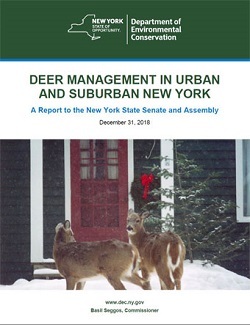


 Steyr Arms will be hosting the 2nd Annual Steyr Challenge, Oct. 5 in Seetaler Alpe in Austria, with teams from across the globe competing for the title of “Toughest Hunters in the Alps.”This competition is a combination of a more than seven kilometer mountain run with about 300 meters of elevation gain, different shooting disciplines, abseiling and sawing. Each four-person team, with one alternate, will need to train together, shoot together and strive for the ultimate goal of winning together.
 About Steyr Arms





 By David Gray


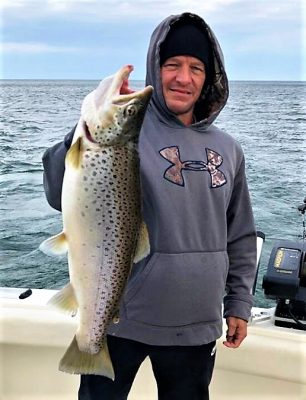


 New York State Department of Environmental Conservation (DEC) Commissioner Basil Seggos announced today that spring turkey season opens May 1, in all of Upstate New York north of the Bronx-Westchester County boundary. In addition, DEC’s annual youth turkey hunting weekend will take place on April 20-21. The youth turkey hunt for junior hunters ages 12-15 is open in all of Upstate New York and Suffolk County.


 The Lil’ Treestalker harness is made to keep your youth hunter safe when you take the kids upstairs in a tree. The youth harness also features ElimiShield® Hunt Scent control technology, just like the adult models. ElimiShield utilizes a proprietary nanotechnology that kills over 99.99% of odor-causing bacteria at the cellular level and forms a bond with the treated article that lasts for more than 50 commercial washes. By treating the Lil’ Treestalker with the ElimiShield in the manufacturing process, the harness is forever protected from mildew and odors after being exposed to sweat and moisture, so it’s protected while it is packed away in storage during the off-season.
 Founded in 2001 and headquartered in Danville, Ala., Hunter Safety System is a leading designer/manufacturer of innovative deer hunting gear and hunting equipment for the serious hunter. The company has exclusive rights for use of ElimiShield in the hunting industry. For additional information, write to: The Hunter Safety System, 8237 Danville Road, Danville, AL 35619; call toll-free 877-296-3528; or visit


 The 110 Folding Hunter® is one of America’s favorite knives, this version, the 110 Folding Hunter® LT, will undoubtedly follow in suit. Weighing barely over 3 ounces, the LT is created with lightweight molded nylon, drastically reducing its weight while maintaining the same quality as the original Folding Hunter®. The clip point blade is finished with Buck’s advanced Edge2x blade technology for unbelievable sharpness and edge retention out of the box.


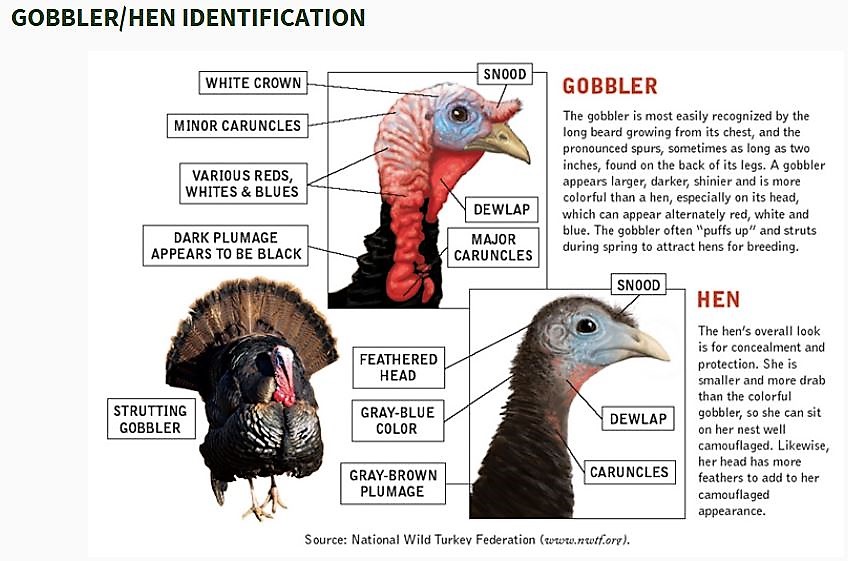


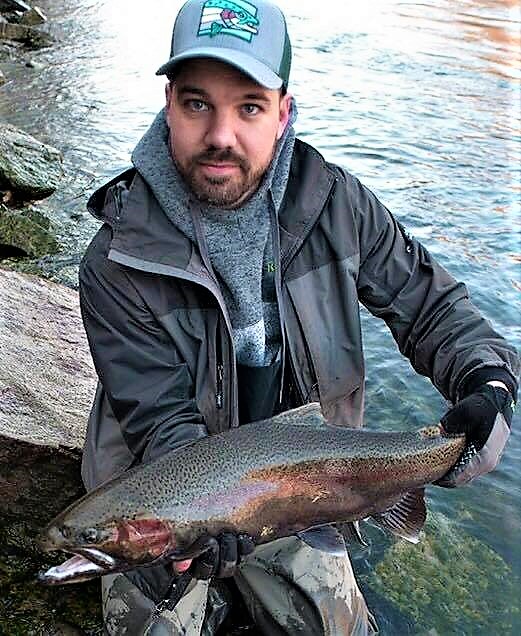


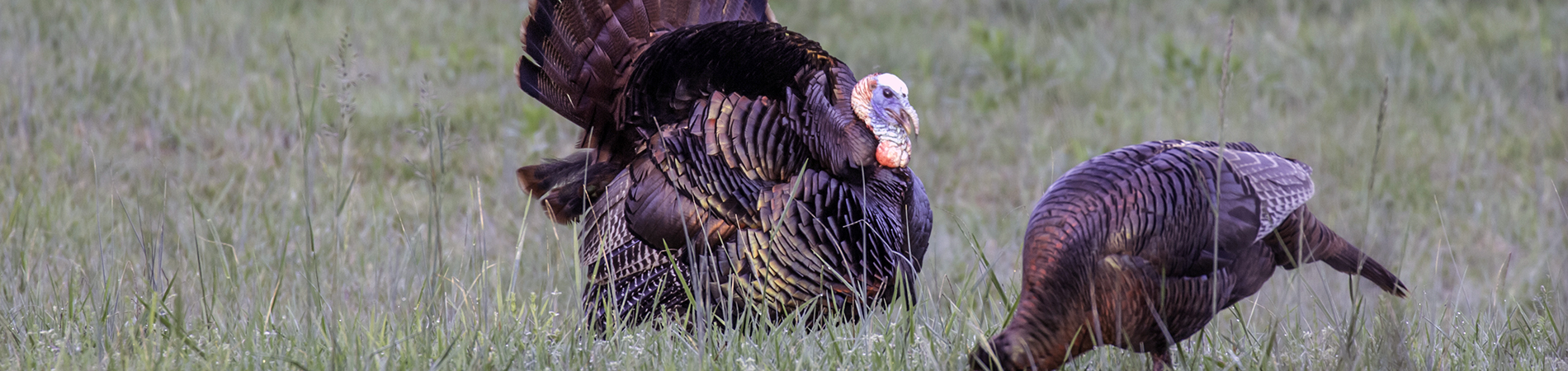
 Although the opener is traditionally met with snow, high flows and cold temperatures, April 1 is nonetheless the opening day for trout and salmon fishing throughout the State of New York and an indication that spring is just around the corner. Look for best fishing in more temperate areas of New York including Long Island, the lower Hudson Valley and southwestern New York. DEC has a number of new publications that will prove helpful to those new to trout fishing. The

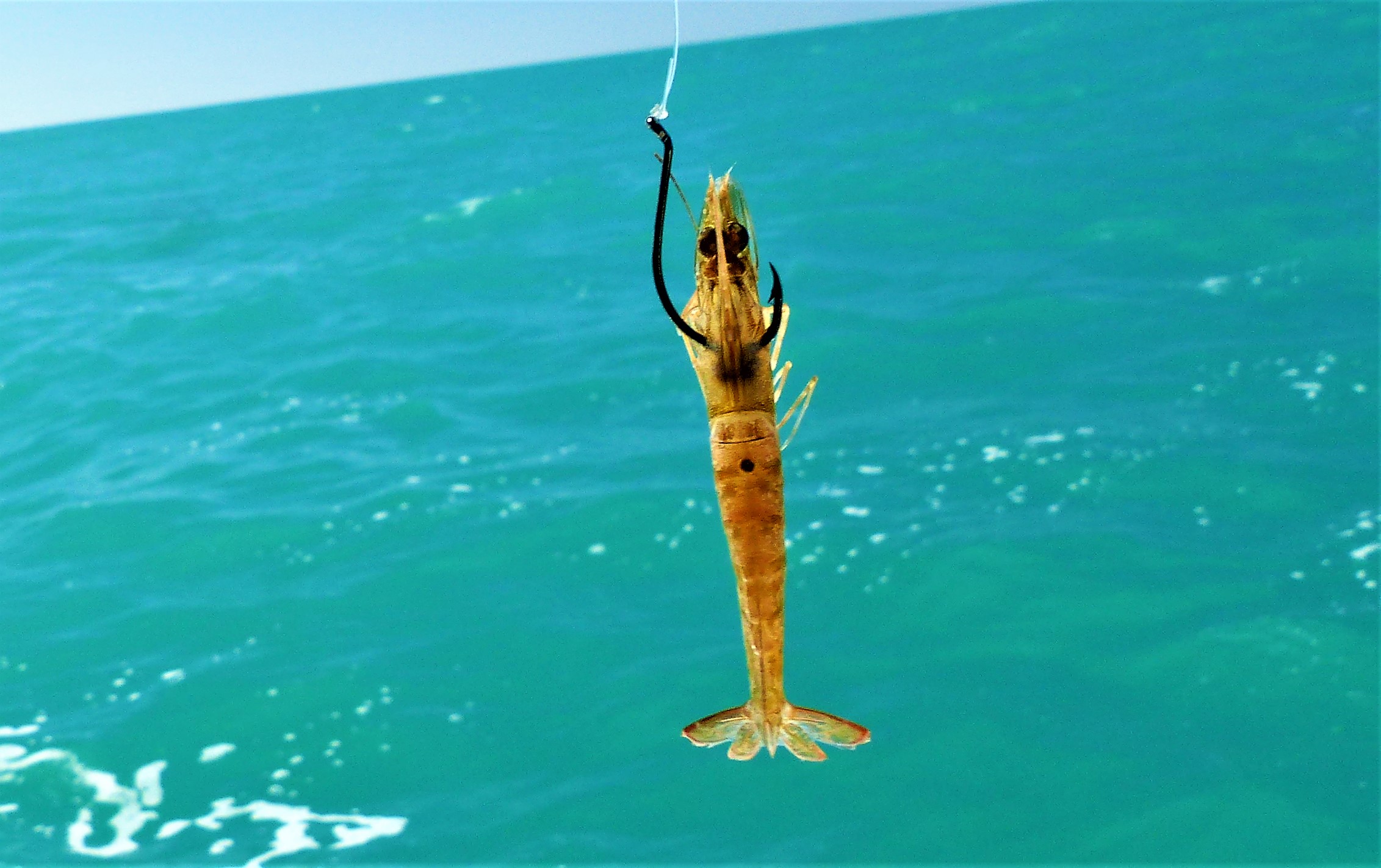


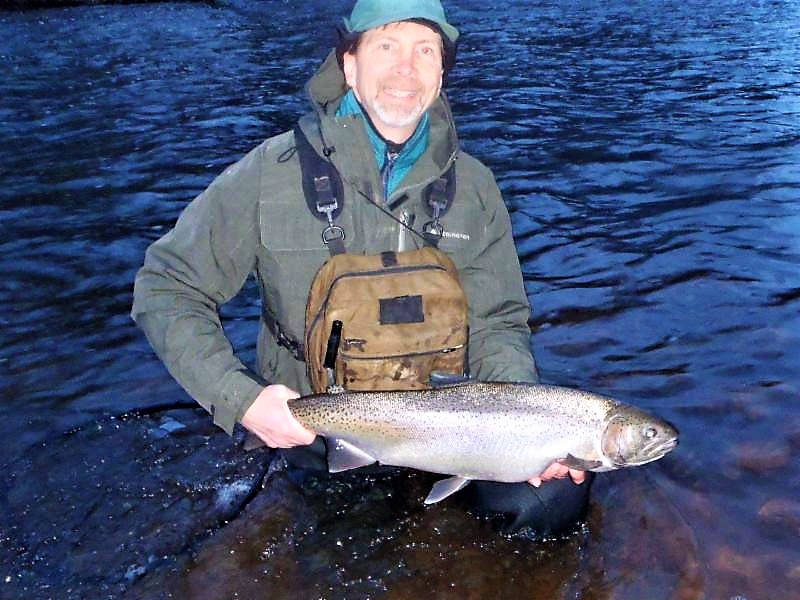
 Fishing pressure seems light through this mid-week period, some guys are still at the dam and some anglers are able to move around – fishing other downstream fast water spots. Action has been good for deep and slow drifters covering the fast water spots on mostly fresh steelhead that are giving themselves a good account in hard battles. That seems like an encouraging sign for steelhead conditions. There is some evidence of spawning from the earlier higher water but right now most fish seem tight and fresh. Water temperatures are nearing 40° F and with warmer days and especially not cold nights ahead look, for the water temperatures to continue to warm.

 However, if you’re like most landowners who want to attract and hold more and healthier wildlife, including deer, turkeys and a host of other species, you need to increase the carrying capacity of your land by providing the proper amount and type of natural food to meet their year-round nutritional needs.
  Planting soft and hard mast orchards is a great way to significantly increase available wildlife nutrition over longer period. It should be done in addition to, other wildlife habitat improvement practices. By incorporating mast orchards into a larger coordinated plan that could include timber harvesting, herbaceous food plots, controlled burning and other practices, the end result of the whole becomes greater than the sum of its parts.


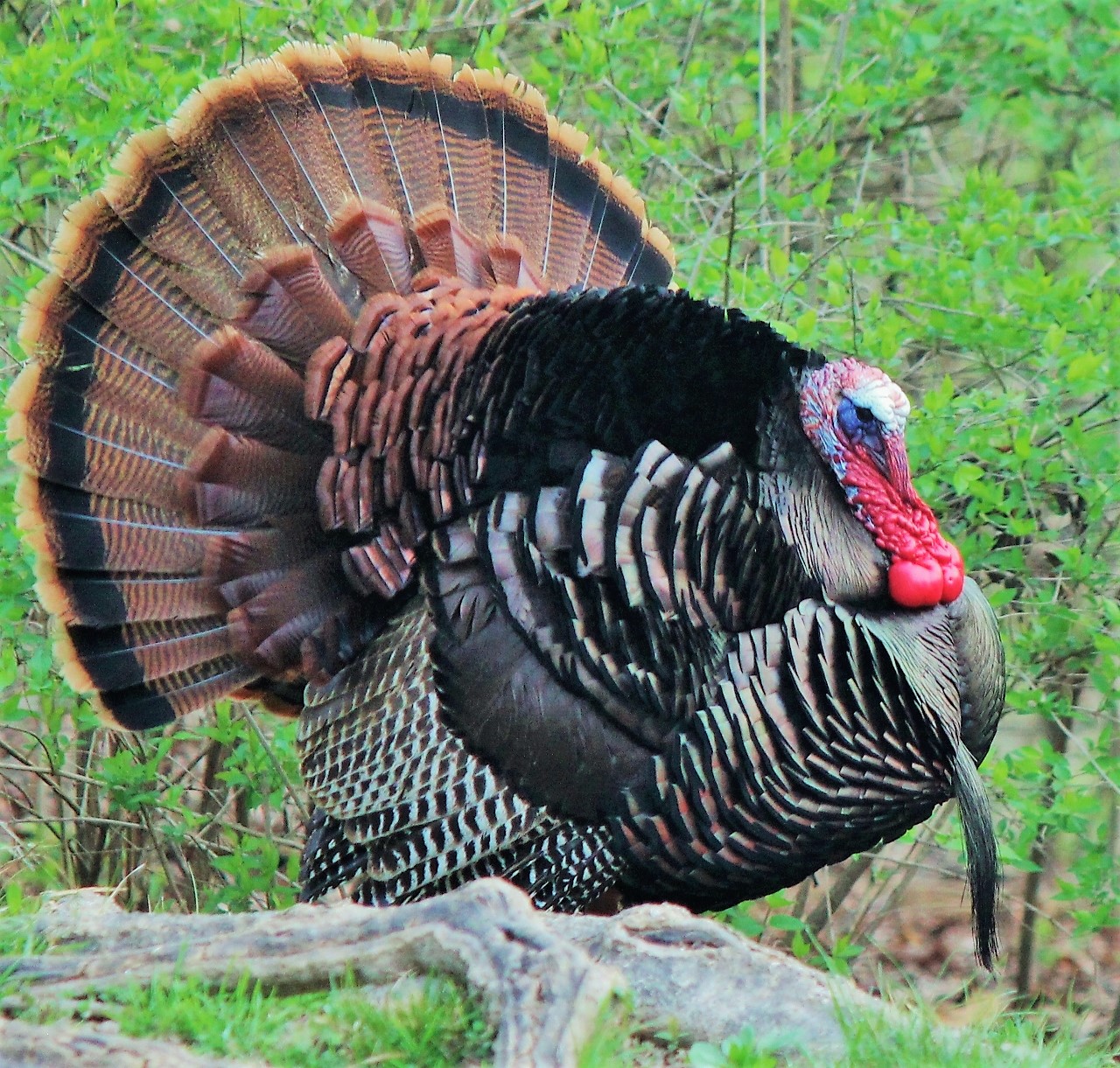
 Florida’s spring turkey season opens Saturday, March 2 on private lands south of State Road 70 and Saturday, March 16 north of State Road 70. Florida’s abundant wild turkey populations offer sustainable harvest opportunities throughout the state. However, hunting them is a challenge because they are extremely wary and possess sharp eyesight and excellent hearing. When knowledge, skill and good fortune come together for a successful outcome, hunters can look forward to delicious, organic meals.


 Ever noticed that fish everywhere become familiar with seeing the same lure over and over? What worked last year simply is not working this year. It’s frustrating, right?
 Last month at SHOT Show, Steyr Arms USA CEO Scott O’Brien unveiled the company’s newest and boldest plan for the American market, the Steyr Elite Experience.


 The new Koola Buck Blood Red Game Bags are constructed from strong yet breathable cotton/poly fabric blend and feature heavy duty 1.5-inch nylon cinch/carry straps that are sewn into the bag for easy handling of heavy weight and attaching securely to a backpack or pack frame. The wide side gussets and seamless bottom allow for 20-percent more storage than the average pillowcase-style game bag. As an added protection of the precious cargo, Koola Buck has designed these new game bags with a top-cover meat flap. This added flap completely covers the meat before pulling the bag’s locking drawstring, creating a physical barrier to block bugs, dirt and other contaminants.


 Not sure what to get that special someone for Valentines Day? The answer is at your finger tips. Just type


 Morris has spent his life tirelessly working to preserve wildlife and wild places so that future generations can be as energized and excited by nature as he has been. Morris has long pointed to his earliest days of being out with his family on the streams of the Missouri Ozarks as the inspiration for his extraordinary success with Bass Pro Shops.




 Grant awards range from a minimum of $11,000 to a maximum of $100,000, with a required 25 percent match. Project locations must be located wholly within New York State and priority will be given to projects that include opportunities for public participation, are on or close to public lands or waterbodies, and emphasize long-term success. For full details about the grant opportunity including eligible projects and scoring criteria, visit the


 At the NSSF State of the Industry presentation, NSSF CEO Steve Sanetti said that industry is too often negatively portrayed in the media and that its many programs that promote safety — such as
  The show, marking its 10
 The SHOT Show’s official opening on Tuesday was preceded by many events, including the 5th Annual


 From their headquarters in Edgefield, South Carolina, one of the more storied organizations in conservation and hunting is partnering with the outdoors industry’s fasting growing tech startup. As the National Wild Turkey Federation expands upon its efforts to recruit, retain and reactivate hunters, it’s adding high tech firepower to its communication plan – a partnership with GoWild.
 “This isn’t just about new memberships, we want to drive awareness of the value of volunteering to help in the name of conservation,” said Becky Humphries, CEO of the NWTF. “Just as we’ve fought to bring the numbers of turkeys back to a healthy population, we must now focus on raising the number of hunters. Our partnership with GoWild will help us reach a new generation of hunters, and that’s what it’s all about.”


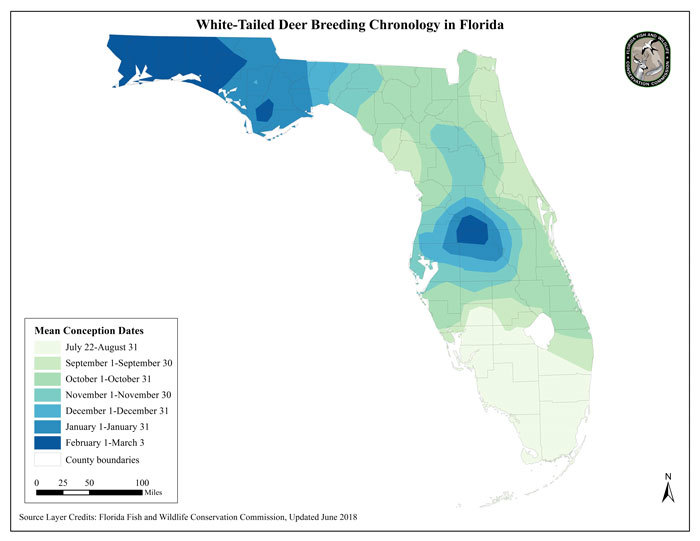

 Zone D’s late muzzleloader season

 Avid outdoorsman and outdoors writer, Ken Taylor, has been a host of Outdoor Guys Radio since the show began in 2011. Ken has been hunting and fishing since he was old enough to pick up a BB gun, and is passing that passion on to his two sons. Both boys love to hunt and shoot, and are also avid fisherman. Ken credits his dad with instilling in him a love for hunting, fishing, and all things outdoors. Thanks mostly to his understanding wife, Ken spends over 90 days a year hunting and fishing. Ken enjoys hunting big game, upland birds and waterfowl in both Kansas and Missouri. The rest of his year is spent fishing on their home lake, shooting at Powder Creek Gun Club and training Ruby and Belle, the family’s Vizslas. Adds Ken, “Ruby and Belle are our most reliable hunting partners!”


 Harry S. from Pittsburgh, Pa. caught this nice steelhead in Devil’s Hole on an egg sac Monday while fishing with Capt. Vince Pierleoni of Newfane, NY.


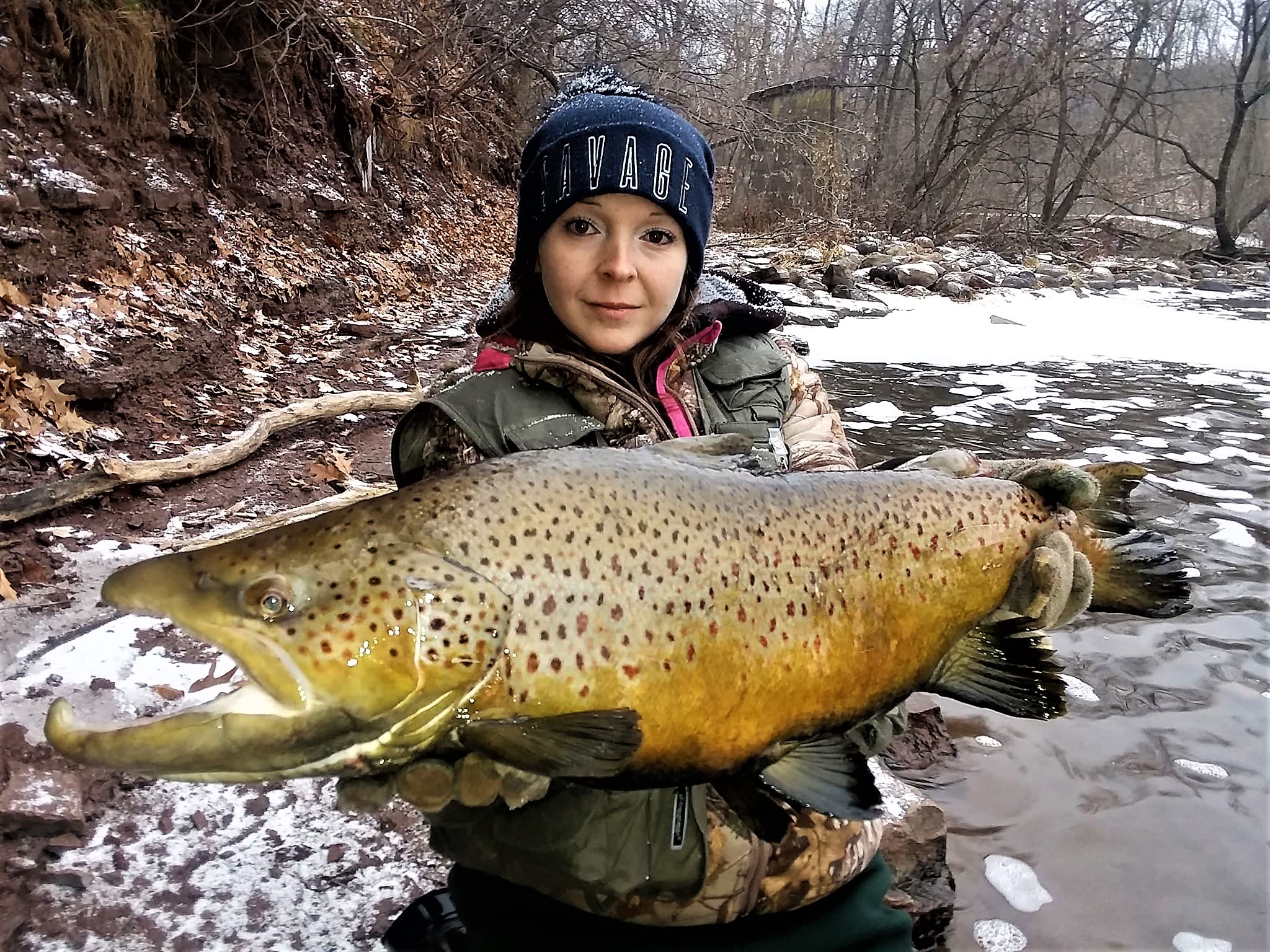


 Billy grew up in Ohio and like all the kids, had a bluegill rod with bobber attached to begin his lifelong pursuit of fishing. Billy never learned to hunt as kid, but took it up at age 36 to develop a love of archery hunting that quickly grew into a passion for recreational archery target shooting. As a U.S. Coast Guard Chief Machinery Technician, Billy retired after serving 21 years. Seizing an opportunity to pursue a career within the Outdoors and Shooting Industry in 2012. He attended his first Shot Show with his Father-in-law and mentor, Bob Cole, of “Cole Media Sales.” Billy was hooked. Bob’s guidance and introductions would serve invaluable the ebb and flow of outdoor industry tides. Billy’s approach toward people and business has always been a simple one. Treat people well, because at the end of the day, “It’s not just , it’s Personal.”



 Kolbeck is a graduate of University of Wisconsin – Stevens Point where he studied Graphic Design in the Fine Arts Program. During his college years, Nik’s passion for fishing started to take off and has since become a family event with his father and brother and their beloved Border Collie, Abbi.
 Since graduation, Kolbeck worked for Swiderski Equipment – an agriculture and construction equipment company with five locations throughout central Wisconsin. His duties included creating print, online and social media graphics, photography of equipment and keeping website information current and correct.




 1791 Gunleather®, innovative manufacturer of premium hand-crafted leather gun holsters and belts, announces the 1791 Tactical® Kydex® line of premium holsters. New for 2019, 1791 Tactical® IWB Kydex holsters will be on display in the 1791 Gunleather booth during SHOT Show®, at the Sands Expo Center in Las Vegas, NV, from January 21 through 25 in booth #1817.


 The Right Zone