On the eve of National Hunting and Fishing Day activities for this weekend, it looks like there will be plenty of things going on to see and do.
If you want to wet a line, the Niagara Bar is still a place to be for a salmon bonanza … if the forecasted northeast wind doesn’t do too much damage to the waters. It looks like a beautiful weekend otherwise and the Niagara Bar is holding mature kings getting ready to run up the Niagara … we hope!
Target the red can at the drop off to take your salmon, using flasher-fly, cut bait or spoons. J-plugs will also work for you. Just get your baits into the fish zone using downriggers, dipsy divers, lead core line – whatever it takes.
Capt. Frank Campbell of Niagara Region Charters took his 20-foot Lund out to the drop and used dipsy divers to take five nice kings by employing spin doctors and flies behind his dipsy divers. It proved to be much better than trying to drift for kings in Devil’s Hole, trying to satisfy customers looking to catch a salmon.
Over in Wilson and Olcott, brown trout are starting to show up in small numbers. Ditto for kings in Olcott. A small slug of salmon showed up in the harbor, but not at the dam yet. There are a few fish around there, but nothing to write home about.
Bass fishing has been better.
Don’t forget that the King of the Creek salmon contest is being run by All in the Same Boat Tackle from Sept. 23 to Nov. 6. There is a boat and a shore category. Call 638-4158 for more info.
There was a good turnout at the special DEC meeting held in Lockport last Monday. For a position paper on this, check out www.dec.ny.gov. Make your comments by Sept. 30 at fwfishlo@dec.ny.gov.
Lower Niagara River –
Anxious anglers are waiting in force to try and catch these king salmon in the last stages of their lives. The NYPA Fishing Platform is one of the hotspots for your best chance for a king salmon. Casting spoons, spinners or crankbaits can catch fish, but the best is yet to come. Other shore anglers have been using spoons, spinners and jigs to take a mix of fish, including bass and walleye.
River water is still 74 degrees.
Bass fishing has been spotty. Some days are better than others. Look for the active fish by moving around the river and the green can at the mouth. Live bait like shiners will work; tubes and Ned rigs will catch some fish, too.
With the NYPA Wildlife Festival going on Sept. 24-25, co-sponsored by the Niagara County Federation of Conservation Clubs, remember that there’s also a kids fishing contest that’s part of the Festival. Just catch a fish in Niagara County and bring it to the scales at the NRAA fishing pond. Lots to see and do from 10 am to 5 pm each day. It’s free and a great family activity.
Upper Niagara River / Erie Canal – Bass Action
A few musky were active the past week, but you really might want to wait until water temperatures come down a bit more before you start putting any heavy pressure on them. Ryan Shea of the Brookdog Fishing Company had been focusing on bass this week, but he still had a couple follows on his fly while casting the upper river areas.
Bass action continues to be fair to good, depending on the day and the conditions.
Be careful around the Canadian boundary and don’t venture across that line without calling in. Abide by the bait regulations, too.
Bill Hilts, Jr., Director, Outdoor Promotions
Niagara Tourism & Convention Corporation, 10 Rainbow Blvd., Niagara Falls, NY USA 14303
p: 716.282.8992 x.303| 1.877 FALLS US, f:716.285.0809
website | facebook | twitter | blog
Sportfishing has a $30 million annual economic impact in Niagara USA!
Hats off to Joe Yeager with this monster King Salmon recently caught in western Lake Ontario.
The cool down continues for the rest of this week and well into next week.
Rain is in the forecast throughout the end of the week and into Monday of next week, which should spur movement of salmon towards their spawning locations. Fishermen are reporting more hookups around the tributary mouths of Johnson and Sandy Creeks, as well as at the mouth of Oak Orchard Creek.
Right now the flows on the tributaries within Orleans County are at moderate levels to slightly below moderate levels, but the rain over the next few days should improve those conditions.
Right now fishing pressure is light but with conditions improving that should be on the increase.
The weather conditions are moving these fish up to at least the mid-pools and some all the way up to the Waterport dam on the Oak. Please remember that if you are utilizing fishing opportunities on Brookfield Power property to take the time to familiarize their guidelines concerning safety procedures.
On Lake Alice, the Bluegill fishing is starting to drop off slightly, but the bass fishing is on the rise.
From Point Breeze on Lake Ontario, the World Fishing Network’s Ultimate Fishing Town USA and the rest of Orleans County. We try to make everyday a great fishing day in Orleans County.
A call from Chuck Booker of Amherst reported that there were a few fish caught off the Olcott piers the last couple of nights on the lake side of the piers. While spoons are normal hardware for casting there, it was Rattletraps that made the difference and they produced two kings and a steelhead for Ricardo Davila!
A few slugs of salmon made it up into the harbor, but no further than that according to reports. A few browns at the dam. Hopefully this rain that is in the forecast will trigger some sort of a run in the creek at 18 Mile.
Don’t forget that the King of the Creek salmon contest is being run by “All in the Same Boat Tackle” will run to Nov. 6. There is a boat and a shore category. Call 716-638-4158 for more info.
Over in Wilson Harbor, there has been a good bite on northern pike according to Pastors Dave Emmons and Nate Hlad of Newfane. Try casting spinnerbaits. Wilson Pier is a good spot for browns, too.
If you want to make it out into the lake for some trolling action, the better bite has been out deep for a mix of immature kings and some trout. Spoons are the way to go. Anchoring up at the pier heads in Olcott is another option to try and cast for kings. Lake trout season ends tomorrow until the end of the year.
Lower Niagara River –
Anxious anglers are waiting in force to try and catch king salmon. Capt. Steve Drabczyk reports that he caught three kings Tuesday in Devil’s Hole – the best we’ve heard so far from boaters. Then some Facebook posts went up and Capt. Ernie Calandrelli reported a five for nine day on kings on Wednesday, so it appears to be picking up a little bit. The rain is certainly helping. Treated egg skein off three way rigs is best for the boaters.
The NYPA Fishing Platform is still one of the hotspots for your best chance for a king salmon. Casting spoons, spinners or rattle baits can catch fish, but the best is yet to come. Other shore anglers have been using spoons, spinners and jigs to take a mix of fish, including bass and walleye. River water temp was down to the 60’s.
Bass fishing continues to be spotty. Some days are better than others. Look for the active fish by moving around the river and the green can at the mouth. Live bait like shiners or crabs will work; tubes, too.
Upper Niagara River / Erie Canal – Bass Action
Bass action should start to pick up as water temps start to cool down. Ditto for musky action. The next Niagara Musky Assn. meeting is Tuesday, Oct. 4 at the Eldridge Club, 17 Broad St., Tonawanda starting at 7 pm.
In addition to some reports on the local fishing action, guest speaker will be Jonah Withers with the U.S. Fish and Wildlife Service talking about the acoustic telemetry project involving lake sturgeon in Buffalo Harbor.
Bill Hilts, Jr., Director, Outdoor Promotions
Niagara Tourism & Convention Corporation, 10 Rainbow Blvd., Niagara Falls, NY USA 14303
p: 716.282.8992 x.303| 1.877 FALLS US, f:716.285.0809 website | facebook | twitter | blog
Sportfishing has a $30 million annual economic impact in Niagara USA!
The cooler temperatures of the past few days have the salmon population slowly moving towards their spawning grounds. The biggest concentration of salmon on the “Oak” seems to be by the deep hole at the bridges area.
Later this week we will be experiencing even more cool down which should speed up the pre-spawn movement.
Water levels on all of the tributaries within Orleans County are at slightly below levels to low levels for this time of year. With no great amount of precipitation in the near future these levels should remain.
On Lake Alice, Bluegills are still being taken by the Waterport Bridge and now some Crappie are starting to show up. Bass are becoming more active and should increase in activity as temperatures cool down.
Don’t miss out on some great fishing, food, friends and prizes at the St. Mary’s Archer’s Club Catch and Release Derby which will be held on October 19th to the 21st this year. It is truly one of the great events of the fall fishing season. Visit the weigh station, Narby’s Superette – to sign up, see Sharon Narburgh, 1292 Oak Orchard Rd. (RTE 98), Kent, NY 14477, or call 585-682-4624.
From Point Breeze on Lake Ontario, the World Fishing Network’s Ultimate Fishing Town USA and the rest of Orleans County. We try to make everyday a great fishing day in Orleans County.
The weather for the next week or so seems to have higher than normal daytime temperatures and cooler than normal night time temperatures, or at least that is what the weathermen say.
There doesn’t seem to be much action on our portion of Lake Ontario, but the pier fishermen are starting to get some hook-ups. With the shorter days and longer nights water temperatures should start dropping towards that magic number to signal the start of the spawning migration for trout and salmon. With September also half gone, tributary fishermen are preparing for what should be a great tributary season.
This is also the time of year when many fishermen’s minds and hearts start turning towards hunting season.
On Lake Alice there has been an upswing in the Bluegill catch rate and also the sizes of the catch especially around the Waterport Bridge area. Also the bass fishing productivity has increased due to some cooler water temperatures.
Please remember that the St. Mary’s Archers Club Catch and Release Tournament will be held from October 19th to the 21st this year. It’s a great time for some great competition, fantastic food and some of the finest tributary fishing to be found anywhere.
From Point Breeze on Lake Ontario, the World Fishing Network’s Ultimate Fishing Town USA and the rest of Orleans County. We try to make everyday a great fishing day in Orleans County.
Ed Shannon shows up a 30-plus pound Niagara Bar king caught on Kingfisher Charters.
Lake Ontario and Trib’s
An important meeting is being held this Monday, September 19, at Cornell Cooperative Extension Niagara, 4487 Lake Avenue, Lockport, starting at 6:30 pm. If you are a Lake Ontario drifter, troller or tributary fisherman, you’ll want to attend this meeting. Members of DEC will be discussing what their proposed plans are for 2017 when it comes to salmon and trout stocking, based on recent forage base assessments. This is your opportunity to listen to the proposal and voice your concerns.
On September 23, the King of the Creek salmon contest – from both boat and shore – is being run by All in the Same Boat Tackle, 2911 Lockport-Olcott Road, Newfane, through November 6. Call 716-638-4158 for more info or visit www.abstackle.com.
Speaking of salmon, one of the hottest spots has been the Niagara Bar at the drop-off. Salmon are stacked up there like you wouldn’t believe. Captain Mike Johannes of On the Rocks Charters out of Wilson, went 15 for 18 matures last Saturday on the Niagara Bar before the wind picked up and cut the day short. Fish were in 80 to 200 feet of water down 50 to 80 feet on wire divers set on 3 out 160 to 180. Out of the 15 boated, 14 were caught on meat behind large flashers and Twinkie rigs. His best flasher was a white King’s Flasher. He also caught some on white/green Bechhold flashers. When running the larger flashers, a speed of 2.2 to 2.4 is best. They were marking a lot of fish and quite a bit of bait when they were there.
Olcott also has a fair number of fish hanging inside of 80 feet of water according to Wes Walker at the Slippery Sinker. Plugs, cut bait and flasher-fly are working there for matures. They are starting to pick up a few off the piers and some browns, too. Browns off the piers in Wilson, as well, with spoons. Both harbors have a mix of warm water fish. A few trout and salmon have been caught at the dam, but mostly warm water fish have been hanging around.
Lower Niagara River – Walleye Action
Ray Van Horn with lower river smallie with fishing with First Choice Charters.
Salmon numbers are slowly starting to increase for the shore guys. A few have been caught on spoons; some have been caught on spinners. Rattlebaits will also work. NYPA Platform casters are out-producing the boaters right now as far as salmon in the river. That said, the boaters are still doing well on bass and walleye – especially downriver and on the bar. Worm harnesses for the walleye; tubes and live bait for the bass. Captain Randy Lingenfelter reports that fishing has been good with soft baits and crayfish if you still can find them. B.A.S.S. pro, Ray Van Horn, fished on his boat recently, throwing Strike King Soft Baits doing very well. Baby Rage Craw in three inch. They were catching 25 to 30 fish a day. One of his charters caught a 6.5 lb. smallie last week. Several local media were in town last weekend and managed to get some decent smallmouth bass.
The New York Power Authority’s Wildlife Festival, held at the Visitor Center, 5777 Lewiston Road, Lewiston will be September 24 and 25 from 10 am to 5 pm both days. Everything is free! This is the area’s version of National Hunting and fishing day and the event is co-sponsored by the Niagara County Federation of Conservation Clubs. Get ready to have a great weekend!
Upper Niagara River / Erie Canal – Bass Action
Bass are still the best thing to go after with tubes, spinnerbaits or live bait like crayfish and shiners, fished off three-way rigs. Know where you are at all times in the river because there are severe restrictions in Canadian waters – on bait and on calling in before you venture across the line, or is it as you cross the line, or is it when you are in Canadian waters. Not quite sure because we’ve been getting different answers from different people.
Bill Hilts, Jr., Director, Outdoor Promotions
Niagara Tourism & Convention Corporation, 10 Rainbow Blvd., Niagara Falls, NY USA 14303
p: 716.282.8992 x.303| 1.877 FALLS US, f:716.285.0809 website | facebook | twitter | blog
Sportfishing has a $30 million annual economic impact in Niagara USA!
Just like many of us already know, education is the key to success in just about anything in life. From the numbers and illustrations noted on the New York State DEC Hunter Safety Website – and shared here, we can see that New York State’s hunter education courses have proven they are highly effective in fostering safe hunters. Approximately 500,000 licensed hunters spend an estimated 10 to 15 million hunter days afield each year. Recent reports indicate that 2015 had the third-lowest number of hunting-related shooting incidents on record in New York. The 2015 hunting season yielded the first year without a single hunting-related shooting fatality since the 1950s.
These low numbers have been achieved through training and the regulations governing hunting activities in New York State. The New York State Department of Environmental Conservation (DEC) Sportsman Education Program is designed to teach and promote safe and effective hunting principles, practices, and strategies. The program has been extremely successful over its 66 years of existence.
Since DEC’s Sportsman Education Program was first introduced in New York State, the number of hunting related accidents have declined significantly. Reports on the number of hunting-related shooting incidents indicate that 2015 had the third lowest number on record in New York with 23 incidents. Starting with 2013, the last three years were the top three safest in New York with this being the first year on record with zero fatalities.
You can view and print the 2015 report by clicking the link: visit the Hunter Safety Statistics web page.
Hunter education courses are held across the state
DEC’s free education courses are offered for Hunter Education, Bowhunter Education, Trapper Education, and Waterfowl Identification. However, courses fill up quickly. Interested new hunters and trappers should sign up for a course soon and complete it before going afield this fall.
DEC’s on-line registration system features a list of all available hunter and trapper education courses and locations. Students can register from any device – smartphone, tablet or computer – 24 hours a day, seven days a week.
Education courses are added continuously throughout the year, so participants should check the on-line system frequently to find a course or call 1-888-HUNT-ED2 (1-888-486-8332) or 518-402-8966.
New course homework requirements instituted this year
All hunter education and trapper education courses now require students to review course materials and complete a homework sheet prior to attending classroom and field sessions. The new homework requirement provides an introduction to hunting in New York State and enhances students’ understanding of the course material. Students should register for the course well in advance of the classroom and field date(s) in order to allow time to complete the homework requirement, which takes approximately three hours. All courses require successful completion of an in-person field day to earn certification for the course.
Access to the homework materials and online homework options can be found on DEC’s website; participants may also follow the guidelines listed in the various course announcements during registration. Actual course manuals and homework sheets are always available from DEC wildlife offices and sportsman education instructors.
New York sets a good example for other states in this great country to reflect upon.
Abundant deer populations are present in New York State near metropolitan areas and near farm areas too. Identifying the process to provide public highway safety, successful farming and hunter achievement opportunities is a complex process. Joe Forma Photo
Pilot Project Concludes on Public Input for Deer Populations
Evaluation and Assessment Continues
The New York State Department of Environmental Conservation (DEC) has a pilot effort in progress to improve collection of public input about deer impacts and desired deer population levels (www.dec.ny.gov/press/103053.html). This is a collaborative venture with Cornell University and county-level Cornell Cooperative Extension (CCE) offices that has concluded and is now being evaluated. The effort was intended to revise and modify the former Citizen Task Force process to improve methods for public input on desirable changes in local deer abundance, consistent with DEC’s Deer Management Plan.
The pilot, which took place in a 1,325-square-mile area of central New York (Wildlife Management Units 7H, 8J and 8S), began with a 2015 survey of residents to gather information on the values they attribute to deer and their experiences with and concerns about deer impacts. Out of the 3,000 surveys that were mailed, 1,456 were completed and returned. Following considerable public outreach to advertise the program, two webinars were held in January 2016 to provide information to residents on DEC’s deer management program, the results of the public survey, deer biology, deer impacts on people and the environment, and deer management issues and challenges. Webinar participants were then asked if they would like to volunteer to be part of an input group, and 12 of the 24 volunteers were selected.
A team of NYSDEC Wildlife Biologists conduct deer assessment checks to provide feedback on age, health and density of the NYS Deer Population during each big game firearms season. Forrest Fisher Photo
This group held two meetings in March 2016 to discuss local deer-related impacts and prioritize issues that they felt DEC should address. These meetings were facilitated by Oneida County officials and two DEC wildlife biologists attended to answer questions and offer advice. Although the group members had been selected to maximize the diversity of deer-related interests and perspectives as much as possible given the low number of volunteers, the prioritization of impacts identified by group participants differed markedly from that indicated by the survey of residents. The number one priority for the input group, deer hunting opportunities, was viewed as least important by the surveyed residents; Lyme disease was identified as the number one management priority by the surveyed residents, but was identified by the input group as least important for DEC to address, along with deer-vehicle collisions.
As group participants observed, making decisions about deer and deer management is a complex task involving diverse stakeholder interests and values, which may be conflicting. Designing a process that can address this complexity satisfactorily is difficult. The pilot process is currently being evaluated by DEC and our Cornell research partners, and we expect to generate recommendations for refinement later in 2016. If, after refinement, the new process proves workable and valuable, DEC intends to implement it on a routine cycle in each aggregate of Wildlife Management Units across the state to respond to changing conditions and attitudes about deer impacts over time. DEC deer managers will consider the public’s prioritization of deer impacts and desires for deer population change, in conjunction with data on the ecological impacts of deer, as they make decisions about changes to deer abundance in each area.
Additional details on the pilot effort and its outcomes are available in the progress report, and DEC will provide more information about future developments as the project continues.
Some rain today and the more moderate temperatures predicted for the rest of the week should help create better fishing conditions well into next week.
Lake Ontario is slowly setting up for the migration of Chinook salmon preparing for their spawning runs. Reports have the action slowly picking up in the inside waters especially around the 80 feet of water area. It’s not hot and heavy yet but it is increasing.
Labor Day signals the end of the Fall LOC Derby which means that there’s still time to enter and catch your share of the great cash prizes that are up for grabs.
Also this Sunday is the final King of the Oak Derby for this year.
This is also the time of year that the tributary fishermen have been waiting for. Hope that you all have tied all your flies, repaired that leak in your waders and checked rods, reels and line for those last minute repairs.
On Lake Alice, around the Waterport Bridge, the bite seems to be mainly Bluegill right now. On the rest of Lake Alice it seems to be Rock bass and Smallmouth bass, especially around the brush piles.
From Point Breeze on Lake Ontario, the World Fishing Network’s Ultimate Fishing Town USA and the rest of Orleans County. We try to make everyday a great fishing day in Orleans County.
Scott Foster (left) of N. Tonawanda, NY caught a nice 15 lb 13 oz Brown. His father, Earl Foster (right) of Wilson, NY did a little better with a 17 lb 4 oz Brown that took over the lead in that division. Both fish were caught on Bay Rat Stickbaits and weighed in at Wilson Boatyard Marina. It was a great fishing day for the Fosters! Photo LOC Derby.
The LOC Derby is starting to wind down, ending on Labor Day. Grand prize leader for the $25,000 is still the 33 pound, 13 ounce King Salmon weighed in by Richard Clark. To make the leader board, you need a fish better than 30 pounds, 3 ounces! There’s a new brown trout leader out of Wilson as of this week. Earl and Scott Foster of Wilson, a father-son fishing team, were fishing out their home port trolling Bay Rat lures when they scored on two dandies – a 17 pound, 4 ounce fish for Earl and a 15 pound, 13 ounce fish for Scott. Bigger fish are still out there! Go to www.loc.org for details.
Salmon are stacked up on the Niagara Bar right now according to Captain Matt Yablonsky of Youngstown. Flasher-fly, cut bait, plugs and spoons will all catch fish. The same will work for you off Olcott where you have the option to target staging fish in 30 to 120 feet of water or go deep for a mixed back of salmon and trout. Same baits mentioned earlier will work in close; primarily spoons offshore. After recent rains jacked the CFS in 18 Mile Creek to 175, we did see a few pier casters hook up with salmon at night by casting Cleo’s out into the lake. A few browns are being reported, too. The best is yet to come.
Another successful Fish Odyssey is in the books! Grand prize winner in the Adult Division was Matt Dunn of Newfane with his 31 pound, 5 oz. pound salmon. In addition to his $4,000 Grand Prize check, he also won $500 from the Lake Ontario Trout and Salmon Association for the largest salmon caught by a LOTSA member and $100 for big salmon of the day. Dunn won the Grand Prize in the drawing at the awards ceremony at the Newfane Town Hall. Other divisional winners were Dennis Stabler of Lockport with a 17 pound brown trout; Patrick Barber of Niagara Falls with a 17 pound, 5 ounce lake trout; Nick Calandrelli of Lewiston with a 25 pound, 10 ounce carp; Dave Muir of North Tonawanda with a 6 pound, six ounce smallmouth bass; and Steve Majka with a 12 pound, 10 ounce walleye. Some outstanding catches came to the scales, a tribute to the local fishery. In the Junior Division, it was 5 year old Alyssa McGrath of Niagara Falls winning the Grand Prize with a 10 ounce panfish. She won a $100 Cabela’s gift card, a nice plaque, a rod and reel and tackle box.
Other winners in their respective divisions were: Alex Heath of Sanborn with a 26 pound, 13 ounce salmon; RayLee Peterson of Home, PA with a 9 pound brown trout; Abigail McGrath of Niagara Falls with a 4 pound, 13 ounce smallmouth bass; Matthew Kelsey of Attica with a 13 pound, 7 ounce carp; and Ethan Brolinski of Lewiston with an 8 pound, 7 ounce walleye. Take time to remember the person that we honored this year – the late, great Jeremiah Heffernan, a local charter captain who did much to promote the local fishery.
Lower Niagara River – Walleye Action
The walleye bite has been pretty consistent for some; not for others. In the Niagara River Anglers Associations Lower River Walleye Contest, some 25 contestants were vying for some decent cash prizes. In the end it was Steve Majka who had the hot hand with two fish totaling 13.86 pounds. Majka also caught the big walleye in the Fish Odyssey at 12 pounds, 10 ounces at the mouth of the river, power trolling an orange and gold worm harness to take his biggest walleye ever.
Hook N Look has taken fishing and scuba diving to provide new levels of learning and outreach to anglers on the Outdoor Channel. Photo Credit: http://www.hooknlook.com/
Back to the NRAA event, Mike Fox of Lewiston reeled in 12.07 pounds of walleye for second place; third place went to Capt. Steve Drabczyk of Lewiston with 11.87 pounds. Big fish for the contest went to Charlie Hoy with an 8.07 pound ‘eye. More than $1,000 in prizes were given out to the winning anglers. We mentioned Nick Calandrelli’s 25 pound, 10 ounce carp and that was caught in the lower river too, while fishing in the NRAA contest with a worm harness. It was caught on the Jackson Drift.
Bass fishing on the Bar has been spotty, but the lower river has been pretty good. Kim Stricker of Hook ‘n Look TV Show on the Outdoor Channel was on the water Tuesday to take some dandy smallies around Lewiston and film a show that will air in February. The cool thing about the show is that it includes underwater footage that takes you into the world of the fish and pinpoint specific holding areas. They will also talk about the importance of current.
Upper Niagara River / Erie Canal – Bass Action
Bass – both smallmouth and largemouth – are available for boaters and shore-casters. Finding holding areas like flats or deep holes will be key to success. If you do venture into Canadian waters, make sure you call in to notify the Canadian authorities of your intentions to fish. Worms are the only live bait you can use and they can NOT be in dirt. It’s a pretty painless process, but they do mean business if you violate the rules over there. Sheepshead seem to be everywhere, from both boat and shore. Softshell crabs are the best bait for those, but they have also been hitting tubes
Bill Hilts, Jr., Director, Outdoor Promotions
Niagara Tourism & Convention Corporation, 10 Rainbow Blvd., Niagara Falls, NY USA 14303
p: 716.282.8992 x.303| 1.877 FALLS US, f:716.285.0809 website | facebook | twitter | blog
Sportfishing has a $30 million annual economic impact in Niagara USA!
As the hot weather continues the fish occupying those inside waters remain very elusive. Most reports are of those fish diving to the bottom as boats pass by them. The offshore fishing seems to be holding up very well beyond the 28 line with a good mixed bag of fish in all year classes.
With the last of the Lake Ontario Derbies and Tournaments over for this year, the activity on the big lake will start dwindling as that portion of our fishery takes a rest over the fall and winter.
With the waters of Lake Alice still registering in the 80’s, tributary fishing is still a ways off yet. Lake Alice fishing seems to be best for Bluegill around the Waterport Bridge area and then Bass in all of their deep water locations.
Rain today and into tomorrow should help to drop water temperatures slightly, but not enough to make significant change in the present conditions.
There is a slight cool down coming next week, but I’m not sure that it will change conditions that much.
From Point Breeze on Lake Ontario, the World Fishing Network’s Ultimate Fishing Town USA and the rest of Orleans County. We try to make everyday a great fishing day in Orleans County.
King Salmon Stacking Up On Niagara Bar Captain Matt Jablonsky Offers Hot Lure Tips
Lake Ontario and Trib’s
The $25,000 winner in the Fall LOC Derby was Drew Kersic of Philadelphia, with a 34 pound, 9 ounce King out of Oswego. He caught it the second last day of the 18 day contest – his first salmon ever on his first fishing trip ever on Lake Ontario. He’s already booked his charter with Captain Chad Gehrig and “Son of a Gun” for next year.
Salmon were caught during the derby all along the lakeshore and the largest caught in Niagara County waters was a 33 pound, 8 ounce King by Derrick Martek of Clearfield, Pennsylvania, while fishing with Captain Harry Zimmerman of Northfork Charters. It was caught on a DW spoon, placing 4th.
Mature salmon are continuing to stage and one of the hotspots right now is the drop off at the Niagara Bar. Captain Matt Yablonsky of Youngstown sends word that fish are holding in 100 to 150 feet of water and flasher-fly is the way to go. Green has been a good color.
In Olcott, Wes Walker reports salmon in 60 to 90 feet of water; even shallower under low light conditions. A few salmon and brown trout are starting to show up off the piers too. Cast heavy spoons like Cleo’s and Wobblers.
A mix of trout and salmon are also available out deep. In the harbors, panfish, pike and bass are available.
Not too much to report at Burt Dam. We heard a few browns caught, but it was mostly bass and a mix of other fish. Continuing with the LOC Derby, the Niagara USA area did extremely well in the other two divisions – brown trout and steelhead. In the Brown Trout category, the top three fish came from the waters between Wilson and Olcott. First place was Skip Foster of Wilson using a Bay Rat Lure, a stickbait, called “My Secret” behind a dipsy set back 120 feet in 50 feet of water. His son, Scott, also caught the third place brown, a 15 pound, 13 ounce fish on the same day. Second place was Dennis Stabler of Lockport with a 17 pound brown. In the steelhead class, John Jankowski of Sloan reeled in a 15 pound, 15 ounce fish off Olcott and Wilson, 65 feet down over 490 feet of water with a doctored up DW black and silver spoon dressed up with a pink ladderback.
Overall, more than 50 percent of all the winning fish came from Niagara USA waters! Go to www.loc.org for a complete leaderboard.
Lower Niagara River – Walleye Action
Bass fishing in the river has been pretty good, so has the walleye fishing – especially on the Bar off the mouth.
For bass, Captain Bruce Blakelock has been using tubes and Ned rigs to take smallmouth up to 5 pounds. Last week, Kim Stricker and the Hook ‘n Look TV Show were putting a hurt on smallmouth and then filming the bottom structure to show off why the fish were hanging out there. They also used a drone to show the effects of current. Look for that episode of the show in February.
For walleye, the duo of John Van Hoff and Randy Tyrrell of North Tonawanda did well with worm harnesses, catching fish up to 12 pounds. A few fish are being caught off the NYPA platform, but only a couple have been salmon. Mostly it’s been a mix of other fish, including a musky.
Upper Niagara River / Erie Canal – Bass Action
Bass fishing in the upper river has been decent, but you do have to work for them. To find out more about upper river bass fishing, check out the new outdoor page with the Buffalo News this Thursday and every Thursday.
Bill Hilts, Jr. shares his insights each week. He no longer writes for Niagara Falls and Lockport papers after making the switch to the Buffalo News last week.
For musky, the Niagara Musky Association is recommending that you NOT target those fish because it’s just too warm. Water temps are 75 degrees right now. If you do catch a musky incidentally, don’t take it out of the water – release it immediately. Be aware that if you are taking a picture of a musky, do NOT hold it vertically. That’s a no-no. Horizontally-positioned fish only.
Be sure to like the Niagara USA Fishing and Outdoors Facebook page, too!
Bill Hilts, Jr., Director, Outdoor Promotions
Niagara Tourism & Convention Corporation, 10 Rainbow Blvd., Niagara Falls, NY USA 14303
p: 716.282.8992 x.303| 1.877 FALLS US, f:716.285.0809 website | facebook | twitter | blog
Sportfishing has a $30 million annual economic impact in Niagara USA!
Well at some point the lake has to set up again, but not quite yet. There are big fish on the inside waters but also very warm water. The water temperature is slowly dropping to more seasonal temperatures, but it’s not happening fast.
If you’re looking for numbers, the 30 plus line seems to be where the best action is, but they are smaller fish. That area seems to have a good mix of Coho, Chinook and Steelhead.
On the inland waters fishing is also on the slow side. Lake Alice is giving up some Bass and Carp along with a few Bluegill.
I haven’t had any reports from the Erie Canal lately, but usually the wide water area is a good spot for a mixed bag of fish.
The 40th Annual Fish Odyssey runs through this Sunday, August 28th and the Fall LOC Derby runs through September 5th this year.
Speaking of the Fall LOC Derby, right now the top 12 salmon in it are all over 30 pounds which speaks well of Lake Ontario fishing!
From Point Breeze on Lake Ontario, the World Fishing Network’s Ultimate Fishing Town USA and the rest of Orleans County. We try to make everyday a great fishing day in Orleans County.
Dennis Stabler of Lockport, NY (left) is holding the new leader in the Brown Trout division with a 17 lb even fish weighed in at The Slippery Sinker. Dennis was fishing with Scott Rohe of Cheektowaga (right) aboard the AME-LESS and caught his fish on copper and an A-TOM-MIK fly. Photo Slippery Sinker and LOC Derby
The Greater Niagara Fish Odyssey and Lake Ontario County’s derbies are dominating the catching scene as things settle back into more favorable conditions after some nasty winds blew through and messed the lake up.
On Monday, it was cold water everywhere, but by Tuesday places like the Niagara Bar had fish stacked up like cord wood as Karen Evarts at the Boat Doctor put it. That was confirmed by Walt Zebker and Mike Mongan of Grand Island as they reported excellent fishing at the drop off in 65 to 80 feet of water. That drop sees the bottom plummet from 60 to 220 feet in a very short amount of time and running your baits along that ledge was the ticket for both salmon and lake trout. Best bait set-up for them was a cut-bait rig and a double-crush glow spin doctor with a no-see-em fly on or near the bottom.
To the east, off Wilson and Olcott, trollers are still working the 50 to 100 foot stretch for mature Kings getting ready to stage. Flasher-fly, cut-bait, J-plugs and even magnum spoons will all take fish according to Wes Walker at The Slippery Sinker. The deep water program was returning to normal, if you can stay out of the weeds. Trout and salmon are available from the 24 to the 27 line south of the Niagara River current or north of the 31 line or north of the Niagara River current. Primarily spoons for a mix of fish. Some nice browns have been taken inside 55 feet of water.
Karen Hagar of Hookstown, Pennsylvania, is leading the Pat Comerford memorial LOTSA Award, she caught a dandy 29 lb 8 oz King Salmon fishing aboard the Dream Catcher and weighed her fish in at The Boat Doctor. Photo LOC Derby
Just ask Dennis Stabler of Lockport who hit a 17-pounder to lead both the Fish Odyssey and LOC Derby – taking a spin doctor and fly in 55 feet of water. The inaugural “Reelin’ for a Cure” last Friday was a resounding success according to Stephanie Pierleoni of Newfane. They had 12 ladies teams signed up and the winning team was “Hooked on a Cure” fishing with Dave Peterson aboard the Hotline boat. They scored a six fish limit that totaled 117.11 points – based on 10 points per fish and a point per pound. Second place went to Smelting Hearts fishing with Captain Kurt Driscoll and his Stalker boat with a score of 115.07 points. Big fish in the contest went to Chrissy’s Crew, fishing with 716 Sportfishing and Captain Matt Bedient with a 20.94 pound King salmon. Congrats to all of the winners in the Orleans County Rotary Derby that ended last Sunday.
Grand Prize was a 30 pound, 14 ounce King salmon reeled in by Julie Schaeffer of Sligo, Pennsylvania. Top steelhead was a 14 pound, 1 ounce fish caught Robert Griffith of Akron, Ohio. Scott Bengsch of Webster had the top lake trout with 21 pounds, 1 ounce, and Patrick Pullinzi of Hamlin was the leading brown trout catcher at 15 pounds, 7 ounces.
The Lake Ontario Counties Trout and Salmon Derby is underway and some impressive catches have been coming to the scales. Grand Prize leader for the $25,000 check is a 33 pound, 13 ounce King caught by Richard Clark of Tyler Hill, Pennsylvania while fishing out east. Go to www.loc.org for details. The 40th Annual Greater Niagara Fish Odyssey Derby honoring the late, great Captain Jeremiah Heffernan, is also underway through Sunday. Some nice fish have come to the weigh-in sites in Niagara, Erie and Orleans counties including Mike Pinkham’s 28 pound, 7 ounce King; Jim Janese with a 24 and a half pound carp; Dave Muir’s 6 pound, 6 ounce smallmouth bass; Richard Barber with a 15 pound, 2 ounce lake trout; and Chris Pitek with an 11 pound, 15 ounce walleye caught on the Niagara Bar. Nice fish in the Junior Division, too. Check out www.fishodyssey.net for a leaderboard. It’s still not too late to register and kids are free!
Lower Niagara River – Walleye Action
Speaking of walleye, the Niagara River Anglers Association will give it another go this Saturday for its Lower River Walleye Contest after the event was postponed last weekend. Sign up at Creek Road Bait and Tackle in Lewiston. All the action will be held at the Lewiston Landing area, including the weigh in. Best two fish. For more info call Mike Heylek at 510-9750. A few walleye are being caught, but most anglers are being tight-lipped on the action as they prepare for the contest. Worm harnesses or yellow sally flies with a spinner and a worm are the tried and true methods. Bass continue to be spotty, but there have been some nice smallmouth caught from shore along Artpark with in-line spinners in blue and silver. The first salmon of the year have shown up in small numbers in the lower Niagara River.
Upper Niagara River / Erie Canal – Bass Action
Bass action continues to be decent, but some of the better fishing has been in Canadian Waters. If you are fishing in Canadian waters, make sure you call in to Customs and report your entry. Passports are now at the top of the list when you call in, but you can get by with an enhanced driver’s license. A third option is a driver’s license and a birth certificate. Captain Terry Jones of 1st Class Bass reports that tube jigs have been working in some of the deeper holes in the river. In fact, he noted that a 7 pound, 3 ounce smallmouth was caught from Thompson’s Hole last weekend during a local bass club contest – a tournament that was won by Ted Barth of Bolivar with 18-plus pounds. Many of his winning catch were reeled in at the head of the river. Lyndon Hilts of Gasport is in third place in the Odyssey with a 5 pound, 4 ounce upper river smallie caught on a tube. Look for some deeper holes this time of year. Some big sheepshead are also being reported.
Last night we had a wild wind come through and really rile up the lake. Reports this morning are that things are starting off slow and temperature is down below 100 feet out at the 30 plus line. As short as the wind event was, I would have to believe that the lake should settle out rather quickly today.
Some great fish have been entered in the Orleans County Rotary Derby which ends this Sunday August 21st.
Also the Greater Niagara 40th Annual Fish Odyssey runs from August 20th to the 28th this year.
And of course let’s not forget the Fall LOC Derby running from August 19th through September 8th.
On the inland waters of Orleans County, the warmer weather has slowed things down a bit but the cooler temperatures, well kinda cooler, and the rains should help to pick that fishery up again.
Whether it’s on the Erie Canal, some of the smaller lakes and ponds or on the mighty Lake Ontario, help further our youth interest in the great outdoors by taking the time to take a kid fishing.
From Point Breeze on Lake Ontario, the World Fishing Network’s Ultimate Fishing Town USA and the rest of Orleans County. We try to make everyday a great fishing day in Orleans County.
10 year old Adam Flachbart of Fairview Park, Ohio, fishing with his dad, landed this 14 lb 5 oz Brown Trout while casting a Yo-Zuri crankbait from the Olcott Pier in Niagara County, New York. The youngster won the youth award for that species in the Summer LOC Derby. Picture courtesy of LOC Derby
Lake Ontario – King Salmon & Steelhead Action
It will be a busy weekend in Wilson, Olcott and the Fort Niagara areas. It happens when the calendar aligns properly – three different fishing derbies on the same weekend, giving you nearly $100,000 in cash and prizes – if you get into all three contests.
Just another friendly reminder that you have to be in it to win it and the odds are better for these contests than they are for the state lottery!
Wes Walker at The Slippery Sinker sends word that the mature king salmon are starting to stage off Olcott in 50 to 100 feet of water as they start to darken up color-wise. Any lure that will get them to strike out of aggression – J-plugs, cut bait and flashers, flasher-fly rigs, or magnum spoons – will work on any given day. This is a time when you can catch them outside of the preferred temperature zones, too.
Out deep, a mix of immature salmon, the occasional mature and steelhead will show up in the top 60-70 feet of water over 350 to 500 foot depths. Standard or super slim sized spoons are the preferred trolling bait.
Perch and rock bass are being caught in the harbors at Wilson and Olcott. Largemouth, smallmouth and pike are also possibilities. Over in Wilson at the state park, some work around the launch ramp should be completed by Friday for the LOC Derby, but it might take an extra day or two so be prepared for a secondary option for launching.
Eighteenmile Creek has good water flow after recent rains. It was 87 cfs on Wednesday morning, blowing out duck weed and triggering some fish to hit.
First up on the contest calendar is the Orleans County Rotary Derby, currently running through August 21. Yes, it ends this Sunday. The current leader for the Grand Prize is a 30 pound, 14 ounce king salmon reeled in by Julie Schaeffer of Sligo, Pennsylvania – well within reach. Top steelhead is a 14 pound, 1 ounce fish caught by Robert Griffith of Akron, Ohio. Jessie Pepper of Rochester has the top lake trout with 16 pounds, 12 ounces and Patrick Pullinzi of Hamlin is the leading brown trout catcher at 15 pounds, 7 ounces. The Lake Ontario Counties Trout and Salmon Derby – the Fall Return of the King event that runs for 18 days – starts on August 19 and will be offering up over $70,000 in cash and prizes including $25,000 for the largest salmon weighed in. Go to www.loc.org for details.
The third event kicks off on Saturday, August 20 – the 40th Annual Greater Niagara Fish Odyssey Derby honoring the late, great Capt. Jeremiah Heffernan. The prize structure has been increased for this year’s history-making contest, including $4,000 for the Grand Prize. There are categories for salmon, smallmouth bass, walleye, carp and trout. The winning catches in each of those categories will be placed into a hat at the Captain’s meeting in Newfane. The winning pick earns the Grand Prize. Last year it was young Nick Perri, winner of the Brown Trout Division winning the top prize. The best part of the Odyssey is that kids fish for free in a special Youth Division. Lots of great prizes will be handed out – whether you catch a fish or not! Sign up at www.fishodyssey.net or at any of the registration outlets. Get out there and have some fishing fun.
Also on Friday, August 19, is the inaugural “Reelin’ for a Cure” event out of Olcott.
Lower Niagara River – Walleye Action
Walleye action has increased a bit, just in time for the NRAA walleye contest on Sunday. Worm harnesses or yellow sally flies rigged with a spinner and a worm, fished off three way rigs is the best approach. Mike Heylek and the Niagara River Anglers Association will be holding the annual lower Niagara River walleye contest on August 21. There will be a guaranteed $500 prize structure no matter how many people are in – $250 for first; $150 for second; $100 for third. 100 percent cash pay back from the $20 entry fee and $5 big fish category. Best two fish, total weight. Scales will be open all day at the Lewiston Landing until 2 pm. The picnic and awards will also be at the pavilion at Lewiston Landing – pizza and wings from Mr. B’s. You can check the NRAA website (www.niagarariveranglers.com) and the Facebook page Niagara River Anglers for details, or stop in at Creek Road Bait and Tackle. If you fish in the contest, make sure you are registered for the Greater Niagara Fish Odyssey Derby set for August 20-28. Just ask John Walaczak! Bass action has also picked up a bit, but you do have to work for them. Crayfish and shiners top the list of preferred baits. Expect to catch a few sheepshead or silver bass, too.
Upper Niagara River / Erie Canal – Bass Action
Bass is still the primary focus for drifters and casters with live bait working the best, fishing off three way rigs for drifters. Casters are using tubes, drop shot rigs or stickbaits – the same artificial lures that worked for the fishing pros a few weeks ago. Strawberry Island is always a good spot to start, at the head of the island or just east of the island. In the west river, bass action can be good, but remember that is mostly Canadian waters – follow the rules. The head of the river in the current is also a good spot to target bass and the occasional walleye. Sheepshead are showing up regularly.
Bill Hilts, Jr., Director, Outdoor Promotions
Niagara Tourism & Convention Corporation, 10 Rainbow Blvd., Niagara Falls, NY USA 14303
p: 716.282.8992 x.303| 1.877 FALLS US, f:716.285.0809 website | facebook | twitter | blog
Sportfishing has a $30 million annual economic impact in Niagara USA!
Dangerous to Pets and People Summertime is Primetime for Algae Blooms
Harmful Algae Blooms (HABs) may make the water look bright green or like pea soup. NYSDEC photo
While all of us up north long for the warm weather and sunshine of summer, this year the average temperatures have been higher than usual for many geographic areas if the USA. The net results in area with high nutrient runoff to waterways has been of high concern.
In New York and many other northern states were heavy snow followed by summer rainstorms contribute to hi phosphate and nitrate runoff, algae blooms appear to be more common. Despite the drought many of us have experienced, certain areas of the country are experiencing HAB’s.
According the NYS Department of Environmental Conservation, dogs, pets or livestock should be kept out of any surface scums or heavily discolored water, or should be rinsed with clean water if they are exposed to harmful algal blooms (HAB).
HABs can stick to and become concentrated on animal fur, creating a health risk when the animal grooms itself.
Harmful Algae Blooms (HABs). NYSDEC photo
This is particularly important because HABs may release a fast-acting nerve toxin that can be dangerous for pets, especially dogs that swim in blooms.
Seek veterinary assistance should your pet show any signs of distress after exposure to a bloom.
These signs include:
• Stumbling, seizures, convulsions, paralysis
• Excessive salivation or drooling
• Disorientation, inactivity or depression
• Elevated heart rate, and difficulty breathing
If you see or suspect any of these symptoms, particularly within 30 minutes to a few hours after exposure to an algal bloom, seek immediate veterinary care.
For people and pets, because it is hard to tell a HAB from other non-harmful algae blooms, it is best to avoid swimming, boating, otherwise recreating in, or drinking water with a bloom. DEC strongly recommend avoiding all contact with any floating mats, scums, or discolored water. It is not easy to tell by looking at it if a bloom will produce toxins or other compounds that can be harmful to human health or animals. Laboratory analysis of a water sample is needed to confirm the presence of toxins.
Before you go in the water, find out what waterbodies have blooms or have had them in the past. DEC maintains a HABs Notifications page of waterbodies that currently have blooms. Please note that if a waterbody is not listed, it does not mean that it does not have a bloom. It may have one that was not reported. Find out what waterbodies have had blooms in the past on the HABs Archive page.
Senator Thomas O’Mara with his 15 year-old son, Thomas, fishing out of Olcott Harbor with Captain Bob Cinelli, found the secret to catching lots of steelhead in Lake Ontario.
Lake Ontario – King Salmon & Steelhead Action
Captain Tim Sylvester of North Tonawanda sends word he had a good trip Tuesday with local anglers Lee Bolsover, Mike Hanowski , Mark Clark , Eric Thursom and Ryan Gebphart, all from North Tonawanda. Ryan had just landed a 21 pound King off the port rigger, 55 feet down, using a mag NBK spoon when they put out a 300 foot copper.
We were fishing the top 60 feet of water in 300-400 feet of water west of Olcott with a brown on black spoon when it tore out of the release. Clark grabbed the rod, his first time fishing Lake Ontario. It took 25 minutes to get it into the boat – a 31 pound King! Of course, they would be leading the Orleans County Fishing Derby had they been entered. They ended up with a nice mix of kings and steelhead, boating 9 fish for the morning trip.
Wednesday, it was Captain Bob Cinelli of Newfane hosting Senators Rob Ortt and Thomas O’Mara, as well as O’Mara’s son Thomas – showing off. Fish are spread out right now after the recent blow and they picked salmon and trout from 5 miles out to 13 miles out using all spoons – a mix of Wonderbread, Spooks and some Silver Streaks with a green stripe through it. None were out of the package as they were all doctored up to a personal preference. They were fishing the top 65 feet of water using downriggers and copper lines from 200 to 350 feet back. Mostly steelhead were caught.
The other option for anglers was inside of 160 feet of water for mature kings, Captain Vince Pierleoni of Newfane was targeting big fish early in the morning and they did turn a nice 28 pounder using flasher and cut bait. They were not in the Orleans County derby either!
Tim Sylvester with Mark Clark (right) with 31 pound king.
After getting blown off a tournament at the eastern end of the lake, Captain Pete Alex and Vision Quest launched at Wilson (another advantage being west) and fished from noon until 6 pm on Sunday. They took 21 bites landing a nice bunch of kings and steelhead straight north of Wilson. They worked the suspended bait pods and targeted 50’-75’ down. Hot spoons were DW Carmel Dolphin, Martell (rocked), and Get-R-Dun. They did have some meat mixed in. Kings were a mixed class with biggest about 22 pounds.
The Fall Lake Ontario Counties Trout and Salmon Derby will be held August 19 to September 5. A $25,000 check is up for grabs for the largest salmon caught. Check out www.loc.org for details. On August 19, “Reelin’ For-A-Cure” is a team ladies fishing event with proceeds going for cancer. Contact Stephanie Pierleoni at 481-6388 for details.
Lower Niagara River – Walleye Action
Walleye action is finally starting to pick up a bit according to Captain Arnie Jonathan of Lockport. He managed to catch a few fish last Sunday during the Independent Living Bass Contest. He was fishing with Doug Usiak and Jeff Riefensnyder. Worm harnesses fished off three way rigs at Stella worked best. The winner had five walleye registered. Some bass were caught too, but bass fishing continues to be tough overall.
August 20th kicks off the 40th Annual Greater Niagara Fish Odyssey Derby for Niagara, Erie and Orleans counties. Six species categories and kids 15 and under fish for free. All the prizes have been increased for this landmark competition honoring the late Jeremiah Heffernan, a charter captain from North Tonawanda who passed away last fall. The Odyssey runs until August 28th. Check out www.fishodyssey.net for details.
The Niagara River Anglers Association will be hosting its annual walleye contest on the lower Niagara River August 21st to help round out the month of action. This is a change from the original announcement. Go to www.niagarariveranglers.com or stop in at Creek Road Bait and Tackle for additional details.
Upper Niagara River / Erie Canal – Bass Action
Bass fishing continues to be decent around the upper river. Live bait, like crayfish and shiners, are your best bet. Canadian waters have been the most productive in the west section of river and around Strawberry Island. If you do go into Canadian waters, make sure you call in to Canada Border Services and make sure you know what bait is allowed.
Attention all you kids out there: The 3rd Annual Free “End of Summer” Kids fishing contest will be held at Wide Waters Marina, Lockport, on the Erie Canal, Saturday, August 13 from 10 am to 2 pm. Get out there and have some fun!
Bill Hilts, Jr., Director, Outdoor Promotions
Niagara Tourism & Convention Corporation, 10 Rainbow Blvd., Niagara Falls, NY USA 14303
p: 716.282.8992 x.303| 1.877 FALLS US, f:716.285.0809 website | facebook | twitter | blog
Sportfishing has a $30 million annual economic impact in Niagara USA!
John Van Hoff of North Tonawanda, targeting King Salmon between 4 Mile and 6 Mile in 120 to 140 feet of water, 50 to 80 feet down, hammered the fish using DW cut bait and DW Twinkie rigs.
Lake Ontario and Tributaries
Salmon and trout action continues to be very good for trollers. Karen Evarts at the Boat Doctor’s in Olcott reports limit catches by many of the charter captains.
One in particular was Captain Jim Gordon of the Hawg, has been doing excellent on a mix of kings and steelies anywhere from 100 to 400 feet of water, depending on the day and the winds. Sometimes he will fish a little bit west (as far as the red barn), sometimes a little bit east. Using a Hog Wild spin doctor and a Dreamweaver (DW) Kryptonite (green and gold) fly, he’ll run those set-ups off his divers 170 to 180 feet back on a 1.5 setting for salmon.
N and D Cutbait (AKA “The Good Stuff”) has also been working like dynamite. For steelhead, he’ll run the divers 100 to 150 feet back on a 3.5 setting with his best bait being a DW “Super-Slim Spook” spoon in black-white-silver. For his riggers, the Spooks are working there too, set down 50-60-70 feet. Fishing has been the best he’s seen in years.
A little closer to the Niagara River, John Van Hoff of North Tonawanda had another banner weekend targeting kings. Saturday it was between 4 Mile and 6 Mile in 120 to 140 feet of water, 50 to 80 feet down using DW cut bait and DW Twinkie rigs. They only ran four rods. Sunday it was 200 feet of water from 4 Mile to the Red Can on the Niagara Bar. The LOC Derby ends at 1 pm on July 31.
Where are you Niagara lake trout guys? There was a 32 pound salmon caught in Sodus last weekend that would have taken over the Grand Prize, but not everyone on the boat was registered!! Check out the leaderboard at www.loc.org.
Lower Niagara River
Bass and walleye are starting to pick up. No results on the NRAA bass contest, but we did hear from Lisa Drabczyk at Creek Road Bait and Tackle that there’s been some action around the fort and the green can.
In addition, Yellow Sally rigs turned a few mid-sized walleye at the Stella drift this week, so that aspect of the fishery is starting up. The Whirlpool Stairs are open again for gorge trekkers. Get down there and catch some bass from shore on spoons and spinners.
The 11th Annual Bass Fishing Derby to benefit Independent Living of Niagara County is August 7 at Fort Niagara. Call 284-4131 Ext. 146 for more info.
The 40th Annual Greater Niagara Fish Odyssey Derby is slated for August 20-28 this year and the prize structure has been increased to honor the four decades of derbies. Go to www.fishodyssey.net. Registration page is live and registrations are at most of the outlets.
Upper Niagara River / Erie Canal
Best action has been for sheepshead and silver bass around Ontario and Ferry Streets from shore. Smallmouth bass can be caught with regularity from boats. There is a restricted area off Strawberry Island on the inside due to nesting bald eagles.
In the Bassmaster Elite Bracket Tournament held on the Upper Niagara River last week, it was the legend – Kevin Van Dam of Michigan – winning his 23rd Bassmaster contest in a (first-time) unique catch-weigh-release live-time event. In the finals against Brett Hite of Arizona, a change in the rules saw the two bass catchers try to reel in as many fish as they possibly could in the time allotted. In the end, Van Dam hauled in 11 fish for a total weight of 20 pounds, 3 ounces. Hite tipped the scales with 13 pounds, 9 ounces on seven bass. KVD’s main baits were Strike King tubes, drop-shot rigs and jerk baits. There was a short controversy going on when KVD caught a fish out of the NYS boundaries, but that fish was disqualified, a ruling was made and the competition continued.
In the Erie Canal Fishing Derby, it was John Justice of North Tonawanda winning the boat, motor and trailer in the special drawing of winners at the Gasport Fire Hall last Sunday. Justice earned the right to be in the drawing by catching a 3.8 pound bass.
Other first place winners were Shawn West of Lockport with a 3-1/2 pound walleye; Albert Whaley of North Tonawanda with a 7.9 pound pike; Joe Cwiklinksi of Depew with a 2.9 pound bullhead; Patty Young of Kent with a 9.8 pound catfish; Craig Udell of Gasport with a 20 pound carp; and Ron Robel of Wheatfield with a 8.4 pound sheepshead.
In the youth division, Kyler Nowak of Lockport won the Grand Prize bike. He caught the top walleye at 1-1/4 pounds. Other youth division winners were Jakob Bensiger of North Carolina with a 3.1 pound bass; Tim Hughes of Amherst with a 4.9 pound pike; Emma Hermam of Medina with a 1-1/2 pound bullhead; Cassandra Sanney of Lockport with a 5.6 pound catfish; Ava Udell of Gasport with a 17-1/2 pound carp; and Colby Lawrence of Sanborn with a 3.3 pound sheepshead.
The Third Annual End of Summer Free Kids Fishing Derby is set for Wide Waters Marina in Lockport on August 13 from 10 am to 2 pm. Awards to follow at 2:30 pm.
Bill Hilts, Jr., Director, Outdoor Promotions
Niagara Tourism & Convention Corporation, 10 Rainbow Blvd., Niagara Falls, NY USA 14303
p: 716.282.8992 x.303| 1.877 FALLS US, f:716.285.0809 website | facebook | twitter | blog
Sportfishing has a $30 million annual economic impact in Niagara USA!
Upgraded Pier Improves Fishing Access to Lake Erie By NYSDEC Press Release
Repair work and accessibility improvements to the Dunkirk Fishing Pier in the City of Dunkirk, Chautauqua County, are now complete. Enhancements to the pier now offer improved access to one of Lake Erie’s most popular fishing sites.
The Dunkirk Fishing Pier is located in Dunkirk Harbor and provides exceptional, year-round fishing opportunities in an urban setting. It is a favorite Lake Erie fishing destination among Western New York anglers for trout, bass, panfish and walleye.
Improvements to the pier include:
An upgraded design to create greater accessibility for all users
Repair work to ensure the pier’s structural stability
Reconstruction of the existing wooden fishing pier above the existing steel substructure
Replacement of a portion of a concrete sidewalk to improve accessibility
Installation of accessible railings and benches
Aesthetic improvements
Construction activities were funded through the NY Works program. DEC publishes a weekly updated fishing hotline for Lake Erie on DEC’s website, or by calling (716) 855-FISH.
There are only a few more days until the end of the Summer LOC Derby this Sunday, but still enough time to enter and win one of the great cash prizes that are up for grabs.
Next up, will be the Orleans County Rotary Derby running from August 6th to the 26th this year.
On Lake Ontario the storms of earlier this week have shaken things up just a bit. Cold water moved to the inside waters causing fish to move out as far as the 30 line. Not sure just how long it will take for conditions to return to more normal, but I suspect it won’t be too long. Even with all of that some great catches are being reported from those outside waters.
On Lake Alice the Crappie bite seems to have slowed a bit fishing from the bridges, but the bass bit is as heavy as ever.
There is still an occasional Walleye being caught, but not with any consistency.
As always, the Erie Canal provides a broad spectrum of fish species for all to enjoy, offering a great place to enjoy all that the canal has to offer.
From Point Breeze on Lake Ontario, the World Fishing Network’s Ultimate Fishing Town USA and the rest of Orleans County. We try to make everyday a great fishing day in Orleans County.
Well our old nemesis, the northeast wind, is back and really riling up Lake Ontario big time.
Some are saying that where fish are found this minute, they won’t be there 5 minutes from now.
The good news is that it looks like we have lost the northwest wind, at least for a few days, so hopefully the lake will calm down and return to more favorable conditions.
With all of that being said, those fishing the lake can plan on being in the search mode for a while yet.
On Lake Alice Carp seems to be the most consistent fish being caught right now. Crappie and Bluegill have headed to their super-secret hiding spots and bass fishing seems to be slower than normal.
Hopefully, Mother Nature will give us a break so that fishing conditions can return to more usual conditions for the rest of the summer.
From Point Breeze on Lake Ontario, the World Fishing Network’s Ultimate Fishing Town USA and the rest of Orleans County. We try to make everyday a great fishing day in Orleans County.
First congratulations to all of the winners of the 26th Annual Erie Canal Derby. Some great fish were caught which proves what a great fishery the canal provides right at our doorstep. It provides a great place to take a kid fishing on a lazy summer afternoon and enjoy nature.
Another great spot is Lake Alice which is producing Crappie, Bass and some Walleye right now.
Fishing can’t get much better than it is right now in Lake Ontario off the shores of Orleans County. In 80 to 150 feet of water seems to be packed with fish, especially Chinook salmon of all age classes. Although lure types change from day to day, all seem to be working at a steady rate. Colors and patterns vary greatly depending on who you talk to, so as always start with your favorites and go from there. With fishing this close to shore even smaller boats can participate when weather conditions allow.
Don’t forget that the LOC Summer Derby runs through July 31st this year.
Word has it that the lower portion of Oak Orchard River is teeming with Gar pike this year.
From Point Breeze on Lake Ontario, the World Fishing Network’s Ultimate Fishing Town USA and the rest of Orleans County. We try to make everyday a great fishing day in Orleans County.
Lake Erie bass fishing can be unbelievable at times, especially when you fish with Captain Frank Campbell
Lake Erie – Walleye and Bass
Closest consistent action for walleye continues to be off Sturgeon Point in 70 feet of water. While trolling worm harnesses or stickbaits are always an option off planer boards, downriggers or diving planes – like Dipsy-Divers, some anglers prefer to use the very basic approach of a three-way rig, bouncing bottom with a worm harness trailing.
Capt. John DeLorenzo of Niagara Falls has been focusing between Sturgeon Point and Cattaraugus Creek in 68 to 73 feet of water to take limit catches of ‘eyes. The recent northeast winds did shut things down a bit and he only had 8 fish on Wednesday. Orange and chartreuse are the best colors, but firetiger does well, too. His basic set-up has the distance from the three-way to the worm harness at 3 feet. His front rods will have a 5 ounce drop weight; the back rods a three ounce weight to avoid tangles. GPS ground speed is normally around 1.3 mph, using his trolling motor to supply the speed he needs. Bass action has been a bit tough. Deeper has been better on the outside of reefs and shoals. Crayfish and shiners; tubes and drop-shot rigs. Start in 25 feet of water and work out.
Lake Ontario – King Salmon, Steelhead
After a hard east-northeast blow last weekend, the lake is just starting to settle back down and resume with some of the great salmon and trout action we’ve seen this summer. Anglers are still experiencing tackle-busting salmon inside of 150 feet of water, starting in 60 feet of water at first light according to Wes Walker at The Slippery Sinker. Meat rigs, flasher-fly or spoons will all take fish, but some days you do have to work harder than others.
Browns have pushed inside of 50 feet of water and the leading youth catch in the LOC Derby was Adam Flachbart of Fairview Park, Ohio with a 14 pound, 5 ounce brown trout, caught off the pier in Olcott on a Yo-Zuri crankbait! Walker also reported a few jack kings came from the pier after the lake rolled over following the storm. Now it’s back to the normal catch of bass, perch and a few crappies. Ditto for warm water fish over in Wilson. Out deep, the 23 to the 26 north line continues to be productive on steelhead and teenager kings. It was actually tougher fishing in the 450 to 500 depth range due to some cold water upwelling.
Niagara County led the charge once again in the Summer Lake Ontario Counties (LOC) Trout and Salmon Derby held July 1-31. Grand Prize catch came from Olcott and Wilson both – Chad Fenstermaker and Mitch Shipman of Ohio were fishing out of Olcott, but ended up north of Wilson in 205 feet of water when a 31 pound, 7 ounce salmon hit their raspberry shadow Moonshine spoon 90 feet back of their dipsy diver set on No. 2. Chad reeled the fish in – his first salmon on his first Lake Ontario fishing trip – to take home the $10,000 check. First place in the salmon division was Larry Wills of Lewiston with a 30 pound, 15 ounce king salmon caught out of Wilson on a purple Warrior spoon – 40 feet down over 400 feet of water. First place brown trout was Guy Witkiewitz of Ontario, NY with an 18 pound, 14 ounce fish caught east of Irondequoit Bay. Second place came from Wilson when Thomas Gies of Michigan reeled in a 17 pound, 6 ounce trout while fishing with Capt. Dan Evans of Lone Wolf Charters. It hit a Moonshine Ice Shadow spoon 45 feet down over 220 feet in front of Wilson. In the Lake Trout Division, Ephriam Burt of Watertown bested Bob Turton on Sanborn with a 24 pound, 3 ounce fish from Henderson harbor. Turton’s Niagara Bar laker tipped the scales at 23 pounds, 7 ounces. He was using a green Kwikfish to take his local trout. Top steelhead came from Niagara when Wade Winch of North Tonawanda hauled in a 17 pound, 10 ounce fish from Wilson. He was using a slide diver, back 185 feet on a No. 2.5 setting over 180 feet of water with a purple Dreamweaver spoon as bait.
Next derby on the calendar is the Orleans County Rotary Derby, set for August 6-21. The Slippery Sinker and the Boat Doctors in Olcott are both registration points.
The inaugural Reelin’ for a Cure team tournament – focusing just on the ladies – will be held out of Olcott on August 19. Get those teams together and plan on fishing! For more info contact Stephanie Pierleoni at 481-6388 for more info. Greater Niagara Fish Odyssey registrations are now online at www.fishodyssey.net and at area registration outlets.
Canadian Open Bass Tournament (Lake Ontario) – Congratulations are in order to Capt. Joe Fonzi of Gasport who placed third overall in the Canadian Open last month out of Kingston, Ontario, on Lake Ontario, with a three day catch of 64.50 pounds. He caught 19.5 pounds, but with a penalty for one dead fish. It may have cost him second place. Day two he reeled in 19.85 pounds of bass, sitting in 8th place. On the third day, he brought in the big bag of the tourney, a five fish total of 25.65 pounds, anchored by a 6.75 smallmouth that was big fish for the day. Steve Boris of London, Ontario, won the tournament with over 67 pounds of bass. Big fish of the tournament was caught by Darren Izumi, son of Canadian legend Bob Izumi, with a 7.2 pound fish. Secret to Fonzi’s success was a drop shot rig approach in 18 to 28 feet of water with goby imitation plastics, running about 27 miles to his favorite fishing hole. He attributes his successful runs to his Ranger 621FS Fisherman that handled the 3 and 4 foot waves admirably and his Cabela’s fishing gear that helped him to deal with the adverse conditions.
Lower Niagara River – Sturgeon Caught!
After a lake roll-over resulted in some great bass fishing at the mouth of the river last Sunday (according to Capt. Steve Drabczyk of Lewiston), those fish scattered and it was a struggle for anglers fishing in the Lower River Fishing Challenge to benefit Cystic Fibrosis, part of the second annual Charity for Children event held Monday and Tuesday.
Moss is no longer an issue, but finding bass and walleye during the dog days of summer was definitely a “challenge” as the name suggested. The most bass any one person caught was Tim Kolb with 5 on Monday; 7 for Dean Hale on Tuesday. Only a few walleye were caught and trollers that hit the lake did produce some salmon and trout on the Niagara Bar. Top salmon catcher on Monday was Jim Weber of Newfane; Tuesday it was Adam Thomas of Amherst with Beneficial Soil #2 – who also won the individual title for the overall contest with 1,305 points. He was fishing with Capt. Mark “Sparky” McGranahan. In the end for the team title, it was Capt. Jim Gordon of Appleton leading the Team event for Beneficial Soil #1 (Frank D’Amico, Joe Manz and Rick O’Brien) with a total of 3,320 points.
The surprise catch of the contest would have been Gary Hall’s 5 foot sturgeon that he fought for a half-hour before losing it at the side of the boat when the hook came out. Quite a thrill!
The 11th Annual Bass Contest to benefit Independent Living of Niagara County will be held at Fort Niagara and the Three-F Club on August 7. Contact 284-4131 Ext. 146.
Upper Niagara River / Erie Canal – Silver Bass Time
Best fishing has been along the east side of Strawberry Island for smallmouth on crayfish, shiners or tubes. The inside of the Strawberry Island horseshoe has been closed due to nesting bald eagles. Bass action has been consistent, but you can catch sheepshead and silver bass from boat and shore if you are using live bait like crayfish or shiners.
In the Erie Canal, the kids will be flocking to the Wide Waters Marina in Lockport on August 13 from 10 am to 2 pm for a special free derby that is open to the public.
Bill Hilts, Jr., Director, Outdoor Promotions
Niagara Tourism & Convention Corporation, 10 Rainbow Blvd., Niagara Falls, NY USA 14303
p: 716.282.8992 x.303| 1.877 FALLS US, f:716.285.0809 website | facebook | twitter | blog
Sportfishing has a $30 million annual economic impact in Niagara USA!
Steve Liebler of Williamsville with his 30.02 Lake Ontario King Salmon
Lake Ontario and Tributaries
Action on Lake Ontario continues to be very good for trout and salmon trollers working out of the mouth of the river, Wilson and Olcott. In the Lake Ontario Trout and Salmon Association’s King Salmon Tournament last weekend, Fisherman’s Daughter came away with the win for big fish – 27 pounds 14 ounces and the 3-2-3 win with 65.56 pounds for three fish! Impressive totals.
Capt. Matt Yablonsky of Wet Net Charters has been doing great all week. Last weekend this was his hot set-up on the Niagara Bar. Morning bite was in 190-205 feet of water around the red can, 40-60 down and an all-spoon bite. Early afternoon bite was 140-150 feet of water, but closer to the Canadian line, 55-80 feet down with still mostly a spoon bite. Silver Streak lures were taking most bites. Afternoon/early evening bite was 100-150 feet of water on the ledge. Tried to turn a few but was never able to. He ended up by 4 mile. He couldn’t keep his spin doctor and A-Tom-Mik flies in the water. Afternoon matures all came on flies.
There has been a good mix of fish off Olcott 40 to 50 feet down over 80 to 100 foot depths. Spoons or flasher-fly rigs. Of course, you can also fish out deep over 300-plus feet of water for a mixed bag of salmon and steelies. Stephen Liebler of Williamsville reeled in a 30.02 pound salmon earlier in the week to take over the lead in the Salmon Division on a flasher-fly. Larry Wills of Lewiston is still leading for the Grand Prize with a 30 pound, 15 ounce fish. Wade Winch of North Tonawanda is still the top steelie catcher, but Alfonse Gouker of Pennsylvania got close Sunday with a 17 and a half pound steelhead weighed in at The Slippery Sinker. Bob Turton of Sanborn lost hold of the lake trout lead when Ephriam Burt weighed in a 24 pound, three ounce fish in the eastern basin around Henderson Harbor. First place brown is still 17.06 pound brown trout caught out of Wilson by Thomas Gies of Ann Arbor, Michigan. The derby continues to July 31 and the website to follow the action is www.loc.org.
Lower Niagara River
Moss is slowly starting to dissipate and bass are starting to cooperate a bit more. The Niagara River Anglers Association Bass Contest is this Saturday, July 23, and you can sign up at Creek Road Bait and Tackle. Crayfish and shiners are the best live baits; tubes and drop shot rigs for artificials.
Upper Niagara River / Erie Canal
While bass numbers have been decent, bass size has been smaller for the Bassmaster pros fishing the bracket tournament right now. Catch some of the live action at www.bassmaster.com. The two top fish catchers going into Thursday action was Kevin Van Dam and Brett Hite with 20 pounds 8 ounces and 21 pounds, 14 ounces respectively. Action continues through Friday.
The Erie Canal Fishing Derby is over as far as the fishing is concerned, but the real excitement will take place at the Awards Ceremony on Sunday in Gasport at the fire hall starting at 3 pm. The unofficial leaders for the different divisions are: Here’s some of the leaders so far: Ron Robel of Wheatfield with a 8.4 sheepshead; Craig Udell of Gasport with a 19.9 pound carp; Patty Young of Kent with a 9-plus pound catfish; Albert Whaley of North Tonawanda with a 7.9 pound pike; Shawn West of Lockport with a 3.58 pound walleye; Joe Cwiklinski of Depew with a 2.9 pound bullhead; and John Justice of North Tonawanda with a 3.8 pound bass. The website is www.eriecanalderby.com.
Bill Hilts, Jr., Director, Outdoor Promotions
Niagara Tourism & Convention Corporation, 10 Rainbow Blvd., Niagara Falls, NY USA 14303
p: 716.282.8992 x.303| 1.877 FALLS US, f:716.285.0809 website | facebook | twitter | blog
Sportfishing has a $30 million annual economic impact in Niagara USA!
The Storms of earlier this week has the lake and the fish all mixed up again. You can find fish anywhere from 60 feet of water all the way out to the 32 line, the trick is getting them to bite. Add to that the fact that today is one of those calm hot days, making things a little more uncomfortable.
These are the conditions that could settle the lake back out again and really turn the fishing on. Even as adverse as conditions are right now, there are still some great fish being entered into the Orleans County Rotary Club Derby which runs through August 21st this year.
Fishing on Lake Alice has also slowed for all of the species including Carp. Fishermen are still catching some Bluegill, Crappie and Perch from the bridges and the bass are still fairly active.
Just a reminder that the 40th Annual Fish Odyssey runs from August 20th to the 28th and the Fall LOC Derby runs from August 19th through September 5th this year.
From Point Breeze on Lake Ontario, the World Fishing Network’s Ultimate Fishing Town USA and the rest of Orleans County. We try to make everyday a great fishing day in Orleans County.
Fishing in Lake Ontario continues to be as hot as the weather – really!
Captain Dan Evans of Lone Wolf Charters in Wilson reports fishing was great earlier in the week – lots of kings and steelhead from 120 to 350 feet of water. He found good temperature from 60 to 75 feet down so he was setting riggers at 45-60-75 feet using spoons in black and glo, green and glo down deeper; orange and silver up higher. Off the divers, he was running green dot spin doctors and hammer flies or white-glo spinnies and hammer flies. He’ll also run copper, using spoons to entice the fish to hit way back behind the boat. He will run lures back from 200 to 350 feet with copper.
Over in Olcott, mature kings have been inside of 200 foot depths according to Wes Walker with The Slippery Sinker. Good mix of steelhead and salmon are being reported. You can also head out deeper to 350-450 feet of water with steelhead and coho’s in the top 50 feet; the bigger kings below 60 foot depths with spoons or flasher-fly.
Smallmouth bass, perch, rockbass and pike are all being caught in the harbors.
The Lake Ontario Counties Trout and Salmon Summer Derby is producing some nice fish, many from right here in Niagara County. While it’s still early in the game for a contest that runs through July 31st, Niagara County has jumped out of the starting gates after the first week to lead every single category. Based on the new structure for the summer competition, every one of the current leaders has already earned some early cash. Larry Wills of Lewiston won $1,000 for the biggest salmon during the first week of action with his grand prize-leading 30 pound, 15 ounce king out of Wilson.
Other species categories earning $250 each were steelhead, led by Wade Winch of North Tonawanda, with a 17 pound, 10 ounce fish; Bob Turton of Sanborn with a 23 pound, 7 ounce lake trout; and Tom Gies of Ann Arbor, Michigan with a 17 pound, 6 ounce brown trout – all caught out of Niagara waters.
Of course, it’s a new week and new anglers can try to cash in. Check out the leaderboard at www.loc.org. You have to be in it to win it! That’s a hard lesson to learn and we hear it every derby. This time it was customers of Capt. Paul Czarnecki of Tri-State Charters who caught a 32 pound salmon. They weren’t it.
This weekend is the LOTSA In-Club Tournament (July 16) and the Curt Meddaugh Memorial event (July 15).
Moss is still an issue for anglers casting and drifting the section of water below Niagara Falls. Hopefully it will be gone by the time the Niagara River Anglers Association’s smallmouth bass contest is here, set for July 23. Don’t have any of the details yet, so your best bet is to contact tournament coordinator Ed Garcia at 870-5318 for more info.
Upper Niagara River / Erie Canal
Bass are your best option still and moss seems to be getting better. Just in time for some unique fishing to take place. The Bassmaster Bracket Tournament is July 19-22 on the upper river between the north Grand Island Bridge and the Peace Bridge – no Canadian waters. It should be interesting. Weigh in will take place in live time right on the boats, of which there will only be eight. Check out the website at www.bassmaster.com.
Another big contest going on right now is the 26th Annual Erie Canal Fishing Derby, ending on Sunday, July 17th. Like with all of these contests, some really nice fish are being caught and the leaderboard can change overnight. Here’s some of the leaders so far: Ron Robel of Wheatfield with a 8.4 sheepshead; Craig Udell of Gasport with a 20 pound carp; Patty Young of Kent with a 9-plus pound catfish; Albert Whaley of North Tonawanda with a 7.9 pound pike; Phyllis Whaley of North Tonawanda with a 2.5 pound walleye; Joe Cwiklinski of Depew with a 2.9 pound bullhead; and John Justice of North Tonawanda with a 3.8 pound bass. The derby ends Sunday night at 9 pm.
The Erie Canal Derby is in full swing with some great fish already on the leader board. With 4 more days left in the derby there is still plenty of time to get out there and catch a winner. On the Erie Canal catches of both catfish and sheepshead are being reported all along the system.
Speaking of derbies, the LOC Summer Derby is just past the half-way point and the 30 pound mark for Chinook salmon has already been broken.
The waters of Lake Ontario off Orleans County have been very active with a great mix of fish, but Chinook salmon has made up the majority of the catches. Fishing has moved out to the 400 to 450 feet depth range, but there are still some fish being produced on those inside waters. What started out slowly has sure picked up to some great fishing on the big lake.
Lake Alice is still producing some nice catches of Crappie and some great catches of bass. The water clarity has improved greatly over the past week or two and now shows a visibility of 5 or 6 feet.
Give a gift of the great outdoors to our youth by taking a kid fishing!
From Point Breeze on Lake Ontario, the World Fishing Network’s Ultimate Fishing Town USA and the rest of Orleans County. We try to make everyday a great fishing day in Orleans County.
Some monster fish are being caught out there. Captain Dan Evans of Wilson reported a 32.5 pound salmon hauled in by Todd Garzarelli on Tuesday. According to Evans with Lone Wolf Sportfishing, fishing for both salmon and trout has been good from 80 to 350 feet of water depending on wind direction. He was finding 48 degree water 60 feet down, stacking spoons on either side of that temperature break. Silver-green glo/black colors have been working best off copper rigs and downriggers. Spin doctors and A-Tom-Mik flies have worked best off the divers. White with green dot doctors and hammer flies are at the top of the list for him.
He also hit a milestone last weekend when Harry Camardella of Wilson caught the biggest steelie Evans has ever taken off his 32 foot Luhrs, a 20-pound steelhead. With the LOC Derby starting July 1, don’t be surprised if we break the 20-pound mark for each one of the trout species and 35 for the king salmon division.
Over in Olcott, Capt. Bob Cinelli was using all spoons to take a mix of salmon and trout – including a nice 12 pound Atlantic. Riggers, divers, and coppers. His best copper rigs were back 350 and 400 feet. Fish seem to be laid out west of Wilson all the way down the lake. His best fish catching depth was the 65 to 80 foot zone.
The Lake Ontario Counties Summer Salmon and Trout Derby is slated for July 1-31, 2016. A total of $29,000 will be up for grabs during July around the lake, including a Grand Prize of $10,000 for the biggest salmon weighed in. Four different species categories will be offering a $1,000 prize for the biggest fish in each. In addition, a weekly prize of $1,000 will also be given out to the largest salmon and $250 each to the largest lake trout, brown trout and rainbow/steelhead. And, if you are a member of the Lake Ontario Trout and Salmon Association, you can win another $500 in cash just for entering the largest salmon caught by a LOTSA member and witnessed by a LOTSA member.
For $10, become a member of a group that’s fighting for every fish in the lake. Find out more on LOTSA at www.lotsa1.org. For information on the LOC Derby go to www.loc.org. Capt. Paul Czarnecki of Tri-State Charters will give a talk on fall salmon fishing at the next LOTSA meeting on July 14 at Cornell Cooperative Extension Niagara starting at 7 pm.
Lower Niagara River
Lower river action continues to be slow for bass and walleye because of the moss situation, however, some spots in the river where the moss isn’t bad are near launch ramps at Fort Niagara. Minnows or crayfish work best. The Niagara River Anglers Association will be holding its annual bass contest on July 23. To find out more information go to niagarariveranglers.com or call 807-6111 at Creek Road Bait and Tackle.
Upper Niagara River / Erie Canal
Moss is still a problem in the upper river, too, but according to Scott McKee, president of the Niagara Musky Assn., the most is manageable for trollers and casters pursuing Mr. Toothy.
The 26th Annual Erie Canal Fishing Derby is set for July 6th through the 17th. With more than $20,000 in cash and prizes up for grabs, there should be plenty of anglers lining the banks of the canal from the Niagara River to Albion. Categories include bass, sheepshead, northern pike, carp, catfish, bullhead and walleye. To find out more information contact Steve Harrington at 772-7972 or visit the derby website at www.eriecanalderby.com.
In the Hooked on the Tonawanda’s tournament held June 25 and 26, some impressive catches came to the scales including a 22.4 pound carp reeled in by Matt Steffan of Williamsville; a 5-1/4 pound Northern pike hauled in by Dan Dolan of Grand Island; Matt Melendez of Buffalo caught the biggest bullhead, a 1.22 pound fish; Richard Jopp of Buffalo led the charge with a .43 pound perch; and Sean Franklin of Buffalo placed first with a three pound bass.
The New York State Department of Environmental Conservation (DEC) has developed a new instructional (available on-line) manual entitled “The I FISH NY Beginners’ Guide to Freshwater Fishing.” The new manual is part of a series of publications DEC has produced recently to get more people involved in the fun of fishing in New York State.
In New York, fisheries biologists stock more than 2.3 million catchable-size brook, brown and rainbow trout in over 309 lakes and ponds and roughly 2,900 miles of streams across the state each spring.
The I FISH NY Beginners’ Guide to Freshwater Fishing manual can be downloaded at: http://www.dec.ny.gov/outdoor/98506.html. The guide is composed of nine modules that include:
The Fishes of New York
Basic Fishing Tackle and Techniques
Care of Your Catch
Safe and Responsible Angling
Intermediate Fishing Tackle and Techniques
The Waters of New York
Fisheries Management
Aquatic Life
Ice Fishing
The beginners’ guide provides important information for those desiring to get started in the sport of fishing, while also providing a resource for educators to teach students about ecology, fish biology and the fun that is part of the sport of fishing. The manual will also prove helpful to those conducting free fishing events as part of the Governor Cuomo’s expanded free fishing clinic program. Organizations or groups interested in conducting an event can find instructions and an application form on the DEC website at http://www.dec.ny.gov/outdoor/89811.html.
This Friday, July 1st, starts the LOC Summer Derby which runs through July 31st. There is $29,000 in cash up for grabs with a $10,000 grand prize for the biggest salmon. More information can be found at www.loc.org or by calling 888-733-5246. Register at any of these Orleans County locations or on-line: Captain’s Cove Resort, 14339 Rt. 18, Waterport, NY, 14571, 585-682-3316, http://fishcaptainscove.com; Narby’s Superette and Tackle, 1292 Oak Orchard Rd, Kent, NY, 14477, 585-682-4624, http://www.narbys.com/;Orleans Outdoors, 1764 Oak Orchard Rd., Albion, NY, 14411, 585-682-4546, http://www.orleansoutdoor.com/.
Then there is the 26th Annual Erie Canal Derby which runs from July 6th to the 17th this year. In this event a boat, motor and trailer is the grand prize and in the youth division, a canal trail bike is available. Great fishing abounds on the Erie Canal. Eligible waters are the Erie Canal from the Niagara River to the Route 98 Bridge, located in the heart of Albion. More than $8,000 in prizes is available. For more information check out their website at www.eriecanalderby.com.
Fishing on Lake Ontario has been good to exceptional over the past week. Winds have been fairly kind to us and that has kept the fishing in closer to shore, mainly the 90 to 150 feet of water range. Most anglers are reporting a good mix of fish, mainly Chinook salmon, Lake trout and Steelhead trout with some reporting some exceptional size fish in each category. With the great weather predicted through the weekend and well into next week, fishing should continue to improve.
On Lake Alice, the Largemouth Bass, Smallmouth Bass and Carp seem to be providing most of the action. Reports have the bass mostly at legal size with few undersize fish being seen.
The Erie Canal from Middleport to Brockport is in the process of being de-watered for some emergency repairs in two locations, but the portion from Middleport to Albion should be reopened by the end of next week.
The 4th of July is when we celebrate the birth of our great nation and a great way to celebrate is to take a kid fishing, hiking or any other activity that helps our youth to enjoy all that the great outdoors has to offer.
From Point Breeze on Lake Ontario, the World Fishing Network’s Ultimate Fishing Town USA and the rest of Orleans County. We try to make everyday a great fishing day in Orleans County.
Lake Ontario Counties (LOC) Trout & Salmon Derby – July 1-31, 2016
Mike Hay of Lake Luzerne, NY caught this king on the Niagara Bar to win the Spring LOC Derby in 2015 – his first time fishing the area.
Catching BIG salmon and trout in Lake Ontario consistently is not an easy proposition. Time on the water is certainly a piece of the formula for success. When fishing in a contest like the LOC derbies, every year we see absolute novices winning the big prizes – usually with a little bit of luck. More often than not, they have a good charter captain or someone else who spends a lot of time on the water to show them the way. Here are some tips from professional anglers who have consistently placed in the money fishing these big water competitions.
“I wish I could say there was a secret lure or special presentation that put big fish in my boat, but there isn’t,” insists Capt. Matt Yablonsky of Youngstown, operator of Wet Net Charters on the Niagara River and the Niagara Bar (www.getthenetwet.com; 716-550-0413). These are some of the things he does to consistently catch big fish:
1) DETAIL-DETAIL-DETAIL: Always pay attention to the detail. Everything is important from knots to swivels; line and water temperature to GPS speed and more. If he ties a knot and it doesn’t look right he re-ties it. If his swivel looks worn, he changes it. If the line has a bad spot in it, he cuts it out. These little things are often overlooked and when the big fish does hit you want to be ready.
The 2015 summer Lake Ontario Counties (LOC) winning King Salmon came from Olcott Harbor area on Monroe County.
2) FOLLOW THE FISH: Who hasn’t heard “never leave fish to find fish!? I like to turn it around,” says Yablonsky. “Once you find fish don’t leave them! What I mean by this is watch the water currents, surface temperatures, wind direction and temperature/speed at the lure. If you figure out a pattern it will help you locate the same school of fish throughout the day and on days that follow. This is most important during the spring and early summer when the schools of fish are tight and pockets of warm water are small.”
3) QUALITY TACKLE: Just to get to the water you need quite a few expensive items: Boat, motor, trailer, electronics, downriggers and a truck to tow all of it. It’s already cost a pile of money just to get to the water. “Don’t go cheap when it’s time to buy fishing tackle. Most of the time it’s the least expensive items that are most important such as hooks, line and swivels. When big fish hit, these are the items that are most likely to fail. You get what you pay for!”
4) HARD WORK AND PERSISTANCE: Once you have the right gear, have found the fish and stayed on them, pay attention to angling details. Begin your search early for that trophy salmon or trout. Don’t miss the morning bite and, more importantly, pack an extra sandwich so you won’t miss the early afternoon bite. This is where the law of averages takes over. The more fish you catch, the better your chances are that you are going to catch the BIG one. “Put your time in and get the net wet,” emphasizes Yablonsky, who has won the Grand Prize in several of the LOC Derbies numerous times with both salmon and lake trout. It’s a numbers game for him, especially with lake trout. “During the spring derby I’ll catch 500-plus lake trout in 10 days. Out of those 500 fish, we catch three to five fish over 20 pounds on average. That’s less than one percent.”
LOC Derby dates for this year are July 1-31 for the Summer; August 19 to September 5 for the Fall. For details on weigh stations and registration outlets, check out www.loc.org. And don’t forget about the 40th Annual Greater Niagara Fish Odyssey Derby slated for August 20-28 with an increase prize structure! Check out www.fishodyssey.net.
Fish Doc Offers Big Fish Prescription
At the extreme eastern end of Lake Ontario, is one of the most consistent performers in competition fishing. Captain Ernie Lantiegne of Oswego, operates Fish Doctor Charters (www.fishdoctorcharters.com; 315-963-8403). Some might say he has an inside track on the salmon and trout fishing – he was a Department of Environmental Conservation fisheries biologist for 22 years. He also spends a tremendous amount of time on the water and some would even claim he thinks like a fish. He is, as the name implies, a doctor of fish, so to speak.
Capt. Dan Evans of Wilson shows off a 20 pound steelhead caught out of his home port just days before the Summer LOC Derby started. The good news is that he released it … so it’s still out there!
Like Yablonsky, his work starts well before there’s any derby or tournament. “Preparation, homework and laying out an effective strategy are vital,” says Lantiegne. “When you finally make it on the water, commitment and confidence are important as you adapt to changing conditions. Sometimes it’s just plain old instinct that takes over.”
Jake Romanack of Michigan shows off a big king taken on the Niagara Bar in May.
Check out the leader board and the press releases on the LOC Derby website. You don’t need a big expensive boat to get it done. Time and time again, small boaters with less equipment find their way to the winners circle each and every event. However, being prepared for that big fish when it decides to rock your world is an important part of that winning philosophy when it comes to tackling trophy salmon and trout. “Don’t leave anything to chance, be it your vehicle, boat and motor, electronics or your fishing equipment.” There is no room for excuses and these bruiser fish have a great knack for finding those inferior links to your fishing approach.
Lantiegne relies heavily on his previous fishing history. He has either a mental or written diary of every spring king he’s caught over 25 pounds and every summer king over 30 pounds. ‘I know where it was caught, what it was caught on and what the conditions were,” says Lantiegne. “Start keeping records if you don’t already. Check out the leaderboards of the derbies because certain areas of the lake hold big fish certain times of the year.”
If big kings are what you’re after, Lantiegne’s approach is relatively simple. “Location is crucial for catching big kings,” says the Oswego captain. “Big kings usually avoid the heavier fishing pressure. I have never caught a king over 35 pounds in a pack of boats. Seek out quieter waters.” He also will focus on certain baits like a flasher-fly combination.
His favorite flasher is a ProChip or HotChip flasher in an eight-inch size. Leader length is critical, too – between 23 and 30 inches from flasher to fly. He fishes slower and deeper than normal, as well, targeting a speed between 2.1 and 2.5 miles per hour.
“Big male Chinooks spend much of their lives in 40 to 43 degree water,” says Lantiegne. “They love the deep freeze, so don’t be afraid to go down after them. Ignore the larger bait concentrations that attract smaller kings. Big boys can’t compete with the smaller, faster salmon for food.”
With the popularity of copper lines increasing in recent years, this is a perfect way to get your bait offering out away from the boat. “Copper lines run from a planer board or down the chute consistently catch my biggest kings every year. I’ve also found that running fewer lines in the water can lead you to catching bigger fish in the long run.”
When you finally do land that big boy, treat that fish with care. Don’t do anything to that fish that will cause it to lose weight, such as causing the fish to bleed from the gills. Keep the fish wet and get it to the scales as soon as possible. Don’t throw that fish on the scale until the weigh master is ready for it, too. An ounce can mean a difference between a grand prize fish and a divisional winner. You also have to be in it to win it. Every year there are heart-breaking stories of derby winning fish that never made it to the scales because someone decided that they would never be able to compete against diehard anglers or didn’t want to spend the money. If there’s a derby going on, take the time to enter and cash in!
Lake Ontario, Niagara River Lake Ontario and Tributaries
Fishing for salmon and trout was on fire over the long holiday weekend, evidenced by the leaderboard of the Summer Lake Ontario Counties Trout and Salmon Derby.
John Van Hoff of North Tonawanda targeted the waters off Wilson in 100-plus feet of water and in two days of fishing had 60 releases!! He ended up catching 30-something salmon and some nice steelhead, including one that made it onto the board of the LOC Derby. It didn’t seem to matter what he threw at them as far as his spoon selection, or how he fished them – riggers, copper lines, dipsy-divers. It was the best fishing he’s seen in years. If you are going to be fishing in the lake, make sure you are in the derby.
Ask Capt. Paul Czarnecki of Tri-State Charters, the featured speaker at the next Lake Ontario Trout and Salmon Association meeting set for July 14 in Lockport. He boated a 32 pound King over the weekend, but the customers failed to register for it. The current leader for the $10,000 check is still Tim Condes of Wilson with a 29 pound, 8 ounce king caught on a flasher with cut bait. First place in the Salmon Division is Cory Kyovsky of Branchview Heights, Ohio, with a 29 pound, 2 ounce King out of Wilson. Second place is a 28 pound, 5 ounce King out of Olcott reeled in by Nicolas Curtiss of Overland Park, Kansas. It hit a Spin Doctor and Fly while fishing with Captain Vince Pierleoni out of Olcott in 180 feet of water. He was also the top youth catcher for the salmon division so far at 15 years old. Top brown trout is out of Wilson, a 17 pound, 6 ounce fish caught by Thomas Gies of Ann Arbor, Michigan, caught on an Ice Shadow Moonshine spoon over 220 feet of water, 45 feet down on a rigger with Captain Dan Evans of Wilson. Yes, out deep targeting salmon.
Current lake trout leader is Bob Turton of Sanborn with a 23 pound, 7 ounce fish from the Niagara Bar. He was trolling a Kwikfish lure. First place steelhead is a 16 pound, 3 ounce fish hauled in by Francis Holly IV of Wilson while fishing out of his home port. Yes, all of the current leaders are off the shores of Niagara County! The derby continues through July 31 so there’s plenty of room for improvement and plenty of fish to catch! Go to www.loc.org for a complete leaderboard update.
Lower Niagara River
Moss is still a factor but it seems like things are slowly starting to subside. Lisa Drabczyk at Creek Road Bait and Tackle in Lewiston reports the better action has come around the Coast Guard station and the green can, but it’s been difficult. The slack water near the Fort Niagara launch ramps has produced a few bass, as well. A few walleye have been reported, too. Remember that the NRAA Bass Contest is July 23, register at Creek Road Bait and Tackle in Lewiston or check out the website at www.niagarariveranglers.com for details.
Upper Niagara River / Erie Canal
Moss is still an issue but manageable. Hopefully things will be clear for the new bracket tournament being held from Grand Island to the Peace Bridge by Bassmasters July 19-22. Only 8 boats and no formal weigh in – everything is weighed on each boat live time. Watch next week’s Outdoor Beat with BASS writer Don Barone as he covers the circuit and the new tournament. It starts Wednesday (the show) at 4 pm. The big news is the 26th Annual Erie Canal Fishing Derby underway through July 17. While fish have been coming to the scales early on, there’s plenty of room for improvement. Big bass is a 2 pound fish caught by Albert Whaley of North Tonawanda; biggest pike so far is a 6.7 pound fish reeled in by Michael Boncore of Tonawanda; Amy Schultz has the top bullhead at 0.79 pounds; Ed Lane of Lockport is leading the catfish division with a 3.79 pound fish; first place carp is 14 pounds, caught by Richard Udell of Gasport; and the sheepshead leader is Jacob Velesko of Middleport with a 8.28 pound bomber. No walleye yet.
First a big thank you to the Erie Canal crews who got the emergency repairs done quickly and the canal back open in time for the start of the Erie Canal Fishing Derby which starts today and runs through July 17th this year.
Fishing on Lake Ontario has gone past good to GREAT for all of the cold water species.
Fishing in the 100 feet of water range is producing very well, but some are finding great success farther out on the lake.
With the warmer surface temperatures in the lake, fish are being taken somewhat deeper than in the previous several years.
Orleans County has fish entered in each category of the LOC Summer Derby with the exception of Lake Trout.
Speaking of the LOC Summer Derby which runs through the end of July, big fish abound with leaders in each category as follows: Salmon over 29 pounds, Brown trout over 17 pounds, Lake trout over 23 pounds and Steelhead over 16 pounds and this is just the first part of July.
Lake Alice is still producing a good mixed bag of fish, but with the warmer weather all species are moving to deeper water.
From Point Breeze on Lake Ontario, the World Fishing Network’s Ultimate Fishing Town USA and the rest of Orleans County. We try to make everyday a great fishing day in Orleans County.
Increasing numbers of black bears have been reported in many parts of New York State.
With the onset of warmer weather, Adirondack and northern New York black bears are on the move. The State Department of Environmental Conservation (DEC) has been notified of nuisance bears in the towns of Corinth, Chestertown, Fort Ann and other areas across New York.
Homeowners are reminded of the steps they can take to avoid conflicts with bears. The simplest way to avoid a nuisance encounter is to remove all potential attractants, which in most cases is garbage, bird feeders, pet food, and grills. Here is what you can do to help avoid bear conflicts:
Store garbage cans and grills in a secure building or location.
Secure lids on outdoor garbage containers with chains and locks and/or protect them with electric fencing.
Do not leave garbage containers outside over-night; put them out immediately prior to pick-up.
Remove bird feeders and suet.
Feed pets indoors and store pet food indoors.
New York residents having problems with nuisance bears or that suspect someone is feeding bears, please report immediately to the DEC dispatch office at 518- 897-1326.
When reported immediately, nuisance bear issues can often be resolved by working with community members to increase public awareness and remove attractants. When nuisance bears go unreported, they may quickly become a significant safety hazard for people and/or pets, and such scenarios often have undesirable outcomes for both people and bears. Please visit the DEC website for additional help in understanding bears: http://www.dec.ny.gov/animals/6995.html.
Chickens can be like dogs – they can find a way into your heart. Reasons why are not difficult.
On the farm I grew up on, Grandpa called them Chicken Hawks.
The kids from the family next door learned a little more about life that day.
Hudson and Lilly are over for a visit.
By Larry Whiteley
The family next door got a chicken as a pet for their kids. They called it McChick after the McDonalds chicken sandwich. The kids carried it around everywhere. Sometimes, it would come over and roam around our yard without the kids.
At first, I would run it off. Gradually, McChick worked her way into my heart like many dogs in my life had done. McChick could not go on point for quail, flush pheasant, retrieve ducks, or tree a squirrel, but she would leave me an egg once in a while behind a bush. I got to where I would bend down to pet her or pick her up in my arms. When I was burning limbs in my fire pit, she would fly up on the wood pile and cluck away while keeping me company.
I did worry about her. I did not want her to get out on the road and get run over. There were also several neighborhood dogs around. I had also seen a red-tailed hawk flying around. I always knew when it was because the birds would disappear and the squirrels would start making a fuss. On the farm I grew up on, Grandpa called them chicken hawks. We always lost a few chickens to them.
One morning, I walked outside and looked around for McChick but did not see or hear her. Suddenly, I saw movement at the corner of the house and walked over to see what it was. The hawk had McChick pinned to the ground. I kicked the hawk hard to get it off. I was too late. McChick was gone. I picked up McChick and smoothed her feathers. I was sorry that I did not get there sooner. The hawk would not leave its meal and sat on one of our birdhouses, watching me. I put her in a sack and hid it from the hawk before leaving for church.
My buddy McChick visiting with me on the wood pile.
I told my wife what happened. She was worried about how the kids would take it. I texted their mom and told her what had happened. I asked her if she wanted me to bring McChick over so they could bury her. She thought that would be too hard on the kids and asked if I would bury her at our house so they could visit her grave when they wanted to. I agreed.
When I got home from church, I buried her in the shade of several big oak trees where the kids liked to come and sit with me to watch birds on our feeders. I dug a hole and placed her in it. I then took a flat rock, carved McChick into it, and put it at the head of the grave. It was the least I could do for this chicken that had captured our hearts.
Later that day, Mom and Dad brought them over to visit the grave. The kid’s tears flowed. Even the adults were choking back a few tears. They wanted me to tell them what happened with their beloved chicken and see the pictures I took of the hawk.
That was several months ago. The kids still visit the grave. They will remember this special chicken. So will I. For a little while, in time, God blessed us with a chicken named McChick.
After a few weeks of grieving time, the parents decided to get a new pet for the kids. It was a cat. I know many of you are cat lovers, and that is fine. I have never been attached to cats like I am to dogs or like I was that chicken.
The hawk that killed McChick.McChick’s Tombstone.
My wife and I have enjoyed feeding birds in our backyard for many years. We have several feeders for songbirds and woodpeckers. Also, houses for the birds so they can raise their babies. We have also planted numerous native plants whose seeds and berries birds love to eat.
Squirrels join the birds at times. We enjoy watching them chasing each other, wrestling, and playing. They are welcome, as long as they do not tear up our bird feeders trying to get to the seed. I put out feeding trays for them so they will not do that.
We have Cardinals, Chickadees, Doves, Sparrows, Wrens, Nuthatches, Bluejays, Juncos, and several woodpecker species during the winter. When spring arrives, they are joined by Yellow Finches, Indigo Buntings, Bluebirds, and more.
Just a few of our bird feeders.
Around mid-March, we start putting up sugar-water feeders for the arrival of my wife’s favorite bird, the Ruby-throated Hummingbird. We also have plenty of native flowering plants to keep them around until they migrate in the fall.
For a short time, in the spring, I put out feeders with grape jelly and oranges to feed the many colorful Baltimore Orioles and Rose-breasted Grosbeaks that stop by on their way to other places.
Watching birds and other wildlife out our windows is more entertaining than anything on our television, computer, or smartphone. The investment we make benefits them when food is scarce. We benefit as well from the joy of watching them. The neighbor kids love to come over to sit and watch them with us.
Now, back to the cat. You cat lovers need to read this whether you feed birds or not. A recent study by the Smithsonian Institution and the US Fish and Wildlife Service estimated that domestic cats kill about 2.4 billion birds a year and have contributed to the extinction of 63 species of birds, mammals, and reptiles.
I have found several dead birds and even a couple of squirrels. I have even watched the cat climb a tree after a squirrel. It is not the cat’s fault. The domestic cat is a predatory species. That means they, much like their wild ancestors, are specialized, solitary hunters.
Cats and Birds are not a good combination. Bird Conservancy photo
The mere sight and sound of prey triggers a cat’s hunting instinct.Hunting to them is more about fun and entertainment.Quite simply, a cat cannot resist the flapping wings of a bird. Or the movement of a squirrel. If a cat manages to catch a bird or squirrel, they play with it and throw it around. Cats do not usually eat what they kill. As long as their human owners let them outside, they will continue to kill.
I ran the cat off when I saw it in our yard. A couple of times, I even fired a warning shot with my pellet gun. I have put out orange and lemon peels around the bird feeders. The smell of them is supposed to repel cats. But not this cat.
So, is it cruel to keep a cat indoors? Cats are crepuscular, which means they hunt and are active in the evening or early morning. If you want to let them outside, do that from mid-morning to mid-afternoon and then keep them inside the rest of the time. As long as a cat has the space and resources to express all of its natural behaviors and is not frustrated when it cannot go outside, there is no reason it cannot live a happy life inside as a house cat. And, we bird lovers can continue to live a happy life feeding and watching the birds and squirrels.
There are also a few other reasons our neighbors should keep their cat inside. Sometimes, at night, I see their cat out roaming around. I also hear the howl of coyotes. They would love to catch and eat a cat. During the day, when the cat is out, the red-tailed hawk that killed McChick is out there also. It will also kill and eat cats.
My wife and I love the neighbor kids. They call me Grandpa Larry, and my wife Grandma. Hudson and Lilly come over often and are a special part of our lives. I do not want to wipe away their tears again over the loss of another pet. I would not miss the cat, but I still miss a chicken named McChick.
Chain pickerel are freshwater fish but manage well in brackish water, especially in winter with cool waters, but also depending on the salinity.
We used 9-foot, 8-weight fly rods rigged up with intermediate lines and a 30-lb. test leader to handle these toothy critters, with a variety of smaller, musky-like streamers.
The pickerel is an underappreciated fish for the fly fisher and a great way to do some inshore fishing in the late fall and winter months
By Dr. Peter Brookes
While chasing Spanish mackerel on the Chesapeake Bay off Kent Island, Maryland, last fall, my guide, Captain Zack Hoisington, in a quiet moment from his perch in the half tower, asked me if I had ever fished for chain pickerel on the fly.
While scanning the horizon for nervous water from the foredeck below, I said, “Huh?!”
Zack knew I’d fished for muskellunge (musky) and northern pike on the fly in Wisconsin, and said, “Yeah, we have them around here, and the bite is good in the winter…you could score an Esox-family ‘hat trick’ (i.e., pike, musky and pickerel) if you caught one.”
Hmmmm…always looking for a new species to target with the fly rod, a novel challenge and something to scribble about, I was intrigued.
We made a date to get together again in the winter when the temperatures of the brackish waters off Annapolis, Maryland, cool into the 50s and the 40s. (Chain pickerel are freshwater fish but manage well in brackish water, depending on the salinity.)
On a cool, clear, early December morning, we launched from a ramp near Annapolis and motored in Zack’s 19-foot center console under the Eastport Bridge and past the U.S. Naval Academy (my alma mater—Go Navy! Beat Army!) into the Severn River, a tidal tributary of the Chesapeake Bay.
(Zack also uses his 15-foot skiff to fish for “picks” to allow him to get into shallower waters, including tidal salt ponds.)
Picks, like other Esox, are ambush predators and prefer structure such as downfalls, weed lines, bulkheads, rip rap, docks, and the shoreline. Zack likes to target them in low-light hours at the beginning or the end of the day or on cloudy days.
Watch out for the teeth!
Pickerel are active cold-water fish–however, sunny conditions with lower-than-average tides, which typically follow a cold front, can slow the bite.
Zack has a couple of 9-foot, 8-weights rigged up with intermediate lines and a 30-lb. test leader to handle these toothy critters. He uses a variety of smaller, musky-like streamers, including flies that imitate yellow and white perch, minnows and shrimp in a range of colors.
We slide into a cove off the Severn River with plenty of structure, and Zack deploys the trolling motor. I start pounding the bank, retrieving the fly line from the chilly water with a strip-strip-strip-long pause rhythm.
Picks tend to hit the fly on the pause, especially if a fly kicks a bit sideways to the direction of the tippet/line, providing a larger profile to this piscatorial predator. Like their bigger cousin, the musky, pickerel will follow a fly right up to the boat, so pay attention, especially when getting ready to recast!
In seemingly no time, I hook into a fish. It’s an aggressive take and puts a rainbow-like arc in the 8-wt. Zack thinks it’s a pick. While playing the fish, I feel some violent head shakes reverberate up the line. Zack warns me to be ready for some aerial acrobatics.
There are no jumps, but I’m soon rewarded boatside with a nearly 20-inch chain pickerel.
I land another fish and lose a couple more. I found them pretty challenging to play once hooked, confirming my notion that they’re a great sport fish for the fly fisher.
Zack told me that on our half-day trip, the bite was slower than usual. On an average day, according to Zack, a skilled fly angler can expect to boat a half-dozen pickerel. On a good day, a good angler can easily boat over a dozen.
The picks in this area are abundant and range in length from 8 inches to 20 inches, with 24-inch citation-sized chain pickerel in the FishMaryland certificate program, according to Maryland’s Department of Natural Resources (DNR).
In my opinion, the pick is an underappreciated fish for the fly fisher and a great way to do some inshore fishing in the late fall and winter months, assuming average water temperatures in the central Atlantic.
Chain pickerel can become lethargic in very cold weather, and the bite will be slow. Zack says he will fish for picks until the creeks are completely frozen over, which seldom happens in a given year. He has caught them with a fly rod on the edges of skim ice.
Annapolis is also a great staging area for some fly fishing. The town, known for its sailing and boating, has great eateries and bars—and (thankfully) is less crowded in the cooler weather months. It’s also very festive during the holiday season.
In the area, stripers (striped bass) are without doubt the favorite local fish on the fly—and understandably so—but in the winter months, with less wind and calmer waters off, rather than on, the Chesapeake Bay, my pick for fly fishing is chain pickerel.
Dr. Peter Brookes is an award-winning outdoor writer from Virginia and a recovering DC foreign policy wonk. Please visit his website blog at https://riversandfeathers.com/.
Outdoor lessons learned early in life build great memories for the future.
Take the time to share the outdoors with those you love.
Be patient, explain the details, laugh and learn together – strong bonds form.
Big brother, Hunter (R), so proud of his little sister, Anna, who downed her first Missouri deer, a nice doe.
By Larry Whiteley
My 12-year-old grandson, Hunter, and my 10-year-old granddaughter, Anna, were going deer hunting for the first time. Hunter came with me. Anna went with my son, Daron. Hunter is a good name for a young man who enjoys squirrel, rabbit, and dove hunting with his family. Now, he and his sister will learn to hunt deer like their dad had with Grandpa.
The four of them sighted in their guns the week before. Grandpa and Dad taught them what they needed to know to be safe when handling the rifles Grandpa had bought them. They listened intently with wide eyes as Grandpa told him what to expect when out there. They asked a million questions. Grandpa and Dad patiently answered them all.
As they drove to where they were going to hunt on opening morning, it was quiet in the truck. Grandpa glanced at his grandson and said, “What are you thinking about?” “Oh, I am just thinking about everything you taught me,” he said. “I want to get my first deer.” His sister was sleeping curled up next to Dad.
“I know you do,” said grandpa. “But, you and your sister will both discover there is more to enjoy outdoors than just shooting a deer. God created it all for us and the wildlife.” Hunter looked at him quizzically and could not imagine anything better than getting a deer.
They got in their blind. Anna and Dad went off to theirs. Grandpa had Hunter sit between his legs right in front of him. The rifle was on a tripod to steady his aim. They waited silently in the darkness. An owl hooted. Hunter whispered, “What was that?” Grandpa told him and held him close.
Hunter and his wife Molly as they head out out on a family deer hunt.
The sun rose over the hill and shined on the frosted field. The fog lifted from the nearby creek. Birds started fluttering through the trees. Crows began talking to each other. Squirrels scurried through dried leaves. Hunter whispered, “They don’t know we are here. It’s like watching a nature show on TV.” Grandpa smiled. He knew his grandson was discovering there was more to deer hunting than shooting a deer. Anna would learn the same from Dad.
Hunter and Grandpa hear a noise. A young buck peeks out from behind a nearby tree. The deer senses there is someone in the woods with him. He looked toward them and then ducked behind a tree. He peeks around one side of the tree and then the other several times. The two humans never move. The young buck was finally satisfied there was nothing there. He walked away, and a memory was made.
Thirty minutes later, a doe walks into the field. She stops and looks behind her.
Suddenly, an 8-point buck slowly walks toward the doe. When he stops, Grandpa tells Hunter to take a deep breath and squeeze the trigger gently. The sound of gunfire echoed through the valley. Grandpa hugged his grandson and said, “You got it!” Hunter hugged his grandpa.
My grandson Hunter, my son Darren, and yours truly, Grandpa Larry.
Later, they heard another shot in the valley. Anna also got her first deer that day, a big doe. Another memory she will always have of her and Dad together in the outdoors. Both would take many other deer in their years of hunting with Grandpa and Dad. Grandpa told them on the way home, “That is not always what happens on a hunt. Like in your life, there will be more good times than bad. More failures than success.”
That story happened 11 years ago. Hunter grew into a man. Anna became a beautiful young woman. Grandpa goes hunting less than he used to, and it is different now. Sometimes, he goes alone and sits in the woods with his memories. That day in his hunting history remains one of his favorite memories with his son, grandson and granddaughter. There are many more.
Hunter graduated from college, got married, and now lives in Kansas. Dad travels there often to go deer hunting and fishing with his son. Anna also graduated from college, married Drew, and lives in Texas with their dog Max. She no longer goes hunting, but the lessons she learned from hunting, fishing, and the outdoors will guide her in other parts of her life.
Soon, Hunter and his wife Molly will have kids of their own. Hunter, Molly, and their grandpa will take the kids deer hunting and teach them to enjoy the outdoors like Grandpa and Dad did with him. He will show them the deer head hanging on the wall and tell them the story of his first deer.
Hunter and Molly will also take their kids squirrel, rabbit, dove, and turkey hunting. He will share stories of him, their grandpa, and great-grandpa when they did the same thing. Hunter will teach them to be safe and the skills they need. He will tell them there is more to hunting than just killing animals, just like Grandpa did him.
Daron, Ty, Kelly, and Sam are on a recent Florida fishing trip.
The first time he takes his kids fishing, he will tell them about his first fish. Grandpa and Dad were there for that. His high school graduation present from Grandma and Grandpa was a Canadian fishing trip for the three men. Hunter later became an avid bass fisherman. He was a member of his college bass fishing team. He and Molly also fish together. They will with their kids too.
Grandpa and Grandma’s other son Kelly, his wife Lexi, and sons Ty and Sam live in Wisconsin. He loved to go fishing when he was growing up. His family all love to fish and travel to national parks together. When the boys were little, Grandpa and Grandma made many trips north to go fishing with them and spend time at lakes around where they lived. They even went fishing together a few times in Florida.
When Kelly was young, he never went hunting. It was just not something he wanted to do. Dad understood and didn’t push him to try it. A few years ago, Kelly called and said he and Ty wanted to go deer hunting. A few weeks later, Grandpa and Grandma were on their way to Wisconsin with their truck loaded with hunting clothes for both of them, rifles, deer stands, and more.
The morning of the deer hunt, Kelly could not get Ty out of bed to go. He and Dad went anyway. Like Hunter and Anna did several years before, Kelly got his first deer that morning. He beamed with pride. Dad hugged his 6-foot, 4-inch, 230-pound son and wiped away a tear.
Kelly’s quote touches lives around the world.
Today, Kelly is battling cancer. It has not stopped him from fishing and traveling with his family. It has not stopped him from always being positive. He tells everyone, “Take it one day at a time, and put it in God’s hands.” Those words have been a tremendous witness and comfort to others. He knows where he is going when God says it is time, whether sooner or later. He will leave a legacy behind for his sons, whenever that is.
One of the definitions of the word legacy says that it is the long-lasting impact of particular events, actions, and other things that took place in the past or a person’s life.
Let me ask you this question. Will you be leaving behind a legacy for your kids and grandkids?
Stephen Moss once said, “Nature is a tool to get children to experience not just the wider world but themselves.” I believe that to be true. It is a great place to make memories and leave a legacy.
Grandpa thinks often about the legacy of the outdoors he will leave with his family and others when the good Lord calls him home. He does not doubt that his family will all continue their legacy with the outdoors. He smiles, looks to heaven, and says, “Thank you!” A tear runs down his cheek.
Thanksgiving has a significant meaning for Americans, but an even more substantial meaning for Native Indians.
Black Friday is not just about pre-holiday sales, it is also Native American Heritage Day!
Native Indian spirituality, tradition, and conservation ethics emphasize gratitude for creation, care for the environment, and recognition of the human need for communion with nature and others.
The Great Plains Buffalo was revered by Native Americans.
By Larry Whiteley
November is a busy month. Deer season is underway in most parts of America. Fishermen are trying to get another limit of crappie for the freezer to enjoy on a cold winter day. Sports lovers have their choice of football and basketball games to watch. And, of course, there is Thanksgiving Day.
In today’s world, there is very little, if any, media coverage of what Thanksgiving is all about. It was once a time of gathering family and friends, enjoying a big tasty meal, and sharing in thankful moments of peace and love, giving thanks to the Lord for what we have. Today, for many folks, it’s a quick Thanksgiving meal with the family, probably at a restaurant, and hurrying back to football games on TV or going Christmas shopping.
Lost in all the busyness of November is the fact that it is also Native American Heritage Month. In addition, Black Friday is not just for taking advantage of Christmas sales online or in stores; it is also Native American Heritage Day. Odds are, you won’t hear or see anything about this important commemorative day.
Do you remember the story of the first Thanksgiving that we adults all learned in history class when we were young? Is it even taught today? It was about the English Pilgrims braving the perils of the New World to escape religious persecution. They would have never made it without the help of friendly Native Americans from the Wampanoag tribe.
The Wampanoag not only provided the food for the feast but also taught the Pilgrims how to hunt, fish, and grow food to survive. Thanksgiving, as a holiday, originates from the Native American philosophy of giving without expecting anything in return. If the Wampanoag had known what would happen to their way of life, they would not have helped so completely.
The people whose land this was, were respectful to nature.
Long before settlers arrived, the lives of Native Americans revolved around the great outdoors and the hunting and fishing that the unspoiled outdoors provided. They celebrated the autumn harvest of the food they planted and nurtured, and the gift of abundant wildlife. Their spirituality, traditions and conservation ethics, emphasized gratitude for creation, care for the environment, and recognition of the human need for communion with nature and others. That is something we should all learn more about, learn to do, and be especially thankful for.
Many Native Americans, in today’s world, will gather with friends and family on Thanksgiving to eat and give thanks. However, for more than a few Indians, Thanksgiving is a day of mourning and protest. To them, it commemorates the arrival of settlers to their land, followed by centuries of oppression.
It is a reminder to them of the genocide of millions of their people, the loss of their land – stolen from them, and the relentless assault on their culture. They honor their ancestors and the struggles of their people to survive today. Thanksgiving is a day of remembrance and spiritual connection for them, as well as a day of protest for the racism many Native Americans continue to experience.
I recently watched the new Ken Burns 4-hour documentary, “The American Buffalo.” After that factual rendering, I now understand why Thanksgiving is a day to mourn for Native Americans.
For thousands of generations, Native Americans relied on the buffalo for food, clothing, and shelter. They only killed as many buffalo as they needed. They used every part of the animal in the lives they lived, wasting one of the animals. The Buffalo were revered by the Native Americans.
In the early 1800s, as more and more white men came to this land, it was estimated there were 30 million buffalo in the Great Plains of America. Buffalo herds began declining for several reasons, including drought and diseases introduced by the white man’s domestic cattle, and the lucrative buffalo clothing trade.
The skins of American Buffalo are prepared for shipment back East.
The arrival of the railroads in the early 1870s and a new demand for buffalo hides to be used for belts to drive industrial machines back East brought thousands of hide hunters to the Great Plains. With the steady westward movement of white people, they wanted the land of the Native Americans for farms, ranches, and towns. The Native Americans fought to keep their land.
Then someone figured out that as important as the buffalo herds were to these people, if they got rid of the buffalo, they would get rid of the Indians. Great slaughters of buffalo started taking place. The hunters took the buffalo hides and left the rest of this great animal to rot.
Their meat and bones littered and desecrated the land. In just a little over 10 years of time, the number of buffalo went from an estimated 12-15 million to fewer than one thousand. By 1900, the American buffalo was on the brink of disappearing forever. The Native American people’s lives were also changing forever.
A mountain of slaughtered Buffalo bones.
The government decided to force the Native Americans to leave their land so they could make it available to white settlers. The Indians fought to keep their ancestral lands and traditions. What would any of us do if someone came to take our land and way of life? Most of us would fight to keep it.
60,000 Native American children were sent to boarding schools.
Treaties were signed. Both sides would break them. Eventually, all the Indians were placed in reservations.
If the white man later found that the land where Indians were placed was of value, they would move the Indians to worthless land.
Over 100,000 Native Americans died during forced marches, like the infamous Trail of Tears. When all the Indians were finally on reservations, the white man came and took their children. They put them in boarding schools, cut their hair, dressed them in white man’s clothes, and forbade them to speak their native language. They were trying to take the Indian culture out of them. Many children died at those places.
What we Americans did to the Native Americans and the American buffalo is a dark time in our nation’s history. By the end of the 1880s, nobody could find a buffalo. Today, thanks to the efforts of a few, there are now 350,000 buffalo in America. That is good.
Most Native Americans still live in poverty today, and mostly on worthless land. We Americans put them there. Yes, some Indian lands have casinos on them, but few Native Americans benefit from them. The white man has figured out a way to take that too.
Another important day in November is Veterans Day. You may not know this, but Veterans Day is also important to Native Americans. For over 200 years, American Indians have fought bravely in the United States military, even before they gained U.S. citizenship in 1924.
The contributions of the Native American CODE TALKERS during World War II are a big part of our successful American war history. Their stealthy codes using their native language were never broken. It is witness to the power of their language that helped to save the Democratic Government of the United States of America during World War II.
Native American Code Talkers being honored.
Known as warriors throughout history, that deep tradition continued for Native Americans into modern times. Many still contend that the land is still theirs. After all they have been through, they still feel they are defending their land and people.
The Pentagon reports more Native Americans participate in the military at a higher rate than any other racial or ethnic groups in the United States. They have served our country well.
As a veteran myself, I am proud to have served with Native Americans. I have great respect for them and their ancestors. They have been through a lot.
I am not proud of some of the things our people and our government have done to Native Americans and others. We, as a nation, are beginning to right the wrongs we did in the lives of the American Indians. That is a good thing. We came together to save the buffalo. Let us come together to help these Indigenous People.
It is time to right the wrongs of the people whose land this was.
Author Note: All photographs utilized to share this story are from the public domain.
Photo courtesy of the Late Joe Forma photo collection.
The best part of your life can be found when the trees change color to paint a most colorful and new perspective.
A blue sky through Autumn colors. Photo courtesy Missouri Department of Conservation
By Larry Whiteley
Autumn has always been my favorite season. There is something about its waning days of light and warmth. Colorful trees paint the landscape. A plethora of hunting seasons are underway. Fish feed aggressively. They are preparing for the cold days ahead. Sitting around a campfire looking at a dark night sky filled with millions of stars is magical. The smell of wood smoke from campfires and chimneys drifts through the air.
Geese fly overhead as they head south in their V-formation. They honk reassurance to one another. Squirrels rattle through dried leaves as they dig to bury acorns. The hike up a long, winding hill is worth it when you reach the top and look out over the patchwork quilt of colors that spread out before you. All too soon, the light will be gone. Days will become short. Nights will be long.
Autumn has a deeper meaning for me this year. I recognize my own life is in its autumn years. I am happy to have made it this far. To be right where I am. During my working years, I was paid to communicate the outdoors through written and spoken word. I am blessed to continue that into my years of retirement. My English teacher in high school would not believe one of her worst and shyest students had spent most of their life doing what I had done. I give all the glory to God for giving me the gifts to do that.
I have many good memories of the autumn seasons outdoors with kids, grandkids, and friends. I think about them often when I am outdoors, alone with my thoughts. I also think about our 49-year-old son battling cancer in the summer of his life. He has remained positive through his battle. He says to others, whatever they face in life, “Take it one day at a time and put it in God’s hands.”
Flowering dogwood tree in Autumn.Photo courtesy Missouri Department of Conservation
No matter how old one is, we are always at the edge of the unknown. There is no certainty in life. Growing older gives one a perspective on life we did not have during the earlier parts of our journey. Life becomes more precious when there is much less left of it. The road ahead is far shorter than the road already traveled. Sometimes, I think about my finish line, the end of my story. I do not know how it all turns out. I know I have a lot of living left to do, even if it is only one more day.
I plan to savor however much time I have left, being in God’s great outdoors as much as possible. Getting a big buck is no longer important. Being out there and watching the sun rise over a frosted field is. So is watching a bobcat sneaking through the woods, hearing crows talking to each other up and down the valley, and all the other animals going about their daily lives.
Fishing trips mean more to me now. It is about something other than how many fish I can catch. It is about an eagle perched on a limb high in a tree. Otters playing on the bank. A beautiful sunset shining in the water. A rainbow after a rain. A dad teaching his kids to fish.
I cannot hike nearly as far or as long as I used to. Things I see along the way seem more special now. They are, to me, an addition to my memory bank of life. Each step takes me closer to the end of the trail. The journey will have been worth it, just like in life.
The Beauty of Autumn Sassafras.Photo courtesy Missouri Department of Conservation
When I go camping, the sound of crickets, frogs, and owls is music to my ears. The dancing flames of my campfire are more soothing than ever. When I look up through a star-filled sky toward heaven, I wonder what it will be like when the good Lord calls me home.
Every day matters during this season of life. None of us knows how or when our time on earth will end. When my time comes, I hope it happens while I am in the outdoors that I love instead of a hospital bed.
I have told my wife and kids that I want some of my ashes scattered near the cabin we once owned in a beautiful valley. I also want some scattered near my favorite treestand and some near the creek where memories were made with grandkids. Some of my ashes are to be at Sac River Cowboy Church. A dogwood tree is to be planted over them. God used the gifts He gave me there, too, and my life was changed for the better.
We all know someone who left home one day and never came back. They were not planning for it to be their last day. Winter arrived without warning. The finish line was there. The seasons of our lives do not always pay attention to or go by the calendar. One could be in autumn or winter and not even know it. Why not live each day as if it is your last?
The earlier seasons of life are all about making it in the world. For most of the years preceding autumn, we are gaining knowledge and experience, building a career, establishing a reputation, working hard to earn money, and providing a living for ourselves and family. It seems life is all about achieving, accomplishing, accumulating or surviving.
The autumn colors of the oak tree.Larry Whiteley photo
Our focus changes as the autumn of our life approaches. Our tasks become more inward-oriented. Much of our traditional part of life begins to fade as we enter retirement. We begin to slow down. Our goal now is self-renewal. I could spend my time regretting things I have done and mistakes I have made. I choose instead to be grateful for the forgiveness God has given me. Autumn is a time to change our life.
It is time to look ahead and recognize that your finish line is approaching. Then, choose who you want to be and how you want to live out the remaining years of your life. You will not have control over everything that happens. So what? Face it, and then choose to be someone better.
Miracles happen when we step up to the life we have right here in the muck and the mire of this world and discover we are far more creative and capable than we ever dreamed. Miracles happen when we find that we are far more than who we ever thought we were or were taught to be. Miracles occur when we have the courage to choose to be someone we never thought we could be.
The autumn of life brings us into the evening, where life becomes quieter. It is a season for the soul. We discover a kind of beauty that is only available at this stage of life. We gain new wisdom. We learn to appreciate everything more. We become creative in ways we never thought were possible in our younger years. We become artists, writers and poets. We give back to others. Sometimes, we find God was there all along. We become lovers of life with less time left.
The best part of your life can be found in the autumn of life.
Chautauqua County, NY, is noted for mega-limits of Lake Erie walleye and monster musky from Chautauqua Lake.
Great sunsets with a glass of microbrew beer or local vintage winery tastings are on the usual after-dinner menu.
Our group learned a lot about the fun of camaraderie, effective fishing tactics and great walleye recipe ideas.
Fun fishing on Chautauqua Lake with (L to R), Jerrod Vila, Megan Plete Postol, myself (Dave Figura), and John Childs.
By David Figura
For many, a good time fishing is about how many fish one catches and/or the size of the ones reeled in.
Even more important, though, is getting out on a scenic, soul-soothing lake, river or stream and the company and conversation one experiences with fellow anglers. And if you’re lucky, it includes a great meal consumed from the day’s catch.
The fish cleaning table is where the grins and tactics are shared for long-term memory. Jerrod Vila (L) and myself.
I experienced all that and more at a Chautauqua County Outdoor Media Fish Camp along with four other outdoor writers in early October in this southwestern corner of New York State. The four-day get-together was sponsored by the Chautauqua County Visitors Bureau.
The purpose was to expose us to the celebrated Lake Erie fall walleye and perch fishery, the angling opportunities in nearby Chautauqua Lake where walleye, bass, perch and monster musky are plentiful — and a chance to fly fish on one of the tributaries that flow into Lake Erie this time of year that boast hard-fighting steelhead preparing to spawn. The Lake Erie tributaries along the eastern shore in New York are appropriately known as “Steelhead Alley.”
Much has been written about all three angling opportunities, and I was anxious to try them all. David Barus, the camp organizer, set us up in a quaint cottage on Point Chautauqua just off the eastern shore of Chautauqua Lake, scheduling us with experienced guides and “fishing hosts” for each of our three days of fishing.
Unfortunately, the stretch of warm, dry sunny conditions in the week leading up to our trip resulted in the streams being unseasonably low for the spawning steelhead who chose to stage out in the lake rather than running up the streams. That outing was scratched.
As things worked out, walleye and musky fishing were the offerings, and we had a good time wetting our lines.
Outdoor media communicator, Jerrod Vila, landed the largest Lake Erie walleye of the day with this 28-incher.
Lake Erie, which at times can blow anglers off with high wind and waves, was comfortably calm that day. The wind vacillated around 3-5 mph, the temperature was in the high 70s (unusually warm for that time of year). The skies were sunny and bright. We were bottom-bouncing spinners tipped with worms in 60-80 feet of water. The marks on the fish finder were plentiful, but the bite was slow.
Vila got us all excited as he hooked something big. “Feels like I’m reeling in a cinder block,” he said, straining with his pole as the fish had several pronounced runs.
We were thinking of trophy walleye. Vila, after first catching sight of the fish in the water, changed his mind and announced it had to be a huge lake trout. Once the fish was netted, though, we all laughed. It was a hefty, 30-something-inch blue catfish.
Shortly after, Vila hooked another big fish. This time, it was an appreciable 28-inch walleye, which turned out to be the biggest walleye of the day. We ended up boating several more, keeping a total of six for the tasty fillets. My biggest was a 22-inch ‘eye. I also lost three keepers right near the boat.
Meanwhile, writers Mike Joyner and Megan Plete Postol, also NYSOWA members, brought back two nice walleyes from their excursion on Chautauqua Lake, using a “snap jigging” technique with weighted lures. The remaining writer, John Childs of Texas, who went out himself with Captain Frank Shoenacker (Infinity Charters) on Chautauqua, caught some perch and silver bass, but no walleye.
When we got back to the Air Bnb, Barus was talking about going out to dinner or preparing a meal himself. But Vila, an expert cook when it comes to wild game/fish dishes, wouldn’t have it. He made a quick grocery store run with Plete Postol and came back with crab meat, celery and several other ingredients and spices
This is an 18-inch cooking pan filled with a customized gourmet walleye preparation, as described in the story. Served with couscous, a salad, and a glass of Dry Reisling wine from Liberty Vineyards, it was delightful and enough to feed 10 people!
With the help of writer John Childs from Texas, Vila proceeded to slice the walleye fillets into strips and prepared a filler with the crab meat and other ingredients.
The filler was spooned onto the fillets. The fillets were then rolled up into little coils about 2-plus inches in diameter, placed on a huge frying pan, sprinkled with mozzarella cheese and white wine, and then baked.
I‘d be negligent if I didn’t mention the writers came up with a delicious sauce in a separate pan to drip over Vila’s creation, along with couscous in another pan as a side dish. It all made for a delicious, filling meal.
The following day Childs, Plete Postol and Joyner get out with Capt. Yetzer on Lake Erie with slightly rougher conditions. This time, the three-some boated around 20 walleyes and kept 10.
Vila and I spent our outing that day jigging with weighted lures for walleye on Chautauqua Lake with experienced angler Don Staszcyk. Despite the best efforts by Staszcyk, who repeatedly marked fish on his fish finder in more than 20 different spots, we were unable to hook a single walleye. However, we did boat a number of silver bass and small perch.
On the final day, Joyner had to leave early. The remaining four of us went out with Rob Oram, another experienced Chautauqua Lake angler. We began by trolling for three hours for musky but had no luck. We finished up jigging for walleyes, boating a 22- and a 17-incher,
In hindsight, the beauty of the three outings wasn’t about the catch, although it was appreciable and more than enough to prompt a return to Chautauqua County. It was the chemistry and conversation of the five writers.
I came home with several bags of walleye fillets and insight into several walleye jigging techniques — methods I intend to try out soon on a local lake near me.
Fishing Lake Erie was fun, we filled our coolers with fillets for a special dinner or two at home.
I also picked up some cooking tips for fish, suggestions on improving the offerings of NYSOWA to its members, and solid advice on playing and purchasing an electric guitar and amp. Two of the writers had played in rock bands for years, they said.
Do you say you don’t have the time to get together at a fishing mecca such as Chautauqua County – or any other countless angling destinations in New York State?
Make the time! It’s there waiting for you. Do it with a friend or someone you’d like to befriend.
That’s how deep friendships in the outdoors world start and last.
Thriving with walleye and smallmouth bass, Lake Erie is the most biologically productive of all the Great Lakes.
The “Come-Fish-Lake Erie Program” provides one and all with access to many choices of affordable charter fishing services.
Fishing with artificial lures, live bait, and planer boards – Lake Erie walleye fishing from Chautauqua County, NY, was exciting, educational AND tasty!
Look at those teeth! Keep your fingers in your pocket!
By Dr. Peter Brookes
As all three (!) of my social media followers know, I’m mostly a fly angler. But I recently went over to the “dark side” and did some—this is hard for me to write…deep breaths, deep breaths—spin fishing.
Yes, I said spin fishing…even trolling on a powerboat.
Perhaps even more egregious for a fly angler, I kept the fish I reeled in from the depths of Lake Erie. And then going even more off the rails for a fly fisher, I cooked and ate my catch of walleye and yellow perch when I got home.
Phew!
I’ve been keeping that secret bottled up for a bit now; it’s so good to get it off my chest. Indeed, despite going astray, it was such a fabulous trip that I wanted to share it with you all—fly anglers or otherwise.
I was invited to Western New York (WNY) by the Chautauqua (pronounced” “shaw-taw-kwa”) County Visitors Bureau to do some fishing on Lake Erie and Chautauqua Lake in early August. It’s a six-to-seven-hour drive—plus stops—from the DC area through rural Maryland, Pennsylvania and then into the Empire State.
It’s a beautiful trip north through some very picturesque countryside.
My destination was Chadwick Bay in the town of Dunkirk. The first thing I noticed when I arrived on the sunny August day was the seemingly endless expanse of blue water and the cool breezes coming off Lake Erie.
It was in the high 70s and a welcome drop in temperature from the DC area.
At one point, I mentioned to the hotel staff that my air conditioner was having a hard time keeping my room cool. Without a second thought, she told me: “The AC is working really hard today…it’s almost 80 degrees out there.”
Being from DC, I burst out laughing.
Our ride for the day. Safe and comfy with Captain Jim Klein, even in the waves.
I was very excited about getting back to WNY and out onto Lake Erie. I grew up along the Lake in a town called Orchard Park, the well-known home of the Buffalo Bills and some very snowy winters. (Go Bills!)
Orchard Park is often one of the places the cable weather channels report from when WNY gets a big snow. Last NFL season, the Bills had to move a game with the Browns out of town to Detroit due to an impending November snowstorm.
I left WNY for the Naval Academy (courtesy of the late Rep. Jack Kemp) and, after my Navy time, settled in the DC area. I’ve been back a few times for steelhead fishing (on the fly), but it had been a few years, so I was really looking forward to getting back “home.”
We’d planned for two days of fishing, but a weather front came through the day before my arrival, making the Lake a little too rough for a comfortable ride on Day One. As one charter captain said to me at a lunch gathering, “If the Lake looks like it’s covered in fluffy white sheep, don’t go fishing.”
Indeed, when he shared that with me, I laughingly wondered if he had “Ovinaphobia” (i.e., a fear of sheep), but then I looked out at the Lake and saw the white caps. It actually looked quite pastoral, as if there were gently rolling hills of blue dotted with a large flock of chalk-colored lambs happily grazing.
Not a very nautical saying—using sheep, that is—but it’s great advice.
On Day Two, we made a run for the Lake to hit a weather window before the winds and waves picked up. Out from shore a mile or two, our charter captain, Jim Klein, hustled to get our trolling lines in the water.
The first set of trolling lines out! Planer boards and diving planes were rigged with lines to reach the thermocline.
I was gobsmacked at how technical the fishing was. We used both artificial lures, live bait, and planer boards, trailing the boat at different depths and distances behind and out to the side, away from the boat.
In no time, we were reeling in good-sized walleye and yellow perch.
I’d heard that Lake Erie walleye could be big, but I have to say that I had no idea. The first walleye exceeded 20-inches and a couple of pounds. Locals told me that they catch walleye over 30-inches regularly, tipping the scales at five to six pounds.
No “Dirty-30 Club” membership card for me this time, but it turns out that Lake Erie is a world-class walleye fishery and, not surprisingly, the home of some very big walleye fishing tournaments.
After a couple of runs up and down the coastline, as predicted, the winds and the waves started to pick up; it was time to head into port. I’m OK with following seas, but a head sea coming right at you can be a bit uncomfortable—even for a salty old Navy guy.
I loved the Chautauqua County fishing, the mild summer weather, and getting back to WNY. But I was also really happy to see Lake Erie thriving. In the 1960s, Lake Erie was “dead” due to the pollution that poured in from the heavy industries and large cities that ring the Lake.
In fact, in 1969, the Lake infamously caught fire near Cleveland.
But now, Lake Erie, which is the 11th largest freshwater lake in the world, is now the most biologically productive of all the Great Lakes. Besides (great tasting) walleye and perch, it’s also a top fishery for lake trout, musky, steelhead, and largemouth and smallmouth bass.
Not too shabby!
My first Lake Erie walleye!
My only regret is that due to commitments at home, I didn’t have more time to root around the area more, including visiting Jamestown, the historic Lake Erie lighthouses, local wineries, the Concord Grape belt, the famous Chautauqua Institute—and some childhood friends.
Of course, being disappointed in this case only means one thing: I’m going to have to go back soon.
Real Men Do Cry...Sometimes. A Larry Whiteley Story from the Heart.
My dad didn’t allow me to cry, but I cried when I shot my first bird.
The big boys don’t cry and real men don’t cry rule gradually faded away after my dad passed.
Men need to know there is nothing wrong with showing emotions. That does not make them any less man.
By Larry Whiteley
I still remember the day vividly in my mind. It was 1954. I was eight years old and walking around Grandpa and Grandma’s farm. It was where I was born and grew up. My Daisy Red Ryder BB gun is in my hand. I had been shooting at a piece of old, rusted tin hanging on a fence post. A plinking sound told me when I hit my target.
Birds were singing and flying around. Even back then, I loved to watch and listen to them. One bird landed on the fence a little ways from me. I swung my BB gun toward it, looked down through the iron sights, and fired. The little bird fell to the ground. I walked over to where it lay, dropped to my knees, and picked it up. Tears came to my eyes as I held the lifeless little bird. It was the first live animal I ever shot. I told it I was sorry. Tears flowed.
My dad did not allow me to cry; he said, “Big boys do not cry.”
My dad heard me and came to see what happened. He told me it was just a bird and did not try to comfort me. Before walking away, he said, “Big boys do not cry, so quit it.” Even if I did something wrong and he took a switch to me, there was to be no crying. He was like most men back then, and many still today. They believe that real men don’t cry. They believe crying is unmanly.
I grew into a teenager and got into hunting squirrels, rabbits, and quail around the farm. A few times when I first took their life, I almost cried. I had to choke back the tears when we buried our old farm dog Trixie and later Blackie, but the words of my dad in my head stopped me.
I do not remember crying at the funeral of my Grandpa. I did not dare with all those people there. Dad would not have liked that. The closest I came to crying was when my parents divorced, and I had to move to town with my mom. I loved that old farm and did not want to leave it. It was hard to choke the tears back as we drove away.
After high school, I joined the Navy and had to fly off to boot camp. I did not cry then. I wanted to several times but remembered Dad’s words again -real men don’t cry. I was a real man then.
Later in life, I married, and we started our own family. I remember lying on the bed with our newborn son after we brought him home from the hospital. I told him I would always love him. I did cry a little then.
I am not ashamed to say tears were in my eyes when my sons, grandsons, or a granddaughter caught their first fish.
Dad wasn’t around much anymore. The big boys don’t cry, and real men don’t cry, gradually faded away. I am not ashamed to say tears were in my eyes when my sons, grandsons, or a granddaughter caught their first fish. Or when a grandson and a granddaughter got their first deer. When a son, at forty years old, got his first deer, I cried. A few years later, away from others, my tears flowed hard when I heard that same son had cancer.
Animals once again brought tears to my eyes. Some tears fell to the ground while burying our family dog, Buffy. I also cried a little when our son found out one of his beagle dogs had died and was crying. I cried when I lay on the floor with my arm around Memphis. He was the beloved family dog of that same son and his family. I told him how much we all loved him. He couldn’t raise his head, so he licked water out of my hand. I told him his family would be alright. He could close his eyes and go home. If there is a dog heaven, Memphis is there, along with all our family dogs that have touched our hearts.
Young boys and men need to know that there is nothing wrong with showing their emotions. That does not make them any less of a person.
There is nothing wrong with showing your feelings. There is nothing wrong with being emotional. There is nothing wrong with crying. They also need to know they are not any less of a man for doing so.
If you are a believer, and I hope you are, you know Jesus himself cried. If you are not a believer and want to know more, I am not bashful about sharing with anyone what Jesus has done for me and you.
This is my grandson, Hunter and his dog Memphis. I cried when I lay on the floor with my arm around Memphis.
The Bible says in John 11:35 that Jesus wept. He did so when He found out about the death of his friend Lazarus from his sisters Mary and Martha. He knew He would raise Lazarus from the dead, but when He saw their sorrow, the tears came to His eyes.
In Luke 19:41 it says Jesus wept before a crowd of men and women over the destruction He knew was coming to Jerusalem.
Ecclesiastes 3:4 says there is a time to cry, a time to laugh, a time to mourn, and a time to dance.
There is no shame in a man shedding tears. We men are allowed to have feelings. We don’t have to hide them. Don’t worry about what anyone else thinks.
I read a story recently on my friend Brandon’s blog that he wrote about himself and a change he had made in his life. I had been praying for him for a long time. I am not ashamed to say I cried as I read it.
Brandon is a real man. He loves everything about the outdoors and has traveled all over America and even went to Africa on his quest for outdoor adventures. You can hear about those adventures on his podcast and read them on his blog. He also writes for magazines and newspapers. He is also a conservationist involved in protecting the outdoors that God created for all of us.
In his story, he tells how his Grandpa was his hero. Grandpa was an avid outdoorsman, the life of the party, and drank a lot of beer. He wanted to be like him, and he was for many years.
When a son, at forty years old, got his first deer, I cried. A few years later, away from others, my tears flowed hard when I heard that same son had cancer.
Besides drinking alcohol way too much, Brandon went through a messy divorce, and his cabin was burnt to the ground by an arsonist. It was enough to make any real man cry.
Then, his teenage girls moved in with him. That is what finally got him on the right path. He realized what his drinking was doing or going to affect them just like his Grandpa’s drinking had affected him. I think he probably shed a few tears through his journey.
He said for the first time in his life, he felt the miraculous hand of God in his life.
In the darkness was a light, and God guided him out of that darkness.
He encourages everyone to join him on the beautiful path he is now on. He also encourages others to ask for help if they cannot do it alone.
You can read his inspiring story at www.driftwoodoutdoors.com. You may cry as you read it, but do not be ashamed. Knowing that real men do cry sometimes and reading Brandon’s story might change your life.
TV Nature Shows are great, but Backyard Nature Shows are Incredible
Birds, Rabbits, Squirrels, Butterflies, Deer, and so much more…PEACE.
Sunrise and Sunset are the best times to Sip a Coffee on a Quiet Chair in your Backyard.
Sunrise and sunset are favorite backyard times to sit, watch and listen.
By Larry Whiteley
For some of you, your only experience with nature is watching shows on PBS, National Geographic, Discovery, and others in the comfort of your home. I also love watching nature shows. However, they are much better when I watch them out the windows of my home rather than on television, my tablet, or my smartphone.
I am entertained more through those windows than my recliner watching TV nature shows. At home, I see colorful birds coming to our feeders. Bright red male Cardinals. Iridescent blue Indigo Buntings, yellow and black Finches, gray Mourning Doves, and blue Bluejays. Woodpeckers and other birds of all colors and sizes join them, along with the tiny Hummingbirds. Colorful Baltimore Orioles and Rose-breasted Grosbeaks add even more color to the bird show during springtime.
Our squirrel population is also part of the nature show out our windows. I watch young squirrels play tag and wrestle. I have even seen squirrels do the same thing with rabbits. In the fall, adults gather acorns for the winter and build nests high in the trees. In spring, birds dive-bomb squirrels that get too close to their nest. During summer’s hot days, I watch squirrels spread their bodies and lay flat in the shade. They are trying to cool off and are doing what is called splooting. Squirrel tracks are everywhere in winter snow.
I am also blessed, at times, to see Deer, Turkey, Red-Tailed Hawks, lots of Crows, Great Horned Owls, and sometimes even an Eagle. All the butterflies are another special treat. There is always a nature show going on every season of the year. But it is like watching nature TV shows on my devices with muted sounds if I stay inside. To enjoy nature shows even better, I open the door and go outside with my binoculars. That way, I can take in all the sights and sounds of the nature shows. I take pictures and record all the sounds with my smartphone. They will bring me many hours of enjoyment later.
I try not to make noise while I am there. If I am successful, the wildlife tolerate me being in their world. They continue to do what they do. Geese honk, Crows caw. Birds will sing and feed. Squirrels will chatter and run around everywhere. Both will scatter and hide if they hear the sound of a red-tailed Hawk flying around looking for a meal.
I go outdoors any time during the day to watch and listen to nature shows. I love to be there as the sun rises, a cup of coffee in hand. The wildlife wake up and start their day. They don’t even know I am there with them as I watch and listen. Bird songs start, turkeys gobble, a breeze blows through the trees, and crows begin talking to each other. I might also see a chipmunk scurrying around or a turtle slowly walking while exploring my yard. A lizard or two is usually somewhere. Movement under a bush is probably a snake looking for his next meal. Sunrises are always beautiful. I can never take enough pictures of them or the rainbows after a rain. It is much better than watching the morning news on TV and getting all depressed before the day even starts.
Sunsets are also a favorite time for me. They are beautiful. Deer move around looking for a place to bed down for the night. As it gets darker, owls hoot and coyotes howl. Bats begin to dive for bugs. Summer nights also mean a light show performance by thousands of tiny fireflies. I can also record or enjoy the sounds of frogs, crickets, cicadas, and katydids. A little thunder and lightning only add to the night. Pull up a chair and enjoy the show.
You probably think I live in the country to enjoy nature like that. When we built our house fifty years ago, it was in the country. There were few neighbors. Today, I not only see nature shows out every window, but I also see other homes out every window. Most people probably don’t even realize a live nature show is happening outside near their homes. I hear their barking dogs, their mowers, and weed eaters. Their cars and trucks drive down the road. Most of you can probably hear and see all that, too. But even with all that, I bet there are nature shows right outside your window if you take the time to look and listen.
Now, why would you bother to do that? First of all, we should all be mindful of the different types of media we consume on a regular basis and how it impacts our mind. That includes TV, movies, books, magazines, news, and social media. Everything we choose to consume daily has an effect on our thoughts, feelings, and perspectives in some way. There are lots of studies that show how spending more time in nature is good for you.
One study showed nature can reduce symptoms of depression. Another study showed that bird-watching around your home can reduce stress and anxiety. Another study found that just listening to the sounds of nature can put us into a more relaxed and comfortable state. Other studies have shown experiencing nature can lower blood pressure, reduce nervous system arousal, enhance immune system function, increase self-esteem, reduce anxiety, and improve our mood. Do you need any other reasons to start getting involved in watching and listening to nature shows out your windows and outdoors?
After learning to enjoy the nature shows around your home, I encourage you to take the next step. Go camping, even if starting off, it is in your own backyard. Hopefully, you will take the next step and go camping outdoors at places away from man-made noises and artificial lights.
Get on your computer or smartphone and find places to go hike. Enjoy nature along the way, and when you reach the top, look out over the valley below and be amazed. Find a river or lake and catch a fish or relax in or on the water. Learn to enjoy wildflowers in the spring, snow in the woods during winter, colorful leaves in the fall, and a star-filled sky on a summer night. Discover how incredible nature is.
Get away from the TV, computer, and smartphone. Escape all that is going on in your life and our broken world. Find the peace you seek. Restore your body and soul. I personally know Who created the outdoors, and He did a great job. Let Him and all the nature shows change your life for the better.
As Anne Frank said, “The best remedy for those who are afraid, lonely, or unhappy is to go outside, somewhere where they can be quiet, alone with the heavens, nature, and God. Because only then does one feel that all is as it should be and that God wishes to see people happy amidst the simple beauty of nature.”
Lake Tanneycomo in Branson, Missouri, is full of trout surprises!
Country Music, Nature Trails, Fishing, Great Food, Museums, and the Aquarium on the Boardwalk.
Klondike-like gold rush music boom started in the 1980s – it’s even better now.
The Osage Indians were first here in Branson. Perhaps they were drawn here by the fantastic fishing.
The History of Fishing Museum in Branson offfers more than 40,000 historical fishing items on display. These early Rapala lures are a collector item of great interest. David Gray photo
By David Gray
My old friend Larry Whiteley asked me if I could describe Branson, Missouri, in just three words. I said, “Sure! Fishing, Family, Fun.” Grinning his usual warm-hearted smile, Larry said, “So true. I especially like that Branson is neatly nestled in these Ozark Hills. The four seasons add color twice a year, too. Even better, I like the many Grade-A fishing lakes and streams we have nearby – bass, crappie, trout. But you know, honestly, there is so much more to Branson that many folks never see.”
At a recent outdoor media conference event, Larry handed me a Branson Visitors Guide, and I took a day to explore more. I found Country Music, Nature Trails, Live Entertainment, Attractions, All-Day Adventures at Silver Dollar City, Camping, Golfing, Friendly people, Great food, and Museums. Don’t overlook that last one.
Family fun deserves a visit to the Branson Centennial Museum. The Museum guidebooks share that kids who learn history in school have many questions when touring historical displays.
Some things I learned at the Museum: The Branson Hills were blessed with music long before the music theaters sprang up. Before modern settlement, the Branson area was home to the Osage Indians, the original local music stars.
The Osage were well-known and admired for their extraordinary music and style of dancing.
Today, area tackle shops offer trout flies, guide services, advice, and tackle rental if needed. Understanding the history of this area, you might wonder how the Osage Indians fished here. Forrest Fisher photo
In 1839, the first couple to settle in Branson was Calvin and Cassandra Galyer. Calvin was 15, and Cassandra was 14. Cassandra raised 11 children. Calvin was a gunsmith, and during the Civil War, he was sought by both sides as a gunsmith. When their home burned, the family hid and lived in a cave so Calvin would not be taken away by the North or South for his gunsmithing skills.
Cassandra stared at the Branson cemetery as a final resting place for fallen soldiers of both sides. None of the graves were marked Union or CSA, as Cassandra did not want the graves desecrated by the other side.
When European settlers arrived, they brought their fiddles, and the hills and hollers enjoyed the evening front porch music sessions. Each evening, the picking and playing echoed among the hills.
After the war, more settlers arrived in the Branson area. It took long days of hard labor to make a living by raising cotton, tomatoes and tobacco. Doing the wash was physical, and the phrase “Wash Day” was literal, as it took all day to do the family wash. The Museum displays include the earliest washing machines.
More recently, Branson was labeled a Country Music Phenomenon when a Klondike-like gold rush music boom started in the 1980s. Country Music stars visiting the Branson area fell in love with the Hills and Hollows, the residents, and the natural beauty here. They decided to build theaters and move to Branson to perform.
The first music performer in the area was Box Car Willie. Box Car loved being in the Ozarks and invited Johnny Cash and Loretta Lynn to perform with him.
The Ozark Hills of Branson quickly became a must-do destination for country music lovers.
Today, the Branson country music passion has grown to 24 live music theaters, and also offering music of every genre.
Fishing in the Ozarks has always been an attraction. First, the Osage Indians, then the early settlers, and later, anglers from many places have been drawn to the exceptional fishing for many species, including Bass, Crappie, Walleye, Trout and White Bass.
Hi-tech bass fishing has a welcome home in Branson, Missouri. Professional angler, Jimmy Zaleski, prepares for a day on the water at Chateau on the Lake Resort and Hotel. Forrest Fisher photo.
Today, the area’s lakes, rivers and streams offer unlimited fishing opportunities. Some of the best fishing guides provide a variety of trips on Table Rock Lake and Bull Shoals Lake, and the trout waters of Lake Taneycomo flow right through downtown Branson. Easy fishing is fun fishing.
The most famous Branson area angler is Jim Owens, who is credited with creating the first commercial float fishing service, the Jim Owen Boat Line. Jim offered tailored floats up to 10 days long. Celebrities from all over the world came to float with the Owens Boat Line. Today, you can easily find many artifacts and photos of the Owen Boat Line around Branson, including some of the old fishing tackle in the downtown Branson Bass Pro Shops.
Then there is the History of Fishing Museum. If you love fishing, take advantage of a side trip to the History of Fishing Museum. It is a beautiful attraction with 40,000 historical fishing equipment and items on display.
Fishing tackle from the Stone Age to the modern era is displayed in an easy-to-follow walk-through tour. Even more astonishing to learn is the value of some of the rare collectible items.
Want to see the first-ever modern bass boat? Here is a hint: it is a 1949 Skeeter on display at the Museum. Have you ever heard of the Spike Reel, a Haskell Fish Hook, the Snyder Reel, a Buel Trolling Spoon or the Comstock Fly Hellgramite? These rare pieces are all on display. Every old tackle box probably has a Rapala minnow in it. The Museum has one of the first Rapala lures. It was made with silver foil salvaged from chocolate wrappers.
This complete set of original James Heddon lures was very popular many years ago. David Gray photo.
In your garage, there may be something worth a lot of money. Ever heard of a Kentucky Tackle Box? It is a rare metal tackle box that collectors today will pay a lot of money to acquire. One of these is displayed at the Museum, and you can learn to identify one there.
Ever heard of Phillipp? It was a company that made popular trout flies. The company also made a few, very few, trout fly rods. Only three are known to exist. If you see an old bamboo-looking fly rod at a garage sale and the label is Phillip, buy it. Some say it would bring $100,000 to a collector!
I can’t wait to return to Branson with my family for the fishing, the fun, and now that I know – the museums! Below, don’t miss one of the latest attractions on the Boardwalk: The Aquarium. This facility offers a virtual 3D submarine adventure ride as you are guided through the maze of displays by Aquarius the Octopus and Finn the Pufferfish.
The Aquarium at the Boardwalk is one of the newest things to do in Branson, Missouri, and is unlike any other aquarium in the country. Forrest Fisher photo
Chasten Whitfield is a 23-year-old championship lady angler passionate about helping less fortunate others.
“Their Life, My Lens” is a TV Show where Chasten Whitfield asks America to provide support to continue an empowering program.
“Chastenation” is the name of her non-profit program to empower the Abilities, Not Disabilities, of kids and their families with a day-long moment to forget about doctor appointments or therapy and focus on reeling in that fish. To show all kids that they are “good enough.”
By Forrest Fisher
When you move to new places and like to fish, you join groups that bring folks together who enjoy fishing. At a recent Sarasota Salt Strong Fishing Club meeting, vice-president Merlin Troyer introduced the guest speaker, a gracious and humble-minded young lady named Chasten Whitfield. In less than 25 minutes, this young lady changed the view of many in attendance, inspiring them to consider how essentially important the fun of fishing can be to others in need.
An expert angler and bass fishing champion through high school and college, this young lady impressed every one of the 90 people in attendance. Her welcoming smile and tonal clarity in communication made her an instant hit with the entire audience. Chasten started by sharing that she was inspired and filled with love for sharing the fun of fishing with others – especially others who might never have a chance to learn about fishing. Kids and adults alike.
Chasten was looking for people that were somehow incapacitated in their life by human ailments, be they physical, emotional, or otherwise. She provided details about her high school and college education and communication classes, learning more about the demands of fishing competitions and the needs filled after winning or simply catching a big fish. She wondered how a similar endorphin effect might apply to help people with ailments. These people might need a spoonful of rescue and fun.
Her voice and smile filled the church hall with the inspiring tones of human care and love for others. She received an overture of hearty applause several times. She provided ways to help but suggested that everyone look up the online website. Click the picture below.
Her story is unique and echoes her passion for fishing. At 13 years of age, she purchased her first boat from babysitting earnings, then passed the test for a boater’s license. She detailed how she was often bullied because she was the only girl in her class that fished. Encouraged by her mom to disregard the boo-hoo kids, she entered her first fishing tournament. She won, and surprising everyone, she returned the championship cash winnings to the tournament charity. She continued to demonstrate her capabilities as an angler. At 15, she received the lady’s certified IGFA record catch for her 178-pound tarpon, except she released it. She said, “I just couldn’t kill that fish for the record book.” Applause came. In her sophomore year of high school, she and four lady friends fished their town’s super bowl of tournaments. She paused, then smiled and said, “We won first place. The town turned upside down.” Applause again.
At 18, she received her USCG Charter Captains license. She said, “At this point, we began to visit schools, girl scouts, and churches to teach the basics of fishing. While teaching, we would talk to kids about the critical issues of bullying and social media. Then, I met Easton during a summer job teaching at a fish camp. Easton has Spina Bifida.”
“After I met Easton, I discovered what I wanted to do for the rest of my life. I immediately contacted a boat company about making a customized boat to accommodate a child-size wheelchair, so I could help kids have an amazing fishing experience. Yellowfin created a hybrid boat that I took to the College Bass Series and FLW Professional Bass Series. It was a good thing.”
Also, in her sophomore year of high school, Chasten was recruited to the Savannah College Art and Design bass fishing team. They were the only all-girls college bass fishing team at the time. She added, “I now have my Bachelor of Fine Arts in TV and Film from Savannah.” More soft applause.
Speaking clearly and ever-so humbly, Chasten shared that she was blessed in 2022 to host her own TV show. Her goal was to demonstrate the ABILITIES, not DISABILITIES, of her TV Show guests. She sent in one episode, and the TV Show was signed. She is working to continue her outreach and support program with the help of sponsors, supporters and the general public.
You can find her TV show, THEIR LIFE, MY LENS,” on the Pursuit Channel on Wednesdays at 5:30 p.m. and Thursdays at 9:30 p.m. The show appears on Destination America TV on Saturdays at 8:00 a.m. and streaming anytime on Waypoint TV.
About Chastenation: Founded in 2015, Chastenation was founded by Chasten Whitfield, a 23-year-old angler who proves “it’s more than just fishing.” Our mission is to help give differently-abled kids and their families a moment to forget about doctor appointments or therapy and focus on reeling in that fish.
Where hospitality and nature meet hunters and fishers.
Where walleye tournaments are common, smallmouth bass reach seven pounds, and bowfishing is fun after dark.
Wilson Lake is a favorite with campers, hikers, bikers, hunters, paddlers, and water sports enthusiasts.
By Jonathan Blumb and David Zumbaugh
Secretary Brad Loveless of the Kansas Department of Wildlife and Parks spoke to communicators.
The Outdoor Communicators of Kansas held their spring conference in Wilson, Kansas – the Czech Capital of the state. Local introductions and hospitality were provided at the unforgettable Midland Railroad Hotel. The town of less than 1,000 is strategically located for hunters and fishers. Cheyenne Bottoms Marsh and Quivira National Wildlife Refuge are just South, and Lake Wilson is just to the North. This berg was settled in 1874 by Bohemian immigrants who came to the area to work on the railroad, establishing the town as the Kansas Center of Czech Culture.
This group of media professionals and freelance contributors to sporting publications does more than just have fun on their outings. Their charitable efforts support youth engagement in the outdoors, offer college scholarships, fund hunting licenses for veterans, and contribute to junior shotgun shooting sports. Since 1961, members have encouraged people to embrace outdoor activities and support various goodwill events to facilitate their mission.
Lake conditions were clear with low water levels.
Fishing guide Joe Bragg of Wakefield, Kansas, and local guides Dale Hines of Sylvan Grove and Wayne Loy of Lincoln graciously gave willing fishers a grand tour of the lake. Members Nick Neff and Mike Miller towed their boats along for big fish bragging rights contests. Mother Nature cooperated, offering beautiful, clear blue skies and mild breezes assisting angling endeavors. Some chose to fish off the shore, as Wilson offers many public access sites to reach deep water and big fish – without a boat.
Rods and reels got a workout as most anglers succeeded with walleye, bass, crappie, wipers, and drum brought to the net. While the bite was less than hot, no one complained because they got to fish Lake Wilson! The waters are renowned for giant stripers; some are even hooked through the ice in winter. Walleye tournaments are common, and smallmouth bass reach seven pounds. A bowfishing tournament, sponsored by Knotheads Bait Shop, was held concurrent with the OCK meeting, with participants from six states shooting huge carp and garfish in the backwater coves.
Joe Bragg caught his first Lake Wilson crappie.
This lake is a favorite with campers, hikers, bikers, hunters, paddlers, and water sports enthusiasts. The epic Switchgrass bike trail is a huge draw, which is not suggested for mountain biker beginners. There are several exceptional hiking trails for all levels of mobility. The Rock Town Trail is spectacular, with views of the lake and overhanging cliffs.
Nearby lodging is available in Russell and Lucas. Kansas Parks and Wildlife has cabins available at Wilson State Park. Several RV campgrounds are available. One is within walking distance of the dam spillway, which offers excellent fishing opportunities when the water is flowing.
Some members took a break from piscivorous pursuits to visit area attractions. One cannot visit Russell County without stopping in Lucas to be amazed at the bizarre Garden of Eden, take in the well-stocked art shops, and have a burger at the K-18 Café. Of course, you must pick up some brats at Brant’s Market to take home.
Attendees were treated to another natural outdoor festival. A fish fry was held at a Lake Wilson State Park cabin.
A fish fry was held in the Hell Creek Area of Wilson State Park.
Someone even Bar-B-Queued bobwhite quail procured from a recent pointer field trial for an over-the-top feast!
Of course, practiced lies were sheepishly spoken about the big one that got away and the snake that tried to get in a boat, but all was accepted in fun. As the evening waned, all were rewarded with a magnificent sunset, which decorated the surrounding hills with gorgeous spectral colors.
All photographs are courtesy of Jonathan Blumb. Additional photographs appear at the end of this story.
Advice #1: Seek expert help. The well-stocked Port Charlotte tackle shop called Fish’n Frank’s offers charter captain advice from local fishing specialists.
Advice #2: Keep an optimistic focus. Share a grin and good questions to identify the best fishing methods.
Advice #3: Tackle care. The legendary fish-filled backwaters of Charlotte Harbor demand that every angler check lines, leaders and hooks often.
Simon Cremin with one of 25 sea trout caught while fishing lures and jerk baits over an oyster bed in Charlotte Harbor.
By Forrest Fisher
In the sun-kissed kingdom of Southwest Florida, shimmering waters meet pristine beaches, and tales of fun, exploration, and daring adventure unfold with each fishing trip.
More than once a week, Simon Cremin embarks on a journey to share his unmatchable passion for fishing and the sea. Originally from the United Kingdom, Simon resides with his family in the United States. He is transitioning from fishing in Europe, where the goal was to catch toothy northern pike and musky.
Today, Simon sets out to find and conquer the mighty Apex predators that roam the coastal waters of the Gulf of Mexico. Facing the challenge of choosing the right fishing gear and learning where to fish with success, Simon works with optimistic focus, a grin, and a curious expression to develop answers that satisfy his call for challenging the deep. His fully equipped 19-foot fiberglass Sailfish Boat, powered by a 90 horsepower Yamaha 4-stroke outboard, transports him and his fishing friends to their destination quickly and affordably.
Every summertime saltwater fish trip starts at sunrise. It’s dark when the boat goes into the water.
His home base of operations for learning more about the nationally famous tarpon waterway of Charlotte Harbor, Bull Bay, and Boca Grande is a well-stocked tackle shop called Fish’n Frank’s (941-625-3888). Recently rebuilt after a fiery vehicle accident burned the homey, 5-decades-old tackle store to the ground, the new location in a plaza is located at 4200 Tamiami Trail (US Route 41) in Port Charlotte, FL. Store manager, Robert Lugiewicz, offers a complete and friendly service with live bait, frozen bait, lures, rods, reels, and line, all at affordable prices. Maybe the best part is that the store is filled with nautical wall maps, silent conversations, and finger-pointing to hotspots with fishy details, explanations, and a grin to cheer you on your way. The Lugiewicz staff provides the most considerable degree of encouragement to newbies and retirees that enter this legendary tackle store domain. The visitors find a boost of honest help on what, when, where and how to catch fish. Simon will agree because, with their help, Simon has succeeded.
Launching in Charlotte County from Placida Park (6499 Boca Grande Causeway) or Charlotte Beach public boat ramp (4500 Harbor Blvd.), Simon usually meets up with one or two local friends. They check lines and leaders, then head out to explore the legendary, island-filled coastline and mangrove-filled backwaters of Charlotte Harbor. Simon says, “Each fishing trip is new to me, as I am still sort of new to the area. It’s fun to learn where to find fish, and we have found fish in some of the most remote areas imaginable.” Laughing a bit, Simon says, “Good thing most of my friends have little fear and a brave heart.”
The morning scenery can be amazing as daylight and warming occur to form cloud formations that are absolutely beautiful.
Simon continues, “We fish simple. We use my electric bow motor to access secluded backwaters where we have found some of the largest fish, including Tarpon, Snook, Redfish and Speckled Trout. Of course, wherever we go, I focus on also catching a Shark, they are so powerful, and there are so many types here. I have learned with each fishing trip and have evolved to establish a simple system that offers an opportunity to catch multiple species, and sharks too.”
Simon prefers the back of the boat to the front, so his fishing partner is offered control of the boat, running the bow motor for the day. Simon says in his British accent, “All of my fishing buddies seem to enjoy that part of our 6 to 8-hour fish trips. We each cast lines with plastic-tailed jerk baits on weighted weedless hooks or throw hard baits. Both lure types are designed to mimic the local forage groups. Doing that, I like to trail one or two lines for Shark. I have learned that it is better to trail one line simply. You can get into a real mess with two trailing lines when a handsome Gafftopsail Catfish hits and runs laterally. In the back of the boat, I can still cast out the side of the boat for multiple species, but now I trail just one line with a huge bobber, a wire leader and a huge hook with a half ladyfish or other cut bait. Some days, we catch five sharks and more than 50 other gamefish. It’s exciting! I’ve even caught sharks while casting lures. They can be that aggressive. “
Simon says, “Snook, redfish, trout, catfish, and others, like this bluefish, are all out there chomping on our lures.”
Simon explained that on one trip while discovering a new oyster bed with nearby emerging sea grass, he and his partner caught 11 different species while hooking up with 3 Tarpon, some more than 6 feet long. They also caught Blacktip Sharks and watched dolphins, stingrays, nurse sharks and bull sharks swim near their newfound fishing zone. In total silence, the intriguing sounds of a circling osprey or a nearby eagle crack the meticulous silence of the fishing mission.
Simon admits that studying the weather, the tides, and moon phases is necessary, but he enjoys the academic side of fishing the saltwater. He also admits he may be pushing the boundaries of his fishing gear at times since he hooked and landed a 7-foot Lemon Shark estimated at 125 pounds in weight, a personal best shark catch on one recent trip. That Shark and all the others were each carefully released to live another day. That giant Shark was caught on a 40-pound braid main line, a 60-pound fluorocarbon leader to the bobber, and a length of 0.040-inch diameter wire leader to an 8/0 circle hook.
Using a 40-pound test braid and a 60-pound test fluorocarbon leader to wireline worked for this shark. Released alive and hook-free.
Before each fish trip, Simon studies the local areas, reports on marine life, and talks with his newfound friends at Fish’n Frank’s. He studies the successful strategies of others, takes notes, watches videos and readies himself and his boat to face the ultimate challenge and adventure of fishing the saltwater.
Some of the sharks are so huge, and their teeth are readily apparent as they tire and swim alongside the boat. It’s pretty exciting.
Each trip begins with setting sail before dawn, and enormous anticipation fills the air each time. Minutes turn into hours, and there have been times when he admits they have persevered in unpredictable weather and high heat index days, knowing that the ultimate prize may await on the next cast or next drift. Persistence pays off when a gargantuan shadow glides beneath the surface on the end of your line. The true leviathans of the deep live in each of the natural bays here. Simon says, “Each trip is so exciting that when we power the boat onto the trailer at day’s end, I cannot wait for the next time.” Talking with Simon in person, he admits, “Hooking up with one the Sharks, there is adrenaline pumping through my veins, and the fun of it all is indescribable.”
Just when you think the good fishing is over for the day, a drag-screeching Gafftopsail catfish can brighten your day.
Amidst the fish battle struggles, Simon admires the magnificent creature fighting for freedom. He recognizes the importance of conservation and respect for these majestic Apex creatures—reasons why he makes the ultimate sacrifice and releases the Shark. Simon is an advocate for conservation in his community.
In the heart of Southwest Florida, tales of adventure are etched along the coastline and every inlet of the intra-coastal waterway. The Simon Cremin “learn-to-fish” story is a testament to the attraction of the sea and the capacity for personal growth. Through his journey of learning more about saltwater fishing, particularly shark fishing, he has reinforced the importance of responsible fishing practices, the value of conservation, and the irreplaceable wonder to be discovered in the natural world here. As the sun sets on the Gulf waters, the tides of destiny await the next trip. His future focus? As a Charter Captain, his new goal, Simon Cremin plans to share more of his fishing time with others. He’s going to be a good one!
Flexibility, sharpness, perfect balance, and made in the U.S.A.
Sure-fire handle grip, orange in color: It’s easy to find!
A lifetime guarantee promotes how good it is before purchase.
By Forrest Fisher
A newbie in my gear room would definitely notice that I like to collect knives. Each is handsome, and they can all cut bread, but they each have a purpose. Some of them are fixed-blade, some are folding knives, and there are specialty knives.
That’s where my new fillet knife set from the Knives of Alaska came in last week. While there are knives all over the room, the Knives of Alaska set stands out for good reason: these knives have a hunter-orange handle. You can’t use what you can’t find, and it seems like when I have tasty fish to clean, lots of them, I can never find my fillet knife. Problem solved! And the color thing also keeps it out of my sock drawer (my better half places things with destination unknown in my sock drawer).
The Coho Fillet Knife at 13 inches overall with an 8-1/2 inch blade. It’s 3 inches longer than its smaller fillet knife cousin, the Steelheader, which offers a 5-3/4 inch blade. Both knives are 440C steel, with 18-20 degree blade bevel.
Above that, these knives are not ordinary. A good fillet knife needs to be flexible and sharp, it needs to maintain sharpness, and it needs to fit right in your hand. While we are all different, we can’t be very good at the job without all these virtues. All that considered, lastly, my best fillet knives exhibit a balance between the blade and the handle to link and sync my brain to program how my wrist and hand work together. Of course, the best fillet knife for the job at hand also depends on the size of the fish, and that’s why having fillet knives of different sizes matters for good reason. Precise cutting is no accident.
The Coho Fillet Knife at 13 inches overall with an 8-1/2 inch blade. It’s 3 inches longer than its smaller fillet knife cousin, the Steelheader, which offers a 5-3/4 inch blade. Both knives are ground with an 18-20 degree blade bevel. Having the two-knife set allows for medium and larger-sized fish filleting with little effort. A nylon sheath is included. Both knives have a comfortable sure-grip and a layered polymer handle to assure a positive hand-hold. I especially like that. Click the picture below to visit the store.
On the technical side, these fillet knives are made from high-hardness steel (440C). That means they hold an edge because this blade material retains its hardness quality for a long time. I fish in freshwater and saltwater, so I need the sharpness retention quality to assure perfect fillets for the table. The high chromium content means high corrosion resistance. While this steel is hard and corrosion resistant, the manner in which Knives of Alaska manufactures these, provides the best of all worlds. In short, the balance of blade material properties makes it relatively easy to sharpen. How can you beat that? You can’t.
The Coho Knife is sold retail for under $100, while the Steelheader sells for under $90; the sheaths are extra. The two-knife set includes a sheath that will hold both knives, and it sells for $189.99.
Knives of Alaska has become well known for their durable construction, sharp blades, and ergonomic designs. They cater to the specific needs of hunters and outdoor enthusiasts. If you value performance, durability, functionality, and affordability, do yourself a favor, and check them out. Click on the picture below.
Deer Ticks (Blacklegged Ticks – Ixodes Scapularis) can carry Lyme Disease and are VERY TINY in physical size.
Protect yourself by becoming aware of their size and available repellents (Picaridin & Permethrin) that can work to keep ticks off of you and your loved ones.
Learn what to do if you find an embedded tick on your body.
Deer Ticks (Blacklegged Ticks – Ixodes Scapularis) can carry Lyme Disease and are VERY TINY. CDC photo.
By Forrest Fisher
It’s time to fish, hike, camp, and bird-watch, and it’s time to sit on a quiet park bench anyplace you like. Right now is also an excellent time to take 5 minutes to learn more about deer ticks and Lyme disease. Read this article. Remember it. Please share it. It could save you or your loved ones from a life of medical care and unwanted jeopardy.
According to the CDC, Lyme disease is the most common vector-borne disease in the United States. Lyme disease is caused by the bacterium Borrelia burgdorferi and, rarely, Borrelia mayonii. It is transmitted to humans through the bite of infected black-legged ticks. Typical symptoms include fever, headache, fatigue, and a characteristic skin rash called erythema migrans. If left untreated, the infection can spread to joints, the heart, and the nervous system. Lyme disease is diagnosed based on symptoms, physical findings (e.g., rash), and the possibility of exposure to infected ticks. Laboratory testing is helpful if used correctly and performed with validated methods. Most cases of Lyme disease can be treated successfully with a few weeks of antibiotics. Steps to prevent Lyme disease include using insect repellent, removing ticks promptly, applying pesticides, and reducing tick habitat. The ticks that transmit Lyme disease can occasionally transmit other tickborne diseases as well.
Several years back, but not that long ago, three of my seven grandkids were bitten by a tiny little critter that many of us would have passed off as a speck of dirt and not thought twice about it. But, the little sliver of dirt was hard to brush off. It was embedded into the skin and looked like a tiny, little beauty spot. At first notice, the thought is that it’ll go away. It’s just a beauty post or a piece of dirt. Get some soap. That was just the beginning. After a shower and a few days of baths, good old Mom noticed that the little brand-new beauty spot had grown in size. She did not know there was a little critter in there, and it had filled its holding tanks with her child’s blood. It was a juvenile deer tick—less than the size of a dark sesame seed on your morning bagel.
Picaridin is an insect repellent for BARE SKIN USE, suggested for Deer Tick bite prevention. Cost: about $12.
In the old days, most of us would say, so what? You got bit by a tick, grow up, be a big boy and take a shower more often. Today, science has educated us. The concern today is that deer ticks carry Lyme disease and many other pathogens that cause diseases that are hard to diagnose and harder to treat. In many cases, if initially left untreated, the best prognosis for the more than 400 other Lyme-related diseases is front and center.
Back to the grandchild. Two days later, that little beauty spot was suddenly about 25 times larger. It was easy to see now. Trying to brush off that little spot directly caused a gush of blood from the embedded deer tick. The blood ran and stained the skin. So much so that the blood was running like when you have a small cut on your skin surface. Deer ticks are hungry little, suction-prone, disease-exchanging little critters. Not a disaster, but you might need a few tissues and a small band-aid. That’s not the end. The actual deer tick was still embedded. You or a medical person with skilled tweezers must remove the tick and wait a few weeks to see if you develop Lyme symptoms or get it tested to identify if it carries Lyme disease. Visit Ticknology at https://www.ticknology.org/tick-testing. Lyme and tick-borne disease is often misdiagnosed. As a result, the opportunity for early treatment is missed. Ticknology is one of several lab services that offer tick testing to identify early detection of Lyme or related disease exposure. Many folks prefer to order a Universal Tick Test from Ticknology and receive a comprehensive evaluation of Lyme-related infection risk.
The truth of the deer tick world is that many of these little critters are so small right now – in their nymph stage (just born) – they are hungry and looking for a host. Like their deer tick parents who used up all their energy delivering hundreds of young deer ticks. The deer ticks get Lyme disease from the mice, not vice versa. The ticks cuddle close to the mouse as they are trying to stay warm in the coldest of winter. Then the deer ticks find warm weather, and they leave the mouse. The mommy deer ticks are looking to bear their young on a flower, a weed, a horse, a dog, a backyard plant, a rose, you, me, or somewhere on a bristle of green weeds in your garden and many other places. The point is, beware of these little disease carriers and killers of human health. Why the sudden increase in deer tick numbers and Lyme cases? That’s a mystery.
About 15 years ago, many doctors misdiagnosed Lyme disease for about 400 other conditions. Many folks today still suffer from that lack of early medical awareness. Times have changed, the blood testing process is better, and the medical world has recognized this mysterious disease’s seriousness. About 40 percent of deer ticks tested today are carrying Lyme. Be aware.
Permethrin is an insect repellent for GEAR, SHOES and CLOTHING, suggested for Deer Tick bite prevention. Cost: about $12.
What to do if you like to enjoy the outdoors: Stay aware. Understand that tick season is year-round, and spring and summer are their peak activity periods. Be careful if you hike in wooded areas or venture forth in places with high grass. Walk in the center of the trails. Wear long sleeves and, while it may look stupid, tuck your pants into your socks or shoes top. Use tick-repellent products registered by the US EPA. According to reports, DEET is effective, but the go-to for most folks is to use Picaridin on your exposed skin outside your clothing and treat your exterior clothing, shoes, socks, and other gear with Permethrin. The Permethrin (0.5 percent strength) can last several washings (about four to six weeks). Once your hike, bike, camp or outdoor adventure trip is over and you are back inside at home, toss all your clothes into the dryer on high heat for 10-15 minutes. Heat kills deer ticks. Then do a full body check. Use a mirror. Be extra sure in difficult-to-see areas such as under your arms, around your hair, ears, back of knees, between your legs and especially here: inside your belly button. This is serious; no laughing. To further reduce risk, shower immediately after coming in and after your initial inspection. Why shower immediately? There may still be ticks on you that went unnoticed and are not yet attached. A shower will wash them away.
Uh-oh. During your look-see, you find a deer tick on you. It’s embedded. Not to worry, but remove it. The CDC says to use tweezers to remove the tick. Grip the tick and apply a steady outward pressure across the entire diameter of the embedded tick. It may take a few seconds or a minute, but it will eventually come out. Do not twist the tick with the tweezers. We don’t want to break off the mouth. Then save the tick. Wrap it in a tissue and place it into an old prescription container. Then clean the bite area with rubbing alcohol or soap/water, and wash your hands thoroughly. You can watch for symptoms for the next few weeks or visit your doctor. Show him your tick. Depending on his diagnosis, he may send it for testing or provide antibiotics. About eight out of 10 people immediately treated are cured when bitten by a Lyme-carrying tick. The numbers show that about 10 to 20 percent develop Lyme disease syndrome with lingering symptoms, including fatigue, joint pain, mental confusion, and much more. Deer ticks carry Lyme and many other diseases. It can be nasty.
If you were bit and developed a “bulls-eye” rash near the bite location, about one-third of folks display this condition – the typical treatment is Doxycycline or a similar antibiotic for as long as the first 30 days. That is up to the doctor. If you have no bulls-eye rash but are developing a fever, rash or headache, muscle pain, joint swelling or other unusual symptoms, or any uncommon illness, see a doctor ASAP.
Stay aware of Lyme disease and deer ticks. AND get rid of your mice! They infect the ticks.
Fishing Legend Jimmy Houston among Team Reviving Historic Company
Luck E Strike: An American Original Since 1970
Redman Spinner will be 1st lure to lead new red/white/blue packaging and product line
Singer, songwriter, and entertainer Toby Keith, has acquired Luck E Strike. He is a fisherman too.
Singer, songwriter, and entertainer Toby Keith, pictured left, has acquired Luck E Strike, a bait and tackle brand name as ingrained with top-tier anglers as weekend recreationists.
Endorsed by National Fresh Water Fishing Hall of Famer Jimmy Houston and operated by sporting goods industry vets Jeff Williams (General Manager) and Todd Hempen (Operations Manager), the company is relaunching this summer with a new focus on its traditional American-made division in Greenwood Ark., while maintaining the current assortments sold nationwide, as well as a new slogan: “An American Original Since 1970.”
For the singer of “Made in America,” Luck E Strike occupies a special place in the world of outdoor sports. “They’ve got a lot of history,” Keith says. “It’s one of the earliest fishing brands universally stocked in national retailers.”
In the bass fishing world, Luck E Strike is well known for tackle kits, hand-crafted crankbaits, and its Redman Spinner Bait. The latter was designed by Houston, who used it successfully for decades, and it led to his two 1st Place Finishes at the Bassmaster Classic. Trading in its prior yellow and black packaging, the Redman Spinner will be the first lure to lead the company’s new red, white, and blue packaged product line in the coming months. Details and timeline are forthcoming.
The company’s biggest brand ambassador is the host of the 46-year-running Jimmy Houston Outdoors television show. “Jimmy is one of about three big legends in the fishing world,” Keith says. “He has been a spokesperson for Luck E Strike for decades and started building his Redman Spinners out of diaper pins and selling them to Walmart.”
National Fresh Water Fishing Hall Of Famer Jimmy Houston.
Houston asserts this acquisition will make an impact in the world of fishing. “In addition to being one of the best singers and songwriters, Toby Keith is an incredible patriot,” he says. “Tying those two together in an American lure company known for making outstanding bass and crappie lures at great prices is so exciting. As his friend, I’m happy seeing the fire in his eyes over this company. It’s a big deal for the fishing industry as a whole to have him involved and bringing this brand back to where it ought to be.”
Having fallen on hard times, the company had been in disarray. “They needed a new focus and vision, and I happened to be standing at the door ready to pick up the pieces,” Keith says.
“I’ve got a house on a lake where they hold a lot of fishing tournaments, and I became friends with Jeff, who has built two big tackle brands,” he continues. “He reached out and told me Luck E Strike was for sale, and he was as interested as I am in rebuilding it.”
Williams is an accomplished angler, bait and tackle developer, and businessman whose brands have included Team Catfish and Fle-Fly. “Everyone knows Luck E Strike and its industry-leading lures,” Williams says. “It’s a working folk’s brand, and Toby Keith is the right person at the right time to build this thing back up. We’re already hard at work rebuilding wholesale relationships and vetting tackle manufacturers, domestically and abroad. Luck E Strike will be a global tackle brand, with Toby’s involvement.”
Hempen has more than 30 years of retail and supply chain experience with some of the biggest names in sporting goods, including Bass Pro Shops, Walmart, and Amazon. “I am honored to be working with Toby and this team to revitalize the Luck E Strike brand,” Hempen says. “This will be a big deal for Toby’s fans and the faithful Luck E Strike customers.”
Known for his prodigious work ethic, Keith is ready to go. “This team is so good, and the brand and product speak for themselves,” he says. “Through the years, Luck E Strike has sold hundreds of SKUs nationally at major retailers. Unfortunately, that business has dwindled some, but we will build that backup and add some rod-and-reel combos, apparel, fishing tools, and tackle systems. We will put this brand back at the level it deserves.”
“I’m a nostalgic guy, and that’s part of it, but this is great stuff,” he continues. “I know a bunch of pro anglers, and they’re all telling me if I can get them the stuff, they’ll fish with it.” With the expertise and marketing muscle Toby Keith is investing in, it’s a safe bet they will be one of many companies using and having success with Luck E Strike lures.
About Toby Keith: Arguably the most prolific self-directed creative force in the country’s modern era, Toby Keith has amassed 42 top 10 hits, 32 No. 1s, 40 million albums sold, and more than 10 billion streams largely on the strength of his own songwriting and producing, and under the banner of his own Show Dog Nashville record label. Among his many accomplishments, the New York-based all-genre Songwriters Hall of Fame (2015), the Nashville Songwriters Hall of Fame (2021), and BMI Icon (2022) are his most treasured.
We share and teach these principles: Respect Yourself, Respect Others, Respect Authority, Respect the Environment.
We teach kids to build trust with adults and others.
Florida Sheriffs Youth Ranches – Please consider helping us plant the seeds of a new life for troubled youth.
By Bill Frye, President – Florida Sheriffs Youth Ranches, Inc.
As I write “My Perspective” for our quarterly Rancher Magazine, I am sitting at the dining room table in my home in North Carolina. I drove up after a very busy and engaging Easter weekend with our grandchildren Jackson and Cora Rose. It was a planned getaway as I had much to do with writing, meeting preparations, upcoming evaluations and visits. I just needed to be away from all the hustle and bustle of the office and have some quiet time to put my thoughts in order before reengaging with everyday work. While I truly love what I do, it does at times become overwhelming, and in those moments, solitude can be very healing, especially if you take the time to be still and spend time in prayer. So off to the mountains of North Carolina, I fled, taking with me everything I needed to work on.
Driving alone can be very therapeutic, especially if the traffic is not too bad. Sometimes it allows you to reflect on past events or come up with new ideas on how to move a project forward. However, most of all, it allows me time to give thanks to God for all that has been provided to me and others over the years. This drive was no different because it gave me time to be still and remember the little blessings I somehow overlooked.
As I began my ascent into the mountains, I noticed the variations of colors; the trees were just beginning to produce new leaves as spring was arriving. In the lower elevations, the leaves were fuller and darker in color, and as I drove upward, they became lighter in color and much smaller in size. When I arrived at my home, the trees were still bare, and colder temperatures had not yet allowed new leaves to form. Looking down the mountain, you could easily see the transition. By the end of this week, I am sure it will be much different.
As I stood in my dining room and looked out the window toward the valley below and the brown-leaf-covered landscape, something caught my eye. Growing on the side of the mountain was a tulip plant with three beautiful red blooms. The blooms stood out against the barren landscape that had yet to come back to life after a hard winter. Seeing those tulips started me thinking and remembering how our lives are filled with many blessings.
Like when a child first arrives at one of our summer camps. They sometimes arrive with a frightened look on their faces, scared of the new environment, wondering if they will be liked or accepted. Will they make new friends? Will the counselors be nice? Are those deputies going to be mean? The landscape of their arrival is sometimes barren because of their fear of the unknown. Then, just as those beautiful red blooms changed a bleak mountainside into something remarkable, the counselor’s smile, the deputy’s warm greeting, and the introduction to the new cabin mates melt away the apprehension, and the landscape begins to transition. By the end of the session, it’s like looking down the mountain and seeing the brown winter vegetation becoming lush green vegetation of spring and summer. The child who arrived frightened has blossomed into a happy, smiling camper with new friends and special bonds with their camp counselors and the deputies who spent time with them. As they leave, they carry their own positive memories because of everything they experienced and accomplished.
The same is true for the children who come to live with us at one of our residential campuses. While they choose to come live with us for many reasons, they often arrive with frightened looks, wondering if they will be accepted and liked by the others already living there. Many arrive with so much emotional baggage from life experiences that they find it difficult to let go of past hurts, disappointments and fears they encountered in their young lives. Their personal landscape is barren and void of hope, with only the fear of the unknown. However, with the love and support and tolerance found within our ranch community – from our cottage parents to our support staff – kids can become free of their past baggage and discover new life. All with the help of those who are committed to their care and well-being. Then, as they grow up and build lives of their own, they too will be better prepared to face the future not with anticipation and fear, but with resolve and determination.
In this day and age of negative events being broadcast through news programs and social media, the landscape around us often looks barren. In some ways, our country and communities are like my mountain landscape after a hard winter. However, there are blessings to be discovered, and for me, those blessing are found within my family, my beautiful grandchildren, our donors, sheriffs, supporters and alumni who make it possible for our wonderful staff and volunteers to help improve the lives of children who come to us for care.
I pray that each and every person reading this 65th Anniversary edition of the Rancher Magazine discovers the many everyday blessings being provided to children because of your kindness and generosity.
God Bless.
From the publisher of ShareTheOutdoors – About Florida Sheriffs Youth Ranches: The mission of the Florida Sheriffs Youth Ranches is to prevent delinquency and develop lawful, resilient and productive citizens through a broad range of services. In 2023, the Youth Ranches will serve over 4,000 boys and girls. This charitable, nonprofit organization was founded by the Florida Sheriffs Association in 1957 and operates three residential care campuses along with three summer camps. Additionally, it provides community-based services to as many of Florida’s neglected, troubled children as funds will permit. Voluntary contributions are the primary source of funding, especially thoughtful gifts made through special bequests in wills and trusts. To donate in any of several ways, please visit https://www.youthranches.org/index.php. The Florida Sheriffs Youth Ranches, Inc. is nationally accredited by the Council on Accreditation of Services for Families and Children, Inc. and the American Camp Association. If you would like more information about the Youth Ranches, please contact us at 1-800-765-3797, or email us at fsr@youthranches.org.
Please note that the photographs, forms, videos and this editorial copy are the property of the Florida Sheriffs Youth Ranches, Inc. We have requested permission to reprint in order to help others learn about this successful youth program.
The Hunting Wire team would like to thank you for helping us grow in 2023. We are bigger and better than ever, mainly due to you – our readers. Thank you for tuning in every two weeks for our hunting community’s latest news and information.
Spring is here – finally. Hopefully, by now, you’ve bagged your bear or gobbler, or you’re figuring out how to pay your safari taxidermy bills. Wendy and I are headed to the woods this evening to (try) to get her first bird. We’ll let you know how it goes.
This issue’s Voice of Leadership Panel essay by The Mule Deer Foundation’s Luke Thorkildsen is an eye-opener for those who may not know how conservation funding works.
Speaking of the Voice of Leadership Panel, we’re looking for volunteers for the next cohort, which begins in September 2023. It would help if you were a discerning, eager, emerging leader in our community who wants to showcase his or her concerns for community issues on a global scale. We’ll give you the platform and mentorship to find, socialize, and grow ideas to improve the hunting community. We are especially interested in voices from the guide and outfitting realm, ammunition communities, archery communities, and local, state, and federal agencies. Don’t let bureaucracy stop you. Ryan Brown – Executive Director, Virginia Department of Wildlife Resources, proved you can actively and aggressively participate in our panel. We challenge other government leaders to join us. I’d also like to take a moment to give another Ryan, Ryan Hoover of Handgun Hunters International, a shot-out. Hoover is one of our strongest panelists, with timely, well-written, and challenging work; the handgun-hunting community is fortunate to have him as a leader. If you’re interested in serving on the 2023-2024 Voice of Leadership Panel, send me an email at jay@theoutdoorwire.com
NYS Pheasant-rearing farms reduced from 7 to 1, then Avian disease hit this year. All the breeder birds had to be euthanized.
Walleye fishing in Eastern Lake Erie is HOT and crowded after dark right now. Respect the other fellow in a nearby boat.
Turkey hunting in Western NY is GOOD – The season runs May 1 – 31. 2 birds/season bag limit.
Ringneck Pheasants in the wild are scarce in many states, but well-managed conservation programs raise them and return them to country farm fields. Joe Forma Photo
By Forrest Fisher
As a kid growing up in farm country, my family raised more than 50 chickens each year. This effort supported our family and most of our neighbors with all the eggs everyone needed, and I made about 5 cents on each dozen for delivery. That was a nice piece of change in 1955. My dad had built a multiflora rose fence borderline around the chicken pen to help keep the birds inside and to help with free feed for the chickens. Chickens love to munch on the flower and hip fruit of the hardy rose plant. Little did we know, though we learned, that wild ring-necked pheasants also love the fall fruit of the multiflora rose bush. At times, we had 20 to 30 pheasants in with the chickens! They were everywhere. They stole and enjoyed the rose fruit designed to save my dad some cost on chicken feed. In the 1950s, an overabundance of live and roadkill pheasants was a common sighting. You could see ring-necked pheasants along roadsides everywhere. Then DDT and other pesticides contributed to their egg-softening demise, and state hatcheries were implemented to help replenish the birds to their native stock numbers. Pheasant hunting was and is a favorite NYS hunter sport. At one time, New York supported seven pheasant-rearing facilities, but not anymore.
New York State (NYS) reduced its fleet of ringed-neck pheasant farms from seven to one over the last several years. They put all their eggs in one basket to coin an age-old phrase. In NYS, I often ask, “What happened to common sense?” In a state where the annual economic impact from hunters and anglers is just under $5 billion per year, it is hard to figure out why NYS lawmakers and management folks decided to save a few dollars in the state budget this way. According to the NY Outdoor News, of the 550,000 hunters in New York, a survey showed that about 40 percent had hunted ring-necked pheasants over their lifetime.
Lake Erie nighttime walleye action near Buffalo, NY, is hot for trollers using shallow-diving stickbaits. Matt Nardolillo photo.
A recent outbreak of Avian Flu resulted in the total population demise of more than 6,000 NYS pheasant breeder birds at the lone, remaining Reynolds Game Farm in Tompkins County near Ithaca. This one and only farm with a mission to raise and release pheasants into the NYS wilds is now in quarantine for four months per USDA regulations. Ugh. This eliminates the chance for a rapid recovery before pheasant hunting season. Pheasant hunting is a fall season activity, with season dates of Oct. 1 – Dec. 31 in northern portions of WNY, Oct. 15 – Feb. 28 for southern WNY portions, and Nov. 1 – Dec. 31 in the Adirondack and Long Island zones. The exact specific zones are defined in the game syllabus. The demise of the 6,000+ breeders also means eliminating the approximately 40,000 birds raised from their eggs that will be lost. So sad! The loss of these birds also eliminates the DEC “day-old-chick” program where conservation groups, especially 4H kids from across the state, pick up the young chicks and raise them to adulthood in private facilities, then release them on property open to public hunting. Such areas include wildlife management areas, state parks, multiple-use areas, and other areas. The NYS Conservation Council, the Erie County Federation of Sportsmen, and many other conservation groups across the state are asking for a more responsible approach to pheasant rearing in New York State. According to a note I received from pheasant advocate Linda Suchocki, our Pennsylvania neighbors raise and release more than 200,000 pheasants each year. She says, “The Reynolds facility employs nine workers, and only four are full-time. NYS needs to do better in a state where fishing and hunting supports 56,000 jobs and contributes more than $600 million in state and local taxes.” It’s hard to disagree with Suchocki.
Nighttime Dunkirk walleye action is hot west of Dunkirk Harbor. Captain T. J. Yetzer photo
The fun-adventure news for the start of this month has more to do with walleye fishing and turkey hunting, as both NYS fish and wildlife seasons opened last Monday, May 1. The weather has not helped! Just when we think the weather gods are on our side, a cold blast from the north swirls in to shut down the crocuses, the budding apple blossoms, the fishing and the turkey hunting. It did help muddy up the front foyer, though. We can grow some veggies there right now. Friends of Toto, we’re not in the Land of Oz yet. Yea, thank goodness. The down days of nature help make the up days much bigger and brighter. The good stuff is right around the corner. We all know that. Despite the nasty weather, anglers did get out, and hunters too. It pays to be tough, and thank goodness for waterproof outerwear!
If you’re fishing, respect the other guy if dozens of other boats are trolling the same fish-packed zone in the Athol Springs section of Lake Erie – where all the female walleye come to spawn and all the male walleye remain to eat their own hatchings – after nightfall. Who said nature was kind?! Most walleyes caught there early in the season are smaller males from 18 to 22 inches, but they are tasty critters for the frying pan. The same is true for the Shorewood Shoal portion of Lake Erie between Van Buren Point and Point Gratiot to the west of Chadwick bay marina in Dunkirk.
Hunting turkey is done in full-body camo and gun, too, so PLEASE be sure of your target and beyond. Everyone is sitting on the ground in full camouflage, sounding like a hot bird looking for a girlfriend. Be careful and be sure before you squeeze the trigger. This year is starting as an excellent turkey year. The spring turkey harvest in NY averages about 18,000 birds, but yield varies based on the number of participants and the success of turkey hatchlings in previous years. Remember this: it’s spring, and the deer ticks are here and everywhere in abundance. DO NOT GO IN THE WOODS OR PARKS WITHOUT PROTECTION. Apply Permethrin (Sawyer Products) on all your boots, shoes, and exterior camo clothing. Use Picaridin (Sawyer Products) on any exposed skin. Each of these cost only $12-$13 at Walmart. If you find a deer tick embedded in your body, use tweezers to very carefully get it out. Send it to Ticknology, 1612 LaPorte Ave., Fort Collins, CO, 80521. For more info, Google them or call 970-305-5587. The cost is $35, but you’ll know if you need to follow up with medical treatment for Lyme disease. Lyme disease is a killer!
This spring, the DEC expects a better turkey harvest than last year. Good luck in the woods. Related, the DEC is looking for help from turkey hunters in a study of NYS ruffed grouse. DEC is asking turkey hunters to record the number of ruffed grouse they hear drumming while hunting turkeys afield. This will help the DEC track the distribution and abundance of this native bird. For a free survey form, go to the DEC website) or call (518) 402-8883. To participate in the DEC Summer Wild Turkey Sighting Survey (or other wildlife surveys), visit the DEC “Citizen Science” page (https://www.dec.ny.gov/animals/1155.html).
On the Outdoor Honor Roll: the NYS Outdoorsman’s Hall of Fame (NYSOHOF) will induct 12 new members at their annual banquet set for Theodore’s Restaurant in Canastota, NY. The list of sponsored, well-deserving applicants is always long. These guys typically volunteer hundreds of hours each year. Locally, three members made the honorable selection criteria. Tom Fischer and Larry Jones are among the local erie County recipients. For more than 20 years, Tom Fischer has volunteered to be the fishing tackle and gear guy for the Erie County Federation of Sportsman Teach-Me-To-Fish clinics catering to hundreds of kids yearly. Fischer also organizes other youth events and fuels optimism and leadership at such youth events for kids of all ages. Larry Jones pioneered Niagara River musky restoration when this species was in trouble in the 1990s. Among many other volunteer efforts, Jones started the Niagara Musky Association in 1993. The club became an integral part of the Strawberry Island restoration effort, now declared a National Park. And also, a longtime friend of mine and many others, Gene Pauszek from Chautauqua County, was awarded induction posthumously. Pauszek was the gruff-speaking but colorful and friendly outdoor columnist for the Dunkirk Observer. He was a life member of the Chautauqua Conservation Club, a leadership generator type of person, and an officer with many southern-tier conservation groups that supported youth activities. He founded the Take-A-Kid fishing program in Dunkirk, and his enthusiasm for fishing and Lake Erie conservation were no match. To attend the dinner, email sfcf@tds.net or call 315-829-3588.
Speaking of youth programs: the National Wildlife Federation advocates spending at least one hour each day outdoors in nature. Their website “Kids and Nature” (https://www.nwf.org/Kids-and-Family/Connecting-Kids-and-Nature) provides ideas for reconnecting kids with the many benefits of the great outdoors. Good for both mental and physical health, spending time outdoors is also fun and helps kids build a connection to nature.
Conference Event for Outdoor Storytellers: June 12-15, 2023 – Broken Arrow, Oklahoma
Learn “How-To” create Social Media links that generate Effective Distribution Relationships
POMA members “Network with Industry” at this Annual Meeting/Learning Session
By David Gray
The Professional Outdoor Media Association (POMA) is a vibrant group of communicators that share content-creation ideas and foster teaching moments about the modern, changing world of the outdoors.
The POMA Conference is a networking and friendship-making opportunity for Writers, Bloggers, YouTubers, Videographers, Website Contributors, Podcasters, Radio Show Hosts, Outdoor Industry Brands and Social Media Influencers who create and share stories, information, and content about the wonders of the outdoors and outdoor sports recreation. It’s a modern, changing world of outdoor communication, POMA has become a solitary leader in the new world of outdoor communication. Register Here.
Come visit with members from SharetheOutdoors.com who will be at the POMA Business Conference, June 12 – 15, 2023, in Broken Arrow, Oklahoma. Industry veteran Whitebeards, Larry Whiteley and David Gray, would like to meet and visit with you. Check out www.sharethoutdoors.com to learn more about their outdoor outreach.
At the annual business conference, seminars from talented communicators share tips, ideas and how-to information on how to do what you do to develop greater impact and reach. All this takes place at the Professional Outdoor Media Association business conference from June 12 – 15. The largest prize for attendance may be to network with representatives from Outdoor Brands and communicators from other regions of the country. Try new products, learn about new products and gather desirable information to share with readers, listeners and viewers. Check out the POMA Social Media Tool Kit.
If you are a communicator with many years in the business, or if you are just starting out, the POMA business conference is an event made for you. Make friends, and new contacts, and learn tips while you participate in a relaxed, enjoyable, effective business conference. Leave with helpful knowledge and new contacts that will help your purpose.
The Keynote Speaker this year is Col. Nick Nichols of Folds of Honor. Folds of Honor provides life-changing scholarships to the spouses and children of fallen or disabled U.S. service members and first responders. Toyota is a cornerstone ingredient and manufacturer for powered adventure in the form of flawless adventure vehicles and engines. Toyota is sponsoring the POMA Pinnacle Awards for best content creation among POMA members.
The POMA business conference is all about the POMA mission.
POMA Mission: To foster excellence in communications at all levels, help members build their businesses, connect media and industry, promote fair and honest communication of traditional outdoor sports and conservation stories, and mentor the next generation of traditional outdoor sports communicators.
Light rods, light lines, artificial lures and lots of fish.
Finding the forage and simulating their size and color was key.
Savvy lures, special action-assist knots, using stealth – learning the how-to.
Fun fishing near Pine Island, Florida.
One of many speckled Sea Trout I caught fishing with Captain Dave Chorazak of Inshore Dream Fishing Charters.
By Forrest Fisher
Just before sunrise, it was still dark, I was greeted with a friendly handshake and a confident, fish-catching happy face by Captain Dave Chorazak of Inshore Dream Fishing Charters. “My cooler has lots of ice and water bottles; you can add anything you like. It looks like we’re going to have some great weather today. Let’s go see how the fish feel about that!” I was pumped.
As we idled out from Pineland Marina on the west side of Pine Island, birds in the nearby mangroves were singing assertive tunes of good luck to us. I made that assumption. They may have been begging for a free meal, but this fishing trip was artificial lures only.
I am excited and eager to learn more about how to fish the saltwater without live bait, and to understand the gear, the right rods, reels, lines and all that.
Pine Island is just north of Fort Myers, where tens of thousands of folks are still recovering from the devastation of Hurricane Ian storm damage. The storm affected an area about 75-100 miles wide across the Gulf of Mexico shoreline of southwest Florida, where the sea water level rose to 20 feet above the normal. Hard to imagine.
But today, the waters of Pine Island Sound were calm and serene as we were looking out from the marina departure channel. Captain Dave said, “We’re going to fish some of the mangrove-filled inshore bays out here, and we’ll probably see some Osprey and Bald Eagles, and many other birds too.” My camera was ready. “Right now, the waters in the bays and islands are filled with good baitfish. They find the gentle eddy currents that form on one side or the other of the many islands. Finding the little currents allow us to find that forage without much difficulty, and then we cast near to those areas with hopes to catch bigger fish with lures that resemble the forage.” He made it sound pretty easy: 1-2-3 go!
He added, “Any moving tide can work for us. I have some proven waypoints to try that hold solid fish at times if we’re lucky. We’ll be casting from the boat toward the shoreline to try our luck.” The Captain’s voice was inspiring and confident. “Put your Polaroid sunglasses on, tighten your hat strap. You don’t mind if we pick up some speed?” I could only grin and holler, “Me? Mind speed? Let’s hit it!”
He pushed the throttle forward, and the sleek 20-foot Action Craft bay boat hopped out of the water and came to life. The Mercury outboard roared, and I glanced over to the dash to see we were going 45 mph in just a second or two. With the pre-fish talk and the sound of the engine, my anticipation and anticipation gained a mountain of fish-catching momentum. This was thrilling, even without any fish on the line. The boat skimmed along so smoothly, so comfortably.
We were at waypoint number one in a very short time.
Dave added, “Pine Island is the largest island on the Gulf Coast of Florida, it’s part of Lee County. Pine Island Sound forms part of the Intracoastal Waterway, and if you look out west that way, you can see Cayo Costa Island. There are a few smaller islands of some fame, too, like Cabbage Key, a tourist stop with a restaurant for private boats and tour boats. A little south is Captiva Island and then Sanibel Island, both famous vacation places. The fish don’t care. We have lots of fish for everyone to catch.” This soft-spoken fishing expert was very convincing.
About 5 minutes after we started casting, the first fish said hello with a tail swish and surface water blast. A handsome 27-inch speckled trout came aboard.
The boat electronics provided speed, sonar, navigation and communication. Our first stop was a secluded bay. It was so quiet. An Osprey screamed and flew overhead, right above the boat about 20 feet, looking to see if we were delivering breakfast. I talked to the handsome bird, “No baitfish here, ‘ol friend.” He hovered for a moment, came in right above the boat, and then off he went to tend to a nearby nest of young Osprey. His mate was also nearby.
We fished slowly with electric bow motor control.
The 7-foot 6-inch spinning rods were loaded with light lines. The 10-pound test braided line allowed for longer casts to spooky fish – the water was so clear. The 20-pound fluorocarbon leader provided abrasion durability to survive contact with clam and oyster beds, and one or two of my famous errant mangrove tree casts.
One hot fish-catcher was a plastic jerk bait on a weighted weedless hook that provided hours of unforgettable topwater strikes and fish-catching moments.
A double-uni knot tied the leader to the braid. The lures were tied to the leader using a loop knot that Dave described as a knot that provides more wiggle and action. The result was a wide walk-the-dog action, surface and sub-surface, with the lures. We never stop learning.
The artificial lures were from an assortment of Captain Dave’s secret casting baits. The lures resembled the forage: threadfin, pilchards, herring and glass minnows. These minnows flood the inshore waters to feed on algae and plankton as the waters warm with the season. It didn’t take long to find fish.
About 5 minutes after we started casting, the first fish said hello with a tail swish and surface water blast. “Fish on!” Dave hollered. About a minute later, a handsome 27-inch speckled trout came aboard. A beautiful giant trout, it was a picture-perfect fish.
Using Rapala saltwater lures and plastic jerk baits on weighted weedless hooks, the next 3 hours were filled with unforgettable topwater strikes and fish-catching moments. It was sheer, impressive, fishing fun.
The artificial lures from Captain Dave Chorazak’s secret casting baits resembled the forage: threadfin, pilchards, herring and glass minnows.
We motored around the islands, positioning to try various spots. Fishing the moving tide locations to catch several fish species, including snook, speckled trout, ribbon fish, redfish and others.
I managed to lose quite a few fish while bringing about 10 good fish to the boat. I learned by Dave’s example about how to work the baits and what baits work best under what conditions.
We released all the fish to catch on another day, big ones and small ones.
Conservation is key to keeping any fishery healthy, and I was in full support of releasing the fish. We were careful not to damage each fish we landed. It was great to see the clear waters and growth of new seagrass in this vibrant spring fishery.
Captain Dave Chorazak was a volunteer firefighter from Hamburg, NY, near my old hometown, and he was a good friend of my son-in-law, Dieter Voss. That’s how we met a few weeks back, when we all went out for dinner to a tasty Mexican restaurant (Lime Tequila) in Port Charlotte. I was a tournament walleye and bass angler from my history up north, so it was easy to “talk fishing” with Dave at dinner. Some secrets he shared with us at dinner and on the fish trip were provided in confidence, but I’m sure Dave would share these with any customer that asks. You’ll need to sign up for a trip to learn about his fish-catching lures, special knots, the seemingly foul-proof weighted hooks (I hooked plenty of mangrove trees high up and didn’t lose a single lure!), and his tactic secrets that put a lot of fish on my line in a very short time.
Speckled sea trout were on the bite, and they provided fast fun across a variety of baits. We caught snook and other species as well.
This trip was one of the most peaceful, fun-filled, fish-catching days I’ve ever enjoyed over my last 55 years of fishing all around the country.
It was my first experience in a “Bay Boat,” and I discovered these slick craft allow access to shallow bays and flats where no other boat types can go. They are fast, have a large fore and aft deck for casting and a ton of storage lockers and live wells. Captain Dave Chorazak’s boat provided 20 feet of safe, fish-catching space.
I plan to bring my grandson next time. He is going to really enjoy this. The charter cost is quite affordable ($350), and I look forward to fishing here again soon. Fishing from his flats boat, an open flat platform boat, there is plenty of room for casting, but there is no shade – so bring sun protection. I wore sunscreen and a 360-degree shade-making hat, a fully-aerated long sleeve hoody, and fishing gloves.
The Florida sun is great, but it is hot, even in April, and can damage your skin with nasty sunburn if you go out unprotected. The Captain provides water, but you can bring along other beverages and snacks to add to his onboard cooler. All the tackle and bait and fish licenses are included in this affordable pricing. Hard to beat.
Note: Upon departing the marina, I noted the presidentially famous Tarpon Lodge Restaurant to the south and Randell Research Center to the north of the marina roadway entrance. Many former U.S. Presidents have stopped at Trophy Lodge for their famous seafood menu. The Randell Research Center (RRC) is part of the Florida Museum of Natural History, offering programs dedicated to sharing the archaeology, history, and ecology of Southwest Florida. Their motto is, “As we learn, we teach.” That’s the way I felt fishing with Captain Dave Chorazak.
Dennis Ferraro downed this healthy black bear in Belfast, NY, with one clean shot, using a Browning BLR-81 lever-action .308 caliber rifle and 150-grain Federal Fusion boattail bullet.
By Forrest Fisher
Across the country where black bear hunting is allowed, harvesting a black bear means more than just a fabulous rug. Bear meat is delicious and healthy when properly cared for in the field and during transport and storage. Generally, bear meat tastes similar to venison – it’s wild uncontaminated red meat, though it is often a little sweeter than meat from deer or elk. It has a dark red color, and in terms of texture, it’s close to pork, though with a slightly coarser grain.
Like deer, elk, or wild boar, one of the tastiest cuts of black bear is the back strap. Smoking is one of the most delicious ways to prepare a black bear back strap.
To make it easy, try using the new Smoked Bear Loin Roast Recipe from Hi Mountain Seasonings featuring their Rib-Rub. Reading the label’s contents, I savored the flavor just thinking about the ingredients in this proven blend of spices: paprika, black pepper, salt, mustard, cayenne pepper, soybean oil, honey granules (refinery syrup/honey) and dehydrated garlic/onion. All set to go, this packaging makes tough jobs so simple that all you have to do is set up your smoker.
The process is simple. You’ll need one trimmed black bear back strap, one can of coffee beer ( I use my favorite dark IPA), the Hi Mountain Rib-Rub, canning salt, fresh ground coffee, ½ cup maple syrup and your smoker or pellet grill. Again, make sure to trim any fat from the back strap. When done, place the back strap in a nonporous container like a clean kitchen mixing bowl or storage container large enough to hold the meat. Add the beer and marinate it in the refrigerator for a couple hours. Remove and pat dry with a paper towel. Next, apply yellow mustard to all sides of the meat. Mix some canning salt with the Hi Mountain Seasoning Rib-Rub mix and ground coffee in a separate bowl. Liberally apply this mix to all sides of the meat and place it in a nonporous container. Cover it with plastic wrap and place it in the refrigerator for 3-4 hours. Remove from the fridge and let it sit at room temperature for an hour. Preheat the smoker or the smoker pellet grill to 250 degrees toward the end of that hour.
Coat the smoker rack with olive oil and place the bear meat in the smoker/pellet grill. During the smoking process, use a kitchen brush to glaze the roast with maple syrup on the exposed sides of the roast. Smoke it until the internal temperature of the roast hits 160F. Use a digital thermometer.
Slice it thin. Enjoy!
I use the same process to smoke deer, boar and elk meat. Located in the heart of Wyoming, the cost of a 10-ounce shaker bottle of Hi Mountain Seasoning Rib-Rub is $10.99. You can find it at grocery stores and outdoor retailers nationwide, but I buy it online at www.himtnjerky.com or you can call toll-free 1-800-829-2285. They never have out-of-stock issues. While you’re online, check out the dozens of other free delicious wild game recipes and their unique types of spices, rubs, seasonings, sausage and jerky kits that are ready to go.
I like simplicity.
Note: This bear was taken by Dennis Ferraro in Belfast, NY, using a Browning BLR-81 lever-action .308 caliber rifle equipped with a Leupold 3-9X Vari-1 set at 6X. Ferraro favors the 150-grain Federal Fusion boat-tail bullets, adding, “They are accurate, affordable and have proven themselves on other big game for him many times before. I bought my gun and my ammo from a retailer in Hamburg.” The 265-pound black bear was downed with one shot from Ferraro’s rifle. The male bear claws measured about one and one-half inches in length, and the paws were about six to seven inches across. The most prominent teeth on the magnificent black bear were about the same length as the claws. (L to R below) Ferarro was hunting with the father/son tag team of Rob and Bob Ciszak, and Adam Wojnowski.
Where to fish – an easy choice when you fish with old guys (the fish are in the water).
Rigging and weighting plastic worms and alternatives.
Lure selections, knot varieties, water depth: fishing factors that matter.
Lure inventor Bill Alexander (L) and Bass Pro field tester Gary Day (R) plan their fishing morning on a west-central Florida lake.
By Forrest Fisher
When young-minded friends meet on the water in Florida for a post-retirement gathering, life is good. Good for at least two reasons: You’ve survived long enough to collect social security and are going fishing. And, if you were smart enough to give your wife permission to go shopping, you know the entire day will have a happy ending when the boat returns to the trailer. Funny how things work with an excellent plan to wet your line!
We met at Gary’s winter home in Auburndale, Fl., moved the ice-filled cooler with water and sandwiches to the boat, and the day was on. Bill said, “Geez Gary, don’t you ever wash your boat. There’s dust on the motor!?” Not 1-second passed when Gary answered, “Well, go get a dust rag over there in the corner. You can be the new pixie dustman.” Gary and Bill have been friends for a long time and fished many bass tournaments together, also as competitors. I was the new guy in this senior collection of age-old, line-casting, bass-fishing quibblers. Gary added, “Pay no attention to the man behind the curtain there, Forrest. He thinks he knows how to fish.” We all chuckled, and the laugh-fest, fish-fest was in gear.
We piled into Gary’s GMC Terrain with his 19-foot Ranger bass boat and trailer in tow. The boat was filled with strapped-down, ageless fishing rods and reels and many memories about to be relighted for a fun day afloat. Our destination this day was a canal-interconnected lake system near Lakeview, FL. We arrived at the no-charge boat launch on Lake Rochelle, and the fishing fun began. The lake system includes Lake Haines, Lake Rochelle, Lake Conine and Lake Smart. I swear that each time I fish with these guys, we all get a little more clever and imaginative, no thanks to the last lake name there. Old guys know so much about so many things to do with life and fishing! I’m not bragging, as I’m on the side of what we (I) never stop learning.
Bill Alexander says, “One option for fishing the popular wacky rig is to place a slip weight above the hook, not pegged.” Gary Day adds, “Pumping the rig back to the boat, slowly, will cause the sliding line with the hook and worm to create a delay in the worm sink rate. A sure-thing fish-catcher on some days.” This durable and supple new plastic worm is one of the new Xstended Life Apex worms that Alexander and his partner, Paul Williams, have recently invented.
“What should we fish with, Gary? You’re the guide today because you know this water,” Bill asked. “Well, the bass are done spawning as of a few weeks back, so they might be hanging back from the shoreline reeds and in deeper water or not. They might be feeding on their own fry, in shallow. Who knows?” Gary replied. Bill quipped back quickly. “You mean you don’t know.”
“Every day of fishing is different, Big Bill, you know that. It could be the new moon phase, the sunrise clouds, the early overcast fog, or it could be that you just got up too early, Bill. Or maybe…you got me up too early!” Never let your guard down on senior fun fishing days.
I looked toward Gary to say, “I liked where we fished here in Lake Rochelle last time, over there where that big gator hangs out.” I was pointing across the lake to an underwater point with sky-seeking reeds that was also near a quick drop-off. “That’s what I was thinking, too,” Gary replied. The big motor roared to life, we popped out of the hole and were skimming along the smooth lake surface at cheek-waffle speed.
MTO Lure inventor Bill Alexander says, “Not all the fish we catch are giants, but these little guys make the fishing day fun and test the durability of our new Xstended Life Apex plastic worms. You can catch multiple fish without changing this worm.”
About 5 minutes later, Gary plopped the MinnKota Terrova electric bow motor into the water, and we were rigging up lines. The remote control Bluetooth link made it easy for Gary to position the boat to shallow or deep.
Bill tied on an Xstended Life soft bait, a 5-1/4 inch Apex worm in green/red fleck color, using a 4/0 circle hook. I did the same with a blue-black Apex worm, and Gary tied a similar soft plastic tail bait onto a wobble jig. With about 10 casts each, there were no strikes and no fish yet. A few minutes later, I checked my watch to share that it was 8:55 a.m., breakfast time for big old bass looking for big old fishing buddies ready to take their picture. Not a minute later, Bill said, “Fish on! This one is not big guys, but it’s a nice healthy Florida largemouth about a foot long.” Grinning, I said, “They must have heard me, brother Big Bill.” Bill said, “First fish in, guys, pay up.” Bill is a master talker, a great storyteller, and a great friend. Another 45 minutes passed, and Bill yelped, “Well, guys, looks like I got the first fish, the biggest fish, and the moist fish. Bingo, bango, bongo. It’s gonna cost ya’ll.” It’s easy to start speaking Florida English when you’re in Florida, even for just a few months. Bill was developing an accent.
“It’s time to switch, guys.” Gary picked up his first-generation Bass-Pro casting reel bought way back in the 80s – a fishing reel he loves, and tied on a short Berkley Lightning Shad in white-silver color. I switched to a small floating-diving crankbait from Al’s Goldfish Lures called the “Diving Demon.” One of my favorite lures, it dives no deeper than 3-4 feet, no matter how hard or fast you crank. Bill said, “I’m sticking with my worm.”
About two casts later, I had a fish on and pulled a nice 2-pounder into the boat. About 30 seconds later, Gary caught three fish on successive casts. Gary said, “What’s the matter, Bill? Did you spit on the knot and scare the fish away? The fish don’t like you, buddy.” Not exactly sandpaper on sandpaper, but hearty laughs and grins. Then over the next hour, we caught four more fish, Bill too, and the fish bite just plainly turned off. It was 10:30 a.m., and we all knew it was time for man-to-man jaw talk when the fish stopped biting.
Well-maintained “elder” fishing gear works as well or is better than some modern hi-tech fishing tackle.
We always share good talk, usually about things we’ve discovered in life and fishing. Gary is from Oswego, NY; Bill is from near Sylvan Beach, NY; and I was born and raised in western New York near East Aurora. We all accept that Southwest Florida is a great place to escape snow shoveling. We talked about life and cost of living, the differences between New York and Florida, taxes and gas prices. And how census numbers the day before where New York lost 299,500 residents in 2022 while Florida gained 315,000 new Florida residents the same year. “It must be the great fishing guys!” I added. “It could have more to do with taxes,” Gary said. “Let’s not talk about politics, you guys. C’mon.” Bill garbled. Then added, “The water temp is nearly 80 degrees, guys, it’s siesta time for the fish.”
The surface water temperature was approaching 80 early in the day.
We switched our no-fish-biting talk over to lure choices to try now. We covered surface lures, plastic baits, swimbaits, crankbaits, jigs, hair bodies, soft bodies, and plastic worms and their pliability and durability. That led us to talk about lure size and plastic worms. I threw in that I fished with Rick Clunn in the Red River a few years back, and Rick says, “Fish with a 12-inch plastic worm to win the tournament or not, and just one more fisherman in the crowd.” Gary said, “It’s true that bigger lures catch bigger fish or no fish. I won a NY Bass tournament that way once a few years back.” I asked how long ago, and Gary said, “Not that long. It was in the late 90s.” We all laughed. How time flies as we get a bit older.
Our conversation between casts was better than Abbott and Costello telling their story about WHO was on first and WHAT was on second and who and what has changed since then. That took us to cellphones…flip-tops and smartphones, laptops, the internet, grocery delivery to the door, online banking and what it all means. No face-to-face conservation and no touch or emotion between people. That’s when Bill said, “Hey Gary, where are you hiding the fish? Let’s get the sandwiches out and head to another lake in the system.”
As we near the end of the trip, Gary Days says, “I normally save these little ones for Bill.”
Five seconds later, Gary hollered, “Lines up, guys. Get the bread out. Time to move.” He lifted the bow motor, turned the ignition key and the Merc outboard growled to life. Off we went. I love that Merc sound as you begin to feel airborne. Ten minutes later, sandwiches and ice-cold water in hand, we idled into a narrow canal to enter Lake Haines, and watched for ospreys and eagles. Lake Haines is another pothole-style Florida lake. The deepest water is about 18 feet. Gary said, “I don’t fish this lake too often, but sometimes you gotta stick your nose where the wild roses grow. Maybe they’re biting here.” A broken 5-acre field of water hyacinth patches was floating in front of the canal entry. Heavy wind the previous day had broken them off from their shallow roots near shore.
Bill stood up to cast the first line where the edge of weeds and reeds was about 4 feet deep in clear water. A 30-foot cast, his line immediately moved left, then right, as Bill lifted the rod to hook up with a nice bass – his biggest bass for the day. Smiling ear to ear, “That’s how you do it, guys. Were you watching? Gary? Forrest? Of course, you know I just jinxed us. First cast, first fish in the new lake, we’ll be lucky to catch one more.” Bill’s prediction turned out to be right on. About an hour went by with no hits.
We turned our talk to fishing lures from long ago that we still have and still use and still work, and we laughed a lot. We talked about new lifestyles in winter: fishing and golf and watching spring training baseball games. We also talked about the new pains and aches we all are developing and that, at least for me, I hide with a patented arthritis grin that can fool anyone. We talked about fishing and hunting and how most outdoor sportsmen enjoy everything in between. Our discourse about lures, line brands, rods, reels and fishing gear changes went into great detail.
We agreed that the increasing multitude of American tournament bass fishing contests today might not be good for the fish but was good for the local economies and the tournament owners. We yakked more and laughed a lot. Non-stop. We deliberated taking affordable Canadian fishing trips with friends – in the summer.
The fish needed to be biting better on this day, yet we brought seven non-whopper bass and a giant bluegill to the boat. The lack of non-stop fishing action was great for talking time. The yapping talk and laughing helped us forget everything else on our calendars as we roughed it out from 8 a.m. to 1:30 p.m. We spoke about notable quips and quotes we have heard through the years, like this one: “Remember that without bread, there can be no toast. Without friends, there can be no fun.” So true.
Keep your bread and your friends close.
We headed home.
Fishing with friends on a warm and sunny day in Florida is healthy for the mind and soul.
Ever catch 10 bass on the same plastic worm? Nobody has! Be honest. BUT I JUST DID!
Patent-pending plastic baits with TANTALIZING soft action, multiple color choices, scent-impregnated, chewy and DURABLE.
Xstended Life Bait APEX STICK WORM from MTO Lure Company
Using 4/0 circle hooks and the Apex Stick Worm from Xstended Life Baits, every hookup was perfect. This was bass #4 on the same worm. One key to catching quick multiple fish was tossing right back to the same spot with no loss in time. Reason? We did not lose any of the wacky-rigged Apex Stick Worms…for the whole day! Astonishing!
By Forrest Fisher
When former Elite Series bass Pro, Darrin Schwenckbeck, shared that he was winning local lake tournaments in New York State because of a new plastic worm, I had to ask more. Does it have a unique smell? Special shape? Is color the difference? New color? Where did you get it? “No to all of that.” He said, “I gotta get you in touch with my buddy, Bill Alexander. I think he has something here that will be a big hit in the fishing world. Tell him I asked you to contact him, and maybe he can send you some of these to try. He calls them Apex Stick Worms – they don’t break off the hook when you hook a fish. Above that, they are supple, and they cast like a bullet. Easy to skip off rocks or docks and rip through weeds with no torn-off worms. You’re going to love these things. I’ll text you his contact info.”
I trust Darrin’s judgment, but I was still a little skeptical about a plastic worm that does not break off. What about the action? So a few minutes later, I talked to jovial and knowledgeable Bill Alexander, an amateur angler who has fished the pro circuits, won a few, and recently retired from the aerospace manufacturing world. Not a lazy guy, Alexander promised to invent a better plastic bait product that would last. Alexander said, “I love to fish plastic worms wacky style…you know, hooked in the middle without using an o-ring, so the hook is in the right position for every cast – it’s hooked through the worm itself. Much better hook-up ratio. This method is so deadly, but the one problem is that fish bite the worm off, and you go through bags of worm baits to keep fishing. It’s expensive, and I hate to waste time re-rigging, not to mention we are leaving plastic worms all over the lake. It’s another form of contamination. Our baits are made from recyclable plastic and it does not melt in your tackle box.” Alexander added, “After several years of prototype manufacturing with my partner, Paul Williams, we worked to develop a new plastic worm bait that can help everyone: parents fishing with kids or pro anglers fishing for big cash. Both groups can have more fishing fun.” Adding a wide, ear-to-ear grin, Alexander said, “One last thing, you know our packaging is not fancy, but I never caught a bass on the package before.”
Alexander is a confident, soft-spoken, humble sort of guy. Not sure he realizes that his invention might change the plastic bait fishing world. Especially with on-the-water trials from Elite Series bass-pro anglers like Schwenckbeck and others. They gave their new, patent-pending product line the name of Xstended Life Baits, manufactured by the MTO Lure Company. The process can be used with plastic worms, drop-shot baits, creature baits, chatter-bait trailers, and more. See a listing of Xstended Life baits farther into the story.
The APEX STICK WORM requires about 5 seconds of a scissors clip to separate from the as-shipped packaging shown above. Easy to cast, thick and hefty in appearance, 5-1/4 inches long, and available in four or five color combinations. Fished wacky style, they require NO USE of an ORING; the result is more hook-ups with each strike.
Ask yourself how hard it would be to introduce something new in the plastic bait fishing market. Why would that be hard? Because they all have the same flaw. They all break off quickly. That’s what Bill Alexander wanted to fix. That’s what he and Paul Williams have fixed! Plus, there are endless plastic bait styles, sizes, colors, and shapes. You get the picture. To make something new would be difficult.
Not long after, Alexander invited me to test their new Apex Stick Worm in a challenge with one of his long-time tournament boating partners, Gary Day. Of course, I accepted in a micro-blink! A few weeks later, we were bass fishing on a freshwater lake near Lakeland, Florida. Both of these guys are fun-minded fishermen but with a heavy focus on fish-catching. The challenge was to see how many fish (bass) I could catch using just ONE of the new plastic Apex Stickbait worms that Alexander and Williams had invented and perfected.
Dubbed the APEX STICK WORM,” I was immediately impressed with the perfect size, feel, and weight of the worm. Easy to cast, thick and hefty in appearance – the look and size of the worm (5-1/4 inches) that big bass see and suck in without hesitation. And, in my sweetheart color choice, my favorite for Florida stained-lakes: Blue-black with embedded microscopic blue/gold/red flakes. “Ooooh, I whispered out loud after looking over four or five color combinations that Bill offered to try. Can I hook one of these up?”
“The way we sell them right now,” Bill said, “A pair of Fisker scissors (Walmart) is used to separate them from each other. You do that the night before the tournament. Try it.” I cut the mesh to separate one worm from the 5-pack cluster of worms held together by the screen-like mesh material.
We may sell them a different way in the future, pre-separated, but for now, the patented material and manufacturing process provides the product in this manner.” I had no problem with the 5-second scissors effort.
With a 4/0 circle hook in my left hand, I lifted the worm straight overhead with my right hand and peered along its length to select the approximate middle of the worm for hook placement. As I moved to thread the hook into the worm, Bill said, “Now watch the tiny seamline and thread the hook across that to get the best action and durability.” So I did. Bill used a different color, and Gary used a different color yet.
A moment later, rods ready, the 200 horsepower Merc lifted Gary’s 19-foot Ranger out of the hole in a moment and away we went. Joking and quipping as we skipped across the lake at about 55 mph, the warm Florida sunshine made the start of this day perfect.
Inventor, Bill Alexander, checks his Apex Stick Worm after landing 7 bass to this point. “Ready for more,” he grins.
About 5 minutes later, Gary slowed up and said, “Let’s start here, there is a sand bar and weed line edge along these reeds, and there may be some good bass on this structure.” He switched the motor off, hopped up front and dropped the electric bow motor. We silently scooted closer to the start point of our fishing. “I brought some neighbor kids out here the other day, and we caught some nice fish. That’s why I’d like to start here.”
A few seconds later, the Talon silently slid into the sand to steady the boat about 50 feet from the reeds. Gary advised that we cast into the reeds, along the reeds or out into the open lake side until we find where the fish are.
All of us started with open-face spinning reels and braided line. Gary was upfront casting that way, Bill in the middle casting into the beckoning reeds, and I was in the back casting toward the transitional weed edge in the deeper open water. Not more than 10 minutes later, Gary yelped, “There’s one! Here’s a good one, guys. I’m hooked up with a nice one.” Not long after, Bill slipped the net under a bass that checked in at 5-11 on the Rapala scale. What a nice fish to start the day. We took a picture and carefully released this nice whopper. About 5 minutes later, I was slowly reeling and stopping, reeling and stopping, to let the wacky-rigged worm undulate downward as it settled into the deep weed edge. I felt the slightest tap-tap tap on my St. Croix Avid rod. The circle hook did an excellent job, and by lifting the rod gently and reeling, the fish was on. A few minutes later, we checked in that beautiful bass at 4-13.
Only 30 minutes on the water, I was hoping that Bill wasn’t getting tired from his net-man job. We joked about that. Gary moved the boat down along the reed a few minutes later, and on the first cast in the new spot, Bill hollered, “Hey, there’s one, guys! Got ‘em.” I ran over to pick up the net as the fish was acrobatic, dancing all over the surface as Bill battled another whopper. That one checked in at 4-14. Wow.
“We’re all still using the same worm we started with,” Bill said, smiling. Over the next 4 hours, the three of us caught 26 bass – all of us using the same worm we started with.
All of us were fishing wacky style. Gary had caught 10 on his one worm.
Some fish were caught along the deep weedline transition, some in the reeds, and others under the boat docks as we skip-cast into the shadow line at high noon.
As we watched an alligator snoozing on shore, we gave the rods a rest to share a sandwich lunch from Bill, some turkey sticks and ice water that my better half had packed up in the shoulder-carry Grizzly cooler. We talked about the incredible fishing and these amazing, durable plastic worms. Just then, an Osprey soared overhead a hundred feet away, hovering high above some schooling baitfish.
Gary said, “I think that bird is telling us it’s time to pack up and head for home, guys.”
Learn more about the Xstended Life Bait products by watching the online YouTube videos from Northeast Bass Fishing with Mark Filipini at https://youtu.be/zCXFiLl-43c. You can order this new product directly from MTO Lures at PO Box 286, Sylvan Beach, NY, 13157. For prices and info, simply email Paul Williams at Pwilliams9@twcny.rr.com or Bill Alexander at walexander2@twcny.rr.com.
CLICK THE PICTURE ABOVE to visit Northeast Bass Fishing (https://youtu.be/zCXFiLl-43c) with Mark Filippini on YouTube for more details on these new durable plastic baits. A sample pack that includes 5 Apex Stick Worms, 4 Predator Drop-Shot baits, 4 Icicle Drop-Shot baits and 4 NED Rig-style baits is available. To learn more about low-cost pricing, simply Email Paul Williams at Pwilliams9@twcny.rr.com or Bill Alexander at Walexander2@twcny.rr.com for details.
Crispy chicken wings or meaty chicken drumsticks – perfect for football games!
You can fry, grill, smoke, or bake the wings at the tailgate or the house.
Dust your wings with Trail Dust, Cajun Cowboy, or Pineapple Siracha seasoning for more kick.
The Hi Mountain Seasonings Chicken Wing Bundle (www.himtnjerky.com) has everything needed for the perfect taste.
By Forrest Fisher
The 2023 football playoffs are finally here! As you gather with family and friends, folks are chomping at the bit to celebrate a team they love. Whether you’re planning a tailgate party or a house party, be prepared to serve drop-in guests the best in delicious quick-finger foods.
My better half and I usually prepare a supply of wild game meats to be cooked in a potpourri-style venue with our favorite dips and sauces for post-pot dunking on the side. Then we back that up with pre-cooked chicken wings or meaty chicken drumsticks from our air fryer at home. If we tailgate, we put them in a pot and warm them up at the tailgate on a portable cooker, but they are good cold too! Everyone loves mouth-watering chicken wings. Of course, you can fry, grill, smoke, or bake the wings at the tailgate or the house. Delicious, however you cook them.
Whatever cooking method you choose, they’re ready to eat when they hit 165F internal temperature. We use the Hi Mountain Seasonings Chicken Wing Bundle (www.himtnjerky.com) to make scrumptious wings. You brush on some olive oil and dust your wings with Trail Dust, Cajun Cowboy, or Pineapple Siracha seasoning for a little more kick. It’s all included in the bundle package, including classic Blue Cheese Dressing and Dip. It’s everything you need for a pre-game football party or a halftime household gala event.
The old giant Oak Tree was a friend to me and my family, and so many others.
For about 200 years, the old Oak Tree was here for the Osage Indians, the early settlers, the farmers, and us.
With thousands of sunrise and sunset moments, this tree shared the character of our land.
From tiny acorns, old oak trees grow.
By Larry Whiteley
For over 50 years, an old oak tree stood near the corner of our house. It was no ordinary tree. Two oak trees had grown together at the trunk many years ago. It was massive in circumference and stood over 80 feet tall. The shade over our house and the oxygen it produced were invaluable to us. The fall colors of that tree added beauty to our yard.
Six other oaks are in the backyard. Two other oak trees are in front of the house. All are big, all are old, but none as old or as big as the old oak tree. The giant stood out among the other oaks, the maple trees, the redbuds, the buckeye, the dogwoods, and the spruce trees.
The giant old oak was always home to the birds. They built their nests, raised their babies, and sang their songs. The squirrels enjoyed the acorns it produced and also built nests in it. Gathering up all the leaves every fall was a chore. Picking up small limbs that fell in our yard and driveway was a pain. My wife and I both loved that old oak tree.
The Wisconsin birdhouse.
One year I made a birdhouse. I painted it white and then put a Wisconsin red “W” on it. It hung on the side of the tree where we could see it every time we drove up our driveway. It reminded us of our youngest son, his wife, and grandsons living in Wisconsin. When our grandkids that live near were little, they enjoyed a rope swing tied to one of its limbs. It also served as a backdrop for many pictures.
Several years ago, I noticed a hole at the bottom of the tree and fungi growing around the base of it. I called an arborist to come to check it out. He told me it wasn’t anything to worry about and the tree would live for many more years. He was wrong.
The hole kept getting bigger. Black ants moved in and started eating the wood. Fungi kept coming back around the base. I called another arborist. His concern, as was mine, was the possibility of the massive roots starting to rot underground. If that was happening and strong winds or an ice storm came along, the tree could end up crushing most of our house.
A neighbor up the road has a tree-trimming business. We hired him to do the job. I told him to cut it down and leave the wood I could cut and split for our wood-burning stove. Then haul the big logs away.
On the day they were to cut down our old friend, I was out early that morning taking pictures to remember it. I stood there for a long time just looking at it. I admit, there was a lump in my throat and maybe a little tear in the corner of my eye.
As they started, I couldn’t watch. I went to my workshop and tried to keep busy. I turned up the radio. I did not want to hear the saws. When the saws went silent, I stepped out and looked at where the tree used to be. They had already moved and stacked all the logs I would keep. I would now spend a lot of time cutting, splitting, and stacking. The old tree will now keep us warm for several winters.
The beginning of the end.
I had asked for their final cut to be right above where the two oaks had grown together so long ago. The stump was almost six feet tall. I stood on a big rock to get high enough to count the tree rings. I wanted to know how old it was. When I finished counting, I did it again to make sure. It was over 200 years old.
I stood there and imagined a squirrel burying two acorns at this spot back in the early 1800s. Like most squirrels, he probably forgot where he buried them. Maybe the squirrel died before he found them from a Native American Indian arrow. The acorns eventually sprouted and pushed their way up through the soil. The two little trees grew closer together until they eventually became one.
Thinking about that, I went into the house and got on my computer. I started searching for what it was like in this part of America 200 years ago when the old giant old oak started its life. I wondered what that tree could have told me about what it had seen and heard.
It was here when the Osage Indians lived where our home now sits. It was still a young tree when the white settlers came to the land of the Osage. They built cabins and fences out of the trees and cut them down for firewood. It must not have been big enough to use, so they left it alone, and it continued to grow.
The old oak tree in all its majesty.
There were several dark marks on the tree rings. The neighbor said it was where barbed wire fencing was attached to the tree. Counting the rings from those marks to the outside told me there was probably a farm here sometime in the early 1920s. My wife and I have always thought there was a barn here at one time. I have found old rusted wire and nails around the property. The dirt is blacker in some places than in the rest of our land. That tells me there was a farm long ago.
When we bought the land over 50 years ago, we wanted our house close to the old oak tree. Back then, there were only a few other houses around. I hunted for deer and turkey in the woods behind us. I hunted rabbits in the fields with my sons. I searched for morel mushrooms in the woods. My boys and I caught fish in the pond up the road.
It was quieter then. Now we hear lawnmowers running, dogs barking, and kids playing. Today, no matter which direction we look, there are houses. The road out front can get busy at times. There is no more hunting or fishing around our place. Life here has changed again.
For over 200 years, the old oak tree was there for the Osage, the settlers, the farmers, and us. It was part of their life and part of ours. It was there as our kids and grandkids grew into adults. As my wife and I have grown old, it was always there. Just like the tree, someday we will be gone too.
I go out and visit the tree’s giant stump sometimes. The other day I was there when something caught my eye near the base of the stump in the fertile soil nourished by the decomposing leaves. There, fostered and protected by the decomposing leaves from the old oak tree, were two oak seedlings growing close together. I wondered what they would see in their lifetime. I wondered if they would grow together and become a big old oak tree.
More and more people are interested in wild table fare, which has made learning to hunt a priority.
Outdoor Alabama gives everybody the opportunity to cook wild game with unique recipes.
Outdoor Alabama gives everybody a place to share their best recipes.
By DAVID RAINER
Alabama Department of Conservation and Natural Resources
If your hunting season has gone well and you have plenty of wild game to prepare, you may be looking for new ideas on how to put the best dishes possible on the dinner table. Or you could be a novice hunter getting ready to prepare a meal with wild game for the first time and looking for helpful resources.
With that in mind, the Alabama Department of Conservation and Natural Resources (ADCNR) website, Outdoor Alabama, has just what you’re looking for in the new Wild Eats page at www.outdooralabama.com/WildEats. The page features a list of tasty recipes for a variety of wild game.
Courtesy of the Alabama Department of Conservation and Natural Resources.
“The culmination of a hunting or fishing trip is food,” said Billy Pope, ADCNR’s Communications and Marketing Director. “We wanted to provide a platform on Outdoor Alabama that gives everybody the opportunity to cook wild game with unique recipes and a place for everybody to share their recipes.
“We’re asking people to submit their unique recipes for wild game and fish. We’ve already had submissions for stir-fried duck and collard green soup with venison.”
Pope also said ADCNR realizes many late-onset hunters are pursuing wild game with a different mindset from who grew up in a hunting culture.
“People being introduced to hunting or wanting to learn to hunt are doing it for a different reason,” he said. “They want to harvest their own meat, so they know where it comes from. They want sustainable, healthy protein for their families.
“More and more people are interested in wild table fare, which has made learning to hunt a priority. ADCNR’s Adult Mentored Hunting Program has been able to fill the void and introduce new hunters to the art of field-dressing and butchering wild game.”
Justin Grider, ADCNR’s Wildlife and Freshwater Fisheries Division R3 Coordinator, said the process of placing tasty wild game dishes on the dinner table starts well before the hunt.
“Before it’s time to hunt, you need to become proficient with whatever firearm or bow you’re using,” Grider said. “You want to make sure it is shooting where you’re aiming so you can make a good, clean, quick kill. You owe that to the animal as a hunter to make that as quick and painless as possible. When you are proficient with the firearm or bow, it leads to a better end-product when it comes to putting it on the dinner table.”
When the hunter makes a quality shot, it leads to a quick recovery of the animal, and the processing of the animal can proceed without delay.
“The quicker you can get those internal organs and entrails out of that animal, especially deer, and get that body cavity cooled down, the better,” Grider said. “You’re fighting three things – heat, moisture, and dirt. You’re trying to avoid all three.
“Most days in Alabama are relatively warm, so if you don’t have access to a skinning shed, grab a couple of bags of ice from the nearest gas station and throw it into the cavity, so it starts to cool down that body cavity. Make sure you get the ice between the hip joints. There’s a lot of heat down there. When you get that cooled down, it will delay any bacteria growth and meat spoilage.”
Grider said when you’re able to get the animal field-dressed in a reasonable amount of time, it allows you to move to the next step in providing that quality wild game for the family.
“I like to let my deer age for seven days,” he said. “If you have access to a walk-in cooler, you can let it hang and allow that deer to go through rigor mortis. That whole product will start to break down and become more tender. If you don’t have a walk-in cooler, which most of us don’t, you can quarter the deer and age that animal in a 55-quart cooler.”
The key to using an ice chest/cooler is to keep the meat elevated above the ice by using some type of rack or baking sheet to keep the meat from coming in contact with any water from the melting ice. Refresh the ice often to maintain the proper temperature.
“That will accomplish the same result as if you had used a walk-in cooler,” Grider said. “That’s going to lead to your best-tasting product. Any time you can age that meat for seven days, that’s the magic number.”
After the aging process is complete, Grider starts with the hind quarters. He debones the quarters and separates the muscle groups. He trims as much of the connective tissue as possible and decides whether to use the meat for roasts, steaks, jerky or ground venison.
“I start from the back of the animal and work my way forward, all the way up to the neck,” he said. “I save that neck roast for slow cooking to break down the connective tissue and make it really tender. Of course, it depends on your needs. Later in the season, after you’ve got some steaks and roasts set aside, you may focus on grinding the whole thing, so you have plenty of ground meat for the year.”
Grider removes all the venison fat, which can cause the meat to have a gamey taste. Instead, he heads to a butcher shop or grocery store and procures beef or pork fat to mix with the venison for grinding. He tries to get the ratio of venison to fat to around 85-15 or 80-20.
“You can call the day before you plan to grind the meat and ask them to set aside 10 to 15 pounds of fat,” he said. “Venison is so lean, you need to put in a little fat. I’ve seen people use bacon ends, or you can buy a chuck roast and grind that in.”
If your hunt ends in a difficult recovery, Grider says hunting conditions will dictate whether the meat is salvageable.
“If the temperature is above 45 degrees, which is pretty common for most of the hunting season in Alabama, and the deer is out in the field for 6, 8, or 12 hours, be cautious about that end product,” he said. “Bacteria grows so fast. Rancid meat has a distinct odor and color. Use your eyes and nose to make the best judgment.”
When the hunt goes well, and the deer is processed correctly, it’s time to dine on some delicious wild game. One of Grider’s favorite preparations is venison burger, and he depends on the Maillard reaction to help him serve the best dish. The Maillard reaction is a chemical reaction that occurs when browning meat. After that reaction has occurred, the meat won’t stick to the cooking surface.
“When I’m cooking burgers or Korean beef on a grill or cast iron, I’m cooking it so that it gets a crisp, nice brown edge to it,” he said. “That’s the Maillard reaction, and it gives it a better taste. I see people browning meat, and they put it in the pan long enough for it to turn brown. If they leave it in just a little longer and continue to stir it, it gets a nice crispy edge from the Maillard reaction and the breakdown of the sugars. It changes the flavor profile for the better.
“A good way to check on the grill is if you try to flip the burger and it’s stuck to the grill, the Maillard reaction hasn’t happened. If you wait a little longer, it will unstick from the grill, and you can flip it easily.”
Grider said the worst mistake consumers of venison can make is to overcook it. If you’re not going the slow and low route with plenty of liquid, don’t go past medium rare.
“If you cook venison burgers hot and fast on the grill or flattop about 2 minutes on each side, that will leave you with a medium rare burger, which, in my opinion, is the best,” he said. “With a backstrap or inner loins, and you grill it hot and fast, you get a really crispy, tasty outside with a medium rare center. If you cook a burger or loin too long, it gets dry and tough. A well-done venison burger is not palatable.
“If you’re cooking shanks or neck roast, you want to cook it long and slow and keep it in some type of braising liquid.”
When it comes to waterfowl, Grider uses the same techniques that he does for venison, with one exception. He does not trim the fat on waterfowl.
“The only thing is I may go even a little rarer on waterfowl,” he said. “A lot of people just cut the breast out, and you can be missing a great opportunity with the skin and fat. If you’re lucky enough to harvest a duck with a good layer of fat, like early-season teal or wood ducks in a cypress brake, you leave the skin on and add a ton of flavor. You can also pluck the duck and cook the thigh and leg meat, which is delicious.”
Even with small game, Grider prefers to age the meat before he prepares it. He removes the entrails from small game and waterfowl and ages them in the refrigerator.
“Not to say you can’t cook it right out of the woods, but I find that if you age it to break down the protein, it makes for really tasty wild game,” he said.
An old deer, an old man, an old treestand, and the click of an old muzzleloader.
Broken antler tips, a little slump to his back, a limp in his walk – it was a big old buck.
The old man and the old deer looked at each other…
The old man sat alone in a treestand on Christmas morning. James Monteleone photo
By Larry Whiteley
It was Christmas Eve Day. Christmas trees and decorations were in every room of the old house. Outside too. Torn wrapping paper was everywhere. It had been a good day.
The old couple stood at the door hugging their kids, grandkids, daughters-in-law, granddaughter-in-law, and future grandson-in-law as they were leaving. They would all be busy on Christmas Day. The old couple was happy to have spent Christmas Eve with them. They all did remember to wish the older man a happy birthday. Just in case they got busy and forgot to call him on Christmas Day.
The old couple watched them out the window as they all got into their cars and headed off to their busy lives. Both had tears in their eyes. They talked for a while about Christmas memories from the many years of their marriage. Then, they started cleaning up all the messes and getting ready to go to the Christmas Eve service at their church.
On the way home from church, the old man asked his wife what they were doing on Christmas Day. She said she planned to start packing away all the Christmas decorations she had been putting up around the house over the last month. He said, “The alternative deer season started today, so I think I will get my old muzzle loader rifle out and go deer hunting. It will be cold, but I don’t care. I am going anyway.”
His wife wanted to talk him out of it, but she knew he needed this time alone with his thoughts. She told him to be safe, have a good time, and supper would be ready when he got home. Christmas morning, he kissed her as she slept and whispered he loved her. He paused at the door to look back at her sleeping peacefully, then looked up and thanked God for her.
The old man sat alone in a treestand on Christmas morning. There was no one else out hunting on Christmas Day. They would soon be opening Christmas presents. He thought this was a great way to celebrate his birthday and the birthday of Jesus. His mind took him back to his grandpa and grandma’s old farm. He was born there 76 years ago. He also thought about how much the world has changed since then. He thought about how many of his friends and family were no longer here.
He also thought about the times he messed up and made mistakes in his life. He wished they had never happened, wished he could take all of them back. He knew he could not. He knew God had forgiven him. He believed God gave him the gifts of writing stories and speaking to help others find Him too. God had changed him. He can change anybody.
Sunlight was beginning to filter through the trees. The frosted field spread out before him and sparkled like tiny diamonds. Fog rose from the creek on the other side. He could hear the sound of flowing water.
He held the old muzzleloader rifle in his lap. He loved that old gun. It was a 50-caliber Hawken like the mountain men of long ago had used. He loved reading about that era of life in America and watching every mountain man movie ever made. “Jeremiah Johnson” was his favorite. He figured he had watched it at least fifty times or more. He often daydreamed about living back then. To have hunted and trapped and roamed the Rocky Mountains.
As he waited silently in the darkness, he thought about all the years he had been a deer hunter. Memories of deer hunting with sons and grandkids flooded his mind. Now, they are grown and gone. Busy with their own lives and hunting in other states. It is just him, alone in a treestand with his muzzleloader. “Is this the last time I will be a deer hunter,” he thought. He wipes away a tear.
A fox crosses the field, then stops to scratch himself. The old man has seen and heard these many times over many years. James Monteleone photoThe sun rises over the top of the trees, crows talk to each other, and birds flitter from limb to limb. James Monteleone photo
The sun rises over the top of the trees, crows talk to each other, birds flitter from limb to limb, and squirrels look for acorns. A fox crosses the field, then stops to scratch himself. The old man has seen and heard these many times over many years. He still loves all of it.
Getting a deer was always just a bonus to him. At times he needed to get one to help feed his family. Being out in God’s great outdoors was most important. It was all the memories he made with family, friends, and alone in the deer woods.
The old buck crossed the cold creek, then stopped at the edge of the woods. His eyes scan the field. He sniffed the air for danger. He was a wise old buck and had done this before. He had spent lots of years wandering this land. He had watched many of his family grow up here and die here. He turned his head to lick some scars, then slowly started walking into the field, stopping at times to look and smell.
Out of the corner of his eye, the old man saw movement. Slowly he raised his binoculars and brought the deer into view. It was a big buck. Old like him. A lot of gray around his muzzle. Broken antler tips, a little slump to his back, and a limp in his walk. He was alone now too.
The old man put down his binoculars. The old muzzleloader stock now rested against his shoulder. He found the old buck in the iron sights and cocked the side hammer back. The old deer heard the click and saw movement. He knew someone was in the tree. He could have raised his tail and fled but did not. He slowly walked through the field. The old man and an old deer on Christmas Day.
Out of the corner of his eye, the old man saw movement. Slowly he raised his binoculars and brought the deer into view. It was a big buck. James Monteleone photo
After looking through the sights for several minutes at where he planned to shoot, the old man lowered the hammer back down and put the gun back in his lap. The old man and the old buck just looked at each other for a while. The old deer finally put his head down and kept walking. He was waiting for the old man to shoot, but the shot never came. He stopped several times to look at the old man in the tree. Finally, he walked into the woods, never to return to the field. The old man turned his eyes toward heaven and thanked God for all the deer hunting memories and the old deer on a special Christmas Day.
He lowered his rifle to the ground and climbed down from the tree. He paused to look around the valley he had hunted so many times over many years and then walked toward his truck. It was his last deer hunt. It was his last Christmas Day.
98 years young – US Army WWII veteran, full of life and laughs: Life Lessons for us all.
Fish tales of the broken braid would keep everyone wide-eyed!
Everyone needs to hear the stories about these amazing men and women veterans of the greatest generation. There are not many left.
US Army Tec 5, Gaylord “Pete” Dye, went home to heaven at 98 years young, but he left all of us with life lessons.
By Larry Whiteley
I used to see Pete at church almost every Sunday. He would be on a bench in the main hallway, telling stories to anyone who would listen. He knew that I wrote articles for magazines and newspapers about the outdoors. When he saw me, he always wanted me to come over so he could tell me his fish stories.
Pete would start with, “It was midnight on a hot summer day. The moon was full, bats are diving in the night sky, and fog shrouds the lake. I was out fishing by myself in an old wooden boat. The night was filled with sounds. Crickets chirping, owls hooting and frogs croaking. So I take my old fishing rod and throw a top-water bait toward some bushes next to a log. I let it settle, then start reeling. It gurgles and wiggles back toward me. Suddenly, a bass, a monster bass, attacks my bait! It rises from the water with the plug hanging in its jaw.”
Pete would say” I just unhooked that bass and put it back in the water to watch it swim away.” Forrest Fisher photo
Pete always acted out his fight with the bass. I loved the expressions on his face while he told his story. Pete would lean back on the bench reeling it in on his imaginary fishing rod. He would always have a grimace across his face as he turned the reel handle. His eyes would get big as he described the fish pulling fishing line from his reel.
Sometimes Pete would add to the story with moans about backlashes in his braided line. He would frown and tell me it required valuable time to untangle. Then he would smile and proudly tell me that he still got that fish into the boat. Then he would say, “I unhooked that bass and put it back in the water to watch it swim away.”
Sometimes, he would tell me another story. It was about another big bass he caught and released, but not on purpose. “It almost took the rod right out of my hand,” he would say. “When it was close to the boat, it shook loose from the hooks. I watched it disappear into the darkness of the water.” Of course, like most fishermen, the bass also got bigger each time I heard his story. Sometimes the bass was so big it was pulling his small wooden boat around. I listened each time as I had never heard Pete’s fish stories.
Pete is a 98-year-old World War II veteran. One of “The Greatest Generation.” He was a U.S. Army paratrooper. In the European Theater Campaign, he served under General George Patton. He fought in the Battle of the Bulge and the Battle of Bastogne. He was also part of the Rhine River Jump. It is hard to imagine what Pete and all those other men went through fighting for our country.
His daughter Cora told me she flew with her Dad on one of the first Honor Flights for veterans. Honor Flights are all-expenses-paid trips to the war memorials in Washington, D.C. These flights allow veterans to share this momentous trip with other veterans, remember friends and comrades lost, and share their stories and experiences.
As the plane prepared to land, Cora asked her Dad what it was like back during the war when he was getting ready to land and go into battle. Pete looked at her and said, “I don’t know. I always got on a plane, but I never landed on one. I was always jumping out of them.”
On Veteran’s Day at church, Pete would bring in a big glass-covered shadow box with all his medals from World War II for all of us to see. There are many. He always stood with pride, as all veterans would stand so that we could honor them. I often saw tears in his eyes as Pete faced the flag with everyone, put his hand over his heart, and we all sang God Bless America.
Up until this year, Pete lived by himself and cooked his meals. He drove himself to go grocery shopping, other errands, and church every Sunday. Pete even loved to go out dancing. He had more energy than most men half his age. Then cancer reared its ugly head.
Pete is tough. He is fighting this battle too. He knows where he is going when his time comes. I am sure there will be a lot of family and military buddies that will be glad to see him again. I bet they will get to hear Pete’s fish stories too.
I visited Pete with a friend from our church, Dan Bill, at the home Pete built many years ago. His daughter Cora seated us in the living room and went to tell Pete we were there. Pictures of his wife, four children, 10 grandchildren, 25 great-grandchildren, and two great-great-grandchildren were on every wall. So were pictures of a younger Pete in his army uniform. The shadow box with all his medals was there too.
I was expecting to see him in bed. Instead, Pete slowly walked into the room with support from his cane and sat in his favorite chair. He was glad to see us, but I could tell he was tired and in pain. We didn’t hear any fish stories that day, but we did hear several war stories.
Every year, we lose more men and women who sacrificed so much for us during WWII. Less than 30,000 of the 16 million men and women who fought in World War II are still alive. There won’t be any of them left in a few more years. Only twenty percent of the 6.8 million men and women who fought in Korea are still alive today. Veterans like me from the Vietnam era are in their 70s now. Veterans lucky enough to return home from the Gulf War, Iraq, and Afghanistan came home with scars. Not just on their bodies but in their minds.
Our kids and grandkids need to hear the stories about these men and women. When we hear our national anthem, those that kneel need to listen to their stories. Those who protest and disrespect our flag need to listen to their stories. Our politicians need to listen to their stories. Then they need to do everything possible for these men and women.
Stories told among friends are the best. Larry Whiteley (L), Gaylord “Pete” Dye (M), Dan Bill (R)
We all need to take the time to thank our military men and women who served our country or are serving now. Not just on Veteran’s Day each year. We need to do it every time we have the opportunity. If you see a veteran wearing their branch of a military service cap, thank them in some way. That’s the least we can do for all they did and are doing for each of us.
Every Sunday, when I come in the front door of our church, I still look over at the bench where Pete sat. I see him in my mind’s eye telling me fish stories. As I stand before everyone to give the weekly church announcements, I look to where Pete was always sitting a few rows to my left from the front. I wish he could still be there proudly wearing his World War II Veteran cap. I miss hearing Pete’s stories. Everyone will.
Special Note: Pete (US Army Tec 5, Gaylord Dye, by real name) went home to heaven last week. I bet he is up there telling stories.
Baby birds must be fed 4 times per hour for 14 hours each day.
We can save wildlife because people support our mission.
Support baby bird rehabilitation (and other species), please donate or shop our online gift store.
Follow us on Facebook and Instagram to see baby bird patient updates.
Now is the time of year when little featherless baby birds are hatching out of eggs all over the place, sometimes tumbling out of trees and occasionally into trouble.
Here at Peace River Wildlife Center, we have already had an increase in little cheepers coming in for care. More often than not, baby birds brought into rehabilitation centers are just going through their natural developmental stages when a well-intentioned human intervenes and unknowingly takes the baby away from its parents. Should you find a baby bird with no or few feathers or any other type of mini fowl, there are steps you should know before you unknowingly become a birdnaper.
The first thing you should do is try to identify whether the bird is hurt. If the bird is bleeding, feels cold, has its eyes closed, looks exhausted, dehydrated, droopy, or seems rather lifeless, then consider it injured — it should be brought to PRWC for treatment. It is very important that you don’t offer it any food or water due to where the opening to their lungs is. It is too easy to accidentally put food or water in their lungs, thereby drowning the bird or causing pneumonia. When transporting, keep the little bird in a dark place – like a shoebox with holes punched in and a t-shirt, so its metabolism slows down, and it calms down and warms up.
If the bird seems uninjured, do your best to identify if it is a nestling or a fledgling. Nestlings may have no feathers at all, be covered in down, have pin feathers (little dark beginnings of feathers), or have most of their feathers but still look quite fluffy, unlike an adult. Nestlings are also likely pear-shaped, looking like their wings may be too small for their body and seem rather tame and chirpy, opening their mouth for food. A nestling cannot survive outside the nest even if the parents are still feeding it. In this case, it is best to try to locate the nest and gently place the baby bird back in. Once the baby is back in its nest, step away at a good distance and watch for the parents to return to the nest. A mother bird will not return if a human is sensed or seen too close to the nest, but she doesn’t care if you got your “scent” on the baby – the vast majority of birds can’t smell very well anyway and won’t reject their chick. If the parents do not return after a few hours or if the nest could not be located, the best bet for the nestling is to be brought to PRWC for treatment.
Fledglings have some feathers or may even look like fluffy adults but seem unable to fly and seem quite awkward in their movements. Fledglings rarely need a human’s help (unless the bird is injured). People sometimes see a fledgling bird hopping around on a branch some distance from a nest or even on the ground. This is perfectly normal behavior for growing birds. The best thing to do for these babies is to leave them alone. Mom and dad will care for them, even if they end up on the ground. However, if there is a dog or cat in the area, try getting the baby back up into the nest or at least the tree the nest is in. Watch from a distance. If the parents don’t show up after a few hours, it may be time to call PRWC for more advice, as it may be necessary to bring the little one in for treatment.
It is not always easy to tell if the bird is a nestling or fledgling, so it’d be wise to call PRWC or a local rehabilitation center for help. Each situation is different, and the best advice is to use knowledgeable sound judgment under the circumstances. Quick action is very important. Many species feed their nestlings several times each hour. Although a nestling could go for an hour or so without food, it is critical to take action within a short time after you discover the bird. The baby bird cannot wait until later; it will not survive. Never attempt to rehabilitate a baby bird yourself because the chances of the bird surviving and being successfully released into the wild are very low – meaning you’ll do more harm than good even though you meant well.
In sum, more often than not, people come across fledglings that do not need rescuing – the baby birds are alright, but on occasion, some help may be needed, so it is important to be informed.
Rehabilitating baby birds is no small feat. Baby birds must be fed around the clock — four times per hour for 14 hours each day. It takes trained professional skills, days of planning and preparation, hours of cleanup, and a continuous supply of resources for meals that are gulped down in a flash. It’s physically and emotionally demanding to take care of an infant of any species, even more so when there are many others to take care of. It takes a skilled team to manage the influx of baby birds through the nesting season, along with our regular intakes. It is a mission to rehabilitate and aim for release.
To support baby birds in their rehabilitation as well as many other species, please donate or shop our online gift store. Every donation and proceeds from purchases go directly to the care of PRWC’s patients and residents. We can save wildlife because people like you support us in our mission.
Make sure to also follow us on Facebook and Instagram to see baby bird patient updates.
About Peace River Wildlife Center: PRWC is a 501(c)(3) non-profit wildlife rehabilitation and education center tucked neatly into the mangroves overlooking Charlotte Harbor at Ponce de Leon Park in Punta Gorda Isles, Florida. The Center and our gift shop is open to the public for tours everyday from 11a – 4p and our hospital accepts wildlife intakes from 8a – 5p everyday, 7 days per week, 365 days per year including all holidays. We do not charge an admission fee but donations are greatly appreciated and needed to support our mission. Your donations and gift store purchases go directly to the care of our wildlife patients and residents.
Peace River Wildlife Center, 3400 Ponce de Leon Pkwy., Punta Gorda, FL 33950; prwildlife.org
Al’s “Age-Old” Goldfish Lures are proven irresistible to hungry fish.
Al’s Goldfish Spoons are Made-in-America! We need more of this.
Al’s Goldfish Spoon is a tested and true fish-killer lure since 1952.
Al’s Goldfish Spoon is available in multiple colors and 3/16 to 1-1/4 ounce sizes.
Al’s Goldfish Lures are affordable (great holiday gift).
The Saltwater Goldfish has a 1/2 to 1-1/4 ounce weight choice and comes with a tough saltwater hook to match. Cast it, Troll it, Jig it. Deadly on a moving tide over emerging grass beds and harbor entrance sand bars for Pompano and Speckled Trout.
By Dave Barus
Some of the best lures made for fishing were invented long ago and were made in America, too. In 1952, in a small town near Eliot, Maine, a prototype spoon lure known as Stuart’s Goldfish hit the angler market big time, selling nearly one-million lures a year way back then. Inventor Al Stuart renamed his flagship lure, Al’s Goldfish, and the company became Al’s Goldfish Lure Company in 1954. Along the way, other Al Stuart lures became angler-famous, including the “Forty-Niner” and the “Helgy.”
The Forty Niner is a good casting lure and doubles as a trolling lure. The flatfish-style head creates vibration and flutter as the flat face helps it dive. Check out the videos posted Al’s Goldfish website product page of how this lure swims, and you’ll see why fish strike.
All of them are still Made-in-America! Present-day owners Jeff and Mandy DeBuigne are admittedly “fish-heads” and want to share some of the famous good fortunes of catching fish with their fishing followers and customers. They are celebrating the 70th anniversary of Al’s Goldfish Lure with a freebie contest open to everyone.
Al’s Goldfish Winter Promo Giveaway – To enter, simply go to Al’s Goldfish Lure Company Facebook page and click on the promotion or visit Al’s Goldfish Lure Company Giveaway. When prompted, fill in your name and email address, and you are entered. One entry per person. Do it today! All entries must be completed by midnight on December 15, 2022. When prompted to join the Outdoor News America mailing list, additional entries can be made. The lucky winner will be randomly drawn and notified via email. Many of Al’s Goldfish products and lures are included in the prize package.
The “Classic” Goldfish lures represent a core selection of colors and patterns that are most popular with anglers.
Today the company still makes and markets the original Al’s Goldfish and much more. These include tried and tested fish-catching lures, ice-fishing jigs, Sebago trolling rigs, bottom jigging rigs, and accessories. Treble hook bonnets and other lure accessories were added to the company’s list of American-made products. In 2015 the line was expanded to include the Saltwater Goldfish series. For a complete look at Al’s Goldfish Lure Company’s entire line, visit https://www.alsgoldfish.com/ or call them at 413-543-1524.
Al’s Goldfish Lure Company PRIZE PACKAGE
The company’s American-Made core values will keep it strong and vital for this and the next generation of anglers. Mandy DeBuigne says, “We value Jesus for our blessings and the example of unconditional love. We value our veterans and active duty service members for our freedom and their sacrifice. We value our friends and customers of all backgrounds, races, orientations, and abilities – we don’t care what you look like, where you came from, what your gender is, who you love, or what you can/can’t do – what matters is: Do you like to fish? We are committed to making our products right here in the USA, which keeps Americans in our supply chain employed. And we value an honest sale. If your purchase fails beyond the normal wear and tear that happens to a product you are literally throwing as far away from yourself as it will go – to fish, let us know. We will make it right.”
For more information on Al’s Goldfish Lure Company, visit www.alsgoldfish.com.
Al’s Goldfish Lure Company PRIZE PACKAGE – Al’s Goldfish Lure Company has teamed up with Outdoor News America and Wolf Premium Oils to put an excellent fishing package together for anyone that likes to wet a line. This giveaway package includes Al’s ice jigs, a trolling rig, a bag of hook bonnets, Kenny Kieser’s Christmas Kit filled with Al’s top freshwater spoons, Al’s Goldfish top Saltwater Series Goldfish lures, Al’s Goldfish Limited Edition 70th Anniversary Buck fillet knife, and a bottle of Wolf Premium Oil. All combined, this “Al’s Goldfish Lure Company Winter Promo Giveaway” has a suggested retail value exceeding $250.
NYS Whitetail Deer are 100 percent CWD-FREE. More than 200,000 deer were harvested by hunters last year.
NYS whitetail deer are healthy and large. This bowhunter needed the help of a WNY Deer Search tracking dog, trained to find fallen deer in dense undergrowth. Gary Huber Photo
By Dave Barus
Other forms of wildlife are common on NYS State Forest lands, open to the public for hunting. James Monteleone photo
The NYS Southern Zone regular big game season (black bear and whitetail deer) will open on Saturday, Nov. 19. Hunting is among the state’s most popular forms of wildlife recreation, drawing an estimated 600,000 hunters (resident and non-resident) afield each year. NYSDEC Commissioner Basil Seggos is encouraging outdoor enthusiasts to respectfully share the woods and follow common-sense safety precautions this fall and winter. “With most public land across NYS open to multiple forms of recreation, from hiking and nature photography to hunting and trapping, visitors should be cautious, courteous, and responsible when sharing the woods to ensure a safe and enjoyable experience,” said Commissioner Seggos.” DEC encourages all visitors to review the safety guidelines for hunting and recreating in the woods before going afield and respectfully sharing the outdoors with others.”
Big game hunters using a firearm are required to wear hunter orange or pink. NYSDEC encourages non-hunters to wear blaze orange, blaze pink, or another bright color during fall and winter to be seen more easily and from greater distances. In addition, wearing bright colors makes it easier for Forest Rangers, Environmental Conservation Police Officers, and other rescue personnel to find lost, sick, or injured people afield.
Hunting is safe and economically significant, helping to manage wildlife populations and promote family traditions while fostering an understanding and respect for the environment. Hikers should know they may encounter hunters bearing firearms or archery equipment on trails. Hunters should recognize that they may meet hikers and others enjoying the outdoors. Hunting-related shooting incidents involving non-hunters are extremely rare. The 2021 hunting seasons in New York were the safest ever, with the lowest number of incidents since record-keeping began.
Extremely large deer in western NYS counties are often found in the most dense areas of a locale. Hunters are encouraged to use caution when using a firearm in these locations. James Monteleone photo.
Hunters can minimize the potential for disturbance by and to other forms of recreation by following a few tips. Before a season opens, when hunters are scouting for the perfect spot or stand location, take the time to check if the planned location is popular. Avoiding places that crowd other hunters or near a sought-out hiking spot can improve the hunting and recreational experience. If a preferred hunting spot is too crowded, identify an alternative location ahead of time.
DEC maintains hiking, biking, skiing, and snowmobile trails in Forest Preserve lands in the Adirondack and Catskill parks and in State Forests, Wildlife Management Areas, and Unique Areas open to hunting. DEC launched the ‘Love Our New York Lands’ campaign to encourage visitors to State-owned and managed lands to practice responsible recreation. Love Our New York Lands bolsters ongoing NYS and partner-led efforts to educate the public about how to responsibly enjoy outdoor recreation on public lands without negatively impacting natural resources.
The hunting day begins 30 minutes before sunrise and ends each day 30 minutes after sunset. While legal to hunt in the dim light of these periods, hunters are encouraged to be vigilant of their aim, their shot, and beyond their shot.
NOTE: IF YOU LOST YOUR DEER–Click here.Deer Search of WNY Inc. offers trained blood-tracking dogs for the humane recovery of wounded, dead or injured big game.
FISH SPECIES – a big factor in determining Fly Rod Selection.
Rod Length, Line Weight, and Rod Action are among the CRITICAL CHOICE FACTORS.
By Lacy Jo Jumper
A thoughtfully-selected fly rod can make or break the on-the-water experience, and knowing which type you need isn’t always as straightforward as it seems. Fly rods vary in weight, length, and action, and when it comes to choosing the right fly fishing rod, it all boils down to where you are fishing and the type of fish you’re targeting. So, which fly rod is perfect for you? Whether you’re a beginner or a seasoned fly fisherman, Wild Water Fly Fishing will help you explore the different types of fly fishing rods that are available and can provide everything you need to know for a successful day on the water.
Fly fishing is a sport of personal preference and style. Choose a versatile fly rod that suits the environment – both the water and its surroundings – that you’ll fish the most. Don’t be surprised if a rod serves you well one day and not the next, as locations and fishing conditions change. When selecting a fly rod, it is important to take line weight, rod length, and rod action into consideration. These variables are the distinguishing factors among fly rods, and next, we’ll explore each of these variables in-depth.
Line Weight
First things first: What are you hoping to catch? The size of the fish, as well as the type of water body it inhabits, will determine the weight of your fly rod. As a general rule of thumb: The larger the fish and the rougher the water, the heavier the line should be.
If you’re fishing for large trout or smallmouth bass, you’ll most likely find yourself wading and fishing in small to medium-sized rivers, streams, and potentially lakes. Targeting these types of fish will require a 7 or 8-weight fly rod. When up against largemouth bass, carp, or salmon in lakes, large rivers, open freshwater, or inshore saltwater, you’ll need to up the ante as far as fly rod length and line weight are concerned, in which case you’ll want a 10-weight line.
Lighter rods lend better to creeks, small rivers, and gentler lakes. The higher the river or lake intensity, the heavier your rod should be. Saltwater species also tend to be stronger and faster than freshwater fish. They fight longer, requiring a heavier line weight and a heavier fly rod that can duke it out with these fish.
Rod Length
Fly fishing rods can range from very short (around 6 feet) to very long (12 to 14 feet.) There are advantages and disadvantages to each. A long rod provides extra reach for roll casting and covering more water. They’re also better for mending, drifting, steering, and lifting fish through long drifts. They’re ideal for medium-sized rivers and lakes. Long rods require extra space for casting. If there are a lot of trees, brush, or other obstacles, a shorter rod may work better. Short rods are best when you’re targeting smaller fish or fishing in smaller streams. They’re also great for children to use as they learn. As a child develops their skills and grows taller in height, they can eventually work their way up to a longer rod. If you’re looking for a middle-of-the-road rod or a rod that is highly recommended, start with a 9-foot rod.
Rod Action
Now that we’ve discussed rod length and line weight, next we’ll explore the different kinds of rod action. Rod action refers to a rod’s ability to bend under pressure and revert back to its natural shape. The tip section of any rod will always have the most flex. Anglers with more advanced casting skills can cast further and in windier conditions with a fast-action rod. These rods typically bend ½ or ⅔ towards the tip. Fast-action rods also have the stiffness required to forcefully land heavier fish.
Wild Water recommends starting with a medium-fast action fly rod to help learn casting. This rod isn’t too soft or fast and will still be useful and give great casting performance once you learn fly fishing. We also recommend a 9-foot rod unless you have a specific type of fly fishing you want to do. A medium-fast action rod will bend deeply to half its length with minimal line in use. This type of rod is universally suitable for most fly fishing methods.
Are You Ready to Fly Fish?
When choosing the right fly fishing rod, keep in mind that you won’t use that same fly rod for the entirety of your career.
Fly anglers will build their fly rod collections over time. It’s common to go between rods, depending on where you’re fishing, what you’re targeting, and how you’re casting, on any given day or time of year. As you become more confident and experienced, your preferences will most likely change as you try different rod lengths, actions, and line weights.
For more fly fishing tips, stay tuned to Wild Water Fly Fishing’s blog or check out our learning pages!
About Wild Water Fly Fishing – Wild Water Fly Fishing represents a dedication to bringing friends and family together by providing everything you’ll need to gear up for a trip to the lake. If you’re a parent or grandparent wanting to nurture a kid’s interest in fly fishing, Wild Water provides the best tools to make your fly fishing trip an unforgettable experience. Wild Water Fly Fishing is the only company to focus exclusively on affordable, easy-to-use fly fishing starter packages for all species of fish. Learn more about Wild Water Fishing by visiting us at https://www.wildwaterflyfishing.com/.
When grilling a steak from a deer, I think about that morning in the deer woods, it is special.
Cooking a wild turkey in my smoker, my mind travels back to a spring morning, a beautiful sunrise, the gobbles.
Saying grace before meals, among other things, is a way to remember God and share special blessings with your family and friends.
A sunrise turkey hunt can offer unforgettable moments.
By Larry Whiteley
When I was growing up on the farm, saying grace was something we did before a meal. Our food back then came from my grandmother’s garden or wild plants around the farm. She gathered eggs from the chickens she raised. On special occasions, she would kill one and fry it up. Grandpa raised hogs and butchered them himself. He cured the meat in a smokehouse and milked the cows by hand. Almost everything for every meal came from that old farm. It was important to thank God for what He had provided us.
Today when our family gathers for Thanksgiving and Christmas meals, one of us says grace as we all hold hands and bow our heads. We don’t always do that at other meals when we are all together.
Saying grace before meals, among other things, is a way to remember God, not our credit card, provided the meal. Even if you are not a believer, saying grace recognizes the people whose hard work brought food to your holiday table, daily meals at home or eating out: farmers, grocery store clerks, friends, relatives or restaurant chefs. If you are a non-believer, I would be happy to tell you about a true story that can change your life.
Say grace before a meal. It is a moment of special recollection for me.
Several times I have been asked to say grace at luncheon meetings, banquets, or church. As a believer, it is an honor to do that. I always hope that what I say will touch the hearts of those listening and get their eyes on God instead of the depressing evening news or what they are seeing or reading on their smartphones.
I will admit that I don’t say grace before every meal. At home, it’s just my wife and me. We usually don’t. When I go through McDonald’s for a biscuit sandwich to eat on my way fishing, I don’t. When I stop by Arby’s for a roast beef sandwich after a morning hunt, I don’t. I should be thanking God before every meal, but I don’t, even though I should. I don’t know anyone that does.
It is much easier to say grace over the game I have harvested or fish I have caught and prepared for a meal. Maybe that’s because I have a close connection to them, as grandma and grandpa had on that old farm. It is hard to have that feeling with pizza out of a box, roasted chicken in a plastic container, a hamburger and fries in a sack, or store-bought groceries.
When grilling a steak from a deer, I think about that morning in the deer woods. I remember the beautiful sunrise peeking up over the hill. I remember the frosted field, the crows calling, the birds fluttering through the trees, the squirrels running around looking for nuts, and the bobcat walking by.
I remember when that deer first appeared. The deer never even knew I was there in the tree. I remember kneeling beside it, laying my hand on it, and thanking the deer for giving its life to feed my family. I remember looking up and thanking God for my time in his creation. I remember field-dressing it and thinking this deer would feed the crows, turkey vultures, coyotes, raccoons, opossums, and other animals. When I eat any part of that deer, I say grace.
Honor the game you hunt. The connection between the hunter and the game is never closed.
If I am cooking a wild turkey breast in my smoker, my mind travels back to a spring morning and another beautiful sunrise. Birds were singing while crows were talking to each other as always. Everything was green, and wildflowers were blooming everywhere. I heard turkey wings flapping when they flew down from their roost. My hen decoys were poised and ready in front of my hiding place. My Jake decoy was near the hens and close enough to make a gobbler want to come in and kick his butt for trying to mess with his ladies.
A gobble came from over the slight rise to my left. I gave a soft purr with the mouth call I hoped would say to him, “Come on in. I am ready for you.”
He answered me with a booming gobble. My heart rate increased dramatically. I never made another call because he quickly appeared over the rise. He fanned his tail feathers and puffed out his chest. It was his way of saying, “Look how handsome I am.”
Then he saw the Jake decoy. He immediately went over and attacked it knocking it to the ground. The gobbler stood there over the battered fake Jake and strutted out for the ladies again. When he came out of his strutting display, my shotgun boomed. He flopped around for a minute or two. The hens disappeared over the rise. It took one gobble, two struts, and a gobbler was on the ground. It is not always that easy, believe me.
I smooth its bronze feathers in the early morning sun and thank it for feeding my family. The gobblers fan, beard, and spurs hang on my wall with others. The smoked turkey breast is another reminder of a great day in the turkey woods. There was no hesitation in saying grace when I sat down to eat it or the morel mushrooms I found that day.
I always try to remember to say grace before a camp meal, before eating the wild game or fish prepared at home for a meal.
It is the same with fish I catch. I don’t lay my hand on them and thank them for giving their life to feed my family like I do turkey and deer. But when I fry, grill, or smoke the fish I caught, I remember when I caught them. I see the sun or the moon reflecting on the water. I see the eagle sitting in a tree. I see the deer at the water’s edge. I hear the water lapping against the boat or rippling down the stream. I hear my lure hit the water.
When I am out on a camping trip, I feel close to God. My meal may not be fish or game, but I try to say grace over my camp meal if it’s just a hot dog grilled on a stick. As I sit around the campfire, watching the flames flicker and dance with nature all around me, I look up and say thank you.
When I take the life of a game animal or fish, I don’t take that lightly. I remind myself it is through the gifts He gave me to be a hunter and a fisherman that I was able to take the game or catch the fish. I will always be thankful to God for the great outdoors He created for me to enjoy my camping, hunting and fishing. I will always try to remember to say grace before a camp meal and before I enjoy eating the wild game or fish that I have prepared at home for a meal. Saying grace is the least I can do for all God has done for me.
Here are some tools that I have found helpful and recommend that everyone review.
The tools mentioned below are reliable and of excellent quality.
If you are a first-time or veteran hunter, I hope this helps you decide on tools to consider for your hunting season.
By: Kristine Ostertag
Your alarm goes off, you step outside onto the frosty ground, feel the cool morning breeze on your face, and gaze up at the stars in the sky. The smell of fall is in the air, and you are gearing up to head out to your favorite deer stand. You start your trek into the woods, adrenaline pumping, surrounded by darkness and the sounds of animals in the distance. You tiptoe your way through the crunchy leaves, hoping not to bump anything, and FINALLY, you arrive at your stand. You climb the tree, get situated, knock an arrow, and sit in the peaceful silence of the woods, waiting for the sun to rise. You have been waiting for this moment all summer, and it’s finally here.
Every fall, millions of people head out into the woods to chase whitetails. You sit around telling stories, laughing and joking about the one that got away. A lot of work is involved in hunting, and having the right tools for hanging deer stands, clearing trails, and processing your harvest will make things a little less stressful. Here are some tools that I have found helpful and recommend everyone have.
Folding Limb Saw
Trying to trim brush and clear shooting lanes with a dull, cheap saw is very frustrating and usually ends with me swearing and throwing it. However, I prefer to work smarter, not harder, so I recommend the Smith’s Folding Limb Saw. It has an aggressive tooth pattern and comes with a built-in tooth sharpener. So you can sharpen it while out in the woods. In addition, it has an 8-inch blade that works fantastic for medium-sized branches and limbs. Smith’s Folding Limb SawMSRP: $21.99
Edgesport Gut Hook Combo Kit
After the adrenaline wears off and you’ve tracked down your deer, it’s time to get to work gutting your deer. The gut hook is designed to split the skin of the deer without cutting into the meat or nicking the guts, which usually leaves an unpleasant smell. Some people prefer not to use the gut hook and simply use the regular blade. I like this kit because it comes with a 4-inch folding lock blade knife and a sharpener. It also comes with a knife case that goes on your belt, so you always have it handy. It’s a great go-to hunting kit for any hunter. Having a knife with you is always essential when you are out in the woods or climbing mountains, as you never know when you might need one. Smith’s Edgesport Gut Hook Combo KitMSRP: $59.99
EdgeSport Field Dressing Kit + Jiffy PRO
If you want to make quick work of processing your deer, I highly suggest you invest in the Smith’s EdgeSport Field Dressing Kit+ Jiffy PRO. It comes with everything you will need. It comes with a skinning knife, two boning knives, and a sharpener. If you are anything like my family, we process multiple deer a season, and having reliable knives is vital. Skinning a deer can be daunting with a dull knife, but Smith’s skinning knife is designed to make this process easy. It is also not uncommon to sharpen your blade a couple of times during the skinning process, which is why you must have a sharpener nearby. Once your deer is quartered, you have to get the meat off the bone, which is where the boning knives are ideal. They are long, thin, flexible blades designed to run along the bone and around tight places. Stiff blades are not suitable for processing your game. Smith’s EdgeSport Field Dressing Kit + Jiffy PROMSRP: $84.99
Edge Stick Knife and Broadhead Sharpener
This is a fantastic tool to have with you when hunting in the backcountry or deep in the Northwoods. It sharpens knives and broadheads and has multiple sharpening surfaces for different needs. The carbide blades are used for quick sharpening, and the diamond stone is used for final edge honing. Diamond stone can be used with or without lubricant and does not wear down like a natural stone. You never want to be stuck miles from camp or lost in the woods without a sharp knife. Always go prepared! Smith’s Edge Stick Knife and Broadhead Sharpener MSRP: $24.99
You can purchase many tools, but these are some of my favorites. These tools are reliable and of excellent quality. I hope this helps you decide what you need for your hunting season.
It starts with a short, virtual, 3D submarine adventure ride to the bottom of the sea…where you buckle up.
Gain up-close and personal physical contact with a variety of friendly sea creatures in the touch pool.
Visit the Lionfish! They get their name from their long, colorful fin rays that resemble a lion’s mane.
Lionfish get their name from their long, colorful fin rays that resemble a lion’s mane.
By Forrest Fisher
The mountain darkness was so very welcoming during an early rise and shine morning to go fishing in Branson, Mo. As I sipped a hot cup of coffee, the daybreak air was fresh with a sweet smell of morning dew. It was revitalizing. We drove toward Branson in the nightfall, and as we turned the corner to Main Street, we discovered the highway strip was alive with lights and displays. It was dazzling. One lighting array that caught my eye was a giant octopus. It was large enough to surround the building below it. The octopus appeared alive and moving with glimmering blue, green, purple and silver flickering reflections of backlit lights. It is a spectacular light display.
My friend and driver, Jim Zaleski, was familiar with Branson and mentioned that it has modernized and grown in the last five years. “This giant octopus marks the entryway to the new Aquarium-at-the-Boardwalk. If you have not visited that place, you should go there before you head home. It’s all saltwater ocean life oriented and cool, especially for big kids like you.” Our trips are filled with a bit of bantering.
Later that day, I mentioned the Aquarium to my bride of 53 years – she wanted to visit immediately, as Rose is a renowned venue explorer. I hurried through the shower, and away we went! After entry, the mesmerizing venue provides a walking journey of the undersea ocean world. It all starts with a short, virtual, 3D submarine adventure ride to the bottom of the sea. We sat in a large armchair with a safety belt. All hooked up; we met Aquarius the octopus and Finn the puffer fish as the sub took us to a remote and notably secret ocean location observatory. As we stepped off the submarine, Finn mentioned, “We are about to learn more about the oceans, fish, sea creatures, and the importance of weeds and kelp. Watch your step.”
One thing about the incredible walk-through exhibits, you can see the tops and bottoms of the many finny critters of the sea. My better half discovered that fish and sharks have peering eye expressions and fishy smiles.
Our walking journey in the Aquarium continued, and we discovered that fish and sharks have peering eye expressions and fishy smiles…we never knew about those before. It provided more than one ah-hah moment for me. The nose-to-nose views of many colorful fish species and amazing sea creatures, including seahorses, jellyfish, octopus and eels, provided captivating and thought-stimulating flashes for a new voyage and realization of sea life. We both felt lifted to a new level of respect for sea life and conservation.
The Aquarium building is large and comfortable at just under 50,000 square feet. The displays deliver a measure of viewable magic that you are free to capture if you bring a camera, which is allowed, to relive these moments.
One thing about the incredible walk-through exhibits, you can see the tops and bottoms of the many finny critters of the sea. You stand above them as they swim below you in places, and they swim above you in areas. You look straight up to see them in other places. The 360-degree walk-around displays in the jellyfish infinity room, the fantastic sting rays tank, and the coral reef display provide new views of undersea life.
The Aquarium offers more than 7,200 critters – many forms of sea life, fish, animals, and creatures to view. Impressive….and astonishing.
Kids and adults alike can enjoy bonus moments of discovery with interactive fun at the touch pool. We were able to gain up-close and personal physical contact with a variety of friendly sea creatures. The touchy-feely sensation is a discovery moment for everyone.
With each display, the Aquarium focuses on fun with a wide variety of interactive and entertaining activities – there are more than 7,200 critters, forms of sea life, fish, animals, and creatures in the building. Kids may help make discoveries to help the fishes of the sea and people of the world learn much more about life and science. Together.
This is one stop we had o make, and I can still sense the power of learning more about the oceans as we drive home.
Alex Otte has grown from a severely injured 13-year-old girl to become an inspirational lady and leader.
Her positive-minded survival story shares her grief with every family that has ever lost someone to an impaired driver.
Bottom line: Boating under the influence = Driving under the influence. She wants to spread that message.
Boating is recreational. Boating is fun. Safe Boating involves a choice, just like a choice to safely drive a vehicle. Boating under the Influence is as dangerous and life-threatening as driving a car Under the Influence.
By David Gray
Alex Otte, a young girl, shares what happened to her. “On July 2, 2010, I was run over by a drunk driver. My offender wasn’t driving a car; he was driving a 17-foot bass boat at more than 70 miles per hour. I was sitting across the narrow lake from my mom and brother, and the boat was headed toward them when he banked it to the left and never straightened up. The boat hit me, going more than 60 miles per hour and threw me off the Jet Ski. I landed face down in the water, and the boat landed on top of my body before it sunk. I sustained severe, life-threatening, and lifelong injuries from head to toe, including a severe traumatic brain injury. I was classified with shaken-baby syndrome, having a shattered jaw, broken neck, broken collarbone, lacerated liver, and bilateral shattered femurs. I incurred the loss of my right leg below the knee.”
On July 2, 2010, medics lifted Alex into a Life-Flight helicopter. They told her parents that their 13-year-old beautiful young daughter might not live long enough to make it to the hospital. But Alex did make it to the hospital, remaining in a coma for seven days.
Alex remembers waking up in the hospital with her Dad sitting by the bed. “Dad would tell me what happened and that she had suffered severe brain injuries.” When she woke up the next time and the next time, her Dad was still sitting by her bed. He had to tell Alex again and again what had happened. Each time she could not remember. Her injured brain could not recall what her Dad had repeated each time Alex woke up.
At 13 years of age, Alex Otte shared time with her creator and doctors for the next seven weeks in the hospital. The young girl was strong and determined. The following fall, she returned to school but would not walk into the classroom this time. She was in a wheelchair.
On July 2, 2010, the woman that little girl would be, was nearly gone. But the little girl survived to quickly become a strong, articulate, well-focused personality and inspirational leader.
Alex has become the woman she wants to be and has risen to be the President of MADD. She is devoted to education about a choice you or someone in your family makes when they get ready to operate a boat.
Boating is recreational. Boating is fun. Safe Boating involves a choice, just like a choice to safely drive a vehicle.
Boating under the Influence is as dangerous and life-threatening as driving a car Under the Influence.
Alex Ott, a survivor and now the president of MADD, addressed the audience at Lake of the Ozarks in the middle of the country. Alex plans to share her message with all parts of the nation.
In her speech, Alex states, “Operating a boat while impaired from alcohol or drugs does not result in unintended accidents while enjoying a recreational activity. Operating a boat while impaired often results in an incident and a deadly crash, causing injuries and death because of a person’s irresponsible choice.” Operating a boat while impaired is a choice, just like driving a vehicle.
Drinking and boat driving create the same dangers to others as drinking and driving an automobile.
A study of the relationship between the risk of fatality and blood alcohol concentration of recreational boat operators by Peter Mengert, E. Donald Sussman and Robert DiSario (1992) found that with a 0.1 BAC (Blood Alcohol Content) you are more likely to die in a boat crash than a car crash. Fishermen know that being out on the water in the sun, wind and waves will cause fatigue. Combine on-the-water fatigue with alcohol in your system, and you are more likely to cause a severe crash. Statistics show that you are more likely to NOT SURVIVE a boat crash with a 0.1 Blood Alcohol Content, even as a passenger.
On May 26, 2022, Alex Otte delivered a strong message as President of MADD. Alex traveled to Lake of the Ozarks, in the middle of Missouri, in the middle of the country to announce and launch the nationwide BUI = DUI boating campaign. Boating under the influence = Driving under the influence.
Starting at Lake of the Ozarks in the middle of the country, Alex will spread her message in all directions.
Doug Beck (L), Co-Chair of Lake of the Ozarks Water Safety Council, Akles Otte (center), President of Madd, and a USCG Captain all share the message of “No drinking when driving.”
The message is simple. Do not operate a boat impaired. Alex does not want anyone in your family to operate a boat while impaired and run over a person causing another family to endure what her family had to endure.
People impaired by alcohol or drugs can cause death and lifelong severe injuries to others.
We asked Ms. Otte, “If you could sit down one-on-one with a person who would NOT drink before driving their car but might also believe that having a couple of drinks before driving a boat is OK – what would you say to them?”
Alex said, “Everyone needs to understand that drinking is irresponsible if you are driving anything, and bad choices can be hazardous to others and themselves. It is not OK to drink and operate a boat, just like it is not OK to drink and drive a car.”
Things happen fast on the water. While Boating is fun, it can be dangerous to you, your family, and others if you operate under the influence.”
Early lessons in life help shape the future of our young people. Teachers can help.
My students taught me that nature and conservation are important in today’s world.
The students brought in venison, rabbit, squirrel, and pheasant – suddenly, the world was a better place.
I learned that when we allow students to have a voice in the classroom about nature, the whole world learns to be a better place. My students learned to help each other. Forrest Fisher photo
By Bob Holzhei
I was fortunate to grow up on a family farm in the 1950s, in the outdoors. I learned many lessons early in life that shaped my future.
Daily chores included sweeping the grain elevator and shoveling oats, wheat, or navy beans into the “pit” where the grain was transferred upstairs into grain bins for storage.
The first lesson I learned was to work up to my dad’s expectations. If I fell short, there was no supper provided that evening. True fact.
Books by the author provide a trail to discovering new, life-changing energy and a path to coaching others in a new role. Forrest Fisher photo
It only took one lesson to teach me.
My father was neither mean nor cruel, simply clear of his expectations. That lesson would shape my future and lead to my graduation from Michigan State University with a bachelor’s and master’s degree. I became a teacher.
I student taught at St. Johns High School and was eventually offered a teaching position, retiring following 37 years of service there.
Over those years, I learned there are two kinds of smart: book smart and hands-on smart.
The book smart folks went to college while the hands-on smart folks excelled in various skilled trades. Both types of “smart” are essential, more now than ever!
I taught two classes of hands-on smart students. I discovered early as a teacher that one needed to meet each student where they were in life to move them ahead.
Each year after meeting a new class, the students would learn to call me “Uncle Bob.” A student asked me, “Hey, Uncle Bob, can we have a wild game after-school dinner feast if we all get our school work in?”
“You bet,” was my reply.
One message I learned was that overcoming adversity leads to realizing new inspiration and linking to new goals. It’s not about fiction – but it is as fragile as a glass in the wind. We must work to keep our goals in front. Forrest Fisher photo
Over those years, the entourage of students taught me a vital teacher lesson. Instead of prodding the class to get work in, I had the students that finished their work early help those who lagged behind.
The classroom became a dynamic hands-on experience.
The day of the wild game meal arrived, and I had reserved the home economics room to hold the celebration. The students brought in venison, rabbit, squirrel, and pheasant. Suddenly, my principal arrived and asked, “How in the hell can you justify this? I want to see you in my office after school!”
I humbly whispered to him, “Real easy, look over there at that table. See the boy eating off the other students’ plate? He didn’t have breakfast this morning and can’t afford to buy a school lunch.”
Still, the principal left the home economics room very angry.
The principal learned that the sweet-smelling aroma from perfectly cooked rabbits, squirrels, and deer can bring folks together to appreciate each other and nature.Forrest Fisher photo
After school, I went to the principal’s office.
“You wanted to see me,” I stated.
“Not anymore. I don’t know what you do to motivate those losers; just keep doing it.”
I followed with a response. “Shame on you! Every student deserves to have an equal opportunity for a good education. To only focus on the book smart kids whose parents own businesses in town is wrong!”
Another lesson learned from my students!
Wild game food provided a pathway to celebrate accomplishment among my students, leading the way to a much-improved classroom life for everyone. The principal learned that the sweet-smelling aroma from perfectly cooked rabbits, squirrels, and deer can bring folks together to appreciate each other and nature.
Life lessons have extended to a well-deserved destination when the classroom and conservation come together.
Editor Note – About the Author: Robert E. Holzhei is an inspirational factual and fictional author, he has published more than 425 outdoor travel stories and several motivsational books, including The Mountains Shall Depart (2017), The Hills Shall Be Removed (2018), Canadian Fly-In Fishing Adventure (1993), and Alaskan Spirit Journey (1999). He is the recipient of five national writing awards from the Association of Great Lakes Outdoor Writers (AGLOW), including 1st Place in the Best of Best Newspaper Story, and multiple additional awards for writing (including three presidential awards). He has also been recognized by the Michigan Education Association, the Michigan Outdoor Writers Association and the Michigan Interscholastic Press Association. His books can be found for purchase on Amazon.
Julie Barrett O’Neill, the new Director for NYSDEC Region 9, is a hands-on manager that loves to share conversation about the outdoors.
Need a limit catch of Walleyes? Visit Dunkirk, NY, in Chautauqua County.
NYSDEC Region 9 has a new hands-on Director that knows the ropes: Julie Barrett O’Neill
By Mike Joyner
One can easily state that any and all ports of access to Lake Erie lead to the walleye capital of the world. You would be correct, just as your fishing partners’ may counter declarations. Rather than debate the issue, I’ll lead us into the “declaration of Dunkirk” as a “must experience” port of launch and a favored choice to pursue a great fishing experience on Lake Erie. As reported in recent years by myself and legions of the outdoor media, the 2022 walleye season on Lake Erie is consistent with all the observations and claims as a “Walleye Mecca” of prior years. Yes, folks, it’s that good!
This year’s VIP Fish Day, held annually every August, would greet us with mixed clouds, moderate temperatures, and the calmest waters I have ever experienced on this Great Lake. This year’s event was coordinated by Jim and Diane Steel of the Innovative Outdoors team. A well-organized and super friendly event. Lots of familiar faces and many new ones. The event pairs Charter Captains with outdoor writers, local legislators, business leaders, and members of the NYSDEC Fisheries group. The group of outdoor writers present would hail from Indiana, Pennsylvania, Virginia, Maryland, Ohio, Rhode Island and New York.
As a fishing partner, I would be paired up with Julie Barrett O’Neill, the new Director for NYSDEC Region 9. We would join Captain Hans Mann of Buffalo Harbor Outfitters on his 21′ Warrior boat for a morning of outstanding fishing.
Captain Hans Mann of Buffalo Harbor Outfitters treats his guests with comfort and fish-catching aboard his 21′ Warrior boat. The city of Dunkirk is in the background.
Our trip out into the harbor was inspirational for all its beauty and the lake’s calmness. We would be heading out to 60′ – 90′ depths to troll for walleyes that had been, in recent days, hanging near the bottom. Just 30 minutes into setting up the lines, we were already into fish as we started our first trolling run. Although we ran a pattern of depths, those we had out deep with dipsy divers and worm spinner jigs made it happen. The fish-catching started off with Julie landing the first walleye. We both would catch our limit for the day and release others back to the lake. To this day, in my humble opinion, walleye is one of the best fish to eat and is a welcomed treat in our home.
The fishing was fantastic, and the conversation during our trip was even better! Julie comes into her new role as Region 9 Director with an impressive resume. She is as passionate about the resource as any of us. Julie is incredibly excited about the outlook for Lake Sturgeon, which is making significant progress in the North American conservation story. Having a Director that is hands-on and very comfortable with fishing tackle is a good thing for us sportsmen. As I have, you’ll find her very approachable, friendly and knowledgeable. I would also learn that Hans is just as passionate about fishing for muskies and very involved as a board member of the Eastern Lake Erie Charter Boat Association. I can tell you Hans runs an efficient setup and is directly dialed in on walleyes. I can easily envision how he takes his ‘A’ game to muskies. I found Hans to be a great boat captain and super friendly. They are genuinely great people to enjoy time out on the water with. We would discuss many topics concerning the fisheries, future development, and the current issues with proposed windmills. In a few hours on a beautiful morning, all the essential goals of the VIP event were being met on a 21′ boat. The future for Eastern Lake Erie has a bright future, in my view.
The event concluded with a great lunch at the Northern Chautauqua Conservation Club. As in the past, we got updates on issues concerning the lake, the latest research, and the fishery outlook.
The Dunkirk pier fish-cleaning station is crowded with everyday anglers taking fillets home for dinner. Ice and free fishing advice are available here, plus you can observe an assortment of fish cleaning tools and methods.
It is a beautiful format to promote not only the great fishery and recreational opportunities of the area but also puts the significant stakeholders together in the same room, the same boat, to further the communication needed for developing the resource. The event is fully supported by the following organizations: Chautauqua County Visitors Bureau, Erie County Fisheries Advisory Board and the Eastern Lake Erie Charter Boat Association.
Georgia allows hunters to harvest up to 10 antlerless deer and no more than two antlered deer.
Deer of either sex may be taken with archery equipment at any time on private land during the deer season.
To pursue deer in Georgia, hunters must have a valid hunting license, a big game license and a current deer harvest record.
All harvested deer must be reported through Georgia Game Check within 24 hours.
Shane Turpen with a Carroll County Buck (2019). Courtesy of GeorgiaWildlife.com/deer-info.
By Forrest Fisher
The statewide archery deer hunting season begins Saturday, Sept. 10, according to the Georgia Department of Natural Resources Wildlife Resources Division (WRD).
Last year, 83,000 archery hunters harvested over 44,000 deer. Statewide, hunters can use archery equipment throughout the entire 2022-2023 deer season.
“Archery hunting season is nearly here, and bowhunters get the ‘first shot,’ pun intended,” said state deer biologist Charlie Killmaster. “While it may seem too hot to hunt the early part of archery season, it is an excellent time to pattern deer. Persimmons are a highly prized natural food source during the early season, but don’t overlook the trails between good cover and a food source to locate mature bucks.”
Public Hunting Opportunities
Georgia WRD operates more than 100 public wildlife management areas (WMAs). These areas offer hunting dates throughout deer season and even some specialty deer hunts, including youth, ladies, seniors, and disabled and returning veterans license holders. Maps, dates and more info can be found at GeorgiaWildlife.com/locations/hunting.
Hunters can find additional hunting opportunities on Voluntary Public Access, or VPA, properties. These properties are available thanks to a USDA grant that allows for the arrangement of temporary agreements with private landowners for public hunting opportunities. More information at GeorgiaWildlife.com/VPA-HIP.
“Interested in eating from locally available, sustainable sources?” questions Killmaster. “Venison is a nutrient-rich, heart-healthy lean protein, and there are so many amazing ways to cook it. Check out our blog at GeorgiaWildlife.blog and type ‘venison’ in the search bar – you won’t be disappointed!”
Hunting Need-to-Know Info
State law allows hunters to harvest up to 10 antlerless deer and no more than two antlered deer (with one of the two antlered deer having a minimum of four points, one inch or longer, on one side of the antlers) or a minimum of 15 inches outside antler spread. For most hunters in the state, the deer season ends on Jan. 8. However, some specific counties (Barrow, Bibb, Chatham, Cherokee, Clarke, Clayton, Cobb, Columbia, Decatur, DeKalb, Douglas, Fayette, Forsyth, Fulton, Gwinnett, Hall, Henry, Muscog, Paulding, Rockdale and Seminole) offer either-sex archery deer hunting through Jan. 31. Additionally, deer of either sex may be taken with archery equipment at any time on private land during the deer season.
To pursue deer in Georgia, hunters must have a valid hunting license, a big game license and a current deer harvest record. Licenses can be purchased online at GoOutdoorsGeorgia.com, by phone at 1-800-366-2661, or at a license agent (list of agents available online).
All harvested deer must be reported through Georgia Game Check within 24 hours. Deer can be reported on the Outdoors GA app (which works regardless of cell service), at GoOutdoorsGeorgia.com, or by calling 1-800-366-2661.
For more on deer hunting, including finding a game processor, reviewing regulations, viewing maps (either sex day or the rut map), visit GeorgiaWildlife.com/deer-info.
Shore lunch completes every Canadian fishing adventure.
Canadian guide and foodie Kent Kulrich shares his secret shore lunch recipe.
The visual presentation of this wilderness feast is surpassed only by its unbeatable aroma, texture, and taste.
By Dr. Jason A. Halfen
Waves lapping against the rocks, a crackling fire, and a delicious handcrafted meal of fresh fish, fried potatoes, and warm beans fuel the body and fill the soul. This is angling comfort food at its finest – and like most of you, I could enjoy this meal every day and twice on Sundays. However, everyone should be willing to step away from the typical midday fare and embrace a little variety on an extended trip north of the border.
I met Canadian guide and foodie Kent Kulrich on a recent trip to northwest Saskatchewan’s beautiful Tazin Lake Lodge, a destination renowned for its huge lake trout and enormous northern pike. My group connected with Kent and his guests for lunch on one afternoon, and I was utterly blown away by the meal presented to me on a granite knoll overlooking gorgeous Tazin Lake. This was a baked lake trout feast like none I had ever encountered – and now, you’ll be able to enjoy it too.
“Fried fish, spuds, and beans are great,” reflects Kulrich, “but we like to offer our guests something a little different if they’re in the mood.” While anglers flock to Tazin Lake Lodge to tangle with multiple 40-inch class lake trout during their visit, northwest Saskatchewan’s Tazin Lake is also brimming with eater-size lakers – fish in the three to five-pound class. Tazin Lake Lodge’s staff of professional and experienced guides take advantage of this bounty, perfecting several trout recipes that elevate the shore lunch experience to entirely new levels. Below, you’ll find Kent Kulrich’s recipe for baked lake trout with a sweet chili sauce, paired with maple-glazed red potatoes and seasoned veggies.
Author Dr. Jason A. Halfen is a long-time guide, tournament angler, and specialist in marine electronics who owns and operates The Technological Angler. He is holding an eater-size lake trout.
Begin with an eater-size lake trout. We caught these in abundance in relatively shallow water at Tazin Lake – and by shallow, I mean anywhere from one to twenty feet deep. Ever seen a 20-inch lake trout swimming in six inches of water along a sandy beach? Or caught a laker on a topwater less than a yard from shore? If not, add those to your list of things to do while visiting Tazin Lake Lodge. Gut the trout, remove the head and tail, and then slice through the skin and part-way into the meat along every inch along the trout’s length. A Regal River 7-Inch Straight Fillet Knife from Smith’s Consumer Products is the right tool for this job. Those slices ensure that the fish cooks evenly, allowing flavors to penetrate throughout.
Begin seasoning the trout by rubbing salt and lemon pepper into the cuts along the sides of the body. Add a generous amount of sweet chili sauce, lime juice, and fresh parsley. Wrap the seasoned trout in parchment paper – which keeps the fish moist as it cooks and prevents sticking – and encase it within a double layer of aluminum foil. Place the package on top of hot wood coals and bake for about 15-minutes, flipping once as the trout cooks.
A Regal River 7-Inch Straight Fillet Knife from Smith’s Consumer Products is the right tool for this job.
With the fish baking on the coals, turn your attention to the sides. Slice red potatoes into chunks, fry them in a cast-iron pan with a bit of oil until done, and then glaze them with maple syrup – because, after all, this is Canada, eh? A blend of seasoned salt and smoked paprika finishes these wilderness spuds and pleases the most discerning palette. While the potatoes cook, open cans of corn and mushrooms and simmer them in water, right in their original cans. When the veggies are heated, drain the water and add diced fresh garlic, rosemary, and parsley before combining the corn and mushrooms into a delicious blend that perfectly complements the other components of this Saskatchewan feast.
The visual presentation of this wilderness feast is surpassed only by its unbeatable aroma, texture, and taste.
When timed correctly, the sweet chili-baked trout, maple syrup-glazed potatoes, and seasoned corn and mushrooms should be ready at just about the same time. Open the trout’s foil package into the shape of a large bowl, then add the spuds and veggies alongside the baked guest of honor. The visual presentation of this wilderness feast is surpassed only by its unbeatable aroma, texture, and taste. It’s hard to return to fried fish after a meal like this!
Shore lunch is an integral part of every Canadian fishing experience. On your next visit to Saskatchewan’s outstanding Tazin Lake Lodge, be sure to grab an eater-size lake trout right before lunch and give this baked trout recipe a whirl. You’ll be thrilled that you did.
NOTE: Images courtesy of Dan Amundson, Kent Kulrich, and Dr. Jason A. Halfen
About Dr. Jason A. Halfen: A long-time guide, tournament angler, and specialist in marine electronics who owns and operates The Technological Angler, which teaches anglers to leverage modern technology to find and catch more fish. Learn more by visitingThe Technological Angler on Facebook or @technoangler on Instagram.
About Smith Products:We are constantly striving to identify improved methods for providing consumers with the best edge, as shown by our recent launch of an electric sharpener incorporating interlocking diamond-coated wheels that ensure a factory-sharp edge to your knife with only a few quick passes of the knife. We also offer designs appropriate for the field or your gourmet kitchen. We have the broadest line of knife and scissors sharpeners available, ranging from simple, fixed-angle pull-through sharpeners for consumers that want quick and easy sharpening to sophisticated Precision Kits designed for the knife sharpening enthusiast. Our offering includes both manual and electrical sharpeners that incorporate many different abrasive materials, including diamond, carbide, ceramic, bonded synthetic abrasives and, of course, natural Arkansas stones.
Loomis unveils new Steelhead Rod offerings with IMX-PRO STEELHEAD Series.
Blending different modulus materials was one key to dynamic rod development.
Light in weight, sensitive, durable, affordable, warranty protection.
Lake Erie tributary streams in Chautauqua County, NY, offer easy angler access to big stream fish. Matt Nardolillo photo
By Forrest Fisher
If you’re among the lucky ones chasing chrome in a Great Lakes or ocean-bound tributary stream, you already know that we anglers are only as good as our tools. Rod, reel and line are among these. Having the right rod in hand provides distinct advantages. At the ICAST 2022 new product show, G. Loomis introduced the IMX-PRO STEELHEAD rod. Loaded with technology and purpose, this new tool will enable anglers to maximize their effectiveness on the water with exacting standards.
Steelhead fishing isn’t a pastime for most steelhead anglers. It’s an obsession. Forged from experience, passion, and often a healthy pinch of optimism, hardened steelhead anglers in the Great Lakes Region often slog through extreme weather swings from autumn through winter and into spring, when the fish are in those tribs. As you might expect, no two steelhead streams fish the same, as each tributary can require a unique application of tactics, techniques, and specialized tackle to slide the odds of fish-catching into the angler’s favor. The rod is perhaps the most important tool in collecting steelhead-catching tools.
Steelhead anglers find the new IMX-PRO STEELHEAD rods offer ease of handling and improved sensitivity on the water. The rod series is offered in multiple stream gear options, including center-pin rods.
The new IMX-PRO STEELHEAD is a collection of cast, spin, float, and center-pin action options built to meet the exacting requirements of modern steelhead fishing. The Loomis technology exclusive multi-taper design yields a lightweight library of steelhead-specific rods with precisely-defined lengths, powers, and actions that strike the perfect balance between durability and performance. With MSRPs of $365 to $635, this rod series provides anglers with the specific tools needed to secure success on the water.
IMX-PRO STEELHEAD fishing rod features:
Multi-Taper Design
Fuji Alconite Guides
Premium Cork Handles
Fuji Reel Seats
Handcrafted in Woodland, Washington, USA
Limited Lifetime Warranty
About G. Loomis: We exist to heighten angler experience through creating tools that expand tactical opportunity, boost effectiveness, and enhance natural ability. We develop solutions for experienced hands designed to complement capability. We strive to expand what’s possible to achieve the unattainable. Our DNA is comprised of three equal parts: Technology, Innovation, and Design. Since 1982, we’ve contributed innovative materials and manufacturing technology to the angling community. Examples include early graphite construction, advanced guide trains, Multi-Taper Design and advanced resin systems. Visit https://www.gloomis.com/.
Alan Garrison of Wheatfield with a 26-pound salmon he reeled in on the Niagara Bar last Sunday using flasher and fly.
By Frank Campbell
The final weekend of the Lake Ontario Counties (LOC) Trout and Salmon Derby is this weekend, and Joe Miller of Honeoye is still leading for the $25,000 Grand Prize with a 28-pound, 14-ounce king salmon reeled in off Point Breeze in Orleans County. Both trout leaders changed this past week. In the Steelhead division, Daryl Jenkins of Factoryville, Pennsylvania, gave his charter skipper Capt. Vince Pierleoni of Thrillseeker an early 60th birthday present when he weighed in a 13-pound, 6-ounce Olcott fish. For the brown trout category, Kathryn Covin of Howard, Pennsylvania, took over the top slot with a 16-pound Wilson fish. The derby ends at 1 p.m. on Labor Day, with the awards to follow at 3 p.m. at Riley’s Bar and Grill in Sodus Bay. Check out www.loc.org for a complete leaderboard.
The Greater Niagara Fish Odyssey fishing contest is now over. The awards ceremony will be held on Sept. 25 at 3 p.m. at the NYPA Wildlife Festival. There are numerous winners for both the adults and the kids. Check out the Fishing Chaos website or fishodyssey.net for a complete list. Remember that it will all change when the first-place winners are put into a hat and randomly drawn by Carmen Presti representing the Primate Sanctuary.
Scott Rohe of Cheektowaga caught this salmon while trolling in front of Olcott last week. Mike Rzucidlo of Niagara Falls with a 29-inch walleye from the lower Niagara River he caught from shore at night.
In the fishing department, the weather put the fishing on hold for a few days, but the mature king salmon are starting to show up on time. According to Capt. Mike Johannes of On the Rocks Charters out of Wilson, it has been a tough grind in 90 to 200 feet of water for staging kings. The salmon have been very finicky, but the bite can be very good when you are in the right place at the right time. The water from Olcott to the Niagara Bar has been producing some big kings. It has been mostly flashers and flies, but some days flashers and meat have been best. Magnum and medium-sized spoons are always an option, especially out deep. Johannes has been running riggers 50 feet down to just off the bottom. Anglers run divers anywhere from 100 to 220 feet back, depending on the day and the depth.
Niagara Bar action has been good to very good for mature king salmon, according to John Van Hoff of North Tonawanda, while trolling aboard the Terminator. His crew primarily ran flashers and flies, and they caught mature king salmon from the Canadian line all the way to Six Mile Creek. Cut bait has turned on between the Niagara Bar and Wilson, and there were good reports of decent salmon fishing.
John Van Hoff (left) holds up a 26-pound salmon he caught last Sunday with Kevin Guenther of Niagara Falls on the Niagara Bar. Parker Costello of Lockport caught some bass in Devil’s Hole last Friday fishing with Capt. Frank Campbell of Lewiston.
Capt. Tim Sylvester of Tough Duty Charters reports that the offshore bite off Olcott has been decent from the 26 to the 30 line, catching a mix of salmon and trout. There have been a few mature kings off the port in 100-200 feet of water, but it has been a slow pick.
In the Niagara River, Lisa Drabczyk with Creek Road Bait and Tackle reports that walleye action is still good, and the bass fishing has been consistent. For walleye, some of the river drifts are holding fish, as well as the Niagara Bar area around the green buoy marker. From shore and boat, the bass are hitting off the NYPA fishing platform, on the Bar and around the Fort. Crayfish is the top live bait that most people are using.
Wear a wonder. Shop Niagara Falls USA apparel, drinkware, and gifts at the Niagara Falls USA Official Visitor Center, or browse our online shop.
Destination Niagara USA, 10 Rainbow Blvd., Niagara Falls, NY 14303; p: 1-877 FALLS US | 716-282-8992 x. 303
Forage fish, predatory fish, wildlife, nature critters…and people in boats – all share in the bounty provided near Sanibel Island and nearby Estuaries.
Fishing friends gather, stories form and grow, grins occur, and life is good with fishing.
By Forrest Fisher
Sunshine and grins are a big part of fishing with friends, especially on the Caloosahatchee River near Fort Myers. Fishes and nature abound here.
As my grandson and I turned the corner to head toward the boat landing, a spectacular sunrise moment in full bloom appeared before us. The morning cloud formations in brilliant “glow orange” were above description. The white puffs were soaring up to 40,000 feet or more and reflecting with the glimmering orange radiance of the sunrise yet below our visible horizon. It was spooky, it was cool, and it was fantastic – all at the same time.
The white puffs of clouds were soaring with the glimmering orange radiance of the sunrise yet below our visible horizon. It was spooky, it was excellent, and it was fantastic – all at the same time.
“Good morning, guys! There’s hot coffee over here,” hollered Rich Perez and his dad, Rich Perez, Sr. It was 6:28 a.m., and they were both loading up the 2-wheeled gear-carry tram to move our fishing rods, tackle, coolers and foodstuffs from the parking area to dock and the boat. Grinning with his usual positive anticipation for the day ahead and looking at the tram, Rich Sr. said, “This thing is such a blessing!” A seagull hollered approval as he flew over our group and may have scented a whiff of Italian sub sandwiches below as if to ask, “Got anything down there for me?” Somehow the seagulls always know where to look for their next food morsel, especially near the beach.
My grandson Collin, myself, a neighbor friend Dustin, Rich Sr. and Rich – the five of us loaded the boat and headed down the Caloosahatchee River with grins for the day ahead and anticipation for tight lines to be shared. The 300HP Yamaha on the stern quickly poked the 24-foot Key West center console bay boat up to 40 mph. As we approached the Cape Coral Bridge, Rich hollered and pointed to see all the fish rising just off the main channel. In the approximately 1-mile-wide river section, we watched seagulls dive for baitfish pushed toward the surface by predator fish below. We saw an occasional fin or two as the fish would sweep and roll over to grab their breakfast.
Collin Voss with the first fish of the day, a young-of-the-year Jack Crevalle. His first “Catch and Release” of the day.
“Guys, let’s get some spoons tied on and see what those fish are,” Rich added. Collin tossed a ½-ounce Johnson Silver Sprite spoon near the mixing boils about 50 feet from the boat. His first cast yielded a nice 20-inch ladyfish, then another and another – the kid was on ladyfish fire. ”There’s another one!” he said. Rich suggested we keep a few of these for cut bait if we couldn’t find any pilchards with the cast net later. We all traded the casting rods to share in the brief fun. Collin caught his first-ever Jack Crevalle during the baitfish melee. A little one, but we had to take a pic.
The sun had just popped up behind us as we headed under the 90-foot-high span of the Cape Coral Bridge. The boat traffic was minimal, a good thing, but it was early. We slowed for the two no-wake zones along the way to protect shallow water migrating Manatee from boat damage. We waved to other recreational boaters and anglers alike, and everyone was happy to be sharing the day. Then we headed west under the Sanibel Causeway bridge and to Matanzas Pass near Fort Myers beach. We searched for full blooms of baitfish clouds on the sonar, hoping to find pilchards or threadfin herring. We checked all the usual bridge abutment spots, anchored pilings and permanent buoys, and Rich threw the 12-foot net, but the counts were nil. Just as we were set to depart the area, a young-of-the-year snowy egret landed on the bow. Apparently looking for a few minnows that he anticipated he could steal, but there were none. The white feathers of the bird and the black beak allow this bird to be startlingly beautiful to watch. It has been said by others that the white color signifies attributes of purity, dignity and tranquility, while black provides a symbol of mystery, elegance and sophistication. On we went to share in mystery and tranquility!
The Sabiki rig allowed us to catch about 30 threadfin shad for bait, plus the cut bait that we had from the ladyfish caught earlier.
Rich explained that although it takes a little more effort to catch and fish with bait fish, he added, “It is the hunt for the bait that tells what is going on with the fishery on the day we fish, and that this is all part of the challenge for a fishing day, at time. He added, “Live bait fish are still among the most effective ways to catch fish, wherever you fish.” My grandson and I have fished with many friends that catch their baitfish in various ways. Everyone has their most effective personal style of capturing bait. No doubt, the cast net is the most effective where it is legal, but there are minnow traps, seine nets, pinfish traps and, of course, those trusty multi-hook Sabiki rigs. The Sabiki rig is for when the bait is too deep or is quicker than the descending cast net. Only moments later, “What do you guys think? Should we try the Sabiki rigs?” We all signaled a hearty yeah. Tying these on with a 3-ounce bottom weight makes it easy to drop and lift in 10 to 20 feet of water. The rigs featured 7-hooks tied in dropper-loop style, and the sharp, tiny hooks were colored with chartreuse yellow imitation feathers. With an outgoing tide, we caught about 30 threadfins in just a few minutes after moving to deeper water near the bridge abutments. Rich drove around slowly to find the clouds of fish near the bottom. Hey, this bait fish fishing was fun!
Rich moved us to the isolated mangrove shoreline between Punta Creek and Jewfish Creek. The mangrove side was shallow, and in this location, the opposite side of the boat was near a sector of deep drop-offs linked up with the Okeechobee Waterway. A transitory fish channel. A fish hawk flew by just moments later and decided to hover over the boat. He might have spotted the cut bait Rich had prepared on the stern. We waved at him, and he moved on. A sight to see, but all the sea birds seemed hungry.
Dustin working the shadows with his skip-casting artform was looking for Snook hiding in the shade that might need a tasty tidbit of threadfin.
Our day went on, moving from time to time, casting the live bait to the shadows on the mangrove side (Size 3/0 hooks with 30-pound fluorocarbon leader off 30-pound braid) and throwing DOA shrimp-style jigs on the deep water side. We enjoyed an excellent time fishing, some tasty sandwiches, cold beverages on ice in the Yeti, and jokes and laughter. We hooked up with many different fish species but lost many of them on this day. Rich Sr. had hooked up with three Snook that simply outsmarted his total control of rod, reel and drag. He had words that were shared with the intelligent fish, but then all that changed in just one quick instant.
Rich Sr. said, “Hey, I got one! Look at this” He lifted his rod and touted a giant blue crab on board. The crab immediately went into toe pinching mode, adding one more saga of yelping to the fish trip. Just then, a dolphin emerged a few feet from the boat. He, too, was fishing for a meal. Beautiful to see all these critters of nature in one day on the water.
Overall, Collin may have hooked and lost more fish than Rich Sr., but he simply shared a grin with each release that he called “good conservation practice.” Collin was dubbed with a new nickname before the trip ended. Nice going, “CR!” After a few quips from the fishing crew and hearty laughs, Collin said, “OK, what does the CR stand for?” Someone shared, “It means Catch and Release. You earned a new title, CR!” We all laughed out loud. Honestly, that was very unlike Collin; he was a sure hook and catch guy, but not today. He shouted out an answer to everybody on the boat, “Captain Rich, I need more practice. When can we fish again?!” Hearty laughs followed again.
Just then Rich hooked into something that was taking his 30-pound braid out on the drag setting. Whatever it was, the tug of war went on for about 10-minutes before Collin reached for the net. There is was, a nice Jack Crevalle. An adult this time. Rich said, “Man these guys fight so hard!”
The trip was full of chuckling moments, the kind that lasts a lifetime in our minds of these extraordinary times to be remembered. We had caught Snook, Jack Crevalle, Ladyfish, and many forms of baitfish – those on rod and reel including Threadfin and Pilchards, and a blue crab, and we enjoyed the peace of observing many sea birds and a dolphin. All close-up.
As we watched the usual afternoon storm clouds forming on the eastern horizon, it was after 12 noon, and we had agreed with Captain Rich that it was time to head back. Just a mile from the boat dock, the clouds decided to open up with a sturdy fresh water rinse. All of us and our gear received a wash down. With the earlier temperature nearing 95 degrees, it felt good. I prayed with a silent Our Father, too, as we all heard the thunder claps and watched lightning strikes in the distance on each side of the river. A moment later, we were safe at the dock.
Thank you, Lord, for this day. Amen. I can’t wait until we fish again!
Boat Captain Rich Perez knows how to share the fun of fishing, even when you have to hunt for live bait. One awesome day on the water! Rich Perez photo.
My grandson and I tried something new in the smoker getting ready for a Sunday family dinner celebration. Chicken drumsticks! A few weeks back, we found some huge chicken drumsticks at a local market in Arcadia, Florida. When we bought them, we vacuum-packed 13 of them for later use – that day was last weekend. It took about 3 hours to bring them up from freezer temp to room temp, then we seasoned them up in two groups. This was a first-time family taste experiment with chicken drumsticks, HUGE drumsticks. For reference on size, these 13 drumsticks weighed nearly 4.5 pounds!
The first group of 6 was prepared with a spice mix blended together in a small bowl:
2 Tbs garlic powder
2 Tbs black pepper
2 Tbs dried Cuban oregano (homegrown)
2 Tbs chili powder
Then rub coat each drumstick with olive oil
Then sprinkle coat with the spice mix.
The second group of 7 used a blended spice mix quite different from the first group:
1 Tbs garlic powder
2 Tbs smoky dry rub
2 Tbs paprika
2 Tbs ground sage
2 Tbs onion powder
1 tsp salt
1 tsp black pepper
2 Tbs chili powder
Then coat each drumstick with yellow mustard
Then sprinkle coat with this spice mix.
It didn’t take long to fire up the smoker with mesquite wood chips, 275F. It took 2 hours to reach 170F internal on the whopper chicken legs.
In between, after 90 minutes, we flipped them over and brush-coated all of them with ½ cup of liquid chili sauce mix from Aldi’s that was thinned with ¼ cup of Bragg’s apple cider vinegar.
Then we smoked the coated drumsticks at the same temperature for another 30 minutes to harden and crisp up the skin.
In the future, we plan to try the same recipe in the oven and then again in the instant pot with the same formula.
We’ll be looking for taste vs time to do, but honestly, it will be tough to beat the real smoker cooking taste.
These smoker drumsticks were absolutely delicious! Just plain delicious! Worth the time (total = 3 hrs).
Hot Beach Day, 107 heat index…YOU NEED to chill with a cold beverage.
Avoid sunstroke and heat exhaustion by staying hydrated.
We found a lightweight carry-along friend to help ensure fun in the sun.
By Forrest Fisher
At 2 PM on July 2nd on a busy holiday weekend on a beach in Southwest Florida, the air temperature was 97 degrees, and the heat index was 107. That’s a hot day anywhere in the USA. The water in the Gulf of Mexico was crystal clear with a slightly bluish hue and a gentle surf, perfect for a treasure hunt walk. The goal is to find some unblemished sea shells and prehistoric shark teeth for which this beach is noted.
There were four of us, so two stayed back to sit on a blanket, hoping their twice-applied sunscreen would protect them but still allow a sun tan. Using a UV thermometer, the surface temperature of the sand measured 116 degrees. Ouch! Sandals were among the required beach gear. Finding a cold drink on a public beach at Stump Pass State Park (Florida) is impossible. No vendors are allowed, so you need to bring your own. A week before, we searched the web and found a hand-carry bag that allowed cellphones, wallets, and ice in one product gizmo. It is called the “Grizzly Carryall.”
This soft-sided product is 32 liters big in volume and is very light when empty: 1 pound-14 ounces! Some of our other hard-sided coolers in that size weigh as much as 20 pounds when empty. They work well, but they weigh so much when adding ice and beverages, even with wheels that do not work well on sand. We loaded up the Grizzly Carryall with 8 cans of pre-chilled 12-ounce Coca-Cola’s, 6 pre-chilled 16-ounce plastic bottles of water, 4 pre-chilled 12-ounce bottles of V8 vegetable juice, and one 24-ounce jar of Margarita’s. We also tossed in two 6” x 6” x 2” frozen blue ice packs and a 4-pack of unbreakable cups. The Carryall has side pockets for phones, wallets, and car keys, and a spare inside pocket for an extra set of socks, sunscreen, sunglasses, underwear – or whatever. All the compartments are sealable with durable zippers to open/close.
The chilled beverages stayed ice-cold for the three hours we enjoyed the sweltering beach – on the hot sand, with no umbrella and no shade. True test. Honestly, we were all amazed. The ice-cold drinks tasted so good when we needed them.
Also, the walk from the car to the beach with the Carryall is comfortable with a dual-locking handle strap above the main bag YKK zipper that brings tight closure to tote on your shoulder. It was still light, even with all those goodies on board. The Grizzly Carryall is leakproof, insulated, water-resistant, and handsome. The reflective, attractive, glacier blue outer cover helps maintain the chill inside, and the Carryall is guaranteed for life. Imagine that. It has a small retail price tag of $125 (we found it for $100) and a significant 32-liter volume with 4 YKK zipper pockets. One more time, it all weighs in at only 1 lb. – 14 oz. UNREAL. For physical size, it measures 14H x 18L x 8W in inches.
It was the morning of July 4th. A truck with three men pulls into the marina. Their families were still sleeping at the lodge where they were all staying. They get out of the truck and tease each other about who will catch the most fish while unloading their fishing gear. A brilliant orange sunrise lit up the eastern sky as they headed down the ramp to the dock.
The pontoon boat pulled away from the dock. An American flag hung from the bow blowing gently in the breeze. A family of three generations of soldiers celebrated Independence Day by going out crappie fishing. The father was a veteran of the Vietnam War, the son had been in the Gulf War, and the grandson had recently returned from Afghanistan.
They laughed, they smiled, they caught crappie. Between reeling in fish, they talked about vacations they had been on together. They spoke of their beloved family deer camp. They talked about other fishing trips they had been on. They talked about kids, grandkids, and military buddies. Many stories were shared, but none about war and the things they had all seen and been through. They kept all that to themselves.
They talked about the dad, the grandfather, and the great grandfather who had been one of the “Greatest Generation.” The father smiled and spoke about how much he would have loved being there. Fishing and family were important to him. They all kind of felt he was with them that morning and how proud he would have been of each of them for serving their country.
Being a soldier ran deep in this family. Other generations of family members fought in the Korean War, World War I, and even the Civil War. Serving their country was in their blood. It was not something that was expected of you. It was something you wanted to do. It was something you did.
They all stopped fishing to watch two eagles sitting in a nest at the top of a tree. Seeing this iconic symbol of America meant as much to them as the flag waving on the front of the boat. One of the eagles flew from the nest and started circling over the water. It was out fishing too. As it circled in the bright blue sky, it made the distinctive eagle sound which is said to be unlike any other sound in nature. They all knew that an eagle call represents a call to action. Native Americans believe the sound of an eagle gives you courage and life force to overcome your obstacles and fight against your challenge. They had all done that.
The eagle and its mate also reminded them that they had family back at the lodge waiting for them to come to pick them up so they could have a picnic out on the water. They put away their fishing gear and raised the anchor. As the boat idled into the marina, they could see their wives, kids, and grandkids. It reminded all of them of the time when their families were waiting for them when they came home from war. It also reminded them of how blessed they were to make it back home to their families when so many of their buddies did not.
They loaded up food and family and went back out on the water. The flag still waved on the front of the boat. As they motored across the lake, boats pulling water skiers and kids on tubes were everywhere. So were the jet skis. Other families were out having fun on this Independence Day. Most had no idea why we as Americans celebrate this day. No one realized that three generations of soldiers had just passed them on the water. Men like them fought to protect our country’s independence. Men and women like them continue to serve and fight for our country and the freedom of other countries worldwide.
As the pontoon boat continued across the crowded lake, the eagle flew over and circled them again. The kids loved seeing and hearing the eagle. They kept following the eagle until it led them into a quiet, shaded cove away from the crowds, and then it landed in a tree. It was almost like the eagle knew these men were three generations of soldiers and had led them to this place. The other eagle flew in and joined its mate and the families.
They unloaded water toys for the younger kids, a Mickey Mouse fishing rod for the 6-year-old, lawn chairs, and a cooler full of food and drinks. The father started a campfire and got the skillet ready. The other men filleted crappie and threw what was left of each fish out on the water for the eagles, to say thank you. Everyone loved watching the eagles circle the fish while making their sound and then dive down to the water for their special treat. Crappie sizzled in the cast iron skillet as the women got the rest of the food together.
When everything was ready to eat, they circled together as a family, held each other’s hands, and bowed their heads as the father/grandfather led them in prayer. He said, “God, thank you for this special time on this special day. Thank you for the nature you created for all of us to enjoy and care for. Thank you to men like my dad, my son, and my grandson who fought for this nation that was founded upon “In God We Trust.” It saddens me to see our country the way it is becoming. I pray that this nation will turn from its wicked ways and turn back to you. Thank you for the many blessings you have given this family. Amen!”
As they were eating, the 6-year-old told everyone that the eagles were praying too. “What do you mean,” said his dad. “I peeked at the eagles while papaw was praying,” the boy said. They both had their heads bowed while papaw prayed and then raised their heads when he was done and made that sound again.” Everyone looked up at the eagles and smiled. Some looked back at them again and wondered.
The afternoon was filled with talking about memories and making memories. Sitting in the shade, playing in the water, skipping rocks, and much more. The 6-year-old and his grandpa walked up the bank and found a good place for a 6-year-old to fish. Grandpa dug up a worm and put it on the little boy’s hook, then helped him cast it over by a log lying in the water. The bobber went under, and grandpa helped him reel in a little fish. It didn’t matter to the boy what size it was. He had to take it back and show everyone. Another fisherman joined the family that day.
A beautiful sunset lit up the western sky. A great day was coming to an end. They had all caught crappie and had a fun-filled afternoon as a family. They were getting ready to pull up the anchor when the fireworks started across the lake. The flag still waved on the front of the boat with the fireworks as a backdrop. The eagles saw them too. The soldiers all stood at once and saluted the flag. The rest of the family joined them, put their hand over their heart, and all started singing “God Bless America.” The 6-year-old looked up to see his dad, grandpa, and great-grandpa saluting the flag, so he did too. His great-grandpa looked down and saw him. He knew that someday his great-grandson would also hear the call of an eagle.
Please click on the picture above to hear Lee Greenwood sing a tribute to America.
By David Gray
I grew up in a place that had many heroes.
That place was the United States of America.
During the time that I grew up, we did not need the news channels to tell us who our heroes should be.
Though true heroes were pointed out to us so we would see them.
We learned about the actions that made them heroes.
Mom, dad, teachers, ministers and friends, all drew our attention to people who were heroes.
I learned that heroes are people who give of themselves when required.
I learned many live a very simple life, but often, their lives are a life of example and caring.
Heroes always give of themselves.
They serve others in whatever they do.
We have heroes today, but it seems we do not thank our heroes as much as we once did.
This writer citizen, and hundreds of Vietnam Veterans, want to thank Congresswomen Vicky Hartzler for organizing the 2022 Vietnam Veterans Recognition Event in Jefferson City, Missouri. A special thank you to those who served and are serving.
During the editing of this video, several veterans viewed it and many had tears in their eyes before it was over. One said the video was so patriotic and honest. I know, and you probably know, more Vets that would enjoy watching this video and would share and pass it along to other veterans. Please do.
From all of us, a hearty thank you to our many military veteran heroes, you’ll see many of them in this video.
Full camo shotgun, full camo boots and garb, 25-yards, aim, squeeze, shot – BANG…BIRD DOWN.
A surreal moment after harvest, it will last me FOR ALL TIME.
One proud hunting day for me, kudos to my skilled husband for calling in this bird within my shooting range.
By Dawn Redner, with Forrest Fisher
The Illinois turkey season was open and, honestly, I was itching to get out there. I had a craving for a wild turkey dinner, though as everyone knows, bagging a bird doesn’t happen every season. Hey, I’m an optimist!
We were hunting on our own property, which includes about 12 acres of native forest. There was something special about this day, though I wasn’t sure what it was. This time, though, I seemed more alert and more ready to hunt than usual.
Maybe it was because this time when I walked into our woods, I thanked the Lord that I can hunt with my husband, Wayne. Also deep in my prayers, I was thinking of my husband’s dad. Wayne’s dad was always so proud of me for being a girl/woman fisherwoman and huntress. He passed on in March 1993. We miss him.
As we approached the woods, I was careful to quietly load up my camo-color Remington 11-87. I slid the Winchester Double-X, 3-inch number 5s in and double-checked my safe. All good. Wayne had the turkey calls with him, we were set to trek in.
In 15 minutes or so, in the dark, we set up in a good-looking woodsy spot. After just a few minutes, a serious gobble echoed off to our left. It was quite a ways off. We looked at each other through our face masks and whispered to consider moving closer. We moved quietly in the direction of the gobble to close the distance. We got as close as we thought we could and set up in a deadfall. While we were moving, we heard him gobble a few more times. We were moving, so we did not call back to him. We thought it was the same bird, the live turkey yak-yak tone sounded similar to the first hearty gobble we had heard. Quietly, we cleared a little brush out of the way and sat down. Wayne gave him a few soft yelps with his Primos Razor Hooks with Bat Cut Mouth Diaphragm.
We got an immediate response! We waited a minute or two and called again.
We got another response, and he was much closer now.
He was on his way to us!
I lifted my Remington to rest on my knee and waited.
The few minutes felt like an hour as we waited, hoping to see him move into sight and range.
Then, just like that, there he was, only about 25 yards out. I gently slipped the safety off. In range now, I decided to take the shot, gently squeezing the trigger once. After the shot, I couldn’t see him anymore.
So I jumped up and ran to where I thought he should be, worried a bit.
Then, there he was! I had bagged him!
We high-5’d and hugged. Yes! The moment was fantastic!
After another look at the bird, it had funny-looking legs. We discovered he had all those extra spurs.
Three on one leg and two and a nub on the other leg.
He also had a very long beard and he was a pretty large bird.
Later, we measured the beard, it was 12-inches!
The weight scales really gave us an even bigger surprise, 25 pounds!
This was one big beautiful tree chicken.
One big beautiful memory.
I always wanted to get a Pope & Young just for my father-in-law, he might think this hunt came close to that. My husband does!
For me, this whole day will be unforgettable for a lifetime.
The bird was so massage and beautiful. The beard, tail, spurs. Unreal! The biggest bird I have ever seen.
At a Bowling Green KOA in Kentucky, a covered stagecoach was available for camping, a special experience.
By Bob Holzhei
Memorial Day weekend is the beginning of the 2022 camping season!
Camping allows travelers to spend time outdoors in the fresh air and has become more popular than ever during the post-pandemic era. Some recreational vehicle dealers are having difficulty keeping RVs on their lots.
Camping is very budget-friendly too! It has allowed our family of six to afford more time vacationing than if we were to stay in motels. Our current RV is a self-contained 30-foot motor-home with a kitchen, dining area, bath, shower, living room, televisions, and a sleeping area that accommodates eight.
Choosing where to camp involves deciding on a site. Choices include state and national parks and even luxury full-service RV resorts offering various amenities. Some resorts provide a clubhouse for social gatherings, a swimming pool, hot tub, bocce ball, golf cart rentals, horseshoes, and shuffleboard.
Our experiences took us to a new RV Resort at Arcadia, FL. It just opened three years ago and is expanding with additional RV sites. An elegant clubhouse is scheduled to be finished by next winter. The clubhouse will have exercise equipment, a pool table and weekly activities such as dances, poker nights, bingo, and pool exercises. While we were on site, there was one weekend where seven campsites hosted complimentary snacks and drinks as a meet and greet social event. It was fun.
The spacious RV sites are 20 by 70 feet and paved with a brick base. The bulletin board in the on-site laundry had a sign-up sheet for additional activities, including golf, pickleball and Mexican train dominos.
Our new camper found a comfortable home at an RV campground in Arcadia, FL.
During our first winter camping trip to Florida, my wife and I were surprised to discover food trailers arriving at the RV resort each week. Our initial week stay quickly turned into a one-month reservation, then led to reserving a spot for a longer time next winter.
“It looks like we’re eating out tonight,” stated Becky, a fellow camper with whom my wife Shirley made friends.
An assortment of food trailers arrived weekly, offering pizza, burritos, chicken wings, fries, filet mignon, porterhouse steaks, salmon and other fish dishes. Add other amenities, including poker nights, bingo, pool exercises, and social meeting opportunities.
Across the United States, travelers can request state campground directories. Many are free and list the locations and amenities offered. Reading through the literature during winter is a great way to prepare for the upcoming camping season. Visit https://www.rv-camping.org/campground-directory/.
As RV parks offer new amenities across the United States, roughing it has taken on a brand-new meaning!
Just how fresh is the fish in the grocery store? I know one place, maybe more than one, where they are very fresh!
By Larry Whiteley
Have you been to the grocery store lately? I went with my wife the other day and was totally shocked. Usually, I don’t pay much attention to what she spends on groceries. Since it was just the two of us, I always figured it couldn’t cost too much. The grocery cart was not anywhere near full, and it was almost $200. It would have been a lot more, but they were out of some of the things she needed.
I thank the good lord for my morning coffee each day.
We would have also spent even more money than we did if I had been willing to pay $14 for a small bottle of pancake syrup that I used to like when it cost $8, or $12 for a box of granola bars I always took hunting and fishing with me when they cost $7. Those are only a few examples. Meat prices had gone up more than anything. The only thing I was looking for that had not increased in price was my favorite Guatemalan coffee beans that I grind myself and enjoy every morning. They had plenty of it, so I bought a bag, and I didn’t even need it. I told my wife to buy a bag or two every time she went grocery shopping as long as the price remained the same, and before they didn’t have any of it on the shelves anymore. She is more than willing to do that because she knows how cranky I get when I don’t have my coffee.
On the way home from the grocery store, I already had my coffee, but I was cranky anyway because of our grocery shopping experience. She just rolled her eyes and humored me as I went on about Washington politicians, government waste, supposed shortages, price gouging, disruptions in the global supply chain, adverse weather, rising fuel and energy prices, and a few other things I said about certain politicians that aren’t printable. I don’t know how some families make it. I don’t know how my wife made it listening to me go on about everything all the way home. I think she was glad we didn’t have to stop and get gas because that would have really set me off.
Since there weren’t that many groceries, it didn’t take very long for me to bring them into the house. I offered to help put them up, but she declined my help and told me to go cool off for a while. Well, that’s not exactly what she said but what she did say is not printable here either. I have a feeling she won’t want me to go grocery shopping with her again. I am also betting I will never know what she spends to feed us again. That is probably a good thing.
I went to my man cave, and she was glad I did. I was glad I did, too, because I was here, surrounded by my deer, duck, pheasant, turkey and fish mounts, that a brilliant idea came to me. To save my wife and me a lot of money, I needed to go hunting and fishing more! That way, I would bring home more fish and game to put in our freezer to help offset the cost of groceries. My kind of grocery shopping would be done outdoors in nature, rather than in a building surrounded by crowds of people pushing carts around and spending too much money.
A little more shopping in the woods and streams might just reduce our grocery bills, whaddya think?
I am retired and have accumulated a vast amount of the outdoor gear I would need. I reasoned that there really wouldn’t be much cost to do this kind of grocery shopping. The only cost would be a license and tags, plus gas to get where I was going. I could even stay out several days doing grocery shopping. My wife would really like that. I could just take my tent along and camp where I didn’t have to pay a fee. That would save on gas too.
As for food, I could bring the deer jerky and summer sausage I make for snacking. I could fry up fish from the freezer or some of what I caught for my meals. Grilling a deer steak would be really good too. I could also fry up potatoes since they aren’t costly. I could even boil up a pot of my Guatemalan coffee over a campfire. Isn’t this idea sounding good?
For my grocery shopping, I should be able to tag two deer and two turkey hunting. The turkeys won’t give us much meat, but they will be good in soups or cooked in my smoker or deep fryer. The deer I would skin and process myself to save money. It would mostly be made into venison burgers since my wife likes those. I enjoy the steaks, jerky and summer sausage. I like deer heart too. She definitely will not eat that.
As for more grocery shopping, there are ducks during the open season, and I should be able to bring home plenty. Maybe I can develop a good recipe for baked duck and wild rice she would like. I forgot about dove season. I might get her to try a grilled bacon-wrapped dove. Did I mention that I have to cook all the wild game at home because my wife won’t? That’s just another reason she will like this idea.
Smoked venison is among our favorite ways to enjoy the delicious wild bounty of Mother Nature.
She likes to eat fish, so she will definitely approve of grocery shopping via fishing. This is where the meat could really pile up in the freezer and save us money. If I can catch my limit of several fish species every day while shopping, can you imagine how many fish I would have in the freezer even if I make sure I don’t go over my possession limits? I can fry them, bake them, grill them, can them, and smoke them. I can also go grabbing and gigging for sucker fish. I love fried suckers, and so does my wife.
When the frogging season is open, I could go fishing during the day and get a limit of frogs at night. I love frog legs. I could even catch crawdads and boil them up. They say fried snake tastes like chicken, so I might even try that too. I don’t think I will be able to get her to try any of that. While I’m doing all my grocery shopping out there, I can also gather wild mushrooms, berries and nuts. I’m telling you, my idea of grocery shopping could really work.
In the little time I would be home and not out grocery shopping, I would care for our garden. We would also have a good supply of tomatoes, cucumbers, and other vegetables to go along with the fish and game and everything I bring home from my grocery shopping. This idea of mine is sounding better and better. Now all I need to do is convince my wife how much money I can save us with my kind of grocery shopping. Wish me luck on that.
Olympus Digital Camera, from the late Joe Forma photo collection
YES, that’s a dime! Blacklegged ticks are much smaller than common dog ticks. In their larval and nymphal stages, they are no bigger than a pinhead. Adult black-legged ticks are larger, about the size of a sesame seed (left to right: larva, nymph, adult male, adult female).Courtesy of CDC
By Bob Holzhei
With tick season just a few weeks away, outdoor folks – especially turkey hunters, are preparing to sit their butts down in the woods. It might be good to know about the tick prevention safety guide that has been developed by Brian Anderson, who is from Iron Mountain, MI., known as the Tick Terminator.
“The guide has been used by hundreds of safety directors, outdoor workers and enthusiasts across the country to help them learn and share new prevention ideas in the battle with ticks,” says Anderson.
A follow-up bulletin titled “The Hidden Cost of Lyme Disease” assists readers of the tick season which runs from March through November each year.
What is Lyme Disease?
“Lyme disease is caused by the bacterium Borrelia burgdolferi and is transmitted to humans through the bite of black-legged ticks (deer ticks). Symptoms include headache, brain fog, chills, fatigue, flu-like symptoms, neck stiffness, achy joints, bulls-eye rash including other rashes, facial palsy, heart palpitations, dizziness, vision changes, and sensitivity to light,” stated Anderson.
If left untreated the disease can spread to joints, heart and the nervous system. It is estimated that the disease results in 300-400,000 new cases each year.
Early detection and treatment are important. If diagnosed soon enough, within a few weeks of a bite, antibiotic treatment by an MD will be sufficient to combat the disease. Allowing the disease to go untreated for months will lead to a chronic condition. Many doctors treat patients early with antibiotics to be safe. Lyme disease can take months in the body to show up positive on a test.
Where Does Lyme Disease Come From?
Ticks get Lyme disease by feeding on an infected animal, often a mouse or rodent, which is then passed on to the next host. Using good repellants and checking for tick bites during the season is advised.
The Hidden Costs of Lyme Disease
The person infected with Lyme disease enjoys a normal active life. Then suddenly overnight they become exhausted, can barely make it through a day of work, and can’t wait to get home to rest. Often folks feel it’s just a temporary bug, which will pass. Lyme disease is nicknamed, “the great imitator,” and the medical costs continue to rise.
“Unfortunately, many insurance companies do not recognize the disease, and therefore will not pay for it,” added Anderson.
Where Are Ticks Found?
Ticks are found in tall grasses and low-lying shrubs, preferring moist shaded areas. They don’t jump, fly or fall out of trees. They wait patiently to smell the odor of an animal or human walking by. They then latch on and enjoy a 2–4-day, blood meal. When temperatures rise above 32 degrees or warmer, the tick season has begun. Ticks do not die off during the winter. The small younger nymph ticks are the size of a poppy seed and are responsible for most Lyme disease cases. See the photo.
Preventing Lyme Disease
The use of Deet on the skin and Permethrin on clothes and gear was suggested by Anderson.
Tuck in your pants into the socks!
Wear light-colored pants to easily spot ticks!
Walk on well-used paths and stay away from vegetation!
Use 25-34% Deet on the skin.
Treat shoes, socks, pants, and shirts with Permethrin.
After the Bite
Quick medical attention is advised by a physician that knows about tick-borne diseases. The disease can be treated with antibiotics. Early detection and treatment are stressed!
“If you keep the ticks off of you, you won’t get bit,” concluded Anderson.
Look for gravel on the bottom, shovel in, dig, lift, drop into a floating sifter, shake out the sand. Place your hand underneath the sifter and lift up slightly, look for the teeth. There they are!
Place the teeth into a collection jar, get on to the next shovel-full.
It’s not unusual to find several hundred shark teeth treasures in a single outing of just a few hours n the right spot. The right spot can be anywhere there is gravel on the bottom. Dig there. No teeth? Move on a few feet away, try again.
By Forrest Fisher
Buck called me in the afternoon. It was a Tuesday. He said, “Hey dude, I was thinking about taking my rig out of Arcadia and heading upriver for a shark tooth dig. Wanna go?” Of course, I said, “SURE! What time?!” He said, “Can you be at my house around 830ish? Then we’ll head out.” He added, “Just bring your big sifter and a shovel.” I said, “I’ll pack us some water and a sandwich for when we take a break; sound OK?” Buck replied, “Yea, that’s great.”
Buck was waiting at the door when I arrived, but I asked, “Can I see your teeth collection one more time?” He said, “Sure, come on in.” Inside his living room, there are two giant glass cases, each standing about 6-feet tall. Each has several glass shelves, and each shelf has several mounted picture-style frames of Megalodon shark teeth. Some are shiny, others are dull in color, some are black, others gray, others brownish. I could only simply say, “Wow, these are fantastic.” Buck said, “OK, let’s go.”
Buck has a handrail built onto the boat to provide balance for standing. Note the campground in the back of the picture. Shark teeth abound here, and usually get renewed with every large rainfall.
Buck is an 80-year-old man who thinks and acts like a 40-year old. Buck is a cancer survivor, doesn’t smoke or drink. Still, he occasionally shares colorful word expressions, especially when he is driving. He says, “Florida drivers just don’t follow the rules. No turn signals. No stopping at stop signs. No common sense, for the most part, they pass on the right! Speeding too, and the sheriffs must be blind or lazy. They let it all happen right in front of them. I’ve watched it. I make up new words when these things happen, so please forgive those moments.” He smiled. “Really bugs me when folks here don’t follow the traffic safety laws. I’m from New York near Albany, but I’ve been here more than 10 years now, and it is worse than ever.” I changed the subject and asked how far it was. He smiled again and said, “OK, I get it. Time for me to stop walloping new words. Sip your coffee.” No kidding, I was laughing so hard. This was honest fun.
Buck is a tough old guy that doesn’t shirk his responsibilities to get the job done, whatever it is. He welded up a trailer to hold his 14-foot shark tooth hunting boat, then equipped it with a homemade 4-stroke air-cooled engine from Harbor Freight and attached a custom-made 10-foot shaft and propeller. Buck added a steel guard for the propeller after the first time out a few years back, so the prop could move the boat over very shallow water at high speed. He said, “I prefer to stay in the boat until I get to where I’m going. Hey, I’m getting a little older and getting into the water in the shallow rapids. You know, there could be potholes in the phosphorous bottom around the river. I could twist an ankle – that would hamper my digging style.” Yea, he was grinning all the way. He likes the power of that homemade boat engine sounding loud enough to scare the gators on both banks into submission.
The boat is in the water at the Arcadia boat launch site, above, but note there are no dock or handrail facilities here. Just you, your boat, a rope, and your launch skills.
As we headed upriver, we waved to campers set up along the river on the west bank at Peace River Campground (https://peacerivercampground.com/). Just before that, we noticed one long gator that liked to sit in the sun on the eastern bank. He was there on the glistening, hot white sand, about 25 feet up the bank from the river. A beautiful critter. That gator just continued his sleeping lesson as we headed on by. Never even opened his eyes. “He’s tired,” said Buck. “Hope he stays up there, but no matter, we are going upriver another mile or so.” Then we came to an ancient railroad bridge, a trestle, with logs, all jammed along the structure’s base in several places. At relatively high speed, we skimmed over the tree branches with Buck throttling the motor down as we crossed the spot where the prop had to be lifted out of the water. It was a manual effort to do so, but Buck had no issue with it. He was grinning and talking to me at the same time. “Darn branches! No snakes to ward off, though. That’s good.” No fear in this guy.
In about 10 minutes, we slowed up and pulled over near the base of a large swamp oak that had fallen into the river. The bark was mostly worn off from the current, but the tree was more than 100 feet long. “You’ll like this spot. It has been a treasure finder place for me and my girlfriend.” Buck smiles and grins a lot for good reasons. He is an example of an age-old, golden-era American that is hard to find these days. He will address any issue just for a friendly talk based on what he understands about it. A fun guy. Someone who never stops learning from common sense and he builds on it with every hour of the day.
Using a shovel, sifter and his heavy-duty drag-style sea-flea rake, Buck probes the gravel bottom for shark tooth fossil treasures.
We moored the boat to shore and stepped into the river. It was about waist deep at the start but shallowed up as we moved back toward the middle of the river. I was using a square-ended shovel, he was using a sharp-nose shovel and a large, heavy sea flea rake that he bought at Bass Pro. He said, “I dig a few spots in the gravel bottom areas and sift each dig. Then, I rake that same area and hope to drag in anything that fell off or couldn’t fit onto the shovel blade. You know, that’s my method. I have found many, many Meg’s in this area here. I’m hoping you find one today.” I was still looking for my first Meg after 3-years of digging the Peace River and scouring the Gulf Coast beaches. I did not have a drag device, though. Next time.
Over the next 3-hours, we talked to about 10 kayakers paddling upstream and downstream. We were about two miles from the campsites mentioned earlier. We found new gravel areas in the spot where we had stopped and probed with our dig and sift gear. We watched one water snake cross the river, and off he went, wanted nothing to do with us people. Buck said, “That’s the way it is most of the time, with gators too, unless it is mating season. The critters leave us alone. We like it that way.”
There were no Megalodon teeth this time, but we brought back several hundred beautiful, sharp-edge shark teeth. Primarily Bull/Dusky shark teeth, though several Mako, Tiger and Snaggle-Tooth (Hemipristis) shark teeth fossils were in the treasure pile too. A good friend and shark tooth expert and his wife, Tim and Jeanie (https://www.ebay.com/usr/sharkartguy?_trksid=p2047675.m3561.l2559), have shared that most of the shark teeth in the Peace River originate from the Miocene era (5-25 million years ago). They are genuinely ancient fossils. One reason why going on these river adventures is so exciting. We are looking at history from so long ago. Tim says, “We retired in SWFL to golf and fish, which we did for the first six weeks. Then we discovered shark teeth on the beach. The first thing we did was sell the golf clubs and spend less time fishing so we could collect shark teeth. WE LOVE SHARK TEETH! There are a lot of us out there like Tim and Jeanie and Buck. Me too. Buck is not a guide, Tim neither, but they love to share the fun of shark tooth hunting with folks they meet wherever they are. I was lucky to meet both of these folks through casual circumstances. Tim will give away shark tooth necklaces to the kids looking for teeth in the surf on the beach. Quite a “hello traveler” gesture.
With his dig, sift, and drag method, Buck has done well.
The railroad trestle is quite old and is a navigational deterrent for power boaters, but kayakers make their way through with little trouble.
A boat journey in any float craft will provide a beautiful experience, as giant cypress trees, colorful birds, and butterflies abound. The moments afloat are unforgettable.
That handsome 10-foot alligator was still in the same elevated sand spot as we neared the boat launch on our way back. Not more than 300 yards upstream, several dozen camper folks were sitting in the river, on the bottom of 1-foot deep water. They were sifting gravel in the river near the spot locals call the “cliffs” with tiny shovels. It is a shallow area where the water in the river drops about 2-feet from the upstream to the downstream side of the rapids. They said, “We’re doing great!” Happy shark tooth hunters are a good sign to try that spot next time.
Of course, anyone can hunt for shark teeth in the Peace River. Access is mostly near the boat launch areas (https://myfwc.com/boating/boat-ramps-access/). Besides Arcadia, there are several other boat launch access areas including Brownsville, Zolfo Springs, Wauchula and others.
For our efforts, I weighed our shark tooth finds to realize we had nearly 14 ounces of shark tooth treasure in the jar. Not bad for a 3-hour effort.
A place designed for individuals with physical disabilities and their families. Big fish are waiting to greet you!
Located on beautiful Lake Shebandowan about 50 miles west of Thunder Bay, Ontario, the newly modernized Wilderness Discovery Centre provides outdoor adventure for disabled persons. It’s all about sharing access to the wilderness with them.
Visitors can enjoy a 3-season lakefront resort with modern accessibility. Donations are welcome.
Bed lifts, ramp systems, aquatic lift render, grab bars, and additional assistance technology devices are used here.
The facility also caters to seniors, military veterans, first responders, non-profit groups, corporate retreats, non-profit groups, families for reunions, and social gatherings.
By Forrest Fisher
With songful loons sounding off at sunrise, the call of a warm breakfast in the Canadian wilds beckons to all. Especially to folks that may require assistance to enjoy a lakeside resort. Visitors to one special place called the Wilderness Discovery Center can now enjoy pontoon boat rides, accessible swimming facilities, dock fishing, lake fishing, and a warm bonfire at the sunset hour right before bedtime.
There are laughs for the fun of it, all from the heart and soul of dedicated camp administrators. The Wilderness Discovery Centre provides active participation to include everyone, regardless of disability and assures an ultimate, safe, outdoor, vacation-style experience. The discovery of “no barriers” is special all by itself.
At the Wilderness Discovery Centre, visitors are encouraged to enjoy the unique outdoor adventure found here, by staff who maintain the principles of personal independence, dignity, integration, and equal opportunityfor everyone. The staff strives to create a no-pressure camping and outdoor experience that affords all guests a “Life without Barriers.” That’s the goal of Mr. Bob Hookham, the President of the Board of Directors of Wilderness Discovery Centre (WDC), and the rest of the Board, since the facility began re-opening in 2019.
Bob says, “The staff is fun and works to provide a fully accessible family resort that promotes a secure and barrier-free camping experience. Everyone will have fun and enjoy their time together. They work hard to engage the community in a way that fosters these values.”
Bob Hookham
Bob adds, “As able-bodied people, we take many things for granted: Fishing, swimming, having a bonfire, or even just a BBQ. This facility will allow anyone with any kind of disability to do all those things every day of their stay. We have a special pontoon boat designed with wheelchair access so that anyone can go for a lake cruise or go fishing. There will be a lift to lower individuals into the lake for a swim or a boat ride in a fishing boat. Every camper can navigate the camp using the ramp system from their cottage or the main lodge to the beach and bonfire area. They can enjoy these simple pleasures. Life here will afford our guests a ‘Life without Limits.” For the Board of Directors, dedicated volunteers, and committed carpenters, it has been a long and winding road to revamp the facility. Discover an information capsule on the history of this facility at the end of this article.
By July of 2019, Wilderness Discovery added the final touches to cabins. In a report from TBN News Watch (www.tbnewswatch.com), Bob Hookham estimated the cost for repairs was around $1 million. Today, reservations are open for 2022. Additional revamping and expansion will likely continue with help from local support groups such as the Rotary House in Thunder Bay and many others across Canada and the USA. If you would like to help, please visit https://www.wildernessdiscovery.net/donate/.
The modernized cabins feature an open concept living room, brand new sliding door entryways, sliding glass doors leading to the sun deck with access to a meadow of colorful dandelions. The cabins feature a fully accessible L-design kitchen and 3-piece bathroom with shower stall, dining room, and entertainment area. The cabins are completely furnished, including a fully-equipped kitchen (dishes and cutlery, countertop stove, microwave, pots, pans, toaster oven, coffee maker, dish towels and cleaning supplies), essential bedding and towels (pillow, sheets, blanket, bath/wash towel), fireplace and window air conditioning, a large wrap-around deck with tables/chairs, TV’s and DVD player, with Wi-Fi access in the Main Lodge. Hard to beat all that! To book a reservation, please visit https://www.wildernessdiscovery.net/rooms-cabins/ or call 807-346-9722, or email info@wdcentre.net.
Is there good fishing in Lake Shebandowan? YES! It’s home to big walleye, smallmouth bass and northern pike. Anglers Edge fishermen stars James Lindner and Dave Csanda did a colorful and informative fishing show from the lake. This heartwarming angler duo shares a video presentation where viewers can learn finite details to locate fish in Lake Shebandowan. Lindner uses a Humminbird sonar with a MinnKota Ulterra electric motor, using spot-lock and speed control to demonstrate finding the strike zone while incorporating speed dynamics and position location control to refine angler presentations. The show illustrates how they bring Lake Shebandowan whopper fish to the boat. Lures that imitate whitefish and tullibee are the main forage base.
I plan a donation to the Wilderness Discovery Centre, and I want to visit and fish there soon! Please join me with a donation.
HISTORY: The history of this Centre has always been about helping others. In 1951, the land was deeded by the Carson and Cross families to the YM-YWCA as a summer camp for youth. By the early 1980s, Handicapped Action Group, Inc. (HAGI), had a dream of expanding this camp into a facility that would allow persons with disabilities and their families to enjoy life at the lake. In August 1983, HAGI entered into a 20-year lease to develop the HAGI camp. In 1993-1994, the lease was amended and expired in 2013, followed by yearly extensions until the fall of 2015. In July of 2015, Bob Hookham of the Fort William Rotary and Jeff Jones of the Hill City Kinsmen met with Minister Bill Mauro to discuss the possibility of assisting HAGI to maintain the operation of this facility at Lake Shebandowan. In April 2015, HAGI announced that they would be forced to stop operating the facility unless there was a significant change in the financial picture concerning the facility. In February 2017, negotiations culminated in an official announcement from Minister Bill Mauro regarding a new management group. On April 7, 2017, Wilderness Discovery received its Letters Patent as a Non-Profit Corporation with representatives on its Board of Directors from the Thunder Bay Rotary Clubs, Hill City Kinsmen, HAGI, and the Shebandowan Lake Campers’ Association. In July of 2017, the Corporation and the Ministries signed an Agreement of Purchase and Sale for the Lake Shebandowan Property. Since August 11, 2017, the Wilderness Discovery Centre officially took possession of the Lake Shebandowan facility that HAGI previously operated. Immediate upgrades have been in progress since that time.
Editor note: All photographs are courtesy of the Wilderness Adventure Centre.
Inspiration abounds in spring – beautiful sunrise sunshine, birds, bees, fresh tree buds, and it seems, at least to me, there might be angels everywhere.
Anticipation and fun to look forward to – limits of crappie, white bass, walleye, suckers and tasty fish fry’s.
Special hunting treats – spring gobblers, fresh morel mushrooms, slow-cooked savory venison steaks. Thank you, Lord.
By Larry Whiteley
Circle the first day of spring on your calendar. Put that date in your smartphone and computer calendar with a special alert. Or, you can tell Alexa, Google Assistant, or whatever you use, to remind you of the first day of spring.
Wouldn’t it be wonderful if, on that exact date, you got up that morning and saw a beautiful sunrise coming through leafed-out trees with a chorus of angels singing “Hallelujah”? Birds are singing with the angels, peeper frogs are peeping, butterflies are everywhere, turkeys are gobbling and wildflowers are blooming. Sounds good, doesn’t it?
Since we are daydreaming here anyway, let’s say your boss calls and tells you he knows how much you enjoy spring, so he wants you to take the week off with pay and go fishing. Did I hear the angels singing again?
As I write this, it is a March day. I pause to look out my window at icicles hanging from bare tree limbs. The ground is white, the birds aren’t singing and neither are the angels. The squirrels are shivering and their teeth are chattering. I put another log on the fire. My fishing gear is organized, re-stocked and ready. It sits in the corner of the garage waiting for spring and so am I.
I think I will quit daydreaming for a while and go inventory my turkey gear. Then, when my wife leaves to go grocery shopping, I might practice my turkey calls. I can’t practice when she’s home or she would tell me to go outside to make my yelps, purrs and cackles. Then the neighbors will yell at me and tell me to quit making those noises. I don’t want to go outside anyway. It’s cold out there!
Until she leaves, I guess I will just sit here and try not to think about the cold, windy March weather outside my door. Instead, I will daydream about spring. Wonderful, glorious spring. To me, spring is God’s gift to all of us after a long, cold winter that we don’t think is ever going to end.
To some people, the first sign of spring is a robin in their yard, leaves starting to bud out, or flowers beginning to bloom. To me, the first sign of spring is the mating call of the peeper frog. A single peeper frog is no bigger than your fingernail and couldn’t be heard if you were standing right next to it. But, when hundreds of them blend their clear, birdlike “peeps” into a chorus trying to woo a suitable mate, its music to my ears.
Other signs of spring to me are migratory birds joining year-round residents at our bird feeders and filling the air with their sounds of courtship. Joining them are the drab goldfinches of winter magically changing into the bright yellow of spring. More signs of spring are a bee buzzing around, a spider spinning his web on a bush or a lizard rustling in the leaves causing my heart to skip a beat thinking it’s a snake. There’s also a clean, fresh smell to the air.
Where I live buckeye trees are the first to leaf out. Serviceberry is the first tree to start showing off its blooms. They are followed by the white of the dogwood and the purplish tint of the redbud trees. Wildflowers begin popping through the dead leaves and so do morel mushrooms. While looking for mushrooms I never know when I will find a shed antler from a big buck and that’s a bonus. All the sights, sounds, smells and early season activities always remind me that we humans weren’t the only ones waiting for spring.
Spring to me also means limits of crappie, white bass, walleye, suckers and fish fry’s. It’s matching the hatches on a trout stream. It’s big bass and battling smallmouth. Spring is floating a river, hitting the hiking trails and getting my camping gear together for my first camping trip of the year.
Spring is also my beloved turkey hunting time. My heart always beats faster as a big old gobbler comes into my calls. I’ve spent a lot of years sitting with my back against a tree waiting for the sun to come up and the woods to come alive with the sounds of birds, chattering squirrels and flapping turkey wings. I’d like to have a dollar for every yelp, purr and cluck I’ve made on my calls.
More times than I’d like to count I did everything right and the gobbler wouldn’t respond or come in. There have been times, too, that I did everything right and then scratched an itch or blinked an eye and the gobbler caught my movement. There have also been magical times when my calls were answered by a gobble from really close by. My neck hairs bristle, my heart rate cranks up and the ache in my butt disappears. I point my gun where I expect the gobbler to appear and cluck on my mouth call. Suddenly a crinkly head appears and God smiles down on me. I smooth his bronze feathers, feel his bristly beard, admire his spurs and look up and say thank you once again for my special time in the turkey woods.
The great thing about spring is walking through the woods in search of the delicious wild morel mushroom. They are a special spring treat to me. I wash them off then slice them and sauté in butter until they’re soft and tender. Then I heap them on venison steaks or wild turkey breasts and enjoy their delicate flavor. Besides sautéing,
I also like to bread and fry them. They make great pizza toppings and I like adding them to my wife’s spaghetti. I also put them in soups, stews and sauces. If I am lucky enough to have more fresh morels than I can eat I just dehydrate them for later use. Okay, I have to quit thinking about morels. It’s making me really hungry. I wish my wife would get home with the groceries.
If only Punxsutawney Phil hadn’t seen his shadow a few weeks ago spring might already be here. But he did, so that means we have a few more weeks to wait. It turns out groundhogs aren’t the best for predicting when spring will arrive anyway. A study, probably government-funded with our tax dollars, looked at Groundhog Day predictions from the past 30 years and found that they were only right about 37% of the time.
Regardless, here in the middle of America, March will continue to seem like the longest month of the year. It drags on and on. April gets here and it, at first, teases us into thinking winter is over and spring is finally here. Then cold winds slap us in the face again. Please, God, I want winter to be over! I promise I will be good. Spring is coming, isn’t it?
Family Fun at a well-managed Florida Sporting Clay Course.
It’s a good idea before heading out – Discuss the obvious. At all times, treat the gun as if loaded.
Go over the common rules – Embed them even if you know them. Assure to use the proper gauge and ammo type, check it twice.
The shooter sequence – The shotgun shell goes into the gun ONLY when on a shooting station and you are to fire.
A Problem? – If the gun does not fire, point the muzzle downrange and wait for a full 2-minutes.
Shotgun Fun starts with safety as brothers, Jeffrey and Jonathan Liebler, pack up the golf cart for a day at FishHawk Sporting Clays in the swamp oak countryside near Lithia, FL.
By Forrest Fisher
When my 34-year old nephew, Jonathan Liebler, asked what I was doing the day of the baby shower party set for his beautiful wife, I had a solid answer. “I’m driving your Aunt to your moms’ house for the party, of course.” He replied, “Good, you know I found out that guys are not welcome at those events. I wanna invite you to check out the sporting clay club just down the road from there, are you in? Jeff (Jon’s brother) and I go there often. It’s such fun!” There was so much enthusiasm in his voice! I was blown away by his sheer energy and anticipation. How could I say anything else except, “OK, man, that sounds great!” I was pretty excited.
Registration is required and in just a few minutes, the formality is complete, and shooters are ready to go.My grandson, Collin, places his SoundGear hearing protection into each ear canal. The cost of these innovative devices has come down in recent years.
Jon went on to explain, “Most folks shoot the usual over-under style shotguns, but any shotgun that holds two rounds can be used. I can’t wait to try out my new Berretta 12 gauge I recently bought, I got it used at a local gun show. I patterned it, and I’m pretty pleased that it seems to shoot well. Jeff is bringing his Mossberg over-under 12, what do you have Unc?” I replied, “Well, I have my favorite Berretta 20, the black onyx model, and my old Ithaca over/under 12 from the 1960s that I gave to your cousin, my grandson, Collin. He likes that gun, he used it to shoot trap at his old high school trap team league. He got pretty good with that gun, they won the league 1st place trophy that year. You know Collin is with us down here in Florida now.” With excitement, Jon answered, “That’s great, let’s all go together then! And so we did.
When we arrived at FishHawk Sporting Clays in Lithia, Florida, it was about 11 a.m. Jon and Jeff met us in the parking lot and there was that special, unmistakable, magic of new adventure and excitement in the air. The facility was modern, computerized for initial registration, and fully equipped with golf carts and rental gear, including shotguns, hearing protection, and ammo. In 10 minutes, we were set to go and provided with a trail map of the shooting station layout. Impressive.
Back to the vehicles to get our firearms and ammo, we all talked about safety first. As we moved from truck to golf cart, we opened the breach of each gun and peaked down the barrel to check for a clear, shiny reflection to daylight at the other end. I picked up Jonathan’s gun and said, “Hey, who cleaned this gun?” My sly grin gave my joking a giveaway. They all laughed. We went over the safety stuff just like when the guys were kids, treating each gun as if it was loaded. We went over the process of shooting, never to load the gun until we were at the shooting station, then finger off the trigger until ready to shoot. After shooting, eject the spent ammo and move off the station, action open. Of course, eye and ear protection for the full time on the course.
Jonathan prepares to start the round and explains to the rest of us what he expected from each of the clay bird launchers.
When the family boys get together for a day at the shooting range, especially a sporting clay shooting range, it’s going to be a fun time. Especially when it’s a first-time sporting clay experience for one of the guys. Jon explained the many course options as we headed down the cart trail to the range area. First-time sporting clay shooter, Collin Voss, motions toward the field and speaks to his cousin, “Can we go A then B, real quick?” Bang! Bang! Jon Liebler answers, “Nice shooting bro! You are really picking up the targets so quickly. The hardest thing about having not done this before is finding the targets as they go flying left to right, right to left, straight up and away, straight across and at you, or bouncing along the ground.” Voss answers, “It’s simple. Watch me.” Everybody laughed. Collin continued, “This is awesome fun. I love this sport.” Jon’s brother, 32-year-old Jeffrey answers, “Not bad for a bonehead kid bro.” Collin is just turning 21 this year. Everybody laughs again and the banter game is on.
Each registrant is issued an ID card and this card must be inserted at each shooting station. to turn it on. A central computer counts the number of birds you have used. Then at checkout, course fees apply.
Jon hollers above all the other group shooting sounds in the area, “Let’s go over to one of my favorite stations down the trail here, I think you’re gonna love it. Jeff and I like this one to see if we are still on time with our hockey reflexes – it’s quick and it’s a challenge for us. See what you think.” Collin grins and gabbles back, “Uh-oh, are you guys setting me up again?”
In all, at FishHawk Sporting Clays in Lithia, Florida, there are two 8-station courses, one 11-station course and one super sporting clay course of 16 shooting stations. Each station is denoted in a sequence via separately labeled trail marker colors (red, blue, white and green). Easy to follow on foot or in the golf cart. Each station offers from two to four clay bird release platforms. Some stations throw small clay discs (birds), and some toss regular-size clay discs. The type of target bird is noted on a clipboard hanging to the left of the shooter in the shooting platform. Type of small game or bird species. Each target as noted on the clipboard ID is a bit of a surprise. All of them are fun, especially when competition fun grows between family siblings.
Jon hollers, “How many in a row is that Jeff?” Articulate and deadly accurate, humble Jeff mumbles softly, “16, I think.” With a slight grin.
Jon hollers, “How many in a row is that Jeff?” Articulate and deadly accurate, humble Jeff mumbles softly, “16, I think.” He looks over my way with an unassuming grin, whispering, “Thanks for opening the door to all this stuff when we were kids. I remember it like yesterday, we were with my dad way back when at your East Aurora Fish and Game Club in New York. Those days were unforgettable.” I whisper back, “I know I’m getting old when I have to think about when that was.” Jon answers, “You brought me, my dad, and Jeff to the club, opened up the trap range and showed us how to hold the shotgun, aim with both eyes open, then lead the target and squeeze the trigger. You let me hold the release controller and with you holding a single-shot .410 gauge shotgun, told us to stand about shoulder-wide but to stand as comfortable as we could – as if we wanted to jump high and far. Then you said, hold the gun lightly and squeeze the trigger real soft.” I grinned from my heart that time. Collin jumped in, “I wasn’t there for that, I wasn’t born yet!” We all laughed. “Move over little guy, who’s turn is it?” hollered Jon. Slowing things down a bit, Collin added, “But when you took me there, you placed a foam pad under my right shirt shoulder and said, pull the gun in sort of snug to my shoulder. When the bird goes up, aim right at it, then squeeze the trigger.” You said, “You’ll get it after a few tries. Don’t worry if you miss it. It takes time. There’s no pressure, it’s just fun. You get to try again and again.” The kids didn’t know that on those first experience moments for them, I had set the machine to throw the birds straight away, making it a bit less complicated to powder a bird. By the time we left, it was a powdery day.
Jeff and I like this one to see if we are still on time with our hockey reflexes – it’s quick and it’s a challenge for us. See what you think.” Collin grins and gabbles back, “Uh-oh, are you guys setting me up…again?”
As we navigated the well-managed course, there were no two shooting stations alike. The surrounding trees, swamps, ponds, hardwoods, pines, ground cover, and general terrain, were new and different at each stop. The differences changed the target presentation and provided a brand new shooter-view and illusion, a new challenge at each station. I thought the changes were very much like actual dove hunting, rabbit hunting, chukar, or pheasant hunting. Quick reflexes, distance judgment, target speed, and angle of flight adjustments are all required from the shooter.
The best news is that there is no closed season at a sporting clays range. When wildlife hunting seasons do open, the shooting skills of folks that practice on courses like this are better and far more accurate. During hunting season, it’s more fun in the open-season fields and woods. The shooter is trained and confident, and success feels good on the field and, later, on the dinner plate.
Thank you Fish Hawk, and thank you, Jonathan, Jeff and Collin. Was a pleasure and honor to watch each of you guys shoot safely…and so well. Each one of them is a powder-poker. Safe, efficient, accurate and full of fun. At the end of that day, I looked up and said, thank you, Lord.
Muskoka Lake Fishing Fun for walleye, northern pike, smallmouth bass and largemouth bass
Single-blade spinner rigs fool big and little fish…when presented in the “fish zone.”
How-to, what-to, when-to with expert angler, Andy Wilbur, sharing one of his secrets.
Andy Wilbur says, “There is a captivating charm and sort of bonding magic with the fish when you catch ’em on lures you make.”
By Forrest Fisher
You know, the older we get, the more we forget! I discovered this last week during a fun fishing trip with good friends to Muskoka Lake in our nearby north, about 100 miles above Toronto.
For many years now, about a dozen outdoor buddies have banded together to make this trip up north because there seems to be an uncommon mutual interest in the outdoors, in the peace and enjoyment of special fishing moments and evening round table campfires.
Add clear starlight skies after dark with an occasional streaking meteorite (a good luck shooting star), the northern lights on some nights, and never-ending conversations about guns, bows, new equipment, new outdoor seasons, and anything else that pertains to the outdoors…and you get it. All the ingredients of a great trip and lots of relaxing fun happen during these away-from-home sessions.
There was a new addition to the band of Muskoka fishing brothers this year. His name was Andy Wilbur. He lives in Central New York, and he had successful heart surgery just two weeks ago.
Understanding that, he wanted to make the trip anyway because he had always turned down previous invitations, and maybe, just maybe, this was a special year for a “big fish”. There is always that story-tale thought!
It turned out to be more than that for the big-hearted new guy. Andy readied his 17-foot Lund moored at the dock and walked up to where the group was still unpacking to ask, “Does anyone want to join me for a few first casts while I check out my boat?” A quick answer came from 12-year old Zack Buresch, “Can I go?”
So Zack and his dad, Karl, a marine infantry veteran, both jumped in the boat and off they went.
At Muskoka Lake, The Andy Wilbur magic spinner lure was a smaller size 1 Colorado blade, most were silver in color, but copper, gold and painted red/white spinner blades worked too.
About 30 minutes later, we could see the trio returning to the dock. We walked down to help Andy get the boat retied safely and to make sure he didn’t do anything silly after his hospital event. “How did you do?” asked Craig Sauers. “Any good?” Zack hopped vertically about 3 feet straight up and onto the dock, grinning, and said, “I caught my first walleye with Mister Andy!! Look, here it is!”
The fish was 23-inches long, golden yellow in color, a prize all by itself, but that was not all. There were two more on the stringer! The boys caught three beautiful walleye in 30 minutes on a waterway where walleye are known to exist but are rarely caught with any consistency.
After the excitement went into a brief rest mode, everyone wanted to know how, what, where, and all the details.
Chris Sauers asked, “Were you electric motor trolling Andy?”
“Nope, just casting from my anchored boat,” he answered with a whitebeard grin. “Andy just showed us some new magic boys,” Karl said, “I think you might want to see how Andy fishes!” Zack was still beaming.
Andy explained his new old trick for catching walleye here was just as simple as his open water boat. He used an unassuming spinner and worm rig with just a few beads and a single-snelled hook, threaded a half-nightcrawler onto that hook and then cast the line out. In front of the rig, a few split-shots that are heavy enough to take the rig down to the bottom in 20 feet of water or so. Then he simply reeled it back very slowly. Spinner flash, worm scent, color from the beads…..wham! Fish on!
One-fish luck can happen to anyone, but three fish in short order is a demonstration of something more than luck.
There it was, “Andy Magic.” Maybe this was why Andy finally made the trip this year. He had some unique fish-catching charm to share that would change how the “band of Muskoka brothers” fish for all time.
Young Zack Buresch, 12-years old, caught bass, northern pike and unforgettable fun memories at Muskoka Lake, all on the Andy magic homemade lures.
Andy mentioned that he had brought his spinner parts just in case he needed to make some more. Needless to say, there was a spinner/worm rig-making seminar on the kitchen table in the cabin five minutes later. All 12 guys (a big place) were rigged up with at least one. Young Zack had a few extra!
Andy shared with everyone that there is nothing more special to him than watching a youngster hook his fish on a rig that he can tie. “There is captivating charm and bonding magic with the fish when you catch ’em on lures you make,” Andy says. His words hit an exclusive memory chord with me.
The whole experience took me back in a time warp to a time when my dad, who just recently passed away, showed me how to make fishing lures for the first time. A new lane was opened in my mind. This experience with Andy had opened up a direct link I forgot about when I was a kid, to a time when dad was passing on his local fishing lore.
When dad always taught us to save money because we didn’t have too much of that. He knew I loved to fish (he taught me), so he took me aside one day and brought a fishing lure components catalog to my side. The Herter’s catalog was my favorite (I still have a 1953 version), but Netcraft was a close second. With that, he shared the details of how to make a spinner and worm lure. Not a fancy spinner/worm rig like we use on open Lake Erie today, but a straightforward rig, like what Andy was using.
At Muskoka, the blades we used mainly were smaller size 1 Colorado blades, most were silver in color, but copper, gold and painted red/white spinner blades worked too. Just like dad taught me, Andy showed us to slip a clevis into the tiny hole located at one end of the blade first, then slip the line through the clevis, add four or five small beads and tie on a size 4 hook bait-keeper hook, where we threaded a small worm for bait.
Dad would say, “You just need to use enough beads so that when the beads are strung onto a leader, they take about as much space as the blade is long plus a little. That way, the blade doesn’t hit the hook where you put a small worm, and it will turn OK when you cast it out and reel it back.” Andy sounded just like dad. Then he would say, “You can use any color beads you want, but red or green always seem to work well.”
The “Band of Muskoka Fishing Brothers” share laughs and fresh-caught fish for dinner.
Andy said these very same words like it was 55 years ago, at least as I remember it all. Magical, mystical, extraordinary, the conversation brought all those things.
The trip was simply outstanding, the boys enjoyed moments to never forget, and a massive release of sharing went on. No boasting or bragging, that would not be the way for anyone in this humble group of likable outdoor friends. Just fish tales, simple humor, a few practical jokes, and a lot of fun in the outdoors. It doesn’t get any better! The Canadian beverages were pretty good too!
That wasn’t all. On the last night of the stay, another old friend joined us to fish. Young eight-year-old Alex Denz, joined Andy and Chris in the now-infamous “Andy walleye boat.” Alex hooked into a whopper 23-inch walleye on the simple rig as sunset turned to nightfall.
“Yes!” said Alex, “this is the best day of my life! I love walleye fishing, but I could never catch one! Now I caught one! Yes! Thank you, Mister Chris and Mister Andy!”
Fishing is so much fun! Congrats Alex! Andy presented Alex with the spinner rig with which he caught his first walleye. A wall-hang prize and treasure for the youngster!
The whole experience of “going back to simplicity” made me think about how things have changed here on Lake Erie. Tackle shops sell spinner and worm rigs now that feature photo-prism blades with unique beads that cost seven dollars these days! Wow! In a bad economy, some things never change, like the rising cost of lures. Not sure the high-priced spinner/worm lures work any better than existing Lake Erie models out there for half the price.
Nothing tastes so good as deep-fried, fresh caught walleye
However, one word to the wise. Even the half-cost models are complicated. What if we all went back to tying our own simple one-spinner blade rigs with a few beads and only one hook? The blade turns at about a half-mile per hour! Fish attractor? Yes. Right color? Yes, we can make them any color.
Right size? We’re going to find out!!
Do you know what I’m doing today? It’s time to get simple and see if these simple rigs, which can also be used effectively in a very slow drift, work up here for hard-to-catch Lake Erie walleye.
We finished the Muskoka trip with lots of walleye for our every other day fish fry up there. We caught walleye like never before in a lake where walleye are only caught once in a great while. There is a new old lure in Muskoka town today!
You might want to try it in Lake Erie and the Finger Lakes and other places too.
The “Andy magic rig” really works that well!
Zack and his dad with a pair of behemoth largemouth bass from fishing near the Muskoka Lake weedbeds.40+ inches each of Muskoka Lake northern pike, a good catch for the Chris Sauers family on those good days.
Summer or Winter, there is one place to add to your Bucket List!
In Winter, the Switzerland Alpines can be found in Gaylord, Michigan – snowshoeing, snowmobiling, cross-country skiing, and river rafting peace and quiet
In Summer, relax and unwind with camping, hiking, biking, swimming, fishing, boating, kayaking, surf-boarding, wake-boarding…the list is long!
All year round, enjoy the forests, fields, the peace of sinkhole lakes, rivers and creeks – all offer adventure and opportunity
During the winter season, scenic rivers offer the adventure experience of a winter wonderland from a river drift boat.
By Larry Whiteley
Are you thinking you would like to go somewhere this year where you can get away from all the politics, COVID and the division that’s going on in America? Do you want to go to a place where you can really enjoy all the great outdoors has to offer and not have to worry about any of that other stuff? No matter what season of the year you want to go, I have just the place for you.
When you get there you will feel like you are in an alpine village in Switzerland, but instead, you will be in the small town of Gaylord located in beautiful Northern Lower Michigan. Gaylord and the surrounding Otsego county area is an outdoor lover’s paradise. You can just relax and unwind from all that’s going on in the world or you can choose to enjoy a plethora of outdoor adventures.
If it’s water you seek for your adventure, Otsego County has over 90 inland lakes and the headwaters to five major rivers start here. The sinkhole lakes in the Pigeon River Country State Forest is also something you have to experience to believe. If you’re a fisherman, this is truly paradise. You can catch tiger Muskie, northern pike, walleye, yellow perch, largemouth bass, smallmouth bass, bluegill, rainbow trout, brown trout and brook trout just about any season of the year. Choose from open water, hard water or flowing water. Otsego Lake, the county’s largest lake, offers the opportunity to try and catch huge sturgeon which can grow to over 7-feet long and weigh up to 200-pounds. During winter Otsego Lake is known for its great ice fishing.
Depending on the season you can also enjoy canoeing, kayaking, boating, wakeboarding, wake surfing, water skiing, tubing, swimming or just relaxing on a sandy beach. There are plenty of rental places for whatever fun you want to try and several sporting goods stores where you can purchase your fishing license or anything else you might want for any season.
If hiking or biking is your passion there are 282 miles of trails in and around Gaylord for any age or skill level. The trails wind through meadows, along lakes and streams, and they climb the hills. When you get to the end of the trail, your reward is the view of the valley below. If you come to Gaylord in the spring, wild birds will be singing their songs, trees will be leafing out, and the mating song of peeper frogs fill the air. You’ll see butterflies fluttering around the wildflowers that include Trillium, Jack-in-the-Pulpit, Bloodroot, Marsh Marigolds, and many others are everywhere. Bring an empty sack with you just in case you find some delicious Morel mushrooms during your journey. You and your family might also be thrilled to see a baby rabbit, a young black bear or a newborn fawn.
The Gaylord area is also known for its enjoyably mild summers, so now you know it’s not too hot to be on one of those many trails in the area. Sunsets and sunrises are magical during this time of year. If you visit during the fall season, you will never forget it. This area is known as one of the best places in America to enjoy the beautiful fall foliage. A kaleidoscope of colors awaits you. Brilliant displays of red, orange and yellow are everywhere and if you are on the trails or on the water, these are among great places to enjoy the view. It’s also a fun time to visit the local farmer’s markets and pumpkin farms.
Come during the winter season and truly experience a winter wonderland. The trails now become fantastic for snowshoeing and cross country skiing. Snowmobiling is also a popular wintertime activity. If you come during the winter season you have to try rafting on the scenic Sturgeon River. It’s another adventure you do not want to miss. Your whole family would also love taking a sleigh ride. You can also enjoy downhill skiing, snowboarding and tubing at either Otsego Resort or Treetops Resort. Both also offer golf in the other seasons on renowned championship golf courses. There are 17 other golf courses in the county making it a mecca for golfers. If you enjoy camping there are lots of places to pitch a tent or park your RV. There’s also plenty of cabins, resorts, hotels, motels and even a dude ranch to choose from.
There are plenty of things to do between all your outdoor adventures. Gaylord has that small-town charm but still offers plenty of dining and shopping opportunities. While you’re shopping, be sure and purchase some of their famous and delicious chocolate-covered potato chips to take home with you. There’s also another trail you might like and it is right in Gaylord. It’s the Craft Tap and Beer trail leading to craft and micro-breweries throughout the town for your tasting pleasure. Don’t miss taking a trip to the city park to see the elk herd that the city takes care of for locals and visitors’ enjoyment. The Call of the Wild Museum is also a great place to visit. To really appreciate any place you travel to across America it makes it even more special if you know the history of the area so I also suggest you visit the Otsego County Historical Society.
If I have painted a good enough picture with my words to get you thinking you might just like to travel to Gaylord and Otsego County, then I encourage you to get on your computer and visit https://www.gaylordmichigan.net/. Watch the videos, enjoy the pictures, and read about all there is to see and do. My hope is you will pick a season and go experience this beautiful part of America. I am willing to bet you will love it so much you will return again to sample another season and then another season and then another season. Gaylord, Michigan, and Otsego County will stay with you forever in your memories. It is an outdoor paradise for all seasons.
Larry Whiteley to be inducted into Missouri Sports Hall of Fame
Conservationist & Outdoor Journalist, U.S. Navy Veteran.
Host of the Great Ozark Outdoors from 1976 to the present.
Public Relations Manager for Bass Pro Shops for 23 years.
By Dave Barus
You might say that Larry Whiteley is a common and uncommon, outdoors Christian man. You would be correct, but there is so much more. He shares his life with others in a special way. With listening, honest caring and effective suggestions.
Larry Whiteley is a 1964 graduate of Nixa High School. A military veteran during our country’s time of need, he served in the U.S. Navy. Whiteley has hosted an outdoor broadcast show through The Great Ozarks Outdoors, Inc., his family corporation, since 1976. That includes 30 years for the award-winning Bass Pro Shops Outdoor World Radio, carried by more than 1,200 radio stations – including those as part of the American Armed Forces Radio Network.
He also was the Corporate Public Relations Manager for Bass Pro Shops for 23 years. Additionally, his voice was the one carried over every Bass Pro Shops store in America, as it welcomed customers, noted the latest sale and gave outdoor tips. He also was a crucial part of conservation and kid’s outdoor education programs.
To date, Whiteley has voiced more than 18,000 radio shows and written more than 5,000 articles communicating the great outdoors to people worldwide. He still writes for newspapers and magazines, including Hook & Barrel, Outdoor Guide, Show Me, CrappieNOW, ShareTheOutdoors.com, and Missouri Conservation Federation.
Whiteley, a winner of numerous awards through several outdoors associations, also is an inductee of the National Freshwater Fishing Hall of Fame. Through all this activity, Larry Whiteley, the gifted communicator that is everyone’s friend, has remained a humble man at every turn. Never looking for credit at any time, Larry is always encouraging others to step in and get going. With an ear-to-ear grin, he is a human spark plug for inspiring others.
Missouri Sports Hall of Fame CEO & Executive Director Jerald Andrews unveiled the Class of 2022 in early December. The inductees will be honored on Sunday, February 6 at the Ozark Empire Fairgrounds. A reception presented by Reliable Toyota will begin at 4 p.m. that day, with the evening program to follow at 5 p.m. Associate sponsors are Advertising Plus, Bryan Properties, Great Southern Bank, Hiland Dairy Foods and Hillyard, Inc.
Hats off, and hearty congratulations to Larry Whiteley!
He could still hear the sounds of bombs exploding, the whir of helicopter blades...
By Larry Whiteley
When he came back from war over 55 years ago, he never wanted to touch another gun. He never wanted to smell gunsmoke in the air. He never wanted to see blood staining the ground again. Family and friends knew he had served in the military but never told anyone his stories. They all knew it was best not to ask. But, they were still there in his heart and mind. It was partly because of how they were treated when they came home, but mostly because he didn’t want to remember.
Photo courtesy of The National Archives
Sometimes though, he could still hear the sounds of bombs exploding, the whir of helicopter blades. He could still feel the ground rumble as tanks went by, and he would remember. He awoke some nights to the screaming of wounded buddies and lay there in the dark with his eyes open for hours as his wife slept peacefully beside him. He kept it all hidden from those he loved.
They had no idea he also felt really guilty because he got to come home, raise a family and have a good life. So many of his buddies did not get to go home. At times, it even bothered him that he escaped the nightmare of that place with no visible scars and no missing limbs. He was one of the lucky ones, but he didn’t see it that way. He had scars alright, but they were hidden.
No one said anything, but they probably wondered why he didn’t want to watch war movies or any movies or TV shows involving shooting and killing. He would even walk out of the room when the news came on. He didn’t want to see or hear anything about people being shot or killed.
When friends tried to get him to go deer hunting with them, he politely declined with some kind of excuse. One of his grown sons got into hunting with friends. He told his dad how much he enjoyed it and that it was not just about killing a deer. It was about all the special moments out in the woods with his kids or by himself, whether he got a deer or not. The grandkids also encouraged him to join them on a hunt.
He came up with an excuse each time they asked and declined as he had his friends. But, then one day, he saw the disappointment on his grandkid’s face and the pleading eyes of his son when they asked once again. “Okay,” he said, “Teach me what I need to know to hunt these deer.” He couldn’t believe he spoke those words, but then he saw the smiles of joy on his son and grandkids’ faces. He would do this for them.
His son loaned him one of his rifles, and they went out to sight it in. When he was handed the rifle, thoughts of all the times he held an M16 rifle crossed his mind. He took a deep breath before the first time he fired it and again had to wipe away memories going through his head. It got a little easier with each shot.
Forrest Fisher Photo
The morning of the hunt, he put on the camouflage hunting clothes his son had bought him. As his wife slept, he quietly poured a thermos full of coffee and waited for headlights to come up his driveway. He sat there and tried to concentrate on making good memories this day and not think about bad memories that for all these years had crowded his mind.
Lights shined through the window, and he went out the door into the dark. “Are you ready for this,” his son said. “You’re going to love it, papaw,” a grandchild told from the back seat. He took a deep breath, sighed and then smiled. “I will do my best,” he said. His son gave him lots of tips and told him stories of what to expect on the drive to the woods.
They pulled off the dirt road and parked. The grandkids were old enough to hunt on their own, so they wished everyone good luck and went off to their favorite treestands. The son took his dad to an enclosed blind that he felt would be safer than having him try to climb a tree with a gun and sit in a stand when he had never done that. The son didn’t know that dad had done that many times a long time ago in a place far away that he tried hard to forget.
The son wished his dad good luck and went off to his own treestand. As he sat there in the dark, the sun started peeking through the trees. The sky was a beautiful shade of orange. Birds started singing and fluttering around from limb to limb. A fox came walking through and had no idea he was there. Squirrels were digging in the dry leaves. His first thought was it sounded like the enemy advancing on his position. He dismissed that thought and enjoyed watching them.
The field he could see out the windows of the blind could have reminded him of battlefields, but it didn’t. The shots he heard in the distance could have put him on alert for advancing enemy soldiers. Instead, he hoped it was his grandkids, and they were successful.
In this particular moment, in this special place, he silently talked to God. He asked his forgiveness for not thanking him a long time ago for watching over him during the war and bringing him safely back home. He also thanked Him for creating all the beauty of nature that surrounded him that morning. He started thanking Him for his wife and family and was wiping a tear from his eye when he saw something in the field before him.
The buck had his nose down following the scent of a doe that had come through the field during the night. He remembered everything his son had told him. He raised the rifle, looked through the scope and put the deer in the cross-hairs. His heart raced as he clicked off the safety just as it had many years ago. He squeezed the trigger, gun smoke drifted through the air, and the buck dropped where it stood.
What his son hadn’t told him was that he could see Dad’s blind and the field from the treestand he sat in. The buck had walked right under the son’s stand, and he didn’t shoot. He knew Dad had been in the war even though he never talked about it. He knew that Dad needed this moment to hopefully help free him of his nightmares.
There was blood on the field that morning as the son joined his father where the buck lay. They hugged, and the tears flowed. The grandkids joined them and hugged their papaw too. They also knew their papaw had been through a war, but dad had told them not to ask him about it. They all dropped to their knees, put their hands on the buck and bowed their heads to honor it for giving its life to help a troubled man heal.
What does organic food really mean? Higher cost or Better Health?
Wild mushrooms are organic by nature, let’s go shopping…in the woods.
By Larry Whiteley
I went grocery shopping with my wife the other day. I’m usually not much of a shopper unless I am in the local outdoor store. It can take me hours and cost me a lot of money when I go in there. I always need to replace something I broke, lost or wore out. Plus, there is always the latest and greatest new product I just have to have.
Anyway, as I followed her around the store, I was amazed at all the organic foods with their green and white labels. Some labels were not green and white but still said they were organic but not as organic as the green and white ones. The prices kind of amazed me too. They sure weren’t cheap, and some of those labels were in my wife’s grocery cart. I could have bought a lot of fishing lures for what they cost.
When we got home, I brought the groceries into the house, and she went about putting everything in its proper place. I went into my office, opened the computer, typed in “organic foods,” and hit the search button. I found that organic meats are supposed to be free of antibiotics, growth hormones or other drugs, and according to the USDA, not genetically modified or unnaturally “enhanced” in any other way. Organic livestock raised for meat, eggs, and dairy products must also have access to the outdoors, giving them more room to move around, provided with organic feed, and not inhumanely cramped up in a crowded pen.
Organic crops must be grown without synthetic pesticides, bioengineered genes (GMOs), petroleum-based fertilizers, and sewage sludge-based fertilizers. It also said that how food is grown or raised can have a significant impact on the health of your body, including your mental and emotional health. Organic foods often have more beneficial nutrients, such as antioxidants, than their conventionally-grown counterparts. People with allergies to foods, chemicals, or preservatives often find their symptoms lessen or disappear when they eat only organic foods.
My wife’s organic shopping.More of my wife’s organic shopping.
In addition, organic farming is better for the environment. Organic farming practices reduce pollution, conserve water, reduce soil erosion, increase soil fertility, and use less energy. Farming without pesticides is also better for nearby birds and animals and people who live close to farms.
Organic meat and milk are richer in particular nutrients. A 2016 European study showed that levels of certain nutrients, including omega-3 fatty acids, were up to 50 percent higher in organic meat and milk than in conventionally raised versions. I guess I might be forced to admit that the price of organic foods is justified by all that.
Maybe organic foods are also worth the price just to know that you do not have pesticides, petroleum products or sewage in the food you eat. That is kind of gross, don’t you think? As I leaned back in my desk chair, pondering everything I had just read about organic foods, I thought about that.
As I pondered all this, a picture of the old farm where I was born and grew up caught my eye. We milked cows by hand, raised and butchered hogs, had chickens to fry and their eggs to eat. We also hand-tilled and grew our own vegetables in the garden. All of that was done without the use of any chemicals back then.
While I continued to ponder, I looked around my office. On the walls were deer heads, turkey fans, duck mounts, pheasant mounts and fish mounts. Pictures of myself and kids and grandkids with fish and wild game hung on the walls and sat on shelves around the room. They brought back great memories and got me thinking that I have been eating natural organic foods for years. Even before it became a buzzword that some marketing companies came up with.
I hit the search button on the computer once again and typed in “health benefits of wild game and fish.” I found that the venison, wild turkey, ducks, pheasant, and other wild game I hunt and eat are all organic. Wild game is the original sustainable, free-ranging, grass-fed meat. And, it’s lower in fat, cholesterol, and calories than most other meat. It’s also high in protein, iron and vitamin B, yet low in saturated fat.
Great tasting organic crappie, my kind of shopping.
The fish I catch and eat are naturally organic. So are the wild mushrooms I find and prepare with my fish and game. The wild blackberries, raspberries and other fruit and nuts are a special treat and are also organic.
The exercise, fresh air, and other health benefits from harvesting all kinds of natural organic foods are enormous. It’s good for my body, my mind and my soul. Anyway, that’s what the computer said, and that’s what I am going to tell my wife. I will also tell her that all the natural organic foods I bring home are cheaper than what she buys in the grocery store. Suppose I say that, though, I have to hope she doesn’t get adding up the cost of all my guns. In that case, the gun safe I put them in, all my hunting clothes and equipment, my ATV, the trailer to haul it, my boat, I don’t know how many rods and reels, tackle boxes and at least a zillion lures. I almost forgot all my camping gear. On second thought, maybe I better not say that.
Hmm! I wonder if I could start a market of my own. Instead of a Farmers Market, it could be an Organic Outdoorsman Market selling wild game, fish, mushrooms, wild fruit, etc. Or, maybe The Organic Outdoorsman Restaurant. Can you imagine the menu? Appetizers could be fried frog legs, or boiled crayfish tails dipped in melted butter we make from a wild buffalo we milk by hand. Entrees could include grilled venison tenderloin with sauteed morel mushrooms, fried walleye or crappie with potatoes and onions (that I grew myself), baked wild turkey or wild pheasant with wild rice. For dessert, maybe gooseberry pie or wild blackberry homemade ice cream. I might even make enough to buy more fishing lures. But, on further consideration, I’m thinking that a lot of work would cut into my time outdoors doing my kind of organic market idea.
I quit my daydreaming, shut off the computer, then head out to my workshop to grab my fishing stuff and hook up the boat. Before I leave, I stick my head in the back door and tell my wife I’m going shopping for organic food and that I will be back in a couple of hours.She just rolls her eyes, shakes her head, smiles and tells me to have a good time shopping.
Please feel free to use any or all of the above information with your wife to help you get away more from organic food shopping when you need to. You just have to hope she doesn’t figure out the real cost for all your organic shopping.
The dreams of a little boy begin with memories from fishing with his dad.
By Larry Whiteley
He sure is lucky, this 4-year old little boy asleep in his bed. He’s going fishing for the first time today. Mom promised him she and dad would take him if he kept his toys picked up. Even though some toys are just pushed under the bed or back in the closet, his room looks pretty good. His little basketball goal sits against a wall waiting for him to make another 6-pointer. The bookcase is filled with books he likes dad or grandpa to read to him. Mom can walk across the floor now without stepping on a Lego.
In the corner, near the door, sits his new fishing rod and reel. Dad got it for him. This is no Mickey Mouse outfit. He thinks it looks like the ones dad uses. Next to it sits his new tackle box. Dad took him to the outdoor store to buy it. He got to pick out the one he wanted. There are some red and white plastic bobbers, sinkers, hooks, and a fish stringer to put in it. Dad gave him some of his old lures. Plastic worms, frogs and lizards. He likes playing with them. There’s also a small toy or two tucked away in one of the compartments.
He is snuggled up to his favorite stuffed animal. A turtle named “Tucker”. Great-grandma got it for him. A few others are scattered around the bed. As he sleeps, there’s a smile on his face. He must be dreaming about going fishing. In his dream, he hears someone calling his name. He feels someone kissing him on the cheek. Through sleepy eyes, he sees mom. In his grogginess, he hears her say, “You better get up. It’s time to go fishing.” His eyes widen, and he reaches up and hugs her. Then the family dogs burst into the room; they jump on the bed and start licking him. Now he is really awake and ready to go fishing.
Mom sends him to the bathroom to do his morning big boy duties and brush his teeth. He rushes back to his room. She helps him get his “Daddy’s Fishing Buddy” t-shirt grandma got him. He puts on his “Born to Fish” cap great-grandpa sent him. He’s a lucky little boy to have so many people and dogs that love him.
Mom had breakfast ready, so the little boy and dad came in and sat down at the kitchen table. They all held hands, bowed their heads and dad thanked God for this special day and all their many blessings. It was sure hard to eat when you are a little boy and ready to go fishing.
They loaded the coolers, the snacks and the dogs in the truck and they were off on this great adventure. At least it was to a 4-year old. As dad drove, questions came from the little boy sitting in his car seat. How much farther, dad? Why do fish have fins? Did you get my fishing stuff? What color are fish? Dad patiently answered all the questions and smiled. Mom smiled too.
“I can see the water”, the little boy yelled as they drove across the bridge. Soon he was helping dad back the boat down the ramp. The boat motored away from the ramp with life jackets on all the occupants. Dogs too. They made a quick stop at the marina so dad could get some worms. Guess who had to go with him? Back in the boat, they came out of the idle zone, and dad pushed the throttle forward. The look on the little boy’s face was priceless as the boat motor roared to life.
Dad had been on his college bass fishing team. He still fishes bass tournaments when he can. The boat has every kind of electronics imaginable. Dad works for the company that makes them. The little boy wanted to know about every one of them. This day was not a fishing tournament, though. It was all about a first fishing trip for a little boy. He idled down and drifted into a shaded cove. The lucky little boy got to see an eagle flying in the sky, a deer drinking at the water’s edge and a big heron fishing along the bank.
It was a great place to have a picnic lunch, play in the water and catch the first fish.
That was the only thing on the little boy’s mind after they anchored and tied up the boat. He was ready to go fishing. Dad tied a small sinker and a bobber to the line but no hook, and then showed him how to cast and then helped him cast. Then he let him try casting by himself. That was hard for a 4-year old. Dad told him he would help.
Dad and the little boy walked along the shoreline hand-in-hand. He carried his fishing pole and dad carried the tackle box and worms. Mom took pictures. The dogs came along too. Dad found a good spot and put a hook on his line and a worm on the hook. The little boy wanted to put the worm on. Dad told him to watch how he does it first and then when he’s bigger, he can do the same. He knows dad is smart, so he’s okay with that.
First fish!
Dad gets on his knees, puts his hands around his little boy’s hands and helps him cast the worm into the water. Mom said it was a great cast. They all smiled. She got a great picture. Dad told him to watch the bobber and when it went under, he would help him set the hook. Just as he said it, the bobber moved sideways and then started bobbing up and down.
Dad helped him set the hook but let him fight the little fish and reel it in. Mom was frantically taking pictures as the little boy reeled it up on the bank. Dad and he posed for pictures with the fish. Dad took out the hook to release it, but the little boy wanted to touch it first. With one finger, he did. The dogs came over and wanted to smell the fish.
Then he said goodbye as dad put it back in the water. He gave a high five to dad and mom and hugged the dogs. First fishing trip, first cast, first fish.
He wanted to fish some more, so dad put another worm on and cast it out again. Almost immediately, the bobber started moving toward deeper water, and the two fishermen set the hook. The little rod bent nearly double. Dad had to help him with this one. It took line off the reel. They would gain some of it back, and it would strip more line. Mom’s yelling and taking pictures at the same time. Dad was just hoping the line or the rod wouldn’t break. A determined look was on the little boy’s face as he and dad fought the fish. Dad told mom to get the dip net from the boat. She held it in the water as the little boy and his dad brought the fish to it. A good size largemouth. For a little fishing outfit and a little boy, it was a monster.
Two best friends for a little boy and his family.
They posed for pictures again, and dad beamed with pride. He would be sending that picture to all his bass fishing buddies and showing it off at work next week. Mom was already sending it to Grandparents and Great-grandparents. Two casts, two fish. Dad tried to explain to him it’s not always that easy. The little boy was so happy he didn’t care right now. He had caught a fish like dad catches. They watched it swim away.
Knowing that they would probably not catch another fish like that, dad talked him into playing in the water so he wouldn’t be disappointed if they didn’t. They all paddled around and played for a while. The dogs, too, and they got hungry. The little boy sat on dad’s lap eating, talking about the fish and yawning. They decided to pack up and go home. The little boy was asleep before the boat reached the loading ramp.
On the drive home, mom turned around and took pictures of a tired little fisherman with his “Born to Fish” cap tilted to one side. Two tired dogs were asleep on each side of him. He was probably dreaming fish dreams. He’s a lucky little boy.
Mulligans can offer new and better opportunity for the next time.
Mulligans are do overs, but why not do the good things over too!
Keep the grins and giggles nearby, God wants us to share those too.
Family hunting trips can offer prime opportunity for Mulligan sharing.
By Larry Whiteley
Simply put, a mulligan is a “do-over” in the game of golf. Hit a bad shot? Take a mulligan and replay that stroke. Drop a ball on the spot from which you just played, and replay the shot. The bad shot is not counted. Our son Kelly loved to play miniature golf when he was younger. We still laugh when we talk about all the mulligans he wanted to take during a round of miniature golf with the family.
Don’t we wish we could take a mulligan for all the bad things that have happened in our lives? Don’t we wish we could replay things? Don’t we wish we could have a “do-over”? I would like to go back and take a mulligan on several things that have happened in my life. You can probably say the same.
I remember a fishing trip when my line broke on the biggest bass I had ever seen. It had to be at least a state record. I knew my line was getting old. I knew I needed to put fresh line on but didn’t – Mulligan!
Then there was the time I got into my deer stand, reached into my pack to get my bow release, and it wasn’t there. I knew I should have double-checked. I then had to sit there and watch three bucks bigger than anything I had ever taken with gun or bow walk right under my stand – Mulligan!
In a time long ago before digital cameras and smartphones, I was on a camping trip and the beautiful northern lights were dancing across the sky. I reached for my camera and started taking pictures of this beautiful sight. You guessed it. There was no film in the camera – Mulligan!
I needed a “do-over” on this Canadian fishing trip.
I would also like to take a mulligan for times I was too “busy” and my kids wanted to go fishing, or my wife wanted to go hiking or on a trip. Oh, believe me, there are many other things I have done that I would like to take a mulligan on. I am just thankful I have a God that forgives me for the mistakes I have made. The hardest part is forgiving myself. All we can do is try to live the rest of our life, so we don’t want or need to take a mulligan.
Believe it or not, there is a national holiday every year on October 17th called Mulligan Day. But, don’t wait until then. Mulligan Day can be any day. Whether it is a former relationship with a friend or loved one, an old hobby that you abandoned, or a past mistake that needs rectifying – you can take a mulligan.
Everyone deserves to have a second chance in life, right? And that is what mulligans are all about. If you don’t succeed at first, try and try again! After all, we aren’t perfect. There has only been one perfect man. We are going to make mistakes. We should not feel bad about doing something wrong. We should see it as an opportunity to learn and do it better the next time.
Aren’t second chances and sometimes even third chances good for everyone? Although we always want to do things correctly right away, immediate success is not always possible. In fact, it is very rare. We should embrace our human faults. Don’t simply admit failure and give up. Instead, take a deep breath, think about where you went wrong, learn from it, and try it again.
Go fishing with your grandkids over and over! Mulligans for the sake of sharing fun in the outdoors.
Mulligans help us to be more confident and accepting of ourselves. We can also use them to encourage other people too. When you see someone failing at something or struggling to get it right, give them encouragement, and offer them advice if they would like some. Imagine how much better a place the world would be if we all had this sort of attitude and helped others achieve their goals!
Take a mulligan and give yourself another chance to do something the right way that previously went wrong. After all, mulligans are about second chances and doing something again. Hey, God gives us mulligans all the time if we just ask Him.
You can also use mulligans as an opportunity to learn some new skills. Whether playing an instrument or learning to fish, use it as the catalyst to help you try out something new. You shouldn’t have any fear of failing or needing to do something, again and again, to get it right. After all, the struggle makes the achievement even more enjoyable at the end, and it is definitely better to try than not give it any sort of effort at all, right?
Here’s a great idea! If mulligans are “do-overs” for bad things that happened, why can’t we have “do-overs” for good things that happened in our lives? Deer camp with friends or family – Mulligan! A trip my wife and I made to Glacier National Park – Mulligan! Going fishing with my grandkids – Mulligan! Deer and turkey hunting with my son’s and grandkids – Mulligan! Time alone around a campfire – Mulligan! The list goes on.
Sometimes life gives you a second chance, or even two. Not always, but sometimes. It’s what you do with those second chances, those “do-overs,” that count – Mulligan!
Shark Teeth Anyone?! Ancient fossils that share a story of evolution.
Take a good cooler for food and beverages – protect yourself and friends from dehydration.
Gear includes a 15” x 24” gravel sifter, shovel and shark tooth collection jar.
Wear sneakers or beach shoes, pack a cell phone, emergency toilet paper, venom-extraction kit – and tell someone where you will be for the day.
When carrying a sifting screen, shovel, sunscreen and food supplies, it was a VERY nice surprise to learn that our Grizzly cooler would float and was waterproof to internal storage!
By Forrest Fisher
Ever take a river-bound shark tooth hunting trip? It’s a treasure hunt adventure, but unlike any other hike you might ever take. Why? Because it’s a challenging hike – over logs, through cattails and swamp grass, through slimy mud, it’s a swim, and it’s a dig. It’s a sweaty workout, but it’s authentic deep south fun!
A shovel used to spank the water surface to notify alligators and critters along the river that an apex predator is now on the scene, please go home. It works. We are rarely bothered.
There is something to be said for trusting one day of your life in sweltering Florida sunshine with a heat index of 109F, crossing a river with too much gear in hand, only to discover one special, sweet surprise. The beverages and food are ice cream cold in the cooler, and you learn that your GRIZZLY cooler is so durable and dry that you can drag it in the water – or use it as a float to take you safely downstream! It has an elastomeric seal to seal the exterior from the interior in a groove around the cover. Nothing outside gets in (including river water), and the cool ice stays inside, mostly un-melted, as we discovered.
When I ordered the Grizzly 15, I looked for something not too big, but large enough to hold supplies stable and chilled for a one or two-day trip for two people, and light enough when fully loaded to be an easy carry. The Grizzly 15 is the perfect answer. At 12-pounds unloaded, it is lightweight and yet has a rugged, padded, adjustable shoulder strap that is actually comfortable. The rubber-like latches assure compartment integrity, and I found that the cover will not unsnap if you drop the cooler along the way on rocks or anything else. I liked that since I dropped the cooler about three times on our slippery hike through swamps and down the Peace River in Southwest Florida. We went in search of ancient fossilized shark teeth treasure.
The worst part of the trip was discovering my wide-rimmed shovel weighed more than the cooler. The best part of the trip was finding out that the cooler would float high and dry when fully loaded for a day-long adventure. It made walking down the river easy! In bright orange color, it was also a potential life-saving color beacon. So on our short trip to this never-never land of Florida jungle with critters among us (a few snakes and gators), we found lunchtime security with our Grizzly.
As we made our way in and out, we carried two gravel sifters, two shovels, a dry bag with our wallets, cell phones, a sidearm, a backpack, our cooler, shark teeth collection jars, a venom extraction kit, sunscreen, emergency toilet paper, a knife/plier tool, and we each had a Florida fossil collection permit from the Florida Program of Vertebrate Paleontology. Visit www.floridamuseum.ufl.edu/vertpaleo/home or call 353-273-1821 to obtain such a permit ($5 fee).
Shoveling bottom material of sand/gravel into the sifting screen (1/4 inch mesh) allows identification of shark teeth…and lots of rocks too!
We collected over 1,500 shark teeth during our one-day trip. The teeth gods looked were favorable upon us! Finding where to dig for teeth involves walking the river and searching out the bottom with your feet for an area that offers a sand-gravel mix. A few shovel scoops and a quick sift will reveal if we should spend more or less time at that spot. It’s fun, it’s a workout, and it’s always an adventure. Tim Snyder is an expert at shark tooth hunting; he runs a business entitled Shark Art by Clark. You can find him on eBay or Etsy with prices so low that it amazes me (about $5 for 30 teeth, which can include a shark tooth necklace!). Snyder says, “All of my teeth for sale are real fossilized shark teeth. They mostly come from the Miocene Epoch (5 million to about 25 million years ago), and orders can include teeth from Hammerhead, Lemon, Tiger, Whaler sharks. Whaler sharks include Bull, Reef, Dusky, Black Tip and Whitetip sharks. Whaler shark teeth are difficult to identify as their teeth are very similar, but most people just call them Bull shark teeth. They’re all pretty cool looking.”
Placing your hand beneath the sifter will allow for easier finding of the shark teeth. Can you find the 2 in this picture?
Besides the pride we took in finding so many shark teeth, the other best part of the trip was using the Grizzly 15 cooler product.
Better yet, the cooler is made in the USA, and if it ever does break, it carries a lifetime warranty.
We thought that was pretty cool, too. Find them online at www.grizzlycoolers.com. We had filled it with six water bottles, four beers, two sandwiches, and two bags of chips—no dehydration or starvation in the day plan.
We also carry a Sawyer Extractor Kit in the event we need it for a bee sting, wasp encounter, snake bite, spider bite, or the rest.
The kits are small in size, affordable (around $15), and can be used with one hand; no razor blade is needed.
Get out and enjoy the outdoors!
These were about half of the shark teeth we discovered on this one trip to the Peace river near Zolfo Springs, Florida. Fun times!
Was it the owls and crickets, or the stream flowing nearby…that brought dad back into mind?
The old days and the days of today, there was love in both places, but so different.
It’s something about campfire smoke in the morning at sunrise, it makes your eyes wanna cry.
By Larry Whiteley
He woke up from a good night’s sleep and lay there in his tent, listening to owls hooting and crickets chirping. For some reason, he got to thinking about his Dad. “Haven’t done that in a long time,” he thought to himself. He slipped out of his sleeping bag, put on some clothes, and went out into the early morning.
There were still a few hot coals in the campfire, so he added some kindling, blew on the coals, and the fire came to life again. He gradually added bigger sticks until the fire was ready for his coffee pot on the grate. As he waited, he looked up to see stars still twinkling and listened to the sounds of flowing water in the nearby creek. He enjoyed his time alone in the outdoors, but he was beginning to miss his wife and family.
Maybe that’s why his Dad kept sneaking into his thoughts that morning. His Dad had been gone for many years, but there were things he needed to say to him and never had. It was a good time to do that. To tell him something that had been in his heart and mind for a long, long time. And, no one was around to think he was crazy talking to someone that wasn’t there.
You know, Dad, I don’t remember you ever telling me you loved me. I don’t remember you ever putting your arms around me and hugging me. I’m sorry, but it’s hard for me to tell you I love you when I never heard or felt it from you. I realize now that your father never did that with you, so you didn’t know-how. That’s probably the way he grew up, so he didn’t know how either.
All I remember about Grandpa is he never smiled. He never seemed happy. I guess his Dad was probably that way, too, so not showing someone you loved them got passed down to you. I wish it had been different, but it wasn’t. Excuse me for a minute, smoke from this campfire must have got in my eyes.
I do remember the only time you took me fishing. You and my other Grandpa took me along to the river with you. But you never let me fish and never tried to show me how. I do remember getting in trouble for throwing rocks in the water. I also remember the turtle I hid from you because I was afraid if you found out I snuck it back home with me, I would get in trouble again.
That was when we lived with Grandma and Grandpa down on the farm. I don’t remember you doing much with me as I grew up there. You worked for the railroad and were gone a lot. Mom worked in town, and grandma was always busy helping with chores and cooking our meals. At least she would take the time to put her arms around me and kiss me on the head once in a while. I loved her smile. Grandpa had to milk the cows, feed the pigs, butcher the hogs, cut and put up the hay, fix what was broken, and a lot of other stuff, so he didn’t have much time for me either.
When I was young, I spent a lot of time by myself wandering the fields and forests around the farm. I remember pretending to be a soldier like you were. My imagination had me fighting the Germans. When I wasn’t fighting them, I was dodging arrows from the Indians and riding off on my horse. You weren’t around to see me doing that, Dad.
When I got old enough to help around the farm, I gathered the eggs for grandma and helped her pluck the chickens. Grandpa taught me how to milk the cows by hand and take a bucket to the spring to haul water back for grandma. He never said thanks, but at least I got a pat once in a while. That’s something I never got from you, Dad, but I know you were busy working. Wow, smoke’s getting in my eyes again.
Two things happened during that time that would eventually end up being a big part of my life. When I got my work done, Grandpa would let me use his old fishing rod, and I went off and taught myself how to fish. Later he let me use his old .22 rifle, and I became a hunter. The love I was seeking from you, I found in the great outdoors.
Were you proud of me when I joined the military, Dad? I wrote you, but I don’t think I got any letters back. Guess you were too busy. I’ll be right back. This campfire smoke is nasty. Got to blow my nose and wipe my eyes.
O.K., where was I? Oh yeah, were you there when I got married? I don’t remember that either. Like you, I made mistakes too, and for that, I am deeply sorry. God forgave me, and I forgive you, Dad.
My wife and I tell our kids and grandkids we love them, and we hug them. That’s important in today’s world. They have grown up fishing, hunting, camping, and in church. It has helped shape them into the good adults and young people they are. They have a lot of happy memories. Our kids have passed it on to their kids, and they too will pass it on to their kids and grandkids. You will be glad to know that the chain is broken. What a better world it would be if all kids grew up knowing that they are loved. It would be even better if kids grew up learning to enjoy God’s great outdoors and all it has to offer. It changes lives.
Well, I have to go now. My son and grandson will be here in a little while, and we’re going fishing. I’m glad we had this talk, Dad. I’ve been needing to do this for a long time.
He finished his coffee, wiped his eyes one last time, smiled, and started getting his fishing stuff together.


 Just like many of us already know, education is the key to success in just about anything in life. From the numbers and illustrations noted on the New York State DEC Hunter Safety Website – and shared here, we can see that New York State’s hunter education courses have proven they are highly effective in fostering safe hunters. Approximately 500,000 licensed hunters spend an estimated 10 to 15 million hunter days afield each year. Recent reports indicate that 2015 had the third-lowest number of hunting-related shooting incidents on record in New York. The 2015 hunting season yielded the first year without a single hunting-related shooting fatality since the 1950s.
 Since DEC’s Sportsman Education Program was first introduced in New York State, the number of hunting related accidents have declined significantly. Reports on the number of hunting-related shooting incidents indicate that 2015 had the third lowest number on record in New York with 23 incidents. Starting with 2013, the last three years were the top three safest in New York with this being the first year on record with zero fatalities.
 Education courses are added continuously throughout the year, so participants should check the on-line system frequently to find a course or call 1-888-HUNT-ED2 (1-888-486-8332) or 518-402-8966.


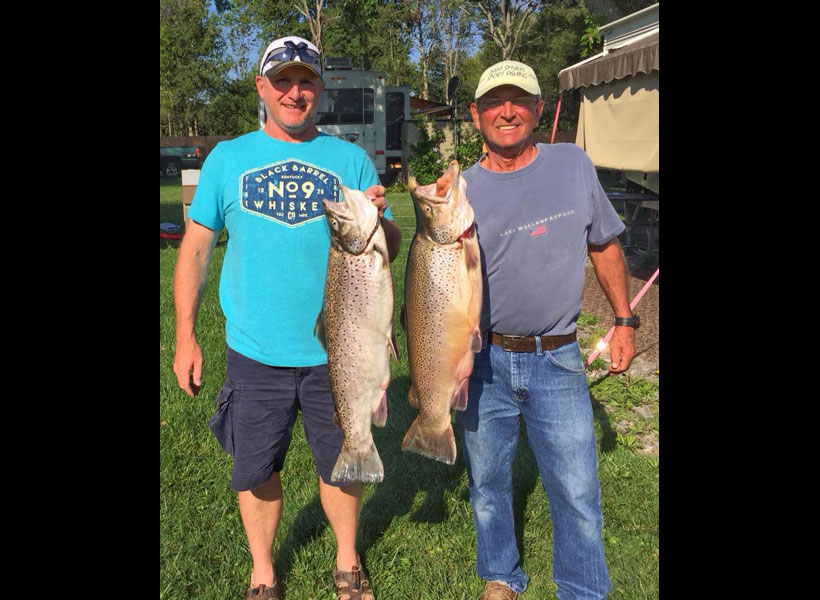


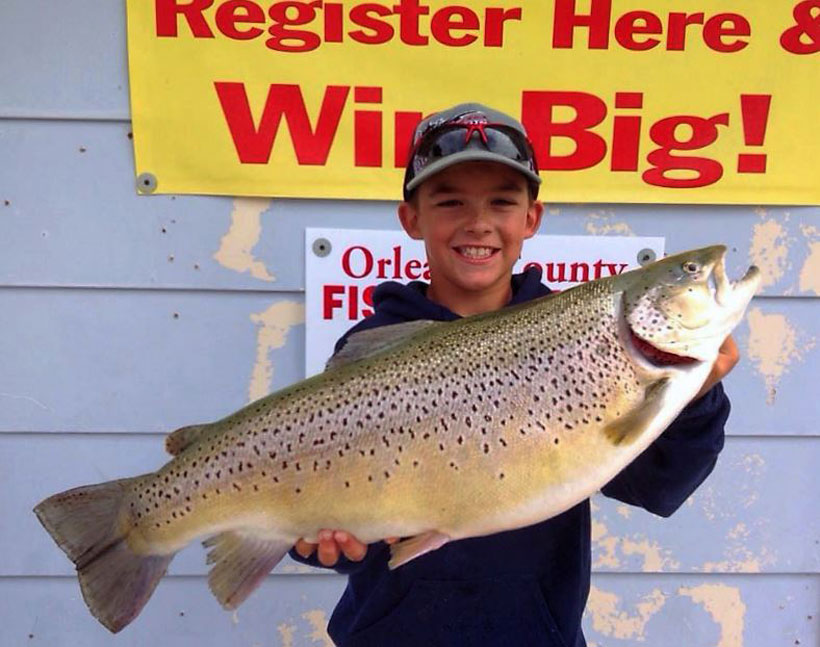


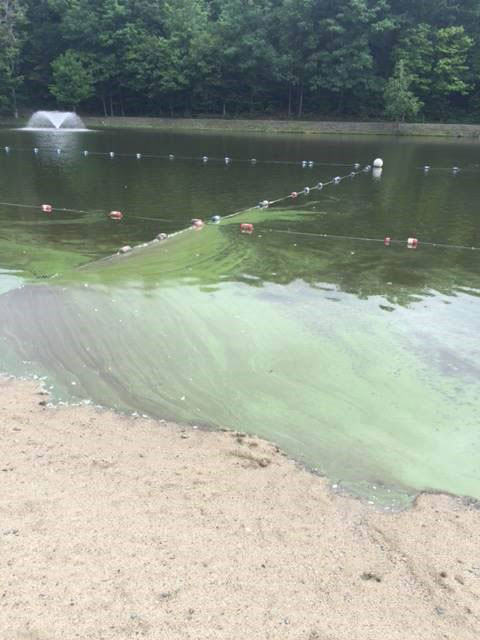


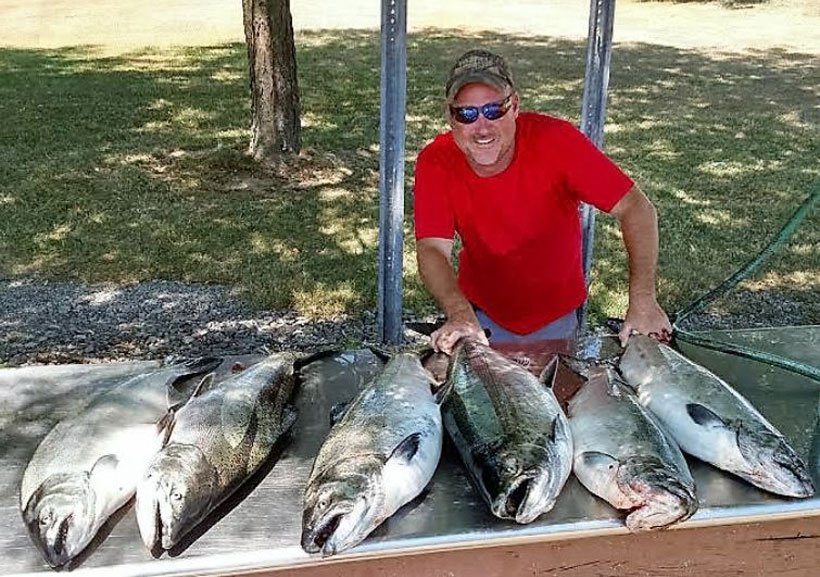


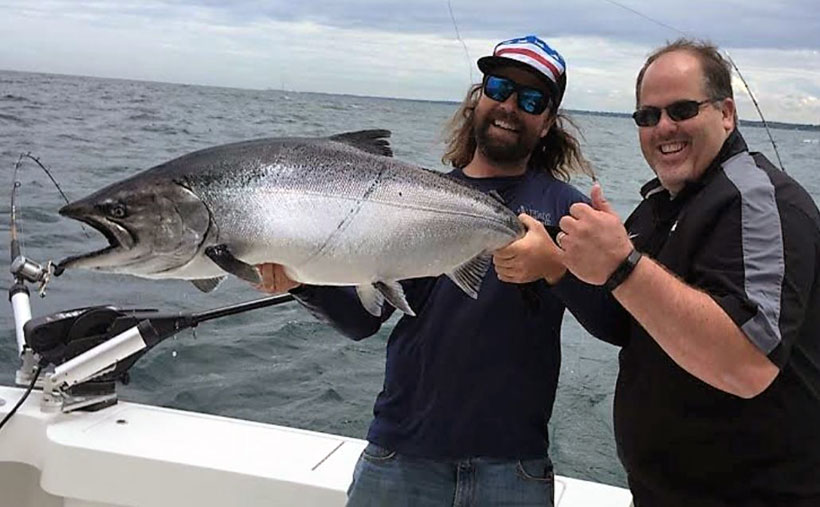


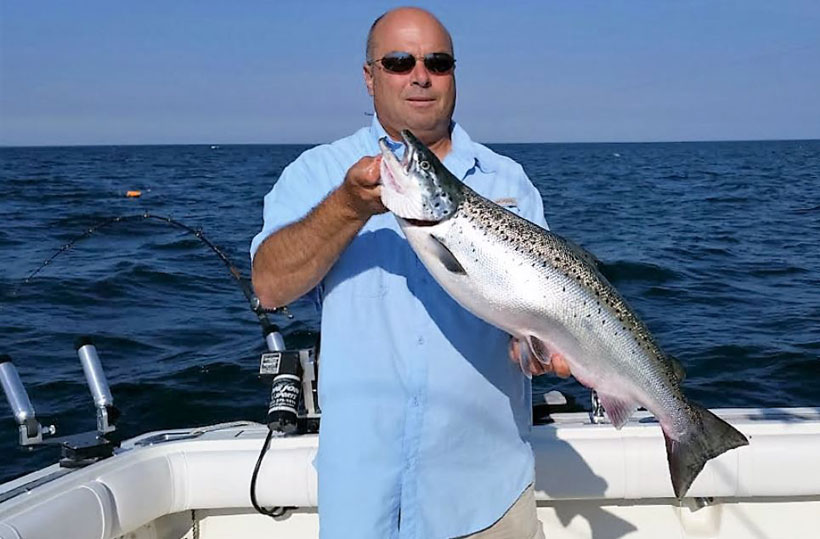

 The New York State Department of Environmental Conservation (DEC) has developed a new instructional (available on-line) manual entitled “The I FISH NY Beginners’ Guide to Freshwater Fishing.” The new manual is part of a series of publications DEC has produced recently to get more people involved in the fun of fishing in New York State.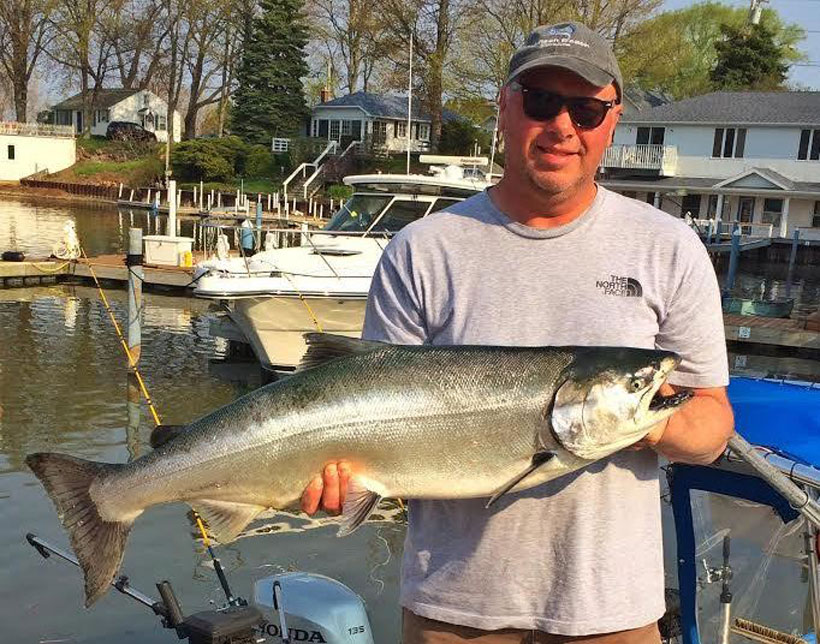
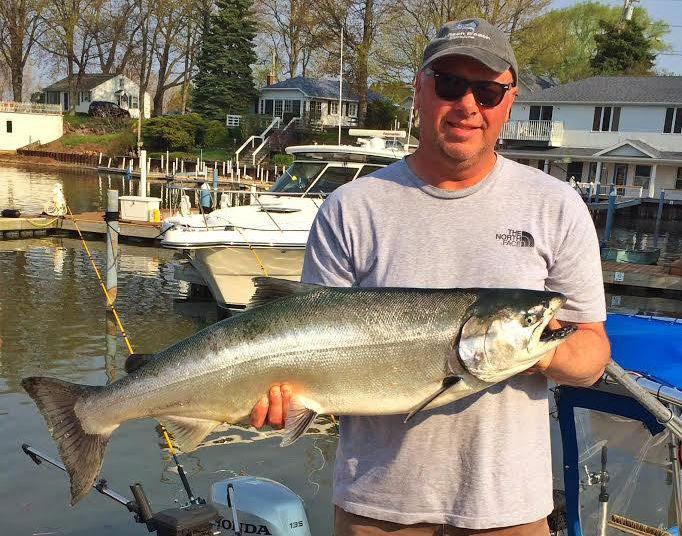



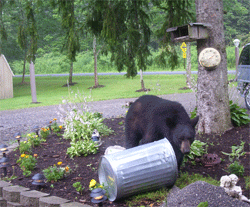




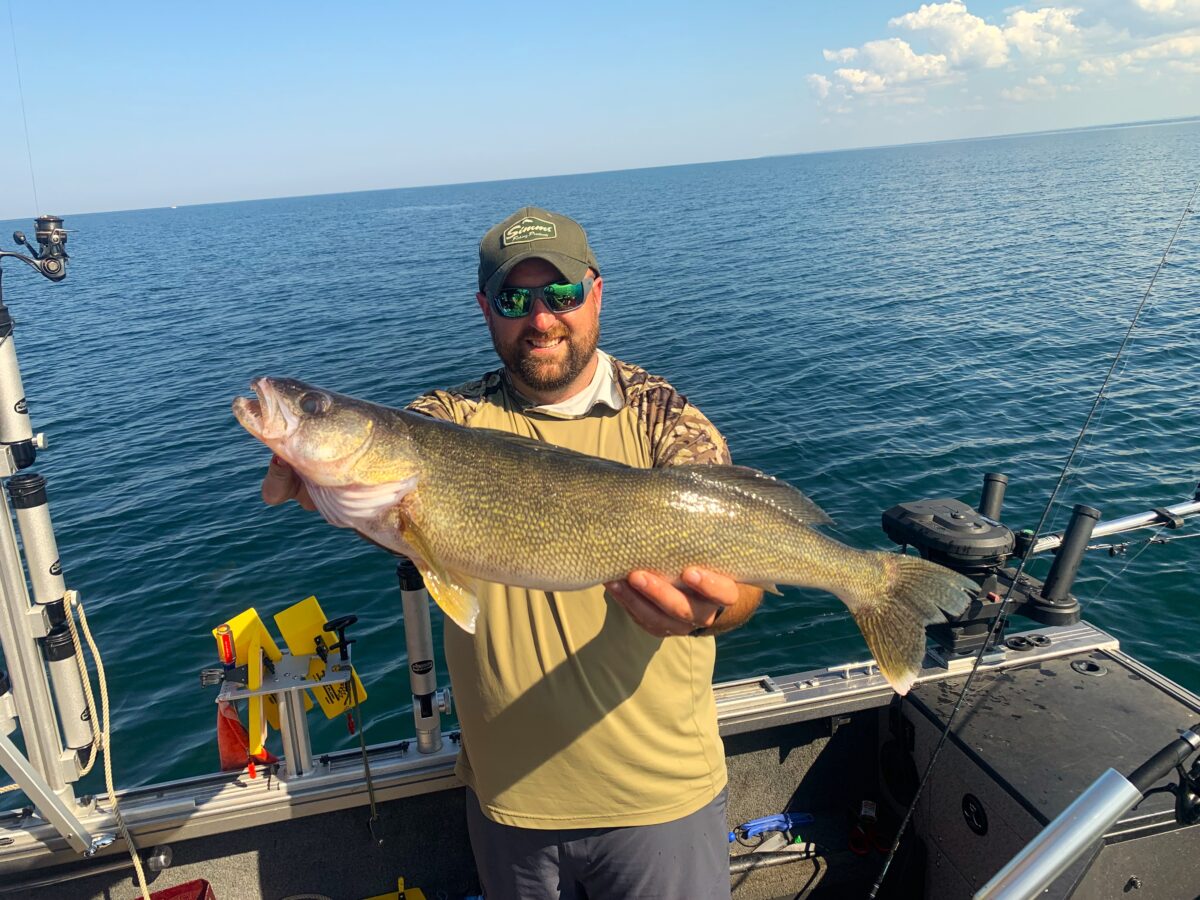




 Our squirrel population is also part of the nature show out our windows. I watch young squirrels play tag and wrestle. I have even seen squirrels do the same thing with rabbits. In the fall, adults gather acorns for the winter and build nests high in the trees. In spring, birds dive-bomb squirrels that get too close to their nest. During summer’s hot days, I watch squirrels spread their bodies and lay flat in the shade. They are trying to cool off and are doing what is called splooting. Squirrel tracks are everywhere in winter snow.
 devices with muted sounds if I stay inside. To enjoy nature shows even better, I open the door and go outside with my binoculars. That way, I can take in all the sights and sounds of the nature shows. I take pictures and record all the sounds with my smartphone. They will bring me many hours of enjoyment later.
 I go outdoors any time during the day to watch and listen to nature shows. I love to be there as the sun rises, a cup of coffee in hand. The wildlife wake up and start their day. They don’t even know I am there with them as I watch and listen. Bird songs start, turkeys gobble, a breeze blows through the trees, and crows begin talking to each other. I might also see a chipmunk scurrying around or a turtle slowly walking while exploring my yard. A lizard or two is usually somewhere. Movement under a bush is probably a snake looking for his next meal. Sunrises are always beautiful. I can never take enough pictures of them or the rainbows after a rain. It is much better than watching the morning news on TV and getting all depressed before the day even starts.
 Sunsets are also a favorite time for me. They are beautiful. Deer move around looking for a place to bed down for the night. As it gets darker, owls hoot and coyotes howl. Bats begin to dive for bugs. Summer nights also mean a light show performance by thousands of tiny fireflies. I can also record or enjoy the sounds of frogs, crickets, cicadas, and katydids. A little thunder and lightning only add to the night. Pull up a chair and enjoy the show.
 One study showed nature can reduce symptoms of depression. Another study showed that bird-watching around your home can reduce stress and anxiety. Another study found that just listening to the sounds of nature can put us into a more relaxed and comfortable state. Other studies have shown experiencing nature can lower blood pressure, reduce nervous system arousal, enhance immune system function, increase self-esteem, reduce anxiety, and improve our mood. Do you need any other reasons to start getting involved in watching and listening to nature shows out your windows and outdoors?


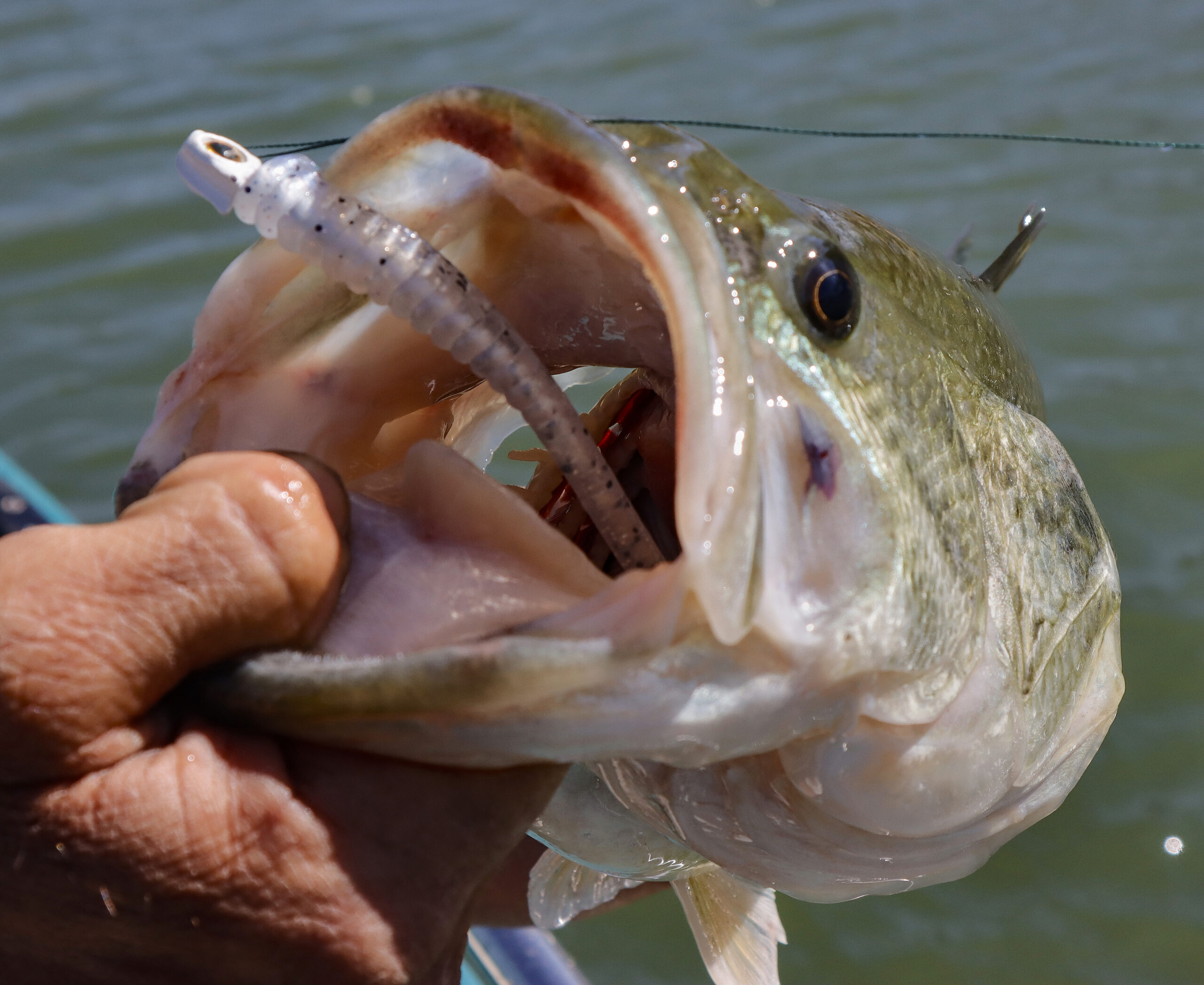


 Simon prefers the back of the boat to the front, so his fishing partner is offered control of the boat, running the bow motor for the day. Simon says in his British accent, “All of my fishing buddies seem to enjoy that part of our 6 to 8-hour fish trips. We each cast lines with plastic-tailed jerk baits on weighted weedless hooks or throw hard baits. Both lure types are designed to mimic the local forage groups. Doing that, I like to trail one or two lines for Shark. I have learned that it is better to trail one line simply. You can get into a real mess with two trailing lines when a handsome Gafftopsail Catfish hits and runs laterally. In the back of the boat, I can still cast out the side of the boat for multiple species, but now I trail just one line with a huge bobber, a wire leader and a huge hook with a half ladyfish or other cut bait. Some days, we catch five sharks and more than 50 other gamefish. It’s exciting! I’ve even caught sharks while casting lures. They can be that aggressive. “
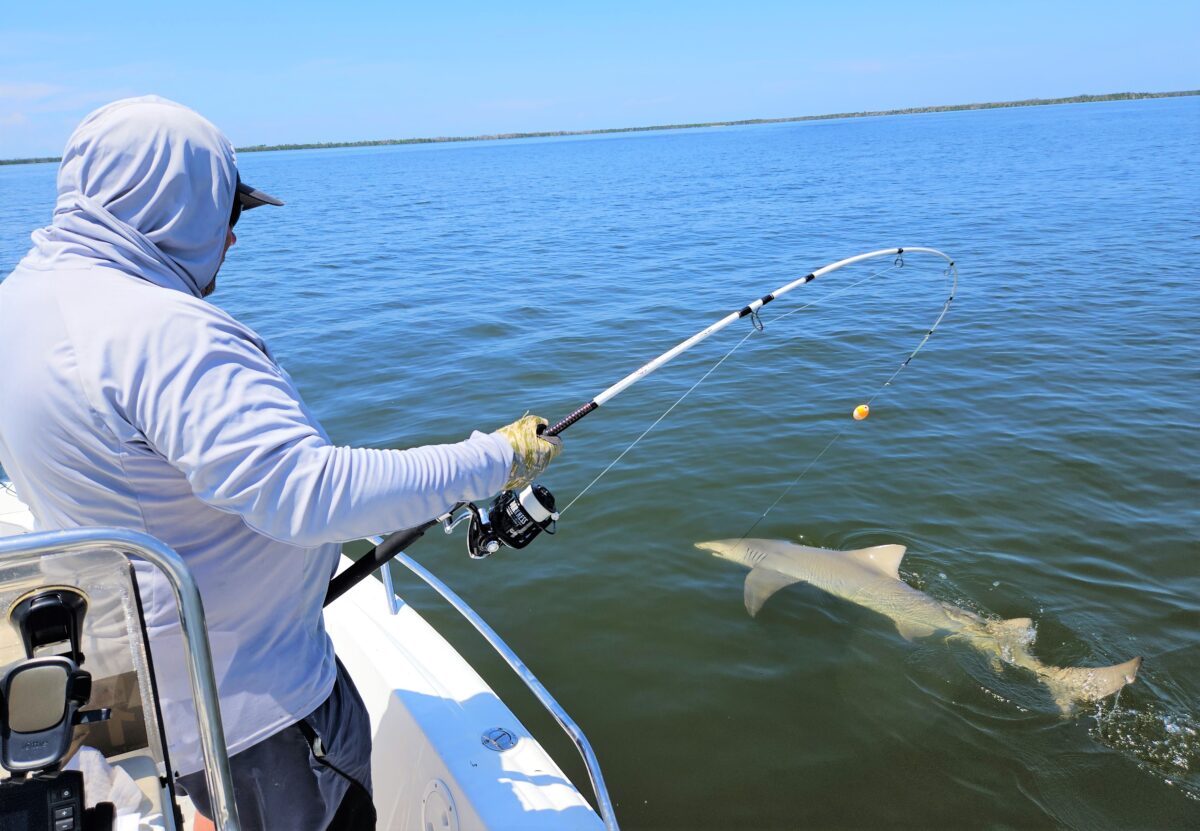





 By Bill Frye, President – Florida Sheriffs Youth Ranches, Inc.
 landscape begins to transition. By the end of the session, it’s like looking down the mountain and seeing the brown winter vegetation becoming lush green vegetation of spring and summer. The child who arrived frightened has blossomed into a happy, smiling camper with new friends and special bonds with their camp counselors and the deputies who spent time with them. As they leave, they carry their own positive memories because of everything they experienced and accomplished.
 support staff – kids can become free of their past baggage and discover new life. All with the help of those who are committed to their care and well-being. Then, as they grow up and build lives of their own, they too will be better prepared to face the future not with anticipation and fear, but with resolve and determination.



 The Keynote Speaker this year is


 Coat the smoker rack with olive oil and place the bear meat in the smoker/pellet grill. During the smoking process, use a kitchen brush to glaze the roast with maple syrup on the exposed sides of the roast. Smoke it until the internal temperature of the roast hits 160F. Use a digital thermometer.


 “We’re all still using the same worm we started with,” Bill said, smiling. Over the next 4 hours, the three of us caught 26 bass – all of us using the same worm we started with.



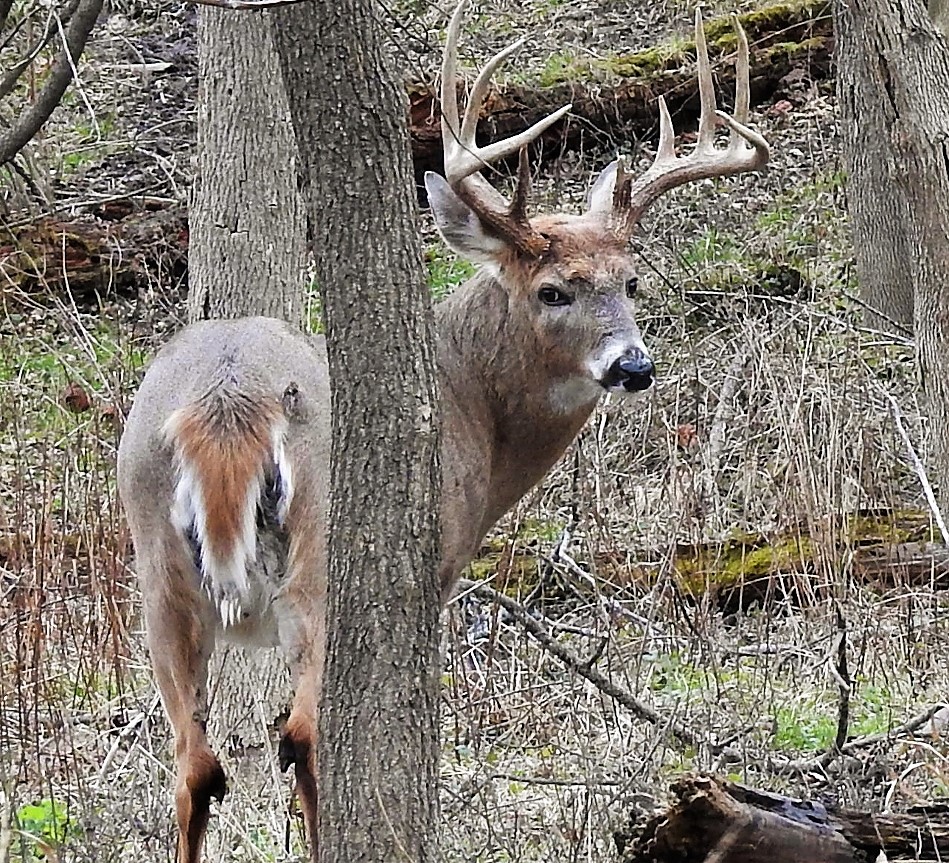


 His daughter Cora told me she flew with her Dad on one of the first Honor Flights for veterans. Honor Flights are all-expenses-paid trips to the war memorials in Washington, D.C. These flights allow veterans to share this momentous trip with other veterans, remember friends and comrades lost, and share their stories and experiences.
 Pete is tough. He is fighting this battle too. He knows where he is going when his time comes. I am sure there will be a lot of family and military buddies that will be glad to see him again. I bet they will get to hear Pete’s fish stories too.


 Fledglings have some feathers or may even look like fluffy adults but seem unable to fly and seem quite awkward in their movements. Fledglings rarely need a human’s help (unless the bird is injured). People sometimes see a fledgling bird hopping around on a branch some distance from a nest or even on the ground. This is perfectly normal behavior for growing birds. The best thing to do for these babies is to leave them alone. Mom and dad will care for them, even if they end up on the ground. However, if there is a dog or cat in the area, try getting the baby back up into the nest or at least the tree the nest is in. Watch from a distance. If the parents don’t show up after a few hours, it may be time to call PRWC for more advice, as it may be necessary to bring the little one in for treatment.
 We can save wildlife because people like you support us in our mission.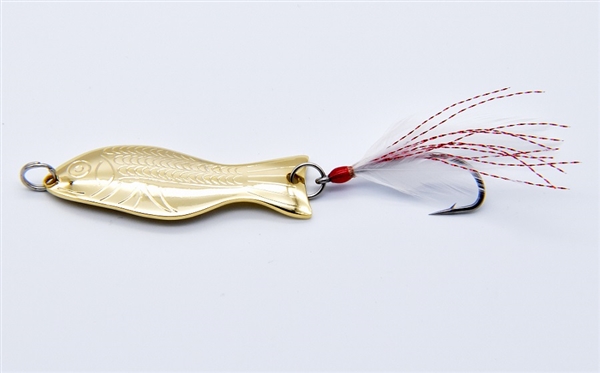


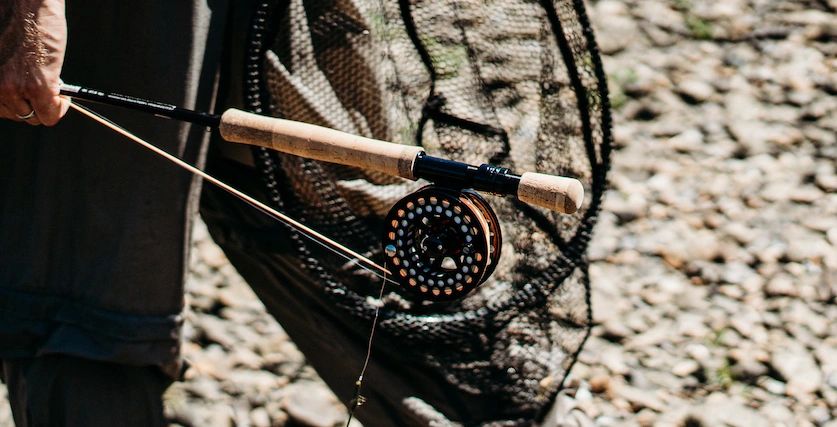
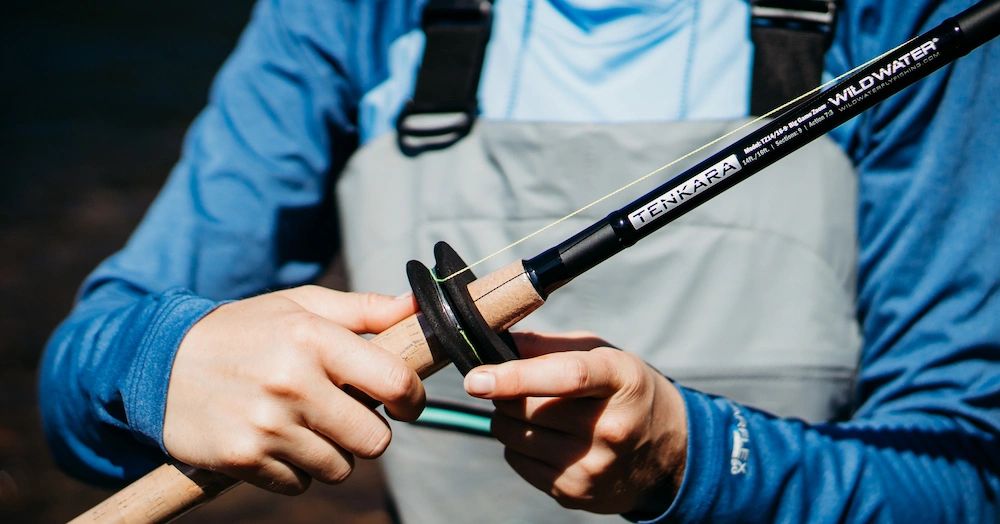


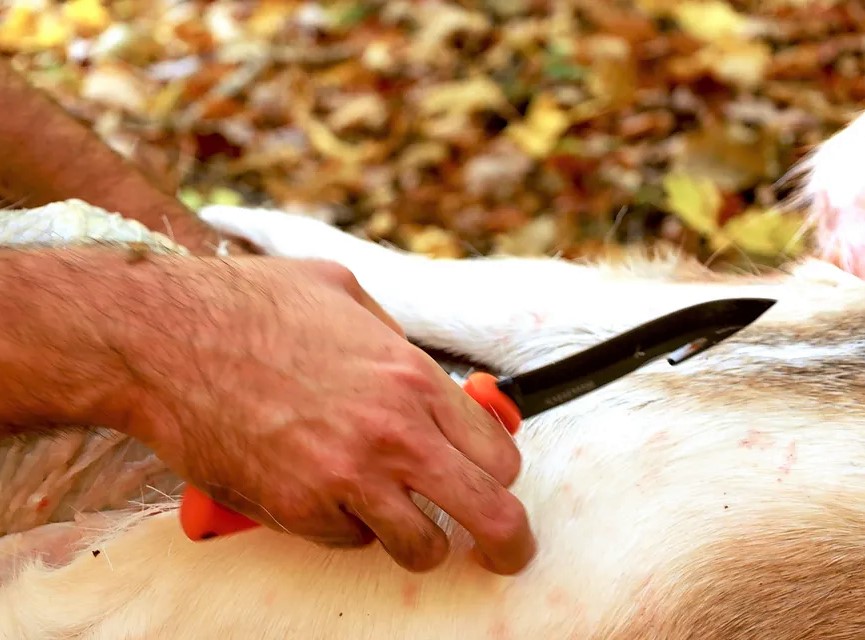

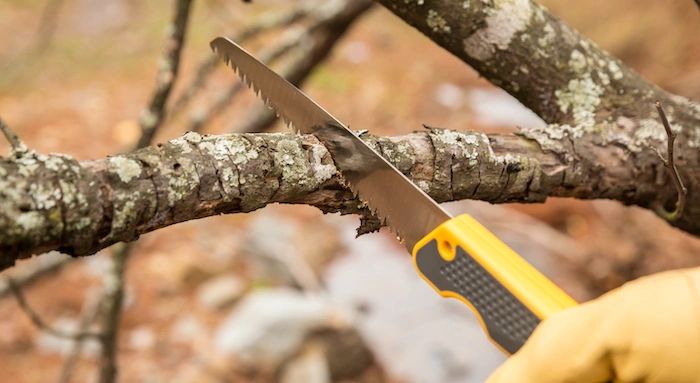
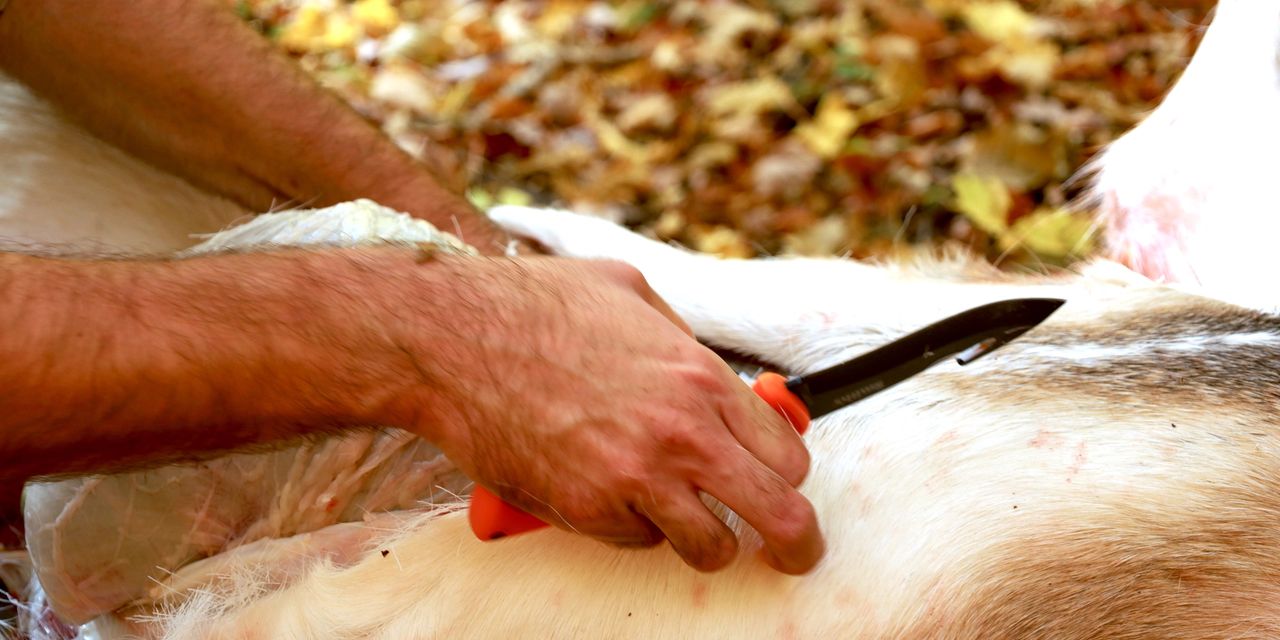
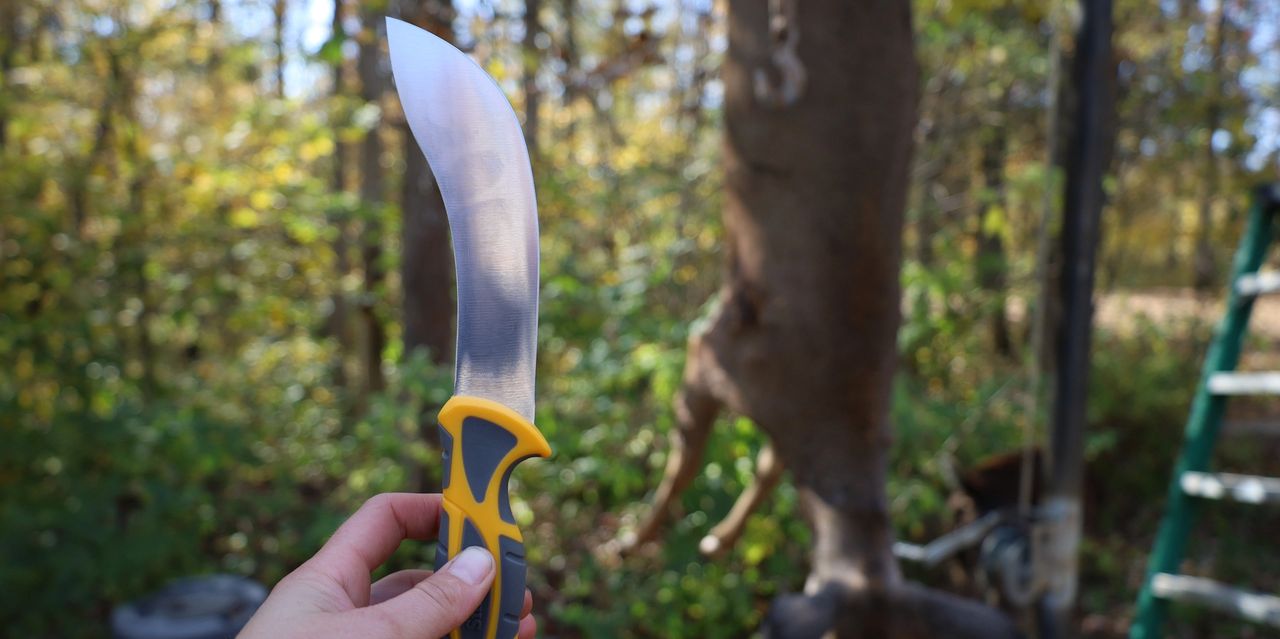
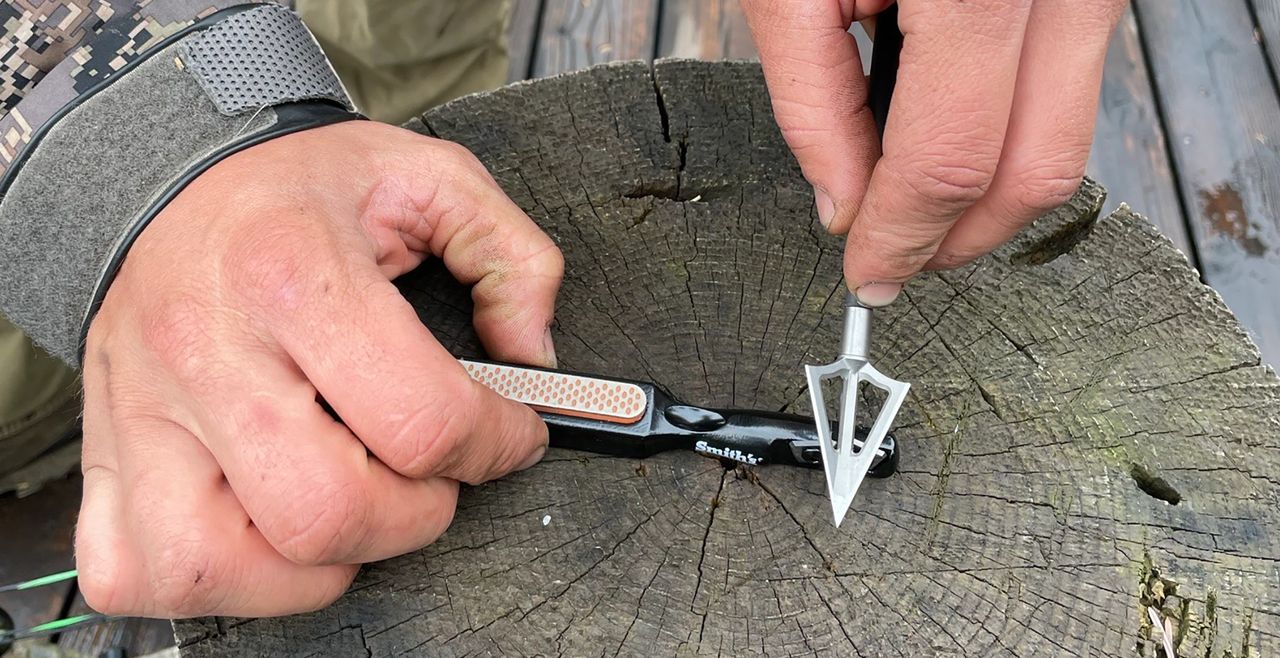
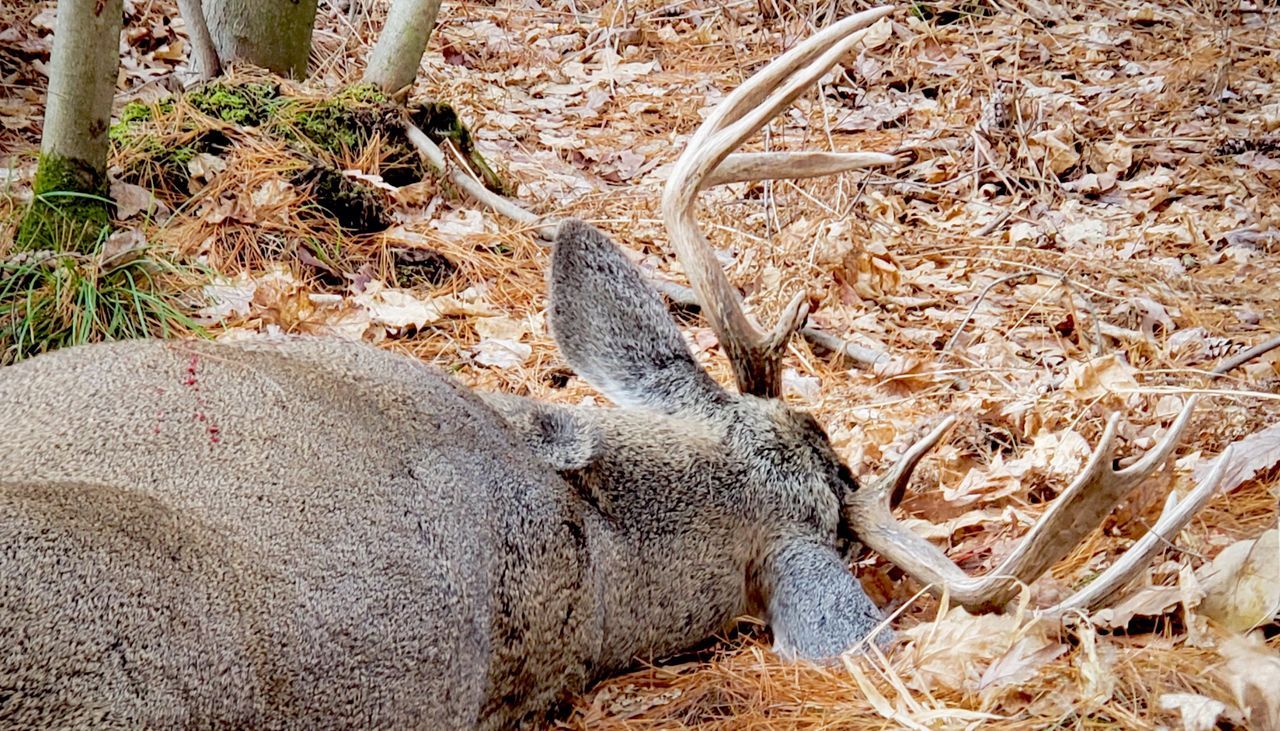






 and worm spinner jigs made it happen. The fish-catching started off with Julie landing the first walleye. We both would catch our limit for the day and release others back to the lake. To this day, in my humble opinion, walleye is one of the best fish to eat and is a welcomed treat in our home.

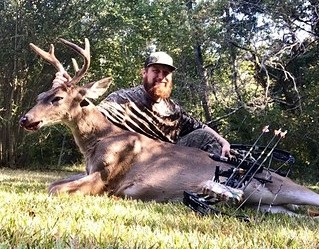
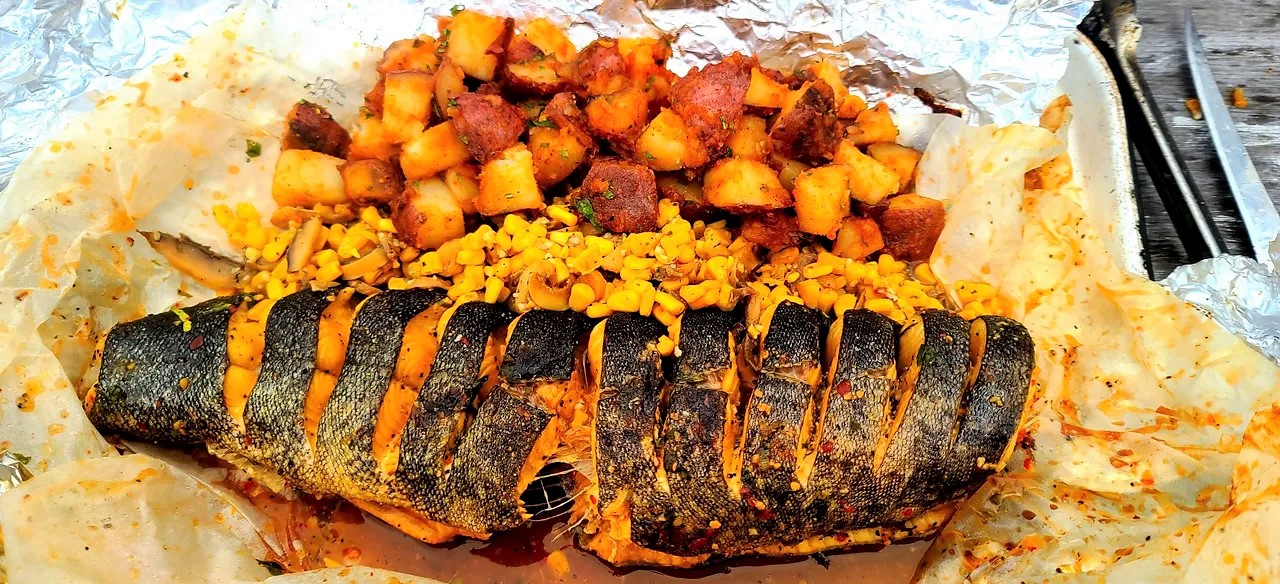


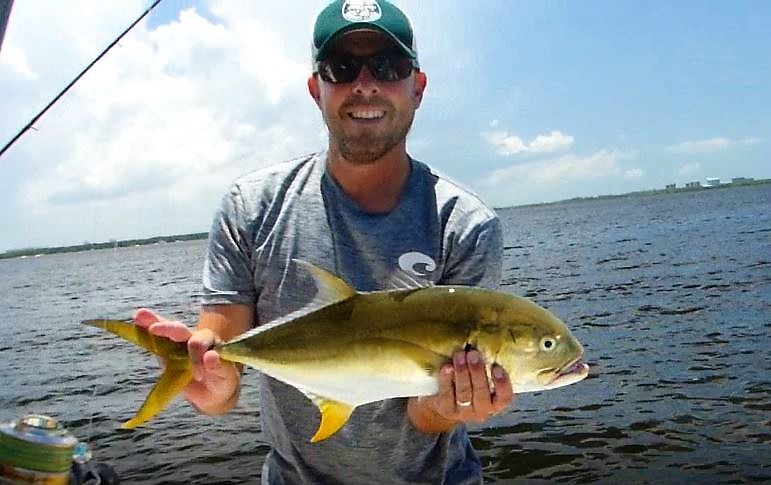


 The second group of 7 used a blended spice mix quite different from the first group:




 This soft-sided product is 32 liters big in volume and is very light when empty: 1 pound-14 ounces! Some of our other hard-sided coolers in that size weigh as much as 20 pounds when empty. They work well, but they weigh so much when adding ice and beverages, even with wheels that do not work well on sand. We loaded up the Grizzly Carryall with 8 cans of pre-chilled 12-ounce Coca-Cola’s, 6 pre-chilled 16-ounce plastic bottles of water, 4 pre-chilled 12-ounce bottles of V8 vegetable juice, and one 24-ounce jar of Margarita’s. We also tossed in two 6” x 6” x 2” frozen blue ice packs and a 4-pack of unbreakable cups. The Carryall has side pockets for phones, wallets, and car keys, and a spare inside pocket for an extra set of socks, sunscreen, sunglasses, underwear – or whatever. All the compartments are sealable with durable zippers to open/close.
 The Grizzly Carryall is leakproof, insulated, water-resistant, and handsome. The reflective, attractive, glacier blue outer cover helps maintain the chill inside, and the Carryall is guaranteed for life. Imagine that. It has a small retail price tag of $125 (we found it for $100) and a significant 32-liter volume with 4 YKK zipper pockets. One more time, it all weighs in at only 1 lb. – 14 oz. UNREAL. For physical size, it measures 14H x 18L x 8W in inches.
 By Larry Whiteley
 They all stopped fishing to watch two eagles sitting in a nest at the top of a tree. Seeing this iconic symbol of America meant as much to them as the flag waving on the front of the boat. One of the eagles flew from the nest and started circling over the water. It was out fishing too. As it circled in the bright blue sky, it made the distinctive eagle sound which is said to be unlike any other sound in nature. They all knew that an eagle call represents a call to action. Native Americans believe the sound of an eagle gives you courage and life force to overcome your obstacles and fight against your challenge. They had all done that.
 They loaded up food and family and went back out on the water. The flag still waved on the front of the boat. As they motored across the lake, boats pulling water skiers and kids on tubes were everywhere. So were the jet skis. Other families were out having fun on this Independence Day. Most had no idea why we as Americans celebrate this day. No one realized that three generations of soldiers had just passed them on the water. Men like them fought to protect our country’s independence. Men and women like them continue to serve and fight for our country and the freedom of other countries worldwide.

 Though true heroes were pointed out to us so we would see them.
 I learned that heroes are people who give of themselves when required.
 We have heroes today, but it seems we do not thank our heroes as much as we once did.


 Three on one leg and two and a nub on the other leg.




 Circle the first day of spring on your calendar. Put that date in your smartphone and computer calendar with a special alert. Or, you can tell Alexa, Google Assistant, or whatever you use, to remind you of the first day of spring.
 Until she leaves, I guess I will just sit here and try not to think about the cold, windy March weather outside my door. Instead, I will daydream about spring. Wonderful, glorious spring. To me, spring is God’s gift to all of us after a long, cold winter that we don’t think is ever going to end.


 The best news is that there is no closed season at a sporting clays range. When wildlife hunting seasons do open, the shooting skills of folks that practice on courses like this are better and far more accurate. During hunting season, it’s more fun in the open-season fields and woods. The shooter is trained and confident, and success feels good on the field and, later, on the dinner plate.


 If it’s water you seek for your adventure, Otsego County has over 90 inland lakes and the headwaters to five major rivers start here. The sinkhole lakes in the Pigeon River Country State Forest is also something you have to experience to believe. If you’re a fisherman, this is truly paradise. You can catch tiger Muskie, northern pike, walleye, yellow perch, largemouth bass, smallmouth bass, bluegill, rainbow trout, brown trout and brook trout just about any season of the year. Choose from open water, hard water or flowing water. Otsego Lake, the county’s largest lake, offers the opportunity to try and catch huge sturgeon which can grow to over 7-feet long and weigh up to 200-pounds. During winter Otsego Lake is known for its great ice fishing.
 Come during the winter season and truly experience a winter wonderland. The trails now become fantastic for snowshoeing and cross country skiing. Snowmobiling is also a popular wintertime activity. If you come during the winter season you have to try rafting on the scenic Sturgeon River. It’s another adventure you do not want to miss. Your whole family would also love taking a sleigh ride. You can also enjoy downhill skiing, snowboarding and tubing at either Otsego Resort or Treetops Resort. Both also offer golf in the other seasons on renowned championship golf courses. There are 17 other golf courses in the county making it a mecca for golfers. If you enjoy camping there are lots of places to pitch a tent or park your RV. There’s also plenty of cabins, resorts, hotels, motels and even a dude ranch to choose from.



 He came up with an excuse each time they asked and declined as he had his friends. But, then one day, he saw the disappointment on his grandkid’s face and the pleading eyes of his son when they asked once again. “Okay,” he said, “Teach me what I need to know to hunt these deer.” He couldn’t believe he spoke those words, but then he saw the smiles of joy on his son and grandkids’ faces. He would do this for them.