Learn About Deer Sex – Antlers, Genes, Hormones and Nutrition
A trail camera caught this buck in Vernon County, Missouri, while his 207 5/8 B&C antlers were still in velvet
I changed out the memory cards in my trail cameras yesterday. This always feels like Christmas, not knowing what I will find “under the tree.” This time, the biggest excitement was a close-up of a buck that stuck its head right into the corner of the frame, showing off a budding set of antlers.
Looking at pictures like this one over the years has brought home to me just how amazing deer antlers are. Most of you probably know that calling the headgear of deer, elk and moose “horns” is technically incorrect. Goats and antelopes have horns, which consist of the same material as your fingernails. Antlers consist of bone.
What you might not know is that during the peak of antler growth in mid-summer, white-tailed deer antlers can grow as much as two inches…a day!
I learned this after noticing almost unbelievable branching in the antlers of a deer I had been monitoring for a few weeks. This was back before Missouri’s first documented case of chronic wasting disease (CWD). Back then, I put out corn to attract deer to my trail cameras. Now doing anything to artificially concentrate deer is irresponsible, because it promotes CWD transmission.
Anyway, because I had the same deer coming to my cameras on a regular basis, it was easy to track the growth of individual bucks by their antlers. One that I had been watching appeared to be destined to have a nice four-point rack. Then two more points appeared. And then two more. I never see the eight-pointer during deer season, but the astonishing growth of his antlers sent me to reference books and deer biologists for more information. They said that whitetail bucks with a combination of ample nutrition and the right genes could sustain antler growth of eight inches in a week. So the guy seen in the first photo here could be a wall-hanger in just a few weeks.
In my imagination, he went on to resemble the deer in the second photo. This also is a Missouri deer. It was killed by an Indiana resident Owen Mason last year in Vernon County. This image was captured with a trail camera on a neighboring farm. Antler geeks would not forgive me if I failed to mention its official Boone and Crockett score – 207-5/8.
Rapid growth wasn’t the most interesting thing I learned in my modest research into antlers. Later that year I got a call from a hunter who had shot an antlered doe. I knew that does sometimes grow antlers, just as some hen turkeys grow beards, but I wasn’t prepared for what I learned.
First, antlered does aren’t as rare as I expected. Depending on which source you consult, as many as one in 65, or as few as one in 4,437 whitetail does, grow antlers. It’s all a question of hormones. Like humans and other mammals, both male and female deer produce testosterone. Most does have too little to grow antlers, but if plotted on a graph, individual testosterone levels would be a continuum, with most does falling at the low end and a few producing enough of the male hormone to grow pretty respectable antlers.
The most recent download from one of my trail cameras caught this promising little whitetail buck, setting my mind spinning down the antler rabbit hole. Jim Low Photo
The average antlered doe – if that’s not a contradiction in terms – has very poorly developed antlers. Often they retain some velvet late into the fall and are not thoroughly hardened. That was definitely not the case with two deer harvested in Missouri in 2011. One was a nice 9-pointer taken in Platte County. The other was a 10-pointer that fell to a hunter in Wright County. Both racks were typical in form and fully hardened.
Because Missouri’s hunting regulations distinguish between antlered and antlerless deer, rather than bucks and does, the hunters had to burn their buck tags, even though their deer were females. And when I say they were females, I mean that in every sense except antlers. Biologist tell me that most antlered does are fully functioning females, capable of reproducing. You can draw your own conclusion about how mating with a 10-point doe might affect the gender identity of a buck.
Diving deeper into deer hormones and gender, it turns out that white-tailed deer can possess characteristics of both sexes. A fully functional female can have a penis, and an otherwise virile buck can have internal or external female organs. In most cases, the misplaced genitalia are underdeveloped. In many cases, they might go unnoticed, but on the other hand, they can leave a hunter scratching his head as he tries to figure out which tag to put on the deer he just shot.
If the ratios mentioned earlier hold true for Missouri, our annual harvest of 280,000 deer could include anywhere from 70 to 8,000 sexually ambiguous deer. So before you field dress your buck or doe, examine it closely. Your buddies might think it’s a bit odd when you stroll back into camp humming The Kinks’ gender-bending anthem, Lola.
Many manufacturers in the United States outdoor market produce high quality trail cameras. Priced well under $100, this Wildgame Innovations CLOAK™ 6 LightsOut™ captures 6-megapixel images with a stealthy 36-piece high-intensity black LED infrared flash that is invisible.
We learned last month that the Nevada Board of Wildlife Commissioners recently discussed restrictions regarding the use of trail cameras and proposing new regulations.
No Cam’s during Hunting Season
The proposed regulation would ban the use of trail cameras for big game hunting between August 1 and December 31 in Nevada wildlife management areas and units.
Trail Cam’s prohibited near Water Holes
In addition, trail cameras would be prohibited year-round within 200 feet of a spring, waterhole or other water source for any reason. This includes hunting or scouting for small or big game, wildlife watching and trespass prevention – it even applies to private property.
Other Options?
“Trail cameras have become a helpful tool for hunters across Nevada and the country,” said Luke Houghton, Sportsmen’s Alliance associate director of state services. “There must be a way to address any issues that have occurred without such as heavy handed approach as an all-out ban.”
Many official big game management organizations and wildlife agencies use trail cameras for data gathering and research. One immediate concern is whether such a ban would affect their continued research?
About Sportsmen’s Alliance
Thanks to such newsworthy publications as the Sportsmen’s Monthly by Sportsmen’s Alliance (published on-line and as well as in hard copy), hunters and advocates for safe hunting never stop learning about new regulations and proposed changes.
The Sportsmen’s Alliance is a 501(c)4 organization that protects and defends America’s wildlife conservation programs and the pursuits – hunting, fishing and trapping – that generate the money to pay for them. Sportsmen’s Alliance Foundation is a 501(c)3 organization that supports the same mission through public education, legal defense and research. Its mission is accomplished through several distinct programs coordinated to provide the most complete defense capability possible. Search out more information on their website located at: http://www.sportsmensalliance.org/.
Wanna’ fight? Turkeys do. After decades of learning the nuances of yelps, purrs, and clucks I’ve come to the conclusion that the best way to outsmart an old gobbler is to challenge it with a rival.
Ken Byers and I were cruising a large ranch when we spotted two gobblers a quarter mile away casually feeding in a large plowed field. Given the distance to the birds, we may have been able to get their attention with loud yelping and since they had no hens, possibly coax them closer.
Instead, Ken and I sneaked to the edge of the field and raised a turkey tail fan from a bird taken earlier in the hunt. The toms may not have been able to hear hen calls at great distance, yet nothing passes their keen eyesight unseen. Immediately, their heads went up like periscopes and they stared intently at this possible intruder.
Ken and I had used this tactic before and learned that it usually works best if one person operates the turkey fan while the other shoots with a bow or shotgun. Ken peaked from behind the spread turkey tail feathers and quickly whispered, “Here they come.”
I laid down at the edge of the field with the Mossberg beside me, while my buddy turned the fan as a real gobbler would do. The birds came into my view at about 200 yards and it seemed like a feathered horse race with each gobbler intent on kicking intruder butt. At 20 yards, the turkeys finally became suspicious and threw on the brakes giving me the perfect shooting opportunity. Boom! One gobbler began to flop and the other seemed startled by the explosion and walked away slowly.
“Hand me the gun,” whispered Byers and before the second tom could break 30 yards, it was down as well. Wow! Wow! Wow! What excitement. Any inkling of frustration from previous hunts instantly evaporated and we tagged our birds and laughed and giggled like school girls all the way back to camp.
Betting on Aggression
Will Downard is no stranger to this gobbler Achilles heel and has devised a turkey “fan” that invites a turkey to compete for breeding territory. It doubles as an effective blind too, plus it’s very easy to carry and deploys in seconds.
“We’ve had such success with this product that we are looking at other animals to decoy,” he said in a brief interview before heading out with this camera operator. He didn’t elaborate, yet his wry smile indicated that there may be more to TurkeyFan.com than just turkeys.
Downard’s invention carries and deploys like an umbrella with the lower half eliminated so that it forms a semi-circle. To set it up takes only seconds and the device is large enough to easily disguise a shotgun hunter, bowhunter, or camera operator. Typically, Downard hunts with his camera man who uses a turkey fan to disguise his presence as well.
The face of the fan/blind has the image of a strutting tom turkey to incite the kind of aggression that gobblers instinctively have. The image is larger than life and I asked Downard about that.
“With turkeys, size doesn’t seem to matter,” he said. Even though the image is larger than life-size, gobblers aren’t intimidated, especially if there is more than one.”
That same evening, Downard was back in camp with a dandy longbeard and incredible video of the hunt. Just as he described, the camera operator used a blind to disguise his presence while the shooter, concealed behind the “fan” moved closer to the gobbler. After watching a big tom come right to the TurkeyFan, the hunter peeked over and shot the bird at five steps. To see this unique tactic in action go to www.turkeyfan.com and you will be amazed.
Spring gobblers like what they like. Some will shock gobble an owl hoot, crow call, even a car horn while a similar tom roosting just down the ridge won’t make a peep.
My dad and I used to hunt a small farm that held lots of turkeys. Since he was in his early 90’s, dad mostly drove around while I hunted on foot. A particular gobbler loved (or hated) the sound of his old Dodge diesel truck and gobbled voraciously every time dad drove near. Some locator call huh?
When trying to convince a spring gobbler to go against its nature and approach a hen, you have to find its hot button and make a sound that the mating bird cannot resist. Since “The Dodge Truck” call works in very limited circumstances, savvy hunters carry a variety of callers and use them singularly or as a duet to light a tom’s fire. Your turkey vest needs to have at least three kinds of calls: box, pot, and diaphragm, because each has unique characteristics that apply in special situations. Hunters Specialties (H.S.) makes a wide variety of callers and here’s a good roundup of what’s sure to suck in a gobbler like a Star Trek tractor beam.
Boxes
The Undertaker Box Call is constructed of engineered laminate wood for increased stability and durability. The call features waterproof chalk on friction surfaces for hunting in any weather conditions and the call is hand tuned to produce perfect high volume hen tones on either side.
Box callers are easy to operate and the sound carries well. At times in late season, their unique tone will lure gobblers that have become used to other callers. The new B-Line and Final Roost box calls from H.S. Strut® give hunters two great options for calling in a spring gobbler.
The B-Line Call is constructed with a walnut paddle and poplar box for creating great high-pitched hen sounds. The call is lightweight and compact. Finger grooves on the box provide a secure grip while calling. The Final Roost Call has a walnut paddle with a medium-sized Poplar box to reproduce raspy hen vocals. The box is contoured for a comfortable, secure grip while calling. Both the B-Line and Final Roost Calls feature a waterproof paddle and box edge for calling in all weather conditions
Pot Calls
The Undertaker Glass Friction Call features engineered wood in both the pan and striker for increased stability. It has a ready to play frosted glass surface over the new patent pending Aluma-Tune™ sound board with hand tuned cuts for the most realistic hen sounds possible.
Whether glass or slate, pot callers are perfect for making precise, soft, hen sounds. When you sneak close to a roost, the tom is thundering above you, holding a striker in your hand (like a pencil when you were a kid) gives the extra confidence to make the call sound exactly as intended. Pot calls have great tone variation and you can use them to locate by loudly cutting or to entice those final steps with soft purrs.
The new Sweet Suzie Snood call from Hunters Specialties™ produces the high pitched hen sounds that drive gobblers crazy with plenty of volume to bring them in from long distances. The Sweet Suzie Snood is a compact call with a frosted glass over glass surface. The call is ready to run right out of the package and comes with a carbon striker which works great in wet weather conditions.
Diaphragm Callers
H.S. Strut® Tone Trough calls come in a variety of cuts including the Split “V” II, Split “V” III (shown above), Double “D”, Cutt’n 2 .5 and Raspy Old Hen. Packaging options include the Starter 2 Pack with the Raspy Old Hen and Double ”D” calls , which is great for new callers.
A skilled caller may get by using a diaphragm caller exclusively, yet this takes a lot of practice and you can literally overtax your oral muscles by calling so frequently. The diaphragm is the most difficult of the three main categories to run and some hunters just can’t master its use. Personally, I love the Tone Trough diaphragms because they operate effortlessly and I can produce quality sounds with little practice.
Unlike box and pot callers, one size does not fit all in the diaphragm world. Since our mouths and palates differ, you may need to try a variety of callers to find one that makes a good fit. Even my mother agrees that I have a big mouth, yet I find the smaller, more flexible callers work best for me. HS offers a variety of diaphragms with the following a few examples:
The Pro 2 Pack includes the Cutt’n 2.5 and Split “V” II for more experienced callers. Beginning turkey hunters can benefit from the Tone Trough Turkey Tutor package, which includes an instructional DVD, along with the Cutt’n 2.5, Raspy Old Hen and Split “V” II calls.
The new Undertaker diaphragm calls have an aluminum frame which can be easily adjusted for a custom fit to a hunter’s palate. The calls feature Infinity Latex® for the most consistent tone available. Three and four-reed models are available with selected cuts to create a wide range of realistic hen sounds. Each call also comes with the new HS Strut Diaphragm Call Clip, which attaches to the bill of a hunter’s cap and holds the diaphragm call in place for quick and easy access.
Remember, gobblers like what they like. If one call doesn’t work, switch to another call. If all else fails, try using two callers at once such as the box and a diaphragm.
When two honeys are hailing at the same time, few toms can resist.
Sound Variation, Turkey Call Options, Cost
For the full line of Hunter Specialties callers, visit www.hunterspec.com. The H.S. Strut® Premium Flex™ Calls come in a variety of cuts and reed configurations to help both beginning and experienced callers be successful.
The H.S. Strut Premium Flex™ frame uses Infinity Latex® for consistency and durability. Each call is precision built and stretched to create all of the sounds of a wild turkey. Two, three and four-reed versions are available as well as a line of small frame calls for junior callers, women, or anyone with a small palate.
Premium Flex Calls are packaged individually as well as in three and four packs. New for 2016 is the Legends 4-pack with an instructional DVD featuring tips and tricks for being successful this spring. It includes the Power Cutter, Power V, Deep Cut and Fang calls.
Premium Flex Calls sell individually for $5.99, three packs for $10.99 and the Legends Four Pack sells for $16.99.
The new Sweet Suzie Snood call from Hunters Specialties™ produces the high pitched hen sounds that drive gobblers crazy with plenty of volume to bring them in from long distances.
The Sweet Suzie Snood is a compact call with a frosted glass over glass surface. The call is ready to run right out of the package and come with a carbon striker which works great in wet weather conditions. The Sweet Suzie Snood call also comes with a rougher pad and sells for a suggested retail price of $9.99.
Designed with high quality components and backed by years of hunting experience, the new Undertaker line of premium calls from H.S. Strut® will help hunters put their tag on a gobbler this spring. The Undertaker series includes a box call, pan call and four new aluminum frame diaphragm calls.
The Undertaker box call is constructed of engineered laminate wood for increased stability and durability. The call features waterproof chalk on friction surfaces for hunting in any weather conditions and the call is hand tuned to produce perfect high volume hen tones on either side.
The Undertaker glass friction call features engineered wood in both the pan and striker for increased stability. It has a ready to play frosted glass surface over the new patent pending Aluma-Tune™ sound board with hand tuned cuts for the most realistic hen sounds possible.
The new Undertaker diaphragm calls have an aluminum frame which can be easily adjusted for a custom fit to a hunter’s palate. The calls feature Infinity Latex® for the most consistent tone available. Three and four-reed models are available with selected cuts to create a wide range of realistic hen sounds. Each call also comes with the new HS Strut Diaphragm Call Clip, which attaches to the bill of a hunter’s cap and holds the diaphragm call in place for quick and easy access. The new Undertaker Box Call sells for a suggested retail of $39.99. The Undertaker Pan Call for $39.99 and the diaphragm calls for $12.99 each.
Hunters Specialties’ new line of H.S. Strut® Tone Trough diaphragm calls are great for beginners as well as experienced callers. The calls feature a raised dome that forms a tight seal in the roof of the caller’s mouth. The Tone Trough™ creates perfect pressures for realistic hen sounds. The calls are built with a Premium Flex™ frame and Infinity Latex® for consistent tones.
H.S. Strut® Tone Trough calls come in a variety of cuts including the Split “V” II, Split “V” III, Double “D”, Cutt’n 2.5 and Raspy Old Hen. Packaging options include the Starter 2 Pack with the Raspy Old Hen and Double ”D” calls , which is great for beginning callers. The Pro 2 Pack includes the Cutt’n 2.5 and Split “V” II for more experienced callers. Beginning turkey hunters can benefit from the Tone Trough Turkey Tutor package, which includes an instructional DVD, along with the Cutt’n 2.5, Raspy Old Hen and Split “V” II calls.
Individual calls sell for a suggested retail price of $6.99. The Tone Trough 2 Packs for $10.99 and the Turkey Tutor 3-Pack with DVD for $15.99.
The new B-Line and Final Roost box calls from H.S. Strut® give hunters two great options for calling in a spring gobbler. The B-Line Call is constructed with a walnut paddle and poplar box for creating great high-pitched hen sounds. The call is lightweight and compact. Finger grooves on the box provide a secure grip while calling.
The Final Roost Call has a walnut paddle with a medium-sized Poplar box to reproduce raspy hen vocals. The box is contoured for a comfortable, secure grip while calling.
Both the B-Line and Final Roost Calls feature a waterproof paddle and box edge for calling in all weather conditions.
The B-Line Call sells for a suggested retail of $14.99 and the Final Roost for $19.99.
For more information about other Hunters Specialties products, log onto the Hunters Specialties website atwww.hunterspec.com, or call a Consumer Service Specialist at 319-395-0321.
Wanna’ fight? Turkeys do. After decades of learning the nuances of yelps, purrs, and clucks I’ve come to the conclusion that the best way to outsmart an old gobbler is to challenge it with a rival.
Ken Byers and I were cruising a large ranch when we spotted two gobblers a quarter mile away casually feeding in a large plowed field. Given the distance to the birds, we may have been able to get their attention with loud yelping and since they had no hens, possibly coax them closer.
Instead, Ken and I sneaked to the edge of the field and raised a turkey tail fan from a bird taken earlier in the hunt. The toms may not have been able to hear hen calls at great distance, yet nothing passes their keen eyesight unseen. Immediately, their heads went up like periscopes and they stared intently at this possible intruder.
Ken and I had used this tactic before and learned that it usually works best if one person operates the turkey fan while the other shoots with a bow or shotgun. Ken peaked from behind the spread turkey tail feathers and quickly whispered, “Here they come.”
I laid down at the edge of the field with the Mossberg beside me, while my buddy turned the fan as a real gobbler would do. The birds came into my view at about 200 yards and it seemed like a feathered horse race with each gobbler intent on kicking intruder butt. At 20 yards, the turkeys finally became suspicious and threw on the brakes giving me the perfect shooting opportunity. Boom! One gobbler began to flop and the other seemed startled by the explosion and walked away slowly.
“Hand me the gun,” whispered Byers and before the second tom could break 30 yards, it was down as well. Wow! Wow! Wow! What excitement. Any inkling of frustration from previous hunts instantly evaporated and we tagged our birds and laughed and giggled like school girls all the way back to camp.
Betting on Aggression
Will Downard is no stranger to this gobbler Achilles heel and has devised a turkey “fan” that invites a turkey to compete for breeding territory. It doubles as an effective blind too, plus it’s very easy to carry and deploys in seconds.
“We’ve had such success with this product that we are looking at other animals to decoy,” he said in a brief interview before heading out with this camera operator. He didn’t elaborate, yet his wry smile indicated that there may be more to TurkeyFan.com than just turkeys.
Downard’s invention carries and deploys like an umbrella with the lower half eliminated so that it forms a semi-circle. To set it up takes only seconds and the device is large enough to easily disguise a shotgun hunter, bowhunter, or camera operator. Typically, Downard hunts with his camera man who uses a turkey fan to disguise his presence as well.
The face of the fan/blind has the image of a strutting tom turkey to incite the kind of aggression that gobblers instinctively have. The image is larger than life and I asked Downard about that.
“With turkeys, size doesn’t seem to matter,” he said. Even though the image is larger than life-size, gobblers aren’t intimidated, especially if there is more than one.”
That same evening, Downard was back in camp with a dandy longbeard and incredible video of the hunt. Just as he described, the camera operator used a blind to disguise his presence while the shooter, concealed behind the “fan” moved closer to the gobbler. After watching a big tom come right to the TurkeyFan, the hunter peeked over and shot the bird at five steps. To see this unique tactic in action go to www.turkeyfan.com and you will be amazed.
Every hunter is searching for a giant tom turkey on that first opening morning hunt, Tony Young of the Florida Fish and Wildlife shares his 1st Turkey Hunt Success Story with nationwide viewers. Joe Forma Photo
My interest in hunting the quirky-moving, nervous-acting, but beautifully colored wild turkey was piqued about 15 years ago by an old high school friend and bandmate of mine, Todd Bevis.
Todd’s a turkey-hunting fanatic if I’ve ever seen one, and the excitement in his voice that’s apparent every time he tells a hunting story played a big part in my getting the fever to experience spring turkey hunting.
My former in-laws owned a nice tract of land in northern Franklin County with a half-mile of deep creek frontage on a major tributary of the Apalachicola River. Over the years, I enjoyed deer hunting there and took a few fall turkeys, but bagging a good long-beard in the spring takes a bit more skill.
I was ready to learn how to call in and harvest my first spring gobbler. All I needed was the know-how, and I figured I could get that from Todd and from watching Saturday and Sunday morning hunting shows on TV.
Todd encouraged me to get a box call because he said it would be the quickest and easiest call for me to learn – and the spring season was approaching fast.
He taught me how to do some basic yelps and a single-note cluck and said if I had birds on the property that had really never been called to before, and – if I could sit still long enough – I just might be able to call one in.
But Todd warned me, “Don’t make the mistake some people do in calling too much. Let ’em know you’re there, but let ’em come to you – less is more.”
With that advice in mind, I set out early opening day. I needed to get there a half-hour before first light so I could set my three decoys in place and get situated.
Sunrise wasn’t until 7:45 a.m., so I had about 30 minutes before the sun’s first rays would begin to illuminate the longleaf pine and palmetto flatwoods I’d be hunting.
It was a brisk north Florida spring morning, but as dawn gave way to late morning I knew the weather would warm up and it wouldn’t take long for those pesky, deep-woods mosquitoes to come out of the swamps and start buzzing around my ears. I quickly sprayed myself down with an ample dose of bug spray.
While carrying a jake and two hen decoys in one hand, I toted my shotgun, camo seat cushion and small flashlight in the other and made my way in the dark down a trail that weaved through a patchwork of saw palmettos toward a spot where I often saw turkeys.
The setup was near one of my favorite deer stands, on a ridge that jutted out between a creek and a ravine. It was where turkeys roosted most every evening amid juniper, tupelo and cypress trees hanging over the water.
Before I could even finish setting up my decoys, the sounds of gobbling echoed in the darkness from the creek bottom below. The strange vocalization of three, maybe four, birds was something I’d never heard, and it fascinated me.
I picked out a large pine tree to lean back against to hide my silhouette. Then I used a pair of hand pruners and began to snip some of the surrounding native vegetation of galberry and titi and used the clippings to construct my make-shift ground blind.
I settled in against the tree – my gun across my legs and my box call in my lap – and the sound of gobbling continued to fill the otherwise quiet predawn.
At 7 a.m. it started to get just light enough to see. As I sat facing the hardwoods of the ravine and creek swamp, I could make out my decoys 10 steps in front of me.
About 15 minutes later, when the visibility was noticeably better, I picked up my box call and made my first yelp to make those gobblers think there was an interested hen nearby.
A reassuring gobble answered me right away!
I was so excited I couldn’t believe it – a gobbler actually had responded, just like on those hunting shows.
“What am I supposed to do now?” I wondered. I remembered Todd telling me not to call any more often than about 15 minutes. So I sat quietly in anticipation for what seemed to be the longest 15 minutes of my life, but when I glanced down at my watch, only five minutes had elapsed. After another five minutes of real time had passed, I couldn’t stand it any longer and made another call.
Another gobble immediately followed, but this time it was louder.
This bird actually was coming to me! My first spring turkey hunt was beginning to play out in textbook fashion.
I sat just as still as I could be for another 10 or 15 minutes and called out for a third time.
The “GOBBLE, GOBBLE, GOBBLE, GOBBLE” reply sounded like it was being screamed into my ears. This Eastern turkey was right on top of me!
I couldn’t see him, but he had to be just out of my sight behind the brushy terrain.
A few moments later, the longbeard stepped out from behind a galberry thicket in full strut, and my heart starting pounding. I couldn’t see its legs because gold, iridescent feathers were covering them, but the bird seemed to glide like an apparition as it cautiously made its way toward the decoys.
The way its head was changing colors from red to blue and back again, and the show this gobbler was putting on, was truly a sight to behold. Now I realized what Todd’s and so many other turkey hunters’ infatuation was all about.
Its instinctive, ritualistic courtship dance was so beautiful I almost didn’t want to end it, but the big tom was getting too close, and I knew I’d better take the shot soon for fear he’d spy me.
The opportunity to raise my 12-gauge pump shotgun came when he went behind a palmetto clump at 12 steps, and I fired just one shot when he stepped out the other side.
What a rush!
It was my first spring gobbler, and it had a 9-inch beard. Now what was so hard about taking a spring turkey, I thought? After all, it was only 8 a.m., and I already had my then daily bag limit after calling just three times.
But like every turkey hunter knows, spring turkey hunting rarely happens that way. Maybe it was beginner’s luck, but whatever it was –
I have been hooked ever since.
The Florida Fish and Wildlife Commission has adopted innovative conservation tools and strategies, focusing on incentives for private lands and fish/wildlife management. Strategies may include enhancing partnerships, incentives, and streamlining regulations. The FWC’s Community Relations Office produces several feature columns each month. Each column focuses on a specific element of Florida’s fish and wildlife resources or type of outdoor recreation.
To learn more about Florida Hunting and Fishing, visit: http://myfwc.com.
Mentoring, First-Time Turkey Hunting, Sharing the Outdoors
Scott Gerlt called in this feisty gobbler on April 22 at a farm in southern Cole County, Missouri. Watching him work the bird, his first bird, and then close the deal was sweeter than shooting one myself.
I don’t recall exactly when I started deriving more pleasure from game shot by others, than from animals I bagged myself. I suppose it was inevitable that the switch to proxy hunting would begin with the wild turkey, whose pursuit offers rewards too abundant and varied for one person to enjoy properly. The current 2016 spring turkey season is a good example.
You might think that Missouri’s three-week turkey season would be enough for any sensible person, but turkey hunters are not a sensible lot. Most of the hunters I know extend the fun by scouting birds they plan to hunt days or weeks before opening day. I started this year’s turkey season a week before opening day, shadowing a tight-lipped gobbler that had been roosting with five hens about a quarter mile southwest of my back door. His presence was indicated as much by history as by observation. His voice had only wafted through my open bedroom window twice, but the biggest, baddest gobbler in our area always roosts in that spot. A gobble or two was all I needed by way of confirmation.
Old gobblers are choosy. The long-standing roost near my house has offered a long line of big toms multiple fly-down options: three pastures, a tiny forest clearing and oak-hickory forest, plus dense cedar thicket. It has something for every combination of weather and mood.
The backyard gobbler’s mood the week before opening day was taciturn. With all those hens around him, he had little reason to gobble other than pride, which old toms are keenly aware goeth before a fall.
Nevertheless, I had him pegged. He and his hens were on an unusual pattern. Thanks to the fact that my neighbor had cattle in all three pastures that ordinarily were the landing strips for the birds. With dozens of large ungulates cluttering their runway, the yard birds were flying down into the woods and heading north through the woods directly behind my house.
This couldn’t have been better. Thinning and periodic burning have kept my 5-acre oak-hickory wood lot open and uncluttered by undergrowth. You can see pretty well from one end to the other, with the exception of declivities between minor ridges.
Opening morning found me snuggled against the trunk of a red oak 50 yards from my back door. My ghillie suit rendered me virtually invisible. I have never owned such outlandish garb before this year, but I also have never before hunted turkeys with a crossbow. I thought I could use the added edge if I was going to be poking a 2X4 up to shoot (I could have used a ground blind, but that violates my personal definition of fair chase unless I’m teaching a wiggly kid to hunt).
A light ground fog shrouded the tree trunks at dawn and my bird issued his first challenge at 5:48 a.m., precisely as he had done the previous morning. He was on the ground by 6:20, and he and his entourage came straight to my calls. I know he wasn’t merely following the hens, because his was the first head to appear over the slight rise 25 yards in front of me. I had him dead to rights, but I was holding out for a jake.
“What?!” You might be thinking. Here is where the proxy hunting comes in. This particular tom is the only active gobbler in the area where I have permission to hunt around home. I’m saving him for my son-in-law, Major Dwight O. Smith, U.S. Army-Retired. The “Retired” part is brand new – like two weeks ago. After multiple deployments to Iraq and Afghanistan, Dwight left his band of brothers for civilian life. Naturally, I’m grateful for his service, but I’m doubly grateful that my daughter’s husband will be with her, out of harm’s way – or at least as much as you can be out of harm’s way with Beth!
So the yard bird is safe, at least until Dwight finds time between selling a home in Virginia, buying one in Kansas City and starting a new job and come to central Missouri to hunt. In the meantime, if a jake is foolish enough to respond to my calls, he will become dinner when Dwight visits, but, given the relative scarcity of birds around home, that probably won’t happen.
Fortunately, I have another proxy-hunting option. More than 20 years ago, I met a young man who needed an outdoor mentor. His family are fine folks, but they don’t happen to be interested in hunting and fishing. Scott Gerlt was more than interested. He was obsessed. I knew the symptoms from my own youth. So Scott and I became hunting partners. On balance, I’m sure to have benefited more from our relationship than he has. Not only have I rediscovered the excitement of first-time outdoor experiences through Scott’s eyes, I now have someone who can teach me about fly fishing. More important, he calls me and gets me to go do things I wouldn’t do on my own.
As the first weekend of turkey season approached, Scott called and asked if I wanted to hunt with him. I did. But since I was saving my yard bird for Dwight, I did something I wouldn’t have done otherwise. I called friends in southern Cole County and asked if Scott and I could hunt their 400 acres of prime habitat. “Come on down,” they said.
Tom and Susie Schulz have carried on the work her father, groundbreaking quail biologist, Jack Stanford, had started on their farm. They have made it a paradise for game from quail and woodcock to deer and turkey. Unlike my home area, you can take your pick of gobblers to hunt at Tom and Susie’s farm.
Scott and I were there well before dawn, standing in a tunnel-like logging road, when the gobbling began. We counted at least five toms sounding off from various compass points. Picking the nearest one, we hot-footed it down the two-track to shorten the distance the gobbler would have to travel to meet us, and hopefully his untimely end. We set up in a tiny clearing.
Scott Gerlt Tele-checks his gobbler with the Missouri Conservation Department before heading home.
Our gobbler came to us in textbook fashion. He moved perpendicular to a line between his roost and our calling until he hit the logging road, then turned our way. We spotted him at about 70 yards, parading back and forth as if in a shooting gallery. Both our hearts were thumping like trip hammers. That part of the hunt never changes, never gets old. What a thrill.
It took 30 minutes of judicious calling to break the gobbler loose and another 15 minutes to lure him another 30 yards down the path. When the gobbler turned his back to show off his fan, I whispered to Scott to get his shotgun up. “Don’t you want to shoot him,” he asked. That’s Scott, always considerate. “No,” I whispered, “I’d rather see you shoot him,” which was the plain truth. A well-placed 3-inch load of buffered No. 6 lead shot ended the gobbler’s earthly travail. I’ve shot bigger gobblers, but I have never enjoyed a hunt more, except for the first birds I have helped other new hunters kill.
I was out in our back 40 this morning shadowing the yard bird. The cattle are in a different pasture now. The big tom has moved his base of operations, abandoning not only his travel route, but his roost as well. Seems like the occupant of that roost does the same thing about this time every spring. It makes hunting him next to impossible, due to topography, but I wouldn’t want Dwight’s first turkey hunt to be too easy. He’d get the wrong idea about the sport and I have a feeling he will take to the challenge.
When he does shoot his first gobbler, I will commemorate the event with a First Turkey Certificate generated from the Missouri Conservation Department’s website. I’ll probably be more proud of it than he is.
It can be hard to locate 3-year old gobblers, but when you do, successful hunters know that getting up at 3:30 in the morning, in the dark, was worth every effort. Joe Forma Photo
The message from the Kansas Department of Wildlife, Parks and Tourism is a message that applies to turkey hunters across the country as turkey seasons open and run for about a month in multiple states at this time of year – Hunt Safely.
The Kansas Spring Turkey Season opened April 12 and is in full swing through May 31. Reports from the field indicate that birds are plentiful and responding to hunters’ calls. However, the tradition of spring turkey hunting, where the hunter hides in full camouflage while imitating the call of a hen, requires special safety consideration.
Turkey hunting can be excellent on state wildlife areas, as well as the nearly 250,000 acres of private land enrolled in the Spring Walk-In Hunting Access Program. Hunters on public land must always assume other hunters are there, too. Although hunting in Kansas is safer than playing golf, when you consider injuries per 100,000 participants, one tragic hunting-related accident is too many. A few simple precautions can help ensure you or another hunter don’t become a statistic.
First, NEVER wear the colors black, blue or red, the colors prominent on a tom turkey as it displays for a hen. Set up to call with a good view in front and a tree wider than your shoulders at your back. A shoulder-width tree to lean against will protect you if another hunter stalks in from behind. If you see another hunter, whistle or call out; never wave or move, which could draw fire. Always assume a sound you hear is another hunter, and act accordingly. Many hunters will wear a fluorescent orange hat or vest when they walk out after hunting, or if they are successful, they may wrap an orange vest around their bird as they carry it out. Hunting-related accidents during the spring turkey season are rare, but let’s keep it that way.
Another kind of hunter in the woods this time of year is hunting morel mushrooms and reports from the field indicate that hunters are finding them now. It is legal to pick morels on state and federal public hunting land as long as they are kept for personal consumption. Mushrooms collected on state and federal lands may not be sold commercially. Spring Walk-In Hunting Access land is leased for hunting access only. Morels found incidentally by turkey hunters on WIHA lands may be collected for personal use. Mushroom hunters should assume they will encounter turkey hunters on public lands, but potential conflict can be minimized by hunting mushrooms mid-day. Most turkey hunters prefer to be in the woods at daybreak and are often calling it a day by mid-morning.
More about the Kansas Department of Wildlife, Parks and Tourism:
KDWPT employs approximately 460 full-time employees in five divisions: Executive Services , Administrative Services , Fisheries and Wildlife , Law Enforcement , Parks and Tourism.
Department History:
1905 – Fish and game laws were organized under the Kansas Fish and Game Department and implementation of a state law requiring a license to hunt.
1911 – The State Fish and Game Department was placed under the supervision of the University of Kansas Board of Regents
1925 – The Fish and Game Department was reorganized as the Kansas Forestry, Fish and Game Commission with three board members appointed by the Governor.
1927 – Commission was reorganized and was given approval to organize a warden service. Fishing licenses required of men 18-70.
1939 – Commission’s three-member board was abolished by the legislature and replaced by a six-member bipartisan commission appointed by the Governor
1943 – Legislature gives the commission full authority to set seasons and dates
1955 – The legislature and Gov. Fred Hall create the State Park and Resources Authority.
1960 – First Kansas boating laws enacted
1987 – Gov. Mike Hayden signs executive order merging the State Park and Resources Authority and Fish and Game Commission to create the Kansas Department of Wildlife and Parks
2011 – Gov. Sam Brownback signs executive order moving the Division of Tourism from the Department of Commerce to the newly renamed Kansas Department of Wildlife, Parks and Tourism
Steve Schicker, host of Forever Wild Outdoor Adrenaline Adventures that appears on The Sportsman’s Channel, and 5-Time New York State turkey calling champion explains what kids need to do to bag that first bird during youth hunting weekend.
New York’s spring youth turkey hunt is just around the corner, set for April 23-24, 2016. This is a perfect opportunity to give junior nimrods the opportunity to have the outdoor stage all to themselves – along with an adult mentor, of course. All the young hunter needs is a Junior Hunting license and a turkey permit. The accompanying adult must also be a current hunting license and turkey permit holder.
There are some ground rules, as there should be. The adult mentor can assist in the hunt by calling, but they can carry a firearm, crossbow or bow (or attempt to kill a bird during the youth hunt). We mentioned crossbows. Junior hunters must be at least 14 years of age if they wanted to try that challenge. The reason? Crossbows are not classified as archery equipment in the Empire State. Crazy!
Junior hunters can harvest one bearded bird during the youth hunt weekend. This would become part of the two-bird bag allowed during the May 1-31 spring season if they are successful early. A second bird can be harvested starting May 1. There isn’t a better way to “Share the Outdoors” than to get a kid out turkey hunting!
According to Steve Schicker, host of Forever Wild Outdoor Adrenaline Adventures that appears on The Sportsman’s Channel, now is when you want to be scouting these birds for the youth turkey hunt weekend or opening day for the regular season.
“I like to drive around and glass the fields,” said Schicker. Locating the birds should be first on your list. “Whatever you do, don’t call these birds before the season opens,” emphasized Schicker, a five-time New York State Turkey Calling Champion. “Try to identify where the birds are roosting and then prepare accordingly.”
Once the hunt is underway, though, the emphasis is placed on safety. Since we are coming off a year when accidents in the field had no fatalities, it’s important to keep that record going. Hunters are outfitted entirely in camouflage clothing, so there are certain things you can do to make things safer on the whole. Some of the other things that Schicker pointed out were:
1) Find a big tree to use as a backdrop and to lean against – larger than your shoulders;
2) Don’t stalk what you think is a bird. It could be another hunter;
3) Never where red, white or blue;
4) Never shoot at sound or movement, always identifying your target before you pull the trigger;
5) Always look beyond your intended target;
6) When another hunter moves into your area, speak up loud and clearly. Don’t wave or move;
The Mosquito Repeller in Realtree Xtra Green™ camo is convenient to carry and is suited for hunting use.
When it comes to the actual hunt, Schicker suggested to try and do some things a little differently if you are hunting on public land or areas that receive a lot of pressure. “You don’t have to actually call to make a difference if you are trying to pull a bird in. Try scratching the leaves or the ground to make it appear that there’s another bird there. You can also sound like a bird coming down out of the roost first thing in the morning, too. Figure out what the birds want on any given day.”
On a personal note, there’s one thing I would encourage every turkey hunter to purchase before heading out in the forests and fields. One of the most valuable tools in my turkey hunting arsenal is my Thermacell Repeller. It’s a perfect defense against unwanted guests like mosquitos and makes things more comfortable when you are outdoors in potentially adverse situations. If you have a new hunter with you, it’s a great way to make sure that insects won’t keep them away from a second hunt. Two new products include Max Life Insect Repellent pads that last up to 12 hours and a tree hanger that can help to give you maximum coverage when in the woods. Check out www.thermacell.com for details. Good luck, stay safe out there and take a kid out hunting!
Sometimes old friends meet in a familiar place. If you’re a turkey hunter, you know there is something extra special for those moments when a hunter and the woods come together in search of a nearby gobble. It’s downright exciting!
There is a special sort of celebration to enjoy because this meeting takes our heart and brings it together with our deep-rooted passion to hunt, to be in the woods. It’s a journey, a special adventure, and we know before we even get there, it will be fun and promising. That’s how many of us feel when we head out turkey hunting on opening day, wherever the hunt takes us. There is a thrill, a sense of relief just to be there. We feel the “YES” of such moments.
A not so old outdoor friend is now sharing some of his secret turkey success so that others can join in the outdoor fervor he has found. Mike Joyner is an acclaimed nature author and outdoorsman who shares his secrets to success in pursuit of wild turkey in a book entitled “Grand Days in the Turkey Woods.”
From preparation for the hunt, Joyner provides a first-hand account of adventures that will help you in the turkey woods. He delivers details of personal experiences that make a difference and provides little tips that create a new strategy for every successful hunt plan.
This is more than a “how to hunt” book, Grand Days in the Turkey Woods will appeal to novice and veteran alike. Joyner brings it all together with considerations for weather and things that can right to make the wind and rain work for you. He shares thoughts about food supply and the extended challenges we face when hunting new lands, plus the joy and excitement too, that we will find when that plan works for us. He shares details.
Joyner has pictures and personal notes that he uses for trip plans and there is a lot to learn from here, as he started hunting gobblers back in 1993. He has achieved hunting success in 14 states, has been honored for his skills with two wild turkey grand slams and a top twenty NWTF gobbler in his home state of New York. .He is a volunteer too, since that experience resulted in nine years of volunteer service to the New York State Wild Turkey Federation / National Wild Turkey Federation, as a board member, where he also served as President for four years. He knows what he is doing in the turkey woods.
It only takes a few morels like this beauty to make a meal.
Hunting for Mushrooms is Great Outdoor Fun
My wife is remarkably tolerant of all the time I spend outdoors. I flatter myself that she is genuinely glad when I return, but I also have noticed that she welcomes me home with special enthusiasm when I bring back venison or morel mushrooms. Lady Luck smiled on me last fall, so we have an ample supply of the former, but I felt some pressure last week as I set out on a morel-hunting trip.
Truth be told, I am only a muddling mushroomer. It’s a rare year when I don’t bring home at least a handful of Missouri’s most treasured spring morsels, but oftentimes that’s all I find. My failure to excel is not for a lack of wear and tear on boots. I log a lot of hours in the woods at this time of year, nor is it because I lack information. I know people who collects bushels of morels each spring and I have tried my best to learn the secrets of their success.
Morels can be as much as a foot tall, or as small as this micro-mini specimen. It takes a keen eye to spot one of these and quite a few to make a meal!
Over the years I’ve also amassed a small library of books on the subject and since the advent of the internet, I eagerly consume every available tidbit of morel lore. Yet my annual haul is more likely to be measured in ounces than pounds. My spotty mushrooming record does make the occasional success all the sweeter. So far, this year’s morel season is better than average. My only outing so far yielded enough morels for the two of us to make complete pigs of ourselves, not once, but twice! As proof, I offer the accompanying photos. With my confidence bolstered for at least one year, I’m ready to offer what wisdom I possess about finding morels.
WHEN
First, it’s wise to remember that every morel season unique. For example, the spot where I struck it rich this year consists of perhaps 50 acres of forested Missouri River bottomland between Jefferson City and Rocheport. In some years, I don’t find a single mushroom on my first two or three visits and then hit the mother lode. Other years – like this one – the morel “hatch” is sporadic. I know this because on my first visit, I found about four dozen mushrooms ranging from freshly sprouted specimens to ones whose condition clearly indicated they were at least a week old.
That first, highly successful trip occurred two weeks after I heard the first reports of others finding morels and a full month after the early bloom of red (Gyromitra esculenta) mushrooms. What finally got me motivated was the opinion of a professional botanist that the big yellow morels (Morchella esculenta) come up about the time lilac bushes are in bloom. By coincidence, the lilacs in my front yard had just popped and it motivated me to shake off my winter doldrums.
I’ve received many other tips about when morel blooms occur and what triggers them. Many people say that morels will appear when May apples sprout or when oak leaves reach the size of a squirrel’s ear. They seem irritated when I ask whether they mean gray or fox squirrels.
Another variation is that gray morels appear when serviceberry trees bloom. I’ve been told that morels come out at the same time that the galls of cedar-apple rust produce their gelatinous spore fingers. This sort of makes sense, because this happens after a rain.
Gray morels generally emerge earlier than the larger yellows, but sometimes they overlap.
I’ve heard the date of two weeks before the average date of last frost offered as the magic moment for morels, but the dates for this seasonal event given by almanacs and university extension services have gone out the window since climate change set in.
Some of the sources I have consulted over the years suggest that black morels (Morchella elata) and gray morels (Morchella tomentosa) begin emerging when the average daily temperature (the average of the high and low temperatures) reaches 50 degrees. Personally, I think this formula needs to take into account whether the sky is clear or cloudy. Without direct sunlight to warm the soil, I don’t think that days with high and low temperatures of 60 and 40 degrees will trigger a morel crop.
It’s also important to keep in mind land aspect – the direction that any slopes face. South and west-facing slopes get significantly more direct sunlight and will always produce morels earlier than north or east-facing slopes. It makes sense to look for morels the day after a warm rain.
To be honest, I haven’t found that following the preceding rules of thumb improves my success, but anything that gets you off the couch and in the woods improves your chances of finding morels!
WHERE
Where to find morels is the other half of the puzzle. River and creek bottoms are excellent places to start, but you can also find morels on ridges and everywhere in between. The public land surrounding the many U.S. Army Corps of Engineers reservoirs in Missouri produce scads of morels each spring. Hiking as far from road or water access will increase your odds of success.
One guideline that seems to have almost universal credibility among successful morel harvesters is that big crops are triggered by woodland fires the previous year. Reliable reports of this phenomenon always seem to come from the Western United States, which is not much use to Midwestern mushroomers. However, this widely accepted wisdom does seem to have a logical connection to an intriguing scientific discovery about when morels appear.
This cluster was part of a clump of 15 medium-large yellow morels I found last week.
We tend to think of morels and other mushrooms as complete organisms like trees, however, mushrooms really are only fruiting bodies, much more like pine cones than trees. In the case of mushrooms, the “tree” is a huge underground network of root-like runners known as a mycelium.
Like all fungi, morels lack chlorophyll, so they can’t make their own food. Instead, they get their nutrients from plants that do have chlorophyll. Some fungi get break-down tree stumps and other parts of dead plants. Others are parasitic, but the situation is more complex for many fungi, including morels. Their mycelia intertwine with the roots of trees in a mutually beneficial relationship. The morels get sugars from the tree’s sap. The trees tap into the morel’s huge underground mycelium, multiplying their own roots ability to pull water and inorganic nutrients out of the soil.
Here’s where it gets interesting, research has revealed that when a tree’s health begins to decline, the associated morel mycelium somehow detects this fact. Sensing that its chlorophyll gravy train is near the end of the line, the morel sends up escape pods – the delectable, spore-producing mushrooms that we humans eagerly snatch up.
In light of this, it makes sense that morels would be more plentiful the year after a forest fire might have stressed trees in a stand of forest. One recently burned forest tract in Austria was reported to have produced 44,000 pounds of morels in one season.
Please don’t take this as a suggestion that you start a forest fire. Instead, touch base with the Mark Twain National Forest or the nearest office of the Missouri Department of Conservation and ask about areas where they have conducted prescribed burns in recent years. You might also want to pay special attention to the area around trees that have been struck by lightning or seem in poor health.
Frying morels dredged in eggs, milk and salted butter allows their subtle, scrumptious flavor to come through.
HOW
I find most morels scanning the ground within 10 feet of me. When I spot one, I immediately drop my hat next to it and spend at least 10 minutes minutely examining the surrounding area for more. You do occasionally find a single morel, but more often they occur in groups. I have spent as much as 90 minutes painstakingly examining a 50 x 50 foot area where small, gray morels were growing and come up with several dozen for my trouble.
One thing I do know to a moral certainty is that the best places to find morels are those places where you have found them before. Going back to the sites of previous bonanzas isn’t a sure thing, but it’s as close as I have found. That’s why I will be headed back to the Missouri River bottoms tomorrow.
MOREL CUISINE
My favorite way to prepare morels is to soak them in water for a few hours to dislodge debris and insects, then slice them in half longways, dredge them in a mixture of eggs and milk followed by salted flour and fry them in butter until golden brown. They also are excellent served over pasta when sautéed and then stirred together with sautéed onions and heavy cream. Google “morel recipes,” and you will find a world of other recipes.
There is nothing quite so beautiful to see than a three-year old Tom Turkey on the opening day of turkey season in your state. Now, to control your heart rate! Spring turkey hunting is exciting, but please be sure to stay safe and ethical. Joe Forma Photo
Ethics are important for all hunters, but for turkey hunters, they can make the difference between a pleasurable outdoor experience and disaster. If you don’t believe it, ask David Bozoian.
He was hunting on his land in Lewis County, Missouri, when two men who lacked ethics came onto his property. The trespassers stalked close enough to Bozoian that he could hear their voices. Instead of shouting to alert the trespassers to his presence, Bozoian sat quietly. Moments later, two shots rang out and lead pellets hissed over his head. The violation of trespass law and hunting ethics earned one of the shooters a $200 fine. That wouldn’t have been much comfort to Bozoian if the shots had been a little lower.
Deficient hunting ethics play a role in about three-quarters of all spring turkey hunting accidents, according to statistics from the Missouri Department of Conservation. That is the percentage of firearms-related turkey hunting accidents that involve a victim mistaken for game. In these incidents, the shooters failed to observe the most basic rule of hunting safety – positively identifying their target. Instead, they shot at a flash of color, a movement glimpsed through undergrowth or a sound they thought was a turkey.
Positive Identification
Positive identification requires waiting to see the entire animal. Good hunting ethics also dictate waiting for a clear shot to ensure a clean kill. When you can see the whole turkey, in the open, inside your shotgun’s killing range, it’s pretty hard to mistake it for another hunter or a decoy.
Because safety is an integral part of hunting ethics, ethical hunters avoid actions that could put anyone – including themselves – in harm’s way. For example, safe hunters don’t wear white, red or blue – colors associated with gobblers’ heads. T-shirts, handkerchiefs and even socks in these colors have been cited as contributing to turkey hunting accidents.
Turkey hens sitting on their bed will stay absolutely motionless, often with eyes closed, to let hunters and predators walk right on by. Nature at work protecting their own. Joe Forma Photo
Avoid Becoming a Target
Head-to-toe camouflage is another must for turkey hunters. More than one hunter has been injured when another hunter noticed an un-camouflaged hand moving while operating a turkey call. Another way to avoid being shot is to hang a hunter-orange hat or vest in nearby vegetation before settling in to call. Turkeys only associate orange with danger if it is on a moving hunter, so advertising your presence to other hunters won’t decrease your chances of tagging a gobbler.
Any turkey hunter who values his or her skin should bring hunter-orange clothing to the field and wear it when moving from place to place. That is among the easiest ways to reduce the chances of being mistaken for game.
One sure way to attract the attention of every hunter in your area is to use a gobble call. If you do, you should take extra precautions to avoid becoming a target. For starters, always position yourself to minimize the chances of line-of-fire accidents. Sitting with your back against a tree that’s wider than your shoulders eliminates the possibility of being shot from behind. Also try to position yourself with substantial barriers, such as brush piles or hillsides, to your sides.
Decoys Work – Use Caution
The use of decoys requires extra safety awareness, particularly if you include a fake jake or gobbler. These look like targets to other hunters. Even a hen can draw fire from an inexperienced or unethical hunter.
When using decoys, try to position them behind some visual screen so they would be invisible to hunters approaching from directly in front of you. This reduces the likelihood of line-of-fire injuries. Placing decoys in a spot lower than your calling position also helps keep you out of the line of fire.
Make sure decoys are completely hidden when moving between hunting spots. You don’t want another hunter to see a turkey’s head bobbing through the woods under your arm.
Never Stalk a Turkey
On the other side of the equation, your first thought when you hear a gobble should be whether it might be coming from another hunter. Don’t be the one who puts others in danger. It’s not a good idea to try to stalk within shooting distance of a gobbler. For one thing, the odds are against you, because gobblers’ vision is much keener than yours. More important, your stealthy movements could make another hunter think a tom is approaching, and you have made yourself a target.
Whenever possible, set up to call in spots that offer a clear field of view ahead and to your sides. This way, it will be impossible for another hunter to approach unseen. If you do see another hunter, shout to advertise your presence. Yes, you will spoil your chances of shooting a turkey at that spot, but that probably was already ruined by the interloper. Waving a camouflaged arm can make you look like something to shoot at.
Resist the temptation to split up when hunting with a partner. The ease with which you can lose track of your buddy’s location is evident in hunting incident reports where friends or family members shoot one another. It happens every year.
These defensive measures are particularly important when hunting public land, such as conservation areas or national forest. But don’t be lulled into complacency if you are the only one with permission to hunt a particular spot. Remember David Bozoian’s near miss and take every possible precaution to avoid being or creating a victim.
The .17HMR has significantly more velocity than the .22 rimfire and resulted in 21 chucks with as many shots including seven in one day.
Even at age 93, my father was a terror on groundhogs and kept his rifle propped in the corner of the kitchen for quick action when a chuck began feeding in his alfalfa field. A crack shot, the WWII marksman would lean out the kitchen window and unleash his vengeance on this farmer’s nuisance that never seemed in short supply. A rifle to my father was a tool, like a hammer, and he gave it about as much care. For his birthday, I bought him a Remington 5 mm, the first year that cartridge came out. He shot a groundhog, but didn’t kill the varmint cleanly and bashed the pig over the head, bent the barrel, and never used the rifle again. More recently, he found favor with a .22 magnum rifle that required frequent re-sighting due to his rough treatment.
Sadly, my father passed at age 94 and a full season of reproduction occurred among the alfalfa an indication of just how prolific woodchucks can be when their population is unchecked. Now the population-control baton passed to me and I took on the job with determination. I grew up and learned to hunt chasing groundhogs by spotting, stalking, sneaking, crawling, and mastering a host of shooting positions with a .22.
The Winchester .17 Super Magnum is the fastest rimfire cartridge in production and offers even more energy than the .17 HMR.
This go round, I used my favorite small game rifle in an equally favorable cartridge, the .17 Hornady Rimfire Magnum. Chambered in a Ruger Model 77 and topped with a Zeiss 3-9 variable scope, this “tool” proved to be much more effective than I had remembered.
The author found that the .17 HMR proved to be an excellent round for woodchucks, typically anchoring them in their tracks.
The year the .17 HMR was introduced, I had a safari planned for Africa and wondered what at “.17 safari” would be like. Since I had room in my double gun case, taking the diminutive caliber along for the ride took little effort. Ironically, I met Erwin Kruger, a descendant of the former South African President and namesake of the famous park that bears his name. Kruger was a tomato farmer and a small duiker and steenbok were mowing off his young plants like a John Deer lawn tractor in high gear. Kruger was all about testing the rifle on his antelope pests and in one night we bagged five. The .17 took down these 10-20 pound antelope consistently out to 100 yards and ruined very little meat in the process, since the antelope were considered excellent table fare.
Little Griz
I learned as a young boy that killing a groundhog with a .22 caliber cartridge required exact shot placement. Unless the tiny bullet struck the top of the creature’s head or smacked it squarely through the shoulder, a groundhog would dash down its burrow to eat alfalfa another day.
The .17 HMR bullet is smaller in diameter and mass than a .22 Long Rifle but greatly exceeds the popular .22 in velocity and energy. Additionally, it exhibited a much flatter trajectory and simplified the aiming process.
Hunting predators and varmints with a small caliber rifle is an excellent way to keep your hunting and shooting skills intact. Come opening day of big game season, you’ll be ready.
Sadly, the family farm went up for sale and I had the enjoyable task of getting the groundhog population under control. Because residential development had encroached on the borders of the farm, a high caliber rifle was neither an option nor a preferred tactic. I dusted off my Ruger 77, checked the Zeiss scope with a single shot, and went after the varmints with gusto.
Because the chucks hadn’t been harassed in a year, creeping 50-75 yards was fairly easy and with a solid rest, the .17 became a death ray. Gone was the need for a head shot to anchor the pig where it stood. By aiming in the chest area, the process was sight, squeeze, and hear a solid thud sound followed a patch of tail twitching. In two weeks, I took 21 pigs with as many shots and left each for the buzzards and a bald eagle to recycle.
If you’ve never fired a .17 HMR, the cartridge is pure joy. With virtually no recoil, it’s ideal for introducing youngsters to shooting, small game hunting, and perfect for groundhogs and other varmints. Check it out at www.hornady.com
Even Hotter
Winchester pushed the envelope of the .17 cartridge with the hottest rimfire on the planet- the Winchester Super Magnum with velocities of 3,000 fps, comparable to the speed of some 7mm Rem Magnum loads. Tipped with a choice of three bullets in 20 or 25 grain, this speed round is nearly impervious to wind and distance, yet delivers lethal energy to varmints and predators.
The .17 Win Super Mag is offered in a variety of bullet types including: a 20-grain plastic tip in the Varmint HV® (High Velocity) line, 25-grain plastic tip in the Varmint HE® (High Energy) line and a 20-grain jacketed hollow point in the Super-X® line. Each .17 Win Super Mag bullet will far surpass the long-range wind drift and bullet-drop limitations of popular rimfire calibers like .22 Win Mag and .17 HMR, while depositing more than 150 percent more energy than both.
At a time when ammunition costs are escalating, the new .17 rimfire can economically deliver plenty of downrange fun for plinking or small game harvest. The speed and flat trajectory makes it a groundhog nightmare and with virtually no recoil, it’s an ideal cartridge for younger shooters.
Karen Cinelli of Newfane with her biggest Niagara County buck to date. Would you pass on this deer during an antlerless-only season?
To the dismay of many deer hunters in Western New York, the state announced last fall that they would be going through with their plan to adopt new regulations in 12 Wildlife Management Units around the state where deer populations have gotten out of control. This includes WMUs 9A and 9F which encompass all of Niagara County and all or portions of Erie, Genesee and Orleans counties, among others.
“Responsible management requires periodic adjustment of hunting rules to ensure that deer populations are compatible with local socio-economic interests as well as maintaining a balanced ecosystem,” said NYS Department of Environmental Conservation (DEC) Acting Commissioner, Marc Gerstman, when the rules were announced. Public input was weighed along with the negative impacts associated with problems like tick-borne diseases, increased deer-car collisions, effects on forest habitat regeneration and general deer overpopulation.
The new regulation called for the first 15 days of the early archery season and all of the late bow and muzzleloader seasons to be antlerless only in the following units around the state: 1C, 3M, 3S, 4J, 8A, 8C, 8F, 8G, 8H, 8N, 9A and 9F. Because management objectives were not being met in these units, the state felt it was prudent to enact these regulations as soon as possible.
On the cover, it seems like a wise decision. However, numerous hunters were upset over the fact that DEC originally said that the agency would not enact any new deer hunting regulations until 2016 after public hearings were held. It certainly put people like Dale Dunkelberger of Lockport in a tough place. Dunkelberger, who serves as the Region 9 representative to the Conservation Fund Advisory Board and a person “in the know” when it comes to Albany issues as it relates to the DEC, had been fielding negative comments ever since the new regulations were proposed earlier in June of 2015. He assured people that nothing would take place until 2016. Bam! The hammer dropped and Dunkelberger took more heat for it even though he was not directly involved in the decision or the process. He was only the messanger and he was shot for it. Well, not really shot, but you know what I mean.
“Many people called me to oppose the changes, but it was difficult to explain to them that I was only one voice, no matter how many calls I received. Changes normally won’t take place until there’s a review by the Deer Management Task Force for an area, which takes place every five years. Every call I received was negative.” Therein lies a lesson to be learned: Let your voices be heard!!
The sporting community carries some massive power when it comes to issues and concerns that affect our outdoor pastimes, be it our Second Amendment rights or the regulations that oversee our natural resources. Public input is important and DEC failed to perform the basic community outreach as far as this most recent regulation was concerned. I must stress “adequate” public outreach. They did have a comment period for the regulation, but after being assured nothing would happen in 2015, most sat back and did nothing. There was very poor communication with the hunting community. In the end, there were less than 200 comments according to DEC. DEC took it as it didn’t matter to deer hunters. They are now considering rescinding this particular regulation and holding off until 2017 before any more deer management decisions will be made.
On the flip side, how much of a problem was there in places like Niagara County (where I live) and are there only certain areas posing a threat to agricultural lands, gardens or shrubs? Many hunters we spoke with didn’t see an overabundance of antlerless deer around and they wondered where was this directive was coming from?
To add to the confusion, the Deer Management Assistance Program (DMAP) enables wildlife biologists to assist landowners and resource managers to develop property-specific deer management plans on their property. Some modifications are being made to make things easier. Permit durations will be extended from one to three years in length. With Niagara County being primarily private land, shouldn’t this be the way to manage the problem areas?
After it was all said and done, the new regulation kept many serious hunters out of the woods the first 15 days of the archery season. Niagara Falls taxidermist Tim Young of Niagara Falls (Trophy Room Taxidermy) made the best point when he commented: “When the state changed the archery season and went with an Oct. 1 opener, serious bow hunters found that they could pattern a big buck during that early season before there was any pressure. You might get one good shot at that trophy. Why would an archery hunter head to an area with a big buck knowing that they wouldn’t be able to shoot it? They wouldn’t. Ditto for the late season muzzleloader hunters in the Southern Zone. It forced them to hunt other areas, and the real reason for the regulations change – reduce the numbers of antlerless deer – just didn’t happen here in Niagara County. It just made hunters angry.”
Phil Phillips comes to full draw on an approaching gobbler. Fanning works best when one person can operate the fan or decoy and the other concentrate on the shot.
Call in the “Boss Hog” tom – Here is the Trick to How
Savvy turkey hunters use creativity to outsmart wily gobblers, and there are few hunting challenges that compare to taking a mature gobbler with a bow and arrow. Gobblers, blessed with incredible eyesight, quickly detect the draw of a bow and the slightest movement can ruin hours if not days of effort.
The author holds up a mature gobbler taken by fanning. Incredibly, the older henned-up toms are most susceptible to this tactic.
Just as eyesight is an asset, it can be used against Ben Franklin’s bid for National Bird. Dominance drives most gobblers, and the older and more viral the bird, the greater the “Boss Hog” attitude. One the most effective tactics to outwit mature gobblers is to simulate a rival tom, either with a decoy or the fan of a mature male. Often one peak of a turkey fan brings instant action.
My friend Ken Byers and I spotted two mature gobblers ¼ mile away in a plowed field, a nearly impossible stalking situation with archery gear. However, employing commando tactics, we crawled to the edge of the field where Byers popped up a turkey fan clearly visible to the gobblers. Instantly, they burst into a dead I’m– gonna-kick-butt run, so fast, I could barely come to full draw and missed the lead tom.
Think safety when using any decoy. Be sure that target colors are exposed when moving and set up where you have a full field of view.
I’m not always the sharpest tool in the shed, but am a quick learner when Byers and I returned to the same field a few days later. The gobblers hadn’t learned their lesson, but I had. As before, a feathery fan in the air brought the toms on the run, but this time, the red dot sight on my Rossi shotgun focused a load of number six Hornady Magnums that ruled the day. Great bird, great hunt!
How We Learned the Secret
Fanning for gobblers is so effective; we did our best to keep the tactic a secret which lasted about six years. Recently, since the word is out, we’ve been telling friends and readers how much fun and incredibly effective it is. Fanning works best when you can sneak over a crest within sight of a gobbler at 100 yards or less. We typically employ this tactic in South Dakota where the rolling plains are ideal for this type f hunting.
The year that Michael Waddell introduced the Thunder Chicken decoy, a friend and I were closing on a large flock of turkeys planning to fan one into range. We had to belly crawl across an open pasture with very little cover. So we could catch our breath, I popped up the Thunder Chicken so that we could peek above the grass and get a fix on the flock.
The rolling plains of South Dakota offer an excellent fanning field of play. Sneak within 100 yards, pop up the decoy, and get ready to shoot.
We rested for a minute when suddenly five gobblers were point blank right in front of us. Boom! I downed a longbeard and we looked at each other in amazement.
Another time I spotted a mature tom and three hens in an open meadow. I was using a compound bow and there seemed to be no way to get close enough for a shot. By using the Thunder Chicken, I was able to close the distance to 50 yards. This gobbler seemed wary and didn’t approach as turkey usually do. Eventually, several hens began to feed toward the decoy, more than Mr. Big Shot could stand. Suddenly, I heard purring and spotted the gobbler just a few yards in front of me. Unfortunately, crawling on the ground was so taxing, I couldn’t draw the bow and the bird got away with all feathers intact.
Archers can often get point blank shots by using fanning.
Safety First
I’ve used fanning in the Great Plains, New Mexico and Texas where I hunt private or lightly trodden public land, but not in Maryland where visibility is very limited. I’m sure it will work on turkeys; yet having a life-like replica near my body when other hunters could be nearby is foolish.
Whether you use hen or gobbler decoys, always cover them during transport so that “target colors” don’t show. Always deploy turkeys where a hunter cannot approach you without being seen. Place the decoy 20 yards in front of you with a clear field of vision well behind it. Should you see another hunter, shout out your location so there can be no mistake. Turkey hunting can be so exciting that emotions can overshadow judgment and you must always error on the side of caution.
2015 is the first year in decades without a reported NYS hunting fatality, marks growing trend of improved hunter safety
The 2015 New York hunting season proved to be one of the safest on record and yielded the first year without a hunting-related shooting fatality since the 1950s, New York State Department of Environmental Conservation (DEC) Acting Commissioner Basil Seggos announced today. DEC’s 2015 Hunting Safety Statistics report (PDF, 141 KB) highlighted a total of only 23 hunting incidents, the third lowest number on record, with 10 incidents self-inflicted and 13 two-party incidents.
“Hunting is a strong and economically important tradition that continues to be safely enjoyed by many in New York State, and I commend hunters of all ages for maintaining high standards in hunting safety,” Acting Commissioner Seggos said. “The trend of declining hunting accidents is proof that our hunter safety education programs are working thanks, in large part, to the efforts of the 3,000 volunteer Sportsman Education Instructors that teach our hunter safety courses every year.”
This is the first year without a hunting-related shooting fatality in New York since record-keeping on hunting statistics began in the mid 1950s. 2015 also continued the trend of declining incidents with New York’s hunting-related shooting incident rate (incidents per 100,000 hunters) declining almost 80 percent since the 1960s. The past five-year average is down to four incidents per 100,000 hunters, compared to 19 per 100,000 hunters in the 1960s.
While hunting is safer than ever, accidents can still happen. It is important to remember that every hunting-related shooting incident is preventable. As this year’s report indicated that eight of the victims in the multi-party incidents were not wearing hunter orange. Accidents can be prevented if hunters follow the primary rules of hunter safety:
assume every firearm is loaded;
control the firearm muzzle in a safe direction;
keep your finger off the trigger until ready to fire;
identify your target and what is beyond; and
wear hunter orange.
“Sportsman education is an essential and required training course for hunters and teaches future sportsmen and women how to be safe, responsible, and ethical hunters and trappers,” Acting Commissioner Seggos said. “Through our NY Open for Fishing and Hunting Initiative, Sportsman Education Programs are being enhanced and our hunting license privileges have been updated to ensure increased opportunities for recreational hunting in the state.”
The declining in hunting-related accidents is evidence that New York has a safety-conscious generation of hunters thanks to the committed efforts of DEC’s volunteer instructors. These trained, DEC-certified instructors teach safe, responsible and ethical outdoor practices and the important roles hunters and trappers serve in natural resource conservation. All courses are offered free of charge and class registration is easy. In 2016, DEC is updating the course curriculum to further enhance the program and implement recommendations identified in a 2015 peer-reviewed analysis if New York’s education program.
For more information on Sportsman Education course registration, access to the course manuals and worksheets, please visit the Sportsman Education Program webpage on DEC’s web site.
The author smiles beside his 50-inch “management “kudu bull taken last summer with Rassie Erasmus. African management animals are old, but not necessarily “horn challenged”.
I see as much game in one African day as I may in an entire season in North America. The experience is awesome and within the financial reach of every working man or woman– the bargain basement deal of a lifetime. Outfitters in South Africa and Namibia offer a seven-day, fully-guided safari (including trophy fees for five animals) for less money than most North American hunts for just one.
Luke Blackbeard is a very experienced Professional Hunter from Botswana who operates his own game ranch.
Here’s the math:
“Ball-Park” Costs for North American and African Hunting:
Whether you spot and stalk or ambush by waterholes, African hunting is pure excitement.
Weather– Each day in June, July, and August (African winter) begins with a cold crisp morning, followed by a warm afternoon and a glorious sunset. Every day is like Indian summer in the fall.
Bugs– In three countries, I’ve yet to see a mosquito. Use repellent on clothes for ticks.
The kudu bull is a trophy equivalent to a North American Elk. Both are elegant, wary, and challenging to hunt.
Game– You’ll see plenty of game plus interesting birds and non-game animals. Include a tour of a park and you can witness the big five, up close.
Camps – Rustic, yet comfortable and clean. Your laundry will be washed and pressed every day so you can pack light. Meals are all you can eat and expertly prepared. Many are tented in the spirit of Hemingway.
African accommodations and service are renowned, like a cruise for hunters. You will enjoy yourself and bring your spouse.
Gear – A 30-06 rifle and quality scope are ideal for plains game. Archers will do well with a 60# compound or recurve or crossbow.
Travel–Fly non-stop by Delta or SAA, or take the scenic route and see Europe for free. Frequent flier miles accumulate quickly. Get an airline credit card, change phone carriers and bargain for miles with telemarketers. Reduce the airfare and you can hunt two more animals. Right now, South African Airways has a special of $999 round trip from the USA to South Africa.
Trophies– African antelope such as kudu, impala, nyala, gemsbok, and the feisty warthog are exciting game animals. Taxidermy is cheaper in Africa, even including shipping back home.
Timing– Safari hunting will not compete with your regular fall seasons. When fall arrives, your shooting skills will already be in top form.
Hunting Style– Bow hunters usually watch waterholes from enclosed blinds or from tree stands. Animals usually visit in late morning and throughout the day. Rifle hunting is usually spot and stalk. You’ll glass plenty of game animals.
Here three (3) Outfitters you might consider from my experience:
Rassie Erasmus – offers “management” hunts for older animals at greatly reduced prices. My 50-inch kudu last year cost just $1,000. This is the best deal in South Africa. E-mail him at bowhunt@rassie.co.za.
Carin and TielmanNeethling – Operate Agagia Safaris in Namibia, a land of vast game reserves and wildlife populations. Agagia offers high-fence, free ranging, and a special bowhunting-only facility. Check their website at www.Agagia.com or contact Carin via email: carinneethling@icloud.com.
Luke Blackbeard– Yes he is a desendent of the famous pirate, is a native of Botswana, and operates a game ranch in Botswana with top-end trophies and facilities. This is one of the few hunting places left in Botswana. E-mail Luke at Blackbeardsafaris@gmail.com.
I’ve hunted with each of these companies and highly recommend them.
The author took his 16-year-old grandson on safari and he bagged this huge Waterbuck. Safaris are great family vacations and outfitters will often make special packages for you.
New York Study Plan Result is to Educate and Encourage Hunters to Voluntarily Pass-up Young Bucks
A multi-year study to guide buck management in New York State found deer hunters prefer to harvest older bucks and that further expanding mandatory antler restrictions is not warranted at this time. Instead, NYS will encourage hunters to voluntarily pass up shots at younger bucks as a management method to best serve the interests of all deer hunters across the state.
“Through this study, The New York State Department of Environmental Conservation (DEC) engaged with the hunting community to determine the best deer herd management practices to benefit both the deer population and our state’s wildlife enthusiasts,” Acting DEC Commissioner Seggos said. “DEC staff concluded that promoting voluntary restraint was appropriate given the high level of hunter support for increased availability of older bucks. Using a sound scientific approach to wildlife management is an essential strategy to expand hunting opportunities and growing the hunting economy in New York.”
New York State deer check stations examine deer for health and age, providing important details for successful hunters while gathering data for studies.
DEC and the New York Cooperative Fish and Wildlife Research Unit at Cornell University conducted the study in response to long-standing interests expressed by many hunters for DEC to adopt regulations to reduce the take of yearling bucks (male deer younger than 1.5 years old) to increase the number of older bucks in the population Moving forward, DEC intends to work with several leading sportsmen groups across the state to educate hunters on their important role in deer management, the impacts of their harvest choices and the likely changes in the deer population as more and more hunters voluntarily refrain from taking young bucks.
The study included a statewide survey of 7,000 deer hunters conducted in fall 2013 by the Human Dimensions Research Unit at Cornell University, a nationally recognized leader in surveys to assess public opinions and attitudes on wildlife-related issues.
Rich Davenport (left), as co-chairman of the New York State Conservation Council Big-Game Committee, has worked closely with New York State DEC wildlife biologists and law enforcement to provide statistical analysis and other date to help identify the interests of sportsmen and other important stake holders in the world of whitetail deer in the Empire State. Forrest Fisher Photo
DEC considered six alternatives to increase the proportion of older bucks in the population, including mandatory antler restrictions during all or portions of the archery and firearms seasons, shorter firearms seasons, a one-buck per hunter per year rule, promoting voluntary restraint by hunters, and a no change option. DEC analyzed these alternatives for each of the state’s seven distinct buck management zones. The decision process weighted hunter values 3:1 over potential impacts on population management and costs, but the survey found that hunter values did not strongly lean in any one particular direction.
“The issue of antler restrictions has divided our deer hunting community for too many years and I am pleased to see that the DEC used a very structured, non-biased decision-making process to determine the outcome,” said Larry Becker, Chairman of the New York Sportsmen’s Advisory Council. “It is most important that everyone understands that DEC has listened to what the majority of the deer hunters in the State want and that this was the primary factor that drove the final decision. The hunters spoke and DEC listened.”
DEC and conservation education groups plan to work with sportsmen and women and other stakeholder groups, including the New York State Conservation Council (NYSCC) and Quality Deer Management Association (QDMA), in the coming year to develop a cooperative, educational effort to encourage hunters to pass up shots at young bucks. It is clear that hunters’ choices can and do affect the age and size of bucks in our deer herd, and when hunters choose to pass young bucks, it can make a difference for other hunters as well.
“The Quality Deer Management Association (QDMA) is pleased New York has engaged its deer hunters at such a high level to learn their values and desires,” said Kip Adams, QDMA Director of Education & Outreach. “We feel this is a positive step for the DEC and for hunters, and we are extremely supportive of the Department’s proposed educational campaign on the benefits of protecting yearling bucks.”
“The New York State Conservation Council would like to applaud the hard work of both the DEC Deer Team and Cornell University, as well as the hunting community that participated in this important work,” said Rich Davenport, NYSCC Big Game Committee Co-Chairman. “We look forward to assisting the DEC and other sportsmen groups with educating the hunters of today and tomorrow on the benefits of voluntary harvest restraint and the importance of the management role hunters of New York play. It’s a critical component to ensure we have healthy deer herds well into the future.”
Detailed technical reports on the analysis of alternatives and results of the hunter survey are both available on the DEC website, along with more succinct summaries of the work that was done. DEC plans to hold public information meetings later this spring and summer to discuss these results and get hunter feedback on ways to encourage others to pass up shots at young, small-antlered bucks.
The meetings will also provide an opportunity for hunters and others to provide input on other aspects of DEC’s deer management plan, which will be updated in the coming year. The current (2012-2016) statewide deer plan is also available on the DEC website.
The author's bull went just 50 yards after a through the shoulder shot from the American and the Hornady payload that completely passed through.
The author’s bull went just 50 yards after a through the shoulder shot from the American and the Hornady payload that completely passed through.
One of the best deer rifles in the country just got an upgrade. Here’s a report from one of the first users.
Sometimes a fellow gets lucky and that’s how I felt when I had the chance to hunt elk with Ken Jorgenson, marketing director of Sturm Ruger. The American Rifle was introduced in two magnum cartridges for the first time and what better caliber to hunt elk, than with the .300 Winchester Magnum?
The author received the rifle just prior to the hunt with limited time to bench test it, yet got a 200 yard MOA group on the first try.
Unfortunately, the rifle arrived just prior to the hunt with enough time to sight it in properly, but not much experimentation. I teamed the Ruger with Hornady Superformance ammo and quickly learned that the Ruger American Rifle was one MOA (Minute of Angle) at 200 yards. This equates to approximately two inches of accuracy at 200 yards (similarly, one-inch at 100 yards, three-inches at 300 yards, etc.).
The hunt I booked was a do-it-yourself event in the White River National Forest during the second bull elk season when tags were available over the counter. Typically, a hunter in this area sights a rifle in at 200 yards so that an elk from zero to 300 yards is at “point blank” range.
We discovered that Hornady Superformance magnum ammo provided consistent accuracy and an extra margin of knock-down for big game animals when teamed with the Ruger American Rifle.
Ironically, the hunt nearly ended after 20 minutes. I walked a buddy to a likely elk crossing and then sneaked back toward a ridge top overlook and walked smack into a nice 5×5 bull at 40 yards. Sometimes elk can act unresponsively when they first see something they can’t identify, but not this one. As we came eyeball-to-eyeball on the ridge top, the bull whirled and crashed into nearby oak brush in a heartbeat. I tried to circle back and out flank the fleeing animal, but it was in high gear and completely gone.
I had taken every precaution to maximize opportunity in long range conditions with an accurate rifle, powerful Hornady Superformance ammo, and Nikon optics, including a 2.5-10X Prostaff Scope, Prostaff 8×42 binoculars and rangefinder. If I could see a bull, it was probably within range. Ironically, I’d fill my tag at 50 yards and a broadside shot. Not complaining, mind you, but not the long range shot I’d prepared for.
Since I also had a mule deer tag, I spent seven full days with the Ruger American Rifle from dawn to dusk and quickly learned to appreciate its assets. Here’s a quick rundown of the rifle’s merits in bullet point fashion:
Ruger Marksman Adjustable™ trigger offers a crisp release with a pull weight that is user adjustable between 3 and 5 pounds, allowing shooters to make that perfect shot. In the field, this is one of the most critical variables of accuracy.
Ergonomic, lightweight nylon synthetic stock designed for quick, easy handling blends a classic look with modern forend contouring and grip serrations. It didn’t reflect light and looked great after banging it on the rocks.
The Ruger American series includes a variety of models and calibers. New are the 7 mm Rem Mag and 300 Win Mag.
Soft rubber butt–pad is crafted for maximum recoil reduction and came in hand with the recoil of the .300 Win Mag
The one-piece, three-lug bolt with 70° throw provides ample scope clearance and utilizes a full diameter bolt body and dual cocking cams for smooth, easy cycling from the shoulder.
Patent-pending Power Bedding®, integral bedding block system positively locates the receiver and free-floats the barrel for outstanding accuracy.
Offers ONE minute-of-angle accuracy that can make every hunt a success. My first 200-yard group was MOA.
5/8″-24 threaded barrel is cold hammer-forged, resulting in ultra-precise rifling that provides exceptional accuracy, longevity and easy cleaning.
Features a visible, accessible and easy-to-actuate tang safety that provides instant security.
Single-column detachable box magazine.
Also includes – magazine; sling swivel studs. A rifle strap is a must when climbing in difficult terrain.
Factory-Installed One-Piece Aluminum Scope Rail. This sounds like a small item, yet if a base comes loose, accuracy heads due south to a warmer climate. If you are looking for a big game rifle at a very modest price, give one of the new Ruger American magnum rifles a look. I’ll bet you won’t be disappointed. Check www.ruger.com
One GOOD Answer: Far More GIANT Deer, Far fewer Hunters!
Whitetail deer are the most populous big game animal in the USA, so why should a hunter travel to Canada to hunt them?
North Dakota residents Lionie and brother Dusty Fladelande smile behind their huge Alberta whitetails that grossed 188 and 174-inches, respectively.
Alberta
“Most state-side hunters have never hunted deer where there are caribou, elk, mule deer, grizzly bear, black bear and wolves, lots of wolves. Feel free to take a couple of those home with you,” Nemechek added with a laugh. “I hunt North Central Alberta and the chance to hunt in snow and really cold weather may be very different than conditions back home, especially if clients live in a southern climate of the USA.”
The rifle season in Alberta covers the month of November which allows US sportsmen to plan around their back home seasons in the quest for a giant buck. “The season opens November 1,” says Nemechek, “when the bucks are feeling the urge, but the does are disinterested. Inevitably, between November 8th-10th, the rut kicks in and the chase is on.”
The photo above helps make the case for hunting deer in Canada, yet veteran North River Outfitter, Ron Nemechek, taps his 37 years as a whitetail operator to tout the advantages of a Canadian whitetail safari.
Central Alberta hunts can be much like the Midwest with enormous grain and alfalfa fields, though the bulk of Nemecheck’s hunting occurs in the boreal forest farther north. In this situation, deer are larger in body size than those in more agricultural regions and posses one other important characteristic. “If you see and pass on a buck in the bush, you may never see it again,” Nemechek says.
This Minnesota client has hunted with Sask Can 15 times and taken 7 bucks 170 or better, the reason he keeps coming back.
“These deer often reach old age due to very limited hunting pressure, but their territories are large and secluded. Ten to 20 percent of our clients bag a buck of 170 or more and about that many again see or miss one that big,” says Nemechek. “But you have to be ready,” he adds. “The buck you see in the first five minutes of a weeklong booking may be just as big or bigger than one you’ll see until the hunt ends. I tell hunters to look for a number of long tall points and heavy mass. A buck with those characteristics will score well. Visit this website to see more about that at www.HuntNorthRiver.com.
Saskatchewan
Alberta’s neighbor to the east is Canada’s other big buck powerhouse as represented by Vern Hyllestad of Sask-Can Outfitters, who was quick to tout the advantages of a Canadian whitetail hunt (www.saskcanoutfitters.com). “The amount of hunters out in the woods with us and how many big deer they actually shoot says it all,” he says. “In all of Saskatchewan there may be 2,500 US hunters while back in the states, how many hunters will be out there after the same big deer? That’s why your chances are way greater for shooting a big deer up here.”
Hyllestad believes the amount of big deer keeps his clients coming back. “We had a high count of 15 rack bucks one day and we have gotten as high as 25 in one day in good years. It’s phenomenal and keeps clients on the edge of their seat. You would almost think that it’s penned hunting, but its wild hunting and it blows a guys mind at how much depth there is. Our stands are three miles apart, not 300 yards apart. We have so much wild ground that a big buck may only show up once. Some of our hunts are on the border of national parks and a buck may leave that sanctuary to check a doe quickly and return.
Like in Alberta, deer hunters in Saskatchewan may see other game, but Sask-Can concentrates on whitetail deer. “We try to do good job at one thing, rather than a poor job at a bunch of things. You will see wolves, lynx, and wild things like that,” Hyllestad says.
Season flexibility is another plus for Saskatchewan. “If the only time you can come is the 15th of October, I can run you archery, muzzleloader, or rifle due to the flexibility of our zones and the regulations we have. Feel free to check out the website for up there, (www.saskcanoutfitters.com).
Proper doe herd and yearling buck management go hand in hand, and enhance a healthy deer herd and hunter friendships too, when the balance of proper management and success is achieved. Mike Ostrowski (L) and Rich Davenport (R) shared in a successful 2015 fall hunt in Randolph, New York, located in Cattaraugus County, Region 9.
When the New York State Conservation Council (NYSCC) Big Game Committee met last week at Pine Bush Discovery Center in Guilderland, New York (near Albany), the guest list was filled with many time-honored members of the New York State big game hunting community, including New York State Department of Environmental Conservation (NYSDEC)Director of Fish and Wildlife, Ms. Patricia Riexinger. Riexinger has provided leadership over the years and with her presence, the added asset of management authority and capacity to discuss in detail, a decades-long issue among the hunting fraternity: the issue of yearling buck management.
The NYS Study on yearling buck management is over, concluding that voluntary hunter restraint will supersede suggested New York State Department of Environmental Conservation mandatory antler restriction regulations for the next five years in the Empire State. Joe Forma Photo.
According to Western New York representative and big game committee co-chairman, Rich Davenport, “The first half of the meeting served to review the Structured Decision Making (SDM) study which was conducted to determine what issues/ initiatives to undertake when there is an absence of biological need to implement any regulatory action.”
Davenport added, “Specific to the issue of “Yearling Buck Protection” (YBP), commonly known as Mandatory Antler Restrictions (MAR) on buck harvest, no biological or ecological need exists; the study determined that the issue of YBP/ MAR is purely a “social” or “political” issue within the ranks of the hunting community.”
Approximately 7,000 surveys were sent out across NYS and roughly 40 percent of recipients responded. This survey was not a vote, but rather, was collecting various ideas and detailing the complexity of hunter attitudes to provide a better picture of trade-offs and desires across a wide area of interests. Davenport says, “The interests were “bucketed” in several zones termed “buck management zones” that were created for continuity in regional positions by hunters in these areas. The zones were defined to include the following areas: 1. West Adirondacks, 2. Eastern Adirondacks, 3. Long Island, 4. Southeast (Catskills), 5. Mohawk Valley, 6. Lake Plains, 7. Southern Tier.”
The NYSDEC team concluded, “After all returned information was studied, six different alternatives were in play, as follows: 1. Mandatory antler restriction (MAR) throughout all areas, all seasons, excepting youth hunters; 2. Partial MAR through early archery seasons extending through first week of regular season; 3. One Buck per Hunter; 4. Shorten Hunting Seasons by one week in southern zone, two weeks in northern zone; 5. Promote voluntary restraint on buck harvest; 6. No changes.
Davenport explains, “The weighting of information for modeling was to develop a resilient model and final weighting was concluded as follows: 1. Hunter Desire/ Satisfaction – 75 percent; 2. Population estimating and management – 15 percent; 3. Costs of implementation (all costs, not just money) – 10 percent. After all information was gathered, each option was put through the model for “scoring”, with the highest scoring options resulting in future decisions to make.”
Results showed that across all seven buck management zones, the top decision to make concerning buck management was no change. A surprise. Second choice in all but the southeast region was to promote voluntary restraint.
The knowledgeable Davenport adds, “Discussions on the decisions, which actually surprised the DEC, as they believed coming into this exercise that regulatory opportunity would reveal itself, centered on effectiveness of voluntary restraint. Trends currently in New York concerning yearling buck percent of antlered harvest shows a significant downward trend over the past decade, indicating that voluntary restraint is already being embraced by hunters, and although it is expected that the percent of yearling buck harvest will plateau, no program gets yearling buck protection perfect. This is true with MAR or not, and QDMA’s position remains, that any restrictions set forth on buck harvest would be removed once harvest make up is achieved. The NYSDEC results of the SDM are consistent with the decision making of the NYSCC positions on the issue.
Director Riexinger went on record to state, “This issue is now behind the Department, and will not be brought up again for at least 5 years.” So MAR is dead for now across all of NYS, though existing wildlife management units that already have MAR in NYS will remain unchanged (Southeast).
Davenport concluded, “The good news is that now, other issues and concerns that have suffered on account of continuous MAR decision-making and argument, such as addressing urban deer management issues and many other challenges, should now receive proper attention.”
The author took these two limb-hangers in the same day, thanks to a little luck and gear. Read the story to learn about calling, gear and lady luck.
Turkey hunters love gear and it seems we can never get enough to outsmart those un-killable toms. I once hunted a flock of Merriam’s in South Dakota that had been pursued relentlessly the week prior to my arrival. “The birds are there, but they won’t come to a call and I’ve been at them all week,” said a hunter as he packed his truck and left the camp. “Good luck!”
Since I knew where the birds roosted, I was there the next morning in the pitch dark, but instead of being greeted by a prairie sunrise, a clipper system dropped six inches of snow. Luckily, I wore a Browning Hell’s Canyon water-proof suit and a Mossy Oak vest complete with a hefty seat pillow to keep warm.
Always test pattern your shotgun, especially if you are trying a new shot shell for the first time.
I heard the birds fly down an hour after daylight and stayed still unsure of where they would go. Ironically, I saw a flock of a dozen crest a ridge and feed toward me as I tried to sit still despite frequent shivering. About 75 yards away, the flock seemed to camp for the morning with the big tom lagging well behind. If I could nudge the flock back over the ridge where they’d come from, I could race up the hill and ambush the gobbler as it languished behind.
Popping a diaphragm caller into my mouth, I gave several soft yelps and every hen’s head went up. A few more yelps and the flock moved slowly, but deliberately up and over the hill with the old tom playing caboose.
The soft snow covered my approach and as I crested the ridge, the gobbler raised its head like a flag and no doubt knew his goose was cooked. I hate to admit that my calling actually scared turkeys away, yet I was sure the birds were ultra call shy and there was no way to lure them closer with bird sounds. Luckily, I was prepared for the weather and was thrilled to return to camp with a big tom in such challenging conditions.
As a turkey hunter you never know which gear will make the greatest difference and here are a few of my favorite pieces that have made a difference over the years.
The author took this boss gobbler on a cold snowy day when turkeys would not approach a call. Make sure your clothing and insulation matches the weather conditions.
Mossy Oak Camouflage– I’m partial to the MO brand since I’ve hunted with them almost from the pattern inception. Other patterns work well also, but be sure to have gobbler gloves with an extended cuff and a head net.
Mossberg Turkey Thug Shotgun– I use my Mossberg for deer and turkey hunting and the shotgun is short, compact, and very effective. When I have a gobbler within 40 yards, I know the deal is done.
Learn to use multiple callers. Box callers are ideal for locating, while a diaphragm allows for hands free shooting.
Aimpoint Red Dot Scope– Turkeys are easy to miss and adding a red dot scope like the Aimpoint Hunter will make a tremendous difference. Aimpoint’s are military grade and ultra rugged. You can adjust the brightness of the dot and the battery is so powerful, the dot will stay illuminated for five years of constant use.
Mossy Oak Turkey Vest– A turkey vest is like the desktop of a computer, a place where you can see the tools you use most often and know where they are. If you are an adventurous hunter, you may want to check out the Alps Turkey Pack, a light, compact pack that will store gear and help carry out your turkey.
An Aimpoint Hunter red dot scope makes an excellent turkey sight. Put the dot at the base of the neck and close the deal.
Calls– You need three types of callers. A box for long distance locating, a peg and slate for close in work, and a diaphragm to manipulate a gobbler with both hands free. Use these various calls to vary the volume and quantity of calling. If a gobbler sounds off when approaching and suddenly gets quiet, be ready to shoot as they often are looking for your location.
Shot Size– Whether you like #4, #6, or compromise with #5 shot, be sure to pattern your shotgun with each load choice. You want to especially shoot a target at 10 yards to make sure your sighting system in on line. You’ll be amazed at how small the pattern spreads at this distance.
Gobbler decoys can be deadly when used in wide open spaces, yet caution must be used if other hunters could be in your area.
Tackling a wily spring gobbler with archery gear is super exciting, yet the broadhead you select can make all of the difference. I learned this the hard way last spring after work caused me to miss the opening week of the season. I have permission to hunt a small farm that has lots of birds and hunting pressure. After getting skunked my first day out, I changed areas and roosted a trophy longbeard.
The next morning, I arrived extra early, set up against a large sycamore tree with honeysuckle for concealment. I placed a jake decoy 15 yards in front of me and waited for the first gobbles of the morning. As daylight arrived, the gobbler began to thunder and I called just enough to keep it worked up. Eventually, I heard nothing but silence as the big tom sneaked toward the small clearing where my charade played out.
I caught a slight movement to my right as the big gobbler walked past at ten yards and headed right for the decoy. My Excalibur crossbow was already on my lap and I watched the big bird circle the decoy at point-blank range. As the gobbler strutted and approached broadside, I launched a bolt with a large-blade broadhead. My jaw dropped as I saw the arrow bounce off of the wing butt and the dumbfounded gobbler walk away.
Extra large broadheads are designed to cut the spine of a gobbler with its neck extended or facing head on, a detail I wasn’t aware of. It was exceedingly exciting to have a plan come perfectly together, but oh so frustrating not to close the deal. I cut a few feathers from the bird, but otherwise it was unharmed and I watched it walk 100 yards away and gobble as if taunting me.
Broadheads for longbeards come in two basic categories: penetrators and loppers. If you plan to make a body shot, you want the largest broadhead you can shoot accurately. When practicing, if you can’t make the fletch touch on a target at 20 yards, switch to a shotgun. Hitting a wild turkey with an arrow takes extreme accuracy and practicing on a 3-D target helps immensely since a strutting gobbler will disguise the location of its vitals with a fluff of feathers. You know exactly where the vitals of a deer are, but turkeys can expand their feathers and turn their body in a way that makes picking the exact spot difficult.
Expandable’s work well for turkeys so use the largest one you can find. Some manufacturers offer heads up to three inches and the greater the diameter of the cut the better. Cut-on-contact heads offer the advantage of a large cut on the way in and don’t rely on moving parts.
Lopper broadheads are designed to break the bones in the neck or decapitate the bird. Personally, I don’t like the heads-off action because it looks bad for hunters even though it’s very humane. Again this is my personal opinion, but wild turkeys are such beautiful birds, dismembering one seems disrespectful to the bird.
As I learned last year, the angle of the shot is critical if you are using a lopper head. I should have waited until the gobbler faced me directly or made a putting sound with a mouth call so that it extended its neck. That way, I would have made a clean, instant kill.
Where to Aim
Lopper-style broadheads require a very specific position for a shot. Basically, any angle where you can hit the extended neck is good.
With expandable or fixed heads, you can shoot for the body or the base of the neck. By using a decoy, a gobbler will often strut near the bogus bird and stand perfectly still. Use this time to take the shot.
If the bird is head on, shoot for the beard
If the bird is facing directly away, shoot in the middle of the back
If the bird is broadside, come up the leg and shoot in the middle of the body.
If the bird is strutting, aim for the base of the neck.
If you body shoot a turkey and it runs off, give it time to expire like a deer. And like for whitetails, you can’t practice too much.
Due to expanding numbers of local goose populations in the South Area of New York State, there will continue to be a relatively new late Canada goose season, March 5 – 10, this year.
Hunters will be allowed to harvest five birds per person per day. The South Area starts in Niagara County (at the Lake Ontario shoreline) and extends south in Western New York through Erie, Chautauqua, Cattaraugus and Allegany counties and further east along the Pennsylvania/New York border. Check out the New York State Department of Environmental Conservation (NYSDEC) website at www.dec.ny.gov for the exact boundary location.
Scouting is Important
Scouting is typically 90 percent of whether or not you’ll be successful. You’ll need to know what the birds are doing and where they’re going each day. Remember, these birds were hunted earlier this year, especially if they are local birds, so they’ve been part of the action since last September.
Simplicity is the key. A small number of quality-looking decoys may be a better situation than having an excessive number of imitation birds. Good camouflage is a must, too.
Use Good Camo
By good camouflage, we mean a few different things. One, you’ll need to match to the surroundings as best as you can. If you’re using ground blinds, you’ll need to use whatever vegetation is available for that specific area. If you have corn stalks in your lay-out blind or ground blind from last fall and there’s nothing like that around, you’ll stick out like a sore thumb. Don’t leave anything out around your blind that can give you away either. If there’s snow on the ground, you need to blend in as best you can.
One thing that may aid the cause is using helpful tools like Wing Wavers to help these birds focus on movement – and away from where you’re set up. By using Wing Wavers or something similar, the movement will help to attract geese near where you’re hiding out. It will also draw their attention away from you and that’s a good thing.
Knowing where the birds are and where they want to be at different times of the day is the key to success for any waterfowl season. Much will depend on the weather for that time of year and how much open water is available. We might spend one or two days scouting before I even hunt a day. If the birds are on private land, be sure to get permission.
We play the wind and weather to our advantage. You don’t have to be big on blinds, with some preferring to hunt the hedge rows – especially if there are deep ditches and good natural cover. That’s all you need to be successful.
Snow Goose Season Also Open -BONUS
The bonus is that this is a time of year when snow goose season is also open. We’ve hunted these same areas this time of year before and noticed a good number of geese around too. This should be fun!
The wind is a key ingredient to success. Birds will enter a field before landing by flying into the wind, so if you can position yourself for either pass-shooting or getting the birds to land in your decoys, it can be a rewarding hunt. Try throwing out a dozen or so decoys and use them as a starting point for the birds. Once the birds start landing in a field, they’ll start to pile in. When that happens, we’ll usually get plenty of shooting. Add, if it’s windy, the muffled sound will often go unnoticed to the birds milling around in the field adjacent to us.
When we hunt the water, we’ll be using floating goose decoys just like we would for duck hunting – leaving an opening for the birds to land in. Later in the day is usually better for us, when birds are returning to the water after spending time in local fields feeding. This year (2016), with the mild winter and not much ice cover, there should be plenty of water available for local bird populations. With the mild weather, it could entice flight birds to start heading north early. If that’s the case, we could see a mix of flight birds heading north into this South Area.
When looking for rabbits in the scrub brush woodsy areas near Kansas City, Missouri, my hunting buddy, Joey Purpura (right) and I often enjoy a great hunt, share stories, and always look forward to a tasty meal afterwards. This is a great way to introduce youngsters into the sport of hunting!
As deer season winds down, many are left wondering what to do with their outdoor lives, but I have the solution with an underrated activity not widely talked about: rabbit hunting!
If you’ve seen rabbits hopping around in your hunting area, chances are there’s a lot more you haven’t seen! Here are a few tips to help you have an enjoyable and successful rabbit outing!
Accessories
First, get yourself a game vest with some hunter orange on it. You can find these from $30 on up at any Cabela’s or Bass Pro store. If you don’t have a game vest, make sure to have hunter orange fabric on your person somewhere because it will become difficult to see your hunting partners in the thick brush. You can use an old backpack in place of the game vest.
Next, select your gun and ammo. Any 12 or 20 gauge with your average 2-3/4” game load will do, number 6 or 7 shot. I use a Charles Daly 20 gauge semi-auto myself.
While not necessary, a helmet mount for a GoPro or other action camera will work great to capture your hunt on video. Be sure to tilt it slightly downwards so it isn’t pointing up in the trees.
Hunting Strategy
If you don’t have a dog, don’t worry! You can still be incredibly successful without one. Here’s how to do it…
I recommend hunting with at least one, but preferably two other partners. Rabbits can be very sly and sneak back behind as you walk through brush. A line of 2-3 guys walking parallel to each other helps prevent this from happening. Be sure to walk anywhere from 10-20 yards apart.
Head to the areas you’ve seen the rabbits first. Move slowly through the thicket because it allows you a better opportunity to approach them before they flush. If you are moving quickly, you are likely making more noise, which can cause them to flush too far out in front of you for an effective shot.
A slight wind can be helpful in covering your noise as you approach. I usually like to hunt in 5-10 mph conditions, but you can still be successful with greater or lesser winds.
If you aren’t finding rabbits, you might be walking the wrong spots. Search for the thickest, nastiest stuff you can find. Patches of thorns, large piles of brush and branches, and ditches protected by heavy cover like thick weeds and evergreens are great rabbit producers. You might have to jump on a pile of brush to flush a rabbit, but don’t be surprised when one bursts out!
If one gets away from you, don’t worry. Just keep walking slowly towards its direction and you will likely flush it again.
Final Thoughts
Rabbit hunting is the perfect activity in winter months after deer season. It provides the social aspect often lacking in deer hunting and is a great way to introduce kids to hunting. So don’t miss out on some unforgettable memories in the woods!
Pure and simple, I hate wolves. It’s beyond me how anyone can profess a love and respect wildlife yet support these merciless killers. Hunting in packs, wolves kill whatever animals they want, but mostly prey on big game in deep snow where they become helpless and of course calves and fawns too, who don’t stand a chance.
Animal rights groups make wolf hunting difficult in the USA, yet Canada offers a liberal season on both wolves and coyotes. Ironically, wolf hunts are very specialized and only a few outfitters offer them at a reasonable price. The exception is Keith Atcheson of Jack Atcheson & Sons booking agency. I’ve hunted with Keith and his wife Nikki and can attest that they know their stuff. Here’s their offering that’s the perfect break for cabin fever and a high adventure in one of Canada’s most beautiful areas:
“We get quite a bit of hunters inquiring about wolf hunts but in reality there are not many successful outfitters out there offering this type of hunt. The few outfitters that do offer this type of hunt charge in excess of $8 to $10K.
However, we have an outfitter that we have been working with on Bighorn sheep and trophy deer hunts, and this hard core hard working young man has some very good wolf hunts he wants to run between now and the end of March 2016. His partner has had 80% success on hunts for themselves and friends. If you have the time and interest to go to northern Alberta, brave the cold and experience the “Call of the Wild” this might be it.
Cost is $3800 per hunter US dollars for 6 days of hunting. Full lodging and meals provided at the remote ranch setting. Fly commercially to Grand Prairie, Alberta.
These hunts will be taking place to the northeast around the Peace River.They have heated blinds used for bait hunting and if you get tired of sitting in a blind, then they we will locate the wolves and call them in with voice or electronic calling. There are lots of wolves here with many colorations many being black.
Bow hunters are welcome and the guide has been successful in this pursuit.
License is $68.22, Wolf per tag $12.40. CHEAP!!! Pelts will be prime as well.
There will be a $250 trophy fee for any additional wolf above the one included in the hunt and you can buy several tags.If you don’t want to sit on the bait, it will be a 2 on 1 guided hunt using snowmobiles and ATV’s and trucks. This may allow better success because usually there is more than one wolf in a pack responding to calls. This is quite exciting to say the least.
This is a winter hunt so it maybe be very cold or you might be lucky and catch an Alberta Clipper so plan accordingly. It should be a “Howling” good time!”
February and March also offer many sporting shows, chief among them the NRA Great American Outdoor Show in Harrisburg, Pennsylvania. These events often assemble multiple outfitters from around the world and offer another chance to book a wolf hunt. A few outfitters may advertise wolf or predator hunts, but don’t be hesitant to ask if one can be arranged. Canada has amazingly high coyote populations and hunters often see them driving to and from deer hunting areas. Typically, they aren’t shot for fear of scaring deer or consuming valuable time getting to a stand.
In late winter and early spring, you can concentrate on predators specifically, you’ll get to see Canada at it’s most beautiful and success will challenge shooting skills, both close and long range. Best of all, every wolf or coyote you kill saves the life of other animals that don’t consider themselves dog food.
For information on Jack Atcheson wolf hunts, contact Jack Atcheson & Sons, Inc. 3210 Ottawa Street Butte, Montana 59701, 406-782-2382 (office), 406-723-3318 (fax), office@atcheson.com * www.atcheson.com.
Wolf size varies, yet large males are equivalent to an average human and color phases vary from white to grey to black. Don’t skimp on caliber size. You will need a flat shooting rifle in a deer-size caliber and your best optics for best results.
Deer season may be closed for most, but a new season is just starting: shed hunting season! Searching for shed antlers offers a fun experience for everyone and also provides valuable scouting insight for next fall.
Follow this advice and your shed hunts will be more productive.
When to Look
Bucks drop antlers when their testosterone levels fall after the mating season, though drought or poor nutrition can also influence when bucks drop their antlers. The more stressful external factors that exist, the quicker antlers will drop. Typically, February through March is the best time to begin looking, but it varies depending on your regional location. Use trail cameras to help you best determine when to search.
My experience has shown that bright, sunny days make it difficult to find antlers in heavily wooded areas. Shadows mixed with sunlight make it very difficult to distinguish what is what. My all-time best results actually come on cloudy days. The ground is covered with consistent light, creating less strain on your eyes. Rainy days can also be very productive because leaves become matted down from moisture. Antlers contrast well with wet leaves.
Some people enjoy searching in the snow, but my experience has shown it to be more difficult. Most antlers will be packed beneath the snow, leaving only small lengths of antler tips available to spot.
Where to Look
If you have a major food source, like a feeder or food plot, start there. Walk in a circle around it, moving in a wider radius. Deer also tend to navigate around field edges because they feel comfortable having wooded cover quickly available for escape. The first 15 yards of field next to timber can be a prime location for antlers.
Boots on, water bottles in hand, kids love to join adults and go shed hunting on those warm, winter days. Yellow-tinted safety glasses are recommended for all outdoor pursuits, foe everyone.There is no doubt about the feeling that kids have with shed hunting success! A smile like this will go into the memory book for another 70 years or so!
Bedding areas are also good places to look. Deep timber with thick undergrowth, fields of native grass, and shallow, marshy areas are all great bedding habitat. Antlers will be hard to spot in these areas though. If you can find transition corridors from the bedding areas to food sources, you might have a really good day of shed hunting in store.
Many landowners and conservation areas practice controlled burning of their fields each year. Walk an area just after it is burned to have a fantastic chance of finding antlers. They contrast nicely to the blackened ground. The downside is any antler you find may be slightly charred if it was subjected to direct fire.
Be sure to search near obstacles that force deer to jump or quickly maneuver around. Those objects jar the antler loose. Classic examples are large logs, fence rows, and creeks.
General Advice
I recommend wearing safety glasses, preferably yellow-tinted. They protect your eyes from thick brush and low hanging branches, and also help to see the ground more clearly. Additionally, take extra care to walk slowly. It is incredibly easy to walk within feet of an antler and never see it. Bringing multiple people along helps alleviate the chance of missing sheds. Lastly, bring binoculars. They will help lessen your walking substantially.
About Tyler Mahoney – Tyler is avid outdoorsman who enjoys and shares his passion for outdoor sports with deliberation and helpful lessons for others about things he has learned along the way to gaining experience. He is a focused outdoorsman when in pursuit of the biggest buck in the woods or when rigging up for an afternoon of crappie fishing. Tyler is rapidly becoming recognized as a recognized leader in the outdoors. Learn more about Tyler at his website: http://www.mahoneyoutdoors.com.
In the interest of helping every hunter learn more about their hunting area, QDMA and Powderhook a new free App called “Deer Tracker that allows hunters to monitor deer activity and harvests in their neck of the woods and across the country. QDMA and Powderhook hope to use the data generated as part of a long-term research project aiming to improve the deer hunting experience for new hunters and experts alike.
Highlighted features of the app include a heat map optimized for daytime deer movement. Brian Murphy, CEO of QDMA says, “It’s set up that way for an important reason. “While hunting the rut gets the most attention, research confirms that the peak of the rut often is not the best time to harvest a deer,” said Murphy. “There are plenty of windows before and after the rut that can be good times to see deer moving. Thus, we set up our heat map to indicate the likelihood of a hunter seeing a mature deer during shooting light.”
Other features include observation and harvest reports, though the app makes it impossible to pinpoint the exact location of a single report, allowing the hunter to keep his secret spot secret. Powderhook CEO Eric Dinger said, “Deer hunters will appreciate the ability to contribute to the overall improvement of deer hunting while not having to give up any of their personal information.”
“As a deer hunter, the last thing I want to do is give someone the specific location of where I’m hunting. So, we don’t use pins, and our heat map blurs the user’s location by anywhere from 10 to 30 miles,” said Dinger.
Deer Tracker is a free app, thanks to partnership support from Cabela’s, Hunting Lease Network, SITKA Gear, and Bushnell. According to Dinger, “Each partner played an important role by contributing to the design of the app. Deer Tracker contains several hundred reporters we call Insiders and these individuals are field employees and pro staff members of our partner brands.”
Dinger adds, “Their feedback and on-going participation in the app helped us get to where we are today, and Insiders will continue to add insightful reports people can rely on. Users of the app will notice the logo of the Insider’s affiliated company on the reports that these individuals generate.”
While the app is free, users are able to upgrade the app for $2.99 to include Powderhook’s database for over 500,000 public hunting grounds.
“Hunters play the biggest role in conservation efforts across this country through purchasing licenses, firearms and ammunition,” said Lindsay Thomas Jr., QDMA Director of Communications. “These days, a hunter may only have limited time to prepare for and plan a hunt. We want to ensure they have the greatest opportunity for an enjoyable time in the woods, so they continue to carry on our hunting heritage.”
Deer Tracker is available for download through the and Apple App stores and can be accessed without the app via www.deertrackerapp.com on desktop devices.
About the author: Eric Dinger is the co-founder and CEO of Powderhook.com, an app built to help people hunt and fish more often. He can be reached at eric@powderhook.com. Powderhook’s mission is Access for All. That means access for new hunters, anglers and shooters; for parents and their children; for neighbors who haven’t been out in the field for years; and for you. Powderhook works with the nation’s leading conservation organizations, retailers and manufacturers. The Powderhook platform is bringing our industry together to solve some of its most important problems. Powderhook is about outdoor recruitment, retention, reactivation and access, from the creators of Powderhook.com
Call it an Arctic clipper, Polar Vortex, or other trendy name, yet whitetail deer have dealt with the challenges of winter for 1000’s of years and are doing fine. The colder the weather the more you can bet that your hunting competition is in the warm, one of the reasons that the deer woods settles down in late season and you’ll have the whole place to yourself.
Hunting in late season gives you that Jeremiah Johnson feeling and once you learn to laugh at the cold, the worse the weather the more enjoyable it becomes. Here are six tips to make the most of this year’s deer season.
Tune your Bow and Body for the cold
As the season progresses, archers tend to practice less, despite the more demanding conditions of late season hunting. Shorter days, inclement weather, and work schedules often compete for critical practice time. To overcome these obstacles, move your range indoors. Bag and foam targets from McKenzie, Block, and other allow you to keep your muscles and form in top shape. Turning your bow’s draw weight down a crank or two is often advisable. After sitting in cold weather, your muscles may stiffen and heavier layers of cloths may impede your draw. Every hour or so, you should come to full draw or conduct some discrete stretching exercises. Make sure that you practice shooting in your full hunting dress, including gloves.
Deer will Herd Up – Late season deer will concentrate near food sources. Find an afternoon travel path to a corn or alfalfa field and you have a hot-spot. In cold weather, you may want to consider using a ladder stand or a stick-type climbing device. Heavy clothing may cause you to perspire as you work up the tree with a climber. Ladder and stick-type stands allow easier access with less exertion.
As you settle in, make sure you can stand and move without creaks or squeaks. Platforms can be slippery and your safety harness will be especially important. Snug it to be sure.
Plan to Stay Warm
Sitting in the stand involves less movement than standing and allows you to exercise your feet occasionally, increasing circulation. For warmth, sit on a foam cushion. Inflatable seats provide incredible warming power when used in the Lombard back area. The dead-air insulation feels like a heating pad.
If your feet often get cold, spray them with antiperspirant before putting on socks. This helps prevent foot sweat. Consider using a “Tosti Toes” inside your boot. These pads are designed to operate in the low oxygen levels inside your boot.
Scent-reducing rain suits can be an excellent choice in cold weather because they contain scent and block the wind. Outfit that are waterproof, windproof, and contains human scent are excellent. Since last minute whitetails can be any-weather events, having this 3-way protection comes in mighty handy, especially in the South where the rut occurs during the rainy season.
Don’t Forget your Rut Tricks
Late season is often a second rut period. Don’t forget your grunt tube and rattling horns. Hunter’s Specialties TrueTalker is very versatile, offering excellent volume and the versatility of a grunt and bleat sound. Instead of carrying rattling antlers, consider a rattle-bag. It generates the antler sound and stores easily in a pack or large pocket.
Scouting is still important in last-minute deer hunting and trail timers can put you onto that buck of a lifetime, a process made easier with the advent of snow. Cold weather may prevent you from spending as much time in the woods as you’d like and this device can pinpoint the best times to sit the stand as well as capture the quality of deer on film. Even if the big one gets away, you can show the beast to your friends and begin making plans for next year.
Plan Your Approach Getting to a stand in cold weather takes some planning. If you have to climb or walk through deep snow, consider dressing in your shirt and trousers and carry insulating outer layers. Daypacks are invaluable and can hold and organize your gloves, calls, knife, survival gear, etc. Be sure to carry matches, a lighter, and an extra candy bar or two. Staying dry is the key to staying warm.
Keep Coyotes in Mind You can never kill too many coyotes and they may be more responsive to a caller in late season. If you are in a stand and things seem slow, cast a few squeaks or rabbit squawks and see what happens. The iHunt app for smart phones has a dozen or more calls that can entice a coyote or other predator.
A side benefit of late season hunting is seeing how deer react naturally to food sources and travel corridors. As you watch and monitor animal movements, you’ll be more prepared for next fall. Even if you spot Mr. Big and can’t get a shot, you’ll know his whereabouts come opening day.
Hunter teams can conduct organized drives to push thickets in the late cold season to stay warm, often they also share the cold and the harvest.
When the season’s is at 4th and long most hunters punt, despite the multitude of great bucks still in the game. Here’s how to score in the final quarter, even on the last day.
“You guys can sleep in tomorrow if you want,” said guide Josh Cobb, my host on the eve of Iowa’s late muzzleloading season. “What???? After traveling half way across the country, I’m gonna sleep in on opening day.” As I would learn, winter hunting takes different tactics and strategies than early season. Then Cobb added, “I’ve been seeing a 200-inch buck recently. If I can spot him, we’ll make a plan.”
The Iowa snow cover crunched with each step making a deer drive the best tactic for the morning. Cobb jumped several bucks on this drive, yet only one crossed my path within range. Ironically, two weeks later, a hunter would stand against the same tree and take a dandy 165-inch, 10-pointer. Right place, wrong time.
Second seasons are excellent for father/son adventures, a chance to mentor young hunters.
Second Season isn’t Second Best
“Clients from Florida, Pennsylvania, Michigan and other high-pressure states think you must bag a deer in the first five minutes or the hunt is over,” said outfitter Jim Aller, only partially in jest. “Hunting the big farm country of Kansas and the Midwest is very different than back East. Personally, I think the second week of the season is the better week and that’s when we almost always kill our biggest bucks.”
After the shotgun season closes, Kansas offers a late archery season like many states across the country. “That’s the only chance the guides and I get to hunt and honestly, it’s a really good time,” says Aller. “The deer are bunched up near food and you can pattern them pretty darned well. The days are shorter, you don’t have to get up as early and you can virtually hunt a food plot all day long. The weather is cold, but not unbearable especially with the newer insulated clothes.”
Afternoon Delight
Phillip Vanderpool took a Boone & Crocket buck with a muzzleloading rifle in a second season and is quick to point out how to adapt to winter deer hunting. “If it’s second season, you want to concentrate on food sources right off the bat,” says the Hunters Specialties Pro Staff hunter. Interestingly, he prefers to hunt different areas in the morning and afternoon.
Matt Wettish hunts the Northeast with great success. In recent years, winters have been milder and much more comfortable to hunt.
“Deer don’t move very much or very far in late season because they are conserving as much energy as they can,” Vanderpool says. “I try to catch deer moving from a bedding area to a food source but that’s difficult in the morning in crunchy snow or ice. Unless you can get to a morning stand without spooking deer, you are better off waiting until the afternoon.”
Expect the Unexpected
Second season bucks are motivated by conserving energy, food, and mating in that order. No one, (to my knowledge) has text messaged a survey to the herd asking, would you rather: A) Take a nap, B) Do lunch or C) Chase women? However, when a snow storm hits, deer are likely to just lay low initially and may “yard up” in the Northeast. A prolonged cold spell will bring deer into food plots and to other food sources if available.
Don’t forget the rut. “If you see a big buck in the open in late season, there’s usually an estrous doe involved,” says Josh Cobb, mentioned earlier. “After the bucks have been chased a while, they hang pretty close to cover.” A healthy deer population with an adequate food source will produce fawns that breed as yearlings. These youngsters come into heat in December, January, even February and may force a buck to get his A-B-C priorities out of order.
Successful second season hunters adapt strategies from the pre-rut and rut including rattling horns and deer calls. If you find fresh scrapes, rubs, and other rut signs, rattling and doe bleats can be extremely effective. Without signs of breeding activity, use them in moderation. Most importantly, be out there. As the late Yogi Berra once said, “It isn’t over until it’s over.”
The .17 HMR is an extremely accurate caliber that’s ideal for squirrel hunting. Aim for the head so you don’t waste meat.
Decades ago, squirrels were a very popular game species. I once flew to Mississippi to hunt squirrels with Mr. Fox, the patriarch of the Mossy Oak family, a hunt I’ll never forget. Mr. Fox belonged to a hunt club where members bagged a limit most days of the season and graced their tables several times a week.
Today, many youngsters don’t begin their hunting career trying to sneak within range of a wily grey or fox squirrel. Instead, young hunters take a deer as their first game animal, partially because of the excitement and abundance of the species. Squirrels teach woodsmanship and we’d all be better at our craft if we had to bag a limit at least once each year. The furry buggers have good hearing and eyesight, like wild turkeys, that make them difficult to stalk and their elusive tree-to-tree travel can leave a hunter sitting by one trunk as a sly squirrel sneaks away among the treetops.
Squirrel hunting is fun and challenging with one drawback. The rascals can be very difficult to skin unless you know a secret which I’ll get to in a moment. I’ve killed squirrels with bow and arrow, yet the equipment cost is significant and can reach $40 per pound. A shotgun is your best bet in which ever gauge you shoot well. My first animal was a squirrel taken with a .410, a memorable trophy. Because squirrels are elusive, you’ll need number 5 or 6 shot from a shotgun with a full choke. The wide pattern of the shotgun allows you to make moving or running shots as squirrels rarely stand still.
If you hunt in late muzzleloading seasons, don’t pass up a fat fox squirrel that’s foraging for nuts. Today’s in-line rifles are accurate enough to make a head shot which saves valuable venison. I once killed a doe in deep snow and as I field dressed the deer, a fox squirrel made the mistake of passing by. Each fell to a flintlock.
If a rifle is your choice, consider the .22 long rifle or the 17 HMR. You’ll need a good scope on par with a big game optic and a shooting sling for those times you can’t get a rest from a tree. Air guns are also an option and possibly allow you to hunt in urban areas where squirrels are often a pest, but be sure to check your local regulations.
Squirrel hunting is fun for the whole family and an excellent way to teach woodsmanship to young sportsmen.
From Tree to Table
Some states offer spring squirrel seasons that allow hunters to harvest the first batch of young born in the new year. Unlike deer, you don’t want the biggest beast in the woods as older, large bodied squirrels, can be tough and often require a pressure cooker to prepare well. Young squirrels, on the other hand, can be easier to stalk and make excellent table fare.
Skinning a squirrel is the down side of the sport. My father and I each killed a limit of squirrels and after returning home spent two hours skinning them. He vowed never to do that again. Once a squirrel is cold and stiff, skinning it is difficult, while if you skin them when first killed the skin comes off easily. Be sure to carry a knife and a few plastic quart-size freezer bags with you and you can return to your vehicle with game that’s ready to cook. The following video shows you how to skin a squirrel in about a minute and its even easier if the squirrel is still warm. Check out this video and get ready for a challenging hunt and great table fare: Click Here for Video
In the norther zone archery woods right now, from Maine to North Dakota, the outdoor whitetail deer action is ready to rock as the calendar moves toward rutting activity. This is the time when rutting bucks are chasing does that are not ready to mate. As a hunter, it’s pretty exciting to be in the woods just to watch the nature of the season!
Each doe is looking for Mr. Right Buck as their nature cycle takes them into estrus, while the bucks are looking for ANY and ALL doe’s to mate, ready or not, but once a doe close to estrus is found, the buck will usually follow that doe until peak time. Competitive bucks can become very frustrated at this time, allowing vulnerability for the deer with advantage to the hunter. It’s a hot time to be in the hunting woods if you can accurately place an arrow on the mark of your aim! That is, if your heartbeat is in control, but not sure there is any way to practice this.
Early season scouting is one of the best ways to identify prime areas to focus your hunting efforts, but many hunters work during the day and don’t have time. When hunting season comes around they simply head for their usual hunting woods and do the best they can.
Things is, they can still gain an advantage if they stalk and quietly walk country terrain in search of tree rubs and ground scrapes. The areas that signify telltale markers of bucks in the search for doe’s. The bucks that made those rubs and scrapes are not far away and they will return to check for signs of a visiting hot doe at least twice a day, usually just before sunset and then again in the morning hours before bedding down. Savvy hunters watch the wind and locate their stand downwind of the scrape line.
Use of a scent drag line can offer the hunter an honest advantage, bringing the deer right to the hunter. There are two ways to think about using scent, one is to attract a buck by use of hot doe scent, also known as “doe-in-heat” or “doe in estrus” scent, the other is to upset the buck and trigger him into a more aggressive mode with the use of “rutting buck scent”. The use of buck scent is working when you see the buck return to his scrape and start a violent surge attacking the ground around what he thought was his own isolated scrape. When that happens, you know this buck is upset and considers this area “his area.” On the other hand, if he knows he is not the dominant buck, the buck scent may cause him to bolt away and never return, so smart hunters gotta be careful with buck scent if you are willing to settle for an ordinary six-point buck.
With your stand in the right zone, the visiting buck or doe is at the mercy of your shot. Be sure of distance to target and know your capability for an effective and sure kill shot.
Real Men Do Cry...Sometimes. A Larry Whiteley Story from the Heart.
My dad didn’t allow me to cry, but I cried when I shot my first bird.
The big boys don’t cry and real men don’t cry rule gradually faded away after my dad passed.
Men need to know there is nothing wrong with showing emotions. That does not make them any less man.
By Larry Whiteley
I still remember the day vividly in my mind. It was 1954. I was eight years old and walking around Grandpa and Grandma’s farm. It was where I was born and grew up. My Daisy Red Ryder BB gun is in my hand. I had been shooting at a piece of old, rusted tin hanging on a fence post. A plinking sound told me when I hit my target.
Birds were singing and flying around. Even back then, I loved to watch and listen to them. One bird landed on the fence a little ways from me. I swung my BB gun toward it, looked down through the iron sights, and fired. The little bird fell to the ground. I walked over to where it lay, dropped to my knees, and picked it up. Tears came to my eyes as I held the lifeless little bird. It was the first live animal I ever shot. I told it I was sorry. Tears flowed.
My dad did not allow me to cry; he said, “Big boys do not cry.”
My dad heard me and came to see what happened. He told me it was just a bird and did not try to comfort me. Before walking away, he said, “Big boys do not cry, so quit it.” Even if I did something wrong and he took a switch to me, there was to be no crying. He was like most men back then, and many still today. They believe that real men don’t cry. They believe crying is unmanly.
I grew into a teenager and got into hunting squirrels, rabbits, and quail around the farm. A few times when I first took their life, I almost cried. I had to choke back the tears when we buried our old farm dog Trixie and later Blackie, but the words of my dad in my head stopped me.
I do not remember crying at the funeral of my Grandpa. I did not dare with all those people there. Dad would not have liked that. The closest I came to crying was when my parents divorced, and I had to move to town with my mom. I loved that old farm and did not want to leave it. It was hard to choke the tears back as we drove away.
After high school, I joined the Navy and had to fly off to boot camp. I did not cry then. I wanted to several times but remembered Dad’s words again -real men don’t cry. I was a real man then.
Later in life, I married, and we started our own family. I remember lying on the bed with our newborn son after we brought him home from the hospital. I told him I would always love him. I did cry a little then.
I am not ashamed to say tears were in my eyes when my sons, grandsons, or a granddaughter caught their first fish.
Dad wasn’t around much anymore. The big boys don’t cry, and real men don’t cry, gradually faded away. I am not ashamed to say tears were in my eyes when my sons, grandsons, or a granddaughter caught their first fish. Or when a grandson and a granddaughter got their first deer. When a son, at forty years old, got his first deer, I cried. A few years later, away from others, my tears flowed hard when I heard that same son had cancer.
Animals once again brought tears to my eyes. Some tears fell to the ground while burying our family dog, Buffy. I also cried a little when our son found out one of his beagle dogs had died and was crying. I cried when I lay on the floor with my arm around Memphis. He was the beloved family dog of that same son and his family. I told him how much we all loved him. He couldn’t raise his head, so he licked water out of my hand. I told him his family would be alright. He could close his eyes and go home. If there is a dog heaven, Memphis is there, along with all our family dogs that have touched our hearts.
Young boys and men need to know that there is nothing wrong with showing their emotions. That does not make them any less of a person.
There is nothing wrong with showing your feelings. There is nothing wrong with being emotional. There is nothing wrong with crying. They also need to know they are not any less of a man for doing so.
If you are a believer, and I hope you are, you know Jesus himself cried. If you are not a believer and want to know more, I am not bashful about sharing with anyone what Jesus has done for me and you.
This is my grandson, Hunter and his dog Memphis. I cried when I lay on the floor with my arm around Memphis.
The Bible says in John 11:35 that Jesus wept. He did so when He found out about the death of his friend Lazarus from his sisters Mary and Martha. He knew He would raise Lazarus from the dead, but when He saw their sorrow, the tears came to His eyes.
In Luke 19:41 it says Jesus wept before a crowd of men and women over the destruction He knew was coming to Jerusalem.
Ecclesiastes 3:4 says there is a time to cry, a time to laugh, a time to mourn, and a time to dance.
There is no shame in a man shedding tears. We men are allowed to have feelings. We don’t have to hide them. Don’t worry about what anyone else thinks.
I read a story recently on my friend Brandon’s blog that he wrote about himself and a change he had made in his life. I had been praying for him for a long time. I am not ashamed to say I cried as I read it.
Brandon is a real man. He loves everything about the outdoors and has traveled all over America and even went to Africa on his quest for outdoor adventures. You can hear about those adventures on his podcast and read them on his blog. He also writes for magazines and newspapers. He is also a conservationist involved in protecting the outdoors that God created for all of us.
In his story, he tells how his Grandpa was his hero. Grandpa was an avid outdoorsman, the life of the party, and drank a lot of beer. He wanted to be like him, and he was for many years.
When a son, at forty years old, got his first deer, I cried. A few years later, away from others, my tears flowed hard when I heard that same son had cancer.
Besides drinking alcohol way too much, Brandon went through a messy divorce, and his cabin was burnt to the ground by an arsonist. It was enough to make any real man cry.
Then, his teenage girls moved in with him. That is what finally got him on the right path. He realized what his drinking was doing or going to affect them just like his Grandpa’s drinking had affected him. I think he probably shed a few tears through his journey.
He said for the first time in his life, he felt the miraculous hand of God in his life.
In the darkness was a light, and God guided him out of that darkness.
He encourages everyone to join him on the beautiful path he is now on. He also encourages others to ask for help if they cannot do it alone.
You can read his inspiring story at www.driftwoodoutdoors.com. You may cry as you read it, but do not be ashamed. Knowing that real men do cry sometimes and reading Brandon’s story might change your life.
Deer Ticks (Blacklegged Ticks – Ixodes Scapularis) can carry Lyme Disease and are VERY TINY in physical size.
Protect yourself by becoming aware of their size and available repellents (Picaridin & Permethrin) that can work to keep ticks off of you and your loved ones.
Learn what to do if you find an embedded tick on your body.
Deer Ticks (Blacklegged Ticks – Ixodes Scapularis) can carry Lyme Disease and are VERY TINY. CDC photo.
By Forrest Fisher
It’s time to fish, hike, camp, and bird-watch, and it’s time to sit on a quiet park bench anyplace you like. Right now is also an excellent time to take 5 minutes to learn more about deer ticks and Lyme disease. Read this article. Remember it. Please share it. It could save you or your loved ones from a life of medical care and unwanted jeopardy.
According to the CDC, Lyme disease is the most common vector-borne disease in the United States. Lyme disease is caused by the bacterium Borrelia burgdorferi and, rarely, Borrelia mayonii. It is transmitted to humans through the bite of infected black-legged ticks. Typical symptoms include fever, headache, fatigue, and a characteristic skin rash called erythema migrans. If left untreated, the infection can spread to joints, the heart, and the nervous system. Lyme disease is diagnosed based on symptoms, physical findings (e.g., rash), and the possibility of exposure to infected ticks. Laboratory testing is helpful if used correctly and performed with validated methods. Most cases of Lyme disease can be treated successfully with a few weeks of antibiotics. Steps to prevent Lyme disease include using insect repellent, removing ticks promptly, applying pesticides, and reducing tick habitat. The ticks that transmit Lyme disease can occasionally transmit other tickborne diseases as well.
Several years back, but not that long ago, three of my seven grandkids were bitten by a tiny little critter that many of us would have passed off as a speck of dirt and not thought twice about it. But, the little sliver of dirt was hard to brush off. It was embedded into the skin and looked like a tiny, little beauty spot. At first notice, the thought is that it’ll go away. It’s just a beauty post or a piece of dirt. Get some soap. That was just the beginning. After a shower and a few days of baths, good old Mom noticed that the little brand-new beauty spot had grown in size. She did not know there was a little critter in there, and it had filled its holding tanks with her child’s blood. It was a juvenile deer tick—less than the size of a dark sesame seed on your morning bagel.
Picaridin is an insect repellent for BARE SKIN USE, suggested for Deer Tick bite prevention. Cost: about $12.
In the old days, most of us would say, so what? You got bit by a tick, grow up, be a big boy and take a shower more often. Today, science has educated us. The concern today is that deer ticks carry Lyme disease and many other pathogens that cause diseases that are hard to diagnose and harder to treat. In many cases, if initially left untreated, the best prognosis for the more than 400 other Lyme-related diseases is front and center.
Back to the grandchild. Two days later, that little beauty spot was suddenly about 25 times larger. It was easy to see now. Trying to brush off that little spot directly caused a gush of blood from the embedded deer tick. The blood ran and stained the skin. So much so that the blood was running like when you have a small cut on your skin surface. Deer ticks are hungry little, suction-prone, disease-exchanging little critters. Not a disaster, but you might need a few tissues and a small band-aid. That’s not the end. The actual deer tick was still embedded. You or a medical person with skilled tweezers must remove the tick and wait a few weeks to see if you develop Lyme symptoms or get it tested to identify if it carries Lyme disease. Visit Ticknology at https://www.ticknology.org/tick-testing. Lyme and tick-borne disease is often misdiagnosed. As a result, the opportunity for early treatment is missed. Ticknology is one of several lab services that offer tick testing to identify early detection of Lyme or related disease exposure. Many folks prefer to order a Universal Tick Test from Ticknology and receive a comprehensive evaluation of Lyme-related infection risk.
The truth of the deer tick world is that many of these little critters are so small right now – in their nymph stage (just born) – they are hungry and looking for a host. Like their deer tick parents who used up all their energy delivering hundreds of young deer ticks. The deer ticks get Lyme disease from the mice, not vice versa. The ticks cuddle close to the mouse as they are trying to stay warm in the coldest of winter. Then the deer ticks find warm weather, and they leave the mouse. The mommy deer ticks are looking to bear their young on a flower, a weed, a horse, a dog, a backyard plant, a rose, you, me, or somewhere on a bristle of green weeds in your garden and many other places. The point is, beware of these little disease carriers and killers of human health. Why the sudden increase in deer tick numbers and Lyme cases? That’s a mystery.
About 15 years ago, many doctors misdiagnosed Lyme disease for about 400 other conditions. Many folks today still suffer from that lack of early medical awareness. Times have changed, the blood testing process is better, and the medical world has recognized this mysterious disease’s seriousness. About 40 percent of deer ticks tested today are carrying Lyme. Be aware.
Permethrin is an insect repellent for GEAR, SHOES and CLOTHING, suggested for Deer Tick bite prevention. Cost: about $12.
What to do if you like to enjoy the outdoors: Stay aware. Understand that tick season is year-round, and spring and summer are their peak activity periods. Be careful if you hike in wooded areas or venture forth in places with high grass. Walk in the center of the trails. Wear long sleeves and, while it may look stupid, tuck your pants into your socks or shoes top. Use tick-repellent products registered by the US EPA. According to reports, DEET is effective, but the go-to for most folks is to use Picaridin on your exposed skin outside your clothing and treat your exterior clothing, shoes, socks, and other gear with Permethrin. The Permethrin (0.5 percent strength) can last several washings (about four to six weeks). Once your hike, bike, camp or outdoor adventure trip is over and you are back inside at home, toss all your clothes into the dryer on high heat for 10-15 minutes. Heat kills deer ticks. Then do a full body check. Use a mirror. Be extra sure in difficult-to-see areas such as under your arms, around your hair, ears, back of knees, between your legs and especially here: inside your belly button. This is serious; no laughing. To further reduce risk, shower immediately after coming in and after your initial inspection. Why shower immediately? There may still be ticks on you that went unnoticed and are not yet attached. A shower will wash them away.
Uh-oh. During your look-see, you find a deer tick on you. It’s embedded. Not to worry, but remove it. The CDC says to use tweezers to remove the tick. Grip the tick and apply a steady outward pressure across the entire diameter of the embedded tick. It may take a few seconds or a minute, but it will eventually come out. Do not twist the tick with the tweezers. We don’t want to break off the mouth. Then save the tick. Wrap it in a tissue and place it into an old prescription container. Then clean the bite area with rubbing alcohol or soap/water, and wash your hands thoroughly. You can watch for symptoms for the next few weeks or visit your doctor. Show him your tick. Depending on his diagnosis, he may send it for testing or provide antibiotics. About eight out of 10 people immediately treated are cured when bitten by a Lyme-carrying tick. The numbers show that about 10 to 20 percent develop Lyme disease syndrome with lingering symptoms, including fatigue, joint pain, mental confusion, and much more. Deer ticks carry Lyme and many other diseases. It can be nasty.
If you were bit and developed a “bulls-eye” rash near the bite location, about one-third of folks display this condition – the typical treatment is Doxycycline or a similar antibiotic for as long as the first 30 days. That is up to the doctor. If you have no bulls-eye rash but are developing a fever, rash or headache, muscle pain, joint swelling or other unusual symptoms, or any uncommon illness, see a doctor ASAP.
Stay aware of Lyme disease and deer ticks. AND get rid of your mice! They infect the ticks.
The Hunting Wire team would like to thank you for helping us grow in 2023. We are bigger and better than ever, mainly due to you – our readers. Thank you for tuning in every two weeks for our hunting community’s latest news and information.
Spring is here – finally. Hopefully, by now, you’ve bagged your bear or gobbler, or you’re figuring out how to pay your safari taxidermy bills. Wendy and I are headed to the woods this evening to (try) to get her first bird. We’ll let you know how it goes.
This issue’s Voice of Leadership Panel essay by The Mule Deer Foundation’s Luke Thorkildsen is an eye-opener for those who may not know how conservation funding works.
Speaking of the Voice of Leadership Panel, we’re looking for volunteers for the next cohort, which begins in September 2023. It would help if you were a discerning, eager, emerging leader in our community who wants to showcase his or her concerns for community issues on a global scale. We’ll give you the platform and mentorship to find, socialize, and grow ideas to improve the hunting community. We are especially interested in voices from the guide and outfitting realm, ammunition communities, archery communities, and local, state, and federal agencies. Don’t let bureaucracy stop you. Ryan Brown – Executive Director, Virginia Department of Wildlife Resources, proved you can actively and aggressively participate in our panel. We challenge other government leaders to join us. I’d also like to take a moment to give another Ryan, Ryan Hoover of Handgun Hunters International, a shot-out. Hoover is one of our strongest panelists, with timely, well-written, and challenging work; the handgun-hunting community is fortunate to have him as a leader. If you’re interested in serving on the 2023-2024 Voice of Leadership Panel, send me an email at jay@theoutdoorwire.com
NYS Whitetail Deer are 100 percent CWD-FREE. More than 200,000 deer were harvested by hunters last year.
NYS whitetail deer are healthy and large. This bowhunter needed the help of a WNY Deer Search tracking dog, trained to find fallen deer in dense undergrowth. Gary Huber Photo
By Dave Barus
Other forms of wildlife are common on NYS State Forest lands, open to the public for hunting. James Monteleone photo
The NYS Southern Zone regular big game season (black bear and whitetail deer) will open on Saturday, Nov. 19. Hunting is among the state’s most popular forms of wildlife recreation, drawing an estimated 600,000 hunters (resident and non-resident) afield each year. NYSDEC Commissioner Basil Seggos is encouraging outdoor enthusiasts to respectfully share the woods and follow common-sense safety precautions this fall and winter. “With most public land across NYS open to multiple forms of recreation, from hiking and nature photography to hunting and trapping, visitors should be cautious, courteous, and responsible when sharing the woods to ensure a safe and enjoyable experience,” said Commissioner Seggos.” DEC encourages all visitors to review the safety guidelines for hunting and recreating in the woods before going afield and respectfully sharing the outdoors with others.”
Big game hunters using a firearm are required to wear hunter orange or pink. NYSDEC encourages non-hunters to wear blaze orange, blaze pink, or another bright color during fall and winter to be seen more easily and from greater distances. In addition, wearing bright colors makes it easier for Forest Rangers, Environmental Conservation Police Officers, and other rescue personnel to find lost, sick, or injured people afield.
Hunting is safe and economically significant, helping to manage wildlife populations and promote family traditions while fostering an understanding and respect for the environment. Hikers should know they may encounter hunters bearing firearms or archery equipment on trails. Hunters should recognize that they may meet hikers and others enjoying the outdoors. Hunting-related shooting incidents involving non-hunters are extremely rare. The 2021 hunting seasons in New York were the safest ever, with the lowest number of incidents since record-keeping began.
Extremely large deer in western NYS counties are often found in the most dense areas of a locale. Hunters are encouraged to use caution when using a firearm in these locations. James Monteleone photo.
Hunters can minimize the potential for disturbance by and to other forms of recreation by following a few tips. Before a season opens, when hunters are scouting for the perfect spot or stand location, take the time to check if the planned location is popular. Avoiding places that crowd other hunters or near a sought-out hiking spot can improve the hunting and recreational experience. If a preferred hunting spot is too crowded, identify an alternative location ahead of time.
DEC maintains hiking, biking, skiing, and snowmobile trails in Forest Preserve lands in the Adirondack and Catskill parks and in State Forests, Wildlife Management Areas, and Unique Areas open to hunting. DEC launched the ‘Love Our New York Lands’ campaign to encourage visitors to State-owned and managed lands to practice responsible recreation. Love Our New York Lands bolsters ongoing NYS and partner-led efforts to educate the public about how to responsibly enjoy outdoor recreation on public lands without negatively impacting natural resources.
The hunting day begins 30 minutes before sunrise and ends each day 30 minutes after sunset. While legal to hunt in the dim light of these periods, hunters are encouraged to be vigilant of their aim, their shot, and beyond their shot.
NOTE: IF YOU LOST YOUR DEER–Click here.Deer Search of WNY Inc. offers trained blood-tracking dogs for the humane recovery of wounded, dead or injured big game.
Georgia allows hunters to harvest up to 10 antlerless deer and no more than two antlered deer.
Deer of either sex may be taken with archery equipment at any time on private land during the deer season.
To pursue deer in Georgia, hunters must have a valid hunting license, a big game license and a current deer harvest record.
All harvested deer must be reported through Georgia Game Check within 24 hours.
Shane Turpen with a Carroll County Buck (2019). Courtesy of GeorgiaWildlife.com/deer-info.
By Forrest Fisher
The statewide archery deer hunting season begins Saturday, Sept. 10, according to the Georgia Department of Natural Resources Wildlife Resources Division (WRD).
Last year, 83,000 archery hunters harvested over 44,000 deer. Statewide, hunters can use archery equipment throughout the entire 2022-2023 deer season.
“Archery hunting season is nearly here, and bowhunters get the ‘first shot,’ pun intended,” said state deer biologist Charlie Killmaster. “While it may seem too hot to hunt the early part of archery season, it is an excellent time to pattern deer. Persimmons are a highly prized natural food source during the early season, but don’t overlook the trails between good cover and a food source to locate mature bucks.”
Public Hunting Opportunities
Georgia WRD operates more than 100 public wildlife management areas (WMAs). These areas offer hunting dates throughout deer season and even some specialty deer hunts, including youth, ladies, seniors, and disabled and returning veterans license holders. Maps, dates and more info can be found at GeorgiaWildlife.com/locations/hunting.
Hunters can find additional hunting opportunities on Voluntary Public Access, or VPA, properties. These properties are available thanks to a USDA grant that allows for the arrangement of temporary agreements with private landowners for public hunting opportunities. More information at GeorgiaWildlife.com/VPA-HIP.
“Interested in eating from locally available, sustainable sources?” questions Killmaster. “Venison is a nutrient-rich, heart-healthy lean protein, and there are so many amazing ways to cook it. Check out our blog at GeorgiaWildlife.blog and type ‘venison’ in the search bar – you won’t be disappointed!”
Hunting Need-to-Know Info
State law allows hunters to harvest up to 10 antlerless deer and no more than two antlered deer (with one of the two antlered deer having a minimum of four points, one inch or longer, on one side of the antlers) or a minimum of 15 inches outside antler spread. For most hunters in the state, the deer season ends on Jan. 8. However, some specific counties (Barrow, Bibb, Chatham, Cherokee, Clarke, Clayton, Cobb, Columbia, Decatur, DeKalb, Douglas, Fayette, Forsyth, Fulton, Gwinnett, Hall, Henry, Muscog, Paulding, Rockdale and Seminole) offer either-sex archery deer hunting through Jan. 31. Additionally, deer of either sex may be taken with archery equipment at any time on private land during the deer season.
To pursue deer in Georgia, hunters must have a valid hunting license, a big game license and a current deer harvest record. Licenses can be purchased online at GoOutdoorsGeorgia.com, by phone at 1-800-366-2661, or at a license agent (list of agents available online).
All harvested deer must be reported through Georgia Game Check within 24 hours. Deer can be reported on the Outdoors GA app (which works regardless of cell service), at GoOutdoorsGeorgia.com, or by calling 1-800-366-2661.
For more on deer hunting, including finding a game processor, reviewing regulations, viewing maps (either sex day or the rut map), visit GeorgiaWildlife.com/deer-info.
Full camo shotgun, full camo boots and garb, 25-yards, aim, squeeze, shot – BANG…BIRD DOWN.
A surreal moment after harvest, it will last me FOR ALL TIME.
One proud hunting day for me, kudos to my skilled husband for calling in this bird within my shooting range.
By Dawn Redner, with Forrest Fisher
The Illinois turkey season was open and, honestly, I was itching to get out there. I had a craving for a wild turkey dinner, though as everyone knows, bagging a bird doesn’t happen every season. Hey, I’m an optimist!
We were hunting on our own property, which includes about 12 acres of native forest. There was something special about this day, though I wasn’t sure what it was. This time, though, I seemed more alert and more ready to hunt than usual.
Maybe it was because this time when I walked into our woods, I thanked the Lord that I can hunt with my husband, Wayne. Also deep in my prayers, I was thinking of my husband’s dad. Wayne’s dad was always so proud of me for being a girl/woman fisherwoman and huntress. He passed on in March 1993. We miss him.
As we approached the woods, I was careful to quietly load up my camo-color Remington 11-87. I slid the Winchester Double-X, 3-inch number 5s in and double-checked my safe. All good. Wayne had the turkey calls with him, we were set to trek in.
In 15 minutes or so, in the dark, we set up in a good-looking woodsy spot. After just a few minutes, a serious gobble echoed off to our left. It was quite a ways off. We looked at each other through our face masks and whispered to consider moving closer. We moved quietly in the direction of the gobble to close the distance. We got as close as we thought we could and set up in a deadfall. While we were moving, we heard him gobble a few more times. We were moving, so we did not call back to him. We thought it was the same bird, the live turkey yak-yak tone sounded similar to the first hearty gobble we had heard. Quietly, we cleared a little brush out of the way and sat down. Wayne gave him a few soft yelps with his Primos Razor Hooks with Bat Cut Mouth Diaphragm.
We got an immediate response! We waited a minute or two and called again.
We got another response, and he was much closer now.
He was on his way to us!
I lifted my Remington to rest on my knee and waited.
The few minutes felt like an hour as we waited, hoping to see him move into sight and range.
Then, just like that, there he was, only about 25 yards out. I gently slipped the safety off. In range now, I decided to take the shot, gently squeezing the trigger once. After the shot, I couldn’t see him anymore.
So I jumped up and ran to where I thought he should be, worried a bit.
Then, there he was! I had bagged him!
We high-5’d and hugged. Yes! The moment was fantastic!
After another look at the bird, it had funny-looking legs. We discovered he had all those extra spurs.
Three on one leg and two and a nub on the other leg.
He also had a very long beard and he was a pretty large bird.
Later, we measured the beard, it was 12-inches!
The weight scales really gave us an even bigger surprise, 25 pounds!
This was one big beautiful tree chicken.
One big beautiful memory.
I always wanted to get a Pope & Young just for my father-in-law, he might think this hunt came close to that. My husband does!
For me, this whole day will be unforgettable for a lifetime.
The bird was so massage and beautiful. The beard, tail, spurs. Unreal! The biggest bird I have ever seen.
Olympus Digital Camera, from the late Joe Forma photo collection
YES, that’s a dime! Blacklegged ticks are much smaller than common dog ticks. In their larval and nymphal stages, they are no bigger than a pinhead. Adult black-legged ticks are larger, about the size of a sesame seed (left to right: larva, nymph, adult male, adult female).Courtesy of CDC
By Bob Holzhei
With tick season just a few weeks away, outdoor folks – especially turkey hunters, are preparing to sit their butts down in the woods. It might be good to know about the tick prevention safety guide that has been developed by Brian Anderson, who is from Iron Mountain, MI., known as the Tick Terminator.
“The guide has been used by hundreds of safety directors, outdoor workers and enthusiasts across the country to help them learn and share new prevention ideas in the battle with ticks,” says Anderson.
A follow-up bulletin titled “The Hidden Cost of Lyme Disease” assists readers of the tick season which runs from March through November each year.
What is Lyme Disease?
“Lyme disease is caused by the bacterium Borrelia burgdolferi and is transmitted to humans through the bite of black-legged ticks (deer ticks). Symptoms include headache, brain fog, chills, fatigue, flu-like symptoms, neck stiffness, achy joints, bulls-eye rash including other rashes, facial palsy, heart palpitations, dizziness, vision changes, and sensitivity to light,” stated Anderson.
If left untreated the disease can spread to joints, heart and the nervous system. It is estimated that the disease results in 300-400,000 new cases each year.
Early detection and treatment are important. If diagnosed soon enough, within a few weeks of a bite, antibiotic treatment by an MD will be sufficient to combat the disease. Allowing the disease to go untreated for months will lead to a chronic condition. Many doctors treat patients early with antibiotics to be safe. Lyme disease can take months in the body to show up positive on a test.
Where Does Lyme Disease Come From?
Ticks get Lyme disease by feeding on an infected animal, often a mouse or rodent, which is then passed on to the next host. Using good repellants and checking for tick bites during the season is advised.
The Hidden Costs of Lyme Disease
The person infected with Lyme disease enjoys a normal active life. Then suddenly overnight they become exhausted, can barely make it through a day of work, and can’t wait to get home to rest. Often folks feel it’s just a temporary bug, which will pass. Lyme disease is nicknamed, “the great imitator,” and the medical costs continue to rise.
“Unfortunately, many insurance companies do not recognize the disease, and therefore will not pay for it,” added Anderson.
Where Are Ticks Found?
Ticks are found in tall grasses and low-lying shrubs, preferring moist shaded areas. They don’t jump, fly or fall out of trees. They wait patiently to smell the odor of an animal or human walking by. They then latch on and enjoy a 2–4-day, blood meal. When temperatures rise above 32 degrees or warmer, the tick season has begun. Ticks do not die off during the winter. The small younger nymph ticks are the size of a poppy seed and are responsible for most Lyme disease cases. See the photo.
Preventing Lyme Disease
The use of Deet on the skin and Permethrin on clothes and gear was suggested by Anderson.
Tuck in your pants into the socks!
Wear light-colored pants to easily spot ticks!
Walk on well-used paths and stay away from vegetation!
Use 25-34% Deet on the skin.
Treat shoes, socks, pants, and shirts with Permethrin.
After the Bite
Quick medical attention is advised by a physician that knows about tick-borne diseases. The disease can be treated with antibiotics. Early detection and treatment are stressed!
“If you keep the ticks off of you, you won’t get bit,” concluded Anderson.
Woodsy turkey call sounds combine screech and scratch controls
Henry C. Gibson and Eric Steinmetz each provided sound innovations about 120 years apart
Tone and tune change in one box that allows clucking, purring, yelping and cackling is about pure genius
By Larry Whiteley
Now some of you probably read that headline, and your mind drifted off to another kind of foreplay. However, this is not that kind of foreplay. This 4-Play is something that can get a turkey gobbler all excited to come looking for love.
Let me begin with how this kind of 4-Play started. You see, the first box-style turkey call was patented in 1897 by an Arkansas farmer and fence supply manager, Henry C. Gibson, of Dardanelle. Though there may have been box calls before his patent, Gibson sparked a new industry with many imitators creating box-type turkey calls.
For over 120 years, the turkey box call has never really changed much from the original wooden box and paddle design. Then along came avid turkey hunter Eric Steinmetz. Eric built his box calls for years and had terrific success with them. He even sold a few to local hunters. Eric couldn’t get the thought out of his mind about coming up with a call that was more versatile and more effective than the standard box call design. He would think about it as he drove down the road with his traveling sales job. When he was home and wasn’t turkey hunting, he was in his shop tinkering with different designs and wood types.
He finally came up with the idea of building one with a forward-mounted wheel that would allow the paddle to be moved to both sides of the box. That way, it could be used on any of four sound rails, each made with different wood types to have four different tones. Thus came the name for his call, the 4-Play. He also found that since the wheel allowed the lid to be moved forward and backward, he could strike the sound rails in multiple locations, adding to his box call versatility. The 4-Play is a turkey box call like no other you have ever seen or used.
The U.S. Patent Office agreed that Eric’s box call was so innovative they awarded him a Utility Patent. 4-Play turkey calls are available with Cherry, Walnut, or mahogany bodies, and all have sound rails made of walnut, eastern red cedar, sassafras, and poplar. If you’re a turkey hunter, you have to have one of these. For more information, watch videos, read reviews, and order, visit https://4playturkeycall.com/shop. Or, give them a call at 610-984-4099. They would love to visit with you.
“It is a versatile call,” says Eric. “With a little practice, you can make an almost unlimited number of tones and pitches. I just want hunters to use it and then hopefully send us pictures of them and their Gobbler. That’s what would make me feel successful.”
Eric has since sold the 4-Play patent to Brian Benolken, but he is still involved with the business, working shows, building calls, and of course, turkey hunting. He’s even won several calling competitions with his 4-Play. Brian is busy growing the business under the name of Cutting Edge Game Calls, and his goal for the company is to offer you products for making you a better and more successful turkey hunter. Brian and Eric both are continuously thinking of new innovative ideas.
This old turkey hunter has never seen anything like it in all my years of turkey hunting, so I just had to have a 4-Play. I love it! I can’t believe all the sounds I can make with it. I’m clucking, purring, yelping, and even fly down cackling with it. I can’t wait until spring turkey season. My wife can’t either! Can you believe she banned me from the house and makes me take my 4-Play and practice out in the barn?
If you are a turkey hunter, you might try hinting to your wife or girlfriend that you would surely like to have 4-Play under the tree for Christmas. If they look at you like you’re weird or something, you might have to just order online or call Cutting Edge Game Calls to order one for yourself. But if they smile, this could be a very Merry Christmas in more ways than one.
Mentors play an important role in our outdoor heritage and future
David Merrill with a huge elk that didn’t get away.
By Larry Whiteley
David Merrill grew up hiking, fishing, and camping in Oregon’s Cascade Mountains. It was an amazing place where a young David would discover many life experiences in the great outdoors as he roamed through the mountains and valleys of this beautiful place.
In 1996, when he was 14-years old, his Uncle Kendall introduced him to archery. It was the beginning of a life-long passion for shooting a bow and bow-hunting. That passion continues to burn deep in his heart today. This world needs more people like Uncle Kendall who take the time to introduce kids to archery. It could change their lives, like it did David’s.
Later on in life, David moved to Alaska and lived among the wildlife and wild places of what is called the last frontier. While there, he spent every free moment he had out in the wilds, hunting Dall sheep with his bow and fishing for salmon. The adventure and wide open spaces of Alaska is something a lot of us only dream about. I dream about it every time I watch the Kilcher family and life on their homestead on my favorite TV show – Alaska: The Last Frontier.
It was hard to leave Alaska, but with a growing family of his own now, he felt the need to be closer to extended relatives. So, in 2013 David and his wife, Crystal, moved and started their family among the mountains of Wyoming. Their two boys are the joy of his life. Here, he continued his passion of bow hunting for wild game. David says, “I cannot think of a purer way to feed my loved ones than with wild, free-range, organic game.”
In 2015, David was on a backcountry elk hunt with a friend. His bow was strapped to his pack as they walked along a mountain trail. They came around a corner in the trail and walked up on a huge bull elk. His friend hurried to unstrap David’s bow from the pack. He finally got it out, handed it to David and he drew it back, but it was too late. The elk of a lifetime was gone.
The vision of that monster elk still haunted him on the drive back home. He told his friend that he was never going to let that happen again to him or anyone else. That same passion he has for bow hunting started him creating prototypes of a product that would allow him to carry his bow safely and securely, but within easy simple reach to get out.
My grandson Hunter carries his bow with a Bow Spider.
After much trial and error, he got his product exactly how he wanted it. He called his lightweight, round bow holder – the Bow Spider. You attach an aluminum arm to your bow’s riser and that slides into a slot on the round receiver. The bow is held securely in place on the back of your pack with a gravity-locking system, but slides out easily when you need it. “If you can scratch the back of your head you can grab your bow and pull,” he said. “You’re going to be able to manage your bow very quickly and efficiently, to get it when you need it. It works with any backpack and any bow, whether you’re on horseback or on foot.”
Using the belt that comes with the Bow Spider, you can easily attach it to your backpack, hip, binocular harness, truck headrest, blind or tree. Using the bolts that come with it you can also mount it to any sturdy flat surface for storage. It is the most innovative bow packing system I have ever seen. My grandson has one, loves it and can’t wait to use it this fall out west.
The Bow Spider comes in green, tan or black. The $84.95 price is well worth it to keep you from having bad dreams about the huge elk or monster buck you might have tagged if you could reach your bow quicker and easier.
If you’re a bowhunter after western big game and strap your bow to your pack, you need a Bow Spider. If you are a whitetail hunter and need your hands free to get to your stand or if you’re trying to work your way through the woods stalking a big buck, you need a Bow Spider. Go to www.bowspider.com and check them out. Watch the online videos to see how easy the Bow Spider works.
The Bow Spider System.
If you are a crossbow hunter like me, you are probably thinking it sure would be nice to have one of these to use with my crossbow. Well, your wish is granted. A Bow Spider for crossbow hunters is coming soon.
Being a veteran myself, I think it’s great they give our veterans a 15% discount. All you have to do is call them at 307-438-9290 to place your order and get your discount. “We owe everything we have in America to the veterans that have served and are serving to keep our freedoms alive,” Merrill said. “Our discount program is simply a small way for us to say thank you to those who have done so much for us.”
David’s products are 100% made in America and I love that. David, Crystal and their company also give a percentage of their sales to several recognized American conservation organizations. To me that says a lot. These organizations make it possible for hunters to go to these wild places across this great land to enjoy our hunting traditions.
The aspens are displaying their brilliant colors. There’s a coolness to the air. David is sitting on a rock looking at the majesty of the mountains that surround him. Ravens are talking to each other. An elk bugle echoes in the distance. He is thinking of his Uncle Kendall and the day he taught him to shoot a bow. He is thinking of the game he has taken since then and the places he has hunted. He is thinking it’s time to teach his boys to shoot a bow. He is thinking there would not be a Bow Spider if it were not for Uncle Kendall. It’s amazing what can happen when you teach a boy to shoot a bow.
Click the picture to visit with Crystal Merrill – see how to use the Bow Spider!
New hunting land…I saw 33 deer on one day, 57 deer on another day, here’s how.
Controlling your body odor is critical, there is only one good way, most critical.
Trail cam’s that talk with remote pictures can help us map out deer kill zones.
My deer hunting family…we enjoy every minute, especially now – we see so many more deer (that’s me on the far left).
By Larry Whiteley
You are probably thinking why in the world would I be writing about deer hunting in March? Yes, deer season is over. It won’t be here again for another 7 long months, but I will tell you like I have told others, “I like my fishing. I enjoy camping. I delight in my time on hiking trails. I savor my time on the water in boat, canoe or kayak, but I absolutely love hunting and especially deer hunting.” Also, I want to share some things with you that could greatly improve your deer hunting this year, but you need to be doing them right now!
Late winter/early spring is a great time of year to get out and scout for deer while you look for shed antlers and maybe some early morel mushrooms too.
You can safely roam every inch of your hunting grounds and not worry if you spook a deer or two since you won’t be hunting them again until at least September. Check every nook and cranny searching for tracks, rubs, trails, and scrapes you missed this past season. Enter all that you find on your onX app, then study them to put together the innermost pieces of the puzzle. You don’t have an onX app? My grandson (from the age that knows handheld help) feels it is the most useful hunting app available. Go to https://www.onxmaps.com and see what all this app can do. You’ll be ahead of the game come fall because whitetails are notoriously habitual creatures that follow the same general movement patterns year after year.
My grandson on the opening morning of the archery season. Scouting and scent control pays off.
Since the trees are still bare, it’s a good time to identify new places for stands, then go ahead and hang them. If you find that big buck’s shed, you will know he is probably going to be around again come hunting season. You can also put out food or minerals if it is allowed in your area. Put game cameras out too and start watching for deer pictures on your smartphone or computer. It’s a lot cooler now than waiting for summer to do it and the scent you left will be long gone before hunting season.
Speaking of scent. Few animals have a better sense of smell than the whitetail deer. Their senses of sight and hearing are important, but their nose is their best protection. They can detect odors much better and from considerably longer distances than us humans. A big part of their brain is devoted to odor reception and interpretation. Their nasal chamber can even concentrate odors so they are more identifiable. They not only identify the source of the smell, but also the approximate distance and location/direction of the smell.
My son, muzzleloader hunting in his ScentLok.
The number one thing that can keep you from getting a deer is their sense of smell. So, when you’re out there hunting deer, it makes the most sense to do everything possible to keep from alerting them to your presence in their home. Way before this past deer season, my grandson and I started doing research on that very question. He is a senior in college majoring in wildlife management and did summer intern work with one of the best deer biologists in America. He learned a lot about a deer’s sense of smell, how it works and what you can do to keep them from smelling you. I attended seminars at outdoor writer conferences and did a lot of research on the internet trying to determine the best products to use to keep them from smelling us.
All of that is exactly why the Whiteley family decided to be a ScentLok family. My grandson could explain to you why and what they do to their clothing that really works. You can also go to https://www.scentlok.com/ to learn all about it. I just know it does! To seal the deal, in 2012, a Minnesota lawsuit filed by some hunters saying it didn’t work was dismissed after expert testing found that, using highly elevated test odor concentrations that were ‘likely ten thousandfold greater than a human body could produce in the course of 24 hours,’ ScentLok clothing fabrics blocked 96-99% of the odor compounds, and essentially 100 percent of body odor compounds tested. The expert testing also found that after drying, or washing and drying, ScentLok fabrics continued to be highly effective at blocking odors.” In other words, ScentLok gets as close to scent invisibility as a hunter can get.
Molly’s first deer, the smile says it all.
All my deer hunting family wore ScentLok clothing and used their other products this past deer season. Our opinion is that if you take care to eliminate your scent by showering with no scent soap, use no scent detergent, wear a headcover, use no scent spray on all your equipment including stands and blinds, plus use ScentLok storage systems in combination with their OZ ozone systems, the results are measurable in pounds of venison and antler size. To wear your ScentLok clothes, reactivate them in your dryer, watch the wind direction and steady your aim. Very effective. You’ll need to choose the deer you take down, you’ll see that many more.
Now, even if you do all that and then get out of bed, just throw your clothes on and hop in the truck or get on an ATV, chances are a deer will know you are there. If you smoke, chew or eat on the way over plus leave scent on your way in and then climb into your stand or blind, then nothing is going to work. You are not going to magically disappear just because you have ScentLok clothing on if you don’t do everything right, as explained earlier.
ScentLok clothes will do their job, but it is up to you to do all the above plus not make noises they will hear or movement they will see. My son and I can both testify we heard the dreadful sound of deer blowing at us and saw their white flags as they ran away. It was their sight and hearing that got us back then, not their nose.
This past early archery season, I was hunting in a new stand on a new property and saw 33 deer. Not one of them had any idea I was there. The next weekend in another new stand, I saw 57 deer coming from every direction possible. None of them caught my scent. My son and I hunted two different Missouri properties all through the different deer seasons. My grandson and future granddaughter-in-law hunted property in Kansas. All of us can honestly say we never had a deer smell us no matter where we were at.
Young couples are the future of hunting in America. GMO-free protein meat (venison), sure makes good sense for raising a healthy family.
No, we did not get any of the big bucks we saw while we were out there or had pictures on our game cameras. Their time is coming though. We passed on several nice bucks but decided to give them a heartbeat for another year. We did take several does to help get the doe to buck ratio in better balance and fill our freezers until next season. The steaks, burger, summer sausage, jerky and snack sticks will be enjoyed all year.
We will also be wearing our ScentLok come early turkey season in a few more weeks. Not that we’re worried about turkeys busting us with their nose, but their clothing is so comfortable, quiet and well-made it is not just for deer season. None of us are on ScentLok’s payroll, but we can honestly tell you we have tried many things to control our scent and there is nothing better. That’s why we are and always will be a ScentLok family. Start getting ready and start shopping right now!
Identify Deer Trails, make false scrapes, choose key areas
Hang tree stands, add safety lifelines
Control human scent (what works for me and my family)
Monitor weather, look for a rising barometer and cold front: Prime Time
As I search for my big buck, these two doe will help with keeping us healthy for the coming year.
By Hunter Whiteley
Going into this year’s hunting season, I was facing unfamiliar circumstances on new land I had never hunted before. I had to find a way to figure out boundary lines, the deer population, feeding areas, travel routes, where they were bedding and everything else I would need to know to be able to harvest mature deer.
My preparations for this season started back in the spring when I received permission to hunt a piece of property in Central Kansas that had been barely hunted. I knew virtually nothing about that property. My wildlife studies in college helped a great deal and a summer spent interning under deer biologist, Dr. Grant Woods, was really important.
I started by breaking down the property by using the “onX” mapping system app. It was invaluable in helping me figure out everything I needed to know about the property, as well as other new property my Dad and Papaw were hunting in Missouri. It connects to all my mobile devices and works even if I am in an area where I am not getting service. You really need to go to www.onxmaps.com and check it out for yourself. You can sign-up for a free trial or subscribe. I can’t begin to tell you all it will do to help you, even on land you have been hunting for years.
Trail cameras are among the primary keys to identifying deer trails and deer numbers.
After using onX to determine high percentage areas, it was time to put out trail cameras so I could see what deer were using this new property. I did a lot of research to determine the best trail cameras and chose Cuddeback® (www.cuddeback.com) because of their originality and what I read about their performance. I placed several of their cameras that utilize the wireless CuddeLink system across the property. Pictures are sent to a home networking camera and then sent directly to my phone. The battery life is exceptional, a huge advantage, providing the capability to stay out of potential prime hunting areas in the off-season. This allowed me to establish an estimate of deer numbers on the property, as well as age classes of the bucks in the area.
After several months of pictures, I was able to gather the information needed to place several treestands across the property. Because we mainly bow hunt, I chose to hang Primal treestands with their climbing sticks and hung two of them together in some places. This was for the times my girlfriend, Molly, would join me on the hunt. Dad and Papaw also use Primal on their new Missouri hunting property. Papaw likes their innovative ladder stands with the Stabilizer Truss System and Grip Jaw System that holds it snuggly to the tree. Go online to www.primaltreestands.com to check out their stands.
Use of the Hunter Safety System Lifeline will provide safety assurance during hunting for everyone that uses an elevated tree stand.
While hanging my Kansas stands, I transitioned my Cuddeback® cameras from salt licks to mock scrapes that I made using ScrapeFix® products www.scrapefix.com. I would clear a 2 to 3-foot area down to bare earth in places where there were branches deer would use as licking branches. I then put 2 to 3 puffs of their Velvet, ScrapeFix® or Rut powder, depending on the season, both on the limb and the bare ground. In several places where there was not a suitable licking branch, I used their Vine to make my own licking branch. I can attest with photographs that the ScrapeFix® products really worked. As the season approached, there were several quality bucks using these scrapes and a number of mature doe’s scent checking them, all captured on my cameras.
We use HSS Tandem Lifelines™ when two of us are hunting together. Lifelines insure our safety while ascending and descending a tree and getting into and out of our stands.
A few weeks before the season started, I freshened all the scrapes and then put up a piece of gear that every hunter should have attached to every tree they have a stand in. None of our family will climb into stands without first attaching a Hunter Safety System Lifeline™ (reflective) to our Hunter Safety System harnesses for all of our stands, no matter where they are at. Molly and I use their Tandem Lifelines™ when we are hunting together. Lifelines insure our safety while ascending and descending a tree and getting into and out of our stands. For your sake and your family, I urge you to go to www.huntersafetysystem.com and read more about the inexpensive HSS Lifelines. They are simple to use and can save your life!
Knowing that a deer’s sense of smell is its primary defense, all that prepping would have done no good if we did not do everything possible to control our scent. I did lots of research on what scent control clothing was best for us to use and decided ScentLok was the way to go. To really understand all they do to make their clothing scent-free, you need to go to www.scentlok.com/technologies and read about it.
Their scientific research was so convincing everyone in our family that hunts are now wearing ScentLok in early, mid and late season. We also use their Ozone generator bags and closet to keep our clothing scent-free, as well as their scent-free sprays for our hunting equipment.
On a morning in Missouri with a rising barometer and an approaching cold front, Papaw counted 57 deer come from all directions and Dad also saw numerous deer that day. Neither of them chose to shoot, but both these long-time deer hunters are convinced that ScentLok really works.
Molly couldn’t join me on the first morning of archery season so I geared up in my ScentLok clothing and headed to one of my Primal stands, hooked up my Lifeline™ and climbed up to hunt by myself. I saw around 25 deer that morning and, thanks to my ScentLok, none of them had any idea I was there. By 10 am I had harvested two mature does to fill the freezer for my family. By the way, this was the same morning my Dad and Papaw were seeing all those deer in Missouri, so that should also tell you the importance of being out there during a rising barometer and cold front if you want to see deer. There were a lot of text and pictures being sent back and forth that day.
Since that morning, Molly and I have been out hunting numerous times and have passed on a lot of deer. I am still on the hunt for a big buck, but I feel confident with the recent pictures sent from our Cuddeback system, the time will come, whether it’s this year or next.
Follow us on Instagram @greatozarksoutdoors to see what happens. When it does, I will smile and remember all the prepping I did on unfamiliar land to get to that special moment.
Hunter Whiteley is a senior at Kansas State University where he is majoring in Wildlife and Outdoor Enterprise Management.
Multicoated Optics for Max Light Transmission in all conditions
Etched glass reticles, in red or green, are illuminated to deliver optimal shot placement
Easy-to-use Elevation and Windage Adjustments
Durable, Handsome, Affordable
By Larry Whitely
I was asked to do a review on the Sightmark Core TX 4-16×44 MR rifle scope, but I was a little hesitant since I definitely do not consider myself to be any kind of optics expert. I do however know someone that I feel is.
My son Daron does research and tests all kinds of outdoor products for our company, so he was more than happy to help his dad out in testing and reviewing this scope product. He loves doing this kind of thing, so he was smiling as he put it on one of his rifles and we took it to the range.
The other scopes he normally uses are fairly expensive models from some well-known companies. After looking through the Sightmark Scope, his first comment was, “Dad, this scope is clear as, or clearer, than my other scopes.” When he asked me how much it retailed for and I told him less than $300, he didn’t believe me until I showed him the MSRP in their catalog.
Here are some of his comments after putting the Sightmark Core TX 4-16×44 MR through some pretty extensive testing that made his Dad proud:
This scope is definitely worth more than what it sells for
The eye box is the perfect size and the eye relief is excellent
The lighted reticle is nice and performs very well in low light conditions
I really like the elevation and windage turrets
It has great looks that make it look like a lot more expensive scope
With practice I could shoot 500 to 700 yards easily with it.
He does say he recommends using their better scope rings. My optics expert son really liked the Sightmark Core TX 4-16×44 MR and says he would recommend it to anyone, including me, for long range tactical shooting as well as hunting.
The “MR” stands for Marksman Reticle.
In fact, after putting it through numerous rounds at the range, he liked it so well he left it on his rifle and took it deer hunting the following week. He said he needed to do more testing. Go figure.
Go to www.sightmark.com and check out all the other great scopes and shooting products they offer.
To learn just a bit more about these brand new affordable scopes, click the picture below to visit with Sightmark:
Decoys, Calls and Dry Gear to Bring Home the Birds
Get a Waterfowl Shotgun that is Dependable
By Larry Whiteley
Waterfowl season is here or almost here depending on where you live. If you are addicted to waterfowl hunting like my family, here are some of the products my family and I use and depend on. You might want to go to your favorite outdoor store or hop online to check them out for yourself.
AVIAN-X
No matter how good you are at waterfowl calling, if your decoys are old and beat up they probably don’t look like the real thing and if waterfowl don’t feel comfortable with what they see they will probably flair off and not come within range.
The life-like detail and quality of Avian-X decoys is amazing. Because of the marine grade foam they use in their new Top Flight Foam Filled Fusion Mallard decoys we got for this year they are never going to leak even if I accidentally shot one. Yes, I will admit that has happened.
Is it real or is it AvianX?
We also have their Topflight Pintails with weight forward swim keel design and they look so real they even fool me but so do all their other decoys. During teal season we used their teal decoys and had a great season. You don’t have to worry about chipping their decoys when you bang them around either and that’s a big bonus.
There are plenty of other species in lots of poses for you to choose from besides those we use. I guarantee that you are never going to regret using Avian-X decoys. www.avian-x.com
ZINK CALLS
If you haven’t already done it, you need to clean your calls and inspect the reed. If you intend to buy new duck calls and haven’t done that yet either I highly suggest getting the best you can buy. The difference it will make in your success is worth the expense.
Hunter Whiteley in his Frogg Toggs rain suit and waders making duck music with his Zink Calls.
Our personal favorites are Zink Calls Power Hen PH-1 Open Water Single Reed especially for windy days, Zink’s Green Top Rocker because of its top end volume yet we can still do soft chatters, and their Nothing But Green Single Reed Acrylic call when we want to make sounds of multiple hens plus it has a huge range of tones but they have plenty of other calls for you to choose from.
Find a place outdoors where you can practice calling at normal volume levels and record yourself, comparing your calling to recordings of live ducks. When you practice, call as if you are working a flock of ducks and just ignore your wife and neighbors yelling at you. www.zinkcalls.com
FROGG TOGGS
Waterfowl season is nearly always cold, nasty and wet so you need a really good rain suit. We are kind of partial to Frogg Toggs so all the guys wear their Pilot II Guide rain suit during waterfowl season. We also wear their Co-PilotInsulated Puff Jacket zipped into the rain jacket to give us an extra layer of warmth during those duck days with cold rains, snow and sleet. My 18-year old waterfowl hunting granddaughter uses their women’s Pro Action rain suit.
All of us wear their Grand Refuge 2.0 camo chest waders except my granddaughter and she wears the Grand Refuge 2.0 Jr. Both have a liner system you can zip in and out according to weather conditions and lots of other great features.
When we are hunting and don’t need waders we wear their men’s and women’s lightweight Grand Prairie Mudd boots. www.froggtoggs.com
BENELLI
When I bought our waterfowl shotguns I wanted the best, most reliable guns I could get for us without spending a whole lot of money. It’s just pretty hard to beat Benelli and it’s nice to know they will still be downing waterfowl for many years to come as we pass them down from generation to generation.
A gun to be passed down for generations, the Super Black Eagle II.
We use the Super Black Eagle II semi automatic which has now been replaced by the Super Black Eagle III and the SuperNova pump. www.benelliusa.com
Comfortable, quality clothing and dependable equipment mixed in with a bunch of water and lots of waterfowl can make your hunting trips a lot more successful and enjoyable.
Smell like the woods, Know Where You Are and Want To Go, Bring the Deer to You – Here’s How
Deer Down, Time for Venison Jerky – Here’s How
Big deer on the scale are a prize and this young hunter was mentored by a savvy whitebeard from another generation that was using the right stuff.
By Larry Whiteley
Deer hunting season is here if you are a bow or crossbow hunter and the firearms season will be here before you know it. I hope you are properly outfitted so you can enjoy your time and be successful in your pursuit of the white-tailed deer.
Here are some of the products my family and I use and depend on when deer hunting that you might like too. Don’t just take my word for it though. Go online or to your favorite outdoor store and check them out.
FROGG TOGGS
Most rainwear is not quiet and even slight movement’s causes sounds that can spook deer. The folks at Frogg Toggs solved that problem with their new Dead Silence rainwear. They took brushed camo material and made the quietest, driest, yet breathable jacket, bibs and hoodie I have ever owned in my 50 some years of hunting. I actually use it even when there is no chance of rain.
I really like all the pockets that help me put things I need where I can get to them. I don’t like being cold out in the deer woods so I just zip in their insulated Co-Pilot Puff Jacket and stay comfortably warm waiting for a deer to come by my secret hiding place. www.froggtoggs.com
Controlling human scent will make every hunter “rut ready.”
SCENTLOK
I have been wearing their clothing and using their OZ Chamber Bag since archery season opened this year and I also spray exposed skin and equipment then re-spray everything once I am in the stand to keep myself scent free. I have not been busted and have had plenty of opportunities to take deer but it’s still early and I am being picky.
Just in case you didn’t know it, deer have 297 million scent receptors in their nose and they even have a scent gland in their mouth as well as 2 large scent processing areas in their brain. If you’re not doing everything you possibly can to eliminate your scent you will get busted no matter how good you are. www.ScentLok.com
HUNT COMFORT
I don’t know about you but the number one thing that causes me to squirm around and move too much in my stand or blind is my butt getting uncomfortable.
This year I’m using a cushion called Fat Boy made by Hunt Comfort that is made with Gel Core. I can’t explain how it works but I do know it does and that’s all I care about. My butt is very happy! I’m also using it in my office chair as I write this and in my truck for long trips. www.huntcomfort.com
HUNTER SAFETY SYSTEMS
According to statistics, nearly one out of every three hunters who hunt from an elevated stand will fall at some point during their hunting days. That scared me after I read that so I now use their Ultra-Lite Flex safety harness and their Lifeline that keeps me safe going up and down my stands.
I also will not allow any of my family members that hunt to ever get in a tree stand again without both of these lifesaving items. I hope for your sake and your loved one’s that you will do the same. www.huntersafetysystem.com
There are ways to bring those rutting deer to you for a close shot, false scrapes can help – here’s something that works for me and my friends.
ScrapeFix
Bucks make scrapes in clearings or fairly open areas like old logging roads, power line cuts, field edges and edges of timber clearings. So, I make mock scrapes using their products for early season and right before the rut in these same areas but where they are in good range of my stand, blind or game camera.
I make the scrape by clearing out debris in about a 2 foot area under an overhanging tree branch about head high to a buck because they lick and chew branches at a scrape and won’t make the scrape without them. I then put a small amount of their product on the licking branch and the ground. If there is a place I really want to put a scrape but it doesn’t have a limb at the right height I just use their Vine and make my own. Believe me folks making your own scrapes really works in helping bring in the bucks. www.scrapefix.com
onX HUNT MAPS
I have this app downloaded on my smart phone, tablet and computer. Boy does it help with my deer hunting. It gives me maps for all fifty states, with detailed public and private boundaries, landowner names and even hunting districts. I can even put tracks to and from my stands. I can’t believe that even when my network is nonexistent, which is often, my GPS in my phone still works offline. You sure get a lot of helpful information with this app.
Hunting app’s with maps can be a very useful tool, especially on state lands or extra large tracts in your new hunting areas.
You can go online and sign up for a 7-day free trial to see if you agree with me. It is one useful tool to put in your deer hunting arsenal. www.onxmaps.com
OUTDOOR EDGE
When it comes to field dressing a deer I have their Swing Blade series of knives and I highly recommend them. I don’t know who came up with this idea but with a push of a button the Swing Blade changes from a drop point skinner to the best gutting tool I’ve ever used.
They have a jillion styles of knives to choose from and I really like those that come with replaceable blades so I don’t have to sharpen them. Plus if you process your own deer they’ve got everything you need for that too. www.outdooredge.com
HI MOUNTAIN SEASONINGS
If you eat a lot of venison like we do, these folks have a great selection of all kinds of seasonings for grilling your deer steaks and burgers, making deer fajitas and tacos, marinating your venison and more. I use a lot of their jerky and snack stick kits in several different flavors. My grandkids at college and their friends love it when I make up a big batch for them the deer we harvest.
If you don’t have the time to make your own jerky they are now also offering jerky bagged and ready to eat. www.himtnjerky.com
Deer can Scent us Humans from Far, Far Away. Reasons why are part of this story.
Modern Secret for Seeing More Deer
When to Use Cover Scent
Why Deer can Smell Us
By Larry Whiteley
Don’t get busted this deer season! Jim Monteleone Photo
My wife has what you might call a “sensitive nose”. She smells odors a lot of times and I don’t. When I get in her vehicle it smells like a rose garden or an ocean breeze because she has these little scent things clipped to her visor and air vents. If I ran into any of my hunting or fishing buddies after riding with her, they would probably smell me and look at me kind of weird.
When she rides in my truck, she can tell if I ate a bowl of beans the day before or if my friend that smokes cigars has been in the truck with me, or if I left a pair of dirty socks under the back seat.
She knows I don’t like my hunting/fishing/camping truck smelling like a flower so she bought me one of those little pine trees to hang from my rearview mirror. I would rather not smell anything than have fake smelling things in my truck, so I started searching the internet for a solution that would make us both happy.
During my search, I clicked on www.scentlok.com and learned about their OZ20 small ozone generator unit. It plugs into the dash of your car or truck and doesn’t cover up smells, it gets rid of them so you smell nothing. I ordered one, plugged it in and turned it on when I parked the truck for the night and the next morning turned it off and let it air out. No smells!
OZ20 Generator keeps my wife happy. Photo by Anna Whiteley
It’s as simple as that. Without going into all the technical reasons as to how this thing works, other than saying it destroys organic scent-containing molecules, I can tell you it definitely does. My wife is happy and that’s good because as the old saying goes, “When momma ain’t happy, ain’t nobody happy.”
To make her even happier and so I don’t have to smell flowers or ocean breezes around the house, I also got ScentLok’s® OZ100 ozone generator unit for small rooms and OZ500 ozone generator for big rooms and just plug them into a wall outlet when we are leaving. We come back to a scent free house. She especially likes me to use the small unit in the bathroom after I have been in it. I can’t understand why!
OZ100 Generator plugged in and eliminating smells. Photo by Anna Whiteley
While I was on ScentLok’s® website, I also read about their hunting clothing and accessories with their Carbon Alloy™technology that helps keep you free of scent in the deer woods. It also has NeverWet™ technology that repels water, mud, blood & other liquids. I ordered their full season Taktix jacket and pant combo with lots of pockets, and in my favorite camo pattern, True Timber Kanati. The jacket also has an NRA approved conceal carry chest pocket to carry my pistol. In this crazy world we live in you never know when you might need it, even in the deer woods.
After every 30 to 40 hours of hunting in them, I just need to reactivate the carbon by throwing them in the dryer. If they’re not muddy or bloody I don’t need to wash them. They will be stored in the ScentLok® OZ Chamber 8K Bag, which I also ordered, that includes the OZ500 generator and plug it in to keep them scent free for the next hunt.
My granddog Max is unable to detect any odors on my hunting clothes. Photo by Anna Whiteley
Now even though I will be doing all this, I still need to make sure I am not wearing the clothing I hunt with while in my truck or on my ATV to where I park, and then on to my stand. I still need to use scent cover sprays on any clothing that is not ScentLok®. Also use the cover spray on my pack, gun, bow or any other equipment, plus the deer stand or blind. You better do the same if you don’t want to get busted by the amazing nose of a deer.
Deer have up to 297 million scent receptors in their nose. In comparison, dogs have 220 million and humans have just 5 million scent receptors. I think my wife has around 10 million at least. Not only do deer have a huge number of scent receptors in their nose, they also have a secondary scent gland called the vomer nasal organ that is located in their mouth.
Above that, deer also have 2 large scent-processing areas in their brains. These processing areas are 9 times larger than a human’s scent processing area. So a sniff test of yourself or your clothing is nothing compared to what a deer can do.
Us deer hunters need to remember that no matter how much scouting we have done or how many food plots we have planted. Our best chance of taking a deer this year is making no scents.
Some 300-500 hunters are KILLED ANNUALLY in tree stand accidents
Some 6,000 hunters sustain permanent injuries ANNUALLY
FACT: 1 out of every 3 hunters who use tree stands will fall during their hunting career
By Larry Whiteley
Go online, search for “tree stand accidents”. Read all the stories about people just like you who fell from a tree stand and it changed their life forever.
Did that headline scare you? I hope so because I wanted to get your full attention. For your sake and your family I want you to read every word of this article.
There’s nothing quite like sitting in your stand watching as the sun starts gradually peeking through the trees is there? Bird songs welcome the morning and squirrels start their chatter. Sometimes you’re rewarded with a fox or bobcat sneaking through the woods. It’s a special time to be high in a tree watching and waiting for a deer to come by your secret hiding place. If they do, that’s a bonus.
How can you prevent this from being your last deer season? Wear a safety harness with a lifeline before you climb into any kind of stand.
You may not want to hear this, but this could be your last year to sit in a tree stand. When you hear or read “hunting accident” the first thing that probably comes to mind is an accidental shooting. However, according to Tree Stand Safety Awareness (TSSA), tree stand accidents are the number one cause of serious injury and death to deer hunters.
It is estimated that 1 out of every 3 hunters who use tree stands will be involved in a fall sometime in their hunting careers. Did you understand that? 1 out of 3!
Tree stand accident injuries can be fatal and those that do survive can be permanently disabled. Some 300-500 hunters are killed annually in tree stand accidents and about 6,000 more sustain permanent injuries, according to a study by the International Hunter Education Association (IHEA).
Could this be the year you are one of those statistics? I certainly hope not, but the odds are not in your favor. I know you probably think it could never happen to you, but you are wrong. Go online and search for “tree stand accidents”. Read all the stories about people just like you who fell from a tree stand and it changed their life forever.
Read about Mike Callahan who is one of the few lucky ones who can still hunt. Except now he hunts from a wheelchair with the assistance of a friend. He finds flat areas in the woods or a field to roll onto, and behind camouflage material, rests his crossbow or shotgun onto a shooter’s rest. He aims it with a bar controlled by his teeth and activates the trigger with an air tube.
Survey’s also show a lot of hunters own one or both of these devices, but don’t always use them. The day you don’t have them both on is probably the day the accident will happen.
Also read about Kansas City Royals manager Ned Yost. He was checking a tree stand on his property in Missouri when the bottom fell as he attempted to clip on his safety harness. He dropped 20 feet, crushing his pelvis and coming very close to bleeding to death. Had it not been for his cellphone and good cell reception, he admits he would have died.
Also read the stories from spouses, family members and friends talking about how life has changed for them since their loved one was paralyzed or died. You see, you are not the only one that would be affected if you fell from a tree stand.
How can you prevent this from being your last deer season? Wear a safety harness with a lifeline before you climb into any kind of stand. You can still fall, but you won’t fall to the ground because you are safely attached to the tree at all times with the lifeline.
Survey’s also show a lot of hunters own one or both of these devices, but don’t always use them. The day you don’t have them both on is probably the day the accident will happen. You have to use both the safety vest and the lifeline.
86% of tree stand accidents don’t happen while you are sitting or standing, they occur while ascending or descending the tree or getting into or out of the stand. I don’t care if you hunt from a hanging stand, a ladder stand or a climber, it can happen to you in an instant.
I started doing research several months ago for this article and it scared me so bad that I went out and bought a Hunter Safety Systems Ultra-Lite Flex safety harness and lifeline for myself and for everyone in my family that deer hunts. AND, they have all been told they are never to get in a tree stand again without using them.
Go online right now or to your favorite outdoor store and buy the best safety harness and lifeline you can buy. Then go home and practice using it over and over until you are totally comfortable with it. Make it second nature to put it on every time you go out hunting.
I hope I have scared you enough that you will never again get in a tree stand without a safety vest and a lifeline. Do it for yourself and do it for your family. It will help insure that it will not be your last deer season and that you will be around to watch birds singing, squirrels chattering, sunrise through the trees and wildlife sneaking through the woods…for many years to come.
Check out Hunter Safety Systems full lineup of products to keep you safe in the deer woods at http://www.huntersafetysystem.com/.
Bonus time. It’s a special time to be high in a tree watching and waiting for a deer to come by your secret hiding place. If they do, that’s a bonus.
I Draw My Bow…that Green Arrow, “Oh Yea, My Story Takes a Turn
By Larry Whiteley
The old gobbler is searching for me.
I’ve done a good job making him think I’m a hen.
He’s literally tripping over his beard as he comes in looking for love.
His bronze feathers shine in the light of the early morning sun and the red, white and blue of his head stands out against the emerging spring greenery.
I give a soft putt with my mouth call and he comes in a little closer. To show me how handsome he is, he puffs out his body and spreads his tail feathers.
My heart is pounding out of my chest as I stare down the barrel of my 12 gauge and slowly move to click off the safety. Suddenly there is a buzzing in my ear.
What is that? The biggest gobbler I have ever seen disappears as I reach across my body to shut off the alarm clock.
My wife sleeps peacefully as I lay there for a moment trying to get the cobwebs and thoughts of turkeys out of my head. My feet hit the floor and my morning daily work week ritual begins. It’s off to the kitchen to put on the coffee, a quick visit to the bathroom and then turn on the TV to catch the weather forecast. When I drink too many liquids before going to bed, the order of events sometimes changes. It can’t be because I’m getting older.
It’s back to the kitchen to pour my first cup of coffee, check the thermometer in the kitchen window and back to the TV just in time to see the local weather girl.
After thirty minutes of exercising, it’s on to the bathroom again to shave, shower, brush my teeth, and get rid of the first cup of coffee. Back to the kitchen I go again for my second cup of coffee.
Now it’s shirt, pants, socks, shoes and I’m dressed for work. I grab my briefcase and head for the kitchen again to fix my lunch. Before I head out the door to my truck, it’s usually one more visit to the bathroom to get rid of the second cup of coffee.
As I wash my hands, I look in the mirror and wonder if it really is because I’m getting older.
I stop by the bedroom to tell my wife I love her and then it’s out the door and another morning routine has ended.
As I start my truck, back out of the garage and head down the driveway, I wonder if I am the only one who does things in the same way, at the same time every morning. I think not.
As I drive my eyes are always on the watch for deer at the forest edge. Maybe I’ll see that fox pouncing on a mouse in the field again. That is if the red-tailed hawk doesn’t beat him to it. Man, six road-kill skunks at the side of the road within two miles. That has to be a record! Around this curve is where I nearly always see turkeys. There they are: Six hens, a gobbler, and two Jake’s. I wonder if that’s the gobbler in my dream?
I’m sitting at a stoplight waiting for the green arrow and I see geese flying in a V-formation heading north. I wonder why we seem to notice them more when they’re heading south for the winter rather than north for the summer. I want to roll down my window and yell at the lady next to me, “Hey, look at the geese flying north! Do you know why they fly in a V-formation?” She would think I was a crazy man, so I think I’m better off keeping them to myself.
Did I hear a goose honk? No, that’s the guy behind me, telling me the light’s not going to get any greener. I make my turn and he passes me. Is he pointing at the geese in the sky too? If he is, it’s the wrong finger.
I exit on to the interstate highway filled with cars and trucks driven by people who have just finished their daily morning routine and are now off to work like I am. It’s only a few miles before I will exit again, but this is a special time to me. Unlike those around me, I don’t have the radio on listening to loud music or talk shows. This is my time for day dreaming.
My day-dreaming each morning takes me to many places far from the busy highway. Sometimes I’m on my way to our cabin. I’m watching all the hummingbirds swarming like bees around the feeder or I’m down at the creek and I’m fighting a big smallmouth.
Other times, I’m heading north to the hunting cabin. You can’t believe all the morel mushrooms and deer sheds I’ve found in my day dreams. I’ve also drawn my bow back on the biggest buck I’ve ever seen.
Day dreams have also taken me back to the mountains of Colorado, Montana, and Idaho. I’ve also been to the mighty oceans, walked the sandy beaches with my wife and battled saltwater fish.
My day dreaming this day was of a special grandson and playing in the waterfall at the cabin, using toy road graders to make roads in the gravel bar, and fishing with him in the creek. Someday dreams come from your imagination, others from fond memories.
The clicking sound of my turn signal interrupts my day dream and brings me back to reality. One more stoplight and I’ll be at work. I pull into the parking lot, shut off the engine and take a deep breath. No time for day dreams here.
One of my most useful tools, my camo Costa sunglasses.
At the end of the work day I will get back in my truck and head back down the same roads and I will day dream again on my way home. Day dreaming is my escape from worrying about the price of gas, work that needs to be done, or our inept politicians in Washington.
Yes, I’m a dreamer. Always have been, always will be. I enjoy my day dreaming and tonight, I look forward to where my night dreams will take me. Maybe I’ll get that old gobbler this time.
Sitting around a campfire at deer camp offers time for “deer talk”, secret camp recipes and special moments in time.
Every deer camp has its cast of camp characters. Individuals with their own special uniqueness, but when blended together like spices and seasonings in a recipe, make deer camp so special.
My deer camp has Dean. He is a bundle of energy and wise cracks that hunts deer and moose and elk, but is afraid of a little mouse. His mouse-phobia has brought great joy to all the rest of us camp characters. We’ve never seen anyone get out of a sleeping bag as fast as when a stuffed mouse “accidentally” got in the sleeping bag with him. I will also never forget how high he climbed and the look of horror on his face when he thought the noise in the old wood stove was a rat instead of the bird it turned out to be.
You could call Dean our “camp coordinator.” He makes sure the camp cabin is properly stocked and clean, collects the dues, buys groceries, and helps hang stands. His most notable contribution is the annual Saturday night “boil”, a grand feast of shrimp, kielbasa, mushrooms, broccoli, potatoes and corn on the cob boiled together in a big pot and dumped on the table for hungry hunters. He always cooks too much, but taking home a bag full of “boil” is part of deer camp.
Dean is constant movement, washing dishes, emptying trash, picking up the cabin, bringing firewood in for the night, setting the alarm clock, and asking everyone where they will hunt the next day. His energy is endless and he is always the last one in bed. The rest of us wouldn’t want him to know it, but we don’t know what we would do without him.
He may put up a front for being a fun-loving tough guy, but I know the real Dean. He’s the guy who takes his young son Conrad on a youth turkey hunt and cries when he gets his first gobbler. He’s the guy who helped my son when he first came to camp and took time to guide him on a successful turkey hunt one spring. He is also the guy who caused the lump in my throat when he showed up unexpected at my mother’s funeral.
Conrad is the youngest of our deer camp characters and like his dad, he’s a bundle of energy and constant movement. I love his imagination. Computers, television and video games keep a lot of kids from developing an imagination in today’s world. What a shame! When I was a kid, my imagination took me to the mountains where I trapped beaver and muskrats and fought wild Indians and grizzly bears. I don’t know where Conrad’s imagination takes him, but it will help shape his life, along with mom and dad (and maybe some deer camp characters), into the man he will be.
Our deer camp characters even include a celebrity, although I don’t think he really considers himself one. Jerry co-hosts an outdoor TV show, is a member of a pro hunting team, and has hunted and fished around the world with country music stars, NASCAR legends and even generals. I’m sure if you asked him, he would say “I’m just an old country boy who has been lucky enough to get to do some things I never dreamed would be possible.” I think he would tell you being in deer camp with the rest of us deer camp characters and his son Flint or daughter Chase is one of his favorite places to be.
Then there’s John or “J.B.” as we call him. Deer camp wouldn’t be the same without J.B., his Wisconsin accent and holey underwear.
Through his wise cracks and jokes, he doesn’t fool me. He has a heart of gold. There’s nothing fake about J.B. He is who he is. He’ll never change and I’m glad because I wouldn’t want him any other way.
Ed is a business executive, who is under a lot of pressure and stress so he looks forward to deer camp with the rest of us characters. He enjoys his time in the woods not caring whether he gets a deer or not. Ed was with Dean when Conrad got his first turkey and he too shed a tear. He delights in the hunting success of Daron and Flint and Chase. I will never forget my son’s face when Ed passed on to him, one of his still very good and very expensive bows. Like some of the rest of the characters, Ed’s an old softy too!
Mike adds his own uniqueness to the mix. He’s the consummate outdoorsman, serious about his hunting with the knowledge to back it up. Slow to smile, he was the object of probably one of deer camp’s best practical jokes. Mike had taken a nice buck and brought it into camp with the adhesive tag around its antlers. Where he is from that’s the way they tagged them, but in our state they must be tagged around the leg. Dean told him the rule and that he better switch the tag to the leg or it could be illegal. Of course, this was next to impossible without tearing up the tag. Dean and I left to check our deer at the local fire station and set up a mock arrest of Mike for “mis-tagging” a deer. Although Dean and I weren’t there, those that were said the firemen played it perfectly. They even took a picture of a very serious looking Mike posed with his illegal deer thinking he was about to lose his hunting license, rifle and deer because he tagged his deer wrong. I’m sure Mike will find a way to get even.
Larry’s book still waiting to be finished.
The last member of our camp characters is a very special young man, my son Daron. I am so thankful that Jerry got me in as a member of deer camp many years ago. If he hadn’t, I’m not sure Daron would ever have gotten to take as many deer as he’s harvested over the years and especially wouldn’t have had the chance to take some of the quality bucks that now hang on his wall. Unlike most of us, he doesn’t drink, chew, smoke or cuss, but he sure enjoys being around all the deer camp characters and they all think the world of him. Deer camp has brought us closer together as father and son, and created memories that will last a lifetime.
I forgot to mention one camp character and that’s me. I’m the “old man” of deer camp, the one who cooks the annual opening morning breakfast and helps Dean with his “boil”. I’m the one who is content to harvest doe’s to help fill our quota. Most years I tag out as early as possible so I can use my ATV to help others get their deer out of the woods or help with deer drives. I look forward to deer camp every year. It is important to me to be with the rest of the deer camp characters. It’s more special for me because there are fewer deer camps left for me than the others.
Deer camps are not just about filling your deer tags. They’re about wood ducks whistling through the trees or the ka-honk of a goose high overhead. They’re about a wild turkey, a coyote or a bobcat happening by your secret hiding place. They’re about two fawns playing chase underneath your tree stand, squirrels rustling in the leaves, birds flittering through the tree tops, sunrises and sunsets. They’re about sitting around the campfire or the old wood stove and telling stories and jokes.
Most of all deer camp is about sharing these special moments in time with your fellow deer camp characters. That’s when we wish we all had more time.
This story is a chapter in a book called “Seasons” Larry Whiteley has been working on for 20 years. Some day he swears he’s going to finish that book.
When I take my truck full of venison to the food pantry it is usually close to Thanksgiving and again near Christmas. At these special times of the year, it is a blessing to know the venison I am delivering is going to help someone in need. Please join me.
Donate All or Part of your Deer
4,280 Hunters Donated 198,277 Pounds of Venison in 2016
SHARE THE HARVEST Program is Sponsored and Coordinated
By Larry Whiteley
There are thousands of struggling, needy people here in Missouri (and everywhere). Even with government assistance, it’s sometimes hard to have enough food to put on the table and feed their families. If you end up taking more deer than you can use or you’re trying to control your buck to doe ratio, here’s a great way you can help these people. Many states across the country have a program to help the hungry.
In Missouri, for example, the Conservation Federation of Missouri (CFM) and the Missouri Department of Conservation (MDC) administer a program called “Share the Harvest.” It is available to deer hunters like you so you can donate any extra venison you might have to help feed those families through food banks and food pantries.
There were 4,280 hunters that donated 198,277 pounds of venison last year. That’s a lot of high-quality, naturally lean protein for people who don’t get near enough of that in their diet. Since the program started back in 1992, over 3.6 million pounds have been donated by deer hunters just like you.
To participate, you will need to take your deer to an approved meat processor and let them know how much venison you wish to donate. To find an approved processor in your area go to www.huntfish.mdc.mo.gov/hunting-trapping/species/deer/deer-share-harvest or call the MDC at 573-751-4115 or CFM at 573-634-2322. It can be as little as a couple of pounds of venison burger to as much as a whole deer.
The processor will then package the meat to be picked up by a sponsoring organization who in turn takes it to a designated food bank or food pantry in your area for distribution to those people who pass their guidelines for receiving the meat.
When you donate a whole deer, the cost of processing is your responsibility, but CFM reimburses processors a pre-determined amount for each whole deer donated when funds are available. That helps the processor to reduce his processing fee to you. Some processors have other money available from local groups so that processing fees are free or at a reduced cost. This program is usually for whole deer donations only.
Sponsors of this cost-reduction program are the Missouri Department of Conservation, Shelter Insurance, Bass Pro Shops, the Conservation Federation of Missouri, Missouri Chapter Whitetails Unlimited, Missouri Chapter Safari Club International, Missouri Chapter National Wild Turkey Federation, Midway USA Inc., Missouri Deer Hunters Assoc., United Bow Hunters of Missouri and Missouri Food Banks Association as well as numerous local sponsors.
Volunteering to help local organizations is another way you can be involved. You simply donate your time and vehicle to pick up and deliver the venison to the designated distribution organization. I have been involved in both, donating deer to Share the Harvest and also delivering deer for Share the Harvest in southwest Missouri for over 20 years.
When I take my truck full of venison to the food pantry it is usually close to Thanksgiving and again near Christmas. At these special times of the year, it is a blessing to know the venison I am delivering is going to help someone in need.
To me this great program would not be possible without the generosity of Missouri deer hunters.
They spend a lot of time and money in pursuit of the white-tailed deer and then to turn around and donate all or part of their venison to those less fortunate than themselves is truly exceptional.
I know it’s a long time until fall, but if you don’t have your own land to hunt or know somebody that will let you hunt on their land, or have a deer hunting lease; now is the time to start looking for a place to deer hunt.
Go talk to school bus drivers and even the kids that ride the bus. Odds are that while they have traveled to and from school, they have seen lots of deer and can tell you exactly where and when they saw them, plus how big the bucks were.
You can also go to the local post office, as well as UPS and FedEx offices, and talk to delivery drivers. These people are out and about every day and I am willing to bet they are seeing deer. Highway department workers are another option.
Once you have identified areas with lots of deer sightings, contact the local Farm Bureau, Department of Natural Resources or Conservation Department office and ask if there have been any complaints of deer damage by crop farmers in those areas.
Kelly Whiteley with a big doe from a sheep farm.
If there were, go knock on doors and politely ask if they would allow you to hunt their property to help control the population of deer causing their problem.Crop farmers will be more likely to allow you on their land than a beef or dairy farmer. Deer can also do a lot of damage to tree farmers.
Nationwide, deer cause more than $120 million annually in crop damage. So if the farmers don’t hunt or have family that hunt, they should be very receptive to you asking permission. If the husband is a little reluctant, his wife might not be, and especially if deer are enjoying dining on her flower or vegetable garden.
If he lets you, clutch him to your chest like a wealthy uncle, because verily I say to you, he is worth his weight in gold. I’m just kidding. Don’t clutch him to your chest, but do shake his hand and thank her too.
If there are no farms where the deer are being observed, go to the local county offices and check the tax records to find out who owns the land. It may be rugged, hilly land that the owner can’t use, but the deer sure do.
Now here is another crazy idea for you. We see them all the time, but how many of us ever think to use deer crossing signs to find a place to deer hunt?
These signs are always put up at locations of numerous car and deer collisions to warn people to slow down and watch for deer. That means deer consistently cross at that location so much that they have to put up the sign. Find out who owns the land on both sides of the road and seek permission to hunt.
Always ask in person. Phone calls are impersonal. Make a favorable first impression. Dress neatly and be polite. Let the land owner know that you are safety minded and responsible. Respect their land. Do not drive in fields, litter or damage property. Honor any of their special requests. Offer to share your venison and even help them around the farm. Follow up with a thank you card or gift at Christmas and you should have a place to hunt for many years to come.
Anna Whiteley with her doe that she wouldn’t have taken without getting permission to hunt.
Now, if all that doesn’t work it probably means finding somewhere to hunt on public land. That can be good too if you find the right place. Your state wildlife agency should be able to provide information on areas with the best opportunity for deer. Other sources include National Wildlife Refuges, the National Forest Service and the Bureau of Land Management.
Large timber companies sometimes allow hunters to purchase passes to hunt company owned land. Even some military bases and federal installations now allow hunting opportunities.
All of this can take a lot of time and effort. That’s why you need to start right now and not wait until September. The sooner you find a place to hunt the more time you will have to scout, hang stands, put out game cameras and all the other things you will need to do and have them done long before deer season begins.
Learn to use the internet effectively to help you find a place to hunt and provide contact information. You can also find more deer hunting tips like this on www.sharetheoutdoors.com that can help you become a better hunter on the deer hunting land you worked so hard to find.
When you explain to your son that you will go the field above, in the dark, wait for daylight, then help stir the bushes for deer, falling asleep brings on special virtue. Joe Forma Photo
One Way to Meet Mr. Big Deer!
About the “Tink-Tink” Learning Curve
Moments of Joy, Moments of Magic
When you explain to your son that you will go the field above, in the dark, wait for daylight, then help stir the bushes for deer, falling asleep brings on special virtue. Joe Forma Photo
By Joe McAdams
My son Shawn grew up in an outdoors family. We hunt, fish, trap shoot and love the outdoors. When he was 14 years old, he already had 2 years of small game hunting and was proficient with his .22 rifle. In New York, kids need to turn 12 before it is legal for them touch a firearm, even a bb-gun, but Shawn had been getting “hands-on” exposure to guns and sportsmen as he worked as a “trap kid.” He then shot trap for 2 years at our local gun club and was now old enough to hunt big game with a bow.
We carefully searched out a bow that would fit Shawn and allow him to use it for a few seasons. The salesman assured us that although it was a “junior” bow, it was more than capable of putting down a deer. We practiced all summer with his new bow, attending as many 3D archery events as we could. The last 3D shoot of the summer was a 30-target event. The final target was a standing black bear at the far end of a pond – it was a 50-yard shot over water. I asked him if he wanted to try the shot and without hesitation, he drew back and let the arrow fly. It found its mark in the bear. He was ready.
On opening weekend, Shawn and I made our way to our favorite hunting spot. We were in before daylight and I set him up in his ground blind, then made my way to my tree stand. We kept in contact over walkie-talkies and waited patiently. Shawn is a VERY patient hunter, willing to sit quietly for a long time – something he learned while squirrel hunting. I was the first to break silence and suggested we make our way out for an early lunch. After I descended from my tree stand, I heard Shawn over the walkie-talkie “dad, dad! There’s a buck heading your way and he’s coming up behind you.”
I spun around and sure enough – there he was, a beautiful 6-point buck! There was no time to get back into the tree stand, so I took my shot from the ground. The hit was solid and into his lungs. We tracked and located the buck and high-fived each other celebrating the success. I promised to help Shawn get his deer the next weekend. It had been a great and unforgettable day.
Shawn was up earlier than usual for hunting this Saturday. I knew he was particularly excited about our hunting trip this weekend – since this was going to be his hunt and he knew I was going to help him get his deer.
A ground blind is one safe way to help introduce kids to the elements of the hunting woods. Forrest Fisher Photo
Once again, we were in the woods before daylight and I made sure he was all set in his ground blind. This time, I didn’t get into my stand. I told Shawn I would make my way to the top of the ridge in hope of pushing something his way. Slowly and quietly I made my way to the top. I found a comfortable spot to sit in the goldenrod field until daybreak and waited.
I was awakened by the sound of Shawn calling me in my earphones. “Dad, dad. Are you there? You’re supposed to push for me.” After assuring him I only dozed off for a minute and was up to the task, I stood up stretching and came face to face with a massive 12-point buck. He was less than 20 yards away and turned suddenly and with a mighty leap, headed down the ridge – right towards Shawn! I immediately called to Shawn on the walkie-talkie and told him “oh my God – there’s a huge buck heading your way!” I saw Shawn starting to peer over the top of the blind and knew that the buck would make him out if I didn’t think of something quick. I dropped my bow and started whistling and shouting at the buck – waving my arms frantically. The buck stopped dead in his tracks and turned towards me. He was 30-35 yards from Shawn facing broadside. It was perfect! This was an easy shot for Shawn.
I watched as Shawn rose to a stand and drew back his bow – all the while the buck was still watching me waving my arms and shouting. Shawn seemed to take forever – and then the buck bolted and headed down a ravine. I ran down from the ridge as fast as I could – straight to Shawn to find out what happened. When I got there, he was sitting on the ground and he had tear streaks on his cheeks. I asked “what happened and why are you sitting on the ground?”
He looked up and said “my knees got all wobbly” with a few more tears. He told me that when he drew back his arrow he was so excited that he overdrew the arrowhead into the riser and knocked it off the arrow-rest. He tried hard to rock the arrow back onto the arrow-rest by moving around, but only succeeded in knocking the arrow off the bow completely. When the buck heard the ‘tink-tink’ of the arrow dropping off the bow, he turned and quickly made his way to safety down a ravine.
Today, 17 years later, my son and I look forward to every moment that we can spend together in the woods hunting or on the water, fishing, because we know in the business of today’s world, those moments are priceless. Joe McAdams Photo.
Shawn refused to give up the hunt for the day – and was unusually quiet over the walkie-talkie. We didn’t take any breaks and stayed until dusk. By the time we were packed up and on the way home, Shawn had quickly recovered from the experience. Our entire ride home was buzzing with excitement about that monster buck and our return to hunt the next weekend.
The destiny of the weeks and years that followed have been an ultimate gift for the both of us. With every hunt we never stop looking for the luck of the unchangeable big buck – he will remain in our memory for all time. We understand what good fortune means from those countless years ago, in 1999, when we first went hunting big game together with archery gear.
A friend to hunting and archery, Fred Bear once said, “I come home with an honestly earned feeling that something good has taken place. It makes no difference whether I got anything, it has to do with how the day was spent.”


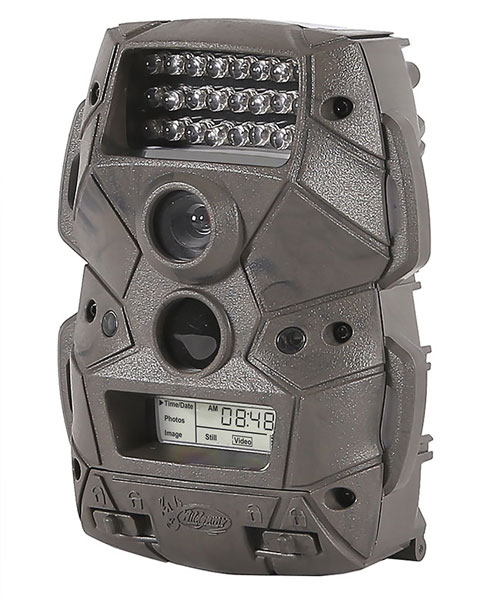


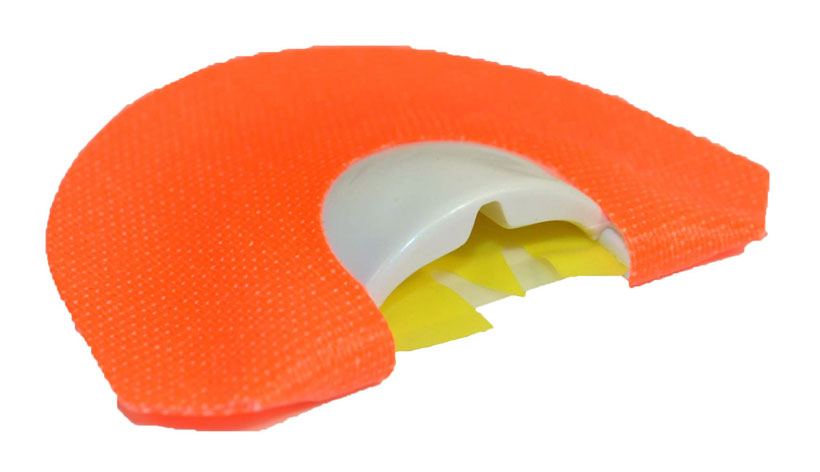


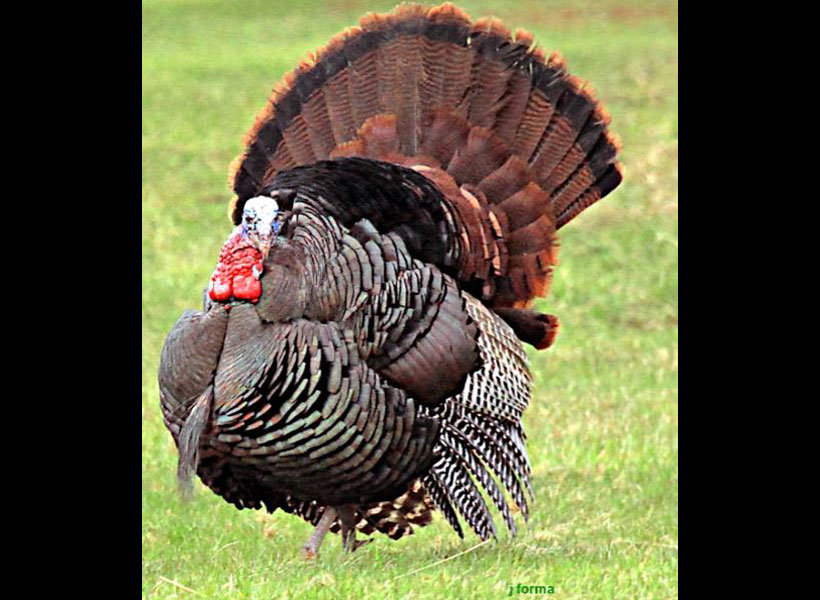

 I have been hooked ever since.


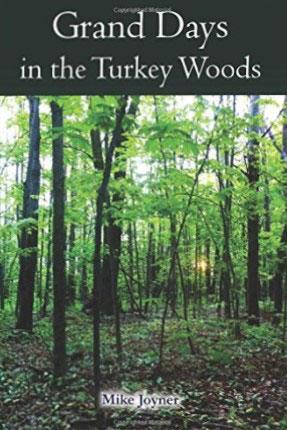 Sometimes old friends meet in a familiar place. If you’re a turkey hunter, you know there is something extra special for those moments when a hunter and the woods come together in search of a nearby gobble. It’s downright exciting!





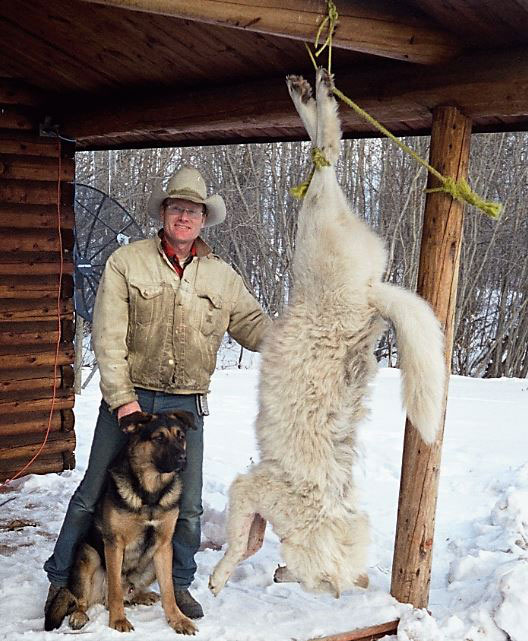
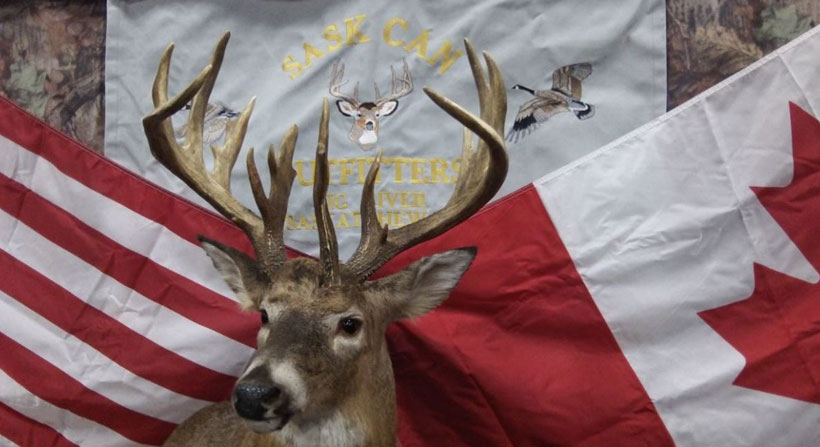


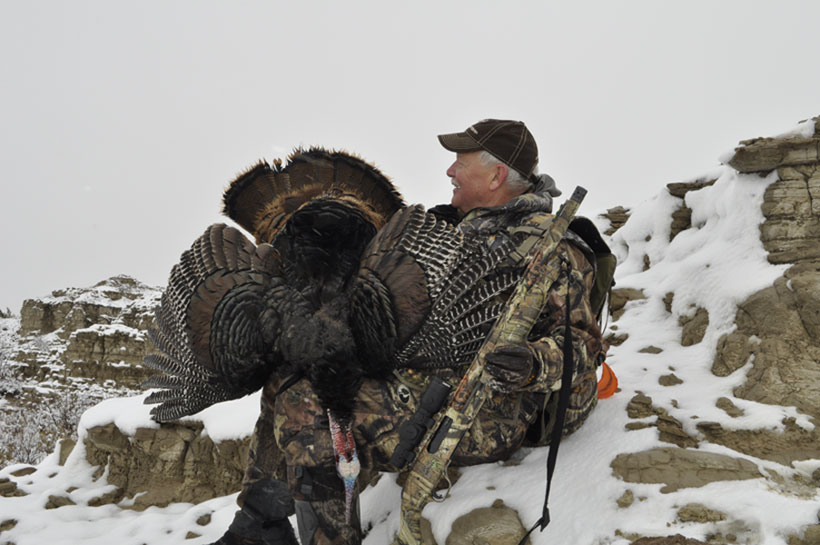


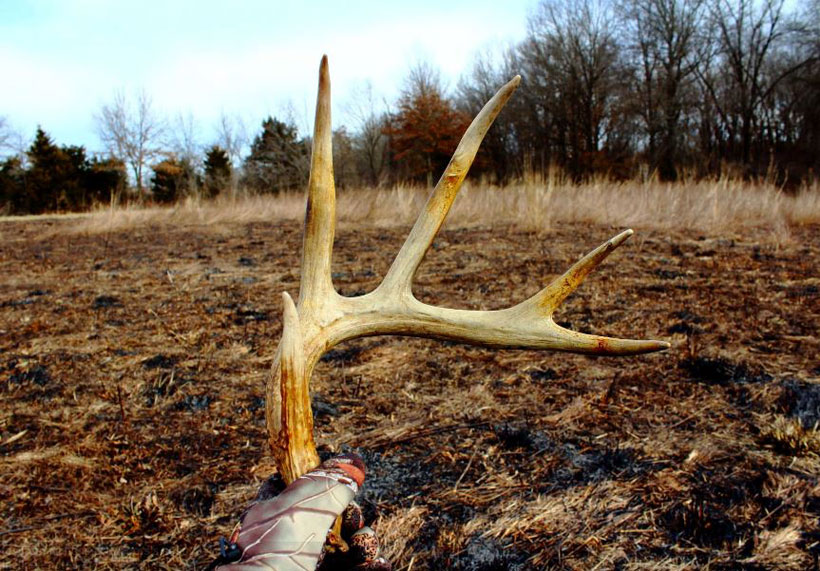



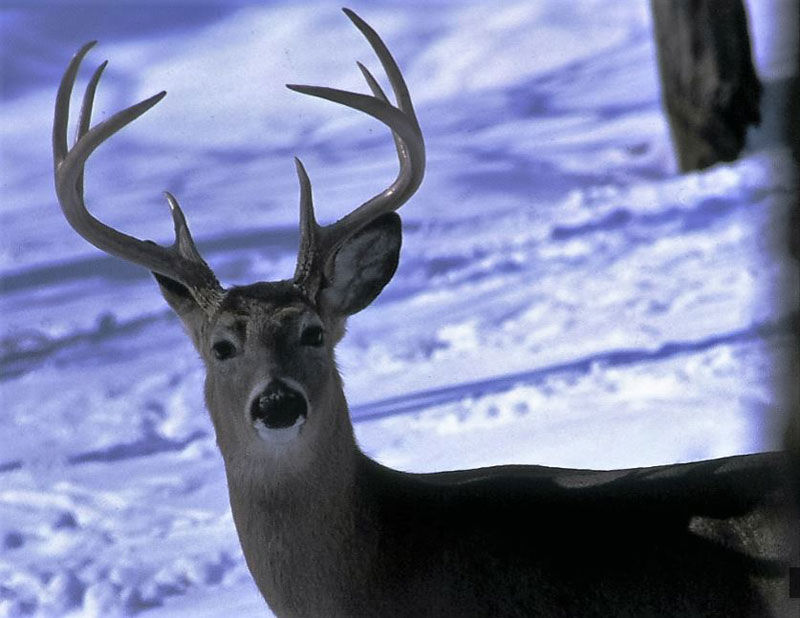




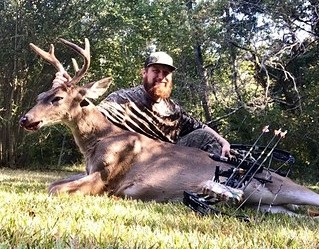


 Three on one leg and two and a nub on the other leg.
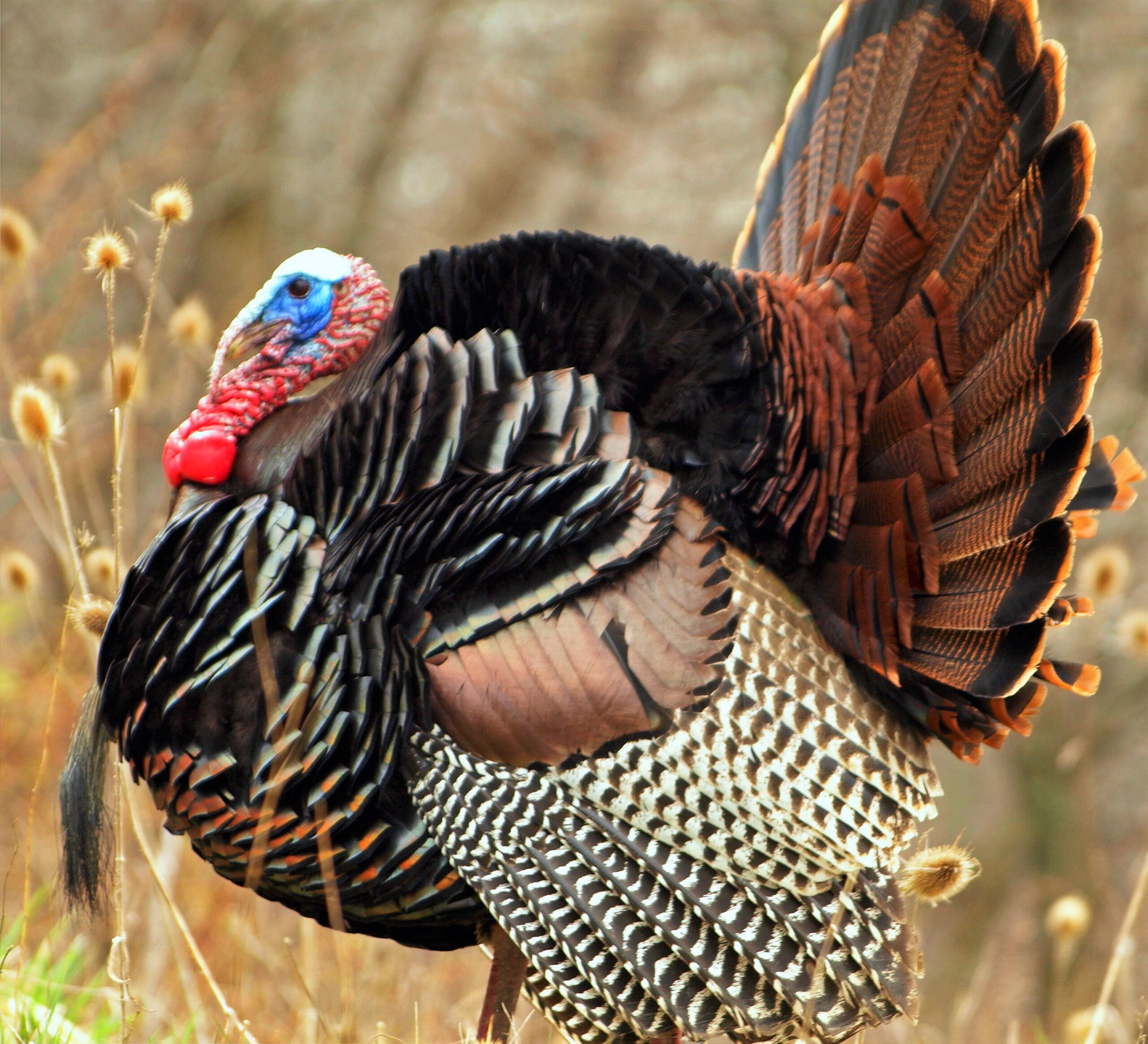

 By Larry Whiteley
 He finally came up with the idea of building one with a forward-mounted wheel that would allow the paddle to be moved to both sides of the box. That way, it could be used on any of four sound rails, each made with different wood types to have four different tones. Thus came the name for his call, the 4-Play. He also found that since the wheel allowed the lid to be moved forward and backward, he could strike the sound rails in multiple locations, adding to his box call versatility. The 4-Play is a turkey box call like no other you have ever seen or used.
  This old turkey hunter has never seen anything like it in all my years of turkey hunting, so I just had to have a 4-Play. I love it! I can’t believe all the sounds I can make with it. I’m clucking, purring, yelping, and even fly down cackling with it. I can’t wait until spring turkey season. My wife can’t either! Can you believe she banned me from the house and makes me take my 4-Play and practice out in the barn?


 The other scopes he normally uses are fairly expensive models from some well-known companies. After looking through the Sightmark Scope, his first comment was, “Dad, this scope is clear as, or clearer, than my other scopes.” When he asked me how much it retailed for and I told him less than $300, he didn’t believe me until I showed him the MSRP in their catalog.
 He does say he recommends using their better scope rings. My optics expert son really liked the Sightmark Core TX 4-16×44 MR and says he would recommend it to anyone, including me, for long range tactical shooting as well as hunting.



 My wife sleeps peacefully as I lay there for a moment trying to get the cobwebs and thoughts of turkeys out of my head. My feet hit the floor and my morning daily work week ritual begins. It’s off to the kitchen to put on the coffee, a quick visit to the bathroom and then turn on the TV to catch the weather forecast. When I drink too many liquids before going to bed, the order of events sometimes changes. It can’t be because I’m getting older.
 As I drive my eyes are always on the watch for deer at the forest edge. Maybe I’ll see that fox pouncing on a mouse in the field again. That is if the red-tailed hawk doesn’t beat him to it. Man, six road-kill skunks at the side of the road within two miles. That has to be a record! Around this curve is where I nearly always see turkeys. There they are: Six hens, a gobbler, and two Jake’s. I wonder if that’s the gobbler in my dream?
 My day-dreaming each morning takes me to many places far from the busy highway. Sometimes I’m on my way to our cabin. I’m watching all the hummingbirds swarming like bees around the feeder or I’m down at the creek and I’m fighting a big smallmouth.


