When people think of the SCI Hunters’ Convention, visions of big game hunts in Africa, Asia, South America and North America come to mind. What may come as a surprise is that several outfitters displaying at the Convention offer outstanding game bird and waterfowl hunting opportunities all over the world.
One of the outfitters who again will be exhibiting at the 2018 SCI Hunters’ Convention is Ramsey Russell with GetDucks.com. When you talk with Ramsey, you can’t help but get excited about booking one of his dozens of game bird and waterfowl hunts available all over the world.
“The response to our hunts at our first SCI Convention was a total surprise,” says Russell. “Because we offer such a variety of hunts for virtually every bird, duck and goose in the world, our booth was swamped.”
Many avid bird hunters are looking for the next place to hunt for a bird they have never taken. Much like big game hunters who add to their list of game taken, bird hunters are looking for exotic hunts in places where they can take birds they may never have even seen before.
“We specialize in hunts, not only for birds, but for the accommodations and amenities that make for an enjoyable and lasting experience,” says Ramsey. “One of my biggest joys in this business is seeing client/friends at the SCI Convention and hearing about how much they enjoyed a hunt they booked with us. Many come back to look for their next adventure.”
So what type of hunts can you book with Getducks.com? You can book a hunt for one of 49 species of waterfowl in North America. When you go to the GetDucks.com website, you will find hunts available for each species. All you have to do is click on the one you want and the hunts pop up.
If you are looking for an exotic bird like a Western Capercaillie or dozens of others, you can book hunts for them, too, with GetDucks.com. It really is amazing to see the number of hunts Russell has put together.
-more-
In addition to GetDucks.com, there are several other outfitters offering bird hunts at the SCI Convention. It has been a growing area of the Convention as more and more hunters start collecting the multitude of game bird and waterfowl species in North America and around the world.
If you’re interested in wingshooting and looking for the next great adventure, be sure to attend the 2018 SCI Hunters’ Convention and visit with the outfitters who specialize in bird hunts. There are hundreds of hunts to choose from.
About the SCI Hunters’ Convention: Safari Club expects upwards of 24,000 international hunters to visit
Las Vegas, January 31-February 3, 2018. The SCI Hunters’ Convention represents the largest and most successful event to raise money for advocacy to protect hunters’ rights. The 2018 Hunters’ Convention will be held at the Las Vegas Convention Center with over a million square feet of exhibits and almost 1,000 exhibiting companies.
Joining Safari Club International is the best way to be an advocate for continuing our hunting heritage and supporting worldwide sustainable use conservation, wildlife education and humanitarian services.
Safari Club International – First For Hunters is the leader in protecting the freedom to hunt and in promoting wildlife conservation worldwide. SCI has approximately 200 Chapters worldwide and its members represent all 50 of the United States as well as 106 other countries.SCI’s proactive leadership in a host of cooperative wildlife conservation, outdoor education and humanitarian programs, with the SCI Foundation and other conservation groups, research institutions and government agencies, empowers sportsmen to be contributing community members and participants in sound wildlife management and conservation. Visit the home page www.safariclub.org or call 520-620-1220 for more information.
WEST POINT, MS – Mossy Oak Capture Digital Productions has released its fourth episode of “Family Tree,” a web series that highlights the importance of spending time outdoors with family, teaching and guiding through hunting and conservation efforts, which serves to preserve the outdoors heritage.
This episode of “Family Tree” features Mossy Oak’s Jeff Shelby as he shares his gratitude for his upbringing in the outdoors. Their father/son experience in the outdoors was one of sacrifice and Jeff sees it full circle on a Kansas waterfowl hunt.
“Looking back on it now, the weekends my dad sacrificed to help me further my passion is pretty special,” said Jeff Shelby. “If it wasn’t for him, I wouldn’t be where I am today. The values he’s instilled in me, hopefully one day I can pass on to my kids.”
The all-new mossyoak.com delivers Mossy Oak’s extensive library of free, original and engaging content accessible on any device. With new content added daily, mossyoak.com features a deep archive of hunting, conservation and outdoors lifestyle articles, over 10 years of TV episodes, and newly added original short films and video series from our all-new Capture Digital Productions. The outdoors obsessed all over the world can now access everything the Mossy Oak Brand has to offer – outdoors information, entertainment and products – at one place, mossyoak.com.
If you are opposed to drilling in Arctic National Wildlife Refuge, now is the time to speak up and let your senators and representatives know.
Posted by Don Carpenter | December, 2017; w/Backcountry Hunters and Anglers (BHA)
As an avid elk hunter in Idaho and Wyoming, I often marvel at how elk country, even when very close to cars and civilization, can feel wild. Entering a tight, timbered canyon, especially when elk may be near, is awe inspiring, even when the trailhead is only a quarter mile away.
Click on picture for the Video Story of ANWR in the eyes of Don Carpenter.
The Arctic National Wildlife Refuge feels wild in a different way. The 19-million-acre refuge is the epitome of remoteness. The feeling of being immersed in such a large tract of land largely untouched by man is staggering. It is a truly intact ecosystem that stretches from the southern slopes of the Brooks Range over high, glaciated peaks and across the Coastal Plain to the Arctic Ocean. This place is unique and there is nothing else like it. We would never be able to create its equal. But you don’t need to take my word for, check it out for yourself here:
I have had the opportunity to travel to the Refuge several times. Prior to my most recent trip last June, I had the chance to meet Dr. Bob Krear. Dr. Krear is a biologist and was part of the 1956 Sheenjek Expedition to the Brooks Range, which was organized by conservation legends Olaus and Mardy Murie. A biological survey and a film created by the team were used to convince Congress and President Eisenhower to designate the Arctic National Wildlife Refuge in 1960. Dr. Krear is also a World War II veteran. He fought in the mountains of Italy with the 10th Mountain Division. In his memoir, he writes that the 1956 Sheenjek Expedition and the small part he played in the formation of the Arctic Refuge were was among the proudest achievements of his life. Those are powerful words coming from a World War II veteran. The Central Arctic around Barrow and Prudhoe Bay have been developed into the some of the largest oil fields in the country. The Western Arctic is designated as the National Petroleum Reserve. The Coastal Plain of the Arctic National Wildlife Refuge, the only remaining segment of our Arctic Ocean Coastline, is now being strongly considered for oil and gas development. This debate has gone on for decades, but now there is language in the recently passed Senate tax bill that would allow drilling in the Refuge. The Senate and House need to reconcile their bills that will go to the president.
If you are opposed to drilling in Arctic National Wildlife Refuge, now is the time to speak up and let your senators and representatives know.
These words from Mardy Murie are even more powerful for me today, as drilling in the Arctic Refuge becomes a real possibility, than when I first read them:
“Beauty is a resource in and of itself. Alaska must be allowed to be Alaska, that is her greatest economy. I hope that the United States of America is no so rich that she can afford to let these wildernesses pass by – or so poor that she cannot afford to keep them.”- Mardy Murie, Alaska Lands Bill testimony June 5, 1977, in Denver, Colorado.
The aggressive Defender XMR-HD10 side-by-side vehicle is factory built to tackle the nastiest of mud, where traction and torque are in high demand. An authentic mud monster, the muscular Defender not only reinforces the Can-Am brand’s leadership in the mud-riding spectrum, but it does so with unmatched styling and engineering ingenuity. The specialized Defender XMR HD10 vehicle — available in either a Carbon Black & Sunburst Yellow finish or premium Mossy Oak Break-Up Country camo — includes all the Defender XT HD10 package features, but expands upon those conveniences with its own advancements for greater success in the mud.
The state-of-the-art Smart-Lok lockable front differential and large 30-in. (76.2 cm) ITP Cryptid mud tires, when mated to the existing 72hp Rotax V-twin HD10 engine, durable PRO-TORQ Transmission supply unprecedented levels of grip and sure-footed control in the mud. The Smart-Lok differential includes dual modes (Trail and Mud) for added convenience and ingenious terrain adaptation. The factory-installed snorkeled CVT and engine intakes ensure flawless execution when tackling wet and muddy conditions.
Car collision rates say New York has too many deer, but hunters have trouble finding them. There is a cure. Joe Forma Photo
Remember those days in school when the teacher said, “Time up, pens down!”
New York deer hunters take note, time is almost up. The close of the New York southern zone firearm season (shotgun, rifle, handgun) for deer and bear hunting is just ahead, ending this Sunday, Dec. 10, at sunset. The next morning at sunrise, the extended combination late big game season opens for an additional nine days, to include crossbow, late archery and muzzleloader (black powder) season, ending on Tuesday, Dec. 19, at sunset.
When you consider that the big game season in New York’s southern zone (area south and west of the Adirondacks) actually started on the first Saturday of October, then ran for 6-1/2 weeks through the start of firearm season that began on Nov. 18 for three weeks and two days, and now the late season for nine days. That adds up to a little more than 11 weeks of big game hunting season for deer and bear. Wow, that’s 79 days of big game hunting!
The annual cost for the regular resident season firearms hunting privilege (license) in New York is $22 (includes big game and small game), the resident archery privilege is an additional $15 and the muzzleloader/crossbow privilege is also an additional $15. Total cost for all possible combinations during the big game season is a mere $52 for those 16 years of age and over (through 69 years old), or about 65 cents a day. AND, if you purchase the archery and muzzleloader license, you are provided with a free (no additional fee) either-sex deer permit and a free antlerless deer permit. So for $52, you can harvest 2 bucks and 1 doe over those 79 days of New York big game hunting seasons. The regular season license will allow the hunter to bag one antlered deer (a buck).
For just $10 more, the hunter can purchase an application to enter a random drawing for two deer management permits allowing the harvest of one antlerless deer (doe) per permit in a designated wildlife management unit (WMU) of the hunter’s choice – if the management unit doe harvest is deemed available by the DEC and you are among the lucky hunters to win in the random drawing to help control deer overpopulation. Hence, while it is common knowledge that scientific deer management is based upon controlling the population of female deer, in New York, hunters have to pay for the privilege of helping to administer the science.
New York is so interesting.
In addition, if you happen to hunt in a wildlife management unit where there are too many deer, additional doe permits can be purchased for, you guessed it, $10 for two. For example, in WMU-9F, that is Elma, northern East Aurora and related adjacent areas, a hunter could obtain two more permits. If you have a lifetime license, those permits are free.
New York is so interesting.
If you add all that up, that’s seven possible deer for the freezer or the food pantry. Over 79 days of hunting, that is an average of about one deer every 10 days if you’re really good at this hunting thing, but if you are like me and many other hunters at this point of the season, you might still be looking for your first deer for the year. Hmmm, so what’s up with that?
Well, in a state with about 590,000 big game hunters, the annual harvest is 230,000 deer or so (buck and doe). While the numbers say that only about one in every three hunters will even harvest a deer, the DEC seems to be doing their part in providing hunters with access (long season), affordability (low cost) and opportunity (many state forests and access areas open to hunting). Kudo’s to New York for this.
Not without purpose, New York wildlife management groups appear to be working with safety management and insurance groups that report about 70,000 deer-vehicle collisions annually in the Empire State, with an average cost of about $4,000 per incident. Across the country, 238 people were killed in 2015 when their vehicle struck an animal or when they tried to avoid striking an animal.
Add that deer also are also responsible for transportation of deer ticks that carry Lyme disease, it would seem New York needs even more harvest by hunters to control the malady of too many deer. So why is New York charging hunters $10 to purchase a deer management permit application?
New York is so interesting.
Because this is New York, the land of nothing is free. Your guess is as good as mine.
It would seem that with these data, the doe permits should be cheaper than free for every hunter. I like that hunting for deer is affordable in New York when compared to other states, but understanding the issues present (collisions, Lyme disease, property damage), New York needs to do more to raise the number of hunters out there and reduce the numbers of deer.
How about if NY were to pay every hunter $25 for every deer harvest? Yes! Could such a simple incentive help the deer management group and would it also achieve the goal of accurate hunter harvest reporting?
How about if NY were to plant food plots in state forest areas? We would see far less deer, safer highways, etc., etc.
Mistake #4: We get patterned doing the patterning.
Can we pattern a mature buck? I don’t think so. If we could, the odds are that we’d get patterned long before we could pattern the buck. We spend too much time at the wrong time walking, exploring, hanging stands and generally polluting the woods with our scent when we should have been prepared and just biding our time, waiting for the perfect day.
The very best chance we have to kill a mature buck is the very first time we hunt him. Yet we continue to walk around our stands, looking for fresh sign, freshening scrapes and generally messing things up. We repeatedly walk to our stands on the same trail. We think our scent spray will keep him from smelling us, or our rubber boots will keep him from smelling where we walked.
But we push limbs out of the way with our hands and we wear the same hat every day. Deer smell where we place our hands far more than they smell where we walk. Rubber boots are of no advantage, I believe, and our hats stink (our hair holds odors for a long time). To think otherwise is a mistake, a big one.
Proper stand placement is crucial to success. Good scouting will give you the necessary info.
Mistake #5: Despite knowledge to the contrary, hunting the wrong times.
When do deer move? The plain fact is they move whenever they want. Except for truly hot weather, as a general rule deer are no more active at daylight than they are at 10:30. In fact, more mature deer are killed between 10 a.m. and two p.m. than at any other time. The hunter who can effectively hunt all day has a huge advantage, but very few can. The operative word is effective. After three or four hours, most of us are just occupying space, not effectively hunting. By limiting our hunts to three or four hours in the morning and afternoon, we often miss the prime hunting time for mature whitetails.
During the rut, I routinely hunt four stands in one day, spending two or three hours in each. My final stand is usually on an approach trail or edge of a field. Often it is a ground blind, because a deer in a field is twice as likely to spot you in a tree stand as when you are in a properly placed ground blind. The other stands are in the timber.
I have killed as many bucks from 10:30-11:30 a.m. as at any other time. Think about it. Often, I am the only hunter in the woods at that time. And the deer know it. To skip midday hunting is a mistake.
Obviously, there are other mistakes we make and, just as obviously, we can make these five mistakes and still get lucky.
Luck is when preparation meets opportunity. If you are making these mistakes, you are not properly prepared.
On a Small Beach central Florida, a retirement community…4 gold rings, 1 silver ring, over 100 coins, toys, fishing lures, and some trash. All in one day.
How? “Cold wet hands loosen rings, as does hot, sweaty hands, then throw a ball or Frisbee, the ring flies off. Not lost forever if you are looking.”
By Rich Creason
The author provides hands-on instruction for a newcomer to the art and fun science of metal detecting…treasure hunting, on the beach.
Most folks who enjoy metal detecting start by looking for lost coins in backyards, but once given a choice to try beach hunting, it often becomes their favorite spot to search.
This is the case with my wife and me. We have detected for over 40 years, from Montana to the east coast, and from Florida to northern Canada. We have searched yards, fields, school grounds, Civil War camp sites, seeded hunts, and beaches. Sifting through the sand is the best.
Unfortunately, we live in central Indiana, about as far from a saltwater beach as you can get, but we are fairly close to all of the Great Lakes, plus some fresh water lakes and reservoirs with large beach areas. Another unfortunate fact is many State Parks have water with swimming beaches, but they don’t allow metal detecting. I’ve never understood why, because kids can take their buckets and shovels and dig in the sand all they want with no problem. Also, when we are detecting, we take a lot of pull tabs, bottle caps, hooks, scrap metal, and other trash off the beach which are dangerous for those enjoying the sand without shoes.
Another very productive area is a campground with a swimming beach. These are often busy and sometimes no one has ever detecting these areas. As any other private property, we always ask for permission to search. Since we are causing no damage and usually show the owners all the trash we cleaned up for them, permission is seldom a problem. So, regardless of where you live, some type of sand beach is probably close to where you live.
It doesn’t matter whether you detect around fresh or saltwater beaches, close to water is the best place to find lost jewelry. Not the only place, but the best. Cold wet hands will loosen rings, as does hot, sweaty ones. Throw a ball or Frisbee and the ring flies off. In the water, or even in the sand, it will be hard to find without a machine. Teenagers horseplay and a delicate gold chain is broken and both the chain and the pendant, locket, medallion, or whatever is on the chain is lost in the water until someone with a detector finds them. My best water find so far is a gold ring with three large garnets which appraised at $500.
Another way valuables get lost at the beach is by placing a nice watch or other item on a blanket or towel. It gets accidentally knocked off by kids playing or when the towel is picked up to shake sand off and the item is forgotten. And this happens many times a day on a popular beach.
Of course, the east coast of Florida is famous for giving up gold and silver coins and relics from sunken Spanish ships, especially after strong storms. These items are washed in from offshore and brought close where someone with a detector can find them. This brings up the question, how do you get your share of these lost treasures?
Naturally, the first step is getting a metal detector. New ones range from around $200 up to ten times that much. The basic difference is like a Chevrolet and a Mercedes. Both will get you around. One just has more bells and whistles. Most detectors are waterproof from the coil at the bottom, up to the control box. The electronics inside the box tend to freak out when they get wet. Some brands offer water proof machines up to, and including, the earphones. These are more costly, probably starting around $500. But, one good ring (see above) can pay for this machine. Add a sand scoop for retrieving your finds from the beach ($20) and you are ready to find some treasures.
As soon as you find a sandy beach (gain permission to hunt if needed), you need to decide where to start. If it’s a small fresh water pond or lake, it’s fairly obvious where people hang out. On a huge saltwater area, you need to decide where the most activity is located. If possible, check it out on a hot, summer day. Blankets are usually placed above the high tide line. If young people are having a volleyball game, move into that spot as soon as they are finished. While the girls often are in tiny bikinis with no pockets, we have found several nice rings there. They tend to fly off when hitting the ball. Of course, spend some time hunting in the water. I usually search in water up to my knees. It’s easier to stand in the waves and more people use the shallow water.
If you are walking the beach and notice an area which looks like rain has washed a trough out from the high sand line down to the water, hunt that carefully. Anyplace the sand has been disturbed can bring treasures from deep up to near the surface.
If you are lucky enough to live near big water, search the shoreline (or in the water) after a large storm. The high winds will turn the sand over, bringing treasures to the top. You will often see people with detectors out looking almost before the hurricane winds are gone. Remember where the large crowds were active when the days were nice. Hunt there!
Metal detecting in the water can be fun, provide exercise and a can provide a nice, small payoff in treasure too.
Think outside the box. If you can hunt an out-of-the-way spot, which is not frequented a lot, you may be the first one there. I hunted a small beach on a neighborhood lake in central Florida. It was a retirement community and not a lot of folks spent time there. But apparently enough. I found four gold rings, a silver ring, over100 coins, toys, fishing lures, and a lot of trash in one day. My wife hunted the dry part of the sand and found coins, toys, and a large silver belt buckle. We have hunted several small campground swimming holes and had the same kind of results. If we find any valuable jewelry, we try to find the owner, but usually, there are no markings on the item to identify the owner. The only exception to the rule is class rings. Usually, they have the school, year, and a name or initials on them. We Goggle the school, and call the office. We tell them what we found, and ask if they can look in their yearbooks and help us find the owner.
When we leave home on a fishing trip, or any other kind of vacation, we always pack our machines. Many times when planning a trip on large waters, weather changes our mind. Fishing is out when the wind is too high. Rather than having our visit turn into a bust, we find the nearest beach and start hunting. I have never been west of Montana, but I imagine finding treasures on the west coast is the same as on our side of the continent.
I always consider metal detecting as the best hobby. Like other activities, (fishing, bowling, golfing, etc.), you must purchase your original equipment to start, but any of those other hobbies will cost you more money each time you participate in it. Then realize that every time you use your detector, you make money. Sometimes only a few clad coins, but occasionally a nice ring or a valuable coin or relic. My only additional cost is batteries once or twice a year.
Deer cross obstacles such as roads and fences in the same place, most of the time. Learn to recognize these crossings.
Each year deer hunters, all of us, make mistakes. Sometimes they are minor mistakes, sometimes major. Not always do even the major mistakes turn out badly in terms of killing a deer or getting a shot. But sometimes they do. Over the 60 years I have hunted whitetail deer, I have determined what I feel to be the five biggest mistakes a hunter makes. Here they are in the order I rank them.
Keep these items in mind for hunting now, for scouting after this season, and for scouting next summer and fall for next year’s season.
Mistake #1: Failure to understand the animal you are hunting.
I have been a student of whitetail deer for more than six decades. I am still learning. I am still constantly reminded of how little I know. I have always wondered how a hunter can expect regular success on bucks over age 3-1/2 if they don’t work to learn all they can, and then test what they have learned.
Persimmon is a preferred food source when dropping. Did you know there are two types of persimmons, early and late, and deer don’t always eat them?
Just reading and asking questions are not enough. You must get out in the woods and read sign, see what the deer has done. Then ask yourself why. Why did that deer do that? What caused that reaction? Will it happen every time?
If you ask any deer hunter what the deer’s preferred food source is right now, and they don’t know, they have not learned enough about the animal they hunt. Does the hunter know what will be the next preferred food source? Does he or she know why the deer are crossing a road in a particular place?
The questions and the answers are endless. It takes much more than just spending time in a stand. The more you ask and the more you learn, the better prepared hunter you will be, and it is a serious mistake not to be prepared.
A successful deer hunter will always have more questions than he or she has answers.
Mistake #2: Improper Scouting
Nothing prepares you for success more than proper scouting. Nothing costs you more than improper scouting.
Far too many hunters wait until the week or maybe the month before the season to begin scouting. However, proper scouting never stops. By far the most informative scouting is done in the weeks just after the season closes. That sets the stage for the rest of the scouting. It is then you learn what the bucks were doing when you were hunting them. It is then you find their hiding spots and secure travel trails. It is then you formulate your game plan for the next season.
Summer means long distance, non-invasive scouting with good optics. It is a prime way to spot where a buck enters and leaves a field without spooking him and may be a clue to finding autumn food sources.
In the summer, your scouting is non-invasive. You glass open fields just at sundown. There is little to be learned other than there are some deer here. That’s all you need to know at that point. There is little reason to be in the woods. That starts when the mast begins to form on trees. You are now looking for food sources. You couldn’t care less if you see deer. In fact, you hope you don’t. You are looking for where the deer are going to be, not where they are.
Hang a stand in the right place and stay away until you plan to kill him.
In early fall, you combine your hunting with your scouting, you are looking for new rubs, early scrapes, previously unknown creek or road crossings. You adjust as the deer do, as new travel patterns emerge.
In late season, you adjust again. The stand that was so hot in November may be useless now. Look for the trails in deep cover and secure food sources. Look for the trails that lead to agricultural crops and, in doing so, pass through the really thick stuff.
To scout for only a day or so in September or October is a serious mistake. It will cost you deer.
Do plenty of post-season scouting and make notes. This often can be the key to next year’s success.
Mistake #3: Over-Dependence on Equipment and Gadgets
As technology developed new and improved products, deer hunters got lazy. Magic potions in bottles or in spray cans replaced knowledge and work and study. We began to depend on our equipment to compensate for inaccurate shooting, good yardage judging, clean clothes and proper stand placement. We began to believe the advertisements and all the new theories. The latest call couldn’t fail. The hottest new camo couldn’t fail. The most popular new scent couldn’t fail. The new scent eliminators couldn’t fail. But they did… and do.
Don’t be afraid to hunt from the ground. With the right setup in the right place, it can be productive. Doesn’t always need to be a ground blind.
There are no magic potions or gimmicks. They are all aids and, yes, they are an aid. Properly used, under the right conditions they do work sometimes. None of them work all the time and some of them are counterproductive. Unless you understand what the product is; know how it works; know how to use it properly and understand the limitations of the product, you are making a mistake. If you depend on a spray or clothing to prevent deer from smelling you and do not take advantage of the wind, you are making a mistake.
These products and others can be invaluable for the unforeseen vagaries of hunting. But to depend on them alone is a mistake and it will cost you.
Consistently successful callers (deer, elk, turkey, etc.) always anticipate success and prepare for a response. This anticipation is what I call the confidence factor, and it usually comes from experience and a working knowledge of the language of the game you’re hunting. You don’t have to learn the hard way. Learn the language, and when you make a deer call expect a deer to show up.
Crossbow Broadhead Blends Fixed and Mechanical Technology
SUPERIOR, Wis. (Oct. 3, 2017) — Due to customer demand, the popular Trocar HBX hybrid crossbow broadhead that blends the most lethal and accurate fixed-blade broadhead with a pair of center-pivot blades that deploy on contact for massive cuts on large animals is now available in a 125-grain.
Like the 100-grain, the new 125-grain Trocar HBX features 0.35-inch-thick surgically sharp stainless steel mechanical blades that remain tucked in tight to the solid-steel ferrule during flight, but they deploy on impact for a total cutting diameter of 2 5/8 inches on impact. For added accuracy and stability, the 0.35-inch thick fixed blades are slightly offset. The new heavier Trocar HBX also features the popular Muzzy bone-crushing chisel tip.
This new 125-grain hybrid broadhead is now available at retailers nationwide and conveniently online at www.muzzy.com. Suggested retail price for a three-pack of either the new 125-grain or the 100-grain Muzzy Trocar HBX broadheads is $39.95.
Founded in 1984, Muzzy is the number-one name in fixed-blade broadheads, and it is a pioneer in the art of bowfishing. A division of FeraDyne Outdoors, Muzzy is headquartered in Superior, Wis. For more information on the full line of Muzzy’s fixed-blade broadheads and state-of-the-art bowfishing equipment, contact Muzzy Outdoors, LLC, 101 Main Street, Superior, WI 54880; call 866-387-9307; or visit www.muzzy.com.
Big, healthy bucks follow hot and ready doe’s, the hunter has many options, learn some of them here. Joe Forma Photo
Be Ready
“You’re not going to believe this,” the excited deer hunter said. “I haven’t seen anything all morning, so I let my bow down and started to unfasten my safety belt. I remembered my brand new, never used, deer call and thought “What the heck”. I let go with a couple of parting shots on the call before beginning to climb down. Just then, the buck of a lifetime came boiling out of the brush like his tail was on fire. He stopped broadside, 20 yards from my stand, but I’m holding 25 feet of rope with my bow tied on the other end. “He was huge,” he said, holding his hands about two feet apart.
I had this conversation at one of the early Deer Classics and have had many more like it since. I believed him.
This hunter’s experience was not that unusual, especially for first-time callers or callers trying a new technique. With no confidence in the call or the technique, he’s thinking “I never heard a deer make a sound like that” or “This will probably run off anything within hearing”.
He has no idea what he is saying when he makes the call. He has no clue what it should sound like, and/or he has never had a deer respond to calling, so he has no real reason to believe his deer call will work. So he sets himself up for failure by making a call and not expecting anything to show up.
I began working with game call companies in 1986, doing field testing and research on every aspect of deer calling, including interpreting and dissecting unusual and possibly significant vocalizations. There’s not much you can do or say to a deer that I haven’t tried for experiments’ sake and/or in hunting situations, and there aren’t many reactions to calls that I haven’t seen. This article is from my book CALLING WHITETAILS: Methods, Myths & Magic. It is available at www.targetcommbooks.com.
When he’s trailing and he’s grunting!
I can’t begin to tell you how many tales of woe I’ve heard from seasoned deer hunters who missed out on golden opportunities because their brains were on pause when a buck showed up. If you believe in something enough to buy it and haul it to the woods with you, then you should believe something is going to happen when you use it. You want the deer to come into the area to investigate the deer making the call. He may come in hard and fast or he may slip in and be gone before you know he was there.
Make the call, then wait for him! Look for him! Stay on ‘red alert’ for 15 to 20 minutes after you make the call. Expect a response and anticipate success. You will still get caught with your guard down from time to time, but you won’t feel so dumb about it.
Consistently successful callers (deer, elk, turkey, etc.) always anticipate success and prepare for a response. This anticipation is what I call the confidence factor, and it usually comes from experience and a working knowledge of the language of the game you’re hunting. You don’t have to learn the hard way. Learn the language, and when you make a deer call expect a deer to show up.
When You See a Deer
Deer have big ears. They are good at pinpointing the precise location of a sound’s origin, so my rule is: If you can see a deer coming toward you, let it come, even if it is dawdling and taking its time.
You are in good shape as long as it is headed your way. If you make a sound while it is enroute, you will call its attention to your location and increase the possibility of getting picked off.
She smells a rat!
The doe’s that are ready to breed are in charge. Learn the details to pay attention to. Joe Forma Photo
If the deer veers off in another direction, a soft doe or buck grunt could be the right invitation to bring it back on course. You don’t have anything to lose in those situations.
When I’m in this situation (the deer is not heading my way) I’ll call to any deer I see wandering around, but I keep it soft and passive unless I see or hear a buck trailing a doe. When that happens, I’m going to get more aggressive, with some heavy breathing doe bleats to try to turn his head. I have called several bucks to me that were trailing does. They thought the bleating doe was the same one they were trailing.
When you are doing blind calling, always take a hard look around before you make a call, to be sure the immediate area is clear of deer that could bust you. If you get busted, let him go. There’s no reason to call to a deer that you know you have spooked. He won’t come back once he has you pegged, and he might very well associate the call to human presence. What do you think he will do the next time he hears a call?
Learn the Language
Before your start blowing on your deer call, be make sure you know what you are saying so you don’t say the wrong thing at the wrong time. Deer can’t change their language, so just be sure you are familiar with the basics. Beyond that, you have to be the judge of what is right for you. Knowing the right sound to make to trigger a specific response gets you in the game. Making the proper sound in the correct sequence gives you a chance to score.
When she talks, they listen! Set Up to Call
An important but often overlooked aspect of calling success is in the caller’s location and set-up. Do your calling in a high-deer-use area where deer are comfortable making and responding to calls. You are not going to call many deer when they are alarmed or distressed.
“What do you do when a buck comes almost close enough to shoot and won’t come any closer?” I wish I had a quarter for every time I’ve been asked that question.
The reason he won’t come any closer is because he can’t see the deer he’s been hearing. He wants visual reinforcement to the audio signals he’s been getting. A warning – if you call to him while he’s looking in your direction (he usually will be if he’s responding to a call), he’ll most likely look you right in the eye and the hunt will be over. Your best bet is to let him walk, then try to call him back when he gets out of sight.
If you plan to call, try to position your stand on a rise or in thick cover so the deer will be in range when he comes into view. Don’t forget: if you’re going to do aggressive calling or horn rattling, always try to set up with a natural barrier downwind of your stand. If you can keep a buck from scent checking your position when responding to your calling, your chances for success are much better, especially with older, smarter deer.
Gary is an expert caller of deer and turkeys and has been so for a long time. A competition caller as well as an active hunter, he won the 1993 and 1994 World Deer Calling Championship and has conducted far more than 1,000 deer calling seminars throughout the U.S. to help hunters understand and successfully communicate with deer. He has written articles for Deer & Deer Hunting magazine and other regional and national outdoor publications. He has appeared on nationally syndicated radio and television outdoor shows and is featured on several DVDs.
His book – CALLING WHITETAILS / Methods, Myths & Magic –is a no-nonsense, back-to-basics guide to calling deer, and other deceptions to help. Chapters include whitetail deer practical vocabulary, deer calling basics (why deer respond to calls), calling during the rut (mating anticipation), antler rattling, other deceptions (scents, blinds, decoys), tips to increase your calling success, be familiar with your calls, and have a plan. CALLING WHITETAILS is available at www.targetcommunications.com.
NYSDEC encourages hunters to pass up the shot on young bucks. Joe Forma Photo
With the start of New York’s most popular big game season slated for Saturday, Nov. 18, New York State Department of Environmental Conservation (DEC) Commissioner Basil Seggos is encouraging hunters to be safe, enjoy the natural beauty of the environment, and consider passing up shots on young bucks.
“New York has some of the best hunting opportunities in the nation, and our ongoing conservation efforts and hunter safety programs are providing ample opportunities for residents and visitors to enjoy all New York has to offer,” said DEC Commissioner Basil Seggos. “Deer and bear hunting is also an important tool for New Yorkers to assist our wildlife management efforts and critical for controlling populations especially in areas and habitats where deer overabundance are causing ecological damage. The opening of the Southern Zone regular season is a cherished tradition for many families, drawing friends and relatives together for a weekend afield. I wish all hunters a safe and successful season.”
Deer hunting has been changing in New York, with more hunters opting to voluntarily pass up shots at young, small-antlered bucks in favor of letting them grow to be older, larger bucks. DEC is encouraging hunters to make a difference for the future of the deer herd and increase their likelihood of seeing older, larger bucks by choosing to Let Young Bucks Go and Watch Them Grow.
Regular Firearms Season for Deer and Bear Begins Nov. 18 The 2017 regular deer and bear hunting seasons in New York’s Southern Zone begin at sunrise on Saturday, Nov. 18, and continue through Sunday, Dec. 10. The Southern Zone regular season is New York’s most popular hunting season; approximately 85 percent of New York’s 575,000 licensed hunters participate. Harvest during this season accounts for nearly 60 percent of the total statewide deer harvest and between 30 to 60 percent of the statewide bear harvest.
Maybe some of the most fun is just seeing deer come toward your stand on opening day, but choosing to take a doe early or not, especially during the rut, is a tough call for many hunters. Joe Forma Photo
Following the regular deer and bear seasons in the Southern Zone, late bowhunting and muzzleloading seasons will run from Dec. 11 through Dec. 19. Hunters taking part in these special seasons must possess a hunting license and either bowhunting or muzzleloading privilege(s).
In the Northern Zone, the regular deer and bear hunting season opened Oct. 21, and will close at sunset on Dec. 3. The Northern Zone includes the Adirondacks, Tug Hill Plateau, Eastern Lake Ontario Plain, and the Champlain and St. Lawrence valleys. A late bowhunting and muzzleloading season for deer will be open in portions of the Northern Zone from Dec. 4 to Dec. 10.
DEC Encourages Hunter Safety
While statistics show that hunting in New York State is safer than ever, mistakes are made every year. DEC believes every hunting-related shooting incident is preventable, and Commissioner Seggos is encouraging hunters to use common sense this season and to remember what they were taught in their DEC Hunters Education Course.
Firearms Safety:
Point your gun in a safe direction.
Treat every gun as if it were loaded.
Be sure of your target and beyond.
Keep your finger off the trigger until ready to shoot.
DEC also encourages hunters to wear blaze orange or pink. Wearing orange or pink prevents other hunters from mistaking a person for an animal, or shooting in a hunter’s direction. Hunters who wear hunter orange are seven times less likely to be shot.
When hunting in tree stands, use a safety harness and a climbing belt, as most tree stand accidents occur when hunters are climbing in and out of the stand. Also, hunters should never climb in or out of a tree stand with a loaded rifle and never set a tree stand above 20 feet.
Help Protect New York Deer from Chronic Wasting Disease
Although no new cases of Chronic Wasting Disease (CWD) in New York deer have been found since 2005, DEC continues to take the threat of CWD seriously. CWD is fatal to deer, and if introduced, could spread rapidly. Once established, CWD is practically impossible to eliminate from the wild deer herd. Preventing CWD from entering New York is the most effective disease-management strategy. Hunters can help protect New York’s deer herd from CWD by following these tips:
If hunting outside of New York, debone or quarter the deer before returning to the state, and follow the law about importing carcasses or carcass parts from outside of New York. CWD Regulations for Hunters.
Use only lures or attractant scents that do not contain deer-based urine.
Dispose of carcass waste in a landfill, not on the landscape.
Report any deer that appears sick or is acting abnormally.
Report Your Harvest – Remember: Take It – Tag It – Report It
Hunter contributions to deer and bear management don’t end when an animal is harvested. All successful hunters are required to report their harvest of deer and bear within seven days. Failure to report is a violation of the Environmental Conservation Law and reduces the data DEC uses to manage deer and bear populations. Hunters may report via DEC’s online game harvest reporting system or by calling the toll-free automated reporting system at 1-866-GAME-RPT (1-866-426-3778).
Additional Reminders for the 2017 Southern Zone Regular Hunting Season
Choose non-lead ammunition for high quality meat and reduced risk of lead exposure to humans and wildlife.
Hunger Has A Cure… The Venison Donation Program (link leaves DEC’s website) is a great way to help those less fortunate while assisting with deer management in New York.
Prusik, Gravity, Your Whitetail Deer Hunting Future
By Forrest Fisher
Healthy bucks roamed near the field edges along the apple trees and oak woods, captivating my attention with scrapes and rubs. Jim Monteleone Photo
The phrase “Whitetails Unlimited” is catchy if you are a deer hunter, especially a whitetail deer hunter. It’s also the name of an organization that has more than 100,000 members because the hunting messages they share are effective, useful and are delivered from the experience of real hunters and field contributors. There is more than beginner value.
Whitetails Unlimited Communications Director, Jeff Davis, was his usual self. Modest and humble, unassuming, friendly and confident, as he extemporaneously addressed more than 150 outdoor communicators at the opening luncheon of the Association of Great Lakes Outdoor Writers (AGLOW) Annual Conference at the Sportsman’s Lodge, on the Lake-of-the-Woods in Baudette, Minnesota.
His voice was passionate, descriptive and implicit with experience from encounters with an army of ardent whitetail deer hunters. Davis has met hundreds of hunters and shared in many their most exciting tales and hunter secrets. Hunter’s trust this hunter-gentleman because not many questions are ever left unanswered, at least not until the next issue of their extensive quarterly conservation and hunting magazine. Magazine issue content is an art and delivery science.
Jeff Davis, Whitetails Unlimited Communications Director, is modest, humble, unassuming and highly experienced. Davis delivered the message of “Tree Stand Safety” to outdoor communicators at the 61st Annual Conference of the Association of Great Lakes Outdoor Writers, held at Sportsman’s Lodge on Lake of the Woods in Baudette, Minnesota. Forrest Fisher Photo
With a slight grin that emerged to also offer a note of truth and sadness, “Not every tale has a happy ending,” Davis said. He postured his oncoming message from experience and history, with an element of approach intended to share and impart his high concern for hunter success and safety. His audible expression was unmistakable and optimistic. He was delivering advice for hunting and addressing an eager and robust audience that was all ears. We all felt comfortable to learn more.
As Davis continued, my mind drifted off. Was his smooth delivery hypnosis? Not sure. Was I bored? No, but my tummy was full from lunch. Like listening to a short sermon in church, my brain had transcended into an imaginary place and I was on a hunt. All the elements of what Davis had been talking about were in my dream. I think I drifted into dreamland for just a minute or two, but I clearly remember the details of my dream.
There was a succulent white oak tree forest with mounds of sweet acorns next to a row of apple trees where my trail cams had chronicled bucks rumbling antlers with each other in the previous weeks. There was a highly traveled rub line and it was near sunset in my aspiration. A full moon had just started rising in the eastern sky, it had a tinge of orange color. Scrapes every 25 yards were visible. There were the sounds of apples and acorns crunching in the distance from my tree stand about 95 yards downwind. Yes, I had audio, and many deer. Imagine such unlimited whitetails. I was in my place of reverie as a deer hunter.
As summer wanes, the bucks lose their velvet and seek safe resting spots in heavy cover for daytime vigils and the annual “doe watch” in wait for the upcoming rut cycle. Jim Monteleone Photo
My tree stand was situated where it was because I wanted to be safe about human scent dispersal. There I was, sitting in a hanging tree stand elevated 20-feet, vertical access from a stick-ladder and feeling very happy and safe. I knew this was a good spot. It was so quiet, except for those inconsiderate munching deer chewing in the distance.
Sitting on my butt in my stand, full-body harness in place – I wear it every time, my bow was resting on my lap. The deer on this night had dispersed and had no interest for my grunt and bleat combinations. Probably a wind direction issue. The sun had disappeared and it was time to head back. Disappointed, I started to think about what to do next time. I dropped my bow down on the lift-line, my backpack too. Then I started down the ladder. Oops! My foot slips on the top step and I was suddenly airborne. In a split second, I crashed hard into the ground and could not move. I could not feel my arms or legs. What happened I thought to myself? I had been in my dream spot. I started to grunt a bit from my perceived pain when my better half woke me up and said, “Hey Forrest, the speaker just called your name from the raffle.”
There were people clapping warmly. “Oh, I said, sorry honey, I must have dozed off.”
I got up and approached the speaker’s stand when Jeff Davis said, “You win a THE Safe-Line from MUDDY! Congratulations! Enjoy.” Wow. Thank goodness I was dreaming! I was literally trembling as I walked back to my seat, the dream had been so real for a brief moment, then at the end, a nightmare. I smiled, trying to hide my brief moment of fear from far away in dreamland.
When used with a full body harness (fall-arrest system), the MUDDY Safe-Line allows hunters climbing up or down to stay connected to safety and avoid a fall that could result in serious injury or death. (Photo Courtesy of GoMUDDY.com)
As I sat there in a semi-stupor, I realized that in the dream I had been so focused on the next hunt, that safely getting down from the tree came second. My safety came second. My life came second. My safety and how important I was to my family was not even part of my thinking in the dream. It was now. So I took a step back to really think about it. I knew that another force from far away must have been talking to me to even have this dream, or maybe that Jeff Davis was one of those magic-maker speakers where everyone can get up and talk like a chicken upon request. You’ve seen the act. I laughed to myself and grinned over to my wife who said, “You’re so lucky!” No kidding, especially this time, I thought.
So I continued in my post-dream thought, how could this accident have been prevented? We know how my safety was compromised because every solid hunter has thought about the next hunt at the end of a fruitless day. We can lose our focus for safety during “thinking moments” like that.
A MUDDY Safe-Line for secure descent would have saved me from this dream accident. Under $40 worth of gear (www.gomuddy.com), the same gear I had just won. I felt connected to another source of energy for a second or two. Sort of unreal. For a moment, no kidding, I felt an angel must have been telling me that I need to be more aware of safety. Thank you Lord.
To use the Safe-Line, you attach the line to the tree just above your tree stand with the loop knot provided. You leave this rope in place now during hunting season. The body harness Carabiner Clip latches right onto the Prusik knot loop of the Safe-Line – it comes with two Prusik slip knots (for a two-man stand), the Prusik loop slides down the Safe-Line as you proceed one step at a time and down you go. Safely. The bottom of the Safe-Line is then tied around the tree at ground level. Going up or down on slippery steps wet from rain, snow or ice is no longer a safety concern. The Prusik knot will go with you as you gently push it up or slide it down with you in either direction. If you should drop quickly, it immediately locks into place, saving you from rapid descent, a fall and possible death.
Fall arrest systems are comprised of a full body harness such as these from Hunter Safety Systems and include a tree belt, lanyard, relief device and climbing belt. When used in conjunction with a “Safe-Line” and Prusik Loop Knots, hunters are protected from ever falling to injury during ascent or descent. Photo courtesy of www.hssvest.com.
Davis’s message from Whitetails Unlimited Magazine for the attending outdoor journalists visiting from across the country was TREE STAND SAFETY.
I think I got the message. In my case, Davis had help even he did not know about. No, I’m not superstitious, but I am listening to thoughts of safety much more now. The dream honestly scared me.
My grandkids are just coming of age to hunt deer and the kids will be just like many of us in the outdoors, hunting from that one place that deer rarely see, an elevated tree stand. Safety will be the first concern for each of us when we consider the future safety of our grandkids.
Write it down as a MUST-HAVE:
One (1) Safe-Line (MUDDY, www.gomuddy.com) for every tree stand and one (1) full-body harness (HUNTER SAFETY SYSTEM, www.hssvest.com) for every hunter in your party.
Then and only then, can you go up and down from your elevated tree stand in total safety while thinking about the strategy for the exciting day ahead, or for the strategy on that next deer hunt. I had a lucky dream, then a lucky raffle. Don’t you be unlucky by choice. Conquer safety. Make it habit. Start now.
Pass it on. Please.
About Whitetails Unlimited: Founded in 1982, Whitetails Unlimited is a national nonprofit conservation organization that has remained true to its mission, making great strides in the field of conservation. We have gained the reputation of being the nation’s premier organization dedicating our resources to the betterment of the white-tailed deer and its environment. On behalf of our 105,000 plus members, we welcome you to browse our site and learn more about WTU, our past accomplishments, and the organization’s commitment to caring for our priceless renewable natural resources. We appreciate your interest in Whitetails Unlimited and hope that after reviewing our site, you will consider joining the whitetail team “Working for an American Tradition.” The Whitetails Unlimited quarterly magazine (60-80 pages, 4 times per year) is not available on newsstands, only through membership.
Get Educated with hosts Michael Waddell and Tom McMillan
Learn Hunting, Unique Recipes, Countless Tips
The world’s largest content provider of outdoor lifestyle programming (Outdoor Sportsman Group – OSG) is providing 7 consecutive nights of deer hunts for outdoor enthusiasts with “deer-centric” television from Sunday, October 15 at 7 p.m. ET through Saturday, October 21.
Michael Waddell offers tips, tricks and helps others learn more about the fun of the outdoors through deer hunting this week.
#DeerWeek will provide the best of deer hunting television show programming during prime-time from 7 p.m. to midnight ET each night. Hosted by Michael Waddell and Tom McMillan”, this premier television event will allow viewers to experience non-stop deer action and incorporate educational information, unique recipes, hunting tips, and more through OSG’s print, digital and social media platforms. The action will air on both Outdoor Channel and Sportsman Channel.
During every October, many hunters are in the woods during the day, at night they’ll want to flip on for tips and experts in the field with more strategy and deer action. This week, hunters and viewers can do that with shows that canvas all of North America in search of big deer and lots of bucks.
Tom McMillan adds expertise and provides information for use in the woods for every deer hunter.
The Outdoor Channel and Sportsman Channel will include a mini-marathon featuring the best deer hunts, watch for these:
The Bone Collector
Luke Bryan on Buck Commander
The Drury Outdoors shows
The exciting premiere episode of Bowhunter
The best of MCMILLIAN with Tom McMillian filming nearly the entire episode
The premiere episode of North American Whitetail entitled: “Sweet Home Alabama”
…so much more
No matter if taken deer with a compound bow or rifle, recurve or slug gun, each episode airing during #DeerWeek was carefully curated to show the best cervid-centric moments.
“As we prepare for the fall hunting season, we are thrilled to be offering an entire week of prime-time uninterrupted deer content and special programming for our viewers,” Outdoor Sportsman Group President and CEO, Jim Liberatore said. “We are confident #DeerWeek will be fun, entertaining and informative. We look forward to growing this event in the years to come.”
Last week, I had the pleasure to spend some time with a few outdoor friends that understand archery hunting, arrow flight, broadhead efficiency and the needs that many hunters have for when they hunt big game: penetration and durability. Talking with product experts, Karen Lutto and Mike Nischalke, I cited my proud success history using Rage broadheads in the past, but I asked if Rage was working on anything new for the future, not that they needed to. Indeed, they had been.
How does a company improve upon a design that has proven as wildly successful and immensely popular as the Rage Hypodermic?
Rage engineers answered that question with a new broadhead that boasts ridiculous strength, huge slap-cuts on entry and a sweptback blade angle for unprecedented penetration. They named it the “Trypan.”
Trypanophobia is the fear of needles. The new 100-grain Hypodermic “Trypan” is just about the scariest broadhead that Rage has ever introduced to the hunting woods. With its needle-like, streamlined titanium ferrule and 2-inch cutting diameter, the “Trypan” creates a slap-cut entry hole well in excess of 2.5 inches. Afterward, the Trypan’s .039-inch-thick razor-sharp stainless steel blades settle into a sweptback blade-angle configuration. These are the heaviest and thickest blades from Rage so far, hence, they are made from super-light, super-tough titanium alloy. Even though the blades are monstrous once deployed, they create only a 3/4-diameter in-flight profile. The result is low aerodynamic drag in flight.
In summary, check out these features:
100 Grain, 2″ Cutting Diameter, 3-Pack
Super Swept-Back Blade Design w/Trypan-specific SHOCK COLLAR
.039 Blade Thickness Titanium Streamlined Ferrule
The grey polymer Trypan-specific Shock Collar™ provides exceptional blade retention and consistently reliable blade deployment. The one-time use Shock Collars are indexed to notches in the Trypan’s titanium ferrule, so they never can be put on incorrectly.
The new Rage Hypodermic Trypan comes in a three-pack with a practice tip, and it is available at retailers nationwide and conveniently online at www.ragebroadheads.com. I stopped into Cabela’s last night and they are in the $50 range retail.
I coined a new word after one use in the woods, these new Trypan broadheads are “Out-Rageous.” They are also effective, deadly, tough, lightweight and if you are a good shot, they are surgical.
Try ‘em.
Rage Broadheads is the world’s number-one manufacturer of expandable broadheads. It also manufactures quivers and accessories. A FeraDyne Outdoors brand, Rage is headquartered at 101 Main Street, Superior, WI 54880; call 866-387-9307; or visit www.ragebroadheads.com.
MDC will conduct mandatory CWD sampling in 25 counties Nov. 11 and 12.
Check the fall deer and turkey booklet to see if your county is included.
Hunters can get deer tested for free throughout archery and firearms deer seasons.
By Jim Low
The thrills of deer hunting – not to mention the pleasure of eating venison, are worth taking precautions to protect. Jim Low Photo
The Missouri Department of Conservation (MDC) needs help from hunters to keep the deadly deer disease called chronic wasting disease (CWD) from spreading to more deer in more areas of Missouri. In light of recent developments, hunters might want to take advantage of free testing for personal reasons, too.
MDC will conduct mandatory CWD sampling of hunter-harvested deer in 25 counties during the opening weekend of the fall firearms deer season, Nov. 11 and 12. Counties included in this year’s sampling effort are: Adair, Barry, Benton, Cedar, Cole, Crawford, Dade, Franklin, Hickory, Jefferson, Knox, Linn, Macon, Moniteau, Ozark, Polk, St. Charles, St. Clair, St. Francois, Ste. Genevieve, Stone, Sullivan, Taney, Warren, and Washington. These counties comprise Missouri’s CWD Management Zone. It includes counties where MDC conducted mandatory CWD testing last year, plus St. Clair County, where a new outbreak was detected earlier this year, and five adjacent counties.
Concerns about possible exposure to CWD can be addressed by taking advantage of free testing. Jim Low Photo
MDC also has added four counties along the Arkansas border in southwest Missouri to the CWD Management Zone. CWD has not been detected in any of these counties yet, but a serious outbreak of the fatal deer disease just across the border is cause for extra vigilance there.
Hunters who harvest deer in these 25 counties during opening weekend must present their harvested deer at one of the Department’s 56 CWD sampling stations so staff can collect tissue samples to test the animals for CWD. You can find a list of sampling stations at www.mdc.mo.gov/cwd, or in the 2017 Fall Deer and Turkey Hunting Regulations booklet, which is available wherever hunting permits are sold.
In addition to the mandatory testing, MDC offers free testing for hunters who wants their deer checked for CWD. This is particularly important considering recent news about the susceptibility of some monkeys to the brain-wasting disease.
In a study led by the Canadian Food Inspection Agency, macaques that were fed venison from CWD-infected deer developed the disease. The researchers noted that there still is no known case of CWD affecting humans. However, the apparent susceptibility of physiologically similar primates led them to conclude that, “the most prudent approach is to consider that CWD has the potential to infect humans.”
I am not an alarmist person by nature, and I am not going to let the small risk of shooting a CWD infected deer or the equally small risk of contracting CWD from eating infected meat, deprive me of a sport that I love and the pleasure of eating venison. However, with free testing available, I certainly will take every deer I kill to one of the eight MDC offices and 55 taxidermists around the state who are participating in the voluntary CWD sampling program. I put venison in the freezer, labeled with the date I shot the deer, and wait for test results before consuming it. That just seems sensible to me.
I also do what I can to avoid spreading CWD. For years, I put corn around my trail cameras to get better deer pictures. I stopped several years ago, when it became clear that anything that unnaturally concentrates deer and increases the potential for CWD transmission. I stopped putting out salt licks and mineral blocks for the same reason. The prions that cause CWD are shed in deer urine, so I also have stopped using urine-based deer lures.
Baiting the area around trail cameras brings deer up close, but it also increases the likelihood of disease transmission. Jim Low Photo
After field-dressing deer, I usually take them home and process them myself. In the past, I got rid of carcass by putting them in the woods behind our house and letting scavengers dispose of them. No more. Now I put them in heavy trash bags and send them to the landfill, just in case they had CWD. If you take your deer to a commercial processor, you’re covered. In Missouri, they are required to send all their carcasses to approved landfills.
MDC’s regulation guide has more ideas for reducing the spread of CWD, along with tips for making the sampling process quicker and easier.
-end-
Made in the USA, Tru-Fire, has introduced the single-jaw Bulldog Foldback™ Buckle strap-style archery release. It’s time to hunt!
SUPERIOR, Wis.. (Aug. 15, 2017) — Tru-Fire, the leading brand for mechanical archery releases, has introduced the single-jaw Bulldog Foldback™ Buckle strap-style archery release. Like all Tru-Fire releases, the new Bulldog is made in the USA, and it features several patented Tru-Fire innovations and a wide range of adjustments. It also fits both left- and right-handed archers.
The Bulldog’s hardened-steel single jaw provides versatility and allows it to be used on aluminum loops as well as string loops. Its ultra-smooth roller jaw is spring-loaded and works in unison with the trigger, so it automatically returns to the closed position when the trigger is released. The trigger travel is adjustable via a single Allen screw at the trigger’s base. The compact, machined-aluminum head is clear anodized for a corrosion-resistant natural finish, and it is length adjustable.
The Bulldog’s Foldback Buckle strap is comprised of high-strength nylon webbing sandwiched between two layers of felt for maximum comfort and sound absorption. A TrapTab™ at the end of the elastic portion of the strap and a clip integrated to the strap prevents it from completely opening when putting it on or taking it off. The patented Foldback Ring design allows the release’s head to be easily flipped back 180-degrees, where it stays in position against the buckle strap and tight to the archer’s arm to prevent the head from hitting anything while moving around the stand.
The head can be flipped forward in an instant to engage the string loop.
The new Tru-Fire Bulldog release is available at retailers nationwide and conveniently online at www.trufire.com for a suggested retail price of $69.99.
About Tru-Fire: Headquartered in Superior, Wis., Tru-Fire is the world’s largest manufacturer of bowhunting releases, and all of its products are proudly made in the U.S.A. Every Tru-Fire release is designed to provide years of trouble-free use and dependability. Before any new design can wear the Tru-Fire logo, it is tested extensively on the company’s exclusively designed pneumatic release tester that can automatically load the release to 100 lbs. for 5,000 consecutive pulls, then an additional 100 pulls at a staggering 200 pounds. The release is then live fired 2,000 times to evaluate component fatigue and string loop wear. All of this testing proves that your Tru-Fire release will be absolutely reliable the moment you need it most. For more information on the company or its products, write to: Tru-Fire, 101 Main Street, Superior, WI 54880; call 800-282-4868 or visit www.trufire.com. Like Tru-Fire on Facebook at https://www.facebook.com/TruFire.
Acorns are not the only thing you’ll find walking the September trails.
By Larry Whitely
August has been unusually mild and wonderfully cool and comfortable here in Missouri. Some mornings call for a light jacket and pants instead of shorts and t-shirt. It has felt more like late September or early October. I didn’t hear anyone complain about the weather.
Most years, September can still be hot, muggy and buggy here in Missouri, but this year the weatherman is telling us to continue to expect even cooler weather than we had in August. Here in southwest Missouri they are even predicting some nights in the 40s. Lake water temperatures have already dropped into the low 70s in some places.
After Labor Day the summer crowds will be gone from our local lakes and rivers, and the waters will be quieter and more enjoyable. Because of this cooler weather, fish are starting to become more active and fattening up for the long winter months ahead. It’s a great time to stock the freezer with fish to enjoy on the cold days to come.
Mornings are beginning to chill early this year.
If you don’t fish, it’s a great time to paddle around the lake or go float a river. Maybe stop for a rest on the bank or gravel bar and build a campfire to sit around to relax and enjoy the flickering flames.
The cooler weather has also got the squirrels busy storing nuts sooner than usual. The whitetail deer coats are changing from reddish brown to gray.
If you’re a hunter it’s time to get ready or go hunting. Dove hunting opened September 1st and teal season opens September 9th.
A handful of delight for our wildlife abounds this year.
Deer and turkey archery season opens September 15th. Firearms turkey goes from October 1st to the 31st. If you’re one of the lucky ones that head west to hunt, the majestic elk are waiting, so are the mule deer and pronghorn antelope.
This cooler weather will also make all your preparations for the hunting seasons a lot more tolerable than usual too. Now you can make sure you can get those deer stands up and blinds set, get in more bow practice, make sure your rifle or shotgun is properly sighted, and get all your gear inventoried and ready.
If you are not a hunter but love to camp don’t put away your camping gear yet. Campgrounds are a lot less crowded than summer days. Sometimes you may even have the whole place to yourself.
The cooler September weather this year is also great for hiking the multitude of trails Missouri has to offer so get out there and enjoy. There’s no better way to get the exercise we all need and enjoy nature’s beauty at the same time.
Birds tell us that fall is at hand long before our human senses detect it. At wetlands and marshes throughout the state, shorebirds are already beginning to head to more exotic places than here.
Bird watching trips might offer the opportunity to see migratory birds that you don’t normally see at any other time of year in Missouri.
A cool and foggy September morning.
The bug-eating Purple Martin’s are growing restless and some are already bound for their winter home in Brazil. Hummingbird feeders are suddenly abuzz with hummers energizing for their long flight south.
Other winged creatures sensing the cooler weather are also on the move. Bats flutter and dive through the early night sky consuming the last of the insect crop. What few Monarch butterflies we still get coming through Missouri are getting ready to begin their incredible journey to Mexico or have already left.
Leaves are turning on the Dogwood trees.
The buckeye tree has already lost most of its leaves, but a few buckeyes might still cling to the bare branches. I was always told a buckeye in your pocket brings you good luck. Maybe I need to make sure I have one in my pocket for deer season.
Papaw and persimmon trees have fruited and will soon be ripening for the enjoyment of the wildlife, and those of us humans who still enjoy them too. Acorns are also falling to the ground, much to the delight of the squirrels, chipmunks, deer, turkey and other critters.
The leaves of poison ivy and Virginia Creeper vines have begun to turn a crimson red. So have the leaves of our Missouri State tree, the Dogwood. The rest of the trees will soon follow with their special colors to give us the glorious fall kaleidoscope of colors that awaits us in October.
All of these are signs that summer is almost gone and come September 22nd it officially is. Now, let’s just hope the weatherman’s predictions are accurate and we can get out in this year’s cooler September weather and enjoy Missouri’s great outdoors.
Gain the ScentLok Advantage with Full Season Taktix™
Every Year We Learn from Successful Hunters: They admit, CONCEALING Human Odor is at Top of List
We Found this Affordable, Comfortable, Concealable
Muskegon, MI (August 14, 2017) – Fooling a deer’s eyes and ears can be relatively easy. Stealth and woodsmanship play critical roles, as does modern camouflage. His nose, on the other hand, takes more, a lot more.
The most successful hunters employ comprehensive scent-control regimens and follow them with great discipline. Involving more than just sprays and scent-control clothing, an effective scent-control regimen like the ScentLok Seven helps hunters like John Eberhart, from Michigan, experience consistent success.
Eberhart is a whitetail bow-hunting guru and says he has never owned, leased, hunted a relative’s property, or ever paid a dime to hunt anywhere. Eberhart has never hunted in a managed area, over a food plot, or over bait. He exclusively hunts state, federal, and free walk-on properties, and knocks on doors for free permission to hunt private properties in a state with some of the most pressured whitetails found anywhere. Over 53 hunting seasons – the last 20 in ScentLok clothing – Eberhart has connected with 30 Michigan record book bucks.
Other hunters like Don and Kandi Kisky are equally passionate about defeating the four common types of odors that kill hunts. The self-proclaimed Whitetail Freaks harvest massive mature whitetails year after year through meticulous property management, endless scouting and the ScentLok advantage.
HOW MUCH IS YOUR HUNTING CLOTHING HELPING YOU?
In today’s virtual sea of hunting clothing, trendy camouflage only gets a hunter so far. The new ScentLok Full Season Taktix™ Jacket and Pant for men and women goes beyond comfort and aesthetics. It is the only hunting apparel to combine three unique performance attributes that help hunters stay comfortable while allowing their quarry to get closer them without scent detection than ever before.
Full Season Taktix features proven Carbon Alloy™ odor adsorption to neutralize the three pillars of human odor. Next, it utilizes a superhydrophobic NeverWet™ treatment that permanently protects hunters from water and rain without stiff and noisy waterproof membranes. Inside, Taktix employs advanced internal moisture wicking to keep hunters dry and comfortable.
Full Season Taktix Jacket
In addition to its trifecta of unique features, ScentLok upped the ante with Full Season Taktix to deliver additional touches any whitetail hunter will appreciate.
The outer micro tricot fabric is deadly quiet.
The low-bulk wrists will not interfere with a bow hunter’s release.
The exterior look is a blend of overlay color panels.
There are 13 easy-access pockets.
There is also a harness opening to keep stinky fall restraint gear enveloped inside the jacket’s Carbon AlloyTM barrier.
Better whitetail-hunting clothing simply does not exist. This extraordinary new apparel is priced for any hunter at just $149 per piece, is available in four of today’s top camo patterns, and also comes in women’s sizes XS – 2XL and men’s sizes S – 3XL.
Over the course of 25 years in business, ScentLok hunting apparel has been proven deadly in the field by some of the world’s most dedicated hunters. Ask and receive more from your hunting clothing. Start hunting with the ScentLok advantage. See the full line of proven ScentLok products.
About ScentLok: ScentLok Technologies, headquartered in Muskegon, MI, USA, is a leading worldwide designer, marketer and distributor of performance, hunting and casual odor-controlling apparel, footwear and equipment. Founded in 1992 on scientific principles, ScentLok is the only company with access to all scent-controlling technologies including their patented activated carbon technology, which is consistently proven to outperform other technologies tested. ScentLok is a pioneer in the hunting industry, which many credit with creating a market based on the elimination of odors to get closer to big game.
For video and details, please visit: https://youtu.be/cEXi4RB8lsc.Photo Credit: RMEF
MISSOULA, Mont. – Aug 22, 2017 —A key wildlife landscape previously threatened by subdivision in northwest Montana is now permanently protected and in the public’s hands thanks to a collaborative effort between the Rocky Mountain Elk Foundation, a conservation-minded family and the U.S. Forest Service (USFS).
“This property lies within the popular Holland Lake recreational area of the scenic Swan Valley and there was some pressure to develop it,” said Blake Henning, RMEF chief conservation officer. “We appreciate the landowners for recognizing the wildlife values of the land and reaching out to us to help conserve it.”
The 640-acre parcel offers important summer and winter habitat for elk and whitetail deer. It is also provides key habitat for grizzly bears, Canada lynx and a vast array of other wildlife. Additionally, it contains riparian habitat via springs and a chain of wetland ponds that feed a tributary of Holland Creek.
Located about 65 miles north of Missoula, the property lies west of the Swan Mountain Range and is nestled between the Bob Marshall Wilderness to the east and Mission Mountain Wilderness to the west. It was previously an inholding within the Flathead National Forest but thanks to its conveyance, it now falls under the ownership umbrella of the USFS and belongs to all citizens.
”This acquisition will improve public land access, and help to preserve the recreation setting and valuable wildlife habitat in the popular Holland Lake area,” said Rich Kehr, Swan Lake district ranger.
The Holland Lake project is one of the first to receive 2017 funding from the Land and Water Conservation Fund. To see the video with details of this area, please visit: https://youtu.be/cEXi4RB8lsc.
Since 1985, RMEF and its partners completed 967 conservation and hunting heritage outreach projects in Montana with a combined value of more than $160.2 million. These projects protected or enhanced 818,826 acres of habitat and opened or secured public access to 289,532 acres.
About the Rocky Mountain Elk Foundation: Founded over 30 years ago, fueled by hunters and a membership of more than 220,000 strong, RMEF has conserved more than 7.1 million acres for elk and other wildlife. RMEF also works to open and improve public access, fund and advocate for science-based resource management, and ensure the future of America’s hunting heritage. Discover why “Hunting Is Conservation™” at www.rmef.org or 800-CALL ELK. Take action: join and/or donate.
Antigo, WI – Aug. 24, 2017 – Mepps® continues to ask hunters to save their squirrel tails. The tails are used for their hand-tied, dressed hooks of their world-famous, fish-catching lures. They’ve been recycling squirrel tails for over half-a-century.
“Squirrels are good eating and we can reuse their tails for making the world’s #1 lure,” explains Mepps® Communications Director, Josh Schwartz. “Consider harvesting squirrels for the 2016 hunting season.”
Mepps buys fox, black, grey and red squirrel tails and will pay up to 26 cents each for tails, depending on quality and quantity. Plus, the cash value is doubled if the tails are traded for Mepps lures.
Schwartz reminds everyone, “We do not advocate harvesting of squirrels solely for their tails.”
For details on the Squirrel Tail Program, either visit our web site www.mepps.com/squirrels or call 800-713-3474.
For additional information contact:
Josh Schwartz
715.623.7556
jschwartz@mepps.com
Public Comments on the Draft Plan Accepted Through September 1
Goal: Protect Wild Whitetail Deer, Moose and Captive Elk and Other Species
New York is Leading Way to Protect Wildlife and Hunter Resources
Resident and non-resident hunters may reap the resource of GIANT whitetail deer harvest, and deer of any size, for decades to come as a result of this conservative objective by NYSDEC. Forrest Fisher Photo
New York State Department of Environmental Conservation (DEC) Commissioner Basil Seggos today announced the release of a draft New York State Interagency CWD Risk Minimization Plan for public comment. The plan describes proposed regulatory changes and actions that DEC will take to minimize the risk of Chronic Wasting Disease (CWD) entering or spreading in New York and was designed to protect both wild white-tailed deer and moose, as well as captive cervids including deer and elk held at enclosed facilities.
DEC biologists worked with New York State Department of Agriculture and Markets veterinarians and wildlife health experts at Cornell University to craft a comprehensive set of steps that are the most advanced CWD prevention strategies in the nation.
“New York is leading the way in protecting our valuable deer and moose herds,” said Commissioner Seggos. “Not only does this horrible disease kill animals slowly, but wild white-tailed deer hunting represents a $1.5 billion industry in the state. Our CWD Risk Minimization Plan is in the best interest of all of us who care about wildlife and especially about the health of our wild white-tail deer herd. Governor Cuomo’s commitment to high-quality hunting opportunities in New York also supports our taking action now to prevent a serious problem down the road.”
Disease prevention is the only cost-effective way to keep CWD out of New York. Together with the State Department of Agriculture and Markets, New York is using cutting-edge science and common sense to ensure that everything possible is done to protect the state’s wild deer and moose and captive deer and elk herds from CWD.
State Agriculture Commissioner Richard A. Ball said, “The Department’s veterinarians and licensed veterinary technicians were responsible for the early detection of New York’s only CWD incident and played critical roles in the response to the discovery of CWD in 2005. Our staff continue to work hard to control the risk of this serious disease and maintain our early detection system. This plan will further support these efforts to protect our wildlife.”
CWD, an always fatal brain disease found in species of the deer family, was discovered in Oneida County wild and captive white-tailed deer in 2005. More than 47,000 deer have been tested statewide since 2002, and there has been no reoccurrence of the disease since 2005. New York is the only state to have eliminated CWD once it was found in wild populations. In North America, CWD has been found in 24 states and two Canadian provinces including neighboring Pennsylvania and Ohio.
This nice 8-Point buck was taken by Dieter Voss in Erie County, New York., on the opening day of the season at high noon. Such wild whitetail resources are the intended GOAL to SAVE” for future hunters through the new directive. Forrest Fisher Photo
CWD was first identified in Colorado in 1967 and is caused by infectious prions, which are misfolded proteins that cannot be broken down by the body’s normal processes. They cause holes to form in the brain. Prions are found in deer parts and products including urine and feces; they can remain infectious in soil for years and even be taken up into plant tissues. CWD is in the same family of diseases, transmissible spongiform encephalopathies, as “mad cow” disease in cattle. Millions of cattle were destroyed because of mad cow disease in England and Europe in the 1990s and the disease also caused a fatal brain condition in some humans that ate contaminated beef products. Although there have been no known cases of CWD in humans, the Centers for Disease Control recommends that no one knowingly eat CWD-positive venison.
The proposed plan would streamline operations between DEC and the State Department of Agriculture and strengthen the state’s regulations to prevent introduction of CWD. Some examples of the proposed changes include:
Prohibit the importation of certain parts from any CWD-susceptible cervid taken outside of New York. Require that these animals be deboned or quartered and only the meat, raw hide or cape, and cleaned body parts, such as skull cap, antlers, jaws, and teeth, or finished taxidermy mounts be allowed for import into the state.
Prohibit the retail sale, possession, use, and distribution of deer or elk urine and any products from CWD-susceptible animals that may contain prions, including glands, or other excreted material while allowing New York captive cervid facilities to continue to export deer urine outside of New York State.
Maintain and reinforce the prohibition on the feeding of wild deer and moose in New York State.
Provide DEC Division of Law Enforcement the necessary authority to enforce Department of Agriculture and Market’s CWD regulations.
Explore possible penalties or charges to defray costs associated with the removal of escaped cervids from the environment or the response to disease outbreaks.
Require all taxidermists and deer processors (people who butcher deer for hire) to dispose of cervid waste and waste byproducts in compliance with 6 NYCRR Part 360, such as in a municipal landfill.
Promotion of improved fencing methods for captive cervids to further prevent contact with wild deer or moose.
Partner with the State Department of Agriculture and Markets to enhance captive cervid testing while continuing DEC’s rigorous surveillance testing in hunter-harvested deer.
Improve record keeping and data sharing between departments through joint inspections of captive cervid facilities, electronic reporting, and animal marking.
Improve handling requirements, record keeping, and disease testing of wild white-tailed deer temporarily held in captivity for wildlife rehabilitation.
Develop a communication plan and strategy to re-engage stakeholders, including captive cervid owners and the public, in CWD risk minimization measures and updates on CWD research.
The New York State Interagency CWD Risk Minimization Plan has had extensive outreach and vetting by sporting groups in the state to address the concerns of myriad stakeholders while maintaining the strength of purpose to protect the public and the environment. The plan updates reporting requirements, improves communication to stakeholders, and simplifies regulations to reduce confusion while protecting our natural resources.
The draft plan is available for public review on the DEC website. Written comments on the draft plan will be accepted through September 1, 2017. Comments can be submitted by e-mail (wildlife@dec.ny.gov, subject: “CWD Plan”) or by writing to NYSDEC, Bureau of Wildlife, 625 Broadway, Albany, NY 12233-4754.
Bugle Magazine is a hunter’s bi-monthly resource package, with tips, advice, gear know-how and humble stories from successful experts. Photo Courtesy of RMEF
By Forrest Fisher
The Rocky Mountain Elk Foundation (RMEF) has gone beyond the norm to help people everywhere learn more about conservation and hunting, and why hunting is so important to conservation.
Just having returned from a visit to Medora, North Dakota, and the National Park that Teddy Roosevelt created there, I am sure that our late President Roosevelt would be so very proud of the dedicated folks at the Rocky Mountain Elk Foundation.
I joined RMEF this past year and keep asking myself why I took so long to find RMEF, but at least now, I’m a member and their BUGLE magazine is not just a magazine, it is a learning tool. In this latest issue (Jul/Aug 2017) of the Rocky Mountain Elk Foundation BUGLE, story author – Kurt Cox, shares intimate, in-depth details of those many things a first-time archery elk hunter might be wondering about. Veteran hunters too, can learn from Kurt’s tales of hands-on truth in easy-to-read lessons and descriptions.
He describes his manner of calling, his movement in trailing an Elk for a shot opportunity and how he survived through his consumption of spring water, wild berry picking and frosty overnight chills. All this amidst the wonder of the visual expanse of mountain peaks, dark timber and an internal impulse to use cow calls. All hunters can learn from his shared experiences in this story.
Cox shares his hope and wonder, all the while looking for that perfect spot that he might send his arrow and put some meat in the family freezer. Then after much effort, significant effort, there is a cow, then a bull, then an arrow shot and a score. We learn about ethics here too, since Cox takes a second arrow shot and a third too. There is explanation for the harvest in this manner, clarification that hunters country-wide need to know more about.
Check out this story, then read much more in this ARCHERY ISSUE of BUGLE Magazine, in the nearly 40-page special edition section. Learn about cows and bulls, elk habits, use of camo, scent, sound, the excitement, the right gear, making the right noises, the reality of the experience, and perhaps you will find in you, like me, the inspiration to travel thousands of miles to hunt an elk.
Hunting for elk is an escape for some, but it is an inspiration for all hunters.
The mission of the Rocky Mountain Elk Foundation is to insure the future of elk, other wildlife, their habitat and our hunting heritage. I came late to embrace this RMEF group – I’m from the east, my poor excuse, but I’m here to pass the word to all of my hunter friends, especially bowhunter colleagues, to join up with RMEF and start the complete learning of how to better yourself for your next hunt.
What you learn from the BUGLE magazine will help make you a better hunter every time you step into the world of the woods.
Visit www.rmef.org and sign up soon. After just one or two issues, you’ll know exactly what I’m talking about. Reading this magazine is an adventure in learning. Don’t delay. Remember, hunting is conservation.
Ruffed Grouse Drumming – The sound of a ruffed grouse drumming to attract a mate has been absent from most of Missouri for the better part of a century. The Missouri Department of Conservation hopes to change that. Jim Low Photo
Goose bumps roughened my arms and a chill crept up my spine. I continued to listen to what could have been someone trying to start a balky pickup truck on a distant hilltop. But it wasn’t a pickup, and it wasn’t in the distance.
A scant 100 yards uphill from where I sat in the growing dawn, a handsome brown and black bird strutted atop a fallen tree trunk. Every couple of minutes, he stopped, threw out his chest and beat his wings to a percussive crescendo, hoping to attract the attention of a mate. It was thrilling evidence that the ruffed grouse was back in the Ozarks.
This was in the 1980s, and although grouse restoration was new to me, it was anything but new to Missouri. The Missouri Department of Conservation (MDC) had been trying to bring back this native game bird since the 1940s, but in the last quarter of the 20th century, MDC made a strong effort to re-establish the species in the Show-Me State, bringing in cocks and hens from the Upper Midwest. They were released in the central Ozarks, north-central and east-central Missouri. By the mid-1990s, more than 4,500 grouse had been released in areas thought to have the combination of old, young and middle-aged forest that grouse need to thrive.
Initial results were encouraging.
The birds seemed to be multiplying. The MDC eventually approved a limited grouse hunting season and expanded it in the late 1980s, but then, what once seemed success gradually turned to failure. In Missouri, as in other states at the southern edge of the species range, grouse numbers declined. Acting on advice from hunters and biologists alike, the Conservation Commission closed Missouri’s grouse season in 2010. Lack of suitable habitat was cited as the cause of the decline.
“Ruffed grouse need a mosaic of old and young forests to prosper,” said MDC Resource Scientist Jason Isabelle. “They need areas where timber harvests or storms have removed or killed all the trees, creating early-successional forest habitat. They just can’t survive without scattered areas of disturbance in a larger forest setting. Over the course of the last several decades, the amount of young forest habitat has declined substantially throughout the southern portion of the ruffed grouse’s range.”
Small remnant pockets of grouse survived in a few of the original restoration areas, including the wooded hills just north of the Missouri River in east-central Missouri.
When the Quail and Upland Wildlife Federation (QUWF) persuaded MDC to revisit the idea of grouse restoration, their attention turned to this area. Working with QUWF and the USDA Forest Service, MDC conducted an analysis of habitat in the river hills region in Callaway, Montgomery and Warren counties.
One of the things the River Hills Conservation Opportunity Area has going for it, in terms of grouse habitat, is several Conservation Areas (CAs) totaling more than 20,000 acres. Using cutting-edge technology, MDC was able to quantify habitat variables on this large acreage at a level of detail that had never been possible before.
Light detection and ranging (LIDAR) was the key. LIDAR uses airborne lasers and global positioning system (GPS) technology to identify vegetation type and height and map its extent. This, along with ground surveys of remnant populations, showed what habitat the birds were using, and enabled MDC to focus on producing more of it. That work will take place on the Grouse Focus Area consisting of Little Lost Creek and Daniel Boone CAs, and on nearby private land included in the larger Grouse Emphasis Area. MDC will provide assistance to landowners who are interested in creating grouse habitat on their property.
Isabelle and other MDC biologists concluded that a renewed reintroduction program in the River Hills area was not likely to succeed with habit that existed there in 2013. However, they believed that grouse restoration could take hold at Little Lost Creek and Daniel Boone CAs if they could increase the amount of high-quality grouse habitat there by 20 to 25 percent. With that goal in mind, MDC set out to create the conditions needed to bring grouse – and eventually grouse hunting – back to Missouri.
MDC has long understood that small, even-age timber harvests create conditions critical to the survival of a wide range of wildlife that depends on “edge” habitat. Species from wild turkeys and songbirds to chipmunks and lizards thrive in the wake of such “even-age” timber harvests, as lush, diverse vegetation springs up. Grouse will use regenerating acreage for as long as 25 years following an even-age harvest. However, usage falls off sharply beyond 15 years.
Some people deplore even-age harvests as “clearcutting.” But decades of experience and a growing body of scientific evidence supports the position that carefully regulated small-scale timber harvests can enhance wildlife diversity without damaging soils or water quality. The eco-friendly, 10- to 50-acre even-age harvests employed by MDC to enhance wildlife habitat today are very different from the rapacious denuding of hundreds of thousands of acres that devastated the Ozarks at the turn of the 20th century.
MDC has been working to create grouse habitat – hardwood forest regeneration sites – on Little Lost Creek and Daniel Boone CAs since 2015. At their meeting last month, the Conservation Commission received a report from Isabelle outlining the next steps on Missouri’s renewed grouse restoration program. By the years 2020 and 2026, Isabelle expects the combined efforts of government agencies and private cooperators to increase the amount of high-quality grouse habitat in the River Hills Focus Area by 23 and 27 percent, respectively.
The plan outlined by Isabelle calls for 120 grouse from donor states in September and October of 2019 and 2020. Twenty grouse will go to each of three sites on Little Lost Creek CA and three on Daniel Boone CA. After that, MDC will track the transplanted birds’ progress with roadside surveys of drumming grouse each spring. If all goes well, these two CAs will become the source for grouse expansion into habitat on surrounding public and private land.
Most Missourians alive today have never heard the thrumming serenade of a ruffed grouse cock. If MDC and its partners succeed, that could change in our lifetime. To learn more about how MDC intends to reach that goal, check out the management plan for Little Lost Creek CA.
Any common utility knife blade will fit as a replacement blade!
Priced under $40
A Speed Load Tactical model knife has been introduced by Browning for 2017. The new knife features a folding liner lock blade with four replaceable 420J2 stainless steel razor blade inserts. The four inserts include one partially serrated drop point, one modified tanto, one modified sheepsfoot and one standard utility blade.
A handy feature of the Speed Load Tactical knife is that it will accept any replacement blade for a common utility knife, easily purchased at most hardware stores.
The handle is sculpted black G-10 scales with anti-skid grooves on rear of handle. The knife also features a steel pocket clip, thumb stud and rugged flapped nylon belt sheath with polymer hard case insert for storing extra blades.
Overall length is 7-5/8” and blade length is 3-1/4”. Suggested Retail, $39.99.
For more information on Browning products, please visit the website at www.browning.com.
Rocky Mountain 5-Pin Dovetail Sight, complete with micro-adjust features.
Rocky Mountain has expanded its archery sight line-up with the introduction of the new 5-Pin Sight that will feature a hardy, protective, hard-coat-anodized all-aluminum construction available in two mounting configurations: a Direct Mount and a Dovetail Mount.
Both versions are highlighted by several features:
Tool-free, micro-adjustable, lockable, windage and elevation in the bezel.
Five fully captured .019-inch pins.
Adjustable 2nd and 3rd axes.
Laser-etched windage and elevation markers.
The 5-Pin bezel incorporates a bubble level.
A light adapter is built-in.
The Direct Mount affords nearly effortless mounting and set-up in a standard configuration. The Dovetail Mount provides up to 3.3125 inches of sight-radius travel with six locking positions and allows for easy removal of the sight for transport and storage.
Available at retailers nationwide and conveniently online at www.huntrockymountain.com, the new 5-Pin Direct Mount and 5-Pin Dovetail sights have a suggested retail of $79.99 and $99.99, respectively.
Rocky Mountain 5-Pin Direct Mount with lockable, micro-adjust features.
Headquartered in Superior, Wis., Rocky Mountain is a wholly owned subsidiary of FeraDyne Outdoors. Renowned for its fixed-blade technology since 1979, the Rocky Mountain brand was relaunched in 2017 and has expanded its offerings to other archery accessories, including a line of archery sights.
For more information on Rocky Mountain, visit www.huntrockymountain.com; or write to 101 Main Street, Superior, WI 54880; or call 866-387-9307.
From their home in Superior, Wi., Rocky Mountain brand has roared back to life with the introduction of innovative new broadheads as well as a new lineup of archery sights. Leading the sight lineup is the new Rocky Mountain Driver sight that can be adjusted for elevation quickly, easily, and very reliably.
Available in either a 1-pin or a 3-pin configuration, the Rocky Mountain Driver features hard-coat-anodized all-aluminum construction with a dovetail mount design. The dovetail mount provides up to 3.3125 inches of sight-radius travel with six locking positions and allows for easy removal of the sight for transport and storage. The Driver’s radial-arc elevation adjustment ensures fast and repeatable tuning to user-determined distances, while keeping the bezel square in relation to the eye. Elevation adjustments are made via a large wheel on the side of the sight, and an adjustable reset block allows a quick return to the minimum-distance zero stop.
The Driver’s windage and pin elevation markers are laser etched, and the windage is tool-free micro-adjustable. The 2nd and 3rd axes are also adjustable. The .019-inch fiber-optic pins are fully captured, and the pins are removable on the 3-pin version. The bezel incorporates a bubble level, and a light adapter is built-in.
Available at retailers nationwide and conveniently online at www.huntrockymountain.com, the new Driver 1-Pin and Driver 3-Pin rapid-adjustment sights have a suggested retail of $129.99 and $149.99, respectively.
Headquartered in Superior, Wis., Rocky Mountain is a wholly owned subsidiary of FeraDyne Outdoors. Renowned for its fixed-blade technology since 1979, the Rocky Mountain brand was relaunched in 2017 and has expanded its offerings to other archery accessories including a line of archery sights. For more information on Rocky Mountain, visit www.huntrockymountain.com; or write to 101 Main Street, Superior, WI 54880; or call 866-387-9307.
Total Protection from Mosquitoes, Deer Ticks, Chiggers
Total Protection from No-See-Ums, Black Flies, Sand Fleas, Ants, Gnats
Prevent Zika, Malaria, West Nile, Dengue, Lyme disease, others
Made in the USA
Photo Courtesy of RYNOSKIN® TOTAL
By Forrest Fisher
This article is not an ad, but I suppose it could be. I just want all of my friends and neighbors of the outdoors to know about this for only one selfish reason that I have, Lyme disease prevention. In New York State, a recent study shows 1 out of every 2 deer ticks have Lyme disease. Period. You must protect yourself from this beast of a disease, and the affected deer tick population is increasing logarithmically as it spreads across the country.
For the record, deer ticks get Lyme disease from white-footed mice. Mice are where Lyme disease comes from, but it is the deer ticks that can give Lyme disease to us humans when they bite us because they are so small, their bite is nearly painless and we simply cannot see them most of the time.
When two of my grandkids came down with Lyme disease last year, we researched so many products to help find protection.Most of the protections are chemically based and work well, but there was always a concern about the chemicals and possible effects years down the road. Then one day in our research, we discovered Rynoskin Total. It’s chemical free, is comfortable, does not retain heat (in summer, this is important), and is impervious to Mosquitoes, Deer Ticks, other Ticks, Chiggers, No-See-Ums, Black Flies, Sand Fleas, Ants, Gnats and many other biting insects.It is a positive measure toward preventing Zika, Malaria, West Nile, Dengue, Lyme disease, Rocky Mountain Spotted Fever, Ehrlichiosis and other vector borne illnesses.
Could there be anything better?Not for me. At least not yet in our world of technology.This suit brings total comfort and peace of mind to me as an outdoorsman and to my family.
My first question was, why didn’t I know about this sooner? I’m a turkey hunter, deer hunter, walk-in-high-grass trout angler, and if you get the picture, I’m outdoors a lot in the places where deer ticks that carry Lyme disease like to be too.
Rynoskin Total is specifically designed to be worn underneath your clothing. This unique concept provides for comfort, breathability, stealth movement and eliminates snags against brush. The Rynoskin is stretchable and it fits snuggly and comfortably on your body over your under-garments, but under your exterior clothing.
It provides insect protection in a form that will stretch to accommodate all different body sizes. Many over-garment insect protection suits are hot, make noise when you move and snag against the brush as you sneak about the woods stalking that next trophy deer. I tried this suit. It does it all. Rynoskin Total is ultra-lightweight, body-forming, cool, and comfortable.
My entire body suit – which is comprised of socks, bottoms, tops, glove and face mask/hood – weighs under 6 ounces!
For my grandkids, the best part about Rynoskin Total is the chemical free nature of this product. They have a future to live. It is completely safe to use and it is effective no matter how many times you wash it over time. The suit protects the user by the unique weave of the fabric and the form fitting elastic cuffs that create the ultimate barrier against biting insects. This body suit is so comfortable that you forget you have it on.
Photo Courtesy of RYNOSKIN® TOTAL
If it matters to you, the suits come in various colors, but a lighter color will allow you to find ticks on your suit more easily, the whole time knowing that they cannot penetrate your Rynoskin.That’s comfort.
The Rynoskin Total suits are scientifically tested and made in the USA.I’m sold. A little over $100 for the whole thing. Cheap at 1,000 times the cost if you have been affected by Lyme disease and understand you might be taking 32 pills and one injection every day for years while you moan in pain. That all makes it really affordable for my way of thinking.
Wish they made one for my dog!How good is it? It’s guaranteed.If you are not satisfied with your Rynoskin, just call (866) 934-7546 within thirty (30) days of purchase for a full refund with proof of purchase.
Gun owners looking for an over and under shotgun they can use for everything from trap, skeet, sporting clays and upland bird and small game hunting will want to take a look at the new Cynergy CX shotgun from Browning.
Two models of the Cynergy CX are available, the Cynergy CX with a wood stock and the Cynergy CX Composite Charcoal model. Both models have a 60/40 point of impact (POI) and a light, nimble feel to please the most demanding shooters, both on the range and in the field.
The Cynergy CX is available with 30” or 32” barrels. The Cynergy CX model has a Grade 1 walnut stock with an Inflex recoil pad. The CX Composite model has a charcoal gray composite stock with black rubber overmolding in the grip areas and an Inflex Technology recoil pad.
Additional features:
·Steel silver nitride finished engraved receiver
·Ultra-low profile
·MonoLock hinge
·Lightweight profile
·Ventilated top and side ribs
·Floating top rib
·Matte blued finish
·Vector Pro lengthened forcing cones
·Three Invector-Plus Midas Grade choke tubes
·Adjustable length of pull
·Ivory front and mid-bead sights
Suggested retail prices:
·Cynergy CX – $1,739.99
·Cynergy CX Composite Charcoal Grey – $1,699.99
For more information on Browning products, please visit the website at www.browning.com.
When everything goes right, your stalk the long way around to expected turkey location is rewarded.
Heavy rain and wind can put the turkeys in a funk where they don’t gobble or respond to calls. Severe rain can wash out nests, which means hens must breed again, thus prolonging the “henned up” effect every turkey hunter dreads. Other times, such as late season, gobblers can be plain uncooperative and won’t investigate decoys or your calling.
So what do you do?
Simple. It’s time to get on your feet and close the distance. Although it’s not quite the same as a strutting tom marching into your decoys, spot and stalk turkey hunting can be just as exciting and rewarding, though your safety is of key interest in manner of hunting.
I have enjoyed much success stalking turkeys on secure, private land, but learned the most from my failures. Whether you are by yourself or with a hunting partner, I have learned several strategies to follow when you begin your stalk.
Before you begin any spot and stalk, be sure of your surroundings and possible hunters that may be in your area. I highly recommend you only do this on private land.
SPOTTING
This might seem like the easy part, but there are several factors you must keep in mind.
First, turkeys always find a way to be where you least expect. As you approach your glassing point, stay in cover and below the line of sight of the area you think may have turkeys. Always abide by the rule that if you can see out in the field, then whatever is out there can see you.
Also, stay in the shadows as much as possible, which should be relatively easy if you have good timber. Ideally, you will make your way to a spot where you can see a good distance across a field that may be a strutting zone. Along with a large field of view, your glassing point should be accessible to a good route to make your stalk.
Next, move slowly until you spot your bird. One of the biggest mistakes I have made is quickly glancing across a field, seeing nothing, and then hustling to my next viewing area. It is only then I realize I’ve spooked a strutting tom standing below a rise in the field I could not see from my first position.
Many people hunt from a blind to start their day. If you’re like me, you have had plenty of times where birds hang up in the distance or won’t commit because they are with hens. During set-up, be sure to position your blind so the entrance is facing away from where the turkeys are likely to be located. In case you need to close the distance on foot, that allows you to exit your blind into cover without disturbing the turkeys.
STALKING
Once you have eyes on a gobbler, the fun part begins. You will proceed with many of the same strategies you used to spot him.
Stalking works best in certain conditions. After a rain or in the early morning when everything is still damp, you can move much quieter. In addition, use the wind to your advantage. If you must cover a large distance quickly, move as far as you can when the wind picks up and stop when it dies down again. And remember the golden rule, if you are in sight of the field, whatever is in the field can see you too. Stay below their line of sight!
If your turkey is on the move, always take the long way around to get out in front. It might be more work, but I have failed most of the time when I tried to take the most direct route to the birds. Taking the long way around allows you to stay in better cover and leaves more room for error on your part. For example, you will inevitably step on a fallen branch in your haste. If you’ve maintained a wide circle, inadvertent noises or movement shouldn’t spook the turkey.
As you get closer, you will more than likely lose sight of the birds at times. When you stop to check the position of your gobbler, be sure you are next to a large tree or thick brush. This will allow you to hide quickly in case he surprises you.
SHOOTING
If you follow the above guidelines, you will most likely end up with a shot opportunity. You can always increase your chances by carrying a turkey fan with you as well. Pop that up in front of you, in sight of the tom and many times he will close the distance running right at you!
Most importantly, remember to use the rules of hunter safety and to always be aware of your surroundings!
Spot and stalk is best done in an area where you are certain no other hunters are around. In some parts of the country, this manner of hunting is not permitted.
Made to order method for early-season squirrel hunting.
Muzzleloaders lend new excitement to the old game of squirrel hunting.
Where to go, What to do, How to call, Packing your game sack.
By Jim Low
There’s no need to wait until fall to enjoy the thrill of hunting squirrels with a rifle.
With turkey season in the rearview mirror and Memorial Day just around the corner, Missouri hunters’ thoughts naturally turn to squirrels. Squirrel season opens on May 27. Hunting is mostly done with shotguns during the early months of the season, because lush foliage makes bushytails hard to spot. When you do spy one, it’s usually just a fleeting glimpse. However, there is a way to hunt summer squirrels with a rifle that is, paradoxically, both easier and more challenging. I’m talking about hunting with traditional black-powder rifles with iron sights.
Daniel Boone might have been able to shoot the eyes out of squirrels at 80 paces with old Tick-Licker, but most modern-day hunters find it much harder to head-shoot squirrels with iron sights. For consistent success, we need to get within 25 yards of our quarry. This puts a premium on woodsmanship that can pay dividends during later, big-game seasons.
Choice of muzzleloader is mostly a matter of personal preference. Hard-core traditionalists will opt for flintlocks, but there’s no shame in opting for the more certain ignition offered by percussion models. Since you are aiming for squirrels’ heads, it makes little difference whether your smoke pole is spitting .32-cal pellets or .54-cal marbles. Larger projectiles do provide a slight advantage, simply because their greater diameter increases the chances that some part of the ball will make contact with the target. They also offer the possibility of “barking” squirrels – aiming at tree trunks or limbs adjacent to the squirrel’s head so death results from concussion. A .535-cal round ball weighing 230 grains packs a serious wallop that a .31-cal ball, weighing a mere 45 grains, can’t match.
Do not, however, let anyone tell you that small-caliber muzzleloaders won’t kill squirrels outright. The first squirrel I shot with my .32 CVA Varmint caplock was a full-grown gray squirrel. I had 20 grains of FFFG black powder under the .31-cal ball. When I went to pick up the deceased rodent, all that was left of the head were flaps of skin from the lower jaw and pate. I have since decreased my squirrel load to 15 grains of FFFG. The heavier load simply is unnecessary.
If you don’t already own a muzzleloader, look for one with a set trigger. This second trigger – typically located behind the main trigger – is pulled just before taking a shot. It “sets” the main trigger, dramatically reducing the amount of pressure needed to release the hammer. This lessens the tendency to pull the rifle to one side as you squeeze the trigger. Traditional muzzleloaders’ lock time – the time elapsed between the moment you release the trigger and when the projectile leaves the barrel – is much longer for smoke poles than it is for modern firearms. So, the time during which you can drift off-target is much greater. Reducing trigger-release pressure helps offset this inherent disadvantage.
Hunting with a muzzleloader is an excellent fit for summer squirrels. The same factors that limit hunters’ vision apply to squirrels, so they are much less likely to notice your approach. And because last year’s leaf fall has had seven months to weather, you can slip through the woods with greater stealth.
Summer squirrels are not concentrated around nut trees, as they are in the fall. That doesn’t mean they are randomly distributed, however. Early in the spring, I have seen as many as a dozen squirrels in a single elm tree, harvesting the fresh, green seeds. Later, they consume the succulent flower and leaf buds of a succession of trees. Later still, they focus on mulberries and other fruit, such as hackberries and wild cherries. You don’t need to know which trees provide food each week throughout the summer. It’s enough to know that where you find one squirrel, you are likely to find more.
Sound is more important than sight for finding summer squirrels. Take a seat or lean against a tree when you enter the woods and spend five minutes listening for the telltale rustle of squirrels foraging in the treetops. If you hear nothing, move 50 yards and listen again. When you hear feeding activity, gradually move toward it until you make visual contact. Then pay attention to the squirrel’s feeding cycle. Typically, they will spend a few minutes gathering food from one branchlet, then move on to another. Often, they pause to rest for a few moments between forays. Move into shooting position during the active feeding phase, freezing when your quarry moves between branches.
The Mr. Squirrel distress call, sold by Haydel’s Game Calls, is an effective tool for harvesting summer squirrels.
Another advantage to hunting squirrels in the summer is the fact that they are more susceptible to calling than at any other time of year. Male and female squirrels respond dramatically to young squirrels’ distress calls. You can use this habit in two ways. One is to blind call, which will cause any squirrels in earshot to reveal their location. A better approach is to find actively feeding squirrels, sneak in and take a position in their midst, and hit a few licks on the distress call. Thrash the ground violently with a small, leafy sapling while calling to mimic the sound of a baby squirrel caught by a predator. Not only will squirrels leave the treetops to investigate, some will run toward you and perch on branches, barking and offering a shot.
Because most of the activity occurs high in the tree tops, most of your shots will be at steep angles. This makes a shooting stick invaluable. You can use a store-bought rifle rest, but I prefer an actual stick – an ironwood sapling that I cut nearly 40 years ago. I grasp the stick with my left hand and rest the barrel of my rifle on top of my hand. This arrangement works for any elevation.
One problem unique to summer squirrel hunting is meat spoilage. I carry a couple of frozen water bottles in my game pouch. Gutting squirrels as soon as you shoot them hastens cooling, and keeping them inside the pouch avoids attracting flies.
You can do all the above with a modern rifle, too. That’s the best bet if you are dead set on bringing home a limit of bushytails. But if you are looking for a way to make squirrel hunting more challenging and interesting, nothing beats a muzzleloader.
The Missouri River is a conveyor belt for fossils and artifacts.
Finding bits of the past is like stepping onto a time machine.
The author’s son found this Bison antiquus vertebra on a sandbar across the river from Jefferson City.
By Jim Low
A wetter-than-average spring has the Missouri River bank-full today, but it’s only a matter of time until it falls to summer levels, exposing hundreds of sandbars or, as I like to think of them, time machines.
During spring floods, the Missouri River and its thousands of tributaries carve away at geological deposits between the Rocky Mountains and St. Louis.
Missouri River sandbars seem featureless at first. Look for areas where receding flood water has deposited larger articles. Eroding banks and the upstream side of wing dikes are productive spots, too.
It digs out bones of long-extinct animals, collects artifacts from Indian camps and unearths shark teeth that fell to the bottom of the inland sea that once divided our continent in two. Along the way, it also plucks trade goods from the rotting hulls of wrecked steam ships and objects whose origins and functions are mysteries.
Discovering an arrowhead or a huge leg bone triggers a welter of questions and speculation.
Intact arrowheads are more common than complete fossils.
Was the animal killed by a hunter or a saber-toothed tiger?
Who made the arrowhead? How did he or she lose it?
Was it carried to this spot in the vitals of a deer… or perhaps a mastodon??
The result is a pleasant sort of temporal vertigo.
One moment you have both feet planted firmly in the present. Then, in an instant, the currents of time are tugging you back to the Pleistocene period and beyond.
This year’s natural exhibit of historical artifacts is being arranged right now beneath the mocha-colored waters of the Big Muddy. When it opens, admission will be free to anyone with a kayak, canoe or motor boat.
The Missouri Department of Conservation maintains dozens of river accesses at convenient intervals, making it easy to plan an expedition. The exhibit changes every time the river overtops sandbars and islands, and the first explorers get their pick of newly deposited prizes.
Sandbar archaeology has a small but dedicated following in Missouri.
The holy grail of this group is a skull of a Bison antiquus. These huge grazers were 25 percent larger than modern bison and had horns a yard across.
Every few years, a photo of a proud beachcomber displaying such a treasure appears in a river town’s newspaper. My own personal best find was the topmost 1/3 of an elk antler.
University of Missouri-Columbia Archaeology Professor Dr. Lee Lyman examines an Indian artifact. He estimated the age of the elk antler in front of him at 7,000 to 8,000 years.
I nearly walked past it, because only one eroded tine poked a few inches above the level surface of the sandbar. At first, I thought it was a stick of wood. Then I noticed that it had a hollow core and looked as if it had been gnawed by a rodent, which made me think of antlers. Imagine my awe when I pulled on it and a massive, 2-foot end portion of an enormous antler emerged from the sand. The whole antler likely would have had 7 points.
Investigate anything that protrudes above the sand. It could be the find of a lifetime.
Lee Lyman, then a professor of archaeology at the University of Missouri, identified my antler fragment as coming from an elk.
North American elk are descended from Eurasian red deer that crossed the Bering Land Bridge into North America during the last ice age. The pattern of forking and slightly webbed junctions are intermediate between the typical antler shape of ancient red deer and modern-day elk.
Based on the degree of divergence from red deer, he estimated that my specimen was 7,000 to 8,000 years old.
Aside from Bison antiquus skulls – which are, let’s face it, unbeatable – the coolest thing I ever saw rescued from a sandbar was an intricately carved piece of personal ornamentation.
Lyman identified it as a robe fastener.
It was made from half of a turkey wing bone split lengthwise. It was jet black with age. The carving was exquisite in its detail and symmetry. What I wouldn’t give to know the story of this piece of art!
Professor Lyman speculated that this exquisitely carved turkey wing bone might have been a robe fastener.
Pillaging artifacts and fossils from archaeological sites would be both unethical and illegal. However, once the river washes objects away from their original locations, they lose their geologic and geographic contexts, greatly reducing their usefulness in unraveling the history they represent.
What are these? Darned if we know, but they were cool enough to come home in a pocket.
For this reason, items found on sandbars are fair game for collectors.
If no one picks them up, they will only be washed downstream – and probably reburied forever – by the next flood. The exception is human remains, which must be reported to law-enforcement officials, even if they appear to be very old.
Artifacts found on the river are not entirely without scientific value and professional archaeologists take a lively interest in amateur finds.
If you make an interesting discovery, contact the archaeology faculty at the nearest university or the Missouri Department of Natural Resources’ State Historic Preservation Office. They can provide fascinating insights about its identity and origins. Then you can legitimately say you have added to the body of archaeological knowledge.
Looking for artifacts and relaxing on Missouri River sandbars is a wonderful way to spend a summer day.
Spring 2017 will be Above 20,000 Bird Hunter Average
Successive Mild Winters Help Reproduction
2-Bird Season Bag Limit, May 1 -31, 2017
Experts predict that a rising turkey population and healthy tom gobblers will be the norm in New York State for 2017, mild winters have helped the birds survive and thrive. Joe Forma Photo
The New York State Department of Environmental Conservation (DEC) is opening spring turkey season on May 1 in upstate New York north of the Bronx-Westchester County line, the agency announced today.
“Hunting is an excellent way to connect people to the natural world,” DEC Commissioner Basil Seggos said. “Spending time afield with a new hunter is a chance to teach them about conservation, the environment, and wildlife. It’s the perfect opportunity to put novice hunters on the path to becoming safe and responsible hunters.”
DEC reports that the turkey population experienced reproductive success in the summer of 2015, and combined with relatively mild winters in 2015-16 and 2016-17, it is anticipated that the spring harvest will be up from last year and above the five-year average (about 20,000 birds). The estimated turkey harvest for spring 2016 was 18,400 birds, and nearly 6,000 junior hunters harvested an estimated 1,300 birds during the two-day youth hunt in 2016.
Details: NYS Spring Turkey Season: May 1-31, 2017
Hunting is permitted in most areas of the state, except for New York City and Long Island.
Hunters must have a turkey hunting permit in addition to their hunting license.
Shooting hours are from one-half hour before sunrise to noon each day.
Hunters may take two bearded turkeys during the spring season, but only one bird per day.
Hunters may not use rifles or handguns firing a bullet. Hunters may hunt with a shotgun or handgun loaded with shot sizes no larger than No. 2 or smaller than No. 8, or with a bow or crossbow.
Successful hunters must fill out the tag that comes with the turkey permit and immediately attach it to any turkey harvested.
Successful hunters must report their harvest within seven days of taking a bird. Call 1-866-426-3778 (1-866 GAMERPT) or report a harvest online at DEC’s website.
For more information about turkey hunting in New York, see the 2016-17 Hunting and Trapping Regulations Guide or visit the “Turkey Hunting” pages at DEC’s website.
New York has an extremely safety-conscious generation of hunters, largely due to the annual efforts of more than 3,000 dedicated volunteer sportsman education instructors. DEC suggests hunters follow the cardinal rules of hunting safety: assume every gun is loaded; control the muzzle; keep your finger off the trigger until you are ready to shoot; be absolutely sure of your target and what may be beyond it; and don’t stalk. Set up with your back against a large tree and call birds to you. To find a sportsman education class in your area, go to the Sportsman Education web page on DEC’s website or call 1-888-HUNT-ED2 (1-888-486-8332).
To view a video on hunter safety tips, watch DEC’s Hunter Safety video on YouTube.
Last weekend’s deluge won’t cut too deeply into this year’s production.
Expect normal breeding behavior for the rest of the season.
Difficult hunting conditions during the 2017 spring turkey season should allow more birds to hunt this fall and in 2018. Jim Low Photo
By Jim Low
Like everyone else, I was astonished at how much rain fell on southern Missouri over the past weekend, and I was riveted by news of the flooding it caused.At one point, more than 350 roads were closed in Missouri alone. Flood crest records fell like dominoes, taking dozens of bridges with them.People lost their homes, their livelihoods and their lives.But, being a turkey hunter, my thoughts naturally turned to how the unprecedented deluge would affect the state’s wild turkey flock, not to mention my prospects for tagging a gobbler.The news from Resource Scientist, Jason Isabelle, the Missouri Department of Conservation’s (MDC) turkey biologist, was surprisingly positive.
Isabelle had a good idea of how wild turkey mating and nesting were progressing, thanks to a multi-year study MDC is conducting in northern Missouri.The work involves radio-tracking wild turkeys to learn about their habitat preferences and population dynamics.It also allows researchers to determine when hens begin laying eggs.Isabelle said that by the middle of last week – a couple of days before the big rain – only five of the 45 or 50 radio-tagged hens had begun laying.The progress of nesting might have been slightly more advanced in southern Missouri, but even there, nesting wasn’t in full swing yet.
Last weekend’s toad-floating deluge isn’t good news for turkeys by any stretch of the imagination.It surely flooded out some nests in low-lying areas, and 48 hours of continuous soaking undoubtedly caused some hens to abandon eggs that they could not protect from cold and wet.The good news is that the impact would have been much more serious if the flood had come a week or two later.Most hens won’t be affected at all, and those that lost nests will try again.
The last four days of the 2017 spring turkey season should have good conditions for tagging a gobbler.Jim Low Photo
You might wonder, as I did, if the big rain, followed by relatively chilly weather, might disrupt Missouri turkeys’ breeding behavior.This morning I staked out a pasture that usually attracts a mixed flock of hens, jakes and gobblers.I got there around 5:15 and was disappointed not to hear a single gobble from any direction in the first hour and a half.The sky was clear, and only a slight breeze rustled the treetops, conditions I associate with active gobbling, especially after several days of bad weather.But there wasn’t a peep out of any gobbler within earshot.By 6:30, about 50 minutes into legal shooting hours, I was ready to pull my decoy and go home for breakfast.
Taking one last look around before standing up, I spied a hen at the far side of the field.I propped my shotgun on my knee and settled in, hoping for more.Sure enough, another three hens soon appeared and worked their way methodically across the field in front of me, scratching up cow patties and gossiping back and forth.The idea that four hens could wander around without at least one gobbler attending them never occurred to me. While watching the hens, I constantly cast glances at their back trail, expecting to see a fan or hear an explosive gobble at any moment.It never happened.The hens exited the pasture, leaving only scattered cow pies in their wake.
I assumed this aberration was the result of recent weather and sought Isabelle’s confirmation of my theory that every flock of hens should have a gobbler escort. I asked if this morning’s scenario seemed unusual to him.It didn’t, or at least it didn’t seem any more unusual to him than wild turkeys’ normal, contrarian behavior.He said turkey flocks shuffle and reshuffle daily.The flock of four hens I watched today could be bigger tomorrow, or not.It could have jakes and gobblers with them the day after tomorrow.Or not.That’s just turkeys.With normal weather predicted for the first week of May, Isabelle said he expects turkeys to be doing the same things they do every year around this time.
Isabelle said more of the radio-tagged hens in his study have started going to nests in the past few days.That means that gobblers will be getting lonely and increasingly receptive to hunters’ calls.Even with a good final week, however, Missouri’s 2017 spring turkey harvest isn’t likely to regain lost ground.The harvest during the first 10 days of the season ran 7 percent behind the same period in 2016, possibly due to rainy weather in southern Missouri.The harvest during the second weekend of this year’s season was 62 percent below the 2016 figure.This brought the deficit for the first two weeks to 15 percent.
Every cloud has a silver lining.If this year’s spring harvest is down, there will be more birds to hunt in the fall, and more jakes will mature into lusty-gobbling 2-year-olds by the 2018 spring turkey season.Don’t let that hold you back, though.You still have four days to tag a longbeard.
Just because they don’t gobble doesn’t mean all the mature toms have left town. Jim Low Photo
The Rocky Mountain Warhead features an aluminum ferrule with a 1.75-inch cutting diameter and a cut-on-contact tip blade design that starts working the instant it makes contact.
From Superior, Wisconsin, a well-known name in the archery broadhead market, Rocky Mountain, debuted its new product line at the ATA in Indianapolis this year. As part of the new line up, Rocky Mountain introduced the new Warhead, a 100-grain 2-blade cut-on-contact mechanical broadhead with wing blades for superior hide penetration and bone breakage. Once inside the animal, the wing blades of the Warhead force open two larger blades providing deep penetration and massive wounds.
The Rocky Mountain Warhead features an aluminum ferrule with a 1.75-inch cutting diameter and a cut-on-contact tip blade design that starts working the instant it makes contact. The Warhead’s jackknife blade-deployment system will not open until the blades have made full contact with the animal, making broadside and even angled shots more deadly. With its aluminum ferrule and durable 0.035-inch-thick stainless steel blades, the new Rocky Mountain Warhead slices through hide and soft tissue on contact, yet it has the strength and sharpness to bust through bone.
Available in standard 100-grain, the Warhead is easily identified by its black ferrule. An anodized orange ferrule identifies the 100-grain WarheadX version for crossbows. The new Rocky Mountain Warhead and WarheadX are available at retailers nationwide and conveniently online at www.huntrockymountain.com. Suggested retail price is $19.99 for a three-pack.
The Warhead’s jackknife blade-deployment system will not open until the blades have made full contact with the animal, making broadside and even angled shots more deadly.
Headquartered in Superior, Wis., Rocky Mountain is a wholly owned subsidiary of FeraDyne Outdoors. For more information on Rocky Mountain, visit www.huntrockymountain.com; or write to 101 Main Street, Superior, WI 54880; or call 866-387-9307.
It’s not a four-letter word if you are trying to maintain high-quality habitat.
It’s a prescription for healthy wildlife
A drip torch is an indispensable tool for setting fires quickly and efficiently, allowing land owners to conduct controlled burns with fire. The Burn allows Nutrient Cycling, Invasive Plant Displacement and Healthy New Growth, and is a Prescription for the Health of Fish, Flora, Fauna and Wildlife. Jim Low Photo
By Jim Low
They probably didn’t understand the role of fire in nutrient cycling, but they knew that fire renewed landscapes. They might not have known that periodic removal of dead vegetation from ground level makes it easier for quail to move and find food beneath the protective canopy of new growth, but you can bet they knew that bobwhite cocks called more often on land that had been blackened by fire the previous spring.
Modern-day land managers have new reasons for using fire. Introduced plants like fescue grass, bush honeysuckle and sericea lespedeza can displace native flora, turning once-productive fields and forests into wildlife deserts. When applied at the right time of year, fire is a powerful tool for controlling these pests and improving hunting. In marshes, fire releases nutrients and sets back cattails and other native plants that can blanket wetlands, making them useless to mallards, Canada geese and shorebirds. Invasion by woody plants is a problem faced by prairie and wetland managers alike, and here again, fire is a highly effective process treatment. Fire also is less expensive than mowing, disking or other mechanical methods of creating the patchwork of exposed water and vegetation of different heights that spells “H-O-M-E” to migrating wildfowl.
Despite the brisk morning air, my back was starting to sweat as I stepped lively along the edge of 20 acres of tinder-dry foxtail, cordgrass, ragweed and fescue grass. Moments later, the breeze picked up and heat blazed on the exposed back of my neck. A growing roar told me I needed to pick up the pace, and soon I was almost trotting as I trailed a drip torch behind me. Another 200 yards and I closed a circle of flame around the field. I traded the torch for a gas-powered leaf blower to snuff out errant fires kindled by embers carried aloft on the wind.
One key to controlling a prescribed fire is starting with a backfire on the downwind side and then encircling the area with flame, so it burns itself out somewhere in the middle. Jim Low Photo
Such spot-over fires were few, thanks to careful planning. With time to enjoy the results of our work, my partners and I pulled out cell phones for photos and video of the spectacle. Flames leapt 50 feet in the air, creating a true fire storm. The plume of smoke from our little field soared thousands of feet into the cloudless sky. Eleven-year-old Emmett Wright was too awed by the power of the blaze to do much besides repeatedly exclaiming, “Whoa!”
Within minutes, the field that had been clogged with dead vegetation was a study in black and gray. A casual observer might think torching a field was easy or irresponsible. This fire was neither. The wide swaths of bare ground surrounding the field were the result of year-round work, mowing and re-mowing to create fuel-free zones capable of stopping a fire after its work was done. Our burn boss, Emmett’s grandpa, Brad Wright, pored over weather forecasts for weeks, watching for a combination of wind speed and direction and relative humidity that would allow us to burn several sections of our 200-acre duck and upland game hunting club without endangering neighboring property.
There were false starts. We set a burn date two weeks earlier, only to have our plans ruined by a sleet storm that blew up at the last minute. We were ready to burn again the following week, and again, the forecast seemed perfect. But two days beforehand, the U.S. Weather Service revised the forecast to include strong, gusty wind and dangerously low humidity. Officials in neighboring counties issued burn bans. Starting a fire under those conditions would have been reckless and could ruined the reputation we have been re-building with the Chariton County Fire Department since an unfortunate incident a few years ago, which we no longer mention – except to razz Brad.
But last Saturday was finally right. We would have preferred a southerly wind, which would have allowed us to burn all our upland acres and most of the marsh. As it was, we got about half the upland and a third of the marsh burned.
You might wonder why we would give up a Saturday to burn a bunch of grass and cattails. In a word, “habitat.” We want our 200 acres to be as attractive and productive as possible for ducks, geese, quail, rabbits, deer, turkey, beavers, muskrats, otters, herons, snipe, bass, catfish, and the whole array of wild things that inhabit healthy land and water. One of the surest ways to achieve this is with carefully planned burning.
The human inhabitants of North America have used fire in this way from time immemorial. The first Americans knew that burning let the sun warm the ground earlier, and that deer, turkey, elk and bison would quickly arrive to take advantage of the resulting flush of succulent new growth. They probably didn’t understand the role of fire in nutrient cycling, but they knew that fire renewed landscapes. They might not have known that periodic removal of dead vegetation from ground level makes it easier for quail to move and find food beneath the protective canopy of new growth, but you can bet they knew that bobwhite cocks called more often on land that had been blackened by fire the previous spring.
Even a relatively small fire seems impressive close-up, or when you see the plume of smoke from a distance. Always notify fire officials ahead of time, or you might be billed for an unnecessary visit when neighbors call 911. Jim Low Photo
Modern-day land managers have new reasons for using fire. Introduced plants like fescue grass, bush honeysuckle and sericea lespedeza can displace native flora, turning once-productive fields and forests into wildlife deserts. When applied at the right time of year, fire is a powerful tool for controlling these pests and improving hunting. In marshes, fire releases nutrients and sets back cattails and other native plants that can blanket wetlands, making them useless to mallards, Canada geese and shorebirds. Invasion by woody plants is a problem faced by prairie and wetland managers alike, and here again, fire is a highly effective process treatment. Fire also is less expensive than mowing, disking or other mechanical methods of creating the patchwork of exposed water and vegetation of different heights that spells “H-O-M-E” to migrating wildfowl.
Fire is an important part of management plans that the Missouri Department of Conservation (MDC) and the Natural Resources Conservation Service helped us develop for our marsh, prairie and woodland acres. Because it’s part of a formal plan, such use of burning is usually called “prescribed” fire. Learning to burn safely and effectively isn’t simple. That is why MDC offers prescribed fire workshops throughout the state each year. With the knowledge gained in these workshops, and with management plans prepared in cooperation with wildlife professionals, you can make your little bit of hunting heaven the best it can be. To learn more about the possibilities, visit MDC’s web page for private landowners.
What looks like utter devastation rapidly turns into a verdant field that draws wildlife like a magnet. Jim Low Photo
• Once again, it’s time for Missourians to stand up for wild resources
• White-tail Deer Herd in Trouble
• Missouri Constitution Change Required, Needs Voter Help
By Jim Low
The more things change, the more they stay the same.
The growing menace posed by chronic wasting disease (CWD), if left unchecked, will ultimately destroy Missouri’s wild deer resource. If you have any doubt about this, read up on either of these two links:
Unlike blue tongue and other familiar deer diseases, CWD’s spread is inexorable. CWD is 100 percent fatal. There is no cure or vaccine. It is slow, but after it is well-established, it is only a matter of time until deer numbers decline drastically.
The only hope of preventing this awful scenario is quick action to limit the spread of CWD. So far, all of Missouri’s CWD outbreaks have occurred near captive-deer operations where deer are shipped in and out – a practice made to order for spreading CWD. The Missouri Department of Conservation (MDC) has done its best to regulate such facilities to prevent the spread of the disease, but its efforts have been stopped cold. Political pressure has eroded MDC’s regulatory authority over deer, which it now shares with the Mo. Dept. of Agriculture. Agriculture officials are not governed by an independent citizen commission, and they are not obligated to protect wildlife. And the Missouri Legislature holds the Agriculture Department’s purse strings, so state agriculture officials are inclined to do what legislators want.
A bit about history. In 1935, Missourians realized that politicians couldn’t or wouldn’t protect the state’s wildlife. To fix the problem, they amended the state’s constitution, giving authority for managing the state’s wild resources to a non-partisan, citizen commission that we know today as the Missouri Conservation Commission. It was the first time in history that a state or nation had replaced politics with science as the basis for resource management. Over the following 80 years, however, we have grown complacent, forgetting another famous adage: The price of liberty is eternal vigilance.
Political influence is like water. Eventually, it finds its way into everything.
Eight decades after the creation of the MDC, politics once again has seeped into the water-tight system Missouri’s conservation pioneers tried to create. If it isn’t stopped, the results will be catastrophic. That is why, at its annual meeting last weekend, the Conservation Federation of Missouri (CFM) passed a resolution that could mark another watershed in conservation history.
The resolution came out of the Conservation Federation of Missouri (CFM) Deer, Turkey and Furbearer Committee. It puts CFM – representing more than 80 affiliated groups and more than 100,000 individual members – on record in support of a new effort to amend the Missouri State Constitution. The goal this time is to stop political incursions that threaten the future of Missouri’s white-tail deer herd.
The resolution and the initiative petition drive it supports have deep historical resonance. CFM was the organization that spearheaded the 1936 initiative petition drive that established the Conservation Commission. Forty years later, CFM lead another initiative petition drive to provide stable, permanent funding for conservation. And now, another 40 years down the road, Missourians again are rising up to tell politicians to keep their hands off our precious wild resources. There seems to be a 40-year cycle for conservation action in the Show-Me State.
What authority MDC has left was cancelled out last year by a court order in a lawsuit brought by captive-deer breeders who don’t like MDC regulations.
Meanwhile the Missouri Legislature currently is busy with legislation that would take regulation of captive deer and elk operations out of MDC’s hands entirely. The result would be shipping deer willy-nilly around the state with the predictable consequence of accelerating the spread of CWD.
MDC might prevail in the lawsuit, but even if it does, effective action to stem the tide of CWD could come too late. And even if the lawsuit was resolved in MDC’s favor tomorrow, the Missouri Legislature undoubtedly will continue chipping away at MDC’s ability to respond. And there’s no guarantee that the captive-deer industry won’t continue to stymie regulatory efforts with lawsuit after lawsuit.
As in 1936, the only sure-cure solution to save the Missouri white-tail deer herd for future generations is to express the will of the people in the Missouri Constitution.
That’s what the initiative petition drive that just won the support of the CFM aims to do. If the petition garners enough signatures, Missourians will get to vote on the issue in 2018.
Two different approaches are being weighed:
One would be to stop the spread of CWD by prohibiting the transportation of captive deer between breeding facilities and shooting pens.
The other would achieve the same end by making it illegal to charge clients to shoot deer inside high-fence enclosures. Such “canned hunts” are repulsive to ethical hunters, who believe that real hunting involves fair chase.
If the effort to revise the Missouri Constitution is to succeed, it must have citizen support. Later this year, volunteers will be needed to gather signatures on petitions, but what is needed most now is financial support to get the word out. If you are willing to help, visit fairchasemissouri.com and click on the “donate” link. You also can follow the effort on Facebook.
Those who cannot remember the past are condemned to repeat it. Today, bringing what we have learned (knowledge) to create a chance for white-tail deer herd survival will require our courage and effort. Let’s not repeat the history of the early 20th century, when white-tailed deer nearly went extinct.
Picture reprinted with permission from Delta Waterfowl Foundation, The Duck Hunters Organization, a leading conservation group working to produce ducks and ensure the tradition of duck hunting in North America. Visit deltawaterfowl.org.
Read the full report online at deltawaterfowl.org or in the Spring Issue of Delta Waterfowl magazine
By STOadmin
BISMARCK, N.D. — We need more waterfowl hunters, and so do the ducks. A Special Report in the Spring Issue of Delta Waterfowl magazine explores why we’ve lost hundreds of thousands of waterfowl hunters since 1970, the threat this poses for the future of hunting and conservation, and what we can do about it.
Among the findings: There were 2.03 million active U.S. waterfowl hunters in 1970, and only 998,600 in 2015. The steepest declines have occurred since 1997, despite high duck populations, lengthy hunting seasons and liberal bag limits.
Canada’s waterfowler numbers have fallen even more drastically, peaking in 1978 at 505,681 and declining to fewer than 170,000 today.
This trend should alarm anyone who cares about waterfowl hunting and wetland conservation.
“We tell folks to support conservation — to replace the ducks they shoot every year,” said John Devney, vice president of U.S. policy for Delta Waterfowl. “We should also be telling them that you must replace yourself as a duck hunter. It’s as important as buying a federal duck stamp.”
SUPERIOR, Wis. — Rage has designed a new broadhead specifically for turkey hunters that will eliminate the problem of a flopping-then-fleeing gobbler following an otherwise fast and deadly pass-through. The new Rage Turkey broadhead features a new cut-on-contact tip with a pair of massive Meat Hooks to inflict maximum lethal damage, all while slowing the arrow enough to anchor the bird. This Turkey Broadhead combines a gigantic 2 1/8-inch-cutting-diameter, two-blade Slip-Cam broadhead with the Meat-Hook Tip to stop a turkey dead in its tracks.
This new Rage Turkey broadhead features a pair of surgically ground, .035-inch-thick stainless steel blades that produce an initial slap-cut entry hole of nearly 3 inches, and while the Meat-Hook Tip has a 9/16-cutting diameter in its own right, a pair of blunt notches on each side of the tip were designed to slow the arrow as quickly as possible upon impact to potentially impair one or both wings for a faster, safer kill.
The 100-grain Rage Turkey Broadhead also features an extremely aerodynamic, precision-machined and anodized aluminum ferrule paired with the proprietary Rage Shock Collar™ for optimum blade retention and consistently reliable blade deployment. The 100-gr. weight on this new broadhead offers archers the ability to change broadheads with little, if any, adjustment to their bow setup between seasons.
The new Rage Turkey Broadhead is available at retailers nationwide and conveniently online at www.ragebroadheads.com for a suggested retail price of $29.99 for a two-pack.
Rage Outdoors is the world’s number-one manufacturer of expandable broadheads. It also manufactures quivers and accessories. A Feradyne Outdoors brand, Rage is headquartered at 101 Main Street, Superior, WI 54880; call 866-387-9307; or visit www.ragebroadheads.com.
Part 1 of 2
• In-Line Firearms are Safe, Affordable, Accurate
• In Line Firearms are Handsome, Easy to Clean
Cabela’s carries CVA Blackpowder kits like this one for under $400, but the time to decide if you want to go blackpowder hunting is now, not two weeks before the season starts. CVA Photo
By Forrest Fisher
All across America, hunters and game management groups have brought the considerations for ancient firearms and science closer together for the fun of new and exciting blackpowder hunting options.
Most states have held public meetings to discuss big game season restructuring options and for several years a new kind of curiosity and buzz hovered amidst circles of hunters talking all about new hunting season possibilities. Today, many states allow the new blackpowder firearms for hunting and there is a definite advantage with the modern blackpowder firearms, among them is safety.
There were debates everywhere, some were friendly, some hunters felt infringement on “their” sacred short season ritual with powder and ball, but one thing seems sure, many more sportsman are going to try black powder shooting with one of the new in-line muzzleloader firearms very soon.
The new in-line muzzleloaders use a 209 primer ignition system that offers a sure-fire shot (even in the rain), they are easy to clean and they offer extremely accurate shooting of a sabot-lined copper bullet. As I learned in my first year, “The shotgun is out and the new in-lines have become the preferred choice for many hunters on opening day of the regular firearm season.”
It’s all about one-shot safety and accuracy at longer distances. Many hunters add a scope to their muzzleloader for optical distance advantage and simple eyesight assist. Lately this is most useful when there is a lack of opening day snow across many northern hunting zones.
From this group, there are stories of 150 yard shots and more, and surprising complaints from hunters waiting for a deer to get within 45 or 50 yards when someone from across the field drops the deer from 200 yards away. Yes, that can be an eye-opening surprise.
One very good part about this new hunting trend is that blackpowder hunters are one-shot shooters. They can’t fire off 4 or 5 rounds at a running deer, so they aim slowly and deliberately, and can only take one good shot. One-shot shooting is very safe. I like safe. There is time to look beyond the target. Required planning is much like an archer, except longer than a 15 yard shot is possible. That is not only safe, it is very efficient.
I must admit that all the jawboning in the first year of arguments among the old time blackpowder shooter helped push me to the edge of the “one-shot trend” in considering blackpowder. So the next year, I splurged for purchase of an Optima™ Pro 209 magnum break-action in-line blackpowder rifle made by Connecticut Valley Arms. I added an affordable Bushnell Banner 1.5 – 4X variable power scope to expand my aging vision. The gun was inexpensive and even today, more than a decade later, is one of the most beautiful items in my locked firearms safe.
The full mossy oak camo rifle features a handsome high neck stock for a total cost of about $400, then add another $100 for the Bushnell (same color) camo scope. Today you can buy this same model in a version 2, (V2) for about $400 with the scope, see the Cabela’s kit for a total cost of under $400.
Unlike conventional in-line muzzleloaders, there is no receiver on the Optima™ Pro, just a break-open action orifice at the end of the breech plug where the 209 primer fits. Close the break action and the primer stays dry forever. To learn about this visually, check out this one minute video at this link: https://youtu.be/Q3AYL-0bY94.
One thing to note: NEVER put regular high power smokeless powder from your usual high power firearms into your blackpowder firearm. You must ALWAYS use simple muzzleloading propellant powders such as Pyrodex or Triple-7 at the recommended volume.
In Part 2, you’ll learn more about powder loads, options with optics and advice from experts.
• Black Bear Sows Have 1-3 cubs Every Other Year • Black Bear Males are Bigger than Sows • Bear Super-Abundance: West Virginia has a 2-Bear Limit
By Joe Byers
Black bears thrive in Pennsylvania, Maryland, Virginia and West Virginia as hunting seasons expand to meet the challenge. New York is not far behind.
An eastern Pennsylvania man watched the big game intently when suddenly his TV set sharply turned. Shaking his head in disbelief, the homeowner walked toward the set when it moved again. Freaked out by the experience, he examined the set cautiously and noticed that the cable cord was stretched taught and surmised that something was under the house. “There’s a bear hibernating down there,” an animal control specialist told him the next day and it’s wrapped around your TV cable. We can call the DNR or wait for it to wake up and move on.”
Black bear encounters have become common for homeowners in Allegheny and Garrett Counties in Maryland, where homeowners must be cautious about garbage containers and any type of food that may attract foraging bears. Bear populations have spread eastward into Washington and Frederick counties and for the first time the Maryland Department of Natural Resources has authorized a bear season to reduce the population.
Managing the Abundance
The Tri-State area abounds with game and by selecting the proper dates, hunters can pursue deer, bear, and wild turkeys at the same time, even hunt multiple states
West Virginia has so many black bears that several counties have a two-bear limit and a long archery and crossbow season that runs from September 26th through November 21st.
Bears have no fear of water and swim the Potomac River as they travel and migrate through the Tri-State area. The Mountain State has huge tracts of public land such as the Monongahela National Forest that are easily accessible and provide a nearly wilderness hunting experience. Beginning October 10th, an archer can pursue wild turkeys, whitetail deer, wild boar, and black bear at the same time and may find them in the same habitat.
Pennsylvania’s DNR relies on hunters to harvest about 25 percent of the state’s black bears annually to keep numbers in check. The recent addition of an archery season allows hunters to hunt deer and bear at the same time, including an early season in designated units that opens September 19th. The Keystone state abounds with public land including 2.2 million acres of big woods and 1.4 million acres of State Game Lands. Even 120 state parks are open for hunting. Pennsylvania’s state-wide archery bear season runs November 16-20.
Maryland doesn’t offer a separate archery bear season, yet bows, crossbows and firearms may be used to hunt bears during the limited season, October 24-27. Since the Free State’s bear population is smaller than bordering states, perspective hunters must apply to a lottery licensing system which limits the number of bears that can annually be taken. One-in-five hunters bagged a bear in 2015, less than a 10 percent harvest of the estimated 1,000 adult bears in Maryland.
Black bear management has been very successful and each year DNR scientists crawl into bear dens, tag cubs, weight and take samples from the sow and then allow everyone to go back to sleep. This information plus data from hunter-harvested bears helps the DNR make informed decisions.
Why Bowhunt Black Bears?
If you saw the bear attack scene in The Revenant, you’d probably question the sanity of anyone choosing to hunt the apex predator with a stick and string. Ironically, an arrow through the lungs of a black bear is almost instantly lethal. I stalked a bear in Quebec with a camera operator one step behind me. After shooting the bruin with an arrow, we reviewed the tape and saw that it made four bounds, crashed, and expired in five seconds.
Black bears have a keen sense of smell and hearing, but relatively poor eyesight, such that wearing camouflage, reducing human scent with ScentBlocker gear, and waiting or stalking near places of feeding activity may allow a bear to wander close to you. Bear scat is easy to see and the bigger the pile, the bigger the bear.
Archery bear hunting in Maryland, Pennsylvania, or West Virginia is much like hunts done by Native Americans centuries ago, a time when human survival depended on bagging game and you may also be able to harvest wild turkeys, whitetail deer, or a black bear. Check the season dates. Falling leaves, cold crisp weather, and the chance to sneak solo through the woods is powerful medicine for a world with technology overload.
Many hunters prefer to hunt deer and bears from tree stands, the difference being that bears can climb trees.
Bear Facts
Black bears are doing well as a species, partially due to scientific management. One Pennsylvania researcher routinely crawled into a bear den with a rectal thermometer to gather data…that’s dedication.
Here’ are a few facts about the bears in the Tri-State region:
• Black bear females have litters of 1-3 cubs, but one sow in Pennsylvania recently had six offspring in a single litter.
• Black bears breed every other year and the mother stays with the cubs 24/7 the first year of life.
• A female black bear has a home range of about 10 miles while a male will roam over 25 square miles. Young bears can travel 150-200 miles searching for a new territory. (Why they show up in cities.)
• Black bears average 125-400 pounds in weight with some males reaching 600 pounds. Typically, males grow larger than females.
• Many bears in our area do not hibernate in dens, but curl up in a brush pile or large pile of leaves. Females hibernate before males.
• Black bears are omnivores and eat plants, berries, hard and soft mast, insects, prey animals such as white tail deer fawns, carrion, and human garbage or food leftovers. Maryland law forbids baiting bears as it lures them into contact with humans.
Tri-State 2016 Bear Seasons at a Glance:
Check current regulations for your hunting state carefully.
Author’s Note: Lifetime resident of Washington County, Joe Byers just published “A Comprehensive Guide to Crossbow Hunting.” Autographed copies are available, plus a 10% discount by contacting the author directly at joebyers@erols.com
• Part 2 of 2
• CVA Video – About Blackpowder Bullets
• New Sabots vs. Old Ball Bullets, Details
By Forrest Fisher
While there are many other blackpowder firearm models that cost much more, the Optima™ Pro 209 Magnum Break-Action represented the state-of-the-art blackpowder gun building technology when I got started about a decade ago. They make the same model today with even more improvements.
To simplify blackpowder firearm use, watch this video on how to load and shoot a blackpowder rifle, it’s about 4-minutes in length, from CVA:
The Optima Pro 209 barrel is an impressive 29″ inches in length and is fully fluted at 1:28. This provides plenty of barrel to burn “magnum” charges. At the same time, the overall rifle length and weight remain comfortable and easy to handle. The firearm is furnished in the box with Dura-Bright™ fiber optic sights that are all metal, with fully protected fibers, just in case you choose not to add a scope. The fiber optics are guaranteed for life. The neat thing about the Optima family of rifles is that they offer the option of barrel length (26 – 29 inches) for special game and shooting considerations. The barrel options also include nickel or matte blue color.
Based on the volume of “blackpowder jargon” everywhere we travel, it seems the new blackpowder hunting boom took off for good and it is now accepted as another great way to hunt big game. Local stores can’t keep some popular models in stock during hunting season, which is why I’m sharing this now. Experts at local stores say, “The new break-action designs bring the bore cleaning activity into a more reasonable scheme that a larger population of hunters are now willing to accept. Before models like this, cleaning a blackpowder barrel could take an hour, now it’s only a few minutes. Big difference.”
I checked with local stores where I live in Western New York to learn more about the blackpowder grain and blackpowder pellet options. One counter gentleman was a chemist in a previous life and said, “Blackpowder is really a formula combination of many elements including salt peter, charcoal and Sulphur. It is very dirty when burned and must be cleaned from the barrel the same day it is shot or serious oxidation (rusting) will occur.” That’s why, today, the two new blackpowder substitutes, Pyrodex and Triple Seven, have become the most popular blackpowder fuels. Both made by the Hodgdon Powder Company, the Pyrodex is also available in an easy to use “Pyrodex Pellet”, with 30, 50 and 60 grain pre-formed pellets available.
With two 50 grain pre-formed Triple Seven pellets stacked in series, a 225 grain Powerbelt sabot bullet will deliver about 2000 feet per second from the Optima™ Pro 209. That’s what I use. The end of the pre-formed pellets is coated with an ignition compound for easy start once the primer is ignited by a trigger pull.
Bottom line? Muzzleloading is fun and affordable. The new in-lines will allow older black powder traditionally styled rifles to be recognized in modern focus too, thereby allowing growth of the sport. In my travels to learn as much as possible in the shortest time on this subject, I discovered a very helpful book “SUCCESSFUL MUZZLELOADER HUNTING” written by Pete Schoonmaker. The author covers all the various styles of muzzleloader guns, the different muzzleloader hunting projectiles, various powders, plus safety and proper loading techniques, including older style ignition system and the hot 209 primer ignition in-line system. The book is a 144-page paperback book with 150 color photographs through 20 chapters to include hunting strategy, planning, and identification of the most common muzzleloading problems and issues. Amazon carries the book in used versions for under a dollar. Yep, true.
Even though blackpowder shooting is over 300 years old, it is still growing! Not only is it a thrilling sport, it is fascinating too. According to field representatives at Connecticut Valley Arms, “For some hunters and shooters, blackpowder hunting opens a whole new way of life. “ I can believe that, after watching how these new firearms perform at the target range.
The use of a modern muzzleloader combines a respect for traditional American hunting standards with the technology of today. A good blend for developing and nurturing newcomers to the blackpowder world, and for an appreciation of our pioneering past.
Share the outdoors with someone that would like to know more about the outdoors, but is afraid to ask.
Be safe.
It’s seldom the easiest, but always the best course
Hunting Teal in the Morning Fog
When No One is Watching, There is Friendship, Kinship, Honesty
By Jim Low
Foggy conditions are common during Missouri’s early teal season, complicating waterfowl identification.
My blood ran cold. Moments earlier, Scott and I had been elated at doubling on a pair of dive-bombing teal. Now, as my retriever returned with the first bird, my worst fear came true. In her mouth was a juvenile wood duck.
The combination of shirtsleeve weather and lightning-fast gunning makes Missouri’s early teal season one of my favorites. Inherent in this season, however, is the risk of shooting a wood duck. It’s easy to mistake a woodie for a blue-wing in the heat of action. The potential for mistakes is multiplied by dim, often foggy conditions. That’s why shooting hours for the early teal season begin at sunrise, not 30 minutes before, as they do for regular duck season.
Scott and I had been talking in hushed tones as we squatted among willows in Pool 11 at the south end of Eagle Bluffs Conservation Area that September morning. Our attention snapped back to hunting when two birds hurtled into view from the right. I shouldered my gun instinctively and Scott followed my lead. Imagine our astonished delight when both birds fell. But our jubilation was short-lived. With predatory autopilot disengaged, the thinking part of my brain recalled hearing the faint “weep-weep-weep!” cry of a wood duck just before the birds appeared. I realized that I hadn’t had (or hadn’t taken) time to actually look at the birds before firing. The sinking feeling in the pit of my stomach became a bottomless gulf when Guinness delivered the second bird, another juvenile wood duck.
Sick-hearted and ashamed, we gathered our gear and left the marsh, leaving the two illegally killed ducks behind. We had a tough decision to make. We had committed a serious violation of Missouri’s Wildlife Code. The road to recovery for North America’s wood duck population has been long and arduous. The Missouri Department of Conservation (MDC) underscores the importance of protecting woodies by imposing stiffer penalties on those who shoot the beautiful perching ducks out of season. Much more important to me than paying a fine was the fact that I was employed by MDC. Wildlife Code violations are potential firing offenses for conservation workers.
Worrysome as these things were, a larger concern gnawed at me as we trudged back to the parking lot. I had known Scott, who was then in his late 20s, for more than 10 years. No one in his family hunted or fished, and I had become an outdoor mentor to him. He was as fine a young man as I had ever known, and the idea of setting an example of breaking the law and then covering it up troubled me more than all the rest. After a few days of reflection and continued conversations with Scott, I called Boone County Conservation Agent Robyn Raisch and laid our cards on the table.
Raisch thanked me for coming forward, but said that, because I was an MDC employee, he had to send the case up the supervisory chain to the Director’s Office for disposition. Suddenly, the pit was back in my stomach. Who would hire a middle-aged writer who got fired from his last job? At that point, I could only trust Director John Hoskins’ to put my good intentions and my 17-year record as an employee in the balance when weighing my fate.
I never heard anything from Hoskins, but at a meeting of the Conservation Commission a few months later, Assistant Director John Smith pulled me aside. The pit returned to my stomach, but my faith had not been misplaced. Alone in a courtyard, Smith told me that he admired my handling of a bad situation, and wished that everyone who committed Wildlife Code violations acted with equal integrity. That meant more to me than he probably knew.
My experience is not unique. A guy I know once mistakenly shot a buck with fewer than four points on one side. Since Brad was hunting in a county where the antler-point restriction was in effect, he called the local conservation agent and reported himself. The agent came and inspected the deer and, recognizing that Brad had made an honest mistake and done the right thing, cautioned him to be more careful in the future and left it at that. Brad got to keep the deer, and he didn’t have to keep looking over his shoulder, wondering if someone had noticed his transgression.
Another guy I know accidentally killed a second turkey when he shot a gobbler. He turned himself in and also got a warning. I don’t know how often scenarios like this occur. But those I do know about carry two lessons. One is that doing the right thing, while seldom easy, is always the best course. The other is that mentorship benefits mentors as much or more than it does mentees. If I had been hunting alone at Eagle Bluffs that day, I probably would have taken the easy way out and never told anyone what happened. I would have saved myself a $229 fine and a good deal of worry, but what I had done and what it told Scott about us would have haunted me for the rest of my life. Being Scott’s mentor forced me to be a better man.
Individual ethics determine behavior in traditional outdoor sports, where the hunter is the only witness.
I’m not suggesting that we call a conservation agent every time we kill two doves on the last shot when filling a limit or when we forget to take all the lead shot shells out of a parka pocket before hunting ducks. The measure of hunting ethics is how you conduct yourself when no one is watching, not whether you commit an occasional blunder. If you know in your heart of hearts that you could and should have done better, when your conscience whispers that you have crossed a line that is important to you, don’t shy away from a voluntary mea cupla. You might or might not earn a ticket, but you certainly will earn respect from the conservation agent, not to mention yourself.
MISSOULA, Mont.—The Rocky Mountain Elk Foundation is raising a word of warning about a “quiet” movement in Colorado seeking to place wolves on the landscape. It also has grave concerns about the tactics used by environmentalists and animal rights groups behind such efforts.
A representative of a wolf advocacy group, the Turner Endangered Species Fund, recently addressed a gathering of Colorado citizens claiming the placement of wolves on the Colorado landscape is “most germane” to the state’s future, and added “there’s no downside and there’s a real big upside.”
RMEF strongly disputes those claims.
“Wolves have a measureable and oftentimes detrimental impact on big game management wherever they go. Their reintroduction into the Northern Rocky Mountains led to a reduction of the Northern Yellowstone herd by more than 80 percent,” said David Allen, RMEF president and CEO. “Among other things, wolves also greatly reduced elk numbers to dangerously low levels in central Idaho and have a profound impact on declining moose and deer populations in the Western Great Lakes region.”
The Northern Yellowstone Elk herd numbered more than 19,000 before wolf reintroduction in the mid-1990s but dropped below 4,000 in 2012. Increasing grizzly, black bear and mountain lion populations also played a role in the decline. Minnesota’s moose population numbered approximately 8,840 in 2006 but since dropped 55 percent to an estimated 4,020 in 2016.
“We have also witnessed time and time again that pro-wolf groups seek to ignore agreed upon population recovery goals, thus moving the goals posts, so to speak, by filing obstructionist lawsuits designed to drag out or deny the delisting process altogether and allowing wolf populations to soar well above agreed upon levels,” said Allen. “These groups totally ignore what they themselves agree to once they get wolves on the landscape and they use lawsuits to manipulate the system, ignoring state-based management. And, in many cases the American taxpayers are paying for their legal fees,” Allen added.
Animal rights groups filed at least nine lawsuits regarding wolf populations in the Northern Rockies and at least six others affecting wolves in the Western Great Lakes, as well as several others that have impacted the listing status of wolves across the contiguous 48 states. Currently, two cases are pending in the D.C. Circuit Court of Appeals, affecting listing status in Wyoming and in the Western Great Lake states.
As part of the wolf reintroduction efforts in the mid-1990s, federal and state agencies agreed to delist wolves and place them under state management when the original minimum recovery levels reached 100 wolves each in Idaho, Montana and Wyoming. Wolves met those delisting standards in 2002 but 2015 minimum populations were nearly 500 percent above that—786 in Idaho, 536 in Montana and 382 in Wyoming. The original population objective for wolves in the Western Great Lakes was 1,350 but at last count the overall minimum population numbered greater than 3,600.
Though well above minimum population levels, federal protections remain in place for wolves in the Western Great Lakes region and Wyoming due to environmental lawsuits.
“An unhealthy and litigious precedent has been set that once pro-wolf groups get a foot in the reintroduction door, they kick it open and file lawsuit after lawsuit to stymy the delisting process while using the wolf as a fundraising tool. Colorado’s elk population will be next in the crosshairs,” cautioned Allen. ”And by the way wolves are nowhere near endangered.”
Possums are 70-million-year-old survivors from the time of dinosaurs and have none of the normal qualifications for survival, making them a bit different in the world of wildlife.
Trappers Hate to Trap Possums
Possums Live Slow, Die Young
Possums Are Used for Alzheimer Studies
Possums are 70-million-year-old survivors from the time of dinosaurs and have none of the normal qualifications for survival, making them a bit different in the world of wildlife.
By Jill J. Easton
At two years old a possum is timeworn. By their second birthday, a possum is starting to look and act like a codger. Their fur loses whatever gloss and shine it once had, and bones develop arthritis and other aging diseases. They also start exhibiting signs of senility. They forget and eventually have problems doing even simple tasks like getting food and water. In the wild, a possum that makes it to their third birthday is almost unheard of.
Possum’s May Help Provide Answers for Alzheimer’s
Several scientific studies are currently underway on possums since they age out so young. Biologists hope to discover ways of combating human diseases like Alzheimer’s and senile dementia based on what happens to the animals during their rapid aging process.
Little Use for Possum Fur
Unfortunately, American possum fur is not in high demand for clothing. Opossum skins are thinner than most furbearers, which makes them a poor choice for coats or other heavy garment uses. In recent years, the pelts were used as a cheap substitute fur for trim, but the fur glut has made other skins more popular.
For fly-tying dubbing, possum is considered the best natural substitute for harp seal and is also used for Atlantic salmon and steelhead flies. In the 18th century squares of the fur were commonly used as bathtub sponges.
Trappers Hate Possum’s
Trappers hate possums because they clog up traps that could be catching more valuable animals. Right now in the year 2017, a prime XXL possum pelt may bring seventy-five cents. The skinned and fleshed grinner I recently sold – a good, big, prime pelt – brought fifty cents. This is less than they were worth 70 years ago.
That seems to be about it. No wonder possums have so few friends.
Love or hate them, it doesn’t much matter. Possums will continue colonizing the world in their slow-moving, simple-brained way, eating chickens, stealing dog food and being the unique animals that they are.
How Not to Catch Possum’s
If there is a possum anywhere in range it will get caught. Given the chance it will get caught several times. If you want to trap in an area where grinners are present: plan on several days of gray bonanza, or put out lots of traps and hope that a few will be left to trap animals that are actually causing problems, or have value as fur.
Possums respond to almost every lure and bait, they usually blunder into traps that are set for other animals. The only places I haven’t caught possums is in coon and mink sets right on the edge of water and in cage traps. Evidently, going through a door is too complex for their simple minds.
Killing a possum is much more difficult than catching one. The best place to shoot a possum is in the ear with the gun angled toward the nose. There are stories about trappers who have put half-a-dozen bullets into a possum, left it for dead and found the same possum in the same trap the next day. You aren’t going to win with possums, the best you can do is grin and bear it.
Possum’s Eat Deer Ticks
One good thing is, they eat deer ticks. In that way, they help control the spread of Lyme disease. Maybe one good reason why we should always let them live unless they are a schoolyard nuisance or are diseased.
Finding a shed antler is a thrill on par with being dealt a royal flush. Jim Low Photo
…by hunting antlers (Jim Low)
Finding a shed antler is a thrill on par with being dealt a royal flush. Jim Low Photo
I needed to get out of the house yesterday, so I took a brisk, 3-mile walk on trails at the Missouri Department of Conservation’s (MDC) Runge Nature Center in Jefferson City. At one point, I spied half a dozen deer. The three bucks were easy to pick out, because they were still rocking their autumn headgear. I was a little surprised that all three males still sported antlers. Missouri whitetails typically begin shedding their antlers around Jan. 1. That’s one reason why MDC moved the antlerless deer season from early January to early December several years ago. With the original timing, hunters were legally shooting quite a few bucks that had already dropped their antlers.
Anyway, it got me thinking about hunting for shed antlers. It’s easy to slip into a cabin-fever rut this time of year, when most hunting seasons are closed. Shed hunting can be done any time of day. You can do it on your favorite deer-hunting land or anywhere deer live, which is pretty much anywhere in the state, including suburban parks, wildlife refuges and other areas that aren’t open to hunting. You don’t need a gun or a permit. You don’t even have to be a hunter.
The benefits of shed hunting go far beyond gathering dust-catchers for your mantle. For one thing, it’s a much more pleasant way of getting exercise than grinding out miles on a treadmill in a gym that smells of moldy sneakers. The off season – when you aren’t spending every spare hour in a tree stand – is a great time to scout new hunting areas. And shed hunting can turn up useful clues about the size and habits of bucks that survived the past hunting season.
The most basic principle of successful shed hunting is to focus your efforts in areas where deer spend the most time. Having just undergone the rigors of the rut, bucks are hungry at this time of year, so they are actively feeding. If you can find standing corn, that is an excellent place to check. So are grain bins and other places where grain gets spilled on the ground. Clover and alfalfa pastures are favorite feeding areas, too. If you planted turnips or other food plots to attract deer, be sure to include those on your rounds. Orchards and tree plantations are deer magnets as well. Be sure to thoroughly comb through sumac thickets and other brushy cover adjacent to food sources. That’s where loosening antlers are most likely to get snagged and pop off.
Next, check travel lanes between food sources, watering spots and bedding areas. Logging roads, fencerows, utility rights-of-way and streams – even dry washes – tend to funnel deer movement into predictable routes. Game trails along these landscape features often are as obvious as superhighways, and are worth checking thoroughly.
Cedar thickets are favorite spots for deer to hunker down during severe weather. Bushwhacking through them can be a challenge if you are standing up, but they are surprisingly open at ground level. Pick your way through these, pausing every 50 feet or so to get down on your hands and knees and scan the surrounding ground for sheds.
Deer also spend lots of time resting on south- and west-facing slopes at this time of year. It doesn’t seem to matter much whether these slopes are wooded, brushy or covered in prairie grass. Hillsides with this orientation receive direct sunlight, which helps deer stay warm. Their elevation allows deer to see approaching danger while they chew their cud and digest food consumed the previous night. When checking these areas for sheds, start on one side and methodically walk parallel lines until you have scanned the whole area, watching for matted leaves or grass that indicate day beds.
February and March are the best months for shed hunting. Once antlers hit the ground, they quickly attract mice, squirrels and other rodents that gnaw on them to take advantage of the calcium and other nutrients they contain. Even deer go after shed antlers, which is an interesting example of recycling. Nothing goes to waste in nature, and if you want intact sheds, you have to get there first.
Searching for shed antlers is similar to other types of hunting in that the more you do it, the better you become. Long-time shed hunters sometimes bring home dozens of trophies in a year. Neophytes aren’t likely to do that well, but be patient and don’t get discouraged if your initial efforts fail to pay big dividends. Half the fun of shed hunting is having an excuse to get outdoors and seeing things you would never see if you were sitting in front of the television. On my recent walk, I got to watch a flock of turkeys feeding. A pair of Cooper’s hawks entertained me with their aerial courtship, and a juvenile barred owl eyed me curiously, but without apparent fear, as I walked beneath its perch. Those things seem different with a breeze in your face than equivalent views on The Nature Channel.
I didn’t find any sheds on that walk. But I’ll be back next week, hoping to glimpse a one-antlered buck and turn his loss into my conversation-piece
The well-trained pointing Lab whirled into the red brush and a gorgeous Ringed-neck Pheasant clawed his way airborne. The first of some 50 such flushes for my son, Andy Forma, of Penfield, New York, and his four companions on their 4th annual hunt with F&B Upland Birds in Hamlin, New York.
The companion hunters were Safari Club stalwarts Judge Bill Boller, George Cipressi and his grandson Dom, and also Dr. Pat Baranello, owner of the Calibre Shop ammo source, and Ron Bullard of Collins, New York. Yours truly was the group photographer.
The hosts at F&B Upland are Fred Paye and Bill Surridge. These great guys run a superb hunt in what they maintain as traditional Western New York bird cover. As we step afield, we are transported back to the 1970’s when Ringed-necks were so prevalent locally. The 200 plus acres of hunting land features standing corn, soybean fields, hedgerows and acres of natural red brush.
Fred and Bill provide wonderful, well-trained bird dogs, featuring Pointing Labs and Shorthair Pointers. They are without a doubt the very best bird dogs I have ever hunted over. They even respond to Fred’s command “get a drink” by immediately jumping into one of the large water tubs sprinkled around the area. Neat to see.
The morning hunt was for 25 randomly released roosters. This is no walk ’em up and shoot in a 4-inch clover field. Every bird was a challenge to locate and bag especially in the thick red brush and well grown hedgerows. The dogs did a great job. Many of the birds ran like the wily birds of old. The group all had great shots and needed about 3-4 flushes and misses to settle down and then they rarely missed.
A real highlight of this hunt was George’s grandson, Dom, a 12 year-old super hunter. Andy was really glad to have a youngster along to promote the future of his sport. Dom couldn’t have been a better sportsman even at his young age. He always held his cut-down Remington 20 gauge pump at a proper port arms position, as instructed. He showed no impaired nerves or excitement, but hunted like he had done it a dozen times, not his first time. He was an excellent shot. He downed at least six hard-flying pheasants with single shots. I didn’t see him miss.
After a great morning with about 22 birds brought to bag, we broke for a luxury lunch of roast venison, deep fried Canandaigua Lake yellow perch and Lake Erie walleye. Fred and Bill fed us well in their spacious and heated tent.
The afternoon hunt was for an additional 25 Ringnecks. The dogs continued their excellent work and showed no signs of fatigue. They are well trained and well exercised, so they never quit, though some of us older sports slowed down just a bit. The shooting was right on the mark though and the birds flushed hard with disconcerting cackling.
A tribute to all was that not a single bird was lost as a cripple. Great shooting and great retrieving by the dogs. By around 3:00 p.m., there five happy hunters and one old photographer, me, who decided one last push thru the soybean field would do it. It produced our last kill, a long-tailed, beautifully feathered cock bird.
The boys finished with 45 to be delicious pheasants and the feeling of a day well spent. Andy booked again for a hunt next November.
Folks don’t need to tell me personally about how effective the Rage broadheads are. They have proven their value with me the last 7 years. They are deadly effective.
Rage, the number-one-selling mechanical broadhead on the market, now offers two complete arrow packages so archers can spend less time building arrows and more time shooting them.
The new Rage Simply Lethal Arrow package combines a popular Gold Tip pre-fletched carbon arrows with the archer’s choice of either the Rage SC 2-Blade 100-gr. or the Rage SC 2-Blade Chisel Tip 100-gr. broadheads and a set of field points for practice. Extremely tough and very dependable, these arrows come out of the box pre-cut and fully equipped with nocks, inserts, and 2-inch GT vanes installed.
Designed for draw weights up to 70 lbs., the arrows in the Rage Simply Lethal package are pre-cut to 29.5 inches to fit most archer’s setups. They have a straightness ±.006-inch and weight tolerance of ±2.0 grain. The deadly cut-on-contact Rage SC 2-Blade is a proven 2-blade Slip Cam™ design with advanced Shock Collar technology that keeps the blades in place until the moment of contact. This delivers full kinetic energy to provide extremely large wounds and better blood trails. The Rage SC 2-Blade Chisel Tip incorporates a bone-crushing chisel-tip design and features the Shock Collar retention system for dependably devastating entry and exit wounds.
Both Rage Simply Lethal packages come with three fletched arrows, three broadheads and three field points. The Rage Simply Lethal arrow packages are now available at retailers nationwide with a suggested retail price of less than $60. They are easily distinguished apart by the red packaging of the Rage SC 2-Blade and the yellow packaging of the standard 100-grain Rage SC 2-Blade. Spend your time shooting instead of getting your equipment prepared to shoot.
Rage Broadheads is the world’s number-one manufacturer of expandable broadheads. Rage also manufactures quivers and accessories. A FeraDyne Outdoors brand, Rage is headquartered at 101 Main Street, Superior, WI 54880; call 866-387-9307; or visit www.ragebroadheads.com.
Enjoy Field Dressing Tactics, Savory Cooking Details
By Forrest Fisher
In this wonderful video from Ramp Media Outdoors, learn about the passion of how and why hunting brings two brothers together. Despite their extremely busy lives, Matt McMorris and brother, Jeremy, share details about hunting and how it provides them with an opportunity to enjoy the great outdoors together.
They both have families with young children and live several hundred miles distant from each other, but in this video, they find a way to get together during hunting seasons in the Texas panhandle to hunt for a pronghorn buck.
Watch as they track a herd of pronghorn, share hunting techniques, scouting tactics and more importantly, perhaps, why hunting is about so much more than about taking a trophy.
Matt says, “Hunting brings people together and has such deep meaning and purpose for true sportsmen. As brothers, we use our harvest for food to feed our families. We hunt because it is a part of who we are as humans designed to survive. Hunting does a lot to bring people together, bonding people to nature and to a more ultimate meaning.”
Farms Ponds Frozen, Search Reservoirs for Quacker’s
Using Google Maps and Digital Reckoning
The fog might not have contributed to hunting success, but it did create some memorable moments.
By Jim Low
Like a faithless lover, duck hunting is hard to give up on. I, along with many other Missouri waterfowlers, wrote off the 2016-2017 duck season as a bad job weeks ago. But when hunting buddy and long-time friend Bill Powell asked me to join him on one last hunt at Pomme de Terre Lake, the siren’s song was irresistible. Here was a chance to redeem an otherwise disappointing season with a mixed bag of divers and puddle ducks. Who knew? Maybe a brace of canvasbacks awaited us.
Despite difficulties with equipment and fog, we arrived in plenty of time to set up a convincing decoy spread.
A large part of Bill’s motivation lay in testing the blind he was building for his new duck boat. I might have seen the handwriting on the wall when, the night before our departure, he admitted that work on the blind had not progressed as hoped. Instead of hunting from the comfort of his boat, we would motor to our chosen spot and hunker down in brush at the water’s edge.
My misgivings vanished when I woke to dress at 2 a.m. and peered out the bedroom window. The fog was thick enough to stir with a spoon. Duck weather! By the time we got to Wheatland Park on Pomme de Terre’s northwestern shore, the air was so thick I had to ground-guide Bill as he backed the trailer down the boat ramp. Launching the boat turned out to be the least of our problems. The new 25HP Mercury motor stubbornly refused to catch, despite repeated mental review of the starting checklist. Tank full? Check. Fuel Line connected? Check. Vent open? Check. Primer bulb pumped and firm? Check. But still no ignition. Ten minutes and several expletives later, Bill discovered the missing item on his list. Kill switch? On! Switch to off position…Varoom!
With motor purring like a contented tiger, Bill turned the bow into…an impenetrable fog bank. The boat ramp was still visible, so Bill knew which direction was north. All we had to do was motor three-quarters of a mile due south. But even in our sleep-deprived condition we were sharp enough to know we would lose our bearings the moment the shoreline disappeared, and Bill’s boat had no compass or GPS unit to guide us. With the boundless and equally unjustified confidence inspired by technology, I whipped out my smart phone and launched Google Maps. In seconds, I was looking at a dot (us) moving slowly across the screen headed – due north?
“Turn around!” I shouted over the motor’s roar, fearing we might crash into the shore we had just left. Bill dutifully turned what he judged to be 180 degrees and soon had us headed – due east. “Turn right!” I shouted over the motor’s roar.
This went on for five or 10 minutes, until the boat ramp appeared again. That’s when it dawned on me that the cursor on my phone’s screen had changed from the usual arrow, with its pointy end indicating direction of travel, to a largish dot with a funnel shaped thing protruding from one side. This led to several questions. Why had the cursor changed? Had I accidentally switched a setting? Did Google Maps automatically make the change when we went from land to water? From day to night? Was that funnel supposed to be the wake behind our boat or a beam of light preceding it?
This, in turn, led to several minutes of fumbling with settings, widening and narrowing the view to find landmarks and ordering Bill to go faster, slower, stop, turn left, turn right and stop altogether while I tried to figure out how facts on the water related to the image on my screen. About this time, Bill looked up and exclaimed, “Oh, there it is!” Apparently I had navigated us – entirely by accident – to the desired spot. Never ones to look a gift horse in the mouth, we proceeded to transfer our hunting gear to shore so Bill could motor farther down the cove (keeping the shoreline in sight!) and hide the boat. Meanwhile, I began setting out decoys.
Everything went smoothly until I dumped the bag containing scaup decoys on a 100-foot jerk line. There was evidence of an elegant scheme to keep decoy cords and the main line orderly. However, that effort had been defeated by the hurly-burly of tossing decoy bags into and out of truck and boat. Utter chaos now prevailed, and a pocket knife seemed the only remedy. Bill set about deploying the other decoys while I applied years of experience with tangled baitcasting reels to the diver rig. Amazingly, I had it mostly untangled by the time shooting light arrived.
That’s when Bill discovered that he had left our stools and food in the truck. No matter. We had managed to remember our guns and ammo, and we had camo netting to drape over buttonbush and willows to create individual blinds. We were set. All we needed was ducks.
Late-season hunts on southern Missouri’s big Corps of Engineers reservoirs are most productive when neighboring ponds and streams are frozen. That had been true the previous week. However, the past few days had been warm, and puddle ducks now were contentedly preening on a thousand farm ponds. So, we pinned our hopes on diving ducks, whose preference for big water keeps hunters in business at Pomme de Terre regardless of weather.
We did see a few goldeneyes and ringnecks, but none that showed significant interest in our decoys. The only shots we fired were at a pair of Canada geese that strayed dangerously close around 8 a.m. Feathers drifted down as the pair disappeared into the fog. Moments later, we heard honking out on the water a few hundred yards away. The distressed calling continued and it seemed clear that one of the birds was down. Bill hotfooted it back to the boat with his retriever, Hector, and went in search of the crippled bird. They returned empty-handed half an hour later.
Bill’s dog Hector had a great time retrieving sticks while we worked with decoys, and he slept like the dead during the drive home.
Two hours and several decoy adjustments later, we admitted defeat and collected our gear. As we motored back to the boat ramp, Bill noticed that his shotgun was missing. Back to the point we went and retrieved the gun in its cunningly camouflaged case. At least the fog had lifted, and we could find our way without digital assistance.
At the ramp, we experienced what we thought was our final humiliation of the day. Earlier in the morning, when Bill pulled up to park his truck after launching the boat, the fog apparently had confused him so thoroughly that he parked 50 yards too far downhill. As a result, his trailer was blocking half of the boat ramp’s width. “Did I really do that?” Bill asked in dismay. Yep. He sure did. The one boater who arrived after us had kindly refrained from leaving a nasty note or scratches on Bill’s new truck. But he surely must have had some choice words for the rubes who preceded him.
On our way home, as Hector snoozed contentedly between us, we decided to visit a pond owned by one of my neighbors. Geese regularly visit there, spreading gooey green poop liberally across lawn and sidewalk. She is delighted to have me visit periodically and put the fear of God in these feathered manure spreaders. To simplify our approach, we traded vehicles, putting guns and retriever in my truck for the trip to the pond.
Alas, we found it deserted, dashing our last hope. I dropped Bill and Hector back at his truck before heading home, ready for a nap. Then I realized that Bill hadn’t retrieved his shotgun from the back of my truck. After a quick phone call, we both reversed directions and returned to our rendezvous point to do a final sorting of gear. He still ended up with my phone charger, but that was small potatoes in the Chinese fire drill that our day had become.
Every hunt creates memories, regardless of whether game is taken. If nothing else, our last duck hunt of the 2016-17 season resulted in a full limit of stories to tell.
Jack Coad and Anne O’Leary teamed up with Numzaan Safari to harvest this beautiful Zebra about 200 kilometers northwest of Johannesburg, South Africa.
Adventure, Conservation-Oriented, Sacred Moments
Full Accommodations, Meals Included, Max Comfort
Professional Hunter Guide is Part of Package
Exciting, Relatively Low Cost
Anne O’Leary arrives in Thabazimbi Province in South Africa to unpack her Elite Archery bow to assure shot accuracy.
By Forrest Fisher
When Jack Coad and Anne O’Leary made a plan to hunt Africa, they planned the hunt of their lifetime. They discovered that South Africa offered more than 30 species of animals and that some study of which animals to hunt would be needed. Among the most common animals to hunt are Plains Game animals such as Impala, Wildebeest, Kudu, Gemsbok, Zebra, Eland and many others.
Hunting in South Africa is exciting, an adventure, it is about understanding nature and conservation. There are wonders in the natural world of Africa that are breathtaking and extraordinary, these elements help hunters to develop a new perception of all things wild when you hunt in Africa. This is especially true for archery hunters.
It is often about observing wild animals that have the power to feast on you and your guide, face to face, while with archery gear in hand. Animals such as the Cape Buffalo.
The safety of the hunter and the effectiveness of the hunt can depend on the structure and location of the blind such as this one, where Anne harvested her 900 pound Zebra.
Choosing the right place to hunt and the right guide may appear to be complicated, but after conversation with other hunters that have travelled there, decision making is lessened to a manageable numbers of safari facilities.
Jack and Anne chose to hunt with Numzaan Safaris in Thabazimbi, a village in the Limpopo Province South Africa, located about a 3-1/2 hour drive northwest from Johannesburg. There are multiple airlines that service this area and your travel from the airport is part of the Safari fee. Upon arrival they met their “PH” or professional hunter (guide), Brent Van As, who advised their every move for safety and effective hunting of several species.
Hunting with a trained guide and effective gear in South Africa hunting may present an opportunity for the reverence of a perfect shot.
The hunter may accept the challenge to make that shot. It is a sacred moment. It is awe-inspiring. It requires mental focus and an understanding with perceptive sense of the role that the hunter takes when hunting in Africa. It is a role quite different from the role of hunter nearly anywhere else. It is a role where indigenous natives applaud your success because you will share with them in your bounty, but also a role unpopular to some in the western world. The locals keenly understand that you part of natural resource management. They welcome you.
A prerequisite is that hunter skill in the gear of choice is necessary. Bow, arrows, broadheads, release, sights, counterbalance, and the aim of the hunter in brief duress for the moment of brief encounter. Your skill must be dominant.
Jack Coad and Anne O’Leary teamed up with Numzaan Safari to harvest this beautiful Zebra about 200 kilometers northwest of Johannesburg, South Africa.
Your understanding can be reduced to a simple few things: arrow flight and distance to target. You must recognize and understand the limits and boundaries of your shooting skills, like hunters everywhere, but many fail to recognize this transitional crossroad for taking a shot.
Bow hunts in Africa with many outfitters are usually a minimum of 10 days in stay and run during the African winter that occurs from July through September.
In Africa, accepting that you have the right gear, have developed adequate skill and you are healthy enough to embrace the excitement of the hunt and potential sharing of the harvest, know that you will have a trained and skilled guide. A guide that has meandered the African wilderness and networks of animal trails that identify preferred hunting areas.
One look at the night sky to see tens of thousands of stars in the unspoiled air of Africa is enough, all by itself, to wish for a quick return to Africa.
The night sky tells a tale of purified and simple living. Hunters in Africa form an important arm of required balance to keep poachers in check. Hunter funding pays for poacher policing, without hunters that pay for this privilege to share in the harvest, the capacity for nature to support wild animal populations would have already been compromised.
Winter temperatures in Africa vary between the low 40’s to about a high of 70 in mid-afternoon, but it is sunny most of the time, so use of sunscreen is common.
Africa needs hunters. African villagers and wild game species needs hunters.
As you explore this need, you realize there is a renewed sense of community. You better understand the vulnerable community of African wild animals and the necessary role of hunters. Hunters in Africa are a precious commodity subject to maltreatment from others without understanding of the rescue mission that they perform.
When you accept the challenge to hunt in Africa, and then after you have gone on the hunt and you return, it is only then that you realize how important it has been for you to form this new kinship with nature and our Creator. A kinship that is vulnerable to confrontation.
Therefore it is important to realize that hunting in Africa requires moral courage and a new understanding that, in fact, as a hunter in Africa, you are a gift. You are bound to respect, bound to scientific management of the species you harvest and share, bound to support the costly licensing procedure, bound to the reciprocity of the timeless bond with nature and the wilds that is shared by all hunters who respect their hunting moments as sacred.
To learn more about hunting and what it costs, what you should pack and how far in advance to plan, visit this website: http://www.numzaan.com/. One thing that is surprising is that you will learn it is far less costly to hunt Africa than it is the Rocky Mountains in western United States or up north in Alaska. I was surprised at this, but it accentuates the need for hunters to visit Africa.
If you have additional questions, you might email their guide, Brent Van As, directly, at brent@numzaan.com.
For it is you and I that must understand there is reciprocal balance and you and I are part of that delicate scale.
Possums are commonly thought by scientists and wildlife biologists to be 70-million-year old survivors from the time of dinosaurs and have none of the normal qualifications for survival, making them a bit different in the world of wildlife.
By Jill J. Easton
Possums are weird. These 70-million-year-old survivors from the time of dinosaurs have none of the normal qualifications for survival. They are slow and empty-headed, their main trick is to play dead. Almost nothing will eat possum, especially one that looks and acts long-dead. But more about that later.
Possums are not one of the major predators of ground-nesting birds, but they will eat eggs, chicks and anything else that comes within their limited hunting range. Next to hogs they are probably the largest producer of hungry offspring.
First the Facts
The Virginia Opossum, Didelphis Virginiana is the only marsupial found in the United States. Marsupials are mammals that raise their young in pouches that provide protection and milk to the babies. Other marsupials are animals like the kangaroo and koala, both found in Australia.
Possums have to have been designed from spare parts. An adult’s head looks too big for its body, the back feet should belong to a monkey and the tail to a giant rat. The opossum has 50 teeth, more than any North American land mammal, and a lower body temperature as well. Its hairless tail is prehensile to grasp branches and is also used for balance. Contrary to folklore, only young possums hang upside down by their tails. The opossum has opposable thumbs on its hind feet which they use for holding on to branches. Possums also have one of the smallest brains for their body size of any mammal, this makes them hard to kill.
In the past 100 years, possums have hugely extended their range. They originally were animals of the south, but now possums have been found so far north that they are commonly found with their tails and ear tips frozen off.
Possum Sex Isn’t Simple
For many years, country folks thought female possums had sex through their noses. When mama grinner was ready to give birth, she supposedly sneezed the babies into her pouch. This isn’t exactly what happens.
The true story is a male possum has a bifurcated, or split, penis. It is Y shaped with two separate sperm delivery heads. Country naturalists assumed that since the male had a double it had to go into a double opening. The only visible place on a female possum that was double was her nose.
The reality is just as odd. The female possum actually has two separate sets of baby-producing equipment that branch out internally to match up with the two-pronged penis. So mom produces two different sets of babies at birth.
And Then They Are Born
Marsupials birth their babies after a gestation period shorter than some first dates. The babies are pushed out of the womb 11 to 14 days after the eggs are fertilized. The preemie-possums are smaller than dried peas and twenty or more can fit on a teaspoon.
To survive, the tiny, blind, naked infants have to make a perilous journey under the mother’s tail, fight through the hair on her belly and squirm into her pouch. Many fall off and die along the way. Imagine climbing Mount Everest by wiggling along on your stomach with no clothes and not able to see or hear. The possums who survive the epic journey still have to fight for milk since the teats in the mom’s pouch can only support 13 of the 20 plus babies that are usually born.
A week after their journey into the pouch the babies have tripled in size, at about 70 days their eyes open and a few weeks later the pouch reaches overflow stage. Now the young opossums each weigh about an ounce and are the size of a deer mouse. After being crowed out the babies climb up mom’s back and ride with their tiny prehensile tails wrapped around her fur. For the next month mom teaches them to find food by digging grubs and worms and consuming almost anything vaguely edible, animal or vegetable. After about a hundred days the young possums wander off to lead their own, mostly solitary, lives.
Now Let’s See, To Survive, They Die?
Opossums have one of the least practical modern survival mechanisms in the animal world; they play dead. This might have worked well when being threatened by a velociraptor 70 million years ago, but it fails miserably when used against a pickup truck.
Possums do something similar to fainting. The possum assumes the ‘grinner position’ flat on its side with lips pulled back to expose clenched teeth, often a foam of saliva drips out of the mouth. On the other end a foul-smelling fluid leaks out the anal glands. This discourages canines and other meat eating animals, but it makes possum’s easy targets for buzzards, eagles and bird predators who relish a temporarily immobile animal.
Some grinners can be prodded, turned over and even carried away without reacting. Sometimes it takes as long as four hours for the animal to return to normal. The awakening process begins with slight twitching of its ears.
Part 2 – Next Week – Trapping, How Not to Catch a Possum
A grown coyote can be 40 pounds of muscle and mayhem, and they are one of the smartest animals in the woods. Fasten your traps well and don’t ever assume that a cowering coyote won’t bite. Trapping coyotes should always mean catch and kill, not catch and release.
Learn Regulations
Before starting any trapping program learn the trapping regulations in your state. Most wildlife agencies have regulation books and some states require licenses or trapper education courses before trapping. Your state’s trapper’s association is another excellent place to get trapping training and pointers. Make an internet search for local contacts.
Becoming successful at catching coyotes means setting your traps where the canines travel. The best locations for coyote sets are in travel ways, the edges of roads between fields, places where animals have obviously been crawling under fences and around barns and stock feeding areas. Put your sets in places where domestic animals won’t get caught.
Leg-Hold Traps Work Best
Leg hold traps in a dirt hole set (the trap is covered with a light layer of dirt and duff) work best for coyotes. In snow country, #3 traps work best and in warmer climates #1.75 traps are big enough for coyotes.
“Generic predator sets work well for coyotes and will also catch coons and possums that may be part of the problem,” explained Jim Spencer, author of GUIDE TO TRAPPING (available from www.treblehookunlimited.com). “Make the set upwind of the suspected travelway, choose a low backing like a log, bunch of grass or rock that will attract attention, punch a slanted hole four to six inches deep at an angle under the backing. This is where the attractant, a bait or lure, will be placed. About five inches in front of the lure hole and backing dig a shallow hole just big enough to accommodate the trap.
Either pound a stake into the trap bed fastened to the trap chain, or cable the trap to a nearby tree or log using 3/32nds or larger galvanized aircraft cable. Set the trap then bed it firmly in the shallow hole and pack dirt around it until there is no wobble in the trap. Then pack dirt around the outside of the open jaws and sift a light covering of dirt over the trap and blend it with the surroundings. Finally, put either a meat bait or predator scent in the hole and stuff a few leaves in the opening to keep the bait dry. Apply a squirt of fox or bobcat urine to the backing. That’s all there is to it.”
To dispatch a coyote, simply draw an imaginary line from each ear to the opposite eye. Place your .22 sight where the two lines cross. Short solid point ammo is adequate for the job.
Traps, Lures, Gear Sources
Traps, lure and other equipment can be purchased from many trapping supply companies which can be found on line. Schmidt Enterprises and Kaatz Brothers Supply are two full line companies.
New Shotshells DO Shoot Farther and Kill – BE CAREFUL
Hunt for the Camaraderie, the Excitement, the Deep Spiritual Meaning
By Jim Low
I don’t ordinarily watch hunting shows on television, but the Hunt Channel caught me in a weak moment. I’m still coming to terms with the fact that my 2016 duck hunting season ended without me firing a single shot at a mallard. Sad. So sad that when I saw a duck-hunting program listed on my satellite TV menu, I clicked in, hoping at least to share the experience of luckier hunters. What a disappointment.
All the physical elements of a duck hunt were there – guys, guns, decoys, dogs and the factor that has eluded me this year, ducks. Yet somehow it didn’t add up to hunting. There was plenty of killing, though. Five minutes into the program I had already seen more birds fall out of the air than would have been necessary for me to call a day in the marsh a success. But something was missing.
For one thing, there was none of the banter that enlivens a morning spent with hunting buddies. No reminiscing about past hunts, no good-natured jibes about shooting ability or choice of ammunition. Mostly it was grim determination and gear talk. Long shots were the order of the day. Despite the presence of large numbers of ducks that readily worked the decoys, only a few managed to get closer than 40 yards before the three hunters unleashed a barrage of expensive non-toxic shot in their general direction. The implicit message was that hunting skill is superfluous when you can simply buy bigger, better shot shells capable of knocking down ducks at 60 yards. Never mind the large proportion of crippled birds.
Neophyte waterfowlers would not have learned much from the endless series of money shots. The hosts offered no observations about wind or other weather variables and how they might affect hunting strategy. There was no explanation of how the decoy spread was structured to invite passing ducks to land. No wonder, since the spread showed no sign of forethought. It was an amorphous wad of bobbing plastic, with no opening to lure birds into shotgun range.
Time spent with friends – two- and four-legged – is one important aspect of hunting that doesn’t depend on killing game.
Violating the most basic rule of duck calling, the trio continued to blow loudly on their calls even when the birds were swooping toward the decoys. When ducks fell, the party’s lone retriever piled into the water unbidden, a serious breach of retriever etiquette. The only dog work and handling that viewers got to see was when the Labrador Retriever delivered a duck to hand. All you saw was a wild barrage of shooting, one or several ducks falling and – if you were lucky – a dog climbing back into the boat with a duck.
There was plenty of product placement, however. To be honest, that description implies a level of subtlety the show’s producers did not possess. “Product placement” implies that hunters are shown using particular brands and models of equipment. To compensate for a lack of careful filming, ham-handed editing superimposed huge product photos over the hunting video when a sponsor’s gewgaw was purportedly in use. The whole thing would have made the brazen pitchmen of AMC’s Mad Men blush.
Devising a decoy spread that takes wind, sun, cover and other factors into account is critical to bringing ducks close enough for quick, clean kills.
Three-quarters of a century ago, Aldo Leopold lamented the fact that outdoor media were becoming mere billboards for outdoor gadgets. He said he was glad he wouldn’t live to see the end result. I know how he felt. I don’t mind gadgeteers making a buck by peddling bigger, better, faster and generally over-rated products. I even end up buying some of them and then laughing at myself. I once bought a box of steel shot shells touted as “hypersonic.” When my hunting buddy ran out of ammo, he teasingly asked me to lend him a couple of my “hyperbolic” loads. Made me laugh and blush simultaneously.
Up to a point, commercializing hunting doesn’t bother me. It’s good for the economy and real hunters quickly figure out which gimmicks work and are compatible with their standards for fair chase. What really troubles me is reductive treatment of blood sports. New hunters, potential hunters and non-hunters who watch shows like the one I saw would never guess that hunting is about more than killing things. The Spanish philosopher and hunter Jose Ortega y Gasset said that he did not hunt to kill, he killed in order to have hunted.
I wanted to kill ducks this fall, I really did, but I still considered my time in the marsh with friends worthwhile, in spite of the scarcity of killing. It would have been even more satisfactory if ducks had deigned to visit my marsh, even if I had failed to kill one. I will continue to hunt as long as there is a possibility of ducks cupping their wings and sliding into a cleverly-conceived decoy spread, whether it happens or not.
I don’t consider the guys in the hunting video bad people or unethical hunters. I strongly suspect they understand, deep down, the truth of y Gasset’s view of the relationship between hunting and killing. However, I do consider them and the producers of their show to be thoughtless and embarrassingly inept storytellers. If you are going to portray hunting in a public forum, please don’t cheapen it by reducing the experience to hunting porn. Do your best to capture the art, the camaraderie, the excitement and the deep spiritual meaning that comprise hunting at its best. I know it’s not as easy as stringing together a bunch of kill shots, but it’s more truthful.
Coyotes have an amazing ability to adapt to a changing world, but staying alive often puts them in conflict with humans and human needs.
Coyotes are Adaptable
Coyotes are Omnivores – they eat Animals and Plants
Coyote Screams are Scary
How to Protect your Property from Coyotes
By Jill J. Easton
Coyotes have an amazing ability to adapt to a changing world, but staying alive often puts them in conflict with humans and human needs.
The banshee keening crescendo turned into high pitched screams. The cacophony made our visitors from New Orleans run to lock the doors and draw the blinds. The sounds were as dangerous as shrieking hurricane winds, but worse, had an otherworld edge.
We smiled at the city folk knowing that it was just the sound of a pair from our local coyote pack telling the rest of their extended family they found our carcass dump. Evidently the family took them up on it, because the next morning only a few bones and heads were left.
Coyotes
Are they vicious killers of domestic cattle, chickens and goats?
Are they the eaters of pets and valued game species like turkeys and quail?
Are they partners in controlling pests like rats and rabbits?
Or are they the ultimate survivor, a useful omnivore that fills an important niche in the natural landscape across the continent?
Correct answer: All the above.
The next important question: How many are too much? Cause the only way to totally wipe coyotes out of your land is to fence the perimeter one foot down and eight feet high.
The next important question: How many are too much? Cause the only way to totally wipe coyotes out of your land is to fence the perimeter one foot down and eight feet high. Coyotes have an amazing ability to adapt to a changing world, but staying alive often puts them in conflict with humans and human needs.
The Good
For many of us, if it weren’t for coyotes, we would probably be up to our ears in rabbits, mice and rats. This is one of the reasons coyotes are often found on working farms and ranches. Coyotes can also be spotted along roads at night, cleaning up road-killed carcasses. They even eat carrion when nothing else is available.
Coyotes help keep nature’s fruit basket stocked. They do a wonderful job spreading the seeds of plums, persimmons, blackberries in their scat. They also help spread soft mast crops and nuts.
Another important part of the coyote’s summer diet is insects. They relish grasshoppers, for example. Coyotes doing strange jumping dances in brushy fields are chasing the big bugs around and 80% to 90% of their scat in high ‘hopper areas can consist of grasshopper bits.
The Bad
The problem with coyotes is, they don’t just eat bugs and seeds. Although these canines are classified as predators, they eat almost anything plant or animal. Stone County Arkansas resident, Elmer Staggs, had five newborn calves killed by coyotes in one season on his mountainside pasture. Chickens, goats and young hogs that aren’t put up at night also suffer from coyote predation.
Coyotes feed on other highly valued wild animals. Eggs of ground nesting birds like turkey and quail are an important part of their spring diet. Young fawns are another favorite meal.
Anything a coyote can put in their mouth that is vaguely edible, will become part of his poop. Corn from food plots or row crops, peanuts and other crops like cantaloupe make meals for a hungry coyote pack.
Interesting Coyote Tidbits
Coyotes are copraphagic, which means they eat poop, especially cat poop, which provides trace minerals and nutrients that they don’t get from their own food and makes them resistant to diseases. Wildlife biologists at Texas Tech did a blind taste test on scat for coyotes and other animals. They put 10 different kinds of droppings in squares and counted the number of footprints in each square. Cat droppings won paws down.
Coyotes have selective digestion. In tough times, such as during a snowy winter, they digest much more of the animals they eat than when food is more plentiful.
In bad times, coyotes limit the number of pups that are born in the spring. Instead of 6-8, they have only one or two offspring.
Next Week: Coyote migrations can help define coyote control methods.
Shooting the new Ravin crossbow, this big buck passed by Joe Byers who used a Rage Hypodermic Crossbow Head to take the deer - the buck scored 163.25, the biggest of Joe’s life. Photo from Joe Byers post in Timeline Photos.
What You Need to Know – Which Bow for You?
Bolt Selection Factors, Hunting Tactics
Shooting for Fun
Shooting the new Ravin crossbow, this big buck passed by Joe Byers who used a Rage Hypodermic Crossbow Head to take the deer – the buck scored 163.25, the biggest of Joe’s life. Photo from Joe Byers post in Timeline Photos.
By Forrest Fisher
If you like to hit the bullseye on your target, you like to shoot arrows, except you’re getting older and you’re having problems drawing your compound bow, you might be like quite a few baby boomers who are missing the hunting season because they’re developing physical issues. Maybe the trend sweeping the country is for you too. Indeed, maybe you should get a crossbow, except you don’t know where to start and what to do.
With this new book from Joe Byers, The ULITIMATE GUIDE to CROSSBOW HUNTING, all the questions you might have are satisfied with juicy details for understanding. This includes how to select a crossbow, the bolts (the term used for the short arrows used with a crossbow), target tips and hunting tips, optical scopes for zeroing-in on your target and much more, including hunting advice for different types of big game and small game on several continents.
Byers shares which bolts he has tested and how they performed. You’ll be surprised at the details of proper bolt selection to achieve optimum performance. You’ll learn about crossbow triggers, string stabilizers, trigger options and more.
Details on cocking ropes, rail lubricants, foot stirrups and bolt quivers are explained so that you learn about varying distinction factors that will work best for you and still meet your budget.
I enjoyed reading how Byers felt about the many myths and misconceptions that have resulted with the increased use crossbows for hunting. Byers addresses crossbows and game animal populations, hunting season length and the use of crossbows during archery season. Much more on other myths with explanations will help everyone know more about the issues. Byers provided answers that made me consider and to understand things about crossbows that I did not realize – like the good news and bad news about using a crossbow for hunting or for simple recreational fun.
Byers shares the experience of his success and failure, the results provide an exciting book that will help generate a complete understanding about the thrill of accurate shooting when combined with the adventure of hunting or shooting for fun.
His new book can help you or a loved one get in on the excitement of using a crossbow and will help answer the questions you have not yet learned to ask about the crossbow.
Lastly, it will make a great gift for the upcoming holidays.
My friend Dave Urich has hunted rabbits behind beagles since childhood. He has always loved the music of baying hounds, but he doesn’t enjoy racing to rescue freshly shot bunnies from a pack of crazed canines. He has never succeeded in teaching his beagles not to tear up rabbits, so he found another solution.
Enter Smith & Wesson*, a pair of Labrador retrievers. Smith is a black lab, while Wesson is more or less the same shade of yellow as the well-known brand of cooking oil. Dave keeps Smith & Wesson at heel while his pack of six to eight beagles rousts rabbits. When he bags a bunny with his .410 over-under, the labs go into action. They usually beat the beagles to the game and gleefully deliver it to Dave’s waiting hand.
This system works fine, but Dave isn’t one to settle for “good” when a little tinkering might get him to “better” or all the way to “perfect.” In that spirit, Dave added a basset hound named Porterhouse to the mix. Beagles are an excitable and hasty lot, prone to missing small olfactory clues and being fooled by of cottontail chicanery. They would mill around in circles for hours if not forcibly redirected.
Dave Urich shows what a pack of beagles can do to a rabbit if you don’t get to it first.
Bassets, on the other hand, have keener noses than their longer-legged cousins and are nothing if not deliberate. Porterhouse normally trails minutes behind the beagle pack, patiently following meandering traces of rabbit spoor as if every molecule were the finest French cologne. Rabbits that cross a creek or double back and then hide in out-of-the-way nooks watch the howling beagle pack pass by and think they have it made. Next thing you know, Porterhouse has his nose beneath their backsides and the chase is on again.
This is much more orderly in theory than it is in practice. Individual beagles go off on tangents that take them to the next county. Others decide it would be fun to chase deer. Labs get bored and wander off to roll in raccoon poop when Dave isn’t looking. “Chaos” is too mild a word for a hunt with Dave’s dogs, but entertainment is never in short supply. To keep things manageable, Dave fits every member of his pack – except those carrying guns – with shock collars, which he controls individually to correct the behavior of whichever dog might go rogue at a given moment. How he keeps track of the dogs, let alone the collars, is beyond me, but we haven’t lost a dog yet.
That is more than I can say for rabbits. We do well enough shooting them, but with so many eager dogs in play, we seldom get through a day without losing at least one rabbit to canine exuberance. It’s a small price to pay for so much fun. Eating them can be extremely pleasant, too. Rabbit meat is a lot like chicken minus the generous helping of fat that goes with chicken skin. Frying in back grease and then slow-braising in a covered skillet supplies the moisture that rabbit flesh lacks, and that is a perfectly acceptable way to cook it. My favorite, however, involves heavy cream, white wine and bowtie pasta. Here’s how I do it.
Meat and Cooking
Remove the meat of two or three quartered rabbits from the bone. Sear them in olive oil with chopped garlic in a cast-iron Dutch oven. Cut into half-inch chunks and set aside in a covered container.
Sauce
Sautee 4 green onions in butter in the Dutch oven until they start to soften. Add 12 ounces of dry white wine and 12 ounces of chicken stock and stir to dissolve browning residue from bottom of oven. Add four bay leaves, two teaspoons of peppercorns, 12 chopped sprigs of fresh thyme and simmer until reduced by two-thirds.
Add 8 ounces of half-and half to the sauce and simmer until reduced by half. Remove from heat and strain the sauce into another container. Discard the seasonings and return strained sauce to the Dutch oven.
Dice a stick of butter and whisk it into sauce. Add salt and fresh lemon juice to taste. Stir in the diced meat and keep it warm while preparing the pasta.
Pasta
Slice two bell peppers – one red and one green – into thin strips. Cut 16 ounces of fresh mushrooms into quarters. Sautee pepper strips and mushrooms in butter until they begin to soften, but are still firm. Set aside.
Cook a large package of bowtie pasta or wide egg noodles, drain and pour into a large serving bowl. Arrange the peppers and mushrooms on top. Pour on the sauce and serve.
* I asked Dave how his basset hound acquired such an unusual, but undeniably descriptive name. “None of my dogs answer to their names,” he said, “So I give them names that I like. For a while I was in the habit of naming them after cuts of meat.” He says that led to “Pork Chop,” “Ribeye,” “Tenderloin” and “T-bone.” If I ever acquire a beagle of my own, I’m calling him “Ground Chuck.” “Chateaubriand” might be a good choice for a classy bird dog.
My friend Dave Urich has hunted rabbits behind beagles since childhood. He has always loved the music of baying hounds, but he doesn’t enjoy racing to rescue freshly shot bunnies from a pack of crazed canines. He has never succeeded in teaching his beagles not to tear up rabbits, so he found another solution.
Enter Smith & Wesson*, a pair of Labrador retrievers. Smith is a black lab, while Wesson is more or less the same shade of yellow as the well-known brand of cooking oil. Dave keeps Smith & Wesson at heel while his pack of six to eight beagles rousts rabbits. When he bags a bunny with his .410 over-under, the labs go into action. They usually beat the beagles to the game and gleefully deliver it to Dave’s waiting hand.
This system works fine, but Dave isn’t one to settle for “good” when a little tinkering might get him to “better” or all the way to “perfect.” In that spirit, Dave added a basset hound named Porterhouse to the mix. Beagles are an excitable and hasty lot, prone to missing small olfactory clues and being fooled by of cottontail chicanery. They would mill around in circles for hours if not forcibly redirected.
Dave Urich shows what a pack of beagles can do to a rabbit if you don’t get to it first.
Bassets, on the other hand, have keener noses than their longer-legged cousins and are nothing if not deliberate. Porterhouse normally trails minutes behind the beagle pack, patiently following meandering traces of rabbit spoor as if every molecule were the finest French cologne. Rabbits that cross a creek or double back and then hide in out-of-the-way nooks watch the howling beagle pack pass by and think they have it made. Next thing you know, Porterhouse has his nose beneath their backsides and the chase is on again.
This is much more orderly in theory than it is in practice. Individual beagles go off on tangents that take them to the next county. Others decide it would be fun to chase deer. Labs get bored and wander off to roll in raccoon poop when Dave isn’t looking. “Chaos” is too mild a word for a hunt with Dave’s dogs, but entertainment is never in short supply. To keep things manageable, Dave fits every member of his pack – except those carrying guns – with shock collars, which he controls individually to correct the behavior of whichever dog might go rogue at a given moment. How he keeps track of the dogs, let alone the collars, is beyond me, but we haven’t lost a dog yet.
That is more than I can say for rabbits. We do well enough shooting them, but with so many eager dogs in play, we seldom get through a day without losing at least one rabbit to canine exuberance. It’s a small price to pay for so much fun. Eating them can be extremely pleasant, too. Rabbit meat is a lot like chicken minus the generous helping of fat that goes with chicken skin. Frying in back grease and then slow-braising in a covered skillet supplies the moisture that rabbit flesh lacks, and that is a perfectly acceptable way to cook it. My favorite, however, involves heavy cream, white wine and bowtie pasta. Here’s how I do it.
Meat and Cooking
Remove the meat of two or three quartered rabbits from the bone. Sear them in olive oil with chopped garlic in a cast-iron Dutch oven. Cut into half-inch chunks and set aside in a covered container.
Sauce
Sautee 4 green onions in butter in the Dutch oven until they start to soften. Add 12 ounces of dry white wine and 12 ounces of chicken stock and stir to dissolve browning residue from bottom of oven. Add four bay leaves, two teaspoons of peppercorns, 12 chopped sprigs of fresh thyme and simmer until reduced by two-thirds.
Add 8 ounces of half-and half to the sauce and simmer until reduced by half. Remove from heat and strain the sauce into another container. Discard the seasonings and return strained sauce to the Dutch oven.
Dice a stick of butter and whisk it into sauce. Add salt and fresh lemon juice to taste. Stir in the diced meat and keep it warm while preparing the pasta.
Pasta
Slice two bell peppers – one red and one green – into thin strips. Cut 16 ounces of fresh mushrooms into quarters. Sautee pepper strips and mushrooms in butter until they begin to soften, but are still firm. Set aside.
Cook a large package of bowtie pasta or wide egg noodles, drain and pour into a large serving bowl. Arrange the peppers and mushrooms on top. Pour on the sauce and serve.
* I asked Dave how his basset hound acquired such an unusual, but undeniably descriptive name. “None of my dogs answer to their names,” he said, “So I give them names that I like. For a while I was in the habit of naming them after cuts of meat.” He says that led to “Pork Chop,” “Ribeye,” “Tenderloin” and “T-bone.” If I ever acquire a beagle of my own, I’m calling him “Ground Chuck.” “Chateaubriand” might be a good choice for a classy bird dog.
Originally these canines lived only in the northern and western United States. s the plains were settled and farmed, they gradually moved across the country following civilization, but it was not until the 1940’s that coyotes were regularly spotted in the south.
Today the coyote, Canis latrans, is found across America. They prefer brushy or wooded areas close to farming or livestock operations, but many live in and around our largest cities (More than 100 animals are radio collared in downtown Chicago.)
Colors vary, but generally they are reddish gray with a buff belly; at a distance, some people mistake a coyote for a big fox. They have cold, gray-green eyes that don’t seem to reflect light in the daytime, and glow yellow at night. Coyotes can cross-breed with domestic dogs, and the resulting offspring are frequently fertile.
Coyotes hunt in male-female pairs that bond for life. They can run faster than 30 miles per hour, have excellent vision, smell and hearing, and are one of the most adaptable animals on the planet. It takes four to eight square miles to support each coyote pair.
Packs are made up of the alpha pair, their young of the year, and sometimes a few offspring from the previous year’s litter. A successful foraging song dog contacts pack members when lots of food is located. On a windless night, coyote howls can be heard for several miles.
Controlling Coyotes
Whether you love them or hate them, short of a nuclear holocaust, coyotes are not going away. Only a disease epidemic or mass poisonings could decimate their numbers. However, when they become a problem they can be controlled.
“Prey controls the predator, and man can manipulate the system,” said Thurman Boothe, Arkansas Director of Wildlife Services for the USDA Animal and Plant Health Inspection Service (APHIS). “The natural environment will fill a niche, but management can reduce the numbers.”
Some of the ways to control coyotes when populations get out of balance include hunting (either with dogs or by calling) and trapping.
When coyotes overpopulate an area, they sometimes lose their fear of people and can eventually become dangerous to pets and even people. If a coyote comes at you, wave your arms, yell and take stamping steps toward the animal. Do not turn your back or run. A coyote understands this as fear and will be much more likely to attack.
Back to the problems with coyotes killing calves in the Ozarks: the coyotes became so fearless they stopped running from people.
“Several summers ago I heard the most awful squalling from down the road,” said great-grandmother Alma Staggs. “A cow and calf had gotten on opposite sides of the fence, and when I came up several coyotes were near and locked in on the calf. I yelled, but the coyotes didn’t run. I got help real quick and we got the calf back on the right side of the fence. Those coyotes had bad intentions.”
The Staggs decided it was time to take care of the coyote problem. “First, we stopped burying dead cows in the pasture,” said Alma’s son Ron, who raises the cattle. “Then we started killing coyotes as we saw them.”
The Staggs removal effort was aided by local trappers who caught additional animals. In total, we trapped 35 coyotes on their land and on the adjoining national forest. The next year the coyotes that were trapped were healthier and didn’t have the mange that plagued many of the animals during the first trapping year.
Since then, the Staggs’ have had no problem with coyote predation on cattle, but each year trappers continue to take out a dozen-or-more coyotes and each year the coyotes look better and weigh more.
Lower fur prices mean coyote trapping is no longer an important control. Fox and coyote hunting with dogs and with calling devices removes a certain number of animals, but it is far from controlling their numbers.
“There is no question that the numbers have increased since the last predator control program in the late 1960’s,” said Booth. “They are too good at what they do. Bounties are not effective. Perhaps it’s time to put predator control (poisoning) on the table again. It would certainly do a lot to help wild turkey numbers bounce back.”
So there it is, an animal that is superbly equipped for what he does, smarter than we are in his environment and hard to control. With the tools that are currently available, we aren’t going to beat him. But on a cold, clear night, when you hear what sounds like a thousand coyotes lighting up the sunset with their song, maybe a part of you will be a little glad they are still out there.
The simple Dog-Proof Trap (DP) is among most effective raccoon catch traps and will detain and hold the raccoon until the trapper arrives.
Catching Raccoons
Cute, Dangerous, Carries Many Diseases
#1 Eater of Ground Nesting Birds (Turkey, etc.)
Consider Calling a Licensed Professional
The simple Dog-Proof Trap (DP) is among most effective raccoon catch traps and will detain and hold the raccoon until the trapper arrives.
By Jill J Easton
Don’t let that cute mask, button eyes and cute stripped tail fool you. Far too often, having raccoons for neighbors can become a terrible nuisance. These animals are smart and they use their paws, teeth and innate ingenuity to break into any food source that isn’t locked up or chained down. They destroy attics, scream intensely while mating (often under a house) and carry enough diseases to fill a hospital.
Raccoons Consume Ground Bird Eggs
In the wild they are the #1 eater of ground nesting bird eggs. As a turkey hunter, I find this particular behavior a terrible character flaw. The worst part of the whole coon problem is that right now they have almost no value as fur, so trappers and coon hunters aren’t willing to do the work it takes to put coon hides in their fur sheds.
Here is a quick biology lesson: the raccoon population in many locations is in the early stages of what some environmentalists call a “trophic cascade.” This is the third consecutive year of rock-bottom coon prices, so very few trappers will spend any time catching coons. As a result, these animals are multiplying faster than their food sources. Over the next few years, coon populations will reach epidemic proportions and therefore there will be many more coons raiding garbage cans, eating bird eggs and pilfering around your property. Finally, there will be a massive raccoon die-off.
Raccoons Carry Many Diseases
Hungry, over-populated coons will come down with a variety of diseases. Rabies and distemper are two diseases that are most dangerous for domestic animals and people.
The good news is, it isn’t that hard to solve your coon problem, at least on a local basis. There is a recently-designed trap that makes catching these masked bandits quite simple. These traps go under the general name of dog proof traps, or DPs, and there are dozens of brands. The best part is they are 99% safe around domestic animals.
The Duke DP is the one my husband Jim and I use, so we’ll use it as the example here. As mentioned, though, there are many other brands and they all do the same job. Each design has differences, but they all are designed to catch raccoons by a front foot.
The Duke DP is made of a piece of pipe about the size of the smallest Red Bull can with one end closed off. The coon sticks a front paw into the pipe, which is baited with fish, hot dog, dog food, marshmallows, or anything else that smells like food to a coon, which is almost everything. When the raccoon pulls on a bar inside the trap, it releases a spring which pins the animal’s foot inside the trap. Because the coon can’t reach its paw, there is no chance for it to chew off its foot and escape.
These traps are small, simple to use, easy to set and they catch coons very efficiently. One important caveat, though: what we are talking about here is a lethal solution. These traps will catch your problem coons, but they’re alive and they must, repeat MUST, be killed. So you might want to leave this job to a professional. It is biologically unsound to relocate coons because of the strong possibility of spreading disease. It is, in fact, illegal in many states to transport and release captured animals.
Also, if coons are carried off and released, two other undesirable things may happen. Since coon populations are high elsewhere and not just in your back yard, you’ll be dumping them into already occupied and overcrowded territory. In addition, catching coons in a DP trap educates them to avoid such traps in the future, and if you release them away from your property, they’ll likely become a nuisance to someone else – and they’ll be harder to capture a second time. And if you release them too close to your own property, they’ll be back on your bird feeder in very short order. So remember, it’s not a catch-and-release operation.
Setting a Dog Proof Trap (DP)
The first step in setting a dog proof trap is to put bait in the bottom of the pipe, or use a piece of hot dog and stick it on the trigger. Many types of bait will attract raccoons, but something with a fishy smell works best. The cheapest cans of Jack Mackerel or sardines will draw coons from great distances. If you are setting a lot of traps it is more economical to soak cheap dog food with fish oil and use that. Since there is a good possibility that a cat may be attracted by the fishy smell, marshmallows are preferable when felines are nearby. The long pliers in the picture are handy for locating the bait below the trap bar and for setting the trap as well.
Next, put the barrel of the trap across your leg and use the pliers to push down the bar as shown, then push the latch over the bar, set it into the trigger notch, and your trap is set. The trap base is shoved into the ground to stabilize the trap, and you’re all set. The final step is to either drive a stake into the ground to anchor the trap chain, or wire it to a tree or log. Be careful where you set your traps, though, because a coon with a foot in a DP becomes a furry engine of destruction and will scar, mangle or completely destroy anything within reach. In other words, catch them in the yard, not on the patio.
The best way to kill a trapped raccoon is with a small-caliber rifle or pistol, such as a .22 caliber round. Draw an imaginary X between the ears and eyes. Shoot a .22 bullet into that spot and you should have a dead raccoon with little fur damage. To get the animal out of the trap, push down on the bar like you did to set it and upend the trap. The coon’s paw should slide out and you are ready to make a reset. `
This is a simple, elegant solution for those ring-tailed raiders. All it takes is equipment, bait and patience. Not only will you be taking over an important job in the wild food chain, you will be helping to prevent raccoons from dying a slow miserable death from starvation or disease.
Remember to check your state trapping laws for proper licensing and firearm discharge.
It’s waterfowl season in Florida and there are plenty of birds, know the rules for licenses, permits and daily limits. Joe Forma Photo
Things to Know – Florida FWC Rules
Licenses, Seasons, Bag Limits
What You Can and Cannot Do
It’s waterfowl season in Florida and there are plenty of birds, know the rules for licenses, permits and daily limits. Joe Forma Photo
By Tony Young
There’s a chill in the Florida air, and soon children will be out of school on winter break. During the holidays, I encourage you to take time off from work and spend some quality time with family and friends in the great outdoors. This much-needed vacation allows us to unplug from our usual daily grind and join millions of Americans in our connection with nature and pursuit of our favorite game animals. Hunting during the holidays is such a longstanding tradition in our country, which allows hunters to participate in the management and conservation of wildlife while putting healthy, free-range protein on our family’s dinner table.
In this column, I go over a couple of hunting seasons that begin in December – the second phase of waterfowl and coot; and the third phase of mourning and white-winged dove.
License and permit requirements
The first thing you’ll need to participate in these hunting opportunities is a Florida hunting license. Residents pay just $17 for the year. Nonresidents have the choice of paying $46.50 for a 10-day license or $151.50 for 12 months. You also need a no-cost migratory bird permit and if you plan to hunt one of Florida’s many wildlife management areas, you also must purchase a management area permit for $26.50.
Or, you may opt to get a Lifetime Sportsman’s License. That license allows you to hunt and fish in Florida for the rest of your life, even if you move away and aren’t a resident any more. Think about that as a possible holiday gift for your outdoors family member!
All licenses and permits are available at County Tax Collector Offices, at GoOutdoorsFlorida.com or by calling 1-888-HUNT-FLORIDA.
Waterfowl and Coot Season
The second phase of the waterfowl and coot season comes in statewide on Dec. 10 and runs through Jan. 29. In addition to previously mentioned license and permit requirements, duck hunters also must get a Florida waterfowl permit ($5) and a federal duck stamp.
The daily bag limit on ducks is six, but you need to know your ducks before you pull the trigger because there are different daily limits for each species. For instance, within the six-bird limit there can be only one black duck, one mottled duck and one fulvous whistling-duck.
Only two of your six-bird limit can be canvasbacks, pintails, scaup or redheads; and three may be wood ducks. And you may have no more than four scoters, four eiders, four long-tailed ducks and four mallards (of which only two can be female) in your bag. All other species of ducks can be taken up to the six-bird limit, except harlequin ducks.
The daily limit on coots is 15 and there’s a five-bird limit on mergansers, only two of which may be hooded.
You also may take light geese statewide during the waterfowl and coot season (Dec. 10 – Jan. 29), which includes the taking of Snow, Blue and Ross’s geese. There’s a 15-bird daily bag limit on any combination of these geese.
When hunting ducks, geese or coots, hunters may use only nontoxic shotgun shells. No lead shot can be used or even be in your possession – only iron (steel), bismuth-tin and various tungsten alloys are permissible.
And in the Tallahassee area, I need to point out some outboard motor restrictions and a prohibition against hunting in permanent duck blinds:
On Lake Iamonia and Carr Lake (both in Leon County), the use of airboats and gasoline-run outboard motors is prohibited during the regular waterfowl and coot seasons.
The maximum allowed horsepower rating on outboard motors during the regular waterfowl and coot seasons on Lake Miccosukee in Leon and Jefferson counties is 10 hp.
You may not hunt from or within 30 yards of a permanent duck blind structure on the four Tallahassee-area lakes of Jackson, Iamonia, Miccosukee and Carr. You’re allowed to pack in a portable blind and hunt from it, but make sure to break it down and take it with you when you’re done. However, there’s no problem hunting within the concealment of any natural, rooted vegetation.
Dove Season
The third phase of the mourning and white-winged dove season always runs Dec. 12 through Jan. 15. The daily bag limit is 15.
The Florida Fish and Wildlife Conservation Commission (FWC) even provides an online “Dove Hunters’ Hotline” that gives up-to-date information on Florida’s public dove fields. The web address is MyFWC.com/Dove, and it’s updated every Thursday throughout the dove season. Information includes dove densities, previous weeks’ harvests and field conditions.
Migratory Bird Hunting Regulations
Shooting hours for all migratory birds, including ducks, coots, geese, woodcock and doves, are one-half hour before sunrise to sunset.
The only firearm you are allowed to hunt migratory game birds with is a shotgun, although you’re not permitted to use one larger than 10-gauge. Shotguns also must be plugged to a three-shell capacity (magazine and chamber combined).
Retrievers and bird dogs can be used to take migratory game birds and, if you’re up for the challenge, you may even use a bow or crossbow. Artificial decoys, as well as manual or mouth-operated bird calls, are legal and essential gear for duck hunters. Birds of prey can even be used to take migratory birds by properly-permitted falconers.
You may hunt doves over an agricultural field, as long as the crop has been planted by regular agricultural methods, however, you’re not allowed to scatter agricultural products over an area for the purpose of baiting.
This also holds true when you’re hunting waterfowl and woodcock. Feed, such as corn, wheat or salt, cannot be present where you’re hunting, nor can such baiting be used to attract birds, even if the bait is quite a distance from where you’re hunting. And it doesn’t matter if you aren’t the one who scattered the bait – if you knew or should have known bait was present, you’re breaking the law.
Some other things you can’t do while hunting migratory game birds include using rifles, pistols, traps, snares, nets, sink boxes, swivel guns, punt guns, battery guns, machine guns, fish hooks, poisons, drugs, explosive substances, live decoys, recorded bird calls or sounds, and electrically amplified bird-call imitations. Shooting from a moving automobile or boat, and herding or driving birds with vehicles or vessels also is against the law.
Happy Holidays!
Whether dove hunting with friends and family or shooting ducks on the pond with your favorite lab – December has you covered.
Here’s wishing you happy holidays and a successful hunting season. If you can, remember to introduce someone new to our great sport. As always, have fun, hunt safely and ethically, and we’ll talk at you next year.
Hogs are such a big problem in many states that there is a public outcry for control of feral hogs.
The Hog Epidemic is Here Now!
Invasive Species, Out of Control
Existing Wildlife Threatened – Forage Issue
One SOW Yields 200 newborns in One year!
Hogs are such a big problem in many states that there is a public outcry for control of feral hogs.
By Jill J. Easton
For landowners in an ever-increasing area of the country, hogs are a horribly expensive pest. Their rooting makes land untillable, requiring thousands of dollars in leveling and reworking, and the pigs also eat and destroy billions of dollars of crops each year. The hogs also compete directly with native wildlife for available food such as acorns, berries, and other forms of hard and soft mast.
Texas estimates the state has more than 2.6 million wild hogs and the number is increasing rapidly. One rancher in Oklahoma, using an airplane, killed 1,500 hogs on his land two years ago. He still sees hundreds of hogs each time he flies.
The Animal and Plant Health Inspection Service of the US Department of Agriculture (APHIS) spent 51.77 percent of its 2015-16 Arkansas animal damage control budget on feral swine, working with the Arkansas Game and Fish Commission which is trapping the animals. So far the pigs are still winning.
Hogs reproduce at an alarming and astonishing rate. A female pig born on New Year’s Day can be a grandmother by Christmas and can be responsible for 200 or more offspring in that time frame.
Last spring in Arkansas, I saw a big group of hogs that easily numbered 200 and included everything from bread-box sized squealers to giant sows that weighed upwards of 250 pounds. People in the neighborhood were shooting two or three pigs per day and Arkansas isn’t considered one of the states with a bad hog problem.
Another pig problem is that most of the wild swine are not the domesticated hogs you see at the state fair. These are either the descendants of Russian boar stock turned loose by guides and outfitters, or they are domesticated animals that have reverted to wild characteristics. In a few generations they develop the longer legs, hairy body and the tusks of wild pigs. If hunted, they also quickly turn nocturnal, making them more difficult to shoot. Wild pigs grow large – 400-pounders, while not common, are far from rare – and their size makes them even more destructive to the environment. When cornered, they can also be dangerous to dogs or people.
Led by Tennessee, many states have put strict controls, or made it illegal, to shoot wild hogs, especially on public land. The reasoning is two-fold: if it’s not legal to hunt them, it becomes less attractive for hunters to illegally release them; and hunting also disrupts hog feeding and movement patterns, making them much harder to trap.
Regardless of the reasoning, the no-hunting regulation leaves landowners with basically only one option – trapping. Fortunately, this method of control can produce results if done diligently and correctly. Pen traps can catch 20 or more pigs at one time and can be bought or built using heavy duty wire or welded pen sections that can be moved from place to place following the pig’s movements. The traps are baited with various substances, one of the favorites being corn mixed with Kool Aid or beer and allowed to ferment for a few days. When the hogs enter the trap and begin to eat, their movements trigger a guillotine door that falls and contains them. Most state regulations require that there is an opening on the top of the trap so turkeys, deer and bears can escape.
State wildlife agencies have started their own trapping programs and are growing more sophisticated with their trapping methods as the hogs continue to increase and/or get wise to the old trapping methods. Some states are now using remotely operated pen traps: A camera is set up pointing at the trap. The camera sends motion operated pictures to a cell phone when animals show up. When most or all, of the hogs are in the trap, the gate is closed by a signal through the cell phone.
Snaring hogs is also a possibility, but even multiple snares in a location don’t collect enough animals to keep pig numbers in check. It will, however, work in specific instances where only one or two hogs (usually older bores who live alone except for breeding) are causing the problem.
The next problem is deciding what to do with the hogs once they are in the trap. If they are not taken care of within a few hours they will find a way to get out either by climbing the panels, rooting under or breaking down the enclosure. The problem is once they are dead, then what? Wild hogs, especially those under 200 pounds are surprisingly good to eat. Big tusked boars smell horrible and I have been told they taste like they smell. Stick to the sows and smaller males for food. Wild pig meat is lean, makes great sausage and pork roast. Make sure to cook it thoroughly since there is a danger of trichinosis in wild swine.
Thad Davis provides a visual example of the snare hoop diameter used most effectively with hogs. Jill Easton Photo
If there is a permanent pig problem, a carcass dump is the best answer. Make sure it is in an area far away from houses and livestock. The dead animals will make you very popular with buzzards and coyotes.
The key to hog control, as any wildlife biologist dealing with the problem will tell you, is diligence. It’s not something you can do for a while and then slack off. It’s an ongoing thing, because the hogs don’t quit breeding. Remember that year-old grandmother sow with the 200 offspring? They’re ALL like that.
Next week we will talk about how to solve raccoon problems.
Scott Gerlt, of Columbia, Missouri, with his Cole County trophy.
Missouri Deer Magic
Mentoring – Builds Character, Humility
Camaraderie, Friendship, Fun
Organic Meat for the Freezer
Scott Gerlt, of Columbia, Missouri, with his Cole County trophy.
By Jim Low
One of the things I love about deer hunting in Missouri is its democratic nature. With 2.5 million acres of public hunting land managed by the Missouri Department of Conservation (MDC) and the USDA Forest Service, anyone can pursue white-tailed deer in the Show-Me State. Most deer hunters chase whitetails on private land at least part of the time, but the abundance of public land helps ensure the continuation of a vigorous hunting tradition.
While I am fortunate enough to have deer hunting property of my own, I always open the November portion of firearms deer season with friends in southern Cole County. While not exactly a “deer camp,” the camaraderie of hunting with long-time friends, Tom and Susie Schulz, adds a dimension to the experience that I would miss even if I managed to shoot a big buck elsewhere on my own.
So, opening morning found me at Tom and Susie’s place, scanning a weedy food plot for activity. I didn’t have to wait long. Less than an hour into the season, a beautiful spike buck emerged from the woods to check a scrape 20 yards from my stand. I know lots of hunters who would have passed on this yearling deer, hoping for a big-antlered buck. But to me, taking a medium-sized buck or a fat doe is as exciting as dropping a buck with coat-rack antlers.
I freely admit to being a meat hunter. My wife and I both prefer venison to beef, and the chance to stack loins, back straps, roasts, steaks, stew meat and ground venison in the freezer is mostly what deer hunting is about. Don’t get me wrong. I go weak-kneed at the sight of a massive set of antlers just as most hunters do, but I have exactly the same reaction to the appearance of a pair of 150-pound does. If I have two antlerless tags in my pocket and enough ambition to tackle processing two deer, I’ll shoot both of them. Then, I’ll wonder at their beauty as I prepare to turn them into a year’s meat supply.
The only thing sweeter is getting the chance to “make meat” or bag a trophy buck with friends is doing both in one day. That’s what happened the second Saturday of this year’s deer season.
Years ago, I began mentoring a boy of 16 who had a passion for hunting but no one in his family to take him. Scott Gerlt has matured into a fine and accomplished young man and what began as mentorship has ripened into a rewarding outdoor partnership. After striking out in the duck marsh last Saturday morning, Scott suggested the possibility of hunting deer in the afternoon. That seemed like a good idea, so I called Susie, got her blessing and headed out to their place. Scott, Tom and I were in our stands by 3:30. Susie elected to monitor events from the house via text messages.
Scott had never hunted deer there before, but he was intrigued by accounts of abundant deer, including some big ones. At 4:30 I heard shots from Scott’s direction. A text from Susie informed me that Scott had shot a forkhorn. Thirty minutes later, a beautiful, mature doe came cantering toward me. When she pulled up short and turned broadside to test the air, I put a solid copper, 160-grain Barnes bullet through both her lungs. She was down seconds later, having conveniently run 120 yards toward the road. “Doe down!” I texted Susie.
Tom and Scott soon arrived to help me load my doe. That done, Scott asked if I would like to see his forkhorn. Why not, I thought. It ought to be as fine on the table as my doe.
OMG. Scott and Tom had been pulling my leg. Tom’s truck bed held not a forkhorn but a big – and I mean BIG – buck. I don’t have much experience scoring antlers, but I would be surprised if this one didn’t gross 160. The net score will suffer from asymmetry in the G2 and G3 tines and a ring-hanger point on the left side. But the length, spread and mass all are impressive. It’s a deer we all will remember, regardless of whether it makes the Show-Me Missouri Big Bucks or Boone & Crockett club books.
Before the hunt, Scott told me he wasn’t interested in antlers. He wanted a doe for the freezer. He didn’t do anything special to “earn” this trophy. Heck, he hadn’t even thought he wanted it. Yet there he was, posing for photos and considering how to broach the subject of taxidermy with his wife. On the way home, he was thinking about asking the Schulz’s if he can bring his 5-year-old daughter, Maddie, hunting at Tom and Susie’s to show her what all the fuss is about.
That’s what I mean when I say deer hunting is democratic. In Missouri, anyone can hope to shoot a trophy deer – whatever that means to them.
With the threat of CWD looming on the horizon in this part of the country, for Scott and Maddie’s sake, I hope it doesn’t come to that.
Then at 11:05, I saw another coming up the hill in my direction, I quickly saw it was a buck, got ready, and when I had a clear opening around 70 yards out, the .280 Remington barked. Joe Forma Photo
Shoot When Your Target is in Range
Respect for Opening Day
Can Deer See Colors?
Then at 11:05, I saw another coming up the hill in my direction, I quickly saw it was a buck, got ready, and when I had a clear opening around 70 yards out, the .280 Remington barked. Joe Forma Photo
By Joe Forma
Editor Note: This is a touching story of a Dad’s exciting e-message to his son, sharing the fun he found hunting with a friend and his family on one special opening day of big game firearms season this fall of 2016 in New York State. There are honest lessons here for all hunters. Joe Forma is retired as a well-respected New York State Supreme Court Judge, he loves the outdoors, he is a family man and an award winning outdoor photographer. He is 74 years young.
Hi Andy,
Congrats on your big doe in Penfield! I was sad you could not do our annual opening day hunt in the swamp with Angelo, but then I got invited to hunt with my old friend, Roger, down at Bliss, New York. I usually don’t hunt where the landowners family will hunt on Opening Day, but Roger said it was ok and he had lots of room on his property Open Day was just perfect weather-wise and with a strong south wind, I could go way up to the northwest corner, well away from Roger and his family.
Jason got a spike at the start hour and Roger got a doe for meat. I didn’t see a deer until 9:00 a.m. and that was just the butt end of a big one. Likely a buck, but I couldn’t see the head, so I didn’t shoot.
Per my old own rule I always stay in a spot if I see deer for one more hour. At 9:30, three does came thru and almost ran me over. Don’t know what spooked them, but not a rut crazed buck as I hoped.
Maybe some of the most fun is just seeing deer come toward you on opening day, but choosing to take a doe early or not, especially during the rut, is a tough call. Joe Forma Photo
About 10:30, three more toward me, but does came up the old lead doe must have spotted me at 75 yards and they spooked. I was in complete tree leaf camo save my blaze orange hat and hidden in a blow down – they say deer don’t see red/orange? I reversed the hat to camo immediately.
I was happy seeing some deer and then at 11:05, I saw another coming up the hill in my direction. I quickly saw it was a buck, got ready and when I had a clear opening around 70 yards out, the .280 Remington barked and the buck ran about 80 yards and folded.
Though he was coming nonchalantly straight at me, I always shoot as soon as I get the open shot. I don’t wait, been there.
The 7-Point went down near Roger’s west boundary, so after I gutted it. He came up in this ATV with Jason and they got the buck down to the house. It couldn’t be more perfect. No sooner we got the buck in the Tahoe for the ride home, the wind, rain and sleet hit.
I so appreciate Roger’s hospitality in sharing his fine property with me for deer and turkey hunting. It was a most memorable opener, especially for an older hunter.
This young lady hunter, Vanessa Toews, downed her first deer using a new firearm and ammo that she reloaded herself because she pursued ALL the details of learning to hunt. Learn the magic!
More Than a Sunrise Greeting!
Sacred Skills for Focus
Natural “Learn How”
This young lady hunter, Vanessa Toews, downed her first deer using a new firearm and ammo that she reloaded herself because she pursued ALL the details of learning to hunt. Learn the magic!
By Forrest Fisher
For learning new things about something that men are typically very good at, like hunting – when the outdoor ladies commit, they are ALL IN. Especially when they want to be involved in ALL of the sport: aiming, shooting, reloading, hunting, cooking – it’s a long list!
It turns out – social media shows us proof with pictures and videos that women are so very good in the outdoors. Going out on a limb here, dedicated women may be more logical and a bit more evolutionary to the task at hand than some of the men I know. I did say “some.” Not trying to throw stones, but there’s lots of proof.
Women adjust, if only where they sit in the woods or how they hold their hunting implement of choice, and they seem to know how to make changes that can form their cornerstone for future activities. They know about adaptability. They know what it means to dedicate their efforts and they understand how to be comfortable and happy while exercising obligations to themselves with a vision for success. They seem happy trying to get there and to stay responsible to achieve their purpose.
Maybe that’s it, they define the challenge and their purpose better than guys. Maybe they read instructions better than guys – or at least maybe they read them completely.
I for one, admire these traits that I have witnessed when shooting, fishing, cooking or simply looking at new outdoor gear with women. They ask questions outside of my perspective, especially good questions too, as they seek to validate spending their cash. They are fundamental to seeking good answers for a solution to their question and their curiosity. Is this a maternal instinct that men don’t have? End of story? Maybe not.
Especially on this item, they understand safety. Above all, it seems once women learn, they do not forget.
Enter Vanessa Toews, an energetic young lady from postal delivery service life near Winnipeg, Canada. Last year she set out on a mission to learn all about hunting and then wanted to go try it.
In her own words, “If I wanted to continue eating meat, I needed to see it through – beginning to end. I needed to appreciate exactly what went into a life being taken in order to sustain mine. I spent hours in the bush and online reading. I did turn to experienced friends for advice and help, but I learned about details. So many times I wanted to give up when hunting. Sitting in the cold, alone with my thoughts. Which if you know me, can be a scary place (lol)!”
Vanessa continues, “Then last Friday I was finally given the opportunity, and with ammo that I reloaded myself, I took the shot. Words can’t describe the experience! I can’t thank friends and family enough for the support and also the ‘holy cow, I just shot a buck and have no idea what to do now’ phone call.”
She adds, “So there I was with my first buck, my first deer, on my first shot at a deer with ammo that I had loaded myself – a bit spooky all by itself, and I was speechless. Just filling my freezer with organic, healthy meat from nature’s wilds for the first time. I just felt so vital and sort of reborn in nature. I now know why people hunt. Wow.” Waiting a moment and adding, she says, “You learn appreciation for the animal life cycle and ecology and survival and the heritage of our ancestors.”
For many in our modern society today, this might always be uncharted terrain. Many may never wish to accept the challenge to learn of the extraordinary details that hunters incur for their own subsistence by choice.
Successful hunters, men and women, learn to understand their own limitations. They accumulate unmatched insight to overcome weather and comfort, and manage other obstacles that can limit their success. Their control of the many variables allows those that hunt to understand the age-old heritage of harvest from the woods.
So I asked Vanessa what about tomorrow, next time, next year, try it again? She answers honestly, “I love what I do and I work hard for it. I’m the kind of person that enjoys learning the in’s and out’s. It’s hard to grasp concepts without knowing the fine details of how it all works. The best part about that is, there is always something more to learn! I’ve always been that way.”
Vanessa admits to knowing herself, “I’m very hands on and appreciate finishing a task, big or small, on my own doing. Now some may call me stubborn (she laughed), but there’s something to be said about fully immersing yourself and feeling the rewards of accomplishing the said task.”
Providing more details, “That deer was a perfect example. There were many times where I thought it would never happen and that maybe I just wasn’t cut out for hunting. I can’t even count the number of times I shouldered my gun when a doe would walk in, just so that when the time did come it would be second nature. Hunting is buck only in my hunting area, as deer populations are low. I actually have my own property that I decided to scout and pattern the deer movements on. I passed up on an opportunity to take a spiker last year simply for that reason. That it’s my property and I would rather see the populations flourish. “
For more info on H4350, visit: https://www.hodgdon.com/extreme.html
She humbly adds, “On reloading, I had worked up a load for a Nosler 180 gr ballistic tip. CCI primers, with 54.5 grains of Hodgdon 4350. I found this to shoot the best grouping out of my Savage 30-06. I currently have a variety of loads for the 150 gr Nosler partition with IMR 4895, but didn’t feel comfortable shooting at a deer with ammo that I haven’t tested yet. The 180 gr was slight overkill, but reliable. Even after mentally preparing myself for a buck, when that guy did walk in at around 60 yards and I shouldered that gun, without him even flinching, it hit me. And I promised myself, if given the opportunity I would take it. Words can’t begin to explain the emotions you experience in that situation.”
The big question: “Would I do it again? The answer is yes! As sad as it is to take a life from the woods by myself, I would much rather do that than buy meat from a store. It’s the ultimate in cruelty free, in my opinion, and when you work that hard for your food – well, you appreciate eating it that much more!”
On Facebook, when I last checked the posting of the deer that Vanessa Toews took home, over 400 people had liked or provided comments of congratulations or thoughts. To me, that’s amazing. That’s progress.
When women who are successful in the outdoors share their secrets, they contribute to the growing new culture of women, and men, who consider joining the ranks of the outdoor hunter next year. The trails for lessons to success in the woods remain hard work that many have struggled to find.
There is a wealth of wisdom to be found in learning to be a hunter. The number of lady hunters and shooters is on the rise. Respect them, learn from them.
Summit Climbing Stand – Model: Explorer SD (Closed Front)
Possible Fall HAZARD
Details: Summit Treestands LLC, Recalls Explorer SD Closed Front Climbing Stands Due to Fall Hazard
Recall Summary
Name of Product: Summit Treestands, LLC 2016 Model Year Explorer SD Closed Front Climbing Stands.
Hazard: Weld may break during use leading to potential fall hazard.
Remedy: Customers, Retailers and Distributors are directed to return the affected product to the manufacturer for replacement.
Consumer Contact: For additional information, contact Summit Treestands, LLC at 800-353-0634 between 8:00 a.m. and 5:00 p.m. CST Monday through Friday, or visit the website at www.summitstands.com. Consumers can also write to the company at Summit Treestands, LLC, 715 Summit Drive, Decatur, AL 35601.
Recall Details
Units: 269.
Description: Summit Treestands, LLC 2016 Model Year Explorer SD Closed Front Climbing Stands sold between August 12, 2016 and August 27, 2016. The product is shown below.
Incidents/Injuries: There are no reported claims of injuries or incidents during use.
Sold at: Nationwide at sporting goods stores. The product was sold between August 12, 2016 and August 27, 2016. The retail price is $359.99.
Importer/Distributor: Summit Treestands, LLC
Manufactured in: USA
About U.S. CPSC: The U.S. Consumer Product Safety Commission is charged with protecting the public from unreasonable risks of injury or death associated with the use of thousands of types of consumer products under the agency’s jurisdiction. Deaths, injuries, and property damage from consumer product incidents cost the nation more than $1 trillion annually. CPSC is committed to protecting consumers and families from products that pose a fire, electrical, chemical or mechanical hazard. CPSC’s work to ensure the safety of consumer products – such as toys, cribs, power tools, cigarette lighters and household chemicals – contributed to a decline in the rate of deaths and injuries associated with consumer products over the past 40 years.
About U. S. CPSC: Federal law bars any person from selling products subject to a publicly-announced voluntary recall by a manufacturer or a mandatory recall ordered by the Commission.
To report a dangerous product or a product-related injury go online to www.SaferProducts.gov or call CPSC’s Hotline at (800) 638-2772 or teletypewriter at (301) 595-7054 for the hearing impaired. Consumers can obtain news release and recall information at www.cpsc.gov, on Twitter@USCPSC or by subscribing to CPSC’s free e-mail newsletters.
CPSC Consumer Information Hotline:
Contact us at this toll-free number if you have questions about a recall:
800-638-2772 (TTY 301-595-7054)
Times: 8 a.m. – 5:30 p.m. ET; Messages can be left anytime
Bobcats are an invisible growing predator concern in many parts of the United States. Jill Easton Photo
Understanding Trapping, a Series – PART 1
Predators and Prey
Community Safety
Trapper Heritage Dwindling
Bobcats are an invisible growing predator concern in many parts of the United States. Jill Easton Photo
By Jill J Easton
The sad truth is that just like hungry hunters the world over, wild predators like eggs. Ground nesting birds – quail, pheasants, grouse, turkeys – and their eggs, are extremely vulnerable until a few weeks after the eggs have hatched and the babies can fly to escape.
Raccoons, skunks, possums, armadillos, foxes, hogs, coyotes and more, all relish a good meal of eggs or poults. The bigger predators don’t mind eating the hens either. Martin, fisher and bobcats are opportunistic feeders that will eat eggs if they happen across them, but they aren’t actively searching for eggs in spring. Unfortunately, most of the apex wild predators like wolves and cougars that once served as a control on these smaller egg-and-bird-eating mammals have been wiped out. Humans with traps are the only remaining defense to keep us from being overrun by egg-eating varmints.
Although a few egg-eaters get shot by hunters, the huge majority of these animals removed from the ecosystem are taken by trappers. However, before you give trappers a hearty cheer and go back to your own problems, we are going to have a short lesson in economics in the modern world. Things have recently changed, and the fur market, in a word, stinks.
I’ve captured a healthy coyote with trapping methods that help control coyote groups, a growing concern for residential housing communities where the expanding coyote populations of America have demonstrated they prey on newborn fawns, house cats, small dogs, and other community pets. Jill Easton Photo
Until three years ago, most of the fur that was trapped in the United States was sold to China, Russia and Greece. China and Russia had a growing middle class that could afford luxuries like fur coats. These countries have become economically unstable and the people who were joining the middle class and buying luxury items can no longer afford them.
A few months ago, I sold some quality XXL coon skins at the North American Fur Auction in Canada. Three years ago, similar skins averaged $22, this year most went for less than $2, and two went for a quarter each. Being a fur trapper just doesn’t pay anymore. Fur prices were far better in 1951 than they are today. Even worse for the past three years raccoon hides have been just about unsellable.
There are some of us who will continue to trap and wait for prices to rise again when the world economic situation improves, but thousands of trappers have hung up their traps and probably won’t take them down again. In the modern world, trapping is an aging man’s sport with a lot of enemies. When it’s impossible to even make gas money, the long hours, stolen traps, bitter discussions with anti’s and hard work get discouraging fast.
This leaves most landowners, hunting lease members and public land hunters in a dire pickle. If you haven’t seen it already, soon you will notice declines in huntable wildlife, especially turkeys, ducks and quail, as raccoon and skunk numbers explode and hogs continue to proliferate. This problem will also affect deer, but it will be caused by a bigger predator, the coyote.
As a good steward of the land you have two choices: either pay someone to take out surplus egg-eating predators, or learn to do your own trapping. For generations, landowners have paid for beaver control, but coons, foxes, bobcats and coyotes have generally been valuable enough to cover the trapper’s expenses. All the landowner had to do was grant the trapper(s) permission to trap, without having to pay anything for the service they were getting.
That’s no longer the case. Fur trapping, for the short-term future, is DEAD for all intents and purposes. Things will improve down the road somewhere as the world economy gets back on its feet, but for the next few years at least, landowners and hunting clubs will have to do their own predator control. They will need to hire somebody to do it or live with the undesirable consequences.
For the next few weeks we are going to work through each of the animals that are most dangerous to huntable wildlife, talk a bit about their life cycles and give the basics of how to trap them.
Watch for our trapping story series to continue next week – we will start with wild pigs.
MDC employee Mark Raithel prepares to collect lymph nodes from the neck of a hunter-harvested deer to have them tested for chronic wasting disease. MDC collected about 19,200 tissues samples at 75 locations in central, northeast, and east-central Missouri on opening weekend of the November Firearms Deer Season.
Learn What It Is, What It Means
MDC employee Mark Raithel prepares to collect lymph nodes from the neck of a hunter-harvested deer to have them tested for chronic wasting disease. MDC collected about 19,200 tissues samples at 75 locations in central, northeast, and east-central Missouri on opening weekend of the November Firearms Deer Season.
By Jim Low
Last weekend, Missouri hunters brought 19,200 deer to 75 stations set up by the Missouri Department of Conservation (MDC) to gather tissue samples to be tested for chronic wasting disease (CWD). It was a huge effort that involved approximately 1,200 MDC employees – the majority of MDC’s full-time employees – working at sampling stations on opening weekend of the November firearms deer season.
This intensive effort is the latest piece of MDC’s ongoing program to detect and slow the spread of a disease that – if left unchecked – will spell the end of deer hunting as we know it in the Show-Me State. That would be a catastrophe for several reasons. For one thing, the state’s deer herd is the foundation of a deep and rich outdoor tradition. I don’t know how many people the Kansas City Royals, the St. Louis Blues or the MU Tigers pull in for a game, but I’m sure those figures would be dwarfed by the more than 500,000 hunters who pour into Missouri’s forests and fields every November in pursuit of deer.
Deer hunting is more than a cherished tradition in Missouri. It also yields approximately 2.5 million pounds of lean red meat annually. If you assume a very conservative value of $5 per pound for organic, free-range venison, that’s $12.5 million worth of meat. And thanks to hunters’ generosity through the Share the Harvest program, approximately 10 percent of Missouri’s annual deer harvest goes to food banks and local charities that provide nutritional assistance to our neediest families. Besides all that, economists figure that deer hunting supports around 12,000 Show-Me State jobs and pumps more than $1 billion into the state and local economies.
However, if you ask deer hunters why they go out with rifle in hand each November, you aren’t likely to hear about dollars and cents. I posed this question to several hunters while I was at the Cole County R-5 School in Eugene on opening day, having my deer sampled for CWD. Every single one mentioned the mental and emotional boost they get from time spent in the woods, engaged in the age-old quest to provide food for themselves and their families. Their sentiments were summed up most eloquently by one of the younger hunters I spoke with, David Newton, of Jefferson City.
“There is something spiritual and right in my soul when I get to hunt,” Newton told me. “My life is really busy, and even if I don’t get to shoot anything, if I get to sit in the woods and think about the world, see how things slowly move, it puts my mind in the right place. There’s also the challenge of providing food for my family, having the blessing of being able to take dominion over the earth like God gave us. It all fits in.”
I also asked hunters if the spread of CWD in Missouri concerns them. They all said yes, and again, Newton had a good answer.
“As someone who is passionate about hunting, it’s certainly something I’m concerned about and want to see dealt with sooner rather than later,” said Newton. “I hear guys talk about the time in the past when there weren’t deer around. I’m a young guy, so if I hunt long enough, I know I’m going to see deer. But if deer get sick and start dying out, there won’t be deer any more. I’ve got three boys. When they’re old enough to hunt, I don’t want them to have five or six years when they don’t see a deer.”
All this is enough to make you wonder how we got to the point where such a valuable and treasured resource is in danger of disappearing. As in other eastern states where CWD has cropped up in the past 20 years, Missouri’s outbreaks in free-ranging deer all have occurred adjacent to high-fence facilities where deer are kept for breeding and shooting. Since the owners of these facilities have a financial stake in deer health, you might think they would be in the forefront of efforts to contain CWD. You would be wrong. Missouri’s deer breeders and purveyors of canned hunts have fought tooth and nail against common-sense measures proposed by the Missouri Conservation Commission as a compromise to allow captive-deer facilities to continue operating.
There was a time when the average hunter’s attitude toward captive-deer operations was live-and-let-live. Paying to shoot a “frankendeer” with freakishly large antlers as it bellied up to a timed corn feeder might not have appealed to them, but they weren’t willing to criticize others for doing so, even if it seemed like the opposite of hunting. But now, with CWD threatening to destroy the sport they love, and with the danger of creating a new outbreak every time a deer is imported or moved from one shooting pen to another in Missouri, attitudes are changing.
Earlier this year, the Arkansas Game & Fish Commission announced the discovery of an extensive CWD outbreak in counties bordering southwestern Missouri. This expands the already huge area that MDC must monitor for the presence and spread of CWD. At this rate, CWD could be so widespread in Missouri that containment is impossible within a very few years.
Thank You – These MDC staff were among about 1,200 who collected tissue samples from hunter-harvested deer to test for chronic wasting disease.
Missouri deer breeders and pay-to-shoot operations currently are unregulated, as a lawsuit they brought against the Conservation Commission works its way through the legal system. So far, their money has spoken louder than hunters’ voices in the courts and in the Missouri legislature. If you care about deer hunting, read up on CWD at mdc.mo.gov/CWD, and express your desire for action forcefully to the Conservation Commission and to your state and national legislators.
After having my deer sampled for CWD, I also asked other hunters there if they thought shooting deer inside fenced enclosures is “hunting.” Not one said yes.
I’m inclined to say no,” said Newton. “Every intuition in me says no. Maybe that’s rooted in the pride of hunting and the feeling that it’s not as challenging. I think this idea of shooting for sport and shooting enclosed animals, I don’t think it’s hunting. I don’t think its showing proper reverence or honoring the opportunity we have to hunt.”
Details about MDC’s CWD sampling are printed in the 2016 Fall Deer and Turkey Hunting booklet, available wherever hunting permits are sold. Hunters who shoot deer throughout the rest of the hunting season in the 29 counties of the CWD management zone can still have their deer tested for the disease. Contact the MDC Central Regional Office in Columbia at 573-815-7900, the MDC Northeast Regional Office in Kirksville at 660-785-2420, or the MDC St. Louis Regional Office in St. Charles at 636-441-4554. Hunters can also find voluntary CWD sampling stations at mdc.mo.gov/CWD.
On a much more positive note, thanks to all of you who turned out to vote for renewing Missouri’s 1/10th of 1 percent sales tax for parks and soil and water conservation. Eight out of 10 voters approved the renewal, sending a resounding message to state officials about how much Missourians value their parks. Well done!
There are those incredible moments in your lifetime when you meet someone and his work, and quickly realize that even after spending a lifetime in the outdoors, there is yet another resource that you need to know so much more about. Outdoor photography with Tony Bynum is like that.
His photography has amazed many of us in magazines, newspapers, national ad’s, art galleries and many other places. A scientist and conservationist, Tony provides the unique resource of experience in the wilds interconnecting with educators, legislators, government representatives and many of us hunters and fishermen.
This humble professional outdoor photographer simply wants to share more about the outdoors with everyone so they can enjoy it as much as he has.
Tony Bynum is a professional outdoor photographer, a father, explorer and an unassuming person that shares his findings at conservation and outdoor media events round the country and world. Tony is vice-president of the Professional Outdoor Media Association of America (POMA – the largest outdoor media association in the United States) and his input with others there and through the web will allow many to learn more about how to find those great moments for pictures in the outdoors.
His travel experience around the world is shared in his photographs. To learn more about better outdoor photography for FREE, Tony is providing this link for others to enjoy his new E-book “Wildlife Photography Essentials,” your experience will be unforgettable.
There are those unforgettable treasures in hunting, such as when friends, Ryan Van Lew and Paul Murray, shared in the fun of a “Daily-Double” buck harvest hunting over food plots they planted.
By Forrest Fisher
Is there anything better that sharing a day in the archery woods with great friends and coming away with two very healthy 8-point bucks? Tough to beat.
That’s how it was for Ryan Van Lew and Paul Murray on Saturday, Nov. 12, 2016, two team members with Hunters Creek Outdoors. Never heard of that group? They’re making Western New York famous by sharing what they learn and helping to mentor age groups that start with kids at Rushford Conservation Club. These guys are opening the eyes of local sportsmen about how to attract and grow big bucks wherever you hunt.
This group works together, then they hunt simple and smart. They usually opt to pass on young healthy deer. The key to their hunting area? Healthy food plots.
They kill their weeds each year, disc or rototill, then plant and nurture their food plots by balancing soil Ph, fertilizing and copiously planting inexpensive Ag Seed varieties. All that together with some help from Mother Nature for moisture, and they attract and grow local deer herds into healthy giant venison on the hoof like never before.
Add the use of trail cams and strategic placement of safe, elevated, metal hunting stands and in some areas, use of ground blinds, and you have the ingredients necessary for good friends that love to hunt and harvest big deer.
Check out this Hunters Creek Outdoors video that offers a detailed prelude to this passionate group of friends that love the outdoors: https://youtu.be/keGBY0qjKzE.
They have a Facebook page too. THEY WILL HELP YOU UNDERSTAND food plots, trail cams, bow gear, arrows, broadheads, scent control, camo and variations, target practice, friendship, fun and advanced learning through their shared knowledge.
When common folks share what they know, they become uncommonly successful. In a group, they are an unbeatable team. Feel free to tag along on their daily Facebook adventures as they report progress or adversity right through each hunting season: (https://www.facebook.com/HuntersCreekOutdoorsTeam/?pnref=story). Follow them all year to learn
Van Lew watched this Ohio deer walk by, grunted him back and took him down with a perfect arrow shot.
more about everything you might like to know in the outdoors.
On the day of the double deer take, the always thoughtful and jovial Van Lew shared, “Saturday’s are for the boys! What a day it was to be a bow hunter. When the light switch kicks on during the rut.” How exciting it is when the exposure cycle of the moon, the temperature, time of year and friends all come together in sync with sunrise and sunset where you hunt, and then the deer show up. You can imagine.
As you follow these folks, you can feel the game-changing moments when they happen, this group has that going on. Yet every one of these folks is humble and passionate about their success. What better way to share and help others?
Just one week before, Van Lew made his annual trek to Ohio with some of these same friends. Success begets successful hunters and Van Lew used his tight-flying arrows with Spitfire broadheads to drop another whitetail giant there too.
About his Ohio buck, Van Lew recollects and shares while his buddy was snapping a photo, “To sit behind this buck is an honor, watching him come up the hillside, to grunting him back to offer me the shot and then watching him fall. For some of you who don’t hunt, the feeling is surreal. You can’t talk, you can’t breathe, and your heart is pounding. It’s a feeling that never gets old. Truly blessed to have had such a great hunt this morning and be able to share the excitement with the best hunting buddies a guy could ask for. Then to see my dad’s big grin on his face when I walked out of the woods today made it that much better.” Fun? Unforgettable? Do it again? Almighty YES.
Van Lew prefers to use Remington Scent Shield for his only exterior scent control. Stuff works. The whole team uses the same.
In several areas of New York, hunters are requested to help control the doe populations, as non-resident hunter, Jeff Liebler did here with his first ever deer from New York. Forrest Fisher Photo
-Hunters encouraged to pass on young bucks
By Forrest Fisher
In the highly sportsmen populated southern zone sector of the Empire State, hunters have been waiting all year for the 3-week long big game firearms hunting season. Wait no longer, it will open this Saturday, November 19, at sunrise.
Despite an unusually balmy forecast of 60-degree weather for the 3rd Saturday in November, New York hunters will endure staying warm – especially since the peak of the rut is set to start on about the same day. It should be a good harvest year for hunters, as the opening day of gun season and the rut rarely coincide.
New York State Department of Environmental Conservation (DEC) Commissioner Basil Seggos said, “New York’s deer and bear populations are great resources that provide more than nine million pounds of quality, locally grown, organic meat to families across the state and I wish all hunters a safe and successful season.”
DEC is encouraging all hunters across the state to pass up shots at young, small-antlered bucks. In a multi-year study conducted with Cornell University, more than 7,000 hunters surveyed across the state reported wanting more opportunities for taking mature bucks without mandatory restrictions on antler size. DEC has been working with several leading sportsmen’s groups across the state to educate hunters on their role in deer management, the impacts of harvest choices, and changes in the deer population, as more and more hunters voluntarily refrain from taking young bucks.
“Many hunters have told DEC that they would like to see older bucks and hunters can make a difference in the future of the sport by passing up young bucks,” added Commissioner Seggos.
Many hunters are already voluntarily passing up young bucks and the proportion of older bucks available in the herd has increased substantially in the past decade. As more hunters choose to pass young bucks, all hunters will enjoy the opportunity to see and take larger, older bucks.
Regular Firearms Season for Deer and Bear Begins November 19
The 2016 regular deer and bear hunting seasons in New York’s Southern Zone begin at sunrise on Saturday, Nov. 19, and continue through Sunday, Dec. 11. The Southern Zone regular season is New York’s most popular hunting season, with about 85 percent of New York’s 550,000 licensed hunters participating. Harvests during this season account for nearly 60 percent of the total annual statewide deer take and 30 to 60 percent of the statewide bear harvest.
In several areas of New York, hunters are requested to help control the doe populations, as non-resident hunter, Jeff Liebler did here with his first ever deer from New York. Forrest Fisher Photo
Following the regular firearm deer and bear seasons in the Southern Zone, late bowhunting and muzzleloading seasons will run from Dec. 12 through Dec. 20. Hunters taking part in these special seasons must possess a hunting license and either bowhunting or muzzleloading privileges.
In the Northern Zone, the regular deer and bear hunting season opened Oct. 22 and will close at sunset on Dec. 4. The Northern Zone includes the Adirondacks, Tug Hill Plateau, Eastern Lake Ontario Plain, and the Champlain and St. Lawrence valleys. A late bowhunting and muzzleloading season for deer will be open in portions of the Northern Zone from Dec. 5 to Dec. 11.
Help Protect NY Deer from Chronic Wasting Disease
Though NO new cases of Chronic Wasting Disease (CWD) have been found in New York deer since 2005, DEC continues to take the threat of CWD seriously. Hunters should, too. CWD is fatal to deer. If introduced, CWD could spread rapidly and be practically impossible to eliminate from the wild deer herd once established. Preventing CWD from entering New York is the most effective disease management strategy. Hunters can help protect New York’s deer herd from CWD by following these tips:
• If hunting outside of New York, debone or quarter deer before bringing it back and follow the law about importing carcasses or carcass parts from out of state. CWD Regulations for Hunters.
• -Do not use deer urine-based lures or attractant scents.
• -Dispose of carcass waste in a landfill.
• -Report deer that appear sick or acting abnormally.
• -Hunt only wild deer and support fair chase hunting principles.
Report Your Harvest – Be Part of Game Management
Hunter contributions to deer and bear management don’t end when an animal is harvested. Successful hunters are required to report their harvest of deer and bear within seven days. However, DEC data suggest that less than half of successful deer hunters actually report. Failure to report is a violation of the Environmental Conservation Law, and it reduces the data DEC uses to manage deer and bear populations. Hunters may report via DEC’s online game harvest reporting system or by calling the toll-free automated reporting system at 1-866-GAME-RPT (1-866-426-3778).
Other Reminders for the 2016 Southern Zone Regular Hunting Season
Recent legislation allows the use of rifles for big game hunting to continue in Albany County for two years and to continue indefinitely in Livingston County. See the “Rifle, Shotgun, and Bow Areas” web page on DEC’s website for other areas where rifles can be used.
• Crossbows may be used during the regular deer seasons in all parts of New York except Westchester and Suffolk counties, and the bow-only portions of Albany and Monroe counties. Crossbows may also be used during the late muzzleloading season for hunters possessing a muzzleloading privilege. See the Crossbow Hunting web page on DEC’s website for license and training requirements, general rules, and season opportunities.
The Deer Management Focus Area (available on DEC’s website) will continue to assist communities in the Ithaca area with the burden of overabundant deer populations.
• Mandatory antler restrictions (available on DEC’s website) (three points on one side minimum) remain in effect in WMUs 3A, 3C, 3H, 3J, 3K, 4G, 4O, 4P, 4R, 4S, and 4W during all seasons for all hunters 17 years and older.
• Successful bear hunters are asked to submit a tooth from their bear to DEC so the agency can age the bear and monitor bear population dynamics. See the Bear Tooth Collection web page on DEC’s website for instructions.
• Remember, Hunger Has A Cure… The Venison Donation Program is a great way to help those less fortunate while assisting with deer management in New York.
• Remember Firearms Safety:
1. -Point guns in a safe direction.
2. -Treat every gun as if it were loaded.
3. -Be sure of the target and beyond.
4. -Keep the finger off the trigger until ready to shoot.
5. -Remember to wear Hunter Orange.
For specific descriptions of regulations and open areas, hunters should refer to the 2016-2017 Hunting and Trapping Regulations Guide available on DEC’s website. Hunters are urged to review all regulations and safety tips contained in the guide. Hunters may also be interested to read DEC’s booklet, Hunting the Black Bear in New York (PDF, 763 KB), or to review DEC’s unit-by-unit Deer Hunting Forecasts, which are both available online.
Very little gear is needed to hunt wood ducks. Jim Low Photo
-Fun, Tasty Harvest, Little Gear Needed
Very little gear is needed to hunt wood ducks. Jim Low Photo
By Jim Low
One of the things I miss from time that I have spent in Arkansas is green-timber duck hunting. Missouri once had a considerable cypress-tupelo swamp in the southeastern corner of the state, but precious little of that is left. What remains is a long way from my home in Jefferson City, but I still manage to get a taste of green-timber hunting during the first couple of weeks of duck season each year.
Wood ducks nest in wooded sloughs and along the margins of lakes, ponds, streams and Missouri’s big public wetland areas. You can even find them around wildlife watering holes on land owned by the USDA Forest Service and the Missouri Department of Conservation. I first discovered this when I was in college at MU and augmented my meager food budget with game from public land south and east of Columbia. As I stalked squirrels one day, I spied a pair of woodies in a pond small enough to throw a rock across. Both birds went home with me that day. They provided the basis for one of the first meals I ever cooked for the lissome young woman who has brightened my days and nights for the past 43 years.
Thousands of wood ducks remain in Missouri into early November. Until they depart for milder climes, they make it possible to enjoy the spectacle of web-footed prey weaving through tree trunks to splash down amid decoys. My preferred spot to wait for them is along the banks of Mussel Fork Creek in Chariton County. To be perfectly accurate, I hunt just over the banks of Mussel Fork, at the edge of a small, privately owned wetland. Mussel Fork itself often is rather short of water this time of year, whereas the borrow ditch at my duck club – Mussel Fork Legacy Marsh – always offers hungry wood ducks a congenial place to loaf and chow down on their favorite food – pin oak acorns.
Last Friday, Mussel Fork’s pre-dawn silence was enlivened by the chortles of leopard frogs who were understandably confused about the season. The calendar said November, but the thermometer tilted toward April. My golden retriever and I were comfortable without parka or neoprene vest as we watched the lightening eastern sky impart a pink glow to water beneath half a dozen wood duck decoys. Faced into the sun isn’t my first choice of duck-hunting positons, but I didn’t choose this spot – the ducks did. The previous day I flushed 20 or so woodies from the corner where two levees meet, and I knew where I would be the following morning.
As daylight stole among the pin oaks, I learned why this spot attracted so many “wood widgeons.” The trees along the nearly dry creek behind me came alive with the squeals of wood ducks. Dozens flew over my hiding spot as they headed out to forage, but I didn’t have to wait that long. Several groups saw no reason to fly to distant spots when food was nearby. They swooped in on Willa and me at five- to 10-minute intervals.
Admittedly, this was not the full green-timber experience. I was at the edge of the trees, not surrounded by them. But the ambiance had much in common with a northern Arkansas bayou, and the gunning was still challenging. I spent five shells dropping two wood ducks. When a hen hit the water, I declared my sporting limit filled. Woodies continued to check us out as I took a few photos to memorialize the morning.
You don’t need much gear to hunt wood ducks. The half-dozen I use is about twice as many as necessary. I own a wood duck call, but almost never use it, having never seen an instance where it appeared to influence wood duck behavior. What you absolutely must have is an idea of where wood ducks are hanging out. The presence of pin oak trees whose branches overhang water is a huge advantage, but this doesn’t narrow the field much. It’s also helpful to find a fallen tree that has sunk most of the way into the mud, providing ample perching space on its trunk and limbs. But the gold standard of wood duck holes is a pocket of some sort. An oxbow or a slough where a tributary enters the main stream is good. So is a small pond, the back of an isolated lake cove or a dead end or bend in a borrow ditch.
Missouri has literally hundreds of public areas with excellent wood duck hunting spots. One example is Mussel Fork Conservation Area in Linn and Macon counties. Its 2,491 acres include four ponds, two wetlands and four miles of Mussel Fork Creek. The Conservation Department’s website makes it easy to find areas like this in nearly every county. Once you pick an area, the best way to find a productive spot is to simply walk creek banks, levees or wetland edges until you flush a bunch of wood ducks. Leave immediately and return at about the same time the next day, and you likely will be in the money. If forced to hunt without scouting beforehand, choose a likely spot and set out a small spinning-wing decoy with a handful of decoys to attract the attention of passing birds. Don’t fret if you don’t own any wood duck decoys. Hen mallard, gadwall or pintail hen dekes work fine.
As their name implies, wood ducks are creatures of the woods. They tend to hug the edge of timber rather than flying out over large, open expanses. As a result, I seldom get shots at wood ducks much beyond 30 yards. No. 4 or 3 steel shot
Wood ducks are among the tastiest of all waterfowl. Jim Low Photo.
works well at that range. I hunt with an over/under shotgun for versatility in choke selection. Screw an improved cylinder tube into one barrel and either modified of skeet choke in the other, depending on the likelihood of longer versus shorter shots.
Wood ducks are right up there with blue-winged teal, canvasbacks and prime rib for eating quality. To let the flavor shine, filet the breast meat from the bone and cut it across the grain into cutlets about ¾ inch thick. Salt and pepper these lightly and sear them in a hot skillet with butter or olive oil. When they are still pink in the middle, set the cutlets aside on a warm plate. Add a little red wine to the skillet and sauté some sliced mushrooms until tender. Serve the meat and mushrooms with your choice of potatoes, bread or buttered egg noodles. There’s no finer eating.
-Small Game, Wild Turkey, Boars, Bears, Deer and more
-November is Key Month
By Forrest Fisher
If you’re packing your snowbird bags already and are planning ahead to hunt in Florida this year, November in Florida is an awesome month to head for the woods. You have the option to hunt small game, wild turkey, boars, bears, deer and more. Regulations are not complicated, but it’s a good idea to download the syllabus for the sector area you plan to visit.
Hunting opportunities require a hunting license to participate in Florida. The Florida resident license fee is $17, nonresidents have a choice based on length of term with the 10-day license cost of $46.50 or the year-long license for $151.50.
If you want to hunt on a WMA, you also must purchase a management area permit for $26.50. And don’t forget to obtain the brochure on
To hunt on wildlife management areas (WMAs), you must possess a management area permit ($26.50) and a hunting license, (and often other permits depending on species and season), unless exempt. Limited entry/quota permits are required on WMAs during certain time periods. They can only be applied for during the scheduled application periods. The worksheets with the hunt choices and hunt dates are usually posted about two weeks before the permit application period opens. For each WMA, the dates, bag limits and rules differ greatly for each area.
I noticed that there’s an alligator season too, for those looking for a bit more excitement that the quiet woods.
All necessary licenses and permits are available at any tax collector’s office, retail outlets that sell hunting and fishing gear, by calling toll-free 888-HUNT-FLORIDA or by going online at GoOutdoorsFlorida.com.
Doe-In-Estrus scent is the “hot scent” during the annual Whitetail Deer rut cycle.
-Super Moon Last Night: Rut Happens in 6-10 days
-Use an Effective Scent
-Keep a Grunt Call and Bleat Call Handy
Doe-In-Estrus scent is the “hot scent” during the annual Whitetail Deer rut cycle.
By Forrest Fisher
All year long, hunters talk with each other about their great experiences in the woods, especially with observing whitetail deer. During the peak of the rut, observing deer is the most fun, as deer ignore almost everything else except the opposite sex.
Bucks will fight each other for does that have come into estrus, bucks will follow does step-for-step all day long, bucks will usually ignore anything else going on in the woods – or on the roadways – at this time.
For hunters, some of the best outdoor experiences occur during the rutting period, the hot deer hunting time that is set to begin this week in the northeast, or about a week after the super-moon that occurred last night (11/13/2016).
The bucks have been ready to mate for several weeks, but biologists tell us that the majority of female deer (does) are usually not ready to mate until 6 to 10 days after the full moon in November. That puts prime time rutting activity to begin this coming weekend and it should last for about a two weeks. Get ready for action!!
Hunters can help themselves at this time by using attraction scents, since deer have a very keen sense of smell. If you’re new to the scent for deer world, note that deer can detect human presence very easily too. That is one reason why it is not a good idea to use scented fragrance soap for your morning shower on the days you go hunting. Use scent-free soap, there are plenty of brands in the outdoor stores.
To enhance the potential for attracting deer to your stand location, add a scent bottle placed at eye level to a tree near your stand. There are various scent wick dispersant containers on the market, whatever type you choose, fill it with a scent that is likely to attract a lovesick buck. For this next week or so, that “hot” scent will be “Doe-In-Heat” or “Doe-In-Estrus” fragrance. There are dozens of manufacturers, I have used Kishel’s, Tink’s 69, Code Blue and many others. Kishel’s works well for me (http://store.kishelscents.com/products/deer-urine-plus/doe-in-estrus-plus-deer-urine/).
Ideally, your pre-season scouting trips should have helped you locate a ground scrape where mister big buck is announcing his daily presence to a following harem of does. If your stand is nearby, the scent wick container should be in a position that will allow wind drift to spread the desired smell over the area. That will convince any passing bucks also checking the scrape that a hot doe is nearby and your hunting adventure could be about to begin.
Many hunters also drag a scent rag for their trips into and out of the woods, and right across an active deer trail. This is a very simple piece of braided string about six-feet long with a small rag tied to one end and flavored with – you guessed it – “Doe-in-Heat” scent. The other end is looped around your boot.
The Quaker Boy Brawler Call offers big buck or small buck call tones and is durable. Quaker Boy Photo
If you are in a tree stand, you will be able to see much more than from a ground location. Use care if you are well above the forest floor. I have watched deer with their nose to the ground walk right to my tree stand and never look up, thanks to the drag rag. It’s not always that easy, but it has happened exactly that way more than once. A drag rag adds to good hunting strategy, but don’t apply too much scent. Just lightly wet the rag. When you reach your stand, remove the rag 20 feet from your stand and hang it in a small tree or bush.
The doe-in-heat scent will help attract bucks that are in a search for a hot doe. It is a great experience to see. When you see the big guy and it appears he will not come your way by his own nature, use a grunt call and bleat call to lure him closer to your position. I like the Quaker Boy Brawler call (https://www.quakerboy.com/product/brawler-buck-call/) first, it has a deep tone and is adjustable, wait 3-4 seconds and then flip over the Quaker Boy Bleat.
Remain as motionless as possible. Big bucks seem to notice everything, even hunters in trees. Use a face cover, as many hunters agree it is the hunters face with blinking eyes and breathe vapor trail on cold mornings that can spook a buck.
When all the sounds and scents worked for you in the manner intended, that’s where a well placed stand and good shooter accuracy now comes in handy. As that big buck enters your range, your heart may seem to beat like a drum and if you didn’t know better, you might think the deer can hear it. If possible, talk yourself into a state of calm, it is easier to shoot more accurately that way. Experience helps with this, but even veteran hunters have to wrestle with their emotions, the shakes and cold sweats too, when a big buck approaches. Especially during archery season.
The rest of the adventure and the storytelling that will remain in your mind for all time begins at that moment.
Get out there this season and enjoy our free America and the great outdoors we support with our hunting license fees. Effective wildlife conservation in the outdoors begins with hunting. Thanks for understanding that and for continuing to be an effective member of the hunter participation audience.
Ground blinds offer advantages of comfort and safety compared to tree stands, especially for aging hunters.
–Ground Blinds offer Advantages of Comfort and Safety
-Low cost, Protection from Weather
Ground blinds offer advantages of comfort and safety compared to tree stands, especially for aging hunters.
By Jim Low
A while back, a friend invited me to hunt deer on his property. When I asked if he had a tree stand I could hunt from, or if I needed to bring my own, he said he didn’t use tree stands anymore. He had gone to all ground blinds. Having never hunted out of a ground blind, I decided to give one of his a try. It was an eye-opening experience. So much so, that I got one of my own. Here are a few things I have learned about ground blinds and hunting from them.
PLUS/MINUS
Hunting from a ground blind has disadvantages. The most significant to me is visibility. Being 10 to 15 feet off the ground puts you above forest undergrowth, providing a clear view of approaching deer. Elevation also gets you above minor undulations in the terrain, extending your field of view even farther.
Easy set-up, durability, wide field of view and shoot-through camouflage window netting are features of Bass Pro Shops’ BlackOut Hybrid ground blind that impressed the author.
The visibility factor is particularly important when bowhunting. Even a twig can deflect an arrow, so after setting up a ground blind you must ensure clear fields of fire. In my case, this involved a couple of hours of cutting bushes, brambles, saplings and sprouts with lopping shears. The spot where I put my ground blind was in second-growth forest, so I also used a chainsaw to take out some of the smaller trees.
This wasn’t a bad thing in terms of forest management. The area around my blind was overcrowded with small trees, so my work amounted to a timber-stand improvement cut, which needed to be done anyway. The area is more open now, and the remaining red oaks will be more vigorous and produce more acorns, which means more food for deer and turkeys.
Another plus to ground blinds is safety. I love hunting from a tree stand, but climbing up and down to and from them can be dicey after a snow or ice storm. Older hunters, whose strength and reflexes are reduced, are at particular risk from falls, making ground blinds an attractive option for them.
Ground blinds also offer comfort. Having four walls and a roof around you makes hunting more attractive when the mercury plummets. You can’t shoot a deer if you aren’t in the woods, and ground blinds allow you to stay in the woods much longer than you would if you were 15 feet in the air, exposed to wind, rain, sleet or snow.
Being in a ground blind also gives you the freedom to stand up and stretch and otherwise move around without the risk of being spotted by deer. Outdoor retailers also sell chairs made specifically for use with ground blinds, further increasing the comfort factor.
WHAT TO LOOK FOR
One of the first things to consider when buying a ground blind is weight. This isn’t a big deal if you can drive to your hunting spot, but if your chosen site is a mile from the nearest road, a 5- or 10-pound difference is significant.
Durability is the most important factor in my book. Look closely at the design and materials used in struts, hinges, zippers and other stress points. Consider the thickness of fabric and look for double stitching on seams. If you buy your blind online, go to a brick-and-mortar store first, and examine the one you are considering. Ask the clerk to let you take down the display model and then set it up again, so you find out how easy or difficult it is. Better to learn now if you can’t set a particular blind up without damaging it. This is also an opportunity to check for durability.
Consider the field of view from inside. You don’t need 360 degrees of visibility, but 270 degrees is handy for spotting deer coming from behind. The ability to open and close window panels is handy, since it permits you to exclude wind and precipitation from different directions. This also permits you to darken the area behind you, so as not to be silhouetted against a light background, making movement inside the blind visible to deer.
Be sure your chosen blind has camouflage netting to cover the windows. This enables you to see out, while hiding what’s inside from deer. Bowhunters should be sure to get a blind with shoot-through window netting. To work, these must be fastened at both top and bottom. Otherwise, even a sharp broadhead can catch loose mesh enough to deflect the arrow’s flight.
When choosing a chair for your blind, be sure to buy one with adjustable legs, so it can be leveled on slanted or uneven ground. Again, if you plan to buy online, try to find a store where you can test-drive your chosen model to check for comfort. If this isn’t possible, don’t hesitate to send an uncomfortable chair back for a refund or exchange. You are going to be sitting in this thing a lot of hours. It needs to be well-suited to your body.
PRODUCT REVIEW
My blind is a Blackout Hybrid from Bass Pro Shops (http://www.basspro.com/BlackOut-Hybrid-180-Hunting-Ground-Blind/product/2215666/). I got it with Bass Pro’s companion Black Out hard-arm chair (http://www.basspro.com/BlackOut-Swivel-Hard-Arm-Chair/product/1302280931/?cmCat=CROSSSELL_PRODUCT_HU_VTT1). On balance, I like them a lot. The blind only weighs 14 pounds and is ridiculously simple to set up. All you do is pull on the strap at the center of each side panel to pop them into place. It is tall enough to allow all but the tallest hunters to stand upright inside and has plenty of room for two chairs, day packs and other gear. Multiple-panel windows provide excellent field of view and versatility, and the shoot-through camo netting is easy to install and remove. The zippers are sturdy and function smoothly. The ground anchors are sturdy and have step-on braces that make driving them into the ground a cinch. Built-in side pockets are handy for stowing small items. The blind is rather heavy, but I don’t have to go with it, and the sturdy nylon canvas has a shoulder strap to facilitate carrying.
I am especially pleased with the chair. I have back problems, so I’m really picky about chairs. Not one in 100 pieces of inside furniture are comfortable for me to sit in. The Black Out chair is so ergonomically perfect that I can sit in it for
Bass Pro Shops’ BlackOut Hard-Armed Blind Chair is a pretty close to perfect fit for the author.
hours without the usual need of pillows or other stuff to make them comfortable. The locks on the adjustable legs are easy to operate and lock positively. Wide, circular plates prevent the feet from sinking into any but the softest ground. The chair swivels smoothly and silently. Like the blind, it comes with a carrying strap.
The Blackout Hybrid blind and chair’s faults are few and very minor. The pull cords on the zippers are flimsy. However, when they break – as they inevitably do – they zippers still operate easily without them. I honestly don’t know why they even bothered including the string pulls. The upper portion of the chair slips down onto the base, which is very convenient, but there is no locking device to keep it in place. This has not caused me any problems yet. A thumb screw on the mounting sleeve would ensure that the chair stays on the base. However, that would interfere with the chair’s swiveling. Clearly, I’m grasping at straws when it comes to finding anything wrong with the chair.
I haven’t used my ground blind for turkey hunting yet. It isn’t compatible with my run-and-gun style of hunting, but it will be great when I introduce fidgety youngsters to the sport, or years from now, when I’m too old and decrepit to chase gobblers all over god’s half-acre.
SAFETY
One thing to remember when you move from tree stands to ground blinds is that you lose the automatic back-stop effect. If you miss when shooting down from a tree stand, your bullet or arrow goes straight into the ground, not across the field or over the next ridge. It’s important to remember this when choosing a location for and using a ground blind.
In Missouri and many other states, there is a requirement to wear blaze orange when deer hunting. This rule has saved dozens of lives and prevented hundreds of injuries since it went into effect more than 30 years ago, but wearing hunter orange does no good when you are inside a ground blind. To alert other hunters to your presence, hang an orange hat or vest on the outside of your blind, or sew a piece of orange cloth to the top for permanent protection.
The ArcticShield Heat Echo Light gear utilizes the Retain™ Active Technology which is breathable and delivers more than 20% improved warmth. Photo by Matt McMorris
-Avoid Sending the “Squirm Message”
-Simplify On-Stand Longevity
-New Technology is Key
By Matt McMorris
The ArcticShield Classic Elite gear utilizes the Retain™ Technology which captures greater than 90% of body heat, and maintains the 90% heat for a longer period of time than other products on the market while retaining your mobility by eliminating bulk. Photo by Matt McMorris
As the sun begins to set on another November hunt, I feel myself squirming with discomfort. The cold has begun to nip at my fingers, creep into my toes and then move throughout my body, making what was supposed to be an otherwise amazing hunting experience miserable. Deer movement is at prime during the last few moments of daylight, but unfortunately, so is mine.
The crisp air wears me down and tests my resolve to wait out the trophy animal I’m hopeful will make its way into the food plot at any moment. No matter what game we are after, when the cold sets in we get uncomfortable. Once that happens, our chances for success diminish as our need for movement to increase blood flow and a desire to head back to the warmth of a fire overtake us. Perhaps I’m a wimp when it comes to the cold, but despite the fact that most animal movement increases as temperatures drop, I enjoy hunting that much less. I often leave too early or avoid going altogether.
The boot insulators slip over your regular hunting boot and retain heat. Photo by Matt McMorris
Several months ago, as I made my way through the aisles of an outdoor trade show, I noticed a gentleman with his boot-clad foot in a bucket of dry ice. Though I didn’t know at the time that dry ice can reach temperatures colder than minus 109 degrees Fahrenheit (yes, minus), I knew that it was still extremely cold. With a normal boot or even a typical hunting boot designed for cold weather, anyone’s foot would get cold in such conditions before too long. What made this unique?
This was no ordinary boot in the bucket of dry ice. This guy’s boot was covered with an ArcticShield boot insulator. As I observed, the gentleman testing the insulators stated that his foot was actually quite comfortable. I was intrigued. Was there really a technology that could help me stay warm in my Midwest environment without having to layer so many clothes that I feel and look like a camouflaged Michelin man who can’t draw a bow or aim a rifle?
I began to do my research. It says on the ArcticShield website that their Retain Technology – as confirmed by an independent laboratory, captures roughly 90 percent of one’s body heat. It made me feel better to know a third-party had examined the product and confirmed the company’s claims. Then, I began to wonder, if I wear their boot covers in a tree stand, would they would be noisy when shifting my feet around.
With an outer shell and lining of polyester, the ArcticShield boot insulators are designed to not only keep feet warm, but also to be quiet in the stand. My own testing has borne this out. And every hunter understands how important quiet clothing is when hunting deer. Here is a product that is well thought out, slips over your boots and keeps your feet warm. Even better, for the hunter seeking total body warmth and comfort, ArcticShield makes an entire lineup of clothing from jackets and pants to hats and gloves. They can literally keep you covered in warmth from head to toe.
The ArcticShield Heat Echo Light gear utilizes the Retain™ Active Technology which is breathable and delivers more than 20% improved warmth. Photo by Matt McMorris
When the weather changes this season, I’ll be prepared. I’m going to use the ArcticShield Heat Echo Light system early in the cool weather and switch to the Classic Elite system when it really gets cold. All of the ArcticShield quality lines of clothing are designed to be comfortable, lightweight and without bulk. What’s better is that when the weather drops and the big boys start to move, I know (this year) I’ll be able to sit in my stand longer, remain more alert and keep as still as possible because I will finally be warm.
Their website, www.arcticshieldoutdoor.com is informative and easy to use. If you struggle to stay warm for your cold weather hunts, this is one brand you need to check out.
Beverly Ruhland of Wales, New York, enjoys hunting with her brand new crossbow, and she has enjoyed several big deer experiences during the last two weeks of early archery season – that’s when crossbow season opens in New York. Forrest Fisher Photo
By Forrest Fisher
It took 30 years of haggling with legislators and blocked laws in a confused legal system that New York is famous for, not to mention high taxes, but the good usually does win over time, and so it is in New York today. Crossbow hunting is legal.
The New York State crossbow season (last two weeks of early archery season: Nov. 5 – 18, 2016) has brought many happy elderly hunters back to the woods and started new interest in hunting for many young others. I recently received a note from a hunter in Wales, Beverly Ruhland, who shared the excitement of her first day with her new Barnett crossbow in the woods last weekend.
Watch Your Fingers
Ruhland says, “I went hunting today and it was so exciting! I was literally face to face with a big buck that had to be least an 8- or 10-pointer. I was too scared to count his points, but he was so big! I was walking the woods and saw him a short distance away.”
Continuing, Ruhland said, “I did take a shot with my new crossbow, but being so excited I didn’t pay much attention to the proper placement of my left hand. I pulled the trigger and the exiting string caught my thumb, sending the bolt awry. That stung my thumb! The big buck looked at me as I stood still and actually walked right toward me. I couldn’t believe it. He stopped about 5 yards away, stayed about 60 seconds staring right at me. I closed my eyes and thought maybe he was going to spear me with his antlers. Then, thank God, I opened my eyes and he turned to slowly walk away. I was scared and shaking so bad!”
Being a brave hunter, Ruhland admits, “My thumb was throbbing and still is. I really thought the deer was going to attack me. My husband, Bob, a retired Lake Ontario charter captain and avid deer hunter, is still laughing at my story. Even though I missed, I saw 11 different deer that day while sitting in my ground blind. There was another smaller buck, but not close enough to get a shot at him or at any of the others.”
Ruhland is a daily church goer and says, “I’m hoping I can go out again tomorrow after morning mass. Maybe I’ll do better then.” By the way, Bob Ruhland used his crossbow to harvest a big-body buck a few days before Beverly’s sore-thumb, big-deer encounter.
Strong Hunter Groups in New York
The New York deer and bear populations are a great recreational wildlife resource, economic resource too, for Empire State hunters. The nearly 700,000 strong hunter group suggests that big game hunting is an important part of the American outdoor heritage for many folks. The general population is thankful to hunters who provide a valuable public service by maintaining wildlife populations at levels that are compatible with public interest and natural resources, providing for safer travel on our roadways.
While hunting camps in New York State southern tier areas were only alive during the opening day of firearm season, coming in two weeks, now archery hunting with long bows, compound bows and crossbows has enticed hunters to camp weeks ahead of the historical gun season schedule. Hunters now check their stands and assure safe shooting lanes in late summer, how times have changed, all for the good too.
Hunting Camp – Excitement is Ordinary
With every week-ending Friday night, there is extra excitement in the air. Young archers and newcomers to the sport usually do not sleep well on the nights before the hunt, there are dreams of a deer opportunity after daylight. Wind-up alarm clocks begin to sound off around 5 a.m. as lights turn on across hilltops.
Hunters hop out of toasty sleeping bags, scurry across chilly cabin floors to a welcome pot of old-fashioned, percolated coffee – real coffee. Light switches are flicked on and gas lanterns brighten. Flashlights and candles too, offer pre-dawn light, depending on your hunting camp situation.
The grumbling low-frequency voice tones of elderly hunters sort of sound like those of a buck grunting his way through the morning woods in search of a doe. This is the week predicted week of pre-rut in New York. The recurring “thump” heard across the cabin usually means a new log has just been tossed into the wood stove. The sounds of “camp flavor” are welcome and special, because somehow you feel assured that all is well here among your hunting family.
The wood stove and the extra dry air, the sound of humble morning chatter between coffee sipping, cabin laughter and jokes, side bets for biggest deer and the same bull-tales that smelly old men retell every year about this time, are all somehow a special deal for the many who have been there and will never miss an opportunity for a day at deer camp. Deer camp offers those kinds of special times. Hunting and deer camp is an unforgettable experience!
Toilet Tissue Advice
One thing to remember is that most folks usually eat too well when in deer camp, so when you head into the hunting forest, wood-side restrooms are easy to find, but comfortable dry leaves are not. Take a small roll of tissue or toilet paper with you in a re-sealable plastic bag. It’s good to be prepared! I keep my gutting knife in the same bag, that way all is dry too and I can’t forget the really important stuff!
Deer camp fun is still alive even 80-year-old hunters that seem to turn into youngsters. Getting dressed often looks like a group wrestling match, with all hands on deck at once. Everyone is working to reach their hunting stand by a half-hour before sunrise – in the dark, not everyone will make it there in time, but 30 minutes after sunrise works too.
Even during the firearm season, if you are hunting in close quarters to heavy brush and timber, the crossbow is a great way to consider hunting. Crossbows during gun season, something to think about.
Double guns with twin triggers are the author’s favorites for woodcock. Jim Low Photo
-Woodcock Hunting is a Challenge
-Flushes, Shots, Missouri Fun
Double guns with twin triggers are the author’s favorites for woodcock. Jim Low Photo
By Jim Low
It isn’t my favorite game bird – that would be the wild turkey. Nor is it the most delicious I’ve ever eaten – that would the rock ptarmigan. But for a wingshooting challenge, my hands-down favorite is the American woodcock. If that weren’t enough, the sporty little “timberdoodle” plugs the gaping hole between dove and quail seasons in Missouri’s upland bird hunting calendar. Though you seldom find them here before Nov. 1, woodcock season opens Oct. 15 and provides a plausible excuse for field boots, shooting vest and elegant double guns that seem to rise to the shoulder of their own volition.
The author and his golden retriever with their first woodcock of 2016. Jim Low Photo
My golden retriever and I went hunting three times this fall before finally seeing our first woodcock. A load of No. 9s from my favorite woodcock gun – a plain-Jane Merkel that retains perhaps 5 percent of its original finish – sent dozens of cottonwood leaves tumbling to the ground. The bird continued on its way, never to be seen again. It was the only bird we saw that day.
Halloween was different. I had just enough time to hunt a postage-stamp covert within two miles of the house, but the weather felt right, with a stronger-than-predicted cool front having pushed through the night before. Fifty yards from the truck, a big adult woodcock flushed from the edge of a cedar thicket, and after spiraling up 15 feet it pitched into a tangled confusion of limbs and needles. Shooting would have been pointless, even if I had been quick enough to snap off a shot, which I wasn’t. So we pinned our hopes on a second flush. But before we could pursue the departed bird, another sputtered out of the same spot amid the welter of cottonwood saplings.
A young bird, still unschooled in evading hunters, went up and then swerved straight left on as predicable an arc as any woodcock ever does. The bird crumpled at my shot, and we both watched it fall. Willa was on it in seconds. After delivering the first woodcock of the year to hand, she was eager to find another, but I calmed her down long enough for a selfie.
While tens or perhaps hundreds of thousands of Missourians hunt doves each year, woodcock hunters number only a few hundred. I suspect we all are Cubs fans. If we had a patron saint, it would be Don Quixote. If you think quail hunters are die-hards, you never met a timberdoodle addict.
Clear cuts and abandoned fields develop into first-rate woodcock habitat at around 10 years and remain so for 10 to 15 years afterwards. Woodcock usage declines slowly as mature forest develops. Jim Low Photo
Part of the charm of hunting woodcock is the birds’ surpassing peculiarity. Although technically they are shorebirds, you won’t find them in marshes. Instead, they haunt wooded stream borders and adjacent uplands. There, they probe sandy soil for earthworms, which comprise 70 percent of their diet. Because they spend so much of their time nostril-deep in the ground, their eyes and ears have migrated to the top of their heads. Their 3-inch beaks are prehensile, and are controlled by a Rube Goldberg arrangement of tendons that encircle their bony eye sockets before attaching to muscles beneath their skulls. Their feet are set far back on their bodies, giving them an adorable, waddling gait.
At least so I’m told. I’ve never actually seen one walk. They tend to hold so tight, you practically have to launch them into the air with the toe of your boot. And because their plumage is a perfect match for a leaf-littered forest floor, finding them – before flushing or after shooting – is next to impossible with unaided human senses. That’s why virtually all woodcock hunting is done with dogs. Timberdoodles’ tight-sitting tendency makes them the perfect game for training young pointing dogs. It’s also just right for flushing dogs. Spaniels tend to hunt methodically and close to their handlers, and retrievers can easily be taught to stay within woodcock shooting distance.
Speaking of shooting distance, it’s close. Often very close. My golden retriever flushes most birds within 20 yards of me, often it’s closer to 10. This is good, because woodcock like cover so thick that you rarely get a clear shot beyond 30 yards. Naturally, this affects gun and ammunition selection. A light, fast-handling double gun gives you the best chance of getting off a shot with an appropriate choke. I recently bought a Weatherby Orion with 26-inch barrels and a single-selective trigger. I couldn’t wait to hunt woodcock with it. But after two hunts, I have given up on it as a woodcock gun until I grow more accustomed to shifting the barrel selector in the excitement of a flush. Instead, I’m sticking to guns with double triggers.
Fresh whitewash droppings are a sure sign that timberdoodles are present. Jim Low Photo
Fortunately, I own two guns that fit this description: the aforementioned Merkel side-by-side and a 1970s-vintage Zoli over-and-under. Not so fortunately, the Merkel is choked full and extra-full. The Zoli is choked full and modified. The Merkel clearly was intended for pass-shooting driven birds, and the Zoli’s chokes are perfect for doves or pheasants. Both are completely wrong for woodcock.
I solve this problem with spreader loads. These shells include a cardboard baffle separating the shot column into four compartments inside the shot shell. Once the shot leaves the barrel, the cardboard catches air and scatters the pellets, giving you a great killing pattern at about 15 yards, regardless of choke. I load the tightest-choked barrel with a spreader shell and the other with a light load of No. 8 or 9 shot. I learned long ago to reach for the
A woodcock’s skull and beak are a Rube Goldberg feat of engineering. Jim Low Photo
appropriate trigger for the target’s distance. I hope one day to develop the same reflex for the Orion’s trigger selector.
Willa and I went out again today, Nov. 1. We had four flushes. I fired five shots. We killed zero birds. It was a wonderful hunt.
The eyes of every good hunter are optimistic with a conscious perception of nature and an uncanny calmness that can understand the daily dialogue of the woods and whitetail deer. Photo by Bella Gulino
-Early Season Deer Hunting
-Scent and Scrape Control
-Understanding Moon Phase
The eyes of every good hunter are optimistic with a conscious perception of nature and an uncanny calmness that can understand the daily dialogue of the woods and whitetail deer. Photo by Bella Gulino
By Forrest Fisher
At this time of year, sportsmen that live to hunt deer with a bow crave the sweet dreams of active outdoor weekends. For archery hunters, every weekend is a hopeful time for finding the deer in their reproductive rut and in full disregard for hunters and hunter mistakes. If only it could be!
In the archery woods, the deer-watching action is at full throttle way ahead of the season or the rut. In New York, the early archery season opens for six weeks starting October 1st, this year that’s 6-7 weeks ahead of the predicted fall rut cycle.
While the bucks always seem ready to mate, experts teach us that the doe’s need the recipe of shorter daylight hours, the changing low angle of the sun and the full moon plus seven to 10 days (after), to allow their hormone system to reach fertile. After that, they become more commonly know as “hot doe’s” or the deer that bucks are looking for.
From opening day until about one week after the full rutting moon, the deer often appear unaware that their survival-oriented mating season is coming up.
The deer meet in local open field food plots, oak tree groves and apple orchards each afternoon just before sunset and seem to have a sacred conversation of sorts. It is their habitual social ritual and they are perhaps discussing the sweet delight of sugary apples. It’s fun to watch them, it’s a time that hunters often learn quickly that too much calling will usually cause the deer to flee. The deer gather like that in groups until they break up just before the full rut.
“The Grim Reaper broadheads did the job for me this year,” says Alessio Gulino of Clarence, New York, who downed this heavy mature buck with a perfect 30 yard arrow shot.
The formula for when the full rut should happen is complicated, but most folks that hunt with arrows believe in the Alsheimer theory and this year, that means the rut will peak after the full moon in November, so the full rut will occur in the middle of November. False rut occurs in the moon prior to the rutting moon when bucks think they should be mating, but the doe’s are not ready. Scrapes, rubs, lots of deer action can occur in the woods and it’s a good time to get out there if you can.
Peak rut is the time when rutting bucks chase doe’s that are actually ready to mate, with some doe’s literally screaming for their buck to find them using their high-pitched bleat call. Indeed, their gesture to signify immediate need to mate.
During this October, a month before peak rut this year, the bucks can become frustrated, providing vulnerability for the deer and adding to hunter advantage with the proper use of downwind location and use of scent attractants. It’s a hot time to be in the hunting woods if you can accurately place an arrow on the mark of your aim. That’s what young hunter, Alessio Gulino, 23 years old from Clarence, New York, did last weekend.
Using a Grim Reaper broadhead and Diamond compound bow set up for a 65-pound draw, Gulino dropped the buck at 30 yards with a clean heart shot. Gulino says, “The deer did not even take one step, he simply crashed on the spot.”
Gulino adds, “Since October 14th, I have seen signs of false rut. I have had a few smaller bucks come around my food plot leaving their scent behind. Making rubs and scrapes, it been a joy watching the little ones. On the day I got my buck, I switched to a stand in a more wooded area. When this buck came out his behavior was different. More of a strut as he walked, neck was swollen and nose to the ground. That was my false rut experience, I have also been monitoring the moon phases, as well as the weather. To me, the biggest things that matter about the rut, false or full rut, are moon phase and temperature.”
Many experts will say, “Yes, very true.”
Mid-day scouting and a quiet walk around your hunting terrain in search of tree rubs and ground scrapes can help identify active buck locales. The bucks that made those rubs and scrapes are not far away and they usually return to check for tell-tale signs of a hot doe at least twice a day, just before sunset and again in the morning sunrise hours just before they head to their bedding area for a daytime snooze.
Once an active buck zone is located with the rubs and scrapes, there are a number of things to take advantage of the location. Savvy hunters set up in a tree stand downwind and wait for the buck to check his area, though in the meantime, you may have to willingly pass on multiple doe’s traveling the area because of scrape and rub marks, and the smell scent left by the buck.
This is where use of scent lines can offer honest advantage to bring the deer right to the hunter. There are two ways to think about using scent, one is to attract a buck by use of hot doe scent, also known as “doe-in-heat” or “doe-in-estrus” scent, and the other is to upset the buck and trigger him into a more aggressive mode with the use of “buck scent”.
The use of buck scent is working when you see the buck come back to his scrape and then start a violent surge of attacking the ground all around his scrape. He is upset. When that happens, you know this buck is upset and considers this area “his area” and thinks he is the dominant buck there. On the other hand, if he knows he is not the dominant buck, the buck scent may cause him to bolt away and never return, so you gotta be careful with buck scent if you are willing to settle for an ordinary six-point buck.
Alessio Gulino was “thumbs up” after realizing that his arrow placement and shot distance estimate were right on.
With “doe-in-heat” scent, you will attract whatever buck is making the scrape and by dragging a scent line from the scrape to your stand location, can win the prize of a possible perfect shot at a range of your choosing. Sounds easy right?
It can be at the right time of year, like now, when bucks are in heavy search for estrus doe’s and not finding many. It’s a nice time to drag a scent line tied from to your boot from the scrape area to your stand area, with the scent line loaded up with “doe-in-heat” liquid lure. Use a small piece of rag tied to a 6-foot string line for the scent line (drag line).
So which “doe-in-heat” scent lure to use? Some hunters will say they are all good, that may be true. In Western New York we have at least one source of natural “doe-in-heat” lure that is bottled from local deer herd stock specifically for hunters at Pines & Tines Whitetail Farm. This is a deer farm with over 60 live deer animals located at 7852 Lewis Road in Colden, about six miles south of East Aurora.
While commercial store versions of “doe-in-heat” are sold in one or two ounce bottles at $12-$14, most of these are chemical equivalents of the real thing. Pines & Tines sells an eight-ounce bottle for $10. Yes, that is a buy. This real nature local product has worked for me and many hunting friends for the last several years and we just never told anyone where we bought our hunting attractant scent. Well now the secret is out! Call Eric and Cheryl Lafferty at 716-655-5007, or stop in, there is a sign on the door that will direct you to the refrigerator stock of “doe-in-heat” and “buck lure”. Use this stuff sparingly to help you set the stage for deer hunting success.
One of the other well-proven local scent formulas made in East Aurora, New York, is Kishel Scents. Their mock scrape kit is among the most effective ever made. Born from the experience of a young boy as a trapper, several of my close friends have used the Kishel Mock Scrape Kit to harvest trophy deer in the past few years. There are other companies that make similar products, but for some secret reason, the Kishel Product Kit lasts for weeks and deer keep coming back.
Not saying other products are ineffective, we have all tried many of them – they do not all work, but this local Kishel Mock Scrape Product Kit is quite amazing. To visually see how a mock scrape is made, go visit this link on You-Tube: https://www.youtube.com/watch?v=h8irLbm7kCs. Without the kit, get out there, find a scrape line, set up your fixed or climbing tree stand down-wind and drag the scent line from the scrape area to your preferred tree stand location.
Gulino was hunting on his own land and using a safe, metal, fixed ladder stand with a full body harness for fall protection and safety. He put on his patience hat, sat down and relaxed until the deer of his choice showed up, took his time and made a very clean kill shot.
Prime time is at sunrise and sunset, most hunters know that. Don’t forget your full body harness to stay safe when you go vertical, anything less than a full body harness is asking for trouble. The most exciting fun of the year is between Friday’s and Mondays if you can settle your honey-do chores before hitting the outdoors.
Gulino’s 10-Point buck was the victim of good hunting by a good hunter who set up his stand in the travel corridor between the bedding area and the feeding area.
Good luck to everyone on the water or in the woods!
The eyes of every good hunter are optimistic with a conscious perception of nature and an uncanny calmness that can understand the daily dialogue of the woods and whitetail deer. Photo by Bella Gulino
-Early Season Deer Hunting
-Scent and Scrape Control
-Understanding Moon Phase
The eyes of every good hunter are optimistic with a conscious perception of nature and an uncanny calmness that can understand the daily dialogue of the woods and whitetail deer. Photo by Bella Gulino
By Forrest Fisher
At this time of year, sportsmen that live to hunt deer with a bow crave the sweet dreams of active outdoor weekends. For archery hunters, every weekend is a hopeful time for finding the deer in their reproductive rut and in full disregard for hunters and hunter mistakes. If only it could be!
In the archery woods, the deer-watching action is at full throttle way ahead of the season or the rut. In New York, the early archery season opens for six weeks starting October 1st, this year that’s 6-7 weeks ahead of the predicted fall rut cycle.
While the bucks always seem ready to mate, experts teach us that the doe’s need the recipe of shorter daylight hours, the changing low angle of the sun and the full moon plus seven to 10 days (after), to allow their hormone system to reach fertile. After that, they become more commonly know as “hot doe’s” or the deer that bucks are looking for.
From opening day until about one week after the full rutting moon, the deer often appear unaware that their survival-oriented mating season is coming up.
The deer meet in local open field food plots, oak tree groves and apple orchards each afternoon just before sunset and seem to have a sacred conversation of sorts. It is their habitual social ritual and they are perhaps discussing the sweet delight of sugary apples. It’s fun to watch them, it’s a time that hunters often learn quickly that too much calling will usually cause the deer to flee. The deer gather like that in groups until they break up just before the full rut.
“The Grim Reaper broadheads did the job for me this year,” says Alessio Gulino of Clarence, New York, who downed this heavy mature buck with a perfect 30 yard arrow shot.
The formula for when the full rut should happen is complicated, but most folks that hunt with arrows believe in the Alsheimer theory and this year, that means the rut will peak after the full moon in November, so the full rut will occur in the middle of November. False rut occurs in the moon prior to the rutting moon when bucks think they should be mating, but the doe’s are not ready. Scrapes, rubs, lots of deer action can occur in the woods and it’s a good time to get out there if you can.
Peak rut is the time when rutting bucks chase doe’s that are actually ready to mate, with some doe’s literally screaming for their buck to find them using their high-pitched bleat call. Indeed, their gesture to signify immediate need to mate.
During this October, a month before peak rut this year, the bucks can become frustrated, providing vulnerability for the deer and adding to hunter advantage with the proper use of downwind location and use of scent attractants. It’s a hot time to be in the hunting woods if you can accurately place an arrow on the mark of your aim. That’s what young hunter, Alessio Gulino, 23 years old from Clarence, New York, did last weekend.
Using a Grim Reaper broadhead and Diamond compound bow set up for a 65-pound draw, Gulino dropped the buck at 30 yards with a clean heart shot. Gulino says, “The deer did not even take one step, he simply crashed on the spot.”
Gulino adds, “Since October 14th, I have seen signs of false rut. I have had a few smaller bucks come around my food plot leaving their scent behind. Making rubs and scrapes, it been a joy watching the little ones. On the day I got my buck, I switched to a stand in a more wooded area. When this buck came out his behavior was different. More of a strut as he walked, neck was swollen and nose to the ground. That was my false rut experience, I have also been monitoring the moon phases, as well as the weather. To me, the biggest things that matter about the rut, false or full rut, are moon phase and temperature.”
Many experts will say, “Yes, very true.”
Mid-day scouting and a quiet walk around your hunting terrain in search of tree rubs and ground scrapes can help identify active buck locales. The bucks that made those rubs and scrapes are not far away and they usually return to check for tell-tale signs of a hot doe at least twice a day, just before sunset and again in the morning sunrise hours just before they head to their bedding area for a daytime snooze.
Once an active buck zone is located with the rubs and scrapes, there are a number of things to take advantage of the location. Savvy hunters set up in a tree stand downwind and wait for the buck to check his area, though in the meantime, you may have to willingly pass on multiple doe’s traveling the area because of scrape and rub marks, and the smell scent left by the buck.
This is where use of scent lines can offer honest advantage to bring the deer right to the hunter. There are two ways to think about using scent, one is to attract a buck by use of hot doe scent, also known as “doe-in-heat” or “doe-in-estrus” scent, and the other is to upset the buck and trigger him into a more aggressive mode with the use of “buck scent”.
The use of buck scent is working when you see the buck come back to his scrape and then start a violent surge of attacking the ground all around his scrape. He is upset. When that happens, you know this buck is upset and considers this area “his area” and thinks he is the dominant buck there. On the other hand, if he knows he is not the dominant buck, the buck scent may cause him to bolt away and never return, so you gotta be careful with buck scent if you are willing to settle for an ordinary six-point buck.
Alessio Gulino was “thumbs up” after realizing that his arrow placement and shot distance estimate were right on.
With “doe-in-heat” scent, you will attract whatever buck is making the scrape and by dragging a scent line from the scrape to your stand location, can win the prize of a possible perfect shot at a range of your choosing. Sounds easy right?
It can be at the right time of year, like now, when bucks are in heavy search for estrus doe’s and not finding many. It’s a nice time to drag a scent line tied from to your boot from the scrape area to your stand area, with the scent line loaded up with “doe-in-heat” liquid lure. Use a small piece of rag tied to a 6-foot string line for the scent line (drag line).
So which “doe-in-heat” scent lure to use? Some hunters will say they are all good, that may be true. In Western New York we have at least one source of natural “doe-in-heat” lure that is bottled from local deer herd stock specifically for hunters at Pines & Tines Whitetail Farm. This is a deer farm with over 60 live deer animals located at 7852 Lewis Road in Colden, about six miles south of East Aurora.
While commercial store versions of “doe-in-heat” are sold in one or two ounce bottles at $12-$14, most of these are chemical equivalents of the real thing. Pines & Tines sells an eight-ounce bottle for $10. Yes, that is a buy. This real nature local product has worked for me and many hunting friends for the last several years and we just never told anyone where we bought our hunting attractant scent. Well now the secret is out! Call Eric and Cheryl Lafferty at 716-655-5007, or stop in, there is a sign on the door that will direct you to the refrigerator stock of “doe-in-heat” and “buck lure”. Use this stuff sparingly to help you set the stage for deer hunting success.
One of the other well-proven local scent formulas made in East Aurora, New York, is Kishel Scents. Their mock scrape kit is among the most effective ever made. Born from the experience of a young boy as a trapper, several of my close friends have used the Kishel Mock Scrape Kit to harvest trophy deer in the past few years. There are other companies that make similar products, but for some secret reason, the Kishel Product Kit lasts for weeks and deer keep coming back.
Not saying other products are ineffective, we have all tried many of them – they do not all work, but this local Kishel Mock Scrape Product Kit is quite amazing. To visually see how a mock scrape is made, go visit this link on You-Tube: https://www.youtube.com/watch?v=h8irLbm7kCs. Without the kit, get out there, find a scrape line, set up your fixed or climbing tree stand down-wind and drag the scent line from the scrape area to your preferred tree stand location.
Gulino was hunting on his own land and using a safe, metal, fixed ladder stand with a full body harness for fall protection and safety. He put on his patience hat, sat down and relaxed until the deer of his choice showed up, took his time and made a very clean kill shot.
Prime time is at sunrise and sunset, most hunters know that. Don’t forget your full body harness to stay safe when you go vertical, anything less than a full body harness is asking for trouble. The most exciting fun of the year is between Friday’s and Mondays if you can settle your honey-do chores before hitting the outdoors.
Gulino’s 10-Point buck was the victim of good hunting by a good hunter who set up his stand in the travel corridor between the bedding area and the feeding area.
Good luck to everyone on the water or in the woods!
Learn tips, where and when to hunt, selecting a firearm or bow, scouting deer, looking for sign, predicting deer behavior, understanding deer biology, choosing stand sites, processing your venison, preparing venison meals, learn the science and the skills with this new QDMA book.
-Learn Science and Skills to Hunt
-New 267 Page e-Book
-Written by QDMA Field Experts
By Forrest Fisher
Learn tips, where and when to hunt, selecting a firearm or bow, scouting deer, looking for sign, predicting deer behavior, understanding deer biology, choosing stand sites, processing your venison, preparing venison meals, learn the science and the skills with this new QDMA book.
There may not be an organization in the outdoors that has done more to allow hunter folks to learn about how they behave and what to do about becoming a more effective hunter than the Quality Deer Management Association (QDMA). They have recently provided to the public a well-written learning guide in their newest book, QDMA’s Guide to Successful Deer Hunting. It is available as an e-book for purchase or as a free graduation gift to all who complete their hunting safety course at Hunter-Ed.com, providers of Internet hunting safety courses for more than 45 states.
“Many of the students from Hunter-Ed.com were asking for more information on how to hunt deer, and we were asked to contribute materials that could help them,” said QDMA Director of Communications Lindsay Thomas Jr. “Our staff responded by producing an entirely new and complete guide to deer hunting that will be provided free to all Hunter-Ed.com graduates across the country. They’re certified safe hunters now, and our e-book is designed to help get them into the woods and on a path toward a lifetime of successful deer hunting.”
“When it comes to the ‘what’s next’ beyond basic hunter education, Kalkomey relies heavily on partners such as QDMA,” said Mitch Strobl, Vice President of Business Development for Kalkomey, the parent company of Hunter-Ed.com. “We want our students to have access to the best resources out there, and this new e-book is a prime example of just that. Through strategic partnerships, we’re able to help our students along from initial interest to total participation, thus helping achieve our recruitment, retention and reactivation (R3) goals.”
QDMA’s Guide to Successful Deer Hunting is 267 pages long and includes 15 chapters written by eight different contributors, all QDMA staff members. Major subjects are expanded upon in 18 embedded videos produced exclusively for the project by Primos Hunting. Dozens of full color photos also help illustrate the chapters, and links to external resources and articles allow readers to explore every topic in greater depth as desired.
“Will Primos and his team produced a fantastic series of supporting videos for the e-book,” said Hank Forester, QDMA’s Hunting Heritage Programs Manager. “The videos cover some of the more complex subjects, like choosing a rifle or using deer calls, and they really round out the usefulness and interactivity of the project. For those readers who don’t have someone to teach them how to hunt or take them to the woods, our e-book will be a terrific help.”
QDMA’s Guide to Successful Deer Hunting is also available for purchase on Amazon, and you can download and read it on any device using the free Kindle app. Gifting the e-book to new or aspiring hunters is easy through Amazon. All you need is the e-mail address of the gift recipient.
QDMA’s Guide to Successful Deer Hunting is the first e-book in QDMA’s library. Previously, QDMA published Deer Cameras: The Science of Scouting and also Quality Food Plots, the highest selling book on wildlife food plots ever published, in addition to other educational booklets, maps and posters. Visit QDMA’s online store for more information on these other titles.
Dieter Voss says “Hunting heavy cover on small tract private lands or on state forest public lands can yield big deer harvest results, patience and waiting it out thru the cold is the key.” Forrest Fisher Photo
-Real-Life Close Encounters
-Tradition and Wisdom = Proven Advice
-Building Steady Nerves
Dieter Voss says “Hunting heavy cover on small tract private lands or on state forest public lands can yield big deer harvest results, patience and waiting it out thru the cold is the key.” Forrest Fisher Photo
By Forrest Fisher
Big bucks and big doe’s too, are at home in thick mature forests. On very windy days where gusts are creeping up to 35-40 mph and more, look for sunken creek beds in gorged out valleys to find the larger whitetail deer, even groups of larger deer, which many of us are looking for.
It only took me 50 years to find that out on my own, but then I have not been able to afford to hunt on game farms and fenced private hunting camps with massive food plots. Of course, I honestly respect those who can do that, but for many the truth is – besides not being part of their budget, they simply say, “That’s just not real hunting.” Game farm hunting is more a test of your shooting skill for bragging rights, many say. You know the deer are there, you know you will get a shot at some point, the only question you have is simple, ”Is a 4-1/2 year old buck old enough to harvest?”
That’s not really a question for me and the tens of thousands of hunters like me who rarely even see a two or three year-old deer with all the hunting pressure we have in New York State. In the end, while I have passed on many two-year olds, I take the deer of my choice when I feel that the time for hunting season is running out and I need some venison in the freezer.
In my family, venison is the only essential red meat subsistence we eat. Venison is healthy, nearly fat free, high in protein and high in organic electrolytes and staples from the vegetarian diet without fertilizer and pest control products that deer consume as found in the natural wild. That’s the kind of meat we seek. So eventually, even if the deer is not a four-year old, I need to take one or two.
For most ordinary hunter guys (like me), hunting is usually done on small private tracts of 50-100 acres or less, and on public lands in New York State known as state forests. There are many state forests in New York, some as large as 5,000 acres and many in rugged and unforgiving terrain locations where only the “very fit” might consider the possibility for access and hunting. Many other state forest tracts are common with hills and grasslands, mixed with conifers and deciduous tree variations, good for young hunters and slow-moving oldsters alike.
Hunting camps on private land tracts of 50-100 acres or less is more common than hunting on game farms, and hunters like Jeff Liebler say, “It is a character builder.” Forrest Fisher Photo
For folks with little time for hunting and an adequate supply of funding, game farms are one way to go. For other folks with little time and a limited supply of funding, welcome to my world.
Pre-season weekends are used for exploring new hunting lands and setting trail cameras. We use the Wildgame Innovations CLOAK™ 6 LightsOut™ cameras that capture 6-megapixel images and daytime or nighttime videos, these have a stealthy 36-unit high-intensity black LED infrared flash that is invisible – all for well under $100. My budget can afford these.
I use the trail cam’s where I can see visible sign, but no deer, then try to identify what deer and how much deer herd activity is in that neighborhood before and during the season. It helps my hunting family to better manage where we focus our hunting efforts.
Wherever we go, we do know that we will likely have to work hard to succeed. There are fewer farmers with corn fields, an increasing supply of housing developments and fewer areas to hunt than ever before, but the bottom line is that we know we will enjoy the preparation for the hunt, researching the new brands of archery gear, firearms, optics and accessories, and we will enjoy the adventure of the hunt because we hunt together as a family and a team. On certain days, we may spend hours in quiet conversation with the great wind from the north, but that is just part of the nature community and our non-game farm hunting community. It is the reality of the natural world.
We work together to improve our hunting trip efficiency – staying safe as possible, but we know we always can be better.
Dinner in hunting camp is very special when someone else does the cooking! Rick Stephens serves up the home cooked viddles near Friendship, New York. Forrest Fisher Photo.
We work toward fulfillment at the next level – seeing more deer and harvesting bigger deer. Hunting with our hunting family is a win-win for everyone across the board. Hunting season dates and plans are exciting times because while we never talk about it, we know that the bonds we form with nature and each other are powerful, satisfying and timeless.
We share our thoughts and questions often. We sense too, there is that magical link to our ancestral past – hunting is sacred to us in that sense. For hunters everywhere, many of us are irrepressibly drawn to the woods to ponder the challenge and vulnerability of the whitetail deer we seek. Without spoken words, there is love and affection for the species, and there is dilemma there too – all at the same time. Simultaneous satisfaction of this sort seems hard to define, yet it is real.
Entering the woods together, it is easy to affiliate with the spirit of the hunt as we develop a renewed sense of kinship and reverence with all the life we find in the deer woods. Hunting in the wilds of a non-fenced natural area is an extraordinary experience in these modern times and it will become even more extraordinary as time goes on.
Share life with others, make new friends in the outdoors, lead by example.
At under 40 yards, crossbows are a deadly and precision hunting tool that eliminates runaway waste, I donated this deer to the needy Food Kitchen. Jim Low Photo
By Jim Low
Only 7 a.m., and my mind already wandered. The temperature was in the low 40s, not bad for bowhunting in early October. I was excited about being in my favorite tree stand, 20 yards from the intersection of two deer trails, a creek and a clover field. Yet, I had to discipline myself to stay a while longer before climbing down to have breakfast and run errands. A moment later I was very glad I had.
A flash of motion in the pasture 100 yards away caught my eye. Before I could fully raise my crossbow, two does had jumped the fence onto our property, crossed the creek and bounded to within 40 yards. Already spooked by something, they now were standing directly downwind of me and were on full alert, tails up, ears swiveling and noses trying to pinpoint the source of human scent. The larger doe decided it was time to leave. She took a dozen quick, tense steps, moving cross-wind until she reached the trail junction a mere 20 yards from my stand. There, she paused to test the wind again. It was a fatal mistake.
The sharp thwack of fiberglass limbs snapping forward was followed by a hollow “whop” as the bolt struck home. Startled by the sound and taken through both lungs by a 1 1/8-inch broadhead, the doe bolted toward toward the creek bottom at the northern limit of my property. A moment after she disappeared from sight, I heard a crash, then brief thrashing. My first crossbow deer was unconscious within seconds of the shot.
I retrieved my bolt, which was buried 6 inches in the soil even after passing through ribs and vitals. Then I looked for a sprig of shrubby St. John’s wort to place in the doe’s mouth. It might seem silly to some, but I like the old Indian tradition of thanking the deer for giving its life. After doing so, I set to work.
WHY A CROSSBOW?
I sold my compound bow last year as a concession to age. Surgery on both wrists put me out of the bowhunting business several years ago and I missed it. So, halfway through archery deer season, I got a hunting methods exemption card allowing me to hunt with a crossbow. I never got a shot at a deer, but it felt good to be back in the game.
Today, no one needs an exemption to hunt with a crossbow in Missouri. The Conservation Department made crossbows a legal method for the archery hunting starting this year. This means that hunters with joint problems and those who lack the strength to draw and hold a vertical bow now can enjoy archery hunting.
My new bow – a Parker ThunderHawk – throws bolts, as crossbow arrows are called, at 320 feet per second – 221 mph. The optional scope with a lighted, multi-dot reticle allows accurate shooting at dusk and dawn. I also opted for a rope-and-pully device that makes cocking manageable for almost anyone.
Even with these technological advantages, the most important things that define archery hunting are as true with crossbows as with longbows. Shots must be taken within 40 yards, 50 at most. Beyond that, arrow drop is too rapid for accurate shooting. As with vertical bows, shot placement is more critical than when hunting with a gun, because there is no devastating shock or ability to break large bones. And if you miss your fist shot, the complicated cocking process makes a second shot with a crossbow even less likely than with a vertical bow.
My first crossbow kill was textbook, with the doe giving me a close, broadside shot, and the broadhead piercing both lungs. If I had any doubts about the ThunderHawk’s ability to do a vertical bow’s job, they evaporated when I walked up on my doe. She was a fine animal, sleek in her new winter coat and in the full flush of vigorous youth. After checking and field-dressing her, I drove her to a nearby locker plant and donated her to the Share the Harvest program. Her lean, organic, free-range meat will feed a family fallen experiencing hard times.
The short bolts (that’s what they call crossbow arrows) fly at about 220mph (320fps), faster than many vertical bow arrow speeds. Jim Low Photo
I did keep a few things, however. One was her beautiful loin meat, which I harvested before driving to the locker plant. I dropped these off at the home of an old friend. Joel and his lovely wife, Marty, love venison, but declining health has ended his hunting career. His delighted surprise when I handed him the prize cuts was worth their weight in gold.
I also kept memories of the crisp morning air, the blaze of sumac and dogwood leaves in the field edge and the inexpressible thrill of that moment when the doe’s life hung in the balance. When she might have turned and run but didn’t. When I might have decided to wait and see if a buck was trailing the pair of does. When my shot might have missed.
Possibilities. That’s what October is to me. Boundless potential. This might be the only deer I kill this year. I might or might not shoot a turkey for Thanksgiving. The spiraling woodcock might elude me and my dog, and ducks might arrive and be gone before I get a good crack at them. This could be the last year I climb a tree and watch nature’s parade. But in the middle of Missouri’s golden month, everything is still possible.
Happy hunters with heavy venison harvests help keep roadways safe and can help fill empty Food Bank Kitchen shelves. Hunters help everyone. Forrest Fisher Photo
-Food banks and individuals are thankful for hunter generosity
-Hunters Help Communities across America in Many Ways
Happy hunters with heavy venison harvests help keep roadways safe and can help fill empty Food Bank Kitchen shelves. Hunters help everyone. Forrest Fisher Photo
By STOadmin
When you’re passing the turkey and stuffing around the Thanksgiving dinner table, here’s a story to tell–one that would not be possible without the thoughtfulness and generosity of hunters.
A new study commissioned by the National Shooting Sports Foundation and conducted by Mile Creek Communications reveals that last year 11 million meals were provided to the less fortunate through donations of venison by hunters. Nearly 2.8 million pounds of game meat made its way to shelters, food banks and church kitchens and onto the plates of those in need.
“Given our challenging economic times, hunters’ donations of venison have never been more important to so many people,” said Stephen L. Sanetti, president and CEO of NSSF, the trade association for the firearms, ammunition, hunting and shooting sports industry. “These contributions are just one way hunting and hunters are important to our way of life in America. Learning about these impressive figures makes me proud to be a hunter. I have donated game meat during the past year, and I urge my fellow hunters to strongly consider sharing their harvest.”
Source of Source: National Shooting Sports Foundation
The study revealed that donations were largest in the Midwest and the South. The Midwest provided 1.3 million pounds of game meat, amounting to 46.1 percent of total donations, with the South close behind at 1.25 million pounds and 45.7 percent. The Northeast contributed 7.2 percent of total donations and the West 1 percent. Though lower than other regions, the West’s contribution still accounted for 108,520 meals.
“Certainly the Midwest, South and Northeast benefit from having large populations of white-tailed deer,” said Jim Curcuruto, NSSF’s director of statistics and research. “These figures are from confirmed sources, but annual donations could easily be double this amount if ‘direct’ donations from hunters to friends and family are included.”
Curcuruto added that NSSF commissioned the study to better understand the size and scope of these venison donations.
Groups often cooperate to ensure a successful donation program. In Georgia, according to the Athens Banner Herald, the Georgia Wildlife Federation pays for the meat to be butchered and packaged at state-licensed processors, the state Department of Natural Resources oversees the program and the Georgia Food Bank Association coordinates distributions. Additionally, the game meat satisfies shelters’ need for nutritious food items. Dave Williams, who manages food resources for a northeast Georgia food bank, said in the Banner Herald that he is focused on acquiring more nutritious items and noted, “Deer venison is such a low-fat, high-protein item, agencies greatly appreciate getting it.”
Another recent news report out of the Indiana-Kentucky-Illinois area pointed out that one deer can feed up to 200 people. Ground venison is a versatile food, with cooks using it in pasta sauces, chili, tacos, meatloaf, burgers and other dishes.
Illustration provided by National Shooting Sports Foundation
Individual hunters donate game meat and even pay for processing, though many hunters choose to work with organizations dedicated to the cause of helping the hungry. Many of these groups were sources for the NSSF study and include Hunters for the Hungry, Farmers & Hunters Feeding the Hungry, Hunt to Feed and Buckmasters, among others. Visit this website for more information about groups active in various states.
And don’t forget to tell this heartwarming story ’round your Thanksgiving table. There are many ways to create memories that will be cherished for a lifetime.
Prusik Knot – The Prusik knot is an elegant and economical way to protect yourself from the ground to your tree stand and back again.
Tree Stand Safety
Prusik Knot
Many hunters don’t know that accidental falls from tree stands – not firearms-related injuries – are the most frequent cause of deer hunting-related injuries.
Until fairly recently, hunters who used tree stands simply accepted this risk as inherent to their sport. Few took measures to prevent falls and those who did had few options. You could tie yourself to a tree or use one of the commercially made safety belts. Both of these options were likely to cause as much harm as no restraint at all.
The situation is much better today. Virtually every commercial tree stand now comes with a safety harness. Some are better than others, but none of them are very good. The best harnesses on the market today are approved by the Occupational Safety and Health Administration (OSHA). You can get one of these at a professional tool store or from an online forestry supply company such as www.baileysonline.com.
If you fall from your stand and your harness stops your fall, you still aren’t out of the woods, however. Inexpensive safety harnesses can cut off circulation to your arms and legs, rendering you helpless in minutes. If you are rescued, blood clots that form when blood pools in extremities can enter your bloodstream and kill you. Cheap harnesses also can restrict breathing, causing loss of consciousness and, eventually, death.
One way to avoid these outcomes is to position your tie-off point so it won’t suspend you beyond reach of hand-holds that enable you to climb back to your stand. Installing screw-in steps on the tree trunk is one solution. Another is keeping a length of nylon cord in your pocket, enabling you to lasso a branch or ladder rung and pull yourself into a better position.
Harness – Inexpensive safety harnesses like the one on the left will stop a fall, but they might not help you much after that. The Rescue One CDS harness, shown on the right, not only protects you in the air, it provides a safe way to the ground.
Even with such measures, however, many hunters simply are not physically fit enough to climb to safety. To the rescue comes the Rescue One CDS. This product combines a safety harness with a controlled descent system that allows users to lower themselves to the ground safely. This is a one-time investment in safety. You don’t have to install one in every tree stand, and it will last for years.
The Rescue One CDS has a few drawbacks. The biggest one right now is availability. The hunting version currently is out of production. If you can’t find one on EBay or Craig’s List, you will have to wait until 2017 to buy one. The manufacturer, Elevated Safety Systems (ESS), sells an industrial version. It can lower you 43 feet, twice as much as deer hunters need.
There were ergonomic drawbacks, with the original version of the Rescue One. The harness was bulky on your back, where it stores cord for the controlled descent system. This made sitting in a tree stand less comfortable. ESS says they are replacing the original cord with a thinner but stronger line, which dramatically reduces bulk while maintaining safety.
A bigger drawback is the fact that the activation cord for the controlled-descent system is inside the right shoulder strap, exactly where most hunters mount a rifle or crossbow stock. I’ve killed several deer wearing the Rescue One CDS, but the added bulk on the right shoulder makes gun handling awkward, especially if you aren’t shooting from a rest. ESS might offer the harness in a left-hand configuration, which would be excellent.
There are plenty of other, OSHA-approved safety vests on the market. Many are heavier than you would want to lug into the woods, but they will keep you safer than the ones that tree-stand makers supply to immunize themselves from lawsuits.
ARRESTING EVIDENCE
No harness, regardless how good, is worth a hoot if it isn’t attached to something. If this seems ridiculously obvious, consider that most falls from tree stands occur when climbing up to, into, out of or down from tree stands. If you are one of the few savvy hunters who clip onto a safety line before taking the first step up to your tree stand, go to the head of the class. Better yet, go out and shoot a deer.
If you are among the majority of hunters who are only protected while sitting in your stand, read on.
A friend of mine broke his back in a fall that occurred when he climbed down to tag a deer he had just shot. He was lucky and survived to hunt another day, but now he never climbs into a tree stand without first connecting his harness to a fall-arrest system. He uses a system that has a retractable, 25-foot safety strap. You tie the retractor above your tree stand and use a cord to pull the safety strap to ground level and hook up before each climb. The retractor reels in the safety strap as you climb up and lets it out as you climb down. If your rate of descent accelerates – as in a fall – an inertial clutch – like those in seat belts – locks up, stopping the fall. The system protects you from ground to stand and back again.
I bought two of these systems – one for each of my tree stands. I left them out year-round, because if I took them down, I would risk falling when I brought them in each winter and when I put them back up the following fall. Eventually, I began to worry about their reliability. After all, they had been out in all sorts of weather for years. So I finally took them down. I was glad I had. The mechanisms might have been fine, but sun and the elements had visibly degraded the nylon straps that held the devices in place. And since any mechanism is bound to deteriorate with age, I decided to retire them.
That is when I discovered the Prusik knot. The knot is named for Karl Prusik, an Austrian mountaineer who is believed to have invented it. It is extremely simple to tie and equally effective at preventing falls. Also known as the “cow hitch,” the Prusik knot is made by tying together the ends of a short length of flexible rope to form a loop, then passing the knotted part around a heavier rope and through the loop three. Each turn should lie inside and close to the previous one. Video instructions available online illustrate the process nicely.
A Prusik knot slides easily up and down the safety rope as long as no weight is placed on the loop, where you attach your safety harness. Pull down on the loop, however, and the increased tension and friction cause it to lock tight, stopping a fall.
The Prusik knot – combined with an OSHA-approved harness – now is my preferred fall-restraint system. The necessary rope costs a fraction of what mechanical systems cost. This makes it affordable, even if you have a dozen tree stands. Inspecting the ropes for wear and tear is simple and easy, unlike mechanical systems, which are necessarily enclosed in a housing to protect them from the elements.
If you haven’t been using these safety devices, now is the time to get up to speed. No matter how much you love deer hunting, but you shouldn’t have to risk your life to do it.
A metal ring in the base of the decoy holds the bottom open on the way down and then keeps it underwater, so the air can’t escape.
No Ordinary Rubber Ducky!
One of my earliest memories is being in the bathtub with my brother, Rick, and playing with inflatable ducks. That’s right, rubber duckies. But not just any rubber duckies. These were life-sized, and they were painted with life-like colors. Years later, it finally occurred to me to ask where they came from. Mom informed me that they were samples that my father used when they lived in Salt Lake City, Utah. Intrigued, I went to eBay to see what the antique deeks might be worth.
Not much, as it turned out, but I did discover something worth more than mere dollars. Our duck-hunting legacy had a name – Deeks. Armed with this bit of trivia, I did a Web search, but there the trail went cold. The Internet revealed nothing about our childhood bath toys. The next time I saw Rick I gave him half of the Deeks and hung the other three in my office.
A few years later, I found myself in need of a sheet of nice writing paper. I was out of my letterhead but remembered that when Rick and I cleared out Mom’s apartment I kept a box containing an odd assortment of stationery. I pulled it out and as I sorted through the contents came across four sheets of pristine Deeks letterhead. My curiosity once again piqued, I did another Web search that led to a surprising treasure trove of information on the ISA Corporation’s website.
ISA is the direct lineal descendent of the Intermountain Rubber Company, which began making Deeks decoys in the 1930s. Competition from manufacturers in other countries prompted ISA to discontinue Deeks production in the 1960s, but ISA is making Deeks once again. Even more interesting to me was the fact that ISA had put a bunch of historical information about Deeks on their website. Far and away the coolest thing on the website is a segment from the old “Industry on Parade” television program showing how Deeks were made. Seeing how much ISA valued its history, I contacted them and asked if they would like to have a couple of sheets of the old Deeks stationery. They accepted the offer and kindly sent me a dozen Deeks to show their appreciation. Their greenhead mallard model was out of stock, so they sent black mallards instead. It turns out they are a perfect match for those I played with six decades ago!
As an avid duck hunter, I could hardly have been more pleased with the arrangement. When I injured my back a few years ago, I sold most of my 200-plus decoys and replaced them with a dozen high-quality, flocked-head decoys from Cabela’s. I was hoping that quality could replace quantity. The notion has proved out pretty well, but there were still times when I wish for another dozen decoys. With my new Deeks, I have that extra dozen. Although the inflatables are far less credible to my human eyes, ducks don’t seem to notice the difference. Just last week I had a fantastic teal hunt over five Deeks and a Mojo Teal, and I used the full dozen Deeks in combination with my flocked-head Cabela’s decoys to good effect last year.
Setting out Deeks is simple. A 4-inch steel ring holds open the bottom hole, and you simply drop them so they catch air on the way down. The weight of the ring holds the opening underwater, keeping it inflated. The chest of each decoy has a small pocket into which you insert a glass marble, and you tie your anchor line around the outside of the marble. Deeks are dramatically more compact than other decoys. The steel, marble and rubber add up to four or 5 pounds per dozen, making they significantly lighter than plastic decoys, and a far lighter than my foam flock-heads.
Lightness translates into more motion in light wind, which is a good thing, however, it also means that a brisk breeze can tip they far enough onto their sides that they lose air. ISA solved this with rubber caps that slip over the outside of the steel ring, holding air in.
When I’m too old to hunt ducks or remember my name, I hope the folks at the nursing home let me take a couple of Deeks in the tub with me!
– 3-Day Columbus Weekend Special Firearm Season (Oct. 8-10, 2016)
– For Properly Licensed Youth – 14 and 15 years Old
Anticipation and excitement are among reasons why NYS holds a special, early youth firearms season. NOTE: Since this hunt occurs during the second full week of the 6-week regular archery season in NYS, all hunters are encouraged to wear some form of orange for safety/visibility while accessing the woods. Forrest Fisher Photo
The New York State Department of Environmental Conservation reminds us that this weekend brings a new opportunity for junior hunters, as New York’s annual Youth Big Game Hunt on Columbus Day weekend has expanded to include Black Bear as well as Whitetail Deer.
From October 8 through October 10, properly licensed 14- and 15-year-old youth may use a firearm to hunt big game while accompanied by an experienced, NYS licensed adult hunter.
Each eligible junior hunter is allowed to take one deer (either sex) and one bear. During the youth hunt, antlerless deer taken with a firearm may be tagged with a regular season tag, Deer Management Permit, or Deer Management Assistance Program tags; antlered deer may only be tagged with the regular season tag.
Though junior hunters may have multiple deer tags, they may only take 1 deer with a firearm during the Youth Big Game Hunt.
This special hunting opportunity takes place throughout New York State, except in Suffolk County and specially designated bowhunting-only areas.
Additional rules that apply to junior hunters and their adult mentors can be found in the NYS Hunting & Trapping Guide (pages 36-37) or on the DEC website.
The Youth Big Game Hunt is a great way for experienced, adult hunters to help the young people in their life have an enjoyable and successful hunt. Get out and enjoy the nice weather and beautiful foliage this weekend while you teach young family members and friends the fine points of big game hunting.
Create memories that will be cherished for a lifetime.
Sand beaches and playgrounds are popular detecting sites for entire families and groups.
Step by slow step, you cross the old yard. Your eyes scan the ground. Your ears are tuned to the slightest sound. The machine you’re holding follows the motion of your arm—right, left, right, left. Anticipation builds. You know it’s only a matter of time.
BEEP!
The noise startles you even though you’ve been waiting for it. Anticipation turns to suspense. What caused the beep? A piece of trash? A coin? A ring? A smile crosses your face as you slip the digger into the ground to expose the hidden treasure. Possibly no hobby other than metal detecting offers enjoyment, exercise, and excitement, with the added attraction of actually putting money in your pocket.
Civil War relics are much sought-after “detector finds” in the South.
Not surprisingly, modern metal detectors will find metal. This includes, but is not limited to, coins, jewelry, relics, tools, toys, keys, pocketknives, foil, pull tabs, nails, and anything else that is metal or has metal parts. These items can be found on land or in the water. Some types of machines are designed to work on some items, or in certain areas, better than others. Many can eliminate, or at least reduce, the amount of trash you find. The depth at which a machine will register a metal item and notify you with an audible sound can vary. This depends on how large the item is, how long it has been in the ground, how damp the air and the ground are, what material the item is made of, what “setting” your machine is adjusted to, plus other variables.
To get started in this unusual hobby, you first need some kind of metal detector. There are many different brand names to choose from. Fisher, White’s, Garrett, and Tesoro are just a few. Each company has several different models to choose from, and the price can range from $150 to well over $2000. A good beginning machine can usually be purchased for less than $400. You will also need three more items. One is a set of earphones so you can hear the machine signals while blocking out wind, traffic and other outside noise. Cost starts around $10. A tool of some type to get the target item out of the ground is next. This can be as simple as a small garden trowel or a heavy bladed hunting knife. Some hunters use a screwdriver or thin probe. The last item you need is a bag of some kind to put your finds in. This can be a nail apron or a special bag made for detector recoveries.
You can get all of these items from a full service metal detector dealer. You will also get expert instruction, answers to all your questions, immediate assistance in the event of a problem, and any other information you need. Talk to several dealers if possible and pick one you feel comfortable dealing with for your purchase. Look in the yellow pages under “Metal Detectors” or “Metal Locating Equipment” or go online.
While it is possible to buy a machine from a catalog or a magazine, it is difficult to have a catalog assist you or answer your questions. Also, while you can sometimes find detectors in electronic or discount stores, the sales clerk probably knows nothing about the machine except the price. If the person selling the item can’t take you outside and show you how to use it, maybe you should try somewhere else.
In Part 2, we’ll cover additional details about searching and finding your next possible treasure.
While every find is exciting, the author has found some considerable “keepers” over the years.
After you decide on your dealer and the machine you want, ask for a lesson on how to use it. This includes instructions on the proper way to get your finds out of the ground. For most targets, a shovel is not appropriate. First, you must pinpoint your signal. With practice, you will be able to narrow your search to within a 2” circle. Use your knife to cut a circular plug around this area. Carefully, lift the plug out of the ground and pass it in front of the detector coil. Often, your machine will beep, and you know the object is in the plug. If not, with proper pinpointing, you will just dig the hole deeper. Put a drop cloth of some kind next to the hole and place the loose dirt on it. Keep checking it with your machine until your target shows up on the cloth. Pick up your find and place it in your pouch. Recheck your hole!
Often, more than one item will be in the hole. Put all the loose dirt back in the hole and pack it down. Replace the grass plug and step it down. When you are finished, the area should show hardly any disturbance. Do not use this method if the ground is extremely dry or if the yard is will manicured. In these two cases, use a long narrow probe (ask your dealer). Poke the probe into the ground carefully until you feel it touch your target. Hold the probe in place and cut an “X” with your knife with the probe at the center. Pry the find to the surface and press the slits back together. This method takes practice, but is necessary in certain cases.
The time has arrived! You have everything you need. You know how to dig. Now, you need a place to go. There are several separate facets of treasure hunting. The most common and the easiest for beginners is coin hunting. Coins are lost every day in every kind of place imaginable.
The first place to look is your own yard. If your house is over 10 or 15 years old, there are lost items in the ground. Next, ask some of your family, friends, or neighbors if you can hunt their yards. Usually, the older the yard, the better. Remember, always get permission to hunt. This applies to public or private property!
Not all the treasure is found in the ground, Susie Creason won a nice Metal Detector prize during recent Treasure Hunt competition.
By this time, you have some experience and are increasing your skills. You have collected some coins, a key or two, maybe a piece of jewelry, quite a few pieces of trash. Now, you need to decide if you want to keep hunting old yards (my favorite choice), or expand into other areas. There are literally hundreds of good places to hunt in almost any area of the country. First are dozens of schoolyards in most counties, many of which can be hunted. Children play every day on swings, monkey bars, and slides. Coins are lost. So are toys and inexpensive jewelry. Do not dig up the infield of the ball diamond, but check the dugouts if they are dirt and also under the bleachers. Watch where the children congregate or eat lunch. These could be hot spots.
Fill your holes properly and carry all the trash you dig out with you. If a groundskeeper or school official sees you cleaning up trash while you hunt, you will probably be welcome back. Parks are hunted similar to schools. Valuables are lost almost daily. Hunt these during times when few people are around so you don’t interfere with their activities (and they don’t interfere with yours).
City parks are usually public property and allow detecting, but always check first. I consider State Parks off limits. No one seems to have a positive answer when I ask permission. I am usually informed that there is no State law against detecting, but each property manager is allowed to decide for himself. Federal properties are almost always off limits and I would not even attempt to hunt there without written permission. So many different agencies are involved in Federal areas that one of them will always be opposed to your presence.
Churches, especially older ones, can be excellent sites, but churches are private property. You must receive permission before hunting these spots. If a church has had outdoor suppers or a picnic area, find out. Check with locals to see if tent revivals were held and where the tents were set up. Many a coin missed the collection plate and fell to the ground.
Beaches, fresh or saltwater, are excellent places to find lost items, especially jewelry. The swimmer’s hands get cold and wet, the fingers shrink, and a ring falls off. Horseplay in the water or on the beach, and a delicate chain gets broken and a fine necklace ends buried in the sand.
Many smaller towns have a yearly carnival or circus site. Every kid at the carnival had money to spend and often lost some of it. Check the library for old newspapers or your computer for locations of these events.
Some more ideas include campgrounds, rest parks, and the corner lot where neighborhood kids played football. Roadside vegetable stands, grassy areas around outside phone booths, and the ground around rural mailboxes often yield coins. Any place people have congregated, either children or adults, items have been lost. The more people involved and the older the site, the more apt you are to recover some special finds. If it’s too cold or wet to hunt outdoors, hunt in books and magazines and school annuals. Keep notes. Talk to friends, especially older ones, and ask them to recall the things they did and the places they went as youngsters. You will never run out of places to coin hunt.
There is this nasty pest of a disease called Lyme. This is becoming a breakout year for deer tick numbers in the northeast, especially New York, and the infested percentage of deer ticks with Lyme is increasing rapidly. Be cautious, here is more about what to know and what to do.
Beautiful and majestic deer are a joy to watch, though any size deer could be a deer tick infested Lyme disease carrier. Forrest Fisher Photo
Hunters, hikers, campers, bird watchers, dog walkers and everyone else, please listen up and heed this friendly outdoor notice of information to be safe while you are outdoors.
For most hunters, it would be unusual to say you have never been bitten by a tick – many of us don’t even know we have. If you have hunted long hours in the last few decades, you have probably been bit or have picked off a blood-sucking tick that was burrowing into your body somewhere and without prior knowledge, thought it was a pesky, tiny, black fly because you had blood there when you finished. It was possibly a tick.
Ticks can carry Lyme disease, Babesiosis, Anaplasmosis and Ehrlichiosis, all related sorts of really nasty long word disease stuff, and even dog ticks (these are much larger than deer ticks) can carry Rocky Mountain Spotted fever and other disease.
Yes, it’s scary. We all go outdoors, but if we are educated and aware, we do at least know more about things. That’s the key, to be aware. So read on and please be sure to go protected from deer ticks. It’s not advice, this is simply a request to intelligent outdoor folks, especially deer hunters – archery season is open in many parts of the USA, to coat their camo, outerwear and gear with a spray coat of Permethrin (Sawyer Products) the day before heading out, then let it dry (https://sawyer.com). This applies to everyone who may go outdoors anywhere in WNY, not just hunters. The coating on your clothes will last for about six or seven washings.
This coating will help protect you from the nearly invisible (very tiny) crawling anthropods (like a spider) and reduce the likelihood of you becoming bit – it is a painless bite, you may never know you were bit. The protective clothing spray will potentially prevent you from being stricken with serious Lyme disease and never finding out you have it until after the disease is imbedded in your system. This simple spray product is only about $12-$14 in most local stores. Do it and be safe.
The deer ticks are spread by mice, but the mice also drop them off on deer when they bed, so deer can have them too – hence the name, deer ticks. Dogs, cats, squirrels, chipmunks, birds – all warm blooded creatures can carry the ticks too. So can your wood pile! You might find nests of deer ticks from mice in your wood pile, be observant, you can see them visually.
Dogs and cats are the number one carrier of ticks from the outdoors to inside your home and to you, so extra caution is required if you have a pet. Pets (mostly dogs) are the number one reason for people bitten by deer ticks inside their home (and never finding out until years later).
If you are a lucky hunter, maybe you don’t believe me and want to see how many ticks your harvested deer is carrying. Drop a patch of dry ice on the floor after you hang your deer. The ticks will fall out like ball bearings. You’ll be impressed and hopefully encouraged to protect yourself.
The ticks find us humans by detecting our carbon dioxide output when we breathe, since they cannot see or hear. The dry ice is made of carbon dioxide, as it evaporates, they sense it and seek it. Be sure to shower thoroughly after field dressing your fresh deer. Lyme disease is a killer when it is not noticed because these are really small bugs and “they can’t hurt me” thoughts are common among us big, small and husky hunters.
Adult deer ticks are most prevalent from October through December seeking a final blood meal before hibernating for the winter. Hunters beware.
If you’re out at hunting camp and there are no showers, strip down and inspect yourself for ticks. You must do this to be sure. Look very carefully at your armpits, groin, the nape of your neck and back of your knees. If you find a tick, remove it with tweezers and save it for your doctor. Then see your doctor, pronto.
If you are bit and can see the burrowed, blood-sucking tick in you, or see a circular rash that can result for every one of three folks that are bitten, get to a doctor and demand 30 days of Doxycycline antibiotic (the same treatment used to treat Bubonic Plague). Do not wait for the blood test results, if you do, it’ll likely be too late to kill it and, once established, Lyme disease is a life-long affliction that you can only hope to put into remission later. That can be tough. That is, if you survive the unending flu symptoms, brain fog, arthritis symptoms, paralyzing fibromyalgia, organ and bone pain, testicular pain and dozens of other possible Lyme disease effects that doctors in New York and elsewhere admit they do not understand well. Most insurance plans pay for only 8 days of “doxy”, you may have to pay for the rest.
Early diagnosis and immediate treatment are key to controlling this disease. Depending on your type of system, we are all unique in many ways, even late treatments of “doxy” can cure the affliction, but most folks that learn about the disease they have contracted weeks and months and years later, can only hope for remission.
Trust me when I share with you that these insidious little bugs can bring all of us to our knees and our end of life as we know it. Be cautious, go protected. Get the Permethrin for your clothes and another product, Picaridin, for your exposed skin. These products not only repel the ticks, they kill them upon contact. This applies to just sitting in your tree stand, hiking the field trails or woods, and the rest of things we and friends all do outside too, that includes fishing from a boat.
Take it from someone who has learned the best about surviving this affliction from the worst form of experience. Be aware, be protected and be safe. It’s a start to staying healthy because most of us love the outdoors, play and sleep in the outdoors and want to do it for all time.
The Permethrin clothing spray is odorless for concerns from archery hunters (not all tick protection spray is odorless). If you are going outdoors hunting or just going outdoors, just do the spray your clothes thing. Just do it and rest easy.
Deer tick sign notices with Lyme disease warnings are posted in many areas these days. The signs are there for good reason, to help you be aware and help you understand that you need to protect yourself from this invasive little critter we now know as the deer tick. Now you know how!
Lastly, during autumn each year, mosquitoes and black flies can be plentiful too, and they are a distracting bother if you hunt much. To prevent flying critter disturbance, clip on a Thermacell unit to your backpack or camo layer (https://www.thermacell.com/). The scent emitted from this device is from a flower that is also an attractant to deer (chrysanthemums), but flying insects hate it and won’t come near it. Go figure. Cost is only about $20 and these units last for many years.
Share life with others, make new friends in the outdoors, lead by example. Please email me with any questions at dbarus35@yahoo.com.
You don’t need fancy gear or ingredients to prepare a feast fit for a king.
My first forays into cooking anything other than scrambled eggs often involved ground beef and cream of mushroom soup. Those dishes weren’t sophisticated, but they were fast, easy and sustaining for a college student for whom “middle-age spread” was still several years away.
Campbell’s got less and less of my business as my waistline expanded and my cholesterol level climbed. Until a couple of weeks ago, I couldn’t remember the last time I heard the delicious slurp of a slug of condensed soup slid out of a can into a casserole dish. But as dove season approached, I was in the market for an easy, delicious way to prepare dove breasts in camp, and I reverted to old habits with a few twists acquired in the intervening decades. The resulting feast was so wonderful, I was eager to repeat it. I got my chance on Saturday, September 17, 2016, which was the opening day of Missouri’s early teal season.
Even more than most waterfowl hunting, teal season is a crap shoot. It lasts only 16 days and if you don’t get a substantial cold front to push birds down from the Dakotas, or if you can’t be in the marsh when a migratory pulse occurs, you will spend the morning looking at empty skies. That has been my experience for the past few years. This year’s season opener, however, was the kind that sustains the zeal of teal devotees through the lean years. We saw more teal before sunrise than we had during the entirety of the previous five seasons combined. When the morning flight petered out around 10 a.m., I had five blue-winged teal to work with.
Browning meat develops savory flavors you can’t get any other way.
Back at camp, I fired up my Coleman propane stove and browned the breasts in olive oil in a cast iron Dutch oven. When they were on the dark side of golden, I set them aside, added another two tablespoons of oil and four medium-sized, sliced onions.
When the onions started to caramelize, I added some garlic powder, salt, pepper and cup of full-bodied red wine. I stirred with a steel spatula, taking care to scrape the goop off the bottom, then stirred in two cans of cream of mushroom soup and a can of water. I kept stirring the mixture on high heat until it started to bubble, then turned down the burner as low as it would go and placed the browned breasts on top of the onion-wine-soup concoction. I sealed the Dutch oven with its tight-fitting lid and set my cell-phone timer for 45 minutes.
Cook onions until they begin to caramelize, leaving some slightly crunchy.
Before starting this process, I had lit half of a small bag of self-starting charcoal in the fire ring. It was now covered with gray ash and ready to cook. After spreading the coals out in a flat bed, I peeled and sliced a large sweet potato and put the slices on a sheet of heavy-duty aluminum foil. I salted the potatoes, added some squeeze margarine and a liberal sprinkling of real bacon bits, then folded the foil over and sealed the package. Then I laid out another sheet of foil, laid the packet top-down on this second sheet and sealed it snugly. This inverted double wrap makes it possible to turn the packet over and cook both sides without spilling the liquid inside.
When 45 minutes were up, I checked the doneness of the breasts. The larger ones were still a little rare for my taste. The last thing you want to do to waterfowl is cook it beyond medium-rare. The result will be tough, dry, livery-tasting meat. However, duck tartar is not my cup of tea, either. The sweet potatoes were perfectly cooked at this point, so I took them off the coals, wrapped the two too-rare breasts in foil and finished them on the coals. Fifteen minutes later, I was ready to eat. OMG. Medium-rare teal breast and potatoes smothered in mushroom gravy. Heaven.
Simmer until the meat is rare or at most medium-rare.
I ate until I was stuffed, then continued to snack on potatoes and gravy as I cleaned up the kitchen area, set up my tent and savored the left-over wine. That combination, plus having been up at the crack of dawn, beats any sleeping pill on the market. I read only half a page of my book before falling sound asleep. The glow of sunset hadn’t even faded from the western horizon. Perfect timing, since I planned to do it all over again the next day.
Who cares if this cholesterol fest shaves a few days off the end of my life. By then I’ll probably be in a nursing home, eating hot dogs and pureed spinach. It seems like a good trade-off to me.
I like sweet potatoes, but this recipe is equally good with Idaho potatoes.
Just like many of us already know, education is the key to success in just about anything in life. From the numbers and illustrations noted on the New York State DEC Hunter Safety Website – and shared here, we can see that New York State’s hunter education courses have proven they are highly effective in fostering safe hunters. Approximately 500,000 licensed hunters spend an estimated 10 to 15 million hunter days afield each year. Recent reports indicate that 2015 had the third-lowest number of hunting-related shooting incidents on record in New York. The 2015 hunting season yielded the first year without a single hunting-related shooting fatality since the 1950s.
These low numbers have been achieved through training and the regulations governing hunting activities in New York State. The New York State Department of Environmental Conservation (DEC) Sportsman Education Program is designed to teach and promote safe and effective hunting principles, practices, and strategies. The program has been extremely successful over its 66 years of existence.
Since DEC’s Sportsman Education Program was first introduced in New York State, the number of hunting related accidents have declined significantly. Reports on the number of hunting-related shooting incidents indicate that 2015 had the third lowest number on record in New York with 23 incidents. Starting with 2013, the last three years were the top three safest in New York with this being the first year on record with zero fatalities.
You can view and print the 2015 report by clicking the link: visit the Hunter Safety Statistics web page.
Hunter education courses are held across the state
DEC’s free education courses are offered for Hunter Education, Bowhunter Education, Trapper Education, and Waterfowl Identification. However, courses fill up quickly. Interested new hunters and trappers should sign up for a course soon and complete it before going afield this fall.
DEC’s on-line registration system features a list of all available hunter and trapper education courses and locations. Students can register from any device – smartphone, tablet or computer – 24 hours a day, seven days a week.
Education courses are added continuously throughout the year, so participants should check the on-line system frequently to find a course or call 1-888-HUNT-ED2 (1-888-486-8332) or 518-402-8966.
New course homework requirements instituted this year
All hunter education and trapper education courses now require students to review course materials and complete a homework sheet prior to attending classroom and field sessions. The new homework requirement provides an introduction to hunting in New York State and enhances students’ understanding of the course material. Students should register for the course well in advance of the classroom and field date(s) in order to allow time to complete the homework requirement, which takes approximately three hours. All courses require successful completion of an in-person field day to earn certification for the course.
Access to the homework materials and online homework options can be found on DEC’s website; participants may also follow the guidelines listed in the various course announcements during registration. Actual course manuals and homework sheets are always available from DEC wildlife offices and sportsman education instructors.
New York sets a good example for other states in this great country to reflect upon.
Abundant deer populations are present in New York State near metropolitan areas and near farm areas too. Identifying the process to provide public highway safety, successful farming and hunter achievement opportunities is a complex process. Joe Forma Photo
Pilot Project Concludes on Public Input for Deer Populations
Evaluation and Assessment Continues
The New York State Department of Environmental Conservation (DEC) has a pilot effort in progress to improve collection of public input about deer impacts and desired deer population levels (www.dec.ny.gov/press/103053.html). This is a collaborative venture with Cornell University and county-level Cornell Cooperative Extension (CCE) offices that has concluded and is now being evaluated. The effort was intended to revise and modify the former Citizen Task Force process to improve methods for public input on desirable changes in local deer abundance, consistent with DEC’s Deer Management Plan.
The pilot, which took place in a 1,325-square-mile area of central New York (Wildlife Management Units 7H, 8J and 8S), began with a 2015 survey of residents to gather information on the values they attribute to deer and their experiences with and concerns about deer impacts. Out of the 3,000 surveys that were mailed, 1,456 were completed and returned. Following considerable public outreach to advertise the program, two webinars were held in January 2016 to provide information to residents on DEC’s deer management program, the results of the public survey, deer biology, deer impacts on people and the environment, and deer management issues and challenges. Webinar participants were then asked if they would like to volunteer to be part of an input group, and 12 of the 24 volunteers were selected.
A team of NYSDEC Wildlife Biologists conduct deer assessment checks to provide feedback on age, health and density of the NYS Deer Population during each big game firearms season. Forrest Fisher Photo
This group held two meetings in March 2016 to discuss local deer-related impacts and prioritize issues that they felt DEC should address. These meetings were facilitated by Oneida County officials and two DEC wildlife biologists attended to answer questions and offer advice. Although the group members had been selected to maximize the diversity of deer-related interests and perspectives as much as possible given the low number of volunteers, the prioritization of impacts identified by group participants differed markedly from that indicated by the survey of residents. The number one priority for the input group, deer hunting opportunities, was viewed as least important by the surveyed residents; Lyme disease was identified as the number one management priority by the surveyed residents, but was identified by the input group as least important for DEC to address, along with deer-vehicle collisions.
As group participants observed, making decisions about deer and deer management is a complex task involving diverse stakeholder interests and values, which may be conflicting. Designing a process that can address this complexity satisfactorily is difficult. The pilot process is currently being evaluated by DEC and our Cornell research partners, and we expect to generate recommendations for refinement later in 2016. If, after refinement, the new process proves workable and valuable, DEC intends to implement it on a routine cycle in each aggregate of Wildlife Management Units across the state to respond to changing conditions and attitudes about deer impacts over time. DEC deer managers will consider the public’s prioritization of deer impacts and desires for deer population change, in conjunction with data on the ecological impacts of deer, as they make decisions about changes to deer abundance in each area.
Additional details on the pilot effort and its outcomes are available in the progress report, and DEC will provide more information about future developments as the project continues.
Using a haul rope to bring gear up and down from your tree stand keeps your hands free for climbing and reduces the likelihood of a fall.
Dave Reid of New Bloomfield had been in his tree stand for about three hours on opening day of the November deer season. He was stiff from sitting as still as possible, so he allowed himself the luxury of a stretch.
“I stood up, and the stand just went out from under me,” he recalls.
The plastic covering of one of his stand’s mounting cables was old, and the cable had slipped out of its clamp.
“There I was, 20 feet off the ground,” said Reid. “If I hadn’t been wearing a safety harness, I could have been killed.”
Bob Legler of West Plains wasn’t so lucky when he took a day of vacation to celebrate his 55th birthday. It was November 16, the peak of the rut, and Legler climbed into a wooden deer stand on his home property, hoping for a birthday supper of venison loin. The wooden tree stand was swaying noticeably in the wind, but he didn’t think much about that.
Everything fell into place around mid-day. He dropped a fat doe with one well-placed shot and savored the moment with a steaming cup of coffee. The temperature at dawn had been around 20 degrees and the hot drink helped chase away the morning chill.
A careful hunter, Legler lowered his rifle and backpack to the ground with a rope before climbing down to tag and field dress his deer. Adrenalin surged when the first 2X4 handhold he grasped as he left his stand gave way as he put weight on it. He grabbed at another piece of lumber nailed to the tree, but it too broke free, plunging Legler 20 feet to the ground. He landed on his back.
“At impact, I felt a sensation in my legs like an electrical current pulsing through them,” he recalls. “The pain was intense, unlike anything I had ever experienced before. I knew I was hurt bad. I was alone, half a mile from home. No phone.”
Legler lay on the ground for several minutes trying to catch his breath. He prayed. After a while, he noticed that he could move his toes. That answered one of his prayers. He rolled onto his stomach, which triggered a wave of pain. He tried to push himself up onto his hands and knees, only to find that the fall had broken his left arm and wrist. He rolled back onto his back and checked his wristwatch. It was 11:30 a.m.
Legler’s friends and family had considerately stayed out of the woods so he could have them all to himself. It would be hours before help arrived. He tried repeatedly to rise, but excruciating pain stopped him each time. Finally understood that his back was broken, and attempts to move risked severing his spine. He lay back down, tried shouting for help, but his weak voice was swallowed up by the blustery wind.
Knowing that hypothermia was an imminent danger, he used his good arm to scoop dry leaves around his body for insulation. He prayed, recited scripture and sang hymns to bolster his spirit. Then the shivering began. First in his legs. Then in his abdomen and finally in his chest. Legler came to terms with the very real possibility that he would die before help arrived. But he was spared, his wife and son found him around 7:30 p.m.
In the emergency room, doctors determined that Legler had shattered his first lumbar vertebra, an injury that often results in paralysis of the legs. But Legler’s luck held. After surgery and six months of physical therapy, he walked again and regained most of the use of his left arm.
Examination of the faulty tree stand revealed that the deck screws Legler used to anchor lumber across two tree trunks had snapped under stress. The screws had less tensile strength than common nails. However, even stout nails might have loosened or broken after years of exposure to weather and stress from two swaying trees.
Reid and Legler’s cautionary tales are especially important this time of year. Archery season opens in just a few days, and gun seasons aren’t far behind. The Missouri Department of Conservation doesn’t maintain records of tree-stand accidents, but anecdotal evidence suggests that they far outnumber firearms-related deaths and injuries. Here are some important tips for using tree stands safely.
Don’t hunt from wooden tree stands. They are involved in a disproportionate number of accidents.
Use commercially made tree stands only if they are approved by the Tree Stand Manufacturers Association.
Check all components of tree stands for rust, wear or deterioration before and during the hunting season.
Pay special attention to the tightness of nuts, bolts, cables and other hardware.
Always wear a safety harness when climbing to and from tree stands, as well as when on the stand. Most accidents occur when climbing up, down, into or out of stands. For a reliable, inexpensive climbing safety device, use a Prusik knot and safety rope.
Use only OSHA approved, full-body safety harnesses. Lesser devices can cause injury when falls occur or leave you suspended with no way to get back to the tree or down to the ground. Even worse, substandard harnesses can cut off circulation to extremities or impair breathing, leading to suffocation.
Keep yourself on a short leash. If you fall only three feet, you are traveling at more than 25 feet per second. The impact when your safety tether snaps tight at this speed can break bones.
Use a haul rope to bring guns, bows or other gear to the stand and lower them after hunting. This keeps both hands free for climbing.
When using climbing stands, secure them to the tree with a safety chain.
Leave your stand if you get sleepy or if it starts to rain, sleet or snow, or when the tree begins to sway in the wind.
Use a rope and harness while hanging stands. Practice at ground level before starting.
Carry survival gear, including food, water, signal whistle, space blanket and, where practical, a cell phone in your pack, just in case something goes wrong.
When hunting alone, always leave word with someone about where you will be and when you expect to return.
Using tree stands safely isn’t hard, and the alternative is too grim to contemplate. I can’t think of a more appropriate topic for the old saying, “Better safe than sorry.”
Choosing to hunt deer and elk without a guide from a tent camp in the heart to game country is high adventure and an affordable option.
Out early on opening day. When you hunt from a spike camp you are already in game country and can set your own course.
Shooting light had barely arrived when a bull elk stepped from the edge of the park 200 yards away. Although I only caught a glimpse, the animal’s creamy colored coat caused my adrenalin to noticeably rush. Four days of hunting had brought incredibly close calls, yet finally, would I get a shot?
Crouching low against a log to steady my aim, I turned the scope to its highest power, hoping the bull would appear in one of the parks slender shooting lane. Anxious seconds passed, when suddenly, the sound of hooves crashing down the mountain behind me stole my attention as a bull elk raced through a sea of vegetation, just 50 yards away. Instantly, I threw up my rifle and swung with the speeding elk, yet with the scope on high power, the animal filled the scope, making a proper lead nearly impossible.
The author took this 4×5 on the dead run after having numerous close calls slip away.
Instant Success Almost
This was my third hunt in the past five years for deer and elk from a remote camp in Colorado’s White River National Forest, a chance to learn the terrain and animal travel habits from the convenience of a deep mountain spike camp. Based on previous experience, I headed for the spine of a ridge where I could peer down into numerous canyons that provided excellent shooting opportunities with little chance of being detected.
Opening morning, the season was barely 20 minutes old, when I slowly peeked over a deep canyon hoping to catch moving or feeding game. Seeing none, I turned to move to the next opportunity when I came face to face with a mature bull. Just 40 yards away, our eyes locked into an OMG moment before the beast whirled and raced away. I jogged a few steps behind it, but this animal was no dummy and raced away at full speed.
Of the six members in our camp, three took bulls, quite an accomplishment for hunters without guides.
This wasn’t a monster bull, but a mature animal with high, white-tipped points, the image indelibly etched in my mind. Had the bull been feeding, looking straight ahead, or otherwise distracted, opportunity could have knocked. On an unguided mountain, elk hunt, one opportunity is all you can hope for. Had I blown mine in the first half-hour of the season?
The Camping Experience
Spike camps are best done with friends or at least acquaintances you know and respect. In the heart of the wilderness, everyone must work together for the process to work. Roles must be decided. Who buys the food; what foods to bring; who cooks; who does the dishes?
The author used a Ruger American rifle in .300 Winchester and Hornady Superformance Ammunition. Marksmanship is critically important in mountain terrain.
Prior to our October hunt, one member hosted a cook-out where we reminisced about previous hunts and went over the menu and various elements of camp life including who does what. Three members of our group fly to Colorado while three others drive, allowing us to “ship” our gear out and meat back. The fliers help pay for driving expenses which fairly distributes travel expenses.
Emergencies can happen in camp. One fellow came down with a day’s bout with nausea and diarrhea, a nightmare in a mountain camp. Another gashed his finger while field dressing an elk to the point that it required stitches. Luckily, a physician is a member of our group. We pack in the day before the season and cut firewood with a chainsaw, something I have extensive experience with, yet I do so with great caution.
After the first day of hard hunting above 8,000 feet, our tent was an absolute snore-fest and I slept while wearing shooting muffs. I’m also the camp rooster setting the alarm, stoking the fire, and usually one of the first members up each morning.
On two of our four hunts, mild-mannered insurance agent Charley Toms has killed an elk in the first hour of the season, relegating him to “camp bitch.” Charley cheerfully cooks, cleans, and roost for someone else to kill an elk so he can have company during the day. Drop camps will save 50-75 percent of the price of a fully guided hunt and boosts camaraderie exponentially. We hunt for one week, plan and reminisce for the next 103, and already have dates for 2017 on the books. Technically, we save about 50% by using a drop camp, but it actually allows us to hunt twice as often.
The Final Day- Luck at Last
After that opening morning confrontation, I had been close to elk numerous times, yet could not get a shot. Determined to make the most of my waning opportunity, I hit the trail well before dawn. Elk hunters often debate whether it’s better to leave camp before daylight or sneak to positions when it’s light enough to shoot? On our hunt, the moon had set well before dawn so I believed it best to sneak to a stand in total darkness, believing that elk would be bedded and I could travel without disturbing them.
Daylight arrived as I sat against a huge log. Suddenly, I saw a bull in a distant park, as mentioned earlier. Colorado has a 4-point minimum for elk and I cranked up the magnification of my Nikon for a better view.
Within seconds, a horse race seemed to break out behind me and a heavy horned bull raced past my position. Without time to turn down the scope, which entered my mind, I swung with the bull, fired, and shot that jinx right between the eyes… because the bull stopped.
I don’t remember cycling the bolt or squeezing the trigger, but when the rifle fired, the cross-hairs were centered on the chest. The bull broke into a dead run and piled up 75 yards away.
Walking up to the bull that lay in a sea of ferns in the deep mountain canyon, my head was a-swim with thoughts and emotions. Had this really happened? This bull ran nearly the same course as elk the previous day when I didn’t get a glimpse. Was this the best log to sit on in the Rocky Mountains or what?
When booking a spike camp, make sure the outfitter will pack out your game. That amenity was part of our package.
Equally as fortunate my good friend, Steve Sachs, was just one canyon away and soon came to help with the butchering of the animal. Quartering an elk alone is a mountain of work and a partner made the chore a pleasure. By 12:30 we concluded the mile hike back to camp, tired, panting for breath, but totally exhilarated. Every elk is a trophy, yet when you can bag one without a guide deep in the wilds of public land; it sparks images of Jeremiah Johnson, Pilgrim.
-Doves, Ducks and Deer are sure to be on hunters’ minds this week -Missouri Hunters Smile and Say, “Whata’ We Hunting Today?”
We made it! The long dry spell for hunting is nearly over, and Show-Me State hunters once again will be savoring the piquant smell of burned gunpowder and the twang of bowstrings. Some of you will have taken the hunting monkey off your back by pursuing squirrels or woodchucks for the past three months, but that’s cold comfort for those whose favorite pastimes involve winged game or deer.
Dove, snipe and rail seasons lead the way, opening September 1. Waterfowl are next, with this year’s early teal season opening September 10. Archery deer and turkey season launches Sept. 15, followed by rabbits, firearms turkey hunting and the early Canada goose season October 1. One of my favorites, woodcock season, opens October 15 and duck season gets under way in the North Zone October 29. Quail and pheasant seasons open November 1, and firearms deer season isn’t far behind.
Here are some random thoughts about this panoply of autumn excitement.
DOVES
I previously covered safety considerations and the abundance of hunting opportunities in hunting areas managed specifically for doves and dove hunters by the Missouri Department of Conservation (MDC). So here’s a tip to killing more doves: Go snake-eyed. Nothing makes hitting a dove harder than not spotting the bird until it’s on top of you. Because they can come from any compass point or elevation, our hunter natural tendency is to constantly swivel our head in all directions. Don’t do it. Motion registers in our brains when the image of an object moves across our retinas. Putting your retina itself in motion by turning your head or cutting your eyes left, right, up and down only makes it harder to see the tiny motion of an approaching dove 200 yards out.
Instead, when waiting for a shot, pick a spot near the center of the horizon where doves are most likely to appear and settle your gaze there, as if you were a snake waiting to ambush its prey. Don’t maintain focus on a particular spot. Let your eyes drift apart, go a little walleyed. Sitting with head and eyes still, you will be amazed at how easily you notice the movement of an incoming bird. You won’t be able to see birds that are out of your peripheral vision, but that would be equally true if you were rubber-necking.
TEAL
This works equally well for teal, which often fly low and fast and are on your decoys before you have time to blink, let alone raise a gun. Speaking of teal and guns, these early migrating speedsters call for slightly different hardware and ammunition than full-sized ducks. Teal – especially green wings – tend to fly in tight little flocks. As a result, it’s easy to knock down more than one with a single shot. I have killed as many as three with one trigger pull. I was elated about that. I did it deliberately and was over the moon at the result. However, the intervening years have landed me in a place where I like to savor a hunt for hours, rather than end it in minutes. Also, as you approach a limit, the possibility of killing more than one teal at a shot becomes a liability rather than an asset.
That’s why I now use a tighter choke during the early teal season than I do later in the year. I use a full choke in my autoloader and choose an ancient Merkel side-by-side choked full and extra full or an Antonio Zoli over-under, choked full and modified. Because maintaining adequate pattern density isn’t an issue with these chokes, I now use Number 4 steel instead of Number 6, as I once did. The combination of tight choke and large shot size translates into many fewer birds crippled or lost. If you hit a bird with a full choke and Number 4 shot, it’s going down for the count and the tight pattern allows you to target one bird out of a compact flock.
BIG DUCKS
The regular waterfowl season is what I dream about the other nine months of the year. To maximize my chances of getting some good hunts, I never miss a chance to apply for reservations at MDC’s 15 intensively managed wetland areas. Throughout the season, I apply twice a week for reservations at Grand Pass, Eagle Bluffs or Otter Slough conservation areas through the Quick Draw system. The first year I drew an astonishing four reservations. For the past two years, I’ve come up with goose eggs. Fortunately, I have friends who also use Quick Draw and since as many as four people can hunt on one QD reservation, I have gotten to hunt these areas every year.
The other opportunity I never miss is applying for a hunt under the regular waterfowl reservation system used to allocate hunting opportunities at MDC’s other 12 managed wetland areas. MDC accepts applications for these areas from September 1 through 18. Successful applicants receive notification October 1. Finally, I take my chances at the slots allocated for hunters without reservations. This involves arriving early at my chosen area and standing in the “Poor Line” with other reservation-less hunters in hopes of pulling a low number and getting to hunt. When I strike out, I go to Plan B, driving to an open-hunting area with wetland habitat or taking my small boat to a sandbar on the Missouri River to hunt.
DEER
As Show-Me State deer hunters know, Missouri is in the early stages of a slow-moving epidemic. Chronic wasting disease (CWD) is a brain-wasting disease of deer, elk and moose caused by malformed proteins that are too primitive to even be called organisms. That doesn’t prevent them from killing every deer they infect.
In an effort to slow the spread of the disease, MDC has instituted several measures to track the spread of the disease and reduce risk factors for spreading it. In the past year, the number of counties where MDC is conducting CWD surveillance has increased to the point where it is no longer logistically feasible for the agency to cull deer for testing. In order to continue surveillance, MDC is requiring hunters to submit for tissue sampling any deer taken in the 29-county CWD Management Zone during opening weekend of the November Portion of firearms deer season – November 12 and 13. You can bring the whole deer or the head only, as long as you leave it attached to at least 6 inches of neck.
MDC will maintain 75 sampling stations in the 29 counties of the CWD Management Zone. They will be open from 7:30 a.m. until 8 p.m. November 12 and 13. Their locations, including directions, are listed in the 2016 Missouri Fall Deer and Turkey Hunting Regulations booklet, which is available wherever hunting permits are sold or online.
I have already been fiddling with decoys and have inventoried my ammunition so I can fill any gaps during fall sales. I even put on my muddy waders and climbed into the jet tub to pinpoint the source of last year’s wet crotch (I have a very patient wife). The weather forecast shows high 70s for the dove opener, which means that teal will be filtering down from the Dakotas by September 10. Lord, how I love this time of year! At this point, it’s all promise.
For Junior Competition Shooting Mentors and Coaches
ON THE MARK is published quarterly by the Civilian Marksmanship Program (http://thecmp.org). It is dedicated to disseminating news and information about junior shooting activities to leaders and coaches of junior shooting clubs, teams and camps.
The primary purpose of the publication is to help youth shooting leaders teach firearms safety and marksmanship more effectively and assist junior shooting leaders and coaches in the continued success and improvement of their young shooters, regardless of skill level.
A typical issue of ON THE MARK includes 24-32 pages of new junior shooting program information as well as news about junior events, instructional tips and coaching information. Bonus inserts and brochures are regularly included which detail programs for junior competition and training programs or provide equipment and training material purchase opportunities.
Subscriptions
One free ON THE MARK subscription is provided to each junior club that is affiliated with the CMP, JROTC unit with marksmanship program and 4-H Shooting Sports Club. Individual subscriptions to ON THE MARK are available at $8.00 per year. To subscribe to ON THE MARK, download the OTM Order Form.
To submit articles, editorial material or photographs for possible inclusion in ON THE MARK, contact: Ashley Brugnone, OTM Editor, P.O. Box 576, Port Clinton, Ohio 43420; phone (419) 635-2141, ext. 718; fax (419) 635-2573 or email abrugnone@thecmp.org.
ON THE MARK Instructional Articles
Gary Anderson, Director of Civilian Marksmanship-Emeritus, is a regular contributor to ON THE MARK. He served as DCM for 10 years and remains an effective advocate for firearms safety training and rifle practice. Gary’s primary role at CMP has been to develop and sustain successful youth shooting programs at both regional and national levels. Click here to view the articles Mr. Anderson has written throughout the ON THE MARK series.
Simple, Fast, Accurate
Hi-Performance Distance Measurement
By Doug Howlett
SIG Electro-Optics is relatively new to the outdoor scene, but SIG quality certainly is not. Starting as the Swiss Wagon Factory in 1853 to build wagons and railway cars, it was just 11 years later that the company landed a contract with the Swiss government to produce 30,000 muzzleloading rifles. It was in 1864 that they changed their name to the Swiss Industrial Company—Schweizerische Industrie-Gesellschaft or SIG, as they would come to be known, regardless if they were called SIG Sauer or later SIGARMS, the name adopted when they officially set up operations in America in 1985.
SIG is for “BEST”
In recent years, SIG has undergone a massive expansion in production of firearms as well as broadening their product lines. Chief among that horizontal expansion has been the creation of SIG Sauer’s Electro-Optics division (sigoptics.com), which hit the market amid much fanfare in 2015. The intent among company leaders was to create optics as innovative as their firearms and to further fulfill their goal of creating products that made up a complete system.
Indeed, for shooting sportsmen, SIG Electro-Optics transcends the mere “firearm as system fulfillment,” as in gun, optic, sights, mounts, lights and lasers, to really deliver on being an “activity system” offering full sport optical needs with high-quality binoculars and rangefinders. It was on a recent turkey hunt in the open country of south-central South Dakota that a group of us had the opportunity to give these optics a full-on field test—even including some post-water submersion operations after one hunter took an unexpected dunk in a swollen creek.
From my experiences, I walked away impressed by both, the binocular and the rangefinder, that I used for their performance, glass clarity and feel in the hand. Because of their necessity in open country and the ease with which a hunter can easily misjudge even relatively close distances, I spent considerable time playing with my SIG Electro-Optics KILO2000 Rangefinder. SIG claims, “Extreme accuracy is what we were after when we engineered the KILO2000,” and it appears from my testing that is exactly what they have created.
The 7x25mm model is designed for serious long-range shooters or those sportsmen who simply demand the very best of everything. It boasts the capability to accurately range reflective targets up to 3,400 yards away, trees out to 1,500 yards and deer-sized objects at a whopping 1,200 yards. I ranged it on turkeys that were more than 500 yards away.
Easy Ranging
Ease of use, for me, is key with any item I use. With three kids, a full-time and part-time job, baseball coaching responsibilities, and my time spent hunting, shooting and managing my property for wildlife, I have little time to waste and definitely don’t need anything to make my life or activities more difficult. For someone who is an avid reader of books and magazines, I admittedly hate to read instructions. My general rule of thumb is if I have to read instructions to understand the basic functions of a gadget, then it was made too complicated.
Upon arriving at the hunt I gathered up my gear for testing, including the KILO2000. Outside, I pulled it from the box, inserted the battery, looked through the eyepiece and hit the button square button on the top of the body. Inside a red lite aiming point was easy to see and beneath it, the distance in yards was clearly and cleanly displayed. I aimed it at a rock on the ground nearby—4 yards. I aimed it at a line of trees on a hillside far across the street from where I stood—473 yards. “Simple enough,” I thought. I was probably more impressed by the close ranging than the far ranging since that is an area where many rangefinders struggle.
The performance is courtesy of the unit’s Lightwave DSP (Digital Signal Processing) engine, which operates with an advanced power management system SIG calls HyperScan. The scan mode refreshes four times per second (reportedly the fastest refresh rate of any rangefinder), which provides for quick ranging and better ranging accuracy. The DSP engine utilizes sophisticated signal processing algorithms known as Field Programmable Gate Array (FPGA), which reduces false readings and is able to register on even small or distant targets, something with which some rangefinder models struggle.
On-Board Inclinometer
An on-board inclinometer (AMR for Angled Modified Range) rapidly determines incline or decline angle and modifies the ballistic shooting range to the target based on those readings. When used in conjunction with a SIG riflescope with Ballistic Turret Dials, the horizontal equivalents calculated by the AMR match perfectly. The OLED (Organic Light Emitting Diode) display is easily readable in bright conditions and will dim for better sighting at dusk and dawn.
Combine all of this internal technology with ultra-wide broadband anti-reflective coatings on the optics for excellent light transmission, even in low-light situations, and SIG’s Stealth ID outer unit profile, and you have a handful of remarkably performing—and good looking—high technology range finder.
The Stealth ID configuration boasts deflection armor trapezoidal surfacing for breaking up the shape and visibility of the unit along with pistol slide serrations and checkering on the exterior for a better grip, particularly when wearing thick gloves.
Additional Models
In addition to the KILO2000, SIG Electro-Optics offers a smaller magnification 4x20mm KILO850 unit and the 6x20mm KILO1250.
In less than 2 years, SIG Electro-Optics has made quite an impression among the hunters and shooters who have used them, and like their namesake firearms, there is little doubt they will become a hallmark for quality and performance by which many other models are measured for many years to come.
A big plus for all dove hunters, the Missouri Department of Conservation (MDC) has a long-standing practice of managing hundreds of fields in statewide conservation areas for the benefit of doves and dove hunters.
Most of these fields are planted with sunflowers, but there are a good number of wheat, millet and buckwheat fields grown as well. Local weather determines when these fields get planted and mature. In good years, most are well along by mid-August, allowing managers to begin mowing a few rows each week. This puts seed on the ground and allows doves to establish the habit of visiting them daily. If that thought doesn’t make your trigger finger itch, you are not a dove hunter.
Good News First:
Hunters will find an abundance of doves flitting around the Show-Me State come September 1.
The Caveat:
Those of us who rely on public land for doving need to hunt defensively and be prepared to act like adults when others don’t.
The good news of proper feed and dense repopulation is the reason for the caveat mentioned earlier. MDC dove fields draw a great number of hunters. My experience is that about one in 10 human beings is an idiot (sometimes I think I’m way too optimistic about human nature, but that’s a different topic). So, if 50 people join you in one of the MDC managed dove fields, chances are good that a few of them will not be the sharpest tacks on the bulletin board.
Doves are Prolific Breeders.
The rosy season forecast is predicated on the fact that doves are the rabbits of the feathered tribe. A pair of mourning doves can raise six broods of two chicks each during the nesting season, which starts as early as March. With even modest nesting success, this results in droves of young, naïve doves for hunters to pursue. Nesting conditions have been good this year, so there’s no reason to believe we won’t have the usual, bumper crop of doves.
Hunter Awareness is Necessary.
Lack of sharpness can exhibit itself in several ways. Several years ago, a friend and I were in a dove field at Plowboy Bend CA near Jamestown well before sunrise on opening day to stake out good spots. The shooting was predictably spectacular. About 30 minutes into shooting hours, a doofus strolled in and walked down the field about 30 yards in front of all the shooters already there. That would have been okay, but when he got in front of me a dove flew over and he shot it. I was still okay with that – barely, but then he proved he was part of the bottom 10 percent by plunking his stool down and making as if to settle in.
Patience is Key.
This led me to point out that his chosen spot put him in the line of fire of at least three other hunters. I refrained from also pointing out that besides being an idiot, he was incredibly rude. Anyway, he got the point and moved on.
Later that morning my hunting partner took a pellet to the neck. The shooter was far enough away that the strike barely broke the skin, drawing a small trickle of blood. But the implication was clear. One of our fellow hunters had taken a shot far too close to the horizon and in the direction of another hunter. It was time to leave, and we did.
The good news is that I have had more trouble-free hunts on public land than problematic ones. Furthermore, safety problems are most common when Sept. 1 falls on a weekend, drawing maximum crowds to managed dove fields. I refuse to hunt public fields on Saturday or Sunday openers. It isn’t just that the safety concerns increase with the number of hunters. I simply hate crowds. It’s just not worth the hassle to me, let alone the risk.
Fortunately, his year’s opener is on Thursday, so the number of hunters converging on dove fields will be relatively sensible. That said, you still will find lots of hunters on MDC fields on opening day. Here are a few thoughts on making your public-land hunt as safe and pleasant as possible.
Avoid the Most Popular Areas.
I always hunt close to home, so I don’t know which CAs have the biggest crowds outside of central Missouri. My guess is that the ones listed on MDC’s dove information page are near the top for attendance. Instead, I suggest that you use MDC’s list of managed dove fields to identify one on a smaller CA near you that has managed fields. The web page has maps showing the location of these fields. Scout a few ahead of time, so you know where you would like to be on opening morning and can find your way there in the dark.
Arrive Early
Even the less popular areas can attract quite a few hunters. I suggest arriving at least an hour before shooting time. A headlamp is handy for alerting new arrivals to your location.
Set Ground Rules
Before the shooting starts, go around and introduce yourself to your hunting companions for the day. Gently point out safety risks to new arrivals who set up too close to others. Try to get everyone to agree not to take shows lower than 45 degrees above the horizon.
Dogs? Let Other Hunters Know
If you have a dog, share that with your group ahead of time and ask that no one ground-swat crippled doves. Offer the use of your dog to retrieve their cripples.
Wear Hunter Orange.
Doves react to motion, not color. Wearing a hunter-orange cap and vest isn’t going to hurt your hunting if you stand still and it certainly will alert other hunters to your location. Safety first.
Be the Adult.
Although it is tempting to read the riot act to unsafe hunters – that has always seemed dangerous to me, because idiots often also are belligerent and they have shotguns. Furthermore, it’s futile. You truly can’t fix stupid. So when things turn stupid, move or call it a day. Life is too short to waste time interacting with idiots.
Sign up for Managed Hunts at selected CAs. Dove hunting opportunities on these areas are allocated by daily drawings. You might not get in and if you do, you are assured that the number of hunters will be limited.
James A. Reed near Kansas City – Call 816-622-0900 for details.
Eagle Bluffs near Columbia – Call 573-815-7900.
Ten Mile Pond near East Prairie – Call 573-649-9491.
Otter Slough near Poplar Bluff – Call 573-290-5730.
Marais Temps Clair near St. Louis – Call 314-877-6014.
At its best, dove hunting in Missouri is among the most exciting hunting of all options, offering action-packed outdoor activity. Don’t let a few knuckleheads keep you from enjoying it.
Built by Elk Hunters for Elk Hunters By Brad Fenson
I’m already preparing for elk hunts this fall and like every year, I look for any advantage I can find to help me anchor a bull when I head to the woods. Checking out the new Rocky Mountain Hunting Calls (RMHC) at buglingbull.com, I found new items that sparked an interest. Wanting to learn more, I did some homework and eventually got to talk to the man behind more than 36 years of elk calling history and call innovation.
If you’ve grown up hunting, you know that hunting can define your life. As hunters, our passion often describes our lifestyle, not just our pastime. As hunters, we’ve been fortunate to see, and use, so many engineering and technological advancements of our hunting gear in the last 50 years. It’s impossible for many oldtimers to comprehend the gains.
If my grandfather had the opportunity to try modern firearms, bullets, clothing, boots, calls, and backpacks, he would’ve been in seventh heaven. With the hunting skills he required back in the day, he would have been lethal with the updates.
Rockie Jacobsen, owner of RMHC, was just 12 years old when he obtained his first elk license. Of course, he had been along on hunts at a younger age, but once he became the hunter, his passion for elk blossomed. By age 16 he was calling in bulls to fill his tags. To this day, his desire to talk with elk is the reason he works all year—simply for the opportunity to be back out hunting. It is a life-long passion that defines the man today. Now that’s the kind of guy I want designing the elk calls I use!
Most elk hunters will know of RMHC, which used to be called Bugling Bulls Game Calls. A change in name was required to better reflect the wide array of game calls they produce, now covering coyotes, hogs, deer, moose, turkeys and elk. The RMHC’s elk calls themselves have won over 50 World Elk Calling Championships, with 28 wins for the Jacobsen family alone.
RMHC has been in business since 1980 and continued to grow and expand their product lines. Rockie developed unique designs and new engineering in diaphragm calls, which many other manufacturers have used over the years. The Palate Plate was patented and used by other call manufacturers who couldn’t come up with a better design. When it comes to calling elk, Rockie continually strives to improve on this proverbial mouse trap.
Now We Finally Have a Better Call
If you use a diaphragm mouth call, you know how effective they are in producing a diversity of bull and cow elk sounds. The more proficient you are with such a call, the more consistent and realistic you sound. To help hunters and calling contestants up their game, RMHC has come out with a Tone-Slot Technology (TST) series of diaphragms. A plastic dome incorporated into the call has a slot running in the center of it, creating a chamber over the latex.
The dome and slot allow the air you blow to center on the diaphragm for better sound, volume and consistency. The slot ensures the proper angle and position of air movement every time, making it easier to use and producing sounds with realistic clarity.
Within the series, you can pick calls to produce specific tones or sounds, like the Rockstar model, which emulates medium to large bull and cow sounds, and can create more nasal cow sounds and high pitch screaming bugles.
With every call, every little detail is examined during production, accounting for the development and use of the new Firestorm Latex. The new latex is used in RMHC diaphragm calls and comes in yellow, red, gray, and clear, providing more consistency between calls, since they are easier to work. If you’re a regular user of latex calls, you’ll quickly feel and hear the difference.
The RMHC diaphragm calls are worth a look if you’ve never been able to successfully use a diaphragm placed in the roof of your mouth. Unlike conventional diaphragms, the new series of calls is placed closer to the front teeth and tipped up. The first thing the forward placement does is eliminate or reduce the gag reflex some people fight with.
When it comes to bugles, the RMHC systems have a huge following amongst hunters and calling competitors. The diversity of RMHC mouth calls, tubes and accessories provide the right combination for any elk hunter. New this year is the Threat Bugle Tube, with a shorter cylinder.
Now, before you start to scoff at a shorter tube producing less volume, understand that the call’s mouth piece includes a spring that is tuned to the specific dimensions of the adaptor it sits in. The grunt tube comes assembled with the spring and adaptor insert making it ready to use with mouth call diaphragms. The spring creates more volume, making the Threat sound as loud as any of its big brothers. Users will notice it is easier to stabilize higher notes and create raspier low growls, and is just easier to pack or carry around.
The technical name for the new mouth piece and “InsertInnovation” is Volume Enhanced Tone Technology, or VETT, making the bugle easier to use and smaller to pack. There is also a vibration dampener known as the Tube Tamer, placed on the inside of the tube on the large end, ensuring crisp, clear sounds. This also eliminates plastic vibration and helps produce deeper sounds for chuckling.
I’m already driving my wife crazy practicing with the new calls in the house, car and yard. I’ve even started placing a diaphragm call in my mouth to chirp and mew when shooting my bow for a real hunting simulation.
Better calls are always a good thing when we want to talk wapiti in the proper dialect or get a leg up on our competition.
If you’re in the market for a new mouth call or tube, now is the time to try out the ones you’re interested in and start practicing. Find the calls that work best for you, and make sure you take a hard look at the calls the good folks at RMHC have crafted.
I love the outdoors and all its creatures. There are days in the fall when I carry a bow and others when a firearm is the tool of choice. Then there are other days when I carry a Canon. Not a cannon but a Canon. It is a digital camera that offers me the opportunity to shoot quietly and use many of the skills that define success for a hunter.
There is stealth involved and there is a steady hand needed for clear and sharp images. I treat the shutter button much in the same way as I do the trigger on a firearm.
No Limit
The beauty of photography is the many targets we can encounter as well as the absence of a limit, like those that govern hunting with something other than a camera. I choose to hone and refine the skills I have acquired over decades of hunting upland birds, mammals and waterfowl. Now the quarry is as varied as hummingbirds, butterflies, songbirds, reptiles and anything that flies, swims or walks. I have the freedom and the access to creatures of all sizes, and a myriad of places in which to pursue them. I have carried my camera to faraway places like British Columbia one week and to my back yard or a local park the following week.
Developing Patience
“Hunting” with a camera requires the same commitment to scouting, stalking and sometimes remaining motionless for long periods of time. In other scenarios being very quiet and inching your way to within mere feet in order to cut the distances between the lens and the subject is an absolute requirement.
My standard equipment, until recently, has been a Canon T3i with either a 55/200mm or 75/300mm lens. These set ups require a maximum distance somewhere between 5 feet and 35 yards for optimum results. The challenges of capturing really good pictures include learning and knowing the habits and habitat of birds, insects, animals, and reptiles.
Lighting is Key
The use of light is a key component. I generally attempt to keep the sun light behind me and on the subject(s). I also choose to shoot in manual focus even on moving subjects. It takes practice, but the principles of wing shooting have allowed me to overcome the technical difficulties associated with animals and birds with explosive flight and retreat instincts. Allow for a wider frame to capture movement and swing the camera through the action without stopping until the shutter has been activated.
My inspiration for long hours and long walks is the desire to bring vivid images of both simple and exotic creatures in their native habitat to those who appreciate nature. My reward is the expressed appreciation by nature enthusiasts for the images and the funds raised in donations of my photography to events that benefit children’s and veteran’s charities.


 When people think of the SCI Hunters’ Convention, visions of big game hunts in Africa, Asia, South America and North America come to mind. What may come as a surprise is that several outfitters displaying at the Convention offer outstanding game bird and waterfowl hunting opportunities all over the world.
 So what type of hunts can you book with Getducks.com? You can book a hunt for one of 49 species of waterfowl in North America. When you go to the GetDucks.com website, you will find hunts available for each species. All you have to do is click on the one you want and the hunts pop up.






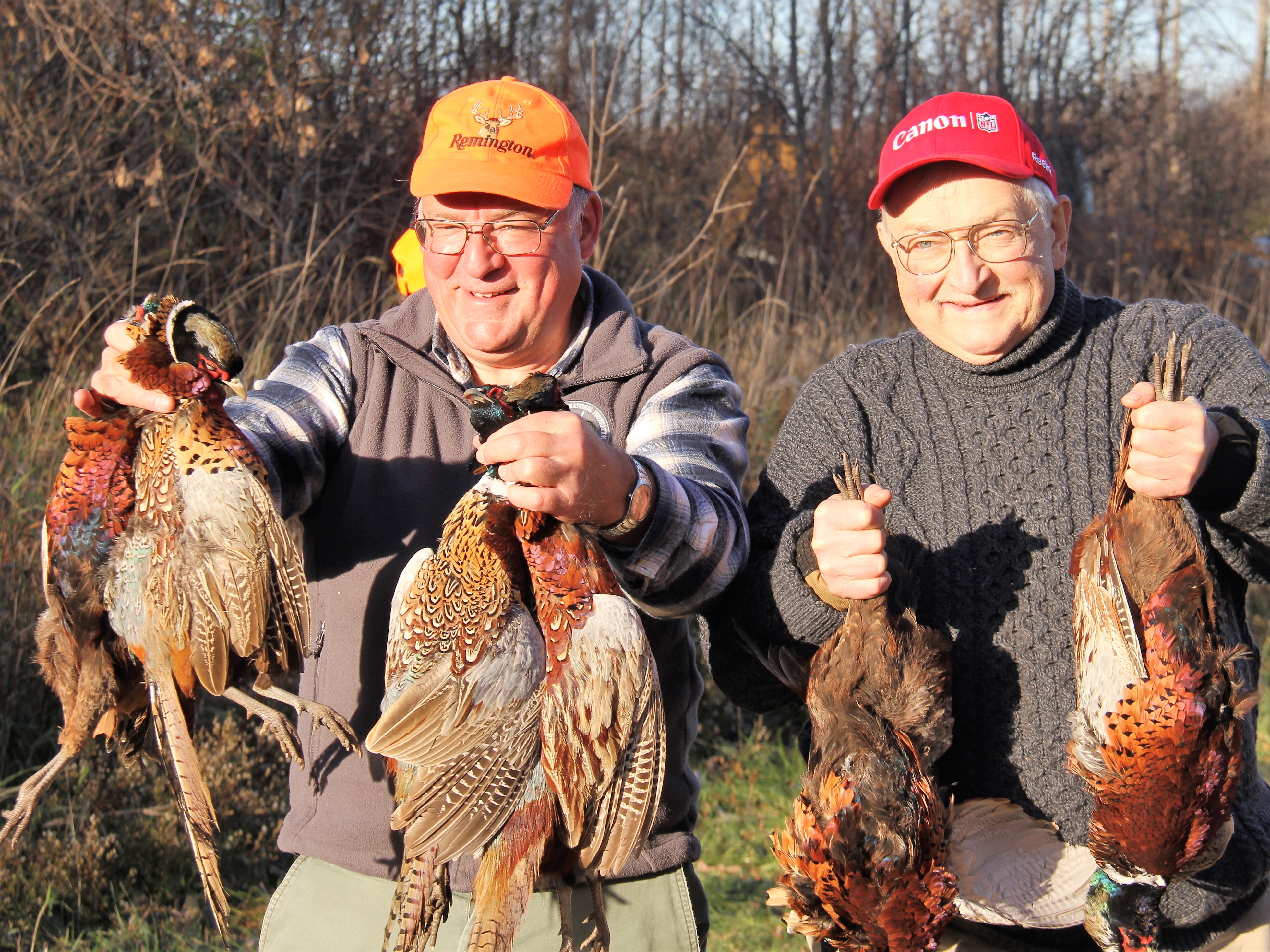
 By Joe Forma
 The hosts at F&B Upland are Fred Paye and Bill Surridge. These great guys run a superb hunt in what they maintain as traditional Western New York bird cover. As we step afield, we are transported back to the 1970’s when Ringed-necks were so prevalent locally. The 200 plus acres of hunting land features standing corn, soybean fields, hedgerows and acres of natural red brush.
 A real highlight of this hunt was George’s grandson, Dom, a 12 year-old super hunter. Andy was really glad to have a youngster along to promote the future of his sport. Dom couldn’t have been a better sportsman even at his young age. He always held his cut-down Remington 20 gauge pump at a proper port arms position, as instructed. He showed no impaired nerves or excitement, but hunted like he had done it a dozen times, not his first time. He was an excellent shot. He downed at least six hard-flying pheasants with single shots. I didn’t see him miss.
 The afternoon hunt was for an additional 25 Ringnecks. The dogs continued their excellent work and showed no signs of fatigue. They are well trained and well exercised, so they never quit, though some of us older sports slowed down just a bit. The shooting was right on the mark though and the birds flushed hard with disconcerting cackling.
 A tribute to all was that not a single bird was lost as a cripple. Great shooting and great retrieving by the dogs. By around 3:00 p.m., there five happy hunters and one old photographer, me, who decided one last push thru the soybean field would do it. It produced our last kill, a long-tailed, beautifully feathered cock bird.
 Posted by Forrest Fisher
 Rage, the number-one-selling mechanical broadhead on the market, now offers two complete arrow packages so archers can spend less time building arrows and more time shooting them.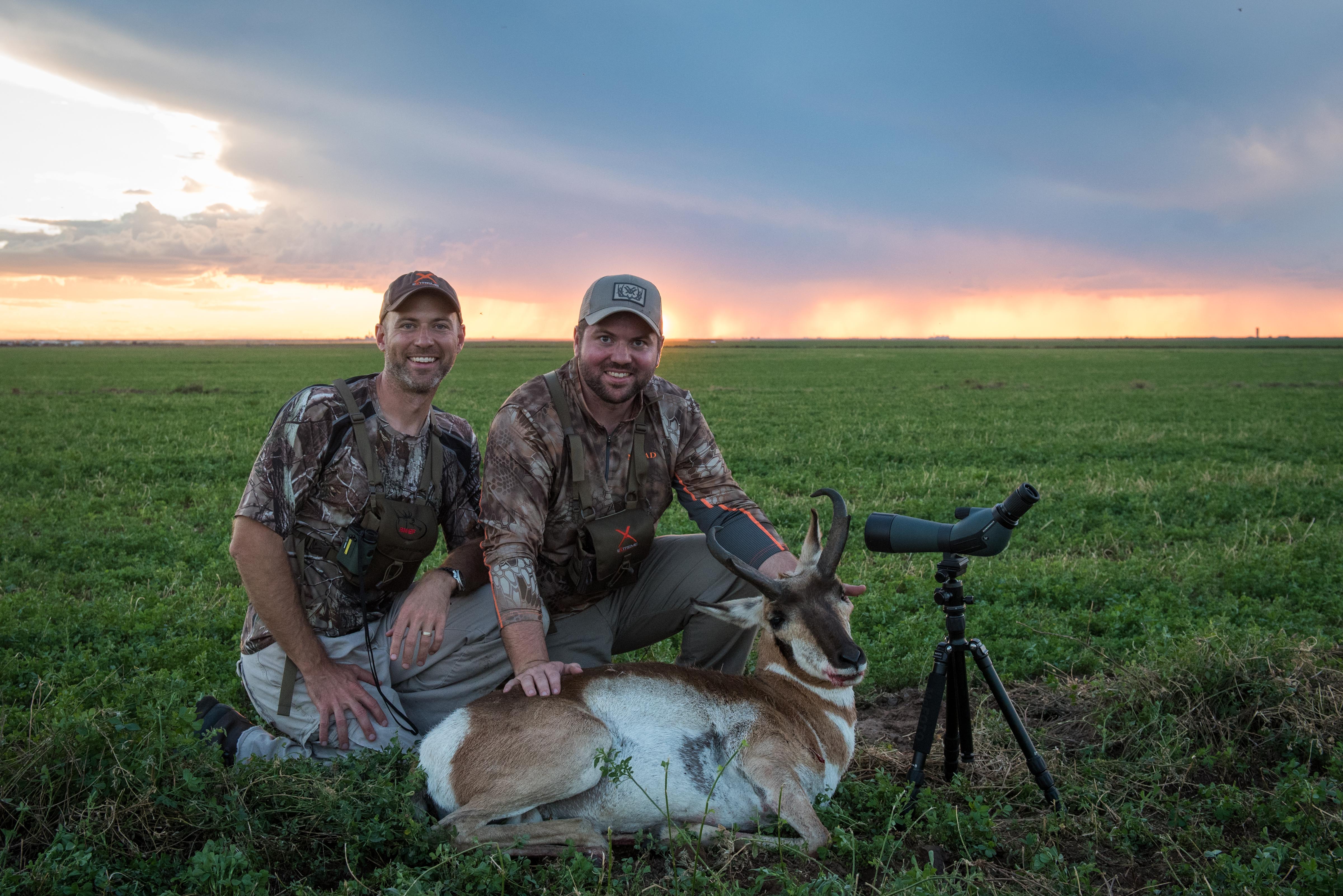
 By Forrest Fisher


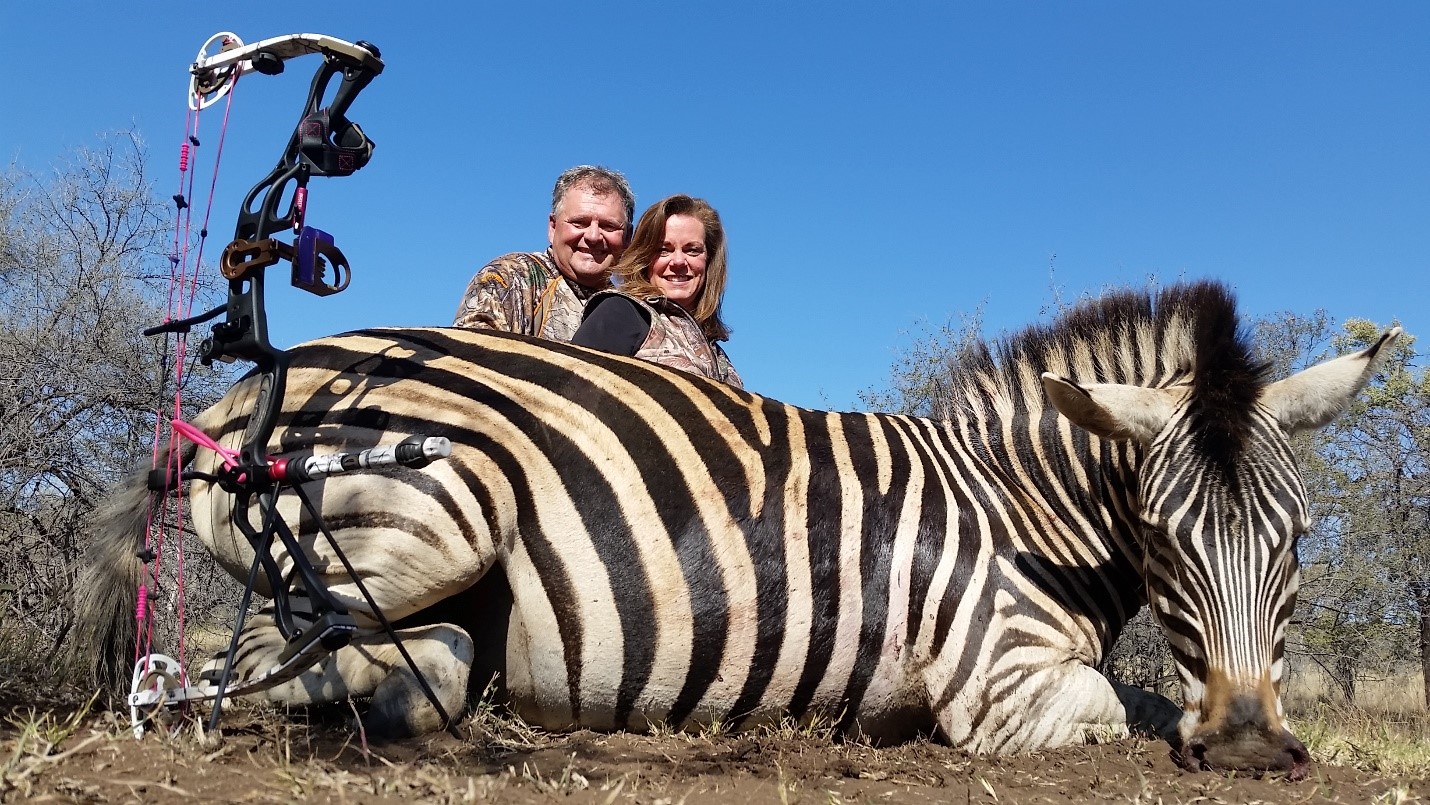


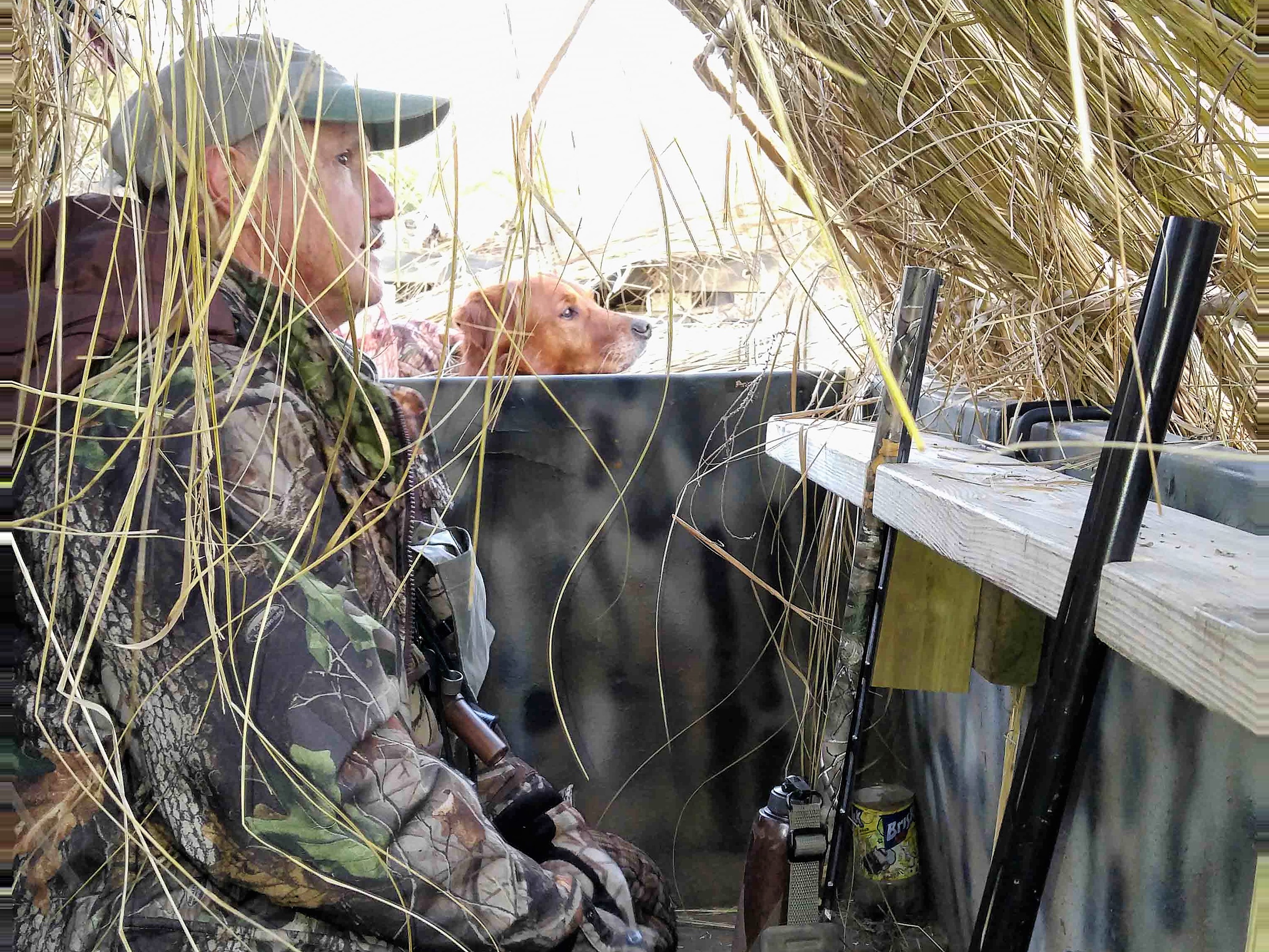
 By Jim Low


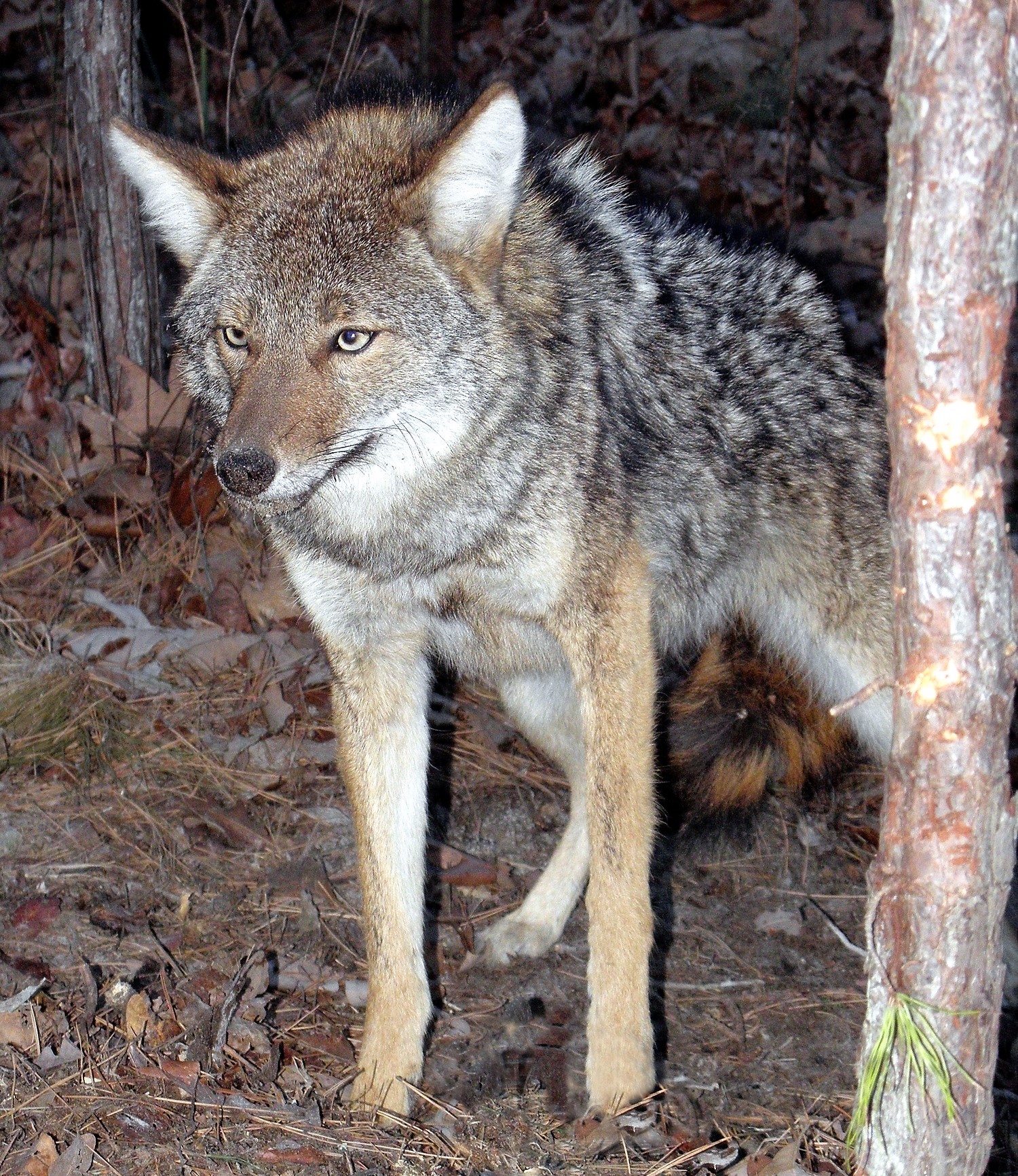


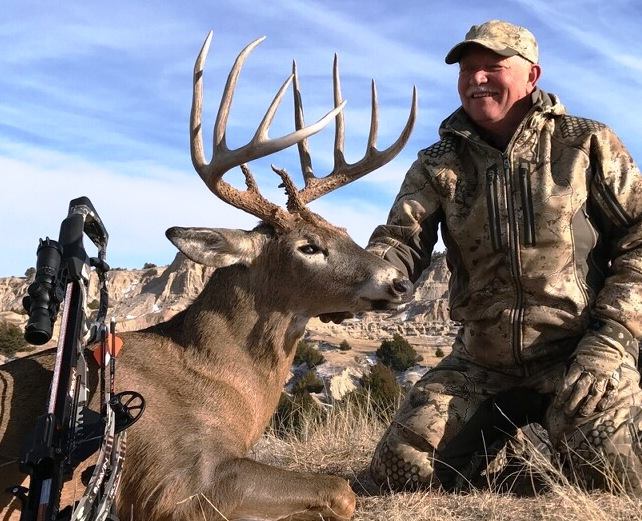
 I enjoyed reading how Byers felt about the many myths and misconceptions that have resulted with the increased use crossbows for hunting. Byers addresses crossbows and game animal populations, hunting season length and the use of crossbows during archery season. Much more on other myths with explanations will help everyone know more about the issues. Byers provided answers that made me consider and to understand things about crossbows that I did not realize – like the good news and bad news about using a crossbow for hunting or for simple recreational fun.
 By Jim Low
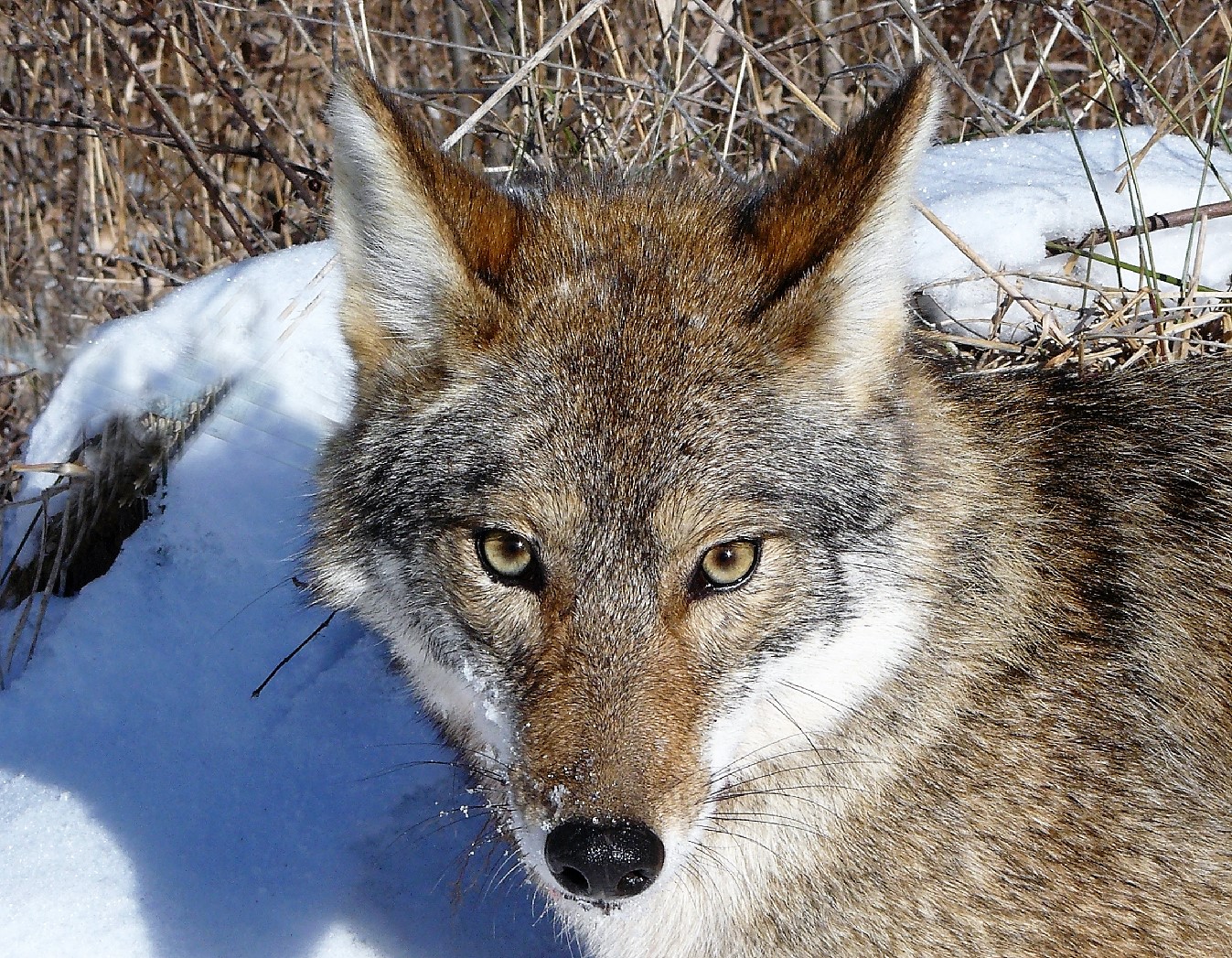


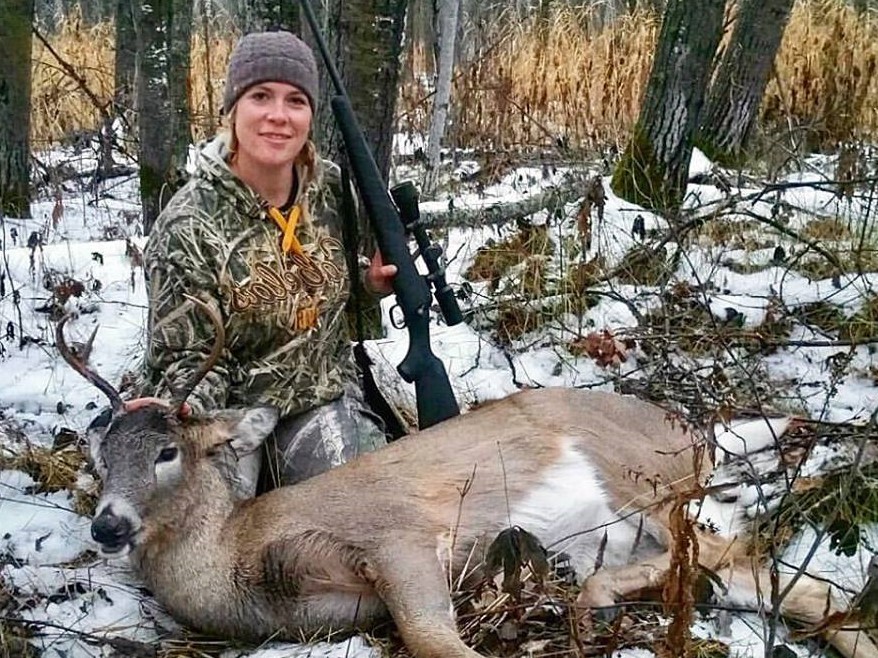
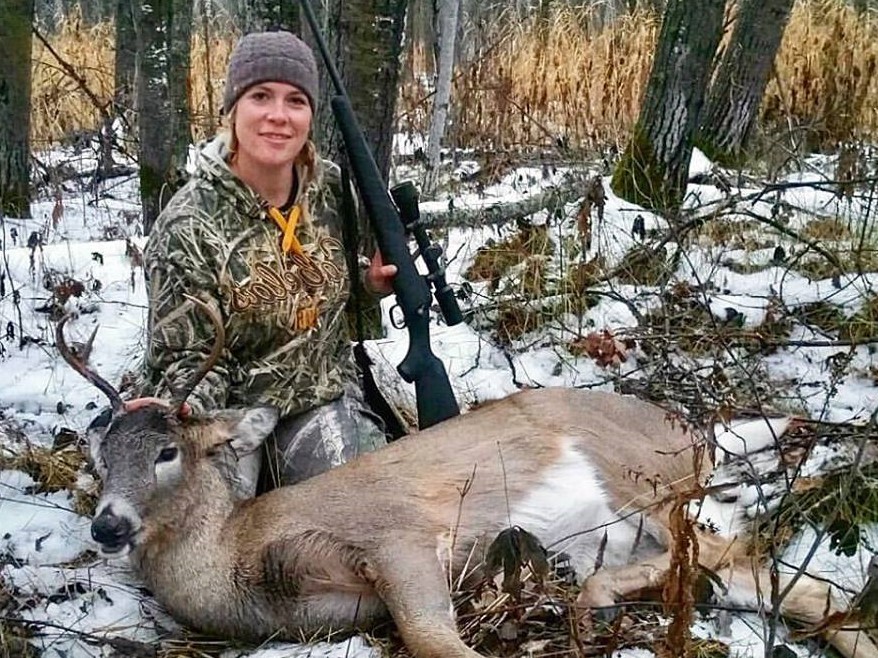


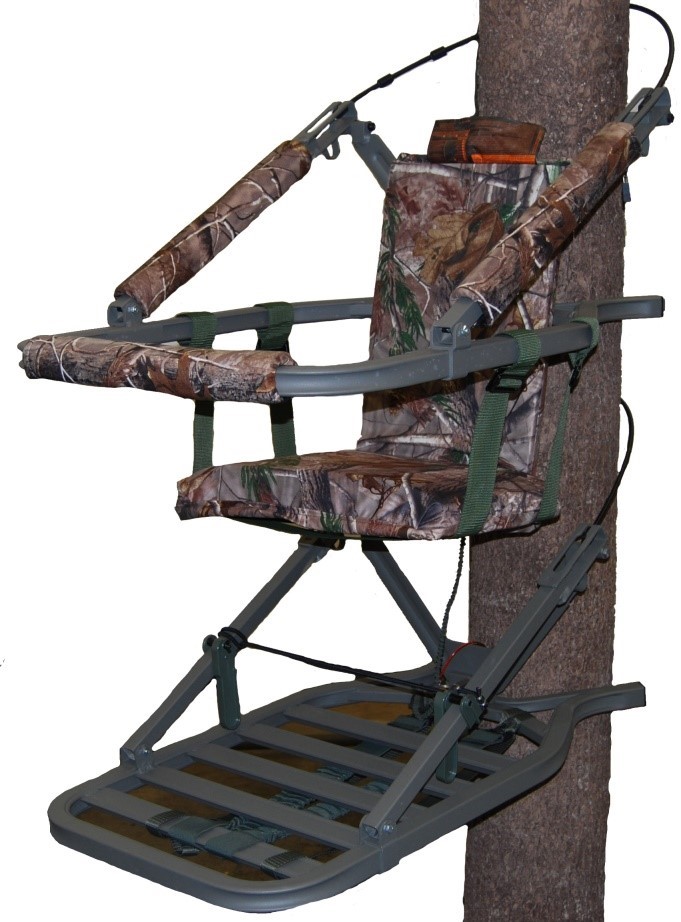 Details: Summit Treestands LLC, Recalls Explorer SD Closed Front Climbing Stands Due to Fall Hazard


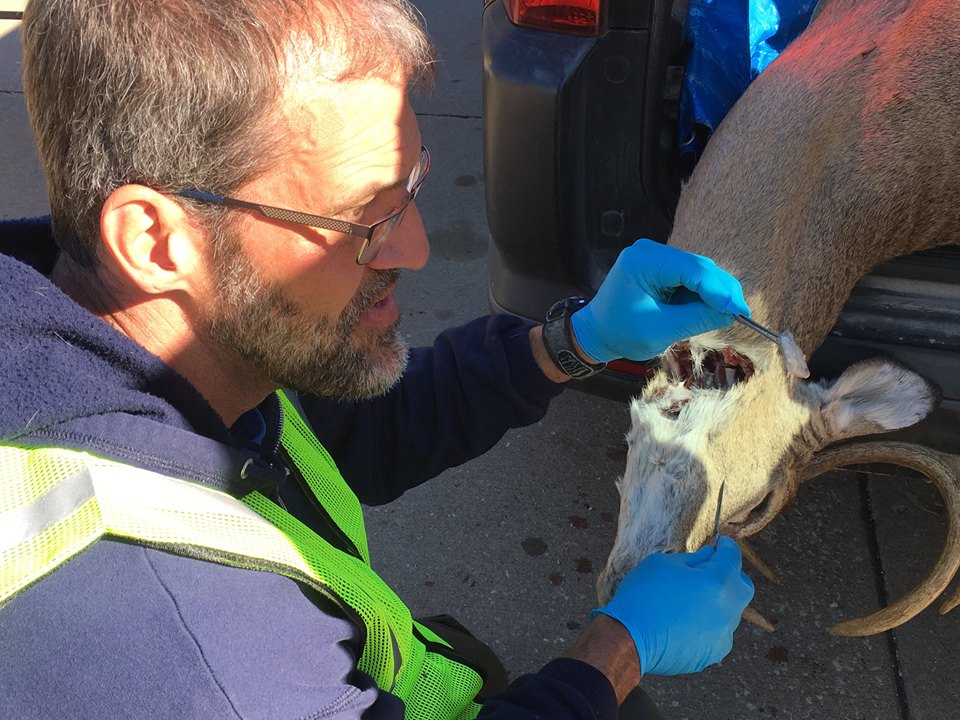


 and his input with others there and through the web will allow many to learn more about how to find those great moments for pictures in the outdoors.


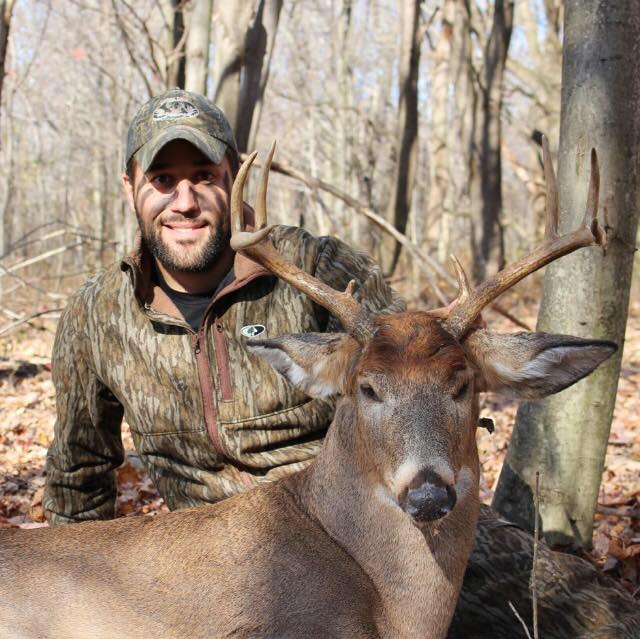

 By Forrest Fisher



 If you’re packing your snowbird bags already and are planning ahead to hunt in Florida this year, November in Florida is an awesome month to head for the woods. You have the option to hunt small game, wild turkey, boars, bears, deer and more. Regulations are not complicated, but it’s a good idea to download the syllabus for the sector area you plan to visit.


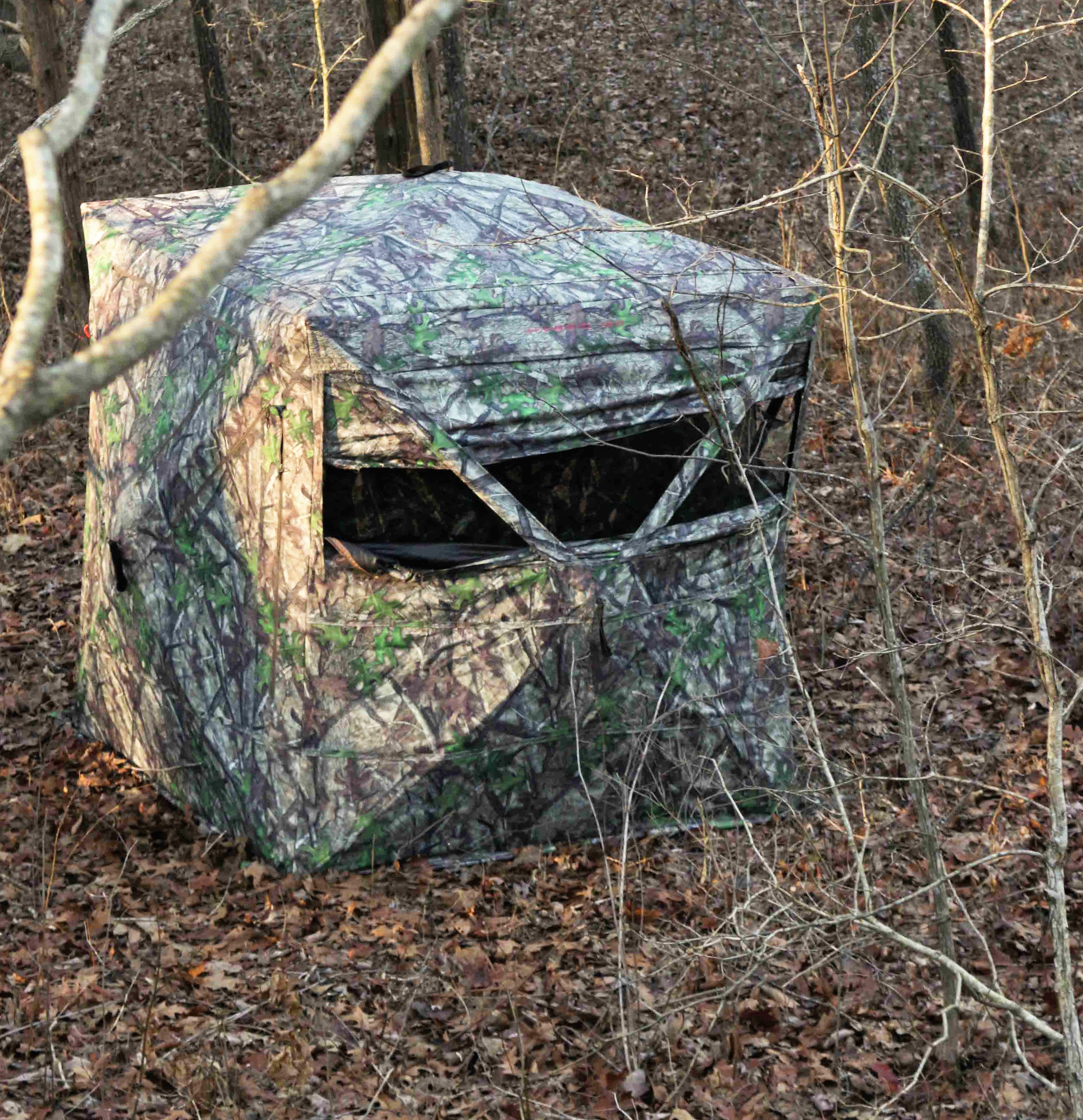
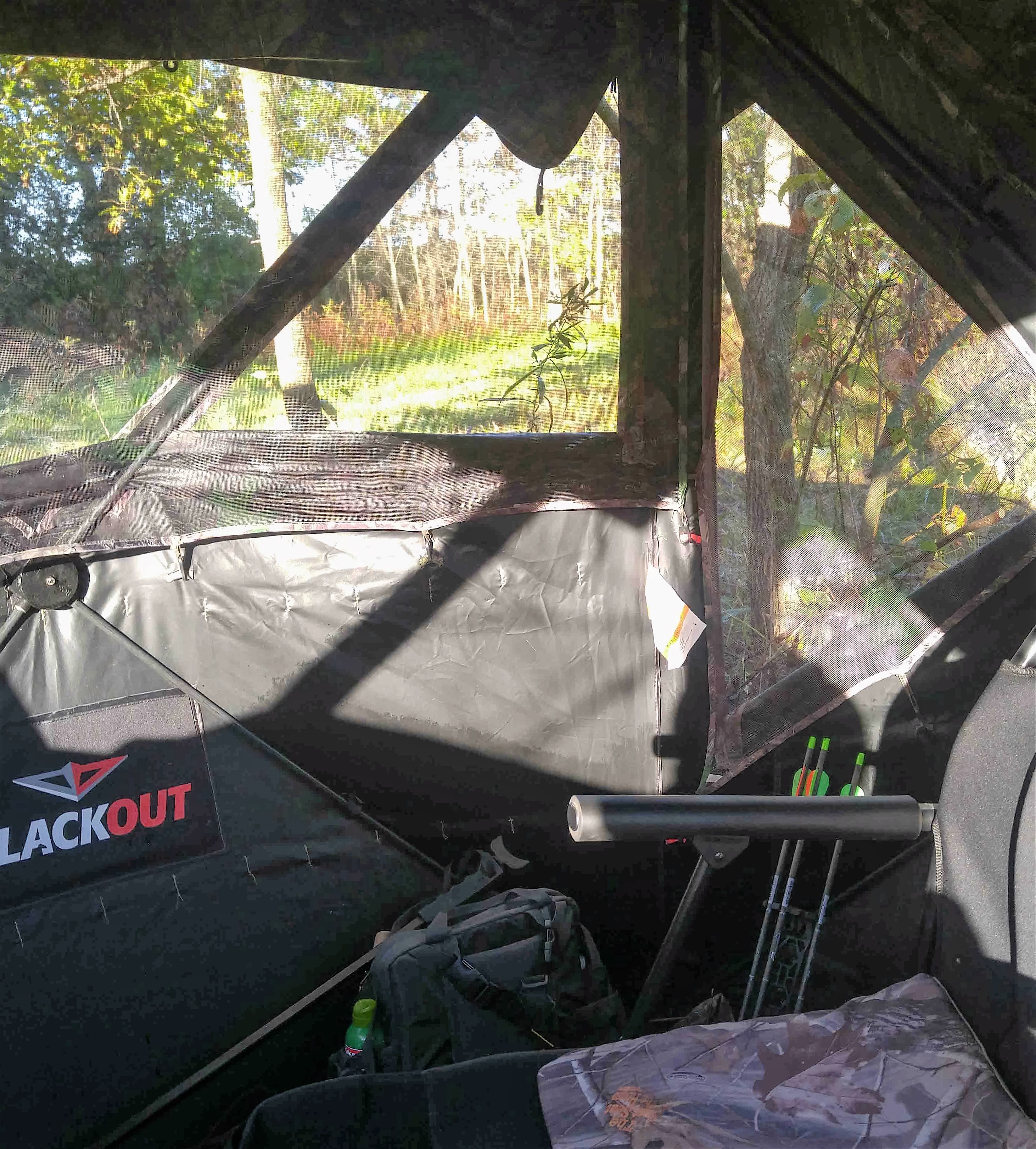




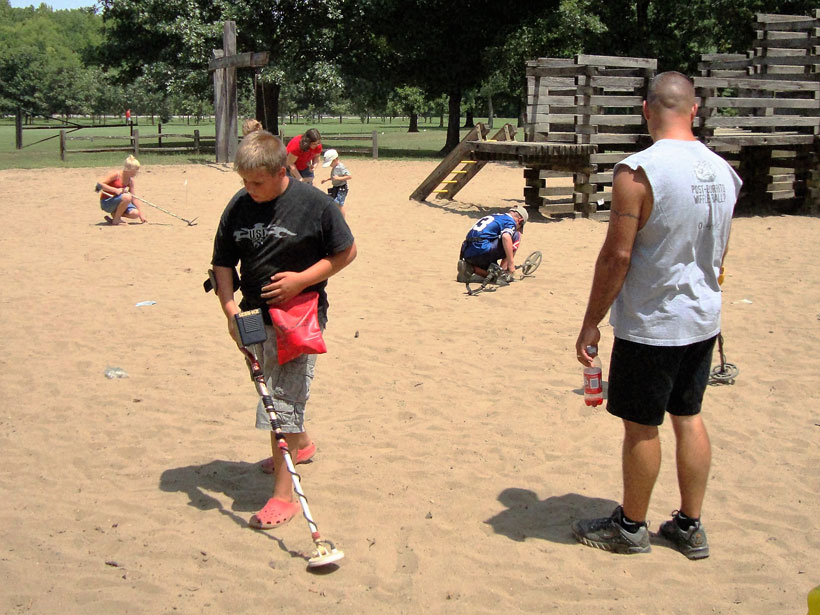


 There is this nasty pest of a disease called Lyme. This is becoming a breakout year for deer tick numbers in the northeast, especially New York, and the infested percentage of deer ticks with Lyme is increasing rapidly. Be cautious, here is more about what to know and what to do.


 Just like many of us already know, education is the key to success in just about anything in life. From the numbers and illustrations noted on the New York State DEC Hunter Safety Website – and shared here, we can see that New York State’s hunter education courses have proven they are highly effective in fostering safe hunters. Approximately 500,000 licensed hunters spend an estimated 10 to 15 million hunter days afield each year. Recent reports indicate that 2015 had the third-lowest number of hunting-related shooting incidents on record in New York. The 2015 hunting season yielded the first year without a single hunting-related shooting fatality since the 1950s.
 Since DEC’s Sportsman Education Program was first introduced in New York State, the number of hunting related accidents have declined significantly. Reports on the number of hunting-related shooting incidents indicate that 2015 had the third lowest number on record in New York with 23 incidents. Starting with 2013, the last three years were the top three safest in New York with this being the first year on record with zero fatalities.
 Education courses are added continuously throughout the year, so participants should check the on-line system frequently to find a course or call 1-888-HUNT-ED2 (1-888-486-8332) or 518-402-8966.


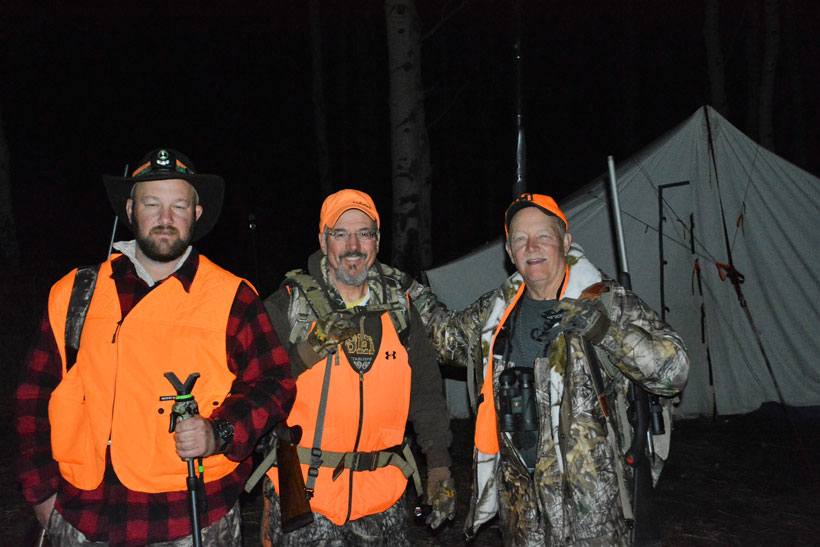


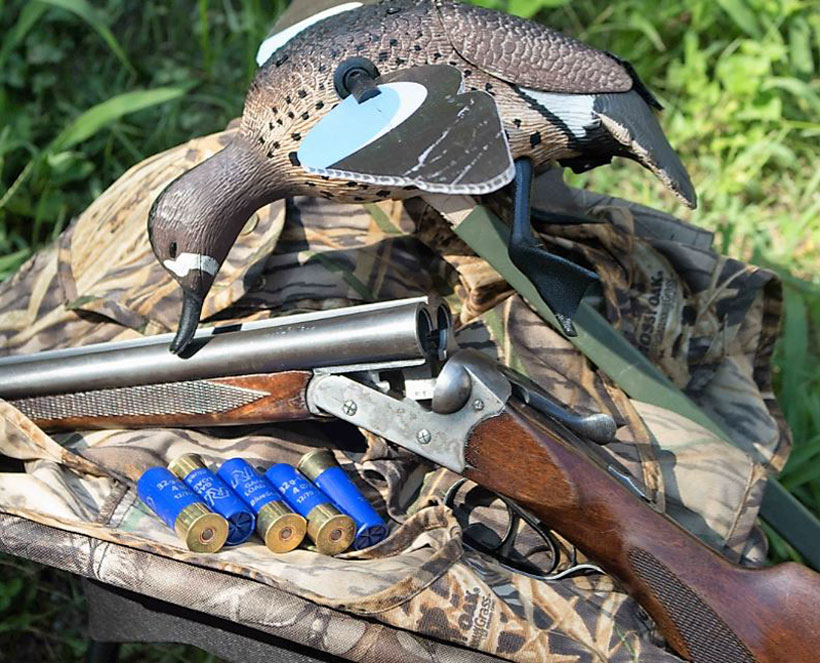


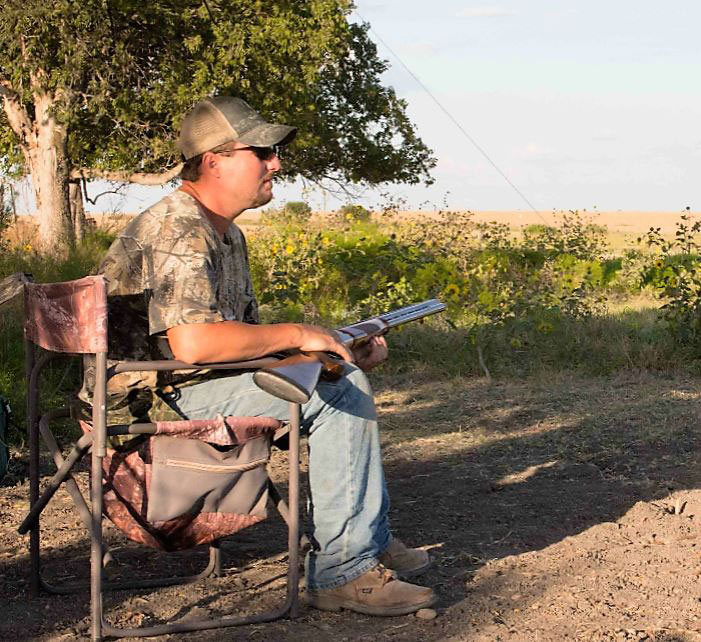

 ON THE MARK is published quarterly by the Civilian Marksmanship Program (http://thecmp.org). It is dedicated to disseminating news and information about junior shooting activities to leaders and coaches of junior shooting clubs, teams and camps.