Brendan Walsh of Niagara Falls with a lower Niagara River smallmouth on a jigging spoon.
Warm weather has encouraged anglers to visit waterways in boats and from shore.
Lack of rain and runoff have allowed extremely clear water conditions – it’s a tough bite on those days.
Lake trout, steelhead, brown trout and smallmouth bass have all been landed by fishermen, though.
Niagara Falls USA Fishing Forecast for Wednesday, March 24, 2021 from Destination Niagara USA
Andrew Bartlett of Lockport with a steelhead from the lower river he caught fishing with Capt. Vince Pierleoni of Newfane.
Unseasonably high temperatures have brought out the fishermen to the streams and on Lake Ontario. Some boats have started to work the waters in the main lake. Remember that if your boat is less than 21 foot in length, everyone on board should have a personal flotation device on (wearing it) until May 1.
Capt. Joe Oakes of Newfane reports he did well catching brown trout and lake trout out of Olcott last Sunday. The lake is warming up already, at 36 to 38 degrees. The brown trout fishing now is tough due to the lack of rainfall/runoff making the inside waters really clear according to Oakes. If possible, try and find some dirty water if looking for browns says Oakes. Best baits for browns are stickbaits and smaller spoons.
Capt. Joe Oakes of Newfane with an Olcott lake trout.
The lake trout action is extremely good right now between 50 and 100 feet. Any lure with some flash will work if fished towards the bottom. Capt. Matt Yablonsky of Youngstown reports he fished the lake on the Niagara Bar the last two days and did well. The brown bite is slow right now, though. A few bites early then it shuts off. The water is clear and cold, 36-37 degrees according to Yablonsky. The laker bite between the green and red can on the Niagara Bar is good. MagLips on 3-way rigs or trolling with spoons on riggers and divers has been working well. In the river, Yablonsky reports the bite is pretty much non-existent for boaters. With the fish spawning and the crystal-clear water conditions, the bite is tough.
In the streams, Jim Evarts at The Boat Doctors in Olcott reports there is good trout action at Burt Dam, some fish are being caught off the piers in both, Wilson and Olcott. Olcott harbor is producing steelhead and perch with minnows.
Despite clear conditions, Mike Ziehm of Niagara Falls caught some dandy steelhead – like this one – in the lower Niagara River. He was using a homemade jig.
In other tributaries, Scott Feltrinelli of Ontario Fly Outfitters reports that the streams have been reduced to a very slow pick of scattered singles. There has been no rain or meaningful snow melt in 2 weeks. Warm weather and low, clear creek conditions have created full on spring conditions early this year. That could all change with a warm rain Friday. That should bring in more steelhead, as well as smallmouth bass.
Mark your calendars for the Niagara County Bullhead Tournament set for April 9-11, 2021. This is shore fishing only. Best 2 bullheads total weight wins the prizes. Weigh in on Sunday at the Wilson Conservation Club. For more info call Eric at 628-6078.
The LOTSA pen rearing project work party is at the Town of Newfane Marina at 9:30 a.m. on Saturday, March 27.
The big news for next week is that the NYPA fishing platform, as well as the other NYPA fishing facilities (Reservoir and upper river at the Water Intakes) – they will open on April 1. They hope to have the elevator working, too, on the platform, but no guarantees.
Action has been slow in the lower Niagara River according to Lisa Drabczyk with Creek Road Bait and Tackle. The main reason is clear water. The rain in the forecast for later this week should help.
Shore anglers are using spoons, spinners, and jigs. Mike Ziehm of Niagara Falls reports catching 3 steelhead on Sunday, all above the whirlpool. All were taken on homemade white and silver jigs. Water was low and slow with at least 7 to 8 feet of visibility.
No reports on smelt yet. Brendan Walsh of Niagara Falls was in search of smallmouth bass and found some bass using a jigging spoon over the weekend in the lower. Remember that for almost all locations around the state, it’s catch and release with artificial lures only…if you are targeting bass.
We know that brighter days are ahead. Until then, let us be your destination of hope. Click here for our video message.
Tom McKelvey of Long Island with a big Lake Ontario brown trout he caught fishing with Capt. Matt Yablonsky of Youngstown this week.
Frank Campbell – Director, Outdoor Promotions
Destination Niagara USA, 10 Rainbow Blvd., Niagara Falls, NY 14303
Total economic impact for the USA firearm and ammunition industry increased from $19.1 billion in 2008 to $63.5 billion in 2019.
Some 342,330 full time jobs are supported by the firearm industry, averaging $56,400 each, in wages and benefits in our economy.
Over 100 hundred million law-abiding Americans rely upon the firearms and ammunition industry to to safely enjoy the recreational shooting sports, as they exercise their right to keep and bear arms.
National Shooting Sports Association Illustration
St. Patrick’s Day 2021 brings us stunning data regarding positive economic news from the firearm industry. Just released in a report from the National Shooting Sports Association (NSSF) – the total economic impact of the firearm and ammunition industry in the United States increased from $19.1 billion in 2008 to $63.5 billion in 2019, a 232 percent increase! The total number of full-time equivalent jobs rose from approximately 166,000 to over 342,330, a 106 percent increase. The data is according to a report released by the National Shooting Sports Foundation®, the industry’s trade association.
On a year-over-year basis, the industry’s economic impact rose from $60 billion in 2019, to $63.5 billion in 2020. Total jobs increased by more than 10,000 in the same period, from nearly 332,000, to over 342,330. The broader impact of the industry throughout the economy, supports and generates business for firms seemingly unrelated to firearms, at a time when every job in America counts. These are real people, with real jobs, working in industries as varied as banking, retail, accounting, metal working and printing among others.
The firearm and ammunition industry paid nearly $7 billion in business taxes, including property, income and sales-based levies.
“The firearm industry has demonstrated amazing resilience and these economic impact figures are the result of every man and woman who comprise our industry,” said Joe Bartozzi, NSSF President and CEO. “These professionals are the reason our industry continues to grow and contribute to our communities, states and nation. These workers and our member companies produce the highest quality firearms and ammunition that over a hundred million law-abiding Americans rely upon to exercise their right to keep and bear arms and safely enjoy the recreational shooting sports. This growth equals more jobs that add to our local economies, averaging $56,400 in wages and benefits. Since 2008 we increased federal tax payments by 170 percent, Pittman-Robertson excise taxes that support wildlife conservation by 89 percent and state business taxes by 125 percent.”
Data supplied by National Shooting Sports Association
The Firearm and Ammunition Industry Economic Impact Report provides a state-by-state breakdown of job numbers, wages and output covering direct, supplier and induced employment, as well as federal excise taxes paid. Access the full report here.
About NSSF: Formed in 1961, NSSF has a membership of thousands of manufacturers, distributors, firearm retailers, shooting ranges, sportsmen’s organizations and publishers nationwide. NSSF is the trade association for the firearm industry. Its mission is to promote, protect and preserve hunting and the shooting sports. For more information, visit nssf.org.
Mike Ziehm of Niagara Falls with a lower Niagara River steelhead he caught from shore using a homemade spinner.
Weather in warm-up mode, spring on the way.
Mag-Lips w/Kishel Scent is hot lure for steelhead drift fishing n Lower Niagara River.
Shore fishing on upswing too, w/sacs+beads under a float
Capt. Nick Calandrelli of Lewiston (left) and Kevin Kishel of East Aurora with another steelhead caught on a MagLip lathered with Kishel’s Fish Scent.
Air temperatures are scheduled to break the 60 mark today so being outdoors is a must. While it will be cooling back into the 40s by the weekend, spring is just around the corner. March 15 is the final day for walleye, pike, pickerel, and tiger musky action in the state, but there is still plenty of trout fishing to be had here – in both the tributaries and the Niagara River. Our tip of the week comes for Captains Ernie and Nick Calandrelli, who took Kevin Kishel of East Aurora out on Tuesday in the lower Niagara. The trio did very well on steelhead using Kishel’s Fish Scent on MagLip plugs, and fished off 3-way rigs. It really seemed to make a difference. Lower Niagara River trout action is picking back up again and best baits have been egg sacs or egg imitations, minnows or shiners and any kind of a body bait like a Kwikfish or a MagLip from boats, all fished off 3-way rigs. Water clarity is good. Fish can be found through the river and the Stella drift was productive last weekend.
Mike Rzucidlo of Niagara Falls caught this steelhead Tuesday in the lower Niagara River, casting a white hair jig from shore.
Shore guys can still catch some trout consistently by tossing spinners or jigs according to Mike Rzucidlo of Niagara Falls, who caught some good fish in the gorge on Monday. Drifting sacs or beads under a float will also catch fish. Rzucidlo even caught a nice chunky 5-pound rainbow just above the upper rapids above Niagara Falls on a spinner on Tuesday.
For the Lake Ontario tributaries, the warm rain in the forecast for late Thursday could be what the fish doctor ordered to pull fresh fish into the streams. Some reports on the sly show that action has already been picking up on 18 Mile Creek and Burt Dam. Egg sacs and egg imitations are good baits to start, but jigs tipped with a wax worm will also work. Scott Feltrinelli of Ontario Fly Outfitters reports that waters were cold Tuesday from ice melt. He will always make sure to fish his fly “low and slow” in these conditions.
Mike Ziehm of Niagara Falls with a lower Niagara River steelhead he caught from shore using a homemade spinner.
One sure sign of spring is the Lake Ontario Trout and Salmon Association’s pen rearing project preparation. Assembly for the pens will take place at the Town of Newfane Marina in Olcott on March 27 starting at 9:30 a.m. Dress warm and bring your side cutters to clip zip ties. The work party is early this year because of an earlier Easter.
Frank Campbell, Director, Outdoor Promotions
Destination Niagara USA, 10 Rainbow Blvd., Niagara Falls, NY 14303
Photo from the late Joe Forma deer picture collection
Warm winters, High summer nutrition, Fewer hunters = TOO MANY DEER
Do we need DNR to consider additional expanded seasons?
Farmers need help, Home Owners have property damage and deer disease concerns (Lyme, CWD, etc.)
Wintering deer herds salvage food from all available sources, but there are concerns for overpopulation in many parts of the country. Concerns for spread of Lyme disease via deer ticks is one more concern. Photo from the late Joe Forma deer picture collection
By Bob Holzhei
Within a one-mile radius of our farm in Clinton County, MI, I counted over 40 deer. They were traveling in two different herds on our property, woodlot and an adjoining property.
This population of deer was much higher than in previous years, increasing by about four times what I had witnessed in the past.
What factors accounted for the high numbers? A mild winter this past season was possibly one factor. The immediate question is, do the high deer numbers have consequences as apparent overpopulation occurs?
“Overpopulation is more deer than the habitat can support. This numbers growth occurs simply by having survival exceed mortality. We may be witnessing the survival theory that may have occurred for a more prolonged period of time than thought. “The distribution of deer can vary throughout the year,” according to Chad Stewart, a Biologist and Deer/Elk Population Specialist with the Michigan Department of Natural Resources (DNR).
“During the spring-time is when deer are clustered on the landscape, primarily around food sources. As green-up occurs, deer numbers redistribute themselves to more normal levels, and the concentration of deer in large numbers is likely to diminish,” added Stewart.
One way of looking at it might be that a reduction in hunter numbers means an increase in safe spaces for deer to evade hunters. Add high summer nutrition to high winter survival rates and mild winters, we might expect the trend to continue. For farmers, I am a farmer, crop damage occurs when deer numbers are high. The field edges are hit hard, but damage can extend into field centers as the deer numbers increase.
Healthy deer numbers are increasing rapidly with fewer deer hunter numbers.Photo from the late Joe Forma deer picture collection
“Clinton County, MI, has seen increasing trends in populations over the past 6-8 years,” stated Stewart. “Research has shown that about 20 deer per square mile is the threshold for detecting deer damage to forests. Keeping deer numbers below that threshold is ideal for forestry management.”
“The Michigan DNR, in an effort to manage deer numbers, has liberalized the license structure by offering more flexibility for hunters to take antlerless deer with a combination license during the firearms and muzzleloader season. The antlerless licenses are also transferrable between counties and properties. A late antlerless season has also been extended in southern Michigan,” concluded Stewart.
If you enjoy healthy, high-protein venison steaks and burgers, this coming season could be a very special time for you and your family. AND, you could be helping the farmers with your harvest.
About the author: Bob Holzhei is a published author with more than 450 published outdoor adventure stories from across the United States. He has authored four books, including Canadian Fly-In Fishing Adventure, Alaskan Spirit Journey, The Mountains Shall Depart and The Hills Shall Be Removed. The latter was nominated for Pulitzer Prize consideration. His books are available at Amazon.
Fishing for Saltwater Gamefish near Fort Myers, Florida, in the Winter.
The conjunction of natural creeks and man-made canals in the Fort Myers saltwater canal system are where big fish can hide.
Circle Hooks allow for easy presentation of live forage bait and quick release of gamefish.
After you hook a few trees, then catch a few fish, the positive state-of-mind begins to form for the next fish. The fun begins!
Rich Perez with a young snook taken from a canal waterway off the Caloosahatchee River near Fort Myers, FL. The fish was held gently and carefully released a few seconds after being out of the water.
By Forrest Fisher
Within the bustling livelihood of Fort Myers in Lee County, Florida, the Caloosahatchee River and its many tributaries form a network of lush vegetation and age-old mangroves within the fertile canal systems found here.
The eddy currents formed at the conjunction of natural creeks and man-made canals often allow the tidal flow to create deep pockets where big fish can hide. The constant tide reversal and related current changes beckon to schools of forage stocks to find relative safety among the mangrove roots, with the occasional live oak tree acting as a mangrove bundle anchor. The big fish in the area know the forage is among the roots, as snook, redfish, speckled trout, tarpon, and other species often spend feeding time here. There is magic to be found in this silent and peaceful water flow system.
For the fish, it’s breakfast and dinner with a menu. For the anglers that can learn the secrets of tidal flow profile, consistent fish-catching adventures await them.
A power-pole makes anchoring in the canal system easy and silent – that makes fishing more fun.
A decades-long Floridian, humble Rich Perez shared with me that he is new to saltwater fishing, but with a confident voice, added that he is learning more from savvy fishing friends each day he can make it to water. A busy family man, when time allows, he explores new fishing areas and generally reverts to time-tested live bait methods. Using Circle Hooks to present wriggling live shrimp or live forage minnow bait, such as pinfish, he knows it’s easy to verify that a spot may or may not hold fish with live bait. With the minnow bait, he carefully threads the Circle Hook through the hard-nose area to keep the bait alive and in the free-swimming state. Perez says,” I’ve learned that this is the ultimate live bait meal method to use for roaming gamefish, sometimes, really big gamefish.” He catches fish often.
First, though, besides learning to be a perceptive fisherman, he is a hard-worker. He believes that good fishermen should catch their own live bait. They don’t go the easy way and just buy it. So he has practiced hard and learned to throw a 12-ft cast net. Of course, succeeding in this native art form of bait-catching is not painless. It takes time to practice, with a skill developed over time. He’s been doing it for 3 years now and is tossing near-perfect circles to 15 feet from the boat. He admits that he visits the local live bait supply shops on some days with his busy work schedules.
“With a full baitwell, you can ensure your bait is fresh and enjoy perfect live bait presentations no matter where you explore new areas. I like to invite friends and family out fishing too, so I try to make sure the baitwell is well-stocked. It’s not always easy to find the forage, but eventually, with some patience, you do find ’em. I look for diving birds or surface ruffles to find the forage schools, that’s the easy way.”
With a 7-ft semi-stiff fishing rod, medium power, Perez uses Penn 40-series open-face fishing reels loaded with 20-pound braid and a 2-ft long/30-pound fluoro leader tied to a 2/0 or 3/0 Circle Hook. He doesn’t lose fish, day or night. “The hardest part for most newbies like me is casting precision. You really gotta get the bait right alongside the edge of the mangroves, especially during daytime. The fish are usually there with an incoming tide current,” Perez adds.
Perez continues, “Sometimes we catch yearlings, other times we catch old fish, big fish, all with this simple, uncomplicated live bait system. We release all the gamefish to live another day. It’s great fun and even more fun to watch my dad or friends land a nice fish…or catch a big mangrove treetop. We laugh a lot. We joke about who caught the biggest tree for the day. With the fish, we take a quick picture and watch the fish swim back home. It’s a good feeling.”
Perez throws a 12-ft cast net to catch live forage bait, though this native art form takes time and practice to develop effective skill.
Over the day, Perez shared that good fishing is really a matter of gaining enough confidence to make that perfect cast every time. After you hook a few trees and then catch a few fish, the positive state-of-mind fun begins to form for the next fish, even the next trip.”
I could not agree more that good fishing is a state of mind. When it happens to you, it’s a sure thing that the next trip is not too far away.
This Fort Myers area is home to a fleet of charter captains and fishing guides that share their skills in the nearshore waters and far offshore. To discover more about the outdoor adventure and pristine beaches found here, or to just rest for a few nights between fishing fun, you can request a free guidebook from the visitor’s bureau online at https://www.fortmyers-sanibel.com/order-travelers-guide, or call toll-free, 1-800-237-6444.
There’s more than fishing too. During March, near Fort Myers and Sanibel Island’s Beaches, the Boston Red Sox and Minnesota Twins are back for spring training and competition in the Grapefruit League. I love baseball! The Lee County Visitor Bureau also has a free mobile savings passport for locals and visitors with access to exclusive deals on attractions, restaurants, and experiences here. Sign up at https://explore.fortmyers-sanibel.com. The passport will be delivered to your mobile phone via text. Redeem it on your mobile phone at participating businesses. Pretty cool.
Fishing sunrise to noon, we caught 8 species of saltwater fish, and well over 150 fish total, as a 3-man group.
Captain Terry Heller, Fish-On Sportfishing Charters, was savvy, funny, and deadly serious about having fun – we laughed a lot out there! So good for our pandemic souls!
We experimented with Circle-hooks vs. J-hooks. The circle-hooks hooked and landed fish 80% more effectively…a lesson for all.
Vietnam Veteran, Randy Baugus, retired minister from Burlington, KY, with a hard-fighting Gag Grouper that was released to swim another day.
By Forrest Fisher
It was dark when I left the house in Port Charlotte, Florida. The stars were spectacular, gleaming brightly above, but there was a warm orange glow on the eastern horizon, the sun was about to rise, suggesting a nice, warm February day – a sunscreen day. A great winter day.
About 30 minutes later – it was 6:25 a.m., I joined the right-hand turn signal line to enter the Placida Boat Launch area, a state park-like zone with a boat launch, ice-filling station, and restroom facilities that can accommodate about 100 cars and boat trailers. There is a frozen bait and live bait tackle shop (Eldred’s Marina) right next door, wonderfully convenient for boaters and anglers heading for Gasparilla Island shore fishing spots.
Affable Captain Randy Heller, Fish-On Sportfishing Charters, with another nice porgy we caught, a tasty fish for the table.
Not long later, I met my fishing guide for the day, Captain Terry Heller of Fish-On Charter Sport Fishing, an ever-friendly source of fishing knowledge. He made catching fish easy and fun and seemingly transparent – like you’ve had the necessary skills all along, even with newbies and veteran anglers alike – young and old, no matter. Onboard, I met 70-years-young Randy Baugus from Burlington, Kentucky, a minister and Vietnam veteran, and his brother-in-law, 78-year-old Gary Barnes, originally from Columbus, Ohio, but now a happy southwest Florida native who is enjoying his retirement years in the Sunshine State.
Captain Terry started up his nearly silent 225Hp Yamaha as the wide, spacious and sturdy 24-ft Polar (fiberglass boat) gently idled away from the dock. As we moved into Lemon Bay toward the Boca Grande Causeway Bridge, a bald eagle showed her head on one of the nearby island treetop nests. The tide was at a complete low as we came up to plane in the channel in Gasparilla Pass.
With Captain Terry using the navigational GPS map technology onboard, he marked safe passage for us. It wasn’t long before we were at 35 mph cruising speed on the way to secret offshore spots that Heller has identified over his years of local fishing here. About 20 minutes later, we slowed, shore was no longer visible, and after making a few circles into an area seemingly in the middle of nowhere, Heller dropped a marker buoy for boat position reference. Settling his electric motor into the water (with a 7-foot long shaft), he used blue-tooth technology to move away from the buoy toward one of three spots that we would eventually fish. All of them were within 200 yards of the brightly colored marker. “The marker is for letting others know that this is our fishing area for the moment. Other guys usually honor the courtesy of staying away from your fishing zone,” he said that with a half-smile.
Heller opened up two of his three live bait wells to show us that if we wanted to keep any fish, they could go in there and that he would let us know what fish was legal and what was not. “Now for the fun, guys!” He passed out a fully-rigged rod for each of us with a small bucket of cut-bait ready to rig. The rods were 7-ft long and were equipped with open-face Penn fishing reels. The 30-pound test braid mainline was attached to a 2-ounce egg sinker, then an 18-inch long leader of 20-pound fluorocarbon leader, and a size 3/0 or 4/0 circle hook.
Randy Baugus with the second Remora that we caught that day, a nice 25 inch specimen. Remora usually are attached to the skin a shark. We released the fish to find a new shark buddy down below.
Heller is a happy sort of guy as he quipped, “Now guys, listen, you’re gonna catch a lot of fish out here, so if you get tired of reeling ’em in, don’t worry, we’ve got plenty of beverages onboard, and you can rest up.” We all looked at each other and sort of rolled our eyes a bit. Randy said, “Sounds like your pretty confident Captain!” Gary said, “I wanna drop my line.” A moment later, Heller showed us how to slide the cut baits onto the hook. He rigged all the lines for us.
“The water is 48-feet deep here, guys, so it won’t take too long for your baits to reach the bottom. When they do, reel up two turns or so and watch closely for a bite. When you get one, start reeling to set the hook. One more thing, there is one rule on board here, for good luck, you gotta yell, FISH-ON! You all know that’s the name of my charter. It’s for a good reason. Our adrenalin flow talks to the fish!”
About 10 seconds later, Randy hollered,” FISH-ON!” His rod enjoyed a healthy bend toward the water. A few moments later, Gary shouted, “FISH-ON!” Before both lines were not yet in the boat when I, too, shouted out the same. A 3-Fer! Half-giggling and laughing a bit, Captain Terry said, “Are we having fun yet?!” We all agreed.
We moved around to a few other fishing zones on the bottom. They were configured sort of like the moon surface with craters and high points, next to cavernous hollows a few feet deeper around the crater edges. “The fish come out of those little holes down there to test your baits. They’re always hungry out here in this secret place.”
Gary Barnes, originally from Columbus, OH, is now a Florida resident and enjoys fishing in his retirement years. He released this small grouper.
We moved to other spots a few times, and in each location, we caught at least 50 fish among the three of us.
The live wells were getting crowded with good-eating reef fish. These included Porgy, Squirrel Perch, and some Key West Grunts., some were nearly 2-pounds each. We also caught Blowfish, Remora, Gag Grouper, Red Grouper, and Spottail Snapper. My shoulders and arms were getting sore as Heller said, “C’mon guys, let’s reel up and go try one more spot where there might be some bigger snapper and grouper.
About 10-minutes later, we motored northward, we arrived about 1/2 mile from the 9-mile reef. The electric motor came down, and we were fishing. Wham! “FISH-ON! Randy hollered. A few seconds later, Gary screamed out too, then me. Four hours into our trip, it had been a fantastic day on the water. The sea was smooth, the water so clear, and the fish were definitely biting.
Our cut baits consisted of octopus, shrimp, squid, and sardines. All of these worked. One of the cool things about fishing with Heller, his charter – Fish-On Sport Fishing, provides all the licenses, all the gear, and all the bait you need. Plus, you are welcome to keep your catch, and Heller will clean and fillet it for you. Maybe the most significant part not mentioned with “things provided” is Heller’s precision savvy about where to drop your line. That part is priceless!
Happiness is! Fishing dreams are made for days like this. I met new friends, caught lots of fish, laughed for about 5-hours! So fun. We released this small, hard-fighting grouper. Terry Heller Photo.
As we motored back to the Placida boat launch, it was 1:30 p.m., and the air temp was 87 degrees. A slight sunburn on all of our faces, I joked to Gary, “Pinch me, I think I miss shoveling my driveway back home in East Aurora, NY.” He groused back, “Yea, me too, NOT! I love it down here.”
Captain Heller asked us to follow him back to his nearby home, and he cleaned 81 keepers. It was probably about 1/3 of the number of fish we actually landed, as we had to release all the short gag grouper and red grouper. We had caught dozens of them—an excellent sign for the future of Florida fishing. We split ’em up, and there is only one or two choice words for the meal that followed later at my home. Scrumptious! Delicious!
There is nothing quite like a fresh caught fish fry! My better half does these up with four, egg and crushed crackers coked in olive oil…healthy!
I fell asleep that night with my ears ringing a bit. It was that tune from earlier in the day…”Fish On!” Can’t wait for the next time out. To fish with Captain Heller yourself, you can check schedules and open dates at: Fishing Booker.com
Education, Biology, Legislation, Recruitment included in the new plan.
Karlin Dawson named as Deer Outreach Specialist to Work with Missouri Conservation (MDC)
Special focus on Chronic Wasting Disease (CWD) and Field-to-Fork Programs
NDA Photo
During July 2020, the National Deer Alliance and the Quality Deer Management Association joined forces to merge their two groups, combine the strengths, resources and core initiatives to better serve deer and hunters more effectively when the need is greatest. Then in November 2020, they announced their new group name: the National Deer Association. They are a non-profit group and beyond a name and a logo, they also assembled a unified team, created a new strategic plan, and announced a Board of Directors.
The National Deer ASSOCIATION is planning to focus on four critical areas: (1) education and outreach, (2) recruitment, retention and reactivation, (3) policy and advocacy, (4) deer diseases. Teaching the non-hunting public about the keystone position of deer in all wildlife conservation (success or failure) will be among new goals. Similarly, the new group will empower hunters to be more informed, and hence, more successful and engaged stewards of deer and wildlife, including mentoring young hunters. Deer diseases, including the invariably fatal chronic wasting disease (CWD), present a severe threat to all deer species’ future and related wildlife conservation/health. Wildlife policy and legislation are part of that new goal, at the same time bringing hunters, the non-hunting public, and wildlife managers together with a common education and realization theme. The new group includes memberships across all 50 states and Canada.
The National Deer Association (NDA) is pleased to announce that Karlin Dawson has joined the organization as a Deer Outreach Specialist in northern Missouri. A Missouri native and lifelong deer hunter, Karlin comes to NDA from the Missouri Department of Conservation (MDC), where she served as the naturalist for the Runge Conservation Nature Center.
Highly qualified Karlin Dawson has joined the National Deer Association (NDA) organization as a Deer Outreach Specialist in northern Missouri. Photo courtesy of NDA
“I am honored and excited to be joining such a wonderful organization,” said Karlin. “I cannot wait to continue my work in conservation and supporting our natural resources.”
As a Deer Outreach Specialist, Karlin will assist MDC staff with the facilitation of the state’s Deer Management Assistance Program (DMA). Among mission objectives will be to provide guidance to landowners and deer hunters conducting deer population surveys and other data collection efforts, host local habitat management training, work with private landowners to establish and support Wildlife Management Cooperatives, coordinate and assist with chronic wasting disease (CWD) sampling training, and organize hunter recruitment and mentoring initiative – like NDA’s Field to Fork program, in northern Missouri. She will also serve Missourians by helping promote numerous private land assistance programs alongside MDC staff.
Karlin’s duties will include helping increase NDA awareness by recruiting new members and publicizing NDA’s national programs and conservation partner programs.
“I am excited to have Karlin join the NDA staff,” said Matt Ross, NDA’s Director of Conservation. “Her past experience working as a public educator and naturalist for the state of Missouri, her enthusiasm for wildlife and the sustenance it provides, and her general knowledge and passion for the outdoors make her a perfect fit for this position.”
Karlin received her Bachelor of Science degree in biology from Westminster College, where her study emphasis was in conservation, ecology and field research. In addition to her recent position as a naturalist with MDC, Karlin worked as an assistant manager and whitetail guide at Safari Unlimited LLC, a Missouri-based commercial outfitting business specializing in worldwide hunting and fishing adventure travel and offers a free-range deer and turkey hunting service in the Show-Me state. She is a certified Hunter Education instructor, a certified CWD sampling technician and has substantial experience in virtual and interpretive conservation programming, including a unique content series about wild edibles, game recipes, and cooking.
Landowners and deer hunters in northern Missouri who want to learn more about DMAP, deer management, or with interest in establishing a Wildlife Cooperative can contact Karlin at karlin@deerassociation.com.
Special Thanks to Brian Grossman and the NDA for details regarding Karlin Dawson.
Demands that Congress ban the modern sporting rifle (MSR).
Call to repeal the Protection of Lawful Commerce in Arms Act (PLCAA), a law passed with wide bipartisan support.
Reality of crime is that more murders are committed with knives, fists and clubs than all rifles combined.
With a reminder note from the National Shooting Sports Foundation (NSSF) in Newtown, CT – the anniversary of the tragic and senseless murders in Parkland, FL, three years ago remind us why the firearm industry is committed to Real Solutions. Safer Communities®. The loss of innocent lives because of the unthinkable acts of a criminal defies explanation but deserves our efforts to try to prevent them from occurring again.
President Joe Biden’s call for his gun control agenda is not working to address the shared American goal of reducing criminal misuse of firearms. His demand that Congress ban the modern sporting rifle (MSR), which he knowingly mislabels an “assault rifle” and “weapon of war,” denies the reality that more murders are committed with knives, fists and clubs than all rifles combined. Over 20 million MSRs are in circulation today, used daily for lawful purposes.
President Biden’s call to repeal the Protection of Lawful Commerce in Arms Act (PLCAA), a law passed with wide bipartisan support, panders to the radical base of his party. Rolling it back would be akin to allowing activist lawyers to sue Ford for the wrongful deaths caused by drunk drivers.
The criminal responsible for the horrors thrust on Parkland, and the nation, must be held accountable for his crimes. Anything less is a whitewash of the failures of local, state and federal authorities to act on any of the 45 instances of warnings, tips and police responses prior to his final terrible crimes.
The firearm industry has been willing to take on this hard work. It has not waited. The firearm industry provides Real Solutions, including partnerships with the Bureau of Alcohol, Tobacco, Firearms and Explosives (ATF) and local law enforcement to include:
Partnering with 15,000 law enforcement agencies to distribute 40 million firearm safety kits, including locking devices, for safe firearm storage through Project ChildSafe®.
Fixing the FBI’s background check system by changing the law in 16 states and in Congress to increase reporting of disqualifying adjudicated mental health records, resulting in a 266 percent increase.
Partnering with the ATF to prevent illegal firearm straw purchases and warning it is a crime punishable by 10 years in prison and a $250,000 fine.
Improving security at firearm retailers, with ATF, to deter criminals from stealing firearms.
Matching ATF reward offers up to $5,000 to bring criminals to justice that steal firearms.
Preventing firearm suicides with the American Foundation for Suicide Prevention and Department of Veterans Affairs.
The firearm industry is committed to the shared goal of reducing and ending criminal misuse of firearms, as well as accidents and suicides. That is the common ground. These are the proven answers to achieve this goal. Click here to learn more about Real Solutions®.
About NSSF – NSSF is the trade association for the firearm industry. Its mission is to promote, protect and preserve hunting and the shooting sports. Formed in 1961, NSSF has a membership of thousands of manufacturers, distributors, firearms retailers, shooting ranges, sportsmen’s organizations and publishers nationwide. For more information, log on to www.nssf.org.
WAY TOO HEAVY to carry, but this safe assembles in pieces easy to ship and move
21 million NICS checks were conducted for the sale of a firearm in the past 12 months
NSSF estimates that 8.4 million people purchased a firearm for the first time in 2020
By Forrest Fisher
Anyone that owns a firearm, one or more, is concerned about safe storage of their ammo and guns. Especially now. According to the National Shooting Sports Foundation, Americans have registered record-setting firearms stats earlier this month.
The National Instant Criminal Background Check System (NICS) reported that 21 million background checks were conducted for the sale of a firearm in the past 12 months. That’s a 60% increase from 2019 with 13.2 million background checks, and it shatters the previous record of 15.7 million in 2016. NSSF estimates that 8.4 million people purchased a firearm for the first time in 2020.
Outdoor friend Kim Emery says, “It’s a good time to share gun safety information with new gun owners as well as those increasing their firearm collections. Gun safes are an essential component of this training.” From my perspective, what could be better than protecting your firearms with a fire-insulated safe made in the USA? There is such a company: Steelhead Outdoors.
The best safes are big and hard to move, so Steelhead Outdoors makes their safe products modular. Modular gun safes are easily moved and assembled by two people. You will not need to hire a specialized safe-moving company, which is costly, or enlist your family and friends on a dangerous do-it-yourself heavyweight moving adventure each time you move.
In a recent interview, Steelhead Outdoors co-founder Corey Meyer says, “Don’t wait until you have found your “forever home” to invest in proper protection and security of firearms and valuables. We created Steelhead Outdoors to solve the problem of fitting a safe into your lifestyle and home space. Modular safes can be moved into spaces that a traditional safe cannot. Plus, at Steelhead Outdoors, with our custom-designed options, we can literally create your dream safe.”
The classic Steelhead Outdoors Nomad series offers ceramic fire insulation rated to 2300 degrees and is non-moisture trapping. That means no dehumidifier is required (and will not release steam into the safe in the event of a fire). How cool is that?!
Size: Model 26: 26” x 18” x 54” assembled. The Nomad Model 26 is the perfect safe for smaller gun collections and small spaces. It is perfect for apartments, townhomes, temporary living situations and fits beautifully into most closets. The assembled safe weighs 375lb, every panel is easily moveable and weighs less than 100 lbs. The interior can be configured from 6 to 15 long guns.
The Model 38, size: 38″ x 24″ x 60″ assembled. The Nomad Model 38 is the perfect safe for larger gun collections and can be assembled in places a traditional safe could never get to. The assembled safe weighs 600lb, every panel is easily moveable and weighs less than 150 lbs. The interior can be configured from 10 to 34 long guns.
Both safes are available with a mechanical dial lock or a push-button digital lock. Custom color options and configurations available. To learn more about modular gun safes and the best options, visit SteelheadOutdoors.com. Follow on Instagram.com/SteelheadOutdoors, on Facebook.Com/SteelheadOutdoors, and watch how-to videos on their YouTube channel.
About Steelhead Outdoors: Founded in 2016, Steelhead Outdoors is an innovative safe company offering the only American-made, modular, fire-insulated gun safe available currently on the market. Longtime friends, engineers, and avid outdoorsmen, Charlie Pehrson and Corey Meyer, searched for a gun safe made in the USA, was adaptable, and offered a respectable level of fire and theft protection. Still, they soon realized this product didn’t exist. Since they couldn’t buy it, they decided to build it. Learn more at SteelheadOutdoors.com
My favorite Turkey Call is the Box Call, it can make turkey music.
The type of wood can make a huge difference, reasons why some turkey hunters carry more than one box call
The 4-Play call is single box call that can make more notes, at more different pitches, than any 2 to 4 standard box calls combined!
By Mike Roux
I give dozens of game calling seminars and demonstrations each year. Every single time I pick up a call, I explain to the folks watching and listening that the device in my hand, although it is described as a game call, is really no more than a musical instrument. I also tell them that game calls operate on the same two principles as do all musical instruments. Those principles being, rhythm and pitch.
If you can master the rhythm and pitch of a given call, you can be successful in the field as you use that call. And, like a musician, practicing their instrument alone, imaging what it would sound like with the full orchestra, you must practice your calls imaging what they will sound like outdoors, at some distance.
Over half of my seminars each spring deal with calling and hunting the wild turkey. The spring gobbler is still one of the toughest and most sought after game trophies to collect and his popularity grows each year. Mastering the turkey call can make you a hero in your hunting group.
My favorite turkey call, by far, is the box call. I have had lots of professional experience calling turkeys. For over 40 years I served on the Pro Hunting Staffs for a couple of national call companies. So, my box call is like an extension of my own hands.
Not all box calls are created equal. You must be very selective when choosing this call. Not only does the type of wood make a huge difference, but also the workmanship itself is critical to the performance of a box call, just like any other instrument. Box calls that are made of plastic, or stamped-out mass-produced wooden calls will not give you the sound or the success you desire. Pay the extra money, up front and get a custom-built box call that will drive the toms crazy. That is why my box call preference is now the 4-Play Turkey Call.
Until recently I carried 2 box calls in my turkey vest. One of these makes the sweetest yelps on the planet. But its clucks leave a lot to be desired. Likewise, the box call I cluck with is not worth a plug nickel for yelping or cutting. That is why the 4-Play Turkey Call is the ONE box call I carry now.
The 4-Play call is made of different woods within the same call. It has four sound rails, all of which can be different wood types, instead of just two. By rotating the paddle around one end of the call you put 2 different rails into play. This single box call makes more notes, at more pitches, than any 2 to 4 standard box calls combined.
Once you have decided upon and purchased your box call, you must learn how to play it. I do like the box call because it is so easy to use. But do not be fooled by that statement. It still takes lots of practice to “master” all the sounds that this call can make.
All too often, turkey hunters fail to operate, or play, this instrument correctly. Pressing the paddle onto the box may help increase volume, but will likely cause you to loose the desired pitch. Quality custom-built box calls are designed for the weight of the paddle to be sufficient pressure to make the box play. Most paddles will have a sweet spot. Find this spot and you have found the key to your spring success.
Yelps are easily reproduced on a box call by dragging the paddle over one of the box lips. At this point you are looking for, and listening for, pitch. I will remind you that if you practice indoors, the pitch will sound profoundly different outside. Practice outdoors as much as possible.
Once you have mastered a single yelp, line-up several yelps into a short run of calls. At this point you are working on rhythm. Combining rhythm and pitch will give you a very accurate imitation of a wild turkey.
There are a couple of different ways that you can hold this instrument as you play it. My preferred method is to hold the box upright in my left hand and operate the paddle with my right hand. This allows the weight of the paddle to do its job correctly.
Another variation that I have seen, but do not subscribe to, is holding the box upside down with the paddle in your left hand, striking the paddle with the box, which is held in the right hand. To me, this method is cumbersome and eliminates the true resonance that the call can produce. Either way, learn to play your box call with the method that is most comfortable for you.
By laying the paddle on the lip and popping it sharply upward, you can make an excellent cluck with your box call. Putts can be made in much the same way. By slowly dragging the full width of the paddle over the lip, a very seductive purr can be accomplished.
One of the most exciting and effective sounds the box call can reproduce is cutting. To do this, hold the box in your left hand, paddle up and laying on the lip. Use your left thumb as a “bumper”. Tap the paddle with your right hand allowing it to rebound off your left thumb. Practice this until you get the pitch, then work on the rhythm. This call can really fire-up old tom and vastly improve your chances for success.
The key to this turkey call and to all others is practice. There is no substitution for listening to live birds and reproducing the sounds you hear them make. I would like to recommend a specific box call for you to try this spring. The 4-Play Turkey Call is the most versatile and productive box call I have seen and used. Get one. You will not be disappointed.
About the 4-Play Turkey Call: This innovative call is hand-manufactured by Cutting Edge Game Calls, a forward thinking company intent on creating and bringing to market innovative alternatives to help hunters be successful. Among their hunting products is the 4-Play Turkey Call. The company is staffed by creative-minded people who love hunting and whose innovative ideas are brought to life by talented craftsmen. To remove all risk about the 4-Play Turkey Call, they offer a 30 day trial! We realize the 4-Play is new and different, but that shouldn’t stop customers from trying it out. Order one today, try it, love it, or return it within 30 days for a full refund! For more visit: https://4playturkeycall.com/.
About the author: Mike Roux is an award-winning outdoor writer. He freelances more than 100 outdoor magazine and newspaper articles each year. Adding to his list of talents, he is also an accomplished speaker who annually books several speaking engagements nationwide – including banquets, game dinners and other outdoor events. Mike Roux has been a professional guide and game caller for over two decades. He has worked with the Pro Staffs of several outdoor products manufacturers. He is a member of the Outdoor Writers Association of American, as well as the Missouri Outdoor Communicators. For more, please visit www.mikeroux.com.
$30,000 in cash prizes on the line for best solutions
Ever wonder what happens to the discarded fishing line you put inside this recycling tube? It’s not pretty, according to BoatUS Foundation. But maybe you have a solution.
Winter is annual maintenance time for many anglers. Re-spooling with new line is a must-do task. Ever thought about what happens once you dispose of the old line in a fishing line recycling tube?
It’s not pretty. Turning fishing line into new products is labor-intensive, requiring a series of workers to manually comb through, sort, clean, remove hooks and weights, and separate out miles of encrusted debris in entangled fishing line. So as you pile up a few reels of line to be recycled this winter, the BoatUS Foundation for Boating Safety and Clean Water is asking for your ideas on how to help grow the volume of line recycled each year.
Teaming up with fishing tackle company Berkley, the BoatUS Foundation’s Recast & Recycle Contest seeks out new ideas and improvements to the process, new ideas for recycled products, or technology breakthroughs for the current process that will increase the volume of line and soft baits that are recycled. Entry is simple – all you have to do is send a short video or one-page summary explaining your idea. Thirty thousand dollars in prize money is at stake for the three best ideas submitted through May 14, 2021.
“It’s great that anglers recycle,” said BoatUS Foundation Director of Outreach Alanna Keating. “Now we need to ask for help with scaling up recycling with a greater volume of line, whether it’s a time- and labor-saving process improvement or creating a new market to fully sustain recycling efforts.”
Judges will add weight to contest submissions that actually work, are practical, innovative, and have the potential to have a significant impact.
The first-place prize is $15,000, second place receives $10,000, and $5,000 will be awarded for third place. Contest submissions can address any part of the process (or multiple parts) of taking discarded fishing line and soft plastics from end of life to a new beginning. Professionals, amateurs and students alike are encouraged to apply, as are school teams and groups. Contest entries can be submitted with as little as a link to a video demonstration of the idea or a one-page graphic summary. Videos are limited to 4 minutes.
Contest rules and conditions, details on the current recycling process and videos on how various plastics and soft baits are recycled can be found at the Recast & Recycle website BoatUS.org/Contest.
This new Browning shotgun has a number of features that elevate it above run-of-the-mill deer hunting shotguns. For 2021, the evolutionary new Maxus II sets its sights on whitetails with a Rifled Deer model.
The Maxus II is a fast-handling autoloading shotgun designed for hunting deer with a fully rifled barrel for accurate use with slugs.
A 22″ long, thick-walled rifled barrel includes an attached, cantilever Weaver-style sight rail that makes attaching optics and cleaning the shotgun without affecting zero a snap. Always important to accurate shooting, the Maxus II Rifled Deer features the precision Lightning Trigger that offers a lighter, crisper pull with less overtravel than other designs. Hard-hitting 12-gauge, 3″ slug ammunition is ably cycled by the proven reliable Power Drive Gas System.
The Maxus II Rifled Deer also includes a new stock design with a straight heel buttstock that allows for customizing the length of pull by either adding spacers or trimming the stock down. The 1 ½” thick Inflex recoil pad features directional deflection and is coupled with the new SoftFlex™ cheekpad, both of which are designed to soften recoil against your shoulder and face. Rubber over-molded panels on the pistol grip and forearm improve grip and feel. Enhanced operational features include an enlarged trigger guard that is ramped for fast loading, oversized bolt handle and release that are easier to use and a traditional threaded magazine cap. The raised rib sight picture and flat point of impact puts shooters on target faster and more consistently. To learn more about the features and specs and to access downloadable hi res images please visit:
Gotta love the new durable camo coverage and protected metal-part finish on the new Winchester firearms in this modern world.
The Winchester® Super X4 Hybrid Hunter Woodland features a classic Woodland camouflage paired with a Cerakote Flat Dark Earth finish on the receiver and barrel. The is combination is an functional eye-catching performer. Rain or shine, fast cycling is never an issue with the proven Active Valve Gas System. Adding an extra level of durability is the chrome-plated chamber and bore.
This model includes 3 Invector-Plus choke tubes – including a choke wrench, TRUGLO® fiber-optic sight, reversible safety button, larger opening in trigger guard, and larger bolt handle and bolt release with a Nickel Teflon coating on carrier and bolt release button, .
To learn more about the features and specs, as well as access downloadable hi-res images, please visit:
ACTION – 12 gauge – 3 1/2″ and 3″ chamber; 20 gauge – 3″ chamber; Gas operated with Active Valve system;
STOCK – Composite; Woodland camouflage finish with an Inflex® recoil pad
FEATURES – Three Invector-Plus™ choke tubes (F,M,IC); TRUGLO® fiber-optic sight; New Inflex® Technology recoil pad; Length of pull spacers; New larger bolt handle, bolt release and reversible safety button; New larger opening in trigger guard; Sling swivel studs
MSRP is $1079.99. For more information on Winchester Firearms, please visit winchesterguns.com.
64-year-old Polar Kraft Jon Boat looks and works even better now than it did in 1957!
Memories are one key to future fishing fun, make them with your family
Humble Pat Richardson has won 43 fishing tournaments, his story follows
Humble, but savvy angler and friend of the outdoors, Pat Richardson, is ready to cast a line from his age-old Polar Kraft Jon Boat.
By David Gray
One thing can be said about the sport of fishing, it doesn’t take long for extraordinary memories to start. Pat Richardson, a fisherman from Louisiana, will be a young 80 years of age in April this year. Like many of us that enjoy a passion for fishing, he remembers his early start with squirming fish from a very young age. His introduction to fishing came at age 5 when he participated in an annual family tradition. Pat’s Dad fished, but it was his Mom who really got him started as a fisherman. “Mom liked to fish, and she always used a cane pole.” Every Good Friday, the family would gather at the Bayou with cane poles, lines, hooks, and worms. The fishing fun started upon arrival, and after catching enough Bream, everyone headed for the traditional family fish fry. Delicious.
While Pat has enough fond family fishing memories to fill volumes, he went ahead from those early years to make new ones. Pat used his cane pole to fish until he was 14, that’s when he got his first store-bought sport rod. It was a fly rod. When asked why not a casting rod? Pat said, “Back then, casting reels and glass casting rods cost more.” The fly rods and reels were in his price range. Pat noted that first fly rod is gone, but he still has that fly reel in the original box with a price tag that says $1.05. The whole rig, 8-foot rod, reel, line, and tippets went for $7.50. It was easy to catch Bream on the fly rod, but catching Bass on it was another thing.
It wasn’t long before some Fenwick casting rod blanks became available. A friend wrapped them up and Pat went in search of Bass with casting gear. The challenge, then, was that Bass were not as easy to catch as Bream. So Pat began paying attention when and why he caught them on some trips and not on others. With special consideration to details and conditions, he learned more. The more fishing logic he acquired, the more Bass he caught. Pat said, “Dad was a kind of fair weather fisherman, but when the bite was on, he liked to go, so I would take him.”
We were fishing in old wooden boats back then. You know the type—paddle some, bail some, fish some – the whole day.
One day Dad surprised us by saying, “You boys (3 brothers) love to fish, and I am going to buy you a good boat. They are making boats out of metal now, and we are going to get one.” Off they went to the Western Auto Store in Gonzales, La. Dad negotiated for a new 14-foot Polar Kraft Bateau, a 12Hp Wizard outboard, 2 life-preservers, and a paddle. All for $300 – the year was 1957. For those not blessed in the language of the Louisiana Bayou, a Bateau is a flat bottom Jon boat.
Following the initial clean-up and restoration process, the Polar Kraft Bateau (Jon Boat), is ready for paint and new gear.
That Polar Kraft Bateau served them well. The boat helped Pat learn more about how to catch Bass. Pat got quite good at catching Bass, so he decided to try fishing tournaments. At first, they were “Fruit Jar” tournaments. All the anglers gathered at the launch ramp Friday evening and put $10 in the fruit jar. They launched, and the tournament weighed in at midnight. The winner got the jar.
Pat needed a boat upgrade to fish bigger tournaments so a bass boat with a 45hp outboard was purchased. The Polar Kraft Bateau was retired to the back of the backyard. Pat won 43 open tournaments in the next 8-year period. Pat also joined a Bass Club and took first in 11 tournaments and second or third in 7. Pat said, “At one of those tournaments, I took first place, big Bass for the tournament and big Bass for the year. Then the club switched all their tournaments to Sunday. I never fish on Sunday, and the club knew that, so I guess it was a polite way to ask me to look for another club. I got my son, Patrick Wayne, fishing and at 14 he fished his first tournament with me. I like fishing tournaments, but it was never about the money. It was the competition and camaraderie that made it fun for me. Because it was fun, I kept entering open bass tournaments and did pretty well. Well enough that it caught the attention of some sponsors. My last tournament rig had a 225HP motor. Quite different from the 12 HP Wizard on the Bateau from which I learned so much about Bass fishing.
One day I got to thinking about the Bateau. We had caught thousands of fish, literally tons and tons of fish out of the Bateau. Bream, Gar, Bass, and when not fishing, we used it for pleasure cruising. The Bateau was a family heirloom, a part of our family, and I thought about it lying in the backyard with junk piled all over it. So in 2019, I decided to pull this 60-year-old Polar Kraft out of the pile and see what shape it was in.
I took it to the welding shop and was sure it needed a new wood transom board. I asked them to check the entire hull and fix everything and anything needed to get it back in the water.
When I went to pick it up, the shop said, “This was a well-built boat. We only had to replace 3 rivets and tightened 6 others.” That was all it needed. The 60-year-old Polar Kraft Bateau was ready to fish.
But Pat decided that was not enough. He would totally upgrade up. “I decided I wanted to convert to bass boat style and dedicate it to Dad, who took us to buy it. The family approved of the dedication idea to Dad. We added fishing decks, Bass Boat seats, a new 20Hp Merc 4-stroke electric start, Xi3 trolling motor, bilge pump, and a Lowrance sonar with map. My Dad’s name was Clyde, he died in 1976, so we all agreed to name the boat after him and to honor his US Navy military service. So we added Mr. Clyde and Pacific Theater 1944 and 1945 to the new paint scheme.
At 64-years young (old for a boat!), the famed childhood Polar Kraft Jon Boat is restored and ready for the water – the high hand rail is an aid for access and exit at the dock for Pat Richardson.
This 63-year-old Polar Kraft Bateau is not only seaworthy, but it was ready to help us catch thousands and thousands more fish. I added a hoop hand-rail to help me get in and out of the boat, at my age, when I’m at the dock.”
Pat added, “It is those fond old memories of family tradition and fishing competition that helps me share that love for squirming fish and free fun on the water with family and friends, and others. Remember this, if you don’t have family, you don’t have anything.”
Author Note: Special thanks to Kristen Monroe for details and interviews noted in this story.
Be prepared for encounters, do your best not to disturb them
Springtime is an active time for wildlife in Florida, with sea turtles beginning to nest on beaches, manatees leaving their warm-water winter refuges and gopher tortoises starting to stir outside their burrows.
Sea Turtles are laying eggs along the sandy beaches in spring. Florida FWC Photo
With warmer weather, a variety of species around the state are following their internal biological clocks that tell them to move, mate, feed and nest. These species include black bears and their cubs, nesting waterbirds and snakes.
Florida Blackskimmers on the beach. Florida FWC Photo
Because of heightened wildlife activity in springtime, people are more likely to see and encounter all kinds of animals, both adults and their young. Florida’s residents and visitors can help by being aware of how to avoid disturbing wildlife during the rites of spring.
“Viewing wildlife is one of the pleasures of being outdoors during spring,” said Kipp Frohlich, who leads the Division of Habitat and Species Conservation at the Florida Fish and Wildlife Conservation Commission (FWC). “It helps if kids and adults know the importance of not disturbing wildlife. Keep your distance, so you don’t startle a sea turtle, gopher tortoise, manatee or nesting bird that you happen to see during your outdoor adventures.”
Tips on how to enjoy and help conserve Florida wildlife during spring:
Sea turtles – Help sea turtles by keeping beaches dark at night and free of obstacles during their March–October nesting season. Bright artificial lighting can disturb nesting sea turtles and disorient hatchlings, so avoid using flashlights or cellphones on the beach at night. Turning out lights or closing curtains and shades in buildings along the beach after dark also will ensure nesting turtles aren’t disturbed as they come ashore and hatchlings won’t become disoriented when they emerge. Clear away boats and beach furniture at the end of the day and fill in holes in the sand that could entrap turtles.
Manatees – Look out for manatees when boating. Chances of close encounters between manatees
Injured wildlife are common finds by outdoor adventure folks. Call for help. Florida FWC Photo
and boaters increase in the spring, as manatees leave their winter use areas and travel the intracoastal waterways along the Atlantic and Gulf coasts and other inland waters. For boaters, it is a critical time to be on the lookout for manatees to avoid collisions with these large aquatic mammals. Boaters should follow posted speed limits as many areas have seasonal zones in spring that reflect manatee migration patterns.
Gopher tortoises – Spring days are a good time to spot a gopher tortoise, as Florida’s only native tortoise becomes more active, foraging for food and searching for a mate. If you see gopher tortoises or their half-moon shaped burrow entrances, it is best to leave them alone. You can help a gopher tortoise cross a road by picking it up and placing it in a safe location along the roadside in the direction it was heading. But only do this if it is safe for you to do so, and Remember the tortoise is a land animal, so never attempt to put it into water.
Nesting birds – Keep your distance from birds on the beach or on the water. If birds become agitated or leave their nests, you are too close. Disturbance can cause birds to abandon their nesting sites, which exposes their eggs and chicks to predators, sun exposure and other harm. Because shorebirds and seabirds build well-camouflaged shallow nests out of sand and shells on beaches, their nests, eggs and chicks are vulnerable to being stepped on unless people look out for them. Wading birds, such as herons and egrets, and pelicans also are nesting now on mangroves and tree islands.
Bears – As spring temperatures warm, bears become more active, increasing the opportunities for conflicts with people. Don’t give bears a reason to stay in your neighborhood. Remove anything that might attract bears, such as unsecured garbage or pet food. If they can’t find food, they’ll move on.
Watch out for snakes in your yard or when hiking. What should you do when you come upon a snake? Just stand back and observe it. Snakes don’t purposefully position themselves to frighten people. They’d much rather avoid encounters and usually will flee.
Injured and orphaned wildlife – If you find a baby animal, it is best to leave it alone. Baby animals rarely are orphaned; a parent may be nearby searching for food or observing its young. Instead, report wildlife you think may be injured or orphaned to the nearest FWC Regional Office.
It’s illegal to disturb or harm wildlife, so if you see someone not following the rules – or spot an animal in distress – call the FWC’s Wildlife Alert Hotline: 888-404-FWCC (3922) or #FWC or *FWC on a cell phone.
Learn more about where and how to view wildlife at MyFWC.com/viewing.
Summer is here, frogs are breakfast food for big bass
Not all frog lures are created equal, learn about differences below
Heavy frogs, light frogs – when to use each of these
Plastic frogs have come a long way as an angler bait and they catch fish, big bass, when the summer weeds seem unfishable. LiveTarget photo
By Forrest Fisher
Did you know that bullfrogs never sleep? Some say that’s why big bass never sleep either! With summer water temperatures following the countrywide heatwave this year, the weeds in our waterways are thick and matted. The result is shade for massive bass that wait in ambush for critters that share use of the matted weeds for ease of movement, including frogs, bugs, mice, and the like. So it makes sense that fishing with an artificial frog bait might be a good idea to catch some of the bass hiding in their new weed shadows. Truth is, the biggest bass seem to always be in those weedy shadows.
I discovered “frog fishing” with artificial surface frogs about 60 years ago. As a kid, at first, we baited real frogs, but after we ran out we would head home and try to find more. Into the early 60s, plastic frog lures were invented and we learned how to use them. It was much easier than trying to catch live frogs. Our light rods were flimsy for what was needed, that’s all we had, but the explosion of the fish making their way through the weeds to engulf our plastic frogs was exhilarating. So we used our flimsy rods anyway!
Fishing with fake frogs was noisy, even spooky fishing, but most of the time we lost the fish because of our gear. As we grew older into our teens, my brother and I transitioned to start fishing the frogs with short deep sea fishing rods and wide-spool, open-face fishing reels loaded with 40-pound test Gudebrod braided line tied direct. Those old plastic frogs were very basic and most were only hollow, air-entrapping, plastic caricatures of frogs that floated. They sank after a while. Today, there are new “super frogs” out there, with many offering a popping action and you might say they are sophisticated frog lures. The new frogs are more durable and are “killer-effective,” the fish seem to love ’em.
Scum Frog designed the shape of the original Trophy Series with single focus to create Topwater Froggin’ perfection. Scum Frog Photo
Among the top choices in frogs, the age-old Scum Frog. At the Scum Frog factory (Southern Lure Co.), they do nothing but design and manufacture hollow-bodied frogs. They are among the originals in the industry and are among the true innovators in the design and development of frog fishing from way back when. They offer a painted trophy series that features 10 new hand-designed colors relying on a proprietary system that digitally patterns the frog color. The Scum Frog Painted Trophy Series is durable too, and was designed to give anglers all of the benefits of many high dollar frog baits at an unbeatable price (under $6). The Scum Frog displaces water, an excellent attractant quality, and is available in 1/2 and 5/8 ounce options (solid brass weights), so casting is easy. The new skirts are made from silicon, they float higher and accentuate the movement action of a live frog. DEADLY. Best yet, these Scum Frogs come with a pair of tough, sharp Owner Hooks perfectly fitted for big bass dentures.
Many pro anglers say that summertime bass yield to the white color frog more than any other. Why? The difference between oatmeal and hominy grits is what I think. Very little, but it seems to matter if you live down south, not sure why. Plus, white frogs allow the angler to see the bait a little better while working it. I like ‘em for visual identification of where they are.
Most frogs offer a two-hook design with extra strong hook points that cozy up to the collapsible plastic frog body, making them weedless. The only thing between you and the fish is your line and if you fish these in thick cover, you will need to check your line often. Use a good, modern, braided line and a positive knot with an extremely stiff rod that will allow you to haul the fish out of the thickest weed cover you might imagine. I like the 60-pound Gamma Torque braided line, you simply cannot break it. Other brands work too, but I think you could tow a tree with Gamma and it is thinner and slicker to cast than most others, this allows greater casting range. Visit: http://gammafishing.com/.
Another favorite is the “Signature Series” frog from LiveTarget Pro Angler and TV personality, Scott Martin. It features a hollow body frog popper that has become a favorite in the topwater tackle box for many anglers. The frog has a narrow profile with a cupped face that makes this bait unique when you walk it across the surface.
With either of these two frog brands – there are many more, the popper face creates a unique sound message below. “Hello, I’m food, c ‘mon, get me.” It offers a different sort of visual splash attractant message to join with that sound message.
I tried several colors over the years and while I like the white for ease of sight, the natural green frog colors seem to get the biggest hits, especially in heavy, super-thick cover. It is still a mystery how the fish can even see the bait in really thick summer weeds like we have this year.
The acid test for your frog gear? Here it is. Drop a 5-pound anchor in the thickest weeds you can find, then move your boat 30 feet away and see if you can rip that anchor up and out without breaking your line, your rod or the gears on your reel. That is your goal. This is tough fishing for really big bass, but that’s how I measure the gear. If you can’t put a rig together like that, go fish a frog anyway. It is unbelievable fun!
For the frog, don’t forget about frog size and frog weight. The thicker and heavier frogs are for working extra-thick matt and the lighter frogs are for thinner lily pad cover.
If the bass don’t wack it in the weeds themselves, they seem to panic and inhale the lure when the popping action occurs at the weed edge. They don’t want that easy meal to get away. To learn more, see additional color offerings or to buy the frogs described, please visit: https://americanbaitworks.com/pages/scum-frog and https://livetargetlures.com.
Elk, Moose, Black Bear, Birds, Fish, Mountains – Great Views…Bring a Camera!
Take note of National Park Entry Permit Requirements, VISIT www.RECREATION.GOV
One memory here can last for All Time, especially when you stand on the Continental Divide, located here. East to the Atlantic, west to the Pacific. Wow.
Black Bear in Rocky Mountain National Park. Photo and story, courtesy of National Parks Service at Rocky Mountain National Park – Colorado, USA
Compiled by Forrest Fisher
Our bears are searching for something scrumptious!
With a nose 280 times more sensitive than humans, they are world champs of food hide-and-seek!
This time of year, Rocky’s black bears (there are no brown bears in the park) are especially hungry as they prepare for hibernation—a phase called ‘hyperphagia.’ Rocky has seen an uptick in bear-related property damage in the past few weeks. There are many ways our visitors can help keep our bears wild as well as protect themselves!
• When visiting by car: Store food properly in LOCKED cars with all windows ROLLED UP during the night and day. Do not store coolers (even with only water in them) in truck beds. Clean dirty dishes before storing.
• When backpacking: Store all food and scented items (deodorant, toothpaste, chapstick, sunscreen) in a bear canister. When sleeping, place this canister at least 200 feet (60 m) from your tent.
• When camping in campgrounds: do not cook or eat in your tent. Do not bring food inside your tent. Lock all food in provided food storage lockers.
• Dispose of trash promptly and appropriately (in bear-proof bins when available.)
• If you see a bear, act big! Yell and clap, and it will likely move away. Do not run from a bear, and do not abandon food in a hasty attempt to leave.
• Report any bear-related incidents to a ranger.
Rocky Mountain National Park is home to some of the most spectacular scenery in the world.
It’s also home to some of the most fragile. While only 0.2% of the US land area is alpine tundra, Rocky is lucky to say that almost 1/3 of the park is comprised of this amazing ecosystem. Because of its fragility and susceptibility to changes, it provides a canvas for scientists to explore change over time through long-term monitoring.
Sunset on the Alpine Tundra at Rocky Mountain National Park. NPS/C Hernandez
Since 2015, Dr. Sarah Schliemann, a professor of environmental science at Metropolitan State University of Denver, has been investigating the release of carbon dioxide from alpine soils, also known as ‘soil respiration’ (#ParkScience).
We are celebrating the amazing alpine tundra this year at Rocky Mountain National Park! As part of that, we are sharing Dr. Schliemann’s work through a 4-part series of posts. This is the first in that series. Visit Rocky Mountain National Park on Facebook to learn more about Dr. Schliemann’s work and other park research. See more here: https://www.nps.gov/rlc/continentaldivide/research-highlights.htm
Elk enjoy feeding on fresh growth on the unique Alpine Tundra in Rocky Mountain National Park. Kiley Voss photo.
From NPS Park Ranger, Kiley Voss, “I’m beyond excited as a Park Ranger in Rocky Mountain National Park this summer season! I’m overjoyed for the opportunity to spend a summer living in the mountains on the west side of the park, for a moose study, for a town surrounding an alpine lake, for search and rescue training, for the headwaters of the Colorado River, for helping update signage and photographs, for a Colorado October full of aspens, for wildlife watch programs and tundra stewardship, for historic site talks and ranger-led campfires.”
Learning to shoot well, whisper in the stand, control our scent and be there at the right lucky time…made it all happen.
Face camo adds to the youth hunting fun, making that first shot good sure makes it unforgettable.
The crossbow allows a friendly introduction into accurate shooting potential at the very young age of 11 for my son.
An unbelievable experience, for dads and moms too!
That first moment of deer hunting success is hard to capture, but my son Kingston overcame the odds (trembling) to make an accurate shot on this healthy 7-point Florida buck in south Florida. My heart rate might have been a bot elevated too!
By Jeff Liebler
Kingston, my 11-year old son, has always been in love with the outdoors. Fishing, hunting, campfires and more. So this summer, I made a deal with Kingston – if he completed his Florida Hunter Safety Course, put in some serious practice dialing in his crossbow – from the ground and in the treestand, we could hunt deer together and he could try for his first-ever deer. I was excited that he was excited from the get-go! Together with his cousin (Hunter), we needed to rebuild the old tree platform at his grandmother’s house where we hunt. It was a big chore, but Kingston was all in.
Last year, when he was just 10, we hunted the same stand together and he became familiar with watching for deer and using the range finder for yardage. He was my lucky charm, he helped me take a beautiful 11-point archery buck from that stand. It was fun, sharing with him in whisper-tone things about scent awareness and sound control.
Our trail cam allowed to understand there were some good bucks in the area, and lots of doe as well.
This year, he completed his hunter coursework and after practice shooting his crossbow dozens of times, checking trail cams, replenishing food sources, and hours of tree stand bonding, Kingston made it happen.
Here’s how it went:
On Saturday, Oct. 3rd, two days after the harvest moon, we decided to try our luck in the light rain. We’ve actually spotted more deer together on rainy days than we do on dry days. We knew that day we had a chance for good luck if we could ride out the afternoon precipitation. We threw on some light camo gear and scent blocker, then snuck into the stand at 3:20PM. The black-bellied whistling ducks were sounding off above us, and eastern gray squirrels scurried around the tree trunks below us. We were crunching down on our treestand favorites, red apples, and cracker jacks. A quiet first hour, then another quiet hour, and I was becoming doubtful. Then suddenly, just before six o’clock, a doe and her yearling came by to sniff out some corn but didn’t hang out long. This was a fortunate opportunity to study their reaction to our scent and position. With optimism, we adjusted and used their presence to prepare for a shooter buck to come by. The woods went silent for a bit, the light rain kept on, and we finally ran out of things to whisper about as we approached “buck time,” usually about 6:30-sunset this time of year.
We were right this time, and just two minutes past seven o’clock, the usually nocturnal antlered king of the swamp used the damp woods floor to silently creep into our whole corn and apple buffet feeder area. The northwest wind was on our side as the brute showed us his target zone long enough for Kingston to set his crossbow for a good shot. I picked up my phone to record the action as I watched Kingston’s elbows tremble. I mumbled, “30-yard shot, breathe, exhale, hold, then take your shot.” He squeezed the trigger.
Taking the shot in the rain, and then Kingston’s reaction. Unforgettable!
THUMP! Then a massive kick from the buck as Kingston sent the most perfect bolt home. We watched the burly buck hit the turf only 40 yards from us, and we cheered with each other.
Kingston was still shaking as he properly approached his downed deer from behind.
We celebrated his life and shared that special bond and heartfelt feeling of harvesting his first deer together. Ecstatic would be an understatement at this point, so we took extra precaution and waited a bit while we gathered our gear to safely climb down from the tree stand. When we aren’t in the woods together, Kingston and I enjoy watching Buck Commanderand other hunting videos on YouTube. I took out my phone again for a video of our own. I was able to record Kingston walking up (from behind, like he learned in his hunter safety course) on his first harvested deer, a beautiful buck. The excitement on Kingston’s face as he wrapped his hands around the chocolate-colored antlers and burst out with, “It’s the 7-point!” It’s a moment I will never forget. After talking about shot placement and recording our official Florida harvest report, we snapped a quick interview to talk about how it all came together. He was so excited! Then the work and after-celebration began. Kingston’s cousins, who have also been hunting since they were kids, came by for moral support and heckling too, with his first buck, and they helped us field dress and quarter the deer and into the cooler. The rituals and shenanigans were flowing. Some of those stories are better left at deer camp with the guys if you know what I mean.
Days after a successful hunt, the work is still ongoing, but there’s something about it that doesn’t feel like work at all. On Sunday, “Mama”, as Kingston calls his mom, cut up and vacuum-sealed a little under 10-pounds of backstrap butterfly steaks and tenderloins from this Florida stud buck. Yesterday I surprised Kingston by signing him out of school early so we could go back and walk the footsteps of that first-deer memory at the tree stand one more time. Then we stopped to drop off some critical cargo, the deer head, and rack, to JC Taxidermyin Lithia. Kingston was overjoyed to now be “one of the boys” with his cousins and have his very own trophy on the wall coming soon. To complete the hunt and harvest, we drove to Riverview to stop at Al’s Wild Meat Processing, where they will be packing up roasts, maple venison sausage, and ground meat, that we will eat and share over the next year. Now that my little guy took down his big guy buck, I’m hoping to look for similar good fortune with my compound bow, as I set my sights on adding to the freezer with more local organic deer meat.
We shared that special bond and heartfelt feeling of hunting together, and sharing the outdoors.
As you know, hunting and sharing the outdoors is a true gift from our Creator.
We thank God for hunting, fishing, and wild animals every day during dinner grace. I’m happy to have a next-generation hunter as the numbers of hunting support enthusiasts are in decline. Indeed, I have high hopes that there will never be a food shortage in our family.
Family Hunting Background:
I am fortunate enough to have my Uncle Dave, Forrest Fisher,NYS Hall of Fame Outdoorsman (and many more titles) teach me everything I know about archery hunting, starting with ethical hunting. “There’s no better way to do it than the right way – we follow the rules,” he would say every year as we walked the woods together, then we would discuss how to stay quiet, movement control, safety, how to stay warm, and more. Numerous years hunting with him have taught me about patience, silence, scent block, and how/when to let an arrow fly. Thanks to my favorite Aunt Rosalie Barus, for providing years of lodging, meals, and hugs of encouragement while I came up to visit East Aurora, NY. It’s where I could slow down and learn to hunt with arrows. I always picture her great smile in the mornings before hunting, when she would say, “Go get ’em Jeff-waa! I can’t wait to see your text that brown is down!” Graciously, I want to thank my good buddy Michael Garridofor sharing his hunting knowledge with me for the last 10 years and providing hunting opportunities to experience and ultimately pass down the tradition. I’m blessed to share our hunting enthusiasm and appreciation for harvests. Cheers to many more, Mike!
Huge thank you to Kingston’s Granny Lois Johnson, for providing our hunting spot and her encouragement each year for a successful hunt. Granny always reminded Kingston, “I love venison, get me some.” Kingston said he knows his late Papa was with him on this hunt, and I told him I was sure Kingston made him proud! Venison steaks headed your way soon, “Granny”! Lastly, to my amazing wife, Tiffany, who does so much to help make it possible for us to spend time in the woods together? Her excitement and “you got this” texts, while we hunt are always encouraging and makes this proud dad moment event sweeter (I needed to turn off the beeper). Her venison chili is out of this world, too!
It takes friends, family, the right equipment, and shared passion to carry out successful hunts, especially with youngsters. Learn more about the Florida hunting rules at MyFWC.com/Deer, including the new deer harvest reporting requirement. I’ll leave you with some product knowledge of the gear we used.
Drop Shot Rigs with finesse soft plastics was the secret bait key
Scented tubes, high-floating drop-shot baits and creature critters were most effective
Tough weather dictated our fishing plan, the rigs we used, and boat-positioning tactics
Lenny Devos is a finesse fisherman – his new secret fishing baits have helped him and partner, Jeff Deslodges, win fishing contests all over the Canada and the USA.
By David Gray
Lenny Devos is a fisherman’s fisherman.
He loves to fish. Fishing is his passion.
Lenny loves to talk about fishing and loves to think about fishing, and he loves to tournament fish. Lenny is very successful at it and, at my humble request, he is willing to share some secrets with us ordinary fishing folks that toss lines for bass.
We might all learn a few things from Lenny and his teammate. His tournament winning formula is simple: use the team approach.
It works and is easy to do. Lenny and his tournament partner, Jeff Desloges, are very competitive by nature. They complement each other as a team. Lenny says, “We make a great team, we think similarly, we like to fish the similarly, and we can often fish the same cover more effectively using different, but similar, tactics to figure out the fish.” Style, lure types, colors, size – all these things can make a difference.
The Teamwork approach has produced three Renegade Bass Classic Championships, including their most recent win: the 2020 Renegade Bass Canadian Tour Championship.
Winning the 2020 Championship did not come easy. Day 1 of the two-day Championship delivered good weather and a variety of patterns were identified. Lenny and Jeff weighed in 22.51 lbs for third place but were more than 3 lbs behind the first-place team of Scott Lecky and Steve Bean. They had weighed in an impressive 5 fish limit of 25.66 lbs. On the St. Lawrence River, where giant smallmouth limits are the rule, making up more than 3 lbs would be a challenge for Lenny and Jeff.
Two happy anglers, Lenny Devos and Jeff Deslodges, add one more championship to their wining streak.
On Day 2, the weather took a significant shift with a front produced heavy rain and very high winds. The combination made boat control challenging. Precision deep-water bait presentation was, therefore, also difficult to achieve. The 30 to 40 mph winds also increased the river current (speed) and added to boat control difficulty. The extreme weather change played havoc with the shallow water patterns learned on Day 1 and challenged the precise bait presentation needed for the deep-water bite.
The “STH-Drifter” is only 2.75 inches long, and has proven deadly for finesse applications like drop-shot, jig head and the bottom hugging Flatty Jig (shown above). The drifter floats, is super-soft, salted and scented, so it moves freely off a drop-shot without having to shake it. The “3D eyes” add to life-like appearance.
Lenny and Jeff continued to throw the Netbait STH Finesse Series of soft baits, including the Crush Worms and STH Drifters (American Baitworks), that’s what worked on Day 1. But the heavy wind did not let up. Lenny said, “It was difficult to present our baits the way that the smallmouth wanted it.” Then teamwork kicked in. Lenny says, “Jeff and I know how each other fishes, so I concentrated on boat control to allow Jeff to focus on lure presentation.
That teamwork strategy paid off, and despite the adverse weather, we had a good day. Our Day 2 bag of 23.06 lbs gave us a tournament total of 45.57lbs, and our 3rd Renegade Bass Championship win. It took a team to win as precise bait presentation was the key.”
The Finesse Series Tube are 40% body and 60% tail, to deliver a new undulating action, quite improved when compared to other tubes, as the slightest twitch of the rod allows a fully exposed hook in the tail section. The 60% feature allows you to trim your tail to match feeding activity. Results mean improved hook ups with hard-mouthed smallmouth bass.
Born and raised in Kingston, Ontario, Lenny loves his job as a Fire Fighter because part of the job is helping others when they need it. When he is on duty, he thinks about being a Firefighter, but Lenny thinks about fishing the rest of the time. Lenny says he is always thinking about lures, techniques, reading the water, and figuring out new lakes. Lenny was not born into a fishing family but remembered “the Day” he became a fisherman. Even though his Dad did not fish, Lenny had a driving urge to go fishing and kept asking Dad to take him.
So Dad got a crash course on how to fish from a friend, borrowed a rod and reel, and took Lenny, his 6-year-old son, fishing. Lenny recalls, “All we had was that one rod and reel, a bobber, a hook, and a worm.” That was all it took to unlock Lenny’s lifelong passion for fishing and his drive to compete in tournaments.
Lenny credits his tournament fishing success to several things. One is planning by thinking about an upcoming tournament. We like to make a plan based on how far or close the lake is on either side of the spawn.
Knowing that helps you target where the fish will be. Also, there is no substitute for time on the water, which is crucial for success. We use that time on the water to tell us where we will fish and what we will fish with. To quote Lenny, “A day on the water with nothing learned is a wasted day. I usually learn the most on the worst days, especially those days when you are marking fish or seeing fish, and nothing seems to be working.”
Another plus is a great tournament partner. Since Jeff and I fish the same way, we both contribute to tournament planning and strategy. Lenny started tournament fishing in 1990, and a lot of anglers are calling Lenny Devos the best bass jig fisherman in Ontario.
Robert Greenberg, who owns the innovative American Baitworks company, and is himself an accomplished tournament angler, says Lenny could be called the “Best Bass Angler in Canada.” Quite a compliment to be called the best bass angler in a country where some say the national sport should be fishing!
Questions and Answers
Question: What lures did you use to win the Renegade Bass Championship?
Lenny: On Day 1 we used STH (Set-The-Hook) Drifters, Finesse Tubes and the Net Bait Kickin-B Chunk off a drop-shot rig. On Day 2, after the weather change, we used Carolina Rigs with a fluorocarbon leader with the Net Beat Kickin-B Chunk.
Question: Lenny, what are your favorite “GO-TO” baits and techniques?
Lenny: For Smallmouth, I like to throw tubes with Green Pumpkin as a favorite color. For Largemouth, a Flipping Jig is my favorite.
I use a stout rod, but with a more flexible tip than most guys flip with. The softer tip really helps with good hook sets. My favorite is the Halo 7’5″ KS-II Elite with 50 lb braid tied directly to the jig. I do not use a leader. I also enjoy throwing topwater frogs. The Scum Launch Frog is one of those baits that just catch fish. When conditions are right, it is hot.
The new KSII ELITE is light, balanced and built with a custom two-finger reel seat that exposes a portion of the blank to heighten the transition of the bite to the hand. The handles are triple grade-A cork for greater comfort and sensitivity.
Question: What is your favorite body of water to fish?
Lenny: In Canada, my favorite is the St. Lawrence and Lake Ontario. In the US, I really like Stick Marsh in Florida.
Question: What are you looking forward to in 2021?
Lenny: I always look forward to the start of the open water season and, of course, the first tournament of the year. I have been working with Freedom Tackle this year to develop several new bass jigs that work really well, and I’m excited about fishing the first production models in 2021.
Question: Do you have sponsors you can recommend?
Lenny: I have some sponsors that I am very proud to recommend as they do a great job taking care of customers. Hunters Bay Marine in North Bay, Ontario; Triton boats and Mercury motors; Ultra Tungsten Weights; Vigor Eyewear; American Baitworks Brands.
Doug Minor has a passion for fishing and sharing his expertise in building award-winning, fish-catching lure teams.
By David Gray
Doug Minor just embarked on his latest fishing adventure. Although this is a business adventure, it is very much about fishing. It took some talking to get Doug, who led Strike King lures through 37 years of innovation and growth, to consider coming out of retirement just weeks after retiring. But American Baitworks, a new and innovative tackle and lure-manufacturing business, was doing the talking. After every call with American Baitworks, Doug said he came away with a smile on his face.
Doug was honored for the opportunity to join the team. Their commitment to providing the angler with excellent products of superior quality at a fair price is exactly what Doug Minor believes in. As an angler, Doug knows that understanding lure performance provides an advantage in helping to create new fish-catching lures. As a business manager, Doug knows that combining manufacturing quality control with fish-catching passion is a philosophy that creates satisfied customers.
An angler from a very young age, and after many years in the outdoor industries, Doug says, “The most important thing about every product is that it delivers consistent performance.” As anglers, we have all experienced that on occasion, when one crankbait out of 5 or 6 of the same lures will catch more fish, they all should be the same. Doug and American Baitworks aim for the manufacturing of their lure products to consistent standards.
For Doug, fishing and hunting are everything. He was blessed to have a father that introduced him to those outdoor sports at an early age. Doug remembers being taught how to skull a small Alumacraft boat from the front seat.
Paddle in one hand, never disturbing the water and rod in the other. Dad also instilled in Doug a love of waterfowling at an early age. So early that Doug sat in the waterfowl blind in diapers! Doug said his Dad’s philosophy was “no baby sitter no problem,” a change of diapers and Doug went to the blind with Dad.
A passion for fishing and hunting served Doug well when it came to his work in guiding lure makers.
It is essential to design and develop new lures that work. Many companies put more physical movement into a lure that includes life-like images with more color, but fail to spend the time to thoroughly field test the product before releasing the product for sales. According to Doug, the action is the most critical part of a lure. And that does not mean just more movement that the angler sees. Bass are ambush predators and the action that the bass responds to is what is essential.
An angler only sees the action from above; a fish sees the action differently. Lots of field testing is needed to make a quality product with the type of action that interests the fish.
Take one of the American Baitworks lures the NetBaits – Paca Craw. Doug knew, like so many bass anglers, that the Paca Craw is an excellent weighted hook and jig trailer that outperforms many similar types of baits. The first time Doug looked at the Paca Craw in the technical test tank, not just an angler view from the surface, he was amazed at the action and knew why it was so effective.
The deadly action of the Net Bait Papa Craw is unique, effective, deadly.
Another passion for Doug is serving the angler well. Doug got his first tackle job in a small hardware store in Dixon, TN. His knowledge of fishing and hunting prompted the store owner to task Doug with setting up a fishing tackle department and then expanding to hunting and firearms. They were the only store in the area that took guns on trade, so Doug learned a lot from trading and how to treat all customers fairly. After his 37 years at Strike King, we asked Doug what his fondest memory was. Doug said, “The team spirit. No one was the star, and there were no heroes. We were a group, a team working all together to create great products and great service collectively.”
We asked Doug, “What got him to come out of retirement and join American Baitworks?” Doug said, “The consistent striving for excellence in product performance and quality by the American Baitworks team, and selling it at a fair price. All on the team are committed to superior lure performance with consistent quality lure to lure.” Most anglers have had the experience of a soft plastic that comes out of the bag with a bend or twist that is not part of the lure. Doug says, “The customer paid for a bag of lures, and every lure should be consistent and perform the same. The customer deserves that.” Doug added, “The commitment to quality is so great at American Baitworks that if one toe on a soft plastic lure is not working right, we will not sell it until we fix it. Then we know it will catch fish.”
We asked, “Why did American Baitworks acquire ScumFrog and SnagProof who have the oldest of surface frog lures on the market?” Doug answered, “There are many frog bait lures available, but none have exceeded the fishing-catching performance of these original designs.
The new painted trophy series of ScumFrog patterns are attractive, affordable and fish-catchy!
These frog baits caught so many fish when they first came out, and they still do. They represent pure perfection in frog lure-making, they have great action. The action is the most important factor to a fish and these frogs deliver that. We manufacture each of these great baits in a new Trophy Series now, to a consistent performance quality that delivers performance and value for the angler.”
Anglers can expect new lures from American Baitworks soon; they are in development. As soon as they are thoroughly field-tested, and we know they deliver fishing catching performance, we will be offering them to anglers at a fair price. What’s next? The Freedom Tackle Mischief Minnow will be available soon. Michael Tamburro designed it, the Einstein of evolutionary and competent lure designers, urging perfection with every wiggle, waggle, sound, movement, and fish-attracting feature.
New ideas from master design experts are among notable trademarks for Doug Minor.
Each of the American Baitworks brands is managed with quality by skilled people that share a passion for fishing.
Doug said, “The new NetBaits Flex Worm is a finesse bait made with injection molding that is second to none. It has tantalizing action, and the quality of manufacture, bait-to-bait, is perfect. That’s one of our goals.”
Doug shares, “It took me a while to get used to the weekly American Baitworks staff meetings. Instead of jumping right into business, each person starts talking about the fishing trip last weekend. Things like they caught a 4-pound smallmouth and were so excited. After that, I realized it is the embedded fishing passion that drives this company to make fish-catching products at the highest measurable quality levels and sell them for a fair price. Maybe good for an angler to know the best part. We offer great lures with great action that catch fish, and they are made in the USA whenever possible.”
Rain or Shine...fish in NYS for free. Photo courtesy of Erie County Federation of Sportsmen
Fish for free…in New York, SPECIAL DAYS for Residents and Non-Residents
Every year, six days are designated in New York that allow people to fish without a fishing license. Two of those days are coming up so it’s a great time of year for those to try it for the first time or introduce someone new to the sport. (All other fishing regulations still apply.)
Future free fishing days are as follows: September 26, 2020, November 11, 2020, and February 13-14, 2021.
The recreational Red Snapper Season will opened on June 11 for Gulf state and federal waters, and will remain open through July 25, closing on July 26.
“I’m excited to announce the beginning of Florida’s recreational Red Snapper Season in state and federal Gulf waters beginning Thursday, June 11,” said Governor Ron DeSantis. “Florida is the Fishing Capital of the World and we are proud to welcome Floridians and visitors to participate in Red Snapper Season as our state moves forward with the safe re-opening of our economy.”
“Red Snapper Season is one of the most anticipated and exciting saltwater fishing seasons that contribute to Florida being the Fishing Capital of the World,” said Eric Sutton, FWC Executive Director. “The years of collaborative work with stakeholders and partners has resulted in a significant increase in the number of fishing days over the past few years, from just a few days to 45 red snapper fishing days in Gulf state and federal waters this year.”
For-hire operations that do not have a federal reef fish permit may also participate in the season but are limited to fishing for red snapper in Gulf state waters only.
If you plan to fish for red snapper in Gulf state or federal waters (excluding Monroe County) from a private recreational vessel, even if you are exempt from fishing license requirements, you must sign up as a Gulf Reef Fish Angler or State Reef Fish Angler when signing up after July 1 (annual renewal required). The Gulf Reef Fish Angler designation will be expanded statewide and renamed State Reef Fish Angler starting July 1. To learn more, visit MyFWC.com/Marine and click on “Recreational Regulations” then “Gulf Reef Fish Survey” or “State Reef Fish Survey” under “Reef Fish” tab. Sign up at GoOutdoorsFlorida.com.
Gulf Reef Fish Anglers and State Reef Fish Anglers might receive a questionnaire in the mail regarding their reef fish trips as part of Florida’s Gulf Reef Fish Survey and State Reef Fish Survey. These surveys were developed specifically to provide more robust data for management of red snapper and other important reef fish, and have allowed FWC the unprecedented opportunity to manage Gulf red snapper in state and federal waters. If you receive a survey in the mail, please respond whether you fished this season or not.
When catching red snapper and other deep-water fish, look out for symptoms of barotrauma (injuries caused by a change in pressure) such as the stomach coming out of the mouth, bloated belly, distended intestines and bulging eyes. When releasing fish with barotrauma, use a descending device or venting tool to help them survive and return to depth. Learn more about fish handling at MyFWC.com/FishHandling.
To learn more about the recreational red snapper season in Gulf state and federal waters, including season size and bag limits, visit MyFWC.com/Marine and click on “Recreational Regulations” and “Snappers,” which is under the “Regulations by Species – Reef Fish” tab.
The federal Gulf season for for-hire operations with federal reef fish permits is June 1 through Aug. 1.
Black Bass Fishing …could be the most fishing fun for all ages.
Not only does June 20th mark the first day of summer, but it’s also the traditional season opener for black bass (largemouth bass and smallmouth bass) in New York. They’re considered the state’s #1 sportfish for good reason – they’re a lot of fun to catch and they’re found throughout the state.
The statewide black bass season runs from the 3rd Saturday in June through November 30, followed by a catch-and-release season that begins on December 1 and continues until the start of the regular season. During the traditional harvest season, anglers can possess up to five bass as long as they are 12 inches or longer. Some waters have special fishing regulations, so be sure to check the current fishing regulations before heading out to fish.
For an effective and easy-to-rig set up, check out the Wacky Rig article on DEC’s website.
Winner of the Wilson Harbor Invitational Tournament June 6 was the U-Betcha team led by Capt. Chris Vogt of Albion.
Congratulations to the U-Betcha team led by Capt. Chris Vogt of Albion. They won the Wilson Harbor Invitational Tournament and nearly $15,000 in cash last weekend. The tournament is based on the best six salmon for the day and their 6 fish weighed in at 90.92 pounds for a total score of 150.92 points based on 10 points per fish and a point per pound.
Second place team was Elise K. from Michigan, less than 3 points behind the winning U-Betcha team.
Second place was the Elise K team from Michigan, less than 3 points behind. The Hound Dog team from Wellsville was less than a point behind them. Big fish for the tournament was a 22.34-pound king salmon reeled in by the Tri-Lakes Sportfishing team headed up by William Jennings. Vogt found his winning combination between 4 Mile Creek and the red buoy marker drop off on the Niagara Bar in 250 feet of water. Rigged cut bait and Stingray spoons worked best for him during the tournament.
Blake Kowalski of Tonawanda holds up a couple king salmon for the Tough Duty 2 team that placed 5th in the Wilson Harbor Invitational tourney last weekend.
Capt. Mike Johannes of Ransomville, has been doing good about 6 miles west of Wilson in about 150 to 300 feet of water. Mostly dark spoons such as Carbon 14 and Seasick Waddler patterns have been best in the magnum size. Some fish have come on divers 150 feet back with 8-inch e-chip flashers and flies, too. Karen Evarts at The Boat Doctors reports that fishing is tough but 200 to 280 feet of water right out in front of Olcott has been producing a few big kings over 20 pounds. Depth varies. Mag spoons in green, white, black, and lemons. Chartreuse and glow flies or meat rigs are working, too. Some perch have been coming from 12 Mile Creek and Tuscarora over in Wilson.
Whether you are fishing above or below Niagara Falls in the Niagara River, pay attention to the border. Canada has once again shifted its policyto keep anglers and boaters from entering Canadian water space, announcing huge fines and possible boat confiscation for violators. The change took place June 1 and it will be revisited again on June 21, but it could be extended again.
Lower Niagara river action has been hampered by the arrival of the moss according to Lisa Drabczyk with Creek Road Bait and Tackle. Fishing has been a bit slow. There are still a few steelheads up in Devil’s Hole believe it or not with water temperatures into the mid-60s. Bass action has been tough. Best spots have been at Joe Davis and the Coast Guard drift for boats. Tubes work best.
Mike Rzucidlo and Mike Ziehm of Niagara Falls with a white bass double header in the lower Niagara River.
From shore, Mike Rzucidlo of Niagara Falls has been using jigs. Bass action has been tough. About the only fish really cooperating has been sheepshead and he has caught some bruisers this week.
Mike Rzucidlo of Niagara Falls is feeling a bit sheepish with a bomber of a freshwater drum in the Niagara Gorge on light line.
On the Bar near the green buoy, Capt. Frank Campbell of Lewiston reports some decent Coho action on MagLips off three-way rigs. Upper river bass action has been tough according to Capt. Ryan Shea. Fish are on the beds. Ned rigs have been producing a few fish, but you must work for them. There are some walleyes around, too.
This is National Fishing and Boating Week through June 14th. Get out there and enjoy our waters. Charter captains are back operating again. Stay safe!
DEC Announces Extension of Online Hunter Education Course Through August
Offerings Now Include Online Bowhunter Course
24,000 Hunters Have Completed Online Course since April; New York State Sporting License Sales Up Nearly 10 Percent
New York State Department of Environmental Conservation (DEC) Commissioner Basil Seggos today announced that DEC’s online hunter education course will continue to be available through Aug. 31, 2020. All hunters must complete a mandatory hunter education course before purchasing a hunting license. In addition, DEC is making an online bowhunter education course option available beginning July 15. Since mid-April, more than 24,000 hunters have successfully completed the online hunter education course, about 20 percent more than typically take it. Of those completing the online course about 40 percent were women, compared to 27 percent female participants in the traditional in-person course. In addition, almost half of the people taking the online course were 30 years of age or older, compared to 30 percent for the in-person course.
“Many new hunters went afield for this year’s turkey season and we look forward to continuing to welcome new hunters with this online safety course,” Commissioner Seggos said. “Hunter safety is our top priority, and expanding the availability of these online courses will help us engage more New Yorkers who are ready to be a part of our state’s proud hunting tradition.”
All hunters who wish to hunt big game with a bow must complete a mandatory bowhunter education course in addition to the required hunter education course. The online hunter education course was first made available in April after in-person hunter education courses were cancelled to help prevent the spread of COVID-19. The online course provided an opportunity for first-time hunters who wanted to go afield during New York’s spring turkey season to receive their hunter education certificate before the season started in May. Extending the availability of the online course and adding the bowhunter course option will allow first-time hunters and new archery hunters the opportunity to get their required hunter education and bowhunter education certificates prior to the start of the fall hunting seasons.
DEC’s Hunter Education Program (HEP) is partnering with Kalkomey Enterprises, a company that specializes in hunter education, to offer the online courses that can be completed in six to eight hours. The online courses cover all the topics of traditional in-person courses including firearm and bow safety, tree stand safety, hunting ethics, wildlife conservation, and New York State hunting laws and regulations.
Students who successfully complete the online courses and pass the final exam will receive their hunter education certificate or bowhunter education certificate. The courses are available to individuals 11 and older, but only those 12 or older may purchase a hunting license. Students can complete the courses from a computer, tablet, or smart phone at any time. Visit DEC’s Hunter Education Program page to learn more or to sign up.
To take and receive a hunter education certificate or bowhunter education certificate through the online course, participants must be New York State residents. The cost of the hunter education course is $19.95 and the cost for the bowhunter education course is $30. Both courses can be accessed at DEC’s website. The online courses will be available through Aug. 31, 2020.
Sporting License Sales Increase Nearly 10 Percent in 2020
As New Yorkers continue to recreate locally to prevent the spread of COVID-19, DEC has seen a nearly 10 percent increase in sporting license sales overall. For the period that roughly coincides with New York State on PAUSE, resident turkey permits increased 49 percent, junior hunting licenses increased by 60 percent or more, and resident hunting licenses increased by 130 percent. Certain types of lifetime licenses also increased by as much as 146 percent. A combination of factors, including the availability of online hunter education for new hunters and time available to participate in the spring turkey season, likely contributed to the increase.
Tens of thousands of additional resident fishing licenses were also sold compared to the same time last year, with increases of 30 percent for annual and one-day fishing licenses. Non-resident and senior fishing license sales decreased as anticipated following the COVID-19-related guidance issued by New York and other states.
For more information on recreational opportunities available in New York State visit DEC’s website. New Yorkers are encouraged to engage in responsible recreation close to home during the State’s ongoing response to COVID-19. DEC recommendations incorporate guidance from the Centers for Disease Control and Prevention and the New York State Department of Health for reducing the spread of infectious diseases and encourage New Yorkers to recreate locally, practice physical distancing, show respect, and use common sense to protect themselves and others. For more information, go to DEC’s website.
Waterproof and fog-proof, tough aluminum eyecup tubes
Lightweight and compact, custom-molded hard case
Lifetime Warranty from German Precision Optics (GPO)
GPO USA PASSION™ 8×42 ED Binocular Wins Best Birding Binocular Award – Best Binoculars Reviews (BBR) has awarded the GPO PASSION 8×42 ED binocular with its 2020 Best Birding Binocular. Now in its tenth year, BBR awards the very best binoculars they have fully tested and reviewed in the past 12 months in a range of categories.
BBR website publisher commented about the quality of the GPO 8×42 binocular: “For just about all uses, but especially important for birding, an image that is of excellent quality and true to life is a critical feature. This is because it not only ensures you can fully appreciate the beauty of the birds in all their glory but sometimes, tiny differences in plumage colorations can make the difference when trying to positively identify one sub-species from another.
“As most birders will know, having a wide field of view is another extremely important feature as it enables you to more easily find and then follow your subjects, this is especially true of the small faster-moving ones at closer ranges! At 426ft wide at 1,000 yards, these GPO binoculars have an extremely wide view that ranks up there with the very widest 8×42 binoculars currently on the market and which is why I would certainly describe them as being a wide angle binocular.
“As with the predecessor, another reason I chose these over the other contenders is down to them having an excellent build quality level and with it a performance that was well above what I would expect to find in just about every area.
“Indeed I would go as far as to say that these GPO binoculars have no major weaknesses, which makes them a very versatile instrument that will not only stand out in most types of birding but also many other areas and thus I feel they rank up there with the best binoculars for 2020 overall.”
To be eligible for a BBR Award and be considered one of the best binoculars for 2020, it has to have been fully reviewed and tested by BBR. According to the website, BBR reviews are written after thoroughly researched, used and then tested and compared to other binoculars in its class.
About GPO USA: German Precision Optics was founded on the premise that design, engineering and quality management is 100 percent controlled in Germany to its strictest standards, yet products can be produced at some of the largest production facilities worldwide. This unique corporate structure allows GPO to offer the highest quality products with better features at a significantly better price. The company is 100-percent confident that all its products will not only function perfectly but also exceed all expectations. Therefore, GPO USA has created an industry-leading Spectacular Lifetime Warranty™. With outstanding professional service, GPO USA will take care of its products before, during and after the purchase at no charge— EVER. Founded in 2016, GPO has its U.S. headquarters in Richmond, Va. For more information on GPO USA, visit www.gpo-usa.com or call 844-MY-BINOS (844-692-4667).
Want to have a more successful and safe shooting range trip? Make sure you’ve got the right gear
By Blake Tabb
Do you want to have a more successful and safer shooting range trip? Make sure you’ve got the right gear! Preparation for range day begins with the right range bag and ends with it being filled with all the things you need to have a fun and productive day.
The right range bag is the Ulfhednar UH010 Long Day Range Bag. It’s designed in Norway from ultra-tough Cordura nylon, with best-in-class YKK covered zippers and an ergonomic carrying strap with a non-slip material, so it will stay snugged up against your shoulder no matter how far you have to walk. A large exterior side pocket has a fold flat “table” with a soft pad for small cleaning/repair jobs, and there are even more, well-padded exterior and interior pockets. The Molle system on top and on one side makes attaching and removing extra pockets and accessories quick and easy. The bag measures a generous 23.6 x 15.75 x 9.85 inches, and is Ulfhednar’s signature grey. It’s built Viking tough to last a lifetime.
Being steady is a must for long-range precision rifle shooting, which means you need a support from which you can rest both the rifle’s forend and buttstock. Properly resting the buttstock is best achieved with a squeeze-type pillow, which is placed under the buttstock and slightly squeezed to allow it to expand to fine-tune the elevation position of the rifle on the target. Ulfhednar’s UH105 Squeezy Support Pillow is perfect for the task. Measuring 3 x 4.3 inches and weighing just 12 ounces, it’s made from a soft, yet rugged, neoprene material, and has easy access to customize. It’s the choice of many serious competition shooters around the globe.
How about a sling? The Ulfhednar UH303 sling is so much more than an inexpensive rifle carrier. This sling features PRS non-elastic web and adjustable cam-buckle so you can adjust the sling length quickly; one of the two solid plastic clamps adjusts the total length of the loop, the other locks the loop around the arm. Together they ensure that once an adjustment has been made, it will stay there until you physically change it. The sling is also so light that it is not felt on your arm. It’s been designed to help keep you steady in all shooting positions.
To carry ammunition and stack it next to your shooting position for quick and easy access, the Ulfhednar UH110 Versatile Ammunition Folder is made from water-resistant Cordura nylon. It features a durable carrying strap and holds up to 40 rifle cartridges. It can be set up in a triangle and locked with Velcro. There’s also an exterior waterproof table pocket that can be removed and replaced with the four included cartridge strips, each holding 10 rounds each. Two and two cartridge strips can be mounted together so that you get two cartridge strips with 20 shots in each.
You also need a rifle case. Usually, a rifle case is a rifle case, but how about a gun case that doubles as a top-end shooting mat? That’s what you get with the Ulfhednar UH040 BASE CAMP. Sporting backpack straps on the underside in addition to a top carrying handle. The UH040 is easy to sling on a shoulder and tote to the range or into the field. Once there, the bag folds out to reveal a full-length shooting mat measuring 41 x 79 inches. While an integrated shooting mat is pretty useful on its own, Ulfhednar takes it to another level by utilizing a rubber material (like you’d see in car tires) on certain surfaces of the mat to add friction. The rubber is laid specifically on the mat to give shooters a little resistance while shooting, so shooters’ elbows and/or the firearm itself doesn’t slip when firing. The product also has a lot of storage pockets, Molle web for attaching extra pockets or other equipment, a zippered inner storage pocket, a channel for storing your cleaning/push rod, and a detachable pocket for tables, and it also comes with a two-foot extension lower leg mat and extended bipod mat. It’s made from Cordura nylon and features covered YKK zippers.
About Ulfhernar – Ruggedized Norwegian produced precision shooting gear. Founded and managed by a
40-year champion shooter, Ulfhednar is producing a line of products that are incredibly innovative, durable, and exactly in time with the growing PRS market in the US. Long Range/PRS are the largest shooting sports in Norway boasting 6,000 registered competitors.
Rules, Regulations, NICs check - all required for legal firearm ownership in the USA. Photo courtesy of NSSF
NSSF®, the firearm industry trade association, praised the U.S. Senate’s passage of the Great American Outdoors Act, (H.R. 1957). This historic legislation, which received overwhelming bipartisan support, is among the most meaningful legislative measures for sportsmen conservationists ever. The Senate’s approval is a major step forward toward delivering on the promise of sustained wildlife conservation, public land hunting and recreational shooting on behalf of current and future generations of outdoorsmen and women.
Safety above all. Photo is courtesy of National Shooting Sports Foundation (NSSF)
“This is a monumental achievement that demonstrates a continued legacy of bipartisanship on wildlife, public lands and outdoor recreation issues,” said Lawrence G. Keane, NSSF Senior Vice President and General Counsel. “When enacted, this legislation will fulfill a promise to future generations that conservation, access to public lands and outdoor recreation including hunting and recreational shooting will be safeguarded well into the next century.”
The Great American Outdoors Act, introduced in the Senate by Sens. Cory Gardner (R-Colo.) and Steve Daines (R-Mont.), would ensure full, dedicated funding for the Land and Water Conservation Fund (LWCF) and address the maintenance backlog of public lands and water projects across the United States. Those projects include wildlife habitat conservation, road and trail repairs and increased recreational access to our public lands and waters.
The legislation next heads to the U.S. House of Representatives for approval before it goes to the White House for signature, for which President Donald Trump has already indicated his support.
NSSF is especially grateful for Sens. Gardner and Daines sponsoring the legislation, Senate Majority Leader Mitch McConnell (R-Ky.) for placing this as priority legislation in the Senate and for Sens. Martin Heinrich (D-N.M.) and Joe Manchin (D-W.V.) for their bipartisan leadership. The legislation was introduced with 55 bipartisan co-sponsors.
GAOA will provide $9.5 billion over five years for deferred federal public lands and waters maintenance projects, with $3 billion set aside for infrastructure restoration on hundreds of millions of acres for increased access for America’s sportsmen and women. The Great American Outdoors Act will also provide $900 million annually for permanent funding for the Land and Water Conservation Fund. The legislation would also ensure that a significant portion of LWCF funding is dedicated to increasing public access for hunting, recreational shooting, fishing and outdoor recreation.
Sportsmen and women play a critical conservation role in the nation’s wildlife resources and to date, hunters and purchasers of firearms and ammunition, collectively, are the single largest source of wildlife conservation funding, contributing more than $13 billion since the enactment of the Pittman-Robertson Federal Aid in Wildlife Restoration Act.
About NSSF – NSSF is the trade association for the firearm industry. Its mission is to promote, protect and preserve hunting and the shooting sports. Formed in 1961, NSSF has a membership of thousands of manufacturers, distributors, firearms retailers, shooting ranges, sportsmen’s organizations and publishers nationwide. For more information, log on to www.nssf.org.
Chautauqua County, NY – Veterans enjoyed this free event sponsored by WNY Heroes, Inc. – they caught fish and line-stretching fun departing from Chadwick Bay Marina/Clarion Hotel.
Chartreuse stickbaits (Yaleye Lure) and spinner/worm rigs (Eye-Fish Rigs) were the hot lures
Wind and waves did not deter volunteer charter captains from finding the walleye
As wind and waves whipped up the water surface, the walleye went on a big feed. I’m holding this 9-pounder up for a picture with Barb Erdt. Jim Klein Photo
By Forrest Fisher
As military veterans parked their cars and trucks in the limited spaces available near Chadwick Bay Marina, located in downtown Dunkirk, NY, Program Director Lynn Magistrale from WNY Heroes Inc. (www.wnyheroes.org) led the charge at sunrise registration activities on Friday, June 26, 2020. Magistrale was joined by event master-mind planners, Captain Jim Steel and his wife, Diane, in conjunction with their volunteer promotion of this event at Innovative Outdoors Tackle Shop HQ (https://innovative-outdoors.com/), along with other volunteer groups and professional resources to make this event unforgettable for military veterans that had registered with WNY Heroes, Inc.
Some 24 volunteer expert boat captains joined forces with WNY Heroes, Inc., to share walleye fun for military veterans that had served our country during any era. Forrest Fisher photo
Military veterans filled the boats of 24 volunteer fishing crews that shared their on-the-water fish-catching skills and expert watercraft leadership. The crews donated their time, gear and special services for this impressive extravaganza fishing event during this time of worldwide pandemic. All, just to say thanks to our military veterans. Hats off to all the volunteers.
With 18 walleye in the live well, we headed back to the dock and the fish-cleaning station. We had brought 22 fish to our lines during the morning trip, releasing the smaller fish. Forrest Fisher Photo
It was a privilege to meet retired US Navy Petty Officer 1st class, Barbara Erdt, and many other veterans. The fishing was absolutely great as we shared rod-exchanging maneuvers in fire-drill mode with exciting line-stretching moments for the next 3 hours, catching 22 walleye, keeping 18 for the freezer, while fishing aboard Eye-Fish Charters with Captain Jim Klein. I shared my experiences as a US Navy veteran with Barb, but I left after 4 years as a Petty Officer 2nd Class, serving during the Vietnam era on the flight deck aboard the USS Independence/CVA62, maintaining A6-Intruder fighter-bomber jets. Erdt had served during the era of Operation Desert Storm and Operation Enduring Freedom from 1989-2004, then with the US Navy active reserve. We compared locker room stories and laughed about morning reveille at boot camp.
The new Eye-Fish THUMPER BLADE was among the hottest lures on board. Forrest Fisher Photo
One of the hot lures, the Yaleye commemorative lure designed for the recent Southtowns Walleye Association 9-day tournament.
With a strong west wind of 12-14 mph at the morning take-off, we headed west about 15 miles and focused on 45 to 65 feet of water. While trolling an assortment of crankbaits and spinner/worm rigs, we enjoyed moments of 3-fish on at the same time on several occasions. The sizzling hot lure was a 2-hook Eye-Fish Firetiger (color) spinner/worm rig (https://www.eye-fish.com) and the commemorative Yaleye Mooneye fish lure (chartreuse w/faded blue rib color, www.yaleyefish.ca) from the recent Southtowns Walleye Association 9-day fishing contest. Barb caught the biggest fish at 9.04 pounds, adding to the total number of really large and healthy walleye already swimming in the live well.
Wind and Waves – We fished from 8AM-11AM and headed back to port as the wind srated to peaked with 22 mph gusts. Forrest Fisher Photo
The presentation method was not complicated, but the boat location and speed was fine-tuned as the wind picked up pushing 24 mph gusts from the southwest. Klein said, ”We caught fish from both sides of the boat using four lines on the big boards and two riggers.
Running the downriggers near the bottom produced fish, but then popping them with the Eye-Fish spinner rigs caught fish too. Forrest Fisher photo
The boards were trailing the lures on 5-color leadcore with a 40-foot fluorocarbon leader and riggers with spinner/worm rigs set back 50 feet while deployed 35 to 55 feet down. The boat speed was 1.4 to 2.6 mph, walking the boat in and out from shore, northeast to southeast, then northwest to north east, as the boat was pushed laterally due east with the strong wind. We never even had time to put the diving planes in! Was a fun time!”
Captain Jim Klein (L) and retired USN 1st Class Petty Officer, Barb Erdt, enjoy the picture taking moment on the trip back to the dock. Forrest Fisher Photo
Barb Erdt said, “I can’t wait to tell my brother about this Lake Erie trip. He fishing quite a lot, but for some reason says walleye fishing is tough this year. Captain Jim made it look pretty easy, thank you Captain!” Erdt added, “I can’t wait to share these fish with my two kids and my two grandkids.”
Event master-mind and organizer, Captain Jim Steel said, “While we scaled down this event to about ¼ of what it usually is, due to the pandemic social distancing rules, we still had 24 boats out there today, including two out-of-state charter captains that volunteered their time for our relatively local Western NY event.
They stayed at the Clarion Hotel, paid for their own fuel and food, never asked for any expenses.” Captain Jim followed, “These two long-distance volunteers, like all of our other master-angler volunteers on the water, just said they wanted to be here to say thanks to those who served to provide the USA freedoms we enjoy each and every day.” Diane Steel added, “The NYSDEC provided free fish-cleaning services for the veterans today too, preparing more than 100 walleye to take home for their kitchen dinner meal. From the conservation side, the DEC biologists and technicians collected age and health data for their study and record books too.”
NYS Department of Environmental Conservation staff volunteered efforts to clean fish for the veterans. Forrest Fisher photo.
Besides a big resealable bag of fresh walleye fillets (they sell for $19.95/pound in Florida!), every veteran left with a red/white/blue fishing rod/reel outfit and a tasty box lunch for the trip back home.
The mission of WNY Heroes is to provide veterans and their families with access to essential services, including financial assistance and resources that help support their lives and sustain their dignity. To help support their life-saving services, WNY Heroes does rely on volunteers for many functions. To learn more about them check out www.wnyheroes.org.
For area accommodations, vacation lodging, charter fishing contacts and services and hotel information/discounts, visit www.tourchautauqua.com.
The product is proudly made in the USA and gives one percent of all sales to conservation. The company also offers veterans a 15 percent discount on all products.
You see the Buck, the Elk, the Moose…but your bow is somehow unreachable. Now, a proven solution.
Reduce FROM a the game of CHANCE…TO a game of CHOICE.
Mount on your hip, on your treestand, on your backpack while hiking in. The Intuitive design makes bow retrieval fast and easy in any situation.
One of the big hassles of hunting with a compound bow is figuring out how to securely and safely pack and carry it afield, yet keep it handy enough that you can immediately spring into action should an unforeseen opportunity arise. The solution is simple: Bow Spider — the quickest and easiest bow retrieval system on the market. Whether you are a backpack hunter, spend your time up a tree, or need both hands free when crossing a field while carrying decoys, blinds, and other accessories, Bow Spider is the answer you’ve been looking for.
The concept is simple and revolves around a lightweight, roundish bow holder that comes with a sturdy belt and long bolts, allowing for multiple ways to secure your bow. Use the belt to attach your bow to your pack, hip, truck headrest, blind, or tree. Bow Spider can also be easily attached to a binocular harness or backpack. In fact, it can be mounted to any sturdy flat surface for secure and easy storage – even a wall.
Here’s how it works. An aluminum arm attaches to the bow’s riser, and slides into a slot on the lightweight, injection-molded receiver, which can be worn on the included belt or attached via long bolts to other objects. The bow is held securely in place via a gravity-locking system, yet slides out with minimal effort. You have to either pull it out or turn it upside down to get the bow out. With Bow Spider, you can:
Mount on Your Hip: Use the straps provided to mount the Bow Spider to your side using a belt or on your pack frame belt. Or you can attach it to your pack frame waist band. Both of these options provide for easy access while hiking or exploring for game as well as during professional archery shooting competitions.
Mount in Your Tree Stand: Use the Bow Spider to secure your bow when hunting from a tree stand for quick, quiet access. Carry it up securely on your back and cinch to the tree! This eliminates the need for a pull rope to pull your bow up after you are already in the tree stand. Once in the tree stand utilize the provided strap to attach the Bow Spider to the tree for quick access.
Use on Your Pack: You can choose either to temporarily or permanently mount Bow Spider to your pack. By using the provided straps it can be mounted temporarily. For a permanent or semi-permanent mount you can use the provided bolts. This is a true game changer for those long backcountry hikes.
Safe Storage for Home or Travel: Use the provided strap to affix the Bow Spider to your seat while driving. You can also screw the Bow Spider to the wall for long term storage in your home.
The Bow Spider is available in green, tan, or black, and has a MSRP of $84.95. To see how it works, check out this short YouTube video quick access: Click Here
When every second counts, quickly swing your bow into action thanks to the amazing new Bow Spider. For more information, and to order visit www.bowspider.com.
About Recreational Archery Development LLC (RAD, LLC): Founded in 2019 and headquartered in Kinnear, WY – RAD, LLC is a leading designer and manufacturer of innovative products for the outdoor industry, including the Bow Spider brand of products. Bow Spider’s intuitive design makes bow retrieval fast and easy in any situation. The product is proudly made in the USA and gives one percent of all sales to conservation. The company also offers veterans a 15 percent discount on all products. (To take advantage of this offer, orders need to be called in directly to the company at (307) 438-9290.) For additional information on RAD, LLC and the Bow Spider brand of products write to: RAD, LLC, PO Box 171, Kinnear, WY 82516; call (307) 438-9290; email info@bowspider.com; visit www.bowspider.com.
Be careful, view animals from a distance and do not touch
By Jason Houser
In the next several weeks, wildlife throughout the country will be bearing young. This is an awesome time of year and is a chance to see newborn elk calves, deer, pronghorn fawns, as well as many others. At the same time, I hope you know that when you come across young animals, please leave newborn wildlife alone and keep a distance.
It is so tempting when you see a young, fragile animal, to want to step in and help. It is the instinct of many people to feel compassion for the animal, but that animal was more than likely put there by its mother for safekeeping.
It is an amazing experience to get the chance to see the splendors of the outdoors, but please view animals from a distance and do not touch. Spring is an important time in a newborn’s life, and interference from humans can put their life at risk.
Most mammals hide their young and return periodically to nurse. People finding young animals with no adult around often assume the newborns have been abandoned, but this is rarely the case. The mother knows where her young are and will almost certainly return to care for them.
Young birds sometimes fall out of or leave their nests before they can fly. The parents continue to care for the young bird while it is on the ground, bringing food and trying to protect the youngster while it is in this vulnerable situation.
Getting too close to newborn wildlife can be very dangerous. The mother to the newborn animal will display very aggressive behavior when humans get close to their young. Leave the area immediately if you encounter aggressive wildlife with young. Yes, even whitetail doe’s that look so harmless can be aggressive. It is in their nature to protect their young, just like human parents will do anything to protect their children from harm.
The best option for people who come across newborn wildlife is to leave them alone. I had a case just last spring when a curious whitetail fawn that I did not know was in the area decided to go for a walk. The newborn was just born hours before that same day, we later learned through eyewitness accounts. The young deer left her hiding spot in the fencerow behind my home and entered my yard. As cute as the animal was, and even odd to see it in my yard, we left the baby to be. Watching it out the window of our home it was not long before its mother found it. Never assume the baby is an orphan unless you see the mother dead.
Most state and federal laws forbid possession of game and many nongame animals, so adopting newborn wildlife is illegal. Citations can be issued for possession of newborn wildlife with a possible penalty of up to a $1,000 fine.
Significant Gifts for that one Significant Other, Outdoors Mom’s are special
Colorful 3-season and 4-season quilts, comfy outdoor footwear, bacteria-safe cutting board, a unique Wok w/ burner system
By Jason Houser
Mother’s Day is fast approaching, and significant others and children are not always the best at picking out gifts. Flowers die and chocolate is gone way too soon. This year get her something she can use and will last for years to come.
Cutting Boards and More
Mothers are great cooks (most mothers). Instead of letting her use the same old cutting board that is an eyesore, get her a cutting board that will last a lifetime and looks good in the kitchen. John Boos & Co. located in Effingham, Illinois, has been manufacturing cutting boards since the late 1800s. These boards can be found in kitchens across the country and on the sets of your favorite cooking show.
Cutting boards should last and that is exactly what a properly cared for cutting board from John Boos will do. It is not just cutting boards though. John Boos offers a wide selection of butcher blocks, countertops, worktables, and stainless-steel products.
If you can think of a need for it when it comes to this type of product, John Boos has probably already thought of it. Whether it is a block designed for cutting fresh herbs, holding your I-pad or your fresh loaf of homemade bread and everything in between, you will find it at John Boos.
If a durable and attractive board isn’t enough for you, then consider this. A scientific study conducted by Dr. Dean Cliver, Ph.D. has proved that maple cutting boards inhibit bacteria growth, while plastic boards have been scientifically proven to harbor bacteria inside the cut grooves. Also, wood cutting boards are known to be easier on your expensive knife blades.
Durable WOK with BIG KAHUNA Burner
Who doesn’t like cooking with woks? Eastman Outdoors is home to the best wok and outdoor burner on the market. Ideal for stir-frying, deep-frying, boiling, steaming, braising and simmering, this deep wok + powerful burner combination delivers versatile cooking, to decks, patios, backyards and campsites alike.
This outdoor wok kit is complete with accessories for styles of cooking. The 22-inch stainless-steel wok is 50% deeper than most traditional woks, allowing your favorite cook room to make your plenty of your favorite foods.
The propane burner has adjustable legs (18″ to 26″) making it perfect for not only the Wok, but the top surface flips to accept skillets and small pots but also tall pots.
Included in the kit are a stainless-steel wok spoon, spatula, 12-inch AccuZone (TM) thermometer, and an instructional DVD with recipes.
Boots
Every lady needs a good pair of boots. I bought my wife a pair of Vaprtrek from Irish Setter Boots. We recently returned from a turkey hunt in southern Illinois. To say that good footwear was important in the uneven terrain is an understatement.
I can only guess how many miles we walked on the days it took for us to scout and to fill our turkey tags. And, it was no walk in the park either. On this hunt, we both chose to wear the Irish Setter Vaprtrek. Walking over uneven terrain, crossing small streams, and experiencing mild temperatures, these boots were perfect.
Normally, we like to break our boots in before trekking through the wood’s miles from another pair of boots. Not doing so is only asking for sore feet and blisters. After trying these boots on for the first time, my wife felt comfortable enough to wear them hunting the very next day. These waterproof boots proved their weight in gold as we were on our feet all day long, day after day.
So, how does Irish Setter explain the Vaprtrek? VaprTrek™ boots were designed with the athletic hunter in mind.
Whether your deer hunting, scouting, searching for sheds or chasing that spring gobbler, you’ll appreciate how light yet rugged these technically advanced, high-performance boots are. Their innovative RPM™ sole, ScentBan™ scent control, and sleek profile combine to meet the demands of the most active hunters.
Quilts
These are not your grandma’s quilts. Quilts by Zenbivy are manufactured with the outdoorsman and woman in mind.
If you’re better half enjoys camping, she will enjoy one of these quilts. Unlike a sleeping bag that has a zipper to deal with when laid flat, these quilts do not have the extra weight to contend with. And, many people would rather not sleep in a sleeping bag that constricts their movement. It is much easier to cover up with a comfortable quilt for a good night’s rest.
Available in a variety of colors, it will not be a problem to find one just right for her. With three temperature ratings to choose from, there is one for every season. The 40º version is just as soft, just as light and just as packable as their 25º down quilt, but is built for warmer nights and tighter budgets. Built for 3-Season use, the 25 Degree down Light Quilt is one of the softest, most durable, lightweight quilts you can find. The buttery-soft 20º fabrication sets the 10º down Light Quilt apart from its more “purist” 10º competitors. Built for the widest range of temperatures, it’s a true 4-season ultra-light quilt.
The quilt is great, but be sure to check out the pillow, mattress and dry sack from Zenbivy to complete your sleeping comfort. These might not be the traditional Mother’s Day gifts many think of, but I am sure she would enjoy them for years to come.
The Good, the Bad, the Ugly…Identify the “right” (best) ammo brand for your firearm before hunting
Federal Champion .22LR 40-Grain Ammo
CCI Hollow-Point .22LR 40-Grain Ammo
Winchester .22LR 40-Grain Ammo
Sandbags helped me eliminate holding variation when target-testing different ammo brands. Dieter Voss Photo
By Collin Voss
I am not wise in this field, but I experienced this first hand and have enough facts that can end an ongoing debate in the firearm world. Does .22 Caliber LR rimfire ammunition matter?
My immediate answer would be yes, but that would not settle this case. I recently became a full-time adult member (I turned 18) at West Falls Conservation Society in West Falls, New York. My whole life I had been a junior member – it is where I grew up and a big reason why I have a welded relationship with the great outdoors.
One of the benefits of being a member of this organization is the private rifle range. Last July, the summer of 2019, I had used my privilege to open that big red gate with my key to the range! With me, was my guest and very good friend Alex. Alex had his Savage MKII .22 caliber bolt-action rifle with iron sights and I had mine, a .22 caliber Rossi single-shot, break-action, youth rifle with a 3-9x32mm Bushnell Sportsman riflescope.
I had sighted my rifle in once a few years ago, except I received a bit of help from my Grandfather. Knowing the rifle had not been shot in so long, I purchased Federal Champion .22LR 40-Grain ammunition. Packaged in 50 count boxes, I bought four.
Federal Champion .22LR 40-Grain Ammo
We set up our targets 50 yards out. Mine was on the left and Alex was on the right. Before shooting we both went over the range rules posted on the back wall and our own firearm safety precautions. Which were basic and included keeping the barrel pointed downrange, always have the safety switch on (if there is one) and the action open when handing the rifle to one another, both of us would go to check targets with the rifle in hand, and most importantly ALWAYS treat the rifle as if it were loaded and live.
It’s Time to Shoot
Alex begins shooting and I begin the sighting process. I grab three sandbags from the range cabinet and stack them in a pyramid-like shape, the bottom two are parallel with one another and the third sandbag lays across the bottom two in a perpendicular manner. I used this setup as a rifle rest to eliminate any human movement and achieve the greatest accuracy possible. The most proper way to sight in a rifle is to use a gun vise, which I do not have available to use, so the sandbags were my next best thing.
Officially, to start the sight-in process, I rest my rifle on the sandbags, put the crosshairs directly over the center of the target, slowly let out my breath, and gently squeeze the trigger. To my amazement, I hit the target, but not where I was aiming. To tell whether it was my scope or my excitement of taking the shot, the bullet hole was two inches to the right and 3 inches low. Hmmm, I thought. To see if it was me or the ammo or something else, I decided to take 5 more shots identical to the first. Immediately there was a grouping of 6 holes on the light cream-colored target, all within an inch of each other – perfect.
This let me know that my rifle was shooting straight and I needed to adjust my scope. I unscrewed the elevation and windage adjustment caps. I gave 10 clicks counterclockwise on the elevation adjustment (up) and 7 clicks clockwise on the windage adjustment (left). I took my next three shots at the target and to my surprise, they had all hit the bullseye.
To clarify my observations of the target sighting and gun and ammo, I took 10 more shots. – all in the bullseye. I was thrilled! First time ever sighting in a rifle on my own and I did it perfectly? I couldn’t believe my own eyes. From there it was a great day of target practice.
CCI Hollow-Point, 22LR 40-Grain Ammo
It was now March of 2020, I had no more Federal Champion .22LR 40-grain ammunition. Instead of taking the long drive to Cabelas, on the way to West Falls, I stopped in at The Valley Gun Shop in West Falls, NY. I had never been here, but I thought it was time to say hello, introduce myself, and to check it out. The gentlemen who owns the shop only carried CCI hollow-point 40-grain ammunition for .22 caliber rifles. I decided to purchase those and see how they shot. I figured they would probably not shoot the same as the Federal ammunition, but wanted to try them and compare anyway.
As I took my first 3 shots on the target. They all shot to the left 2-inches and 1- inch high, creating a nice small group. I concluded to compensate for the change rather than adjust my scope due to how nicely it was sighted in with the federal ammunition. 100 rounds and 2 trips to the range later, I was out of ammunition once again. I acquired some Winchester .22 LR 40-grain ammo, four boxes.
Winchester 22LR 40-Grain Ammo
The Winchester .22LR 40-Grain ammo was simply not consistent for the first 100 rounds fired. I then cleaned my rifle hoping that removing the usual spent powder and metal fragments the other two ammo types would provide a better bore for the bullet to travel through. Again my first 15 shots were inconsistent, as much as 3-inches high, low, left, or right. All over the place.
Now, on the 16th shot after the barrel had been cleaned, to my disbelief, I see nothing more than a hole in the dead center of the target. I thought my luck had changed with this ammunition, but that was not the case. I would have to say every 2 to 3 shots, I would have one round that would shoot straight at 50 yards. What surprised me was that at 100 yards these bullets were landing exactly where I wanted them to with very little pattern change. The only difference I had to adjust for was aiming about 3 inches above the target to hit the bullseye. Hard to analyze.
Best Ammo (for my Rossi)
Testing the ammo types was educational and fun. While these ammo brands might perform differently in other rifle brands, I would have to conclude from live-fire testing that for my break-action, single-shot Rossi, the best (most accurate and repeatable) ammo out of these three brands was the Federal .22LR 40-Grain. Not only does the gun powder smell fresh (hard to describe), the crisp sound of the shot was consistent and the ammo performed consistently. Above that, I never had a misfire in those 200 Federal rounds fired.
Lessons Learned
Before going hunting with any brand of ammo, make sure you test it and know what it does in your firearm.
Hindsight and Future Thoughts
It was especially enjoyable to use the range as a regular member and share it with a friend. In summary, think I’m ready for squirrel season!
Sharing the Light of Fireflies…for Everyone affected by COVID-19
I hope the fireflies can shine their light and bring us hope, love, and joy. Radim Schreiber, https://fireflyexperience.org (website)
I created this video to help people during these challenging times and I feel sad knowing that many people are suffering right now. So I hope the fireflies can shine their light and bring us hope, love, and joy.
Let’s help each other and our planet Earth. I appreciate it if you share this video.
You don’t have to look far to find exciting walleye fishing opportunities in New York
Walleye are challenging to catch and delicious to eat, making them one of the most prized sportfish in New York. As the largest member of the perch family, adult walleye typically weigh 1-3 lbs., but they can get much larger. The state record is a remarkable 18 lb. 2 oz. giant caught from the St. Lawrence River in 2018. Walleye are found across the state and provide phenomenal fishing opportunities in select waters.
Walleye in New York
Historically, walleye only inhabited waters in the Great Lakes, St. Lawrence River, and Allegheny River watersheds in New York. Today, primarily due to stocking and other DEC management efforts, walleye occur in more than 140 waters from all of the major watersheds of the state. They thrive in large shallow lakes with gravel shoals and accessible tributaries, and in large, productive river systems. Walleye are a “coolwater” species, preferring cooler water than bass and sunfish, but warmer water than trout.
Walleye are named for their unique eyes that have a highly reflective layer of tissue. This gives them excellent vision at night and in turbid water, which enables them to feed (primarily on fish) in low light conditions, particularly at dawn and dusk. Walleye may suspend over deep water or move inshore or to other shallow-water habitats depending on the availability of preferred prey species at certain times of the year. Walleye spawn in early spring when water temperatures reach 40-50 degrees Fahrenheit. Adult fish tend to congregate in large numbers and spawn over cobble, gravel, or sand in rivers or windswept shallows in lakes. Spawning success can vary greatly year to year, which often results in one to a few year classes making up the majority of the population. Walleye that are 25 inches or larger are generally considered “trophies” in New York.
Management
In New York, stocking and regulations are the primary tools for managing the state’s walleye populations. DEC annually stocks walleye in about 40 waters across the state to establish, maintain, or restore fisheries. To support the stocking program, DEC collects approximately 300 million walleye eggs each spring at the Oneida Fish Hatchery on Oneida Lake, where they are then incubated and hatched. About 212 million of the newly hatched fry (only a few millimeters long) are stocked into a number of waters across the state. Additional fry are raised at the Oneida, Chautauqua, and South Otselic fish hatcheries for two months and stocked as fingerlings (2 inches long). There are typically 600,000 fingerlings stocked every year. Walleye typically take 3-4 years to reach 15 inches in length.
Since most anglers keep the legal-sized walleye they catch, fishing regulations are important for managing the state’s walleye populations. New York’s walleye season opens the first Saturday in May. The general statewide regulation for walleye is a 15-inch minimum length and a daily limit of 5 fish, with a closed season from March 16 through the Friday before the first Saturday in May to protect spawning fish. However, many waters have special regulations where length and daily limits vary. Additionally, some short stream reaches are closed to all fishing to protect significant spawning concentrations of walleye.
In a Class of Their Own
Quality walleye fishing opportunities can be found throughout New York, with three top destinations-Oneida Lake, Lake Erie, and Chautauqua Lake-projected to be exceptionally good in 2020 and beyond. Why?-Multiple strong year classes.
Year Class
A year class is made up of all the walleyes that were produced and survived in a single year. Walleye can live a long time (10 years or more) and a big year class can support good fishing for years. Multiple strong year classes in a population generally result in excellent fishing that is sustained over the long term.
Lake Erie
Lake Erie is considered the top walleye destination in western New York and is supported solely through natural reproduction. Walleye angler catch rates in the New York portion of the lake have been relatively high for the last decade and were at record levels in 2017, 2018, and 2019. The quality of the fishery is primarily due to the prolonged period of walleye spawning success in the lake, with large year-classes produced in 2010, 2012, 2015, 2016, 2017, and 2018.
The abundant walleye population affords additional harvest opportunity as Lake Erie is the only water in New York with a 6-fish limit. Overall good recruitment through recent years suggests adult walleye abundance and fishing quality will remain high for the next several years. There are even walleye from the exceptional 2003 year-class still hanging around, giving anglers a chance to catch trophy-sized walleye, with some exceeding 30 inches.
Oneida Lake
Mike DiSarno with an impressive 25-inch walleye he caught from the Lower Niagara River. NYSDEC Photo
Oneida Lake is New York’s most popular walleye fishery, and according to Cornell University researchers who have studied the lake for over 60 years, the walleye population is on the rise. Currently estimated at approximately 1,000,000 fish, the adult walleye population is the largest it has been since the late 1980s due to strong year classes in 2010 and 2014. All indications are that there is another strong year class from 2016 that will push the walleye population up even higher. The abundant population has supported great walleye fishing over the last several years with angler catch rates indicative of a high-quality fishery. Fishing may even get better, as the 2019 targeted open water season catch rate was the highest seen in almost a decade and exceeded levels characteristic of an excellent fishery.
To help manage the fishery, more than 150 million walleye fry are annually stocked in the lake, and there is a reduced daily possession limit of 3 walleye per day.
Chautauqua Lake
Chautauqua Lake is a large, productive lake in western New York that provides a diverse mix of warm- and cool-water fishing opportunities, including for black bass, crappie, yellow perch, sunfish, and muskellunge. Despite the many options, anglers prefer walleye there, and for good reason. After a sharp decline during the early to mid-2000s, the walleye population has been steadily increasing since 2012 due to the implementation of a special fishing regulation (3 fish per day, 18-inch minimum length) and a walleye stocking program (2004-2015). Both the stocking program and special regulation were discontinued after two exceptional year classes were documented in 2014 and 2015. Recent survey results indicate that good recruitment of these year classes has created a highly abundant adult walleye population with an average size of 18 inches. There is also a good number of trophy-sized walleye in Chautauqua Lake, and angler reports of 30-inch plus walleye in the 8 to 10-pound range are not uncommon. The strong numbers of walleye in the lake combined with an overly abundant forage base suggest that the opportunity to catch a trophy walleye should only increase over the next decade. If this isn’t exciting enough, another very strong year class (2018), the second-highest on record, was found during a recent 2019 fall survey, suggesting that Chautauqua Lake should provide a high-quality walleye fishery for the next 7 to 10 years.
The Vermont walleye fishing season will open on Saturday, May 2, marking the return of some of the best walleye fishing in New England.
Revered by many as one of the best-tasting fish in freshwater, the walleye is Vermont’s official warmwater fish. The state offers excellent spring walleye fishing opportunities in several lakes and rivers across the state. Opportunities include Lake Champlain and its tributaries – the Missisquoi, Lamoille and Winooski rivers and Otter Creek. In the Northeast Kingdom, Salem Lake and Island Pond also have walleye populations that are on the rebound thanks to stocking by the Vermont Fish and Wildlife Department.
A trio of additional waters – Lake Carmi, Chittenden Reservoir and the Connecticut River, also offer quality walleye fishing.
Veteran walleye anglers employ a variety of techniques, but one of the simplest and most effective methods is to slowly troll a nightcrawler harness near the bottom. Most nightcrawler harnesses include a rotating blade ahead of two hooks, where the worm is secured. The blade produces a fish-attracting flash and vibration.
Shore-based anglers can catch walleyes on nightcrawlers or live minnows or by casting crankbaits or hard jerk baits. Walleyes are generally more active at night, so fishing in the dark is often more effective.
As a reminder to anglers, there is no open season on sauger, a close cousin to the walleye. Once abundant in southern Lake Champlain, sauger still appear there rarely. If caught while fishing for other fish, sauger must be immediately released.
Anglers can read about current fishing regulations in the 2020 VERMONT FISHING GUIDE & REGULATIONS available free from Vermont license agents. To purchase a fishing license or learn more about fishing in Vermont, visit www.vtfishandwildlife.com.
Vermonters are encouraged to get outside to enjoy fishing provided they can do so while meeting social distancing and other guidelines. In addition, to the greatest extent possible, outdoor activities should take place as close to home as possible to minimize travel and potential risk of exposure to COVID-19. Please use good judgment to keep yourself and others safe and reduce the spread of the coronavirus:
Refrain from carpooling. Drive to your fishing spots only with your immediate family members and only if everyone is feeling well.
When fishing from shore, keep a distance of at least six feet between you and your companions.
Don’t share fishing gear with others. Each angler should have their own fishing gear (rod and reels, bait, lures, towels, pliers, and other personal items).
Avoid touching your eyes, nose, and mouth.
Clean your gear well after using it.
Wash your hands for at least 20 seconds with soap and water after fishing.
For information about staying safe while enjoying outdoor activities, check here: https://vtfishandwildlife.com/outdoor-recreation-and-covid-19
For more info on COVID-19 and health guidelines, visit: https://www.healthvermont.gov/response/infectious-disease/2019-novel-coronavirus
Ideas to tap the Great Lakes water were essentially stopped in 2008, when the Great Lakes Compact was made law
Instead of cities and states around the lakes worrying about keeping enough water along their lakefronts to float boats, they are now concerned about lakeside parking lots becoming marinas.
Who is going to crack first?
Lakeside parking lots becoming marinas, is there a solution?
By Mike Schoonveld
The water levels in the Great Lakes have cycled from high to low to high and back, countless times in the 10,000 years since the glaciers gouged the land, then filled the trenches back up with their melt water. High and low water periods are still happening in response to the amount of precipitation in the Great Lakes watershed and the gallons of water that ultimately flows down the St. Lawrence River (minus evaporation).
Containing twenty percent of the unfrozen freshwater in the world, the remaining 80 percent of the world would like to have some of the water – whether the lakes are low or high. Over time, some innovative schemes have been devised to get it.
One company was going to fill ocean-going tanker ships with Great Lakes water and haul it all the way to Australia. The multi-national company, Nestle, made plans to haul Great Lakes water away, one plastic bottle full at a time.
These and other ideas to tap the Great Lakes water were essentially stopped in 2008 when the Great Lakes Compact was made law. By unanimous consent of all the states and provinces bordering the lakes, the compact essentially disallowed commercial use of Great Lakes water if that use would remove the water outside of the Great Lakes watershed.
It was an easy regulation to pass back in 2008 when the water levels in the Great Lakes were approaching near record low levels. “Experts” were pinning the low levels on climate change and predicted no end to the ever dropping lake levels. The “Compact,” they said, was just one of many regulations governments would need to take to save the lakes, human civilization and most other life on earth.
Except now, the Great Lakes are brim full and each additional centimeter added to the Great Lakes water level sets new records. The same experts espousing theories of ever-dwindling Great Lakes water levels in 2008 are now claiming high water levels are the result of climate change and predicting no end to lakeshore flooding.
Now, instead of cities and states around the lakes worrying about keeping enough water along their lakefronts to float boats, they are worrying about lakeside parking lots becoming marinas. Something has to be done to get rid of the water before the Great Lakes become 25 percent of the world’s freshwater.
How soon is one of the states (or provinces) going to break the compact? There are none of the states or provinces bordering the lakes which don’t have their own version of money problems. Each one of those governments have budget struggles every fiscal year and each one fights for every nickel they can scrape up to squander.
All of these states are spending money right now, hiring climate change experts, planners, engineering firms and forming commissions to figure out how to cope with high waters along their lakeshores. How soon will one of the governments realize they can sell it?
Former ploys and ideas to tap into the Great Lakes were devised with the idea the water was free. The tanker ship hauling the water to a far away continent was expensive, but the cargo was free. What if it wasn’t?
Is the current high water levels something which will reverse itself or will water levels continue to rise? I don’t know. Ask an expert.
Do you think Illinois, which is hundreds of billions of dollars in debt, would balk at selling a trillion gallons of Lake Michigan for a penny per gallon? Do you think drought-plagued Texas wouldn’t pay that amount, or the Nestle Corporation?
What about Michigan? A trillion gallons of Great Lakes water at a penny per gallon would put 10 billion bucks in Michigan’s treasury.
Would the other signatories to the Great Lakes Compact object? In the past they’ve certainly objected to water withdrawal proposals brought up through out the region. Would they object again, or would the legislators and administrators think, “Great idea! Pump away the problem. It’s like selling air. It’s free money!” Soon pump stations would be going up in every state.
If even one state broke away and the others objected, what could they do? Michigan isn’t going to invade Wisconsin – other than with lawyers. The federal government is unlikely to step into the fray. The states are now begging the feds for financial assistance to fight the high water, just as they did when they hit up the feds for dollars to dredge channels and harbors when the water was low. From the point of view of the feds, the problem is a solution.
Is the current high water levels something which will reverse itself or will water levels continue to rise? I don’t know. Ask an expert. I do know, once the pumps are installed, the water starts flowing out and the money starts flowing in, it will take more than a compact between the states to stop the flow.
You never know what that next cast to deep waters might bring!
The mystery and secrets of deep waters can offer a line-stretching surprise.
Fish “on the rise” can solve our doubt for the presence of fish – they are usually there.
A priceless reward can happen every now and then. Enjoy that moment!
You never know what may be lurking in the deep! During a small window in the winter weather, this giant rainbow provided the ultimate angler reward in a small, thawed creek mouth.
By Wade Robertson
The statement has been made that we know more about the galaxy than we do our Earth’s oceans. Though that statement may or may not be true, it does bring up some interesting points.
The water of any depth shrouds in mystery what lies there or lives there. The Challenger Deep, a spot in the Mariana Trench, is 36,070 feet deep, offering such crushing pressures so intense, it escapes our ability to truly comprehend. Yet, in this lightless world, life exists, some of it huge, mankind can only guess what unknown creatures flourish there. The fact is, we simply don’t know.
Even our areas lakes and streams are shrouded in mystery for fishermen. In fact, it’s the mystery of fishing that often makes it so intriguing. It’s hard for a trout fisherman to approach a great looking, deep hole in even the smallest streams without wondering just what lurks there, out of sight, in the swirling depths or beneath the tangled brush pile. Brown trout especially are shy and the bigger, smarter ones are especially difficult to catch. Rainbow trout, though foolish when small, can become just as shy and can survive in heavily fished streams with impunity. Lakes are vast and deeper, and who knows, for instance, how humungous the biggest muskellunge or pike is in the Kinzua Reservoir? I’m sure their length and girth would take our breath away if we could see these finned patriarchs, or even more exciting, catch one.
It’s frustrating to fish a good stretch of trout water without a hit. In the past I used to, in my arrogance, think there were very few fish in the stream. However, over the years I’ve been humbled when a fly hatch begins and the stream I believed barren suddenly filled with rising trout, 50 or more in a quarter-mile on the upper Genesee River. Now, when I fail to catch fish, I know there’s something I’m doing wrong or the trout simply aren’t feeding. Usually, I’m missing something.
Every now and then though, circumstances combine and you see or hook a fish you’ve dreamed about. Landing these leviathans is difficult and the old saying, the big ones get away, is only too true in so many cases. Not only do the larger fish have harder mouths, have more weight and have more frightening power, but their very size also causes many angler’s brains to turn into scrambled eggs, and they forget everything they’ve learned about fighting fish and simply panic.
An angler wants that huge fish so badly only one thought comes to mind, blocking all other common sense and reason. Get it in! Get it in the net, haul it on the beach, lift it over the bank! Of course, this sort of thinking, this reaction, usually has disastrous results. The line snaps or the hooks pull out or straighten. Big fish can turn your knees to jelly, your brain to mush and even make you tremble.
The raindrops came, February showers hard enough to melt snow and raise the creeks. One of those small weather windows where things warm up briefly and if you’re quick, you can get a day or 2 in fishing.
I awoke at six and despite being determined to fish the night before, the bed was exceedingly comfortable and warm. Did I really want to get up, dress, drive some distance and fish with the temperature in the low 30’s on the off chance the streams had risen enough to bring fish upstream? It took a while for me to finally decide to do so, you can’t catch anything lying in bed!
When I arrived at the pull-off, there were no signs of other fishermen in the snow. I walked about 200 yards to the stream and then to the biggest, deepest hole. If there were fish anywhere, it’d be here.
I started with a spinner, then switched to a small minnow bait. My hands were freezing already. A long cast angling downstream and a hit! I snapped the ultralight rod upward and gasped when a huge white belly showed, then thrashed violently, doubling my rod over. What in the world?!
Look for high suppleness in your fishing line, it is desirable, it allows for less memory and a more natural presentation with light and micro-light baits.
A wide silver and red side flashed, a giant rainbow! The fish was incredibly powerful and for over 10 minutes I could only hold on, lightening the drag and dreading those violent quick dashes that could effortlessly snap the 4-pound test line.
Next, the fish angled upstream until it drew abreast of me. I could see her clearly, she was huge. A powerful dash upstream toward a sunken tree. I raised the rod high and pulled upward. Surprisingly, she stopped, bulldogged deep and moved downstream again. After 20 minutes I was a nervous wreck, but she was tiring, finally. Then the torture of working her to the net. She’s at my boots, then flops wildly, thrashes, and she runs back out. Ten times this happens, my heart in my mouth, but things held and I never tried to stop her. Finally, I lead her into the net, the damaged rim cracks from her weight, she flops out and I desperately trap her against the bank with net and boots, frantically hook a finger under a gill and heave her up and onto the bank.
I simply stare, exhausted and unbelieving, what a rainbow! Was this a dream? No, it was real, there would be no waking up in disappointment. I was deliriously happy, couldn’t believe her size, and that I’d actually caught this prize. What a priceless gift from above. Thank you, thank you!
Snakes are common across the United States, the Georgia DNR can help us understand more about snakes, then venomous and non-venomous types.
Adult black racer snake, non-venomous, eats rats, mice, varmints.
By the Georgia DNR
As spring hits full stride, Daniel Sollenberger from Georgia DNR will field more calls and emails about snakes. And most will involve two questions: What species is this and what should I do?
As for the first question, seldom is the snake a venomous species, according to Sollenberger, a senior wildlife biologist with the Georgia Department of Natural Resources.
Whether it’s venomous, of course, is the concern or fear underlying most of the questions. Chances are it’s not. Only six of the 46 species native to Georgia are venomous and only one -the copperhead – usually thrives in suburban areas, which is where the majority of Georgians live.
“While at least one of Georgia’s six species of venomous snakes could be found in each county in the state, seldom are they the most common species encountered,” Sollenberger said.
Now to the second question: What should you do, or not do, if you see a snake?
You can try to identify it from a distance. Resources such as georgiawildlife.com/georgiasnakes, which includes DNR’s “Venomous Snakes of Georgia” brochure, can help.
Do not attempt to handle the snake. Give it the space it needs.
Remember that snakes are predators that feed on rodents, insects and even other snakes. There is no need to fear non-venomous snakes. Also, Georgia’s native non-venomous species are protected by state law, and the imperiled eastern indigo snake is federally protected.
If a clearly identified venomous snake is in an area where it represents a danger to people or pets, consult georgiawildlife.com/nuisancewildlife for a list of private wildlife removal specialists. Most bites occur when a snake is cornered or captured, and defending itself.
Non-venomous snakes such as scarlet king snake, eastern hognose and water snake species are frequently confused with their venomous counterparts—coral snakes, rattlesnakes and water moccasins, respectively. While pit vipers, which include all venomous species native to Georgia except for coral snakes, are often identified by their broad, triangular-shaped heads, many non-venomous snakes flatten their heads when threatened and may have color patterns similar to venomous species.
The bottom line: Use caution around any unidentified snake. For more on Georgia’s snakes, visit georgiawildlife.com/georgiasnakes. Also, “Amphibians and Reptiles of Georgia” (University of Georgia Press) is a comprehensive reference.
Snake Insights
Benefits: While some snakes eat rodents and even venomous snakes, others prey on creatures some Georgians also many not want near their homes. Brown and red-bellied snakes, for example, feed on snails and slugs, the bane of gardeners. Crowned snake species primarily eat centipedes.
Baby snakes? Snakes such as earth and brown snake species are small and homeowners occasionally mistake them as juveniles. The common concern here: Are the parents nearby? Yet while some species are live-bearers and some are egg-bearers, snakes do not exhibit parental care. If there are parents, they are not watching over their offspring.
Prevention: To reduce the potential for snakes near your home, remove brush, log piles and other habitat features that attract mice, lizards and other animals on which snakes prey.
Help Conserve Wildlife
From eastern indigo snakes to bald eagles, DNR’s Wildlife Conservation Section works to conserve rare and other Georgia wildlife not legally fished for or hunted, as well as rare plants and natural habitats. The agency depends primarily on fundraisers, grants and contributions. That makes public support key.
Georgians can help by supporting the state’s Nongame Wildlife Conservation Fund. Here’s how:
Buy a DNR eagle or new monarch butterfly license plate, or renew one of the older plate designs, including the hummingbird. Most of the fees are dedicated to wildlife. Upgrade to a wild tag for only $25! Details at georgiawildlife.com/licenseplates.
Donate at gooutdoorsgeorgia.com. Click “Licenses and Permits” and log in to give. (New customers can create an account.) There’s even an option to round-up for wildlife.
Contribute to the Georgia Wildlife Conservation Fund when filing state income taxes—line 30 on form 500 or line 10 on form 500EZ. Giving is easy and every donation helps.
Purchase a hunting or fishing license. A one-day, $5 hunting/fishing license returns to Georgia wildlife that fee plus about $45 in federal excise taxes paid by hunters and anglers nationwide.
The answer is obvious – every turkey hunter wants better performance in the field. But the solution to getting better performance may not be as obvious. Usually, hunters try, more or less at random, different shotshells to see if they can find something better than what they are using.
The truth is, pattern density, uniformity, and downrange energy are a product of not just the shell and pellets, but of how the shot interacts with the choke tube as it leaves the barrel.
Trulock, an industry leader in cutting-edge choke tube design and manufacturing, knows that with the right choke tubes, you don’t have to randomly search for a load that works in your shotgun.
The right choke tube starts with the kind of quality in Trulock’s Turkey Choke tubes. Designed in-house at their headquarters in Wigham, Ga., these chokes are manufactured with cutting-edge numerical computer control (CNC) equipment and are tested at the range to assure high-quality performance. Just using one of these high-quality chokes will improve your patterns.
Trulock doesn’t stop there. They also have new lines of chokes designed to achieve maximum performance from specific, popular brands of high-quality turkey loads.
For example, this year Trulock has introduced a new line of chokes engineered to achieve maximum performance with Federal’s new Heavyweight® TSS 7 and TSS 9 turkey shells. The Trulock TSS chokes were designed from the ground up, with the best internal configuration and exit diameter for each Heavyweight TSS load. At 40-yard targets, these shells deliver nominal 100 percent patterns in a 30-inch circle, 90-percent patterns in a 20-inch circle and 60 percent patterns in a 10-inch circle. That means that every time you pull the trigger, hundreds of pellets end up in that 10-inch circle.
Almost no turkey hunters are getting patterns that effective out of their guns. You can, this season, with Trulock.
If you prefer a shotshell from Winchester’s line of XR Longbeard series, Trulock also produces 12-gauge chokes designed for #4, #5 and #6 Longbeard shells. As with the Heavyweight TSS chokes, Trulock built their Longbeard series specifically to get maximum pattern density and downrange energy from these shells. You can take the guesswork out of finding an effective load in the field with these Trulock chokes and Winchester loads. It really is that easy.
Effective turkey hunting takes a lot of work – scouting, judgment, execution in calling, as well as choosing the right set-up. Making sure that your pattern is extremely effective no longer has to be that much work. Trulock has put in the hours for you.
This turkey season, resolve to step up the effectiveness of your shooting with Trulock choke tubes. When the goal is to improve your shotgun’s performance, Trulock Choke Tubes doesn’t compromise on that goal. In fact, they guarantee it.
Any customer who is not satisfied for any reason can return the tube for their money back or an exchange within 60 days of purchase. And any customer who likes the choke tube knows that the best customer service in the industry stands behind it: all Trulock choke tubes are guaranteed against failure for life.
For more on the full line of Trulock products as well as some technical information on how shotguns and choke tubes work, check out their homepage at WWW.TRULOCKCHOKES.COM.
The staff at Trulock Chokes prides itself on providing excellent service and an excellent line of products. In the event you are not completely satisfied with your purchase you can return it for a refund or exchange within 60 days from the date of purchase – with other firms, the moment you open it, you own it. For more information, please visit WWW.TRULOCKCHOKES.COM or on Facebook.
Giant Sequoias in the Mariposa Grove in Yosemite National Park, California. Photo by Dawn Montane
From home, YOU CAN share in the beauty of Nature, all free.
Explore in many new ways, MAKE YOUR OWN Nature Journal, it’s Fun
Travel, Explore, Enjoy – here’s WHAT TO DO!
Nature journaling is fun – draw and make your own notes. Photo by Dawn Montane
By Dawn Montane
Many Americans, at the time of this writing, are under a “shelter-in-place” or “leave only when necessary” order from their respective state to curb the spread of COVID-19. This novel form of coronavirus currently has no cure. In an effort to keep the high-risk group of people from getting infected, this includes elderly people or people with predisposed medical conditions (such as asthma, diabetes or heart disease), many businesses have shut down, schools have closed, and travel plans have been cancelled.
In addition, many outdoor areas have been closed to the public, as well, to avoid crowding at popular vista points or trails. Many state parks and some national parks have closed their gates to deter visitors and keep the employees and surrounding communities healthy and safe.
With nowhere to go, besides grabbing a few essentials, there are still many ways for you to “travel” and explore the great outdoors!
Here a few ways to connect to nature from your own home:
Nature Journal (make your own)
If you have a pen and paper, you can nature journal! Draw a bird, or a tree you can see from your window, or draw the skyline if you’re living in a city. Create and label identifying features (such as the color, pattern, or type of building), or if you don’t like to draw, descriptively describe it! Don’t forget to add the date, weather, and time to make it “official.” 🙂
Nature journaling can be a great past time. Pictured here are three birds I was lucky enough to see while visiting Big Bend National Park in Texas.Photo by Dawn Montane
Set Up a Tent in Your Living Room
Your camping trip may have been canceled, but you can still camp! Set up your tent (or make a fort!), put some sleeping bags, pillows, a flashlight or two and make a night of it! Bonus points if you play card games in the tent or have a fireplace to set it up next to!
Listen to the Birds
Open your window! As the sun rises, open your window and listen to how many different bird calls you can hear. Count how many, and see if you can get any “bonus sounds,” such as crickets, frogs, or coyotes! Add to your journal.
Take Daily Walks
If you are able, take a walk around your neighborhood. Even just 30 minutes a day can get you closer to nature! Stop along the way and take joy in the simple parts of our environment – although it may not be Yellowstone, every piece of grass, flower, pine cone, and tree is important to this earth.
Visit Parks…Virtually
Many parks have tours and videos of their attractions that can be found online. The National Park Service allows you to visit from afar and have created a page (found here: https://www.nps.gov/subjects/npscelebrates/find-your-virtual-park.htm) that has links for everything from webcams, to galleries, Junior Ranger programs and even a “Distance Learning” section for teachers and parents, so kids to learn while they’re out of school. For example, Yosemite has over 30 videos called Nature Notes all on Youtube, each is between 5-10 minutes long on topics of everything from meadows and black bears to soundscapes and waterfalls.
If you’re quarantined in a city, town, or village that doesn’t have access to bears, lions, and birds of prey every day, you can follow this link (https://explore.org/livecams) to watch grizzly bears fishing in Katmai National Park in Alaska, or watch a bald eagle’s nest in Channel Islands National Park in California., and many other places
Visit Explore.org to share in their live webcams and recorded highlights from around the globe. You’ll find wild animals in their natural habitat, observe their activities.
I’ll leave you with one of my favorite quotes by conservation President Theodore Roosevelt: “Do what you can, with what you have, where you are.” During his tenure, President Roosevelt set aside 230 million acres of public land in the form of national forests, national monuments and parks, wildlife refuges and more.
We are in this together, let’s enjoy what we can with we have from where we are to stay safe.
Do we have to go in Mom? Please, can I stay on the dock?
A reference book on North American Fish made me an 8-year-old “whizz-kid.” That was fun!
Fishing bonded me with my mom, dad and so many other family members, and their friends too, from a very young age.
At 3-years-old here, I learned to love fishing from my earliest days, before a medical condition took away some of my leg mobility. I never wanted to leave the dock! Still don’t.
By Wade Robertson
Mom and I were taking a ride last week. Elsie Robertson is 94 years old and still pretty sharp.
Somehow the subject of fishing came up – perhaps this is unavoidable if you talk to me for any length of time, and we were reminiscing about family vacations. I can just remember Mom dragging me off of the dock during a week-long vacation on Chautauqua Lake. I was fishing for sunfish, though I was barely old enough to hold a miniature pole. I’d been fishing since daylight, was being roasted by the sun and hadn’t eaten lunch yet. Mom feared I had sunstroke and knew I must be starving, but I resisted, almost violently, to being taken inside. Mom literally had to wrap me up in her arms and haul my kicking, writhing body inside, accompanied, of course, by my yells and crying protests.
Once food and drink were set in front of me, I realized I was, in fact, exceedingly hungry and had a headache from the blazing sun. I even fell asleep for my usual nap. Once I awoke, back out I went. There were fish out there and I was determined to find them.
Mom laughed at the memory and told me every time we drove by a stream, pond or lake, I’d always say the same thing; “Should-a brung my rod.” Mom would turn and rebuke me. “Should have brought your rod! How many times do I have to tell you that?”
I’d grin and smile, but habits are hard to break.
“Do you think I was born a fishing fanatic Mom?” I asked her.
Mom didn’t even hesitate before answering. “Yes”, she answered. The fascination had always been there, easily noticeable from my earliest years. Dad bought me a reference book on North American fish as soon as I could read and I pretty much memorized it in a week or two. That knowledge would come in handy in many surprising ways.
Soon after this, my grandfather and his cronies returned from an early fishing trip to Quebec. Jim McKittrick had caught a large fish on a spoon and no one knew what it was. Pop Hayes told his friends that his 8-year-old grandson would be able to identify the mystery fish, and they laughed at him. He insisted I could and upon their arrival home immediately called Mom. It was early on a Saturday. She smiled at me when she understood the situation and quickly drove me down to investigate. Mom had watched me sit for hours going through that fish field guide, page by page, totally engrossed.
When we arrived Pop stood confidently with his friends, his smoking pipe in hand, grinning. He fully expected me to recognize the unknown fish while his friends were just as confident that I couldn’t. How could an 8-year-old recognize a fish that none of them, the grown men, has ever seen either?
I jumped from the car and ran over to the waiting trucks filled with anticipation. I knew they’d have pike, bass and walleyes, maybe even a lake trout. The big chests were filled with fish and ice, covered with heavy canvass tarps in the truck beds.
Pop waved me to his side and savoring the moment introduced me to all his friends, most of whom I already knew. Pop, always the showman, loved to embellish any situation and this was too good an opportunity to miss. He elaborated on their trip and finally got around to describing how Jim hooked this large fish while trolling, and how well it fought.
By now, his impatient friends were barely able to restrain themselves. Could the kid identify the fish or not? There were some knowing smiles over Pop’s antics, but they knew him well and were attempting to be patient.
Having set the stage, Pop began filling his pipe. Jim snorted, threw his arms up and led me to his truck, pulling the heavy tarp off 1 of the chests and opening it. Inside, on top was a large-scaled, silver fish with a small head, a chub-like mouth and a large eye. The fish was around 30-inches long.
More than six decades later, the streams and lakes still beckon to my immediate focus. I learned to love the outdoors at a very early age and I extend extra efforts now to help youngsters and their families find a way to discover the fun of fishing.
Pop’s eye was fixed upon me and I saw a split-second shadow of concern flicker in them. His reputation was at stake here, he’d played the showman, trusting in my fascination with fish and the knowledge that I’d acquired. On occasion, I’d recited to him the many facts I’d learned about different species and quizzed him about his experiences. He was impressed with what I already knew, but had he overplayed his hand? I immediately felt the weight of that trust and his faith in me, we were both on the spot and the pressure was on. Did I know?
“What is it?” Jim asked, glancing first at Pop Hayes and then back at me.
Pop was standing there confidently, smoking his pipe, apparently without a care in the world. The others all involuntarily stepped forward staring intently. I certainly was anxious, but needlessly. I knew at a glance what it was. The fish looked exactly like the picture in the book, came from the waters the map showed it inhabited.
I looked proudly up and answered with surety. “That’s a huge whitefish, maybe a record!”
Pop burst out laughing! He was filled with pride and vindication, shaking my hand, patting me proudly. One or two men were skeptical and asked if I was positive. I described the large scales, small head, shape of the dorsal fin and mouth; further informing these fishermen that whitefish was excellent eating as well. They were noted for their white flakey fillets, not fishy at all. They were commercially netted in the spring and their smoked fillets were sold in many fish shops, a delicacy.
When I confidently challenged them to come inside the house and check the encyclopedia no one any longer doubted me.
Suddenly, I became the whizz-kid. Even more questions were asked of me, all of which I answered. Everyone was impressed. Grandad looked down on me beaming, and suddenly there was a special bond between us that never diminished. The story spread all over town and for months afterward, people would ask if I was the kid who knew so much about fish.
“Yes, sir. Yes, Mam.” I’d reply. It was flattering for a young boy to be so noticed.
Looking back I can’t help but wonder if that knowledge wasn’t born within me and the book simply refreshed what I already somehow knew before coming to earth. I honestly believe that may be true.
"Proper Shot Placement with your Arrow is Critical," says Jason Houser.
A strutting turkey is mostly air and feathers, read to know more about where to shoot.
Nothing is more exciting than to shoot a spring tom with archery gear.
Make a good shot and recovery is quick. If you make a poor shot, it could be a long day.
If you can master hitting the bullseye on this target, you will not have any problem killing a turkey this spring.
By Jason Houser
Wild turkeys can be difficult to recover even after they have been shot with a razor-sharp broadhead. Turkeys can take a hard hit, and still have the stamina to walk, or even fly away – possibly are never found.
If an archer is unable to hit his mark, recovery will not be easy. Every hunter has an ethical and moral obligation to know where to aim for the quickest possible kill on a bird that has left many hunters scratching their heads as they search diligently for a turkey that they thought had just taken a lethal hit.
Turkey hunters have some options as to what type of broadhead to use when pursuing turkeys. Of course, a mechanical or a fixed blade are the most popular.
Fixed-blade broadheads that are at least 1 ¼ -inches in diameter or mechanical heads that are shot at the vitals are the preferred choice by many hunters. Other hunters choose to shoot at the neck of a big bird with a big four-blade broadhead made just for the neck and head region of a turkey. If you ask 50 hunters if they prefer a body shot or a headshot for a quick kill, the answers will likely be split evenly between the two choices.
Mechanical broadheads (both are mechanical) are popular among many turkey hunters.
For years, all that turkey hunters had available to them were large, fixed blade broadheads. This type of head has accounted for countless numbers of turkeys over the years. As technology improved, so did the broadheads available for the turkey hunter.
Arrow penetration has been a highly debated topic among turkey hunters for as long as turkeys have been hunted with archery equipment. Some hunters prefer a pass-through shot that will cause a lot of damage, as well as leave a good blood trail to follow. I believe that while many turkeys will receive a good deal of damage, I have found that most turkeys do not leave a good blood trail to follow. Their thick feathers will soak up most of the blood before it ever has a chance to reach the ground.
Open on impact (mechanical) broadheads are quickly becoming favorites of turkey hunters. Mechanical broadheads that offer a wide cutting diameter will cause plenty of hemorrhaging along with a lot of damage to a turkey. A well-placed, open-on-impact broadhead will quickly put a bird down for the count. Rocky Mountain has some great mechanical broadheads that are great for turkey hunting.
The biggest mistake that bowhunters can make is hitting the turkey too low, or too far back. It will be very hard for even an experienced turkey hunter to find a bird that has been shot in this part of its body.
Proper Shot Placement with your Arrow is Critical. See above for kill shot examples.
The size of a turkey’s heart and lung area is no bigger than a man’s fist. That is not a big target to hit, especially if you are accustomed to shooting at the vitals of a mature whitetail. Turkeys that are strutting appear to be a larger target than what they are. The truth is what you see on a strutting turkey is mostly air and feathers. There is very little actual body under all that fluff. Do not be tricked into believing you see something that is not there. Turkeys are constantly moving. For this reason, shot angles are always changing, making it difficult to get a shot at the vitals.
It is almost impossible to tell where the vitals are located on a strutting tom. A better shot would be to wait until the turkey is facing head-on and try to put your arrow just above the base of the beard. If a strutting tom is facing away from you send an arrow through the vent (anus) of the turkey. The arrow will either pass through the chest or hit the spine. Either way, it will result in a quick, ethical kill.
Nothing is more exciting, or sometimes frustrating, than attempting to shoot a spring tom with archery gear. Make a good shot and recovery is quick. If you make a poor shot, you are libel to never find that turkey. A great practice target is the turkey 3D target from Shooter Archery Targets. It has all three aiming points I discussed in this article. If you can master hitting the bullseye on this target, you will not have any problem killing a turkey this spring.
Sunday hunting means more time in the woods for everyone. NSSF Photo.
The addition of just these 3 days allows for working mothers and fathers to take their children to pass along shared hunting traditions.
Priceless
The New Bill would allow Sunday hunting one day during rifle deer season, one during statewide archery deer season and a third day to be selected by Pennsylvania’s Game Commission. NSSF Photo
The National Shooting Sports Foundation® (NSSF®) has made Sunday hunting a priority issue in Pennsylvania. NSSF led the Sunday Hunting Coalition, along with 15 other like-minded hunting and conservation groups and outdoor retail businesses. NSSF was successful in recent years in bringing Sunday hunting to North Carolina, Maryland, Virginia, West Virginia and South Carolina. Maine and Massachusetts still have outright Sunday hunting bans, and several states still restrict hunting, including allowing hunting only on private lands.
Sunday hunting means more time in the woods for everyone. NSSF Photo.
NSSF applauds the Pennsylvania legislature for passing legislation that will allow for Sunday hunting in the Keystone State for the first time in more than 100 years. The Pennsylvania state Senate approved S. 147 in a vote of 38-11, sending the bill to Gov. Tom Wolf, who has committed to signing the measure into law.
“Sunday hunting in Pennsylvania is a phenomenal victory for sportsmen and women,” said Lawrence G. Keane, NSSF Senior Vice President and General Counsel. “This simple act removes the barrier to many to enjoy and pass along to the next generation of conservationist-hunters the respect for sustainable wildlife and the hunting traditions for which Pennsylvania is proud. We thank the legislature for their foresight to work diligently to this outcome. This is a tectonic shift in policy and one that will benefit Pennsylvania’s conservation, growth in outdoor recreation and economic impact.”
The Pennsylvania legislation would allow Sunday hunting one day during rifle deer season, one during statewide archery deer season and a third day to be selected by Pennsylvania’s Game Commission. Pennsylvania sold 855,486 hunting licenses in 2018.The addition of just these three days allows for working mothers and fathers to take three more days in the woods and marshes with their children to pass along shared hunting traditions.
The economic benefit to removing all Sunday hunting barriers in the Keystone State would inject $764,291,489 in total economic contribution, including jobs, output, and wages created from hunter expenditures ranging from licenses, ammunition, and hunting supplies to food, fuel, and magazines.
About NSSF: The National Shooting Sports Foundation is the trade association for the firearms industry. Its mission is to promote, protect and preserve hunting and the shooting sports. Formed in 1961, NSSF has a membership of thousands of manufacturers, distributors, firearms retailers, shooting ranges, sportsmen’s organizations and publishers nationwide. For more information, log on to www.nssf.org.
Matt Tall of Wilson with a respectable king salmon he caught off his home port last week.
Niagara Falls USA Fishing Forecast for April 15, 2020, from Destination Niagara USA
Wade Winch of North Tonawanda with a king salmon he caught on the Niagara Bar area on Easter.
COVID-19 impacts continue to be felt throughout the fishing community, leaving people a bit confused as far as what is happening with the local fishing scene.
Charter captains are shut down. For the most part, marinas are shut down. Launch ramps – DEC and State Parks are open. A few others run by towns or villages are still open. Lewiston is open and so is Olcott. The ramps at Fort Niagara, Wilson and Golden Hill state parks are all open, with a caveat. There are no amenities, no restrooms. Take your garbage with you.
If you are using the launch ramp, make sure you abide by the social distancing guidelines. Don’t be packing a 21-foot boat with 4 people. Be respectful of others. If not, there will be no other choice than to see access shut down in the problem areas. For now, take advantage of the good fishing opportunities that we have in this area.
The Olcott launch ramp opened back up on Tuesday morning, but there are no workers or amenities.
Action out in the lake continues to be good for salmon and lake trout in 50 to 70 feet of water according to Roy Letcher of Newfane. Wilson has been a hot spot of late. Spoons and stickbaits are both working to take fish. Wade Winch of North Tonawanda launched his boat at Fort Niagara and hit the Niagara Bar for some Easter action. He hit 3 kings, an Atlantic salmon and a lake trout using DW Orange Crush spoons 60 to 80 feet down over 200 to 220 feet of water. Try netting a king salmon by yourself on a boat if you are looking for a challenge. The piers are still producing a mix of fish including some nice brown trout when the water isn’t too muddy coming out of 12- or 18-Mile Creeks. Cast spoons or stickbaits. Cooler temperatures have kept steelhead around for some possible action, drop backs who have finished with their spawning. Smallmouth bass action has started and are moving into the lower stretches of the creeks. Bullhead can be found most anyplace according to Letcher.
Capt. Taz Morrison with a big Wilson king salmon last week.
Water clarity was limited in the Niagara River after Monday’s winds that topped 60 miles per hour in some places and brought us nearly an inch of rain. Less than 2 feet of visibility was reported by Lisa Drabczyk of Creek Road Bait and Tackle in Lewiston. When the waters start to clear, look for good trout fishing to continue in the river. Water levels have been high in the river, especially after the winds pushed water into the eastern basin. The New York Power Authority reminds anglers that the Fishing Platform, the stairs leading down to the Devil’s Hole shoreline and the access stairs off Upper Mountain Road to the Reservoir are all closed at this time. For updates on access call 286-6662. Shoreline fishing for trout is still available using spinners or other hardware, drifting eggs or egg imitations under a float in the clearer water, tight to shore.
Danny Jankowiak of Buffalo with a chunky lake trout he caught last week fishing out of Olcott.
For those planning ahead, the Spring LOC Derby has been canceled for May 8-17 and the Niagara County Pro-Am Tournament set for June 5-6 has been canceled. The Erie Canal Fishing Derby has been canceled for the July event, originally set for July 16-26 but now set for July 15-25, 2021 in Niagara and Orleans counties. Stay safe out there and be sure to maintain your social distancing.
Hunters ages 12 or older may purchase a license and head afield this spring.
The cost of the course is $19.95
The online course will be available April 15 through June 30, 2020
Courtesy NYSDEC
First-time hunters who want to hunt during New York’s turkey hunting seasons must first earn a hunter education certificate prior to purchasing their first hunting license. This applies to both the regular season, May 1-31, and the youth (ages 12-15) turkey hunting weekend April 25-26. Unfortunately, all traditional hunter education courses have been canceled due to the COVID-19 pandemic, leaving many new hunters unable to get a certificate before spring turkey season.
Now there is a new option for earning a hunter education certificate. For a limited time, first-time hunters in New York can complete the required hunter education course entirely online.
The online course is available to anyone ages 11 and older and can be completed from a computer, tablet, or smartphone at any time. Students who complete the online course and virtual field day, and pass the final exam, will receive their hunter education certificate and can purchase a hunting license.
Only those hunters ages 12 or older may purchase a license and head afield this spring.
The cost of the course is $19.95. The online course will be available April 15 through June 30, 2020 on the Kalkomey website.
This 12-gauge camo shotgun ships with 6 interchangeable choke tubes, including an extra-full version.
Picatinny rail mount option for optic addition is included.
QD swivels are attached at front and back
Whether the shot is longer-range or considerably closer, the CZ Reaper Magnum over-and-under offers choke tube options to fill your turkey tag. Outfit one barrel of this 12-gauge turkey gun with a tight choke, the other with a more open variation, then you’re good for that big tom at nearly any distance by merely flipping the barrel selector switch on the Reaper Magnum.
You can even match your shells to the chokes you have selected. For example, fit one barrel with an extra full choke and load it with a magnum turkey load for that 45-yard shot, and a less powerful shell with a more open choke in the other barrel when a bird suddenly pops up at 18 feet. Try that with a semi-automatic or pump shotgun!
The 3.5-inch chambers of the Reaper Magnum allow the use of nearly any 12-gauge turkey shells, while the automatic ejectors vigorously pop out the empties. The shotgun’s 26-inch barrels makes this O/U very maneuverable in the field, whether hunting from a blind or sitting with your back against a tree trunk. Prefer an optic for your turkey hunting? A Picatinny rail mount is included just above the chamber on the rear of the barrels, making any optic an easy addition.
The CZ Reaper Magnum’s sturdy polymer stock can take all that Mother Nature has to offer, and the Realtree Xtra® Green Camo finish will hide this shotgun from those sharp-eyed turkeys. QD swivels are attached at the front and back, and the shotgun ships with six (6) extended, interchangeable choke tubes, including an extra-full version.
Avoid mistakes by watching, listening and adapting.
Calls, gentle yelps, clucks, but don’t over-call if the birds are quiet.
Read on to learn WHEN TO USE a decoy. The birds will always show you what they want.
By Josh Lantz
Most turkey hunters believe the opening days of the spring turkey-hunting season offer the best chances at taking a bird. It’s probably true. Gobblers that haven’t been hunted in months can up the odds for success, but an abundance of weather-related variables can easily turn what should be prime turkey-killing days into disappointing outings that often leave less-experienced hunters scratching their heads. As with most confusing situations in life, observation, listening and patience can be the keys to success.
If the opening day arrives on the heels of typical spring weather, hunters can usually expect toms to be fired up for breeding but frustrated by hens that aren’t quite ready. These are ideal conditions for the turkey hunter, as toms will be close to the hens and establishing dominance. These are birds that can be expected to respond favorably to effective calling – especially the less-dominant toms. More on that later.
A portable ground blind can be very helpful during the early season for a variety of reasons and a lightweight model is worth carrying. There’s a lot less vegetation at the start of the season, and turkeys are often less vocal, too. Silent birds can be on top of you before you know it. A blind can conceal your movement when repositioning your gun towards that old tom that seemingly appeared out of nowhere. Of course, a ground blind also provides welcomed comfort and protection from spring’s unpredictable weather.
If the early season is particularly cold, don’t be surprised when the birds don’t crank up the way you want them to. Adapt by heading straight to spots you’ve observed with the greatest signs of turkey activity. Use a couple of decoys and try a little calling, but don’t be surprised or too concerned if they don’t gobble. Have patience. Pack a lunch and hunt all day if your state allows it.
Deciding how much or how little to call can only be learned through experience and is a critical consideration during the early season. Toms are sorting out their pecking order during the pre-breeding period, so aggressive calling can work well, but don’t overdo it. Many hunters have a tendency to keep hammering away, especially when turkeys aren’t gobbling, but stop and realize that isn’t always what turkeys want to hear. There’s a reason the birds aren’t making a racket, so why are you?
Start with three or four soft yelps and build up gradually. Wait a minute, then apply a little more pressure. Repeat the process a couple more times, getting louder and extending the sequence each time. Finally, scream ten to 12 notes at them while throwing in some feeding calls and cuts. Hopefully, you’ll get a response, but don’t be surprised if you don’t. You’ve played your cards, so sit tight, be quiet and listen carefully for at least 20 minutes to give any silent but otherwise interested toms time to enter your window. If a gobbler answers, return call by softly yelping or purring just enough to let him know where you’re at. Alternatively, try rustling some leaves with your hand to simulate scratching and feeding but do it in a careful way that minimizes motion. If you are in an area with a lot of turkey sign, be patient and stay put, especially if there’s some other hunting pressure in the area. Have confidence in your setup and focus on managing your own little corner of the turkey woods. If there’s little to no pressure, consider making a small move, but take time to think about where you’re headed and how you’ll get there before getting up.
A lot of turkey hunters employ the proven jake/hen combo decoy setup during the early season. Emphasis on proven. But don’t overlook the power of a single strutter decoy under the proper conditions. As previously mentioned, we’re often hunting a lot of subordinate, “satellite” toms early in the season. If your scouting reveals groups of two or three Toms traveling and feeding together, that’s the time to hunt with a single strutter decoy, preferably one with a real tail fan that moves in the breeze. It’s a small detail that helps put birds at ease and can make a big difference in closing the deal. Don’t second-guess your decoy decision until you have a reason to. You’ll know if your decision to use a strutter was a good one as soon as it attracts a tom’s attention and you have the opportunity to view his reaction. It’s simple: kill him if he runs in, go back to your jake and hen decoy if he walks away.
What you wear in the spring turkey woods makes a difference, too, and most turkey hunters don’t give enough consideration to scent control. I know, it’s their eyes we’re worried about, not their noses, right? True, but working a gobbler in on a string only to have the perfect setup foiled by a whitetail doe staring, snorting and stomping at you will quickly change your perspective. It happens to everyone sooner or later, so recognize the reality of the situation and adapt.
A great variety of effective scent-control clothing options are available today. Two to consider are ScentLok’s Savanna Aero line and Blocker Outdoors’ Shield Series Angatec line. Both feature multiple pieces and come in a variety of popular and effective camo patterns. And don’t forget the facemask and headcover; a large percentage of your metabolic odor comes from your hair, mouth and face, so failing to cover these areas defeats the purpose of having a scent-control regimen. For added comfort and more scent control, consider a base layer like the Shield Series Koretec Base from Blocker Outdoors or BaseSlayers AMP garments from ScentLok. Regardless of whether or not you use scent-control apparel, you can further reduce your odor signature in the field by keeping your turkey-hunting clothes deodorized between hunts with an ozone storage bag like the OZ Chamber 8K Combo.
The most successful turkey hunters avoid mistakes by watching, listening and adapting their strategies accordingly – throughout the course of a single hunt and over the changing conditions and circumstances of an entire season. Still, everyone makes mistakes. The key is racking up enough experience to realize errors right away and make immediate adjustments.
Have faith and confidence in your observations and adjustments; the birds will always show you what they want.
Firearms & Ammunition Sales BATTLE Sanitizers & Toilet Paper Sales
Records show firearm accidents at their lowest level since record-keeping began in 1903.
Despite increasing numbers of new firearm owners, the downward trend of accidental firearms accidents is welcome by everyone.
Gunmask Gun Sales set new records in March, thanks in part to the COVID-19 crisis.
By Mike Schoonveld
Barrack Obama won many awards while he was president. I’m sure he was proud of most of them. Probably not so much when the decidedly pro-Obama news network, CNN, named him “Gun Salesman of the Year” multiple times. Never in U.S. history did so many citizens flock to gun stores to exercise their 2nd Amendment Rights in such numbers, all fueled by the perception those rights were under fire.
I’m not going to rehash that or the politics of the situation as existed then. However, if Obama deserved the salesman of the year award, this year’s award is likely to go to the COVID-19 Virus. The only thing selling as fast as sanitizers and toilet paper are guns and ammunition. This time it’s not so much the citizens worried about the government encroaching on their rights as much as the government’s inability to protect them if things go from bad to worse as more and more resources divert to virus-related issues. Is this needless worry or a reasonable approach to self-reliance? Only time will tell.
During the “arming of America” during the Obama years and now, anti-gun activists became hysterical and were quick to predict massive increases in firearms accidents. None of these prognostications have proved true. Firearms crime committed by legal gun owners didn’t spike and neither did accidental firearms accidents. In fact, the National Shooting Sports Foundation (NSSF) just reported unintentional firearm fatalities have reached their lowest level ever, according to the latest data from the National Safety Council’s just-released Injury Facts Report.
NSSF, as the trade association for the firearm industry and leading proponent of safe gun handling and storage, applauded the report, which shows firearm accidents at their lowest level since record-keeping began in 1903. In part, it proves most firearms owners take owning their guns seriously and do so responsibly. It also proves industry efforts to improve firearms safety are having positive effects.
The industry has provided more than 100 million free firearm locking devices with new firearms sold and distributed through its award-winning Project ChildSafe program—the largest and most comprehensive firearm safety program in the country. The industry’s educational materials are widely distributed to gun owners by firearm manufacturers, retailers, instructors and others nationwide.
With approximately 100 million gun owners in the country, the data demonstrate that firearms can be safely owned and used with no increase in accidental gun statistics when secure storage guidelines are followed. Securely storing firearms when not in use is plainly sensible and has proven to be the number one way to help prevent accidents, thefts, and misuse.
NSSF gun lock: a simple device, more than 100 million of these gun locks have been distributed since Project ChildSafe was started.
The National Safety Council’s most recent data showed just 458 accidental firearm fatalities in the year, accounting for less than 1 percent of accidental deaths. The leading cause of accidental deaths in homes is falls and poisoning.
This downward trend of accidental firearms accidents is a long term trend, in spite of spikes in new firearms owners. In the last two decades, accidental firearm deaths have declined by 47 percent. That’s great, but even one accidental firearm fatality is one too many.
With reports of many people purchasing their first firearm for personal protection concerns over the COVID-19 pandemic, it’s important for new gun owners to use the safety devices that came packaged with their new firearm. Also, when a gun is not under a responsible person’s direct control, all gun owners should consider using additional safety devices such as a lockable box or lockable gun case. Also, take advantage of the many gun safety resources at ProjectChildSafe.org – such as the time-tested video on the 10 commandments of firearm safety.
With so many children at home because of COVID-19-related school closures, parents are encouraged to make time to have “the talk” over and again with their kids about gun safety. Convenient, fun and easy to use video tools such as “McGruff” on Gun Safety as well as a video on how parents can talk to their children about gun safety can be found on the Project ChildSafe website.
Youth Spring Turkey Hunting Weekend is April 25-26
Regular NYS Turkey Season opens May 1
Hunters Should Always Follow Safety Tips to Prevent Injuries and Limit Spread of COVID-19
New York State Department of Environmental Conservation (DEC) Commissioner Basil Seggos announced today that spring turkey season opens May 1 in all of Upstate New York north of the Bronx-Westchester County boundary. In addition, DEC’s annual youth turkey hunting weekend will take place on April 25-26. The youth turkey hunt for junior hunters aged 12 to 15 is open in all of Upstate New York and Suffolk County.
The big gobbler “tom” struts in. Photo by Joe Forma
“Many New Yorkers are eager to spend time outdoors and turkey hunting is one great way to reconnect to nature,” Commissioner Seggos said. “Whether participating in the upcoming youth hunt with your children or heading out on your own in pursuit of a wary gobbler, be sure to hunt safe and hunt smart by following the important guidelines in place both to prevent the spread of COVID-19 and to support hunting safety.”
Turkey hunters took about 17,000 birds in New York during the 2019 spring season. Spring harvest success is often tied to productivity two years prior, as hunters like to focus on adult gobblers (i.e., two-year-old birds). While the cold, wet start to the 2019 breeding season meant low reproductive success and poor recruitment in many areas, conditions were better in summer 2018. The population gains made in 2018, combined with good overwinter survival because of abundant food in the fall and relatively mild winter conditions this year, may offset 2019’s poor reproductive success.
Important Details for the Youth Turkey Hunt on April 25 and 26
Hunters 12-15 years of age are eligible and must hold a hunting license and a turkey permit;
Youth 12-13 years of age must be accompanied by a parent, legal guardian, or adult over 21 years of age with written permission from their parent or legal guardian. Youth 14-15 years of age must be accompanied by a parent, legal guardian, or adult over 18 years of age with written permission from their parent or legal guardian;
The accompanying adult must have a current hunting license and turkey permit. The adult may assist the youth hunter, including calling, but may not carry a firearm, bow, or crossbow, or kill or attempt to kill a wild turkey during the youth hunt;
Shooting hours are from one-half hour before sunrise to noon each day;
The youth turkey hunt is open in all of upstate New York, north of the Bronx-Westchester County boundary and in Suffolk County;
The bag limit for the youth weekend is one bearded bird. This bird becomes part of the youth’s regular spring season bag limit of two bearded birds. A second bird may be taken only in Upstate New York, north of the Bronx-Westchester County boundary, beginning May 1;
Crossbows may only be used by hunters age 14 or older. In Suffolk and Westchester counties it is illegal to use a crossbow to hunt wild turkeys; and
All other wild turkey hunting regulations remain in effect.
Other Important Details for the Spring Turkey Season, May 1-31, 2020:
Hunting is permitted in most areas of the state, except for New York City and Long Island;
Hunters must have a turkey hunting permit in addition to their hunting license;
Shooting hours are from one-half hour before sunrise to noon each day;
Hunters may take two bearded turkeys during the spring season, but only one bird per day;
Hunters may not use rifles or handguns firing a bullet. Hunters may hunt with a shotgun or handgun loaded with shot sizes no larger than No. 2 or smaller than No. 8, or with a bow or crossbow (except crossbows may not be used in Westchester County);
Successful hunters must fill out the tag that comes with their turkey permit and immediately attach it to any turkey harvested;
Successful hunters must report their harvest within seven days of taking a bird. Call 1-866-426-3778 (1-866 GAMERPT) or report harvest online at DEC’s Game Harvest Reporting website; and
For more information about turkey hunting in New York, see the 2019-20 Hunting and Trapping Regulations Guide or visit the “Turkey Hunting” pages of DEC’s website.
Hunt Safe, Hunt Smart!
While statistics show that hunting in New York State is safer than ever, mistakes are made each year. Every hunting-related shooting incident is preventable, and DEC encourages hunters to use common sense this season and remember what they were taught in their DEC Hunter Education Course:
Point your gun in a safe direction;
Treat every gun as if it were loaded;
Be sure of your target and beyond;
Keep your finger off the trigger until ready to shoot; and
Stalking stinks! Set-up with your back against a tree or other object wider than your shoulders and call birds to you.
DEC also encourages all hunters to wear blaze orange or blaze pink when moving between hunting spots to make themselves more visible to other hunters. A blaze orange or blaze pink vest or other material can be hung in a nearby tree when you are set-up and calling birds so other hunters are alerted to your presence.
A hunter education class is required for all new hunters. To prevent the spread of COVID-19, hunter education courses have been cancelled through April 30. To find a hunter education class in your area, visit DEC’s Hunter Education Program website or call 1-888-HUNT-ED2 (1-888-486-8332).
“Hunting Safe” now means following social distancing /other guidelines to prevent the spread of COVID-19:
Purchase licenses and/or turkey permits online to avoid visiting busy stores or because stores may be closed or have limited hours. Licenses and tags purchased online take 10-14 days to arrive, so online purchases for the youth turkey hunt should be made by April 10, and for the regular season by April 16;
Hunt close to home. Opt for day trips instead of staying at a hunting camp to avoid close contact with other hunters;
Avoid crowds at parking areas and other locations where people congregate. Keep a distance of six feet or more from others;
Hunt alone. If hunting with someone not from your household, whether an adult or youth, practice social distancing, take separate vehicles to the hunting location, and make sure to maintain at least six feet of distance. Only share a hunting blind with someone from your household;
Carry hand sanitizer and avoid touching your face and wash mouth calls after handling; and
If hunters do not feel well, they should stay home. Anyone 70 and older or with a compromised immune system should postpone their trip.
DEC is encouraging hunters, trappers, and anglers to purchase sporting licenses online to help further limit the community spread of COVID-19. Sporting licenses may be purchased online at any time, and anglers may use their privileges immediately by simply carrying their transaction number (DEC-LS#) with them while afield. Anglers, hunters, and trappers may also use the HuntFishNY mobile app to display an electronic copy of their license. The HuntFishNY app is available for download through the Apple App or Google Play stores. Back tags and carcass tags must still be mailed, and customers should allow 10-14 days for receipt of their tags. Please visit our website for more information about sporting licenses.
Citizen Science Opportunity: DEC Seeks Turkey Hunters for Ruffed Grouse Drumming Survey
Turkey hunters can record the number of ruffed grouse they hear drumming while afield to help DEC track the distribution and abundance of this game bird. To get a survey form, go to DEC’s website or call (518) 402-8883. To participate in DEC’s Summer Wild Turkey Sighting Survey or other wildlife surveys, visit the “Citizen Science” page of DEC’s website.
Big critter on the ground, 4-miles from the road, you know what that means: skin, section, quarter, debone…you need the right tools BEFORE DARK.
At Hunt Camp back home, help all your buddies, field dress their big game prize QUICKLY, sharp cutting tools do the trick and make it easy
These Outdoor Edge tools are light, sharp, protected in their sheath, smart design, simple to use.
Drop Point Knife Blade, Gutting Blade, 8.5 oz, Blade Steel made from 420J2 stainless – long sharp lasting, Rubberized TPR Handle, Nylon Sheath.
Preparing for a hunt means making certain you have all the right equipment. Outdoor Edge makes that easy with its new lightweight and compact JaegerPair™ fixed blade combination set. Weighing in at only 8.5 oz. this big-game field dressing combo with a fixed blade drop-point and a gutting knife is an absolute necessity for every hunting pack.
The 3.9-inch drop-point skinning knife in the JaegerPair is the true workhorse for skinning and de-boning. The unique design of this blade allows you to sweep through the skinning job and get through the thick layers with ease while the downward angle-point assists in preventing any accidental slices through the hide. The 3.7-inch blunt-tipped gutting knife in the JaegerPair cuts underneath the skin to provide a seamless, effortless cut without piercing vital organs. The two-knife combination makes big-game field-dressing a breeze.
Both knives feature precisely heat-treated 420J2 stainless steel blades that are resistant to rust and are hand-finished shaving sharp and ensure excellent edge retention. The full tang on both knives adds to the cutting strength and reliability and allows for increased force leverage with the handle if needed. Perfectly balanced, the knives feature blaze-orange handles with an antlered texture molded into the rubberized TPR handle for a comfortable fit in your hand and a secure, non-slip grip even if you find yourself field dressing an animal in inclement weather.
The JaegerPair comes complete with a black nylon belt sheath to keep this quality knife pair within reach at all times. It will be available this Spring at retailers nationwide and conveniently online at www.outdooredge.com for a suggested retail of $33.95.
About Outdoor Edge: Founded in 1988 and headquartered in Denver, Outdoor Edge is a leading designer and manufacturer of knives and tools. Today, Outdoor Edge continues to innovate and develop state-of-the-art products for outdoor enthusiasts, game processors, survivalists, handymen and others who require the very best knives and tools available for leisure, work, and everyday-carry needs. The company prides itself in offering a variety of products that undergo extensive field-testing in harsh, rugged environments resulting in durable, long-lasting products that come with a lifetime guarantee. For additional information on Outdoor Edge and its full line of products write to Outdoor Edge, 5000 Osage Street, Suite 800, Denver, CO 80221; call toll-free 800-477-3343; email moreinfo@outdooredge.com; or visit www.outdooredge.com.
Morels hide in plain site. Delcious when cooked, learn more about them.
Hunting mushrooms in the spring is an activity that can be enjoyed by the entire family.
By Jason Houser
Hunting mushrooms in the spring is an activity that can be enjoyed by the entire family. This falls into the same time frame as turkey hunting, camping, and other outdoor activities. Carrying a bag with you while in the woods and coming home with it full of edible mushrooms will quickly make you the most popular person amongst your family and friends.
When the mushrooms start popping up, a hunter will only have about 10 days of hunting before they are gone for another year. If you happen to catch the tail end of mushroom season, go ahead and harvest those mushrooms you find that have some dry spots on them. They can easily be cut off, saving the rest of the ‘shroom.
It was not all that long ago that mushroom hunters had to walk through the woods to see if mushrooms were up yet or not. I still do it that way, but the internet can help you out if you need it. Hunters post mushroom findings on one of the many mushroom hunting blogs. It is a good way to find out if mushrooms are up in your area. Just do not expect to be told what woods they are in. That is totally up to you to figure out.
Mushrooms can be difficult to find. They seem to pop out of the ground overnight. Actually, they do. If you do not find them one day, the next day they could be everywhere. The key is to keep looking. If you are new to the sport, expect to do a lot of walking to find them unless you are lucky enough to have someone show you. Normally, when you ask a mushroom hunter where to find mushrooms, the best answer you can expect to get is, “in the woods”. Once you find a patch of mushrooms remember where you found them and keep it a secret. You will likely have the same patch for many, many years.
For reasons known only to them, morels are very particular about where they grow. A good number are often found in a small patch with none in a large surrounding area that appears to be identical.
For reasons known only to them, morels are very particular about where they grow.
Always respect the property of others. Mushroom hunters are a serious bunch when it comes to their mushrooms. Just like any other hunting adventure always ask permission before entering another person’s property. It is also a good idea to share some of your harvest with the landowner if you have enough.
Public land offers possibilities for the mushroom hunter. The problem is that everybody has access to this ground. If you are not one of the first hunters of the season you might do a lot of walking for nothing.
Check with park officials before picking mushrooms. I know that state parks in some states do not allow mushroom hunting. Do not forget to be mindful of spring turkey hunters on state ground. At times, mushroom hunting might coincide with turkey season. During turkey season always wear bright colors on your exterior clothes so you are noticeable, but stay away from colors of red, white and blue (those are male turkey colors). They are too similar to the colors of a gobbler. You do not want to be mistaken for a longbeard.
An edible mushroom has a hollow stem and the bottom edge of the sponge-like cap is attached directly to the stem.
If you do not know what a morel looks like I would advise you to purchase a field guide. If you pick the wrong one and eat it, you could become very ill. Never eat any mushroom until you know exactly what it is. A fellow mushroom hunter can be a good source to whether or not the mushrooms are edible. It is likely if your friend tries to talk you out of your mushrooms, they are the real thing.
An edible mushroom has a hollow stem and the bottom edge of the sponge-like cap is attached directly to the stem. Colors vary gray, yellow, tan or nearly black. Always cook morels before eating.
Just like any hunter, mushroom hunters need to be ethical in their hunting practices. Do not pull a mushroom up with its roots intact. Pinch the stem off one-half inch or more above the ground. This will help with re-growth the following year. Always use a mesh bag to carry your mushrooms in. I use an old onion bag. This allows the spores to fall to the ground throughout the woods. Again, this will help with growing mushrooms the following spring.
Captions.
An edible mushroom has a hollow stem and the bottom edge of the sponge-like cap is attached directly to the stem.
For reasons known only to them, morels are very particular about where they grow
Marinas and tackle shops can now apply for available loans
See the useful list (link below) that allows a review of the COVID-19 mitigation rules by state.
CARES Act includes forgivable loans to pay for up to eight weeks of payroll, including benefits.
Marinas and marine-related recreational industries of America can apply for assistance right now. Forrest Fisher photo
Just about every business in the recreational fishing industry has been impacted by COVID-19 and actions taken by federal, state and local governments to slow the spread of the novel virus.
Small businesses including marinas and tackle shops can now apply for loans available through the Small Business Administration (SBA). These loans are part of the $2 trillion COVID-19 relief package, CARES ACT, passed by Congress and signed by President Trump last week.
The CARES Act includes upwards of $350 million of forgivable loans to pay for up to eight weeks of payroll costs, including benefits. The loans can also be used to pay mortgages, rent, and utilities. These loans become available at a time when many recreational fishing related businesses are experiencing massive declines in revenue and shortfalls with cash flow. These loans may prove to be extremely helpful for businesses and their employees to get through the next two months as policies remain in place to minimize the impact of the virus on our nation. Use the following link to learn more about these loans and to check your eligibility. https://www.sba.gov/page/coronavirus-covid-19-small-business-guidance-loan-resources
While there has been guidance and financial support provided at the federal level, most policies regarding social distancing, essential businesses and stay at home orders have been carried out at the state and local levels. Thus, policies that impact our ability to go recreational fishing and recreational fishing businesses vary from state to state. The National Marine Manufacturers Association (NMMA) has put together a useful list that allows you to review the COVID-19 mitigation rules by each state. Use the following link to review the various policies.
If you have specific questions regarding financial assistance programs or measures in your particular state don’t hesitate to contact us.
It is also important to remember that anglers have a responsibility to comply with social distancing rules even when outside fishing.
We can’t stress enough how important it is to follow these guidelines not only for the sake of public health but also so we are allowed to continue fishing during these trying times.
About the Recreational Fishing Alliance: The chartered mission of the RFA is to safeguard the rights of saltwater anglers, protect marine, boat and tackle industry jobs, and ensure the long-term sustainability of our Nation’s saltwater fisheries – that is our constitution, it is what we live by every single day on your behalf as a recreational fisherman – from a recreational perspective, it’s all about the fish, the fishermen and the fishing industry. Click here to learn more.
There is something magical and relaxing to be found near the sea.
By Forrest Fisher
It helps. The beach, the sand, the lake, the trees, the birds, the fish, the deer, the sunset.
These are wonderful diversions.
As all folks are responsible when we need to be, corona-fear is legitimate. Visiting the beach with your close family can help. Controlled numbers of people, people you are with regularly, are good things to share. The air is fresh, beach attendance is relatively nill, there might be fish to catch and shark teeth to find. Good stuff.
Mind diversion can be a key resource option for many. Want to stay at home? Read a book. Find one with birds and fish and wildlife. So relaxing. Want to laugh? Pulldown an internet from Patrick McManus. He was my favorite American humor writer. He wrote such classics as, A fine and Pleasant Misery, The Grasshopper Trap, and many others. Gut-splitting laughter can be the only result. After one chapter, everything in your life will be better.
So yesterday afternoon, my visiting family and I did all the responsible things first, We washed up with soap and hot water for 20 seconds, then used a recommended disinfectant to wipe down all of our door handles, light switches, faucets, counter tops, the car, the fishing rods, beverage cans and everything else. We’re in Florida and like many other places around the country, there is a gentle semi-fear and ready-to-respond awareness of things to do and not do. All good.
Birds of all sorts are common along the Florida coastlines. Casperson Beach near Venice is popular with birds and shark tooth hunters.
Then as I swept my email arrivals, this one site from Trip Advisor seemed to sum it up perfectly in fewer words than anywhere else.
Trip Advisor CEO, Steve Kaufer shared the following: “As a site that millions around the world count on for travel guidance, Tripadvisor is closely monitoring the impact of Coronavirus (COVID-19) on both travelers and the travel industry. We care deeply about your safety, whether you are at home or traveling. With this in mind, I would like to share some resources we’ve created and the actions we’re taking to help you make informed decisions about your own travel plans.
Helping you make travel decisions: As this situation rapidly evolves, we know there is an atmosphere of uncertainty as travelers wonder if they should change their plans. That’s why, starting today, Tripadvisor will feature alerts for destinations that the World Health Organization (WHO) has designated as heavily impacted. We’ve also launched a new resource page to bring all the latest COVID-19 travel information from trusted sources together in one place.
Keeping you informed if you are traveling: As travel-related business owners continue to adapt as a result of COVID-19, they are making changes to their hours, making changes in service or even temporarily closing. We are making daily updates to the information on our site to keep travelers informed. We’re also doing what we can to help businesses in impacted regions, by providing them with tips and advice on how to weather this challenging time.
What you can do to stay healthy: Whether you’re at home or traveling, the WHO recommends practicing good hygiene to protect yourself against infection — by washing your hands frequently with soap or alcohol-based sanitizer, maintaining distance between yourself and anyone who is coughing or sneezing, and avoiding touching your eyes, nose and mouth. If you become sick, please seek medical attention quickly.
For more information, anyone can visit the Tripadvisor resource page. You can also connect to other travelers and join discussions about COVID-19, and how it may affect your plans in Tripadvisor’s forums.”
After the beach last night, we arrived home, wiped down all the same things and we stayed aware. Then at dinner, we prayed. It helps us to share our strengths. The Creator is our biggest strength.
No matter where you hunt, turkey season is short and bag limits are small.
NOT filling a limit, there is a reward, your time afield is maximized, the hunt is extended.
The important thing is being “out there,” a day or two away from work, the anticipation for another hunt.
By Mike Schoonveld
I have made lots of hunters happy by explaining the best techniques to completely miss the shots they fire at the game they are stalking. The seasons are short and limits are small.
A competent hunter with a fair amount of accuracy with his shooting iron can find himself sidelined by success.
Any hunter will tell you the “kill” is secondary to the hunt. The important things are being afield, day or two away from work, and pitting human skills against animal instincts. Not bagging a deer or not filling a limit of ducks insures your time afield is maximized and the hunt is extended. In short, a good clean miss can be what makes a season a success.
I don’t hunt turkeys, but I do shoot shotguns and can offer plenty of advice at how to fail at what would seem a simple task. The task is to blast a 20-pound plus bird that is standing still or moving slowly with a gun designed to pepper pellets into a duck flying 40 miles per hour.
It can’t be that hard, so when a turkey is fired upon and missed, one of two things happened. There was equipment error or there was shooter error. If the gun went “bang” when the trigger was pulled and a load of pellets flew out the end of the gun’s muzzle, that pretty well eliminates the equipment error. A more certain ploy to insure a full season of fun during turkey season is to rely on yourself to cause the missed shots. Here are some very reliable methods.
You can get overly excited when you first see that gobbler heading your way, responding to your seductive calls. Don’t worry about the distance. Never mind that the bird heading ever closer, thus making the shot easier. Blast away as soon as you see the Tom. Out past 40 yards or so, your pellets will slow to the point that they’ll bounce off the feathers and the rest of the pattern will pepper harmlessly into the forest.
You can take this to the other extreme, as well. Let the bird approach to within 10 or 15 feet and try for a head and neck shot with a pattern that measures about 2.7 inches across. Shotguns are designed to be “pointed” not aimed; but at extremely close range, you better learn to aim.
Then there’s the ol’ shoot through the brush trick. The gobbler is in easy range. You can see it strutting through a screen of the forest understory. Fire away, I guarantee you’ll miss.
Even with an open shot, only a half dozen of the pellets you fire will hit a vital spot on the turkey. So you aren’t really trying to force hundreds of pellets through the brambles. Most were destined to miss, anyway. What you are trying to do is thread those half dozen pellets which are on target through the maze and you only need to have a half dozen sticks or twigs in the way to insure a clean miss. A turkey behind a screen of intervening shrubbery is as safe as Capt. Kirk being attacked by a bevy of Klingon torpedoes when the Enterprise shields are up.
The most acceptable way to miss a turkey is to try to get a better look at your target. Shotguns don’t have a rear sight to use for aiming because, as I said earlier, you don’t aim a shotgun. Your eyes become the rear sight as you look down the barrel and point the gun. Can’t see the turkey real well because you are looking down the barrel? Just raise your head a few inches off the stock and you can see it clearly. Of course, now your “rear sight” has been adjusted to make the gun shoot high. The more clearly you see the bird, the higher you will shoot. Simple, effective and the best part is you get to keep on hunting.
So try one or more of these tricks when you hit the turkey woods in the next few weeks. Want to ensure you get to keep hunting, combine some of these techniques. You’ll thank me and be happy if you don’t get the bird on opening day, the rest of the season is still available for you!
Embrace the opportunity to learn about a threatened species and help the conservation efforts. Florida FWC Photo
Gopher tortoises are threatened due to habitat loss, let’s all share the need to be aware
Florida gopher tortoise awareness day is April 10th
Find gopher tortoises on a walk to any Florida beach, and at many other places
Wildlife experts call the gopher tortoise a “keystone species” because it is the backbone of the plant and wildlife community in which it lives. A beachgoer here is helping to lure the tortoise away from a busy road and back to safety near Blind Pass Park on the Gulf of Mexico in Southwest Florida.
By Forrest Fisher
Gopher tortoises are charming creatures.
Above, “A guide to living with gopher tortoises,” contains information on the importance of the gopher tortoise in Florida and what to do if you encounter one. Courtesy FWC
They are also beachgoer stoppers. “Hey look over there,” said Matt Nardollilo, as he motioned to his family friends headed to the beach with towels and shark tooth screens. His college girlfriend, Kelsey Voss, who is studying veterinary medicine, slowly approached the tortoise and said, “They’re so cute! We should really try to get her away from the road.” The group had already witnessed one other reptile tortoise that had lost its life to traffic on the busy highway earlier. Using grasses that the vegetarian gopher tortoise enjoys as a primary meal staple (often eating all day long), the tortoise was coaxed back to the safety of the sand dunes. While there, the group saw one other gopher tortoise digging a burrow in the dense foliage between the parking lot and beach. Gopher tortoise burrows average seven feet deep and 15 feet long but can be more than 40 feet long. “It’s been such an incredible nature day,” shared Matt, “I love visiting Florida!”
Gopher tortoises are classified as a state-threatened species in Florida, primarily due to habitat loss. The slow-moving reptile is vital to Florida ecosystems, as it digs burrows that provide shelter for over 350 native species. The Gopher Tortoise Council declared April 10thas Gopher Tortoise Day to raise awareness for this remarkable reptile.
There are many ways that EVERYONE can help conserve this keystone species on this special day and throughout the year!
Host your own Gopher Tortoise Day event to raise appreciation. At your event, you can distribute materials found on the Gopher Tortoise Day website to help attendees learn how to help gopher tortoises and the habitats they live in.
Volunteer at a local park to improve gopher tortoise habitat by picking up trash, removing invasive plants, or planting native plants.
Organize hands-on activities for kids at a local school or nature center using the materials found on the Gopher Tortoise Day website. The website includes gopher tortoise coloring pages, a taxonomic matching game, gopher tortoise hats and masks, and even an interactive gopher tortoise burrow. You can even design Gopher Tortoise Day T-shirts for your event!
Install gopher tortoise-friendly signs where tortoises frequent to increase awareness. Make sure to receive permission from property owners first.
Participate in a wildlife appreciation festival. You can request a local gopher tortoise expert from the FWC to give a presentation at the event. Email GTevents@MyFWC.com to see if someone is available to attend.
Visit the Get Involved page for more ideas on how to bask in the glory of Gopher Tortoise Day.
No matter how you choose to enjoy it, make sure to share on social media or invite local news media to your event! For a sample of social media posts and press releases,check out the Media page of the Gopher Tortoise Day website. Remember to promote your posts by using #GopherTortoiseDay!
Celebrating Gopher Tortoise Day is one way to help tortoises in your community, but many of these activities can be done year-round to benefit this important species!
For more information about Gopher Tortoise Day, hosting an event, or adopting a resolution, please contact GTevents@MyFWC.com or call (850) 921-1025.
Capt. Nick Calandrelli of Lewiston with a big Lower Niagara River brown trout from last week.
Niagara Falls USA Fishing Forecast for March 18, 2020 from Destination Niagara USA
Mike Rzucidlo of Niagara Falls with a “chromer,” a steelhead, caught on a spinner in the lower Niagara River.
Fishing the waters in Niagara Falls USA has been one of the few constants in this time of uncertainty in the world.
Fishing in the lower Niagara River was on fire this week. Double-digit catch days were the norm for boaters drifting a mix of minnows, egg sacs, and Pautske fire dye minnows.
Capt. Matt Yablonsky of Youngstown and Capt. Frank Campbell of Lewiston reported banner days on the water this week, nearly all steelhead.
Nick Hudak of Pa. with a lower Niagara River steelhead from this week, fishing with Capt. Matt Yablonsky of Youngstown.
Three-way rigs bouncing the bottom was the way to go, especially upriver as far as Devil’s Hole. If the winds are switching to the southwest, throw on a MagLip or Kwikfish. Speaking of winds, there will be something severe blowing in on Friday that could mess things up again, including some heavy rains.
Shoreline casters are picking up some fish, too. Mike Rzucidlo of Niagara Falls hit some steelhead on spinners this week in the gorge. There is 4 to 5 feet of visibility being reported.
Some bullheads were hitting in Wilson and Olcott and Lake Ontario was hitting the magical 40-degree mark.
Trolling the shoreline for brown trout and other fish is an option, as is casting the piers with spoons, spinners or stickbaits.
The Wilson Conservation Club announced this week that they are cancelling their Bullhead Contest set for April 3-5 due to the coronavirus. Not because of the fishing, but because of the weigh-in and afterparty.
There have been good numbers of steelhead and brown trout in some of the main streams like at 18 Mile Creek and Burt Dam after last week’s rains. Best baits have been egg sacs, wax worms and beads tipped with waxies or run clean, according to Ken Jackson of Sanborn. Rain in the forecast will help the small to medium streams out for sure.
Nick Hudak of Pa. with a lower Niagara River steelhead from this week, fishing with Capt. Matt Yablonsky of Youngstown.
April 1 is the opening of the inland trout and salmon season. Hyde Park Lake, Gill Creek, and Oppenheim Park Pond will be stocking on April 8 starting at 10 a.m. For other stockings call the hotline at 358-2050.
There are a few cancellations or postponements we should report on due to health concerns. The next Lake Ontario Trout and Salmon Association (LOTSA) meeting set for April 2nd in Amherst, complete with a new flea market option, has been canceled. The LOTSA folks have even cancelled public involvement with the pen rearing project installation on April 4th in Olcott. That said, LOTSA board members will be doing all the work to get the job done in preparation for receiving the salmon and trout.
The Niagara Musky Association announced last Friday that they will be postponing its popular Awards Banquet set for April 4 at the Pearl Street Grill in Buffalo. The group has also cancelled its April 7 monthly meeting that was scheduled at the Eldredge Club in Tonawanda.
The Antique Fishing Tackle Show set for April 4 in Lockport has also been cancelled for the time being. It may be rescheduled in the future.
We will do our best to keep everyone updated on events such as derbies and tournaments. And, of course, the fishing. Stay safe out there!
Mike Ziehm with a lower Niagara River steelhead he caught this week from shore.
Bill Hilts, Jr. – Outdoor Promotions Director
Destination Niagara USA
10 Rainbow Blvd.
Niagara Falls, NY 14303
p: 1-877 FALLS US | 716-282-8992 x. 303
f: 716-285-0809
www.niagarafallsusa.com
Niagara Falls USA Fishing Forecast for April 1, 2020, from Destination Niagara USA
We hope everyone is always staying safe out there and practicing social distancing!
Roy Letcher of Newfane with a brown trout caught off the Olcott pier this week.
April 1 is the traditional inland trout and salmon opener throughout New York State. This has very little impact on the Niagara Falls USA fishery because the waters of the Niagara River, Lake Ontario and its tributaries all fall under special Great Lakes regulations. Yes, you can fish all year for trout and salmon if you so desire!
As we turn the page into April, there are some new developments you should be aware of. First, it was announced this week that charter captains and guides have been deemed non-essential. They will have to wait until this horrible pandemic subsides before they can operate again.
Paul Vaicunas caught this lower Niagara River steelhead last week fishing with Capt. Ryan O’Neill with Buffalo Wingz Waterfowl.
April 1 also kicks in some new fishing regulations for Lake Ontario and the tributaries. For Lake Ontario, the daily limit for steelhead drops from 3 to 2 as part of your fish totals per person. In the tributaries, the daily limit for brown trout drops from 3 to 1 fish per person. Steelhead will remain at 1 fish per person, but the minimum size for that 1 fish (should you decide to keep one), must be at least 25 inches long now. The Niagara River is currently exempt from all these new regulations for the time being.
As far as some other fishing facts, the Town of Newfane Marina will not open for the time being. However, the launch ramp will remain open. In addition, the gas pumps are being converted to pay-at-the-pump and that project should be completed by next week.
Jojo Wilczewski of Amherst with a chunky Lake Ontario brown trout from this week.
Roy Letcher of Newfane reports that the pier action has been good in Wilson and Olcott. Cast Little Cleo spoons and stickbaits for primarily brown trout. You can also drift a float with an egg sac or a minnow to pick up a fish or two. Bullhead are also being caught in Wilson, Olcott and Golden Hill but the water was muddy in some areas. When you can get on the lake for some trolling action, some brown trout are being caught with regularity using stickbaits along the shoreline inside of 20 feet. Some salmon are also being reported by trollers from the Niagara Bar to 30-mile Point. The rain we experienced last weekend gave the creeks a good shot of water flow and some are muddy for right now. It should improve quickly with mild weather in the forecast. All the launch ramps are open in the state parks here, as well as the town launch in Wilson. Streams are still holding trout, but they are on the way out. Suckers and bass are moving in.
Mike Rzucidlo of Niagara Falls with a big lower Niagara River steelhead from last week.
Niagara River fishing has been good to very good. It will take a few days for the action to return after the severe storms blew through over the weekend. From shore, casting spoons, jigs or spinners will work. Drifting egg sacs or egg imitations will also produce a trout or two.
Remember social distancing.
If someone is fishing a spot, say in the lower Niagara River from shore, pay attention to how they are fishing the area, too.
In the upper Niagara River, Blake Kowaski of Tonawanda was catching some decent yellow perch.
If the river current takes their lure downriver and they are working the shoreline back up, make sure you are giving adequate distancing from that individual for more than just the virus. It will be more than 6 feet. In fact, ask them if it’s okay.
Common courtesy can go a long way toward a better angling experience for everyone.
Lisa Drabczyk of Creek Road Bait and Tackle reported over the weekend that she will be opening her doors for customers, but using social distancing practices with one customer at a time at her Lewiston shop.
From a boat, Kwikfish and MagLips will work well when the water is stained, and you have a southwest wind to help.
Egg sacs and minnows will both work again as the waters start to clear and they are forecasting some decent weather at the end of the week.
Lake trout are on the Niagara Bar.
Stay safe out there!
Chris Taylor of Grand Island with a lower Niagara River steelhead he caught fishing with Capt. Ryan O’Neill of Orchard Park.
Niagara Falls USA Fishing Forecast for March 25, 2020 – from Destination Niagara USA
Sidney Syracuse of Newfane with a big creek steelhead caught east of Olcott on Sunday.
Life is far from normal as we continue to move forward in this changing world. Adding a little bit of normalcy back into our lives is important … like fishing and being outdoors. With some mild weather moving into the region, angling action has been good on a variety of fronts.
Lisa Cicciarelli of Lockport holds up a lower river steelhead with Capt. Arnie Jonathan of Lockport.
Out on Lake Ontario, boats were making it out onto the lake this week to start chasing fish on the big water. State parks have their launch ramps open, as well as the Town of Newfane marina. Trolling the shoreline with stickbaits in 8 to 20 feet of water seems to be the best approach. If there’s a mud line, work the edge by long lining off the back of the boat or use in-line planers. Brown trout are the primary target, but you may also catch a steelhead or Coho salmon.
On the Niagara Bar, a few Chinook salmon have also shown up for a nice bonus while drifters have targeted lakers and browns.
The piers were also producing some brown trout for casters using spoons and spinners off Wilson and Olcott. It’s getting near the tail end of the steelhead run into the tributaries, but some steelhead and brown trout are still available. A few suckers are starting to show up and the first smallmouth bass should also become available in the tributaries.
There are still some bullheads available in Wilson and Olcott, too, if you are looking for a tasty spring meal. Remember that the Niagara County Bullhead Contest has been cancelled for this year.
Speaking of contests, no word on the Lake Ontario Counties (LOC) derbies or tournaments like the Wilson Harbor Invitational or the Niagara County Pro-Am events. They are waiting to see how COVID-19 progresses into April.
Mike Rzucidlo of Niagara Falls with a lower river brown trout he caught this week using a jig.
The strong winds last Friday put a tinge of stain into the river system, but it didn’t shut it down entirely. It has improved every day since then. Conditions were near perfect on Tuesday according to Capt. Chris Cinelli of Grand Island. Pink egg sacs, beads and Kwikfish were all working for him as they targeted steelhead. Lake trout and brown trout are all being caught from both boat and shore, too. Lake trout like big minnows and the Niagara Bar has been a good place to start … if you can get out there.
John Anthone was fishing with Capt. Chris Cinelli of Grand Island when he caught this steelhead on a pink egg sac while drifting the lower Niagara River.Capt. Connor Cinelli of Grand Island with a lower Niagara River steelhead he caught this week.
Mike Rzucidlo of Niagara Falls reported 5 feet of visibility this week in the river and was catching trout on both spinners and jigs.
Others have drifted egg sacs or beads to hit some steelhead.
April 1 is still the inland trout opener around the state and that doesn’t impact Niagara Falls USA very much because our Great Lakes waters are open year-round.
Where it does impact us is at some of the county’s urban stocking sites like Niagara Falls and Wheatfield. Oppenheim Park Pond is the first on the list at 10 a.m. on April 8, followed by Hyde Park Lake and Gill Creek in Niagara Falls the same day. Make sure you maintain social distancing from anyone else fishing.
It’s good fishing etiquette anyway, whether you are in the lower Niagara River, a stream off Lake Ontario, on the piers or at a pond or lake in the city. Stay safe out there!
Having your gear organized and in easy places to get to, it will be easy to find your net and net your next fish…without having to trip over everything.
By Jason Houser
I do not know if it has ever happened to you or not, but I have been accused, more than once, of having an unorganized fishing boat.
There was a time in my life that every time I headed to the water; I was unprepared for the day ahead. Sometimes, tackle would be left behind, the fishing net was buried under clutter in the bottom of the boat, and there were times I forgot gear, it was behind at the house. Not everyone reading this is as bad as I once was, but I bet everyone from time to time could have been more prepared.
Anglers are known to get tunnel vision, and the only thing they can think about is being on the water and catching fish. When this happens, they (we) are liable to get in too big of a hurry and forget things. This can cause what was going to be a good day of fishing to turn bad. In some cases, you might not even be able to fish, depending on what you left behind.
The good news is that it does not have to be that way. With a little time spent thinking ahead, you can tidy your boat up. Once completed, you will not have to worry if you have everything or not. With all your gear stowed away in an orderly manner in its place, you will have more productive time that you can use to spend fishing, not looking for the tackle.
The new Edge Series from Plano helps keep your tackle and gear organized.
It all begins by knowing what you will spend the day on the water fishing for. Different equipment will be required for spawning bass than what you would need for fall musky, or bluegill vs. catfish. Do not take tackle that you will not use. It will only be in the way, and cause clutter on the floor of the boat you do not need.
I fish for just about every fish that swims. I have a large tackle box full of nothing but bass fishing lures, plastic worms, hook, weights, spinners, and so on. I have a small box with assorted panfish hooks, weights, and bobbers. Another is ready for catfish, and still another ready for walleye and musky. You get the picture. This year to help keep my lures, terminal tackle, gear, and other items organized I have switched to the Edge Series tackle boxes from Plano. Besides keeping everything organized, they help prevent rust and they keep water out.
When I get ready to go fishing, all I have to do is grab the box I need and put it in the boat. Each box in the Edge Series can be identified easily with their EZ Label™ system for quick identification of contents.
When fishing, there is no other piece of equipment more important than the rod and reel combination. For that reason, it is necessary to have a rod holder or rack of some type in the boat, or in your man cave (or garage), to keep them from getting stepped on, as well as out of the way.
If you are boating, depending on the size of your boat rig, it might already have a rod holder or two. Some larger boats come from the factory with rod boxes and rod holders. For those boats that do not, it is up to you to build a holder of some type or purchase a tubular rod holder. When choosing the location to put a Velcro or groove type rod holder, it needs to be out of the way and easy to get to.
Other equipment such as first aid kits, coolers, towels, rain gear, cameras, and the like, also need to be out of the way. Many boats come with plenty of storage compartments under the seats and on the deck. For those that do not, rubber totes are good to keep the clutter to a minimum, while still keeping those items protected and easy to get to.
With a little planning, all of your gear will be in your boat, easy to get to. So, the next time a big trout attacks your lure, you will be able to get to your landing net without having to move those other accumulating non-essential items. When you need thenet, you need the net. It might seem too simple, but a tidy boat makes for a better day of fishing.
From shore in a boat, don’t let an unorganized boat keep you from catching fish!
Can also be prepared on the grill, simply use heavy-duty aluminum foil instead of the baking dish
We like this healthy, delicious dinner meal with a dinner salad and a small portion of carbohydrates, like cooked noodles, brown rice or a sliced red potato. Add a squeeze of your favorite tropical fruit as an option, like this sweet Florida juice orange from Lee County, Fl. Undescribable deliciousness!
By Fern Fisher
Ingredients:
Pam spray or Olive Oil
Hellman’s real mayonnaise
1 large salmon fillet (you can use any fish fillet)
1 sweet white onion
½ tsp ea of ground thyme, garlic powder, paprika, cayenne pepper and salt
¼ cup bread crumbs
Aluminum Foil
Pinch of Black Pepper
1 fresh orange, lime or lemon
Source of 375F heat (grill ofr oven)
When we met with winter friends in Fort Myers, Florida – after their return from a trip to an Alaskan island in the middle of salmon season, they honored our get-together with a few vacuum-packed frozen silver salmon fillets. It was a mouth-watering trip all the way back to our kitchen, just thinking about this special-gift dinner! This recipe is so simple and so delicious. Try it!
Spray middle area of a baking dish of size to hold the fillet with olive oil or Pam. Place the fish fillet skin side down in the baking dish and spread a thin coating Hellman’s mayo to the top of the fillet.
Slice the onion thin and place several pieces across the fish on top of the mayo.
Dry mix the ground thyme, garlic powder, paprika, cayenne pepper and salt with the bread crumbs and lightly disperse over the fillet.
Once the mayo, onions, and seasonings are in place, cover the baking dish with aluminum foiland place into the oven set at 375 for 35-40 minutes.
Preheat the oven to 375 and cover the baking dish with aluminum foil.
Place the fish into the oven for 35-40 minutes, or until the fish fillet turns white. Remove from the oven, use a spatula to cut into portion size pieces and serve the fish. At your option, squeeze the juice of an orange, lime or lemon, your personal preference, over the fillet portion on your plate.
We like this healthy and delicious dinner meal with a small dinner salad and a small portion of carbohydrates like cooked noodles, brown rice or sliced red potato.
There has been a drastic decline in raccoon harvest by America’s hunters and trappers.
Lack of proper wildlife management can cause wild animal diseases and can hamper human safety.
Call the proper authority to handle ANY Sick Wild Animal you may encounter to do your part in this modern world of conservation.
Nose-to-nose, dog inside, raccoon outside, I snapped this cell phone photo before sweeping the raccoon off the deck.
By Mike Schoonveld
Our dog Molly was barking more than usual on the back deck a few nights ago while outside on her evening “duty-call.” Investigating, it appeared that she cornered a raccoon, perhaps attracted by the residual odors of grilled pork steaks I’d cooked on the deck earlier. My wife opened the slider door and yelled for Molly to get inside. Surprisingly, the dog came in, leaving the raccoon. I expected the raccoon to beat a hasty retreat. Instead, it continued to sniff around, apparently unconcerned, as if being accosted and nipped by a dog is usual.
I flipped on the interior lights so the raccoon could see through the glass patio doors where both Peggy and myself, as well as Molly, were watching. Instead of scurrying away, it came over and peeked through the glass, nose to nose with the dog. It appeared as though if I’d slid open the door, the raccoon would have just walked right on into the house.
I have no nearby neighbors, the closest a quarter mile away (and they don’t have a pet raccoon). Other neighbors live a mile away. I was sure it wasn’t a stray pet, and even a pet would run off if cornered by a strange dog.
There was something “off” about this raccoon – most likely, it was diseased. Luckily, in our area, though possible, raccoons are very infrequently infected with rabies. The last rabid raccoon in my state (Indiana) was back in 1979. Farther east in the US, raccoon rabies is much more common.
Raccoons are susceptible to many other diseases, though some are more common than others. Likely, our deck-invader had either distemper or parvovirus, the same bacteria or virus found in cats and dogs, but closely related raccoon-only versions of those diseases.
Balance Will Prevail
For the past several years, the prices paid for raccoon pelts in the fur market have been meager. Though natural fur is still a fashionable choice, shorter-haired fur, such as mink, is now the popular trend. International trade policies, sanctions, and still-struggling economies in some areas are adding further downward pressure to prices paid for raccoon pelts.
Fur is a global commodity. The biggest markets for raccoon furs in past decades were in Greece, until their economy collapsed; Russia, also with economic issues, as well as international trade sanctions; and China, until the Chinese government imposed high tariffs on imported pelts.
The result has been a drastic decline in the number of raccoons harvested by America’s hunters and trappers. Without any profit incentive, casual raccoon harvesters stopped hunting or trapping completely. Without any profit incentive, many recreational hunters and trappers drastically scaled back their effort expended on setting traps for raccoons or hunting them.
As with many species of wildlife, good stable populations require proper scientific management activity for good health. A regulated harvest is a part of that management. With no human intervention, nature takes over management responsibility, and nature’s way is decidedly inhumane. Overpopulation is handled by disease, exposure, or starvation – often in combination – and none of these deaths are particularly quick or painless.
In raccoons, parvo and distemper are the primary diseases that play a role in cutting populations back when human management efforts fail. For squirrels, it’s likely to be starvation or mange leading to exposure. In coyotes and foxes, it’s mange, heartworms, or other diseases. Nature has a plan for every species, whether you like the program or not. That’s why legal and regulated hunting and trapping are vital to maintaining healthy and abundant wildlife populations.
I live in the country and had the freedom, tools, and wherewithal to handle my back deck situation myself. I grabbed a broom and a .22 Smith and Wesson.
I basically “swept” the raccoon off the deck, down the steps, and into my yard. I thought, perhaps, a couple of pokes with the broom would send the animal scurrying. It didn’t scurry. Instead, it just sat there looking confused.
Many diseases can result when raccoons are not properly managed – in a populated town or in the wild country.
Happily, it showed no aggression towards me, just as it hadn’t when Molly was nipping and barking at it. Even after I swept it down two steps onto the sidewalk, it didn’t dart off into the darkness. It just sat there like a punch-drunk boxer until I pulled the trigger.
There are plenty of raccoons living in urban areas where it would be unwise or illegal to use a firearm to put down a sick animal. A person should not assume every sickly raccoon or any other wild animal will be docile. They could just as quickly have a nasty attitude towards dogs, brooms, or humans coming after them.
If you ever have this problem on your back porch and are unable or unwilling to handle it personally, the best bet is to call your “most local” law enforcement department. Whether it’s the city police or the county sheriff, they’ll know if there are animal control officers, licensed experts, or Conservation Officers available and get them headed your way.
Don’t ignore it. If the diseased animal does retreat on its own, in so doing, it (and you) may be helping spread the disease to other animals, even to pets they could encounter before they eventually die.
Mike Rzucidlo of Niagara Falls with a beauty 12-pound brown trout from the lower Niagara River over the weekend. He caught it on a No. 4 spinner from shore.
Hopefully, the spring weather has arrived with more consistent temperatures into the 50-degree range now. Be sure to mark your calendar for the Lewiston Smelt Festival – the date has changed from the first Friday in May to the first Friday in June – June 5 this year – to help with the weather situation. As far as when the smelt will be running, it’s always a crap shoot. With the removal of the ice boom and warmer temperatures, we could see an earlier run … if there is going to be one.
As far as the Lake Ontario tributaries, all streams have rainbows and browns now according to Roy Letcher of Newfane. Eggs, wax worms, and crawlers are all working. There was already a report of a couple of bullhead caught in the Wilson/Olcott area. Mark your calendars for April 3-5 for the 8th Annual Niagara County Bullhead Tournament out of the Wilson Conservation Club. More details to come. Letcher also noted that boats are getting browns along the shoreline out in the lake; piers are showing a few browns, too, on plugs, spoons, and spinners. Live bait under a bobber will also work.
Capt. Nick Calandrelli of Lewiston caught this steelhead in the lower Niagara River before the water turned to mud this week from the wind.
A mix of wind and rain continues to muddy the water up in the Niagara River and make fishing difficult from both boat and shore. More wind and rain is coming Friday. Shore anglers have been tossing spinners or drifting egg sacs or beads to take trout along the shoreline. Mike Rzucidlo of Niagara Falls caught a beautiful 12-pound brown trout along Artpark using a No. 4 spinner this week, an impressive catch for sure. Boaters have been encountering tough conditions. Running bright baits with sound or movement could be the ticket, such as MagLips or Kwikfish. Water clarity was about 2-3 feet at the last report. Capt. Frank Campbell of Lewiston was hitting some lake trout on Pautzke-dyed minnows in chartreuse on Wednesday morning. He’s been averaging about 6-8 fish a trip, mostly a mixed bag of trout and the occasional walleye. Walleye, Northern pike, pickerel and tiger musky seasons close on March 15.
Mike Rzucidlo of Niagara Falls switched gears when the lower Niagara was muddy and hit some Lake Ontario tributaries. First cast he caught this steelhead on an egg sac.Scott Feltrinelli with another brown trout he caught this week in a favorite Lake Ontario tributary.
Some inland trout stocking is starting to take place by DEC around Western New York. Weekly updates are recorded at 358-2050 if you want to hear numbers and locations. No word on when they will be stocking Hyde Park Lake, Gill Creek or Oppenheim Park Pond yet.
Millions of New Hunters Are on the Way, say Hunting and Conservation Groups
In 2020, more than 460 million acres of state-owned lands are available to hunters and federal agencies are making it easier to access federal lands
Delta Waterfowl’s First Hunt Program has introduced more than 75,000 people to waterfowl hunting
By Bill Brassard
Delta’s First Hunt Program has introduced more than 75,000 people to waterfowl hunting. NSSF Photo
You’ve heard it said, “Nobody hunts anymore,” but that’s simply not true, said some of the nation’s top hunting and conservation groups during a press event at the SHOT Show® earlier this year. They cited new, innovative programs that are attracting large numbers of new hunters, allowing people to pursue their desire to hunt for healthful food and make a connection to the outdoors.
The National Shooting Sports Foundation® (NSSF®), the trade association for the firearms industry, was joined by the U.S. Fish & Wildlife Service, Delta Waterfowl and Savage Arms to discuss initiatives that look to create millions of new hunters in America.
“We’re seeing many positive signs that show there is hope for the future of hunting,” said Jim Curcuruto, NSSF’s Director of Research and Market Development. “New research and programs show that many people are motivated to give hunting a try. They tell us it’s an activity to be enjoyed with family and friends, that hunting provides healthful meat for their tables, and it allows them to put their busy lives on hold for a time to recharge and reconnect with the outdoors and nature.”
Curcuruto was joined by Tom Decker, USFWS Wildlife Biologist; Joel Brice, Delta Waterfowl’s Vice President of Waterfowl & Hunter Recruitment Programs; and Beth Shimanski, Savage Arms’ Director of Marketing, in delivering an upbeat message about hunting that pushes back on those that say hunting is not relevant in today’s world.
Curcuruto cited several initiatives, including NSSF’s +ONESM Movement mentoring program, which encourages experienced hunters to mentor youth and adults who have an interest in hunting. “Field-to-fork” and locavore programs are gaining interest from non-traditional audiences, and many states offer apprentice hunting licenses that allow newcomers to give hunting a try before taking a mandated hunter education course.
Also discussed was NSSF’s Hunting Heritage Trust Grant program that was introduced to support hunter-recruitment efforts. Five grants totaling $100,000 were awarded in 2019, and successful recruitment efforts were realized by grant recipients: Sportsmen’s Alliance, National Wild Turkey Federation, Pheasants Forever, Georgia Wildlife Federation and First Hunt Foundation. Information on applying for a grant in the 2020 grant cycle can be found here.
Brice said Delta Waterfowl is seeing its HunteR3 Initiative introduce hunting to new audiences. The program has three components: Delta’s First Hunt Program, which has introduced more than 75,000 people to waterfowl hunting; Delta’s University Hunting Program, which teaches future wildlife management professionals who don’t have hunting experience about the critical role hunting plays in supporting wildlife conservation; and Defend the Hunt, which both defends against threats to hunting opportunity and works to increase quality access for hunters throughout North America.
“The launch of our HunteR3 Initiative reaffirms Delta Waterfowl’s commitment to hunter recruitment, retention and reactivation as an important priority for us.,” said Brice. “Delta is working hard to ensure a strong future for hunting. We simply must recruit new waterfowl hunters to replace those who are hanging up their waders and calls.”
Decker said, “Research has shown that one of the primary barriers to hunting is not having access to land. Knowing this, USFWS, along with state wildlife agencies, have made a concerted effort to open access to high-quality habitat over the past decade. In 2020, more than 460 million acres of state-owned lands will be available to hunters, and federal agencies are making it easier to access federal lands as well. The agencies are using online mapping technology to provide better information on where to access land, and apps such as onX Hunt provide maps that make it easy to find available lands as well.”
Shimanski said, “Generation Grit was Savage’s way of honoring the mentors who continue to selflessly share their expertise with new hunters. Their efforts deserve to be recognized as they strive to help us all change the trend we’ve seen in hunting participation. The overwhelming response from mentors shows us that there is hope that we can continue the uptick we’ve seen in the number of new hunters, especially younger hunters and women. That is very important to this industry, as we all benefit when that happens.”
Curcuruto noted, “Much research has been conducted over the past decade, and we feel confident we have the formula for successful recruitment. State and federal wildlife agencies, along with many NGOs and conservation organizations, are doing terrific work recruiting new hunters, but the needle will move faster when more of the industry gets involved. If we want to continue to activate millions of new hunters, then any company selling to the hunting market should get involved with recruitment efforts. The good news is that the more manufacturers and retailers get involved in recruitment, the more new hunters we will have. It’s really that simple. Make sure 2020 is the year you join the +ONE Movement.”
Take a look at what happened when NSSF invited its staff to learn to hunt. We encourage you to conduct your own +ONE hunter recruitment efforts to help bring those millions of interested folks to the field.
To learn more about supporting this effort, visit NSSF’s +ONE Movement and R3 information pages or contact Jim Curcuruto at jcurcuruto@nssf.org.
About NSSF:The National Shooting Sports Foundation is the trade association for the firearms industry. Its mission is to promote, protect and preserve hunting and the shooting sports. Formed in 1961, NSSF has a membership of thousands of manufacturers, distributors, firearms retailers, shooting ranges, sportsmen’s organizations and publishers nationwide. For more information, log on to www.nssf.org.
Illegal Exotic Snake Breeding Den Identified in Orange County, New York
157 Venomous Snakes removed
29 species in all
Brown-spotted Pit Viper seized during the warrant. NYSDEC photo.
This year on Feb. 20, a Newburgh, NY man pled guilty to misdemeanor commercialization charges and agreed to pay a $500 fine related to the possession of more than 150 venomous snakes seized from his home.
On Jun. 2, 2019, St. Luke’s Cornwall Hospital contacted NYSDEC at Central Dispatch reporting a subject was bitten by a venomous snake. The subject received several doses of antivenom. Darren Paolini explained he was bitten by a Taiwanese Pit Viper (Ovophis Makazayazaya) at his residence where he was attempting to breed the snakes. He was bitten on the left hand and transported himself to St. Luke’s Cornwall Hospital for treatment, then was transferred to Jacobi Medical in the Bronx.
At Jacoby Medical, Paolini made a voluntary statement to ECO Ryan Kelly that he gets the snakes from importers, breeds them, and then trades the baby snakes for new snakes. Paolini stated that he had approximately 50 Pit Vipers and two Coral Snakes at his residence.
Pygmy Rattlesnake seized during the warrant. NYSDEC photo.
On Jun. 3, 2019, Bureau of Environmental Crimes Investigations (BECI) Investigator Jeff Conway obtained a search warrant for Paolini’s residence. The warrant was executed the following day with support from staff from the Bronx Zoo, who assisted with handling, transporting, and housing the snakes.
In total, investigators seized 157 live venomous snakes and 31 dead venomous snakes, representing 29 distinct species. Several years of breeding records were also seized.
No matter where you travel, stay aware, watch where you walk.
The NRAA Roger Tobey Memorial Steelhead Contest is set for Feb. 22 in the lower Niagara River and Lake Ontario tributaries. Sign up at Creek Road Bait and Tackle in Lewiston or the Lewiston Launch Ramp the morning of the event. It runs from sunrise to 2 p.m., with awards to follow at Lewiston No. 1 Fire Hall in the village. You must be a club member to participate, but they do give you a $5 discount to sign up for the year.
New steelhead leader in the Capt. Bob’s Outdoors contest is Andy Wengender of Webster with this 33-inch beauty from the lower Niagara River.
Fishing was very good in the river until the winds and rain hit Lake Erie, causing stained water to slow things down.
Tracey Mikolajek of Orchard Park with her biggest lake trout of the day, fishing the Niagara Bar area of the lower river with Capt. Ryan O’Neill of Buffalo Wingz Waterfowl.
Shore casters in the lower river have had it tough this week and Mike Rzucidlo of Niagara Falls reported about 2 feet of visibility or less on Tuesday.
Boaters have also struggled but a few fish are being caught by fishing MagLips off three-way rigs or egg sacs in bright colors like pink or chartreuse.
Jacob Strycharz of Orchard Park caught this lunker steelhead fishing the lower Niagara River with Capt. Frank Campbell of Lewiston.
As far as the Lake Ontario tributaries, fishing has been a mixed bag of browns and steelhead according to Scott Feltrinelli with Ontario Fly Outfitters. “Conditions are actually very good on most creeks and this is a great time of year to get out and fish changing water conditions,” says Feltrinelli. Stonefly hatches are also occurring on many creeks so remember to “match the hatch.”
Tracey Mikolajek of Orchard Park caught this steelhead in the lower Niagara River fishing with Capt. Ryan O’Neill of Orchard Park last weekend.
Remember that the WNY Boat Show is next week, Feb. 26 to March 1 at the ADPRO Sports Training House, 1 Bills Drive, Orchard Park. Free admission Wednesday and Thursday. For more info, https://wnyboating.com/.
Bill Hilts, Jr. - Outdoor Promotions Director
Destination Niagara USA; 10 Rainbow Blvd.; Niagara Falls, NY 14303
Learn about different turkey call materials that offer different turkey sounds
Soundboard, plating surface, striker – all offer options in tone choice
Learning the sound variations and practicing tone undulations with your own call, it’s the MOST FUN and will help you learn the turkey calling ropes
By Jason Houser
Turkey calls are at the top of the list to be a successful turkey hunter. Walk through the doors of the NWTF convention, and you will see more people selling turkey calls than just about anything else.
A fun and inexpensive project during the off-season is to make a pot call all your own. To make things even better would be to make your own pot call and then kill a turkey with it. Several companies sell turkey call kits, but I recently bought a kit from Brookside Game Calls that included a walnut pot, glass soundboard, slate playing surface, striker, and directions. This is a fun project you can do at home.
The materials needed are easily obtained and include:
Fine Grit sandpaper for sanding the call. I used 150 grit with excellent results.
Brookside recommends GOOP, but I used Loctite with excellent results. It is essential to make sure the glue you use is waterproof.
Oil-based polyurethane to protect the call.
Nylon Style Clamp.
Step 1:
When I received the call kit, the pot had some rough surfaces. We used 150 grit sandpaper until the edges were smooth.
Step 2:
To protect the surface, I applied a fine layer of oil-based polyurethane that I wiped on with a rag. You could also use the polyurethane from a spray can. I finished the shafts of the strikers in the same manner, but the tip end was left unfinished for better sound.
Step 3:
After the pot was dry, we applied a thin layer of glue to the center of the call. Center the soundboard on the soundboard standoff, then clamp the soundboard into place and allow it to dry.
Step 4:
Once the soundboard is dry, it is time to apply the top of your call. This can be done by either applying a bead of glue to the underside of the playing surface or apply a thin bead of glue to the rim of the call where the playing surface will sit. I chose to apply glue to the rim of the call, and it worked well.
Step 5:
With the playing surface of the call in place, use your clamps and allow the glue to dry for about 12 hours.
Practice
Now that you have made your very own turkey call, the only thing left to do is practice with the call until you can make realistic turkey sounds and then go hunt.
Brookside Game Calls has many kit choices to choose from. Even though I purchased a kit that had everything needed to make a call, you can purchase products separately to make the call you like. There are a variety of woods to choose from for pre-cut pots and soundboards, including all the well-accepted materials and playing surfaces such as glass, slate, aluminum, and crystal.
There are also many different kinds of wood for striker pegs and tops to choose from to complete your pot call. Another option is to purchase a kit to make a box call. It is just as fun and simple to make.
Bipartisan legislation to keep the government open and invest in conservation to become law
By Randall Williams
Both the U.S. Senate and House of Representatives have passed a bill to safeguard hunting traditions, while paving the way for new investments in conservation.
Bipartisan legislation to fund the government through September 2020cleared both chambersandincluded language allowing excise taxes on firearms and ammunition to be used to address declining hunting participation. The Modernizing the Pittman-Robertson Fund for Tomorrow’s Needs Actwas one of several key wins in the year-end appropriations bill.
“In times of political rancor, it’s clear that conservation and outdoor recreation unite people from all walks of life,” said Whit Fosburgh, president and CEO of the Theodore Roosevelt Conservation Partnership. “This legislation invests in the future of hunting and fishing, public land access, habitat restoration, and ensuring healthy waterways. We are thrilled that it is makingits way to the President’s desk and we look forward to seeing it become law.”
The bill also included $495 million for the Land and Water Conservation Fund, $200 million for Everglades restoration to reduce harmful algal blooms, $55 million for WaterSMART grants to strengthen fisheries and water efficiency, and $175 million for NRCS Watershed and Flood Prevention Operations, and $73 million for the Chesapeake Bay.
Niagara Falls USA Fishing Forecast for March 4, 2020 – from Destination Niagara USA
Bob Rustowicz of Cheektowaga with a steelhead caught from a Lake Ontario tributary before the weather blew in last week.
The big news this week is not the fishing but what’s happening around the area.
At the top of the list is the fact that the ice boom is coming out already. Removal started on Monday this week, the second earliest ever for this to take place. Spring can’t be far away.
Also, this week is the WNY Sport and Travel Expo at the Erie County Fairgrounds in Hamburg, from March 5th through the 8th. It opens at noon Thursday and Friday, at 10 a.m. on the weekend. Check out www.wnysportshow.com for details.
A third thing this week is the announcement that there are going to be some new regulations in place for the Niagara River and Lake Ontario, as well as the tributaries as of April 1 this year. For the Niagara River and Lake Ontario, there will be an extra month added on to the lake trout season, giving anglers the month of December to pursue these fish. In Lake Ontario proper, the steelhead limit will be reduced from 3 to 2 fish as part of your overall 3-fish creel for salmon and trout. In the tributaries, the brown trout creel limit will drop from 3 to 1 fish. The steelhead limit will remain at 1, but the minimum size will increase from 21 inches to 25 inches. Check out the DEC website at www.dec.ny.gov for more information.
All of this extra information will probably tell you that fishing is a bit slow right now after the storms we experienced at the end of last week that included wind and snow. That was followed up with rain this week and a bit more wind so fishing is tough in the river and in the streams that flow to Lake Ontario.
Fishing was good in the river prior to the last storm according to Capt. Matt Yablonsky of Youngstown, but the water color changed and forced charter cancellations. Steelhead, lake trout and brown trout were all being caught when the conditions allowed for it. Some walleyes are still hanging around, too, but the season will be closing on March 15 (along with northern pike, pickerel and tiger musky).
Chris Connelly of North Tonawanda won the Niagara River Anglers Assn.’s steelhead contest with this 9.14-pound fish from the lower river. He was fishing with Capt. Frank Campbell of Lewiston, catching it in the last 15 minutes of the contest.
As of yesterday, visibility was about 1 foot according to Mike Rzucidlo of Niagara Falls, an avid shore fisherman. If we don’t see any more wind or heavy rain, we could have fishing pick back up by the weekend. Keep your fingers crossed.
In the tributaries, the streams are all high and muddy right now. It could trigger some fresh fish to run, so when levels come down and the water clears, it could be a good time to hook up with a steelie or a brown.
Remember it’s “spring ahead” this weekend …
Mike Rzucidlo of Niagara Falls with a steelhead he caught in the lower Niagara River on a spinner.
Bill Hilts, Jr. – Outdoor Promotions Director
Destination Niagara USA; 10 Rainbow Blvd.; Niagara Falls, NY 14303
Kings, Cohos, Atlantic Salmon, Steelhead, Lake Trout…and their forage base
Atlantic Salmon and Steelhead have more extended lives and thrive on different forage
The Michigan DNR has an essential decision to make, in 2020: is the King dead?
Will cohos put the bend in the fishing rods of Lake Huron anglers in 2020?
By Mike Schoonveld
After the results of the coho salmon stocking experiment in Lake Michigan a few years back, the test was a success. Control of the overabundant alewife population had been established in Lake Michigan, so cohos were stocked in Lake Huron next. There, the experiment was also a success, but two things worked to keep the Lake Huron success in the background.
First, they were second. Who placed second at the Daytona 500 last year? Who earned a silver medal in Olympic ski jumping? Few people remember runners-up.
More importantly, after the resounding success of coho stocking in the Great Lakes, next came the stocking of chinook salmon. There’s a cute maxim about Great Lakes salmon: “A coho is a silver, a chinook is the king!” Coho and chinook are the names given these species by the indigenous people, explorers, and settlers to the Pacific Northwest who called them silvers and kings.
The emphasis in this aphorism is on kings, since king salmon are usually two or three times larger than cohos and two or three times harder to bring to net, even at equivalent sizes. Once kings entered the picture, few anglers put much effort into trying to catch cohos.
In Lake Michigan, cohos gained a loyal following – especially in the southern end of the lake – near Benton Harbor and New Buffalo in Michigan, and again in Platte Bay in October, when Michigan’s cohos show up for their spawning run. Lake Huron coho fans were much smaller in number, and far fewer cohos were fished for and caught. Add to this the expense of stocking cohos is roughly triple the cost per fish of stocking king salmon. It was an easy decision, 30 years ago, for the Michigan DNR to discontinue the coho program in Lake Huron.
The Michigan DNR reintroduced coho salmon in Lake Huron and they will be ready to catch this season, in 2020.
Things changed in 30 years, most notable was the collapse of the alewife/chinook salmon dominated ecosystem in Lake Huron. Sure there were lake trout, steelhead, walleye, bass, perch, even pike, muskies and smallmouth in certain areas, but the primary forage fish was alewife, and the central predator feeding on the alewives was king salmon.
The demise of the alewife/chinook ecosystem in Lake Huron is well documented. There were many moving parts in the collapse, but basically, king salmon numbers went up due to natural reproduction, and the resulting kings ate all the alewives.
Chinook catches crashed to near zero despite continued MDNR stocking in select locations. Biologists learned that most of the stocked fish that would hopefully provide a minimal background chinook fishery for Huron anglers had migrated to Lake Michigan, where alewives were available by the time they were big enough to catch.
The chinook/alewife connection proved to be unbreakable. When alewives were eliminated, native forage species (which had been suppressed by the abundant ales) flourished. Sticklebacks, sculpin, herring, and others increased, as did non-native smelt and invasive round gobies. Kings turned their nose up at eating these alternatives.
Not so with Lake Huron’s other predator fish. Walleyes, lakers, and others quickly responded by foraging on these alternate, often more nutritious prey fish.
Fishermen, by and large, weren’t as interested in fishing for lake trout, walleyes, and other species. It was king salmon that attracted the crowds and provided customers for charter captains, restaurants, hotels, and other businesses. Fishing license sales attributed to Lake Huron anglers dropped dramatically.
Can anything be done? That’s the new question the MDNR hopes to answer.
One potential answer is to stock more steelhead.
Steelhead are more opportunistic feeders, seemingly as content to slurp beetles and moths off the lake surface as they are chasing shiners or other small prey fish.
Another potential answer is to stock Atlantic salmon. The Atlantic salmon program run by Lake Superior State at Sault Saint Marie in the St. Marys River, which flows into Lake Huron, seems to be vibrant. Perhaps the Atlantics could fill the void left by the shortage of Huron kings.
Perhaps an idea based on the concept “everything old is new again” could entice anglers back to Lake Huron. The MDNR recently stocked almost 50,000 coho salmon at Port Sanilac and another 50,000 at Alpena.
Food studies have shown cohos aren’t nearly as picky eaters as king salmon. They spend their first year of life, or longer, in the hatchery. When stocked at only seven or eight inches in length, they feed more on bugs than prey fish for much of their second year of life, and even in their third and final year (they spawn and die at age three), they will eat insects as well as smelt, gobies or most any other fish they can find.
The angling results of this experiment will be known this year. By spring, these cohos should be two or three times as large (16 to 22 inches), and many will be four to six pounds by mid-summer.
When it comes to Lake Huron salmon, a take-off on another familiar dictum may be appropriate, “The king is dead…long live the coho!”
Learn How to Develop Your Own Turkey Hunting Expertise
Learn Where to Sit, What to Look For, How to Locate Turkey
Learn about Calls to Use, Decoy Set-Up, Location
By Jim Monteleone
This mature Missouri tom came in to visit for the last time in a place I never hunted before.
A friend of mine asked me a long time ago what my secret was to killing two turkeys in Virginia every year. I could have offered up some tactic that he would have accepted as borderline magic, but the secret is that there are no secrets!
Experience over 40-plus seasons has taught me a few things, but the key to filling tags is simple.
I had an outline for seminars entitled “FIND them, CALL them and TAG them”. This will be the focus of a three-part series. Each of these elements is critical to your potential success.
Knowing the bird and his habitat – therein lays the most critical knowledge in the sport of turkey hunting. I know this because I’ve hunted turkeys in many states. I’ve hunted in places that I knew very, very well. And I also have hunted in places that I walked into for the first time as a guest.
From the Deep South to the far north, and even the western states, I’ve seen and called in birds that were chased and harassed almost on a daily basis in the spring.
Here is what I know.
I know there are places were turkeys like to be in the morning and what they do after “fly down.” It’s a huge advantage to know where they roost. Someone once said, “Roosted ain’t roasted,” and that’s true, but being within a hundred yards at sunrise is a huge advantage.
Instincts play a huge role in getting into the brain of a turkey.
Hens go to the gobbler (usually a dominant bird) in order to breed.
Hens seek out openings in which to nest. The places like pastures and clear cuts draw insects and that’s what young turkeys eat.
So a hen will stake out a territory near an opening.
Gobblers strut to gain the attention of receptive hens. They do this in fields and on open hardwood ridges. So you might want to sound like a hen, but you have to think like a gobbler.
The fun to be found turkey hunting is endless. It’s exciting. This series is about sharing some things I have learned to help you be successful. Joe Forma Photo
Finding turkeys is not just in locating openings.
They need water every day, so there has to be a water source in the area.
They need grit to process the foods they ingest and they like to dust in warm weather that supports insect life.
Fleas, ticks, and mosquitoes get into their feathers and dusting is the turkey’s way of getting rid of them.
Roost trees can be anywhere, but most often they are on the fringes of an opening or within a hundred yards. If you can locate these trees you are ready for business.
Although be careful not to crowd the tree and possibly scatter and spook the birds.
Birds will gobble and yelp from the roost.
Being there an hour before official sunrise is always my goal.
I’m here to listen!
I go in quietly and I listen.
I set up my decoys and I listen.
When I hear the first turkey sound, I wait to see if there are both hens and gobblers or just hens. If there are any birds, I’m glued to that spot.
You won’t often find just hens.
If all you hear are gobblers it may be a small group (2-4) of jakes.
A single bird gobbling is a pretty good bet to be a mature long beard.
Your set up is critical.
I try to be on higher ground than the bird because my outline won’t be totally visible if he’s coming up a rise.
My back is against a bigger tree, but not the biggest tree.
The biggest tree is where our eyes go and I believe that holds true for the gobbler too.
I have one knee up to rest my shotgun and I alter my position slightly to allow a solid aiming point in the direction of the last gobble I hear. I make small adjustments (an inch or two) slowly until I can see the bird.
In summary for part 1, birds need food, water, open woods or a clearing to be found in an area.
Preseason scouting should reveal at least a starting point.
No preseason calling unless it’s a locator call like an owl hooter or a crow call.
Educating the birds in the preseason by yelping is a really poor idea.
Birds tend to gobble more on clear, cool days when there is very little wind, but I hunt every chance I get. I have killed birds before, during and after some rain on gray, windy days.
More on calling and bringing a bird into shotgun range in Part 2, coming up.
Sure-Shot Game Calls, proud to be “Presenting Sponsor” for Marsh Fest 2020
Cash prizes with state and world fame qualifier recognition for winners
Contest and family event details for Marsh Fest 2020, visit www.marshfest.com.
By Forrest Fisher
When wanna-be world-class duck and goose callers gather March 6-8 at Winnie-Stowell Community Park in Winnie, TX for competition at Marsh Fest 2020, Sure-Shot Game Calls is proud to be the Presenting Sponsor. This annual caller recognition competition event will be a fun-filled family weekend that will include eight duck and goose-calling contests. Among other contests, the Southern Central Flyaway Regional and James “Cowboy” Fernandez Memorial Texas State Championship are part of the calling competition.
The Southern Central Flyaway Regional contest is open to all ages with a $50 entry fee. Main Street Routine, 90 seconds, 3 rounds. The first-place winner takes home $1,000, second place $500 and third place $250.
The James “Cowboy” Fernandez Memorial Texas State Championship contest is open to all ages. The contestant must be a Texas resident and pay a $50 entry fee. Main Street Routine, 90 seconds, 3 rounds. The first-place winner takes home $500, second place $250, third place $100 and fourth place $50.
These two contests are qualifiers for competing in the World Duck Calling Championships in Stuttgart, AR set for November 2020. The legendary World’s Duck Calling Contest in Stuttgart is the longest-running duck calling contest, starting in 1936, and requires winning a preliminary sanctioned calling contest.
The James “Cowboy” Fernandez Memorial Texas State Championship contest is named after Sure Shot’s founder, James “Cowboy” Fernandez. Co-founder, inventor and world champion caller, who passed away in August 2018 at age 86. Cowboy worked with George Yentzen to design and patent the first double-reed duck call in 1950 and the triple-reed in 1968.
Cowboy was the first Texan and first contestant to win the Worlds Duck Calling Championship in Stuttgart, Arkansas in 1959 using the double-reed Yentzen Caller. It was the first time anyone had won with a double-reed, others followed, winning world championships with the Yantzen Caller. Cowboy was well known for his calling skills, capturing many regional and international competitions, he was inducted into the Legends of the Outdoors Hall of Fame in 2014.
Charlie Holder, the current owner of Texas-based Sure-Shot Game Calls shared, “Sure-Shot is proud to support our callers and our home state competitors. We’re happy to welcome some of the best callers in the country to our area for this competition.”
For Marsh Fest calling contest details and other Marsh Fest information, visit marshfest.com. Other Marsh Fest 2020 contest sponsors include Mossy Oak, Ducks Unlimited, Remington, Filson, Delta Waterfowl, Koplin, MOJO, and local businesses in the Southeast Texas area.
About Sure-Shot Game Calls: The 60+year old company was founded by James “Cowboy” Fernandez and George Yentzen in Nederland, Texas in the early 1940s. After many prototypes, their first product, the 1950 Yentzen Caller, became the very first patented double-reed duck call introduced to the marketplace. In 1959, Cowboy Fernandez entered several duck calling competitions and both he and the Yentzen Caller became world-class champions. Charlie Holder purchased the company in 2011. Today, Sure-Shot offers over two dozen game calls for waterfowl, predator, deer, and turkey. For more information about Sure-Shot’s complete line of game calls, visit sureshotgamecalls.com.
Some of the biggest turkey can be fooled with one simple trick that you can learn, see below. Jim Monteleone Photo
By Jim Monteleone
You can read a bird by listening to his gobble and I want to explain the different types of gobbles that you might hear.
A “volunteer gobble” is one where the bird gobbles on his own. Generally, that means he is searching for a hen. If all is quiet you use an owl hooter before good light or a crow call at first light to elicit a gobble. YouTube has examples of owls hooting and crows calling if you need to hear the realistic sounds of either or both.
If he gobbles it’s a “shock gobble” and you are ready to do business when he hits the ground. You can tell when he has come out of the tree by hearing wingbeats or when his clear gobble becomes muffled by the trees and brush.
A “strutting gobble “is when the bird gobbles repeatedly to your calls but seems stuck or only moving ten or twelve feet and never gets closer. He is in a strut zone and nature is telling him the hen will come to him when he displays. In the natural order of things, this happens every season. This is especially true when he has already been breeding receptive hens.
A “going-away gobble” is when he gobbles frequently and you can tell he’s moving away. He probably has been joined by a real hen who will lead him to her territory. You might as well look for another bird or you can wait him out, but it’s going to be a while.
The “come here gobble” is when he gobbles every time you call. Don’t be fooled. Go silent on him and make him gobble on his own several (two or three) times before calling again. I call this a “breeding gobble.” Repeat the same calling sequences and alternate some clucks and purrs with your yelping. If he stops coming, start cutting if you are well hidden or blending in and have a hen decoy (or hen and jake in the early season), then you’re in business.
If he is cutting your calling sequence off with a gobble or a double gobble before you finish he’s committed to coming. I call that a “hot gobble.”
No sudden moves and try to restrain yourself from over-calling. I use only clucks and purrs for the last fifty yards of his approach to gun range. This is where a diaphragm mouth call is my go-to tactic. A slate or “pot” call is my second choice in avoiding too much hand movement. Patience is your greatest weapon, other than your shotgun now!
Without any doubt, my greatest success and most exhilarating hunts have come after a prolonged sequence of back and forth calling. My nature is not one of great patience, but turkey hunting has taught me to work to lure turkeys in with sweet talk. Over-calling causes a bird to stay put, and as fired-up as he and you can be. Slow and steady is the best advice I can offer.
There are those times when a bird will rush in, but this isn’t the norm for mature birds. They have experience in gathering hens and also instinctively seem to know when something is unnatural.
If you follow the earlier tips, knowing the bird is closing the distance and your gun is on your knee waiting, watching and calling sparingly increases your odds dramatically.
There are those times when a bird will rush in, but this isn’t the norm for mature birds. Read what to do. Joe Forma Photo
I use two “secret” tactics for my toughest birds. The first is yelping over a gobbler when he tries to gobble. As soon as the first note comes out of his beak I cut him off with some fast yelping or cutting. Do this after you have him fired up if he stalls.
The other “secret” is the mock challenge of two hens cutting at each other. It simulates the scene of two hens sparring for dominance over the right to breed in the territory. I use one box or slate call and a mouth call, and cut like two girls arguing. I do some alternating cuts on each call or some cuts like they are trying to “yell” over each other simultaneously.
I hope there’s something in here for hunters from “newbies” to veterans with decades of experience. Think safety in every move you make and never take chances.
You now have the “secrets” and you’re ready to experience.
This is the first of four experimental seasons under U.S. Fish and Wildlife Service regulations
In Alabama, 400 permits were issued with 3 bird tags/permit (1,200)
Alabama permit numbers and management plans are expected to the same for 2021
Click the picture to review Alabama FAQ – understand details, visit the questions and answers here.
By DAVID RAINER, Alabama Department of Conservation and Natural Resources
Another warm winter left Alabama’s duck hunters frustrated, but those who were lucky enough to score a permit for the first sandhill crane season in the state were elated. Although not all of the 400 crane permit holders were able to harvest one of the large birds, those who did, raved about the new hunting opportunity.
Jason Russell of Gadsden, Alabama, and his 17-year-old son, Grayson, both drew permits, which allowed a harvest of three birds each. The first order of business was to secure a place to hunt sandhills in the hunting zone in north Alabama. Fortunately, a friend from Birmingham had connections with a landowner near the Wheeler National Wildlife Refuge, and they were granted permission to hunt. “We were excited to get an opportunity to hunt the sandhills,” said Russell, an avid duck hunter and award-winning decoy carver. “We’d seen them around for years. We really didn’t know the reality of what it would take to kill one. Once we were drawn, we thought we’d give it a shot. We bought decoys and got ready. What was interesting this year, everywhere I went, I saw cranes. At Weiss Lake, at Guntersville, everywhere we went, we at least saw cranes flying.”
On the morning of the first hunt, the Russell’s saw several cranes in the field they planned to hunt and saw several more in the air. After setting up their decoys, both full-body and silhouettes, they settled into their blinds. “Within 20 minutes we had a group of birds fly 15 yards over our decoys,” Jason said. “We ended up letting them go because we were so awestruck that our setup actually worked. We were kind of surprised. Another 20-30 minutes went by and groups of two and three came by. On our first hunt, three of us had permits, and we killed six birds on an afternoon hunt that lasted maybe two or three hours. We were pretty excited that you could actually decoy them. After duck and goose hunting for 30 years, this gives hunting a new twist and new excitement.”
The Russell’s had planned to hunt cranes just like they would geese in an open field with layout blinds. They soon discovered natural vegetation helped them hide much better. “There was some scrub brush sticking up,” Jason said. “I thought, well, let’s at least be comfortable. There was enough brush to where we could get hidden. We put our full-bodies out at 20 yards, hid our faces and kept our heads down. We were shooting decoying birds at 15 to 20 yards.”
The hunters left that area undisturbed for three weeks before attempting a second hunt. They were even more awestruck when they arrived at the hunting land. Jason needed two birds to fill his tags, while Grayson only needed one. “When we got there, there must have been between 200 and 300 sandhills in the field,” Jason said. “After we got set up, three birds came in and I doubled up.” With only one tag left, the cranes seemed hesitant to decoy.
Jason Russell, center, and his two sons, Grayson left, and Jonathan, shows the results of a successful sandhill crane hunt in north Alabama. Photo courtesy of Jason Russell
The Russells soon figured out that trying to mix crane hunting and goose hunting might not work very well. “We had put out full-body goose decoys to try to kill a few geese while we were there,” Jason said. “It was interesting that the cranes seemed to be skirting our decoys. We decided either we were going to have to move or do something different. We made the decision to pull all the goose decoys. By the time we pulled the last goose decoy and got back in the blind, we had a pair of sandhills at 15 yards. My son rolled his out, and we were done. It could have been a coincidence that we pulled the goose decoys and we killed one, but I feel like they flared off of the full-body goose decoys. We were just catching the cranes traveling from one field to another. I guess they decided to drop into our decoys to see what was going on.”
Before the hunt, Russell was afraid that it might be possible to mistake a protected whooping crane for a sandhill crane. That turned out to be an unrealized worry. “One of my fears was being able to identify the birds if we were in low light,” he said. “Sometimes when you get the sun wrong, you can’t see color that well. I thought we were going to have to be really careful to look out for whooping cranes. But that was not a problem. The whooping cranes stood out like a sore thumb. We made sure there was no shooting at all when those were in the area. And we never shot into big groups of sandhills. We never shot into groups of more than four birds. I felt like we didn’t educate them for the most part. If people will be smart and shoot the birds in the decoys or really close, then it will be a good thing for years to come.”
Jason said it was “awesome” that he and Grayson both got permits in the first year of the new sandhill season. “To get to shoot our sandhills together was special,” Jason said. “On our first hunt, we shot into a group of three birds and each of us got one. It was really exciting to get to have that moment of father-son hunting. It was just a neat, awesome experience that we will never be able to share again in waterfowling.”
Jason took his youngest son, 13-year-old Jonathan, on the second hunt to share the experience although Jonathan wasn’t able to hunt. “I just wanted him to see it,” Jason said. “I was excited for him to get to watch and hear the sounds of how loud those birds really are. It was amazing. He carried one of the birds, it was a big, mature bird and he cradled that thing all the way out of the field.”
The excitement wasn’t over for the Russells when they prepared the crane for the dinner table. “Cooking them was phenomenal,” Jason said. “We cooked some one night and took a little to a church group. One of the guys who doesn’t eat wild game said it was the best meal he’s eaten in his life. It was very flavorful. I thought it would be more like a duck, but it wasn’t. We enjoy eating duck, but I could eat way more sandhills. It was just so tender. I’ve always heard sandhills were the ribeye of the sky. Now I believe it. When you put it in your mouth, it tasted like steak. It was tender and juicy. Oh my gosh, it was so good.”
Seth Maddox, the Alabama Wildlife and Freshwater Fisheries Division Migratory Game Bird Coordinator, said the duck season was indeed disappointing, but he was enthusiastic about the first sandhill season.
The final results of the sandhill season won’t be available for a couple more weeks to allow permit holders to complete their post-season surveys. Maddox said he expects the final numbers to be in line with other states with sandhill seasons. “From the hunters we’ve talked to, it seems to be a pretty successful sandhill season,” Maddox said. “We’re expecting a harvest rate of about 30 percent, which will be a little more than 300 birds.” Maddox said the warm winter not only caused diminished duck numbers in Alabama but also affected the sandhill population.
“Sandhill numbers were a little below normal for the birds we typically over-winter here in Alabama,” he said. “Our 5-year average is 15,000 birds. This year, we estimated the population at 12,000, which made for a little tougher conditions for hunters. The birds tended to concentrate in areas closer to the refuges.”
Maddox said the sandhill season is the first of four as an experimental season under U.S. Fish and Wildlife Service regulations. He said the number of permits (400) and tags (1,200) will be the same next year.
Alabama’s sandhill harvest rate is similar to that of Tennessee and Kentucky, which surprises Maddox a bit.
“Our season was probably a little better than I expected,” he said. “Our hunters had never done it before. They had to find people willing to give them access to hunting land. Hunters got to make new friends. I think it was a very successful season.”
Try to learn with as many calls as possible, there are box calls, pot calls, tube calls and mouth calls (the most effective).
A lot of folks believe that the skill in calling turkeys is the most critical element of hunting. Although it plays a significant part in filling a tag, I consider it about 33 percent of the outcome.
Part one focused on finding turkeys. You can’t call what you can’t locate!
Part one also mentioned the knowledge of the bird, so understanding turkey talk is the key to what specific vocalization will work and when to use it. This is what I call getting into the gobblers head.
Turkey talk begins with the most simple of sounds, the “cluck.”
Turkeys make this sound more than any other, by far. It means “Here I am.” It can mean “come here,” or in conjunction with some purring, it can mean “this is my feeding area.”
The cluck is generally made throughout the day.
It’s worth mentioning turkeys can recognize each other’s “voice.” This is especially true in the fall when hens and poults form a flock.
The yelp takes on multiple meanings depending on the rhythm, volume and cadence of the sounds.
Call just enough to make the birds try to find you. Patience is key. Joe Forma Photo
There is an assembly call that gathers a flock and a mating yelp as well.
Yelps and clucks are used in very low volume tree calling. They (yelps) are also incorporated with an excited and loud fly down cackle.
The other loud call is “cutting” and this can be a game changer for spring hunting.
Cutting to a gobbler is from a receptive and frustrated or angry hen.
Cutting can be used along with yelping to impart a scenario where the hen is “pleading” to the gobbler to join her. In nature, this becomes a standoff between the hen and the gobbler when neither is yielding ground.
Hens have territorial boundaries and my theory is that the hen knows that leaving her territory is likely to cause another hen to fight.
Gobblers travel in overlapping boundaries to find and breed as many hens as possible.
I have literally taught young hunters to call using nothing but a yelp and a cluck on a friction call at seminars. They learn in minutes.
Realism is another factor in raising your skill level.
Birds call in one form or another all day, but situational realism is what fools a turkey.
A fly down cackle includes a couple of clucks after a series of fast yelps.
A cackle is only seven or eight notes that begins with a few yelps and leads to quick excited yelps.
An assembly call starts with moderate volume yelping and goes a little faster and louder with each note for a total of maybe twelve to fourteen notes.
Mating yelps (from the hen) can start slow and speed up or just the opposite, starting fast and tailing off.
The gobbler will let you know what he likes if he is cutting the distance by moving toward your location.
This bearded hen is a bit unusual in nature, but it happens. Joe Forma Photo
Realism isn’t calling back to him every time he gobbles.
Yelping too often will generally cause the bird to stand his ground. Make him look for you by throwing your calls from what seems to be a different direction. Using a mouth call, you do this by moving the palm of your hand in front of your face like a baffle to simulate the bird’s movement.
There is more on calling and closing the deal in the next segment.
In regard to calling, nothing beats practice and most of the hen vocalizations can be heard on You Tube with keys words “Turkey calling.”
Try to learn with as many calls (box calls, pot calls, tube calls and especially mouth calls) as possible.
With practice, you can replicate all the sounds a hen turkey makes with a diaphragm mouth call.
A diaphragm mouth call is the most versatile and requires no hand movement. Except it requires one thing more: practice, practice, practice!
Caught (and RELEASED) by Thomas Hendel, angler in Lake Placid, FL
Lake Placid is located in Central Florida, in Highlands County, it is a 3,400-acre lake on the south side of the town
The TrophyCatch program is a Florida Angler Recognition Program from a partnership between the FWC, anglers, and fishing industry leaders, such as Bass Pro Shops. Visit www.floridagofishing.com for details.
By Forrest Fisher
Weighing 14 pounds, 2 ounces, Thomas Hendel caught and released this beautiful bass in Lake Placid, in south-Central Florida, on January 31.
The Florida Fish and Wildlife Conservation Commission’s (FWC) TrophyCatch program, now in Season 8, commemorates its first Hall of Fame bass caught in the new season. Weighing 14 pounds, 2 ounces, it was caught and released in Lake Placid on Jan. 31 by Thomas Hendel, also from Lake Placid.
“I was excited to learn I caught the first TrophyCatch Hall of Fame bass of the season and amazed at the size of my catch,” said Hendel. “This is the first bass I’ve submitted to TrophyCatch. I look forward to continuing my participation in this program for years to come.”
“Since its inception in 2012, TrophyCatch has approved over 9,000 photo submissions of largemouth bass exceeding 8 pounds that have been caught, documented and released into the waters of Florida,” said Jon Fury, FWC’s director of the Division of Freshwater Fisheries Management. “There is no other program like this anywhere and it could not have been possible without Bass Pro Shops and all of our partners who are committed to the conservation of Florida’s trophy bass fishery for our more than 1.2 million freshwater anglers here in the Fishing Capital of the World. Together, we will continue to enhance and protect 3 million acres of lakes, and approximately 12,000 miles of fishable rivers, streams, and canals.”
Lake Placid, in Highlands County, is a 3,400-acre lake on the south side of the town of Lake Placid. Lake Placid offers great opportunities for those looking to catch a high number of fish, as well as the chance at a lunker. This unique lake has a variety of vegetation and quality habitat types, including deep flats, ledges, and humps not typical of most Florida lakes.
TrophyCatch is a partnership between the FWC, anglers and fishing industry leaders, such as Bass Pro Shops, that rewards the catch, documentation and release of largemouth bass weighing 8 pounds or heavier in Florida. To be eligible for prizes, anglers are required to submit photos or videos showing the entire fish and its weight on a scale to TrophyCatch.com before releasing it back into the water. FWC biologists use TrophyCatch’s citizen-science data for bass research, to make informed decisions about the management of Florida’s bass fisheries and to promote the catch and release of trophy bass.
Niagara Falls USA Fishing Forecast for Feb. 12, 2020 – from Destination Niagara USA
Gary Laidman of South Wales enjoyed a banner day on the lower Niagara River fishing with Capt. Chris Cinelli of Grand Island using egg sacs and Kwikfish.
This weekend is the first NYS Free Fishing Days weekend of the year, set for Feb. 15-16. If you are 16 years of age or older, you don’t need a fishing license for these two days, but you do need to abide by the fishing regulations on the body of water you intend to fish.
Action in the lower Niagara River was on fire this week.
Conditions were near perfect if you were fishing from a boat. Capt. Chris Cinelli of Grand Island reported excellent water as he guided Gary Laidman of South Wales and Bob McNamara of Allegany to hefty catches of steelhead using a mix of Kwikfish and pink egg sacs fished off 3-way rigs.
Glenn Strzelczyk of the Town of Niagara caught this steelhead on the lower Niagara River while fishing with Capt. Nick Calandrelli of Lewiston. He was using an egg sac.
A few brown trout and lake trout are also hanging around, as well as some walleye.
Downriver, the brown trout and lake trout were hitting a bit more and MagLips were added to the list of preferred lures. Minnows were also used to hit both trout and walleye.
Capt. Chris Cinelli of Grand Island caught this big smallmouth bass in the lower river on Tuesday while we was fishing for trout.
A fair number of bonus king salmon were also being caught as anglers drifted off the mouth of the river near the green buoy marker.
Shore anglers didn’t fare as well of late. Mike Rzucidlo of Niagara Falls did report a 3 for 3 day on steelhead in the gorge by tossing a favorite No. 4 spinner. Fishing from shore is tough without boots. Be careful walking the gorge along the shoreline. Ice grippers are important.
The NRAA Roger Tobey Memorial Steelhead Contest is set for Feb. 22 in the lower Niagara River and Lake Ontario tributaries. Sign up at Creek Road Bait and Tackle in Lewiston or the Lewiston Launch Ramp the morning of the event. It runs from sunrise to 2 p.m.
As far as the Lake Ontario tributaries, fishing has been a little tough with only a few steelhead and brown trout being caught. Flows are medium or a bit better with 2-3 feet of visibility. Look for the coldest temperatures of the year on Friday of this week, making things difficult. It could ice up the smaller streams.
Feb. 14-15 is the Birds on the Niagara festival. There is lots of indoor and outdoor programming on Saturday. Check out www.birdsontheniagara.org for a complete schedule.
Mike Rzucidlo of Niagara Falls was 3 for 3 on steelhead on Tuesday despite some tougher conditions using a spinner in the gorge of the lower river.
Bill Hilts, Jr. – Outdoor Promotions Director
Destination Niagara USA, 10 Rainbow Blvd., Niagara Falls, NY 14303
Talk to locals, bait shops, learn where the usual unsafe ice is located
Four inches of ice, minimum, for people and gear…not an ATV
Simple Common Sense will usually prevent ice-fishing accidents
Safety should be first and foremost with fishermen. Do not venture onto the ice unless it is at least 4 to 6 inches thick. Mike Wec Photo
By Jason Houser
Ice fishing is supposed to be a good time during the winter months while we wait for the first signs of the thaw to arrive. However, every year ice fishermen fall victim to thin ice and the danger of falling through, then not knowing measures to take if that worst-case scenario happens.
There are precautions an outdoorsman can take to prevent falling through weak ice. Unfortunately, no matter how careful we are on the ice, there is always the risk of getting wet in these sub-freezing waters that can quickly take one’s life, especially if they do not know what to do in case of that unintended emergency. This article is intended to help prevent accidents and what to do should one occur.
One of the biggest reasons for people going through the ice is that they get on hard water that is not thick enough to support them and their equipment. Four inches of clear ice is the bare minimum for a person to safely walk on. An ATV or snowmobile will take at least five inches of ice, and a vehicle will require eight inches, with twelve being better. A lot of things can factor into whether ice is safe or not, and these are only guidelines. Early and late in the season is often the most dangerous times to be on ice.
Each body of water has its known danger areas. If you are going to be on winter water that you are not familiar with, check with locals who know where the problem ice might be. They can provide a lot of valuable information.
Even though I stated what the thickness of ice should be when driving on it, try not to drive a highway vehicle on it if possible. If you must take a drive, keep the windows rolled down and your seat belt off. Remember that a car or truck can be replaced, so do not hesitate to leave it in a hurry if things go awry.
Safety should be first and foremost with fishermen. Do not venture onto the ice unless it is at least 4 to 6 inches thick. This is the minimum thickness that will safely support a person and their gear. Keep in mind that snow weakens the stability of the ice. Do not test just one area of the ice and assume that it will be the same depth at all areas of the lake, reservoir or pond – it might not be.
Ice fishing accidents can quickly become deadly. Do not ice fish alone. Always have someone with you and let people back at the house know where you will be and when you expect to return. That way, if you do not return on time, they know exactly where to go and look for you.
Also, frostbite and hypothermia are concerns that ice fishermen must be aware of. You must be alert as to the amount of time you are on the ice and the weather conditions while you are fishing. Do not get overwhelmed with all the excitement and stay out too long.
Below are five more ice fishing safety recommendations:
Wear a warm hat that covers your ears. In cold weather, 75 to 80 percent of heat loss from the body occurs from an uncovered head.
Go with a partner and stay separated when going to and from fishing spots in case one of you falls through the ice.
Carry a rope to throw if someone falls through the ice, go out to that person only as a last resort.
Test the ice ahead of you with an ice spud bar or an auger.
Do not leave children unsupervised.
Ice fishing is meant to be fun, not a dangerous situation. Mike Wec Photo
Ice fishing is meant to be an enjoyable time in the outdoors. Practice safety on the ice…always. The advice in this article will prevent many accidents from occurring, but the best danger prevention is simply common sense.
If something doesn’t look safe, stay away.
There will be plenty of opportunities to step out on the ice.
When all things go right, it starts with a clean barrel.
Preventive maintenance allows repeatability in performance
How to remove copper bullet build-up from the rifled barrel
How to maintain the bolt…it’s important!
By Wade Robertson
Hunting season is over and now is the time to make sure your firearms are properly taken care of. Here, I’m getting ready to give my .223 a thorough cleaning. Wire brush the bore, oil it, wipe down all metal parts and check your screws are still tight. A little time spent now can save serious problems down the road.
Well, another deer season has come and gone. You will in all likelihood be putting the rifle in the cabinet for another year where it will sit primarily forgotten. During this time, it’s essential to make sure rust or corrosion isn’t eating away at your rifle, it’s time to clean your rifle properly.
The bore determines the accuracy of your rifle and should have particular attention paid to it to prevent any issues. Even though today’s gunpowders and primers are non-corrosive, it’s wise to treat the barrel with loving care. Let’s call this our preventative maintenance schedule.
You may be wondering why you should pay special attention to the bore of your rifle. Let’s take a second to think about what takes place every time you pull the trigger.
You squeeze and the firing pin falls, striking the primer. The primer is powerful for its size and explodes into the relatively small space of the powder-filled case. The powder is instantly heated to a high temperature and begins to burn very, very rapidly, creating high-temperature gas. The gas pressure builds to around 50,000 pounds per square inch. The only thing movable is the bullet, so the high-pressure gas propels the projectile down the rifled barrel at approximately 3,000 feet per second. The velocity varies depending on the caliber and bullet weight.
The amount of heat and friction generated during those brief milliseconds between pulling the trigger, the powder burning and the bullet exiting the barrel is absolutely tremendous. Everything is perfectly safe of course since the metal composition and chamber/barrel thickness has been explicitly designed to withstand precisely that amount of thermal stress and more. However, as you may have surmised, some things definitely get dirty during this brief spurt of extreme forces.
The high-temperature powder gas leaves a dark residue inside the chamber where small amounts of gas have made their way around the neck of the bullet case. In the bore itself, the bullet has been driven to slide along into the rifling and accelerated down the barrel under the tremendous pressure as mentioned. Some of the copper jacket of the bullet is stripped off onto the lands and grooves of the barrel along with the red hot powder gas residue. Each and every shot adds to these deposits.
Additionally, any tiny irregularities or rough spots in the barrel will strip off more of the copper jacket, the build-up faster can affect the uniformity of your barrel. After several shots, depending on the caliber and the particular firearm, accuracy will begin to drop off. Luckily a wire brush and a suitable powder/copper solvent will help remove this fouling.
However, shooting is only one of the ways we can dirty our rifles. Since we are continually handling or carrying them, sometimes in miserable weather, we can’t ignore what exposing them to heavy rain or wet snow can do. Simply bringing your firearm inside from the cold into your home or camp will cause water vapor to condense on both the inside and outside of the metal. This isn’t any different than being outside in the rain, the end result is that your firearm’s wet. It’s essential to be aware of this and take care of the rifle once it has warmed up, don’t sit the firearm in a corner and forget about it.
Merely handling the metal parts of the forearm leaves fingerprints and the tiny deposits of salt, or whatever else is on our fingers, and unless the metal is well-oiled rust can form. Always wipe your metal parts down with an oily cloth after handling.
In short, always pay attention to your firearms and take the steps necessary to prevent moisture or corrosion from harming them. I have even seen rifles rust in a gun safe that happened to be against a cool outside wall allowing the safe to collect moisture inside it. That is a serious situation that should always be addressed immediately.
Having your rifle bore clean and your bolt free from gummy residue, allowed me to bag this heavy-tine 8-point buck in single-digit temperatures. Proper maintenance is essential when Mother Nature throws nasty weather your way. Never heavily oil the interior of your bolt, keep it clean and free of residue.
At the very least you should always thoroughly clean your firearms before putting them away for the winter. First, remove the bolt from your rifle and inspect it. Clean the bolt face with a toothbrush and wipe the entire bolt body clean with an oily cloth. Do not squirt oil down the firing pin hole or apply it heavily where the oil can make its way inside the bolt. Oil build-up inside the bolt and around the firing pin spring could cause your rifle to misfire during cold temperatures. The excess oil thickens to become like sludge. This is a more common occurrence than you might think and has cost more than 1 person a nice buck!
If your bolt becomes wet or damp inside you need to disassemble, dry, and very lightly oil it. Use a Teflon type, very light lubricant on the firing pin spring to ensure that extreme cold will not cause a misfire. If you have an older firearm from your youth, or dad’s old rifle, and suddenly decide to use it for old times’ sake, you’d be wise to pull the bolt apart and clean it. I can almost guarantee there will be substantial thickened oil and sludge inside the bolt just waiting to cool, harden and prevent the firing pin from falling hard enough to fire the bullet.
Now that you have cleaned up the bolt, it’s time to clear your rifle barrel. I begin by dipping the proper caliber brush in copper and powder solvent and wire brushing the barrel thoroughly. Next, run cloth patches saturated with solvent through the bore to remove the loosened fouling. When the patches come out clean, you’re finished. You may have to wire brush a second time.
Finish by running a patch covered with gun oil down the bore two times, this will protect your bore from rust and oxidation until next year.
A badly fouled barrel may need to be wire-brushed multiple times and require multiple patches to return it to a clean state. Occasionally you may have to purchase a stronger solvent especially designed for stubborn fouling and copper build-up. Keep at it until your patch comes out without turning gray or black.
I seldom remove the barreled action from the stock. However, if your rifle has been soaked in the rain or immersed in water, it may be necessary to do so. Water may collect around the recoil lug, under or around the action, in the trigger assembly and other areas. Water dries very slowly in such tight spaces and severe rusting, even pitting, can occur in these situations.
Composite stocks can simply be dried off and set aside in a warm area to dry before oiling your barreled action and reassembling. Wooden stocks may need to sit for several days if soaked. Examine your wood stocks very carefully once the barreled action has been removed. Many times you’ll find the wood hasn’t been sealed with stock finish around the barrel, action and magazine well. This is very common with older guns. I highly recommend sealing any untreated wood with two coats of varnish or stock finish. It’s also important to remove the recoil pad and seal the end grain with two coats of finish if needed. The end grain of the stock is very absorbent and might even require a third coat if the wood is light and porous. When fully dry, replace the pad. Once the stock is sealed, the wood will become much more stable and is far more likely to hold its zero from one year to another.
Don’t forget to oil your rifle sling swivels as well, they can get squeaky if you don’t keep them lubricated.
Once you have finished cleaning and oiling your firearm you can safely place it in the gun cabinet until next year. When fall rolls around in 2020, you’ll be able to remove it without any nasty surprises. It’ll be in great working condition and that, I may add, is a good thing.
DO carry a small, sharp, pocketknife, DO NOT use a bone saw of any type
DO make a good shot, DO field dress quickly, DO watch the temperature
DO thaw frozen venison slowly for best taste
By Jason Houser
When grinding burger, we add beef fat at a ratio of 3:1 (three pounds venison per pound of fat).
I hear people all the time say they do not like the taste of deer. Some people say that just because they know what they are eating and have a preconceived notion that it will not be good. Others have legit gripes. Mainly due to poor handling by the hunter from the time of the kill up until it was cooked.
This often results in gamey, tough meat.
Here are some tips to help combat bad-tasting venison:
Hunting in the real world is not like the Outdoor Channel portrays it to be. Hunters make bad shots from time to time and the deer has to be tracked for a while. Shot placement and the stress the animal received while being trailed plays a significant role in gamey meat. The faster a deer dies, the sooner it can be field dressed. This will reduce the amount of acid that builds up in the deer’s muscles. Concentrate on making a good shot with bow or firearm.
Hunters often fail to get the deer cooled as quickly as possible. The first step it to field dress the animal immediately. When possible, wash out the cavity with cool water, but be sure to dry the cavity out as the water to avoid creating a breeding ground for bacteria. If the temperatures outside are in the mid-40s or less, it’s OK to let the deer hang. Anything warmer and the deer needs to hang in a walk-in cooler, or it needs to get skinned, quartered and put on ice if you do not have a walk-in.
A whitetail deer is not hard to quarter.
If at all possible, process your own deer to ensure it is handled properly and then you know you get all your venison back in return.
Because of how joint and tissue are held together with a deer, a simple pocketknife will have a deer quartered quicker than you might think. However, if you use a saw of any type to cut through bone, it allows bone marrow and small pieces of bone shavings to get from the saw to the meat. Stick with a sharp knife and your meat will be free of small bone pieces that can contaminate the meat.
Growing up as a kid, I can remember how much my dad loved the taste of fat from a good cut of beef. The same DOES NOT hold true with deer fat. Simply stated, deer fat tastes awful. It is not red meat, cut it off before it is made into steaks or burgers. This includes all fat AND silver skin.
Recently, I began using cutting boards from John Boos & Company for this, particularly their Northern Hard Rock Maple cutting boards. The antimicrobial properties of these cutting boards actually kill bacteria, making them one of the cleanest and safest cutting boards on the market for hunters like you and me. A lot of home processors are concerned with contamination, by using this type of cutting board a lot of worries can be washed away.
The antimicrobial properties of John Boos & Co. Northern Hard Rock Maple boards actually kill bacteria.
Every year before deer season begins, we call the local butcher shop for an order of beef suet. Even though we removed all of the deer fat, we need to add some sort of fat, whether beef or pork, when grinding it. If this is not done the lean venison will quickly fall apart when making burgers, meatloaf, etc. We add beef fat at a ratio of 3:1 (three pounds venison per pound of fat).
If you have the means, the time and the knowledge I recommend processing all your deer yourself.
Good venison starts immediately upon the harvest.
When you take a deer to a meat locker, you cannot be sure how the meat is handled, or if you even get your own deer back. For all you know you could be getting someone else’s deer back that was gut-shot and not properly handled after the shot. If you have to take a deer to a processor, research the facility by talking to other hunters who have used it, and also speak with the workers. Hopefully, they will be honest with you.
Do not overcook venison. Cooking deer for too long causes it to become chewy and dry. Venison is best prepared to medium-rare, but the outside needs to be cooked. To accomplish this, the grill must be hot enough to quickly sear the outside and lock in the flavors and juices. Turn your venison only once, and if there are no grill marks on the steak or burgers after three minutes or so, the grate is not hot enough.
Freezer-burned food, whether it is venison or other food, does not taste good. Some people use a vacuum sealer, but if you go this route, buy a good one. A cheap one will not seal properly and then will not keep the food fresh. When we butcher our deer, we make wrapping the meat a family affair with all involved. We put one-pound portions of burger in sandwich bags and the steaks and roasts are wrapped with plastic wrap (air isolator). After the plastic wrap, it is then wrapped again with good freezer paper and taped closed. We write on each package what cut of meat, who killed it and the date of the kill.
I hope this advice helps you have a meal that tastes great. A couple of other quick tips is the younger the deer, the better, more tender it will be. But this might not settle well with trophy hunters.
KEY POINTS:
What many cooks do not know is to thaw venison slowly to prevent toughness
Serve venison hot and keep the remainder hot to prevent it from getting a waxy taste.
Niagara Falls USA Fishing Forecast for Wednesday, Jan. 29, 2020 – Provided from Destination Niagara USA
Aaron Scholl of Cleveland, NY with a Niagara River steelhead he caught fishing with Capt. Vince Pierleoni of Newfane.
The fishing action in the Niagara River is finally turning back around again with the favorable weather conditions this week. Capt. Frank Campbell of Lewiston caught 4 trout in 2 hours of fishing on Tuesday, despite marginal conditions due to the stained water. When it switches over, action should be good from both boat and shore.
Capt. Frank Campbell of Lewiston with a lower Niagara River steelhead.Capt. John Oravec of Troutman with a nice lower river brown trout.
Capt. John Oravec with Troutman reported that he had action all day last Thursday and Friday. His Thursday the action was on 29-inch to 34-inch lake trout. Oravec did well on the Niagara Bar in 27-feet with live bait fished off three-way rigs. Friday it was brown trout and steelhead in the river. He also caught a big 12-1/2-pound brown on Friday with an emerald shiner.
The weekend winds messed things up again.
Jon Forder of Albion with a lower river steelhead he caught while fishing with Capt. Vince Pierleoni with Thrillseeker.
From the shore in the gorge area, Mike Rzucidlo of Niagara Falls was hitting some nice steelhead using No. 4 spinners. Joel Juhasz of Lancaster is the leader in the Capt. Bob’s Outdoors Winter Contest for the Steelhead Division with a 31.5-inch lower river fish caught on a pink egg sac. In the upper Niagara River, lake trout and walleye were cooperating for anglers using jigs or live bait.
Greg Schloerb of Amherst caught this brown trout from a favorite Lake Ontario tributary over the weekend. He was using a jig tipped with a wax worm.
California Joe Pavalonis of Buffalo is once again atop the leaderboard in the Capt. Bob’s Outdoors Winter Contest with a 17-3/4 inch upper river rudd taken on a crappie jig. He also caught a northern pike that is the leader in that fish species category while fishing for rudd, a 31-.5-inch fish from the upper river on a crappie jig.
Denis Kreze of Fort Erie, Ontario has been catching some walleye in the upper Niagara River.
In the Lake Ontario tributaries, conditions have been a bit rough according to Greg Schloerb of Amherst. Water was high and stained this past weekend. Fishing has been slow but there are fish available. He did manage to catch both browns and steelhead using jigs tipped with wax worms, catching all his fish this past weekend.
Meanwhile, Scott Feltrinelli of Ontario Fly Outfitters found a few steelhead in small tributaries on Monday. Conditions were good in the smaller streams. High water has been dropping and clearing after this most recent melt off. Feltrinelli’s fish took a large brown and orange streamer fly. Many medium creeks were also fishing well. Bigger creeks should be clearing and fishing decent should be available over the next few days. For your calendar, mark the Birds on the Niagara Festival for Feb. 14-15. Check out the schedule at www.birdsontheniagara.org.
Also, the Niagara River Anglers will hold their steelhead contest on Feb. 22. Sign up at the Lewiston launch ramp the morning of the event (sunrise to 2 p.m.) or at Creek Road Bait & Tackle in Lewiston.
Bill Hilts, Jr.- Outdoor Promotions Director
Destination Niagara USA; 10 Rainbow Blvd.; Niagara Falls, NY 14303
Everyone would like to know how to fish better, it’s just that not every vacation place offers a Fish Coach service.
By Forrest Fisher
When winter anglers from all across the United States travel to southwest Florida, they find sun, sand, warmth, and one fish species that is in abundance: saltwater sheepshead. These “pretty fish” keep close to bridge abutments, boat docks, fishing piers and similar in-water structure along saltwater harbors and canals of the Gulf Coast, and other places.
The sheepshead arrive close to shore in good numbers as the waters chill with the season (mid-60 water temps), they feist on shrimp, clams, blue crabs and other crustacean forage forms. This fish species is usually hungry, though they can be finicky. Sheepshead are a delicacy for table fare and that makes them a favored target for winter retirees, visitors, and local anglers alike.
One local celebrity angler, Josh Olive, also known as the “Fish Coach,” often makes time in his busy schedule to teach others how to catch fish, where to go, what to do and how to do it, all the while courteously sharing necessary details for folks to understand pertinent conservation issues, size limits and local ecology concerns. This gentleman has a lifetime of stories and expertise to share and is the editor of a widely popular weekly fishing magazine of The Charlotte Sun-News called the “WaterLine.” This issue is published weekly on Thursdays and can be ordered from anywhere in the country, it is complete with fishing tips and chef recipes from the sea.
Josh Olive, the “Fish Coach,” provides finny details about the tasty Sheepshead at a recent fishing club seminar in Port Charlotte, FL.
During a recent visit to the retirement community of Kingsgate in Port Charlotte, FL, I had the pleasure to listen to a seminar and learn from Josh during a monthly meeting of the Kingsgate Fishing Club. Following a colorful introduction by Charter Captain Tom Marks, the humble and direct manner of Josh Olive held the attention of every visitor in attendance. If you are a winter visitor to the Port Charlotte (Florida) area you can meet and talk with Josh yourself on any Saturday night at Fish’n Frank’s Tackle Shop, where he joins the work crew. Here is a summary of what Josh shared with us. Go get ’em!
Topic: Fishing for Saltwater Sheepshead– Where, When, What, How…with the Fish Coach – Josh Olive
Short description: The Sheepshead is a visual food hunter. They are bottom feeders to be found close to near-shore structure such as docks, piers, and bridge abutments, as well as land-related reefs up to about 40’ deep. Sheepshead have human-like teeth with incisors and molars and actually look like human teeth. That means they can cut your line without too much difficulty.
Not many folks can share it all like this, but seminar goers learned details of lure to line hookup, lure to bait tactics, when to fish, where to go and how to be successful.
Methods: Spinning rods, 7ft, medium w/30 series or 40 series ope-face Penn reels, or equivalent. Use bait, live or frozen, can use jigheads (1/4-3/8 oz depending on current flow strength), Poor Man’s Jig (Size 4 hook w/large bb-shot) or Porgy Rig (double dropper loop for one hook and one sinker, 1-3 oz).
Line: 10-20 lb braid (Power Pro) mainline and 25-30 lb fluorocarbon leader, though when water is very clear and fish are spooky with a high mid-day sun, downsize fluoro to 15 lb or so. Use TG knot or double Uni-knot from the leader to the mainline attachment. Braid color: no preference in reality, but to help angler sight, use a bright color green or yellow. Leader length: about 6 feet or so.
Above, the standard jig head to live shrimp rig commonly used for sheepshead fishing.
Baits: Shrimp (frozen pieces or live), clam bits, red wigglers (worms), fiddler crabs (a good option when fishing in a heavily fished area), and Berkeley Bish Bites (pink/white color, E-Z clam flavor or E-Z shrimp flavor, both work -cut to ½” pieces, put 3 on a bare hook or jig head).
The correct way to hook up a live fiddler crab, a tricky process, but they work to fool and catch saltwater sheepshead where there is heavy angler traffic.
Specific Places to fish: In southwest Florida, the Venice Jetty may be the best place for shore fishing. Casperson State Park rock jetties are only just ok, at times, Peace River docks are good, not so good when going upriver to Navigator Bar area. To fish rock jetty areas, use a poor man’s jig head with a float set 2-4 feet above the bait. Offshore-nearshore reefs such as Cape Hayes and Trembley are also excellent.
Times of Day: Middle of the day seems best for Sheepshead fishing
Advice: Get away from lines and rigs with beads, swivels, hardware, is spooky to fish these days, too many anglers in short, spook the fish.
Edibility: Very good, delicacy. Crustacean and blue crab eaters are usually tasty fish to eat. Can fillet, though fillet method will leave lots of delicious meat on the carcass. Better to use whole fish and simply gut the fish, remove the gills, boil, remove the meat on a platter as in a restaurant platter style. Or use the meat and boiled water residue from this method to make chowder, fish soup or fish bouillon.
Two common methods to hook frozen shrimp tails with a plain hook, commonly used with the Poor Man’s Porgy Rig (double loop knot rig).
Rules/Reg’s: See syllabus, but in Port Charlotte County general area, the minimum size is 12 inches and 8/person/day, or if in a boat, 50 fish boat limit max for any number of persons.
Lampreys, lampreys everywhere…some are part of nature
Native species vs invasive species are always a concern for understanding
Lampreys live in the Great Lakes, isolated northern lakes, the Mississippi River, other places
By Mike Schoonveld
A couple of years ago I fished for sturgeon on the Rainy River in Minnesota, just upstream from where it flowed into Lake of the Woods. As luck would have it, I caught one and it came with a surprise.
My Lake of the Woods sturgeon came with an attached Silver Lamprey, see the wound right above the dorsal fin.
Last fall I fished for largemouth bass on the Mississippi River near LaCrosse, WI and one of the bass we caught that morning also came with a surprise. Each of these fish flopped on the deck with a lamprey clinging to their side.
I have not lived a fish-sheltered life. I’ve fished every Great Lake and dozens more not quite so great lakes. I’ve studied, fished for, and caught nearly every game fish available in these waters. When I landed that Minnesota sturgeon, the tag-along lamprey was an unexpected surprise.
As a Great Lakes fisherman, I am very familiar with sea lampreys, an invasive species from the Atlantic Ocean, now present in all five Great Lakes, as well as New York’s finger lakes.
It’s not a surprise when I catch a trout or salmon with lamprey scars, or even with a live lamprey still attached.
Sea lampreys in the Great Lakes are invasive species, and they kill thousands of trout and salmon each year.
My Rainy River surprise was a mystery. How had sea lampreys moved from the Great Lakes to Lake of the Woods and why hadn’t I ever heard about them damaging the fish populations there as they do in the Great Lakes?
Mystery solved; it wasn’t a sea lamprey. The lamprey suctioned to the sturgeon I caught was most likely a silver lamprey, one of four native species of lampreys found in Minnesota, Michigan, Wisconsin and the other Great Lakes states. Two of them, like sea lampreys, are parasites. Chestnut lampreys – the other native parasitic lamprey – have been found in Minnesota, but have not been seen in Lake of the Woods.
I identified this silver lamprey after the fact. I was trying to get a grip on it so I could treat it the same way I treat the sea lampreys which come on my boat attached to a salmon or trout. They come aboard in one piece; they go back to the lake in two parts. Lampreys are slick and squiggly, and the sturgeon-sucker squiggled back into the river before I could decapitate it.
Neither silver or chestnut lampreys are protected species in Minnesota so that I wouldn’t have been in trouble had I put it on the chopping block. Since then, I have now learned they don’t deserve to be hacked into pieces as do sea lampreys in the Great Lakes.
By the time the lamprey came on board the boat with me on the mighty Mississippi, I knew better. It could have been either a silver or chestnut lamprey. Both are endemic to the big river. I released it, all in one piece, soon after snapping a photo (shown here).
This native Chestnut Lamprey was released back into the Mississippi after I plucked it off a largemouth bass.
NATIVE VS. INVASIVE
Why was I so soft-hearted about the bass-sucking lamprey encountered on the Mississippi River and why am I so ruthless about the sea lampreys “vampiring” on lake trout in the Great Lakes? Aren’t the silver, chestnut and sea lampreys all doing similar things? Aren’t all of them blood-sucking parasites potentially and probably injuring or killing the fish they attack?
Absolutely! The difference is the silver lampreys in Lake of the Woods and the chestnut lampreys in the Mississippi River have never wiped out entire populations of fish where they have been found. Invasive sea lampreys did that in the Great Lakes and would still be doing it if not for lamprey control programs in the US and Canada. Even with silver and chestnut lampreys there is still plenty of sturgeon in Lake of the Woods – along with walleye, lake trout, pike, crappies and other fish. There is still plenty of fish in the Mississippi River as well.
Native lampreys and native fish all evolved together and co-developed a host/parasite relationship and achieved a natural equilibrium. The long and short of it is through a complex web, which involves many more species than just bass or sturgeon and lampreys, there aren’t ever enough native lampreys in a system to overwhelm the fish on which they feed. Nature is a savage place. Big fish eat little fish, herons and ospreys eat bigger fish. For the most part, nature is always interacting to maintain the balance. Native lampreys parasitizing native fish are as much a part of that balance as an osprey snatching a pike.
The true safari experience requires experienced professional hunters and skilled camp/field staff
Find hunting areas that provide a variety of game: Buffalo, Zebra, Wildebeest, Kudu, Antelope
Safari hunts are life-altering experiences, they captivate all your senses. Special moments in life.
By Forrest Fisher
Whenever folks think about a safari, they have shared with me that they think of the old Tarzan movies and the baggage carriers from those old movie films. I was that way too until I learned more from folks that experienced modern-day safari trips that found fun, hunting efficiency and that they are less costly than going to fish or hunt in Alaska. True fact. So what to do? Find a Safari business that caters to out-of-country visitors and ask for info. My good outdoor friend, Kevin Howard, speaks very highly of a service he has encountered that is run by a man whose name is Graham Sales. Sales has been a professional hunter since 2000 and received the prestigious “Uncle Stevie” award in 2004 and again in 2007 from the Professional Hunters’ Association of South Africa. This award is an acknowledgment of excellent trophy quality. In addition, Sales received the “Professional Hunter of the Year” award in 2018. That’s quite an honor, there is lots of competition for this award, his services are provided for hunting in South Africa and Mozambique.
South Africa: Graham Sales Safaris has the exclusive hunting rights on South Africa’s largest provincial nature reserve – Songimvelo Nature Reserve (the film “The Ghost and the Darkness” was filmed on the Reserve). Songimvelo Nature Reserve received “World Heritage” status during 2018. Graham Sales also has the hunting rights to the Timbavati Private Nature Reserve which shares a common open boundary with the world-renowned Kruger National Park. The Timbavati Private Nature Reserve forms part of the Greater Park area, which allows free movement of the game across 432,000 acres of land. The area is made up of Mopani bushveld, acacia shrub, watering holes and riverbeds that attract a huge variety of game including elephant, buffalo, zebra, Blue Wildebeest, kudu, and several other antelope. These, in turn, attract several predators, such as lion, leopard, cheetah, and hyena, which makes this a popular choice for a ‘real’ African wildlife experience.
Clients experience a free-range safari with Graham Sales Safaris in their tented Safari camp that is located on the banks of a dry riverbed which adds to the whole African Safari experience.
Mozambique: Graham Sales hunt 988,000 acres in pristine wilderness in the Niassa province – northwestern Mozambique. The area is situated north of the small town, Marrupa and south of Block C – Niassa Reserve. The concession is flanked on the left by the Ruambeze and on the west by Lureco rivers. The main habitat is Miombo woodland with some open savannah areas, seasonal wetlands, and riverine forests along with the many watercourses, rivers, and streams. The landscape is scattered with spectacular rock formations and mountains, many of them have thickets of montane forest growing in the narrow gullies that extend up the smooth-sided rock faces. The magnificent scenery combined with the vastness of the area, an abundance of game and pristine nature makes this without a doubt one of Africa’s last great wilderness areas. The Marangira area is home to prolific wildlife, including elephants and more than 60 of the critically endangered African Wild Dog. Leopards are in abundance, lions and hyenas are common with big numbers of buffalo, Roosevelt Sable, Lichtenstein Hartebeest and Livingstone Eland including three endemic species, Crawshey’s Zebra, Johnston’s Impala and Niassa Wildebeest.
In all their areas, Graham Sales clients will have exclusivity and will enjoy a true safari experience with experienced professional hunters complete with skilled camp and field staff that always have a smile on their faces.
Those attending the 2020 SCI Hunters’ Convention can meet and talk with Graham Sales and Armand Theron at their SCI booth #1438 in Reno, Nevada, February 5-8, 2020.
About the SCI Hunters’ Convention: Safari Club expects upwards of 24,000 worldwide hunters to visit Reno, Nevada, February 5-8, 2020. The SCI Hunters’ Convention represents the largest and most successful event to raise money for advocacy to protect hunters’ rights. The2020 Hunters’ Convention will be held at the Reno-Sparks Convention Center with over 452,000 square feet of exhibits and almost 1,100 exhibiting companies. Register and book rooms at www.showsci.org
Becoming an SCI Member: Joining Safari Club International is the best way to be an advocate for continuing our hunting heritage and supporting worldwide sustainable use conservation, wildlife education and humanitarian services. JOIN NOW: www.joinsci.org
Safari Club International – First for Hunters is the leader in protecting the freedom to hunt and in promoting wildlife conservation worldwide. SCI has approximately 200 Chapters worldwide and its members represent all 50 of the United States as well as 106 other countries.SCI’s proactive leadership in a host of cooperative wildlife conservation, outdoor education and humanitarian programs empower sportsmen to be contributing community members and participants in sound wildlife management and conservation. Visit the home page www.safariclub.org or call 520-620-1220 for more information.
Cover with water so that beans, ham, and veggies are completely submerged. Bring to a rolling boil. Reduce heat to a simmer. Simmer for an hour and a half on low heat.
Remove bone and shred ham.
Add potatoes and hard-boiled egg (whites only) and simmer for another half-hour to one hour, until potatoes are tender.
Serve up. Makes Plenty.
Add a splash of cider vinegar if desired.
Enjoy!
About Tyler Frantz: Tyler is President of the Pennsylvania Outdoor Writers Association, and authors several outdoor columns. He wears many hats as a teacher, writer, coach, family man, outdoorsman, and Christian. Tyler says, “Life’s a true blessing,” and offers a refreshing, working man’s perspective towards freelance outdoor writing and videography. He regularly provides a variety of how-to outdoor pieces and special interest features on outdoor issues. No matter what the topic, his award-winning work never ceases to entertain and enlighten. Feel free to his visit website and blog for great videos, articles, and interactive opportunities: Natural Pursuit Outdoors.
This recipe makes plenty! Get the freezer containers.
We created a happy oriole colony around our home by providing grape jelly feeders
Abandoned (used) oriole nests are never used again by the orioles
The nests proved to be surprisingly easy to “harvest”
By Mike Schoonveld
We created an oriole bird colony around our country home by providing grape jelly feeders.
How often have you watched a scene in an old western movie where a good guy is about to be strung up by an evil sheriff? The hero comes along, often on horseback, pulls out his six-shooter or Winchester and fires a shot which blasts through the sturdy rope, saving the good guy’s life.
Similar scenes occurred often enough, so the crew from the Mythbusters TV show decided to see if it was even possible. Could Clint Eastwood have really pulled off this stunt with a single bullet?
Of course not. I’m not dissing “the man with no name’s” shooting ability, but the Mythbusters, not surprisingly, couldn’t sever a thick hemp rope without hitting it with several bullets.
When I spotted the basket-like nests made by Baltimore orioles in the leafless treetops of two of the maple trees in my yard, I wanted them. Each nest was about 30 feet off the ground, nowhere near the trunks where I could climb the tree or even erect an extension ladder. Short of hiring a bucket truck to elevate a worker high enough to snip them free, the only thing I could think of to remove the nests was to shoot them down.
Then I thought of the Mythbuster’s episode I’d watched. How many shots with .22 bullets would it take to gun down the nest? I was pretty sure, as the Mythbuster stars proved with the rope, it would take several hits to completely cut through the narrow branch. The shooter or shooters wouldn’t have the advantage of being able to shoot from a rest and even a slight breeze would up the difficulty, as the wind would make the twig a moving target. I bought 1000 cartridges.
In the past several years an oriole colony has been “created” around our country home by putting out oriole feeders at our bird-feeding station. It started when we spotted a Baltimore oriole trying to suck a bit of the sugar-water “nectar” we’d poured into our hummingbird feeder. I’d heard orioles were attracted to oranges, so I fastened orange halves on the bird feeder stand where the oriole could find it.
It did, but two things happened quickly. First, the oriole quickly ate the fruit part of the orange and in a day or two, what was left looked pretty much like a weathered orange peel. The oriole moved back to fighting the hummers for the sugar-water.
A quick check and click or two on my Amazon Prime account had an oriole feeder heading my way. “Instead of sugar water,” said the instructions, “fill the food receptacle on the feeder with grape jelly.”
I don’t know what the attraction to grape jelly is for orioles. Most bird feeders just make a ready and steady supply of naturally available foods the birds would otherwise have to hunt to find. I don’t know of a natural supply of grape jelly.
The oriole quickly figured out the new feeder and was a happy bird. It soon became even happier when a female oriole showed up and both of the birds enjoyed regular visits to the jelly bonanza. By late June, their fledglings joined the parents for another few weeks, before they disappeared to wherever they migrate to in fall.
Used oriole nests are abandoned by the orioles after use, they proved to be surprisingly easy to “harvest.”
The next spring (late April) they were back. Were they from the same family? I can’t say, but there were more of them and even more the following year. (We now have three oriole feeders and buy bulk, generic grape jelly to keep them all happy.)
Orioles don’t reuse their unique nests so removing them from our tree wouldn’t disappoint our birds, but my wife thought she could use them decoratively in our house. When my son, son-in-law, and daughter were home for Christmas, I pulled out three .22 rifles and we all headed to our country farm.
Disclaimer: My house is in the country, I have one neighbor a quarter-mile away and no others within .22 rifle range. We assessed where our spent bullets would go before firing any of the guns. First, we sighted in the rifles to make sure they were zeroed perfectly at 30 feet – about the height of the nests. That took about a dozen rounds. Each rifle was fully-loaded, but before any of the magazines were emptied, my son hit the supporting twig and down came the nest. Just luck?
We moved to the second nest, reloaded and began firing. In less than a minute that nest dropped to the ground, as well. Total ammo used? Forty-eight bullets! Move over, Clint Eastwood.
The Hellcat from Springfield Armory® has proven its mettle in a grueling 10,000-round test, showing that the EDC innovator not only has the features to make it the best on the market but also the durability to outlast all the competition.
With support from Federal Ammunition and Action Targets, Off the Reservation’s Clay Martin put the Hellcat through this challenging test over the span of two days. Martin brought a wealth of firearms expertise to bear during the test, from his background as a competitive shooter as well as his time in both the U.S. Marine Corps and the U.S. Army, retiring as a Special Forces Intelligence Sergeant from 3rd SFG (A).
From its release on 9/25/19, the Hellcat has quickly built a reputation for excellent quality and performance, and represents a new direction for Springfield Armory polymer pistols. Being the smallest high-capacity 9mm in the world, the +P-capable pistol packs in 11+1 rounds (13+1 with extended magazine) in a 3″-barreled micro pistol that weighs around 18 ounces empty. And with the OSP version, you gain the ability to direct mount micro-sized red dot optics.
“When we learned of Martin’s test, we were excited about seeing the Hellcat prove what it could do,” says Steve Kramer, Vice President of Marketing with Springfield Armory. “When a micro-sized pistol designed for concealed carry bests a test more appropriate for full-sized duty pistols, it allows the quality of the product to speak for itself,” he continued.
As with all of Springfield Armory’s products, quality is a priority one with the Hellcat. From its cold hammer-forged barrel down to every last pin and spring, the pistol is built under strict quality control to the highest standards. (To learn more about this, see the “Legacy of Discipline” video here).
“While a test like this is extremely demanding for a micro-sized pistol intended for CCW, we never doubted the Hellcat would come out on top,” says Dennis Reese, CEO of Springfield Armory. “Quality is our number one priority, and it always will be,” he continued.
In 1794, the original Springfield Armory began manufacturing muskets for the defense of our young, free Republic. The Armory functioned as a firearms supplier for every major American conflict until 1968 when the government sadly closed its doors. In 1974, nearly two centuries after its inception, Springfield Armory Inc. in Geneseo, Ill. revived the iconic heritage of the Armory to carry on its legacy.
We strive to honor this responsibility as guardians of the original Springfield Armory legacy by manufacturing the highest quality firearms to enable responsible citizens to preserve their right to keep and bear arms in the defense of life, liberty and the pursuit of happiness.
With an unmatched emphasis on craftsmanship, performance and exceptional customer service, our mission is to forge superior firearms and provide the tools necessary to defend individual freedoms and equality for those who embrace the rights and principles secured by our Founding Fathers. For more information, please visit us at springfield-armory.com.
Linda Powell went to college hoping to study genetics and research
After working in the medical field for 14 years, Powell realized in her mid-30s that she needed adventure
She found it, then came the life-changing question: Do you want to try hunting?
After 14 years in the medical field, Linda Powell wondered about a change, found a job at Remington, but admits, “I didn’t know the difference between a rifle and a shotgun.” Today Linda works for Mossberg Firearms. Serena Juchnowski photo
When you ask a child what he or she wants to be when they grow up, the answers are usually stereotypical. Doctor, lawyer, veterinarian, police officer, firefighter, nurse…the vocation one takes on is very rarely the job he/she first expected, or the one he/she is meant for.
Linda Powell was destined to be a hunter though her upbringing told no signs of it.
Powell grew up in North Carolina in a middle-class family. She went to college hoping to study genetics and research. It wasn’t a widely accepted path at the time for girls and she succumbed to pressure to become a nurse, Powell did so, married, had a son, and lived what she calls a “very traditional, typical life.”
After working in the medical field for 14 years, Powell realized in her mid-thirties that she “really was bored, stagnant, I felt that there was nothing that was challenging me personally.” Not knowing exactly what she needed, Powell quit her job and explored various roles assigned to her by temporary agencies. She eventually took a marketing position at a kitchen hardware manufacturing company – her first adventure outside of the medical field. This position didn’t quite fit Powell so she kept searching.
“I was looking for opportunities and I heard that the Remington Arms company was moving their worldwide corporate headquarters to a town about 20 miles north of where I lived, and I simply went and applied thinking ‘large corporation.’ I still didn’t really know much about what they made or what they did, I was just thinking opportunity for growth. And I was hired, and I’m not sure still why sometimes, I question this, to be the administrative assistant in the PR department.” Filling what one may term another traditional role led to discoveries and experiences far from conventional, though not without difficulties.
Today, Linda Powell has become an expert with firearms and shooting techniques, and a mentor to youngsters and those not so young. Serena Juchnowski photo
Linda Powell found herself replacing a woman who had been with Remington for 20 years. Powell lacked experience in and knowledge of the industry, of the position, and of Remington’s products but tried her best to learn. It was most painful when people asked by name for the woman Linda had replaced.
“The first 6 to 9 months I pretty much cried every day on the way home, thinking I will never figure this out. I didn’t know the difference between a rifle and a shotgun. I didn’t know what gauge meant, caliber…it was like the Greek language to me. But slowly some of it began to click.” Several Remington employees offered to teach Powell how to shoot. Her only previous experience with firearms and hunting was the fact that her grandfather used to disappear some weekends and reappear with some sort of game meat. She had no knowledge of what went on in-between. After some range time, Powell wanted to learn more. About a year after joining Remington, she attended the Remington shooting school; a three-day course focused on clay shooting. “What I loved about it was [that it was] very adaptable because I was in a class with people who had experience but who wanted just to hone their skills, and then there were people like me who had zero. When I left there, I knew the basics of handling a shotgun safely, I could break some clays, and they kind of had piqued my interest in wanting to learn more.”
Then came the life-changing question: Do you want to try hunting?
After some deliberation and mental preparation, Powell decided she was up for the challenge. “Fortunately, with my medical and biology background…I understood enough about wildlife management but I did a lot of reading to understand the role that hunting plays in [it] and I also had to come to terms with it for my own feelings.” She did not want to just jump into something she did not understand – it had to have meaning and purpose.
Looking back now, she laughs, smiling delicately as she talks of her first hunting experience. “I jokingly wonder if they were setting me up for failure because most people start with maybe bird hunting, turkey, deer, squirrels – my very first hunt was a black bear hunt. And they had me do it with a muzzleloader.” While preparing for the hunt, Linda learned to load and shoot a muzzleloader accurately, something she had never done before. Though it was slightly overwhelming at first, Powell was up for the challenge, and her beaming smile revealed that she would not have had it any other way.
Woman to woman, Linda Powell is effective at getting the safe shooting message across. Serena Juchnowski photo
Sitting in a plush chair in Mississippi at the Southeastern Outdoor Press Association Conference, Powell told of an experience that is almost unbelievable given her iconic status in the industry today. Honest and open with no details spared, Powell admitted that at the time she was brand new and overwhelmed in moments, but has always been open to new experiences.
“I’d never sat in a treestand, there were just so many things that I was exposed to, even knowing how to dress for the hunt. There are so many [foreign] things…people that grow up [hunting] don’t necessarily understand that. Here I am at the ripe old age of 38, and again, I didn’t know anything about it. But I am really fortunate I had great mentors along on that hunt, my guide was exceptional. We, on the last day of the hunt, hadn’t really seen a bear but I had learned a lot. And I remember sitting in the tree, we’re getting to the last little light of day and just reflecting on what an incredible experience it had been, that I was trying something I’d never done before.”
Some things are meant to be. Powell smiled, her eyes shining with passion as she revealed the end of the story – something so neatly strung together it seems out of a movie. “I was sitting out in the woods, I was seeing squirrels and birds and soaking it all in and kind of just daydreaming for a minute and all of a sudden I woke up and there was a bear standing out in front of me and of course I went through the moment of ‘Oh my gosh, what do I do now?’ And I remember bringing my muzzleloader up and I was shaking. I put it back down on my lap, I took a few breaths: it took me three times. I got the muzzleloader up, the bear just was feeding nonchalant, and I shot, and I got it.”
Years later, and Powell remembers nearly every detail of her first hunt because that day, her life changed. She knew it immediately within her, though she could never have guessed how.
* Linda Powell has traveled to Russia, Africa, South America, and has hunted all across the United States and Canada. She worked for Remington for 15 years and currently works for Mossberg, as the director of media relations.
Read the next second segment story (look for it) to learn about Powell’s path and how she came to become an accomplished hunter dedicated to passing along the hunting tradition.
Editor Note – About the Author: Serena Juchnowski is a young college student, passionate about the outdoors. Serena grew up in an outdoors family but did not start shooting until the eighth grade, and did not start hunting until she was 16. Since then, she has devoted herself to the shooting sports, volunteering as the secretary at a local club, coaching new shooters, and using writing and photography to educate others about the shooting and hunting sports. She has earned the Distinguished Rifleman’s Badge (#2479) and NRA Master Classification. She enjoys hunting, mostly in Ohio, her home state, and is especially interested in introducing “juniors” (in the shooting world, kids up to age 20 or 21), as well as women, to high power service rifle and to hunting. She would like to work in the outdoor industry to help fulfill her dream to promote safe shooting and hunting. Visit Serena’s Web pageFacebook page and Instagram to visit with numerous pictures and other information on her shooting journey, as well as her written article.
Niagara Falls USA Fishing Forecast for Jan. 22, 2020 from Destination Niagara USA
John Jarosz of Lakeview with a steelhead he caught in Devil’s Hole while fishing with Capt. Ryan Shea with Brookdog Fishing Company.
After another round of windstorms, it looks like things are going to take off again in the river in a good way.
There was plenty of fish around the last time the water was decent, especially in the lower Niagara River – steelhead and walleye, with an occasional lake trout and brown trout. Egg sacs in pink or chartreuse, Kwikfish or MagLips for plugs, minnows for live bait – all fished off 3-way rigs.
Shore casters should be starting to pick up steelies with spinners, jigs, flies, and sacs. The water along the shoreline should offer anglers clearer opportunities a bit quicker.
Mike Rzucidlo of Niagara Falls with a nice steelhead he caught in the lower Niagara River while fishing from shore with a spinner.
With favorable weather Thursday and Friday, that will be your best bet until the weekend. Next week looks pretty good, too.
Upper river options should also include some trout including lake trout, and walleyes.
Richard Pisa of Tonawanda with a lower Niagara River steelhead caught last week.
The Niagara River Anglers Association will be holding its Roger Tobey Memorial Steelhead Contest on Saturday, Feb. 22. This date has been moved from its traditional time slot, set for the lower Niagara River and Lake Ontario tributaries starting at sunrise. Cost is $20 for the contest plus an option $5 for the best brown trout. In addition, you must be a member of the NRAA. Membership cost is $20, a $5 savings from the normal membership cost.
In the tributaries of Lake Ontario, the conditions right now offer medium flows and about 2 feet of visibility. There are reports of steelhead hookups, a few each outing by good drifters or swingers. Some hens are already showing loose eggs.
Smaller tributaries are challenging with the cold weather. Things are slushing and icing up. The next forecasted warmup will only give us more of the same with conditions and fish.
Roy Letcher of Newfane reports that 18 Mile Creek is running well right now with a fair number of trout. Everything else is mainly frozen.
Scott Feltrinelli with Ontario Fly Outfitters reports that many of the smaller streams are frozen-up right now.
We have some warmer weather coming to us bt the end of the week and that could open some areas. Later in the day, it might be better.
Jajean Rose with the WNY Land Conservancy caught his first steelhead in the lower Niagara River last week fishing with Capt. Ryan Shea of Brookdog Fishing Company.
Bill Hilts, Jr.- Outdoor Promotions Director
Destination Niagara USA, 10 Rainbow Blvd., Niagara Falls, NY 14303
Niagara Falls USA Fishing Forecast for Jan. 8, 2020
Destination Niagara USA welcomes all fishing guests to this website!
Before we even get into the fishing there needs to be a big shout out for the 7th Annual Greater Niagara Fishing and Outdoor Expo set for Jan. 17-19 at the Conference and Event Center Niagara Falls – next weekend! Yes, it’s already here! Check the website out at www.niagarafishingexpo.com.
You will find that there are over 200 seminars for all levels of angling expertise being given by over 100 speakers.
There are over 60 walleye seminars, 35 salmon and trout seminars, 35 bass seminars and a long list of fly fishing seminars to name but a few series being offered. Education is what it’s all about. Following in that same theme, DEC will be offering 1-hour versions of the State of Lake Ontario and the State of Lake Erie on Friday night. A DEC Open House will be featured on Saturday from 11 a.m. to 2 p.m. that will bring in top fisheries managers and biologists from lakes Erie and Ontario, the Niagara and St. Lawrence rivers, the Finger Lakes, the Salmon River and the Salmon River Fish Hatchery, Women in Fishing, Environmental Law Enforcement and so much more. There are also some 170 vendor booths in the main exhibit hall, mostly related to fish and fishing. Come on out and see what the buzz is all about!
As far as the fishing, if we get the weather that’s being forecast this weekend, there will be plenty of time to visit the Expo website. Last weekend saw some good to very good lower Niagara River action despite some marginal conditions.
Jim Karker of Rochester with his 31-1/2 inch walleye sporting a 19-inch girth he caught on the Niagara Bar off the mouth of the Niagara River last weekend. He was fishing with Capt. John Oravec of Troutman.
Capt. Chris and Capt. Connor Cinelli both report good action in the lower Niagara River on trout this past weekend even though the conditions appeared marginal. However, no one was fishing Monday or Tuesday due to the turbid conditions. The best bait for Capt. Chris was a pink egg sac fished off a 3-way rig. For Capt. Connor, both pink and chartreuse sacs were working.
Trout and walleye were both cooperating around the Lewiston area. Meanwhile, further downriver, Capt. John Oravec of Troutman was taking Jim Karker and his son, Ryan, both of Rochester, on the lower river near Lake Ontario over the weekend. The prize catch for the day was a 31.5-inch walleye with a 19-inch girth reeled in by Jim (the dad) as Ryan (the son) netted it. It hit on a large golden shiner on the Niagara Bar in 21 feet of water. They also did well on browns, steelhead and other walleye using small emerald shiners in the river. The trip was a birthday present for Ryan. The walleye was a personal best for the elder Karker. Lasting memories for sure.
Nick Giancola of Grand Island with a lower river steelhead he caught over the weekend fishing with Capt. Connor Cinelli of Grand Island.
We’ve seen quite a bit of wind of late and that doesn’t translate well with a wide-open Lake Erie and a base temperature of 38 degrees. Today the water looks like chocolate milk, tough for both shore and boat guys. From Friday into Saturday, we could see 1-2 inches of rain. Saturday’s temperatures are forecast to be in the 50’s. We’ll have to play it by ear in the river.
In the tributaries, Roy Letcher of Newfane reports that fishing is good at Burt Dam right now along sections of 18 Mile Creek. Best baits are jigs, sacs, and Rapalas. Roy will be part of a small crew of instructors that will be focusing on getting the kids more involved with fishing at the Expo this year. We need more youth involvement with angling.
Over in Wilson, 12 mile Creek is holding some trout. If we do receive excessive rain over the weekend, all bets are off on the fishing though. Those creeks will all be blown out.
Bill Hilts, Jr. – Outdoor Promotions Director
Destination Niagara USA, 10 Rainbow Blvd., Niagara Falls, NY 14303
Burger, steaks, roasts, stew meat, and ribs are all fine and dandy, maybe you want more
It’s easy to put breakfast sausage, summer sausage, jerky, and other novelties in the freezer
What to do, where to buy supplies, how to process your game meat
Forget about the “gamey” taste of a big buck with these simple alternatives to regular cuts of meat. Photo: Eastman Outdoors
By Jason Houser
As hunters, we don’t have to hunt for the need to put food on the table like our ancestors once did. Today, we hunt for the joy of being outdoors, the thrill of the hunt, making memories, and much more. The food on the table is a bonus, a great gift, that many hunters look forward to for 12 months out of the year.
Many hunters like to process their own wild game. I fall into that category, enjoying the accomplishment of completing the process of taking the meat from the field to the table. It can get messy and take some time, but the payoff is worth it.
Too many hunters are not taking advantage of all the possibilities when it comes to processing their game. Sure, the old standbys like the burger, steaks, roasts, stew meat, and ribs are all fine and dandy, but you don’t have to stop there.
What if you could put breakfast sausage, summer sausage, jerky, and other novelties in the freezer? These foods are just as good, if not better than what a meat processor could do for you, or what you could purchase at the store. And, if you’re concerned with the “gamey” taste associated with a big buck, these simple foods take any strong-taste worry away.
These sausage novelty projects are straightforward and simple, and chances are the recipe will call for ground burger meat. Or, maybe you have an abundance of old ground meat in your freezer and are looking for some alternative uses. With added seasonings and possibly having to adjust the amount of fat to the burger mix, you will be well on your way to enjoy some excellent alternatives to the old standbys most of us are accustomed to with game meat.
Summer sausage is a favorite for many hunters.
Often, much of the food like brats, hot dogs, summer sausage, and other items, will require a sausage stuffer. Sausage stuffers can be purchased separately from your grinder, but most of today’s meat grinders come with the equipment needed to double as a sausage stuffer. If you don’t have a sausage stuffer, a manual hand crank stuffer will suffice for home use. The #10 meat grinder from Eastman Outdoors is equipped with everything you need to grind the meat as well as all your stuffing needs.
I have tried a couple of different sausage and jerky brands, but my brand of choice is Eastman Outdoors. Not to say the others are not good, but Eastman Outdoors has an enormous assortment to choose from, tastes excellent, and their supplies are user-friendly.
If you choose to make meat sticks, brats, summer sausage and other foods that require casings, make sure you purchase the correct type and size of casings for the recipe you are following. Casings come in several sizes and materials. For example, collagen casings are edible and are often used for hot dogs and brats. Fibrous casings, on the other hand, are not edible. These types of casings are used for foods like bologna, summer sausage and pepperoni. Double-check what you are purchasing to make sure it will work for the project you are doing.
A manual stuffer is much cheaper than an electric stuffer. Photo: Eastman Outdoors
When you use a grinder/sausage stuffer, there are some things you should know before you begin to make the process go smoothly.
Place the metal parts into the freezer ahead of time: plates, knife, head, auger, and tray. When the parts are cold, they will do a better job grinding the meat. The same with the meat. Keep it as cold as possible without freezing. Try to not touch the meat except when needed. Your hands put off heat.
Many recipes are going to call for an 80/20, 85/15, or 90/10 blend of meat/fat. To do this, you’ll need some help from another source, as your particular cut of meat may be too lean. Purchase beef or pork fat from your local butcher and keep it frozen until you’re ready to grind.
As soon as the meat begins to slow, or come out mushy, stop grinding and remove the sinew build-up from the knife and auger. Then, replace your newly cleaned auger, knife, and plate. The buildup will cause the meat to warm— and warm meat is never a good thing.
Making delicious foods from home with just a grinder, sausage stuffer and the ready-to-use kits for specialty food-making is a breeze.
Stop eating the same old deer meat and get creative this season. You’ll be glad you did.
Payouts and discounts available to collegiate bass anglers
By Greg Duncan
Collegiate bass anglers will have more opportunity to cash in on tournament success in 2020 thanks to the continued support of Ranger Cup University. The contingency program, designed by Ranger Boats exclusively for college anglers, is free of charge and open to any college angler, regardless of the brand of boat they own.
To remain qualified in the program, anglers need only adhere to simple clothing and logo requirements while fishing select ACA-affiliated events. Additionally, Ranger has once again partnered with Gemini Custom Apparel, the industry’s leading tournament apparel provider, who will offer custom jersey pricing for as low as $48 for Ranger Cup University anglers.
For the 2020 season, each qualified event will feature a cash prize paid to the Ranger Cup University-qualified team/angler with the highest place of finish. A $1,000 cash prize will be paid at each of the select events below:
Texas Lunker Challenge presented by Mossy Oak Elements (Feb. 23, Sam Rayburn Reservoir)
Bass Pro Shops Big Bass Bash presented by Berkley (Mar. 14-15, Kentucky Lake)
ACA Summer Slam (Jun. 11-12, Lake Murray)
AFTCO Collegiate Bass Open (Oct. 10-11, Lake Dardanelle)
In addition to payouts at the above events, a $2,000 cash prize will be awarded to the highest finishing Ranger Cup-qualified team/angler at the BoatUS Collegiate Bass Fishing Championship, taking place May 21-22 on Pickwick Lake.
Along with the cash prizes, the highest-finishing Ranger Cup University-qualified team/angler in each qualifying event above will also receive automatic entry into the Ranger Cup University Team of the Year Challenge. The made-for-TV fish off, which will air on Pursuit Channel, NBC Sports Network and WGN America during episodes of Americana Outdoors and Bass Pro Shops Collegiate Bass Fishing Series, will feature the five Ranger Cup University teams competing for the title of 2020 Ranger Cup University Team of the Year and a $3,000 cash prize, which can increase to $5,000 if the winning team or angler is a warranty-registered owner of a Ranger Boat.
About Ranger Boats: Headquartered in Flippin, Ark., Ranger Boats is the nation’s premier manufacturer of legendary fiberglass and aluminum fishing boats, with acclaimed models and series in the bass, multi-species, fish ‘n play, saltwater, waterfowl utility and pontoon boat segments. Founded in 1968 by Forrest L. Wood, Ranger Boats continues its commitment to building the highest-quality, strongest-performing boats on the water. For more information, go to RangerBoats.com.
Extraordinary occurrences begin, we learn from these
Life or death may remain in the balance
The woods may offer the most interesting place for the ‘Vaders. Forrest Fisher Photo
By Rich Creason
The space invaders have arrived. A tiny particle of dust rides the wind up into the heavy clouds. Ominous clouds form and are made up of millions of water droplets so small that thousands could fit on the head of a pin. The temperature in this huge mass slowly drops.
Colder and colder.
The space dust attracts the water molecules to itself and starts to grow and freeze. Countless other dust and salt particles are doing the same combining. They begin to change, to mutate.
Depending on the temperature and humidity of the air, the invaders alter into one or more of seven basic different crystal shapes. Then, they start their assault, dropping toward unsuspecting earth. Bumping into other forms often breaks off pieces of crystal, forming a new center for another crystal form to begin growing.
On and on. More and more. Bigger and bigger.
Now, the entire invading force is racing downward, growing, spreading, and combining, in its mindless desire to cover everything in its path.
Depending on the temperature and humidity of the air, the invaders alter into one or more of seven basic different crystal shapes. Pixabay Photo
Too late to run. Too late to hide. It’s here! The snow has arrived!
Depending on the crystal type, the snow might stick, pack, build-up, drift, and be fluffy, dry, wet, or crusted. Usually, to most humans, it is just more snow to be shoveled and to drive on, except for a few weird ones like me. Snow means I get to go out and shovel my driveway before daylight. For some strange reason, I enjoy being outdoors in the dark and quiet, the only sound – the noise of my shovel sliding across the pavement. I like the cold and exercise.
When my drive is clean, and the sky begins to lighten, I walk the fencerows and wooded areas near my house looking for animal tracks. The whole outdoor scene is painted in the snow.
Deer tracks are numerous.
Deer tracking becomes easier for hunters in the snow. Forrest Fisher photo
Fox tracks used to be common but now have been replaced by coyote tracks.
Rabbit tracks also were frequently noted 15 years ago, but the coyotes have almost eliminated all of the nearby bunnies.
Mice and bird tracks follow the sheltered areas looking for food but staying close to safety.
The snow tells the whole story. Three or four times in my wanderings, I have seen an unusual story painted in the white fluff. I followed mice tracks along with the snow when they suddenly disappear. At the end of the trail was a circular depression in the snow. About 18 or 20 inches out from the depression on either side were skinny, parallel, line-like impressions in the white stuff. A mouse had been hopping along and suddenly was grabbed from above by an owl. The circular dent was where the owl body and feet hit the mouse. The lines on the side were the wingtips of the bird as he flapped to regain altitude with his meal. Without the snow, I would never get to see this picture.
I have never yet seen the story of a rabbit being chased by a fox or coyote, but I know that scene must be painted in the snow out there somewhere and I’m still looking.
When the snow accumulates to around six inches or more, I get to break out my snowshoes. Central Indiana seldom receives this much at one time, so I have to drive north to Michigan, Wisconsin, Minnesota, or even Canada to have fun with these. I have a pair of old wood and leather shoes, plus a pair of new aluminum ones which are easier to care for and with fasteners, which are simple to strap to my boots. With my homemade walking stick, I can easily keep my balance while walking the snow trails or even through rugged areas looking for stories of wildlife in the woods. Someone who might come along behind me, who had never seen snowshoe tracks, would think Bigfoot had arrived. The biggest problem with wearing snowshoes is that my legs become exhausted and sore until I get used to walking in them again.
Birds may require greater adaptation without help from people. Forrest Fisher photo
To plants and animals, the conditions that the snow creates literally can mean life or death for them. Many animals have evolved in extraordinary ways because of snow.
The snowshoe hare, Canadian lynx, and the ruffed grouse are among these and have developed specially adapted feet to support them as they move through the deep, white powder.
The long-tailed weasel changes its fur from brown to white in winter, to not only camouflage itself from enemies but to better hide from its prey.
Ptarmigan of the far North also change their drab summer brown to white feathers to camouflage themselves from predators.
For these and other animals that have adapted to snowy conditions, sometimes, it is neither particular help nor hindrance. Snow is sometimes an advantage to smaller creatures. Mice and other tiny mammals burrow into the white covering to avoid the extreme cold outside. They create tunnels to travel through, preventing exposure to predators.
If the snow is crusted, rabbits and other medium-size critters can walk on top of deep snow to reach food that was previously too high for them to harvest. But, the snow also hides seeds and berries from the birds that need that food type to survive. Larger animals such as fox, deer, and even the colossal moose can become weak, trying to travel through deep snow, breaking through the crust and plowing through drifts in search of their next meal. Members of the deer family will “yard up” underneath heavy tree cover where they remain until all food is gone and they are forced to move on.
Many plants benefit from a covering of snow. Snow buries smaller plants forming an insulating blanket over dormant plants and seeds, protecting them from cold or drying winds while hiding them from foraging animals. It doesn’t harm plants that have adapted, such as the birches and evergreens. These trees have smaller limbs with beautiful branches that bend with the weight of heavy snow, unlike many more giant trees that break under the load. Spruce needles catch the flakes creating a warm shelter with less snow underneath for small animals to move through with little effort.
Adaptations and instincts of different plants and animals determine how snow will affect them, whether it will help or hurt them, and sometimes even whether that particular animal or entire species will live or die.
Plan your Wisconsin hunt for a select zone- do the homework to identify the zone for success
Be patient, collect priority points for several consecutive years to score on zone selection
Research the guide, the gear, the location, and weather forecast…then count your blessings, control your aim
By Jason Houser
Showing up on trail camera photos frequently, this bear quickly became the author’s hit list bear.
If you are looking to bear hunt in Wisconsin, you need to start planning early. Years early, if you want to hunt in a zone with a lot of bears and a good chance for success.
After stacking up points for six years, I knew that I had enough points to put in for application on my seventh year for Zone D. This zone has a lot of bears and the success rate runs high. It is the only zone in Wisconsin that raised their harvest quota for the 2019 bear season while the rest lowered harvest quotas.
I settled on Big Bear Guide Service out of Iron River, WI. After talking with the owner Keith Holly and checking his references, I knew he was as good as they come, not only in Wisconsin but likely of any black bear guide in the United States or Canada.
Watching the weather on the days leading up to our hunt, it became clear that the weather would not be in our favor. High winds with strong thunderstorms, it would not be as suitable for us to be sitting or for the bears to be moving.
Opening day finally arrived and my wife and I went our separate ways. As predicted, the weather was not in our favor. The rain continued throughout the morning as strong thunderstorms were quickly approaching.
The forecast radar showed the rain ending early afternoon, but the winds would continue at about 13 mph. Because the storm and the rain were ending, I decided to return to my blind around noon to be there when the feeding frenzy might begin.
A few hours passed and at four-thirty the hoped-for feeding binge still wasn’t happening. Uncomfortable due to the cold temperatures and strong winds, I decided to keep pushing forward. Trail camera photos told me three bears routinely showed up around five every evening and I hoped that would hold true for this post-storm evening too. I had my eyes set on one particular bear that carried a beautiful “white blaze” on his chest.
At two minutes past five, I look up to see a black blob moving through the trees. Finally, a bear was visiting me.
Cautiously, the bear maneuvered around the bait, testing the wind with his discriminating nose. Satisfied he was not in any danger, the bear made easy work of knocking over the stump containing the cookie wafers he came to love in the weeks leading up to this day.
When the bear turned towards me to scent-check the area I knew it was the bear I was after. It wasn’t the biggest bear that ever visited the site, but the “white blaze” pattern below his chin and the long black coat was a dead give away. It was the bear I had hoped to have an opportunity for.
With the stump on its side and the sweet contents spread on the ground, the bear quickly began his evening meal. A few seconds passed with the bear having his back to me. My Carbon Express crossbow was shouldered, waiting for the perfect broadside shot.
Watching the bear through my Sightmark Core SX scope, he slowly began to circle. Knowing my shot opportunity was about to happen, I flipped the safety off and waited for the shot.
The Carbon Express crossbow and bolts partnered with Warhead broadheads from Rocky Mountain put the bear down quickly. Jason Bisby Photo
Stopping perfectly broadside to me, the bear put his head down for another snack. I quickly lined up the illuminated red crosshair for the perfect lung shot, settled my nerves the best I could and squeezed the trigger. The Carbon Express bolt flew true and with a loud thud, the bear fell for a split second before regaining his composure and bounding into the dense forest.
Within minutes, our guide and my wife Lotte and friend Jason Bisby were all on location. Telling the story of how everything went down, we decided to go to where the bear was standing when I took the shot.
Bright red blood was immediately noticeable as was half of my broken arrow. Looking through the thick vegetation it looked like someone took a red paint bucket and threw it all over the leaves and ground.
The bear ran less than 30-yards before toppling over. Years of waiting went into my first bear hunt ever and it lasted less than a day.
The author was all smiles after his first bear. Jason Bisby Photo
The bear was not one of the giants from the area, but weighing in at 187-pounds I was quite proud of my first-time accomplishment. It might be a while before I can make it to Wisconsin to hunt bears again, but I will start the process all over again for collecting preference points until I have enough to be drawn in a predictably good zone.
In the meantime, there are other states where I can hunt bears.
When people distance themselves from you, you know something is not right.
It feels good to know yourself when you find help, define a solution and make a resolution.
Looking for shark teeth on a Florida beach, most people always saw me as a happy-go-lucky sort of guy, but I had a secret.
By Bob Holzhei
My love affair with the outdoor world began as I grew up on a family farm in the early 1950s. The world was filled with unlimited possibilities.
It was almost 55 years later that everything changed and my life soared out of control due to alcohol. I realized that I needed help and voluntarily signed myself into an alcohol rehabilitation center.
Although I stopped drinking, I discovered that refraining from alcohol was the easy part. I soon found that there was a more complicated and challenging part of staying away from drinking, but I had no control over that part.
I only knew that a couple of “my best friends” would understand my struggle. I confided in them and they were understanding, one friend phoned a few times to see how I was doing. That was very considerate of him.
I felt our children would be understanding and supportive; I was wrong. Prior to my downfall a few weeks earlier, I was working on arrangements to spend winter in a warmer Florida climate. My wife made a phone call one Saturday morning to a close friend in Florida. After the call, it was evident that she was distraught, and she openly shared with me a brief summary of the conversation. “We don’t feel it would be good for you to come to Florida, this year,” she stated.
Alcoholism is a disease and is the most widely understood illness in America. Shirley Hozlhei photo
Apparently, from the friend’s previous history with her father as a policeman, she had witnessed other alcoholic friends returning to their old habits without proper remedial longevity in training. I was shocked, although I understood the rationale that followed the dialogue.
I had no problem with the fact that close friends wanted to distance themselves from me, but my main problem at that moment was that the dialogue had upset my wife. If there was a problem with my drinking, the individual(s) involved should have contacted me directly, not my wife; though I realize now that they were just as concerned about me as my wife. My wife had suffered enough from my years of alcoholism.
One in eight individuals in the U.S. is an alcoholic and eight percent or less seek help. Forrest Fisher photo
The first people that distanced themselves from my wife and myself were our children and their families. One written letter from one of the four family members stated: “Unfortunately, we need to set boundaries and you are not welcome at our house. For years you have faced demons, you have created chaos and drama around the holidays. You have demons you are facing from your past childhood experiences. This chaos you have created has now impacted each of us, and you continue to steal our joy. We can not allow you to do this any longer.”
A portion of my two-page response began with: “Thank you for your honesty expressed in the letter. My words are also candid and straight-forward.”
The people that we hurt the most include our closest family and friends that we love the most. Forrest Fisher photo
Highlights include: “Feeling broken. I suppose its all my fault, however, it is not. No longer welcome at your home, I have no problem with that. Mental state, I feel better than ever since I’ve stopped drinking. I feel mentally healthy and am improving each day.”
I fully realize that I can’t change how others react to my alcoholism. I accept that, however, talking with my wife over the phone and indicating, “It would be best if you didn’t come down to Florida this year,” was unacceptable. On second thought, maybe they cared so much about me that they feared that leaving my 6-week old rehab mentors at the AA (Alcoholics Anonymous) back home would be an even more significant problem for my wife…and even more for me.
According to the www.addictioncenter.com, Alcohol addiction, also known as alcoholism, is marked by a craving for alcohol and the inability to stop drinking—even when it causes extreme personal or social harm. Signs of alcohol addiction include frequently drinking more than intended, wanting to stop drinking but being unable to, developing a tolerance to alcohol, feeling symptoms of withdrawal when stopping, letting personal and professional responsibilities flounder in favor of drinking and spending an extreme amount of time trying to get and drink alcohol. FOR MORE INFORMATION on Alcoholism, please CONTACT YOUR LOCAL AA CHAPTER (https://www.aa.org/).
We never stop learning new lessons in life when we have a dependency on things that go out of control, and new habits are hard to form.
One thing I know for sure, I’m sticking to the recovery program and friends that care more than I know.
The 1st Boot Question is always: Are they comfortable?
Then, depending on where you plan to hunt: Will the boots keep me warm if it’s cold outdoors?
Last, and very important: Are the boots durable, waterproof, and breathable?
The Hunter GTX® EVO Extreme from LOWA is a great boot for fall and winter.
By Jason Houser
There are a lot of things that can make or break a hunt.
Some hunters think of shot placement, the guide service proficiency, weather factors and more.
Many do not take into consideration the boots they are wearing on their hunting feet. The boots can mean everything.
For the past few months, I have been wearing the Hunter GTX® EVO Extreme from LOWA. These boots have been on my feet while Aoudad (Barbary sheep) hunting in Texas, chasing Coyotes in Missouri, Whitetail Deer in Illinois, and a lot of points in between. That’s a lot of footsteps to challenge my comfort.
Usually, I like to break my boots in before leaving the house on a hunt or outdoor excursion. Not doing so is only asking for sore feet and blisters. After trying these boots on for the first time, I felt comfortable enough to wear them hunting the next day going after my first bear ever.
These boots received a lot of use and abuse on a recent black bear hunt, deep in the wilderness of northern Wisconsin. These leather boots proved their weight in gold, as I have covered a lot of miles in them.
So, how do the folks at LOWA explain the Hunter GTX® EVO Extreme boot? “The Hunter GTX Evo Extreme is designed for hunters who are chasing big game in extremely rugged, above-tree-line terrain. With an extra-high shaft for superb ankle support and a high wall rubber rand for protection against abrasion, the EVO Extreme provides outstanding performance, warmth, and comfort in tough fall and winter conditions. It is compatible with strap-on crampons and snow spikes. They are durable, waterproof, and breathable.”
As a hunter, trapper, hiker, and ice fisherman that spends more time outdoors than indoors, I understand the need to be comfortable.
To me, being comfortable begins with your feet. Once my feet get cold, develop blisters or other sores, like most everyone else, I am done. I never experienced any of these problems from the first time I put them on.
Too many boots are built to last a season and be done. I can tell you that I feel comfortable that these EVO Extremes will be around for a few hunting seasons. They are constructed of the best leathers I have seen and the strong soles on the boots are made for tough terrain. And, just in case the soles wear out, LOWA can put new ones on. With minimal seams, there are fewer places for the leather to come apart than what you find on many brands of boots. Lacing up is a breeze with sturdy eyelets and the patented LOWA X-lacing holds the tongue firmly in place.
The hunt finally came to success with a beautiful black bear appeared out of the dense forest. It was a bear that I had watched many times on trail camera photos. The bear leaving the protection and cover of the forest proved to be a fatal mistake.
Lining up the crosshairs of the Sightmark crossbow scope, I settled for a 30-yard shot and squeezed the trigger of the Carbon Express. With a thud, the bear took a direct hit and died almost instantly.
The author managed to take this nice bear while hunting in Wisconsin this past fall.
A lot of things went into making this hunt a success. Scouting, quality bear habitat, and a lot of luck, usually are what hunters consider when it comes to being a successful hunter. But, first and foremost, you need to protect your feet or you will not be on them long enough to get a shot off.
Thursday, Dec. 27, 2019 – From Destination Niagara USA
Tim Finney of Wheatfield with a steelhead he caught last week in the lower Niagara River fishing with Capt. John DeLorenzo.
I hope everyone had a very Merry Christmas!
No white Christmas here in Western New York as temperatures hit the 50-degree mark with no white stuff in sight. If you scored on some new fishing gear under the Christmas tree, get out and take advantage of some decent fishing action.
On Monday, the lower Niagara River fishing slowed up a bit, but sometimes you must adapt to whatever conditions Mother Nature gives you. Southwest winds pushed boats along as water clarity conditions became a bit more stained. Switching over to MagLip and Kwikfish plugs helped turn the fish on, while fishing them off 3-way rigs according to Lisa Drabczyk of Creek Road Bait and Tackle.
Victor Radcliffe of Rochester was fishing the lower Niagara with Capt. John Oravec of Troutman and managed to catch this big brown trout.
Capt. John Oravec of the Troutman sends word that he enjoyed a banner day last weekend when everything came together with weather, water clarity, and fish cooperation in the lower Niagara River and Niagara Bar. Water conditions were good, finally recovering from the wind earlier in the week. Fishing went from good to excellent for Oravec, using live shiners in 10 to 20 feet of water down-river, as well as on the Niagara Bar. He had a trio of anglers onboard – Dan Robinson of LeRoy, Wade Rowcliffe and Victor Rowcliffe of Rochester. It was non-stop action for brown trout, steelhead, walleye, and lake trout. He also witnessed a few boats fighting king salmon, enjoying the mild weather.
Wade Radcliffe of Rochester with a lower Niagara River walleye he reeled in while fishing with Capt. John Oravec of Troutman.
Speaking of lake trout and walleye, 2 regulations will be going into effect on Jan. 1, 2020. First, lake trout season will open in New York waters for the lower Niagara River and Lake Ontario. Jan. 1 is also the trigger date that reduces the daily limit for walleye from 3 fish to 1 fish to help protect the spawning females.
Lake Ontario tributaries offered up mixed reports. Mild and clear weather is forecast through mid-week with temps in the 40’s. The next chance for precipitation is the end of the week. Any area snowpack has melted for the most part.
Mike Rzucidlo of Niagara Falls caught 4 nice steelhead this week, the day before Christmas, in the lower Niagara River.
Temperatures will continue to be warm early next week so look for fresh steelhead moving in and some holdover browns still hanging around. Don’t be afraid to seek out smaller creeks if there is good flow. One creek that won’t is Keg Creek. The mouth of the creek is closed off.
Egg sacs or egg imitations are working well, but don’t rule out streamers or white zonkers to entice trout to hit.
Grenada Lake crappie are the biggest I have ever seen
Secret 20-foot long crappie rods are not imaginative, you should see the net!
Can you imagine fishing from a pontoon boat 24-feet long? The Model 824 Crappie Qwest Pontoon Boat has everything you need for fishing and more.
By Jason Houser
Are you looking for a big crappie? Well, look no further than the lake dubbed, “the home of three-pound crappie.”
Jordan Blair couldn’t be happier.
It might not have three-pound crappie hiding behind every submerged stump, but it holds its fair share of some big slabs. Not accustomed to catching crappie much over 12-inches in my home state of Illinois, the thought of catching trophy crappie was exciting. My wife, nephew, and mother were looking forward to this trip.
Our journey would be to Grenada, Mississippi to meet up with Jason Golding, owner of Grenada Lake Charters, who has decades of experience guiding clients to trophy crappie. Add-in state of the art, roomy, fishing pontoons from Angler Qwest, mouth-watering food and luxurious, yet cozy cabins, we knew we were about to embark on a fishing adventure that we would not soon forget.
Pulling up to the headquarters of Grenada Lake Charters, we found a spacious outdoor kitchen named the “Slab Shack,” it is equipped with all the amenities of a home kitchen, plus a fire pit. What more could you ask for? In no time, ribeye steaks and baked potatoes found the grill top that were soon on our plates along with fresh vegetables and bread. When you thought you had enough to eat, they brought out the homemade ice cream and pie. With full bellies, we planned out the next day’s schedule as we relaxed next to a warm fire. Soon after that, we retired for the night to a spacious “cabin” that I could have easily called home.
A grill full of perfectly-cooked ribeye steaks, does it get any better?
Having the opportunity to catch big crappie is one thing, but being able to do it in comfort is something different. Something else that was different was the act of trolling for crappies. Using 20-foot poles, we slowly maneuvered the pontoon through the stumps until a pole doubled over, raised the rod tip upward until the fish broke the water’s surface and was scooped up by an extra-long net. Admittedly, it took a little while to get used to not reeling when a fish took advantage of our minnows.
My wife, Lotte, holds up a pair of nice crappie caught while fishing with Grenada Lake Charters
Several times we had doubles and even triples. Not only that, but enough times that I lost count, the same angler was pulling in two crappies at once. Thankfully, the Model 824 Crappie Pontoon Boat by Angler Qwest provided enough room that we were able to stay out of each other’s way when things got a little hectic. Even I was able to make easy work of netting the fish. With a whopping 24-feet of pontoon boat length, it was pretty nice not having to trip over each other as we fought fish after fish.
If you have ever wanted to catch your limit of big crappie, Grenada Lake Charters are the people you need to contact They will work hard to get you on the fish. With fully exclusive packages, these trips are great for the entire family, a group of friends, or corporate events.
A warm fire on a cool autumn night was a great way to kick off the start to a great fishing trip with my family.
While this is the first time I had fished out of an Angler Qwest pontoon, I can’t say enough about these boats. I had never given any thought to fishing out of a pontoon, but have quickly become a believer in their many capabilities, even in rough water. With ample seating, plenty of storage, room to easily move about and a smooth ride, these boats are everything you need to fish or swim or picnic. A great advantage to this boat is that they are built with the fisherman in mind, but they can be used for water skiing, entertaining, or doing absolutely nothing. These options might make it easier to convince your significant other to let you buy a “new pontoon boat for the family” without using the word “for fishing.”
Not only are crappie one of my favorite fish to eat, but the excitement of non-stop action has me already planning my next trip to Grenada Lake. And, after fishing from that Model 824 Crappie Pontoon Boat from Angler Qwest, I am doing a little more thinking about my next boat purchase.
For more info on those secretive 20-foot crappie poles, or to catch some whopper crappie just for the fun of it, give Grenada Lake Charter a holler at www.grenadalakecharters.com. For more info about the Model 824 Crappie Pontoon Boat and other Angler Qwest Pontoons, visit www.anglerqwestpontoons.com.
Niagara Falls USA Fishing Report from Destination Niagara USA
Big fish in Trib’s during December runoff periods
Ice Boom going in on Lake Erie very soon
Corey S. of Massachusetts caught this big brown fishing with Scott Feltrinelli of Ontario Fly Outfitters.
Temperatures are in the single digits with the wind chill and there’s not much wind.
Efforts are underway to install the ice boom at the head of the river off Buffalo, but water temperatures are still fluctuating around 40 degrees. Ice is still a ways off. As a result, the Niagara River water is still susceptible to stained conditions when the winds are right.
Joel Juhasz of Lancaster caught this 30-inch steelhead in the lower river to take over the lead in the Capt. Bob’s Outdoors fall contest.
With temperatures being forecast in the 40’s this weekend, it should be a good time to get a line wet for some trout action in the Niagara River just before the Christmas holiday.
Earlier this week, a hand full of boaters were catching steelhead using minnows off three-way rigs. Shore guys were using spinners, jigs, and streamers to take steelhead, with the occasional brown trout also being caught. Lake trout season opens in New York on Jan. 1, 2020, but it’s open already on the Canadian side of the river.
Captain John DeLorenzo with a Lower Niagara River steelhead.Captain John DeLorenzo with a Lower Niagara River brown trout.
The brown trout action that was hot earlier at Fort Niagara has slowed down.
In the upper Niagara River, Denis Kreze of Fort Erie has been hitting some lake trout using a Venom Donkey Snatcher in 18 feet of water. Lake trout season is open in the upper river all year long.
Roy Letcher of Newfane sends word that the water flows have been high with muddy conditions for most tributary streams running into Lake Ontario. Those streams could be in good shape by the weekend.
With cold weather in the forecast, we could be looking at some of the Niagara County harbors, like Wilson and Olcott, starting to turn to hard water soon.
Ric Davila of Wheatfield took a couple of steelhead before work on Tuesday using his two-handed Spey rod and a white bunny leech.
Good water was being reported in some of the smaller streams like 4-Mile and 12-Mile, but Keg Creek is closed at the mouth, preventing any fish from entering the stream. After the high water/rain event last week, the water levels have lowered, and fish have come in from the lake.
Scott Feltrinelli of Ontario Fly Outfitters with a Lake Ontario tributary brown trout.
December runoff is a no brainer to catch big lake-run fish on the move. Use a large size 6 white Zonker with copper flash. Slush ice can be a challenge when temps hover around freezing. Waiting it out can pay off big. “The sun recedes and with it the conveyor belt of slush ice,” says Scott Feltrinelli with Ontario Fly Outfitters.
Some last-minute stocking stuffers include a season pass for the LOC Derby at www.loc.org. Save $20 ($10 off the regular price). A 3-day pass for the Greater Niagara Fishing and Outdoor Expo is available from the website at www.niagarafishingexpo.com. The Expo is set for Jan. 17-19, 2020.
Merry Christmas everyone!
Bill Hilts, Jr. – Outdoor Promotions Director
Destination Niagara USA; 10 Rainbow Blvd.; Niagara Falls, NY 14303


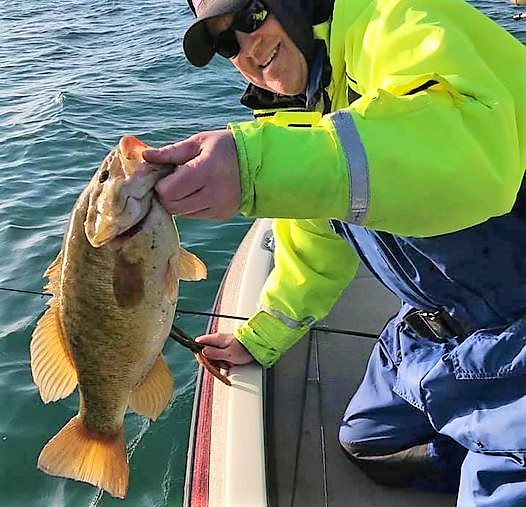


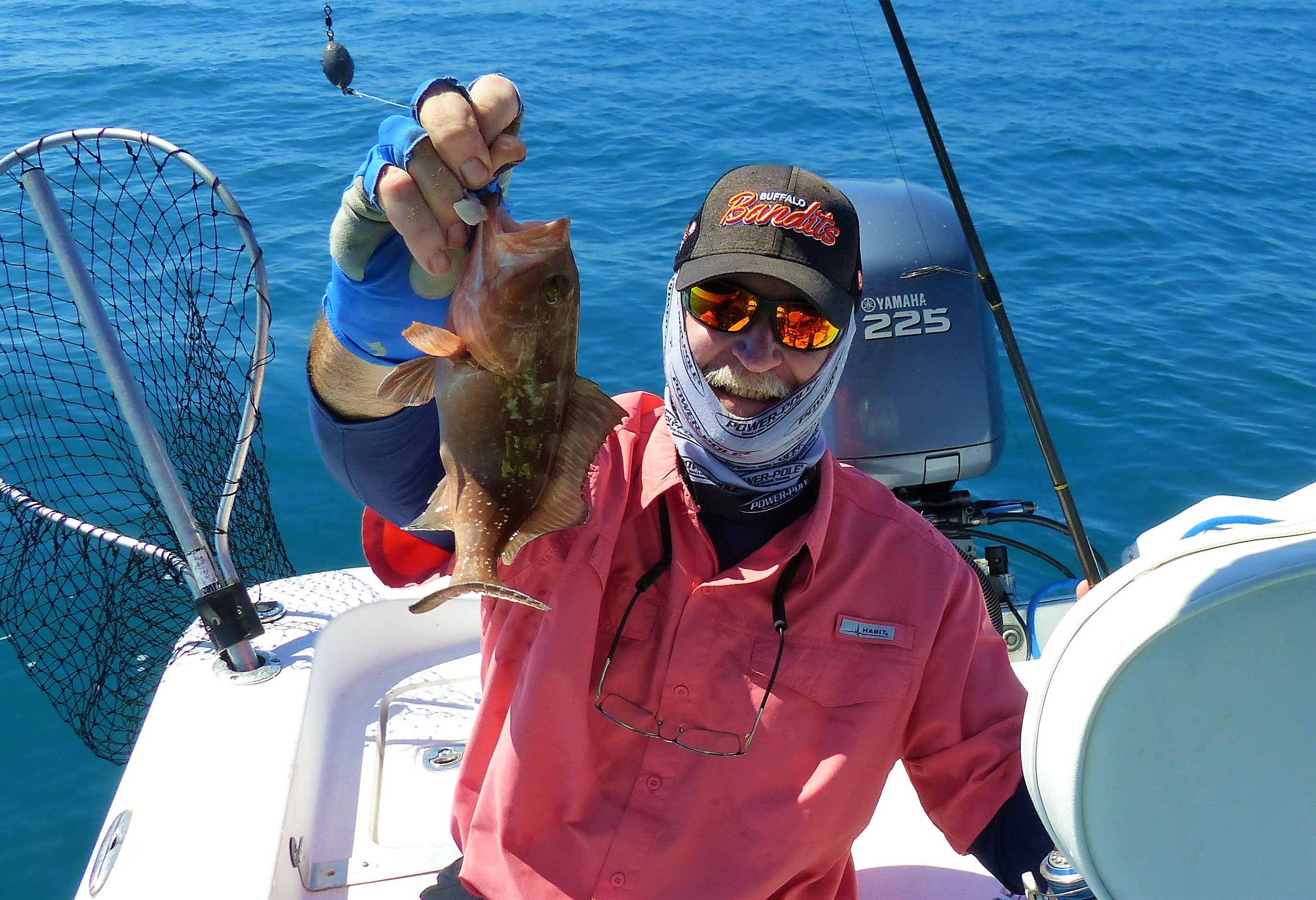


 The classic Steelhead Outdoors Nomad series offers ceramic fire insulation rated to 2300 degrees and is non-moisture trapping. That means no dehumidifier is required (and will not release steam into the safe in the event of a fire). How cool is that?!


 All too often, turkey hunters fail to operate, or play, this instrument correctly. Pressing the paddle onto the box may help increase volume, but will likely cause you to loose the desired pitch. Quality custom-built box calls are designed for the weight of the paddle to be sufficient pressure to make the box play. Most paddles will have a sweet spot. Find this spot and you have found the key to your spring success.


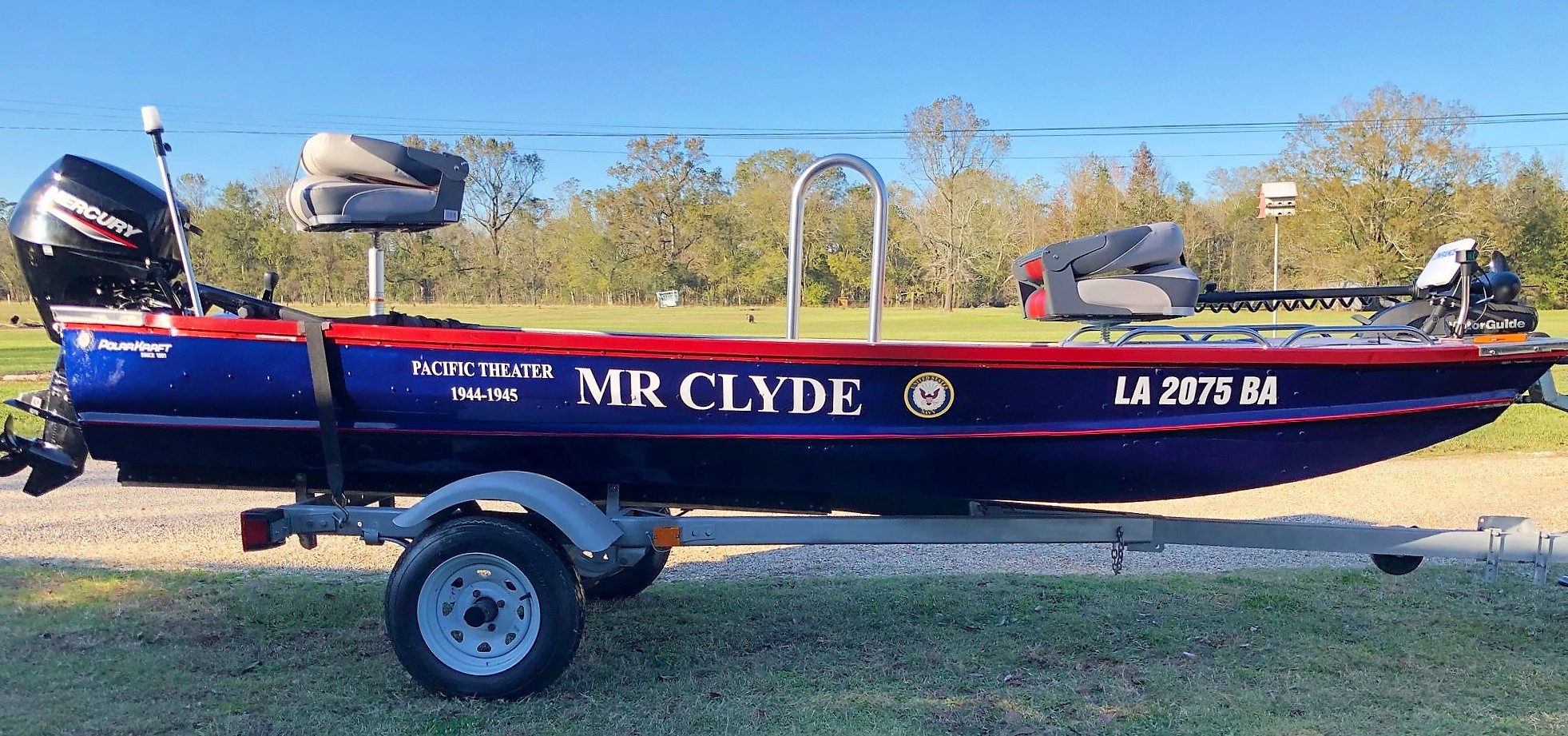


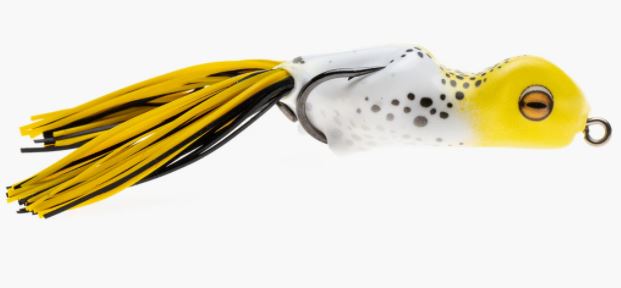


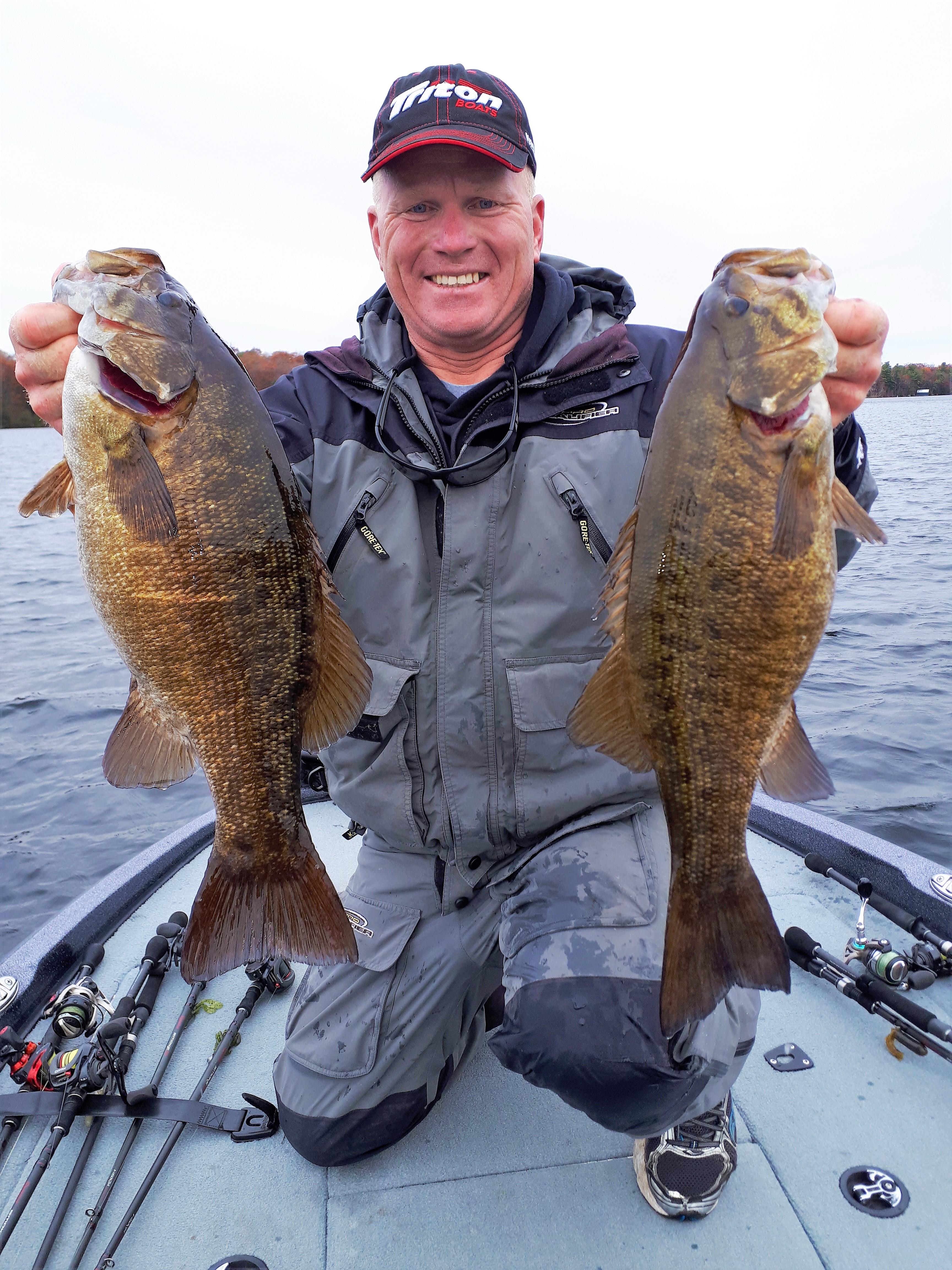


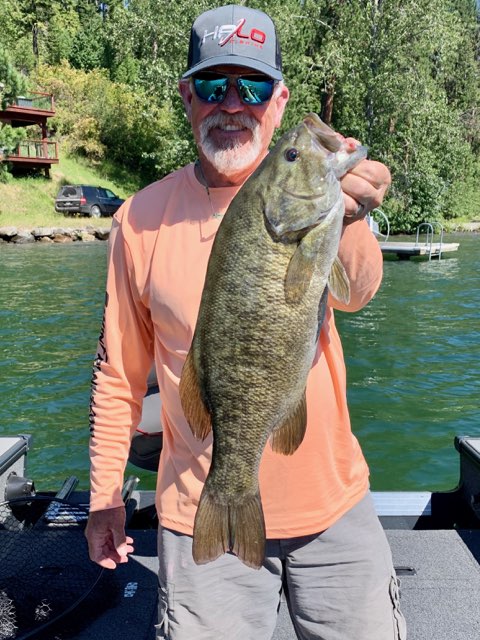


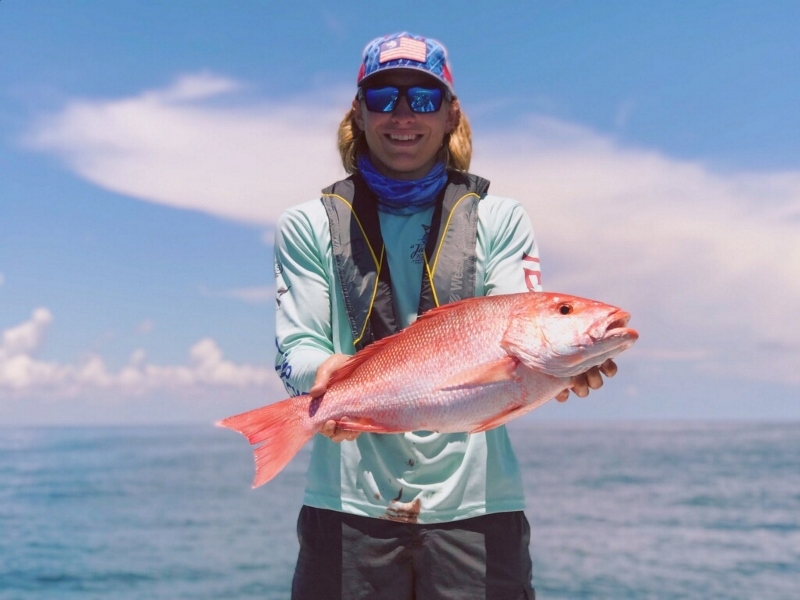

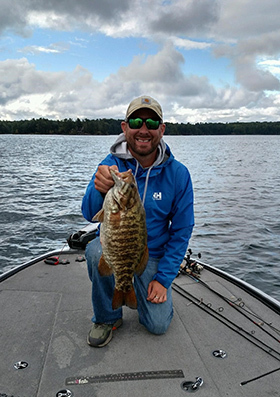 but it’s also the traditional season opener for black bass (largemouth bass and smallmouth bass) in New York. They’re considered the state’s #1 sportfish for good reason – they’re a lot of fun to catch and they’re found throughout the state.


 GPO USA PASSION™ 8×42 ED Binocular Wins Best Birding Binocular Award – Best Binoculars Reviews (BBR) has awarded the GPO PASSION 8×42 ED binocular with its 2020 Best Birding Binocular. Now in its tenth year, BBR awards the very best binoculars they have fully tested and reviewed in the past 12 months in a range of categories.
 BBR website publisher commented about the quality of the GPO 8×42 binocular: “For just about all uses, but especially important for birding, an image that is of excellent quality and true to life is a critical feature. This is because it not only ensures you can fully appreciate the beauty of the birds in all their glory but sometimes, tiny differences in plumage colorations can make the difference when trying to positively identify one sub-species from another.


 and stack it next to your shooting position for quick and easy access, the Ulfhednar UH110 Versatile Ammunition Folder is made from water-resistant Cordura nylon. It features a durable carrying strap and holds up to 40 rifle cartridges. It can be set up in a triangle and locked with Velcro. There’s also an exterior waterproof table pocket that can be removed and replaced with the four included cartridge strips, each holding 10 rounds each. Two and two cartridge strips can be mounted together so that you get two cartridge strips with 20 shots in each.
 You also need a rifle case. Usually, a rifle case is a rifle case, but how about a gun case that doubles as a top-end shooting mat? That’s what you get with the Ulfhednar UH040 BASE CAMP. Sporting backpack straps on the underside in addition to a top carrying handle. The UH040 is easy to sling on a shoulder and tote to the range or into the field. Once there, the bag folds out to reveal a full-length shooting mat measuring 41 x 79 inches. While an integrated shooting mat is pretty useful on its own, Ulfhednar takes it to another level by utilizing a rubber material (like you’d see in car tires) on certain surfaces of the mat to add friction. The rubber is laid specifically on the mat to give shooters a little resistance while shooting, so shooters’ elbows and/or the firearm itself doesn’t slip when firing. The product also has a lot of storage pockets, Molle web for attaching extra pockets or other equipment, a zippered inner storage pocket, a channel for storing your cleaning/push rod, and a detachable pocket for tables, and it also comes with a two-foot extension lower leg mat and extended bipod mat. It’s made from Cordura nylon and features covered YKK zippers.
 40-year champion shooter, Ulfhednar is producing a line of products that are incredibly innovative, durable, and exactly in time with the growing PRS market in the US. Long Range/PRS are the largest shooting sports in Norway boasting 6,000 registered competitors.


 One of the big hassles of hunting with a compound bow is figuring out how to securely and safely pack and carry it afield, yet keep it handy enough that you can immediately spring into action should an unforeseen opportunity arise. The solution is simple: Bow Spider — the quickest and easiest bow retrieval system on the market. Whether you are a backpack hunter, spend your time up a tree, or need both hands free when crossing a field while carrying decoys, blinds, and other accessories, Bow Spider is the answer you’ve been looking for.
 The Bow Spider is available in green, tan, or black, and has a MSRP of $84.95. To see how it works, check out this short YouTube video quick access:


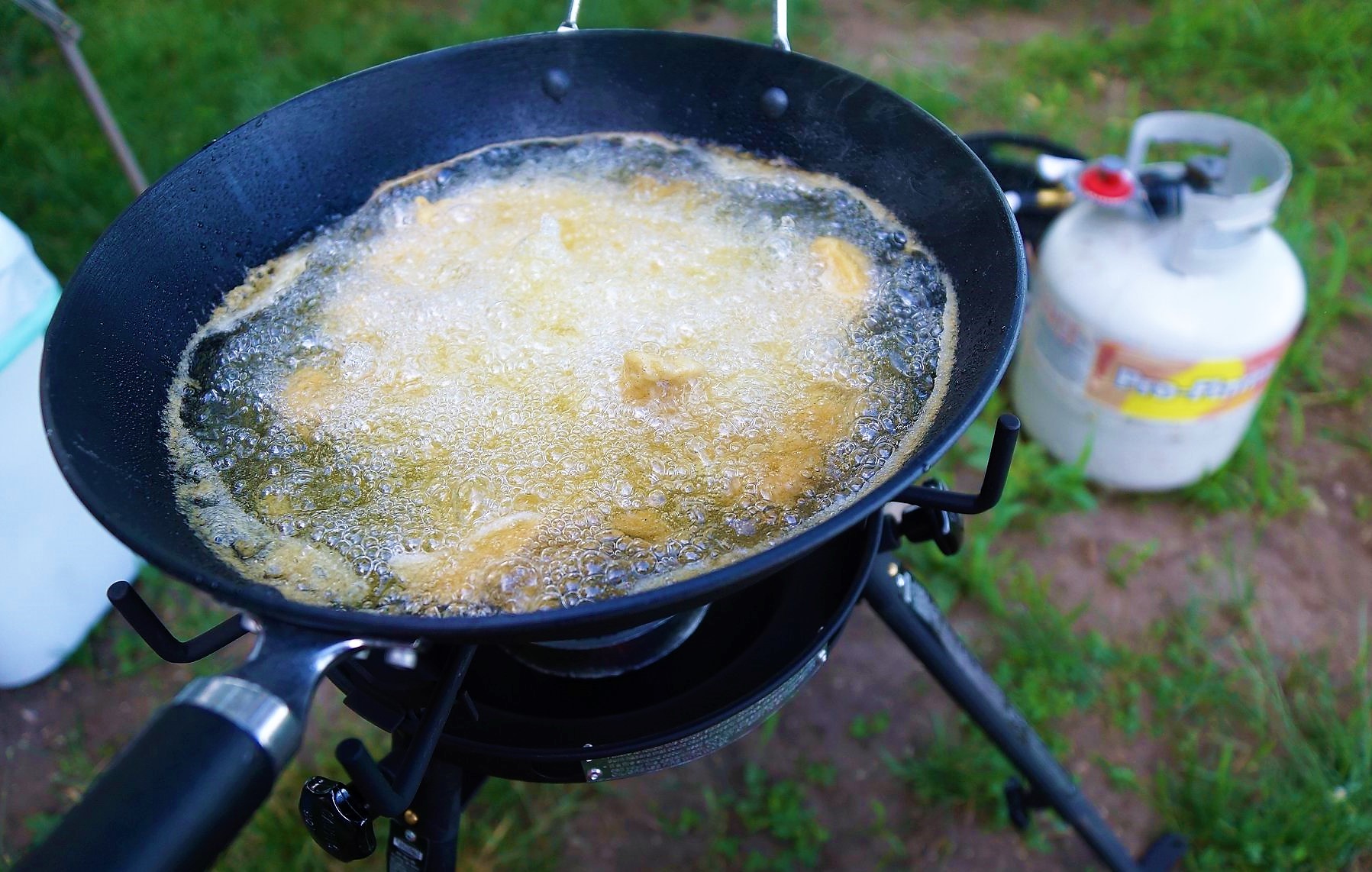

 Durable WOK with BIG KAHUNA Burner
  Every lady needs a good pair of boots. I bought my wife a pair of


 It was now March of 2020, I had no more Federal Champion .22LR 40-grain ammunition. Instead of taking the long drive to Cabelas, on the way to West Falls, I stopped in at The Valley Gun Shop in West Falls, NY. I had never been here, but I thought it was time to say hello, introduce myself, and to check it out. The gentlemen who owns the shop only carried CCI hollow-point 40-grain ammunition for .22 caliber rifles. I decided to purchase those and see how they shot. I figured they would probably not shoot the same as the Federal ammunition, but wanted to try them and compare anyway.
 Testing the ammo types was educational and fun. While these ammo brands might perform differently in other rifle brands, I would have to conclude from live-fire testing that for my break-action, single-shot Rossi, the best (most accurate and repeatable) ammo out of these three brands was the Federal .22LR 40-Grain. Not only does the gun powder smell fresh (hard to describe), the crisp sound of the shot was consistent and the ammo performed consistently. Above that, I never had a misfire in those 200 Federal rounds fired.


 Walleye are challenging to catch and delicious to eat, making them one of the most prized sportfish in New York. As the largest member of the perch family, adult walleye typically weigh 1-3 lbs., but they can get much larger. The state record is a remarkable 18 lb. 2 oz. giant caught from the St. Lawrence River in 2018. Walleye are found across the state and provide phenomenal fishing opportunities in select waters.


 Effective turkey hunting takes a lot of work – scouting, judgment, execution in calling, as well as choosing the right set-up. Making sure that your pattern is extremely effective no longer has to be that much work. Trulock has put in the hours for you.



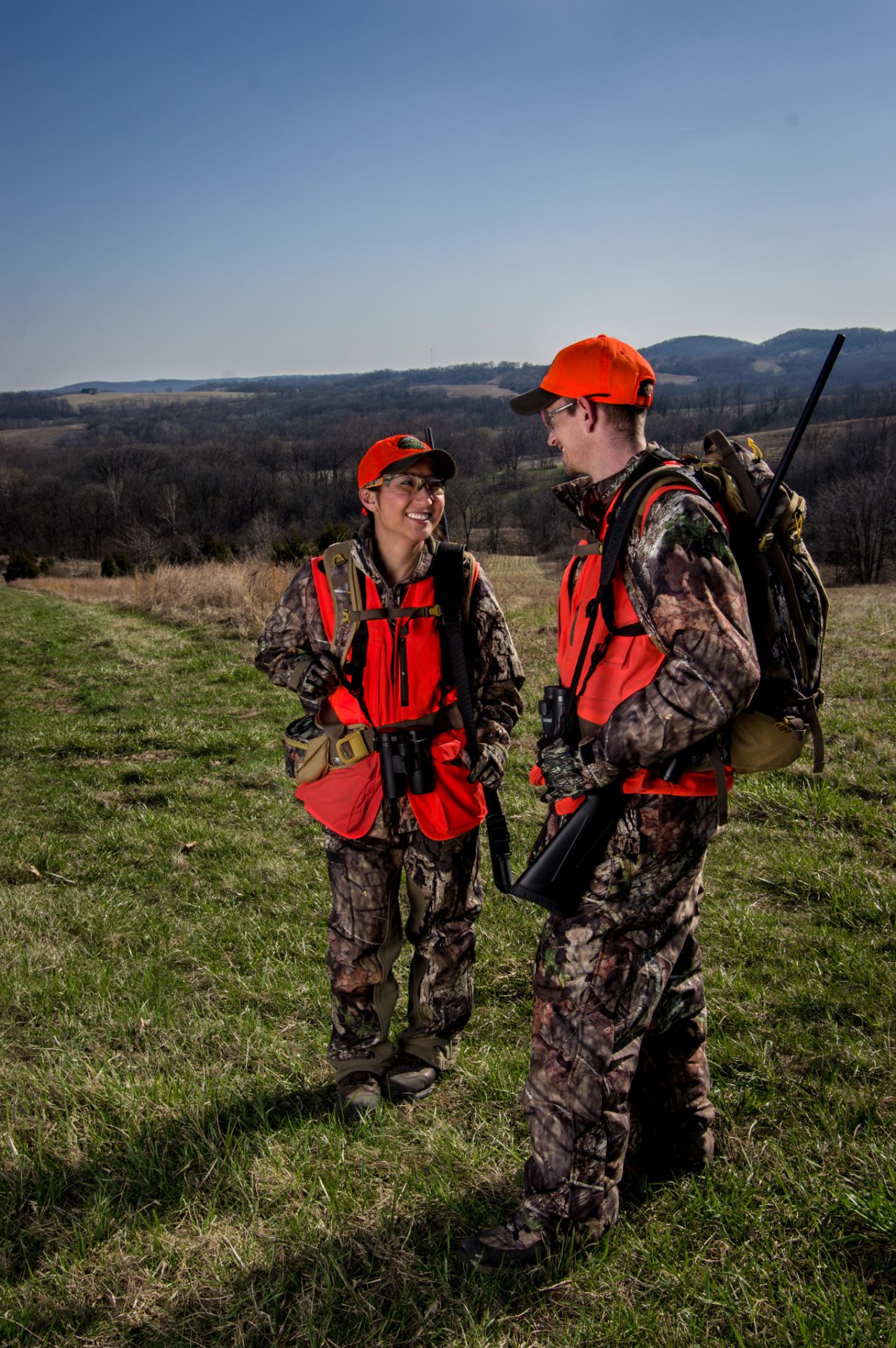


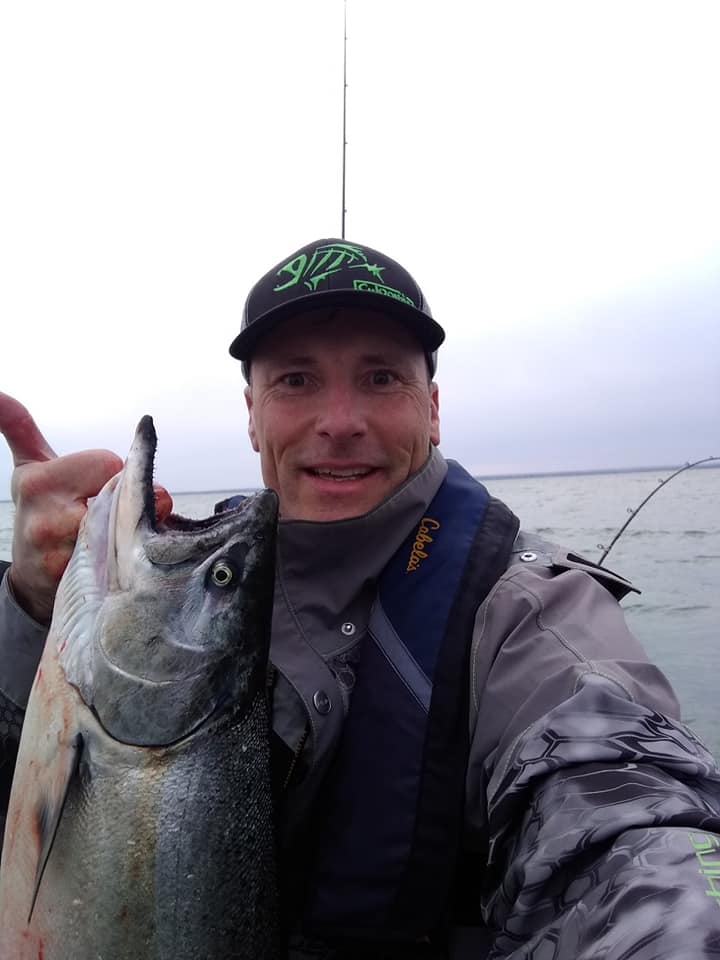






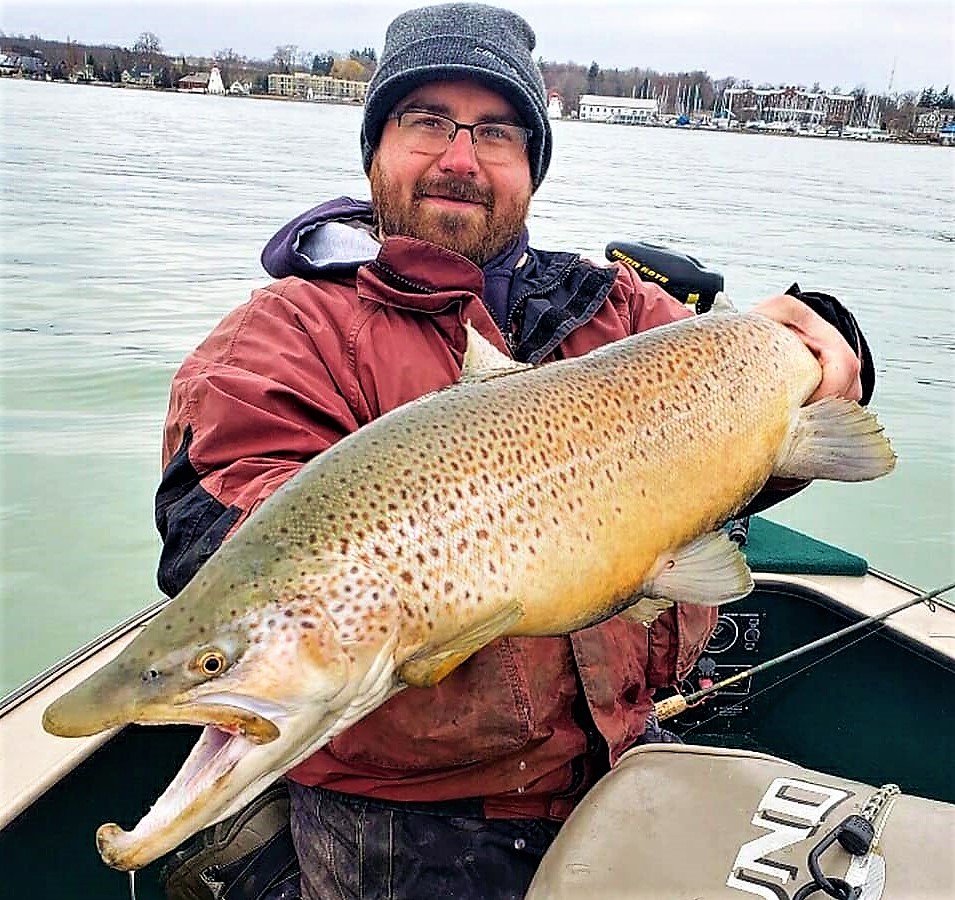


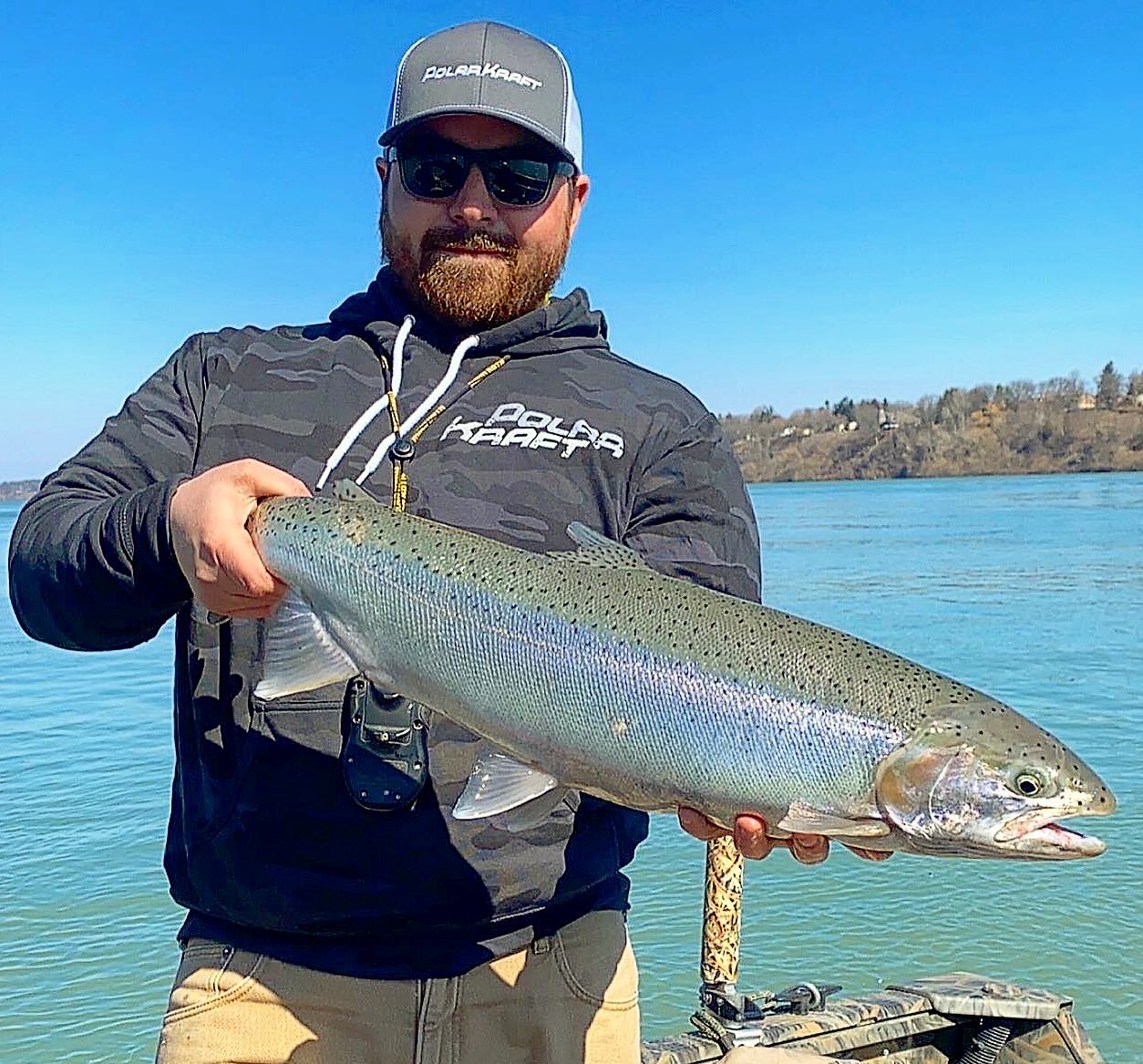


 Curcuruto cited several initiatives, including NSSF’s

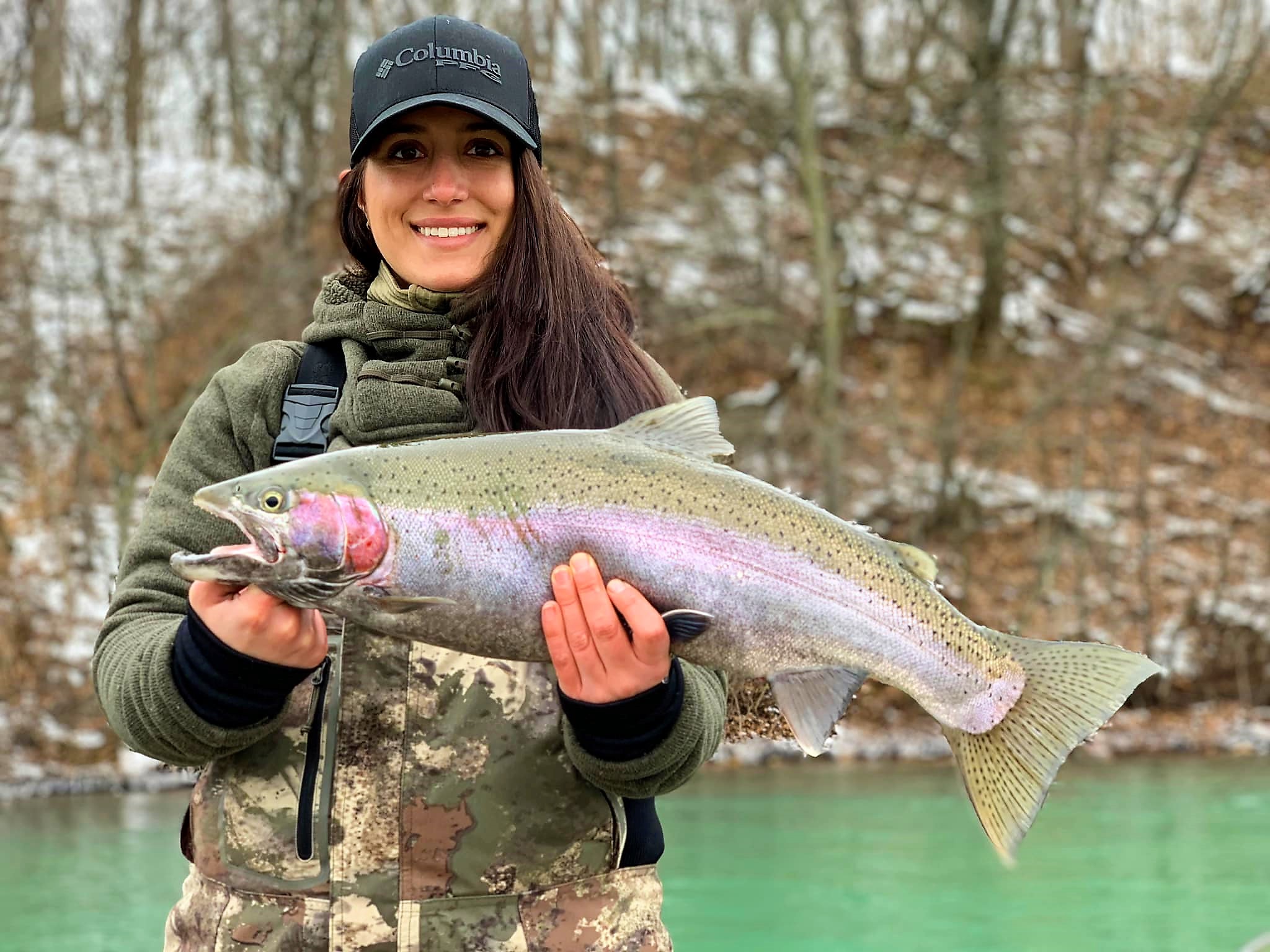


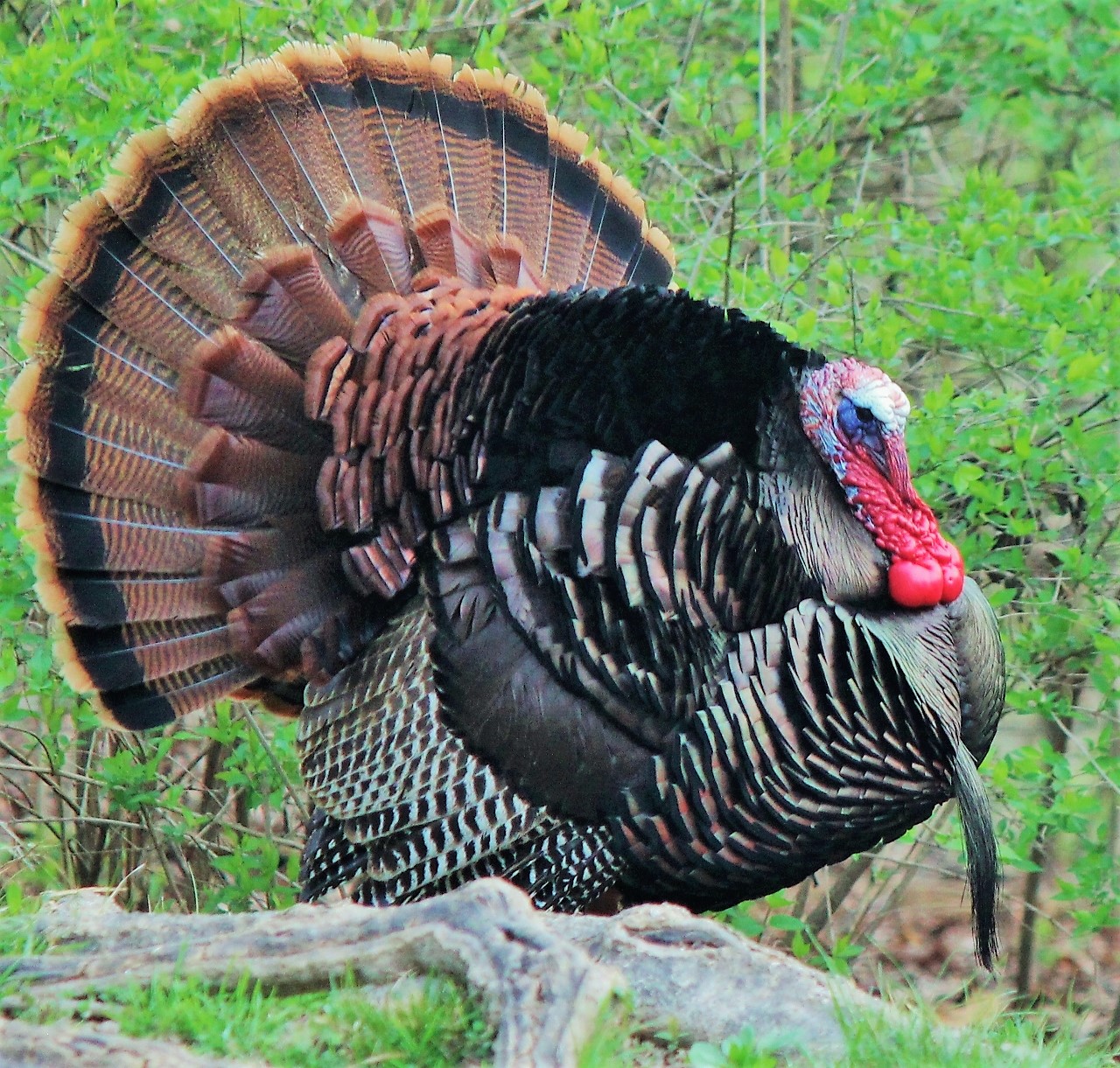
 A fun and inexpensive project during the off-season is to make a pot call all your own. To make things even better would be to make your own pot call and then kill a turkey with it. Several companies sell turkey call kits, but I recently bought a kit from


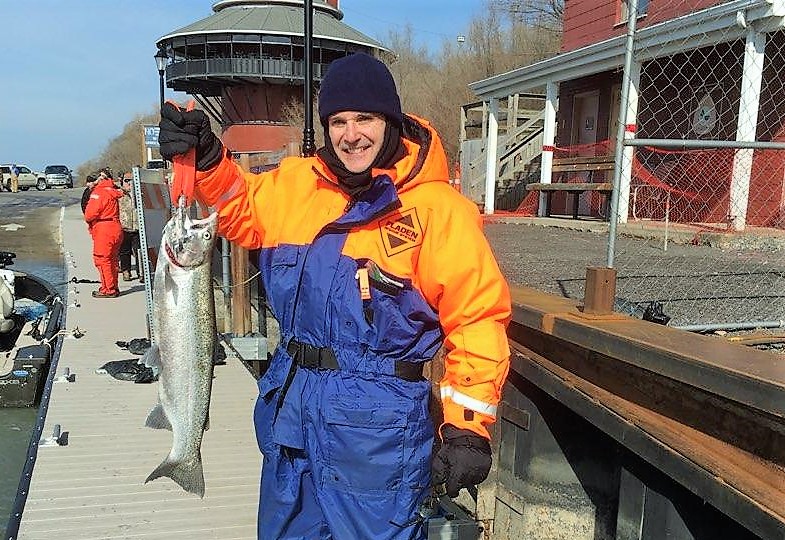


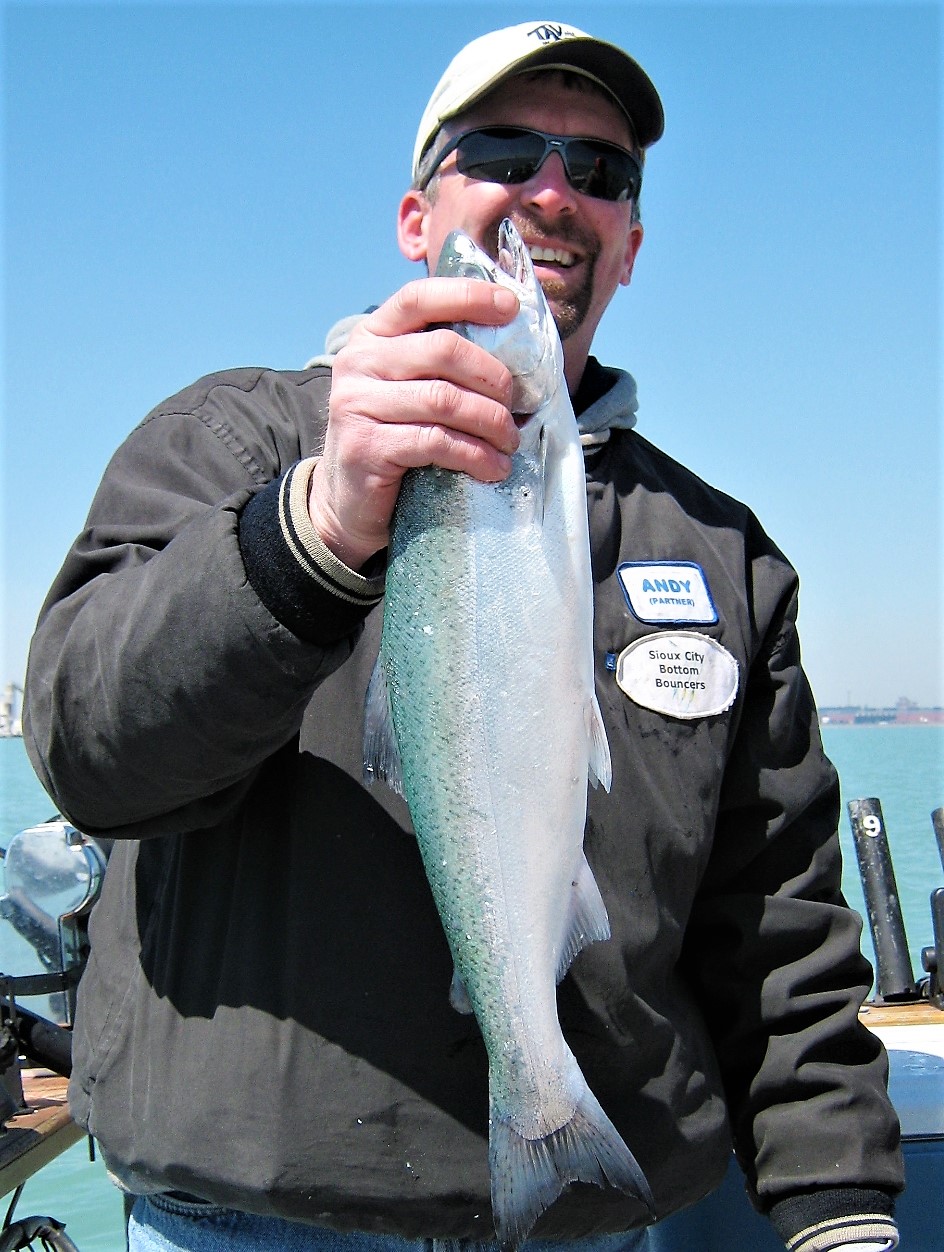


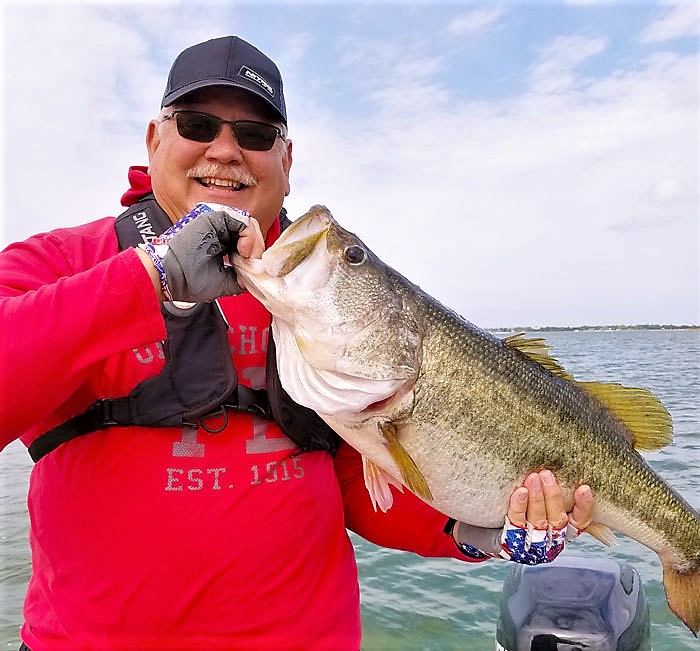


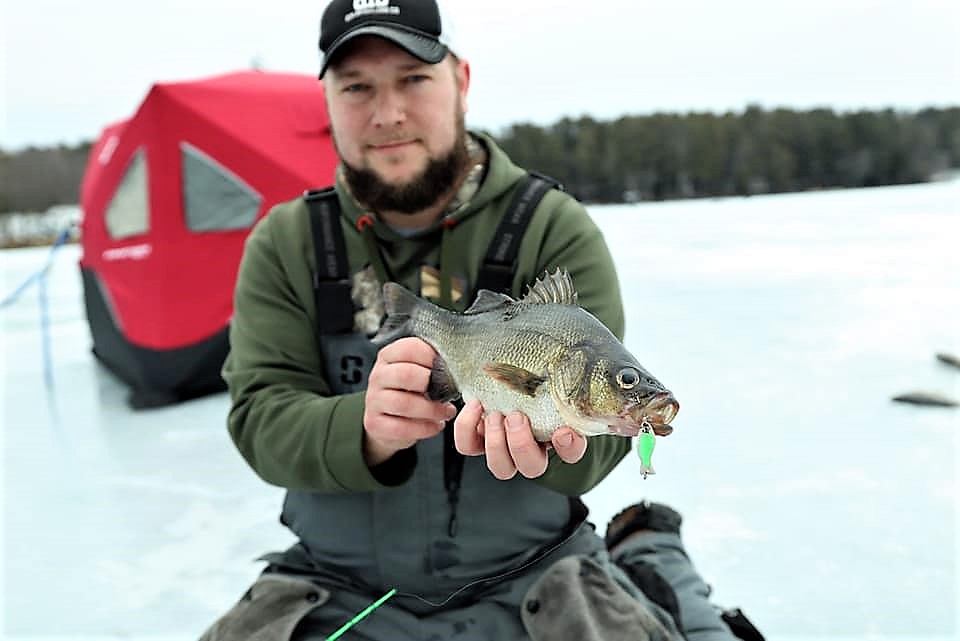


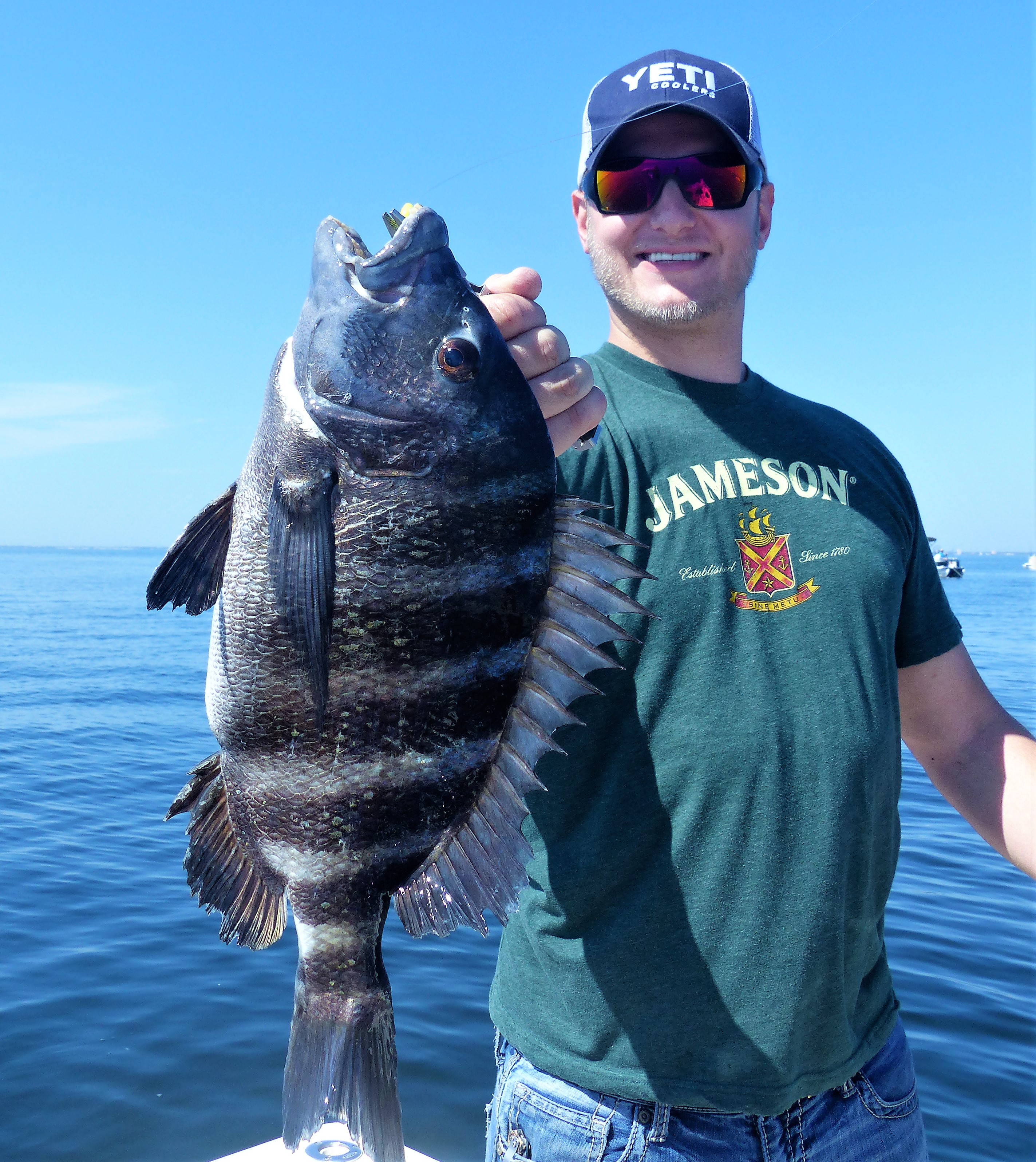


 By Forrest Fisher


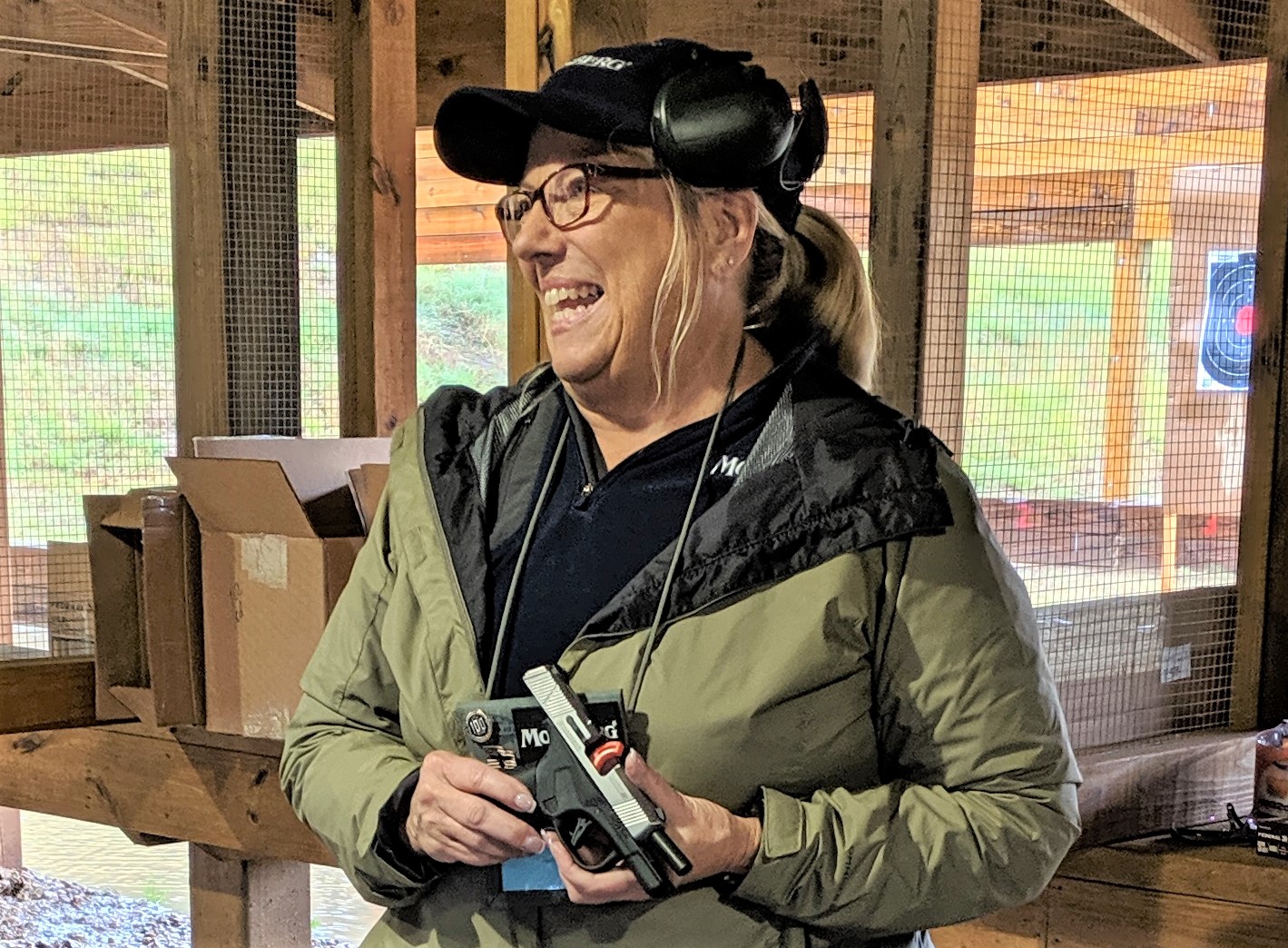


 Editor Note – About the Author:


 You will find that there are over 200 seminars for all levels of angling expertise being given by over 100 speakers.