Flexibility, sharpness, perfect balance, and made in the U.S.A.
Sure-fire handle grip, orange in color: It’s easy to find!
A lifetime guarantee promotes how good it is before purchase.
By Forrest Fisher
A newbie in my gear room would definitely notice that I like to collect knives. Each is handsome, and they can all cut bread, but they each have a purpose. Some of them are fixed-blade, some are folding knives, and there are specialty knives.
That’s where my new fillet knife set from the Knives of Alaska came in last week. While there are knives all over the room, the Knives of Alaska set stands out for good reason: these knives have a hunter-orange handle. You can’t use what you can’t find, and it seems like when I have tasty fish to clean, lots of them, I can never find my fillet knife. Problem solved! And the color thing also keeps it out of my sock drawer (my better half places things with destination unknown in my sock drawer).
The Coho Fillet Knife at 13 inches overall with an 8-1/2 inch blade. It’s 3 inches longer than its smaller fillet knife cousin, the Steelheader, which offers a 5-3/4 inch blade. Both knives are 440C steel, with 18-20 degree blade bevel.
Above that, these knives are not ordinary. A good fillet knife needs to be flexible and sharp, it needs to maintain sharpness, and it needs to fit right in your hand. While we are all different, we can’t be very good at the job without all these virtues. All that considered, lastly, my best fillet knives exhibit a balance between the blade and the handle to link and sync my brain to program how my wrist and hand work together. Of course, the best fillet knife for the job at hand also depends on the size of the fish, and that’s why having fillet knives of different sizes matters for good reason. Precise cutting is no accident.
The Coho Fillet Knife at 13 inches overall with an 8-1/2 inch blade. It’s 3 inches longer than its smaller fillet knife cousin, the Steelheader, which offers a 5-3/4 inch blade. Both knives are ground with an 18-20 degree blade bevel. Having the two-knife set allows for medium and larger-sized fish filleting with little effort. A nylon sheath is included. Both knives have a comfortable sure-grip and a layered polymer handle to assure a positive hand-hold. I especially like that. Click the picture below to visit the store.
On the technical side, these fillet knives are made from high-hardness steel (440C). That means they hold an edge because this blade material retains its hardness quality for a long time. I fish in freshwater and saltwater, so I need the sharpness retention quality to assure perfect fillets for the table. The high chromium content means high corrosion resistance. While this steel is hard and corrosion resistant, the manner in which Knives of Alaska manufactures these, provides the best of all worlds. In short, the balance of blade material properties makes it relatively easy to sharpen. How can you beat that? You can’t.
The Coho Knife is sold retail for under $100, while the Steelheader sells for under $90; the sheaths are extra. The two-knife set includes a sheath that will hold both knives, and it sells for $189.99.
Knives of Alaska has become well known for their durable construction, sharp blades, and ergonomic designs. They cater to the specific needs of hunters and outdoor enthusiasts. If you value performance, durability, functionality, and affordability, do yourself a favor, and check them out. Click on the picture below.
Deer Ticks (Blacklegged Ticks – Ixodes Scapularis) can carry Lyme Disease and are VERY TINY in physical size.
Protect yourself by becoming aware of their size and available repellents (Picaridin & Permethrin) that can work to keep ticks off of you and your loved ones.
Learn what to do if you find an embedded tick on your body.
Deer Ticks (Blacklegged Ticks – Ixodes Scapularis) can carry Lyme Disease and are VERY TINY. CDC photo.
By Forrest Fisher
It’s time to fish, hike, camp, and bird-watch, and it’s time to sit on a quiet park bench anyplace you like. Right now is also an excellent time to take 5 minutes to learn more about deer ticks and Lyme disease. Read this article. Remember it. Please share it. It could save you or your loved ones from a life of medical care and unwanted jeopardy.
According to the CDC, Lyme disease is the most common vector-borne disease in the United States. Lyme disease is caused by the bacterium Borrelia burgdorferi and, rarely, Borrelia mayonii. It is transmitted to humans through the bite of infected black-legged ticks. Typical symptoms include fever, headache, fatigue, and a characteristic skin rash called erythema migrans. If left untreated, the infection can spread to joints, the heart, and the nervous system. Lyme disease is diagnosed based on symptoms, physical findings (e.g., rash), and the possibility of exposure to infected ticks. Laboratory testing is helpful if used correctly and performed with validated methods. Most cases of Lyme disease can be treated successfully with a few weeks of antibiotics. Steps to prevent Lyme disease include using insect repellent, removing ticks promptly, applying pesticides, and reducing tick habitat. The ticks that transmit Lyme disease can occasionally transmit other tickborne diseases as well.
Several years back, but not that long ago, three of my seven grandkids were bitten by a tiny little critter that many of us would have passed off as a speck of dirt and not thought twice about it. But, the little sliver of dirt was hard to brush off. It was embedded into the skin and looked like a tiny, little beauty spot. At first notice, the thought is that it’ll go away. It’s just a beauty post or a piece of dirt. Get some soap. That was just the beginning. After a shower and a few days of baths, good old Mom noticed that the little brand-new beauty spot had grown in size. She did not know there was a little critter in there, and it had filled its holding tanks with her child’s blood. It was a juvenile deer tick—less than the size of a dark sesame seed on your morning bagel.
Picaridin is an insect repellent for BARE SKIN USE, suggested for Deer Tick bite prevention. Cost: about $12.
In the old days, most of us would say, so what? You got bit by a tick, grow up, be a big boy and take a shower more often. Today, science has educated us. The concern today is that deer ticks carry Lyme disease and many other pathogens that cause diseases that are hard to diagnose and harder to treat. In many cases, if initially left untreated, the best prognosis for the more than 400 other Lyme-related diseases is front and center.
Back to the grandchild. Two days later, that little beauty spot was suddenly about 25 times larger. It was easy to see now. Trying to brush off that little spot directly caused a gush of blood from the embedded deer tick. The blood ran and stained the skin. So much so that the blood was running like when you have a small cut on your skin surface. Deer ticks are hungry little, suction-prone, disease-exchanging little critters. Not a disaster, but you might need a few tissues and a small band-aid. That’s not the end. The actual deer tick was still embedded. You or a medical person with skilled tweezers must remove the tick and wait a few weeks to see if you develop Lyme symptoms or get it tested to identify if it carries Lyme disease. Visit Ticknology at https://www.ticknology.org/tick-testing. Lyme and tick-borne disease is often misdiagnosed. As a result, the opportunity for early treatment is missed. Ticknology is one of several lab services that offer tick testing to identify early detection of Lyme or related disease exposure. Many folks prefer to order a Universal Tick Test from Ticknology and receive a comprehensive evaluation of Lyme-related infection risk.
The truth of the deer tick world is that many of these little critters are so small right now – in their nymph stage (just born) – they are hungry and looking for a host. Like their deer tick parents who used up all their energy delivering hundreds of young deer ticks. The deer ticks get Lyme disease from the mice, not vice versa. The ticks cuddle close to the mouse as they are trying to stay warm in the coldest of winter. Then the deer ticks find warm weather, and they leave the mouse. The mommy deer ticks are looking to bear their young on a flower, a weed, a horse, a dog, a backyard plant, a rose, you, me, or somewhere on a bristle of green weeds in your garden and many other places. The point is, beware of these little disease carriers and killers of human health. Why the sudden increase in deer tick numbers and Lyme cases? That’s a mystery.
About 15 years ago, many doctors misdiagnosed Lyme disease for about 400 other conditions. Many folks today still suffer from that lack of early medical awareness. Times have changed, the blood testing process is better, and the medical world has recognized this mysterious disease’s seriousness. About 40 percent of deer ticks tested today are carrying Lyme. Be aware.
Permethrin is an insect repellent for GEAR, SHOES and CLOTHING, suggested for Deer Tick bite prevention. Cost: about $12.
What to do if you like to enjoy the outdoors: Stay aware. Understand that tick season is year-round, and spring and summer are their peak activity periods. Be careful if you hike in wooded areas or venture forth in places with high grass. Walk in the center of the trails. Wear long sleeves and, while it may look stupid, tuck your pants into your socks or shoes top. Use tick-repellent products registered by the US EPA. According to reports, DEET is effective, but the go-to for most folks is to use Picaridin on your exposed skin outside your clothing and treat your exterior clothing, shoes, socks, and other gear with Permethrin. The Permethrin (0.5 percent strength) can last several washings (about four to six weeks). Once your hike, bike, camp or outdoor adventure trip is over and you are back inside at home, toss all your clothes into the dryer on high heat for 10-15 minutes. Heat kills deer ticks. Then do a full body check. Use a mirror. Be extra sure in difficult-to-see areas such as under your arms, around your hair, ears, back of knees, between your legs and especially here: inside your belly button. This is serious; no laughing. To further reduce risk, shower immediately after coming in and after your initial inspection. Why shower immediately? There may still be ticks on you that went unnoticed and are not yet attached. A shower will wash them away.
Uh-oh. During your look-see, you find a deer tick on you. It’s embedded. Not to worry, but remove it. The CDC says to use tweezers to remove the tick. Grip the tick and apply a steady outward pressure across the entire diameter of the embedded tick. It may take a few seconds or a minute, but it will eventually come out. Do not twist the tick with the tweezers. We don’t want to break off the mouth. Then save the tick. Wrap it in a tissue and place it into an old prescription container. Then clean the bite area with rubbing alcohol or soap/water, and wash your hands thoroughly. You can watch for symptoms for the next few weeks or visit your doctor. Show him your tick. Depending on his diagnosis, he may send it for testing or provide antibiotics. About eight out of 10 people immediately treated are cured when bitten by a Lyme-carrying tick. The numbers show that about 10 to 20 percent develop Lyme disease syndrome with lingering symptoms, including fatigue, joint pain, mental confusion, and much more. Deer ticks carry Lyme and many other diseases. It can be nasty.
If you were bit and developed a “bulls-eye” rash near the bite location, about one-third of folks display this condition – the typical treatment is Doxycycline or a similar antibiotic for as long as the first 30 days. That is up to the doctor. If you have no bulls-eye rash but are developing a fever, rash or headache, muscle pain, joint swelling or other unusual symptoms, or any uncommon illness, see a doctor ASAP.
Stay aware of Lyme disease and deer ticks. AND get rid of your mice! They infect the ticks.
Fishing Legend Jimmy Houston among Team Reviving Historic Company
Luck E Strike: An American Original Since 1970
Redman Spinner will be 1st lure to lead new red/white/blue packaging and product line
Singer, songwriter, and entertainer Toby Keith, has acquired Luck E Strike. He is a fisherman too.
Singer, songwriter, and entertainer Toby Keith, pictured left, has acquired Luck E Strike, a bait and tackle brand name as ingrained with top-tier anglers as weekend recreationists.
Endorsed by National Fresh Water Fishing Hall of Famer Jimmy Houston and operated by sporting goods industry vets Jeff Williams (General Manager) and Todd Hempen (Operations Manager), the company is relaunching this summer with a new focus on its traditional American-made division in Greenwood Ark., while maintaining the current assortments sold nationwide, as well as a new slogan: “An American Original Since 1970.”
For the singer of “Made in America,” Luck E Strike occupies a special place in the world of outdoor sports. “They’ve got a lot of history,” Keith says. “It’s one of the earliest fishing brands universally stocked in national retailers.”
In the bass fishing world, Luck E Strike is well known for tackle kits, hand-crafted crankbaits, and its Redman Spinner Bait. The latter was designed by Houston, who used it successfully for decades, and it led to his two 1st Place Finishes at the Bassmaster Classic. Trading in its prior yellow and black packaging, the Redman Spinner will be the first lure to lead the company’s new red, white, and blue packaged product line in the coming months. Details and timeline are forthcoming.
The company’s biggest brand ambassador is the host of the 46-year-running Jimmy Houston Outdoors television show. “Jimmy is one of about three big legends in the fishing world,” Keith says. “He has been a spokesperson for Luck E Strike for decades and started building his Redman Spinners out of diaper pins and selling them to Walmart.”
National Fresh Water Fishing Hall Of Famer Jimmy Houston.
Houston asserts this acquisition will make an impact in the world of fishing. “In addition to being one of the best singers and songwriters, Toby Keith is an incredible patriot,” he says. “Tying those two together in an American lure company known for making outstanding bass and crappie lures at great prices is so exciting. As his friend, I’m happy seeing the fire in his eyes over this company. It’s a big deal for the fishing industry as a whole to have him involved and bringing this brand back to where it ought to be.”
Having fallen on hard times, the company had been in disarray. “They needed a new focus and vision, and I happened to be standing at the door ready to pick up the pieces,” Keith says.
“I’ve got a house on a lake where they hold a lot of fishing tournaments, and I became friends with Jeff, who has built two big tackle brands,” he continues. “He reached out and told me Luck E Strike was for sale, and he was as interested as I am in rebuilding it.”
Williams is an accomplished angler, bait and tackle developer, and businessman whose brands have included Team Catfish and Fle-Fly. “Everyone knows Luck E Strike and its industry-leading lures,” Williams says. “It’s a working folk’s brand, and Toby Keith is the right person at the right time to build this thing back up. We’re already hard at work rebuilding wholesale relationships and vetting tackle manufacturers, domestically and abroad. Luck E Strike will be a global tackle brand, with Toby’s involvement.”
Hempen has more than 30 years of retail and supply chain experience with some of the biggest names in sporting goods, including Bass Pro Shops, Walmart, and Amazon. “I am honored to be working with Toby and this team to revitalize the Luck E Strike brand,” Hempen says. “This will be a big deal for Toby’s fans and the faithful Luck E Strike customers.”
Known for his prodigious work ethic, Keith is ready to go. “This team is so good, and the brand and product speak for themselves,” he says. “Through the years, Luck E Strike has sold hundreds of SKUs nationally at major retailers. Unfortunately, that business has dwindled some, but we will build that backup and add some rod-and-reel combos, apparel, fishing tools, and tackle systems. We will put this brand back at the level it deserves.”
“I’m a nostalgic guy, and that’s part of it, but this is great stuff,” he continues. “I know a bunch of pro anglers, and they’re all telling me if I can get them the stuff, they’ll fish with it.” With the expertise and marketing muscle Toby Keith is investing in, it’s a safe bet they will be one of many companies using and having success with Luck E Strike lures.
About Toby Keith: Arguably the most prolific self-directed creative force in the country’s modern era, Toby Keith has amassed 42 top 10 hits, 32 No. 1s, 40 million albums sold, and more than 10 billion streams largely on the strength of his own songwriting and producing, and under the banner of his own Show Dog Nashville record label. Among his many accomplishments, the New York-based all-genre Songwriters Hall of Fame (2015), the Nashville Songwriters Hall of Fame (2021), and BMI Icon (2022) are his most treasured.
We share and teach these principles: Respect Yourself, Respect Others, Respect Authority, Respect the Environment.
We teach kids to build trust with adults and others.
Florida Sheriffs Youth Ranches – Please consider helping us plant the seeds of a new life for troubled youth.
By Bill Frye, President – Florida Sheriffs Youth Ranches, Inc.
As I write “My Perspective” for our quarterly Rancher Magazine, I am sitting at the dining room table in my home in North Carolina. I drove up after a very busy and engaging Easter weekend with our grandchildren Jackson and Cora Rose. It was a planned getaway as I had much to do with writing, meeting preparations, upcoming evaluations and visits. I just needed to be away from all the hustle and bustle of the office and have some quiet time to put my thoughts in order before reengaging with everyday work. While I truly love what I do, it does at times become overwhelming, and in those moments, solitude can be very healing, especially if you take the time to be still and spend time in prayer. So off to the mountains of North Carolina, I fled, taking with me everything I needed to work on.
Driving alone can be very therapeutic, especially if the traffic is not too bad. Sometimes it allows you to reflect on past events or come up with new ideas on how to move a project forward. However, most of all, it allows me time to give thanks to God for all that has been provided to me and others over the years. This drive was no different because it gave me time to be still and remember the little blessings I somehow overlooked.
As I began my ascent into the mountains, I noticed the variations of colors; the trees were just beginning to produce new leaves as spring was arriving. In the lower elevations, the leaves were fuller and darker in color, and as I drove upward, they became lighter in color and much smaller in size. When I arrived at my home, the trees were still bare, and colder temperatures had not yet allowed new leaves to form. Looking down the mountain, you could easily see the transition. By the end of this week, I am sure it will be much different.
As I stood in my dining room and looked out the window toward the valley below and the brown-leaf-covered landscape, something caught my eye. Growing on the side of the mountain was a tulip plant with three beautiful red blooms. The blooms stood out against the barren landscape that had yet to come back to life after a hard winter. Seeing those tulips started me thinking and remembering how our lives are filled with many blessings.
Like when a child first arrives at one of our summer camps. They sometimes arrive with a frightened look on their faces, scared of the new environment, wondering if they will be liked or accepted. Will they make new friends? Will the counselors be nice? Are those deputies going to be mean? The landscape of their arrival is sometimes barren because of their fear of the unknown. Then, just as those beautiful red blooms changed a bleak mountainside into something remarkable, the counselor’s smile, the deputy’s warm greeting, and the introduction to the new cabin mates melt away the apprehension, and the landscape begins to transition. By the end of the session, it’s like looking down the mountain and seeing the brown winter vegetation becoming lush green vegetation of spring and summer. The child who arrived frightened has blossomed into a happy, smiling camper with new friends and special bonds with their camp counselors and the deputies who spent time with them. As they leave, they carry their own positive memories because of everything they experienced and accomplished.
The same is true for the children who come to live with us at one of our residential campuses. While they choose to come live with us for many reasons, they often arrive with frightened looks, wondering if they will be accepted and liked by the others already living there. Many arrive with so much emotional baggage from life experiences that they find it difficult to let go of past hurts, disappointments and fears they encountered in their young lives. Their personal landscape is barren and void of hope, with only the fear of the unknown. However, with the love and support and tolerance found within our ranch community – from our cottage parents to our support staff – kids can become free of their past baggage and discover new life. All with the help of those who are committed to their care and well-being. Then, as they grow up and build lives of their own, they too will be better prepared to face the future not with anticipation and fear, but with resolve and determination.
In this day and age of negative events being broadcast through news programs and social media, the landscape around us often looks barren. In some ways, our country and communities are like my mountain landscape after a hard winter. However, there are blessings to be discovered, and for me, those blessing are found within my family, my beautiful grandchildren, our donors, sheriffs, supporters and alumni who make it possible for our wonderful staff and volunteers to help improve the lives of children who come to us for care.
I pray that each and every person reading this 65th Anniversary edition of the Rancher Magazine discovers the many everyday blessings being provided to children because of your kindness and generosity.
God Bless.
From the publisher of ShareTheOutdoors – About Florida Sheriffs Youth Ranches: The mission of the Florida Sheriffs Youth Ranches is to prevent delinquency and develop lawful, resilient and productive citizens through a broad range of services. In 2023, the Youth Ranches will serve over 4,000 boys and girls. This charitable, nonprofit organization was founded by the Florida Sheriffs Association in 1957 and operates three residential care campuses along with three summer camps. Additionally, it provides community-based services to as many of Florida’s neglected, troubled children as funds will permit. Voluntary contributions are the primary source of funding, especially thoughtful gifts made through special bequests in wills and trusts. To donate in any of several ways, please visit https://www.youthranches.org/index.php. The Florida Sheriffs Youth Ranches, Inc. is nationally accredited by the Council on Accreditation of Services for Families and Children, Inc. and the American Camp Association. If you would like more information about the Youth Ranches, please contact us at 1-800-765-3797, or email us at fsr@youthranches.org.
Please note that the photographs, forms, videos and this editorial copy are the property of the Florida Sheriffs Youth Ranches, Inc. We have requested permission to reprint in order to help others learn about this successful youth program.
The Hunting Wire team would like to thank you for helping us grow in 2023. We are bigger and better than ever, mainly due to you – our readers. Thank you for tuning in every two weeks for our hunting community’s latest news and information.
Spring is here – finally. Hopefully, by now, you’ve bagged your bear or gobbler, or you’re figuring out how to pay your safari taxidermy bills. Wendy and I are headed to the woods this evening to (try) to get her first bird. We’ll let you know how it goes.
This issue’s Voice of Leadership Panel essay by The Mule Deer Foundation’s Luke Thorkildsen is an eye-opener for those who may not know how conservation funding works.
Speaking of the Voice of Leadership Panel, we’re looking for volunteers for the next cohort, which begins in September 2023. It would help if you were a discerning, eager, emerging leader in our community who wants to showcase his or her concerns for community issues on a global scale. We’ll give you the platform and mentorship to find, socialize, and grow ideas to improve the hunting community. We are especially interested in voices from the guide and outfitting realm, ammunition communities, archery communities, and local, state, and federal agencies. Don’t let bureaucracy stop you. Ryan Brown – Executive Director, Virginia Department of Wildlife Resources, proved you can actively and aggressively participate in our panel. We challenge other government leaders to join us. I’d also like to take a moment to give another Ryan, Ryan Hoover of Handgun Hunters International, a shot-out. Hoover is one of our strongest panelists, with timely, well-written, and challenging work; the handgun-hunting community is fortunate to have him as a leader. If you’re interested in serving on the 2023-2024 Voice of Leadership Panel, send me an email at jay@theoutdoorwire.com
Conference Event for Outdoor Storytellers: June 12-15, 2023 – Broken Arrow, Oklahoma
Learn “How-To” create Social Media links that generate Effective Distribution Relationships
POMA members “Network with Industry” at this Annual Meeting/Learning Session
By David Gray
The Professional Outdoor Media Association (POMA) is a vibrant group of communicators that share content-creation ideas and foster teaching moments about the modern, changing world of the outdoors.
The POMA Conference is a networking and friendship-making opportunity for Writers, Bloggers, YouTubers, Videographers, Website Contributors, Podcasters, Radio Show Hosts, Outdoor Industry Brands and Social Media Influencers who create and share stories, information, and content about the wonders of the outdoors and outdoor sports recreation. It’s a modern, changing world of outdoor communication, POMA has become a solitary leader in the new world of outdoor communication. Register Here.
Come visit with members from SharetheOutdoors.com who will be at the POMA Business Conference, June 12 – 15, 2023, in Broken Arrow, Oklahoma. Industry veteran Whitebeards, Larry Whiteley and David Gray, would like to meet and visit with you. Check out www.sharethoutdoors.com to learn more about their outdoor outreach.
At the annual business conference, seminars from talented communicators share tips, ideas and how-to information on how to do what you do to develop greater impact and reach. All this takes place at the Professional Outdoor Media Association business conference from June 12 – 15. The largest prize for attendance may be to network with representatives from Outdoor Brands and communicators from other regions of the country. Try new products, learn about new products and gather desirable information to share with readers, listeners and viewers. Check out the POMA Social Media Tool Kit.
If you are a communicator with many years in the business, or if you are just starting out, the POMA business conference is an event made for you. Make friends, and new contacts, and learn tips while you participate in a relaxed, enjoyable, effective business conference. Leave with helpful knowledge and new contacts that will help your purpose.
The Keynote Speaker this year is Col. Nick Nichols of Folds of Honor. Folds of Honor provides life-changing scholarships to the spouses and children of fallen or disabled U.S. service members and first responders. Toyota is a cornerstone ingredient and manufacturer for powered adventure in the form of flawless adventure vehicles and engines. Toyota is sponsoring the POMA Pinnacle Awards for best content creation among POMA members.
The POMA business conference is all about the POMA mission.
POMA Mission: To foster excellence in communications at all levels, help members build their businesses, connect media and industry, promote fair and honest communication of traditional outdoor sports and conservation stories, and mentor the next generation of traditional outdoor sports communicators.
Light rods, light lines, artificial lures and lots of fish.
Finding the forage and simulating their size and color was key.
Savvy lures, special action-assist knots, using stealth – learning the how-to.
Fun fishing near Pine Island, Florida.
One of many speckled Sea Trout I caught fishing with Captain Dave Chorazak of Inshore Dream Fishing Charters.
By Forrest Fisher
Just before sunrise, it was still dark, I was greeted with a friendly handshake and a confident, fish-catching happy face by Captain Dave Chorazak of Inshore Dream Fishing Charters. “My cooler has lots of ice and water bottles; you can add anything you like. It looks like we’re going to have some great weather today. Let’s go see how the fish feel about that!” I was pumped.
As we idled out from Pineland Marina on the west side of Pine Island, birds in the nearby mangroves were singing assertive tunes of good luck to us. I made that assumption. They may have been begging for a free meal, but this fishing trip was artificial lures only.
I am excited and eager to learn more about how to fish the saltwater without live bait, and to understand the gear, the right rods, reels, lines and all that.
Pine Island is just north of Fort Myers, where tens of thousands of folks are still recovering from the devastation of Hurricane Ian storm damage. The storm affected an area about 75-100 miles wide across the Gulf of Mexico shoreline of southwest Florida, where the sea water level rose to 20 feet above the normal. Hard to imagine.
But today, the waters of Pine Island Sound were calm and serene as we were looking out from the marina departure channel. Captain Dave said, “We’re going to fish some of the mangrove-filled inshore bays out here, and we’ll probably see some Osprey and Bald Eagles, and many other birds too.” My camera was ready. “Right now, the waters in the bays and islands are filled with good baitfish. They find the gentle eddy currents that form on one side or the other of the many islands. Finding the little currents allow us to find that forage without much difficulty, and then we cast near to those areas with hopes to catch bigger fish with lures that resemble the forage.” He made it sound pretty easy: 1-2-3 go!
He added, “Any moving tide can work for us. I have some proven waypoints to try that hold solid fish at times if we’re lucky. We’ll be casting from the boat toward the shoreline to try our luck.” The Captain’s voice was inspiring and confident. “Put your Polaroid sunglasses on, tighten your hat strap. You don’t mind if we pick up some speed?” I could only grin and holler, “Me? Mind speed? Let’s hit it!”
He pushed the throttle forward, and the sleek 20-foot Action Craft bay boat hopped out of the water and came to life. The Mercury outboard roared, and I glanced over to the dash to see we were going 45 mph in just a second or two. With the pre-fish talk and the sound of the engine, my anticipation and anticipation gained a mountain of fish-catching momentum. This was thrilling, even without any fish on the line. The boat skimmed along so smoothly, so comfortably.
We were at waypoint number one in a very short time.
Dave added, “Pine Island is the largest island on the Gulf Coast of Florida, it’s part of Lee County. Pine Island Sound forms part of the Intracoastal Waterway, and if you look out west that way, you can see Cayo Costa Island. There are a few smaller islands of some fame, too, like Cabbage Key, a tourist stop with a restaurant for private boats and tour boats. A little south is Captiva Island and then Sanibel Island, both famous vacation places. The fish don’t care. We have lots of fish for everyone to catch.” This soft-spoken fishing expert was very convincing.
About 5 minutes after we started casting, the first fish said hello with a tail swish and surface water blast. A handsome 27-inch speckled trout came aboard.
The boat electronics provided speed, sonar, navigation and communication. Our first stop was a secluded bay. It was so quiet. An Osprey screamed and flew overhead, right above the boat about 20 feet, looking to see if we were delivering breakfast. I talked to the handsome bird, “No baitfish here, ‘ol friend.” He hovered for a moment, came in right above the boat, and then off he went to tend to a nearby nest of young Osprey. His mate was also nearby.
We fished slowly with electric bow motor control.
The 7-foot 6-inch spinning rods were loaded with light lines. The 10-pound test braided line allowed for longer casts to spooky fish – the water was so clear. The 20-pound fluorocarbon leader provided abrasion durability to survive contact with clam and oyster beds, and one or two of my famous errant mangrove tree casts.
One hot fish-catcher was a plastic jerk bait on a weighted weedless hook that provided hours of unforgettable topwater strikes and fish-catching moments.
A double-uni knot tied the leader to the braid. The lures were tied to the leader using a loop knot that Dave described as a knot that provides more wiggle and action. The result was a wide walk-the-dog action, surface and sub-surface, with the lures. We never stop learning.
The artificial lures were from an assortment of Captain Dave’s secret casting baits. The lures resembled the forage: threadfin, pilchards, herring and glass minnows. These minnows flood the inshore waters to feed on algae and plankton as the waters warm with the season. It didn’t take long to find fish.
About 5 minutes after we started casting, the first fish said hello with a tail swish and surface water blast. “Fish on!” Dave hollered. About a minute later, a handsome 27-inch speckled trout came aboard. A beautiful giant trout, it was a picture-perfect fish.
Using Rapala saltwater lures and plastic jerk baits on weighted weedless hooks, the next 3 hours were filled with unforgettable topwater strikes and fish-catching moments. It was sheer, impressive, fishing fun.
The artificial lures from Captain Dave Chorazak’s secret casting baits resembled the forage: threadfin, pilchards, herring and glass minnows.
We motored around the islands, positioning to try various spots. Fishing the moving tide locations to catch several fish species, including snook, speckled trout, ribbon fish, redfish and others.
I managed to lose quite a few fish while bringing about 10 good fish to the boat. I learned by Dave’s example about how to work the baits and what baits work best under what conditions.
We released all the fish to catch on another day, big ones and small ones.
Conservation is key to keeping any fishery healthy, and I was in full support of releasing the fish. We were careful not to damage each fish we landed. It was great to see the clear waters and growth of new seagrass in this vibrant spring fishery.
Captain Dave Chorazak was a volunteer firefighter from Hamburg, NY, near my old hometown, and he was a good friend of my son-in-law, Dieter Voss. That’s how we met a few weeks back, when we all went out for dinner to a tasty Mexican restaurant (Lime Tequila) in Port Charlotte. I was a tournament walleye and bass angler from my history up north, so it was easy to “talk fishing” with Dave at dinner. Some secrets he shared with us at dinner and on the fish trip were provided in confidence, but I’m sure Dave would share these with any customer that asks. You’ll need to sign up for a trip to learn about his fish-catching lures, special knots, the seemingly foul-proof weighted hooks (I hooked plenty of mangrove trees high up and didn’t lose a single lure!), and his tactic secrets that put a lot of fish on my line in a very short time.
Speckled sea trout were on the bite, and they provided fast fun across a variety of baits. We caught snook and other species as well.
This trip was one of the most peaceful, fun-filled, fish-catching days I’ve ever enjoyed over my last 55 years of fishing all around the country.
It was my first experience in a “Bay Boat,” and I discovered these slick craft allow access to shallow bays and flats where no other boat types can go. They are fast, have a large fore and aft deck for casting and a ton of storage lockers and live wells. Captain Dave Chorazak’s boat provided 20 feet of safe, fish-catching space.
I plan to bring my grandson next time. He is going to really enjoy this. The charter cost is quite affordable ($350), and I look forward to fishing here again soon. Fishing from his flats boat, an open flat platform boat, there is plenty of room for casting, but there is no shade – so bring sun protection. I wore sunscreen and a 360-degree shade-making hat, a fully-aerated long sleeve hoody, and fishing gloves.
The Florida sun is great, but it is hot, even in April, and can damage your skin with nasty sunburn if you go out unprotected. The Captain provides water, but you can bring along other beverages and snacks to add to his onboard cooler. All the tackle and bait and fish licenses are included in this affordable pricing. Hard to beat.
Note: Upon departing the marina, I noted the presidentially famous Tarpon Lodge Restaurant to the south and Randell Research Center to the north of the marina roadway entrance. Many former U.S. Presidents have stopped at Trophy Lodge for their famous seafood menu. The Randell Research Center (RRC) is part of the Florida Museum of Natural History, offering programs dedicated to sharing the archaeology, history, and ecology of Southwest Florida. Their motto is, “As we learn, we teach.” That’s the way I felt fishing with Captain Dave Chorazak.
Dennis Ferraro downed this healthy black bear in Belfast, NY, with one clean shot, using a Browning BLR-81 lever-action .308 caliber rifle and 150-grain Federal Fusion boattail bullet.
By Forrest Fisher
Across the country where black bear hunting is allowed, harvesting a black bear means more than just a fabulous rug. Bear meat is delicious and healthy when properly cared for in the field and during transport and storage. Generally, bear meat tastes similar to venison – it’s wild uncontaminated red meat, though it is often a little sweeter than meat from deer or elk. It has a dark red color, and in terms of texture, it’s close to pork, though with a slightly coarser grain.
Like deer, elk, or wild boar, one of the tastiest cuts of black bear is the back strap. Smoking is one of the most delicious ways to prepare a black bear back strap.
To make it easy, try using the new Smoked Bear Loin Roast Recipe from Hi Mountain Seasonings featuring their Rib-Rub. Reading the label’s contents, I savored the flavor just thinking about the ingredients in this proven blend of spices: paprika, black pepper, salt, mustard, cayenne pepper, soybean oil, honey granules (refinery syrup/honey) and dehydrated garlic/onion. All set to go, this packaging makes tough jobs so simple that all you have to do is set up your smoker.
The process is simple. You’ll need one trimmed black bear back strap, one can of coffee beer ( I use my favorite dark IPA), the Hi Mountain Rib-Rub, canning salt, fresh ground coffee, ½ cup maple syrup and your smoker or pellet grill. Again, make sure to trim any fat from the back strap. When done, place the back strap in a nonporous container like a clean kitchen mixing bowl or storage container large enough to hold the meat. Add the beer and marinate it in the refrigerator for a couple hours. Remove and pat dry with a paper towel. Next, apply yellow mustard to all sides of the meat. Mix some canning salt with the Hi Mountain Seasoning Rib-Rub mix and ground coffee in a separate bowl. Liberally apply this mix to all sides of the meat and place it in a nonporous container. Cover it with plastic wrap and place it in the refrigerator for 3-4 hours. Remove from the fridge and let it sit at room temperature for an hour. Preheat the smoker or the smoker pellet grill to 250 degrees toward the end of that hour.
Coat the smoker rack with olive oil and place the bear meat in the smoker/pellet grill. During the smoking process, use a kitchen brush to glaze the roast with maple syrup on the exposed sides of the roast. Smoke it until the internal temperature of the roast hits 160F. Use a digital thermometer.
Slice it thin. Enjoy!
I use the same process to smoke deer, boar and elk meat. Located in the heart of Wyoming, the cost of a 10-ounce shaker bottle of Hi Mountain Seasoning Rib-Rub is $10.99. You can find it at grocery stores and outdoor retailers nationwide, but I buy it online at www.himtnjerky.com or you can call toll-free 1-800-829-2285. They never have out-of-stock issues. While you’re online, check out the dozens of other free delicious wild game recipes and their unique types of spices, rubs, seasonings, sausage and jerky kits that are ready to go.
I like simplicity.
Note: This bear was taken by Dennis Ferraro in Belfast, NY, using a Browning BLR-81 lever-action .308 caliber rifle equipped with a Leupold 3-9X Vari-1 set at 6X. Ferraro favors the 150-grain Federal Fusion boat-tail bullets, adding, “They are accurate, affordable and have proven themselves on other big game for him many times before. I bought my gun and my ammo from a retailer in Hamburg.” The 265-pound black bear was downed with one shot from Ferraro’s rifle. The male bear claws measured about one and one-half inches in length, and the paws were about six to seven inches across. The most prominent teeth on the magnificent black bear were about the same length as the claws. (L to R below) Ferarro was hunting with the father/son tag team of Rob and Bob Ciszak, and Adam Wojnowski.
Where to fish – an easy choice when you fish with old guys (the fish are in the water).
Rigging and weighting plastic worms and alternatives.
Lure selections, knot varieties, water depth: fishing factors that matter.
Lure inventor Bill Alexander (L) and Bass Pro field tester Gary Day (R) plan their fishing morning on a west-central Florida lake.
By Forrest Fisher
When young-minded friends meet on the water in Florida for a post-retirement gathering, life is good. Good for at least two reasons: You’ve survived long enough to collect social security and are going fishing. And, if you were smart enough to give your wife permission to go shopping, you know the entire day will have a happy ending when the boat returns to the trailer. Funny how things work with an excellent plan to wet your line!
We met at Gary’s winter home in Auburndale, Fl., moved the ice-filled cooler with water and sandwiches to the boat, and the day was on. Bill said, “Geez Gary, don’t you ever wash your boat. There’s dust on the motor!?” Not 1-second passed when Gary answered, “Well, go get a dust rag over there in the corner. You can be the new pixie dustman.” Gary and Bill have been friends for a long time and fished many bass tournaments together, also as competitors. I was the new guy in this senior collection of age-old, line-casting, bass-fishing quibblers. Gary added, “Pay no attention to the man behind the curtain there, Forrest. He thinks he knows how to fish.” We all chuckled, and the laugh-fest, fish-fest was in gear.
We piled into Gary’s GMC Terrain with his 19-foot Ranger bass boat and trailer in tow. The boat was filled with strapped-down, ageless fishing rods and reels and many memories about to be relighted for a fun day afloat. Our destination this day was a canal-interconnected lake system near Lakeview, FL. We arrived at the no-charge boat launch on Lake Rochelle, and the fishing fun began. The lake system includes Lake Haines, Lake Rochelle, Lake Conine and Lake Smart. I swear that each time I fish with these guys, we all get a little more clever and imaginative, no thanks to the last lake name there. Old guys know so much about so many things to do with life and fishing! I’m not bragging, as I’m on the side of what we (I) never stop learning.
Bill Alexander says, “One option for fishing the popular wacky rig is to place a slip weight above the hook, not pegged.” Gary Day adds, “Pumping the rig back to the boat, slowly, will cause the sliding line with the hook and worm to create a delay in the worm sink rate. A sure-thing fish-catcher on some days.” This durable and supple new plastic worm is one of the new Xstended Life Apex worms that Alexander and his partner, Paul Williams, have recently invented.
“What should we fish with, Gary? You’re the guide today because you know this water,” Bill asked. “Well, the bass are done spawning as of a few weeks back, so they might be hanging back from the shoreline reeds and in deeper water or not. They might be feeding on their own fry, in shallow. Who knows?” Gary replied. Bill quipped back quickly. “You mean you don’t know.”
“Every day of fishing is different, Big Bill, you know that. It could be the new moon phase, the sunrise clouds, the early overcast fog, or it could be that you just got up too early, Bill. Or maybe…you got me up too early!” Never let your guard down on senior fun fishing days.
I looked toward Gary to say, “I liked where we fished here in Lake Rochelle last time, over there where that big gator hangs out.” I was pointing across the lake to an underwater point with sky-seeking reeds that was also near a quick drop-off. “That’s what I was thinking, too,” Gary replied. The big motor roared to life, we popped out of the hole and were skimming along the smooth lake surface at cheek-waffle speed.
MTO Lure inventor Bill Alexander says, “Not all the fish we catch are giants, but these little guys make the fishing day fun and test the durability of our new Xstended Life Apex plastic worms. You can catch multiple fish without changing this worm.”
About 5 minutes later, Gary plopped the MinnKota Terrova electric bow motor into the water, and we were rigging up lines. The remote control Bluetooth link made it easy for Gary to position the boat to shallow or deep.
Bill tied on an Xstended Life soft bait, a 5-1/4 inch Apex worm in green/red fleck color, using a 4/0 circle hook. I did the same with a blue-black Apex worm, and Gary tied a similar soft plastic tail bait onto a wobble jig. With about 10 casts each, there were no strikes and no fish yet. A few minutes later, I checked my watch to share that it was 8:55 a.m., breakfast time for big old bass looking for big old fishing buddies ready to take their picture. Not a minute later, Bill said, “Fish on! This one is not big guys, but it’s a nice healthy Florida largemouth about a foot long.” Grinning, I said, “They must have heard me, brother Big Bill.” Bill said, “First fish in, guys, pay up.” Bill is a master talker, a great storyteller, and a great friend. Another 45 minutes passed, and Bill yelped, “Well, guys, looks like I got the first fish, the biggest fish, and the moist fish. Bingo, bango, bongo. It’s gonna cost ya’ll.” It’s easy to start speaking Florida English when you’re in Florida, even for just a few months. Bill was developing an accent.
“It’s time to switch, guys.” Gary picked up his first-generation Bass-Pro casting reel bought way back in the 80s – a fishing reel he loves, and tied on a short Berkley Lightning Shad in white-silver color. I switched to a small floating-diving crankbait from Al’s Goldfish Lures called the “Diving Demon.” One of my favorite lures, it dives no deeper than 3-4 feet, no matter how hard or fast you crank. Bill said, “I’m sticking with my worm.”
About two casts later, I had a fish on and pulled a nice 2-pounder into the boat. About 30 seconds later, Gary caught three fish on successive casts. Gary said, “What’s the matter, Bill? Did you spit on the knot and scare the fish away? The fish don’t like you, buddy.” Not exactly sandpaper on sandpaper, but hearty laughs and grins. Then over the next hour, we caught four more fish, Bill too, and the fish bite just plainly turned off. It was 10:30 a.m., and we all knew it was time for man-to-man jaw talk when the fish stopped biting.
Well-maintained “elder” fishing gear works as well or is better than some modern hi-tech fishing tackle.
We always share good talk, usually about things we’ve discovered in life and fishing. Gary is from Oswego, NY; Bill is from near Sylvan Beach, NY; and I was born and raised in western New York near East Aurora. We all accept that Southwest Florida is a great place to escape snow shoveling. We talked about life and cost of living, the differences between New York and Florida, taxes and gas prices. And how census numbers the day before where New York lost 299,500 residents in 2022 while Florida gained 315,000 new Florida residents the same year. “It must be the great fishing guys!” I added. “It could have more to do with taxes,” Gary said. “Let’s not talk about politics, you guys. C’mon.” Bill garbled. Then added, “The water temp is nearly 80 degrees, guys, it’s siesta time for the fish.”
The surface water temperature was approaching 80 early in the day.
We switched our no-fish-biting talk over to lure choices to try now. We covered surface lures, plastic baits, swimbaits, crankbaits, jigs, hair bodies, soft bodies, and plastic worms and their pliability and durability. That led us to talk about lure size and plastic worms. I threw in that I fished with Rick Clunn in the Red River a few years back, and Rick says, “Fish with a 12-inch plastic worm to win the tournament or not, and just one more fisherman in the crowd.” Gary said, “It’s true that bigger lures catch bigger fish or no fish. I won a NY Bass tournament that way once a few years back.” I asked how long ago, and Gary said, “Not that long. It was in the late 90s.” We all laughed. How time flies as we get a bit older.
Our conversation between casts was better than Abbott and Costello telling their story about WHO was on first and WHAT was on second and who and what has changed since then. That took us to cellphones…flip-tops and smartphones, laptops, the internet, grocery delivery to the door, online banking and what it all means. No face-to-face conservation and no touch or emotion between people. That’s when Bill said, “Hey Gary, where are you hiding the fish? Let’s get the sandwiches out and head to another lake in the system.”
As we near the end of the trip, Gary Days says, “I normally save these little ones for Bill.”
Five seconds later, Gary hollered, “Lines up, guys. Get the bread out. Time to move.” He lifted the bow motor, turned the ignition key and the Merc outboard growled to life. Off we went. I love that Merc sound as you begin to feel airborne. Ten minutes later, sandwiches and ice-cold water in hand, we idled into a narrow canal to enter Lake Haines, and watched for ospreys and eagles. Lake Haines is another pothole-style Florida lake. The deepest water is about 18 feet. Gary said, “I don’t fish this lake too often, but sometimes you gotta stick your nose where the wild roses grow. Maybe they’re biting here.” A broken 5-acre field of water hyacinth patches was floating in front of the canal entry. Heavy wind the previous day had broken them off from their shallow roots near shore.
Bill stood up to cast the first line where the edge of weeds and reeds was about 4 feet deep in clear water. A 30-foot cast, his line immediately moved left, then right, as Bill lifted the rod to hook up with a nice bass – his biggest bass for the day. Smiling ear to ear, “That’s how you do it, guys. Were you watching? Gary? Forrest? Of course, you know I just jinxed us. First cast, first fish in the new lake, we’ll be lucky to catch one more.” Bill’s prediction turned out to be right on. About an hour went by with no hits.
We turned our talk to fishing lures from long ago that we still have and still use and still work, and we laughed a lot. We talked about new lifestyles in winter: fishing and golf and watching spring training baseball games. We also talked about the new pains and aches we all are developing and that, at least for me, I hide with a patented arthritis grin that can fool anyone. We talked about fishing and hunting and how most outdoor sportsmen enjoy everything in between. Our discourse about lures, line brands, rods, reels and fishing gear changes went into great detail.
We agreed that the increasing multitude of American tournament bass fishing contests today might not be good for the fish but was good for the local economies and the tournament owners. We yakked more and laughed a lot. Non-stop. We deliberated taking affordable Canadian fishing trips with friends – in the summer.
The fish needed to be biting better on this day, yet we brought seven non-whopper bass and a giant bluegill to the boat. The lack of non-stop fishing action was great for talking time. The yapping talk and laughing helped us forget everything else on our calendars as we roughed it out from 8 a.m. to 1:30 p.m. We spoke about notable quips and quotes we have heard through the years, like this one: “Remember that without bread, there can be no toast. Without friends, there can be no fun.” So true.
Keep your bread and your friends close.
We headed home.
Fishing with friends on a warm and sunny day in Florida is healthy for the mind and soul.
Ever catch 10 bass on the same plastic worm? Nobody has! Be honest. BUT I JUST DID!
Patent-pending plastic baits with TANTALIZING soft action, multiple color choices, scent-impregnated, chewy and DURABLE.
Xstended Life Bait APEX STICK WORM from MTO Lure Company
Using 4/0 circle hooks and the Apex Stick Worm from Xstended Life Baits, every hookup was perfect. This was bass #4 on the same worm. One key to catching quick multiple fish was tossing right back to the same spot with no loss in time. Reason? We did not lose any of the wacky-rigged Apex Stick Worms…for the whole day! Astonishing!
By Forrest Fisher
When former Elite Series bass Pro, Darrin Schwenckbeck, shared that he was winning local lake tournaments in New York State because of a new plastic worm, I had to ask more. Does it have a unique smell? Special shape? Is color the difference? New color? Where did you get it? “No to all of that.” He said, “I gotta get you in touch with my buddy, Bill Alexander. I think he has something here that will be a big hit in the fishing world. Tell him I asked you to contact him, and maybe he can send you some of these to try. He calls them Apex Stick Worms – they don’t break off the hook when you hook a fish. Above that, they are supple, and they cast like a bullet. Easy to skip off rocks or docks and rip through weeds with no torn-off worms. You’re going to love these things. I’ll text you his contact info.”
I trust Darrin’s judgment, but I was still a little skeptical about a plastic worm that does not break off. What about the action? So a few minutes later, I talked to jovial and knowledgeable Bill Alexander, an amateur angler who has fished the pro circuits, won a few, and recently retired from the aerospace manufacturing world. Not a lazy guy, Alexander promised to invent a better plastic bait product that would last. Alexander said, “I love to fish plastic worms wacky style…you know, hooked in the middle without using an o-ring, so the hook is in the right position for every cast – it’s hooked through the worm itself. Much better hook-up ratio. This method is so deadly, but the one problem is that fish bite the worm off, and you go through bags of worm baits to keep fishing. It’s expensive, and I hate to waste time re-rigging, not to mention we are leaving plastic worms all over the lake. It’s another form of contamination. Our baits are made from recyclable plastic and it does not melt in your tackle box.” Alexander added, “After several years of prototype manufacturing with my partner, Paul Williams, we worked to develop a new plastic worm bait that can help everyone: parents fishing with kids or pro anglers fishing for big cash. Both groups can have more fishing fun.” Adding a wide, ear-to-ear grin, Alexander said, “One last thing, you know our packaging is not fancy, but I never caught a bass on the package before.”
Alexander is a confident, soft-spoken, humble sort of guy. Not sure he realizes that his invention might change the plastic bait fishing world. Especially with on-the-water trials from Elite Series bass-pro anglers like Schwenckbeck and others. They gave their new, patent-pending product line the name of Xstended Life Baits, manufactured by the MTO Lure Company. The process can be used with plastic worms, drop-shot baits, creature baits, chatter-bait trailers, and more. See a listing of Xstended Life baits farther into the story.
The APEX STICK WORM requires about 5 seconds of a scissors clip to separate from the as-shipped packaging shown above. Easy to cast, thick and hefty in appearance, 5-1/4 inches long, and available in four or five color combinations. Fished wacky style, they require NO USE of an ORING; the result is more hook-ups with each strike.
Ask yourself how hard it would be to introduce something new in the plastic bait fishing market. Why would that be hard? Because they all have the same flaw. They all break off quickly. That’s what Bill Alexander wanted to fix. That’s what he and Paul Williams have fixed! Plus, there are endless plastic bait styles, sizes, colors, and shapes. You get the picture. To make something new would be difficult.
Not long after, Alexander invited me to test their new Apex Stick Worm in a challenge with one of his long-time tournament boating partners, Gary Day. Of course, I accepted in a micro-blink! A few weeks later, we were bass fishing on a freshwater lake near Lakeland, Florida. Both of these guys are fun-minded fishermen but with a heavy focus on fish-catching. The challenge was to see how many fish (bass) I could catch using just ONE of the new plastic Apex Stickbait worms that Alexander and Williams had invented and perfected.
Dubbed the APEX STICK WORM,” I was immediately impressed with the perfect size, feel, and weight of the worm. Easy to cast, thick and hefty in appearance – the look and size of the worm (5-1/4 inches) that big bass see and suck in without hesitation. And, in my sweetheart color choice, my favorite for Florida stained-lakes: Blue-black with embedded microscopic blue/gold/red flakes. “Ooooh, I whispered out loud after looking over four or five color combinations that Bill offered to try. Can I hook one of these up?”
“The way we sell them right now,” Bill said, “A pair of Fisker scissors (Walmart) is used to separate them from each other. You do that the night before the tournament. Try it.” I cut the mesh to separate one worm from the 5-pack cluster of worms held together by the screen-like mesh material.
We may sell them a different way in the future, pre-separated, but for now, the patented material and manufacturing process provides the product in this manner.” I had no problem with the 5-second scissors effort.
With a 4/0 circle hook in my left hand, I lifted the worm straight overhead with my right hand and peered along its length to select the approximate middle of the worm for hook placement. As I moved to thread the hook into the worm, Bill said, “Now watch the tiny seamline and thread the hook across that to get the best action and durability.” So I did. Bill used a different color, and Gary used a different color yet.
A moment later, rods ready, the 200 horsepower Merc lifted Gary’s 19-foot Ranger out of the hole in a moment and away we went. Joking and quipping as we skipped across the lake at about 55 mph, the warm Florida sunshine made the start of this day perfect.
Inventor, Bill Alexander, checks his Apex Stick Worm after landing 7 bass to this point. “Ready for more,” he grins.
About 5 minutes later, Gary slowed up and said, “Let’s start here, there is a sand bar and weed line edge along these reeds, and there may be some good bass on this structure.” He switched the motor off, hopped up front and dropped the electric bow motor. We silently scooted closer to the start point of our fishing. “I brought some neighbor kids out here the other day, and we caught some nice fish. That’s why I’d like to start here.”
A few seconds later, the Talon silently slid into the sand to steady the boat about 50 feet from the reeds. Gary advised that we cast into the reeds, along the reeds or out into the open lake side until we find where the fish are.
All of us started with open-face spinning reels and braided line. Gary was upfront casting that way, Bill in the middle casting into the beckoning reeds, and I was in the back casting toward the transitional weed edge in the deeper open water. Not more than 10 minutes later, Gary yelped, “There’s one! Here’s a good one, guys. I’m hooked up with a nice one.” Not long after, Bill slipped the net under a bass that checked in at 5-11 on the Rapala scale. What a nice fish to start the day. We took a picture and carefully released this nice whopper. About 5 minutes later, I was slowly reeling and stopping, reeling and stopping, to let the wacky-rigged worm undulate downward as it settled into the deep weed edge. I felt the slightest tap-tap tap on my St. Croix Avid rod. The circle hook did an excellent job, and by lifting the rod gently and reeling, the fish was on. A few minutes later, we checked in that beautiful bass at 4-13.
Only 30 minutes on the water, I was hoping that Bill wasn’t getting tired from his net-man job. We joked about that. Gary moved the boat down along the reed a few minutes later, and on the first cast in the new spot, Bill hollered, “Hey, there’s one, guys! Got ‘em.” I ran over to pick up the net as the fish was acrobatic, dancing all over the surface as Bill battled another whopper. That one checked in at 4-14. Wow.
“We’re all still using the same worm we started with,” Bill said, smiling. Over the next 4 hours, the three of us caught 26 bass – all of us using the same worm we started with.
All of us were fishing wacky style. Gary had caught 10 on his one worm.
Some fish were caught along the deep weedline transition, some in the reeds, and others under the boat docks as we skip-cast into the shadow line at high noon.
As we watched an alligator snoozing on shore, we gave the rods a rest to share a sandwich lunch from Bill, some turkey sticks and ice water that my better half had packed up in the shoulder-carry Grizzly cooler. We talked about the incredible fishing and these amazing, durable plastic worms. Just then, an Osprey soared overhead a hundred feet away, hovering high above some schooling baitfish.
Gary said, “I think that bird is telling us it’s time to pack up and head for home, guys.”
Learn more about the Xstended Life Bait products by watching the online YouTube videos from Northeast Bass Fishing with Mark Filipini at https://youtu.be/zCXFiLl-43c. You can order this new product directly from MTO Lures at PO Box 286, Sylvan Beach, NY, 13157. For prices and info, simply email Paul Williams at Pwilliams9@twcny.rr.com or Bill Alexander at walexander2@twcny.rr.com.
CLICK THE PICTURE ABOVE to visit Northeast Bass Fishing (https://youtu.be/zCXFiLl-43c) with Mark Filippini on YouTube for more details on these new durable plastic baits. A sample pack that includes 5 Apex Stick Worms, 4 Predator Drop-Shot baits, 4 Icicle Drop-Shot baits and 4 NED Rig-style baits is available. To learn more about low-cost pricing, simply Email Paul Williams at Pwilliams9@twcny.rr.com or Bill Alexander at Walexander2@twcny.rr.com for details.
Crispy chicken wings or meaty chicken drumsticks – perfect for football games!
You can fry, grill, smoke, or bake the wings at the tailgate or the house.
Dust your wings with Trail Dust, Cajun Cowboy, or Pineapple Siracha seasoning for more kick.
The Hi Mountain Seasonings Chicken Wing Bundle (www.himtnjerky.com) has everything needed for the perfect taste.
By Forrest Fisher
The 2023 football playoffs are finally here! As you gather with family and friends, folks are chomping at the bit to celebrate a team they love. Whether you’re planning a tailgate party or a house party, be prepared to serve drop-in guests the best in delicious quick-finger foods.
My better half and I usually prepare a supply of wild game meats to be cooked in a potpourri-style venue with our favorite dips and sauces for post-pot dunking on the side. Then we back that up with pre-cooked chicken wings or meaty chicken drumsticks from our air fryer at home. If we tailgate, we put them in a pot and warm them up at the tailgate on a portable cooker, but they are good cold too! Everyone loves mouth-watering chicken wings. Of course, you can fry, grill, smoke, or bake the wings at the tailgate or the house. Delicious, however you cook them.
Whatever cooking method you choose, they’re ready to eat when they hit 165F internal temperature. We use the Hi Mountain Seasonings Chicken Wing Bundle (www.himtnjerky.com) to make scrumptious wings. You brush on some olive oil and dust your wings with Trail Dust, Cajun Cowboy, or Pineapple Siracha seasoning for a little more kick. It’s all included in the bundle package, including classic Blue Cheese Dressing and Dip. It’s everything you need for a pre-game football party or a halftime household gala event.
The old giant Oak Tree was a friend to me and my family, and so many others.
For about 200 years, the old Oak Tree was here for the Osage Indians, the early settlers, the farmers, and us.
With thousands of sunrise and sunset moments, this tree shared the character of our land.
From tiny acorns, old oak trees grow.
By Larry Whiteley
For over 50 years, an old oak tree stood near the corner of our house. It was no ordinary tree. Two oak trees had grown together at the trunk many years ago. It was massive in circumference and stood over 80 feet tall. The shade over our house and the oxygen it produced were invaluable to us. The fall colors of that tree added beauty to our yard.
Six other oaks are in the backyard. Two other oak trees are in front of the house. All are big, all are old, but none as old or as big as the old oak tree. The giant stood out among the other oaks, the maple trees, the redbuds, the buckeye, the dogwoods, and the spruce trees.
The giant old oak was always home to the birds. They built their nests, raised their babies, and sang their songs. The squirrels enjoyed the acorns it produced and also built nests in it. Gathering up all the leaves every fall was a chore. Picking up small limbs that fell in our yard and driveway was a pain. My wife and I both loved that old oak tree.
The Wisconsin birdhouse.
One year I made a birdhouse. I painted it white and then put a Wisconsin red “W” on it. It hung on the side of the tree where we could see it every time we drove up our driveway. It reminded us of our youngest son, his wife, and grandsons living in Wisconsin. When our grandkids that live near were little, they enjoyed a rope swing tied to one of its limbs. It also served as a backdrop for many pictures.
Several years ago, I noticed a hole at the bottom of the tree and fungi growing around the base of it. I called an arborist to come to check it out. He told me it wasn’t anything to worry about and the tree would live for many more years. He was wrong.
The hole kept getting bigger. Black ants moved in and started eating the wood. Fungi kept coming back around the base. I called another arborist. His concern, as was mine, was the possibility of the massive roots starting to rot underground. If that was happening and strong winds or an ice storm came along, the tree could end up crushing most of our house.
A neighbor up the road has a tree-trimming business. We hired him to do the job. I told him to cut it down and leave the wood I could cut and split for our wood-burning stove. Then haul the big logs away.
On the day they were to cut down our old friend, I was out early that morning taking pictures to remember it. I stood there for a long time just looking at it. I admit, there was a lump in my throat and maybe a little tear in the corner of my eye.
As they started, I couldn’t watch. I went to my workshop and tried to keep busy. I turned up the radio. I did not want to hear the saws. When the saws went silent, I stepped out and looked at where the tree used to be. They had already moved and stacked all the logs I would keep. I would now spend a lot of time cutting, splitting, and stacking. The old tree will now keep us warm for several winters.
The beginning of the end.
I had asked for their final cut to be right above where the two oaks had grown together so long ago. The stump was almost six feet tall. I stood on a big rock to get high enough to count the tree rings. I wanted to know how old it was. When I finished counting, I did it again to make sure. It was over 200 years old.
I stood there and imagined a squirrel burying two acorns at this spot back in the early 1800s. Like most squirrels, he probably forgot where he buried them. Maybe the squirrel died before he found them from a Native American Indian arrow. The acorns eventually sprouted and pushed their way up through the soil. The two little trees grew closer together until they eventually became one.
Thinking about that, I went into the house and got on my computer. I started searching for what it was like in this part of America 200 years ago when the old giant old oak started its life. I wondered what that tree could have told me about what it had seen and heard.
It was here when the Osage Indians lived where our home now sits. It was still a young tree when the white settlers came to the land of the Osage. They built cabins and fences out of the trees and cut them down for firewood. It must not have been big enough to use, so they left it alone, and it continued to grow.
The old oak tree in all its majesty.
There were several dark marks on the tree rings. The neighbor said it was where barbed wire fencing was attached to the tree. Counting the rings from those marks to the outside told me there was probably a farm here sometime in the early 1920s. My wife and I have always thought there was a barn here at one time. I have found old rusted wire and nails around the property. The dirt is blacker in some places than in the rest of our land. That tells me there was a farm long ago.
When we bought the land over 50 years ago, we wanted our house close to the old oak tree. Back then, there were only a few other houses around. I hunted for deer and turkey in the woods behind us. I hunted rabbits in the fields with my sons. I searched for morel mushrooms in the woods. My boys and I caught fish in the pond up the road.
It was quieter then. Now we hear lawnmowers running, dogs barking, and kids playing. Today, no matter which direction we look, there are houses. The road out front can get busy at times. There is no more hunting or fishing around our place. Life here has changed again.
For over 200 years, the old oak tree was there for the Osage, the settlers, the farmers, and us. It was part of their life and part of ours. It was there as our kids and grandkids grew into adults. As my wife and I have grown old, it was always there. Just like the tree, someday we will be gone too.
I go out and visit the tree’s giant stump sometimes. The other day I was there when something caught my eye near the base of the stump in the fertile soil nourished by the decomposing leaves. There, fostered and protected by the decomposing leaves from the old oak tree, were two oak seedlings growing close together. I wondered what they would see in their lifetime. I wondered if they would grow together and become a big old oak tree.
More and more people are interested in wild table fare, which has made learning to hunt a priority.
Outdoor Alabama gives everybody the opportunity to cook wild game with unique recipes.
Outdoor Alabama gives everybody a place to share their best recipes.
By DAVID RAINER
Alabama Department of Conservation and Natural Resources
If your hunting season has gone well and you have plenty of wild game to prepare, you may be looking for new ideas on how to put the best dishes possible on the dinner table. Or you could be a novice hunter getting ready to prepare a meal with wild game for the first time and looking for helpful resources.
With that in mind, the Alabama Department of Conservation and Natural Resources (ADCNR) website, Outdoor Alabama, has just what you’re looking for in the new Wild Eats page at www.outdooralabama.com/WildEats. The page features a list of tasty recipes for a variety of wild game.
Courtesy of the Alabama Department of Conservation and Natural Resources.
“The culmination of a hunting or fishing trip is food,” said Billy Pope, ADCNR’s Communications and Marketing Director. “We wanted to provide a platform on Outdoor Alabama that gives everybody the opportunity to cook wild game with unique recipes and a place for everybody to share their recipes.
“We’re asking people to submit their unique recipes for wild game and fish. We’ve already had submissions for stir-fried duck and collard green soup with venison.”
Pope also said ADCNR realizes many late-onset hunters are pursuing wild game with a different mindset from who grew up in a hunting culture.
“People being introduced to hunting or wanting to learn to hunt are doing it for a different reason,” he said. “They want to harvest their own meat, so they know where it comes from. They want sustainable, healthy protein for their families.
“More and more people are interested in wild table fare, which has made learning to hunt a priority. ADCNR’s Adult Mentored Hunting Program has been able to fill the void and introduce new hunters to the art of field-dressing and butchering wild game.”
Justin Grider, ADCNR’s Wildlife and Freshwater Fisheries Division R3 Coordinator, said the process of placing tasty wild game dishes on the dinner table starts well before the hunt.
“Before it’s time to hunt, you need to become proficient with whatever firearm or bow you’re using,” Grider said. “You want to make sure it is shooting where you’re aiming so you can make a good, clean, quick kill. You owe that to the animal as a hunter to make that as quick and painless as possible. When you are proficient with the firearm or bow, it leads to a better end-product when it comes to putting it on the dinner table.”
When the hunter makes a quality shot, it leads to a quick recovery of the animal, and the processing of the animal can proceed without delay.
“The quicker you can get those internal organs and entrails out of that animal, especially deer, and get that body cavity cooled down, the better,” Grider said. “You’re fighting three things – heat, moisture, and dirt. You’re trying to avoid all three.
“Most days in Alabama are relatively warm, so if you don’t have access to a skinning shed, grab a couple of bags of ice from the nearest gas station and throw it into the cavity, so it starts to cool down that body cavity. Make sure you get the ice between the hip joints. There’s a lot of heat down there. When you get that cooled down, it will delay any bacteria growth and meat spoilage.”
Grider said when you’re able to get the animal field-dressed in a reasonable amount of time, it allows you to move to the next step in providing that quality wild game for the family.
“I like to let my deer age for seven days,” he said. “If you have access to a walk-in cooler, you can let it hang and allow that deer to go through rigor mortis. That whole product will start to break down and become more tender. If you don’t have a walk-in cooler, which most of us don’t, you can quarter the deer and age that animal in a 55-quart cooler.”
The key to using an ice chest/cooler is to keep the meat elevated above the ice by using some type of rack or baking sheet to keep the meat from coming in contact with any water from the melting ice. Refresh the ice often to maintain the proper temperature.
“That will accomplish the same result as if you had used a walk-in cooler,” Grider said. “That’s going to lead to your best-tasting product. Any time you can age that meat for seven days, that’s the magic number.”
After the aging process is complete, Grider starts with the hind quarters. He debones the quarters and separates the muscle groups. He trims as much of the connective tissue as possible and decides whether to use the meat for roasts, steaks, jerky or ground venison.
“I start from the back of the animal and work my way forward, all the way up to the neck,” he said. “I save that neck roast for slow cooking to break down the connective tissue and make it really tender. Of course, it depends on your needs. Later in the season, after you’ve got some steaks and roasts set aside, you may focus on grinding the whole thing, so you have plenty of ground meat for the year.”
Grider removes all the venison fat, which can cause the meat to have a gamey taste. Instead, he heads to a butcher shop or grocery store and procures beef or pork fat to mix with the venison for grinding. He tries to get the ratio of venison to fat to around 85-15 or 80-20.
“You can call the day before you plan to grind the meat and ask them to set aside 10 to 15 pounds of fat,” he said. “Venison is so lean, you need to put in a little fat. I’ve seen people use bacon ends, or you can buy a chuck roast and grind that in.”
If your hunt ends in a difficult recovery, Grider says hunting conditions will dictate whether the meat is salvageable.
“If the temperature is above 45 degrees, which is pretty common for most of the hunting season in Alabama, and the deer is out in the field for 6, 8, or 12 hours, be cautious about that end product,” he said. “Bacteria grows so fast. Rancid meat has a distinct odor and color. Use your eyes and nose to make the best judgment.”
When the hunt goes well, and the deer is processed correctly, it’s time to dine on some delicious wild game. One of Grider’s favorite preparations is venison burger, and he depends on the Maillard reaction to help him serve the best dish. The Maillard reaction is a chemical reaction that occurs when browning meat. After that reaction has occurred, the meat won’t stick to the cooking surface.
“When I’m cooking burgers or Korean beef on a grill or cast iron, I’m cooking it so that it gets a crisp, nice brown edge to it,” he said. “That’s the Maillard reaction, and it gives it a better taste. I see people browning meat, and they put it in the pan long enough for it to turn brown. If they leave it in just a little longer and continue to stir it, it gets a nice crispy edge from the Maillard reaction and the breakdown of the sugars. It changes the flavor profile for the better.
“A good way to check on the grill is if you try to flip the burger and it’s stuck to the grill, the Maillard reaction hasn’t happened. If you wait a little longer, it will unstick from the grill, and you can flip it easily.”
Grider said the worst mistake consumers of venison can make is to overcook it. If you’re not going the slow and low route with plenty of liquid, don’t go past medium rare.
“If you cook venison burgers hot and fast on the grill or flattop about 2 minutes on each side, that will leave you with a medium rare burger, which, in my opinion, is the best,” he said. “With a backstrap or inner loins, and you grill it hot and fast, you get a really crispy, tasty outside with a medium rare center. If you cook a burger or loin too long, it gets dry and tough. A well-done venison burger is not palatable.
“If you’re cooking shanks or neck roast, you want to cook it long and slow and keep it in some type of braising liquid.”
When it comes to waterfowl, Grider uses the same techniques that he does for venison, with one exception. He does not trim the fat on waterfowl.
“The only thing is I may go even a little rarer on waterfowl,” he said. “A lot of people just cut the breast out, and you can be missing a great opportunity with the skin and fat. If you’re lucky enough to harvest a duck with a good layer of fat, like early-season teal or wood ducks in a cypress brake, you leave the skin on and add a ton of flavor. You can also pluck the duck and cook the thigh and leg meat, which is delicious.”
Even with small game, Grider prefers to age the meat before he prepares it. He removes the entrails from small game and waterfowl and ages them in the refrigerator.
“Not to say you can’t cook it right out of the woods, but I find that if you age it to break down the protein, it makes for really tasty wild game,” he said.
An old deer, an old man, an old treestand, and the click of an old muzzleloader.
Broken antler tips, a little slump to his back, a limp in his walk – it was a big old buck.
The old man and the old deer looked at each other…
The old man sat alone in a treestand on Christmas morning. James Monteleone photo
By Larry Whiteley
It was Christmas Eve Day. Christmas trees and decorations were in every room of the old house. Outside too. Torn wrapping paper was everywhere. It had been a good day.
The old couple stood at the door hugging their kids, grandkids, daughters-in-law, granddaughter-in-law, and future grandson-in-law as they were leaving. They would all be busy on Christmas Day. The old couple was happy to have spent Christmas Eve with them. They all did remember to wish the older man a happy birthday. Just in case they got busy and forgot to call him on Christmas Day.
The old couple watched them out the window as they all got into their cars and headed off to their busy lives. Both had tears in their eyes. They talked for a while about Christmas memories from the many years of their marriage. Then, they started cleaning up all the messes and getting ready to go to the Christmas Eve service at their church.
On the way home from church, the old man asked his wife what they were doing on Christmas Day. She said she planned to start packing away all the Christmas decorations she had been putting up around the house over the last month. He said, “The alternative deer season started today, so I think I will get my old muzzle loader rifle out and go deer hunting. It will be cold, but I don’t care. I am going anyway.”
His wife wanted to talk him out of it, but she knew he needed this time alone with his thoughts. She told him to be safe, have a good time, and supper would be ready when he got home. Christmas morning, he kissed her as she slept and whispered he loved her. He paused at the door to look back at her sleeping peacefully, then looked up and thanked God for her.
The old man sat alone in a treestand on Christmas morning. There was no one else out hunting on Christmas Day. They would soon be opening Christmas presents. He thought this was a great way to celebrate his birthday and the birthday of Jesus. His mind took him back to his grandpa and grandma’s old farm. He was born there 76 years ago. He also thought about how much the world has changed since then. He thought about how many of his friends and family were no longer here.
He also thought about the times he messed up and made mistakes in his life. He wished they had never happened, wished he could take all of them back. He knew he could not. He knew God had forgiven him. He believed God gave him the gifts of writing stories and speaking to help others find Him too. God had changed him. He can change anybody.
Sunlight was beginning to filter through the trees. The frosted field spread out before him and sparkled like tiny diamonds. Fog rose from the creek on the other side. He could hear the sound of flowing water.
He held the old muzzleloader rifle in his lap. He loved that old gun. It was a 50-caliber Hawken like the mountain men of long ago had used. He loved reading about that era of life in America and watching every mountain man movie ever made. “Jeremiah Johnson” was his favorite. He figured he had watched it at least fifty times or more. He often daydreamed about living back then. To have hunted and trapped and roamed the Rocky Mountains.
As he waited silently in the darkness, he thought about all the years he had been a deer hunter. Memories of deer hunting with sons and grandkids flooded his mind. Now, they are grown and gone. Busy with their own lives and hunting in other states. It is just him, alone in a treestand with his muzzleloader. “Is this the last time I will be a deer hunter,” he thought. He wipes away a tear.
A fox crosses the field, then stops to scratch himself. The old man has seen and heard these many times over many years. James Monteleone photoThe sun rises over the top of the trees, crows talk to each other, and birds flitter from limb to limb. James Monteleone photo
The sun rises over the top of the trees, crows talk to each other, birds flitter from limb to limb, and squirrels look for acorns. A fox crosses the field, then stops to scratch himself. The old man has seen and heard these many times over many years. He still loves all of it.
Getting a deer was always just a bonus to him. At times he needed to get one to help feed his family. Being out in God’s great outdoors was most important. It was all the memories he made with family, friends, and alone in the deer woods.
The old buck crossed the cold creek, then stopped at the edge of the woods. His eyes scan the field. He sniffed the air for danger. He was a wise old buck and had done this before. He had spent lots of years wandering this land. He had watched many of his family grow up here and die here. He turned his head to lick some scars, then slowly started walking into the field, stopping at times to look and smell.
Out of the corner of his eye, the old man saw movement. Slowly he raised his binoculars and brought the deer into view. It was a big buck. Old like him. A lot of gray around his muzzle. Broken antler tips, a little slump to his back, and a limp in his walk. He was alone now too.
The old man put down his binoculars. The old muzzleloader stock now rested against his shoulder. He found the old buck in the iron sights and cocked the side hammer back. The old deer heard the click and saw movement. He knew someone was in the tree. He could have raised his tail and fled but did not. He slowly walked through the field. The old man and an old deer on Christmas Day.
Out of the corner of his eye, the old man saw movement. Slowly he raised his binoculars and brought the deer into view. It was a big buck. James Monteleone photo
After looking through the sights for several minutes at where he planned to shoot, the old man lowered the hammer back down and put the gun back in his lap. The old man and the old buck just looked at each other for a while. The old deer finally put his head down and kept walking. He was waiting for the old man to shoot, but the shot never came. He stopped several times to look at the old man in the tree. Finally, he walked into the woods, never to return to the field. The old man turned his eyes toward heaven and thanked God for all the deer hunting memories and the old deer on a special Christmas Day.
He lowered his rifle to the ground and climbed down from the tree. He paused to look around the valley he had hunted so many times over many years and then walked toward his truck. It was his last deer hunt. It was his last Christmas Day.
98 years young – US Army WWII veteran, full of life and laughs: Life Lessons for us all.
Fish tales of the broken braid would keep everyone wide-eyed!
Everyone needs to hear the stories about these amazing men and women veterans of the greatest generation. There are not many left.
US Army Tec 5, Gaylord “Pete” Dye, went home to heaven at 98 years young, but he left all of us with life lessons.
By Larry Whiteley
I used to see Pete at church almost every Sunday. He would be on a bench in the main hallway, telling stories to anyone who would listen. He knew that I wrote articles for magazines and newspapers about the outdoors. When he saw me, he always wanted me to come over so he could tell me his fish stories.
Pete would start with, “It was midnight on a hot summer day. The moon was full, bats are diving in the night sky, and fog shrouds the lake. I was out fishing by myself in an old wooden boat. The night was filled with sounds. Crickets chirping, owls hooting and frogs croaking. So I take my old fishing rod and throw a top-water bait toward some bushes next to a log. I let it settle, then start reeling. It gurgles and wiggles back toward me. Suddenly, a bass, a monster bass, attacks my bait! It rises from the water with the plug hanging in its jaw.”
Pete would say” I just unhooked that bass and put it back in the water to watch it swim away.” Forrest Fisher photo
Pete always acted out his fight with the bass. I loved the expressions on his face while he told his story. Pete would lean back on the bench reeling it in on his imaginary fishing rod. He would always have a grimace across his face as he turned the reel handle. His eyes would get big as he described the fish pulling fishing line from his reel.
Sometimes Pete would add to the story with moans about backlashes in his braided line. He would frown and tell me it required valuable time to untangle. Then he would smile and proudly tell me that he still got that fish into the boat. Then he would say, “I unhooked that bass and put it back in the water to watch it swim away.”
Sometimes, he would tell me another story. It was about another big bass he caught and released, but not on purpose. “It almost took the rod right out of my hand,” he would say. “When it was close to the boat, it shook loose from the hooks. I watched it disappear into the darkness of the water.” Of course, like most fishermen, the bass also got bigger each time I heard his story. Sometimes the bass was so big it was pulling his small wooden boat around. I listened each time as I had never heard Pete’s fish stories.
Pete is a 98-year-old World War II veteran. One of “The Greatest Generation.” He was a U.S. Army paratrooper. In the European Theater Campaign, he served under General George Patton. He fought in the Battle of the Bulge and the Battle of Bastogne. He was also part of the Rhine River Jump. It is hard to imagine what Pete and all those other men went through fighting for our country.
His daughter Cora told me she flew with her Dad on one of the first Honor Flights for veterans. Honor Flights are all-expenses-paid trips to the war memorials in Washington, D.C. These flights allow veterans to share this momentous trip with other veterans, remember friends and comrades lost, and share their stories and experiences.
As the plane prepared to land, Cora asked her Dad what it was like back during the war when he was getting ready to land and go into battle. Pete looked at her and said, “I don’t know. I always got on a plane, but I never landed on one. I was always jumping out of them.”
On Veteran’s Day at church, Pete would bring in a big glass-covered shadow box with all his medals from World War II for all of us to see. There are many. He always stood with pride, as all veterans would stand so that we could honor them. I often saw tears in his eyes as Pete faced the flag with everyone, put his hand over his heart, and we all sang God Bless America.
Up until this year, Pete lived by himself and cooked his meals. He drove himself to go grocery shopping, other errands, and church every Sunday. Pete even loved to go out dancing. He had more energy than most men half his age. Then cancer reared its ugly head.
Pete is tough. He is fighting this battle too. He knows where he is going when his time comes. I am sure there will be a lot of family and military buddies that will be glad to see him again. I bet they will get to hear Pete’s fish stories too.
I visited Pete with a friend from our church, Dan Bill, at the home Pete built many years ago. His daughter Cora seated us in the living room and went to tell Pete we were there. Pictures of his wife, four children, 10 grandchildren, 25 great-grandchildren, and two great-great-grandchildren were on every wall. So were pictures of a younger Pete in his army uniform. The shadow box with all his medals was there too.
I was expecting to see him in bed. Instead, Pete slowly walked into the room with support from his cane and sat in his favorite chair. He was glad to see us, but I could tell he was tired and in pain. We didn’t hear any fish stories that day, but we did hear several war stories.
Every year, we lose more men and women who sacrificed so much for us during WWII. Less than 30,000 of the 16 million men and women who fought in World War II are still alive. There won’t be any of them left in a few more years. Only twenty percent of the 6.8 million men and women who fought in Korea are still alive today. Veterans like me from the Vietnam era are in their 70s now. Veterans lucky enough to return home from the Gulf War, Iraq, and Afghanistan came home with scars. Not just on their bodies but in their minds.
Our kids and grandkids need to hear the stories about these men and women. When we hear our national anthem, those that kneel need to listen to their stories. Those who protest and disrespect our flag need to listen to their stories. Our politicians need to listen to their stories. Then they need to do everything possible for these men and women.
Stories told among friends are the best. Larry Whiteley (L), Gaylord “Pete” Dye (M), Dan Bill (R)
We all need to take the time to thank our military men and women who served our country or are serving now. Not just on Veteran’s Day each year. We need to do it every time we have the opportunity. If you see a veteran wearing their branch of a military service cap, thank them in some way. That’s the least we can do for all they did and are doing for each of us.
Every Sunday, when I come in the front door of our church, I still look over at the bench where Pete sat. I see him in my mind’s eye telling me fish stories. As I stand before everyone to give the weekly church announcements, I look to where Pete was always sitting a few rows to my left from the front. I wish he could still be there proudly wearing his World War II Veteran cap. I miss hearing Pete’s stories. Everyone will.
Special Note: Pete (US Army Tec 5, Gaylord Dye, by real name) went home to heaven last week. I bet he is up there telling stories.
Baby birds must be fed 4 times per hour for 14 hours each day.
We can save wildlife because people support our mission.
Support baby bird rehabilitation (and other species), please donate or shop our online gift store.
Follow us on Facebook and Instagram to see baby bird patient updates.
Now is the time of year when little featherless baby birds are hatching out of eggs all over the place, sometimes tumbling out of trees and occasionally into trouble.
Here at Peace River Wildlife Center, we have already had an increase in little cheepers coming in for care. More often than not, baby birds brought into rehabilitation centers are just going through their natural developmental stages when a well-intentioned human intervenes and unknowingly takes the baby away from its parents. Should you find a baby bird with no or few feathers or any other type of mini fowl, there are steps you should know before you unknowingly become a birdnaper.
The first thing you should do is try to identify whether the bird is hurt. If the bird is bleeding, feels cold, has its eyes closed, looks exhausted, dehydrated, droopy, or seems rather lifeless, then consider it injured — it should be brought to PRWC for treatment. It is very important that you don’t offer it any food or water due to where the opening to their lungs is. It is too easy to accidentally put food or water in their lungs, thereby drowning the bird or causing pneumonia. When transporting, keep the little bird in a dark place – like a shoebox with holes punched in and a t-shirt, so its metabolism slows down, and it calms down and warms up.
If the bird seems uninjured, do your best to identify if it is a nestling or a fledgling. Nestlings may have no feathers at all, be covered in down, have pin feathers (little dark beginnings of feathers), or have most of their feathers but still look quite fluffy, unlike an adult. Nestlings are also likely pear-shaped, looking like their wings may be too small for their body and seem rather tame and chirpy, opening their mouth for food. A nestling cannot survive outside the nest even if the parents are still feeding it. In this case, it is best to try to locate the nest and gently place the baby bird back in. Once the baby is back in its nest, step away at a good distance and watch for the parents to return to the nest. A mother bird will not return if a human is sensed or seen too close to the nest, but she doesn’t care if you got your “scent” on the baby – the vast majority of birds can’t smell very well anyway and won’t reject their chick. If the parents do not return after a few hours or if the nest could not be located, the best bet for the nestling is to be brought to PRWC for treatment.
Fledglings have some feathers or may even look like fluffy adults but seem unable to fly and seem quite awkward in their movements. Fledglings rarely need a human’s help (unless the bird is injured). People sometimes see a fledgling bird hopping around on a branch some distance from a nest or even on the ground. This is perfectly normal behavior for growing birds. The best thing to do for these babies is to leave them alone. Mom and dad will care for them, even if they end up on the ground. However, if there is a dog or cat in the area, try getting the baby back up into the nest or at least the tree the nest is in. Watch from a distance. If the parents don’t show up after a few hours, it may be time to call PRWC for more advice, as it may be necessary to bring the little one in for treatment.
It is not always easy to tell if the bird is a nestling or fledgling, so it’d be wise to call PRWC or a local rehabilitation center for help. Each situation is different, and the best advice is to use knowledgeable sound judgment under the circumstances. Quick action is very important. Many species feed their nestlings several times each hour. Although a nestling could go for an hour or so without food, it is critical to take action within a short time after you discover the bird. The baby bird cannot wait until later; it will not survive. Never attempt to rehabilitate a baby bird yourself because the chances of the bird surviving and being successfully released into the wild are very low – meaning you’ll do more harm than good even though you meant well.
In sum, more often than not, people come across fledglings that do not need rescuing – the baby birds are alright, but on occasion, some help may be needed, so it is important to be informed.
Rehabilitating baby birds is no small feat. Baby birds must be fed around the clock — four times per hour for 14 hours each day. It takes trained professional skills, days of planning and preparation, hours of cleanup, and a continuous supply of resources for meals that are gulped down in a flash. It’s physically and emotionally demanding to take care of an infant of any species, even more so when there are many others to take care of. It takes a skilled team to manage the influx of baby birds through the nesting season, along with our regular intakes. It is a mission to rehabilitate and aim for release.
To support baby birds in their rehabilitation as well as many other species, please donate or shop our online gift store. Every donation and proceeds from purchases go directly to the care of PRWC’s patients and residents. We can save wildlife because people like you support us in our mission.
Make sure to also follow us on Facebook and Instagram to see baby bird patient updates.
About Peace River Wildlife Center: PRWC is a 501(c)(3) non-profit wildlife rehabilitation and education center tucked neatly into the mangroves overlooking Charlotte Harbor at Ponce de Leon Park in Punta Gorda Isles, Florida. The Center and our gift shop is open to the public for tours everyday from 11a – 4p and our hospital accepts wildlife intakes from 8a – 5p everyday, 7 days per week, 365 days per year including all holidays. We do not charge an admission fee but donations are greatly appreciated and needed to support our mission. Your donations and gift store purchases go directly to the care of our wildlife patients and residents.
Peace River Wildlife Center, 3400 Ponce de Leon Pkwy., Punta Gorda, FL 33950; prwildlife.org
Al’s “Age-Old” Goldfish Lures are proven irresistible to hungry fish.
Al’s Goldfish Spoons are Made-in-America! We need more of this.
Al’s Goldfish Spoon is a tested and true fish-killer lure since 1952.
Al’s Goldfish Spoon is available in multiple colors and 3/16 to 1-1/4 ounce sizes.
Al’s Goldfish Lures are affordable (great holiday gift).
The Saltwater Goldfish has a 1/2 to 1-1/4 ounce weight choice and comes with a tough saltwater hook to match. Cast it, Troll it, Jig it. Deadly on a moving tide over emerging grass beds and harbor entrance sand bars for Pompano and Speckled Trout.
By Dave Barus
Some of the best lures made for fishing were invented long ago and were made in America, too. In 1952, in a small town near Eliot, Maine, a prototype spoon lure known as Stuart’s Goldfish hit the angler market big time, selling nearly one-million lures a year way back then. Inventor Al Stuart renamed his flagship lure, Al’s Goldfish, and the company became Al’s Goldfish Lure Company in 1954. Along the way, other Al Stuart lures became angler-famous, including the “Forty-Niner” and the “Helgy.”
The Forty Niner is a good casting lure and doubles as a trolling lure. The flatfish-style head creates vibration and flutter as the flat face helps it dive. Check out the videos posted Al’s Goldfish website product page of how this lure swims, and you’ll see why fish strike.
All of them are still Made-in-America! Present-day owners Jeff and Mandy DeBuigne are admittedly “fish-heads” and want to share some of the famous good fortunes of catching fish with their fishing followers and customers. They are celebrating the 70th anniversary of Al’s Goldfish Lure with a freebie contest open to everyone.
Al’s Goldfish Winter Promo Giveaway – To enter, simply go to Al’s Goldfish Lure Company Facebook page and click on the promotion or visit Al’s Goldfish Lure Company Giveaway. When prompted, fill in your name and email address, and you are entered. One entry per person. Do it today! All entries must be completed by midnight on December 15, 2022. When prompted to join the Outdoor News America mailing list, additional entries can be made. The lucky winner will be randomly drawn and notified via email. Many of Al’s Goldfish products and lures are included in the prize package.
The “Classic” Goldfish lures represent a core selection of colors and patterns that are most popular with anglers.
Today the company still makes and markets the original Al’s Goldfish and much more. These include tried and tested fish-catching lures, ice-fishing jigs, Sebago trolling rigs, bottom jigging rigs, and accessories. Treble hook bonnets and other lure accessories were added to the company’s list of American-made products. In 2015 the line was expanded to include the Saltwater Goldfish series. For a complete look at Al’s Goldfish Lure Company’s entire line, visit https://www.alsgoldfish.com/ or call them at 413-543-1524.
Al’s Goldfish Lure Company PRIZE PACKAGE
The company’s American-Made core values will keep it strong and vital for this and the next generation of anglers. Mandy DeBuigne says, “We value Jesus for our blessings and the example of unconditional love. We value our veterans and active duty service members for our freedom and their sacrifice. We value our friends and customers of all backgrounds, races, orientations, and abilities – we don’t care what you look like, where you came from, what your gender is, who you love, or what you can/can’t do – what matters is: Do you like to fish? We are committed to making our products right here in the USA, which keeps Americans in our supply chain employed. And we value an honest sale. If your purchase fails beyond the normal wear and tear that happens to a product you are literally throwing as far away from yourself as it will go – to fish, let us know. We will make it right.”
For more information on Al’s Goldfish Lure Company, visit www.alsgoldfish.com.
Al’s Goldfish Lure Company PRIZE PACKAGE – Al’s Goldfish Lure Company has teamed up with Outdoor News America and Wolf Premium Oils to put an excellent fishing package together for anyone that likes to wet a line. This giveaway package includes Al’s ice jigs, a trolling rig, a bag of hook bonnets, Kenny Kieser’s Christmas Kit filled with Al’s top freshwater spoons, Al’s Goldfish top Saltwater Series Goldfish lures, Al’s Goldfish Limited Edition 70th Anniversary Buck fillet knife, and a bottle of Wolf Premium Oil. All combined, this “Al’s Goldfish Lure Company Winter Promo Giveaway” has a suggested retail value exceeding $250.
NYS Whitetail Deer are 100 percent CWD-FREE. More than 200,000 deer were harvested by hunters last year.
NYS whitetail deer are healthy and large. This bowhunter needed the help of a WNY Deer Search tracking dog, trained to find fallen deer in dense undergrowth. Gary Huber Photo
By Dave Barus
Other forms of wildlife are common on NYS State Forest lands, open to the public for hunting. James Monteleone photo
The NYS Southern Zone regular big game season (black bear and whitetail deer) will open on Saturday, Nov. 19. Hunting is among the state’s most popular forms of wildlife recreation, drawing an estimated 600,000 hunters (resident and non-resident) afield each year. NYSDEC Commissioner Basil Seggos is encouraging outdoor enthusiasts to respectfully share the woods and follow common-sense safety precautions this fall and winter. “With most public land across NYS open to multiple forms of recreation, from hiking and nature photography to hunting and trapping, visitors should be cautious, courteous, and responsible when sharing the woods to ensure a safe and enjoyable experience,” said Commissioner Seggos.” DEC encourages all visitors to review the safety guidelines for hunting and recreating in the woods before going afield and respectfully sharing the outdoors with others.”
Big game hunters using a firearm are required to wear hunter orange or pink. NYSDEC encourages non-hunters to wear blaze orange, blaze pink, or another bright color during fall and winter to be seen more easily and from greater distances. In addition, wearing bright colors makes it easier for Forest Rangers, Environmental Conservation Police Officers, and other rescue personnel to find lost, sick, or injured people afield.
Hunting is safe and economically significant, helping to manage wildlife populations and promote family traditions while fostering an understanding and respect for the environment. Hikers should know they may encounter hunters bearing firearms or archery equipment on trails. Hunters should recognize that they may meet hikers and others enjoying the outdoors. Hunting-related shooting incidents involving non-hunters are extremely rare. The 2021 hunting seasons in New York were the safest ever, with the lowest number of incidents since record-keeping began.
Extremely large deer in western NYS counties are often found in the most dense areas of a locale. Hunters are encouraged to use caution when using a firearm in these locations. James Monteleone photo.
Hunters can minimize the potential for disturbance by and to other forms of recreation by following a few tips. Before a season opens, when hunters are scouting for the perfect spot or stand location, take the time to check if the planned location is popular. Avoiding places that crowd other hunters or near a sought-out hiking spot can improve the hunting and recreational experience. If a preferred hunting spot is too crowded, identify an alternative location ahead of time.
DEC maintains hiking, biking, skiing, and snowmobile trails in Forest Preserve lands in the Adirondack and Catskill parks and in State Forests, Wildlife Management Areas, and Unique Areas open to hunting. DEC launched the ‘Love Our New York Lands’ campaign to encourage visitors to State-owned and managed lands to practice responsible recreation. Love Our New York Lands bolsters ongoing NYS and partner-led efforts to educate the public about how to responsibly enjoy outdoor recreation on public lands without negatively impacting natural resources.
The hunting day begins 30 minutes before sunrise and ends each day 30 minutes after sunset. While legal to hunt in the dim light of these periods, hunters are encouraged to be vigilant of their aim, their shot, and beyond their shot.
NOTE: IF YOU LOST YOUR DEER–Click here.Deer Search of WNY Inc. offers trained blood-tracking dogs for the humane recovery of wounded, dead or injured big game.
FISH SPECIES – a big factor in determining Fly Rod Selection.
Rod Length, Line Weight, and Rod Action are among the CRITICAL CHOICE FACTORS.
By Lacy Jo Jumper
A thoughtfully-selected fly rod can make or break the on-the-water experience, and knowing which type you need isn’t always as straightforward as it seems. Fly rods vary in weight, length, and action, and when it comes to choosing the right fly fishing rod, it all boils down to where you are fishing and the type of fish you’re targeting. So, which fly rod is perfect for you? Whether you’re a beginner or a seasoned fly fisherman, Wild Water Fly Fishing will help you explore the different types of fly fishing rods that are available and can provide everything you need to know for a successful day on the water.
Fly fishing is a sport of personal preference and style. Choose a versatile fly rod that suits the environment – both the water and its surroundings – that you’ll fish the most. Don’t be surprised if a rod serves you well one day and not the next, as locations and fishing conditions change. When selecting a fly rod, it is important to take line weight, rod length, and rod action into consideration. These variables are the distinguishing factors among fly rods, and next, we’ll explore each of these variables in-depth.
Line Weight
First things first: What are you hoping to catch? The size of the fish, as well as the type of water body it inhabits, will determine the weight of your fly rod. As a general rule of thumb: The larger the fish and the rougher the water, the heavier the line should be.
If you’re fishing for large trout or smallmouth bass, you’ll most likely find yourself wading and fishing in small to medium-sized rivers, streams, and potentially lakes. Targeting these types of fish will require a 7 or 8-weight fly rod. When up against largemouth bass, carp, or salmon in lakes, large rivers, open freshwater, or inshore saltwater, you’ll need to up the ante as far as fly rod length and line weight are concerned, in which case you’ll want a 10-weight line.
Lighter rods lend better to creeks, small rivers, and gentler lakes. The higher the river or lake intensity, the heavier your rod should be. Saltwater species also tend to be stronger and faster than freshwater fish. They fight longer, requiring a heavier line weight and a heavier fly rod that can duke it out with these fish.
Rod Length
Fly fishing rods can range from very short (around 6 feet) to very long (12 to 14 feet.) There are advantages and disadvantages to each. A long rod provides extra reach for roll casting and covering more water. They’re also better for mending, drifting, steering, and lifting fish through long drifts. They’re ideal for medium-sized rivers and lakes. Long rods require extra space for casting. If there are a lot of trees, brush, or other obstacles, a shorter rod may work better. Short rods are best when you’re targeting smaller fish or fishing in smaller streams. They’re also great for children to use as they learn. As a child develops their skills and grows taller in height, they can eventually work their way up to a longer rod. If you’re looking for a middle-of-the-road rod or a rod that is highly recommended, start with a 9-foot rod.
Rod Action
Now that we’ve discussed rod length and line weight, next we’ll explore the different kinds of rod action. Rod action refers to a rod’s ability to bend under pressure and revert back to its natural shape. The tip section of any rod will always have the most flex. Anglers with more advanced casting skills can cast further and in windier conditions with a fast-action rod. These rods typically bend ½ or ⅔ towards the tip. Fast-action rods also have the stiffness required to forcefully land heavier fish.
Wild Water recommends starting with a medium-fast action fly rod to help learn casting. This rod isn’t too soft or fast and will still be useful and give great casting performance once you learn fly fishing. We also recommend a 9-foot rod unless you have a specific type of fly fishing you want to do. A medium-fast action rod will bend deeply to half its length with minimal line in use. This type of rod is universally suitable for most fly fishing methods.
Are You Ready to Fly Fish?
When choosing the right fly fishing rod, keep in mind that you won’t use that same fly rod for the entirety of your career.
Fly anglers will build their fly rod collections over time. It’s common to go between rods, depending on where you’re fishing, what you’re targeting, and how you’re casting, on any given day or time of year. As you become more confident and experienced, your preferences will most likely change as you try different rod lengths, actions, and line weights.
For more fly fishing tips, stay tuned to Wild Water Fly Fishing’s blog or check out our learning pages!
About Wild Water Fly Fishing – Wild Water Fly Fishing represents a dedication to bringing friends and family together by providing everything you’ll need to gear up for a trip to the lake. If you’re a parent or grandparent wanting to nurture a kid’s interest in fly fishing, Wild Water provides the best tools to make your fly fishing trip an unforgettable experience. Wild Water Fly Fishing is the only company to focus exclusively on affordable, easy-to-use fly fishing starter packages for all species of fish. Learn more about Wild Water Fishing by visiting us at https://www.wildwaterflyfishing.com/.
When grilling a steak from a deer, I think about that morning in the deer woods, it is special.
Cooking a wild turkey in my smoker, my mind travels back to a spring morning, a beautiful sunrise, the gobbles.
Saying grace before meals, among other things, is a way to remember God and share special blessings with your family and friends.
A sunrise turkey hunt can offer unforgettable moments.
By Larry Whiteley
When I was growing up on the farm, saying grace was something we did before a meal. Our food back then came from my grandmother’s garden or wild plants around the farm. She gathered eggs from the chickens she raised. On special occasions, she would kill one and fry it up. Grandpa raised hogs and butchered them himself. He cured the meat in a smokehouse and milked the cows by hand. Almost everything for every meal came from that old farm. It was important to thank God for what He had provided us.
Today when our family gathers for Thanksgiving and Christmas meals, one of us says grace as we all hold hands and bow our heads. We don’t always do that at other meals when we are all together.
Saying grace before meals, among other things, is a way to remember God, not our credit card, provided the meal. Even if you are not a believer, saying grace recognizes the people whose hard work brought food to your holiday table, daily meals at home or eating out: farmers, grocery store clerks, friends, relatives or restaurant chefs. If you are a non-believer, I would be happy to tell you about a true story that can change your life.
Say grace before a meal. It is a moment of special recollection for me.
Several times I have been asked to say grace at luncheon meetings, banquets, or church. As a believer, it is an honor to do that. I always hope that what I say will touch the hearts of those listening and get their eyes on God instead of the depressing evening news or what they are seeing or reading on their smartphones.
I will admit that I don’t say grace before every meal. At home, it’s just my wife and me. We usually don’t. When I go through McDonald’s for a biscuit sandwich to eat on my way fishing, I don’t. When I stop by Arby’s for a roast beef sandwich after a morning hunt, I don’t. I should be thanking God before every meal, but I don’t, even though I should. I don’t know anyone that does.
It is much easier to say grace over the game I have harvested or fish I have caught and prepared for a meal. Maybe that’s because I have a close connection to them, as grandma and grandpa had on that old farm. It is hard to have that feeling with pizza out of a box, roasted chicken in a plastic container, a hamburger and fries in a sack, or store-bought groceries.
When grilling a steak from a deer, I think about that morning in the deer woods. I remember the beautiful sunrise peeking up over the hill. I remember the frosted field, the crows calling, the birds fluttering through the trees, the squirrels running around looking for nuts, and the bobcat walking by.
I remember when that deer first appeared. The deer never even knew I was there in the tree. I remember kneeling beside it, laying my hand on it, and thanking the deer for giving its life to feed my family. I remember looking up and thanking God for my time in his creation. I remember field-dressing it and thinking this deer would feed the crows, turkey vultures, coyotes, raccoons, opossums, and other animals. When I eat any part of that deer, I say grace.
Honor the game you hunt. The connection between the hunter and the game is never closed.
If I am cooking a wild turkey breast in my smoker, my mind travels back to a spring morning and another beautiful sunrise. Birds were singing while crows were talking to each other as always. Everything was green, and wildflowers were blooming everywhere. I heard turkey wings flapping when they flew down from their roost. My hen decoys were poised and ready in front of my hiding place. My Jake decoy was near the hens and close enough to make a gobbler want to come in and kick his butt for trying to mess with his ladies.
A gobble came from over the slight rise to my left. I gave a soft purr with the mouth call I hoped would say to him, “Come on in. I am ready for you.”
He answered me with a booming gobble. My heart rate increased dramatically. I never made another call because he quickly appeared over the rise. He fanned his tail feathers and puffed out his chest. It was his way of saying, “Look how handsome I am.”
Then he saw the Jake decoy. He immediately went over and attacked it knocking it to the ground. The gobbler stood there over the battered fake Jake and strutted out for the ladies again. When he came out of his strutting display, my shotgun boomed. He flopped around for a minute or two. The hens disappeared over the rise. It took one gobble, two struts, and a gobbler was on the ground. It is not always that easy, believe me.
I smooth its bronze feathers in the early morning sun and thank it for feeding my family. The gobblers fan, beard, and spurs hang on my wall with others. The smoked turkey breast is another reminder of a great day in the turkey woods. There was no hesitation in saying grace when I sat down to eat it or the morel mushrooms I found that day.
I always try to remember to say grace before a camp meal, before eating the wild game or fish prepared at home for a meal.
It is the same with fish I catch. I don’t lay my hand on them and thank them for giving their life to feed my family like I do turkey and deer. But when I fry, grill, or smoke the fish I caught, I remember when I caught them. I see the sun or the moon reflecting on the water. I see the eagle sitting in a tree. I see the deer at the water’s edge. I hear the water lapping against the boat or rippling down the stream. I hear my lure hit the water.
When I am out on a camping trip, I feel close to God. My meal may not be fish or game, but I try to say grace over my camp meal if it’s just a hot dog grilled on a stick. As I sit around the campfire, watching the flames flicker and dance with nature all around me, I look up and say thank you.
When I take the life of a game animal or fish, I don’t take that lightly. I remind myself it is through the gifts He gave me to be a hunter and a fisherman that I was able to take the game or catch the fish. I will always be thankful to God for the great outdoors He created for me to enjoy my camping, hunting and fishing. I will always try to remember to say grace before a camp meal and before I enjoy eating the wild game or fish that I have prepared at home for a meal. Saying grace is the least I can do for all God has done for me.
Here are some tools that I have found helpful and recommend that everyone review.
The tools mentioned below are reliable and of excellent quality.
If you are a first-time or veteran hunter, I hope this helps you decide on tools to consider for your hunting season.
By: Kristine Ostertag
Your alarm goes off, you step outside onto the frosty ground, feel the cool morning breeze on your face, and gaze up at the stars in the sky. The smell of fall is in the air, and you are gearing up to head out to your favorite deer stand. You start your trek into the woods, adrenaline pumping, surrounded by darkness and the sounds of animals in the distance. You tiptoe your way through the crunchy leaves, hoping not to bump anything, and FINALLY, you arrive at your stand. You climb the tree, get situated, knock an arrow, and sit in the peaceful silence of the woods, waiting for the sun to rise. You have been waiting for this moment all summer, and it’s finally here.
Every fall, millions of people head out into the woods to chase whitetails. You sit around telling stories, laughing and joking about the one that got away. A lot of work is involved in hunting, and having the right tools for hanging deer stands, clearing trails, and processing your harvest will make things a little less stressful. Here are some tools that I have found helpful and recommend everyone have.
Folding Limb Saw
Trying to trim brush and clear shooting lanes with a dull, cheap saw is very frustrating and usually ends with me swearing and throwing it. However, I prefer to work smarter, not harder, so I recommend the Smith’s Folding Limb Saw. It has an aggressive tooth pattern and comes with a built-in tooth sharpener. So you can sharpen it while out in the woods. In addition, it has an 8-inch blade that works fantastic for medium-sized branches and limbs. Smith’s Folding Limb SawMSRP: $21.99
Edgesport Gut Hook Combo Kit
After the adrenaline wears off and you’ve tracked down your deer, it’s time to get to work gutting your deer. The gut hook is designed to split the skin of the deer without cutting into the meat or nicking the guts, which usually leaves an unpleasant smell. Some people prefer not to use the gut hook and simply use the regular blade. I like this kit because it comes with a 4-inch folding lock blade knife and a sharpener. It also comes with a knife case that goes on your belt, so you always have it handy. It’s a great go-to hunting kit for any hunter. Having a knife with you is always essential when you are out in the woods or climbing mountains, as you never know when you might need one. Smith’s Edgesport Gut Hook Combo KitMSRP: $59.99
EdgeSport Field Dressing Kit + Jiffy PRO
If you want to make quick work of processing your deer, I highly suggest you invest in the Smith’s EdgeSport Field Dressing Kit+ Jiffy PRO. It comes with everything you will need. It comes with a skinning knife, two boning knives, and a sharpener. If you are anything like my family, we process multiple deer a season, and having reliable knives is vital. Skinning a deer can be daunting with a dull knife, but Smith’s skinning knife is designed to make this process easy. It is also not uncommon to sharpen your blade a couple of times during the skinning process, which is why you must have a sharpener nearby. Once your deer is quartered, you have to get the meat off the bone, which is where the boning knives are ideal. They are long, thin, flexible blades designed to run along the bone and around tight places. Stiff blades are not suitable for processing your game. Smith’s EdgeSport Field Dressing Kit + Jiffy PROMSRP: $84.99
Edge Stick Knife and Broadhead Sharpener
This is a fantastic tool to have with you when hunting in the backcountry or deep in the Northwoods. It sharpens knives and broadheads and has multiple sharpening surfaces for different needs. The carbide blades are used for quick sharpening, and the diamond stone is used for final edge honing. Diamond stone can be used with or without lubricant and does not wear down like a natural stone. You never want to be stuck miles from camp or lost in the woods without a sharp knife. Always go prepared! Smith’s Edge Stick Knife and Broadhead Sharpener MSRP: $24.99
You can purchase many tools, but these are some of my favorites. These tools are reliable and of excellent quality. I hope this helps you decide what you need for your hunting season.
It starts with a short, virtual, 3D submarine adventure ride to the bottom of the sea…where you buckle up.
Gain up-close and personal physical contact with a variety of friendly sea creatures in the touch pool.
Visit the Lionfish! They get their name from their long, colorful fin rays that resemble a lion’s mane.
Lionfish get their name from their long, colorful fin rays that resemble a lion’s mane.
By Forrest Fisher
The mountain darkness was so very welcoming during an early rise and shine morning to go fishing in Branson, Mo. As I sipped a hot cup of coffee, the daybreak air was fresh with a sweet smell of morning dew. It was revitalizing. We drove toward Branson in the nightfall, and as we turned the corner to Main Street, we discovered the highway strip was alive with lights and displays. It was dazzling. One lighting array that caught my eye was a giant octopus. It was large enough to surround the building below it. The octopus appeared alive and moving with glimmering blue, green, purple and silver flickering reflections of backlit lights. It is a spectacular light display.
My friend and driver, Jim Zaleski, was familiar with Branson and mentioned that it has modernized and grown in the last five years. “This giant octopus marks the entryway to the new Aquarium-at-the-Boardwalk. If you have not visited that place, you should go there before you head home. It’s all saltwater ocean life oriented and cool, especially for big kids like you.” Our trips are filled with a bit of bantering.
Later that day, I mentioned the Aquarium to my bride of 53 years – she wanted to visit immediately, as Rose is a renowned venue explorer. I hurried through the shower, and away we went! After entry, the mesmerizing venue provides a walking journey of the undersea ocean world. It all starts with a short, virtual, 3D submarine adventure ride to the bottom of the sea. We sat in a large armchair with a safety belt. All hooked up; we met Aquarius the octopus and Finn the puffer fish as the sub took us to a remote and notably secret ocean location observatory. As we stepped off the submarine, Finn mentioned, “We are about to learn more about the oceans, fish, sea creatures, and the importance of weeds and kelp. Watch your step.”
One thing about the incredible walk-through exhibits, you can see the tops and bottoms of the many finny critters of the sea. My better half discovered that fish and sharks have peering eye expressions and fishy smiles.
Our walking journey in the Aquarium continued, and we discovered that fish and sharks have peering eye expressions and fishy smiles…we never knew about those before. It provided more than one ah-hah moment for me. The nose-to-nose views of many colorful fish species and amazing sea creatures, including seahorses, jellyfish, octopus and eels, provided captivating and thought-stimulating flashes for a new voyage and realization of sea life. We both felt lifted to a new level of respect for sea life and conservation.
The Aquarium building is large and comfortable at just under 50,000 square feet. The displays deliver a measure of viewable magic that you are free to capture if you bring a camera, which is allowed, to relive these moments.
One thing about the incredible walk-through exhibits, you can see the tops and bottoms of the many finny critters of the sea. You stand above them as they swim below you in places, and they swim above you in areas. You look straight up to see them in other places. The 360-degree walk-around displays in the jellyfish infinity room, the fantastic sting rays tank, and the coral reef display provide new views of undersea life.
The Aquarium offers more than 7,200 critters – many forms of sea life, fish, animals, and creatures to view. Impressive….and astonishing.
Kids and adults alike can enjoy bonus moments of discovery with interactive fun at the touch pool. We were able to gain up-close and personal physical contact with a variety of friendly sea creatures. The touchy-feely sensation is a discovery moment for everyone.
With each display, the Aquarium focuses on fun with a wide variety of interactive and entertaining activities – there are more than 7,200 critters, forms of sea life, fish, animals, and creatures in the building. Kids may help make discoveries to help the fishes of the sea and people of the world learn much more about life and science. Together.
This is one stop we had o make, and I can still sense the power of learning more about the oceans as we drive home.
Early lessons in life help shape the future of our young people. Teachers can help.
My students taught me that nature and conservation are important in today’s world.
The students brought in venison, rabbit, squirrel, and pheasant – suddenly, the world was a better place.
I learned that when we allow students to have a voice in the classroom about nature, the whole world learns to be a better place. My students learned to help each other. Forrest Fisher photo
By Bob Holzhei
I was fortunate to grow up on a family farm in the 1950s, in the outdoors. I learned many lessons early in life that shaped my future.
Daily chores included sweeping the grain elevator and shoveling oats, wheat, or navy beans into the “pit” where the grain was transferred upstairs into grain bins for storage.
The first lesson I learned was to work up to my dad’s expectations. If I fell short, there was no supper provided that evening. True fact.
Books by the author provide a trail to discovering new, life-changing energy and a path to coaching others in a new role. Forrest Fisher photo
It only took one lesson to teach me.
My father was neither mean nor cruel, simply clear of his expectations. That lesson would shape my future and lead to my graduation from Michigan State University with a bachelor’s and master’s degree. I became a teacher.
I student taught at St. Johns High School and was eventually offered a teaching position, retiring following 37 years of service there.
Over those years, I learned there are two kinds of smart: book smart and hands-on smart.
The book smart folks went to college while the hands-on smart folks excelled in various skilled trades. Both types of “smart” are essential, more now than ever!
I taught two classes of hands-on smart students. I discovered early as a teacher that one needed to meet each student where they were in life to move them ahead.
Each year after meeting a new class, the students would learn to call me “Uncle Bob.” A student asked me, “Hey, Uncle Bob, can we have a wild game after-school dinner feast if we all get our school work in?”
“You bet,” was my reply.
One message I learned was that overcoming adversity leads to realizing new inspiration and linking to new goals. It’s not about fiction – but it is as fragile as a glass in the wind. We must work to keep our goals in front. Forrest Fisher photo
Over those years, the entourage of students taught me a vital teacher lesson. Instead of prodding the class to get work in, I had the students that finished their work early help those who lagged behind.
The classroom became a dynamic hands-on experience.
The day of the wild game meal arrived, and I had reserved the home economics room to hold the celebration. The students brought in venison, rabbit, squirrel, and pheasant. Suddenly, my principal arrived and asked, “How in the hell can you justify this? I want to see you in my office after school!”
I humbly whispered to him, “Real easy, look over there at that table. See the boy eating off the other students’ plate? He didn’t have breakfast this morning and can’t afford to buy a school lunch.”
Still, the principal left the home economics room very angry.
The principal learned that the sweet-smelling aroma from perfectly cooked rabbits, squirrels, and deer can bring folks together to appreciate each other and nature.Forrest Fisher photo
After school, I went to the principal’s office.
“You wanted to see me,” I stated.
“Not anymore. I don’t know what you do to motivate those losers; just keep doing it.”
I followed with a response. “Shame on you! Every student deserves to have an equal opportunity for a good education. To only focus on the book smart kids whose parents own businesses in town is wrong!”
Another lesson learned from my students!
Wild game food provided a pathway to celebrate accomplishment among my students, leading the way to a much-improved classroom life for everyone. The principal learned that the sweet-smelling aroma from perfectly cooked rabbits, squirrels, and deer can bring folks together to appreciate each other and nature.
Life lessons have extended to a well-deserved destination when the classroom and conservation come together.
Editor Note – About the Author: Robert E. Holzhei is an inspirational factual and fictional author, he has published more than 425 outdoor travel stories and several motivsational books, including The Mountains Shall Depart (2017), The Hills Shall Be Removed (2018), Canadian Fly-In Fishing Adventure (1993), and Alaskan Spirit Journey (1999). He is the recipient of five national writing awards from the Association of Great Lakes Outdoor Writers (AGLOW), including 1st Place in the Best of Best Newspaper Story, and multiple additional awards for writing (including three presidential awards). He has also been recognized by the Michigan Education Association, the Michigan Outdoor Writers Association and the Michigan Interscholastic Press Association. His books can be found for purchase on Amazon.
Georgia allows hunters to harvest up to 10 antlerless deer and no more than two antlered deer.
Deer of either sex may be taken with archery equipment at any time on private land during the deer season.
To pursue deer in Georgia, hunters must have a valid hunting license, a big game license and a current deer harvest record.
All harvested deer must be reported through Georgia Game Check within 24 hours.
Shane Turpen with a Carroll County Buck (2019). Courtesy of GeorgiaWildlife.com/deer-info.
By Forrest Fisher
The statewide archery deer hunting season begins Saturday, Sept. 10, according to the Georgia Department of Natural Resources Wildlife Resources Division (WRD).
Last year, 83,000 archery hunters harvested over 44,000 deer. Statewide, hunters can use archery equipment throughout the entire 2022-2023 deer season.
“Archery hunting season is nearly here, and bowhunters get the ‘first shot,’ pun intended,” said state deer biologist Charlie Killmaster. “While it may seem too hot to hunt the early part of archery season, it is an excellent time to pattern deer. Persimmons are a highly prized natural food source during the early season, but don’t overlook the trails between good cover and a food source to locate mature bucks.”
Public Hunting Opportunities
Georgia WRD operates more than 100 public wildlife management areas (WMAs). These areas offer hunting dates throughout deer season and even some specialty deer hunts, including youth, ladies, seniors, and disabled and returning veterans license holders. Maps, dates and more info can be found at GeorgiaWildlife.com/locations/hunting.
Hunters can find additional hunting opportunities on Voluntary Public Access, or VPA, properties. These properties are available thanks to a USDA grant that allows for the arrangement of temporary agreements with private landowners for public hunting opportunities. More information at GeorgiaWildlife.com/VPA-HIP.
“Interested in eating from locally available, sustainable sources?” questions Killmaster. “Venison is a nutrient-rich, heart-healthy lean protein, and there are so many amazing ways to cook it. Check out our blog at GeorgiaWildlife.blog and type ‘venison’ in the search bar – you won’t be disappointed!”
Hunting Need-to-Know Info
State law allows hunters to harvest up to 10 antlerless deer and no more than two antlered deer (with one of the two antlered deer having a minimum of four points, one inch or longer, on one side of the antlers) or a minimum of 15 inches outside antler spread. For most hunters in the state, the deer season ends on Jan. 8. However, some specific counties (Barrow, Bibb, Chatham, Cherokee, Clarke, Clayton, Cobb, Columbia, Decatur, DeKalb, Douglas, Fayette, Forsyth, Fulton, Gwinnett, Hall, Henry, Muscog, Paulding, Rockdale and Seminole) offer either-sex archery deer hunting through Jan. 31. Additionally, deer of either sex may be taken with archery equipment at any time on private land during the deer season.
To pursue deer in Georgia, hunters must have a valid hunting license, a big game license and a current deer harvest record. Licenses can be purchased online at GoOutdoorsGeorgia.com, by phone at 1-800-366-2661, or at a license agent (list of agents available online).
All harvested deer must be reported through Georgia Game Check within 24 hours. Deer can be reported on the Outdoors GA app (which works regardless of cell service), at GoOutdoorsGeorgia.com, or by calling 1-800-366-2661.
For more on deer hunting, including finding a game processor, reviewing regulations, viewing maps (either sex day or the rut map), visit GeorgiaWildlife.com/deer-info.
Get hooked on marine conservation with an interactive online game
Easy to use, fun to watch, educational, instructive
For kids and adults
By Forrest Fisher (in support of Florida Fish & Wildlife Conservation Commission for Educational Youth Outreach).
As students return to the classroom for the new 2022 school year, educators and parents can encourage continued learning about conservation and the outdoors through the fun of fishing. Check out the “Gone Fishin” game below!
Click on “Let’s Go Fishing,” and the game takes you to another screen where you can choose fishing By Boat or By Shore. Very cool.
The Florida Fish and Wildlife Conservation Commission (FWC), in partnership with “Pubbly,” a digital education company, created five interactive games that engage and educate students on marine fisheries conservation. Jump in and make a splash this school year with interactive games today at FloridaFishing.Pubbly.com.
Take a virtual fishing trip, match habitats with Florida fish species, remove trash and invasive lionfish from a reef, learn proper fish handling techniques and complete a virtual fish dissection.
From above, I choose “By Shore,” and the game takes us to a checklist of things to bring along (see below, on the left). As you click on each item, an illustration pops up and provides a useful and friendly audio message with details to know. Very cool.
Games are geared for fourth grade and up but can be enjoyed by students and adults of all ages. Once you finish the checklist and click “Ready,” the screen changes to a beach scene where the viewer can cast a line, catch a fish, learn about catch and release or keep and clean. Very cool.
One other very useful item is fish identification. There are many species of saltwater fish that swim in saltwater. Many of them are similar, but the program provides pictures and explanations about the fish.
Click on the picture to lean more about Lane Snapper. Many other species are provided in the Fish ID portion of the saltwater outreach and education programs. See the link at the left.
These activities bring marine science to your fingertips, providing accessible education to your home or classroom and tips to use when you head out on your saltwater fishing trips. Very cool.
Learn more about FWC’s saltwater outreach and education programs at MyFWC.com/Marine by clicking “Outreach & Education Programs.” There are multiple programs to help everyone learn more about fishing in saltwater (freshwater too). For questions, contact Marine@MyFWC.com or 850-487-0554.
Click on the picture above to reach this FWC education outreach page.
Shore lunch completes every Canadian fishing adventure.
Canadian guide and foodie Kent Kulrich shares his secret shore lunch recipe.
The visual presentation of this wilderness feast is surpassed only by its unbeatable aroma, texture, and taste.
By Dr. Jason A. Halfen
Waves lapping against the rocks, a crackling fire, and a delicious handcrafted meal of fresh fish, fried potatoes, and warm beans fuel the body and fill the soul. This is angling comfort food at its finest – and like most of you, I could enjoy this meal every day and twice on Sundays. However, everyone should be willing to step away from the typical midday fare and embrace a little variety on an extended trip north of the border.
I met Canadian guide and foodie Kent Kulrich on a recent trip to northwest Saskatchewan’s beautiful Tazin Lake Lodge, a destination renowned for its huge lake trout and enormous northern pike. My group connected with Kent and his guests for lunch on one afternoon, and I was utterly blown away by the meal presented to me on a granite knoll overlooking gorgeous Tazin Lake. This was a baked lake trout feast like none I had ever encountered – and now, you’ll be able to enjoy it too.
“Fried fish, spuds, and beans are great,” reflects Kulrich, “but we like to offer our guests something a little different if they’re in the mood.” While anglers flock to Tazin Lake Lodge to tangle with multiple 40-inch class lake trout during their visit, northwest Saskatchewan’s Tazin Lake is also brimming with eater-size lakers – fish in the three to five-pound class. Tazin Lake Lodge’s staff of professional and experienced guides take advantage of this bounty, perfecting several trout recipes that elevate the shore lunch experience to entirely new levels. Below, you’ll find Kent Kulrich’s recipe for baked lake trout with a sweet chili sauce, paired with maple-glazed red potatoes and seasoned veggies.
Author Dr. Jason A. Halfen is a long-time guide, tournament angler, and specialist in marine electronics who owns and operates The Technological Angler. He is holding an eater-size lake trout.
Begin with an eater-size lake trout. We caught these in abundance in relatively shallow water at Tazin Lake – and by shallow, I mean anywhere from one to twenty feet deep. Ever seen a 20-inch lake trout swimming in six inches of water along a sandy beach? Or caught a laker on a topwater less than a yard from shore? If not, add those to your list of things to do while visiting Tazin Lake Lodge. Gut the trout, remove the head and tail, and then slice through the skin and part-way into the meat along every inch along the trout’s length. A Regal River 7-Inch Straight Fillet Knife from Smith’s Consumer Products is the right tool for this job. Those slices ensure that the fish cooks evenly, allowing flavors to penetrate throughout.
Begin seasoning the trout by rubbing salt and lemon pepper into the cuts along the sides of the body. Add a generous amount of sweet chili sauce, lime juice, and fresh parsley. Wrap the seasoned trout in parchment paper – which keeps the fish moist as it cooks and prevents sticking – and encase it within a double layer of aluminum foil. Place the package on top of hot wood coals and bake for about 15-minutes, flipping once as the trout cooks.
A Regal River 7-Inch Straight Fillet Knife from Smith’s Consumer Products is the right tool for this job.
With the fish baking on the coals, turn your attention to the sides. Slice red potatoes into chunks, fry them in a cast-iron pan with a bit of oil until done, and then glaze them with maple syrup – because, after all, this is Canada, eh? A blend of seasoned salt and smoked paprika finishes these wilderness spuds and pleases the most discerning palette. While the potatoes cook, open cans of corn and mushrooms and simmer them in water, right in their original cans. When the veggies are heated, drain the water and add diced fresh garlic, rosemary, and parsley before combining the corn and mushrooms into a delicious blend that perfectly complements the other components of this Saskatchewan feast.
The visual presentation of this wilderness feast is surpassed only by its unbeatable aroma, texture, and taste.
When timed correctly, the sweet chili-baked trout, maple syrup-glazed potatoes, and seasoned corn and mushrooms should be ready at just about the same time. Open the trout’s foil package into the shape of a large bowl, then add the spuds and veggies alongside the baked guest of honor. The visual presentation of this wilderness feast is surpassed only by its unbeatable aroma, texture, and taste. It’s hard to return to fried fish after a meal like this!
Shore lunch is an integral part of every Canadian fishing experience. On your next visit to Saskatchewan’s outstanding Tazin Lake Lodge, be sure to grab an eater-size lake trout right before lunch and give this baked trout recipe a whirl. You’ll be thrilled that you did.
NOTE: Images courtesy of Dan Amundson, Kent Kulrich, and Dr. Jason A. Halfen
About Dr. Jason A. Halfen: A long-time guide, tournament angler, and specialist in marine electronics who owns and operates The Technological Angler, which teaches anglers to leverage modern technology to find and catch more fish. Learn more by visitingThe Technological Angler on Facebook or @technoangler on Instagram.
About Smith Products:We are constantly striving to identify improved methods for providing consumers with the best edge, as shown by our recent launch of an electric sharpener incorporating interlocking diamond-coated wheels that ensure a factory-sharp edge to your knife with only a few quick passes of the knife. We also offer designs appropriate for the field or your gourmet kitchen. We have the broadest line of knife and scissors sharpeners available, ranging from simple, fixed-angle pull-through sharpeners for consumers that want quick and easy sharpening to sophisticated Precision Kits designed for the knife sharpening enthusiast. Our offering includes both manual and electrical sharpeners that incorporate many different abrasive materials, including diamond, carbide, ceramic, bonded synthetic abrasives and, of course, natural Arkansas stones.
Alan Garrison of Wheatfield with a 26-pound salmon he reeled in on the Niagara Bar last Sunday using flasher and fly.
By Frank Campbell
The final weekend of the Lake Ontario Counties (LOC) Trout and Salmon Derby is this weekend, and Joe Miller of Honeoye is still leading for the $25,000 Grand Prize with a 28-pound, 14-ounce king salmon reeled in off Point Breeze in Orleans County. Both trout leaders changed this past week. In the Steelhead division, Daryl Jenkins of Factoryville, Pennsylvania, gave his charter skipper Capt. Vince Pierleoni of Thrillseeker an early 60th birthday present when he weighed in a 13-pound, 6-ounce Olcott fish. For the brown trout category, Kathryn Covin of Howard, Pennsylvania, took over the top slot with a 16-pound Wilson fish. The derby ends at 1 p.m. on Labor Day, with the awards to follow at 3 p.m. at Riley’s Bar and Grill in Sodus Bay. Check out www.loc.org for a complete leaderboard.
The Greater Niagara Fish Odyssey fishing contest is now over. The awards ceremony will be held on Sept. 25 at 3 p.m. at the NYPA Wildlife Festival. There are numerous winners for both the adults and the kids. Check out the Fishing Chaos website or fishodyssey.net for a complete list. Remember that it will all change when the first-place winners are put into a hat and randomly drawn by Carmen Presti representing the Primate Sanctuary.
Scott Rohe of Cheektowaga caught this salmon while trolling in front of Olcott last week. Mike Rzucidlo of Niagara Falls with a 29-inch walleye from the lower Niagara River he caught from shore at night.
In the fishing department, the weather put the fishing on hold for a few days, but the mature king salmon are starting to show up on time. According to Capt. Mike Johannes of On the Rocks Charters out of Wilson, it has been a tough grind in 90 to 200 feet of water for staging kings. The salmon have been very finicky, but the bite can be very good when you are in the right place at the right time. The water from Olcott to the Niagara Bar has been producing some big kings. It has been mostly flashers and flies, but some days flashers and meat have been best. Magnum and medium-sized spoons are always an option, especially out deep. Johannes has been running riggers 50 feet down to just off the bottom. Anglers run divers anywhere from 100 to 220 feet back, depending on the day and the depth.
Niagara Bar action has been good to very good for mature king salmon, according to John Van Hoff of North Tonawanda, while trolling aboard the Terminator. His crew primarily ran flashers and flies, and they caught mature king salmon from the Canadian line all the way to Six Mile Creek. Cut bait has turned on between the Niagara Bar and Wilson, and there were good reports of decent salmon fishing.
John Van Hoff (left) holds up a 26-pound salmon he caught last Sunday with Kevin Guenther of Niagara Falls on the Niagara Bar. Parker Costello of Lockport caught some bass in Devil’s Hole last Friday fishing with Capt. Frank Campbell of Lewiston.
Capt. Tim Sylvester of Tough Duty Charters reports that the offshore bite off Olcott has been decent from the 26 to the 30 line, catching a mix of salmon and trout. There have been a few mature kings off the port in 100-200 feet of water, but it has been a slow pick.
In the Niagara River, Lisa Drabczyk with Creek Road Bait and Tackle reports that walleye action is still good, and the bass fishing has been consistent. For walleye, some of the river drifts are holding fish, as well as the Niagara Bar area around the green buoy marker. From shore and boat, the bass are hitting off the NYPA fishing platform, on the Bar and around the Fort. Crayfish is the top live bait that most people are using.
Wear a wonder. Shop Niagara Falls USA apparel, drinkware, and gifts at the Niagara Falls USA Official Visitor Center, or browse our online shop.
Destination Niagara USA, 10 Rainbow Blvd., Niagara Falls, NY 14303; p: 1-877 FALLS US | 716-282-8992 x. 303
Forage fish, predatory fish, wildlife, nature critters…and people in boats – all share in the bounty provided near Sanibel Island and nearby Estuaries.
Fishing friends gather, stories form and grow, grins occur, and life is good with fishing.
By Forrest Fisher
Sunshine and grins are a big part of fishing with friends, especially on the Caloosahatchee River near Fort Myers. Fishes and nature abound here.
As my grandson and I turned the corner to head toward the boat landing, a spectacular sunrise moment in full bloom appeared before us. The morning cloud formations in brilliant “glow orange” were above description. The white puffs were soaring up to 40,000 feet or more and reflecting with the glimmering orange radiance of the sunrise yet below our visible horizon. It was spooky, it was cool, and it was fantastic – all at the same time.
The white puffs of clouds were soaring with the glimmering orange radiance of the sunrise yet below our visible horizon. It was spooky, it was excellent, and it was fantastic – all at the same time.
“Good morning, guys! There’s hot coffee over here,” hollered Rich Perez and his dad, Rich Perez, Sr. It was 6:28 a.m., and they were both loading up the 2-wheeled gear-carry tram to move our fishing rods, tackle, coolers and foodstuffs from the parking area to dock and the boat. Grinning with his usual positive anticipation for the day ahead and looking at the tram, Rich Sr. said, “This thing is such a blessing!” A seagull hollered approval as he flew over our group and may have scented a whiff of Italian sub sandwiches below as if to ask, “Got anything down there for me?” Somehow the seagulls always know where to look for their next food morsel, especially near the beach.
My grandson Collin, myself, a neighbor friend Dustin, Rich Sr. and Rich – the five of us loaded the boat and headed down the Caloosahatchee River with grins for the day ahead and anticipation for tight lines to be shared. The 300HP Yamaha on the stern quickly poked the 24-foot Key West center console bay boat up to 40 mph. As we approached the Cape Coral Bridge, Rich hollered and pointed to see all the fish rising just off the main channel. In the approximately 1-mile-wide river section, we watched seagulls dive for baitfish pushed toward the surface by predator fish below. We saw an occasional fin or two as the fish would sweep and roll over to grab their breakfast.
Collin Voss with the first fish of the day, a young-of-the-year Jack Crevalle. His first “Catch and Release” of the day.
“Guys, let’s get some spoons tied on and see what those fish are,” Rich added. Collin tossed a ½-ounce Johnson Silver Sprite spoon near the mixing boils about 50 feet from the boat. His first cast yielded a nice 20-inch ladyfish, then another and another – the kid was on ladyfish fire. ”There’s another one!” he said. Rich suggested we keep a few of these for cut bait if we couldn’t find any pilchards with the cast net later. We all traded the casting rods to share in the brief fun. Collin caught his first-ever Jack Crevalle during the baitfish melee. A little one, but we had to take a pic.
The sun had just popped up behind us as we headed under the 90-foot-high span of the Cape Coral Bridge. The boat traffic was minimal, a good thing, but it was early. We slowed for the two no-wake zones along the way to protect shallow water migrating Manatee from boat damage. We waved to other recreational boaters and anglers alike, and everyone was happy to be sharing the day. Then we headed west under the Sanibel Causeway bridge and to Matanzas Pass near Fort Myers beach. We searched for full blooms of baitfish clouds on the sonar, hoping to find pilchards or threadfin herring. We checked all the usual bridge abutment spots, anchored pilings and permanent buoys, and Rich threw the 12-foot net, but the counts were nil. Just as we were set to depart the area, a young-of-the-year snowy egret landed on the bow. Apparently looking for a few minnows that he anticipated he could steal, but there were none. The white feathers of the bird and the black beak allow this bird to be startlingly beautiful to watch. It has been said by others that the white color signifies attributes of purity, dignity and tranquility, while black provides a symbol of mystery, elegance and sophistication. On we went to share in mystery and tranquility!
The Sabiki rig allowed us to catch about 30 threadfin shad for bait, plus the cut bait that we had from the ladyfish caught earlier.
Rich explained that although it takes a little more effort to catch and fish with bait fish, he added, “It is the hunt for the bait that tells what is going on with the fishery on the day we fish, and that this is all part of the challenge for a fishing day, at time. He added, “Live bait fish are still among the most effective ways to catch fish, wherever you fish.” My grandson and I have fished with many friends that catch their baitfish in various ways. Everyone has their most effective personal style of capturing bait. No doubt, the cast net is the most effective where it is legal, but there are minnow traps, seine nets, pinfish traps and, of course, those trusty multi-hook Sabiki rigs. The Sabiki rig is for when the bait is too deep or is quicker than the descending cast net. Only moments later, “What do you guys think? Should we try the Sabiki rigs?” We all signaled a hearty yeah. Tying these on with a 3-ounce bottom weight makes it easy to drop and lift in 10 to 20 feet of water. The rigs featured 7-hooks tied in dropper-loop style, and the sharp, tiny hooks were colored with chartreuse yellow imitation feathers. With an outgoing tide, we caught about 30 threadfins in just a few minutes after moving to deeper water near the bridge abutments. Rich drove around slowly to find the clouds of fish near the bottom. Hey, this bait fish fishing was fun!
Rich moved us to the isolated mangrove shoreline between Punta Creek and Jewfish Creek. The mangrove side was shallow, and in this location, the opposite side of the boat was near a sector of deep drop-offs linked up with the Okeechobee Waterway. A transitory fish channel. A fish hawk flew by just moments later and decided to hover over the boat. He might have spotted the cut bait Rich had prepared on the stern. We waved at him, and he moved on. A sight to see, but all the sea birds seemed hungry.
Dustin working the shadows with his skip-casting artform was looking for Snook hiding in the shade that might need a tasty tidbit of threadfin.
Our day went on, moving from time to time, casting the live bait to the shadows on the mangrove side (Size 3/0 hooks with 30-pound fluorocarbon leader off 30-pound braid) and throwing DOA shrimp-style jigs on the deep water side. We enjoyed an excellent time fishing, some tasty sandwiches, cold beverages on ice in the Yeti, and jokes and laughter. We hooked up with many different fish species but lost many of them on this day. Rich Sr. had hooked up with three Snook that simply outsmarted his total control of rod, reel and drag. He had words that were shared with the intelligent fish, but then all that changed in just one quick instant.
Rich Sr. said, “Hey, I got one! Look at this” He lifted his rod and touted a giant blue crab on board. The crab immediately went into toe pinching mode, adding one more saga of yelping to the fish trip. Just then, a dolphin emerged a few feet from the boat. He, too, was fishing for a meal. Beautiful to see all these critters of nature in one day on the water.
Overall, Collin may have hooked and lost more fish than Rich Sr., but he simply shared a grin with each release that he called “good conservation practice.” Collin was dubbed with a new nickname before the trip ended. Nice going, “CR!” After a few quips from the fishing crew and hearty laughs, Collin said, “OK, what does the CR stand for?” Someone shared, “It means Catch and Release. You earned a new title, CR!” We all laughed out loud. Honestly, that was very unlike Collin; he was a sure hook and catch guy, but not today. He shouted out an answer to everybody on the boat, “Captain Rich, I need more practice. When can we fish again?!” Hearty laughs followed again.
Just then Rich hooked into something that was taking his 30-pound braid out on the drag setting. Whatever it was, the tug of war went on for about 10-minutes before Collin reached for the net. There is was, a nice Jack Crevalle. An adult this time. Rich said, “Man these guys fight so hard!”
The trip was full of chuckling moments, the kind that lasts a lifetime in our minds of these extraordinary times to be remembered. We had caught Snook, Jack Crevalle, Ladyfish, and many forms of baitfish – those on rod and reel including Threadfin and Pilchards, and a blue crab, and we enjoyed the peace of observing many sea birds and a dolphin. All close-up.
As we watched the usual afternoon storm clouds forming on the eastern horizon, it was after 12 noon, and we had agreed with Captain Rich that it was time to head back. Just a mile from the boat dock, the clouds decided to open up with a sturdy fresh water rinse. All of us and our gear received a wash down. With the earlier temperature nearing 95 degrees, it felt good. I prayed with a silent Our Father, too, as we all heard the thunder claps and watched lightning strikes in the distance on each side of the river. A moment later, we were safe at the dock.
Thank you, Lord, for this day. Amen. I can’t wait until we fish again!
Boat Captain Rich Perez knows how to share the fun of fishing, even when you have to hunt for live bait. One awesome day on the water! Rich Perez photo.
My grandson and I tried something new in the smoker getting ready for a Sunday family dinner celebration. Chicken drumsticks! A few weeks back, we found some huge chicken drumsticks at a local market in Arcadia, Florida. When we bought them, we vacuum-packed 13 of them for later use – that day was last weekend. It took about 3 hours to bring them up from freezer temp to room temp, then we seasoned them up in two groups. This was a first-time family taste experiment with chicken drumsticks, HUGE drumsticks. For reference on size, these 13 drumsticks weighed nearly 4.5 pounds!
The first group of 6 was prepared with a spice mix blended together in a small bowl:
2 Tbs garlic powder
2 Tbs black pepper
2 Tbs dried Cuban oregano (homegrown)
2 Tbs chili powder
Then rub coat each drumstick with olive oil
Then sprinkle coat with the spice mix.
The second group of 7 used a blended spice mix quite different from the first group:
1 Tbs garlic powder
2 Tbs smoky dry rub
2 Tbs paprika
2 Tbs ground sage
2 Tbs onion powder
1 tsp salt
1 tsp black pepper
2 Tbs chili powder
Then coat each drumstick with yellow mustard
Then sprinkle coat with this spice mix.
It didn’t take long to fire up the smoker with mesquite wood chips, 275F. It took 2 hours to reach 170F internal on the whopper chicken legs.
In between, after 90 minutes, we flipped them over and brush-coated all of them with ½ cup of liquid chili sauce mix from Aldi’s that was thinned with ¼ cup of Bragg’s apple cider vinegar.
Then we smoked the coated drumsticks at the same temperature for another 30 minutes to harden and crisp up the skin.
In the future, we plan to try the same recipe in the oven and then again in the instant pot with the same formula.
We’ll be looking for taste vs time to do, but honestly, it will be tough to beat the real smoker cooking taste.
These smoker drumsticks were absolutely delicious! Just plain delicious! Worth the time (total = 3 hrs).
Hot Beach Day, 107 heat index…YOU NEED to chill with a cold beverage.
Avoid sunstroke and heat exhaustion by staying hydrated.
We found a lightweight carry-along friend to help ensure fun in the sun.
By Forrest Fisher
At 2 PM on July 2nd on a busy holiday weekend on a beach in Southwest Florida, the air temperature was 97 degrees, and the heat index was 107. That’s a hot day anywhere in the USA. The water in the Gulf of Mexico was crystal clear with a slightly bluish hue and a gentle surf, perfect for a treasure hunt walk. The goal is to find some unblemished sea shells and prehistoric shark teeth for which this beach is noted.
There were four of us, so two stayed back to sit on a blanket, hoping their twice-applied sunscreen would protect them but still allow a sun tan. Using a UV thermometer, the surface temperature of the sand measured 116 degrees. Ouch! Sandals were among the required beach gear. Finding a cold drink on a public beach at Stump Pass State Park (Florida) is impossible. No vendors are allowed, so you need to bring your own. A week before, we searched the web and found a hand-carry bag that allowed cellphones, wallets, and ice in one product gizmo. It is called the “Grizzly Carryall.”
This soft-sided product is 32 liters big in volume and is very light when empty: 1 pound-14 ounces! Some of our other hard-sided coolers in that size weigh as much as 20 pounds when empty. They work well, but they weigh so much when adding ice and beverages, even with wheels that do not work well on sand. We loaded up the Grizzly Carryall with 8 cans of pre-chilled 12-ounce Coca-Cola’s, 6 pre-chilled 16-ounce plastic bottles of water, 4 pre-chilled 12-ounce bottles of V8 vegetable juice, and one 24-ounce jar of Margarita’s. We also tossed in two 6” x 6” x 2” frozen blue ice packs and a 4-pack of unbreakable cups. The Carryall has side pockets for phones, wallets, and car keys, and a spare inside pocket for an extra set of socks, sunscreen, sunglasses, underwear – or whatever. All the compartments are sealable with durable zippers to open/close.
The chilled beverages stayed ice-cold for the three hours we enjoyed the sweltering beach – on the hot sand, with no umbrella and no shade. True test. Honestly, we were all amazed. The ice-cold drinks tasted so good when we needed them.
Also, the walk from the car to the beach with the Carryall is comfortable with a dual-locking handle strap above the main bag YKK zipper that brings tight closure to tote on your shoulder. It was still light, even with all those goodies on board. The Grizzly Carryall is leakproof, insulated, water-resistant, and handsome. The reflective, attractive, glacier blue outer cover helps maintain the chill inside, and the Carryall is guaranteed for life. Imagine that. It has a small retail price tag of $125 (we found it for $100) and a significant 32-liter volume with 4 YKK zipper pockets. One more time, it all weighs in at only 1 lb. – 14 oz. UNREAL. For physical size, it measures 14H x 18L x 8W in inches.
Full camo shotgun, full camo boots and garb, 25-yards, aim, squeeze, shot – BANG…BIRD DOWN.
A surreal moment after harvest, it will last me FOR ALL TIME.
One proud hunting day for me, kudos to my skilled husband for calling in this bird within my shooting range.
By Dawn Redner, with Forrest Fisher
The Illinois turkey season was open and, honestly, I was itching to get out there. I had a craving for a wild turkey dinner, though as everyone knows, bagging a bird doesn’t happen every season. Hey, I’m an optimist!
We were hunting on our own property, which includes about 12 acres of native forest. There was something special about this day, though I wasn’t sure what it was. This time, though, I seemed more alert and more ready to hunt than usual.
Maybe it was because this time when I walked into our woods, I thanked the Lord that I can hunt with my husband, Wayne. Also deep in my prayers, I was thinking of my husband’s dad. Wayne’s dad was always so proud of me for being a girl/woman fisherwoman and huntress. He passed on in March 1993. We miss him.
As we approached the woods, I was careful to quietly load up my camo-color Remington 11-87. I slid the Winchester Double-X, 3-inch number 5s in and double-checked my safe. All good. Wayne had the turkey calls with him, we were set to trek in.
In 15 minutes or so, in the dark, we set up in a good-looking woodsy spot. After just a few minutes, a serious gobble echoed off to our left. It was quite a ways off. We looked at each other through our face masks and whispered to consider moving closer. We moved quietly in the direction of the gobble to close the distance. We got as close as we thought we could and set up in a deadfall. While we were moving, we heard him gobble a few more times. We were moving, so we did not call back to him. We thought it was the same bird, the live turkey yak-yak tone sounded similar to the first hearty gobble we had heard. Quietly, we cleared a little brush out of the way and sat down. Wayne gave him a few soft yelps with his Primos Razor Hooks with Bat Cut Mouth Diaphragm.
We got an immediate response! We waited a minute or two and called again.
We got another response, and he was much closer now.
He was on his way to us!
I lifted my Remington to rest on my knee and waited.
The few minutes felt like an hour as we waited, hoping to see him move into sight and range.
Then, just like that, there he was, only about 25 yards out. I gently slipped the safety off. In range now, I decided to take the shot, gently squeezing the trigger once. After the shot, I couldn’t see him anymore.
So I jumped up and ran to where I thought he should be, worried a bit.
Then, there he was! I had bagged him!
We high-5’d and hugged. Yes! The moment was fantastic!
After another look at the bird, it had funny-looking legs. We discovered he had all those extra spurs.
Three on one leg and two and a nub on the other leg.
He also had a very long beard and he was a pretty large bird.
Later, we measured the beard, it was 12-inches!
The weight scales really gave us an even bigger surprise, 25 pounds!
This was one big beautiful tree chicken.
One big beautiful memory.
I always wanted to get a Pope & Young just for my father-in-law, he might think this hunt came close to that. My husband does!
For me, this whole day will be unforgettable for a lifetime.
The bird was so massage and beautiful. The beard, tail, spurs. Unreal! The biggest bird I have ever seen.
The Great Spirit of fishing starts young, if you're a lucky little girl.
When do women outfish men? Chilly air and morning fog make little difference.
Is it luck when you catch a limit…and you are the only woman around?
When we talk to ourselves when fishing, are we talking to the fish too? A higher power?
Annie shares her experiences and connections on the water…and more.
By Larry Whiteley
Annie with NASCAR legend Richard Petty.
It’s early morning on the river in Trout Park. The sun is beginning to peek through the forested hills. Annie is at the river’s edge, waiting with rod in hand. She is visiting with the men on both sides of her. It’s a cool morning. Annie is the only woman to brave the chill. The fishermen and one fisherwoman talk about the early spring weather and how they are glad that winter is over.
The rising sun reveals a beautiful fog rising from the water. The siren sounds to signal the anglers they can now start fishing. Annie’s lure is the first one to hit the water. In minutes, she is smiling and bringing a trout to her net. She puts it on a stringer and makes another cast. A few turns of the reel handle, and another trout takes her lure. This one is bigger and pulling line from her reel. It leaps from the water, and Annie shrieks with joy. After a few more jumps, she scoops it up with her net. She admires its beauty, puts it on the stringer and makes another cast. An hour later, she has her daily limit.
Annie knows how to catch big trout.
Several other fishermen who hadn’t been quite as successful came over to congratulate her. One of them asked what kind of lure she was using. She looked at him, smiled and said, “Honey, it’s not the lure that’s catching the fish. It’s this 75-year-old woman using it.” She laughed too, wished them luck and headed for her car. After she put her fish in the cooler, she looked up to the sky and thanked God for this particular time in the outdoors that He created. She also thanked Him for watching over her all these years.
Looking back at the river, she saw an eagle perched in a tree across from where she had been fishing. She remembered her favorite bible verse – “But they that wait upon the Lord shall renew their strength; they shall mount up with wings as eagles; they shall run, and not be weary; they shall walk, and not faint.” She looked back at the eagle, smiled again and said to herself, “God sent an eagle to watch over me today!”
When she got home, she couldn’t get the eagle out of her mind, so she sat down to read about eagles. One of the things it said was that Native American Indians believe an eagle delivers their prayers to the Great Spirit. They hold an eagle feather aloft as a custom while saying a prayer. To them, the eagle meant strength, wisdom and courage. Annie has needed all those things throughout her life. A tear flowed down her cheek.
Annie was raised in the church and grew up loving the great outdoors. In San Mateo, California, she was born, where her dad worked for United Airlines. He was also an avid hunter and fisherman. Her mom liked to fish too and taught Annie that if you catch them, you clean them.
She loved it when they would travel north to see her grandparents in Ahwahnee, California. Her granddad was a friend of the famous photographer Ansel Adams, who rose to prominence as a photographer of the American West, notably Yosemite National Park, using his iconic black-and-white images to promote the conservation of wilderness areas.
L to R – Annie’s Dad, sister Suzi, Annie, Grandpa, and a bunch of trout.
Her granddad won awards for his photography. She remembers him having a darkroom in their house where he developed the pictures he took while out enjoying nature. Yosemite National Park was just 5 miles from Ahwahnee. The waterfalls, towering granite monoliths, deep valleys and ancient giant sequoias were a big part of her young life. Annie gives credit to her parents and grandparents for her love of the outdoors.
Annie was 9-years old when her dad was transferred by United Airlines to Kansas City, Missouri. Later they bought a home at Lake Waukomis, a town with a great fishing lake. That continued to fuel her love for fishing. One night she set some baited lines off a dock for catfish. She got up early the following day and found she had caught three nice catfish. She knew how to scale and clean other fish but had no idea how to clean a slimy ole’ catfish. So she took them into the bedroom where her dad was still asleep to ask him to help. “He sure wasn’t pleased about it,” said Annie.
They would travel down to Lebanon, Missouri, to visit her Grandma Effie on her mom’s side in the summers. Like most of her family, Grandma Effie was an outdoorsy person too. She took care of a 4-acre garden and still fished. During the depression, she did it to survive, but now she did it for fun and food.
Her Uncle Dale lived next to her grandma. He loved fly fishing and would take Annie along with him. After he caught a fish, he would hand Annie the rod and let her reel it in. “I never got into fly fishing like Uncle Dale,” says Annie. “I just thought, why would I want to cast five times to a fish when I could cast one time and catch it with a regular fishing rod and reel?”
When Annie graduated high school, her dad took her on a Canadian fishing trip with six other men. For seven days they caught and ate walleye. A few years later, her dad was transferred back to California with United Airlines. Her mom got sick, and her dad couldn’t take off work, so it was up to 18-year-old Annie to find them a place to live in San Mateo. She did.
Not long after that, Annie got married. She and her husband Bob lived in the state of Washington, and she traveled with him to Australia and other places. He passed away, but Annie won’t talk about that. After all those years, it still hurts too much. Annie says, “I was blessed with a strong father and a strong husband who said I could do anything, and through God, I can.”
Annie with fishing legend Jimmy Houston.
Annie eventually re-married to another man named Bob, who loved to fish as much as she did. They lived in Warsaw, Missouri, in a lakefront home on Lake of the Ozarks for 28 years. He had his own bass boat, and he got Annie an aluminum fishing boat with a bright yellow life jacket just for her. The yellow life jacket was so if he or neighbors came out looking for her (when she stayed out fishing too long), they could find her a lot easier. She still remembers the elk hunt he took her on and the beautiful Colorado Mountains.
She went fishing without him one day and caught a 13-pound hybrid bass. When she got it on the boat, she started crying. He asked her why she was crying. Through sniffles and tears, she said, “I always had this idea that if I ever caught a bass bigger than 5 or 6 pounds, God would take me home to heaven, so I am sitting here waiting to go.” Her husband said, “I guess God’s not done with you yet because you’re still here.”
After her second husband passed away, she never re-married. She moved to Blytheville, Arkansas and worked at a co-generation plant. When her dad passed away, she moved back to Springfield, Missouri, to take care of her mom. “With God, we can do anything,” says Annie. “He put us here to help one another.”
On May 11, 2011, nearby Joplin, Missouri, was hit by an F5 tornado. The town was devastated. Bass Pro Shops founder Johnny Morris started a fundraiser to benefit the disaster victims. They held an auction, and one of the items was a fishing trip with fishing legend Jimmy Houston on a private lake at his ranch in Oklahoma. Her bid won the trip for two. She invited the husband of a friend, who was always helping her, to go along. He was as excited as Annie. They caught well over 100 bass. “Jimmy and his wife Chris are wonderful people and could not have been more hospitable,” says Annie. “It was a sweltering day, and I got a little overheated. Chris went in and got her mamma’s fishing hat and put it on my head to shade me and cool me down. Jimmy and I still text back and forth all the time.”
Like Chris Houston, Annie has a special feeling for our Native Americans. She says her Grandma Effie always said they had Cherokee blood in them, but they have never been able to find absolute proof of that. That belief has been a big part of family stories for many years. A portion of the Cherokee Trail of Tears runs through her cousin’s property near Lebanon, Missouri. She has walked in the footsteps of the Cherokee on parts of the trail. She, like me, believes that this was their land, and we stole it from them. They were not the savages; the white man was. They were trying to protect their land and families.
Annie is a woman with a big heart.
Annie loves her fishing and says she will go anytime, anywhere. But, NASCAR racing comes in a close second. She got the racing bug watching dirt track races near her lake home in Missouri. She was at the race track when Dale Earnhardt died in a crash. She was always a fan of Rusty Wallace because he is a Missouri boy. She has met Tony Stewart several times and also met Richard Petty. I am not sure that I have ever seen her not wearing the Martin Truex Jr. jacket he autographed for her.
She also has agape or unconditional love for her two dogs that rule her life. Sammy is a Shitzu Poodle that adopted Annie in a Walmart parking lot. Callie is a 6-year-old Bushon that was someone’s throwaway dog. Her compassion, though, is not just for her dogs. She also once took a lady into her home that was a throwaway and needed Annie. We will never know how many other people Annie has helped.
Not one to sit around unless it is by a peaceful river, Annie is not accepting growing old. In less than a year, she has walked over 3,006,000 steps enjoying nature. Like she tells people, “You have to stay active mind and body. If not, you rot. You got to enjoy what God gives you. The fresh air in the outdoors has helped keep me well.”
At one time, Annie said she had completed her bucket list with all the places she had been and things she had done. She changed her mind and decided she still wanted to go fishing in Alaska and travel to Florida to walk on a beach looking for seashells.
A few weeks ago, Annie told a few friends sitting at a table in her church that she was leaving to go to Florida the next day. She needed a few days by herself. She was going to check another thing on her bucket list and walk a certain beach on her birthday looking for seashells. One of the men at the table stood up and walked over to Annie. He told her that was the same beach his wife loved to visit. He also said to her that was where he, their kids, and grandkids had gone to leave some of her ashes. He told Annie to say hi to her while she was there. As she stood there crying, Annie told him she would. She also told him she would bring him back a sea shell from that beach.
Over the trip, one of her friends texted her several times to check on her. She had gotten there safely and enjoyed herself but was not finding any seashells. With only a half-day left before heading home, she ate lunch at a seafood restaurant. A woman came up to her, and they started talking. In their conversation, Annie told her she couldn’t find any seashells and the story of why she wanted to find one to take back home for her friend. The woman smiled and told her to go to a certain place on the beach, and she would see what she was looking for.
Annie finished her lunch and headed to where the lady had told her. She walked and walked. A little ocean kelp weed had washed up on the beach, but that was it. She still couldn’t find any seashells. She was about to give up and get ready to head back home when something caught her eye in the kelp. It was a kelp seed pod shaped like a heart. Annie picked it up and stood there crying, looking up to heaven. She talked to the man’s wife. Annie told her what a good man he was and that he and her family missed her. Then she said that she was taking this special heart-shaped seed pod back to him from her. Annie had found what she was looking for where the woman in the restaurant told her she would.
As Annie started to walk away, she looked down and saw something else in the kelp. She thought it was some kid’s ball they had lost, but it was another seed pod. To Annie, it was a sign that God wanted her to keep on rollin’ and had a lot more living to do. She got into her car and headed home.
The Sunday after getting back, she got to church and went directly to her table of friends. The man stood to welcome her. Annie tried to tell him her amazing story without crying but couldn’t. Tears flowed down her cheeks, and tears came to the man’s eyes when she told him what had happened. Then she put the heart-shaped seed pod in his hand, and he hugged her.
Those blessed to know Annie and call her a friend will tell you that Annie has a heart as big as the outdoors she loves. As the Cherokee people would say, “ageyn gvdodi equa adanvdo“ which means, “Annie is a “woman with a big heart.”
Just how fresh is the fish in the grocery store? I know one place, maybe more than one, where they are very fresh!
By Larry Whiteley
Have you been to the grocery store lately? I went with my wife the other day and was totally shocked. Usually, I don’t pay much attention to what she spends on groceries. Since it was just the two of us, I always figured it couldn’t cost too much. The grocery cart was not anywhere near full, and it was almost $200. It would have been a lot more, but they were out of some of the things she needed.
I thank the good lord for my morning coffee each day.
We would have also spent even more money than we did if I had been willing to pay $14 for a small bottle of pancake syrup that I used to like when it cost $8, or $12 for a box of granola bars I always took hunting and fishing with me when they cost $7. Those are only a few examples. Meat prices had gone up more than anything. The only thing I was looking for that had not increased in price was my favorite Guatemalan coffee beans that I grind myself and enjoy every morning. They had plenty of it, so I bought a bag, and I didn’t even need it. I told my wife to buy a bag or two every time she went grocery shopping as long as the price remained the same, and before they didn’t have any of it on the shelves anymore. She is more than willing to do that because she knows how cranky I get when I don’t have my coffee.
On the way home from the grocery store, I already had my coffee, but I was cranky anyway because of our grocery shopping experience. She just rolled her eyes and humored me as I went on about Washington politicians, government waste, supposed shortages, price gouging, disruptions in the global supply chain, adverse weather, rising fuel and energy prices, and a few other things I said about certain politicians that aren’t printable. I don’t know how some families make it. I don’t know how my wife made it listening to me go on about everything all the way home. I think she was glad we didn’t have to stop and get gas because that would have really set me off.
Since there weren’t that many groceries, it didn’t take very long for me to bring them into the house. I offered to help put them up, but she declined my help and told me to go cool off for a while. Well, that’s not exactly what she said but what she did say is not printable here either. I have a feeling she won’t want me to go grocery shopping with her again. I am also betting I will never know what she spends to feed us again. That is probably a good thing.
I went to my man cave, and she was glad I did. I was glad I did, too, because I was here, surrounded by my deer, duck, pheasant, turkey and fish mounts, that a brilliant idea came to me. To save my wife and me a lot of money, I needed to go hunting and fishing more! That way, I would bring home more fish and game to put in our freezer to help offset the cost of groceries. My kind of grocery shopping would be done outdoors in nature, rather than in a building surrounded by crowds of people pushing carts around and spending too much money.
A little more shopping in the woods and streams might just reduce our grocery bills, whaddya think?
I am retired and have accumulated a vast amount of the outdoor gear I would need. I reasoned that there really wouldn’t be much cost to do this kind of grocery shopping. The only cost would be a license and tags, plus gas to get where I was going. I could even stay out several days doing grocery shopping. My wife would really like that. I could just take my tent along and camp where I didn’t have to pay a fee. That would save on gas too.
As for food, I could bring the deer jerky and summer sausage I make for snacking. I could fry up fish from the freezer or some of what I caught for my meals. Grilling a deer steak would be really good too. I could also fry up potatoes since they aren’t costly. I could even boil up a pot of my Guatemalan coffee over a campfire. Isn’t this idea sounding good?
For my grocery shopping, I should be able to tag two deer and two turkey hunting. The turkeys won’t give us much meat, but they will be good in soups or cooked in my smoker or deep fryer. The deer I would skin and process myself to save money. It would mostly be made into venison burgers since my wife likes those. I enjoy the steaks, jerky and summer sausage. I like deer heart too. She definitely will not eat that.
As for more grocery shopping, there are ducks during the open season, and I should be able to bring home plenty. Maybe I can develop a good recipe for baked duck and wild rice she would like. I forgot about dove season. I might get her to try a grilled bacon-wrapped dove. Did I mention that I have to cook all the wild game at home because my wife won’t? That’s just another reason she will like this idea.
Smoked venison is among our favorite ways to enjoy the delicious wild bounty of Mother Nature.
She likes to eat fish, so she will definitely approve of grocery shopping via fishing. This is where the meat could really pile up in the freezer and save us money. If I can catch my limit of several fish species every day while shopping, can you imagine how many fish I would have in the freezer even if I make sure I don’t go over my possession limits? I can fry them, bake them, grill them, can them, and smoke them. I can also go grabbing and gigging for sucker fish. I love fried suckers, and so does my wife.
When the frogging season is open, I could go fishing during the day and get a limit of frogs at night. I love frog legs. I could even catch crawdads and boil them up. They say fried snake tastes like chicken, so I might even try that too. I don’t think I will be able to get her to try any of that. While I’m doing all my grocery shopping out there, I can also gather wild mushrooms, berries and nuts. I’m telling you, my idea of grocery shopping could really work.
In the little time I would be home and not out grocery shopping, I would care for our garden. We would also have a good supply of tomatoes, cucumbers, and other vegetables to go along with the fish and game and everything I bring home from my grocery shopping. This idea of mine is sounding better and better. Now all I need to do is convince my wife how much money I can save us with my kind of grocery shopping. Wish me luck on that.
Olympus Digital Camera, from the late Joe Forma photo collection
YES, that’s a dime! Blacklegged ticks are much smaller than common dog ticks. In their larval and nymphal stages, they are no bigger than a pinhead. Adult black-legged ticks are larger, about the size of a sesame seed (left to right: larva, nymph, adult male, adult female).Courtesy of CDC
By Bob Holzhei
With tick season just a few weeks away, outdoor folks – especially turkey hunters, are preparing to sit their butts down in the woods. It might be good to know about the tick prevention safety guide that has been developed by Brian Anderson, who is from Iron Mountain, MI., known as the Tick Terminator.
“The guide has been used by hundreds of safety directors, outdoor workers and enthusiasts across the country to help them learn and share new prevention ideas in the battle with ticks,” says Anderson.
A follow-up bulletin titled “The Hidden Cost of Lyme Disease” assists readers of the tick season which runs from March through November each year.
What is Lyme Disease?
“Lyme disease is caused by the bacterium Borrelia burgdolferi and is transmitted to humans through the bite of black-legged ticks (deer ticks). Symptoms include headache, brain fog, chills, fatigue, flu-like symptoms, neck stiffness, achy joints, bulls-eye rash including other rashes, facial palsy, heart palpitations, dizziness, vision changes, and sensitivity to light,” stated Anderson.
If left untreated the disease can spread to joints, heart and the nervous system. It is estimated that the disease results in 300-400,000 new cases each year.
Early detection and treatment are important. If diagnosed soon enough, within a few weeks of a bite, antibiotic treatment by an MD will be sufficient to combat the disease. Allowing the disease to go untreated for months will lead to a chronic condition. Many doctors treat patients early with antibiotics to be safe. Lyme disease can take months in the body to show up positive on a test.
Where Does Lyme Disease Come From?
Ticks get Lyme disease by feeding on an infected animal, often a mouse or rodent, which is then passed on to the next host. Using good repellants and checking for tick bites during the season is advised.
The Hidden Costs of Lyme Disease
The person infected with Lyme disease enjoys a normal active life. Then suddenly overnight they become exhausted, can barely make it through a day of work, and can’t wait to get home to rest. Often folks feel it’s just a temporary bug, which will pass. Lyme disease is nicknamed, “the great imitator,” and the medical costs continue to rise.
“Unfortunately, many insurance companies do not recognize the disease, and therefore will not pay for it,” added Anderson.
Where Are Ticks Found?
Ticks are found in tall grasses and low-lying shrubs, preferring moist shaded areas. They don’t jump, fly or fall out of trees. They wait patiently to smell the odor of an animal or human walking by. They then latch on and enjoy a 2–4-day, blood meal. When temperatures rise above 32 degrees or warmer, the tick season has begun. Ticks do not die off during the winter. The small younger nymph ticks are the size of a poppy seed and are responsible for most Lyme disease cases. See the photo.
Preventing Lyme Disease
The use of Deet on the skin and Permethrin on clothes and gear was suggested by Anderson.
Tuck in your pants into the socks!
Wear light-colored pants to easily spot ticks!
Walk on well-used paths and stay away from vegetation!
Use 25-34% Deet on the skin.
Treat shoes, socks, pants, and shirts with Permethrin.
After the Bite
Quick medical attention is advised by a physician that knows about tick-borne diseases. The disease can be treated with antibiotics. Early detection and treatment are stressed!
“If you keep the ticks off of you, you won’t get bit,” concluded Anderson.
Look for gravel on the bottom, shovel in, dig, lift, drop into a floating sifter, shake out the sand. Place your hand underneath the sifter and lift up slightly, look for the teeth. There they are!
Place the teeth into a collection jar, get on to the next shovel-full.
It’s not unusual to find several hundred shark teeth treasures in a single outing of just a few hours n the right spot. The right spot can be anywhere there is gravel on the bottom. Dig there. No teeth? Move on a few feet away, try again.
By Forrest Fisher
Buck called me in the afternoon. It was a Tuesday. He said, “Hey dude, I was thinking about taking my rig out of Arcadia and heading upriver for a shark tooth dig. Wanna go?” Of course, I said, “SURE! What time?!” He said, “Can you be at my house around 830ish? Then we’ll head out.” He added, “Just bring your big sifter and a shovel.” I said, “I’ll pack us some water and a sandwich for when we take a break; sound OK?” Buck replied, “Yea, that’s great.”
Buck was waiting at the door when I arrived, but I asked, “Can I see your teeth collection one more time?” He said, “Sure, come on in.” Inside his living room, there are two giant glass cases, each standing about 6-feet tall. Each has several glass shelves, and each shelf has several mounted picture-style frames of Megalodon shark teeth. Some are shiny, others are dull in color, some are black, others gray, others brownish. I could only simply say, “Wow, these are fantastic.” Buck said, “OK, let’s go.”
Buck has a handrail built onto the boat to provide balance for standing. Note the campground in the back of the picture. Shark teeth abound here, and usually get renewed with every large rainfall.
Buck is an 80-year-old man who thinks and acts like a 40-year old. Buck is a cancer survivor, doesn’t smoke or drink. Still, he occasionally shares colorful word expressions, especially when he is driving. He says, “Florida drivers just don’t follow the rules. No turn signals. No stopping at stop signs. No common sense, for the most part, they pass on the right! Speeding too, and the sheriffs must be blind or lazy. They let it all happen right in front of them. I’ve watched it. I make up new words when these things happen, so please forgive those moments.” He smiled. “Really bugs me when folks here don’t follow the traffic safety laws. I’m from New York near Albany, but I’ve been here more than 10 years now, and it is worse than ever.” I changed the subject and asked how far it was. He smiled again and said, “OK, I get it. Time for me to stop walloping new words. Sip your coffee.” No kidding, I was laughing so hard. This was honest fun.
Buck is a tough old guy that doesn’t shirk his responsibilities to get the job done, whatever it is. He welded up a trailer to hold his 14-foot shark tooth hunting boat, then equipped it with a homemade 4-stroke air-cooled engine from Harbor Freight and attached a custom-made 10-foot shaft and propeller. Buck added a steel guard for the propeller after the first time out a few years back, so the prop could move the boat over very shallow water at high speed. He said, “I prefer to stay in the boat until I get to where I’m going. Hey, I’m getting a little older and getting into the water in the shallow rapids. You know, there could be potholes in the phosphorous bottom around the river. I could twist an ankle – that would hamper my digging style.” Yea, he was grinning all the way. He likes the power of that homemade boat engine sounding loud enough to scare the gators on both banks into submission.
The boat is in the water at the Arcadia boat launch site, above, but note there are no dock or handrail facilities here. Just you, your boat, a rope, and your launch skills.
As we headed upriver, we waved to campers set up along the river on the west bank at Peace River Campground (https://peacerivercampground.com/). Just before that, we noticed one long gator that liked to sit in the sun on the eastern bank. He was there on the glistening, hot white sand, about 25 feet up the bank from the river. A beautiful critter. That gator just continued his sleeping lesson as we headed on by. Never even opened his eyes. “He’s tired,” said Buck. “Hope he stays up there, but no matter, we are going upriver another mile or so.” Then we came to an ancient railroad bridge, a trestle, with logs, all jammed along the structure’s base in several places. At relatively high speed, we skimmed over the tree branches with Buck throttling the motor down as we crossed the spot where the prop had to be lifted out of the water. It was a manual effort to do so, but Buck had no issue with it. He was grinning and talking to me at the same time. “Darn branches! No snakes to ward off, though. That’s good.” No fear in this guy.
In about 10 minutes, we slowed up and pulled over near the base of a large swamp oak that had fallen into the river. The bark was mostly worn off from the current, but the tree was more than 100 feet long. “You’ll like this spot. It has been a treasure finder place for me and my girlfriend.” Buck smiles and grins a lot for good reasons. He is an example of an age-old, golden-era American that is hard to find these days. He will address any issue just for a friendly talk based on what he understands about it. A fun guy. Someone who never stops learning from common sense and he builds on it with every hour of the day.
Using a shovel, sifter and his heavy-duty drag-style sea-flea rake, Buck probes the gravel bottom for shark tooth fossil treasures.
We moored the boat to shore and stepped into the river. It was about waist deep at the start but shallowed up as we moved back toward the middle of the river. I was using a square-ended shovel, he was using a sharp-nose shovel and a large, heavy sea flea rake that he bought at Bass Pro. He said, “I dig a few spots in the gravel bottom areas and sift each dig. Then, I rake that same area and hope to drag in anything that fell off or couldn’t fit onto the shovel blade. You know, that’s my method. I have found many, many Meg’s in this area here. I’m hoping you find one today.” I was still looking for my first Meg after 3-years of digging the Peace River and scouring the Gulf Coast beaches. I did not have a drag device, though. Next time.
Over the next 3-hours, we talked to about 10 kayakers paddling upstream and downstream. We were about two miles from the campsites mentioned earlier. We found new gravel areas in the spot where we had stopped and probed with our dig and sift gear. We watched one water snake cross the river, and off he went, wanted nothing to do with us people. Buck said, “That’s the way it is most of the time, with gators too, unless it is mating season. The critters leave us alone. We like it that way.”
There were no Megalodon teeth this time, but we brought back several hundred beautiful, sharp-edge shark teeth. Primarily Bull/Dusky shark teeth, though several Mako, Tiger and Snaggle-Tooth (Hemipristis) shark teeth fossils were in the treasure pile too. A good friend and shark tooth expert and his wife, Tim and Jeanie (https://www.ebay.com/usr/sharkartguy?_trksid=p2047675.m3561.l2559), have shared that most of the shark teeth in the Peace River originate from the Miocene era (5-25 million years ago). They are genuinely ancient fossils. One reason why going on these river adventures is so exciting. We are looking at history from so long ago. Tim says, “We retired in SWFL to golf and fish, which we did for the first six weeks. Then we discovered shark teeth on the beach. The first thing we did was sell the golf clubs and spend less time fishing so we could collect shark teeth. WE LOVE SHARK TEETH! There are a lot of us out there like Tim and Jeanie and Buck. Me too. Buck is not a guide, Tim neither, but they love to share the fun of shark tooth hunting with folks they meet wherever they are. I was lucky to meet both of these folks through casual circumstances. Tim will give away shark tooth necklaces to the kids looking for teeth in the surf on the beach. Quite a “hello traveler” gesture.
With his dig, sift, and drag method, Buck has done well.
The railroad trestle is quite old and is a navigational deterrent for power boaters, but kayakers make their way through with little trouble.
A boat journey in any float craft will provide a beautiful experience, as giant cypress trees, colorful birds, and butterflies abound. The moments afloat are unforgettable.
That handsome 10-foot alligator was still in the same elevated sand spot as we neared the boat launch on our way back. Not more than 300 yards upstream, several dozen camper folks were sitting in the river, on the bottom of 1-foot deep water. They were sifting gravel in the river near the spot locals call the “cliffs” with tiny shovels. It is a shallow area where the water in the river drops about 2-feet from the upstream to the downstream side of the rapids. They said, “We’re doing great!” Happy shark tooth hunters are a good sign to try that spot next time.
Of course, anyone can hunt for shark teeth in the Peace River. Access is mostly near the boat launch areas (https://myfwc.com/boating/boat-ramps-access/). Besides Arcadia, there are several other boat launch access areas including Brownsville, Zolfo Springs, Wauchula and others.
For our efforts, I weighed our shark tooth finds to realize we had nearly 14 ounces of shark tooth treasure in the jar. Not bad for a 3-hour effort.
A place designed for individuals with physical disabilities and their families. Big fish are waiting to greet you!
Located on beautiful Lake Shebandowan about 50 miles west of Thunder Bay, Ontario, the newly modernized Wilderness Discovery Centre provides outdoor adventure for disabled persons. It’s all about sharing access to the wilderness with them.
Visitors can enjoy a 3-season lakefront resort with modern accessibility. Donations are welcome.
Bed lifts, ramp systems, aquatic lift render, grab bars, and additional assistance technology devices are used here.
The facility also caters to seniors, military veterans, first responders, non-profit groups, corporate retreats, non-profit groups, families for reunions, and social gatherings.
By Forrest Fisher
With songful loons sounding off at sunrise, the call of a warm breakfast in the Canadian wilds beckons to all. Especially to folks that may require assistance to enjoy a lakeside resort. Visitors to one special place called the Wilderness Discovery Center can now enjoy pontoon boat rides, accessible swimming facilities, dock fishing, lake fishing, and a warm bonfire at the sunset hour right before bedtime.
There are laughs for the fun of it, all from the heart and soul of dedicated camp administrators. The Wilderness Discovery Centre provides active participation to include everyone, regardless of disability and assures an ultimate, safe, outdoor, vacation-style experience. The discovery of “no barriers” is special all by itself.
At the Wilderness Discovery Centre, visitors are encouraged to enjoy the unique outdoor adventure found here, by staff who maintain the principles of personal independence, dignity, integration, and equal opportunityfor everyone. The staff strives to create a no-pressure camping and outdoor experience that affords all guests a “Life without Barriers.” That’s the goal of Mr. Bob Hookham, the President of the Board of Directors of Wilderness Discovery Centre (WDC), and the rest of the Board, since the facility began re-opening in 2019.
Bob says, “The staff is fun and works to provide a fully accessible family resort that promotes a secure and barrier-free camping experience. Everyone will have fun and enjoy their time together. They work hard to engage the community in a way that fosters these values.”
Bob Hookham
Bob adds, “As able-bodied people, we take many things for granted: Fishing, swimming, having a bonfire, or even just a BBQ. This facility will allow anyone with any kind of disability to do all those things every day of their stay. We have a special pontoon boat designed with wheelchair access so that anyone can go for a lake cruise or go fishing. There will be a lift to lower individuals into the lake for a swim or a boat ride in a fishing boat. Every camper can navigate the camp using the ramp system from their cottage or the main lodge to the beach and bonfire area. They can enjoy these simple pleasures. Life here will afford our guests a ‘Life without Limits.” For the Board of Directors, dedicated volunteers, and committed carpenters, it has been a long and winding road to revamp the facility. Discover an information capsule on the history of this facility at the end of this article.
By July of 2019, Wilderness Discovery added the final touches to cabins. In a report from TBN News Watch (www.tbnewswatch.com), Bob Hookham estimated the cost for repairs was around $1 million. Today, reservations are open for 2022. Additional revamping and expansion will likely continue with help from local support groups such as the Rotary House in Thunder Bay and many others across Canada and the USA. If you would like to help, please visit https://www.wildernessdiscovery.net/donate/.
The modernized cabins feature an open concept living room, brand new sliding door entryways, sliding glass doors leading to the sun deck with access to a meadow of colorful dandelions. The cabins feature a fully accessible L-design kitchen and 3-piece bathroom with shower stall, dining room, and entertainment area. The cabins are completely furnished, including a fully-equipped kitchen (dishes and cutlery, countertop stove, microwave, pots, pans, toaster oven, coffee maker, dish towels and cleaning supplies), essential bedding and towels (pillow, sheets, blanket, bath/wash towel), fireplace and window air conditioning, a large wrap-around deck with tables/chairs, TV’s and DVD player, with Wi-Fi access in the Main Lodge. Hard to beat all that! To book a reservation, please visit https://www.wildernessdiscovery.net/rooms-cabins/ or call 807-346-9722, or email info@wdcentre.net.
Is there good fishing in Lake Shebandowan? YES! It’s home to big walleye, smallmouth bass and northern pike. Anglers Edge fishermen stars James Lindner and Dave Csanda did a colorful and informative fishing show from the lake. This heartwarming angler duo shares a video presentation where viewers can learn finite details to locate fish in Lake Shebandowan. Lindner uses a Humminbird sonar with a MinnKota Ulterra electric motor, using spot-lock and speed control to demonstrate finding the strike zone while incorporating speed dynamics and position location control to refine angler presentations. The show illustrates how they bring Lake Shebandowan whopper fish to the boat. Lures that imitate whitefish and tullibee are the main forage base.
I plan a donation to the Wilderness Discovery Centre, and I want to visit and fish there soon! Please join me with a donation.
HISTORY: The history of this Centre has always been about helping others. In 1951, the land was deeded by the Carson and Cross families to the YM-YWCA as a summer camp for youth. By the early 1980s, Handicapped Action Group, Inc. (HAGI), had a dream of expanding this camp into a facility that would allow persons with disabilities and their families to enjoy life at the lake. In August 1983, HAGI entered into a 20-year lease to develop the HAGI camp. In 1993-1994, the lease was amended and expired in 2013, followed by yearly extensions until the fall of 2015. In July of 2015, Bob Hookham of the Fort William Rotary and Jeff Jones of the Hill City Kinsmen met with Minister Bill Mauro to discuss the possibility of assisting HAGI to maintain the operation of this facility at Lake Shebandowan. In April 2015, HAGI announced that they would be forced to stop operating the facility unless there was a significant change in the financial picture concerning the facility. In February 2017, negotiations culminated in an official announcement from Minister Bill Mauro regarding a new management group. On April 7, 2017, Wilderness Discovery received its Letters Patent as a Non-Profit Corporation with representatives on its Board of Directors from the Thunder Bay Rotary Clubs, Hill City Kinsmen, HAGI, and the Shebandowan Lake Campers’ Association. In July of 2017, the Corporation and the Ministries signed an Agreement of Purchase and Sale for the Lake Shebandowan Property. Since August 11, 2017, the Wilderness Discovery Centre officially took possession of the Lake Shebandowan facility that HAGI previously operated. Immediate upgrades have been in progress since that time.
Editor note: All photographs are courtesy of the Wilderness Adventure Centre.
Family Fun at a well-managed Florida Sporting Clay Course.
It’s a good idea before heading out – Discuss the obvious. At all times, treat the gun as if loaded.
Go over the common rules – Embed them even if you know them. Assure to use the proper gauge and ammo type, check it twice.
The shooter sequence – The shotgun shell goes into the gun ONLY when on a shooting station and you are to fire.
A Problem? – If the gun does not fire, point the muzzle downrange and wait for a full 2-minutes.
Shotgun Fun starts with safety as brothers, Jeffrey and Jonathan Liebler, pack up the golf cart for a day at FishHawk Sporting Clays in the swamp oak countryside near Lithia, FL.
By Forrest Fisher
When my 34-year old nephew, Jonathan Liebler, asked what I was doing the day of the baby shower party set for his beautiful wife, I had a solid answer. “I’m driving your Aunt to your moms’ house for the party, of course.” He replied, “Good, you know I found out that guys are not welcome at those events. I wanna invite you to check out the sporting clay club just down the road from there, are you in? Jeff (Jon’s brother) and I go there often. It’s such fun!” There was so much enthusiasm in his voice! I was blown away by his sheer energy and anticipation. How could I say anything else except, “OK, man, that sounds great!” I was pretty excited.
Registration is required and in just a few minutes, the formality is complete, and shooters are ready to go.My grandson, Collin, places his SoundGear hearing protection into each ear canal. The cost of these innovative devices has come down in recent years.
Jon went on to explain, “Most folks shoot the usual over-under style shotguns, but any shotgun that holds two rounds can be used. I can’t wait to try out my new Berretta 12 gauge I recently bought, I got it used at a local gun show. I patterned it, and I’m pretty pleased that it seems to shoot well. Jeff is bringing his Mossberg over-under 12, what do you have Unc?” I replied, “Well, I have my favorite Berretta 20, the black onyx model, and my old Ithaca over/under 12 from the 1960s that I gave to your cousin, my grandson, Collin. He likes that gun, he used it to shoot trap at his old high school trap team league. He got pretty good with that gun, they won the league 1st place trophy that year. You know Collin is with us down here in Florida now.” With excitement, Jon answered, “That’s great, let’s all go together then! And so we did.
When we arrived at FishHawk Sporting Clays in Lithia, Florida, it was about 11 a.m. Jon and Jeff met us in the parking lot and there was that special, unmistakable, magic of new adventure and excitement in the air. The facility was modern, computerized for initial registration, and fully equipped with golf carts and rental gear, including shotguns, hearing protection, and ammo. In 10 minutes, we were set to go and provided with a trail map of the shooting station layout. Impressive.
Back to the vehicles to get our firearms and ammo, we all talked about safety first. As we moved from truck to golf cart, we opened the breach of each gun and peaked down the barrel to check for a clear, shiny reflection to daylight at the other end. I picked up Jonathan’s gun and said, “Hey, who cleaned this gun?” My sly grin gave my joking a giveaway. They all laughed. We went over the safety stuff just like when the guys were kids, treating each gun as if it was loaded. We went over the process of shooting, never to load the gun until we were at the shooting station, then finger off the trigger until ready to shoot. After shooting, eject the spent ammo and move off the station, action open. Of course, eye and ear protection for the full time on the course.
Jonathan prepares to start the round and explains to the rest of us what he expected from each of the clay bird launchers.
When the family boys get together for a day at the shooting range, especially a sporting clay shooting range, it’s going to be a fun time. Especially when it’s a first-time sporting clay experience for one of the guys. Jon explained the many course options as we headed down the cart trail to the range area. First-time sporting clay shooter, Collin Voss, motions toward the field and speaks to his cousin, “Can we go A then B, real quick?” Bang! Bang! Jon Liebler answers, “Nice shooting bro! You are really picking up the targets so quickly. The hardest thing about having not done this before is finding the targets as they go flying left to right, right to left, straight up and away, straight across and at you, or bouncing along the ground.” Voss answers, “It’s simple. Watch me.” Everybody laughed. Collin continued, “This is awesome fun. I love this sport.” Jon’s brother, 32-year-old Jeffrey answers, “Not bad for a bonehead kid bro.” Collin is just turning 21 this year. Everybody laughs again and the banter game is on.
Each registrant is issued an ID card and this card must be inserted at each shooting station. to turn it on. A central computer counts the number of birds you have used. Then at checkout, course fees apply.
Jon hollers above all the other group shooting sounds in the area, “Let’s go over to one of my favorite stations down the trail here, I think you’re gonna love it. Jeff and I like this one to see if we are still on time with our hockey reflexes – it’s quick and it’s a challenge for us. See what you think.” Collin grins and gabbles back, “Uh-oh, are you guys setting me up again?”
In all, at FishHawk Sporting Clays in Lithia, Florida, there are two 8-station courses, one 11-station course and one super sporting clay course of 16 shooting stations. Each station is denoted in a sequence via separately labeled trail marker colors (red, blue, white and green). Easy to follow on foot or in the golf cart. Each station offers from two to four clay bird release platforms. Some stations throw small clay discs (birds), and some toss regular-size clay discs. The type of target bird is noted on a clipboard hanging to the left of the shooter in the shooting platform. Type of small game or bird species. Each target as noted on the clipboard ID is a bit of a surprise. All of them are fun, especially when competition fun grows between family siblings.
Jon hollers, “How many in a row is that Jeff?” Articulate and deadly accurate, humble Jeff mumbles softly, “16, I think.” With a slight grin.
Jon hollers, “How many in a row is that Jeff?” Articulate and deadly accurate, humble Jeff mumbles softly, “16, I think.” He looks over my way with an unassuming grin, whispering, “Thanks for opening the door to all this stuff when we were kids. I remember it like yesterday, we were with my dad way back when at your East Aurora Fish and Game Club in New York. Those days were unforgettable.” I whisper back, “I know I’m getting old when I have to think about when that was.” Jon answers, “You brought me, my dad, and Jeff to the club, opened up the trap range and showed us how to hold the shotgun, aim with both eyes open, then lead the target and squeeze the trigger. You let me hold the release controller and with you holding a single-shot .410 gauge shotgun, told us to stand about shoulder-wide but to stand as comfortable as we could – as if we wanted to jump high and far. Then you said, hold the gun lightly and squeeze the trigger real soft.” I grinned from my heart that time. Collin jumped in, “I wasn’t there for that, I wasn’t born yet!” We all laughed. “Move over little guy, who’s turn is it?” hollered Jon. Slowing things down a bit, Collin added, “But when you took me there, you placed a foam pad under my right shirt shoulder and said, pull the gun in sort of snug to my shoulder. When the bird goes up, aim right at it, then squeeze the trigger.” You said, “You’ll get it after a few tries. Don’t worry if you miss it. It takes time. There’s no pressure, it’s just fun. You get to try again and again.” The kids didn’t know that on those first experience moments for them, I had set the machine to throw the birds straight away, making it a bit less complicated to powder a bird. By the time we left, it was a powdery day.
Jeff and I like this one to see if we are still on time with our hockey reflexes – it’s quick and it’s a challenge for us. See what you think.” Collin grins and gabbles back, “Uh-oh, are you guys setting me up…again?”
As we navigated the well-managed course, there were no two shooting stations alike. The surrounding trees, swamps, ponds, hardwoods, pines, ground cover, and general terrain, were new and different at each stop. The differences changed the target presentation and provided a brand new shooter-view and illusion, a new challenge at each station. I thought the changes were very much like actual dove hunting, rabbit hunting, chukar, or pheasant hunting. Quick reflexes, distance judgment, target speed, and angle of flight adjustments are all required from the shooter.
The best news is that there is no closed season at a sporting clays range. When wildlife hunting seasons do open, the shooting skills of folks that practice on courses like this are better and far more accurate. During hunting season, it’s more fun in the open-season fields and woods. The shooter is trained and confident, and success feels good on the field and, later, on the dinner plate.
Thank you Fish Hawk, and thank you, Jonathan, Jeff and Collin. Was a pleasure and honor to watch each of you guys shoot safely…and so well. Each one of them is a powder-poker. Safe, efficient, accurate and full of fun. At the end of that day, I looked up and said, thank you, Lord.
Muskoka Lake Fishing Fun for walleye, northern pike, smallmouth bass and largemouth bass
Single-blade spinner rigs fool big and little fish…when presented in the “fish zone.”
How-to, what-to, when-to with expert angler, Andy Wilbur, sharing one of his secrets.
Andy Wilbur says, “There is a captivating charm and sort of bonding magic with the fish when you catch ’em on lures you make.”
By Forrest Fisher
You know, the older we get, the more we forget! I discovered this last week during a fun fishing trip with good friends to Muskoka Lake in our nearby north, about 100 miles above Toronto.
For many years now, about a dozen outdoor buddies have banded together to make this trip up north because there seems to be an uncommon mutual interest in the outdoors, in the peace and enjoyment of special fishing moments and evening round table campfires.
Add clear starlight skies after dark with an occasional streaking meteorite (a good luck shooting star), the northern lights on some nights, and never-ending conversations about guns, bows, new equipment, new outdoor seasons, and anything else that pertains to the outdoors…and you get it. All the ingredients of a great trip and lots of relaxing fun happen during these away-from-home sessions.
There was a new addition to the band of Muskoka fishing brothers this year. His name was Andy Wilbur. He lives in Central New York, and he had successful heart surgery just two weeks ago.
Understanding that, he wanted to make the trip anyway because he had always turned down previous invitations, and maybe, just maybe, this was a special year for a “big fish”. There is always that story-tale thought!
It turned out to be more than that for the big-hearted new guy. Andy readied his 17-foot Lund moored at the dock and walked up to where the group was still unpacking to ask, “Does anyone want to join me for a few first casts while I check out my boat?” A quick answer came from 12-year old Zack Buresch, “Can I go?”
So Zack and his dad, Karl, a marine infantry veteran, both jumped in the boat and off they went.
At Muskoka Lake, The Andy Wilbur magic spinner lure was a smaller size 1 Colorado blade, most were silver in color, but copper, gold and painted red/white spinner blades worked too.
About 30 minutes later, we could see the trio returning to the dock. We walked down to help Andy get the boat retied safely and to make sure he didn’t do anything silly after his hospital event. “How did you do?” asked Craig Sauers. “Any good?” Zack hopped vertically about 3 feet straight up and onto the dock, grinning, and said, “I caught my first walleye with Mister Andy!! Look, here it is!”
The fish was 23-inches long, golden yellow in color, a prize all by itself, but that was not all. There were two more on the stringer! The boys caught three beautiful walleye in 30 minutes on a waterway where walleye are known to exist but are rarely caught with any consistency.
After the excitement went into a brief rest mode, everyone wanted to know how, what, where, and all the details.
Chris Sauers asked, “Were you electric motor trolling Andy?”
“Nope, just casting from my anchored boat,” he answered with a whitebeard grin. “Andy just showed us some new magic boys,” Karl said, “I think you might want to see how Andy fishes!” Zack was still beaming.
Andy explained his new old trick for catching walleye here was just as simple as his open water boat. He used an unassuming spinner and worm rig with just a few beads and a single-snelled hook, threaded a half-nightcrawler onto that hook and then cast the line out. In front of the rig, a few split-shots that are heavy enough to take the rig down to the bottom in 20 feet of water or so. Then he simply reeled it back very slowly. Spinner flash, worm scent, color from the beads…..wham! Fish on!
One-fish luck can happen to anyone, but three fish in short order is a demonstration of something more than luck.
There it was, “Andy Magic.” Maybe this was why Andy finally made the trip this year. He had some unique fish-catching charm to share that would change how the “band of Muskoka brothers” fish for all time.
Young Zack Buresch, 12-years old, caught bass, northern pike and unforgettable fun memories at Muskoka Lake, all on the Andy magic homemade lures.
Andy mentioned that he had brought his spinner parts just in case he needed to make some more. Needless to say, there was a spinner/worm rig-making seminar on the kitchen table in the cabin five minutes later. All 12 guys (a big place) were rigged up with at least one. Young Zack had a few extra!
Andy shared with everyone that there is nothing more special to him than watching a youngster hook his fish on a rig that he can tie. “There is captivating charm and bonding magic with the fish when you catch ’em on lures you make,” Andy says. His words hit an exclusive memory chord with me.
The whole experience took me back in a time warp to a time when my dad, who just recently passed away, showed me how to make fishing lures for the first time. A new lane was opened in my mind. This experience with Andy had opened up a direct link I forgot about when I was a kid, to a time when dad was passing on his local fishing lore.
When dad always taught us to save money because we didn’t have too much of that. He knew I loved to fish (he taught me), so he took me aside one day and brought a fishing lure components catalog to my side. The Herter’s catalog was my favorite (I still have a 1953 version), but Netcraft was a close second. With that, he shared the details of how to make a spinner and worm lure. Not a fancy spinner/worm rig like we use on open Lake Erie today, but a straightforward rig, like what Andy was using.
At Muskoka, the blades we used mainly were smaller size 1 Colorado blades, most were silver in color, but copper, gold and painted red/white spinner blades worked too. Just like dad taught me, Andy showed us to slip a clevis into the tiny hole located at one end of the blade first, then slip the line through the clevis, add four or five small beads and tie on a size 4 hook bait-keeper hook, where we threaded a small worm for bait.
Dad would say, “You just need to use enough beads so that when the beads are strung onto a leader, they take about as much space as the blade is long plus a little. That way, the blade doesn’t hit the hook where you put a small worm, and it will turn OK when you cast it out and reel it back.” Andy sounded just like dad. Then he would say, “You can use any color beads you want, but red or green always seem to work well.”
The “Band of Muskoka Fishing Brothers” share laughs and fresh-caught fish for dinner.
Andy said these very same words like it was 55 years ago, at least as I remember it all. Magical, mystical, extraordinary, the conversation brought all those things.
The trip was simply outstanding, the boys enjoyed moments to never forget, and a massive release of sharing went on. No boasting or bragging, that would not be the way for anyone in this humble group of likable outdoor friends. Just fish tales, simple humor, a few practical jokes, and a lot of fun in the outdoors. It doesn’t get any better! The Canadian beverages were pretty good too!
That wasn’t all. On the last night of the stay, another old friend joined us to fish. Young eight-year-old Alex Denz, joined Andy and Chris in the now-infamous “Andy walleye boat.” Alex hooked into a whopper 23-inch walleye on the simple rig as sunset turned to nightfall.
“Yes!” said Alex, “this is the best day of my life! I love walleye fishing, but I could never catch one! Now I caught one! Yes! Thank you, Mister Chris and Mister Andy!”
Fishing is so much fun! Congrats Alex! Andy presented Alex with the spinner rig with which he caught his first walleye. A wall-hang prize and treasure for the youngster!
The whole experience of “going back to simplicity” made me think about how things have changed here on Lake Erie. Tackle shops sell spinner and worm rigs now that feature photo-prism blades with unique beads that cost seven dollars these days! Wow! In a bad economy, some things never change, like the rising cost of lures. Not sure the high-priced spinner/worm lures work any better than existing Lake Erie models out there for half the price.
Nothing tastes so good as deep-fried, fresh caught walleye
However, one word to the wise. Even the half-cost models are complicated. What if we all went back to tying our own simple one-spinner blade rigs with a few beads and only one hook? The blade turns at about a half-mile per hour! Fish attractor? Yes. Right color? Yes, we can make them any color.
Right size? We’re going to find out!!
Do you know what I’m doing today? It’s time to get simple and see if these simple rigs, which can also be used effectively in a very slow drift, work up here for hard-to-catch Lake Erie walleye.
We finished the Muskoka trip with lots of walleye for our every other day fish fry up there. We caught walleye like never before in a lake where walleye are only caught once in a great while. There is a new old lure in Muskoka town today!
You might want to try it in Lake Erie and the Finger Lakes and other places too.
The “Andy magic rig” really works that well!
Zack and his dad with a pair of behemoth largemouth bass from fishing near the Muskoka Lake weedbeds.40+ inches each of Muskoka Lake northern pike, a good catch for the Chris Sauers family on those good days.
Summer or Winter, there is one place to add to your Bucket List!
In Winter, the Switzerland Alpines can be found in Gaylord, Michigan – snowshoeing, snowmobiling, cross-country skiing, and river rafting peace and quiet
In Summer, relax and unwind with camping, hiking, biking, swimming, fishing, boating, kayaking, surf-boarding, wake-boarding…the list is long!
All year round, enjoy the forests, fields, the peace of sinkhole lakes, rivers and creeks – all offer adventure and opportunity
During the winter season, scenic rivers offer the adventure experience of a winter wonderland from a river drift boat.
By Larry Whiteley
Are you thinking you would like to go somewhere this year where you can get away from all the politics, COVID and the division that’s going on in America? Do you want to go to a place where you can really enjoy all the great outdoors has to offer and not have to worry about any of that other stuff? No matter what season of the year you want to go, I have just the place for you.
When you get there you will feel like you are in an alpine village in Switzerland, but instead, you will be in the small town of Gaylord located in beautiful Northern Lower Michigan. Gaylord and the surrounding Otsego county area is an outdoor lover’s paradise. You can just relax and unwind from all that’s going on in the world or you can choose to enjoy a plethora of outdoor adventures.
If it’s water you seek for your adventure, Otsego County has over 90 inland lakes and the headwaters to five major rivers start here. The sinkhole lakes in the Pigeon River Country State Forest is also something you have to experience to believe. If you’re a fisherman, this is truly paradise. You can catch tiger Muskie, northern pike, walleye, yellow perch, largemouth bass, smallmouth bass, bluegill, rainbow trout, brown trout and brook trout just about any season of the year. Choose from open water, hard water or flowing water. Otsego Lake, the county’s largest lake, offers the opportunity to try and catch huge sturgeon which can grow to over 7-feet long and weigh up to 200-pounds. During winter Otsego Lake is known for its great ice fishing.
Depending on the season you can also enjoy canoeing, kayaking, boating, wakeboarding, wake surfing, water skiing, tubing, swimming or just relaxing on a sandy beach. There are plenty of rental places for whatever fun you want to try and several sporting goods stores where you can purchase your fishing license or anything else you might want for any season.
If hiking or biking is your passion there are 282 miles of trails in and around Gaylord for any age or skill level. The trails wind through meadows, along lakes and streams, and they climb the hills. When you get to the end of the trail, your reward is the view of the valley below. If you come to Gaylord in the spring, wild birds will be singing their songs, trees will be leafing out, and the mating song of peeper frogs fill the air. You’ll see butterflies fluttering around the wildflowers that include Trillium, Jack-in-the-Pulpit, Bloodroot, Marsh Marigolds, and many others are everywhere. Bring an empty sack with you just in case you find some delicious Morel mushrooms during your journey. You and your family might also be thrilled to see a baby rabbit, a young black bear or a newborn fawn.
The Gaylord area is also known for its enjoyably mild summers, so now you know it’s not too hot to be on one of those many trails in the area. Sunsets and sunrises are magical during this time of year. If you visit during the fall season, you will never forget it. This area is known as one of the best places in America to enjoy the beautiful fall foliage. A kaleidoscope of colors awaits you. Brilliant displays of red, orange and yellow are everywhere and if you are on the trails or on the water, these are among great places to enjoy the view. It’s also a fun time to visit the local farmer’s markets and pumpkin farms.
Come during the winter season and truly experience a winter wonderland. The trails now become fantastic for snowshoeing and cross country skiing. Snowmobiling is also a popular wintertime activity. If you come during the winter season you have to try rafting on the scenic Sturgeon River. It’s another adventure you do not want to miss. Your whole family would also love taking a sleigh ride. You can also enjoy downhill skiing, snowboarding and tubing at either Otsego Resort or Treetops Resort. Both also offer golf in the other seasons on renowned championship golf courses. There are 17 other golf courses in the county making it a mecca for golfers. If you enjoy camping there are lots of places to pitch a tent or park your RV. There’s also plenty of cabins, resorts, hotels, motels and even a dude ranch to choose from.
There are plenty of things to do between all your outdoor adventures. Gaylord has that small-town charm but still offers plenty of dining and shopping opportunities. While you’re shopping, be sure and purchase some of their famous and delicious chocolate-covered potato chips to take home with you. There’s also another trail you might like and it is right in Gaylord. It’s the Craft Tap and Beer trail leading to craft and micro-breweries throughout the town for your tasting pleasure. Don’t miss taking a trip to the city park to see the elk herd that the city takes care of for locals and visitors’ enjoyment. The Call of the Wild Museum is also a great place to visit. To really appreciate any place you travel to across America it makes it even more special if you know the history of the area so I also suggest you visit the Otsego County Historical Society.
If I have painted a good enough picture with my words to get you thinking you might just like to travel to Gaylord and Otsego County, then I encourage you to get on your computer and visit https://www.gaylordmichigan.net/. Watch the videos, enjoy the pictures, and read about all there is to see and do. My hope is you will pick a season and go experience this beautiful part of America. I am willing to bet you will love it so much you will return again to sample another season and then another season and then another season. Gaylord, Michigan, and Otsego County will stay with you forever in your memories. It is an outdoor paradise for all seasons.
Larry Whiteley to be inducted into Missouri Sports Hall of Fame
Conservationist & Outdoor Journalist, U.S. Navy Veteran.
Host of the Great Ozark Outdoors from 1976 to the present.
Public Relations Manager for Bass Pro Shops for 23 years.
By Dave Barus
You might say that Larry Whiteley is a common and uncommon, outdoors Christian man. You would be correct, but there is so much more. He shares his life with others in a special way. With listening, honest caring and effective suggestions.
Larry Whiteley is a 1964 graduate of Nixa High School. A military veteran during our country’s time of need, he served in the U.S. Navy. Whiteley has hosted an outdoor broadcast show through The Great Ozarks Outdoors, Inc., his family corporation, since 1976. That includes 30 years for the award-winning Bass Pro Shops Outdoor World Radio, carried by more than 1,200 radio stations – including those as part of the American Armed Forces Radio Network.
He also was the Corporate Public Relations Manager for Bass Pro Shops for 23 years. Additionally, his voice was the one carried over every Bass Pro Shops store in America, as it welcomed customers, noted the latest sale and gave outdoor tips. He also was a crucial part of conservation and kid’s outdoor education programs.
To date, Whiteley has voiced more than 18,000 radio shows and written more than 5,000 articles communicating the great outdoors to people worldwide. He still writes for newspapers and magazines, including Hook & Barrel, Outdoor Guide, Show Me, CrappieNOW, ShareTheOutdoors.com, and Missouri Conservation Federation.
Whiteley, a winner of numerous awards through several outdoors associations, also is an inductee of the National Freshwater Fishing Hall of Fame. Through all this activity, Larry Whiteley, the gifted communicator that is everyone’s friend, has remained a humble man at every turn. Never looking for credit at any time, Larry is always encouraging others to step in and get going. With an ear-to-ear grin, he is a human spark plug for inspiring others.
Missouri Sports Hall of Fame CEO & Executive Director Jerald Andrews unveiled the Class of 2022 in early December. The inductees will be honored on Sunday, February 6 at the Ozark Empire Fairgrounds. A reception presented by Reliable Toyota will begin at 4 p.m. that day, with the evening program to follow at 5 p.m. Associate sponsors are Advertising Plus, Bryan Properties, Great Southern Bank, Hiland Dairy Foods and Hillyard, Inc.
Hats off, and hearty congratulations to Larry Whiteley!
He could still hear the sounds of bombs exploding, the whir of helicopter blades...
By Larry Whiteley
When he came back from war over 55 years ago, he never wanted to touch another gun. He never wanted to smell gunsmoke in the air. He never wanted to see blood staining the ground again. Family and friends knew he had served in the military but never told anyone his stories. They all knew it was best not to ask. But, they were still there in his heart and mind. It was partly because of how they were treated when they came home, but mostly because he didn’t want to remember.
Photo courtesy of The National Archives
Sometimes though, he could still hear the sounds of bombs exploding, the whir of helicopter blades. He could still feel the ground rumble as tanks went by, and he would remember. He awoke some nights to the screaming of wounded buddies and lay there in the dark with his eyes open for hours as his wife slept peacefully beside him. He kept it all hidden from those he loved.
They had no idea he also felt really guilty because he got to come home, raise a family and have a good life. So many of his buddies did not get to go home. At times, it even bothered him that he escaped the nightmare of that place with no visible scars and no missing limbs. He was one of the lucky ones, but he didn’t see it that way. He had scars alright, but they were hidden.
No one said anything, but they probably wondered why he didn’t want to watch war movies or any movies or TV shows involving shooting and killing. He would even walk out of the room when the news came on. He didn’t want to see or hear anything about people being shot or killed.
When friends tried to get him to go deer hunting with them, he politely declined with some kind of excuse. One of his grown sons got into hunting with friends. He told his dad how much he enjoyed it and that it was not just about killing a deer. It was about all the special moments out in the woods with his kids or by himself, whether he got a deer or not. The grandkids also encouraged him to join them on a hunt.
He came up with an excuse each time they asked and declined as he had his friends. But, then one day, he saw the disappointment on his grandkid’s face and the pleading eyes of his son when they asked once again. “Okay,” he said, “Teach me what I need to know to hunt these deer.” He couldn’t believe he spoke those words, but then he saw the smiles of joy on his son and grandkids’ faces. He would do this for them.
His son loaned him one of his rifles, and they went out to sight it in. When he was handed the rifle, thoughts of all the times he held an M16 rifle crossed his mind. He took a deep breath before the first time he fired it and again had to wipe away memories going through his head. It got a little easier with each shot.
Forrest Fisher Photo
The morning of the hunt, he put on the camouflage hunting clothes his son had bought him. As his wife slept, he quietly poured a thermos full of coffee and waited for headlights to come up his driveway. He sat there and tried to concentrate on making good memories this day and not think about bad memories that for all these years had crowded his mind.
Lights shined through the window, and he went out the door into the dark. “Are you ready for this,” his son said. “You’re going to love it, papaw,” a grandchild told from the back seat. He took a deep breath, sighed and then smiled. “I will do my best,” he said. His son gave him lots of tips and told him stories of what to expect on the drive to the woods.
They pulled off the dirt road and parked. The grandkids were old enough to hunt on their own, so they wished everyone good luck and went off to their favorite treestands. The son took his dad to an enclosed blind that he felt would be safer than having him try to climb a tree with a gun and sit in a stand when he had never done that. The son didn’t know that dad had done that many times a long time ago in a place far away that he tried hard to forget.
The son wished his dad good luck and went off to his own treestand. As he sat there in the dark, the sun started peeking through the trees. The sky was a beautiful shade of orange. Birds started singing and fluttering around from limb to limb. A fox came walking through and had no idea he was there. Squirrels were digging in the dry leaves. His first thought was it sounded like the enemy advancing on his position. He dismissed that thought and enjoyed watching them.
The field he could see out the windows of the blind could have reminded him of battlefields, but it didn’t. The shots he heard in the distance could have put him on alert for advancing enemy soldiers. Instead, he hoped it was his grandkids, and they were successful.
In this particular moment, in this special place, he silently talked to God. He asked his forgiveness for not thanking him a long time ago for watching over him during the war and bringing him safely back home. He also thanked Him for creating all the beauty of nature that surrounded him that morning. He started thanking Him for his wife and family and was wiping a tear from his eye when he saw something in the field before him.
The buck had his nose down following the scent of a doe that had come through the field during the night. He remembered everything his son had told him. He raised the rifle, looked through the scope and put the deer in the cross-hairs. His heart raced as he clicked off the safety just as it had many years ago. He squeezed the trigger, gun smoke drifted through the air, and the buck dropped where it stood.
What his son hadn’t told him was that he could see Dad’s blind and the field from the treestand he sat in. The buck had walked right under the son’s stand, and he didn’t shoot. He knew Dad had been in the war even though he never talked about it. He knew that Dad needed this moment to hopefully help free him of his nightmares.
There was blood on the field that morning as the son joined his father where the buck lay. They hugged, and the tears flowed. The grandkids joined them and hugged their papaw too. They also knew their papaw had been through a war, but dad had told them not to ask him about it. They all dropped to their knees, put their hands on the buck and bowed their heads to honor it for giving its life to help a troubled man heal.
The dreams of a little boy begin with memories from fishing with his dad.
By Larry Whiteley
He sure is lucky, this 4-year old little boy asleep in his bed. He’s going fishing for the first time today. Mom promised him she and dad would take him if he kept his toys picked up. Even though some toys are just pushed under the bed or back in the closet, his room looks pretty good. His little basketball goal sits against a wall waiting for him to make another 6-pointer. The bookcase is filled with books he likes dad or grandpa to read to him. Mom can walk across the floor now without stepping on a Lego.
In the corner, near the door, sits his new fishing rod and reel. Dad got it for him. This is no Mickey Mouse outfit. He thinks it looks like the ones dad uses. Next to it sits his new tackle box. Dad took him to the outdoor store to buy it. He got to pick out the one he wanted. There are some red and white plastic bobbers, sinkers, hooks, and a fish stringer to put in it. Dad gave him some of his old lures. Plastic worms, frogs and lizards. He likes playing with them. There’s also a small toy or two tucked away in one of the compartments.
He is snuggled up to his favorite stuffed animal. A turtle named “Tucker”. Great-grandma got it for him. A few others are scattered around the bed. As he sleeps, there’s a smile on his face. He must be dreaming about going fishing. In his dream, he hears someone calling his name. He feels someone kissing him on the cheek. Through sleepy eyes, he sees mom. In his grogginess, he hears her say, “You better get up. It’s time to go fishing.” His eyes widen, and he reaches up and hugs her. Then the family dogs burst into the room; they jump on the bed and start licking him. Now he is really awake and ready to go fishing.
Mom sends him to the bathroom to do his morning big boy duties and brush his teeth. He rushes back to his room. She helps him get his “Daddy’s Fishing Buddy” t-shirt grandma got him. He puts on his “Born to Fish” cap great-grandpa sent him. He’s a lucky little boy to have so many people and dogs that love him.
Mom had breakfast ready, so the little boy and dad came in and sat down at the kitchen table. They all held hands, bowed their heads and dad thanked God for this special day and all their many blessings. It was sure hard to eat when you are a little boy and ready to go fishing.
They loaded the coolers, the snacks and the dogs in the truck and they were off on this great adventure. At least it was to a 4-year old. As dad drove, questions came from the little boy sitting in his car seat. How much farther, dad? Why do fish have fins? Did you get my fishing stuff? What color are fish? Dad patiently answered all the questions and smiled. Mom smiled too.
“I can see the water”, the little boy yelled as they drove across the bridge. Soon he was helping dad back the boat down the ramp. The boat motored away from the ramp with life jackets on all the occupants. Dogs too. They made a quick stop at the marina so dad could get some worms. Guess who had to go with him? Back in the boat, they came out of the idle zone, and dad pushed the throttle forward. The look on the little boy’s face was priceless as the boat motor roared to life.
Dad had been on his college bass fishing team. He still fishes bass tournaments when he can. The boat has every kind of electronics imaginable. Dad works for the company that makes them. The little boy wanted to know about every one of them. This day was not a fishing tournament, though. It was all about a first fishing trip for a little boy. He idled down and drifted into a shaded cove. The lucky little boy got to see an eagle flying in the sky, a deer drinking at the water’s edge and a big heron fishing along the bank.
It was a great place to have a picnic lunch, play in the water and catch the first fish.
That was the only thing on the little boy’s mind after they anchored and tied up the boat. He was ready to go fishing. Dad tied a small sinker and a bobber to the line but no hook, and then showed him how to cast and then helped him cast. Then he let him try casting by himself. That was hard for a 4-year old. Dad told him he would help.
Dad and the little boy walked along the shoreline hand-in-hand. He carried his fishing pole and dad carried the tackle box and worms. Mom took pictures. The dogs came along too. Dad found a good spot and put a hook on his line and a worm on the hook. The little boy wanted to put the worm on. Dad told him to watch how he does it first and then when he’s bigger, he can do the same. He knows dad is smart, so he’s okay with that.
First fish!
Dad gets on his knees, puts his hands around his little boy’s hands and helps him cast the worm into the water. Mom said it was a great cast. They all smiled. She got a great picture. Dad told him to watch the bobber and when it went under, he would help him set the hook. Just as he said it, the bobber moved sideways and then started bobbing up and down.
Dad helped him set the hook but let him fight the little fish and reel it in. Mom was frantically taking pictures as the little boy reeled it up on the bank. Dad and he posed for pictures with the fish. Dad took out the hook to release it, but the little boy wanted to touch it first. With one finger, he did. The dogs came over and wanted to smell the fish.
Then he said goodbye as dad put it back in the water. He gave a high five to dad and mom and hugged the dogs. First fishing trip, first cast, first fish.
He wanted to fish some more, so dad put another worm on and cast it out again. Almost immediately, the bobber started moving toward deeper water, and the two fishermen set the hook. The little rod bent nearly double. Dad had to help him with this one. It took line off the reel. They would gain some of it back, and it would strip more line. Mom’s yelling and taking pictures at the same time. Dad was just hoping the line or the rod wouldn’t break. A determined look was on the little boy’s face as he and dad fought the fish. Dad told mom to get the dip net from the boat. She held it in the water as the little boy and his dad brought the fish to it. A good size largemouth. For a little fishing outfit and a little boy, it was a monster.
Two best friends for a little boy and his family.
They posed for pictures again, and dad beamed with pride. He would be sending that picture to all his bass fishing buddies and showing it off at work next week. Mom was already sending it to Grandparents and Great-grandparents. Two casts, two fish. Dad tried to explain to him it’s not always that easy. The little boy was so happy he didn’t care right now. He had caught a fish like dad catches. They watched it swim away.
Knowing that they would probably not catch another fish like that, dad talked him into playing in the water so he wouldn’t be disappointed if they didn’t. They all paddled around and played for a while. The dogs, too, and they got hungry. The little boy sat on dad’s lap eating, talking about the fish and yawning. They decided to pack up and go home. The little boy was asleep before the boat reached the loading ramp.
On the drive home, mom turned around and took pictures of a tired little fisherman with his “Born to Fish” cap tilted to one side. Two tired dogs were asleep on each side of him. He was probably dreaming fish dreams. He’s a lucky little boy.
Mulligans can offer new and better opportunity for the next time.
Mulligans are do overs, but why not do the good things over too!
Keep the grins and giggles nearby, God wants us to share those too.
Family hunting trips can offer prime opportunity for Mulligan sharing.
By Larry Whiteley
Simply put, a mulligan is a “do-over” in the game of golf. Hit a bad shot? Take a mulligan and replay that stroke. Drop a ball on the spot from which you just played, and replay the shot. The bad shot is not counted. Our son Kelly loved to play miniature golf when he was younger. We still laugh when we talk about all the mulligans he wanted to take during a round of miniature golf with the family.
Don’t we wish we could take a mulligan for all the bad things that have happened in our lives? Don’t we wish we could replay things? Don’t we wish we could have a “do-over”? I would like to go back and take a mulligan on several things that have happened in my life. You can probably say the same.
I remember a fishing trip when my line broke on the biggest bass I had ever seen. It had to be at least a state record. I knew my line was getting old. I knew I needed to put fresh line on but didn’t – Mulligan!
Then there was the time I got into my deer stand, reached into my pack to get my bow release, and it wasn’t there. I knew I should have double-checked. I then had to sit there and watch three bucks bigger than anything I had ever taken with gun or bow walk right under my stand – Mulligan!
In a time long ago before digital cameras and smartphones, I was on a camping trip and the beautiful northern lights were dancing across the sky. I reached for my camera and started taking pictures of this beautiful sight. You guessed it. There was no film in the camera – Mulligan!
I needed a “do-over” on this Canadian fishing trip.
I would also like to take a mulligan for times I was too “busy” and my kids wanted to go fishing, or my wife wanted to go hiking or on a trip. Oh, believe me, there are many other things I have done that I would like to take a mulligan on. I am just thankful I have a God that forgives me for the mistakes I have made. The hardest part is forgiving myself. All we can do is try to live the rest of our life, so we don’t want or need to take a mulligan.
Believe it or not, there is a national holiday every year on October 17th called Mulligan Day. But, don’t wait until then. Mulligan Day can be any day. Whether it is a former relationship with a friend or loved one, an old hobby that you abandoned, or a past mistake that needs rectifying – you can take a mulligan.
Everyone deserves to have a second chance in life, right? And that is what mulligans are all about. If you don’t succeed at first, try and try again! After all, we aren’t perfect. There has only been one perfect man. We are going to make mistakes. We should not feel bad about doing something wrong. We should see it as an opportunity to learn and do it better the next time.
Aren’t second chances and sometimes even third chances good for everyone? Although we always want to do things correctly right away, immediate success is not always possible. In fact, it is very rare. We should embrace our human faults. Don’t simply admit failure and give up. Instead, take a deep breath, think about where you went wrong, learn from it, and try it again.
Go fishing with your grandkids over and over! Mulligans for the sake of sharing fun in the outdoors.
Mulligans help us to be more confident and accepting of ourselves. We can also use them to encourage other people too. When you see someone failing at something or struggling to get it right, give them encouragement, and offer them advice if they would like some. Imagine how much better a place the world would be if we all had this sort of attitude and helped others achieve their goals!
Take a mulligan and give yourself another chance to do something the right way that previously went wrong. After all, mulligans are about second chances and doing something again. Hey, God gives us mulligans all the time if we just ask Him.
You can also use mulligans as an opportunity to learn some new skills. Whether playing an instrument or learning to fish, use it as the catalyst to help you try out something new. You shouldn’t have any fear of failing or needing to do something, again and again, to get it right. After all, the struggle makes the achievement even more enjoyable at the end, and it is definitely better to try than not give it any sort of effort at all, right?
Here’s a great idea! If mulligans are “do-overs” for bad things that happened, why can’t we have “do-overs” for good things that happened in our lives? Deer camp with friends or family – Mulligan! A trip my wife and I made to Glacier National Park – Mulligan! Going fishing with my grandkids – Mulligan! Deer and turkey hunting with my son’s and grandkids – Mulligan! Time alone around a campfire – Mulligan! The list goes on.
Sometimes life gives you a second chance, or even two. Not always, but sometimes. It’s what you do with those second chances, those “do-overs,” that count – Mulligan!
Shark Teeth Anyone?! Ancient fossils that share a story of evolution.
Take a good cooler for food and beverages – protect yourself and friends from dehydration.
Gear includes a 15” x 24” gravel sifter, shovel and shark tooth collection jar.
Wear sneakers or beach shoes, pack a cell phone, emergency toilet paper, venom-extraction kit – and tell someone where you will be for the day.
When carrying a sifting screen, shovel, sunscreen and food supplies, it was a VERY nice surprise to learn that our Grizzly cooler would float and was waterproof to internal storage!
By Forrest Fisher
Ever take a river-bound shark tooth hunting trip? It’s a treasure hunt adventure, but unlike any other hike you might ever take. Why? Because it’s a challenging hike – over logs, through cattails and swamp grass, through slimy mud, it’s a swim, and it’s a dig. It’s a sweaty workout, but it’s authentic deep south fun!
A shovel used to spank the water surface to notify alligators and critters along the river that an apex predator is now on the scene, please go home. It works. We are rarely bothered.
There is something to be said for trusting one day of your life in sweltering Florida sunshine with a heat index of 109F, crossing a river with too much gear in hand, only to discover one special, sweet surprise. The beverages and food are ice cream cold in the cooler, and you learn that your GRIZZLY cooler is so durable and dry that you can drag it in the water – or use it as a float to take you safely downstream! It has an elastomeric seal to seal the exterior from the interior in a groove around the cover. Nothing outside gets in (including river water), and the cool ice stays inside, mostly un-melted, as we discovered.
When I ordered the Grizzly 15, I looked for something not too big, but large enough to hold supplies stable and chilled for a one or two-day trip for two people, and light enough when fully loaded to be an easy carry. The Grizzly 15 is the perfect answer. At 12-pounds unloaded, it is lightweight and yet has a rugged, padded, adjustable shoulder strap that is actually comfortable. The rubber-like latches assure compartment integrity, and I found that the cover will not unsnap if you drop the cooler along the way on rocks or anything else. I liked that since I dropped the cooler about three times on our slippery hike through swamps and down the Peace River in Southwest Florida. We went in search of ancient fossilized shark teeth treasure.
The worst part of the trip was discovering my wide-rimmed shovel weighed more than the cooler. The best part of the trip was finding out that the cooler would float high and dry when fully loaded for a day-long adventure. It made walking down the river easy! In bright orange color, it was also a potential life-saving color beacon. So on our short trip to this never-never land of Florida jungle with critters among us (a few snakes and gators), we found lunchtime security with our Grizzly.
As we made our way in and out, we carried two gravel sifters, two shovels, a dry bag with our wallets, cell phones, a sidearm, a backpack, our cooler, shark teeth collection jars, a venom extraction kit, sunscreen, emergency toilet paper, a knife/plier tool, and we each had a Florida fossil collection permit from the Florida Program of Vertebrate Paleontology. Visit www.floridamuseum.ufl.edu/vertpaleo/home or call 353-273-1821 to obtain such a permit ($5 fee).
Shoveling bottom material of sand/gravel into the sifting screen (1/4 inch mesh) allows identification of shark teeth…and lots of rocks too!
We collected over 1,500 shark teeth during our one-day trip. The teeth gods looked were favorable upon us! Finding where to dig for teeth involves walking the river and searching out the bottom with your feet for an area that offers a sand-gravel mix. A few shovel scoops and a quick sift will reveal if we should spend more or less time at that spot. It’s fun, it’s a workout, and it’s always an adventure. Tim Snyder is an expert at shark tooth hunting; he runs a business entitled Shark Art by Clark. You can find him on eBay or Etsy with prices so low that it amazes me (about $5 for 30 teeth, which can include a shark tooth necklace!). Snyder says, “All of my teeth for sale are real fossilized shark teeth. They mostly come from the Miocene Epoch (5 million to about 25 million years ago), and orders can include teeth from Hammerhead, Lemon, Tiger, Whaler sharks. Whaler sharks include Bull, Reef, Dusky, Black Tip and Whitetip sharks. Whaler shark teeth are difficult to identify as their teeth are very similar, but most people just call them Bull shark teeth. They’re all pretty cool looking.”
Placing your hand beneath the sifter will allow for easier finding of the shark teeth. Can you find the 2 in this picture?
Besides the pride we took in finding so many shark teeth, the other best part of the trip was using the Grizzly 15 cooler product.
Better yet, the cooler is made in the USA, and if it ever does break, it carries a lifetime warranty.
We thought that was pretty cool, too. Find them online at www.grizzlycoolers.com. We had filled it with six water bottles, four beers, two sandwiches, and two bags of chips—no dehydration or starvation in the day plan.
We also carry a Sawyer Extractor Kit in the event we need it for a bee sting, wasp encounter, snake bite, spider bite, or the rest.
The kits are small in size, affordable (around $15), and can be used with one hand; no razor blade is needed.
Get out and enjoy the outdoors!
These were about half of the shark teeth we discovered on this one trip to the Peace river near Zolfo Springs, Florida. Fun times!
Was it the owls and crickets, or the stream flowing nearby…that brought dad back into mind?
The old days and the days of today, there was love in both places, but so different.
It’s something about campfire smoke in the morning at sunrise, it makes your eyes wanna cry.
By Larry Whiteley
He woke up from a good night’s sleep and lay there in his tent, listening to owls hooting and crickets chirping. For some reason, he got to thinking about his Dad. “Haven’t done that in a long time,” he thought to himself. He slipped out of his sleeping bag, put on some clothes, and went out into the early morning.
There were still a few hot coals in the campfire, so he added some kindling, blew on the coals, and the fire came to life again. He gradually added bigger sticks until the fire was ready for his coffee pot on the grate. As he waited, he looked up to see stars still twinkling and listened to the sounds of flowing water in the nearby creek. He enjoyed his time alone in the outdoors, but he was beginning to miss his wife and family.
Maybe that’s why his Dad kept sneaking into his thoughts that morning. His Dad had been gone for many years, but there were things he needed to say to him and never had. It was a good time to do that. To tell him something that had been in his heart and mind for a long, long time. And, no one was around to think he was crazy talking to someone that wasn’t there.
You know, Dad, I don’t remember you ever telling me you loved me. I don’t remember you ever putting your arms around me and hugging me. I’m sorry, but it’s hard for me to tell you I love you when I never heard or felt it from you. I realize now that your father never did that with you, so you didn’t know-how. That’s probably the way he grew up, so he didn’t know how either.
All I remember about Grandpa is he never smiled. He never seemed happy. I guess his Dad was probably that way, too, so not showing someone you loved them got passed down to you. I wish it had been different, but it wasn’t. Excuse me for a minute, smoke from this campfire must have got in my eyes.
I do remember the only time you took me fishing. You and my other Grandpa took me along to the river with you. But you never let me fish and never tried to show me how. I do remember getting in trouble for throwing rocks in the water. I also remember the turtle I hid from you because I was afraid if you found out I snuck it back home with me, I would get in trouble again.
That was when we lived with Grandma and Grandpa down on the farm. I don’t remember you doing much with me as I grew up there. You worked for the railroad and were gone a lot. Mom worked in town, and grandma was always busy helping with chores and cooking our meals. At least she would take the time to put her arms around me and kiss me on the head once in a while. I loved her smile. Grandpa had to milk the cows, feed the pigs, butcher the hogs, cut and put up the hay, fix what was broken, and a lot of other stuff, so he didn’t have much time for me either.
When I was young, I spent a lot of time by myself wandering the fields and forests around the farm. I remember pretending to be a soldier like you were. My imagination had me fighting the Germans. When I wasn’t fighting them, I was dodging arrows from the Indians and riding off on my horse. You weren’t around to see me doing that, Dad.
When I got old enough to help around the farm, I gathered the eggs for grandma and helped her pluck the chickens. Grandpa taught me how to milk the cows by hand and take a bucket to the spring to haul water back for grandma. He never said thanks, but at least I got a pat once in a while. That’s something I never got from you, Dad, but I know you were busy working. Wow, smoke’s getting in my eyes again.
Two things happened during that time that would eventually end up being a big part of my life. When I got my work done, Grandpa would let me use his old fishing rod, and I went off and taught myself how to fish. Later he let me use his old .22 rifle, and I became a hunter. The love I was seeking from you, I found in the great outdoors.
Were you proud of me when I joined the military, Dad? I wrote you, but I don’t think I got any letters back. Guess you were too busy. I’ll be right back. This campfire smoke is nasty. Got to blow my nose and wipe my eyes.
O.K., where was I? Oh yeah, were you there when I got married? I don’t remember that either. Like you, I made mistakes too, and for that, I am deeply sorry. God forgave me, and I forgive you, Dad.
My wife and I tell our kids and grandkids we love them, and we hug them. That’s important in today’s world. They have grown up fishing, hunting, camping, and in church. It has helped shape them into the good adults and young people they are. They have a lot of happy memories. Our kids have passed it on to their kids, and they too will pass it on to their kids and grandkids. You will be glad to know that the chain is broken. What a better world it would be if all kids grew up knowing that they are loved. It would be even better if kids grew up learning to enjoy God’s great outdoors and all it has to offer. It changes lives.
Well, I have to go now. My son and grandson will be here in a little while, and we’re going fishing. I’m glad we had this talk, Dad. I’ve been needing to do this for a long time.
He finished his coffee, wiped his eyes one last time, smiled, and started getting his fishing stuff together.
A story about fun times from way back when I was a kid and nothing was complicated, nothing was new – and people were people through and through.
“Grabbin’ suckers” was so popular in Nixa, MO – it became a longstanding local tradition. In 1957, the town folk organized a special weekend to celebrate with the “Nixa Sucker Days.” It still goes on today.
By Larry Whiteley
Grabbin’ suckers is age-old fun, nothing complicated, nothing new. Just ask the folks from Nixa, MO. It goes back to a time when families lived from the land. They raised pigs, fattened and butchered them. They milked a few cows by hand and drank the milk, and they kept plenty of chickens for their eggs. When they wanted fried chicken for Sunday dinner, they would just grab one, cut off its head, pluck the feathers, then fry it up on the old wood stove in lard made from the pig,
They always looked forward to April and May when sucker fish would school together in great numbers on the shallow shoals of local streams and rivers to spawn. Fish from the sucker family include yellow suckers, white suckers, blue suckers, and redhorse. They were a special treat to the hard-working local families, and they caught them any way they could.
In later years both farmers and city folk started using fishing rods with 20 to 30-pound test lines, heavy sinkers, and big treble hooks. A small white cloth was attached above the hooks, so they always knew where they were in the water. When they saw a sucker swim past the white marker, they would jerk hard and hope the hooks sunk into the fish.
Fishermen would stand on the gravel bars or elevate themselves on trees, rocks, and even ladders to better see the fish in the water. Some even used stable flat bottom boats. Polarized sunglasses became popular because they could better see the fish. There was no limit on the number of suckers you could keep back then.
Suckers are delicious, but they are filled with tiny, thread-like bones. The fish were scaled and fileted, leaving the skin attached, to prepare for eating. Cuts were then made through the filet about 1/8 inch apart to cut the tiny bones into small pieces. The filets were then covered in a flour and cornmeal mixture, making sure to get the mix down between the cuts. Then, on to be deep-fried at 325 to 350 degrees for some of the best eating you could ever experience. Some locals canned or pickled sucker filet chunks to enjoy all year long.
Grabbin’ suckers was so popular and was such a longstanding local tradition, the local town folk suggested they have a special weekend to celebrate this fish and the fishermen. The first “Nixa Sucker Days” was held in May 1957. Businesses closed, and so did the school. Main Street was lined with booths and games. Fishermen in their boats and floats of all kinds came parading down the street. There was musical entertainment, awards for the biggest sucker, a Sucker Day Queen was crowned, and, of course, fried suckers were served along with all the fixins. You could even have a bowl of ‘sucker soup’.
I was an 11-year old Nixa boy at the time, and I loved it. I wanted to be a sucker grabber, too, someday. My uncle was Rex Harp, who won many of the awards for biggest sucker fish. He was considered “King of the Sucker Grabbers” and always took his vacation when the suckers started their spawning runs.
When I was older, I worked to save money to buy everything I would need to be a sucker-grabber. By then, I was married with kids and my weekends were spent grabbin’ with friends. We enjoyed it because there was always plenty of action compared to regular fishing and having to wait and hope a fish took your bait.
When my sons got older, I started taking them. We have some great memories of sucker grabbin’ together. By then, suckers were a 20-fish limit per day, instead of all you could catch. I fried a lot of suckers back then. The egg sac found in female suckers was a special treat when fried up, just like I did the suckers.
For many years we went as a family to Nixa Sucker Days. It was an excellent time to see old friends and family, have fun, enjoy music, and eat suckers. Sucker Days was always on the local news and was even featured one year on the national news.
As my sons and grandkids got older, we fished more for crappie, walleye and bass in the spring, as well as going turkey hunting. The desire to go sucker grabbin’ faded.
There doesn’t seem to be as many folks sucker grabbin’ anymore. Nixa Sucker Days has changed too. Most of the old-timers are gone. This year the event will celebrate its’ 63rd year. It is now known as the Nixa Sucker Days Music, Arts, and Craft Festival. Visitors can still get a chance to taste real fried suckers, they say, along with other fried fish. There’s even a parade and music, but it’s mainly an arts and crafts festival now and not like the good ole’ days.
I have fond memories of grabbin’ suckers with friends and family. I remember great times spent at the old Sucker Days. My grabbin’ rods are stored in the barn, and grabbin’ suckers is back on my bucket list. I keep telling myself I am going to go one more time. I am getting old. I need to do it while I still can.
A few years ago, I was in Minnesota for an outdoor writer’s conference. During an interview with the local Visitors Bureau, I asked what fish species were in that area. They gave me a sheet showing and talking about all of them. They wanted to talk about the walleye, pike, crappie, and yellow perch. I wanted to talk about the fish that was at the bottom of the list – suckers.
I asked them if people actually fished for them. They said, “No way! It’s a trash fish. Nobody eats them. They sometimes catch them when fishing for other species and just throw them out for the eagles to eat or take them home and grind them up for fertilizer for their gardens.”
I smiled and said, “Let me tell you a story about grabbin’ suckers and a special day a town has every year in their honor.” I even told them I would be willing to come back and teach them how to fish for them, show them how to cook them, and pass out samples to the locals. I told them it could start a whole new fishing industry for them. They had no idea what they were missing. I’m still waiting for their call.
Author Note: Be sure to check your local rules and regulations before trying this where you live.
As I sat there, I thought, “Deer hunting is about sunrises and sunsets, the wildlife that go about their daily routines not knowing you are there. It’s about all the memories you make with family and friends or alone in a barn.”
By Larry Whiteley
The rain stops. Through my binoculars, I see a buck by himself – he has a weird set of antlers. Then I think about next year.
The forecast for opening day of the firearms deer season was for rain with a chance of thunderstorms. My son was out of town, and my grandson was at college in Kansas. It wouldn’t be the same without them, so why not just stay home? Wait a minute, this is opening morning I’m talking about. A tradition for goodness sake. How many years in a row have I enjoyed this special day? I had to be out there even if I was going to be by myself. Even if it was raining.
The alarm jarred me from my sleep. I got the coffee pot going, brushed my teeth, did my duty, grabbed my hunting clothes and rifle, filled my thermos, and was out the door. I could see stars in the night sky, so maybe, just maybe, the weatherman was wrong. My truck came to a stop at the metal gate on the gravel road, and I got out to open it. No rain! I drove on down the road, crossed the creek, and pulled up to the old barn sitting majestically in the field.
My plan was to leave the truck there and hike across the field to a tree where my stand waited for me. I got out of the truck, thunder rumbled, and lightning cracked and lit up the dark sky. I was sure thankful I had gone to the bathroom before leaving home. My hair would have stood on end if I had any.
I quickly decided I did not want to walk across a field with the lightning while carrying a rifle to go sit in a metal treestand. Then the sprinkles started, the thunder and lightning continued, and I got back in my truck. As I sat there thinking about what to do, the sky lit up again, and it seemed like heaven opened. I swear I heard the angel chorus singing hallelujah and trumpets bugling. There before me was the answer that would save this day. I would deer hunt from the old barn hayloft. My son, grandson, and granddaughter had all taken deer from the old barn before, and so had I.
I jumped out of the truck, grabbed all my hunting stuff, and ran inside. Then I remembered I had a folding chair I used when hunting in blinds, it was still in the truck, so I ran back out to get it. The rain was getting heavier, but the old barn would keep me dry. It was still dark, so I was in no hurry to climb up in the barn loft. I looked around with wide eyes, and my headlight assured me there were no wild animals in the barn ready to attack me. I also made a mental note not to step in all the groundhog holes in the dirt floor.
The old barn was built over 100 years ago by a gentleman named Christopher Columbus Meadows. I remembered the old black and white picture the owner of this land had shown me of Christopher Columbus holding a horse by the reigns and standing next to the barn.
My headlight shines on, the big stacked rocks and hand hewn beams light up. These are the foundation on which the old barn has stood for over 100 years. I look at the ax marks on the wood, and I see, in my mind’s eye, Christopher chopping and shaping the log to become this foundation. I imagine him in the wooden wagon, pulled by the horse in the picture, going down to the creek to find the flat rocks for the beam to set on.
I look around at all the weathered wood that covers the old barn. There was no electricity in this valley when the barn was built and wouldn’t be for another 30 years or more. So how did they get this wood to build it? How has the wood lasted this long? There is no paint or sealant of any kind on it. Where did they get the old rusted hinges and nails? I will never know the answers.
My mind travels back in time, and I see the horse in the picture standing in a stall. I see corn stalks stacked in another area. Maybe this was where they milked the old cow. Is that daylight coming through the cracks? It sounds like the storm has let up. I better get up in the loft.
I climb the stairs that are just as sturdy as they were when they were built but step carefully around rotted boards on the loft floor. I set up in the big opening where they once brought hay up from below to be stored in the barn loft. My chair is comfortable. I pour a cup of coffee and stretch out my legs. This is a great way to hunt deer, even if it’s not raining.
I look around the old loft, still amazed at how they built the old barn this big and how it has stood this long. The owner tells me it’s home to barn swallows, field rats, mice, a pair of black vultures that come here to raise babies every year, and the groundhogs who made all the holes, these will probably be the biggest reason the barn comes down someday.
The rain stops. Through my binoculars, I see a buck by himself – he has a weird set of antlers. On the left, it is normal but only three points. On the right, it is short with two points and ugly. He slowly saunters across the field with his head down. I figure all the bucks have teased him about his weird rack, and the females don’t want anything to do with this ugly buck.
I think for a moment about putting him out of his misery and click off the safety. But then I think maybe next year when he grows back a new set of antlers, they will be prominent and handsome. Then the ladies will be attracted to him, and the bucks that made fun of him will regret it when he kicks their butt. I click on my safety.
Rain starts again. He will be the only deer I see this day, but that’s okay. I don’t know why we have to get older to realize that deer hunting is not just about getting a big buck you can put out on social media to brag about. Deer hunting is about sunrises and sunsets, the wildlife that go about their daily routines, not knowing you are there. It’s about all the memories you make with family and friends or alone in a barn.
This day will be added to my storehouse of memories. Before I get too old, and as long as it remains standing, I would like to have a few more days of deer hunting from the hayloft of the old barn.
Woodsy turkey call sounds combine screech and scratch controls
Henry C. Gibson and Eric Steinmetz each provided sound innovations about 120 years apart
Tone and tune change in one box that allows clucking, purring, yelping and cackling is about pure genius
By Larry Whiteley
Now some of you probably read that headline, and your mind drifted off to another kind of foreplay. However, this is not that kind of foreplay. This 4-Play is something that can get a turkey gobbler all excited to come looking for love.
Let me begin with how this kind of 4-Play started. You see, the first box-style turkey call was patented in 1897 by an Arkansas farmer and fence supply manager, Henry C. Gibson, of Dardanelle. Though there may have been box calls before his patent, Gibson sparked a new industry with many imitators creating box-type turkey calls.
For over 120 years, the turkey box call has never really changed much from the original wooden box and paddle design. Then along came avid turkey hunter Eric Steinmetz. Eric built his box calls for years and had terrific success with them. He even sold a few to local hunters. Eric couldn’t get the thought out of his mind about coming up with a call that was more versatile and more effective than the standard box call design. He would think about it as he drove down the road with his traveling sales job. When he was home and wasn’t turkey hunting, he was in his shop tinkering with different designs and wood types.
He finally came up with the idea of building one with a forward-mounted wheel that would allow the paddle to be moved to both sides of the box. That way, it could be used on any of four sound rails, each made with different wood types to have four different tones. Thus came the name for his call, the 4-Play. He also found that since the wheel allowed the lid to be moved forward and backward, he could strike the sound rails in multiple locations, adding to his box call versatility. The 4-Play is a turkey box call like no other you have ever seen or used.
The U.S. Patent Office agreed that Eric’s box call was so innovative they awarded him a Utility Patent. 4-Play turkey calls are available with Cherry, Walnut, or mahogany bodies, and all have sound rails made of walnut, eastern red cedar, sassafras, and poplar. If you’re a turkey hunter, you have to have one of these. For more information, watch videos, read reviews, and order, visit https://4playturkeycall.com/shop. Or, give them a call at 610-984-4099. They would love to visit with you.
“It is a versatile call,” says Eric. “With a little practice, you can make an almost unlimited number of tones and pitches. I just want hunters to use it and then hopefully send us pictures of them and their Gobbler. That’s what would make me feel successful.”
Eric has since sold the 4-Play patent to Brian Benolken, but he is still involved with the business, working shows, building calls, and of course, turkey hunting. He’s even won several calling competitions with his 4-Play. Brian is busy growing the business under the name of Cutting Edge Game Calls, and his goal for the company is to offer you products for making you a better and more successful turkey hunter. Brian and Eric both are continuously thinking of new innovative ideas.
This old turkey hunter has never seen anything like it in all my years of turkey hunting, so I just had to have a 4-Play. I love it! I can’t believe all the sounds I can make with it. I’m clucking, purring, yelping, and even fly down cackling with it. I can’t wait until spring turkey season. My wife can’t either! Can you believe she banned me from the house and makes me take my 4-Play and practice out in the barn?
If you are a turkey hunter, you might try hinting to your wife or girlfriend that you would surely like to have 4-Play under the tree for Christmas. If they look at you like you’re weird or something, you might have to just order online or call Cutting Edge Game Calls to order one for yourself. But if they smile, this could be a very Merry Christmas in more ways than one.
Father and son hunting buddies that can say, "I love you Bub!" Molly Meyers photo
Hunting, fishing, frog-giggin’ and sucker -grabbin’
Freckles, frowns, wrinkles and specks of gray…is winter here?
Kids, grandkids, heartwarming memories…thank you Lord. Pass it on.
Deer camp camaraderie and hunting family fun.
By Larry Whiteley
He was up early getting ready to pick up his son to go deer hunting. He had brushed his teeth and was washing his face. He paused to look at himself in the mirror and saw an old man staring back at him.
The old man in the mirror…yes, that was me! Where has the time gone?
Maybe it was because his 74th birthday was on Christmas, and it would be here in a few more weeks. He stared at the old man in the mirror and saw wrinkles carved by frowns and smiles through the years of his life. He looked at the bags under his eyes. He saw his skin sagging down on both sides of his chin and looked like a turkey wattle hanging below. What little hair he saw was gray. The old man in the mirror was in the winter of his life.
He pulled into his son’s driveway and smiled as he loaded his deer hunting stuff in the truck. He was proud of the husband and father, his son, had become. He moved over to let him drive. His old eyes didn’t see as well in the dark anymore. The interior light of the truck revealed specks of gray in his son’s hair. It was hard for him to believe that it wouldn’t be long until his son would be a grandpa for the first time. He was in the fall of his life.
Not much was said as the truck traveled down the road to their hunting place. The son glanced over at his Dad. He realized that his Dad was getting older. He wondered how many more deer and turkey hunting trips they would have together. Dad was still very active and his health seemed good, but at his age, you never know.
As he drove, his mind wandered to times when he was younger, and Dad took him rabbit hunting, squirrel hunting, and dove hunting. He thought of frog-gigging trips, fishing trips, and especially sucker-grabbin’. Camping and trout fishing was fun too.
He thought to himself how he needed to thank him for the time they had spent together in the outdoors and all the outdoor things he had done with his son and daughter when they were in the spring of their lives. This would be a good time to tell him how important all that was to him and them. They drove on in silence.
The truck came to a stop, the older man got out to open the gate. The night sky was dark, but getting lighter. They had to hurry to get to their stands before the deer started moving. They wished each other good luck and started in opposite directions. The son stopped, turned around, and watched his Dad walking away until he disappeared into the dark.
The older man got to his stand and started the climb up. It wasn’t as easy as it used to be. He settled into his stand, got everything ready, and sat in silence waiting. He thought about the old man in the mirror that morning and wondered how many more times he would be able to do this thing he loved so much. Right now, he still had the strength, the will and the desire, but he knew at his age, that could change at any time. He didn’t want to think about that anymore.
Were those deer looking back at me? On some days, it’s ok to let them walk by. Joe Forma Photo
The dark turned to light, and the wildlife started their day. Birds sang their songs, and crows talked to each other, and squirrels sounded like deer as they rustled about in the woods. He watched deer traveling through the frosted field below but out of range.
As the morning wore on, his thoughts turned to memories he had from being outdoors with his kids, grandkids, and friends in the summer and fall of his life. He even thought of a time when he was fishing and would look over to watch his wife reading a book. He wished there had been more time spent in the outdoors with his son and grandsons that lived in another state. Where had the time gone? It went so fast. He looked up to the sky and said thank you for blessing him and forgiving him.
In another stand, in another place, his son sat waiting. He too, had seen and heard the wildlife. He too, had seen deer out of range and even a few that he let have a heartbeat for another day. He too, also thought about outdoor memories with Dad, his wife, and his kids, and the memories he would make with his grandkids someday. The outdoor traditions he loves would be passed on. He too looked up and said thank you. He even thought about how he was in the fall of his life, and winter was coming.
There were no deer to field dress and load that day. They talked some on the way home, but it was mostly a silent trip again. The old man was thinking to himself how he wished his Dad would have spent time with him in the outdoors, but he didn’t. He thought about how he never heard his Dad tell him that he loved him. He had no good memories from the spring of his life.
It might have been a perfect time to talk to each other about all the things they thought and talked about. Why is it so hard for men to look at each other in the eye and tell them how they feel? A day will come when they will wish they had.
Morning sunrise from the tree stand offers an amazing moment.
They pull into the driveway. Hunting gear is unloaded. The old man says, “I love you Bub!” The son says, “I love you too,” then watches until his Dad has driven out of sight. He goes into the house, kisses his wife, and goes into the bathroom to wash his hands. He looks in the mirror and sees the gray in his hair. His thoughts from the day sweep over him. He thinks of his Dad being in the winter of his life. “I will be right back,” he tells his wife. “I need to go tell Dad something.”
He was alone on the lake. The sunrise was breathtaking. He had seen lots of mornings but none this beautiful. His first cast landed near some bushes. He felt the thump and set the hook. The largemouth came out of the water, trying to shake the bait. It fought hard but soon tired. He gently lifted it from the water, smiled, and released it.
There would be many more fish to visit with that morning. One was the biggest smallmouth he had ever caught in all his years of fishing. The sunlight glistened off its bronze body. He managed to take a selfie of him and the fish. As he hit send on his smartphone, he smiled. A son texted back, “Nice one, Dad.” Another son replied, “Good fish, old man!” A grandson asked, “What did you catch it on?” His wife texted, “Are you doing okay, and how are you feeling?” He smiled and texted back each of them with only the words “I love you” and then went back to fishing.
The Thrill of Fishing
It suddenly occurred to him that he had not heard or seen another boat all morning. Kind of felt like he was fishing on his own private lake. He heard crows, ducks, and geese. He saw deer and turkey at the water’s edge. Birds were flittering around everywhere and singing their songs. A hummingbird even came buzzing by thinking he was a big flower. He said to himself, “Is this what heaven will be like for a fisherman like me?” He smiled again.
Sometimes even the blind squirrel finds the nut.
The afternoon sun was high and hot. He motored into a shaded cove and shut off the engine. The slight breeze felt good there in the shade. He tied the boat to a tree, sat back, and relaxed. Thoughts of the first fish he ever caught went through his mind. He saw the bobber, the worm, his cane pole. He felt the little perch squirming in his hand. The particular feeling, he had that day alone on that creek, was unlike any other. He was hooked. It was the first of many fish he would catch in his lifetime.
As he stretched out in the boat, he looked up at the sky and saw a cross formed by clouds and a jet stream. He grinned and said, thank you. More memories flooded his mind. He wished his Dad would have taken him fishing, but he didn’t. He thought of times he took his son’s fishing, recalling the look on their faces when they caught their first fish. He wished he hadn’t been so busy trying to make a living and would have taken his boys fishing more. But, they both grew up to be fishermen. They both became good husbands, fathers, and Godly men. Their kids became fishermen too. They had a dad that took them and a papaw too. There was no doubt in his mind that his grandkids would also take their kids fishing. He smiled once more and was proud. He hoped that more people would discover the magic of fishing and pass it on.
With the gentle rocking of the boat, his eyes got heavy. A nap came easy. It was a much-needed rest. The hospital visits and all the medicine had taken its toll. Late afternoon, he awoke to the screeching sounds of an eagle flying in the sky above him. It was out fishing too.
As he lay there watching the eagle, he wished he had more time left. He thought that he would go back to Canada fishing for walleye and pike with his son and grandson. Travel with his other son and grandson’s to the Northwood’s for those good-eating yellow perch. Going back to catch a snook or grouper in Tampa Bay or speckled trout at Gulf Shores would also be on his list. A limit of crappie, some trout fishing, or maybe catfishing would be good too. Grabbing a mess of suckers and frying them up on the river bank would really be fun, one more time. He even thought about going wade fishing in a creek or sitting on a farm pond, on the bank. Alaska salmon and halibut fishing were on his bucket list. So was fishing for redfish. It had never happened, and now there was not enough time.
It Was Like Heaven Was Opening
The sunset was beautiful in the western sky. The bats began their dance with the approaching darkness, it was feeding time. He listened to the owls and the whip-poor-wills as they started their nightly chorus. The smell of new-mown hay and someone’s campfire drifted through the air. He knew he should be heading home. His wife would be worried. In the gathering dusk, he wanted to fish just a little longer.
The doctor had told him the radiation and chemo was not working. This was his last time to fish. He was at peace with that because he knew where he was going. He had messed up his life at times. He had made mistakes. He had gotten his life straightened out and was walking the path he should have been all along. He wished he had more time to tell his wife and family he loved them and make more memories. He wished he had more time to say to others that no matter what they did wrong, they could still go where he was going.
A Reminder From Above
The boat roared to life, and he headed for his favorite fishing spot near the ramp to make another cast or maybe two. In the half-light, he cast toward the bank. The topwater bait gurgled across the surface. A massive bass slammed it, and the fight was on. When the battle was finally over, and he lifted it out of the water, it was bigger than the one earlier in the day. He removed the bait from its cavernous mouth, lowered it back into the water, and in the dim light, watched it swim away. He looked up into the night sky filled with millions of stars and, with a tear in his eye and a smile on his face, said, “thank you!”
“Just one more cast,” he told himself. The lure hits the water. A fish engulfs it. The battle begins and then suddenly stops. He’s snagged. The line snaps. “That’s okay,” he says to himself and smiles again. Too dark now to re-rig. It’s time to go home. He looked up at the night sky, and it looked as if heaven was opening. It was his last cast.
Eagles signified majestic strength from the ancient times of Babylon, Egypt and Rome
Eagles are part of Native American tribe mythology
Eagles…respect, honor, tradition, nature, awe.
What it must be like to be an Eagle…!
By Larry Whiteley
A symbol of our nation.
The bald eagle’s role as our nation’s symbol goes back to 1782 when it was added to the Great Seal of the United States. The eagle was selected because of its great strength, stately looks, long life, and because it is native to North America. The design went on to appear on official documents, currency, flags, public buildings and other government-related items. The bald eagle became an American icon. To us as Americans, along with our flag, the bald eagle represents freedom and all that freedom stands for and is worth fighting for.
Since ancient times the bald eagle has been considered a sign of strength. Babylon, Egypt and the Roman legions all used the eagle as their standard, or symbol. Eagles figure prominently in the mythology of nearly every Native American tribe. In most Native cultures, eagles are considered medicine birds with impressive magical powers and play a major role in their religious ceremonies.
In some of their legends, an eagle serves as a messenger between humans and the Creator. Eagle feathers were earned by Plains Indians as war honors and worn in their feathered head dresses. In some tribes today, eagle feathers are still given to soldiers returning from war or to people who have achieved a great accomplishment.
Sitting on a limb on a mountain high.
Eagles are also mentioned 17 times in the Bible. My favorite is Isaiah 40:31, “Those who hope in the LORD will renew their strength. They will soar on wings like eagles; they will run and not grow weary, they will walk and not be faint.”
In the wild, a Bald Eagle will live 30-35 years. A full-grown Bald Eagle has a wingspan of up to 7-feet. They can fly up to 30 miles an hour and dive at 100 miles an hour. Eagles feed primarily on fish, supplemented by small mammals, waterfowl and carrion.
Bald Eagles mate for life and an established pair will use the same nest for many years. Over time, some nests become enormous and can reach a diameter of 9 feet and weigh as much as 2 tons. The female lays 2 or 3 eggs and both parents share incubation and guard them diligently against predators. While the chicks are small, the parents move about the nest with their talons balled up into fists to avoid harming them.
For such a powerful bird, the Bald Eagle emits surprisingly weak-sounding calls that are usually a series of high-pitched whistling or piping notes. The female may repeat a single, soft, high-pitched note that is said to be unlike any other calls in nature.
Fishermen who recognize the sound of an eagle usually stop fishing just to watch this majestic bird soaring in a bright blue sky. The bonus is when they dive from the sky to the water to do a little fishing themselves. Campers, hikers, canoers and kayakers are sometimes also treated to the sights and sounds of an eagle. It’s a memory that stays with you forever.
Fishing for a meal.
Many years ago I was flying back home to Springfield, MO from Chicago in an old prop airplane. The plane flew very low all the way back. As I watched out the window I thought to myself, “This must be what an eagle sees as he fly’s around.” I pulled out a piece of paper and started writing a poem and finished it before we landed.
A round rainbow is called a “glory.”
The line about the round rainbow was added later and the title was changed after my wife and I were flying back from Florida. When we looked out the window of the plane, we were amazed to see a round rainbow with the shadow of the airplane right in the middle of it.
Rainbows are created when the sun reflects off rain drops to mirror a multitude of colors. Most people don’t realize that a rainbow gets its traditional semicircle shape from the horizon because we are only seeing half of it. When the same atmospheric conditions that create a rainbow are observed from an airplane or by an eagle, a rainbow is a full circle. A round rainbow is called a “glory” that NASA defines as an optical phenomenon. To us, this “glory” was a sign that God was watching over us that day. He still is!
What must it be like to be an eagle…!
THE EAGLE SEES THE ROUND RAINBOW By Larry Whiteley
What must it be like to perch on a limb in a tree on a mountain high? Then look above and spread your wings and fly into the sky.
The eagle sees the round rainbow that has no beginning or end. He sees the flatlands, hills and valleys and places I’ve never been.
What must it be like to look below at cloud shadows on the trees? It must be wonderful to be so wild and free.
The traffic on the roads must appear like ants continually on the go. Following straight and winding roads to places only they know.
What must it be like to fly along the rivers carving out the land? Over ponds, lakes and oceans all created by God’s mighty hand.
The patchwork quilt of the fields below, the prairies, the deserts, the plains. How could you ever get tired of looking when what you see is never the same?
What must it be like to fly over rows of houses, giant factories, malls and other stuff? For a majestic bird so used to nature’s beauty neon lights, billboards and concrete must be tough.
I wonder if tears come to an eagle’s eyes and they fall to the ground. When he sees streams filled with trash instead of fish and pollution all around.
What must it be like to fly above when the seasons come and go? To see the landscape turn from green to gold and red to the white of a winter snow.
What must it be like to be an eagle and soar way up high? Oh the sights we would behold if we could see through an eagle’s eyes.
Mentors play an important role in our outdoor heritage and future
David Merrill with a huge elk that didn’t get away.
By Larry Whiteley
David Merrill grew up hiking, fishing, and camping in Oregon’s Cascade Mountains. It was an amazing place where a young David would discover many life experiences in the great outdoors as he roamed through the mountains and valleys of this beautiful place.
In 1996, when he was 14-years old, his Uncle Kendall introduced him to archery. It was the beginning of a life-long passion for shooting a bow and bow-hunting. That passion continues to burn deep in his heart today. This world needs more people like Uncle Kendall who take the time to introduce kids to archery. It could change their lives, like it did David’s.
Later on in life, David moved to Alaska and lived among the wildlife and wild places of what is called the last frontier. While there, he spent every free moment he had out in the wilds, hunting Dall sheep with his bow and fishing for salmon. The adventure and wide open spaces of Alaska is something a lot of us only dream about. I dream about it every time I watch the Kilcher family and life on their homestead on my favorite TV show – Alaska: The Last Frontier.
It was hard to leave Alaska, but with a growing family of his own now, he felt the need to be closer to extended relatives. So, in 2013 David and his wife, Crystal, moved and started their family among the mountains of Wyoming. Their two boys are the joy of his life. Here, he continued his passion of bow hunting for wild game. David says, “I cannot think of a purer way to feed my loved ones than with wild, free-range, organic game.”
In 2015, David was on a backcountry elk hunt with a friend. His bow was strapped to his pack as they walked along a mountain trail. They came around a corner in the trail and walked up on a huge bull elk. His friend hurried to unstrap David’s bow from the pack. He finally got it out, handed it to David and he drew it back, but it was too late. The elk of a lifetime was gone.
The vision of that monster elk still haunted him on the drive back home. He told his friend that he was never going to let that happen again to him or anyone else. That same passion he has for bow hunting started him creating prototypes of a product that would allow him to carry his bow safely and securely, but within easy simple reach to get out.
My grandson Hunter carries his bow with a Bow Spider.
After much trial and error, he got his product exactly how he wanted it. He called his lightweight, round bow holder – the Bow Spider. You attach an aluminum arm to your bow’s riser and that slides into a slot on the round receiver. The bow is held securely in place on the back of your pack with a gravity-locking system, but slides out easily when you need it. “If you can scratch the back of your head you can grab your bow and pull,” he said. “You’re going to be able to manage your bow very quickly and efficiently, to get it when you need it. It works with any backpack and any bow, whether you’re on horseback or on foot.”
Using the belt that comes with the Bow Spider, you can easily attach it to your backpack, hip, binocular harness, truck headrest, blind or tree. Using the bolts that come with it you can also mount it to any sturdy flat surface for storage. It is the most innovative bow packing system I have ever seen. My grandson has one, loves it and can’t wait to use it this fall out west.
The Bow Spider comes in green, tan or black. The $84.95 price is well worth it to keep you from having bad dreams about the huge elk or monster buck you might have tagged if you could reach your bow quicker and easier.
If you’re a bowhunter after western big game and strap your bow to your pack, you need a Bow Spider. If you are a whitetail hunter and need your hands free to get to your stand or if you’re trying to work your way through the woods stalking a big buck, you need a Bow Spider. Go to www.bowspider.com and check them out. Watch the online videos to see how easy the Bow Spider works.
The Bow Spider System.
If you are a crossbow hunter like me, you are probably thinking it sure would be nice to have one of these to use with my crossbow. Well, your wish is granted. A Bow Spider for crossbow hunters is coming soon.
Being a veteran myself, I think it’s great they give our veterans a 15% discount. All you have to do is call them at 307-438-9290 to place your order and get your discount. “We owe everything we have in America to the veterans that have served and are serving to keep our freedoms alive,” Merrill said. “Our discount program is simply a small way for us to say thank you to those who have done so much for us.”
David’s products are 100% made in America and I love that. David, Crystal and their company also give a percentage of their sales to several recognized American conservation organizations. To me that says a lot. These organizations make it possible for hunters to go to these wild places across this great land to enjoy our hunting traditions.
The aspens are displaying their brilliant colors. There’s a coolness to the air. David is sitting on a rock looking at the majesty of the mountains that surround him. Ravens are talking to each other. An elk bugle echoes in the distance. He is thinking of his Uncle Kendall and the day he taught him to shoot a bow. He is thinking of the game he has taken since then and the places he has hunted. He is thinking it’s time to teach his boys to shoot a bow. He is thinking there would not be a Bow Spider if it were not for Uncle Kendall. It’s amazing what can happen when you teach a boy to shoot a bow.
Click the picture to visit with Crystal Merrill – see how to use the Bow Spider!
Loons, Lynx, Trophy Fish…Unforgettable Fun at Fletcher Lake Lodge, Canada
Arrive by air (bush plane) from Kenora, Ontario…exciting and fun!
Visitors find hugs, smiles, peace, quiet…and great food
By Larry Whiteley
Between fishing for and catching trophy walleye, smallmouth bass, northern pike and musky, there are sightings of moose, bear, lynx, bald eagles, fantastic scenery, sunsets and sunrises, and the love sounds of the many loons. Not to mention sitting around a campfire. It’s unforgettable fun.
Jeanne MacLean has owned and operated Fletcher Lake Lodge in Northwestern Ontario for 39 years. During all those years she has always looked forward to welcoming guests that return year after year. It is like going back home for them. They have become like family to Jeanne and her staff.
Her “family” and first-time visitors all arrive by Canadian bush planes out of Kenora, Ontario. When “family” arrive there are lots of hugs, smiles and laughter. When “first timers” step off the plane onto the dock and look around, big smiles appear and you hear them saying things like “WOW, this is awesome!” or “Oh my gosh, this is perfect!” And, that is before they have even been on the water catching trophy smallmouth, walleye, northern pike and muskie.
The “first-timers” soon realize what Jeanne’s “family” already know: This special lodge on this special lake and the memories they will make will remain in their hearts and minds forever. They are now “family” too.
Don’t take my word for it though. Here are what some of Jeanne’s guests have to say –
“Jeanne, thanks again to you and your staff for my 15th consecutive, knockout fishing trip with you at Fletcher Lake. Of course, the fishing was fantastic. I must tell you that the facilities, staff, food and lodge are frosting on the cake. I can hardly wait to come back 15 more times.” – Paul
“For the past 35 years, three generations of our family have come to Fletcher Lake Lodge. During these trips, the ladies of the family have enjoyed their experience as much as the men and can’t wait to come back again. The walleye, northern pike and smallmouth fishing has continued to improve with each trip and our family always catch trophy fish in each species every year. Jeanne and her staff provide a warm family welcome. We can’t wait to keep coming back. – Nancy
“Fletcher Lake Lodge is an outdoor paradise, made even better by Jeanne and her staff. They are hands down the best hosts anyone could ask for. You really feel like you are part of the family when you stay here. – Abby
“I just wanted to thank you again for the top notch fishing trip. Will definitely be spreading the good word about Fletcher Lake Lodge and the fantastic people who make it a family like atmosphere. See you next trip.” – Jason
Fletcher Lake Lodge was established in the mid 1960’s and is the only lodge on the lake. Jeanne purchased it in 1982. In 1995 they implemented a conservation fishing practice in order to ensure a healthy fishery for many years to come. Five years later Jeanne teamed up with the Ontario Government to create a unique Trophy Waters program that has dramatically increased both the quality and the quantity of fish in Fletcher Lake. It has set this area of Canada apart from many other regions in regards to trophy fish being caught, documented, pictures taken just in case they want a replica mount made and the fish are then released back into the water to be caught again another day.
Guests have a choice of a full service, fly-in American plan or a housekeeping package. The lodge is nestled into a bay with a sand beach and great fishing right from the dock.
During the 2019 fishing season guests caught over 261 trophy walleye, northern and smallmouth along with many eaters and that doesn’t include all the other fish that were released. There are also two portage lakes north of Fletcher Lake that provide fantastic muskie and perch fishing. You can eat fish everyday, if you want, or enjoy all the other delicious home-cooked meals too.
Even though a high percentage of guests are “family” and return every year, there is room for “first-timer’s”. Go to https://www.fletcherlake.com/ and check it all out. Then call Jeanne at her office in Minnesota at (218) 386-1538 or at the lodge (807) 224-3400 and tell her you want to come home.
SPECIAL NOTE
As I write this, the Canadian border and Canadian provinces remain closed because of COVID-19, but Fletcher Lake Lodge “family” and “first timers” will be able to return on June 21st, 2020.
The lodge will be open into September and there are a few openings for “first timers” throughout the summer if you would like to be one of them. Right now, Jeanne is busy taking care of her “family” and letting them know that there is a new beginning in sight with regard to COVID-19 rules.
EDITOR NOTE: All photographs are courtesy of Fletcher Lake Lodge
The Tri-Lakes area of southwest Missouri and northern Arkansas includes fishing hotspot waters, including Lake Taneycomo, Table Rock Lake and Bull Shoals Lake.
World class fishing is found everyday in the famous Tri-Lakes region of southwest Missouri.
Lake Taneycomo, Table Rock Lake & Bull Shoals Lake offer trout, bass, crappie, walleye, catfish, perch and more.
Visitors discover affordable family fun, family fishing, family entertainment and restful accommodations.
Big trout live here, including this 40-pound 6-ounce Missouri State Record Brown Trout from Lake Taneycomo.
By Larry Whiteley
Where can you go and fish three different lakes for 23 different species of fish in one trip? The answer is Branson, Missouri. Located in the famous Tri-Lakes area of southwest Missouri and northern Arkansas, this family fishing hotspot includes Lake Taneycomo, Table Rock Lake and Bull Shoals Lake. All have been ranked among the best fishing lakes in America. In 2018, Branson was named #1 in ”Top 10 Lake Towns,” then in 2020 was ranked #2 in ”Top Affordable U.S. Lake Towns” by www.realtor.com.
Wrapping around the eastern border of Branson is Lake Taneycomo, renown as the “Trout Capital of America.” It is internationally known for world-class rainbow and brown trout fishing. The Missouri state record brown trout was broken twice in 2019 with a 34-pound 10-ounce fish, followed seven months later with a 40-pound 6-ounce brown. The world record is 42 pounds 1 ounce and was caught in New Zealand. In 1997, a dead brown trout was found floating in Taneycomo that was 41.75 inches long, and based on those measurements, it would have weighed over 44 pounds. Will the next world record come from Lake Taneycomo? The fabulous trout fishing is not the only great fishing that Taneycomo offers. The diverse fishery also features catfish, crappie, bass, sunfish and walleye that all thrive in the cold, nutrient-rich waters.
Massive fish thrive in the Tri-Lakes region, like this 65-pound 10-ounce Missouri State Record Striped Bass from Bull Shoals Lake.Tasty yellow perch are among colorful fish to be caught here. This 2-pound 7-ounce Yellow Perch was taken from Bull Shoals Lake, it’s a Missouri State Record.
Table Rock Lake is also a big part of the fishing and fun in the Branson area, with shorelines covering both Missouri and Arkansas. When I say big, I do mean BIG! The 43,100-acre reservoir has excellent bass fishing year-round and is annually ranked in Bassmaster Magazine’s 100 Best Bass Lakes listing. If you have dreamed of catching the “Triple Crown of Bass” (largemouth, smallmouth, spotted), this is the place you could make it happen. White bass are also in these waters, so I guess if you caught one of them along with the other three, you would have a “Grand Slam of Bass.” There are also a limited number of striped bass, but I have no idea what you would call it if you caught one along with the other four. A miracle, I guess, and something you can tell your grandkids about. In addition to all the bass species available in Table Rock waters, there are also white and black crappie, walleye, goggle-eye, channel catfish, flathead catfish, carp, bluegill and longear sunfish. If you are into catching something really different, Table Rock is also home to ancient paddlefish.
Bull Shoals Lake is a short drive from Branson, and like Table Rock, is in both Missouri and Arkansas. It, too, is nationally known for its excellent bass fishing. Largemouth weighing up to 12-pounds have been caught here. There is also hybrid bass, smallmouth bass spotted bass, stripe bass, and white bass too. Bull Shoals is not known for hybrid bass, but a local angler recently caught a state record 29-pound 1-ounce hybrid that might very well also be a line-class world record if it passes all the judging criteria. A 65-pound, 10-ounce state record striped bass was also taken from these waters. Bull Shoals is also nationally recognized as a fabulous walleye lake. The Missouri state record at 21-pounds, 1-ounce came from Bull Shoals. Crappie fishing is also popular and, if you’re into catfishing, there’s plenty of those too. There are a limited number of rainbow trout and a few of the historic paddlefish here. Another fish in Bull Shoals, and conservation folks are not sure how they got there, is the yellow perch. This species is very popular in America’s northern lakes and in Canadian waters. The Missouri state record is 2-pounds, 7-ounces, which is a good size for this good-tasting cousin of the walleye.
Besides fishing, there are many family fun things to do in this beautiful area of America. Go to www.explorebranson.com and check it all out for yourself, then come explore all that Branson, Missouri has to offer for fishermen and families. For additional information regarding travel or accommodations, you may also contact the Branson Visitors Bureau by phone: 1-800-296-0463 .
Endless adventure with hiking, biking, camping, canoeing, kayaking, horseback riding, bass and trout fishing, hunting, trap and skeet shooting, spelunking, rock climbing and more.
Visit public parks, resorts, campgrounds, forests or one of Branson’s three crystal clear lakes.
It’s time to start getting back to normal and plan a weekend getaway, or a week-long vacation that offers something for everyone in the family. The place to do all that is located right in the heart of America in Branson, Missouri.
There may be no better place in America to experience family entertainment and all the great outdoors has to offer in one place, than in the beautiful Missouri/Arkansas Ozarks with its forested hills, pristine lakes and clear-flowing streams. Plus, it’s only a short flight or within a day or two drive from two-thirds of the United States.
Lake activities are a great way to enjoy Branson. Water sports are available on each of Branson’s great lakes. Guests can swim, water ski, wakeboard, tube, boat, sail, scuba dive, Jet-ski, parasail, ride a hydro-bike, paddle-board, kayak, canoe and fish.
There are more species of fish to catch in Branson than almost anywhere else in America. Choose from rainbow trout, brown trout, cutthroat trout, largemouth bass, smallmouth bass, Kentucky bass, striped bass, white bass, rock bass, catfish, crappie, walleye, yellow perch, four species of sunfish and even the historic paddlefish. Unfamiliar with fishing in Branson? Book a guided fishing trip through one of the many guide services on any lake. Want to get some physical activity in? Branson has more than 200 miles of miles of hiking trails, with varying lengths, offering natural views of water, woods and wildlife.
Table Rock Lake has nearly 800 miles of shoreline and is one of Missouri’s top fishing destinations. Marina’s offer boat and equipment rentals, or bring your own, as there are multiple public and privately-owned locations to access the lake. Want to relax on the lake? Enjoy a lunch or dinner cruise and show aboard the Showboat Branson Belle or take a cruise on the Spirit of America catamaran.
Lake Taneycomo’s water comes from the bottom of Table Rock Lake, making it a cold-water lake perfect for trout fishing. The pristine, clear, water is stocked annually with approximately 750,000 rainbow trout, making it a world-class trout fishery. The state record brown trout came from these waters and many believe the next world record is swimming around right now in Taneycomo’s waters. This lake is also perfect for kayaking and there are plenty of resorts and other lodging along its banks.
Branson also offers plenty of family-oriented RV Parks and Campgrounds near and around the lakes. Spend quality time together with the comforts of a full-service RV site or unplug and reconnect with the family at a campground near one of the beautiful lakes. Prefer something more upscale? Stay in a log cabin, resort, lodge or hotel – the options are unlimited.
Looking for more outdoor adventure? Try trap or skeet shooting, visit a cave or enjoy the high-tech sport of geocaching. Ride a zipline through the hills and valleys at Shepherd of the Hills Adventure Park or at Branson Ziplines at Wolfe Creek Reserve.
In addition to all the outdoor opportunities in the Branson area, visitors can enjoy Silver Dollar City theme park, nature parks, waterparks, museums and aquariums in the area. Have a great meal at one of the many restaurants or take in a dinner show. Play a round of golf at one of our 10 world-class golf courses, or have fun at one of the many miniature golf courses.
Branson is one of the leading entertainment cities in America. With over 100 shows playing throughout the year there are more seats than Broadway in Branson. It is a truly remarkable city with so much to offer. There is always something to fill your days with lots of fun-packed activities. Or, just come to relax and recharge your body and soul away from home. Go to www.explorebranson.com and check it all out.
Come for all the experiences in the great outdoors. Come for the all the entertainment. Go back home with lots of memories from Branson, Mo.
After comfort and wearability, there is only long-lasting comfort and long-lasting wearability
By Larry Whiteley
Yes, my closet is full of LOWA’s – gotta love these boots. Larry Whiteley Photo
My family has several traditions: The opening day of firearms deer season, going fishing the last day of trout season, hunting for morel mushrooms and looking for shed deer antlers, and more. A different kind of a tradition for the Whiteley family seems to be that a lot of us are wearing LOWA boots.
LOWA’s great ambassador Ingrid Niehaus. Photo courtesy www.womensoutdoornews.com.
I got my first pair of LOWA’s several years ago thanks to a good friend, Ingrid Niehaus, who worked for LOWA. A Bavarian cobbler named Lorenz Wagner founded LOWA in 1923. She told me of the company’s belief in corporate responsibility, taking care of their employees and social commitment. They also support non-profits that are working in environmental conservation and nature protection.
She also explained to me the quality and workmanship that goes into their boots and then talked me into a pair of LOWA’s, the Renegade GTX® Mid, which is one of the best-selling boots in the world. It is also the #1 selling boot in Europe, plus it was named to Backpacker Magazine’s Hall of Fame.
When they arrived and I opened the box I could tell these boots were much better than any boot I had ever owned and worthy of their status. The minute I slipped my feet into them and laced them up I was so glad she convinced me into getting them.
I kept raving about my new LOWA’s to family members and anyone else that would listen. That’s not something I usually do, but I had never worn a quality boot like my LOWA’s. They were so comfortable that’s all they were ever seeing me wear everywhere I went, including to church.
My wife heard me going on about how I love my LOWA’s so much she decided she wanted a pair too and we got her the Ladies Renegade GTX® Mid. She enjoys hiking and had several pairs of good hiking shoes, but now I never see her wear anything else.
My wife modeling her LOWA’s. Larry Whiteley Photo
I liked mine so well, I later got another pair of LOWA’s, but this time in a high top boot for hunting, hiking and just to wear. The Zephyr GTX Hi TF® were exactly what I was looking for, with the same great features and just as comfortable as my Renegade GTX® Mid.
My grandson was getting ready to do college summer intern work with a wildlife biologist where he would be working in some really rough terrain. He started hinting to me that he could sure use a pair like mine and, of course, his papaw got him a pair too because he’s a good kid and I wanted him in good boots as well.
Later my son says to me, “You, Mom, and my son keep going on about those LOWA boots and I think I might like a pair too.” Since he works on his feet all day in a cabinet shop, as well as enjoys walking and hiking with his wife and Max, the dog, I agreed. As a gift to him, I got the Zephyr GTX Mid® and now he is also a big LOWA fan.
While I was getting his, I decided I wanted another pair of LOWA’s for myself and got the new Zephyr GTX Mid TF® as a gift to myself. A man can’t have enough boots! It’s just like we can’t have enough guns or fishing rods! They are everything I have come to expect from boots. I am betting that my daughter-in-law, my granddaughter and my future granddaughter-in-law will soon also be a part of our LOWA family.
My son and his LOWAs. Anna Whiteley Photo
Ingrid recently decided to give up her work in order to travel and enjoy life. I will miss seeing her, but wish her the best on the rest of her journey through life. Thank you Ingrid for helping the Whiteley family start a different kind of tradition. Our feet really thank you too.
One of my favorite John Muir quotes says, “In every walk in nature one receives far more than he seeks”. When you walk in nature wearing LOWA boots, you also receive far more than you could ever imagine.
If the Whiteley family story has piqued your interest in LOWA boots, then I encourage you to go to www.lowaboots.com and check out their huge selection of boots. You will never regret owning a pair or two or three of LOWA boots. Only then, you’ll understand, the LOWA family is where you and the outdoors make friends for all time, wherever you go.
This easy-to-use tool makes anyone look like they know what they are doing when it comes to sharpening.
I’ve had lots of knife sharpeners in my life, but thanks to my new Work Sharp…I don’t need them anymore
It has 4 different sharpening angles depending on the type of knife and 5 flexible belts from extra-coarse to extra-fine
You can sharpen almost anything with the Work Sharp.
By Larry Whiteley
My favorite TV show of all-time is “Home Improvement” from the 1990s. Thankfully, through re-runs, I still get to enjoy it almost every night. My wife just loves it when I do the Tim “The Tool Man” grunt (not really). My oldest son Daron also loves the show. He likes to say he is like Tim’s sidekick, Al, because he knows tools and how to use them. Then he says, “Dad is Tim because he is an accident waiting to happen.”
I recently got a new tool that Tim would love and so will my son if I let him use it. It’s a Work Sharp Ken Onion Edition Knife and Tool Sharpener. Like most men, I have a lot of knives and of course, just like Tim, lots of tools. I have also had lots of knife sharpeners in my life, and still do, but thanks to my new Work Sharp, I don’t need them anymore. This probably isn’t a surprise, but I wasn’t very good at sharpening knives with them anyway.
Just follow the easy instructions.
It took me a little while to figure out how to use it, but unlike Tim would do, I read the instruction book and watched videos before I even attempted to sharpen a knife. It has 4 different sharpening angles depending on the type of knife and comes with 5 flexible belts from extra-coarse to extra-fine depending on the dullness of the knife.
The cool thing about this amazing machine is that you just plug it in and you can sharpen a lot more than knives.
So far, with easy adjustments for speed and blade angle, I have sharpened all my hunting knives, fish filet knives, pocket knives, clip knives and kitchen knives, even serrated knives, sharper than they ever were. Then I sharpened my wife’s scissors, my pruning shears, and even my lawnmower blades. If I can do that, anyone can do that. Al, I mean…my son, will be proud of me. I can’t wait to tell my neighbor Wilson about it.
Go to www.worksharptools.com and check it out. You can order more belts and accessories like a blade grinding attachment which gives you, like Tim would say, “More Power” to do even more.
When thunder rumbled, turkeys gobbled at the sound. I smiled.
At nighttime, there is nothing more relaxing than the sound of rain making music on my canvass tent
When thunder rumbled, turkeys gobbled at the sound. I smiled.
I looked to the west and saw what I was looking for. A rainbow.
Early morning in the forested Missouri hills, a special dose of peace and quiet…and no news forecast.
By Larry Whiteley
It’s 5 am on an April morning. I sit at my desk writing a blog article about going camping. My wife is still sleeping. The television is on so I can check the weather for the day. The weather forecast was a lot better than the news. It was about nothing but coronavirus. Sunny days, cool nights with a slight chance of rain. I turn the television off and go back to writing.
My days are spent following stay-at-home rules. There are always things to get done outside in the yard, garden or workshop. I had practiced social distancing and gone fishing a few times.
In a moment of absolute brilliance, I thought why not go do what I have been writing about. I rushed in and told my wife we should escape the pandemic for a couple of days and go camping.
She said she would rather stay around home, but I should go enjoy myself. I stood there for a few seconds with thoughts rushing through my head of being alone for a few days in the outdoors. Alone in the wild.
I feigned disappointment and told her I would miss her. I packed all my clothes, camping gear, and food in the truck. I also grabbed a couple of locater turkey calls.
As I drove down the driveway, I knew exactly where I was going. I would escape to a place that I was very familiar with. I had spent many years hunting deer and turkey there. I would go to an open area on top of a hill I had often thought would make a great place to camp. From there I could see for miles looking over forested hills and valleys, but also with big open skies to enjoy. The creek in the valley below would be a bonus.
The stress and pressure from what was going on in the world with the coronavirus was gone as I drove up the hill. I pulled in by three trees that offered a great view. I just sat there for a moment. It was a totally different feeling than what I had been used to lately.
I pitched my tent and unloaded the truck. I got into my cooler for something to eat and drink then sat down in my camp chair to look around and take it all in. This is what I had come for.
Morel mushrooms, a special tasty treat from the forest.
The sun was warm. Sitting in the shade and with a little breeze, it was comfortable. I listened to bird songs. Crows were talking to each other. Buzzards circled in the bright blue sky. I looked up and said thank you to God for blessing me with this special moment in time. I also thanked him for my family and not giving up on me.
My afternoon was spent fishing the creek in the valley. The water was cold as I waded and fished but felt good. I lost count of how many fish I caught. Nothing big, but all fun. I tried skipping rocks and then just sat on the gravel bar looking for arrowheads and holey rocks. The sound of the flowing water was soothing. I took a nap.
The soothing waters of the creek. I caught fish and just as I was about to leave, I skipped a few rocks just for the fun of it. I was a kid again, just for a few moments.
When I woke up the day was starting to fade so I drove back up the hill. The night skies were spectacular with thousands of twinkling stars. Coyotes howled and owls hooted. I did some hooting myself listening for turkey sounds from their roost. There were none. I stirred the campfire. The night cooled and my sleeping bag felt good.
I got up before the light came, stoked the fire and put on a pot of coffee. As the day started arriving, I was already out with my locater calls and binoculars scouting for turkeys. It wasn’t long before I found where they were. I knew where I would be hunting when the season started. I went back to camp.
The smell of bacon sizzling in the skillet drifted through the morning air. A deer let me know they smelled it too. My second cup of coffee was as good as the first. Birds were singing again and turkey gobbles echoed through the hills. Squirrels fussed at me because I was in their home.
The day found me secretly watching deer and turkey go about their day. I saw an eagle, a fox, and a bobcat. Black bear roams these woods too. I didn’t see one. I hiked around. I found wildflowers and morel mushrooms pushing their way through decaying leaves. I checked deer stands and pruned limbs and cleaned brush from around them. I even found a couple of shed antlers. I was enjoying my time alone in the wild.
Mister Tom Turkey, I hope he is there waiting when I return to hunt.
Before I knew it, the night was upon me again and the moon was big and bright. I sat around the campfire listening to night sounds and using my headlight to read “Friendship Fires” by Sam Cook. He doesn’t know it, but his style of writing greatly influenced me. Friends Dave Barus, David Gray, and Bobby Whitehead gave me the confidence I needed. They all shaped me into the writer I now am. I am using the gift that God gave me.
My eyes are heavy from all my activities of the day, the dancing flames, a crackling fire, and reading. I could hear thunder and see lightning in the distant hills. Tree frogs croaked and crickets chirped. Peaceful sleep came quickly.
Sometime during the night I awoke to rain making music on my canvass tent. There is nothing more relaxing than that sound. I easily drifted back off to sleep.
When my eyes opened again the sun was starting to shine through the trees. A light rain was still falling. When thunder rumbled, turkeys gobbled at the sound. I smiled. The sun glistened off the raindrops still clinging to the leaves and grass. I looked to the west and saw what I was looking for. A rainbow.
A beautiful ending from my time alone in the wild.
I sat there for a long time enjoying the beauty of the rainbow. Hundreds of purplish redbuds and white dogwood trees were all bloomed out painting the landscape. As much as I hated to leave, I missed my wife. It was time to go home to a different world. My time here will be re-lived in my daydreams and night dreams. It had been a wonderful escape from the pandemic. Alone in the wild.
Author note: All photos are courtesy of the Missouri Department of Conservation
A special gift – protection and peace for grandpa’s mind – for a very special young lady
The Kimber Micro 9 measures a little over 6 inches in length and 4 inches in height
Aluminum frame, steel slide – it weighs a little less that a pound with an empty magazine
A special gift for a special young lady.
By Larry Whiteley
My granddaughter Anna is a petite, beautiful young lady that was a cheerleader and a gymnast when she was younger. She has a smile that touches your heart and a heart as big as all outdoors.
We used to tell her that when she started bringing boys over, that her dad, brother and I would be there to meet them with conceal carry pistols in full view. We also told her we were going to make sure we showed these young men all the pictures of her with the deer and turkey she had shot, as well as her shooting her bow, her turkey mount on the wall. If fear didn’t come to their eyes and they didn’t run out the door, then we might approve of them.
Now that she is a sophomore in college, her dad and I felt like it was time to get her a conceal carry pistol. Dad felt she was ready and we had no doubts she could handle it. A few years ago we got her brother a “Made in the USA” Kimber® Super Carry Ultra+™ .45 ACP. He loves his Kimber and what young man wouldn’t. When his sister saw it, she told us right then she wanted a Kimber too, someday. Her dad told her we would when the time was right. Until then, she had to carry the “Kimber Pepper Blaster II” we had bought for her in her purse.
Two years later, we told her to pick out the handgun she wanted. She looked at a couple of Kimber models, but when she saw the Micro 9™ Amethyst, in a 9mm, it was love at first sight. Especially since it was in the colors of the college she attends, so important to a fashion conscious young lady, you know!
A proud dad with his daughter.
She is “Daddy’s Girl” and he immediately started doing his own research on the Micro 9. He then reported back to me that he agreed with her choice. Since the good Lord has blessed my wife and I, we really enjoy getting things for our kids and grandkids that they wouldn’t be able to have otherwise. We don’t consider it spoiling them, but do consider it an investment in their lives. It is something we would not do if they weren’t the good people they are. We both agree it’s a lot better than having to bail them out of jail or pay for drug rehabilitation. Besides, it’s something they will be able to pass down to their kids.
That all being said, we bought the Kimber Micro 9 for her. MSRP was $1,061 but she is worth it and we wanted her protected. I took it to her dad, who is a shooter and re-loader, for him to check it out. Unlike the Super Ultra+ that Hunter has, my grandson, he couldn’t really take it to the range and test it because there was less grip area for his big hands to handle it properly. He said, “It is really a nice-looking gun and I like the size and balance for her, but I am more concerned with how it shoots. We’ll find out when we take her to the range and also check out how easy it is for her to carry.”
The Micro 9 measures a little over 6 inches in length and 4 inches in height. It is constructed with an aluminum frame and a steel slide, so it weighs in at a little less that a pound with an empty magazine. That should make it easy to carry for her but my worry, like her dad’s, was how was it going to do at the range. Generally, a gun that’s easy to carry is harder to shoot well because of excessive recoil and less grip to hold on to.
I think she knew she was going to get it but she just didn’t know when. Grandma and I went over to their house on Christmas day and brought a present we said we had forgot to give her when they were over for Christmas Eve. When she unwrapped it, her smile and the twinkling in her eyes made it all worthwhile. The hugs helped a lot too! I think we all agreed that the Micro 9 was a special gift for a very special young lady.
Shooting her Kimber at the range.
A few days later her and Dad went to the shooting range and made a memory. Here are my some of her comments after handling, concealing, and carrying her new pistol, plus taking it to the range:
“Overall I enjoyed shooting it and the accuracy was really good.”
“The front and rear sight made it easy to get on the target.”
“I felt very little recoil, so my hand wasn’t sore at all after a lot of rounds.”
“The side of the slide has a textured treatment that is very easy to grip.”
“I am anxious to try the night sights.”
“If I give papaw a hug he might get me the Crimson Trace grips for it.”
Her Kimber is not all she shoots.
We still haven’t talked her mom and grandma into getting a Kimber, but they still carry their Kimber Pepper Blaster II spray. Thank goodness they haven’t had to ever use it, but it’s always there if they need to. It will shoot up to 13 feet and disable an attacker for up to 45 minutes. You can learn more about it by clicking on https://youtube/1b2ZRbZfWUQ.
While his kids are away in school, Dad finds time to go to his reloading area to reload 9mm and .45 ACP ammunition. As he does, he smiles and a tear comes to the corner of his eye as he thinks about Anna and Hunter, and how blessed he and his wife LaVay are. He looks forward to when his kids come home again from school and they go back to the shooting range.
New hunting land…I saw 33 deer on one day, 57 deer on another day, here’s how.
Controlling your body odor is critical, there is only one good way, most critical.
Trail cam’s that talk with remote pictures can help us map out deer kill zones.
My deer hunting family…we enjoy every minute, especially now – we see so many more deer (that’s me on the far left).
By Larry Whiteley
You are probably thinking why in the world would I be writing about deer hunting in March? Yes, deer season is over. It won’t be here again for another 7 long months, but I will tell you like I have told others, “I like my fishing. I enjoy camping. I delight in my time on hiking trails. I savor my time on the water in boat, canoe or kayak, but I absolutely love hunting and especially deer hunting.” Also, I want to share some things with you that could greatly improve your deer hunting this year, but you need to be doing them right now!
Late winter/early spring is a great time of year to get out and scout for deer while you look for shed antlers and maybe some early morel mushrooms too.
You can safely roam every inch of your hunting grounds and not worry if you spook a deer or two since you won’t be hunting them again until at least September. Check every nook and cranny searching for tracks, rubs, trails, and scrapes you missed this past season. Enter all that you find on your onX app, then study them to put together the innermost pieces of the puzzle. You don’t have an onX app? My grandson (from the age that knows handheld help) feels it is the most useful hunting app available. Go to https://www.onxmaps.com and see what all this app can do. You’ll be ahead of the game come fall because whitetails are notoriously habitual creatures that follow the same general movement patterns year after year.
My grandson on the opening morning of the archery season. Scouting and scent control pays off.
Since the trees are still bare, it’s a good time to identify new places for stands, then go ahead and hang them. If you find that big buck’s shed, you will know he is probably going to be around again come hunting season. You can also put out food or minerals if it is allowed in your area. Put game cameras out too and start watching for deer pictures on your smartphone or computer. It’s a lot cooler now than waiting for summer to do it and the scent you left will be long gone before hunting season.
Speaking of scent. Few animals have a better sense of smell than the whitetail deer. Their senses of sight and hearing are important, but their nose is their best protection. They can detect odors much better and from considerably longer distances than us humans. A big part of their brain is devoted to odor reception and interpretation. Their nasal chamber can even concentrate odors so they are more identifiable. They not only identify the source of the smell, but also the approximate distance and location/direction of the smell.
My son, muzzleloader hunting in his ScentLok.
The number one thing that can keep you from getting a deer is their sense of smell. So, when you’re out there hunting deer, it makes the most sense to do everything possible to keep from alerting them to your presence in their home. Way before this past deer season, my grandson and I started doing research on that very question. He is a senior in college majoring in wildlife management and did summer intern work with one of the best deer biologists in America. He learned a lot about a deer’s sense of smell, how it works and what you can do to keep them from smelling you. I attended seminars at outdoor writer conferences and did a lot of research on the internet trying to determine the best products to use to keep them from smelling us.
All of that is exactly why the Whiteley family decided to be a ScentLok family. My grandson could explain to you why and what they do to their clothing that really works. You can also go to https://www.scentlok.com/ to learn all about it. I just know it does! To seal the deal, in 2012, a Minnesota lawsuit filed by some hunters saying it didn’t work was dismissed after expert testing found that, using highly elevated test odor concentrations that were ‘likely ten thousandfold greater than a human body could produce in the course of 24 hours,’ ScentLok clothing fabrics blocked 96-99% of the odor compounds, and essentially 100 percent of body odor compounds tested. The expert testing also found that after drying, or washing and drying, ScentLok fabrics continued to be highly effective at blocking odors.” In other words, ScentLok gets as close to scent invisibility as a hunter can get.
Molly’s first deer, the smile says it all.
All my deer hunting family wore ScentLok clothing and used their other products this past deer season. Our opinion is that if you take care to eliminate your scent by showering with no scent soap, use no scent detergent, wear a headcover, use no scent spray on all your equipment including stands and blinds, plus use ScentLok storage systems in combination with their OZ ozone systems, the results are measurable in pounds of venison and antler size. To wear your ScentLok clothes, reactivate them in your dryer, watch the wind direction and steady your aim. Very effective. You’ll need to choose the deer you take down, you’ll see that many more.
Now, even if you do all that and then get out of bed, just throw your clothes on and hop in the truck or get on an ATV, chances are a deer will know you are there. If you smoke, chew or eat on the way over plus leave scent on your way in and then climb into your stand or blind, then nothing is going to work. You are not going to magically disappear just because you have ScentLok clothing on if you don’t do everything right, as explained earlier.
ScentLok clothes will do their job, but it is up to you to do all the above plus not make noises they will hear or movement they will see. My son and I can both testify we heard the dreadful sound of deer blowing at us and saw their white flags as they ran away. It was their sight and hearing that got us back then, not their nose.
This past early archery season, I was hunting in a new stand on a new property and saw 33 deer. Not one of them had any idea I was there. The next weekend in another new stand, I saw 57 deer coming from every direction possible. None of them caught my scent. My son and I hunted two different Missouri properties all through the different deer seasons. My grandson and future granddaughter-in-law hunted property in Kansas. All of us can honestly say we never had a deer smell us no matter where we were at.
Young couples are the future of hunting in America. GMO-free protein meat (venison), sure makes good sense for raising a healthy family.
No, we did not get any of the big bucks we saw while we were out there or had pictures on our game cameras. Their time is coming though. We passed on several nice bucks but decided to give them a heartbeat for another year. We did take several does to help get the doe to buck ratio in better balance and fill our freezers until next season. The steaks, burger, summer sausage, jerky and snack sticks will be enjoyed all year.
We will also be wearing our ScentLok come early turkey season in a few more weeks. Not that we’re worried about turkeys busting us with their nose, but their clothing is so comfortable, quiet and well-made it is not just for deer season. None of us are on ScentLok’s payroll, but we can honestly tell you we have tried many things to control our scent and there is nothing better. That’s why we are and always will be a ScentLok family. Start getting ready and start shopping right now!
As responsible sportsmen, we need to share our outdoor skills with more kids
As Christians, we need to consider our choices in order to bring kids closer to life through the outdoors
As neighbors to each other, let’s take the extra time to help kids find fun away from electronics and TV
Catching a Fish Can Change a Life.
By Larry Whiteley
Our kids today are growing up in a broken world.
All you have to do is turn on the TV and watch the news to know that. When all they talk about is shootings, rapes, drug busts and crooked politicians, it’s depressing.
It’s the same for newspapers.
Most TV shows and movies aren’t worth watching for kids or adults. The majority are filled with sex, drugs, and killing. Take time to watch some of the electronic games kids are playing today. They get points and win by how many people they shoot. Some of the things on the internet and all the other social media aren’t much better. Guns get the blame for all the shootings in America, but where do they think people develop those ideas from?
A Big Smile and a Big Turkey.
One of the reasons kids are caught up in our electronics world is they are not actively involved in the great outdoors. Their parents are too busy trying to make a living or the kids are growing up in single-parent families.
There is no one to help them discover the thrill of a fish tugging at their line, to know what it’s like seeing a deer sneak through the woods, to paddle a canoe across a lake or just sit around a campfire watching the flames dance and flicker. More importantly, they are growing up not knowing who created it for all for us to enjoy.
There is hope though. Cross Trail Outfitters (CTO) is working to change all that. They are providing opportunities to get kids outdoors and away from all the electronics and online diversions. CTO teaches them about our American hunting and fishing heritage, while at the same time sharing their faith. That is a combination that can change kids’ lives for the better.
“We want kids to know that life is different than what they see on TV, in the movies or on video games,” stated CTO Missouri State Director Kirk Bouse. “There’s a wonderful life out there in God’s creation and we strive to guide the next generation to Christ through the outdoors.”
Sharing the Outdoors and Sharing their Faith.
CTO is an independent, inter-denominational ministry primarily for boys ages 7-20, offering a wide range of year-round outdoor activities. There are also opportunities for families and girls to participate in such outdoor endeavors, depending on the outfitter and volunteers available within a chapter. “CTO is about building relationships,” Bouse continued. “We teach, mentor and disciple kids through life circumstances while also working at preserving our hunting and fishing heritage.”
They continually offer hunting and fishing opportunities of all kinds, skills training sessions, fun shoots, community service projects, summer camps and a whole lot more. CTO Summer Camps are the ultimate adventure. Can you imagine a week of pure fun activities for these kids like learning to accurately shoot a rifle or bow, hunting or catching big fish? All CTO summer camps feature hands-on, in-the-field instruction from a wide range of outdoor experts. They learn all kinds of outdoor skills through meaningful lessons, they learn Bible truths and they have campfire discussions about life and our Creator.
First Deer Brings a Big Smile.
So, have I got your interest in CTO? The first thing you need to do is go to www.teamcto.org and contact a chapter near you to get your child or grandchild involved.
There are currently CTO chapters and events in Missouri, Illinois, Arkansas, Kentucky, Virginia, Wisconsin, Texas, North Carolina, and South Carolina.
Start by contacting your local outfitter. If there’s not a local outfitter, contact the state director. They will get you specific information on getting involved. Sign-up for a chapter or e-newsletter to receive updates about upcoming events and activities where you live (pick a state). Many of the chapters have a Facebook page and you can find links to their events by going to the local chapter’s page on the Facebook site.
If there is not a chapter near you, CTO will be glad to talk with you about starting one and train you on hos to do it. It’s a great project for churches and civic groups, as well. Bouse said, “My calling in life is to change lives by sharing the love of Jesus Christ through Cross Trail Outfitters and the great outdoors.” It could be your calling too.
There are many opportunities for you to get involved in chapters. You can participate in regular CTO events like Sportsmen’s Night, Family Night, summer camps and a variety of outdoor outings as well as community projects. Once involved, you might work directly with the kids as a Host Guide. You could serve on the prayer, fundraising or communications teams. If you love hunting and fishing or even if you don’t, but you love the Lord, there is no better place to serve.
Without the support of good people who are willing to donate time or help with financial assistance – it all adds up, CTO may not continue its mission. They never turn a child away due to financial limitations. That’s only possible through donations from all of us. I can’t think of a better tax deduction.
Men and Boy’s in the Great Outdoors.
If you are a landowner there is another way you can help. To conduct weekend outings or camps, CTO works with landowners who are willing to provide their land for activities that may include hunting, fishing, and other outdoor events.
May the words of this mom touch your heart and get you or your kids, or both, involved with CTO. The mom, Heather, said to me, “If you are considering CTO, absolutely do it! Kids can never have too many Godly men mentoring and guiding them. If you are a man who loves the Lord, who is equipped to help, then ABSOLUTELY do it! Those gifts of yours are meant to be shared. You WILL make a difference… a real difference…in lives. There are so many boys who are lacking solid men in their lives and you could be the one who changed the course. Even if it’s just one.”
Can you possibly imagine what could happen in this broken world with our nation’s kids if CTO was available to them all across America?
Is that the haunting howl of the wolf or the call of a loon?
Can you ever forget that buck grunt in a November woods or a turkey gobble on a spring morning?
The sounds of nature are everywhere in the wild if we just take the time to listen.
The sound of lightning can bring fright, but the sight of lightning can be beautiful in a night sky.
By Larry Whiteley
There are some sounds in the great outdoors that you hear and they touch your soul. You don’t have to see what made the sound because when you hear it, you instantly see it in your mind. You may even hear them and see them as you read these words.
To some, the bugle of an elk is like that and so is the haunting howl of the wolf or the call of a loon. It might even be a cougar’s throaty growl or the gruff huff of a grizzly or black bear. Those of us who don’t live where these animals live, rarely if ever, get to hear these sounds in the wild unless we travel to where they are but if we do, they linger in our memories. Can you hear them?
An elk bugle can linger forall time in our minds. Howard Communications Photo
Most of us have sounds in nature that stir us. A buck grunt in a November woods, the sound of a majestic eagle flying over a quiet lake or a turkey gobble on a spring morning. It could be the kingfisher’s rattling call as he flies up and down the creek or a coyote yelp.
Maybe it’s the quacking of ducks or honking of geese as they settle onto the water. The drumming sound of a woodpecker trying to attract a mate, the booming sounds of prairie chickens during their mating ritual and maybe the strange music of a woodcock doing his sky dance trying to impress the ladies too. Some of us hope that one day we will once again hear the sound of the bobwhite quail. Can you hear them?
Songbirds also add to nature’s chorus. Chickadee’s sing “chick-a-dee-dee-dee,” the cardinal’s join them with their “purdy-purdy-purdy” and the robin’s whistling “cheerup-cheery-cheerio-cheerup” are joined by the tweets and whistles of all their friends. The squeal of a hawk can silence the bird music and get the squirrels barking an alarm to their buddies.
Owls ask us “who, who, who cooks for you.” Crows, “caw-caw-caw,” and then caw some more. The sound of peeper frogs or a whip-poor-will means spring is finally here. The flapping sound of hummingbird wings and their distinctive chirp will soon follow. The rhythmic choruses of katydids can be so loud that they drown out nearly all other sounds. Tree Crickets are known as the thermometer cricket because you can count the number of its high-pitched musical chirps in 15 seconds and add 40 to calculate the outdoor temperature in Fahrenheit. Believe me, it works!
A beautiful painted bunting sings a patented song that is wonderful to hear.
The sounds of nature are everywhere in the wild if we just take the time to listen and it’s not only from the animals and birds. A rush of wind through the treetops, the rattling of dried fall leaves in a breeze and the sound of crunching leaves as something nears your secret hiding place. Booming thunder, the crack of lightning and rain dripping on a tent or the popping and crackling of a campfire. A stream tumbling over rocks and the soothing sounds of a waterfall small or big are music to the ears. To some, it is the ocean waves crashing onto a sandy beach. To others it may be the “plip-plop, plip-plop” sound of a jitterbug gurgling across the water followed by the loud splash of a big bass rising out of the water to engulf it.
Nature sounds not only soothe our souls but they are also suitable for our mind and body. Researchers say there is a scientific explanation for why sounds from nature have such a restorative effect on us. According to a study, they physically alter the connections in our brains to keep other thoughts out and the sounds even lower our heart rate. The exercise we get going to and from our listening places is an added benefit.
A swiftly, silently, soaring eagle, singing a majestic tune in a bright blue sky.
You’re not likely to hear or for that matter see wildlife unless you force yourself to just sit still. We hike, we hunt, we fish, we camp, we canoe, we are continually on the move when in the great outdoors and not very quietly. We also carry with us the baggage of everyday worries, what’s on the news, bills to be paid and work to be done.
You have to block all that out. Remaining still and quiet and actually paying attention to the sounds of nature is what is essential. But that doesn’t come easy. You can’t just stop, listen for a few minutes and then move on. You have to settle down and tune into the sounds around you.
Those of us who sit in a treestand and a turkey or duck blind usually have no problem doing that because we have to if we want to be successful. If you wish to go out and listen to nature sounds though I suggest you find a fallen tree, a stump or a big rock. Make a comfortable cushion of leaves, pine needles or take along some kind of pad and sit down. Now, don’t do anything but relax. Don’t let restlessness or thoughts of other matters creep back into your mind. Stay relaxed and breathe slow and easy. If you remain still the wildlife around you will forget you are even there. Soon enough the sounds of the wild will return.
Soothing sounds of flowing water can bring us to new place in time in the hallows of our mind.
The real art in listening to nature is not so much hearing the sounds of life in the woods as it is in identifying them. Listening carefully to nature sounds and learning what makes that sound can help you begin to distinguish one sound from another and that gives you a greater appreciation for what you’re hearing. The digital age has made it easier than ever to school yourself in Nature Sounds. Although this and other aids may be able to help, there’s no substitute for firsthand experience. It’s not just an ability to identify sounds, but also an understanding of their meanings, that will come to you when you spend time listening carefully.
Yes, you can download and listen to nature sounds on your computer, tablet or smartphone. I listen to nature sounds accompanied by the melodic sounds of the Native American flute as I drive down the road in my truck. If it is a cold, nasty day not fit for man nor beast I will put my headphones on and drift off to sleep listening to the sounds of nature. That is all good too but it does not replace actually being out there in the great outdoors and being stirred by the sounds of nature that call us back to the wild.
As kids, we would check down the outhouse hole for snakes and spiders before sitting down
We drank cow milk from our cow, then churned the cream into butter
I rode my imaginary horse through the fields and climbed the hills in search of adventure
By Larry Whiteley
Start investing time when they’re young. I hope our grandkids will have fond memories of us like I have fond memories of my grandma and grandpa
My early years were spent on grandma and grandpa’s farm.
If you needed to go to the bathroom you walked 20 yards down a path to a little building that was outside the house and had no deodorizer. Toilet paper was usually the pages of old Sears and Roebuck catalogs and you always checked down the hole for snakes and spiders before sitting down to do your duty.
Kerosene lanterns or candles lit the night because there was no electricity.
There was no TV or phones back then either.
Water came from a bucket we carried from the spring which also served as a refrigerator.
Hauling hay for the animals was done with a pitchfork and a horse-drawn wagon. We slopped hogs and butchered them ourselves, and hung them in the smokehouse.
Milking cows was done by hand with a bucket and a stool. We drank the milk and churned the cow cream into butter.
Chickens were raised for their meat and eggs. I can still remember grandma wringing a chicken’s neck and watching it flop around. I can still smell the aroma of wet feathers as they were dipped in a bucket of boiling water to help make the plucking of feathers a whole lot easier.
Grandma cooked on a wood-burning stove. Everything we ate was grown or made on the farm.
We hunted and fished, not for fun, but to survive.
Even at a young age my little single-shot .22 sometimes meant the difference between having a supper of squirrel or rabbit, or going hungry. A mess of bluegill caught with my cane pole and a worm was a special treat.
We picked wild fruits like blackberries and gooseberries and gathered nuts. There were no supermarkets or fancy restaurants in those days.
There was no depending on the government to take care of us. There were no food lines and handouts for those in need. We took care of ourselves and worked hard. We struggled, but we were proud of who we were, what we had and what we accomplished. It helped mold me into the person I became.
Grandpa’s old shotgun is in the gun safe next to my single-shot .22 rifle, the memories are forever in my heart and mind.
As a kid, besides hunting and fishing and working around the farm, my time was spent exploring the fields and forests. I climbed trees and rested in the comforting arms of their limbs, carved my initials in them and daydreamed.
I imagined Indians hiding behind them waiting to attack me, rode my imaginary horse through the fields and climbed the hills in search of adventure. I camped out under the stars on summer nights. I captured lightning bugs and put them in a Mason jar with holes in the lid. I can still see all that in my mind’s eye and feel them in my heart. I am a writer today because of it.
As I got older, grandpa let me hunt turkeys and quail with his old shotgun. He even taught me how to use his old muzzleloader rifle so I could hunt what few deer were around back then.
Grandpa surprised me one year with an old baitcasting rod and reel he traded for with a neighbor. Along with it came a rusted metal tackle box with some funny looking lures and I became a “real” fisherman.
A love for God’s great outdoors was planted deep in my soul.
Most of our investments though are re-lived in the pictures on the walls.
A lot of years have passed since my days of childhood and, yes, things have changed. I know my kids and grandkids have a hard time believing the stories I tell them of growing up on the farm. They don’t think anything about it when they flip a switch and a light comes on, or turn a handle and water comes out. They sure don’t think about it when they flush a toilet but I do!
I sit at my desk writing this on a computer that corrects my spelling and grammar. It stores all the articles I write, helps me do research, sends and receives messages and I could keep going on because the list is endless.
Time with your spouse outdoors is a good investment too.
My thoughts are interrupted by the morning news on the TV in my office. I have it on, not to watch all the bad news, but to check the weather forecast for an upcoming hunting trip with my son. I grab the remote and click the off button. If I want to know the weather, I can find that out on my computer or my “smart” phone without listening to negative news and commercials.
Out in my garage and barn is all the latest and greatest hunting, fishing and camping “stuff”. We have a bass boat with the newest electronics that do everything but hook the fish. There’s a duck boat, ATVs and a 4-wheel drive truck to haul it all. My grandpa wouldn’t believe how things have changed.
I sit back in my chair for a moment and see memories on every wall. Fish, ducks, deer and turkey fans from some of my outdoor adventures. Antique outdoor equipment is also scattered about the room. Grandpa’s old rusted muzzleloader sits in a corner and so does his old fishing rod and tackle box. His old shotgun is in the gun safe next to my single-shot .22 rifle.
On all the walls are pictures of kids and grandkids. Most of them are of their first fish or deer, and times spent together with them in the outdoors.
Among all the pictures and directly in front of me, as I look up from writing, is an old picture of grandpa and grandma’s farmhouse where I grew up and where I was born on a Christmas Day. There weren’t many hospitals back then either.
Some folks might say grandma and I have spoiled our kids and grandkids. We have helped make sure they had the latest in electronics, clothing and anything else they needed for today’s world. We have helped with vehicles and assisted with college. They have all the latest in outdoor gear. We don’t call it spoiling though, we call it making investments in the lives of good kids. They work, they get good grades and the kids are not into some of the bad things a lot of kids are doing today. We tell them we wouldn’t be doing what we do for them if they weren’t good kids.
Our happy family enjoying the great outdoors.
Most of our investments though are re-lived in the pictures on the walls. In case you don’t know it, kids spell love with these letters: T.I.M.E. We gave them plenty of that too and still do. Our time investment has been taking them on lots of outdoor adventures throughout their lives. I have no doubt they will be doing the same with their kids and grandkids.
My grandpa invested in me too. He gave me as much time as he could while trying to survive on that old farm. Maybe our grandkids will have fond memories of us like I have fond memories of my grandma and grandpa from a time long ago, back when things were a whole lot different than they are today.
Things certainly have changed, but time investment in kids’ is still the most important thing you can do to make a difference in their lives.
I was working on a turkey fan mount in my workshop this past spring when I suddenly heard the sound of a turkey hen talking to me. I jumped and for a slight moment, I thought it was a hen coming to get me because I had taken her boyfriend away – but it was just my smartphone. It makes that sound when I receive a text and a turkey gobble when someone is calling. The text was from our youngest grandson Sam, in Wisconsin. It read, “Do you have a scope for the pellet gun? Oh yeah, HI!”
Since Grandma and I don’t get to see them as often as we would like, we tend to forget that he and his brother Ty are no longer the little boys that couldn’t wait until we came to visit and were excited to see us when we did.
They have grown up and are now teenagers who, if we are lucky, might respond back to our text or talk to us when we call. If we are really lucky, too, we might get a hug or at least a hand squeeze 3 times when we are there to visit. That means, “I Love You.”
Happy faces, nothing like a nice surprise for a grandson.
They had out-grown the small air rifles we got them several years ago for shooting at targets on the farm. Our teenage grandsons still enjoy shooting at targets, except now they were trying to shoot pests like pine squirrels and chipmunks with their Dad. I knew the old air rifles didn’t have a scope or the power to do what they wanted.
I texted back to Sam that I would do better than that. He and Ty would both be getting new air rifles that fit them better, have a quality scope and a lot more power than what they had. A text came back, “That would be nice. Thank you.”
I had purchased a really good Stoeger air rifle with scope for myself several years ago. Stoeger is well-known for its quality, accuracy, and power. I wanted one to help control the squirrels and blackbirds getting in our backyard bird feeders as well as rabbits in my garden. I still use it and I still love it. It has a quality scope and a break-over barrel that shoots .177 caliber pellets. The Stoeger is powerful enough to take down big groundhogs that cause problems too. That’s what I wanted to get for them.
For Sam, I decided on the Stoeger S-6000-A. It is what they call an “underlever” and offers some advantages over break-over barrels. The design really helps accuracy. Also, the extra weight of the cocking lever is placed under the barrel and I felt that would make the rifle steadier in his hands when he shoots.
For Ty, I went with Stoeger’s S-4000-E which is the next generation of air gun technology. It is fast shooting, hard-hitting, quiet and comes with multiple features so he could customize the fit and feel. It does have a slight kick to it, but I knew he wouldn’t notice it that much with the recoil-absorbing butt pad. It also has an ambidextrous safety, adjustable two-stage trigger, and interchangeable fiber-optic bars for the front sight. I figured the rifled barrel along with the quality scope would deliver great accuracy for him. The ergonomically designed suppressor also serves as the cocking grip, this easily allows him to use the powerful Gas Ram System break-barrel action.
Because the rifles use air compression rather than the explosion of a powder cartridge like a .22 rifle, this means they will not only be saving money not having to buy ammunition, they will also not be breaking the law or disturbing neighbors.
Developed by Italian engineers and designers with the feel of a high caliber rifle both rifles will last them a lifetime and someday they will be able to pass them on to their kids or grandkids long after I am gone.
Another great thing about their pellet rifle Stoeger’s is that when they are ready to move up to hunting bigger game, they already have basic gun handling safety as an internal process. I will be looking forward to getting another text someday that says, “Papaw we want to start deer hunting, so can we get a deer rifle now?” That will be another great opportunity for Grandma and I to make an investment in the lives of our grandkids.
A few weeks after getting their new Stoeger air rifles I heard that turkey hen talking again and another text from Sam popped up on my phone. “Thanks for the pellet guns,” it said. That was followed by a text all grandparents want to hear, “Love you!” A few days later, I got another turkey talking text that said, “Last night we got a squirrel.” I smiled and a tear ran down my cheek.
If you want to make an investment in something your kids or grandkids would love and give them many hours of enjoyment for many years and be able to pass down to their kids and grandkids, go to https://usa.stoegerairguns.com/ and find a dealer near you or order online.
Have you ever seen a new outdoor product come out on the market and think to yourself, I wish I had thought of that? I sure have! Here are several innovative products that companies have developed to help make your outdoor adventures even better.
No Spilled Baits with TakLogic’s LureLok Tackle System
Lure Lock Tackle System
Lure Lock by TakLogic came up with a really innovative approach to protecting your favorite lures. It is 100% made in the USA and that gets a lot of bonus points with me. What makes it innovative is the proprietary gel that locks lures, hooks and terminal fishing tackle into place and keeps them from banging together or falling out which dulls hooks and chips paint. They come in small, medium, and large and with the option of how many compartments you want. My grandson Hunter fishes for the Kansas State University Bass Fishing Team and loves them. I use their retro kit that fits into my old tackle boxes and they work great!
Their Lure Locker is pretty innovative too and helps transport and store your boxes. They also offer a Lure Pad that you attach to your boat dash or any other place on your boat to hold your cell phone, lures and tackle to keep them from bouncing around all over the boat or bouncing out. I use one in my truck as well as my ATV, UTV and even riding lawnmower to hold my phone, keys and anything else I don’t want bouncing around and falling off.
Check them out at your favorite outdoor retailer or go to www.lurelock.com.
Great Day Power Loader makes it possible to hunt by yourself.
PowerLoader
After many years of deer hunting with family, I will be mostly hunting by myself this year. Grandkids are away at college and my son is busy working trying to pay for their education.
I love my deer hunting but a big question had to be answered if I was to continue. At 72 years old, if I get a deer, how am I going to load it in the back of my truck by myself? The answer came from an online search, a click on www.greatdayinc.com and reading about their innovative PowerLoader.
I attached the PowerLoader to the front of my ATV and hooked the cable to my winch. All I have to do now is pull up to the deer, lower the PowerLoader with my winch, roll the deer onto it, strap it down and then push the up button on my winch to raise the deer off the ground for transportation.
When I get to my truck I will drop the tailgate, pull up to the back of my truck, push the down button on my winch to lower the deer, undo the straps and roll it into the bed. My problem is solved as simple as that.
Hunting alone won’t be so bad now and I will have some great memories to keep me company. In the meantime, I am using it to move retaining wall blocks and lumber from my barn to the house. I love this thing and I do wish I had thought of it myself!
No Sprays, No Insects, No Worries
ElemiTick Insect Shield Camoflage Clothing
Mosquitoes, ticks, chiggers and flies are usually still active during early archery deer season. There are sprays you can use on your clothes and on your skin but you need to be really careful because the smell of most of these can be detected by the amazing sensitive nose of the white-tailed deer.
If you’re like me you don’t like having to spray down. This year I am going to be wearing Gamehide’s ElemiTick Insect Shield camouflage clothing that has odorless insect repellant embedded right in the clothing so I don’t have to worry about the smell.
It will keep ticks or chiggers from crawling all over me. I also won’t have to worry about my movement spooking deer either because I won’t be swatting at those stupid mosquitoes and flies. All have to do is put my hunting clothes on. Now, you’re probably thinking that after a while it has to wash out but you would be wrong. It is guaranteed to work for the lifetime of the clothing.
So if you don’t like being bugged during early fall hunting season, spring turkey season, or even camping and hiking for that matter, you have a decision to make – spray down or just put on your Gamehide ELemiTick Insect Shield hunting clothes. Now that’s a great innovation. Read all about it and their other great products at www.gamehide.com.
The Innovative Primal Ladder Stand
Primal Treestands
There hasn’t been a lot of innovation in the ladder stands in recent years, but there is now! I got a new ladder stand from a company called Primal and what it has other stands don’t is a patented grip jaw system that engages from the ground and secures the stand solidly to the tree before you leave the ground.
Their innovative truss stabilizer system allows the stand to be used in trees where other ladder stands can’t which will give me more options of trees to hang it in.
The innovative Standz Up Ladder Aid and Standz Up Ladder Hoist will make it easy for my son and me to set up, or we can raise it with our ATV.
They also came up with more innovation with their Descender Device with friction braking technology that hooks to your full-body harness so if you fall out of any treestand it provides an automatic, hands-free, controlled rate of descent that lets you down easy if you fall. And, it works with the safety harness you already have. It is estimated that 1 out of every 3 hunters who use treestands will be involved in a fall sometime in their life so this is a device all hunters should use.
I am really impressed with their innovation. You’re going to like their prices compared to other stands on the market too. Check out all their stands and accessories at www.primaltreestands.com.
You just never know who will come up with a new outdoor product that’s different than anything else being offered. It could be some fishermen sitting in a boat and has an idea that he thinks would work. It could be a hunter in a treestand waiting for a deer to come by and as he waits he wonders if something different wouldn’t be better. The person that comes up with the next great innovative product could even be you!
The morning sunrise during a hunt is something special. Every time.
By Larry Whiteley
It sure is getting foggy. I’m not sure I could even see a deer sneaking through the woods in this stuff. Oh well, I just love being out here sitting in my stand, even if I don’t see a deer. It’s a great time to be alone with God and thank Him for the opportunity to be out here in His great outdoors.
I wonder how many sunrises I have seen coming through the trees while sitting in a tree stand? After over 50 years of deer hunting, it has to be a lot. I have watched a lot of sunsets too, while up in a tree, but sunrises are my favorite. There’s just something special about being in the dark watching the sun gradually bring light to the forest.
Hearing the first bird songs of the day is music to my ears. I even love the smell of decaying leaves on the forest floor. The first movement I see is usually a squirrel gathering nuts for the long winter ahead. It’s amazing how much a squirrel sounds like a deer walking through the woods. Then there were the times I have watched a fox, a bobcat or some other animal traveling through and they had no idea I was even there. There was also the time an owl thought the fur trapper’s hat I was wearing on a cold winter day was breakfast and, with claws raised, dived right at my head.
It’s funny how we deer hunters tend to name our tree stands too. Over the years I have sat in stands with names like Northwood’s, Papaw Bear, Dad and Me, 23, Pond, Kelly, Red Neck and even one called No Name. Just thinking of the names brings back a lot of memories.
Most of my years sitting in those tree stands have been by myself, but the absolute best times were the years I shared them with my grandson, Hunter, while my son hunted with my granddaughter Anna. Hunter got old enough to hunt in his own tree stand and I am now once again sitting alone in the deer woods. It won’t be too many more years and he will be hunting with his son or daughter and continuing to pass on the tradition. Just thinking about the good times when it was just him and me brings tears to my eyes.
When you sit there waiting for a deer to come by your secret hiding place thinking of all these things, you see them in your mind. Speaking of tears, as I sit here this day, for some strange reason I am seeing my wife crying. The fog is lifting enough that I can now also see my sons, daughters-in-law, and grandkids crying. What’s going on?
Honey, I love you. Why are you crying, I say to my wife? Can’t you hear me? Hunter, I know you have always had a tender heart, but what’s the matter Bub? Don’t cry Sis, your Papaw’s here. Ty, Sam…come here and give your Papaw our secret hand -squeeze and let me wipe away the tears. Kids, I am right over here!
I love my kids, grandkids, my family. All their smiling faces.
Hey, I also see some of my cousins and friends from church. There’s Pastor Scotty too! What are they all doing here? I try talking to them and they act like they can’t hear me or see me. Why is this room filled with all these flowers and pictures of me with my wife, kids and grandkids plus pictures of me with fish and deer?
I hear someone ask my son how it happened. How what happened? My son Kelly chokes back a tear as my son Daron puts his arm around him to comfort him and he says, “Dad was always telling us to wear our harness and attach our lifeline when we got into a tree stand. He was hunting out of a ladder stand and for some reason, I guess he thought he didn’t need to do what he always told us to do. He even wrote articles and did radio shows telling other people how important it was to do it, but that day he didn’t. A ratchet strap broke; the stand slipped and he fell out.”
Was I dreaming during in a nasty storm?
Did I fall out of my tree stand? I’m dead?! You’ve got to be kidding! I have hunted that stand for years. My harness and lifeline were in my truck. I guess like most hunters, I thought this could never happen to me. I made a bad decision.
I say I am sorry to my wife for the times I have hurt her, tell her I love her one more time and that the boys will watch over her, but she doesn’t hear me. I want to hug and kiss her but I can’t.
I stand right in front of my sons and tell them how proud I am of them for being the good husbands and fathers they are, but they don’t see or hear me. I reach out to touch each of my grandkids, tell them I love them and I am sorry I won’t be there to watch them grow up and have families of their own, but they don’t hear or see me either. I pray they won’t forget their Papaw. I hope they tell their kids about the memories we made together.
I feel a hand gently on my shoulder and a voice says, “I know this is hard Larry, but they will be alright. God will watch over all of them for you. It’s time to go to a better place. There are other people waiting for you when we get there and I bet you have a bunch of fishing, hunting, kids and grandkids stories to tell them.”
We turn to go, but I look back over my shoulder at my friends and family one last time and say goodbye.
Friends, especially while using a ladder stand, don’t forget to hook up. Get a very inexpensive Hunter Safety System (HSS) Lifeline. About $30. Don’t wait, do it today, see your loved ones again.
The beauty of nature can easily be missed if you’re not out there camping in our great outdoors. Even if it is cool, cold, rainy, snowy or a little warm, you can still enjoy the tradition of camping if you have the right equipment.
Many tents offer the necessary shelter from the elements, but only a few are suited for cooler weather as well as summer and even winter. My camping is done in a tent that’s different than the usual tent.
I use a Kodiak Canvass truck tent with heavy canvass walls that are worth their weight in gold during cooler weather, but their ventilation system makes it just as comfortable in warmer weather.
With my truck tent I don’t have to worry about finding just the right camping spot. I don’t have to worry about wild animals and crawling bugs coming inside with me either. Anywhere I can park I can put up my tent because it is designed to be set up in the bed of my truck. To me, it’s actually a whole lot easier to set up than a regular ground tent.
I have been through several thunderstorms while camping and it has never leaked. Other tents were collapsing from the wind while I relaxed in mine and read a good book. It stood up through it all. If I want to move to a different camping spot or head for home I just collapse it down into my truck bed, close my truck bed cover and I’m gone.
Everything else that I don’t need in the tent is kept inside my crew cab (or underneath it) so I am not crowded at all. It has plenty of room for my bags, my cooler and even a camp chair.
A good sleeping bag is another essential item. I also have one of the very innovative new Kodiak CanvassZ Top sleeping bags that are totally different than any other bag on the market and I love it. I don’t like being cold! It has a unique top flap that seals in my body heat and eliminates drafts.
The bag’s revolutionary design is unlike any other sleeping bag you have ever seen. It allows me to sleep in the position I am most comfortable and I can even sprawl out and keep under the covers. In warmer conditions, I fold back the top flap, or unzip and remove it.
The bags zippers are lined with anti-snag strips to eliminate frustrating snags and a full-length zipper baffle to reduce any heat loss. They also lock down so they don’t crawl open in the night like my other sleeping bags did. It doesn’t have cold spots like some of my old bags did either.
It even has a pillow pocket that helps keep my camp pillow in place and I don’t wake up looking for it. The wedge-shaped foot box provides extra space, so my toes don’t get scrunched, which is something else I love. A zipper at the foot of the bag also allows me to vent the bottom when I need to. You can even buy their Booster Quilt accessory which can increase the bag’s temperature rating by up to 30 degrees if you need it.
Rather than sleeping on some kind of pad in the bed of my truck I also have a Disc-O-Bed modular cot that is wider and longer than most cots and by far the best quality camping cot on the market. Being a veteran myself it’s nice to know its steel and canvass construction is U.S. military approved.
The innovative Disc-O-Bed with inflatable Disc-Pad
It comes in a travel bag and with their modular system it is real easy to set up as a single cot, make into a bunk bed or convert to a couch. The side pockets sure come in handy for keeping items I need. To top it off, I use their very comfortable Disc-Pad inflatable sleeping pad and I sleep like a baby. My wife and I also use it at home as spare beds when the grandkids stay over.
Take my word for it, if you have a truck and you enjoy camping, you need a Kodiak Canvass truck tent and sleeping bag, as well as a Disc-O-Bed for your camping adventures. I don’t work for either of these , but I sure do love their quality products and I am pretty sure you will too. Check them out at www.kodiakcanvass.com and www.discobed.com.
Views like this outside your tent door are better than any TV show
Wherever you go camping this year make sure you take along the right tent, cot and sleeping bag, they will greatly add to your enjoyable experience.
If you have never tried, why not go discover yourself?
Why not go make a memory?
Being disconnected for just a little while from computers, smart phones and TV, as well as escaping traffic, distractions and worry is really so very good for your soul.
Boone and Bo…squirrel hunters that lived for the next day, every day
The autumn of their years – a special story to my grampa and his dog
Lessons for every generation to pass down
By Larry Whiteley
Bo was a beagle and beagles are usually rabbit dogs, but he was all squirrel dog and cared nothing about rabbits. He loved to chase and run those squirrels around the farm, ran them right up the tree. Creeks, barbed wire fences, briar thickets or even a brake-squealing car couldn’t keep him from his mission. Treeing squirrels was Bo’s job and he was good at it. He would do it all day long before finally coming back home to supper. When finished he’d curl up on the porch completely worn out from his days’ adventures.
Grandpa Boone
Bo was my Grandpa Boone’s dog and both were as independent as they could be. Boone was in his 80s and I was 12. He enjoyed taking his grandson hunting and was teaching me to be a squirrel hunter too -when the time was right. Back then we were poor, so it was important not to waste a bullet. It would take a while to save enough to get more. Getting a couple of squirrels was our supper. With Bo’s help that was never a problem. I still remember how good those fried squirrels with grandma’s homemade biscuits and gravy were.
Grandpa Boone had worked hard on the farm all his life and his heart was beginning to wear out. He slowed down a bit, took his medicine, and kept hunting squirrels with Bo and me. Like Boone, Bo was in the autumn of his years. Bo’s gray muzzle reminded me of Boone’s gray beard.
A squirrel trying to hide from Bo.
For Bo, chasing and treeing was the game. It was fun to watch him go after a squirrel. When it would run up a tree he would climb partway up it in his excitement to get at it. As soon as he gave up climbing he would sit at the base of the tree barking until Boone got there and shot the squirrel. A dead squirrel was not important to him anymore. He would trail up to a freshly killed squirrel and then take off after another one.
Our last day was perfect squirrel hunting weather. A crisp, clear morning had dawned when we reached the back forty of Boone’s farm. The early sun sparkled on the frosted grass as we left the old truck. The trees were bare of leaves now. Bo saw the movement of a squirrel and he went to work. Boone took a position by an oak tree and watched. He smiled with pleasure as he listened to the sounds of Bo. He held his old .22 rifle, still in mint condition, in the crook of his arm.
Bo was out of sight, but his bark told us he was after his quarry. His voice muffled as he chased it across a gully and it ran up a tree, as we knew it would. Boone walked slowly to the tree and prepared for the shot. The squirrel came into view out on a limb high up in the tree. Boone sighted down the barrel, but it moved slightly as Boone fired. The squirrel fell to the ground and then ran into a thicket of wild blackberries. Boone muttered to himself.
Boone’s farm where I learned to squirrel hunt.
Bo was after him, but like Boone, slower than before. His voice high and clear, he started after the squirrel at a walk. As we watched, Bo fell. Quickly scrambling to his feet, he yodeled as he entered the thicket. He gave voice for another fifty yards or so and then there was silence.
I looked at Boone. His face was gray, his breathing was heavy and his old face seemed more wrinkled. “Sit down Boone,” I said. “He found the squirrel. I’ll go get them.” But Boone just stood there and didn’t say anything.
Get the biscuits and gravy ready.
I walked through the thicket toward the place where I’d last heard Bo. I found him stretched out, mouth open, eyes glazed. There was no life left in him. A couple of feet beyond his muzzle, the squirrel twitched and was still. I left them both and returned to Boone. He was leaning against a tree with his head bowed.
“I knew it when he fell,” Boone whispered. We walked back to the truck, thinking our own thoughts. Boone broke the silence. “I hope to go like Bo, doing something I really like to do.” “I’ll come back later with a shovel,” I said. “Thanks,” Boone replied, “I don’t think I could do it. One more thing though, would you bury the squirrel in front of him?” I nodded as a tear ran down my cheek.
We got back to the truck and Boone reached in and got out an oiled rag and carefully wiped his old rifle and cased it. He handed the gun to me and said, “I don’t think I’m going to hunt anymore. I want you to have it.” In just a few months, Boone was gone too.
I hunted for many years with Boone’s gun and took a lot of squirrels with it. But, it just wasn’t the same without Boone by my side and the sounds of Bo treeing a squirrel. Today, the rifle sits in the gun safe in my office. I am now in the autumn of my years.
My sons grew up hunting squirrels with that gun. I taught them as Boone taught me. My grandson Hunter got his first squirrel with it after his Dad had taught him. There was never another dog like Bo though.
When I am gone, Boone’s gun will be passed down to one of them.
They all know the story of Boone and Bo, more than just a story of the autumn of their years.





 By Bill Frye, President – Florida Sheriffs Youth Ranches, Inc.

 landscape begins to transition. By the end of the session, it’s like looking down the mountain and seeing the brown winter vegetation becoming lush green vegetation of spring and summer. The child who arrived frightened has blossomed into a happy, smiling camper with new friends and special bonds with their camp counselors and the deputies who spent time with them. As they leave, they carry their own positive memories because of everything they experienced and accomplished.
 support staff – kids can become free of their past baggage and discover new life. All with the help of those who are committed to their care and well-being. Then, as they grow up and build lives of their own, they too will be better prepared to face the future not with anticipation and fear, but with resolve and determination.
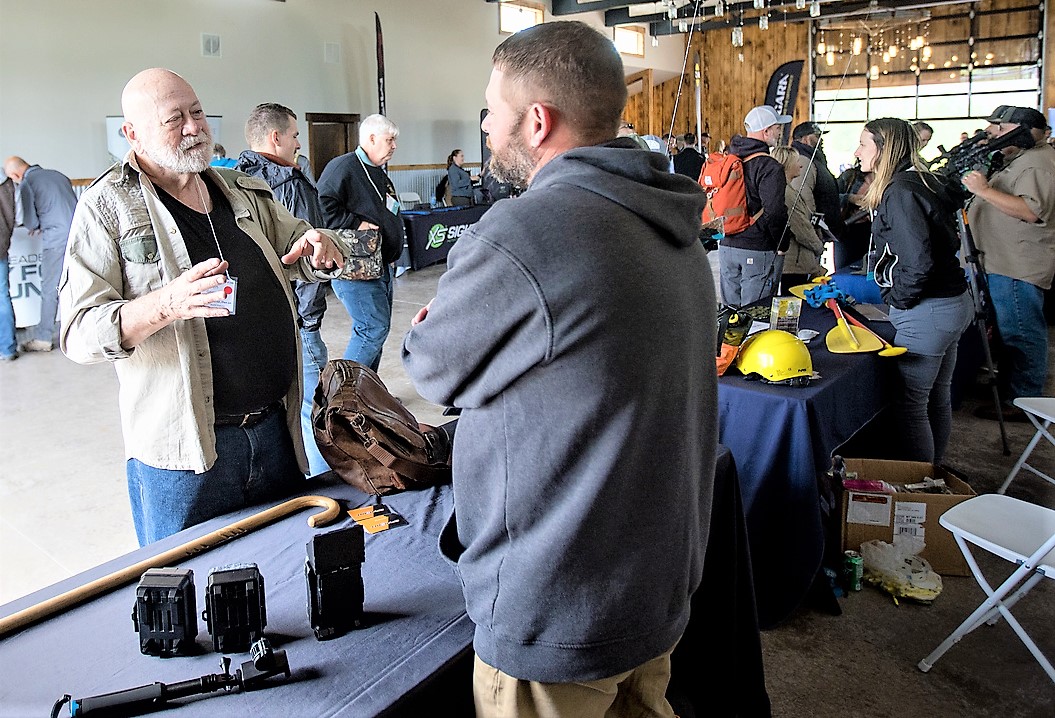

 The Keynote Speaker this year is


 Coat the smoker rack with olive oil and place the bear meat in the smoker/pellet grill. During the smoking process, use a kitchen brush to glaze the roast with maple syrup on the exposed sides of the roast. Smoke it until the internal temperature of the roast hits 160F. Use a digital thermometer.


 “We’re all still using the same worm we started with,” Bill said, smiling. Over the next 4 hours, the three of us caught 26 bass – all of us using the same worm we started with.


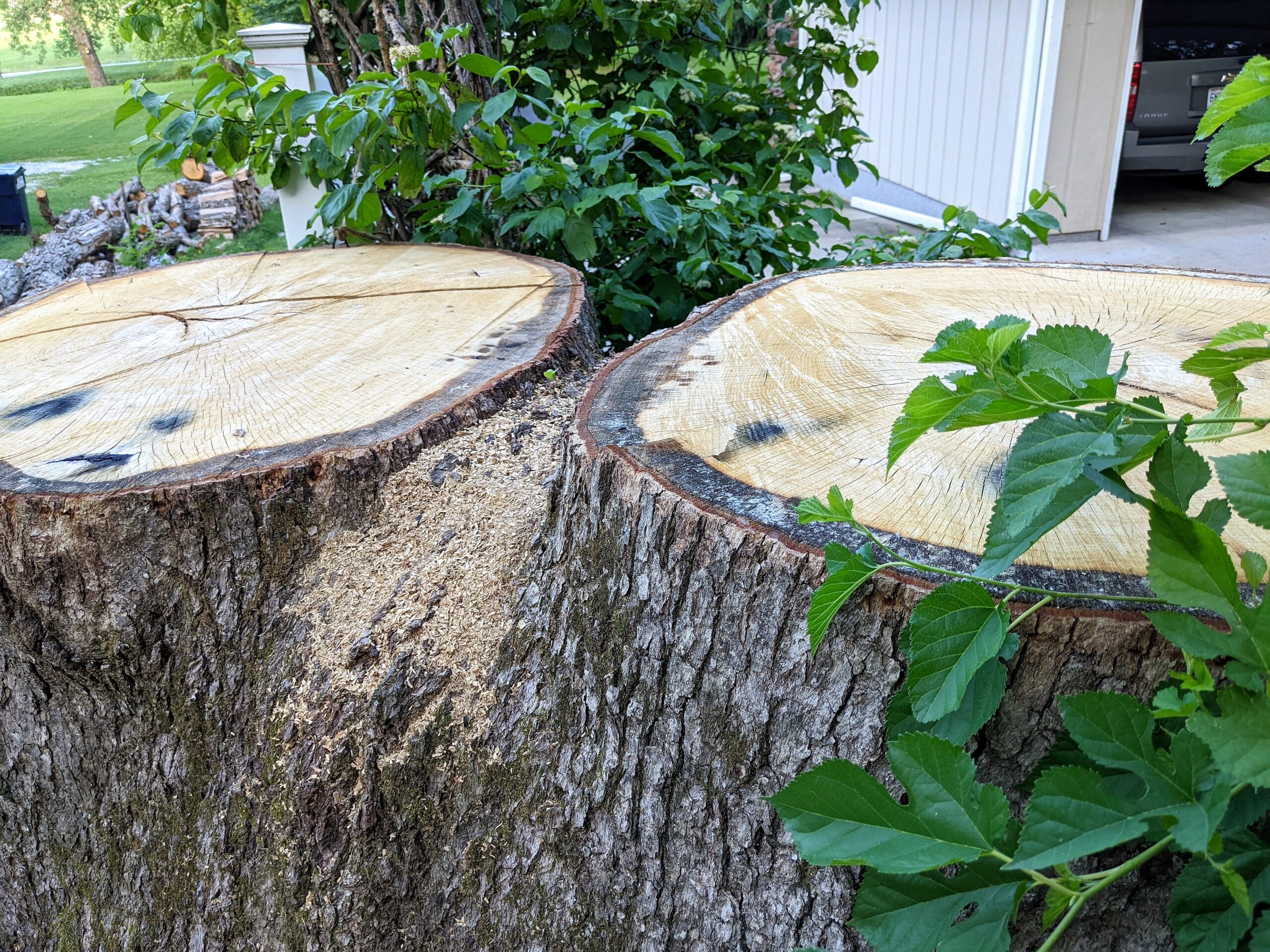


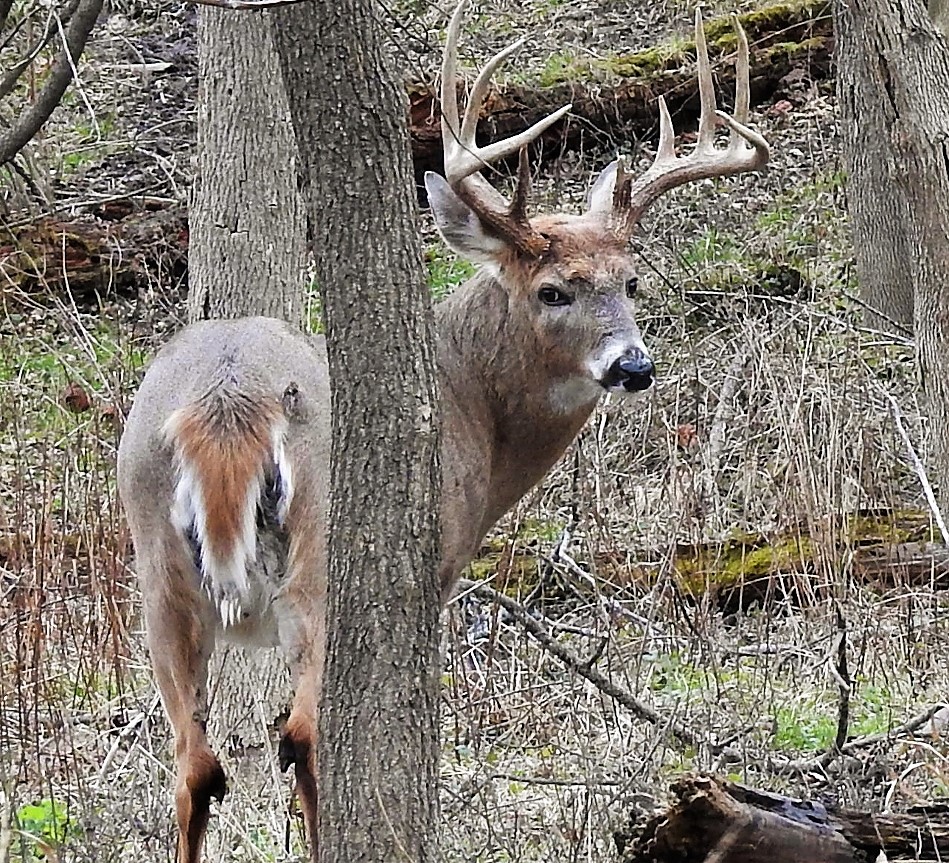


 His daughter Cora told me she flew with her Dad on one of the first Honor Flights for veterans. Honor Flights are all-expenses-paid trips to the war memorials in Washington, D.C. These flights allow veterans to share this momentous trip with other veterans, remember friends and comrades lost, and share their stories and experiences.
 Pete is tough. He is fighting this battle too. He knows where he is going when his time comes. I am sure there will be a lot of family and military buddies that will be glad to see him again. I bet they will get to hear Pete’s fish stories too.


 Fledglings have some feathers or may even look like fluffy adults but seem unable to fly and seem quite awkward in their movements. Fledglings rarely need a human’s help (unless the bird is injured). People sometimes see a fledgling bird hopping around on a branch some distance from a nest or even on the ground. This is perfectly normal behavior for growing birds. The best thing to do for these babies is to leave them alone. Mom and dad will care for them, even if they end up on the ground. However, if there is a dog or cat in the area, try getting the baby back up into the nest or at least the tree the nest is in. Watch from a distance. If the parents don’t show up after a few hours, it may be time to call PRWC for more advice, as it may be necessary to bring the little one in for treatment.
 We can save wildlife because people like you support us in our mission.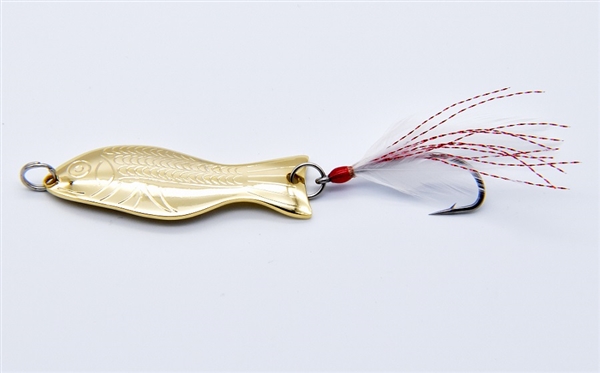


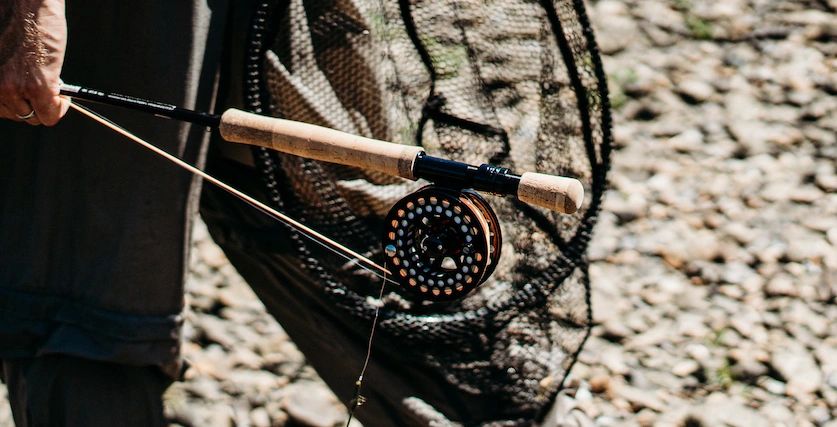
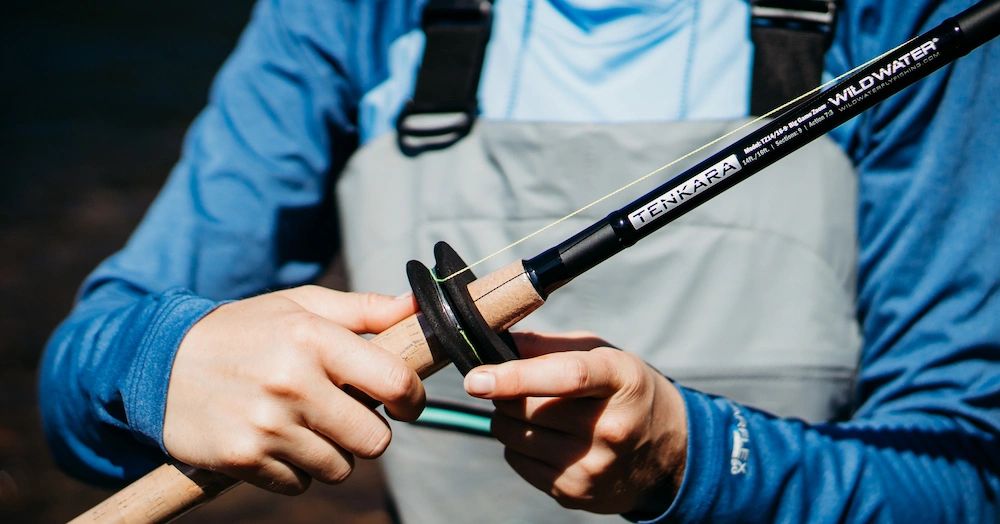
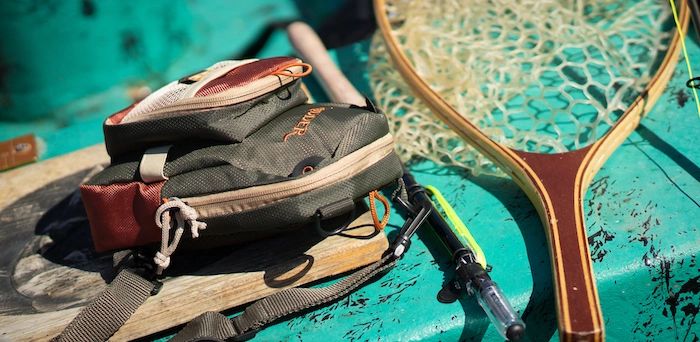


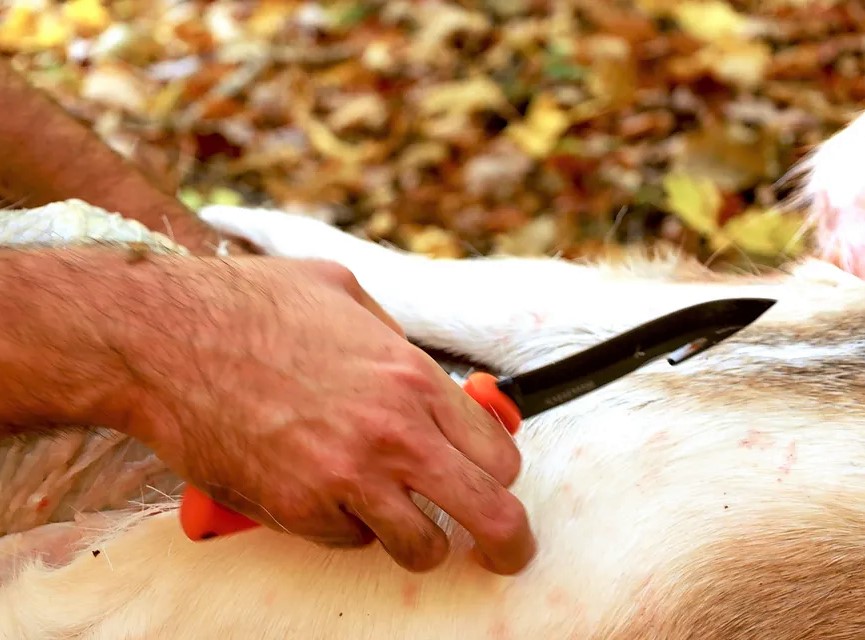

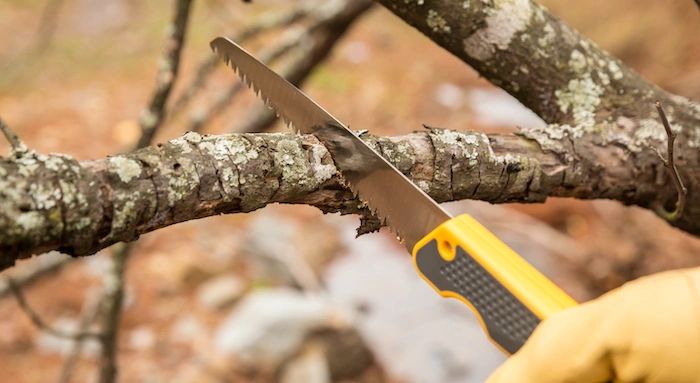
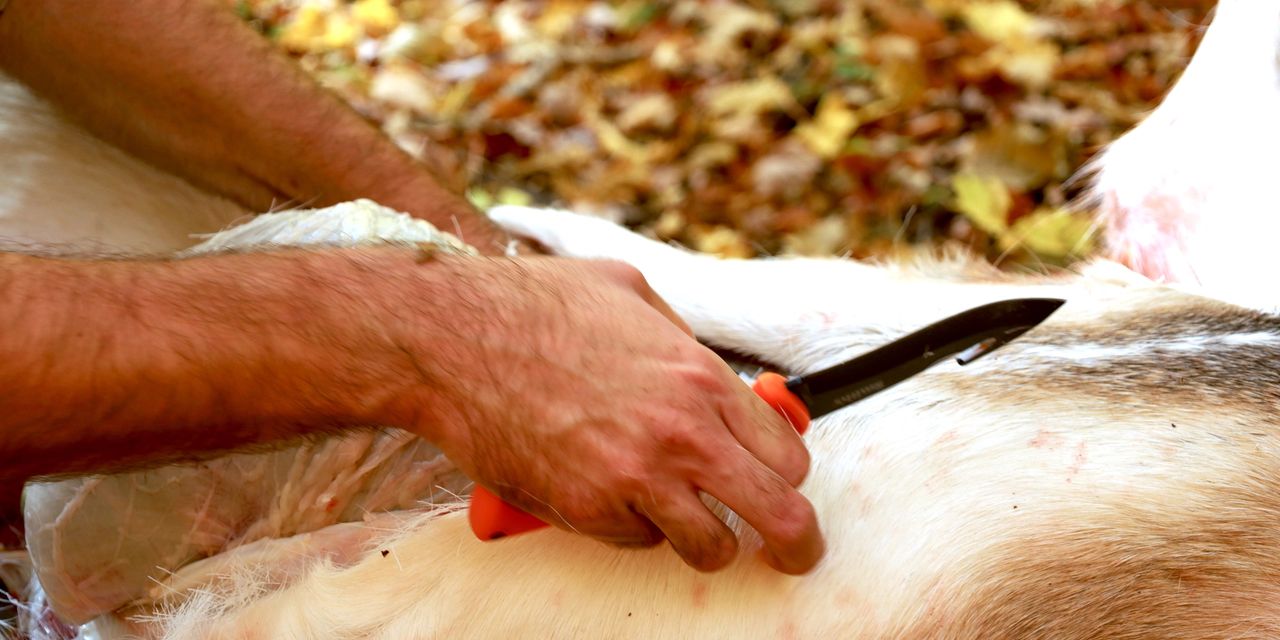
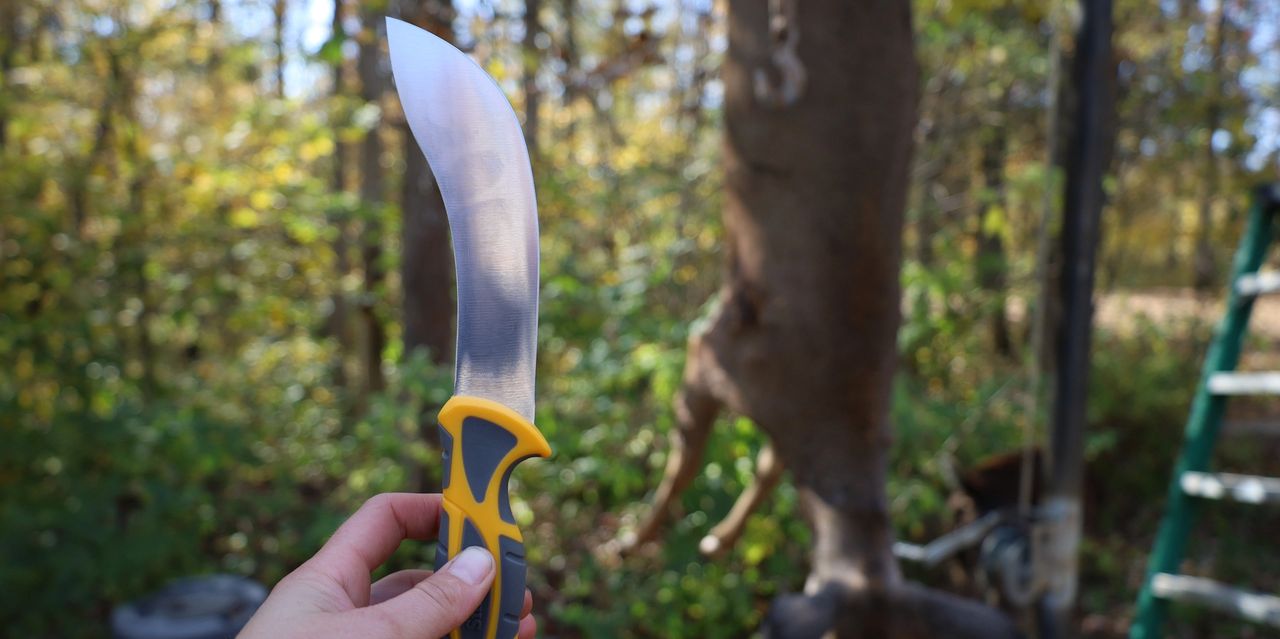
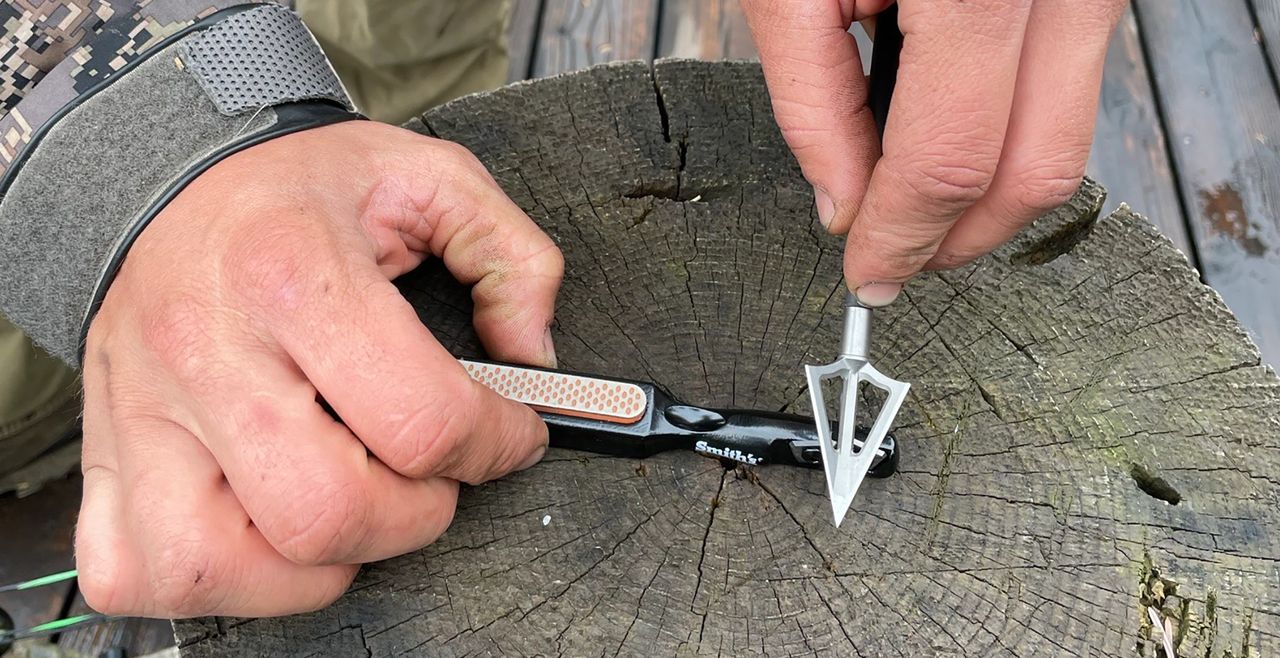
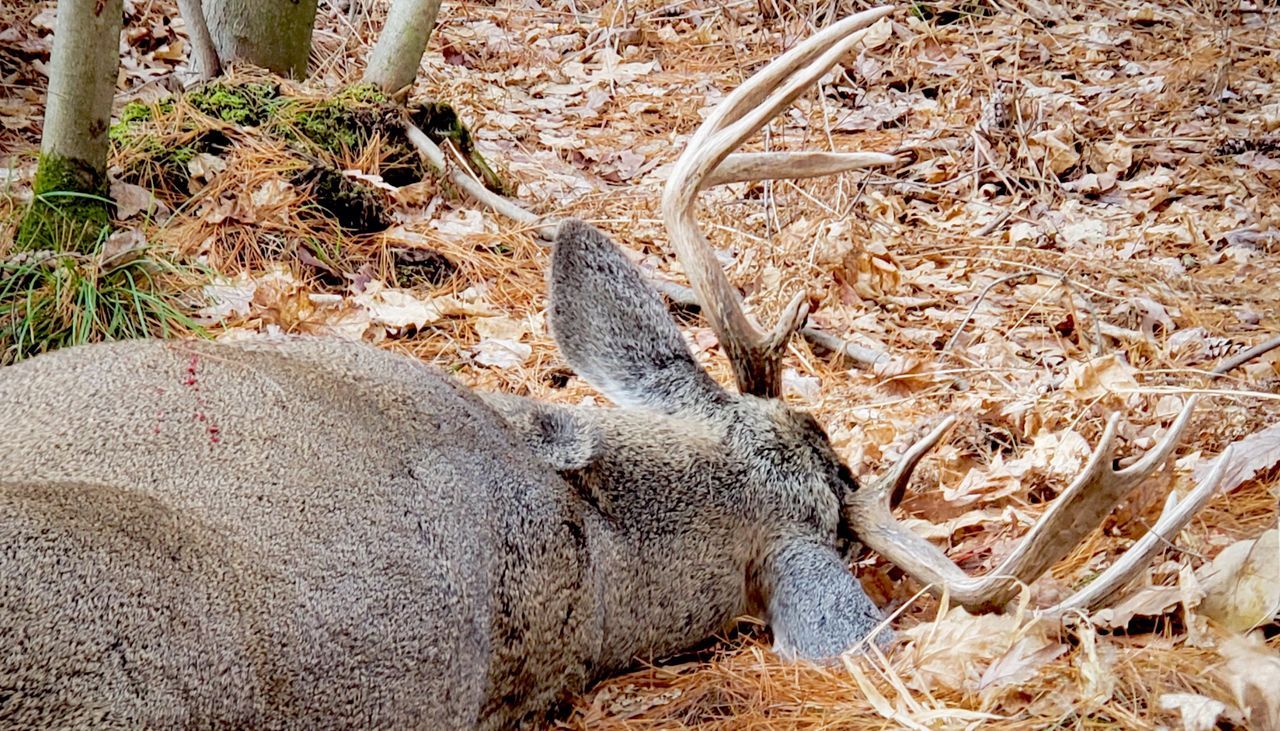




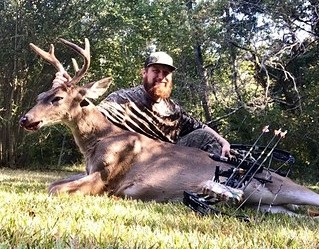


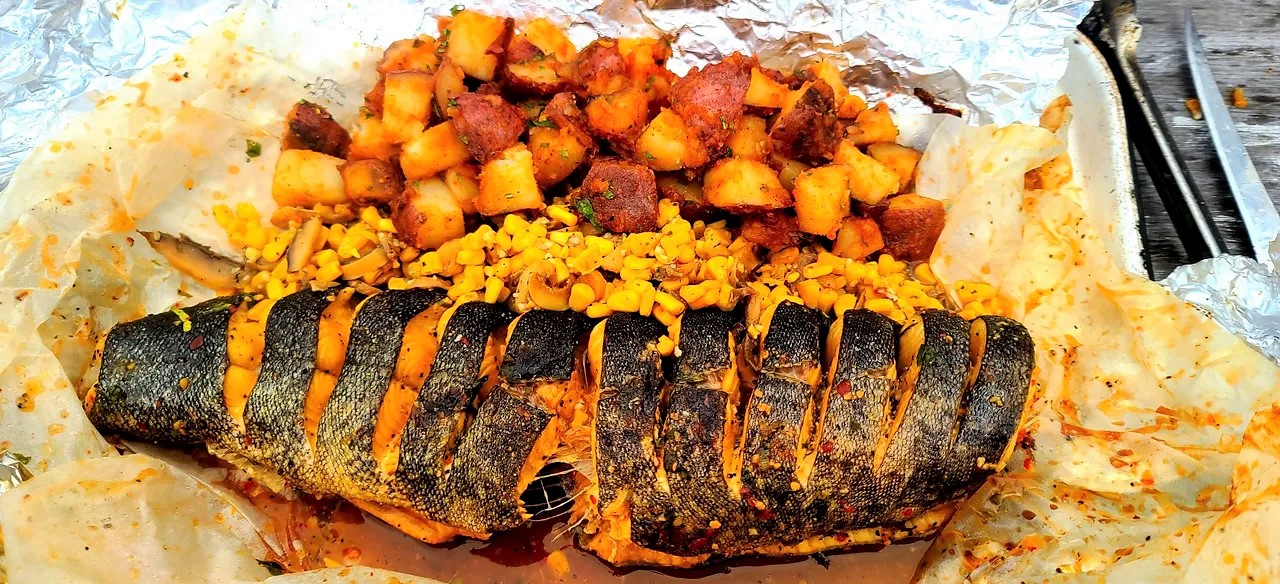


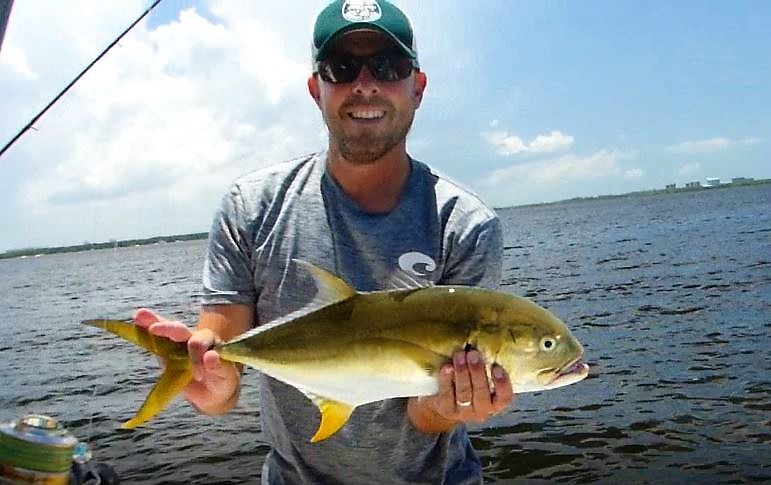


 The second group of 7 used a blended spice mix quite different from the first group:


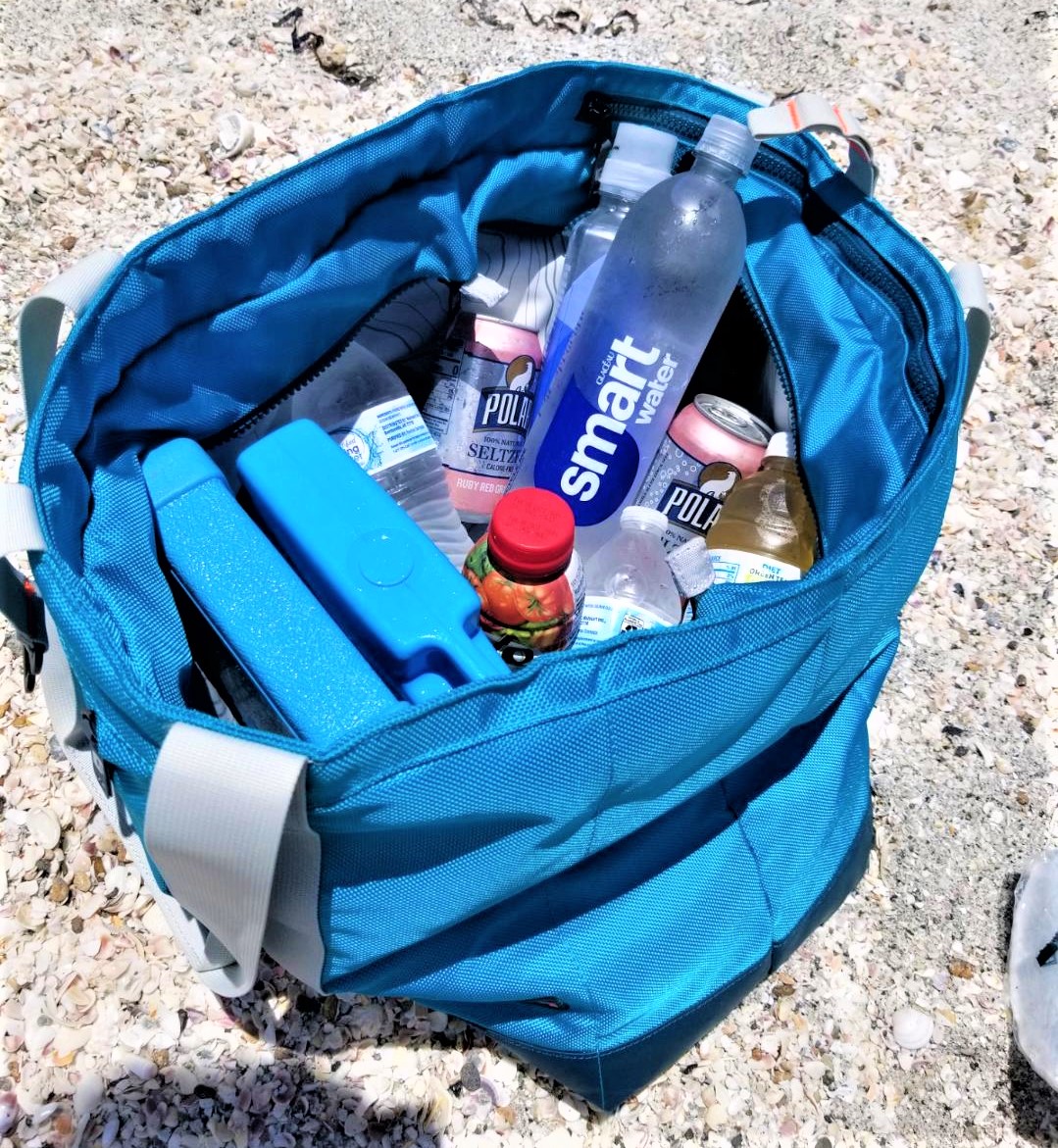


 This soft-sided product is 32 liters big in volume and is very light when empty: 1 pound-14 ounces! Some of our other hard-sided coolers in that size weigh as much as 20 pounds when empty. They work well, but they weigh so much when adding ice and beverages, even with wheels that do not work well on sand. We loaded up the Grizzly Carryall with 8 cans of pre-chilled 12-ounce Coca-Cola’s, 6 pre-chilled 16-ounce plastic bottles of water, 4 pre-chilled 12-ounce bottles of V8 vegetable juice, and one 24-ounce jar of Margarita’s. We also tossed in two 6” x 6” x 2” frozen blue ice packs and a 4-pack of unbreakable cups. The Carryall has side pockets for phones, wallets, and car keys, and a spare inside pocket for an extra set of socks, sunscreen, sunglasses, underwear – or whatever. All the compartments are sealable with durable zippers to open/close.
 The Grizzly Carryall is leakproof, insulated, water-resistant, and handsome. The reflective, attractive, glacier blue outer cover helps maintain the chill inside, and the Carryall is guaranteed for life. Imagine that. It has a small retail price tag of $125 (we found it for $100) and a significant 32-liter volume with 4 YKK zipper pockets. One more time, it all weighs in at only 1 lb. – 14 oz. UNREAL. For physical size, it measures 14H x 18L x 8W in inches.


 Three on one leg and two and a nub on the other leg.


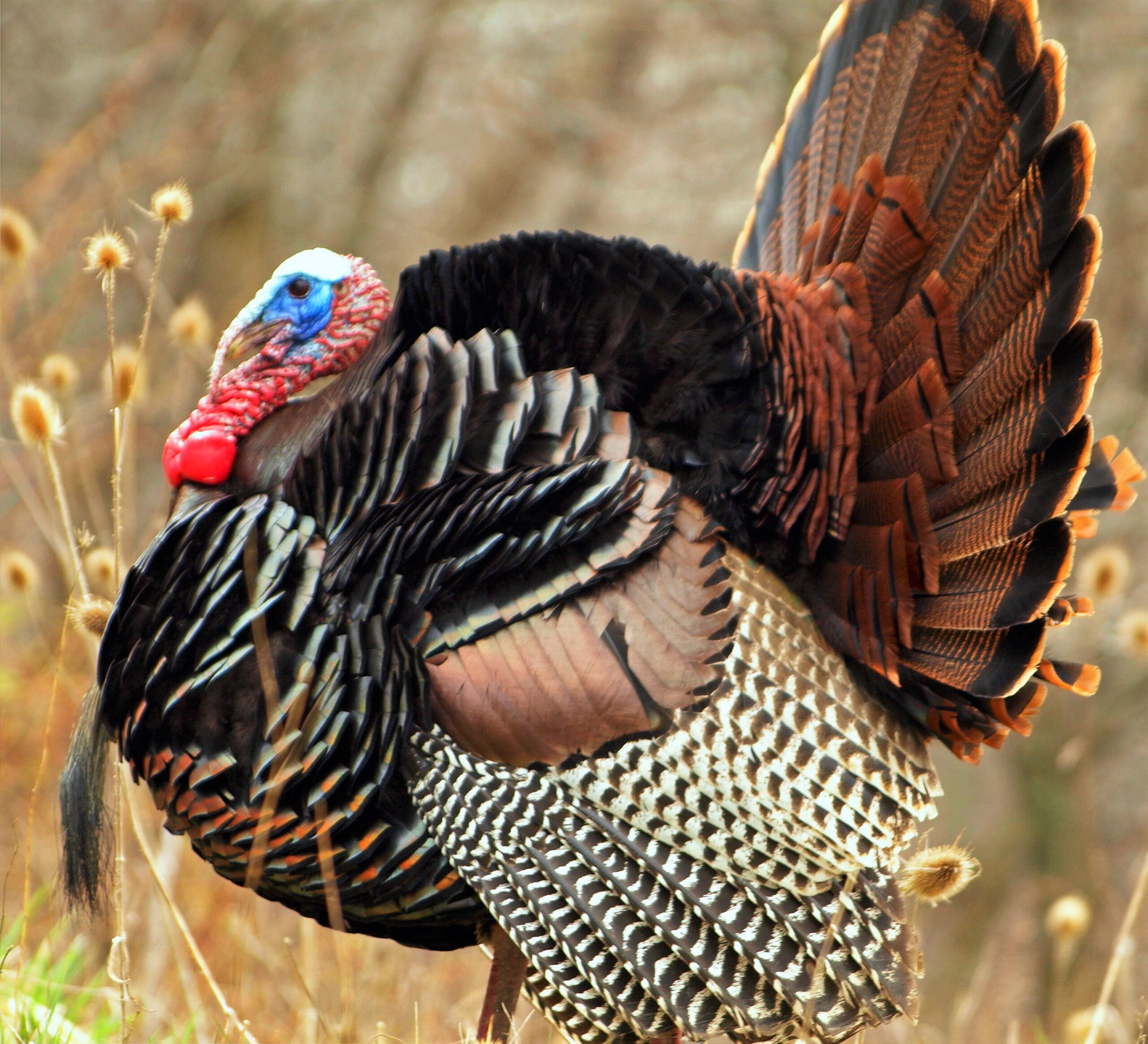


 The best news is that there is no closed season at a sporting clays range. When wildlife hunting seasons do open, the shooting skills of folks that practice on courses like this are better and far more accurate. During hunting season, it’s more fun in the open-season fields and woods. The shooter is trained and confident, and success feels good on the field and, later, on the dinner plate.


 If it’s water you seek for your adventure, Otsego County has over 90 inland lakes and the headwaters to five major rivers start here. The sinkhole lakes in the Pigeon River Country State Forest is also something you have to experience to believe. If you’re a fisherman, this is truly paradise. You can catch tiger Muskie, northern pike, walleye, yellow perch, largemouth bass, smallmouth bass, bluegill, rainbow trout, brown trout and brook trout just about any season of the year. Choose from open water, hard water or flowing water. Otsego Lake, the county’s largest lake, offers the opportunity to try and catch huge sturgeon which can grow to over 7-feet long and weigh up to 200-pounds. During winter Otsego Lake is known for its great ice fishing.
 Come during the winter season and truly experience a winter wonderland. The trails now become fantastic for snowshoeing and cross country skiing. Snowmobiling is also a popular wintertime activity. If you come during the winter season you have to try rafting on the scenic Sturgeon River. It’s another adventure you do not want to miss. Your whole family would also love taking a sleigh ride. You can also enjoy downhill skiing, snowboarding and tubing at either Otsego Resort or Treetops Resort. Both also offer golf in the other seasons on renowned championship golf courses. There are 17 other golf courses in the county making it a mecca for golfers. If you enjoy camping there are lots of places to pitch a tent or park your RV. There’s also plenty of cabins, resorts, hotels, motels and even a dude ranch to choose from.



 He came up with an excuse each time they asked and declined as he had his friends. But, then one day, he saw the disappointment on his grandkid’s face and the pleading eyes of his son when they asked once again. “Okay,” he said, “Teach me what I need to know to hunt these deer.” He couldn’t believe he spoke those words, but then he saw the smiles of joy on his son and grandkids’ faces. He would do this for them.




 In later years both farmers and city folk started using fishing rods with 20 to 30-pound test lines, heavy sinkers, and big treble hooks. A small white cloth was attached above the hooks, so they always knew where they were in the water. When they saw a sucker swim past the white marker, they would jerk hard and hope the hooks sunk into the fish.
 Grabbin’ suckers was so popular and was such a longstanding local tradition, the local town folk suggested they have a special weekend to celebrate this fish and the fishermen. The first “Nixa Sucker Days” was held in May 1957. Businesses closed, and so did the school. Main Street was lined with booths and games. Fishermen in their boats and floats of all kinds came parading down the street. There was musical entertainment, awards for the biggest sucker, a Sucker Day Queen was crowned, and, of course, fried suckers were served along with all the fixins. You could even have a bowl of ‘sucker soup’.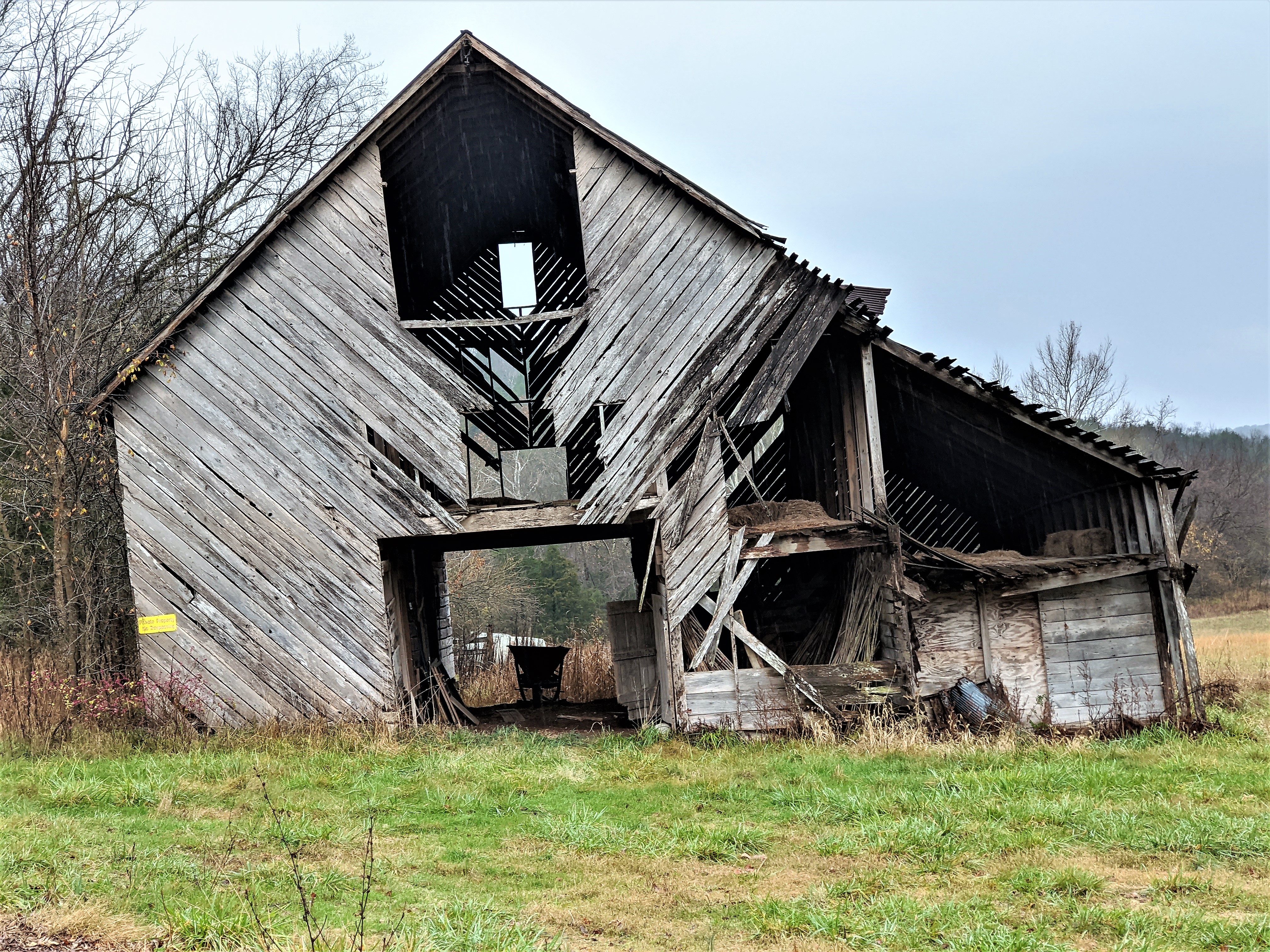


 My mind travels back in time, and I see the horse in the picture standing in a stall. I see corn stalks stacked in another area. Maybe this was where they milked the old cow. Is that daylight coming through the cracks? It sounds like the storm has let up. I better get up in the loft.
 By Larry Whiteley
 He finally came up with the idea of building one with a forward-mounted wheel that would allow the paddle to be moved to both sides of the box. That way, it could be used on any of four sound rails, each made with different wood types to have four different tones. Thus came the name for his call, the 4-Play. He also found that since the wheel allowed the lid to be moved forward and backward, he could strike the sound rails in multiple locations, adding to his box call versatility. The 4-Play is a turkey box call like no other you have ever seen or used.
  This old turkey hunter has never seen anything like it in all my years of turkey hunting, so I just had to have a 4-Play. I love it! I can’t believe all the sounds I can make with it. I’m clucking, purring, yelping, and even fly down cackling with it. I can’t wait until spring turkey season. My wife can’t either! Can you believe she banned me from the house and makes me take my 4-Play and practice out in the barn?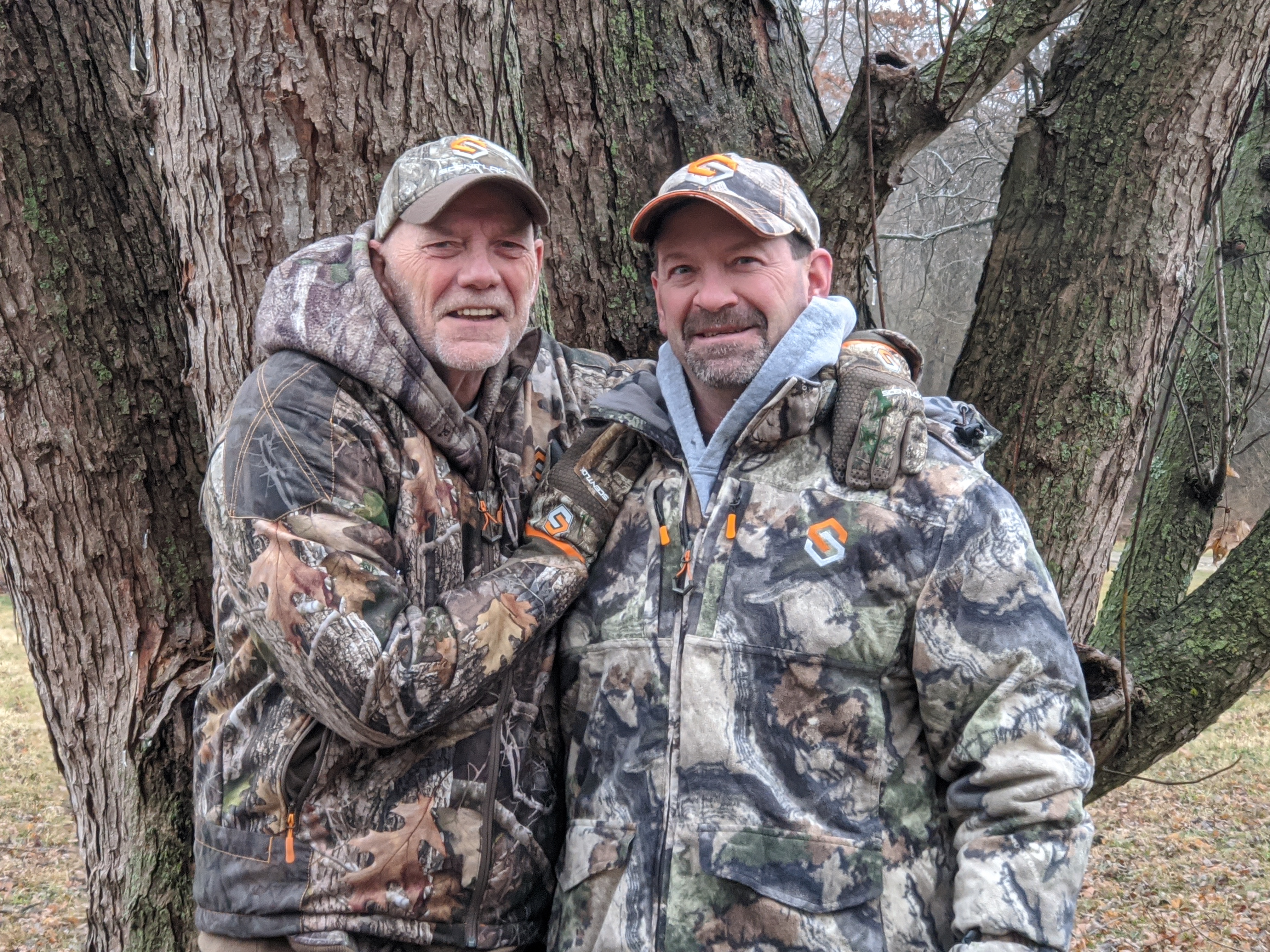





 Table Rock Lake has nearly 800 miles of shoreline and is one of Missouri’s top fishing destinations. Marina’s offer boat and equipment rentals, or bring your own, as there are multiple public and privately-owned locations to access the lake. Want to relax on the lake? Enjoy a lunch or dinner cruise and show aboard the Showboat Branson Belle or take a cruise on the Spirit of America catamaran.


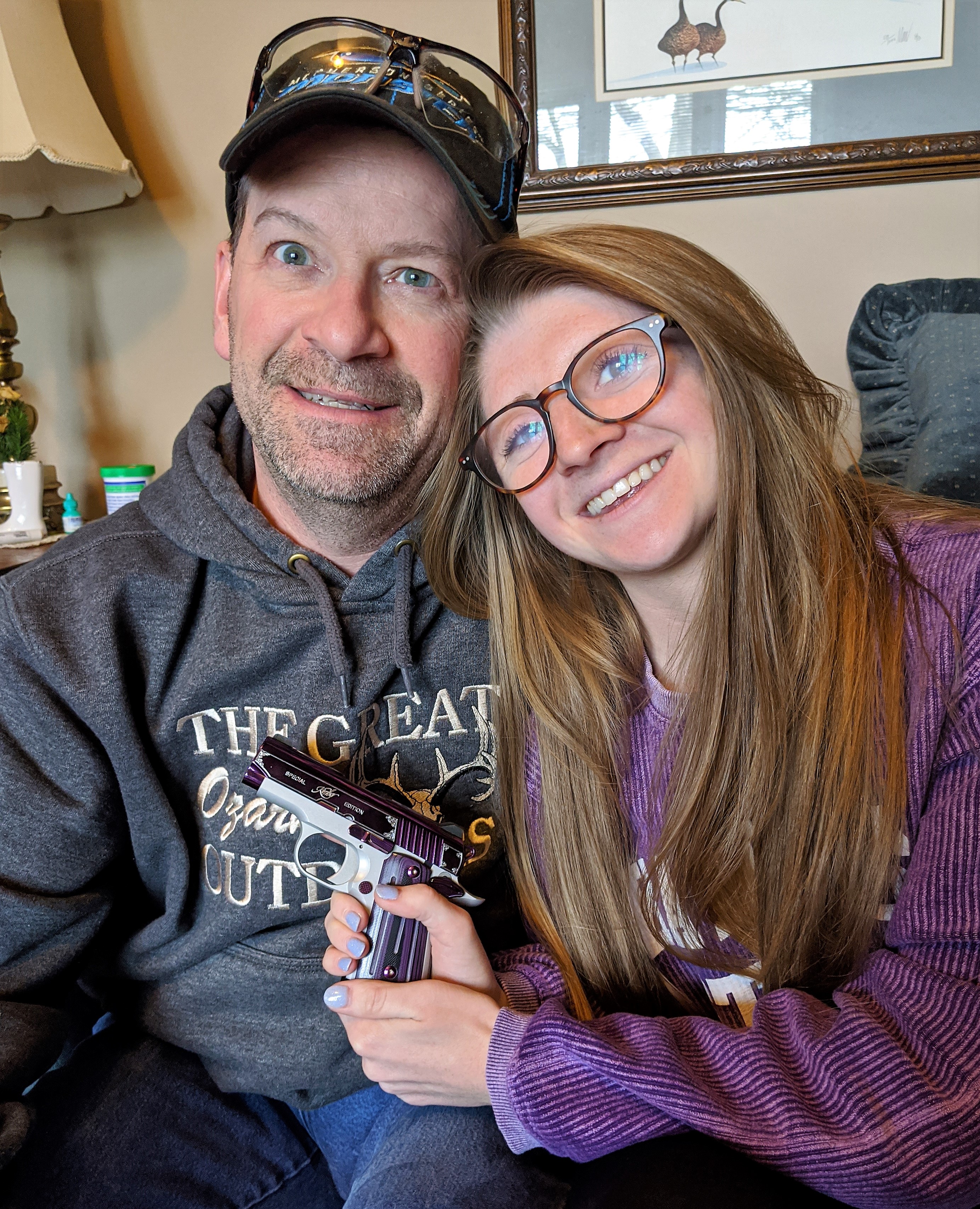


 For Sam, I decided on the Stoeger S-6000-A. It is what they call an “underlever” and offers some advantages over break-over barrels. The design really helps accuracy. Also, the extra weight of the cocking lever is placed under the barrel and I felt that would make the rifle steadier in his hands when he shoots.
 Because the rifles use air compression rather than the explosion of a powder cartridge like a .22 rifle, this means they will not only be saving money not having to buy ammunition, they will also not be breaking the law or disturbing neighbors.


